Tag Archives: Podcast

Should we ditch the term ‘digital native’? The latest conversation on the podcast

Post Syndicated from Meg Wang original https://www.raspberrypi.org/blog/should-we-ditch-the-term-digital-native-the-latest-conversation-on-the-podcast/

The term ‘digital native’ was coined in 2001 to describe young people who grew up surrounded by technology, implying they possess an almost instinctive understanding of digital tools. But how accurate is that label today? Are they truly tech-savvy, or are they simply fluent in using user-friendly devices without a deeper understanding of how they work? 

Thumbnail titled 'Are young people really tech-savvy?'

In our latest podcast episode, we explore this crucial question: does growing up with technology automatically make someone digitally literate, or just digitally dependent?

Host James Robinson (Raspberry Pi Foundation) is joined by colleague Sway Grantham, Anna Lahtinen (Haaga-Helia University), and Nicole O’Connor (Digi Know This) to unpack the complexities of digital skills, access, and education, and to explore how the label of digital native can sometimes hide broader challenges.

This episode wraps up our three-part mini-series on digital literacy. Each episode builds on the conversations from the latest issue of Hello World magazine, offering expert insight and practical ideas from educators driving real change.

Who are the guests on the podcast, and what will I learn?

We’ve assembled a panel of expert guests to discuss and debate the concept of the digital native.

Square headshot of Anna Lahtinen who featured on the Hello World podcast.
Anna Lahtinen, Haaga-Helia University of Applied Sciences

Anna is an internationally recognised scholar who specialises in the transformative effects of artificial intelligence (AI) on working life, businesses, and careers. In the latest issue of Hello World, Anna and her colleague Antonia O’Connell write about assumptions regarding high digital literacy among youth in the setting of a work environment.

In the podcast, Anna explains that the term ‘digital native’ can be useful for starting conversations about the skills, access, and confidence people need to navigate technology, particularly in the workplace. However, she warns that the term can be misleading, as it often assumes that young people have strong digital skills, when many struggle with the practical demands of using technology at work.

Anna also highlights the importance of supporting young people to use technology responsibly and develop a healthy relationship with it. As she puts it:

“If we instil the right values in students, that will eventually lead to a healthy relationship with technology and ethical use of new tools in both their work and their lives.”

Square headshot of Nicole O'Connor who featured on the Hello World podcast.
Nicole O’Connor, Digi Know This

Nicole O’Connor is a two-time female founder who brings her expertise to improving teaching and learning through innovative EdTech, digital literacy, and accessibility.

In the podcast, Nicole challenges the idea of the digital native, calling it both problematic and overly simplistic. She explains that the term overlooks important differences, like access, privilege, and levels of exposure to technology, which all shape a person’s digital skills. For Nicole, it’s a “grey area” that proves we can’t assume young people are automatically tech-savvy just because they grew up with devices.

Nicole sees digital literacy as a journey, not something people are born with. She compares it to learning a language: while young people may be familiar with technology, they still need to develop deeper skills to become critical thinkers, careful users, and aware of issues like data privacy and online safety. As she puts it:

“They might have had some exposure, but over time they need to learn the skills to be digitally literate… They’re not even close to that.”

Listen or watch now

To hear more, listen to or watch the full episode.

You can watch or listen to each episode of our podcast on YouTube, or listen via your preferred audio streaming service, whether that’s Apple Podcasts, Spotify, or Amazon Music

You’ve listened to the podcast, now subscribe to the magazine

We hope this episode, along with the others in the series, inspires you and helps you to engage your students more in computing. In the comments section below, we’d love to hear your thoughts and experience around digital literacy.

The latest issue of Hello World magazine features more insightful articles on digital literacy. Don’t miss out on this discussion — subscribe to Hello World today to ensure you never miss a podcast episode or issue of the magazine.

The post Should we ditch the term ‘digital native’? The latest conversation on the podcast appeared first on Raspberry Pi Foundation.

How can we empower girls in computing? An important conversation on the Hello World podcast

Post Syndicated from Meg Wang original https://www.raspberrypi.org/blog/how-can-we-empower-girls-in-computing-hello-world-podcast/

A key part of digital literacy is ensuring that all learners, regardless of their background or gender, have equal opportunities to develop computing skills and confidence in using technology.

However, the Department for Education in the UK recently released a report highlighting the growing gender gap in maths and science education. With International Girls in ICT Day just around the corner, it’s a timely reminder of the need to empower more girls and women within the computing sector.

In the latest episode of the Hello World podcast, Rachel Arthur, Chief Learning Officer at the Raspberry Pi Foundation, is joined by Dr. Jessica Hamer from King’s College London and Becky Patel from Tech She Can. Together, they explore the current state of girls’ engagement in computing and what we can do to support change.

This episode is the second in our three-part mini series on digital literacy. Each episode continues the conversations featured in the latest issue of the Hello World magazine, offering expert perspectives and practical examples from educators making a difference.

What is the gender gap, and why is it a problem?

The gender gap in computing refers to the disparity between the proportion of female and male students who choose computing as a subject or career. This is problematic because:

  • It reinforces harmful societal stereotypes that limit opportunities for girls
  • It hinders economic growth and innovation
  • It limits diversity in tech development, potentially leading to biased products, especially in artificial intelligence (AI)

Who are the guests on the podcast, and what will I learn?

To address these issues in detail, Rachel is joined by two guests who have dedicated years to understanding and addressing the gender gap. 

Dr. Jessica Hamer, King’s College London

Dr. Jessica Hamer is a Research Associate at King’s College London. She transitioned to academic research after working for a decade as a science teacher in secondary education. With a focus on projects like the SCARI project, she investigates factors affecting girls’ performance and participation in secondary-level computing. Her work includes a key report published last year on this topic.

In the podcast, Dr. Hamer reveals concerning findings about stereotypes in computing and how early they form. She explains that beliefs portraying girls as less interested in computing emerge as early as ages five or six, which significantly hinders girls’ engagement and involvement in the field.

Further, when students were asked to name famous figures in computing, most cited white, male tech entrepreneurs who are frequently in the news. This revealed a limited view of the kinds of people involved in computing, as well as a narrow conception of tech careers, with roles in areas like climate change and social justice being overlooked. However, Jessica highlights a key insight: “We found that girls were three times more likely to suggest a female famous face”, emphasising the vital importance of female representation and the need for relatable role models.

Becky Patel, Tech She Can

Becky Patel is the Head of Education and Learning at Tech She Can, a UK charity focused on increasing women’s representation in technology. She has a decade of teaching experience in both primary and secondary education and now develops the ‘Tech WE Can’ educational resources, which aim to inspire all children, particularly girls, to pursue careers in technology.

In the podcast, Becky emphasises the importance of early intervention to address gender stereotypes. She advocates for introducing children to a wide range of STEM careers, and to do this not just in computing lessons but across the whole curriculum. 

Another key strategy Becky highlights is showing children that they can explore their hobbies and interests further through technology, even when at first glance it might seem that technology can’t play a role. She explains:

“There are so many tech roles which you can do working behind the scenes, training the athlete, helping them with health and physiotherapy, working on goal-line technology… There’s so many cool things and when you show children this, you see the attention. You see them sit up like, hold on, she’s talking about me and the thing I love. And she’s also talking about computing.” 

Listen or watch now

To hear more about how to empower girls into computing, listen to or watch the full episode. 

We hope this episode inspires you and helps you to engage your students more in computing. In the comments section below, we’d love to hear your thoughts, your feedback, and any of your own tips for empowering girls and young women.

Enjoy the conversation!

More to discover next week

Next week, in the final podcast in our mini series, we’ll be looking at the notion of the ‘digital native’. Are young people truly tech-savvy, or are they simply reliant on digital tools without understanding the underlying mechanics?

James Robinson, Senior Learning Manager at the Raspberry Pi Foundation, will be joined by fellow colleague Sway Gratham and two guest speakers, Anna Lahtinen from Haaga-Helia University and Nicole O’Connor from Digi Know This, as they debate the complexities of digital skills, access, and education. Discover how the label ‘digital native’ can mask crucial issues and learn what real digital literacy looks like today.

Subscribe to Hello World

You can watch, or listen, to each episode of our podcast on YouTube, or listen via your preferred audio streaming service, whether that’s Apple Podcasts, Spotify, or Amazon Music

Don’t miss out on this discussion — subscribe to Hello World today to ensure you never miss a podcast episode or issue of the magazine.

The post How can we empower girls in computing? An important conversation on the Hello World podcast appeared first on Raspberry Pi Foundation.

How to bring digital literacy into your classroom: practical tips from the Hello World podcast

Post Syndicated from James Robinson original https://www.raspberrypi.org/blog/teacher-tips-digital-literacy/

Teacher tips: Digital literacy thumbnail. The background of the image comprises of a still taken from the episode, featuring Hello World podcast host James Robinson on the right of the image. The episode title 'Teacher tips: Digital literacy' is overlayed on the left of the screen. The Hello World logo has been superimposed on the top right hand corner of the image.

Are you looking to strengthen digital literacy in your classroom? In the latest episode of the Hello World podcast, three experienced teachers from the USA and the UK share practical tips they’ve used in their classrooms to help their students build digital literacy. Whether you’re just getting started with digital literacy or looking for new ideas, the episode is full of real-world advice you can apply straight away.

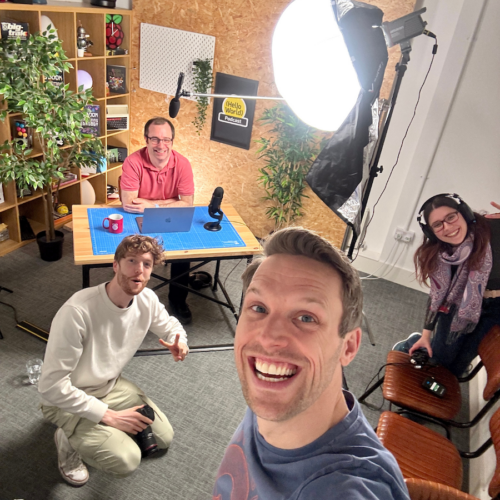
Behind the scenes image of the team recording an episode of the Hello World podcast.
Behind the scenes whilst recording the Teacher Tips: Digital literacy episode of the Hello World podcast.

The episode also marks the launch of a new mini-series on the Hello World podcast focusing on digital literacy. Throughout the series, which totals three episodes, we’ll continue conversations that feature in the latest issue of the Hello World magazine, sharing expert insights and real-world examples from educators who are integrating digital literacy into their classrooms.

So tune in this week, then stay tuned!

Who features in this episode, and what will I learn?

We’ve got tips from three teachers whose articles feature in Hello World’s newest magazine issue.

Katie Dahlman from Bloomington, MN, USA

Get ready for some top tips from Katie Dahlman, a preschool teacher and Digital Learning Specialist in Bloomington Public Schools in Minnesota, USA. With over 16 years of experience as an early childhood educator, Katie has dedicated her time to developing engaging computer science (CS) lessons for young learners.

Headshot of Katie Dahlamn, a guest teacher who featured on the 'Teacher tips: Digital literacy' episode of the Hello World podcast.

Katie believes that digital literacy starts with building foundational skills to prepare students for their roles as digital citizens. One of the tips Katie shares in the episode emphasises the importance of integrating computational thinking into the classroom: 

“My second tip for enhancing digital literacy in your classroom is to integrate computational thinking skills and vocabulary into your existing curriculum.”

Read Katie’s article ‘Tech tinkering and teamwork’ on pages 52–53 of Hello World, issue 26.

Curt Hitchens from Rock Spring, GA, USA

We also hear from Curt Hitchens, a computer science teacher at Saddle Ridge Elementary and Middle School in Rock Spring, Georgia, USA. Since 2018, Curt has been teaching computer science and now serves as a Virtual CS Specialist for the Georgia Department of Education.

Headshot of Curt Hitchens, a guest teacher who featured on the 'Teacher tips: Digital literacy' episode of the Hello World podcast.

Curt explains in the podcast that digital literacy is about equipping students with the necessary skills to use technology effectively in everyday situations and the workplace. He also shares an important tip for teachers, encouraging them to give students regular chances to engage in hands-on learning:

 “Make sure that you’re providing consistent opportunities for creation and exploration within your classes.”

Read Curt’s article ‘Computer science opportunities in rural schools’ on pages 46–47 of Issue 26.

Halima Bhayat, London, UK

The episode also features Halima Bhayat, the Head of Computing and Digital T Levels at Ursuline High School in London, UK. Halima is an Asian Women of Achievement 2021 Finalist, a digit<all> ambassador, an Amazon teacher, and the Computing at School Merton lead for all schools.

Headshot of Halima Bhayat, a guest teacher who featured on the 'Teacher tips: Digital literacy' episode of the Hello World podcast.

With a wealth of experience, she emphasises that digital literacy is more than about using technology — it’s about understanding how the digital world functions, how technology shapes our daily lives, and how it impacts individuals and communities.

One of Halima’s top tips for enhancing digital literacy in the classroom is to focus on touch typing. She believes that students should be equipped with fast and efficient typing skills, as so many tasks today are online.

“My first tip would be to get [your students] touch typing, get them to start becoming faster with their fingers on those keyboards, because lots of things have become online.”

Read Halima’s article ‘From switches to success’ on pages 76–77 of Issue 26.

Listen now

To hear more practical tips and discover what else our guest teachers have to say, listen to or watch the full episode here

We hope this episode inspires you and helps you to engage your students in computing. We’d love to hear your thoughts, your feedback, and any of your own tips on the topic of digital literacy in the comments section below.

We hope you enjoy the episode!

More to listen to next week

Next week, the podcast brings you an insightful conversation featuring Rachel Arthur, Chief Learning Officer at the Raspberry Pi Foundation, Dr Jessica Hamer from King’s College London, and Becky Patel from Tech She Can.

Photo of Dr. Jessica Hamer, Becky Patel and Rachel Arthur, on set of the Hello World podcast.

They’ll discuss the current state of girls’ engagement in computing and explore ways to empower young women in computing at school, at university, and onwards into their careers.

You can watch, or listen, to each episode of our podcast on YouTube, or listen via your preferred audio streaming service, whether that’s Apple Podcasts, Spotify, or Amazon Music

Subscribe to Hello World today to ensure you never miss a podcast episode or issue of the magazine.

The post How to bring digital literacy into your classroom: practical tips from the Hello World podcast appeared first on Raspberry Pi Foundation.

Season 6 of the Hello World podcast is here

Post Syndicated from James Robinson original https://www.raspberrypi.org/blog/hello-world-podcast-season-6-computing-education/

Through the Hello World podcast, we help to connect computing educators around the world and share their experiences. In each episode, we expand on a topic from a recent Hello World magazine issue. After 5 seasons, and a break last year, we are back with season 6 today.

Hello World logo.

Episode 1: Do kids still need to learn how to code?

In the recent ‘Teaching & AI’ issue of Hello World, our CEO Philip Colligan discussed what AI means for computing education, including for learning to program. And our first new podcast episode is all about this question, which every computing educator has probably thought about at least once in recent months: Do kids still need to learn how to code?

Joining my co-host Veronica and me are two computing educators: Pete Dring, Head of Computing at Fulford School in York, and Chris Coetzee, a computer science teacher for 24 years and currently a PhD student in Computer Science Education at Abertay Dundee. Given the recent developments in AI-based code generators, we talk about whether such tools will remove our learners’ need to learn to code or simply change what coding, and learning to code, looks like*.

What’s coming up in future episodes?

New episode of season 6 will come out every 2 weeks. In each episode we explore computing, coding, and digital making education by delving into an exciting topic together with our guests: experts, practitioners, and other members of the Hello World community.

Also in season 6, we’ll explore:

The role of computing communities

We discuss the value and importance of being connected to other computing educators through the many different teaching communities that exist around the world. What makes effective communities, and how do we build and sustain them?

A group of students and a teacher at the Coding Academy in Telangana.

Why is understanding cybersecurity so important?

From classroom lessons to challenges and competitions, there are lots of opportunities for learners to discover cybersecurity. There are also many pitfalls where learners’ online activities put them at risk of breaking the law. We discuss some of these pitfalls along with the many career opportunities in cybersecurity.

How to develop as a computing educator?

What is involved in becoming an effective computing educator? What knowledge, skills, and behaviours are needed, and how do we go about developing them? We sit down with teacher trainers and trainees to explore this topic.

Two learners and a teacher in a physical computing lesson.

What is the state of computing education and where is it heading?

Computing education has come a long way in the last decade in terms of practice and policy, as well as research. Together with our guests we discuss where computing education is today around the world, and we consider the lessons we can learn and the challenges ahead

What is the role of AI in your classroom?

AI continues to be a disruptive technology in many spaces, and the classroom is no exception. We hear examples of practices and approaches being explored by teachers in the classroom.

If you’ve not listened to the Hello World podcast yet, there are 5 whole seasons for you to discover. We talk about everything from ecology and quantum computing to philosophy, ethics, and inclusion, and our conversations always focus on the practicalities of teaching in the classroom.

In our latest issue of Hello World, we feature authors from over 20 countries.

Many of our podcast guests are Hello World authors, so if you’re an educator who wants to share your insights into how to teach young people about digital technology, please let us know. Your words could end up in the pages as well as on the airwaves of Hello World.

You’ll find the upcoming Hello World season and past episodes on your favourite podcast platform, including YouTube now, where you can also subscribe to never miss an episode. Alternatively, you can listen here via your browser.

* If you want to dive into the newest research on programming education with and without AI, check out our current seminar series.

The post Season 6 of the Hello World podcast is here appeared first on Raspberry Pi Foundation.

AWS Week in Review – March 27, 2023

Post Syndicated from Marcia Villalba original https://aws.amazon.com/blogs/aws/aws-week-in-review-march-27-2023/

This post is part of our Week in Review series. Check back each week for a quick roundup of interesting news and announcements from AWS!

In Finland, where I live, spring has arrived. The snow has melted, and the trees have grown their first buds. But I don’t get my hopes high, as usually around Easter we have what is called takatalvi. Takatalvi is a Finnish world that means that the winter returns unexpectedly in the spring.

Last Week’s Launches
Here are some launches that got my attention during the previous week.

AWS SAM CLI – Now the sam sync command will compare your local Serverless Application Model (AWS SAM) template with your deployed AWS CloudFormation template and skip the deployment if there are no changes. For more information, check the latest version of the AWS SAM CLI.

IAM – AWS Identity and Access Management (IAM) has launched two new global condition context keys. With these new condition keys, you can write service control policies (SCPs) or IAM policies that restrict the VPCs and private IP addresses from which your Amazon Elastic Compute Cloud (Amazon EC2) instance credentials can be used, without hard-coding VPC IDs or IP addresses in the policy. To learn more about this launch and how to get started, see How to use policies to restrict where EC2 instance credentials can be used from.

Amazon SNS – Amazon Simple Notification Service (Amazon SNS) now supports setting context-type request headers for HTTP/S notifications, such as application/json, application/xml, or text/plain. With this new feature, applications can receive their notifications in a more predictable format.

AWS Batch – AWS Batch now allows you to configure ephemeral storage up to 200GiB on AWS Fargate type jobs. With this launch, you no longer need to limit the size of your data sets or the size of the Docker images to run machine learning inference.

Application Load Balancer – Application Load Balancer (ALB) now supports Transport Layer Security (TLS) protocol version 1.3, enabling you to optimize the performance of your application while keeping it secure. TLS 1.3 on ALB works by offloading encryption and decryption of TLS traffic from your application server to the load balancer.

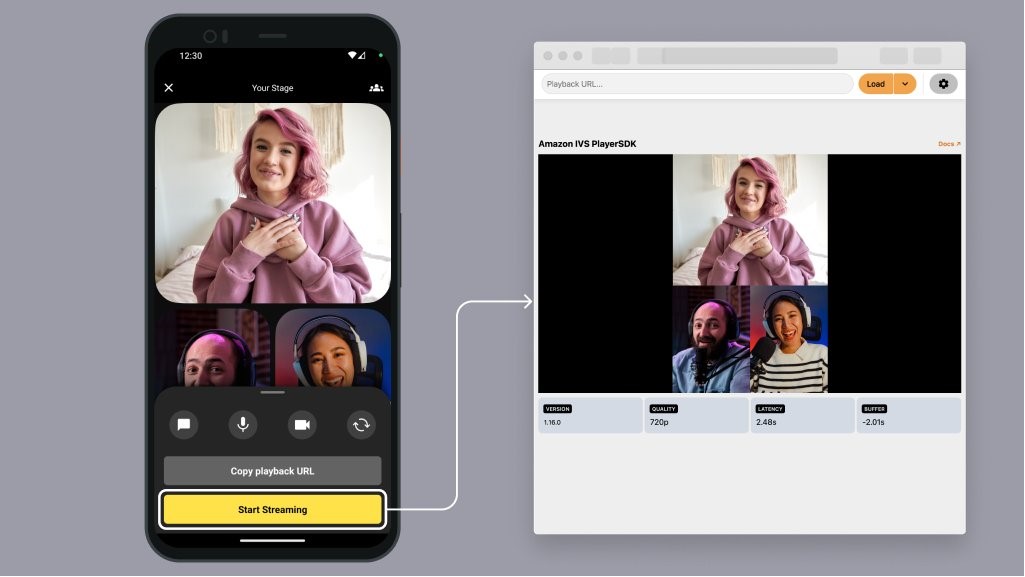
Amazon IVS – Amazon Interactive Video Service (IVS) now supports combining videos from multiple hosts into the source of a live stream. For a demo, refer to Add multiple hosts to live streams with Amazon IVS.

For a full list of AWS announcements, be sure to keep an eye on the What’s New at AWS page.

Other AWS News
Some other updates and news that you may have missed:

I read the post Implementing an event-driven serverless story generation application with ChatGPT and DALL-E a few days ago, and since then I have been reading my child a lot of  AI-generated stories. In this post, David Boyne, explains step by step how you can create an event-driven serverless story generation application. This application produces a brand-new story every day at bedtime with images, which can be played in audio format.

Podcast Charlas Técnicas de AWS – If you understand Spanish, this podcast is for you. Podcast Charlas Técnicas is one of the official AWS podcasts in Spanish, and every other week there is a new episode. The podcast is meant for builders, and it shares stories about how customers have implemented and learned AWS services, how to architect applications, and how to use new services. You can listen to all the episodes directly from your favorite podcast app or at AWS Podcasts en español.

AWS open-source news and updates – The open source newsletter is curated by my colleague Ricardo Sueiras to bring you the latest open-source projects, posts, events, and more.

Upcoming AWS Events
Check your calendars and sign up for the AWS Summit closest to your city. AWS Summits are free events that bring the local community together, where you can learn about different AWS services.

Here are the ones coming up in the next months:

That’s all for this week. Check back next Monday for another Week in Review!

— Marcia

It’s back: The Hello World podcast for the computing education community

Post Syndicated from Janina Ander original https://www.raspberrypi.org/blog/hello-world-podcast-season-3-computing-education/

We set out last year to gather more stories, ideas, and inspiration from and for the computing education community in between Hello World magazine issues: we launched the Hello World podcast. On the podcast, we dive deeper into articles from Hello World, and we speak with people from all over the world who work as teachers, educators, and other computing education professionals.

Hello World logo.

Season 3 of the Hello World podcast starts on Monday

The Hello World podcast helps connect the global community of computing educators and Hello World readers, and lets them share their experiences. After two seasons and a short pause during the autumn, we are finally back with a brand-new Hello World podcast season. Regular listeners will also notice a new theme music!

Each episode, we explore computing, coding, and digital making education by delving into an exciting topic together with our guests: experts, practitioners, and other members of the Hello World community.

 In season 3, we’re exploring:

  • The role of makerspaces, both within schools and the wider community 
  • The relevance of imagination and storytelling to computing 
  • Computing in the context of science and ecology
  • How learners can promote and support computing as digital leaders
  • And much more…
A phone with headphones plugged in next to a cup of coffee on a table.

Meet our guests for episode 1 of the new season

In our first episode, which will be available from 7 February, your hosts Carrie Anne and James ask the question “What role do makerspaces play in the classroom?”. We talk to two fantastic guests, each with a wealth of experience in designing and developing makerspaces:

Nick Provenzano.
Nick Provenzano

Nick Provenzano, who is a Teacher and Makerspace Director at University Liggett School in Michigan. He is also an author, makerspace builder, international keynote speaker and Raspberry Pi Certified Educator.

Chris Hillidge
Chris Hillidge

Chris Hillidge, who established FabLab Warrington in 2016 and manages the STEM strategy for students aged 4 to 19 across The Challenge Academy Trust. Chris is a Specialist Leader of Education, consultant, and Raspberry Pi Certified Educator.

If you’ve not tried out the Hello World podcast yet, why not get started by diving into one of our most popular episodes?

You’ll find the upcoming season and past episodes on your favourite podcast platform, where you can also subscribe to never miss an episode. Alternatively, you can listen via your browser at helloworld.cc/podcast.

The post It’s back: The Hello World podcast for the computing education community appeared first on Raspberry Pi.

Help Others Be “Cyber Aware” This Festive Season—And All Year Round!

Post Syndicated from Jen Ellis original https://blog.rapid7.com/2020/12/17/help-others-be-cyber-aware-this-festive-season-and-all-year-round/

Help Others Be

Are you tired of being the cybersecurity help desk for everyone you know? Are you frustrated with spending all your time securing your corporate environment, only to have to deal with the threat that snuck in through naive end-users? Are you new to security and wondering how you ended up here? This blog is for you!

Introducing the Cyber Aware Campaign

Every year, November and December tend to be awash with media articles sharing tips for “safe” online shopping, particularly around Cyber Monday. This has been compounded in 2020, a year characterized in cybersecurity by increased remote working, reliance on online and delivery services, and COVID-19-themed scams and attacks. Many have viewed 2020 as a hacker’s playground.

It’s in this setting then that the U.K. government has relaunched its Cyber Aware campaign to help internet citizens navigate the rocky shores of defending their digital lives. The campaign—which features TV, radio, and print ads, as well as various (virtual) events—offers six practical and actionable tips for helping people protect themselves online.

The tips are designed to be applicable to the broadest audience possible. They are not necessarily the most sophisticated security best practices, but rather (and very intentionally), they are fairly basic and applicable to a wide range of people. The list has been devised as the result of considerable development and testing: The U.K. government not only sought input from security experts, but also from nonprofits and civil society groups representing various constituent groups. This helped them ensure the tips would be practical for everyone from your granny to your favorite athlete (maybe they are the same person).

As with enterprise security, there is regrettably no silver bullet for personal security, so these tips will not make people completely invulnerable. However, they do focus on steps that are manageable and will meaningfully reduce risk exposure for individuals. The U.K. government has focused on finding a balance between being thorough and not alienating people from making the effort, hence settling on just six tips. Naturally, we prefer things that come in sevens, but this is a decent start. 😉

The tips

Four of the six tips focus on passwords and identity access management. This seems like a good choice; it’s extremely hard to change behavior such that people stop sharing personal information or clicking on links, but if you can make it harder for attackers to access accounts, that’s a good step toward meaningfully reducing risk.

So, let’s take a look at the actual tips…

  1. Use a strong and separate password for your email
  2. Create strong passwords using three random words
  3. Save your passwords in your browser
  4. Turn on two-factor authentication (2FA)
  5. Update your devices
  6. Back up your data

We recommend clicking on the links and taking a look at the full guidance. Or, for more information on the tips, how they were developed, and what the Cyber Aware campaign entails, check out this Security Nation podcast interview with the delightful Cub Llewelyn-Davies of the UK National Cyber Security Centre.

As a starting point or personal security baseline, this is a very decent list, and we hope it will have a meaningful impact in encouraging individuals to make a few small changes to protect themselves online.  

As overzealous security enthusiasts, though, we had to take it one step further. We’ve created a free personal security guide of our own that starts with the Cyber Aware steps, then offers additional advice for those that want to go further. We know that for the vast majority of internet users, even six steps feels like too many, but we also hold out hope that many people may be inspired to dig deeper or may just have more specific circumstances they need help with.

You can download the guide for free here. Maybe include it with your holiday cards this year—personal security is the gift that keeps on giving!

Why should you care about this?

If you are reading the Rapid7 blog, the chances are that you already think about security and are almost certainly taking these steps or some appropriate alternative to them (if only more websites accepted 50-character passwords, eh?). Nonetheless, even if you are a security professional, the need to educate others likely affects you. Maybe it’s because you’re sick of constantly being asked for security tips or assistance by family and friends. Maybe you just can’t handle reading more headlines about security incidents that could have been avoided with some basic personal security hygiene. Maybe you’re worried that no matter how diligently you work to protect your corporate environment, an attacker will gain a foothold through an unwitting end-user with access to your systems.

The point is that we are all engaging in the internet together. A better informed internet citizenry is one that makes the job of attackers slightly harder, reducing the potential opportunities for attackers and raising the bar of entry into the cybercrime economy. It’s not a revolution or that ever-elusive silver bullet that will save us all, but increasing even the basic security level of all internet citizens creates a more secure ecosystem for everyone. As security professionals, we should be highly invested in seeing that become a reality, so send the guide or Cyber Aware web page to your less security-savvy friends, family, and/or users today.

Help them become more Cyber Aware, and help create a safer internet for us all.

NEVER MISS A BLOG

Get the latest stories, expertise, and news about security today.

More HaXmas blogs