Tag Archives: Serverless ICYMI

Serverless ICYMI Q1 2026

Post Syndicated from Julian Wood original https://aws.amazon.com/blogs/compute/serverless-icymi-q1-2026/

Stay current with the latest serverless innovations that can improve your applications. In this 32nd quarterly recap, discover the most impactful AWS serverless launches, features, and resources from Q1 2026 that you might have missed.

In case you missed our last ICYMI, check out what happened in Q4 2025.
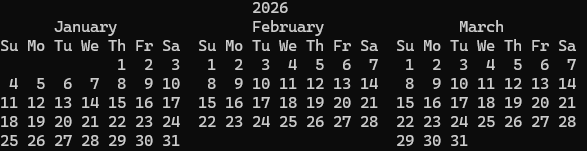
2026 Q1 calendar

2026 Q1 calendar

Serverless with Mama J


Serverless with Mama J

If you really want to know whether you understand something, try explaining it to your mom!

That’s exactly what Eric Johnson did. His mom, everyone calls her Mama J, wanted to know what serverless actually means and why it matters. So he walked her through it: what servers do, why they’re a headache to manage, and how AWS Lambda lets you skip all that by running code only when it’s needed, scaling automatically, and charging you nothing when nobody’s using it.

Watch the video on the AWS Developers YouTube channel.

Build serverless apps faster with AI

AWS is providing a growing set of AI-powered tools to bring serverless expertise directly into your coding assistants. From Model Context Protocol (MCP) servers and Anthropic Claude plugins to Kiro Powers. These tools provide contextual guidance for architecture decisions, implementation patterns, and deployment automation across the full serverless development lifecycle.

For more information on the tools available, see the resources page.

Serverless Patterns Collection

The open source Serverless Patterns Collection on Serverless Land now provides a direct link to download pattern .zip files. You can also clone the whole repo and explore more patterns.
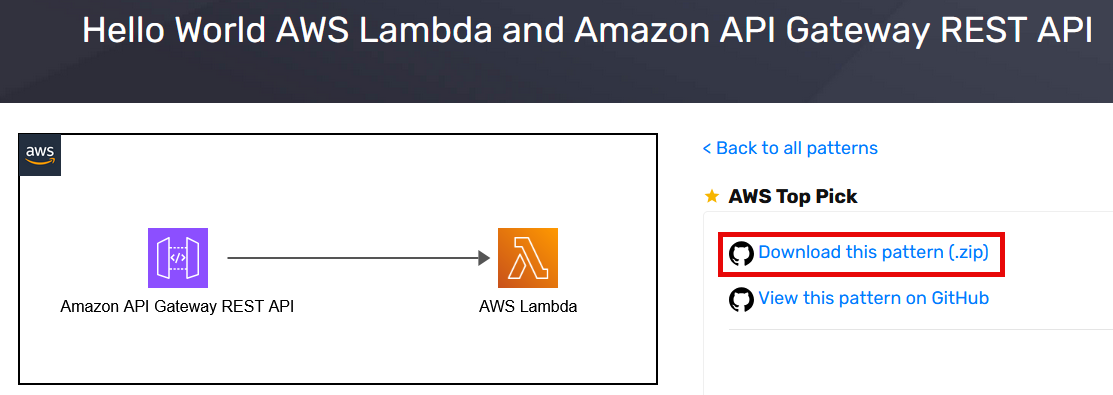
Serverless Patterns .zip download

Serverless Patterns .zip download

AWS Lambda

Build fault-tolerant, long-running applications using familiar programming patterns using AWS Lambda durable functions. You can use Lambda durable functions to write multi-step workflows in your preferred programming language, using built-in methods that automatically handle progress checkpointing and error recovery. This can improve your architecture so that you can focus on your business logic and optimize costs by charging only for active compute time.

You can build durable functions in Python and TypeScript and there is a durable execution SDK for Java in preview with the code available on GitHub.

Eric Johnson has a new video deep dive showing how to upload videos and scan them with AI. Learn how to coordinate multiple AWS services like Amazon Rekognition and Amazon Transcribe, implement human-in-the-loop approval workflows, and crate a live dashboard for real-time updates.

To find out how durable functions work, see the blog post which also provides testing and best practices guidance. You can also watch the re:Invent Breakout Session video: Deep Dive on AWS Lambda durable functions (CNS380)

Lambda now supports the .NET 10 runtime, including support for file-based apps. Developers can take advantage of the latest .NET 10 performance improvements, new language features, and improved startup times for Lambda functions.

You can now see Availability Zone (AZ) metadata in function execution environments. This allows you to determine the AZ ID (e.g., use1-az1) of the AZ your function is running in. This helps build functions that can make AZ-aware routing decisions, such as preferring same-AZ endpoints for downstream services to reduce cross-AZ latency. Operators can also implement AZ-aware resilience patterns like AZ-specific fault injection testing.

Payload size increase

AWS has increased the maximum payload size from 256 KB to 1 MB for a number of services such as asynchronous Lambda invocations, Amazon SQS, and Amazon EventBridge. This gives you more room to build and maintain context-rich event-driven systems and reduce the need for complex workarounds such as data chunking or external large object storage.

This blog post explores a real-world example using rich event context in agentic event-driven architectures
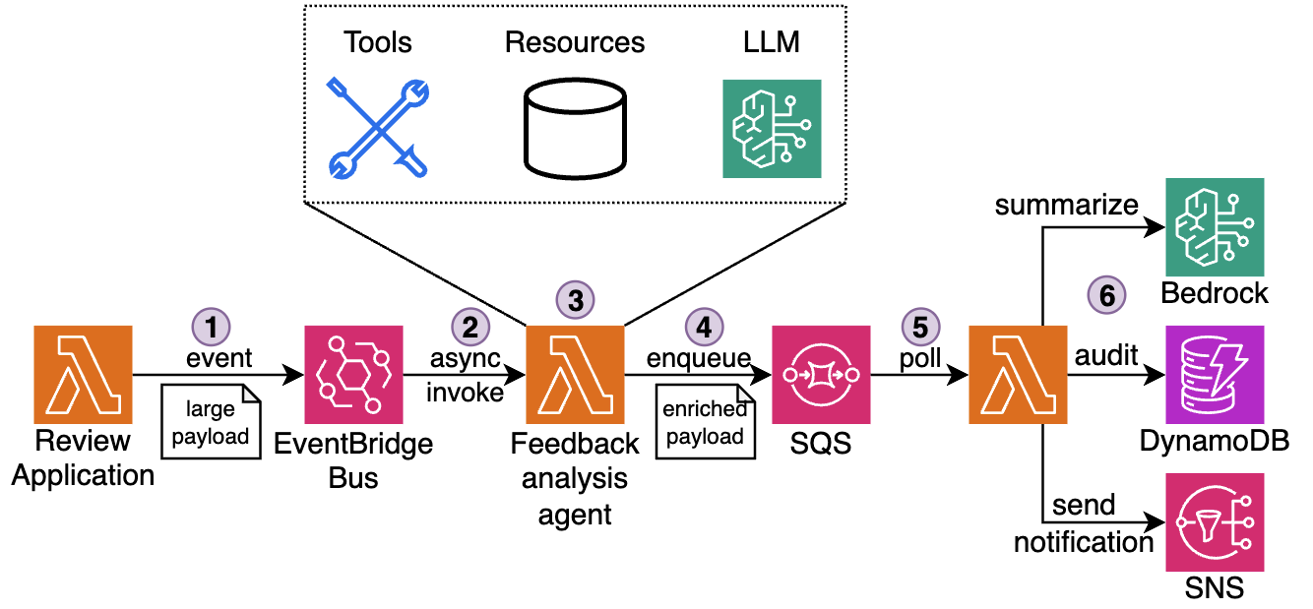
Payload size increase workflow

Payload size increase workflow

Amazon Bedrock

Amazon Bedrock expanded its model availability with a new set of fully managed open-weight models spanning frontier reasoning and agentic coding. Other model releases include Anthropic Claude Opus 4.6 and Claude Sonnet 4.6, and NVIDIA Nemotron 3 Super. You can invoke them through the unified Amazon Bedrock API without managing any underlying infrastructure, making it straightforward to experiment and swap models as your workload evolves.

Amazon Bedrock AgentCore is the infrastructure layer for securely deploying and operating AI agents. It works with popular open source frameworks, including Strands Agents, LangGraph and CrewAI, giving you the flexibility to build with your preferred tools without vendor lock-in.

AgentCore Gateway now includes semantic tool search, so you can discover the right tool for a task using natural language queries instead of manually browsing a catalogue. It also adds custom KMS encryption, debugging messages, and resource tagging to give you stronger governance over tool integrations.

Policy in Bedrock AgentCore allows you to define precise boundaries on agent actions and run continuous quality monitoring. This helps you maintain predictable, auditable agent behavior in production without embedding guardrail logic inside each individual agent.

AgentCore Runtime now supports stateful MCP server features, allowing agents to maintain session context across tool calls for richer, more coherent multi-step interactions.

Strands Agents
Strands Agents SDK

Strands Agents SDK

Strands Agents is an open source SDK for building and running AI agents in just a few lines of code, working with models available in Amazon Bedrock. Strands Labs is a new dedicated GitHub organization for experimental agent projects, including robotics and code agents. This gives you early access to cutting-edge agentic techniques before they reach production frameworks. See the introduction blog post for more information.

AWS Step Functions

AWS Step Functions introduces an enhanced TestState API that enables API-based testing for validating workflows before deployment. The new API supports testing individual states in isolation or complete workflows end-to-end, making it easier to verify state machine logic without incurring runtime costs.

By integrating TestState API testing into CI/CD pipelines, you can validate workflow logic before deployment, reducing the risk of production issues. Find complete code examples and testing framework in the GitHub repository.

Amazon EventBridge

Amazon EventBridge Scheduler now provides resource count metrics to help you monitor quota usage. These new metrics make it easier to track the number of schedules and schedule groups in your account and proactively manage service quotas.

Amazon DynamoDB

You can replicate Amazon DynamoDB table data across multiple AWS accounts and Regions. This enhances resiliency through account-level isolation, supports tailored security and data-perimeter controls. You can align workloads by business unit or environment and simplify governance requirements.
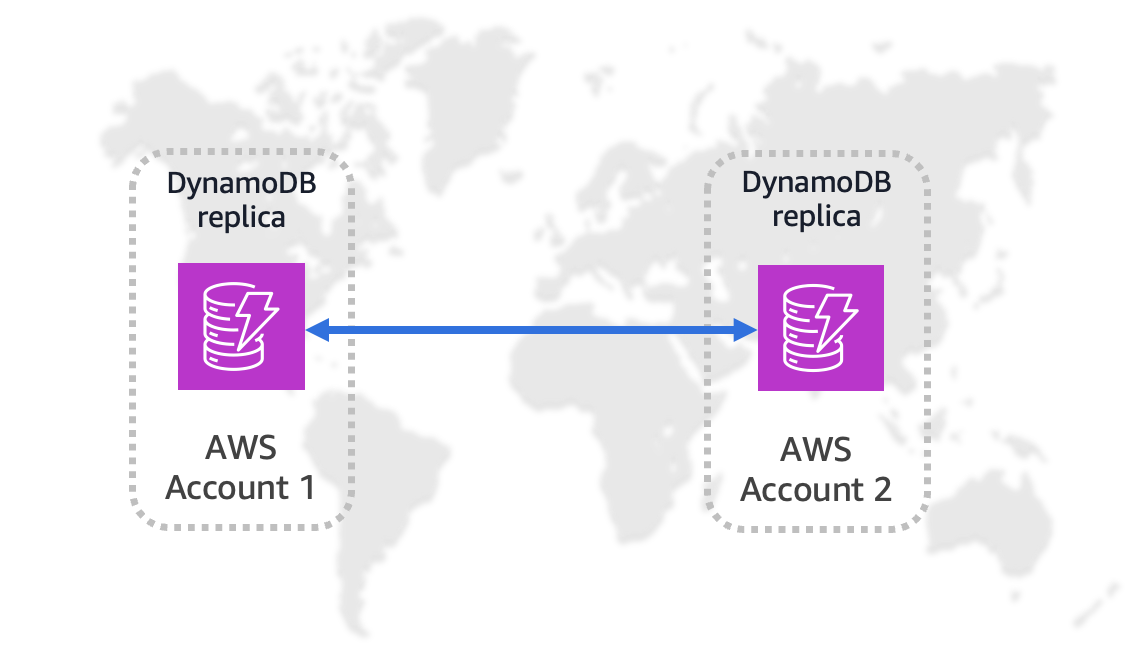
Amazon DynamoDB global replication

Amazon DynamoDB global replication

Amazon ECS

Amazon ECS Managed Instances can now integrate with Amazon EC2 Capacity Reservations. This allows you to make sure there is capacity availability for your container workloads while benefiting from the management automation of ECS Managed Instances.

ECS also now supports Network Load Balancer (NLB) for linear and canary deployment strategies. This helps you perform gradual traffic shifting using NLBs, providing more flexibility in deployment pipelines for latency-sensitive applications.

Serverless blog posts

January

February

March

Serverless Office Hours

Join our livestream every Tuesday at 11 AM PT for live discussions, Q&A sessions, and deep dives into serverless technologies. Watch episodes on-demand at serverlessland.com/office-hours.

January

February

March

Still looking for more?

The Serverless landing page has overall information about building serverless applications. The Lambda resources page contains case studies, webinars, whitepapers, customer stories, reference architectures, and even more Getting Started tutorials.

You can also follow the Developer Advocacy team to see the latest news, follow conversations, and interact with the team.

And finally, visit Serverless Land  for your serverless needs.
Serverless ICYMI Q4 2025

Post Syndicated from Julian Wood original https://aws.amazon.com/blogs/compute/serverless-icymi-q4-2025/

Stay current with the latest serverless innovations that can transform your applications. In this 31st quarterly recap, discover the most impactful AWS serverless launches, features, and resources from Q4 2025 that you might have missed.

In case you missed our last ICYMI, check out what happened in Q3 2025.

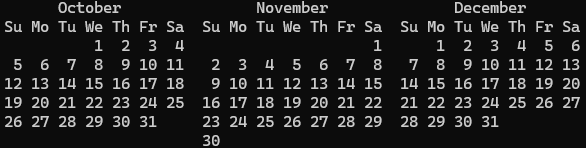
2025 Q4 calendar

2025 Q4 calendar

Serverless at re:Invent 2025

This post covers the biggest serverless announcements from re:Invent 2025, highlighting key feature updates that can improve your applications, and shares valuable resources to keep you informed.

AWS re:Invent 2025 had more than 60,000 in-person attendees and more than 2 million online viewers for the keynotes. The event featured 3,500 sessions from 3,000 speakers, which included information on 530 AWS service and feature announcements.

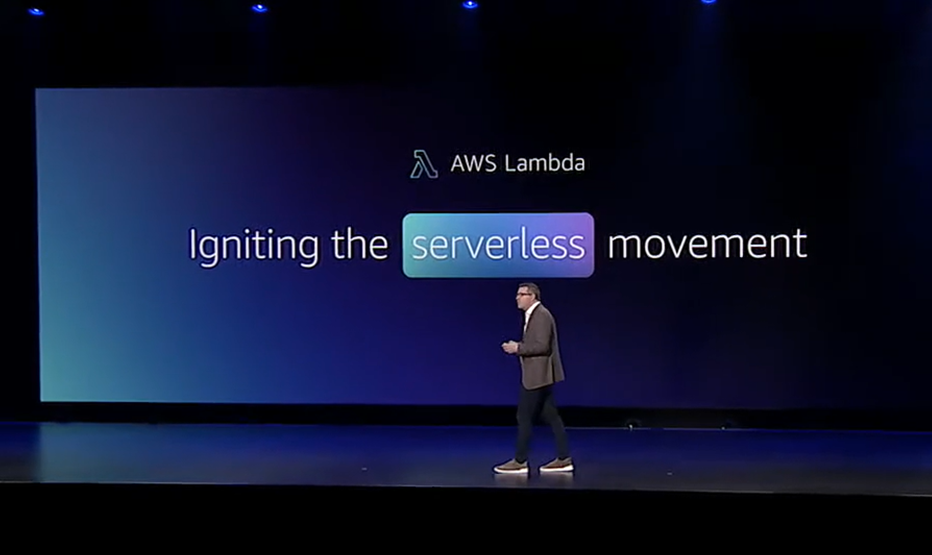
Keynote Igniting the serverless movement

Keynote Igniting the serverless movement

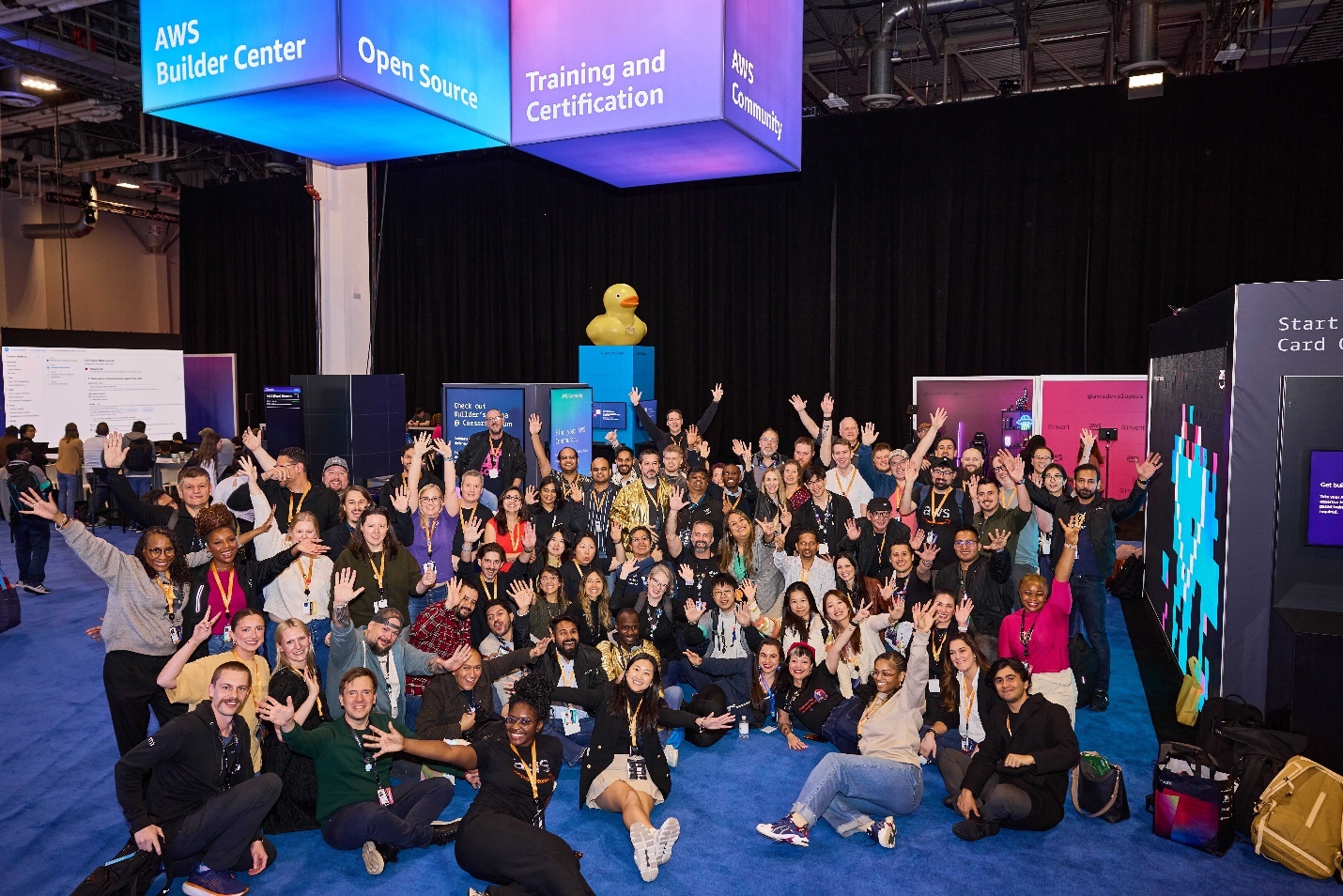
The serverless content consisted of two tracks: Containers and Serverless (CNS) and Application Integration (API). These tracks included 150 unique sessions watched in-person by more than 16,000 attendees. There were developer-focused experiences including a Road to re:Invent Hackathon, AWS Builder Loft, and Builders Arena. Serverlesspresso, the coffee shop powered by serverless technology, operated in two locations during the event: the Expo Hall and the certification lounge.

Serverless and developer community photo

Serverless and developer community photo

Find a curated list of serverless videos on Serverless Land YouTube.

AWS Lambda durable functions

Managing state across multi-step serverless workflows has traditionally required complex external orchestration tools. AWS Lambda durable functions expand how developers can use Lambda. You can now build reliable multi-step applications and AI workflows directly within Lambda.

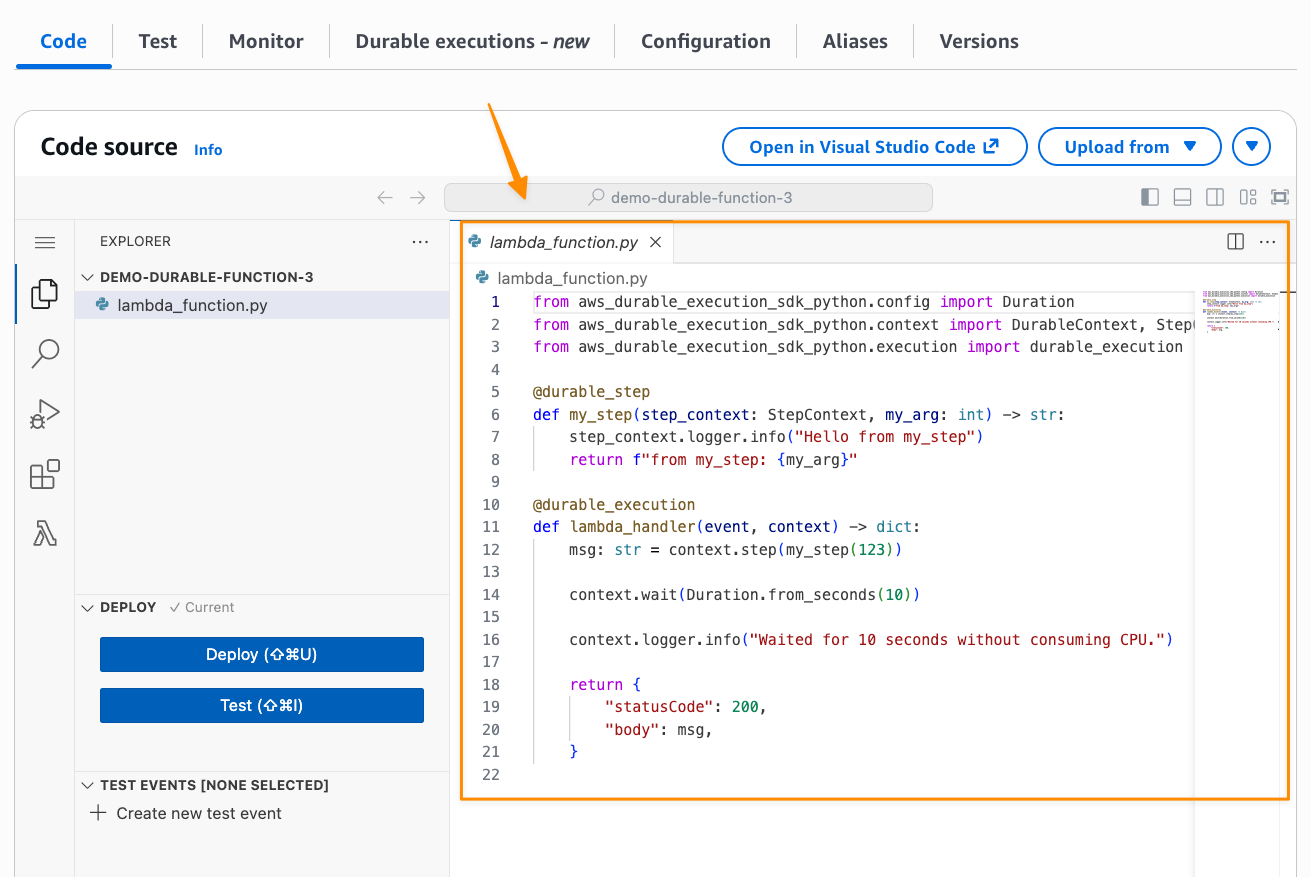
AWS Lambda durable functions code

AWS Lambda durable functions code

Durable functions automatically checkpoint progress by saving the current state and completed steps at key points during execution. This allows them to suspend execution for up to one year during long-running tasks and recover from failures by resuming from the last checkpoint rather than restarting from the beginning, all without requiring additional infrastructure management.

Developers can now build in Python or TypeScript, wrap calls in steps with automatic retries and checkpointing. You can use waits to suspend execution for minutes, hours, or even up to a year without paying for idle compute. Durable functions use a replay mechanism to maintain state and handle failures gracefully. The replay mechanism works by re-executing your function code from checkpoints when recovering from failures, ensuring state consistency without data loss. This also means you don’t need complex external orchestration tools for many use cases. This can be helpful for AI workflows and multi-step applications where you need reliable state management without managing external infrastructure.

For more information, read the launch blog post and watch the re:Invent Breakout Session video: Deep Dive on AWS Lambda durable functions (CNS380)

AWS Lambda Managed Instances

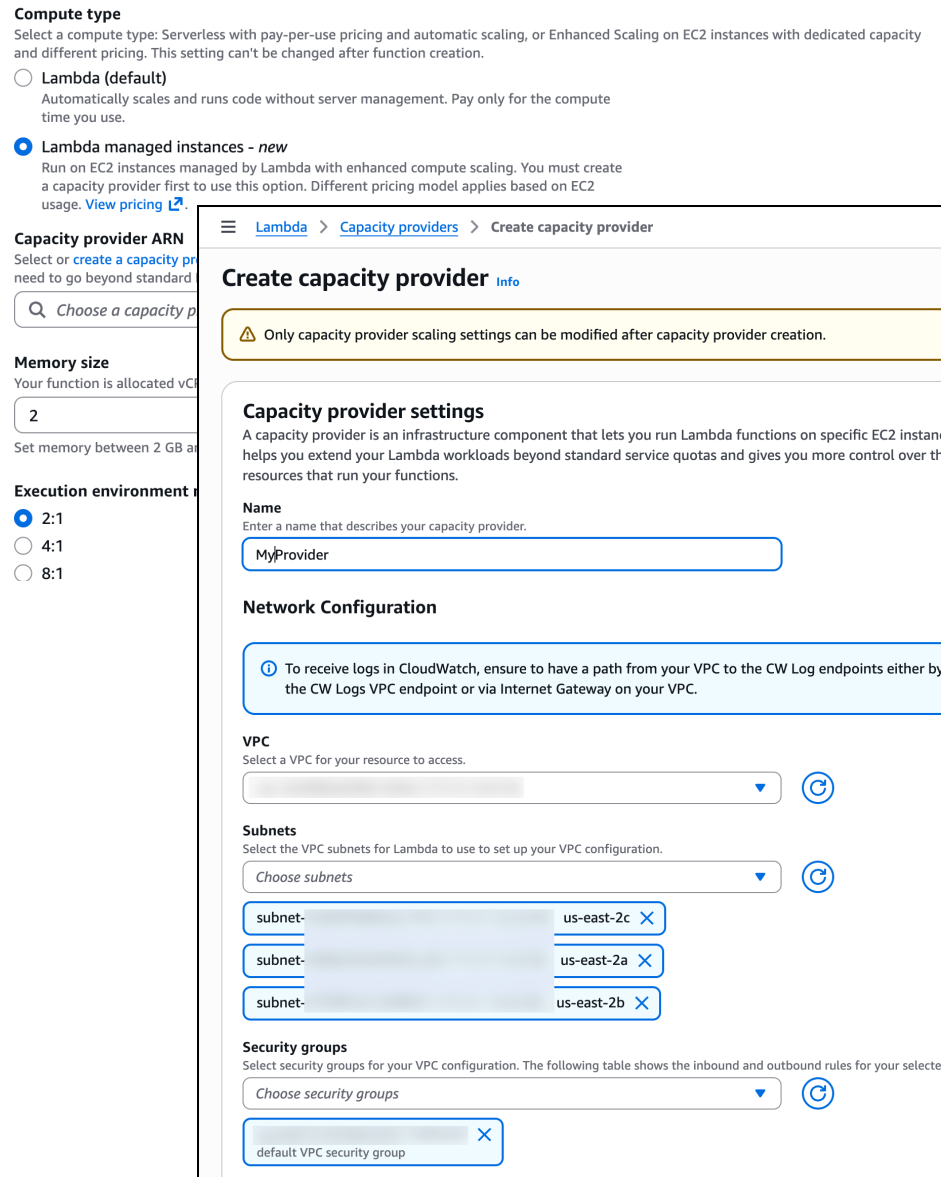
Lambda now offers Lambda Managed Instances, a new compute option that combines Amazon EC2 flexibility with fully managed infrastructure. AWS automatically handles instance provisioning, scaling, and maintenance while allowing access to the full range of EC2 capabilities, including Graviton4, network-optimized instances, and other specialized compute options.

AWS Lambda Managed Instances configuration

AWS Lambda Managed Instances configuration

Your functions run on dedicated EC2 capacity from your account, in your own Amazon Virtual Private Cloud (Amazon VPC). AWS still manages the operational overhead, including OS patching, load balancing, and auto-scaling. This gives you access to specialized hardware options while maintaining the serverless operational model. You can further improve costs by using EC2 pricing models, including Compute Savings Plans and Reserved Instances for Lambda workloads. Each instance can handle multiple concurrent requests, making this particularly valuable for high-volume, steady-state workloads where predictable pricing and specific hardware requirements matter.

For more information, read the launch blog post and watch the re:Invent Breakout Session video: Lambda Managed Instances: EC2 Power with Serverless Simplicity (CNS382).

Other Lambda announcements

Multi-tenant SaaS applications face challenges like data leakage between tenants and noisy neighbor effects where one tenant’s workload impacts others. They also struggle with implementing custom isolation mechanisms. Tenant isolation mode addresses these by processing function invocations in separate execution environments for each tenant. This manages tenant-level compute environment isolation automatically.

AWS Lambda tenant isolation

AWS Lambda tenant isolation

Lambda adds Provisioned Mode for Amazon SQS event-source mappings, providing predictable performance and reduced cold starts for high-throughput SQS processing workloads.

You can now send up to 1 MB of data in asynchronous Lambda invocations, increased from 256 KB, helping you build more complex data processing scenarios.

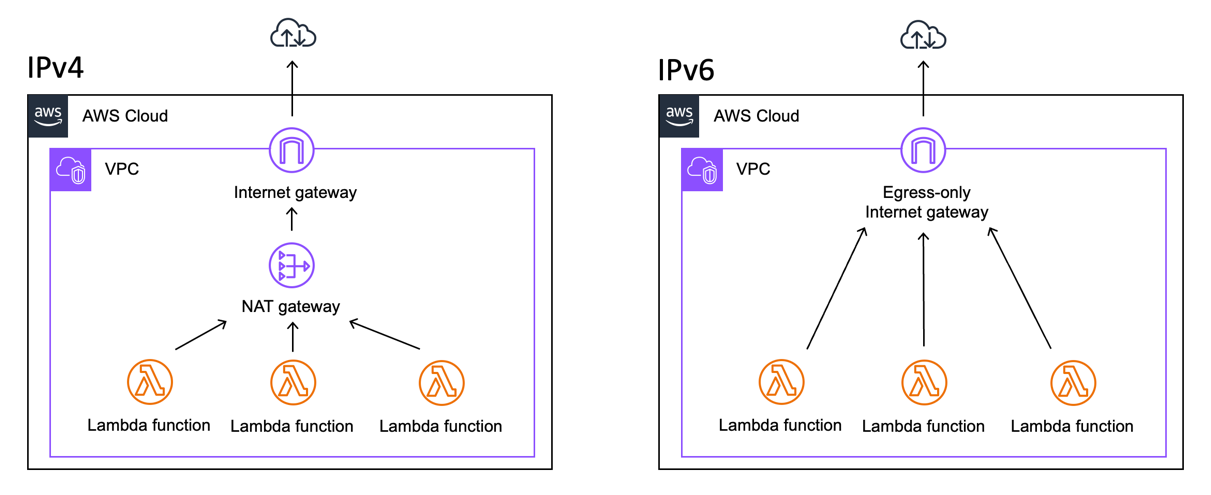
Lambda functions now support IPv6 networking, so you don’t need NAT Gateways when accessing the internet or other AWS services from VPC-connected functions.

Lambda internet connectivity through a NAT Gateway (IPv4) and Lambda internet connectivity through an egress-only internet gateway (IPv6).

Lambda internet connectivity through a NAT Gateway (IPv4) and Lambda internet connectivity through an egress-only internet gateway (IPv6).

Lambda Rust support is now generally available, moving from experimental status. This is backed by AWS Support and the Lambda availability SLA.

Lambda has expanded its runtime support by adding Python 3.14, Node.js 24, and Java 25 as both managed runtimes and container base images, providing access to the latest language features and ensuring long-term support.

Amazon ECS

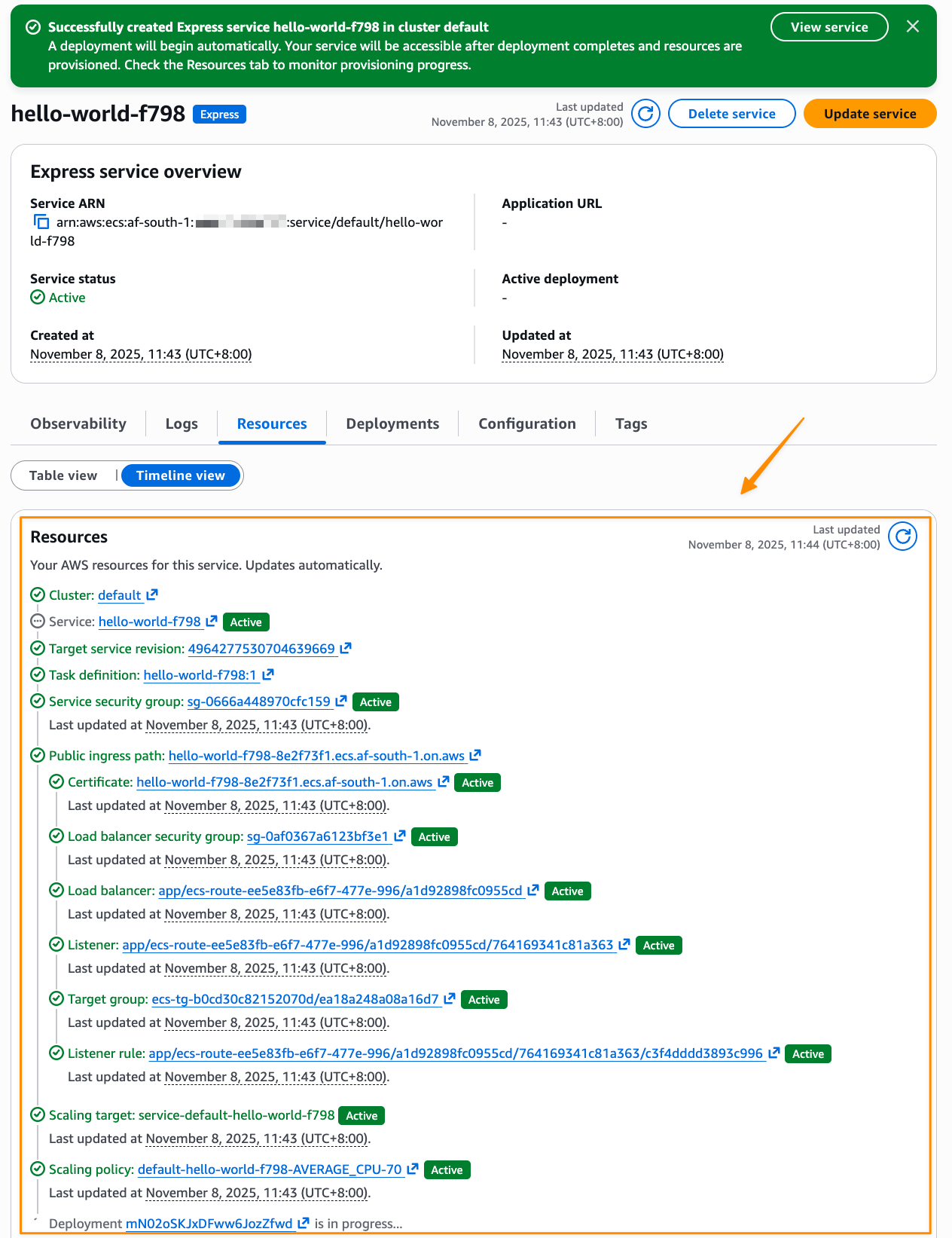
Amazon Elastic Container Service (Amazon ECS) Express Mode streamlines the deployment and management of containerized applications by automating the infrastructure setup that traditionally slows down developers.

Amazon ECS Express Mode deployment

Amazon ECS Express Mode deployment

This means you can focus on building applications while deploying with confidence using AWS best practices. Express Mode lets you deploy production-ready containerized web applications and APIs with a single command. This automatically handles domains, networking, load balancing, AWS Identity and Access Management (IAM) roles, and auto-scaling through simplified APIs. When your applications evolve and require advanced features, you can seamlessly configure and access the full capabilities of the resources, including Amazon ECS. Learn more from the launch blog post.

Amazon ECS announced a public preview of a fully managed MCP server, enabling AI-powered experiences for development and operations. The Model Context Protocol (MCP) server provides enterprise-grade capabilities like automatic updates and patching, centralized security through AWS IAM integration, comprehensive audit logging via AWS CloudTrail, and the proven scalability, reliability, and support of AWS.

Amazon Elastic Container Registry (ECR) managed container image signing enhances your security posture and eliminates the operational overhead of setting up signing. Container image signing allows you to verify that images are from trusted sources. ECR automatically signs images as they are pushed using the identity of the entity pushing the image. Signing operations are logged through CloudTrail for full auditability.

Amazon API Gateway

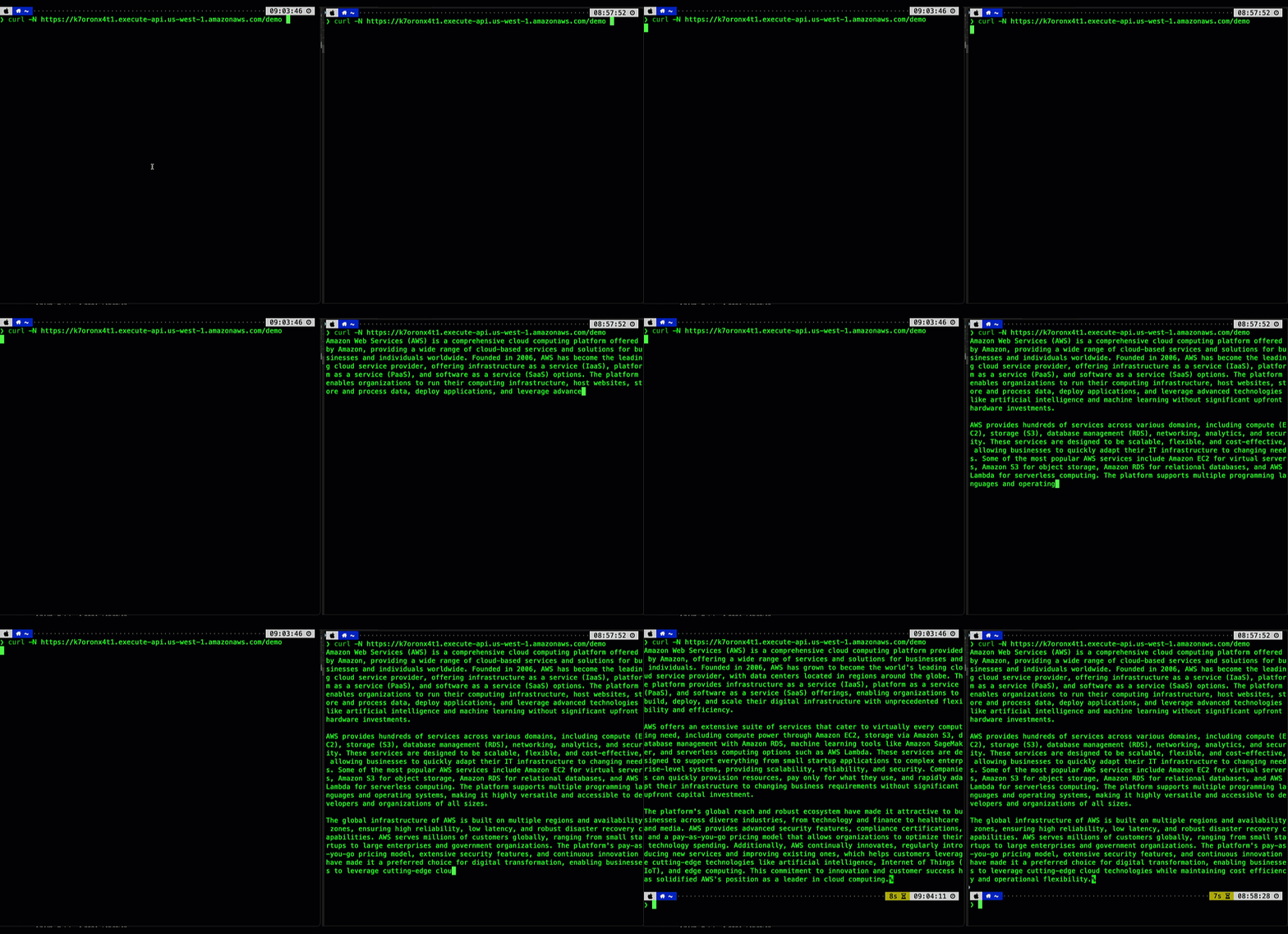
Amazon API Gateway allows you to improve the responsiveness of your REST APIs by progressively streaming response payloads back to the client. With this new capability, you can use streamed responses to enhance user experience when building LLM-driven applications (such as AI agents and chatbots), improve time-to-first-byte (TTFB) performance for web and mobile applications, stream large files, and perform long-running operations while reporting incremental progress using protocols such as server-sent events (SSE).

Amazon API Gateway streaming

API Gateway introduces private integration with Application Load Balancers (ALBs). You can use this to expose your VPC-based applications securely through REST APIs without exposing your ALBs to the public internet.

You can also now configure enhanced TLS security policies on API endpoints and custom domain names, providing you with greater control over the security posture of your APIs.

Amazon EventBridge

Amazon EventBridge introduced an enhanced visual rule builder that helps developers discover and subscribe to events from custom applications and over 200 AWS services. The console-based interface integrates the EventBridge schema registry with a comprehensive event catalog and intuitive drag-and-drop canvas that simplifies building event-driven applications. Developers can browse and search through events with readily available sample payloads and schemas without having to hunt through individual service documentation. The schema-aware visual builder guides developers through creating event filter patterns and rules, reducing syntax errors and accelerating development time.

EventBridge also allows targeting SQS fair queues.

AWS Step Functions

AWS Step Functions allows for enhanced local testing through the TestState API, providing programmatic access to comprehensive testing capabilities without deploying to AWS. This helps you build automated test suites that validate your workflow definitions locally on your development machines. Test error handling patterns, data transformations, and mock service integrations using your preferred testing frameworks.

There is also a new metrics dashboard, giving you visibility into your workflow operations at both the account and state machine levels.

Other announcements

Savings Plans flexible pricing model extends to AWS managed database services with the launch of Database Savings Plans. This helps reduce database costs by up to 35% when committing to a consistent amount of usage ($/hour) over a 1-year term. Savings automatically apply each hour to eligible usage across supported database services, and additional usage beyond the commitment is billed at on-demand rates.

Amazon DynamoDB now supports multi-attribute composite keys in global secondary indexes. You no longer need to concatenate values into synthetic keys manually, which sometimes results in the need to backfill data before adding new indexes. Instead, you can create primary keys using up to eight existing attributes, making it easier to model diverse access patterns and adapt to new query requirements.

Amazon Bedrock introduced AgentCore with quality evaluations and policy controls for deploying trusted AI agents at scale.

Bedrock also added 18 fully managed open weight models, expanding AI model options for developers.

The Strands Agents SDK is an open source framework that takes a model-driven approach to building and running AI agents in just a few lines of code. TypeScript support is now available in preview so you can choose between Python and TypeScript for building Strands Agents.

Amazon S3 Vectors became generally available. S3 Vectors delivers purpose-built, cost-optimized vector storage for AI agents, inference, Retrieval Augmented Generation (RAG), and semantic search at billion-vector scale.

Serverless blog posts

October

November

Serverless Office Hours

Join our livestream every Tuesday at 11 AM PT for live discussions, Q&A sessions, and deep dives into serverless technologies. Episodes are available on-demand at serverlessland.com/office-hours.

October

November

December

Still looking for more?

The Serverless landing page has overall information about building serverless applications. The Lambda resources page contains case studies, webinars, whitepapers, customer stories, reference architectures, and even more Getting Started tutorials.

You can also follow the Serverless Developer Advocacy team to see the latest news, follow conversations, and interact with the team.

And finally, visit Serverless Land for all your serverless needs.

Serverless ICYMI Q3 2025

Post Syndicated from Julian Wood original https://aws.amazon.com/blogs/compute/serverless-icymi-q3-2025/

Welcome to the 30th edition of the AWS Serverless ICYMI (in case you missed it) quarterly recap. At the end of a quarter, we share the most recent product launches, feature enhancements, blog posts, videos, live streams, and other interesting things that you might have missed!

In case you missed our last ICYMI, check out previous ICYMI posts.

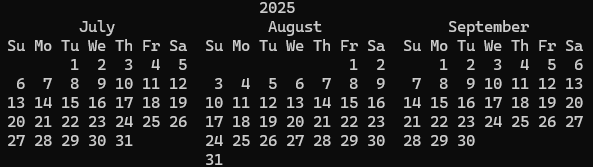
Figure 1: Serverless calendar Q3 2025

Figure 1: Serverless calendar Q3 2025

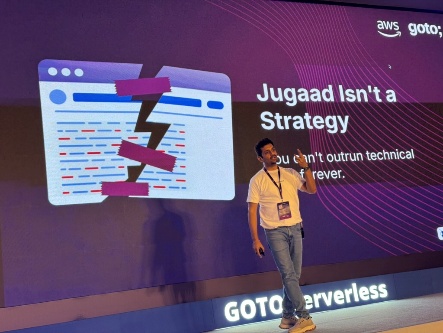
GOTO Serverless Bengaluru

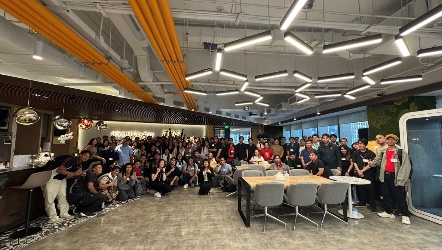
The Asia Serverless and GenAI Tour comprised 24 events across five countries. Cities included New Delhi, Bengaluru, Singapore, Manila, Bangkok, Perth, Melbourne, and Sydney. The GOTO Serverless conference in Bengaluru, India, formed the centerpiece with additional Developer Days, executive roundtables, user groups, cloud clubs, and specialized workshops. Thank you to all the developers who joined us on this incredible journey across Asia!

AWS Lambda

AWS Lambda now offers console to IDE integration and remote debugging capabilities that streamline the developer workflow from browser to Visual Studio Code and its clones. These enhancements reduce context switching and help developers debug Lambda functions directly in their preferred IDE environment.

The console to IDE feature provides an Open in Visual Studio Code button, enabling developers to move quickly from viewing their function in the browser to editing it in their IDE. AWS automatically handles setup, including the AWS Toolkit installation. Developers can also install dependencies and make code changes, which can automatically sync back to the cloud console. Watch the video to see how it works:

Remote debugging allows you to reduce debugging time from hours to minutes while simplifying local environment setups. You can set breakpoints and debug Lambda functions running in the actual cloud environment with complete access to Amazon VPC resources and AWS Identity and Access Management (AWS IAM) execution roles. The debugging connection uses AWS IoT Secure Tunneling Service, and AWS automatically cleans up debugging configuration after completion. Watch the video to see how it works:

Lambda now integrates with LocalStack directly in the AWS Toolkit for Visual Studio Code. This simplifies local testing of serverless applications involving multiple AWS services. You can now deploy serverless applications to LocalStack using the same commands, debug Lambda functions with one-click setup, and test end-to-end event-driven workflows locally before deploying to the cloud.

Lambda response streaming now supports a maximum response payload size of 200 MB, 10 times higher than before. Response streaming helps build applications that progressively stream response payloads back to clients, improving performance for latency-sensitive workloads by reducing time to first byte (TTFB) performance.

AWS Lambda Hackathon

The AWS Lambda Hackathon, challenged developers to build serverless applications solving real-world business problems using Lambda. With 3,732 participants and 331 project submissions, the competition showcased innovative serverless solutions across diverse domains.

Figure 2: AWS Lambda Hackathon

Figure 2: AWS Lambda Hackathon

We announced winners on July 22, 2025, with $15,000 in total prizes awarded:

  • First Place ($6,000): ForestShield: AWS Deforestation Detection by Younes Laaroussi is a serverless forest monitoring system that tracks deforestation in real-time.
  • Second Place ($4,000): Smart Meeting Assistant by Eduard-David Jitareanu lets you upload audio recordings to create and manage Jira tasks automatically.
  • Third Place ($3,000): Drone SoundAware by Ian Brumby allows drone operators to plan, assess, and optimize flight routes while reducing noise impact on communities.
  • Honorable Mentions ($500):
    • OutScan by Sheldon Aristide is an AI-powered, serverless genomic radar analyzing viral mutations in real-time to detect pandemic threats.
    • Buzz CSV by Damien Pace transforms Excel files into actionable insights through natural language queries.
    • Smart Clip AI by Alexander Bolaño turns long videos into short, high-impact clips.
    • VA Rating Assistant by Chris Lassiter helps you upload medical documents and uses AI to identify potential VA disability claims and ratings, helping veterans access benefits faster and more accurately.

Amazon ECS

Amazon ECS now offers Managed Instances, a new compute option that combines EC2 flexibility with fully managed infrastructure. The functionality automatically handles instance provisioning, scaling, and maintenance while allowing you to use the full range of EC2 capabilities. Key features include:

  • Automated security patching every 14 days with configurable maintenance windows
  • Intelligent task placement and resource optimization across instances
  • Support for custom instance attributes including GPU, CPU architecture, and network performance requirements
  • Built on Bottlerocket OS with automated security updates
  • Deep integration with EC2 pricing options
  • Default cost-optimized instance selection with option for custom specifications

Watch the video to learn more.

Amazon ECS now enables built-in blue/green deployments. This reduces the need for custom deployment tooling while making containerized application releases safer and more reliable. The new capability provisions the new application version (green) alongside the existing version (blue), allowing validation before routing production traffic. ECS also introduced deployment lifecycle hooks powered by Lambda functions that integrate custom validation steps multiple stages of deployment. Watch the video to learn more.

Amazon S3

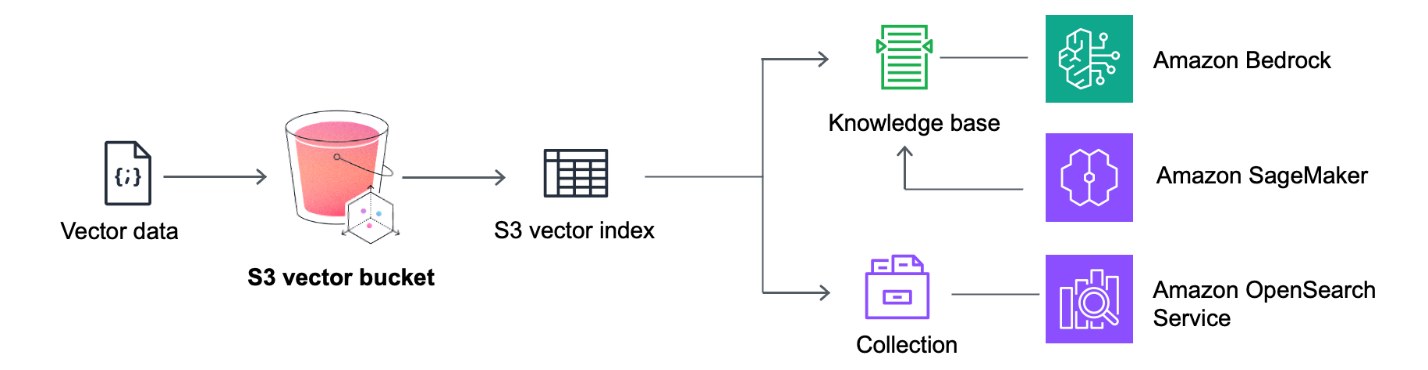
Amazon S3 Vectors is now available in preview. This is a cloud object store with native support for storing vector datasets and with sub-second query performance for AI applications. Vector buckets is a new bucket type with dedicated APIs for storing, accessing, and querying vector data without infrastructure provisioning.

Figure 3: Amazon S3 Vectors

Figure 3: Amazon S3 Vectors

Amazon S3 Metadata now supports metadata for all your S3 objects. This allows you to analyze and query metadata for your entire S3 storage footprint. S3 Metadata live inventory tables gives you a fully managed Apache Iceberg table, including existing objects. This provides a fully managed snapshot of all objects and metadata, refreshed within 1 hour of changes. S3 Metadata journal tables offer a near-real-time view of object-level changes.

S3 also now supports a preview in the AWS Console for S3 Tables, making it easier to understand data structure and content without writing SQL. S3 Batch Operations now supports bulk target selection for managing buckets through the console. S3 also now supports conditional deletes in S3 general purpose buckets, allowing safer deletion operations.

Amazon EventBridge

Amazon EventBridge now provides enhanced logging capabilities with detailed information about successes, failures, and status codes. This new observability feature provides visibility into the complete event journey, showing when events are published, matched against rules, delivered to subscribers, or encounter failures. You can send logs to Amazon CloudWatch Logs, S3, or Amazon Data Firehose.

Generative AI with serverless

Discover how to effectively build AI agents on AWS Serverless shows how to use Amazon Bedrock AgentCore, Lambda, and ECS to build production-ready agentic AI systems. The blog explains how to use the Strands Agents SDK, which is a framework for building AI agents. The post includes storing session state, implementing authentication using Amazon Cognito and Amazon API Gateway, integrating tools through MCP, and establishing observability using OpenTelemetry.

Figure 4: Agentic loop

Figure 4: Agentic loop

A series on serverless generative AI architectural patterns (part1, part2) explores non-real-time generative AI scenarios. These include buffered asynchronous request-response using Amazon SQS queues, multimodal parallel fan-out using EventBridge or Amazon SNS, and non-interactive batch processing using AWS Step Functions or AWS Glue.

Kiro: Spec-driven AI development

AWS introduced Kiro, an agentic AI-powered IDE now available in preview. It is built on the open-source Code OSS platform (the same foundation as VS Code) so you can use your existing extensions. Kiro brings a spec-driven approach to software development that bridges the gap between rapid prototyping and production-ready code. Kiro emphasizes structured development. It breaks down developer prompts into comprehensive requirements, system design documents, and task lists before writing any code. You can download Kiro for macOS, Windows, and Linux from the Kiro website.

Amazon Bedrock AgentCore

Amazon Bedrock AgentCore is now available in preview, offering a set of services that help developers quickly and securely deploy AI agents at scale. AgentCore supports frameworks including CrewAI, LangGraph, LlamaIndex, and Strands Agents, and works with any model in or outside Amazon Bedrock.

AgentCore includes seven modular services:

  • AgentCore Runtime provides sandboxed low-latency serverless environments with up to 8-hour runtime support
  • AgentCore Memory manages both short-term and long-term memory with built-in policies
  • AgentCore Observability offers step-by-step visualization with OpenTelemetry support
  • AgentCore Identity provides a secure token vault for OAuth 2.0 and API keys.
  • AgentCore Gateway transforms APIs and Lambda functions into agent-ready tools with a unified MCP interface
  • AgentCore Browser enables managed web automation
  • AgentCore Code Interpreter provides safe code execution environments.

Amazon Bedrock

Amazon Bedrock continues to expand its foundation model selection with new models now generally available. Qwen models bring four fully managed open-weight models which excel at sophisticated coding tasks, multi-tool agentic workflows, and adaptive reasoning through hybrid thinking modes. DeepSeek-V3.1 delivers performance improvements on certain benchmarks while maintaining cost efficiency through its mixture-of-experts architecture.

Amazon SNS

Amazon SNS now supports three additional message filtering operators: wildcard matching, anything-but wildcard matching, and anything-but prefix matching. SNS also now supports message group IDs in standard topics, enabling fair queue functionality for subscribed SQS standard queues.

Serverless Compute Blog Posts

July

August

September

Serverless Office Hours weekly livestream

July

August

September

Videos

The Serverless landing page has more information. The Lambda resources page contains case studies, webinars, whitepapers, customer stories, reference architectures, and even more Getting Started tutorials.

You can also follow the Developer Advocacy team members who work on Serverless to see the latest news, follow conversations, and interact with the team.

And finally, visit ServerlessLand for all your serverless needs.