Post Syndicated from jzb original https://lwn.net/Articles/1092984/
Greg Kroah-Hartman has announced the release of the 7.2.4, 6.18.50,
and 6.12.109 stable kernels. Each contains
important fixes throughout the tree. Users are advised to upgrade.
Post Syndicated from jzb original https://lwn.net/Articles/1092984/
Greg Kroah-Hartman has announced the release of the 7.2.4, 6.18.50,
and 6.12.109 stable kernels. Each contains
important fixes throughout the tree. Users are advised to upgrade.
Post Syndicated from The Atlantic original https://www.youtube.com/shorts/zHZ68WaxlSQ
Post Syndicated from Explosm.net original https://explosm.net/comics/report-2
New Cyanide and Happiness Comic
Post Syndicated from corbet original https://lwn.net/Articles/1092555/
The restartable sequences feature is one of
the stranger corners of the kernel’s user-space interface; it provides a
way for user space to carry out simple lockless operations and be informed
if it is preempted over the course of an operation (and must, thus,
restart). Work merged in the 6.19 release to improve the performance of restartable
sequences broke the TCMalloc allocator,
which was relying on an undocumented (and unintended) kernel behavior.
Now, Olivier Dion is proposing an
addition to the restartable-sequences API that will bring TCMalloc back
into the fold; it does not make the restartable-sequences API any less
strange, though.
Post Syndicated from The Atlantic original https://www.youtube.com/watch?v=TZSxjoX4FoE
Post Syndicated from Channy Yun (윤석찬) original https://aws.amazon.com/blogs/aws/aws-weekly-roundup-claude-fable-5-1-on-aws-amazon-linux-2027-preview-aws-certified-ai-business-strategist-and-more-september-7-2026/
Last week, Claude Fable 5.1 became available on AWS. According to Anthropic, Claude Fable 5.1 delivers frontier intelligence for ambitious tasks across coding, scientific research, and enterprise workflows. Claude Fable 5.1 is built for long-running, high-stakes work that runs for hours and spans many applications. It can own more of a software project on its own, handling features across an entire codebase, code review, and performance work over extended sessions.
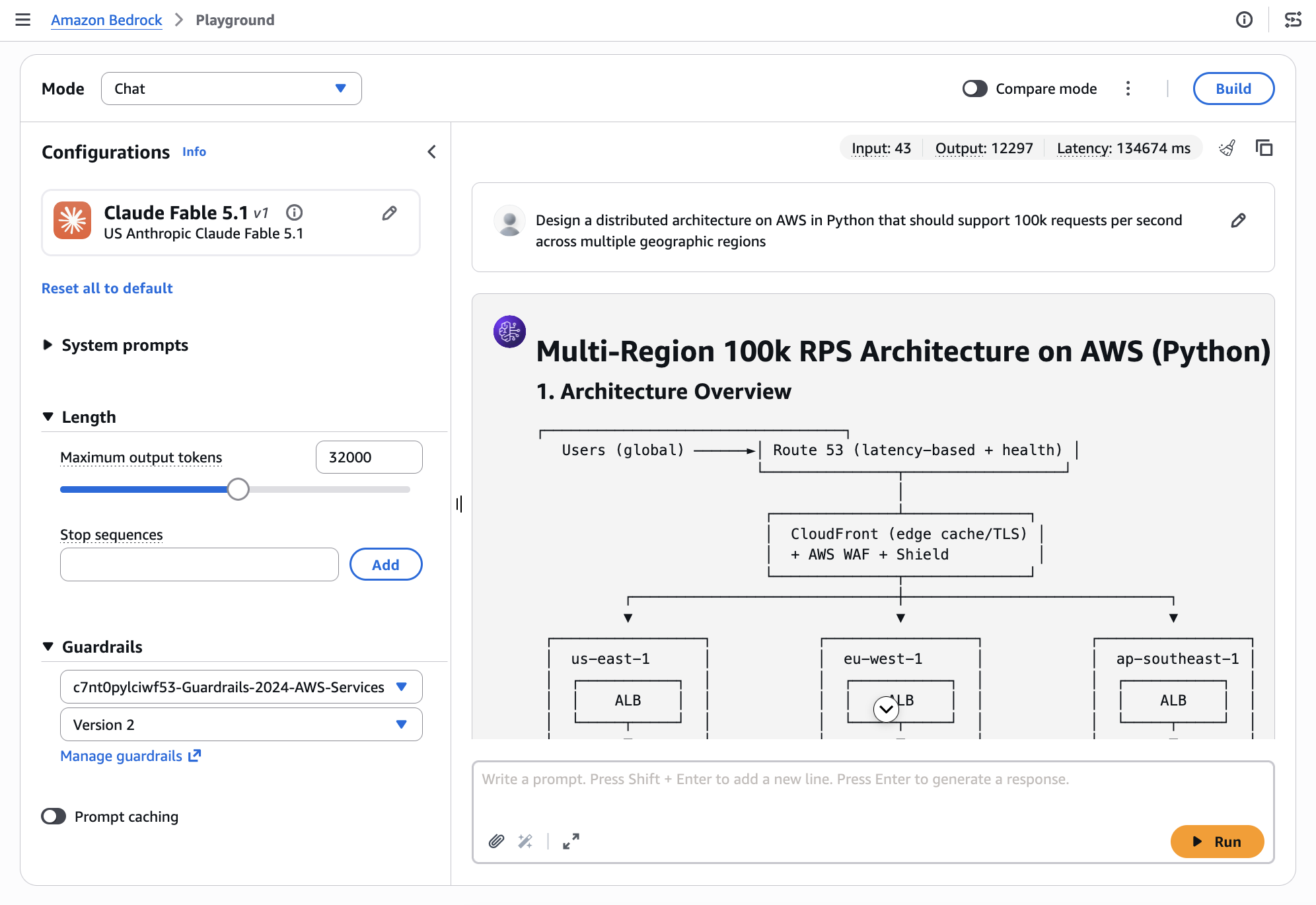
Anthropic has designated Fable 5.1 a Covered Model, a category of Claude models that carry additional data retention, safety review, and access policies wherever they’re offered. Claude Fable 5.1 is subject to data retention for up to 30 days and human review by Amazon personnel, with a new aws_review data retention mode. In this mode, AWS retains your prompts and outputs for human safety review within the AWS boundary. The provider_data_share mode is legacy, and Amazon Bedrock does not share your data with the model provider. In addition, Enterprise Frontier Safeguards (EFS), built in partnership between AWS and Anthropic, will let eligible customers use Covered Models while keeping their data in a cloud environment they control.
You have two ways to access Claude Fable 5.1: Amazon Bedrock and Claude Platform on AWS. To learn more, see the Claude Fable 5.1 model card on Amazon Bedrock and Claude Platform on AWS.
Last week’s launches
Here are some launches that got my attention:
For a full list of AWS announcements, be sure to keep an eye on the What’s New with AWS page.
Other AWS news
Here are some additional projects and news items you may find interesting:
For a full list of AWS blog posts, be sure to keep an eye on the AWS Blogs page.
Learn more about AWS, browse and join upcoming AWS-led in-person and virtual events, startup events, and developer-focused events including AWS re:Invent, AWS Summits, and AWS Community Days. Join the AWS Builder Center to connect with builders, share solutions, and access content that supports your development.
That is all for this week. Check back next Monday for another Weekly Roundup!
— Channy
Post Syndicated from jzb original https://lwn.net/Articles/1092913/
Version
2026.08 of the Buildroot embedded Linux
system builder has been released. Buildroot 2026.08 includes nearly 1,000
changes from 100 contributors; some of the notable changes include support for
Linux 7.1.x, Binutils 2.46.1, GCC 16.2.0, glibc 2.44, as well as adding the
M68K and IBM Power 10/11 architectures.
Post Syndicated from jzb original https://lwn.net/Articles/1092911/
Security updates have been issued by AlmaLinux (buildah, freerdp, gegl04, go-fdo-client, grafana, grafana-pcp, kernel, and pipewire), Debian (aom, chromium, libde265, libssh2, thunderbird, and tryton-server), Fedora (chromium, composer, cosmic-greeter, gegl04, greetd, ibus-table, jss, libheif, lightdm, lxdm, memcached, perl-DBD-Pg, plasma-login-manager, rust-webbrowser, sddm, selinux-policy, slitherer, and tkimg), Mageia (expat, mingw-expat, mbedtls, microcode, python-linkify-it-py, and tomcat), Oracle (buildah, container-tools:ol8, dbus-broker, freerdp, go-toolset:ol8, grafana-pcp, kernel, kernel-uek, nodejs24, php, and pipewire), Slackware (libpcap, libxml2, mozilla-firefox, mozilla-thunderbird, and util-linux), SUSE (bson-devel, busybox, bzip2, c-ares, cpio, cups-filters, dracut, ffmpeg-7, ffmpeg-8, file-roller, firefox, firefox-esr, glances-common, grafana, hauler, helm, helm3, java-17-openjdk, java-21-openjdk, lcms2, libcupsfilters, libheif, libmsgpack-c2, libsoup, libsoup2, libusb-1_0, libvirt, LibVNCServer, mcphost, ollama, opencode, openssl-1_1, openssl-3, php-composer2, podman, postgresql15, postgresql17, postgresql18, python, python-aiohttp, python-h2, python-sqlparse, python310, rpcbind, sssd, thunderbird, trivy, ucode-intel, and webkit2gtk3), and Ubuntu (linux, linux-aws, linux-aws-7.0, linux-gcp, linux-gke, linux-hwe-7.0, linux-realtime, linux, linux-aws, linux-fips, linux-kvm, linux-lts-xenial, linux, linux-fips, linux-gcp, linux-gcp-fips, linux-gke, linux-gkeop, linux-nvidia, linux-nvidia-6.8, linux-nvidia-lowlatency, linux-raspi, linux-realtime, linux-realtime-6.8, linux, linux-gcp, linux-gcp-fips, linux-gke, linux-gkeop, linux-hwe-5.15, linux-ibm, linux-ibm-5.15, linux-intel-iot-realtime, linux-lowlatency, linux-lowlatency-hwe-5.15, linux-nvidia, linux-nvidia-tegra, linux-nvidia-tegra-5.15, linux-realtime, linux-aws-5.4, linux-gcp, linux-gcp-5.4, linux-gcp-7.0, linux-oem-7.0, minetest, and miniupnpd).
Post Syndicated from Ben Garside original https://www.raspberrypi.org/blog/experience-ai-evolves-with-flexible-resources-for-every-classroom/
Experience AI equips young people with a meaningful understanding of artificial intelligence (AI) and machine learning by giving educators the knowledge and confidence to teach these topics in ways that suit their classrooms.

Whether you’re introducing AI to learners for the first time, helping them deepen their understanding, exploring generative AI with them, or integrating AI literacy across the curriculum, Experience AI offers you all the resources you need for free.
Since we started publishing Experience AI resources in 2023, they have been downloaded over a million times in 195 countries, and we have worked with partner organisations in more than 40 countries to train educators to teach AI literacy. Thanks to partners, we have learned a lot about how teachers around the world use the resources in their classrooms, and this has given us direction for what new resources to develop.
Many teachers looking for AI literacy resources are not computing specialists and have very busy timetables. Under pressure to deliver more content without more instructional time, what educators need are resources they can integrate into what they already teach. To support them, we’re now offering an updated suite of Experience AI resources that make AI literacy more accessible, flexible, and relevant.
The resources include those co-developed by the Raspberry Pi Foundation and Google DeepMind, alongside those developed independently by the Raspberry Pi Foundation.
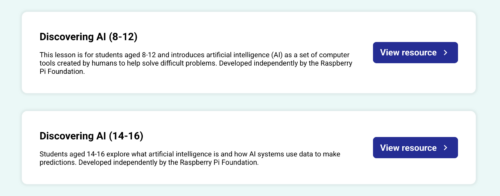
The new Discovering AI resources, aimed at learners aged 8–12 and learners aged 13–16, are single lessons for introducing the fundamental ideas behind AI. They support educators with learners who have little or no prior knowledge of AI, and include engaging, age-appropriate activities.
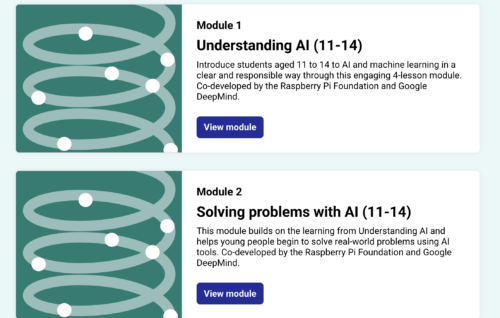
From there, our updated Foundations of AI units let teachers support their learners to develop a deeper understanding of how AI systems work, how they’re trained, and how they can be applied to real-world problems.
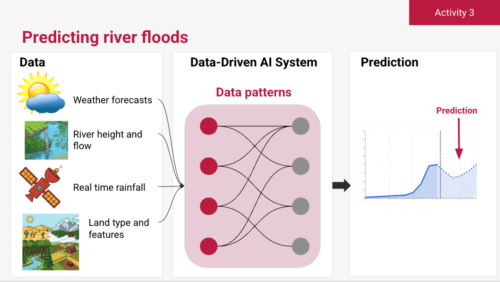
And a new and growing collection of thematic resources supports teachers and learners to explore AI through cross-subject topics such as creativity, the environment, and critical thinking.
Experience AI now fully reflects our belief that AI literacy needs to be cross-curricular. Application of AI technologies isn’t limited to neat domains or subjects, so learners’ opportunities to understand them shouldn’t be either.
Education systems vary significantly between countries, and in most national curricula, AI literacy is not yet clearly defined. Nevertheless, teachers are both under pressure to deliver this new topic area in their limited classroom time, and eager to rise to the challenge to support their learners.

So we asked ourselves: how can we help educators to teach AI literacy in any subject without additional lesson time, when we cannot create specific resources for every subject in every education system?
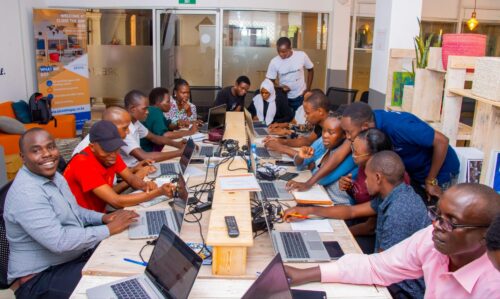
Our answer came from educators themselves. Through our network of global partners, we learned that teachers were not waiting for us to tell them in what subjects the Experience AI resources belonged. They were already adapting them to teach AI literacy in all sorts of contexts. For example, we saw that some educators adapted the resource on AI and ecosystems, which we had developed for Biology classrooms, for their Geography classrooms, where it supported similar learning goals.
This insight into teachers’ classroom practice prompted us to change our approach.
Now, rather than designing resources for a single subject, we design and organise them in themes that fit across subjects, such as environment, creativity, ethics, and critical thinking. So a resource for exploring the environmental impact of AI data centres could be used in Geography, Physics, Citizenship, or Business Studies classrooms. An activity about AI-generated media could prompt discussions in Digital Literacy, Art, or Computing lessons. The same material supports different curricular goals, depending on how teachers choose to use it.
A key advantage of this new thematic approach is flexibility. Our thematic resources support teachers to:
Like all Experience AI materials, the new resources:
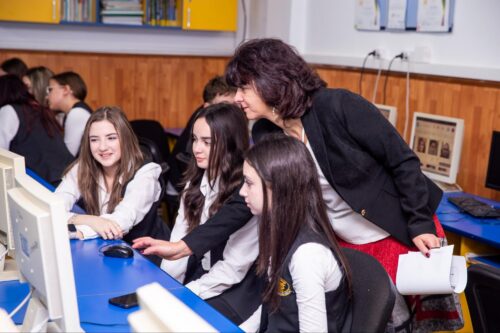
While Experience AI will continue to focus on core AI literacy concepts — how AI systems work, how they are used, and how to think critically about them — the resources we offer will increasingly be:
In this way, we aim to make teaching AI literacy practical and achievable for every educator, regardless of their subject specialism or previous experience of using or teaching about AI.
We’ve tested the new thematic resources with our Experience AI partner, Digital Moment in Canada, who also co-created our Social Media and Flood Forecasting units. Educators’s feedback shows that they value the added flexibility and find the new materials easier to bring into their teaching.
With our new approach, we’re able to offer a more flexible Experience AI programme that supports a wider range of educators, however they want to bring AI literacy into their classrooms.
If you use the resources in your classrooms, please tell us what you think. We’ll continue refining and expanding the Experience AI programme and resources in response to feedback from educators and partners around the world.
Get in touch and share your stories of using Experience AI in the classroom via our email: [email protected]
The post Experience AI evolves with flexible resources for every classroom appeared first on Raspberry Pi Foundation.
Post Syndicated from jzb original https://lwn.net/Articles/1092768/
The Asahi Linux project has announced that support
for Apple’s M3-series chips has been added to the Asahi installer.
Linux support for M3 series SoCs and the machines powered by them is now in a
state where almost everything supported on the M1 and M2 series
machines just works. This includes the webcam, internal microphones, USB (up to
the hardware limit of USB 3 10 Gb/s), hardware accelerated video decoding
including support for AV1, WiFi, Bluetooth, and much more! The
only major exceptions remain full DCP support and the GPU, which we will have
more news on in the coming
months. Do not expect performant or power-efficient 3D acceleration
right now.
See the blog post for other current limitations of M3 support.
Post Syndicated from The History Guy: History Deserves to Be Remembered original https://www.youtube.com/watch?v=jIaoJduStEU
Post Syndicated from Bruce Schneier original https://www.schneier.com/blog/archives/2026/09/automobile-camouflage-to-hide-from-flock-cameras.html
Not sure it’s practical, but it’s certainly striking.
Post Syndicated from Darknet original https://www.darknet.org.uk/2026/09/wraith-browser-hooking-and-blind-xss-page-mirroring/
WRAITH combines BeEF-style browser hooks with blind-XSS capture and a credentialed Page Mirror. Tested locally, with its limits examined.
Post Syndicated from corbet original https://lwn.net/Articles/1092757/
The 7.3-rc2 kernel prepatch is out for
testing. Linus said:
This didn’t *feel* like a particularly busy rc2, but it clearly
was. rc2 is usually the quietest time when people take a breather
after the merge window and it takes a while to start finding
bugs. But not this time – this is a “full fat” rc release. […]Nothing looks particularly odd, even if the rc2 timing is a bit
unusual. It might be just random, but we’ll obviously all blame it
on AI, because whether that’s really the cause or not, it’s an easy
thing to blame 😉
Post Syndicated from xkcd.com original https://xkcd.com/3295/
Post Syndicated from Explosm.net original https://explosm.net/comics/ice-bath
New Cyanide and Happiness Comic
Post Syndicated from Ryan Smith original https://www.servethehome.com/qnap-qsw-m2130-2-5gbe-and-10gbe-switches-shown/
At Computex 2026 QNAP was showing off a pair of new managed enterprise switches. The QSW-M2130 and 2130P offer 24x 2.5GbE ports and 6x 10GbE ports with both RJ45 and SFP+ backhaul connectivity
The post QNAP QSW-M2130 2.5GbE and 10GbE Switches Shown appeared first on ServeTheHome.
Post Syndicated from The Atlantic original https://www.youtube.com/watch?v=MPrNaTEzLp4
Post Syndicated from The Atlantic original https://www.youtube.com/shorts/Ht-t4A1Nbzo
Post Syndicated from Oglaf! -- Comics. Often dirty. original https://www.oglaf.com/pinchybouquets/