Post Syndicated from Crosstalk Solutions original https://www.youtube.com/shorts/RA361CfNvvk
An Announcement from Radio Atlantic
Post Syndicated from The Atlantic original https://www.youtube.com/shorts/1t8LXhKYJRE
History’s Smartest Detective: Sir Isaac Newton
Post Syndicated from The History Guy: History Deserves to Be Remembered original https://www.youtube.com/watch?v=lERsQvD4-Yw
Professional Athletes and Wearables
Post Syndicated from Bruce Schneier original https://www.schneier.com/blog/archives/2026/06/professional-athletes-and-wearables.html
I haven’t thought about the privacy issues surrounding professional athletes and wearables.
Wearables present serious privacy issues for “Average Joe” consumers, who are entrusting tech companies to safely store and protect their biometric data. Imagine the stakes for a professional athlete, whose entire livelihood could be affected by a single biometric data point. To give one of many realistic hypotheticals: a basketball player has a terrible game, and the coach wonders if they showed up to the gym hungover. The coach has access to the player’s wearable data, and checks to see when they went to sleep, as well as what their heart rate looked like during the night. Should the player have been out partying before a game? No. Should the coach be able to surveil them? Definitely not.
It will not surprise you to learn that there’s an emergent gambling angle here: sports leagues would love to commercialize players’ biometric data, and sharp bettors would love access to data about, say, a hungover player. “We’re going to get to a spot where people are betting not just on the velocity of the puck that was shot by a player in the NHL playoffs, but on what the heart rate of a certain player is going to be running down the field,” said Helen “Nellie” Drew, the director of the University of Buffalo’s Center for the Advancement of Sport, and a professor of practice in sports law.
There are other practical considerations, too. What if wearable data reveals that a player isn’t as speedy as they were before, and a team uses that data against the player during contract negotiations? What if a wearable reveals a player is favoring their leg, or is at greater risk of injury? This information is potentially beneficial to a training staff and an athlete, so long as it’s disclosed and used in a responsible manner—a critical, mostly unresolved caveat. “Aging and injured players are the most at-risk” of wearable data being used against them, said Michael LeRoy, who researches sports labor laws and AI, and is a professor at the University of Illinois’s School of Labor and Employment Relations.
The bit about gamblers is particularly scary.
I have often said that surveillance tech is generally deployed first against people with diminished rights: children, prisoners, military personnel, the mentally impaired. This is another early use case with different dynamics. The surveilled are wealthy and powerful, and—in many cases—unionized.
Местни данъци в помощ на семействата, а не на инвеститорите
Post Syndicated from Боян Юруков original https://yurukov.net/blog/2026/mestni-danaci-2/
На 18-ти юни премиерът Радев споделил, че се обмисля прогресивен данък сгради. Това мимолетно изказване се разви в следващите дни с протестни становища на анализатори, строителни инвеститори и финансисти. Беше допълнено от хора в кабинета му с това, че не е ясно как точно ще стане, но се обсъжда актуализирането на данъчните оценки. Преглед както всъщност каза и какво е състоянието в момента може да прочетете от Цветелина Соколова в Медиапул и Таня Петрова в Сега.
Опипване със задни помисли
По същността си, това е политически ход. Никой няма съмнение, че е опит за ухажване на кметове и общински съветници като подготовка за изборите догодина. Години преди да подаде оставка водеше активна кампания за събиране на метни кандидати на постове. С това, както и кадруването в съдебната система се опитваше да следва моделът на идване на власт на Орбан. Не се получи, но сега отново има нужда от тях, за да оцелее това, което ще е не само ефективно втори вот на доверие към кабинета в края на 2027-ма, но и следващата голяма битка за страната с Борисов и Пеевски. Повече доходи за общините значи повече средства за преразпределяне от общинските съвети на фона на все по-трудни за крадене еврофондове.
Това изказване също е и опипване на почвата. Колко ще се приеме, какви идеи ще има, каква политическа цена ще трябва да плати. Аналогичното видяхме при идеите му за въвеждане на прогресивен подоходен данък. Там се опита да внуши, че ще се прави заради задължение от Европейския съюз прехвърляйки негативите върху лошия Брюксел. Доколкото има препоръчки за такава стъпка от международни наблюдатели като МВФ и Световната банка, същото има и за имотните данъци. Не му се получи особено и почти универсално беше отхвърлено от икономистите. Тук препоръчвам да прочетете коментара на Лъчезар Богданов по темата.
Моето мнение за подоходните данъци е, че наистина не е честна сегашната система и следва да са прогресивни. Против съм въвеждането им обаче заради негативните ефекти от самата промяна. Понякога се взираме твърде много в желаният резултат от промените в регулации и данъци – било то намаление или увеличение. Не се разбира и внимава обаче как точно се правят тези промени и дали пътят до този желан резултат не носи повече краткосрочни и дългосрочни щети. В случая – при липса на добър контрол над събираемостта, лесно пране на пари и укриване на доходи, анемични вътрешни инвестиции и лесна мобилност на капитали ще видим намаление на данъчните приходи при отлив на работни места с висока добавена стойност или регистрирането им под друга форма.
При имотните данъци обаче съм на мнение, че е отдавна закъсняла мярка и може да се направи повече, за да не се повишат наемите и цените на имотите. Дори обратното – има шанс да се намалят.
Данъчната оценка като политическа дъвка
Последната реална актуализация в данъчната оценка на имотите в България е през 2007 г. – преди почти 20 години. За този период пазарните цени в цяла България са скочили няколкократно. Когато се върнах в България през 2020-та, купих апартамента си на цена три пъти и половина по-висока от данъчната оценка. Шест години по-късно разликата е вече пет пъти и половина. Актуализацията на тези оценки към пазарни цени е предлагана в парламента многократно, но отпада по политически причини. От една страна никой не иска да изглежда, че вдига данъците, но от друга – строителното лоби работи активно срещу такава мярка, защото ефективно им бърка в джоба.
В момента има хиляди сгради в страната, които стоят на груб строеж или са готови и в тях се живее, но нямат акт 16. Последното понякога е заради бюрокрация в общините, но по-често е заради нарушения при строежа, фалит на строителя или нарочно нежелание да се довърши процеса. В миналото това беше начин да се избягват данъци, но тази дупка беше затворена и след две години на акт 14 вече се дължи местен данък. Това е особен проблем за строителите, които са взели парите на купувачи и са зарязали строежите си. Наскоро получих справка, която показва, че само в София има поне 2500 сгради – предимно жилищни блокове – които са на акт 14 повече от две години, но не са пуснати в експлоатация. Дали са изоставени или се живее в тях не може да знаем – чакам още данни, за да разбера.
Актуализирането на данъчната оценка обаче не е нещо спорно. Винаги се е знаело, че се блокира нарочно. Въпросът е единствено дали някой ще има смелостта и гласовете в парламента, както и дали ще се направи формула за автоматично актуализиране, за да е предвидимо за купувачите и бизнеса, а не зависимо от политически прищявки.
Данък сгради като социален инструмент
Вторият компонент тук е данъчната ставка. В момента законът позволява общините да го слагат между 0.1 и 4.5 на 1000 като за основно жилище има намаление от 50%. София, например, слагат данък сгради на 1.875 на 1000. Не е ясна каква е дефиницията на „основно жилище“ и съществува проблем с декларирането на такова в различни общини. Това означава, че ако сте купили апартамент за 100 хиляди евро преди 10 години, за да живеете в него, то данъчната му оценка ще е не по-малко от 50 хиляди и данъка на година ще е около 45 евро на година. Ако сте купили още няколко такива апартамента като инвестиция, годишният данък ще е по-малко от вечеря в ресторант в София със семейството ви. Това важи както за семейства с деца, така и за инвеститори купуващи десетки апартаменти и цели комплекси.
Смятам, че това е не е редно и трябва да се промени. Предложението ми цели запазване на данъчната тежест при първо жилище и на жилища на частни лица отдадени законно под наем, но драстичен скок при едрите инвеститори, схемите с жилища и това, което аз наричам криптобетон. Има три компонента:
- Драстично вдигане на границата на ставката не в промили, а в проценти – от 0.3% до 1.5% от данъчната оценка
- Намалението за основно жилище скача на 90%.
- Местният данък платен за жилище отдадено под наем се зачита като данъчно облекчение към данъците на физическите лица, но не повече от 75% от дължимите данъци за приходите от наем
С първата точка се вдига между два и три пъти ставката. С втората точка не само се запазва сегашната ефективна ставка за основно жилище, но и в някои случаи се намаля. Например, в момента София е избрала 1.875 на 1000 или 0.1875%. Дори да реши да вдигне ставката пет пъти на .9375%, при новото облекчение няма да има промяна в платения данък за това семейство.
Третата точка позволява да не се вдигне данъка на физическите лица, които отдават апартаменти под наем. При тях ставката ще остане висока, тъй като не е основно жилище, но ще могат да я приспаднат от данъците си. Разбира се, тук доста ще посочат, че мнозинството от хазаите не плащат данъци и няма от какво да приспадат. Тази мярка ще помогне да се изсветли сектора, което е също в полза на наемателите. Не следва да се прави данъчна политика, която пази или по някакъв начин се опитва да не засегне сивата икономика и укриването на доходи.
Ще забележите, че говоря само за собственици физически лица. Тази мярка цели неколкопластов ефект. Първо, много често се пишат имоти на фирми независимо, че се използват изцяло за лични цели, с цел избягване на данъци и изписване на фактури за тях. Второ, много жилища са необитавани – между 25 и 40 по различни оценки – с цел паркиране на капитали. Трето, вече настъпват едри капитали, които строят или изкупуват жилища с цел отдаване под наем. В доста страни в Европа бизнес моделът на последните е довел до пагубни последствия за имотния пазар.
Всичко това води до концентрация на жилища в малък кръг от лица и влошава значително възможността на млади семейства да се сдобият с жилище. Последното води до отлив на свободен финансов ресурс за друга дейност като образование и пътуване. По-важното обаче е че доказано липсата на достъп до по-голяма жилищна площ и добри условия влияе негативно на демографската обстановка. Семействата се решават по-трудно на деца като не могат да си позволят наем или жилище.
Тези мерки правят неизгодно да се държат жилища на мазилка или да се концентрират такива за наем в големи конгломерати диктуващи пазара. В същото време физически лица наемодатели, каквито са огромното мнозинство в България, няма да видят особена промяна в данъчната ставка. Тази мярка ще създаде стимул многото празни апартаменти да бъдат пуснати на пазара, което би качило предлагането и свалило цената на наемите. Основна пречка пред това е недостигът на майстори, които да преведат тези жилища във вид за живеене. Това и сега е проблем покрай бума на пуснатите в експлоатация жилища. Затова някои жилища ще бъдат пуснати в продажба, което ако не да свали, то ще забави и дори спре ръста на цените на имотите.
Отдавна чуваме от архитекти, строители и инвеститори, че цените на имотите били високи, защото не се строяло достатъчно. Настояват, че в градовете ни имало предостатъчно междублокови пространства и градинки, където нямало проблем да се уплътнява повече. В същото време броят на жилищата пуснати в експлоатация надвишава не само населението, но и броят на домакинствата. В този контекст и предвид броят на започналите строеж жилища виждаме не само цените, но и наемите да скачат с бързи темпове. Проблемът тук не е, че няма достатъчно жилища на пазара, а че последният не се ръководни от пазарни принципи. Пратено на пари, липсата на защита на инвестициите и като цяло лошата бизнес среда в България, както и прилива на спекулативни капитали изкривяват пазара до степен, в която създава трудност за семейства да намерят адекватно жилище.
Това създава социален проблем и следва да се разглежда данъчното облагане като инструмент за влияние върху тази социална функция. Виждаме, че свободния пазар, свободията в строителството, неефективността на регулаторите и липсата съдебен контрол над нарушителите довежда до огромни проблеми в градската среда. Предложената горе промяна не цели и не може да адресира това. Инвеститори и спекуланти обаче в немалка степен се радват на същите привилегии замислени като социални, както младо семейство очакващо първото си дете. Това не следва да е така и ако декларираната сега воля не е просто политическа пиратка, имат шанс да се случи.
Разбира се, говорейки за спекула и пране на пари следва да се осъждат с лека ръка всички, които са намерили за добре да инвестират спестяванията си във втори или трети апартамент. Точно обратното – присъдата тук е за държавата, която не е осигурила предвидимост, сигурност на инвестициите, намалена бюрокрация и корупционен риск. В такава среда и липса на прозрачност за рисковете в имотния пазар, подобен избор си е логичен. Не следва обаче подобни инвестиции, дори когато става дума за физически лица, да се приравняват към жилище за обитаване. В единия случай говорим за рискова капиталова инвестиция, а в другия – критичен за съществуването актив. Инвестициите следва да се третират като такива данъчно и ефектът им върху градската среда е достатъчно значителен, за да обоснове предложените мерки.
Възможни ефекти и мерки
Всяка такава промяна – дори само актуализация на данъчните ефекти – могат да имат неочаквани ефекти. Всяка намеса в пазара на строителството, наемите и имотите може да има нежелани ефекти. Дори с по-голяма сила важи същото, когато не се прави нищо. Виждаме го в момента. Нямам съмнение, че дори така въведени мерки ще бъдат намерени начини за заобикаляне на закона, укриване на данъци и други схеми. Такива има и в момента.
В изказванията на хора от кабинета стана ясно, че виждат техническа трудност в липсата на свързаност в местните данъци на общините. Тяхната идея е за прогресивен данък, което значи, че трябва да има споделени данни за броя жилища и кой какво е декларирал някъде. Затова моето предложение не прави такова разграничение и не изисква никаква синхронизация между общините. Последното би било изключително трудно предвид опита от подобни инициативи в миналото. Дори техническата част да се случи, ще има нужда от значителен административен ресурс да се следи къде какво се декларира и проверки след това. Отделно недостатък на мярката е, че поставя юридическите лица на същото ниво като семействата с деца, което е нередно.
Затова за основно жилище следва да се води там където човек има настоящ адрес. Знам, че системата за адресна регистрация не работи добре и причината е контрола. Понякога има и злоупотреби – например се сменя настоящ адрес, за да се гласува другаде или за да се трупат точки за различно училище и детска градина. Това ще стане неизгодно, ако като резултат се увеличи данъчната ставка за жилището. Ако то е съсобственост на няколко души, то всеки ще получи намалението от 90% за жилището, където живее основно. Ако живее под наем на едно място, но притежава жилище на друго, то не може да се каже, че второто е основно жилище така или иначе. Ако имота е приписан на юридическо лице като формалност, то отново говорим за взаимоотношения аналогични на наемодател независимо дали собственик на фирмата живее в него.
Има аргумент, че следва да се направи облекчение за второ жилище. Причината за това е, че има много хора с наследствени такива или вили. Това би било по-сложно административно и изисква отново централизация на информацията, тъй като трябва да се декларира кое жилище се води като почивно. Възможно е да се осъществи и общините биха имали стимул да обменят информация дали другаде няма така подадени декларации, което би било укриване на данъци.
В миналото се обсъждаше друг вариант – данъчната ставка да зависи от това дали някой живее в жилището било то като собственик или като наемател. Това би спестило въртележката с данъчните облекчения, би осветлило пазара на наемите и би извадило много празни жилища на пазара. Тази промяна обаче беше отхвърлена от Конституционния съд с доста спорно решение, че не може да се обвързва данък върху имущество с това как се използва. Всъщност, именно Радев обжалва тогава промените в местните данъци, част от които вероятно ще предложи сам сега. Описаните горе мерки дават възможност за данъчно облекчение, което не попада в обсега на това решение.
Очаквам съпротива срещу тази или подобни мерки, тъй като засягат пряко пазара на нови жилища. В момента излиза практически безплатно да се държат неизползвани вече построените или ако се нанесе в тях – това, което са освободили. Строителите разчитат на това, защото така на пазара излизат предимно това, което са започнали да строят. Разчитат и че остават скрити измеренията на фалити в сектора, изоставените строежи, невъведени в експлоатация и въобще рисковете в имотния пазар. Конкретни предложените данъчни промени няма да променят особено последното, но имат потенциал да раздвижат пазара на имоти създавайки стимул да се освободи паркирания в бетон капитал.
Финансово ще има повече постъпления за общините, от където започна предложението на Радев. Ще има и повече приходи за държавата покрай изсветляването на наемите, ако то се случи. Ако не – поради данъчното облекчение ще има намаление на приходите към хазната. Това обаче е в рамките на децентрализацията, за която Радев говори. Разбира се, ще значи увеличена данъчна тежест най-вече за хората и фирмите инвестирали в множество имоти. Няма да има засегне обаче мнозинството от хората, които притежават жилището си или тези отдаващи няколко такива. Общините могат да изберат ставка, с която дори на намалят данъчната тежест за мнозинството докато в същото време увеличат приходите си от това, което наричам криптобетон.
Технически и административно нищо от тези промени не изисква свързаност на системите на общините. Такава е добра идея по принцип, но би блокирала мерки като споменатите от Радев с години. Една промяна би била справка за настоящ адрес при изчисляването на данъците от общините. Това обаче вече се прави от тях постоянно и всъщност именно те отговарят за този процес. От страна на НАП ще трябва да се предвиди ново данъчно облекчение и промяна на декларацията каква част от приходите са от наеми в страната.
Добре за семействата, зле за инвеститорите
Убеден съм, че много хора ще са срещу това предложение и като цяло срещу всяка актуализация. Чуват се вече аргументи как един и същи доход се облага многократно, как не получаваме нищо срещу тези данъци, как се крадат и как трябва да бъде оправена събираемостта, а не да се вдигат ставките за всички останали. Има различни философии как да се облага икономическата активност и собствеността. Част е подоходна, част е на потреблението, а част е на акумулираните активи. Колкото и абстрактно и наивно да звучи думата, целта винаги е била да е честно.
Събираемостта на данъци, такси и глоби, сивата икономика, неработещата прокуратура са проблеми, за които говорим всеки ден. С местните данъци не може да се решат, но това не значи, че данъчните оценки не са крайно остарели, а спекула, тъмни капитали, а в последно време и хищнически бизнес практики не създават социален проблем допринасящ към демографската криза. Предложените мерки имат потенциал да раздвижат пазара достатъчно, за да променят поведението на играчите в нея, да направят оценката за риска по-консервативна и първото жилище по-достъпно.
Надявам се, че сред псевдо-либертарианските възгласи ще се чуят достатъчно разумни аргументи против предложението ми. Не се съмнявам, че има недостатъци както всяка друга промяна или настоящото положение. Да не се прави нищо често е по-зле, а привидната ненамеса е форма на заемане на страна. В настоящия случай – тази на едрия капитал и инвеститорите.
What Will Happen to Birthright Citizenship?
Post Syndicated from The Atlantic original https://www.youtube.com/watch?v=6QK9RTL2vro
What the Birthright-Citizenship Case Is Really About
Post Syndicated from The Atlantic original https://www.youtube.com/watch?v=mgDvW9GCxto
Home Assistant 2026.7 Release Party
Post Syndicated from Home Assistant original https://www.youtube.com/watch?v=ZinHM68qDHQ
Feral Hogs: Last Week Tonight with John Oliver (HBO)
Post Syndicated from LastWeekTonight original https://www.youtube.com/watch?v=pGazYSkFFMw
S13 E16: Iran Peace Deal & Feral Hogs: 6/21/26: Last Week Tonight with John Oliver
Post Syndicated from LastWeekTonight original https://www.youtube.com/watch?v=PscLPIHmuNw
MiTAC Computex 2026 Booth Tour: Diamond Cooling, 52U Racks, and More
Post Syndicated from Ryan Smith original https://www.servethehome.com/mitac-computex-2026-booth-tour/
While wandering the Computex 2026 showfloor, we visited MiTAC’s booth. The prolific server vendor had numerous products on display, including racks of GPU systems, storage, and even diamond cooled servers
The post MiTAC Computex 2026 Booth Tour: Diamond Cooling, 52U Racks, and More appeared first on ServeTheHome.
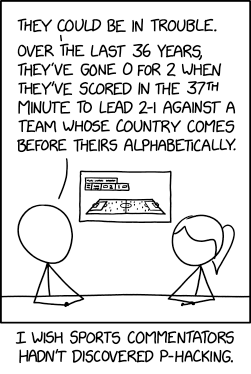
Sports Commentary
Post Syndicated from xkcd.com original https://xkcd.com/3262/
Chesterton’s middle finger
Post Syndicated from arp242.net original https://www.arp242.net/chestersons-finger.html
The Chesterton’s fence analogy says that you need to be careful to change
things if you don’t understand why things are the way they are, because there
may be good reasons you haven’t considered yet. This is broadly good advice in
many different contexts, including programming where it can be easy to “fix”
some weird code only to discover there was a reason for the weirdness later on
when things break.
This is Chesterson’s middle finger:
# List all commit body content (but not the subject line)
% git log --no-merges --format=format:'%b' | sed '/^$/d' | wc -l
295
That’s 295 lines of commit text over the last 13 years. In total. The commit
subjects are usually just “fix page A” – even for huge changes – and are
pointless. If I manually remove some dependabot, “revert commit”, and “fix typo”
commit bodies it’s just 167 lines. That’s about one line a month.
There is no other documentation. There are barely any comments in the code.
This is Chesterson’s middle finger: “Yes, we did all these weird things and
we’re not telling anyone why. Haha fuck you.”
This is not the first time I’ve seen a less-than-useful commit log, but it is
the first time I’m hired after everyone else left. There is no one to ask.
In theory there was a three week handover period from the previous developer,
but that was just as communicative as the commit log. Never have I sympathized
more with Jack Bauer’s methods to extract information and I regret not employing
some of them.
There are unfinished refactors. There are left-overs from removed features.
There are features that were added but never linked/used but are still in the
code. There are features no one seems to be using. Overall it seems to suffer
quite badly from Chesterton’s gap (“There isn’t a fence yet? Lets build
fences!” without asking if a fence is actually needed).
Everything is just a big fat middle finger.
Writing well is hard. Writing something vaguely passable is not. By and large
there are three questions to answer: “What are you changing?”, “why are you
changing it?”, and “why is this a good solution?”
Sometimes “Implement new feature X” is enough, although it’s rare there is
nothing more to say – most of the time there is something to say about how/why
it’s added as it is.
If you’re fixing a bug, refactoring or changing things, or making some other
substantial change then it’s very rare there isn’t at least a paragraph or two
to comment on the “what’s changing, why change it, and why is this good?”
questions.
Writing this is not an optional extra; it’s part of the job. If you’re not doing
it then you’re not doing your job as a software developer. It doesn’t need to be
eloquent. It doesn’t need to be perfect English. It doesn’t need to be a
comprehensive essay on the nature of reality. It’s okay to forget something
(although better if you don’t). It just needs … something. Any half-way
serious attempt will be infinitely better than nothing at all.
If you do nothing at all then you’re just giving everyone after you the
finger.
Ken Burns on the many readings of the American Revolution
Post Syndicated from The Atlantic original https://www.youtube.com/shorts/xdwNcK2KE7o
Comic for 2026.06.21 – Die Alone
Post Syndicated from Explosm.net original https://explosm.net/comics/die-alone
New Cyanide and Happiness Comic
Изкуственият интелект и пазара на труда в ИТ сектора
Post Syndicated from Bozho original https://blog.bozho.net/blog/4595
Изкуственият интелект навлиза в много сектори, но един от тези, в които повишаването на ефективността има най-голям потенциал и технологията е най-развит вид, е ИТ секторът. Изкуственият интелект пише код сам, и макар писането на код да е само част от работата, това може да има сериозен ефект върху пазара на труда. Има и едно усещане сред хора в сектора, че тъсренето се охлажда и има съкращения извън обичайното.
Затова поисках от НАП данни за динамиката на трудовия пазар в ИТ сектора (можете да ги свалите тук) – брой трудови договори по месеци, за всяка от многото длъжности в ИТ сферата.
Резултатът е, че поне на този етап не се вижда ясна негативна тенденция – общият брой на заетите във всички длъжности за последните 3 години расте – от 84 хиляди през юни 2023 до 90 хиляди през май 2026 г., като ръст има всеки месец спрямо предходния. С изключение на последния – май спрямо април 2026 г, с 200 заети по-малко. Ще следя дали това е начало на негативен тренд или временна флуктуация.
Когато влезем на ниво отделни длъжности, картината е същата – ръст навсякъде в последните три години, и спад в последните 1-2 месеца. Спадът в последните 2 месеца на основните 2 позиции: „програмист софтуерни приложения“ и „разработчик софтуер“ е около 100 заети (от общо над 22 хиляди). Разбира се, това не са всички длъжности за програмисти – има „програмист уеб сайтове“, „експерт по проектиране и програмиране“, „програмист-аналитик“ и др. – можете да ги видите в качения по-горе файл.
Разбира се, данните не включват някои други начини на наемане в ИТ сектора – напр. консултанти чрез B2B договор, в който случай експертът е управител, и съответно не влиза в статистиката. Не влизат и граждански договори, и някои freelance отношения през платформи като upwork. Данните не включват и нетехнически персонал на ИТ компании (т.е. самият сектор е по-голям от 90 хиляди). Но дори без тези данни, трудовите договори са достатъчни, за да се отбележи тенденция. Разбира се, гражданските, freelance и консултантските договори в повечето компании се прекратяват първо (тъй като е по-лесно), а чак след това – трудовите. Така че кривата вече може и да е тръгнала надолу, просто през трудовите договори това се отчита със закъснение.
Изкуственият интелект е и възможност, и риск. Но секторът е гъвкав и силен и смятам, че ролята на държавата на този етап трябва да е единствено в облекчаването на регулаторната тежест, за да могат компаниите да са по-конкурентни на тези от други държави (дългосрочните политки по подготовка на кадрите са отделна важна тема)
Материалът Изкуственият интелект и пазара на труда в ИТ сектора е публикуван за пръв път на БЛОГодаря.
Palana (Part 2): Architecting isolation, identity, and auditability for AI agents
Post Syndicated from Grab Tech original https://engineering.grab.com/part-2-palana-architecture
Introduction
In Part 1, we introduced Palana, Grab’s Kubernetes-native secure execution platform for autonomous AI agents. We discussed the underlying need for isolated environments and covered its core design principles: treating isolation as the unit of trust, keeping credentials out of agent hands, and mediating all network access. In this second part, we’ll dive under the hood into Palana’s architecture, look at the agent lifecycle, and share the key lessons we learned from putting this system into production.
Architecture overview
The core request path looks like this:
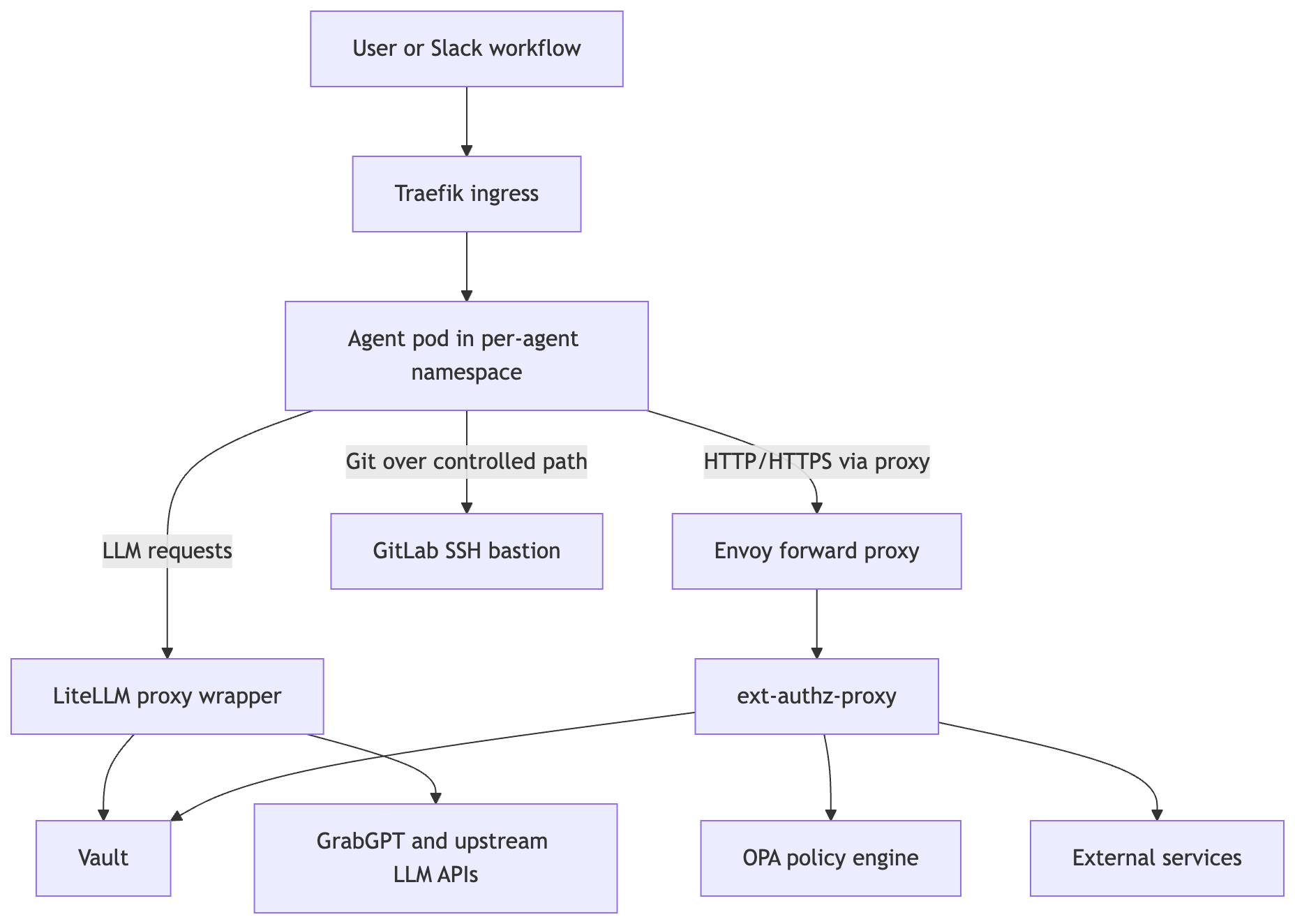
The agent pod runs in a namespace owned by one user and one agent. It gets default-deny style network policy, domain name system (DNS), access to required platform services, and a persistent /data volume. Browser traffic enters through Traefik. LLM traffic goes to the LiteLLM wrapper in the gateway namespace. General Hypertext Transfer Protocol (HTTP) and Hypertext Transfer Protocol Secure (HTTPS) egress goes through the proxy namespace. Secrets are read from Vault only by the component authorized to use them.
The operator is responsible for turning a user request into the concrete Kubernetes shape:
- The user creates an agent through
pcli(Palana command-line interface) or the portal. - Palana writes a UserAgent or Agent custom resource with the raw user identity.
- The operator creates the user and agent namespaces, service accounts, role bindings, storage, network policies, and ingress.
- The user runs a template or container image.
- Admission webhooks inject proxy environment variables and enforce pod-level restrictions.
- Logs, policy decisions, and activity signals are emitted to observability systems.
Agent lifecycle
From a user’s perspective, the basic workflow is intentionally small:
./pcli login
./pcli create demo
./pcli secrets add demo GRABGPT_API_KEY token=<token>
./pcli run demo --template claudecodeui
Behind those commands, Palana provisions an isolated execution environment:
- Namespace:
agent-{sanitized-user}-{agent} - Service account: bound only to that namespace
- Storage: an Amazon Elastic File System (EFS)-backed persistent volume claim (PVC) mounted at
/data - Ingress: an agent-specific hostname protected by Concedo-backed browser auth
- Egress: forced through platform proxies, except for approved internal platform services
- Secrets: split between agent-readable and proxy-only Vault paths
- Policies: proxy egress, network egress, and optional inter-agent peering rules
The same lifecycle is exposed in the portal for users who prefer a browser user interface (UI).
How Palana handles identity
Human authentication uses Concedo OpenID Connect (OIDC). pcli login performs a browser-based authorization code flow with Proof Key for Code Exchange (PKCE) and stores the resulting identity in an isolated kubeconfig. Browser access to agent UIs is protected by OAuth2-Proxy through Traefik forward auth.
The important detail is that Palana keeps the raw user identity, such as an email address, as the authoritative owner on the custom resource. That raw identity is used for Kubernetes role-based access control (RBAC) subject matching. Sanitized forms are used only where Kubernetes object names, labels, namespaces, or Vault paths require safer strings.
This split prevents a common class of identity bugs: the display-safe or path-safe version of a user ID should not accidentally become the authorization subject.
In the future, we will integrate Palana via SPIFFE (Secure Production Identity Framework for Everyone) and SPIRE (SPIFFE Runtime Environment) with the rest of our service mesh, to provide an agentic identity — a combination of user and agent instance id — that can then be controlled as a subset of a user’s capabilities. This gives us a first step into “agents on behalf of users” with cut-down permissions while the wider industry firms up the approaches via Open Authorization (OAuth) and other controls.
How Palana handles secrets
Palana’s Vault layout is designed around least privilege:
kv/agents/{user}/{agent}/{secret}
kv/proxy-secrets/{user}/{agent}/{secret}
The first path is for secrets the agent is allowed to read through its per-agent Vault role. The second path is for credentials the agent can use only through the proxy. For each proxy-only secret, Palana can create an agent-visible placeholder value. The placeholder is inert unless the request goes through the approved proxy path.
This gives teams a practical migration path. Existing clients can often be configured with a token-looking value, while Palana keeps the real token out of the runtime.
How Palana handles LLM access
LLM calls go through litellm-proxy-wrapper, which sits in front of LiteLLM and GrabGPT. The wrapper derives agent identity from Kubernetes context rather than trusting client-provided headers. It then looks up the per-agent GrabGPT credential in Vault and forwards the request to the correct upstream route.
The agent config uses internal base URLs such as:
http://litellm-proxy.gateway:4000/aws/v1
http://litellm-proxy.gateway:4000/unified/v1
That design gives us three useful properties:
- Agents do not need raw upstream LLM credentials.
- LLM traffic is attributable to a specific agent.
- Provider routing and credential handling can evolve centrally.
How Palana handles network access
Network control is split into two layers.
At Layer 3 and Layer 4, Kubernetes NetworkPolicy and Cilium enforce which pods can talk to which namespaces, services, and classless inter-domain routing (CIDR) blocks. Agent namespaces are locked down to the platform paths they need: DNS, Vault, the egress proxy, the LLM gateway, and the Kubernetes application programming interface (API) patterns the platform explicitly supports.
At Layer 7, the proxy policy controls HTTP and HTTPS destinations by host, method, and agent identity. Open Policy Agent (OPA) evaluates per-agent policy. The proxy logs allow and deny decisions in structured form.
This split is deliberate. NetworkPolicy is good at containment. The proxy is good at application-aware decisions and audit. This allows us to be very expressive in the restrictions we place on our agents — by default, they get nothing; if they should have access to an internal service they get only that service, and cannot be used as an entry point to the wider internal environment.
Observability and operations
Palana treats observability as part of the safety model, not a nice-to-have. The platform emits structured logs for proxy decisions, Git activity, LLM requests, agent lifecycle, and idle-shutdown decisions. Operators can query activity by namespace, user, host, decision, or component.
One example is idle shutdown. Long-running agents are useful, but idle workloads consume cluster resources and expand the surface area that platform teams must monitor. Palana’s reaper records the most recent observable activity for each UserAgent. It combines signals from gateway/proxy logs, Git activity, Slack-routed agent messages, and Prometheus network activity. After a configurable idle threshold, it can warn the user and stop the workload while preserving /data, RBAC, namespace, and Vault state.
This is a good example of the platform philosophy: stop the compute, keep the state, and make resumption easy.
In addition, as we move into agentic operations, we use the many signals generated by Palana itself to aid our agents. For example, we have an agent that can monitor user workloads and provide advice and assistance if it spots issues — say, an agent is consistently out of memory (OOM), the ops agent can see that and message the user with instructions on how to increase the allocated memory. We don’t need to special-case every possible issue; instead we have agents that understand Palana logs and are able to communicate with the users themselves.
What we learned
Agent platforms need security controls at the platform layer
Prompt-level guardrails and model policies are useful, but they are not enough. Agents call tools, tools call services, and services use credentials. Palana puts controls where the action crosses a trust boundary: identity, egress, secrets, ingress, Git, and Kubernetes API access.
The user experience matters as much as the control
If the secure path requires every team to learn Terraform, Vault policy syntax, Kubernetes RBAC, and proxy configuration before they can try an agent, teams will work around it. Palana uses pcli, templates, and the portal to make the safe path the easy path.
Separating “can read a credential” from “can cause a credentialed request” is powerful
Proxy-only secrets are one of the highest-leverage design choices. They let agents perform authenticated work without turning the agent filesystem, logs, process environment, or prompt context into a credential store.
A namespace boundary is simple, but it compounds
Per-agent namespaces give us a consistent place to apply RBAC, storage, network policy, logging labels, resource quotas, and lifecycle controls. The pattern is easy to reason about during incidents: identify the namespace, identify the owner, inspect the policy, and isolate if needed.
Long-running agents need lifecycle management
Once agents persist for days or weeks, “run a container” becomes an incomplete product. Users need resume semantics. Operators need idle cleanup. Security teams need audit history. Platform teams need a way to rotate credentials, update images, and stop workloads externally.
What’s next
Palana is increasingly becoming a substrate for larger autonomous systems rather than only a place to run individual agents. Emerging patterns include:
- Supervisor systems that route work to a pool of scoped agents.
- Slack-native agents that wake up, handle a task, and scale back down.
- Remote development environments backed by persistent cloud state.
- Agent swarms where each worker has a separate namespace and credential scope.
- Operational agents that investigate platform health and propose or apply small fixes under policy.
- Security experiments around supply chain monitoring, token rotation, transport layer security (TLS) inspection, and automated isolation.
The north star is not “let every agent do anything”. It is to make useful autonomy boring to operate: attributable, inspectable, revocable, and recoverable.
Conclusion
AI agents are most valuable when they can act in real environments. That is also when they become risky. Palana gives Grab a way to keep both sides of that tradeoff in view: teams can move quickly with self-service agent environments, while the platform keeps isolation, identity, secrets, network access, and auditability as defaults.
We expect the underlying tools and models to keep changing. The platform primitives are more durable. Agents will vary, but they will still need a place to run, a way to authenticate, a boundary around their actions, and a record of what happened.
That is the role Palana is designed to play.
Join us
Grab is Southeast Asia’s leading superapp, serving over 900 cities across eight countries (Cambodia, Indonesia, Malaysia, Myanmar, the Philippines, Singapore, Thailand, and Vietnam). Through a single platform, millions of users access mobility, delivery, and digital financial services, including ride-hailing, food delivery, payments, lending, and digital banking via GXS Bank and GXBank. Founded in 2012, Grab’s mission is to drive Southeast Asia forward by creating economic empowerment for everyone while delivering sustainable financial performance and positive social impact.
Powered by technology and driven by heart, our mission is to drive Southeast Asia forward by creating economic empowerment for everyone. If this mission speaks to you, join our team today!
Slutfarm
Post Syndicated from Oglaf! -- Comics. Often dirty. original https://www.oglaf.com/slutfarm/


Minisforum’s Upcoming MS-03 SFF PC Brings More of a Good Thing
Post Syndicated from Ryan Smith original https://www.servethehome.com/minisforums-upcoming-ms-03-sff-pc-brings-more-of-a-good-thing/
At Computex 2026 Minisforum was showing off their upcoming MS-03 mini-PC, the successor to their popular MS-01 and aiming to bring more of a good thing with Intel’s new Panther Lake platform
The post Minisforum’s Upcoming MS-03 SFF PC Brings More of a Good Thing appeared first on ServeTheHome.
The Bad Beer That’s an Incredible Beverage
Post Syndicated from The Atlantic original https://www.youtube.com/shorts/pRzZWDwDiME