Библиотеката във Варна – рестарт или предизвестен край?

Post Syndicated from Анета Василева original https://www.toest.bg/bibliotekata-vuv-varna-restart-ili-predizvesten-kray/

Библиотеката във Варна – рестарт или предизвестен край?

Новата сграда за Регионалната библиотека на Варна беше една от шумно популяризираните и мъчително потънали в забрава инициативи на предишната общинска власт на града. През 2015 г. се проведе популярен международен архитектурен конкурс, който събра 370 конкурсни предложения от 66 страни, оценени от авторитетно международно жури. 

Конкурсът завърши успешно и излъчи за победител холандското студио Architects for Urbanity. През 2016 г. студиото, съставено от млади и амбициозни архитекти, сключи договор за проектиране с Община Варна и започна работа заедно с българските си партньори от варненското студио АМАРХ. През 2018 г. проектът им получи разрешение за строеж. През 2019 г. кметът Иван Портних обяви, че строителството започва, търсят само строител с тръжна процедура. Той обаче разчитал на рамо от държавата както за тази сграда, така и за нова сграда на Математическата гимназия във Варна. 

Докато Портних чака подкрепа от държавата, управлявана от неговата партия ГЕРБ и третото правителство на Бойко Борисов, варненската библиотека липсва в инвестиционната програма на Общината, а проектантите алармират, че времето свършва. През 2021 г. разрешителното за строеж на библиотеката наистина изтича. То може да бъде заверено още веднъж за срок от още 3 години – до 2024 г., което тогавашният главен архитект на Варна Виктор Бузев прави

Междувременно през 2018 г. правителството осигури 43,2 млн. лв. от националния бюджет за община Варна, за да купи „Дупката“ в центъра на града от бизнесмена Георги Гергов. А реконструкцията на 3 километра от злополучния варненски булевард „Васил Левски“ през 2019 г. погълна 113 млн. лв. и се превърна в един от най-скъпите пътни проекти в републиката и непресъхващ извор на трагикомични гафове. За библиотеката по същото време, по изчисления на базата на проекта от 2018 г., бяха нужни около 35 млн. лв. за строителство и 5 млн. лв. за обзавеждане и оборудване. Но те така и не бяха намерени от Портних. 

Конкурсът накратко

За архитектурните конкурси в България и конкретно за този за библиотеката във Варна е изписано достатъчно. Самият факт, че това все още е най-популярният архитектурен конкурс в новата ни история, че успя да привлече най-много участници, да разбуни най-много духове и да остане тема за разговор с години, е достатъчен. 

Кой

Конкурсът беше организиран от Община Варна със съдействието на КАБ – Варна и независимата архитектурна организация WhAT Association (WhATA)*. Конкурсната програма бе съставена след онлайн анкета, проучваща общественото мнение, нагласи и навици на четене, както и след многобройни консултации с общинските власти и с представители на Регионална библиотека „Пенчо Славейков“ – град Варна, за техните нужди и изисквания.

Къде

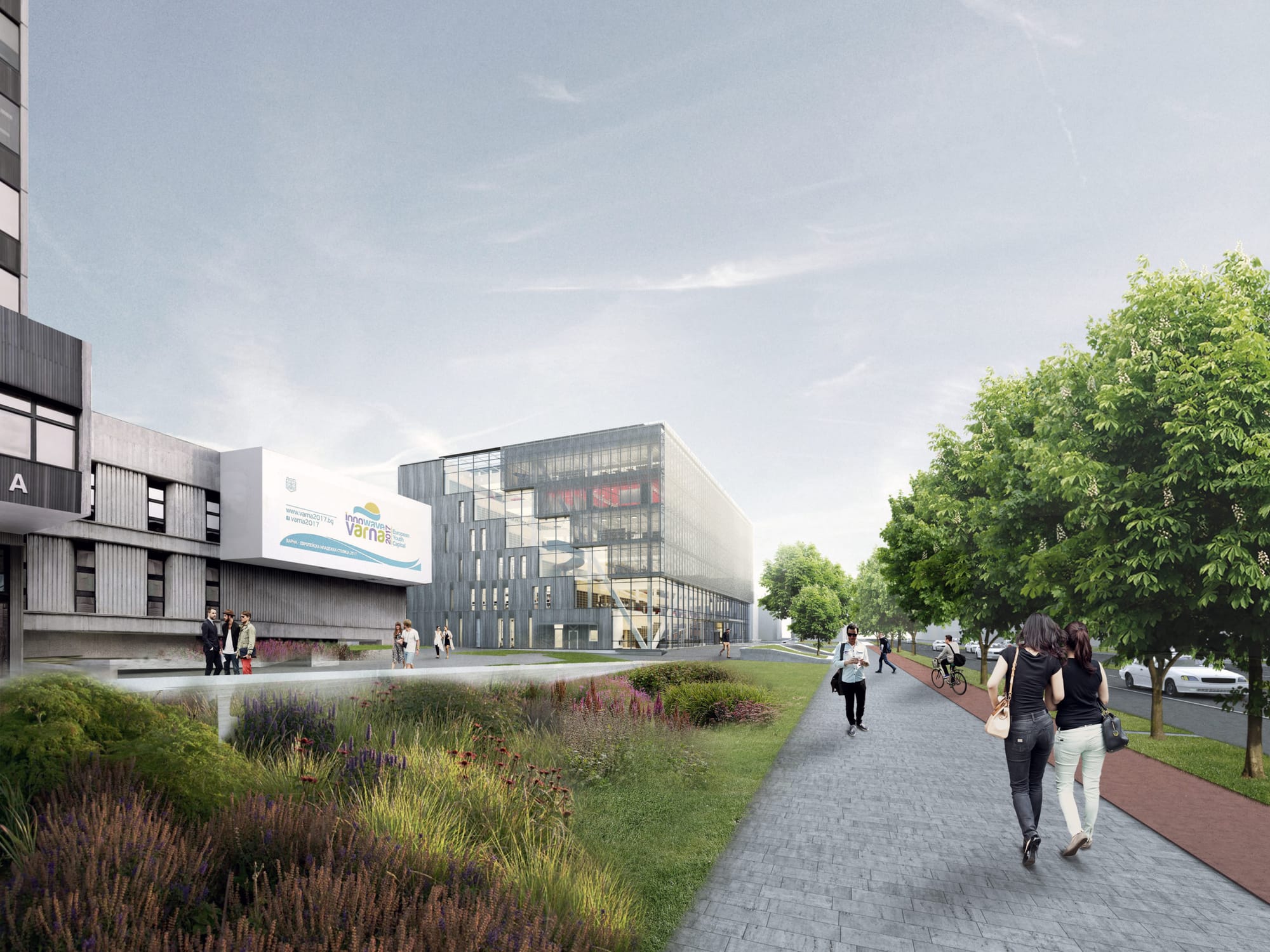
За терен на бъдещата библиотека варненските власти определиха общинския паркинг до сградата на Община Варна заради ясната собственост и централното местоположение. Целта им бе да създадат съвременна библиотека в смисъла ѝ на нов тип културно пространство, която като „градска дневна“ да бъде разположена в сърцето на града.

Защо

Конкурсът трябваше да разреши дългогодишен проблем: въпреки че библиотеката на Варна е институция с над 130-годишна история, в момента колекцията ѝ от над 860 000 документа е разпръсната в 6 сгради в различни части на града. Конкурсът за нова сграда целеше да събере библиотеката под един покрив и да осигури безпрепятственото ѝ функциониране, като едновременно с това създаде ново активно обществено пространство.

Ключово послание

От обявяването на конкурса се използваше всеки повод да се подчертае, че бъдещата сграда трябва да демонстрира съвременно отношение към книгите и читателите и да излъчва едно основно послание: „Ние сме модерна, отворена и приятелска институция. Елате да прекарате свободното си време тук.“

Участници

Конкурсът бе обявен в началото на септември 2015 г. и в края на ноември събра 370 конкурсни предложения от 66 страни (около 90 от тях от България), които бяха оценени от международно жури.

Жури

Повечето членове на журито бяха архитекти от популярни студиа с международен опит в проектирането на значими обществени сгради и особено на библиотеки. В журито бяха включени също представители на КАБ – Варна и главният архитект на града.

По време на журирането бяха поканени представители на Регионалната библиотека, включително нейната директорка Емилия Милкова, които даваха мнението си на „потребители“ на бъдещата сграда, без да имат право на глас или да влияят директно на процеса на журиране. Аналогична беше ролята на двама инженери, представители на КИИП (част „Строителни конструкции“ и част „Енергийна ефективност“), които успяха да прегледат разширената селекция от проекти и да напишат ключови препоръки и забележки за тяхната изпълнимост, отношение към противоземетръсните правила в България, енергоефективност и т.н. Писменото становище на специалистите беше взето предвид от журито при разглеждането на всеки проект.

Победителите

Международното жури класира трима победители: младото холандско бюро Architects for Urbanity на първо място, българите от I/O Architects на второ, а на трето – проекта на Spatial Practice от Хонконг. Определени бяха и 2 поощрителни награди: на Stewart Hollenstein от Австралия и на PLUSR Chitecture от Гърция.

Конкурсът носеше духа на времето си, с всичко добро и лошо от това време. Тогава в България все още се градеше доверието към тази най-лека конкурсна форма – отворения, анонимен, едноетапен и безплатен конкурс, който събира стотици участници, хиляди човекочасове архитектурен труд, но не дискриминира никого и дава шанс на младите архитекти, както и на специалисти без опит и реализация.
Една нова библиотека винаги е привлекателна архитектурна задача – още от времената на Франсоа Митеран. През 2015 г. конкурсът за варненската библиотека носеше в себе си оптимизъм и ентусиазъм – наивния оптимизъм на много хора, че властта е разбрала смисъла от архитектурното състезание, а добрите конкурсни практики развиват не само конкурсната култура в България, но и работят за качествена съвременна архитектура и градска среда, разказвайки истории с щастлив край. 

А Варна и тогава, и сега има нужда от история с щастлив край.  

Но не конкурсът е темата на тази статия. 

Проектът накратко

През 2015 г. проектът победител бе избран единодушно от международното жури. Той е неделимо свързан с конкурсната локация, съобразен със заданието и отразява напълно контекста на мястото. 

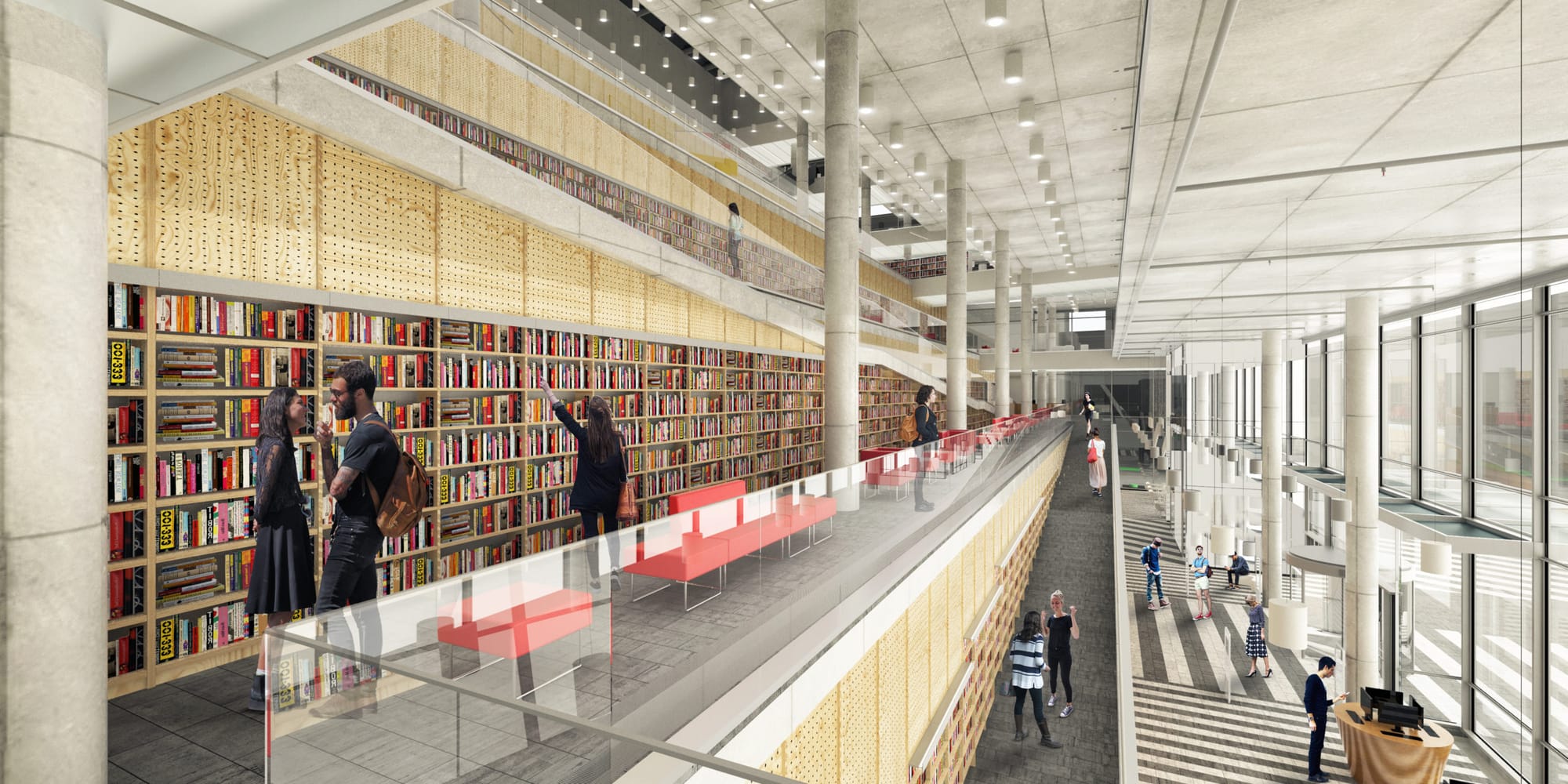
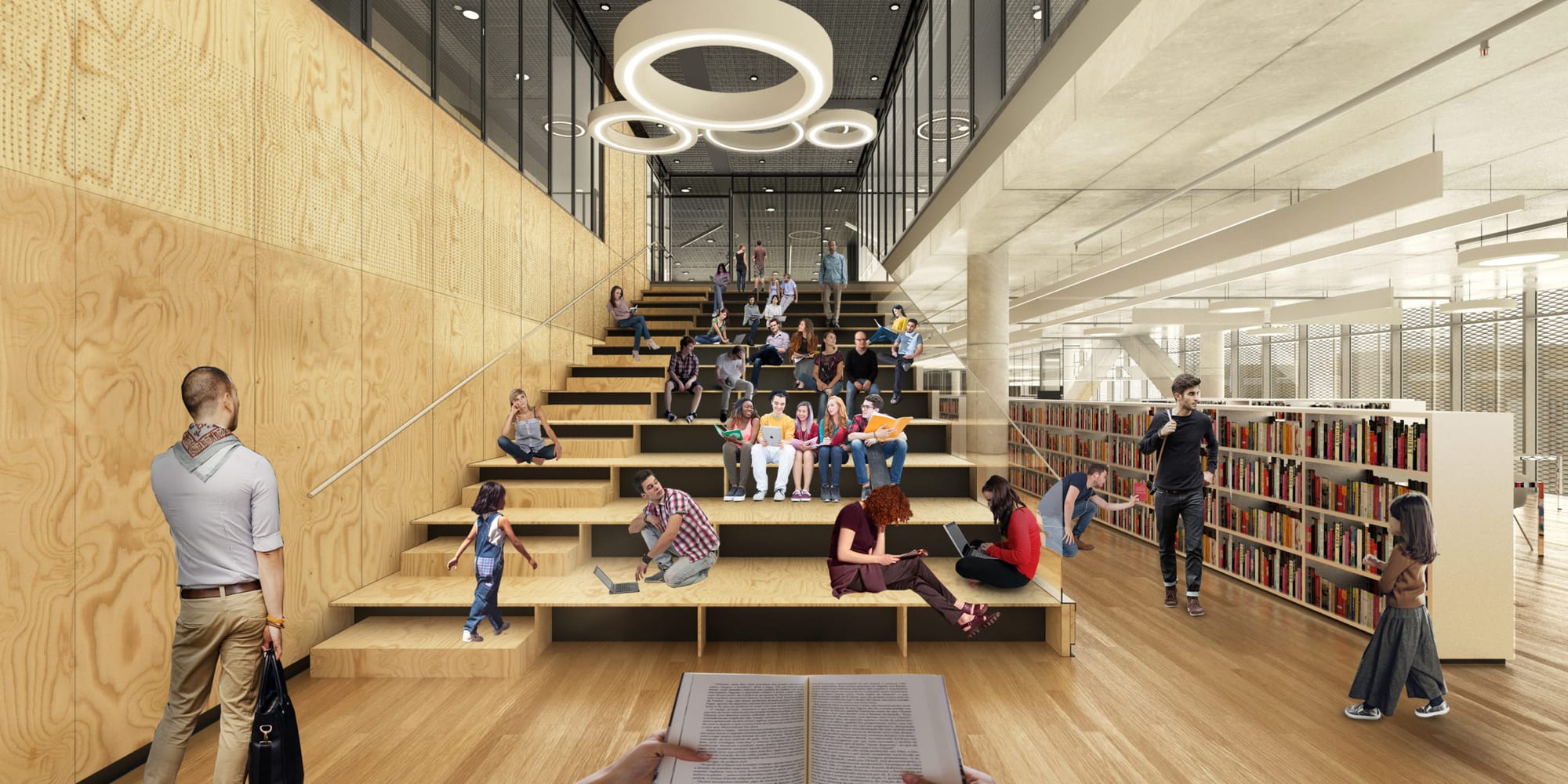
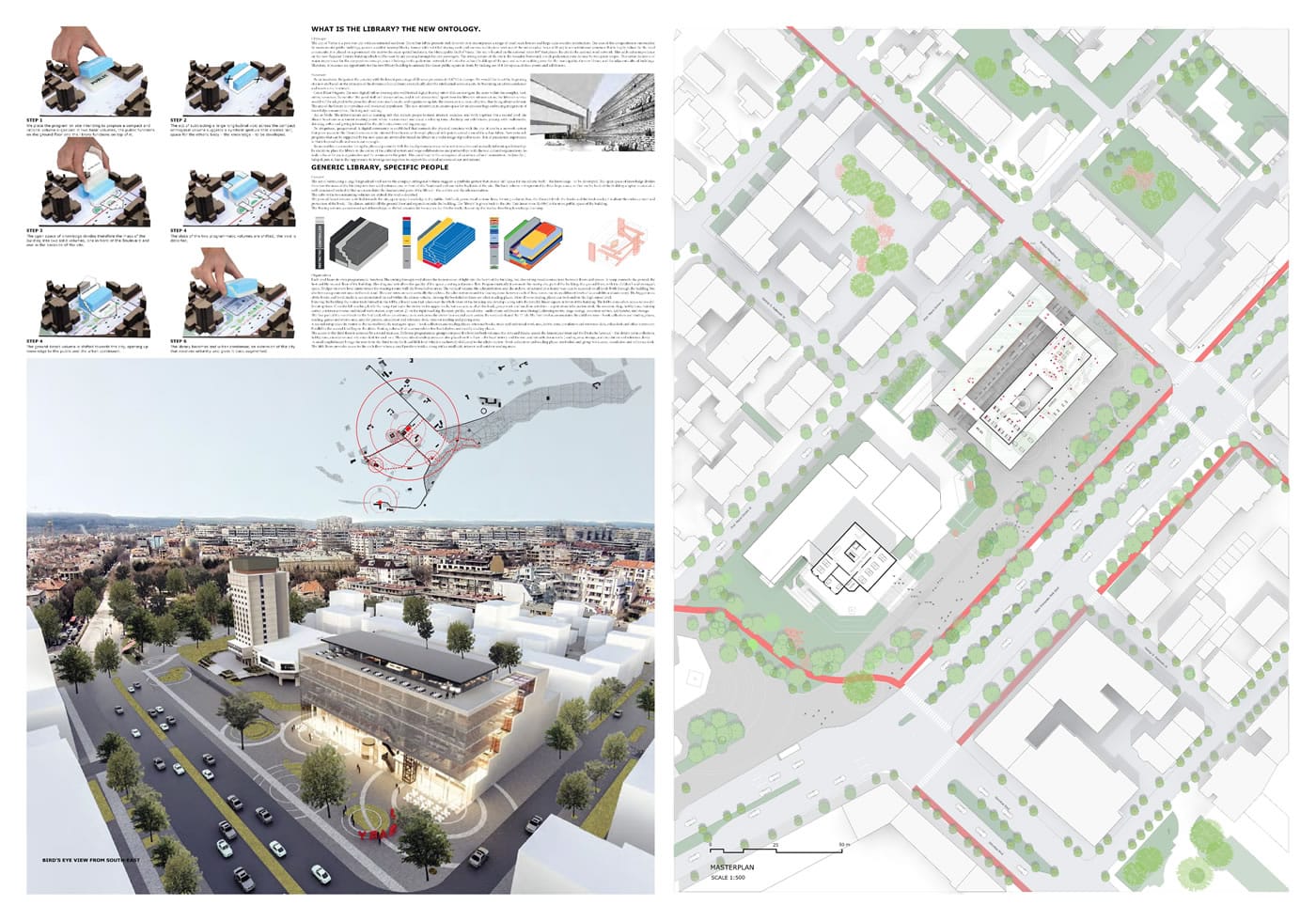
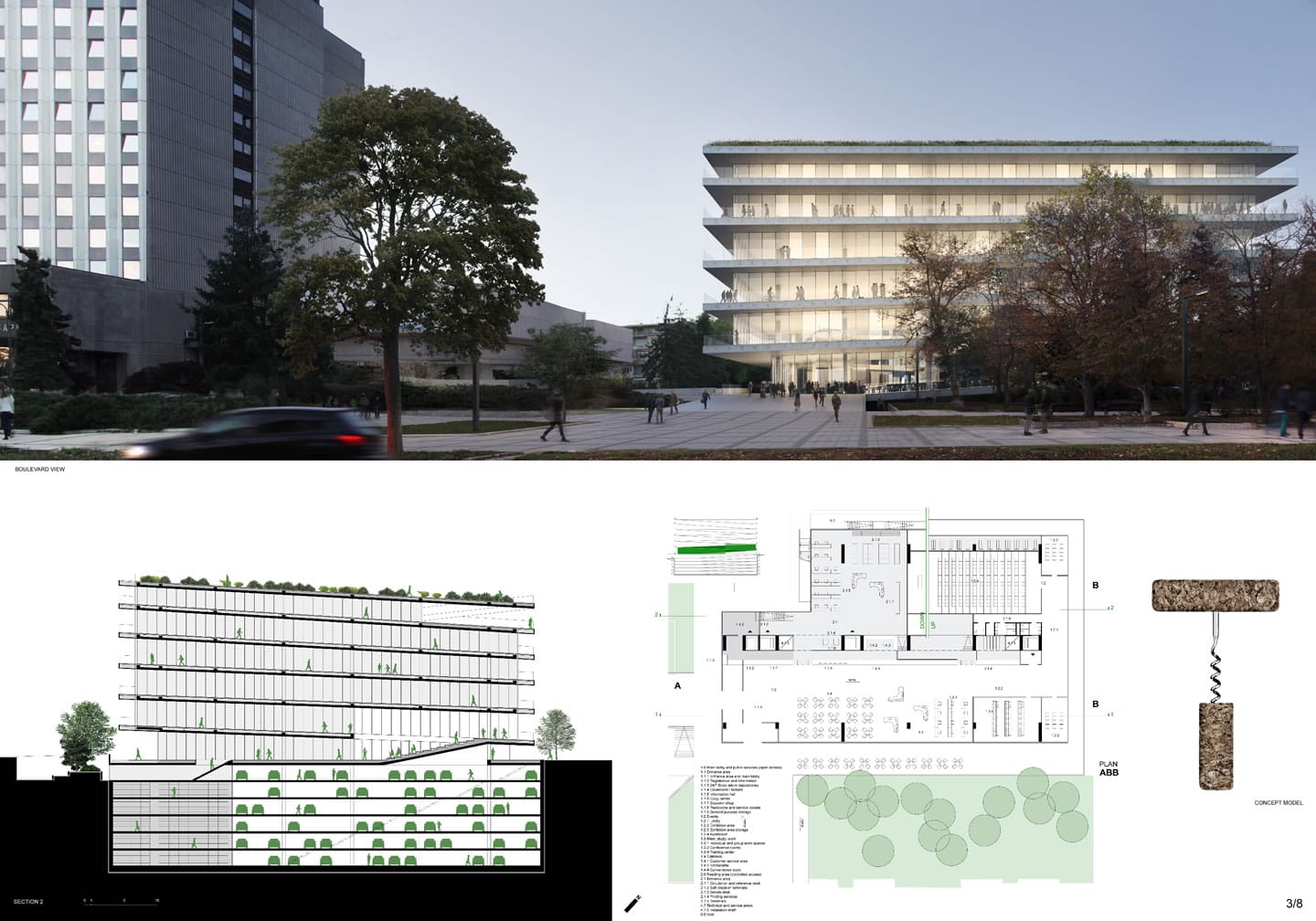
Сградата е на шест етажа, с три подземни нива за паркиране за 300 автомобила, които имат самостоятелен достъп и обслужват голяма част от централната зона на града. Предвидено е библиотеката на Варна да разполага с най-новите технологични въведения, да има 30 места за зареждане на електроавтомобили, велостоянки за 200 велосипеда, както и 24-часова система за връщане на книги. Освен библиотека, сградата представлява и културен център – с амфитеатрална зала с 200 места, 6 помещения за провеждане на събития, картинна галерия на партера, както и редица по-малки помещения за извънкласна дейност и различни прояви. Проектът предвижда обществено достъпен атриум по цялата височина на сградата, който да събира всички, включително деца и младежи, които да прекарват свободното си време там в общуване, четене на книги или работа.  

Коментари на журито за проекта победител (сп. „Архитектура“, 2016)

Трине Бертхолд, партньор в schmidt hammer lassen architects, Дания:
Проектът има убедителен разрез: огромна рампа с книги се развива на стъпки през библиотеката. Движението в разреза се възприема като приветлив жест и приканва града и посетителите да влязат в библиотеката. Мащабът на сградата е съобразен с околните сгради, а сградата на Общината остава най-високата точка в района.

Матя Бевк, съосновател на Bevk Perović arhitekti, Словения:
Идеята на проекта е за голяма читалня, която се развива напряко, през целия обем на сградата. Цялата сграда е организирана именно около тези стъпаловидни пространства читални. Те са сърцето на библиотеката – една дневна за посетителите. Сградата има потенциала да създава богат и сложен вътрешен живот, като едновременно с това остава визуално семпла.

Калоян Еревинов, водещ архитект в Zaha Hadid Architects, Китай:
Проектът предлага впечатляващо интериорно решение, отваряне и свързване на центъра на библиотеката с външното пространство. Доминиращият разрез осигурява визуални връзки през сградата и позволява на естествена светлина да достига в дълбочина на обема.

Петр Лешек, съосновател на Projektil architekti, Чехия:
Чиста схема, подходяща за всяка главна улица. Има силно присъствие, но в същото време не доминира над заобикалящата среда. Ще оживи сериозно главната улица. Иконична сграда, но едновременно с това въздействаща на едно деликатно ниво.

Анета Булант-Каменова, съосновател на Bulant & Wailzer, Австрия:
Характерно вътрешно пространство, с възможност за гъвкаво използване и общуване на посетителите. Архитектурата е ясно изразена, неутрална спрямо околната среда, с визуална връзка между външното и вътрешното пространство.

От своята конкурсна фаза до финалното решение с разрешение за строеж проектът остава максимално близко до конкурсната идея, включително визуално, като се съобразява с всички бележки на журито. Това е постижение, за което проектантите трябва да бъдат поздравени. 

Но и проектът не е тема на тази статия.
Обществото ни днес

В любопитен момент се намира обществото ни днес. И това е така от няколко години. Идеята за прогрес изглежда напълно изчезнала. Въобразяваме си, че сме достигнали някакво ниво и можем да продължим напред, но не! Във всяко нещо, по всяко време напредъкът може да бъде оспорен и мигновено скачаме бодро назад, зачерквайки години бавно и мъчително развитие. 

Нещо повече. В днешните времена на социални балони и умиращи авторитети имаме реална криза на доверието в експертността. Протестира се за всичко. В резултат, освен че успешно блокираме безумства в градската среда, също толкова успешно стопираме почти всичко ново, както и крехките, нефелни опити за реформи. Така имаме постоянни дребни информационни бури и скандали, но малко реална промяна, а управляващите стават заложници на общественото мнение и все по-често се чувстват парализирани да прокарват смели визионерски решения.

Новият архитектурен популизъм 

Още през 2011 г. в текста си „От плурализъм към популизъм“ холандският архитектурен теоретик и критик Барт Лутсма пише:

Архитектурата се промени: от професия, която правеше обществени сгради, социални и масови жилища, публични пространства, градоустройство и дизайн в служба на по-голяма част от населението във все по-конкретен и вгледан в себе си нишов пазар, обслужващ предимно бизнеса с недвижими имоти, който вече има повече общо с медийната индустрия, отколкото с обществено отговорни задачи.

Лутсма развива теорията за възхода на „пазарния популизъм“, дефиниран от Томас Франк през 2000 г., като част от процеса на индивидуализация и доминиращата парадигма на свободния пазар. Той определя популистите като онези, които се опитват да достигнат до „обикновените хора“, като реагират на техните икономически и социални тревоги чрез „здрав разум“. 

Новият архитектурен популизъм обаче добавя още няколко щрихи към този иначе строен икономическо-политически образ на „пазарния популизъм“. Защо? Защото

от 2011 г. до днес социалните мрежи се развиват главоломно и допълнително усложняват отношенията на архитектурата с властта.

Свикнали сме да откриваме популизма в парламентарното ежедневие, около местни избори, както и за прикриване на корупционни практики. Изумително е обаче как той може да засегне нещо толкова безспорно като нова библиотека в третия по големина български град, който вече много години отчаяно се нуждае от такава.

Политиците и Facebook

На 15 декември 2023 г. става ясно, че Община Варна ще кандидатства за 100 млн. лв. от държавния бюджет за 2024 г. с близо 50 обекта, които са от стратегическо значение за развитието на града. „В Общината заварихме липса на проектна готовност. Имаше твърде малко проекти на етап разрешение за строеж“, коментира тогава Благомир Коцев. Новата библиотека е едно от тези изключения – с наличен технически проект и разрешение за строеж. На 20 декември се оказва, че тя е сред „големите проекти, които най-после ще се случат във Варна“ с предвидени 5,5 млн. лв. за поетапно стартиране на строителството. 

През януари обаче темата „Да има ли нова библиотека във Варна?“, „Това ли е мястото?”, „Сега ли е моментът?“ е активирана в онлайн дискусии в социални мрежи и Facebook групи.

Мине – не мине време, и се претопля темата за нова библиотека на Варна. Или по-точно абсурдният проект да се застрои една от малкото останали градинки в центъра на Варна.

Това например е мнение на гражданин, споделено във Facebook групата „Варна може да защити Морската си градина /Обновена/“. „Дебатите“ продължават. Дали библиотеката да не се направи в „Дупката“? А в сградата на бившето Руско консулство? А какво ще стане с градинката до паркинга? А с дърветата? И на 11 януари най-неочаквано се оказва, че „случването на настоящия проект за нова сграда на библиотеката във Варна е под въпрос“, а кметът съобщава, че „с обществено обсъждане ще се реши къде да бъде новата сграда на библиотеката във Варна“. На 19 януари варненският заместник-кмет по културата Павел Попов успокоява гражданите, че „новата библиотека не е окончателно затворена страница, предстои решение“, но той самият е разколебан.

Моите колебания са дали реализирането на този скъп проект ще запълни липсите в културната инфраструктура във Варна. Това ще е дворец на книжното тяло, а дали книжното тяло е нещо с бъдеще? Трябва да си отговорим на въпроса дали искаме да създадем такъв дворец.

И така в началото на февруари се оказва, че „Мястото на новата библиотека на Варна отново е на дневен ред“, а има реална вероятност проектът за библиотеката, въпреки отпуснатите средства, да не се осъществи. 

Като продължение на предложението си за обществено обсъждане на темата, на 5 февруари 2024 г. варненският кмет Благомир Коцев призова във Facebook своите съграждани да изкажат мнението си дали и каква нова библиотека да получи градът. Там той разумно отбелязва, че

Мястото, където е предвидена да се реализира библиотеката, не може да бъде променяно. То е градска градинка и зелена площ точно до сградата на Общината. Това означава, че ще загубим няколко големи дървета и част от зелените пространства, преди да ги изградим наново, тъй като това е част от проекта.

Дебатът започва директно в социалната мрежа, а кметският пост бързо получи близо 1000 коментара. 

За всеки страничен наблюдател ситуацията е съвършено необяснима.

Как е възможно след девет години усилия, започнали в пълен обществен консенсус, след хиляди часове работа на десетки експерти, след международно акламиран конкурс, който приключва без обжалвания и с категоричен победител, след похарчени близо 1 млн. лв. за конкурс, награди и проектиране, при наличието на готов архитектурен проект, неделимо обвързан с една точно определена локация, направен с желание и ентусиазъм и получил разрешение за строеж преди шест години, новата библиотека на Варна отново да бъде под въпрос? При това в ситуация на възможно държавно финансиране.

Това е може би единственият проект на Община Варна, който беше надпартиен и подкрепен от цялата общественост. Ако се загуби насъбраната енергия и свършената до момента работа, това ще е лош сигнал за всяко следващо начинание,

казва в интервю от 20 януари 2024 г. пред „Дарик Варна“ архитект Александър Минчев, един от проектантите на новата библиотека – и е напълно прав.

„Варна има нужда от съвременна библиотека“

беше мотото на архитектурния конкурс през 2015 г. Днес, струва ми се, повече от всякога, Варна има нужда и от мислещи хора, от отговорни експерти и от власт, която не се страхува да вземе стратегически решения, да застане открито зад тях и да ги доведе докрай. Включително да построи една библиотека и най-после да разкаже една история с щастлив край от Варна.


* Авторката участва в организацията на международния конкурс за нова библиотека във Варна (2015) като част от независимата архитектурна група WhAT Association (WhATA). WhATA са автори и на заданието за конкурса. В тази връзка тази статия не е безпристрастна.

Статията е в памет на Емилия Милкова, дългогодишна директорка на Регионална библиотека „Пенчо Славейков“ във Варна и двигател на конкурса за нова сграда на библиотеката в града.

Google announces 2024 season of docs

Post Syndicated from LWN.net original https://lwn.net/Articles/961405/

On February 2, Google announced this year’s

“Season of Docs”
, a program complementing its Summer of Code program
by providing funding to open source projects to hire technical writers to improve
their documentation. Interested projects have until April 2 to apply.

Google Season of Docs provides direct grants to open source projects to improve their documentation and gives professional technical writers an opportunity to gain experience in open source. Together we raise awareness of open source, of docs, and of technical writing.

Google announces 2024 season of docs

Post Syndicated from daroc original https://lwn.net/Articles/961405/

On February 2, Google announced this year’s

“Season of Docs”
, a program complementing its Summer of Code program
by providing funding to open source projects to hire technical writers to improve
their documentation. Interested projects have until April 2 to apply.

Google Season of Docs provides direct grants to open source projects to improve their documentation and gives professional technical writers an opportunity to gain experience in open source. Together we raise awareness of open source, of docs, and of technical writing.

Brennan: What’s Inside a Linux Kernel Core Dump

Post Syndicated from LWN.net original https://lwn.net/Articles/961414/

Stephen Brennan describes
kernel core dumps
in excruciating detail.

Kernel core dumps are complex. They are not simply copies of system
memory; they contain plenty of extra metadata which is critical to
understanding their contents. And like any other type of data, the
design of the file formats can enable lots of flexibility and
power. However, due to the broad variety of tools out there, the
diversity of dump formats is overwhelming, and the lack of
documentation or specifications compounds the problem.

Brennan: What’s Inside a Linux Kernel Core Dump

Post Syndicated from corbet original https://lwn.net/Articles/961414/

Stephen Brennan describes
kernel core dumps
in excruciating detail.

Kernel core dumps are complex. They are not simply copies of system
memory; they contain plenty of extra metadata which is critical to
understanding their contents. And like any other type of data, the
design of the file formats can enable lots of flexibility and
power. However, due to the broad variety of tools out there, the
diversity of dump formats is overwhelming, and the lack of
documentation or specifications compounds the problem.

GoWin 1U 25GbE Appliance Review This Has Everything Including PoE

Post Syndicated from Patrick Kennedy original https://www.servethehome.com/gowin-1u-25gbe-appliance-review-this-has-everything-including-poe-intel-nvidia/

We check out the new GoWin 1U firewall appliance with 25GbE, 1GbE, 2.5GbE, PoE, lots of CPU performance and storage, and more

The post GoWin 1U 25GbE Appliance Review This Has Everything Including PoE appeared first on ServeTheHome.

Use multiple bookmark keys in AWS Glue JDBC jobs

Post Syndicated from Durga Prasad original https://aws.amazon.com/blogs/big-data/use-multiple-bookmark-keys-in-aws-glue-jdbc-jobs/

AWS Glue is a serverless data integrating service that you can use to catalog data and prepare for analytics. With AWS Glue, you can discover your data, develop scripts to transform sources into targets, and schedule and run extract, transform, and load (ETL) jobs in a serverless environment. AWS Glue jobs are responsible for running the data processing logic.

One important feature of AWS Glue jobs is the ability to use bookmark keys to process data incrementally. When an AWS Glue job is run, it reads data from a data source and processes it. One or more columns from the source table can be specified as bookmark keys. The column should have sequentially increasing or decreasing values without gaps. These values are used to mark the last processed record in a batch. The next run of the job resumes from that point. This allows you to process large amounts of data incrementally. Without job bookmark keys, AWS Glue jobs would have to reprocess all the data during every run. This can be time-consuming and costly. By using bookmark keys, AWS Glue jobs can resume processing from where they left off, saving time and reducing costs.

This post explains how to use multiple columns as job bookmark keys in an AWS Glue job with a JDBC connection to the source data store. It also demonstrates how to parameterize the bookmark key columns and table names in the AWS Glue job connection options.

This post is focused towards architects and data engineers who design and build ETL pipelines on AWS. You are expected to have a basic understanding of the AWS Management Console, AWS Glue, Amazon Relational Database Service (Amazon RDS), and Amazon CloudWatch logs.

Solution overview

To implement this solution, we complete the following steps:

  1. Create an Amazon RDS for PostgreSQL instance.
  2. Create two tables and insert sample data.
  3. Create and run an AWS Glue job to extract data from the RDS for PostgreSQL DB instance using multiple job bookmark keys.
  4. Create and run a parameterized AWS Glue job to extract data from different tables with separate bookmark keys

The following diagram illustrates the components of this solution.

Deploy the solution

For this solution, we provide an AWS CloudFormation template that sets up the services included in the architecture, to enable repeatable deployments. This template creates the following resources:

  • An RDS for PostgreSQL instance
  • An Amazon Simple Storage Service (Amazon S3) bucket to store the data extracted from the RDS for PostgreSQL instance
  • An AWS Identity and Access Management (IAM) role for AWS Glue
  • Two AWS Glue jobs with job bookmarks enabled to incrementally extract data from the RDS for PostgreSQL instance

To deploy the solution, complete the following steps:

  1. Choose  to launch the CloudFormation stack:
  2. Enter a stack name.
  3. Select I acknowledge that AWS CloudFormation might create IAM resources with custom names.
  4. Choose Create stack.
  5. Wait until the creation of the stack is complete, as shown on the AWS CloudFormation console.
  6. When the stack is complete, copy the AWS Glue scripts to the S3 bucket job-bookmark-keys-demo-<accountid>.
  7. Open AWS CloudShell.
  8. Run the following commands and replace <accountid> with your AWS account ID:
aws s3 cp s3://aws-blogs-artifacts-public/artifacts/BDB-2907/glue/scenario_1_job.py s3://job-bookmark-keys-demo-<accountid>/scenario_1_job.py
aws s3 cp s3://aws-blogs-artifacts-public/artifacts/BDB-2907/glue/scenario_2_job.py s3://job-bookmark-keys-demo-<accountid>/scenario_2_job.py

Add sample data and run AWS Glue jobs

In this section, we connect to the RDS for PostgreSQL instance via AWS Lambda and create two tables. We also insert sample data into both the tables.

  1. On the Lambda console, choose Functions in the navigation pane.
  2. Choose the function LambdaRDSDDLExecute.
  3. Choose Test and choose Invoke for the Lambda function to insert the data.


The two tables product and address will be created with sample data, as shown in the following screenshot.

Run the multiple_job_bookmark_keys AWS Glue job

We run the multiple_job_bookmark_keys AWS Glue job twice to extract data from the product table of the RDS for PostgreSQL instance. In the first run, all the existing records will be extracted. Then we insert new records and run the job again. The job should extract only the newly inserted records in the second run.

  1. On the AWS Glue console, choose Jobs in the navigation pane.
  2. Choose the job multiple_job_bookmark_keys.
  3. Choose Run to run the job and choose the Runs tab to monitor the job progress.
  4. Choose the Output logs hyperlink under CloudWatch logs after the job is complete.
  5. Choose the log stream in the next window to see the output logs printed.

    The AWS Glue job extracted all records from the source table product. It keeps track of the last combination of values in the columns product_id and version.Next, we run another Lambda function to insert a new record. The product_id 45 already exists, but the inserted record will have a new version as 2, making the combination sequentially increasing.
  6. Run the LambdaRDSDDLExecute_incremental Lambda function to insert the new record in the product table.
  7. Run the AWS Glue job multiple_job_bookmark_keys again after you insert the record and wait for it to succeed.
  8. Choose the Output logs hyperlink under CloudWatch logs.
  9. Choose the log stream in the next window to see only the newly inserted record printed.

The job extracts only those records that have a combination greater than the previously extracted records.

Run the parameterised_job_bookmark_keys AWS Glue job

We now run the parameterized AWS Glue job that takes the table name and bookmark key column as parameters. We run this job to extract data from different tables maintaining separate bookmarks.

The first run will be for the address table with bookmarkkey as address_id. These are already populated with the job parameters.

  1. On the AWS Glue console, choose Jobs in the navigation pane.
  2. Choose the job parameterised_job_bookmark_keys.
  3. Choose Run to run the job and choose the Runs tab to monitor the job progress.
  4. Choose the Output logs hyperlink under CloudWatch logs after the job is complete.
  5. Choose the log stream in the next window to see all records from the address table printed.
  6. On the Actions menu, choose Run with parameters.
  7. Expand the Job parameters section.
  8. Change the job parameter values as follows:
    • Key --bookmarkkey with value product_id
    • Key --table_name with value product
    • The S3 bucket name is unchanged (job-bookmark-keys-demo-<accountnumber>)
  9. Choose Run job to run the job and choose the Runs tab to monitor the job progress.
  10. Choose the Output logs hyperlink under CloudWatch logs after the job is complete.
  11. Choose the log stream to see all the records from the product table printed.

The job maintains separate bookmarks for each of the tables when extracting the data from the source data store. This is achieved by adding the table name to the job name and transformation contexts in the AWS Glue job script.

Clean up

To avoid incurring future charges, complete the following steps:

  1. On the Amazon S3 console, choose Buckets in the navigation pane.
  2. Select the bucket with job-bookmark-keys in its name.
  3. Choose Empty to delete all the files and folders in it.
  4. On the CloudFormation console, choose Stacks in the navigation pane.
  5. Select the stack you created to deploy the solution and choose Delete.

Conclusion

This post demonstrated passing more than one column of a table as jobBookmarkKeys in a JDBC connection to an AWS Glue job. It also explained how you can a parameterized AWS Glue job to extract data from multiple tables while keeping their respective bookmarks. As a next step, you can test the incremental data extract by changing data in the source tables.


About the Authors

Durga Prasad is a Sr Lead Consultant enabling customers build their Data Analytics solutions on AWS. He is a coffee lover and enjoys playing badminton.

Murali Reddy is a Lead Consultant at Amazon Web Services (AWS), helping customers build and implement data analytics solution. When he’s not working, Murali is an avid bike rider and loves exploring new places.

GitHub’s Engineering Fundamentals program: How we deliver on availability, security, and accessibility

Post Syndicated from Deepthi Rao Coppisetty original https://github.blog/2024-02-08-githubs-engineering-fundamentals-program-how-we-deliver-on-availability-security-and-accessibility/


How do we ensure over 100 million users across the world have uninterrupted access to GitHub’s products and services on a platform that is always available, secure, and accessible? From our beginnings as a platform for open source to now also supporting 90% of the Fortune 100, that is the ongoing challenge we face and hold ourselves accountable for delivering across our engineering organization.

Establishing engineering governance

To meet the needs of our increased number of enterprise customers and our continuing innovation across the GitHub platform, we needed to address tech debt, improve reliability, and enhance observability of our engineering systems. This led to the birth of GitHub’s engineering governance program called the Fundamentals program. Our goal was to work cross-functionally to define, measure, and sustain engineering excellence with a vision to ensure our products and services are built right for all users.

What is the Fundamentals program?

In order for such a large-scale program to be successful, we needed to tackle not only the processes but also influence GitHub’s engineering culture. The Fundamentals program helps the company continue to build trust and lead the industry in engineering excellence, by ensuring that there is clear prioritization of the work needed in order for us to guarantee the success of our platform and the products that you love.

We do this via the lens of three program pillars, which help our organization understand the focus areas that we emphasize today:

  1. Accessibility (A11Y): Truly be the home for all developers
  2. Security: Serve as the most trustworthy platform for developers
  3. Availability: Always be available and on for developers

In order for this to be successful, we’ve relied on both grass-roots support from individual teams and strong and consistent sponsorship from our engineering leadership. In addition, it requires meaningful investment in the tools and processes to make it easy for engineers to measure progress against their goals. No one in this industry loves manual processes and here at GitHub we understand anything that is done more than once must be automated to the best of our ability.

How do we measure progress?

We use Fundamental Scorecards to measure progress against our Availability, Security, and Accessibility goals across the engineering organization. The scorecards are designed to let us know that a particular service or feature in GitHub has reached some expected level of performance against our standards. Scorecards align to the fundamentals pillars. For example, the secret scanning scorecard aligns to the Security pillar, Durable Ownership aligns to Availability, etc. These are iteratively evolved by enhancing or adding requirements to ensure our services are meeting our customer’s changing needs. We expect that some scorecards will eventually become concrete technical controls such that any deviation is treated as an incident and other automated safety and security measures may be taken, such as freezing deployments for a particular service until the issue is resolved.

Each service has a set of attributes that are captured and strictly maintained in a YAML file, such as a service tier (tier 0 to 3 based on criticality to business), quality of service (QoS values include critical, best effort, maintenance and so on based on the service tier), and service type that lives right in the service’s repo. In addition, this file also has the ownership information of the service, such as the sponsor, team name, and contact information. The Fundamental scorecards read the service’s YAML file and start monitoring the applicable services based on their attributes. If the service does not meet the requirements of the applicable Fundamental scorecard, an action item is generated with an SLA for effective resolution. A corresponding issue is automatically generated in the service’s repository to seamlessly tie into the developer’s workflow and meet them where they are to make it easy to find and resolve the unmet fundamental action items.

Through the successful implementation of the Fundamentals program, we have effectively managed several scorecards that align with our Availability, Security, and Accessibility goals, including:

  • Durable ownership: maintains ownership of software assets and ensures communication channels are defined. Adherence to this fundamental supports GitHub’s Availability and Security.
  • Code scanning: tracks security vulnerabilities in GitHub software and uses CodeQL to detect vulnerabilities during development. Adherence to this fundamental supports GitHub’s Security.
  • Secret scanning: tracks secrets in GitHub’s repositories to mitigate risks. Adherence to this fundamental supports GitHub’s Security.
  • Incident readiness: ensures services are configured to alert owners, determine incident cause, and guide on-call engineers. Adherence to this fundamental supports GitHub’s Availability.
  • Accessibility: ensures products and services follow our accessibility standards. Adherence to this fundamental enables developers with disabilities to build on GitHub.
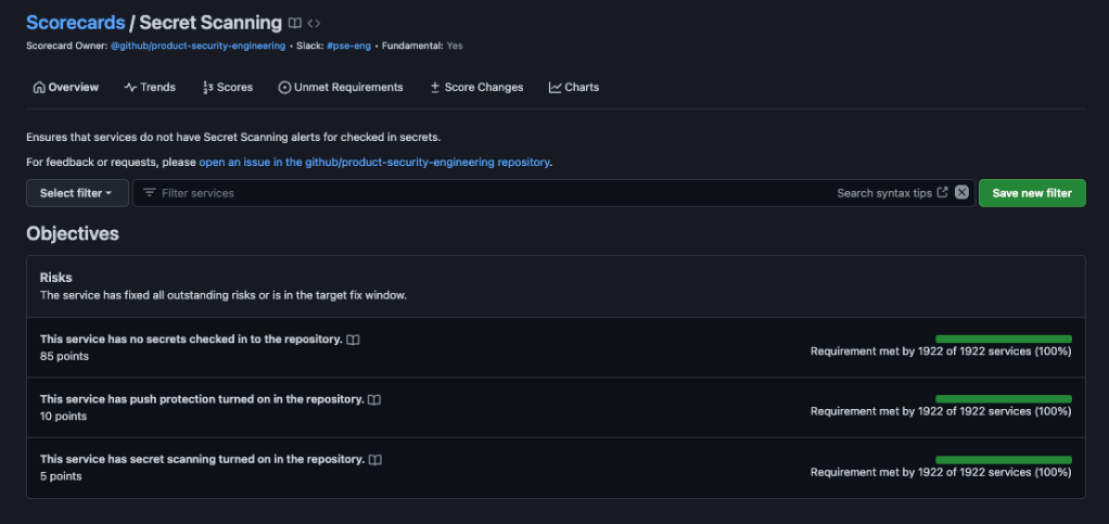
An example secret scanning scorecard showing 100% compliance for having no secrets in the repository, push protection enabled, and secret scanning turned on.
Example secret scanning scorecard

A culture of accountability

As much emphasis as we put on Fundamentals, it’s not the only thing we do: we ship products, too!

We call it the Fundamentals program because we also make sure that:

  1. We include Fundamentals in our strategic plans. This means our organization prioritizes this work and allocates resources to accomplish the fundamental goals we each quarter. We track the goals on a weekly basis and address the roadblocks.
  2. We surface and manage risks across all services to the leaders so they can actively address them before they materialize into actual problems.
  3. We provide support to teams as they work to mitigate fundamental action items.
  4. It’s clearly understood that all services, regardless of team, have a consistent set of requirements from Fundamentals.

Planning, managing, and executing fundamentals is a team affair, with a program management umbrella.

Designated Fundamentals champions and delegates help maintain scorecard compliance, and our regular check-ins with engineering leaders help us identify high-risk services and commit to actions that will bring them back into compliance. This includes:

  1. Executive sponsor. The executive sponsor is a senior leader who supports the program by providing resources, guidance, and strategic direction.
  2. Pillar sponsor. The pillar sponsor is an engineering leader who oversees the overarching focus of a given pillar across the organization as in Availability, Security, and Accessibility.
  3. Directly responsible individual (DRI). The DRI is an individual responsible for driving the program by collaborating across the organization to make the right decisions, determine the focus, and set the tempo of the program.
  4. Scorecard champion. The scorecard champion is an individual responsible for the maintenance of the scorecard. They add, update, and deprecate the scorecard requirements to keep the scorecard relevant.
  5. Service sponsors. The sponsor oversees the teams that maintain services and is accountable for the health of the service(s).
  6. Fundamentals delegate. The delegate is responsible for coordinating Fundamentals work with the service owners within their org, supporting the Sponsor to ensure the work is prioritized, and resources committed so that it gets completed.

Results-driven execution

Making the data readily available is a critical part of the puzzle. We created a Fundamentals dashboard that shows all the services with unmet scorecards sorted by service tier and type and filtered by service owners and teams. This makes it easier for our engineering leaders and delegates to monitor and take action towards Fundamental scorecards’ adherence within their orgs.

As a result:

  • Our services comply with durable ownership requirements. For example, the service must have an executive sponsor, a team, and a communication channel on Slack as part of the requirements.
  • We resolved active secret scanning alerts in repositories affiliated with the services in the GitHub organization. Some of the repositories were 15 years old and as a part of this effort we ensured that these repos are durably owned.
  • Business critical services are held to greater incident readiness standards that are constantly evolving to support our customers.
  • Service tiers are audited and accurately updated so that critical services are held to the highest standards.

Example layout and contents of Fundamentals dashboard

Tier 1 Services Out of Compliance [Count: 2]
Service Name Service Tier Unmet Scorecard Exec Sponsor Team
service_a 1 incident-readiness john_doe github/team_a
service_x 1 code-scanning jane_doe github/team_x

Continuous monitoring and iterative enhancement for long-term success

By setting standards for engineering excellence and providing pathways to meet through standards through culture and process, GitHub’s Fundamentals program has delivered business critical improvements within the engineering organization and, as a by-product, to the GitHub platform. This success was possible by setting the right organizational priorities and committing to them. We keep all levels of the organization engaged and involved. Most importantly, we celebrate the wins publicly, however small they may seem. Building the culture of collaboration, support, and true partnership has been key to sustaining the ongoing momentum of an organization-wide engineering governance program, and the scorecards that monitor the availability, security, and accessibility of our platform so you can consistently rely on us to achieve your goals.

Want to learn more about how we do engineering GitHub? Check out how we build containerized services, how we’ve scaled our CI to 15,000 jobs every hour using GitHub Actions larger runners, and how we communicate effectively across time zones, teams, and tools.

Interested in joining GitHub? Check out our open positions or learn more about our platform.

The post GitHub’s Engineering Fundamentals program: How we deliver on availability, security, and accessibility appeared first on The GitHub Blog.

Backblaze Commits to Routing Security With MANRS Participation

Post Syndicated from Brent Nowak original https://www.backblaze.com/blog/backblaze-commits-to-routing-security-with-manrs-participation/

A decorative image displaying the MANRS logo.

They say good manners are better than good looks. When it comes to being a good internet citizen, we have to agree. And when someone else tells you that you have good manners (or MANRS in this case), even better. 

If you hold your cloud partners to a higher standard, and if you think it’s not asking too much that they make the internet a better, safer place for everyone, then you’ll be happy to know that Backblaze is now recognized as a Mutually Agreed Norms for Routing Security (MANRS) participant (aka MANRS Compliant). 

What Is MANRS?

MANRS is a global initiative with over 1,095 participants that are enacting network policies and controls to help reduce the most common routing threats. At a high level, we’re setting up filters to check that network routing information we receive for peers is valid, ensuring that the networks we advertise to the greater internet are marked as owned by Backblaze, and making sure that data that gets out of our network is legitimate and can’t be spoofed.

You can view a full list of MANRS participants here.

What Our (Good) MANRS Mean For You

The biggest benefit for customers is that network traffic to and from Backblaze’s connection points where we exchange traffic with our peering partners is more secure and more trustworthy. All of the changes that we’ve implemented (which we get into below) are on our side—so, no action is necessary from Backblaze partners or users—and will be transparent for our customers. Our Network Engineering team has done the heavy lifting. 

MANRS Actions

Backblaze falls under the MANRS category of CDN and Cloud Providers, and as such, we’ve implemented solutions or processes for each of the five actions stipulated by MANRS:

  1. Prevent propagation of incorrect routing information: Ensure that traffic we receive is coming from known networks.
  2. Prevent traffic of illegitimate source IP addresses: Prevent malicious traffic coming out of our network.
  3. Facilitate global operational communication and coordination: Keep our records with 3rd party sites like Peeringdb.com up to date as other operators use this to validate our connectivity details.
  4. Facilitate validation of routing information on a global scale: Digitally sign our network objects using the Resource Public Key Infrastructure (RPKI) standard.
  5. Encourage MANRS adoption: By telling the world, just like in this post!

Digging Deeper Into Filtering and RPKI

Let’s go over the filtering and RPKI details, since they are very valuable to ensuring the security and validity of our network traffic.

Filtering: Sorting Out the Good Networks From the Bad

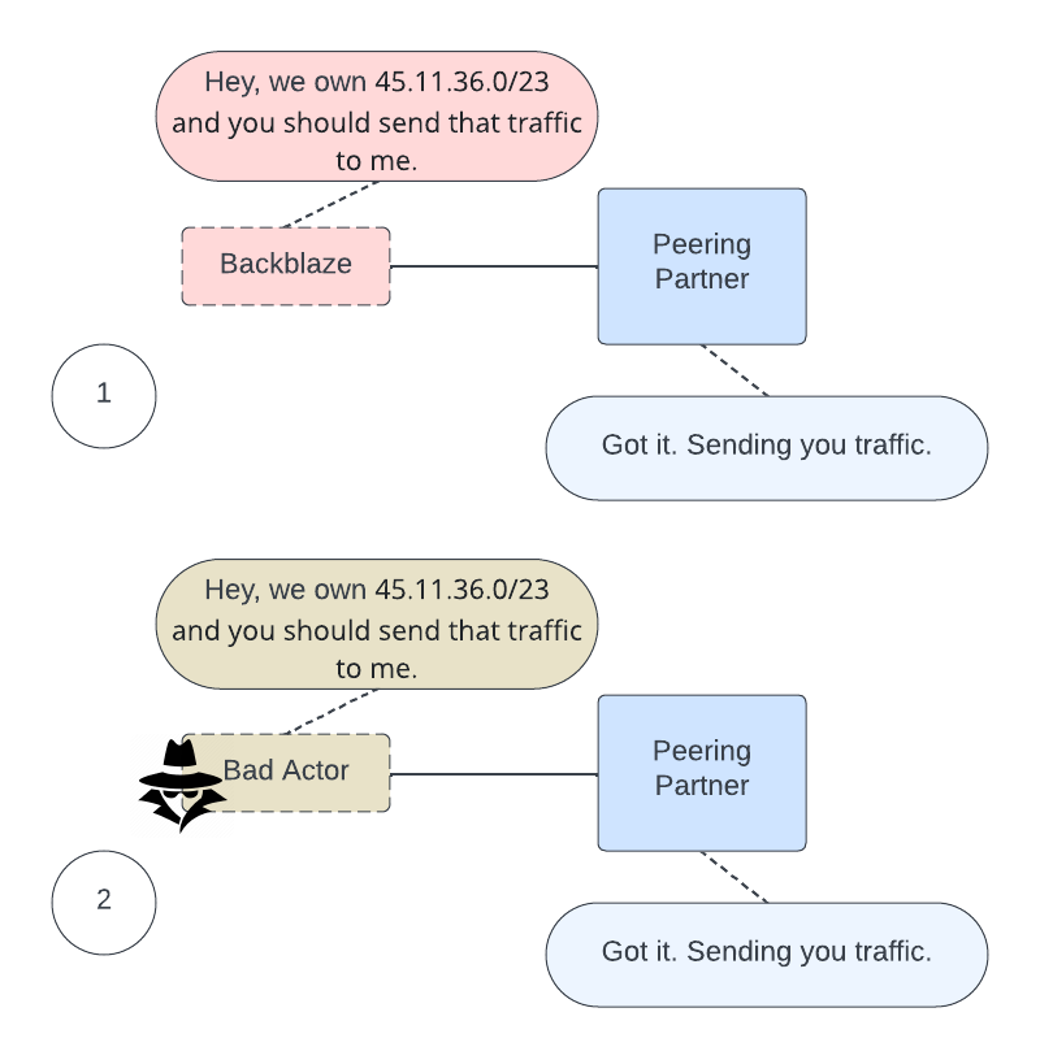
One major action for MANRS compliance is to validate that the networks we receive from peers are valid. When we connect to other networks, we each tell each other about our networks in order to build a routing table that lets us know the optimal path to send traffic.

We can blindly trust what the other party is telling us, or we can reach out to an external source to validate. We’ve implemented automated internal processes to help us apply these filters to our edge routers (the devices that connect us externally to other networks).

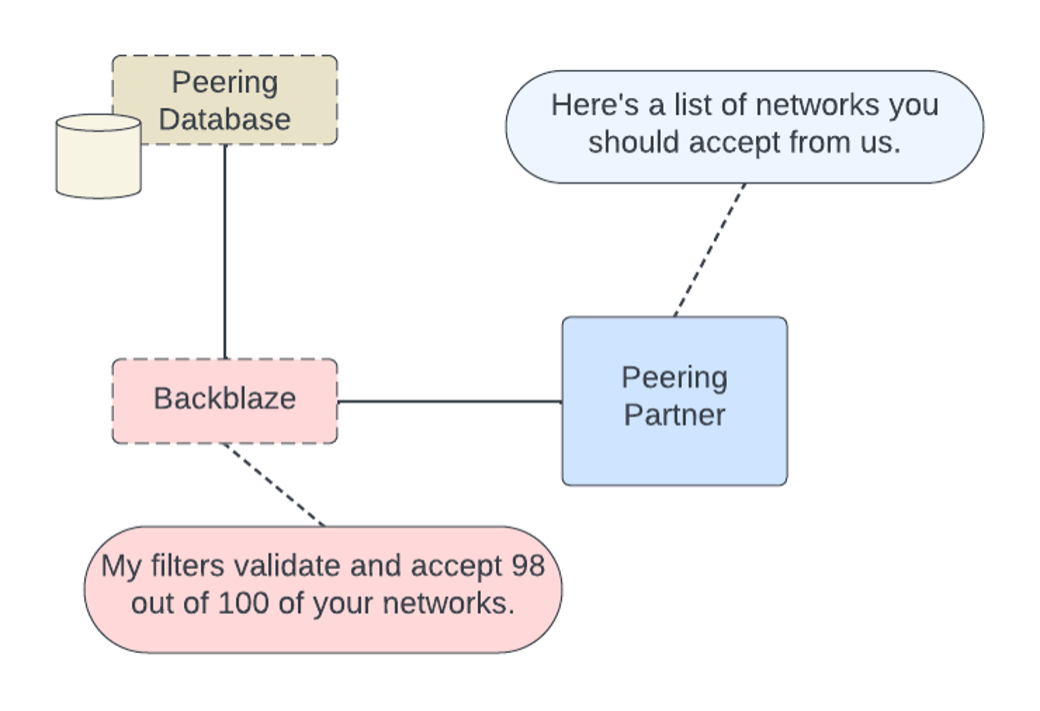
If you’re a more visual learner, like me, here’s a quick conversational bubble diagram of what we have in place.

Externally verifying routing information we receive.

Every edge device that connects to an external peer now has validation steps to ensure that the networks we receive and use to send out traffic are valid. We have automated processes that periodically check and deploy for updates to any lists.

What Is RPKI?

RPKI is a public key infrastructure framework designed to secure the internet’s routing infrastructure, specifically the Border Gateway Protocol (BGP). RPKI provides a way to connect internet number resource information (such as IP addresses) to a trust anchor. In layman’s terms, RPKI allows us, as a network operator, to securely identify whether other networks that interact with ours are legitimate or malicious.

RPKI: Signing Our Paperwork

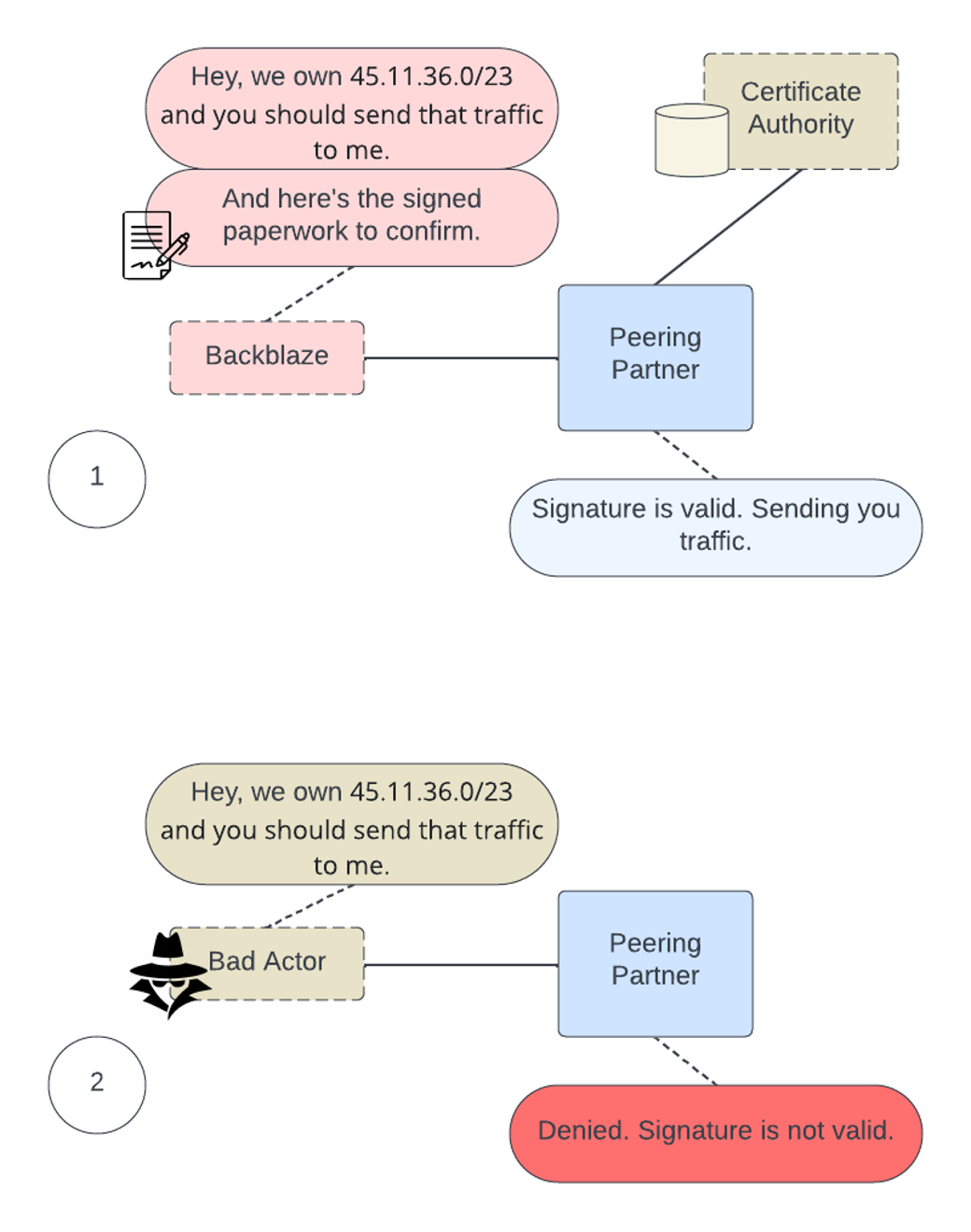
Much like going to a notary and validating a form, we can perform the same action digitally with the list of networks that we advertise to the greater internet. The RPKI framework allows us to stamp our networks as owned by us.

It also allows us to digitally sign records of our networks that we own, allowing external parties to confirm that the networks that they see from us are valid. If another party comes along and tries to claim to be us, by using RPKI our peering partner will deny using that network to send data to a false Backblaze network.

You can check the status of our RPKI signed route objects on the MANRS statistics website.

What does the process of peering and advertising networks look like without RPKI validation?

A diagram that imagines IP address requests for ownership without RPKI standards. Bad actors would be able to claim traffic directed towards IP addresses that they don't own.
Bad actor claiming to be a Backblaze network without RPKI validation.

Now, with RPKI, we’ve dotted our I’s and crossed our T’s. A third party certificate holder serves as a validator for the digital certificates that we used to sign our network objects. If anyone else claims to be us, they will be marked as invalid and the peer will not accept the routing information, as you can see in the diagram below.

A diagram that imagines networking requests for ownership with RPKI standards properly applied. Bad actors would attempt to claim traffic towards an owned or valid IP address, but be prevented because they don't have the correct credentials.
With RPKI validation, the bad actor is denied the ability to claim to be a Backblaze network.

Mind Your MANRS

Our first value as a company is to be fair and good. It reads: “Be good. Trust is paramount. Build a good product. Charge fairly. Be open, honest, and accepting with customers and each other.” Almost sounds like Emily Post wrote it—that’s why our MANRS participation fits right in with the way we do business. We believe in an open internet, and participating in MANRS is just one way that we can contribute to a community that is working towards good for all.

The post Backblaze Commits to Routing Security With MANRS Participation appeared first on Backblaze Blog | Cloud Storage & Cloud Backup.

A new CEO for Mozilla

Post Syndicated from LWN.net original https://lwn.net/Articles/961359/

Mitchell Baker has announced
that she is stepping down from the role of Mozilla CEO, effective
immediately. Laura Chambers will be the new CEO “for the remainder of
the year
“.

We’re at a critical juncture where public trust in institutions,
governments, and the fabric of the internet has reached
unprecedented lows. There’s a tectonic shift underway as everyone
battles to own the future of AI. It is Mozilla’s opportunity and
imperative to forge a better future. I’m excited about Laura’s
day-to-day involvement and the chance for Mozilla to achieve
more. Our power lies in the collective effort of people
contributing to something better and I’m eager for Mozilla to meet
the needs of this era more fully.

A new CEO for Mozilla

Post Syndicated from corbet original https://lwn.net/Articles/961359/

Mitchell Baker has announced
that she is stepping down from the role of Mozilla CEO, effective
immediately. Laura Chambers will be the new CEO “for the remainder of
the year
“.

We’re at a critical juncture where public trust in institutions,
governments, and the fabric of the internet has reached
unprecedented lows. There’s a tectonic shift underway as everyone
battles to own the future of AI. It is Mozilla’s opportunity and
imperative to forge a better future. I’m excited about Laura’s
day-to-day involvement and the chance for Mozilla to achieve
more. Our power lies in the collective effort of people
contributing to something better and I’m eager for Mozilla to meet
the needs of this era more fully.

[$] Pitchforks for RDSEED

Post Syndicated from LWN.net original https://lwn.net/Articles/961121/

The generation of random (or, at least, unpredictable) numbers is key to
many security technologies. For this reason, the provision of random data
as a CPU feature has drawn a lot of attention over the years. A proper
hardware-based random-number generator can address the problems that make
randomness hard to obtain in some systems, but only if the manufacturer can
be trusted to not have compromised that generator in some way. A recent
discussion has brought to light a different problem, though: what happens
if a hardware random-number generator can be simply driven into exhaustion?

[$] Pitchforks for RDSEED

Post Syndicated from corbet original https://lwn.net/Articles/961121/

The generation of random (or, at least, unpredictable) numbers is key to
many security technologies. For this reason, the provision of random data
as a CPU feature has drawn a lot of attention over the years. A proper
hardware-based random-number generator can address the problems that make
randomness hard to obtain in some systems, but only if the manufacturer can
be trusted to not have compromised that generator in some way. A recent
discussion has brought to light a different problem, though: what happens
if a hardware random-number generator can be simply driven into exhaustion?

Glibc becomes a CVE Numbering Authority

Post Syndicated from LWN.net original https://lwn.net/Articles/961355/

The GNU C Library project has
been accepted
as a CVE Numbering Authority (CNA), meaning that the
project is now in control of the CVE numbers assigned to its code.

As a CNA the glibc security team will be working to improve the
quality and response time of security advisories and mitigations.

Over the coming months, the glibc security team will define the
process for the CNA and establish best practices that can also be
used by the rest of the GNU Toolchain.

See this article for some background on
this change.

Glibc becomes a CVE Numbering Authority

Post Syndicated from corbet original https://lwn.net/Articles/961355/

The GNU C Library project has
been accepted
as a CVE Numbering Authority (CNA), meaning that the
project is now in control of the CVE numbers assigned to its code.

As a CNA the glibc security team will be working to improve the
quality and response time of security advisories and mitigations.

Over the coming months, the glibc security team will define the
process for the CNA and establish best practices that can also be
used by the rest of the GNU Toolchain.

See this article for some background on
this change.

Security updates for Thursday

Post Syndicated from LWN.net original https://lwn.net/Articles/961330/

Security updates have been issued by Debian (chromium), Red Hat (gimp, kernel, kernel-rt, and runc), Slackware (expat), SUSE (libavif), and Ubuntu (linux, linux-aws, linux-aws-5.15, linux-gcp, linux-gcp-5.15, linux-gke,
linux-gkeop, linux-gkeop-5.15, linux-hwe-5.15, linux-ibm, linux-ibm-5.15,
linux-kvm, linux-lowlatency-hwe-5.15, linux-nvidia, linux-oracle,
linux-oracle-5.15, linux, linux-aws, linux-aws-5.4, linux-azure, linux-azure-5.4,
linux-bluefield, linux-gkeop, linux-hwe-5.4, linux-ibm, linux-ibm-5.4,
linux-iot, linux-kvm, linux-oracle, linux-oracle-5.4, linux-xilinx-zynqmp, and linux, linux-aws, linux-gcp, linux-hwe-6.5, linux-laptop,
linux-lowlatency, linux-lowlatency-hwe-6.5, linux-oem-6.5, linux-oracle,
linux-raspi, linux-starfive).

Security updates for Thursday

Post Syndicated from jake original https://lwn.net/Articles/961330/

Security updates have been issued by Debian (chromium), Red Hat (gimp, kernel, kernel-rt, and runc), Slackware (expat), SUSE (libavif), and Ubuntu (linux, linux-aws, linux-aws-5.15, linux-gcp, linux-gcp-5.15, linux-gke,
linux-gkeop, linux-gkeop-5.15, linux-hwe-5.15, linux-ibm, linux-ibm-5.15,
linux-kvm, linux-lowlatency-hwe-5.15, linux-nvidia, linux-oracle,
linux-oracle-5.15, linux, linux-aws, linux-aws-5.4, linux-azure, linux-azure-5.4,
linux-bluefield, linux-gkeop, linux-hwe-5.4, linux-ibm, linux-ibm-5.4,
linux-iot, linux-kvm, linux-oracle, linux-oracle-5.4, linux-xilinx-zynqmp, and linux, linux-aws, linux-gcp, linux-hwe-6.5, linux-laptop,
linux-lowlatency, linux-lowlatency-hwe-6.5, linux-oem-6.5, linux-oracle,
linux-raspi, linux-starfive).

Our T Level resources to support vocational education in England

Post Syndicated from Jan Ander original https://www.raspberrypi.org/blog/t-level-resources-support-vocational-education-england/

You can now access classroom resources created by us for the T Level in Digital Production, Design and Development. T Levels are a type of vocational qualification young people in England can gain after leaving school, and we are pleased to be able to support T Level teachers and students.

A teenager learning computer science.

With our new resources, we aim to empower more young people to develop their digital skills and confidence while studying, meaning they can access more jobs and opportunities for further study once they finish their T Levels.

We worked collaboratively with the Gatsby Charitable Foundation on this pilot project as part of their Technical Education Networks Programme, the first time that we have created classroom resources for post-16 vocational education.

Post-16 vocational training and T Levels

T Levels are Technical Levels, 2-year courses for 16- to 18-year-old school leavers. Launched in England in September 2020, T Levels cover a range of subjects and have been developed in collaboration with employers, education providers, and other organisations. The aim is for T Levels to specifically prepare young people for entry into skilled employment, an apprenticeship, or related technical study in further or higher education.

A group of young people in a lecture hall.

For us, this T Level pilot project follows on from work we did in 2022 to learn more about post-16 vocational training and identify gaps where we could make a difference. 

Something interesting we found was the relatively low number of school-age young people who started apprenticeships in the UK in 2019/20. For example, a 2021 Worldskills UK report stated that only 18% of apprentices were young people aged 19 and under. 39% were aged 19-24, and the remaining 43% were people aged 25 and over.

To hear from young people about their thoughts directly, we spoke to a group of year 10 students (ages 14 to 15) at Gladesmore School in Tottenham. Two thirds of these students said that digital skills were ‘very important’ to them, and that they would consider applying for a digital apprenticeship or T Level. When we asked them why, one of the key reasons they gave was the opportunity to work and earn money, rather than moving into further study in higher education and paying tuition fees. One student’s answer was for example, “It’s a good way to learn new skills while getting paid, and also gives effective work experience.”

T Level curriculum materials and project brief

To support teachers in delivering the Digital Production, Design and Development T Level qualification, we created a new set of resources: curriculum materials as well a project brief with examples to support the Occupational Specialism component of the qualification. 

A girl in a university computing classroom.

The curriculum materials on the topic ‘Digital environments’ cover content related to computer systems including hardware, software, networks, and cloud environments. They are designed for teachers to use in the classroom and consist of a complete unit of work: lesson plans, slide decks, activities, a progression chart, and assessment materials. The materials are designed in line with our computing content framework and pedagogy principles, on which the whole of our Computing Curriculum is based.

The project brief is a real-world scenario related to our work and gives students the opportunity to problem-solve as though they are working in an industry job.

Access the T Level resources

The T Level project brief materials are available for download now, with the T Level classroom materials coming in the next few weeks.

We hope T Level teachers and students find the resources useful and interesting — if you’re using them, please let us know your thoughts and feedback.

Our thanks to the Gatsby Foundation for collaborating with us on this work to empower more young people to fulfil their potential through the power of computing and digital technologies.

The post Our T Level resources to support vocational education in England appeared first on Raspberry Pi Foundation.