Post Syndicated from Anton Aleksandrov original https://aws.amazon.com/blogs/architecture/building-a-serverless-ai-assistant-at-pelago-concept-to-care-in-two-weeks/
Healthcare organizations face a critical scaling challenge – how to maintain deeply personalized patient interactions as member bases grow, without overwhelming care teams or compromising quality. At Pelago, a digital health company specializing in substance use disorder support, the engineering team found a way to build an AI-powered solution to address this challenge using AWS services in just two weeks.
In this post, you will learn how Pelago used AWS serverless and AI services, such as Amazon Bedrock and AWS Lambda, to build and deploy an event-driven AI assistant. The result is a service that generates contextually aware suggested considerations for the care team. This system preserves the human-in-the-loop oversight that healthcare demands while removing months of traditional development work and overhead of managing complex infrastructure.
The challenge overview
Pelago is a digital clinic for substance use treatment that provides comprehensive support including 1:1 coaching, medication management, and behavioral therapy. It serves members across the US to support recovery journeys for alcohol, tobacco, stimulants, cannabis, and opioid use disorder, and adjacent behaviors often associated with substance use. The Pelago care team coaches members through substance use recovery. A single coach may hold active conversations with dozens of members at once. Each message a coach sends needs to reflect weeks of prior context and drafting that response manually from scratch takes time the care team doesn’t always have.
When the Pelago engineering team set out to build an AI assistant for the care team, they faced a set of interconnected constraints. Behavioral health conversations build over weeks and months. Coaches need to account for that history in every reply. An AI assistant that only understands the most recent messages isn’t useful here – it must grasp the full long-term conversation history. That depth of context is also why human oversight is non-negotiable. The system had to generate suggestions for Pelago’s care team, not automated responses. Every piece of feedback must be read, evaluated, and adapted by a human coach before it reaches a member.
Protected Health Information (PHI) requirements added another layer of complexity – data could not leave Pelago’s AWS environment. All AI integrations must operate entirely within existing Amazon Virtual Private Cloud (VPC) infrastructure with no exposure to the public internet.
Beyond compliance and clinical safety, there were also practical constraints. Care team members need information the moment they open a conversation but generating relevant content processing dozens, sometimes hundreds, of prior messages through a large language model. A long wait was not acceptable when coaches open dozens of conversations per shift.
The engineering team needed to deliver all this quickly with full audit trails and security controls in a highly regulated environment. They had to solve the problem of pre-generating contextual suggestions without blocking the user experience while maintaining the compliance posture.
Solution design: Event-driven serverless architecture
The Pelago team separated concerns using event-driven architecture. The care team needed suggested responses instantly when accessing the system but generating them synchronously in real-time blocked the user experience for tens of seconds because of LLM processing time. By treating each incoming member message as an asynchronous event, the system can fan out processing to independent consumers without coupling them to the message delivery path. A new consumer, such as the AI assistant, can be added without affecting existing components or code. And because each processing step runs in its own Lambda function, a spike in inference requests doesn’t affect message delivery or processing.
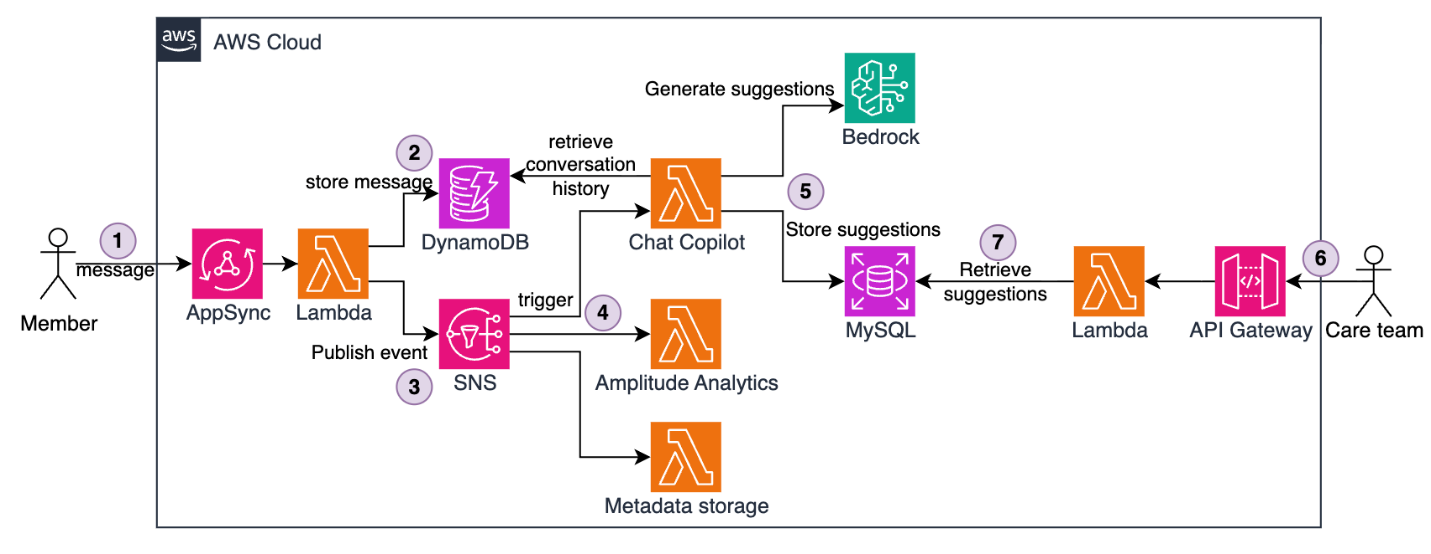
Figure 1 — The full end-to-end solution architecture
The architecture uses Amazon Simple Notification Service (Amazon SNS) for message fanout and Lambda functions for processing. Here’s how it works:
- Members send messages through AWS AppSync, forwarded to a Lambda function.
- The Lambda function stores messages in an Amazon DynamoDB table.
- The Lambda function publishes messages to an SNS topic.
- SNS fans out messages to multiple Lambda subscriber functions, such as Metadata storage, Amplitude analytics, and Chat assistant responsible for AI-based suggested message generation.
- The Chat Assistant Lambda runs asynchronously. It retrieves the full conversation history from DynamoDB, invokes Amazon Bedrock to generate contextual suggestions, and stores the result in MySQL hosted on Amazon Relational Database Service (Amazon RDS). This flow happens in the background without blocking user experience and typically completing in under 10 seconds.
- When a care team member opens a conversation (often minutes or hours later), the request flows through Amazon API Gateway.
- A Lambda function retrieves pre-generated suggestions from MySQL.
- The front end displays the suggestion in under 100 milliseconds.
This pattern keeps message delivery, analytics, and AI generation decoupled. Each member’s PHI is processed separately and stays fully within the Pelago AWS boundary. A failure or spike in feedback generation for one member does not disrupt or impact processing for other members.
Because inference happens asynchronously in the background, the care team does not wait for LLM processing. Suggested messages are pre-generated, stored, and ready to use when a coach opens a conversation. This keeps retrieval times under 100 milliseconds regardless of how long the AI generation took.
This serverless architecture also provides organic scaling. Each Lambda function automatically scales horizontally based on current traffic – scaling up during spikes and back down when demand drops, with no pre-provisioning or scaling configuration required. Adding a new event-driven downstream capability, like the AI assistant itself, requires only a new SNS subscription with no changes to existing message-publishing or handling code.
Event-driven fanout with Amazon SNS
The foundation of the Pelago chat architecture is an SNS topic that acts as a message bus for conversation events. SNS is a fully managed pub/sub messaging service. When a message is published to a topic, SNS automatically delivers it to subscribed consumers in parallel. This means a single incoming message can trigger multiple independent processing steps simultaneously.
When a user or coach sends a message, the system publishes a standardized payload to the SNS topic, for example:
SNS delivers this event to four Lambda function subscribers. The Metadata Storage Lambda writes message metadata to MySQL for reporting. The Analytics Lambda sends events to Amplitude for product analytics. The Push Notification Lambda triggers mobile notifications for coaches. The Chat Assistant Lambda generates Assistant-based suggestions using Amazon Bedrock.
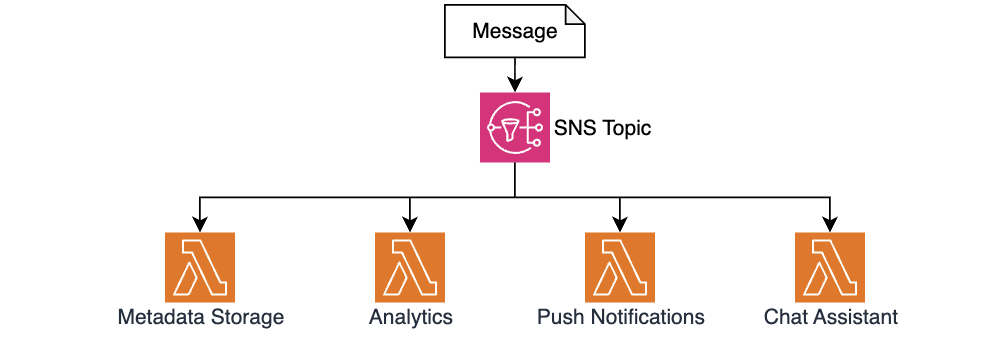
Figure 2 — Using SNS for message fan-out and decoupled processing
This fanout pattern allowed the Pelago team to add the AI Chat Assistant feature with zero changes to existing message-handling code. The team simply created a new Lambda function and added it as an SNS subscription. The publisher doesn’t need to know how many consumers exist or what they do, so new capabilities can be built and deployed independently without risking regressions in the message processing path.
Async AI generation with Amazon Bedrock
The Chat Assistant Lambda handles computationally expensive AI generation. The function implements a multi-step workflow:
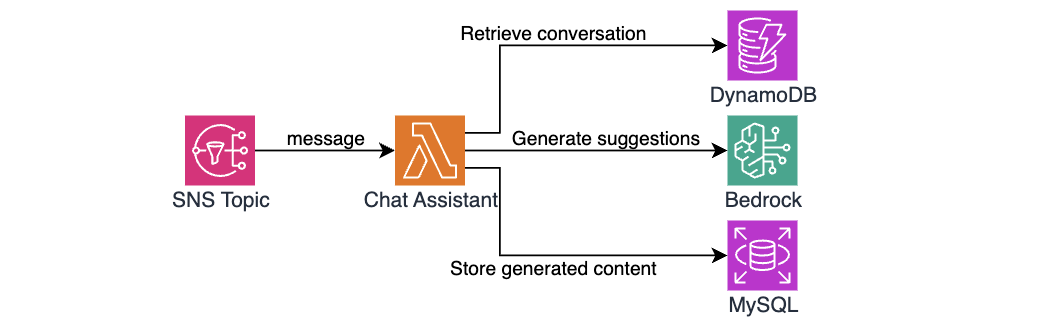
Figure 3 — The chat assistant architecture and workflow
The first step is to retrieve conversation history. Behavioral health conversations can span dozens or even hundreds of messages over weeks, and the AI assistant needs all that context to generate a useful suggestion to Pelago’s care team. The function queries DynamoDB for previous messages in the conversation. The DynamoDB single-digit millisecond read performance means even lengthy conversations (50+ messages) are typically retrieved in under 20ms.
The next step is to prepare and format context for inference. The function transforms the retrieved messages structure into a conversation history format that provides Amazon Bedrock with full context, for example:
After formatting the conversation, the Lambda function uses the Amazon Bedrock Runtime API to invoke Claude models. The prompt engineering focuses on empathy and validation – it helps the model acknowledge what the member is feeling rather than jumping to advice. It is tuned to maintain contextual continuity – picking up things the member mentioned in earlier messages instead of treating each exchange without prior context. It also steers the model away from false optimism or dismissive language and keeps suggestions short, more like a text message than an email. This matches how coaching conversations flow on the application.
Measuring system performance and business impact
This entire flow, from SNS trigger to a suggestion stored in MySQL, typically completes in less than 4 seconds, well within acceptable processing time. When a care team member opens a conversation on the dashboard, the front end instantly retrieves pre-generated suggested messages. Total response time perceived by the care team is under 100 milliseconds.
The Pelago team went from technical designs to first production deployment in 2 weeks. Two days on architecture and model selection with the clinical team, three days building the core Lambdas, three days on integration testing and prompt refinement, and two final days on deployment and monitoring.
The system delivered strong early results. From the business perspective, response preparation times dropped 40% on average, and the care team rated 79.6% of AI suggestions as helpful, based on internal Pelago measurements. Operationally, using serverless services introduced no new overhead. There was no new infrastructure to manage, servers to patch, or scaling configurations to maintain. The architecture successfully handled an 8x message volume spike during a seasonal campaign without configuration changes.
Implementation details and key decisions
With the core event-driven architecture in place, the Pelago team made several implementation choices to satisfy healthcare industry requirements, handle traffic patterns unique to the application, and maintain reliability across the system.
PHI must stay secured
Pelago uses multiple AWS security features to maintain HIPAA eligibility while using AI models. One requirement is for PHI to never traverse the public internet. To address this, the Pelago team uses VPC endpoints for Amazon Bedrock, so model invocations stay within the private network. The Boto3 client in the Python Lambda automatically routes traffic through the private endpoint. Data is encrypted at rest on DynamoDB and RDS, service communications use TLS 1.2+, and IAM policies are scoped with least-privilege permissions to specific resource actions and ARNs. Audit logs of model invocations are emitted to Amazon CloudWatch and capture message IDs only, not content.
Polyglot cross-runtime implementation
The team used Python for Lambda functions that invoke Amazon Bedrock models. Boto3 native Amazon Bedrock support and simpler string manipulation made Python the right choice for building and iterating on prompts. The retrieval function is written in TypeScript to stay consistent with most of the Pelago backend code and to reuse shared libraries and Zod schemas for type-safe API contracts. This split let the team use the best language for each job without forcing a single runtime across the entire system.
Spiky traffic and pay-per-invocation compute
The Pelago application serves heavily US-based traffic. Message volume concentrates during weekday working hours, with peak hours seeing 10x or more the volume of quiet periods. The pay-per-invocation model of Lambda fits this well. During a Monday morning surge, Lambda scales out automatically with no pre-provisioning required. During off-peak hours, Lambda functions automatically scale down, so Pelago avoids idle compute costs. Using alternative long-lived compute would mean either over-provisioning for peak load or maintaining auto scaling policies that can lag during sudden spikes. With Lambda, the solution costs are directly proportional to member engagement with no idle cost.
Picking the right storage and handling idempotency
The team chose to use DynamoDB for conversation messages and MySQL for assistant suggestions based on different access patterns of each scenario. Conversation messages require high write throughput (100+ writes/sec at peak), single-digit millisecond reads, and automatic scaling. These requirements made DynamoDB a good fit. Assistant suggestions have a lighter write load (10-20 writes/sec) but need structured queries, foreign key relationships, and nested analytics joins that a relational database supports naturally.
Because SNS can deliver messages more than once, the Chat Assistant Lambda checks MySQL for an existing message before generating a new one. This idempotency check helps prevent duplicate Amazon Bedrock invocations, which would waste compute and could surface conflicting suggestions to coaches. If an Amazon Bedrock invocation fails because of throttling or model unavailability, the function logs the error without blocking message flow. A built-in retry mechanism handles transient failures, so suggestions are eventually generated even when Amazon Bedrock experiences momentary capacity constraints.
Monitoring and observability
The team tracks multiple business and operational metrics. CloudWatch metrics capture suggestion generation latency, which helps the team identify when model response times exceed acceptable thresholds. Retrieval rate measures what percentage of generated message suggestions are used by coaches. This gives insights into how well the async timing aligns with real usage patterns. The system also allows coaches to rate each suggestion with thumbs up or down. These ratings are stored in MySQL for future prompt tuning and model evaluation. CloudWatch alarms monitor error rates for Amazon Bedrock throttling and database connection failures. These alarms alert the engineering team before operational issues impact the care team experience.
Conclusion
Managed AI services like Amazon Bedrock and serverless architectures let healthcare organizations move quickly while maintaining compliance controls. The Pelago chat assistant shows what’s possible when you combine serverless event-driven processing with async AI generation and fast synchronous retrieval. The key patterns that made this work are SNS fanout to decouple processing and make new features straightforward to add, pre-generating message suggestions asynchronously so the care team does not wait, VPC endpoints to keep PHI off the public internet, and starting with foundation models and prompt engineering instead of spending months on custom model training.
The Pelago journey from concept to production deployment shows how small engineering teams in regulated industries can balance moving fast and maintaining their compliance posture.
Useful links
- Serverless patterns and architectures.
- Getting started with Amazon Bedrock.
- Getting started with AWS Lambda.