How boAt delivers personalized fitness coaching with Amazon Bedrock

Post Syndicated from Natasha Sah original https://aws.amazon.com/blogs/architecture/how-boat-delivers-personalized-fitness-coaching-with-amazon-bedrock/

This post is co-written with Sridhara Seshadri from KaHa Technologies Pvt Ltd, a wholly-owned subsidiary of Imagine Marketing Limited (IML).

Recognizing that users need more than raw fitness data, boAt launched the “AI Coach” feature. It uses a combination of user history, preferences, and generative AI to deliver personalized coaching plans in real time. Using AWS, boAt built a solution that delivers personalized AI coaching. The AI Coach feature has been in production for over six months, reliably serving millions of boAt smartwatch users across India. In this post, we explore how boAt built the AI Coach on Amazon Bedrock and AWS Lambda, and the design choices that made it scalable and cost-effective.

Imagine Marketing Limited primarily operates under the brand boAt, launched in 2015 in the consumer electronics industry, focused on mass-premium, lifestyle-oriented products for India’s young, tech-savvy consumers at accessible price points. Starting with audio, boAt has expanded into adjacent categories such as wearables and charging solutions, selling through online marketplaces, D2C, and offline retail. In FY 2025, boAt led India’s branded personal audio with strong value and volume shares, sold over 34 million units in India as reported in FounderPin, and ranked among the top global audio brands by volume. Its agile, digital-first model drives rapid innovation, wide reach, and faster time-to-market aligned with evolving consumer preferences.

Opportunity

With the emergence of advanced AI capabilities, boAt saw an opportunity to deliver a highly personalized fitness coaching experience for its smartwatch users. The core objective was to help users build and sustain fitness and wellness habits aligned with their lifestyles. These recommendations needed to be straightforward for users to follow while clearly communicating their value.

The three primary design principles were personalization, affordability, and scalability.

Solution architecture

The following shows a simplified high-level architecture of the AI Coach components deployed on AWS.
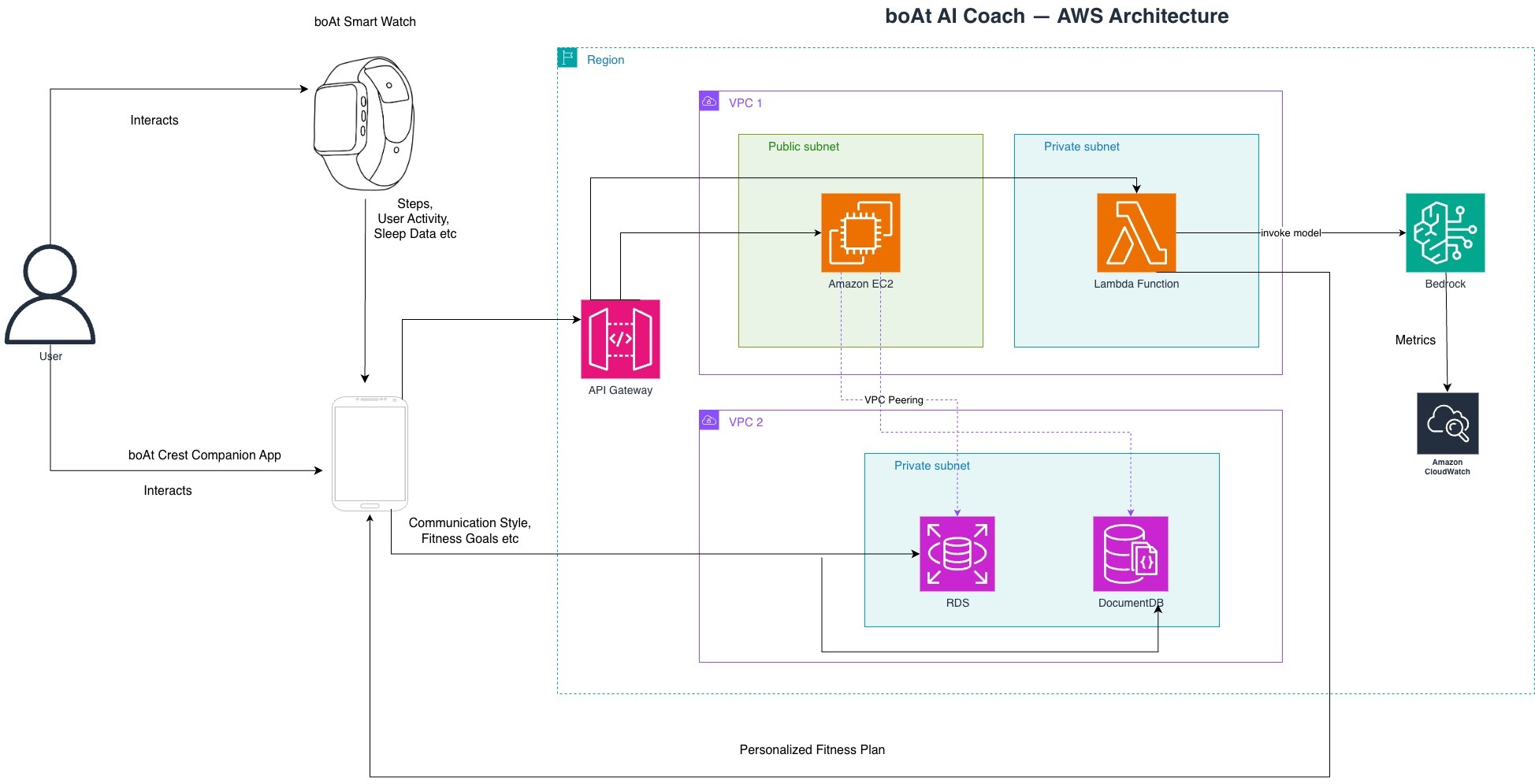
High-level architecture showing the boAt smartwatch and Crest companion app sending data through AWS Lambda to Meta Llama 3.3 on Amazon Bedrock, with historical data in Amazon RDS for MySQL and Amazon DocumentDB.

Figure 1: High-level architecture of the boAt AI Coach on AWS

The following sections provide a brief overview of the architecture and its key components.

  1. Data source: The boAt smartwatch serves as the primary data source, capturing metrics such as steps, user activities (for example, running or yoga), and sleep data. All data is encrypted at rest and in transit. The boAt Crest companion app for iOS and Android also captures additional data points, such as the user’s preferred communication style and fitness goals for a predefined period.
  2. Historical data: Historical user data, when available, plays a key role in personalizing plans. These data points are transmitted by the companion application to backend servers and stored in Amazon Relational Database Service (Amazon RDS) for MySQL and Amazon DocumentDB (with MongoDB compatibility). When the AI coach creates a plan, this historical data provides important context about what the user has done earlier.
  3. AWS Lambda: This component plays several roles:
    • It acts as a translation layer, transforming input data into a format suitable for large language models (LLMs) and converting model outputs into a format the companion application can parse and interpret. This layer also abstracts the underlying AI coach implementation.
    • On the input side, the data sent through the API is in a legacy format optimized for database operations. This is mapped to a more verbose format so that LLMs can better interpret what each key means.
    • On the output side, the system handles missing keys in the generated plan by substituting safe defaults and verifying that the response format remains consistent with the companion application’s requirements.
    • For production deployments, consider placing the Amazon Elastic Compute Cloud (Amazon EC2) instance in a private subnet and exposing it through an Amazon API Gateway private integration using a VPC link.

The AI Coach feature has two main logical pieces:

  1. Personalized plan generation.
  2. Nudges to aid adherence to the plan.

We use the Meta Llama 3.3 70B Instruct model on Amazon Bedrock to implement the AI Coach feature. For model availability by Region, see Region availability at a glance.

AWS Lambda retrieves historical user data for a predefined period in accordance with applicable privacy laws from the boAt Crest Companion app (full historical data is stored in Amazon RDS and Amazon DocumentDB), supplies it as context to the LLM for personalized plan generation, and parses the model response for the client. The team uses Amazon Bedrock on-demand inference exclusively, with structured data retrieval and prompt construction handled within Lambda. As adoption grows, they plan to transition to Amazon Bedrock batch inference to optimize costs at scale.

The plan is personalized to each user based on the inputs provided by the user during onboarding to this feature and historical user data patterns. The architecture was designed in such a way that future changes in user inputs don’t need a change in the backend components.

Relevant nudges are sent to the user at different times of each day, based on their actual metrics compared to the recommended ones. The style and tone of the nudges are offered as a configuration for the end user. These range from informational and objective to pop-culture and sarcastic, with a wide variety of style packs to choose from.

After evaluating options, the team selected the AWS Lambda and Amazon Bedrock combination for three reasons:

  1. Model-agnostic access: The unified API in Amazon Bedrock let the team evaluate multiple foundation models (including Meta Llama 3.3) through a single integration. This avoided the need to build separate pipelines for each LLM and accelerated model selection.
  2. Built-in observability and cost governance: Amazon Bedrock publishes per-invocation metrics (token counts, latency, and error rates) directly to Amazon CloudWatch, and it supports application inference profiles with cost allocation tags to attribute usage by tenant, feature, or environment. Combined with the average Lambda execution-time metrics, this gave the team precise per-user unit economics from day one, without building custom metering infrastructure.
  3. Serverless scalability with zero infrastructure overhead: The on-demand inference mode in Amazon Bedrock requires no provisioned compute. It scales automatically with usage and charges only per token processed. As AI Coach adoption grows, the team can extend throughput through cross-Region inference profiles that dynamically route requests across AWS Regions, without changes to their Lambda-based backend or impact to the end user experience.

Throughout development, the team applied responsible AI practices—including output validation, safe default substitution for missing response keys, and prompt constraints limiting recommendations to watch-supported activities—to deliver a trustworthy and safe user experience.

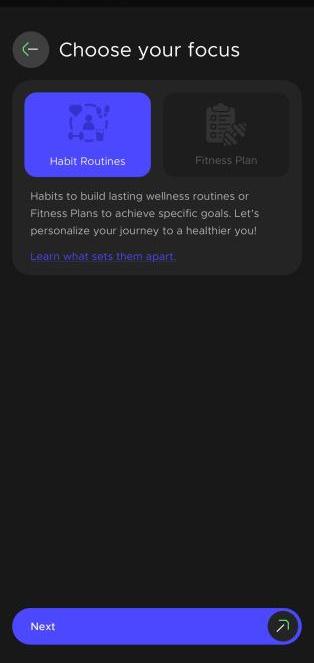
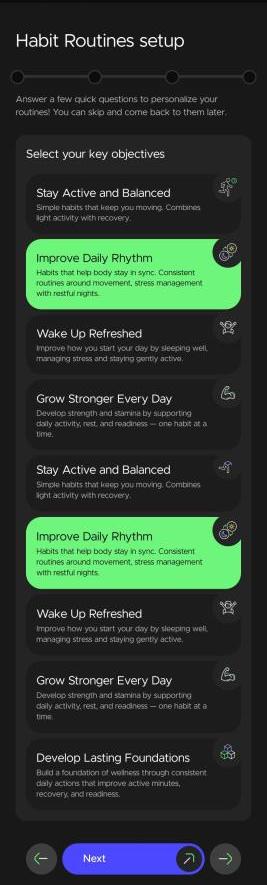
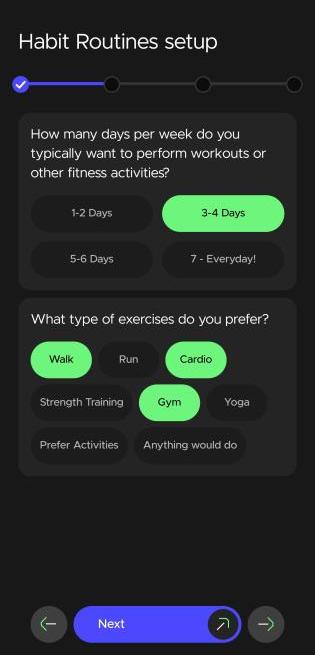
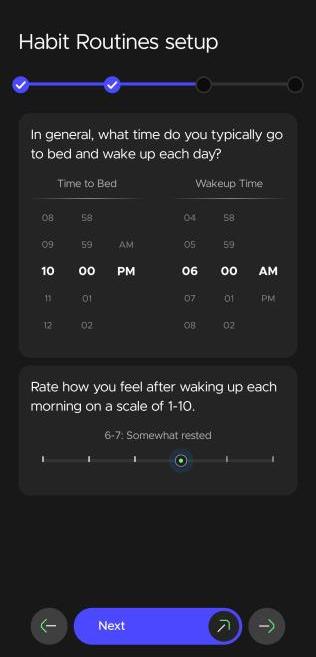
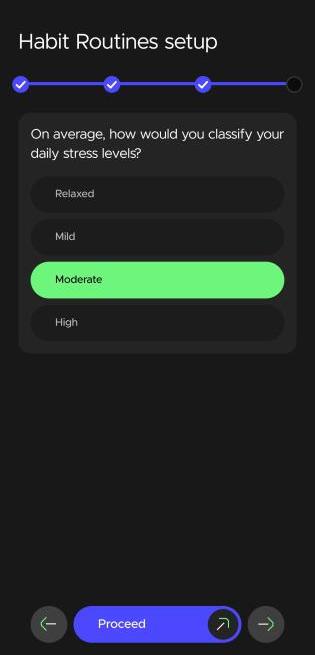
The following screenshots illustrate the AI Coach onboarding experience, where users set their fitness goals, preferred activities, workout frequency, sleep schedule, and stress levels to generate a fully personalized coaching plan.
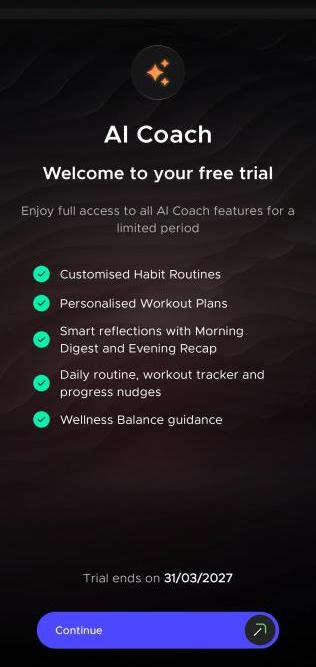
AI Coach onboarding screen for setting fitness goals. AI Coach onboarding screen for selecting preferred activities. AI Coach onboarding screen for setting workout frequency.
AI Coach onboarding screen for setting a sleep schedule. AI Coach onboarding screen for setting stress levels. AI Coach onboarding screen showing the generated personalized coaching plan.

Beyond the user-facing experience shown in the preceding screenshots, the development journey involved several technical and design challenges worth highlighting. The following are notable challenges the team encountered during development and real-world testing.

  1. Personalizing plans effectively: During the initial testing phase, the generated plans were not personalized enough to meet our expectations. The data the companion app provides is in JSON format, made of key-value pairs. We found that the keys needed to be more descriptive for the LLM to interpret the data effectively. For example, weight became weight_in_kg, and target became step_goal. We spent considerable time verifying that each legacy key was expanded and made as descriptive as possible. This higher level of descriptiveness significantly improved plan personalization.
  2. Smartwatch capability matching: Recommended activities in the plan, such as swimming, had to align with the user’s onboarding preferences, their overall goals, and the smartwatch’s capability to support those activities. We added a dedicated section to the prompt that lists watch-supported activities, which reduced the likelihood of unsupported recommendations. However, because of the non-deterministic nature of LLMs, prompt optimization alone did not eliminate all errors. We therefore added a parsing layer and suitable defaults to handle exception cases.

Conclusion

The boAt AI Coach demonstrates how generative AI can transform raw smartwatch data into personalized, actionable wellness guidance at scale. By combining Amazon Bedrock, AWS Lambda, and thoughtful prompt engineering, the team shipped a production-grade feature that serves millions of users without sacrificing personalization or reliability. To learn more about the boAt AI Coach and explore the technologies behind it, check out the following resources:


About the authors

ASRock Industrial AI Box-A395 Review: Taking Strix Halo to Work

Post Syndicated from Ryan Smith original https://www.servethehome.com/asrock-industrial-ai-box-a395-review-taking-strix-halo-to-work/

Today we are taking a look at ASRock Industrial’s highly portable Ryzen AI Max+ 395 system, the AI Box-A395. The barebones tower system packs a punch, as well as a handle to quickly pack up the PC

The post ASRock Industrial AI Box-A395 Review: Taking Strix Halo to Work appeared first on ServeTheHome.

Мариус Куркински: Любовта ни е такава – театрална и трагична

Post Syndicated from Роси Михова original https://www.toest.bg/marius-kurkinski-liubovta-ni-e-takava-teatralna-i-tragichna/

Въпросите задават Елизабет Лойд, Оскар Уайлд и Роси Михова

Мариус Куркински: Любовта ни е такава – театрална и трагична

С идването на XIX век викторианска Англия подарява на Европа не само теорията на еволюцията, следобедния чай и манията по локомотивите, но и едно приятно салонно забавление – попълването на „албуми за признания“ (confession albums). Те включвали въпроси, към които от отговарящите се очаквало да пристъпят с подобаваща искреност, проникновение и остроумие. Отговорите били обсъждани с дни, а развълнуваните дами ентусиазирано ги определяли като „ментални фотографии“ на своите гости и респонденти. 

Подобни лексикони в своята младост попълват редица известни личности – Марсел Пруст, Карл Маркс, Артър Конан Дойл и разбира се, „най-забележителният от всички англичани“ – ирландецът Оскар Уайлд. През 1877 г. той отговаря на въпросите на своята приятелка Елизабет Лойд и само с няколко реплики успява да забърка впечатляваща смесица от арогантност, естетизъм и искрено преклонение пред изкуството.

Днес нашият разговор с актьора и режисьор Мариус Куркински* започва именно с въпросите на госпожица Лойд към младия Оскар. Към тях обаче ще добавим и питания, с които самият писател ни измъчва вече повече от век в някои от своите знакови текстове**.

Срещата с обичания актьор е повод също така да научим нещо повече за последния му моноспектакъл „BG Мариус“, както и за работата му в новия български филм „Софѝя“ със сценарист и режисьор Димитър Радев.

Предлагам да започнем съвсем лежерно с няколко въпроса от „Албума за признания“ на г-ца Елизабет Лойд. Кой е любимият Ви цвят? За Уайлд това е небесносиният.

Тук донякъде имаме съвпадение. Моят любим цвят е тъмносиният. Може би защото, когато си затворя очите и когато съм в състояние на душевен покой, виждам него. Свързвам го и със синята птица от известната пиеса на Метерлинк. Въобще в това синьо явно има нещо. Вижте как още с първия въпрос се появява някаква връзка с Оскар Уайлд, някакво сближаване. Ние всъщност стоим близо и по дати. Той е роден на 16 октомври, а аз съм на 15-ти.

Кое е любимото Ви цвете? Обратно на моите очаквания, Уайлд посочва най-минималистичното и най-непретенциозното от всички цветя – маргаритката.

Моето любимо цвете е зюмбюлът. Особено синият зюмбюл. Свързвам го с най-ранните ми спомени и с маминка Марийка, майката на баща ми. Тя имаше градина само с такива зюмбюли и за мен те носят мириса на детството.

Кое е любимото Ви занимание? Тук Уайлд с типичната арогантност и кокетство на младостта отговаря, че любимото му занимание е да не прави нищо.

Няма да увъртам – любимото ми занимание е да правя моноспектакъл. Събирането на сценичната версия за представлението, подбирането на текстовете – това ми е най-любимото. То е едно голямо приключение, чрез което най-точно назовавам и разбирам себе си.

Преди години най-много обичах репетициите с артисти – да се срещам с актьорите, да прекарам целия репетиционен процес с тях, след това да преживяваме представлението, да сме непрекъснато заедно – от сутрин до вечер. Имам около 30 режисьорски постановки в различни театри и тази радост от съвместната работа всъщност я нося и до днес.

С други думи, любимото ми занимание ще си остане професията ми. Нищо от живота, от бита, което не е свързано с театъра, не ми е любимо. Нищо друго не ми носи особено удовлетворение. Абсолютно нищо. 

Любима добродетел? Оскар Уайлд, бидейки Оскар Уайлд, отговаря: да нямаш добродетели.

Милостта. Това е най-голямата добродетел от всички.

Кой е най-големият порок?

Най-големият порок не е грехът, а любовта към греха – завръщането към греховете. Това е най-голямото пропадане.

То и най-тъжното нещо на света е това да си влюбен в тъгата…

Да, точно. И това също е вид грях. Да си влюбен в тъгата води до леност и меланхолично самосъжаление, което е опасно и вредно. То е каприз. То е и неблагодарност към нашия Създател.

Кой не би бил щастлив, ако има свобода, книги, цветя и луната, пита Уайлд. Има ли нещо в този списък за щастие, което бихте добавили или бихте махнали?

Всичко бих махнал от този списък, защото напоследък аз не копнея за щастие. Не го разбирам. Щастието е понятие за младостта. На моята възраст от 57 години смятам, че човек не трябва да говори за щастие. Късно е.

Радостта обаче е друга работа. Това е нещо, което разбирам и към което се стремя. Мечтая си за радост, която не познавам, която дори не мога да назова и която е още неоткрита за хората. Това е за мен радостта – откривателството на нещо ново, неусетено досега и невидяно. Искам да го преживея, искам и публиката ми да го преживее. Това е моята задача за всеки спектакъл – поне за секунда да доведа публиката до състояние, което никога не е предполагала, че може да изпита. Иначе все едно е било напразно.

В есето си „Критикът като артист“ Уайлд пита: не е ли човек най-малко себе си, когато говори от свое име? Дай му маска – и той ще ти каже истината.

Това е много точно казано. Аз така приемам актьорската си работа – да се чувствам най-искрен в маската, в играта с чужди думи, в превъплъщението в чужди състояния, не моите. Защото да твърдиш, че си изцяло оголен и автентичен на сцената, би било прекалено самонадеяно.

Във филма „Софѝя“ на режисьора и сценарист Димитър Радев изпълнявате ролята на ангела – детектив Рафаил. Как един дълбоко вярващ човек като Вас придобива дързостта да приеме ролята на ангел?

Тук мога да перифразирам Оскар Уайлд и да кажа, че този въпрос е прекалено важен, за да му отговоря сериозно. Все пак ще допълня, че аз съм минал през всичко, преди да приема това изпитание. Подготвил съм се. Посъветвал съм се с когото трябва. Вече съм го приел и сега го работя с радост, без да усещам някакъв зловещ страх. Приемам го даже като дар, който съм получил в живота.

Всичко стана леко. Харесах стила на Димитър Радев. Харесах и сценария, който е много изповедален и не наподобява, не имитира други филми. Той няма амбиции в границите на това, което се очаква от съвременното българско кино – да се прекалява в злободневието и в това колко ние, българите, сме зле като общество и като хора. Защото има такава тенденция да се уголемява злото и уродливостта. В този филм е точно обратното. 

Доколко работата Ви във филма предполага вживяване в образа на ангела или напротив – дистанциране от него, за да го нарисувате така, както художникът рисува портрет? 

Това е същностен въпрос и аз наистина трябваше да избера един от двата подхода. Мисля, че в случая задължително е отграничаването, тъй като ние така или иначе сме хора в страстите. Ние сме в тази земна чувственост, от която вече ми е омръзнало, но няма как – не можем да се отървем напълно от нея. Но за мен в случая това отстраняване от ролята е актьорска свръхзадача. Никога не съм го правил, досега винаги съм преживявал ролите си.

Всъщност мен театърът много ме изчисти от тази обременяваща чувственост. Поради простата причина, че човешките страсти изобилстват на сцената. Така театралните изпълнения, многото играене, многото емоции ми помогнаха да се поукротя. Не остават сили, а няма и смисъл да беснеем в собствения си живот.

Освен това актьорската професия е работа. Тя не е магия, не е някакво служение в храма на Мелпомена. Такива неща няма. Това е занаят. Това е труд. И защо един ден да не изиграя дори Бог и нашия Господ Исус Христос? С какво това е по-различно от художника иконописец, който го рисува?

Има такива прекрасни примери в световното кино – „Страстите Христови“ на Мел Гибсън. Или „Евангелието по Матея“ на Пазолини, който някои наричат скандален, но за мен е полезен и благотворен за християнството филм.

Възможно ли е обаче в личен план да има такова нещо като „благотворно чуждо влияние“? Въпросът е на Дориан Грей, а лорд Хенри отговаря с прочутата си парадоксална теза, че „всяко влияние е неморално“, защото лишава човека от собствената му душа.

За разлика от лорд Хенри, аз смятам, че е възможно да има добро чуждо влияние върху човешката душа. Аз съм имал такова от моите родители. Едва сега го осъзнавам в абсолютна пълнота, тъй като миналата година изгубих и татко, а майка – още през 2009-та. Имах много време да осмисля какво те са сторили за мен като тяхно дете. И съм изключително впечатлен от мъдростта им и от делата им. Аз всъщност преди съм живял с тях така, сякаш ги е нямало. Разбира се, много съм ги обичал, но те като че ли по никакъв начин не са се намесвали в живота ми. Но всъщност са го правили, и то с голяма деликатност и чист разум.

Конкретни спомени и детайли от моя реален живот няма да споменавам, но докато бях дете, аз бях изцяло под тяхната грижа, закрила и влияние. Давам си сметка, че те съзнателно са ме насочвали в определена посока, и днес аз съм им много благодарен.

Но краткият ми отговор на въпроса е, че човек е сам, или сам с Бога. Няма никой друг. И това е окончателното ми твърдение. А това, което казах за родителите ми, е в защита на техните дела, на техния живот. Защото той е бил живот не на думи, а на дела. Това, последното, е страшно важно.

Вярно ли е, че единственият начин човек да се отърве от изкушението е да му се отдаде? 

Нека не оценяваме нечие твърдение като вярно или невярно. Вероятно Уайлд е имал този опит, преживял е нещо такова – борба, в която се е предал на изкушението. Познавайки неговия живот и драматургия, въобще съдбата му, това изглежда някак много естествено.

Но да преодолееш изкушението не е проста работа. Има свети отци, които казват, че изкушенията са за вразумление и изправление на пътя и че те винаги са според мярката на човека – избор, който е по силите му той да направи. Аз по-скоро така ги разглеждам – като изпит, който ние полагаме.

За себе си мога да кажа, че и да искам, и да не искам, в младостта си първо съм се отдавал на изкушенията, а чак след това съм мислил какво ще правя с тях.

Добре, нужно ли е да устояваме на всяко изкушение?

Ако трябва да отговоря днес по съвест, бих казал: да, трябва да устоим на всяко изкушение.

А няма ли душата ни да се разболее от копнеж?

Има я тази опасност – ако не да умрем, то да се поболеем от несбъднати мечти, от неосъществена любов. Но вече съм убеден, че това е нашето светско мислене. Това стои далеч от вярата в божественото.

И пак казвам: аз говоря като много грешен човек. Изпадал съм в какви ли не състояния. Дори сега, през октомври, когато е рожденият ми ден, пак изпадам в някакво тежко греховно отчаяние, което е недопустимо. Като че ли намирам някакво удоволствие от тази настъпваща тъга. И това ми се вижда малко лукаво от моя страна. Има някаква суета в това да потъгуваш.

Да, но всички сме склонни към известен нарцисизъм и театралност в страданието си. Сякаш то привнася дълбочина и съдбовност на преживяванията ни. Може би затова Уайлд задава и следния въпрос: какъв е смисълът да си влюбен, ако не си трагично влюбен?

При него тази театралност в живота и в творчеството му е забележително постижение. Тя е плод на извисения ум на един смел мъж и светла душа. И макар че бихме могли да четем тази реплика като остроумна пародия на романтичните клишета, аз мисля, че той всъщност я изрича в един истински трагичен смисъл.

Аз съм убеден, че любовта на земята между двама души е невъзможна. Тя е винаги несподелена, защото при нея няма равнопоставеност. Винаги единият обича по-малко. Винаги другият е в унизено състояние. И това е неизменна част от нашето влюбване и острастяване.

Струва ми се, че Уайлд говори за това: че любовта винаги свършва, че тя не може да бъде изживяна докрай, че съвършената любов, такава каквато е описана в Посланието към коринтяните, е недостъпна за човека тук, на земята.

Помислете за „Рибарят и неговата душа“. Там русалката казва: да, аз ще те възлюбя, но ти трябва да се откажеш от душата си. И рибарят отрязва душата си и я оставя да скита сама по света, а той потъва с любимата в морските дълбини, пропада в най-ниското. Вижте колко особено мнение има Уайлд за взаимното влюбване – за да ме имаш, ти трябва да се отречеш от себе си. Това е много зловеща теория за любовта. И ние не се замисляме, но много често между двама души се случва точно така. Някой погубва душата си заради другия, макар и да не го съзнава с такива категории. За Уайлд любовта ни е такава – театрална и трагична. Както, между другото, я описва и Шекспир.

Кое е голямото послание на Шекспир за любовта? Че тя умира. С „Ромео и Жулиета“ той ни казва точно това – че най-чистата, изпиваща, взаимна любов на двама влюбени, които се обичат еднакво силно, не може да вирее на този свят. Такава покъртителна любов, чрез която сякаш усещаш самото сътворение, не може да просъществува. Тя може единствено да умре от кинжала или бавно да изтлее от баналността на семейния живот.

Уайлд твърди, че първото от всички удоволствия е илюзията. А излиза, че може би най-голямата сред всички илюзии е романтичната илюзия?

Не приемам нищо като илюзия и ще бъда съвсем откровен. Аз още от съвсем малък, като дете и после юноша, съм си казвал: колко е хубаво, че си имам театъра и че той ме е обзел напълно. И дори съм си мислил колко хубаво е, че няма да се влюбвам, защото животът ми е вече изпълнен. И така станах на 23 години. Един ден стоях пред сградата на театралната академия и пак си мислех какъв късмет е, че на мен това няма да ми се случи, защото си имам театъра и вече съм намерил къде да приютя глава на този свят. И както си го помислих и назовах пред себе си, както се зарадвах и дори леко възгордях, така на другия ден с грамадна сила ме връхлетя най-трагично влюбване. Ама наистина ме връхлетя – опустошително и невъзможно. То не беше илюзия. То бе истина.

И ако се върнем на темата за изкушенията, все още не съм сигурен дали това влюбване не ми беше изпратено като голямо изпитание. Изпит, който аз не издържах. Трябваше да се въздържа тогава. Трябваше да го направя точно заради първата ми любов, заради театъра.

Днес си мисля, че щях да бъда по-добър артист, ако не бях преживял нищо от това наистина, а само си го бях представял. Това щеше да бъде по-честно и по-вярно към изкуството. Абсолютно съм убеден, че щях да бъда по-добър актьор, ако не знаех нищо от истинския живот, а си го представях и пресъздавах непреживяното.

Да си призная, озадачавате ме с този отговор. А в разказа „Сфинксът без загадка“ има и такъв въпрос: ако не кажа на никого, какъв е смисълът да имам тайна?

Мисля, че това е просто заигравка. Смисълът на тайната е само един – да се пази. И ако тя е нещо прекрасно, то това е единственият начин то да бъде опазено чисто. Нали е казано: не давайте бисерите си на свинете?!

Макар че съществува тази опасност човек да си мисли, че пази в себе си кой знае какви съкровища, а всъщност да няма нищо. И тази мисъл плаши. Може би затова дори след толкова години, прекарани на сцената, продължавам да пристъпвам към всяко представление не точно със страх, но с голям трепет. С радост, но и с трепет.

Защото в залата актьор и зрител не са един срещу друг. Те са един с друг. Това е среща, диалог, взаимност. Ние се изненадваме взаимно, обучаваме се взаимно, подаряваме си радост взаимно. Ние сме тези живи, различни, абсолютно случайно събрани хора, които за два часа от живота си делят едно общо пространство. И в него те живеят и дишат заедно – без вражда и без гняв.

Затова в същността си всяко театрално представление е проверка на това доколко сме хора.

Красиво казано. А в предговора на романа „Портретът на Дориан Грей“ Уайлд пита: нима тези, които откриват грозен смисъл дори в красивите неща, не са просто корумпирани, без да са очарователни?

Той го е казал и с това сякаш е изчерпил темата. Има такива хора и те наистина са брутални, без да са очарователни. А вероятно са просто зли. Защото, ако съдиш другия и на всичкото отгоре го правиш по некрасив, позорен начин, това вече е не едно, а две тежки прегрешения. Падение след падение.

В момента ние живеем в тази проклетия – в тази осъзната злонамереност към другите. Това е определението за сегашния свят. Точно тази мисъл. И ми се струва, че човечеството затъва все повече. А може би винаги е било в това състояние, просто други са били изразните средства.

Предлагам Ви все пак да завършим този разговор в по-оптимистична тоналност. Уайлд пише, че човек може да повярва в невъзможното, но никога няма да повярва в невероятното. Сега, без да изчисляваме степените на вероятност, а с най-чистосърдечна вяра в невъзможното, кажете в какво продължавате да вярвате въпреки всички доказателства за противното.

Когато човек е вярващ, нищо не може да го уплаши и да го спре в пътя му към спасение на душата. Всичко друго е каламбур и хитросплетение. Но сега бих завършил с втората по сила заповед в християнството. Забележете, тя е тази, която идва веднага след любовта към Бога: „И възлюби ближния си като самия себе си.“ В това вярвам. Въпреки всички доказателства за противното.

* Мариус Куркински е актьор, режисьор и музикален изпълнител. Знакова фигура на театралната сцена с многобройните си монологични постановки, последната от които е „BG Мариус“. Отличаван е за работата си с редица награди, като получава многократно „Икар“ за главна и поддържаща мъжка роля. Последният филм под негова режисура е „Засукан свят“ (2019), а в момента е част от актьорския екип в новия игрален фентъзи филм „Софѝя“.

** В разговора са използвани цитати от романа „Портретът на Дориан Грей“, пиесата „Колко е важно да бъдеш сериозен“, разказа „Сфинксът без загадка“, есето „Критикът като артист“ и писмото изповед De Profundis, написано през 1897 г., по време на престоя на Оскар Уайлд в затвора „Рединг“.

Президентски избори 2026 – балотаж в чужбина

Post Syndicated from Боян Юруков original https://yurukov.net/blog/2026/pr2026-balotaj/

След три дни в неделя, 1-ви ноември 2026 ще се проведе балотаж за президент и вицепрезидент. Българите зад граница ще могат да гласуват на същите места извън страната, както и в първия тур на изборите. Някои секции обаче са със сменени адреси – поне 5 в последните дни. Затова отново препоръчвам да сверите мястото преди деня на вота. За тези и бъдещи промени ще изпратя индивидуални мейли за абониралите се в портала на Glasuvam.org.

Ето най-важното, което следва да знаете:

  • Може да гласува всеки български гражданин независимо дали сте подали заявление преди първия тур, дали сте гласували тогава и къде, както и къде пребивавате обичайно
  • Може да гласувате на различно място извън страната от първия тур
  • Гласува се с валидна българска лична карта или паспорт.
  • Отново се подписва декларация на място пред комисията
  • Препоръчвам да се гласува с машина където е възможно. Освен, че е по-бързо, проверката на първия тур показа, че човешките грешки в броенето са практически елиминирани

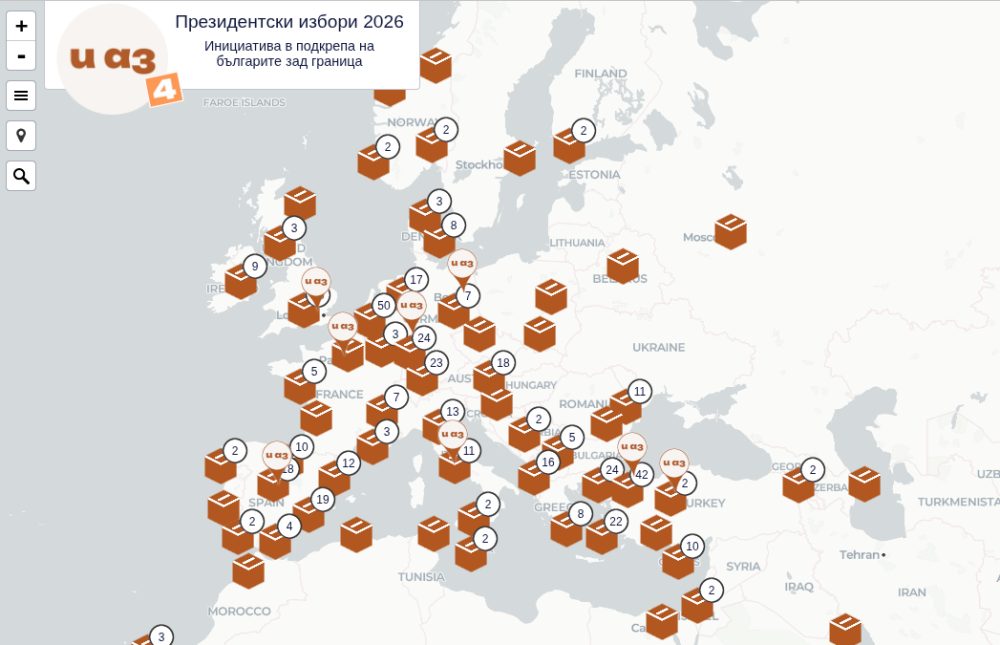
Адресите на секциите зад граница ще намерите на картата, която подготвям за всеки вот в последните над 12 години. Същите ще намерите в таблицата на МВнР, както и тяхната карта. Препоръчвам да следите и страницата на ЦИК за изборите. Ако срещнете трудности или видите нарушения, може да сигнализирате на инициативата за следене на вота Ти Броиш.

Automate toll-free number registrations at scale with AWS End User Messaging

Post Syndicated from Rommel Sunga original https://aws.amazon.com/blogs/messaging-and-targeting/automate-toll-free-number-registrations-at-scale-with-aws-end-user-messaging/

When you manage SMS communications for dozens or hundreds of business units, registering each toll-free number (TFN) manually becomes a bottleneck. For independent software vendors (ISVs), software as a service (SaaS) providers, or large organizations with many teams, the repetitive console work, multi-day carrier reviews, and rejection handling add up fast.

With AWS End User Messaging SMS, you can send messages using TFNs, 10DLC numbers, or short codes in the US, each with its own registration process. For more information, see Toll-Free Number registration requirements. In a previous post, we showed how to programmatically register a single TFN using a Bash script, and how to register multiple TFNs in bulk with Python. Those scripts automate the seven API calls required for each registration.

This post goes further. We walk through a serverless architecture that handles the full TFN registration lifecycle: submission, carrier review, and resolution (including rejections). It uses AWS Step Functions for orchestration, Amazon EventBridge for async status callbacks, and a human-in-the-loop pattern for handling rejections. The same architecture applies to International Toll-Free Numbers (ITFNs) by adjusting the RegistrationType and IsoCountryCode.

Prerequisites

Before deploying this solution, you need:

  • Technical prerequisites: AWS Command Line Interface (AWS CLI) v2, AWS Serverless Application Model (AWS SAM) CLI, Python 3.12+, and an AWS account with AWS End User Messaging SMS enabled. See the repository README for full setup instructions.
  • An email address to receive SNS notifications for registration status updates.
  • The registration data for each TFN you want to register:
    • Company information.
    • Contact information.
    • Messaging use case and details.
    • Opt-in workflow description.
    • Opt-in workflow image (PNG, JPEG, or PDF, max 500 KB) showing how end users consent to receiving SMS messages. (You can retrieve the full list of required fields with DescribeRegistrationFieldDefinitions.)
    • Message samples.

Note: For a complete step-by-step guide, see: How to register for a US toll-free number with AWS End User Messaging

The problem: Manual registration at scale

When you register a TFN through the AWS End User Messaging SMS console, you fill out a multi-step form for each number:

  1. Company Info – Company name, website, address, business type, tax ID.
  2. Contact Info – First name, last name, support email, support phone number.
  3. Messaging Use Case – Monthly volume, use case category, use case details, opt-in type, opt-in workflow description, opt-in image upload.
  4. Message Samples – 1–3 example SMS message bodies.
  5. Review and Submit.

For a single registration, this takes a few minutes. For 50, 100, or 500 registrations across tenants, it becomes a full-time job. After you submit a registration, each registration enters a carrier review period of 1–15 business days. If rejected, you need to identify the issue, fix the fields on the console, and resubmit. Tracking all of this across many registrations is where the real operational burden lives.

The following architecture automates submission by using an API and tracks the full lifecycle with event-driven callbacks.

Architecture overview

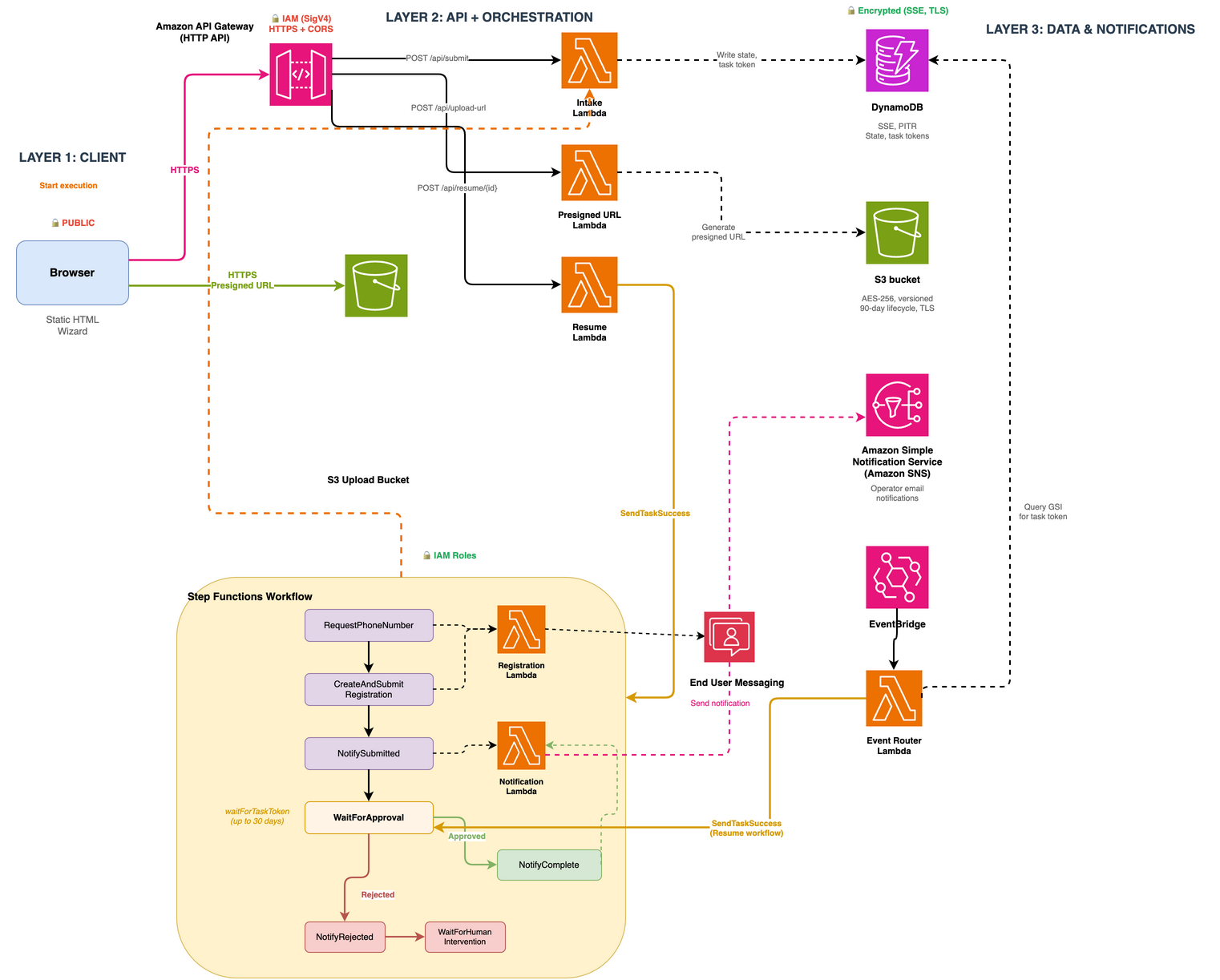
You deploy the solution as an AWS SAM template. It consists of the following components:

Component Purpose
Amazon API Gateway RESTful endpoints for submission, file upload, and resume
AWS Lambda (six functions) Business logic for intake, presigned URL generation, registration, event routing, notification, and human-in-the-loop resume
AWS Step Functions Orchestrates the multi-day workflow with pause and resume capability
Amazon EventBridge Captures async registration status change events from the carrier
Amazon DynamoDB Tracks registration state across the full lifecycle
Amazon Simple Notification Service (SNS) Sends operator notifications on status changes
Amazon Simple Storage Service (Amazon S3) Stages opt-in workflow attachments with presigned upload URLs
Serverless architecture for toll-free number registration, showing the flow from API submission through carrier review to resolution

Figure 1: Architecture from submission through resolution, showing the synchronous submission flow, async Amazon EventBridge callbacks, and human-in-the-loop rejection handling

The flow

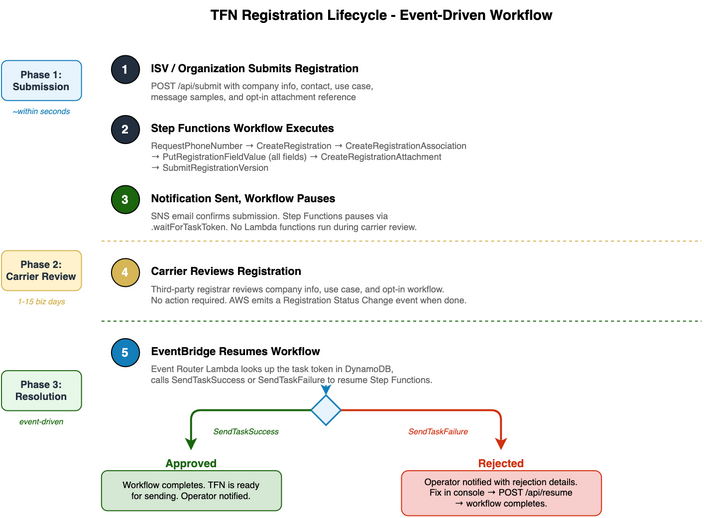
The workflow has three phases: submission, carrier review, and resolution.

Registration lifecycle timeline across submission, carrier review, and resolution phases

Figure 2: Registration lifecycle showing the three phases. No AWS Lambda functions run in Phase 2. The rejected path includes human-in-the-loop remediation before completion

Phase 1: Submission (within seconds)

  1. The application calls POST /api/submit with the registration data (company info, contact info, use case, message samples, and an Amazon S3 reference to the opt-in screenshot).
  2. The Intake Lambda validates the payload, writes the full request to Amazon DynamoDB, and starts a Step Functions execution.
  3. Step Functions orchestrates the seven AWS End User Messaging SMS (EUM SMS) API calls in order:
  4. An SNS notification confirms submission. The workflow then pauses using the Step Functions .waitForTaskToken integration pattern.

Phase 2: Carrier review (1–15 business days)

During this phase, no Lambda functions run. Step Functions holds a task token in DynamoDB and waits. The toll-free number’s monthly fee still applies.

When the carrier completes its review, AWS End User Messaging emits a Registration Status Change event to Amazon EventBridge. An Amazon EventBridge rule routes this event to the Event Router Lambda. The Lambda queries a DynamoDB Global Secondary Index (GSI) to find the matching request by registrationId and retrieves the stored task token. It then calls SendTaskSuccess (if approved) or SendTaskFailure (if rejected) to resume the Step Functions execution.

Phase 3: Resolution

If approved: The workflow advances to the completion state, the operator is notified, and the TFN is ready for sending messages.

If rejected: The workflow enters a WaitForHumanIntervention state:

  1. The operator receives an SNS email with the specific rejection reasons (for example, messagingUseCase.optInImage: MISSING_REQUIRED_FIELD).
  2. The operator fixes the registration on the AWS End User Messaging SMS console.
  3. The operator calls POST /api/resume/{requestId} to unblock the workflow.
  4. The workflow completes successfully.

Scaling to many registrations

For organizations managing registrations across many customers or teams:

  • Batch submission: Call /api/submit for each registration. Each spawns an independent Step Functions execution that tracks its own lifecycle.
  • State tracking: DynamoDB holds all registration state. Query by requestId (internal ID) or registrationId (EUM SMS ID, through the GSI) to build dashboards or status pages.
  • Rate limiting: The EUM SMS API has service quotas for RequestPhoneNumber and PutRegistrationFieldValue. If submitting hundreds of registrations in a burst, add a Step Functions Wait state or use Amazon Simple Queue Service (SQS) with a rate-limited consumer to stay within limits.
  • International Toll-Free Numbers (ITFNs): The same architecture extends to international toll-free numbers. Change the RegistrationType and IsoCountryCode, and adjust the field mappings for the target country’s registration form. You can use DescribeRegistrationFieldDefinitions to retrieve the required fields for any registration type.

Production hardening: This solution ships as a sample. The AllowedOrigin parameter is required and rejects the wildcard CORS origin (’*’). Set it to your application’s domain when you deploy. The IAM policies in the template are scoped to resource ARNs in your account and Region, except SendTaskSuccess and SendTaskFailure, which don’t support resource-level permissions.

Deployment

The solution is available as an open source AWS SAM template:

Repository: sample-sms-tfn-registration-automation on GitHub

Deploy with:

sam build
sam deploy --guided \
  --parameter-overrides \
    [email protected] \
    AllowedOrigin=https://app.example.com \
    DryRun=false

Use the DryRun parameter to test the full workflow, from submission through resolution, without creating real registrations or incurring phone number charges. When set to true, the Registration Lambda returns synthetic IDs while DynamoDB writes, Step Functions execution, and SNS notifications all run for real.

Clean up

Because toll-free number lease fees begin the moment you request a number, tear down resources you no longer need. To remove the stack and stop incurring charges:

sam delete --stack-name <your-stack-name> --region <your-region>

# Delete the registration and phone number separately:
aws pinpoint-sms-voice-v2 delete-registration --registration-id <REG_ID>
aws pinpoint-sms-voice-v2 release-phone-number --phone-number-id <PHONE_ID>

Cost considerations

Registrations spend most of their time waiting for carrier review. The architecture reflects that:

Resource Cost driver
Toll-free phone number Monthly fee begins as soon as RequestPhoneNumber is called, regardless of registration status. See AWS End User Messaging Pricing.
Step Functions Standard workflow charges per state transition. No charges while paused at .waitForTaskToken.
DynamoDB On-demand billing. Each registration record is small (~2 KB). Negligible at hundreds of registrations.
Lambda Only runs during submission (~seconds) and when Amazon EventBridge delivers a status change. No polling.
S3 Storage for opt-in screenshots. 90-day lifecycle auto-deletion.
SNS You pay per email sent. A few cents for a typical batch.

The .waitForTaskToken pattern keeps the workflow idle during the 1–15 business day carrier review: no Lambda functions run and nothing polls. DynamoDB storage and the TFN monthly fee still apply.

Important: You begin incurring costs for TFNs as soon as you request the phone number, even if your registration has not yet been submitted or approved. Factor this into your batch strategy.

Monitoring and observability

To track registrations in flight:

  • Step Functions console – Each registration has its own execution. View the current state (waiting for approval, rejected, complete) and full execution history.
  • DynamoDB queries – Query the table by requestId (hash key) to get the full record for a specific registration, including its current status, registrationId, and phoneNumber. Use the registration-id-index GSI to look up a request by the EUM SMS registrationId. Scan with a filter on status to find all registrations in a given state (for example, REGISTRATION_SUBMITTED or REGISTRATION_REQUIRES_UPDATES).
  • Amazon CloudWatch Logs – Each Lambda function has its own log group. The Event Router logs structured fields like regId, status, and type for every Amazon EventBridge event it receives. Use CloudWatch Logs Insights to query across log groups by registrationId to trace how an event was processed.
  • SNS notifications – Operators receive email for submissions, approvals, rejections (with specific field-level rejection reasons from the carrier), and timeouts. No polling or console checks required.
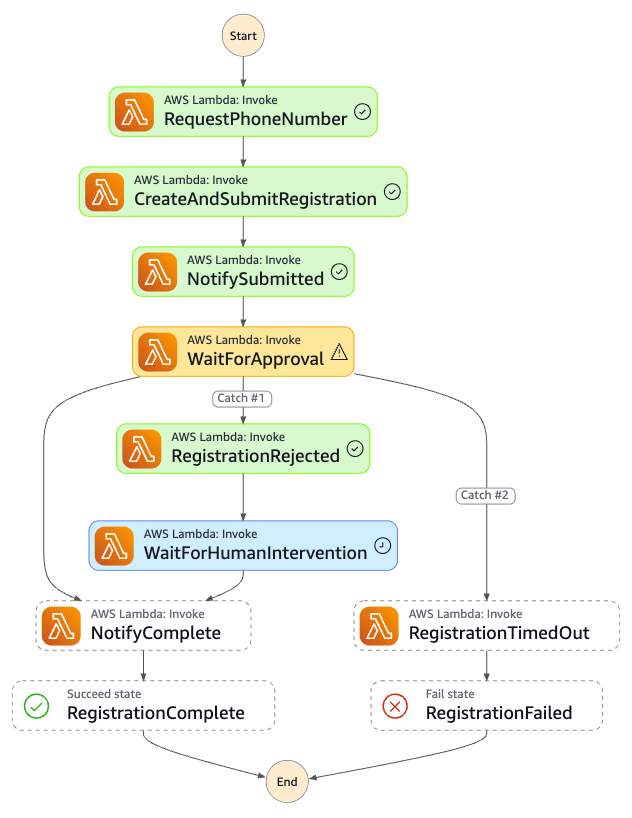
Step Functions state machine for one registration, showing the happy path and the rejection catch branch

Figure 3: A single registration execution on the Step Functions console. Green states are the happy path. The rejection path (Catch #1) pauses for human intervention before completing

For organizations running hundreds of registrations, you can add a CloudWatch dashboard that tracks metrics like: registrations submitted per day, average approval time, rejection rate, and registrations currently awaiting review.

Conclusion

In this post, we showed how to automate the full TFN registration lifecycle using AWS Step Functions, Amazon EventBridge, and a human-in-the-loop rejection pattern. The architecture reduces each registration to a single API call and runs the seven EUM SMS API calls behind the scenes. It then waits for the carrier without running Lambda functions, and notifies you when something needs attention.


About the authors

Rommel Sunga

Rommel Sunga

Rommel is a Senior Solutions Architect at AWS, based in Singapore. He specializes in AWS End User Messaging and Amazon Simple Email Service, helping customers build scalable and reliable communication solutions. With expertise in cloud-based messaging architectures, he works with organizations to improve their customer engagement.

Brett Ezell

Brett Ezell

Brett is a Solutions Architect for AWS End User Messaging and Amazon Simple Email Service. Outside of work, Brett spends his time collecting vinyl, comic books, catching live shows, and training at the gym.

Tyler Holmes

Tyler Holmes

Tyler is a Senior Specialist Solutions Architect. He has a wealth of experience in the communications space as a consultant, an SA, a practitioner, and leader at all levels from Startup to Fortune 500. He has spent over 14 years in sales, marketing, and service operations, working for agencies, consulting firms, and brands, building teams and increasing revenue.

[$] Containers as a recognized kernel object

Post Syndicated from corbet original https://lwn.net/Articles/1102593/

The foundation of the design for containers in the kernel is that there
isn’t one; there is no container abstraction that the kernel recognizes.
Instead, the kernel provides a long list of components — namespaces,
control groups, sandboxing mechanisms, and more — along with a note that
says, in effect, “some assembly required”. There have been attempts (repeatedly) over the years to turn containers
into first-class objects with kernel support, but they have never gotten
far. Now Josef Bacik is making a
try
with a concept that he calls “cells”.

Речниците на вампира

Post Syndicated from Екатерина Петрова original https://www.toest.bg/rechnitsite-na-vampira/

Речниците на вампира

С наближаването на края на октомври, вместо да се впускаме в ежегодните разправии дали „внесеният от Америка празник Хелоуин“ трябва да се празнува в България, или не (за които даже вече сме писали), може просто да му се насладим – или поне да използваме повода да научим нещо ново.

Кошмари преди Хелоуин

Няма страшно, Хелоуин е просто забавление, казва Александър Драганов и ни уверява, че и ние имаме своя родна хорър култура, която не бива да пренебрегваме, а да интегрираме в празника, за да стигне до повече хора.

Защото освен възможността да се маскират и да играят на „пакост или лакомство“, която Хелоуин предлага на децата, той предоставя и на нас, възрастните, цяла серия от страховити, но очарователни етимологии, палави езикови tricks и изкушаващи семантични treats, с които да се позабавляваме. А покрай тях и да се уверим – както ровенето из речници и проследяването на разнопосочните връзки между думите за пореден път ни доказват, – че езикът, вярванията, суеверията и традициите ни (а покрай тях и самите ние) са много по-свързани с тези на останалия свят, отколкото предполагаме.

Но да започнем от името на празника, чиято транскрипция на български е леко подвеждаща. Заради изписването „Хелоуин“ изглежда, сякаш наименованието идва от Hello („здравей“) + win („победа“). А то всъщност произлиза от съвсем друго понятие. Като слят и съкратен вариант на All Hallows’ Eve, или „навечерието на Вси светии“, Halloween се произнася и би следвало да се изписва като „Халоуийн“¹. В името на приемствеността обаче, а и за да не разбунваме допълнително и без това разбунените духове, в този текст аз все пак ще се съобразя с установената транскрипция.

И като стана дума за разбунване на духове – дейност, която е в основата на празника, няма как да не обърнем внимание на някои от главните действащи персонажи в него, чийто географски – и още по-интересно, етимологичен – произход често се оказва съвсем не толкова далечен или чужд. На първо място, разбира се, имаме

граф Дракула – може би най-популярния персонаж, като който празнуващите традиционно се маскират за Хелоуин.

Както е добре известно, макар и литературният герой Дракула да се заражда с появата на романа през 1897 г. в Ирландия (също като празника), той всъщност е тясно свързан с Румъния: действието в книгата се развива в Трансилвания, а героят е базиран на историческата личност на княз Влад Цепеш, наричан още Дракула и живял току отвъд Дунава, във Влашко².

Много по-слабо известна обаче е етимологията на наименованието на типа митологично създание, към който Дракула принадлежи, а именно вампир. За моя изненада се оказва, че съвременната дума, която речниците дефинират като „мъртвец, който се е превърнал в зъл нощен дух и пие кръвта на хора и животни“ и която в съвсем леки вариации се среща в множество близки и далечни езици, произлиза от праславянската дума *ǫpyrь.

Като свързващо звено между *ǫpyrь и съвременната дума „вампир“ някои източници споменават старобългарската *вѫпиръ, макар че, както подсказва звездичката пред нея, тя е незасвидетелствана. Като такава я определя Българският етимологичен речник, според който старобългарското понятие „е било заето в гр. βαμπύρος, което прониква обратно в български и сърбохърватски“. Речникът обяснява, че „в тая си форма думата получава голямо разпространение на всички европейски езици, благодарение на една история с вампири, разиграла се в Сърбия през 18 в.“³.

Но докато по тези въпроси изследователите, общо взето, са единодушни, теориите за произхода на праславянската дума *ǫpyrь са разнопосочни и с варираща степен на убедителност. В Етимологичния речник на украинския език например една от посочените възможни връзки е с праславянския глагол *vrěpiti (se) (‘вкопчвам се, впивам се’) заради склонността на вампирите да се впиват в своите жертви.

Друга хипотеза разглежда *pyrь като възможен корен, който означава или „огън“, или „летящо същество“, но с добавена към него отрицателна представка. В първия случай, както се отбелязва в гореспоменатия речник, *ǫpyrь би могло да обозначава труп, който не е бил изгорен – като отражение на древната вяра в пречистващото действие на огъня от времето, когато при славяните езичници кремацията била задължителен погребален обред.

При втория случай пък се предполага възможен паралел с праславянската дума *netopyřь⁴, буквално „нощен летец“, или с други думи, „прилеп“⁵. Основавайки се на тази хипотеза, Етимологичният речник на хърватския или сръбския език отбелязва, че *ǫpyrь може да е възникнало като табуистично название за vukodlak6. В потвърждение на това твърдение в „Српски рjечник“ от 1818 г. думите за „вампир“ и „вукодлак“ са дадени като синонимни и взаимно заменяеми.

Митичното същество на човек, който от време на време се превръща във вълк, може и да не се радва на популярността на вампира, поне що се отнася до костюмите за Хелоуин, но произходът на наименованието му, известно на български под смятаното за диалектно „вълколак“, или по-съвременното и книжовно „върколак“, също е доста любопитен. Думата произлиза от праславянските *vьlkъ (‘вълк’) и‎ *dolkъ (‘козина’), а според Етимологичния речник „различните форми се дължат на дисимилация и на осмисляне с други думи, понеже връзката с началното значение е загубена“.

Тъй като речникът не пояснява точно с кои други думи става осмислянето, ние можем само да гадаем. Лично аз винаги съм си мислила, че тъй като звуково се доближава до „въртене“ и „превръщане“,

понятието „върколак“ по някакъв начин е свързано с разпространената сред вампири, таласъми и тем подобни практика, известна на английски като shapeshifting, или промяна на формата.

(На руски например, освен архаичната дума „волколак“, в съвременен контекст се използва и понятието „волк-оборотень“.)

Така или иначе, освен в много от славянските езици българската дума е заета също и в други балкански, например румънски (vârcolac) и албански (vurkollak или vurvollak), където думата се използва като синоним на „зомби“, „вампир“ или „призрак“. В гръцкия βρυκόλακας (vrykólakas) също е синоним на βαμπίρ (vampír), докато думата за „върколак“ е съвсем отделна: λυκάνθρωπος (lykánthropos) – от λύκος (lúkos ‘вълк’) +‎ ἄνθρωπος (ánthrōpos ‘човек’).

Но да се върнем към теориите за произхода на *ǫpyrь, друга от които води към трети доста популярен хелоуински персонаж. Според Етимологичния речник на хърватския или сръбския език е възможно – макар и доста лингвисти да отхвърлят тази теория като неблагонадеждна – праславянската дума *ǫpyrь да е заемка от севернотюркската (ubyr, ubyrly), която означава „вещица“.

За разлика от „вампир“ и „върколак“, които се разпространяват не само в славянските, а и в други езици, думите за „вещица“ са доста по-специфични и разнообразни дори и в сродните славянски езици. На сръбски, хърватски и македонски думата – съответно „вештица“/veštica, vještica и „вештерка“ – е сходна с българската и произлиза от „вещ“ (‘знаещ’). С леки звукови изменения тези думи споделят общия праславянския корен *věd- (срв. *věděti ‘знам’) с източнославянските езици – съответно „ведьма“ на руски, „відьма“ на украински и „ведзьма“ на беларуски. В словенски и в западнославянските езици пък думите за „вещица“ са особено очарователни: čarovnica на словенски, czarownica на полски, čarodějnice на чешки и čarodejnica на словашки.

Румънската дума за „вещица“ е vrăjitoare – женска форма на vrăjitor (‘магьосник’), която произлиза от vrajă (‘заклинание’), а тя на свой ред е заета от старобългарски (срв. вражениѥ, тоест „гадание“ или „врачуване“). Италианската strega, която произлиза от латинската strix, а тя на свой ред от старогръцката στρίξ (stríx), или „сова“, пък споделя обща етимология с румънското фолклорно понятие strigoi, което се смята за нещо като синоним на заетата от западноевропейските езици vampir.

И като стана дума за румънски синоними на „вампир“, няма как да завършим този текст, без да споменем още едно наименование, станало известно благодарение на романа на Брам Стокър. Там, в превод на Теодор Михайлов, се споменават

„носферату“, както ги наричат в Източна Европа“ – описани като същества, „обречени на безсмъртие“ и „страховити създания, вдъхващи ни ужас“.

Самият Стокър признава, че е заел думата nosferatu от шотландската авторка Емили Джерард, която я използва като (по презумпция местен) синоним на „вампир“ в статията си Transylvanian Superstitions („Трансилвански суеверия“) от 1885 г.

През 1922 г. понятието придобива световна известност с култовия немски хорър филм „Носферату – симфония на ужаса“, наречен така, за да се избегне нарушаването на авторските права на Стокър, върху чийто роман е базиран. Въпреки че в румънския език такава дума реално не съществува, лингвистите все пак допускат възможността тя да се е появила в резултат на неправилно чута и грешно изписана румънска дума: nesuferit, ‘непоносим’, ‘неприятен’, или пък necuratul, която буквално означава „нечистият“ и се използва като евфемистично название на дявола7. Друга теория предполага връзка с гръцката νοσοφόρος (nosophoros), или „носещ зараза“.

1 Докато в католическия и протестантския календар празникът Вси светии всяка година се отбелязва на 1 ноември, в православния той е подвижен и се пада някъде през лятото – в първата неделя след Петдесетница, или точно 57 дни след Великден. Но и навечерието на Деня на народните будители е подходящ момент да се поровим в речниците, а пък, ако все пак държим на официален повод да помислим за мъртвите, съвсем скоро предстои и Архангеловата задушница – на 7 ноември. 

2 Името на историческата личност, върху която Брам Стокър базира своя литературен герой, също е свързано с доста интересни етимологични връзки. Влад III, владетел на Влашко през XV век, е известен с прозвището Цепеш (от рум. Țepeș ‘кол’) заради обичая си да набива своите противници на кол, както и като Дракула – заради членството на баща му Влад II в Ордена на дракона. За злокобната му слава допринася и фактът, че в съвременния румънски думата език Dracul означава „дяволът“ или „сатаната“.

3 Wikidictionary  също споменава по-старата старобългарска форма *вѫпиръ, но обяснява разпространението ѝ в Западна Европа посредством унгарския. Така излиза, че думата „вампир“ навлиза (обратно) в съвременния български „от англ. vampire, фр. vampire или нем. Vampire, които са заимствани от унг. vámpír“.

4 Думата „нетопир“ се среща в българския и досега като остаряло наименование за „прилеп“, a с малки вариации съществува и в чешкия (netopýr), полския (nietoperz) и словенския (netopir). На руски и украински „Нетопыри́“ обозначава конкретен род малки гладконоси прилепи (на латински Pipistrellus), известен на български с умилителното научно наименование Прилепчета.

5 Въпреки че прилепът не принадлежи към разреда на гризачите, на доста езици той се нарича с думи, буквално означаващи някакъв вид мишка: на френски прилепът е „плешива мишка“ (chauve-souris), в повечето германски езици тя е пърхаща (Fledermaus на немски, fladdermus на шведски и т.н.), на естонски е кожена (nahkhiir), на езика на баските е стара, лоша или зла (saguzar), на руски е летяща („летучая мышь“), на сръбски и хърватски е сляпа (slijepi miš), а според алтернативното ѝ название (šišmiš) може да е таванска или шумоляща.

6 Теорията за табуто намираме и в Българския етимологичен речник. Като произлизащи от праславянската *ǫpyrь освен българската дума „вампир“ там са изредени и форми с начално уп- в сърбохърватски („упир“/upir), руски, украински и белоруски („упырь“ и „упирь“), чешки (upír) и полски (upiór), като се отбелязва, че „разнообразието на формите, които често не са резултат на правилен фонетичен развой, трябва да се обясни с особения характер на думата, която спада към кръга на понятията, свързани с табу“.

7 Алтернативните имена, с които различни езици и култури назовават зли и страшни същества, за да избегнат използването на истинското им (табуистично) име и по този начин да ги повикат и ядосат, също си имат наименование. Известен на английски като noa-name, терминът произлиза от полинезийската идея за Noa – антоним на Tapu, откъдето идва и думата „табу“. Свързано с нея – макар че съвременното му значение се основава по-скоро върху идеи за приличие, отколкото върху страх от зли сили – е понятието „евфемизъм“. То на свой ред произлиза от старогръцкото εὐφημισμός (euphemismos), съставено от εὖ (eu ‘добре’) и φήμη (pheme ‘реч, говорене’).

В рубриката „От дума на дума“ Екатерина Петрова търси актуални, интересни или новопоявили се думи от нашето ежедневие и проследява често изненадващия им произход, развитието на значенията им във времето и взаимовръзките им с близки и далечни езици.


Security updates for Thursday

Post Syndicated from jzb original https://lwn.net/Articles/1103666/

Security updates have been issued by AlmaLinux (cjose, emacs, expat, gcc-toolset-15-gcc, java-17-openjdk, java-25-openjdk, kernel, kernel-rt, libX11, libXi, libXrender, libXtst, mod_auth_openidc:2.3, pki-deps:10.6, thunderbird, webkit2gtk3, and yggdrasil), Debian (chromium, firefox-esr, and openjdk-25), Fedora (firefox, librabbitmq, libreswan, python-pillow, and unbound), Mageia (fio and python3, python-pip), Oracle (buildah, cjose, container-tools:ol8, emacs, flute, libbase, libfonts, libformula, liblayout, libloader, libreoffice, librepository, libserializer, pentaho-libxml, pentaho-reporting-flow-engine, and sac, kernel, libX11, libXi, libXrender, libXtst, podman, python-urllib3, thunderbird, and yggdrasil), Red Hat (firefox, goose, kernel, kernel package, kernel-rt, librsvg2, multiple packages, php:7.4, sudo, thunderbird, and xorg-x11-server), and SUSE (alsa, ca-certificates-mozilla, chromedriver, cifs-utils, coredns, coreutils, cpupower, curl, cyrus-sasl, docker, dpdk, haproxy, kernel, libpoppler-cpp3, libsndfile-devel, libzbar-devel, mozilla-nss, MozillaFirefox, nginx, openai-codex, and perl-Cpanel-JSON-XS).

Cloudflare DDoS Threat Report 2026 Q3: More swarms, fewer giants

Post Syndicated from Cloudforce One original https://blog.cloudflare.com/ddos-threat-report-2026-q3/

Welcome to the 26th edition of Cloudflare's DDoS Threat Report. This edition covers the third quarter of 2026 — July, August, and September — and returns the series to its quarterly cadence following the combined H1 2026 volume. The analysis is produced by Cloudforce One, Cloudflare's Threat Intelligence organization, providing a comprehensive analysis of the evolving threat landscape of Distributed Denial of Service (DDoS) attacks based on data from the Cloudflare network.

Key insights

  1. Short-burst, low-bandwidth attacks lasting under 10 minutes and 1 Gbps surged by 208%. Conversely, hyper-volumetric attacks exceeding 1 Tbps plummeted by nearly 69% from Q2, possibly a reflection of law enforcement actions against four major Internet of Things (IoT) botnets earlier in the year. However, variants continue to emerge, proving that IoT botnets remain a durable, high-volume threat to network infrastructure.
  2. Threat actors dramatically shifted their reflection and amplification tactics, abruptly abandoning CLDAP floods, which collapsed by 99.5% quarter-over-quarter. Instead, attackers pivoted heavily toward other connectionless protocols, driving a 215% surge in DNS amplification and a 122% increase in general UDP floods.
  3. Attack targets broadened significantly across both industries and geographies, with the United States reclaiming the most-attacked position from China. Canada and Israel experienced sharp spikes in targeted attacks — jumping 10 and 7 spots respectively — while juggling geopolitical tensions, trade disputes, and contentious domestic events. At the same time, the operational focus shifted away from media organizations toward a wider array of industry targets, including consumer services, Internet infrastructure, and adult entertainment.

Q3 by the numbers: 8,200 DDoS attacks every hour

Across its network in the third quarter of 2026, Cloudflare autonomously mitigated 18.2 million network-layer DDoS attacks and 14.4 trillion HTTP DDoS requests. That works out to approximately 8,226 network-layer DDoS attacks per hour, or about 197,400 per day — one attack every 0.44 seconds. The quarter's mitigated traffic totaled 272.6 PB at the network layer and 95.1 PB at the HTTP layer.

More swarms, fewer giants

Short-burst, mid-range, high-count attacks — the operational signature of DDoS-for-hire "booter" services — accelerated this quarter. These attacks primarily targeted computer software, gambling and casinos, and information technology industries. Cloudflare autonomously mitigated 18.2 million network-layer DDoS attacks in Q3 2026, a +208% increase from the same quarter in 2025:

  • 96% ended in under 10 minutes
  • 98% stayed under 1 Gbps, more than enough to overwhelm a server or website

On the other hand, network-level hyper-volumetric attacks (those exceeding 1 Tbps) reversed course, dropping to 251 attacks in Q3 from 805 in Q2 — coinciding with law enforcement action in early 2026 that dismantled four of the largest IoT DDoS botnets: Aisuru, KimWolf, JackSkid, and Mossad.

Still, IoT-based botnets remain a durable high-volume threat as the ecosystem churns through new variants such as Dysphoria and Evooo1Bot. Mirai-classified mitigation peaked in August at 57.23 PB, representing 46.5% of all mitigated network-layer bytes in Q3, including four days — August 16, 19, 23, and 25 — that each cleared three petabytes. The quarter's longest sustained Mirai attack ran 49.7 hours between August 19 and August 21.

Vector shifts: the collapse of CLDAP and rise of UDP

The most dramatic vector shift of the quarter was downward. CLDAP (Connectionless Lightweight Directory Access Protocol) attacks — where small queries with a forged victim IP address trick public domain controllers (UDP 389) into reflecting massive, amplified responses back at the target — experienced a dramatic +580% quarter-over-quarter surge in the first half of the year before collapsing to just 0.05% of attacks in Q3.

Meanwhile, DNS amplification surged 215% to account for 3.43% of all network-layer attacks, exploiting open DNS resolvers in a similar reflection-and-amplification pattern to CLDAP: small spoofed queries, large replies directed at the victim. Other UDP floods climbed from 14.06% to 31.31% of network-layer attacks. UDP is a connectionless transport protocol, which makes it a convenient vehicle for raw volumetric attacks: attackers send large numbers of UDP packets to random or specific ports on the target, forcing the target to check for a listening application and respond, consuming its network and compute resources.

Most-attacked industry

While Media, Production & Publishing remained the most-attacked industry in Q3 2026, its overall share is roughly a quarter of its Q2 level, and the focus has moved across a wider set of industries. Internet rose from outside the top 10 to #6; Consumer Services and Adult Entertainment also climbed in, reaching #8 and #9 respectively.

Most-attacked locations

Geographic surges: Canada and Israel climb the ranks

Adding to an already turbulent period of bilateral trade disputes, Canada jumped from #16 to #6, driven by attacks against its Retail, Telecommunications, Service providers & carriers, and Marketing & advertising industries.

Israel moved 7 spots to take #10 as a result of sustained DDoS activity in mid-September. While this period was marked by contentious decisions ahead of parliamentary elections and the Rosh Hashanah holiday, there was also a massive, documented surge in hostile cyber warfare targeting Israel this year.

Top 10

The United States was the most-attacked location in Q3 2026, while China was number #2 and Indonesia rose into the top three at 2.93% of total attacks. The U.S.-China pairing at the top is consistent with the first half of 2026, when China finished #1 and the U.S. #2; the countries have traded positions as attention and attacker preferences shift.

Strengthening global defenses and helping to defend the Internet

Cloudflare's network is designed to absorb this kind of growth in DDoS threats. Every service on our network is protected by free, unmetered DDoS protection that runs at every one of our 330+ cities globally, backed by 500 Tbps of network capacity. Autonomy is the point: our systems detect and mitigate attacks without human intervention. And they need to, because as this quarter's distributions make clear, most attacks end long before a human analyst could see the alert, and the largest attacks still regularly exceed 1 Tbps at a cadence measured in hundreds per quarter.

To help hosting providers, cloud computing platforms, and Internet service providers identify and take down the abusive IP addresses and accounts that launch these attacks, we leverage Cloudflare's unique vantage point on DDoS attacks to provide a free DDoS Botnet Threat Feed for Service Providers.

Over 800 networks worldwide have signed up for this feed, and we've already seen great collaboration across the community to take down botnet nodes. For a continuously-updated view of attack trends across the Internet, visit Cloudflare Radar.    

About Cloudforce One

Driven by a mission to help defend the Internet, Cloudforce One draws on telemetry from Cloudflare's global network — which protects more than 20% of the web — to drive threat research and operational response, protecting critical systems for millions of organizations worldwide.

A Good Day for Cryptography

Post Syndicated from Let's Encrypt original https://letsencrypt.org/2026/10/29/good-day-cryptography.html

October 16, 2026 was a good day for the cryptography community. A 25-year-old question about the math behind some of the Internet’s most widely used encryption was finally answered. The previously lost method used to create the widely-used NIST elliptic curves has been found.

In 2023, Filippo Valsorda created a bounty for answering the question, with a twist: if the solvers gave the prize to a nonprofit, it would be tripled, from $12,288 to $36,864. A group of engineers raised their hands to fund the bounty prize. Such a generous and thoughtful idea. And you guessed it! The solvers, a team of researchers at Anthropic, took Filippo up on it and donated the bounty to ISRG. ISRG is grateful for the generous support and we’re grateful because the answer itself strengthens confidence in cryptography that secures much of the web. A good day indeed.

What was the bounty? What was the answer? It’s a long story. TL;DR: The NIST elliptic curves, used in encryption across the Internet, were built from “seeds” that two NSA engineers generated in the late 1990s. Years later, nobody could remember exactly how they’d made them. Humans do what humans do, and without an answer, some people grew skeptical. That kind of doubt chips away at trust, which obviously isn’t great for cryptographic infrastructure. The answer turned out to be reassuring: the seeds came from an ordinary random number generator, seeded with the time.

What we love most about this story is that Filippo and our community wanted to uphold the public’s trust. We build and protect Internet infrastructure, and work to keep it secure every day. Filippo didn’t have to create this bounty, but he wanted answers for his fellow engineers and the public. The engineers who chipped in didn’t have to put up their hard-earned dollars, but they wanted to help put the speculation to rest. And the team at Anthropic didn’t have to spend time solving it, but enlisted Claude’s help in closing this cryptographic chapter of history.

Who do you know that is helping make the Internet better? Thank them! Many of them are paid to do this work, but they also do it on their own time because they care deeply. And so do we.

In the cryptography and security community, we are working every day to protect our teams, our organizations, our friends and family, and in ISRG’s case, billions of users online. Consider making a donation in honor of that work. You can give online or make your donation via stock, crypto, check, DAF, and more. Learn more in the Ways To Give section of our donation page.

The following individuals made all this possible:

  • Filippo Valsorda, who started the NIST Elliptic Curves Seeds Bounty. Read his bounty announcement and his post when the bounty was claimed.

  • John Wood, Henry de Valence, Ava Howell, Zack Voase, Lucy Sweet, Amir Omidi, Paul Crowley, Iain McGinniss, Nicholas Carlini, and Steve Weis, the team at Anthropic who solved it and chose to send the prize to ISRG. Read Anthropic’s writeup.

  • Amir Omidi, Chris Palmer, Colm MacCárthaigh, David Adrian, David Anderson, Filippo Valsorda, Jeff Hodges, Matt Green, Matthew McPherrin, Paul Kehrer, Ryan Sleevi, and Soatok, who chipped in their own money to fund the bounty.

Thank you for making the Internet more secure every day.

A report from the LPC sched_ext microconference

Post Syndicated from corbet original https://lwn.net/Articles/1103426/

The Linux Plumbers Conference blog has a
report
from the sched_ext microconference held in Prague.

Three main topics dominated the discussions

  • Priority inversion and how to handle it in sched_ext: lock holder and
    lock waiter preemption, time slice extension, and making proxy execution
    work together with BPF schedulers.
  • Paravirtualized scheduling: letting the host and guest schedulers
    cooperate across the VM boundary, with sched_ext as the policy engine on
    the host.
  • Device and topology-aware scheduling: using hardware feedback (Intel
    HFI), device/accelerator locality and cache topology to drive task
    placement.

Observing AWS Lambda durable functions with the Durable Execution Telemetry Exporter

Post Syndicated from Pooya Paridel original https://aws.amazon.com/blogs/compute/observing-aws-lambda-durable-functions-with-the-durable-execution-telemetry-exporter/

A durable function is an AWS Lambda function that might run for minutes, days, or even up to a year. You build these functions with the Durable Execution SDK, which provides operations such as steps, waits, and parallel. A single durable execution might be spread across many Lambda invocations, with waits and retries in between. So observing a durable execution, made of many invocations, needs different tools. The question that you want answered is rarely “what did this invocation do?” It’s “how far did my durable execution get, which step failed, how many times did it retry, and how long did the whole thing take?”

After you run thousands of executions, the questions widen from one execution to all of them. Some questions are operational. Which step fails most often, and with which error? Which step causes the most retries? Did a step get slower after last week’s deployment? Other questions are about the business the workflow runs. Which customers did last night’s payment failures affect? How long does each manual approval step take? Of the orders that started, how many reached the payment step, and where did the rest stop? Answering these questions needs per execution telemetry data that includes relevant data such as status, timing, steps, and the input and output fields that you choose to emit.

Traditional Lambda observability works well for a single invocation. Lambda writes a log stream per invocation, so a durable execution that suspends four times writes to four separate log streams, interleaved with every other concurrent execution. Amazon CloudWatch metrics tell you the function’s error rate, but not which of your workflow’s steps is responsible. Distributed tracing, such as AWS X-Ray or OpenTelemetry, shows the timing of one execution. It isn’t built to answer questions across many executions, such as which step failed most often this week. For that, you need one queryable record per execution.

Today we’re introducing the Durable Execution Telemetry Exporter, an observability plugin for AWS Lambda durable functions. We’re also introducing the Durable Execution Telemetry MCP server, a Model Context Protocol (MCP) server that lets an AI coding agent query the telemetry data. The exporter is open source for TypeScript, Python, Java, and Go, in each language’s Durable Execution SDK repository. AWS provides the MCP server as open source in the aws-durable-execution-sdk-js repository.

With a one-line configuration change, you get a record of each execution, with every step, wait, callback, and invoke, including timing, retry attempts, status, and errors. The exporter delivers it to a destination you choose. There’s no custom instrumentation to write and no separate agent to run.

How the durable execution telemetry exporter works

The Durable Execution Telemetry Exporter is a plugin for the durable execution SDK. It runs inside your Lambda function, in the same process as your handler, and subscribes to the SDK’s instrumentation lifecycle. It doesn’t run in your request path.

On every invocation of a durable execution, the plugin builds a cumulative snapshot of that execution, rather than a delta or per-invocation view. Because the durable execution SDK replays your handler from the beginning on each resume and the SDK passes the checkpointed state to the plugin, the plugin can reconstruct the whole execution so far from any invocation. That snapshot is a single JSON document called a DurableExecutionTelemetryRecord:

{
  "recordType": "DurableExecutionTelemetry",
  "schemaVersion": "1.0",
  "executionArn": "arn:aws:lambda:us-east-1:111122223333:function:order-processor:$LATEST/durable-execution/abc123/inv456",
  "executionName": "abc123",
  "functionName": "order-processor",
  "status": "SUCCEEDED",
  "startTime": "2026-06-16T17:00:22.100Z",
  "endTime": "2026-06-16T17:00:27.514Z",
  "durationMs": 5414,
  "input": { "orderId": "order-12345", "customerId": "cust-789" },
  "output": { "orderId": "order-12345", "status": "completed", "charged": 99.99 },
  "operations": [
    { "name": "validate-order",  "type": "STEP", "status": "SUCCEEDED", "durationMs": 250 },
    { "name": "check-inventory", "type": "STEP", "status": "SUCCEEDED", "durationMs": 350 },
    { "name": "cool-down",       "type": "WAIT", "status": "SUCCEEDED", "durationMs": 5000 },
    { "name": "charge-payment",  "type": "STEP", "status": "SUCCEEDED", "durationMs": 80 }
  ]
}

Each record is complete on its own. One row in a table is one durable execution, which means the questions you ask (slowest step, most-retried step, executions that failed after the payment step) become ordinary queries instead of requiring you to correlate logs across streams.

Getting started

Install the plugin alongside the durable execution SDK:

npm install @aws/durable-execution-sdk-js-telemetry-exporter

Then pass it to withDurableExecution:

import { DurableContext, withDurableExecution } from "@aws/durable-execution-sdk-js";
import { durableExecutionTelemetry } from "@aws/durable-execution-sdk-js-telemetry-exporter";

const handler = async (event: OrderEvent, context: DurableContext) => {
  const order = await context.step("validate-order", async () =>
    validateOrder(event.orderId),
  );

  const inventory = await context.step("check-inventory", async () =>
    reserveInventory(order),
  );

  await context.wait({ seconds: 30 });

  return await context.step("charge-payment", async () =>
    chargeCustomer(order, inventory),
  );
};

export const lambdaHandler = withDurableExecution(handler, {
  plugins: [durableExecutionTelemetry({})],
});

That is the entire integration. With no configuration, the default LambdaLogExporter writes records as JSON to your function’s own CloudWatch log group. You don’t need to create any infrastructure or grant additional AWS Identity and Access Management (IAM) permissions, because your function already writes its own logs. You can query the result immediately with Amazon CloudWatch Logs Insights:

fields executionName, status, durationMs
| filter recordType = "DurableExecutionTelemetry" and status = "FAILED"
| sort durationMs desc

Choosing where records go

The plugin includes 13 destination exporters so you can send records where they are useful:

Destination Exporter Good for
Function’s own log group LambdaLogExporter Getting started, zero setup
Any CloudWatch log group CloudWatchLogsExporter Centralizing records across functions
Amazon Simple Storage Service (Amazon S3) S3Exporter Amazon Athena SQL, long-term retention
Amazon DynamoDB DynamoDBExporter Fast lookup by execution, live dashboards
Amazon Aurora AuroraExporter Joining workflow data with business data
Amazon Redshift RedshiftExporter Large-scale cross-function analytics
Amazon OpenSearch Service OpenSearchExporter Full-text search, dashboards
Amazon EventBridge EventBridgeExporter Alerting and remediation on failure
Amazon Data Firehose FirehoseExporter Fan-out to S3, Splunk, or third parties
Amazon Simple Queue Service (Amazon SQS) SQSExporter Decoupled downstream processing
Any OTLP endpoint OTelExporter Third-party observability platforms
Any HTTPS endpoint HttpExporter Custom backends and webhooks
Filesystem or Amazon Elastic File System (Amazon EFS) FileExporter Local development, EFS persistence

The plugin sends records to all configured exporters in parallel. This allows you to route data to different stores based on their characteristics, such as using a fast store for real-time lookups and a less expensive, high-capacity store for long-term storage:

import {
  durableExecutionTelemetry,
  S3Exporter,
  DynamoDBExporter,
  EventBridgeExporter,
} from "@aws/durable-execution-sdk-js-telemetry-exporter";

const telemetry = durableExecutionTelemetry({
  emitMode: "on-complete",
  samplingRate: 1.0,
  exporters: [
    new S3Exporter({ bucket: string }), // Use valid bucket name you own
    new DynamoDBExporter({ tableName: "durable-execution-telemetry-live" }),
    new EventBridgeExporter({}),
  ],
});

With the S3 exporter, the plugin writes records under Hive-style partitions (year=YYYY/month=MM/day=DD/) that an AWS Glue crawler discovers automatically, so Athena queries work without additional modeling:

SELECT op.name, COUNT(*) AS failures, AVG(op.durationms) AS avg_ms
FROM durable_execution_telemetry
CROSS JOIN UNNEST(operations) AS t(op)
WHERE status = 'FAILED' AND year = '2026' AND month = '06'
GROUP BY op.name
ORDER BY failures DESC;

Controlling frequency and content

Three settings govern what a production deployment costs and exposes.

emitMode determines when the plugin sends a record. The default, on-complete, emits once when an execution reaches SUCCEEDED or FAILED. Use on-failure for the lowest overhead when you only care about errors, or on-change when you want to watch executions progress in near real time.

samplingRate reduces frequency. The plugin derives the sampling decision from a hash of the execution ARN. The execution ARN is stable across replays, so the decision is deterministic: a sampled-in execution emits all of its records, and a sampled-out execution emits none. You never receive a half-recorded workflow.

content controls what leaves your function. By default, the plugin includes execution input and output as-is, which is convenient in development and often unacceptable in production. Pass a transform to redact:

const telemetry = durableExecutionTelemetry({
  samplingRate: 0.1,
  content: {
    input: (event) => ({ orderId: event.orderId }),
    output: (result) => ({ status: result.status }),
  },
});

Each destination supports different payload sizes: CloudWatch Logs events at 256 KB, DynamoDB items at 400 KB. Each exporter has a maxRecordSizeBytes, and when a record exceeds it the plugin truncates for one destination without affecting other destinations: operation results first, then whole operations oldest-first, then execution input and output last. The plugin never drops identity and timeline fields, and it marks a trimmed record truncated: true, so a truncated record is always distinguishable from a complete one. We recommend using content transforms to bound payloads deliberately rather than relying on truncation.

Querying execution history from an AI agent

Answering “why did last night’s batch fail” requires knowing which data store you configured, which query dialect it uses, and what the record schema looks like. DynamoDB PartiQL, Athena’s Trino SQL, Aurora PostgreSQL, Amazon Redshift, OpenSearch, and CloudWatch Logs Insights all differ.

The Durable Execution Telemetry MCP server removes that requirement. It’s a local stdio server that exposes your configured destination to any MCP-capable agent, including Kiro, Claude Code, and Cursor. Add it with one command:

kiro-cli mcp add \
  --name durable-telemetry \
  --command npx \
  --args "-y,@aws/durable-execution-sdk-js-telemetry-mcp" \
  --env DURABLE_TELEMETRY_DESTINATION_TYPE=dynamodb \
  --env DURABLE_TELEMETRY_DYNAMODB_TABLE_NAME=durable-execution-telemetry-live \
  --env DURABLE_TELEMETRY_REGION=us-east-1 \
  --scope workspace

Configuration is environment-only and credentials come from the standard AWS SDK provider chain, so there’s no state file and no secret. The server exposes five tools:

  • test_destination runs read-only connectivity checks. If a required variable is unset, it names the exact variable and returns without making any AWS call.
  • describe_schema returns the record schema, query dialect, and row cap for whichever destination is configured. Agents should call this before writing a query.
  • list_executions filters by status, function name, and time range with no query language involved. This handles most questions.
  • get_execution fetches one record by execution ARN.
  • query handles questions the filters cannot express.

You ask a question and the agent picks the tools:

Which steps in order-processor failed most often in the last 24 hours, and what was the average retry count?

On the SQL destinations, write each query as a SELECT statement, or as a WITH statement that ends in a SELECT. These are the only forms the server runs. It checks a query before it makes any AWS call, so a statement that would change data never reaches your destination. On the CloudWatch Logs destinations, the Logs Insights query language has no statements that write data. So every query through the server is read-only.

Best practices and considerations

Choose operationDetail deliberately. The default, top-level, records only top-level operations and produces the same set of operations no matter when a record is emitted. full-tree includes children of contexts such as map items and parallel branches, but by default the durable execution backend prunes finished contexts’ children from the state passed to later invocations. To keep the full tree across a suspend and resume, also set pluginsConfig.childOperationsDepth on withDurableExecution. That preservation has a cost: it forces a replay pass over each preserved context on resume, so enable only the depth you need.

Choose operation names that your destination can query. The plugin uses names verbatim as keys and identifiers and never sanitizes them. A . in a name is a field-path separator in CloudWatch Logs Insights and OpenSearch. Letters, digits, -, and _ are portable everywhere.

Understand what the plugin cannot see. The Durable Execution Telemetry Exporter runs inside your function, so it can only emit records when your function is invoked. Terminal states that originate in the Lambda service without an invocation never reach the plugin: STOPPED from a manual stop, and TIMED_OUT when the execution timeout is exceeded. For complete lifecycle coverage, subscribe to Lambda durable execution lifecycle events on the default Amazon EventBridge bus and update your destination from a small handler:

{
  "source": ["aws.lambda"],
  "detail-type": ["Lambda Durable Execution State Change"],
  "detail": { "status": ["STOPPED", "TIMED_OUT"] }
}

Account for the cost of the destination. The plugin adds at most one export each time it emits a record, because it sends only the latest of any updates that pile up. Each record is a complete snapshot, and the latest supersedes all earlier ones. If updates arrive faster than an exporter can handle, the plugin drops the intermediate snapshots. The charges that matter are the ones your destination incurs: CloudWatch Logs ingestion, DynamoDB writes, Aurora capacity, and so on. Combine samplingRate and emitMode to control them.

Conclusion

The Durable Execution Telemetry Exporter gives AWS Lambda durable functions an observability model that matches how they run: one complete record per execution, sent to a destination that fits your team. The Durable Execution Telemetry MCP server lets an AI agent answer questions against that data directly.

To get started with durable functions, see the AWS Lambda Developer Guide. For the plugin’s full exporter reference, configuration options, and an AWS Cloud Development Kit (AWS CDK) stack that deploys every destination for testing, see the package README.


About the author

Pooya Paridel

Pooya Paridel

Pooya, Senior Software Development Engineer at AWS, has over 25 years of software development experience, including more than 7 years at AWS specializing in AWS Step Functions and Lambda Durable Functions. Before shaping the serverless developer experience for Amazon Web Services, he spent years designing high-impact software across entirely different domains, including real-time financial trading engines, stock exchange platforms, Internet of Things (IoT) systems, and CRM applications for real estate.

The collective thoughts of the interwebz