Различното тази година е новият поток за лекции, да го кажем, “не за стари хора”. Лекции, насочени към хора, които сега започват, дето не са насъбрали 15-20 години опит, но искат да навлязат и да научат нови неща. Не изглежда да има нещо, насочено към такива хора (изключая събития, които обясняват как AI-то ще ги остави без работа, в което малоумие не искам да навлизам), а е важно да има такива.
Дори може да се каже, че на практика едно време OpenFest беше това – лекциите бяха много по-уводни, понеже бяха неща, които никой не е виждал.
(за CfP използваме Pretalx, което изглежда ползват всички, включително CCC и FOSDEM. В системата има всичко, дето ни трябва, можем да си я хостнем сами, и ни отне (с невероятната помощ от Сашо Шопов) две-три седмици да и направим превод на български).
Имам две деца и нямам особени амбиции за тях. Единственото ми изискване към живота и вселената е да останат живи и здрави до някаква сравнително приемлива възраст и да не станат причина за нечия смърт или сериозно нараняване. За целта, откакто могат да говорят, ги карам да повтарят с повод и без повод: „Пазя своето тяло и телата на другите хора.“ Ако не знаех, че в 90% от времето хич и не слушат какво им меля, щях да съм убедена, че съм ги травмирала с фиксацията ми всички да оцелеят.
Напоследък, когато си говорим все по-често за насилие в старчески домове и хосписи, за домашно насилие, за полицейско насилие, си давам сметка, че всъщност много малко си говорим по същество. А същественото е, че тялото е крехко; че животът може да си тръгне от него внезапно. Сигурно защото това внезапно е толкова стряскащо и сериозно, избягваме темата и само слушаме с половин ухо новините, обичайно превръщащи се в полицейската сводка, в която всички сме лица: „Лицето е извършило еди-какво си…“, „Лицето е пострадало еди-как си…“
Само че лицето е нечие дете. След това е нечий приятел, партньор, колега, съсед…
В анализа на Емилия Милчева „Кой уби Явор?“ лицето си има и име. Емилия задава резонни въпроси за полицейското насилие у нас и за възможността за неговото овладяване. За съжаление, едва ли ще получим отговори защо вече не е между живите един млад мъж, който очевидно е имал нужда от помощ и не я е получил от призваните да помагат.
Но нищо. Заплатите в МВР поне са актуализирани с рекордно повишение. За ремонт на старчески домове и за изграждане на социални услуги за възрастни хора ще бъдат отделени над 750 млн. лв. по линия на Националния план за възстановяване и устойчивост. Така както преди време отпуснаха едни 10 милиона за ремонти на психиатрии, само дето и досега не знаем какво е било ремонтирано, защото повечето психиатрии продължават да са в окаяно състояние. И не знаем как тия милиони ще запълнят дефицита на човечност, но какво пък, нали са отпуснати, нали някой ще ги усвои.
Затова по тези теми се намесват неправителствени организации и отделни хора, които са готови да даряват и да помагат с каквото могат. Така може да се свърши и някаква съществена работа за лицата и техните семейства, която е встрани от сензационността на новинарския поток и от новата трагедийна дъвка за Facebook. Подобен е проектът на ДЕН „Пиявици и рози“, посветен на домашното насилие и на жените, събрали сили и смелост да го преодолеят. И преди съм призовавала за подкрепа на работата на Димитър Панайотов и Александър Николов, и сега пак ще го направя, защото е редно да има точно такова съдържание, като това, което те създават – умно измислено, написано и подредено.
Тук е редно вече да продължа с по-концентрирана информация как се подредихме ние в „Тоест“ през изминалата седмица, че чувам как ме освиркват от задния ред.
За Емилия Милчева и нейната статия за полицейското насилие ви казах и затова преминавам към тазседмичния анализ на Светла Енчева, който пък е препратка към текста на Емилия от миналата седмица. В „Защо е малко вероятно в България да спечели демократичен президент“ Светла обръща погледа си към следващите редовни президентски избори, които се задават през есента на 2026 г., и там нещата не са никак розови. Даже няма и кой знае какви други цветове. Накратко: положението е мрачно и почти безнадеждно. Но няма какво да се плашим, ами е добре да се помисли как е редно да се действа.
Продължаваме с текста на Надежда Цекулова от месечната ни поредица „Анатомия на пола: Жена“. В него тя минава през любопитните данни за средната продължителност на живота на мъжете и жените. Какво ни казват тези данни? Защо става така, че жените живеят по-дълго?
Тази седмица публикувахме и втората част от разговора на „игромислещите“ за света на „Киберпънк 2077“, който се фокусира върху един харизматичен герой фантазия – Джони Сребърната ръка. „Музикант, гений, бунтар, циник, развалина, самоубиец – всичко това едновременно.“ Издавам, че героят прилича на Киану Рийвс – правете с тази информация каквото намерите за добре.
Там, където има повече природа, особено вода и гори, времето според моето усещане се забавя. Това са места, на които то не е само човешко. Всеки вид има своето време.
Желая ви да имате своето време за всичко. По-голям лукс от това засега не е измислен.
От името на целия екип на „Тоест“ благодаря, че сме заедно. Ако искате това да продължи, може да ни подкрепите.
As the capabilities of quantum computing evolve, AWS is committed to helping our customers stay ahead of emerging threats to public-key cryptography. Today, we’re announcing the integration of FIPS 204: Module-Lattice-Based Digital Signature Standard (ML-DSA) into AWS Key Management Service (AWS KMS). Customers can now create and use ML-DSA keys through the same familiar AWS KMS APIs they use today for digital signatures, including CreateKey, Sign, and Verify operations. This new feature is generally available and you can use ML-DSA in the following AWS Regions: US West (N. California), and Europe (Milan) with the remaining commercial Regions to follow in the coming days. This launch is part of our broader AWS post-quantum cryptography migration plan, which we covered in our recent blog post. In this post, we guide you through creating ML-DSA keys and post-quantum signatures with AWS KMS.
Many organizations use AWS KMS to cryptographically sign firmware, operating systems, applications, or other artifacts. With ML-DSA support in AWS KMS, you can now generate and use post-quantum keys for signing operations within FIPS-140-3 Level 3 certified HSMs. By implementing ML-DSA signatures now, you can help make sure that your systems remain secure throughout their operational lifetime, even if cryptographically relevant quantum computers become available. This is especially important for manufacturers who install long-lived roots of trust during production—whether embedded directly in hardware or in devices that might remain offline for extended periods. In both cases, cryptographic signatures cannot be easily updated after deployment, making post-quantum readiness critical for the entire operational lifetime of these systems.
What’s new
AWS KMS offers three new AWS KMS key specs: ML_DSA_44, ML_DSA_65, and ML_DSA_87, which you can use with the new post-quantum SigningAlgorithmML_DSA_SHAKE_256. Like our other signing algorithms, this name includes the hash function that’s used within the signature scheme to digest messages before signing or verification. In this case, the hash function used is SHAKE256—part of the SHA-3 family of hash functions standardized by NIST in FIPS 202.
Table 1 shows the details for each key spec, including their NIST security categories and corresponding key sizes in bytes. Each ML-DSA key spec represents a balance between security strength and resource requirements. ML-DSA-44 is suitable for applications requiring security comparable to classical 128-bit encryption, while ML-DSA-65 and ML-DSA-87 provide progressively stronger security levels equivalent to classical 192-bit and 256-bit encryption, respectively. As you move up in security levels, you’ll notice corresponding increases in key and signature sizes, enabling you to choose the key spec that best matches your security needs and engineering constraints.
Key spec
NIST security Level
Public key (B)
Private key (B)
Signature (B)
ML_DSA_44
1 (equivalent to 128-bit security)
1312
2560
2420
ML_DSA_65
3 (equivalent to 192-bit security)
1952
4032
3309
ML_DSA_87
5 (equivalent to 256-bit security)
2592
4896
4627
When using the AWS KMS Sign API with a RAW MessageType, the message to be signed is limited to 4096 bytes. For messages larger than 4096 bytes, pre-processing the message outside of AWS KMS to create what’s known as µ (mu) is required to generate a smaller-sized message input to the KMS Sign API. This external mu process pre-digests the message using the public key of the ML-DSA signing key pair to create a message size of 64 bytes. To support this launch, we’ve added a new message type in the KMS Sign API—EXTERNAL_MU—that can be used with ML-DSA signing or verification calls to indicate when a message has been pre-processed using µ (mu) before submitted to AWS KMS.
In the following sections, we include more information about constructing external mu and demonstrate basic AWS KMS operations with ML-DSA. We cover key creation, signature generation and verification, and both RAW and EXTERNAL_MU signing modes. Note that the produced RAW or EXTERNAL_MU ML-DSA signatures are identical when the same message and signing key are used.
Make note of the KeyId or Arn value from the response; you’ll need this to reference your key in subsequent signing operations. The response confirms that the creation of an ML_DSA_65 key configured for SIGN_VERIFY operations, which will use the ML_DSA_SHAKE_256 signing algorithm for signature operations.
Signing
In this section, we include some examples of ML-DSA signing and verifying a JSON Web Token (JWT) commonly used to transfer claims between parties for web authorization. In 2021, we described how to sign and verify JWTs with Elliptic Curve Digital Signature Algorithm (ECDSA), a classic asymmetric cryptographic algorithm (see How to verify AWS KMS signatures in decoupled architectures at scale). In the following examples, the token is instead signed with an ML-DSA private key managed by AWS KMS and verified either within AWS KMS or externally using OpenSSL.
The JWT content to be signed is from section 3.1 of RFC7519. More specifically, the JWT header is:
Note that the following examples output the ML-DSA signature produced on the message by using the ML-DSA private key managed by AWS KMS in a binary format. You need to convert them to Base64URL to use them in JWT, but various data encryption and signing formats can use these signatures. These include Cryptographic Message Syntax (CMS), CBOR Object Signing and Encryption (COSE), or image signing encodings for UEFI and Open Titan. While converting between binary and these formats is straightforward, support for the new algorithms might not be available in common cryptographic implementations of these signing formats at the time of this writing.
RAW ML-DSA signing (no external mu)
To sign a message of less than 4096 bytes in AWS KMS with ML-DSA, you can use the AWS CLI:aws kms sign \
Make sure to replace the target-key-id value of <1234abcd-12ab-34cd-56ef-1234567890ab> with your KeyId. This command will produce a signature and write it to disk as ExampleSignature.bin.
After producing the signature, you can create the complete JWT (consisting of header, payload, and signature) with a single command:
This command will output a ready-to-use JWT in the format required by RFC 7519 and signed using AWS KMS:
eyJ0eXAiOiJKV1QiLA0KICJhbGciOiJNTC1EU0EtNjUifQ.eyJpc3MiOiJqb2UiLA0KICJleHAiOjE3NDg5NTIwMDAsDQogImh0dHA6Ly9leGFtcGxlLmNvbS9pc19yb290Ijp0cnVlfQ.<base64url of the signature as per RFC7519>
External mu ML-DSA signing
Note that AWS KMS imposes a 4096-byte limit on the size of the raw message when using the Sign API to minimize the latency of the response. In cases where the message to be signed is larger than 4096 bytes or if pre-digesting the external mu has performance advantages you need, you must use the EXTERNAL_MU message type instead of RAW in AWS KMS.
Before using the EXTERNAL_MU message type with the AWS KMS Sign API, you must locally perform a pre-hash calculation on your message. So, first, retrieve the public key from AWS KMS, and convert it to DER format using the following command (replace the example key ID with a valid key ID from your AWS account):
In this example, set the domain separator value and context length as zero; this sets the context used in the signature as the empty string, which is the default.
Hash the public key then prepend it to the message prefix: (SHAKE256(pk) || M’).
Hash to produce a 64-byte mu: Mu = SHAKE256(SHAKE256(pk) || M’)
You can use a single OpenSSL 3.5 command to construct the digest:
Now you can call AWS KMS to sign the 64-byte digest to produce the ML-DSA signature in file ExampleSignature.bin, making sure to set the MessageType to EXTERNAL_MU:
The final signed JWT token is identical to the one produced previously in RAW mode.
Signature verification using AWS KMS
In this section, we show you how to verify ML-DSA signatures using AWS KMS or locally in your own environment. We assume that you have an ML-DSA signature in ExampleSignature.bin, produced on the JWT content with the private key in AWS KMS and identified with KEY_ARN.
Note that, although the following examples demonstrate signature verification using public keys directly from AWS KMS, these same principles extend to certificate-based systems, such as a private PKI, in which public keys are embedded in end-entity certificates (of the signer). In such scenarios, verifiers would first verify the identity of the signer by validating the certificate chain ties to a trusted root, then use the public key of the end-entity certificate to verify the ML-DSA signature of the content. The IETF is standardizing ML-DSA for use in X.509 certificates through RFC draft draft-ietf-lamps-dilithium-certificates.
RAW ML-DSA verification
To verify the signature using AWS KMS, you can call the following command, replacing the example key-id with the same one you used to sign.
The verification result is stored in the SignatureValid field.
External mu ML-DSA verification
If you have the external mu digest of the JWT content in mu.bin along with the signature and the corresponding keypair in AWS KMS, you can use the digest without having access to the entire message or calculating the digest again.
If you want to reduce AWS KMS API consumption costs and better control the use of API quotas while keeping the security of AWS KMS-generated and stored keys for ML-DSA signature generation, you can verify ML-DSA signatures locally, outside of AWS KMS.
In this example, you use OpenSSL 3.5 to verify the signature in ExampleSignature.bin. You first must fetch the DER-encoded public key from AWS KMS in file public_key.der as shown in the External mu ML DSA signing section. OpenSSL 3.5 can then verify the signature on the message by using the public key.
Today’s launch of ML-DSA support in AWS KMS marks an important milestone in our commitment to post-quantum cryptography. With three different security levels of ML-DSA in both raw and external digest modes, you have flexible options to meet your security requirements while preparing for the quantum computing era. The seamless integration with existing AWS KMS APIs makes it straightforward to incorporate quantum-resistant signatures into your applications today. This implementation is particularly valuable if you need to:
Meet FIPS 140-3 compliance requirements when using post-quantum cryptography.
Sign code, artifacts, documents or other data that need to remain trusted and verifiable for many years into the future, including the period after cryptographically relevant quantum computers exist.
Start post-quantum cryptography testing as part of your application development process using a cryptographic service such as AWS KMS that has previously been approved for use.
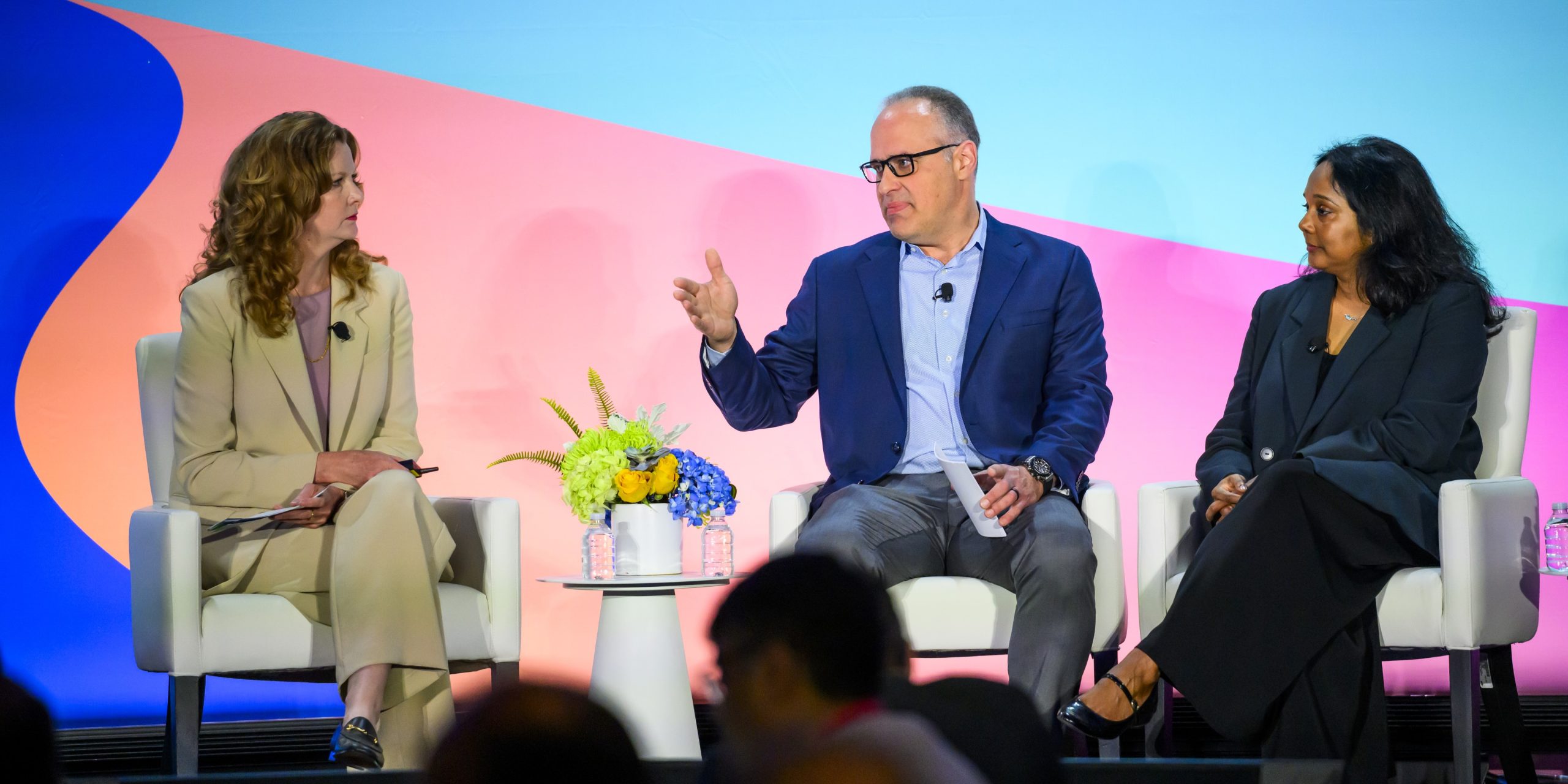
At this year’s AWS Summit in Washington, DC, I had the privilege of moderating a fireside chat with Steve Schmidt, Amazon’s Chief Security Officer, and Lakshmi Raman, the CIA’s Chief Artificial Intelligence Officer. Our discussion explored how AI is transforming cybersecurity, threat response, and innovation across the public and private sectors. The conversation highlighted several key themes: how organizations can leverage AI to improve security outcomes, the rise of agentic AI and its impact on security, the importance of maintaining human oversight in AI systems, workforce development strategies, and practical approaches to implementing AI securely in enterprise environments. Below are a few excerpts from our conversation.
On leveraging AI to improve security outcomes
Steve Schmidt: “We’ve applied AI internally at Amazon in a couple of places that led to some significant benefits, including in the application security review process. By training our large language models internally on prior security reviews that we’ve done, it has allowed us to apply the knowledge and learning that our more senior staff have embodied in the documents that the LLM was trained on and expose that to our more junior staff. It really raises the bar on the absolute level of security that we can offer.”
Lakshmi Raman: “In the cybersecurity realm, we’re thinking about how AI helps us in our accreditation and authorization process, helping us ensure that the process to get systems accredited is going as quickly as possible, because the industry is moving so fast. Another area that we’re applying AI and machine learning is triaging data. We have vast amounts of data that comes in at an exponential rate, so we need to be able to go through it quickly so that we can surface insights. You can imagine a cybersecurity analyst who traditionally has gone through network data manually in order to think about blocking suspicious IP addresses or connections. Now there’s an opportunity to do all of that really efficiently and let the security analysts make the decision.”
On the rise of agentic AI and its implications for security
Steve Schmidt: “The biggest change we’re seeing right now in AI is the rise of agentic AI. The reason agentic AI is particularly interesting is that it brings with it a set of challenges about ensuring the software is taking actions within the context of the person who’s asking it…Think about that in the context of a government organization, where you have sets of information that are restricted to certain populations, there are classification decisions, access control limitations, and reasons that you can access certain data that have to be present before you can do so. Agentic AI brings opportunities—you can take actions using software automatically—but also challenges: how do we make sure that the software is doing exactly the right thing every single time, and more importantly, that we can prove what it did to stakeholders and regulators?”
Lakshmi Raman: “AI agents definitely have an opportunity to transform enterprise automation. Leveraging them to do complex multi-step workflows—to do tool calling across a variety of databases and other foundational tools—has tremendous potential, with a human as a crucial step to review what’s going on.”
On the importance of maintaining human oversight with AI
Lakshmi Raman: “In my world, I spend a lot of time thinking about how AI is impacting the workforce. One of the areas we’re looking at is the intersection between AI and our people. AI is able to speed up the processing and do automation, but at the end of the day, it’s really about who is taking on the risk, or deciding the intents and making the decisions. Whatever the machine output happens to be, really it’s about the human who’s deciding the level of oversight, the risk to take, and even whether to intervene.”
Steve Schmidt: “One thing that many people don’t realize about AI systems is that they’re nondeterministic. What nondeterminism means is you can ask an AI model the same question 100 times, and you will not get the same answer every time. So, having a human who can make a judgment about what the AI comes up with is critically important. We look at it this way: if you’re just asking a question and getting an answer, that may be one set of scrutiny that you have to get assistance. But if you’re going to take an action, you’ve got to be really sure the AI is correct. There has to be that skilled person that Lakshmi spoke about, at the end of the AI use process saying, ‘Yes, this is the right thing to do at this point in time with this context.’”
On building an AI-savvy security workforce
Steve Schmidt: “There’s a real problem in our industry: we don’t have enough security people. We simply can’t hire enough people with the right skills to do this job. What we’ve we found is that AI allows us to do a lot of the heavy lifting for the security staff, using tooling that used to have to be done by humans. Our staff is actually materially happier with their jobs if we remove a lot of that grunt work from them, which is super important. You want to keep the employees you have, so you give them tooling that helps them get the job done more efficiently, and they enjoy their job.”
Lakshmi Raman: “We’re looking for people who can live between the intersection of technology and social intelligence, people who can understand how those two areas can potentially interact around human behavior and how to think about future activities. When we’re thinking about analysts, for example, we’re thinking about people who have critical thinking skills, who can demonstrate analytic rigor, who can think multiple steps ahead with incomplete information. We’re also looking for people who have digital acumen with an understanding of cloud and cyber and AI, so that we have those technical skills in house. And finally, people who are interested in lifelong learning and curiosity, because threats change over the years. We need people who understand and are willing to learn about that.”
On advice for security leaders as AI accelerates
Steve Schmidt: “When you’re looking at making a decision, ask the person who’s bringing the information to you: ‘Why can’t AI do this?’ And if they don’t have an answer, ask ‘When will it be able to and under what condition?’ Move it into the now, the probable, the possible, and make it real for all of your staff all the time. If they’re not intentionally making that decision, they’re missing an opportunity.”
Lakshmi Raman: “You’ve got to get training out there for your users. We think of it at three different levels. First is our general workforce—which might be the most important user base—people who are sitting side by side with our AI practitioners and can help describe the workflows that need automation. Then we think about it for our practitioners, so they are keeping up with the latest. And then finally, our senior executives, who can think about how they can transform their organization with AI and generate that buy-in from the top level.”
AI is not just changing what we can do, but how we work. As Steve and Lakshmi emphasized, the most successful AI implementations will be those that thoughtfully balance automation with human oversight, focusing on use cases that deliver tangible value while managing risks appropriately. For security professionals, understanding both the technical and human dimensions of AI will be critical as we navigate this changing space.
To provide the best experiences, we use technologies like cookies to store and/or access device information. Consenting to these technologies will allow us to process data such as browsing behavior or unique IDs on this site. Not consenting or withdrawing consent, may adversely affect certain features and functions.
Functional
Always active
The technical storage or access is strictly necessary for the legitimate purpose of enabling the use of a specific service explicitly requested by the subscriber or user, or for the sole purpose of carrying out the transmission of a communication over an electronic communications network.
Preferences
The technical storage or access is necessary for the legitimate purpose of storing preferences that are not requested by the subscriber or user.
Statistics
The technical storage or access that is used exclusively for statistical purposes.The technical storage or access that is used exclusively for anonymous statistical purposes. Without a subpoena, voluntary compliance on the part of your Internet Service Provider, or additional records from a third party, information stored or retrieved for this purpose alone cannot usually be used to identify you.
Marketing
The technical storage or access is required to create user profiles to send advertising, or to track the user on a website or across several websites for similar marketing purposes.