Post Syndicated from Explosm.net original https://explosm.net/comics/something-special
New Cyanide and Happiness Comic
Post Syndicated from Explosm.net original https://explosm.net/comics/something-special
New Cyanide and Happiness Comic
Post Syndicated from The Atlantic original https://www.youtube.com/shorts/lzLyyHVAXsg
Post Syndicated from Anton Aleksandrov original https://aws.amazon.com/blogs/architecture/building-a-serverless-ai-assistant-at-pelago-concept-to-care-in-two-weeks/
Healthcare organizations face a critical scaling challenge – how to maintain deeply personalized patient interactions as member bases grow, without overwhelming care teams or compromising quality. At Pelago, a digital health company specializing in substance use disorder support, the engineering team found a way to build an AI-powered solution to address this challenge using AWS services in just two weeks.
In this post, you will learn how Pelago used AWS serverless and AI services, such as Amazon Bedrock and AWS Lambda, to build and deploy an event-driven AI assistant. The result is a service that generates contextually aware suggested considerations for the care team. This system preserves the human-in-the-loop oversight that healthcare demands while removing months of traditional development work and overhead of managing complex infrastructure.
Pelago is a digital clinic for substance use treatment that provides comprehensive support including 1:1 coaching, medication management, and behavioral therapy. It serves members across the US to support recovery journeys for alcohol, tobacco, stimulants, cannabis, and opioid use disorder, and adjacent behaviors often associated with substance use. The Pelago care team coaches members through substance use recovery. A single coach may hold active conversations with dozens of members at once. Each message a coach sends needs to reflect weeks of prior context and drafting that response manually from scratch takes time the care team doesn’t always have.
When the Pelago engineering team set out to build an AI assistant for the care team, they faced a set of interconnected constraints. Behavioral health conversations build over weeks and months. Coaches need to account for that history in every reply. An AI assistant that only understands the most recent messages isn’t useful here – it must grasp the full long-term conversation history. That depth of context is also why human oversight is non-negotiable. The system had to generate suggestions for Pelago’s care team, not automated responses. Every piece of feedback must be read, evaluated, and adapted by a human coach before it reaches a member.
Protected Health Information (PHI) requirements added another layer of complexity – data could not leave Pelago’s AWS environment. All AI integrations must operate entirely within existing Amazon Virtual Private Cloud (VPC) infrastructure with no exposure to the public internet.
Beyond compliance and clinical safety, there were also practical constraints. Care team members need information the moment they open a conversation but generating relevant content processing dozens, sometimes hundreds, of prior messages through a large language model. A long wait was not acceptable when coaches open dozens of conversations per shift.
The engineering team needed to deliver all this quickly with full audit trails and security controls in a highly regulated environment. They had to solve the problem of pre-generating contextual suggestions without blocking the user experience while maintaining the compliance posture.
The Pelago team separated concerns using event-driven architecture. The care team needed suggested responses instantly when accessing the system but generating them synchronously in real-time blocked the user experience for tens of seconds because of LLM processing time. By treating each incoming member message as an asynchronous event, the system can fan out processing to independent consumers without coupling them to the message delivery path. A new consumer, such as the AI assistant, can be added without affecting existing components or code. And because each processing step runs in its own Lambda function, a spike in inference requests doesn’t affect message delivery or processing.
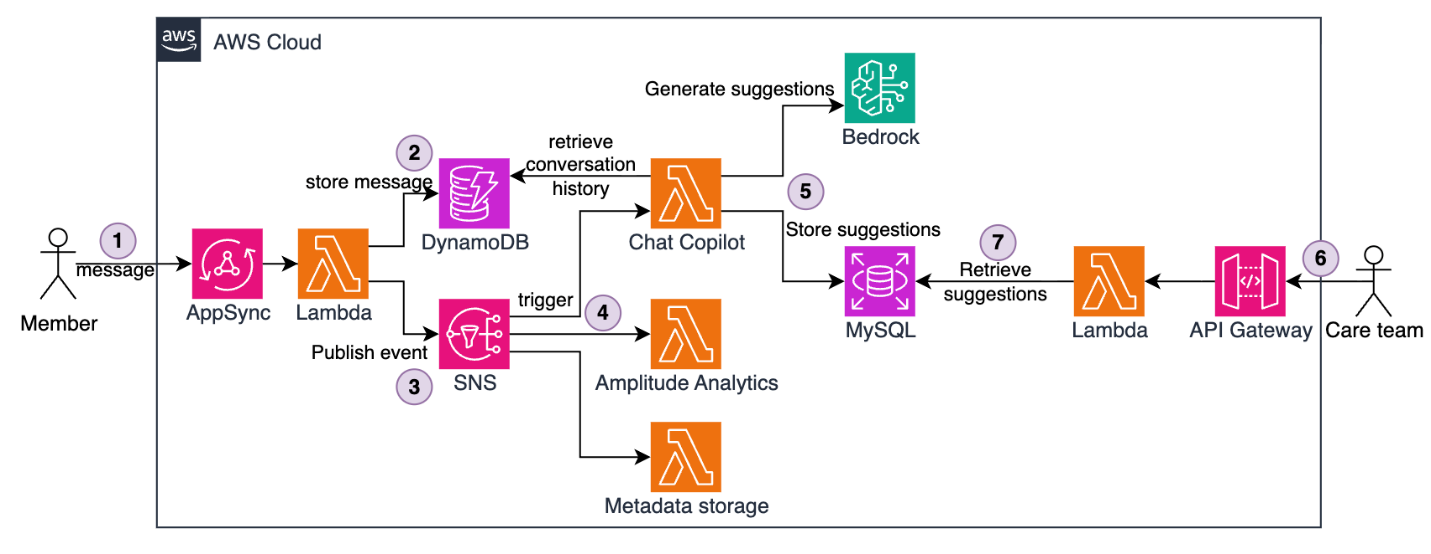
Figure 1 — The full end-to-end solution architecture
The architecture uses Amazon Simple Notification Service (Amazon SNS) for message fanout and Lambda functions for processing. Here’s how it works:
This pattern keeps message delivery, analytics, and AI generation decoupled. Each member’s PHI is processed separately and stays fully within the Pelago AWS boundary. A failure or spike in feedback generation for one member does not disrupt or impact processing for other members.
Because inference happens asynchronously in the background, the care team does not wait for LLM processing. Suggested messages are pre-generated, stored, and ready to use when a coach opens a conversation. This keeps retrieval times under 100 milliseconds regardless of how long the AI generation took.
This serverless architecture also provides organic scaling. Each Lambda function automatically scales horizontally based on current traffic – scaling up during spikes and back down when demand drops, with no pre-provisioning or scaling configuration required. Adding a new event-driven downstream capability, like the AI assistant itself, requires only a new SNS subscription with no changes to existing message-publishing or handling code.
The foundation of the Pelago chat architecture is an SNS topic that acts as a message bus for conversation events. SNS is a fully managed pub/sub messaging service. When a message is published to a topic, SNS automatically delivers it to subscribed consumers in parallel. This means a single incoming message can trigger multiple independent processing steps simultaneously.
When a user or coach sends a message, the system publishes a standardized payload to the SNS topic, for example:
SNS delivers this event to four Lambda function subscribers. The Metadata Storage Lambda writes message metadata to MySQL for reporting. The Analytics Lambda sends events to Amplitude for product analytics. The Push Notification Lambda triggers mobile notifications for coaches. The Chat Assistant Lambda generates Assistant-based suggestions using Amazon Bedrock.
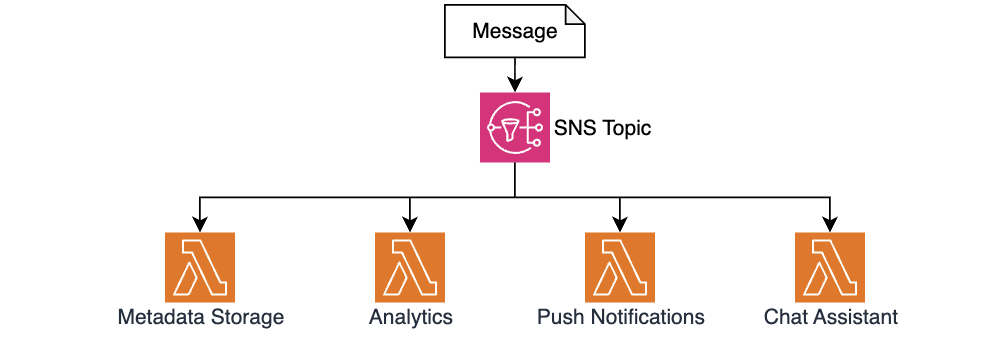
Figure 2 — Using SNS for message fan-out and decoupled processing
This fanout pattern allowed the Pelago team to add the AI Chat Assistant feature with zero changes to existing message-handling code. The team simply created a new Lambda function and added it as an SNS subscription. The publisher doesn’t need to know how many consumers exist or what they do, so new capabilities can be built and deployed independently without risking regressions in the message processing path.
The Chat Assistant Lambda handles computationally expensive AI generation. The function implements a multi-step workflow:
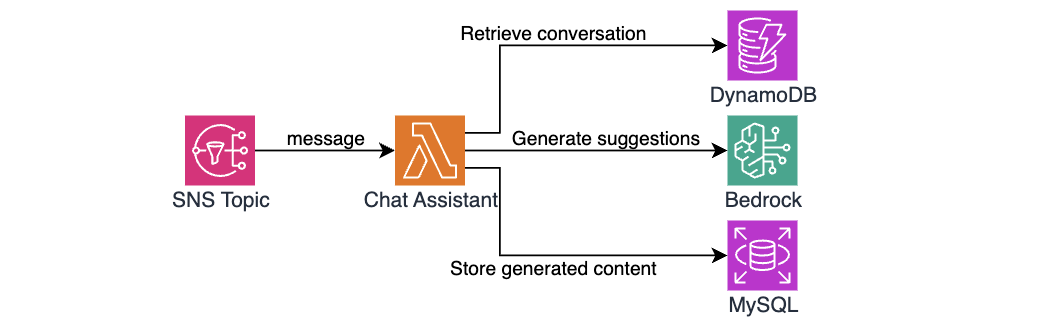
Figure 3 — The chat assistant architecture and workflow
The first step is to retrieve conversation history. Behavioral health conversations can span dozens or even hundreds of messages over weeks, and the AI assistant needs all that context to generate a useful suggestion to Pelago’s care team. The function queries DynamoDB for previous messages in the conversation. The DynamoDB single-digit millisecond read performance means even lengthy conversations (50+ messages) are typically retrieved in under 20ms.
The next step is to prepare and format context for inference. The function transforms the retrieved messages structure into a conversation history format that provides Amazon Bedrock with full context, for example:
After formatting the conversation, the Lambda function uses the Amazon Bedrock Runtime API to invoke Claude models. The prompt engineering focuses on empathy and validation – it helps the model acknowledge what the member is feeling rather than jumping to advice. It is tuned to maintain contextual continuity – picking up things the member mentioned in earlier messages instead of treating each exchange without prior context. It also steers the model away from false optimism or dismissive language and keeps suggestions short, more like a text message than an email. This matches how coaching conversations flow on the application.
This entire flow, from SNS trigger to a suggestion stored in MySQL, typically completes in less than 4 seconds, well within acceptable processing time. When a care team member opens a conversation on the dashboard, the front end instantly retrieves pre-generated suggested messages. Total response time perceived by the care team is under 100 milliseconds.
The Pelago team went from technical designs to first production deployment in 2 weeks. Two days on architecture and model selection with the clinical team, three days building the core Lambdas, three days on integration testing and prompt refinement, and two final days on deployment and monitoring.
The system delivered strong early results. From the business perspective, response preparation times dropped 40% on average, and the care team rated 79.6% of AI suggestions as helpful, based on internal Pelago measurements. Operationally, using serverless services introduced no new overhead. There was no new infrastructure to manage, servers to patch, or scaling configurations to maintain. The architecture successfully handled an 8x message volume spike during a seasonal campaign without configuration changes.
With the core event-driven architecture in place, the Pelago team made several implementation choices to satisfy healthcare industry requirements, handle traffic patterns unique to the application, and maintain reliability across the system.
Pelago uses multiple AWS security features to maintain HIPAA eligibility while using AI models. One requirement is for PHI to never traverse the public internet. To address this, the Pelago team uses VPC endpoints for Amazon Bedrock, so model invocations stay within the private network. The Boto3 client in the Python Lambda automatically routes traffic through the private endpoint. Data is encrypted at rest on DynamoDB and RDS, service communications use TLS 1.2+, and IAM policies are scoped with least-privilege permissions to specific resource actions and ARNs. Audit logs of model invocations are emitted to Amazon CloudWatch and capture message IDs only, not content.
The team used Python for Lambda functions that invoke Amazon Bedrock models. Boto3 native Amazon Bedrock support and simpler string manipulation made Python the right choice for building and iterating on prompts. The retrieval function is written in TypeScript to stay consistent with most of the Pelago backend code and to reuse shared libraries and Zod schemas for type-safe API contracts. This split let the team use the best language for each job without forcing a single runtime across the entire system.
The Pelago application serves heavily US-based traffic. Message volume concentrates during weekday working hours, with peak hours seeing 10x or more the volume of quiet periods. The pay-per-invocation model of Lambda fits this well. During a Monday morning surge, Lambda scales out automatically with no pre-provisioning required. During off-peak hours, Lambda functions automatically scale down, so Pelago avoids idle compute costs. Using alternative long-lived compute would mean either over-provisioning for peak load or maintaining auto scaling policies that can lag during sudden spikes. With Lambda, the solution costs are directly proportional to member engagement with no idle cost.
The team chose to use DynamoDB for conversation messages and MySQL for assistant suggestions based on different access patterns of each scenario. Conversation messages require high write throughput (100+ writes/sec at peak), single-digit millisecond reads, and automatic scaling. These requirements made DynamoDB a good fit. Assistant suggestions have a lighter write load (10-20 writes/sec) but need structured queries, foreign key relationships, and nested analytics joins that a relational database supports naturally.
Because SNS can deliver messages more than once, the Chat Assistant Lambda checks MySQL for an existing message before generating a new one. This idempotency check helps prevent duplicate Amazon Bedrock invocations, which would waste compute and could surface conflicting suggestions to coaches. If an Amazon Bedrock invocation fails because of throttling or model unavailability, the function logs the error without blocking message flow. A built-in retry mechanism handles transient failures, so suggestions are eventually generated even when Amazon Bedrock experiences momentary capacity constraints.
The team tracks multiple business and operational metrics. CloudWatch metrics capture suggestion generation latency, which helps the team identify when model response times exceed acceptable thresholds. Retrieval rate measures what percentage of generated message suggestions are used by coaches. This gives insights into how well the async timing aligns with real usage patterns. The system also allows coaches to rate each suggestion with thumbs up or down. These ratings are stored in MySQL for future prompt tuning and model evaluation. CloudWatch alarms monitor error rates for Amazon Bedrock throttling and database connection failures. These alarms alert the engineering team before operational issues impact the care team experience.
Managed AI services like Amazon Bedrock and serverless architectures let healthcare organizations move quickly while maintaining compliance controls. The Pelago chat assistant shows what’s possible when you combine serverless event-driven processing with async AI generation and fast synchronous retrieval. The key patterns that made this work are SNS fanout to decouple processing and make new features straightforward to add, pre-generating message suggestions asynchronously so the care team does not wait, VPC endpoints to keep PHI off the public internet, and starting with foundation models and prompt engineering instead of spending months on custom model training.
The Pelago journey from concept to production deployment shows how small engineering teams in regulated industries can balance moving fast and maintaining their compliance posture.
Post Syndicated from jzb original https://lwn.net/Articles/1083750/
One of the features that users often miss when moving from X11 to Wayland is
the ability to save and restore the position of windows between sessions. At GUADEC 2026, held in
A Coruña, Spain, Adrian Vovk provided an overview of work that has gone
into providing a platform-wide save and restore framework for GNOME. After two
failed attempts at landing an API, he believes that the third try will be the
one to succeed—though not in time for the upcoming GNOME 51 release
due in October.
Post Syndicated from jzb original https://lwn.net/Articles/1084218/
Python Software Foundation security developer-in-residence Seth
Larson has announced
that the Python Package Index (PyPI) will now reject new files that
are uploaded to releases older than 14 days. The restriction is to
prevent the poisoning of old releases if publishing tokens or
workflows of PyPI projects are compromised.
The discussion
of this behavior began during PEP 740 (Digital Attestations) back in January
2024. The discussion was restarted
in March 2026 after the popular packages LiteLLM
and Telnyx were compromised. These packages were compromised due to a “mutable
reference” in these projects’ usage of the Trivy GitHub Action.Originally the discussion stalled due to some projects depending on this behavior
to add support for new Python versions to already-published releases. To quantify how
disruptive this change would be to existing workflows, the PyPI database was queried
for projects
that have published new files to old releases (bucketed by number of days since
the release). Later, specificallycp314wheels were queried for the top
15,000 packages, revealing that only
56 projects of 15,000 had published a 3.14-compatible wheel more than 14 days
after a release was available.
LWN covered the LiteLLM compromise
in March.
Post Syndicated from LastWeekTonight original https://www.youtube.com/watch?v=hWNhI74-Z2A
Post Syndicated from Matt Granger original https://www.youtube.com/watch?v=8FDBCgxbs0U
Post Syndicated from Kari Wilson original https://www.backblaze.com/blog/cloud-vendors-make-it-easy-to-get-in-theyre-counting-on-it-being-hard-to-leave/

You’ve done the storage evaluation. The per-terabyte price is right. The durability numbers check out. Compliance boxes are ticked. And still, the cloud migration project hasn’t been approved.
That’s not a coincidence.
The cloud storage industry has spent years competing on what happens after you’re already locked in: performance, redundancy, features. Almost nobody competes on what it costs to get there—or what it costs to leave.
Migration friction isn’t an oversight. For most hyperscalers, it’s a business model.
The business case for cloud storage usually looks solid on paper. Lower per-terabyte costs. Less hardware to maintain. A path off aging tape libraries and overloaded NAS environments.
Then someone runs the actual migration math.
Egress fees from the current provider. Data transfer charges. Migration software licenses. Professional services. Tape digitization. Internal engineering hours. Project coordination overhead. For a large dataset, those costs can erase years of projected storage savings before a single byte moves.
Teams spend months building an approval-ready business case, only to find the upfront migration cost makes the model unworkable. The project stalls. Infrastructure the organization already knows is unsustainable stays in place. Modernization gets pushed to next quarter.
This is where most cloud vendors win. The storage decision becomes moot if the organization can never afford to move.
By the time most IT teams discover what cloud egress fees actually cost, they’re already mid-negotiation with a new provider.
The pricing model is deliberately asymmetric: getting data in is cheap, often free. Moving it out is where providers charge—and for multi-petabyte environments, those charges can run to hundreds of thousands of dollars before a migration has even started. Technically, the organization owns its data. Financially, moving it is a different question.
This reframes the evaluation in a way that favors incumbents. The question stops being which platform best fits long-term needs and becomes whether the organization can afford to leave at all. Once you’re in a major cloud platform with a large archive, exit costs are a structural retention mechanism.
Ask any prospective provider, early: what does it cost to leave? If they’re vague, that’s the answer.
Cost gets scrutinized. Time usually doesn’t—until a migration is already underway and slipping.
A large-scale migration means inventorying data and metadata, evaluating and procuring tooling, coordinating across vendors, monitoring transfer jobs, validating integrity at the destination, and troubleshooting the inevitable edge cases. For multi-petabyte environments, self-managed projects routinely stretch from months into years.
Every quarter that drags on is a quarter the organization is paying to maintain infrastructure it’s already committed to replacing, while its engineering team runs a file-moving operation instead of working on anything strategic. The total cost of a slow migration almost always exceeds the initial estimate—and almost nobody builds that into the business case upfront.
Migration risk tends to be underestimated until something breaks.
The core questions—will files transfer without corruption, will metadata survive intact, will dependent applications keep working—are harder to answer than they look for LTO tape archives that haven’t been accessed in years, NAS and SAN environments with proprietary metadata structures, media archives with irreplaceable assets, regulated content with chain-of-custody requirements, and datasets large enough that verification at scale is its own engineering problem.
The cost of getting this wrong isn’t just the migration itself. Data loss, integrity gaps, or application failures discovered post-migration can be significantly more expensive than any egress fee. Validation and verification need to be designed into the plan before transfers start, not bolted on after something fails.
Infrastructure teams evaluating cloud storage aren’t looking for a transfer tool. They want infrastructure modernized without burning their engineering team on a multi-year internal project. Predictable costs. A path to cloud that doesn’t require standing up a program management office just to move data.
The standard provider response is documentation and an onboarding checklist. After that, you’re largely on your own.
This isn’t an accident. Selling storage is straightforward. Owning migration means taking on cost, risk, and operational complexity that most providers would rather leave with the customer. The economics of the business favor making entry easy and exit expensive, with as little friction to growth as possible in between.
Providers that treat migration as their problem to solve are a different category. They’re betting that making it genuinely easier to get to their platform is worth more than one-time migration revenue—because a customer who gets there successfully tends to stay.
We built Universal Data Migration because we kept seeing the same thing: organizations that had already decided to move to Backblaze B2 getting stuck on the migration itself. The technology decision was made. The budget was approved. The project just couldn’t get started.
The program moves data from virtually any source—AWS S3, Microsoft Azure Blob, Google Cloud Storage, Wasabi, NAS and SAN, file servers, LTO tape across all generations, physical hard drives, legacy archives—with Backblaze managing the process rather than handing the customer a tool and a runbook.
The migration cost doesn’t have to be a reason the project stalls. That’s the point.
The storage evaluation isn’t complete until you know what it costs to get there and what it costs to leave.
Most providers make the second number hard to find. If you have to dig for egress pricing, or if a sales rep answers the exit question with “we’d work with you on that,” build the worst-case number into your model before signing anything.
The right provider won’t make you ask. They’ll make migration part of the conversation from the start—because they’re confident enough in their platform to compete on the full picture, not just the monthly storage line.
Have a migration project that keeps getting pushed? Talk to our team about what it would actually take to move your environment to B2.
The post Cloud Vendors Make It Easy to Get In. They’re Counting on It Being Hard to Leave. appeared first on Backblaze Blog | Cloud Storage & Cloud Backup
Post Syndicated from daroc original https://lwn.net/Articles/1082948/
Tracepoints in the kernel are useful for a variety of purposes: debugging,
active monitoring, and performance measurements, among other things. Previously,
any given BPF program could only be attached to a single tracepoint.
Jiri Olsa has been working to change that, and led a discussion about
his progress at the 2026
Linux Storage, Filesystem, Memory-Management, and BPF
Summit. That work has since been
merged, and can be expected as part of the 7.2
kernel.
Post Syndicated from The Atlantic original https://www.youtube.com/watch?v=kAAxywku108
Post Syndicated from jzb original https://lwn.net/Articles/1084210/
Security updates have been issued by AlmaLinux (389-ds-base, c-ares, dovecot, freerdp, glib2, gstreamer1-plugins-good, gstreamer1-plugins-ugly-free, hplip, kernel, kernel-rt, nodejs:22, perl-XML-LibXML, webkit2gtk3, and yggdrasil), Debian (kernel, nss, roundcube, rtpengine, and xz-utils), Fedora (btrbk, kernel, mupdf, nuclei, perl-Crypt-OpenSSL-X509, rust-fern, rust-ifcfg-devname, rust-routinator, rust-rpki, and rust-syslog), Mageia (tig), Oracle (.NET 10.0, .NET 8.0, .NET 9.0, acl, dovecot, glib2, httpd, libtiff, pacemaker, perl-IO-Compress, plexus-utils, python3, and webkit2gtk3), Slackware (libssh and mozilla-firefox), SUSE (acl, avahi, aws-nitro-enclaves-cli, beets, chromium, firefox, go1.25-openssl, ImageMagick, iscsiuio, kernel, kubevirt1.8-container-disk, libgit2-1_9, libkrun, libsoup-3_0-0, nghttp2, opam, php7, python-aiohttp, python-tornado6, and vim), and Ubuntu (accountsservice, CUPS, imagemagick, jbig2dec, openssh, and snapd).
Post Syndicated from Raman Pujani original https://aws.amazon.com/blogs/architecture/building-multi-region-resiliency-for-aws-cloudformation-custom-resource-deployment/
AWS CloudFormation is the foundational tool of infrastructure-as-code for thousands of organizations running workloads on AWS. But as teams push the boundaries of what CloudFormation can do natively, custom resources have emerged as a powerful extension mechanism that unlocks a broad range of possibilities. Yet, when it comes to building resilient, multi-Region deployments with custom resources, customers quickly discover a gap: there is no built-in multi-Region support. In this post, we will explore that challenge and go over a robust active-active architecture that solves it.
A CloudFormation custom resource allows you to write custom provisioning logic that AWS CloudFormation invokes during stack operations (Create, Update, or Delete). When CloudFormation encounters a custom resource in a template, it sends a lifecycle event to a target, typically an AWS Lambda function through an Amazon Simple Notification Service topic. CloudFormation waits for a response with a presigned URL, and then proceeds or rolls back based on that response.
Customers use Custom Resources for a wide variety of use cases, including:
In short, Custom Resources turn CloudFormation into a fully extensible orchestration engine instead of only an AWS resource provisioner.
While single-Region deployments can achieve high resilience, multi-Region architectures become essential for organizations that need to meet specific business requirements. These include stringent disaster recovery objectives, data residency mandates, latency-sensitive use cases across geographies, and mission-critical business continuity needs. However, when it comes to CloudFormation Custom Resources, multi-Region design introduces a set of hard problems that CloudFormation does not solve natively:
Until now, these gaps meant that teams either accept the risk of single-Region custom resource handlers (a reliability concern) or build complex, bespoke solutions to handle multi-Region scenarios.
This proposed architecture delivers an active-active multi-Region solution for CloudFormation custom resource processing. It is designed around four core principles:
This architecture avoids the single points of failure inherent in single-Region custom resource designs while preventing the duplicate processing risks of naive multi-Region approaches. This architecture is ideal for mission-critical workloads where regional failures cannot be tolerated.
The following section provides a detailed walkthrough of how this architecture processes a CloudFormation lifecycle event from end to end.
This architecture diagram describes a multi-Region CloudFormation custom resource architecture operating in an Active-Active configuration. It handles CloudFormation lifecycle events (Create/Update/Delete) with high availability and no duplicate processing across multiple AWS Regions. The architecture uses a central primary Region (us-east-1) and a secondary Region (us-west-2) to process custom resource events, with Amazon DynamoDB Global Tables providing distributed locking and idempotency, and Amazon Application Recovery Controller providing automated failover. Customer AWS Regions fan out events simultaneously to both infrastructure Regions, supporting resilience even if the primary Region fails.
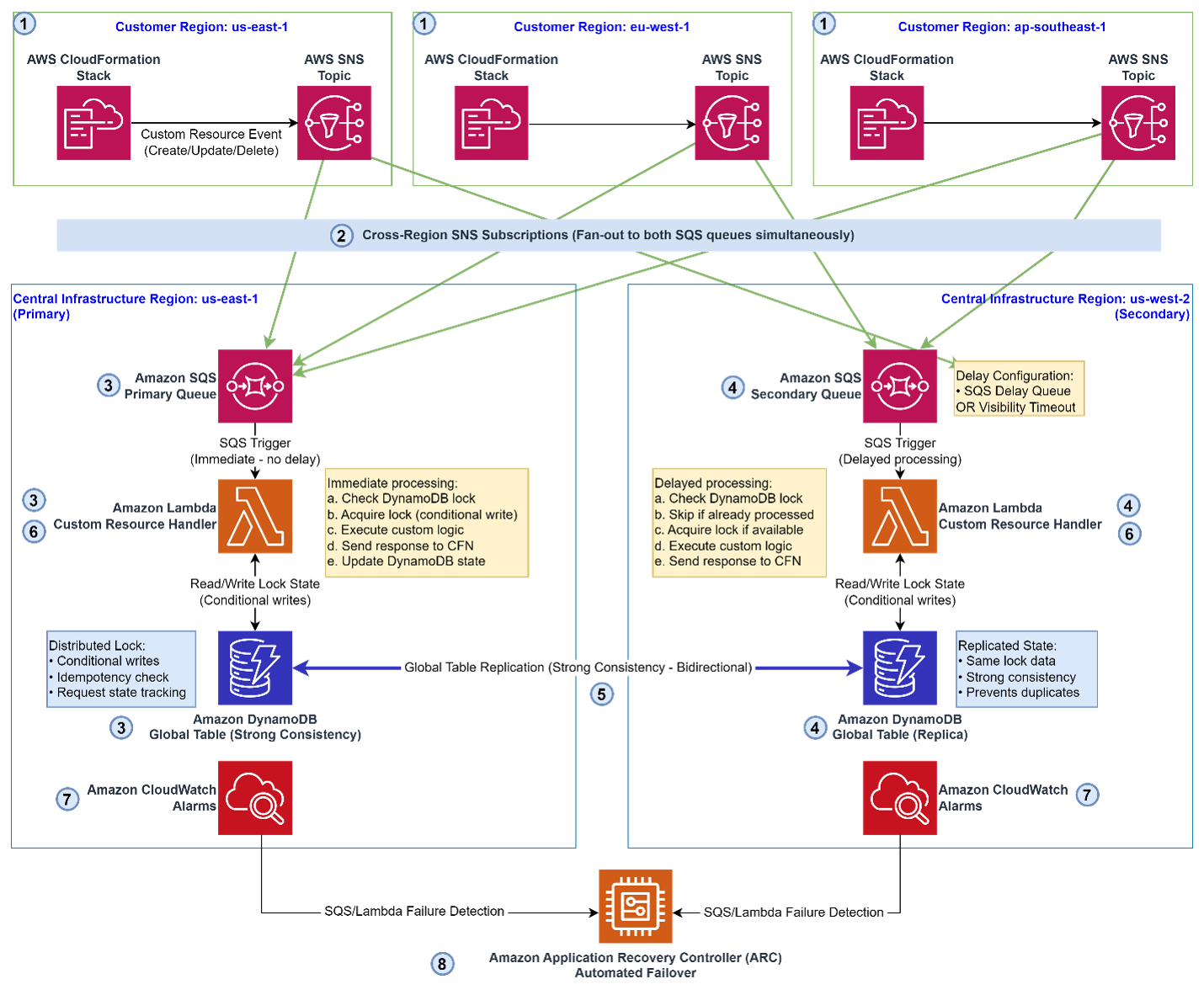
A CloudFormation Stack in one of the customer Regions (us-east-1, eu-west-1, or ap-southeast-1) initiates a Create, Update, or Delete lifecycle event. Along with the event payload, CloudFormation generates a presigned response URL that the handler must call to signal success or failure. This event is published to a local Amazon Simple Notification Service (SNS) topic within that customer Region.
The Amazon SNS topic is configured with cross-region subscriptions that simultaneously fan out the event to two Amazon SQS queues in the central infrastructure AWS Regions:
Both queues receive the event at the same time, setting up the Active-Active processing model.
The Primary SQS queue triggers the Primary Lambda Custom Resource Handler immediately, with no delay. The Lambda function executes the following steps:
The Secondary SQS queue is configured with a delay, implemented by using either an SQS Delay Queue or a Visibility Timeout. After this delay, the Secondary Lambda Custom Resource Handler runs:
The delay is intended to give the primary Region time to process the event first. The secondary only takes over if the primary has not completed processing within the delay window.
Amazon DynamoDB Global Tables are the backbone of coordination in this architecture. Both Regions read from and write to the Global Table with strong consistency. The table tracks:
Bidirectional replication is designed to help maintain both Regions with the latest state, supporting the lock mechanism’s reliability despite network partitions or regional degradation.
After either the primary or secondary Lambda function handler completes processing, CloudFormation receives the SUCCESS or FAILED callback using the pre-signed URL. Based on this response, CloudFormation either continues the stack operation or initiates a rollback.
Amazon CloudWatch alarms continuously monitor SQS queue depth and Lambda execution health in both Regions. These alarms serve as the early warning system for the automated failover mechanism.
If the primary Region (us-east-1) experiences a failure, CloudWatch detects it and triggers Amazon Application Recovery Controller to initiate automated failover to the secondary Region (us-west-2). No manual intervention is typically required. The secondary Region is designed to take over processing responsibilities.
Delete resources created using the following AWS services in every Region to avoid additional costs:
CloudFormation Custom Resources are an indispensable tool for teams building sophisticated infrastructure automation on AWS. However, the lack of native multi-Region support has long been a barrier to building truly resilient custom resource architectures.
This architecture addresses the major challenge directly:
For teams operating at scale across multiple AWS Regions, this architecture provides a blueprint for extending the power of CloudFormation without sacrificing reliability. Whether you’re managing compliance-driven multi-Region deployments or building for global high availability, this pattern gives you a foundation for resilient custom resource processing.
Refer to the following content to learn more about relevant AWS services:
Post Syndicated from Bozho original https://blog.bozho.net/blog/4602
САЩ е съюзник и стратегически партньор на България. А режимът на аятоласите е репресивен режим, който стреля по собствените си граждани по улиците.
Но за съжаление никое българско правителство не би имало лукса да вземе свободно решение дали да разположи американските цистерни на българско летище. Защото realpolitik фактите са, че ако откажем, дерогацията за рафинерията в Бургас може да бъде отменена, а никое правителство не може да остави страната без бензин, дизел и авиационно гориво.
И ние разбираме това. Затова няма да злорадстваме, да ехидничим, да наричаме Прогресивна България „войнолюбци“, да плашим хората или да се отдаваме на евтин популизъм. Но именно Радев и Прогресивна България се отдадоха на такъв популизъм само преди няколко месеца. Обясняваха какви заплахи имало за страната и продаваха страх.
Очакванията на обществото трябва да се посрещат, но като политици имаме отговорност и да създаваме разумни очаквания. Да не злоупотребяваме с трибуната, която ни е дадена и да не се заиграваме със страхове. Нещо, което сега управляващите и конкретно Радев правеха дълго време.
Но когато дълбаеш разделителни линии в обществото дълги години, неизбежно пропадаш в тях.
Разбираме и желанието им да удържат несъвместимата електорална коалиция, която ги избра, но със захаросване на фактите, с атака по опозицията и с приказки за грандизиони бъдещи сделки няма да стане.
Всичко ни се представя като серия от сделки, транзакции, от които уж България печели. Но сме наясно, че няма как да си най-хитрия, и да въртиш едностранни „сделки“ със САЩ, Русия, Китай, Турция – това няма да свърши добре.
За съжаление, правителството на Радев не говори за Европейския съюз като за решение на всички тези проблеми, които сега се налага да решаваме с непрозрачни транзакции. Вероятно защото Европейският съюз е съюз на ценности и на солидарност, а не на политически транзакции.
ЕС е формиран на база на отстъпките, на консенсуса, на солидарността и на споделените ценности, а правителството на Прогресивна България руши презумпцията за солидарност – казва „дайте ни еврофондовете и ние няма да ви пречим“ – нещо, което противоречи на европейската идея.
Дългосрочното решение за сигурността на България минава през превръщането на ЕС в силен геополитически полюс. Иначе всяка държава ще се превърне в плячка на по-големите, защото никоя държава сама не може да преговаря от достатъчно добра позиция. А ние, с нашите пробити служби и неизградени институции ще сме сред най-лесните плячки. И докато си мислим, че се договаряме със САЩ, Русия, Китай и Турция, всъщност ще губим още и още суверенитет – т.е. способността да вземаме сами решения, без някоЙ да ни казва „ако не го направиш, ще ти спра това или онова“.
Правителството няма мандат за руши европейския консенсус, няма мандат да отклонява България от европейската солидарност. И трябва да бъде честно с българските граждани, да каже какъв курс реално поема.
Правителството днес можеше да получи нашата подкрепа за трудното и непопулярно решение, ако бяха честни, смиерни и ако с действията си до момента представяха план за алтернатива на транзакционното затъване.
Но вместо това те внесоха за гласуване решението без да ни предоставят нотата на САЩ, без цялостен доклад за рисковете от военното разузнаване и без отговор за това каква сделка всъщнсот сключват.
Затова днес не участвахме в гласуването, оставяйки управлявщите насаме със собственото си лицемерие и популизъм, и в компанията на Пеевски, който гласува всичко американско, с продължаващата надежда да бъде изваден от санкционния списък.
И правим това не за да натрием носа на управляващите за предишните им изказвания, с които насаждаха страх и разделение, а за да разберат, че когато управляваш, носиш много повече отговорност от това да казваш няколко добре формулирани изречения пред камери.
Материалът Позиция по проекта на решение за американските цистерни в България е публикуван за пръв път на БЛОГодаря.
Post Syndicated from Home Assistant original https://www.youtube.com/watch?v=Pu7JLCxZmaI
Post Syndicated from Ahmed Ewis original https://aws.amazon.com/blogs/architecture/architecting-offline-first-generative-ai-applications-for-edge-deployments-using-aws-services/
According to Siemens’ 2024 report The True Cost of Downtime, Fortune 500 companies lose an estimated $1.4 trillion annually because of unplanned downtime. This downtime is often worsened by a lack of skills to detect and resolve issues quickly. Generative AI offers a promising path to address this, but deploying these capabilities in industrial environments introduces a distinct architectural challenge: how do you bring the power of large-scale AI to locations where cloud connectivity is unreliable or unavailable?
The answer lies in an offline-first architecture, one that moves AI inference to the edge while using cloud services for model customization, deployment orchestration, and continuous improvement. This pattern requires careful coordination across multiple AWS services spanning artificial intelligence and machine learning (AI/ML), Internet of Things (IoT), and storage, and demands deliberate trade-offs between model capability, hardware constraints, and operational complexity.
The following are a few potential use cases that could benefit smart applications at the edge:
In this post, we walk through a reference architecture for building and deploying a generative AI application at the edge using AWS services. We cover the end-to-end pattern, from model customization in the cloud using Amazon Bedrock and Amazon SageMaker AI, to edge deployment using AWS IoT Greengrass, to local inference orchestrated by Strands Agents. Along the way, we highlight the key architectural decisions and service integration patterns that make this approach work.
This post describes a reference architecture. It is not intended for direct production use. Perform a security review and implement controls appropriate to your workload before deploying to production.
Designing an offline-first AI architecture starts with a critical decision: how to customize a language model for your domain while keeping it small enough to run on edge hardware. The model must fit within the compute and memory constraints of site-level devices (typically GPUs with 16 GB or more of VRAM), which means working with small language models (SLMs). The customization strategy you choose directly affects your architecture’s complexity, cost, and data pipeline requirements.
The following strategies represent increasing levels of architectural complexity, each with different infrastructure requirements and expected outcomes:
To decide on the right strategy for your application, you need to work backward from the use case requirements and expected outcomes.
Let’s examine a reference architecture for an edge-deployed generative AI solution built on AWS. This architecture addresses a manufacturing use case where operators need instant access to equipment documentation, log correlation, and troubleshooting guidance, all without depending on cloud connectivity. We chose the hybrid approach (FT + RAG) because it balances two architectural concerns: keeping the on-device model compact through fine-tuning for task-specific behavior, while using RAG to provide up-to-date knowledge retrieval without retraining. The following diagram depicts the end-to-end architecture:
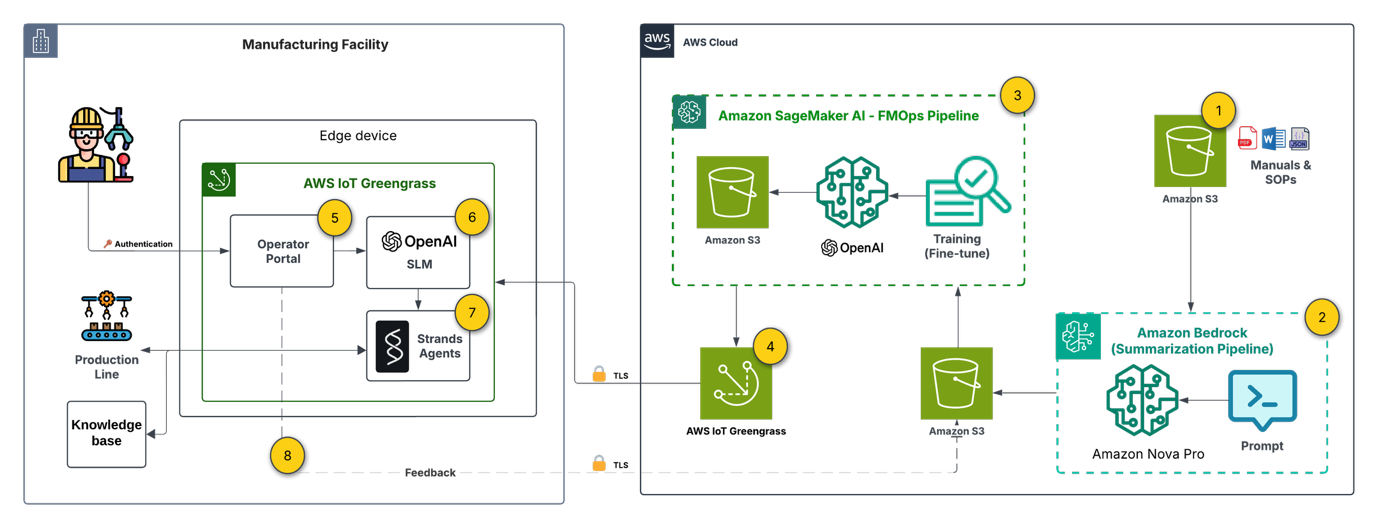
Note: The architecture spans two trust domains. On the cloud side, each service (Amazon Simple Storage Service (Amazon S3), Amazon Bedrock, SageMaker AI, IoT Greengrass) operates under a dedicated least-privilege AWS Identity and Access Management (IAM) role. All cloud-to-edge communication uses mutual TLS using IoT Greengrass device certificates. The operator portal requires authentication. On the edge device, the operator.
The architecture is organized into three layers: cloud-side preparation (steps 1–3), deployment orchestration (step 4), and edge-side inference (steps 5–9). Each layer uses specific AWS services chosen for their integration capabilities.
Technical manuals and Standard Operating Procedures (SOPs) are stored in Amazon S3, serving as the single source of truth for both the cloud-side training pipeline and the edge-side RAG knowledge base. The integration of Amazon S3 with both SageMaker AI and IoT Greengrass makes it the natural choice for artifacts that must flow between cloud and edge.
Using Amazon Nova Pro on Amazon Bedrock, we process raw documentation into structured question-answer-context pairs for fine-tuning. This is a key architectural decision: rather than manually curating training data, we use a large foundation model (FM) in the cloud to generate high-quality labeled data at scale. The serverless inference of Amazon Bedrock keeps this step cost-effective, and the output feeds directly into the SageMaker AI pipeline.
Amazon SageMaker AI Pipelines orchestrates an automated FMOps pipeline that fine-tunes gpt-oss-20b (Mixture of Experts (MoE) architecture: 21B total parameters, 3.6B active per token, 32 experts, 128k context length) on the domain-specific Q&A pairs. The pipeline pattern here is deliberate: it enables repeatable, versioned model customization that can be triggered whenever new documentation is added. The pipeline trains the model to understand equipment-specific terminology and response formats, then stores the customized model artifact in S3 for downstream deployment.
The edge device (in our case, a g4dn.12xlarge with 4× NVIDIA T4 GPUs, 16 GiB each, 64 GiB total accelerator memory, 48 vCPUs, and 129 GiB system RAM) provides the GPU compute necessary for local inference. The hardware selection is an important architectural constraint that directly influences model viability and serving strategy. With gpt-oss-20b occupying 13 GB per T4 GPU, two deployment strategies are available depending on your throughput and latency priorities:
The choice between these strategies depends on your workload profile: replication suits high-concurrency, short-query environments, while tensor parallelism suits fewer concurrent users with longer, more complex interactions.
The edge device (in our case, NVIDIA Jetson Xavier) provides the GPU compute necessary for local inference. The hardware selection is an important architectural constraint: you need sufficient VRAM (16 GB or more) to run the quantized SLM, which directly influences which models are viable for your deployment.
A Flask-based web interface running locally on the device allows maintenance operators and technicians to submit queries about equipment issues, safety procedures, or maintenance tasks. Running the UI on-device eliminates any dependency on external connectivity for the user-facing layer.
The fine-tuned SLM runs on-premises using Ollama as the inference runtime. Ollama provides a lightweight, container-friendly serving layer that supports quantized model formats (GGUF) for efficient inference within the device’s memory constraints. This decouples the model serving infrastructure from any cloud dependency.
Strands Agents provides the orchestration layer that coordinates the query processing workflow. It routes requests to the appropriate tools: querying the on-site RAG knowledge base, collecting device telemetry data. This agent-based pattern provides extensibility. You can add new tools and data sources without modifying the core inference pipeline.
When connectivity is available, user interactions and feedback flow back to the cloud, enabling ongoing model refinement through the FMOps pipeline. This creates a virtuous cycle: edge usage data improves the next model version, which Greengrass deploys back to the device. The architecture is designed to be resilient to connectivity gaps. Feedback is queued locally and synchronized opportunistically.
To be able to implement a similar solution, you need:
This section summarizes the key implementation steps. Each component uses standard AWS service configurations:
For the fine-tuning notebook, refer to this example notebook for fine-tuning an SLM using Amazon SageMaker AI.
Moving inference to the edge shifts the security perimeter. In a cloud-native deployment, AWS manages much of the infrastructure security. At the edge, you own the full stack, which spans physical device access through application-layer controls. This section outlines the security controls to implement when adapting this architecture for your environment.
Authentication and access control. The Flask operator portal runs on an isolated device, but physical proximity doesn’t replace authentication. Integrate with your organization’s identity provider (SAML/OIDC) or implement certificate-based mutual TLS. Enforce role-based access so that operators, administrators, and maintenance personnel each see only the interfaces relevant to their function.
Encryption at rest. Model artifacts and the ChromaDB vector database contain proprietary knowledge. Encrypt the edge device’s storage volume using full-disk encryption (for example, LUKS on Linux or BitLocker on Windows). Manage encryption keys through AWS IoT Greengrass secret manager or a hardware Trusted Platform Module (TPM) on the device.
Encryption in transit. All communication between the edge device and AWS (including the IoT Greengrass deployment channel and the feedback synchronization loop) must use TLS 1.2 or later. For internal communication between edge components (Flask portal to Ollama, Strands Agents to ChromaDB), enforce TLS even on the loopback interface to prevent local interception.
Input validation and prompt guardrails. The Strands Agents orchestration layer accepts natural language input from operators. Apply input validation to reject malformed or excessively long queries. Implement prompt guardrails to detect and block prompt injection attempts. On the output side, apply content filtering to prevent the model from surfacing sensitive information outside its intended scope.
Network segmentation. Separate edge components into distinct network zones: the operator-facing portal in a perimeter network, the inference runtime in a restricted zone, and the cloud sync channel on an isolated outbound-only interface. Use firewall rules to enforce that only the expected traffic flows between zones.
IAM least privilege. On the cloud side, each AWS service in the pipeline should operate with its own IAM role scoped to minimum required permissions. The IoT Greengrass core device role should only access the specific S3 prefixes and IoT topics it needs. SageMaker pipeline execution roles shouldn’t have access to production S3 buckets.
Logging and monitoring. Enable AWS CloudTrail and Amazon CloudWatch for all cloud-side services. On the edge device, log all operator queries, model responses, and sync events locally. When connectivity is available, forward edge logs to Amazon CloudWatch Logs or Amazon S3 for centralized analysis. Set up alerts for anomalous patterns such as unexpected query volumes, repeated authentication failures, or unauthorized access attempts.
We evaluated the fine-tuned gpt-oss-20b model against the base model using 30 domain-specific question-answer pairs. Both configurations use the full RAG pipeline (ChromaDB + sentence-transformer embedding model) as the retrieval layer. The variable being tested is whether fine-tuning the language model improves generation quality when given the same retrieved context. Three LLM judges (Claude 4.5 Haiku and Claude 4.5 Sonnet using Amazon Bedrock, and Amazon Nova Pro) scored responses on a 12-point scale across accuracy, completeness, and relevance.
| LLM Evaluator | SLM | Average score |
| Claude 4.5 Haiku | Fine-tuned gpt-oss-20b + RAG | 10.20/12 (85%) |
| Base gpt-oss-20b + RAG | 8.20/12 (68.3%) | |
| Claude 4.5 Sonnet | Fine-tuned gpt-oss-20b + RAG | 9.20/12 (76.7%) |
| Base gpt-oss-20b + RAG | 7.49/12 (61.7%) | |
| Nova Pro | Fine-tuned gpt-oss-20b + RAG | 9.90/12 (82.5%) |
| Base gpt-oss-20b +RAG | 8.70/12 (72.5%) |
These results support the hybrid approach (FT + RAG) outlined in our solution architecture, demonstrating that even with a relatively small fine-tuning dataset, significant performance improvements can be achieved for domain-specific applications at the edge.
The AWS services used in this architecture are fully managed services that follow a pay-as-you-go pricing model, meaning you only pay for actual invocations. Exception for this can be the storage costs for the labeled data and the finetuned model in Amazon S3 which you can consider to delete if not in use.
This post presents a reference architecture for deploying generative AI at the edge using AWS services. The key architectural patterns demonstrated include:
Cloud-side model factory – Using Amazon Bedrock for automated training data generation and Amazon SageMaker AI Pipelines for repeatable, versioned model customization, creating a scalable FMOps workflow that decouples model preparation from deployment.
Managed cloud-to-edge bridge – AWS IoT Greengrass provides the deployment orchestration layer, handling model packaging, versioning, and lifecycle management without requiring persistent connectivity to target devices.
Self-contained edge inference stack – A lightweight runtime (Ollama) combined with an agent-based orchestration framework (Strands Agents) supports local AI inference with extensible tool integration, all operating independently of cloud availability.
Feedback-driven continuous improvement – An asynchronous feedback loop synchronizes usage data back to the cloud when connectivity permits, for iterative model refinement without disrupting edge operations.
These patterns are applicable beyond manufacturing. Any environment with intermittent connectivity, strict latency requirements, or data locality constraints (offshore energy, remote agriculture, transportation, defense) can benefit from this architectural approach. The critical design decisions will vary by use case: selecting the right model customization strategy, sizing edge hardware to model requirements, and choosing between RAG and fine-tuning. The overall integration pattern remains consistent.
As with any reference architecture, we recommend that you conduct a security review before production deployment.
To explore this pattern, consider identifying a use case with clear connectivity constraints and working backward from your edge hardware requirements to select a model customization strategy. The hybrid (FT + RAG) approach described in this post offers the right balance of capability and complexity. Expand it as you validate operational improvements.
Ready to explore more? Join us at re:Invent for related sessions: Real-time insights for smart manufacturing with AWS Serverless (CNS375) and Implement Agentic AI at the edge for industrial automation (HMC317).
Post Syndicated from Aishwariya Khiani original https://aws.amazon.com/blogs/architecture/automate-custom-pii-detection-at-scale-with-amazon-macie-and-step-functions/
Organizations in regulated industries like financial services, insurance, healthcare, and government ingest large volumes of data containing personally identifiable information (PII). Your applications, claims processing systems, partner data feeds, and internal workflows produce files that may include names, addresses, Social Security numbers, and domain-specific identifiers such as policy numbers, member IDs, and medical record numbers.
Identifying and classifying this sensitive data is a compliance imperative. Regulations such as GDPR, HIPAA, CCPA, and PCI DSS require you to know where PII resides, who can access it, and how it is protected. Manual classification does not scale. While Amazon Macie provides managed sensitive-data discovery, there could be formats that standard detection engines do not recognize by default. You can extend the detection capability with custom identifiers unique to your business.
In this post, you learn how to build and deploy an event-driven pipeline that automatically detects PII the moment a file arrives in Amazon Simple Storage Service (Amazon S3). It then extends beyond Macie built-in managed data identifiers by incorporating your own custom identifiers, which can detect organization-specific sensitive data types alongside standard PII.
The solution uses Amazon EventBridge to trigger an AWS Step Functions workflow, which orchestrates Macie classification jobs, including custom data identifiers, and produces compliance reports with zero manual intervention. As each file lands in Amazon S3, the pipeline automatically invokes Macie to scan it using built-in and custom data identifiers, detecting standard and organization-specific PII without manual intervention. It then generates audit-ready reports in both CSV and JSON formats with full timestamps, giving your compliance team the documentation they need. For high-severity findings, the pipeline publishes real-time notifications through Amazon Simple Notification Service (Amazon SNS) so your security team can respond immediately. To maintain clear data lineage throughout the process, the architecture implements a three-bucket pattern. This helps isolate objects by their processing state and ensures that unscanned data never mixes with validated data.
This pipeline uses an event-driven architecture built on the following AWS services:
The following figure provides an overview of the solution architecture using the listed services.
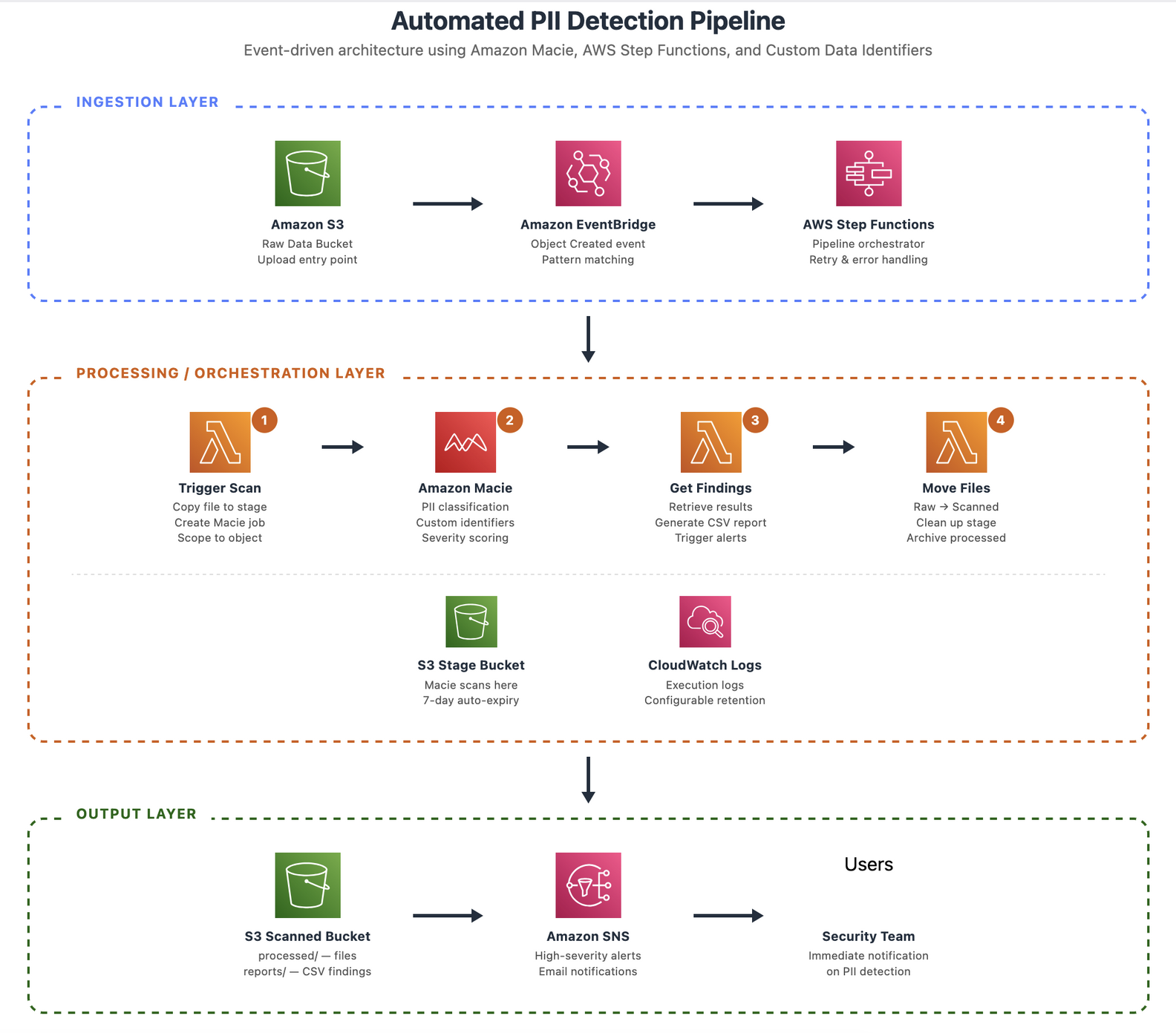
Figure 1 — Architecture overview
Several design decisions shape this architecture. The pipeline creates a dedicated Macie classification job for each object rather than batching, which enables real-time PII detection at the point of ingestion. The three-bucket pattern noted earlier isolates unprocessed data from validated data, with the staging bucket configured to auto-expire objects. Step Functions orchestrates the workflow, using built-in retry logic and wait states to handle asynchronous job execution in Macie. Custom data identifiers extend detection capabilities of Macie to cover domain-specific patterns unique to your organization. Finally, Amazon EventBridge triggers the pipeline instead of native S3 event notifications, providing advanced filtering, support for multiple targets, and cross-account routing.
In this section, you deploy and configure the automated PII detection pipeline.
Download and deploy the complete solution through this sample CloudFormation template.
✓ Expected result: Stack reaches CREATE_COMPLETE after 3 to 5 minutes.
The following image shows the sample Create stack parameters and configuration:
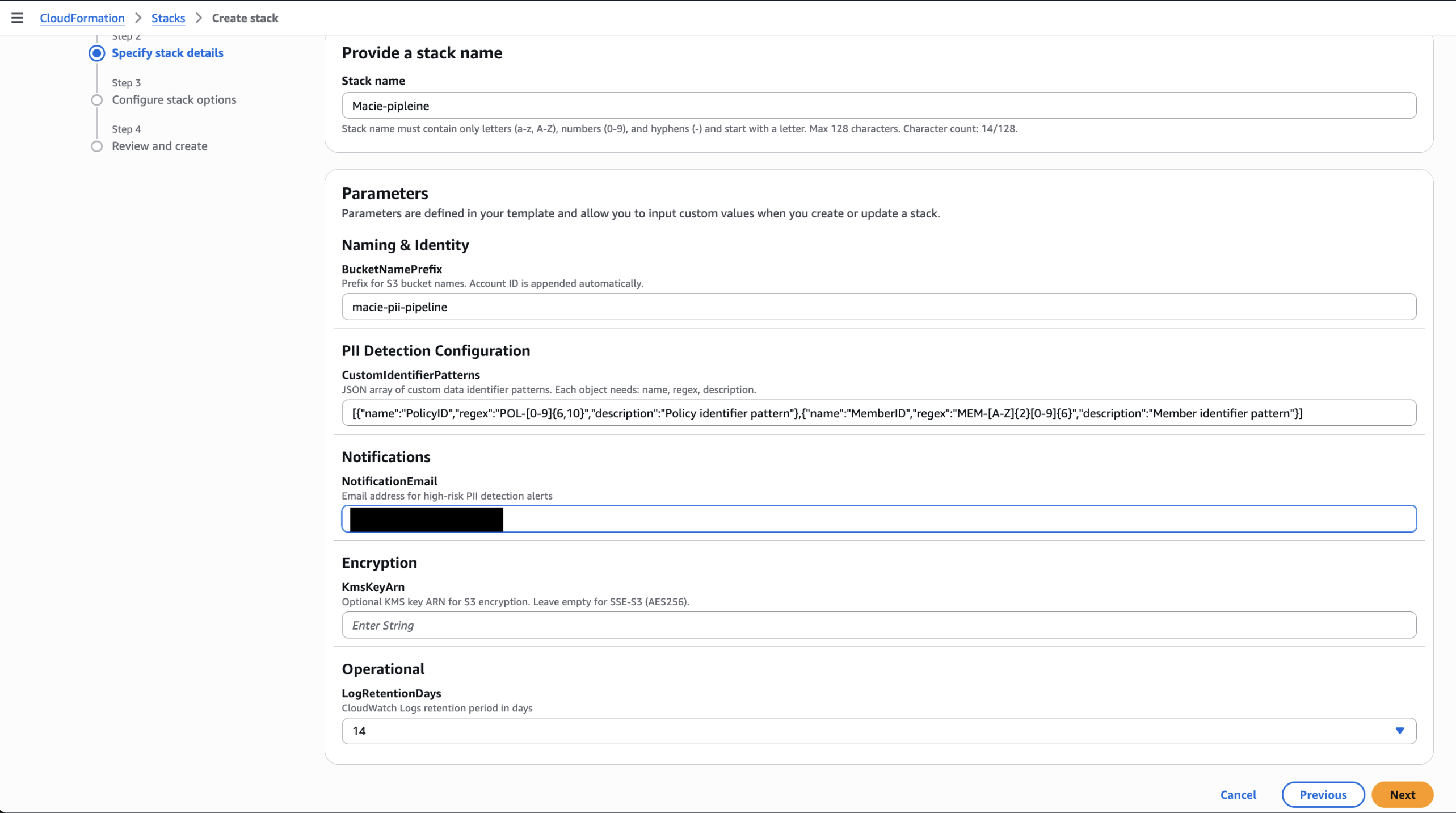
Figure 2 — CloudFormation console showing Create stack configuration page
Open the confirmation email and choose Confirm subscription.
✓ Expected result: Subscription shows Confirmed in Amazon SNS console as demonstrated in the following screenshot
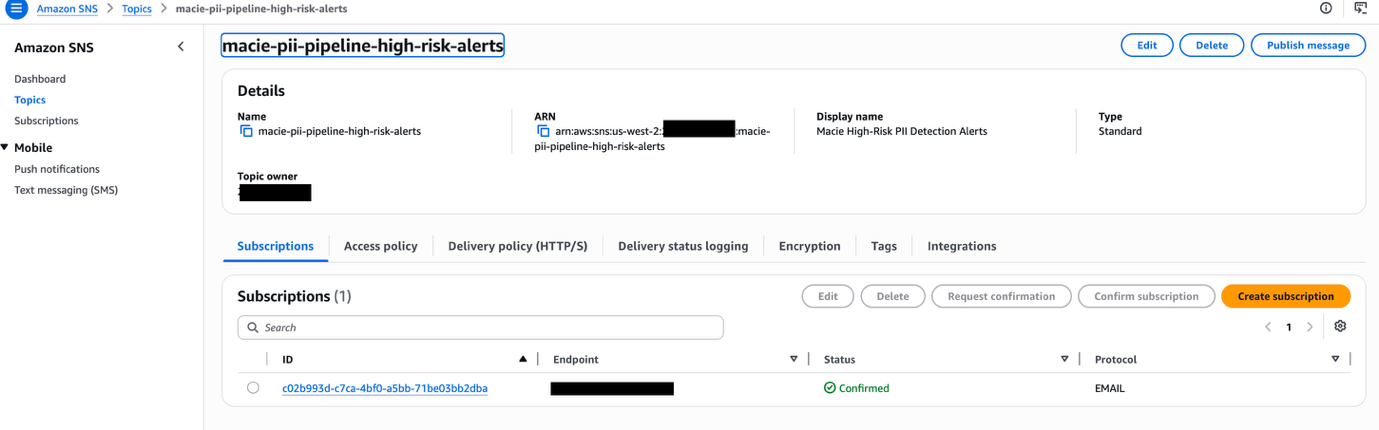
Figure 3 — Amazon SNS confirmed subscription
The stack automatically provisions custom data identifiers from the CustomIdentifierPatterns parameter you provided during deployment. Verify they exist in the Macie console.
✓ Expected result: Custom identifiers show up on Macie console as demonstrated in the following image
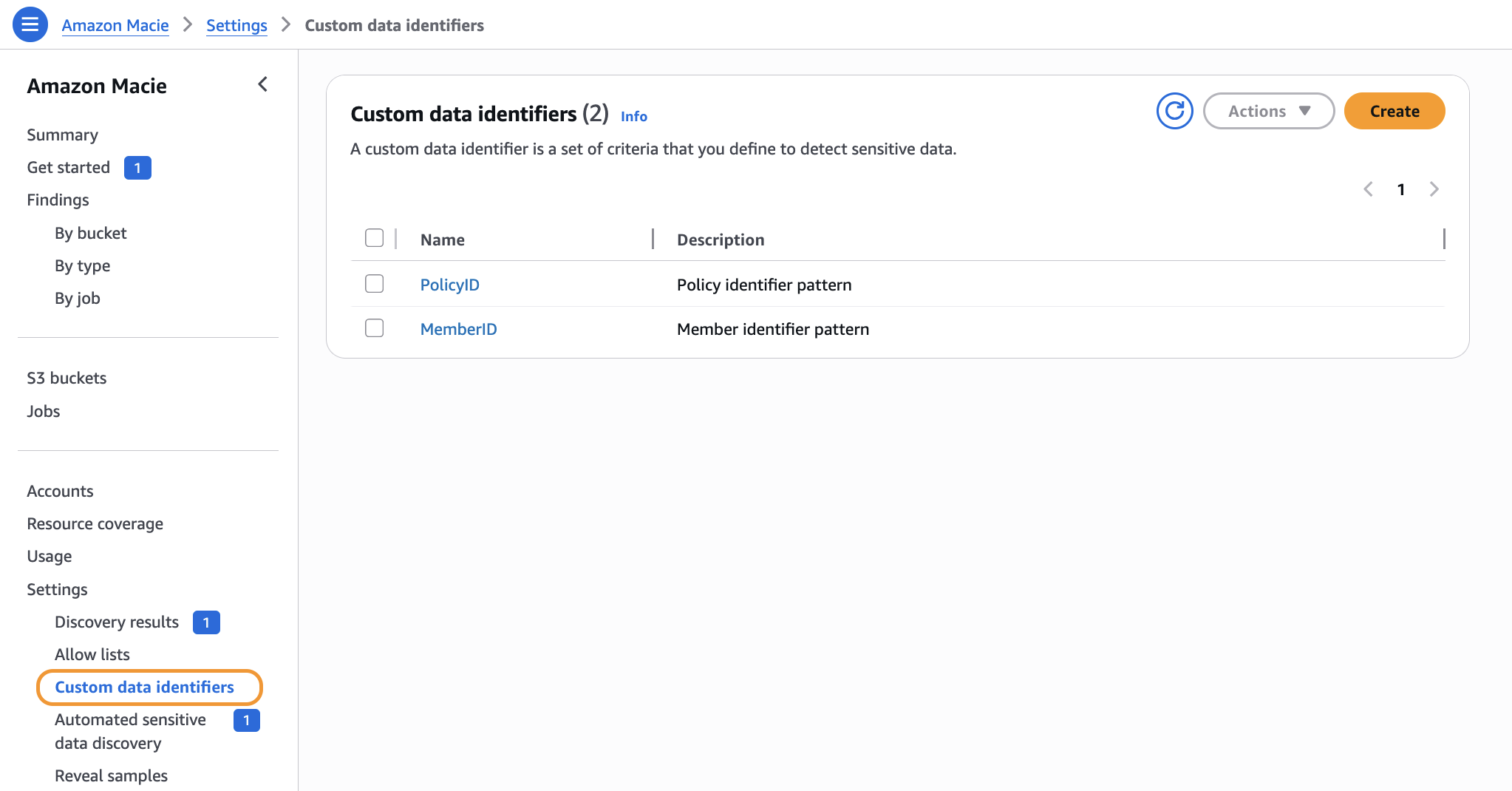
Figure 4 — Custom data identifiers in Macie console
✓ Expected result: Step Functions execution starts within seconds.
The following image shows the test files copied to the S3 bucket:
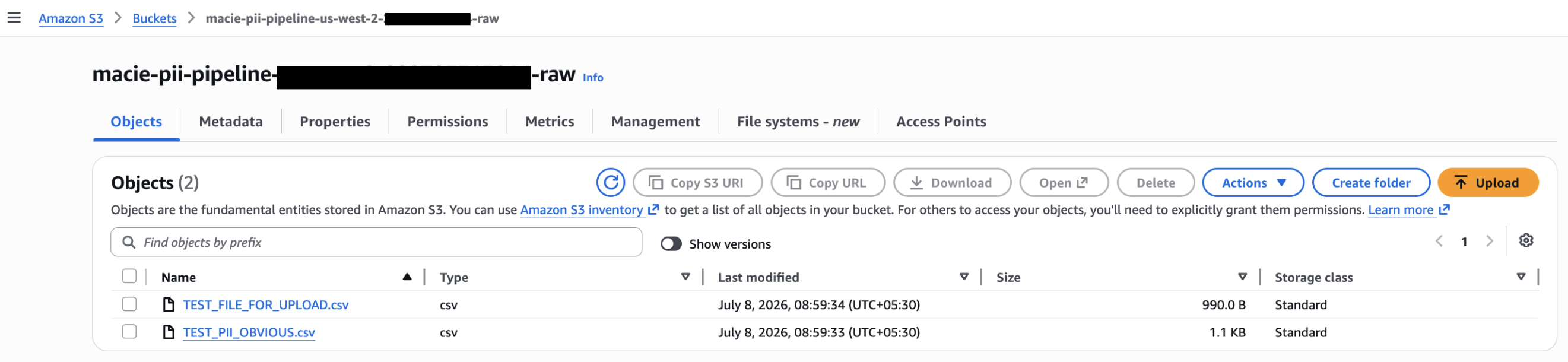
Figure 5 — Test file uploaded to raw bucket
On your Step Functions console > choose state machine > view running operation.
Note: The underlying Macie jobs may take some time to complete. Scan duration varies from job to job. The amount and type of data being scanned, its compression, and the number of data identifiers used all dictate how long a job takes to run. For the example illustrated in this post, jobs took roughly 15–20 minutes to complete. As a best practice, consider enabling S3 AWS CloudTrail data-event logging to audit the PII pipeline.
✓ Expected result: Graph inspector shows active state in blue, completed in green.
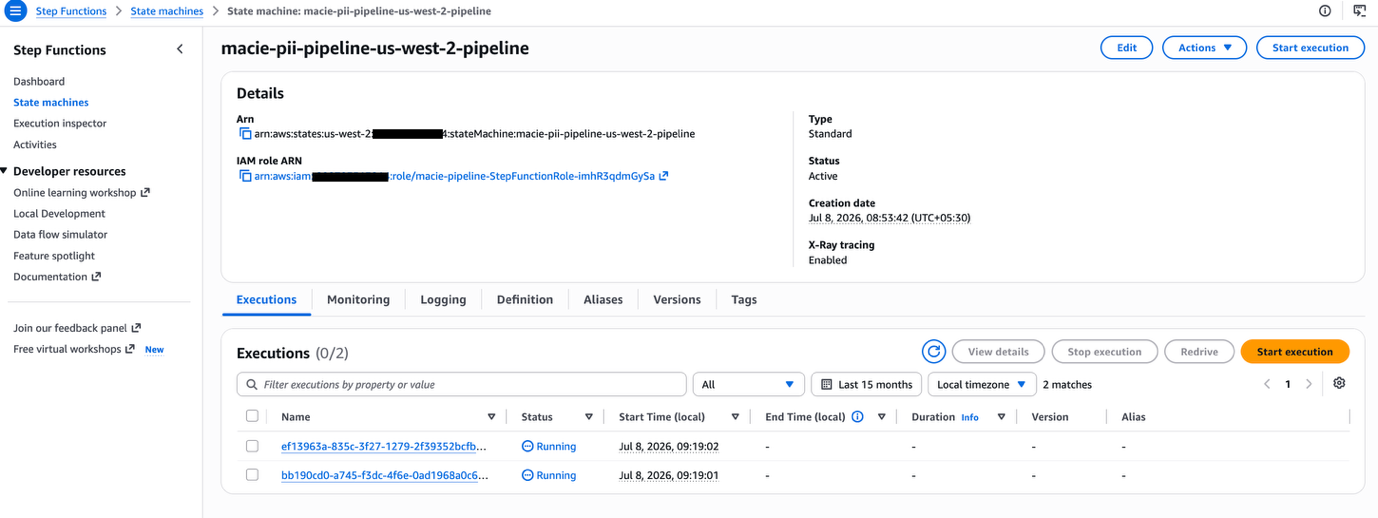
Figure 6 — Step Functions pipeline
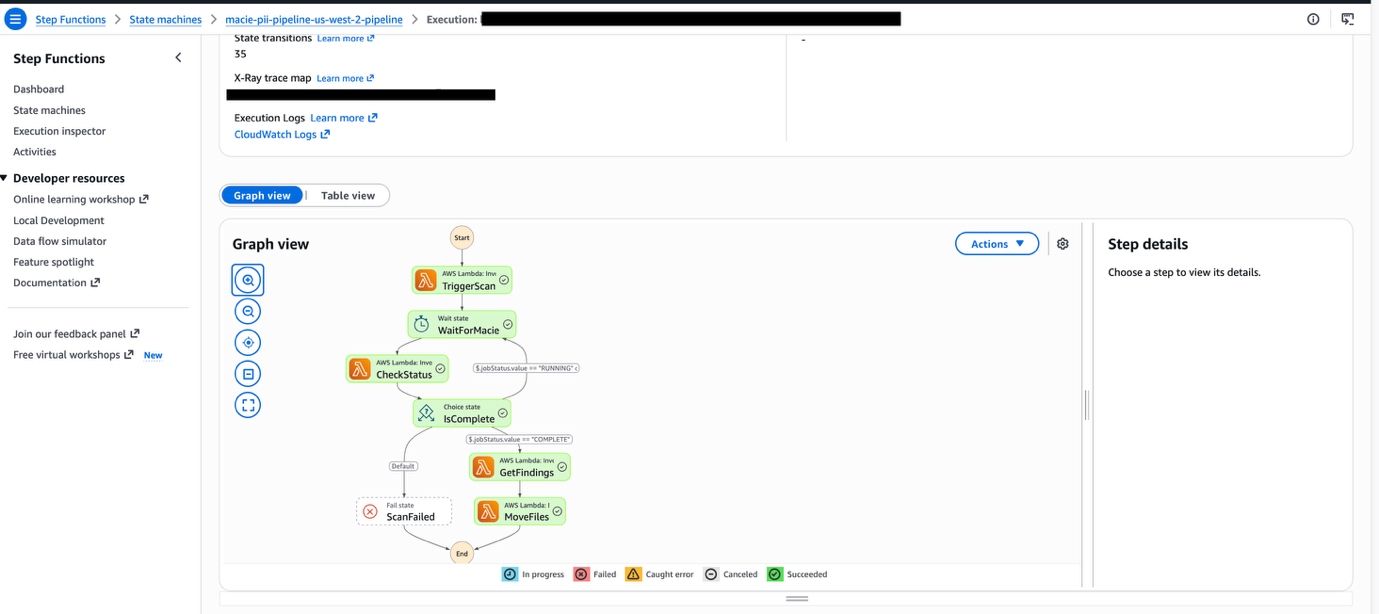
Figure 7 — Step Functions Graph inspector
The Step Functions state machine orchestrates the end-to-end scanning workflow through five sequential states. First, TriggerScan copies newly uploaded objects to a staging bucket and creates a Macie classification job targeting that staged data. Once the job is submitted, the workflow enters WaitForMacie, which pauses execution for 60 seconds to allow the classification job time to process. Next, CheckStatus polls the Macie DescribeClassificationJob API to determine whether the job has completed. When the job finishes, GetFindings retrieves the classification results, generates detailed findings reports, and publishes a notification to an Amazon SNS topic for downstream consumers. Finally, MoveFiles relocates the original object from the raw bucket to a permanent scanned-data location and cleans up the staging copy.
✓ Expected result: Two timestamped files (CSV + JSON) per scan as shown in the following image
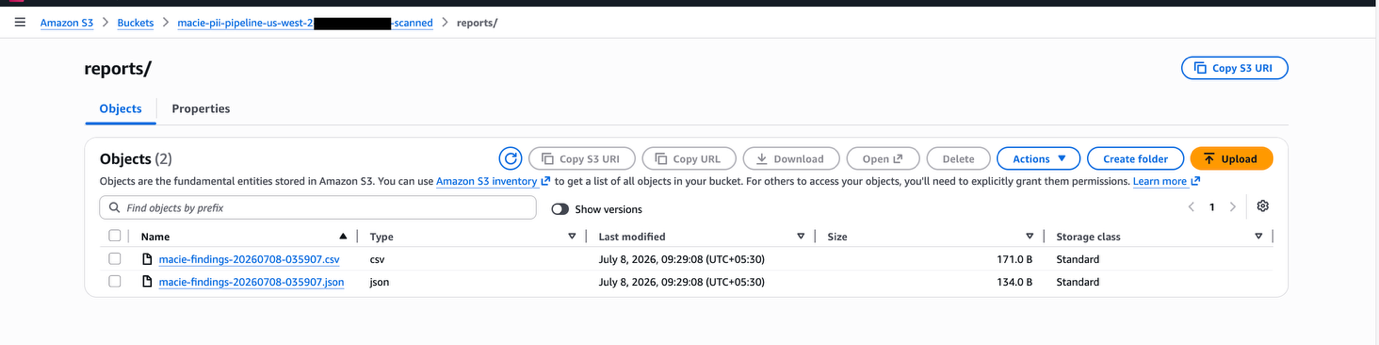
Figure 8 — Reports in scanned bucket
Next, Amazon SNS triggers a notification email to the intended recipients. The following screenshot shows a sample notification.
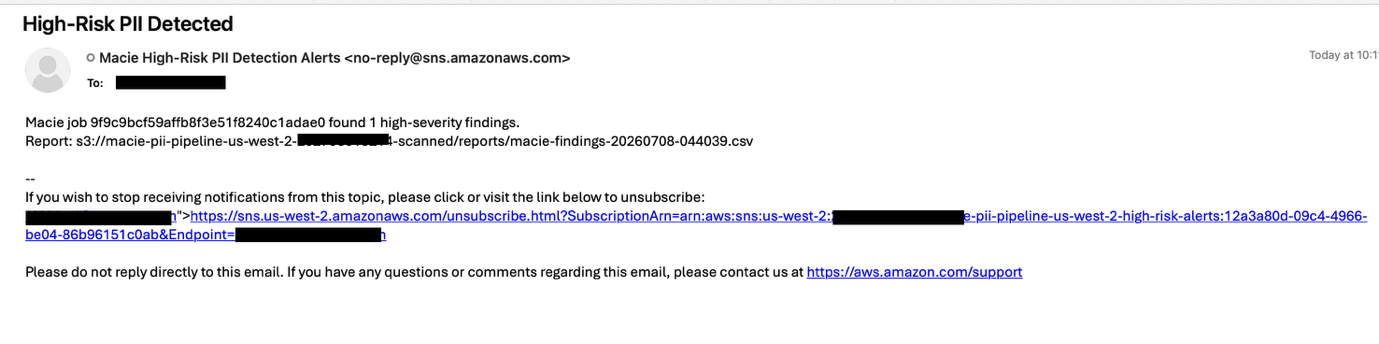
Figure 9 — Amazon SNS notification email
raw bucket → stage bucket → scanned bucket
The following images show the three sample buckets created as part of this walkthrough.
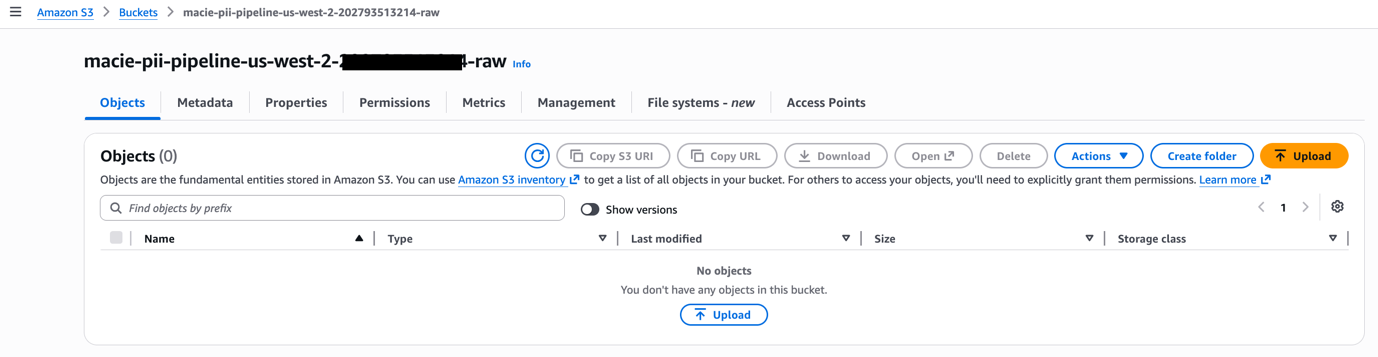
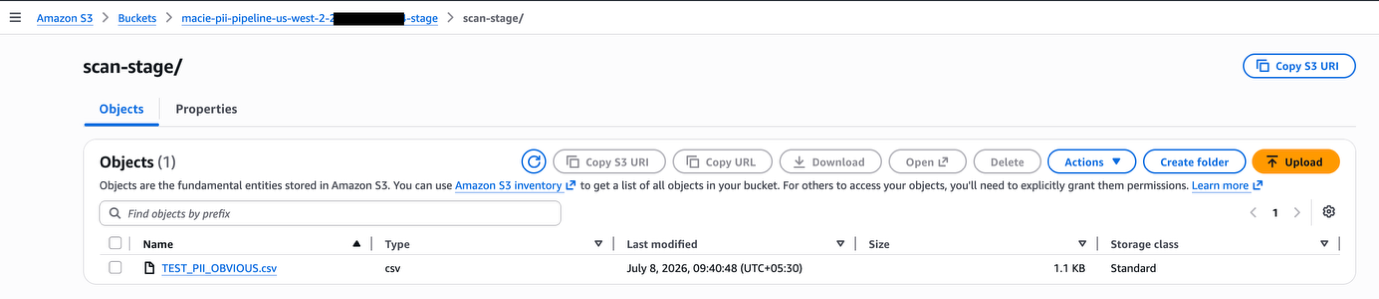
Figure 10 — Three-bucket state after execution
BucketNamePrefix to maintain strict data isolation.KmsKeyArn parameter.To avoid ongoing charges, delete all resources created by this solution:
In this post, we demonstrated building an event-driven pipeline that automatically detects PII in files uploaded to Amazon S3. By combining Macie’s managed classification with custom data identifiers, orchestrated by AWS Step Functions and triggered in real time through Amazon EventBridge, the solution detects both standard and domain-specific sensitive data without manual intervention. The pipeline responds to S3 bucket uploads within seconds, runs each object through the full scan lifecycle, generates timestamped CSV and JSON reports for compliance, and delivers real-time Amazon SNS notifications when high-severity findings are detected.
To deploy this solution in your own environment, clone the GitHub repository and follow the step-by-step deployment instructions in the README. This is a non-prod sample code without the listed hardening measures. You can extend the pipeline by adding custom data identifiers for your organization’s unique data formats, configuring cross-account Amazon EventBridge rules for multi-account environments, or batching objects per Macie job to optimize for high-volume workloads.
To learn more, review the Amazon Macie documentation for additional detection capabilities, explore AWS Step Functions best practices for production error handling, and visit the AWS Security Blog for more data protection patterns.
Post Syndicated from Ed Montgomery original https://www.rapid7.com/blog/post/pt-new-products-services-q2-2026-mdr
If Q1 set the pace for Rapid7’s tools, Q2 accelerated it. This quarter brought a steady stream of product enhancements, platform investments, and customer-driven innovation across Rapid7’s portfolio. Each release was designed with a clear goal in mind: helping security teams reduce complexity while increasing speed, context, and confidence in their day-to-day operations. Here’s a closer look at what launched in Q2.
Bidirectional synchronization and enriched alert context for Microsoft Defender is now generally available for SIEM and MDR customers, enabling security teams to automatically synchronize alert status between Rapid7’s SIEM and the Microsoft Defender console. With added process tree and user identity context, analysts can investigate threats more efficiently while reducing manual effort.
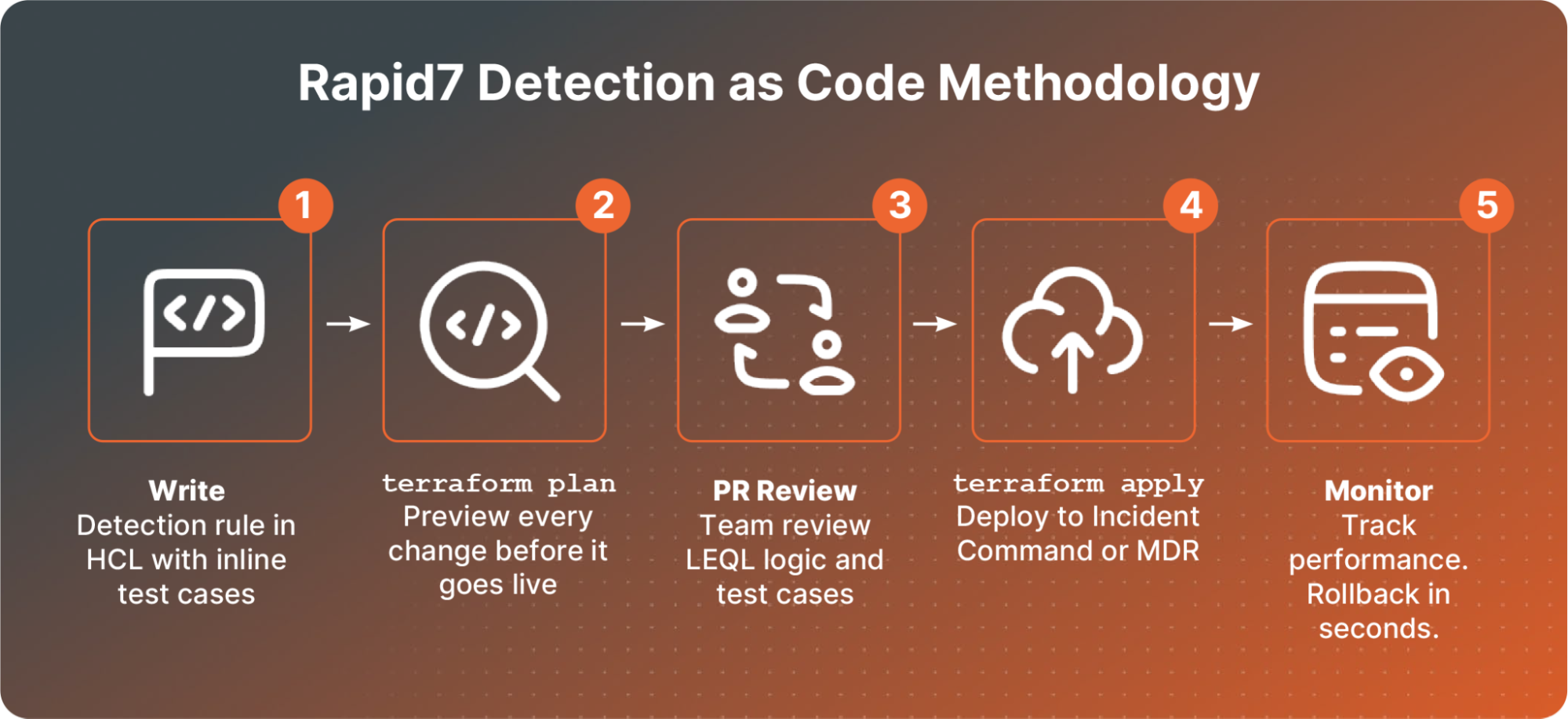
Detection as Code enables security teams to build, test, version, and deploy detections using Terraform and modern engineering workflows. Built-in validation, guardrails, and version control help teams deliver higher-quality alerts, maintain more consistent coverage, and scale detection engineering more effectively.
Ransomware Prevention for Incident Command adds an intent-based layer of protection designed to stop ransomware encryption and endpoint damage before they disrupt operations. Built into the Insight Agent, this capability strengthens ransomware resilience while working alongside existing endpoint security investments, without adding operational complexity.
Across the globe, cybersecurity regulation is shifting away from static compliance checklists and toward ongoing risk management that blends proactive defense with effective detection and response. Rapid7’s platform, which brings exposure management and CTEM together with detection, response, and MDR, is well positioned to help organizations operationalize compliance across mandates such as NIS2, NIST CSF 2.0, DORA, HIPAA, HITRUST, and GovRAMP. To support that effort, Rapid7 has launched an updated library of dedicated compliance solution pages that map platform capabilities to the requirements that matter most across industries and regions. The first set of pages is live now, with more to follow in the coming weeks.
We improved Remediation Hub to help teams turn prioritized exposures into more actionable remediation progress. Updates to the Top Remediations Report add asset-level context, including operating system, IP address, cloud provider, tags, endpoint protection, and patch management details, so teams can better understand what needs to be fixed and who needs to act.
With clearer patch and endpoint coverage signals, reboot status, customizable filters, exportable reports, and scheduled email delivery, teams can spend less time assembling manual updates and more time tracking the remediation work that reduces risk. Read the full blog to learn more about how Exposure Command helps teams move from prioritized exposures to remediation progress.
Rapid7 is also making application security testing faster and more focused with AI vulnerability pre-triaging for InsightAppSec. Available now for AppSec customers in supported regions, the capability uses AI to automatically remove false positives during the scan process, helping teams spend less time manually reviewing findings and more time remediating actual risk.
Initial coverage started with BlindSQL, and the latest engine release adds AI validation for BlindNoSQL findings, including content-based and timing-based detections. The result is a cleaner, more confident view of application risk, so security teams can focus on high-impact vulnerabilities and accelerate remediation with less manual effort.
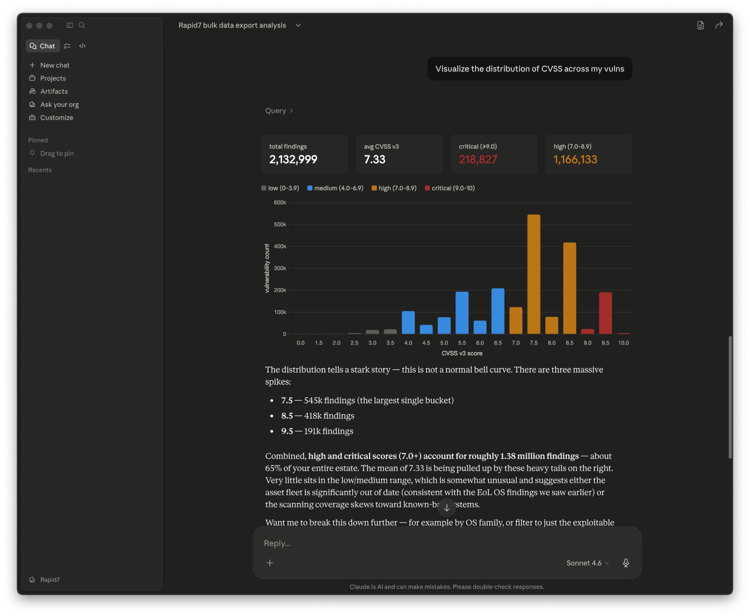
We are delighted to announce the introduction of a free, open-source MCP Server and Agent Skill for Bulk Export. Bulk export is a highly efficient way to access all your Rapid7 vulnerability and exposure data to AI assistants and custom AI workflows. Built as an open-source bridge, it helps customers bring their Rapid7 data into the tools and experiences that work best for their teams. Check out our blog for more detail.
Surface Command also made exposure reporting easier with filter-based dashboard widgets. Teams can now turn saved asset and identity filters into live dashboards without writing Cypher queries, making it faster to track high-risk internet-facing assets, identity-driven exposure hotspots, unmanaged cloud infrastructure, and business-unit risk.
For continuous threat exposure management programs, this helps teams move from one-off reporting to repeatable, always-on views of exposure risk and remediation progress. Read this blog to learn more.
Rapid7 introduced Cyber GRC to select customers in Q2, giving teams an early look at a new way to connect security, risk, compliance, and third-party risk management in one program. Available to both Exposure Management and Detection and Response customers, Cyber GRC brings governance and compliance workflows closer to the security data teams already use every day.
Cyber GRC will be broadly available in late July. It helps organizations move toward continuous compliance by mapping controls to real environment telemetry, automating evidence collection, and prioritizing risk with live attack surface context. That means teams can spend less time chasing audit artifacts, screenshots, and vendor risk details, and more time understanding which controls, assets, third parties, and risks need attention now.
The Rapid7 Quarterly Threat Landscape Report examines the key trends shaping today’s threat landscape, drawing on MDR incident response, vulnerability intelligence, ransomware monitoring, and dark web telemetry. Q1 2026 data highlights the growing dominance of vulnerability exploitation as an initial access vector, the rise of zero-click vulnerabilities, evolving ransomware operations, and the accelerating pace at which attackers operationalize newly disclosed vulnerabilities. Read the report to explore all key findings and takeaways.
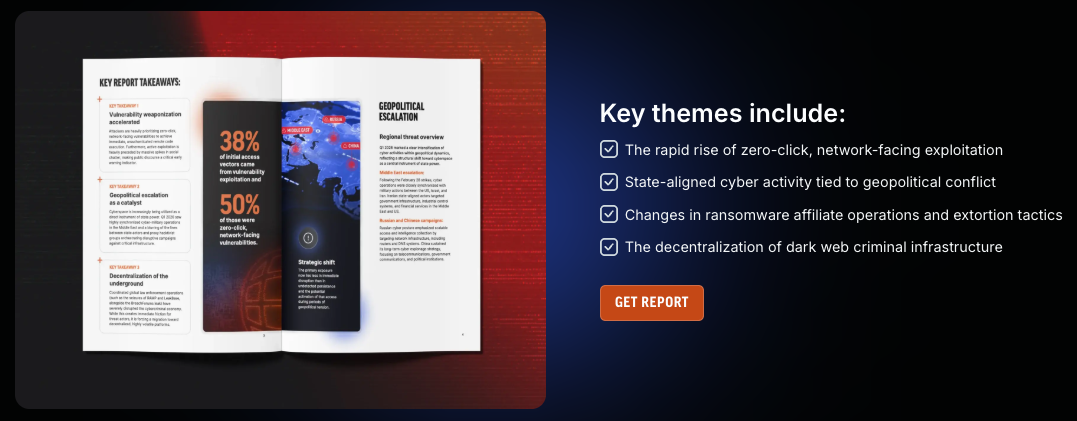
Rapid7 researchers explored emerging trends shaping the threat landscape, including the growing commercialization of criminal AI-as-a-Service and the evolving tradecraft of advanced threat actors. From the underground adoption of AI tools for fraud and social engineering to an in-depth analysis of the Dropping Elephant malware campaign, these reports provide actionable intelligence on how attackers are adapting their techniques and what defenders can do to stay ahead.
This quarter’s Emergent Threat Response (ETR) coverage highlights a sustained wave of high-impact vulnerabilities affecting widely deployed enterprise technologies, including Oracle PeopleSoft, Palo Alto Networks PAN-OS, Check Point VPN, Ivanti Sentry, cPanel/WHM, and Nginx UI. For each of these CVEs, Rapid7 tracked active exploitation and rapidly evolving attacker activity to provide timely guidance to help defenders assess risk and respond quickly. See all the details, and our latest ETR coverage, here.
From strengthening detection and response to advancing exposure management, expanding governance capabilities, and delivering actionable threat intelligence, Q2 demonstrated Rapid7’s continued focus on helping security teams do more with less complexity. Every enhancement this quarter was designed to reduce manual effort, surface the context that matters, and help organizations make faster, more confident security decisions. We’re carrying that momentum into the rest of the year, so stay tuned to our blog and releases as we continue building the security operations platform that helps defenders stay ahead of what’s next.
Post Syndicated from The History Guy: History Deserves to Be Remembered original https://www.youtube.com/watch?v=uOiMTXyg8Jg
Post Syndicated from Bruce Schneier original https://www.schneier.com/blog/archives/2026/07/first-person-identity-theft-story.html
Harrowing story of an identity theft victim.
Yes, the person made a mistake—they gave the scammer a two-factor authentication code that allowed the scammer to take over their email address. But the real story here is how, for many of us, the security of most of our accounts hangs on the security of our email accounts.
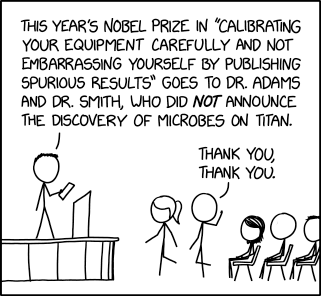
Post Syndicated from xkcd.com original https://xkcd.com/3275/