How Orpheus automatically routes around bad Internet weather

Post Syndicated from Chris Draper original http://blog.cloudflare.com/orpheus-saves-internet-requests-while-maintaining-speed/

How Orpheus automatically routes around bad Internet weather

How Orpheus automatically routes around bad Internet weather

Cloudflare’s mission is to help build a better Internet for everyone, and Orpheus plays an important role in realizing this mission. Orpheus identifies Internet connectivity outages beyond Cloudflare’s network in real time then leverages the scale and speed of Cloudflare’s network to find alternative paths around those outages. This ensures that everyone can reach a Cloudflare customer’s origin server no matter what is happening on the Internet. The end result is powerful: Cloudflare  protects customers from Internet incidents outside our network while maintaining the average latency and speed of our customer’s traffic.

A little less than two years ago, Cloudflare made Orpheus automatically available to all customers for free. Since then, Orpheus has saved 132 billion Internet requests from failing by intelligently routing them around connectivity outages, prevented 50+ Internet incidents from impacting our customers, and made our customer’s origins more reachable to everyone on the Internet. Let’s dive into how Orpheus accomplished these feats over the last year.

Increasing origin reachability

One service that Cloudflare offers is a reverse proxy that receives Internet requests from end users then applies any number of services like DDoS protection, caching, load balancing, and / or encryption. If the response to an end user’s request isn’t cached, Cloudflare routes the request to our customer’s origin servers. To be successful, end users need to be able to connect to Cloudflare, and Cloudflare needs to connect to our customer’s origin servers. With end users and customer origins around the world, and ~20% of websites using our network, this task is a tall order!

Orpheus provides origin reachability benefits to everyone using Cloudflare by identifying invalid paths on the Internet in real time, then routing traffic via alternative paths that are working as expected. This ensures Cloudflare can reach an origin no matter what problems are happening on the Internet on any given day.

Reducing 522 errors

At some point while browsing the Internet, you may have run into this 522 error.

How Orpheus automatically routes around bad Internet weather

This error indicates that you, the end user, was unable to access content on a Cloudflare customer’s origin server because Cloudflare couldn’t connect to the origin. Sometimes, this error occurs because the origin is offline for everyone, and ultimately the origin owner needs to fix the problem. Other times, this error can occur even when the origin server is up and able to receive traffic. In this case, some people can reach content on the origin server, but other people using a different Internet routing path cannot because of connectivity issues across the Internet.

Some days, a specific network may have excellent connectivity, while other days that network may be congested or have paths that are impassable altogether. The Internet is a massive and unpredictable network of networks, and the “weather” of the Internet changes every day.

When you see this error, Cloudflare attempted to connect to an origin on behalf of the end user, but did not receive a response back from the origin. Either the connection request never reached the origin, or the origin’s reply was dropped on the way back to Cloudflare. In the case of 522 errors, Cloudflare and the origin server could both be working as expected, but packets are dropped on the network path between them.

These 522 errors can cause a lot of frustration, and Orpheus was built to reduce them. The goal of Orpheus is to ensure that if at least one Cloudflare data center can connect to an origin, then anyone using Cloudflare’s network can also reach that origin, even if there are Internet connectivity problems happening outside of Cloudflare’s network.

Improving origin reachability for an example customer using Cloudflare

Let’s look at a concrete example of how Orpheus makes the Internet better for everyone by saving an origin request that would have otherwise failed. Imagine that you’re running an e-commerce website that sells dog toys online, and your store is hosted by an origin server in Chicago.

Imagine there are two different customers visiting your website at the same time: the first customer lives in Seattle, and the second customer lives in Tampa. The customer in Seattle reaches your origin just fine, but the customer in Tampa tries to connect to your origin and experiences a problem. It turns out that a construction crew accidentally damaged an Internet fiber line in Tampa, and Tampa is having connectivity issues with Chicago. As a result, any customer in Tampa receives a 522 error when they try to buy your dog toys online.

This is where Orpheus comes in to save the day. Orpheus detects that users in Tampa are receiving 522 errors when connecting to Chicago. Its database shows there is another route from Tampa through Boston and then to Chicago that is valid. As a result, Orpheus saves the end user’s request by rerouting it through Boston and taking an alternative path. Now, everyone in Tampa can still buy dog toys from your website hosted in Chicago, even though a fiber line was damaged unexpectedly.

How Orpheus automatically routes around bad Internet weather

How does Orpheus save requests that would otherwise fail via only BGP?

BGP (Border Gateway Protocol) is like the postal service of the Internet. It’s the protocol that makes the Internet work by enabling data routing. When someone requests data over the Internet, BGP is responsible for looking at all the available paths a request could take, then selecting a route.

BGP is designed to route around network failures by finding alternative paths to the destination IP address after the preferred path goes down. Sometimes, BGP does not route around a network failure at all. In this case, Cloudflare still receives BGP advertisements that an origin network is reachable via a particular autonomous system (AS), when actually packets sent through that AS will be dropped. In contrast, Orpheus will test alternate paths via synthetic probes and with real time traffic to ensure it is always using valid routes. Even when working as designed, BGP takes time to converge after a network disruption; Orpheus can react faster, find alternative paths to the origin that route around temporary or persistent errors, and ultimately save more Internet requests.

Additionally, BGP routes can be vulnerable to hijacking. If a BGP route is hijacked, Orpheus can prevent Internet requests from being dropped by invalid BGP routes by frequently testing all routes and examining the results to ensure they’re working as expected. In any of these cases, Orpheus routes around these BGP issues by taking advantage of the scale of Cloudflare’s global network which directly connects to 11,000 networks, features data centers across 275 cities, and has 172 Tbps of network capacity.

Let’s give an example of how Orpheus can save requests that would otherwise fail if only using BGP. Imagine an end user in Mumbai sends a request to a Cloudflare customer with an origin server in New York. For any request that misses Cloudflare’s cache, Cloudflare forwards the request from Mumbai to the website’s origin server in New York. Now imagine something happens, and the origin is no longer reachable from India: maybe a fiber optic cable was cut in Egypt, a different network advertised a BGP route it shouldn’t have, or an intermediary AS between Cloudflare and the origin was misconfigured that day.

In any of these scenarios, Orpheus can leverage the scale of Cloudflare’s global network to reach the origin in New York via an alternate path. While the direct path from Mumbai to New York may be unreachable, an alternate path from Mumbai, through London, then to New York may be available. This alternate path is valid because it uses different physical Internet connections that are unaffected by the issues with directly connecting from Mumbai to New York. In this case, Orpheus selects the alternate route through London and saves a request that would otherwise fail via the direct connection.

How Orpheus automatically routes around bad Internet weather

How Orpheus was built by reusing components of Argo Smart Routing

Back in 2017, Cloudflare released Argo Smart Routing which decreases latency by an average of 30%, improves security, and increases reliability. To help Cloudflare achieve its goal of helping build a better Internet for everyone, we decided to take the features that offered “increased reliability” in Argo Smart Routing and make them available to every Cloudflare user for free with Orpheus.

Argo Smart Routing’s architecture has two primary components: the data plane and the control plane. The control plane is responsible for computing the fastest routes between two locations and identifying potential failover paths in case the fastest route is down. The data plane is responsible for sending requests via the routes defined by the control plane, or detecting in real-time when a route is down and sending a request via a failover path as needed.

Orpheus was born with a simple technical idea: Cloudflare could deploy an alternate version of Argo’s control plane where the routing table only includes failover paths. Today, this alternate control plane makes up the core of Orpheus. If a request that travels through Cloudflare’s network is unable to connect to the origin via a preferred path, then Orpheus’s data plane selects a failover path from the routing table in its control plane. Orpheus prioritizes using failover paths that are more reliable to increase the likelihood a request uses the failover route and is successful.

Orpeus also takes advantage of a complex Internet monitoring system that we had already built for Argo Smart Routing. This system is constantly testing the health of many internet routing paths between different Cloudflare data centers and a customer’s origin by periodically opening then closing a TCP connection. This is called a synthetic probe, and the results are used for Argo Smart Routing, Orpheus, and even in other Cloudflare products. Cloudflare directly connects to 11,000 networks, and typically there are many different Internet routing paths that reach the same origin. Argo and Orpheus maintain a database of the results of all TCP connections that opened successfully or failed with their corresponding routing paths.

Scaling the Orpheus data plane to save requests for everyone

Cloudflare proxies millions of requests to customers' origins every second, and we had to make some improvements to Orpheus before it was ready to save users’ requests at scale. In particular, Cloudflare designed Orpheus to only process and reroute requests that would otherwise fail. In order to identify these requests, we added an error cache to Cloudflare’s layer 7 HTTP stack.

When you send an Internet request (TCP SYN) through Cloudflare to our customer’s origin, and Cloudflare doesn’t receive a response (TCP SYN/ACK), the end user receives a 522 error (learn more about TCP flags). Orpheus creates an entry in the error cache for each unique combination of a 522 error, origin address, and a specific route to that origin. The next time a request is sent to the same origin address via the same route, Orpheus will check the error cache for relevant entries. If there is a hit in the error cache, then Orpheus’s data plane will select an alternative route to prevent subsequent requests from failing.

To keep entries in the error cache updated, Orpheus will use live traffic to retry routes that previously failed to check their status. Routes in the error cache are periodically retried with a bounded exponential backoff. Unavailable routes are tested every 5th, 25th, 125th, 625th, and 3,125th request (the maximum bound). If the test request that’s sent down the original path fails, Orpheus saves the test request, sends it via the established alternate path, and updates the backoff counter. If a test request is successful, then the failed route is removed from the error cache, and normal routing operations are restored. Additionally, the error cache has an expiry period of 10 minutes. This prevents the cache from storing entries on failed routes that rarely receive additional requests.

The error cache has notable a trade-off; one direct-to-origin request must fail before Orpheus engages and saves subsequent requests. Clearly this isn’t ideal, and the Argo / Orpheus engineering team is hard at work improving Orpheus so it can prevent any request from failing.

Making Orpheus faster and more responsive

Orpheus does a great job of identifying congested or unreachable paths on the Internet, and re-routing requests that would have otherwise failed. However, there is always room for improvement, and Cloudflare has been hard at work to make Orpheus even better.

Since its release, Orpheus was built to select failover paths with the highest predicted reliability when it saves a request to an origin. This was an excellent first step, but sometimes a request that was re-routed by Orpheus would take an inefficient path that had better origin reachability but also increased latency. With recent improvements, the Orpheus routing algorithm balances both latency and origin reachability when selecting a new route for a request. If an end user makes a request to an origin, and that request is re-routed by Orpheus, it’s nearly as fast as any other request on Cloudflare’s network.

In addition to decreasing the latency of Orpheus requests, we’re working to make Orpheus more responsive to connectivity changes across the Internet. Today, Orpheus leverages synthetic probes to test whether Internet routes are reachable or unreachable. In the near future, Orpheus will also leverage real-time traffic data to more quickly identify Internet routes that are unreachable and reachable. This will enable Orpheus to re-route traffic around connectivity problems on the Internet within minutes rather than hours.

Expanding Orpheus to save WebSockets requests

Previously, Orpheus focused on saving HTTP and TCP Internet requests. Cloudflare has seen amazing benefits to origin reliability and Internet stability for these types of requests, and we’ve been hard at work to expand Orpheus to also save WebSocket requests from failing.

WebSockets is a common Internet protocol that prioritizes sending real time data between a client and server by maintaining an open connection between that client and server. Imagine that you (the client) have sent a request to see a website’s home page (which is generated by the server). When using HTTP, the connection between the client and server is established by the client, and the connection is closed once the request is completed. That means that if you send three requests to a website, three different connections are opened and closed for each request.

In contrast, when using the WebSockets protocol, one connection is established between the client and server. All requests moving in between the client and server are sent through this connection until the connection is terminated. In this case, you could send 10 requests to a website, and all of those requests would travel over the same connection. Due to these differences in protocol, Cloudflare had to adjust to Orpheus to make it capable of also saving WebSockets requests. Now all Cloudflare customers that use WebSockets in their Internet applications can expect the same level of stability and resiliency across their HTTP, TCP, and WebSockets traffic.

P.S. If you’re interested in working on Orpheus, drop us a line!

Orpheus and Argo Smart Routing

Orpheus runs on the same technology that powers Cloudflare’s Argo Smart Routing product. While Orpheus is designed to maximize origin reachability, Argo Smart Routing leverages network latency data to accelerate traffic on Cloudflare’s network and find the fastest route between an end user and a customer’s origin. On average, customers using Argo Smart Routing see that their web assets perform 30% faster. Together, Orpheus and Argo Smart Routing work to improve the end user experience for websites and contribute to Cloudflare’s goal of helping build a better Internet.

If you’re a Cloudflare customer, you are automatically using Orpheus behind the scenes and improving your website’s availability. If you want to make the web faster for your users, you can log in to the Cloudflare dashboard and add Argo Smart Routing to your contract or plan today.


Smart Hints make code-free performance simple

Post Syndicated from Alex Krivit original http://blog.cloudflare.com/smart-hints/

Smart Hints make code-free performance simple

This post is also available in 简体中文, 日本語, Deutsch, Français and Español.

Smart Hints make code-free performance simple

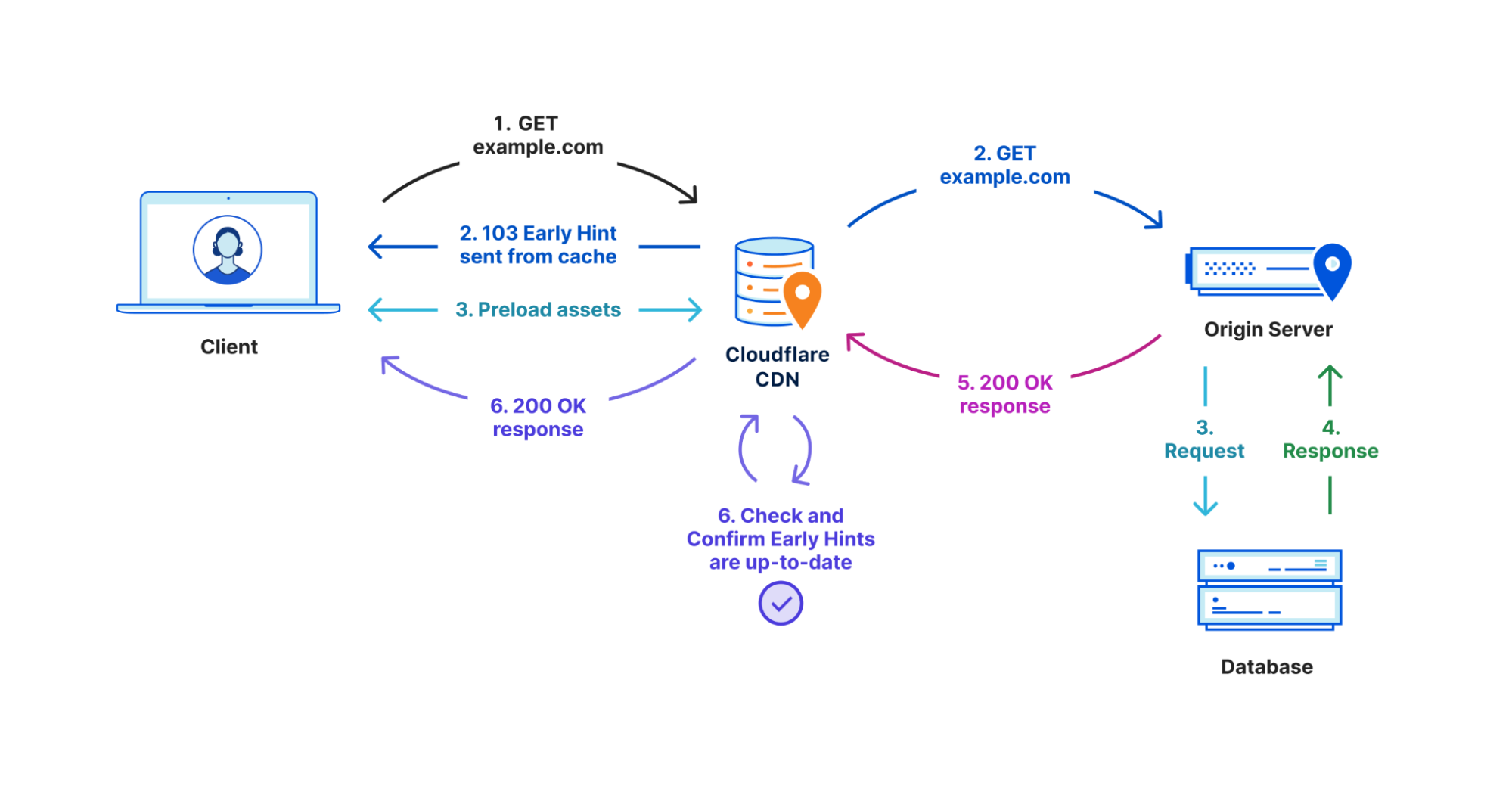
Today, we’re excited to announce how we’re making Early Hints and Fetch Priorities automatic using the power of Cloudflare’s network. Almost a year ago we launched Early Hints. Early Hints are a method that allows web servers to asynchronously send instructions to the browser whilst the web server is getting the full response ready. This gives proactive suggestions to the browser on how to load the webpage faster for the visitor rather than idly waiting to receive the full webpage response.

In initial lab experiments, we observed page load improvements exceeding 30%. Since then, we have sent about two-trillion hints on behalf of over 150,000 websites using the product.

In order to effectively use Early Hints on a website, HTTP link headers or HTML link elements must be configured to specify which assets should be preloaded or which third-party servers should be preconnected. Making these decisions requires understanding how your website interacts with browsers, and identifying render-blocking assets to hint on without implementing prioritization strategies that saturate network bandwidth on non-critical assets (i.e. you can’t just Early Hint everything and expect good results).

For users who possess this knowledge and can configure Early Hints at the origin (or via a Worker), it works seamlessly. However, for users who lack access to their origin server (e.g. SaaS platforms), or are unsure about the optimal assets to preload/prioritize, or simply prefer to focus on building their own application, the question arises: "As an intermediary server, shouldn't Cloudflare know the best way to prioritize my website for performance?"

The answer is yes, which is why we’re excited to start talking about how Smart Hints will determine the best priority for web assets without developers needing to configure anything. If you’re interested in helping us beta test this feature, you can sign up here and we will contact you with further instructions on helping us test Smart Hints later this year.

Background

When you visit a webpage, your browser is actually requesting numerous individual resources from the server. These resources include everything from visible elements like images, text, and videos, to the behind-the-scenes logic (JavaScript, etc.) that powers the website analytics, functionality, and more. The order in which these resources are loaded by the browser plays a crucial role in determining how quickly users can view and interact with the page.

Smart Hints make code-free performance simple

When your browser receives a response from the server, it parses the HTML response sequentially, from start to finish.When the HTML response arrives in the browser, it is split into two parts: the <head> and the <body>.

The <head> section appears at the beginning of the HTML response and contains essential elements like stylesheets, scripts, and other instructions for the browser. Stylesheets define how the page should look, while scripts provide the necessary logic for interactive features and functionality.1

While stylesheets are important to load quickly as browsers will wait for them to know how to display content to the visitor, scripts are interesting because they can behave differently based on instructions provided to the browser. If a script lacks specific instructions (defer/async/inline for example), it can become a "blocking" resource. When the browser encounters a blocking script resource, it pauses processing the webpage and waits until the script is fully loaded and completely executed. This ensures that the script's functionality is available for the visitor to use. However, this blocking behavior can delay the display of content to the user, as the browser needs to wait for the script to finish before proceeding further.

Until the browser reaches the <body> section of the document, there is nothing visible to the visitor. That's why it's crucial to optimize the loading process of the <head> section as much as possible. By minimizing the time it takes for stylesheets and blocking scripts to load, the browser can start rendering the page content sooner, allowing visitors to see and interact with the webpage faster.

Achieving optimal web performance can be a complex challenge. While browsers are generally in charge of determining the order of loading different resources it needs to build a page, there have been a variety of tools that have been released recently (Early Hints, Fetch Priority, Lazy-Loading, H2 Priorities) to help developers specify unique resource priority for browsers to improve website load performance. Although these tools and methods for specifying resource priority can be effective, they require implementation and testing to make sure they are implemented correctly.

Prioritization Tools

Two methods that have gained a lot of popularity for improving website performance have been Early Hints and Fetch Priorities. These tools help give browsers information about how it should load resources in the correct order to improve performance of critical resources.

Early Hints

Early Hints allow the server to provide some information to the client before the final response is available.

When a client sends a request to a server, the server can respond with an "early hint" to provide a clue about the final response. This early hint is a separate response that includes headers related to the final response, such as important static objects that can be fetched early, and links to where to get related resources.

Smart Hints make code-free performance simple

The purpose of Early Hints is to allow the client to start processing the received information while waiting for the final response. The client can use the Early Hint to initiate early resource preloading, and preconnecting to servers that will have information for the final response, which can lead to faster page load times.

Fetch Priority

Another powerful tool in optimizing resource loading is Fetch Priorities, previously known as Priority Hints.

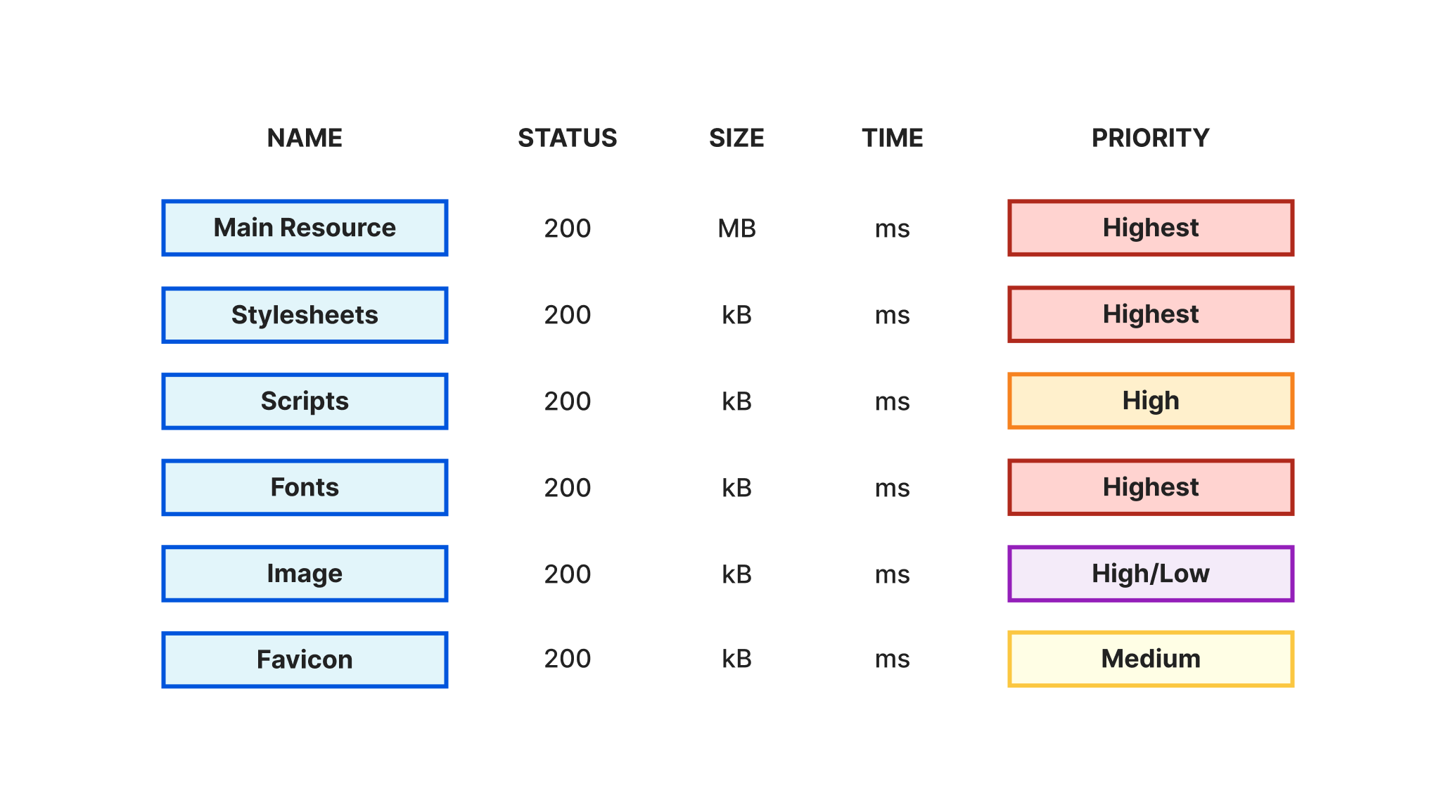
When analyzing a webpage, web browsers often prioritize the fetching of resources such as scripts and stylesheets to optimize the download sequence and efficiently use bandwidth. The priorities assigned to these resources are determined by browsers based on factors like resource type, placement within the webpage, and its location within the HTML response. For instance, images within the visible area for the visitor should be given higher priority, whereas essential scripts loaded early in the <head> section may be assigned a very high priority. Although browsers generally handle priority assignment effectively, it's worth noting that they may not always be optimal for every scenario.

Smart Hints make code-free performance simple

By leveraging Fetch Priorities, developers gain additional control over resource loading and assign higher/lower priorities to different resources on their webpage, which can help optimize the overall performance of web pages.

While Early Hints and Fetch Priorities are all incredibly useful for optimizing web page performance, they often require access to the HTML resources in order to change their priorities and knowledge about how to best prioritize against other resources. While these tools working together allow for increasingly complex performance strategies to be implemented by developers, they also require a lot of testing, configuration, and management as web pages change over time. Smart Hints will make using these tools easier to manage by using our RUM data beacons and heuristics to better implement prioritization strategies without developers needing to lift a finger.

How are we going to prioritize assets?

Cloudflare's Smart Hints will leverage the capabilities of Early Hints and Fetch Priority features to optimize resource delivery by using our vast RUM data for websites across the Internet; we’re going to optimize resource prioritization on the fly. Smart Hints will dynamically determine the appropriate hints and priorities based on a specific response on the fly.

But how?

Cloudflare collects performance data in two ways – Synthetic testing and Real User Measurements (RUM). Synthetic testing collects performance data by loading a web page in an automated browser in a controlled environment. RUM also collects performance data, but from real users navigating to the web page on real browsers. RUM works by injecting a small piece of JavaScript, or beacon, into the web page. Cloudflare collects vast amounts of RUM data across thousands of sites.

From these two performance data sources, Cloudflare can intelligently analyze the loading bottlenecks of web pages. If the loading bottlenecks are caused by the download of render-blocking resources, Cloudflare can generate Smart Hints for the browser to prioritize the download of these resources.

As we roll out Smart Hints, we will explore the use of learning models to look for patterns that could be turned into heuristics. These heuristics could then be leveraged to improve performance for similar sites that do not use RUM or synthetic testing.

With Smart Hints, Cloudflare can revolutionize the way websites and applications are delivered, making the browsing experience faster, smoother, and more delightful. By inferring the right priority for a given client, Cloudflare will help customers find the best priorities for their websites’ performance while minimizing the time it takes to optimize an ever-changing webpage.

How can I help Cloudflare do this?

Before we roll this out more broadly, we will be performing large-scale beta tests of our systems to ensure that we’re making the best performance decisions for all kinds of content.

Over the next few months we’ll be building a beta cohort and working with them to ensure everyone has a great experience with Smart Hints. If you’d like to help us in this endeavor, please sign up to be part of the closed beta here (located in the Speed Tab of the dashboard) and we will get in touch when we’re ready for you to enable it and how to provide feedback.

Conclusion

We’re looking forward to working with our community to build and optimize this no-code/configuration experience to bring massive improvements to page load to everyone.

1Yes, scripts and stylesheets can also be placed within the <body> section, but their primary location is in the <head>.

Cloudflare’s global network grows to 300 cities and ever closer to end users with connections to 12,000 networks

Post Syndicated from Damian Matacz original http://blog.cloudflare.com/cloudflare-connected-in-over-300-cities/

Cloudflare's global network grows to 300 cities and ever closer to end users with connections to 12,000 networks

Cloudflare's global network grows to 300 cities and ever closer to end users with connections to 12,000 networks

We make no secret about how passionate we are about building a world-class global network to deliver the best possible experience for our customers. This means an unwavering and continual dedication to always improving the breadth (number of cities) and depth (number of interconnects) of our network.

This is why we are pleased to announce that Cloudflare is now connected to over 12,000 Internet networks in over 300 cities around the world!

The Cloudflare global network runs every service in every data center so your users have a consistent experience everywhere—whether you are in Reykjavík, Guam or in the vicinity of any of the 300 cities where Cloudflare lives. This means all customer traffic is processed at the data center closest to its source, with no backhauling or performance tradeoffs.

Having Cloudflare’s network present in hundreds of cities globally is critical to providing new and more convenient ways to serve our customers and their customers. However, the breadth of our infrastructure network provides other critical purposes. Let’s take a closer look at the reasons we build and the real world impact we’ve seen to customer experience:

Reduce latency

Our network allows us to sit approximately 50 ms from 95% of the Internet-connected population globally. Nevertheless, we are constantly reviewing network performance metrics and working with local regional Internet service providers to ensure we focus on growing underserved markets where we can add value and improve performance. So far, in 2023 we’ve already added 12 new cities to bring our network to over 300 cities spanning 122 unique countries!

City
Albuquerque, New Mexico, US
Austin, Texas, US
Bangor, Maine, US
Campos dos Goytacazes, Brazil
Fukuoka, Japan
Kingston, Jamaica
Kinshasa, Democratic Republic of the Congo
Lyon, France
Oran, Algeria
São José dos Campos, Brazil
Stuttgart, Germany
Vitoria, Brazil

In May, we activated a new data center in Campos dos Goytacazes, Brazil, where we interconnected with a regional network provider, serving 100+ local ISPs. While it's not too far from Rio de Janeiro (270km) it still cut our 50th and 75th percentile latency measured from the TCP handshake between Cloudflare's servers and the user's device in half and provided a noticeable performance improvement!

Cloudflare's global network grows to 300 cities and ever closer to end users with connections to 12,000 networks

Improve interconnections

A larger number of local interconnections facilitates direct connections between network providers, content delivery networks, and regional Internet Service Providers. These interconnections enable faster and more efficient data exchange, content delivery, and collaboration between networks.

Currently there are approximately 74,0001 AS numbers routed globally. An Autonomous System (AS) number is a unique number allocated per ISP, enterprise, cloud, or similar network that maintains Internet routing capabilities using BGP. Of these approximate 74,000 ASNs, 43,0002 of them are stub ASNs, or only connected to one other network. These are often enterprise, or internal use ASNs, that only connect to their own ISP or internal network, but not with other networks.

It’s mind blowing to consider that Cloudflare is directly connected to 12,372 unique Internet networks, or approximately 1/3rd of the possible networks to connect globally! This direct connectivity builds resilience and enables performance, making sure there are multiple places to connect between networks, ISPs, and enterprises, but also making sure those connections are as fast as possible.

A previous example of this was shown as we started connecting more locally. As seen in this blog post the local connections even increased how much our network was being used: better performance drives further usage!

At Cloudflare we ensure that infrastructure expansion strategically aligns to building in markets where we can interconnect deeper, because increasing our network breadth is only as valuable as the number of local interconnections that it enables. For example, we recently connected to a local ISP (representing a new ASN connection) in Pakistan, where the 50th percentile improved from ~90ms to 5ms!

Cloudflare's global network grows to 300 cities and ever closer to end users with connections to 12,000 networks

Build resilience

Network expansion may be driven by reducing latency and improving interconnections, but it’s equally valuable to our existing network infrastructure. Increasing our geographic reach strengthens our redundancy, localizes failover and helps further distribute compute workload resulting in more effective capacity management. This improved resilience reduces the risk of service disruptions and ensures network availability even in the event of hardware failures, natural disasters, or other unforeseen circumstances. It enhances reliability and prevents single points of failure in the network architecture.

Ultimately, our commitment to strategically expanding the breadth and depth of our network delivers improved latency, stronger interconnections and a more resilient architecture – all critical components of a better Internet! If you’re a network operator, and are interested in how, together, we can deliver an improved user experience, we’re here to help! Please check out our Edge Partner Program and let’s get connected.

……..
1CIDR Report
2Origin ASs announced via a single AS path

How Cloudflare runs machine learning inference in microseconds

Post Syndicated from Austin Hartzheim original http://blog.cloudflare.com/how-cloudflare-runs-ml-inference-in-microseconds/

How Cloudflare runs machine learning inference in microseconds

How Cloudflare runs machine learning inference in microseconds

Cloudflare executes an array of security checks on servers spread across our global network. These checks are designed to block attacks and prevent malicious or unwanted traffic from reaching our customers’ servers. But every check carries a cost – some amount of computation, and therefore some amount of time must be spent evaluating every request we process. As we deploy new protections, the amount of time spent executing security checks increases.

Latency is a key metric on which CDNs are evaluated. Just as we optimize network latency by provisioning servers in close proximity to end users, we also optimize processing latency – which is the time spent processing a request before serving a response from cache or passing the request forward to the customers’ servers. Due to the scale of our network and the diversity of use-cases we serve, our edge software is subject to demanding specifications, both in terms of throughput and latency.

Cloudflare's bot management module is one suite of security checks which executes during the hot path of request processing. This module calculates a variety of bot signals and integrates directly with our front line servers, allowing us to customize behavior based on those signals. This module evaluates every request for heuristics and behaviors indicative of bot traffic, and scores every request with several machine learning models.

To reduce processing latency, we've undertaken a project to rewrite our bot management technology, porting it from Lua to Rust, and applying a number of performance optimizations. This post focuses on optimizations applied to the machine-learning detections within the bot management module, which account for approximately 15% of the latency added by bot detection. By switching away from a garbage collected language, removing memory allocations, and optimizing our parsers, we reduce the P50 latency of the bot management module by 79μs – a 20% reduction.

Engineering for zero allocations

Writing software without memory allocation poses several challenges. Indeed, high-level programming languages often trade memory management for productivity, abstracting away the details of memory management. But, in those details, are a number of algorithms to find contiguous regions of free memory, handle fragmentation, and call into the kernel to request new memory pages. Garbage collected languages incur additional costs throughout program execution to track when memory can be freed, plus pauses in program execution while the garbage collector executes. But, when performance is a critical requirement, languages should be evaluated for their ability to meet performance constraints.

Stack allocation

One of the simplest ways to reduce memory allocations is to work with fixed-size buffers. Fixed-sized buffers can be placed on the stack, which eliminates the need to invoke heap allocation logic; the compiler simply reserves space in the current stack frame to hold local variables. Alternatively, the buffers can be heap-allocated outside the hot path (for example, at application startup), incurring a one-time cost.

Arrays can be stack allocated:

let mut buf = [0u8; BUFFER_SIZE];

Vectors can be created outside the hot path:

let mut buf = Vec::with_capacity(BUFFER_SIZE);

To demonstrate the performance difference, let's compare two implementations of a case-insensitive string equality check. The first will allocate a buffer for each invocation to store the lower-case version of the string. The second will use a buffer that has already been allocated for this purpose.

Allocate a new buffer for each iteration:

fn case_insensitive_equality_buffer_with_capacity(s: &str, pat: &str) -> bool {
	let mut buf = String::with_capacity(s.len());
	buf.extend(s.chars().map(|c| c.to_ascii_lowercase()));
	buf == pat
}

Re-use a buffer for each iteration, avoiding allocations:

fn case_insensitive_equality_buffer_with_capacity(s: &str, pat: &str, buf: &mut String) -> bool {
	buf.clear();
	buf.extend(s.chars().map(|c| c.to_ascii_lowercase()));
	buf == pat
}

Benchmarking the two code snippets, the first executes in ~40ns per iteration, the second in ~25ns. Changing only the memory allocation behavior, the second implementation is ~38% faster.

Choice of algorithms

Another strategy to reduce the number of memory allocations is to choose algorithms that operate on the data in-place and store any necessary state on the stack.

Returning to our string comparison function from above, let's rewrite it operate completely on the stack, and without copying data into a separate buffer:

fn case_insensitive_equality_buffer_iter(s: &str, pat: &str) -> bool {
	s.chars().map(|c| c.to_ascii_lowercase()).eq(pat.chars())
}

In addition to being the shortest, this function is also the fastest. This function benchmarks at ~13ns/iter, which is just slightly slower than the 11ns used to execute eq_ignore_ascii_case from the standard library. And the standard library implementation similarly avoids buffer allocation through use of iterators.

Testing allocations

Automated testing of memory allocation on the critical path prevents accidental use of functions or libraries which allocate memory. dhat is a crate in the Rust ecosystem that supports such testing. By setting a new global allocator, dhat is able to count the number of allocations, as well as the number of bytes allocated on a given code path.

/// Assert that the hot path logic performs zero allocations.
#[test]
fn zero_allocations() {
	let _profiler = dhat::Profiler::builder().testing().build();

	// Execute hot-path logic here.

	// Assert that no allocations occurred.
	dhat::assert_eq!(stats.total_blocks, 0);
	dhat::assert_eq!(stats.total_bytes, 0);
}

It is important to note, dhat does have the limitation that it only detects allocations in Rust code. External libraries can still allocate memory without using the Rust allocator. FFI calls, such as those made to C, are one such place where memory allocations may slip past dhat's measurements.

Zero allocation decision trees

CatBoost is an open-source machine learning library used within the bot management module. The core logic of CatBoost is implemented in C++, and the library exposes bindings to a number of other languages – such as C and Rust. The Lua-based implementation of the bot management module relied on FFI calls to the C API to execute our models.

By removing memory allocations and implementing buffer re-use, we optimize the execution duration of the sample model included in the CatBoost repository by 10%. Our production models see gains up to 15%.

Optimize for single-document evaluation

By optimizing CatBoost to evaluate a single set of features at a time, we reduce memory allocations and reduce latency. The CatBoost API has several functions which are optimized for evaluating multiple documents at a time, but this API does not benefit our application where requests are evaluated in the order they are received, and delaying processing to coalesce batches is undesirable. To support evaluation of a variable number of documents, the CatBoost implementation allocates vectors and iterates over the input documents, writing them into the vectors.

TVector<TConstArrayRef<float>> floatFeaturesVec(docCount);
TVector<TConstArrayRef<int>> catFeaturesVec(docCount);
for (size_t i = 0; i < docCount; ++i) {
    if (floatFeaturesSize > 0) {
        floatFeaturesVec[i] = TConstArrayRef<float>(floatFeatures[i], floatFeaturesSize);
    }
    if (catFeaturesSize > 0) {
        catFeaturesVec[i] = TConstArrayRef<int>(catFeatures[i], catFeaturesSize);
    }
}
FULL_MODEL_PTR(modelHandle)->Calc(floatFeaturesVec, catFeaturesVec, TArrayRef<double>(result, resultSize));

To evaluate a single document, however, CatBoost only needs access to a reference to contiguous memory holding feature values. The above code can be replaced with the following:

TConstArrayRef<float> floatFeaturesArray = TConstArrayRef<float>(floatFeatures, floatFeaturesSize);
TConstArrayRef<int> catFeaturesArray = TConstArrayRef<int>(catFeatures, catFeaturesSize);
FULL_MODEL_PTR(modelHandle)->Calc(floatFeaturesArray, catFeaturesArray, TArrayRef<double>(result, resultSize));

Similar to the C++ implementation, the CatBoost Rust bindings also allocate vectors to support multi-document evaluation. For example, the bindings iterate over a vector of vectors, mapping it to a newly allocated vector of pointers:

let mut float_features_ptr = float_features
   .iter()
   .map(|x| x.as_ptr())
   .collect::<Vec<_>>();

But in the single-document case, we don't need the outer vector at all. We can simply pass the inner pointer value directly:

let float_features_ptr = float_features.as_ptr();

Reusing buffers

The previous API in the Rust bindings accepted owned Vecs as input. By taking ownership of a heap-allocated data structure, the function also takes responsibility for freeing the memory at the conclusion of its execution. This is undesirable as it forecloses the possibility of buffer reuse. Additionally, categorical features are passed as owned Strings, which prevents us from passing references to bytes in the original request. Instead, we must allocate a temporary String on the heap and copy bytes into it.

pub fn calc_model_prediction(
	&self,
	float_features: Vec<Vec<f32>>,
	cat_features: Vec<Vec<String>>,
) -> CatBoostResult<Vec<f64>> { ... }

Let's rewrite this function to take &[f32] and &[&str]:

pub fn calc_model_prediction_single(
	&self,
	float_features: &[f32],
	cat_features: &[&str],
) -> CatBoostResult<f64> { ... }

But, we also execute several models per request, and those models may use the same categorical features. Instead of calculating the hash for each separate model we execute, let's compute the hashes first and then pass them to each model that requires them:

pub fn calc_model_prediction_single_with_hashed_cat_features(
	&self,
	float_features: &[f32],
	hashed_cat_features: &[i32],
) -> CatBoostResult<f64> { ... }

Summary

By optimizing away unnecessary memory allocations in the bot management module, we reduced P50 latency from 388us to 309us (20%), and reduced P99 latency from 940us to 813us (14%). And, in many cases, the optimized code is shorter and easier to read than the unoptimized implementation.

These optimizations were targeted at model execution in the bot management module. To learn more about how we are porting bot management from Lua to Rust, check out this blog post.

Power LED Side-Channel Attack

Post Syndicated from Bruce Schneier original https://www.schneier.com/blog/archives/2023/06/power-led-side-channel-attack.html

This is a clever new side-channel attack:

The first attack uses an Internet-connected surveillance camera to take a high-speed video of the power LED on a smart card reader­—or of an attached peripheral device—­during cryptographic operations. This technique allowed the researchers to pull a 256-bit ECDSA key off the same government-approved smart card used in Minerva. The other allowed the researchers to recover the private SIKE key of a Samsung Galaxy S8 phone by training the camera of an iPhone 13 on the power LED of a USB speaker connected to the handset, in a similar way to how Hertzbleed pulled SIKE keys off Intel and AMD CPUs.

There are lots of limitations:

When the camera is 60 feet away, the room lights must be turned off, but they can be turned on if the surveillance camera is at a distance of about 6 feet. (An attacker can also use an iPhone to record the smart card reader power LED.) The video must be captured for 65 minutes, during which the reader must constantly perform the operation.

[…]

The attack assumes there is an existing side channel that leaks power consumption, timing, or other physical manifestations of the device as it performs a cryptographic operation.

So don’t expect this attack to be recovering keys in the real world anytime soon. But, still, really nice work.

More details from the researchers.

Welcome to Speed Week 2023

Post Syndicated from Sam Marsh original http://blog.cloudflare.com/welcome-to-speed-week-2023/

Welcome to Speed Week 2023

Welcome to Speed Week 2023

What we consider ‘fast’ is changing. In just over a century we’ve cut the time taken to travel to the other side of the world from 28 days to 17 hours. We developed a vaccine for a virus causing a global pandemic in just one year – 10% of the typical time. AI has reduced the time taken to complete software development tasks by 55%. As a society, we are driven by metrics – and the need to beat what existed before.

At Cloudflare we don't focus on metrics of days gone by. We’re not aiming for “faster horses”. Instead we are driven by questions such as “What does it actually look like for users?”, “How is this actually speeding up the Internet?”, and “How does this make the customer faster?”.

This innovation week we are helping users measure what matters. We will cover a range of topics including how we are fastest at Zero Trust, have the fastest network and a deep dive on cache purge and why global purge latency mightn’t be the gold star it's made out to be. We’ll also cover why Time to First Byte is generally a bad measurement. And what you should care about instead.

Woven amongst these topics are a number of great new products and features that genuinely make you and your customers faster. From API acceleration and end-to-end Brotli 11 compression, to reducing page load times by 30% with one-click. Plus a brand new home for application performance.

This week we will help you measure what matters. We’ll help you gain insight into your performance, from Zero Trust and API’s to websites and applications. And finally we’ll help you get faster. Quickly.

We are proving we are the fastest at what we do. And we are making it as easy as possible for our users to attain those numbers.

Welcome to Speed Week.

More megapixels?

You don't have to go far in the real world to find examples of highly-touted metrics that likely don't capture what you really care about.

If you read the announcements each year you’d be forgiven for believing smartphones have devolved into cameras with apps and an antenna. With each new model announced the press releases reference megapixel improvements between the previous and latest model.

The number of megapixels alone does not guarantee better image quality. Factors such as sensor size, lens quality, image processing algorithms, and low-light performance also play significant roles in determining the overall camera performance. This has been a widely accepted view for over a decade now, so why do companies keep pushing it as a metric – and why do users feel it's important?

Similarly, marketing collateral from Internet Service Providers would have you believe that “bandwidth is king”.

However it has been categorically proven that bandwidth is not the sole indicator of speed. Just two months ago we published a blog on “Making home Internet faster has little to do with speed”, concluding “While bandwidth plays a part, the latency of the connection – the real Internet “speed” – is more important. The post references a recent paper by two researchers from MIT which supports this point, showing the point of diminishing returns is around 20Mbps for when more bandwidth doesn't mean a webpage loads much faster.

Again, the advertised, and generally accepted comparison metric amongst consumers, is incorrect. More bandwidth does not equal faster Internet speeds.

Simply put – are you really measuring what matters to you when reviewing your product choices and vendors? Or on reflection have your choices been influenced by dogma for far too long?

Measuring what matters on the Internet

Similarly to the smartphone and ISP industries, we at Cloudflare operate in industries where users often compare us against competitors using metrics that likely don't measure what matters to them.

Large enterprises use software to selectively shift traffic between Content Delivery Networks (CDNs) based on the lowest possible Time to First Byte (TTFB) score per region. This means if Cloudflare suddenly were to cut its TTFB in half in Africa, for example, we could see a huge influx of traffic in this region from these enterprise customers – likely not doing anything to improve the actual visitor experience of a website.

TTFB is often used as a measure of how quickly a web server responds to a request and common web testing services report it. The faster it is the better the web server (in theory). We have known for years, however, that TTFB is not on its own a fair reflection of real world performance.

Receiving the first byte isn't sufficient to determine a good end user experience as most pages have additional render blocking resources that get loaded after the initial document request. TTFB does not take into account multiplexing benefits of HTTP/2 and HTTP/3 which allow browsers to load files in parallel. It also doesn't account for features like Early Hints, Zaraz, Rocket Loader, HTTP/2 and soon HTTP/3 Prioritization which eliminate render blocking.

As Sitespect wrote last year, “TTFB is a measure of how fast a web server is able to respond to a request, and how long it takes for that request to traverse various layers of networking to reach a user’s browser. It is a measure of speed for delivery of content, but it is not a measurement for how long end-users are effectively waiting before they can start interacting with your website. TTFB completely ignores everything that happens after that network layer: loading, downloading of resources, rendering, etc. In other words, TTFB is not a user-centric measurement, it’s a networking measurement.”.

At Cloudflare we are all-in on Real User Monitoring (RUM) as the future of website performance. We’re investing heavily in it – both from an observation point of view and from an optimization one also. This week we will be releasing a series of new products aimed at helping users understand the actual experience of their end users (i.e. website visitors), and provide suggestions on how to improve it.

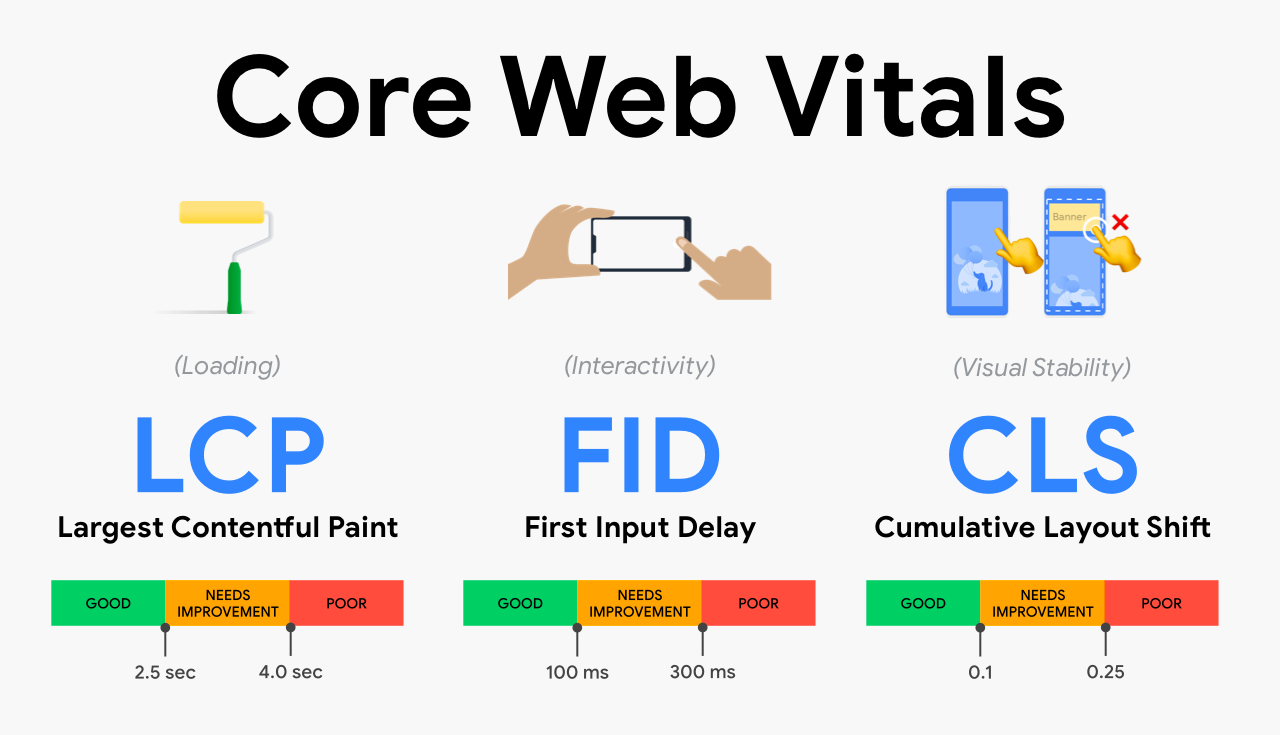
For those unfamiliar with RUM, we typically optimize websites for three main metrics – known as the “Core Web Vitals”. This is a set of key metrics which are believed to be the best and most accurate representation of a poorly performing website vs a well performing one. These key metrics are Largest Contentful Paint, First Input Delay and Cumulative Layout Shift.

Welcome to Speed Week 2023
Credit: https://addyosmani.com/blog/web-vitals-extension/

LCP measures loading performance; typically how long it takes to load the largest image or text block visible in the browser. FID measures interactivity. For example, the time between when a user clicks or taps on a button to when the browser responds and starts doing something. Finally, CLS measures visual stability. A good, or bad example of CLS is when you go to a website on your mobile phone, tap on a link and the page moves at the last second meaning you tap something you didn't want to. That would be a lower CLS score as its poor user experience.

Looking at these metrics gives us a good idea of how the end user is truly experiencing your website (RUM) vs. how quickly the nearest Cloudflare data center begins to return data (TTFB).

The other benefit of Real User Monitoring is it includes the speed advantage of new protocols and features designed to improve the customer experience. For example, Time to First Byte is a single connection between the client and the nearest Cloudflare server. This is nothing like how a web browser connects to a website, which uses multiplexing to fetch multiple files at the same time in parallel. There are also products like Early Hints which are designed to take advantage of the “server think time” to send instructions to the browser to begin loading readily-available resources while the server finishes compiling the full response.

In Speed Week we will be going deep into why TTFB is a bad metric to care about for websites and web applications, why RUM is the future, and a blog post on the latest Core Web Vital – “Interaction to Next Paint” (INP), and what it means to you as a business.

We will also be unveiling a brand-new product which will be the new home of application performance on Cloudflare. The new product will augment synthetic tests from various global locations with real user monitoring data to give administrators the best possible understanding of how their website is performing in the real world. This product will be available for all plan levels.

We’re the fastest, and we can prove it

It's no secret that Cloudflare is fast.

However it might not be obvious to the everyday reader just how fast we are, and in just how many areas.  Fastest compute. Fastest DNS. Fastest network. Fastest Zero Trust Network Access (ZTNA). Fastest Secure Web Gateway (SWG). Fastest object storage. And we’re finding areas we are not empirically the fastest and looking to prove we are number one.

We’re also finding ways to migrate customers from legacy providers and applications to Cloudflare as fast as possible. These legacy vendors have locked in companies using confusing terminology and esoteric features, trapping them on sub-par products and making them too afraid to move away. We’re helping those customers escape. Super Slurper helps customers move away from S3, Turpentine helps migrate legacy VCL setups to Cloudflare, and our Descaler program helps to migrate customers from Zscaler to Cloudflare in a matter of hours. We are building tools and products to help those customers who want to move to the fastest network but are locked in.

In Speed Week we’ll cover the latest on these programs and how we are relentlessly pushing to make the migration process as quick and easy as possible for customers who want to move to Cloudflare and put their business on the fastest network around.

Performance matters, whatever the product area

Generally when you hear of performance improvements it's typically through the lens making websites faster. But speed comes in many forms. Take Zero Trust as an example.

Measuring Zero Trust performance matters because it impacts your employees' experience and their ability to get their job done. Whether it’s accessing services through access control products, connecting out to the public Internet through a Secure Web Gateway, or securing risky external sites through Remote Browser Isolation, all of these experiences need to be frictionless. But what if your company's Secure Web Gateway is in London and you are in Johannesburg? This can mean a painful, slow, and frustrating employee experience whilst they wait for traffic to be sent to and from London. Slack becomes slow. Zoom becomes slow. Employees become frustrated.

The bigger concern, however, is not knowing of these performance issues. For example, if each of your employees are physically located in an office and the connection to critical business systems like Salesforce or Workday worsens, the likelihood is it will become evident quickly. But what about in a remote workforce with employees globally distributed? As a business, you need the ability to understand how your employees are experiencing critical business systems and identify any connection and performance issues they may be experiencing to ensure they get addressed quickly. In Speed Week we’ll unveil our latest Zero Trust offering which will give CIOs and businesses incredible insight into the performance experience of their workforce.

Speed Week will show Cloudflare is the fastest Zero Trust provider. Our analysis will provide updated benchmark comparisons and include additional competitors to show how we outperform everyone to give employees the fastest Zero Trust experience.

Another area we will shine a spotlight on this week is cache purge. When you think of CDNs it's common to look at them as a large distributed cache. Visitor-requested files are retrieved from an origin and stored on globally distributed CDN servers. This allows visitors to download the file in the quickest possible time by retrieving it from their nearest Cloudflare data center rather than having to traverse the Internet to and from the origin. TTFB will measure the time taken to receive a single file from the nearest location. RUM will measure the time it takes to receive multiple files, cached and uncached, and put them together into the webpage requested. But what about when the file changes on origin?

In the scenario where a business is hosting a pricebook as a downloadable file on its website, it is very important to understand how long it takes to remove old copies from Cloudflare cache to ensure customers don't see incorrect prices. This is where measuring cache purge times becomes important. The time taken to remove the invalidated file (old file) from every server in every data center in the CDN is known as the ‘global purge time’. In Speed Week we will explain how we have built our new cache purge architecture to be lightning-fast and what the performance numbers are as a result (spoiler: they are insanely fast).

These are just a few examples of what we have in store for the week. We also have blogs on AI, API acceleration, developer platform, networking, protocols, compression, streaming, UI optimization and more.

Speed at the heart of Cloudflare

At Cloudflare we put performance at the heart of everything we do.

Make sure to follow the Cloudflare blog and social media accounts for all of the week's news, and join us on Cloudflare TV each day for a live discussion of the day's announcements.

Welcome to Speed Week.

Служебен обмен на данни в електронното управление

Post Syndicated from Bozho original https://blog.bozho.net/blog/4106

През 2015 г. електронното управление е доникъде. Е-услуги имат общо взето само НАП (такива, които се ползват, имам предвид), а служебното събиране на данни между администтациите, предвидено още от 2009 г. в закона почти не се случва.

Министерство на транспорта е възложило изграждане на система за обмен на данни между системи и регистри (RegiX). Но тя не е заработила на практика и няма изглед да заработи, защото администрациите отказват да го ползват – бил „незаконен“. Дори в случаите, в които някой се престраши, най-важните първични администратори – ГРАО и МВР изискват сключване на тристранни споразумения и масово отказват достъп по своя преценка.

Тогава правим две изменения, които да отключат процеса – в Закона за електронното управление забраняваме допълнителните споразумения, а в наредбата към него уреждаме използването на системата за обмен на данни като един от възможните начини за служебно събиране на данни.

Оттогава служебният обмен расте всеки месец и на гражданите се спестяват някои „разходки“. Но докато вече всичко по обмена на данни е ясно и макар администрациите да го ползват, те продължават да искат удостоверения и бележки, защото казват „в нашия закон пише, че трябва да съберем тези данни от заявителя“.

Затова в следващите седмици ще гласуваме следващата стъпка – приравняване на служебната справка на предоставени от заявителя удостоверения, така че дори в някой закон и наредба да пише „представя удостоверение“, това да не е пречка пред спестяването на административната тежест. Не само това, а въвеждаме удостоверяване на тези справки с електронен печат, за да няма оправдания „аз как да знам, че тези електронни данни са истински“.

Даволът е в детайлите – и техническите, и нормативните, и организационно-човешките. И една от причините да съм в парламента е, че такива детайли там има всяка седмица, а за да има електронно управление по сектори, понякога зависи от две алинеи и даже от две думи.

Материалът Служебен обмен на данни в електронното управление е публикуван за пръв път на БЛОГодаря.

Седмицата (12–17 юни)

Post Syndicated from Йовко Ламбрев original https://www.toest.bg/sedmitsata-12-17-june/

Седмицата (12–17 юни)

Според теорията на преговорите една от най-устойчивите сделки е тази, при която всички са малко недоволни. Парадокс на нашата действителност е, че най-често недоволството е в повече. Навсякъде.

Та с много изначално недоволство и последвали престъргвания и поскърцвания новото българско правителство избута първата си седмица. И повече от очевидно е, че никой не възнамерява да му остави 100 дни комфорт. Бесовете и сенките в българската политика не са се укротили, даже напротив. Особено озверяха след този ход, който очевидно обърка доста планове. Едно със сигурност е ясно – разместването на пластовете ще е придружено с още трусове. И жертви… В този ред на размисли първата седмица на кабинета „Денков“ се оказа последната на Иван Гешев като главен прокурор.

За тези и други важни теми от изминалата седмица прочетете в анализа на Емилия Милчева, озаглавен „Залезът на българските божества“.

Но докато сме на темата с бесовете, да не пропуснем нещо важно. В българския обществен живот винаги е имало субекти, които тровят ежедневието и се захранват с внимание, създавайки скандали. Напоследък в тази токсична роля е „Възраждане“, чиито активисти през седмицата се опитаха да спретнат шумно „аутодафе“ на филм в София и Пловдив. С хомофобски аргументи. И с фашистки подход.

С риск да захраним тази формация с още малко внимание, повече от наложителни са институционални мерки срещу нея. Отговорност на медиите, особено националните, е да поспестят безкритично отворените микрофони, които така щедро ѝ предоставят. Различната гледна точка невинаги заслужава внимание. И сме длъжни да я заглушим и да ѝ се противопоставим фронтално, ако пропагандира омраза. Нека не се заблуждаваме, че късопишещите ще водят някакви площадни битки в София – тяхната борба е за съзнанията на хората в периферията.

Това беше само началото. Там, където горят книги, по-късно ще горят и хора.

Хайнрих Хайне

На темата с разцвета и институционализирането на хомофобията, а и на антиевропейската пропаганда в най-общ план в България е посветен и материалът на Светла Енчева „Еврото ли ще е следващият „джендър“?

И като заговорихме за отговорността на националните медии, ето какво е написал във Facebook профила си дългогодишният водещ по БНР Петър Волгин на 1 февруари т.г., в Деня за почит към жертвите на комунизма: „Достатъчно е да погледаш само десетина минути някой нахален и неумен богаташ като Хампарцумян, за да разбереш защо е трябвало да има Народен съд.“

По повод тези думи 102-годишна жена е завела гражданско дело срещу журналиста за нанесени неимуществени вреди, изразяващи се в „душевни болки и страдания“, съобщава Клуб Z. Столетницата е загубила съпруга си по време на т.нар. Народен съд през 1944 г., когато той и всички първенци от селото им „са били убити и хвърлени в масов гроб без съд, без присъда и без каквото и да е деяние от тях, освен че са изпълнили дълга си да се явят на повикватeлна в армията“. Две години по-късно той е обявен за „безследно изчезнал“. Тя остава сама с двегодишния им син. Животът на двамата по време на комунистическия режим е тежък, на сина ѝ не е позволено да учи в университет, семейството е считано за „врагове на народа“ и е следено от Държавна сигурност.

Когато дойдоха промените, се надявах, че ще има някаква справедливост за жертвите на комунизма. И ако не извинение от палачите и техните наследници, то поне признание от обществото, че това, което ни е било причинено, е несправедливо, нечовешко и жестоко. За съжаление, в обществото са налице противоположни мнения, като все по-гласовити стават някои граждани, които не само че не признават престъпния характер на комунистическия режим, но дори го и възхваляват.

„Във времена, в които бъдещето на демокрацията в България изглежда объркано и все по-обвързано със съдебната система, има едно място, където правораздаването се пресича с архитектурата, при това буквално“, пише Анета Василева в новата си статия за „Тоест“, която е посветена на състоянието на затворите и условията, в които живеят лишените от свобода. Един прелюбопитен материал за властта на пространството и как пространствата всъщност формират хората. Не го пропускайте!

Сред любимите ми рубрики в „Тоест“ е „Научни новини“, водена от Михаил Ангелов. А тазседмичната му статия е една от най-интересните в поредицата. В нея ще прочетете как с помощта на вирус и генна модификация може да се постигне контрол над популацията на бездомните котки, какво сънуват гълъбите, как с нови технологии се осигурява възможност за успешна сърдечна трансплантация дори от донор, чието кръвообращение е спряло, и как т.нар. изкуствен интелект помага за усъвършенстване на някои от базовите изчислителни задачи.

Завършваме седмицата с хубава книга. В рубриката „По буквите“ Зорница Христова реши да ни изненада с българския превод на стихосбирката на Ю Дзиен „Давам име на една врана“. Да оставим настрани факта, че рядко до четящите българи достига китайска литература, а още по-малко поезия. Още по-ценното е, че имаме възможност да прочетем един съвременен китайски поет, пишещ по актуалните теми от ежедневието, извън географските дистанции. Както казва Зорница,

не бива да гледаме на поезията на Ю Дзиен като на реалистична поезия, тоест като описваща реалността. Тя е по-скоро хипнотизирана от пълнокръвието на света, от изобилието на случващото се в него и описва именно този свой захлас.

Приятно четене!

Friday Squid Blogging: Squid Can Edit Their RNA

Post Syndicated from Bruce Schneier original https://www.schneier.com/blog/archives/2023/06/friday-squid-blogging-squid-can-edit-their-rna.html

This is just crazy:

Scientists don’t yet know for sure why octopuses, and other shell-less cephalopods including squid and cuttlefish, are such prolific editors. Researchers are debating whether this form of genetic editing gave cephalopods an evolutionary leg (or tentacle) up or whether the editing is just a sometimes useful accident. Scientists are also probing what consequences the RNA alterations may have under various conditions.

I sometimes think that cephalopods are aliens that crash-landed on this planet eons ago.

Another article.

As usual, you can also use this squid post to talk about the security stories in the news that I haven’t covered.

Read my blog posting guidelines here.

Metasploit Weekly Wrap-Up

Post Syndicated from Alan David Foster original https://blog.rapid7.com/2023/06/16/metasploit-weekly-wrap-up-15/

Metasploit T-Shirt Design Contest

Metasploit Weekly Wrap-Up

In honor of Metasploit’s 20th anniversary, Rapid7 is launching special edition t-shirts – and we’re inviting members of our community to have a hand in its creation. The contest winner will have their design featured on the shirts, which will then be available to pick up at Black Hat 2023.

We will be accepting submissions from now through June 30! Contest details, design guidelines, and submission instructions here

New module content (12)

RPyC 4.1.0 through 4.1.1 Remote Command Execution

Authors: Aaron Meese and Jamie Hill-Daniel
Type: Auxiliary
Pull request: #17670 contributed by ajmeese7
AttackerKB reference: CVE-2019-16328

Description: Adds a new rpyc_rce module to exploit CVE-2019-16328 and achieve remote command execution as the vulnerable server’s service user.

Apache RocketMQ Version Scanner

Authors: Malayke and h00die
Type: Auxiliary
Pull request: #18075 contributed by h00die

Description: This PR adds a version scanner for Apache RocketMQ.

Symmetricom SyncServer Unauthenticated Remote Command Execution

Authors: Justin Fatuch Apt4hax, Robert Bronstein, and Steve Campbell
Type: Exploit
Pull request: #18077 contributed by sdcampbell
AttackerKB reference: CVE-2022-40022

Description: This adds an exploit for Symmetricom SyncServer appliances (S100-S300 series) vulnerable to an unauthenticated command injection in the hostname parameter in a request to the /controller/ping.php endpoint. The command injection vulnerability is patched in the S650 v2.2. Requesting the endpoint will result in a redirect to the login page; however, the command will still be executed, resulting in RCE as the root user.

TerraMaster TOS 4.2.06 or lower – Unauthenticated Remote Code Execution

Authors: IHTeam and h00die-gr3y
Type: Exploit
Pull request: #18063 contributed by h00die-gr3y
AttackerKB reference: CVE-2020-28188

Description: This adds an exploit for TerraMaster NAS devices running TOS 4.2.06 or prior. The logic in include/makecvs.php permits shell metacharacters through the Event parameter in a GET request, permitting the upload of a webshell without authentication. Through this, an attacker can achieve remote code execution as the user running the TOS web interface.

TerraMaster TOS 4.2.15 or lower – RCE chain from unauthenticated to root via session crafting.

Authors: h00die-gr3y and n0tme
Type: Exploit
Pull request: #18070 contributed by h00die-gr3y
AttackerKB reference: CVE-2021-45841

Description: This exploits a series of vulnerabilities including session crafting and command injection in TerraMaster NAS versions 4.2.15 and below to achieve unauthenticated RCE as the root user.

TerraMaster TOS 4.2.29 or lower – Unauthenticated RCE chaining CVE-2022-24990 and CVE-2022-24989

Authors: 0xf4n9x, Octagon Networks, and h00die-gr3y
Type: Exploit
Pull request: #18086 contributed by h00die-gr3y
AttackerKB reference: CVE-2022-24989

Description: This exploits an administrative password leak and command injection vulnerability on TerraMaster devices running TerraMaster Operating System (TOS) versions 4.2.29 and below to achieve unauthenticated RCE as the root user.

Zyxel IKE Packet Decoder Unauthenticated Remote Code Execution

Author: sf
Type: Exploit
Pull request: #18016 contributed by sfewer-r7
AttackerKB reference: CVE-2023-28771

Description: This adds an exploit for CVE-2023-28771 which is a remote, unauthenticated OS command injection in IKE service of several Zyxel devices. Successful exploitation results in remote command execution as the root user.

Oracle Weblogic PreAuth Remote Command Execution via ForeignOpaqueReference IIOP Deserialization

Authors: 14m3ta7k, 4ra1n, and Grant Willcox
Type: Exploit
Pull request: #17946 contributed by gwillcox-r7
AttackerKB reference: CVE-2023-21839

Description: This adds an exploit for CVE-2023-21839 which is an unauthenticated RCE in Oracle Weblogic. Successful exploitation results in remote code execution as the oracle user.

Three x86 Linux Fetch Payloads

Author: Spencer McIntyre
Type: Payload
Pull request: #18084

Description: Fetch and execute a x86 payload from an HTTP server. These modules were developed live on stream. Fetch based payloads offer a shorter path from command injection to a Metasploit session

Authors: Daniel López Jiménez (attl4s) and Simone Salucci (saim1z)
Type: Post
Pull request: #18022 contributed by attl4s

Description: This adds the post/windows/manage/make_token module which is capable of creating new tokens from known credentials and then setting them in a running instance of Meterpreter, which can allow that session to access resources it might not have previously been able to access.

Enhancements and features (11)

  • #17336 from smashery – This PR adds new code to simplify and standardize windows version checking and comparisons.
  • #17781 from araout42 – Adds support for module writers to supply a custom include_dirs array when using the MinGW library to compile payloads.
  • #17942 from cdelafuente-r7 – The script generated by the web_delivery module is blocked by the Antimalware Scan Interface (AMSI) on newer versions of windows. This PR includes an enhancement which allows the web_delivery module to bypass AMSI.
  • #17955 from jvoisin – Reduces the size of PHP payloads such as php/reverse_php.
  • #18050 from adfoster-r7 – Adds a new post/test/all module which will run all available post/test modules against the open session.
  • #18069 from sempervictus – This updates the LDAP server library to handle unbind requests.
  • #18089 from shellchocolat – Adds supports for masm output format when generating payloads.
  • #18106 from adfoster-r7 – This PR updates Meterpreter’s setg SessionTLVLogging true support to no longer truncate useful values such as payload UUIDs, file paths, executed commands etc.
  • #18109 from adfoster-r7 – Update test post modules to always have a clean, writable, and consistent test file system directory when running modules under the loadpath test/modules directory.
  • #18110 from adfoster-r7 – When running test modules that have been loaded by loadpath test/modules, any verbose printing logic generated will now be prefixed by the current test that is being run.
  • #18115 from adfoster-r7 – This PR updates unknown windows errors on python Meterpreter to include original error code.

Bugs fixed (15)

  • #18051 from adfoster-r7 – Adds additional skip calls to the test/post modules to ensure that only relevant test expectations are run against the specified session without crashes.
  • #18054 from bwatters-r7 – This PR fixes the issue where an ArgumentError was thrown on the FETCH_SRVHOST option when running the info command when using a fetch payload.
  • #18068 from smashery – Fixes a bug that caused multi/manage/shell_to_meterpreter to not break when win_transfer=VBS was set.
  • #18076 from smashery – This fixes a bug in the Windows Meterpreter’s memory free API.
  • #18083 from zeroSteiner – A bug has been fixed in the stdapi extension of Meterpreter when calling the stdapi_sys_process_memory_free command. This incorrectly handled memory, leading to a double free condition, which would crash Meterpreter. This has since been fixed.
  • #18090 from adfoster-r7 – The auxiliary/admin/kerberos/keytab EXPORT action will now consistently order exported entries.
  • #18097 from adfoster-r7 – This PR fixes Python Meterpreter sessions from crashing when extracting macOS network configuration when using the route or ipconfig commands.
  • #18098 from adfoster-r7 – This PR Fixes rex-text crashes when running ruby 3.3.
  • #18099 from adfoster-r7 – This PR fixes Python Meterpreter subprocess deadlock and file descriptor leak caused by the stdout/stderr file descriptors not being closed.
  • #18101 from adfoster-r7 – This PR fixes a Python Meterpreter macOS route command crash when ifconfig has a gateway name as a mac address separated by dots.
  • #18102 from adfoster-r7 – This PR adds a fix for false negatives on files not existing on windows python Meterpreter.
  • #18105 from adfoster-r7 – This PR fixes a bug when running the time command in msfconsole with complex commands.
  • #18108 from adfoster-r7 – Updates the test/services module to more consistently pass. This module is useful for developers contributing enhancements or new functionality to Meterpreter and other payloads. It is available after running loadpath test/modules.
  • #18111 from adfoster-r7 – This PR fixes an initialized constant error when Meterpreter registry key reads timeout.
  • #18112 from adfoster-r7 – This PR fixes a symlink test bug when running python Meterpreter on windows.

Documentation added (1)

  • #18058 from gwillcox-r7 – Adds additional details on how to navigate the Metasploit codebase.

You can always find more documentation on our docsite at docs.metasploit.com.

Get it

As always, you can update to the latest Metasploit Framework with msfupdate
and you can get more details on the changes since the last blog post from
GitHub:

If you are a git user, you can clone the Metasploit Framework repo (master branch) for the latest.
To install fresh without using git, you can use the open-source-only Nightly Installers or the
binary installers (which also include the commercial edition).

The collective thoughts of the interwebz