Грехът на цветовете

Post Syndicated from Тоест original https://www.toest.bg/griekht-na-tsvietovietie/

Грехът на цветовете

Отблизо
изглежда като мозайка (геометрична
и антична), но погледнато отдалече
(и спрямо срещата на нюансите)
цветовете изглежда сякаш
нарушават правилото на Лутеранската църква
за отсъствието на изображения,
приканващи към набожност.
Да изследваш абстрактни витражи
в тази бременска църква
е като да се опиташ да четеш стихотворения
на чужд език
(радваш се, че почти разбираш някоя друга дума
подобна на тези от родния ти език). Там
пред погледа на всички
в църквата „Дева Мария“
цветовете поотделно са невинни, но заедно образуват грях
(там – ръката на някой светец
тук – кракът на някой ангел)
частите от нещо позволяват ерес на цялото
или пък ще кажете, че грехът не е
във физическия свят, а в погледа на този,
който гледа?

Жоао Луиш Барето Гимарайш
Превод от португалски Сони Бохосян


Жоао Луиш Барето Гимарайш (р. 1967) е поет и преводач, лекар и преподавател по поезия в Университета на Порто. Първата си стихосбирка Há Violinos na Tribo („Има цигулки в племето“) публикува през 1989 г. Следват Rua Trinta e Um de Fevereiro („Улица трийсет и първи февруари“, 1991), Lugares Comuns („Общи места“, 2000), Rés-do-Chão („Приземен етаж“, 2003), Luz Última („Последна светлина“, 2006), O Tempo Avança por Sílabas („Времето напредва в срички“, 2019) и др. Поезията му е преведена на множество езици. През 2022 г. за цялостно творчество печели една от най-големите португалски награди за поезия – „Песоа“. Предстои негова книга на български език да бъде публикувана в издателство „Ерго“ в превод на Сони Бохосян.

Сони Бохосян (р. 1995) е асистент по португалски език и бразилска литература в Катедрата по португалистика и лузофонски изследвания в Софийския университет. Нейни разкази, есета и преводи са публикувани в периодичния печат.


Според Екатерина Йосифова „четящият стихотворение сутрин… добре понася другите часове“ от деня. Убедени, че поезията държи умовете ни будни, а сърцата – отворени, в края на всеки месец ви предлагаме по едно стихотворение. Защото и в най-смутни времена доброто стихотворение е добра новина.

Снимките от войните и пораженията върху въображението

Post Syndicated from Еми Барух original https://www.toest.bg/snimkite-ot-voynite-i-porazheniyata-vurhu-vuobrazhenieto/

Снимките от войните и пораженията върху въображението

Поканих Кирил Василев и Тодор П. Тодоров да разговаряме за войната, за начина, по който я наблюдаваме, за начина, по който я изговаряме, и за пораженията, които всичко това оставя върху възприятията на хората, пребиваващи на безопасно разстояние от военните действия. Предложението ми беше да разсъждаваме върху това дали ние – интерпретаторите на случващото се – сме способни да правим разлика между човешката оценка на събитията и тяхната политическа трактовка, между съчувствието към онези, които на 7 октомври бяха изтръгнати от леглата им, влачени и убити, и аналитичната реконструкция на историческата верига преди този ден.

От 7 октомври минаха почти четири месеца. Четири месеца между контекстуализацията и релативизацията на неизмеримото страдание на хиляди невинни хора.

Светът научи за ужасяващите преживявания на отвлечените от „Хамас“ жени и деца. Последва оглушително мълчание от международните правозащитни организации. Мълчанието продължава и до днес въпреки хипотезата, че терористите и в момента изнасилват държаните в плен момичета. Светът наблюдава безсилен трагедията на палестинците, превърнати в жив щит от терористите на „Хамас“, и докато дипломацията буксува, се предполага, че броят на загиналите палестинци е вече 25 000. 

Кой какво вижда в кървавото огледало на този конфликт – това е едно възможно продължение на разговор, започнал преди няколко месеца. 


Отвъд ужасите от стореното на 7 октомври, шокиращ е фактът, че всичко беше тенденциозно заснето и публично разгласено. Терористите искаха извършените от тях престъпления да станат достояние на света. Те разпространиха тези картини с особена гордост. Тиражирането на зверствата беше една от целите на терористичната група. Какво е мястото на снимките от войните във възприятието ни за света?

Тодор П. Тодоров: Изображенията стават много важни в един момент от културната история, като произвеждат масово споделяното убеждение, че фотографското изображение дава по-достоверна картина, информация по-обективна, отколкото всяка друга медия, тъй като там отсъства интерпретацията.

Това, разбира се, не е вярно. Фотографията също интерпретира, започвайки от избора на обекта, различните техники на фотографиране и т.н. По-интересното за мен в случая е, че може би стигаме до онзи момент, когато изображенията започват да ни пречат да разбираме какво всъщност се случва зад това, което виждаме. Има и банализация на насилието – привикнали сме да виждаме конфликти и убийства и те вече не ни шокират.

Както казва Сюзан Зонтаг, изображенията са някакъв вид замърсяване на нашата културна среда. Цялата европейска култура от Платон насам се опитва да отиде оттатък образите, оттатък сетивното. През XIX–XX век има връщане през това, което наричам просвещение на сетивата. Откриваме отново насладата от собствените сетива през грамофона, радиото, телевизора, киното. За да стигнем до момента, в който трябва да се опитаме да разберем, че светът е по-сложен, по-труден. Зад образите стои нещо повече, което вече не умеем да разбираме.

Авторите на терористичната атака на „Хамас“ използваха снимките като оръжие. Това ли беше целта?

Кирил Василев: Целта на тези изображения беше да поразят въображението. Това е и смисълът на терористичните актове – да поразяват въображението. Терористите разбират, че това има много по-голям ефект, отколкото смъртта на конкретните жертви. Същевременно същите терористи много добре познават естеството на културата, в която живеем. Това, че тя се върна към прости визуални кодове и че разчита на мобилизация на масите посредством образи с директни емоционални ангажименти.

На практика видяхме как Израел загуби информационната война, защото броят и силата на изображенията, които потекоха от Газа, беше несравним със снимките от терористичната атака на 7 октомври. Това съперничество на образите се оказа по-продуктивно за терористите от „Хамас“, което не е свързано непременно с някакви специални умения, а с много добро разчитане на глобалната медиатизация и на културата, в която живеем.

Израелските власти по етически съображения отказаха да бъдат снимани осакатените трупове на жертвите от терористичната атака. Те излъчиха подбрани кадри на една минипресконференция пред специално подбрани журналисти. Както разбрахме, някои от тях не са издържали и са напуснали залата. Оказва се, че това разбираемо етическо усилие от тяхна страна е контрапродуктивно в информационната война.

Хората, които управляват образите в ивицата Газа, нямат абсолютно никакви задръжки да показват трупове на току-що убити деца. Всяко усилие да се спазват елементарни етически норми се оказва контрапродуктивно, когато става въпрос за един свят, управляван чрез образи. 

Водят ли се войните вече с образи, освен с реални оръжия?

Тодор П. Тодоров: В книгата си „Терор от въздуха“ немският философ Петер Слотердайк пише, че тероризмът, за разлика от войната, в която се сблъскват две армии с цел да се порази тялото на врага, има друга задача. Той цели да порази средата на противника, условията на живот, включително и въображението. Това може да стане чрез всякакви оръжия, но и чрез медийни средства. Да, води се война с образи. И тя е част от пропагандата.

Когато разглеждаме информационната медийна кампания като конфликт, в който има състезание кой ще покаже по-страшни картини, забравяме ефекта от всичко това. А той е не просто че някакви хора ще се шокират, а че тази мобилизация радикализира и двете страни. В Израел хора, които са били доста умерени преди, сега вече говорят по друг начин. Настъпва „втвърдяване“. Разбира се, същото става и от другата страна. 

Наблюдаваме неспособност за удържане на баланса и яростно настройване на групи хора едни срещу други. Защо не успяваме да говорим спокойно за този конфликт, за конфликтите изобщо?

Кирил Василев: Битката за вниманието на зрителя е безогледна. Медията е превърната в сцена на скандал, който е режисиран предварително. В сериозни коментарни политически студиа абсолютно съзнателно се канят хора с диаметрално противоположни възгледи и се задават въпроси, които бавно и полека трябва да превърнат разговора в скандал. Това минава за медиен плурализъм.

Хубаво е човек да направи сравнение между подобен тип политически предавания днес и преди десет години, за да види ескалацията. Кризата не е просто българска, а е глобална медийна криза. Да не говорим за алгоритмите, които увеличават поляризацията. Нашата комуникация минава през алгоритмична обработка, която ни затваря бавно и полека в полярни позиции и неспособност за разбиране на по-сложен контекст.

Тодор П. Тодоров: Тази тенденция е следствие от оплоскостяването на света. Склонни сме да описваме случващото се по доста простичък начин, в черно-бели категории от регистъра на приказното и фолклорното, на доброто срещу злото, при което всичко изглежда ясно. А това е опасно. На Франкфуртския панаир на книгата Славой Жижек започна с това, че осъжда терористичната атака, но има някаква история преди нея, има контекст. След това срещу него заваляха възражения, че той едва ли не подкрепя терористите.

Проблемът е, че когато някой каже „но“, разговорът става невъзможен. И понеже темата с Израел е много чувствителна, лесно стана възможно обвинението в антисемитизъм срещу всеки, който казва „но“. „Аз осъждам „Хамас“ и това, което те извършиха, но…“ се интерпретира като антисемитизъм. Твърдя, че когато убиваш деца, дали си „Хамас“, или си израелското правителство – няма никакво значение. 

Не мога да се съглася с еднозначното сравнение между „Хамас“ и Израел. „Хамас“ са шайка терористи, организация, която трябва да бъде разоръжена. Израел е демократична държава. Когато те се сравняват, получаваме реакции като в кампусите на университетите от Бръшляновата лига, където на 7 октомври, още преди Израел да се беше окопитил от случилото се, бяха организирани пропалестински манифестации без нито дума на съчувствие към избитите, с възгласи, че всичко това е заслужено.

Съчувствието е хуманен акт към невинни жертви без значение дали харесваме, или не харесваме политиката на държавата, от която са те. Неспособността да се реагира срещу ужаса на тероризма предизвиква в мен ужас. Светът трябва еднозначно да заяви, че „Хамас“ е терористична организация и че за да има мир, тя трябва да бъде унищожена. Никакви „но“ не могат да оправдаят нейното съществуване.

Кирил Василев: Понякога има опасност контекстуализацията да релативизира престъпленията и много често в дебатите, които се водеха в медиите по света след 7 октомври, се наблюдаваше следната реакция на пропалестински хора: „Да, престъпление е, аз не подкрепям терористите, обаче това е следствие от…“. Когато едно престъпление бива превърнато в резултат от причинно-следствени връзки, статутът му бива трансформиран от престъпление в нещо като природно явление.

Друг начин да бъдат релативизирани престъпленията е, когато едно престъпление се легитимира с друго. Когато се казва: „Ама еди-кой си извърши еди-какво си, защо ние да не може да извършим същото“. Путиновата пропаганда много често се опитва да легитимира руските престъпления по този начин. Трябва да се пазим да не релативизираме моралните разграничения.

Тодор П. Тодоров: Подобна теза подменя истината и всъщност самата тя е от пропаганден характер. Излиза, че всеки, който контекстуализира по някакъв начин, релативизира извършеното престъпление и значи го оправдава. Аз не съм чул нито един от тези хора, които говорят за палестинския проблем, да оправдава извършеното от „Хамас“. Всички винаги осъждат престъпленията.

Това „но“ не означава, че ги оправдават. Същото правя и аз в някакъв смисъл. Казвам: „Да, това е отвратително, но ние трябва да разберем защо се е стигнало дотук.“ Значи ли, че като осъждам престъплението на „Хамас“, съм морално задължен да оправдая престъпленията на Израел – изличаване на цели селища, убийства на цивилни граждани, на деца. Това е релативизмът. Това е моралният проблем. А истинската човечност изисква, ако ти осъждаш тероризма и убийствата, да ги осъдиш принципно. „Хамас“ нямат право да извършват престъпления, но Израел, бидейки „демократична държава“, както самата ти се изрази, в още по-голяма степен няма нито морално, нито политическо основание да извършва подобни престъпления. 

Кирил Василев: Много е труден този баланс между необходимата за разбирането контекстуализация и релативизацията на престъпленията. Изисква се голямо интелектуално усилие, за да се запази. Директното оправдаване на престъпленията е рядък случай. Много по-често ставаме свидетели на постепенното изместване на фокуса от конкретното престъпление, на разтварянето му в контекста и тръгването назад по историческата верига.

Бих искала да цитирам Шимон Перес, който казваше:

Ние сме направени да вървим напред, не назад. Проблемът е, че имаме силна памет. Много неща, които са все още в съзнанието ни, не могат да бъдат забравени. Способността да мислим и склонността да си спомняме водят до това, че понякога спомените надделяват над мислите. […] 

Живеем в преходна епоха, пренаселена от вчерашни хора, които продължават да се движат напред със своето минало и с единствен багаж – историческата си обремененост. […] Бъдещето е винаги в ръцете на едно днешно малцинство. А миналото винаги е притежание на мнозинството. Именно затова съществува конфликт между малцинството и мнозинството.

Кирил Василев: Историческата аргументация е много хлъзгав и опасен терен.

Ако погледнем назад, в най-драматичните страници от еврейската история, и разгледаме снимките от Аушвиц, бихме ли допуснали, че 70 години по-късно евреите и германците ще са възстановили нормалните отношения помежду си? Отношенията между евреи и германци се случиха. Въпреки Аушвиц… Значи има надежда.

Кирил Василев: Възможно е, но има много условия, едно от които е силно лидерство. Аз смятам, че Бенямин Нетаняху носи ужасяваща отговорност за това, което се случи, защото политиката му доведе до разпад на институциите на израелската държава. Той доведе израелското общество до противопоставяне на ръба на гражданска война. Нетаняху беше човекът, който обърна гръб на Фатах и реши, че ще играе тази двойна игра с „Хамас“.

Има огромен дефицит на лидерство – в САЩ, в Западна Европа, в Израел, в Палестина. Помислете си само, американската нация – тази могъща нация – не може да излъчи други лидери, освен едва крепящия се на краката си Байдън и от другата страна авантюриста и популист Доналд Тръмп. Израел не може да излъчи мощен лидер и сме принудени да наблюдаваме нещата, които Нетаняху върши. Палестинците – с абсолютно лишения от авторитет Махмуд Абас и от друга страна – радикалите. Европа с Герт Вилдерс, Джорджа Мелони, Виктор Орбан, Робърт Фицо… Да не говорим за България.

Тодор П. Тодоров: Освен лидерите, които очевидно са проблем, има пълна ерозия на международния ред и право. След 2003-та, след войната в Ирак, международните организации загубиха смисъла си. Всеки прави каквото иска и както иска. Никой не взема на сериозно ООН. А тези организации биха могли да бъдат легитимни посредници. Например лидерите на „Хамас“ не са в Газа. Те живеят в петзвездни хотели в Катар и Дубай. Защо няма натиск върху тези страни да предадат същите лидери? Няма кой да го направи, защото „домакините“ са стратегически съюзници на САЩ. А в отсъствието на международен ред всичко се решава в полза на великите сили – „империите“ и капиталите. 

Кирил Василев: И отново стигаме до лидерството. Къде е решителността, къде е въображението, къде е активността на лидерите на международните институции да посредничат? Гутериш трябваше да може да предложи различни варианти за търсене на изход от кризата. Да си припомним, че през 1947 г. именно ООН излезе с предложение за решение на израелско-палестинския конфликт чрез създаване на две държави. Къде е тази решимост на ООН днес?

Наскоро четох коментар на Саймън Дженкинс в „Гардиън“, в който той пише, че безкрайният поток на образите на страданието от Газа не води до никакво разбиране на случващото се. В момента единствено си струва да се четат текстове, които могат да ни помогнат да осветлим ставащото и собствените си реакции на него. От емоционалния шантаж на образите няма никакъв смисъл.

Тодор П. Тодоров: Да, образите са като своеобразна завеса, която се спуска, и ние виждаме само лозунги и картини, които ни стряскат, но губим способност да мислим за онова, което става в действителност. Не трябва да забравяме, че живеем в един много богат в медийно отношение свят и голяма част от информацията е пропаганда. Води се, както каза Кирил Василев, борба за световното обществено мнение и в тази борба печели черно-бялата картина.

Announcing IPv6 instance bundles and pricing update on Amazon Lightsail

Post Syndicated from Macey Neff original https://aws.amazon.com/blogs/compute/announcing-ipv6-instance-bundles-and-pricing-update-on-amazon-lightsail/

Amazon Lightsail is the easiest way to get started on AWS, allowing you to get your application running on your own virtual server in a matter of minutes. Lightsail bundles all the resources you need like memory, vCPU, solid-state drive (SSD), and data transfer allowance into a predictable monthly price, so budgeting is easy and straightforward.

IPv6 instance bundles

Announcing the availability of new IPv6 instance bundles on Lightsail. With the new bundles, you can now create and use Lightsail instances without a public IPv4 address. These bundles include an IPv6 address for use cases that do not require a public IPv4 address. Both Linux and Windows IPv6 bundles are available. See the full list of Amazon Lightsail instance blueprints compatible with IPv6 instances. If you have existing Lightsail instances with a public IPv4 address, you can migrate the instance to IPv6-only in a couple of steps: Create a snapshot of an existing instance, then create a new instance from the snapshot and select IPv6-only networking when choosing your instance plan.

To learn more about IPv6 bundles, read Lightsail documentation.

IPv4 instance bundles

Lightsail will continue to offer bundles that include one public IPv4 address and IPv6 address. Following AWS’s announcement on public IPv4 address charge, the prices of Lightsail bundles offered with a public IPv4 address will reflect the charge associated with the public IPv4 address.

Revised prices for bundles that include a public IPv4 address will be effective on all new and existing Lightsail bundles starting May 1, 2024.

The tables below outline all Lightsail instance bundles and pricing.

Linux-based bundles:

Windows-based bundles:

*Bundles in the Asia Pacific (Mumbai) and Asia Pacific (Sydney) AWS Regions include lower data transfer allowances than other regions.

To learn more about Lightsail’s bundled offerings and pricing, please see the Lightsail pricing page.

2023 PiTuKri ISAE 3000 Type II attestation report available with 171 services in scope

Post Syndicated from Tariro Dongo original https://aws.amazon.com/blogs/security/2023-pitukri-isae-3000-type-ii-attestation-report-available-with-171-services-in-scope/

Amazon Web Services (AWS) is pleased to announce the issuance of the Criteria to Assess the Information Security of Cloud Services (PiTuKri) International Standard on Assurance Engagements (ISAE) 3000 Type II attestation report. The scope of the report covers a total of 171 services and 29 global AWS Regions.

The Finnish Transport and Communications Agency (Traficom) Cyber Security Centre published PiTuKri, which consists of 52 criteria that provide guidance when assessing the security of cloud service providers. The criteria are organized into the following 11 subdivisions:

  • Framework conditions
  • Security management
  • Personnel security
  • Physical security
  • Communications security
  • Identity and access management
  • Information system security
  • Encryption
  • Operations security
  • Transferability and compatibility
  • Change management and system development

The report includes 17 additional services in scope, for a total of 171 services. See the full list on our Services in Scope by Compliance Program page.

The following are the 17 additional services now in scope for the 2023 Pitukri report:

Five additional AWS Regions have been added to the scope, for a total of 29 Regions. The following are the five additional Regions now in scope:

  • Australia: Asia Pacific (Melbourne) (ap-southeast-4)
  • India: Asia Pacific (Hyderabad) (ap-south-2)
  • Spain: Europe (Spain) (eu-south-2)
  • Switzerland: Europe (Zurich) (eu-central-2)
  • United Arab Emirates: Middle East (UAE) (me-central-1)

The latest report covers the period from October 1, 2022, to September 30, 2023. An independent third-party audit firm issued the report to assure customers that the AWS control environment is appropriately designed and implemented for support of adherence with PiTuKri requirements. This attestation demonstrates the AWS commitment to meet security expectations for cloud service providers set by Traficom.

Customers can find the full PiTuKri ISAE 3000 report on AWS Artifact. To learn more about the complete list of certified services and Regions, see AWS Compliance Programs and AWS Services in Scope for PiTuKri.

AWS strives to continuously bring new services into the scope of its compliance programs to help you meet your architectural and regulatory needs. Contact your AWS account team for questions about the PiTuKri report.

 
If you have feedback about this post, submit comments in the Comments section below. If you have questions about this post, contact AWS Support.

Want more AWS Security news? Follow us on Twitter.

Tariro Dongo

Tariro Dongo

Tariro is a Security Assurance Program Manager at AWS, based in London. Tari is responsible for third-party and customer audits, attestations, certifications, and assessments across EMEA. Previously, Tari worked in security assurance and technology risk in the big four and financial services industry over the last 12 years.

Exploring aws-lite, a Community-Driven JavaScript SDK for AWS

Post Syndicated from Pat Patterson original https://www.backblaze.com/blog/exploring-aws-lite-a-community-driven-javascript-sdk-for-aws/

A decorative image showing the Backblaze and aws-lite logos.

One of the benefits of the Backblaze B2 Storage Cloud having an S3 compatible API is that developers can take advantage of the wide range of Amazon Web Services SDKs when building their apps. The AWS team has released over a dozen SDKs covering a broad range of programming languages, including Java, Python, and JavaScript, and the latter supports both frontend (browser) and backend (Node.js) applications.

With all of this tooling available, you might be surprised to discover aws-lite. In the words of its creators, it is “a simple, extremely fast, extensible Node.js client for interacting with AWS services.” After meeting Brian LeRoux, cofounder and chief technology officer (CTO) of Begin, the company that created the aws-lite project, at the AWS re:Invent conference last year, I decided to give aws-lite a try and share the experience. Read on for the learnings I discovered along the way.

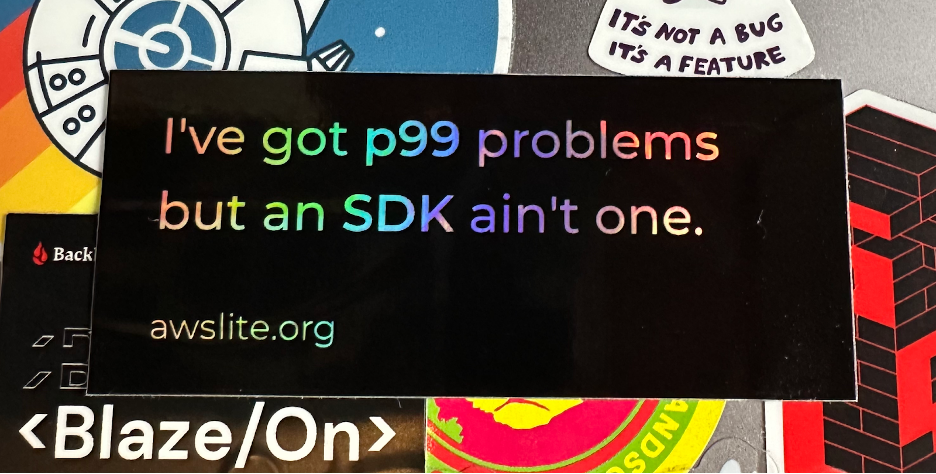
A photo showing an aws-lite promotional sticker that says, I've got p99 problems but an SDK ain't one, as well as a Backblaze promotional sticker that says Blaze/On.
Brian bribed me to try out aws-lite with a shiny laptop sticker!

Why Not Just Use the AWS SDK for JavaScript?

The AWS SDK has been through a few iterations. The initial release, way back in May 2013, focused on Node.js, while version 2, released in June 2014, added support for JavaScript running on a web page. We had to wait until December 2020 for the next major revision of the SDK, with version 3 adding TypeScript support and switching to an all-new modular architecture.

However, not all developers saw version 3 as an improvement. Let’s look at a simple example of the evolution of the SDK. The simplest operation you can perform against an S3 compatible cloud object store, such as Backblaze B2, is to list the buckets in an account. Here’s how you would do that in the AWS SDK for JavaScript v2:

var AWS = require('aws-sdk');

var client = new AWS.S3({
  region: 'us-west-004', 
  endpoint: 's3.us-west-004.backblazeb2.com'
});

client.listBuckets(function (err, data) {
  if (err) {
    console.log("Error", err);
  } else {
    console.log("Success", data.Buckets);
  }
});

Looking back from 2023, passing a callback function to the listBuckets() method looks quite archaic! Version 2.3.0 of the SDK, released in 2016, added support for JavaScript promises, and, since async/await arrived in JavaScript in 2017, today we can write the above example a little more clearly and concisely:

const AWS = require('aws-sdk');

const client = new AWS.S3({
  region: 'us-west-004', 
  endpoint: 's3.us-west-004.backblazeb2.com'
});

try {
  const data = await client.listBuckets().promise();
  console.log("Success", data.Buckets);  
} catch (err) {
  console.log("Error", err);
}

One major drawback with version 2 of the AWS SDK for JavaScript is that it is a single, monolithic, JavaScript module. The most recent version, 2.1539.0, weighs in at 92.9MB of code and resources. Even the most minimal app using the SDK has to include all that, plus another couple of MB of dependencies, causing performance issues in resource-constrained environments such as internet of things (IoT) devices, or browsers on low-end mobile devices.

Version 3 of the AWS SDK for JavaScript aimed to fix this, taking a modular approach. Rather than a single JavaScript module there are now over 300 packages published under the @aws-sdk/ scope on NPM. Now, rather than the entire SDK, an app using S3 need only install @aws-sdk/client-s3, which, with its dependencies, adds up to just 20MB.

So, What’s the Problem With AWS SDK for JavaScript v3?

One issue is that, to fully take advantage of modularization, you must adopt an unfamiliar coding style, creating a command object and passing it to the client’s send() method. Here is the “new way” of listing buckets:

const { S3Client, ListBucketsCommand } = require("@aws-sdk/client-s3");

// Since v3.378, S3Client can read region and endpoint, as well as
// credentials, from configuration, so no need to pass any arguments
const client = new S3Client();

try {
  // Inexplicably, you must pass an empty object to 
  // ListBucketsCommand() to avoid the SDK throwing an error
  const data = await client.send(new ListBucketsCommand({}));
  console.log("Success", data.Buckets);  
} catch (err) {
  console.log("Error", err);
}

The second issue is that, to help manage the complexity of keeping the SDK packages in sync with the 200+ services and their APIs, AWS now generates the SDK code from the API specifications. The problem with generated code is that, as the aws-lite home page says, it can result in “large dependencies, poor performance, awkward semantics, difficult to understand documentation, and errors without usable stack traces.”

A couple of these effects are evident even in the short code sample above. The underlying ListBuckets API call does not accept any parameters, so you might expect to be able to call the ListBucketsCommand constructor without any arguments. In fact, you have to supply an empty object, otherwise the SDK throws an error. Digging into the error reveals that a module named middleware-sdk-s3 is validating that, if the object passed to the constructor has a Bucket property, it is a valid bucket name. This is a bit odd since, as I mentioned above, ListBuckets doesn’t take any parameters, let alone a bucket name. The documentation for ListBucketsCommand contains two code samples, one with the empty object, one without. (I filed an issue for the AWS team to fix this.)

“Okay,” you might be thinking, “I’ll just carry on using v2.” After all, the AWS team is still releasing regular updates, right? Not so fast! When you run the v2 code above, you’ll see the following warning before the list of buckets:

(node:35814) NOTE: We are formalizing our plans to enter AWS SDK for JavaScript (v2) into maintenance mode in 2023.
Please migrate your code to use AWS SDK for JavaScript (v3).
For more information, check the migration guide at https://a.co/7PzMCcy

At some (as yet unspecified) time in the future, v2 of the SDK will enter maintenance mode, during which, according to the AWS SDKs and Tools maintenance policy, “AWS limits SDK releases to address critical bug fixes and security issues only.” Sometime after that, v2 will reach the end of support, and it will no longer receive any updates or releases.

Getting Started With aws-lite

Faced with a forced migration to what they judged to be an inferior SDK, Brian’s team got to work on aws-lite, posting the initial code to the aws-lite GitHub repository in September last year, under the Apache 2.0 open source license. At present the project comprises a core client and 13 plugins covering a range of AWS services including S3, Lambda, and DynamoDB.

Following the instructions on the aws-lite site, I installed the client module and the S3 plugin, and implemented the ListBuckets sample:

import awsLite from '@aws-lite/client';

const aws = await awsLite();

try {
  const data = await aws.S3.ListBuckets();
  console.log("Success", data.Buckets);
} catch (err) {
  console.log("Error", err);
}

For me, this combines the best of both worlds—concise code, like AWS SDK v2, and full support for modern JavaScript features, like v3. Best of all, the aws-lite client, S3 plugin, and their dependencies occupy just 284KB of disk space, which is less than 2% of the modular AWS SDK’s 20MB, and less than 0.5% of the monolith’s 92.9MB!

Caveat Developer!

(Not to kill the punchline here, but for those of you who might not have studied Latin or law, this is a play on the phrase, “caveat emptor”, meaning “buyer beware”.)

I have to mention, at this point, that aws-lite is still very much under construction. Only a small fraction of AWS services are covered by plugins, although it is possible (with a little extra code) to use the client to call services without a plugin. Also, not all operations are covered by the plugins that do exist. For example, at present, the S3 plugin supports 10 of the most frequently used S3 operations, such as PutObject, GetObject, and ListObjectsV2, leaving the remaining 89 operations TBD.

That said, it’s straightforward to add more operations and services, and the aws-lite team welcomes pull requests. We’re big believers in being active participants in the open source community, and I’ve already contributed the ListBuckets operation, a fix for HeadObject, and I’m working on adding tests for the S3 plugin using a mock S3 server. If you’re a JavaScript developer working with cloud services, this is a great opportunity to contribute to an open source project that promises to make your coding life better!

The post Exploring aws-lite, a Community-Driven JavaScript SDK for AWS appeared first on Backblaze Blog | Cloud Storage & Cloud Backup.

[$] The things nobody wants to pay for

Post Syndicated from corbet original https://lwn.net/Articles/959069/

The free-software community has managed to build a body of software that is
worth, by most estimates, many billions of dollars; all of this code is
freely available to anybody who wants to use or modify it. It is an
unparalleled example of independent actors working cooperatively on a
common resource. Free software is certainly a success story, but all is
not perfect. One of the community’s greatest strengths — convincing
companies to contribute to this common resource — is also part of one of
its biggest weaknesses.

Ексклузивно в “Биволъ” Видео разкрива зловещото убийство на Пейо Пеев (цензурирано 18+)

Post Syndicated from Екип на Биволъ original https://bivol.bg/peyo-peev-video.html

четвъртък 25 януари 2024


Биволъ се сдоби с основното доказателство въз основа на което бе разкрито зверското убийство на 44 г. Пейо Пеев. Съществуването на видеозапис на охранителна камера бе широко популяризирано, коментирано и…

GCC security features from AdaCore

Post Syndicated from corbet original https://lwn.net/Articles/959461/

The AdaCore blog describes
some hardening features
contributed to GCC for the GCC 14 release.

With -fharden-control-flow-redundancy, the compiler now verifies,
at the end of functions, whether the traversed basic blocks align
with a legitimate execution path. The purpose of this protective
measure is to detect and thwart attacks attempting to infiltrate
the middle of functions, thereby enhancing the overall security
posture of the compiled code.

Building the Best SOC Takes Strategic Thinking

Post Syndicated from Rapid7 original https://blog.rapid7.com/2024/01/25/building-the-best-soc-takes-strategic-thinking/

Building the Best SOC Takes Strategic Thinking

So your security team is ready to scale up its security operations center, or SOC, to better meet the security needs of your organization. That’s great news. But there are some very important strategic questions that need to be answered if you want to build the most effective SOC you can and avoid some of the most common pitfalls teams of any size can encounter.

The Gartner® report SOC Model Guide, is an excellent resource for understanding how to ask the right questions regarding your security needs and what to do once those questions are answered.

Question 1: Which Model is Right for You?

There are several different ways to build an effective SOC. And while some are more complicated (perhaps even prohibitively so) than others, knowing what your needs and resources are at the outset will help you make this crucial initial decision.

Gartner puts it this way:

“A SOC model defines a strategy for variation in the use of internal teams and external service providers when running a SOC. It ensures all roles required to operate a SOC are allocated to those best suited to discharge the associated responsibilities. An effective SOC model lets SRM leaders allocate resources based on business priorities, available skill sets and budget…”

There are effectively three ways to build a SOC: internal, external, and hybrid. The report has this to say:

“Opting for a hybrid SOC is one way to help grow capabilities, while managing scale and cost. A hybrid SOC is one in which more than one team, both insourced and outsourced, plays a role in the activities required for proper SOC operation. The question of which teams, roles, jobs and activities are best kept in-house or outsourced is complex. Building a SOC model helps you answer it and ensure a hybrid SOC is well-balanced.”

Question 2: Who Does What?

Let’s assume your organization is opting for a hybrid approach. The next question you will need to ask yourself is what roles am I outsourcing and what roles am I keeping in-house? Understanding your business needs and whether internal or external partners are the best course of action can take some serious soul-searching on your part.

Luckily, Gartner has some recommendations. From the report:

Gartner says “Some SOC tasks are strategic, such as those performed by the roles of senior investigator, incident response manager and red team tester. They are often best performed by in-house staff who understand the business’s needs and the security issues.

“Other SOC tasks are tactical, such as building detection content for common
attacks. They are generally best performed by a larger external team, which can do
them more efficiently, on a bigger scale, and for longer periods.”

Question 3: How Do We Keep Everything Humming Along?

Once you’ve chosen your SOC model and built your team, it is important to be monitoring and reacting to the ways in which the internal and external partners work together. Let’s assume you’ve followed Gartner recommendations and outsourced your tactical needs and some highly specific skill sets and kept your strategic thinkers in-house, then you need to have a way for the teams to work together that is as dynamic as the environment they are seeking to protect.

Gartner offers this advice:

“Have clear demarcations between objective handlers, but ensure there is shared awareness. A challenge with hybrid models that use different providers or teams to handle objectives is that it can be hard to instill a results-oriented mindset. An external provider or internal team often gets “tunnel vision” — focusing only on its own individual objective — and loses sight of the big picture of SOC performance. You must ensure each provider or team is aware of its impact on adjacent objectives, not just its own.”

Just because different teams are going to have relatively different goals does not mean they should operate in silos. Ensuring that internal and external team members are able to see the big picture and understand the capabilities and limitations of others on the team is a critical component of building a SOC that works well today and grows well together.

Building a SOC from scratch is no easy feat and it is made harder without some serious strategic thinking and soul searching before building the team. Understand your unique needs, the general needs of a SOC team, what your resources are, and the expectations of your organization before building your own A-team of crack security professionals.

To read more about SOC Models check out Gartner SOC Model Guide here.

Gartner, SOC Model Guide, Eric Ahlm, Mitchell Schneider, Pete Shoard, 18 October 2023

GARTNER is a registered trademark and service mark of Gartner, Inc. and/or its affiliates in the U.S. and internationally and is used herein with permission. All rights reserved.

Security updates for Thursday

Post Syndicated from jake original https://lwn.net/Articles/959455/

Security updates have been issued by Debian (chromium, firefox-esr, php-phpseclib, phpseclib, thunderbird, and zabbix), Fedora (dotnet7.0, firefox, fonttools, and python-jinja2), Mageia (avahi and chromium-browser-stable), Oracle (java-1.8.0-openjdk, java-11-openjdk, LibRaw, openssl, and python-pillow), Red Hat (gnutls, kpatch-patch, php:8.1, and squid:4), SUSE (apache-parent, apache-sshd, bluez, cacti, cacti-spine, erlang, firefox, java-11-openjdk, opera, python-Pillow, tomcat, tomcat10, and xwayland), and Ubuntu (paramiko and puma).

Code Club at Number Ten Downing Street

Post Syndicated from Philip Colligan original https://www.raspberrypi.org/blog/code-club-number-ten-downing-street/

With the rapid advances in digital technologies like artificial intelligence, it’s more important than ever that every young person has the opportunity to learn how computers are being used to change the world and to develop the skills and confidence to get creative with technology. 

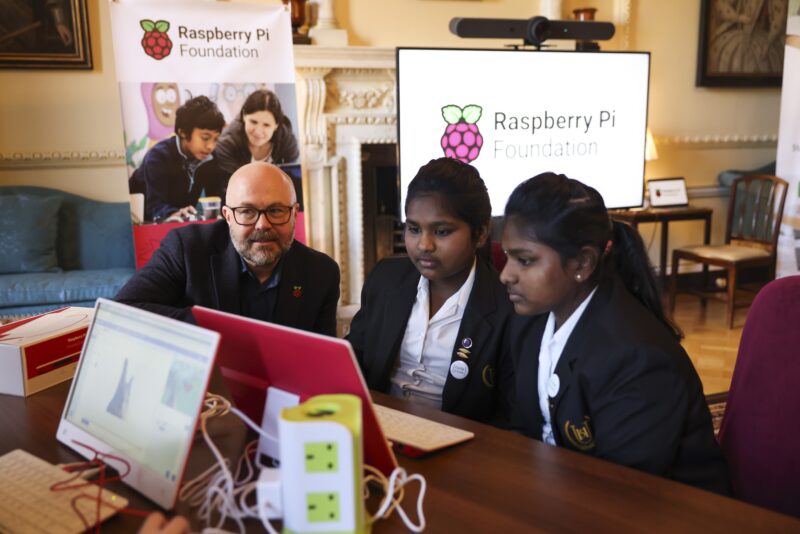
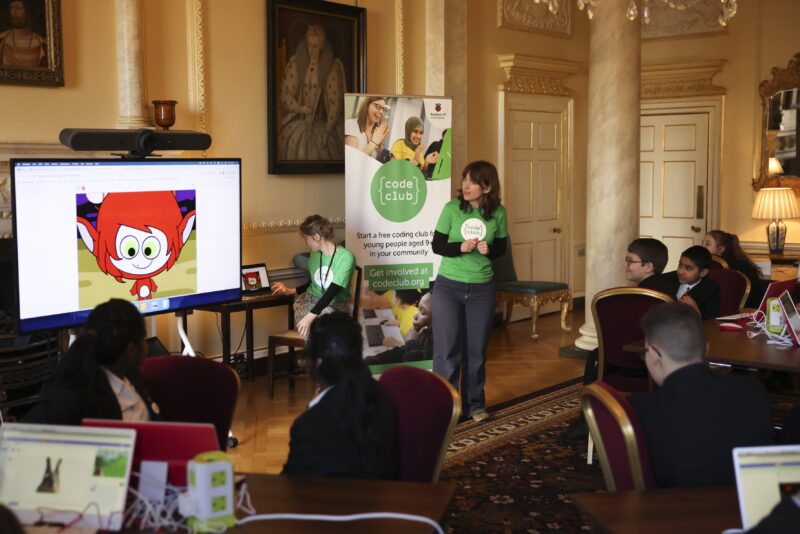
Learners at a Code Club taking place at Number Ten Downing Street.
Crown copyright. Licensed under the Open Government Licence.

There’s no better way to develop those abilities (super powers even) than getting hands-on experience of programming, whether that’s coding an animation, designing a game, creating a website, building a robot buggy, or training an AI classification model. That’s what tens of thousands of young people do every day in Code Clubs all over the world. 

Lessons at 10 

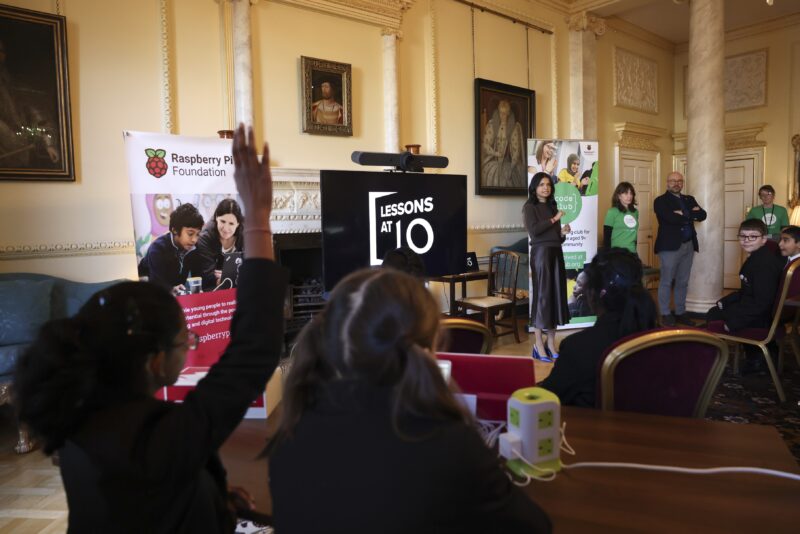
We were absolutely thrilled to organise a Code Club at Number Ten Downing Street last week, hosted by the UK Prime Minister’s wife Akshata Murty as part of Lessons at 10.

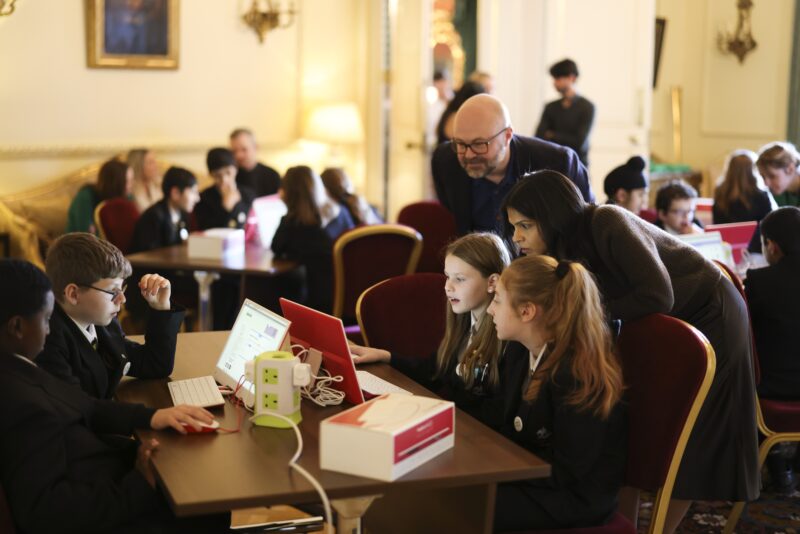
A Code Club session taking place at Number Ten Downing Street.
Crown copyright. Licensed under the Open Government Licence.

Lessons at 10 is an initiative to bring school children from all over the UK into Number Ten Downing Street, the official residence of the Prime Minister. Every week different schools visit to attend lessons led by education partners covering all kinds of subjects. 

A Code Club session taking place at Number Ten Downing Street.
Crown copyright. Licensed under the Open Government Licence.

We ran a Code Club for 20 Year 7 students (ages 11 to 12) from schools in Coventry and Middlesex. The young people had a great time with the Silly eyes and Ghostbusters projects from our collections of Scratch projects. Both stone-cold classics in my opinion, and a great place to start if you’re new to programming.

A Code Club session taking place at Number Ten Downing Street.
Crown copyright. Licensed under the Open Government Licence.

You may have spotted in the photos that the young people were programming on Raspberry Pi computers (the incredible Raspberry Pi 400 made in Wales). We also managed to get our hands on some cool new monitors. 

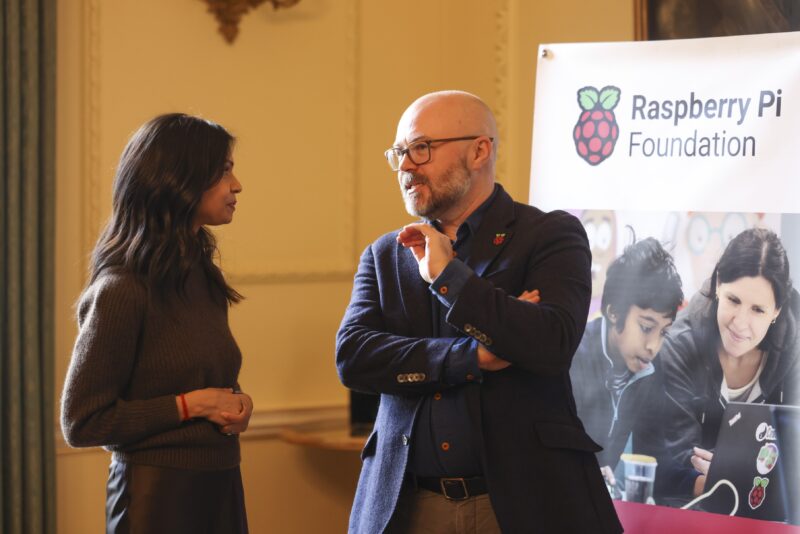
Mrs Murty’s father was one of the founders of Infosys, which ranks among the world’s most successful technology companies, founded in India and now operating all over the world. So it is perhaps no surprise that she spoke eloquently to the students about the importance of every young person learning about technology and seeing themselves as digital creators not consumers.

Akshata Murty talks to Philip Colligan, CEO of the Raspberry Pi Foundation.
Crown copyright. Licensed under the Open Government Licence.

We were lucky enough to be in one of the rather fancy rooms in Number Ten, featuring a portrait by John Constable of his niece Ada Lovelace, the world’s first computer programmer. Mrs Murty reminded us that one of the lessons we learn from Ada Lovelace is that computer programming combines both the logical and artistic aspects of human intelligence. So true. 

A global movement 

Since Code Club’s launch in April 2012, it has grown to be the world’s largest movement of free computing clubs and has supported over 2 million young people to get creative with technology.

Learners from a Code Club in front of Number Ten Downing Street.
Crown copyright. Licensed under the Open Government Licence.

Code Clubs provide a free, fun, and safe environment for young people from all backgrounds to develop their digital skills. Run by teachers and volunteers, most Code Clubs take place in schools, and there are also lots in libraries and other community venues. 

The Raspberry Pi Foundation provides a broad range of projects that young people use to build their confidence and skills with lots of different hardware and software. The ultimate goal is that they are empowered to combine their logical and artistic skills to create something original. Just like Ada Lovelace did all those years ago.

Learners at a Code Club taking place at Number Ten Downing Street.
Crown copyright. Licensed under the Open Government Licence.

All of our projects are designed to be self-directed, so young people can learn independently or in groups. That means that you don’t need to be a tech expert to set up or run a Code Club. We provide you with all the support that you need to get started.

If you want to find out more about how to set up a Code Club, visit the website here.

The post Code Club at Number Ten Downing Street appeared first on Raspberry Pi Foundation.

The collective thoughts of the interwebz