Нови данни в картата за градоустройството на София

Post Syndicated from Боян Юруков original https://yurukov.net/blog/2026/novi-danni-govalert/

Част от тези вече обявих в социалките, но в последните няколко месеца добавих нови източници на данни, които се отнасят по един или друг начин за градоустройството в София. Някои като решенията на МС и обществените поръчки добавят данни и към Пловдив и Благоевград. Всички изброени се обновяват всеки ден с нови точки, документи, събития, дневен ред на бъдещи заседания и протоколи.

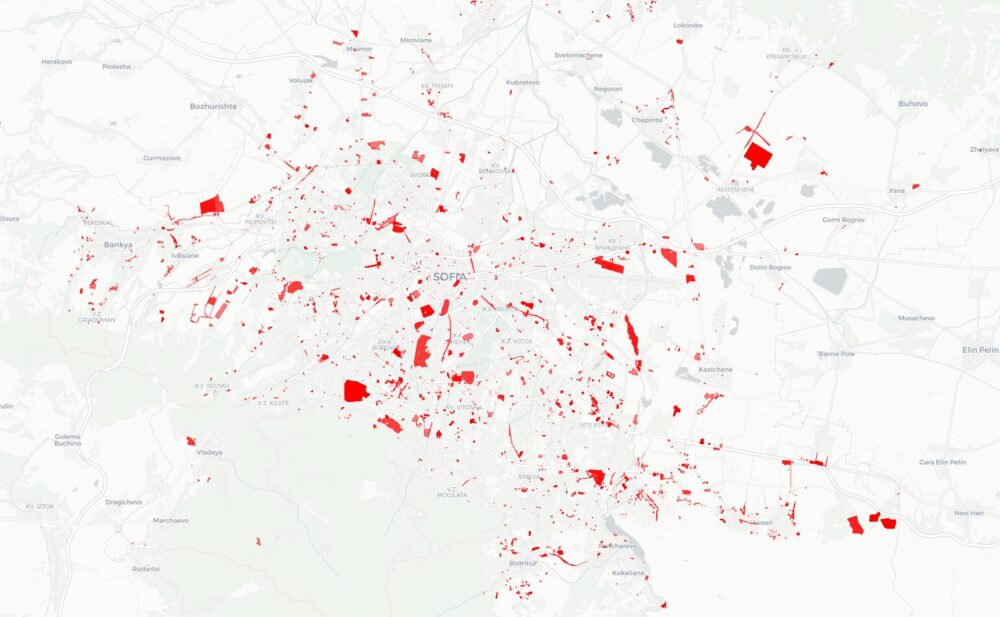
Документи и заседания от експертни съвети в НАГ

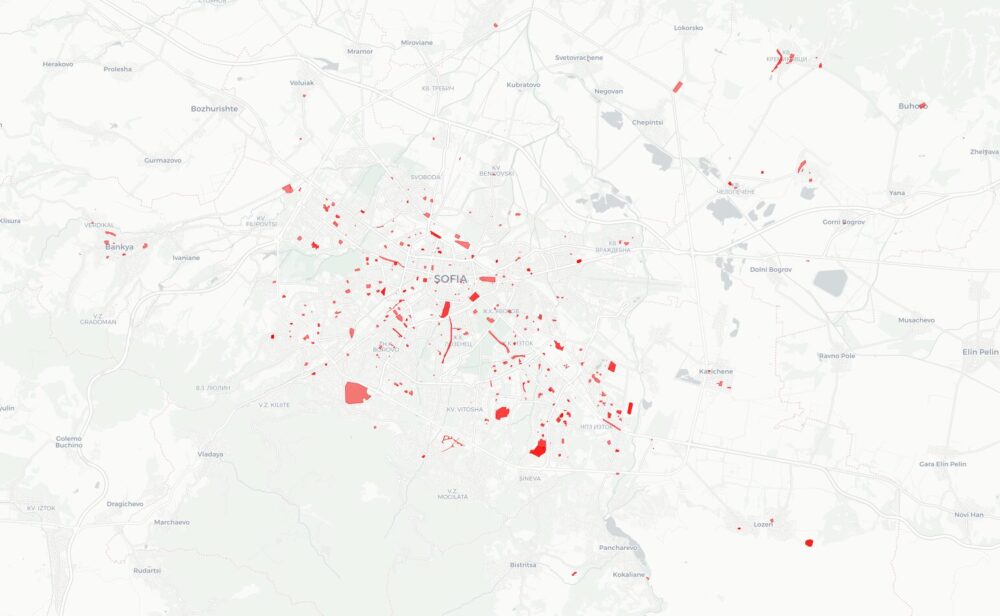
Тези данни са отчасти на картата от около година, но в последните месеци допълних источеските данни и разширих засичането за кои парцели се намират. За последните 15 години се намират 1290 заседания, протоколи или други документи от такива съвети. Свързах ги с 3923 обекта на картата. Ще ги намерите на този филтър на картата.

Обществени поръчки

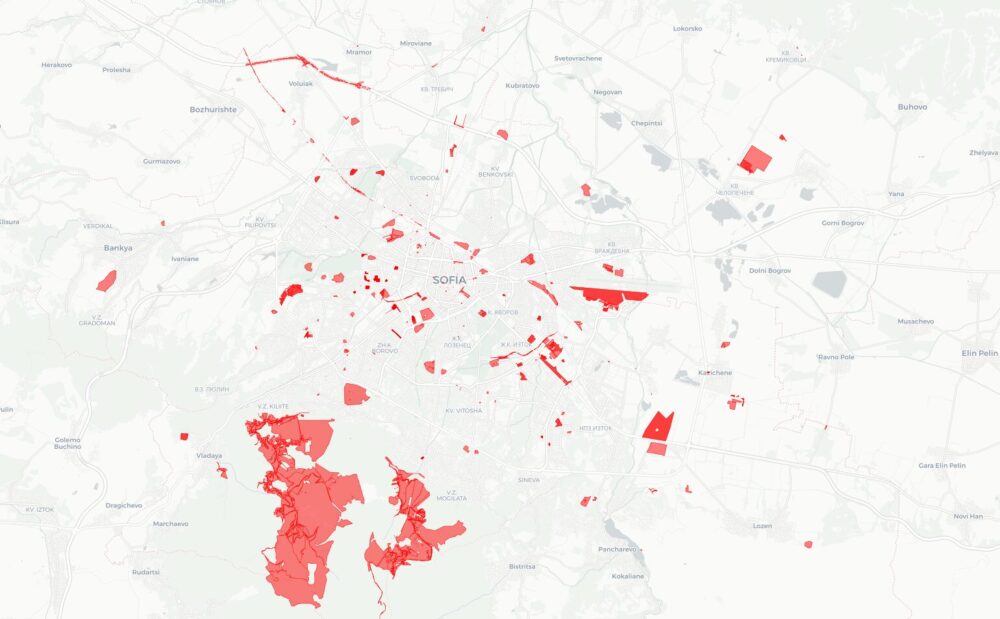
Намерих 755 поръчки в последните 15 години, които се отнасят до обекти в София. Някои са за ремонти, други за изграждане на градини и други сгради. Трети са за доставяне на апаратура или други дейности. Доста са за саниране. Свързах ги с 519 обекта. Ще ги намерите на тези филтри на картата.

Решения на Министерски съвет

Намерих 357 решения, протоколи и други документи от последните 15 години свързани с 2345 обекта. Освен тях ще намерите 126 търга за държавна собственост засагащи 57 имота. Ще ги намерите на тези филтри. Търговете спряха в края на миналата година, но ако се появят нови, ще се видат на тази карта, както и на другата с „имотите на Желязков за продажба„.

Заседания на Столичен общински съвет

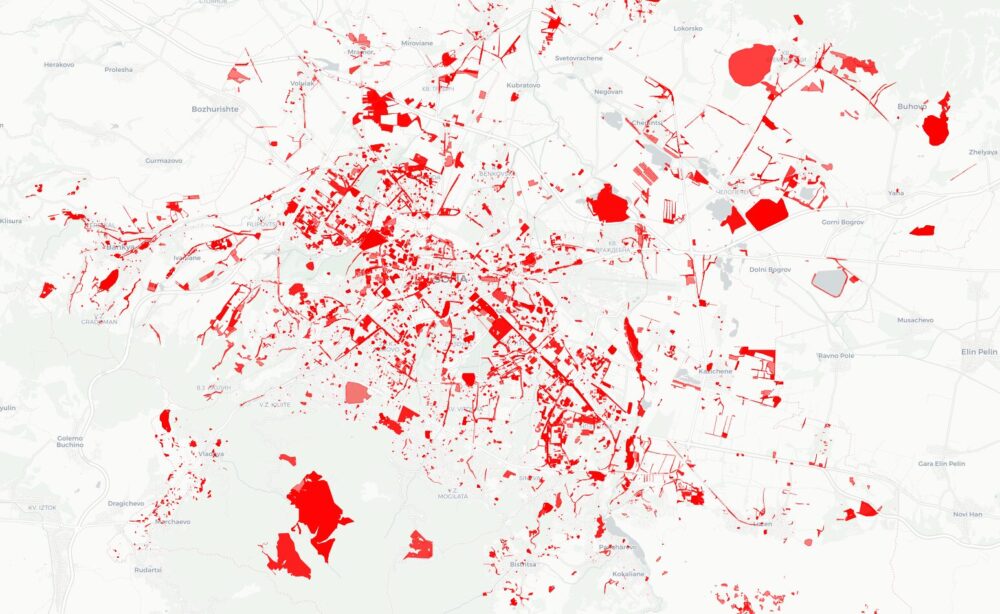
Това са последните данни от тази седмица. Включват 1115 документа, протоколи, питания и предложения от последните 8 години. Свързах ги с 10079. За целта обработих 42 хиляди документа на СОС и поне една трета споменаваха някакъв имот. Старите протоколи с повече от един документ в тях ги поставих като един линк, затова се виждат само около 1000 „документа“. Всички нови засегания, питания и прочие може да следите и на новия Matodon канал @SofiaCouncil. Документите ще намерите на този филтър на картата.

Както и с други данни, списъкът с тези документи не е изчерпателен. Засичам единствено, когато са узначили ясно имот с идентификатор. В някои случаи използват описания или адрес или обсъждат сграда по друг начин. В такива случаи не мога да засега автоматично, че става дума за част от града. Все пак този механизъм е полезен, за да засичаме мнозинството от обсъжданията още като са на ниво обществено обсъждане, питания и комисии.

Седмицата (2–7 февруари)

Post Syndicated from Боряна Телбис original https://www.toest.bg/sedmitsata-2-7-fevruari/

Седмицата (2–7 февруари)

За седем календарни дни под небето от коприна се разиграха толкова много сюжети, че няма как да им се насмогне. Човек може да се обърка, че живее в няколко паралелни реалности, в които всеки ден му прожектират нещо ново, за което трябва да се изпокара с непознати в социалните мрежи.

Ето кратък (неизчерпателен) преглед на това, което имаме като събития. Подредбата е безразборна, тъй като тука няма ред, а и да имаше, щеше да е предимно низходящ.

Дара спечели правото да представлява България на конкурса „Евровизия“, което насърчи половината нация да я освирка юнашки, доказвайки за пореден път, че нямаме по-важна работа от това да хванем една млада жена на мушка и да я разкостим.

Разкри се нова порция кадри, изтекли от охранителни камери на козметични салони и публикувани в порно сайтове; оказа се, че сред тях има и видео с момиче на 9 години (!).

Стана ясно, че охранителна камера в гинекологичен кабинет също е записвала неправомерно по време на прегледите, та сме дали на света нещо и в този жанр.

Някъде между другото се разбра, че отделението по детска хирургия във варненската болница „Св. Анна“ по всяка вероятност ще затвори от 1 март, защото петима от лекарите са си подали оставките, което явно е достатъчно, за да няма такова отделение. Здравният министър, който също е в оставка, засега успя да каже, че проблемите в болницата са трупани от десетилетие, което просто е институционалният начин да се обясни, че „то така си беше“. 

Но кой се интересува от деца и техните хирурзи. 

Затова минаваме нататък и се гмурваме в True Detective: Petrohan. 

Тука вече окончателно се установи, че сме нация от криминалисти и криминолози и може би само и.ф. главен прокурор е обикновен гражданин (така смятат ВКС и Софийският апелативен съд). 

Ако някой ден успеем да се окопитим от последните 5 години, може би ще си дадем сметка за всичко нередно в случаи като „Петрохан“. Засега обаче сме на ниво масова хипноза в стил „Лъки, ти не си котка, ти си геврек“.

Ако не ви идва навреме референцията с „Алф“, здраве да е. Важното е, че на и.ф. Сарафов, като коментира случая „Петрохан“, му дойде „Туин Пийкс“. И останалото е история… за педофили и далекоизточен мистицизъм. А тези твърдения, разбира се, влизат като у дома си в душата на българина, защото Епстийн контекстът е постлал удобно. 

Имаме си сюжет и по линия на други извращения: 10 години двойка от Свищов заснемала и продавала кадри с изтезания и убийства на животни. Ако ви се струва познато, то е, защото буквално преди има-няма година беше разкрит друг такъв случай, само че с двойка от Перник. Очевидно е, че извършителите на подобни деяния треперят от страх от българските разследващи органи. А, не, чакайте…

Горното обобщение на новини и събития, дори и да ви е намерило в добро здраве, както се казва, има всички шансове да го разклати. Или поне в психическата му част. Затова е редно човек да си взема необходимата доза свеж въздух.

Без големи претенции, само казвам, че „Тоест“ може да го играе подобен освежител.

Ето какво публикувахме тази седмица: 

Всичко това само на пръв поглед е история за кръв, порно и политика. Това е история за провала на държавата да мисли и да обяснява и за готовността на обществото да приеме емоцията като заместител на анализа.

Напомням ви, че днес (събота, 7 февруари) гост в „Тоест разговаряме“ ще бъде нашият автор Михаил Ангелов, който е биолог, агроном и магистър по растителна защита и е готов да ви скандализира с факта, че в ГМО-то няма нищо лошо. Разговорът ще се излъчи на живо в YouTube Live от 16:00 ч. 

Колкото по-объркано и задъхано става живеенето, толкова повече се радваме, че ги има читателите ни, заради които пък го има „Тоест“, където можем да си позволим лукса да бъдем бавни колкото си искаме. 

Ако и вие имате нужда от време на време да сменяте темпото, елате да си играем, при нас е (за)бавно. 

An in-kernel machine-learning library

Post Syndicated from corbet original https://lwn.net/Articles/1057569/

For those wanting more machine learning in the kernel, Viacheslav Dubeyko
has posted a
new in-kernel library
for that purpose.

What is the goal of using ML models in Linux kernel? The main goal
is to employ ML models for elaboration of a logic of particular
Linux kernel subsystem based on processing data or/and an efficient
subsystem configuration based on internal state of subsystem. As a
result, it needs: (1) collect data for training, (2) execute ML
model training phase, (3) test trained ML model, (4) use ML model
for executing the inference phase. The ML model inference can be
used for recommendation of Linux kernel subsystem configuration
or/and for injecting a synthesized subsystem logic into kernel
space (for example, eBPF logic).

It is rigorously undocumented
and there are no real users, so it’s not entirely clear what the purpose
is, but there are undoubtedly interesting things that could be done with
it.

Building a scalable code modernization solution with AWS Transform custom

Post Syndicated from Dinesh Prabakaran original https://aws.amazon.com/blogs/devops/building-a-scalable-code-modernization-solution-with-aws-transform-custom/

Introduction

Software maintenance and modernization is a critical challenge for enterprises managing hundreds or thousands of repositories. Whether upgrading Java versions, migrating to new AWS SDKs, or modernizing frameworks, the scale of transformation work can be overwhelming. AWS Transform custom uses agentic AI to perform large-scale modernization of software, code, libraries, and frameworks to reduce technical debt. It handles diverse scenarios including language version upgrades, API and service migrations, framework upgrades and migrations, code refactoring, and organization-specific transformations. Through continual learning, the agent improves from every execution and developer feedback, delivering high-quality, repeatable transformations without requiring specialized automation expertise.

Organizations need to run transformations using AWS Transform custom concurrently across their entire code estate to meet aggressive modernization timelines and compliance deadlines. Running it at enterprise scale requires a solution to process repositories in parallel, in a controlled remote cloud environment, manage credentials securely, and provide visibility into transformation progress. Today, we’re introducing an open-source solution that brings production-grade scalability, reliability, and monitoring to AWS Transform custom. This infrastructure enables you to run transformations on thousands of repositories in parallel using AWS Batch and AWS Fargate, with REST API access for programmatic control and comprehensive Amazon CloudWatch monitoring.

Requirements for Enterprise-Scale Code Modernization

AWS Transform custom provides powerful AI-driven code transformation capabilities through its CLI. To effectively scale transformations across enterprise codebases, organizations need:

Scale: Ability to run transformations on 1000+ repositories concurrently rather than one-by-one
Infrastructure: Dedicated compute resources for long-running transformations beyond developers’ laptops
API Access: REST API for programmatic orchestration and seamless integration with CI/CD pipelines
Monitoring: Centralized visibility into transformation progress and status across multiple repositories
Reliability: Automatic retries, secure credential management, and built-in fault tolerance

The Solution: Batch Infrastructure with REST API

This solution provides complete, production-ready infrastructure that addresses these challenges:

Core Capabilities

  • Scalable Batch Processing Run transformations on thousands of repositories in parallel using AWS Batch with Fargate. The default configuration (256 max vCPUs, 2 vCPUs per job) supports up to 128 concurrent jobs, with automatic queuing and resource management. The compute environment scales based on your needs and Fargate service quotas.
  • REST API for Programmatic Access Seven API endpoints provide complete job lifecycle management, enabling you to submit single jobs or bulk batches of thousands in one request. The API offers real-time status tracking and progress monitoring, with Amazon Identity and access Management (IAM) authentication ensuring secure access to transformation operations.
  • Multi-Language Container The solution includes a container supporting Java (8, 11, 17, 21), Python (3.8-3.13), and Node.js (16-24) with all build tools pre-installed, including Maven, Gradle, npm, and yarn. The AWS Transform CLI and AWS CLI v2 are bundled in. The container is fully extensible for custom requirements—you can add your own libraries, languages, or tools by customizing the Dockerfile to meet their specific needs
  • Enterprise-Grade Reliability Automatic IAM credential management eliminates long-lived keys, with credentials auto-refreshing every 45 minutes for jobs up to 12 hours. The system includes automatic retries for transient failures (default: 3 attempts), with configurable timeout and retry settings to match your transformation complexity.
  • Comprehensive Monitoring A CloudWatch dashboard provides job tracking with success and failure rates, trends over time, and API and Lambda health metrics. Real-time log streaming enables you to monitor transformation progress and quickly diagnose issues.

Architecture

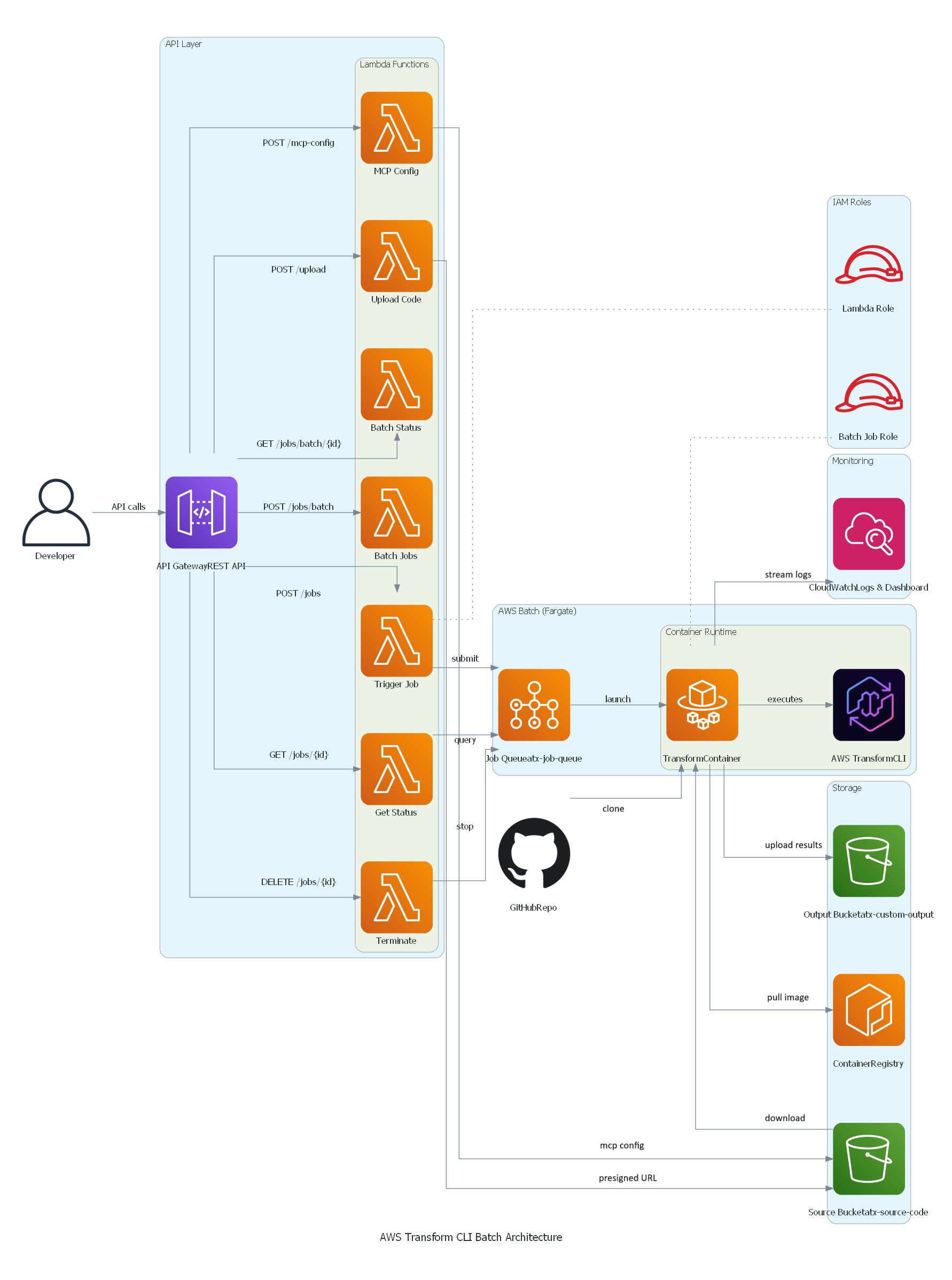
The solution uses a serverless architecture built on AWS managed services:

AWS Transform custom Batch solution architecture

Key Components:

  • API Gateway: REST API with IAM authentication
  • Lambda Functions: Job orchestration, status tracking, bulk submission
  • AWS Batch: Job queue and compute environment management
  • Fargate: Serverless container execution (no EC2 to manage)
  • S3: Source code input and transformation results output
  • CloudWatch: Logs, metrics, and operational dashboard

Getting Started

Prerequisites

Before deploying, ensure you have:

  • AWS Account with appropriate IAM permissions (ECR, S3, IAM, Batch, Lambda, API Gateway, CloudWatch)
  • AWS CLI v2 configured with credentials or AWS SSO login
  • Docker installed and running
  • Git for cloning the repository
  • Node.js 18+ and AWS CDK (for CDK deployment)
  • Python3for testing the APIs

Deployment Options

Option 1: CDK Deployment (Recommended)

Step 1: Clone the Repository

git clone https://github.com/aws-samples/aws-transform-custom-samples.git

cd aws-transform-custom-samples/scaled-execution-containers

Step 2: Set Environment Variables

export AWS_ACCOUNT_ID=$(aws sts get-caller-identity --query Account --output text)
export CDK_DEFAULT_ACCOUNT=$AWS_ACCOUNT_ID
export CDK_DEFAULT_REGION=us-east-1

Step 3: Verify prerequisites

This checks that Docker is installed and running, AWS CLI v2 is configured with credentials, Git is available, and your AWS account has the required VPC and public subnets.

cd deployment
chmod +x *.sh
./check-prereqs.sh

Step 4: Set up IAM Permissions (Optional, but recommended)

Generate a least-privilege IAM policy instead of using broad permissions:

./generate-custom-policy.sh

This creates iam-custom-policy.json with minimum permissions scoped to your specific resources.

Create and attach the policy:

aws iam create-policy \
  --policy-name ATXCustomDeploymentPolicy \
  --policy-document file://iam-custom-policy.json
aws iam attach-user-policy \
  --user-name YOUR_USERNAME \
  --policy-arn arn:aws:iam::$(aws sts get-caller-identity --query Account --output text):policy/ATXCustomDeploymentPolicy

Note: If you have administrator access, you can skip this step and proceed directly to deployment.

Step 5: Deploy with CDK (One Command Does Everything!)

cd ../cdk
chmod +x *.sh
./deploy.sh

Time: 20-25 minutes (all resources)

What CDK Does Automatically:

  1. Builds Docker image from Dockerfile
  2. Pushes image to ECR
  3. Creates all AWS resources
  4. Configures everything

What Gets Deployed:

  • ECR repository with Docker image
  • S3 buckets (output, source)
  • IAM roles with least-privilege
  • AWS Batch infrastructure (Fargate)
  • 7 Lambda functions
  • API Gateway REST API
  • CloudWatch logs and dashboard

See cdk/README.md for detailed instructions and configuration options.

Step 6: Get Your API Endpoint

After deployment completes, retrieve the API endpoint URL:

export API_ENDPOINT=$(aws cloudformation describe-stacks \
  --stack-name AtxApiStack \
  --query 'Stacks[0].Outputs[?OutputKey==`ApiEndpoint`].OutputValue' \
  --output text)

echo "API Endpoint: $API_ENDPOINT"

This endpoint is used in all subsequent API calls.

Option 2: Bash Scripts (Alternative)

If you prefer manual control over each deployment step or need to customize individual components, use the bash script deployment. See deployment/README.md for the complete 3-step process with detailed explanations of what each script deploys.

Using the Solution

Single Job Submission

Quick test: Run cd ../test && ./test-apis.sh to validate all API endpoints (MCP, transformations, bulk jobs, campaigns).

Submit a Python version upgrade transformation:

cd ..
python3 utilities/invoke-api.py \
  --endpoint "$API_ENDPOINT" \
  --path "/jobs" \
  --data '{
    "source": "https://github.com/venuvasu/todoapilambda",
    "command": "atx custom def exec -n AWS/python-version-upgrade -p /source/todoapilambda -c noop --configuration \"validationCommands=pytest,additionalPlanContext=The target Python version to upgrade to is Python 3.13. Python 3.13 is already installed at /usr/bin/python3.13\" -x -t"
  }'

This API call triggers a Python version upgrade transformation on the todoapilambda public git repository. The transformation uses the AWS Managed transformation to upgrade from the current Python version to Python 3.13. The configuration parameter specifies additional validation command to be run and plan context to specifies the location of python 3.13 installation in the container and the target version. The -x flag is for non-interactive mode of the transformation , and -t flag is to trust all tools for this transformation.

API returns a job ID for tracking. Job names are auto-generated from the source repository and transformation type.

See api/README.md for complete API documentation with examples for Java, Node.js, and other transformations.

Bulk Job Submission

Transform multiple repositories in a single API call:

python3 utilities/invoke-api.py \
  --endpoint "$API_ENDPOINT" \
  --path "/jobs/batch" \
  --data '{
    "batchName": "codebase-analysis-2025",
    "jobs": [
      {"source": "https://github.com/spring-projects/spring-petclinic", "command": "atx custom def exec -n AWS/early-access-comprehensive-codebase-analysis -p /source/spring-petclinic -x -t"},
      {"source": "https://github.com/venuvasu/todoapilambda", "command": "atx custom def exec -n AWS/early-access-comprehensive-codebase-analysis -p /source/todoapilambda -x -t"},
      {"source": "https://github.com/venuvasu/toapilambdanode16", "command": "atx custom def exec -n AWS/early-access-comprehensive-codebase-analysis -p /source/toapilambdanode16 -x -t"}
    ]
  }'

This API call triggers a deep static analysis of the codebase to generate hierarchical, cross-referenced documentation for three open source repositories in parallel. The transformation uses the AWS Managed transformation to generate behavioral analysis, architectural documentation, and business intelligence extraction to create a comprehensive knowledge base organized for maximum usability and navigation.

The API submits these jobs in a async manner. i.e the API returns a batch id upon submitting these jobs to AWS Batch. Then you can monitor the progress as specified below.

See api/README.md for status checking, MCP configuration, and other API endpoints.

Monitoring Progress

Check batch status:

python3 utilities/invoke-api.py \
  --endpoint "$API_ENDPOINT" \
  --method GET \
  --path "/jobs/batch/BATCH_ID"

Response shows real-time progress:

{
  "status": "RUNNING",
  "progress": 45.5,
  "totalJobs": 1000,
  "statusCounts": {
    "RUNNING": 195,
    "SUCCEEDED": 432,
    "FAILED": 23
  }
}

Viewing Results

After a job completes, the results are stored in your S3 output bucket.

S3 Output Structure:

Results are organized by job name and conversation ID:

s3://atx-custom-output-{account-id}/
└── transformations/
    └── {job-name}/                           # e.g., guava-early-access-comprehensive-codebase-analysis
        └── {timestamp}{conversation-id}/     # e.g., 20251227_051626_8f344f5f
            ├── code/                         # Full source code + transformed changes
            └── logs/                         # Execution logs and artifacts
                └── custom/
                    └── {timestamp}{conversation-id}/
                        └── artifacts/
                            └── validation_summary.md

Validation Summary:

AWS Transform CLI generates a validation summary showing all changes made:

s3://atx-custom-output-{account-id}/transformations/{job-name}/{timestamp}{conversation-id}/logs/custom/{timestamp}{conversation-id}/artifacts/validation_summary.md

This file contains:

  • Summary of all code changes
  • Files modified, added, or deleted
  • Validation results
  • Transformation statistics

Download Results:

# Download all results for a specific job
aws s3 sync s3://atx-custom-output-{account-id}/transformations/{job-name}/{timestamp}{conversation-id}/ ./local-results/

# Download just the validation summary
aws s3 cp s3://atx-custom-output-{account-id}/transformations/{job-name}/{timestamp}{conversation-id}/logs/custom/{timestamp}{conversation-id}/artifacts/validation_summary.md ./

# Download transformed code only
aws s3 sync s3://atx-custom-output-{account-id}/transformations/{job-name}/{timestamp}{conversation-id}/code/ ./transformed-code/

Monitoring and Observability

The solution includes a CloudWatch dashboard with operational metrics:

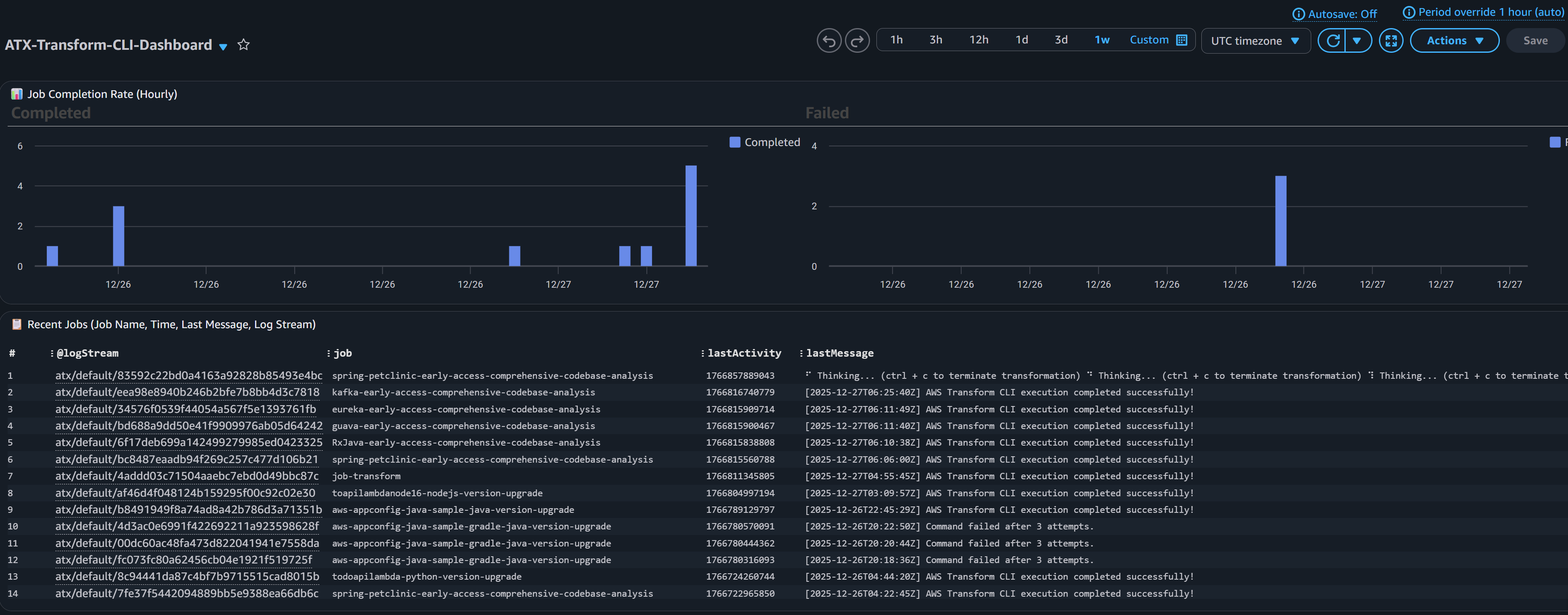
Job Tracking:

  • Completion rate with hourly trends (completed vs failed)
  • Recent jobs table showing job name, timestamp, last message, and log stream
  • Real-time visibility into job execution

CloudWatch Dashboard screenshot for Job tracking

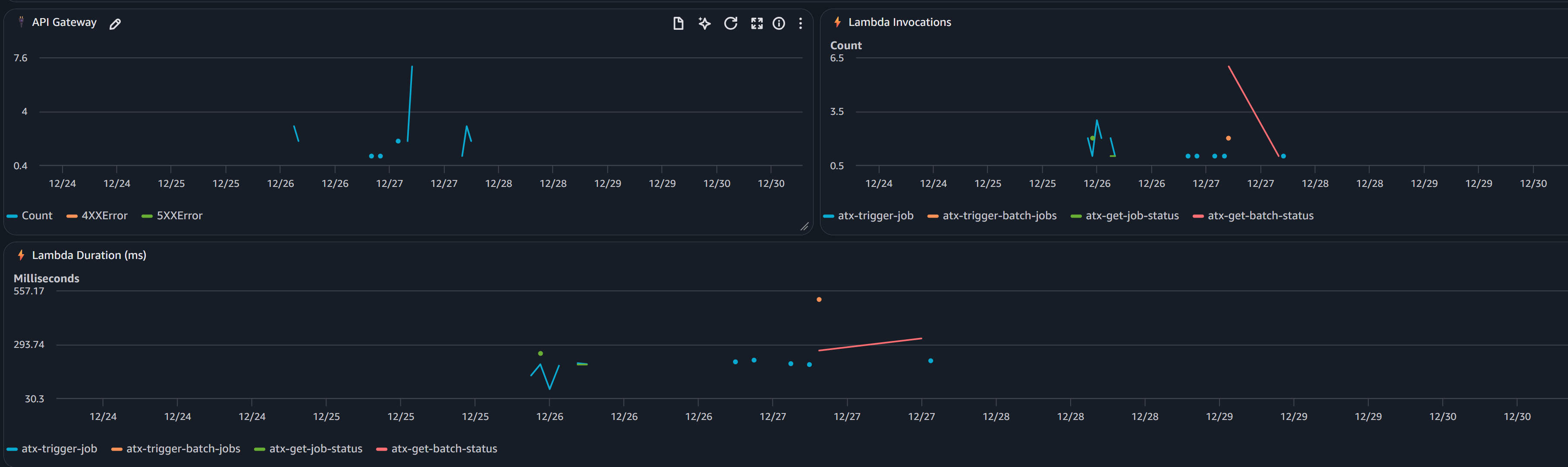
API and Lambda Health:

  • API Gateway request counts and error rates
  • Lambda invocation metrics per function
  • Performance monitoring (duration by function)

CloudWatch Dashboard screenshot for API and Lambda Health

CloudWatch Logs:

All logs are centralized in CloudWatch Logs (/aws/batch/atx-transform) with real-time streaming.

View logs via AWS CLI:

aws logs tail /aws/batch/atx-transform --follow --region us-east-1

Or use the included utility:

python3 utilities/tail-logs.py JOB_ID --region us-east-1

View in AWS Console: CloudWatch → Log Groups → /aws/batch/atx-transform

Model Context Protocol (MCP) Integration

AWS Transform custom supports Model Context Protocol (MCP) servers to extend the AI agent with additional tools. Configure MCP servers via API:

python3 utilities/invoke-api.py \
  --endpoint "$API_ENDPOINT" \
  --path "/mcp-config" \
  --data '{
    "mcpConfig": {
      "mcpServers": {
        "github": {"command": "npx", "args": ["-y", "@modelcontextprotocol/server-github"]},
        "fetch": {"command": "uvx", "args": ["mcp-server-fetch"]}
      }
    }
  }'

The configuration is stored in S3 and automatically available to all transformations. Test with atx mcp tools to list configured servers.

See api/README.md for status checking, MCP configuration, and other API endpoints.

Customization for Private Repositories

You may need to access private repositories and artifact registries. Extend the base container to add credentials:

To access your private Git repositories or artifact registries during transformations:

Two approaches:

  1. AWS Secrets Manager (RECOMMENDED) – Credentials fetched at runtime, never stored in image
  2. Hardcode in Dockerfile (NOT RECOMMENDED) – For testing only

Steps:

  1. Uncomment placeholders in container/entrypoint.sh (Secrets Manager) or container/Dockerfile (hardcoded)
  2. Redeploy container (see below)

See container/README.md for complete setup instructions, examples, and security best practices.

Redeploying after customization:

If using CDK:

cd cdk && ./deploy.sh

CDK automatically detects Dockerfile changes and rebuilds. If changes aren’t detected, force rebuild:

cd cdk && ./deploy.sh —force

If using bash scripts:

cd deployment
./1-build-and-push.sh --rebuild
./2-deploy-infrastructure.sh

The infrastructure will use your custom container with private repository access. You can also customize the container to add support for additional language versions or entirely new languages based on their specific requirements.

See container/README.md for complete examples.

Note: For automated PR creation and pushing changes back to remote repositories after transformation, you have two options: (1) extend container/entrypoint.sh with git commands using your private credentials (see commented placeholder in the script), or (2) use a custom Transformation definition with MCP configured to connect to GitHub/GitLab for more sophisticated PR workflows.

Campaigns

Central platform teams can create campaigns through the AWS Transform web interface to manage enterprise-wide migration and modernization projects. For instance, to upgrade all repositories from Java 8 to Java 21, teams create a campaign with the Java upgrade transformation definition and target repository list. As developers execute transformations, repositories automatically register with the campaign, enabling you to track progress and monitor across your organization.

Creating a Campaign

  1. Setup Users and Login to AWS Transform web application
  2. Create a Workspace and Create a Job
  3. In the chat, specify the type of the job . For example , “I would like comprehensive code analysis on multiple repos”
  4. Based on your request, AWS Transform will display the list of transformation that matches the criteria, in this case “AWS/early-access-comprehensive-codebase-analysis (Early Access)”
  5. Once you confirm the transformation, AWS Transform will create a campaign and a command to execute for the transformation. You can just copy that command and execute via the API as described below replacing the repo details.
atx custom def exec \
--code-repository-path <path-to-repo> \
--non-interactive \
--trust-all-tools \
--campaign 0d0c7e9f-5cb2-4569-8c81-7878def8e49e \
--repo-name <repo-name> \
--add-repo

Executing the Transformation in a Campaign

python3 utilities/invoke-api.py \
  --endpoint "$API_ENDPOINT" \
  --path "/jobs" \
  --data '{
    "source": "https://github.com/spring-projects/spring-petclinic",
    "command": "atx custom def exec --code-repository-path /source/spring-petclinic --non-interactive --trust-all-tools --campaign 0d0c7e9f-5cb2-4569-8c81-7878def8e49e --repo-name spring-petclinic --add-repo"
  }'

Once this transformation Job is successful, you can view the results and dashboard in Web application as well.

Cleanup

To remove all deployed resources:

CDK Cleanup (Recommended)

cd cdk ./destroy.sh

Bash Scripts Cleanup (Alternate)

cd deployment ./cleanup.sh

This script deletes:

  • AWS Batch resources (compute environment, job queue, job definitions)
  • Lambda functions and API Gateway
  • IAM roles
  • S3 buckets (after emptying)
  • CloudWatch logs and dashboard
  • ECR repository

Conclusion

Enterprise software modernization requires infrastructure that can operate at scale with reliability and observability. This solution provides a production-ready platform for running AWS Transform custom transformations on thousands of repositories concurrently.

By combining AWS Batch’s scalability, Fargate’s serverless compute, and a REST API for programmatic access, you can:

  • Accelerate modernization initiatives
  • Reduce manual effort and human error
  • Gain visibility into transformation progress
  • Integrate with existing DevOps workflows

The code repository is open-source, fully automated, and ready for you to deploy in your AWS account today.

Get started today with AWS Transform custom

About the authors
Profile image for Venugopalan Vasudevan

Venugopalan Vasudevan

Venugopalan Vasudevan (Venu) is a Senior Specialist Solutions Architect at AWS, where he leads Generative AI initiatives focused on Amazon Q Developer, Kiro, and AWS Transform. He helps customers adopt and scale AI-powered developer and modernization solutions to accelerate innovation and business outcomes.

Profile image for Dinesh Balaaji Prabakaran

Dinesh Balaaji Prabakaran

Dinesh is a Enterprise Support Lead at AWS who specializes in supporting Independent Software Vendors (ISVs) on their cloud journey. With expertise in AWS Generative AI Services, he helps customers leverage Amazon Q Developer, Kiro, and AWS Transform to accelerate application development and modernization through AI-powered assistance.

Profile image for Brent Everman

Brent Everman

Brent Everman is a Senior Technical Account Manager with AWS, based out of Pittsburgh. He has over 17 years of experience working with enterprise and startup customers. He is passionate about improving the software development experience and specializes in the AWS Next Generation Developer Experience services.

I Am in the Epstein Files

Post Syndicated from Bruce Schneier original https://www.schneier.com/blog/archives/2026/02/i-am-in-the-epstein-files.html

Once. Someone named “Vincenzo lozzo” wrote to Epstein in email, in 2016: “I wouldn’t pay too much attention to this, Schneier has a long tradition of dramatizing and misunderstanding things.” The topic of the email is DDoS attacks, and it is unclear what I am dramatizing and misunderstanding.

Rabbi Schneier is also mentioned, also incidentally, also once. As far as either of us know, we are not related.

Metasploit Wrap-Up 02/06/2026

Post Syndicated from Christopher Granleese original https://www.rapid7.com/blog/post/pt-metasploit-wrap-up-02-06-2026

Google Summer of Code 2026

Our very own Jack Heysel has added some documentation which outlines the Metasploit Framework project ideas for GSoC 2026. For anyone interested in applying please see GSoC-How-To-Apply documentation, or reach out on slack to any of the following GSoC mentors on Slack via the Metasploit Slack: @jheysel, @zeroSteiner, @h00die

Gladinet

This week Chocapikk has added some Gladinet CentreStack/Triofox exploitation capabilities. Adding two auxiliary modules and updating an existing exploit. The updated exploit module now accepts a custom MACHINEKEY option to leverage newly discovered vulnerabilities that allow the extraction of machineKeys from Web.config files. The gladinet_storage_path_traversal_cve_2025_11371 module exploits path traversal to read arbitrary files and extract machineKeys, while gladinet_storage_access_ticket_forge forges access tickets using hardcoded cryptographic keys.

New module content (1)

Gladinet CentreStack/Triofox Access Ticket Forge

Authors: Huntress Team, Julien Voisin, and Valentin Lobstein [email protected] Type: Auxiliary Pull request: #20768 contributed by Chocapikk Path: gather/gladinet_storage_access_ticket_forge

Description: This adds two auxiliary modules for Gladinet CentreStack/Triofox. Both modules can read arbitrary files and extract the machineKey, which is used to secure ASP.NET ViewState data. Furthermore, this change also includes a new mixin for Gladinet.

Enhancements and features (3)

  • #20739 from cdelafuente-r7 – This adds MITRE ATT&CK metadata tags to modules relating to Kerberos and unconstrained delegation. This enables users to search for the content based on the ATT&CK technique ID.
  • #20882 from karanabe – Adds the RSAKeySize advanced option and uses it when generating the CSR key pair, allowing users to increase key size to meet certificate template minimums and avoid CERTSRV_E_KEY_LENGTH errors when 2048-bit keys are rejected.
  • #20883 from jheysel-r7 – Updates Kerberos modules to present a user friendly message when the user specifies the IMPERSONATE option when running a module but also forgets to specify IMPERSONATION_TYPE.

Bugs fixed (5)

  • #20368 from isaac-app-dev – Fixes an issue that caused msfvenom to break if it were run from alternative directories.
  • #20680 from cdelafuente-r7 – Improves the RPC API with multiple fixes and enhancements.
  • #20834 from kuklycs – This fixes the NoMethodError in the team_viewer post module, caused by misuse of the each_key method. The keys array has been updated to a 1-D array to simplify the logic.
  • #20916 from Chepycou – Fixes a crash when running the SAP modules sap_soap_rfc_system_info or sap_icf_public_info.
  • #20920 from rudraditya21 – This fixes a bug in password cracking modules where the auto action would crash even when the path to a compatible executable was specified in CRACKER_PATH.

Documentation added (1)

  • #20910 from jheysel-r7 – This adds documentation regarding the projects for which we are soliciting submissions for as part of the Google Summer of Code program.

You can always find more documentation on our docsite at docs.metasploit.com.

Get it

As always, you can update to the latest Metasploit Framework with msfupdate and you can get more details on the changes since the last blog post from GitHub:

If you are a git user, you can clone the Metasploit Framework repo (master branch) for the latest. To install fresh without using git, you can use the open-source-only Nightly Installers or the commercial edition Metasploit Pro

Building fault-tolerant applications with AWS Lambda durable functions

Post Syndicated from Rahul Pisal original https://aws.amazon.com/blogs/compute/building-fault-tolerant-long-running-application-with-aws-lambda-durable-functions/

Business applications often coordinate multiple steps that need to run reliably or wait for extended periods, such as customer onboarding, payment processing, or orchestrating large language model inference. These critical processes require completion despite temporary disruptions or system failures. Developers currently spend significant time implementing mechanisms to track progress, handle failures, and manage resources when waiting for external events, shifting focus from business logic to undifferentiated tasks.

At re:Invent 2025, Amazon Web Services (AWS) launched AWS Lambda durable functions, a new capability extending Lambda’s event-driven programming model with built-in capabilities to build fault-tolerant multi-step applications and AI workflows using familiar programming languages. At its core, durable functions are regular Lambda functions, so your development and operational processes for Lambda continue to apply. However, when you create a Lambda function you can now enable durable execution, so that you can checkpoint progress, automatically recover from failures, and suspend execution for up to one year when waiting on long-running tasks, such as human-in-the-loop processes.

How Lambda durable functions work

When working with standard Lambda functions, your code runs from start to finish in a single invocation. If a failure occurs at any point during the execution, the entire function must be retried by the invoking event source. Any state that needs to be preserved between executions must be explicitly saved and retrieved. This is typically done by using external storage services such as Amazon DynamoDB or Amazon Simple Storage Service (Amazon S3). Furthermore, you must typically guard against duplicate (concurrent) invocations of the same event and have a strategy to safely deploy updates while continuing to process events.

In contrast, with Lambda durable functions, developers use durable operations such as “Steps” and “Waits” in the event handler to checkpoint progress, handle failures, and suspend execution during wait periods without incurring compute charges for on-demand functions. These durable operations and any optional state returned from them are automatically persisted by Lambda in a fully-managed durable execution backend. If failures occur during the execution, or if your function resumes its execution after being paused, Lambda invokes your function again, restoring (replaying) the previous state by executing the event handler from the start, but skipping over completed durable operations. To streamline this checkpoint/replay mechanism for developers, you can use the Lambda durable execution SDK to wrap or annotate your event handler, which enhances the existing Lambda context with several new methods like context.step() and context.wait(). Furthermore, you can use methods such as context.waitForCallback() to wait on external jobs or asynchronous processes, such as “human-in-the-loop” scenarios. The execution is paused until a SendDurableExecutionCallbackSuccess or SendDurableExecutionCallbackFailure response is sent to the Lambda API.

Getting started

Use the AWS Serverless Application Model (AWS SAM) to create a new durable function with sam init with an AWS Quick Start Template. Lambda durable functions are also supported by the AWS Cloud Development Kit (AWS CDK), AWS Command Line Interface (AWS CLI), AWS CloudFormation and other infrastructure as code (IaC) frameworks such as Terraform.

Consider the following function, which performs user onboarding. First, it creates a user profile based on some data, then it sends out an email for verification and waits until the user either confirms the email address, or a 24-hour timeout is reached. Finally, it sends out a confirmation.

import {
  DurableContext,
  withDurableExecution,
} from '@aws/durable-execution-sdk-js';
export const handler = withDurableExecution(
  async (event: OnboardingEvent, context: DurableContext) => {
    try {    
      // Create user profile
      const profile = await context.step("create-profile", async () =>
        createUserProfile(event.email, event.name)
      );
      // Wait for email verification via callback
      const verification = await context.waitForCallback(
        "wait-for-email-verification",
        async (callbackId) => {
          // Send email to user and pass callbackId
          await sendVerificationEmail(profile, callbackId);
        },
        {
          timeout: { hours: 24 } 
        }
      );
      // Send confirmation and welcome email
      const result = await context.step("complete-onboarding", async () => {
        if (!verification || !verification.verified) 
     return { ...profile, status: 'failed' };
        await sendWelcomeEmail(profile.email, profile.name);
        return { ...profile, status: 'active' };
      });
      return result;
    } catch (error) {
      // omitted 
    }
  }
);

Durable functions have built-in and fully customizable error handling for steps. For example, if the profile was successfully created and verified, but a temporary error occurred when sending out the confirmation, then the step is retried. The retry skips over any previously completed checkpoints, such as the profile creation and callback. Only the code within the send confirmation step is run again.

Next, you update the AWS SAM template to include your durable function. You create a Lambda durable function by including the DurableConfig setting for your function. Note that you currently cannot add a durable configuration to a function that was originally created without it. The ExecutionTimeout defines after which time the durable execution times out to protect against runaway or deadlock application bugs. This setting is separate from the invocation timeout, which defines for how long a single invocation can run. The maximum invocation timeout for a single function invocations remains unchanged at 15 minutes. With Lambda durable functions, you will typically see multiple invocations per durable execution, such as when using the wait capabilities in the SDK or automatic retries. You can set the ExecutionTimeout for up to one year when using asynchronous invocations.

The RetentionPeriodInDays defines how long the execution data of a durable execution is available to you after executions complete.

AWSTemplateFormatVersion: '2010-09-09'
Transform: AWS::Serverless-2016-10-31
 
Resources:
  UserOnboardingFunction:
    Type: AWS::Serverless::Function
    Properties:
      FunctionName: UserOnboardingFunction
      CodeUri: ./src
      Handler: index.handler
      Runtime: nodejs24.x
      Architectures:
        - x86_64
      MemorySize: 256
      Timeout: 60		   // Timeout for an individual invocation
      DurableConfig:		   // This makes the function a durable function
        ExecutionTimeout: 90000 // 25h timeout for the durable execution overall
        RetentionPeriodInDays: 7 
UserOnboardingFunctionRole:
    Type: AWS::IAM::Role
    // omitted for brevity

You must include the necessary permissions for your function. For example, the AWSLambdaBasicDurableExecutionRole managed policy only allows the minimal AWS Identity and Access Management (IAM) actions to create/retrieve checkpoints and logs to increase security. Therefore, it does not include permissions to invoke other (durable) functions or manage callbacks. Refer to the documentation for more details.

Testing locally

Before deploying your function, you can test it locally using AWS SAM local invoke.

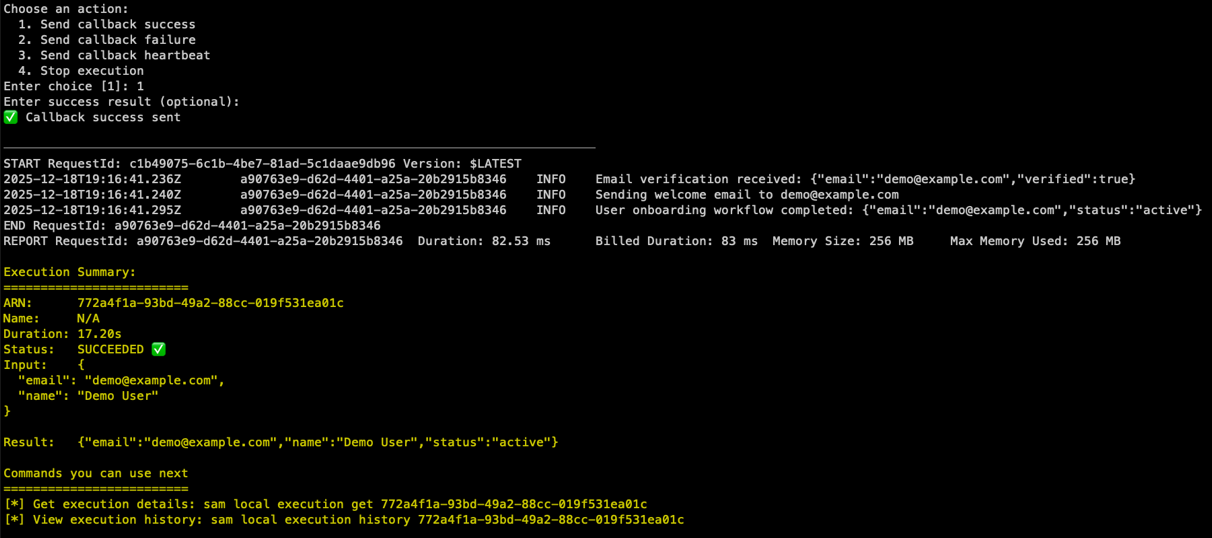
AWS SAM locally invokes your function and runs the event handler until it reaches the context.waitForCallback(). To complete callbacks, AWS SAM offers new commands to interact with your durable functions. In this example, you send a Success response to complete the callback. You can also include relevant data in the response. You can send the response directly using the on-screen guide or using another AWS SAM CLI command from another process.

sam local callback succeed <your-callback-id> --result '<your data>'

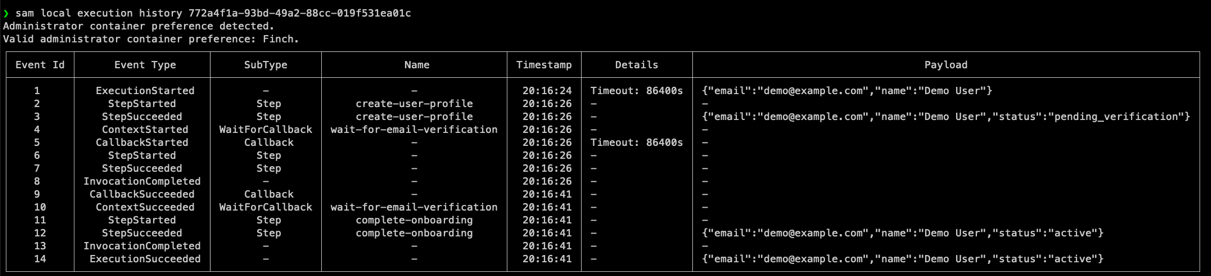
To inspect an execution, you can use AWS SAM to retrieve the durable execution history of your function, which includes details about steps, callbacks, and wait durations, as shown in the following example code.

sam local execution history <execution-arn>

Depending on your use case, you can instead send a Failure response to a callback and handle those errors in your code. For example, by performing compensation logic in a subsequent step:

sam local callback fail <your-callback-id> --result '<your data>'

Now that you have verified that your function works as intended, deploy it to AWS using sam deploy command.

Best practices and considerations

Invoking a Lambda durable function requires a qualified Amazon Resource Name (ARN), such as an alias or version. We recommend that you don’t use the $LATEST qualifier except for rapid prototyping or local testing. Using explicit versions ensures that replays always happen with the same code with which the execution was started. This is to ensure deterministic execution and prevent inconsistencies when updating your function code during executions.

We recommend bundling the durable execution SDK with your function code using your preferred package manager. The SDKs are fast-moving, so you can update dependencies as new features become available.

There are other durable operations in the Lambda durable functions SDK that you can use to build your application:

  • waitForCondition(): Pauses the execution of your function until a condition is met. For example, the status of a job polled with an API. For this to work, you provide the waitStrategy and a check function to poll the status.
  • parallel(): Runs multiple durable operations in parallel within the same function, with configurable options such as the maximum number of concurrent branches and desired failure behavior. This streamlines managing durability and checkpointing for simultaneous asynchronous actions.
  • map(): Creates a durable operation and checkpoint for each item of an array, based on the provided mapping function. The items are processed concurrently.
  • invoke(): Invokes another Lambda function and waits for its result. The SDK creates a checkpoint, invokes the target function, and resumes your function when the invocation completes. This enables function composition and workflow decomposition.

Refer to the developer guide for more details.

Lambda compute charges apply to all invocations, including any replays. When using wait operations, the function suspends execution and, for on-demand functions, doesn’t incur duration charges until execution resumes. You’re also charged for durable operations, data written, and data retention. To learn more about Lambda durable functions pricing, refer to the Lambda pricing page.

For the latest Region availability, visit the AWS Capabilities by Region page.

Conclusion

AWS Lambda durable functions extends the Lambda programming model to streamline building fault-tolerant, long-running applications using familiar programming patterns. You can use Lambda durable functions to write multi-step workflows in your preferred programming language, using built-in methods that automatically handle progress checkpointing and error recovery. This streamlines your architectures so that you can focus on your business logic, and optimize cost by charging only for active compute time.

You can build durable functions for Python or Node.js based Lambda functions using the Lambda API, AWS Management Console, AWS CLI, AWS CloudFormation, AWS SAM, AWS SDK, and AWS CDK.

To get started, visit the Lambda Developer Guide or watch the re:Invent breakout session.

Ardour 9.0 released

Post Syndicated from jake original https://lwn.net/Articles/1057548/

The Ardour digital-audio-workstation (DAW)
project has announced the
release of version 9.0
.

This is a major release for the project, seeing several substantive new features that users have asked for over a long period of time. Region FX, clip recording, a touch-sensitive GUI, pianoroll windows, clip editing and more, not to mention dozens of bug fixes, new MIDI binding maps, improved GUI performance on macOS (for most) …

We expect to get feedback on some of the major new features in this release, and plan to take that into account as we improve and refine them and the rest of Ardour going forward. We have no doubt that there will be both delight and disappointment with certain things – rather than assume that we don’t know what we’re doing, please leave us feedback on the forums so that Ardour gets better over time. Those of you new to our clip launching implementation might care to read up on the differences with Ableton Live.

In the coming weeks, we’ll begin to sketch out what we have planned next for Ardour, in addition to responding to the feedback we get on this 9.0 release.

[$] Kernel control-flow-integrity support comes to GCC

Post Syndicated from daroc original https://lwn.net/Articles/1056601/

Control-flow integrity (CFI) is a set of techniques that make it more difficult for
attackers to hijack indirect jumps to exploit a system. The Linux kernel has
supported forward-edge CFI (which protects indirect function calls)
since 2020, with the most recent implementation
of the feature introduced in 2022. That
version avoids the overhead introduced by the earlier approach by using a
compiler flag (-fsanitize=kcfi) that is present in Clang but not in
GCC. Now, Kees Cook has

a patch set
adding that support to GCC that looks likely to land in GCC
17.

Linux from Scratch to drop System V versions

Post Syndicated from jzb original https://lwn.net/Articles/1057509/

The Linux From
Scratch
(LFS) project provides step-by-step instructions on
building a customized Linux system entirely from source. Historically,
the project has provided separate System V and systemd editions,
which gave users a choice of init systems. Bruce Dubbs has announced
the project will no longer produce the System V version:

There are two reasons for this decision. The first reason is
workload. No one working on LFS is paid. We rely completely on
volunteers. In LFS there are 88 packages. In BLFS there are over
1000. The volume of changes from upstream is overwhelming the
editors. In this release cycle that started on the 1st of September
until now, there have been 70 commits to LFS and 1155 commits to BLFS
(and counting). When making package updates, many packages need to be
checked for both System V and systemd. When preparing for release, all
packages need to be checked for each init system.

The second reason for dropping System V is that packages like GNOME
and soon KDE’s Plasma are building in requirements that require
capabilities in systemd that are not in System V. This could
potentially be worked around with another init system like OpenRC, but
beyond the transition process it still does not address the ongoing
workload problem.

[…] As a personal note, I do not like this decision. To me LFS is
about learning how a system works. Understanding the boot process is a
big part of that. systemd is about 1678 “C” files plus many data
files. System V is “22” C files plus about 50 short bash scripts and
data files. Yes, systemd provides a lot of capabilities, but we will
be losing some things I consider important.

The next version, 13.0, is expected in March and will only focus on
systemd.

The collective thoughts of the interwebz