Post Syndicated from Crosstalk Solutions original https://www.youtube.com/shorts/5jNXeHdIFk8
AWS Weekly Roundup: Single GPU P5 instances, Advanced Go Driver, Amazon SageMaker HyperPod and more (August 18, 2025)
Post Syndicated from Prasad Rao original https://aws.amazon.com/blogs/aws/aws-weekly-roundup-single-gpu-p5-instances-advanced-go-driver-amazon-sagemaker-hyperpod-and-more-august-18-2025/
Let me start this week’s update with something I’m especially excited about – the upcoming BeSA (Become a Solutions Architect) cohort. BeSA is a free mentoring program that I host along with a few other AWS employees on a volunteer basis to help people excel in their cloud careers. Last week, the instructors’ lineup was finalized for the 6-week cohort starting September 6. The cohort will focus on migration and modernization on AWS. Visit the BeSA website to learn more.
Another highlight for me last week was the announcement of six new AWS Heroes for their technical leadership and exceptional contributions to the AWS community. Read the full announcement to learn more about these community leaders.

Last week’s launches
Here are some launches from last week that got my attention:
- Amazon EC2 Single GPU P5 instances are now generally available — You can right-size your machine learning (ML) and high performance computing (HPC) resources cost-effectively with the new Amazon Elastic Compute Cloud (Amazon EC2) P5 instance size with one NVIDIA H100 GPU.
- AWS Advanced Go Driver is generally available — You can now use the AWS Advanced Go Driver with Amazon Relational Database Service (Amazon RDS) and Amazon Aurora PostgreSQL-Compatible and MySQL-Compatible database clusters for faster switchover and failover times, Federated Authentication, and authentication with AWS Secrets Manager or AWS Identity and Access Management (IAM). You can install the PostgreSQL and MySQL packages for Windows, Mac, or Linux, by following the installation guides in GitHub.
- Expanded support for Cilium with Amazon EKS Hybrid Nodes — Cilium is a Cloud Native Computing Foundation (CNCF) graduated project that provides core networking capabilities for Kubernetes workloads. Now, you can receive support from AWS for a broader set of Cilium features when using Cilium with Amazon EKS Hybrid Nodes including application ingress, in-cluster load balancing, Kubernetes network policies, and kube-proxy replacement mode.
- Amazon SageMaker AI now supports P6e-GB200 UltraServers — You can accelerate training and deployment of foundational models (FMs) at trillion-parameter scale by using up to 72 NVIDIA Blackwell GPUs under one NVLink domain with the new P6e-GB200 UltraServer support in Amazon SageMaker HyperPod and Model Training.
- Amazon SageMaker HyperPod now supports fine-grained quota allocation of compute resources, topology-aware-scheduling of LLM tasks and custom Amazon Machine Images (AMIs) — You can allocate fine-grained compute quota for GPU, Trainium accelerator, vCPU, and vCPU memory within an instance to optimize compute resource distribution. With topology-aware scheduling, you can schedule your large language model (LLM) tasks on an optimal network topology to minimize network communication and enhance training efficiency. Using custom AMIs, you can deploy clusters with pre-configured, security-hardened environments that meet your specific organizational requirements.
Additional updates
Here are some additional news items and blog posts that I found interesting:
- Celebrating 10 years of Amazon Aurora innovation — Join the livestream event on August 21, 2025, to celebrate a decade of Aurora database innovation.
- AWS named as a Leader in 2025 Gartner Magic Quadrant for Strategic Cloud Platform Services — For the fifteenth consecutive year, Gartner has named AWS a Leader in the Gartner Magic Quadrant for Strategic Cloud Platform Services (SCPS), making AWS the longest-running Magic Quadrant Leader.
- Introducing AWS Cloud Control API (CCAPI) MCP Server — You can now use natural language to managing cloud infrastructure using CCAPI MCP Server. You can create, read, update, delete, and list resources using natural language.
- Introducing Amazon Bedrock AgentCore Identity — AgentCore Identity provides a centralized capability to manage agent identities, securing credentials, and supporting seamless integration with AWS and third-party services through Sigv4, standardized OAuth 2.0 flows, and API key.
- Introducing Amazon Bedrock AgentCore Gateway — A fully managed service to connect AI agents with tools and services. It serves as a centralized tool server, providing a unified interface where agents can discover, access, and invoke tools.
Upcoming AWS events
Check your calendars and sign up for upcoming AWS and AWS Community events:
- AWS re:Invent 2025 (December 1-5, 2025, Las Vegas) — The AWS flagship annual conference offering collaborative innovation through peer-to-peer learning, expert-led discussions, and invaluable networking opportunities.
- AWS Summits — Join free online and in-person events that bring the cloud computing community together to connect, collaborate, and learn about AWS. Coming up soon are summits in Johannesburg (August 20) and Toronto (September 4).
- AWS Community Days — Join community-led conferences that feature technical discussions, workshops, and hands-on labs led by expert AWS users and industry leaders from around the world: Adria (September 5), Baltic (September 10), Aotearoa (September 18), and South Africa (September 20).
Join the AWS Builder Center to learn, build, and connect with builders in the AWS community. Browse here for upcoming in-person and virtual developer-focused events.
That’s all for this week. Check back next Monday for another Weekly Roundup!
– Prasad
Lightmatter Passage 3D CPO Does 16-lambda BiDi DWDM Over a Single Fiber
Post Syndicated from Patrick Kennedy original https://www.servethehome.com/lightmatter-passage-3d-cpo-does-16-lambda-bidi-dwdm-over-a-single-fiber/
The new Lightmatter Passage 3D co-packaged optics solution is able to deliver 16 lambda bidirectional DWDM over a single fiber
The post Lightmatter Passage 3D CPO Does 16-lambda BiDi DWDM Over a Single Fiber appeared first on ServeTheHome.
Security updates for Monday
Post Syndicated from jake original https://lwn.net/Articles/1034267/
Security updates have been issued by AlmaLinux (go-toolset:rhel8, kernel, and kernel-rt), Fedora (chromium), Oracle (libxml2), Red Hat (go-toolset:rhel8, golang, kernel, kernel-rt, openjpeg2, rsync, and tigervnc), and SUSE (apache-commons-lang3, chromedriver, fractal, framework_tool, go1.23-openssl, go1.24-openssl, grub2, gstreamer-devtools, gstreamer-plugins-rs, jasper, libavif, lighttpd, nginx, podman, postgresql13, postgresql14, postgresql15, postgresql16, python311-pypdf, ruby2.5, rust-keylime, tiff, tomcat, tomcat10, and tomcat11).
Announcing the Cloudflare Browser Developer Program
Post Syndicated from Sally Lee original https://blog.cloudflare.com/announcing-the-cloudflare-browser-developer-program/
Today, we are announcing Cloudflare’s Browser Developer Program, a collaborative initiative to strengthen partnership between Cloudflare and browser development teams.
Browser developers can apply to join here.
At Cloudflare, we aim to help build a better Internet. One way we achieve this is by providing website owners with the tools to detect and block unwanted traffic from bots through Cloudflare Challenges or Turnstile. As both bots and our detection systems become more sophisticated, the security checks required to validate human traffic become more complicated. While we aim to strike the right balance, we recognize these security measures can sometimes cause issues for legitimate browsers and their users.
A core objective of the program is to provide a space for intentional collaboration where we can work directly with browser developers to ensure that both accessibility and security can co-exist. We aim to support the evolving browser landscape, while upholding our responsibility to our customers to deliver the best security products. This program provides a dedicated channel for browser teams to share feedback, report issues, and help ensure that Cloudflare’s Challenges and Turnstile work seamlessly with all browsers.
Browser developers in the program will benefit from:
-
A two-way communication channel to Cloudflare’s team dedicated to addressing browser-specific concerns, feedback, and issues.
-
Best practices for building and testing against Cloudflare Challenges and Turnstile.
-
A private community forum for updates, questions, and discussion between browser developers and Cloudflare engineers.
-
Early visibility into updates or changes to that may impact how your browser handles Cloudflare Challenges.
-
(If applicable) Testing integration where we will incorporate your browser into our testing pipeline and monitor its performance with our releases.
This program is designed as a partnership where Cloudflare will, with our best effort, ensure our security products work properly with all browsers, while giving browser developers a voice in how these systems evolve. As an output of this program, we expect to publish clear browser requirements to run Cloudflare Challenges while striking the balance between openness and security.
For end users browsing the web, we continue to support a wide range of browsers. We will continue to update this list based on the insights and collaborations from the Browser Developer Program. We are also committed to ensuring our Challenge interstitial pages and Turnstile provide clear, actionable UI/UX for any error or failed states, making it easier for you to understand and resolve issues you may encounter.
If you are working on a browser and want to ensure your users have a seamless experience with Cloudflare-protected websites, we encourage you to apply here.
We’ll ask for basic information about your project and ask you to sign our Browser Developer Program Agreement. In addition, we expect participants to adhere to our Community Code of Conduct and commit to constructive engagement.
Once you’re accepted, you’ll be invited to a private space in the Cloudflare Community where you can engage directly with our team.
Cloudflare Challenges, a security mechanism to verify whether a visitor is a human or a bot, serve a wide variety of browsers in the world today. Chrome leads with 68.0%, Safari at 8.7%, Firefox at 6.3%, Edge at 4.8%, and Opera at 6.2%. However, the very long tail of browsers that collectively make up the remaining traffic, each representing less than 1% individually but together painting a picture of an incredibly diverse web ecosystem.

Browser traffic distribution, with 100+ browsers comprising the ‘Other’ category
This diversity spans a wide range of environments, each with unique constraints and capabilities:
-
Emerging and experimental browsers pushing the boundaries of web technology
-
Privacy-focused browsers such as DuckDuckGo that prioritize user data protection
-
Embedded browsers inside social media apps like Facebook, Instagram, and TikTok
-
WebViews used by mobile applications
-
Gaming and VR browsers such as Oculus for headsets and gaming consoles
-
Smart device browsers built into classroom displays and home appliances
Supporting this level of diversity poses real engineering challenges. Many of these browsers deviate from standard assumptions. Some lack full support for modern Web APIs, others operate under more stringent data privacy policies, and some are optimized for environments where our script to verify visitors may be hindered or blocked from running properly. These browsers are not bad or malicious. But their behavior may fall outside the typical patterns observed in mainstream browsers, which can lead to problematic or failed Challenge flows which we would like to avoid.
From an engineering perspective, our job is to strike a difficult balance. If our logic is too rigid that it expects only the behaviors of the majority, we risk excluding legitimate users on less conventional platforms. But if we relax our standards too much, we increase the attack surface for abuse. We cannot overfit to the top 5 browsers, nor can we afford to treat all clients as equal in capability or trustworthiness.
The Browser Developer Program is one way to close this gap. By working directly with browser teams, especially those building for niche or emerging environments, we can better understand the constraints they operate under and collaborate to make each of our systems more compatible and resilient.
This program is free to join, and is open to any browser developer, no matter the size or the lifecycle stage. Our goal is to listen, learn, and collaborate with browser developers to create a better experience for everyone.
We believe this program will ultimately benefit end users the most. By joining this program, you will help us build solutions that prioritize both the security needs of businesses as well as the diverse ways people access the Internet.
We look forward to your participation!
Grand Canyon North Rim Lodge
Post Syndicated from The History Guy: History Deserves to Be Remembered original https://www.youtube.com/watch?v=2n8MXZUocPg
Eavesdropping on Phone Conversations Through Vibrations
Post Syndicated from Bruce Schneier original https://www.schneier.com/blog/archives/2025/08/eavesdropping-on-phone-conversations-through-vibrations.html
Researchers have managed to eavesdrop on cell phone voice conversations by using radar to detect vibrations. It’s more a proof of concept than anything else. The radar detector is only ten feet away, the setup is stylized, and accuracy is poor. But it’s a start.
Comic for 2025.08.18 – Kidney Stone
Post Syndicated from Explosm.net original https://explosm.net/comics/kidney-stone
New Cyanide and Happiness Comic
Song of the Summer #lastweektonight
Post Syndicated from LastWeekTonight original https://www.youtube.com/shorts/lcbnhXKvi-c
Make America Healthy Again: Last Week Tonight with John Oliver (HBO)
Post Syndicated from LastWeekTonight original https://www.youtube.com/watch?v=3lzfH86avIc
S12 E21:DC Takeover & MAHA: 8/17/25: Last Week Tonight with John Oliver
Post Syndicated from LastWeekTonight original https://www.youtube.com/watch?v=E02gokpa7Ug
Samsung 256TB MVP NVMe SSD at FMS 2025 and More
Post Syndicated from Cliff Robinson original https://www.servethehome.com/samsung-256tb-mvp-nvme-ssd-at-fms-2025-and-more/
At FMS 2025, we saw the Samsung 256TB MVP SSD and a number of other memory and flash storage designs on display
The post Samsung 256TB MVP NVMe SSD at FMS 2025 and More appeared first on ServeTheHome.
The Raid on Makin Island
Post Syndicated from The History Guy: History Deserves to Be Remembered original https://www.youtube.com/shorts/z0ZAs5eLgNU
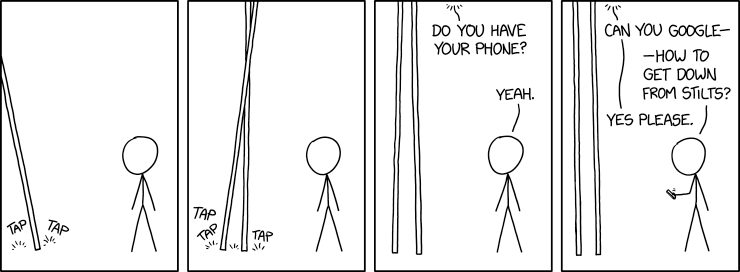
Predicament
Post Syndicated from xkcd.com original https://xkcd.com/3130/
Kernel prepatch 6.17-rc2
Post Syndicated from corbet original https://lwn.net/Articles/1034158/
The second 6.17 kernel prepatch is out for
testing. “So it’s been a very calm week, and this is one of the smaller
“
rc2 releases we’ve had lately. I’m definitely not complaining, since I’ve
been jetlagged much of the week, but I have this suspicion that it just
means that next week will see more noise.
How to Put Data Centres & A.I In to Space?
Post Syndicated from Curious Droid original https://www.youtube.com/watch?v=tSZjjUO7Jn0
ICE & Expedited Removal #lastweektonight
Post Syndicated from LastWeekTonight original https://www.youtube.com/shorts/o6g62JCgWxc
Comic for 2025.08.17 – Comedian In The 1600s
Post Syndicated from Explosm.net original https://explosm.net/comics/comedian-in-the-1600s
New Cyanide and Happiness Comic
2025-08-17 Adventures in Linux bonding
Post Syndicated from Vasil Kolev original https://vasil.ludost.net/blog/?p=3509
All this comes from our work on getting a stable and redundant link for servers without resorting to things like routing protocols, and is the product of some years of “research” (hitting the next problem and solving it).
The Linux kernel has a (deceptively simple) mechanism for “bonding” two interfaces as one, to use for load-balancing and fail-over. It is really well documented in https://www.kernel.org/doc/Documentation/networking/bonding.txt and if some of my explanations are lacking, that’s the proper document to look into.
There are all kinds of modes, but there are two that make sense in Ethernet networks – active-backup and 802.1ad. 802.1ad requires support from the switch side, and for proper redundancy when you’re connecting to two switches to have them stacked or clustered. Stacked switches crash together, clustered also, but a bit less. So, for proper redundancy you’d like to have the two switches you connect to as independent as possible, which rules out 802.1ad.
(802.1ad is also known as LACP, link aggregation control protocol. When connecting to two different switches, it’s known as MLAG, multi-chassis link aggregation.)
For the sake of illustration, let’s say we have a network with two switches (SW1 and SW2) and two hosts, A and B. A is connected to SW1 and SW2, so is B.
By default the active-backup bond just monitors the state of the link (“miimon”). This should work in a better world, where switches are supposed to die completely when they can’t forward packets, but that’s not the case in the real world. Even without the “fun” failure modes where a switch stops forwarding without killing the links, there’s also the option that someone mis-configures a VLAN and blackholes the traffic you care about. As miimon can’t detect any such issues and fail-over to the other interfaces, it’s not very useful in Ethernet networks.
There is another option, something called “ARP monitor” – the bond sends ARP requests to a set of pre-configured targets and listens for the replies, if the replies stop, the interface is deemed dead and failed-over. This is a step in the right direction.
To have this properly configured, you need to have more than one target (so the death of that one target does not make the node think it has no connectivity), and to configure it for any node in the targets to be reachable to make the link active (the arp_all_targets option). All these are somewhat obvious and easy to set up, together with the preferred arp_interval to know how often to send packets.
And all this would’ve been fine if not for the weird default behavior of the Linux bonding to take any received ARP traffic as an indication that the link is OK. So if you get disconnected from the targets, but there are some other hosts in the partition created on that “side” of the network, you’ll never switch to the other interface, never mind that you can’t reach the targets via the current active interface.
The next option is called “arp_validate”. It tells the bond to actually look in the received ARP traffic if it’s from the targets (well, almost, but we’ll get to that). It can be told to look to “validate” no interface, the active one, or both. I have no idea why the validation is not “on” by default, and I haven’t dug in the history enough to check, but I’m guessing it’s something related to the weak host model and the issues I’ve had with ARP.
“arp_validate=active” takes care of checking what’s received on the currently active interface, so it should resolve most issues. However, it doesn’t help when the backup interface is not correctly connected and receives some ARP traffic, and it’s not possible to check /proc/net/bonding/bondX and know if it’s safe to switch the active interface for some reason (so you switch, and hopefully bounce back pretty quickly). To allow for monitoring the state of the backup interface, you should use “arp_validate=all”.
Which would be great if that worked. This part took me some reading of the sources to get right, see this part of bond_arp_rcv() in drivers/net/bonding/bond_main.c, especially the three calls to bond_validate_arp() on lines 3284, 3288 and 3290. Is there something weird there?
That’s correct, in the check on line 3288 the “tip” and “sip” arguments (source and destination) are swapped. A closer reading of the documentation and the source shows that if you validate the traffic to the backup interface, the ONLY traffic that will make this interface “up” is our own broadcast traffic send to the targets, not for example broadcasts received from the targets themselves (which I expected to be the case). I’m thinking about submitting a patch to the documentation in that regard.
So, in general this should work, but we had a lot of cases where the backup interface refused to hear the broadcasts sent via the active interface. After some time we were able to trace these cases to two specific NIC drivers – i40e and ice, both Intel NICs.
Small bit of theory before explaining what the issue was – the Linux bond sets the same MAC address on all Ethernet interfaces in the same bond.
And, there’s this small option called source pruning, which roughly translates to “drop all received packets that have my MAC address as source”. Which might make sense in some situations, but definitely not in a bond with “arp_validate=all”. So, for i40e this is just an ethtool option, but for ice NICs this looks to be hardcoded, and I’ve opened an issue for this to be configurable, so hopefully in some years it’ll get fixed.
postscript 1:
bpftrace is a wonderful tool that helped a lot to attach to the bond_arp_rcv() and other functions and see what’s going on. For any issue which strace can’t see (like “something returns EINVAL and you have no idea why), this looks to be the next step.
postscript 2:
I noted that two bonding mechanisms make sense in Ethernet network. There are some more modes, which are either “broadcast” (send all packets via all links) or “balance the traffic based on a function”. Both these types of modes will weird out the switches, because they’ll see traffic from the same MAC address coming from two different places and would constantly be updating their tables where these MACs are, with very fun consequences.
These modes made a lot more sense for serial links back in the days, adding two SLIP or PPP links to a bond with the default mode (balance with round-robin) was the cheapest way to get twice the bandwidth without any extra complexity.
The most resilient (but hardest to implement and more complex) solution for anything like this would be full-mesh BFD and BGP, which would make sure you only use paths that you can communicate on (doesn’t help with MTU blackholes, but pretty much nothing does). I’ve never seen it done, though 🙂
The Ghost Blimp
Post Syndicated from The History Guy: History Deserves to Be Remembered original https://www.youtube.com/shorts/CHriZYsEQk0