Post Syndicated from The Atlantic original https://www.youtube.com/shorts/JXtOz3P_gaQ
THG Podcast: Counterfactuals – Smith v. Allwright
Post Syndicated from The History Guy: History Deserves to Be Remembered original https://www.youtube.com/watch?v=43yjAxMhyXY
AI for Military Support
Post Syndicated from Bruce Schneier original https://www.schneier.com/blog/archives/2026/08/ai-for-military-support.html
Interesting empirical research: “Black Box Warfare: Human Judgment and Military Decision-Making in the Age of AI.”
Abstract: How is AI transforming decision-making in modern conflict? This study provides a unique empirical window into that question by deploying a high-fidelity replica of an AI decision-support system (DSS) used in military targeting. After reconstructing the interface and functionality of the real-world system, we tested its impact on combat decisions in two experiments involving 2,015 Israeli military personnel. Contrary to widespread fears of automation bias, we find strong evidence of algorithmic aversion, especially in scenarios involving high collateral damage. Yet we also show that integrating “explainable AI” features reduces algorithmic aversion and promotes more thoughtful evaluations of algorithmic recommendations. These findings challenge prevailing assumptions, revealing that trust in military AI is dynamic, varying with individual predispositions, perceived operational stakes, and the informational features of the interface. By grounding normative concerns in empirical evidence, our study offers critical insight into the integration of AI in warfare and underscores the enduring importance of human agency in high-stakes military decision-making.
Celebrating the community: Douglas and Oasis Mathare
Post Syndicated from Sophie Ashford original https://www.raspberrypi.org/blog/celebrating-the-community-douglas-and-oasis-mathare/
We love hearing from members of the community and sharing the stories of amazing young people, volunteers, and educators who are using their passion for technology to create positive change in the world around them.
Last year, we shared the story of Douglas, founder and director of Oasis Mathare, an organisation using technology to open doors for young people in one of Nairobi’s largest informal settlements.
In our latest community story, we meet Douglas again, this time alongside the mentors and young people at the heart of Oasis Mathare’s Code Clubs.
Together, they share what coding really means for a community where most young people don’t finish formal education, and where the opportunity to learn a new skill can genuinely change the course of a life.
Douglas’ motivation
Douglas has always been clear about why technology sits at the heart of everything Oasis Mathare does.
“Technology does not have a boundary. It knows no gender, no race. As long as you have access to a computer, you have access to the internet, and you’re being guided, the opportunities are limitless.”
This belief didn’t come from his own journey with formal education — it came from an internet cafe and a lot of curiosity and independent learning. Douglas grew up in Mathare knowing that most young people there were not likely to finish formal education. Rather than seeing that as inevitable, he saw it as a hurdle to overcome.

“I used to go to a nearby internet café where I learned some basic graphic design and got my first employment with no formal training. And I realised it’s really possible to gain a decent livelihood with just skills.”
What Code Club looks like in Mathare
Oasis Mathare now runs Code Clubs in schools and at its own centre, introducing children to programming long before they might encounter it anywhere else. Code Club and the Raspberry Pi Foundation’s learning pathways have become key drivers of the positive impact.

“The resources that we use from [the Foundation] are structured in a really creative way to help kids learn. Initially we had developed curricula to run a Code Club, there were some missing pieces, but now with the Raspberry Pi Foundation pathways, it has sort of bridged the gap that we were facing.”
Students becoming mentors
Perhaps the most powerful thing happening at Oasis Mathare right now is the pipeline forming from learners to leaders. Many young people who come through Code Club go on to volunteer, becoming role models for the children sitting where they once sat.
“It feels so nice seeing students becoming mentors. They act as role models to the Code Club participants. As they are being mentors, it improves their communication and delivery. We are giving them opportunities to work with us to sharpen their skills so that they can get to a greener pasture.”
Keziah, a mentor, shared what drew them to Code Club:
“Being idle around the community can lead to so many negative impacts, so I decided to join Code Club to volunteer, hoping to have a better connection and career growth.”

Faith, a student and mentor, shared a key discovery:
“My thought was like coding is only for genius kids and the smart ones. But I will encourage a young learner to actually partake in this. Coding is not hard. It’s actually fun.”
Hope, another mentor, shared just how impactful being a part of a young person’s journey can be:
“The moment the kids realised they belong to a Code Club is when I see their face light up when their projects run. They made me feel achieved. They made me feel, as a facilitator, as a good mentor. And that’s changed me.”
It’s a reminder that Code Club isn’t just about code. It’s about what happens to a young person’s sense of themselves when they build something that works.
A message to young people everywhere
Douglas shared his wish for any young person living in an underserved community who feels like their future has already been written for them.

“For any young person from Mathare or any other underserved community around the globe who feels that their future is limited, I would like to tell you that it is really possible. It is really possible to change your life, as long as you have a positive mind, you have hope, and you’re working hard.”
Inspired to make an impact in your community?
Douglas and the team at Oasis Mathare are proof of what’s possible when young people have access to learning resources, guidance, and belief. You can find out more about their work at oasismathare.org.
If their story has inspired you to bring coding to young people in your own community, Code Club makes it straightforward to get started, with free resources, training, and a supportive global community behind you. Find out more at codeclub.org.
The post Celebrating the community: Douglas and Oasis Mathare appeared first on Raspberry Pi Foundation.
ESPHome Starter Kit Product Launch – Build. Learn. Automate.
Post Syndicated from Home Assistant original https://www.youtube.com/watch?v=GnXucSzzCqg
Going Back to Our Roots: A Little Piece of Let’s Encrypt History
Post Syndicated from Let's Encrypt original https://letsencrypt.org/2026/08/11/root-shirt.html
Ten years ago, we printed one of the nerdiest t-shirts we’ve ever made. On the front was the entire PEM encoding of ISRG Root X1 in base64. Back then, it represented a future we were working toward. Today, that same design tells the story of just how far Let’s Encrypt has come.
Let’s Encrypt was already issuing publicly trusted certificates in 2016, but ISRG Root X1 itself was still slowly and quietly making its way into browsers and operating systems around the world. For many years, our certificates were trusted through a cross-sign from IdenTrust. ISRG Root X1 itself was added to the major trust stores fairly early on; the slow part was waiting for that update to reach the browsers and devices already out in the world, since many of them only get new trust stores when they’re updated. That took years.
I remember the day we generated Root X1 and the planning and careful execution involved. We all breathed a sigh of relief when it was done but knew that we were really just crossing the starting line since our goal was, and continues to be, to get the Web to 100% encryption.
— Josh Aas, Co-Founder and Executive Director, ISRG
The Internet’s Quiet Infrastructure
When you visit a website over HTTPS, your browser follows a chain of trust that ultimately leads back to a trusted root certificate, like Root X1. If everything is working correctly, the entire process is invisible. You see a secure connection and the cryptography quietly does its job.
When we started, 39% of page loads were encrypted. Today, in much of the world, it’s over 80%. Hundreds of millions of websites rely on Let’s Encrypt certificates every day. Most of the people using those websites will never know the name “ISRG Root X1,” and that’s exactly the point. What once required optimism and patience has become something billions of people depend on without even knowing it’s there.
The Same Design, A Different Meaning
That’s what made us want to bring it back. In 2016, it represented a goal. Looking back ten years later, we realized the same design had come to represent something entirely different.
Today, it represents a decade of work and support by engineers, contributors, sponsors, donors, and advocates who believed that secure communication on the web should be free, automated, and available to everyone. Their support helped make HTTPS the default, not a privilege.
If you have one of the few original shirts, let us know how it’s treating you by dropping a line to [email protected].
A Story Worth Wearing
Let’s Encrypt is run by Internet Security Research Group (ISRG), a nonprofit funded by the generosity of our community. Every certificate we issue and every new challenge we take on is made possible by people who believe the Internet should be more secure and privacy-respecting for everyone.
If you donate $75 or more this summer we’ll send you a limited-edition ISRG Root X1 t-shirt and you can help share our story.
Then you’ll have the chance to tell the story of how you support one small piece of Internet infrastructure that went from an ambitious idea to something a large part of the web quietly depends on every day.
Going Through the LGR Building! Progress so far in August 2026
Post Syndicated from LGR original https://www.youtube.com/watch?v=hBkMCSMikjc
AWS completes the 2026 Police-Assured Secure Facilities (PASF) audit in Europe (London)
Post Syndicated from Tariro Dongo original https://aws.amazon.com/blogs/security/aws-completes-the-2026-police-assured-secure-facilities-pasf-audit-in-europe-london/
We’re excited to announce that our Europe (London) AWS Region has renewed its accreditation for United Kingdom (UK) Police-Assured Secure Facilities (PASF) for Official-Sensitive data. Since 2017, the Amazon Web Services (AWS) Europe (London) Region has been accredited under the PASF program. This demonstrates our continuous commitment to adhere to the heightened expectations of customers with UK law enforcement workloads. Our UK law enforcement customers who require PASF can continue to run their applications in the PASF-accredited Europe (London) Region in confidence.
The PASF is a long-established assurance process, used by UK law enforcement, as a method for assuring the security of facilities such as data centers or other locations that house critical business applications that process or hold police data. PASF consists of a control set of security requirements, an on-site inspection, and an audit interview with representatives of the facility.
The Police Digital Service (PDS) confirmed the accreditation renewal for AWS on May 28, 2026. A confirmation letter can be found on AWS Artifact. The UK police force and law enforcement organizations can also obtain confirmation of the compliance status of AWS through the Police Digital Service.
To learn more about our compliance and security programs, see AWS Compliance Programs.
As an AWS customer, you can reach out to your AWS account team if you have any questions or feedback.
If you have feedback about this post, submit comments in the Comments section below.
Using the GitHub Copilot SDK for Java
Post Syndicated from Edward Burns original https://github.blog/engineering/using-the-github-copilot-sdk-for-java/
Java developers no longer have to rely on Java framework-specific approaches to drive AI from their enterprise apps.
While it is true that Langchain4j empowered developers by disintermediating specific AI vendors, you still had a dependency on Langchain4j. And with Spring AI, well, of course you had a dependency on design choices made by Spring, if not on Spring itself.
Now, GitHub Copilot SDK for Java is the first truly framework agnostic way to drive AI from Java. And with its BYOK support, GitHub Copilot SDK for Java is also AI vendor neutral.
💡 Even though it’s called GitHub Copilot SDK, you can use it with any direct model provider, such as OpenAI, Azure, Anthropic, or OpenAI-compatible endpoints, by passing a provider/ProviderConfig with your own baseUrl + apiKey (or bearer token). No Copilot subscription required. |
The GitHub Copilot SDK for Java is a client library that empowers your server-side Java code to create Copilot agent sessions, register tools, send prompts, and receive structured responses—all programmatically. It works in server environments, including Jakarta EE and Spring. If you’ve been building enterprise Java for any length of time, this SDK will feel like home: CompletableFuture, annotations, lambdas, virtual threads, it’s all here.
This post shows you how to use the SDK, walks through a complete Jakarta EE 11 sample application, and leaves you with concrete next steps to try it yourself. I chose Jakarta EE 11 for my demo because I was the lead release coordinator for that release. I believe in open standards as the best way to empower developers. For more on Jakarta EE 11 see this InfoQ article.
This sample app is an agent harness using Jakarta EE 11. But, of course, developers can build their own agent harness using the well-known Java frameworks and libraries of their choice.
Clone the sample app and try it yourself >
Where to get it
The SDK is available as a Maven dependency:
<dependency>
    <groupId>com.github</groupId>
    <artifactId>copilot-sdk-java</artifactId>
    <version>1.0.7-preview.1</version>
</dependency>
Prerequisites:
- JDK 17 or 25 (25 recommended — unlocks virtual threads and other modern features)
- Maven 3.9+
- A GitHub account with an active Copilot subscription
- The Copilot CLI installed locally at version 1.0.71 or later.
Walk through the sample app
The best way to see the SDK in action is to run this sample application.
Get the code
git clone https://github.com/microsoft/Build26-BRK206-your-agent-anywhere-multiclient-multidevice-with-github-copilot-sdk.git
cd Build26-BRK206-your-agent-anywhere-multiclient-multidevice-with-github-copilot-sdk/src/java-agent-orchestrator
mvn clean package liberty:run
# Open http://localhost:9080/index.xhtml
The Java demo is built on:
| Concern | Technology |
|---|---|
| Runtime | Open Liberty 26.0.0.5 |
| Platform | Jakarta EE 11 (Faces 4.1, CDI 4.1, WebSocket 2.2, Data 1.0, Persistence 3.2) |
| UI | PrimeFaces 15.0.16 |
| AI orchestration | Copilot SDK for Java 1.0.7-preview.1 |
| Database | H2 in-memory (10 seed property listings) |
What the app does
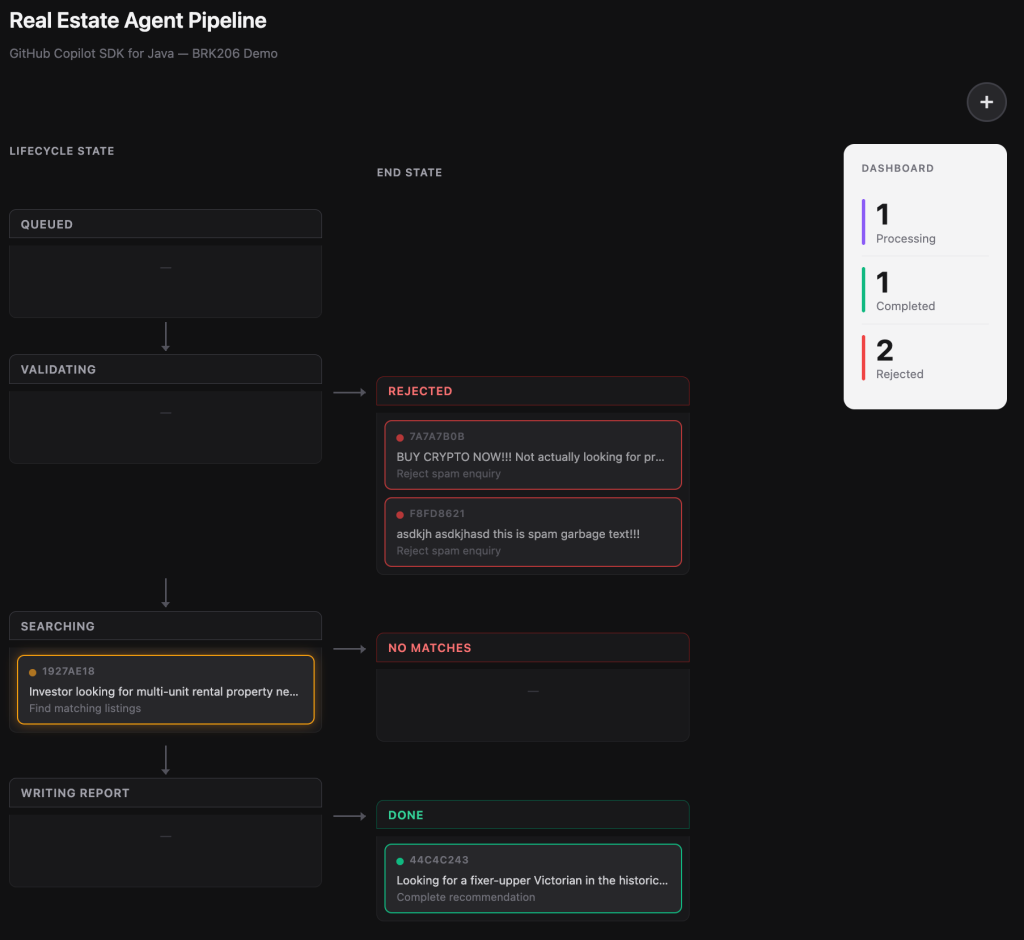
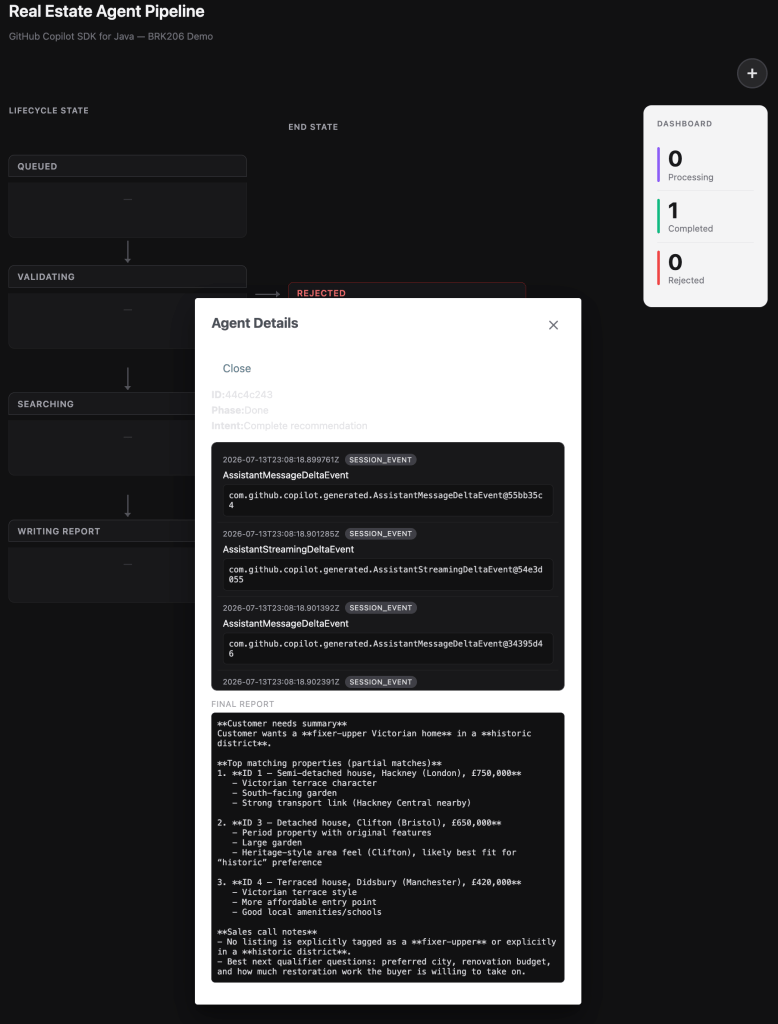
The application is a real-estate lead-management agent pipeline. A customer submits an enquiry (“I’m looking for a 3-bedroom house in London under £800,000”), and the system spins up an isolated Copilot Agent on a virtual thread to process it through a pipeline:

The architecture uses Jakarta WebSocket to push real-time status updates from the server to the browser, so you can watch agents progress through phases as the model calls tools:
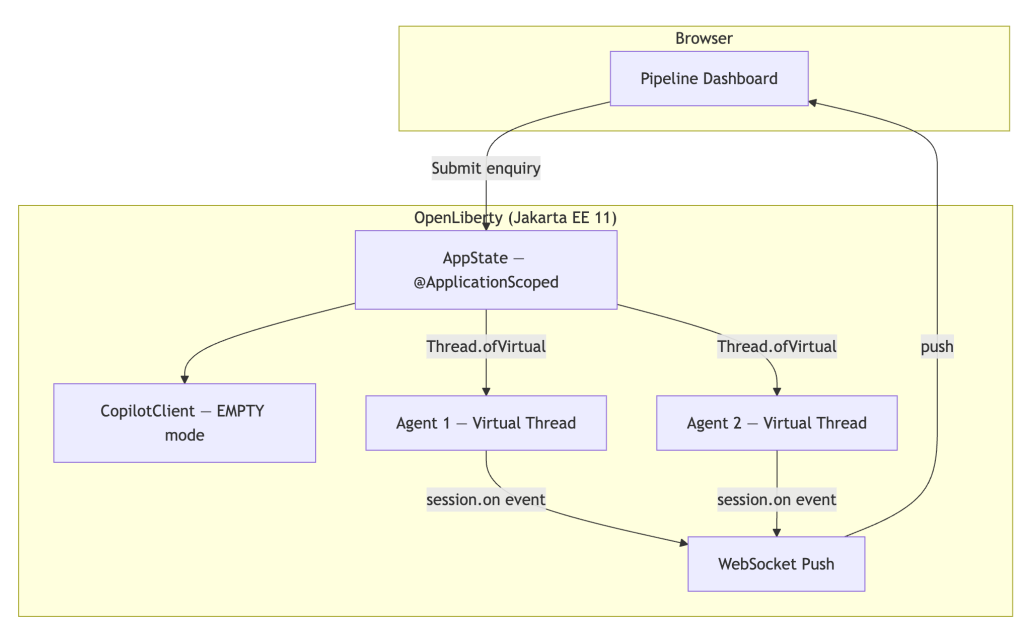
Submit multiple inquiries simultaneously to see concurrent virtual-thread agents in action. Each one processes independently with its own Copilot session.
SDK features in action
Let’s walk through the key SDK features as they appear in the sample code.
Defining tools with @CopilotTool
This is the headline API. If you’ve ever written a @GET endpoint in JAX-RS or an @MessageDriven bean, this will feel instantly familiar:
@CopilotTool(value = "Sets the current phase of the agent. Use this to report progress.",
             name = "set_current_phase")
public String setCurrentPhase(
        @CopilotToolParam("The phase to transition to (VALIDATING, SEARCHING, "
                + "WRITING_REPORT, REJECTED_GARBAGE, REJECTED_NO_MATCHES, or DONE)")
        String phaseName) {
    phase = Phase.valueOf(phaseName.trim().toUpperCase(Locale.ROOT));
    notifyUi();
    return "Phase set to " + phase.getLabel();
}
The @CopilotTool annotation declares the method as a tool the model can call. The @CopilotToolParam annotation describes each parameter so the model knows what to pass. The SDK handles all the JSON Schema generation, argument parsing, and dispatch. You just write a normal Java method.
Two build prerequisites for @CopilotTool. The annotation-based tool API is currently an experimental feature of the SDK, so you need to configure two things in your Maven build:
- Enable experimental APIs: pass
-Acopilot.experimental.allowed=trueto the compiler. Without this flag, the annotation processor will refuse to generate the tool metadata. For more details on the experimental APIs see Copilot SDK documentation. - Register the annotation processor: add the SDK as an
annotationProcessorPathso the compiler can find the@CopilotToolprocessor and generate the$$CopilotToolMetaclasses at compile time.
Both are configured in the maven-compiler-plugin:
<plugin>
    <groupId>org.apache.maven.plugins</groupId>
    <artifactId>maven-compiler-plugin</artifactId>
    <version>3.15.0</version>
    <configuration>
        <compilerArgs>
            <arg>-Acopilot.experimental.allowed=true</arg>
        </compilerArgs>
        <annotationProcessorPaths>
            <path>
                <groupId>com.github</groupId>
                <artifactId>copilot-sdk-java</artifactId>
                <version>1.0.7-preview.1</version>
            </path>
        </annotationProcessorPaths>
    </configuration>
</plugin>
To register all annotated tools from an object:
List<ToolDefinition> annotatedTools = ToolDefinition.fromObject(this);Inline lambda tools with ToolDefinition.from(...)
When you want a tool defined at the call site without a dedicated method, use the lambda style:
ToolDefinition reportIntentTool = ToolDefinition
        .from("report_intent",
              "Reports the current intent of the agent",
              Param.of(String.class, "intent", "Intent in max 4 words"),
              (String intent) -> {
                  currentIntent = intent;
                  addEvent(Instant.now(), "intent", "Intent updated", intent);
                  notifyUi();
                  return "ok";
              })
        .overridesBuiltInTool(true);
Notice .overridesBuiltInTool(true). This tells the SDK that our report_intent tool deliberately replaces a built-in tool of the same name. This is useful when you need custom behaviour for a tool the model already knows about.
Cross-class tool scanning
Tools don’t have to live in the same class as your agent logic. Here’s searchProperties defined in a separate CDI bean:
@ApplicationScoped
public class PropertyDatabase {

    @CopilotTool(value = "Searches the real estate listings database. "
                       + "Returns up to 10 matching properties.",
                 name = "search_properties")
    public List<Property> searchProperties(
            @CopilotToolParam("Property type substring (e.g. 'flat', 'house')") String type,
            @CopilotToolParam("City substring (e.g. 'London', 'Bristol')") String city,
            @CopilotToolParam("Minimum number of bedrooms (0 for no minimum)") int minBedrooms,
            @CopilotToolParam("Maximum price in GBP (0 for no maximum)") double maxPriceGbp) {
        // ... filter and return matching properties ...
    }
}
You would normally register these with ToolDefinition.fromObject(propertyDatabase). In the sample app, we use a lambda wrapper instead, because CDI client proxies can obscure the annotation metadata.
Customizing the system message
The SDK gives you fine-grained control over the system message. Use SystemMessageMode.CUSTOMIZE to replace specific sections while preserving the rest:
SystemMessageConfig systemMessage = new SystemMessageConfig()
        .setMode(SystemMessageMode.CUSTOMIZE)
        .setSections(Map.of(SystemMessageSections.IDENTITY,
            new SectionOverride()
                .setAction(SectionOverrideAction.REPLACE)
                .setContent("""
                    You are part of a real estate recommendation system.
                    You will receive enquiries from customers, and you must
                    carry out the following workflow...
                    """)));
The text block ("""...""") makes multi-line prompts readable without string concatenation. The IDENTITY section override replaces only the model’s self-description while leaving safety guardrails intact. If you prefer a simpler approach, SystemMessageMode.APPEND adds your content after the default system message without replacing anything.
The agentic loop: sendAndWait(...)
One line kicks off the full agentic loop:
session = client.createSession(sessionConfig).get();
// ...
AssistantMessageEvent result = session.sendAndWait(escapedEnquiry).get();
Behind .get(), the model reasons, calls your tools (potentially multiple times), and returns its final response. On a virtual thread, .get() is cheap. No platform thread is consumed while waiting. The SDK dispatches tool calls to your registered handlers automatically and feeds results back to the model until it’s done.
Real-time event handling with session.on(...)
Subscribe to session events to build responsive UIs:
sessionSubscription = session.on(event -> {
    captureSessionEvent(event);
    uiUpdateSocket.pushDetailUpdate(id);
});
Every tool call, every result, every assistant message fires an event. The sample app captures these events and pushes them to the browser via Jakarta WebSocket, so the pipeline dashboard updates in real time. You can use pattern matching to handle specific event types:
if (event instanceof AssistantMessageEvent msg) {
    finalReport = msg.getData().content();
} else if (event instanceof ToolExecutionStartEvent start) {
    // Tool is being invoked...
}
Headless client and permission handling
The client is configured for server-side operation:
copilotClient = new CopilotClient(
        new CopilotClientOptions()
                .setMode(CopilotClientMode.EMPTY)
                .setCopilotHome(copilotHome)
                .setExecutor(contextualVirtualThreadExecutor));
CopilotClientMode.EMPTY means no IDE integration — the client talks directly to the Copilot CLI. The custom Executor (discussed below) ensures tool callbacks run with container context.
For permission handling, the sample uses:
sessionConfig.setOnPermissionRequest(PermissionHandler.APPROVE_ALL);APPROVE_ALL is appropriate for demos and development. In production, implement a real permission policy that validates which tools the model is allowed to invoke.
Jakarta EE integration patterns
The SDK is not a framework island. It composes naturally with Jakarta EE — and of course also with proprietary frameworks such as Spring.
The Executor parameter is the key integration point. Jakarta Concurrency (§5.2 in the 3.1 spec) requires that application-created threads be obtained from a ManagedThreadFactory so the container can:
- Track the thread for lifecycle shutdown (
@PreDestroy/ server stop) - Apply concurrency constraints and policies
- Propagate context automatically (without needing manual
contextualRunnable)
Open Liberty 26.x supports virtual-thread ManagedThreadFactory via the virtual attribute in server.xml.
<managedThreadFactory jndiName="concurrent/virtualThreadFactory" virtual="true" />Then, in AppState.java we inject the factory:
@Resource(lookup = "concurrent/virtualThreadFactory")
private ManagedThreadFactory virtualThreadFactory;
And use it to create the Executor we pass to the Copilot SDK.
// The ManagedThreadFactory (virtual=true) creates container-managed virtual
// threads that automatically propagate CDI, JNDI, and transaction context.
Executor managedVirtualExecutor = runnable ->
    virtualThreadFactory.newThread(runnable).start()

String copilotHome = Path.of(System.getProperty("user.home"), ".copilot").toString();
CopilotClientOptions copilotClientOptions = new CopilotClientOptions()
        .setMode(CopilotClientMode.EMPTY)
        .setCopilotHome(copilotHome)
        .setExecutor(managedVirtualExecutor);
copilotClient = new CopilotClient(copilotClientOptions);
This creates virtual threads that carry the container’s context. When the SDK dispatches a tool call to searchProperties(), that method can @Inject a JPA repository and query the database, because the container context is present on the callback thread.
Other integration patterns in the sample:
- CDI
@ApplicationScopedfor the singletonCopilotClient(one client per application lifecycle). - Jakarta Faces
f:websocketpush for real-time browser updates viaPushContext. - Jakarta Data
@Repositoryfor type-safe database queries without raw JPA boilerplate.
Fine-grained tool access control with ToolSet. The SessionConfig lets you specify exactly which tools each session can access:
sessionConfig.setAvailableTools(new ToolSet()
        .addCustom("*")           // all registered custom tools
        .addBuiltIn("web_fetch")); // only the web_fetch built-in
This is an important production concern. Rather than exposing every built-in tool (file system access, shell execution, etc.), you explicitly opt in to only what the agent needs. In the sample app, we allow all custom tools plus web_fetch so the agent can look up real-time property information during the Search phase.
Summary
Here’s what we covered:
- Java-native API:
CompletableFuture, annotations, lambdas, and virtual threads make the SDK feel like idiomatic Java, not a ported-from-another-language afterthought. - Three tool-definition styles: annotations for enterprise patterns, lambdas for inline convenience, JSON Schema for full control.
- System message customization: section-level overrides give you precise control over agent behaviour.
- The agentic loop in one line:
sendAndWait(...)handles the full tool-calling loop automatically. - Real-time event streaming:
session.on(...)enables responsive UIs and observability. - Headless server-side operation: no IDE required; runs anywhere the Copilot CLI is available.
- Natural composition with Jakarta EE: CDI, JPA, WebSocket, and virtual threads all work together through the
Executorintegration point.
What to try next
- Explore the BYOK support. The GitHub Copilot SDK can be used directly against model providers, for example OpenAI, Azure, Anthropic, or OpenAI-compatible endpoints, by passing a
provider/ProviderConfigwith your ownbaseUrl+apiKey(or bearer token). No Copilot subscription required. - Clone the sample app and run it locally. Submit multiple enquiries simultaneously to see virtual threads in action.
- Swap the model. Try
session.setModel(...)to experiment with different Copilot models. - Add your own tool. Define a new
@CopilotToolmethod (a mortgage calculator, a school-district lookup) and watch the agent discover and use it. - Deploy to Azure. Open Liberty runs great on Azure App Service, AKS, or Azure Container Apps. See the Jakarta EE on Azure guidance at https://aka.ms/java/ee.
The Copilot SDK for Java puts the full power of GitHub Copilot behind your Java code with no IDE required and no framework lock-in.
The post Using the GitHub Copilot SDK for Java appeared first on The GitHub Blog.
The Toll Online Dating Can Take
Post Syndicated from The Atlantic original https://www.youtube.com/shorts/s1KPPb7bOSU
Everything we launched during Agents Week
Post Syndicated from Shelley Jones original https://blog.cloudflare.com/agents-week-review-august-2026/
At the beginning of Agents Week, Rita shared that agents represent the next evolution of computing: not only as a new application of AI but also as a new class of software that’s shaping how people interact with technology, and how software interacts with the Internet. Over the last year or so, we set out to explore what this shift means for developers and customers building AI-native apps and the infrastructure needed to support them. As agents become more capable and autonomous, the challenges extend beyond the models themselves — to identity, communication, orchestration, memory, observability, and security.
Over the past week we’ve shared how we’re bringing those pieces together across the Cloudflare platform to serve an Agentic Internet. Each day we presented new tools, products, and ideas toward building for an Internet where humans and agents cooperate instead of collide.
Monday, August 3
Monday focused on the foundations for building and running intelligent, autonomous apps — the runtime and infrastructure agents rely on.
Tuesday, August 4
Tuesday introduced the Agent Development Lifecycle (ADLC) and the primitives that take agentic software from prototype to production.
Wednesday, August 5
Wednesday extended Zero Trust from users and devices to agents themselves — and we shared how we’re running it internally at Cloudflare.
Thursday, August 6
Thursday defined the Agentic Internet, and how website owners, publishers, and agents can all contribute to an Internet that works for people and agents alike.
Friday, August 7
Friday put a lens on what’s actually happening: what agents are really doing on the web, where AI is running in your apps, who’s contributing to the ecosystems, and new tools for analyzing Internet data.
Agents Week is done, but we aren’t
Five days on, the answer to Rita’s question of “What does your agent need from an Agent Cloud?” is starting to take shape. It needs an execution layer and primitives to run on, a development lifecycle that increasingly writes itself, secure access for the people and agents doing the work, an Agentic Internet, and the humans and communities keeping all of it grounded. There's plenty still to come, but the shape of what’s next is becoming clearer: an Internet that natively supports the humans it was built for and the agents now acting on their behalf.
Our work doesn’t stop here. Keep an eye on our changelog for the latest updates. And if you’re building any part of this with us, we’d love to hear from you! Come find us on X or Discord.
2026 AWS CyberVadis report now available for due diligence on third-party suppliers
Post Syndicated from Tariro Dongo original https://aws.amazon.com/blogs/security/2026-aws-cybervadis-report-now-available-for-due-diligence-on-third-party-suppliers/
We’re excited to announce that Amazon Web Services (AWS) has completed theCyberVadis assessment of its security posture with the highest score (Mature) in all assessed areas. This demonstrates our continued commitment to meet the heightened expectations for cloud service providers. Customers can now use the 2026 AWS CyberVadis report and scorecard to reduce their supplier due-diligence burden.
With the increasing adoption of cloud products and services across multiple sectors and industries, AWS is a critical component of customers’ third-party environments. Regulated customers, such as those in the financial services sector, are held to high standards by regulators and auditors when it comes to exercising effective due diligence on third parties.
Many customers use third-party risk management services such as CyberVadis to better manage risks from their evolving third-party environments and drive operational efficiencies. In support of these efforts, AWS has completed its annual CyberVadis security posture assessment, conducted by CyberVadis security analysts.
CyberVadis is a comprehensive third-party risk assessment process that combines the speed and scalability of automation with the certainty of analyst validation. CyberVadis assessments employ a dynamic and comprehensive approach to third-party risk assessment, replacing outdated static spreadsheets and the need for annual AWS assessment access requests. This cloud-based solution provides advanced capabilities by integrating AWS responses with analytics and sophisticated risk models to deliver an in-depth view of the security posture of AWS.
CyberVadis’s risk assessment methodology evaluates 20 topics covering the entire cybersecurity life cycle across four phases: Identify, Protect, Detect, and React. These topics include Data Privacy, Access Management, and Infrastructure Security. The assessment criteria are based on international information security standards, including ISO 2700x, NIST Cybersecurity Framework, Cybersecurity for ICS, PCI DSS, NIS2 and GDPR.
Customers can use CyberVadis results to map the assessment of AWS to commonly used industry frameworks and standards to instantly gain visibility into controls coverage.
AWS customers can download the complete 2026 AWS Assessment Report directly through CyberVadis’s portal using their own account, or through AWS Artifact.
To learn more about our other compliance and security programs, see AWS Compliance Programs.
As an AWS customer, you can reach out to your AWS account team if you have any questions or feedback.
If you have feedback about this post, submit comments in the Comments section below.
How a team at Epic Games tuned Amazon OpenSearch Service for Fortnite analytics
Post Syndicated from Jon Evans original https://aws.amazon.com/blogs/big-data/how-a-team-at-epic-games-tuned-amazon-opensearch-service-for-fortnite-analytics/
Since the launch of Fortnite in 2017, Epic Games has reached hundreds of millions of players worldwide. Fortnite runs on Amazon Web Services (AWS), and takes advantage of services such as Amazon OpenSearch Service to power certain internal analytics and drive decision making at scale.
Amazon OpenSearch Service has been helpful in understanding the game ecosystem. OpenSearch Service powers two types of use cases: search workloads and analytics workloads. A team at Epic Games had a use case for storing and analyzing a sliding window of game event data. This involves supporting complex queries and multilayered aggregations that feed analytical results into other internal systems, helping them power an evolving player experience. At the scale of a game like Fortnite with a large player base, these queries run against a significant volume of incoming data.
These insights help identify emerging gameplay trends, understand how players engage with new content, and reveal more about the Fortnite ecosystem. They inform live operation decisions and help surface relevant content to players based on aggregated activity across the community.
As Epic Games’ infrastructure handles billions of telemetry events, the team identified opportunities to optimize their OpenSearch Service cluster for better performance and cost efficiency. This post details how Epic Games partnered with AWS to transform their OpenSearch Service deployment, achieving significant improvements in query latency and resource utilization while reducing operational costs.
The challenge
Epic Games runs an OpenSearch Service domain that handles continuous high-volume writes alongside CPU-intensive batch aggregation jobs. Ideally, these aggregation jobs would run more frequently to keep analytics fresh. Shorter job intervals mean fresher data for identifying gameplay trends, detecting anomalies, and informing live operations decisions. But the existing configuration couldn’t support this without scaling the domain beyond what the workload justified, driving up costs. Epic Games worked with AWS to identify where improvements could be made, focusing on areas such as hardware utilization, sharding strategy, index mappings, and query behavior.
Observations
The cluster was running on r7g memory-optimized data nodes, with 48 vCPUs and 384 GiB of memory per node. Of each node’s available memory, only a fraction (32 GiB) was allocated to Java Virtual Machine (JVM) heap, set at the maximum recommended for compressed oops. The remainder (off-heap memory) was used for the filesystem cache and the operating system. System memory was not fully utilized across the data nodes (Figure 1).

Figure 1: System memory utilization across data nodes
As shown in the preceding figure, utilization stays well below 100% throughout the observation period, confirming that much of the off-heap memory allocated to these nodes goes unused. The excess capacity could be safely exchanged for additional compute resources.
JVM memory pressure is shown in Figure 2, and the correlating garbage collection metrics (both count and time) are shown in Figure 3.
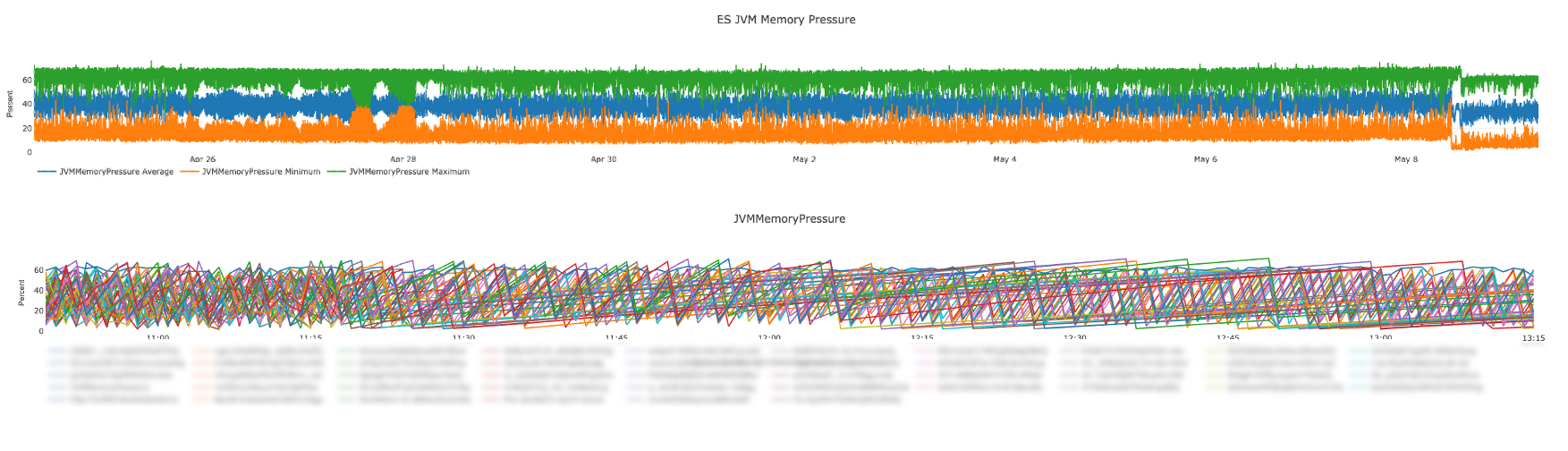
Figure 2: JVM memory pressure
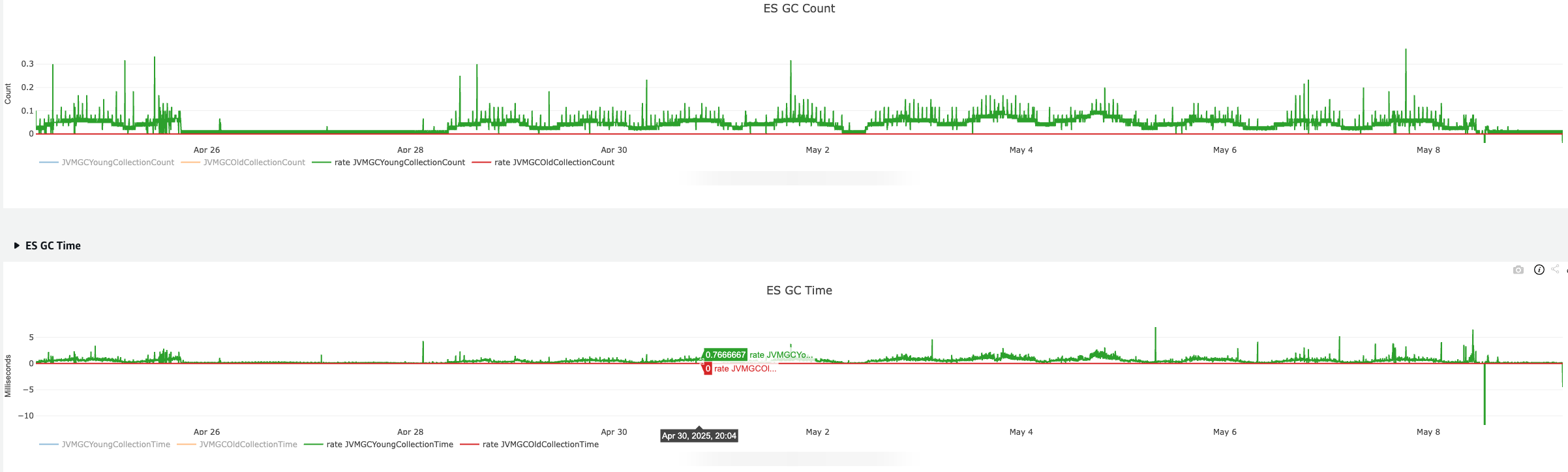
Figure 3: JVM garbage collection metrics, count (top) and time (bottom)
These charts show that JVM memory pressure remains below critical thresholds, and both garbage collection count and time are low and stable, indicating healthy JVM utilization across the domain.
While cluster-level CPU metrics appeared healthy at first glance (Figure 4), zooming into node-level metrics revealed clear node hotspots. The root cause of the node hotspots was the cluster’s sharding strategy.

Figure 4: Cluster-level CPU utilization
The cluster had data nodes distributed across multiple Availability Zones. Each index used a set number of primary shards with replicas, rolling over after shards reached a certain size. At first glance, the configuration appeared well-balanced, with shard copies distributed across Availability Zones and each node holding a manageable share of the data.
However, the primary shard count was lower than the total data node count. This meant that searches targeting the latest data, which is the most common access pattern, would only execute across a subset of available nodes. As a result, some nodes developed consistent CPU-based hotspots while the rest remained underutilized (Figure 5).

Figure 5: Node-level CPU utilization showing hotspots
As shown in the preceding figure, some nodes reach as high as 90 percent CPU utilization while several others remain under 20 percent, highlighting the uneven distribution of query execution across the cluster.
Recommendations and implementation
Based on these observations, AWS worked together with Epic Games on a set of targeted optimizations spanning hardware selection, sharding strategy, index mappings, and query behavior. The following sections detail each recommendation and how it was implemented.
Right-sizing the cluster
Because aggregation queries are CPU-intensive by nature and the cluster’s JVM memory pressure was well within acceptable ranges, AWS recommended migrating from memory-optimized r7g instances to compute-optimized c7g instances. The c7g family offers a higher ratio of vCPU to RAM, which is better suited for workloads where processing power rather than memory capacity is the binding constraint.
The proposed architecture called for a larger number of c7g nodes than the existing r7g count. This migration achieved approximately 33 percent more aggregate CPU capacity across the cluster while operating with two-thirds of the original memory. The net effect was a meaningful cost reduction of approximately 10 percent, delivering more processing power at lower cost by aligning the instance profile with the actual nature of the workload (Table 1).
| R7g (Before) | c7g (After) | Net Impact | |
| Instance Family | Memory Optimized | Compute Optimized | Better CPU-to-RAM alignment for aggregation workloads |
| vCPUs per Node | Same | Same | Same per-node CPU. More nodes = higher aggregate CPU |
| Memory per Node | Higher | Lower | Reduced unused memory; JVM heap unchanged |
| Aggregate CPU | Baseline | +33% more total vCPUs | Distributed more evenly across higher node count |
| Cost | Baseline | ~10% reduction | More performance per dollar spent |
Table 1: Instance migration comparison, r7g compared to c7g
Sharding strategy
To support the new cluster sizing, the Epic Games team changed the sharding strategy so that the number of primary shards matches the data node count, with 1 replica. This distributes both the write-heavy load and the batch aggregation search query load evenly on all the available data nodes.
The team employed ISM (Index State Management) policies to manage shard sizing through rollover, targeting shard sizes within recommended bounds using min_primary_shard_size. This kept shard counts bounded and predictable, providing a clear scaling pattern: adjust the node count, then update the ISM policy accordingly.
After implementation, node-level CPU utilization showed a much more even distribution (Figure 6).
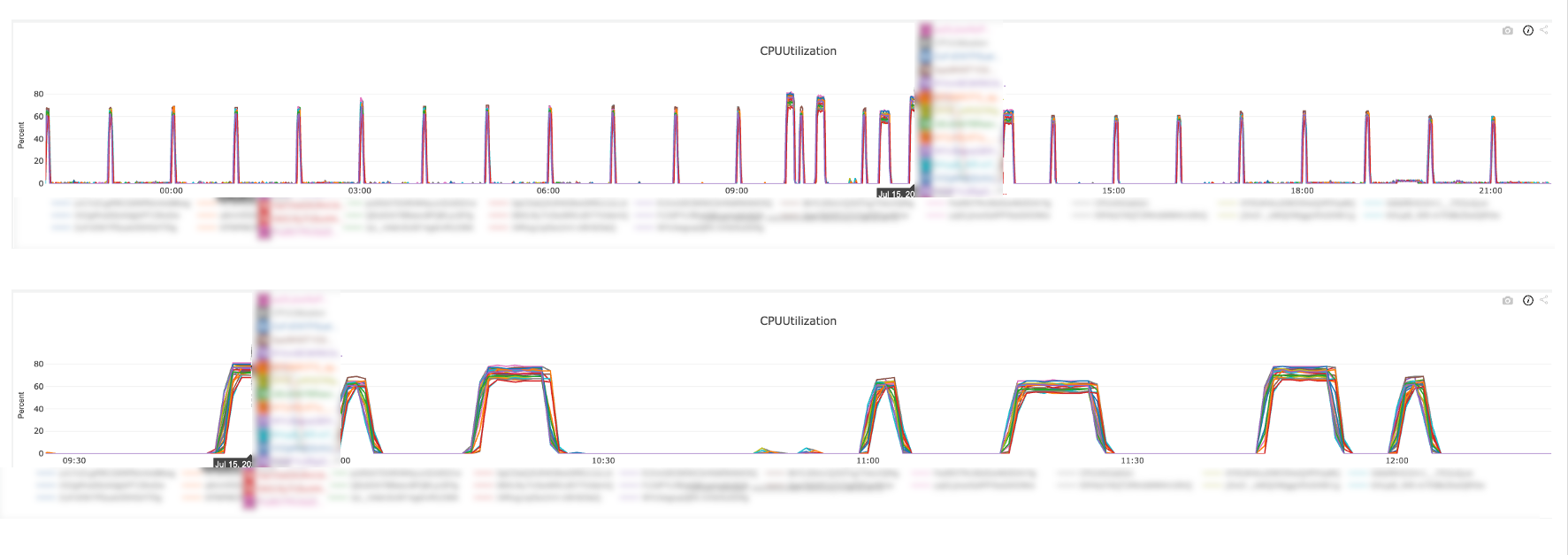
Figure 6: Node-level CPU utilization after sharding optimization
As shown in Figure 6, all nodes in the domain are working at similar CPU utilization levels, confirming that data and traffic are well distributed across the cluster with no node hotspots.
Mapping optimization
The index mappings had both text and keyword field types enabled on many fields, even though access patterns showed those fields were only used for aggregation, sorting, or filter context, and never for full-text match queries. Removing the redundant text field type reduced storage overhead and improved query performance by eliminating unnecessary analysis at index time.
For high-cardinality string fields, the murmur3 field type does a compute-once-and-store optimization for cardinality aggregation. Instead of hashing keyword values at query time, murmur3 computes the hash once at index time and stores it as a numeric doc_value, so the aggregation can skip the expensive string hashing step at query time (the cardinality estimate itself is still computed at query time).
The following example illustrates the mapping changes:
| Before: | After: |
These mapping changes reduced overall storage, lowered shard count (which reduced CPU requirements), and reduced cluster manager node state size.
Index optimization
Additional index-level optimizations were applied to improve query performance and reduce overhead. Index sorting was configured to default to the primary date field, which improves performance for time-based access patterns by aligning the physical data layout with the most common query order. The ISM policy was updated to force merge indices down to 1 segment after rollover, reducing segment overhead on read-only indices. Finally, the refresh interval was tuned to balance indexing throughput with search freshness.
Upgrading from OpenSearch Service 2.17 to 3.1
The domain was upgraded from OpenSearch Service 2.17 to 3.1, which reduced error counts and improved throughput at the Amazon OpenSearch Ingestion pipeline level. The performance gains were notable: p99 latency on sum aggregations dropped by 40–50 percent after the upgrade alone, and large 96-hour cardinality aggregations saw p95 drop over 40 percent. General query performance improved across all query types, and thread pool pressure was reduced significantly, leading to far fewer 429 errors (Figure 7).

Figure 7: Query performance before and after the OpenSearch Service 3.1 upgrade
Upgrading from Graviton 3 to Graviton 4
The instance types were upgraded from c7g (Graviton 3) to c8g (Graviton 4). The performance gains were immediate:
- p99 on all queries: 380 ms to 250 ms.
- p95 on all queries: 245 ms to 230 ms.
- p90 on all queries: 225 ms to 200 ms.
- p50 on all queries: 100 ms to 70 ms.
Date-windowed cardinality queries saw their p99 halved from 220 ms to 98 ms, with sum-based aggregations experiencing similar gains. Overall throughput increased by 16 percent.
Tiered caching
With the upgrade to OpenSearch Service 3.1, the team enabled tiered caching. Tiered caching extends the default on-heap request cache with a disk-based tier. When items are evicted from the on-heap cache, they spill into a larger disk cache on the node’s local SSD rather than being discarded. This allows the cluster to retain cached results for a much larger set of queries without increasing JVM heap usage.
The batch aggregation jobs in Epic Games’ workload issue repeated queries over overlapping time windows. The on-heap cache alone was too small to retain results across successive job runs, so expensive aggregations were recomputed each time. With the disk tier enabled, results from longer time-window aggregations (such as the 96-hour cardinality queries) persisted between runs. This produced more consistent and faster results on some of the larger aggregation queries, particularly those spanning longer time windows.
Results summary
The following table summarizes the impact of each optimization.
| Optimization Strategy | Impact |
| Right-sizing (r7g to c7g) | 33% more CPU, 10% cost reduction |
| Sharding rebalance | Eliminated CPU hotspots across nodes |
| Mapping optimization | Reduced storage, shard count, and cluster state size |
| OpenSearch Service 2.17 to 3.1 | p99 sum aggs reduced 40-50%, fewer 429 errors |
| Graviton 3 to Graviton 4 | p99 380 ms to 250 ms, 16% higher throughput |
| Tiered caching | More consistent results on large aggregation queries |
Table 2: Results summary
Conclusion
By optimizing their OpenSearch Service deployment, a team at Epic Games reduced p99 query latency from 380 ms to 250 ms, increased throughput by 16 percent, and lowered costs by 10 percent. These gains came from aligning instance types, sharding strategy, mappings, and engine versions with the workload’s actual demands.
To learn more about optimizing Amazon OpenSearch Service for your workloads, see Best practices for Amazon OpenSearch Service. For details on supported instance types, see Supported instance types in Amazon OpenSearch Service.
About the authors
AI-powered cost optimization agent for Amazon Kinesis Data Streams
Post Syndicated from Masudur Rahaman Sayem original https://aws.amazon.com/blogs/big-data/ai-powered-cost-optimization-agent-for-amazon-kinesis-data-streams/
Customers running multiple Amazon Kinesis Data Streams often struggle to estimate the cost impact of switching between capacity modes. As accounts grow to tens or hundreds of streams, manually reviewing Amazon CloudWatch metrics for each stream and comparing pricing across Provisioned, On-demand Standard, and On-demand Advantage becomes impractical. Teams often stay on their current mode, unsure whether switching would save money or cost more, leaving potential savings unquantified. On-demand Advantage is an account-level setting that unlocks additional capabilities and a different pricing structure for on-demand streams in an AWS Region. However, without a clear, data-driven comparison, the decision to enable it remains difficult to justify.
In this post, we show you how to deploy an AI-powered agent built on Amazon Bedrock. The agent automatically analyzes every Kinesis Data Stream in your account and compares costs across all three capacity modes. It tells you exactly which streams to move to On-demand and whether your account qualifies for On-demand Advantage pricing, all on a daily or weekly schedule with zero manual intervention. As we showed in Kinesis On-demand Advantage saves 60%+ on streaming costs, choosing the right mode can save over 60 percent on streaming costs. This agent automates that analysis for you.
What is the Kinesis Mode Optimizer Agent?
The Kinesis Mode Optimizer Agent is an open source, serverless solution that uses Amazon Bedrock AgentCore, a platform to build, connect, and optimize agents at scale, with any framework or model. The agent autonomously analyzes your Kinesis Data Streams usage. It collects 7 days of Amazon CloudWatch metrics for every stream in the Region and discovers Enhanced Fan-Out (EFO) consumers. It then computes a three-way cost comparison (On-demand Standard, On-demand Advantage, Provisioned) and generates per-stream recommendations along with an account-level On-demand Advantage assessment.
The agent strongly prefers on-demand modes for their operational simplicity (automatic scaling, no capacity planning, and no throttling risk).
Results are stored as both a visual HTML report and machine-readable JSON in Amazon Simple Storage Service (Amazon S3).
Architecture
The solution uses the following architecture:
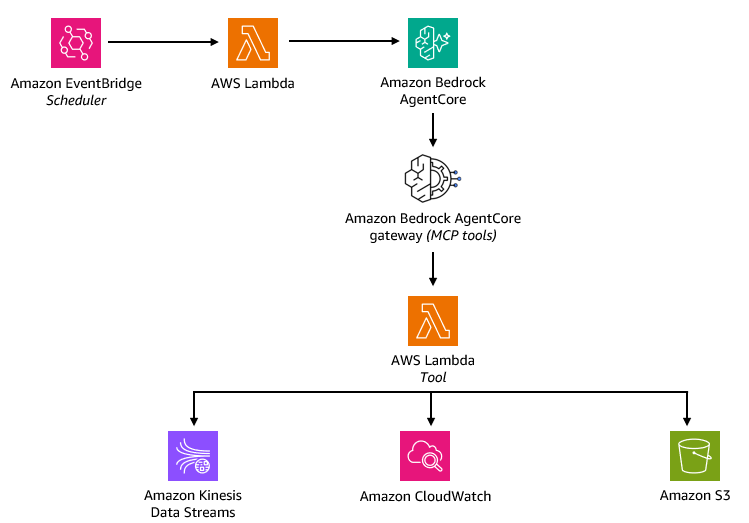
Figure 1: Architecture of the Kinesis Mode Optimizer Agent
The architecture flow includes the following steps:
- Amazon EventBridge Schedule triggers the Scheduler Lambda, an AWS Lambda function, on your configured cadence (daily, weekly, or custom cron).
- Scheduler Lambda invokes the Amazon Bedrock AgentCore harness with the instruction to analyze streams and generate a report.
- Amazon Bedrock AgentCore Gateway, a capability of Amazon Bedrock AgentCore powered by Claude Sonnet, interprets the request and routes it to the appropriate Model Context Protocol (MCP) tools exposed by the Tool Lambda.
- Tool Lambda performs the heavy lifting, fanning out to three downstream services:
- Kinesis Data Streams – Lists streams in the Region, describes each stream (shard count, mode, retention), and discovers Enhanced Fan-Out consumers per stream.
- CloudWatch – Pulls 7 days of metrics per stream (IncomingBytes, OutgoingBytes, throttle events) and computes three-way cost comparison.
- Amazon S3 – Generates per-stream recommendations and an account-level Advantage assessment, then stores the final HTML and JSON reports.
- Amazon Bedrock AgentCore harness summarizes the findings and returns them to the caller.
The entire stack is deployed using AWS Cloud Development Kit (AWS CDK) with a single cdk deploy command.
Prerequisites
Before you begin, verify that you have the following:
- AWS CDK –
npm install -g aws-cdk. - Python 3.12+.
- aws-cdk-lib >= 2.251.0 – for AgentCore L2 constructs.
- AWS Command Line Interface (AWS CLI) configured with credentials that have permissions to deploy the required resources.
- Amazon Bedrock model access – verify you have access to Claude Sonnet 4.5 (or your chosen model) in the target Region. Check in the Amazon Bedrock console under Model access.
Walkthrough
In the following sections, you deploy the Kinesis Data Streams Mode Optimizer Agent and test it against your Kinesis streams.
Step 1: Clone the repository
Step 2: Install CDK dependencies
Step 3: Set your target Region
The stack deploys to whatever Region is set in AWS_DEFAULT_REGION. Set it before running any CDK commands:
Step 4: Bootstrap CDK (first time per account/Region)
Step 5: Deploy
Optionally customize the schedule and bucket name:
Step 6: Test the agent
You can test the agent with the AWS CLI:
Step 7: View reports
Reports are stored in Amazon S3 at:
The HTML report includes a per-stream action table with priority indicators, detailed cost breakdowns, and the account-level Advantage recommendation.
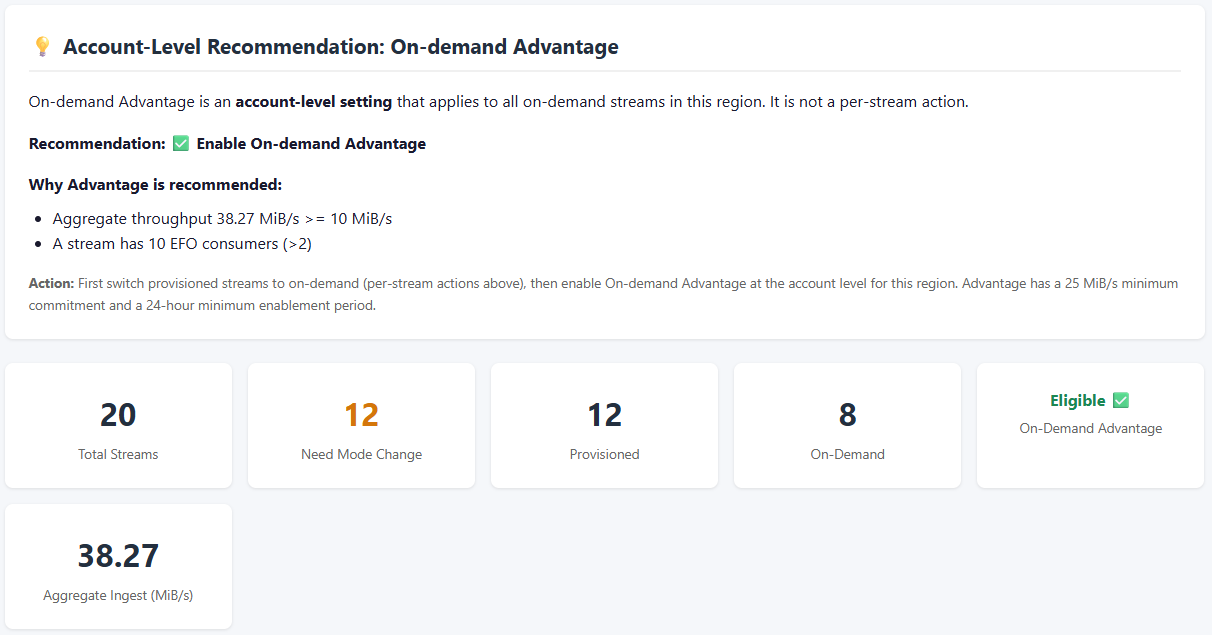
Figure 2: Sample HTML report with the per-stream action table
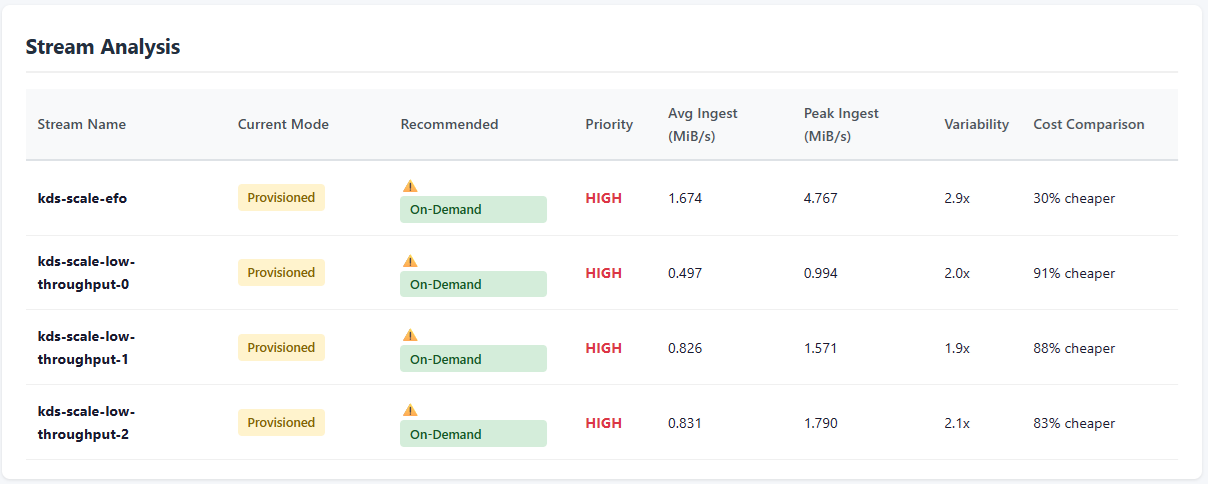
Figure 3: Account-level On-demand Advantage recommendation in the sample report output
Multi-Region deployment
The agent is Region-specific. When deployed to a Region, it analyzes only the streams in that Region. To cover multiple Regions, change the environment variable and repeat the deployment:
Each deployment is independent, with its own agent, Amazon S3 bucket, and schedule.
Clean up
To remove the stack from a Region:
Note: The Amazon S3 bucket has a RemovalPolicy.RETAIN setting and isn’t deleted with the stack. Delete it manually if you no longer need the reports.
Conclusion
In this post, you deployed an AI-powered agent that autonomously analyzes your Amazon Kinesis Data Streams and recommends the optimal capacity mode for each stream. The agent alleviates the manual effort of reviewing CloudWatch metrics across dozens or hundreds of streams and produces actionable, cost-aware recommendations on a recurring schedule.
By shifting from manual capacity reviews to autonomous, scheduled optimization, you gain three key benefits. First, you can reduce streaming costs by identifying streams that should switch modes. Second, you alleviate throttling risk by catching under-provisioned streams before they impact performance. Third, you free your team from repetitive operational work. All of this is achievable with a single cdk deploy.
To get started, clone the sample-kinesis-optimizer-agent repository and deploy it to your account today.
About the authors
Panduit E36G18L PDU Review A Sweet Managed and Switched by Outlet PDU
Post Syndicated from Eric Smith original https://www.servethehome.com/panduit-e36g18l-pdu-review-a-sweet-managed-and-switched-by-outlet-pdu/
We test the Panduit E36G18L PDU and see what this metered and switched by outlet zero U PDU offers including its combination outlets
The post Panduit E36G18L PDU Review A Sweet Managed and Switched by Outlet PDU appeared first on ServeTheHome.
This $379 Router Might Be All Your RV Needs
Post Syndicated from Crosstalk Solutions original https://www.youtube.com/watch?v=zngl3yg6Szc
S9 E30: Elon Musk, Twitter & Qatar World Cup: Last Week Tonight with John Oliver
Post Syndicated from LastWeekTonight original https://www.youtube.com/watch?v=14xmIVd1I78
AWS Weekly Roundup: AWS Heroes Summit, Web Search on Amazon Bedrock, Dogwood, Kiro Crew, and more (August 10, 2026)
Post Syndicated from Channy Yun (윤석찬) original https://aws.amazon.com/blogs/aws/aws-weekly-roundup-aws-heroes-summit-web-search-on-amazon-bedrock-dogwood-kiro-crew-and-more-august-10-2026/
Last week, we brought together AWS Heroes from around the world to connect, collaborate, and celebrate the builders who go above and beyond for the AWS community.
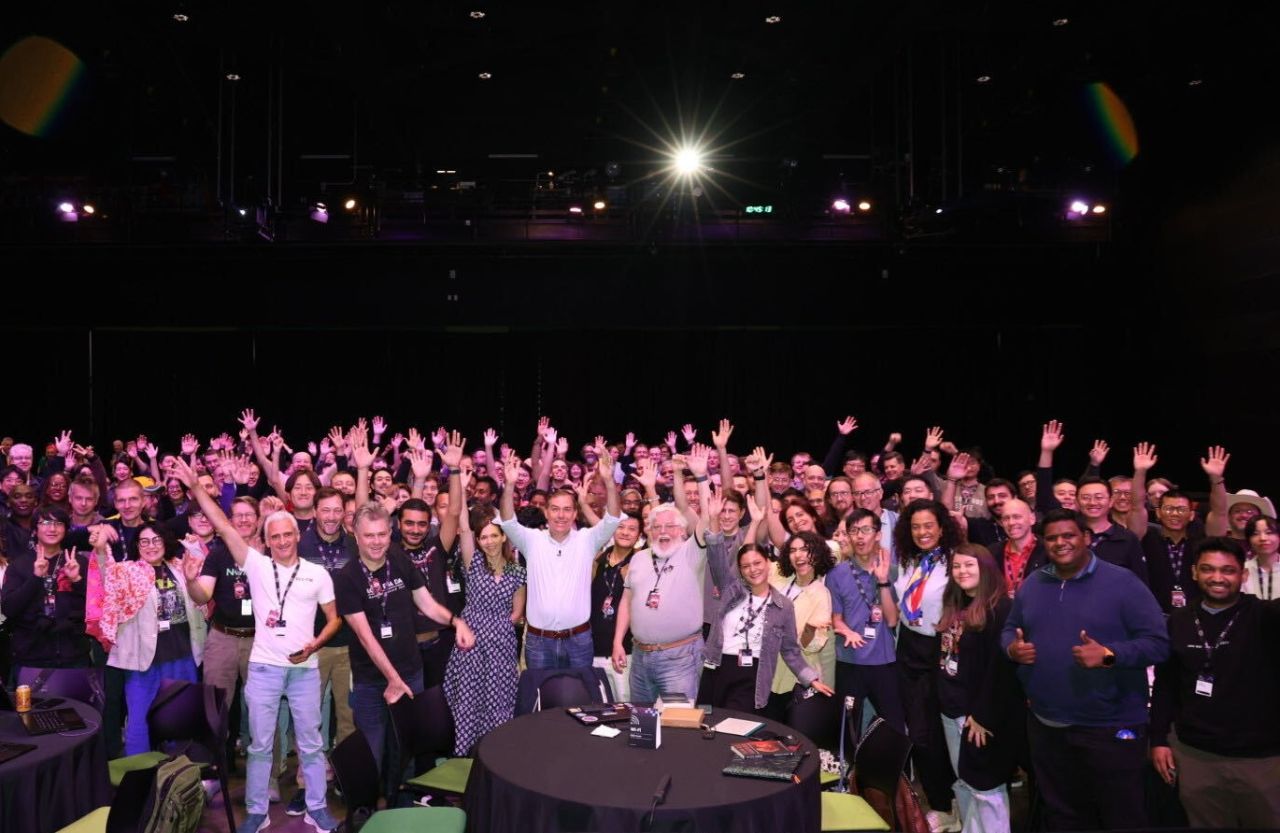
The AWS Heroes Summit, an invite-only annual gathering, brings global experts specializing in fields like AI, serverless, and containers together for direct collaboration, technical deep-dives, and feedback sessions with internal AWS product and service teams.
Day 1 started with an inspiring fireside chat from AWS CEO Matt Garman. From an insightful AMA with James Hamilton on Day 2 to breakout sessions from various product teams that sparked new ideas, our AWS Heroes excelled at sharing knowledge, lifting each other up, and turning conversations into collaborations. To learn more, read the attendee feedback on LinkedIn.
Last week’s launches
Here are some launches that got my attention:
- Web Search on Amazon Bedrock: Amazon Bedrock now enables OpenAI models (GPT-5.4, GPT-5.5, and GPT-5.6 Sol/Terra/Luna) to browse and retrieve information from the internet, allowing AI applications to access up-to-date information beyond their training data. This capability opens new possibilities for building AI agents and applications that can answer questions using real-time web content while maintaining data residency within your secured AWS environment with zero data egress. To get started, visit the AI blog post and the Amazon Bedrock User Guide.
- Runtime Instances on Amazon Bedrock AgentCore: You can now deploy and run AI agents on dedicated runtime instances through Amazon Bedrock AgentCore, providing more control over agent execution environments with predictable performance and cost. To get started, visit Sébastien’s blog post and AgentCore documentation.
- Vector search for Amazon DynamoDB: You can store and query vector embeddings alongside your existing data in DynamoDB without managing a separate vector database. DynamoDB already supports storing memory for AI agents, and with vector search you can now add semantic retrieval over that memory for agentic grounding, with predictable performance. To learn more, visit Esra’s blog post and Amazon DynamoDB Developer Guide.
- AWS Transform continuous modernization now generally available: This capability helps engineering teams analyze and remediate technical debt across source code repositories at scale. You can modernize mainframe and legacy workloads with an ongoing, automated approach rather than a one-time migration event. To learn more, visit Micah’s preview blog post. You can also try the AWS Transform Kiro Power and agent plugins.
- Up to 3,000 Mbps for AWS Lambda function bandwidth: AWS Lambda functions now support increased network bandwidth, enabling data-intensive workloads and faster communication between Lambda functions and other AWS services. This feature enables functions outside a VPC that are configured with 2 GB of memory or more to access network bandwidth that scales proportionally, from 625 Mbps at 2 GB up to 3,000 Mbps at 10 GB.
For a full list of AWS announcements, be sure to keep an eye on the What’s New with AWS page.
Other AWS news
Here are some additional projects and news items that you may find interesting:
- Introducing Dogwood: Runtime Verification for AI Agents: AWS open-sourced Dogwood, a purpose-built governance language for AI agents to support Cedar policies and add temporal conditions. Powering Dogwood, Amazon Bedrock AgentCore introduced temporal policies whose decisions depend on the history of an agent’s actions within a session, not on the current request alone.
- AWS supports Agent Plugins: An Open Standard for Portable Agent Extensions: AWS announced support for Agent Plugins, an open source, vendor-neutral specification that gives AI agent extensions a common packaging format so you can package an extension once and ship it to any client, including Kiro, VS Code, Cursor, or any tool that implements the spec.
- Introducing Kiro Crew: Kiro Crew is a persistent, self-evolving workspace that keeps work moving, online or off, enabling collaborative multi-agent development workflows within the Kiro IDE. It’s built for engineering work that goes beyond a single chat session, and spans repos, tools, and days. You can run several efforts in parallel or hand work to subagents that report back, so nothing waits in line.
For a full list of AWS blog posts, be sure to keep an eye on the AWS Blogs page.
Learn more about AWS, browse and join upcoming AWS-led in-person and virtual events, startup events, and developer-focused events including AWS Summits and AWS Community Days. Join the AWS Builder Center to connect with builders, share solutions, and access content that supports your development.
That is all for this week. Check back next Monday for another Weekly Roundup!
— Channy
Trump & the DOJ #lastweektonight
Post Syndicated from LastWeekTonight original https://www.youtube.com/shorts/QEXdQcn7iDQ
[$] Even more formal verification for BPF
Post Syndicated from daroc original https://lwn.net/Articles/1087069/
BPF offers useful safety guarantees, but Kumar Kartikeya Dwivedi wants BPF
programs to be even safer. At the 2026
Linux Storage, Filesystem,
Memory-Management, and BPF Summit, he led a session
(slides)
discussing the possibility
of adding domain-specific invariants to BPF programs. It was not a discussion
intended to lead to the implementation of any particular kernel feature, but
rather an overview of why additional formal verification might be needed, and
how it could work with the existing BPF ecosystem.