Post Syndicated from Explosm.net original https://explosm.net/comics/foreplay
New Cyanide and Happiness Comic
Post Syndicated from Explosm.net original https://explosm.net/comics/foreplay
New Cyanide and Happiness Comic
Post Syndicated from The History Guy: History Deserves to Be Remembered original https://www.youtube.com/shorts/9w7iz3MsVPQ
Post Syndicated from xkcd.com original https://xkcd.com/3118/

Post Syndicated from corbet original https://lwn.net/Articles/1030656/
Linus has released 6.16-rc7 for testing.
Nothing really stands out – the biggest patches in here are for
some documentation and self-tests or tooling, not actual kernel
code changes.
So unlike the week before, it all feels very trivial and I think
we’re in good shape. Knock wood,
Post Syndicated from Geographics original https://www.youtube.com/watch?v=M6nMiKyR-YU
Post Syndicated from Explosm.net original https://explosm.net/comics/ch-busted
New Cyanide and Happiness Comic
Post Syndicated from The History Guy: History Deserves to Be Remembered original https://www.youtube.com/shorts/XB96R1wAQAQ
Post Syndicated from Oglaf! -- Comics. Often dirty. original https://www.oglaf.com/hayfever/


Post Syndicated from corbet original https://lwn.net/Articles/1030603/
The Arch Linux project has sent out an
advisory warning that a set of malicious packages, containing a remote
access trojan, were uploaded to the Arch User Repository (AUR). The
affected packages were librewolf-fix-bin, firefox-patch-bin, and
zen-browser-patched-bin. “We strongly encourage users that may have
“
installed one of these packages to remove them from their system and to
take the necessary measures in order to ensure they were not
compromised.
Post Syndicated from BeardedTinker original https://www.youtube.com/shorts/41Pnm5teCKo
Post Syndicated from Cliff Robinson original https://www.servethehome.com/rapidus-starts-2nm-gate-all-around-prototype-production-at-iim-1/
Rapidus said that it has started 2nm gate all-around (GAA) prototype production at its new IMM-1 fab in Japan
The post Rapidus Starts 2nm Gate All Around Prototype Production at IIM-1 appeared first on ServeTheHome.
Post Syndicated from corbet original https://lwn.net/Articles/1030563/
Intel has announced the
abrupt end of its Clear Linux cloud-oriented distribution:
After years of innovation and community collaboration, we’re ending
support for Clear Linux OS. Effective immediately, Intel will no
longer provide security patches, updates, or maintenance for Clear
Linux OS, and the Clear Linux OS GitHub repository will be archived
in read-only mode. So, if you’re currently using Clear Linux OS, we
strongly recommend planning your migration to another actively
maintained Linux distribution as soon as possible to ensure ongoing
security and stability.
Post Syndicated from Techmoan original https://www.youtube.com/watch?v=as59feYjokk
Post Syndicated from Йовко Ламбрев original https://www.toest.bg/sedmitsata-14-19-july/
Българинът остава оцеляващ вид, самотен играч, лесно податлив на чужди влияния. Ще събира капачки за кувьози, ще дарява за хора, които не познава, но няма да се изправи с името си, за да защити правото си на свободен израз, на правосъдие, еднакво за всеки.

Това е цитат от един от материалите в „Тоест“ от тази седмица.
… най-хубавото, което трябва да бъде обичано от всеки, който иска да бъде щастлив, както заради себе си, така и заради последствията за останалите.
А това е едно от най-древните определения за справедливостта. Негов автор е Сократ, който е цитиран от Платон.
Тези дни у нас е повече от очевидно, че без справедливост и без институции, които да въздават справедливост, държавата е като сграда с компрометиран фундамент, под чийто покрив никой не се чувства защитен. Нито близките на загиналите по пътищата, нито хората, които се опитват да създават блага с честен труд и бизнес, нито измамените, ограбените или жертвите на какъвто и да е вид насилие.
Обществото ни ще почувства отново държавността, икономическите перспективи и прогреса едва когато осъзнае, че трябва да отвоюва обратно пленените механизми за въздаване на справедливост. И няма друга по-важна битка. За новата протестна вълна и за това дали се задават нови избори и кой ще мигне пръв, пише Емилия Милчева в седмичния си политически коментар „Ще се вика ли силно „Оставка“?“.
Девет милиона мишлета… За този популярен рефрен от 90-те пък се сетих, докато гледах 20-тия епизод на „Т.Е. от Е.Т.“, алтернативния преглед на събитията от седмицата.
Иначе, след около девет месеца у нас ще започне да се прилага новоприетият Закон за личната несъстоятелност. Това време е нужно на Министерството на правосъдието, за да подготви въвеждането му. Лошото е, че проблемите, които бяха дискутирани извън парламента, не намериха отражение в текстовете на новия закон. Светла Енчева прави сравнение с германския му вариант в тазседмичната си статия.
В петия брой на бюлетина „Гласовете на Америка“, който Йоанна Елми списва специално за читателите на „Тоест“, може направо да загубите равновесие. Нарочно е. В него са събрани интересни новини за актуални събития отвъд океана без директен авторски коментар. А всъщност коментарът си е там – ще го намерите ли? Краят е безмилостен… като действителността.
Напоследък, като споменаваме Америка, някак естествено идва да погледнем или към Китай, или към Иран… Този път ще е Иран. Заради Искрен Иванов и анализа му „Ядрената дилема на Иран: Към сделка или към нова война?“, в който може да прочетете какви са възможните сценарии, заедно с подробен контекст за всеки от тях.
Боян Константинов е юрист в системата на ООН в областта на човешките права и дебютира като автор в „Тоест“ с интервю с проф. Лий Баджет, която изследва икономическите щети от хомофобията и неравноправното третиране на ЛГБТИ+ хората. Защо, ако те са приети в обществото, от това ще спечели икономиката и всички ще живеем по-добре – прочетете в статията „Равенството като инвестиция“.
„Ако не можеш да нахраниш детето си“ е заглавието на много важен текст от Надежда Цекулова, в който тя обръща внимание на това как децата, попадащи в институции, почти винаги са от ромски семейства. И от едната страна на монетата са предубежденията на социалните служби, но от другата е бедността, която обаче е тълкувана като „пренебрегване“, а лошите жилищни условия, вървящи в комплект с нея – като „непосредствена опасност“ за отнетото от родителите му дете. Така бедността (сякаш вече не е достатъчно наказание) се наказва допълнително и с отнемане на деца.
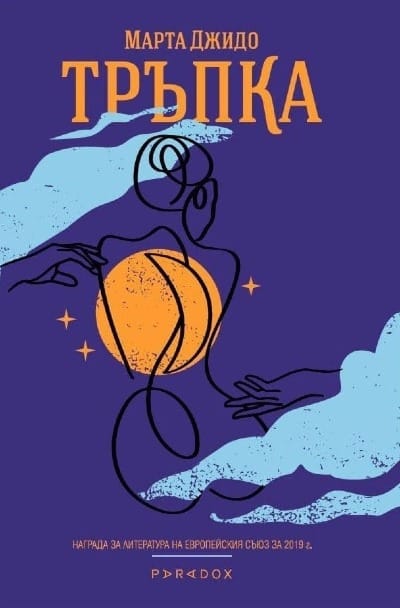
Ако сте израснали или съзрявали през 90-те, вероятно продължава да ви е любопитен всеки поглед върху това интересно време. Отпечатъкът, който то остави върху нас, е централната тема на романа „Тръпка“ от Марта Джидо. Това е една от най-обсъжданите книги в съвременната полска литература и избор на Антония Апостолова в рубриката ни „На второ четене“. Според нея романът е и своеобразен tribute към аналоговото време.
И нека завършим с един вдъхновяващ разговор на Ина Иванова с Любомир Попйорданов. Той е човек, който е трудно да бъде вкаран в рамка – художник, юрист, привърженик на алтернативния туризъм, който в края на интервюто ще ни посъветва да бързаме бавно и да внасяме смисъл в скоростта.
Цитатът в началото на седмичния ми бюлетин е от същия този разговор.
Приятно четене и гледане!
Post Syndicated from The History Guy: History Deserves to Be Remembered original https://www.youtube.com/shorts/qSyivo1pAq4
Post Syndicated from Explosm.net original https://explosm.net/comics/training
New Cyanide and Happiness Comic
Post Syndicated from Bruce Schneier original https://www.schneier.com/blog/archives/2025/07/friday-squid-blogging-the-giant-squid-nebula.html
Beautiful photo.
Difficult to capture, this mysterious, squid-shaped interstellar cloud spans nearly three full moons in planet Earth’s sky. Discovered in 2011 by French astro-imager Nicolas Outters, the Squid Nebula’s bipolar shape is distinguished here by the telltale blue emission from doubly ionized oxygen atoms. Though apparently surrounded by the reddish hydrogen emission region Sh2-129, the true distance and nature of the Squid Nebula have been difficult to determine. Still, one investigation suggests Ou4 really does lie within Sh2-129 some 2,300 light-years away. Consistent with that scenario, the cosmic squid would represent a spectacular outflow of material driven by a triple system of hot, massive stars, cataloged as HR8119, seen near the center of the nebula. If so, this truly giant squid nebula would physically be over 50 light-years across.
Post Syndicated from Ramon Lopez original https://aws.amazon.com/blogs/big-data/unifying-data-insights-with-amazon-quicksight-and-amazon-sagemaker/
Amazon SageMaker has announced an integration with Amazon QuickSight, bringing together data in SageMaker seamlessly with QuickSight capabilities like interactive dashboards, pixel perfect reports and generative business intelligence (BI)—all in a governed and automated manner. With this integration users can go from exploring data in SageMaker to visualizing it in QuickSight with a single click.
“The integration between Amazon SageMaker and Amazon QuickSight will help us streamline how our teams move from data exploration to insights. Our analysts can go from data discovery to building and sharing dashboards through a unified, governed experience. Dashboards are no longer siloed, one-off reports. They’re cataloged, discoverable assets that others can find and access. This has made insight delivery faster, more consistent, and far easier to scale across the business.”
– Lingam Chockalingam, Chief Data Architect, Maryland Department of Human Services – MD THINK
QuickSight is a cloud-powered BI service that revolutionizes data analysis and visualization. It seamlessly integrates data from various sources, including AWS services, third-party applications, and software as a service (SaaS) platforms into a single, intuitive dashboard. As a fully managed service, QuickSight offers enterprise-grade security, global accessibility, and scalability without the hassle of infrastructure management. Amazon Q in QuickSight transforms access to data insights for the entire organization using generative AI. Using Amazon Q, business analysts can generate dashboards and reports using natural language prompts. With Amazon Q, business users can ask and answer questions of data using data Q&A, get natural language executive summaries of data to see trends and insights, and use the powerful new agentic data analysis experience of scenarios to discover patterns and outliers in data and perform what-if analysis.
Amazon SageMaker Unified Studio provides a unified, end-to-end experience consisting of data, analytics, and AI capabilities. You can use familiar AWS services for model development, generative AI, data processing, and analytics—all within a single, governed environment. Users can now build, deploy, and execute end-to-end workflows from a single interface. SageMaker is built on the foundations of Amazon DataZone, where it uses domains to categorize and structure the data assets, while offering project-based collaboration features that teams can use to securely share artifacts and work together across various compute services. This experience allows multiple personas to seamlessly collaborate, while operating under appropriate access controls and governance policies.
Today administrators can configure SageMaker projects with QuickSight to streamline the flow of building insights from your data lake. After being set up, the integration automatically creates a restricted folders that provides a governed context to share assets and data sources, pre-configured with secure connections to data lake tables. This serves as the foundation for any project member securely building and sharing insights. When exploring data in your project the integration allows for one-click access to building a dashboard from any table. Behind the scenes, SageMaker creates a QuickSight dataset in the project’s restricted folder that’s accessible only to members within the project. Not only do dashboards you build in QuickSight stay within this folder, they’re also automatically added as assets to your SageMaker project. There, you can add custom metadata, publish to the SageMaker Catalog and share with users or groups in your corporate directory for broader access—all within SageMaker Unified Studio. This keeps your dashboards organized, discoverable, shareable, and governed, making cross-team collaboration and asset reuse straightforward.
To get started with SageMaker and QuickSight integration, you enable the QuickSight blueprint and create project profiles in the AWS Management Console.
Note that both your SageMaker Unified Studio domain and QuickSight account must be integrated with AWS IAM Identity Center using the same Identity Center instance. Additionally, your QuickSight account must exist in the same AWS account.
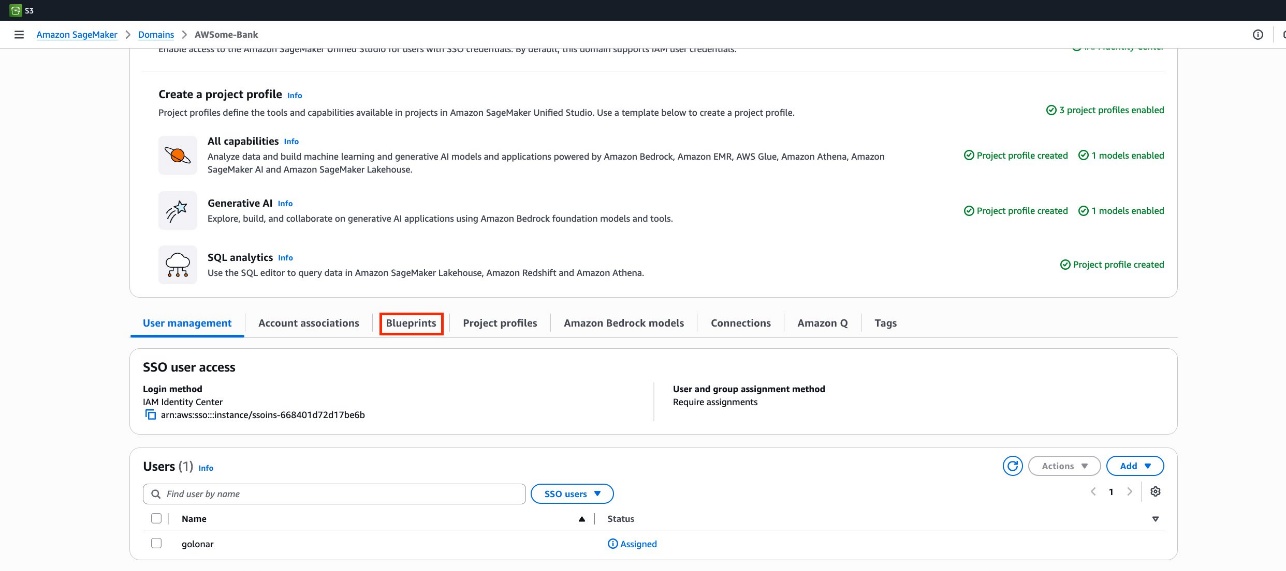
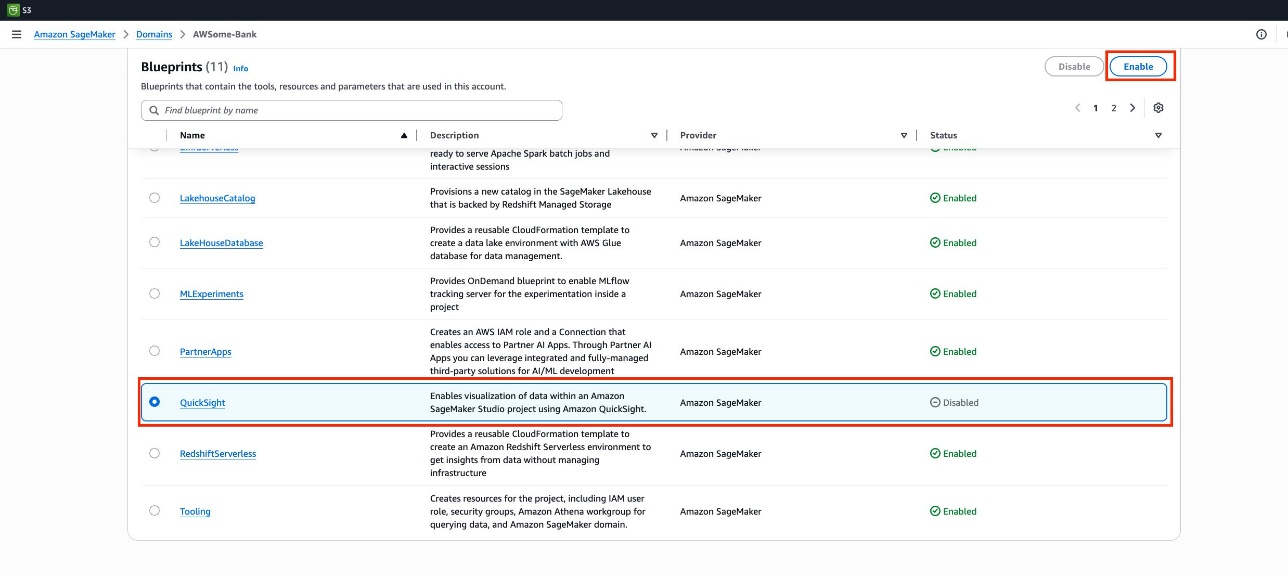
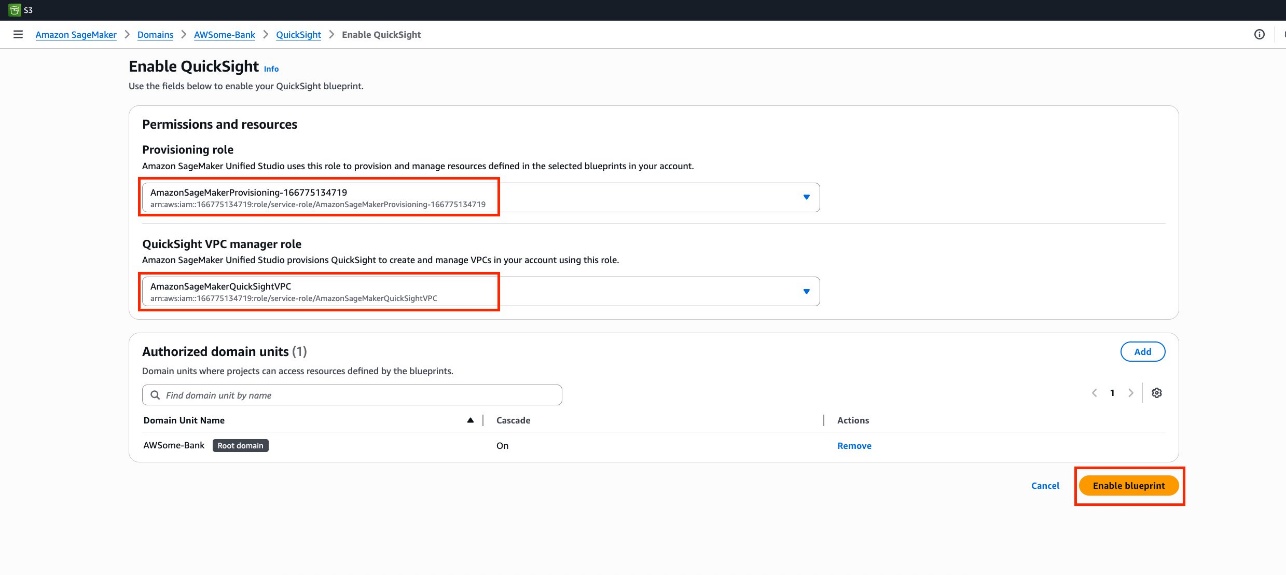
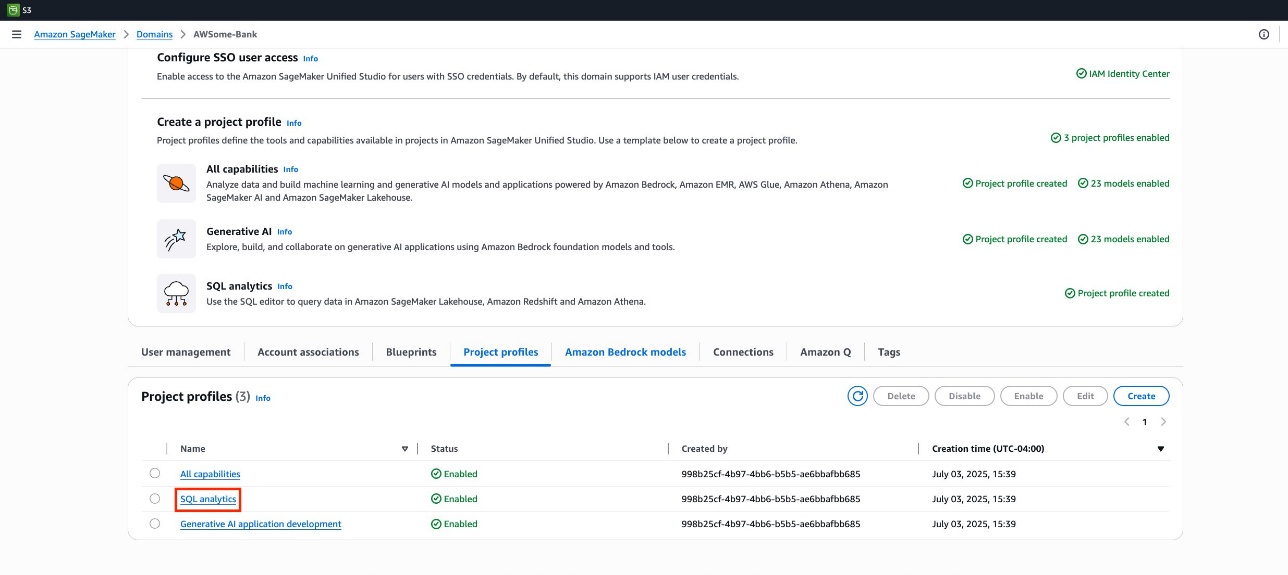
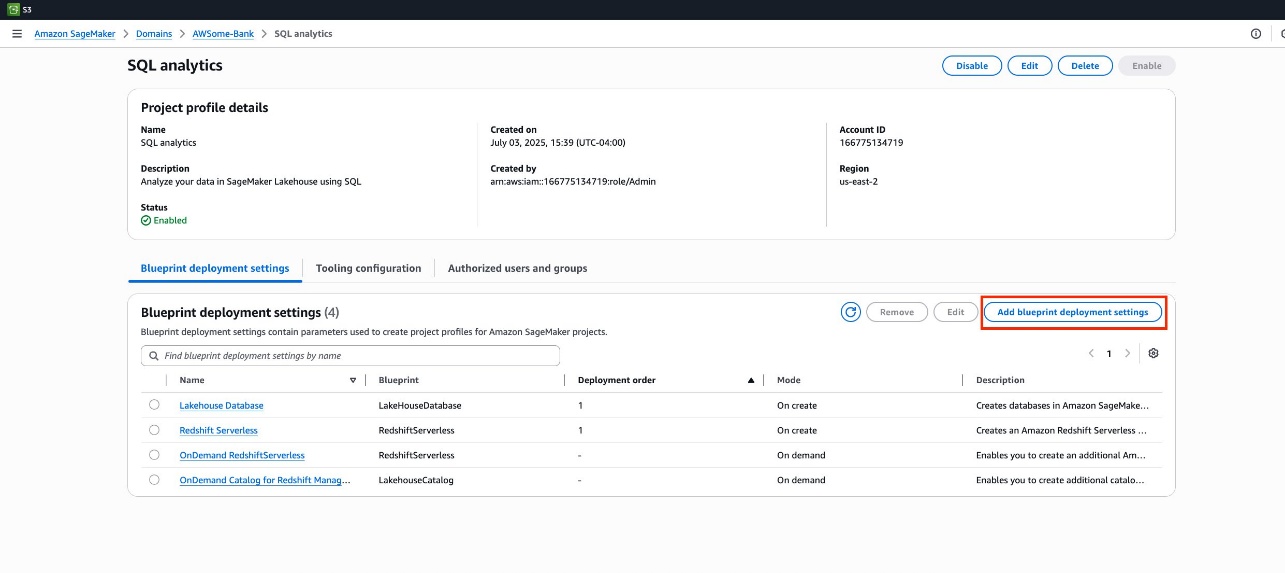
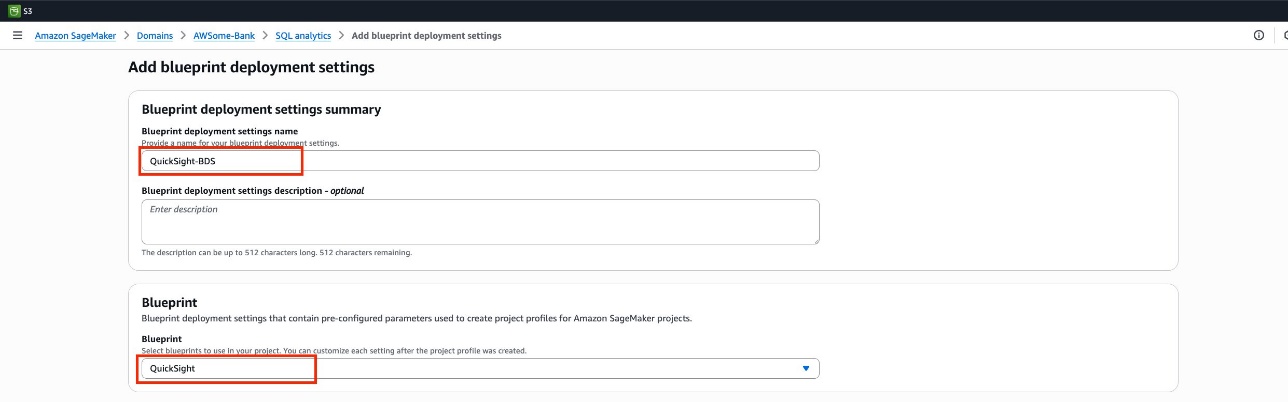
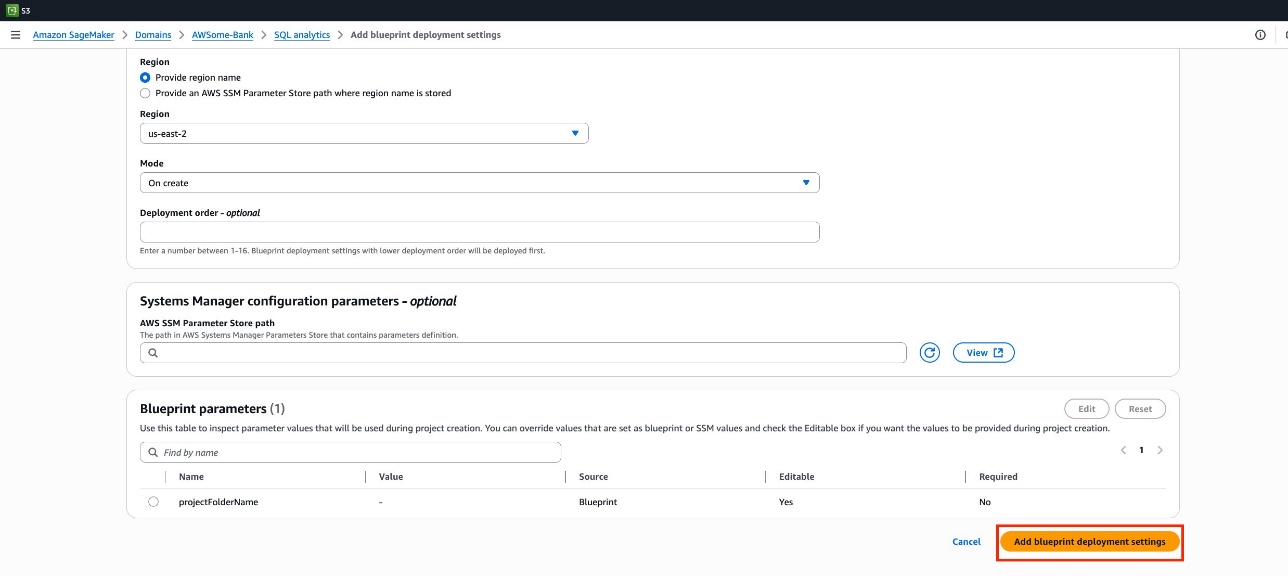
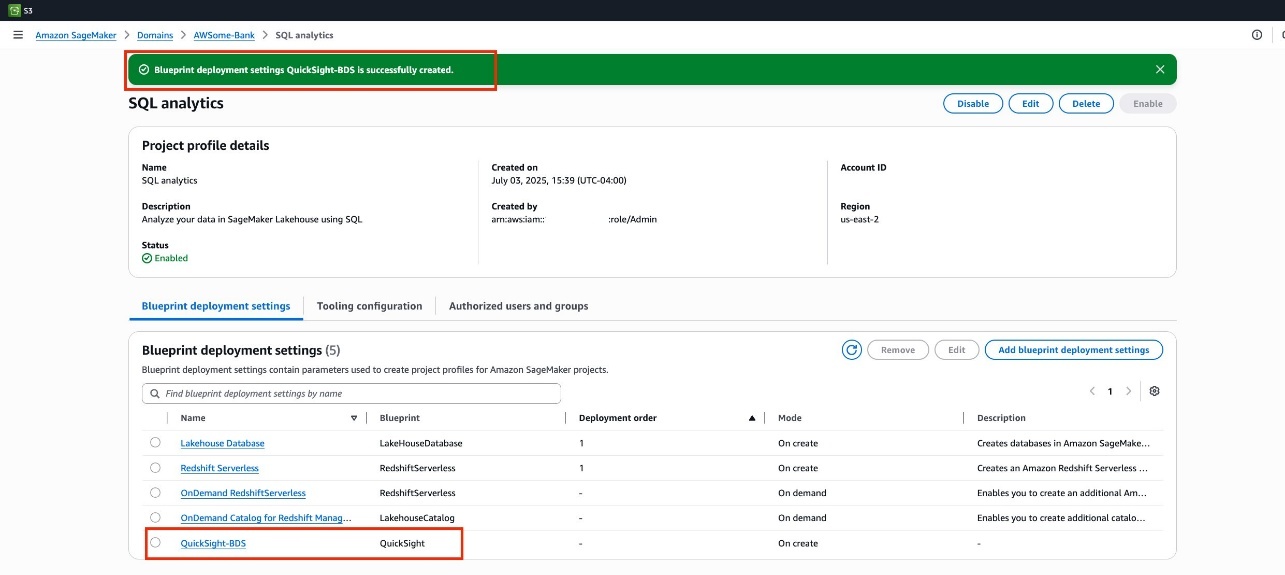
After the QuickSight integration has been set up by the administrator, data consumers such as analysts and data scientists can begin using it in the SageMaker portal by creating a new project.
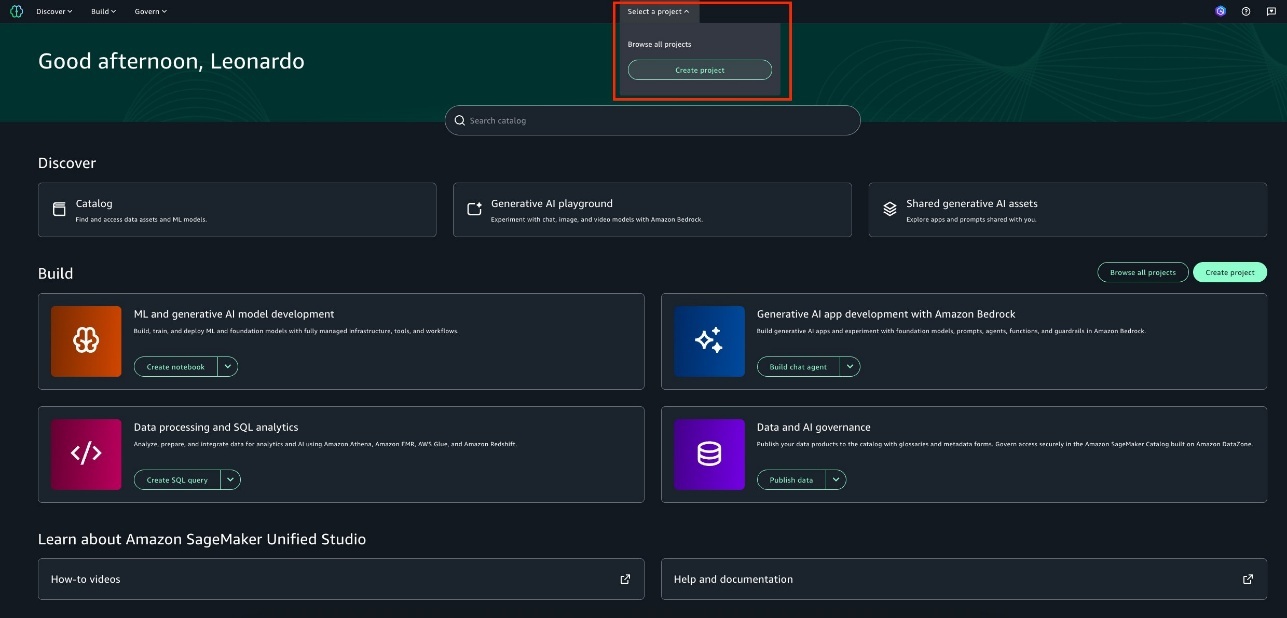
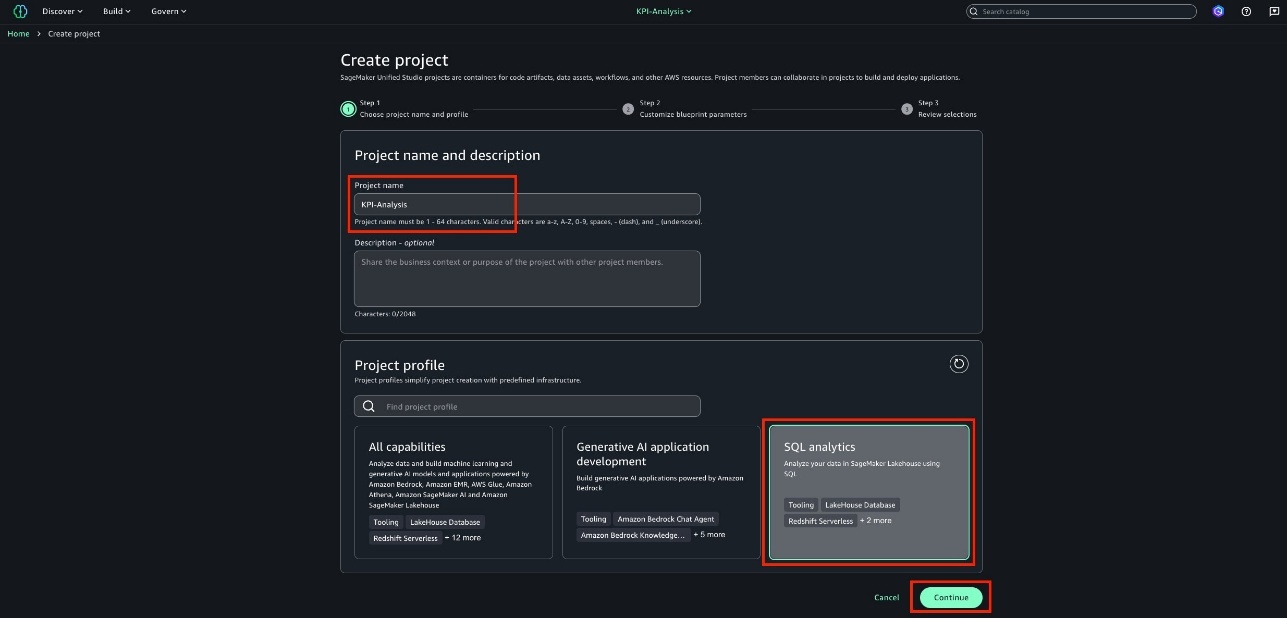
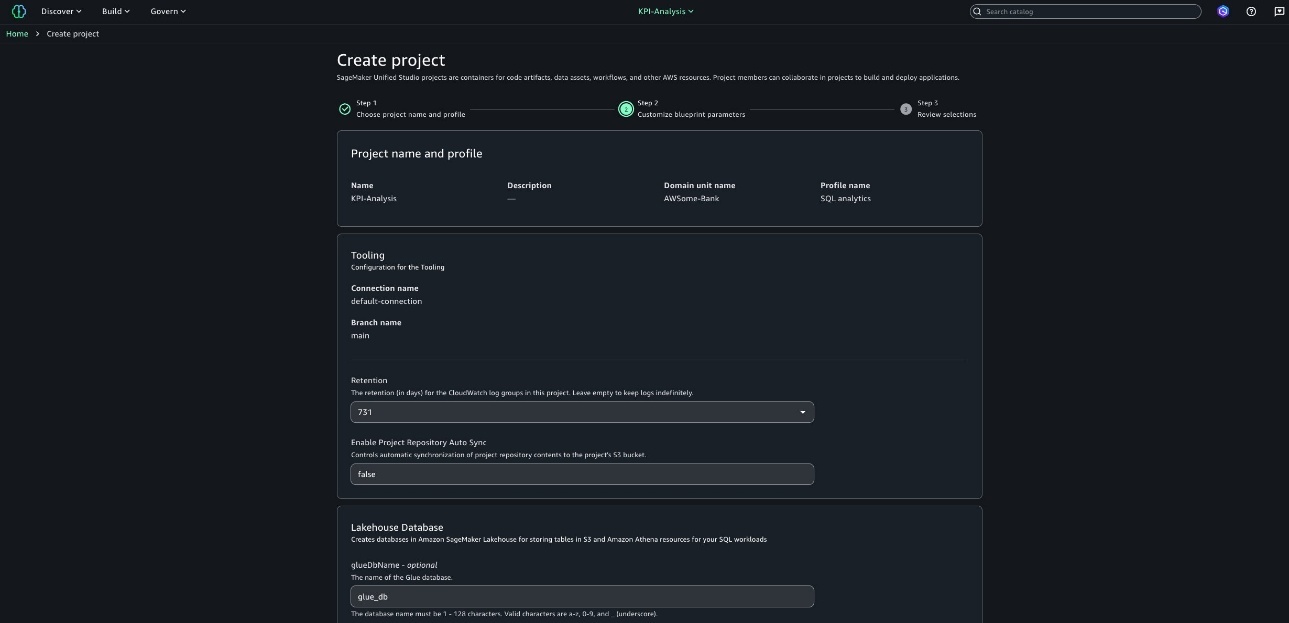
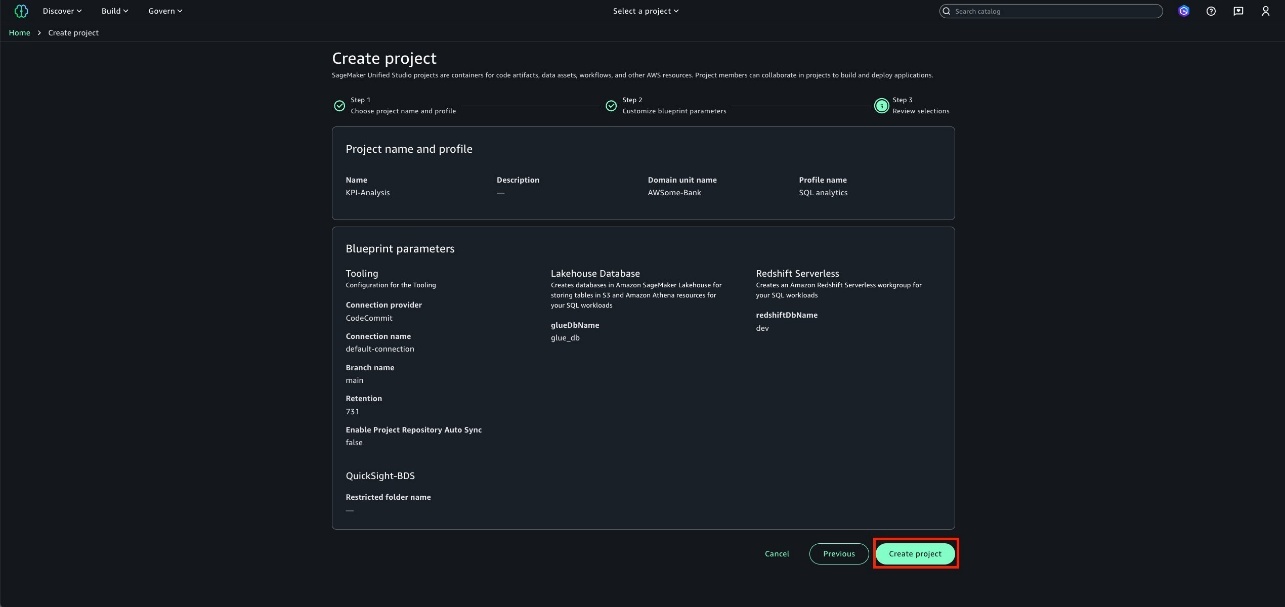
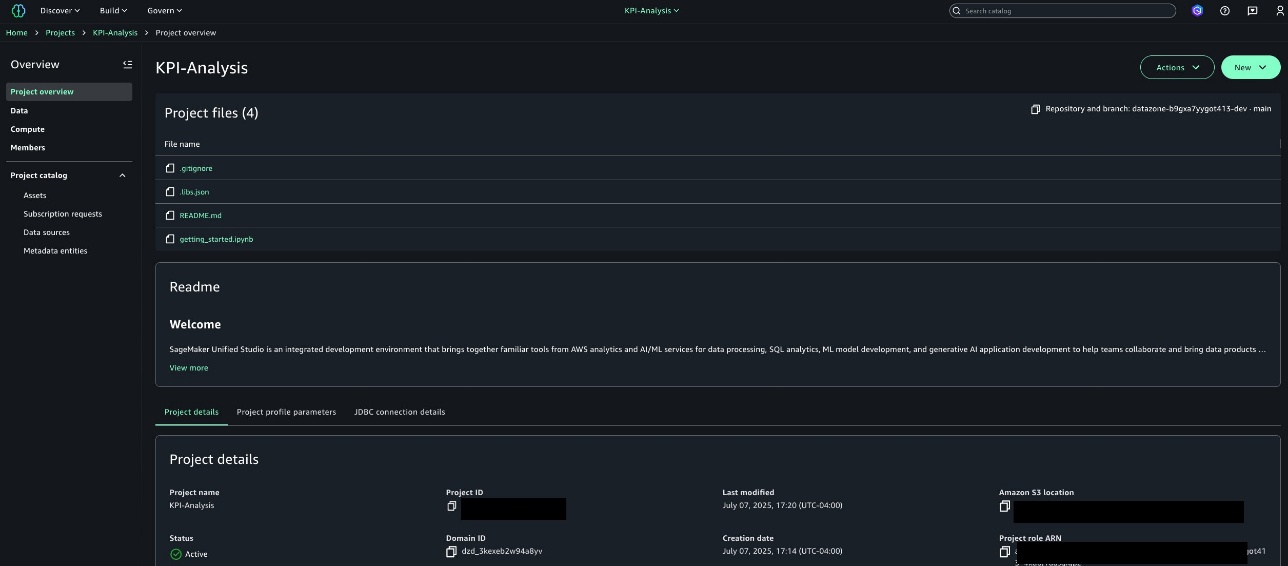
transactions.csv file, which contains financial transaction data from various departments.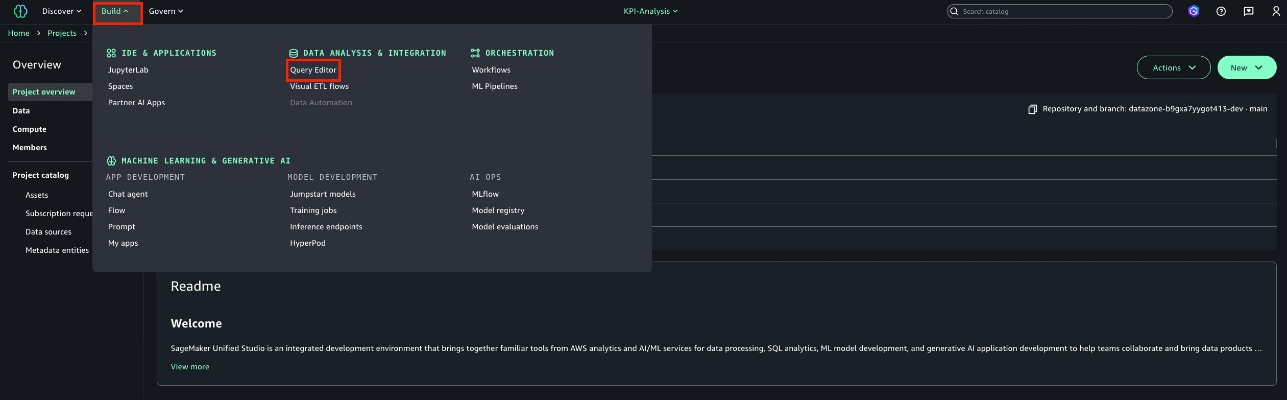
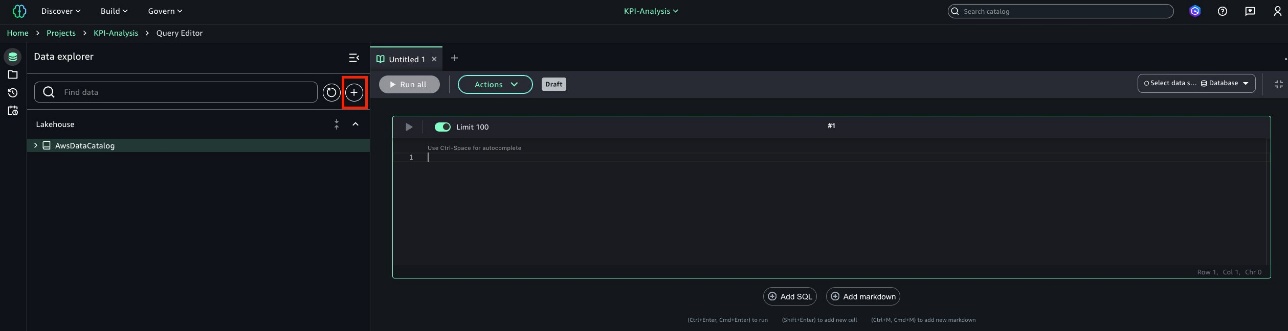

transactions.csv file.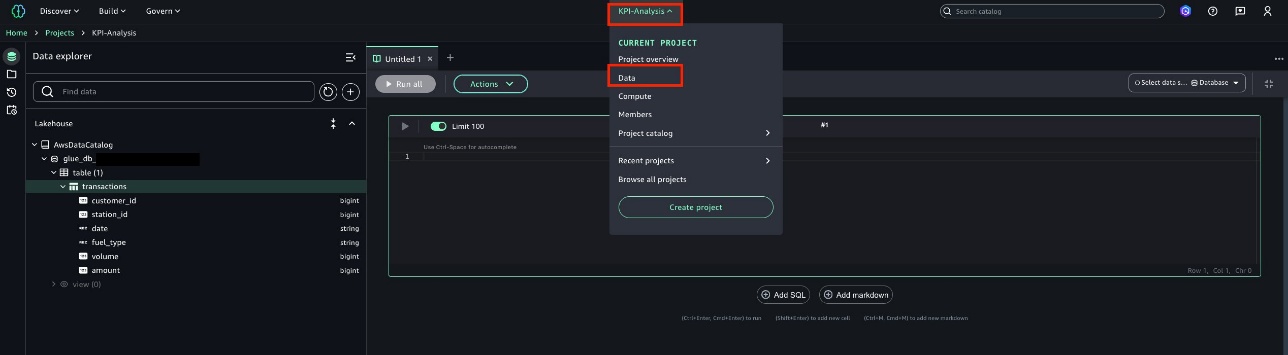

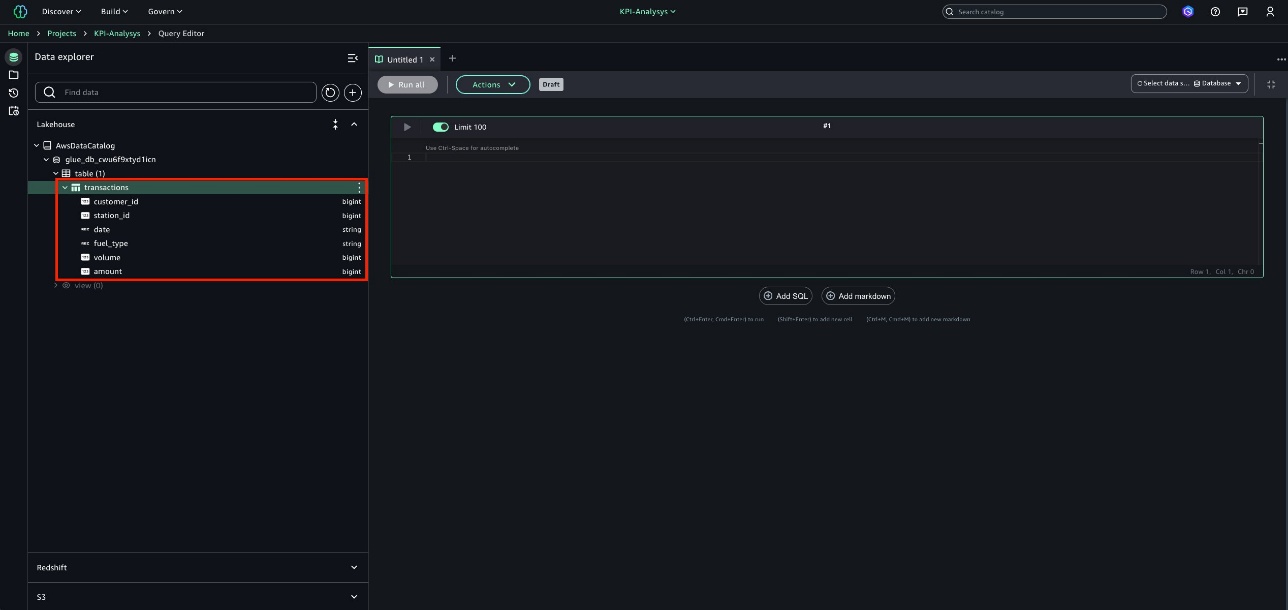
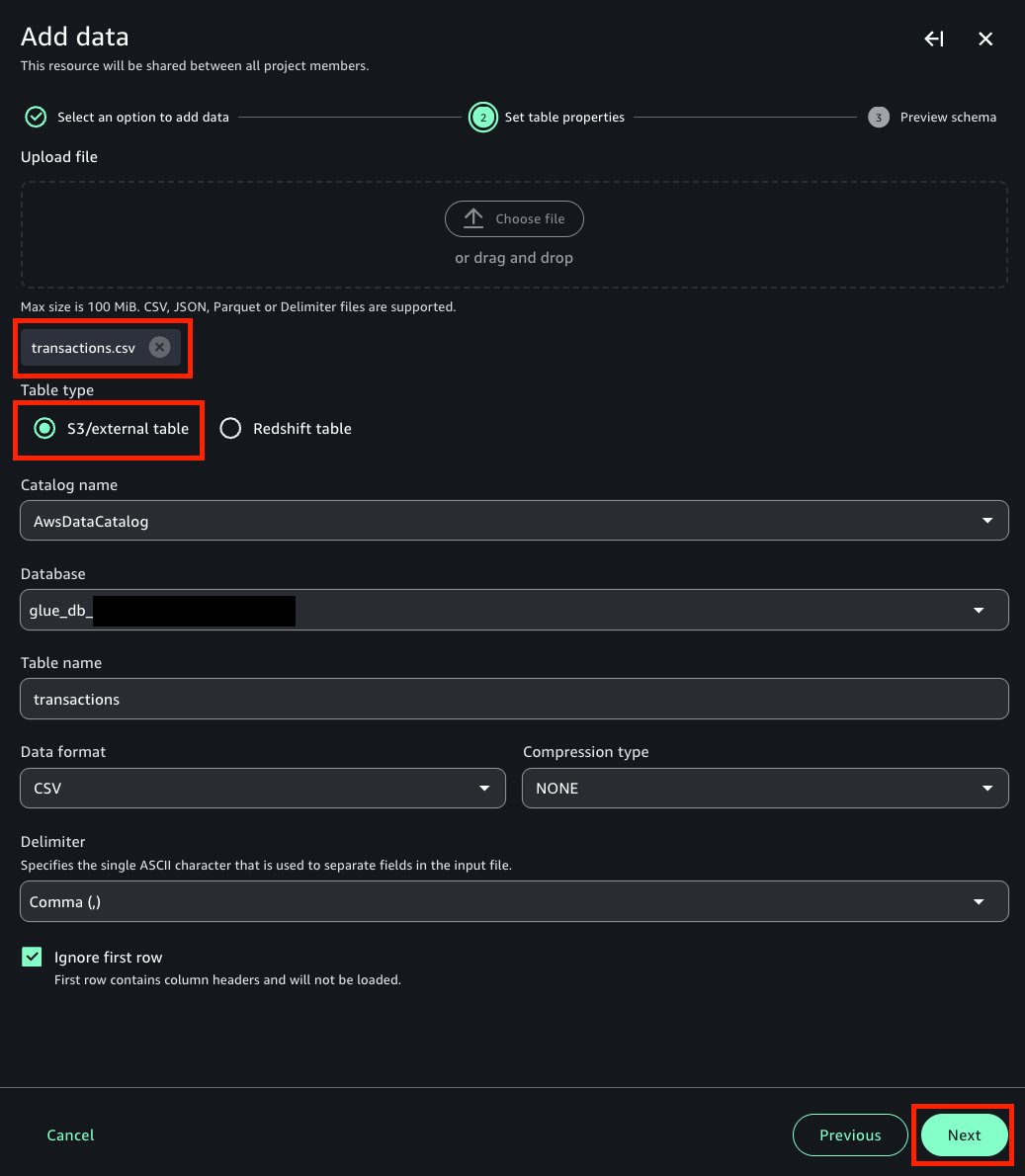
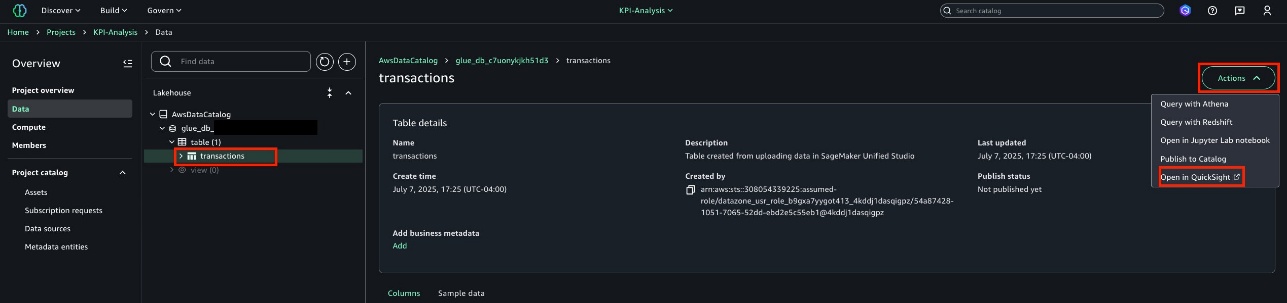
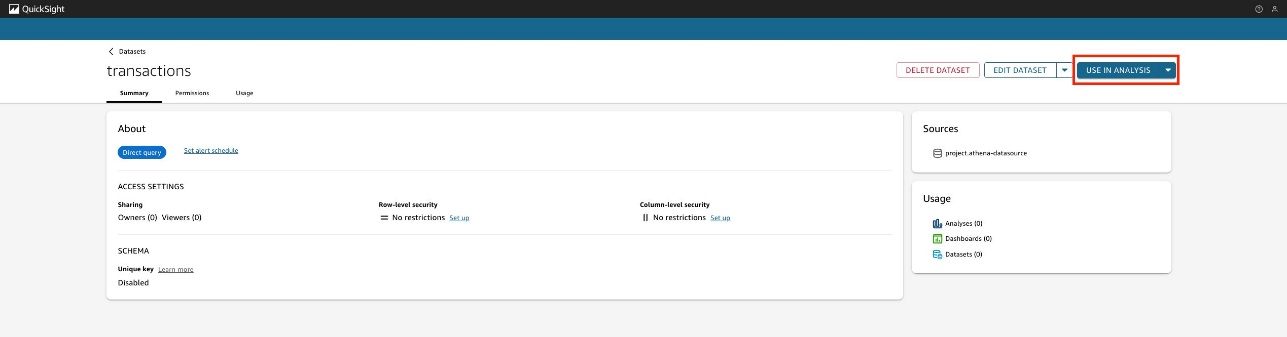
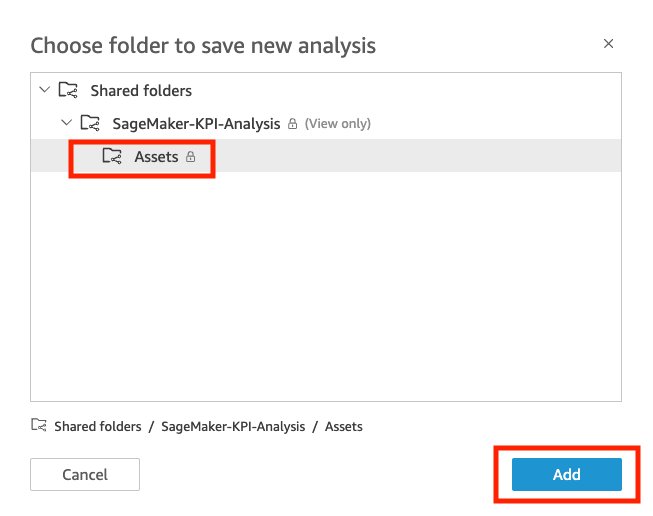
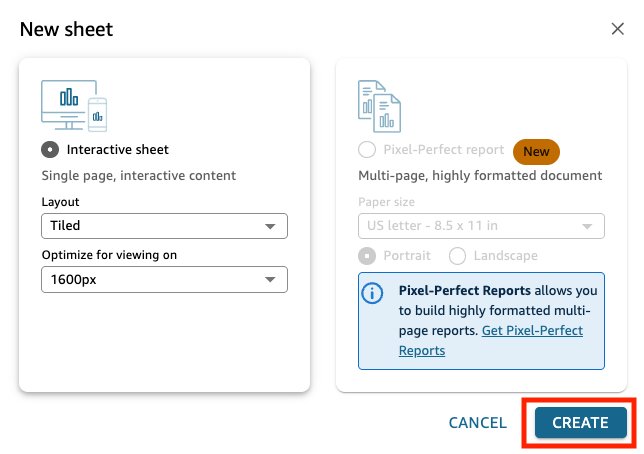
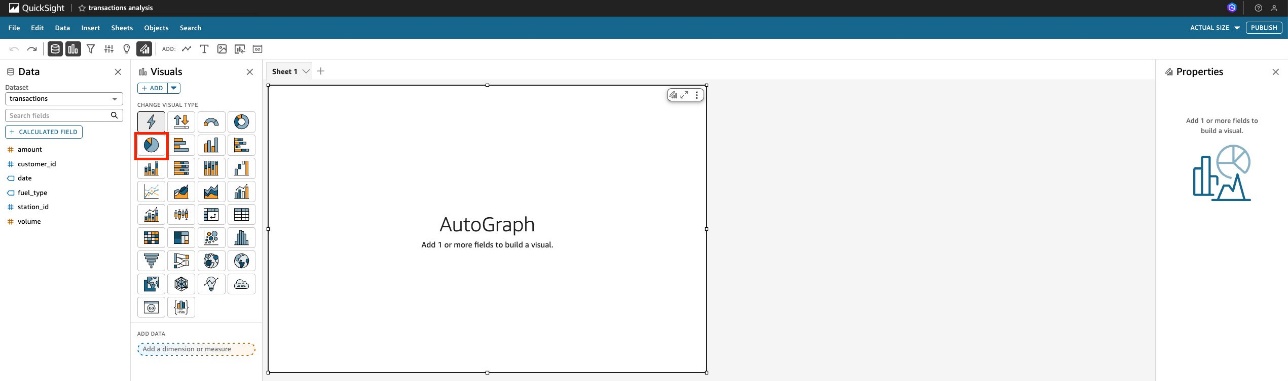
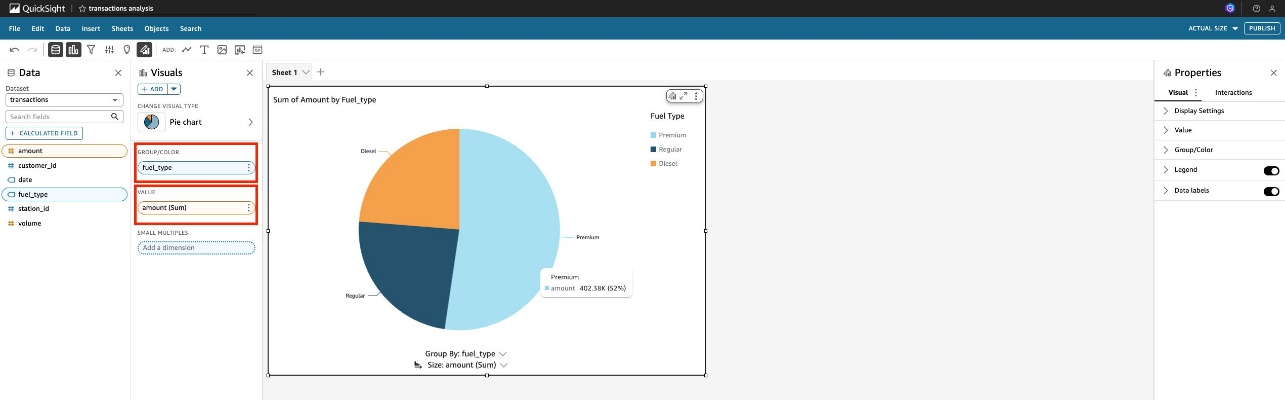
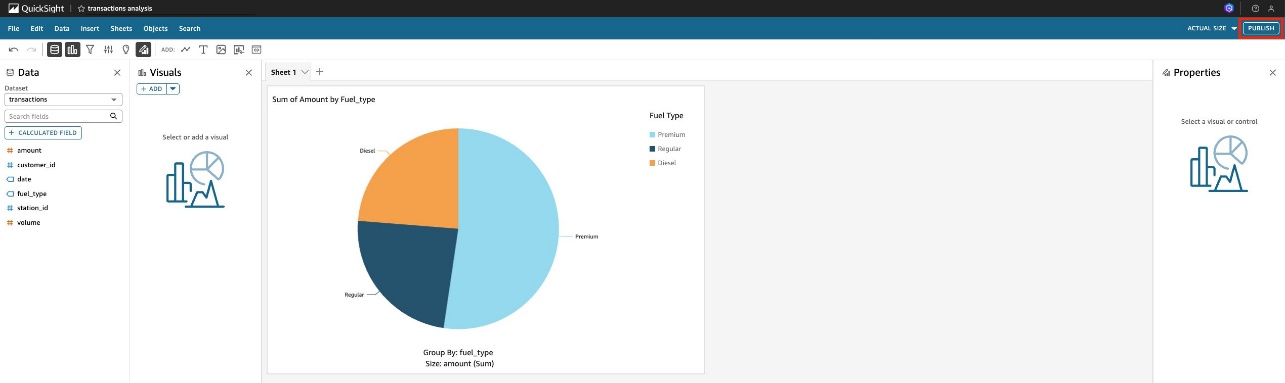
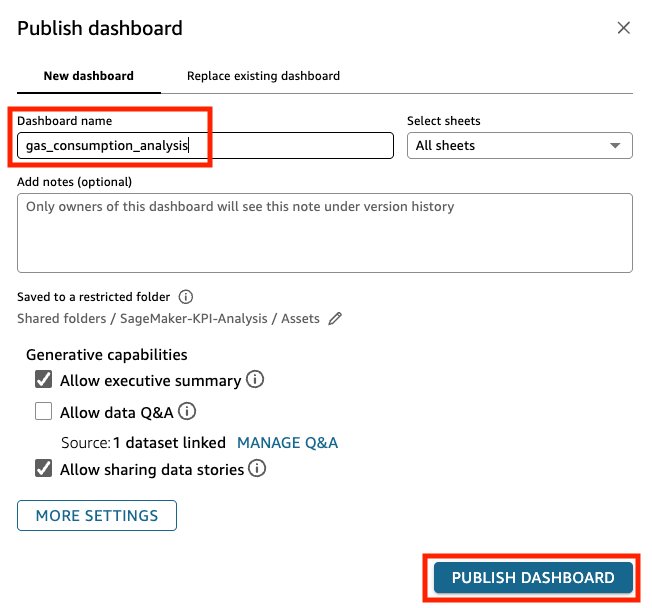
After the dashboard is created, it’s automatically added to the SageMaker project. From there, analysts or BI engineers can enrich it with business metadata, make it discoverable across the organization, and share it with other users or groups in their corporate directory.
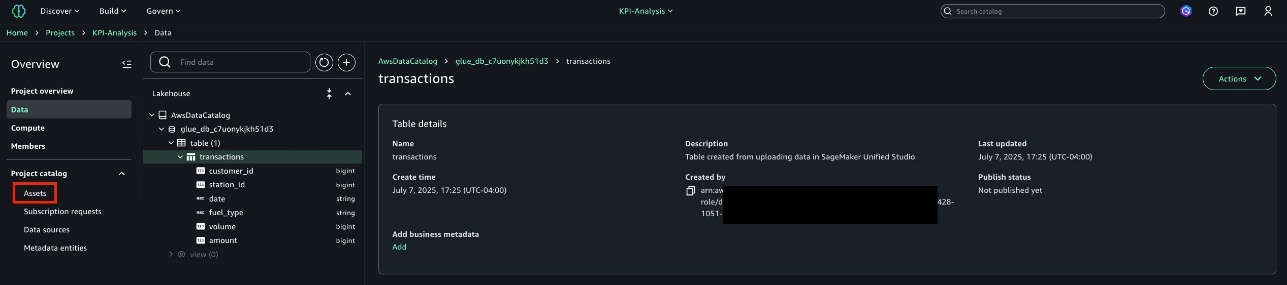
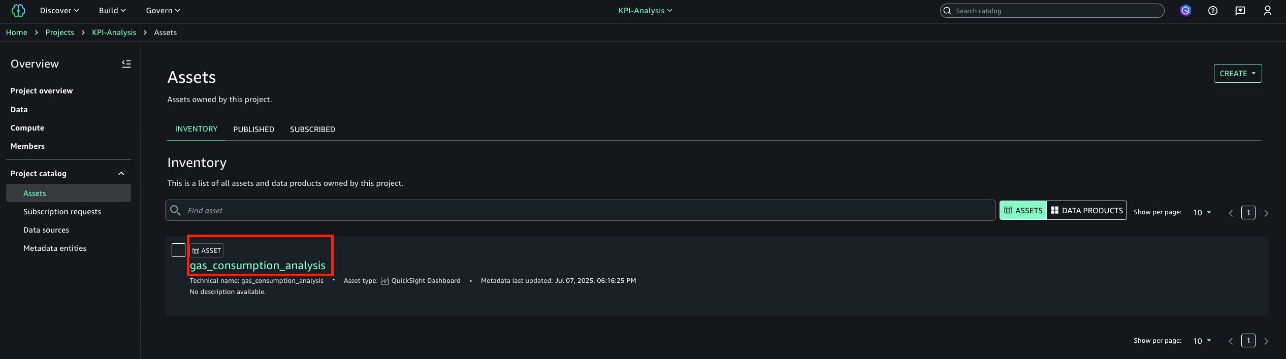
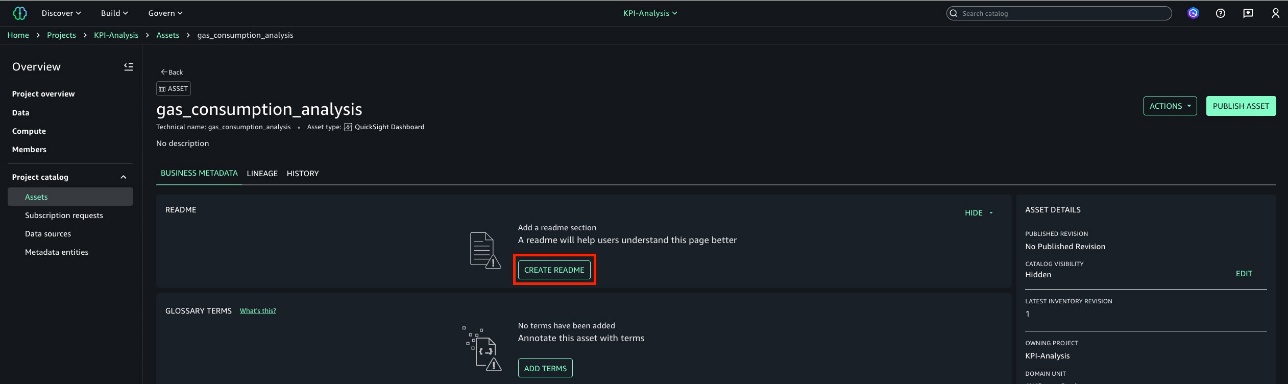
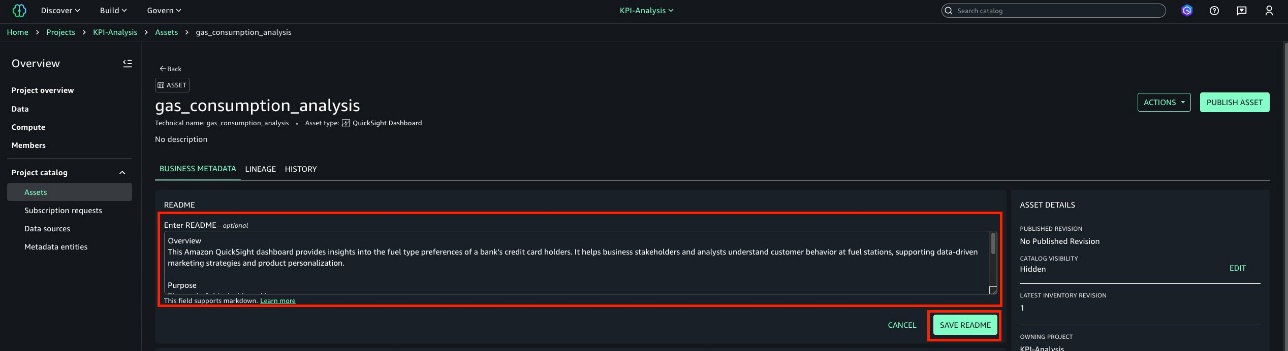
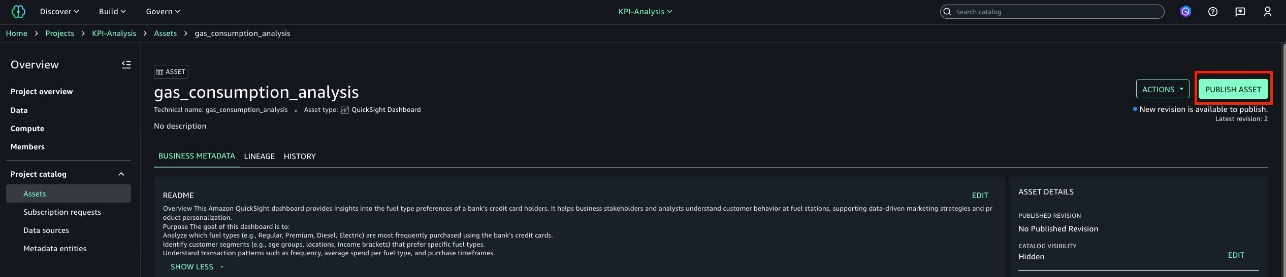

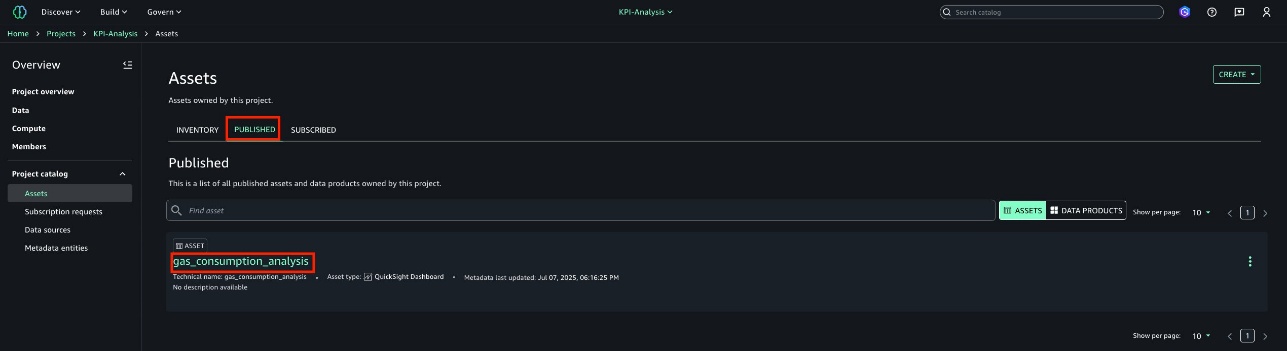
gas to find the published asset.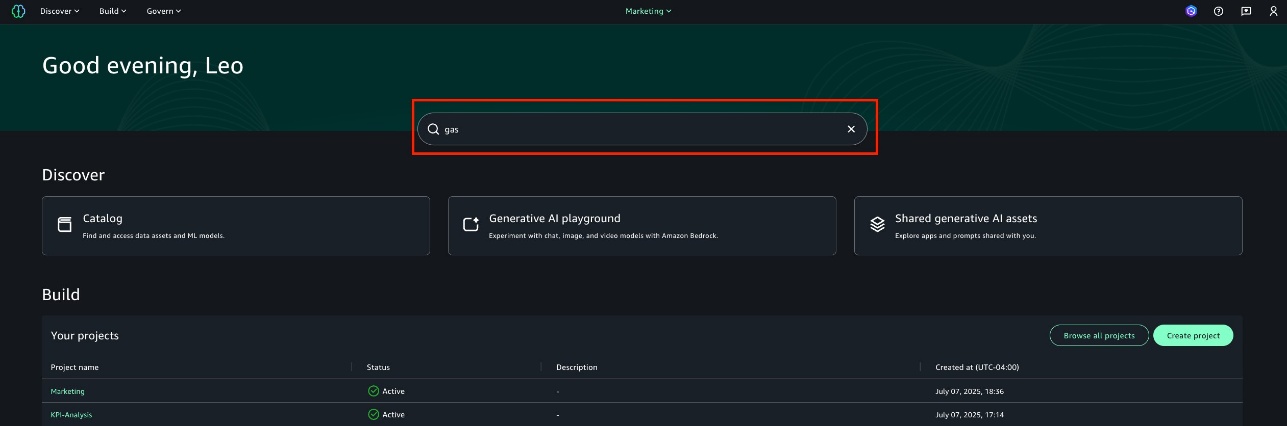
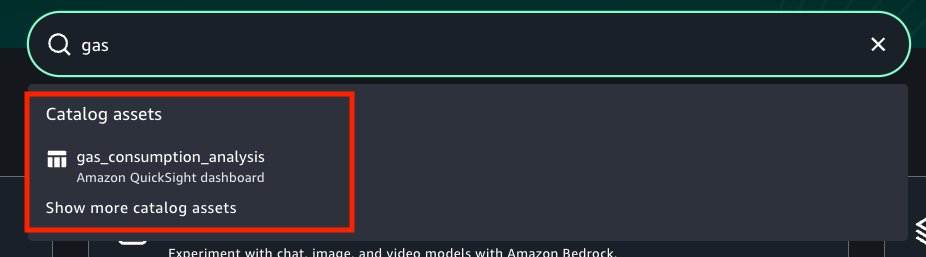
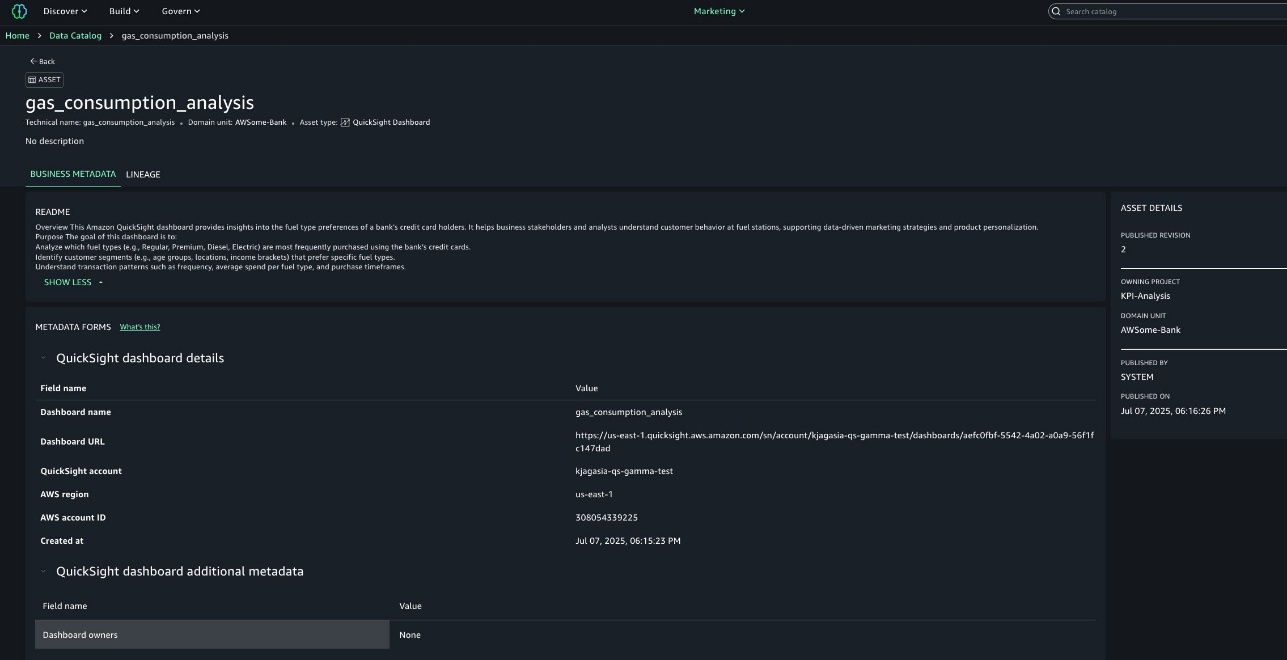
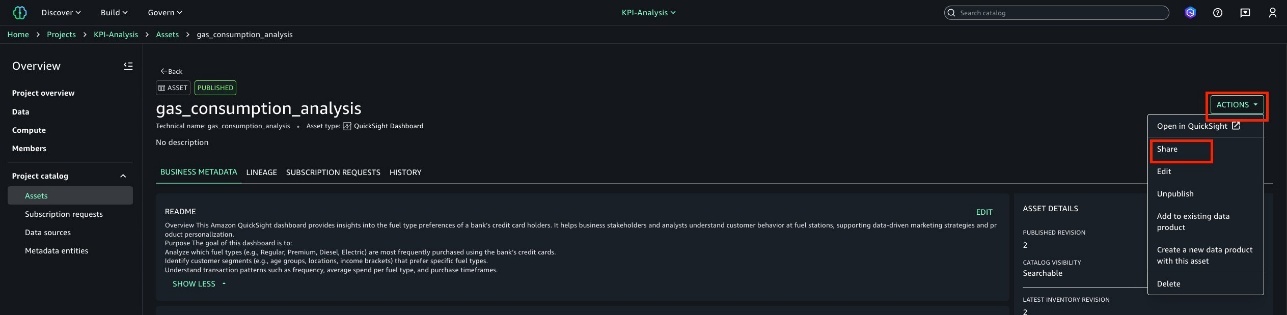
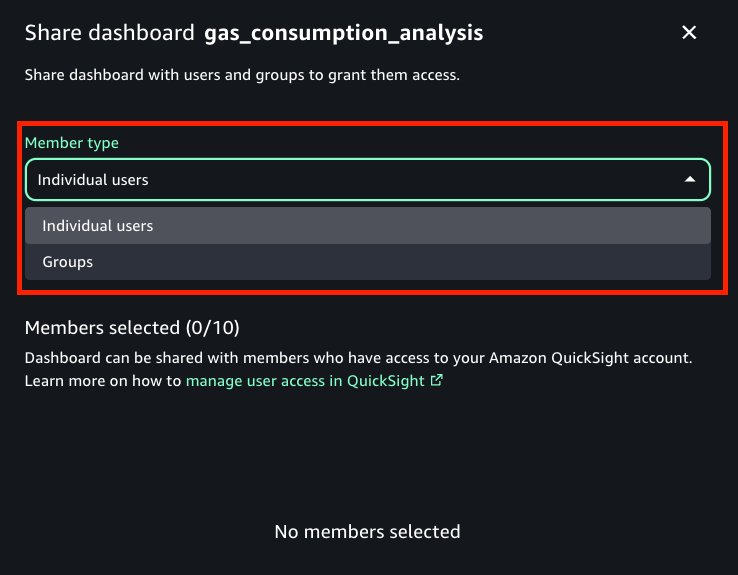
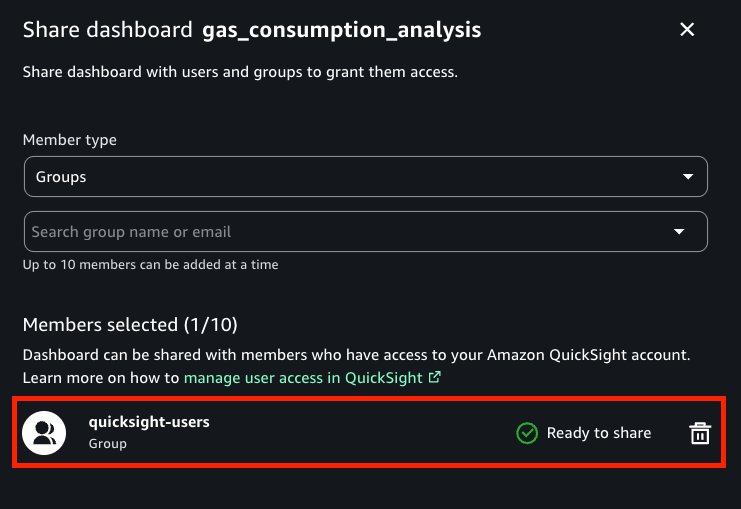
You can share the QuickSight dashboard with users and groups in your organization directly from within SageMaker.
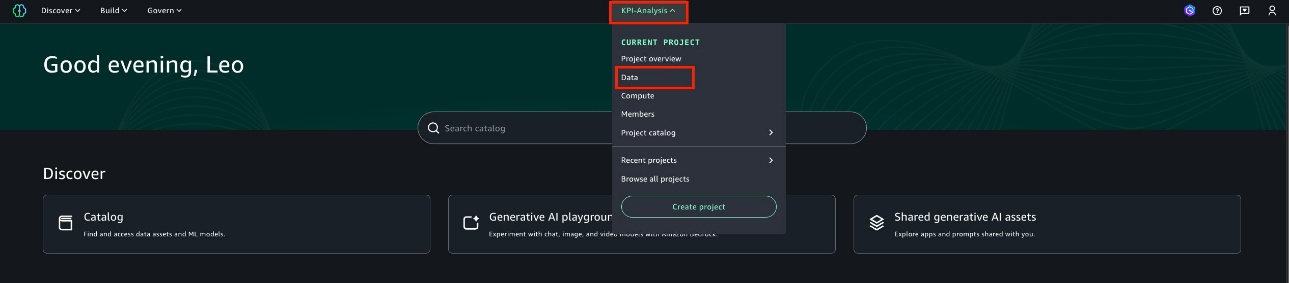
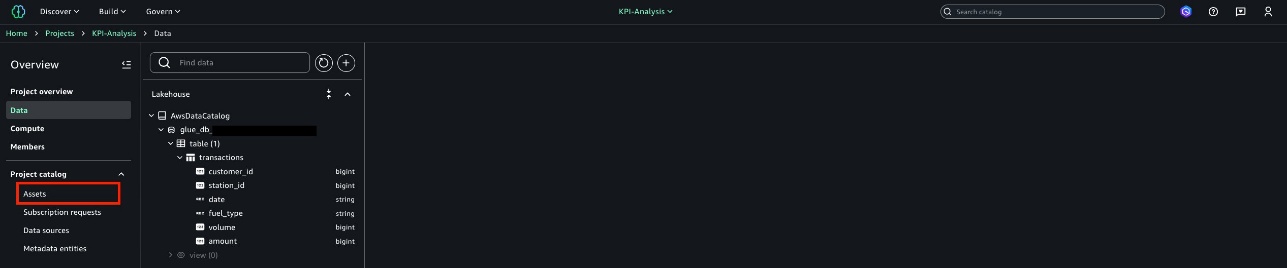

When you’re done with these exercises, complete the following steps to delete your resources to avoid incurring costs:
This post walked through the complete process of integrating Amazon QuickSight with Amazon SageMaker Unified Studio, demonstrating how teams can move from raw data to published dashboards in a secure and governed environment. By combining the advanced analytics capabilities of QuickSight with the collaborative project-based structure of SageMaker, organizations can accelerate insight delivery while maintaining clear control over data access and governance.
The integration simplifies creating datasets directly from Amazon Athena or Amazon Redshift tables, enrich them with business metadata, and publish dashboards to the SageMaker Catalog. When published, these dashboards can be shared with users or groups across the organization, making insights both discoverable and actionable.
With the added power of Amazon Q in QuickSight and generative BI, users can ask questions in plain English and receive real-time visualizations and insights. This makes data exploration intuitive and inclusive, empowering more users to make informed decisions. Combined with the unified analytics and AI environment of SageMaker Unified Studio, this solution supports secure, scalable, and collaborative data-driven innovation.
 Ramon Lopez is a Principal Solutions Architect for Amazon QuickSight. With many years of experience building BI solutions and a background in accounting, he loves working with customers, creating solutions, and making world-class services. When not working, he prefers to be outdoors in the ocean or up on a mountain.
 Leonardo Gomez is a Principal Analytics Specialist Solutions Architect at AWS. He has over a decade of experience in data management, helping customers around the globe address their business and technical needs. Connect with him on LinkedIn.
Post Syndicated from Patrick Kennedy original https://www.servethehome.com/sth-hardware-upgrades-2025-edition/
We are going to be starting a 2025 series around some of the big hardware upgrade projects we are doing internally
The post STH Hardware Upgrades 2025 Edition appeared first on ServeTheHome.
Post Syndicated from original https://www.toest.bg/na-vtoro-chetene-trupka/

превод от полски Петър Лянгузов, София: изд. „Парадокс“, 2022
Кратък, кинематографичен, наситен, „Тръпка“ е един от важните и обсъждани романи в съвременната полска литература. Неговата универсалност като текст, изразяващ гласа на цяло поколение, се припознава обаче и в контекст, много по-широк от националния. Неслучайно
Романът се включва в една набираща сила тенденция на автофикционални текстове, които представляват своеобразна изповед на поколението на 90-те и градят литературния образ на младежите, родени по време на желязната завеса и израснали след падането ѝ – времена на геополитически трансформации, икономически и ценностен преход, бум на културно обогатяване откъм Запада и най-вече сбогуване с аналоговия начин на съществуване и общуване.
„Тръпка“ изразява тревожността и несигурността, копнежите и вълненията на онези, които са били тийнейджъри през 90-те. И тук това не се случва през голямата история и обществено-политическия фон (та дори и само многократно споменаваните панелки в крайните квартали на Варшава са достатъчни, за да „видим“ образа на останалото, така добре познато ни в този край на света), а през крайно личното и интимно преживяване в балона на младежката субкултура. Последната бива очертана през задължителните жалони – крайъгълните музикални, филмови и литературни заглавия от онова време. „Тръпка“ изобилства от препратки и цитати, от културни реалии: от рока и пънка до култовите ленти, например „Убийци по рождение“, която е почти програмна за романа. Защото това е роман за онези – за онези двама, – които някога, във вечността на своите 15–16–17 години, са искали единствено това:
да убия всички и да останем само ние.
В центъра на „Тръпка“ е любовта между „аз“ и „ти“ (оставени без имена) – една от онези връзки, които – за да продължат завинаги – трябва да не бъдат никога докрай осъществени, да бъдат прекъсвани в момента, в който започват да се превръщат във формалност, в рутина, в нещо последователно. Които не могат да бъде впримчени в „обичам те“ – макар тези неизказани думи да изпълват всичко със смисъла си.
Границата между притежанието и пускането, между сливането и свободата, между принадлежността и независимостта/страха от обвързване прекосява цялата книга. Героите имат много други похождения и връзки, те експериментират заедно и поотделно, оставят се и се търсят неистово, пътищата им вървят винаги успоредно, ала на достатъчно отстояние, създават дори семейства, но „засичането“ им е също толкова неизбежно, защото, както пее една добре позната група от 90-те, I can’t live with or without you.
Джидо рисува любовта като неминуемо бягство и неминуемо завръщане в една непрекъсната спирала, без нищо да взема надмощие. Пътят – във всички свои смисли – е част от сюжета на книгата: героите се лутат, картографирайки не само столицата на Полша, но и Европа, та чак до Азия.
Джидо е избрала да види любовта и единението през телесното, плътското, интимното: може би защото на тази възраст то е пределно слято с другото, вътрешното, романтичното, душевното – те са почти неотличими, изразяват се и се осветляват едно друго. Крайно откровен по отношение на физиологичното и сексуалното,
Без да е вулгарна или самоцелно демонстративна, авторката показва една здравословна липса на срам, когато предава първичната, невъздържана, естествена сладост на физическото сливане. Макар и често да се движи по самия бръснач на клишето, Джидо успява да избегне порязването. А и клишето е не само допустимо и простимо, но може би е и задължително и здравословно, когато се пише за една възраст, толкова зависима от него.
Освен че е писателка, Марта Джидо работи като сценарист и режисьор – и това определено се усеща в начина ѝ на писане тук: кинематографичен, фрагментарен, с прости и ударни изречения. Текстът сам реферира към тази сфера. Първо, той е изграден като диалог, макар и косвен, наподобяващ преписка от „времената, когато хората си пишеха писма с химикалка“. Гласовете на героинята и на героя се преплитат, те разказват всеки своята версия в един все по-интензивен и задъхан ритъм на редуване, така подобен на сексуалния акт (и с онзи непрестанно повтарящ се като мотив въпрос: „Помниш ли?“). Двамата говорят в първо лице и се обръщат един към друг във второ, разтягайки тази сценичност през пространството и годините.
Освен това към края на книгата авторката предлага директно различни завършеци на този общ „сценарий“, както го нарича – възможни развития и финали на връзката, ако бе продължила в бъдещето, ако… и още ако, и т.н. Докато вече сами не знаем кое е пълна измислица и кое наистина се е случило. (Впрочем това ми напомни за нещо също много деветдесетарско: книгите игри.)
Романът е и своеобразен tribute към аналоговото време. Една от базовите дихотомии тук е именно аналоговото и дигиталното преживяване. С първото е свързана и тази позабравена романтична идея за отложеността и неизвестността, характерни за общуването тогава. Джидо се опитва да пресъздаде усещането за тази „разкаченост“, където е нужно да чакаш за отговор, където е възможно посланието изобщо да не достигне до теб, където вътрешният и дори външният ти свят не са изложени като в Meta диорама, където остава много неизречено и неразгадано, реакциите не се свеждат до бърз лайк, а кадрите са само 36 и затова трябва да се пестят, но същевременно са невидими и носят магията на своята отложеност. За разлика от тогава, днес е невъзможно дори въпросното „само ние“, тази ексклузивност, скритост, откъснатост от целия контекст наоколо, характерна за любовта извън социалните медии.
Не на последно място, „Тръпка“ може да се чете и през феминистична гледна точка – като роман за женската еманципация, за бягството от уседналостта, за опита да бъдеш отвъд стереотипите, за правото да се луташ, да пробваш, да пропадаш, да търсиш, да не намираш, да… Уязвима и чувствителна, но притежаваща силата да се отдели, копнееща да остане, но и болезнено ревнива към свободата си, е героинята на Джидо. Дори и смелостта ѝ да е продиктувана от страх:
Не си представях да бъда нечия жена, а още по-малко – твоя. Питаш защо. Ами за да не можем никога да се разведем.
И ако изобщо тази история има финал, то той няма как да е „щастлив“ – тъй като проблематизира самата сигурност на смисъла на тази дума. Разказвачката не вижда „възможност в подобна история да стане чудо“. Защото никой от нас, порасналите любими, не би го повярвал.
Активните дарители на „Тоест“ получават постоянна отстъпка в размер нa 20% от коричната цена на всички заглавия от каталога на издателство „Парадокс“, както и на няколко други български издателства в рамките на партньорската програма Читателски клуб „Тоест“. За повече информация прочетете на toest.bg/club.
Никой от нас не чете единствено най-новите книги. Тогава защо само за тях се пише? „На второ четене“ е рубрика, в която отваряме списъците с книги, публикувани преди поне година, четем ги и препоръчваме любимите си от тях. Рубриката е част от партньорската програма Читателски клуб „Тоест“. Изборът на заглавия обаче е единствено на авторите – Стефан Иванов и Антония Апостолова, които биха ви препоръчали тези книги и ако имаше как веднъж на две седмици да се разходите с тях в книжарницата.