Post Syndicated from jake original https://lwn.net/Articles/1016664/
The 6.14.1, 6.13.10, 6.12.22, 6.6.86, and 6.1.133 stable kernels have all been
released. They contain a relatively small collection of important fixes
across the kernel tree.
Post Syndicated from jake original https://lwn.net/Articles/1016663/
Security updates have been issued by Debian (abseil, atop, jetty9, ruby-saml, tomcat10, trafficserver, xz-utils, and zfs-linux), Fedora (chromium, condor, containernetworking-plugins, cri-tools1.29, crosswords-puzzle-sets-xword-dl, exim, ghostscript, matrix-synapse, upx, varnish, and yarnpkg), Gentoo (XZ Utils), Mageia (augeas, corosync, nss & firefox, and thunderbird), Oracle (container-tools:ol8, firefox, freetype, and kernel), Red Hat (firefox), SUSE (chromium, gn, firefox-esr, go1.23-1.23.8, go1.24, go1.24-1.24.2, google-guest-agent, govulncheck-vulndb, gsl, python311-ecdsa, thunderbird, and webkit2gtk3), and Ubuntu (kamailio, libdbd-mysql-perl, linux-nvidia, linux-nvidia-6.8, and tomcat9).
Post Syndicated from Екип на Биволъ original https://bivol.bg/pomorie-pametnik.html

Поморие е третият по големина български морски град. Последните 15 г. се управлява от ГЕРБ. Градът е особено важен за водещата партия, защото несменяемият му кмет Иван Алексиев оглавява и…
Материалът <span style='color:#ff0000;font-size:12px;'>Министерство на културата и НИНКН защитават вековната сграда</span> <BR> <H1 class='post-title single-post-title entry-title'>История срещу печалба: Паметник на културата става жертва на кметска алчност</H1> е публикуван за пръв път на Bivol!.
Post Syndicated from Rapid7 original https://blog.rapid7.com/2025/04/07/dont-miss-out-what-you-need-to-know-before-take-command-2025/

Take Command 2025 is just two days away, and there’s still time to secure your spot. Whether you’ve already registered or are building your agenda now, there’s plenty to look forward to — and it all starts this Wednesday, April 9.
In the lead-up to the live summit, two new on-demand sessions are already available for viewing, giving you a head start on key themes like attacker behavior and regulatory change. And during the event itself, you’ll get an exclusive look at findings from Rapid7’s latest ransomware research — pulled directly from Q1 threat activity and shared publicly for the first time.
This year’s event brings together top minds in cybersecurity for a full day of insights on exposure management, MDR, AI ,threat intelligence, red teaming, and more. It’s practical, high-impact content designed for practitioners, team leaders, and CISOs alike.
If you want a pulse check on what’s happening across the threat landscape, don’t miss Inside the Mind of an Attacker: Navigating the Threat Horizon, led by Raj Samani, Chief Scientist at Rapid7.
Raj will be joined by Trent Teyema, Founder of CSG Strategies and former head of the FBI Cyber Division, for a panel that explores attacker methodologies, tactics, and trends. During the session, Raj will share key findings from Rapid7’s latest ransomware research, which will add depth to this important and insightful discussion. Attend this session and you’ll get a special research infographic and link to the detailed blog, which dives into
There’s still time to register and experience Take Command 2025 as it happens. Attending live means you’ll:
This is your chance to be part of the conversation — not just watch it later. And if your schedule shifts? All sessions will be available on-demand after the event, so you can catch up at your convenience.
Take Command 2025 brings together frontline experience, original research, and actionable guidance — all in one virtual event. If you haven’t registered yet, now is the time.
Whether you’re joining live, watching on-demand, or getting a head start with early sessions, this is your opportunity to learn what today’s threats really look like — and how to stay ahead of them.
Post Syndicated from The History Guy: History Deserves to Be Remembered original https://www.youtube.com/watch?v=XGxtC-NzKp8
Post Syndicated from Bruce Schneier original https://www.schneier.com/blog/archives/2025/04/dirnsa-fired.html
In “Secrets and Lies” (2000), I wrote:
It is poor civic hygiene to install technologies that could someday facilitate a police state.
It’s something a bunch of us were saying at the time, in reference to the vast NSA’s surveillance capabilities.
I have been thinking of that quote a lot as I read news stories of President Trump firing the Director of the National Security Agency. General Timothy Haugh.
A couple of weeks ago, I wrote:
We don’t know what pressure the Trump administration is using to make intelligence services fall into line, but it isn’t crazy to worry that the NSA might again start monitoring domestic communications.
The NSA already spies on Americans in a variety of ways. But that’s always been a sideline to its main mission: spying on the rest of the world. Once Trump replaces Haugh with a loyalist, the NSA’s vast surveillance apparatus can be refocused domestically.
Giving that agency all those powers in the 1990s, in the 2000s after the terrorist attacks of 9/11, and in the 2010s was always a mistake. I fear that we are about to learn how big a mistake it was.
Here’s PGP creator Phil Zimmerman in 1996, spelling it out even more clearly:
The Clinton Administration seems to be attempting to deploy and entrench a communications infrastructure that would deny the citizenry the ability to protect its privacy. This is unsettling because in a democracy, it is possible for bad people to occasionally get elected—sometimes very bad people. Normally, a well-functioning democracy has ways to remove these people from power. But the wrong technology infrastructure could allow such a future government to watch every move anyone makes to oppose it. It could very well be the last government we ever elect.
When making public policy decisions about new technologies for the government, I think one should ask oneself which technologies would best strengthen the hand of a police state. Then, do not allow the government to deploy those technologies. This is simply a matter of good civic hygiene.
Post Syndicated from Matt Laver original https://aws.amazon.com/blogs/devops/introducing-the-quick-start-experience-for-amazon-q-developer-pro/
For software developers, development teams and IT Professionals, the Amazon Q Developer Pro Tier is recommended. The pro tier offers higher limits, enterprise administration, an analytics dashboard, code customizations and IP indemnity. In addition, the Amazon Q Developer Pro Tier requires AWS IAM Identity Center. For most production deployments, an organization instances of IAM Identity Center is recommended. An organization instance supports identity aware sessions which are required to use the Pro tier in the AWS Console, in addition to the benefits outline in the IAM identity Center user guide.
However, what if your team would like to get started quickly to try out Amazon Q Developer Pro Tier on the IDE but there are constraints that are slowing you down such as:
To address these scenarios, we recently announced a new, simplified setup experience with two steps that makes it easier for teams that are looking to try out the features of Amazon Q Developer Pro in their Integrated Development Environment (IDE).
Before we jump into a tour of the quick start setup, let’s take a step back and consider the AWS recommendation of using a multi-account setup to organize your workloads. The benefits can be seen in our AWS white paper on organizing Your AWS Environment Using Multiple Accounts and the recommended approach is to implement this with AWS Organizations. A management account is the AWS account you use to create your organization and this should be kept minimal and secure and only host essential administrative tools such as setting up AWS Organizations and implementing single sign on via IAM Identity Center.
IAM Identity Center is core to the Amazon Q Developer Pro setup. IAM Identity Center users can access AWS accounts and applications using their existing organizational credentials, without the need to create and manage separate AWS accounts and passwords.
For example, IAM Identity Center can connect and automatically provision users from standards-based identity providers including Microsoft Active Directory, Okta, Microsoft Entra ID, Google Workspace or another supported identity provider (IdP) via Security Assertion Markup Language (SAML) 2.0 or OIDC.

Figure 1. Manage Access to Amazon Q Developer via AWS IAM Identity Center.
This is a great experience for developers as they simply authorize their Q Developer session with their usual sign in process via the Identity source already in place in their business. Administrators benefit from features such as centralized access management, streamlined permissions management and enhanced administrator capabilities to view Amazon Q user activity.
The above approach of setting up IAM Identity Center in a management account is ideal but not always viable, so we have created a new getting started experience makes it easier for teams that are looking to try out the features of Amazon Q Developer Pro in their Integrated Development Environment (IDE) starting with:
For both standalone and member accounts there is a two step process. The first step for setting up Amazon Q Developer Pro starts by navigating to the Amazon Q console and selecting Get started:

Figure 2. Amazon Q Console – Getting started with Amazon Q.
The setup will guide through creating the first user and activating a subscribing to Amazon Q Developer Pro in your account, this initial step also includes creating an account instance of IAM Identity Center and an AWS managed application instance of Amazon Q Developer. A detailed walkthrough is available in our documentation – Subscribing users to Amazon Q Developer Pro.
When complete, the first user can be seen within the Amazon Q Subscriptions:

Figure 3. Amazon Q Subscriptions.
The second step is to subscribe the additional team members to the account instance of IAM Identity Center and then subscribing them to Amazon Q Developer Pro via the Amazon Q console.

Figure 4. IAM Identity Center Users.
Once a user has been successfully subscribed, they will receive an email with instructions on how to activate their Amazon Q Developer Pro Subscription and start using the features.
Note that account instances of IAM Identity Center have limitations. For example, account instances don’t support console access. (Users can still use Amazon Q in the console, it’s just that they’ll be subject to the Free tier monthly limits.) If you want to use Amazon Q Developer Pro in the console and other AWS websites, you must be a user in an organization instance of IAM Identity Center, in a management account.
At this point, it should be noted, that IAM Identity Center can now be configured to change it’s identity source to a Federated Identity Provider (IdP), see our documentation pages on how to change your identity source.
To cleanup the resource created in this blog, first remove Amazon Q Developer Pro users by following our guide:
Secondly, delete the IAM Identity Center instance:
Getting started with Amazon Q Developer Pro is now even easier with the new, simplified setup experience, you can experience the pro features in your IDE such as higher limits on advanced features such as:
Get on-board with the Amazon Q Developer User Guide on Subscribing users to Amazon Q Developer Pro.
Read more about how the community are using Amazon Q to write code and build applications faster and easier with Amazon Q on community.aws and explore what we are building with Amazon Q Developer here.
Note that while this post focuses on Amazon Q Developer Pro, developers can get started at no cost and without an AWS account; Amazon Q Developer offers a perpetual Free Tier with monthly limits available to users, see our user guide for Amazon Q Developer Free tier.
Post Syndicated from Meg Wang original https://www.raspberrypi.org/blog/hello-world-26-out-now-digital-literacy/
We often believe we understand the meaning of ‘digital literacy’, but it can be a misleading term. Do we mean digital skills? Online safety? Where does AI fit in? As computer science education evolves to meet the needs of our increasingly digital world, we believe that true digital literacy empowers young people to engage with technology thoughtfully, critically, and confidently.
In this issue of Hello World, out today for free, we discuss what digital literacy means, how it is taught in different countries around the world, and how educators are rethinking digital literacy for their students and themselves.
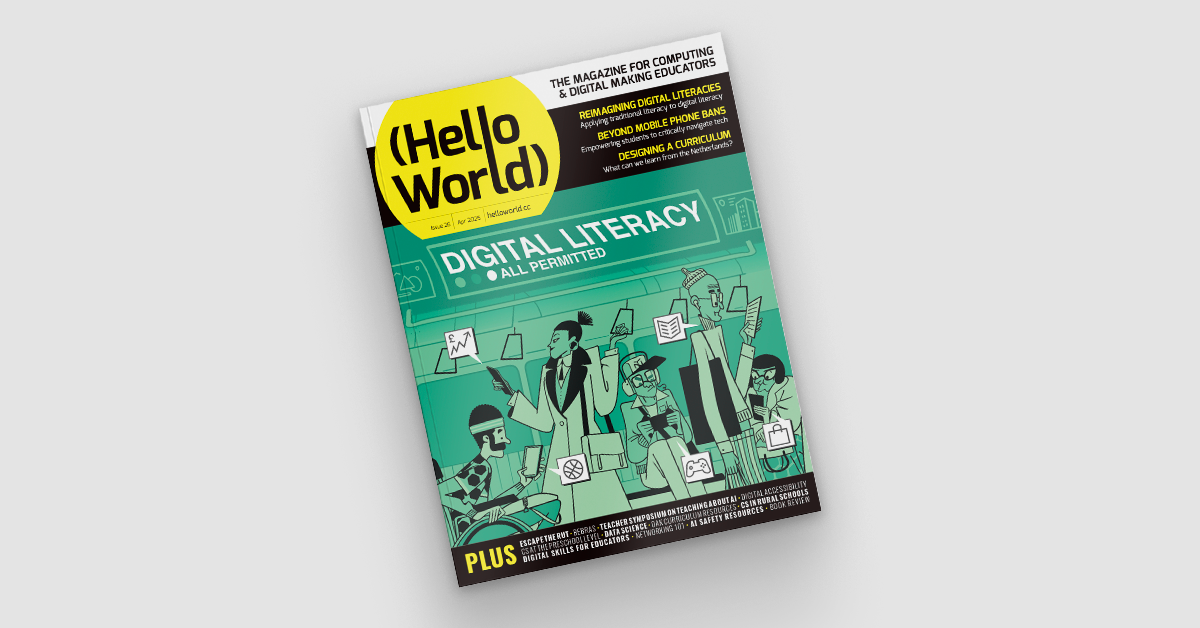
As the use of digital technology grows, a broader view of digital literacy is necessary. Digital literacy is more than knowing how to use software. It’s the ability to use digital technologies effectively, safely, and responsibly.
In Issue 26 of Hello World, we explore this topic in detail and hear insights from educators across the world, including:

This issue also includes inspiring articles from the world of computer science education:
And there is lots more for you to discover in issue 26.
We’re also pleased to announce that the Hello World podcast has returned alongside the magazine with a miniseries also focused on digital literacy.
We asked for your thoughts on the podcast in our previous annual survey, and you kindly sent us lots of helpful feedback. Based on that, we’re trialling new episode formats, welcoming additional hosts, and bringing in more expert voices from around the world.
On Tuesday 15 April we’ll be releasing our first teacher tips episode, a shorter podcast with 3 teachers sharing practical, actionable tips for improving digital literacy in the classroom.

The week after, Tuesday 22 April, you’ll be able to hear a brilliant conversation between the Raspberry Pi Foundation’s Chief Learning Officer, Rachel Arthur, and two special guests: Dr Jessica Hamer from King’s College London’s School of Education and Becky Patel from Tech She Can. They’ll be discussing the current state of girls’ engagement in computing — a wide-reaching and important conversation exploring how we can empower more girls in computing through school, university and their careers.
Then on Tuesday 29 April the final episode in the miniseries will be a panel debate about “digital natives” where we’ll be asking, ‘Are young people who grew up with technology around them truly tech-savvy, or are they dependent on digital tools without understanding how they work?’ James Robinson — Senior Learning Manager here at the Raspberry Pi Foundation and regular host of the podcast — will lead this discussion as global educators debate the myth of the “digital native,” uncover how it could overlook complex issues of access, skills, and education, and consider what it really takes to be tech-smart in the modern world.
More information and links to listen can be found inside the magazine.
We hope you enjoy this issue of Hello World, and please get in touch with your article ideas or what you would like to see in the magazine.
Subscribe to Hello World for free to never miss an issue.
The post Hello World #26 out now: Digital Literacy appeared first on Raspberry Pi Foundation.
Post Syndicated from Matt Granger original https://www.youtube.com/watch?v=O-2_XzHKpu8
Post Syndicated from The Atlantic original https://www.youtube.com/watch?v=PWdvinJT-HQ
Post Syndicated from Яна Хашъмова original https://www.toest.bg/politika-prosveta-i-proval-koy-se-strahuva-ot-amerikanskite-universiteti/

Ако сте имали юноши вкъщи или сте наблюдавали поведението им сред близки семейства, със сигурност знаете, че този период от развитието на личността се характеризира с чести промени в мисленето и вземането на решения. От личен опит мога да кажа, че често, вместо да споря със сина си предпочитам да изчакам до следващия ден, когато вече сам е променил мнението си.
Юношеството се отличава с егоцентрични и нарцистични нагласи, докато индивидът не премине в зрелостта. Тогава личностите проявяват повече разбиране към околните, анализират ситуациите в тяхната сложност и нюанси и са склонни да търсят причините за неуспешни междуличностни отношения не само в другите, но и в себе си.
Базирайки се на практиката си и на други изследвания, психоложката Марго Уадел¹ обобщава:
Тийнейджърът може да бъде сътрудничещ в един момент, непокорен в следващия, неспособен лесно да признае, че този, който се е заел със задачата, и този, който не е успял да я изпълни, са едно и също лице, а именно самият той.
Може да се посочат още много примери за поведението на юношите, но проблемът възниква, когато някои не успяват да надраснат импулсивността и други поведенчески нагласи на юношеството и те останат да ги следват през целия им живот.
Вероятно вече откривате връзката със ставащото в политиката на САЩ напоследък. „Юношеското поведение“ на Доналд Тръмп и администрацията му е едновременно забавно за наблюдение и много тревожно. В продължение на четири години той отричаше изборните резултати, заменяйки реалността с лъжи – типична характеристика на юношеството. А през последните два месеца колко пъти обяви и отмени митата за Мексико и Канада? Колко пъти заплаши с прекратяване на държавни помощи и грантове за образование и научни изследвания само за да ги спира временно или по-скоро да заплашва с прекратяването им, докато университетите не се съгласят с промени? Дори издаде указ за закриване на Министерството на образованието, но закриването е сложно, защото за подобно действие е нужно одобрение от Конгреса, което е малко вероятно.

В специално съобщение министърката на образованието Линда Макмахън твърди, че президентският указ за закриване на Министерството е исторически, защото ще овласти отделните щати и родителите да се грижат за образованието на децата. Макмахън добавя и важна подробност – че ще работи в условията на закона и с Конгреса. Де факто дейността на Министерството ще бъде намалена и някои програми ще се прикачат към други министерства. А действителното му закриване засега е под въпрос.
Тези стъпки бяха предприети, защото според администрацията на Тръмп Министерството не е вършило добра работа в последните години. Това според консерваторите би следвало да означава, че всякаква образователна дейност за защитата на разнообразието и равенството прекрачва границите и възпрепятства свободата на словото. В същото време обаче имиграционните власти арестуваха студента Махмут Халил при липсата на каквoто и да е незаконно действие от негова страна и при положение че той е законен жител на САЩ, заради „престъплението“ да оглави пропалестински протести в кампуса на Колумбийския университет. Може да се запитаме кой и как прекрачва границите на свободата на словото.
Важно е да се обърне внимание, че още преди провеждането на президентските избори Джей Ди Ванс апелира да се атакуват университетите като места, на които се проповядват „заблуди и лъжи, не и истината“ и които са затворени за консервативни идеи.
Ако някой от нас изобщо иска да постигне нещата, които сме решили, за нашата държава и за хората, които живеят в нея, трябва откровено и агресивно да атакуваме университетите в страната.
За да се намали влиянието на научните изследвания и съответно на прогреса и развитието на образованието, през последните три месеца в университетите непрекъснато постъпва информация за отменени щатски образователни фондове, като всяко следващо съобщение противоречи на предишното. Самата аз като преподавател получавам такива съобщения. Ето цитат от последното относно правителствен грант:
За да ви дам малко повече контекст – през януари получихме заповед за спиране на работата. През февруари получихме заповед за прекратяване. През март заповедта за спиране на работата беше отменена, но уведомленията не се отнасяха за заповедта за прекратяване. В момента се опитваме да изясним дали отмяната на заповедта за спиране на работата означава и отмяна на заповедта за прекратяване.

Интересно е, че атаките срещу висшите училища идват от Ванс и Тръмп, и двамата с дипломи от елитни частни университети. И в тези атаки, и в последвалите действия се крие много по-голяма заплаха за демокрацията и свободата на словото в САЩ, отколкото може би се долавя на пръв поглед.
Юношеското поведение и подменената реалност могат да бъдат изключително деструктивни и опасни. Идеологическите приоритети на правителството и атаките срещу университетите бързо се възприемат от отделни щатски администрации. В Охайо, където преподавам, Конгресът на щата прие закон, който напомня за държавната намеса в образованието в България по време на социализма. Законът ограничава академичната свобода, като забранява преподаването и обсъждането на „противоречиви убеждения или политики“, сред които са климатичните промени, изборната политика, имиграцията, въпросите на многообразието и равенството и дори бракът. Освен това в закона е добавено изискването университетите да декларират, че преподавателите и служителите им ще позволят на студентите да стигнат до свои собствени заключения по горепосочените теми и няма да се опитват да „индоктринират“ студентите.
И макар, както казах, това да напомня за времената у нас, когато образованието трябваше да следва партийната линия, тогава със сигурност нямаше чак такъв хаос. Забраната за преподаване на противоречиви теми е даже по-ограничаваща от социалистическата цензура. А що се отнася до индоктринирането, може би е добре да се запитаме кому са нужни необразовани и немислещи граждани и гласоподаватели. По този повод изразих мислите си преди време пак в „Тоест“.

Истината е, че студентите трябва да стигат до собствени заключения, но те следва да са основани на факти, доказателства и научни изследвания. Няма как в дисциплините по природни науки например студентите да следват убежденията си за креационизма или да се уповават на християнското разбиране за създаването и развитието на човечеството.
Страховете на републиканците от университети и колежи като място на прогресивни идеи не са новост и не започват с идването на Тръмп на власт. Преди две години Сенатът на Охайо, изцяло управляван от Републиканската партия, отдели 24 млн. долара от щатския бюджет за създаването на центрове за „интелектуално разнообразие“ в пет университета, включително в Държавния университет на Охайо. Под „интелектуално разнообразие“, изглежда, следва да се разбира развитието на консервативни нагласи и мнения. Например директорът на Центъра „Чейз“ в Държавния университет на Охайо, назначен през лятото на 2024 г., е конституционалист, който държи на тълкуването на американската Конституция, както са я написали и разбирали създателите ѝ преди два века. През годините стана ясно, че по подобен начин я тълкуват консервативни съдии във Върховния съд, като покойния вече Антонин Скалия, Ейми Барет, Кларънс Томас, Нийл Горсъч, които, освен че поддържат други ретроградни позиции, отхвърлят правото на аборт и правото на еднополовите двойки да сключват брак.
Въпреки че висшето учебно заведение е задължено да изпълни условията, заложени в бюджета на щата Охайо относно създаването на академични центрове, и въпреки че директорът на Центъра „Чейз“ вече беше назначен, все пак трябваше да се мине през университетската процедура за откриването на център или катедра. Малко абсурдно, като в романите на Кафка, новоназначеният директор трябваше да напише подробно предложение, което да се разгледа в комисии.
Последната стъпка от процедурата изискваше Сенатът на Държавния университет на Охайо, състоящ се от преподаватели, административни служители и студенти, да гласува. Гласуването се проведе след изслушването на мнения, сред които силно се открои изказването на студент от специалността „Обществени науки“, който аргументирано обясни, че създаването на този център противоречи на всичко, което е учил в курсовете си. Вотът, въпреки че е само символичен, беше отрицателен, целящ да регистрира протест срещу политическото и държавното вмешателство в работата на университета.

Усилията за доказване на несъвместимостта на сенатския закон 1 с академичната свобода и целите на образованието продължават. Гласува се и резолюция срещу закона от Съвета на преподавателите към Сената на университета. Всичко това не попречи на губернатора да подпише указа. А как точно ще се прилага, е загадка. Какви ще са материалните загуби за университетите, засега също остава неясно.
Единствената идеология, която може да се окаже по-силна от консервативната политика, е тази на парите – университетските администрации вече изчисляват какви финансови щети ще нанесе този закон. Забраната за преподаването на „противоречиви“ теми ще затрудни университетите. Но в закона са предвидени и други ограничения, например забрана за научно сътрудничество с Китай.
Последствията засега са действително непредвидими. Преди три години Държавният университет на Охайо промени структурата на задължителните общообразователни предмети и създаде теми (образователна категория – б.р.) като „Гражданство за справедлив и разнообразен свят“ и „Расово, етническо и джендър разнообразие“. Ако спрем да водим тези курсове, студентите няма да могат да завършат образованието си, защото няма да са изпълнили задължителните елементи от програмата си. И това важи за стотици курсове и за около 60 000 студенти.
Анализатори определят поведението на Тръмп като стратегия за създаване на хаос, която не позволява на демократите да отправят ясно послание. На някои този хаос им напомня „Хамлет“ на Шекспир, където Полоний, наблюдавайки привидно хаотичното поведение на Хамлет, отбелязва:
Че е лудост – лудост е, но има система в нея!…²
Дори да приемем, че поведението на Тръмп е стратегия, не може да се отрече, че подобен подход вреди на икономиката и външната политика на САЩ. Войната в Украйна не приключи за обещаните 24 часа, инфлацията не намаля осезаемо, стоковата борса се срина, а заплахите с митата не дават сигурни резултати. Тръмп също се проваля с обещаните масови изселвания на незаконни имигранти, като в същото време отклонява вниманието на електората си със символични действия (например ареста на Махмут Халил), които прекрачват конституционните му правомощия. А предложението му за импийчмънт на съдия бе категорично отхвърлено от председателя на Върховния съд Джон Робъртс. Да не споменаваме множеството съдебни процеси, които се водят и ще се водят и които могат да забавят доста от очакваните промени, обещани в предизборната му кампания.
Големите обещания на Тръмп изглеждат все по-неустойчиви. Както казва Марго Уадел, „този, който се е заел със задачата, и този, който не е успял да я изпълни, са едно и също лице, а именно самият той“. Една дълбоко противоречива и проблематична личност, различна от трагичния Хамлет. И докато все още е рано да се правят заключения за ефективността на хаоса, сегашните резултати са далеч от първоначално заявените „светкавични промени“ – обещания, породени от юношески деструктивни фантазии, наранена гордост и нарцисизъм. А аз с удоволствие ще се върна на този въпрос след четири години.
2 „Хамлет“, превод Валери Петров.
Post Syndicated from LastWeekTonight original https://www.youtube.com/watch?v=flSS1tjoxf0
Post Syndicated from Rohit Kumar original https://www.servethehome.com/qnap-qna-t310g1s-thunderbolt-3-to-10g-adapter-quick-look-marvell/
We have a quick look at the QNAP QNA-T310G1S, a Thunderbolt 3 to 10G SFP+ network adapter that we have been using for some time
The post QNAP QNA-T310G1S Thunderbolt 3 to 10G Adapter Quick Look appeared first on ServeTheHome.
Post Syndicated from LastWeekTonight original https://www.youtube.com/watch?v=evHowXCJ7kI
Post Syndicated from The History Guy: History Deserves to Be Remembered original https://www.youtube.com/watch?v=bbiAtw2lF78
Post Syndicated from xkcd.com original https://xkcd.com/3073/
![[later] I don't get why our pizza slices have such terrible reviews; the geotextile-infused sauce gives the toppings incredible slope stability!](https://imgs.xkcd.com/comics/tariffs.png "[later] I don't get why our pizza slices have such terrible reviews; the geotextile-infused sauce gives the toppings incredible slope stability!")
Post Syndicated from corbet original https://lwn.net/Articles/1016577/
Linus has released 6.15-rc1 and closed the
merge window for this release. “As expected, this was one of the bigger
“. In the end, 12.633 non-merge changesets were
merge windows, almost certainly just because we had some pent-up
development due to the previous releases being impacted by the holiday
season. That said, while it’s bigger than normal, it’s not some kind of
record-breaking thing.
pulled into the mainline during this merge window.
Post Syndicated from Rita Kozlov original https://blog.cloudflare.com/welcome-to-developer-week-2025/
We’re kicking off Cloudflare’s 2025 Developer Week — our innovation week dedicated to announcements for developers.
It’s an exciting time to be a developer. In fact, as a developer, the past two years might have felt a bit like every week is Developer Week. Starting with the release of ChatGPT, it has felt like each day has brought a new, disruptive announcement, whether it’s new models, hardware, agents, or other tools. From late 2024 and in just the first few months of 2025, we’ve seen the DeepSeek model challenge assumptions about what it takes to train a new state-of-the-art model, MCP introduce a new standard for how LLMs interface with the world, and OpenAI’s o4 model Ghiblify the world.
And while it’s exciting to witness a technological revolution unfold in front of your eyes, it’s even more exciting to partake in it.
One of the marvels of the recent AI revolution is the extent to which the cost of experimentation has gone down. Ideas that would have taken whole weekends, weeks, or months to build can now be turned into working code in a day. You can vibe-code your way through things you might have never even tried before, or the parts of application that just don’t excite you. Whether you’ve spent your career working on frontend, backend, mobile, distributed systems or databases — with AI, you can truly be a full-stack engineer.
AI making it faster to ship more code and expanding the audience of who can write code (anyone!) — in the next 5 years we believe more code will be written than has been in the history of software.
However, for all these seedlings of opportunity to flourish, a platform needs to exist to make it just as easy to deploy and scale the code as it was to write it.
As Andrej Karpathy said in his recent post, on building a web application: “It’s not even code, it’s… configurations, plumbing, orchestration, workflows, best practices.”

That’s Cloudflare’s vision for developers — to provide a comprehensive platform that just works. From experiment, to MVP, to scaling to millions of users.
We started on that vision almost 8 years ago now, with the launch of Cloudflare Workers, and kept chipping away at adding more and more primitives to allow developers to deploy their full-stack in one place.
Today, Cloudflare’s platform offers many of the building blocks you need: from compute, to storage, databases, and AI. With the tools you need to build along every step of the way: from local development to gradually rolling out to production, CI/CD, and observability.
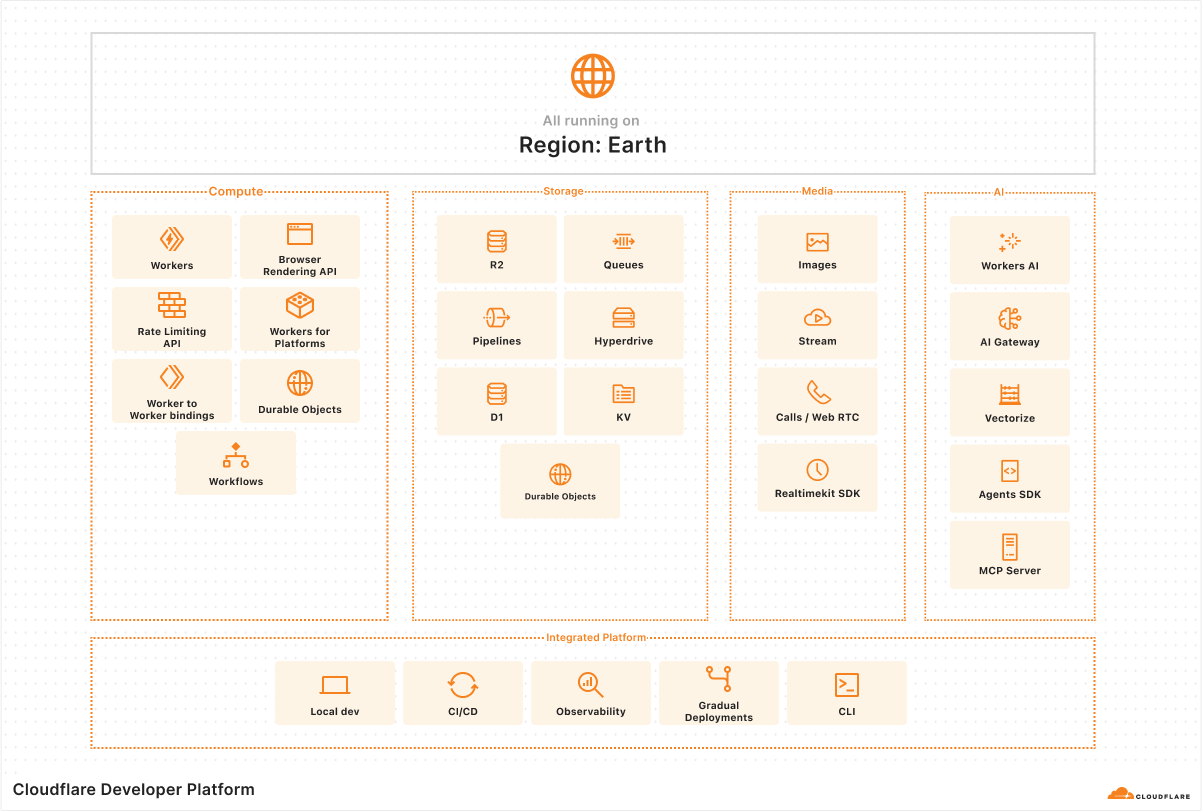
And, everything you build is deployed to Region: Earth, which means you never have to think about servers, scaling, or infrastructure. This is especially important today — when the industry is moving at an unprecedented pace, the opportunity cost of slowing down is the difference between success and failure.
We’re incredibly proud of what we’ve built over the past 8 years, yet our work is nowhere near done. As our co-founder Michelle likes to say, we’re just getting started.
And this Developer Week we’re excited to take another step forward towards our mission. So what can you expect this Developer Week?
We’ll be releasing more tools and products to continue to ensure you have everything you need when building an application, whether it’s a web app, an agent, an MCP server, or anything else you dream up.
As I previously mentioned, though, primitives are just part of the equation. Building a developer platform also means investing in the developer experience. Many of you have been building on our platform for some time, and it’s an honor we don’t take lightly. We’re constantly listening to your feedback and improving the platform based on it. So this week, some of the announcements will be a direct reflection of that.
One of the best, most rewarding parts of getting to work on this platform over the past 8 years has been seeing all that developers built on it. We want to hear your thoughts, feedback and what you’re building, and hope you share it with us whether on X, Discord, or in person at one of our meetups in San Francisco, Austin, and London this week.

Post Syndicated from Explosm.net original https://explosm.net/comics/i-am-legion
New Cyanide and Happiness Comic
Post Syndicated from John Lee original https://www.servethehome.com/nvidia-gb300-nvlink-switch-tray-at-nvidia-gtc-2025/
At NVIDIA GTC 2025 we saw the new NVIDIA GB300 NVLink Switch tray open and on display, including its custom liquid-cooling solution
The post NVIDIA GB300 NVLink Switch Tray at NVIDIA GTC 2025 appeared first on ServeTheHome.