All posts by Bruce Schneier

More AIs Are Taking Polls and Surveys

Post Syndicated from Bruce Schneier original https://www.schneier.com/blog/archives/2025/05/more-ais-are-taking-polls-and-surveys.html

I already knew about the declining response rate for polls and surveys. The percentage of AI bots that respond to surveys is also increasing.

Solutions are hard:

1. Make surveys less boring.
We need to move past bland, grid-filled surveys and start designing experiences people actually want to complete. That means mobile-first layouts, shorter runtimes, and maybe even a dash of storytelling. TikTok or dating app style surveys wouldn’t be a bad idea or is that just me being too much Gen Z?

2. Bot detection.
There’s a growing toolkit of ways to spot AI-generated responses—using things like response entropy, writing style patterns or even metadata like keystroke timing. Platforms should start integrating these detection tools more widely. Ideally, you introduce an element that only humans can do, e.g., you have to pick up your price somewhere in-person. Btw, note that these bots can easily be designed to find ways around the most common detection tactics such as Captcha’s, timed responses and postcode and IP recognition. Believe me, way less code than you suspect is needed to do this.

3. Pay people more.
If you’re only offering 50 cents for 10 minutes of mental effort, don’t be surprised when your respondent pool consists of AI agents and sleep-deprived gig workers. Smarter, dynamic incentives—especially for underrepresented groups—can make a big difference. Perhaps pay-differentiation (based on simple demand/supply) makes sense?

4. Rethink the whole model.
Surveys aren’t the only way to understand people. We can also learn from digital traces, behavioral data, or administrative records. Think of it as moving from a single snapshot to a fuller, blended picture. Yes, it’s messier—but it’s also more real.

DoorDash Hack

Post Syndicated from Bruce Schneier original https://www.schneier.com/blog/archives/2025/05/doordash-hack.html

A DoorDash driver stole over $2.5 million over several months:

The driver, Sayee Chaitainya Reddy Devagiri, placed expensive orders from a fraudulent customer account in the DoorDash app. Then, using DoorDash employee credentials, he manually assigned the orders to driver accounts he and the others involved had created. Devagiri would then mark the undelivered orders as complete and prompt DoorDash’s system to pay the driver accounts. Then he’d switch those same orders back to “in process” and do it all over again. Doing this “took less than five minutes, and was repeated hundreds of times for many of the orders,” writes the US Attorney’s Office.

Interesting flaw in the software design. He probably would have gotten away with it if he’d kept the numbers small. It’s only when the amount missing is too big to ignore that the investigations start.

The NSA’s “Fifty Years of Mathematical Cryptanalysis (1937–1987)”

Post Syndicated from Bruce Schneier original https://www.schneier.com/blog/archives/2025/05/the-nsas-fifty-years-of-mathematical-cryptanalysis-1937-1987.html

In response to a FOIA request, the NSA released “Fifty Years of Mathematical Cryptanalysis (1937-1987),” by Glenn F. Stahly, with a lot of redactions.

Weirdly, this is the second time the NSA has declassified the document. John Young got a copy in 2019. This one has a few less redactions. And nothing that was provided in 2019 was redacted here.

If you find anything interesting in the document, please tell us about it in the comments.

Friday Squid Blogging: Pet Squid Simulation

Post Syndicated from Bruce Schneier original https://www.schneier.com/blog/archives/2025/05/friday-squid-blogging-pet-squid-simulation.html

From Hackaday.com, this is a neural network simulation of a pet squid.

Autonomous Behavior:

  • The squid moves autonomously, making decisions based on his current state (hunger, sleepiness, etc.).
  • Implements a vision cone for food detection, simulating realistic foraging behavior.
  • Neural network can make decisions and form associations.
  • Weights are analysed, tweaked and trained by Hebbian learning algorithm.
  • Experiences from short-term and long-term memory can influence decision-making.
  • Squid can create new neurons in response to his environment (Neurogenesis)

As usual, you can also use this squid post to talk about the security stories in the news that I haven’t covered.

Communications Backdoor in Chinese Power Inverters

Post Syndicated from Bruce Schneier original https://www.schneier.com/blog/archives/2025/05/communications-backdoor-in-chinese-power-inverters.html

This is a weird story:

U.S. energy officials are reassessing the risk posed by Chinese-made devices that play a critical role in renewable energy infrastructure after unexplained communication equipment was found inside some of them, two people familiar with the matter said.

[…]

Over the past nine months, undocumented communication devices, including cellular radios, have also been found in some batteries from multiple Chinese suppliers, one of them said.

Reuters was unable to determine how many solar power inverters and batteries they have looked at.

The rogue components provide additional, undocumented communication channels that could allow firewalls to be circumvented remotely, with potentially catastrophic consequences, the two people said.

The article is short on fact and long on innuendo. Both more details and credible named sources would help a lot here.

AI-Generated Law

Post Syndicated from Bruce Schneier original https://www.schneier.com/blog/archives/2025/05/ai-generated-law.html

On April 14, Dubai’s ruler, Sheikh Mohammed bin Rashid Al Maktoum, announced that the United Arab Emirates would begin using artificial intelligence to help write its laws. A new Regulatory Intelligence Office would use the technology to “regularly suggest updates” to the law and “accelerate the issuance of legislation by up to 70%.” AI would create a “comprehensive legislative plan” spanning local and federal law and would be connected to public administration, the courts, and global policy trends.

The plan was widely greeted with astonishment. This sort of AI legislating would be a global “first,” with the potential to go “horribly wrong.” Skeptics fear that the AI model will make up facts or fundamentally fail to understand societal tenets such as fair treatment and justice when influencing law.

The truth is, the UAE’s idea of AI-generated law is not really a first and not necessarily terrible.

The first instance of enacted law known to have been written by AI was passed in Porto Alegre, Brazil, in 2023. It was a local ordinance about water meter replacement. Council member Ramiro Rosário was simply looking for help in generating and articulating ideas for solving a policy problem, and ChatGPT did well enough that the bill passed unanimously. We approve of AI assisting humans in this manner, although Rosário should have disclosed that the bill was written by AI before it was voted on.

Brazil was a harbinger but hardly unique. In recent years, there has been a steady stream of attention-seeking politicians at the local and national level introducing bills that they promote as being drafted by AI or letting AI write their speeches for them or even vocalize them in the chamber.

The Emirati proposal is different from those examples in important ways. It promises to be more systemic and less of a one-off stunt. The UAE has promised to spend more than $3 billion to transform into an “AI-native” government by 2027. Time will tell if it is also different in being more hype than reality.

Rather than being a true first, the UAE’s announcement is emblematic of a much wider global trend of legislative bodies integrating AI assistive tools for legislative research, drafting, translation, data processing, and much more. Individual lawmakers have begun turning to AI drafting tools as they traditionally have relied on staffers, interns, or lobbyists. The French government has gone so far as to train its own AI model to assist with legislative tasks.

Even asking AI to comprehensively review and update legislation would not be a first. In 2020, the U.S. state of Ohio began using AI to do wholesale revision of its administrative law. AI’s speed is potentially a good match to this kind of large-scale editorial project; the state’s then-lieutenant governor, Jon Husted, claims it was successful in eliminating 2.2 million words’ worth of unnecessary regulation from Ohio’s code. Now a U.S. senator, Husted has recently proposed to take the same approach to U.S. federal law, with an ideological bent promoting AI as a tool for systematic deregulation.

The dangers of confabulation and inhumanity—while legitimate—aren’t really what makes the potential of AI-generated law novel. Humans make mistakes when writing law, too. Recall that a single typo in a 900-page law nearly brought down the massive U.S. health care reforms of the Affordable Care Act in 2015, before the Supreme Court excused the error. And, distressingly, the citizens and residents of nondemocratic states are already subject to arbitrary and often inhumane laws. (The UAE is a federation of monarchies without direct elections of legislators and with a poor record on political rights and civil liberties, as evaluated by Freedom House.)

The primary concern with using AI in lawmaking is that it will be wielded as a tool by the powerful to advance their own interests. AI may not fundamentally change lawmaking, but its superhuman capabilities have the potential to exacerbate the risks of power concentration.

AI, and technology generally, is often invoked by politicians to give their project a patina of objectivity and rationality, but it doesn’t really do any such thing. As proposed, AI would simply give the UAE’s hereditary rulers new tools to express, enact, and enforce their preferred policies.

Mohammed’s emphasis that a primary benefit of AI will be to make law faster is also misguided. The machine may write the text, but humans will still propose, debate, and vote on the legislation. Drafting is rarely the bottleneck in passing new law. What takes much longer is for humans to amend, horse-trade, and ultimately come to agreement on the content of that legislation—even when that politicking is happening among a small group of monarchic elites.

Rather than expeditiousness, the more important capability offered by AI is sophistication. AI has the potential to make law more complex, tailoring it to a multitude of different scenarios. The combination of AI’s research and drafting speed makes it possible for it to outline legislation governing dozens, even thousands, of special cases for each proposed rule.

But here again, this capability of AI opens the door for the powerful to have their way. AI’s capacity to write complex law would allow the humans directing it to dictate their exacting policy preference for every special case. It could even embed those preferences surreptitiously.

Since time immemorial, legislators have carved out legal loopholes to narrowly cater to special interests. AI will be a powerful tool for authoritarians, lobbyists, and other empowered interests to do this at a greater scale. AI can help automatically produce what political scientist Amy McKay has termed “microlegislation“: loopholes that may be imperceptible to human readers on the page—until their impact is realized in the real world.

But AI can be constrained and directed to distribute power rather than concentrate it. For Emirati residents, the most intriguing possibility of the AI plan is the promise to introduce AI “interactive platforms” where the public can provide input to legislation. In experiments across locales as diverse as KentuckyMassachusetts, FranceScotlandTaiwan, and many others, civil society within democracies are innovating and experimenting with ways to leverage AI to help listen to constituents and construct public policy in a way that best serves diverse stakeholders.

If the UAE is going to build an AI-native government, it should do so for the purpose of empowering people and not machines. AI has real potential to improve deliberation and pluralism in policymaking, and Emirati residents should hold their government accountable to delivering on this promise.

Court Rules Against NSO Group

Post Syndicated from Bruce Schneier original https://www.schneier.com/blog/archives/2025/05/court-rules-against-nso-group.html

The case is over:

A jury has awarded WhatsApp $167 million in punitive damages in a case the company brought against Israel-based NSO Group for exploiting a software vulnerability that hijacked the phones of thousands of users.

I’m sure it’ll be appealed. Everything always is.

Chinese AI Submersible

Post Syndicated from Bruce Schneier original https://www.schneier.com/blog/archives/2025/05/chinese-ai-submersible.html

A Chinese company has developed an AI-piloted submersible that can reach speeds “similar to a destroyer or a US Navy torpedo,” dive “up to 60 metres underwater,” and “remain static for more than a month, like the stealth capabilities of a nuclear submarine.” In case you’re worried about the military applications of this, you can relax because the company says that the submersible is “designated for civilian use” and can “launch research rockets.”

“Research rockets.” Sure.

Fake Student Fraud in Community Colleges

Post Syndicated from Bruce Schneier original https://www.schneier.com/blog/archives/2025/05/fake-student-fraud-in-community-colleges.html

Reporting on the rise of fake students enrolling in community college courses:

The bots’ goal is to bilk state and federal financial aid money by enrolling in classes, and remaining enrolled in them, long enough for aid disbursements to go out. They often accomplish this by submitting AI-generated work. And because community colleges accept all applicants, they’ve been almost exclusively impacted by the fraud.

The article talks about the rise of this type of fraud, the difficulty of detecting it, and how it upends quite a bit of the class structure and learning community.

Slashdot thread.

Another Move in the Deepfake Creation/Detection Arms Race

Post Syndicated from Bruce Schneier original https://www.schneier.com/blog/archives/2025/05/another-move-in-the-deepfake-creation-detection-arms-race.html

Deepfakes are now mimicking heartbeats

In a nutshell

  • Recent research reveals that high-quality deepfakes unintentionally retain the heartbeat patterns from their source videos, undermining traditional detection methods that relied on detecting subtle skin color changes linked to heartbeats.
  • The assumption that deepfakes lack physiological signals, such as heart rate, is no longer valid. This challenges many existing detection tools, which may need significant redesigns to keep up with the evolving technology.
  • To effectively identify high-quality deepfakes, researchers suggest shifting focus from just detecting heart rate signals to analyzing how blood flow is distributed across different facial regions, providing a more accurate detection strategy.

And the AI models will start mimicking that.

Privacy for Agentic AI

Post Syndicated from Bruce Schneier original https://www.schneier.com/blog/archives/2025/05/privacy-for-agentic-ai.html

Sooner or later, it’s going to happen. AI systems will start acting as agents, doing things on our behalf with some degree of autonomy. I think it’s worth thinking about the security of that now, while its still a nascent idea.

In 2019, I joined Inrupt, a company that is commercializing Tim Berners-Lee’s open protocol for distributed data ownership. We are working on a digital wallet that can make use of AI in this way. (We used to call it an “active wallet.” Now we’re calling it an “agentic wallet.”)

I talked about this a bit at the RSA Conference earlier this week, in my keynote talk about AI and trust. Any useful AI assistant is going to require a level of access—and therefore trust—that rivals what we currently our email provider, social network, or smartphone.

This Active Wallet is an example of an AI assistant. It’ll combine personal information about you, transactional data that you are a party to, and general information about the world. And use that to answer questions, make predictions, and ultimately act on your behalf. We have demos of this running right now. At least in its early stages. Making it work is going require an extraordinary amount of trust in the system. This requires integrity. Which is why we’re building protections in from the beginning.

Visa is also thinking about this. It just announced a protocol that uses AI to help people make purchasing decisions.

I like Visa’s approach because it’s an AI-agnostic standard. I worry a lot about lock-in and monopolization of this space, so anything that lets people easily switch between AI models is good. And I like that Visa is working with Inrupt so that the data is decentralized as well. Here’s our announcement about its announcement:

This isn’t a new relationship—we’ve been working together for over two years. We’ve conducted a successful POC and now we’re standing up a sandbox inside Visa so merchants, financial institutions and LLM providers can test our Agentic Wallets alongside the rest of Visa’s suite of Intelligent Commerce APIs.

For that matter, we welcome any other company that wants to engage in the world of personal, consented Agentic Commerce to come work with us as well.

I joined Inrupt years ago because I thought that Solid could do for personal data what HTML did for published information. I liked that the protocol was an open standard, and that it distributed data instead of centralizing it. AI agents need decentralized data. “Wallet” is a good metaphor for personal data stores. I’m hoping this is another step towards adoption.

NCSC Guidance on “Advanced Cryptography”

Post Syndicated from Bruce Schneier original https://www.schneier.com/blog/archives/2025/05/ncsc-guidance-on-advanced-cryptography.html

The UK’s National Cyber Security Centre just released its white paper on “Advanced Cryptography,” which it defines as “cryptographic techniques for processing encrypted data, providing enhanced functionality over and above that provided by traditional cryptography.” It includes things like homomorphic encryption, attribute-based encryption, zero-knowledge proofs, and secure multiparty computation.

It’s full of good advice. I especially appreciate this warning:

When deciding whether to use Advanced Cryptography, start with a clear articulation of the problem, and use that to guide the development of an appropriate solution. That is, you should not start with an Advanced Cryptography technique, and then attempt to fit the functionality it provides to the problem.

And:

In almost all cases, it is bad practice for users to design and/or implement their own cryptography; this applies to Advanced Cryptography even more than traditional cryptography because of the complexity of the algorithms. It also applies to writing your own application based on a cryptographic library that implements the Advanced Cryptography primitive operations, because subtle flaws in how they are used can lead to serious security weaknesses.

The conclusion:

Advanced Cryptography covers a range of techniques for protecting sensitive data at rest, in transit and in use. These techniques enable novel applications with different trust relationships between the parties, as compared to traditional cryptographic methods for encryption and authentication.

However, there are a number of factors to consider before deploying a solution based on Advanced Cryptography, including the relative immaturity of the techniques and their implementations, significant computational burdens and slow response times, and the risk of opening up additional cyber attack vectors.

There are initiatives underway to standardise some forms of Advanced Cryptography, and the efficiency of implementations is continually improving. While many data processing problems can be solved with traditional cryptography (which will usually lead to a simpler, lower-cost and more mature solution) for those that cannot, Advanced Cryptography techniques could in the future enable innovative ways of deriving benefit from large shared datasets, without compromising individuals’ privacy.

NCSC blog entry.

WhatsApp Case Against NSO Group Progressing

Post Syndicated from Bruce Schneier original https://www.schneier.com/blog/archives/2025/04/whatsapp-case-against-nso-group-progressing.html

Meta is suing NSO Group, basically claiming that the latter hacks WhatsApp and not just WhatsApp users. We have a procedural ruling:

Under the order, NSO Group is prohibited from presenting evidence about its customers’ identities, implying the targeted WhatsApp users are suspected or actual criminals, or alleging that WhatsApp had insufficient security protections.

[…]

In making her ruling, Northern District of California Judge Phyllis Hamilton said NSO Group undercut its arguments to use evidence about its customers with contradictory statements.

“Defendants cannot claim, on the one hand, that its intent is to help its clients fight terrorism and child exploitation, and on the other hand say that it has nothing to do with what its client does with the technology, other than advice and support,” she wrote. “Additionally, there is no evidence as to the specific kinds of crimes or security threats that its clients actually investigate and none with respect to the attacks at issue.”

I have written about the issues at play in this case.

Applying Security Engineering to Prompt Injection Security

Post Syndicated from Bruce Schneier original https://www.schneier.com/blog/archives/2025/04/applying-security-engineering-to-prompt-injection-security.html

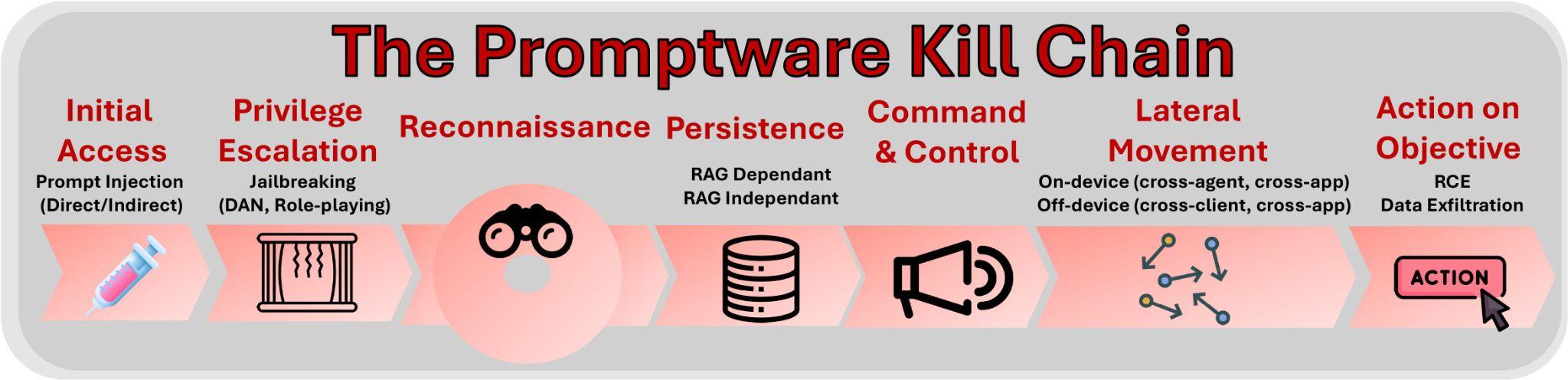
This seems like an important advance in LLM security against prompt injection:

Google DeepMind has unveiled CaMeL (CApabilities for MachinE Learning), a new approach to stopping prompt-injection attacks that abandons the failed strategy of having AI models police themselves. Instead, CaMeL treats language models as fundamentally untrusted components within a secure software framework, creating clear boundaries between user commands and potentially malicious content.

[…]

To understand CaMeL, you need to understand that prompt injections happen when AI systems can’t distinguish between legitimate user commands and malicious instructions hidden in content they’re processing.

[…]

While CaMeL does use multiple AI models (a privileged LLM and a quarantined LLM), what makes it innovative isn’t reducing the number of models but fundamentally changing the security architecture. Rather than expecting AI to detect attacks, CaMeL implements established security engineering principles like capability-based access control and data flow tracking to create boundaries that remain effective even if an AI component is compromised.

Research paper. Good analysis by Simon Willison.

I wrote about the problem of LLMs intermingling the data and control paths here.