AWS Weekly Roundup: AWS Transform, Amazon Neptune, and more (September 8, 2025)

Post Syndicated from Esra Kayabali original https://aws.amazon.com/blogs/aws/aws-weekly-roundup-aws-transform-amazon-neptune-and-more-september-8-2025/

Summer has drawn to a close here in Utrecht, where I live in the Netherlands. In two weeks, I’ll be attending AWS Community Day 2025, hosted at the Kinepolis Jaarbeurs Utrecht on September 24. The single-day event will bring together over 500 cloud practitioners from across the Netherlands, featuring 25 breakout sessions across five technical tracks. The day will begin with virtual keynotes at 9:00 AM, followed by parallel breakout sessions focused on practical implementations of serverless architectures and container optimization strategies, providing valuable insights regardless of experience level.

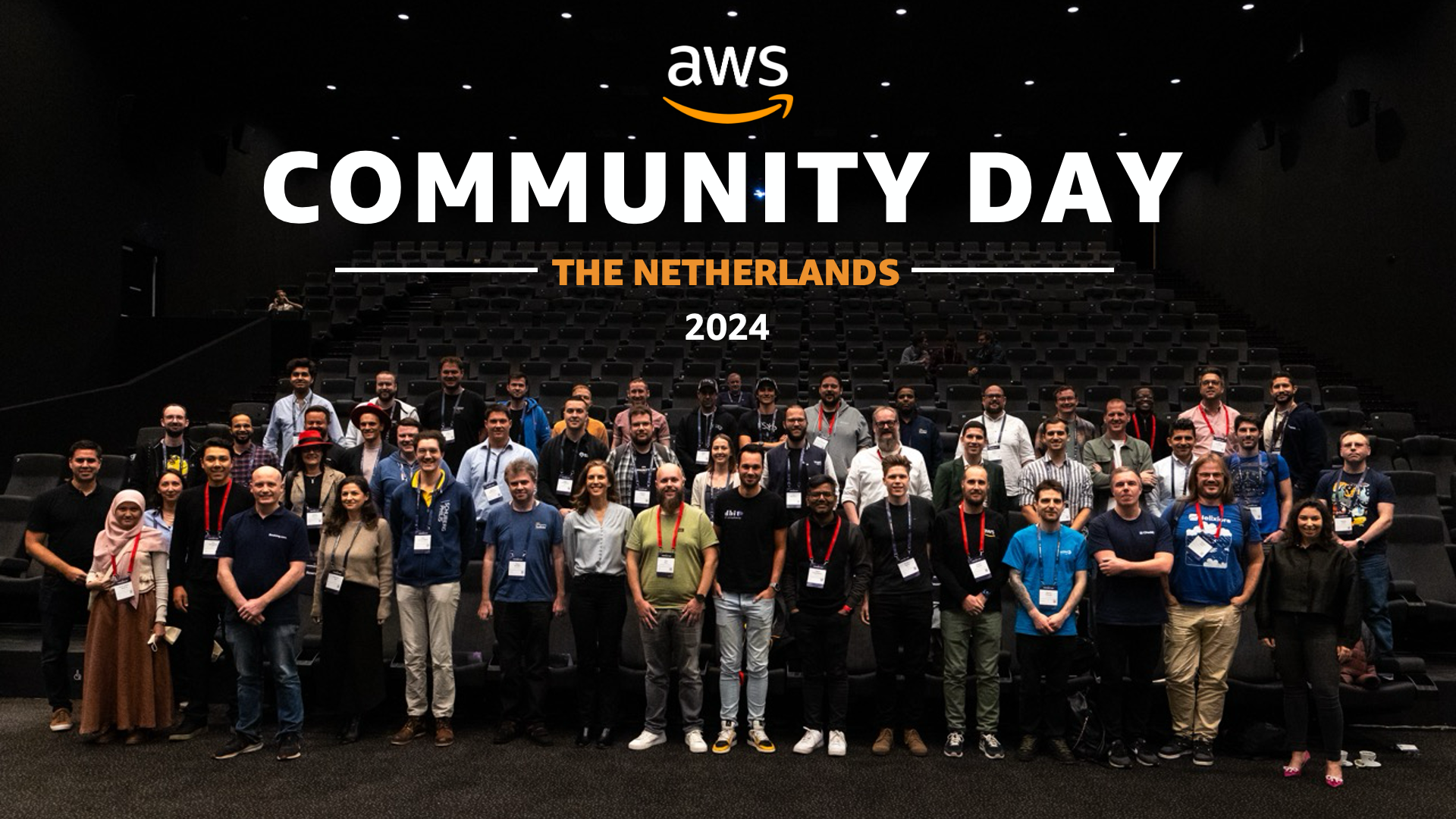
Last year’s AWS Community Day Netherlands 2024 brought together a diverse group of cloud practitioners, speakers, and AWS enthusiasts who contributed to making the community-led conference a valuable knowledge-sharing platform. If you’re planning to attend, feel free to find me there to discuss AWS services or share your cloud implementation experiences!
Let’s look at last week’s new announcements.

Last week’s launches

AWS Transform assessments now includes detached storage analysis – AWS Transform has expanded its assessment capabilities to analyze on-premises detached storage infrastructure, helping customers determine migration total cost of ownership (TCO). The assessment now evaluates Storage Area Network (SAN), Network Attached Storage (NAS), file servers, object storage, and virtual environments, providing migration recommendations to appropriate AWS services including Amazon S3, Amazon EBS, and Amazon FSx. The tool delivers a comprehensive TCO comparison between current and AWS environments, along with performance and cost optimization recommendations. With storage accounting for up to 45% of total migration opportunities, this enhancement helps customers visualize various AWS migration options. AWS Transform assessment is available in US East (N. Virginia) and Europe (Frankfurt) Regions.

Amazon Bedrock introduces Global Cross-Region inference for Anthropic Claude Sonnet 4 – Anthropic’s Claude Sonnet 4 model in Amazon Bedrock now supports Global cross-Region inference, allowing inference requests to route to any supported commercial AWS Region for processing. This enhancement optimizes available resources and enables higher model throughput by distributing traffic across multiple Regions. Previously, you could select cross-Region inference profiles tied to specific geographies (US, EU, or APAC). The new Global cross-Region inference profile provides additional flexibility for generative AI use cases that don’t require geography-specific processing, helping manage unplanned traffic bursts and increase model throughput. For detailed implementation guidance, visit the Amazon Bedrock documentation.

Amazon Neptune Database adds Public Endpoints support – Amazon Neptune now supports Public Endpoints, enabling direct connections to Neptune databases from outside the VPC without complex networking configurations. This feature helps developers securely access their graph databases from development desktops without requiring VPN connections or bastion hosts, while maintaining security through IAM authentication, VPC security groups, and encryption in transit. Public Endpoints can be enabled for Neptune clusters running engine version 1.4.6 or above through the AWS Management Console, AWS CLI, or AWS SDK. The feature is available at no additional cost beyond standard Neptune pricing in all AWS Regions where Neptune Database is offered. Implementation details are available in the Amazon Neptune documentation.

ECS Exec now available in AWS Management Console – Amazon ECS now supports ECS Exec directly in the AWS Management Console, enabling secure, interactive shell access to running containers without requiring inbound ports or SSH key management. Previously available only through API, CLI, or SDKs, this feature streamlines troubleshooting by allowing container access directly from the console interface. You can enable ECS Exec when creating or updating services and standalone tasks, then connect to containers by selecting “Connect” on the task details page, which opens an interactive session through CloudShell. The console also displays the underlying AWS CLI command for use in local terminals. This feature is available in all AWS commercial Regions and documented in the ECS developer guide.

Organizational Notification Configurations for AWS User Notifications now generally available – AWS User Notifications now supports Organizational Notification Configurations, helping AWS Organizations users centrally configure and view notifications across their organization. Management accounts or delegated administrators can configure notifications for specific organizational units or all accounts in an organization. The service supports configuring notifications for any supported Amazon EventBridge event, such as console sign-ins without MFA, with notifications appearing in the admin’s Console Notifications Center and AWS Console Mobile Application. User Notifications supports up to five delegated administrators and is available in all AWS Regions where AWS User Notifications is offered. For implementation details, visit the AWS User Notifications user guide.

For a full list of AWS announcements, be sure to keep an eye on the What’s New at AWS page.

Upcoming AWS events
Check your calendar and sign up for upcoming AWS events.

AWS Summits – Join free online and in-person events that bring the cloud computing community together to connect, collaborate, and learn about AWS. Register in your nearest city: Zurich (September 11), Los Angeles (September 17), and Bogotá (October 9).

AWS re:Invent 2025 – Join us in Las Vegas between December 1–5 as cloud pioneers gather from across the globe for the latest AWS innovations, peer-to-peer learning, expert-led discussions, and invaluable networking opportunities. Don’t forget to explore the event catalog.

AWS Community Days – Join community-led conferences that feature technical discussions, workshops, and hands-on labs led by expert AWS users and industry leaders from around the world: Baltic (September 10), Aotearoa (September 18), South Africa (September 20), Bolivia (September 20), Portugal (September 27).

Browse all upcoming AWS led in-person and virtual events here.

That’s all for this week. Check back next Monday for another Weekly Roundup!

— Esra

This post is part of our Weekly Roundup series. Check back each week for a quick roundup of interesting news and announcements from AWS!

The New d-Matrix JetStream 400G Ethernet Card for Data Center Scale AI Inference

Post Syndicated from Patrick Kennedy original https://www.servethehome.com/the-new-d-matrix-jetstream-400g-ethernet-card-for-data-center-scale-ai-inference/

The new d-Matrix Jetstream 400G card is designed to help the company scale out its Corsair AI inference platfrom using lower-cost switching

The post The New d-Matrix JetStream 400G Ethernet Card for Data Center Scale AI Inference appeared first on ServeTheHome.

[$] Testing the 2-in-1 Framework 12 Laptop

Post Syndicated from jzb original https://lwn.net/Articles/1035758/

Framework Computer is a US-based
computer manufacturer with a line of Linux-supported, modular, easily
repairable and upgradeable laptops. In February, the company announced
a new model, the Framework Laptop 12,
an “entry-level” 12.2-inch convertible notebook that can be
used as a laptop or tablet. The systems were made available for pre-order
in April, I received mine in mid-August. Since then, I have been
putting it through its paces with Debian 13 (“trixie”) and
Fedora Linux 42. It’s a good choice for users who want a
Linux-friendly, lightweight, 2-in-1
device—if they are willing to make a few concessions on storage
capacity, RAM, and CPU/GPU choices.

Security updates for Monday

Post Syndicated from jake original https://lwn.net/Articles/1037157/

Security updates have been issued by Debian (chromium, libhtp, modsecurity-apache, shibboleth-sp, and wireless-regdb), Fedora (chromium, kea, tcpreplay, and yq), Mageia (rootcerts, nspr, nss & firefox and thunderbird), Red Hat (python3), and SUSE (7zip, chromedriver, go1.25, libQt5Pdf5, libsixel-bash-completion, libsoup2, libwireshark18, netty, rav1e, and trivy).

Bringing Node.js HTTP servers to Cloudflare Workers

Post Syndicated from Yagiz Nizipli original https://blog.cloudflare.com/bringing-node-js-http-servers-to-cloudflare-workers/

We’re making it easier to run your Node.js applications on Cloudflare Workers by adding support for the node:http client and server APIs. This significant addition brings familiar Node.js HTTP interfaces to the edge, enabling you to deploy existing Express.js, Koa, and other Node.js applications globally with zero cold starts, automatic scaling, and significantly lower latency for your users — all without rewriting your codebase. Whether you’re looking to migrate legacy applications to a modern serverless platform or build new ones using the APIs you already know, you can now leverage Workers’ global network while maintaining your existing development patterns and frameworks.

The Challenge: Node.js-style HTTP in a Serverless Environment

Cloudflare Workers operate in a unique serverless environment where direct tcp connection isn’t available. Instead, all networking operations are fully managed by specialized services outside the Workers runtime itself — systems like our Open Egress Router (OER) and Pingora that handle connection pooling, keeping connections warm, managing egress IPs, and all the complex networking details. This means as a developer, you don’t need to worry about TLS negotiation, connection management, or network optimization — it’s all handled for you automatically.

This fully-managed approach is actually why we can’t support certain Node.js APIs — these networking decisions are handled at the system level for performance and security. While this makes Workers different from traditional Node.js environments, it also makes them better for serverless computing — you get enterprise-grade networking without the complexity.

This fundamental difference required us to rethink how HTTP APIs work at the edge while maintaining compatibility with existing Node.js code patterns.

Our Solution: we’ve implemented the core `node:http` APIs by building on top of the web-standard technologies that Workers already excel at. Here’s how it works:

HTTP Client APIs

The node:http client implementation includes the essential APIs you’re familiar with:

  • http.get() – For simple GET requests

  • http.request() – For full control over HTTP requests

Our implementations of these APIs are built on top of the standard fetch() API that Workers use natively, providing excellent performance while maintaining Node.js compatibility.

import http from 'node:http';

export default {
  async fetch(request) {
    // Use familiar Node.js HTTP client APIs
    const { promise, resolve, reject } = Promise.withResolvers();

    const req = http.get('https://api.example.com/data', (res) => {
      let data = '';
      res.on('data', chunk => data += chunk);
      res.on('end', () => {
        resolve(new Response(data, {
          headers: { 'Content-Type': 'application/json' }
        }));
      });
    });

    req.on('error', reject);

    return promise;
  }
};

What’s Supported

  • Standard HTTP methods (GET, POST, PUT, DELETE, etc.)

  • Request and response headers

  • Request and response bodies

  • Streaming responses

  • Basic authentication

Current Limitations

  • The Agent API is provided but operates as a no-op.

  • Trailers, early hints, and 1xx responses are not supported.

  • TLS-specific options are not supported (Workers handle TLS automatically).

HTTP Server APIs

The server-side implementation is where things get particularly interesting. Since Workers can’t create traditional TCP servers listening on specific ports, we’ve created a bridge system that connects Node.js-style servers to the Workers request handling model.

When you create an HTTP server and call listen(port), instead of opening a TCP socket, the server is registered in an internal table within your Worker. This internal table acts as a bridge between http.createServer executions and the incoming fetch requests using the port number as the identifier.

You then use one of two methods to bridge incoming Worker requests to your Node.js-style server.

Manual Integration with handleAsNodeRequest

This approach gives you the flexibility to integrate Node.js HTTP servers with other Worker features, and allows you to have multiple handlers in your default entrypoint such as fetch, scheduled, queue, etc.

import { handleAsNodeRequest } from 'cloudflare:node';
import { createServer } from 'node:http';

// Create a traditional Node.js HTTP server
const server = createServer((req, res) => {
  res.writeHead(200, { 'Content-Type': 'text/plain' });
  res.end('Hello from Node.js HTTP server!');
});

// Register the server (doesn't actually bind to port 8080)
server.listen(8080);

// Bridge from Workers fetch handler to Node.js server
export default {
  async fetch(request) {
    // You can add custom logic here before forwarding
    if (request.url.includes('/admin')) {
      return new Response('Admin access', { status: 403 });
    }

    // Forward to the Node.js server
    return handleAsNodeRequest(8080, request);
  },
  async queue(batch, env, ctx) {
    for (const msg of batch.messages) {
      msg.retry();
    }
  },
  async scheduled(controller, env, ctx) {
    ctx.waitUntil(doSomeTaskOnSchedule(controller));
  },
};

This approach is perfect when you need to:

  • Integrate with other Workers features like KV, Durable Objects, or R2

  • Handle some routes differently while delegating others to the Node.js server

  • Apply custom middleware or request processing

Automatic Integration with httpServerHandler

For use cases where you want to integrate a Node.js HTTP server without any additional features or complexity, you can use the `httpServerHandler` function. This function automatically handles the integration for you. This solution is ideal for applications that don’t need Workers-specific features.

import { httpServerHandler } from 'cloudflare:node';
import { createServer } from 'node:http';

// Create your Node.js HTTP server
const server = createServer((req, res) => {
  if (req.url === '/') {
    res.writeHead(200, { 'Content-Type': 'text/html' });
    res.end('<h1>Welcome to my Node.js app on Workers!</h1>');
  } else if (req.url === '/api/status') {
    res.writeHead(200, { 'Content-Type': 'application/json' });
    res.end(JSON.stringify({ status: 'ok', timestamp: Date.now() }));
  } else {
    res.writeHead(404, { 'Content-Type': 'text/plain' });
    res.end('Not Found');
  }
});

server.listen(8080);

// Export the server as a Workers handler
export default httpServerHandler({ port: 8080 });
// Or you can simply pass the http.Server instance directly:
// export default httpServerHandler(server);

Express.js, Koa.js and Framework Compatibility

These HTTP APIs open the door to running popular Node.js frameworks like Express.js on Workers. If any of the middlewares for these frameworks don’t work as expected, please open an issue to Cloudflare Workers repository.

import { httpServerHandler } from 'cloudflare:node';
import express from 'express';

const app = express();

app.get('/', (req, res) => {
  res.json({ message: 'Express.js running on Cloudflare Workers!' });
});

app.get('/api/users/:id', (req, res) => {
  res.json({
    id: req.params.id,
    name: 'User ' + req.params.id
  });
});

app.listen(3000);
export default httpServerHandler({ port: 3000 });
// Or you can simply pass the http.Server instance directly:
// export default httpServerHandler(app.listen(3000));

In addition to Express.js, Koa.js is also supported:

import Koa from 'koa';
import { httpServerHandler } from 'cloudflare:node';

const app = new Koa()

app.use(async ctx => {
  ctx.body = 'Hello World';
});

app.listen(8080);

export default httpServerHandler({ port: 8080 });

Getting started with serverless Node.js applications

The node:http and node:https APIs are available in Workers with Node.js compatibility enabled using the nodejs_compat compatibility flag with a compatibility date later than 08-15-2025.

The addition of node:http support brings us closer to our goal of making Cloudflare Workers the best platform for running JavaScript at the edge, whether you’re building new applications or migrating existing ones.

Ready to try it out? Enable Node.js compatibility in your Worker and start exploring the possibilities of familiar HTTP APIs at the edge.

Celebrate 10 years of the European Astro Pi Challenge — registration for 2025–26 is now open

Post Syndicated from Fergus Kirkpatrick original https://www.raspberrypi.org/blog/celebrate-10-years-of-the-european-astro-pi-challenge-registration-for-2025-26-is-now-open/

The European Astro Pi Challenge, an ESA Education project run in collaboration with the Raspberry Pi Foundation, is back for its tenth year! This special anniversary year marks a decade of inspiring young people to code and have their programs run aboard the International Space Station (ISS). We are delighted to announce that registration for both Astro Pi missions is now officially open for the 2025–26 challenge. 

An illustration of saying 10 years of your code in space
Figure 1: Astro Pi is 10 illustration

Meet the new Astro Pi Ambassador

We are thrilled to introduce you to the Astro Pi ambassador for 2025–26, ESA Astronaut Sophie Adenot. Sophie is from France and has had an incredible journey to becoming an astronaut. She holds a Masters in Engineering, has been a helicopter test pilot, and was awarded the French National Order of Merit (Chevalier) for her public services in gender equality in the sciences. Sophie is one of the new “Hoppers” cohort of ESA astronauts who graduated in 2023. She will be going on her first mission to the ISS in Spring 2026. 

A picture of Sophie Adenot in an ESA Flight suit
Figure 2: Sophie Adenot

Choose your space mission

Not sure where to start? The European Astro Pi challenge, or Astro Pi for short, has two missions that young people can participate in depending on their coding abilities. Both Missions use Python programming to create short computer programs that will be run on the ISS. Which one will you choose? 

Mission Zero: Your pixel art in space

Mission Zero offers a chance for young people to create a nature-inspired piece of pixel art using Python and have it displayed for astronauts to see on special Raspberry Pi computers, called Astro Pis, aboard the ISS. We wanted to share some of our favourite pixel art creations from last year’s mission — you can find them as new examples in our project guide. If your team needs some inspiration to get started, they can choose to recreate or remix one of these examples, or create their own.

The deadline for Mission Zero submissions is 23 March 2026.

A selection of code examples available for Mission Zero 2025–26
Figure 3: New code examples

Mission Space Lab: Become a space scientist

For our more experienced coders, Mission Space Lab returns with a real-world scientific task: calculate the speed of the International Space Station as accurately as possible. Teams of between two and six  young people will write a Python program that collects data from the Astro Pi computers on the ISS to perform this calculation. 

This year, we’ve made some user improvements to the Astro Pi Replay tool, which allows teams to test their programs with a real-time simulation using historical ISS data and images. This updated online tool makes it even easier to see how your program would perform in orbit and troubleshoot any errors. 

The submission deadline for Mission Space Lab is 16 February 2026.

A selection of Earth Observation images captured by Mission Space Lab teams in 2024–25
Figure 4: EO images from Mission Space Lab teams

Celebrating a decade of your programs in space

For ten years, the European Astro Pi Challenge has given young people the unique opportunity to explore computer science and space. Ever since the first Astro Pis arrived on the ISS with ESA astronaut Tim Peake on his Principia Mission, young people have been writing programs to run in space. This year, we’re excited to see what new ideas you have for your pixel arts creations, and how you approach the speed challenge. 

Ready to send your programs to space? Visit astro-pi.org to learn more and register for the challenge today. 

Don’t forget to sign up for our newsletter to stay up to date on all the latest Astro Pi news,resources and events. We can’t wait to see your programs! 

P.S. We’d love to hear from some previous participants about how Astro Pi has impacted them. If you or someone you know would like to share a story, please email us at [email protected].

The post Celebrate 10 years of the European Astro Pi Challenge — registration for 2025–26 is now open appeared first on Raspberry Pi Foundation.

AI in Government

Post Syndicated from Bruce Schneier original https://www.schneier.com/blog/archives/2025/09/ai-in-government.html

Just a few months after Elon Musk’s retreat from his unofficial role leading the Department of Government Efficiency (DOGE), we have a clearer picture of his vision of government powered by artificial intelligence, and it has a lot more to do with consolidating power than benefitting the public. Even so, we must not lose sight of the fact that a different administration could wield the same technology to advance a more positive future for AI in government.

To most on the American left, the DOGE end game is a dystopic vision of a government run by machines that benefits an elite few at the expense of the people. It includes AI rewriting government rules on a massive scale, salary-free bots replacing human functions and nonpartisan civil service forced to adopt an alarmingly racist and antisemitic Grok AI chatbot built by Musk in his own image. And yet despite Musk’s proclamations about driving efficiency, little cost savings have materialized and few successful examples of automation have been realized.

From the beginning of the second Trump administration, DOGE was a replacement of the US Digital Service. That organization, founded during the Obama administration to empower agencies across the executive government with technical support, was substituted for one reportedly charged with traumatizing their staff and slashing their resources. The problem in this particular dystopia is not the machines and their superhuman capabilities (or lack thereof) but rather the aims of the people behind them.

One of the biggest impacts of the Trump administration and DOGE’s efforts has been to politically polarize the discourse around AI. Despite the administration railing against “woke AI”‘ and the supposed liberal bias of Big Tech, some surveys suggest the American left is now measurably more resistant to developing the technology and pessimistic about its likely impacts on their future than their right-leaning counterparts. This follows a familiar pattern of US politics, of course, and yet it points to a potential political realignment with massive consequences.

People are morally and strategically justified in pushing the Democratic Party to reduce its dependency on funding from billionaires and corporations, particularly in the tech sector. But this movement should decouple the technologies championed by Big Tech from those corporate interests. Optimism about the potential beneficial uses of AI need not imply support for the Big Tech companies that currently dominate AI development. To view the technology as inseparable from the corporations is to risk unilateral disarmament as AI shifts power balances throughout democracy. AI can be a legitimate tool for building the power of workers, operating government and advancing the public interest, and it can be that even while it is exploited as a mechanism for oligarchs to enrich themselves and advance their interests.

A constructive version of DOGE could have redirected the Digital Service to coordinate and advance the thousands of AI use cases already being explored across the US government. Following the example of countries like Canada, each instance could have been required to make a detailed public disclosure as to how they would follow a unified set of principles for responsible use that preserves civil rights while advancing government efficiency.

Applied to different ends, AI could have produced celebrated success stories rather than national embarrassments.

A different administration might have made AI translation services widely available in government services to eliminate language barriers to US citizens, residents and visitors, instead of revoking some of the modest translation requirements previously in place. AI could have been used to accelerate eligibility decisions for Social Security disability benefits by performing preliminary document reviews, significantly reducing the infamous backlog of 30,000 Americans who die annually awaiting review. Instead, the deaths of people awaiting benefits may now double due to cuts by DOGE. The technology could have helped speed up the ministerial work of federal immigration judges, helping them whittle down a backlog of millions of waiting cases. Rather, the judicial systems must face this backlog amid firings of immigration judges, despite the backlog.

To reach these constructive outcomes, much needs to change. Electing leaders committed to leveraging AI more responsibly in government would help, but the solution has much more to do with principles and values than it does technology. As historian Melvin Kranzberg said, technology is never neutral: its effects depend on the contexts it is used in and the aims it is applied towards. In other words, the positive or negative valence of technology depends on the choices of the people who wield it.

The Trump administration’s plan to use AI to advance their regulatory rollback is a case in point. DOGE has introduced an “AI Deregulation Decision Tool” that it intends to use through automated decision-making to eliminate about half of a catalog of nearly 200,000 federal rules . This follows similar proposals to use AI for large-scale revisions of the administrative code in Ohio, Virginia and the US Congress.

This kind of legal revision could be pursued in a nonpartisan and nonideological way, at least in theory. It could be tasked with removing outdated rules from centuries past, streamlining redundant provisions and modernizing and aligning legal language. Such a nonpartisan, nonideological statutory revision has been performed in Ireland—by people, not AI—and other jurisdictions. AI is well suited to that kind of linguistic analysis at a massive scale and at a furious pace.

But we should never rest on assurances that AI will be deployed in this kind of objective fashion. The proponents of the Ohio, Virginia, congressional and DOGE efforts are explicitly ideological in their aims. They see “AI as a force for deregulation,” as one US senator who is a proponent put it, unleashing corporations from rules that they say constrain economic growth. In this setting, AI has no hope to be an objective analyst independently performing a functional role; it is an agent of human proponents with a partisan agenda.

The moral of this story is that we can achieve positive outcomes for workers and the public interest as AI transforms governance, but it requires two things: electing leaders who legitimately represent and act on behalf of the public interest and increasing transparency in how the government deploys technology.

Agencies need to implement technologies under ethical frameworks, enforced by independent inspectors and backed by law. Public scrutiny helps bind present and future governments to their application in the public interest and to ward against corruption.

These are not new ideas and are the very guardrails that Trump, Musk and DOGE have steamrolled over the past six months. Transparency and privacy requirements were avoided or ignored, independent agency inspectors general were fired and the budget dictates of Congress were disrupted. For months, it has not even been clear who is in charge of and accountable for DOGE’s actions. Under these conditions, the public should be similarly distrustful of any executive’s use of AI.

We think everyone should be skeptical of today’s AI ecosystem and the influential elites that are steering it towards their own interests. But we should also recognize that technology is separable from the humans who develop it, wield it and profit from it, and that positive uses of AI are both possible and achievable.

This essay was written with Nathan E. Sanders, and originally appeared in Tech Policy Press.

Thank You For the Supercomputers Google Predictions for the Next Phase of AI at Hot Chips 2025

Post Syndicated from Patrick Kennedy original https://www.servethehome.com/thank-you-for-the-supercomputers-google-predictions-for-the-next-phase-of-ai-at-hot-chips-2025/

At the first Hot Chips 2025 Keynote, Noam Shazeer co-lead of Google Gemini AI, gave his thoughts on what LLMs need to improve in the future

The post Thank You For the Supercomputers Google Predictions for the Next Phase of AI at Hot Chips 2025 appeared first on ServeTheHome.

Справедливостта като идеал за обединение

Post Syndicated from Bozho original https://blog.bozho.net/blog/4513

В последните дни представители на правителството и на мнозинството са поели рефрена, че опозицията е виновна за един или друг инцидент, защото атакувала институциите и така рушала доверието в тях.

Освен че е нелепо да се оправдаваш с опозицията, с това виждане има съществен държавнически проблем.

Когато знаеш, че институциите се водят от заскулисни интереси и че изпълняват основните си функции като второстепенно задължение, доколкото не противоречи на задкулисния интерес (и то не особено компетентно, защото се пълнят с верни хора, без фокус върху компетентност), нямаш право да твърдиш, че критика към някоя институция е деструктивна.

Хората знаят, напр., че МВР пази престъпници и работи с престъпници. Само за последните 3 дни ми разказаха две такива истории – за чадър на по-високо ниво, и за теч на информация към по-дребен крадец, която е довела до побой над гражданин. От повече от една година прокуратурата отказва да образува досъдебно за теч от МВР към Ружа Игнатова чрез Таки.

Когато от Възраждане упражняват физическо насилие, именно ГЕРБ се скриха и не подписаха оставката на техния зам-председател, за да се даде ясен знак на обществото, че така не може. И пазят имунитетите им за престъпления именно срещу служители на МВР. И това само заради конюнктурен политически интерес, да си подават топката с Възраждане, след което се жалват какви клипчета пускали в ТикТок.

Прокуратура и разследващи органи злоупотреняват с наказателния процес, за да тормозят обвимяеми и свидетели. ДАНС се меси в изборния процес и го саботира. Министерство на финансите работи за изваждане на Пеевски от санкционен списък за корупция (което се подразбира от думи на Борисов). Едри подземни фигури прибират пари от екотакси, управляват ГКПП-та и следят трафика. Контролни органи си затварят очите за нарушения на предприятия на консултанти, пилета, котараци и всякакви друти отчисляващи към властта бизнесмени, правещи пари на гърба на здравето на хората.

Примери има десетки и всичко това се знае не само от лошата опозиция, а и от хората.

И когато опозицията каже, че институциите са завладяни, това водело до ерозиране на държвността. Глупости.

Държавността се ерозира, когато опаковаш този разпад с едно розово фолио и му лепнеш етикет „институция“. Защото под фолиото прозира всичко.

Не можеш да очакваш доверие към институции, в чието изтърбушване от смисъл си участвал. И не може да изискваш такова от гражданите.

Държавническият проблем, с който започнах, е че политиката „дайте да правим по малко, защото иначе задкулисието ще се ядоса, и да твърдим, че това е основание за доверие“ е несъстоятелна. И води и институциите, и обществото надолу.

Зоран Джинджич, след като става премиер на Сърбия след падането на комунистическия режим, започва от най-трудното – битката с организираната престъпност, която е на практика навсякъде. По темата той казва следното: „Ако трябва да изядеш жаба, не я гледай дълго. Ако трябва да изядеш повече жаби, първо изяж най-голямата.“

Най-голямата партия системно отказва да се заеме с най-голямата жаба – правосъдието и справедливостта. И затова не може да има претенции за доверието в институциите. То е ниско, защото липсата на справедливост се вижда от всеки гражданин.

И никакви realpolitik тактически упражнения и интриги не могат да замажат това. Никакви отворени врати, общи кандидатури, братски партии, похвали за разум и т.н. не могат да премахнат тази отговорност – че при всяка възможност да изберат изяждането на тази жаба, тях ги е било страх.

Ако днес може да има обединение за някоя кауза, за някой идеал, това е справедливостта. Тя гарантира решаването на проблема с доверието в институциите и позволява загърбване на различия в името на решаването на проблемите на българското общество. Съединение на сили (освен пред лицето на външна заплаха) може да има само ако базовото ниво на справедливост и правосъдие е постигнато. Дотогава призивите за доверие в институциите са лицемерие.

На старата сграда на Народното събрание пише „Съединението прави силата“. На новата, обаче, не го пише. Може би е случаен пропуск, но ще настоявам това да се промени. За да ни напомня – и на нас в сградата, и на тези съседните две сгради, които го гледат през прозорците, че трябва да мислим как да изпълним този идеал със смисъл, а не с кухи фрази и политическо заяждане.

Материалът Справедливостта като идеал за обединение е публикуван за пръв път на БЛОГодаря.

The collective thoughts of the interwebz