Tag Archives: computing education

Educating young people in AI, machine learning, and data science: new seminar series

Post Syndicated from Sue Sentance original https://www.raspberrypi.org/blog/ai-machine-learning-data-science-education-seminars/

A recent Forbes article reported that over the last four years, the use of artificial intelligence (AI) tools in many business sectors has grown by 270%. AI has a history dating back to Alan Turing’s work in the 1940s, and we can define AI as the ability of a digital computer or computer-controlled robot to perform tasks commonly associated with intelligent beings.

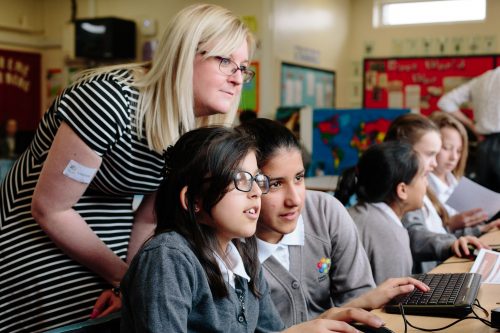
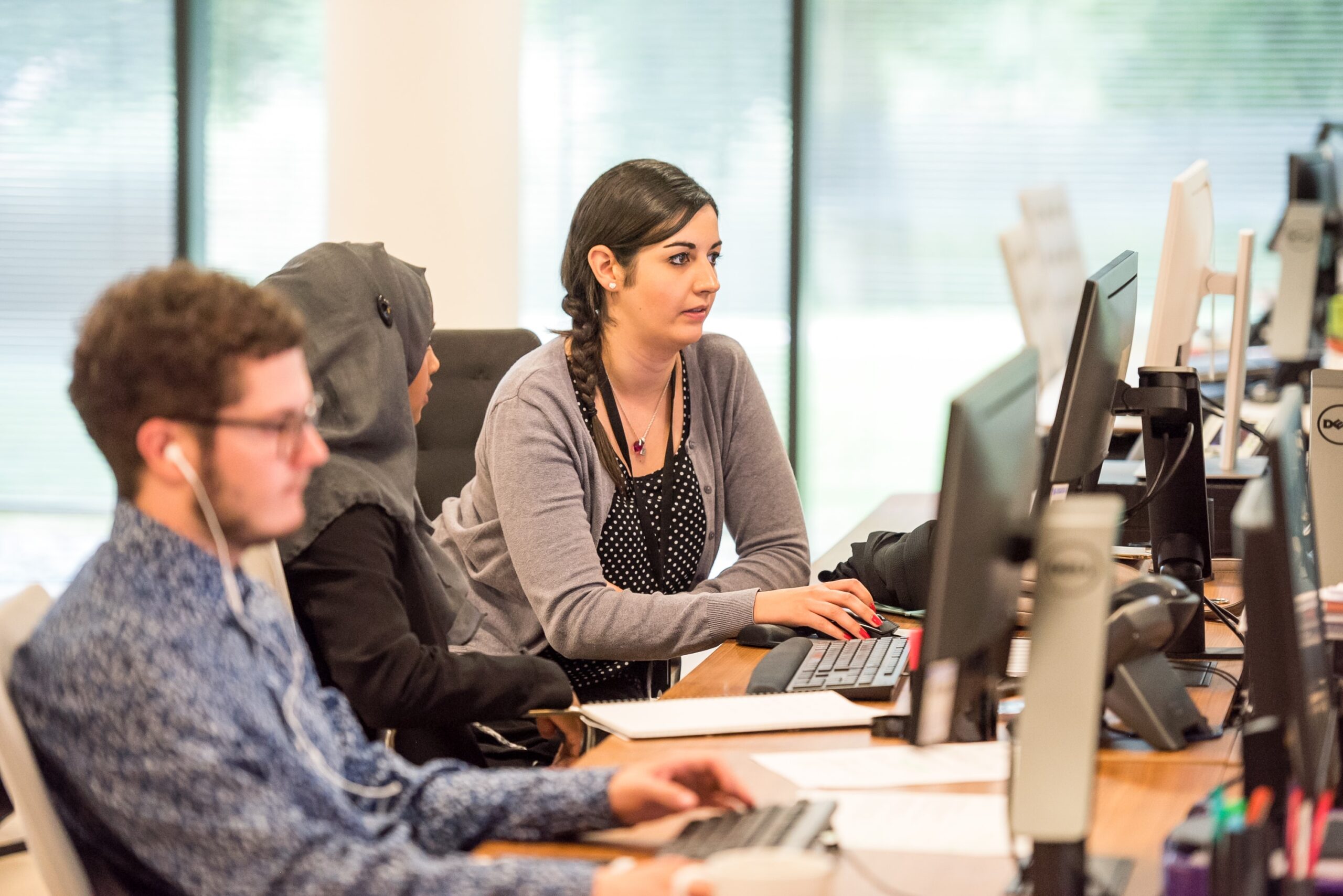
A woman explains a graph on a computer screen to two men.
Recent advances in computing technology have accelerated the rate at which AI and data science tools are coming to be used.

Four key areas of AI are machine learning, robotics, computer vision, and natural language processing. Other advances in computing technology mean we can now store and efficiently analyse colossal amounts of data (big data); consequently, data science was formed as an interdisciplinary field combining mathematics, statistics, and computer science. Data science is often presented as intertwined with machine learning, as data scientists commonly use machine learning techniques in their analysis.

Venn diagram showing the overlaps between computer science, AI, machine learning, statistics, and data science.
Computer science, AI, statistics, machine learning, and data science are overlapping fields. (Diagram from our forthcoming free online course about machine learning for educators)

AI impacts everyone, so we need to teach young people about it

AI and data science have recently received huge amounts of attention in the media, as machine learning systems are now used to make decisions in areas such as healthcare, finance, and employment. These AI technologies cause many ethical issues, for example as explored in the film Coded Bias. This film describes the fallout of researcher Joy Buolamwini’s discovery that facial recognition systems do not identify dark-skinned faces accurately, and her journey to push for the first-ever piece of legislation in the USA to govern against bias in the algorithms that impact our lives. Many other ethical issues concerning AI exist and, as highlighted by UNESCO’s examples of AI’s ethical dilemmas, they impact each and every one of us.

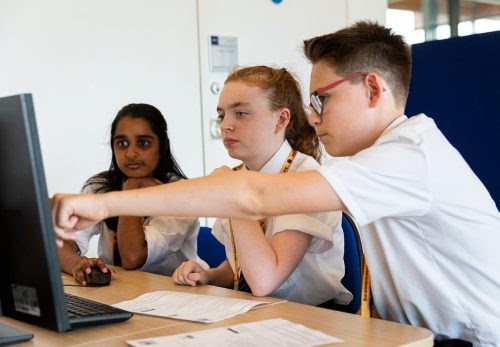
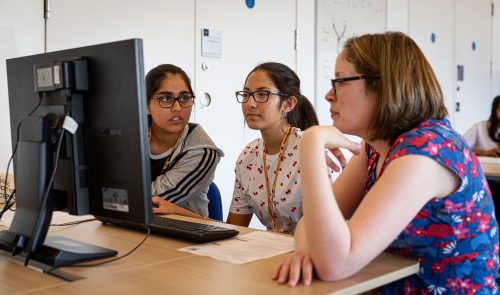
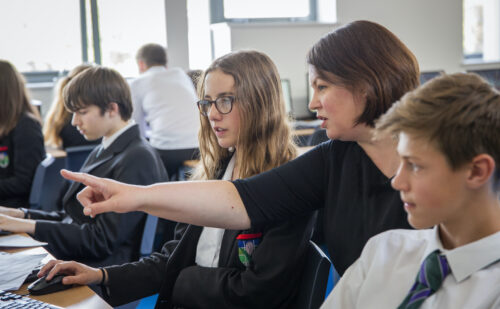
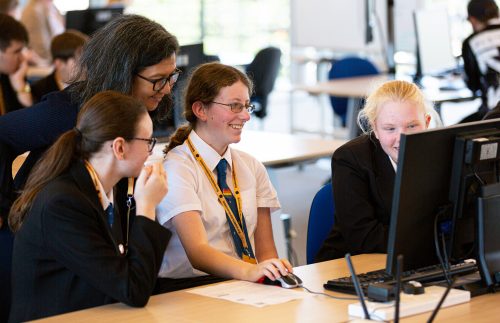
Three female teenagers and a teacher use a computer together.
We need to make sure that young people understand AI technologies and how they impact society and individuals.

So how do such advances in technology impact the education of young people? In the UK, a recent Royal Society report on machine learning recommended that schools should “ensure that key concepts in machine learning are taught to those who will be users, developers, and citizens” — in other words, every child. The AI Roadmap published by the UK AI Council in 2020 declared that “a comprehensive programme aimed at all teachers and with a clear deadline for completion would enable every teacher confidently to get to grips with AI concepts in ways that are relevant to their own teaching.” As of yet, very few countries have incorporated any study of AI and data science in their school curricula or computing programmes of study.

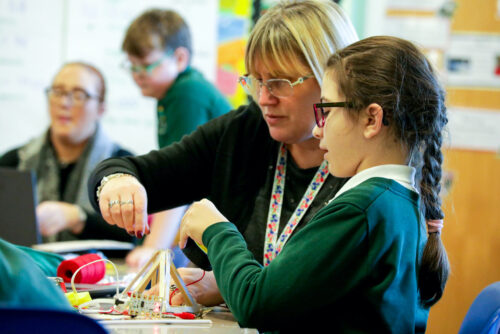
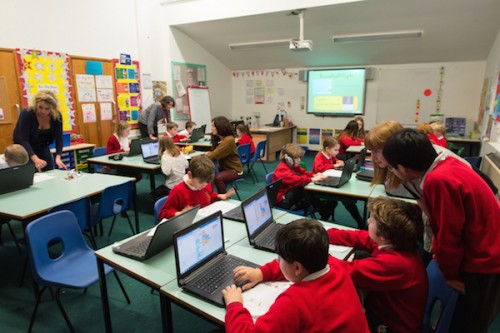
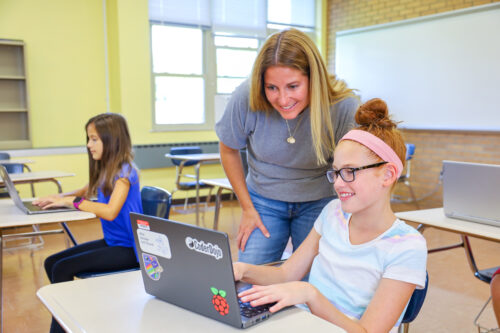
A teacher and a student work on a coding task at a laptop.
Our seminar speakers will share findings on how teachers can help their learners get to grips with AI concepts.

Partnering with The Alan Turing Institute for a new seminar series

Here at the Raspberry Pi Foundation, AI, machine learning, and data science are important topics both in our learning resources for young people and educators, and in our programme of research. So we are delighted to announce that starting this autumn we are hosting six free, online seminars on the topic of AI, machine learning, and data science education, in partnership with The Alan Turing Institute.

A woman teacher presents to an audience in a classroom.
Everyone with an interest in computing education research is welcome at our seminars, from researchers to educators and students!

The Alan Turing Institute is the UK’s national institute for data science and artificial intelligence and does pioneering work in data science research and education. The Institute conducts many different strands of research in this area and has a special interest group focused on data science education. As such, our partnership around the seminar series enables us to explore our mutual interest in the needs of young people relating to these technologies.

This promises to be an outstanding series drawing from international experts who will share examples of pedagogic best practice […].

Dr Matt Forshaw, The Alan Turing Institute

Dr Matt Forshaw, National Skills Lead at The Alan Turing Institute and Senior Lecturer in Data Science at Newcastle University, says: “We are delighted to partner with the Raspberry Pi Foundation to bring you this seminar series on AI, machine learning, and data science. This promises to be an outstanding series drawing from international experts who will share examples of pedagogic best practice and cover critical topics in education, highlighting ethical, fair, and safe use of these emerging technologies.”

Our free seminar series about AI, machine learning, and data science

At our computing education research seminars, we hear from a range of experts in the field and build an international community of researchers, practitioners, and educators interested in this important area. Our new free series of seminars runs from September 2021 to February 2022, with some excellent and inspirational speakers:

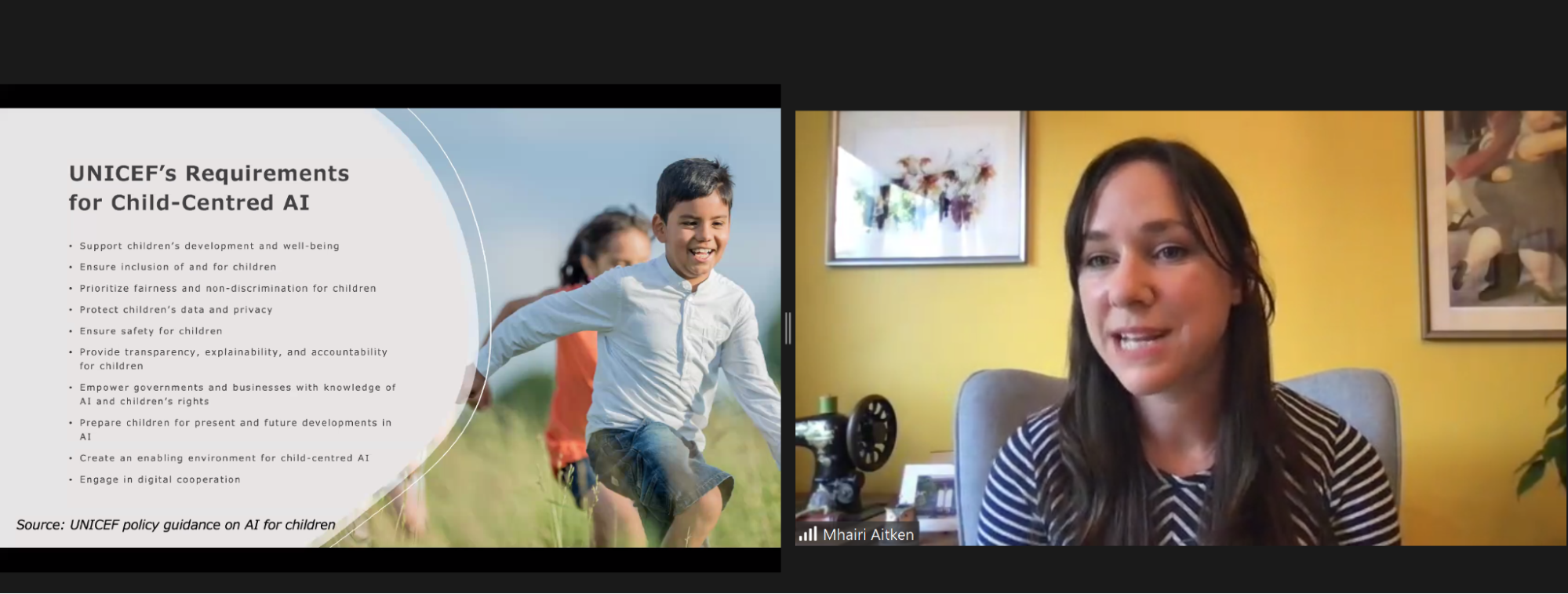
  • Tues 7 September: Dr Mhairi Aitken from The Alan Turing Institute will share a talk about AI ethics, setting out key ethical principles and how they apply to AI before discussing the ways in which these relate to children and young people.
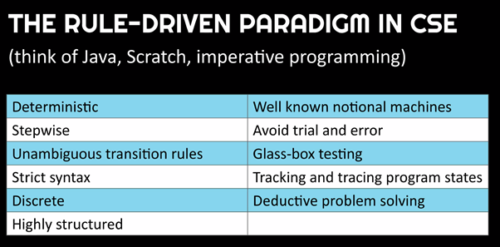
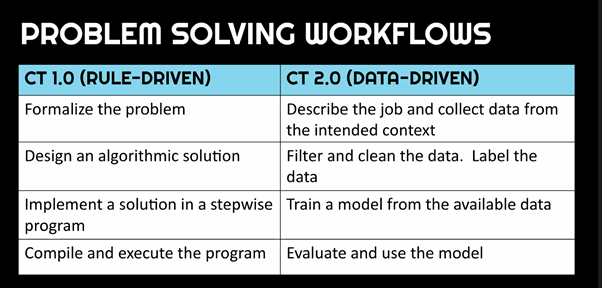
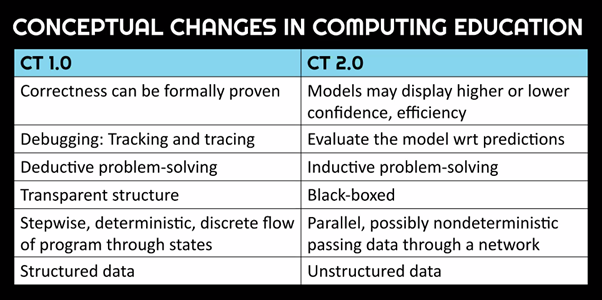
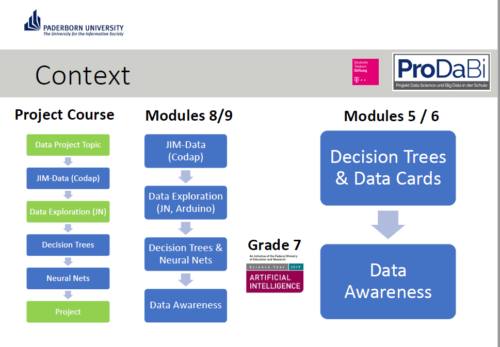
  • Tues 5 October: Professor Carsten Schulte, Yannik Fleischer, and Lukas Höper from Paderborn University in Germany will use a series of examples from their ProDaBi programme to explore whether and how AI and machine learning should be taught differently from other topics in the computer science curriculum at school. The speakers will suggest that these topics require a paradigm shift for some teachers, and that this shift has to do with the changed role of algorithms and data, and of the societal context.
  • Tues 3 November: Professor Matti Tedre and Dr Henriikka Vartiainen from the University of Eastern Finland will focus on machine learning in the school curriculum. Their talk will map the emerging trajectories in educational practice, theory, and technology related to teaching machine learning in K-12 education.
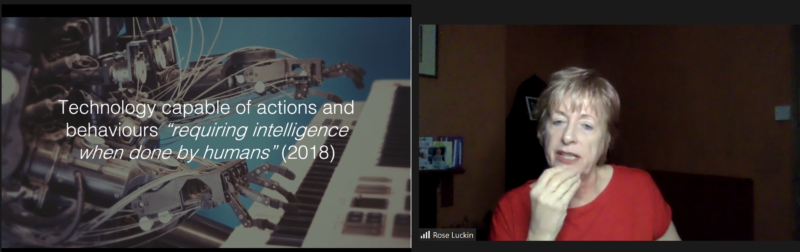
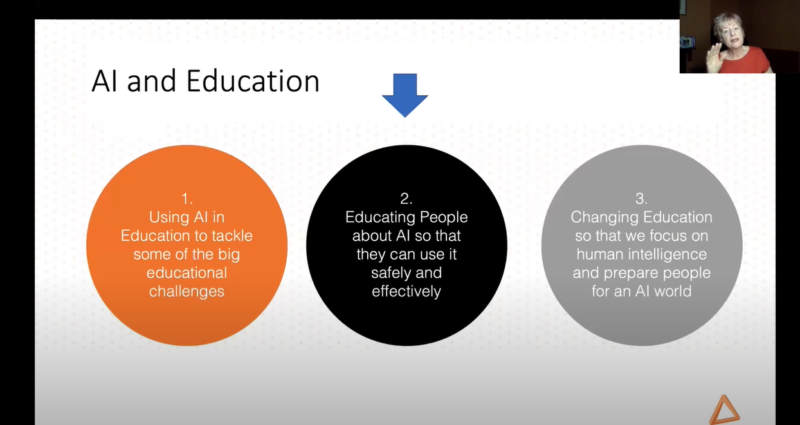
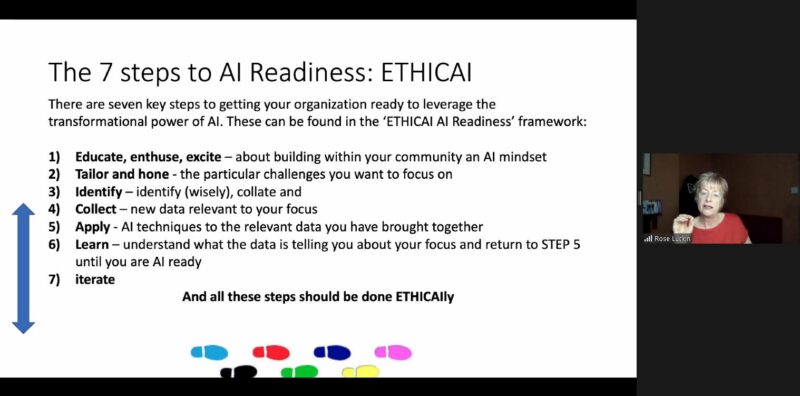
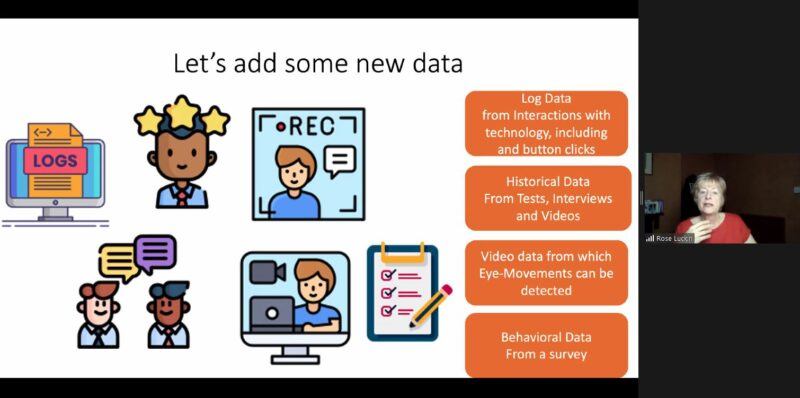
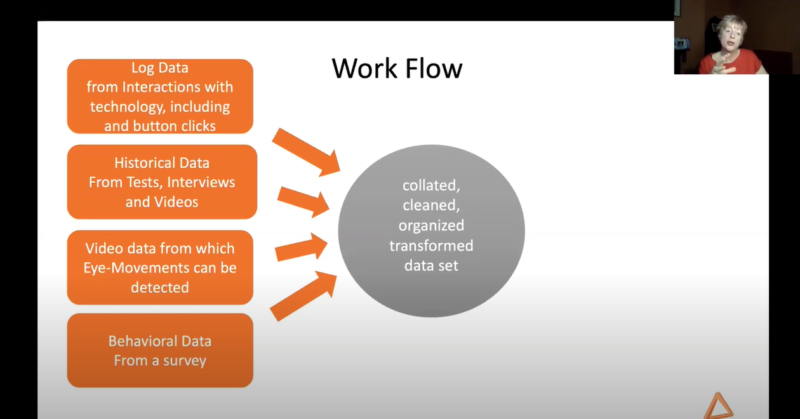
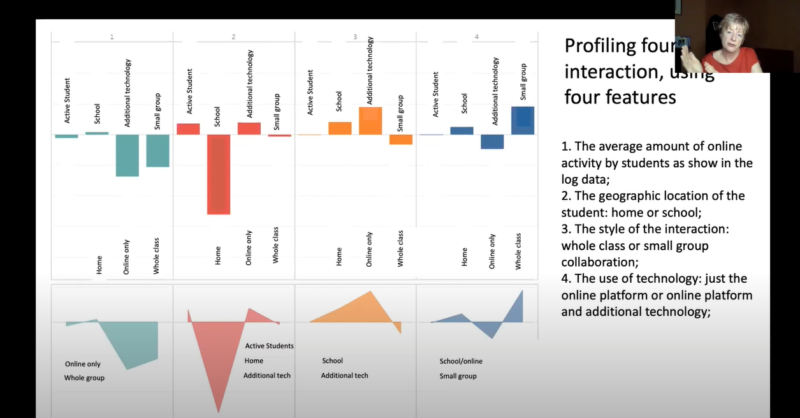
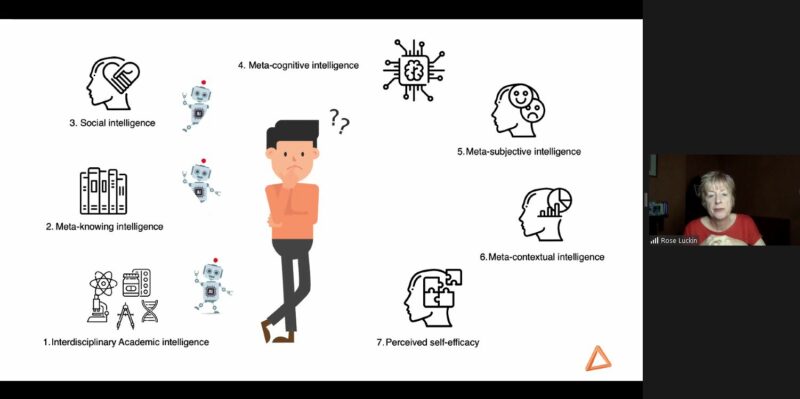
  • Tues 7 December: Professor Rose Luckin from University College London will be looking at the breadth of issues impacting the teaching and learning of AI.
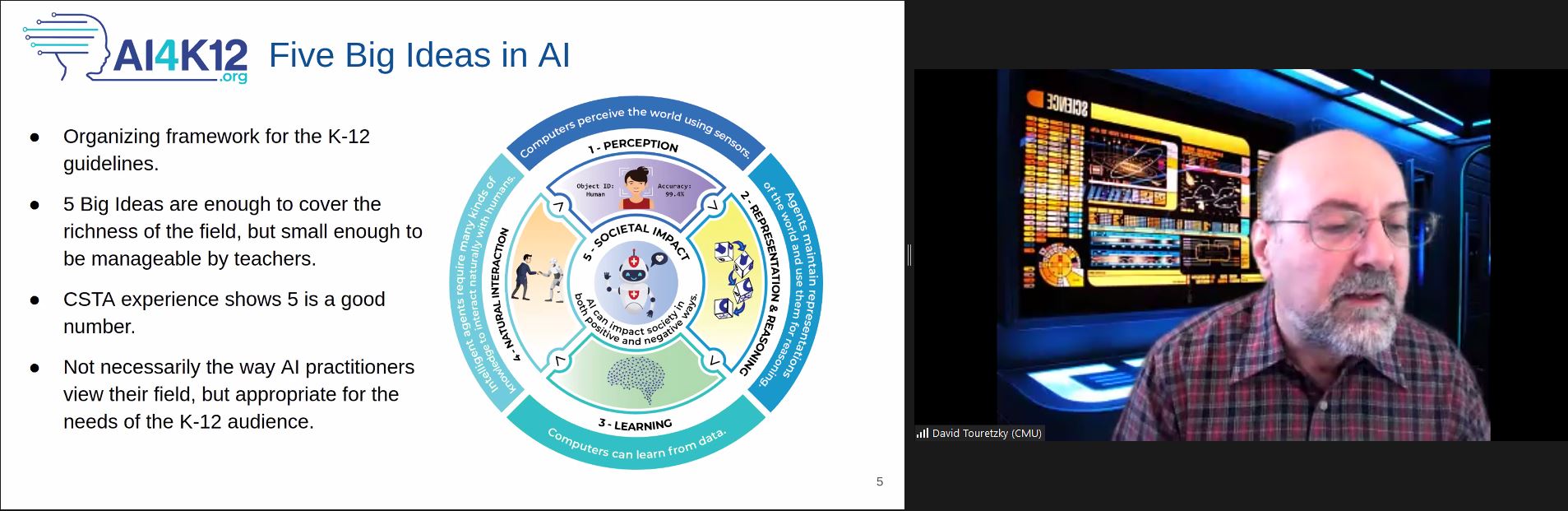
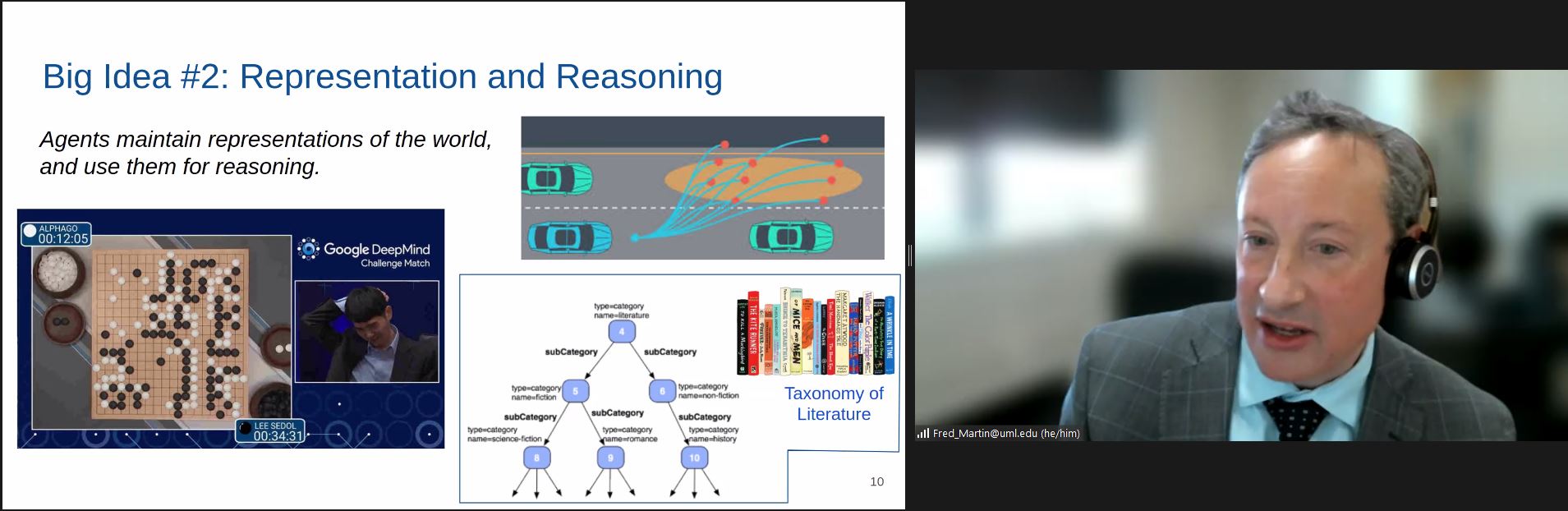
  • Tues 11 January: We’re delighted that Dr Dave Touretzky and Dr Fred Martin (Carnegie Mellon University and University of Massachusetts Lowell, respectively) from the AI4K12 Initiative in the USA will present some of the key insights into AI that the researchers hope children will acquire, and how they see K-12 AI education evolving over the next few years.
  • Tues 1 February: Speaker to be confirmed

How you can join our online seminars

All seminars start at 17:00 UK time (18:00 Central European Time, 12 noon Eastern Time, 9:00 Pacific Time) and take place in an online format, with a presentation, breakout discussion groups, and a whole-group Q&A.

Sign up now and we’ll send you the link to join on the day of each seminar — don’t forget to put the dates in your diary!

In the meantime, you can explore some of our educational resources related to machine learning and data science:

The post Educating young people in AI, machine learning, and data science: new seminar series appeared first on Raspberry Pi.
Introducing the Raspberry Pi Computing Education Research Centre

Post Syndicated from Philip Colligan original https://www.raspberrypi.org/blog/raspberry-pi-computing-education-research-centre-university-of-cambridge/

I am delighted to announce the creation of the Raspberry Pi Computing Education Research Centre at the University of Cambridge.

University of Cambridge logo

With computers and digital technologies increasingly shaping all of our lives, it’s more important than ever that every young person, whatever their background or circumstances, has meaningful opportunities to learn about how computers work and how to create with them. That’s our mission at the Raspberry Pi Foundation.

Woman computing teacher and young female student at a laptop.
The Raspberry Pi Computing Education Research Centre will work with educators to translate its research into practice and effect positive change in learners’ lives.

Why research matters

Compared to subjects like mathematics, computing is a relatively new field and, while there are enduring principles and concepts, it’s a subject that’s changing all the time as the pace of innovation accelerates. If we’re honest, we just don’t know enough about what works in computing education, and there isn’t nearly enough investment in high-quality research.

Two teenagers sit at laptops in a computing classroom.
We need research to find the best ways of teaching young people how computers work and how to create with them.

That’s why research and evidence has always been a priority for the Raspberry Pi Foundation, from rigorously evaluating our own programmes and running structured experiments to test what works in areas like gender balance in computing, to providing a platform for the world’s best computing education researchers to share their findings through our seminar series. 

Through our research activities we hope to make a contribution to the field of computing education and, as an operating foundation working with tens of thousands of educators and millions of learners every year, we’re uniquely well-placed to translate that research into practice. You can read more about our research work here.

The Raspberry Pi Computing Education Research Centre 

The new Research Centre is a joint initiative between the University of Cambridge and the Raspberry Pi Foundation, and builds on our longstanding partnership with the Department of Computer Science and Technology. That partnership goes all the way back to 2008, to the creation of the Raspberry Pi Foundation and the invention of the Raspberry Pi computer. More recently, we have collaborated on Isaac Computer Science, an online platform that is already being used by more than 2500 teachers and 36,000 students of A level Computer Science in England, and that we will shortly expand to cover GCSE content.

Woman computing teacher and female students at a computer.
Computers and digital technologies shape our lives and society — how do we make sure young people have the skills to use them to solve problems?

Through the Raspberry Pi Computing Education Research Centre, we want to increase understanding of what works in teaching and learning computing, with a particular focus on young people who come from backgrounds that are traditionally underrepresented in the field of computing or who experience educational disadvantage.

The Research Centre will combine expertise from both institutions, undertaking rigorous original research and working directly with teachers and other educators to translate that research into practice and effect positive change in young peoples’ lives.

The scope will be computing education — the teaching and learning of computing, computer science, digital making, and wider digital skills — for school-aged young people in primary and secondary education, colleges, and non-formal settings.

We’re starting with three broad themes: 

  • Computing curricula, pedagogy, and assessment, including teacher professional development and the learning and teaching process
  • The role of non-formal learning in computing and digital making learning, including self-directed learning and extra-curricular programmes
  • Understanding and removing the barriers to computing education, including the factors that stand in the way of young people’s engagement and progression in computing education

While we’re based in the UK and expect to run a number of research projects here, we are eager to establish collaborations with universities and researchers in other countries, including the USA and India. 

Get involved

We’re really excited about this next chapter in our research work, and doubly excited to be working with the brilliant team at the Department of Computer Science and Technology. 

If you’d like to find out more or get involved in supporting the new Computing Education Research Centre, please subscribe to our research newsletter or email [email protected].

You can also join our free monthly research seminars.

The post Introducing the Raspberry Pi Computing Education Research Centre appeared first on Raspberry Pi.
The digital divide: interactions between socioeconomic disadvantage and computing education

Post Syndicated from Sue Sentance original https://www.raspberrypi.org/blog/digital-divide-socioeconomic-disadvantage-computing-education/

Digital technology is developing at pace, impacting us all. Most of us use screens and all kinds of computers much more than we did five years ago. The total number of apps downloaded globally each quarter has doubled since 2015, reflecting both increased smartphone penetration and the increasingly prominent role of apps in our lives. However, access to digital technology and the internet is not yet equal: there is still a ‘digital divide’, i.e. some people do not have as much access to digital technologies as others, if any at all.

This month we welcomed Dr Hayley Leonard and Thom Kunkeler at our research seminar series, to present findings on ‘Why the digital divide does not stop at access: understanding the complex interactions between socioeconomic disadvantage and computing education’. Both Hayley and Thom work as researchers at the Raspberry Pi Foundation, where we have a focus on increasing our understanding of computing education for all. They shared some results of a research project they’d carried out with a group of young people who benefitted from our Learn at Home campaign.

Digital inequality: beyond the dichotomy of access

Hayley introduced some of the existing research and thinking around digital inequality, and Thom presented the results of their research project. Setting the scene, Hayley explained that the term ‘digital divide’ can create a dichotomous have/have-not view of the world, as can the concept of a ‘gap’. However, the research presents a more nuanced picture. Rather than describing digital inequality as purely centred on access to technology, some researchers characterise three levels of the digital divide:

  • Level 1: Access
  • Level 2: Skills (digital skills, internet skills) and uses (what you do once you have access)
  • Level 3: Outcomes (what you achieve)

This characterisation is useful because it enables us to look beyond access and also towards what happens once people have access to technology. This is where our Learn At Home campaign came in.

The presenters gave a brief overview of the impact of the campaign, in which the Raspberry Pi Foundation has partnered with 80 youth and community organisations and to date, thanks to generous donors, has given 5100 Raspberry Pi desktop computer kits (including monitors, headphones, etc.) to young people in the UK who didn’t have the resources to buy their own computers.

Hayley Leonard presents an online slide describing the interview responses of recipients of Raspberry Pi desktop computer kits, which revolved around five themes: ease of homework completion; connecting with others; having their own device; new opportunities for learning; improved understanding of schoolwork.
Click on the image to enlarge it. Learn more in the first Learn at Home campaign impact report.

Computing, identity, and self-efficacy

As part of the Learn At Home campaign, Hayley and Thom conducted a pilot study of how young people from underserved communities feel about computing and their own digital skills. They interviewed and analysed responses of fifteen young people, who had received hardware through Learn At Home, about computing as a subject, their confidence with computing, stereotypes, and their future aspirations.

Thom Kunkeler presents an online slide describing the background and research question of the 'Learn at Home campaign' pilot study: underrepresentation, belonging, identity, archetypes, and the question "How do young people from underserved communities feel about computing and their own digital skills?".
Click on the image to enlarge it.

The notion of a ‘computer person’ was used in the interview questions, following work conducted by Billy Wong at the University of Reading, which found that young people experienced a difference between being a ‘computer person’ and ‘doing computing’. The study carried out by Hayley and Thom largely supports this finding. Thom described two major themes that emerged from their analysis: a mismatch between computing and interviewees’ own identities, and low self-indicated self-efficacy.

Showing that stereotypes still persist of what a ‘computer person’ is like, a 13-year-old female interviewee described them as “a bit smart. Very, very logical, because computers are very logical. Things like smart, clever, intelligent because computers are quite hard.” Four of the interviewees were also more likely to associate a ‘computer person’ with being male.

Thom Kunkeler presents an online slide of findings of the 'Learn at Home campaign' pilot study. The young people interviewed associated the term 'computing person' with the attributes smart, clever, intelligent, nerdy/geeky, problem-solving ability.
The young people interviewed associated a ‘computing person’ with the following characteristics: smart, clever, intelligent, nerdy/geeky, problem-solving ability. Click on the image to enlarge it.

The majority of the young people in the study said that they could be this ’computer person’. Even for those who did not see themselves working with computers in the future, being a ’computer person’ was still a possibility: One interviewee said, “I feel like maybe I’m quite good at using a computer. I know my way around. Yes, you never know. I could be, eventually.”

Five of the young people indicated relatively low self-efficacy in computing, and thought there were more barriers to becoming a computer person, for example needing to be better at mathematics. 

In terms of future career goals, only two (White male) participants in the study considered computing as a career, with one (White female) interviewee understanding that choosing computing as a qualification might be important for her future career. This aligns with research into computer science (CS) qualification choice at age 14 in England, explored in a previous seminar, which highlighted the interaction between income, gender, and ethnicity: White girls from lower-income families were more likely to choose a CS qualification than White girls more from more affluent families, while very few Asian, Black, and Chinese girls from low-income backgrounds chose a CS qualification.

Evaluating computing education opportunities using the CAPE framework

An interesting aspect of this seminar was how Hayley and Thom situated their work in the relatively new CAPE framework, which describes different levels at which to evaluate computer science education opportunities. The CAPE framework highlights that capacity and access to computing (C and A in the framework) are only part of the challenge of making computer science education equitable; students’ participation (P) in and experience (E) of computing are key factors in keeping them engaged longer-term.

A diagram illustrating the CAPE framework for assessing computing education opportunities according to four aspects. 1, capacity, which relates to availability of resources. 2, access, which relates to whether learners have the opportunity to engage in the subject. 3, participation, which relates to whether learners choose to engage with the subject. 4, experience, which relates to what the outcome of learners' participation is.
Socioeconomic status (SES) can affect learner engagement with computing education at four levels set out in the CAPE framework.

As we develop computing education in the curriculum, we can use the CAPE framework to evaluate our provision. For example, where I’m writing from in England, we have the capacity to teach computing through the availability of professional development training for teachers, fully developed curriculum materials such as the Teach Computing Curriculum, and community support for teachers through organisations such as Computing at School and the National Centre for Computing Education. In terms of access we have an established national curriculum in the subject, but access to it has been interrupted for many due to the coronavirus pandemic. In terms of participation we know that gender and economic status can impact whether young people choose computer science as an elective subject post-14, and taking an intersectional view reveals that the issue of participation is more complex than that. Finally, according to our seminar speakers, young people’s experience of computing education can be impacted by their digital or technological capital, by their self-efficacy, and by the relevance of the subject to their career aspirations and goals. This analysis really enhances our understanding of digital inequality, as it moves us away from the have/have-not language of the digital divide and starts to unpack the complexity of the impacting factors. 

Although this was not covered in this month’s seminar, I also want to draw out that the CAPE framework also supports our understanding of global computing education: we may need to focus on capacity building in order to create a foundation for the other levels. Lots to think about! 

If you’d like to find out more about this project, you can read the paper that relates to the research and the impact report of the early phases of the Learn At Home initiative

If you missed the seminar, you can find the presentation slides on our seminars page and watch the recording of the researchers’ talk:

Join our next seminar

The next seminar will be the final one in the current series focused diversity and inclusion, which we’re co-hosting with the Royal Academy of Engineering. It will take place on Tuesday 13 July at 17:00–18:30 BST / 12:00–13:30 EDT / 9:00–10:30 PDT / 18:00–19:30 CEST, and we’ll welcome Prof Ron Eglash, a prominent researcher in the area of ethnocomputing. The title of Ron’s seminar is Computing for generative justice: decolonizing the circular economy.

To join this free event, click below and sign up with your name and email address:

We’ll email you the link and instructions. See you there!

This was our 17th research seminar — you can find all the related blog posts here, and download the first volume of our seminar proceedings with contributions from previous guest speakers.

The post The digital divide: interactions between socioeconomic disadvantage and computing education appeared first on Raspberry Pi.

Universal design for learning in computing | Hello World #15

Post Syndicated from Hayley Leonard original https://www.raspberrypi.org/blog/universal-design-for-learning-in-computing-hello-world-15/

In our brand-new issue of Hello World magazine, Hayley Leonard from our team gives a primer on how computing educators can apply the Universal Design for Learning framework in their lessons.

Cover of issue 15 of Hello World magazine

Universal Design for Learning (UDL) is a framework for considering how tools and resources can be used to reduce barriers and support all learners. Based on findings from neuroscience, it has been developed over the last 30 years by the Center for Applied Special Technology (CAST), a nonprofit education research and development organisation based in the US. UDL is currently used across the globe, with research showing it can be an efficient approach for designing flexible learning environments and accessible content.

A computing classroom populated by students with diverse genders and ethnicities

Engaging a wider range of learners is an important issue in computer science, which is often not chosen as an optional subject by girls and those from some minority ethnic groups. Researchers at the Creative Technology Research Lab in the US have been investigating how UDL principles can be applied to computer science, to improve learning and engagement for all students. They have adapted the UDL guidelines to a computer science education context and begun to explore how teachers use the framework in their own practice. The hope is that understanding and adapting how the subject is taught could help to increase the representation of all groups in computing.

The UDL guidelines help educators anticipate barriers to learning and plan activities to overcome them.

A scientific approach

The UDL framework is based on neuroscientific evidence which highlights how different areas or networks in the brain work together to process information during learning. Importantly, there is variation across individuals in how each of these networks functions and how they interact with each other. This means that a traditional approach to teaching, in which a main task is differentiated for certain students with special educational needs, may miss out on the variation in learning between all students across different tasks.

A stylised representation of the human brain
The UDL framework is based on neuroscientific evidence

The UDL guidelines highlight different opportunities to take learner differences into account when planning lessons. The framework is structured according to three main principles, which are directly related to three networks in the brain that play a central role in learning. It encourages educators to plan multiple, flexible methods of engagement in learning (affective networks), representation of the teaching materials (recognition networks), and opportunities for action and expression of what has been learnt (strategic networks).

The three principles of UDL are each expanded into guidelines and checkpoints that allow educators to identify the different methods of engagement, representation, and expression to be used in a particular lesson. Each principle is also broken down into activities that allow learners to access the learning goals, remain engaged and build on their learning, and begin to internalise the approaches to learning so that they are empowered for the future.

Examples of UDL guidelines for computer science education from the Creative Technology Research Lab

Multiple means of engagement Multiple means of representation Multiple means of
action and expression
Provide options for recruiting interests
* Give students choice (software, project, topic)
* Allow students to make projects relevant to culture and age
Provide options for perception
* Model computing through physical representations as well as through interactive whiteboard/videos etc.
* Select coding apps and websites that allow adjustment of visual settings (e.g. font size/contrast) and that are compatible with screen readers
Provide options for physical action
* Include CS unplugged activities that show physical relationships of abstract computing concepts
* Use assistive technology, including a larger or smaller mouse or touchscreen devices
Provide options for sustaining effort and persistence
* Utilise pair programming and group work with clearly defined roles
* Discuss the integral role of perseverance and problem-solving in computer science
Provide options for language, mathematical expressions, and symbols
* Teach and review computing vocabulary (e.g. code, animations, algorithms)
* Provide reference sheets with images of blocks, or with common syntax when using text
Provide options for expression and communication
* Provide sentence starters or checklists for communicating in order to collaborate, give feedback, and explain work
* Provide options that include starter code
Provide options for self-regulation
* Break up coding activities with opportunities for reflection, such as ‘turn and talk’ or written questions
* Model different strategies for dealing with frustration appropriately
Provide options for comprehension
* Encourage students to ask questions as comprehension checkpoints
* Use relevant analogies and make cross-curricular connections explicit
Provide options for executive function
* Embed prompts to stop and plan, test, or debug throughout a lesson or project
* Demonstrate debugging with think-alouds

Each principle of the UDL framework is associated with three areas of activity which may be considered when planning lessons or units of work. It will not be the case that each area of activity should be covered in every lesson, and some may prove more important in particular contexts than others. The full table and explanation can be found on the Creative Technology Research Lab website at ctrl.education.ufl.edu/projects/tactic.

Applying UDL to computer science education

While an advantage of UDL is that the principles can be applied across different subjects, it is important to think carefully about what activities to address these principles could look like in the case of computer science.

Maya Israel
Researcher Maya Israel will speak at our April seminar

Researchers at the Creative Technology Research Lab, led by Maya Israel, have identified key activities, some of which are presented in the table on the previous page. These guidelines will help educators anticipate potential barriers to learning and plan activities that can overcome them, or adapt activities from those in existing schemes of work, to help engage the widest possible range of students in the lesson.

UDL in the classroom

As well as suggesting approaches to applying UDL to computer science education, the research team at the Creative Technology Research Lab has also investigated how teachers are using UDL in practice. Israel and colleagues worked with four novice computer science teachers in US elementary schools to train them in the use of UDL and understand how they applied the framework in their teaching.

Smiling learners in a computing classroom

The research found that the teachers were most likely to include in their teaching multiple means of engagement, followed by multiple methods of representation. For example, they all offered choice in their students’ activities and provided materials in different formats (such as oral and visual presentations and demonstrations). They were less likely to provide multiple means of action and expression, and mainly addressed this principle through supporting students in planning work and checking their progress against their goals.

Although the study included only four teachers, it highlighted the flexibility of the UDL approach in catering for different needs within variable teaching contexts. More research will be needed in future, with larger samples, to understand how successful the approach is in helping a wide range of students to achieve good learning outcomes.

Find out more about using UDL

There are numerous resources designed to help teachers learn more about the UDL framework and how to apply it to teaching computing. The CAST website (helloworld.cc/cast) includes an explainer video and the detailed UDL guidelines. The Creative Technology Research Lab website has computing-specific ideas and lesson plans using UDL (helloworld.cc/udl).

Maya Israel will be presenting her research at our computing education research seminar series, on 20 April 2021. Our seminars are free to attend and open to anyone from anywhere around the world. Find out more about the current seminar series, which focuses on diversity and inclusion, and sign up to attend for free.

Further reading

The post Universal design for learning in computing | Hello World #15 appeared first on Raspberry Pi.

What does equity-focused teaching mean in computer science education?

Post Syndicated from Sue Sentance original https://www.raspberrypi.org/blog/equity-focused-teaching-in-computer-science-education/

Today, I discuss the second research seminar in our series of six free online research seminars focused on diversity and inclusion in computing education, where we host researchers from the UK and USA together with the Royal Academy of Engineering. By diversity, we mean any dimension that can be used to differentiate groups and people from one another. This might be, for example, age, gender, socio-economic status, disability, ethnicity, religion, nationality, or sexuality. The aim of inclusion is to embrace all people irrespective of difference. 

In this seminar, we were delighted to hear from Prof Tia Madkins (University of Texas at Austin), Dr Nicol R. Howard (University of Redlands), and Shomari Jones (Bellevue School District) (find their bios here), who talked to us about culturally responsive pedagogy and equity-focused teaching in K-12 Computer Science.

Equity-focused computer science teaching

Tia began the seminar with an audience-engaging task: she asked all participants to share their own definition of equity in the seminar chat. Amongst their many suggestions were “giving everybody the same opportunity”, “equal opportunity to access high-quality education”, and “everyone has access to the same resources”. I found Shomari’s own definition of equity very powerful: 

“Equity is the fair treatment, access, opportunity, and advancement of all people, while at the same time striving to identify and eliminate barriers that have prevented the full participation of some groups. Improving equity involves increasing justice and fairness within the procedures and processes of institutions or systems, as well as the distribution of resources. Tackling equity requires an understanding of the root cause of outcome disparity within our society.”

Shomari Jones

This definition is drawn directly from the young people Shomari works with, and it goes beyond access and opportunity to the notion of increasing justice and fairness and addressing the causes of outcome disparity. Justice was a theme throughout the seminar, with all speakers referring to the way that their work looks at equity in computer science education through a justice-oriented lens.

Removing deficit thinking

Using a justice-oriented approach means that learners should be encouraged to use their computer science knowledge to make a difference in areas that are important to them. It means that just having access to a computer science education is not sufficient for equity.

Tia Madkins presents a slide: "A justice-oriented approach to computer science teaching empowers students to use CS knowledge for transformation, moves beyond access and achievement frames, and is an asset- or strengths-based approach centering students and families"

Tia spoke about the need to reject “deficit thinking” (i.e. focusing on what learners lack) and instead focus on learners’ strengths or assets and how they bring these to the school classroom. For researchers and teachers to do this, we need to be aware of our own mindset and perspective, to think about what we value about ethnic and racial identities, and to be willing to reflect and take feedback.

Activities to support computer science teaching

Nicol talked about some of the ways of designing computing lessons to be equity-focused. She highlighted the benefits of pair programming and other peer pedagogies, where students teach and learn from each other through feedback and sharing ideas/completed work. She suggested using a variety of different programs and environments, to ensure a range of different pathways to understanding. Teachers and schools can aim to base teaching around tools that are open and accessible and, where possible, available in many languages. If the software environment and tasks are accessible, they open the doors of opportunity to enable students to move on to more advanced materials. To demonstrate to learners that computer science is applicable across domains, the topic can also be introduced in the context of mathematics and other subjects.

Nicol Howard presents a slide: "Considerations for equity-focused computer science teaching include your beliefs (and your students' beliefs) and how they impact CS classrooms; tiered activities and pair programming; self-expressions versus CS preparation; equity-focused lens"

Learners can benefit from learning computer science regardless of whether they want to become a computer scientist. Computing offers them skills that they can use for self-expression or to be creative in other areas of their life. They can use their knowledge for a specific purpose and to become more autonomous, particularly if their teacher does not have any deficit thinking. In addition, culturally relevant teaching in the classroom demonstrates a teacher’s deliberate and explicit acknowledgment that they value all students in their classroom and expect students to excel.

Engaging family and community

Shomari talked about the importance of working with parents and families of ethnically diverse students in order to hear their voices and learn from their experiences.

Shomari Jones presents a slide: “Parents without backgrounds and insights into the changing landscape of technology struggle to negotiate what roles they can play, such as how to work together in computing activities or how to find learning opportunities for their children.”

He described how the absence of a background in technology of parents and carers can drastically impact the experiences of young people.

“Parents without backgrounds and insights into the changing landscape of technology struggle to negotiate what roles they can play, such as how to work together in computing activities or how to find learning opportunities for their children.”

Betsy DiSalvo, Cecili Reid, and Parisa Khanipour Roshan. 2014

Shomari drew on an example from the Pacific Northwest in the US, a region with many successful technology companies. In this location, young people from wealthy white and Asian communities can engage fully in informal learning of computer science and can have aspirations to enter technology-related fields, whereas amongst the Black and Latino communities, there are significant barriers to any form of engagement with technology. This already existent inequity has been enhanced by the coronavirus pandemic: once so much of education moved online, it became widely apparent that many families had never owned, or even used, a computer. Shomari highlighted the importance of working with pre-service teachers to support them in understanding the necessity of family and community engagement.

Building classroom communities

Building a classroom community starts by fostering and maintaining relationships with students, families, and their communities. Our speakers emphasised how important it is to understand the lives of learners and their situations. Through this understanding, learning experiences can be designed that connect with the learners’ lived experiences and cultural practices. In addition, by tapping into what matters most to learners, teachers can inspire them to be change agents in their communities. Tia gave the example of learning to code or learning to build an app, which provides learners with practical tools they can use for projects they care about, and with skills to create artefacts that challenge and document injustices they see happening in their communities.

Find out more

If you want to learn more about this topic, a great place to start is the recent paper Tia and Nicol have co-authored that lays out more detail on the work described in the seminar: Engaging Equity Pedagogies in Computer Science Learning Environments, by Tia C. Madkins, Nicol R. Howard and Natalie Freed, 2020.

You can access the presentation slides via our seminars page.

Join our next free seminar

In our next seminar on Tuesday 2 March at 17:00–18:30 BST / 12:00–13:30 EDT / 9:00–10:30 PDT / 18:00–19:30 CEST, we’ll welcome Jakita O. Thomas (Auburn University), who is going to talk to us about Designing STEM Learning Environments to Support Computational Algorithmic Thinking and Black Girls: A Possibility Model for Changing Hegemonic Narratives and Disrupting STEM Neoliberal Projects. To join this free online seminar, simply sign up with your name and email address.

Once you’ve signed up, we’ll email you the seminar meeting link and instructions for joining. If you attended Peter’s and Billy’s seminar, the link remains the same.

The post What does equity-focused teaching mean in computer science education? appeared first on Raspberry Pi.

Computing education and underrepresentation: the data from England

Post Syndicated from Sue Sentance original https://www.raspberrypi.org/blog/computing-education-underrepresentation-data-england-schools/

In this blog post, I’ll discuss the first research seminar in our six-part series about diversity and inclusion. Let’s start by defining our terms. Diversity is any dimension that can be used to differentiate groups and people from one another. This might be, for example, age, gender, socio-economic status, disability, ethnicity, religion, nationality, or sexuality. The aim of inclusion is to embrace all people irrespective of difference.

It’s vital that we are inclusive in computing education, because we need to ensure that everyone can access and learn the empowering and enabling technical skills they need to support all aspects of their lives.

One male and two female teenagers at a computer

Between January and June of this year, we’re partnering with the Royal Academy of Engineering to host speakers from the UK and USA for a series of six research seminars focused on diversity and inclusion in computing education.

We kicked off the series with a seminar from Dr Peter Kemp and Dr Billy Wong focused on computing education in England’s schools post-14. Peter is a Lecturer in Computing Education at King’s College London, where he leads on initial teacher education in computing. His research areas are digital creativity and digital equity. Billy is an Associate Professor at the Institute of Education, University of Reading. His areas of research are educational identities and inequalities, especially in the context of higher education and STEM education.

Computing in England’s schools

Peter began the seminar with a comprehensive look at the history of curriculum change in Computing in England. This was very useful given our very international audience for these seminars, and I will summarise it below. (If you’d like more detail, you can look over the slides from the seminar. Note that these changes refer to England only, as education in the UK is devolved, and England, Northern Ireland, Scotland, and Wales each has a different education system.)

In 2014, England switched from mandatory ICT (Information and Communication Technology) to mandatory Computing (encompassing information technology, computer science, and digital literacy). This shift was complemented by a change in the qualifications for students aged 14–16 and 16–18, where the primary qualifications are GCSEs and A levels respectively:

  • At GCSE, there has been a transition from GCSE ICT to GCSE Computer Science over the last five years, with GCSE ICT being discontinued in 2017
  • At A level before 2014, ICT and Computing were on offer as two separate A levels; now there is only one, A level Computer Science

One of the issues is that in the English education system, there is a narrowing of the curriculum at age 14: students have to choose between Computer Science and other subjects such as Geography, History, Religious Studies, Drama, Music, etc. This means that those students that choose not to take a GCSE Computer Science (CS) may find that their digital education is thereby curtailed from then onwards. Peter’s and Billy’s view is that having a more specialist subject offer for age 14+ (Computer Science as opposed to ICT) means that fewer students take it, and they showed evidence of this from qualifications data. The number of students taking CS at GCSE has risen considerably since its introduction, but it’s not yet at the level of GCSE ICT uptake.

GCSE computer science and equity

Only 64% of schools in England offer GCSE Computer Science, meaning that just 81% of students have the opportunity to take the subject (some schools also add selection criteria). A higher percentage (90%) of selective grammar schools offer GCSE CS than do comprehensive schools (80%) or independent schools (39%). Peter suggested that this was making Computer Science a “little more elitist” as a subject.

Peter analysed data from England’s National Pupil Database (NPD) to thoroughly investigate the uptake of Computer Science post-14 with respect to the diversity of entrants.

He found that the gender gap for GCSE CS uptake is greater than it was for GCSE ICT. Now girls make up 22% of the cohort for GCSE CS (2020 data), whereas for the ICT qualification (2017 data), 43% of students were female.

Peter’s analysis showed that there is also a lower representation of black students and of students from socio-economically disadvantaged backgrounds in the cohort for GCSE CS. In contrast, students with Chinese ancestry are proportionally more highly represented in the cohort. 

Another part of Peter’s analysis related gender data to the Income Deprivation Affecting Children Index (IDACI), which is used as an indicator of the level of poverty in England’s local authority districts. In the graphs below, a higher IDACI decile means more deprivation in an area. Relating gender data of GCSE CS uptake against the IDACI shows that:

  • Girls from more deprived areas are more likely to take up GCSE CS than girls from less deprived areas are
  • The opposite is true for boys
Two bar charts relating gender data of GCSE uptake against the Income Deprivation Affecting Children Index. The graph plotting GCSE ICT data shows that students from areas with higher deprivation are slightly more likely to choose the GCSE, irrespective of gender. The graph plotting GCSE Computer Science data shows that girls from more deprived areas are more likely to take up GCSE CS than girls from less deprived areas, and the opposite is true for boys.

Peter covered much more data in the seminar, so do watch the video recording (below) if you want to learn more.

Peter’s analysis shows a lack of equity (i.e. equality of outcome in the form of proportional representation) in uptake of GCSE CS after age 14. It is also important to recognise, however, that England does mandate — not simply provide or offer — Computing for all pupils at both primary and secondary levels; making a subject mandatory is the only way to ensure that we do give access to all pupils.

What can we do about the lack of equity?

Billy presented some of the potential reasons for why some groups of young people are not fully represented in GCSE Computer Science:

  • There are many stereotypes surrounding the image of ‘the computer scientist’, and young people may not be able to identify with the perception they hold of ‘the computer scientist’
  • There is inequality in access to resources, as indicated by the research on science and STEM capital being carried out within the ASPIRES project

More research is needed to understand the subject choices young people make and their reasons for choosing as they do.

We also need to look at how the way we teach Computing to students aged 11 to 14 (and younger) affects whether they choose CS as a post-14 subject. Our next seminar revolves around equity-focused teaching practices, such as culturally relevant pedagogy or culturally responsive teaching, and how educators can use them in their CS learning environments. 

Meanwhile, our own research project at the Raspberry Pi Foundation, Gender Balance in Computing, investigates particular approaches in school and non-formal learning and how they can impact on gender balance in Computer Science. For an overview of recent research around barriers to gender balance in school computing, look back on the research seminar by Katharine Childs from our team.

Peter and Billy themselves have recently been successful in obtaining funding for a research project to explore female computing performance and subject choice in English schools, a project they will be starting soon!

If you missed the seminar, watch recording here. You can also find Peter and Billy’s presentation slides on our seminars page.

Next up in our seminar series

In our next research seminar on Tuesday 2 February at 17:00–18:30 BST / 12:00–13:30 EDT / 9:00–10:30 PDT / 18:00–19:30 CEST, we’ll welcome Prof Tia Madkins (University of Texas at Austin), Dr Nicol R. Howard (University of Redlands), and Shomari Jones (Bellevue School District), who are going to talk to us about culturally responsive pedagogy and equity-focused teaching in K-12 Computer Science. To join this free online seminar, simply sign up with your name and email address.

Once you’ve signed up, we’ll email you the seminar meeting link and instructions for joining. If you attended Peter’s and Billy’s seminar, the link remains the same.

The post Computing education and underrepresentation: the data from England appeared first on Raspberry Pi.

Learning at home with the Raspberry Pi Foundation

Post Syndicated from Philip Colligan original https://www.raspberrypi.org/blog/learning-at-home-with-the-raspberry-pi-foundation/

As the UK — like many countries around the world — kicks off the new year with another national lockdown, meaning that millions of young people are unable to attend school, I want to share an update on how the Raspberry Pi Foundation is helping young people to learn at home.

Please help us spread the word to teachers, school leaders, governors, parents, and carers. Everything we are offering here is 100% free and the more people know about it, the more young people will benefit.

A girl and mother doing a homeschooling lesson at a laptop

Supporting teachers and pupils 

Schools and teachers all over the world have been doing a heroic job over the past ten months, managing the transition to emergency remote teaching during the first round of lockdowns, supporting the most vulnerable pupils, dealing with uncertainty, changing the way that schools worked to welcome pupils back safely, helping pupils catch up with lost learning, and much, much more.

Both in my role as Chief Executive of the Raspberry Pi Foundation and as chair of governors at a state school here in Cambridge, I’ve seen first-hand the immense pressure that schools and teachers are under. I’ve also seen them display the most amazing resilience, commitment, and innovation. I want to say a huge thank you to all teachers and school staff for everything you’ve done and continue to do to help young people through this crisis. 

Here’s some of the resources and tools that we’ve created to help you continue to deliver a world-class computing education: 

  • The Teach Computing Curriculum is a comprehensive set of lesson plans for KS1–4 (learners aged 5–16) as well as homework, progression mapping, and assessment materials.
  • Working with the fabulous Oak National Academy, we’ve produced 100 hours of video for 300 video lessons based on the Teach Computing Curriculum.
  • Isaac Computer Science is our online learning platform for advanced computer science (A level, learners aged 16–18) and includes comprehensive, interactive materials and videos. It also allows you to set your learners self-marking questions. 

All of these resources are mapped to the English computing curriculum and produced as part of the National Centre for Computing Education. They are available for everyone, anywhere in the world, for free. 

Making something fun with code

Parents and carers are the other heroes of remote learning during lockdown. I know from personal experience that juggling work and supporting home learning can be really tough, and we’re all trying to find meaningful, fun alternatives to letting our kids binge YouTube or Netflix (other video platforms and streaming services are available).

That’s why we’ve been working really hard to provide parents and carers with easy, accessible ways for you to help your young digital makers to get creative with technology:

A Coolest Projects participant

Getting computers into the hands of young people who need them 

One of the harsh lessons we learned last year was that far too many young people don’t have a computer for learning at home. There has always been a digital divide; the pandemic has just put it centre-stage. The good news is that the cost of solving this problem is now trivial compared to the cost of allowing it to persist.

That’s why the Raspberry Pi Foundation has teamed up with UK Youth and a network of grassroots youth and community organisations to get computers into the hands of disadvantaged young people across the UK.

A young person receives a Raspberry Pi kit to learn at home

For under £200 we can provide a vulnerable child with everything they need to learn at home, including a Raspberry Pi desktop computer, a monitor, a webcam, free educational software, and ongoing support from a local youth worker and the Foundation team. So far, we have managed to get 2000 Raspberry Pi computers into the hands of the most vulnerable young people in the UK. A drop in the ocean compared to the size of the problem, but a huge impact for every single young person and family.

This has only been possible thanks to the generous support of individuals, foundations, and businesses that have donated to support our work. If you’d like to get involved too, you can find out more here.

The post Learning at home with the Raspberry Pi Foundation appeared first on Raspberry Pi.

Block-based programming: does it help students learn?

Post Syndicated from Sue Sentance original https://www.raspberrypi.org/blog/block-based-programming-does-it-help-students-learn-research-seminar/

At the Raspberry Pi Foundation, we are continually inspired by young learners in our community: they embrace digital making and computing to build creative projects, supported by our resources, clubs, and volunteers. While creating their projects, they are learning the core programming skills that underlie digital making.

Over the years, many tools and environments have been developed to make programming more accessible to young people. Scratch is one example of a block-based programming environment for young learners, and it’s been shown to make programming more accessible to them; on our projects site we offer many step-by-step Scratch project resources.

Mark Scratch
A Scratch code-along, led by one of our educators on our weekly Digital Making at Home live stream

But does block-based programming actually help learning? Does it increase motivation and support students? Where is the hard evidence? In our latest research seminar, we were delighted to hear from Dr David Weintrop, an Assistant Professor at the University of Maryland who has done research in this area for several years and published widely on the differences between block-based and text-based programming environments.

David Weintrop

A variety of block-based programming environments

The first useful insight David shared was that we should avoid thinking about block-based programming as synonymous with the well-known Scratch environment. There are several other environments, with different affordances, that David referred to in his talk, such as Snap, Pencil Code, Blockly, and more.

Logos of block-based programming environments

Some of these, for example Pencil Code, offer a dual-modality (or hybrid) environment, where learners can write the same program in a text-based and a block-based programming environment side by side. Dual-modality environments provide this side-by-side approach based on the assumption that being able to match a text-based program to its block-based equivalent supports the development of understanding of program syntax in a text-based language.

Screenshot of the Pencil Code dual-modality programming environment

As a tool for transitioning to text-based programming

Another aspect of the research around block-based programming focuses on its usefulness as a transition to a text-based language. David described a 15-week study he conducted in high schools in the USA to investigate differences in student learning caused by use of block-based, text-based, and hybrid (a mixture of both using a dual-modality platform) programming tools.

Details of the study design: classroom-based, 3 conditions, 2 phases, quasi-experimental mixed method study

The 90 students in the study (14 to 16 years old) were divided into three groups, each with a different intervention but taught by the same teacher. In the first phase of the study (5 weeks), the groups were set the same tasks with the same learning objectives, but they used either block-based programming, text-based programming, or the hybrid environment.

After 5 weeks, students were given a test to assess learning outcomes, and they were asked questions about their attitudes to programming (specifically their perception of computing and their confidence). In the second phase (10 weeks), all the students were taught Java (a common language taught in the USA for end-of-school assessment), and then the test and attitudinal questions were repeated.

The results showed that at the 5-week point, the students who had used block-based programming scored higher in their learning outcome assessment, but at the final assessment after 15 weeks, all groups’ scores were roughly equivalent.  

A graph of assessment scores of the three groups in the study. The final scores are not significantly different.

In terms of students’ perception of computing and confidence, the responses of the Blocks group were very positive at the 5-week point, while at the 15-week point, the responses were less positive. The responses from the Text group showed a gradual increase in positivity between the 5- and 15-week points. The Hybrid group’s responses weren’t as negative as those of the Text group at the 5-week point, and their positivity didn’t decrease like the Blocks group’s did.

Taking both methods of assessment into account, the Hybrid group showed the best results in the study. The gains associated with the block-based introduction to programming did not translate to those students being further ahead when learning Java, but starting with block-based programming also did not hamper students’ transition to text-based programming.

David completed his talk by recommending dual-modality environments (such as Pencil Code) for teaching programming, as used by the Hybrid group in his study. 

More research is needed

The seminar audience raised many questions about David’s study, for example whether the actual teaching (pedagogy) may have differed for the three groups, and whether the results are not just due to the specific tools or environments that were used. This is definitely an area for further research. 

It seems that students may benefit from different tools at different times, which is why a dual-modality environment can be very useful. Of course, competence in programming takes a long time to develop, so there is room on the research agenda for longitudinal studies that monitor students’ progress over many months and even years. Such studies could take into account both the teaching approach and the programming environment in order to determine what factors impact a deep understanding of programming concepts, and students’ desire to carry on with their programming journey. 

Next up in our series

If you missed the seminar, you can find David’s presentation slides and a recording of his talk on our seminars page.

Our next free online seminar takes place on Tuesday 5 January at 17:00–18:00 BST / 12:00–13:00 EDT / 9:00–10:00 PDT / 18:00–19:00 CEST. We’ll welcome Peter Kemp and Billy Wong, who are going to share insights from their research on computing education for underrepresented groups. To join this free online seminar, simply sign up with your name and email address.

Once you’ve signed up, we’ll email you the seminar meeting link and instructions for joining. If you attended David’s seminar, the link remains the same.

The January seminar will be the first one in our series focusing on diversity and inclusion in computing education, which we’re co-hosting with the Royal Academy for Engineering. We hope to see you there!

The post Block-based programming: does it help students learn? appeared first on Raspberry Pi.

Diversity and inclusion in computing education — new research seminars

Post Syndicated from Sue Sentance original https://www.raspberrypi.org/blog/diversity-inclusion-computing-education-research-seminars/

At the Raspberry Pi Foundation, we host a free online research seminar once a month to explore a wide variety of topics in the area of digital and computing education. This year, we’ve hosted eleven seminars — you can (re)discover slides and recordings on our website.

A classroom of young learners and a teacher at laptops

Now we’re getting ready for new seminars in 2021! In the coming months, our seminars are going to focus on diversity and inclusion in computing education. This topic is extremely important, as we want to make sure that computing is accessible to all, that we understand how to actively remove barriers to participation for learners, and that we understand how to teach computing in an inclusive way. 

We are delighted to announce that these seminars focusing on diversity and inclusion will be co-hosted by the Royal Academy of Engineering. The Royal Academy of Engineering is harnessing the power of engineering to build a sustainable society and an inclusive economy that works for everyone.

Royal Academy of Engineering logo

We’re very excited to be partnering with the Academy because of our shared interest in ensuring that computing and engineering are inclusive and accessible to all.

Our upcoming seminars

The seminars take place on the first Tuesday of the month at 17:00–18:30 GMT / 12:00–13:30 EST / 9:00–10:30 PST / 18:00–19:30 CET.

  • 5 January 2021: Peter Kemp (King’s College London) and Billy Wong (University of Reading) will be looking at computing education in England, particularly GCSE computer science, and how it is accessed by groups typically underrepresented in computing.
  • 2 February 2021: Professor Tia Madkins (University of Texas at Austin), Nicol R. Howard (University of Redlands), and Shomari Jones (Bellevue School District) will be talking about equity-focused teaching in K–12 computer science. Find out more.
  • 2 March 2021: Dr Jakita O. Thomas (Auburn University, Alabama) will be talking about her research on supporting computational algorithmic thinking in the context of intersectional computing.
  • April 2021: event to be confirmed
  • 4 May 2021: Dr Cecily Morrison (Microsoft Research) will be speaking about her work on physical programming for people with visual impairments.

Join the seminars

We’d love to welcome you to these seminars so we can learn and discuss together. To get access, simply sign up with your name and email address.

Once you’ve signed up, we’ll email you the seminar meeting link and instructions for joining. If you attended our seminars in the past, the link remains the same.

The post Diversity and inclusion in computing education — new research seminars appeared first on Raspberry Pi.
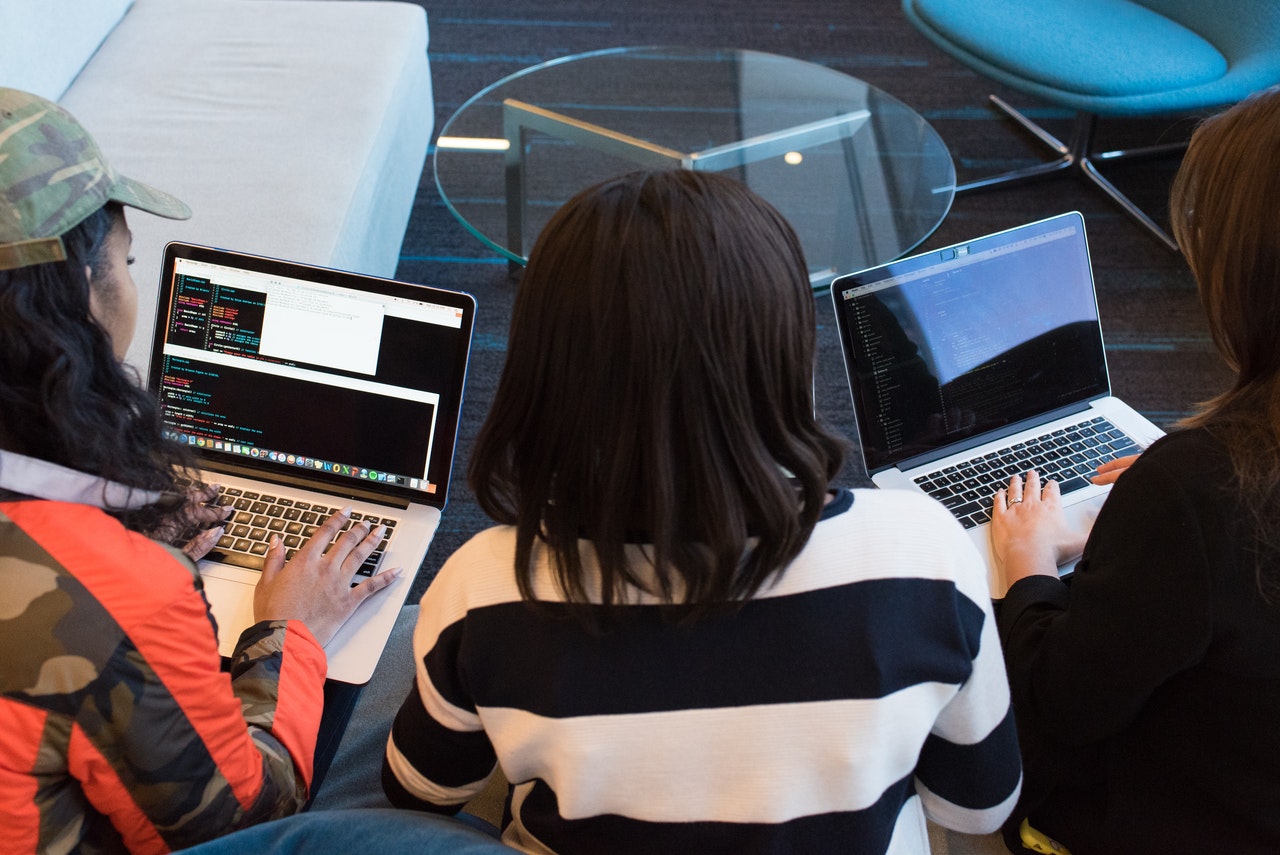
PRIMM: encouraging talk in programming lessons

Post Syndicated from Oliver Quinlan original https://www.raspberrypi.org/blog/primm-talk-in-programming-lessons-research-seminar/

Whenever you learn a new subject or skill, at some point you need to pick up the particular language that goes with that domain. And the only way to really feel comfortable with this language is to practice using it. It’s exactly the same when learning programming.

A girl doing Scratch coding in a Code Club classroom

In our latest research seminar, we focused on how we educators and our students can talk about programming. The seminar presentation was given by our Chief Learning Officer, Dr Sue Sentance. She shared the work she and her collaborators have done to develop a research-based approach to teaching programming called PRIMM, and to work with teachers to investigate the effects of PRIMM on students.

Sue Sentance

As well as providing a structure for programming lessons, Sue’s research on PRIMM helps us think about ways in which learners can investigate programs, start to understand how they work, and then gradually develop the language to talk about them themselves.

Productive talk for education

Sue began by taking us through the rich history of educational research into language and dialogue. This work has been heavily developed in science and mathematics education, as well as language and literacy.

In particular the work of Neil Mercer and colleagues has shown that students need guidance to develop and practice using language to reason, and that developing high-quality language improves understanding. The role of the teacher in this language development is vital.

Sue’s work draws on these insights to consider how language can be used to develop understanding in programming.

Why is programming challenging for beginners?

Sue identified shortcomings of some teaching approaches that are common in the computing classroom but may not be suitable for all beginners.

  • ‘Copy code’ activities for learners take a long time, lead to dreaded syntax errors, and don’t necessarily build more understanding.
  • When teachers model the process of writing a program, this can be very helpful, but for beginners there may still be a huge jump from being able to follow the modeling to being able to write a program from scratch themselves.

PRIMM was designed by Sue and her collaborators as a language-first approach where students begin not by writing code, but by reading it.

What is PRIMM?

PRIMM stands for ‘Predict, Run, Investigate, Modify, Make’. In this approach, rather than copying code or writing programs from scratch, beginners instead start by focussing on reading working code.

In the Predict stage, the teacher provides learners with example code to read, discuss, and make output predictions about. Next, they run the code to see how the output compares to what they predicted. In the Investigate stage, the teacher sets activities for the learners to trace, annotate, explain, and talk about the code line by line, in order to help them understand what it does in detail.

In the seminar, Sue took us through a mini example of the stages of PRIMM where we predicted the output of Python Turtle code. You can follow along on the recording of the seminar to get the experience of what it feels like to work through this approach.

The impact of PRIMM on learning

The PRIMM approach is informed by research, and it is also the subject of research by Sue and her collaborators. They’ve conducted two studies to measure the effectiveness of PRIMM: an initial pilot, and a larger mixed-methods study with 13 teachers and 493 students with a control group.

The larger study used a pre and post test, and found that the group who experienced a PRIMM approach performed better on the tests than the control group. The researchers also collected a wealth of qualitative feedback from teachers. The feedback suggested that the approach can help students to develop a language to express their understanding of programming, and that there was much more productive peer conversation in the PRIMM lessons (sometimes this meant less talk, but at a more advanced level).

The PRIMM structure also gave some teachers a greater capacity to talk about the process of teaching programming. It facilitated the discussion of teaching ideas and learning approaches for the teachers, as well as developing language approaches that students used to learn programming concepts.

The research results suggest that learners taught using PRIMM appear to be developing the language skills to talk coherently about their programming. The effectiveness of PRIMM is also evidenced by the number of teachers who have taken up the approach, building in their own activities and in some cases remixing the PRIMM terminology to develop their own take on a language-first approach to teaching programming.

Future research will investigate in detail how PRIMM encourages productive talk in the classroom, and will link the approach to other work on semantic waves. (For more on semantic waves in computing education, see this seminar by Jane Waite and this symposium talk by Paul Curzon.)

Resources for educators who want to try PRIMM

If you would like to try out PRIMM with your learners, use our free support materials:

Join our next seminar

If you missed the seminar, you can find the presentation slides alongside the recording of Sue’s talk on our seminars page.

In our next seminar on Tuesday 1 December at 17:00–18:30 GMT / 12:00–13:30 EsT / 9:00–10:30 PT / 18:00–19:30 CEST. Dr David Weintrop from the University of Maryland will be presenting on the role of block-based programming in computer science education. To join, simply sign up with your name and email address.

Once you’ve signed up, we’ll email you the seminar meeting link and instructions for joining. If you attended this past seminar, the link remains the same.

The post PRIMM: encouraging talk in programming lessons appeared first on Raspberry Pi.

Why a great teacher can make all the difference

Post Syndicated from Dan Fisher original https://www.raspberrypi.org/blog/a-great-teacher-can-make-all-the-difference/

When we think back to our school days, we can all recall that one teacher who inspired us, believed in us, and made all the difference to how we approached a particular subject. It was someone we maybe took for granted at the time and so we only realised (much) later how amazing they were. 

I hope this post makes you think of a teacher or mentor who has made a key difference in your life!

Here computer science student Jonathan Alderson and our team’s Ben Garside talk to me about how Ben supported and inspired Jonathan in his computer science classroom.

Ben Garside and Jonathan Alderson holding physical and virtual chess games
The teacher: Ben Garside. The student: Jonathan Alderson.

Hi Jonathan! How did you get into computing?

Jonathan: My first memories of using a computer were playing 3D Pinball, Club Penguin, and old Disney games, so nothing productive there…or so I thought! I was always good at IT and Maths at school, and Computing seemed to be a cross between the two, so I thought it would be good.

Jonathan and Ben, can you remember your time working together? It’s been a while now! 

Jonathan: I met Mr Garside at the start of sixth form. Our school didn’t have a computer science course, so a few of us would walk between schools twice a week. Mr Garside really made me feel welcome in a place where I didn’t know anyone.

When learning computer science, it’s difficult to understand the importance of new concepts like recursion, classes, or linked lists when the examples are so small. Mr Garside’s teaching made me see the relevance of them and how they could fit into other projects; it’s easy to go a long time without using concepts because you don’t necessarily need them, even when it would make your life a lot easier.

Mr Garside really made me feel welcome in a place where I didn’t know anyone. […] Mr Garside’s teaching made me see the relevance of [new computer science concepts] and how they could fit into other projects.

Jonathan Alderson

Ben: It was a real pleasure to teach Jonathan. He stands out as being one of the most inquisitive students that I have taught. If something wasn’t clear to him, he’d certainly let me know and ask relevant questions so that he could fully understand. Jonathan was also constantly working on his own programming projects outside of lessons. During his A level, I remember him taking it upon himself to write a program that played chess. Each week he would demonstrate the progress he had made to the class. It was a perfect example of decomposition as he tackled the project in small sections and had a clear plan as to what he wanted to achieve. By the end of his project, not only did he have a program that played chess, but it was capable of playing against real online users including making the mouse clicks on the screen!

Moving from procedural to object-oriented programming (OOP) can be a sticking point for a lot of learners, and I remember Jonathan finding this difficult at first. I think what helped Jonathan in particular was getting him to understand that this wasn’t as new a concept as he first thought. OOP was just a different paradigm where he could still apply all of the coding structures that he was already confident in using.

That sounds like a very cool project. What other projects did you make, Jonathan? And how did Ben help you?

Jonathan: My final-year project, [a video game] called Vector Venture, ended up becoming quite a mammoth task! I didn’t really have a clue about organising large projects, what an IDE was, or you could split files apart. Mr Garside helped me spend enough time on the final report and get things finished. He was very supportive of me releasing the game and got me a chance to speak at the Python North East group, which was a great opportunity.

Ben: Vector Venture was a very ambitious project that Jonathan undertook, but I think by then he had learned a lot about how to tackle a project of that size from previous projects such as the chess program. The key to his success was that whilst he was learning, he was picking projects to undertake that he had a genuine interest in and enjoyed developing. I would also tell my A level students to pick as a project something that they will enjoy developing. Jonathan clearly enjoyed developing games, but I also had students who picked projects to develop programs that would solve problems. For example, one of my students developed a system that would take online bookings for food orders and manage table allocation for a local restaurant.

I would tell my A level students to pick as a project something that they will enjoy developing.

Ben Garside

I think that point about having fun while learning something challenging like programming is really important to highlight. So what are you doing now, Jonathan?

Jonathan: I have just completed my undergraduate degree at the University of Leeds (UoL) with a place on the Dean’s List and am staying to complete a Masters in High Performance Graphics. 

During my time at UoL, I’ve had three summer placements creating medical applications and new systems for the university. This helped me understand the social benefits of computer science; it was great to work on something that is now benefitting so many people. My dissertation was on music visualisation, mapping instrument attributes of a currently playing song to control parameters inside sharers on the GPU to produce reactive visualisations. I’ve just completed an OpenGL project to create procedural underwater scenes, with realistic lighting, reflections, and fish simulations. I’m now really looking forward to completing my Game Engine project for my masters and graduating.

Teachers are often brilliant at taking something complicated and presenting it in a clearer way. Are those moments of clarity part of what motivates you to teach, Ben? 

Ben: There are lots of things that excite me about teaching computer science. Before I worked for the Raspberry Pi Foundation, there was a phrase I heard Carrie Anne Philbin say when I attended a Picademy: we are teaching young people to be digital makers, logical thinkers, and problem solvers, not just to be consumers of technology. I felt this really summed up how great it is to teach our subject. Teaching computer science means that we’re educating young people about the world around them and how technology plays its part in their lives. By doing this, we are empowering them to solve problems and to make educated choices about how they use technology.

Teaching computer science means that we’re educating young people about the world around them and how technology plays its part in their lives.

Ben Garside

As for my previous in-school experiences, I loved those lightbulb moments when something suddenly made sense to a student and a loud “Yesssss!” would break the silence of a quietly focused classroom. I loved teaching something that regularly sparked their imaginations; give them a single lesson on programming, and they would start to ask questions like: “Now I’ve made it do that…does this mean I could make it do this next?“. It wasn’t uncommon for students to want to do more outside of the classroom that wasn’t a homework activity. That, for me, was the ultimate win! 

How about you?

Who was the teacher who helped shape your future when you were at school? Tell us about them in the comments below.

The post Why a great teacher can make all the difference appeared first on Raspberry Pi.
Sue Sentance recognised with Suffrage Science award

Post Syndicated from Janina Ander original https://www.raspberrypi.org/blog/sue-sentance-suffrage-science-award/

We’re pleased to share that Dr Sue Sentance, our Chief Learning Officer, is receiving a Suffrage Science award for Mathematics and Computing today.

Sue Sentance

The Suffrage Science award scheme celebrates women in science. Sue is being recognised for her achievements in computer science and computing education research, and for her work promoting computing to the next generation.

Sue is an experienced teacher and teacher educator with an academic background in artificial intelligence, computer science, and education. She has made a substantial contribution to research in computing education in school over the last ten years, publishing widely on the teaching of programming, teacher professional development, physical computing, and curriculum change. In 2017 Sue received the BERA Public Engagement and Impact Award for her services to computing education. Part of Sue’s role at the Raspberry Pi Foundation is leading our Gender Balance in Computing research programme, which investigates ways to increase the number of girls and young women taking up computing at school level.

Suffrage Science Maths and Computing Brooch and Bangle
The awards are jewellery inspired by computing, mathematics, and the Suffragette movement

As Dr Hannah Dee, the previous award recipient who nominated Sue, says: “[…] The work she does is important — researchers need to look at what happens in schools, particularly when we consider gender. Girls are put off computing long before they get to universities, and an understanding of how children learn about computing and the ways in which we can support girls in tech is going to be vital to reverse this trend.”

Sue says, “I’m delighted and honoured that Hannah nominated me for this award, and to share this honour with other women also dedicated to furthering the fields of mathematics, computing, life sciences, and engineering. It’s been great to see research around computing in school start to gather pace (and also rigour) around the world over the last few years, and to play a part in that. There is still so much to do — many countries have now introduced computing or computer science into their school curricula as a mandatory subject, and we need to understand better how to make the subject fully accessible to all, and to inspire and motivate the next generation.”

A girl doing Scratch coding in a Code Club classroom

Aside from her role in the Gender Balance in Computing research programme, Sue has led our work as part of the consortium behind the National Centre for Computing Education and is now our senior adviser on computing subject knowledge, pedagogy, and the Foundation’s computing education research projects. Sue also leads the programme of our ongoing computing education research seminar series, where academics and educators from all over the world come together online to hear about and discuss some of the latest work in the field. 

We are currently inviting primary and secondary schools in England to take part in the Gender Balance in Computing project.

Congratulations from all your colleagues at the Foundation, Sue!

The post Sue Sentance recognised with Suffrage Science award appeared first on Raspberry Pi.
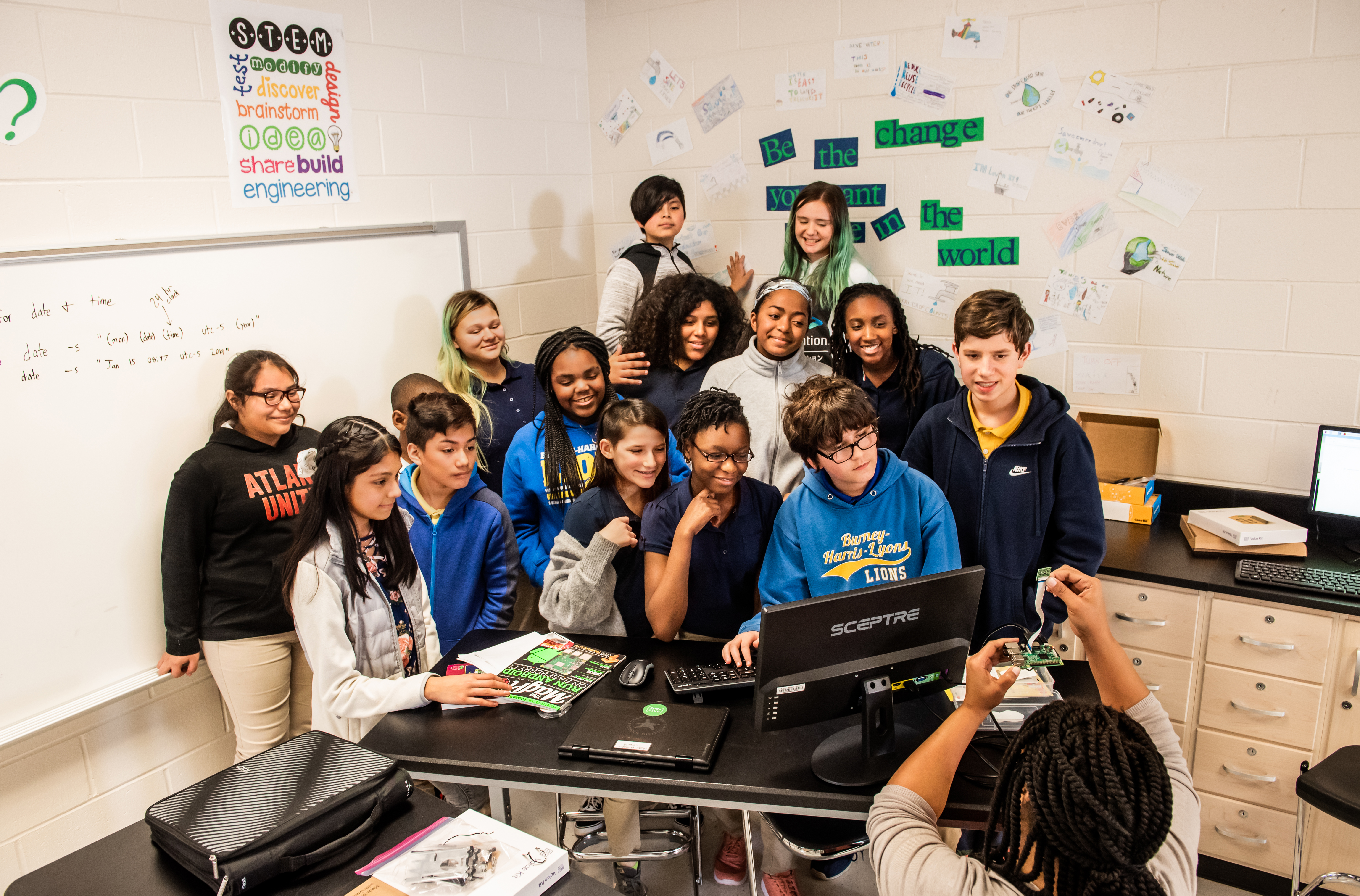
Formative assessment in the computer science classroom

Post Syndicated from Sue Sentance original https://www.raspberrypi.org/blog/research-seminar-formative-assessment-computer-science-classroom/

In computing education research, considerable focus has been put on the design of teaching materials and learning resources, and investigating how young people learn computing concepts. But there has been less focus on assessment, particularly assessment for learning, which is called formative assessment. As classroom teachers are engaged in assessment activities all the time, it’s pretty strange that researchers in the area of computing and computer science in school have not put a lot of focus on this.

Shuchi Grover

That’s why in our most recent seminar, we were delighted to hear about formative assessment — assessment for learning — from Dr Shuchi Grover, of Looking Glass Ventures and Stanford University in the USA. Shuchi has a long track record of work in the learning sciences (called education research in the UK), and her contribution in the area of computational thinking has been hugely influential and widely drawn on in subsequent research.

Two types of assessment

Assessment is typically divided into two types:

  1. Summative assessment (i.e. assessing what has been learned), which typically takes place through examinations, final coursework, projects, etcetera.
  2. Formative assessment (i.e. assessment for learning), which is not aimed at giving grades and typically takes place through questioning, observation, plenary classroom activities, and dialogue with students.

Through formative assessment, teachers seek to find out where students are at, in order to use that information both to direct their preparation for the next teaching activities and to give students useful feedback to help them progress. Formative assessment can be used to surface misconceptions (or alternate conceptions) and for diagnosis of student difficulties.

Venn diagram of how formative assessment practices intersect with teacher knowledge and skills
Click to enlarge

As Shuchi outlined in her talk, a variety of activities can be used for formative assessment, for example:

  • Self- and peer-assessment activities (commonly used in schools).
  • Different forms of questioning and quizzes to support learning (not graded tests).
  • Rubrics and self-explanations (for assessing projects).

A framework for formative assessment

Shuchi described her own research in this topic, including a framework she has developed for formative assessment. This comprises three pillars:

  1. Assessment design.
  2. Teacher or classroom practice.
  3. The role of the community in furthering assessment practice.
Shuchi Grover's framework for formative assessment
Click to enlarge

Shuchi’s presentation then focused on part of the first pillar in the framework: types of assessments, and particularly types of multiple-choice questions that can be automatically marked or graded using software tools. Tools obviously don’t replace teachers, but they can be really useful for providing timely and short-turnaround feedback for students.

As part of formative assessment, carefully chosen questions can also be used to reveal students’ misconceptions about the subject matter — these are called diagnostic questions. Shuchi discussed how in a classroom setting, teachers can employ this kind of question to help them decide what to focus on in future lessons, and to understand their students’ alternate or different conceptions of a topic. 

Formative assessment of programming skills

The remainder of the seminar focused on the formative assessment of programming skills. There are many ways of assessing developing programming skills (see Shuchi’s slides), including Parsons problems, microworlds, hotspot items, rubrics (for artifacts), and multiple-choice questions. As an MCQ example, in the figure below you can see some snippets of block-based code, which students need to read and work out what the outcome of running the snippets will be. 

Click to enlarge

Questions such as this highlight that it’s important for learners to engage in code comprehension and code reading activities when learning to program. This really underlines the fact that such assessment exercises can be used to support learning just as much as to monitor progress.

Formative assessment: our support for teachers

Interestingly, Shuchi commented that in her experience, teachers in the UK are more used to using code reading activities than US teachers. This may be because code comprehension activities are embedded into the curriculum materials and support for pedagogy, both of which the Raspberry Pi Foundation developed as part of the National Centre for Computing Education in England. We explicitly share approaches to teaching programming that incorporate code reading, for example the PRIMM approach. Moreover, our work in the Raspberry Pi Foundation includes the Isaac Computer Science online learning platform for A level computer science students and teachers, which is centered around different types of questions designed as tools for learning.

All these materials are freely available to teachers wherever they are based.

Further work on formative assessment

Based on her work in US classrooms researching this topic, Shuchi’s call to action for teachers was to pay attention to formative assessment in computer science classrooms and to investigate what useful tools can support them to give feedback to students about their learning. 

Advice from Shuchi Grover on how to embed formative assessment in classroom practice
Click to enlarge

Shuchi is currently involved in an NSF-funded research project called CS Assess to further develop formative assessment in computer science via a community of educators. For further reading, there are two chapters related to formative assessment in computer science classrooms in the recently published book Computer Science in K-12 edited by Shuchi.

There was much to take away from this seminar, and we are really grateful to Shuchi for her input and look forward to hearing more about her developing project.

Join our next seminar

If you missed the seminar, you can find the presentation slides and a recording of the Shuchi’s talk on our seminars page.

In our next seminar on Tuesday 3 November at 17:00–18:30 BST / 12:00–13:30 EDT / 9:00–10:30 PT / 18:00–19:30 CEST, I will be presenting my work on PRIMM, particularly focusing on language and talk in programming lessons. To join, simply sign up with your name and email address.

Once you’ve signed up, we’ll email you the seminar meeting link and instructions for joining. If you attended this past seminar, the link remains the same.

The post Formative assessment in the computer science classroom appeared first on Raspberry Pi.

Join the UK Bebras Challenge 2020 for schools!

Post Syndicated from Dan Fisher original https://www.raspberrypi.org/blog/join-uk-bebras-challenge-2020/

The annual UK Bebras Computational Thinking Challenge for schools, brought to you by the Raspberry Pi Foundation and Oxford University, is taking place this November!

UK Bebras Challenge logo

The Bebras Challenge is a great way for your students to practise their computational thinking skills while solving exciting, accessible, and puzzling questions. Usually this 40-minute challenge would take place in the classroom. However, this year for the first time, your students can participate from home too!

If your students haven’t entered before, now is a great opportunity for them to get involved: they don’t need any prior knowledge. 

Do you have any students who are up for tackling the Bebras Challenge? Then register your school today!

School pupils in a computing classroom

What you need to know about the Bebras Challenge

  • It’s a great whole-school activity open to students aged 6 to 18, in different age group categories.
  • It’s completely free!
  • The closing date for registering your school is 30 October.
  • Let your students complete the challenge between 2 and 13 November 2020.
  • The challenge is made of a set of short tasks, and completing it takes 40 minutes.
  • The challenge tasks focus on logical thinking and do not require any prior knowledge of computer science.
  • There are practice questions to help your students prepare for the challenge.
  • This year, students can take part at home (please note they must still be entered through their school).
  • All the marking is done for you! The results will be sent to you the week after the challenge ends, along with the answers, so that you can go through them with your students.

“Thank you for another super challenge. It’s one of the highlights of my year as a teacher. Really, really appreciate the high-quality materials, website, challenge, and communication. Thank you again!”

– A UK-based teacher

Support your students to develop their computational thinking skills with Bebras materials

Bebras is an international challenge that started in Lithuania in 2004 and has grown into an international event. The UK became involved in Bebras for the first time in 2013, and the number of participating students has increased from 21,000 in the first year to more than 260,000 last year! Internationally, nearly 3 million learners took part in 2019. 

Bebras is a great way to engage your students of all ages in problem-solving and give them a taste of what computing is all about. In the challenge results, computing principles are highlighted, so Bebras can be educational for you as a teacher too.

The annual Bebras Challenge is only one part of the equation: questions from previous years are available as a resource that you can use to create self-marking quizzes for your classes. You can use these materials throughout the year to help you to deliver the computational thinking part of your curriculum!

The post Join the UK Bebras Challenge 2020 for schools! appeared first on Raspberry Pi.
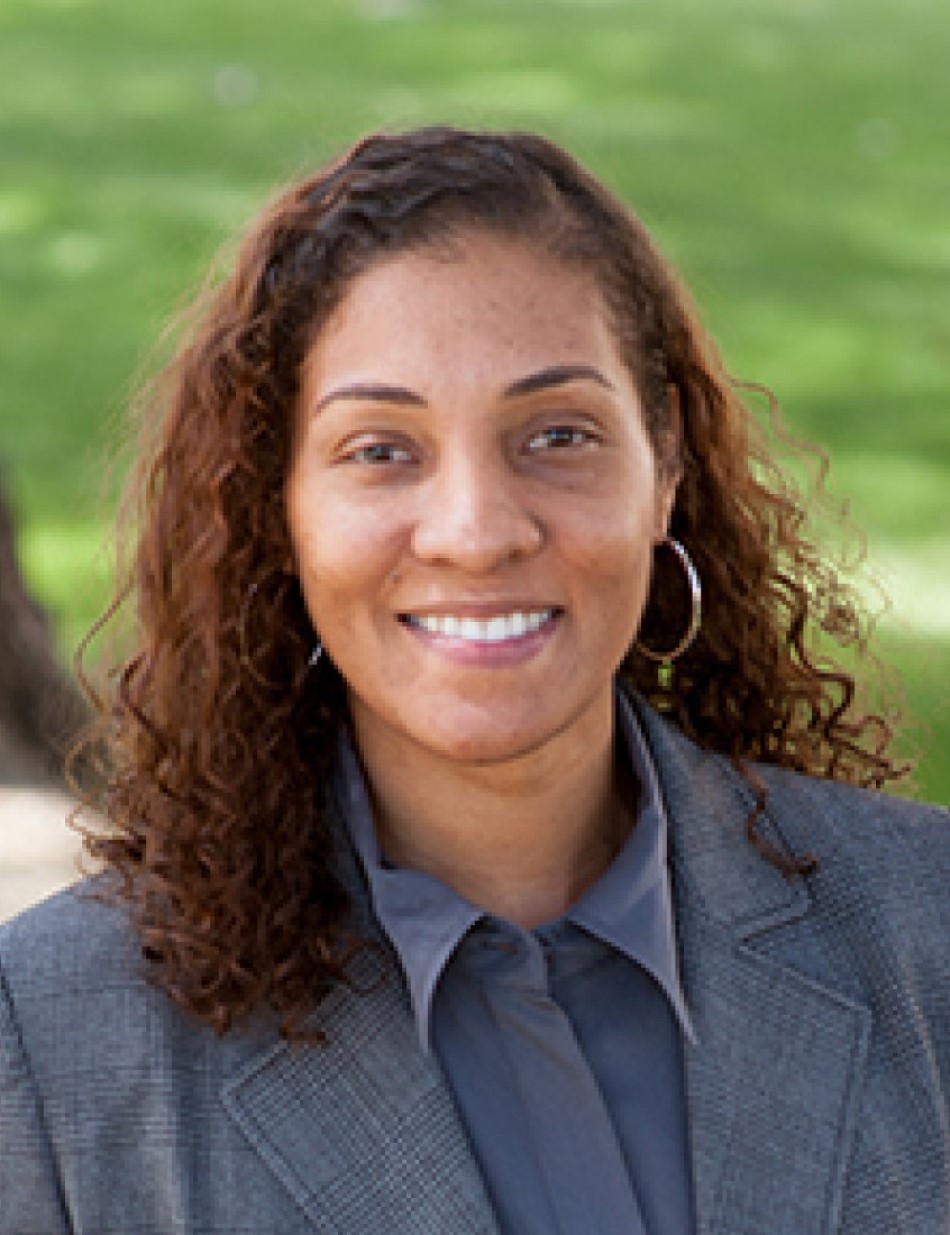
How teachers train in Computing with our free online courses

Post Syndicated from Michael Conterio original https://www.raspberrypi.org/blog/how-teachers-train-computing-free-online-courses/

Since 2017 we’ve been training Computing educators in England and around the world through our suite of free online courses on FutureLearn. Thanks to support from Google and the National Centre for Computing Education (NCCE), all of these courses are free for anyone to take, whether you are a teacher or not!

An illustration of a bootcamp for computing teachers

We’re excited that Computer Science educators at all stages in their computing journey have embraced our courses — from teachers just moving into the field to experienced educators looking for a refresher so that they can better support their colleagues.

Hear from two teachers about their experience of training with our courses and how they are benefitting!

Moving from Languages to IT to Computing

Rebecca Connell started out as a Modern Foreign Languages teacher, but now she is Head of Computing at The Cowplain School, a 11–16 secondary school in Hampshire.

Computing teacher Rebecca Connell
Computing teacher Rebecca finds our courses “really useful in building confidence and taking [her] skills further”.

Although she had plenty of experience with Microsoft Office and was happy teaching IT, at first she was daunted by the technical nature of Computing:

“The biggest challenge for me has been the move away from an IT to a Computing curriculum. To say this has been a steep learning curve is an understatement!”

However, Rebecca has worked with our courses to improve her coding knowledge, especially in Python:

“Initially, I undertook some one-day programming courses in Python. Recently, I have found the Raspberry Pi courses to be really useful in building confidence and taking my skills further. So far, I have completed Programming 101 — great for revision and teaching ideas — and am now into Programming 102.”

GCSE Computing is more than just programming, and our courses are helping Rebecca develop the rest of her Computing knowledge too:

“I am now taking some online Raspberry Pi courses on computer systems and networks to firm up my knowledge — my greatest fear is saying something that’s not strictly accurate! These courses have some good ideas to help explain complex concepts to students.”

She also highly rates the new free Teach Computing Curriculum resources we have developed for the NCCE:

“I really like the new resources and supporting materials from Raspberry Pi — these have really helped me to look again at our curriculum. They are easy to follow and include everything you need to take students forward, including lesson plans.”

And Rebecca’s not the only one in her department who is benefitting from our courses and resources:

“Our department is supported by an excellent PE teacher who delivers lessons in Years 7, 8, and 9. She has enjoyed completing some of the Raspberry Pi courses to help her to deliver the new curriculum and is also enjoying her learning journey.”

Refreshing and sharing your knowledge

Julie Price, a CAS Master Teacher and NCCE Computer Science Champion, has been “engaging with the NCCE’s Computer Science Accelerator programme, [to] be in a better position to appreciate and help to resolve any issues raised by fellow participants.”

Computing teacher Julie Price
Computer science teacher Julie Price says she is “becoming addicted” to our online courses!

“I have encountered new learning for myself and also expressions of very familiar content which I have found to be seriously impressive and, in some cases, just amazing. I must say that I am becoming addicted to the Raspberry Pi Foundation’s online courses!”

She’s been appreciating the open nature of the courses, as we make all of the materials free to use under the Open Government Licence:

“Already I have made very good use of a wide range of the videos, animations, images, and ideas from the Foundation’s courses.”

Julie particularly recommends the Programming Pedagogy in Secondary Schools: Inspiring Computing Teaching course, describing it as “a ‘must’ for anyone wishing to strengthen their key stage 3 programming curriculum.”

Join in and train with us

Rebecca and Julie are just 2 of more than 140,000 active participants we have had on our online courses so far!

With 29 courses to choose from (and more on the way!), from Introduction to Web Development to Robotics with Raspberry Pi, we have something for everyone — whether you’re a complete beginner or an experienced computer science teacher. All of our courses are free to take, so find one that inspires you, and let us support you on your computing journey, along with Google and the NCCE.

If you’re a teacher in England, you are eligible for free course certification from FutureLearn via the NCCE.

The post How teachers train in Computing with our free online courses appeared first on Raspberry Pi.

“Tinkering is an equity issue” | Hello World #14

Post Syndicated from Sian Williams Page original https://www.raspberrypi.org/blog/tinkering-is-an-equity-issue-shuchi-grover-hello-world-14/

In the brand-new issue of Hello World magazine, Shuchi Grover tells us about the limits of constructionism, the value of formative assessment, and why programming can be a source of both joy and angst.

How much open-ended exploration should there be in computing lessons?

This is a question at the heart of computer science education and one which Shuchi Grover is delicately diplomatic about in the preface to her new book, Computer Science in K-12: An A-to-Z Handbook on Teaching Programming. The book’s chapters are written by 40 teachers and researchers in computing pedagogy, and Grover openly acknowledges the varying views around discovery-based learning among her diverse range of international authors.

“I wonder if I want to wade there,” she laughs. “The act of creating a program is in itself an act of creation. So there is hands-on learning quite naturally in the computer science classroom, and mistakes are made quite naturally. There are some things that are so great about computer science education. It lends itself so easily to being hands-on and to celebrating mistakes; debugging is par for the course, and that’s not the way it is in other subjects. The kids can actually develop some very nice mindsets that they can take to other classrooms.”

Shuchi Grover showing children something on a laptop screen

Grover is a software engineer by training, turned researcher in computer science education. She holds a PhD in learning sciences and technology design from Stanford University, where she remains a visiting scholar. She explains how the beginning of her research career coincided with the advent of the block-based programming language Scratch, now widely used as an introductory programming language for children.

“Almost two decades ago, I went to Harvard to study for a master’s called technology innovation and education, and it was around that time that I volunteered for robotics workshops at the MIT Media Lab and MIT Museum. Those were pretty transformative for me: I started after-school clubs and facilitated robotics and digital storytelling clubs. In the early 2000s, I was an educational technology consultant, working with teachers on integrating technology. Then Scratch came out, and I started working with teachers on integrating Scratch into languages, arts, and science, all the things that we are doing today.”

A girl with her Scratch project
Student Joyce codes in Scratch at her Code Club in Nunavut

Do her formative experiences at MIT, the birthplace of constructionist theory of student-centred, discovery-based learning, lead her to lean one way or another in the tinkering versus direct instruction debate? “The learning in informal spaces is, of course, very interest-driven. There is no measurement. Children are invited to a space to spend some time after school and do whatever they feel like. There would be kids who would be chatting away while a couple of them designed a robot, and then they would hand over the robot to some others and say, ‘OK, now you go ahead and program it,’ and there were some kids who would just like to hang about.

“When it comes to formal education, there needs to be more accountability, you want to do right by every child. You have to be more intentional. I do feel that while tinkering and constructionism was a great way to introduce interest-driven projects for informal learning, and there’s a lot to learn from there and bring to the formal learning context, I don’t think it can only be tinkering.”

“There needs to be more accountability to do right by every child.”

“Everybody knows that engagement is very important for learning — and this is something that we are learning more about: it’s not just interest, it’s also culture, communities, and backgrounds — but all of this is to say that there is a personal element to the learning process and so engagement is necessary, but it’s not a sufficient condition. You have to go beyond engagement, to also make sure that they are also engaging with the concepts. You want at some point for students to engage with the concept in a way that reveals what their misconceptions might be, and then they end up learning and understanding these things more deeply.

“You want a robust foundation — after all, our goal for teaching children anything at school is to build a foundation on which they build their college education and career and anything beyond that. If we take programming as a skill, you want them to have a good understanding of it, and so the personal connections are important, but so is the scaffolding.

“How much scaffolding needs to be done varies from context to context. Even in the same classroom, children may need different levels of scaffolding. It’s a sweet spot; within a classroom a teacher has to juggle so much. And therein lies the challenge of teaching: 30 kids at a time, and every child is different and every child is unique.

“It’s an equity issue. Some children don’t have the prior experience that sets them up to tinker constructively. After all, tinkering is meant to be purposeful exploration. And so it becomes an issue of who are you privileging with the pedagogy.”

She points out that each chapter in her book that comes from a more constructionist viewpoint clearly speaks of the need for scaffolding. And conversely, the chapters that take a more structured approach to computing education include elements of student engagement and children creating their own programs. “Frameworks such as Use-Modify-Create and PRIMM just push that open-ended creation a little farther down, making sure that the initial experiences have more guide rails.”

Approaches to assessment

Grover is a senior research scientist at Looking Glass Ventures, which in 2018 received a National Science Foundation grant to create Edfinity, a tool to enable affordable access to high-quality assessments for schools and universities.

In her book, she argues that asking students to write programs as a means of formative assessment has several pitfalls. It is time-consuming for both students and teachers, scoring is subjective, and it’s difficult to get a picture of how much understanding a student has of their code. Did they get their program to work through trial and error? Did they lift code from another student?

“Formative assessments that give quick feedback are much better. They focus on aspects of the conceptual learning that you want children to have. Multiple-choice questions on code force both the teachers and the children to experience code reading and code comprehension, which are just so important. Just giving children a snippet of code and saying: ‘What does this do? What will be the value of the variable? How many times will this be executed?’ — it goes down to the idea of code tracing and program comprehension.

“Research has also shown that anything you do in a classroom, the children take as a signal. Going back to the constructionist thing, when you foreground personal interest, there’s a different kind of environment in the classroom, where they’re able to have a voice, they have agency. That’s one of the good things about constructionism.

“Formative assessment signals to the student what it is that you’re valuing in the learning process. They don’t always understand what it is that they’re expected to learn in programming. Is the goal creating a program that runs? Or is it something else? And so when you administer these little check-ins, they bring more alignment between a teacher’s goals for the learners and the learners’ understanding of those goals. That alignment is important and it can get lost.”

Grover will present her latest research into assessment at our research seminar series next Tuesday 6 October — sign up to attend and join the discussion.

The joy and angst of programming

The title of Grover’s book, which could be thought to imply that computer science education consists solely of teaching students to program, may cause some raised eyebrows.

What about building robots or devices that interact with the world, computing topics like binary, or the societal impacts of technology? “I completely agree with the statement and the belief that computer science is not just about programming. I myself have been a proponent of this. But in this book I wanted to focus on programming for a couple of reasons. Programming is a central part of the computer science curriculum, at least here in the US, and it is also the part that teachers struggle with the most.

“I want to show where children struggle and how to help them.”

“As topics go, programming carries a lot of joy and angst. There is joy in computing, joy when you get it. But when a teacher is encountering this topic for the first time there is a lot of angst, because they themselves may not be understanding things, and they don’t know what it is that the children are not understanding. And there is this entire body of research on novice programming. There are the concepts, the practices, the pedagogies, and the issues of assessment. So I wanted to give the teachers all of that: everything we know about children and programming, the topics to be learnt, where they struggle, how to help them.”

Computer Science in K-12: An A-to-Z Handbook on Teaching Programming (reviewed in this issue of Hello World) is edited by Shuchi Grover and available now.

Hear more from Shuchi Grover, and subscribe to Hello World

We will host Grover at our next research seminar, Tuesday 6 October at 17:00–18:30 BST, where she will present her work on formative assessment.

Hello World is our magazine about all things computing education. It is free to download in PDF format, or you can subscribe and we will send you each new issue straight to your home.

In issue 14 of Hello World, we have gathered some inspiring stories to help your learners connect with nature. From counting penguins in Antarctica to orienteering with a GPS twist, great things can happen when young people get creative with technology outdoors. You’ll find all this and more in the new issue!

Educators based in the UK can subscribe to receive print copies for free!

The post “Tinkering is an equity issue” | Hello World #14 appeared first on Raspberry Pi.
Embedding computational thinking skills in our learning resources

Post Syndicated from Oliver Quinlan original https://www.raspberrypi.org/blog/computational-thinking-skills-in-our-free-learning-resources/

Learning computing is fun, creative, and exploratory. It also involves understanding some powerful ideas about how computers work and gaining key skills for solving problems using computers. These ideas and skills are collected under the umbrella term ‘computational thinking’.

When we create our online learning projects for young people, we think as much about how to get across these powerful computational thinking concepts as we do about making the projects fun and engaging. To help us do this, we have put together a computational thinking framework, which you can read right now.

What is computational thinking? A brief summary

Computational thinking is a set of ideas and skills that people can use to design systems that can be run on a computer. In our view, computational thinking comprises:

  • Decomposition
  • Algorithms
  • Patterns and generalisations
  • Abstraction
  • Evaluation
  • Data

All of these aspects are underpinned by logical thinking, the foundation of computational thinking.

What does computational thinking look like in practice?

In principle, the processes a computer performs can also be carried out by people. (To demonstrate this, computing educators have created a lot of ‘unplugged’ activities in which learners enact processes like computers do.) However, when we implement processes so that they can be run on a computer, we benefit from the huge processing power that computers can marshall to do certain types of activities.

A group of young people and educators smiling while engaging with a computer

Computers need instructions that are designed in very particular ways. Computational thinking includes the set of skills we use to design instructions computers can carry out. This skill set represents the ways we can logically approach problem solving; as computers can only solve problems using logical processes, to write programs that run on a computer, we need to use logical thinking approaches. For example, writing a computer program often requires the task the program revolves around to be broken down into smaller tasks that a computer can work through sequentially or in parallel. This approach, called decomposition, can also help people to think more clearly about computing problems: breaking down a problem into its constituent parts helps us understand the problem better.

Male teacher and male students at a computer

Understanding computational thinking supports people to take advantage of the way computers work to solve problems. Computers can run processes repeatedly and at amazing speeds. They can perform repetitive tasks that take a long time, or they can monitor states until conditions are met before performing a task. While computers sometimes appear to make decisions, they can only select from a range of pre-defined options. Designing systems that involve repetition and selection is another way of using computational thinking in practice.

Our computational thinking framework

Our team has been thinking about our approach to computational thinking for some time, and we have just published the framework we have developed to help us with this. It sets out the key areas of computational thinking, and then breaks these down into themes and learning objectives, which we build into our online projects and learning resources.

To develop this computational thinking framework, we worked with a group of academics and educators to make sure it is robust and useful for teaching and learning. The framework was also influenced by work from organisations such as Computing At School (CAS) in the UK, and the Computer Science Teachers’ Association (CSTA) in the USA.

We’ve been using the computational thinking framework to help us make sure we are building opportunities to learn about computational thinking into our learning resources. This framework is a first iteration, which we will review and revise based on experience and feedback.

We’re always keen to hear feedback from you in the community about how we shape our learning resources, so do let us know what you think about them and the framework in the comments.

The post Embedding computational thinking skills in our learning resources appeared first on Raspberry Pi.
How is computing taught in schools around the world?

Post Syndicated from Sue Sentance original https://www.raspberrypi.org/blog/international-computing-curriculum-metrecc-research-seminar/

Around the world, formal education systems are bringing computing knowledge to learners. But what exactly is set down in different countries’ computing curricula, and what are classroom educators teaching? This was the topic of the first in the autumn series of our Raspberry Pi research seminars on Tuesday 8 September.
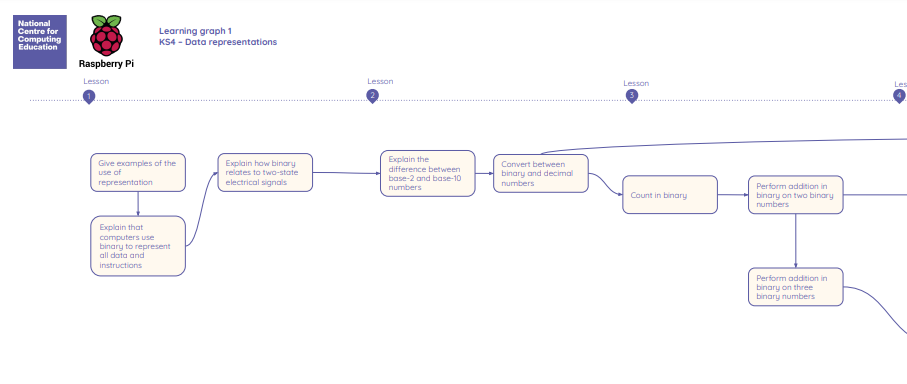
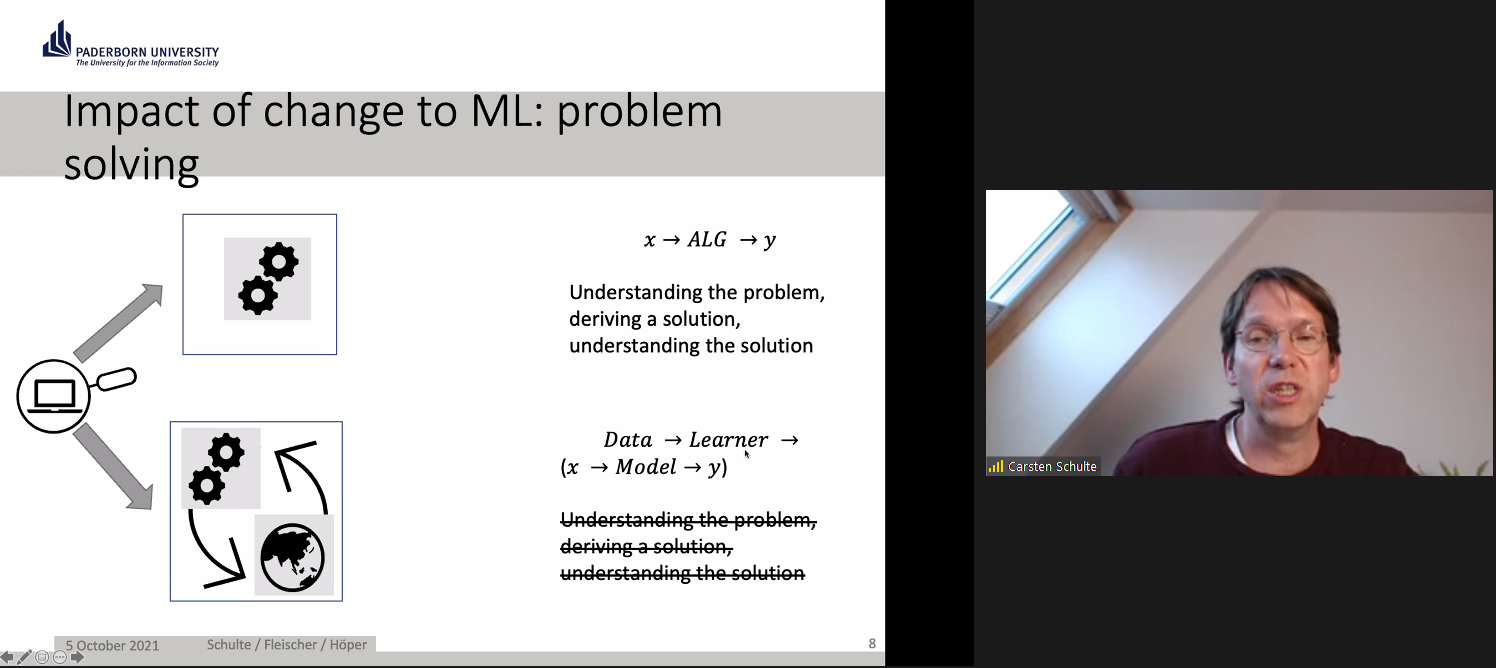
A glowing globe floating above an open hand in the dark

We heard from an international team (Monica McGill , USA; Rebecca Vivian, Australia; Elizabeth Cole, Scotland) who represented a group of researchers also based in England, Malta, Ireland, and Italy. As a researcher working at the Raspberry Pi Foundation, I myself was part of this research group. The group developed METRECC, a comprehensive and validated survey tool that can be used to benchmark and measure developments of the teaching and learning of computing in formal education systems around the world. Monica, Rebecca, and Elizabeth presented how the research group developed and validated the METRECC tool, and shared some findings from their pilot study.

What’s in a curriculum? Developing a survey tool

Those of us who work or have worked in school education use the word ‘curriculum’ frequently, although it’s an example of education terminology that means different things in different contexts, and to different people. Following Porter and Smithson (2001)1, we can distinguish between the intended curriculum and the enacted curriculum:

  • Intended curriculum: Policy tools as curriculum standards, frameworks, or guidelines that outline the curriculum teachers are expected to deliver.
  • Enacted curriculum: Actual curricular content in which students engage in the classroom, and adopted pedagogical approaches; for computer science (CS) curricula, this also includes students’ use of technology, physical computing devices, and tools in CS lessons.

To compare the intended and enacted computing curriculum in as many countries as possible, at particular points in time, the research group Monica, Rebecca, Elizabeth, and I were part of developed the METRECC survey tool.

A classroom of students in North America

METRECC stands for MEasuring TeacheREnacted Computing Curriculum. The METRECC survey has 11 categories of questions and is designed to be completed by computing teachers within 35–40 minutes. Following best practice in research, which calls for standardised research instruments, the research group ensured that the survey produces valid, reliable results (meaning that it works as intended) before using it to gather data.

Using METRECC in a pilot study

In their pilot study, the research group gathered data from 7 countries. The intended curriculum for each country was determined by examining standards and policies in place for each country/state under consideration. Teachers’ answers in the METRECC survey provided the countries’ enacted curricula. (The complete dataset from the pilot study is publicly available at csedresearch.org, a very useful site for CS education researchers where many surveys are shared.)

Two girls coding at a computer under supervision of a female teacher

The researchers then mapped the intended to the enacted curricula to find out whether teachers were actually teaching the topics that were prescribed for them. Overall, the results of the mapping showed that there was a good match between intended and enacted curricula. Examples of mismatches include lower numbers of primary school teachers reporting that they taught visual or symbolic programming, even though the topic did appear on their curriculum.

A table listing computer science topics
This table shows computer science topic the METRECC tool asks teachers about, and what percentage of respondents in the pilot study stated that they teach these to their students.

Another aspect of the METRECC survey allows to measure teachers’ confidence, self-efficacy, and self-esteem. The results of the pilot study showed a relationship between years of experience and CS self-esteem; in particular, after four years of teaching, teachers started to report high self-esteem in relation to computer science. Moreover, primary teachers reported significantly lower self-esteem than secondary teachers did, and female teachers reported lower self-esteem than male teachers did.

Adapting the survey’s language

The METRECC survey has also been used in South Asia, namely Bangladesh, Nepal, Pakistan, and Sri Lanka (where computing is taught under ICT). Amongst other things, what the researchers learned from that study was that some of the survey questions needed to be adapted to be relevant to these countries. For example, while in the UK we use the word ‘gifted’ to mean ‘high-attaining’, in the South Asian countries involved in the study, to be ‘gifted’ means having special needs.

Two girls coding at a computer under supervision of a female teacher

The study highlighted how important it is to ensure that surveys intended for an international audience use terminology and references that are pertinent to many countries, or that the survey language is adapted in order to make sense in each context it is delivered. 

Let’s keep this monitoring of computing education moving forward!

The seminar presentation was well received, and because we now hold our seminars for 90 minutes instead of an hour, we had more time for questions and answers.

My three main take-aways from the seminar were:

1. International collaboration is key

It is very valuable to be able to form international working groups of researchers collaborating on a common project; we have so much to learn from each other. Our Raspberry Pi research seminars attract educators and researchers from many different parts of the world, and we can truly push the field’s understanding forward when we listen to experiences and lessons of people from diverse contexts and cultures.

2. Making research data publicly available

Increasingly, it is expected that research datasets are made available in publicly accessible repositories. While this is becoming the norm in healthcare and scientific, it’s not yet as prevalent in computing education research. It was great to be able to publicly share the dataset from the METRECC pilot study, and we encourage other researchers in this field to do the same. 

3. Extending the global scope of this research

Finally, this work is only just beginning. Over the last decade, there has been an increasing move towards teaching aspects of computer science in school in many countries around the world, and being able to measure change and progress is important. Only a handful of countries were involved in the pilot study, and it would be great to see this research extend to more countries, with larger numbers of teachers involved, so that we can really understand the global picture of formal computing education. Budding research students, take heed!

Next up in our seminar series

If you missed the seminar, you can find the presentation slides and a recording of the researchers’ talk on our seminars page.

In our next seminar on Tuesday 6 October at 17:00–18:30 BST / 12:00–13:30 EDT / 9:00–10:30 PT / 18:00–19:30 CEST, we’ll welcome Shuchi Grover, a prominent researcher in the area of computational thinking and formative assessment. The title of Shuchi’s seminar is Assessments to improve student learning in introductory CS classrooms. To join, simply sign up with your name and email address.

Once you’ve signed up, we’ll email you the seminar meeting link and instructions for joining. If you attended this past seminar, the link remains the same.


1. Andrew C. Porter and John L. Smithson. 2001. Defining, Developing and Using Curriculum Indicators. CPRE Research Reports, 12-2001. (2001)

The post How is computing taught in schools around the world? appeared first on Raspberry Pi.