Post Syndicated from The Atlantic original https://www.youtube.com/watch?v=0f8DMyhUO4M
[$] Retrieving kernel attributes
Post Syndicated from original https://lwn.net/Articles/897420/
At the
2022 Linux Storage,
Filesystem, Memory-management and BPF Summit (LSFMM), Amir Goldstein
and Miklos Szeredi led a discussion on a new interface for extracting
information from kernel objects using the filesystem extended-attributes
(xattr) interface. Since Szeredi was not present in Palm Springs, he co-led
the session virtually over Zoom audio, which was the only
filesystem session with a virtual leader at LSFMM this year. Szeredi’s proposal
for an interface of that sort had been posted just the day before the session.
SambaXP talk videos posted
Post Syndicated from original https://lwn.net/Articles/897754/
The 2022 sambaXP conference was held
online at the beginning of June. Videos
of the talks given at that event have now been posted on YouTube.
Topics covered include Samba in containers, certificate auto-enrollment,
symlink races, and more.
Diving into GCC internals
Post Syndicated from original https://lwn.net/Articles/897750/
For those who would like to know more about how GCC works, David Malcolm
has enhanced his GCC
for new contributors guide with a
section on GCC internals. It includes a good overview of the various
GCC passes and the internal representations used to describe a program at
various stages.
How to secure an enterprise scale ACM Private CA hierarchy for automotive and manufacturing
Post Syndicated from Anthony Pasquariello original https://aws.amazon.com/blogs/security/how-to-secure-an-enterprise-scale-acm-private-ca-hierarchy-for-automotive-and-manufacturing/
In this post, we show how you can use the AWS Certificate Manager Private Certificate Authority (ACM Private CA) to help follow security best practices when you build a CA hierarchy. This blog post walks through certificate authority (CA) lifecycle management topics, including an architecture overview, centralized security, separation of duties, certificate issuance auditing, and certificate sharing by means of templates. These topics provide best practices surrounding your ACM Private CA hierarchy so that you can build the right CA hierarchy for your organization.
With ACM Private CA, you can create private certificate authority hierarchies, including root and subordinate CAs, without the upfront investment and ongoing maintenance costs of operating your own private CA. You can issue certificates for authenticating internal users, computers, applications, services, servers or other devices, and code signing.
This post includes the following Amazon Web Services (AWS) services:
- AWS Certificate Manager Private Certificate Authority (ACM Private CA)
- AWS Resource Access Manager (AWS RAM)
- AWS Identity and Access Management (IAM)
Solution overview
In this blog post, you’ll see an example automotive manufacturing company and their supplier companies. Each will have associated AWS accounts, which we will call Manufacturer Account(s) and Supplier Account(s), respectively.
Automotive manufacturing companies usually have modules that come from different suppliers. Modules, in the automotive context, are embedded systems that control electrical systems in the vehicle. These modules might be interconnected throughout the in-vehicle network or provide connectivity external to the vehicle, for example, for navigation or sending telemetry to off-board systems.
The architecture needs to allow the Manufacturer to retain control of their CA hierarchy, while giving their external Suppliers limited access to sign the certificates on these modules with the Manufacturer’s CA hierarchy. The architecture we provide here gives you the basic information you need to cover the following objectives:
- Creation of accounts that logically separate CAs in a hierarchy
- IAM role creation for specific personas to manage the CA lifecycle
- Auditing the CA hierarchy by using audit reports
- Cross-account sharing by using AWS RAM with certificate template scoping
Architecture overview
Figure 1 shows the solution architecture.

Figure 1: Multi-account certificate authority hierarchy using ACM Private CA
The Manufacturer has two categories of AWS accounts:
- A dedicated account to hold the Manufacturer’s root CA
- An account to hold their subordinate CA
Note: The diagram shows two subordinate CAs in the Manufacturer account. However, depending on your security needs, you can have a subordinate CA per account per supplier.
Additionally, each Supplier has one AWS account. These accounts will have the Manufacturer’s subordinate CA shared by using AWS RAM. The Manufacturer will have a subordinate CA for each Supplier.
Logically separate accounts
In order to minimize the scope of impact and scope users to actions within their duties, it’s critical that you logically separate AWS accounts based on workload within the CA hierarchy. The following section shows a recommendation for how to do that.
AWS account that holds the root CA
You, the Manufacturer, should place the ACM Private root CA within its own dedicated AWS account to segment and tightly control access to the root CA. This limits access at the account level and only uses the dedicated account for a single purpose: holding the root CA for your organization. This account will only have access from IAM principals that maintain the CA hierarchy through a federation service like AWS Single Sign-On (AWS SSO) or direct federation to IAM through an existing identity provider. This account also has AWS CloudTrail enabled and configured for business-specific alerting, including actions like creation, updating, or deletion of the root CA.
AWS account that holds the subordinate CAs
You, the Manufacturer, will have a dedicated account where the entire CA hierarchy below the root will be located. You should have a separate subordinate CA for each Supplier, and in some cases a separate subordinate CA for each hardware module the Supplier is building. The subordinate CAs can issue certificates for specific hardware modules within the Supplier account.
This Manufacturer account shares each subordinate CA to the respective Supplier’s AWS account by using AWS RAM. This provides joint control to the shared subordinate CA, creating isolation between individual Suppliers. AWS RAM allows Suppliers to control certificate issuance and revocation if this is allowed by the Manufacturer. Each Supplier is only shared certificate provisioning access through AWS RAM configuration, which means that you can tightly monitor and revoke access through AWS RAM. Given this sharing through AWS RAM, the Suppliers don’t have access to modify or delete the CA hierarchy itself and can only provision certificates from it.
Supplier AWS account(s)
These AWS accounts are owned by each respective Supplier. For example, you might partner with radio, navigation system, and telemetry suppliers. Each Supplier would have their own AWS account, which they control. The Supplier accepts an invitation from the manufacturer through AWS RAM, sharing the subordinate CA. The subordinate is allowed to take only certain actions, based on how the Manufacturer configured the share (more on this later in the post).
Separation of duties by means of IAM role creation
In order to follow least privilege best practices when you create a CA hierarchy with ACM Private CA, you must create IAM roles that are specific to each job function. The recommended method is to separate administrator and certificate issuer roles.
For this automotive manufacturing use case, we recommend the following roles:
- Manufacturer IAM roles:
- A CA admin role with CA disable permission
- A CA admin role with CA delete permission
- Supplier certificate issuer IAM role:
- Certificate issuing roles managed by attribute-based access control (ABAC) for developers
Manufacturer IAM role overview
In this flow, one IAM role is able to disable the CA, and a second principal can delete the CA. This enables two-person control for this highly privileged action—meaning that you need a two-person quorum to rotate the CA certificate.
Day-to-day CA admin policy (with CA disable)
Privileged CA admin policy (with CA delete)
We recommend that you, the Manufacturer, create a two-person process for highly privileged events like CA certificate rotation ceremonies. The preceding policies serve two purposes. First, they allow you to designate separation of management duties between day-to-day CA admin tasks and infrequent root CA rotation ceremonies. The day-to-day CA admin policy allows all ACM Private CA actions except the ability to delete the root CA. This is because the day-to-day CA admin should not be deleting the root CA. Meanwhile, the privileged CA admin policy has the ability to call DeleteCertificateAuthority. However, in order to call DeleteCertificateAuthority, you first need to have the day-to-day CA admin role disable the root CA.
This means that both roles listed here are necessary to perform a root CA deletion for a rotation or replacement ceremony. This arrangement creates a way to control the deletion of the CA resource by requiring two separate actors to disable and delete. It’s crucial that the two roles are assumed by two different people at the identity provider. Having one person assume both of these roles negates the increased security created by each role.
You might also consider enforcing tagging of CAs at the organization level so that each new CA has relevant tags. The blog post Securing resource tags used for authorization using a service control policy in AWS Organizations illustrates in detail how to secure tags using service control policies (SCPs), so that only authorized users can modify tags.
Supplier IAM role overview
Your Suppliers should also follow least privilege when creating IAM roles within their own accounts. However, as we’ll see in the Cross-account sharing by using AWS RAM section, even if the Suppliers don’t follow best practices, the Manufacturer’s ACM Private CA hierarchy is still isolated and secure.
That being said, here are common IAM roles that your Suppliers should create within their own accounts:
- Developers who provision certificates for development and QA workloads
- Developers who provision certificates for production
These certificate issuing roles give the Supplier the ability to issue end-entity certificates from the CA hierarchy. In this use case, the Supplier needs two different levels of permissions: non-production certificates and production certificates. To simplify the roles within IAM, the Supplier decided to use ABAC. These ABAC policies allow operations when the principal’s tag matches the resource tag. Because the Supplier has many similar policies, each with a different set of users, they use ABAC to create a single IAM policy that uses principal tags rather than creating multiple slightly different IAM policies.
Certificate issuing policy that uses ABAC
This single policy enables all personas to be scoped to least privilege access. If you look at the Condition portion of the IAM policy, you can see the power of ABAC. This condition verifies that the PrincipalTag matches the ResourceTag. The Supplier is federating into IAM roles through AWS SSO and tagging the Supplier’s principals within its selected identity providers.
Because you as the Manufacturer have tagged the subordinate CAs that are shared with the Supplier, the Supplier can use identity provider (IdP) attributes as tags to simplify the Supplier’s IAM strategy. In this example, the Supplier configures each relevant user in the IdP with the attribute (tag) key: access-team. This tag matches the tagging strategy used by the Manufacturer. Here’s the mapping for each persona within the use case:
- Dev environment:
- access-team: DevTeam
- Production environment:
- access-team: ProdTeam
You can choose to add or remove tags depending on your use case, and the preceding scenario serves as a simple example. This offloads the need to create new IAM policies as the number of subordinate CAs grow. If you decide to use ABAC, make sure that you require both principal tagging and resource tagging upon creation of each, because these tags become your authorization mechanism.
CA lifecycle: Audit report published by the Manufacturer
In terms of auditing and monitoring, we recommend that the Manufacturer have a mechanism to track how many certificates were issued for a specific Supplier or module. Within the Manufacturer accounts, you can generate audit reports through the console or CLI. This allows you, the manufacturer, to gather metrics on certificate issuance and revocation. Following is an example of a certificate issuance.

Figure 2: Audit report output for certificate issuance
For more information on generating an audit report, see Using audit reports with your private CA.
Cross-account sharing by using AWS RAM
With AWS RAM, you can share CAs with another account. We recommend that you, as a Manufacturer, use AWS RAM to share CAs with Suppliers so that they can issue certificates without administrator access to the CA. This arrangement allows you as the Manufacturer to more easily limit and revoke access if you change Suppliers. The Suppliers can create certificates through the ACM console or through the CLI, API, or AWS CloudFormation. Manufacturers are only sharing the ability to create, manage, bind, and export certificates from the CA hierarchy. The CA hierarchy itself is contained within the Manufacturers’ accounts, and not within the Suppliers’ accounts. By using AWS RAM, the Suppliers don’t have any administrator access to the CA hierarchy. From a cost perspective, you can centrally control and monitor the costs of your private CA hierarchy without having to deal with cost-sharing across Suppliers.
Refer to How to use AWS RAM to share your ACM Private CA cross-account for a full walkthrough on how to use RAM with ACM Private CA.
Certificate templates with AWS RAM managed permissions
AWS RAM has the ability to create managed permissions in order to define the actions that can be performed on shared resources. For each shareable resource type, you can use AWS RAM managed permissions to define which permissions to grant to whom for shared resource types that support additional managed permissions. This means that when you use AWS RAM to share a resource (in this case ACM Private CA), you can now specify which IAM actions can take place on that resource. AWS RAM managed permissions integrate with the following ACM Private CA certificate templates:
- Permission 1: BlankEndEntityCertificate_APICSRPassthrough
- Permission 2: EndEntityClientAuthCertificate
- Permission 3: EndEntityServerAuthCertificate
- Permission 4: subordinatesubordinateCACertificate_PathLen0
- Permission 5: RevokeCertificate
These five certificate templates allow a Manufacturer to scope its Suppliers to the certificate template provisioning level. This means that you can limit which certificate templates can be issued by the Suppliers.
Let’s assume you have a Supplier that is supplying a module that has infotainment media capability, and you, the manufacturer, want the Supplier to provision the end-entity client certificate but you don’t want them to be able to revoke that certificate. You can use AWS RAM managed permissions to scope that Supplier’s shared private CA to allow the EndEntityClientAuthCertificate issuance template, which implicitly denies RevokeCertificate template actions. This further scopes down what the Supplier is authorized to issue on the shared CA, gives the responsibility for revoking infotainment device certificates to the Manufacturer, but still allows the Supplier to load devices with a certificate upon creation.
Example of creating a resource share in AWS RAM by using the AWS CLI
This walkthrough shows you the general process of sharing a private CA by using AWS RAM and then accepting that shared resource in the partner account.
- Create your shared resource in AWS RAM from the Manufacturer subordinate CA account. Notice that in the example that follows, we selected one of the certificate templates within the managed permissions option. This limits the shared CA so that it can only issue certain types of certificate templates.
Note: Replace the <variable> placeholders with your own values.
- From the Supplier account, the Supplier administrator will accept the resource. Follow How to use AWS RAM to share your ACM Private CA cross-account to complete the shared resource acceptance and issue an end entity certificate.
Conclusion
In this blog post, you learned about the various considerations for building a secure public key infrastructure (PKI) hierarchy by using ACM Private CA through an example customer’s prescriptive setup. You learned how you can use AWS RAM to share CAs across accounts easily and securely. You also learned about sharing specific CAs through the ability to define permissions to specific principals across accounts, allowing for granular control of permissions on principals that might act on those resources.
The main takeaways of this post are how to create least privileged roles within IAM in order to scope down the activities of each persona and limit the potential scope of impact for your organization’s private CA hierarchy. Although these best practices are specific to manufacturer business requirements, you can alter them based on your business needs. With the managed permissions in AWS RAM, you can further scope down the actions that principals can perform with your CA by limiting the certificate templates allowed on that CA when you share it. Using all of these tools, you can help your PKI hierarchy to have a high level of security. To learn more, see the other ACM Private CA posts on the AWS Security Blog.
If you have feedback about this post, submit comments in the Comments section below. If you have questions about this post, contact AWS Support.
Want more AWS Security news? Follow us on Twitter.
[$] /dev/userfaultfd
Post Syndicated from original https://lwn.net/Articles/897260/
The userfaultfd()
system call allows one thread to handle page faults for another in user
space. It has a number of interesting use cases, including the live
migration of virtual machines. There are also some less appealing use
cases, though, most of which are appreciated by attackers trying to take
control of a machine. Attempts have been made over the years to make
userfaultfd() less useful as an exploit tool, but this
patch set from Axel Rasmussen takes a different approach by
circumventing the system call entirely.
Defending Against Tomorrow’s Threats: Insights From RSAC 2022
Post Syndicated from Jesse Mack original https://blog.rapid7.com/2022/06/13/defending-against-tomorrows-threats-insights-from-rsac-2022/

The rapidly changing pace of the cyberthreat landscape is on every security pro’s mind. Not only do organizations need to secure complex cloud environments, they’re also more aware than ever that their software supply chains and open-source elements of their application codebase might not be as ironclad as they thought.
It should come as no surprise, then, that defending against a new slate of emerging threats was a major theme at RSAC 2022. Here’s a closer look at what some Rapid7 experts who presented at this year’s RSA conference in San Francisco had to say about staying ahead of attackers in the months to come.
Surveying the threat landscape
Security practitioners often turn to Twitter for the latest news and insights from peers. As Raj Samani, SVP and Chief Data Scientist, and Lead Security Researcher Spencer McIntyre pointed out in their RSA talk, “Into the Wild: Exploring Today’s Top Threats,” the trend holds true when it comes to emerging threats.
“For many people, identifying threats is actually done through somebody that I follow on Twitter posting details about a particular vulnerability,” said Raj.
As Spencer noted, security teams need to be able to filter all these inputs and identify the actual priorities that require immediate patching and remediation. And that’s where the difficulty comes in.
“How do you manage a patching strategy when there are critical vulnerabilities coming out … it seems weekly?” Raj asked. “Criminals are exploiting these vulnerabilities literally in days, if that,” he continued.
Indeed, the average time to exploit — i.e., the interval between a vulnerability being discovered by researchers and clear evidence of attackers using it in the wild — plummeted from 42 days in 2020 to 17 days in 2021, as noted in Rapid7’s latest Vulnerability Intelligence Report. With so many threats emerging at a rapid clip and so little time to react, defenders need the tools and expertise to understand which vulnerabilities to prioritize and how attackers are exploiting them.
“Unless we get a degree of context and an understanding of what’s happening, we’re going to end up ignoring many of these vulnerabilities because we’ve just got other things to worry about,” said Raj.
The evolving threat of ransomware
One of the things that worry security analysts, of course, is ransomware — and as the threat has grown in size and scope, the ransomware market itself has changed. Cybercriminals are leveraging this attack vector in new ways, and defenders need to adapt their strategies accordingly.
That was the theme that Erick Galinkin, Principal AI Researcher, covered in his RSA talk, “How to Pivot Fast and Defend Against Ransomware.” Erick identified four emerging ransomware trends that defenders need to be aware of:
- Double extortion: In this type of attack, threat actors not only demand a ransom for the data they’ve stolen and encrypted but also extort organizations for a second time — pay an additional fee, or they’ll leak the data. This means that even if you have backups of your data, you’re still at risk from this secondary ransomware tactic.
- Ransomware as a service (RaaS): Not all threat actors know how to write highly effective ransomware. With RaaS, they can simply purchase malicious software from a provider, who takes a cut of the payout. The result is a broader and more decentralized network of ransomware attackers.
- Access brokers: A kind of mirror image to RaaS, access brokers give a leg up to bad actors who want to run ransomware on an organization’s systems but need an initial point of entry. Now, that access is for sale in the form of phished credentials, cracked passwords, or leaked data.
- Lateral movement: Once a ransomware attacker has infiltrated an organization’s network, they can use lateral movement techniques to gain a higher level of access and ransom the most sensitive, high-value data they can find.
With the ransomware threat growing by the day and attackers’ techniques growing more sophisticated, security pros need to adapt to the new landscape. Here are a few of the strategies Erick recommended for defending against these new ransomware tactics.
- Continue to back up all your data, and protect the most sensitive data with strong admin controls.
- Don’t get complacent about credential theft — the spoils of a might-be phishing attack could be sold by an access broker as an entry point for ransomware.
- Implement the principle of least privilege, so only administrator accounts can perform administrator functions — this will help make lateral movement easier to detect.
Shaping a new kind of SOC
With so much changing in the threat landscape, how should the security operations center (SOC) respond?
This was the focus of “Future Proofing the SOC: A CISO’s Perspective,” the RSA talk from Jeffrey Gardner, Practice Advisor for Detection and Response (D&R). In addition to the sprawling attack surface, security analysts are also experiencing a high degree of burnout, understandably overwhelmed by the sheer volume of alerts and threats. To alleviate some of the pressure, SOC teams need a few key things:
- Greater efficiency and agility through automation and extended detection and response (XDR) capabilities.
- Increased proactivity in D&R capabilities, with external threat intelligence and digital forensics and incident response (DFIR) analysis.
- The ability to flex or surge D&R resources as needed, limiting wasted effort without sacrificing effectiveness or overburdening analysts.
For Jeffrey, these needs are best met through a hybrid SOC model — one that combines internally owned SOC resources and staff with external capabilities offered through a provider, for a best-of-both-worlds approach. The framework for this approach is already in place, but the version that Jeffrey and others at Rapid7 envision involves some shifting of paradigms. These include:
- Collapsing the distinction between product and service and moving toward “everything as a service,” with a unified platform that allows resources — which includes everything from in-product features to provider expertise and guidance — to be delivered at a sliding scale
- Ensuring full transparency, so the organization understands not only what’s going on in their own SOC but also in their provider’s, through the use of shared solutions
- More customization, with workflows, escalations, and deliverables tailored to the customer’s needs
Meeting the moment
It’s critical to stay up to date with the most current vulnerabilities we’re seeing and the ways attackers are exploiting them — but to be truly valuable, those insights must translate into action. Defenders need strategies tailored to the realities of today’s threat landscape.
For our RSA 2022 presenters, that might mean going back to basics with consistent data backups and strong admin controls. Or it might mean going bold by fully reimagining the modern SOC. The techniques don’t have to be new or fancy or to be effective — they simply have to meet the moment. (Although if the right tactics turn out to be big and game-changing, we’ll be as excited as the next security pro.)
Looking for more insights on how defenders can protect their organizations amid today’s highly dynamic threat landscape? You can watch these presentations — and even more from our Rapid7 speakers — at our library of replays from RSAC 2022.
Additional reading
K9 mail to become Thunderbird on Android
Post Syndicated from original https://lwn.net/Articles/897712/
The Thunderbird project’s announcement
of its plans for an Android client contain a bit of a surprise:
To that end, we’re thrilled to announce that today, K-9 Mail
officially joins the Thunderbird family. And [K9 maintainer
Christian Ketterer] has already
joined the full-time Thunderbird staff, bringing along his valuable
expertise and experience with mobile platforms.Ultimately, K-9 Mail will transform into Thunderbird on Android.
That means the name itself will change and adopt Thunderbird
branding. Before that happens, we need to reach certain development
milestones that will bring K-9 Mail into alignment with
Thunderbird’s feature set and visual appearance.
Security updates for Monday
Post Syndicated from original https://lwn.net/Articles/897711/
Security updates have been issued by Debian (chromium, containerd, kernel, ntfs-3g, and vlc), Fedora (buildah and logrotate), Red Hat (xz), and SUSE (google-gson, netty3, rubygem-sinatra, and u-boot).
Kernel prepatch 5.19-rc2
Post Syndicated from original https://lwn.net/Articles/897663/
The second 5.19 kernel prepatch is out for
testing.
And yes, because I expected the rc2 week to be fairly quiet, I did
a system update on my workstation, and as a result I spent a day or
two then sorting out most of the fallout from the resulting
compiler upgrade to gcc-12. Some of it ended up being a bit
heavy-handed, and we’ll be tweaking things further. And some of it
ends up being an actual compiler misfeature.
Cryptanalysis of ENCSecurity’s Encryption Implementation
Post Syndicated from Bruce Schneier original https://www.schneier.com/blog/archives/2022/06/cryptanalysis-of-encsecuritys-encryption-implementation.html
ENCSecurity markets a file encryption system, and it’s used by SanDisk, Sony, Lexar, and probably others. Despite it using AES as its algorithm, its implementation is flawed in multiple ways—and breakable.
The moral is, as it always is, that implementing cryptography securely is hard. Don’t roll your own anything if you can help it.
Превод от Spiegel Ръководителят на Мюнхенската конференция по сигурността и тайните му далавери със силните на деня
Post Syndicated from Екип на Биволъ original https://bivol.bg/%D1%80%D1%8A%D0%BA%D0%BE%D0%B2%D0%BE%D0%B4%D0%B8%D1%82%D0%B5%D0%BB%D1%8F%D1%82-%D0%BD%D0%B0-%D0%BC%D1%8E%D0%BD%D1%85%D0%B5%D0%BD%D1%81%D0%BA%D0%B0%D1%82%D0%B0-%D0%BA%D0%BE%D0%BD%D1%84%D0%B5%D1%80.html
понеделник 13 юни 2022

Свръангажираността на германския политически елит със старта на преговорите с Република Северна Македония (РСМ) е в своя апогей – канцлерът на Федералната република Олаф Шолц е на обиколка из Балканите.…
Tech Monopolies: Last Week Tonight with John Oliver (HBO)
Post Syndicated from LastWeekTonight original https://www.youtube.com/watch?v=jXf04bhcjbg
Cloudflare is redefining employee well-being in Japan
Post Syndicated from Tomonari Sato original https://blog.cloudflare.com/cloudflare-is-redefining-employee-well-being-in-japan/

This post is also available in 日本語

“You can accomplish anything if you do it. Nothing will be accomplished unless you do it. If nothing is not accomplished, that’s because no one did it.“
— Yozan Uesugi
Long hours and hard work. If you ask anyone in Japan what our work culture is like, chances are, these are the words that will come to mind. Different countries have their own cultures and also specific work habits and ways of having a work-life balance. The pandemic brought everyone (companies and their people) a new reality, new lessons, and new habits. Here at Cloudflare, our thinking around where and how we do our best work has evolved over the course of the pandemic. We care about addressing the diverse needs of our workforce and our policies and benefits are designed to optimize for their flexibility and needs. To that end, Cloudflare Japan is making a few important changes to our employee benefits:
- “take what you need” time off for all our employees
- 16-week gender-neutral paid parental leave
- flexible working hours
First, let’s try to understand a bit of the Japanese work culture. According to Japan’s labor laws, Japanese employed workers are assumed to work a maximum of 8 hours a day, or 40 hours per week. But ask any employed person in Japan and you will soon discover that people work much longer hours than that. A 2015 study by the Organization for Economic Co-operation and Development (OECD) found that about 22% of Japanese employees work 50 hours or more each week on average, well above 11% in the U.S., and 6% in Spain. On top of that, people are also less likely to take personal time off. While existing labor laws provide every employed person with at least 10 days of annual leave (+1 day for every year of service, usually capped at 20 days), a 2017 General Survey on Working Conditions published by the Ministry of Health, Labor, and Welfare found that on average, people only actually took 8.8 days of annual leave per year.
Then came the COVID-19 pandemic and things started to change. With restrictions put in place, a lot of us had no choice but to work from home, a concept that’s completely foreign to the Japanese work culture. And now two years into the pandemic, there has been a shift in the Japanese way of working. In a recent Zero Trust survey that Cloudflare conducted in Japan, 74% of IT and cybersecurity decision makers said their organization will be implementing a combination of return-to-office and work-from-home. This means that the future of work in Japan is flexible.
While we encourage our teams to always get their work across the finish line, we also appreciate the value and importance of having personal time to be able to spend with loved ones, take up a hobby, or simply for rest and relaxation. We believe that time away from work helps you be better at work. Our time away from work policies are designed for that and reflect the reality that technology has enabled us to be more mobile and flexible in the 21st century.
On parental leave, we strongly believe that parents should have equal opportunity to bond with their new family member, and don’t believe in forcing a parent to designate themselves as a “primary” or “secondary” caregiver. We believe these designations create a false dichotomy that does not reflect the modern family, nor reflect our values of diversity and equality; especially when we know that these designations typically disadvantage the careers of women more than men in the workplace.
Lastly, we remain committed to providing great physical spaces for our employees to work, collaborate, and celebrate in, while they’re in the office. While remote work is currently still the norm, it will be up to teams and individuals to decide what works best for them for the task at hand. People may wish to come into our offices to meet with their colleagues, socialize, or join on-site workshops, but then choose to do their quiet focus time work from home. As such, we just completely redesigned and renovated our offices in San Francisco and London — starting with these offices with experimentation in-mind and with the purpose of reimagining our other global offices. Our way of working has changed, and as such our spaces should support this shift, to be a place where teams can come together and collaborate most effectively.
Cloudflare in Japan: 12 years in and a 100% increase in blocked attacks
Cloudflare has had a longstanding presence in Japan, expanding our network into Tokyo in 2010, just months after launching. Today, we have seven points of presence across four cities, and we also announced our Tokyo office in 2020.
Also, it’s important to mention that in Q4 2021, Cloudflare blocked an average of 1.9 billion attacks per day in Japan. That number has grown to 3.8 billion attacks per day blocked by Cloudflare in Q1 2022, an increase of 100% since the previous quarter.
My goal when I joined Cloudflare almost six months ago remains the same — to help customers in Japan accelerate their digital transformation, that will in turn help improve Japan’s competitiveness in the world. In order to do this, we need to continue to provide a great work environment and build a great team. And we’re just getting started!
We are actively recruiting in Japan and have many open roles across different functions. If you’d like to join us in our mission to help build a better Internet, come talk to us!
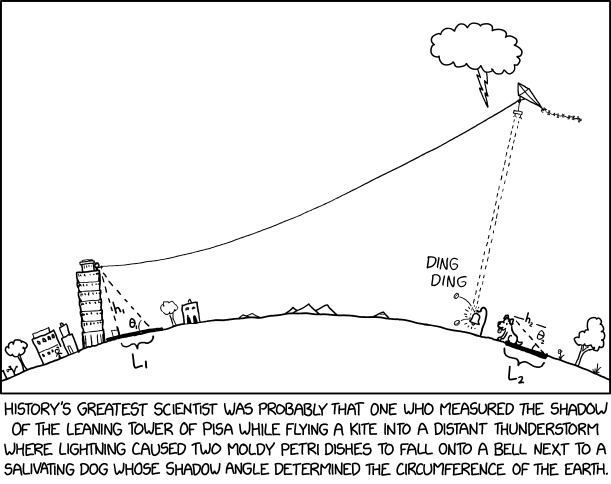
Greatest Scientist
Post Syndicated from original https://xkcd.com/2632/
Photographers who inspire me
Post Syndicated from Matt Granger original https://www.youtube.com/watch?v=_qHdFnGhf6Q
To whom it may concern
Post Syndicated from Oglaf! -- Comics. Often dirty. original https://www.oglaf.com/to-whom/


My daily driver Walkman?
Post Syndicated from Techmoan original https://www.youtube.com/watch?v=L4w00pgazVM
Предлагаме изменение на Закона за електронното управление
Post Syndicated from Bozho original https://blog.bozho.net/blog/3926
Публикувахме проект на изменение на Закона за електронното управление. С него се решават ключови въпроси, които в момента пречат на въвеждането на реално електронно управление. Ето основните:
- електронни услуги ще могат да се заявяват без квалифициран електронен подпис от физически лица – за да ги заявим ще е нужно само да влезем със средство за електронна идентификация с подходящо ниво на сигурност, след което ще подаваме заявлението просто попълвайки онлайн форма, без нужда от флашка, джава, драйвери и др. проблемни неща. Квалифицираните електронни подписи остават и ще работят, но отпадат като стриктно изискване за заявяване.
- отпадане на удостоверенията, с чието пренасяне гражданите са куриери на администрацията – това и до момента по общите разпоредби на закона е така, но на практика не се случва по много причини. Въвеждаме правно уеднаквяване на служебно събраната информация с удостоверение, което се изисква по закон, така че администрациите да са спокойни, че са спазили изискванията на специалните закони, по които работят. Паралелно с това осигуряваме гаранции на общините, че приходите от отпадналите удостоверения ще им бъдат възстановени пропорционално от централния бюджет.
- електронно връчване на актове, фишове и наказателни постановления – ще можем да посочим в системата за сигурно електронно връчване, че сме съгласни всичко да ни се връчва по електронен път. Това ще спести разходки до администрации, само за да ни бъде връчен акт или фиш.
- обща забрана за въвеждане с подзаконов акт на стикери и други физически носители на данни за обекти, които са вписани в регистър. С тази промяна, например, стикерът за годишен технически преглед ще стане незаконен, тъй като е въведен с наредба.
- намаляване на таксите за административни услуги, когато те се предоставят по електронен път. Това изменение има два аспекта – първият е, че има допълнителен стимул за използване на електронни услуги, а вторият е, че моделът с посредници при заявяване на услуги ще бъде по-устойчив, тъй като посредникът ще може да приспада разликата в таксата на гише и по електронен път. Посредници могат да бъдат Български пощи, библиотеките и всеки, който има офиси в близост до гражданите, включително в отдалечени населени места. Така дори тези, които не използват информационните технологии ще бъдат улеснени, защото няма да се налага да пътуват до областен град или до другия край на страната, за да заявят административна услуга.
- задължение за служебно предоставяне на информация за лица извън администрацията, които участват в административното обслужване. За да може администрацията служебно да проверява наличие на партида за вода или ток, нотариално пълномощно и други документи, които в момента се налага да разнасяме.
- задължение за водене на регистри в електронен вид, вкл. чрез система за централизирано управление на регистри – нормата влиза в сила след година и половина, като в този срок системата трябва да е готова, а всички тетрадки, ексели и стари системи да бъдат мигрирани към нея.
С проекта изпълняваме и ангажиментите си по Плана за възстановяване и устойчивост.
Смятам, че измененията са важни, отключващи електронното управление, намаляващи бюрокрацията и помагащи в ежедневието ни, и като такива ще намерят парламентарна подкрепа дори в сложната политическа ситуация.
Материалът Предлагаме изменение на Закона за електронното управление е публикуван за пръв път на БЛОГодаря.
Седмицата (6–11 юни)
Post Syndicated from Тоест original https://toest.bg/editorial-6-11-june-2022/
Централната новина на седмицата безспорно е началото на нова политическа криза в България. Рязко и след обичайното намръщено телевизионно обръщение на Слави Трифонов, партията му „Има такъв народ“ напусна управляващата коалиция. Хипотезите оттук нататък са много, но сигурно е само едно – предстои период на турбулентност в управлението на държавата, с всички съпътстващи неудобства и на фона на тайфун от всевъзможни други кризи по целия свят.
Дали у нас ще надделее някакво държавническо поведение, или – както обикновено – ще плащаме последиците от теснопартиен егоцентризъм, предстои да преживеем на гърба си. Но няма особени основания да таим излишни надежди. Предстои поредна битка за проевропейската и прозападната ориентация на родината ни. И по-добре да сме подготвени за нея.

„Токът на Промяната спря. И пак опряхме в юмрука на президента“ е заглавието на тазседмичния коментар на Емилия Милчева, която припомня важни детайли, свързани с новата политическа криза. Както и няколко, които е особено вероятно да са я катализирали. От значение, разбира се, е да се направят и изводи за грешките, които доведоха до сегашното положение. Особено за тези, които не можем да припишем на ИТН.

С поглед извън вътрешнополитическите драми на България е интервюто на Мирослав Зафиров с Надим Шехади, водещ учен по въпросите на Близкия изток и Северна Африка и консултант на няколко правителства и международни организации, в т.ч. и на Европейския съюз. На 15 май 2022 г. бяха проведени парламентарни избори в Ливан, на които за първи път след десетилетия на доминация „Хизбулла“ загуби мнозинството си. В този обстоен разговор двамата събеседници обсъждат не само резултатите от изборите, но и цялостната обстановка в Близкия изток в светлината на настоящите глобални кризи.

През последните две години сме свидетели на инфодемия, свързана с COVID-19. Днес инфодемията продължава, но фокусирана върху войната в Украйна. В нова поредица от статии Йоанна Елми подробно изследва темата за манипулативното съдържание и отговаря на пет въпроса – какво, как, от кого, кога и защо се разпространява. Поредицата се осъществява с подкрепата на Free Press Unlimited и Free Press for Eastern Europe. Прочетете първата статия „Какво е манипулативно съдържание?“, а в следващите дни проследете допълнителните ни постове по темата в социалните мрежи.

Тази седмица в рубриката „По буквите“ Зорница Христова препоръчва две заглавия от двама български писатели и една италианска картинна книга. Според нея разказите в „Таралежите излизат през нощта“ на Йорданка Белева „наместват – като чекръкчия – ставните връзки на паметта“, а разказите в „Празнично семейство“ на Йордан Славейков „са цапнати в устата, иронични, забавни, умели, разнородни, нехайно дръзки към тромавите страшилища на конвенцията“. В допълнение Зорница ни обръща специално внимание на „Господин Вървими“ на детския писател Даниеле Моварели и илюстраторката Аличе Копини.

И нека завършим седмицата на… Иберийския полуостров, където ни води Анета Василева със статията си „Португалски модернизъм – от европейска периферия до цял свят“. В нея тя ни разказва и показва с какво се отличава този иначе масов следвоенен архитектурен стил в най-югозападната страна на Европа. И с какво е допринесъл за култовия статус на португалската архитектура до днес, макар да е заченат по времето на един от най-продължителните дяснонационалистически режими в съвременна Европа.
Приятно четене!