1965 Cryptanalysis Training Workbook Released by the NSA

Post Syndicated from Bruce Schneier original https://www.schneier.com/blog/archives/2025/09/1965-cryptanalysis-training-workbook-released-by-the-nsa.html

In the early 1960s, National Security Agency cryptanalyst and cryptanalysis instructor Lambros D. Callimahos coined the term “Stethoscope” to describe a diagnostic computer program used to unravel the internal structure of pre-computer ciphertexts. The term appears in the newly declassified September 1965 document Cryptanalytic Diagnosis with the Aid of a Computer, which compiled 147 listings from this tool for Callimahos’s course, CA-400: NSA Intensive Study Program in General Cryptanalysis.

The listings in the report are printouts from the Stethoscope program, run on the NSA’s Bogart computer, showing statistical and structural data extracted from encrypted messages, but the encrypted messages themselves are not included. They were used in NSA training programs to teach analysts how to interpret ciphertext behavior without seeing the original message.

The listings include elements such as frequency tables, index of coincidence, periodicity tests, bigram/trigram analysis, and columnar and transposition clues. The idea is to give the analyst some clues as to what language is being encoded, what type of cipher system is used, and potential ways to reconstruct plaintext within it.

Bogart was a special-purpose electronic computer tailored specifically for cryptanalytic tasks, such as statistical analysis of cipher texts, pattern recognition, and diagnostic testing, but not decryption per se.

Listings like these were revolutionary. Before computers, cryptanalysts did this type of work manually, painstakingly counting letters and testing hypotheses. Stethoscope automated the grunt work, allowing analysts to focus on interpretation, and cryptanalytical strategy.

These listings were part of the Intensive Study Program in General Cryptanalysis at NSA. Students were trained to interpret listings without seeing the original ciphertext, a method that sharpened their analytical intuitive skills.

Also mentioned in the report is Rob Roy, another NSA diagnostic tool focused on different cryptanalytic tasks, but also producing frequency counts, coincidence indices, and periodicity tests. NSA had a tradition of giving codebreaking tools colorful names—for example, DUENNA, SUPERSCRITCHER, MADAME X, HARVEST, and COPPERHEAD.

Migrating from PRTG to Zabbix: A High-Level Guide

Post Syndicated from Patrik Uytterhoeven original https://blog.zabbix.com/migrating-from-prtg-to-zabbix-a-high-level-guide/30845/

For companies looking to migrate from PRTG Network Monitor to Zabbix, one of the most critical aspects is making sure a smooth migration of monitored devices and configurations. While there is no official tool to directly migrate between the two platforms, creating a bridge using custom export/import scripts allows for an effective and large migation. This blog post outlines a practical approach to achieving that migration based on the export/import methodology we at Opensource ICT Solutions previously implemented for one of our clients.

Why migrate?

While PRTG offers an intuitive interface and is popular for its ease of use, Zabbix provides:

  • Greater flexibility and scalability
  • Full open-source licensing
  • More powerful automation and templating
  • A robust API for integrations
  • Lower costs, especially since Paessler was sold to an investor

These features make Zabbix an attractive choice for teams looking to scale or standardize on open-source infrastructure.

Migration overview

The migration involves two key steps:

  1. Exporting PRTG device information
  2. Importing data into Zabbix

Because the two systems are conceptually and structurally different, we focused our scripts on migrating what is most transferable: device names, IP addresses, and interface types. SNMP versions or PRTG-specific sensor details were excluded or simplified where not applicable to Zabbix. PRTG, for example, will only export probes that have an OID that was not built-in in PRTG but added later, making our export incomplete. This does not mean we did a partial migration, it just means we have not included it in the automated approach.

Step 1: Exporting from PRTG

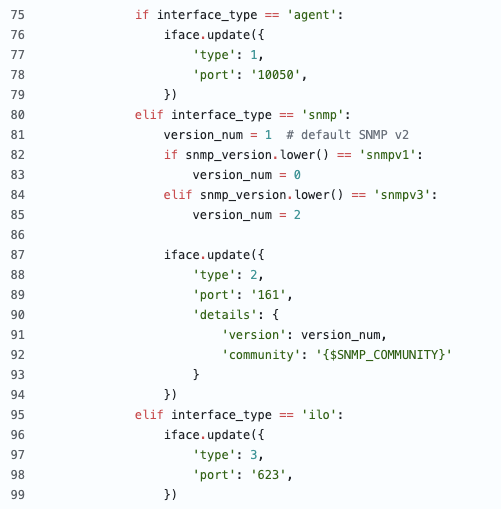
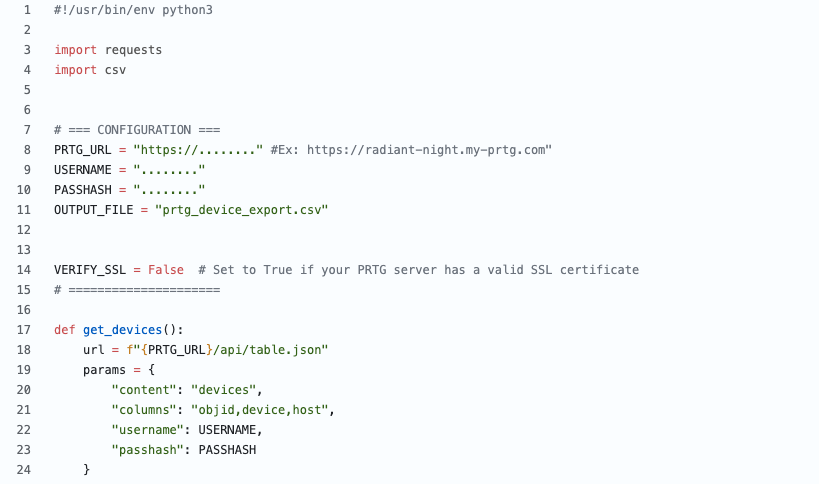
We developed a Python-based script that interacts with the PRTG API to extract monitored device data and export it to a CSV file. The script filters out irrelevant objects and organizes the output for easy Zabbix processing.

This creates a clean CSV, like this:

Device Name, IP Address, Interface Type
zabbix-server,10.0.0.10,agent
ServerA,192.168.0.2,SNMP
ServerA,192.168.0.2,agent
core-switch,192.168.0.1,SNMP

This file serves as a clean, structured inventory of monitored devices.

Note: SNMP version fields were excluded in the final export, as Zabbix does not currently display or rely on an SNMP version in the same way PRTG does.

Step 2: Importing into Zabbix

Using Zabbix’s API, we created an import script that reads the CSV and:

  • Creates host entries
  • Assigns them to the appropriate host group
  • Adds relevant interfaces (e.g., Agent,ILO,SNMP or a combination of …)

Each host is configured based on its detected interface type in PRTG.

On the Zabbix side, we used the Zabbix API to automate the creation of hosts, interfaces, and template assignment. The import script reads the CSV line-by-line and takes action based on the interface type.

Considerations and “gotchas”

  • Templates: We didn’t add templates, as there is no 1:1 solution – PRTG has a different concept and adding a standard template would be possible but probably not the best solution.
  • Host Groups: For ease of use and the limited time we had, we added all hosts in a temporary host group made for the migration. Although we do have scripts that take it out from PRTG and create it in Zabbix, in this particular migration it was not needed.
  • Permissions: The API token used in the import script must have sufficient privileges to create hosts.

What is NOT migrated

Because of fundamental differences between the platforms, the following are not directly migrated:

  • Historical data or sensor readings: Mainly because the customer had no hard requirement for it.
  • Custom PRTG notifications or dependencies: It was easier to manually re-create them.
  • Maps or dashboards: The Zabbix approach is so different that it was easier to recreate it manually (and improve).
  • Sensors: Zabbix is working with a different concept.

Post-migration tips

  • Validation: After the import, verify that each host is reachable and monitored correctly in Zabbix.
  • Discovery: Consider using Zabbix’s LLD (Low-Level Discovery) to dynamically find interfaces, disks, or other entities.
  • Housekeeping: Disable PRTG monitoring only after confirming Zabbix is fully operational.

Conclusion

Migrating from PRTG to Zabbix is not a one click operation, but with some scripting, planning, and experience from a partner like us, it can be done efficiently and with minimal disruption. The custom export/import scripts act as a reliable bridge between the two systems, allowing for a clean transfer of your monitoring inventory. From there, Zabbix’s automation and scalability features can help take your monitoring to the next level.

If you need assistance with the migration or want to ensure best practices for scaling and optimizing Zabbix, don’t hesitate to reach out to OICTS. We are a Zabbix Premium Partner operating globally, with offices in the USA, UK, Netherlands, and Belgium ready to help you every step of the way.

The post Migrating from PRTG to Zabbix: A High-Level Guide appeared first on Zabbix Blog.

Now Open — AWS Asia Pacific (New Zealand) Region

Post Syndicated from Donnie Prakoso original https://aws.amazon.com/blogs/aws/now-open-aws-asia-pacific-new-zealand-region/

Kia ora! Today, I’m pleased to share the general availability of the AWS Asia Pacific (New Zealand) Region with three Availability Zones and API name ap-southeast-6. With the new Region, customers can now run workloads and securely store data in New Zealand while serving end users with even lower latency.

The new AWS Asia Pacific (New Zealand) Region will help organizations run their applications and serve end users while maintaining data residency in New Zealand. The NZD $7.5 billion Amazon Web Services (AWS) investment to establish an AWS Region in New Zealand is expected to contribute NZD $10.8 billion to New Zealand’s gross domestic product (GDP) which is estimated to create 1,000 new jobs annually and will enable Kiwi organizations of all sizes to innovate and scale faster using the most secure and resilient infrastructure.

AWS in New Zealand
Since we opened our first office in New Zealand in 2013, we’ve been continuously expanding our infrastructure to better serve Kiwi customers:

Connectivity to the global AWS network – In 2016, AWS enhanced New Zealand’s connectivity to the AWS Global Infrastructure by establishing diverse, high-capacity subsea cable connections, improving network reliability and performance for customers.

Amazon CloudFront – In 2020, AWS expanded its infrastructure footprint in New Zealand by adding two Amazon CloudFront edge locations in Auckland.

AWS Local Zones – To further enhance its infrastructure offerings in New Zealand, AWS introduced an AWS Local Zone in Auckland in 2023 helping customers deliver applications that require single-digit millisecond latency.

AWS Direct Connect – In the same year, AWS also added a Direct Connect location in Auckland to help customers securely link their on-premises networks to AWS resulting in lower networking costs and improved application performance. With this Region launch, AWS is adding another Direct Connect location in Auckland.

Let’s take a look at how AWS customers are leveraging AWS capabilities for diverse needs.

Security and compliance
The New Zealand government has a cloud first policy to encourage cloud adoption across the public sector. AWS supports 143 security standards and compliance certifications, including Payment Card Industry Data Security Standard (PCI DSS), Health Insurance Portability and Accountability Act (HIPAA) and Health Information Technology for Economic and Clinical Health (HITECH), Federal Risk and Authorization Management Program (FedRAMP), General Data Protection Regulation (GDPR), Federal Information Processing Standard (FIPS) 140-3, and National Institute of Standards and Technology (NIST) 800-171, helping customers satisfy compliance requirements around the globe and providing a secure cloud infrastructure.

MATTR, a New Zealand-based organization providing infrastructure and digital trust services to businesses and governments, sees significant benefits from the new Region. To learn more about how MATTR and other organizations like Kiwibank and Deloitte plan to use the AWS New Zealand Region, visit this news article.

Accelerating AI innovation in New Zealand
AWS delivers the most comprehensive set of capabilities for generative AI at every layer of the stack, including a choice of cutting-edge large language models (LLMs) for implementing generative AI with Amazon Bedrock, and the most capable generative AI assistant to transform how work gets done with Amazon Q.

New Zealand customers are already benefiting from the generative AI capabilities offered by AWS.

Thematic is a New Zealand-based global leader in customer intelligence and feedback analysis. Thematic uses generative AI to turn customer feedback data from multiple channels into curated, accurate, and reliable customer intelligence.

“Using Amazon Bedrock is just so incredibly easy that it just makes sense. Whenever we design a solution, we do test more than 10 large language models (LLMs). Consistently the ones offered by AWS are winning those competitions,” said Nathan Holmberg, CTO and Co-Founder, Thematic.

To learn more on other customers like One NZ utilized generative AI, visit this article.

Building cloud skills together
Since signing a memorandum of understanding (MoU) with the New Zealand government in 2022, Amazon has trained more than 50,000 Kiwis toward our goal of 100,000. Amazon is committed to continuing to invest in cloud education through programs including AWS Academy, AWS Skills Builder, AWS Educate, and AWS re/Start. Organizations are using AWS to scale globally while investing in local talent development, supporting New Zealand’s growing demand for cloud expertise.

Xero, a global small business platform helps customers supercharge their business by bringing together the most important small business tools, including accounting, payroll and payments — on one platform. Leveraging AWS since 2016, Xero has scaled its platform globally, enhancing its features and enabling continual innovation.

“Amazon’s commitment to the New Zealand tech industry through their NZD $7.5B investment is promising. It’s a significant vote of confidence that will help connect New Zealand tech exporters with new global opportunities across the AWS ecosystem and the broader Amazon network,” says Bridget Snelling, Xero Country Manager, Aotearoa New Zealand.

Sustainable digital transformation
Through The Climate Pledge, Amazon is committed to reaching net-zero carbon across its business by 2040. AWS is committed to supporting New Zealand’s sustainability goals with efficient and responsible operations of its data centers in the country. The AWS Asia Pacific (New Zealand) Region is underpinned by renewable energy from day one through its agreement with Mercury New Zealand.

Energy companies are using AWS to modernize operations while advancing sustainability goals. Sharesies, a wealth development platform, is using AWS to modernize operations while advancing sustainability goals.

“Sharesies is very supportive of storing customer data in-country and being able to use renewable energy, “ says Sharesies Chief Technical Officer Richard Clark. “To do this in New Zealand on the AWS Cloud and have it fully powered by Mercury’s wind energy is a huge step forward. And very exciting!”

AWS partners in New Zealand
The AWS Partner Network (APN) in New Zealand includes a growing ecosystem of consulting and technology partners helping customers of all sizes design, architect, build, migrate, and manage their workloads on AWS. AWS Partners like Custom D, Grant Thornton Digital, MongoDB, and Parallo are actively supporting customers to deliver innovative solutions tailored to the unique needs of New Zealand organizations across various industries. With the new Region, these partners can now leverage the full capabilities of AWS cloud services locally.

AWS community in New Zealand
New Zealand is also home to one AWS Hero, 26 AWS Community Builders, 6 AWS User Groups and almost 9,000 community members across AWS User Groups in Auckland, Wellington, and Christchurch. If you’re interested in joining AWS User Groups New Zealand, visit their Meetup and social media pages.

Here’s what our AWS Hero Arshad Zackeriya, says about the new Region:

“The launch of the AWS Region in New Zealand is a game-changer for our country. It’s not just about a new set of data centers; it’s about unlocking the potential of New Zealand’s businesses and developer communities, allowing us to build a better, more connected Aotearoa for all.”

Available now
The AWS Asia Pacific (New Zealand) Region is the first infrastructure Region in New Zealand and sixteenth Region in Asia Pacific. With this launch, AWS now spans 120 Availability Zones within 38 geographic Regions around the world, with announced plans for 10 more Availability Zones and three more AWS Regions in the Kingdom of Saudi Arabia, Chile, and the European Sovereign Cloud.

The new Asia Pacific (New Zealand) Region is ready to support your business, and you can find a detailed list of the services available in this Region on the AWS Services by Region page. To learn more, visit the AWS Global Infrastructure page, and start building on ap-southeast-6!

Happy building!
— Donnie
GNOME loses another executive director

Post Syndicated from corbet original https://lwn.net/Articles/1036218/

The GNOME Foundation has announced
that Steven Deobald will be leaving the position of Executive Director
after just four months.

We are extremely grateful to Steven for all this and more. Despite
these many positive achievements, Steven and the board have come to
the conclusion that Steven is not the right fit for the Executive
Director role at this time. We are therefore bidding Steven a fond
farewell.

[$] The future of 32-bit support in the kernel

Post Syndicated from corbet original https://lwn.net/Articles/1035727/

Arnd Bergmann started his Open
Source Summit Europe
2025 talk with a clear statement of position: 32-bit
systems are obsolete when it comes to use in any sort of new products. The
only reason to work with them at this point is when there is existing
hardware and software to support. Since Bergmann is the overall maintainer
for architecture support in the kernel, he is frequently asked whether
32-bit support can be removed. So, he concluded, the time has come to talk
more about that possibility.

Security updates for Monday

Post Syndicated from jake original https://lwn.net/Articles/1036084/

Security updates have been issued by AlmaLinux (postgresql16, postgresql:16, python3.11, and thunderbird), Debian (firebird4.0, libcommons-lang3-java, mbedtls, nodejs, openvpn, and ruby-saml), Fedora (cef, chromium, docker-buildx, exiv2, firefox, rocm-rpp, and udisks2), Oracle (postgresql:16), Red Hat (fence-agents, firefox, gdk-pixbuf2, httpd, kernel, kernel-rt, libarchive, libxml2, multiple packages, postgresql, postgresql16, postgresql:15, postgresql:16, python3.11, python3.12, python39:3.9, and thunderbird), Slackware (udisks2), SUSE (go-sendxmpp, helm, ImageMagick, javamail, jq, kea, kernel, libarchive, libsoup, libssh, libxml2, openssl-3, postgresql14, postgresql15, python, python-future, systemd, and xz), and Ubuntu (open-vm-tools and python2.7).

AWS Weekly Roundup: Amazon EC2, Amazon Q Developer, IPv6 updates, and more (September 1, 2025)

Post Syndicated from Sébastien Stormacq original https://aws.amazon.com/blogs/aws/aws-weekly-roundup-amazon-ec2-amazon-q-developer-ipv6-updates-and-more-september-1-2025/

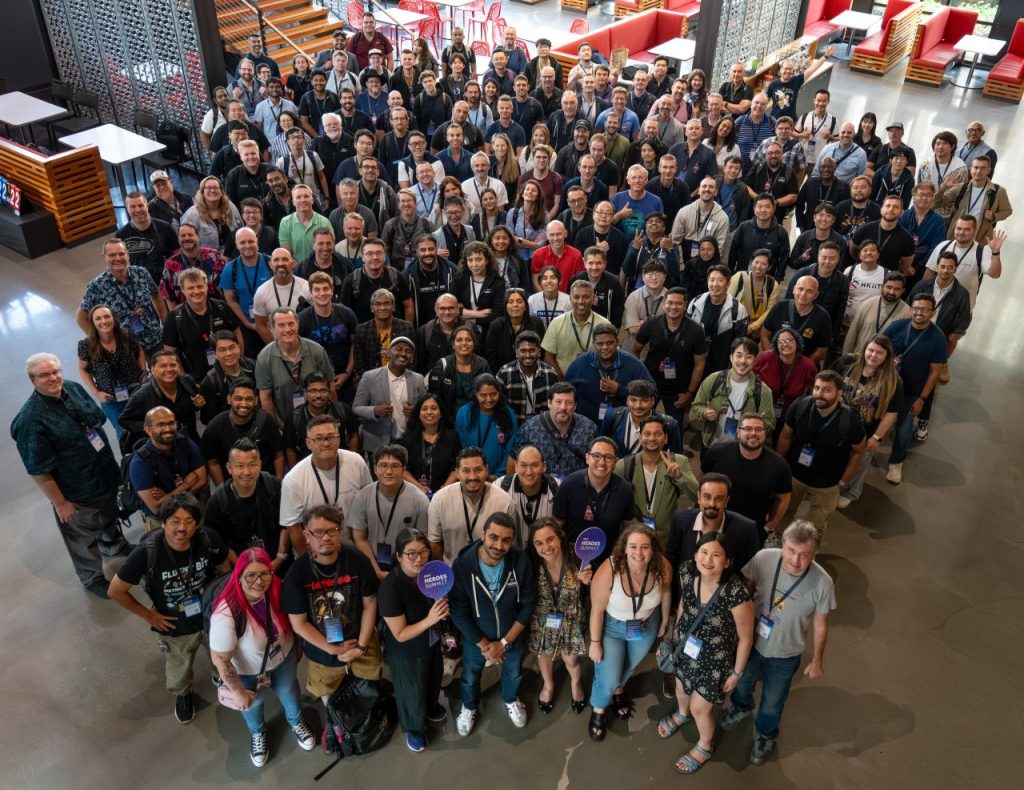
My LinkedIn feed was absolutely packed this week with pictures from the AWS Heroes Summit event in Seattle. It was heartwarming to see so many familiar faces and new Heroes coming together.

AWS Heroes Summit 2025

For those not familiar with the AWS Heroes program, it’s a global community recognition initiative that honors individuals who make outstanding contributions to the AWS community. These Heroes share their deep AWS knowledge through content creation, speaking at events, organizing community gatherings, and contributing to open-source projects.

The AWS Heroes Summit brings these exceptional community leaders together, providing a unique platform for knowledge exchange, networking, and collaboration. As someone who regularly interacts with Heroes through our AWS initiatives, I always find these summits invaluable – they offer deep technical discussions, early access to AWS roadmaps, and opportunities to provide direct feedback to AWS service teams. The insights and connections made at these events often translate into better resources and guidance for the broader AWS community.

Last week’s launches

In addition to this inspiring community, here are some AWS launches that caught my attention:

  • AWS expands Internet Protocol v6 (IPv6) support to AWS App Runner, AWS Client VPN, and RDS Data API — Three more AWS services now support IPv6 connectivity, helping you meet compliance requirements and removes the need for handling address translation between IPv4 and IPv6. AWS App Runner now supports IPv6-based inbound and outbound traffic on both public and private App Runner service endpoints. AWS Client VPN announced support for remote access to IPv6 workloads, allowing you to establish secure VPN connections to your IPv6-enabled VPC resources. Finally, RDS Data API now supports IPv6, enabling dual-stack configuration (IPv4 and IPv6) connectivity for your Aurora databases.
  • We launched two new instance families this week: the new storage-optimized I8ge and the general-purpose M8i instances —Our I8ge instances, powered by AWS Graviton4 processors, deliver up to 60% better compute performance compared to their Graviton2-based predecessors. These instances feature third-generation AWS Nitro SSDs, providing up to 55% better real-time storage performance per TB and significantly lower I/O latency. With 120 TB of storage and sizes up to 48xlarge (including two metal options), they offer the highest storage density among AWS Graviton-based storage optimized instances. We also launched M8i and M8i-flex instances with custom Intel Xeon 6 processors. These instances deliver up to 15% better price-performance and 2.5x more memory bandwidth than their predecessors. M8i-flex instances are ideal for general-purpose workloads, available from large to 16xlarge. For demanding applications, you can choose from our SAP-certified M8i instances in 13 sizes, including 2 bare metal options and a new 96xlarge size.
  • Amazon EC2 Mac Dedicated hosts now support Host Recovery and Reboot-based host maintenance — you can enable two new capabilities for your EC2 Mac Dedicated Hosts: Host Recovery and Reboot-based Host Maintenance. Host Recovery automatically detects potential hardware issues on Mac Dedicated Hosts and seamlessly migrates Mac instances to a new replacement host, minimizing disruption to workloads. Reboot-based Host Maintenance automatically stops and restarts instances on replacement hosts when scheduled maintenance events occur, eliminating the need for manual intervention during planned maintenance windows.
  • Amazon Q Developer now supports MCP admin control — Administrators have now the ability to enable or disable the MCP functionality for all the Q Developer clients in their organization. When an administrator disables the functionality, users will not be allowed to add any MCP servers, nor will any previously defined servers be initialized.

Other AWS news

Here are some additional projects and blog posts that you might find interesting:

  • Mastering Amazon Q Developer with Rules — I read an interesting article about Amazon Q Developer’s rules feature this weekend that I want to share with you. What caught my attention is how it solves a pain point I often encounter when working with AI assistants – having to repeatedly explain my coding preferences and standards. With rules, you define your preferences once in Markdown files, and Amazon Q Developer automatically follows them for every interaction. I particularly like how transparent the system is, showing which rules it’s following, and how it helps maintain consistency across teams. Since implementing rules in my projects, I’ve seen more consistent code quality, all while reducing the cognitive load of having to repeatedly explain our standards.
  • Strategies for excelling across all four exam domains of the AWS Certified Machine Learning – Specialty certification. The AWS Training & Certification team, where I spent my first three years at AWS, shared how to prepare for the AWS Certified Machine Learning – Specialty certification, whether you’re starting from scratch or building upon existing AWS Certifications. They share the prerequisites and guidance to help you get ready for this certification and demonstrate your expertise in building ML solutions with AWS.
  • As is now our tradition after Prime Day, we shared the impressive metrics showing how AWS services scaled to support one of the world’s largest shopping events. Amazon Prime Day 2025 was the biggest ever, setting records for both sales volume and total items sold during the 4-day event. This year was particularly special as we saw a significant transformation in the Prime Day experience through advancements in our generative AI offerings, with customers using Alexa+, Rufus, and AI Shopping Guides to discover deals and get product information. The numbers are staggering – Amazon DynamoDB handled tens of trillions of API calls while maintaining high availability, delivering single-digit millisecond responses and peaking at 151 million requests per second. Amazon API Gateway processed over 1 trillion internal service requests—a 30 percent increase in requests on average per day compared to Prime Day 2024.

Upcoming AWS events
Check your calendars and sign up for these upcoming AWS events:

  • AWS Summits — Join free online and in-person events that bring the cloud computing community together to connect, collaborate, and learn about AWS. Register in your nearest city: Toronto (September 4), Los Angeles (September 17), and Bogotá (October 9).
  • AWS re:Invent 2025 — This flagship annual conference is coming to Las Vegas from December 1–5. The event catalog is now available. Mark your calendars for this not to be missed gathering of the AWS community.
  • AWS Community Days — Join community-led conferences that feature technical discussions, workshops, and hands-on labs led by expert AWS users and industry leaders from around the world: Adria (September 5), Baltic (September 10), Aotearoa (September 18), South Africa (September 20), Bolivia (September 20), Portugal (September 27).

Join the AWS Builder Center to learn, build, and connect with builders in the AWS community. Browse here for upcoming in-person and virtual developer-focused events.

That’s all for this week. Check back next Monday for another Weekly Roundup!

— seb

MiTAC G8825Z5 AMD Instinct MI325X 8-GPU Server Review

Post Syndicated from Patrick Kennedy original https://www.servethehome.com/mitac-g8825z5-amd-instinct-mi325x-8-gpu-server-review/

In our MiTAC G8825Z5 review, we see how this 8-GPU AMD Instinct MI325X server performs and how it was made in a very neat fashion

The post MiTAC G8825Z5 AMD Instinct MI325X 8-GPU Server Review appeared first on ServeTheHome.

Зеленият ринг на София и елементарното беззаконие закотвено около него

Post Syndicated from Боян Юруков original https://yurukov.net/blog/2025/zelen-ring-sofia/

Да навържем пак няколко теми.

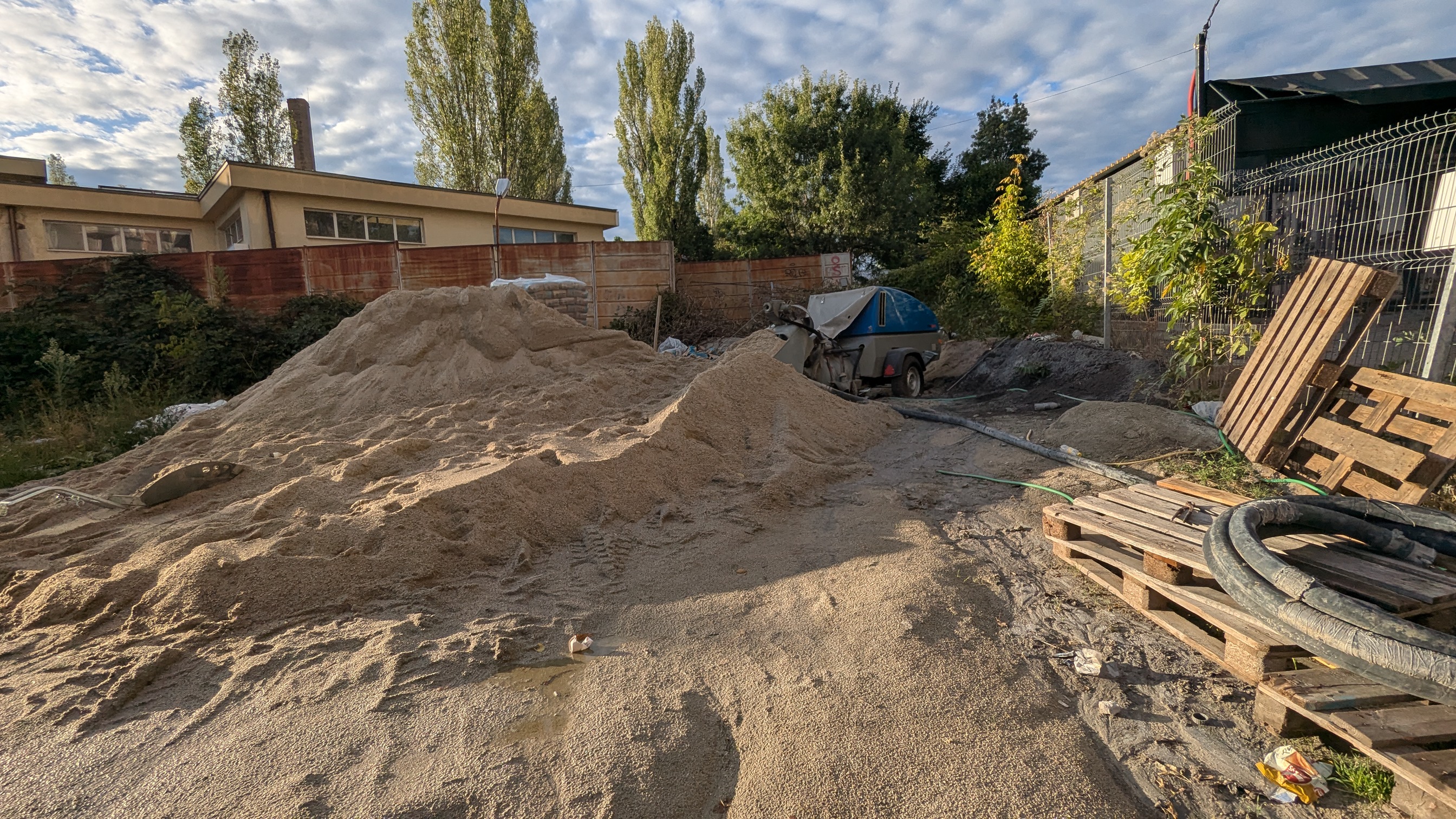
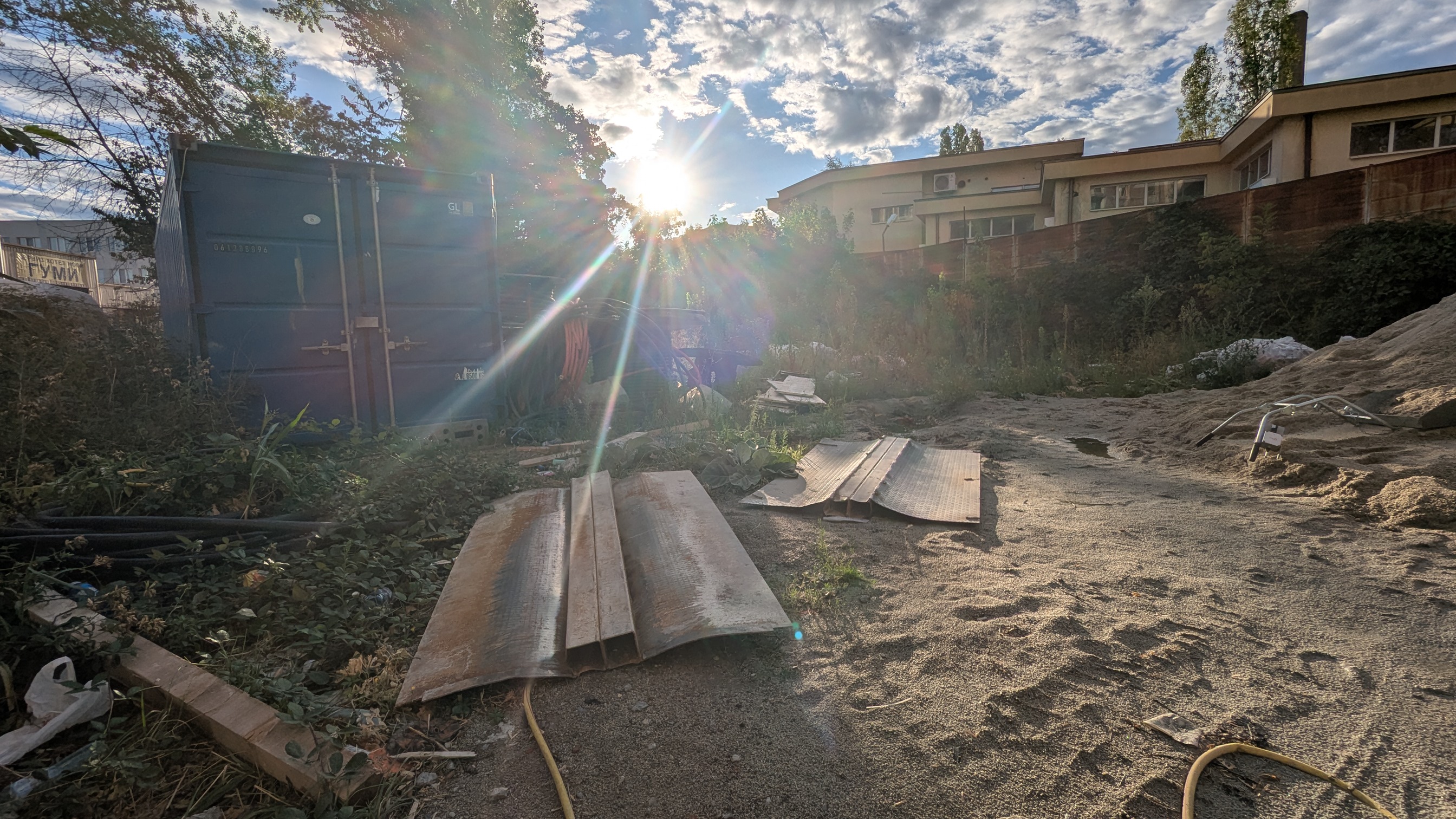
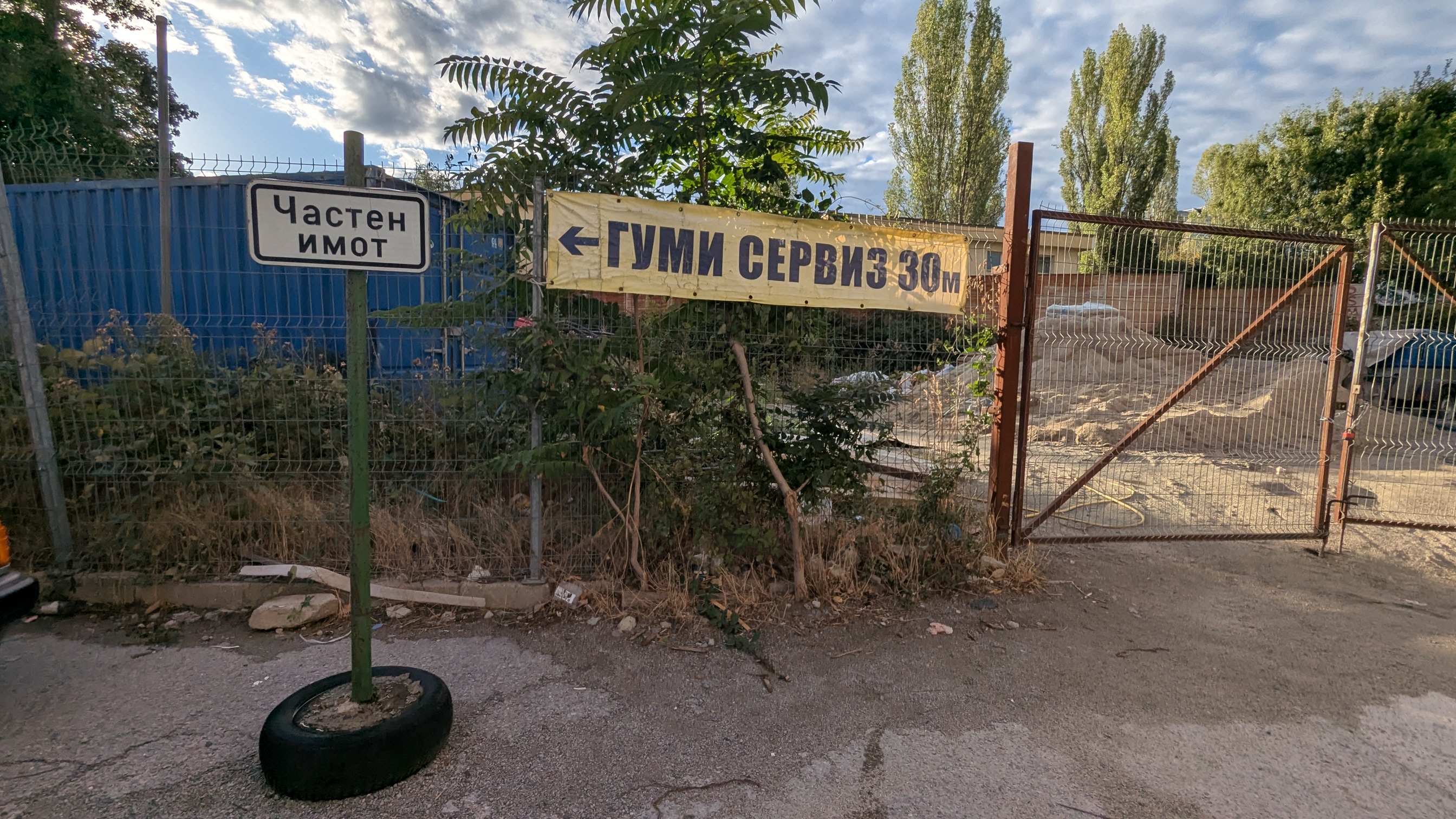
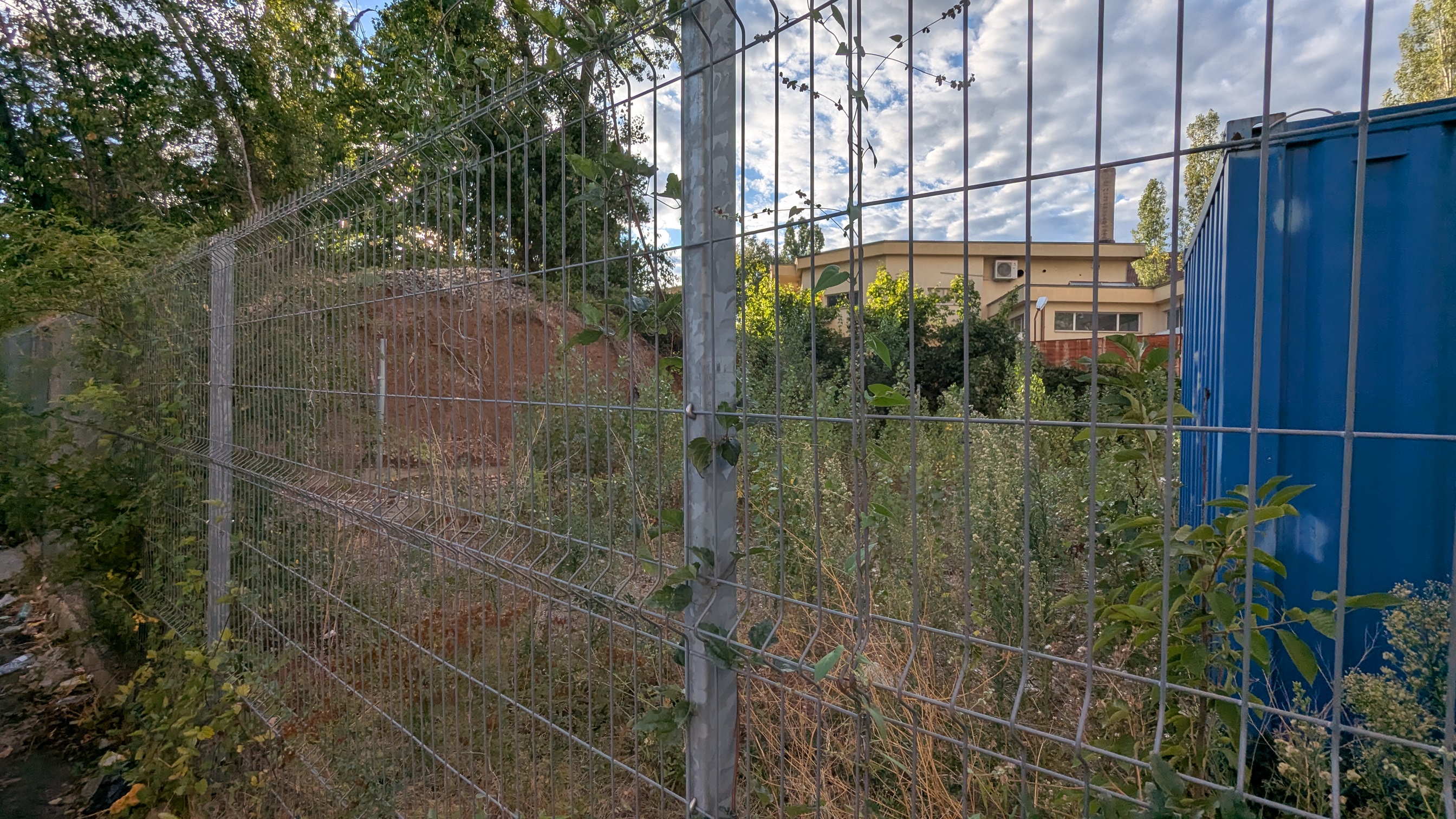
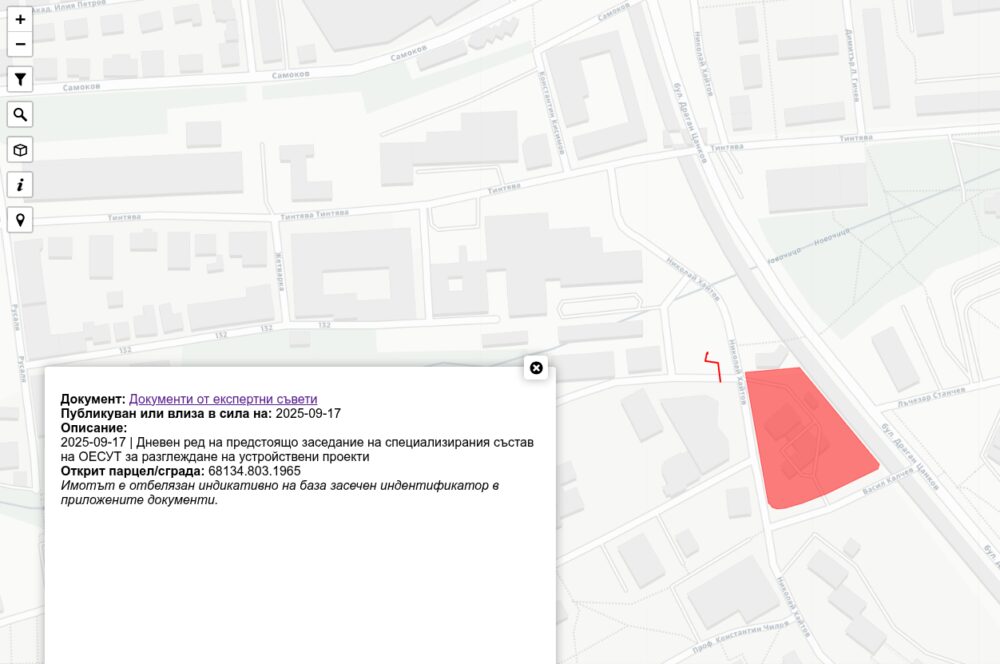
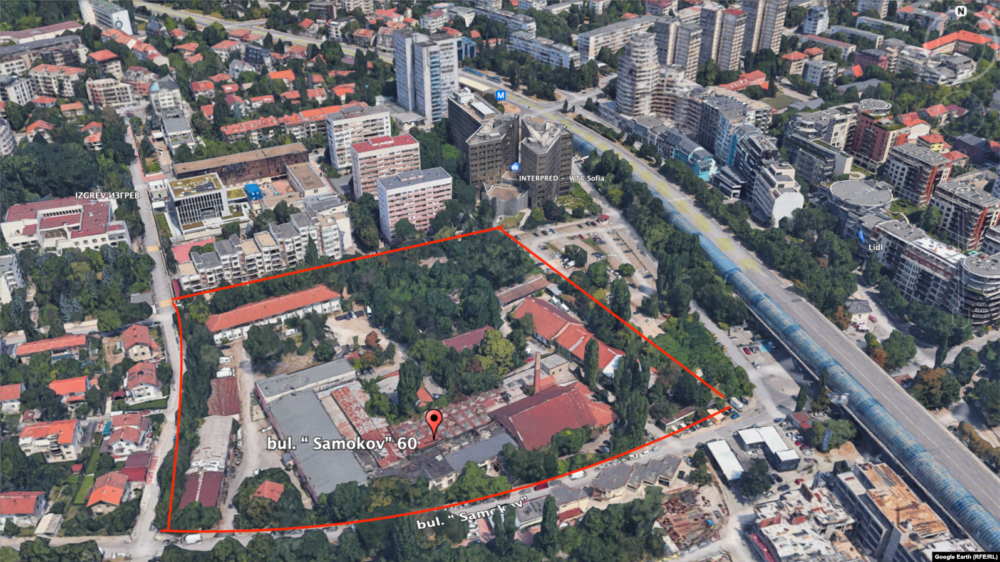
Днес минавах през София с колелото и реших да погледна какво се случва с едно място, за което бях подал сигнал още през ноември 2023-та. Става дума за незаконно сметище и склад за строителни материали създадени от компанията на един кадър на Атака и бивш областен управител наместен за такъв от ГЕРБ. Използва го за практически изоставения от две години строеж на Тинтява 80. Същият, за който купувачи се жалват и се виждат дела срещу индексация от 100% на първоначалните договори. Който от останалите не го съди, явно не знае, че могат и че другите вече печелят делата. Същият, за който получавам сигнали, че озеленяването в другите му сгради в Дружба се изчерпва с кашпи със забити пръчки в тях. Та това сметище е на държавен частен имот. Вижда се на снимките долу. Отсякъл е поне пет дървета и е изравнил земята изхвърляйки пръстта я незнайно къде. Сега държи там контейнер, генератор, строителни материали и отпадъци.

След няколко поредни сигнала от хора от района имаше проверки и беше установено, че всичко е незаконно, но всички сигнали бяха прехвърляни към БДЖ, които не са взимали мерки. Междувременно си е боцнал табела, че му е частна собственост това и толкова. Районният кмет на Изгрев изчерпва действията си с препращане на писма към БДЖ и се цупи като някой му направи забележка.

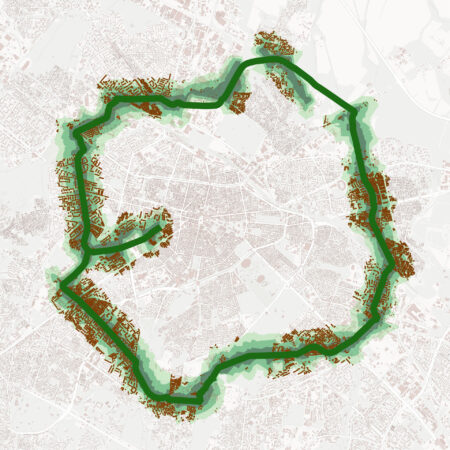
А трябва да прави нещо по въпроса. Най-малкото, защото този парцел следва да е част от зеления ринг. Онзи, за който наскоро се би в гърдите, че има напредък с едно обещание на настоящия областен управител за прехвърляне на земи. Първо – нищо не е прехвърлено и няма решение на МС. Второ, явно до сега не са правени особени опити и стъпки в тази посока. Трето, обещанието е дадено след шума покрай държавните имоти и без районния кмет да е включен. Има интересна история всъщност как стана тази среща, но това не е важно, а че все пак се говори за този зелен ринг най-накрая. Благодаря на гражданските групи Защита на Боянското блато и Зелена линия София за неуморната им работа и настойчивост. От тези натоварени с отговорността чакаме действия, а не обещания и снимки за пред фейса за неща, които или не са както се описват, или не нямат общо със снимания.

Пред въпросната сграда, впрочем, ще има друга също толкова висока. Там инвеститорът имаше проблем – не може да изкара разрешително за строеж за толкова масивна сграда с такава височина, защото имаше едни дървета. Както каза шефът на обекта като викнах полиция като ги рязаха – ясно, че им няма нищо, но му пречат на основите за гаражите. Та същите дървета години наред се пазеха, подрязваха и изведнъж някой някъде откри, че са опасни. Питах как и ми отговориха, че частен експерт го казал и районната администрация подписала. Питах защо няма никой от районната администрация да следи рязането и да пише протокол, както е по закон – не били уведомени. Питах тогава как реже инвеститорът като няма право, ако не е уведомил общината – показа ми мейла, който бил пратил преди два дни. Районната община не отговори като питах нататък. Та там ще се строи скоро.

Няколко метра надолу има една бензиностанция Петрол. И там искат да строят дори по-голяма сграда от Тинтява 80. Благодарение на новата прозрачност на Столична община за ПУП-овете и изпъчването на комисиите на НАГ разбрахме, че ще се случи в най-ранна фаза. Разбрахме, че транспортния анализ е казвал, че „то там движението е ужасно, та още няколко стотин семейства няма да го направят по-зле“. НАГ прати преписката на районния кмет на Изгрев да я разгледа, търси по-сериозен транспортен анализ, да направи обществено обсъждане и да събере аргументи да я оспори. Нямаше обществено обсъждане. Същият този районен кмет от Спаси София отказа да даде информация ще има ли местна комисия, обсъжда ли се, какво ще прави – нищо. Впрочем, изгледа нямаше дори да прати представител на първата комисия, ако не бяхме вдигнали шум. Там представителят му каза, че не знае нищо за случая, въпреки, че са получили документите отдавна. После пак обиден пусна пост, че много му търсили сметка какво работи всъщност. Е, днес от НАГ научаваме, че е върнал преписката на общината и след две седмици ще има нова комисия. Да видим какво ще стане.

И като стана дума за държавни имоти – не става ясно какво ще се случи с гара Пионер. Имаше проект за спортна зона. Виждате го като част от ПУП-а за Борисовата градина. Освен, че последният трябва да се приеме, трябва да се прехвърли земята на общината. Областният Арсов обаче не е задвижил нищо по този и другите искани имоти. Като нищо ще го видим скоро в търговете, ако не решат да скрият и тях като отпаднала необходимост. Имотът е навярно най-апетитният в София в момента. Няма да се учудим няколко къщи в полите на Витоша да се подготвят за роднините на „правилните“ хора да раздвижат схемата и тук.

Отделно, има един парцел, за който почти никой не говори – земята на Аудиовидео Орфей. Близо 30 декара между немското посолство и обсъждания линеен парк. Там от години се точи дело целящо заграбване. Министерството на културата и дружеството тяхна собственост си прехвърлят топката усилено опитвайки се да загубят делото в частна полза. Разбира се, едно време едни депутати много предвидливо са категоризирали точно този имот като СМФ накуп с имотите на Артекс и благодарение на едноименната поправка дават възможност да се строи до 75 метра и огромна разгъната площ. Впрочем, ако се чудите кой иска да заграби тази земя, това е инвестиционният фона на Костов. Да, същият този Костов и не само той. Историята е доста интересна и ни връща пак към приватизацията, под която наскоро първо Пеевски се подписа, а после се отметна за пред камерите. Всичко ще прочетете в статията на Генка Шикерова от преди две години. Не знам дали тече делото още – ще проверя.

Та виждате как нещата се навързват дори покрай един прост мечтан проект за няколко квартала. Където и да разчоплиш се вижда разяждащата липса на прокуратура и върховенство на закона. А за документиран белег защо това е така вижте последното от BIRD.BG.

The post Зеленият ринг на София и елементарното беззаконие закотвено около него first appeared on Блогът на Юруков.

Gigabyte is Branching Out into Multi-Node Blade Servers

Post Syndicated from Cliff Robinson original https://www.servethehome.com/gigabyte-is-branching-out-into-multi-node-blade-servers-amd-epyc-intel-xeon-liquid-cooling/

Gigabyte is branching out into multi-node servers with lower-cost options for dedicated hosting and liquid-cooled servers for the high-end

The post Gigabyte is Branching Out into Multi-Node Blade Servers appeared first on ServeTheHome.

The collective thoughts of the interwebz