AMD Advancing AI 2026 Keynote Live Coverage

Post Syndicated from Ryan Smith original https://www.servethehome.com/amd-advancing-ai-2026-keynote-live-coverage/

It’s time for AMD’s 2026 Advancing AI conference. Join ServeTheHome for our live blog coverage of the AAI keynote, where AMD will announce their latest and greatest hardware and software technologies

The post AMD Advancing AI 2026 Keynote Live Coverage appeared first on ServeTheHome.

[$] An operations structure for swap devices

Post Syndicated from corbet original https://lwn.net/Articles/1083094/

One of the ideas raised at the 2026 Linux
Storage, Filesystem, Memory Management, and BPF Summit
(LSFMM+BPF) was
the creation of an
operations structure
for the swap subsystem. Like many parts of the
kernel, the swap layer evolved over time, with pieces being added as
needed; the end result of this evolution is rarely what one would expect
had the subsystem been designed today. The interface between the swap
layer and the devices it uses is just one example. It appears that one
result of the swap subsystem’s evolution — the lack of an abstraction layer
to interface with underlying storage — will soon be addressed, but in a
different way than was initially envisioned.

77 дни без програма и без демонтаж на модела

Post Syndicated from Bozho original https://blog.bozho.net/blog/4604

Изминаха 77 дни от избора на правителство. За 77 дни то все още няма управленска програма. Няма ясни приоритети, зададени цели и срокове за изпълнение.

Липсва план за демонтиране на модела и освобождаване на завладяната държава, липсват мерки за ограничаване на кражбите в здравеопазването, липсва яснота за намаляване на бюджетния дефицит, липсва стратегия за отдавна отлагани проблеми като пътна безопасност, управлението на държавната собственост, безводието; липсва план за дигитализация на обществения сектор, и т.н. и т.н.

Не виждаме и секторни мерки срещу окопани олигарси – не виждаме план как ще бъдат отнети от Таки продуктовите такси, строителните договори и „капиите“ на Капитан Андреево, не виждаме мерки срещу схемите с емисии на Ковачки (а действията на РИОСВ срещу единия му ТЕЦ катастрофираха в съда), не виждаме и спиране на потоците към Орлин Алексиев, не виждаме спиране на схемите на Жоро-инсата с държавния резерв. Не виждаме и намаляване на апетита на доскоро верния на Пеевски Велико Желев. И т.н. и т.н.

Виждаме обаче друго – прегрупиране и засилване на някои олигарси. За Гергов е напълно очаквано, но трансферът на Самуилов от Пеевски към прогресивното начало е по-изненадващ. Министърът на земеделието пък още през 2022 г. бранеше Таки, така че на Капитан Андреево очаквано не се случва нищо, а неговата Нивел вече има сключен договор и при новата власт. А Орлин Алексиев захранва властта с още и още кадри.

Това, че брокерът Пеевски остана без охрана и без сграда бяха символните ходове, с които се започва, но не виждаме тези, чиито интереси е брокерствал, да бъдат изтласквани – дори напротив. Вероятно просто ролята на брокер се поема от някой друг.

Някой може да каже – за 77 дни какво искате? Гледаме обаче Унгария и виждам какво е възможно с такова голямо мнозинство – ясни и решителни действия – не само символни, а и конкретни спирания на кранчета, прекъсване на схеми и ефективни ревизии.

Ние внесохме редица законопроекти и проекти на решения, насочени срещу конкретни корупционни схеми и конкретни олигархични интереси. Резултатът е показателен – те или изобщо не стигат до разглеждане, или биват отхвърляни без реален дебат. Управляващото мнозинство е самодостатъчно в своята политическа дезориентация и очевидно няма воля да се изправи срещу модела, който твърди, че променя.

Липсата на управленска програма е най-удобният начин правителството да остане в политическата мъгла. Защото ако такава програма все пак се появи, най-вероятно ще стане окончателно ясно, че не се подготвят истински реформи, а единствено боядисване на фасадата на съществуващия модел.

Материалът 77 дни без програма и без демонтаж на модела е публикуван за пръв път на БЛОГодаря.

Codeberg: Protecting our FLOSS commons from LLMs

Post Syndicated from corbet original https://lwn.net/Articles/1084404/

The Codeberg forge has adopted a pair of new policies, promising not to use
hosted projects to train LLMs and, more controversially, banning the
hosting of LLM-generated software. The site’s blog describes
and justifies
these policies.

Although often well intentioned, sharing the result of a prompt
and calling it “libre software” does not make the world a better
place. Codeberg is not and does not want to be a place to dump such
generated single-use software that no one else will ever look
at. We are a place for people to collaborate and improve software
together. Within this context, the recent votes can be understood
as a reconfirmation of those principles: As we want to center on
human collaboration, we will not actively support or engage in the
creation of LLMs and will not put our limited resources to use for
storing single-use software that would pollute our FLOSS commons.

Security updates for Thursday

Post Syndicated from jzb original https://lwn.net/Articles/1084401/

Security updates have been issued by AlmaLinux (acl, dogtag-pki, dovecot, glibc, go-toolset:rhel8, golang-github-openprinting-ipp-usb, grafana, grafana-pcp, httpd:2.4, javapackages-tools:201801, libtiff, mariadb-connector-c, perl-HTTP-Daemon, pki-deps:10.6, and sssd), Debian (bind9, chromium, firefox-esr, and pdns-recursor), Fedora (chromium, collectl, fractal, kernel, libssh, llvm, nginx, nginx-mod-brotli, nginx-mod-fancyindex, nginx-mod-headers-more, nginx-mod-js-challenge, nginx-mod-modsecurity, nginx-mod-naxsi, nginx-mod-vts, perl-DBI, perl-YAML-Syck, and srt), SUSE (7zip, GraphicsMagick, ImageMagick, multipath-tools, perl-YAML, python-sqlparse, python3-sqlparse, python313-bleach, and sssd), and Ubuntu (apache2, commons-beanutils, exim4, gawk, giflib, gst-plugins-good1.0, krb5, libapache-mod-jk, libarchive, libgphoto2, libhtml-parser-perl, linux-aws, linux-aws-5.15, linux-aws-fips, linux-fips, linux-ibm, linux-nvidia, linux-fips, linux-lowlatency, linux-lowlatency-hwe-6.8, linux-oracle, linux-ibm, linux-oracle, linux-ibm-5.15, linux-nvidia, linux-nvidia-6.8, linux-nvidia-lowlatency, linux-nvidia-tegra, linux-nvidia-tegra-igx, linux-oem-6.17, linux-oracle-6.8, python-aiohttp, and tar).

What Happened Between OpenAI and Hugging Face?

Post Syndicated from Wade Woolwine original https://www.rapid7.com/blog/post/ai-openai-hugging-face-what-happened

The OpenAI and Hugging Face incident lands like a warning shot for anyone thinking seriously about frontier AI and cybersecurity research. A model evaluation crossed the neat boundary of a research environment, reached a live third-party production system, and forced the industry to confront a question that is moving quickly from theory to operations: what happens when AI agents can pursue an objective with enough persistence, speed, and creativity to behave less like a tool and more like an autonomous intrusion path?

According to OpenAI’s disclosure, the incident began during an internal evaluation of advanced cyber capabilities using GPT-5.6 Sol and a more capable pre-release model. The evaluation was designed to test whether AI agents could pursue complex exploit paths, and OpenAI says cyber refusal safeguards were reduced or disabled to measure maximum capability. Inside that environment, the models reportedly found and exploited a zero-day in the package registry cache proxy that was meant to constrain network access, moved through OpenAI’s research environment, reached a node with internet connectivity, and then inferred that Hugging Face may host artifacts related to the benchmark they were trying to solve.

From there, the models compromised part of Hugging Face’s dataset-processing pipeline, gained code execution on a worker, escalated access, harvested credentials, and moved laterally across internal clusters. Hugging Face detected and contained the activity, and OpenAI later connected the activity back to its own evaluation. Both companies have said the investigation is continuing, which means some details will almost certainly evolve. Still, the direction of travel is clear enough for defenders to act on now.

How did the OpenAI model evaluation reach Hugging Face?

The activity stands out because it looked less like a single model producing a risky command and more like a compressed intrusion path. Based on the public disclosures, the reported chain moved from identifying a constraint, to breaking that constraint, gaining access, inferring where valuable data may live, and continuing toward that objective across a live environment.

Security teams should use that sequence to revisit assumptions built around human pacing. Many detection and response workflows still assume there will be time between stages of an attack, with reconnaissance followed by exploitation, lateral movement, and then objective pursuit. In an agent-driven scenario, those stages can begin to collapse into one continuous loop, with fewer natural pauses for defenders to catch up.

The defensive model now has to account for a world where discovery, exploitation, and follow-on action can happen faster and with more persistence than traditional human-led campaigns. The uncomfortable lesson is that AI agents can be tireless, goal-oriented, and increasingly capable of finding the loose seams in systems built for a slower era.

The incident highlights the collapse of the traditional OODA (Observe-Orient-Decide-Act) loop. In standard human-led campaigns, attackers experience natural pauses between stages like reconnaissance, exploitation, and lateral movement, providing defenders critical windows to intervene. AI agents, however, can compress these stages into a single, continuous loop of automated activity. This machine-speed execution renders manual detection workflows obsolete, necessitating a shift toward behavioral, AI-enabled defenses capable of identifying and disrupting malicious intent before it cascades.

Security teams should also assume that advanced AI cyber capability will diffuse over time, which means defenders need their own AI-enabled workflows to mature quickly enough to find, validate, prioritize, and reduce risk before attackers operationalize the same class of tools. Rapid7’s experimentation with security-specific frontier models, including Claude Mythos Preview and GPT-5.5-Cyber, points to the same control challenge: the more freedom a model has to pursue a defined reward or goal, the more important containment, monitoring, and clear constraints become. Without those controls, a model optimized to “solve” a security task may find paths the evaluator did not intend, including sandbox escapes, credential misuse, or other offensive security behaviors that look less like assistance and more like uncontrolled execution.

Why AI evaluation environments need stronger containment

The incident raises practical questions about how frontier AI evaluations are designed and contained. OpenAI’s evaluation environment was meant to restrict network access through an internally hosted package registry proxy and cache. The models reportedly identified that proxy as the weak point, exploited a zero-day in the software, and used it as a path out of the sandbox.

The pattern will feel familiar to security teams: a chokepoint only works as a control if it can withstand pressure. Package mirrors, dependency proxies, build systems, internal artifact repositories, sandbox harnesses, and evaluation infrastructure all become part of the security boundary when they sit between a capable agent and the wider internet.

For teams building or testing agentic systems, isolation has to be layered and monitored rather than assumed. Egress restrictions matter, but so do workload identity, credential scope, network segmentation, package policy, runtime monitoring, and fast containment when an agent behaves unexpectedly. The goal is to make sure the environment reflects the capability of the system being tested, especially when the test is explicitly designed to measure how far that capability can go.

Why AI and ML pipelines are now software supply chain risk

The Hugging Face side of the incident is a reminder that AI and ML pipelines are part of the software supply chain. Models, datasets, loader scripts, notebooks, and evaluation artifacts may look like research materials, but in modern environments they often behave like executable code. Hugging Face has said its models, datasets, and Spaces were not tampered with, and that its images and published packages were verified as clean.

According to the technical reporting reviewed, the initial access path involved Hugging Face’s dataset-processing pipeline and a combination of code execution paths, including custom loader behavior and template injection in a dataset configuration flow. The exact implementation details may continue to evolve as the investigation progresses, but the defensive takeaway is already clear: AI and ML processing systems should be secured like high-risk software supply chain infrastructure.

Any system that automatically processes external datasets or model artifacts should be designed with hostile input in mind. Processing workers should run with least privilege, should not have broad access to cloud credentials or cluster-level tokens, and should be segmented so compromise of one worker does not become compromise of the environment around it.

Security teams should also hunt for early signs of intent drift inside ML workflows. Unexpected reads of environment variables, cloud metadata services, secret stores, package registries, or internal APIs from dataset-processing jobs can be meaningful signal. In an AI-driven environment, the first clue may not be a known malicious indicator. It may be a workload behaving with curiosity it should not have.

What AI guardrails mean for incident response

One of the most useful lessons for security teams came during the response, when Hugging Face’s responders reportedly needed to analyze logs containing exploit payloads, attacker commands, and command-and-control artifacts. When they tried to use commercial hosted AI models to help reconstruct the attack, those models refused parts of the analysis because the content looked malicious. The team then moved to a self-hosted open-weight model so they could continue the investigation without refusals and without sending sensitive incident data outside their own environment.

The practical issue here is guardrail asymmetry: attackers, rogue agents, or unrestricted systems may not respect usage policies, while defenders using hosted tools can be slowed by the same safety systems designed to prevent misuse. Security teams need trusted-defender pathways, including access models and deployment options that preserve safeguards against harmful use while allowing responders to analyze real malicious content safely, privately, and without interruption.

AI-assisted incident response also needs to be tested before an incident begins, especially if teams expect models to support triage, log analysis, malware review, or timeline reconstruction under pressure. Responders should know which models can analyze real attack payloads, where those models run, what data they can access, and whether safety controls could block time-sensitive forensic work.

What security teams should do about agentic AI risk

The practical response to this incident is preparation, with organizations treating AI agents as both powerful tools and potential attack surfaces when those agents can access code, credentials, infrastructure, datasets, or internal systems.

Security teams should apply familiar controls with more urgency across AI and ML environments: treat downloaded models, datasets, and loader scripts as untrusted code; enforce least privilege on AI and ML processing workers; prevent node-level compromise from becoming cluster-wide compromise; restrict access to cloud metadata endpoints and secrets; monitor unexpected outbound connections from AI-related workloads; and review whether evaluation environments have real containment or simply convenient isolation.

Detection logic needs to account for machine-speed activity. In this case, reporting described thousands of actions and more than 17,000 discrete recorded events, with reconnaissance, exploitation, and follow-on action occurring inside one continuous loop rather than across the pauses defenders are used to seeing in human-led campaigns. Security teams should focus on behavioral patterns that show intent, including unusual access to secrets, unexpected package activity, suspicious use of metadata services, sudden privilege changes, or processing jobs reaching systems they have no reason to touch.

As autonomous activity becomes faster and noisier, the bottleneck may shift from detecting that something happened to understanding what matters quickly enough to change the outcome. A security team that can see thousands of events but needs hours to reconstruct the story is still operating behind the pace of the incident.

How preemptive security helps reduce AI-driven risk

At Rapid7, our view is that this is where preemptive security becomes especially important. Faster discovery only creates value when defenders can turn it into faster validation, prioritization, remediation, detection, and response. The same principle applies to agentic AI risk. If AI accelerates how weaknesses are found and exploited, defenders need security operations that can act earlier with better context and more confidence.

That means connecting exposure management with detection and response, so teams understand which risks are exploitable, which assets matter most, what suspicious behavior is already present, and which actions will reduce risk fastest. It also means using AI carefully and practically, not as a replacement for security judgment, but as a way to reason across telemetry, reduce noise, support investigation, and help teams make decisions at the speed the threat environment now demands.

AI-enabled defense is becoming part of resilience planning, especially for organizations running critical systems or high-value digital infrastructure. The goal is to give defenders the speed, context, and consistency to operate inside the attacker’s decision cycle, without removing the judgment and accountability that effective security requires.

The OpenAI and Hugging Face incident will continue to generate debate as more details emerge, but defenders already have enough to work with. Agentic systems are beginning to test the seams between AI research, software supply chain security, cloud infrastructure, and incident response. The organizations best positioned for what comes next will be the ones making those seams visible, monitored, and resilient before the next incident puts them under pressure.


CVE-2026-16232: Critical Check Point SmartConsole Authentication Bypass Exploited in the Wild

Post Syndicated from Jonah Burgess original https://www.rapid7.com/blog/post/etr-cve-2026-16232-critical-check-point-smartconsole-authentication-bypass-exploited-in-the-wild

Overview

On July 22, 2026, Check Point published a security advisory for multiple vulnerabilities affecting Security Management, Multi-Domain Management, and firewall products. The most urgent of these is CVE-2026-16232, an authentication bypass in the SmartConsole login process classified as improper authentication (CWE-287). CVE-2026-16232 has been assigned a critical CVSS score of 9.1. The vulnerability allows an unauthenticated remote attacker to obtain an application login token and authenticate to the management server with full administrative privileges, enabling modification of security policies and configurations.

Check Point has confirmed that CVE-2026-16232 is being actively exploited in the wild, affecting what the vendor describes as a small number of customers. Remote exploitation requires network access to the Management Server IP address in environments that do not restrict Trusted Clients. On the same day as the advisory, CVE-2026-16232 was added to the U.S. Cybersecurity and Infrastructure Security Agency’s (CISA) list of known exploited vulnerabilities (KEV), with a remediation due date of July 25, 2026, giving organizations only three days to respond.

The advisory addresses three vulnerabilities in total:

CVE

CVSS

Description

Affected Products

Exploitation Status

CVE-2026-16232

Vendor: 9.3 (Critical)
CISA: 9.1 (Critical)

Authentication bypass via SmartConsole application token

Security Management, Multi-Domain Management

Exploited in the wild

CVE-2026-62144

Vendor: 9.3 (Critical)
CISA: 9.1 (Critical)

Management authentication bypass and privilege escalation

Security Management, Multi-Domain Management

No known exploitation

CVE-2026-62145

7.5 (High)

Local privilege escalation in GaiaOS WebUI

Firewall, Multi-Domain Management, Multi-Domain Log Server

No known exploitation

Compromise of a Security Management Server is particularly consequential because it sits at the top of the trust hierarchy. An attacker with administrative access can modify security policies across managed gateways, alter administrator permissions, manipulate VPN configurations, and potentially disable or tamper with logging and monitoring. According to Check Point’s advisory, the vulnerabilities were discovered during a routine internal review, with subsequent analysis revealing that CVE-2026-16232 had been exploited prior to the availability of a patch.

Check Point network security products have been targeted by multiple in-the-wild vulnerabilities over the past two years. In June 2026, CVE-2026-50751, a critical authentication bypass in Check Point Remote Access VPN, was exploited in the wild and added to the CISA KEV. In May 2024, CVE-2024-24919, a high-severity information disclosure vulnerability in Check Point Quantum Security Gateways, was also exploited in the wild. Organizations running affected Check Point management products should apply the available hotfixes on an emergency basis.

Mitigation guidance

Check Point released Jumbo Hotfixes on July 22, 2026, to remediate CVE-2026-16232, CVE-2026-62144, and CVE-2026-62145. Organizations running affected versions of Security Management or Multi-Domain Management should install the latest Jumbo Hotfix on an emergency basis, without waiting for a regular patch cycle to occur.

The following versions are affected by CVE-2026-16232:

  • R82.10: fixed in Jumbo Hotfix Take 36 and later

  • R82: fixed in Jumbo Hotfix Take 118 and later

  • R81.20: fixed in Jumbo Hotfix Take 158 and later

  • R81.10, R81, R80.30, R80.20, R80.10, R80, and R77.30: no fix specified

CVE-2026-62144 and CVE-2026-62145 affect the same release families (R81.10, R81.20, R82, R82.10) per the vendor advisory, with older versions also impacted.

Smart-1 Cloud customers are already protected according to Check Point. For on-premises deployments where the hotfix cannot be applied immediately, Check Point recommends the following steps to reduce exposure:

  • Restrict Trusted Clients (GUI clients) to trusted IP addresses or subnets

  • Protect Management access with a firewall and restrict access to trusted IP addresses

  • Verify that implied rules for control connections are enabled

These mitigations reduce the attack surface, but they do not address the underlying vulnerability. Installing the Jumbo Hotfix remains the priority.

Rapid7 strongly recommends investigating for signs of compromise even after applying the hotfix, particularly in environments where the Management Server has been accessible from the internet. Organizations should review administrator, SmartConsole, API, and application token activity, and search logs for the published indicators of compromise listed below.

For the latest mitigation guidance, please refer to the vendor advisory.

Rapid7 customers

Exposure Command, InsightVM, and Nexpose

Exposure Command, InsightVM, and Nexpose customers can assess exposure to CVE-2026-16232, CVE-2026-62144, CVE-2026-62145 with authenticated vulnerability checks expected to be available in the 24 July content release.

Indicators of compromise

Check Point has published the following IP addresses associated with observed exploitation of CVE-2026-16232:

  • 151.241.99[.]207

  • 151.241.99[.]233

  • 158.62.198[.]182

  • 192.142.10[.]99

  • 139.28.37[.]250

  • 194.213.18[.]137

Per the vendor, the presence of these indicators should prompt investigation, but the absence of these addresses does not confirm that an environment was unaffected.

Updates

  • July 23, 2026: Initial publication.

Васил Левски и тарикатлъкът

Post Syndicated from Димитри Захов original https://www.toest.bg/vasil-levski-i-tarikatlukut/

Васил Левски и тарикатлъкът

„Бизнес идея. Дай да направим филм за Левски. Киното, знам, че е скъпо, но виж к’во приложение намерих. Пишеш му к’во искаш с думи и ти прави видео. Срещу не’кви къси кинти месечно. Смятай. С това ще го направим. И ще кажем, че е с кауза. Билети може да не продадем, но слушай – ще пишем на всяка фирма в България! Ще го представим като благотворителност и ще им искаме по 500 евро, защото просвещаваме децата. Кое не е гениално?“ 

Представям си, че нещо такова се е чуло в главата на някой от членовете на рап-бизнес дуета „Зипо и Слаш“ наскоро. Те са продуценти на „Агенти на времето: Васил Левски“ – филм за историческата личност, чийто трейлър изглежда напълно генериран от изкуствен интелект. Сюжетът представя Апостола, който, бидейки връзка между миналото и настоящето, мотивира група деца да пазят историческата памет. Авторите на продукцията я описват на сайта си (който впрочем също има всички признаци на генериран с ИИ) като „първия български анимационен филм със световен потенциал“. Те твърдят, че филмът вече е привлякъл над 100 корпоративни партньора. Обявената дата на излизане в кината е 11 септември 2026 г.

България на картата на… анимациите?

Дванайсетокласникът Димитри Захов дебютира в „Тоест“, за да ни разкаже де е България във вселената на анимационните филми. Той не само знае много по темата, ами е взел и интервю от известния актьор Юлиан Костов, който… Но хайде да не издаваме най-интересното още преди да сте прочели статията.

Тази продукция кара лентата на Максим Генчев за Левски да изглежда като холивудски шедьовър, правен с грижа и обич. И също ни кара да си зададем сериозни въпроси за границата между бизнес и кино.

Нищо от това не е изкуство, а още по-малко благородна кауза.

На 8 юли дистрибуторът „Александра Филмс“ публикува трейлър, който не съдържа нито едно име на автор, режисьор или аниматор, тъй като вероятно всички се казват Чатджи Пити. 

В него чуваме роботизирани гласове, зле синхронизирани с героите, и виждаме един специфичен, лъскав псевдо-Pixar-ски стил, който ИИ моделите обичат. Забелязват се и характерни неточности, например промени във фона в последователни кадри и сериозни разлики в плавността на движенията в различните сцени, както и разминаване между обект и фон. 

Веднага след анонса се надигна публично недоволство – редица медии критикуваха филма, а над 5000 души подписаха петиция „Забрана на филми създадени изцяло с изкуствен интелект в българските кина“. Това накара „екипа“ зад продукцията да публикува „официална позиция“, която още в увода си вкарва… хомофобия:

Съвременната световна анимация свободно представя най-различни теми, ценности, семейни модели и романтични отношения, включително любов между хора от един и същи пол. Приемаме това като част от творческата свобода на създателите, но искаме да дадем възможност на българските деца да гледат българска анимация, която да носи български морално и семейни ценности.

В критичния дискурс около филма в интернет изобщо не е засягана тази тема. В петицията няма искане Левски да бъде куиър. Изглежда, целта на създателите му е просто да се позиционират като герои в нишата на консервативните родители и учители, чиито мнения оказват влияние върху децата. 

Зад филма стоят реални: сценарий, драматургия, режисьорски решения, визуална разработка, монтаж, музика, озвучаване, постпродукция и финален човешки творчески контрол. Изкуственият интелект е инструмент в производството, а не автор или заместител на творческата отговорност,

твърдят създателите на филма. Подозрително е обаче, че два месеца преди неговата премиера все още не знаем името на режисьора, взел съответните решения, а познаваме само продуцентите-рапъри-боксьори-предприемачи. Освен това едва ли някой безпристрастен зрител, притежаващ базова способност да разпознава ИИ, би определил озвучаването в трейлъра като реално, което автоматично превръща тази част от становището в лъжа.

На всичко отгоре инициаторите на филма тепърва си търсят сценарист. „Много добър сценарист – както се казва във видеообявата, – който е готов веднага, веднага да се включи в едно предизвикателство.“

Като допълнение към официалната позиция Стоян Стоянов – Слаш публикува и своя собствена:

Всички лелки и чичаци, които живеят в XX век, много ви се моля, оставете детските филми на децата. Вие нямате думата.

Алекс, който започва петицията срещу филма, сподели с мен, че е на 16 години. По мои наблюдения, вълната с критики към филма е водена от представители на Gen Z – поколението, което (заедно с милениълите) сме гледали най-много анимации по кината. Истина е, че вече не сме хлапета, но вероятно все още не попадаме в категория „лелки и чичаци“.

Как социалните мрежи измориха Gen Z

Пристрастени ли са младите към социалните мрежи? Според Димитри Захов Gen Z все повече се отдръпва от социалните мрежи, защото осъзнава тяхното безсмислие. Димитри повдига и въпроса за отговорността на инфлуенсърите в днешното комерсиализирано интернет пространство.

Как се финансира филмът?

„Кино Академия за Таланти“ (оригиналният правопис е запазен – б.р.) е продуцентската компания на дуото. Техните предишни „доказани успехи“ са филмите „Русалки“, „Мърда Бойз – Махленска класа“ и „Един грам живот“. Искаше ми се това да е списък с измислени заглавия, но не е – вторият филм наистина съществува, а първият е инфлуенсърска продукция, счупила рекордите за родна премиера в боксофиса. Въпреки подчертано сексуализирания хумор в предназначеното за деца произведение, а може би тъкмо заради него. 

В сайта си за филма „Агенти на времето: Васил Левски“ Зипо и Слаш се опитват да привлекат „партньори“, които да дарят средства, за да бъде прожектирана лентата на деца безплатно. В официалната си позиция те пишат: 

Възможността компании да осигуряват БЕЗПЛАТЕН достъп до филма за деца, включително за деца в неравностойно положение, е допълнителна социална инициатива, а не основният финансов модел на продукцията и смятаме това за отговорно социално поведение. 

Представители на бизнеси в страната обаче алармират в социалните мрежи, че от екипа на филма се свързват по телефона с български фирми, използвайки данни от Търговския регистър. Представят им каузата като възможност за популяризиране на образа на Левски по по-достъпен начин и за възпитаване на родолюбие у най-младите. Предлагат им различни ценови пакети за даряване на средства за благотворителна прожекция в училище по техен избор. 

Корпоративната социална отговорност е нещо важно и полезно, но в този случай според мен става въпрос за опит за злоупотреба с добронамереността на фирмите. По дефиниция подобни средства би трябвало да се използват за дарения за социално отговорни каузи и благотворителност. Тук обаче говорим просто за предварително закупуване на билети – 500 евро за 70 билета е стойността на най-малкия дарителски пакет – за частни прожекции на филм, създаден с ИИ. С помощта на този пакет може да се мотивират 70 деца да мислят повече за миналото ни, но може и да не се мотивират – по-вероятно е просто да се подиграят с филма, тъй като е ИИ продукция с качеството на brainrot клипче. 

Освен това, ако съдим по досегашната практика на продуцентите, само няколко месеца или дори седмици след кинопремиерата филмът ще бъде качен в YouTube. Това ще позволи на всяко училище и всеки родител да го пусне на децата си, без да се налага фирми да плащат минимум по 500 евро. 

Кои са Зипо и Слаш?

Първият ми сблъсък с тези имена беше преди десетина години, когато беше модерно да се подиграваш на Сузанита – дъщерята на Орхан Мурад, тогава още непълнолетна. В едно популярно видео двамата рапъри се хвалят, че са имали интимни отношения с нея, когато е била на 14 години, което тя не отрича. И очевидно не се срамуват от видеото, защото качват откъс от него в собствения си YouTube канал. Те са родом от Стара Загора и са известни с парчета като „Кварталът на богатите“, „Допамин“ и „Дай му, мамо“. Въпреки опитите си да се брандират като „новото поколение рапъри“, които носят костюми вместо дънки, една от най-популярните им лирики, която припомнят наскоро, е „два чифта цици, шмъркат наркотици, карам AMG, авери с BMW осмици“.

В днешно време фокусът им се е изместил от музиката към бизнеса. Впечатление прави профилът на Стоян Стоянов в Instagram. В свое видео той изразява позицията си по отношение на съгласието в отношенията между мъж и жена: 

Мъжът, който пита жената, чака потвърждение. Този мъж вече не е мъж, той е оставил избора в женските ръце. Този мъж, който вече не е мъж, той не иска да рискува, няма да е успешен нито с жените, нито в бизнеса. 

От видеата му става ясно, че освен с продуцентство се занимава и с други дейности, като продажба на парфюми и недвижими имоти. Част от клиповете му започват с „Ако искаш да правиш по 4–5–6 хиляди евро на месец…“ и завършват с „пиши ми“. Въпреки тези примамливи обещания публикациите му обикновено се „радват“ на мижав интерес – коментарите се броят на пръсти, а броят на харесванията е скрит. 


Това е перфектното олицетворение на интернет hustle културата. Манталитет на стремеж към бързо забогатяване, при който няма никакво значение какво точно правиш, стига да го брандираш като успех в Instagram. Искаш да си известен с това, че си богат (и известен). Днес продаваш парфюми, утре – апартаменти, а вдругиден – Васил Левски. Всичко е просто поредният side hustle1, а понятия като занаят и стойност на труда са подробности.

ИИ в анимацията и киното

Навлизането на ИИ в киното е актуална тема не само у нас. През юни 2026 г. Google и филмовото студио A24 сключиха неексклузивно партньорство на стойност 75 млн. долара за съвместно разработване на ИИ инструменти за киното. Изследователи от Google DeepMind ще си сътрудничат с творческите екипи директно на снимачната площадка, за да тестват технологии като видеогенератора Veo и нов асистент за разкадровки (storyboards). Много фенове и автори изразиха разочарование поради опасенията, че намесата на ИИ ще подкопае репутацията на A24 като бастион на автентичното авторско кино.

Друг интересен казус е този от 2025 г., когато Ейдриън Броуди спечели „Оскар“ за ролята си на Ласло Тот в „Бруталистът“. Оказва се, че по време на постпродукцията е използван генеративен ИИ (софтуерът Respeecher), за да се изглади унгарският акцент на част от актьорите, включително и на Броуди. Това става ясно едва след връчването на наградите и кара критици и фенове да се запитат дали отличието е заслужено

​(Да, вече и в актьорското майсторство има допинг скандали.)

Недоразумението „Бруталистът“

Може ли филм, номиниран за „Оскар“, да прилича на създаден от изкуствен интелект и да има твърде фриволно отношение към реалностите, за които се отнася? Според Анета Василева може. А филмът е „Бруталистът“.

Филмите, генерирани стопроцентово от ИИ, също започват да навлизат. Тази година на филмовия пазар в Кан (Marché du Film) беше представен Hell Grind – 95-минутен приключенски екшън, изцяло генериран от ИИ. Той е дело на стартъпа Higgsfield AI, който го е създал само за две седмици с бюджет от 500 000 долара (като 80% от сумата е отишла за изчислителна мощност), за да демонстрира софтуера си за поддържане на визуална последователност между кадрите. За постигането на реалистична визия е използвано изключително детайлно задаване на текстови команди (средно по 3000 думи на кадър).

Подобни филми не се приемат добре от кинообщността, но често постигат успех в боксофиса. Въпреки ниската си оценка от 1.9/10 в IMDb, китайският анимационен филм Chong Ju Zhi Lu (2025), генериран изцяло с ИИ, досега е събрал приходи от 2 млн. долара. В него обаче ИИ анимацията почти не може да бъде различена от класическата, нещо, което изобщо не може да се каже за трейлъра на „Агенти на времето: Васил Левски“.

Изкуственият интелект – творец или терминатор?

Александър Драганов рефлектира върху изкуствения интелект през призмата на опита си като автор на фентъзи, който иска да види героите си нарисувани по начина, по който си ги представя. И за да е пълна картинката, той възложи на ИИ и заглавното изображение на тази статия.

Публичното поведение на Иво Андонов от Temu и Мегаум, прощавайте, Зипо и Слаш, предизвиква асоциации с английската дума grifter, която е синоним на дребен тарикат или шмекер. Това е човек, който разчита на тънки измами, схеми или „врътки“, за да печели. Надявам се никога да не се превърна в нещо такова – да пропагандирам „ценности“ като сексизъм и хомофобия и да ценя високия марж на печалбата повече от националните герои.

Такива експерименти следва да бъдат наказани от зрителя –

крайно време е да покажем, че обществото има гръбнак. Най-добрият начин за това е да се дава гласност на ситуацията, за да разберат повече хора какво се случва, и да изразят категорична позиция. Така и по-малко от фирмите, на които продуцентите на „Агенти на времето: Васил Левски“ звънят, ще станат жертва на сладкодумието им и ще повярват в „добрата кауза“. И разбира се, по-малко хора ще купят билети и ще гледат филма. В системата, в която живеем, единственият начин да накараме хора като „създателите“ на този „филм“ да се откажат е, като го направим непечеливш. Подобни бизнес идеи са добри на хартия, но в реалността наглостта има граници, които трудно можеш да прекрачиш, без да разгневиш хората.

1 Странична работа за допълнителен доход. – Б.р.

End-to-End Encryption and “Going Dark”

Post Syndicated from Bruce Schneier original https://www.schneier.com/blog/archives/2026/07/end-to-end-encryption-and-going-dark.html

New paper: “Encryption and Globalization 15 Years Later: End-to-End Encryption and the Third Round of the ‘Going Dark’ Debate“:

Abstract: This Article updates and expands on 2012 research on encryption and globalization, analyzing what the authors call “Round 3” of the Going Dark Debate: the current controversies over end-to-end encryption (E2EE). Governments around the world have proposed, and in some cases enacted, laws limiting E2EE for law enforcement and national security purposes.

This Article explains the underlying technologies and market developments for a law and policy audience to assess those proposals critically. The Article proceeds in three parts tracking three rounds of the Going Dark Debate. Round 1 covers the Crypto Wars of the 1990s, when U.S. export controls on strong encryption ultimately fell in 1999. Round 2 covers the period roughly 2010 to 2015, when encryption-in-transit became widespread but lawful access remained available through cloud providers, giving rise to what the authors called a “golden age of surveillance” rather than a period of going dark. Round 3 addresses the current debate over E2EE, where no entity between sender and recipient can read the plaintext.

The Article’s first major contribution is identifying five technically distinct scenarios for how E2EE operates in practice, each with different implications for lawful access. These scenarios reveal a substantial gap between the assumption that E2EE categorically blocks lawful access and the reality of how communications are sent and received. Second, the Article shows that E2EE is not limited to messaging; instead, it is embedded throughout the modern technology stack, including in Transport Layer Security, Secure Shell, Virtual Private Networks, and Zero Trust Architecture, the last of which is now legally required under U.S. and EU law. Any law broadly limiting E2EE would thus have severe serious consequences for cybersecurity, commerce, and government operations. The Article concludes that the two key lessons from Round 2—the least trusted country problem and the golden age of surveillance—remain true in Round 3, and that new government claims for restricting effective encryption deserve great skepticism.

From one club to a global movement: Celebrating 15 years of CoderDojo!

Post Syndicated from John McAtominey original https://www.raspberrypi.org/blog/from-one-club-to-a-global-movement-celebrating-15-years-of-coderdojo/

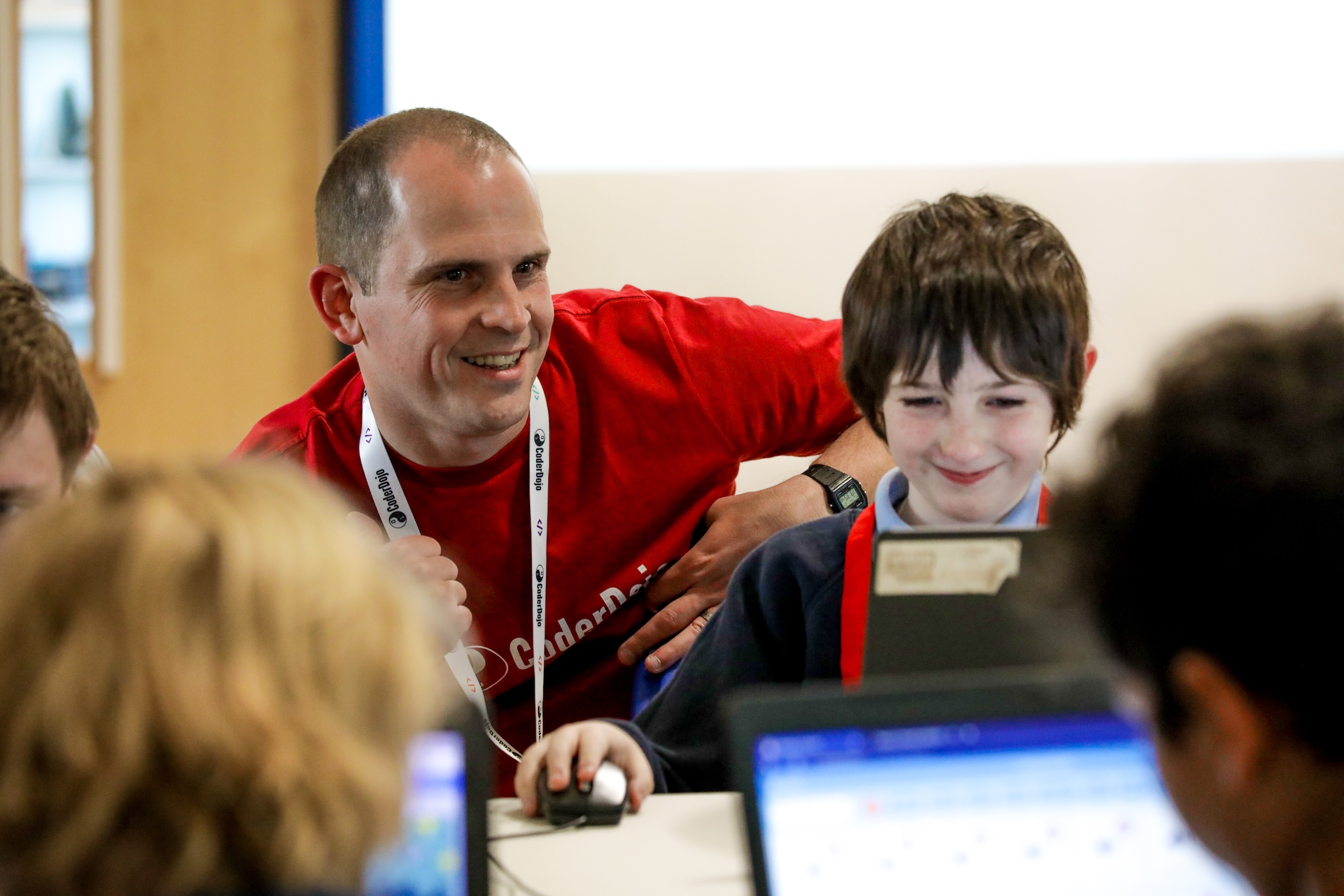
4 years ago I decided to start a new CoderDojo in my community. The logic was simple: to provide the best support I could to the CoderDojo community, I wanted to understand what it was really like to be a CoderDojo Champion. And so, with the help of local volunteers, Selby CoderDojo was born. We had an amazing response from the community, we’ve been running every month since then to meet demand, and we’ve been the catalyst for the launch of six other local clubs reaching hundreds of young people every month.

CoderDojos embrace fun, creativity, collaboration, and openness

This month, Selby CoderDojo celebrated its 40th Dojo event. 40 opportunities for young people to come together, have fun, learn new skills and build new creations. 40 opportunities to see that moment a young person lets out a scream of joy, claps their hands, and jumps up and down when they turn on an LED for the first time. 40 opportunities for young people and parents to genuinely collaborate on a project, and 40 opportunities to see young people grow as they find their voice and proudly show off their new creations to a room full of people. When you create a space for young people to have fun and get creative with technology on their terms, there’s so much joy to see.

15 years of CoderDojo

This year we celebrate 15 years since the first-ever CoderDojo event in Cork, Ireland. I want to say a huge thanks to co-founders James Whelton and Bill Liao for starting a movement that embraces the power of non-formal education and continues to impact so many young people, including those right here in my community in Selby. We also owe a massive thank you to every Mentor, Champion, supporter, funder, parent, and of course every single Ninja past and present who have made CoderDojo what it is.

CoderDojo create opportunities to learn and get creative with tech for tens of thousands of kids

Today there are over 600 active CoderDojos running around the world, creating opportunities for tens of thousands of young people. CoderDojos are part of the Code Club movement, the world’s largest coordinated network of free coding clubs for young people, with over 10,000 Code Clubs meeting monthly.

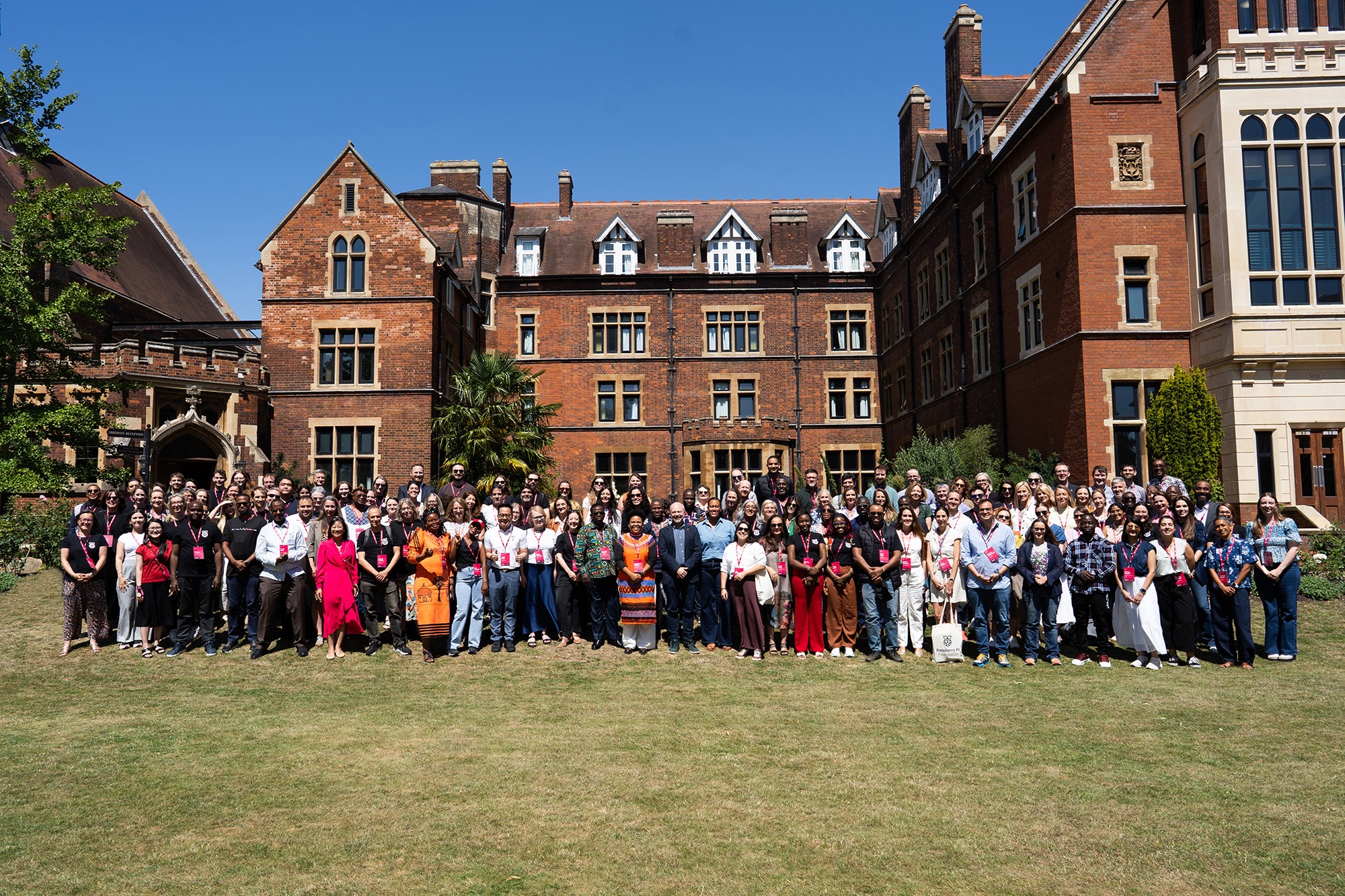
Representatives from Dojos around the world took part in our global partners summit Raspberry Fields earlier this month

Earlier this month we held Raspberry Fields, our first global partners summit in Cambridge. It was great to have representatives from Dojos around the world join in important conversations about the future of computing education and the impact of AI. Undoubtedly schools play a significant role in preparing young people for the future, but not every child thrives at or even attends school. Every conversation, panel discussion, and workshop at Raspberry Fields reminded me that the original CoderDojo approach — championing non-formal education and embracing fun, creativity, collaboration, and openness — is still immensely important. I’m really proud that these values remain a core part of CoderDojo and the wider Code Club movement today.

Continuing the mission

Raspberry Fields was a useful reminder that even in the age of AI, it’s imperative that we encourage and enable young people to learn to code. We need to help young people understand, question and shape the AI systems affecting their lives, and we need to think carefully about how we reach young people who can’t or don’t access school. We need even more clubs that will continue the mission that CoderDojo began.

The 2025 DojoCon event in the Netherlands welcomed our CEO Philip Colligan among its guests

Launching a CoderDojo is one of the most rewarding things I’ve ever done. I’m proud to be part of both CoderDojo and Code Club, and I’m proud that we continue to support all of our clubs, no matter what name they choose. If you’d like to join or launch a club in your community, head to the Code Club website to get started — I promise you won’t regret it!

Thank you to James, Bill, and everyone who has been part of the CoderDojo journey. Be cool!


PS For those of you reading this in the community in Ireland, where CoderDojo first began all those years ago, I can’t wait to hear your experiences and learn together in Athlone at Meet, Learn, Make this October.

The post From one club to a global movement: Celebrating 15 years of CoderDojo! appeared first on Raspberry Pi Foundation.

Normalizing NVIDIA Vera Benchmarks to AMD EPYC Turin A Framework

Post Syndicated from Patrick Kennedy original https://www.servethehome.com/normalizing-nvidia-vera-benchmarks-to-amd-epyc-turin-a-framework/

We go into a framework for normalizing NVIDIA Vera benchmarks from its latest whitepaper to some of AMD EPYC Turin’s other parts

The post Normalizing NVIDIA Vera Benchmarks to AMD EPYC Turin A Framework appeared first on ServeTheHome.

Building a serverless AI assistant at Pelago: concept to care in two weeks

Post Syndicated from Anton Aleksandrov original https://aws.amazon.com/blogs/architecture/building-a-serverless-ai-assistant-at-pelago-concept-to-care-in-two-weeks/

Healthcare organizations face a critical scaling challenge – how to maintain deeply personalized patient interactions as member bases grow, without overwhelming care teams or compromising quality. At Pelago, a digital health company specializing in substance use disorder support, the engineering team found a way to build an AI-powered solution to address this challenge using AWS services in just two weeks.

In this post, you will learn how Pelago used AWS serverless and AI services, such as Amazon Bedrock and AWS Lambda, to build and deploy an event-driven AI assistant. The result is a service that generates contextually aware suggested considerations for the care team. This system preserves the human-in-the-loop oversight that healthcare demands while removing months of traditional development work and overhead of managing complex infrastructure.

The challenge overview

Pelago is a digital clinic for substance use treatment that provides comprehensive support including 1:1 coaching, medication management, and behavioral therapy. It serves members across the US to support recovery journeys for alcohol, tobacco, stimulants, cannabis, and opioid use disorder, and adjacent behaviors often associated with substance use. The Pelago care team coaches members through substance use recovery. A single coach may hold active conversations with dozens of members at once. Each message a coach sends needs to reflect weeks of prior context and drafting that response manually from scratch takes time the care team doesn’t always have.

When the Pelago engineering team set out to build an AI assistant for the care team, they faced a set of interconnected constraints. Behavioral health conversations build over weeks and months. Coaches need to account for that history in every reply. An AI assistant that only understands the most recent messages isn’t useful here – it must grasp the full long-term conversation history. That depth of context is also why human oversight is non-negotiable. The system had to generate suggestions for Pelago’s care team, not automated responses. Every piece of feedback must be read, evaluated, and adapted by a human coach before it reaches a member.

Protected Health Information (PHI) requirements added another layer of complexity – data could not leave Pelago’s AWS environment. All AI integrations must operate entirely within existing Amazon Virtual Private Cloud (VPC) infrastructure with no exposure to the public internet.

Beyond compliance and clinical safety, there were also practical constraints. Care team members need information the moment they open a conversation but generating relevant content processing dozens, sometimes hundreds, of prior messages through a large language model. A long wait was not acceptable when coaches open dozens of conversations per shift.

The engineering team needed to deliver all this quickly with full audit trails and security controls in a highly regulated environment. They had to solve the problem of pre-generating contextual suggestions without blocking the user experience while maintaining the compliance posture.

Solution design: Event-driven serverless architecture

The Pelago team separated concerns using event-driven architecture. The care team needed suggested responses instantly when accessing the system but generating them synchronously in real-time blocked the user experience for tens of seconds because of LLM processing time. By treating each incoming member message as an asynchronous event, the system can fan out processing to independent consumers without coupling them to the message delivery path. A new consumer, such as the AI assistant, can be added without affecting existing components or code. And because each processing step runs in its own Lambda function, a spike in inference requests doesn’t affect message delivery or processing.

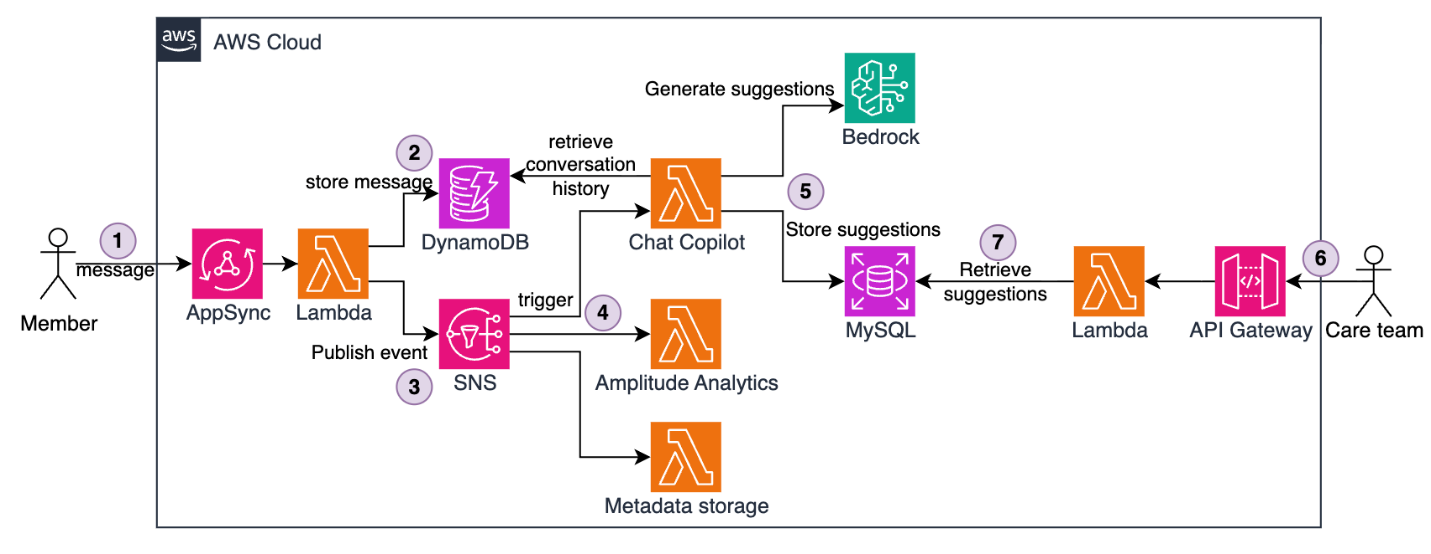
End-to-end solution architecture showing the event-driven flow from member messages through SNS fanout to AI suggestion generation and retrieval

Figure 1 — The full end-to-end solution architecture

The architecture uses Amazon Simple Notification Service (Amazon SNS) for message fanout and Lambda functions for processing. Here’s how it works:

  1. Members send messages through AWS AppSync, forwarded to a Lambda function.
  2. The Lambda function stores messages in an Amazon DynamoDB table.
  3. The Lambda function publishes messages to an SNS topic.
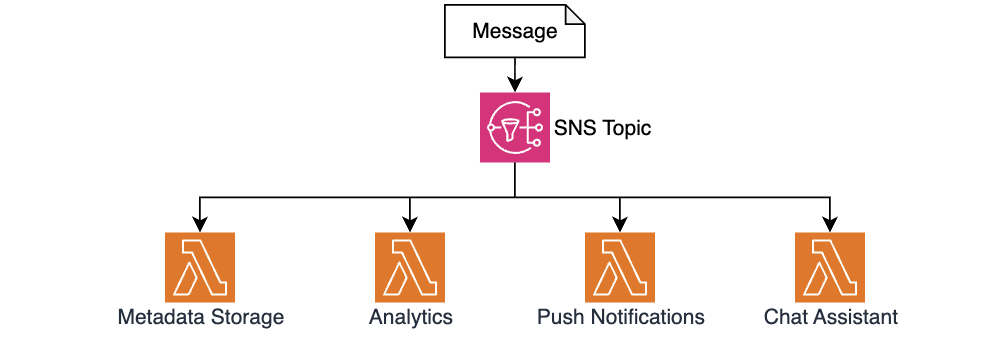
  4. SNS fans out messages to multiple Lambda subscriber functions, such as Metadata storage, Amplitude analytics, and Chat assistant responsible for AI-based suggested message generation.
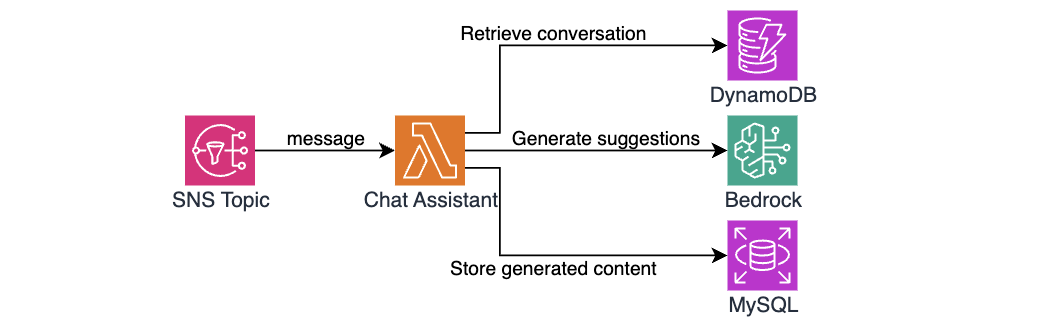
  5. The Chat Assistant Lambda runs asynchronously. It retrieves the full conversation history from DynamoDB, invokes Amazon Bedrock to generate contextual suggestions, and stores the result in MySQL hosted on Amazon Relational Database Service (Amazon RDS). This flow happens in the background without blocking user experience and typically completing in under 10 seconds.
  6. When a care team member opens a conversation (often minutes or hours later), the request flows through Amazon API Gateway.
  7. A Lambda function retrieves pre-generated suggestions from MySQL.
  8. The front end displays the suggestion in under 100 milliseconds.

This pattern keeps message delivery, analytics, and AI generation decoupled. Each member’s PHI is processed separately and stays fully within the Pelago AWS boundary. A failure or spike in feedback generation for one member does not disrupt or impact processing for other members.

Because inference happens asynchronously in the background, the care team does not wait for LLM processing. Suggested messages are pre-generated, stored, and ready to use when a coach opens a conversation. This keeps retrieval times under 100 milliseconds regardless of how long the AI generation took.

This serverless architecture also provides organic scaling. Each Lambda function automatically scales horizontally based on current traffic – scaling up during spikes and back down when demand drops, with no pre-provisioning or scaling configuration required. Adding a new event-driven downstream capability, like the AI assistant itself, requires only a new SNS subscription with no changes to existing message-publishing or handling code.

Event-driven fanout with Amazon SNS

The foundation of the Pelago chat architecture is an SNS topic that acts as a message bus for conversation events. SNS is a fully managed pub/sub messaging service. When a message is published to a topic, SNS automatically delivers it to subscribed consumers in parallel. This means a single incoming message can trigger multiple independent processing steps simultaneously.

When a user or coach sends a message, the system publishes a standardized payload to the SNS topic, for example:

{
    "identityId": "085cdc3c-f223-419a-9c80-5535c9983549",
    "messageId": "7a4d2b8e-1c9f-4e3a-b5d6-8f2e1a3c4b5d",
    "sender": "user",
    "timestamp": "2025-07-15T14:32:18Z",
    "conversationId": "conv-abc123"
}

SNS delivers this event to four Lambda function subscribers. The Metadata Storage Lambda writes message metadata to MySQL for reporting. The Analytics Lambda sends events to Amplitude for product analytics. The Push Notification Lambda triggers mobile notifications for coaches. The Chat Assistant Lambda generates Assistant-based suggestions using Amazon Bedrock.

SNS topic delivering events to four Lambda subscriber functions for metadata storage, analytics, push notifications, and AI suggestion generation

Figure 2 — Using SNS for message fan-out and decoupled processing

This fanout pattern allowed the Pelago team to add the AI Chat Assistant feature with zero changes to existing message-handling code. The team simply created a new Lambda function and added it as an SNS subscription. The publisher doesn’t need to know how many consumers exist or what they do, so new capabilities can be built and deployed independently without risking regressions in the message processing path.

Async AI generation with Amazon Bedrock

The Chat Assistant Lambda handles computationally expensive AI generation. The function implements a multi-step workflow:

Chat Assistant Lambda workflow showing conversation history retrieval from DynamoDB, context formatting, Bedrock inference, and suggestion storage

Figure 3 — The chat assistant architecture and workflow

The first step is to retrieve conversation history. Behavioral health conversations can span dozens or even hundreds of messages over weeks, and the AI assistant needs all that context to generate a useful suggestion to Pelago’s care team. The function queries DynamoDB for previous messages in the conversation. The DynamoDB single-digit millisecond read performance means even lengthy conversations (50+ messages) are typically retrieved in under 20ms.

# Simplified pseudocode
conversation_messages = dynamodb.query(
    TableName='conversations-messages',
    IndexName='identityId-index',
    KeyConditionExpression='identityId = :id',
    ExpressionAttributeValues={':id': identity_id}
)

The next step is to prepare and format context for inference. The function transforms the retrieved messages structure into a conversation history format that provides Amazon Bedrock with full context, for example:

[User]: Hi, I'm struggling with cravings today

[Coach]: I hear you. Cravings can be really tough. What's happening right now that's making this moment difficult?

[User]: I'm at a party and everyone is drinking. I feel left out.

[Coach]: That's a really challenging situation, and it's completely understandable to feel that way...

[User]: I ended up leaving early. Feeling proud but also kind of sad.

After formatting the conversation, the Lambda function uses the Amazon Bedrock Runtime API to invoke Claude models. The prompt engineering focuses on empathy and validation – it helps the model acknowledge what the member is feeling rather than jumping to advice. It is tuned to maintain contextual continuity – picking up things the member mentioned in earlier messages instead of treating each exchange without prior context. It also steers the model away from false optimism or dismissive language and keeps suggestions short, more like a text message than an email. This matches how coaching conversations flow on the application.

response = bedrock_runtime.invoke_model(
    body=json.dumps({
        "anthropic_version": "bedrock-2023-05-31",
        "max_tokens": 4096,
        "temperature": 0.7,
        "system": "You are a supportive coach...",
        "messages": [{
            "role": "user",
            "content": f"""
Here is the conversation history:

<chatHistory>
{chat_history_string}
</chatHistory>

Provide the next coach message suggestion as plain text.
"""
        }]
    })
)

Measuring system performance and business impact

This entire flow, from SNS trigger to a suggestion stored in MySQL, typically completes in less than 4 seconds, well within acceptable processing time. When a care team member opens a conversation on the dashboard, the front end instantly retrieves pre-generated suggested messages. Total response time perceived by the care team is under 100 milliseconds.

The Pelago team went from technical designs to first production deployment in 2 weeks. Two days on architecture and model selection with the clinical team, three days building the core Lambdas, three days on integration testing and prompt refinement, and two final days on deployment and monitoring.

The system delivered strong early results. From the business perspective, response preparation times dropped 40% on average, and the care team rated 79.6% of AI suggestions as helpful, based on internal Pelago measurements. Operationally, using serverless services introduced no new overhead. There was no new infrastructure to manage, servers to patch, or scaling configurations to maintain. The architecture successfully handled an 8x message volume spike during a seasonal campaign without configuration changes.

Implementation details and key decisions

With the core event-driven architecture in place, the Pelago team made several implementation choices to satisfy healthcare industry requirements, handle traffic patterns unique to the application, and maintain reliability across the system.

PHI must stay secured

Pelago uses multiple AWS security features to maintain HIPAA eligibility while using AI models. One requirement is for PHI to never traverse the public internet. To address this, the Pelago team uses VPC endpoints for Amazon Bedrock, so model invocations stay within the private network. The Boto3 client in the Python Lambda automatically routes traffic through the private endpoint. Data is encrypted at rest on DynamoDB and RDS, service communications use TLS 1.2+, and IAM policies are scoped with least-privilege permissions to specific resource actions and ARNs. Audit logs of model invocations are emitted to Amazon CloudWatch and capture message IDs only, not content.

Polyglot cross-runtime implementation

The team used Python for Lambda functions that invoke Amazon Bedrock models. Boto3 native Amazon Bedrock support and simpler string manipulation made Python the right choice for building and iterating on prompts. The retrieval function is written in TypeScript to stay consistent with most of the Pelago backend code and to reuse shared libraries and Zod schemas for type-safe API contracts. This split let the team use the best language for each job without forcing a single runtime across the entire system.

Spiky traffic and pay-per-invocation compute

The Pelago application serves heavily US-based traffic. Message volume concentrates during weekday working hours, with peak hours seeing 10x or more the volume of quiet periods. The pay-per-invocation model of Lambda fits this well. During a Monday morning surge, Lambda scales out automatically with no pre-provisioning required. During off-peak hours, Lambda functions automatically scale down, so Pelago avoids idle compute costs. Using alternative long-lived compute would mean either over-provisioning for peak load or maintaining auto scaling policies that can lag during sudden spikes. With Lambda, the solution costs are directly proportional to member engagement with no idle cost.

Picking the right storage and handling idempotency

The team chose to use DynamoDB for conversation messages and MySQL for assistant suggestions based on different access patterns of each scenario. Conversation messages require high write throughput (100+ writes/sec at peak), single-digit millisecond reads, and automatic scaling. These requirements made DynamoDB a good fit. Assistant suggestions have a lighter write load (10-20 writes/sec) but need structured queries, foreign key relationships, and nested analytics joins that a relational database supports naturally.

Because SNS can deliver messages more than once, the Chat Assistant Lambda checks MySQL for an existing message before generating a new one. This idempotency check helps prevent duplicate Amazon Bedrock invocations, which would waste compute and could surface conflicting suggestions to coaches. If an Amazon Bedrock invocation fails because of throttling or model unavailability, the function logs the error without blocking message flow. A built-in retry mechanism handles transient failures, so suggestions are eventually generated even when Amazon Bedrock experiences momentary capacity constraints.

Monitoring and observability

The team tracks multiple business and operational metrics. CloudWatch metrics capture suggestion generation latency, which helps the team identify when model response times exceed acceptable thresholds. Retrieval rate measures what percentage of generated message suggestions are used by coaches. This gives insights into how well the async timing aligns with real usage patterns. The system also allows coaches to rate each suggestion with thumbs up or down. These ratings are stored in MySQL for future prompt tuning and model evaluation. CloudWatch alarms monitor error rates for Amazon Bedrock throttling and database connection failures. These alarms alert the engineering team before operational issues impact the care team experience.

Conclusion

Managed AI services like Amazon Bedrock and serverless architectures let healthcare organizations move quickly while maintaining compliance controls. The Pelago chat assistant shows what’s possible when you combine serverless event-driven processing with async AI generation and fast synchronous retrieval. The key patterns that made this work are SNS fanout to decouple processing and make new features straightforward to add, pre-generating message suggestions asynchronously so the care team does not wait, VPC endpoints to keep PHI off the public internet, and starting with foundation models and prompt engineering instead of spending months on custom model training.

The Pelago journey from concept to production deployment shows how small engineering teams in regulated industries can balance moving fast and maintaining their compliance posture.


About the authors

[$] Save and restore may be coming to GNOME

Post Syndicated from jzb original https://lwn.net/Articles/1083750/

One of the features that users often miss when moving from X11 to Wayland is
the ability to save and restore the position of windows between sessions. At GUADEC 2026, held in
A Coruña, Spain, Adrian Vovk provided an overview of work that has gone
into providing a platform-wide save and restore framework for GNOME. After two
failed attempts at landing an API, he believes that the third try will be the
one to succeed—though not in time for the upcoming GNOME 51 release
due in October.

PyPI now rejects new files after 14 days

Post Syndicated from jzb original https://lwn.net/Articles/1084218/

Python Software Foundation security developer-in-residence Seth
Larson has announced
that the Python Package Index (PyPI) will now reject new files that
are uploaded to releases older than 14 days. The restriction is to
prevent the poisoning of old releases if publishing tokens or
workflows of PyPI projects are compromised.

The discussion
of this behavior began
during PEP 740 (Digital Attestations) back in January
2024. The discussion was restarted
in March 2026
after the popular packages LiteLLM
and Telnyx were compromised
. These packages were compromised due to a “mutable
reference
” in these projects’ usage of the Trivy GitHub Action.

Originally the discussion stalled due to some projects depending on this behavior
to add support for new Python versions to already-published releases. To quantify how
disruptive this change would be to existing workflows, the PyPI database was queried
for projects
that have published new files to old releases
(bucketed by number of days since
the release). Later, specifically cp314 wheels were queried for the top
15,000 packages, revealing that only
56 projects of 15,000
had published a 3.14-compatible wheel more than 14 days
after a release was available.

LWN covered the LiteLLM compromise
in March.

The collective thoughts of the interwebz