Simplify access management with Amazon Redshift and AWS Lake Formation for users in an External Identity Provider

Post Syndicated from Harshida Patel original https://aws.amazon.com/blogs/big-data/simplify-access-management-with-amazon-redshift-and-aws-lake-formation-for-users-in-an-external-identity-provider/

Many organizations use identity providers (IdPs) to authenticate users, manage their attributes, and group memberships for secure, efficient, and centralized identity management. You might be modernizing your data architecture using Amazon Redshift to enable access to your data lake and data in your data warehouse, and are looking for a centralized and scalable way to define and manage the data access based on IdP identities. AWS Lake Formation makes it straightforward to centrally govern, secure, and globally share data for analytics and machine learning (ML). Currently, you may have to map user identities and groups to AWS Identity and Access Management (IAM) roles, and data access permissions are defined at the IAM role level within Lake Formation. This setup is not efficient because setting up and maintaining IdP groups with IAM role mapping as new groups are created is time consuming and it makes it difficult to derive what data was accessed from which service at that time.

Amazon Redshift, Amazon QuickSight, and Lake Formation now integrate with the new trusted identity propagation capability in AWS IAM Identity Center to authenticate users seamlessly across services. In this post, we discuss two use cases to configure trusted identity propagation with Amazon Redshift and Lake Formation.

Solution overview

Trusted identity propagation provides a new authentication option for organizations that want to centralize data permissions management and authorize requests based on their IdP identity across service boundaries. With IAM Identity Center, you can configure an existing IdP to manage users and groups and use Lake Formation to define fine-grained access control permissions on catalog resources for these IdP identities. Amazon Redshift supports identity propagation when querying data with Amazon Redshift Spectrum and with Amazon Redshift Data Sharing, and you can use AWS CloudTrail to audit data access by IdP identities to help your organization meet their regulatory and compliance requirements.

With this new capability, users can connect to Amazon Redshift from QuickSight with a single sign-on experience and create direct query datasets. This is enabled by using IAM Identity Center as a shared identity source. With trusted identity propagation, when QuickSight assets like dashboards are shared with other users, the database permissions of each QuickSight user are applied by propagating their end-user identity from QuickSight to Amazon Redshift and enforcing their individual data permissions. Depending on the use case, the author can apply additional row-level and column-level security in QuickSight.

The following diagram illustrates an example of the solution architecture.

In this post, we walk through how to configure trusted identity propagation with Amazon Redshift and Lake Formation. We cover the following use cases:

  • Redshift Spectrum with Lake Formation
  • Redshift data sharing with Lake Formation

Prerequisites

This walkthrough assumes you have set up a Lake Formation administrator role or a similar role to follow along with the instructions in this post. To learn more about setting up permissions for a data lake administrator, see Create a data lake administrator.

Additionally, you must create the following resources as detailed in Integrate Okta with Amazon Redshift Query Editor V2 using AWS IAM Identity Center for seamless Single Sign-On:

  • An Okta account integrated with IAM Identity Center to sync users and groups
  • A Redshift managed application with IAM Identity Center
  • A Redshift source cluster with IAM Identity Center integration enabled
  • A Redshift target cluster with IAM Identity Center integration enabled (you can skip the section to set up Amazon Redshift role-based access)
  • Users and groups from IAM Identity Center assigned to the Redshift application
  • A permission set assigned to AWS accounts to enable Redshift Query Editor v2 access
  • Add the below permission to the IAM role used in Redshift managed application for integration with IAM Identity Center.
    {
        "Version": "2012-10-17",
        "Statement": [
            {
                "Effect": "Allow",
                "Action": [
                    "lakeformation:GetDataAccess",
                    "glue:GetTable",
                    "glue:GetTables",
                    "glue:SearchTables",
                    "glue:GetDatabase",
                    "glue:GetDatabases",
                    "glue:GetPartitions",
                    "lakeformation:GetResourceLFTags",
                    "lakeformation:ListLFTags",
                    "lakeformation:GetLFTag",
                    "lakeformation:SearchTablesByLFTags",
                    "lakeformation:SearchDatabasesByLFTags"
               ],
                "Resource": "*"
            }
        ]
    }

Use case 1: Redshift Spectrum with Lake Formation

This use case assumes you have the following prerequisites:

  1. Log in to the AWS Management Console as an IAM administrator.
  2. Go to CloudShell or your AWS CLI and run the following AWS CLI command, providing your bucket name to copy the data:
aws s3 sync s3://redshift-demos/data/NY-Pub/ s3://<bucketname>/data/NY-Pub/

In this post, we use an AWS Glue crawler to create the external table ny_pub stored in Apache Parquet format in the Amazon S3 location s3://<bucketname>/data/NY-Pub/. In the next step, we create the solution resources using AWS CloudFormation to create a stack named CrawlS3Source-NYTaxiData in us-east-1.

  1. Download the .yml file or launch the CloudFormation stack.

The stack creates the following resources:

  • The crawler NYTaxiCrawler along with the new IAM role AWSGlueServiceRole-RedshiftAutoMount
  • The AWS Glue database automountdb

When the stack is complete, continue with the following steps to finish setting up your resources:

  1. On the AWS Glue console, under Data Catalog in the navigation pane, choose Crawlers.
  2. Open NYTaxiCrawler and choose Edit.
  1. Under Choose data sources and classifiers, choose Edit.
  1. For Data source, choose S3.
  2. For S3 path, enter s3://<bucketname>/data/NY-Pub/.
  3. Choose Update S3 data source.
  1. Choose Next and choose Update.
  2. Choose Run crawler.

After the crawler is complete, you can see a new table called ny_pub in the Data Catalog under the automountdb database.

After you create the resources, complete the steps in the next sections to set up Lake Formation permissions on the AWS Glue table ny_pub for the sales IdP group and access them via Redshift Spectrum.

Enable Lake Formation propagation for the Redshift managed application

Complete the following steps to enable Lake Formation propagation for the Redshift managed application created in Integrate Okta with Amazon Redshift Query Editor V2 using AWS IAM Identity Center for seamless Single Sign-On:

  1. Log in to the console as admin.
  2. On the Amazon Redshift console, choose IAM Identity Center connection in the navigation pane.
  3. Select the managed application that starts with redshift-iad and choose Edit.
  1. Select Enable AWS Lake Formation access grants under Trusted identity propagation and save your changes.

Set up Lake Formation as an IAM Identity Center application

Complete the following steps to set up Lake Formation as an IAM Identity Center application:

  1. On the Lake Formation console, under Administration in the navigation pane, choose IAM Identity Center integration.
  1. Review the options and choose Submit to enable Lake Formation integration.

The integration status will update to Success.
Alternatively, you can run the following command:

aws lakeformation create-lake-formation-identity-center-configuration 
--cli-input-json '{"CatalogId": "<catalog_id>","InstanceArn": "<identitycenter_arn>"}'

Register the data with Lake Formation

In this section, we register the data with Lake Formation. Complete the following steps:

  1. On the Lake Formation console, under Administration in the navigation pane, choose Data lake locations.
  2. Choose Register location.
  3. For Amazon S3 path, enter the bucket where the table data resides (s3://<bucketname>/data/NY-Pub/).
  4. For IAM role, choose a Lake Formation user-defined role. For more information, refer to Requirements for roles used to register locations.
  5. For Permission mode, select Lake Formation.
  6. Choose Register location.

Next, verify that the IAMAllowedPrincipal group doesn’t have permission on the database.

  1. On the Lake Formation console, under Data catalog in the navigation pane, choose Databases.
  2. Select automountdb and on the Actions menu, choose View permissions.
  3. If IAMAllowedPrincipal is listed, select the principal and choose Revoke.
  4. Repeat these steps to verify permissions for the table ny_pub.

Grant the IAM Identity Center group permissions on the AWS Glue database and table

Complete the following steps to grant database permissions to the IAM Identity Center group:

  1. On the Lake Formation console, under Data catalog in the navigation pane, choose Databases.
  2. Select the database automountdb and on the Actions menu, choose Grant.
  3. Choose Grant database.
  4. Under Principals, select IAM Identity Center and choose Add.
  5. In the pop-up window, if this is the first time assigning users and groups, choose Get started.
  6. Enter the IAM Identity Center group in the search bar and choose the group.
  7. Choose Assign.
  8. Under LF-Tags or catalog resources, automountdb is already selected for Databases.
  9. Select Describe for Database permissions.
  10. Choose Grant to apply the permissions.

Alternatively, you can run the following command:

aws lakeformation grant-permissions --cli-input-json '
{
    "Principal": {
        "DataLakePrincipalIdentifier": "arn:aws:identitystore:::group/<identitycenter_group_name>"
    },
    "Resource": {
        "Database": {
            "Name": "automountdb"
        }
    },
    "Permissions": [
        "DESCRIBE"
    ]
}'

Next, you grant table permissions to the IAM Identity Center group.

  1. Under Data catalog in the navigation pane, choose Databases.
  2. Select the database automountdb and on the Actions menu, choose Grant.
  3. Under Principals, select IAM Identity Center and choose Add.
  4. Enter the IAM Identity Center group in the search bar and choose the group.
  5. Choose Assign.
  6. Under LF-Tags or catalog resources, automountdb is already selected for Databases.
  7. For Tables, choose ny_pub.
  8. Select Describe and Select for Table permissions.
  9. Choose Grant to apply the permissions.

Alternatively, you can run the following command:

aws lakeformation grant-permissions --cli-input-json '
{
    "Principal": {
        "DataLakePrincipalIdentifier": "arn:aws:identitystore:::group/<identitycenter_group_name>"
    },
    "Resource": {
        "Table": {
            "DatabaseName": "automountdb",
            "Name": "ny_pub "
        }
    },
    "Permissions": [
        "SELECT",
        "DESCRIBE"

    ]
}'

Set up Redshift Spectrum table access for the IAM Identity Center group

Complete the following steps to set up Redshift Spectrum table access:

  1. Sign in to the Amazon Redshift console using the admin role.
  2. Navigate to Query Editor v2.
  3. Choose the options menu (three dots) next to the cluster and choose Create connection.
  4. Connect as the admin user and run the following commands to make the ny_pub data in the S3 data lake available to the sales group:
    create external schema if not exists nyc_external_schema from DATA CATALOG database 'automountdb' catalog_id '<accountid>'; 
    grant usage on schema nyc_external_schema to role "awsidc:awssso-sales"; 
    grant select on all tables in schema nyc_external_schema to role "awsidc:awssso- sales";

Validate Redshift Spectrum access as an IAM Identity Center user

Complete the following steps to validate access:

  1. On the Amazon Redshift console, navigate to Query Editor v2.
  2. Choose the options menu (three dots) next to the cluster and choose Create connection
  3. Choose select IAM Identity Center option for Connect option. Provide Okta user name and password in the browser pop-up.
  4. Once connected as a federated user, run the following SQL commands to query the ny_pub data lake table:
select * from nyc_external_schema.ny_pub;

Use Case 2: Redshift data sharing with Lake Formation

This use case assumes you have IAM Identity Center integration with Amazon Redshift set up, with Lake Formation propagation enabled as per the instructions provided in the previous section.

Create a data share with objects and share it with the Data Catalog

Complete the following steps to create a data share:

  1. Sign in to the Amazon Redshift console using the admin role.
  2. Navigate to Query Editor v2.
  3. Choose the options menu (three dots) next to the Redshift source cluster and choose Create connection.
  4. Connect as admin user using Temporarily credentials using a database user name option and run the following SQL commands to create a data share:
    CREATE DATASHARE salesds; 
    ALTER DATASHARE salesds ADD SCHEMA sales_schema; 
    ALTER DATASHARE salesds ADD TABLE store_sales; 
    GRANT USAGE ON DATASHARE salesds TO ACCOUNT ‘<accountid>’ via DATA CATALOG;

  5. Authorize the data share by choosing Data shares in the navigation page and selecting the data share salesdb.
  6. Select the data share and choose Authorize.

Now you can register the data share in Lake Formation as an AWS Glue database.

  1. Sign in to the Lake Formation console as the data lake administrator IAM user or role.
  2. Under Data catalog in the navigation pane, choose Data sharing and view the Redshift data share invitations on the Configuration tab.
  3. Select the datashare salesds and choose Review Invitation.
  4. Once you review the details choose Accept.
  5. Provide a name for the AWS Glue database (for example, salesds) and choose Skip to Review and create.

After the AWS Glue database is created on the Redshift data share, you can view it under Shared databases.

Grant the IAM Identity Center user group permission on the AWS Glue database and table

Complete the following steps to grant database permissions to the IAM Identity Center group:

  1. On the Lake Formation console, under Data catalog in the navigation pane, choose Databases.
  2. Select the database salesds and on the Actions menu, choose Grant.
  3. Choose Grant database.
  4. Under Principals, select IAM Identity Center and choose Add.
  5. In the pop-up window, enter the IAM Identity Center group awssso in the search bar and choose the awssso-sales group.
  6. Choose Assign.
  7. Under LF-Tags or catalog resources, salesds is already selected for Databases.
  8. Select Describe for Database permissions.
  9. Choose Grant to apply the permissions.

Next, grant table permissions to the IAM Identity Center group.

  1. Under Data catalog in the navigation pane, choose Databases.
  2. Select the database salesds and on the Actions menu, choose Grant.
  3. Under Principals, select IAM Identity Center and choose Add.
  4. In the pop-up window, enter the IAM Identity Center group awssso in the search bar and choose the awssso-sales group.
  5. Choose Assign.
  6. Under LF-Tags or catalog resources, salesds is already selected for Databases.
  7. For Tables, choose sales_schema.store_sales.
  8. Select Describe and Select for Table permissions.
  9. Choose Grant to apply the permissions.

Mount the external schema in the target Redshift cluster and enable access for the IAM Identity Center user

Complete the following steps:

  1. Sign in to the Amazon Redshift console using the admin role.
  2. Navigate to Query Editor v2.
  3. Connect as an admin user and run the following SQL commands to mount the AWS Glue database customerds as an external schema and enable access to the sales group:
create external schema if not exists sales_datashare_schema from DATA CATALOG database salesds catalog_id '<accountid>';
create role "awsidc:awssso-sales"; # If the role was not already created 
grant usage on schema sales_datashare_schema to role "awsidc:awssso-sales";
grant select on all tables in schema sales_datashare_schema to role "awsidc:awssso- sales";

Access Redshift data shares as an IAM Identity Center user

Complete the following steps to access the data shares:

  1. On the Amazon Redshift console, navigate to Query Editor v2.
  2. Choose the options menu (three dots) next to the cluster and choose Create connection.
  3. Connect with IAM Identity Center and the provide IAM Identity Center user and password in the browser login.
  4. Run the following SQL commands to query the data lake table:
SELECT * FROM "dev"."sales_datashare_schema"."sales_schema.store_sales";

With Transitive Identity Propagation we can now audit user access to dataset from Lake Formation dashboard and service used for accessing the dataset providing complete trackability. For federated user Ethan whose Identity Center User ID is ‘459e10f6-a3d0-47ae-bc8d-a66f8b054014’ you can see the below event log.

"eventSource": "lakeformation.amazonaws.com",
    "eventName": "GetDataAccess",
    "awsRegion": "us-east-1",
    "sourceIPAddress": "redshift.amazonaws.com",
    "userAgent": "redshift.amazonaws.com",
    "requestParameters": {
        "tableArn": "arn:aws:glue:us-east-1:xxxx:table/automountdb/ny_pub",
        "durationSeconds": 3600,
        "auditContext": {
            "additionalAuditContext": "{\"invokedBy\":\"arn:aws:redshift:us-east-1:xxxx:dbuser:redshift-consumer/awsidc:[email protected]\", \"transactionId\":\"961953\", \"queryId\":\"613842\", \"isConcurrencyScalingQuery\":\"false\"}"
        },
        "cellLevelSecurityEnforced": true
    },
    "responseElements": null,
    "additionalEventData": {
        "requesterService": "REDSHIFT",
        "LakeFormationTrustedCallerInvocation": "true",
        "lakeFormationPrincipal": "arn:aws:identitystore:::user/459e10f6-a3d0-47ae-bc8d-a66f8b054014",
        "lakeFormationRoleSessionName": "AWSLF-00-RE-726034267621-K7FUMxovuq"
    }

Clean up

Complete the following steps to clean up your resources:

  1. Delete the data from the S3 bucket.
  2. Delete the Lake Formation application and the Redshift provisioned cluster that you created for testing.
  3. Sign in to the CloudFormation console as the IAM admin used for creating the CloudFormation stack, and delete the stack you created.

Conclusion

In this post, we covered how to simplify access management for analytics by propagating user identity across Amazon Redshift and Lake Formation using IAM Identity Center. We learned how to get started with trusted identity propagation by connecting to Amazon Redshift and Lake Formation. We also learned how to configure Redshift Spectrum and data sharing to support trusted identity propagation.

Learn more about IAM Identity Center with Amazon Redshift and AWS Lake Formation. Leave your questions and feedback in the comments section.


About the Authors

Harshida Patel is a Analytics Specialist Principal Solutions Architect, with AWS.

Srividya Parthasarathy is a Senior Big Data Architect on the AWS Lake Formation team. She enjoys building data mesh solutions and sharing them with the community.

Maneesh Sharma is a Senior Database Engineer at AWS with more than a decade of experience designing and implementing large-scale data warehouse and analytics solutions. He collaborates with various Amazon Redshift Partners and customers to drive better integration.

Poulomi Dasgupta is a Senior Analytics Solutions Architect with AWS. She is passionate about helping customers build cloud-based analytics solutions to solve their business problems. Outside of work, she likes travelling and spending time with her family.

Safeguarding your brand identity: Logo Matching for Brand Protection

Post Syndicated from Alexandra Moraru http://blog.cloudflare.com/author/alexandra/ original https://blog.cloudflare.com/safeguarding-your-brand-identity-logo-matching-for-brand-protection


In an era dominated by digital landscapes, protecting your brand’s identity has become more challenging than ever. Malicious actors regularly build lookalike websites, complete with official logos and spoofed domains, to try to dupe customers and employees. These kinds of phishing attacks can damage your reputation, erode customer trust, or even result in data breaches.

In March 2023 we introduced Cloudflare’s Brand and Phishing Protection suite, beginning with Brand Domain Name Alerts. This tool recognizes so-called “confusable” domains (which can be nearly indistinguishable from their authentic counterparts) by sifting through the trillions of DNS requests passing through Cloudflare’s DNS resolver, 1.1.1.1. This helps brands and organizations stay ahead of malicious actors by spotting suspicious domains as soon as they appear in the wild.

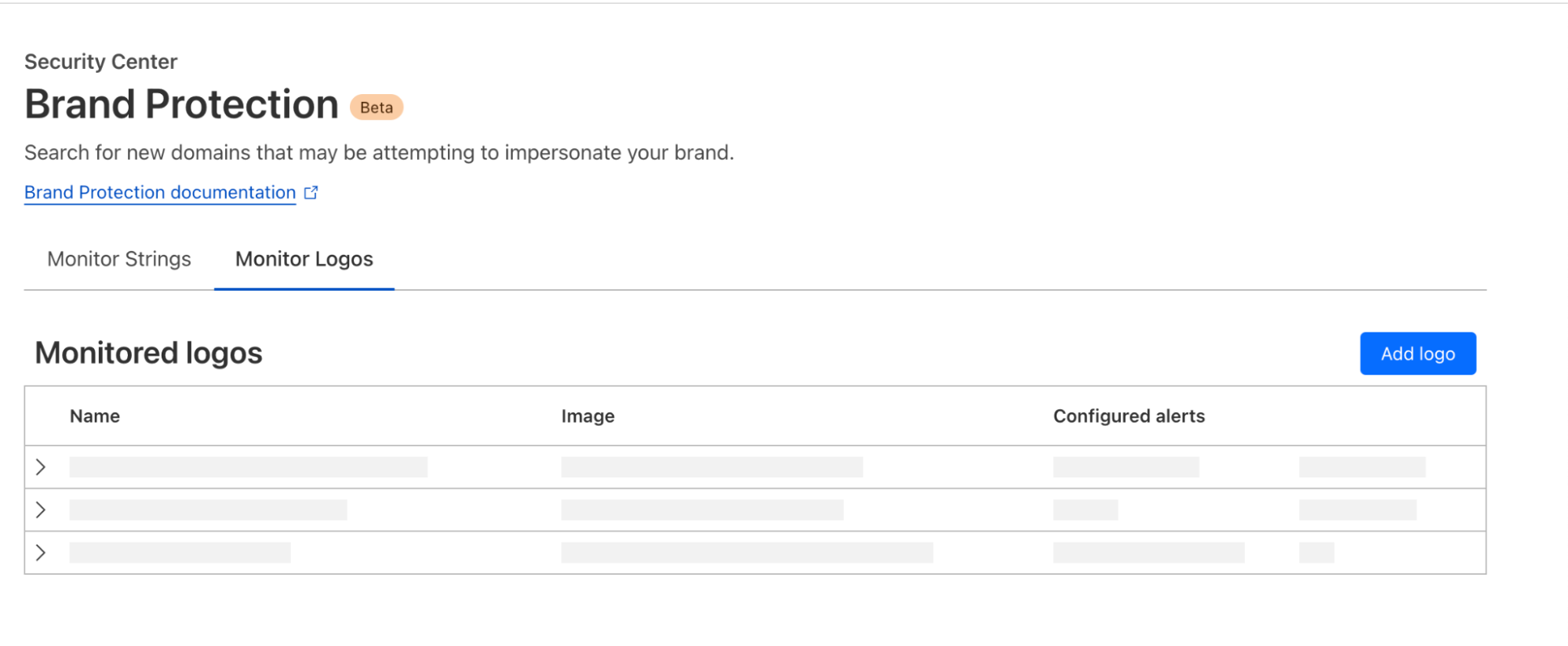
Today we are excited to expand our Brand Protection toolkit with the addition of Logo Matching. Logo Matching is a powerful tool that allows brands to detect unauthorized logo usage: if Cloudflare detects your logo on an unauthorized site, you receive an immediate notification.

The new Logo Matching feature is a direct result of a frequent request from our users. Phishing websites often use official brand logos as part of their facade. In fact, the appearance of unauthorized logos is a strong signal that a hitherto dormant suspicious domain is being weaponized. Being able to identify these sites before they are widely distributed is a powerful tool in defending against phishing attacks. Organizations can use Cloudflare Gateway to block employees from connecting to sites with a suspicious domain and unauthorized logo use.

Imagine having the power to fortify your brand’s presence and reputation. By detecting instances where your logo is being exploited, you gain the upper hand in protecting your brand from potential fraud and phishing attacks.

Getting started with Logo Matching

For most brands, the first step to leveraging Logo Matching will be to configure Domain Name Alerts. For example, we might decide to set up an alert for example.com, which will use fuzzy matching to detect lookalike, high-risk domain names. All sites that trigger an alert are automatically analyzed by Cloudflare’s phishing scanner, which gathers technical information about each site, including SSL certificate data, HTTP request and response data, page performance data, DNS records, and more — all of which inform a machine-learning based phishing risk analysis.

Logo Matching further extends this scan by looking for matching images. The system leverages image recognition algorithms to crawl through scanned domains, identifying matches even when images have undergone slight modifications or alterations.

Once configured, Domain Name Alerts and the scans they trigger will continue on an ongoing basis. In addition, Logo Matching monitors for images across all domains scanned by Cloudflare’s phishing scanner, including those scanned by other Brand Protection users, as well as scans initiated via the Cloudflare Radar URL scanner, and the Investigate Portal within Cloudflare’s Security Center dashboard.

How we built Logo Matching for Brand Protection

Under the hood of our API Insights

Now, let’s dive deeper into the engine powering this feature – our Brand Protection API. This API serves as the backbone of the entire process. Not only does it enable users to submit logos and brand images for scanning, but it also orchestrates the complex matching process.

When a logo is submitted through the API, the Logo Matching feature not only identifies potential matches but also allows customers to save a query, providing an easy way to refer back to their queries and see the most recent results. If a customer chooses to save a query, the logo is swiftly added to our data storage in R2, Cloudflare’s zero egress fee object storage. This foundational feature enables us to continuously provide updated results without the customer having to create a new query for the same logo.

The API ensures real-time responses for logo submissions, simultaneously kick-starting our internal scanning pipelines. An image look-back ID is generated to facilitate seamless tracking and processing of logo submissions. This identifier allows us to keep a record of the submitted images, ensuring that we can efficiently manage and process them through our system.

Scan result retrieval

As images undergo scanning, the API remains the conduit for result retrieval. Its role here is to constantly monitor and provide the results in real time. During scanning, the API ensures users receive timely updates. If scanning is still in progress, a “still scanning” status is communicated. Upon completion, the API is designed to relay crucial information — details on matches if found, or a simple “no matches” declaration.

Storing and maintaining logo data

In the background, we maintain a vectorized version of all user-uploaded logos when the user query is saved. This system, acting as a logo matching subscriber, is entrusted with the responsibility of ensuring accurate and up-to-date logo matching.

To accomplish this, two strategies come into play. Firstly, the subscriber stays attuned to revisions in the logo set. It saves vectorized logo sets with every revision and regular checks are conducted by the subscriber to ensure alignment between the vectorized logos and those saved in the database.

While monitoring the query, the subscriber employs a diff-based strategy. This recalibrates the vectorized logo set against the current logos stored in the database, ensuring a seamless transition into processing.

Shaping the future of brand protection: our roadmap ahead

With the introduction of the Logo Matching feature, Cloudflare’s Brand Protection suite advances to the next level of brand integrity management. By enabling you to detect and analyze, and act on unauthorized logo usage, we’re helping businesses to take better care of their brand identity.

At Cloudflare, we’re committed to shaping a comprehensive brand protection solution that anticipates and mitigates risks proactively. In the future, we plan to add enhancements to our brand protection solution with features like automated cease and desist letters for swift legal action against unauthorized logo use, proactive domain monitoring upon onboarding, simplified reporting of brand impersonations and more.

Getting started

If you’re an Enterprise customer, sign up for Beta Access for Brand protection now to gain access to private scanning for your domains, logo matching, save queries and set up alerts on matched domains. Learn more about Brand Protection here.

Security updates for Thursday

Post Syndicated from LWN.net original https://lwn.net/Articles/962284/

Security updates have been issued by Debian (edk2, postgresql-13, and postgresql-15), Fedora (engrampa, vim, and xen), Mageia (mbedtls and quictls), Oracle (nss, openssh, and tcpdump), Red Hat (.NET 8.0), SUSE (hugin, kernel, pdns-recursor, python3, tomcat, and tomcat10), and Ubuntu (clamav, edk2, linux-gcp-6.2, linux-intel-iotg-5.15, linux-oem-6.1, and ujson).

On the Insecurity of Software Bloat

Post Syndicated from Bruce Schneier original https://www.schneier.com/blog/archives/2024/02/on-the-insecurity-of-software-bloat.html

Good essay on software bloat and the insecurities it causes.

The world ships too much code, most of it by third parties, sometimes unintended, most of it uninspected. Because of this, there is a huge attack surface full of mediocre code. Efforts are ongoing to improve the quality of code itself, but many exploits are due to logic fails, and less progress has been made scanning for those. Meanwhile, great strides could be made by paring down just how much code we expose to the world. This will increase time to market for products, but legislation is around the corner that should force vendors to take security more seriously.

Supporting learners with programming tasks through AI-generated Parson’s Problems

Post Syndicated from Veronica Cucuiat original https://www.raspberrypi.org/blog/supporting-learners-with-programming-tasks-through-ai-generated-parsons-problems/

The use of generative AI tools (e.g. ChatGPT) in education is now common among young people (see data from the UK’s Ofcom regulator). As a computing educator or researcher, you might wonder what impact generative AI tools will have on how young people learn programming. In our latest research seminar, Barbara Ericson and Xinying Hou (University of Michigan) shared insights into this topic. They presented recent studies with university student participants on using generative AI tools based on large language models (LLMs) during programming tasks. 

A girl in a university computing classroom.

Using Parson’s Problems to scaffold student code-writing tasks

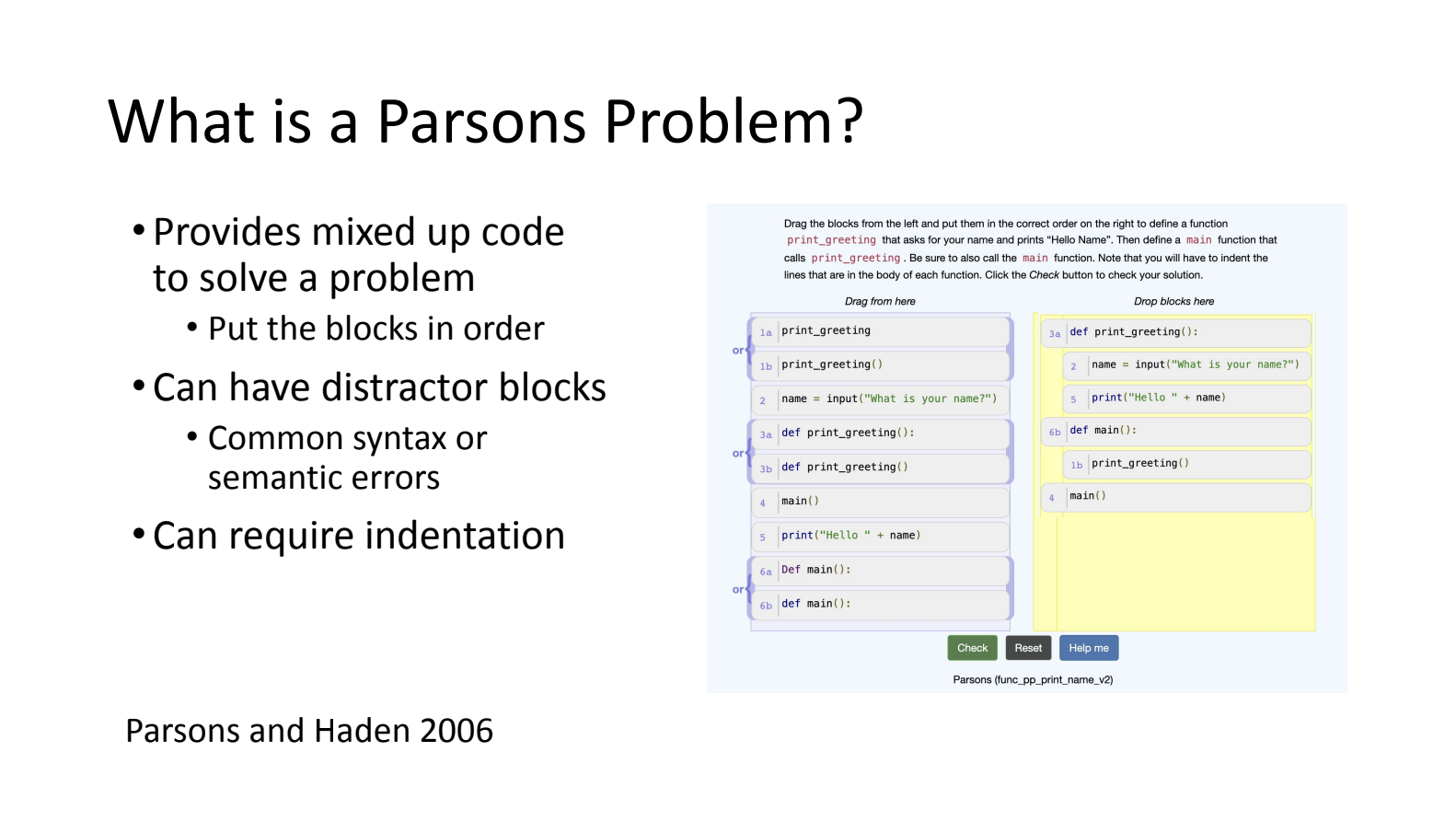
Barbara and Xinying started their seminar with an overview of their earlier research into using Parson’s Problems to scaffold university students as they learn to program. Parson’s Problems (PPs) are a type of code completion problem where learners are given all the correct code to solve the coding task, but the individual lines are broken up into blocks and shown in the wrong order (Parsons and Haden, 2006). Distractor blocks, which are incorrect versions of some or all of the lines of code (i.e. versions with syntax or semantic errors), can also be included. This means to solve a PP, learners need to select the correct blocks as well as place them in the correct order.

A presentation slide defining Parson's Problems.

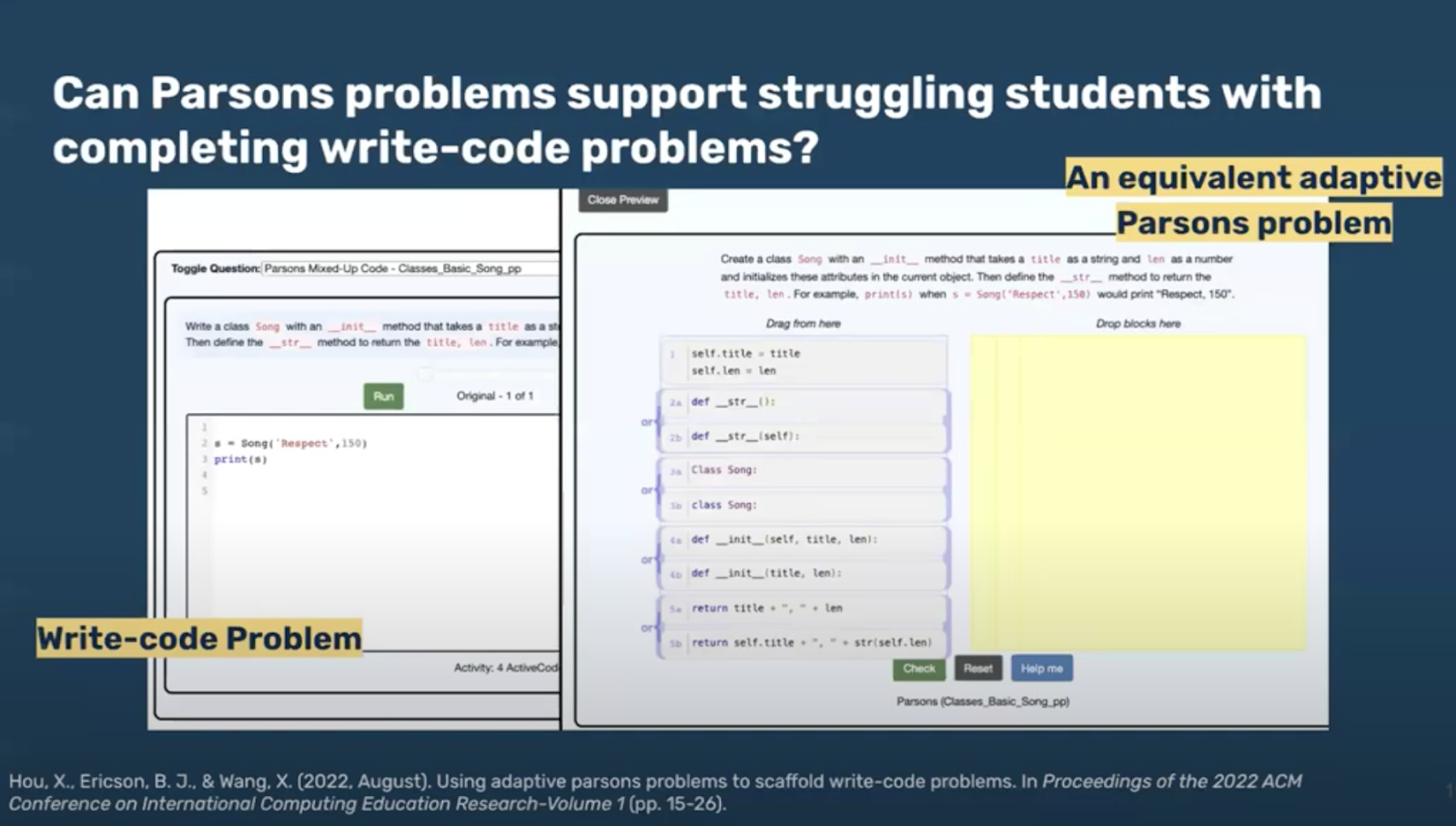
In one study, the research team asked whether PPs could support university students who are struggling to complete write-code tasks. In the tasks, the 11 study participants had the option to generate a PP when they encountered a challenge trying to write code from scratch, in order to help them arrive at the complete code solution. The PPs acted as scaffolding for participants who got stuck trying to write code. Solutions used in the generated PPs were derived from past student solutions collected during previous university courses. The study had promising results: participants said the PPs were helpful in completing the write-code problems, and 6 participants stated that the PPs lowered the difficulty of the problem and speeded up the problem-solving process, reducing their debugging time. Additionally, participants said that the PPs prompted them to think more deeply.

A young person codes at a Raspberry Pi computer.

This study provided further evidence that PPs can be useful in supporting students and keeping them engaged when writing code. However, some participants still had difficulty arriving at the correct code solution, even when prompted with a PP as support. The research team thinks that a possible reason for this could be that only one solution was given to the PP, the same one for all participants. Therefore, participants with a different approach in mind would likely have experienced a higher cognitive demand and would not have found that particular PP useful.

An example of a coding interface presenting adaptive Parson's Problems.

Supporting students with varying self-efficacy using PPs

To understand the impact of using PPs with different learners, the team then undertook a follow-up study asking whether PPs could specifically support students with lower computer science self-efficacy. The results show that study participants with low self-efficacy who were scaffolded with PPs support showed significantly higher practice performance and higher problem-solving efficiency compared to participants who had no scaffolding. These findings provide evidence that PPs can create a more supportive environment, particularly for students who have lower self-efficacy or difficulty solving code writing problems. Another finding was that participants with low self-efficacy were more likely to completely solve the PPs, whereas participants with higher self-efficacy only scanned or partly solved the PPs, indicating that scaffolding in the form of PPs may be redundant for some students.

Secondary school age learners in a computing classroom.

These two studies highlighted instances where PPs are more or less relevant depending on a student’s level of expertise or self-efficacy. In addition, the best PP to solve may differ from one student to another, and so having the same PP for all students to solve may be a limitation. This prompted the team to conduct their most recent study to ask how large language models (LLMs) can be leveraged to support students in code-writing practice without hindering their learning.

Generating personalised PPs using AI tools

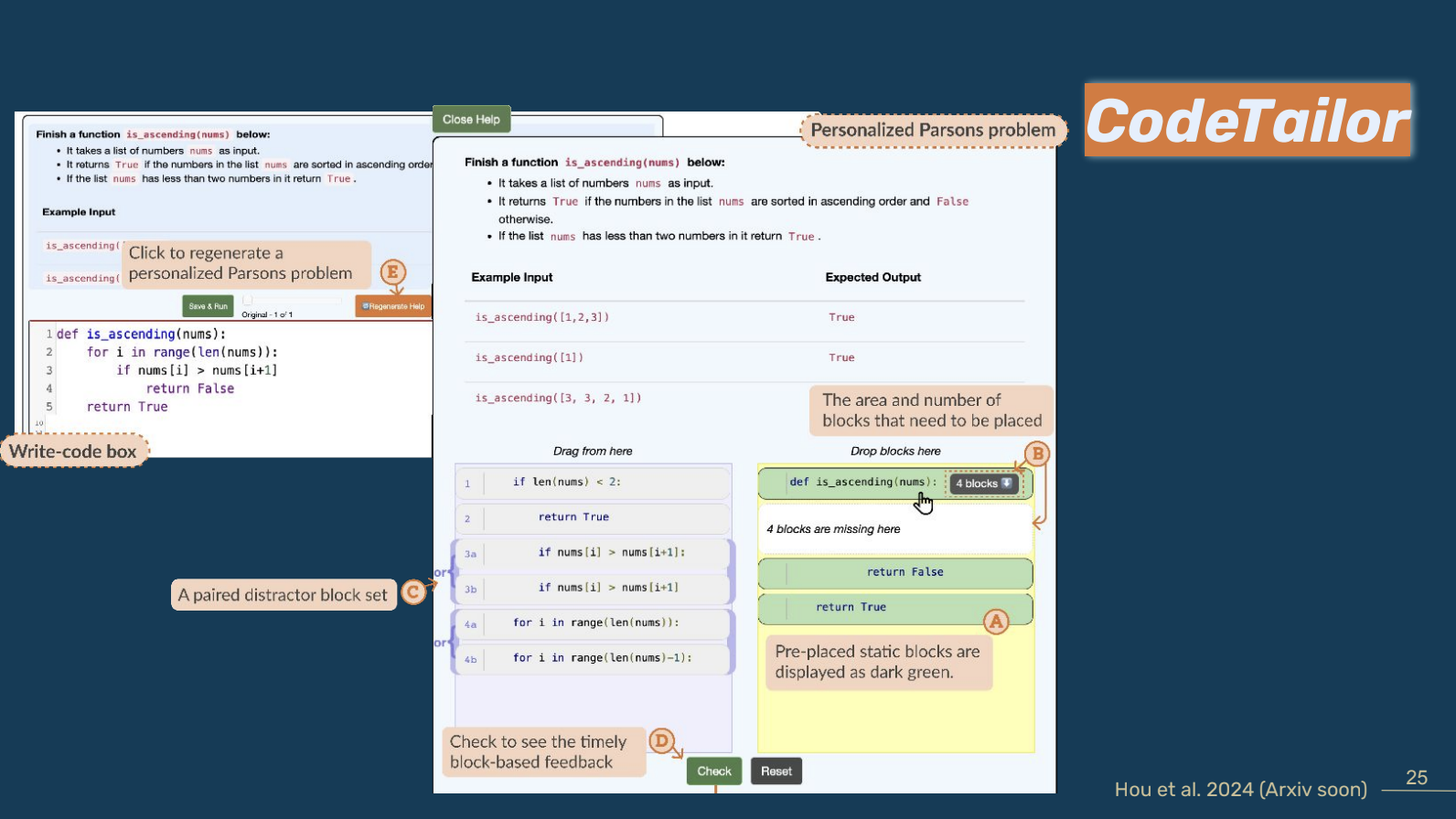
This recent third study focused on the development of CodeTailor, a tool that uses LLMs to generate and evaluate code solutions before generating personalised PPs to scaffold students writing code. Students are encouraged to engage actively with solving problems as, unlike other AI-assisted coding tools that merely output a correct code correct solution, students must actively construct solutions using personalised PPs. The researchers were interested in whether CodeTailor could better support students to actively engage in code-writing.

An example of the CodeTailor interface presenting adaptive Parson's Problems.

In a study with 18 undergraduate students, they found that CodeTailor could generate correct solutions based on students’ incorrect code. The CodeTailor-generated solutions were more closely aligned with students’ incorrect code than common previous student solutions were. The researchers also found that most participants (88%) preferred CodeTailor to other AI-assisted coding tools when engaging with code-writing tasks. As the correct solution in CodeTailor is generated based on individual students’ existing strategy, this boosted students’ confidence in their current ideas and progress during their practice. However, some students still reported challenges around solution comprehension, potentially due to CodeTailor not providing sufficient explanation for the details in the individual code blocks of the solution to the PP. The researchers argue that text explanations could help students fully understand a program’s components, objectives, and structure. 

In future studies, the team is keen to evaluate a design of CodeTailor that generates multiple levels of natural language explanations, i.e. provides personalised explanations accompanying the PPs. They also aim to investigate the use of LLM-based AI tools to generate a self-reflection question structure that students can fill in to extend their reasoning about the solution to the PP.

Barbara and Xinying’s seminar is available to watch here: 

Find examples of PPs embedded in free interactive ebooks that Barbara and her team have developed over the years, including CSAwesome and Python for Everybody. You can also read more about the CodeTailor platform in Barbara and Xinying’s paper.

Join our next seminar

The focus of our ongoing seminar series is on teaching programming with or without AI. 

For our next seminar on Tuesday 12 March at 17:00–18:30 GMT, we’re joined by Yash Tadimalla and Prof. Mary Lou Maher (University of North Carolina at Charlotte). The two of them will share further insights into the impact of AI tools on the student experience in programming courses. To take part in the seminar, click the button below to sign up, and we will send you information about joining. We hope to see you there.

The schedule of our upcoming seminars is online. You can catch up on past seminars on our previous seminars and recordings page.

The post Supporting learners with programming tasks through AI-generated Parson’s Problems appeared first on Raspberry Pi Foundation.

Инвестиране на 1 000 месечно или 10 000 лева накуп с цел ПАСИВЕН ДОХОД – от опита на професионалния консултант

Post Syndicated from VassilKendov original https://kendov.com/investing-1000-bgn-a-month/

Инвестиране на 1 000 месечно или 10 000 лева на куп с цел ПАСИВЕН ДОХОД – от опита на професионалния консултант

С колеги подготвяме онлайн курсове за финансова грамотност и фирмени финанси. Все пак идва криза и фирмите и кредитополучателите трябва да се приготвят. Според мен имат около 6 месеца или дори по-малко за да свършат това.
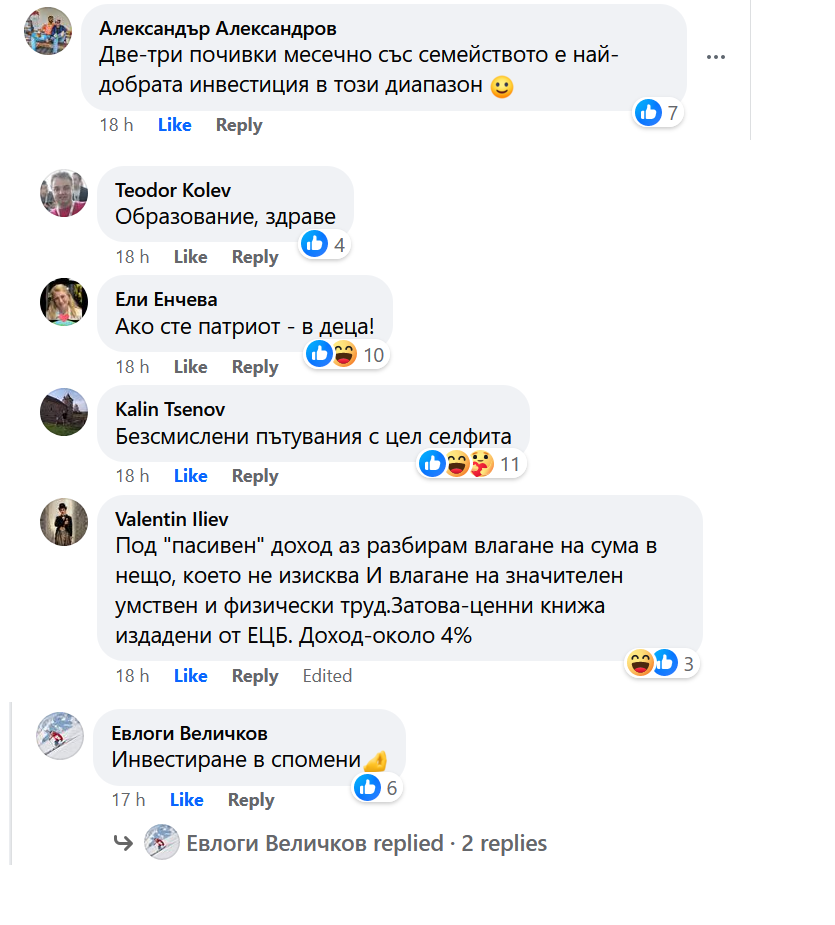
В тази връзка пуснах във Фейсбук пост с въпрос „-В какво бихте инвестирали ежемесечно 1 000 лева или 10 000 на куп.“ Трябва да призная, че получих изключително много и интересни предложения или по-скоро предположения от страна на участниците. Някои изключително креативни и оригинални, които ще се опитам да систематизирам тук.

Забелязаха се обаче и някои сериозни пропуски в инвестиционната култура, които могат да се окажат фатални предвид очакваната криза.

Едни от най-сериозните пропуски се оказа НЕПРАВЕНЕТО НА РАЗЛИКА МЕЖДУ ИНВЕСТИЦИЯ И СПЕСТЯВАНЕ.

Това може би е нормално, предвид заливащата ни информация в интернет и ограничените възможности за инвестиране в България.
Примерно съветите за инвестиране в ценни книжа като форма на инвестиция носеща „ПАСИВЕН ДОХОД“, не са най-практичното нещо. Не за друго, а защото инвестицията се превръща в спестяване за повечето хора. Да, зарибяващо е да гледаш ежедневно котировките и да доходността на портфейла си, но за да реализираш печалбата си в почти всички случаи трябва да продадеш ценната книга, която си купил или дяловете си в ETF-a. И в този момент мантрата за пасивния доход вече е невалидна, защото ако сметнете колко време сте отделили да следите котировките и да четете новините разбирате, че това вече е ДОПЪЛНИТЕЛЕН ДОХОД а не ПАСИВЕН ДОХОД. Но за пасивния доход ще дам пример по-натам с любимата „дъвка“ на съвременните финансови гурута – покупката на недвижим имот с цел доход от наем.

Това което наблюдавам е, че инвестициите в ценни книжа и ETF-и постепенно стават спестявания. А това в сегашната ситуация е опасно. Изобщо търговията с ETF-и и ценни книжа, в никакъв случай не бива да се съчетава с думите „ПАСИВЕН ДОХОД“, защото веднага от инвестиция, операцията става спестяване. А това както казахме е опасно в тази ситуация.

За да съм още по-ясен – представете си как всеки месец си „получавате печалбата“ от инвестицията в ценни книги. Аз поне не познавам някoй да го прави като форма на „ПАСИВЕН ДОХОД“. Познавам доста професионални трейдъри, но те не го правят с 1 000 лева на месец или 10 000 лева капитал и не като ПАСИВЕН ДОХОД, а по занятие.
Моят извод е, че търговията с ценните книжа не е най-удачната форма на редовна инвестиция с по 1 000 лева месечно или 10 000 лева капитал. Форма на спестяване с по-висока лихва ДА, но не и инвестиция с цел ПАСИВЕН ДОХОД. Не забравяйте, че високата лихва е висок риск!

Има ли вече изобщо ПАСИВЕН ДОХОД

Моето мнение е, че такова животно вече почти няма. Една от най-честите спекулации е, че това е наема. Така е – съласен съм! Наемът беше басивен доход до преди 10 години. В днешно време не е точно така.
Изчислявал съм многократно рентабилността на една такава инвестиция. Тя варира от 3-4% годишно, до към максимум 12-13%, но във втория случай вече не се говори за „ПАСИВЕН ДОХОД“ под никаква форма. Говори се за ОСНОВЕН ДОХОД ли в най-добрия случай ДОПЪЛНИТЕЛЕН ДОХОД, защото вемето, което отделяте за реализирането на тези 12-13% е огромно. А когато в покупката има и кредит, тогава доходнотта съвсем намалява.

Няма да правя сметки в тази статия (може би по-натам), но бих описал необходимите знания, умения  и времето за реализиране на доход от покупката на недвижим имот с цел отдаване под наем.

Най-напред изборът на имот си е проблем у нас. Знаете как е със строителите и техните адокати, когато дойде време за предварителния договор? Брокерът обикновено си е взел комисиона и вече го няма, а Вие оставате в ръцете на Вашия адвокат, чийто труд Ви се вижда много скъп 😊
После следва кредита и разправиите с банката. Врно е, че по-хитрите ползват моите услуги или на консултанти като мен, но голяма част все още си мислят, че са много важни за банките и ще свършат всичко сами. Признавам, че някои успяват, но по-голямата част страдат на даден етап.
Следват майсторите, понеже взимате имота на шпакловка и замазка. Сакрален момент за всеки инвеститор в имот е дейността на майсторите.
Следват обзавеждане, търсене на наематели, договор с тях, както и ремонти след тяхното изнасяне. Някои наричат ремонта със звучното определение „ОСВЕЖАВАНЕ“, но нека не забравяме, че и то се прави от майстори. 😊
Разбира се освежаването можете и сами да си го направите, но тогава си говорим за инвестираното време в тази сделка носеща уж „ПАСИВЕН ДХОД“.

Миналата седмица се изнесоха дългогодишни, препоръчани наематели на мой приятел. Изнесоха му също и пералната, печката, хладилника, мебелите… Аз по-съсипан апартамент не съм виждал. Човекът е принуден да продаде имота, защото точно в момента няма средства за ремонт. А с ремонта вече знаете как е – майстори, пари, размотаване на материали… Както казахме по-горе може и сами да го направите, но пак се връщаме на въпроса за времето?

Изобщо оказва се, че „ПАСИВНИЯТ ДОХОД“ не бил много пасивен. А ако решите да отдавате чрез AIRBNB и да гоните 10-12% рентабилност, тогава вече говорим за работа на пълно работно време.

Така или иначе имот не се купува с 1 000 лева на месец или 10 000 лева в брой, затова се връщаме на някои от предложенията, които смятам за най-подходящи в този случая.

Не мога да публикувам всички мнения и предложения, но Вие можете да се абониране за Телеграм канала Kendov.com и да се апдейтвате редовно. Там ще четете коментарите на останалите и ще давате своите.

ИНВЕСТИЦИЯ = ВРЕМЕ + ЗНАНИЯ

Останах приятно изненадан, че голяма част от хората са на мнение, че трябва да се инвестира в това от което разбираш. Много рядко ми се е случвало да консултирам успешна инвестиция в сфера в която  човекът не разбора нищо. Никога обаче не съм срещал успешна инвестиция, която да е станала без да е отделено време. Колкото по-незапознат си, толкова повече време трябва да отделиш за една инвестиция. Ето и няйкои коментари в тази насока:

ИНВЕСТИРАЙ НЕТРАДИЦИОННО

Трябва да призная че Bai R. Ivanov даде най-оригиналното предложение. Не се заблуждавайте обаче, че можете да подходите нетрадиционно в инвестирането без съответния опит. Bai. R. Ivanov има колосален опит в тази сфера, за да даде подобно предложение

Ако сте стигнали до тук с четенето, значи можете да чуете и съветите които давам в случаите с 1000 лева на месец или 10 000 в брой.

Естествено съветите зависят от профила и знанията на клиента, както е отбелязала Роси

Затова карам по пирамидата на Маслоу. Съветвам клиента да харчи парите си за задоволяване на най-първичните си потребности с предимство. Ако нямаш апартамент, тези 1000 лева отиват за вноска по кредит. 10 000-те хиляди също.
Ако имаш апартамент, но можеш да спестиш от енергия – сменаш дограми и санираш с този доход.
Ако имаш бизнес или познания в някоя област – инвстираш там. Дали ще са ETF-и, дали ще е черешова градина или крипто, няма значение. Инвстираш в това, което разбираш.
На „инвеститори“ бъркащи инвестицията със спестяванията, препоръчвам инвестиционно злато.

За всички останали – препоръчвам инвестиция в себе си – екскурзии, почивки, курсове за квалификация в област, която Ви е интересна. С 1 000 лева на месец или 10 000 в брой – толкова.

За по-големи суми и по-сериозни инвестиции си трябва лична среща. Не става с прочитането на една статия. Става с бизнес план и сметки.

Ако Ви е харесала статята, моля споделете я във ФБ и помогнете на блога да се развие

Моля използвайте приложената форма за записване на час за среща
[contact-form-7]


The post Инвестиране на 1 000 месечно или 10 000 лева накуп с цел ПАСИВЕН ДОХОД – от опита на професионалния консултант appeared first on Kendov.com.

За подобряването на родилната помощ и нуждата от системни усилия. Разговор с д-р Славяна Галева

Post Syndicated from Надежда Цекулова original https://www.toest.bg/za-podobryavanieto-na-rodilnata-pomosht-i-nuzhdata-ot-sistemni-usiliya-slavyana-galeva/

За подобряването на родилната помощ и нуждата от системни усилия. Разговор с д-р Славяна Галева

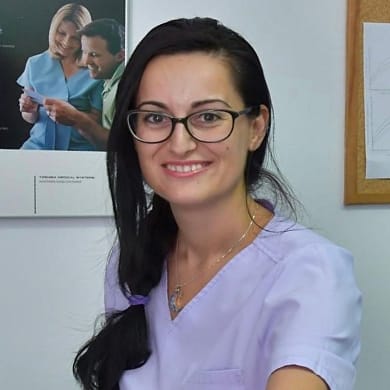
Д-р Славяна Галева е акушер-гинеколог, дипломиран специалист от King’s College Hospital в областта на майчино-феталната медицина. Завършила е и обучение в областта на медицинската генетика и имунология в Harvard Medical School. В момента е началник на отделението по фетална медицина във Втора САГБАЛ „Шейново“ и преподавател в СУ „Св. Климент Охридски“.

В момент, в който публичният разговор за качеството на здравеопазването сякаш най-после е започнал, говорим с нея за качеството на родилната помощ в България. Страната ни е сред водещите по детска смъртност в Европейския съюз, както и по дял на ражданията чрез цезарово сечение. В същото време по темата се говори само когато по медиите избухне скандал, най-често след нечия смърт. 

С д-р Славяна Галева разговаря Надежда Цекулова.

За подобряването на родилната помощ и нуждата от системни усилия. Разговор с д-р Славяна Галева

Д-р Галева, Вие сте сред критичните гласове в гилдията Ви. Къде да търсим корена на проблемите в родилната помощ според Вас?

Сега ще разкажа една история от моя личен живот. Моята сестра преди 11 години ражда в голям областен град. Тя е дентален лекар, специалист по орална хирургия. Ражда навръх Великден, малко след полунощ. Бебето е добре, но при сестра ми се получава усложнение, което може да се получи при всяка раждаща жена – задържа се плацентата. Дежурният лекар трябва да извърши животоспасяваща процедура, която обаче е и животозастрашаваща и се извършва под упойка. Трябва да се извади спешно плацентата, защото започва масивно кървене с обем половин литър в минута и пациентката изпада в тежко състояние. 

Акушерката на смяна е в напреднала възраст, с бастун. Анестезиологът, който е един за цялата болница, в този момент е в животоспасяваща операция на друг човек. И гинекологът, който води раждането, извършва манипулацията без упойка. Изважда някакъв невероятен късмет. Все пак е и с доста опит. И слава богу, въпреки тежкото състояние, сестра ми е спасена. 

Този гинеколог е нашата майка. 

Разказвам тази история, защото тя завърши щастливо, но ако не беше? Когато си лекар, поставен си в тези условия, кой би понесъл отговорност, ако детето ти умре, докато водиш раждането му? Кой ще е виновен? 

Когато говорим за качество в медицината, в случая в родилната помощ, често засягаме големи теми. Но то се състои в това как колегите на терен се справят с трудните ситуации в работата.

Медицинските стандарти и правилата за добра медицинска практика не следва ли да дават насоки точно за това?

Да, би трябвало. Но на практика не се случва и въпросът е защо. Спекулира се, че лекарите не искат да работят по правила. Аз съм минала през абсолютно всички нива – от санитар, докато бях студент, през медицинска сестра, специализант, лекар-специалист. Няма лекар, когото да познавам, който да не иска да работи по протокол. Не е вярно и твърдението, че липсата на ясни правила ни пази от съдебни дела – точно обратното е. През 2022 г. излезе една публикация на адв. Величка Костадинова, която анализира делата в сферата на акушерството и гинекологията. Това е втората най-често съдена специалност и тази с най-висок дял уважени искове – над 60%. Проблемът е, че това не води до промени в стандартите или до въвеждане на по-прецизни правила. 

Ако лекарите искат да работят по ясни правила и пациентите искат лекарите им да работят по ясни правила, а дори председателят на Българския лекарски съюз беше обявил на един форум, че съсловната организация е в дълг, защото още не е готова с изготвянето на правилата за добра медицинска практика, как така сме в ситуацията десетилетия наред такива ясни правила да не могат да бъдат изработени, приети и приложени?

Личното ми мнение е, че има страх. Защото ако утре се въведат тези ясни, но и строги правила, за които говорим, първите, които ще възнегодуват, ще са пациентите. Например много голям дял – над половината – от бременните, които идват при нас за болничен, всъщност нямат нужда от него. Следващите, които ще са против, са лекари, които прилагат методи, неосновани на доказателства. В нашата сфера, примерно, се предлагат витаминотерапия, ембрионална реанимация…

Ембрионална реанимация?

Да. Това е измислена медицина и ако имахме адекватни правила, не би могло да съществува. Но сега е много печеливш бизнес. Следващият бизнес, който е печеливш, са лабораториите. Давам пример: в София имаме на година около 15 000 раждащи жени. Над половината са си направили изследването за тромбофилия, а по света около 1% от жените се насочват към него. При 400 лв. цена на изследване… След това отиваме при хранителните добавки. Всички тези практики биха били невъзможни при ясни правила, чието прилагане се контролира безпристрастно. 

Такива обществени нагласи обаче не се създават от само себе си, без участието на специалистите. Липсата на стандарти също не може да се поддържа десетилетия без съгласието на специалистите.

Участват един тесен сегмент специалисти, които са повече администратори, отколкото лекари. Как да направиш промяна, когато нямаш подкрепа от управлението за това, което правиш? Ето, ние [II САГБАЛ „Шейново“ – б.а.] чакаме Столичната община да реши дали това, което сме изградили, ще бъде съхранено, или ще бъде разрушено. В Комисията по здравеопазване на Столичния общински съвет има само един лекар, който през годините обаче не е показал отношение към качеството. На какво да се надяваме? 

Към Министерството на здравеопазването пък може да се отправи въпросът по какви критерии се избират членовете на експертните съвети. А директорите на лечебните заведения? 

Изобщо, най-лесно е да се търси вина у редовите лекари, но от тази позиция е трудно да правиш промени. Отне ни 10 години, за да изградим нашето отделение по фетална медицина. Аз съм единственият специалист с такава квалификация, който работи в общинска болница и е достъпен до всички. Но това не знам колко може да продължи. Нужни са хора в управлението с визия, които да подкрепят развитието на специалистите и на системата. 

Как си представяте, че трябва да стане това? 

Трябва да се започне от студентската скамейка. Давам веднага пример със скандинавските страни. Чували ли сте за професията „професионален пациент“? Там тя съществува. Има хора, на които се плаща, за да може в определени дни в годината да ги извикат и да ги преглеждат студенти, които да се учат върху тях. Така започва изграждането на качествени специалисти. 

Следващата точка е как привличаме повече хора към тези професии. Доц. Диана Димитрова, която е преподавател по здравни грижи, споделя, че всяка година във Варна и във Велико Търново отварят 100 места за акушерки, но попълват 20. Едно проучване сочи, че младите момичета намират професията за непривлекателна заради комбинацията от висока отговорност, нощен труд и ниско заплащане. В същото време при нас например 2/3 от акушерките са над 70-годишни. 

После идват контролът на качеството и продължаващото обучение. Във Великобритания, където имам опит, държавата инвестира в специалиста и го контролира. За всеки специалист има статистика. Контролиращият орган знае, че д-р Галева например е извършила за годината 2000 прегледа, знае и от тях колко пъти е сбъркала. Така беше при проф. Николаидес, при когото се обучавах. Вика те комисията и ти казва: „Имаш неправилно извършени измервания.“ Това не се прави като лов на вещици – специалистът се изпраща на допълнително обучение, което държавата му заплаща, за да може той да повиши качеството си на работа. 

При нас, за съжаление, не се извършва нито една от двете дейности. Аз решавам да инвестирам в себе си, да ходя на курсове – и съответно да си ги плащам. Също така никой не отива в болниците с 90% цезарови сечения, за да провери защо резултатите са такива. Разчита се на самоконтрол. 

Каква е ролята на пациентите, в случая с родилната помощ – на бъдещите майки, в усилията за подобряване на качеството? Попадам на публикации, включително претендиращи за научност, в които се твърди, че родилките са виновни за високия дял на ражданията с цезарово сечение. Аз не мога да се съглася с подобна констатация.

Комбинирани са нещата. Насложеното недоверие към специалистите у нас налага избора на екип. А изборът на екип, когато един лекар и една акушерка са силно натоварени, води до този резултат. Защото едно нормално раждане обикновено продължава повече, може да продължи много часове и дори дни – и няма специалист, който може да отдели това време. Жената често избира секциото заради недоверието към другите специалисти, при които би могла да попадне, а не заради предпочитанията си към този метод на родоразрешение. 

От изследването на д-р Румен Велев в нашата болница се вижда и друго – ако една жена избере акушерка за раждането си, вероятността да роди нормално е 80%. Ако избере лекар, шансовете за това драстично намаляват. В по-малките клиники пък няма достатъчно хора, които да са на разположение за цялото време на едно нормално раждане, затова предпочитат цезаровите сечения.

Въвеждането на акушерски модел на грижа за бременни и раждащи жени се сочи като оптимален вариант за подобряване на качеството в родилната помощ. У нас не изглежда да сме близо до такова решение, но болницата, в която работите, се опитва частично да го прилага. Бихте ли разказали как става това?

При нас акушерките следят бременността и пациентката може да ги избира и за раждане. Разбира се, определени прегледи се извършват от лекар. Но ето днес например три от пациентките ми са избрали да следят бременността си при акушерка. Аз правя високоспециализиран преглед, на който тези жени идват с избраната акушерка. Тя, така да се каже, си ги води за ръка, обсъждат си неща, за които конкретно акушерката може да помогне. Аз правя феталната морфология, но допълнителната информация и подкрепа, която жените получават от акушерката, за мен също е от много голяма помощ. В рамките на няколко години направихме доста добро стиковане и изградихме много ясен протокол за действие. Но това е система, която се поддържа с непрекъснато самоусъвършенстване и обучения.

Споменахте по-рано в разговора, че прегледите при Вас са достъпни за всички. Преглеждате ли здравно неосигурени бременни жени?

Разбира се. Здравно неосигурени, болни от инфекциозни болести, хероинозависими, всякакви пациентки попадат тук.

Как се финансират техните прегледи? От 2022 г. държавата плаща повече прегледи за здравно неосигурени бременни и един болничен престой. Високоспециализираните изследвания, които Вие правите, не са включени в този пакет.

Този разход се поема от болницата. Но това не е устойчиво и в този смисъл – не е точно здравеопазване. Това е благотворителност.

Имате ли данни какъв е делът на жените, които минават за сметка на болницата през Вашия кабинет?

Около 50%. Около 2000 жени минават годишно, от тях тези, които са по платен ценоразпис на Касата, са около 50%. 

Вероятно не печелите особено много от тази дейност?

Да, това ми е хоби (смее се). Работя частно, за да си финансирам хобито. Например не си използвах майчинството след второто раждане, защото трябва да се изплаща апаратът, с който преглеждам в частния си кабинет. Понякога си мисля, че съм много лоша майка, но не бих искала да задълбаваме в това. 

Защо, хубаво е да се знае, че когато системата е в колапс, функционирането ѝ се крепи на личните усилия на работещите в нея.

Не искам да звучи като оплакване. В същото време ние почваме в 7 ч. сутринта с акушерка Топалова. Тя е на 75, докога е длъжна да издържа на това темпо? 

Когато личната цена да вършиш една работа е твърде висока, хората просто не се наемат да я вършат. И така се връщаме там, където започнахме разговора – нужни са системни усилия и визионерство. Хората отлично го разбират. Имам предвид пациентите, работещите в системата лекари и акушерки. Защото често ни представят като срещуположни лагери, а не сме. Ние сме едно.

На север: Гренландия и тайните на леда

Post Syndicated from Светла Стоянова original https://www.toest.bg/na-sever-grenlandia-i-taynite-na-leda/

На север: Гренландия и тайните на леда

Част първа

През последните четири години пътувах и живях на различни места из Севера – Норвегия, Исландия, Фарьорските острови и Гренландия. Ще започна разказите си с най-отдалечения остров, който ме впечатляваше години наред и изглеждаше някак загадъчен и недостижим. През годините любопитството ми нарастваше, а аз самата, от остров на остров, все повече се доближавах до него. Докато накрая ми се отвори възможност не само да посетя Гренландия, но и да живея и работя там – в едно инуитско селце зад Полярния кръг.

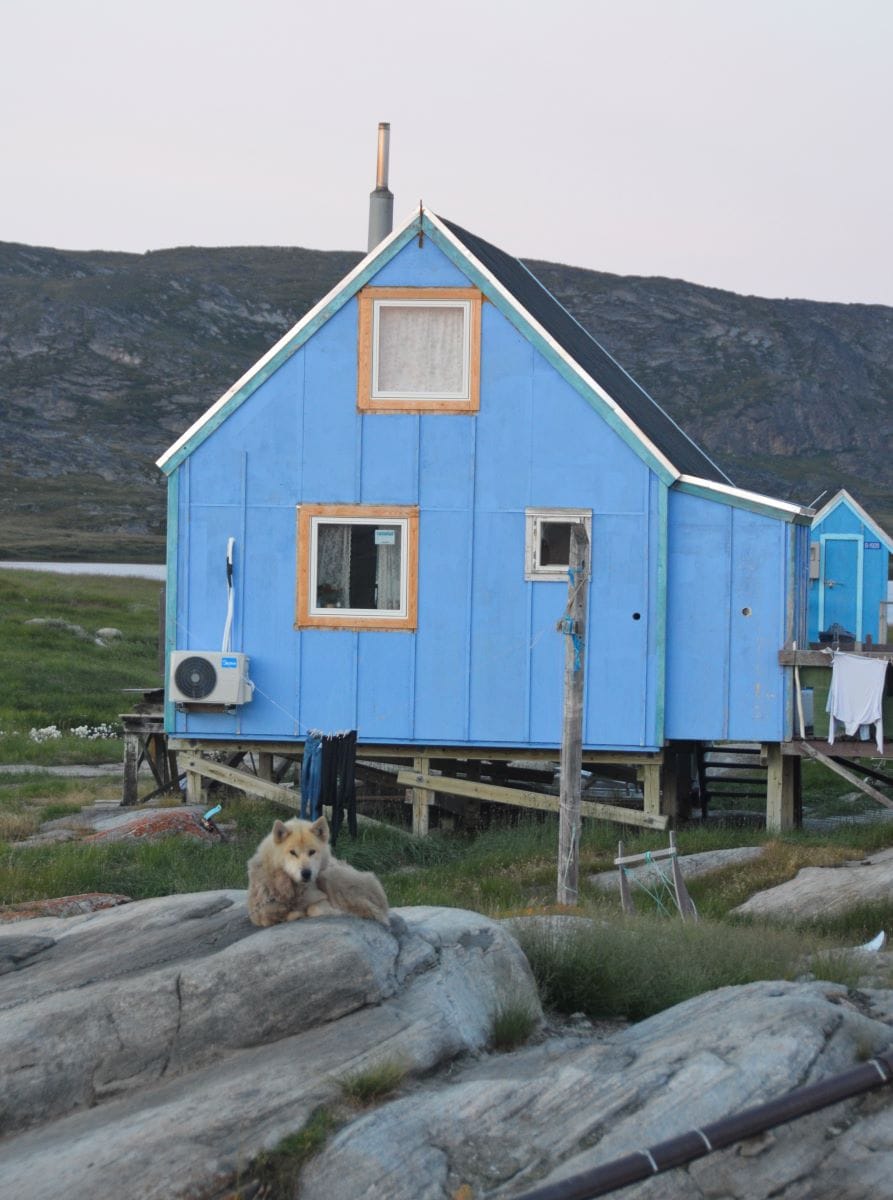
В Гренландия е късна вечер, а слънцето упорито пече високо над хоризонта. Няма да залезе поне два месеца. От прозореца ми се белеят безброй късове лед, по-големите не помръдват, приличат на плаващи къщи, пуснали котва. Яркосинята повърхност на водата проблясва срамежливо, докато не се усили в ослепителен блясък в центъра на слънчевата пътека. Отвън се чуват птички, а днес съзрях две, които никога не бях виждала преди, като че долетели от друг свят. Топло е, но подухва прохладен морски бриз с лек мирис на разтапящ се в океана лед. Намирам се в едно малко, сякаш забравено от останалия свят селище, на ръба на дълъг фиорд, претъпкан с ледове. Те се откъсват, спускат се и се сгромолясват в океана.

Това написах първата вечер, прекарана в Илиманак, на западното крайбрежие на Гренландия.

Но нека започна отначало: Гренландия е най-големият остров в света с площ 2 млн. км2, което е почти 20 пъти колкото България или приблизително 1/5 от Европа. По-голямата част е покрита с дебел слой лед, достигащ до 3000 м височина, докато заселените места се намират по крайбрежието, основно по югозападното и малко по източното.

Населението за сметка на това е едва около 57 000 души, почти колкото населението на Велико Търново.

В продължение на векове Гренландия е под властта на Дания, но през 1979 г. е обявена за автономна област на Кралство Дания, а през 2009 г. си извоюва още по-голяма самостоятелност. Столица е Нуук, със старо датско име Готхоб, а другите два най-големи града са Сисимиут, разположен точно на Полярния кръг, 66-ти паралел, и Илюлисат, в залива Диско, на 69-ти паралел. Знамето е в червено и бяло, за да символизира връзката с Дания, а формата в центъра напомня залязващото в океана слънце. На герба е изобразен най-големият бозайник на острова – бялата мечка.

Гренландия е едно огромно бяло поле. Тя е слабо изследвана, слабо населена, слабо обработена. Една от малкото части на Северното полукълбо, на чиито географски карти има места с надпис unexplored – неизследвани, следователно незасегнати от човешко присъствие. От една страна, неизвестността плаши и отблъсква, а от друга, възбужда интереса толкова много, че опознаването, прекосяването, „очовечаването“, наименуването, а и постепенното застрояване се превръщат във фетиш.

Затова едно време викингите, мореплавателите и полярните изследователи са трасирали света и са достигали неподозирани дотогава места на планетата. Целите им са били разширяване на границите, достъп до нови богатства, а по-късно – и развитие на науката. При всички обаче водещо е било желанието за откриване и обуздаване на чуждото, за укротяване на дивото в новите земи: някои – кипящи от живот, плодородни, изобилстващи от непознати дарове, а други – стягащи в ледената си хватка дръзналите да ги покорят, докато безмилостните ветрове помитали шейни, кораби и самолети, пазейки ревниво териториите си.

Първият, дръзнал да покори остров Гренландия, е младият полярен изследовател Фритьоф Нансен. Едва преди 134 години норвежецът предприема тази експедиция заедно с петимата си другари. С цената на неимоверни усилия те се справят и прекосяват онова „отвъд“, което будело любопитството на много поколения. Имало предположения, че някъде там, зад онези грамадни и страшни ледени маси, има райски кът – обрасъл в трева, плодороден и подходящ за живот. Но истината е коренно различна. Около 80% от площта на Гренландия е вековен лед – бяла пустиня със сух климат и оскъдни валежи, която бавно, но сигурно изтича в океана.

Защо обаче ледниците се движат и как това отдалечено място може да е подходящо за живот?

Ледът в Гренландия представлява огромна, тежка маса и заради гравитацията се спуска под формата на огромни ледникови езици през пробойните на крайбрежните планини. Поради разликата в температурата, между леда и земята се образува тънък слой вода. Този слой значително намалява сцеплението със земната повърхност, което кара леда да се плъзга, задействан от силата на собствената си тежест. Когато достигне водната повърхност, той се отчупва, тъй като вече няма опора.

Например фиордът Кангиа, дълъг 80 км и широк 7 км, който разделя град Илюлисат от село Илиманак в Западна Гренландия, представя нагледно как отчупените ледове в най-вътрешната част на водното образувание започват бавно да се носят по повърхността на водата. Година по-късно те достигат устието на фиорда и тръгват по свой път в открито море. Съществуват хипотези, основани на изучаването на океанските течения, че ледникът, повалил кораба „Титаник“ през 1912 г. е „роден“ именно в Кангиа.

От птичи поглед фиордът изглежда чисто бял, защото е изпълнен с различни по размер късове лед. Ако човек се опита да стъпи върху някоя ледена буца обаче, тя, естествено, ще поддаде. Най-високите айсберги достигат височина 100 м над морското равнище, което означава, че останалите 90% ледена маса са под водата. Възможно е благодарение на дълбочината, надхвърляща 1000 м, а това позволява безпрепятственото плаване на грамадите. Те се носят славно по течението и чрез движението си „разбъркват“ водата, създавайки активност сред фауната там. Движението предизвиква размножаване на малките морски организми, което привлича риби, тюлени и китове, а това от своя страна прави района богат на морски улов и подходящ за заселване.

Движението на ледниците в океана е наистина впечатляващо. Една късна вечер написах в джобното си тефтерче следното:

Вечерта останах за малко навън. Наоколо цареше почти пълна тишина. Гъста мъгла загръщаше селото и прозираха очертанията на най-близките къщи. Леко клокочеше само ручеят, спускащ се в морето. И изведнъж – тряс! – като че гръмотевица разцепи небето, прогърмя и се разплиска във водата. След няколко секунди гръмна отново. Огромният ледник, който от седмица стоеше заклещен недалеч от пристанището, се беше разрушил. През мъглата обаче не се виждаше нищичко. Обикновено когато ледникът се чупи, се получава нещо като взрив. Хилядите малки балончета въздух в леда изведнъж се пръсват и отдалеч изглежда, сякаш някой е поставил експлозив във вътрешността. Оттам откъсналото се парче се спуска във водата и предизвиква вълна, която в зависимост от размерите е способна да задейства и цяло цунами. Понякога морето наоколо се напълва с множество малки отломки, разпилели се заради подобни мащабни експлозии. Така пресичането на фиорда от Илиманак до Илюлисат отнема повече време, тъй като се налага да се обикаля или да се кара направо измежду ледниците, но по-бавно, за да не се пропука корпусът на ферибота. И двата варианта обаче предоставят възможност за по-дълго пътуване в океана, а това е великолепно.

Често при пътуванията ни с ферибота между селото и големия град събирахме с кеп парчета лед, които разглеждахме с интерес. Този лед изглеждаше по-специален от обикновения, който всеки замразява у дома. Той беше пълен със ситни балончета с въздух. По-късно научих, че се образуват, когато снегът се натрупва върху старите слоеве, впоследствие сляга и се превръща във все по-твърда маса. По време на този процес въздухът между снежинките проправя пътя си навън. Но все пак малък процент от него остава и с натрупването на новите слоеве няма къде да отиде, при което се задържа консервиран в леда. Когато въпросният лед достигне океана, отчупи се от общата маса и заплава във водата, той постепенно се разтапя, а балончетата се освобождават от вековната клетка. Затова и щом сложим парче ледников лед в чаша вода, може да се чуе едва осезаемо съскане – освобождаването на балончетата с въздух.

Тези миниатюрни капсули съдържат безценна информация за времето, в което са се образували,

а именно за съдържанието на въздуха, температурата и наличието на фини прахови частици от вулканични изригвания или други природни феномени. Днес по средата на гренландския ледник е изградена научна база, която сондира леда на километри дълбочина, изважда хиляди метри лед във формата на цилиндър и изследва въздуха от балончетата, съхранени във времето. Това дава сведения за миналото на планетата и температурните разлики през годините, за климата и отлагането на вулканичен прах по повърхността. Самата научна база всъщност е в постоянно движение. Тъй като ледникът се придвижва бавно от центъра към периферията, същото важи и за базата върху него – като бръмбар върху костенурка.

Всеки път, когато плавахме измежду ледовете в океана, усещах особен мирис – на студено и свежо, на чисто и бистро. Едно момиче ми каза, че така миришели ледниците – освобождавали се всички онези затворени в леда балончета въздух от едно време. Вдишвахме история. И изведнъж:

Тряс!


Следва: В селото на име Илиманак, в което прекарах няколко месеца, живеят петдесетина гренландци. Пристигайки, човек се изкачва по стръмен кей, около който се клатушкат навързани множество лодки. Досами кея се вижда магазин и в него се продава всичко – от мляко и ябълки до въдици и пушки. За няколкото деца в селото е учредено училище с местна учителка. Съвсем наблизо е и селската баня, служеща едновременно и за перално помещение, фитнес зала и кафене. Банята работи с купони за душовете, които служител перфорира преди всяко къпане. Често същата сграда, обединяваща множество функции, се превръща в място за спонтанни срещи…

LineageOS 21 released

Post Syndicated from LWN.net original https://lwn.net/Articles/962168/

Version 21 of LineageOS,
an Android-based distribution, has been released.

With all that said, we have been working extremely hard since
Android 14’s release last October to port our features to this new
version of Android. Thanks to our hard work adapting to Google’s
largely UI-based changes in Android 12/13, and Android 14’s
dead-simple device bring-up requirements, we were able to rebase
our changes onto Android 14 much more efficiently.

This lets us spend some much overdue time on our apps suite!
Applications such as Aperture had their features and UX improved
significantly, while many of our aging apps such as Jelly, Dialer,
Contacts, Messaging, LatinIME (Keyboard), and Calculator got near
full redesigns that bring them into the Material You era!

C can be memory safe, part 2

Post Syndicated from Robert Graham original https://blog.erratasec.com/2024/02/c-can-be-memory-safe-part-2.html

This post from last year was posted to a forum, so I thought I’d write up some rebuttals to their comments.

The first comment is by David Chisnall, creator of CHERI C/C++, which proposes we can solve the problem with CPU instruction set extensions. It’s a good idea, but after 14 years, CPUs haven’t had their instruction-sets upgraded. Even mainstream RISC V processors haven’t been created using those extensions.

Chisnall: “If your safety requires you to insert explicit checks, it’s not safe“. This is true from one perspective, false from another. My proposal includes compilers spitting out warnings whenever bounds information doesn’t exist.

C is full of problems in theory that doesn’t exist in practice because the compiler spits out warnings telling programmers to fix the problem. Warnings can also note cases where programmers probably made mistakes. We can’t achieve perfect guarantees, because programmers can still make mistakes, but we can certainly achieve “good enough”.

Chisnall: ….tread safety….. I’m not sure I full understand the comment. I understand that CHERI can guarantee atomicity of bounds checking, which would require multiple (interruptible) instructions otherwise. The number of cases where this is a problem, and the C proposal would be no worse than other languages like Rust.

Chisnall: Temporal safety…. A lot of Rust “ownership” techniques can be applied to C with these annotations, namely, marking which variables OWN allocated memory and which simply BORROW it. I’ve reviewed a lot of famous use-after-free and double-free bugs, and most can be trivially fixed by annotation.

Chisnall: If you are writing a blog never having actually tried to make large (million line or more) C codebases memory safe, you probably underestimate the difficulty by at least one order of magnitude. I’m both a programmer who has written a million lines of code in my lifetime as well as a hacker with decades of experience looking for such bugs. The goal isn’t to pursue the ideal of 100% safe language, but of getting rid of 99% of safety errors. 1% less safe makes the goal an order of magnitude easier to reach.

snej: This post seems to epitomize the common engineer trait of seeing any problem you haven’t personally worked on as trivial. Sure bro, you’ll add a few patches to Clang and GCC and with those new attributes our C code will be safe. It’ll only take a few weeks and then no one will need Rust anymore. But I’ve spent decades working on this. The comment epitomizes the common trait of not realizing how much thought and expertise is behind the post. I few patches to clang and GCC will make make C safer. The solution is far less safe than Rust. In fact, my proposal makes code more interoperable and translatable into Rust. Right now, translating C into Rust creates just a bunch of ‘unsafe’ code that needs to be cleaned up. With such annotations, in a refactoring step using existing testing frameworks, results in code that can no be auto-translated safely in to Rust.

As for existing clang/gcc attributes, there are only a couple that match the macros I propose. They dod show how trivial it would be to actually go further.

danso: In addition to the criticisms I share with everyone else, I found this to be one of the most “talk is cheap, show me the code” posts I’ve ever read. The reason I wrote the post is because learning clang/gcc internals is a long process, and when asking for help, I needed something to point to “this is what I’m trying to achieve”. I’m not trying to communicate what other people should do, I’m communicating what I’m trying to do. I still don’t know clang/gcc internals enough to even get started … any pointers would be helpful.

GitHub Availability Report: January 2024

Post Syndicated from Jakub Oleksy original https://github.blog/2024-02-14-github-availability-report-january-2024/

In January, we experienced three incidents that resulted in degraded performance across GitHub services.

January 09 12:20 UTC (lasting 140 minutes)

On January 9 between 12:20 and 14:40 UTC, services in one of our three sites experienced elevated latency for connections. This led to a sustained period of timed-out requests across a number of services, including but not limited to our Git backend. An average of 5% and max of 10% of requests failed with a 5xx response or timed out during this period.

This was caused by an upgrade of hosts, which led to temporarily reduced capacity as the upgrade rolled through the fleet. While these hosts had plenty of capacity to handle the increased load, we found that the configured connection limit was lower than it should have been. We have increased that limit to prevent this from recurring. We have also identified improvements to our monitoring of connection limits and behavior and changes to reduce the risk of host upgrades leading to reduced capacity.

January 21 02:01 UTC (lasting 7 hours 3 minutes)

On January 21 at 2:01 UTC, we experienced an incident that affected customers using GitHub Codespaces. Customers encountered issues creating and resuming Codespaces in multiple regions due to operational issues with compute and storage resources.

Around 25% of customers were impacted, primarily in East US and West Europe. We re-routed traffic for Codespace creations to less impacted regions, but existing Codespaces in these regions may have been unable to resume during the incident.

By 7:30 UTC, we had recovered connectivity to all regions except West Europe, which had an extended recovery time due to increased load in that particular region. The incident was resolved on January 21 at 9:34 UTC once Codespace creations and resumes were working normally in all regions.

We are working to improve our alerting and resiliency to reduce the duration and impact of region-specific outages.

January 31 12:30 UTC (lasting 147 minutes)

On January 31, we deployed an infrastructure change to our load balancers in preparation towards our longer term goal of IPv6 enablement at GitHub.com. This change was deployed to a subset of our global edge sites. The change had the unintended consequence of causing IPv4 addresses to start being passed as an IPv4-mapped IPv6-compatible address (for example, 10.1.2.3 became ::ffff:10.1.2.3) to our IP Allow List functionality. While our IP Allow List functionality was developed with IPv6 in mind, it wasn’t developed to handle these mapped addresses, and hence, started blocking requests as it deemed these to be not in the defined list of allowed addresses. Request error rates peaked at 0.23% of all requests.

In addition to changes deployed to remediate the issues, we have taken steps to improve testing and monitoring to better catch these issues in the future.


Please follow our status page for real-time updates on status changes and post-incident recaps. To learn more about what we’re working on, check out the GitHub Engineering Blog.

The post GitHub Availability Report: January 2024 appeared first on The GitHub Blog.

The Ubuntu community mourns the loss of Gunnar Hjalmarsson

Post Syndicated from LWN.net original https://lwn.net/Articles/962135/

The Ubuntu Weekly Newsletter carries the sad news that long-time contributor Gunnar Hjalmarsson has passed away.

Gunnar has been a steadfast contributor to Ubuntu and Debian for well over a decade. His work around translation and localization efforts has helped enable people from around the world to use and enjoy the software that we all love. It goes without saying that people like Gunnar are the foundation of our community, and his passing is a tremendous loss.

[$] KDE Plasma X11 support gets a reprieve for Fedora 40

Post Syndicated from LWN.net original https://lwn.net/Articles/961899/

The Fedora Project is working toward the release
of Fedora Linux 40, and (as with each release) that means changes
to the way the project works and the software included in its repositories. Most
of the changes
set
for Fedora 40 are uncontroversial, but one change is causing quite
a stir. The KDE Special Interest Group’s (SIG) proposal to adopt KDE Plasma 6 with only Wayland session support, which it interpreted as a mandate to block any X11 packages for Plasma. Others saw it as overreach by the SIG, and an attempt to block users and contributors from maintaining software they needed.