Post Syndicated from The Atlantic original https://www.youtube.com/shorts/ckwMTPoOfJU
Our billing pipeline was suddenly slow. The culprit was a hidden bottleneck in ClickHouse
Post Syndicated from James Morrison original https://blog.cloudflare.com/clickhouse-query-plan-contention/
At Cloudflare, we are heavy users of ClickHouse, an open-source analytical database management system. We redesigned one of our largest ClickHouse tables to add a column to the partitioning key. The change enabled per-tenant retention on a table that serves hundreds of internal teams. The design went through several rounds of revision and review with engineers across multiple teams before we landed on the final approach. But a few weeks after rollout, the jobs that produce most of Cloudflare’s bills were running up against their hard daily deadline.
All the usual suspects looked clean: I/O, memory, rows scanned, parts read. Everything we would normally check when a ClickHouse query is slow appeared to be normal. The problem turned out to be lock contention in query planning, something we’d never had reason to look for before.
This is the story of how this migration exposed a hidden bottleneck in ClickHouse’s internals, and the patches we wrote to fix it.
We use ClickHouse to store over a hundred petabytes of data across a few dozen clusters. To simplify onboarding for our many internal teams, we built a system called “Ready-Analytics” in early 2022.
The premise is simple: instead of designing new tables, teams can stream data into a single, massive table. Datasets are disambiguated by a namespace, and each record uses a standard schema (e.g., 20 float fields, 20 string fields, a timestamp, and an indexID).
In ClickHouse, the way data is sorted is crucial to query performance. This is where the indexID comes into play. It’s a string field, which forms part of the primary key, meaning that every individual namespace can have its data sorted in a way that is optimal for the queries the owners of that namespace expect to be running. Altogether, we end up with a primary key that looks like this: (namespace, indexID, timestamp).
This system is popular, with hundreds of applications using it. It had already grown to more than 2PiB of data by December 2024, and an ingestion rate of millions of rows per second. But it had one critical flaw: its retention policy.
Cloudflare has been using ClickHouse for many years, since before it had native Time-to-Live (TTL) features. Consequently, we built our own retention system based on partitioning. The Ready-Analytics table was partitioned by day, and our retention job simply dropped partitions older than 31 days.
This “one-size-fits-all” 31-day retention was a major limitation. Some teams needed to store data for years due to legal or contractual obligations, while others needed only a few days. This restriction meant these use cases couldn’t use Ready-Analytics and had to opt for a conventional setup, which has a far more complex onboarding process.
We needed a new system that allowed per-namespace retention.
We considered two main approaches:
-
A Table-per-Namespace: This would naturally solve the retention problem but would require significant new automation to manage thousands of tables on demand.
-
A New Partitioning Key: We could change the partitioning key from just
(day)to(namespace, day).
We chose the second option. This would allow our existing retention system to continue managing partitions, but now with per-namespace granularity.
We knew this would increase the total number of data parts in the table, but we made a key assumption: since every query is filtered by a specific namespace, the number of parts read by any single query shouldn’t change. We believed this meant performance would be unaffected.

This shows how we changed the partitioning, allowing us to cheaply drop data for a single namespace
This new system also allowed us to build a sophisticated storage management layer. Using the max-min fairness algorithm, we could set a target disk utilization (e.g., 90%) and automatically “share” available space. Namespaces using less than their fair share would cede their unused capacity to those that needed more. This allowed us to confidently run our clusters at 90% utilization.
We began the migration in January 2025. Using ClickHouse’s Merge table feature, we combined the old and new tables, writing all new data to the new partitioned table while the old data aged out.
Two months later, in late March 2025, our billing team reported that their daily aggregation jobs were slowing down. These jobs are time-critical; if they don’t finish, bills don’t go out. The jobs were getting progressively slower, and we were approaching a deadline.
We investigated, but none of the usual suspects were to blame. I/O was fine. Memory was fine. The metrics for individual queries showed they were not reading more data or more parts than before. Our initial assumption seemed correct, yet the system was grinding to a halt.
It took several days before we even had a theory. Finally, we made a plot of query duration against the total part count in the cluster. The correlation was undeniable.

Average SELECT Query Durations on the Ready Analytics ClickHouse Cluster, showing progressive performance degradation.
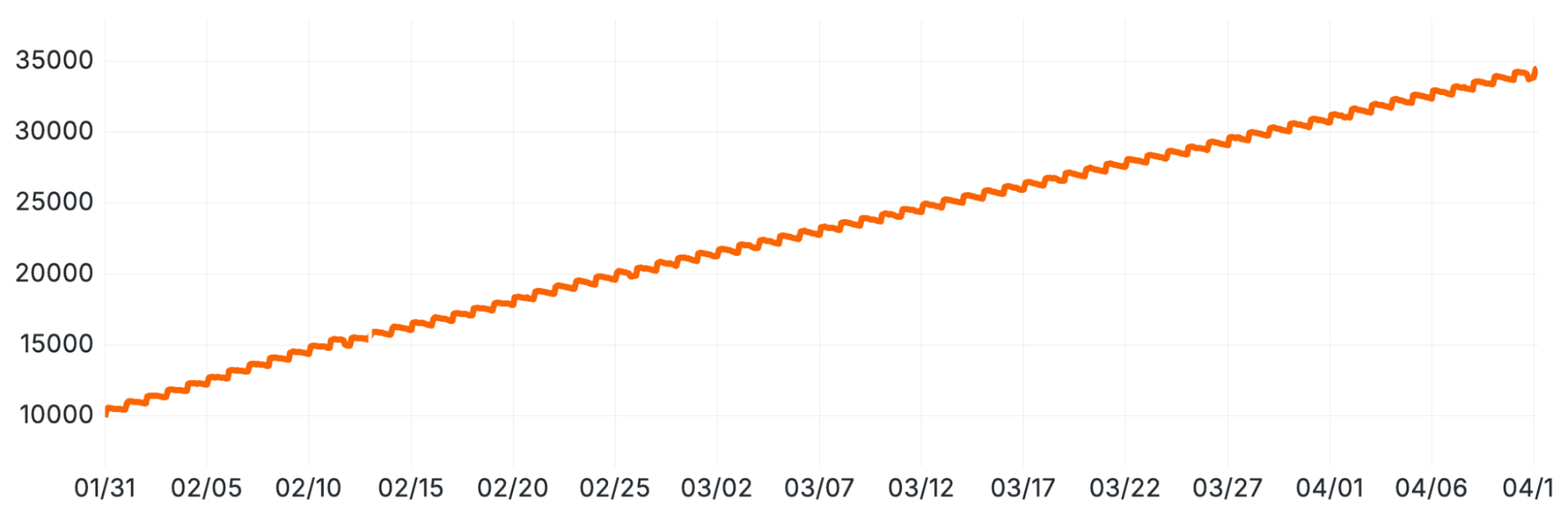
Linear Growth in Total Data Part Count per Table Replica, following the new (namespace, day) partitioning scheme.
But why? If we weren’t reading the extra parts, why did their mere existence slow us down?
We turned to ClickHouse’s built-in trace_log to generate flame graphs. This is a built-in table that records traces from the running ClickHouse server. It not only includes traces of what code is being executed, but it associates these with specific users, query IDs and other metadata, meaning you can filter down to quite precise sets of events if necessary. In our case, we wanted to look specifically at leaf SELECT queries. This was easy thanks to the available metadata in this table.
The first CPU-based flame graph quickly confirmed our suspicion: a huge amount of time was being spent in query planning. This is the phase before execution when ClickHouse decides which parts to read.
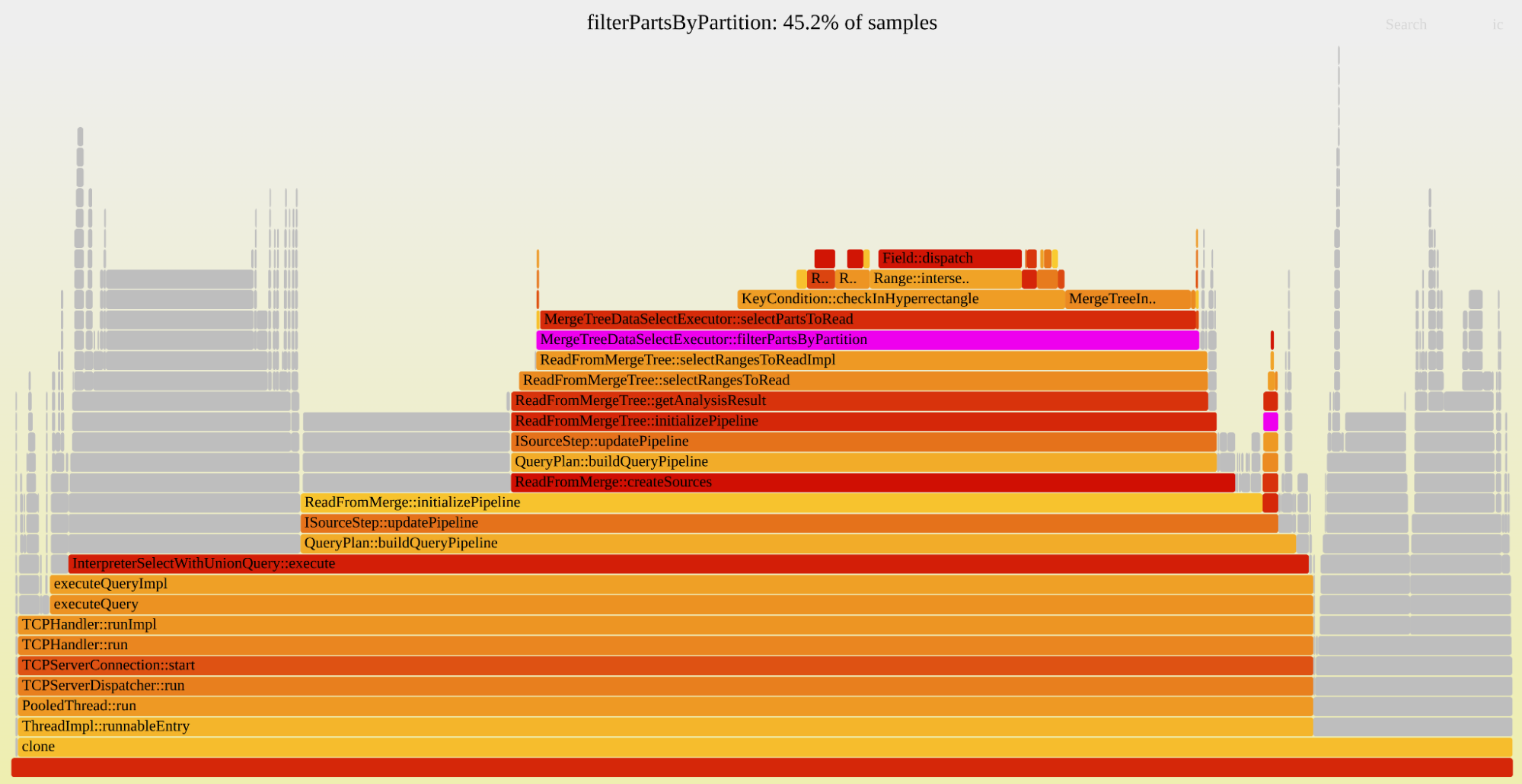
Flame graph showing that 45% of leaf query CPU time is spent filtering a vector of parts based on the partition ID
The flame graph was clear: 45% of the sampled CPU time was being spent in a single function called filterPartsByPartition.
Our first attempt at a fix was a small patch to this exact code path. The planner evaluates heuristics to prune parts, and we believed they weren’t being evaluated in the optimal order for our table. Our patch changed the order, yielding a small 5% improvement. We were on the right path, but we’d missed the real problem.
We had been generating “CPU” traces, which only sample active threads. We switched to “Real” traces, which sample all threads, including those that are inactive or waiting. The new flame graph was a revelation.

Flame graph showing that more than half of leaf query duration is spent waiting for a mutex that protects the list of active parts
The problem wasn’t CPU-bound work; it was massive lock contention. More than half of our query duration was spent waiting to acquire a single mutex (MergeTreeData) that protects the table’s list of parts. To plan a query, every single thread had to:
-
Acquire an exclusive lock on this mutex.
-
Make a complete copy of the list of all parts in the table.
-
Release the lock.
-
Filter that list down to the relevant parts.
With tens of thousands of parts and hundreds of concurrent queries, they were all just standing in a single-file line.
This insight helped us plan a series of optimizations to alleviate these hotspots. As with all the patches we make to ClickHouse, we try to make them generic, and eventually get them contributed to the upstream codebase. This makes it easier for us to maintain our fork, and means the community benefits from the changes we make too!
The query planner doesn’t modify the parts list; it just reads it. It had no business using an exclusive lock.
The Fix: We modified the code to acquire a shared lock (std::shared_lock) instead. This allowed all query planners to enter the critical section concurrently.
The Result: A massive, immediate drop in query duration. The lock contention vanished.

Immediate Impact of the Shared Lock Optimization (Optimization 1) on Average SELECT Query Durations, demonstrating the resolution of lock contention.
Performance was significantly better, but still not back to baseline. We went back to the trace log and made another ‘Real’ flame graph.

Flame graph showing that we spend a quarter of leaf query duration copying the vector of all parts, and another quarter filtering through it (copying again).
The new flame graph showed the bottleneck had simply moved. Now, time was being spent copying the giant vector of parts, even with the shared lock. Intuitively, copying a vector sounds cheap, but when it contains tens of thousands of elements, and you do it hundreds of times a second, it adds up.
The Fix: We deferred the copy entirely. We created a “shared copy” of the parts list. Read-only operations (like query planning) just read from this copy. Any operation that modifies the set of parts (like a new insert) regenerates the cache. Planners now only copy the filtered list of parts they actually need.
The Result: Another significant performance improvement.

Further Performance Improvement After Rolling Out the Vector Copy Optimization (Optimization 2).
After seeing these massive savings internally, we decided to bring these changes to the community. After some small design iterations with the maintainers at ClickHouse Inc., we got the changes merged under PR #85535. They have been available since ClickHouse version 25.11.
We’re still not done. As part counts grow, performance still degrades, just much more slowly. The correlation with part count was still there. Coming back to this after a few months, a new flame graph (looking the same as Figure 3) shows the time is spent in the filtering code path (the one we tried to fix first). This code performs a linear scan over all parts, evaluating predicates against each one. Over a few months, we were back to select durations from before the optimizations.
But we know this list of parts is sorted by the partitioning key. Remember that the first column of the partition key is namespace, which the vast majority of queries filter on, because it identifies the “tenant.” How can we make use of this?
The Fix: We implemented a binary search based on the namespace part of the partition ID. This works because the vector is sorted, so you can filter out a lot of the entries without actually looking at them. This is particularly effective since the namespace is the first part of that sorting key. After this first-pass of binary search, we have a much smaller range of parts we need to examine, and for those we still step through each one, applying the same logic as before to exclude parts based on other conditions.
The Result: After deploying this patch in March 2026, query durations dropped by 50% (see Figure 8). More importantly, this finally breaks correlation of query durations with the number of parts. Unfortunately, this solution doesn’t generalize that well for arbitrary query conditions (e.g. conditions such as namespace in (5,10)). We are looking into more generic approaches like extending the query condition cache to cover part filtering.
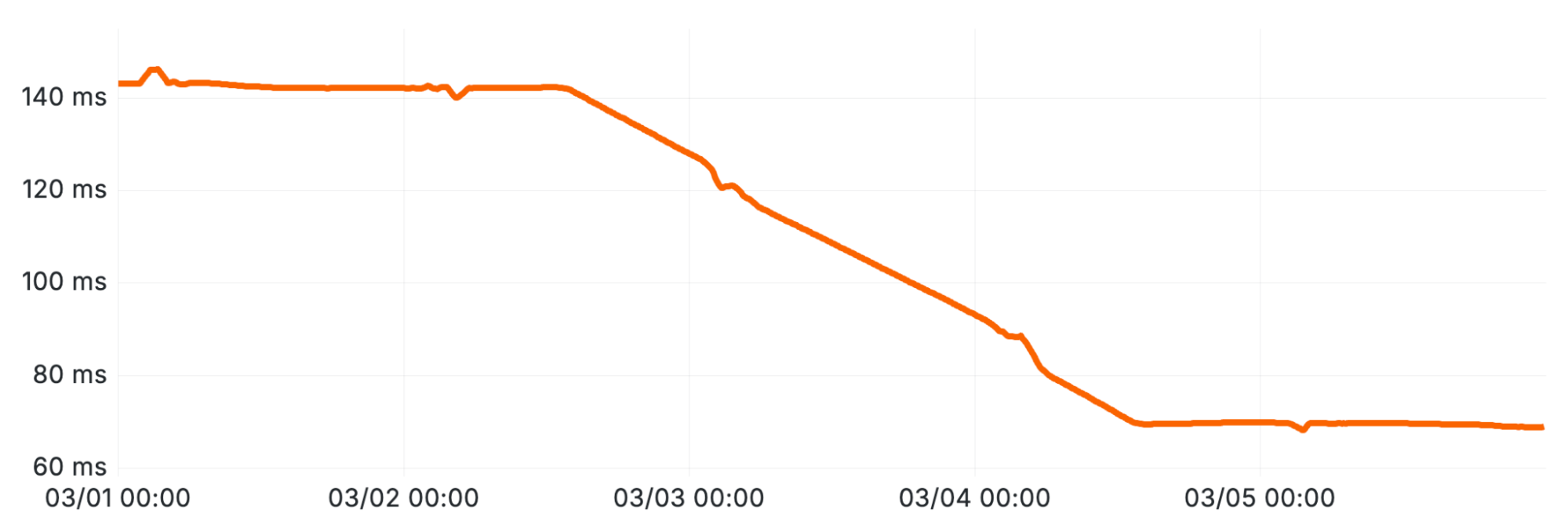
Sustained Latency Reduction Following the Implementation of Binary Search for Part Pruning (Optimization 3).
These optimizations resolved the immediate crisis with the billing system. But this journey exposed the deep, non-obvious costs of our partitioning choice.
Other problems remain. In this blog post we’ve only described the problems increasing part counts had on our select durations, but it has also caused problems for ZooKeeper, which tracks metadata for all the parts in ClickHouse. Perhaps one day we’ll tell the story of the 100 gigabyte ZooKeeper cluster.
We’ve bought ourselves significant breathing room, but the fundamental question remains: Was this partitioning scheme the right long-term choice? Or will we eventually need to bite the bullet and move to a different architecture? For now, our patches are holding, but the experience was a clear example of how even a well-planned change can fall victim to incorrect assumptions.
When the billing team first reported this problem we had 30,000 parts per replica. The part rate never stopped growing, and a year later we hit 160k parts per replica, but query durations have been stable thanks to the optimizations we made here.
At Cloudflare, we solve complex engineering problems at a massive scale. If the debugging and optimizations we described here sound like the type of challenge you’re looking for, check out some of the open roles we are hiring for.
Angine de poitrine, или от какво е направена музиката
Post Syndicated from Светла Енчева original https://www.toest.bg/angine-de-poitrine-ili-ot-kakvo-e-napravena-muzikata/

Минавала ли ви е през ума мисълта, че в музиката вече всичко е измислено? Че не може да се появи нещо, което не прилича на нищо досега? Че изкуственият интелект е способен да генерира произведения, не по-лоши от преобладаващата посредственост, и трудът на много музиканти може да стане излишен? Мечтаете ли си нещо да разтърси света на музиката, така че тя отново да започне да вдъхновява, да провокира, изобщо – да дава смисъл? Ако да, може би има надежда. Ако харесвате музика, която бяга от клишетата,
до вас вече може да е достигнала обсесията по канадското дуо Angine de poitrine.
В случай че не е – сега ще наваксаме.
На френски името на групата означава ангина пекторис – медицинско състояние, по-известно като стенокардия или гръдна жаба. За анонимността на членовете на групата допринасят не само псевдонимите им (Khn de poitrine и Klek de poitrine), а и чудатите костюми на черни и бели точки, които скриват лицата им. Музикантите свирят на струнен инструмент с два грифа (китара и бас) и барабани. Khn използва босите си (но изрисувани на точки) стъпала, за да управлява ефекти като например лууп – записване и повтаряне на определени пасажи, върху които се свирят други.
Макар Angine de poitrine да са активни още от 2020 г., манията по тях е от март 2026 г., когато сиатълското радио KEXP качва в YouTube техен концерт, изнесен в Рен, Франция, през декември 2025 г.
Три месеца по-късно видеото е гледано (или поне отворено) над 14 млн. пъти, а YouTube изобилства от влогърски реакции на музиката на дуото. Екстравагантните канадци са почетени дори от Google – веднъж, когато търсех информация за Angine de poitrine, екранът на компютъра ми изненадващо се обсипа с черни точки.
Какво има между полутоновете?
Най-интересното в Angine de poitrine обаче не е външният им вид, нито анонимността им, а микротоналната им музика. За да разберем обаче какво е микротоналност, трябва да си припомним какво сме учили за тоновете.
Нека си представим клавиатурата на едно пиано. Ако започнем от произволен тон, например до, до същия тон в следващата октава (в случая – горното до) има общо 12 тона и полутона. Толкова е сборът на клавишите – седем бели плюс пет черни. Струнните и духовите инструменти също използват тази скала от 12 тона и полутона. Почти всички произведения в западната музикална традиция, които са ни известни, независимо от жанра им, са създадени върху нейната основа.
Ами ако някой изсвири тон, който е между до и най-близкия полутон, примерно, до диез? Обикновено това означава, че или инструментът не е настроен вярно, или човекът свири фалшиво.
Освен ако не става дума за микротонална музика.
Микротоновете са именно тоновете, които са между полутоновете. В микротоналната музика те не се възприемат като фалшиви, а имат право на съществуване. Микротоналностите не се свеждат до познатите ни 12 тона и полутона, а са изградени на други принципи.
На колко части, освен на две, може да се раздели един тон? Може да има 1/4 или 1/3 тон, но също и 1/17 например или каквато дроб ви хрумне. А може и разстоянието между два съседни тона да е различно от общоприетото. Защото тоновете са спектър – като цветовете. И преливането между тях е плавно. Затова и е практически невъзможно за човешкия глас, както и за голяма част от музикалните инструменти (освен може би издаващите дигитален звук) да постигнат абсолютно чисти тонове – те винаги се колебаят повече или по-малко около точния тон.
Angine de poitrine не са откривателите на микротоналността.
Тя съществува отдавна. Характерна е например за традиционната тайландска музика, в която се използва скала от седем тона на приблизително равни интервали, но различни от тези, с които сме свикнали.
Може да намерим микротонове на различни места по света, включително наблизо. Те са характерни и за турската музика, а не са съвсем чужди и на българския фолклор. Като се замислим, инструменти като гайдата и гъдулката, както и някои техники на народно пеене доста бягат от „правилните“ тонове. Което не е техен недостатък – напротив, в това им е чарът.
Впрочем микротонални инструменти се продават, и то не само фолклорни. При наличие на желание (и достатъчно средства) човек може да се снабди с микротонални китари, баскитари, струнни инструменти с два грифа като на Angine de poitrine и какво ли още не. Има дори микротонални пиана с подредби на клавишите от странни по-странни. Друг е въпросът, че всеки струнен инструмент, който няма прагчета, може да се използва за микротонална музика.
Откъде се вземат „правилните“ тонове?
Странното всъщност не е, че има микротонална музика. По-любопитният въпрос е:
след като тоновете са спектър, защо огромната част от музиката е създадена върху системата от октави с 12 полутона на равни интервали един от друг?
Тази система, наречена равномерна темперация, е създадена в края на Ренесанса и зората на Новото време – публикувана е от Джовани Лафранко през 1533 г. Тя изразява общата нагласа на епохата всичко да се подчинява на ясни рационални правила.
След като равномерната темперация достига до Германия, в нея е въведен още по-строг ред. Йохан Себастиан Бах „постановява“ кои комбинации между тоновете са „добри“, тоест звучат хармонично, а не са в дисонанс. Това са мажорните и минорните тоналности (които стават основа на класическата музика, а и на огромна част от съвременната). Така, ако ползвате само белите клавиши на пианото и започнете от до, ще изсвирите гамата в до мажор, а ако започнете от ла – в ла минор. През 1722 г. Бах създава цикъла си „Добре темперирано пиано“, включващ прелюдии и фуги в мажор и минор, започващи от всеки от 12-те тона и полутона – общо 24 (12 мажорни и още толкова минорни). Двайсет и две години по-късно композира втора част на цикъла, също от 24 произведения.
Кое е вярното ла?
Освен че през Новото време тоновете са подредени в определени интервали и се определя кои са правилните хармонични комбинации между тях, как се решава какви да са самите тонове? Класическият помощник за настройване на музикални инструменти е камертонът, който по традиция издава тона ла. Честотата на тоновете се измерва в херцове, а ла на т.нар. първа октава е 440 херца.
Невинаги обаче е било така – стандартът от 440 херца е въведен чак в края на 30-те години на XX век, а е окончателно одобрен от Международната организация по стандартизация през 50-те. Ала и до днес не всички са съгласни, че 440 са правилните херцове. Битува и схващането, че по-доброто ла е с честота 432 херца (т.нар. строй на Верди – на името на композитора Джузепе Верди), тоест звучи малко по-ниско. Било защото за „виновник“ за 440-те херца се смята Гьобелс, било заради убеждението, че тонът, издаван на 432 херца, е по-естествен, по-топъл и по-близък до Вселената, било и поради двата аргумента. Съществуват и 432-херцови камертони, както и оркестри (включително български), свирещи в строя на Верди.
Но както хората не са знаели колко е часът, преди да имат часовници, така и не са можели да определят каква е честотата на един тон, преди да се появят уреди, с които да се измерва тя. Така че в миналото височината на един и същи тон е варирала чувствително. За ла-то има данни, че се е движило между 309 и 455,3 херца, което е сериозна разлика от близо шест полутона.
На бунт срещу тоналността
Микротоналната музика е преоткрита в края на XIX и началото на ХХ век. Не е сигурно кой е създателят на термините микротон и микротоналност. Въвежда ги или ирландската музикантка, теософка и поетеса Мод Маккарти, която е била повлияна от индийската музика, или мексиканският композитор Хулиан Карийо.
Този период е характерен с критика на модерността и на всичко, свързано с нея – научния прогрес, рационалността, капиталистическите отношения. Критиката е както от леви позиции (работниците са сведени до винтчета на машина), така и от дясноаристократични – капитализмът премахва старите йерархии заедно с ценностите, върху които се основават те. В заключението на книгата си „Протестантската музика и духът на капитализма“ германският социолог Макс Вебер говори за „стоманената клетка на бъдещето“.
Тази критика намира израз и в изкуството – чрез стилове като експресионизма, които си поставят за цел да разчупят класическите рационални и подредени форми. Възниква атоналната музика на композитори като Арнолд Шьонберг и Албан Берг, която стъпва на равномерната темперация от 12 тона и полутона, но отрича доминиращите мажорни и минорни тоналности. Преоткриването на микротоновете е част от същата тенденция на бунт срещу класическите правила.
Защо Angine de poitrine стават вайръл точно сега?
Има периоди, в които технологиите и креативността не са врагове. 70-те години на ХХ век например са такова време за музиката – в жанрове от диското до прогресиврока се създават звуци и ефекти, които не са съществували преди. Нови стилове възникват и в следващите десетилетия. В наши дни обаче технологиите като че ли се използват не толкова за да се създава нещо интересно, колкото за улеснение. Вече дори не се налага един музикант да умее да пее вярно – гласът може да бъде софтуерно коригиран даже в реално време, на концерт на живо. Коригираните, неестествено правилни гласове са вокалният еквивалент на разкрасяващите лицата и телата софтуерни филтри и на козметичната хирургия, произвеждаща хора без бръчки, но и без естествени мимики. Не че няма и талантливи изключения, но като че ли това е нормата.
Angine de poitrine не е първата микротонална група, нито единствената – такива са например и King Gizzard & The Lizard Wizard, The Mercure Tree и др. В сравнение с тях канадското дуо успява да направи впечатление и с екстравагантния си външен вид, и с използването на комплексни неравноделни ритми (на моменти напомнящи тези в българския фолклор), но и с това, че прави всичко по силите си да не прилича на нищо друго – и в музикално, и в сценично отношение, – доколкото това изобщо е възможно.
„Музиката е пространството между нотите“, казва Клод Дебюси.
Френският композитор има предвид тишината. Но нотите обозначават тонове, а между познатите ни тонове се крият и други – микротонове. Съжителстваме с тях, без дори да ги забележим.
Във време, в което бъдещето на музиката, както и на много други сфери изглежда застрашено от изкуствения интелект, Angine de poitrine ни връщат към въпроса от какво всъщност е направена музиката. Ако я разглобим до съставните ѝ части, ако видим какво има между тоновете, може би музиката има бъдеще. Може би ще успеем да я създадем по някакъв нов начин. Е, не точно аз, но по-музикални от мен представители на човечеството.
Beyond content: helping teachers feel ready to teach AI
Post Syndicated from Catarina Marques original https://www.raspberrypi.org/blog/beyond-content-helping-teachers-feel-ready-to-teach-ai/
We are working with partner organisations around the world to support teachers in building confidence with AI in the classroom through our Experience AI programme. In this guest post, Catarina Marques from our partner TUMO Portugal shares what the organisation is learning from delivering training to educators.
Whenever we run Experience AI training sessions, we keep coming back to the same thing: teachers are not lacking interest in AI, what they are lacking is time. Time to explore the technology and tools, time to talk about them with colleagues, and time to work out what they really mean for their classrooms.

And that matters, because AI is not something schools can just put off until later. It is already here. Students are hearing about it, using it, and forming opinions about it. Teachers are being asked to respond to it now, often while still trying to make sense of it themselves.
More than delivering content
The Experience AI teacher training is about more than educators to a set of resources. It is about helping them feel truly ready to take the Experience AI resources into the classroom and use them effectively with their students.

What we see again and again is that teachers need space to stop and think. AI is moving quickly, and schools do not always have the time or support to keep pace. New tools are developed all the time. Expectations keep shifting. There is a lot of noise, and not always much room to pause and ask: what is actually useful here? What do we need to understand better?
In our experience, that is where real learning starts: not in rushing through information, but in discussing it, debating it, and testing ideas together.
Listening matters
One of the most valuable parts of these training sessions is the part where teachers start talking to each other.
They bring real questions into the room. Which AI tools can actually help with their work? How should they think about ethics? How do they talk about AI safety with students? How do they respond to something that may feel both useful and worrying at the same time?

There is often confusion, and sometimes there is resistance too. That makes sense; this is still new territory for many schools. But there is also a real appetite to learn, especially because support in this area can still feel limited.
That is why listening is such an important part of our training. Teachers need space to reflect, compare experiences, and hear how others are approaching the same challenges. Very often, understanding grows through that process.
Play helps
Another thing we feel strongly about is that the training has to be engaging.
AI can feel intimidating. If the atmosphere is too heavy, it can be easy for people to step back from it. That is why the hands-on and playful side of Experience AI is so important. Team activities, discussion, and even a bit of healthy competition change the energy in the room. People get involved. They relax. They start exploring instead of worrying about getting everything right.

That matters for teachers, and it matters for students too. When teachers experience this kind of learning for themselves, it becomes easier for them to imagine creating it in their own classrooms. Play is not separate from the learning here — it is part of what makes it stick.
Preparing schools for now
For us, this work feels urgent. Schools need the language, confidence, and literacy to engage with AI now, not in a few years’ time.
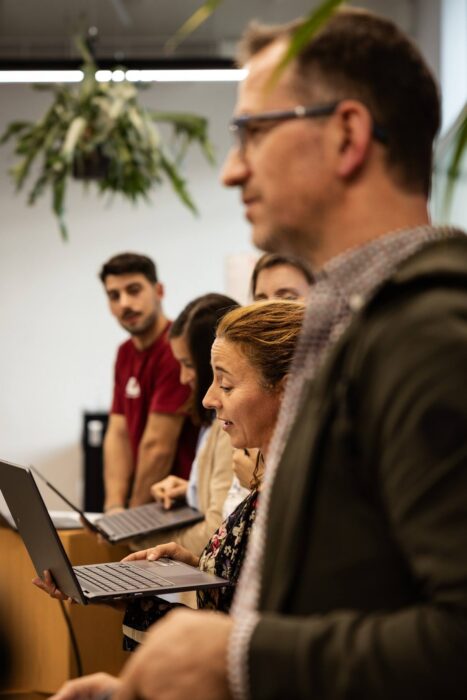
What teachers need most is not endless hype or more pressure. They need time to explore, time to discuss, time to understand, and time to build confidence. Experience AI has offered a way to begin that process.
If we want young people to engage critically and confidently with AI, we have to start by giving teachers the chance to do the same.
If you want to find out more about Experience AI, visit our website experience-ai.org
The post Beyond content: helping teachers feel ready to teach AI appeared first on Raspberry Pi Foundation.
How Dangerous Is Anthropic’s Mythos AI?
Post Syndicated from Bruce Schneier original https://www.schneier.com/blog/archives/2026/05/how-dangerous-is-anthropics-mythos-ai.html
Last month, Anthropic made a remarkable announcement about its new model, Claude Mythos Preview: it was so good at finding security vulnerabilities in software that the company would not release it to the general public. Instead, it would only be available to a select group of companies to scan and fix their own software.
The announcement requires context—but it contained an essential truth.
While Anthropic’s model is really good at finding software vulnerabilities, so are other models. The UK’s AI Security Institute found that OpenAI’s GPT-5.5, already generally available, is comparable in capability. The company Aisle reproduced Anthropic’s published results with smaller, cheaper models.
At the same time, Anthropic’s refusal to publicly release its new model makes a virtue out of necessity. Mythos is very expensive to run, and the company doesn’t appear to have the resources for a general release. What better way to juice the company’s valuation than to hint at capabilities but not prove them, and then have others parrot their claims?
Nonetheless, the truth is scary. Modern generative AI systems—not just Anthropic’s, but OpenAI’s and other, open-source models—are getting really good at finding and exploiting vulnerabilities in software. And that has important ramifications for cybersecurity: on both the offense and the defense.
Attackers will use these capabilities to find, and automatically hack, vulnerabilities in systems of all kinds. They will be able to break into critical systems around the world, sometimes to plant ransomware and make money, sometimes to steal data for espionage purposes, and sometimes to control systems in times of hostility. This will make the world a much more dangerous, and more volatile, place.
But at the same time, defenders will use these same capabilities to find, and then patch, many of those same systems. For example, Mozilla used Mythos to find 271 vulnerabilities in Firefox. Those vulnerabilities have been fixed, and will never again be available to attackers. In the future, AIs automatically finding and fixing vulnerabilities in all software will be a normal part of the development process, which will result in much more secure software.
Of course, it’s not that simple. We should expect a deluge of both attackers using newly found vulnerabilities to break into systems, and at the same time much more frequent software updates for every app and device we use. But lots of systems aren’t patchable, and many systems that are don’t get patched, meaning that many vulnerabilities will stick around. And it does seem that finding and exploiting is easier than finding and fixing. All of this points to a more dangerous short-term future. Organizations will need to adapt their security to this new reality.
But it’s the long term that we need to focus on. Mythos isn’t unique, but it’s more capable than many models that have come before. And it’s less capable than models that will come after. AIs are much better at writing software than they were just six months ago. There’s every reason to believe that they will continue to get better, which means that they will get better at writing more secure software. The endgame gives AI-enhanced defenders advantages over AI-enhanced attackers.
Even more interesting are the broader implications. The same searching, pattern-matching and reasoning capabilities that make these models so good at analyzing software almost certainly apply to similar systems. The tax code isn’t computer code, but it’s a series of algorithms with inputs and outputs. It has vulnerabilities; we call them tax loopholes. It has exploits; we call them tax avoidance strategies. And it has black hat hackers: attorneys and accountants.
Just as these models are finding hundreds of vulnerabilities in complex software systems, we should expect them to be equally effective at finding many new and undiscovered tax loopholes. I am confident that the major investment banks are working on this right now, in secret. They’ve fed AI the tax code of the US, or the UK, or maybe every industrialized country, and tasked the system with looking for money-saving strategies. How many tax loopholes will those AIs find? Ten? One hundred? One thousand? The Double Dutch Irish Sandwich is a tax loophole that involves multiple different tax jurisdictions. Can AIs find loopholes even more complex? We have no idea.
Sure, the AIs will come up with a bunch of tricks that won’t work, but that’s where those attorneys and accountants come in—to verify, and then justify, the loopholes. And then to market them to their wealthy clients.
As goes the tax code, so goes any other complex system of rules and strategies. These models could be tasked with finding loopholes in environmental rules, or food and safety rules—anywhere there are complex regulatory systems and powerful people who want to evade those rules.
The results will be much worse than insecure computers. Tax loopholes result in less revenue collected by governments, and regulatory loopholes allow the powerful to skirt the rules, both of which have all sorts of social ramifications. And while software vendors can patch their systems in days, it generally takes years for a country to amend its tax code. And that process is political, with lobbyists pressuring legislators not to patch. Just look at the carried interest loophole, a US tax dodge that has been exploited for decades. Various administrations have tried to close the vulnerability, but legislators just can’t seem to resist lobbyists long enough to patch it.
AI technologies are poised to remake much of society. Just as the industrial revolution gave humans the ability to consume calories outside of their bodies at scale, the AI revolution will give humans the ability to perform cognitive tasks outside of their bodies at scale. Our systems aren’t designed for that; they’re designed for more human paces of cognition. We’re seeing it right now in the deluge of software vulnerabilities that these models are finding and exploiting. And we will soon see it in a deluge of vulnerabilities in all sorts of other systems of rules. Adapting to this new reality will be hard, but we don’t have any choice.
This essay originally appeared in The Guardian.
Start small, dream big with Code Club: Become an Incubator Partner
Post Syndicated from Zoe Davidson original https://www.raspberrypi.org/blog/become-a-code-club-incubator-partner/
Imagine places for young people to not just learn to use technology but to understand it, shape it, and build with it. That’s what you can create by partnering with the Raspberry Pi Foundation on Code Club, the global movement of computing clubs where school-age young people develop the confidence to create with digital technologies.
We’re looking for organisations worldwide to join us as new Incubator Partners and bring Code Club to young people in their regions.

What is the Incubator programme about?
Through our non-funded 12-month global Incubator programme, we support a diverse network of organisations to establish and grow free Code Clubs in their communities. By combining your local knowledge and community connections with our tried and tested projects, training, and support, you can build something that lasts and grows.
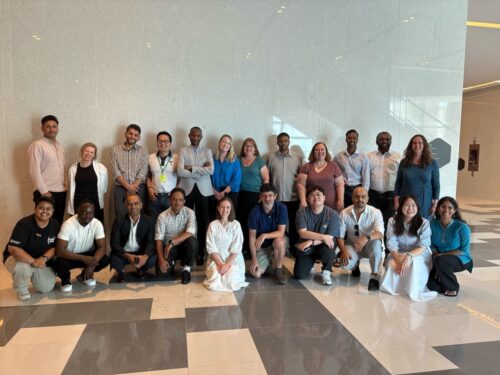
As a partner, you’ll join a global network of organisations all working toward the same goal: giving young people access to free, inclusive, and inspiring opportunities to learn coding and digital making.
“Many of our partners are non-profit and volunteer-led, driven by a real commitment to their communities. It’s incredibly inspiring — and we’re excited to keep growing this global network of partners so even more young people can benefit.” – Sonja Bienert, Senior Global Partnerships Manager
By joining, you’ll get partner-specific access to events like global meetups, online workshops, and Coolest Projects, as well as materials to support your fundraising. Your Code Clubs will be able to use our wide range of free, creative projects for young people, including activities about AI, and activities that support clubs with limited devices. And you’ll be able to build collaborations with other partners in the network.
Real stories from our partners
Across the world, our partners are already transforming lives.
Full Stack Vision Foundation, Aruba
In Aruba, Full Stack Vision Foundation has grown Code Club from a single library session into a thriving network of ten clubs:
“Giving young people the ability to make, create, and sustain technological solutions is what the Caribbean wants.” – Bruce Harms, Founder and President of Full Stack Vision Foundation

By adapting projects to reflect local culture — like reimagining a Scratch project around aloe vera instead of sugar — the team at Full Stack Vision ensures young people see themselves in what they’re creating.
Orientations Training Centre, Sudan & Egypt
In Sudan and Egypt, Orientations Training Centre has reached over 450 active members through a mix of in-person and online clubs:
“I learned that coding is not just about computers – it’s about solving problems and helping people.” – Yasmin, Code Club attendee
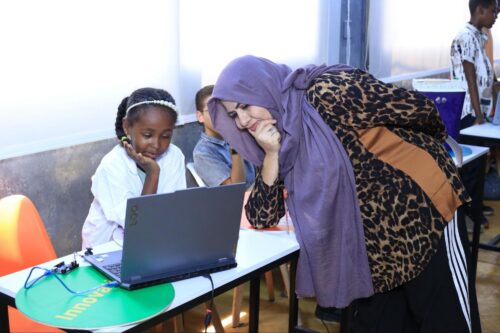
“Start small but dream big. A Code Club can change lives – not just by teaching coding but by nurturing problem-solvers, innovators, and leaders for the future.” – Abdelmoneim Mohammed, CEO of Orientations Training Centre
Their work shows how getting creative with digital technology can unlock confidence, leadership, and ambition.
STEMUP Educational Foundation, Sri Lanka
In Sri Lanka, STEMUP Educational Foundation started with a single Code Club in a public library and has grown into a nationwide movement supported by more than 1,500 volunteers, reaching young people across both urban and rural communities.
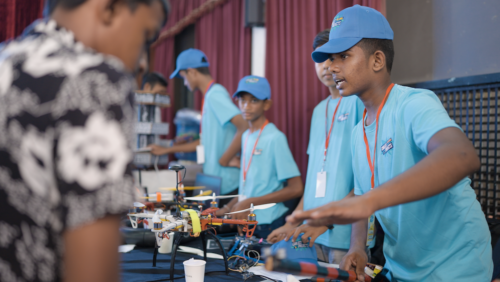
After attending a Coolest Projects event for young tech creators during the partner meetup we held in Malaysia, STEMUP brought the tech showcase to Sri Lanka for the first time in 2024, giving young people the chance to share their creations and connect with others. The event sparked huge excitement, with schools even organising transport so students could take part.
“That kind of energy… because they don’t have these opportunities to showcase what they have built, connect with like-minded people, connect with industry… I think that’s a really unique opportunity kids are having.” – Prabhath, founder of STEMUP Educational Foundation
A global movement powered by local leaders
Every partner brings something unique: local insight, cultural context, and a deep understanding of their community. Together, we’re building a global movement that is inclusive, creative, and full of possibility.
“I feel part of something bigger — a worldwide movement where kids everywhere are learning to create with technology, not just consume it. Being a global partner means we can learn from what’s working in other countries, adapt those ideas to Bangladesh, and also contribute our own innovations back to the network. The global connection gives Code Club Bangladesh more recognition locally — it reassures schools, volunteers, and funders that we’re part of a trusted, established initiative.” – Code Club Bangladesh partner
Are you ready to get started?
You can register today to start your Code Club Incubator Partner application. If you’re passionate about empowering young people and ready to grow a network of computing clubs in your community, we’d love to hear from you.
Fill in the registration form to take the first step towards becoming an Incubator Partner:
We can’t wait to welcome the next group of Code Club Partners.
The post Start small, dream big with Code Club: Become an Incubator Partner appeared first on Raspberry Pi Foundation.
The Gerrymandering Wars
Post Syndicated from The Atlantic original https://www.youtube.com/watch?v=AUvyxaNKbLk
Няма такава дума в българския език!
Post Syndicated from original https://www.toest.bg/nyama-takava-duma-v-bulgarskiya-ezik/

Чудно нещо е езикът – дава ни толкова възможности да изразяваме мисли, чувства, идеи, терзания, съгласия и противопоставяния, а ние, вместо да се възползваме пълноценно от тази свобода и да признаем, че всички разполагат с нея, понякога се впускаме в критика към казаното от събеседника ни. По-точно към формата, в която то е облечено.
Докъде всъщност се простира нашата толерантност към езиковия избор на другите? И кое подхранва синдрома на отрицанието му, който условно ще нарека „Няма такава дума в българския език!“?
Да тръгнем от един факт, който според мен трудно може да бъде оспорен:
повечето хора изобщо не правят разлика между български език и книжовен български език.
А тя е съществена. Книжовната форма е, образно казано, представителният, изисканият, дори идеалният вариант на българския. Точно тя – с много малки изключения – се изучава в училище през целия 12-годишен курс. Вероятно затова, когато чуват и употребяват понятието български език, хората разбират книжовната, тоест нормативната му форма, и напълно изключват териториалните диалекти и социолектите. Изключва се даже т.нар. книжовно-разговорна реч, която, както личи от нейното название, е част от книжовния език, макар и не съвсем.
Крайно време е да се разбере: и диалектните думи, и просторечието, и граматически грешните форми и конструкции, и вулгаризмите, ако щете, са част от българския език – онзи огромен речеви склад, от който всеки може да черпи в ежедневието си. Когато обаче общува публично, съвременният човек с прилична езикова култура следва да се ограничава в рамките на книжовната норма, даваща му впрочем пребогати изразни възможности.
Ето някои примери, при които съм срещала реакцията „Няма такава дума!“. Ще ги коментирам съвсем накратко.
Съпричинител. Доколкото ми е известно, този юридически термин е въведен през 2017 г. в Закона за движението по пътищата – чл. 119, ал. 5. А изобщо в съдебната практика се използва понятието съпричиняване, което, също както и съпричинител, ми изглежда достатъчно разбираемо. Ето, без да давам какъвто и да е контекст, и вие ще се сетите, че съпричинителят е човек, който заедно с друг е причинил нещо, и последиците от това нещо са лоши.
Варналия. Книжовната дума е варненец, а варналия е разговорна, но е широко употребявана и на мен лично тя ми звучи по-топло. За да сверя своето усещане, се обадих на мои приятели, които живеят в морския град. Според тях варналия е по-старият вариант и съответно в миналото се е срещал по-често. Пошегувахме се, че сега софиянци пишат речниците и определят кое е книжовно и кое – разговорно.
Тризнаци. Ще призная, че имам силна вътрешна съпротива срещу тази дума. Погледнато обективно обаче, за да означим три деца, родени при една бременност, трябва да използваме или тризнаци, или тройка близнаци. Е, тук влиза в сила законът за езиковата икономия, за който малцина знаят, но това не пречи той да си действа. Думата е включена в Речник на новите думи в българския език1 и е означена като разговорна.
Добропаметен. Много ми се иска това прилагателно име, което наистина се среща изключително рядко, да разшири употребата си, още повече че на злото трябва да се противостои по всякакъв начин, включително и в езика. Вярно, има злопаметни люде, но защо да се лишаваме от възможността някак да назоваваме и онези, които помнят стореното им добро? Струва си да се отбележи, че другите сложни прилагателни имена с втора част -паметен също са негативни: късопаметен и безпаметен2. Специално тези двете дават възможно най-синтезираното обяснение на изборното ни поведение.
Достъпвам. Толкова хейт, пардон, толкова злоба е отнесъл този безобиден неологизъм, че направо да го ожалиш. Иначе, ние сме против чуждиците, на оръжие, братя, да браним нашия мил роден език, налазен от нашествениците! Но дойде ли ред да измислим българско съответствие, някак много ни мързи. Съжалявам за грозната дума, но си е точно мързел, не е някаква изтънчена леност. Какво да ги правим сайтовете? Да ги аксесваме ли? Хайде по-добре да ги достъпваме. Какво му е на глагола? Всичко необходимо си има: представка, корен, наставка – все български. Значението му е ясно и без контекст. Но не, трябва да бърчим претенциозно нос и да връзваме кусур на всяко ново нещо в езика. Специално този глагол обещавам да го браня със зъби и нокти. Посочете ми едно разумно основание да не го използваме – и ще се откажа. (Разгорещих се, извинете, но и аз си имам пристрастия.)
Шофьорка, вицепремиерка, пулмоложка, колежка. Всички изброени думи са обединени от женския род и е естествено с тях да се назовават жени, заемащи дадена длъжност или упражняващи определена професия. Тенденцията за употреба на думи от мъжки род в тези случаи обаче е много силна и жените вече са шофьори, вицепремиери, пулмолози и колеги. Тъжното за мен е, че много от тях желаят да се представят с тези „мъжки“ думи. Водещият им мотив е, че „женските“ варианти звучат обидно и ги принизяват като личности.
Лидирам. Тук аз самата искам да възкликна: „Няма такава дума!“ Съществува в английския език във вида to lead. В българския разполагаме с богат набор от синоними. Няма нищо лошо и принизяващо някой да води, ръководи, насочва, направлява, оглавява, повежда… За някои обаче тези думи явно звучат простовато и са несъвместими със сложните политически процеси в нашата държава, а също така не съответстват на високото ниво на родните ни политици, които не просто водят нацията, а я лидират!
Последната дума е ярък пример за чуждица, която иска да се настани в българския език. Посочвам този факт най-вече за да обърна внимание на голямата динамика, която поначало е присъща на лексиката. В никоя друга езикова система промените не са толкова големи и бързи, колкото в речниковия състав. Това е един от основните фактори, които затрудняват не само обикновените хора, но и специалистите, когато се опитват да си отговорят на въпроса „Има ли я тази дума в българския език вече, или още я няма?“.
Критериите са много и разнородни.
Ще ни бъдат необходими три-четири статии, за да ги разясним, затова ще се спра накратко на някои от тях. Приема се, че след като дадена дума фигурира в речниците, тя е част от съответния език. За да попадне там обаче, трябва да отговаря на няколко условия, например да е показала
определена степен на устойчивост и да проявява тенденция за разширяване на употребата си…3
Съвременните технологии предоставят чудесни възможности за проследяване и количествено измерване на употребите и значително улесняват лингвистите в тяхната преценка. Вече имаме огромни корпуси с текстове на съвременен български език и ще се възползвам да ви препоръчам най-богатия от тях – CLASSLA. Тук е кажи-речи целият български интернет (без социалните мрежи, разбира се).
И така, необходимо е думата да има достатъчно много употреби, но се държи сметка също те да са в различни източници, в различни сфери, а не само в някоя строго професионална, да речем.
Освен това е нужно да е изминало някакво време, в течение на което даден неологизъм се употребява, въпреки че и това не е задължително. Когато настъпи епидемията от COVID-19, светкавично заехме локдаун от английски, а названието на болестта – ковид, се разпространяваше по-бързо и от самата зараза.
Нужно е също, ако лексемата е чужда, да е показала известна гъвкавост, тоест приспособимост към приемащия я език. Адаптацията се проявява в две посоки. Първата е способност за образуване на нови граматични форми, например пиар – пиарът/пиара, пиари, пиарите. Втората е словообразувателна активност – когато думата стане основа за образуване на нови думи в приемащия език: от пиар – пиарка, пиарски, пиарство, пиарствам.
За две от последните думи – пиар и пиарка, вече може да се твърди, че са признати на най-високо ниво, тъй като са включени в БЕРОН. Останалите фигурират в единия от цитираните речници на новите думи в българския език4. Ако някой много се страхува да ги употребява, ето, вече може да се опре на този факт.
Действително доста хора се въздържат да използват сравнително рядко срещани думи, особено пък по-нови.
По имейла съм получавала въпроси дали в българския език съществуват например: окултуряване, самокатастрофира, иновиращ, препотявам се, имейл (!), деволюция, татуировчик, приключенец, заскладяване, моктейл (безалкохолен коктейл), внимателност, антирекорд.
Много ми се иска да коментирам всички тези думи, но Word Count немилостиво отброява 8275 знака дотук и ме пришпорва да привършвам. Все пак ще кажа още едно-две неща, защото ги смятам за важни.
Какво да правим, ако дадена дума не е призната „официално“, тоест ако липсва в БЕРОН? Какво да правим, ако не я откриваме и в други речници на българския език? Съществува ли тя изобщо и може ли да я употребяваме? Според мен липсата на определена дума в речника не бива да е възпиращият фактор за нас. Никоя лексема не започва живота си в речник – започва я в живата реч, където тя прави първите си стъпки, после походката ѝ става все по-стабилна и смело и уверено тръгва по своя път. Все повече хора я забелязват, по някое време си казват: я, какво ново нещо се е появило, върши добра работа, защо пък да не го използвам и аз? По някое време и лексикографите регистрират неологизма, изследват употребите му, обсъждат го и ако отговаря на определените от тях критерии, го включват в съответния речник.
И така, първо думата се появява в живата реч, употребява се активно и едва тогава влиза в речниците.
Ако стоим и чакаме да видим нещо в речника, за да го използваме, никаква нова дума няма да бъде сътворена.
Естествено, не бива да бъдем и съвсем безкритични. Лично за мен е най-важно това, което казвам или пиша, да е разбираемо за хората и да е уместно в съответната речева среда.
Завършвайки, бих искала да споделя с вас един цитат от разказ на Хърбърт Уелс, на който попаднах, като търсех примери за статията.
Няма такава дума „виждам“ – рекъл слепецът…
Колкото повече разсъждавах над тези думи, толкова по-силно отекваше предупреждението в тях – че може да се хванем в капана на отрицанието поради ограничеността на собствените ни познания за света и чисто физическите си и ментални способности. Пожелавам и на себе си, и на вас по-рядко да попадаме в този капан и да не бъдем заслепявани за реалността, в това число и за езиковата реалност.
1 Е. Пернишка, Д. Благоева, С. Колковска. София: Наука и изкуство, 2010, с. 448.
2 Има още две такива думи – приснопаметен и достопаметен, но те са архаични.
3 Речник на новите думи в българския език. Д. Благоева, С. Колковска (ред). София: Наука и изкуство, с. 6.
4 Е. Пернишка, Д. Благоева, С. Колковска. Цит. съч., с. 323.
Езикът може да е вкусен и извън блюдото – онзи, българският език, на който говорим от малки и на който около 24 май се кълнем в обич. А той в същността си е средство за общуване и за да ни служи добре, непрекъснато се променя. Да го погледнем в неговата динамика и да се опитаме да разберем какво става и защо, кои са движещите механизми и как те са свързани с обществените процеси. И тъй като задачата не е лека, ще го правим постепенно – на порции.
Trump Has Gone From Unpredictable to Unreliable
Post Syndicated from The Atlantic original https://www.youtube.com/shorts/BJXpbEx3ubo
[$] LWN.net Weekly Edition for May 14, 2026
Post Syndicated from corbet original https://lwn.net/Articles/1071535/
Inside this week’s LWN.net Weekly Edition:
- Front: Fedora AI; Forgejo "carrot" disclosure; memory-management maintainership; huge THPs; mshare; 64KB base pages; DAMON; direct map.
- Briefs: Dirty Frag; Fragnesia; Mythos and curl; killswitch; Debian reproducible builds; KDE investment; Quotes …
- Announcements: Newsletters, conferences, security updates, patches, and more.
How the American Economy Perseveres
Post Syndicated from The Atlantic original https://www.youtube.com/shorts/ZS6cTMbAqmk
Detecting and preventing crypto mining in your AWS environment
Post Syndicated from Jason Palmer original https://aws.amazon.com/blogs/security/detecting-and-preventing-crypto-mining-in-your-aws-environment/
This article guides you on how to use Amazon GuardDuty to identify and mitigate cryptocurrency mining threats in your Amazon Web Services (AWS) environment. You’ll learn about the specialized detection capabilities of GuardDuty and best practices to build a multi-layered defense strategy that protects your infrastructure costs and security posture.
Understanding the crypto mining challenge
Crypto mining in AWS environments represents a notable security challenge that extends beyond basic resource consumption.
When threat actors gain unauthorized access to cloud resources for mining operations, organizations face multiple consequences:
- Cost increases that can range from hundreds to thousands of dollars.
- Performance degradation that can affect legitimate workloads.
- Potential additional security incidents that can lead to data exposure or ransomware deployment.
The complexity of crypto mining incidents continues to evolve, with unauthorized users employing advanced techniques to evade detection while maximizing resource use. Organizations often discover these intrusions only after they experience the financial effects or when resource exhaustion affects business operations.
When crypto mining indicates broader system vulnerabilities, additional concerns arise. Unauthorized users who gain access for mining purposes can install backdoors, expose sensitive data through compromised credentials, or create pathways for lateral movement within your AWS infrastructure.
Identifying signs of crypto mining activity
Organizations must remain vigilant for several key indicators of crypto mining activities. These indicators include connections to unknown IP addresses or the use of known mining pool ports, such as 3333. Sustained high CPU or GPU usage that doesn’t align with normal business operations can also signal mining activity. Unexpected network traffic patterns, particularly spikes to unfamiliar IP addresses, also warrant investigation.
Security teams must monitor for unfamiliar processes or applications that run without authorization on their resources.
How GuardDuty detects crypto mining
GuardDuty employs advanced detection methods specifically designed to identify crypto mining activities across your AWS environment. The service uses machine learning algorithms to analyze multiple data sources. These data sources are trained on global threat data gathered by AWS, anomaly detection that establishes behavioral baselines, and integrated threat intelligence from AWS Security and partners.
GuardDuty’s crypto mining detection capabilities include several specialized finding types:
- CryptoCurrency:EC2/BitcoinTool.B!DNS identifies Amazon Elastic Compute Cloud (Amazon EC2) instances that query domains associated with crypto activity through DNS request analysis.
- CryptoCurrency:EC2/BitcoinTool.B detects direct network communications with crypto-related IP addresses.
- CryptoCurrency:Lambda/BitcoinTool.B reveals AWS Lambda functions that communicate with mining pools.
GuardDuty monitors Amazon Virtual Private Cloud (Amazon VPC) Flow Logs for suspicious network patterns and analyzes DNS queries for mining-related domains. GuardDuty also scrutinizes AWS CloudTrail events for suspicious API calls and collects workload telemetry when you turn on Runtime Monitoring. This comprehensive approach allows for detection across Amazon EC2 instances, Amazon Elastic Container Service (Amazon ECS) clusters, Kubernetes environments, and standalone containers.
When you turn on the Runtime Monitoring feature, GuardDuty deploys lightweight agents that provide deeper visibility into runtime processes and system behavior, and enables findings such as CryptoCurrency:Runtime/BitcoinTool.B and Impact:Runtime/CryptoMinerExecuted. These findings detect crypto mining software that operates within your workloads. For containerized environments, Amazon Elastic Kubernetes Service (Amazon EKS) findings can indicate when unauthorized access is potentially used for crypto mining operations.
Building multilayered protection against crypto mining
Organizations typically find that crypto mining protection benefits from multiple security layers, with the detection capabilities provided by GuardDuty forming one component of a broader security strategy. Consider turning on GuardDuty across all AWS accounts and AWS Regions through AWS Organizations. Activated Runtime Monitoring and Amazon EKS protection features provide comprehensive coverage.
The following actions can enhance GuardDuty capabilities:
- Configure Amazon CloudWatch to monitor resource use metrics and set alarms for unusual CPU, network, or GPU usage spikes that might indicate mining activity. Implement AWS Config rules to verify that security configurations are compliant. These checks make sure that security groups don’t allow broad internet access, and that IMDSv2 is enforced.
- Deploy AWS Network Firewall to enable granular outbound filtering and allow necessary internet connectivity while blocking access to crypto mining infrastructure.
- Deploy AWS Systems Manager to maintain visibility into instance configurations. Inventory, a capability of Systems Manager, tracks installed applications to detect mining software. Additionally, Run Command and State Manager—capabilities of Systems Manager—enforce security policies across your fleet.
- Create automated remediation workflows that use Amazon EventBridge and Lambda to respond immediately when GuardDuty detects crypto mining activities.
Best practices for comprehensive protection
Access management and authentication
- To strengthen your preventive measures, implement least privilege access with AWS Identity and Access Management (IAM). For software use cases, use IAM roles inside of AWS and IAM Roles Anywhere outside of AWS instead of long-lived access keys. For human identities, centralize user management through AWS IAM Identity Center with multi-factor authentication (MFA) features, in addition to attribute-based access control for fine-grained permissions. If you don’t use Identity Center, then turn on MFA for all IAM users, including those with administrative privileges, and require MFA for sensitive operations.
- If you can’t eliminate the use of long-lived access keys, then implement regular access key rotation policies and apply least privilege access to all IAM policies. Regularly audit IAM permissions to identify and remove excessive privileges.
System maintenance and configuration
- Use Patch Manager, a capability of Systems Manager, to implement automated patching and maintain current Amazon Machine Images (AMIs) for all deployed EC2 instances. Establish a regular patch cadence for all systems and test patches in non-production environments before you deploy a patch.
- Implement strict ingress rules in security groups and allow only necessary traffic. Use egress filtering to prevent unauthorized outbound connections to mining pools. Regularly audit security group configurations to make sure that the configurations meet security requirements.
Data protection
- Use AWS Key Management Service (AWS KMS)S) to turn on encryption for all data at rest, and implement TLS for data in transit. AWS KMS uses envelope encryption by default, and protects your data keys with master keys to provide enhanced security and performance. It’s a best practice to regularly rotate encryption keys.
Benefits of comprehensive crypto mining protection
Organizations that implement these comprehensive security measures can experience the following improvements in their security posture and operational efficiency:
- Reduced detection time: Detection times for crypto mining activities decrease from days or weeks to minutes so that teams can rapidly contain issues before significant damage occurs.
- Automated responses: Automated response workflows reduce manual intervention requirements so that security teams can focus on strategic initiatives.
- Cost control: These measures identify and terminate unauthorized resource consumption and prevent unexpected billing increases.
- Performance stability: Crypto mining processes no longer monopolize CPU, memory, and network resources so that your organization can maintain application performance.
- Enhanced visibility: The monitoring approach helps identify crypto mining and other security threats that might go unnoticed.
- Team confidence: Security teams gain confidence through continuous monitoring and automated alerts. Teams can be secure in knowing that crypto mining attempts are promptly detected and addressed.
The implementation of preventive controls reduces the potential for initial incidents. Regular patching and configuration management further strengthen your overall security posture.
Crypto mining approval on AWS
AWS requires written approval for crypto mining activities on AWS under AWS Service Terms (Section 1.25). This requirement helps protect both your resources and the broader AWS infrastructure.
Requesting approval
AWS Trust & Safety reviews requests to help prevent mining activities from negatively affecting service performance or security. When submitting your request, include the following information:
- Describe your mining purpose and business case.
- Outline your infrastructure planning and cost management approach.
- Detail your security measures to prevent unauthorized access.
- Provide emergency contacts for rapid communication, if issues arise.
- Specify the number of instances and type of crypto mining.
What to expect after approval
Approved mining operations must follow specific guidelines to maintain good standing. AWS monitors approved mining activities to verify that the activities don’t generate abuse reports, effect service performance, or deviate from prescribed architecture and security practices.
Important considerations
Review the following information:
- You can’t use AWS Credits and Free Tier resources for crypto mining activities.
- It’s essential to continuously monitor your mining resources.
- Based on changing infrastructure conditions, AWS can adjust approvals.
This approval process distinguishes legitimate mining operations from unauthorized activities that might indicate security compromises.
Conclusion
To protect AWS environments against crypto mining, AWS Trust & Safety recommends taking a comprehensive approach that combines advanced threat detection with proactive security measures. GuardDuty provides foundational detection capabilities that help to identify crypto mining activities, while complementary AWS services create a robust security ecosystem that protects your infrastructure and data.
Security is a shared responsibility. While AWS provides powerful tools and services designed to be highly secure, your organization’s implementation of security practices and controls determines your overall protection level. Regular review and updates of your security measures, as well as team training and awareness, help maintain an effective defense against crypto mining and other security threats in your AWS environment.
If you have feedback about this post, submit comments in the Comments section below.
Making Money Obsolete
Post Syndicated from The History Guy: History Deserves to Be Remembered original https://www.youtube.com/shorts/k4xCoGiS51g
Eight of the Most Fascinating Biographies to Read
Post Syndicated from The Atlantic original https://www.youtube.com/shorts/Qd2Ffz9E0QQ
Kioxia XG10 Series PCIe Gen5 SSDs Announced
Post Syndicated from Cliff Robinson original https://www.servethehome.com/kioxia-xg10-series-pcie-gen5-ssds-announced/
The Kioxia XG10 series brings PCIe Gen5 and up to 4TB of capacity to the company’s higher-end client M.2 SSDs
The post Kioxia XG10 Series PCIe Gen5 SSDs Announced appeared first on ServeTheHome.
Introducing the updated AWS User Guide to Governance, Risk, and Compliance for Responsible AI Adoption
Post Syndicated from Krish De original https://aws.amazon.com/blogs/security/introducing-the-updated-aws-user-guide-to-governance-risk-and-compliance-for-responsible-ai-adoption/
The financial services industry (FSI) is using AI to transform how financial institutions serve their customers. AI solutions can help proactively manage portfolios, automatically refinance mortgages when rates decrease, and negotiate insurance premiums for customers.
However, this adoption brings new governance, risk, and compliance (GRC) considerations that organizations need to address. To help FSI customers navigate these challenges, AWS is excited to announce an updated AWS User Guide to Governance, Risk, and Compliance for Responsible AI Adoption within Financial Services Industries.
This comprehensive guide provides FSI customers practical considerations for responsible AI adoption across key dimensions including governance, risk management, compliance, data management, model management and AI agent management. It includes detailed AWS service capabilities that customers can use to address these considerations, such as Amazon Bedrock AgentCore, Amazon Bedrock Guardrails, Amazon Bedrock Agents, Amazon SageMaker Autopilot, and Amazon SageMaker Model Monitor.
The guide is available at the AWS Whitepaper portal and is complementary to other AWS resources such as the AWS Responsible Use of AI Guide, AWS Cloud Adoption Framework for AI, AWS Well-Architected Framework – Responsible AI Lens, AWS Well-Architected Framework – Generative AI Lens, and AWS Well-Architected Framework – Machine Learning Lens.
As the regulatory environment and leading practices continue to evolve, we will provide further updates on the AWS Security Blog and AWS Compliance Center. You can also reach out to your AWS account team for help finding the resources you need.
Resources
- AWS Cloud Security
- AWS Compliance
- AWS Security Reference Architecture
- Best Practices for Security, Identity, & Compliance
- Data Protection at AWS
- Zero trust on AWS
- Cryptographic Computing
If you have feedback about this post, submit comments in the Comments section below. If you have questions about this post, contact AWS Support.
PCI PIN and P2PE compliance packages for AWS Payment Cryptography are now available
Post Syndicated from Will Black original https://aws.amazon.com/blogs/security/pci-pin-and-p2pe-compliance-packages-for-aws-payment-cryptography-are-now-available/
Amazon Web Services (AWS) is pleased to announce the successful completion of Payment Card Industry Personal Identification Number (PCI PIN) and PCI Point-to-Point Encryption (PCI P2PE) assessments for the AWS Payment Cryptography service. This assessment expands the AWS Payment Cryptography compliance portfolio, with AWS now validated as a component provider for Key Management (KMCP) and Key Loading (KLCP) in addition to the existing Decryption Management (DMCP) attestation, and extends PCI PIN and P2PE coverage to the South America (São Paulo) and Asia Pacific (Sydney) AWS Regions.
With Payment Cryptography, your payment processing applications can use payment hardware security modules (HSMs) that are PCI PIN Transaction Security (PTS) HSM certified and fully managed by AWS, with PCI PIN and P2PE-compliant key management. These attestations give you the flexibility to deploy your regulated workloads with reduced compliance overhead.
The PCI P2PE Decryption Component enables payment applications to use AWS to decrypt credit card transactions from payment terminals, and PCI PIN attestation is required for applications that process PIN-based debit transactions. The PCI P2PE Key Management and Key Loading Component attestations enable applications to use AWS for physical key exchange and to support key management use cases including key injection. To learn more about the new Physical Key Exchange feature, see the AWS What’s New announcement. With these capabilities, AWS Payment Cryptography enables customers to manage cryptographic keys in accordance with PCI standards and industry best practices, reducing the operational burden of maintaining compliant key management infrastructure.
The PCI PIN and PCI P2PE compliance packages for AWS Payment Cryptography includes the following reports:
- PCI PIN Attestation of Compliance (AOC) – Demonstrates that AWS Payment Cryptography was successfully validated against the PCI PIN standard with zero findings
- PCI PIN Responsibility Summary – Provides guidance to help AWS customers understand their responsibilities in developing and operating a highly secure environment for handling PIN-based transactions
- PCI P2PE DMCP Attestation of Validation (AOV) – Demonstrates that AWS Payment Cryptography was successfully validated against the requirements for a PCI P2PE Decryption Management System with zero findings
- PCI P2PE KMCP Attestation of Validation (AOV) – Demonstrates that AWS Payment Cryptography was successfully validated against the requirements for a PCI P2PE Key Management Component Provider with zero findings
- PCI P2PE KLCP Attestation of Validation (AOV) – Demonstrates that AWS Payment Cryptography was successfully validated against the requirements for a PCI P2PE Key Loading Component Provider with zero findings
- P2PE Component User’s Guide and Annual Component Report – Describes the AWS Payment Cryptography service assessment scope as a PCI P2PE Decryption Component, Key Loading Component, and Key Management Component and illustrates PCI P2PE compliance responsibilities for both the service and customers using the service for point-to-point encryption processing
AWS was evaluated by Coalfire, a third-party Qualified Security Assessor (QSA). Customers can access the PCI PIN Attestation of Compliance (AOC) report, the PCI PIN Shared Responsibility Summary, the PCI P2PE Attestation of Validation, and P2PE Decryption Component User’s Guide and Annual Decryption Component Report through AWS Artifact.
To learn more about our PCI programs and other compliance and security programs, visit the AWS Compliance Programs page. As always, we value your feedback and questions; reach out to the AWS Compliance team through the Compliance Support page.
If you have feedback about this post, submit comments in the Comments section below. If you have questions about this post, contact AWS Support.
[$] Friction in Fedora over AI developer desktop initiative
Post Syndicated from jzb original https://lwn.net/Articles/1071949/
A push by Red Hat employees to create a Fedora “AI Developer
Desktop” with support for out-of-tree kernel drivers and AI toolkits
has been met with objections from some long-time members of the Fedora
community. After more than a month of sometimes heated discussion, the
Fedora
Council had voted
to approve the initiative; however, a last-minute change to vote against the
proposal by council member Justin Wheeler has (at least temporarily)
sent it back to the drawing board.
Susie Wolff | Driven | Talks at Google
Post Syndicated from Talks at Google original https://www.youtube.com/watch?v=YG5w939A9yQ
The Shadow Docket & The Death Penalty #lastweektonight
Post Syndicated from LastWeekTonight original https://www.youtube.com/shorts/9wHUE4y7D8g