Post Syndicated from jzb original https://lwn.net/Articles/1053279/
Greg Kroah-Hartman has released the 6.18.4 and 6.12.64 stable kernels. As always, each
contains important fixes throughout the tree. Users are advised to
upgrade.
Post Syndicated from jzb original https://lwn.net/Articles/1053279/
Greg Kroah-Hartman has released the 6.18.4 and 6.12.64 stable kernels. As always, each
contains important fixes throughout the tree. Users are advised to
upgrade.
Post Syndicated from Matt Granger original https://www.youtube.com/watch?v=_JvkcZHmL5U
Post Syndicated from jzb original https://lwn.net/Articles/1053277/
Security updates have been issued by AlmaLinux (gcc-toolset-14-binutils, gcc-toolset-15-binutils, httpd, kernel, libpng, mariadb, mingw-libpng, poppler, python3.12, and ruby:3.3), Debian (foomuuri and libsodium), Fedora (python-pdfminer and wget2), Oracle (audiofile, bind, gcc-toolset-15-binutils, libpng, mariadb, mariadb10.11, mariadb:10.11, mariadb:10.5, mingw-libpng, poppler, and python3.12), Red Hat (git-lfs, kernel, libpng, libpq, mariadb:10.3, osbuild-composer, postgresql, postgresql:13, and postgresql:15), Slackware (curl), SUSE (c-ares-devel, capstone, curl, gpsd, ImageMagick, libpcap, log4j, python311-filelock, and python314), and Ubuntu (libcaca, libxslt, and net-snmp).
Post Syndicated from Bruce Schneier original https://www.schneier.com/blog/archives/2026/01/ai-humans-making-the-relationship-work.html
Leaders of many organizations are urging their teams to adopt agentic AI to improve efficiency, but are finding it hard to achieve any benefit. Managers attempting to add AI agents to existing human teams may find that bots fail to faithfully follow their instructions, return pointless or obvious results or burn precious time and resources spinning on tasks that older, simpler systems could have accomplished just as well.
The technical innovators getting the most out of AI are finding that the technology can be remarkably human in its behavior. And the more groups of AI agents are given tasks that require cooperation and collaboration, the more those human-like dynamics emerge.
Our research suggests that, because of how directly they seem to apply to hybrid teams of human and digital workers, the most effective leaders in the coming years may still be those who excel at understanding the timeworn principles of human management.
We have spent years studying the risks and opportunities for organizations adopting AI. Our 2025 book, Rewiring Democracy, examines lessons from AI adoption in government institutions and civil society worldwide. In it, we identify where the technology has made the biggest impact and where it fails to make a difference. Today, we see many of the organizations we’ve studied taking another shot at AI adoption—this time, with agentic tools. While generative AI generates, agentic AI acts and achieves goals such as automating supply chain processes, making data-driven investment decisions or managing complex project workflows. The cutting edge of AI development research is starting to reveal what works best in this new paradigm.
There are four key areas where AI should reliably boast superhuman performance: in speed, scale, scope and sophistication. Again and again, the most impactful AI applications leverage their capabilities in one or more of these areas. Think of content-moderation AI that can scan thousands of posts in an instant, legislative policy tools that can scale deliberations to millions of constituents, and protein-folding AI that can model molecular interactions with greater sophistication than any biophysicist.
Equally, AI applications that don’t leverage these core capabilities typically fail to impress. For example, Google’s AI Overviews irritate many of its users when the overviews obscure information that could be more efficiently consumed straight from the web results that the AI attempted to synthesize.
Agentic AI extends these core advantages of AI to new tasks and scenarios. The most familiar AI tools are chatbots, image generators and other models that take a single action: ask one question, get one answer. Agentic systems solve more complex problems by using many such AI models and giving each one the capability to use tools like retrieving information from databases and perform tasks like sending emails or executing financial transactions.
Because agentic systems are so new and their potential configurations so vast, we are still learning which business processes they will fit well with and which they will not. Gartner has estimated that 40 per cent of agentic AI projects will be cancelled within two years, largely because they are targeted where they can’t achieve meaningful business impact.
To understand the collective behaviors of agentic AI systems, we need to examine the individual AIs that comprise them. When AIs make mistakes or make things up, they can behave in ways that are truly bizarre. But when they work well, the reasons why are sometimes surprisingly relatable.
Tools like ChatGPT drew attention by sounding human. Moreover, individual AIs often behave like individual people, responding to incentives and organizing their own work in much the same ways that humans do. Recall the counterintuitive findings of many early users of ChatGPT and similar large language models (LLMs) in 2022: They seemed to perform better when offered a cash tip, told the answer was really important or were threatened with hypothetical punishments.
One of the most effective and enduring techniques discovered in those early days of LLM testing was ‘chain-of-thought prompting,’ which instructed AIs to think through and explain each step of their analysis—much like a teacher forcing a student to show their work. Individual AIs can also react to new information similar to individual people. Researchers have found that LLMs can be effective at simulating the opinions of individual people or demographic groups on diverse topics, including consumer preferences and politics.
As agentic AI develops, we are finding that groups of AIs also exhibit human-like behaviors collectively. A 2025 paper found that communities of thousands of AI agents set to chat with each other developed familiar human social behaviors like settling into echo chambers. Other researchers have observed the emergence of cooperative and competitive strategies and the development of distinct behavioral roles when setting groups of AIs to play a game together.
The fact that groups of agentic AIs are working more like human teams doesn’t necessarily indicate that machines have inherently human-like characteristics. It may be more nurture than nature: AIs are being designed with inspiration from humans. The breakthrough triumph of ChatGPT was widely attributed to using human feedback during training. Since then, AI developers have gotten better at aligning AI models to human expectations. It stands to reason, then, that we may find similarities between the management techniques that work for human workers and for agentic AI.
So, how best to manage hybrid teams of humans and agentic AIs? Lessons can be gleaned from leading AI labs. In a recent research report, Anthropic shared the practical roadmap and published lessons learned while building its Claude Research feature, which uses teams of multiple AI agents to accomplish complex reasoning tasks. For example, using agents to search the web for information and calling external tools to access information from sources like emails and documents.
Advancements in agentic AI enabling new offerings like Claude Research and Amazon Q are causing a stir among AI practitioners because they reveal insights from the frontlines of AI research about how to make agentic AI and the hybrid organizations that leverage it more effective. What is striking about Anthropic’s report is how transparent it is about all the hard-won lessons learned in developing its offering—and the fact that many of these lessons sound a lot like what we find in classic management texts:
When Anthropic analyzed what factors lead to excellent performance by Claude Research, it turned out that the best agentic systems weren’t necessarily built on the best or most expensive AI models. Rather, like a good human manager, they need to excel at breaking down and distributing tasks to their digital workers.
Unlike human teams, agentic systems can enlist as many AI workers as needed, onboard them instantly and immediately set them to work. Organizations that can exploit this scalability property of AI will gain a key advantage, but the hard part is assigning each of them to contribute meaningful, complementary work to the overall project.
In classical management, this is called delegation. Any good manager knows that, even if they have the most experience and the strongest skills of anyone on their team, they can’t do it all alone. Delegation is necessary to harness the collective capacity of their team. It turns out this is crucial to AI, too.
The authors explain this result in terms of ‘parallelization’: Being able to separate the work into small chunks allows many AI agents to contribute work simultaneously, each focusing on one piece of the problem. The research report attributes 80 per cent of the performance differences between agentic AI systems to the total amount of computing resources they leverage.
Whether or not each individual agent is the smartest in the digital toolbox, the collective has more capacity for reasoning when there are many AI ‘hands’ working together. In addition to the quality of the output, teams working in parallel get work done faster. Anthropic says that reconfiguring its AI agents to work in parallel improved research speed by 90 per cent.
Anthropic’s report on how to orchestrate agentic systems effectively reads like a classical delegation training manual: Provide a clear objective, specify the output you expect and provide guidance on what tools to use, and set boundaries. When the objective and output format is not clear, workers may come back with irrelevant or irreconcilable information.
Edison famously tested thousands of light bulb designs and filament materials before arriving at a workable solution. Likewise, successful agentic AI systems work far better when they are allowed to learn from their early attempts and then try again. Claude Research spawns a multitude of AI agents, each doubling and tripling back on their own work as they go through a trial-and-error process to land on the right results.
This is exactly how management researchers have recommended organizations staff novel projects where large teams are tasked with exploring unfamiliar terrain: Teams should split up and conduct trial-and-error learning, in parallel, like a pharmaceutical company progressing multiple molecules towards a potential clinical trial. Even when one candidate seems to have the strongest chances at the outset, there is no telling in advance which one will improve the most as it is iterated upon.
The advantage of using AI for this iterative process is speed: AI agents can complete and retry their tasks in milliseconds. A recent report from Microsoft Research illustrates this. Its agentic AI system launched up to five AI worker teams in a race to finish a task first, each plotting and pursuing its own iterative path to the destination. They found that a five-team system typically returned results about twice as fast as a single AI worker team with no loss in effectiveness, although at the cost of about twice as much total computing spend.
Going further, Claude Research’s system design endowed its top-level AI agent—the ‘Lead Researcher’—with the decision authority to delegate more research iterations if it was not satisfied with the results returned by its sub-agents. They managed the choice of whether or not they should continue their iterative search loop, to a limit. To the extent that agentic AI mirrors the world of human management, this might be one of the most important topics to watch going forward. Deciding when to stop and what is ‘good enough’ has always been one of the hardest problems organizations face.
If you work in a manufacturing department, you wouldn’t rely on your division chief to explain the specs you need to meet for a new product. You would go straight to the source: the domain experts in R&D. Successful organizations need to be able to share complex information efficiently both vertically and horizontally.
To solve the horizontal sharing problem for Claude Research, Anthropic innovated a novel mechanism for AI agents to share their outputs directly with each other by writing directly to a common file system, like a corporate intranet. In addition to saving on the cost of the central coordinator having to consume every sub-agent’s output, this approach helps resolve the information bottleneck. It enables AI agents that have become specialized in their tasks to own how their content is presented to the larger digital team. This is a smart way to leverage the superhuman scope of AI workers, enabling each of many AI agents to act as distinct subject matter experts.
In effect, Anthropic’s AI Lead Researchers must be generalist managers. Their job is to see the big picture and translate that into the guidance that sub-agents need to do their work. They don’t need to be experts on every task the sub-agents are performing. The parallel goes further: AIs working together also need to know the limits of information sharing, like what kinds of tasks don’t make sense to distribute horizontally.
Management scholars suggest that human organizations focus on automating the smallest tasks; the ones that are most repeatable and that can be executed the most independently. Tasks that require more interaction between people tend to go slower, since the communication not only adds overhead, but is something that many struggle to do effectively.
Anthropic found much the same was true of its AI agents: “Domains that require all agents to share the same context or involve many dependencies between agents are not a good fit for multi-agent systems today.” This is why the company focused its premier agentic AI feature on research, a process that can leverage a large number of sub-agents each performing repetitive, isolated searches before compiling and synthesizing the results.
All of these lessons lead to the conclusion that knowing your team and paying keen attention to how to get the best out of them will continue to be the most important skill of successful managers of both humans and AIs. With humans, we call this leadership skill empathy. That concept doesn’t apply to AIs, but the techniques of empathic managers do.
Anthropic got the most out of its AI agents by performing a thoughtful, systematic analysis of their performance and what supports they benefited from, and then used that insight to optimize how they execute as a team. Claude Research is designed to put different AI models in the positions where they are most likely to succeed. Anthropic’s most intelligent Opus model takes the Lead Researcher role, while their cheaper and faster Sonnet model fulfills the more numerous sub-agent roles. Anthropic has analyzed how to distribute responsibility and share information across its digital worker network. And it knows that the next generation of AI models might work in importantly different ways, so it has built performance measurement and management systems that help it tune its organizational architecture to adapt to the characteristics of its AI ‘workers.’
Managers of hybrid teams can apply these ideas to design their own complex systems of human and digital workers:
Analyze the tasks in your workflows so that you can design a division of labour that plays to the strength of each of your resources. Entrust your most experienced humans with the roles that require context and judgment and entrust AI models with the tasks that need to be done quickly or benefit from extreme parallelization.
If you’re building a hybrid customer service organization, let AIs handle tasks like eliciting pertinent information from customers and suggesting common solutions. But always escalate to human representatives to resolve unique situations and offer accommodations, especially when doing so can carry legal obligations and financial ramifications. To help them work together well, task the AI agents with preparing concise briefs compiling the case history and potential resolutions to help humans jump into the conversation.
AIs will likely underperform your top human team members when it comes to solving novel problems in the fields in which they are expert. But AI agents’ speed and parallelization still make them valuable partners. Look for ways to augment human-led explorations of new territory with agentic AI scouting teams that can explore many paths for them in advance.
Hybrid software development teams will especially benefit from this strategy. Agentic coding AI systems are capable of building apps, autonomously making improvements to and bug-fixing their code to meet a spec. But without humans in the loop, they can fall into rabbit holes. Examples abound of AI-generated code that might appear to satisfy specified requirements, but diverges from products that meet organizational requirements for security, integration or user experiences that humans would truly desire. Take advantage of the fast iteration of AI programmers to test different solutions, but make sure your human team is checking its work and redirecting the AI when needed.
Make sure each of your hybrid team’s outputs are accessible to each other so that they can benefit from each others’ work products. Make sure workers doing hand-offs write down clear instructions with enough context that either a human colleague or AI model could follow. Anthropic found that AI teams benefited from clearly communicating their work to each other, and the same will be true of communication between humans and AI in hybrid teams.
Organizations should always strive to grow the capabilities of their human team members over time. Assume that the capabilities and behaviors of your AI team members will change over time, too, but at a much faster rate. So will the ways the humans and AIs interact together. Make sure to understand how they are performing individually and together at the task level, and plan to experiment with the roles you ask AI workers to take on as the technology evolves.
An important example of this comes from medical imaging. Harvard Medical School researchers have found that hybrid AI-physician teams have wildly varying performance as diagnosticians. The problem wasn’t necessarily that the AI has poor or inconsistent performance; what mattered was the interaction between person and machine. Different doctors’ diagnostic performance benefited—or suffered—at different levels when they used AI tools. Being able to measure and optimize those interactions, perhaps at the individual level, will be critical to hybrid organizations.
We are in a phase of AI technology where the best performance is going to come from mixed teams of humans and AIs working together. Managing those teams is not going to be the same as we’ve grown used to, but the hard-won lessons of decades past still have a lot to offer.
This essay was written with Nathan E. Sanders, and originally appeared in Rotman Management Magazine.
Post Syndicated from Jane Waite original https://www.raspberrypi.org/blog/how-can-we-teach-about-ai-in-the-arts-humanities-and-sciences-research-seminar-series-2026/
For the last five years, once a month, we have hosted an online seminar sharing computing education research. Seminars are organised as usually year-long series with changing themes. In 2025, for example, our theme was ‘Teaching about AI and data science’. In 2024, it was ‘Teaching programming (with or without AI)’.
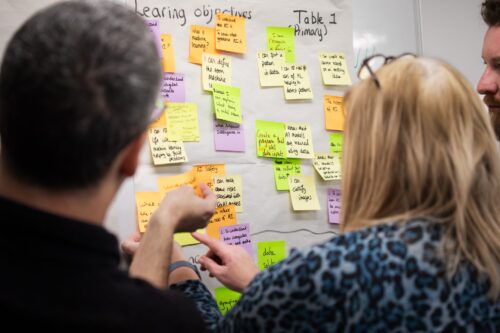
It is not surprising that for the last few years our focus has been on AI technology, and for 2026 we will continue this. But we will shift from showcasing how computing education research is changing teaching and learning in computing lessons, to showcasing how computing education research in other disciplines, such as art or geography, is starting to include teaching about AI. For example, art lessons may change so that learners find out how professional artists are using AI tools to create arts. Or geography lessons may change so that learners discover how professional geographers are using AI to make predictions about physical or human aspects of geography, such as volcanic activity and global warming.
Our series for 2026 is called ‘Applied AI’. This title recognises that AI technology is applied across contexts, across careers, across disciplines, and this means what we teach across school subjects will change.
The majority of resources and professional development material related to teaching about AI have been developed by the computer science community. For example, we have developed the popular Experience AI resources in collaboration with Google DeepMind. In these resources, the contexts were carefully selected to represent real-world examples across disciplines, and to to enable the teaching of particular technical or social and ethical concepts. This could be described as “a push” of content from computing towards other disciplines. For example, to enable teaching about the ethical issues around plagiarism, an art context is used in the Experience AI resources; to enable teaching about the potential benefits of using AI tools, an ecological geography context is used.
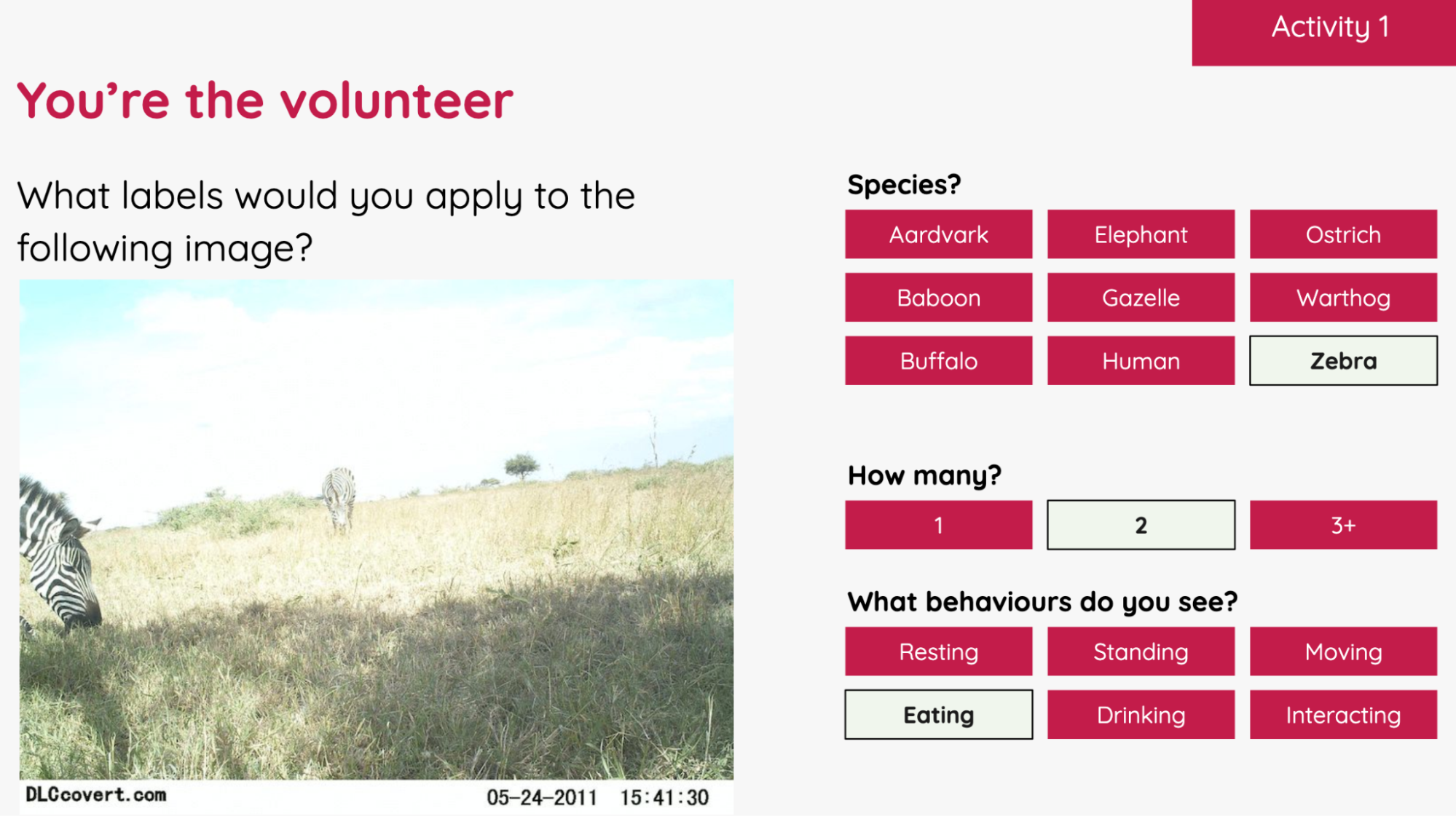
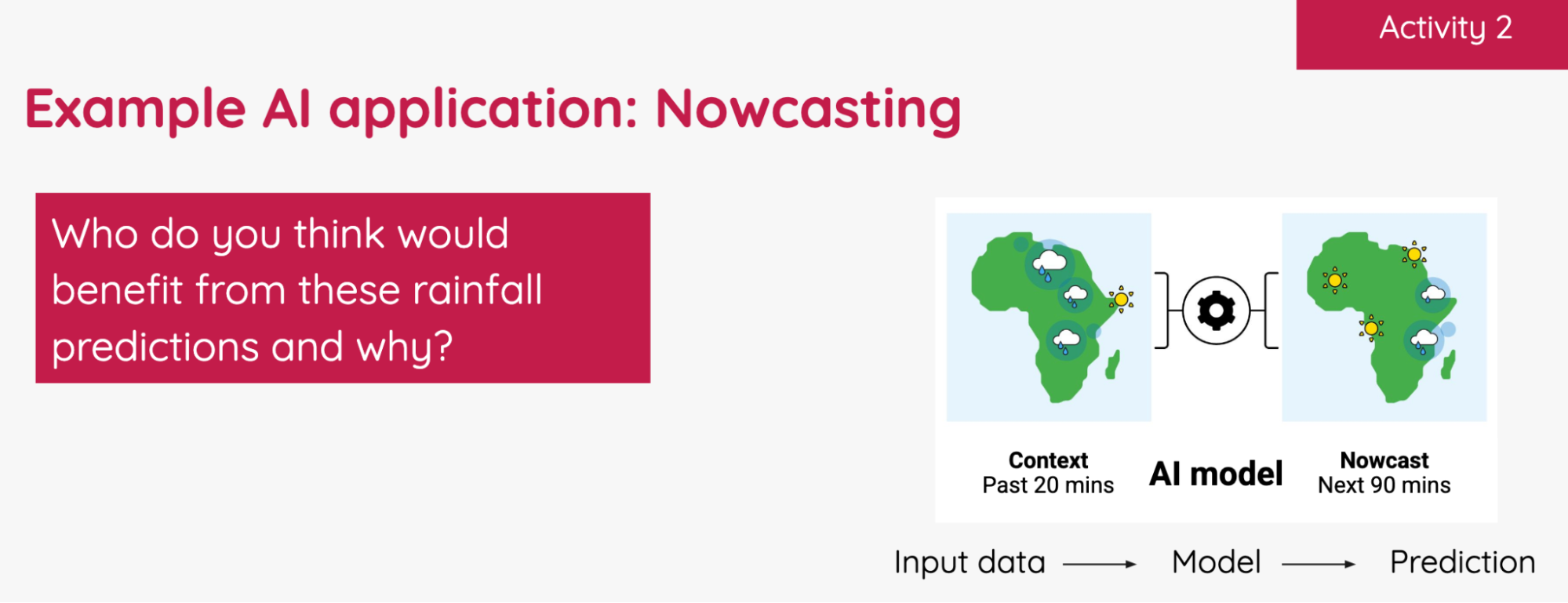
AI applications are always situated within a particular topic. Most current AI applications are data-driven: vast amounts of data are collected and processed to produce models that can then either be used to generate outputs or make predictions. For example, data about artworks can be collected and used to train a model for generating outputs similar to the artworks; this is an application of AI in the art discipline. Or data on wild fires can be collected and used to train a model for making predictions about current or prospective fires; this is an application of AI in the geography discipline.
In reality, the best people to recognise how AI technology is being applied in a discipline and what students in that discipline should be taught about these applications are the people working in the discipline, for example the art and geography teachers. Computer science educators can work to build the technical understanding and the general social and ethical understanding that is common across applications. But the detail of how AI technology is changing a discipline can only truly be understood by the respective community, by the artists and art educators, by the geographers and the geography educators.
At present, though, most educators are grappling with how they can use AI tools for productivity, such as creating lesson plans, or answering emails. Or they are looking at how they can use AI for general teaching and learning, for example for personalisation, say for students with additional needs. The idea that their underpinning discipline is changing is, perhaps, not yet on teachers’ radar. But at universities, such as in undergraduate courses, and in the world of work, education and training are changing. Data science courses are now being offered across faculties, including science, geography, language, and art faculties. These changes will start to filter down to school-based education via curriculum change. While some resources and professional development materials addressing this shift are already becoming available, change is still fragile and patchy.
The aims of our Applied AI research seminar series in 2026 are to start to:
If we can start to agree on what common concepts could be taught in the arts, sciences and humanities, it gives us a better chance to:
To make our 2026 series a success, we need to spread the word about our seminars to groups of educators, researchers, industry and policy makers across the arts, sciences, and humanities.
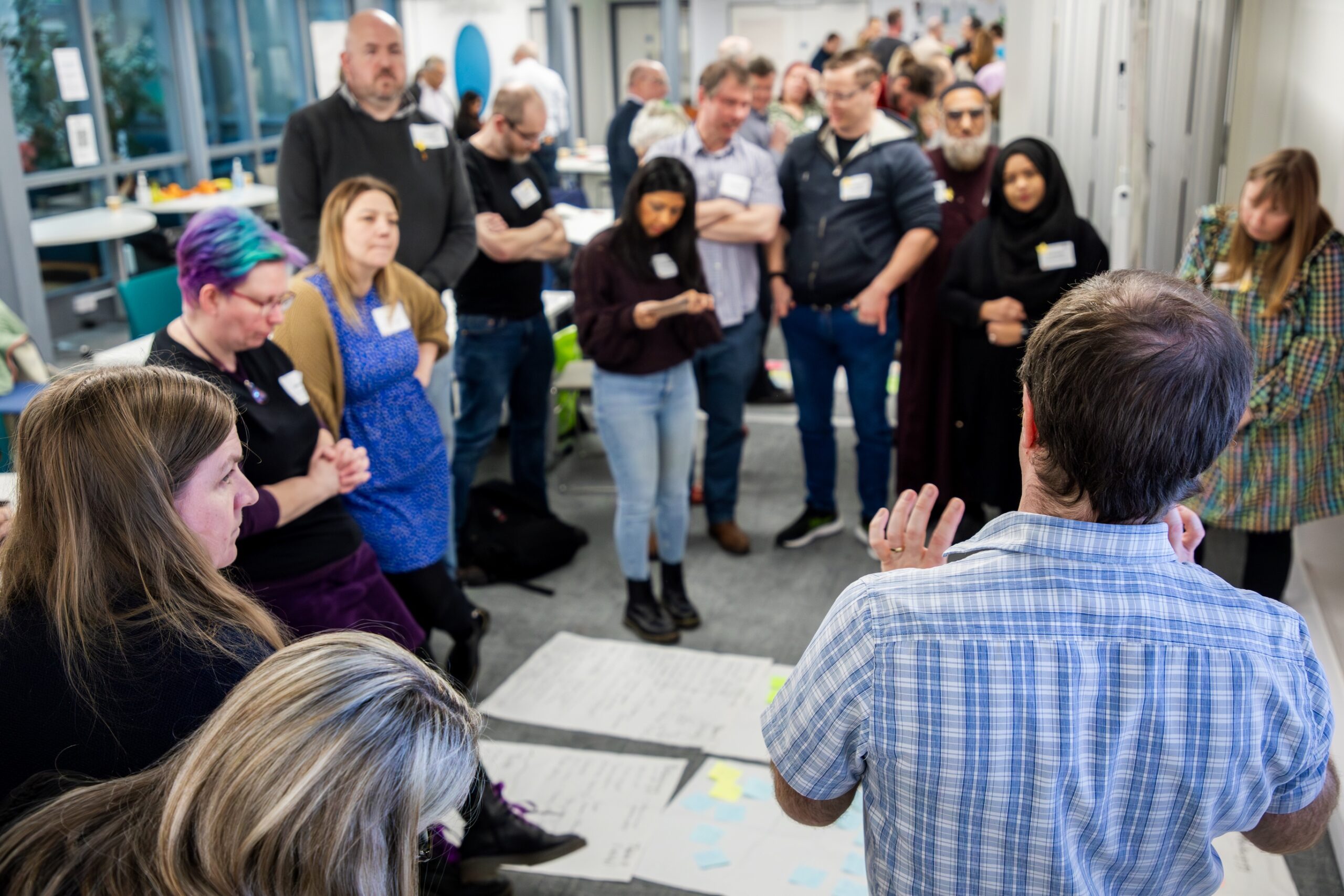
Please tell those you know in these groups about the seminar series, and share it through your social media and other networks. If you have ideas for subject associations we could connect with or publications where we can write about our series, please let us know.
We have already arranged the following seminars across 2026 and will add more speakers for the remaining monthly slots soon. Seminars always take place online on Tuesdays at 17:00 to 18:30 UK time.
To sign up and take part, click the button below. We’ll then send you information about joining. We hope to see you there.
You can view the schedule and details of our upcoming seminars on this page, and catch up on past seminars on our previous seminars page.
PS If you are teaching upper primary school learners in England, you can currently register your interest in our upcoming collaborative study on data science education. You’ll find out more about some of the research we’ve done in this area in this blog post.
The post How can we teach about AI in the arts, humanities and sciences? Research seminar series 2026 appeared first on Raspberry Pi Foundation.
Post Syndicated from The Atlantic original https://www.youtube.com/watch?v=D9C3Uxu_k3E
Post Syndicated from Ина Иванова original https://www.toest.bg/elizabet-kostova-da-ostana-s-otvoren-um-i-otvoreno-surtse/

Елизабет Костова е американска писателка и авторка на три обичани романа – „Историкът“, „Крадци на лебеди“ и „Земя на сенки“. Свързана е с България от 1989 г., когато идва тук – с влака от Белград и със свои приятели и състуденти. За да изучават български фолклор и история, те обикалят различни селища в Родопите, разговарят с възрастни хора – на по 80, 90 години. Времето е размирно и пълно с надежди – непосредствено след 10 ноември страната ни е наелектризирана от първите демонстрации. Именно на митингите в София се запознава и със съпруга си – българина Георги Костов, чиято фамилия приема. По-късно двамата заживяват заедно в Мичиган.
Всъщност Елизабет Костова се влюбва в традициите на нашето пеене, което чува за пръв път в САЩ – точно там още през 70-те години са били сформирани хорове, в които американци непрофесионалисти са изпълнявали народни песни. По подобен начин открива любовта си към фолклорната музика и езика и преводачката Анджела Родел. Двете с Елизабет участваха в открит разговор на тазгодишното 52-ро издание на Софийския международен панаир на книгата в НДК.
Песента я довежда тук, а сърцатата ѝ вяра в литературата я кара да основе Фондация „Елизабет Костова“.
Работата на организацията може да бъде описана по много начини, но водещо сякаш е доверието – в културния обмен, в нуждата от общност и неизбежната осмоза писател–читател, защото писателите, твърди Елизабет Костова, са също и страстни читатели. Те най-добре знаят, че фундамент на добрите книги са големите идеи. А в основата на каквато и да е промяна на нагласи и обществени договори нерядко стоят авторитетните умове на времето – философи, писатели, хора на изкуството. Затова започваме точно оттам, от въпроса имат ли идеите силата да променят света.
Разбира се, има големи идеи, които са променили света и продължават да го променят – като убеждението, че индивидите заслужават политическа власт, или осъзнаването, че не бива да поробваме или изяждаме другите, или идеята, че една река има права. Да се надяваме, че „дъгата на моралната вселена е дълга, но се огъва към справедливостта“, както твърди д-р Мартин Лутър Кинг-младши.
Ясно е, че различните култури ценят в различна степен индивидуалното изразяване, а нашето модерно понятие за артист е сравнително ново – рядко ще намерите подписана гайда, велика френска катедрала или традиционна ганайска кошница. Тези неща обаче също са идеи и едновременно изразяват и оформят света.
В романите си Елизабет вплита исторически достоверни факти и мистични търсения. Въображението и въображаемото обаче са равноценни при създаването на добра художествена литература.
Въображението и историческото проучване имат почти еднаква тежест в моите романи. Винаги ме е вдъхновявала силата на различните форми на изкуство и на научните изследвания да съхраняват културата.
Самият език ми се струва чудо; помислете само, че можем да четем Омир или Платон днес и все още да чуваме част от онова, което техните текстове носят на нашата епоха – само благодарение на някакви знаци върху страница! В работата си съм загрижена и за това да покажа опасността от личната жестокост и политическата корупция, макар че всяка от книгите ми подхожда към тези теми по различен начин.
Елизабет Костова неведнъж е споменавала, че за нея е важна формата на конкретната история, а не чистата жанрова конструкция. Един от съветите, които не се уморява да дава на млади автори, е именно да се доверят на собствените си инстинкти.
Написването на роман отнема време за повечето сериозни писатели, а тъй като аз пиша бавно, ми трябва много време, за да създам една книга – обикновено между пет и десет години. Това означава, че често водя паралелен живот в ума си за дълъг период, но и моят реален живот през това време влияе върху писането ми – по фини начини, които разпознавам много по-късно.
В същото време съм заета с много различни неща, а литературата ме кара да съм благодарна за компанията на другите хора в ежедневието ми – грижата за болен приятел или възрастен родител, приготвянето на храна, преподаването, изнасянето на лекции.
Елизабет Костова преподава в университетски програми и семинари по творческо писане. Наясно е, че заедно с вдъхновението, в създаването на текстове има много занаят, много проучване, работа със собствената емоционалност, изграждане на усет към езика, а и необходимост от общуване със себеподобни.
Знам, че звучи малко странно, но когато пиша, винаги се чувствам заобиколена от героите си и погълната от тяхната компания.
През 2025-та се навършиха 20 години от издаването в САЩ на дебютния ѝ роман „Историкът“. Книгата съдържа 4 отделни времеви линии в различни десетилетия от ХХ век и изисква мащабно проучване на Балканите и живота на румънския владетел Влад Цепеш. Написването на романа отнема десет години и той може да бъде четен както като исторически, така и като готически. Но предизвиква силен литературен и читателски интерес и е преведен на над 40 езика.
Самата Елизабет Костова решава да дари 10% от средствата, получени от „Историкът“, в България, за да осигури професионално развитие на писатели и преводачи, създавайки за тях възможности да участват в срещи и да бъдат част от действаща литературна общност. По онова време не успява да намери организация, на която да довери средствата, затова пък заедно със Светлозар Желев създава Фондация „Елизабет Костова“.
Организацията (с директор Виолета Радкова) продължава да работи по международни програми вече 18 години. На дейността на екипа дължим Созополските семинари по творческо писане, ежегодния фестивал „СтолицаЛитература“, двете издания на международната поетическа конференция в Копривщица (2015, 2024), резиденцията „Жени в планината“, престижната преводаческа награда „Кръстан Дянков“ и много други. В България идват чуждестранни автори и запознаването им с българските им колеги често води не само до обмяна на мисли и подходи, но и до преводи и в двете посоки. Някои от писателите, посетили България, кандидатстват и по други програми (например „Фулбрайт“) и се връщат в страната ни, за да преподават или да пишат.
Основната работа на Фондация „Елизабет Костова“ е да укрепва литературната общност между България и други страни, както и в самата България. Другата ни мисия е да представяме българската литература на нови читатели по света. Една от най-големите радости в живота ми е да виждам как писатели – млади и не толкова млади – се възползват от нашите програми и създават приятелства за цял живот отвъд културните граници.
Елизабет Костова се чувства свързана с България по особен начин от първия път, когато стъпва тук, и със смирена благодарност определя световния си литературен успех като нещо, което в началото я е изненадало. Деликатността ѝ сякаш идва и от семейството ѝ, което я е формирало с внимание:
И двамата ми родители са вдъхновяващи личности – баща ми беше отдаден на обществото професор по градоустройство и специалист по опазване на историческото наследство, чиято обсебеност от градовете и историята беше образование за всички нас, неговите деца. Майка ми е библиотекарка, чиято радост и отвореност към жанровото разнообразие в литературата ни научи да изпитваме голямо удоволствие от четенето.
И двамата говореха за история и политически убеждения на вечеря и ни насърчаваха да развиваме собствено мнение.
Бях странно, срамежливо, книголюбиво дете с чувство за социална справедливост, което наследих от цялото си семейство. Баща ми ни казваше, че можем да бъдем или да правим всичко, което поискаме – това ни накара да вярваме в себе си в един свят на привилегии за мъжете.
Работата на Елизабет – и през фондацията в България, и като университетска преподавателка в Уилмингтън (Северна Каролина), Мичиганския университет, Колежа по изкуство и дизайн „Савана“ в Атланта и Университета по изкуства във Филаделфия – винаги е била отстояване на смисъл и даване на широки хоризонти за развитие на писатели, поети и преводачи. Елизабет Костова е поддръжничка на литературния диалог, затова не е случайност фактът, че тя е носителка на Наградата за културна дипломация на Фондация „Лоис Рот“.
Сред толкова обществена дейност и след години, инвестирани в сериозни исторически проучвания за своите книги, на въпроса кое е най-голямото ѝ достижение, Елизабет Костова отговаря така:
Да остана с отворен ум и отворено сърце. Това става все по-трудно, когато остаряваме и виждаме света по-ясно, но на 60 години искам да продължавам да раста, да се уча, да се радвам и да допринасям.
Хората, които тихо и кротко променят средата, формират общности и задават посоки, в които има смисъл да тръгнем заедно. Тук ви срещаме с тях. Това са „Тези хора“.
Post Syndicated from corbet original https://lwn.net/Articles/1051994/
Inside this week’s LWN.net Weekly Edition:
Post Syndicated from Larry Weber original https://aws.amazon.com/blogs/big-data/aws-analytics-at-reinvent-2025-unifying-data-ai-and-governance-at-scale/
re:Invent 2025 showcased the bold Amazon Web Services (AWS) vision for the future of analytics, one where data warehouses, data lakes, and AI development converge into a seamless, open, intelligent platform, with Apache Iceberg compatibility at its core. Across over 18 major announcements spanning three weeks, AWS demonstrated how organizations can break down data silos, accelerate insights with AI, and maintain robust governance without sacrificing agility.
AWS introduced a faster, simpler approach to data platform onboarding for Amazon SageMaker Unified Studio. The new one-click onboarding experience eliminates weeks of setup, so teams can start working with existing datasets in minutes using their current AWS Identity and Access Management (IAM) roles and permissions. Accessible directly from Amazon SageMaker, Amazon Athena, Amazon Redshift, and Amazon S3 Tables consoles, this streamlined experience automatically creates SageMaker Unified Studio projects with existing data permissions intact. At its core is a powerful new serverless notebook that reimagines how data professionals work. This single interface combines SQL queries, Python code, Apache Spark processing, and natural language prompts, backed by Amazon Athena for Apache Spark to scale from interactive exploration to petabyte-scale jobs. Data engineers, analysts, and data scientists no longer need to context-switch between different tools based on workload—they can explore data with SQL, build models with Python, and use AI assistance, all in one place.
The introduction of Amazon SageMaker Data Agent in the new SageMaker notebooks marks a pivotal moment in AI-assisted development for data builders. This built-in agent doesn’t only generate code, it understands your data context, catalog information, and business metadata to create intelligent execution plans from natural language descriptions. When you describe an objective, the agent breaks down complex analytics and machine learning (ML) tasks into manageable steps, generates the required SQL and Python code, and maintains awareness of your notebook environment throughout the entire process. This capability transforms hours of manual coding into minutes of guided development, which means teams can focus on gleaning insights rather than repetitive boilerplate.
One significant theme across this year’s launches was the widespread adoption of Apache Iceberg across AWS analytics, transforming how organizations manage petabyte-scale data lakes. Catalog federation to remote Iceberg catalogs through the AWS Glue Data Catalog addresses a critical challenge in modern data architectures. You can now query remote Iceberg tables, stored in Amazon Simple Storage Service (Amazon S3) and catalogued in remote Iceberg catalogs, using preferred AWS analytics services such as Amazon Redshift, Amazon EMR, Amazon Athena, AWS Glue, and Amazon SageMaker, without moving or copying tables. Metadata synchronizes in real time, providing query results that reflect the current state. Catalog federation supports both coarse-grained access control and fine-grained access permissions through AWS Lake Formation enabling cross-account sharing and trusted identity propagation while maintaining consistent security across federated catalogs.
Amazon Redshift now writes directly to Apache Iceberg tables, enabling true open lakehouse architectures where analytics seamlessly span data warehouses and lakes. Apache Spark on Amazon EMR 7.12, AWS Glue, Amazon SageMaker notebooks, Amazon S3 Tables, and the AWS Glue Data Catalog now support Iceberg V3’s capabilities, including deletion vectors that mark deleted rows without expensive file rewrites, dramatically reducing pipeline costs and accelerating data modifications and row lineage. V3 automatically tracks every record’s history, creating audit trails essential for compliance and has table-level encryption that helps organizations meet stringent privacy regulations. These innovations mean faster writes, lower storage costs, comprehensive audit trails, and efficient incremental processing across your data architecture.
Data governance received substantial attention at re:Invent with major enhancements to Amazon SageMaker Catalog. Organizations can now curate data at the column level with custom metadata forms and rich text descriptions, indexed in real time for immediate discoverability. New metadata enforcement rules require data producers to classify assets with approved business vocabulary before publication, providing consistency across the enterprise. The catalog uses Amazon Bedrock large language models (LLMs) to automatically suggest relevant business glossary terms by analyzing table metadata and schema information, bridging the gap between technical schemas and business language. Perhaps most importantly, SageMaker Catalog now exports its entire asset metadata as queryable Apache Iceberg tables through Amazon S3 Tables. This way, teams can analyze catalog inventory with standard SQL to answer questions like “which assets lack business descriptions?” or “how many confidential datasets were registered last month?” without building custom ETL infrastructure.
As organizations adopt multi-warehouse architectures to scale and isolate workloads, the new Amazon Redshift federated permissions capability eliminates governance complexity. Define data permissions one time from a Amazon Redshift warehouse, and they automatically enforce them across the warehouses in your account. Row-level, column-level, and masking controls apply consistently regardless of which warehouse queries originate from, and new warehouses automatically inherit permission policies. This horizontal scalability means organizations can add warehouses without increasing governance overhead, and analysts immediately see the databases from registered warehouses.
Amazon OpenSearch Service introduced powerful new capabilities to simplify and accelerate AI application development. With support for OpenSearch 3.3, agentic search enables precise results using natural language inputs without the need for complex queries, making it easier to build intelligent AI agents. The new Apache Calcite-powered PPL engine delivers query optimization and an extensive library of commands for more efficient data processing.
As seen in Matt Garman’s keynote, building large-scale vector databases is now dramatically faster with GPU acceleration and auto-optimization. Previously, creating large-scale vector indexes required days of building time and weeks of manual tuning by experts, which slowed innovation and prevented cost-performance optimizations. The new serverless auto-optimize jobs automatically evaluate index configurations—including k-nearest neighbors (k-NN) algorithms, quantization, and engine settings—based on your specified search latency and recall requirements. Combined with GPU acceleration, you can build optimized indexes up to ten times faster at 25% of the indexing cost, with serverless GPUs that activate dynamically and bill only when providing speed boosts. These advancements simplify scaling AI applications such as semantic search, recommendation engines, and agentic systems, so teams can innovate faster by dramatically reducing the time and effort needed to build large-scale, optimized vector databases.
Also announced in the keynote, Amazon EMR Serverless now eliminates local storage provisioning for Apache Spark workloads, introducing serverless storage that reduces data processing costs by up to 20% while preventing job failures from disk capacity constraints. The fully managed, auto scaling storage encrypts data in transit and at rest with job-level isolation, allowing Spark to release workers immediately when idle rather than keeping them active to preserve temporary data. Additionally, AWS Glue introduced materialized views based on Apache Iceberg, storing precomputed query results that automatically refresh as source data changes. Spark engines across Amazon Athena, Amazon EMR, and AWS Glue intelligently rewrite queries to use these views, accelerating performance by up to eight times while reducing compute costs. The service handles refresh schedules, change detection, incremental updates, and infrastructure management automatically.
The new Apache Spark upgrade agent for Amazon EMR transforms version upgrades from months-long projects into week-long initiatives. Using conversational interfaces, engineers express upgrade requirements in natural language while the agent automatically identifies API changes and behavioral modifications across PySpark and Scala applications. Engineers review and approve suggested changes before implementation, maintaining full control while the agent validates functional correctness through data quality checks. Currently supporting upgrades from Spark 2.4 to 3.5, this capability is available through SageMaker Unified Studio, Kiro CLI, or an integrated development environment (IDE) with Model Context Protocol compatibility.
For workflow optimization, AWS introduced a new Serverless deployment option for Amazon Managed Workflows for Apache Airflow (Amazon MWAA), which eliminates the operational overhead of managing Apache Airflow environments while optimizing costs through serverless scaling. This new offering addresses key challenges of operational scalability, cost optimization, and access management that data engineers and DevOps teams face when orchestrating workflows. With Amazon MWAA Serverless, data engineers can focus on defining their workflow logic rather than monitoring for provisioned capacity. They can now submit their Airflow workflows for execution on a schedule or on demand, paying only for the actual compute time used during each task’s execution.
These launches collectively represent more than incremental improvements. They signal a fundamental shift in how organizations are approaching analytics. By unifying data warehousing, data lakes, and ML under a common framework built on Apache Iceberg, simplifying access through intelligent interfaces powered by AI, and maintaining robust governance that scales effortlessly, AWS is giving organizations the tools to focus on insights rather than infrastructure. The emphasis on automation, from AI-assisted development to self-managing materialized views and serverless storage, reduces operational overhead while improving performance and cost efficiency. As data volumes continue to grow and AI becomes increasingly central to business operations, these capabilities position AWS customers to accelerate their data-driven initiatives with unprecedented simplicity and power. To view the Re:Invent 2025 Innovation Talk on analytics, visit Harnessing analytics for humans and AI on YouTube.
Post Syndicated from The Atlantic original https://www.youtube.com/shorts/WZ3YcDgpnKI
Post Syndicated from The Atlantic original https://www.youtube.com/shorts/FrzjVhKgNyQ
Post Syndicated from jzb original https://lwn.net/Articles/1053107/
The European Commission has opened
a “call
for evidence” to help shape its European Open Digital Ecosystem
Strategy. The commission is looking to reduce its dependence on
software from non-EU countries:
The EU faces a significant problem of dependence on non-EU countries
in the digital sphere. This reduces users’ choice, hampers EU
companies’ competitiveness and can raise supply chain security issues
as it makes it difficult to control our digital infrastructure (both
physical and software components), potentially creating
vulnerabilities including in critical sectors. In the last few years,
it has been widely acknowledged that open source – which is a public
good to be freely used, modified, and redistributed – has the strong
potential to underpin a diverse portfolio of high-quality and secure
digital solutions that are valid alternatives to proprietary ones. By
doing so, it increases user agency, helps regain control and boost the
resilience of our digital infrastructure.
The feedback period runs until midnight (Brussels time)
February 3, 2026. The commission seeks input from all interested
stakeholders, “in particular the European open-source community
“.
(including individual contributors, open-source companies and
foundations), public administrations, specialised business sectors,
the ICT industry, academia and research institutions
Post Syndicated from Sarath Kumar Kallayil Sreedharan original https://aws.amazon.com/blogs/messaging-and-targeting/automate-sender-id-registration-in-aws-end-user-messaging/
AWS End User Messaging makes it possible to send SMS, MMS, push notifications, WhatsApp messages, and text to voice globally. When you send SMS, MMS, and voice messages with AWS End User Messaging, you must use a specific origination identity that supports sending these messages. Messaging options vary by country and include toll-free numbers (TFN), 10-digit long codes (US 10DLC), long codes, short codes, and sender IDs. To check a country’s available options, refer to Supported countries and regions for SMS messaging with AWS End User Messaging SMS.
This post explains how to programmatically register sender IDs, which can be used in many countries around the globe. The registration process makes it possible for businesses and organizations to send messages using an alphanumeric identifier instead of a phone number, making communications more professional and recognizable to recipients. For example, a fictitious company Example Corp could use the sender ID EXAMPLECO to send SMS. To learn more about sender ID registration, refer to Sender IDs in AWS End User Messaging SMS.
This post explores the AWS End User Messaging APIs required for programmatically registering sender IDs for the Indonesia and India. These sample scripts serve as a reference for sender ID registration in other countries. This automation approach simplifies the registration process, saving time and effort for businesses using AWS End User Messaging for their communication needs.
The AWS End User Messaging V2 API contains a set of actions that focus on sender ID registration management:
DescribeRegistrationFieldDefinitions to view the requirements for creating, filling out, and submitting each registration type.RegistrationType field controls whether this is a registration for toll-free, 10DLC, or sender ID. This post will use a sender ID.DescribeRegistrationTypeDefinitions).DescribeRegistrationFieldDefinitions).CREATED and typically changes to REVIEWING within 24 hours.CREATED for over 24 hours after you’ve submitted your registration, open a support case for assistance.As you manage your messaging campaigns in AWS End User Messaging SMS, several APIs are available to help you handle sender ID registrations efficiently:
VersionNumber. The previous version of the registration becomes read-only. This is useful for updating registration information while maintaining historical records.DescribeRegistrationSectionDefinitions to view the requirements for creating, filling out, and submitting each registration type. This API helps you understand the structure and requirements of different registration sections.The following are important considerations for registration:
CREATED and typically transitions to REVIEWING within 24 hoursThe API flow consists of the following steps:
This API flow enables a fully automated sender ID registration process for supported countries. Businesses can efficiently manage registrations across various regulatory environments and geographical locations.
The AWS End User Messaging API uses a specific format to define the registration fields:
"SectionPath": "companyInfo".SectionPath with the field name. For example, "FieldPath": "companyInfo.companyName".TEXT, SELECT, or ATTACHMENT). For example, "FieldType": "TEXT".REQUIRED, OPTIONAL, or CONDITIONAL. For example, "FieldRequirement": "REQUIRED".Understanding these attributes is crucial for effective API interaction during the registration process. They define both the structure of your API calls and the necessary data inputs.
The following code is the subset of the response of DescribeRegistrationFieldDefinitions for the United Kingdom registration type (RegistrationType):
Before running either script, you must have the following:
The Indonesia registration process involves several additional requirements that vary based on your company’s location and business type. All companies must submit XL Axiata’s Letter of Authorization (LOA). Indonesian companies need additional LOAs from Telkomsel, IOH, and Smartfren, plus NIB and NPWP documents. Apply IDR9K and the company stamp to each LOA. For sample documents, refer to Indonesia sender ID registration in AWS End User Messaging SMS. Businesses operating in the money lending sector are required to provide an operating license issued by the Financial Services Authority (Otoritas Jasa Keuangan—OJK).
In this section, we break down the Python script for Indonesia registration.
Before running the registration script, you must first set the necessary variables, with your company actual data. The following is a sample file with the variables required for Indonesia local sender ID registration. Provide the correct path for LOA files (telkomsel_loa.png,ioh_loa.png, xl_axiata_loa.png, smartfren_loa.png,regulatory_licence.png, proof_of_sender_id.png, nomor_pokokWajib_pajak_document.png, and nomor_induk_berusaha_document.png).
Save the following file as indonesia_config.py:
Save the following file as indonesia_senderid_registration.py:
Run the script: python indonesia_senderid_registration.py --config indonesia_config.py
Starting April 30, 2025, AWS will offer India sender ID registration through two Regions: Asia Pacific (Mumbai) and Asia Pacific (Hyderabad).
The sender ID registration process for India differs slightly; it doesn’t require an LOA attachment and includes additional fields specific to the Indian regulatory environment.
Before running the registration script, you must first set the necessary variables with your company’s actual data. The following is a sample file with the variables required for India sender ID registration. Modify and save the file as india_config.py:
The following script handles the creation of the registration, updating of India-specific fields, and submission of the registration. Save the following file as india_senderid_registration.py:
Run the script: python india_senderid_registration.py --config india_config.py
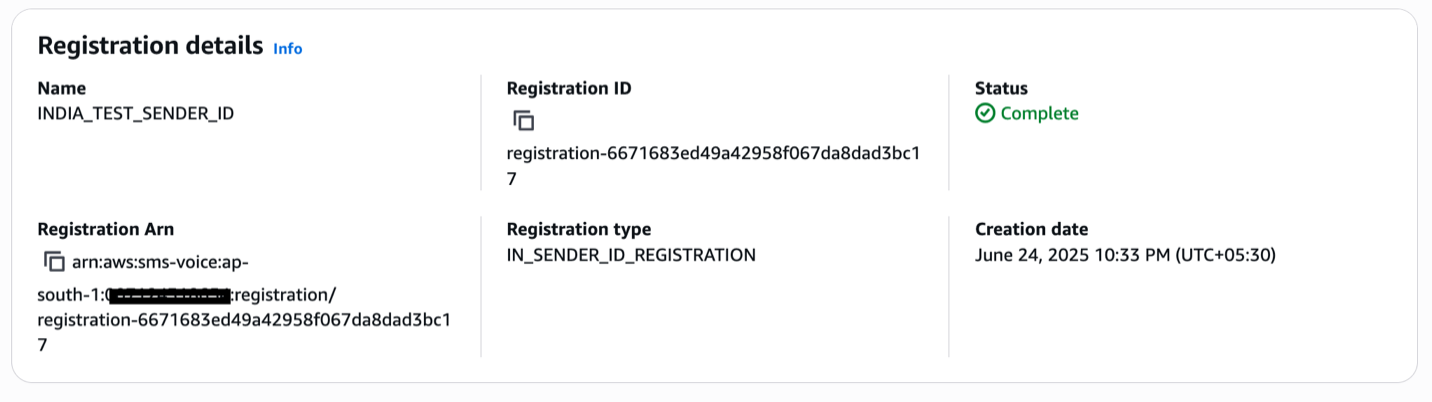
After submission, you can monitor the registration status. Upon approval, the status will show as Complete, as shown in the following screenshot.
The following screenshot shows that the registration requires updates before it can be approved.
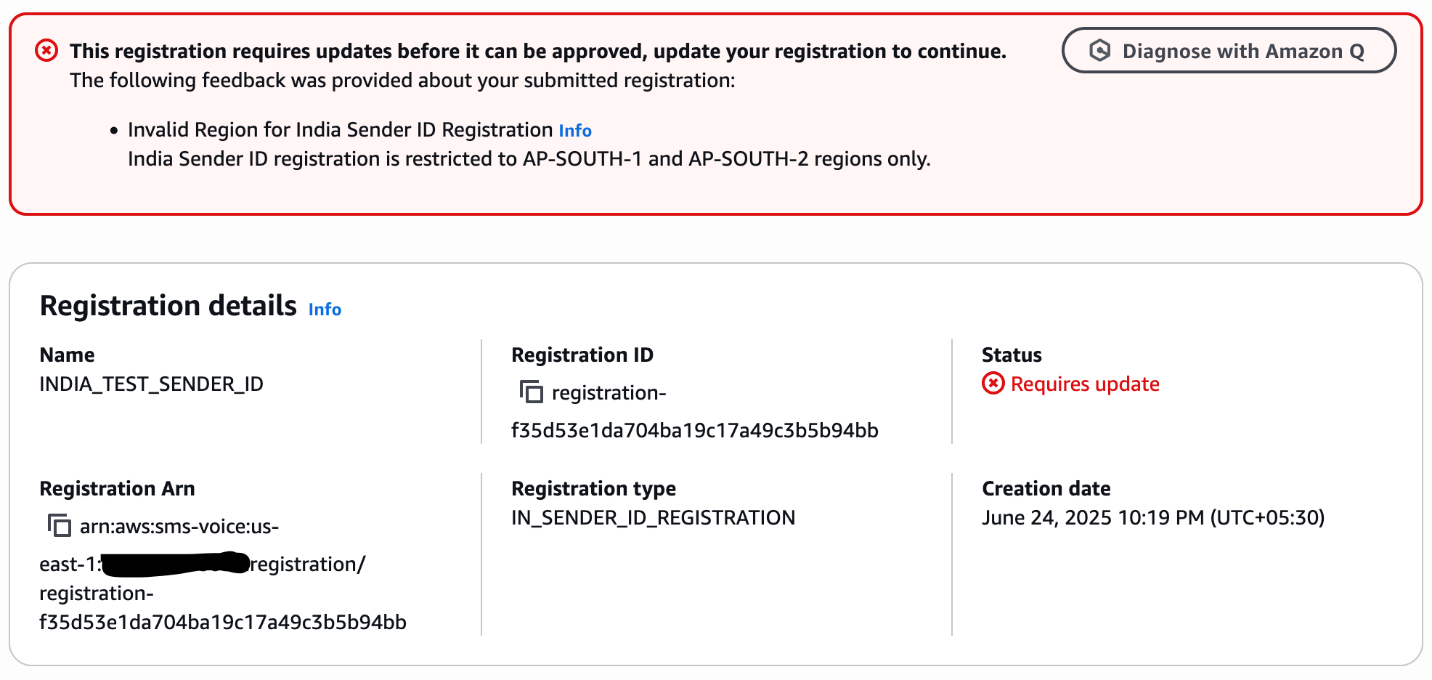
The error occurred because the registration code was run in an Region other than AP-SOUTH-1 or AP-SOUTH-2. To resolve this issue, delete the current registration and rerun the process in one of the supported Regions.
As mentioned earlier, DescribeRegistrationFieldDefinitions varies by country, because each has unique registration requirements and field specifications. You must modify this script according to your target country’s specific requirements. Refer to the API documentation for country-specific registration types and field definitions.
Check the status of your registration using either the AWS End User Messaging console or the DescribeRegistrations API. To use the console, choose Registrations under Configurations in the navigation pane.
The registration status for each request will initially display CREATED and will change to REVIEWING within 24 hours after submission. For more information about registration statuses, refer to Check a registration’s status in AWS End User Messaging SMS. If your registration status shows REQUIRES_UPDATES, the registration needs more information. You can edit and resubmit the request with the required information.
As noted earlier, third-party reviewers evaluate registrations. Expect 2-4 weeks for approval, and longer for sender IDs in some countries.
Independent software vendors (ISVs) are positioned between AWS End User Messaging and the ISV’s end business customers. Though they might operate differently or offer different services, their requirements for SMS program registrations are largely the same. End business refers to your ISV customers. This is generally the entity that creates the messaging content, distributes it through your platform, and interacts with their end-users (message recipients).
SMS program registrations require end-user business information, not ISV information. This means the ISV must provide a mechanism for their end businesses to provide their information to be submitted for registration. ISVs and aggregators must provide information representing the customer entity sending messages to opted-in recipients. Amazon uses this information in accordance with all applicable obligations, and to verify the end-user is a legitimate business. Amazon will not contact the end-business user with the information provided.
In this post, we showed how to automate the sender ID registration process using Python scripts and AWS End User Messaging APIs. Using these APIs can significantly improve efficiency and reduce manual errors. For additional guidance, refer to automating AWS End User Messaging US Toll-Free Number registrations, Automate AWS End User Messaging US toll-free Number Registrations, How to Register a Sender ID Using APIs with AWS End User Messaging, and the AWS End User Messaging V2 API Reference.
Post Syndicated from Patrick Kennedy original https://www.servethehome.com/marvell-announces-xconn-technologies-acquisition-in-cxl-and-pcie-push/
Marvell announced that it has reached a deal to acquire XConn Technologies in a push for CXL memory and PCIe switching
The post Marvell Announces XConn Technologies Acquisition in CXL and PCIe Push appeared first on ServeTheHome.
Post Syndicated from The Atlantic original https://www.youtube.com/shorts/0RI3Hfvfb8g
Post Syndicated from jake original https://lwn.net/Articles/1051430/
At the 2025 Linux Plumbers
Conference (LPC), held in Tokyo in mid-December, Changwoo Min led a session on what
he has learned while developing the
“latency-criticality
aware virtual deadline” (LAVD) scheduler, which is aimed at gaming
workloads. The session was part of the Gaming
on Linux microconference, which is a new entrant into LPC; organizers
hope to see it return next year in
Prague and, presumably, beyond. LAVD uses the extensible scheduler class (sched_ext) and has
the primary goal of minimizing stuttering
in games;
it is implemented in a combination of BPF and Rust.
Post Syndicated from jzb original https://lwn.net/Articles/1051808/
Last year we
revived the tradition of publishing a timeline of
notable events from the previous year. Since that seemed to go over
well, we decided we should continue the practice and look back on some
of the most noteworthy events and releases of 2025.
Post Syndicated from BeardedTinker original https://www.youtube.com/watch?v=XIjsPqn8Vxg
Post Syndicated from The Atlantic original https://www.youtube.com/watch?v=UE7L-sNFNkE
Post Syndicated from jzb original https://lwn.net/Articles/1053083/
The IPFire project, an
open-source firewall Linux distribution, has released version
2.29 – Core Update 199. Notable changes in this release include an
update to Linux 6.12.58, support for WiFi 6 and 7 features on
wireless access points, as well as native support for link-local
discovery protocol (LLDP) and Cisco discovery protocol (CDP).