Post Syndicated from The Atlantic original https://www.youtube.com/shorts/_BKW7UEA6EM
Microchip Switchtec 160-Lane PCIe Gen6 Switch Shown at FMS 2026 with XpressConnect PCIe 6 Retimer
Post Syndicated from Patrick Kennedy original https://www.servethehome.com/microchip-switchtec-160-lane-pcie-gen6-switch-shown-at-fms-2026-with-xpressconnect-pcie-6-retimer/
At FMS 2026, we saw a 160-lane Microchip Switchtec PCIe Gen6 switch, XpressConnect retimer demo, and even an Everpure cameo
The post Microchip Switchtec 160-Lane PCIe Gen6 Switch Shown at FMS 2026 with XpressConnect PCIe 6 Retimer appeared first on ServeTheHome.
The Night My Marriage Fell Apart
Post Syndicated from The Atlantic original https://www.youtube.com/shorts/YnW0IIDx_9w
S10 E3: Ron DeSantis & Radiant Plumbing: Last Week Tonight with John Oliver
Post Syndicated from LastWeekTonight original https://www.youtube.com/watch?v=Ex9FKp7FPMw
Track generative AI costs with Amazon Bedrock inference profiles
Post Syndicated from Erik Mack original https://aws.amazon.com/blogs/architecture/track-generative-ai-costs-with-amazon-bedrock-inference-profiles/
Tracking generative AI costs is a common challenge when multiple teams share a single foundation model through Amazon Bedrock. Your HR team answers policy questions, Accounting analyzes financial documents with it, and IT troubleshoots infrastructure issues. All three use the same foundation model. But usage shows up as one line item on the bill. As a result, finance can’t charge back each department, set per-team budgets, or identify who’s driving the most spend.
With Amazon Bedrock application inference profiles, you can solve this. An inference profile is a tagged wrapper around a foundation model. You can use it to attribute costs to specific teams or departments. By combining these profiles with AWS cost allocation tags, you can view per-department Amazon Bedrock costs as separate line items in AWS Cost Explorer.
In this post, we show you how to create application inference profiles for three departments and tag them for cost allocation. You also update your application to route invocations through department-specific profiles and view the per-department cost breakdown in Cost Explorer.
Solution overview
The following diagram shows the solution architecture. Users authenticate at the application layer, and the application identifies each user’s department. It then routes the request to that department’s tagged inference profile in Amazon Bedrock. All profiles use the same foundation model. The application calls Amazon Bedrock using a single IAM role, and individual user identities are not passed to AWS. Cost attribution comes from the inference profiles rather than the calling identity. Amazon Bedrock records usage against each profile’s Team tag, and AWS Cost Explorer displays the costs grouped by department.
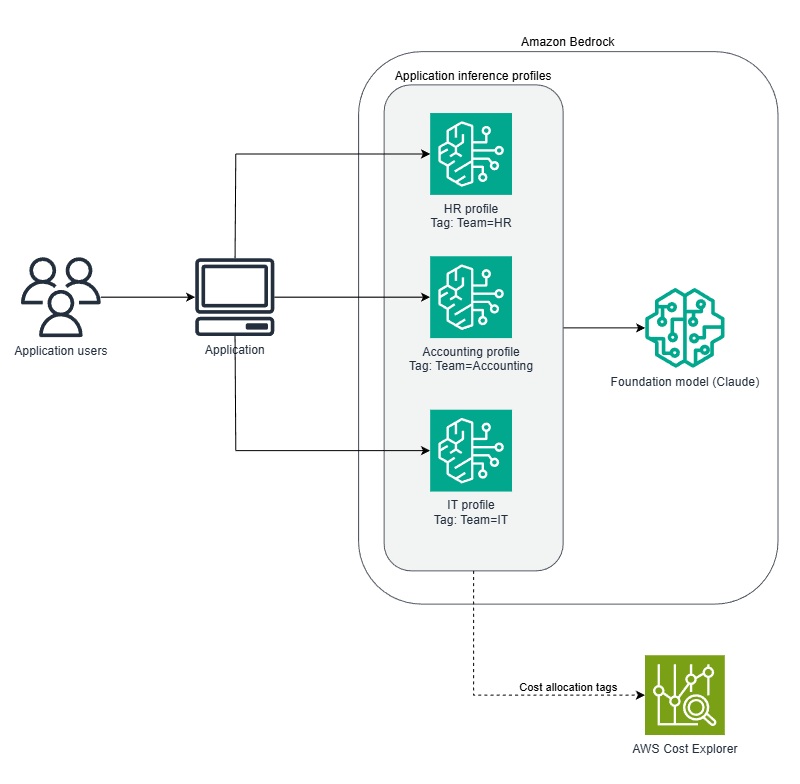
Figure 1 — Solution architecture for per-department cost tracking with application inference profiles
Amazon Bedrock can also attribute inference costs to the IAM principal that makes each call. This works well when each team calls Amazon Bedrock under a distinct IAM identity. In this architecture, a single application serves all departments under one role. Per-caller attribution can’t separate team costs without adding per-user session management. With application inference profiles, you can attribute costs per team by routing each team to a tagged profile.
To track costs per department:
- Create an application inference profile for each department, associating each one to the same foundation model.
- Tag each profile with a cost allocation tag (for example,
Team=HR). - Activate the tag in the AWS Billing and Cost Management console.
- Update your application to route invocations through each department’s inference profile Amazon Resource Name (ARN).
- View the per-department cost breakdown in Cost Explorer.
You pay the same per-token rate whether you invoke the model directly or through an inference profile – no additional charges for cost attribution.
Create and configure inference profiles for cost tracking
The following sections walk you through creating inference profiles, activating cost allocation tags, updating your application, and viewing costs in Cost Explorer.
Prerequisites
To configure this solution, you need the following:
- An AWS account.
- Model access enabled for your chosen foundation model in Amazon Bedrock (for instructions, refer to the Amazon Bedrock User Guide).
- AWS Identity and Access Management (IAM) permissions including
bedrock:CreateInferenceProfile,bedrock:TagResource,bedrock:InvokeModel,bedrock:InvokeModelWithResponseStream,ce:GetCostAndUsage, andce:UpdateCostAllocationTagsStatus. - Access to the AWS Billing and Cost Management console to activate cost allocation tags and view Cost Explorer. For more information, refer to Managing access permissions for AWS Billing.
- Python 3.12 with boto3 1.35.7 or later (for testing invocations).
Estimated time: 30 minutes (plus 24–48 hours for cost data to appear in Cost Explorer).
Estimated cost: Based on invocations at standard model pricing. For more information, refer to Amazon Bedrock Pricing.
Create application inference profiles
Create an application inference profile for each department. Each profile points to the same foundation model but has a unique tag for cost tracking.
To create an application inference profile:
- On the Amazon Bedrock console, in the navigation pane, choose Inference profiles.
- Choose the Application tab.
- Choose Create inference profile.
- For Profile name, enter HR.
- For Model, select your foundation model (for example, Anthropic Claude).
Note: Model availability varies by Region. Check the Amazon Bedrock model availability documentation for the current list.
To tag the inference profile:
- In the Tags section, choose Add tag.
- For Key, enter Team.
- For Value, enter HR.
- Choose Create. The inference profile status changes to Active.
- Repeat for Accounting (Tag:
Team=Accounting) and IT (Tag:Team=IT).
The following figure shows the create inference profile page with the profile name and tag configured.
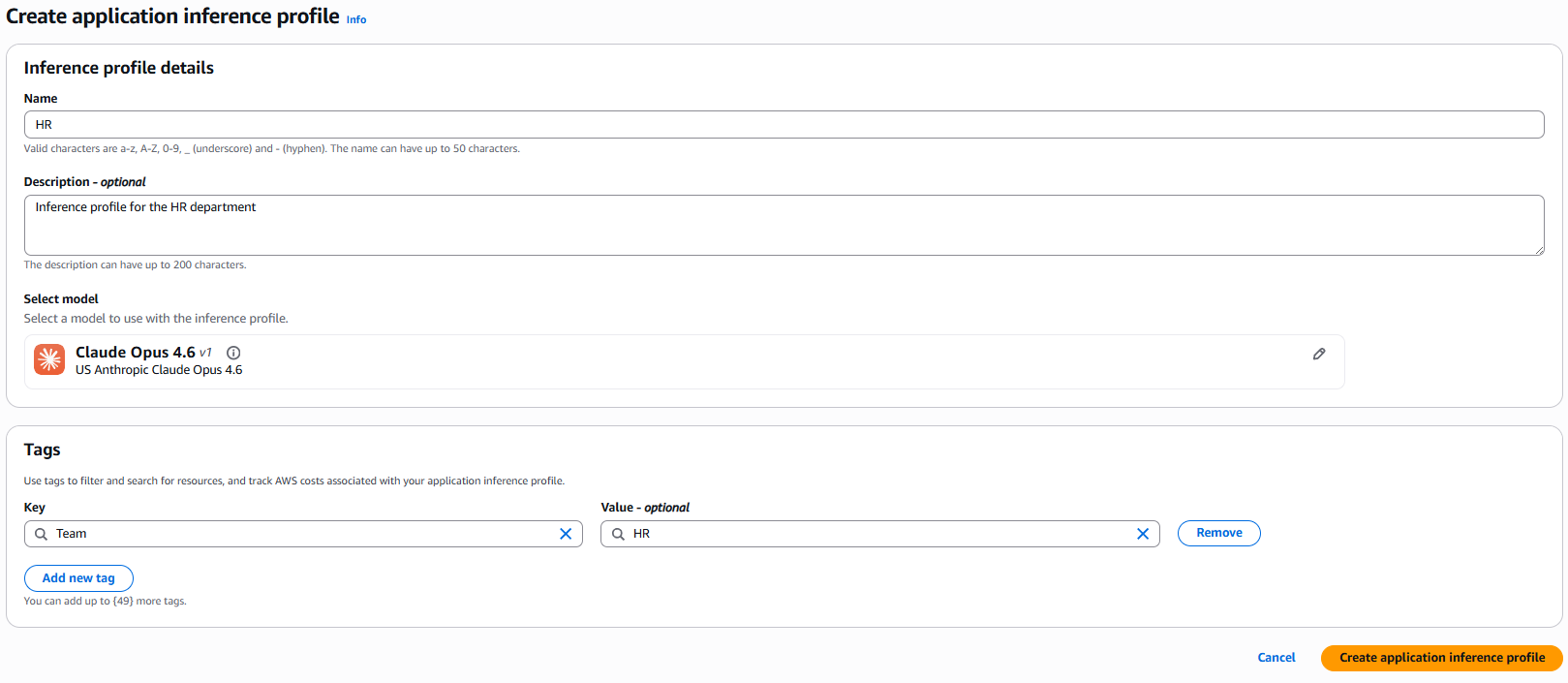
Figure 2 — Creating an application inference profile with a department tag
After you create all three profiles, the Application inference profiles list shows the HR, Accounting, and IT profiles, each with a status of Active and its corresponding Team tag. The following figure shows the three inference profiles after creation.
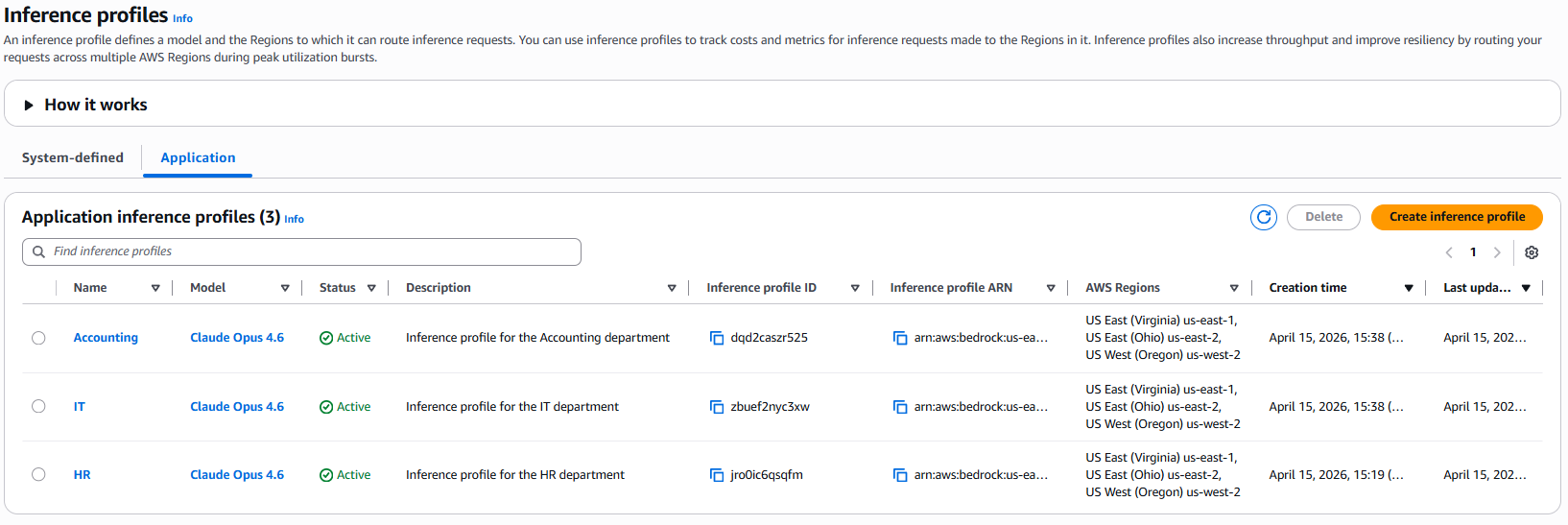
Figure 3 — Three application inference profiles, one per department
To provision inference profiles at scale (for example, one per team across dozens of teams), use the AWS::Bedrock::ApplicationInferenceProfile AWS CloudFormation resource instead of creating each profile manually.
Activate the cost allocation tag
After creating the inference profiles, you activate the cost allocation tag so that tagged costs appear in Cost Explorer. In multi-account environments using AWS Organizations, activate the Team cost allocation tag in the management (payer) account. Tagged usage from member accounts then consolidates in Cost Explorer. For more information about cost allocation tags, refer to Using AWS cost allocation tags.
To activate the cost allocation tag:
- Open the AWS Billing and Cost Management console.
- In the navigation pane, choose Cost allocation tags.
- In the search box, enter Team.
- Select the Team tag.
- Choose Activate.
The tag status changes to Active.
Note: Cost allocation tags are case-sensitive. Team and team are different tags. Tagged costs can take 24–48 hours to appear in Cost Explorer after activation.
Update the application to use inference profiles
To attribute costs to a department, pass the inference profile ARN as the modelId parameter instead of the foundation model ID. The API call remains the same. You only change the ID you pass.
To find an inference profile ARN:
- On the Amazon Bedrock console, choose Inference profiles.
- Select the profile.
- Copy the ARN from the details panel.
The ARN appears in the format arn:aws:bedrock:region:account-id:application-inference-profile/profile-id.
The following example shows how to route invocations based on the user’s department:
The full code is available on the GitHub repo.
When using inference profiles in production, validate user inputs and consider using Amazon Bedrock Guardrails to filter unintended content. API communications with Amazon Bedrock are encrypted in transit using Transport Layer Security (TLS). For more information about data protection, refer to Data protection in Amazon Bedrock.
Configure the IAM policy for Amazon Bedrock access
Because a single application calls Amazon Bedrock on behalf of all departments, it uses one IAM role. The following policy grants that role permission to invoke the department inference profiles and the underlying foundation model:
The wildcard (*) in the application inference profile ARN lets the single application role invoke the department profiles. The foundation model ARN is required because invoking through an inference profile needs permissions on both the profile and the underlying model. The application determines which department each request belongs to and routes it to the matching profile, and cost attribution comes from each profile’s Team tag. To further restrict access, replace the wildcard with the specific ARNs of your profiles.
Replace 111122223333 with your AWS account ID in the preceding policy.
To create the policy:
- On the IAM console, choose Policies.
- Choose Create policy.
- Choose the JSON tab.
- Paste the preceding policy.
- Choose Next.
- For Name, enter BedrockDepartmentAccessPolicy.
- Choose Create policy.
The BedrockDepartmentAccessPolicy appears in the policies list.
To attach the policy to a role:
- In the navigation pane, choose Roles.
- Select the role used by your application.
- Choose Add permissions.
- Choose Attach policies.
- Search for BedrockDepartmentAccessPolicy.
- Select BedrockDepartmentAccessPolicy.
- Choose Add permissions.
The BedrockDepartmentAccessPolicy appears in the role’s permission list. To add a department later, create another tagged inference profile and map it in your application. With the wildcard policy, no IAM change is needed. If you scoped the policy to specific ARNs, add the new profile’s ARN.
View per-department costs in Cost Explorer
To view the per-department breakdown in Cost Explorer:
- Open the Billing and Cost Management console.
- In the navigation pane, choose Cost Explorer.
- Set the date range to cover the period after you ran invocations.
- For Granularity, select Daily or Monthly.
- Choose Group by.
- Select Tag.
- Select Team.
To view exact amounts, scroll down to view the cost breakdown table.
The following figure shows the per-department cost breakdown in Cost Explorer. The bar chart displays a separately-colored segment for each department – HR, Accounting, and IT – with the cost amount for each. The table below the chart lists the exact dollar amount per department for the selected time period.
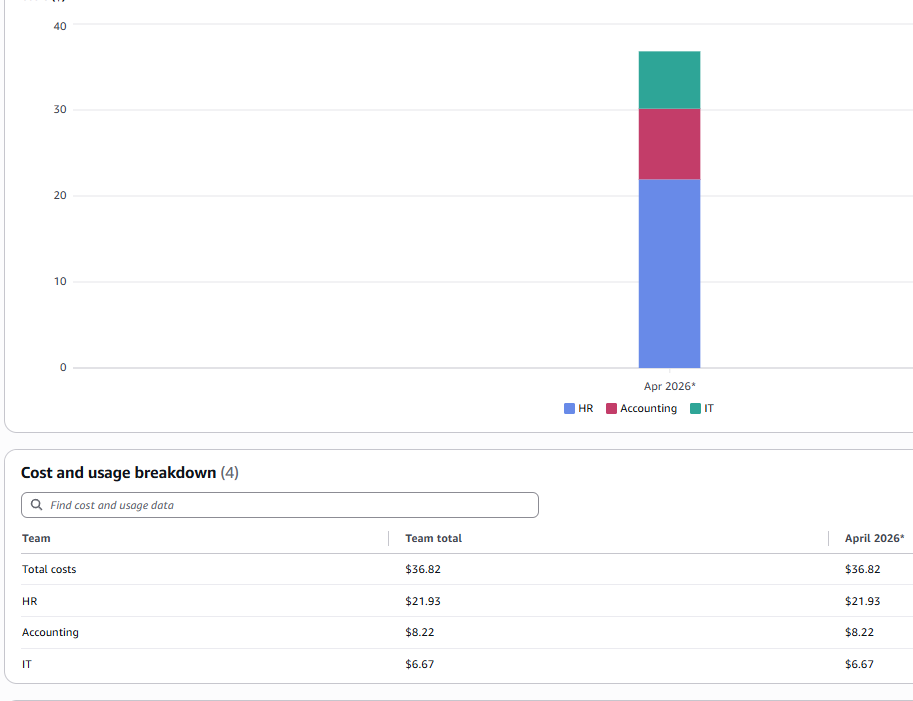
Figure 4 — Per-department Amazon Bedrock costs in Cost Explorer, grouped by the Team tag
After running invocations through each inference profile, verify the following:
- Each inference profile shows the correct
Teamtag in the Amazon Bedrock console. - The
Teamcost allocation tag is active in the Billing and Cost Management console. - Per-department costs appear in Cost Explorer when you group by the
Teamtag.
If costs don’t appear after 48 hours, verify that the cost allocation tag is active and that invocations were made through the inference profile ARNs. If invocations fail, confirm that the inference profile status is Active and the IAM role has the required permissions.
Clean up
Inference profiles don’t incur charges on their own. You only pay for model invocations made through them. As a cleanup step, delete the inference profiles you created for this walkthrough to prevent accidental invocations.
Note: Deleting an inference profile immediately affects applications using that profile ARN. Verify that applications are not actively using these profiles before deletion. To recover, recreate the profile — note that it receives a new ARN, so update your application references.
Delete the following resources:
- Application inference profiles – For instructions, refer to Delete an application inference profile.
- IAM policy – For instructions, refer to Deleting IAM Policies.
Teamcost allocation tag – Deactivate it in the Billing and Cost Management console. For instructions, refer to Deactivating cost allocation tags.
Conclusion
In this post, we showed you how to split generative AI costs by team using Amazon Bedrock application inference profiles and cost allocation tags. With this approach, you can see each department’s costs as a separate line item in Cost Explorer.
To add a new department, create another tagged profile. Costs show up as a separate line item.
You can also:
- Set per-department spending alerts and control with AWS Budgets.
- Detect unusual spending patterns with AWS Cost Anomaly Detection.
- Monitor token usage per department with Amazon CloudWatch.
- Attribute costs for higher-level Amazon Bedrock features – reference the same tagged profile ARN in the Knowledge Bases (RAG) to extend per-team attribution beyond direct model invocation.
For more background on application inference profiles, refer to Track, allocate, and manage your generative AI cost and usage with Amazon Bedrock.
For more information about inference profiles, refer to the Amazon Bedrock User Guide.
For help implementing this solution, contact your AWS representative.
About the author
How AppFolio transformed its data streaming architecture with Amazon MSK Express brokers
Post Syndicated from Brandon Stanley original https://aws.amazon.com/blogs/big-data/how-appfolio-transformed-its-data-streaming-architecture-with-amazon-msk-express-brokers/
Real-time data streaming and event processing are critical components of modern distributed systems architectures. Apache Kafka has emerged as a leading platform for building real-time data pipelines and enabling asynchronous communication between microservices and applications. However, running and managing Kafka clusters at scale can be challenging, requiring specialized expertise and significant operational overhead.
Amazon Managed Streaming for Apache Kafka (Amazon MSK) is a fully managed service that you can use to build and run production Kafka applications. With Amazon MSK, you can rely on AWS to handle the heavy lifting of provisioning and managing Kafka clusters, while you focus on building innovative applications and real-time data processing pipelines.
In this post, you learn how AppFolio adopted Amazon MSK Express brokers to replace hours-long rebalances and manual storage planning with a streaming platform that scales automatically.
About AppFolio and its data streaming platform
AppFolio is a leading Real Estate Performance Management platform, serving thousands of property management companies across the United States. AppFolio’s platform processes millions of transactions daily, from rent collection and maintenance requests to lease management and financial reporting. In this data-intensive environment, reliable streaming infrastructure isn’t only important. It’s mission-critical.
At AppFolio, real-time data is the foundation of the company’s ability to deliver powerful, intelligent solutions that power the real estate industry. To achieve this level of performance, AppFolio engineered a modern streaming data architecture built on Amazon MSK with Express brokers. This infrastructure enables high-throughput, real-time applications at scale. With Amazon MSK Express brokers, AppFolio reliably ingests massive volumes of diverse data, including Change Data Capture (CDC) and server-side events, and makes it available to downstream consumers, such as real-time fraud detection, financial reporting, and automated property management workflows, within seconds of origin.
Previous architecture and AppFolio’s evolving requirements
Until early 2025, AppFolio ran their streaming platform on a single Amazon MSK cluster with Standard brokers, supporting both customer-facing and internal workloads. The architecture served them well through earlier growth phases. As AppFolio’s data platform evolved to support increasingly complex use cases and higher throughput, two characteristics of their workload led them to look for a more elastic streaming foundation.
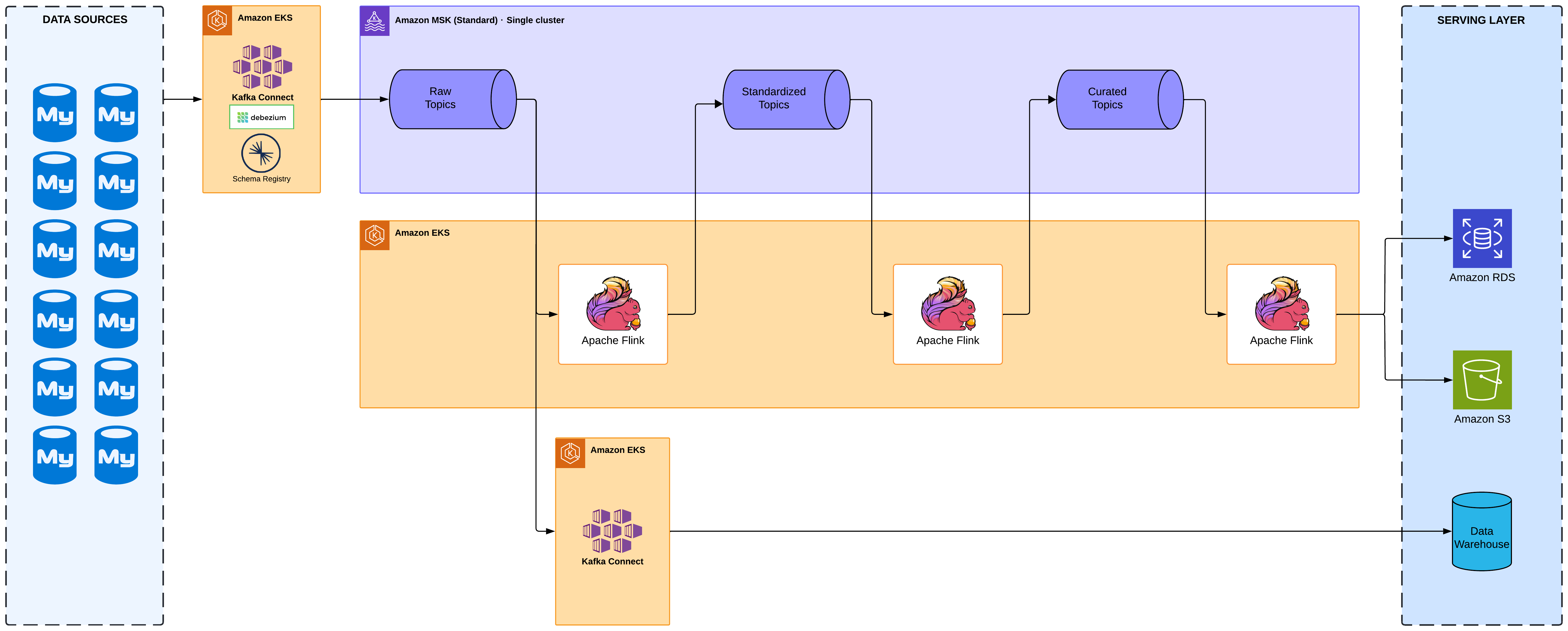
Figure 1: AppFolio’s previous architecture with Amazon MSK Standard brokers
First, AppFolio makes extensive use of log-compacted topics for their CDC streams. Compacted topics retain the latest value for each key indefinitely, which is exactly what they want for streams that mirror the state of operational tables. As their footprint grew, AppFolio wanted an infrastructure model that could scale storage automatically alongside data growth, without ongoing capacity planning that took multiple hours every month.
Second, AppFolio’s throughput continued to grow as they onboarded new use cases and added more event sources. They wanted the ability to scale the cluster quickly in response to traffic shifts, with minimal lead time for partition reassignments.
Third, as AppFolio’s platform matured, they needed workload isolation between customer-facing and internal data flows. Running customer-facing and internal workloads on a single cluster made it harder to size and tune each independently. As both grew, AppFolio wanted dedicated resources so each could be sized and tuned independently.
Based on these needs, AppFolio identified the following key requirements for their next-generation streaming platform:
- Elastic, automatically managed storage that scales with AppFolio compaction-heavy CDC workloads, removing the need for upfront broker capacity planning.
- Faster horizontal scaling and partition reassignment so AppFolio can adjust cluster shape in response to actual traffic in minutes rather than hours.
- Workload isolation between customer-facing and internal data flows, so each workload can be sized and tuned for its own traffic pattern.
Why AppFolio chose Amazon MSK Express brokers
After evaluating their options, AppFolio chose Amazon MSK Express brokers as the foundation for their next-generation streaming platform. Express brokers are a broker type offered under MSK Provisioned. They include pay-as-you-go elastic storage that scales automatically, intelligent partition rebalancing, and Kafka configuration defaults tuned for production workloads. Express brokers mapped directly to the requirements AppFolio identified:
- Elastic storage that scales with their data. Express brokers remove broker disk sizing and provisioning, with storage scaling automatically alongside data growth. AppFolio pays only for the storage actually used.
- AWS benchmarks showed up to 20 times faster scaling. Horizontal scaling and partition reassignment that previously took hours now complete in minutes, letting AppFolio react to traffic shifts on a much shorter cycle.
- Production-tuned defaults. Express brokers come pre-configured with Kafka best-practice defaults and built-in client throughput quotas, simplifying AppFolio’s operational model.
- Full Kafka API compatibility. AppFolio was able to migrate without changes to its producer and consumer applications.
As part of the migration, AppFolio also took the opportunity to rethink how the cluster was being used. Rather than recreating a single shared cluster on Express brokers, they segmented their MSK clusters by workload type. This gives customer-facing and internal workloads dedicated resources, providing better isolation and more predictable performance for each workload class.
Current architecture
AppFolio’s current architecture consists of multiple Amazon MSK clusters with Express brokers, segmented by workload type. Each cluster is sized and tuned for its specific traffic pattern, providing improved isolation and more predictable performance. The following diagram shows the deployment.
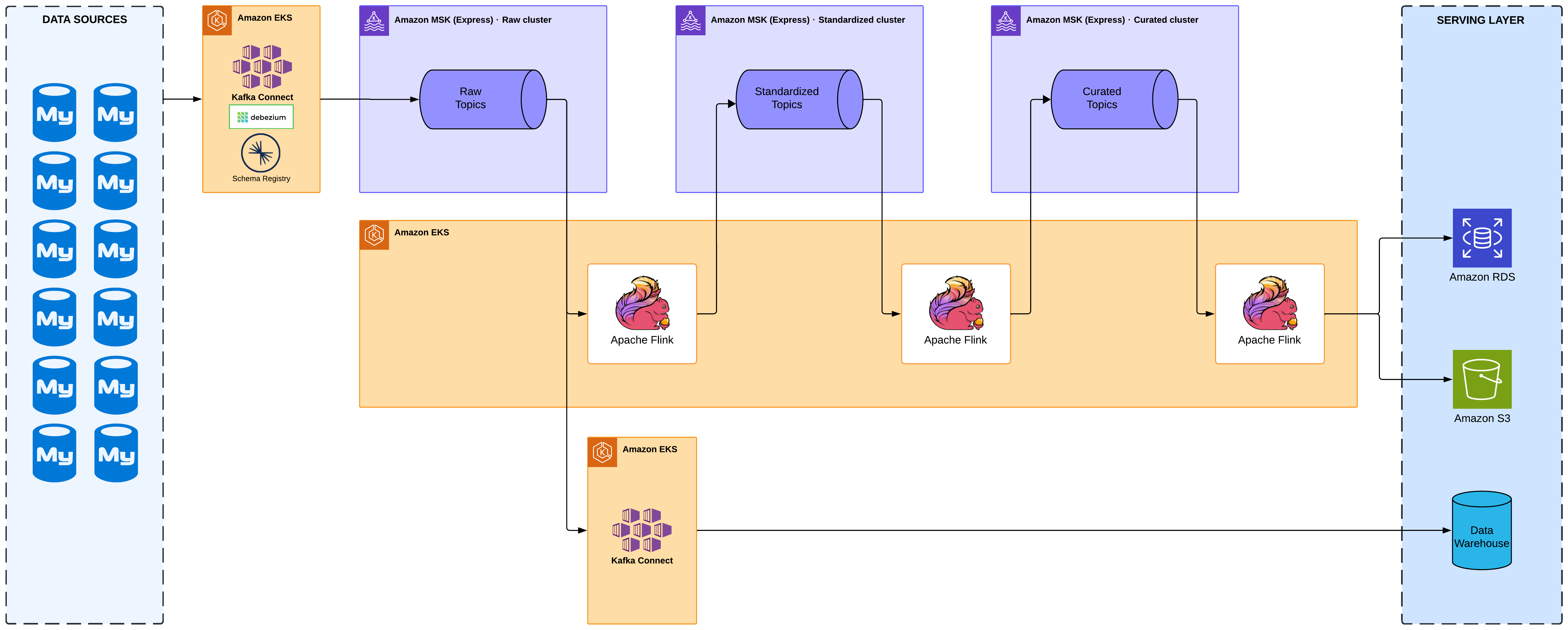
Figure 2: Current architecture with workload-segmented Amazon MSK clusters using Express brokers
Benefits achieved
By migrating to Amazon MSK Express brokers and adopting a workload-segmented cluster design, AppFolio has realized several key benefits:
Elastic, hands-off storage
The pay-as-you-go storage of Express brokers scales automatically with AppFolio’s data growth. Storage capacity is no longer something the platform team plans, provisions, or monitors, and AppFolio pays only for what they use. For a workload that runs heavily on compacted topics, this is the single largest operational improvement they have seen.
Faster scaling
Partition reassignment and broker scaling that previously took hours now complete in minutes, enabling AppFolio to adjust cluster shape in response to actual traffic instead of running ahead of forecasts.
Improved workload isolation
Splitting their streaming traffic into workload-segmented clusters has given AppFolio more predictable performance. Customer-facing and internal workloads now run on dedicated infrastructure, and each cluster can be sized and tuned for its own traffic pattern.
Stable environment as data volumes grow
Since the migration, AppFolio has maintained a stable environment with no significant downtime, even as data volumes continue to grow.
Reduced operational overhead
Hands-off storage management and intelligent rebalancing have removed several recurring tasks from the AppFolio platform team’s queue, including the constant monitoring and manual intervention that storage planning required under their previous architecture.
Conclusion
By using Amazon MSK Express brokers and adopting a workload-segmented cluster design, AppFolio has built a streaming foundation that scales elastically with their data growth and adapts quickly to changes in traffic. The pay-as-you-go storage and faster scaling of Express brokers let AppFolio’s platform team focus engineering effort on building new capabilities for customers, rather than on Kafka capacity planning. As AppFolio continues to expand its platform for the real estate industry, the Amazon MSK Express brokers infrastructure provides a scalable foundation for future growth.
To learn more about Express brokers for Amazon MSK, see the Express brokers for Amazon MSK documentation and the AWS announcement post Introducing Express brokers for Amazon MSK.
About the authors
Backblaze Drive Stats: How an Open Dataset Powers Academic and AI/ML Research
Post Syndicated from Stephanie Doyle original https://www.backblaze.com/blog/backblaze-drive-stats-academic-ai-ml-research/

Since April 2013, Backblaze has published the daily health readings of every hard drive running in our data centers. Model, serial number, failure flag, and dozens of Self-Monitoring, Analysis, and Reporting Technology (SMART) attributes, collected into a CSV for each day, released publicly every quarter, for free. We built Drive Stats as a mechanism to understand our own fleet, then published almost on a whim—so much so that the original idea is credited to two Brians. What happened next was an exciting surprise.
More than 227 papers and articles have cited Drive Stats as a primary dataset since 2018. Researchers have trained transformer architectures, long short-term memory (LSTM) networks, survival models, and gradient-boosted ensembles on it. The dataset that started as an internal reliability tool has become one of the most-cited open benchmarks in hard drive failure prediction research.
What makes Drive Stats so valuable?
Drive Stats reflects a live, continuously operating commercial fleet of drives: different manufacturers, different models, different capacities, all spinning in production Storage Pods under real workload conditions. That combination of scale and heterogeneity is rare, and it is exactly what makes the dataset especially useful to researchers.
For storage engineers and data scientists, the dataset checks every important box: real-world origin, a long time horizon, labeled failures, an open license, and an active maintainer that publishes new data each quarter. Here are a few other specifics worth understanding before diving into the research:
- Download access: The full quarterly archive is available for free on the Backblaze Drive Stats page under the MIT License.
- Open license: Backblaze asks three things of anyone who uses the data: that they cite Backblaze as the source, they accept responsibility for how the data is used, and they do not resell it.
- SMART attributes: Each daily snapshot includes raw and normalized values for more than 70 different SMART attributes per drive. We define a drive failure in our dataset based on a few metrics, which we talk about in previous reports, as well as articles dedicated to parsing the program.
- Scope and coverage: We began publishing quarterly hard drive data in 2013. The current dataset spans more than a decade of operation and covers hundreds of thousands of individual drives across manufacturers including Seagate, HGST, Western Digital, and Toshiba. Each year, we also compile data related to annualized failure rates (AFR) and lifetime failure rates across all manufacturers. Lifetime failure rates indicate the probability that a drive will fail over the course of its lifetime, while AFR indicates the probability a drive will fail during a year of operation. Rates are expressed as a percentage. Data related to lifetime failure excludes drive manufacturers with less than 500 units deployed, and all drives must have 100,000 active drive days to be included in the lifetime data set. The 2025 annual report recorded an annualized failure rate (AFR) of 1.36% across the fleet, down slightly from 1.57% in 2024, reflecting multiple factors (average drive age, technology improvements, drive size increases, cost per gigabyte, and market demand).
Most importantly: the economics of drives, and the measures people take to keep them spinning within a data center, are fundamentally different than in a consumer use case. In some ways, it’s the perfect test—the drives are always on, and we run them until they give up the ghost. In others, it’s a bit deceptive—most people don’t have alerts set up to monitor drive health in their home environments.
Of course, many do. Data is important, and for those who schedule weekly maintenance for your home networks: we love it, we’re here for it, and us too.
Academic research built on Drive Stats
The papers below represent a cross-section of research that uses Drive Stats as a primary dataset. Each represents a meaningfully different approach to the same core problem: predicting when a hard drive will fail, with enough lead time to act on it.
TFBEST: Dual-Aspect Transformer With Learnable Positional Encoding for Failure Prediction
Experiments on Seagate hard disk drive (HDD) data led the authors to propose a novel transformer architecture for predicting failures in hard drives that significantly outperformed prior state-of-the-art remaining useful life methods on the Drive Stats benchmark.
Their proposed architecture—the Temporal-Fusion Bi-Encoder Self-attention Transformer—is an encoder-decoder model trained on the full 10-year Drive Stats corpus (from 2013 to the time of article). Rather than classifying drives as failed or healthy within a fixed horizon, TFBEST predicts a sequence of days-to-failure, giving operators a window, rather than a binary alarm. The paper also introduces a confidence-margin statistic that manufacturers can use to set replacement thresholds with quantified uncertainty.
Large-Scale End-of-Life Prediction of Hard Disks in Distributed Datacenters
Authors: Rohan Mohapatra, Austin Coursey, Saptarshi Sengupta
Venue: IEEE
Submitted: August 2023
The authors presented a long short-term memory (LSTM) model that used understanding gleaned from Drive Stats to aid in predicting an output sequence of the number of days remaining before the possible failure of a disk. The LSTM posted a root mean square error of 0.83 during training, and 0.86 during testing across the full 10-year corpus, and generalized competitively across multiple Seagate model families.
The core architecture was an encoder-decoder LSTM network: the encoder processed a window of historical SMART readings for a given drive; the decoder produced a multistep output sequence representing the predicted days-to-failure. The model was trained and validated on all Drive Stats data available at the time, roughly 35GB, covering Seagate drive models with significant failure populations.
Leveraging Survival Analysis in Cost-Aware Deepnet for Efficient Hard Drive Failure Prediction
Authors: Jishan Ahmed, Robert C. Green II
Venue: Neural Computing and Applications, Vol. 37
Published: October 2024
To address the significant imbalance of real-world datasets used for drive-failure detection—the relatively small number of failures when compared to the number of drives operating normally—the authors relied on the SMART attributes found in Drive Stats to uncover new insights into drive health and failure.
They used a dual-track approach: a deep-learning track for failure prediction and a survival-analysis track for identifying which attributes most strongly govern time-to-failure. Together, the two tracks provided both operational predictions and mechanistic insights useful for data-center management strategy.
Examining the Impact of Critical Attributes on Hard Drive Failure Times: Multi-State Models for Left-Truncated and Right-Censored Semi-Competing Risks Data
Authors: Jordan L. Oakley, Matthew Forshaw, Pete Philipson, Kevin J. Wilson
Venue: Applied Stochastic Models in Business and Industry, Vol. 40, Issue 3
Published: December 2023
Many hard-drive failure prediction papers ask a binary question: Will this drive fail in the next N days? This paper asked a more nuanced statistical question: How do intermediate critical states defined by deteriorating SMART attributes affect the time distribution of eventual failure?
Oakley and colleagues first defined critical attributes and critical states using Drive Stats SMART readings, and then fit multistate survival models to the resulting semicompeting risks structure. These risks arise because a drive can move from healthy to critical (nonterminal) before failing (terminal), but failure can also occur without a detectable prior critical state. The multistate framework handled both pathways in a single coherent model.
The key contribution was a set of dynamic predictions of conditional survival probability that updated as the observed state of a drive changed – so operators got a live risk estimate, not a static score. Experiments on Drive Stats data confirmed that drives entering critical states are substantially more likely to fail.
AI/ML Models and Projects Built on Drive Stats
Academic papers are one signal that a dataset has earned its place in a field. Practitioners building things with it are another. A growing body of work, including open-source projects on platforms like GitHub, helps translate academic research into practical, runnable code, and provides additional confirmation of Drive Stats as a standard benchmark for the field.
HDD Failure Prediction Using Machine Learning
Contributor: Marcos Garcia Estevez (warc0s)
Platform: GitHub
Contributions Made: October 2024
The project aimed to create a binary classification model using machine-learning algorithms to predict the probability of drive failures based on SMART data, along with other features such as brand and storage capacity. It applied three methods: random forest, XGBoost, and a combined ensemble to Drive Stats SMART attribute data.
Large-Scale End-of-Life Prediction of Hard Disks in Distributed Datacenters
Contributor: Rohan Mohapatra (rohanmohapatra) (Austin Coursey, Saptarshi Sengupta)
Platform: GitHub
Contributions Made: June 2024
For practitioners building their own Drive Stats pipelines, this is one of the few public examples that addresses the full stack data ingestion, feature engineering, class imbalance, and sequence modeling, rather than demonstrating a model on a precleaned subset. Its combination of XGBoost for feature selection and LSTM for sequence prediction serves as a practical template for anyone working with raw quarterly CSV files.
Beyond the model architecture described in the academic paper section above, this project is notable for its engineering approach to handling Drive Stats at scale. The team built a preprocessing pipeline using PostgreSQL to ingest, filter, and join the quarterly files; used XGBoost across the full SMART attribute set; and applied interpolation to fill gaps, before feeding sequences to the encoder-decoder LSTM.
Are There Manufacturer Differences in Hard-Drive Reliability?
Contributor: Christoph Siemroth, Yeomyung Park
Venue: IEEE Transactions on Cloud Computing
Researchers used Backblaze’s large data-center dataset to compare failure rates across four manufacturers (HGST, Seagate, Toshiba, and Western Digital). Duration regression models controlled for drive age, capacity, and form-factor, and the findings concluded that HGST drives fail least often (about 42% of Seagate’s failure rate. However, WD drives outperformed Seagate but fared worse than HGST. Toshiba’s failure rate is similar to Seagate’s.
The study revealed a significant reliability gap between HGST and Seagate, doubling the financial burden for large-scale operators related to replacement-related labor and other costs. Drive failure analytics highlighted in the study can be used by large-scale operators to forecast future costs, informing procurement decisions.
Drive Stats research at a glance
| Paper / Project | Authors | Venue / Platform | What It Predicted / Built |
|---|---|---|---|
| TFBEST: Dual-Aspect Transformer With Learnable Positional Encoding for Failure Prediction | Mohapatra, Sengupta | arXiv (2309.02641) | A novel, high-performing transformer architecture for predicting hard-drive failures |
| Large-Scale End-of-Life Prediction of Hard Disks in Distributed Datacenters | Mohapatra, Coursey, Sengupta | IEEE | An LSTM helps to predict the number of days to a given disk’s failure to a high accuracy level |
| Leveraging Survival Analysis in Cost-Aware Deepnet for Efficient Hard Drive Failure Prediction | Ahmed, Green II | Neural Computing and Applications, Vol. 37 | Operational predictions and mechanistic insights for data-center management strategy |
| Examining the Impact of Critical Attributes on Hard Drive Failure Times | Oakley, Forshaw, Philipson, Wilson | Applied Stochastic Models in Business and Industry, Vol. 40, Issue 3 | Confirmation that drives entering critical states defined by deteriorating SMART attributes are substantially more likely to fail |
| HDD Failure Prediction Using Machine Learning | warc0s | GitHub | A binary classification model using machine-learning algorithms to predict the probability of drive failures |
| Large-Scale End-of-Life Prediction of Hard Disks in Distributed Datacenters | rohanmohapatra | GitHub | A practical template for practitioners working with raw quarterly CSV files to build their own prediction pipelines |
| Are There Manufacturer Differences in Hard-Drive Reliability? | Siemroth, Christoph Park, Yeomyung | IEEE | A comparison of hard-drive reliability across four manufacturers, using data regression models. |
The case for open data
The breadth of research is a direct result of open datasets. These citations occur because the data was consistently available every quarter for more than a decade—and it helps that we built a community of similarly interested people, too.
For research communities, open datasets function the way open-source libraries do: they create a shared foundation that everyone can build on and compare against. Drive Stats has earned that role in hard drive failure prediction by showing up reliably for over 13 years. A few things make open data particularly useful:
- Ecosystem reach. Drive Stats doesn’t exist in isolation: We publish it on Hugging Face, where it sits alongside hundreds of thousands of open datasets, across domains from natural language processing to genomics. Kaggle hosts it alongside tens of thousands of community notebooks and kernels.
- Reproducibility. Drive Stats is public, permanently archived, and available for download. A paper published today cannot recreate historical data. There’s not really a corollary in a field where most real-world fleet data is proprietary and inaccessible—but we’d love people to join us.
- Research velocity. When data is freely available, there’s no need to spend months negotiating access agreements. You simply download Drive Stats, read the schema documentation, and start building. The papers mentioned in this article collectively span transformer architectures, survival models, deep neural networks, and gradient boosting, all on the same dataset. You can’t necessarily call it a direct comparison, but it does make one thing clear: hardware is central to the cloud conversation.
Sign up for the Drive Stats newsletter
The same data that powers academic research also powers our own reliability reporting: The annualized failure rates, SMART attribute analysis, and transparency have made Drive Stats a standard in the field for more than a decade. And that data keeps coming, with a new release every quarter, since 2013.
If you’re working on failure prediction, predictive maintenance, or just want a real-world labeled dataset for benchmarking, this is the one researchers keep reaching for.
Sign Up for the Drive Stats Newsletter
What is Backblaze Drive Stats?
Backblaze Drive Stats is a publicly available dataset of daily hard drive health snapshots from our data centers. Published quarterly since 2013, it includes Self-Monitoring, Analysis, and Reporting Technology (SMART) attribute readings; failure labels; and model information for hundreds of thousands of drives. The data is free to download from the Backblaze Drive Stats page.
Has Drive Stats been used in academic research?
Yes. More than 227 papers and articles have cited Drive Stats as a source since 2018. Researchers have used it to develop and test hard drive failure prediction models, survival analysis frameworks, and deep learning architectures across venues including IEEE, Springer, Wiley, and arXiv.
Which AI/ML models were trained on the Backblaze dataset?
Researchers have trained a wide range of models on Drive Stats data, including long short-term memory networks, transformer architectures, 1D convolutional neural networks, gradient-boosted trees, survival analysis models, and ensemble methods.
Is the Backblaze Drive Stats dataset on Hugging Face?
We publish Drive Stats on Hugging Face at huggingface.co/datasets/backblaze/Drive_Stats. The repository contains over 388 million records and grows by more than 240,000 records per day. It is append-only, meaning daily snapshots are never updated or deleted once written, making it particularly useful for reproducible research.
Why do researchers use open hard drive datasets?
Open datasets like Drive Stats allow researchers to benchmark models against consistent real-world data, reproduce published results, and build on prior work without access to proprietary fleet data. Because Drive Stats reflects a heterogeneous, production-scale environment rather than a lab setting, it provides a uniquely credible benchmark for evaluating failure prediction methods.
How many times has Drive Stats been cited in research?
More than 227 papers and articles have cited Drive Stats since 2018. The actual number continues to grow as researchers publish new work on hard drive reliability, predictive maintenance, and artificial intelligence/machine learning (AI/ML) model benchmarking.
The post Backblaze Drive Stats: How an Open Dataset Powers Academic and AI/ML Research appeared first on Backblaze Blog | Cloud Storage & Cloud Backup
Recovery strategies to meet data residency requirements
Post Syndicated from Jamie Pasterick original https://aws.amazon.com/blogs/architecture/recovery-strategies-to-meet-data-residency-requirements/
Data residency requirements can affect how government agencies, regulated industries such as financial services, healthcare, and power and utilities, and businesses that make residency commitments plan for the recovery of their critical workloads on AWS. These requirements must be considered and balanced against applicable workload recovery objectives. This post assumes familiarity with AWS Regions, disaster recovery concepts, and AWS encryption services.
Where residency requirements are scoped at the national level, AWS provides multiple Regions within the same country in the United States, Canada, Australia, India, Japan, Germany, and China (operated by Sinnet and NWCD). In some cases, residency requirements can span national borders. For example, AWS offers multiple Regions within the European Union (EU), including the AWS European Sovereign Cloud, giving EU customers options for hosting and recovering workloads across member states where pan-national regulations treat the EU as a unified jurisdiction for data protection. This allows customers to use multi-Region recovery architectures and maintain data residency.
Where residency requirements are scoped to a country or countries served by a single AWS Region, or you need to address failure scenarios not fully mitigated by multiple Regions in the same country, alternate strategies can help you achieve your recovery requirements. In this post, we present three strategies that customers can use in close collaboration with their regulators to achieve bounded recovery while addressing data residency requirements. These strategies range from encryption-based compensating controls on multi-Region replication to fully in-country architectures.
Recovery strategies
We present three strategies for backing up critical business data (source code and data you cannot reproduce from other sources) and launching recovery infrastructure from those backups at a location distinct from your primary Region. Each strategy represents a different set of constraints on where data and administrative operations can reside. You should select the strategy that best matches your requirements and risk appetite, then evaluate the options within that strategy in collaboration with your regulator. The most important factor of success for whichever strategy you choose is your ability to test it end-to-end, continuously, to build and maintain confidence it will work when required.
Strategy 1: Cryptographic boundary
This approach replicates data into another AWS Region in a geopolitically aligned country with compatible data protection frameworks using encryption as a compensating technical control. Customers use AWS Key Management Service (AWS KMS) keys to encrypt the data, so that no one, including AWS operators, can access the data without the customer-controlled data encryption keys. This approach supports replication using features like Amazon Simple Storage Service (Amazon S3) Cross-Region Replication (CRR) or AWS Backup cross-Region copy.
With AWS KMS, you can also use key policies to explicitly deny decryption operations in the recovery Region. This provides you with strong assurance that your data in the recovery Region cannot be decrypted under any circumstances until you modify the key policy. You can work with your regulators to determine when to update these key policies as part of your recovery process.

Figure 1 – Server-side encryption architecture using AWS KMS with cross-Region replication.
You can also use this approach with client-side encryption for backups you manage and store in S3. Customers manage their own backup processes and use the
AWS Encryption SDK or their own clients with
multi-Region AWS KMS keys to encrypt the data. Multi-Region keys allow you to encrypt and decrypt replicated S3 data in multiple Regions using the same key material.

Figure 2 – Client-side encryption approach using multi-Region AWS KMS keys.
You can explore additional strategies for enhancing controls on the key policies to meet your requirements. For example, you can require Multi-Factor Authentication (MFA) to update your key policies. This allows the MFA holder and credential holder to be two distinct parties. They could be two different teams within an organization, or you could consider greater separation by providing the MFA device to a trusted third party such as a regulator. Another option is to implement controls in your identity provider to issue specific IAM session tags that provide conditional access to update the key policy. You should also scope key policy update permissions to a set of named IAM principals using condition keys, so that only explicitly authorized identities can modify decryption access.
Choose this strategy when storing encrypted data in a partner country is acceptable. Key policies prevent unauthorized access, and this approach offers the simplest operational model with the lowest recovery time.
Strategy 2: Data boundary
In this strategy, you store backups or operate a pilot light recovery environment on AWS Outposts in an on-premises site within the source country or other approved location. You replicate data from your primary Region using tools such as AWS DataSync for S3 data or other replication tools like MySQL binlog or Postgres logical replication for Amazon Relational Database Service (Amazon RDS) instances. You maintain full control of where your business data physically resides at all times. You can also use third-party backup solutions to replicate data from your primary Region to on-premises or in-country storage.
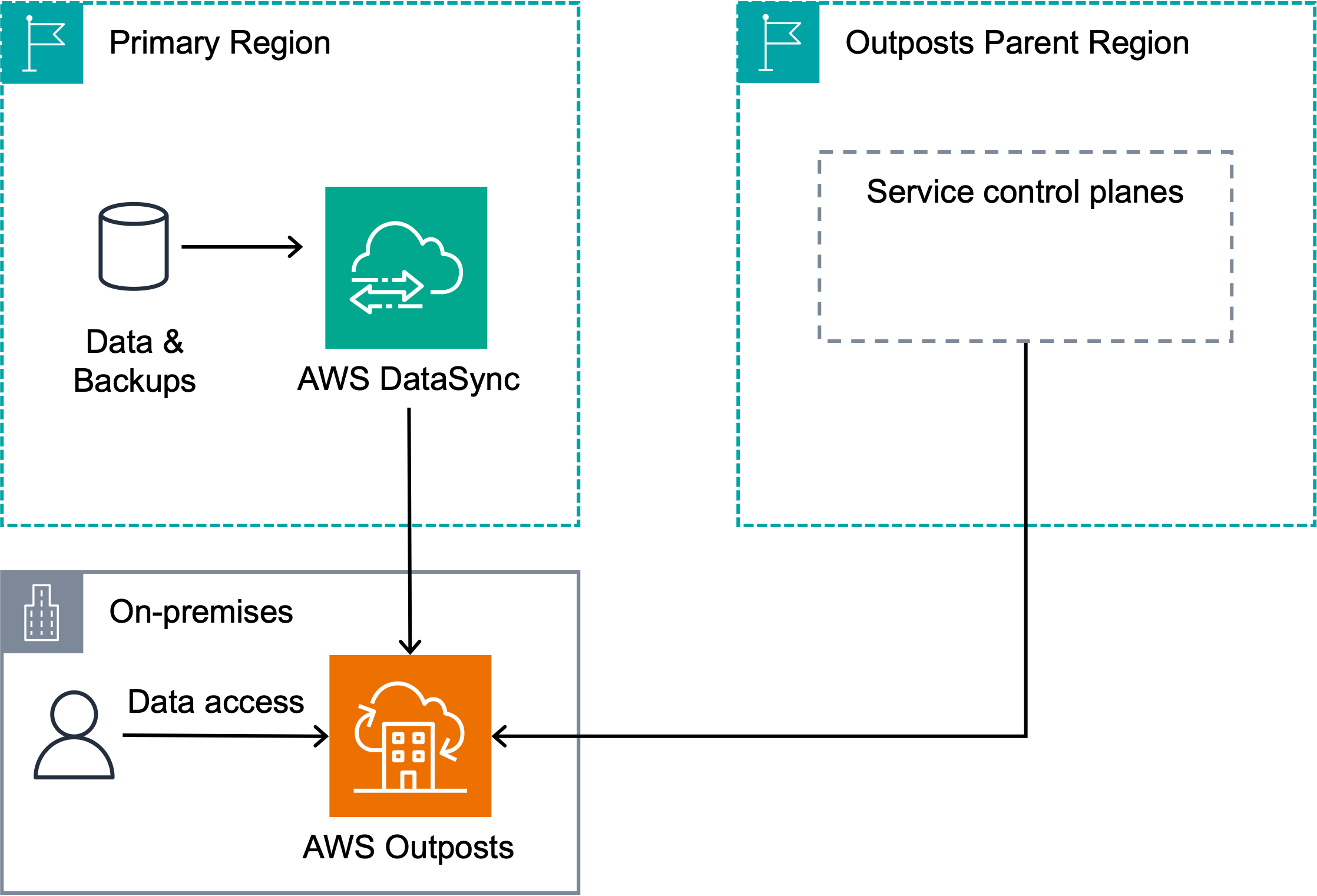
Figure 3 – AWS Outposts recovery architecture with data replicated to on-premises infrastructure.
Data access occurs directly over the local network in your on-premises facility through the
data planes of the resources hosted on the Outposts infrastructure. These are resources like
Amazon Elastic Compute Cloud (Amazon EC2) instances, Amazon RDS database instances, and S3 buckets. You provision and configure those resources through each service’s
control plane, which is hosted in the parent Region you select when you order your Outposts racks.
Choose a parent Region that is different from your primary Region. This prevents simultaneous impact to your primary workloads and your ability to use control plane operations for recovery, such as launching new instances on your Outposts. Note that Outposts are not designed for disconnected operations or environments with limited to no connectivity. Maintain highly available networking connections from your on-premises site back to the parent AWS Region.
During recovery, you can restore your environment directly on the Outposts infrastructure. AWS Outposts support a subset of the available AWS services in a Region, so you need to design your workloads to use the services available. Alternatively, you may obtain regulator agreement to restore your environment from backups stored on your Outposts to an AWS Region in a different country during extreme circumstances.
Select this strategy when you must physically maintain your backups and data in specific locations, want a consistent experience using AWS services and hardware in the cloud and on-premises, and using control planes for your Outposts infrastructure from outside your primary Region is acceptable.
Strategy 3: Strict local autonomy boundary
Some data residency frameworks, such as those in financial services or national security contexts, may require customer data and the control plane systems used to manage that data and recovery environments remain within national borders. Two options achieve this outcome.
Option 1: On-premises infrastructure
In this option, you operate hardware and software in an on-premises location to store backup data. Like the Outposts option, this provides flexibility on where backed-up data is restored: it could be restored to on-premises physical hardware or to an AWS Region in a different country.

Figure 4 – On-premises backup architecture with data copied from Amazon S3 to local storage.
This solution requires you to self-manage backups in S3, then copy them to on-premises storage using tools like AWS DataSync. You need to decide how to manage encryption of your data on-premises. Encrypting and decrypting data on-premises should not depend on the availability of the primary Region.
Option 2: Multi-cloud
In a multi-cloud solution, you can replicate backups from your primary cloud to an environment on another cloud provider and recover your workloads there. You can also use a lifeboat strategy.
A lifeboat strategy involves running a separate set of systems in another cloud provider which meets your residency requirements. These systems are not replicas of the primary platform. They are built and developed natively to provide a subset of critical functionality. This approach avoids architecting to the least common denominator of services across providers. You can take full advantage of all services available on AWS for your primary workload while the stand-in system uses a separate, purpose-built architecture.

Figure 5 – Multi-cloud lifeboat architecture with a purpose-built stand-in system.
Monzo Bank’s stand-in system is a well-documented example of this pattern. Monzo operates its primary banking system on AWS with thousands of microservices. Rather than replicating that entire stack, they built a small set of purpose-built services on a separate cloud provider that supports only the operations most critical to their customer experience: card payments, bank transfers, and balance information. According to Monzo, the stand-in shares no code and no infrastructure with the primary system.
The lifeboat pattern follows several key design principles. The stand-in supports only key functionality, which helps minimize the cost of the solution. Using different software reduces the probability that the same defect or failure mode affects both systems simultaneously. The stand-in accepts eventually consistent data, which avoids strong coupling between the two environments and preserves availability independence. The recovery does not appear transparent to end users. The experience is intentionally degraded to a subset of services, which is an explicit trade-off for maintaining availability.
A multi-cloud lifeboat provides protection against service disruptions of an AWS Region in a single country, but using multi-cloud to keep data in-country may not fully mitigate scenarios where all major cloud providers in a geography face simultaneous disruption.
Testing
You must continuously test your recovery strategy to build and maintain confidence it will succeed during a real event. Testing must be performed end-to-end: validating the integrity and consistency of backups, launching compute and database resources, and running synthetic test traffic through the recovered system. The more frequently you test, the more recovery becomes a standard operational process rather than a one-off monthly or quarterly activity. Your testing must keep up with the rate of change in your environment. If a change breaks your recovery process, you want to know about it and fix the procedures as quickly as possible.
The approach to testing is generally the same as traditional multi-Region recovery testing, but the additional complexities and operational processes of these solutions require an increased level of rigor:
- Strategy 1 (Cryptographic boundary): You need to decide if decrypting data and launching recovery environments with that data is acceptable. Ideally, you run full end-to-end recovery tests during approved test windows. If you cannot, you need to test your recovery procedures using synthetic data that is not subject to data residency requirements. This helps validate your recovery procedures, but it does not prove you can recover your critical business data.
- Strategy 2 (Data boundary): Validate replication lag meets your recovery requirements. Test launching recovery workloads on Outposts infrastructure and confirm that the parent Region control plane can orchestrate recovery while the primary Region is simulated as unavailable.
- Strategy 3 (Strict local autonomy boundary): For on-premises recovery, validate that backups can be restored to your target environment and that workloads function correctly outside of AWS. For multi-cloud lifeboats, test failover activation and verify that the lifeboat has no dependencies on your primary environment.
Summary
In this post, we presented three strategies for implementing disaster recovery solutions that support data residency requirements:
- Strategy 1 (Cryptographic boundary) uses encryption to meet the intent of data residency while using multi-Region AWS infrastructure for recovery. This offers the lowest operational complexity and best recovery performance, if permitted by applicable regulations.
- Strategy 2 (Data boundary) uses AWS Outposts to maintain data in-country in customer-controlled facilities while using an out-of-country control plane for management operations, if permitted by applicable regulations.
- Strategy 3 (Strict local autonomy boundary) keeps both data and control in-country during a recovery event using on-premises infrastructure or a multi-cloud lifeboat strategy. This offers the highest degree of control but with the greatest operational complexity.
The option that works best will be a joint decision between your business, regulators, and your customers. You should consider potential failures proactively and build recovery plans before an event occurs. This framework provides a structured way to evaluate the trade-offs and determine where to invest based on your regulatory environment, risk appetite, and operational capabilities.
Next steps
To learn more about the services and approaches discussed in this post, see the following resources:
- Disaster Recovery of Workloads on AWS
- AWS Key Management Service
- AWS Outposts
- AWS Backup
- AWS DataSync
If you have questions about applying these strategies to your specific workloads and regulatory environment, reach out to your AWS account team to discuss your recovery requirements in detail.
About the authors
The DOJ’s Firings & Hirings #lastweektonight
Post Syndicated from LastWeekTonight original https://www.youtube.com/shorts/Aox7kVRQl-c
rsync 3.5.0 released
Post Syndicated from jzb original https://lwn.net/Articles/1088759/
Version
3.5.0 of rsync has been released with a huge
number of security fixes:
This release fixes 33 security issues found during a focused audit of
rsync’s path handling and daemon protocol, a companion daemon-protocol
fuzzing pass, and reports from external researchers -- plus several
robustness hardenings. CVE IDs were assigned by VulnCheck (CNA); the
precise “introduced in” version ranges accompany each advisory, and
many are much narrower than “everything before 3.5.0”. Every fix ships
with a regression test in the test suite that fails on the unfixed
tree.
[$] 128-Bit page tables for Arm
Post Syndicated from corbet original https://lwn.net/Articles/1088125/
The size of a processor’s page-table entries directly limits how much
physical memory that processor is able to access. Back in the 32-bit days,
that limit was 4GB, an amount of memory that once seemed nearly infinite,
but which would now struggle to hold a basic AI-enabled “hello world” app.
The expansion to 64 bits on most popular architectures would seem to
have removed those limits now; some Arm systems, for example, can use
56 of those bits to access up to 72PB of memory. So it might be
surprising that the Arm architecture is evolving to support even larger
page-table entries (PTEs). This
patch set from Anshuman Khandual adds support for 128-bit PTEs, but
who will benefit from this capability is not entirely clear.
Незаконните билбордове, рекламата на хазарт и визуалното замърсяване в София
Post Syndicated from Боян Юруков original https://yurukov.net/blog/2026/bilboards-sofia/

Преди две седмици писах как за кратка отсечка в София преброих 28 билборда. Повечето рекламираха хазарт, което е забранено по закон. Закон, който изглежда никой не спазва и никой не налага. Както доста други преди мен се запитах как е възможно това. НАП са се извинявали в миналото, че тия не били баш реклама на хазарт, а и не знаели къде и колко са всъщност билбордовете. Затова реших да отговоря на този въпрос. Като за начало за София.
За целта свалих данните на Столична община за билбордовете от слой на iSofMap. Там открих 468 билборда на общинска земя по предварителна схема приета от Столичен общински съвет преди доста години. Заедно с тях са отбелязани 976 билборда на частна земя. Забелязах, че много рекламни пространства, които виждам, ги няма на тази карта и добавих данните от GovAlert за всички разрешения за поставяне, в които се споменава „реклама“ под някаква форма. Това добави още 1355 записа към данните.
Така получих 1917 точки на картата. Подробности как съм ги обработил и методологията ще прочетете след малко, но същественото е, че минавайки из града в последната седмица виждах билбордове на всяка от отбелязаните точки. Изключенията бяха единици, но за сметка на това виждах доста рекламни пана, които не бяха на картата. Ярък пример е установената за незаконна видео рекламна стена на Тиков на 4-ти км.
Но от данните видях нещо също толкова притеснително – над една трета от билбордовете и рекламите по сгради в София са с изтекли разрешителни и няма данни да са продължавани. Някои са изтекли в последните три месеца, други – преди години. Още 59 изтичат до края на годината. Отделно повечето от онези по общинска схема или 27% от всички са изтекли или ще изтекат скоро, а не изглежда да има дискусия или план какво да се прави с тях.
Затова нека се вгледаме по-подробно в данните, какво знаем, какви са известните проблеми и какво е неизвестно по темата.
Източници и методология
Както споменах по-горе, основните данни идват от картата за реклами и преместваеми обекти на Столична община. Изключвам от там схемите за поставяне на маси. Разрешителните за ползване взех от регистъра на НАГ като ги свързвам с поземления имот през алгоритъма на GovAlert. Ще ги намерите също на картата с документите от градоустройството. От тях взимам само тези споменаващи реклама в описанието.
Данните от iSofMap имат няколко особености и проблеми. Първо, няма много информация за схемите на билбордове на общински парцели. В доста от записите липсва и последната цифра на разрешението и затова ще видите въпросителна в картата ми. Повечето са обаче на около 10 години. Доколкото разбирам, много от договорите са изтекли, но са оставени в сила, докато не истекат останали и се реши какво да се прави за всички пространства.
За рекламите на частни парцели знаем повече. Вторият проблем е, че много разрешителни налични в НАГ липсват на картата, както и много рекламни пространства. Точките на тази карта показват конкретните елементи като някои са с общо разрешение за поставяне. Обединявам ги на картата само, когато географските координати са еднакви, т.е. са практически един до друг.
По номера на разрешителните свързах повечето от тях с регистъра на НАГ, т.е. може да достъпите самия документ. За 68 от тях или 8.1% разрешителното не е публично. Всъщност, става въпрос за 46 разрешителни, защото няколко от тях са за повече обекти. От тях 18 би следвало да са още валидни. Всеки служител издаващ такива документи е длъжен да го публикува в регистъра, т.е. говорим за пропуски или умисъл. Не са дори стари разрешения – някои са от 2012, но има и такива, които все още са валидни от 2023 и 2024 и също липсват. Липсващи документи в регистрите на НАГ не са изключения обаче и особено такива за поставяния съм засичал неколкократно да се укриват, особено покрай обекти на Национална спортна база в Изгрев.
Тук е важно да се спомене и срокът за валидност на разрешенията. Докато при общинските схеми за поставяне е доста мътно какво се случва, тези на частни земи се издават със срок от пет години. Този е намален от 10 години с решение в средата на 2018-та и влиза сила през септември същата година. Т.е. би следвало разрешения за поставяне издадени преди септември да са с 10 годишен срок. Например, разрешението за светещия надпис на Артекс над първия Диамант е издадено през юли 2018 и важи още две години, освен, ако живеещите в сградата не решат да прекратят договора за надписа, по който би следвало да получават наем. Подалите след септември следва да са с 5 годишен срок.
Практиката е друга. Първо, че за смятане на кой режим се използва е взета не датата на заповедта или обсъждането в комисия, а датата на подаване на заявлението. Един пример тук е покривна реклама над сградата на Джъмбо на бул. България. Има обаче няколко случая, в които тогавашния главен архитект Здравков е налагал двоен стандарт. Някои подадени през август са получили 5 години срок, а други като надпис на Harmony Group на офис сграда на бул. Черни връх има срок от 10 г. независимо, че молбата е подадена през октомври. Заради тези противоречия прегледа всички разрешителни издадени през 2018 и 2019-та и отбелязах какъв е реалният срок. Някои са издавани с 10 годишен срок чак през март 2029-та.
По номерата на разрешителните свързах линковете в регистъра с точките от картата с преместваемите обекти от iSofMap. Както спомена горе, за някои разрешения има отбелязани повече точки, тъй като са позволени повече рекламни обекти. Така 721 разрешения бяха свързани с 839 точки на частни имоти. Когато обаче подобно свързване не беше възможно в 610 разрешителни, не можех да отбележа точното местоположение на рекламата. Затова ги сложих в центъра на парцела и при натискането му се показва цялата зона, където би могъл да бъде. Докато някои парцели са малки, други са значителни и имат по няколко билборда. Това има страничен ефект, че една точка може да разрешава няколко билборда пръснати из голям имот, а на картата да стоят като една точка. Това произтича от липсата на актуални данни в НАГ.
Друг проблем е, че някои билбордове и други рекламни елементи имат няколко поредни разрешителни, някои изтекли, а други – не. В данните на iSofMap те са като отделни точки с няколко метра разстояние. По контекста се разбира, че става дума за същото място или същия обект. В други случаи това не е ясно. Когато такива точки са много близки, ги свързвам и показвам списък на разрешения за това място. Ако последното като хронология е още валидно, отбелязвам точката като валидна. В други случаи обаче има само изтекло разрешение в данните на рекламните елементи и откривам ново в регистъра с разрешенията. При вторите знам само парцела, а не точното място. Независимо, че бих могъл да ги свържа, ако в този парцел има само един рекламен елемент, това предразполага към грешки. Затова е възможно на места на картата да видите близко един до друг изтекъл билборд и до него в същия парцел нов валиден такъв. Макар да са доста малко тези случаи и бих могъл да ги разгледам един по един, не искам да правя предположения по заглавията и имената на фирмите и представих данните във вида и с качеството както са на страницата на общината.
Не на последно място, категоризирах някои от валидните разрешителни според това дали са билбордове или реклами върху сгради или на стени. Направих това отново по ключови думи и сложих филтри в легендата. Макар някои от тях да са реално фирмени надписи, това отново е реклама, която допринася до визуалното замърсяване на града, особено предвид, че повечето светят нощем.
Може да свалите таблиците с изходните данни за схемите за поставяне на общинска земя, елементи и разрешителни. Включил съм координатите и номерата на поземлените имоти.
Карта и сигнали
Поставих всички точки на карта аналогична на тези, които съм правил с подобни визуализации. От бутоните вляво може да смените базовия слой със сателитна карта на София и да фокусирате картата върху местоположението си. От легендата може да изключвате от картата различни категории реклами и разрешения.
При натискане на някоя точка се отваря известната за това място информация. Ако е само разрешение, на картата ще се покаже и района на поземления имот, където вероятно все още е билборда или рекламния обект. Ако виждате нарушение, може да натиснете на линк с указания как да подадете сигнал.
Тук може да разгледате картата, както и да я отворите на цял екран за по-удобно.
За разлика от другите проекти на отваряне на данни, този има заглавна страница представяща нещата различно. Тя започва с два бутона. Единият води към картата, а другият използва същите данни и местоположението на посетителя (ако разреши достъп до такова), за да установи най-близките рекламни пространства и дали са валидни. Показва ги в списък и натискане на някой от тях представя същите подробности и линк към документа, ако такъв е известен.
Под списъка и подробностите има указания как да се подаде сигнал към Столична община през системата Call.Sofia. С обновлението ѝ, линкът позволява предварително въвеждане на категория и подкатегория. Остава да се избере точно място, да се отговори на въпрос, че става въпрос за „Извършване на нерегламентирана рекламна дейност“ и да се попълни заглавие и описание. Съветвам да се добавя тага #noads, за да намирам по-лесно сигналите и да мога да ги покажа на картата. Важно е да се добави и снимка, на която се вижда улицата и съседните сгради, за да може ясно да се идентифицира за кой точно билборд става дума. Както сами сте свидетели има места из града с до 20 такива наоколо, което както затруднява свързването на сигнала с конкретен обект, така и още веднъж показва колко са излезли нещата извън контрол.
Трябва да подаваме сигнали, за да се установи дали тези обекти имат разрешения, дали са валидни въобще, но също и дали обектът отговаря на разрешението. Примерите в следващата секция показват, че намираме валидно понякога разрешение за малък едностранен билборд, а на място се вижда значително по-голям такъв. Ако отговорят, че има разрешение за поставяне, следва въпросът защо не е публично, както е нормативното изискване в общината и защо не присъства на картата с рекламите в София.
Оперативни и нормативни проблеми
Обществена тайна е, че много от рекламните площи са незаконни, с изтекли разрешения или че такива въобще не е трябвало да бъдат издавани. Системният контрол над тези и други преместваеми обекти е труден и както сам съм свидетел редовно, не се случва дори при подадени сигнали. Пример за това са проблемите със задължителното озеленяване на жилищни комплекси и строителство без разрешение от НСБ в Изгрев. Дори причината да се вгледам в тази тема – видеостената на хотела на 4-ти км. – беше установена като незаконна едва след множество сигнали от района. Въпреки това все още си е там докато сигналът пътува между офисите из НАГ. В този смисъл, за този портал, данните и евентуалните сигнали произтичащи от тях може да благодарим на Тиков.
Не трябва да гледаме далеч от този казус обаче, за да видим други проблеми. В рамките на кръговото на 4-ти км. се забелязват 15 билборда и една реклама на комин. На картата ги виждаме всички плюс няколко надписа на сгради. Поне три от тях са с изтекли разрешителни, а две от тях заедно с още едно с валидно разрешително до март 2028-ма са за едностранни билбордове. На снимките виждате последните три, които имат реклами от две или три страни.
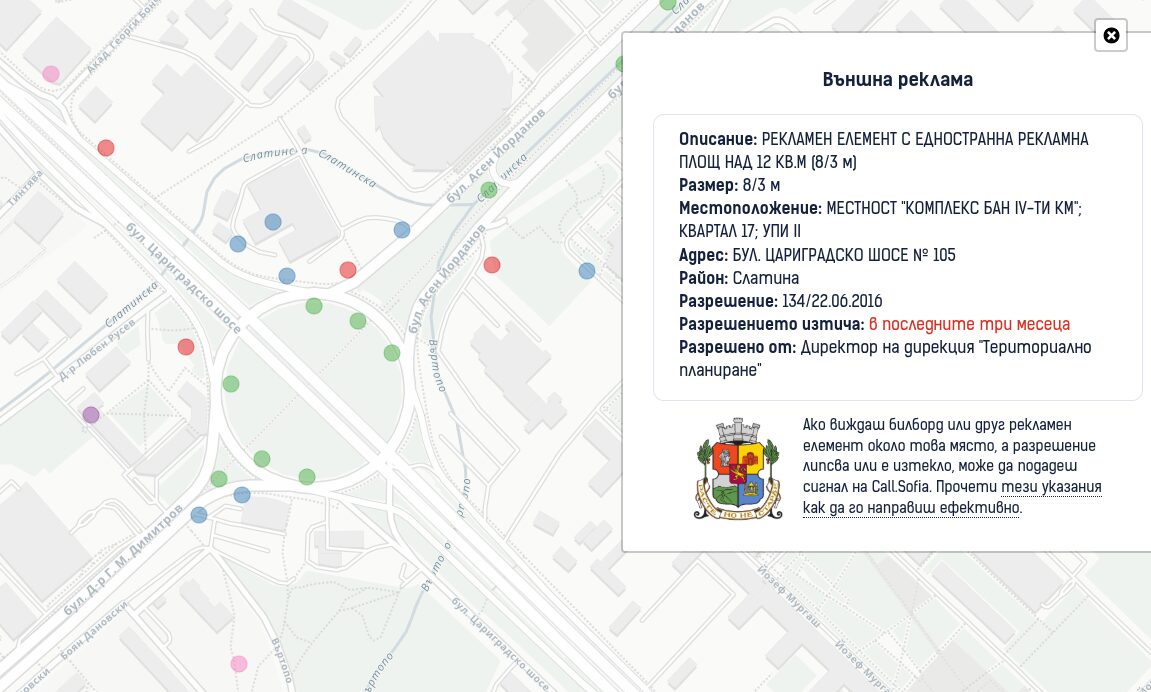



В центъра на кръговото виждаме шест билборда по схеми за поставяне от общината заедно с още поне два малко извън кръговото. Всички са на общинска земя и в зелени площи. По наредба за ремонт и смяна на рекламите може да влизат и паркират тежки коли в зелените площи, както и да се изсичат дървета и друга зеленина, за да са видими тези и други реклами. Освен визуалното замърсяване, всичко това допринася и много до унищожаването на зелени площи. Тук не говорим само шест билборда, а стотици, които всеки месец налагат подобни действия на подобни места.
Следващите два примера пък показват как точките от картата с рекламите на общината се групират. В случая става въпрос за билбордовете по периметъра на мол СкайСити. Разрешението е за общо 19 такива пространства. Точките от данните на общината са 9 като няколко от тях събират по 2 или 3 билборда. Разрешителното за всички тях са изтекли преди три години след като са имали 10 години срок на действие.


Тук се сблъскваме с няколко проблема. Първо, както обсъдих преди не е ясно дали и колко от тези рекламни пространства имат нови разрешения за ползване, които по някаква причина не са станали публични. За онези 46 неизвестни попитах НАГ с номерата, за да се разбере дали е техническа грешка, не съществуват или е друго. Тук още по-ярко се вижда липсата на единния регистър по ЗУТ, който все още очаква подписа под наредба на кабинета на Радев. Писах за това покрай случая в Баба Алино. Този регистър следва да помести не само тези разрешения за поставяне, но и всички в цялата страна с ясна проследимост.
Лошото качество на данните личи най-вече в слоя с рекламите и преместваемите обекти, където много нови билбордове с валидни разрешителни липсват, а изтекли такива изглежда все още стоят. Не може да разчитаме на него като източник на реалното състояние в София и затова призовавам всички да се огледат и да подават сигнали.
Оперативно изглежда няма достатъчно проверки или поне резултат от тях. Възможно да е въпрос на капацитет или желание. Доколкото получих отговори, тази задача се пада на Столичен инспекторат, който следва да следи за изпълнението на задълженията по тези договори и разрешения. Възможно е да не са само те. Възможно е да страдат от същият недостиг на качествени данни кое е законно и кое не, с който се сблъсках аз. Фактите са обаче, че при редица сигнали дори за елементарни бутки и бариери или сеч на дървета, районно кметство, който единствен отговаря за издаване на такива разрешителни, пита установения извършител да предостави документ. Т.е. не си вярват на собствената деловодна система или не си спомнят какво са подписали и за кого. Вероятно е било на крак, вероятно нарочно не е входирано дигитално и направено публично. Надявам се да е просто тяхното разбиране за процеса, а не тупат топката докато всички забравят, за да не се налага да пишат акт. Такива случаи имам наскоро по сигнали за отрязани дървета в Младост и преместваеми обекти в Изгрев.
Лошата проследимост до сега, липсата на документи, отчетност и отговорност скриваше подобни случаи. Получих уверения, че новата система на Call.Sofia ще поправи това и следва да го тестваме. Трябва обаче да се вдигнем очи и да се огледаме и вместо да се ядосваме защо има повсеместни реклами на хазарт и следващото уж зелено бетонно туловище, да се запитаме защо въобще е бодната тази реклама там и не само дали е законна, а следва ли да е там въобще.
Тук стигаме до нормативните проблеми. И сега има законов път, по който да се получи разрешение за такива реклами. Този процес обаче от една страна е утежнен процедурно – комисия в НАГ за схемата и после отделно молба за поставяне. От друга времето за такова разрешение силно варира и е значителен източник на корупция. Както стана видно от решенията по времето на Здравков, срокът е даван както дойде. Тогава някои решения са били получавани месец след искане, а други – година и половина. Срокът трябва да е в седмици и да може да се продължи разрешение в рамките на шест месеца преди да изтече старото. Реалността обаче е, че за някои от тези билбордове, за които ще подадем сигнали, има молба за разрешение, която престоява с години, а обектът още си стои с погрешен претекст, че има производство по случая. Нищо, че вероятно не може да получат разрешение по принцип.
По принцип има редица ограничения, но далеч не са достатъчни, за да не се претоварва града с 1500 билборда закачени къде ли не. Скоро ще тръгне отново темата за тези общинските билбордове, но те са само малка част от всички. Липсва стандарт, който да се следва. Може да е визуален или метрика на площ. Разумно би било да се намалят рекламните площи най-малкото три пъти. Ако приложим стандартите на други големи европейски градове, както много обичат да правят общински съветници и архитекти, следва да забраним изцяло рекламата на покриви и стени на сгради и да има не повече от 100 билборда в града по булевардите.
Какво следва да се случи?
Първото нещо е да покажем колко масов е проблемът с незаконните реклами подавайки сигнали. Описал съм в проекта как може да стане това.
Второто е, че трябва да решим как искаме да изглежда градът ни – описан с билбордове и реклами по покриви или изчистена градска среда. Тук едни ще кажат, че това носи доходи на общината, а частни лица следва да могат да правят каквото си искат с имотите си. В действителност никой имот не е в изолация в града и трябва да се съобразява с останалите, а доходите за общината може да се компенсират с по-малки и незатормозяващи рекламни пространства. Тук следва да решим какви следва да са тези правила и да изискаме от Столичния общински съвет да ги наложи.
Трето, следва да следим пътят на сигналите, позициите на местните избраници, предложенията и дискусиите им. Често последните минават набързо и на тъмно защото обществото така и не разбира, че е тема в дневния ред или че това, което се готви ги засяга пряко.
Четвърто, започнах с темата за хазарта с причина. Рекламите на хазарт са основен двигател на всичко, което описвам и много от билбордовете са собственост именно на фирми свързани с хазартния бизнес. Докато рекламата на хазарт не бъде повсеместно забранена независимо къде се намира, няма да има решение този проблем. Заедно с бързите кредити и телефонните измамници, хазартът носи най-големи негативи за благосъстоянието на българското общество и особено най-уязвимите от него. Намирам за изключително цинично да се обсъждат акцизи и печалби за местна и централна власт в този контекст. Не по-малко цинично и опитите за триене на имиджа им чрез финансиране на спортни отбори и зали. Ако приемем всички тези като каквито са – просто реклама на хазарт и разпознаем щетата, която има върху обществото ни, то дори това би бил достатъчен повод да преразгледаме основно броя и разположението на рекламните площи в града.
Не на последно място, трябва да направим крачка назад и да разберем, че градската среда не е просто красива картинка, която виждаме само по рекламите на жилищни сгради, а съвкупност от планиране, изпълнение и контрол. Тук засягаме планирането и контрола по един елемент от нея – рекламите. Освен него има замърсяване на въздуха, водата, почвата, с шум и светлина, които влияят пряко на качеството на живота и здравето ни. Тук фактори са достъпността на средата, обществения транспорт, качеството на строителството и спазването на стандартите и прочие. Важен фактор е и озеленяването, темата за която ще засегна нашироко скоро. Не може да отмятаме с лека ръка който и да е от тези компоненти смятайки, че не е най-големият проблем. Това се случва всъщност с всеки един от тях един по един и накрая се чудим защо градовете ни изглеждат толкова зле.
Осъзнаването на проблема е важна стъпка, но често спираме там. Този път молбата ми е да направим следващите две крачки и да подаваме сигнали, да следим изпълнението им, да изискваме отговори резултат. Може би ще даде полезен пример за другите елементи на градската среда и модел за засягането на проблемите там.
Security updates for Thursday
Post Syndicated from jzb original https://lwn.net/Articles/1088715/
Security updates have been issued by AlmaLinux (abrt, dhcpcd, edk2, freerdp, gegl04, grafana, gstreamer1-plugins-good, iscsi-initiator-utils, isns-utils, kernel, kernel-rt, keylime, libarchive, libyang, nodejs-nodemon, opencryptoki, osbuild-composer, pacemaker, postgresql-jdbc, postgresql18, python-idna, python3.9, udisks2, valkey, vim, xorg-x11-server-Xwayland, and yggdrasil-worker-package-manager), Debian (flatpak, lemonldap-ng, neutron, python-django, spip, xdg-dbus-proxy, and xorg-server), Fedora (apr-util, cri-o1.34, libcupsfilters, linux-firmware, sqlite, and vaultwarden), Gentoo (FreeType), Oracle (dovecot, evince, fence-agents, gnutls, gstreamer1-plugins-bad-free, gstreamer1-plugins-good, isns-utils, java-1.8.0-openjdk, kernel, libarchive, osbuild-composer, pipewire, postgresql, ruby, ruby:3.3, sudo, and udisks2), Red Hat (bind, bind9.16, gnome-remote-desktop, grafana, opentelemetry-collector, python-pillow, python3, python3.12, python3.14, python3.9, and rhc), SUSE (chromium, clusterctl, dracut, gd, git-cliff, gleam, govulncheck-vulndb, graphicsmagick, gzip, kernel, kubevirt, libheif, librest0_7, nodejs22, nodejs24, openssh, openvpn, python3, python313-scikit-learn, rpm, stunnel, and zk), and Ubuntu (kernel, libgit2, linux, linux-aws, linux-aws-fips, linux-azure, linux-azure-6.8,
linux-azure-fde, linux-azure-fde-6.8, linux-azure-fips, linux-fips,
linux-gcp, linux-gcp-6.8, linux-gcp-fips, linux-gke, linux-gkeop,
linux-ibm, linux-ibm-6.8, linux-nvidia, linux-nvidia-6.8,
linux-nvidia-lowlatency, linux-realtime, linux-realtime-6.8, linux-xilinx, linux, linux-aws, linux-aws-fips, linux-azure, linux-azure-fde,
linux-azure-fips, linux-gkeop, linux-ibm, linux-ibm-5.15,
linux-intel-iot-realtime, linux-intel-iotg, linux-intel-iotg-5.15,
linux-kvm, linux-nvidia, linux-nvidia-tegra, linux-nvidia-tegra-5.15,
linux-oracle-5.15, linux-realtime, linux-xilinx-zynqmp, linux, linux-aws, linux-aws-fips, linux-azure-4.15, linux-azure-fips,
linux-fips, linux-gcp-4.15, linux-gcp-fips, linux-kvm, linux, linux-aws, linux-azure, linux-azure-fde, linux-ibm, linux-oracle,
linux-raspi, linux-realtime, linux-azure, linux-azure-6.17, linux-gcp-6.17, linux-hwe-6.17, linux-oem-6.17,
linux-realtime-6.17, node-follow-redirects, and yelp).
Certificate Transparency Monitoring is now generally available
Post Syndicated from Pravallika Nakarikanti original https://blog.cloudflare.com/certificate-transparency-monitoring-ga/
Since we launched Certificate Transparency Monitoring in public beta in 2019, we've been emailing subscribers whenever a new TLS certificate appears in a public Certificate Transparency (CT) log for one of their domains. Today, it's turned on for more than 650,000 customer domains. It's an early warning that someone, somewhere, has issued a certificate for a hostname in your zone, giving you a chance to spot a mis-issued certificate early.
It's a useful signal, but it had a noise problem, and we felt it ourselves. Cloudflare issues a large volume of certificates on your behalf: Universal SSL renewals, certificates from Advanced Certificate Manager, and backup certificates. All of them are logged to public CT logs by design, because a certificate that isn't logged won't be trusted by major browsers like Google Chrome and Apple's Safari. So the same transparency that lets you monitor for mis-issuance also surfaces every certificate we issue for you.
And issuance isn't a one-time event. Certificates are short-lived and renew automatically: a single Universal SSL certificate can renew as often as every 60 days, up to about six times a year. That cadence is set to increase, with the CA/Browser Forum having voted to cut the maximum certificate lifetime to 47 days by 2029, multiplying the routine renewals that flow through those logs. Every one of those renewals generated an alert. But at the scale Cloudflare issues certificates, a genuinely suspicious one could look just like a routine renewal, and the alert that mattered was easy to miss.
We heard the same thing from customers. On our community forum, one described disabling the feature across all their sites because they were "tired of regularly getting spammed with tons of completely normal certificate renewals," adding "I wasn't even actually reading them by the end." That noise came from Cloudflare's own certificates.
Today, we're changing that. Certificate Transparency Monitoring now filters out the certificates Cloudflare issued on your behalf before an alert is sent. The alerts that reach your inbox are the ones that deserve your attention: a certificate you didn't expect, that Cloudflare didn't issue. With that fix in place, Certificate Transparency Monitoring is generally available.
Filter out the certificates Cloudflare manages
The goal is to identify and eliminate noisy alerts for routine, Cloudflare-managed certificate issuances and renewals while ensuring we catch all external certificates managed outside our system.
Why couldn't we just identify and filter these out previously?
There are two independent systems built to serve separate products: certificate management, which deals with internal certificate issuance data, and CT alerting service, which parses data from public CT logs.
The two flows handle the same certificate, but never at the same moment and never with the same information. When the alerting flow is deciding whether to email you, all it has is what it pulled from the log. It has no signal from the issuance flow saying "the ordering service just created this one." That missing link was the problem.
What is the lifecycle of a certificate?
As shown above, certificate issuance happens in two stages:
- Certificate Authority (CA) creates a pre-certificate, writes to logs and receives SCTs (Signed Certificate Timestamps).
- CA embeds those SCTs into the final certificate and logs it.
Thus, the alerting service sees two log entries for a single certificate order: 1) pre-certificate and 2) final certificate. To avoid alerting twice per pair, an internal identifier called stripped_fingerprint is stored for deduplication purposes. This fingerprint is the hashed value of DER (Distinguished Encoding Rules)-encoded TBSCertificate (to be signed certificate). This value is consistent and unique for a pre-certificate/final certificate pair that belongs to the same certificate order. Therefore, this is one identifier which is already present, and it sits entirely inside the alerting flow.
Why does the obvious fix fail?
The intuitive shortcut is to copy stripped_fingerprint into the ordering service so the alerter can look it up. But that doesn't work because the ordering service doesn’t receive the pre-certificate, so it can't produce this value when the alerting service receives it.
So even if this is used as an identifier, it can only be recorded after the final certificate is received by the ordering service. In that window between pre-cert and final cert log entries, if the alerting service looks up stripped_fingerprint(precert) in the ordering service’s database, then it is not going to find any information matching this identifier to confirm that it is issued by us — and this leads to an extra alert again.
Although the certificate ordering service is the right system to answer “Is this ours?”, the match key with which this information was being uniquely identified is not winning the race. So the problem reframed itself. The question was no longer where to store the fingerprint, but what is that one identifier which can be persisted from order creation to the final logged certificate.
What is the right key?
The right key had to check these boxes:
- Early: recorded before anything reaches the log, i.e., present at key generation.
- Consistent: throughout all stages from pre-certificate to final certificate.
- Reproducible: the CT alerting service can recompute it independently, from the log entries alone.
- Unique: to each certificate order.
The public key is one such identifier that checks all those boxes. It travels inside a structure called SubjectPublicKeyInfo (SPKI).
Consistency: As the diagram above shows, SubjectPublicKeyInfo (SPKI) is present from the first step and stays the same through the CSR (Certificate Signing Request), pre-certificate, and final certificate.
Uniqueness and Safety: Cloudflare generates a fresh keypair for every issuance, so the public key is effectively unique. Since only Cloudflare has the private key, a certificate with a matching SPKI must have come from a Cloudflare issuance only. A collision is astronomically unlikely, and no outsider could create a valid signing request without the private key.
So the identifier we record is spki_sha256 — an SHA-256 hash of the DER-encoded SPKI, a short fixed-length value that's cheap to index. The ordering service computes it straight off the CSR and writes it at key generation, before issuance begins.
How do both flows agree on the value?
Recording the key early solves this in the certificate ordering. With that in place, the alerting flow performs an extra step. When the alerter sees a log entry, it recomputes spki_sha256 from the certificate's public key and looks it up to see if the ordering service has recorded this value in its database – on:
- Match → the ordering service recorded this key, so the certificate is ours. Suppress the alert.
- No match → key not found – alert, exactly as before.
Because the key is identical in the pre-certificate and the final certificate, it no longer matters which one arrives first.
Three things follow, all toward less noise:
- Certificates we manage no longer alert you. Universal SSL, Advanced Certificate Manager, Total TLS, and Backup Certificates all match a recorded key and pass silently.
- Abandoned pre-certificates no longer alert you. Sometimes a pre-certificate is logged but issuance never completes. Those alerts used to look like unexplained certificates; now they match a record and stay quiet. The event is still recorded on our side; we just don't email you about something we already know is ours.
- Custom certificates you upload still alert you. We didn't generate those keys, so there's no record on the issuance side and nothing to suppress. That's exactly the case CT monitoring and alerting exists for, and it's untouched.
Most of the work here wasn't writing the fix; it was understanding both flows well enough to see that the key connecting them was a field we'd been carrying the whole time. Once we picked the identifier that's early and shared, the rest was bookkeeping.
CT alerting should fire only on issuance we can't account for. With this change, it does.
Alerts are now easier to review
Updated emails identify the affected hostname in the subject line, include certificate details in the message, and link to the certificate in the Cloudflare dashboard, so you can review it and take action as needed.
What's next
We plan to bring Certificate Transparency Monitoring to Cloudflare Notifications. This would let teams route CT alerts to webhooks, PagerDuty, or additional email destinations, just as they manage other Cloudflare alerts, instead of relying on today’s email-only channel.
Try it
Already using Certificate Transparency Monitoring? There is nothing you need to do. Filtering is already enabled. Starting today, you will only be notified of certificates issued outside of Cloudflare's automated systems.
Not using it yet? In the Cloudflare dashboard, go to SSL/TLS → Edge Certificates → Certificate Transparency Monitoring and turn it on. Available on every plan at no extra cost, with unified settings across plan tiers, so you can manage alert recipients in one consistent view.
If you have thoughts on how Certificate Transparency Monitoring should evolve, let us know through your account team or the Cloudflare Community. That input will shape the customization controls we build next.
Separating AI’s Technological Problems from Its Capitalism Problems
Post Syndicated from Bruce Schneier original https://www.schneier.com/blog/archives/2026/08/separating-ais-technological-problems-from-its-capitalism-problems.html
This essay was written with Nathan E. Sanders, and originally appeared in Tech Policy Press.
AI represents the first time we humans can do cognitive work outside of our bodies at scale. The only comparable moment is the early years of the industrial revolution, when new technologies like the steam engine provided a quantum leap in our ability to do mechanical work outside of our bodies at scale. If AI’s cognitive capabilities become integrated into our lives, businesses, and governments—a process that will take years if not decades—society will be as unrecognizable as the modern world would be to a preindustrial farmer. And yet, Americans—by a wide margin—say that AI is moving too fast and will have a negative effect on society.
This confluence of technological revolution and public distrust deserves urgent discussion, and a proper framing. The question is not whether it is possible to develop AI in a non-exploitative way, or even whether we can trust AI companies to act in the public interest. The question is whether we will recognize that our existing social and economic systems are failing to achieve these outcomes, and whether we can act in time to make structural change.
Today’s AI is mired in political and economic systems developed generations ago that were never designed to manage widespread computation, let alone automated cognition. The gaps in those systems—and their proclivity to be exploited—are the primary influence on how the technology is being developed, deployed, and used.
In any discussion about AI’s potential, it’s important to separate the technology from the socio-political system it’s embedded in. That AIs can lack context, mix up facts, or fall for stupid tricks are all technological problems. Because the giant developers like OpenAI and Anthropic have prioritized solving them, AIs can now more easily access resources like the web or email, are more disciplined about using those resources, and are better at staying within their guardrails.
Yet AI developers do not seem to be prioritizing other technological problems. Major AI models still act far more sycophantic than humans, telling people what they want to hear even when untrue or not in their best interests. Popular AI models tend to answer questions confidently even when they lack training, knowledge, or evidence to back their claims. In both cases, AI developers choose to train models that please users with flattery and the appearance of competence, rather than constraining them to act in users’ and society’s best interests.
In contrast, ensuring that AI models benefit people broadly, that their energy costs are fairly allocated, that their environmental impacts are minimized, and that they don’t steal content and revenue from publishers are all questions of incentives in a capitalist system.
It’s easy to conflate technology problems with capitalism problems. Back in 2021, science-fiction writer and AI commentator Ted Chiang said that “most fears about AI are best understood as fears about capitalism.” It’s not the tech per se; it’s who controls it and how it could be used against us.
Imagine an AI assistant for a doctor. We can imagine it affecting the profession in one of two ways. The AI could give a doctor more time to do the human parts of their job: to spend more time with their patients, to listen more closely to their needs, to explain things more fully. Or the managers of the medical practice could give that doctor five times the patients—and fire the other four. Which way it would go is not a question of technology. It’s a question of market incentives.
The two are related, of course. Capitalism steers technology, and technology steers markets. But holding the two separate helps us understand that we, as a society, face independent choices on both the technological and sociopolitical axes that need not be coupled.
For example, consider the costs of AI. The leading US labs tout to investors that their frontier models are very expensive and energy-intensive. There are significant technological challenges about improving their energy efficiency, but the sociopolitical questions are more pertinent. It’s a corporate decision made under capitalist market incentives to constantly pursue new models that incrementally push the frontier—at enormous capital cost—and to use them, seemingly, everywhere. Nothing about the technology of AI dictates that models must be retrained constantly, at the largest possible scale. Or that they have to run on every web search, every interaction with your phone, and every time you walk by a security camera.
In a different political and economic system, Chinese developers are producing—and then giving away—smaller, more efficient, more affordable models. While the US government seeks to restrict China’s access to the most advanced chips, China is betting that incentivizing their tech giants to create leaner, more open models using more commodity hardware—models that can be trained with older chips and run even on personal computers—will be an advantage in achieving widespread use and, perhaps, Chinese national influence.
There are other pathways for AI development that are not in service of private capital gains nor authoritarian regimes, but rather a democratic public interest. The best example comes from Switzerland, where public institutions—research funding agencies, universities, supercomputing centers—have collaborated to produce an AI model called Apertus. It is trained entirely on data validated to be licensed for use with AI (not stolen), on preexisting public computing infrastructure, and using renewable hydropower. Its developers are incentivized to produce a public good, not turn a private profit.
It’s dangerous to confuse technology problems with sociopolitical ones. Popular proposals like pausing AI research, moratoria on data center development, or subjecting frontier models to federal government screening are all framed as addressing problems with AI’s technological development, but fail to take into account the larger social problems that govern it. China’s success with government-endorsed development of open-weight frontier models illustrates the futility of keeping AI tech as national secrets, or of any pledge to scale back deployment.
AI is already legitimately useful for a wide range of tasks. It can be a tool for public good, if we choose to solve its sociopolitical problems. Our goal should not be to slow its pace of improvement or scale of deployment, but rather to steer it away from consolidating power and towards the public benefit. We can build sustainable AI, minimizing environmental and energy impacts. And we can equitably distribute the material gains it produces.
Integrating a technology as disruptive as AI responsibly requires structural reforms, and we should decouple the social and technological aspects of AI to design those reforms. Companies—including tech giants—should be forced to pay the energy and environmental costs of its development. Profits should be taxed adequately and redistributed. Antitrust laws should be strongly enforced. Corporations should have a fiduciary responsibility to stakeholders beyond their majority shareholders. These badly needed reforms are responsive to the problems with capitalism that AI is exacerbating, even if they are not specific to the technology.
Longing for a Time Before Smartphones
Post Syndicated from The Atlantic original https://www.youtube.com/watch?v=nk3Cr1Jimm4
How to improve students’ problem-solving skills using subgoal labels
Post Syndicated from Sean Sayers original https://www.raspberrypi.org/blog/how-to-improve-students-problem-solving-skills-using-subgoal-labels/
When faced with a programming problem, computing educators often start solving it without a second thought. Before writing a single line of code, experienced programmers use a range of skills to choose their approach and make other key decisions. Thanks to repeated practice, many of these decisions feel automatic and require little conscious thought. However, for beginner programmers, starting a programming problem can feel overwhelming, requiring intense thought and concentration.
So how can we be more aware of the automatic steps we take and choices we make so that we can break them down for learners, and make it easier for them to solve problems?
In today’s blog, we look at what ‘subgoal labels’ are and how they can be used as a form of scaffolding to support learners in breaking down computer science and programming problems.
We also share the new subgoal labels Quick Read, which you can download for free to:
- Find practical tips for using subgoal labels into your lessons
- Read a summary of the research related to adopting and using subgoal labels in computing education
What are subgoal labels?
Subgoal labels are simple instructions that can be added to tasks — they are particularly useful when added to worked examples. They act as signposts to provide clear directions for a larger task.

Let’s look at the following example: You’re working through a programming problem with your students. The task requires them to draw a shape using a turtle sprite. Instead of just showing learners a complete script, you could instead add these subgoal labels to the worked example.
Programming problem: Draw a blue square in the top right corner of the screen using a screen turtle.
- Subgoal 1: Set pen properties (e.g. width and colour)
- Subgoal 2: Move turtle
- Subgoal 3: Orient turtle
- Subgoal 4: Call function
The labels act as scaffolding for students, helping them break down the task and work through it. While the exact number or specific context of the goals might change from one project to the next, the idea is always to break down tasks into smaller, more manageable actions.
How can you use subgoal labels in practice?
You do not need to redesign your entire curriculum to start seeing the benefits of this approach. Here are three practical ways to introduce subgoal labels in your next computing lesson:
- Create some labels on any worked examples in your next lesson. You could use this as an opportunity to collaborate with colleagues, and come up with the labels together.
- Co-create with AI. Have your students use a generative AI tool to suggest subgoal labels for a piece of code they’ve written, using it as a starting point for a class discussion on structure.
- Teach your students how to write their own subgoal labels. This helps them look past the surface details of a task and build a portable problem-solving strategy they can apply to future projects.
Why use subgoal labels in your classroom?
Integrating these labels into your teaching practice offers lots of benefits, for example:
- Help reduce mental load: Worked examples offer a brilliant way to introduce new programming concepts, but they can actually add to students’ cognitive load. This is because learners are required to process the specific context a problem is set in, in addition to the actual problem they need to solve. Adding labels eases this mental load by directing attention back to the structural steps needed to solve the problem, rather than its surface-level context.
- Make implicit knowledge explicit: As discussed above, the skill of programming can feel automatic for experienced educators, making it difficult to explain why you’re doing things the way you are. Subgoal labels help you to clearly break down your thoughts and reasoning, making your decision-making visible and structured for your learners.
- Boost classroom performance and persistence: Research shows that using subgoal labels can improve student performance. In studies using block-based programming, students using subgoal-oriented materials scored 7 to 8% better on assessments. Additionally, students using subgoal labels as part of text-based introductory courses were half as likely to fail or withdraw compared to students who did not use subgoal labels.
Want to know more?
Download the full Subgoal Labels Pedagogy Quick Read as a PDF:
The post How to improve students’ problem-solving skills using subgoal labels appeared first on Raspberry Pi Foundation.
Радев е прав за символите на антифашизма, но бърка, че са паметници от бетон
Post Syndicated from Боян Юруков original https://yurukov.net/blog/2026/antifacist/
Радев е прав. Символите на антифашизма и борбата срещу политическата, националистическа и религиозна радикализация ерозират.
Това, което изначално бърка е, че тези символи никога не са били статуи. Особено не на чужди войски, които някога са окупирали България и държавниците от потретите в кабинета му яростно са пъдили от страната. Не и на същата, която сега заплашва България с ядрени удари.
Символите на тази борба са в ежедневното поведение на политици и общественици. Това, което приемаме за допустимо в ефира, трибуната на парламента и обществения диалог. Това, от което искаме децата ни да се учат и вдъхва доверие, а не страх в самите нас и близките ни. Тези символи ерозират всеки път, когато се затворят очи за паравоенни организации, преиначат случаи на банди с тийнове биещи по паркове и неудобни за властта протести, обърне гръб на изнасилвания, домашно насилие, убийства на жени и различни и активно се подкрепят и хвалят елементи подклаждащи омаза и водещи до подобни убийства.
Символите на тази борба са обществени, а не инфраструктура. Те са с личен пример, а не от камък. Радев е в политиката отдавна и поведението му през годините, както и това на съветниците и хората около него сега, не може да се нарече обществено или за пример. Това включва както залитанията към радикални идеологии и обслужване на чужди военни интереси, така и тъпкането на религия в гърлото на светското образование и децата ни.
Паметникът е нещо, зад което можеш да се скриеш физически и в преносен смисъл. Повечето се вдигат именно с тази цел. Пред постъпките си всеки следва да стои гордо изправен, а не да отклонява вниманието и да сочи към купчина бетон или другите.
За политическите поуки и политическата злоупотреба при травмиращи обществото инциденти
Post Syndicated from Bozho original https://blog.bozho.net/blog/4616
Убийството в Пловдив, при което човек беше пребит от група тийнейджъри и впоследствие умря от раните си, причинени по особено жесток начин, е поредната трамва за българското общество. Такива травмиращи моменти не бива да стават повод за политически престрелки и затова няма да видите сочене с пръст от страна на политическата сила, която представлявам. Освен за едно – за политическата злоупотреба с трагедии.
За съжаление, премиерът Радев подходи политически безотговорно и нападна опозицията, на практика обвинявайки я за убийствата – точно обратното на това, което трябва да направи един държавник в такъв момент.
В същото време идеологическите крепители на правителството му от няколко дни опитват да омаловажат случая и да го представят като битов инцидент – не, това не е битов инцидент или едни инициали, споменати между другото в криминалните хроники. Това е същият “идеен кръг”, който пригласяше при превръщането на предходния травматичен случай с убийства и самоубийства в политическо оръжие (случая “Петрохан”).
Разбира се, от никой случай не бива да се правят генерални заключения за държавата и обществото, но от всеки такъв случай трябва да се извадят поуки, да се научат уроци и да се вземат мерки.
Фундаментално заболяване, от което страда нашето общество, е недоверието към институциите – и то, за съжаление, е напълно основателно, предвид всеизвестното използване на тези институции за лични цели. Когато е широкоизвестно, че МВР пази наркодилъри, службите покровителстват радикални групи, а прокуратурата пази корумпирани политици, когато много публични политики са проформа, а дори тези, които не са, рядко постигат резултати, когато “за милиони няма закони, за кокошка няма прошка” е национален слоган, няма как да се култивира такова доверие.
Но общото говорене за “недоверие в институциите” не върши работа. При убийството в Пловдив се преплитат поне 5 конкретни сюжета от неработещата държава и недоверието към нея.
1. Вземането на правосъдието в свои ръце – когато държавните органи не си вършат добре работата по преследване на определени престъпления – в случая сексуални посегателства срещу малолетни и непълнолетни – това отваря вратата за “ловци на педофили”. Но ловците не постигат правосъдие – освен очевидно грешният подход за улично правосъдие, в наказателният кодекс няма престъпление, при което някой се представя за лице под 16 години. Т.е. дори някой “ловец” да хване и да предаде някого на полицията, тя няма много какво да направи. Но това не означава, че няма цяло движение, което се занимава с тази тема – има издадена книга, телевизионни репортажи. Сега вече всички вижда защо това е неправилно, а някои бързат да трият статии и статуси, но фактът, че определени говорители промотират вземането на правосъдието в свои ръце (без значение с какви евфемизми е облечено то), е компонент от случилото се.
2. Превръщането на чувствителни теми в остри и разделящи политически позиции – популистки партии като Възраждане и ИТН, вземат на въоръжение инструментариума за политическо разделение от други държави – и от Русия, и от запада, и го прилагат пряко в България. Чуждестранни агенти, “пропаганда” в училище и какво ли още не. Всеки, който заеме нюансирана позиция, бива обявен за защитник на сексуални престъпници, за чуждестранен агент, а броячът на лайковете на очернящите статуси срещу него расте като брояч на такси-копърка. Това се пренася и на парламентарната трибуна – аз и мои колеги сме наричани какво ли не. И в поляризираната политическа среда и при непрестанните избори, човек става много внимателен да не вземе някой да извади две изречение от контекст и да бъде нарочен, че защитава насилници на деца.
Примери могат да бъдат дадени много, но ето един: моят опит да направя ефективна уредба за превенция на това осъдени (или дори обвинени) за сексуални посегателства да не могат да заемат длъжности, свързани с работа с деца, беше изкривен на 180 градуса и превърнат в заглавие “иска да премахне регистъра на педофилите”. Затова и в момента няма адекватна уредба, но никой няма да каже “Възраждане са виновни за това, че се наемат осъдени за сексуални посегателства да работят с деца”. А прословутият регистър е много недомислен, поради което и не върши работа, но това може да бъде оправено само ако имаш мнозинство. Ако нямаш, всяко предложение става жертва на изостреното говорене срещу “морално-деградиралия” опонент.
Отговорността на публични говорители и политици да не радикализират общественото мнение не е осъзната в българското публично пространство. А тази радикализация на говоренето води и до радикализация в действията. Не директно и не веднага, но рано или късно ефектът е такъв.
3. Радикализацията – службите за сигурност трябва да проучват затворени групи, да установяват радикални елементи, да противодействат на паравоенни организации. Да изследват проникването на опасни и противозаконни идеологии, като нацизма, фашизма, неонацизма и да предприемат действия по тяхното пресичане. В случая с Пловдив става дума за последователи на руски неонацист. В други случаи произходът на лошия пример може да е друг. Но общото е неефективната работа на службите за сигурност срещу идеологии и течения, свързани с политическо и идеологическо насилие.
Вместо да пресичат такива опасни течения, службите за сигурност правят едно от две неща: или бездействат, или си отглеждат такива радикални групички, за “когато потрябват”. Бездействието е поради лиса на фокус и разбиране за значението на тези течения. Но дори когато има сигнали или инциденти, най-често службите (и МВР) започват да покровителстват такива групи, вкл. чрез вербуване на секретни сътрудници. За когато потрябват – ако трябва да се подготви някой компромат срещу публична личност, ако трябва да се хвърлят пиротехнически изделия по полицията по време на протести, ако трябва да се нагнети напрежение в определен момент. Само че понякога това излиза извън контрол. По този начин радикализацията или се проспива, или се покровителства.
Но трябва да имаме предвид и друго – заради гореописаното недоверие, ако ДАНС започне по-активно да следи какво се случва в социалните мрежи, ще има сериозно и оправдано недоволство – как така ДАНС ще следи какво пишем. Защото когато една служба е ползвана дълги години с политически цели, за компромати, за задкулисни игри, обществото ѝ няма доверие, че с няма да има злоупотреби. И така службите си самовръзват ръцете заради собствената си завладяност.
4. Образователната система е в колапс – ако има нещо, което може да противодейства дългосрочно и ефективно на всяка пропаганда, на всяко радикализиращо течение и не всеки популист, това е образователната система. Само че нашата е в пълна невъзможност да го направи, а дори напротив – вместо критично мислене, произвежда функционална неграмотност. И фатално се проваля в създаването на умения за идентифициране и отсяване на пропаганда и логически заблуди – нещо, с което например Финландия се справя много добре, поради дългосрочни целенасочени усилия. Няма да правя анализ на какви структурни предпоставки се дължи този ефект, но той е лесно установим и количествено, и качествено.
Има и редица въпроси към образователната система – можело ли е при работещи образователни институции това да бъде предотвратено? Имало ли е знаци и сигнали, че тази група ученици е склонна към агресия и каква е била реакцията? Вероятно част от тези въпроси ще получат незадоволителни отговори в следващите дни и седмици.
5. Социалните мрежи – мегафонът на крайностите. Алгоритмичното усилване на скандала, на радикалното, на разделящото, е фундаментален проблем на съвременните общества. Този ефект е изследван отдавна, и отричан от социалните мрежи, които търгуват вниманието ни за парите на рекламодателите. Със социалните мрежи има множество под-проблеми: използването на алгоритмичното усилване за разпространение на пропаганда. Руската федерация е особено добра в това, прилагайки старите учебници на КГБ в 21-ви век, чрез тролски ферми и мрежи от свързани сайтове, групи и страници, да насажда – дълго и методично – наративите за упадъчния запад, за великата Русия, но по-лошото: да дълбае в съществуващи разделения в европейските общества, като поляризира дебата.
Но ще бъде грешка, ако за всяка несгода обвиним руската пропаганда. Тя работи, ако има почва за това, ако има съществуващи разделения, и местни безотговорни играчи, които да се възползват. Тя усилва и разкрасява реалните усещанията на хората за съвременни проблеми, които държавите (в т.ч. България) не успява да реши. И да, в случая руски неонацист – инфлуенсър, в комбинация с български такъв, са създали в главата на обвиняемите за убийството фалшива реалност, която ги е превърнала в чудовища.
Извън усилването на крайности и среда за пропаганда, социалните мрежи са пристрастяващи и увреждащи неизградените психики на подрастващите. Затова в цяла Европа (и не само) е активен дебатът за забрана на социалните мрежи за деца. Ако нямаха достъп до социални мрежи, щяха ли да имат стимул да правят видеа на побоя и да ги качват за няколко лайка? Ако нямаха достъп до социални мрежи, щяха ли да паднат в заешката дупка на неонацистки течения? Много хора си задават тези въпроси и отговорът изглежда примамливо лесен. Той технологично и правно е много по-сложен, но след такива травмиращи обществото случаи, нюансите се чуват още по-малко.
Индивидуалната наказателна и морална отговорност за убийството безспорно е на извършителите, но комбинацията от (поне) тези пет структурни проблема няма как рано или късно да не доведе до това, което се случи в Пловдив. И затова дискусията е толкова хаотична и разнопосочна – защото се преплитат твърде много проблеми, които отдавана имат нужда от решения, но никога не са на фокус.
Ако имахме същата мотивация като нашите опоненти, ако бяхме толкова безотговорни и безочливи, колкото тях, и ако имахме същия медиен инструментариум, вероятно този случай можеше да се превърне в “консервативния” Петрохан – политически експлоатиран срещу тези, които насъскваха срещу различните, които дехуманизираха опонентите си, които създадоха абсолютно измислени идеологически разкази и политизираха до червено трагедията с шест трупа от началото на годината.
Но ние нямаме ни най-малко намерение да правим така, както биха те – всеки ден, през платени говорители и тролски ферми (каквито нямаме), да свързваме родители с нашите опоненти и да чертаем сценарии за ценностния упадък – единият баща бил избирател на Възраждане, другият баща бил съдружник на човека на Пеевски и коалиционен партньор на Борисов в Пловдив, едната майка била отявлен русофил, кандидат-депутатът на Прогресивна България от сдружение РОД промотирал ловеца на педофили (и след убийството изтрил статията), под ръководството на любимия на Радев шеф на ДАНС не е свършено нищо за ограничаване на радикализацията, а сигнал срещу един от убийците е имало преди месец, но убийството не е предотвратено. Няма да доукрасим тази фактология и да я навържем в конспиративен разказ за това, че една или друга партия е виновна за убийството.
Не просто от желание за по-висок политически стандарт, а защото това само би задълбочило проблема, разделенията и недоверието. Но няма и да валидираме желанието на идеологически защитници на властта всички дружно да махнем с ръка и да кажем, че това е просто битов инцидент. Няма и да мълчим, когато премиерът Радев безотговорно създава поредното противопоставяне, хвърляйки вината върху опозицията с абсурдни аргументи за паметници (нищо, че убийството е станало под зоркия поглед на Альоша).
Случаят в Пловдив трябва да има политическа реакция. Но не негативна, деструктивна и безотговорна, като тази на премиера, който за пореден път с подпъхнати думи от свои идеологически съветници разделя обществото, а осъзната и насочена към решаване на проблеми.
По горните 5 точки трябва да се вземат политически и законодателни решения. И те ще бъдат трудни.
По въпроса с преследването на сексуални посегателства срещу малолетни и непълнолетни трябва да бъде обсъдена уредба (в Наказателния кодекс), така че ако служители под прикритие се представя онлайн за лице под 16 г, да може осъществяващите контакти със сексуални цели да бъдат осъдени (ако не е налице провокация пък престъпление). А по по-широкия въпрос с ефективното правосъдие, има още много, много работа, която започва от предстоящия избор на ВСС.
По въпроса с острите и разделящи политически позиции по чувствителни теми ще трябва бавно да бъде изграден консенсус, че когато когато си политик, публичен говорител, журналист, нямаш право да радикализираш хората и дебата, да дехуманизираш, да сочиш с пръст. За щастие ИТН и Възраждане получиха своето електорално наказание на тези избори, но опасявам се, че не е само заради безотгвоорното им поведение. А Прогресивна България под ръководството на Радев и съветите на Иво Христов започва да заема тяхното място.
По въпроса с радикализацията ще е нужна сериозна реформа в службите за сигурност, в института за доброволните (секретни) сътрудници на ДАНС и МВР (и контрола върху злоупотребата с тях), и фундаментално премахване на ченгеджийския маниер на цялата ни правоохранителна система, която приоритизира създаването на компромати и зависимости пред справедливостта и сигурността.
По въпроса с образованието ще са нужни съществени промени в разбирането за това какви са целите на средното образование и как те се постигат – и добавянето на един час по каквото и да било – по добродетели, религия, гражданско образование, дигитални умения и какво ли още не – само по себе си няма да реши тези проблеми. Ако не начертаем път към постигане на функционална грамотност, гражданска осъзнатост, инициативност и устойчивост на дезинформация и пропаганда, не правим нищо.
А по темата със социалните мрежи – дебатът за забраните на социалните мрежи ще продължи (и според мен такива мерки трябва да стъпят не на проверка на възрастта през електронна идентификация за всички потребители, а на приложенията за родителски контрол); ще трябва да се обсъдят мерки срещу координираното неавтентично поведение, използвано за усилване на пропагандни наративи, ще стигнем и до дебата за ограничаване на пристрастяващите елементи от дизайна.
Когато тези промени изискват законодателна инициатива, ние ще представим съответните законопроекти – няма да избягаме от своята отговорност да даваме предложения и идеи и с необходимата умереност за достигане до консенсус – не просто парламентарен консенсус, а обществен такъв.
А политческият урок е, че тези, които имаме повече видимост и мненията ни се чуват, трябва да подхождаме орговорно с тази привилегия. И да не я ползваме за насъскване и разделяне и за краткосрочни политически дивиденти, водещи до дългосрочни проблеми. Трябва всички, които с лекота се качваме на парламентарната трибуна или заставаме пред десетките микрофони, да достигнем до разбирането, че от думите ни има последствия. И да, този призив важи повече за нашите опоненти, но в никакъв случай не се изключваме от него.
Материалът За политическите поуки и политическата злоупотреба при травмиращи обществото инциденти е публикуван за пръв път на БЛОГодаря.
Reducing Text2SQL latency with parameterized query templates
Post Syndicated from Yury Brukau original https://aws.amazon.com/blogs/architecture/reducing-text2sql-latency-with-parameterized-query-templates/
If your Text2SQL system takes 25-30 seconds to respond, user engagement drops significantly. For teams scaling beyond pilot projects, this latency gap between a working demo and a production-ready tool is the biggest barrier to adoption. Without caching, every question triggers a Large Language Model (LLM) call to generate SQL, and those calls introduce challenges: unpredictable response times, throttling limits, and token costs that grow linearly with traffic. Parameterized query templates provide an intelligent caching layer that in our production deployment, reduced end-to-end latency by 80% and cut token consumption by over 50%, turning a slow prototype into a responsive production system. In this post, we walk through the architecture behind this approach, covering the implementation details, performance results, and lessons learned from running a Text2SQL system in production.
When you move AI applications from pilot to production, you need solutions that scale under real traffic and perform consistently. Traditional caching strategies, storing expensive computations once and serving them many times, don’t translate directly to generative AI. End users rarely phrase the same question the same way, context varies between sessions, and outputs depend on small input variations. Yet the underlying principle (caching) still holds value. Rather than abandoning caching entirely, the key is finding the right abstraction layer where similar requests can share cached results.
Solution overview
We applied the solution described in the following section to a system where business users query operational databases using natural language. You ask questions like “What were total sales in Q3?” or “Show me top performing products this month?” and the system generates SQL queries, executes them against the database, and returns results in conversational format. The system translates natural language to SQL using Amazon Bedrock foundation models, while AWS Lambda orchestrates the workflow. You can see a basic overview of used architectural components in Diagram 1.
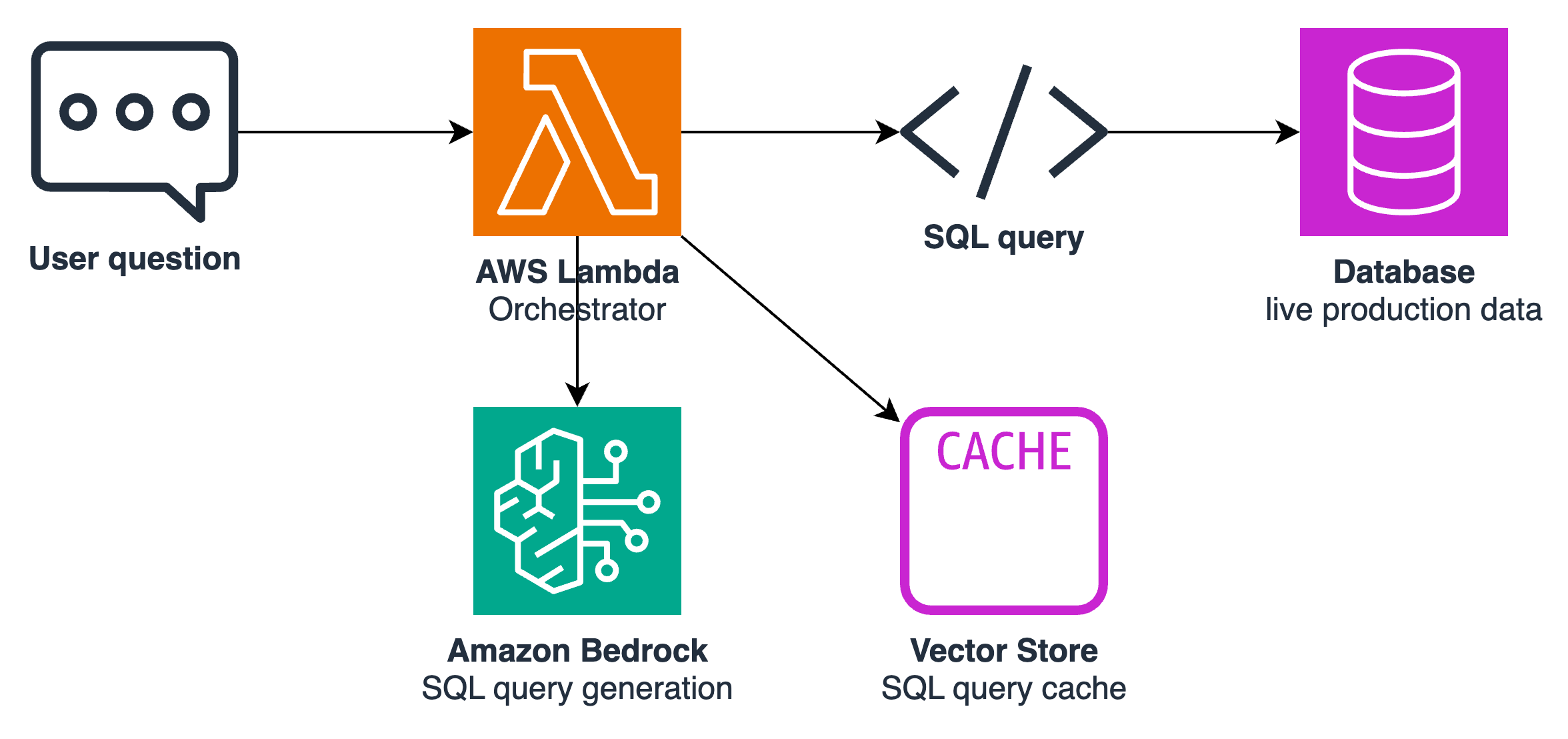
Figure 1 — Solution overview architecture
During the initial implementation phase, the approach with generating and executing SQL queries for user questions on the fly worked well. Response quality was high, and users found the interface intuitive. After these positive results, we started looking into scaling the solution for production traffic. Preserving accuracy was the main priority. Experiments with smaller, faster models didn’t provide a good trade-off between query quality and latency reduction. The accuracy degradation wasn’t acceptable for our system.
This led us to explore alternative approaches, and caching naturally came to mind. Caching user question and answer pairs is the most straightforward option, but it has a fundamental limitation: underlying data changes constantly. An answer about Q3 sales cached today becomes incorrect as soon as new transactions are recorded. The cache would need constant invalidation, undermining its purpose.
Caching the SQL query instead solves this problem. A query like:
SELECT SUM(revenue) FROM sales WHERE quarter = 'Q3'
always fetches fresh data when executed, regardless of when it was cached. Structured Query Language (SQL) captures the user’s intent in a structured, deterministic form that remains valid even as data evolves. It also happens to target the most time and token consuming step in the pipeline, since generating SQL queries requires sending full schema context and examples to a frontier model.
Analyzing the generated queries revealed an opportunity to go further. Many queries follow the same structure, different only in their filter values. A question about Q3 sales produces:
SELECT SUM(revenue) FROM sales WHERE quarter = 'Q3'
while Q2 sales produce:
SELECT SUM(revenue) FROM sales WHERE quarter = 'Q2'
The same pattern appeared across product lookups, date ranges, and category filters. This led to the templating approach: instead of caching complete queries, we generalize them into templates with placeholders. A single template now covers an entire family of questions:
SELECT SUM(revenue) FROM sales WHERE quarter='{quarter}'

Figure 2 — Templated SQL query cache hit
Templating solves the limited reusability of plain user question, but still leaves a challenge: how do you match an incoming question to the right template when users phrase things differently? “Show me Q3 sales” and “What were sales in Q3?” ask for the same data but share few words. Traditional string matching or keyword lookup would miss these connections. We address this by storing each template alongside a vector embedding of its original question. When a new question arrives, we compute its embedding and perform semantic similarity search against the cache. Because embeddings capture meaning rather than surface wording, both phrasings map to the same template with high confidence. If a match is found above a confidence threshold, we extract entities from the question using lightweight named entity recognition, fill the template placeholders, and execute the query directly, bypassing the LLM entirely. In Diagram 2, you can see the flow of a cache hit.
For questions without matching templates, the system falls back to full LLM generation. It then generalizes the newly generated query into a template, pairs it with the question’s embedding, and adds it to the cache. This creates a self-improving system where cache coverage grows organically as more query patterns are encountered.
Walkthrough – Text2SQL pipeline
The following sections describe each step of the template caching pipeline. Each user’s question flows through entity extraction, template retrieval, and SQL query execution. Cache misses trigger full LLM generation, with new queries feeding back into the cache. The following diagram shows the complete flow of a user question through the newly introduced caching layer.
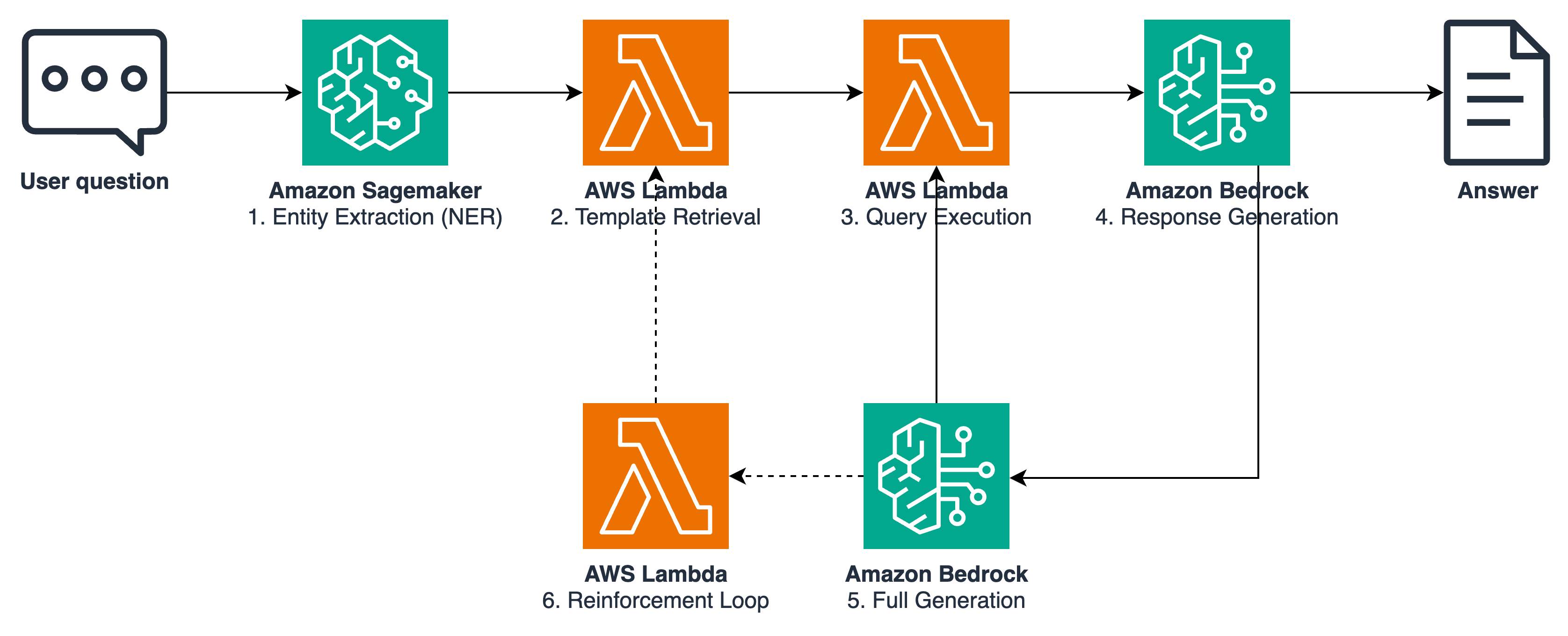
Figure 3 — Text2SQL pipeline with template caching layer
1. Entity extraction
After a user submits a question, the system performs entity recognition to extract named entities and values. This step considers not only the current question but also conversation history, current date, and user preferences. This context helps resolve ambiguous references like “last month” or “my region”. Using a lightweight model like Amazon Nova 2 Lite or a custom-trained named entity recognition (NER) model, we identify entities such as dates (“Q3 2024”), names (“Product X”), categories (“electronics”), and numeric values (“top 10”). The system stores these extracted entities separately and uses them later to fill out template placeholders.
2. Template retrieval through semantic search
The system converts the user’s question into an embedding vector using the same embedding model used during cache population. This vector queries the template cache through semantic similarity search, returning the closest matching templates above a confidence threshold. The search matches based on the question’s intent and structure rather than exact wording, so “What were Q3 sales?” and “Show me revenue for third quarter” both match the same template despite different phrasing.
It’s important to note that the confidence threshold governs the cache retrieval layer’s precision-recall trade-off. Set it too high and the system rejects valid, differently worded questions, forcing it to build SQL from scratch. Set it too low and loosely related templates slip through, risking confident answers built on the wrong query. The right value is domain-dependent: narrow, well-templated domains tolerate stricter thresholds, while broad or sparsely covered ones need looser ones.
Rather than relying on a single threshold, we suggest monitoring retrievals in production, logging matched templates and their similarity scores, so we can see when valid questions are being rejected or unrelated templates are slipping through. When embedding similarity alone doesn’t give enough precision, we added a lightweight reranking step: first we retrieve a broader set of candidate templates with a looser threshold, then re-score them with a small LLM or a specialized reranker model to select the best match. This improves precision without sacrificing recall and still costs far less than generating SQL from scratch.
3. Template filling and query execution
When a matching template is found, the system maps extracted entities to template placeholders. If the template contains `{quarter}` and entity recognition extracted “Q3”, the system replaces the placeholder with the actual value. The system validates the filled SQL query for syntax correctness, then executes it directly against the database. This path bypasses the time and token intensive LLM call that generates the SQL query.
This design helps the system to protect against SQL injection on two levels. First, it validates each extracted entity against the expected format for its placeholder: a `{quarter}` must match a known set of values, a `{date}` must parse as a valid date, a numeric threshold must be a number. The system rejects values that do not pass validation before they ever reach the query. Second, the system fills the placeholders using parameterized database queries (prepared statements) rather than string interpolation, so the parameterized query mechanism treats entity values as data rather than executable SQL. This approach also catches entity-extraction errors, improving answer reliability beyond the security benefit.
For richer responses, the system can retrieve multiple top-K similar templates and execute them in parallel. This provides additional context and related information beyond the primary query, for example returning both: quarterly sales totals and a breakdown by product category. The parallel execution adds minimal latency while delivering more comprehensive answers.
4. Response generation and validation
After executing the query, the system sends results to a response generation model. This model has two jobs, both handled in a single call: judge whether the results answer the question, and, if they do, summarize them into a conversational response.
The sufficiency check is driven by instructions in the prompt. The system instructs the model to confirm that the results are non-empty, that they contain the fields the question asked about, and that they cover every part of the question rather than only some of it. For example, if a user asks for “Q3 sales by region” but the matched template returns only a Q3 total, the results are incomplete, and the model is instructed to flag them as insufficient instead of answering with partial data. The model returns this judgment as a structured signal alongside its response, so the pipeline can branch on it deterministically. This step helps verify that users receive accurate answers rather than partial or misleading information from imperfect template matches.
This task is fundamentally simpler than SQL generation: instead of writing structured code from natural language, the model only needs to read tabular data and either summarize it or declare it insufficient. Because the task is simple, a smaller, faster model like Claude Haiku 4.5 can handle it effectively.
On a cache hit, there is only a single lightweight LLM call, which improves both latency and cost thanks to the smaller model. On a cache miss, the model flags the template results as insufficient and the system falls back to full SQL generation before producing the answer, for three calls in total: the sufficiency check, the SQL generation, and the response. That is one call more than the uncached pipeline, so misses carry extra latency. The trade-off is favorable because the added call is the cheap sufficiency check rather than another expensive generation, and because at a healthy hit rate the savings on hits outweigh the penalty on misses.
5. Fallback to full generation
If no template matches the confidence threshold, or if the validation step determines that cached results are insufficient, the system falls back to the standard Text2SQL pipeline. The question, along with the full context, goes to the foundation model for SQL generation. The generated query executes against the database, and results return to the user. Importantly, this newly generated query doesn’t disappear. It enters the reinforcement loop.
6. Reinforcement loop for cache growth
After a successful fallback generation, the system evaluates whether the new query should join the template cache. If the query executed successfully and returned valid results, it becomes a candidate for templating. The system generalizes the query by replacing specific values with placeholders and computes the original question’s embedding. It then adds this new template-question pair to the vector store, expanding cache coverage. Over time, the cache grows organically to cover query patterns specific to your users’ actual needs.
Results and performance gains
The figures in this section come from our production deployment but treat them as an illustrative model rather than a fixed benchmark. Exact token counts and latencies depend on your schema size, prompt design, model choice, and query mix. What generalizes is the direction of the improvement, not the specific numbers.
The dominant cost and latency in a Text2SQL request come from a single step: generating the SQL query. That call sends the user question, conversation history, the database schema, few-shot examples, and domain guidance to a powerful LLM such as Anthropic Claude Sonnet, which is needed to produce reliable queries. In our deployment this prompt runs on the order of 60K input tokens for a few hundred output tokens, and takes roughly 15-20 seconds. Every other step: embedding, vector search, template filling, and query execution, is minor by comparison. Entity recognition, runs on a dedicated NER model hosted on Amazon SageMaker AI rather than an LLM, adding negligible cost and latency next to SQL generation. Optimizing the pipeline is therefore mostly about avoiding that one expensive call.
On a cache hit, the system skips SQL generation entirely. What remains is response summarization, turning the query results into a conversational answer, which runs on a small model with a small prompt (on the order of a couple thousand input tokens). Because summarization is needed on both, the cached and uncached paths, a cache hit does not remove tokens completely, but it eliminates the 60K-token generation call, cutting token consumption by roughly 90% on that request.
This 90% is the saving on a single cache hit. Overall cost depends on the average across all requests, since cache misses still incur the full generation cost. At the roughly 60% hit rate we observed in production, the blended reduction across all traffic comes out above 50%. Latency follows the same pattern. An uncached request spends 15-20 seconds on the SQL call, retries and error handling included, then a few more seconds on summarization, putting a typical request in the 25-30 second range. On a cache hit, retrieval, template filling, and execution finish well under a second, and the remaining time is almost entirely the summarization call. That brings the end-to-end cache-hit path under 5 seconds, roughly an 80% reduction, or about 6x faster. It also pinpoints where the residual latency comes from: not the cache lookup, but the one LLM call that still has to run.
These per-request gains only matter if cache hits are common. In our production system the hit rate reached about 60% after roughly two weeks of active use, though the achievable rate depends heavily on the domain and how repetitive the queries are. Cache misses run the full pipeline plus the small sufficiency check, so they cost marginally more than a purely uncached request, which means the net gain comes entirely from hits. As the reinforcement loop keeps adding templates, the hit rate climbs and both the cost and latency benefits continue to compound.
Conclusion
Scaling AI applications to production often requires rethinking traditional optimization strategies. In this post, we demonstrated how template-based caching addresses the latency and cost challenges of Text2SQL systems without sacrificing accuracy. By caching SQL query structures rather than complete responses and using semantic similarity to match user questions to templates, the system can bypass expensive LLM inference calls. The reinforcement loop ensures cache coverage grows organically based on actual usage patterns.
In practice, this means: 6x faster response times on cache hits, inference costs decrease proportionally to your cache hit rate, and accuracy remains high because templates are generated by the most capable models. The patterns we covered, such as semantic matching, output generalization, entity extraction, and continuous improvement loops, extend beyond Text2SQL to any AI system where similar requests should produce structurally similar outputs.
Further reading
Generating value from enterprise data: Best practices for Text2SQL and generative AI
Text-to-SQL solution powered by Amazon Bedrock
Amazon S3 Vectors: First cloud storage with native vector support at scale