Introducing the 2023 Intern-ets!

Post Syndicated from Emilie Ma original http://blog.cloudflare.com/introducing-the-2023-intern-ets/
Introducing the 2023 Intern-ets!

Introducing the 2023 Intern-ets!

This year, Cloudflare welcomed a class of approximately 40 interns, hailing from five different countries for an unforgettable summer. As we joined both remotely and in-person across Cloudflare’s global offices, our experiences spanned a variety of roles from engineering, product management to internal auditing and marketing. Through invaluable mentorship, continuous learning, and the chance to make a real-world impact, our summer was truly enriched at every step. Join us, Anni and Emilie, as we provide an insider's perspective on a summer at Cloudflare, sharing snippets and quotes from our intern cohort.

printf(“Hello Intern-ets!”)

You might have noticed that we have a new name for the interns: the Intern-ets! Our fresh intern nickname was born from a brainstorm between us and our recruiter, Judy. While “Cloudies”, “Cloudterns”, and “Flaries” made the shortlist, a company-wide vote crowned "Intern-ets" as the favorite. And just like that, we've made Cloudflare history!

git commit -m “Innovation!”

We're all incredibly proud to have gotten the opportunity to tackle interesting and highly impactful projects throughout the duration of our internships. To give you a glimpse of our summer, here are a few that showcase the breadth and depth of our experiences.

Mia M., Product Manager intern, worked on the Cloudflare Secrets Store, which is a new product that will allow Cloudflare customers to store, encrypt, and deploy sensitive data across the product suite. She focused on creating requirements for the core platform and tackling the first milestone, bringing secrets and environment variables from the per-Worker level to the account level in the Workers platform.

Pierre, Research intern, focused on integrating differential privacy—a layer of protection with formal privacy guarantees—into distributed aggregation protocols. This privacy layer is imperative for user trust and data security as these protocols are commonly used for collecting sensitive information, such as browser telemetry or health data.

Johnny, Software Engineer intern, worked on a new feature for API Shield called Object-Level Access Policies as a first step in a solution to combat Broken Object-Level Authorization, which has been ranked as the #1 API Security flaw by OWASP. This feature will enable customers to specify explicit allowlists and blocklists for API traffic per object.

Olivia, Project Manager intern, led the Dissatisfied (DSAT) Customer Outreach Project and JIRA Automations for the Customer Support team. The DSAT project involves reaching out to Premium customers who express dissatisfaction with the goal of providing personalized contact to ensure they feel valued. The JIRA Automation project aims to create zero-touch tickets, removing Customer Support as the middle man.

Also don’t forget to check out the amazing intern projects that got featured in a blog post!

Emilie, Software Engineering intern introduced a debugging feature for Cloudflare Queues.

Joaquin, Software Engineer intern added a new Workers Database integration.

Austin, Software Engineer intern created scheduled deletion for Cloudflare Stream.

Introducing the 2023 Intern-ets!

No null days here!

Beyond our projects, we had tons of fun getting to meet other Cloudflarians and experience the vibrant Cloudflare culture. Let's dive into some of the standout moments that made our internships truly special!

Remote, office, hybrid

This summer, the interns dotted the globe, working from cozy home setups to bustling offices in cities. Regardless of where we worked, we had a blast. Here's what some fellow interns have to say about their work experiences:

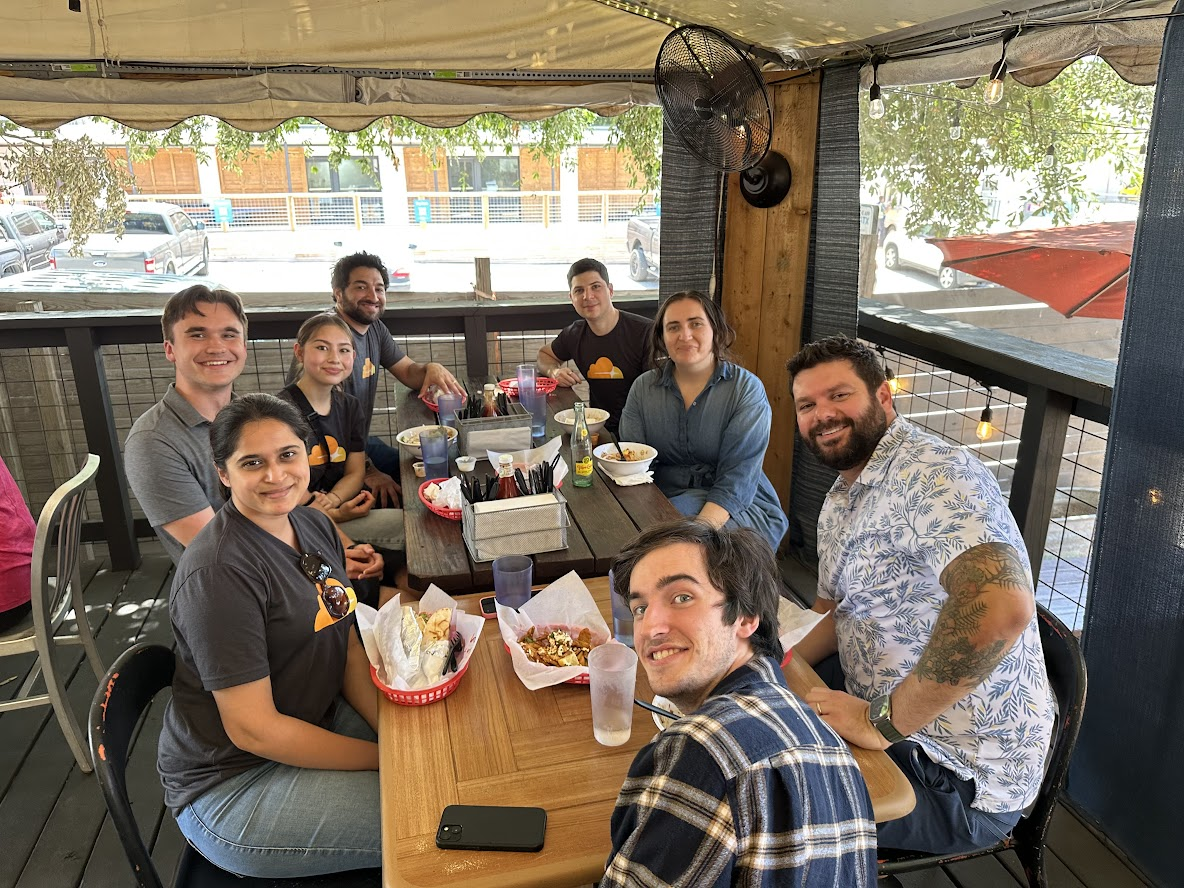
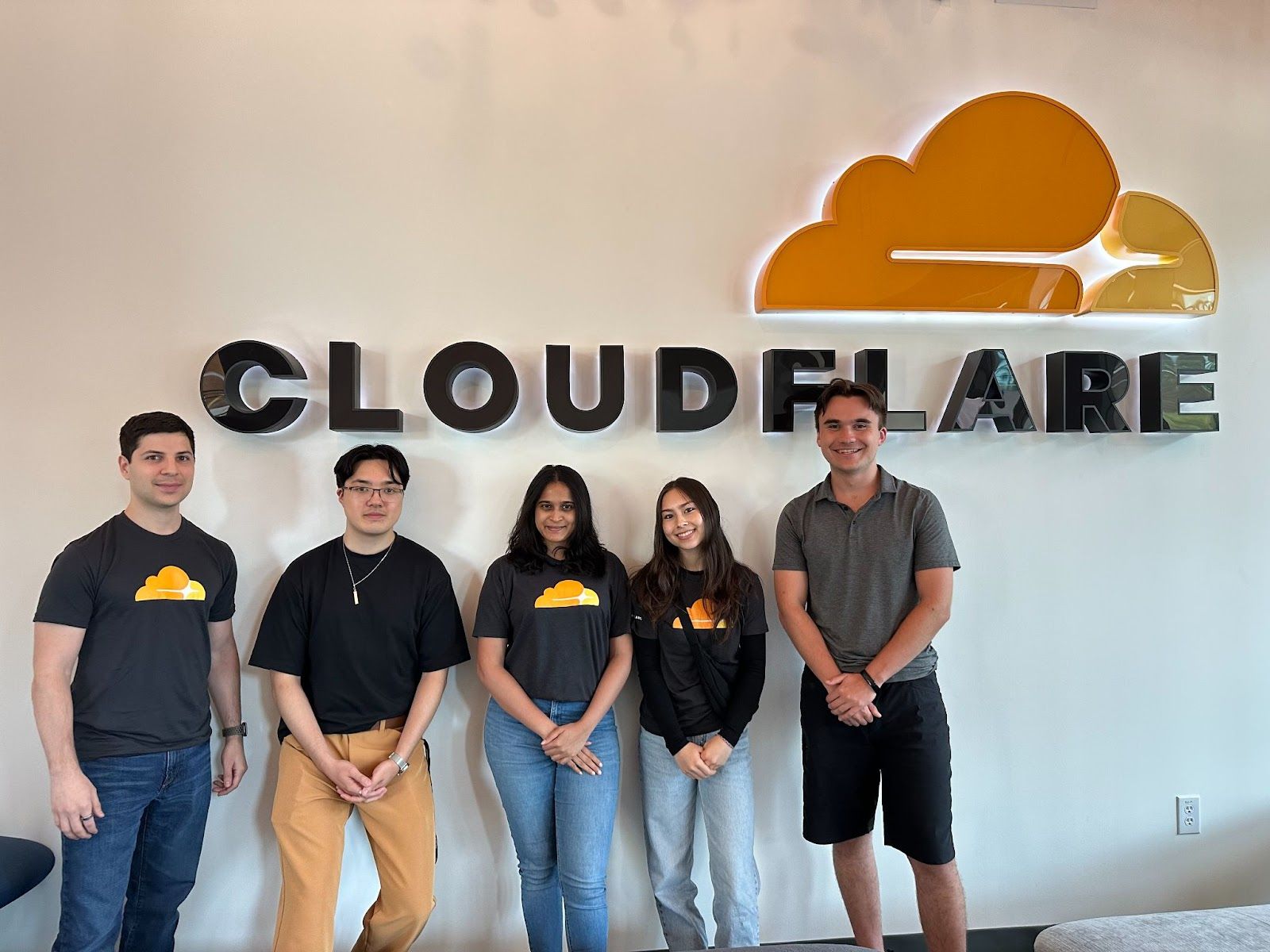
Austin office: Jada loved her colleagues at the Austin office as they were “warm and open to exploring the city, […], and hanging out outside of work”. Anni and Maximo loved attending the Austin-based team summit where they attended strategy sessions and met the team in-person.

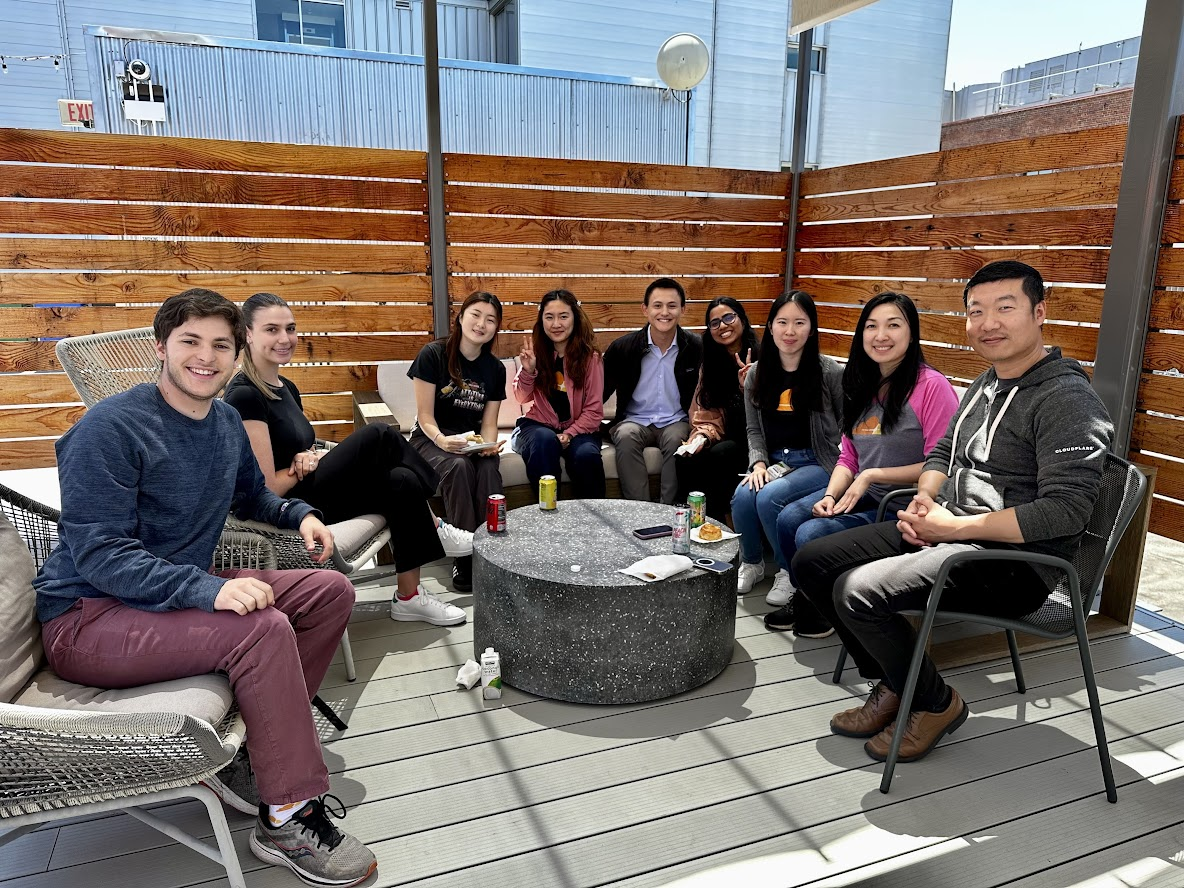
San Francisco office: Emmanuel F. enjoyed getting to interact with other engineers during SF Team Lunches. Matthew enjoyed working on the rooftop to a view of the city skyline. Jonathan appreciated the hybrid work model enjoyed by SF employees.

Remote work: Johnny liked the distributed and flexible work style that the company embraces. Daniël, also working remotely and found it amusing how “[s]everal people have noticed the Feynman Lectures on Physics on the shelf behind me in my home and have asked about it.”

Remote intern events: Emmanuel G., Aaron, and Feiyu enjoyed the intern calls that were held on GatherRound as “it was a fun, quick way to get to meet everyone.” Pradyumna particularly liked it when we played skribbl.io.

Introducing the 2023 Intern-ets! Introducing the 2023 Intern-ets!

Mentorship

With so many exceptional minds at Cloudflare, every interaction became a chance for us to learn and grow. Here are some awe-inspiring individuals who have made our internships unforgettable:

Harshal, Systems Engineer: Aaron is grateful for his mentor Harshall. “I always left our conversations knowing more than I did coming into them”.

Revathy, Systems Engineer: Harshini is thankful to her mentor Revathy for “how she helps me to learn […] the best way possible to do something and ultimately achieve my goals”.

Nevi, Product Manager: Anni admires her manager Nevi who is always thinking about the team and our customers and has invested in the personal growth and mentorship of interns.

Conner, Systems Engineer: Jonathan is grateful that he was always able to count on Conner for great engineering tips, guidance, and NeoVim wizardry.

Malgorzata, Data Scientist: Jada looks up to Malgorzata for being so welcoming, kind, and funny. She has a great attitude and besides being super knowledgeable, she is also willing to share her expertise and support others!

Introducing the 2023 Intern-ets!

Executive chats

During our internships, we engaged in Executive fireside chats, diving deep with Cloudflare's top leaders. Each chat was insightful and surprising in a different way, and some of our favorite takeaways were…

John, CTO: Shaheen valued John’s humility in emphasizing daily learning from others at work, stating, “As I grow in my career, I intend to keep a similar attitude and try to learn from those around me by keeping myself grounded.”

Doug Kramer, General Counsel: Emilie valued Doug Kramer's advice on identifying a career "north star" to guide intentions while also recognizing "exit-ramps" or alternative paths that may offer unexpected fulfillment.

Matthew Prince, Co-founder and CEO: Yunfan loved hearing “the story about how Cloudflare developed from a start-up till today”.

Michelle Zatlyn, Co-founder and COO: Harsh learned from Michelle about “how they moved across the country, against everyone's advice, to start Cloudflare”, and Mia C. enjoyed learning that “Cloudflare started as a business school project”.

Snack bytes

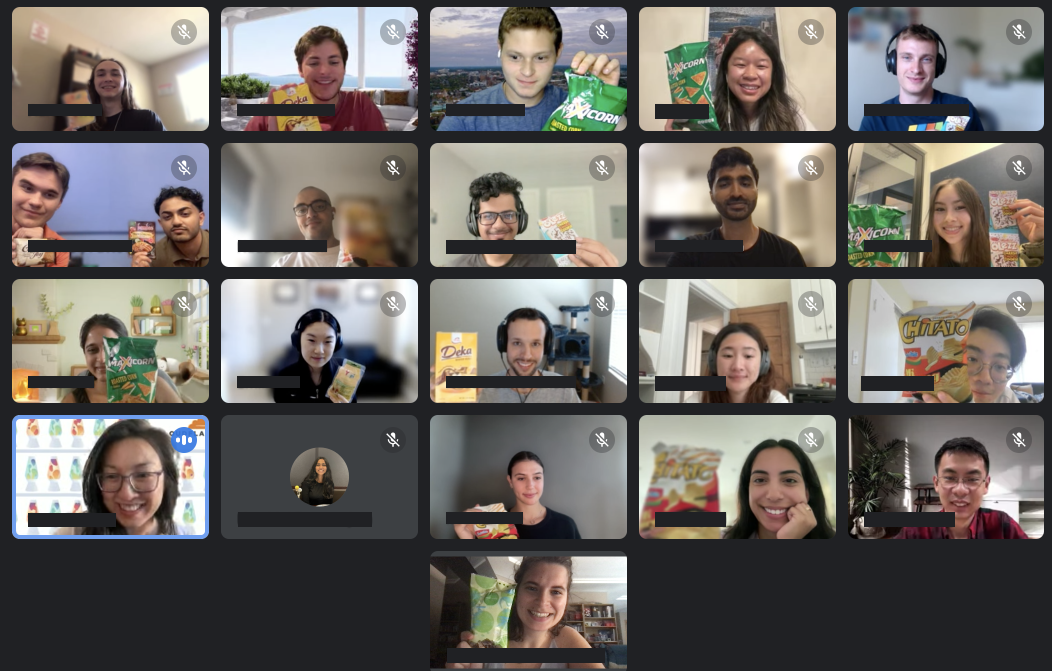
A bonding point for the Intern-ets was our love for snacks! In July, we gathered the Intern-ets together for a virtual snack break. The University team sent out a box featuring snacks from Indonesia, a country none of us had visited (or tried goodies from… yet!). Below you can see us holding up our favorite snacks from the box!
Introducing the 2023 Intern-ets!

Meanwhile, the on-site interns couldn't get enough of the office snacks. Favorites? Pita chips, Lucky Charms, chocolate almonds, coconut chocolate bars and coconut water. Plus, the Austin and San Francisco offices even have a Sour Patch Kids dispenser! Snack on!

Surprises

Every day at Cloudflare presented unexpected joys and challenges. Here's what the interns found most surprising:

High Impact: Simon, Emmanuel F. and Maximo were surprised to “[do] such visible and important work as an intern”. Austin agreed, noting “I was treated like any other member of the team […] It felt like I was working on something important and not just a typical intern project!” Harshini added, “when [colleagues] hear what I am working on they go – ‘that is really cool, I can't wait to see that happen – we need it.’”

Support: Eames “was worried that it would feel like my achievements were the only thing that mattered. But my colleagues always showed concern for how I was feeling and how things were going, and I couldn't be more grateful for that.”

Industry vs Academia: Johnny mentioned “coming from academia, I was amazed by the amount of effort that has been, and is continuing to be, put into the products to really productionize what I have only before seen in research. It is another reminder of the scale in which we work!”

By the numbers

Here are some fun stats from our internship…

  • Johnny drove 30 hours from New York to Colorado
  • Maximo missed 0 days of going to the Austin office
  • Anni drank 86 matcha lattes this summer
  • Emilie participated in 38 Cloudfriends calls and coffee chats
  • Simon has waited around one week cumulatively for builds to finish

exit(0)

At Cloudflare, our internships aren’t just about work—they're about growth, mentorship, and real impact. We've built more than projects; we've forged lasting relationships. It’s been an unforgettable summer of challenges, bonding, and authentic experiences. For more about our journey this summer, check out our Cloudflare TV segment with Michelle Zatlyn, Co-founder and COO.

Finally, we would love to give a huge thanks to our university recruiters Judy, Trang, and Dani for creating such an amazing internship experience for us this summer!

Want to become an Intern-et or Cloudflarian?

Sign up here to be notified of new grad and internship opportunities for 2024. Cloudflare is also hiring for full-time opportunities: check out open positions and apply today!

Introducing the 2023 Intern-ets!

Marvell COLORZ 800G Silicon Photonics Module and Orion DSP for Next-Gen Networks

Post Syndicated from Rohit Kumar original https://www.servethehome.com/marvell-colorz-800g-silicon-photonics-module-and-orion-dsp-for-next-gen-networks/

Marvell has a new 800G Orion DSP and a COLORZ 800 module line using Orion and silicon photonics for 800Gbps networking

The post Marvell COLORZ 800G Silicon Photonics Module and Orion DSP for Next-Gen Networks appeared first on ServeTheHome.

AWS Digital Sovereignty Pledge: Announcing new dedicated infrastructure options

Post Syndicated from Matt Garman original https://aws.amazon.com/blogs/security/aws-digital-sovereignty-pledge-announcing-new-dedicated-infrastructure-options/

At AWS, we’re committed to helping our customers meet digital sovereignty requirements. Last year, I announced the AWS Digital Sovereignty Pledge, our commitment to offering all AWS customers the most advanced set of sovereignty controls and features available in the cloud. Our approach is to continue to make AWS sovereign-by-design—as it has been from day one.

I promised that our pledge was just the start, and that we would continue to innovate to meet the needs of our customers. As part of our promise, we pledged to invest in an ambitious roadmap of capabilities on data residency, granular access restriction, encryption, and resilience. Today, I’d like to update you on another milestone on our journey to continue to help our customers address their sovereignty needs.

Further control over the location of your data

Customers have always controlled the location of their data with AWS. For example, in Europe, customers have the choice to deploy their data into any of eight existing AWS Regions. These AWS Regions provide the broadest set of cloud services and features, enabling our customers to run the majority of their workloads. Customers can also use AWS Local Zones, a type of infrastructure deployment that makes AWS services available in more places, to help meet latency and data residency requirements, without having to deploy self-managed infrastructure. Customers who must comply with data residency regulations can choose to run their workloads in specific geographic locations where AWS Regions and Local Zones are available.

Announcing AWS Dedicated Local Zones

Our public sector and regulated industry customers have told us they want dedicated infrastructure for their most critical workloads to help meet regulatory or other compliance requirements. Many of these customers manage their own infrastructure on premises for workloads that require isolation. This forgoes the performance, innovation, elasticity, scalability, and resiliency benefits of the cloud.

To help our customers address these needs, I’m excited to announce AWS Dedicated Local Zones. Dedicated Local Zones are a type of AWS infrastructure that is fully managed by AWS, built for exclusive use by a customer or community, and placed in a customer-specified location or data center to help comply with regulatory requirements. Dedicated Local Zones can be operated by local AWS personnel and offer the same benefits of Local Zones, such as elasticity, scalability, and pay-as-you-go pricing, with added security and governance features. These features include data access monitoring and audit programs, controls to limit infrastructure access to customer-selected AWS accounts, and options to enforce security clearance or other criteria on local AWS operating personnel. With Dedicated Local Zones, we work with customers to configure their own Local Zones with the services and capabilities they need to meet their regulatory requirements.

AWS Dedicated Local Zones meet the same high AWS security standards that apply to AWS Regions and Local Zones. They also come with the same AWS Nitro System that powers all modern Amazon Elastic Compute Cloud (Amazon EC2) instances to help ensure confidentiality and integrity of customer data. With Dedicated Local Zones, customers can use the multitenancy features of the cloud to efficiently enable adoption across multiple AWS accounts created by a customer’s community of agencies and business units, and reduce the operational overhead of managing on-premises infrastructure. Customers can deploy multiple Dedicated Local Zones for resiliency and simplify their applications’ architecture by using consistent AWS infrastructure, APIs, and tools across different classifications of applications running in AWS Regions and Dedicated Local Zones. AWS services, such as Amazon EC2, Amazon Virtual Private Cloud (Amazon VPC), Amazon Elastic Block Store (Amazon EBS), Elastic Load Balancing (ELB), Amazon Elastic Container Service (Amazon ECS), Amazon Elastic Kubernetes Service (Amazon EKS), and AWS Direct Connect, will be available in Dedicated Local Zones.

Innovating with the Singapore Government’s Smart Nation and Digital Government Group

At AWS, we work closely with customers to understand their requirements for their most critical workloads. Our work with the Singapore Government’s Smart Nation and Digital Government Group (SNDGG) to build a Smart Nation for their citizens and businesses illustrates this approach. This group spearheads Singapore’s digital government transformation and development of the public sector’s engineering capabilities. SNDGG is the first customer to deploy Dedicated Local Zones.

“AWS is a strategic partner and has been since the beginning of our cloud journey. SNDGG collaborated with AWS to define and build Dedicated Local Zones to help us meet our stringent data isolation and security requirements, enabling Singapore to run more sensitive workloads in the cloud securely,” said Chan Cheow Hoe, Government Chief Digital Technology Officer of Singapore. “In addition to helping the Singapore government meet its cybersecurity requirements, the Dedicated Local Zones enable us to offer its agencies a seamless and consistent cloud experience.”

Our commitments to our customers

We remain committed to helping our customers meet evolving sovereignty requirements. We continue to innovate sovereignty features, controls, and assurances globally with AWS, without compromising on the full power of AWS.

To get started, you can visit the Dedicated Local Zones website, where you can contact AWS specialists to learn more about how Dedicated Local Zones can be configured to meet your regulatory needs.

 
If you have feedback about this post, submit comments in the Comments section below. If you have questions about this post, contact AWS Support.

Want more AWS Security news? Follow us on Twitter.

Matt Garman

Matt Garman

Matt is currently the Senior Vice President of AWS Sales, Marketing and Global Services at AWS, and also sits on Amazon’s executive leadership S-Team. Matt joined Amazon in 2006, and has held several leadership positions in AWS over that time. Matt previously served as Vice President of the Amazon EC2 and Compute Services businesses for AWS for over 10 years. Matt was responsible for P&L, product management, and engineering and operations for all compute and storage services in AWS. He started at Amazon when AWS first launched in 2006 and served as one of the first product managers, helping to launch the initial set of AWS services. Prior to Amazon, he spent time in product management roles at early stage Internet startups. Matt earned a BS and MS in Industrial Engineering from Stanford University, and an MBA from the Kellogg School of Management at Northwestern University.

[$] HashiCorp, Terraform, and OpenTF

Post Syndicated from jake original https://lwn.net/Articles/942346/

Over the years, there have been multiple examples of open-source software
that, suddenly, was no longer open source; on August 10, some further
examples were added to the pile. That happened when HashiCorp announced
that it would be switching the license on its products from the Mozilla Public
License 2.0
(MPL) to the Business Source License 1.1
(BSL or BUSL). At least one of the products affected by the change, the Terraform infrastructure-automation
tool, has attracted an effort to continue it as an open-source tool in the
form of a fork that would be maintained by the nascent OpenTF Foundation. That seems like a
sensible reaction to the move, but it also helps serve up yet another
reminder that code which is controlled by a single entity is normally
always at risk of such
adverse changes.

Security updates for Wednesday

Post Syndicated from jake original https://lwn.net/Articles/942514/

Security updates have been issued by Debian (mediawiki and qt4-x11), Fedora (java-17-openjdk, linux-firmware, and python-yfinance), Red Hat (kernel, kpatch-patch, and subscription-manager), SUSE (evolution, janino, kernel, nodejs16, nodejs18, postgresql15, qt6-base, and ucode-intel), and Ubuntu (inetutils).

Protecting an AWS Lambda function URL with Amazon CloudFront and Lambda@Edge

Post Syndicated from James Beswick original https://aws.amazon.com/blogs/compute/protecting-an-aws-lambda-function-url-with-amazon-cloudfront-and-lambdaedge/

This post is written by Jerome Van Der Linden, Senior Solutions Architect Builder.

A Lambda function URL is a dedicated HTTPs endpoint for an AWS Lambda function. When configured, you can invoke the function directly with an HTTP request. You can choose to make it public by setting the authentication type to NONE for an open API. Or you can protect it with AWS IAM, setting the authentication type to AWS_IAM. In that case, only authenticated users and roles are able to invoke the function via the function URL.

Lambda@Edge is a feature of Amazon CloudFront that can run code closer to the end user of an application. It is generally used to manipulate incoming HTTP requests or outgoing HTTP responses between the user client and the application’s origin. In particular, it can add extra headers to the request (‘Authorization’, for example).

This blog post shows how to use CloudFront and Lambda@Edge to protect a Lambda function URL configured with the AWS_IAM authentication type by adding the appropriate headers to the request before it reaches the origin.

Overview

There are four main components in this example:

  • Lambda functions with function URLs enabled: This is the heart of the ‘application’, the functions that contain the business code exposed to the frontend. The function URL is configured with AWS_IAM authentication type, so that only authenticated users/roles can invoke it.
  • A CloudFront distribution: CloudFront is a content delivery network (CDN) service used to deliver content to users with low latency. It also improves the security with traffic encryption and built-in DDoS protection. In this example, using CloudFront in front of the Lambda URL can add this layer of security and potentially cache content closer to the users.
  • A Lambda function at the edge: CloudFront also provides the ability to run Lambda functions close to the users: Lambda@Edge. This example does this to sign the request made to the Lambda function URL and adds the appropriate headers to the request so that invocation of the URL is authenticated with IAM.
  • A web application that invokes the Lambda function URLs: The example also contains a single page application built with React, from which the users make requests to one or more Lambda function URLs. The static assets (for example, HTML and JavaScript files) are stored in Amazon S3 and also exposed and cached by CloudFront.

This is the example architecture:

Architecture

The request flow is:

  1. The user performs requests via the client to reach static assets from the React application or Lambda function URLs.
  2. For a static asset, CloudFront retrieves it from S3 or its cache and returns it to the client.
  3. If the request is for a Lambda function URL, it first goes to a Lambda@Edge. The Lambda@Edge function has the lambda:InvokeFunctionUrl permission on the target Lambda function URL and uses this to sign the request with the signature V4. It adds the Authorization, X-Amz-Security-Token, and X-Amz-Date headers to the request.
  4. After the request is properly signed, CloudFront forwards it to the Lambda function URL.
  5. Lambda triggers the execution of the function that performs any kind of business logic. The current solution is handling books (create, get, update, delete).
  6. Lambda returns the response of the function to CloudFront.
  7. Finally, CloudFront returns the response to the client.

There are several types of events where a Lambda@Edge function can be triggered:

Lambda@Edge events

  • Viewer request: After CloudFront receives a request from the client.
  • Origin request: Before the request is forwarded to the origin.
  • Origin response: After CloudFront receives the response from the origin.
  • Viewer response: Before the response is sent back to the client.

The current example, to update the request before it is sent to the origin (the Lambda function URL), uses the “Origin Request” type.

You can find the complete example, based on the AWS Cloud Development Kit (CDK), on GitHub.

Backend stack

The backend contains the different Lambda functions and Lambda function URLs. It uses the AWS_IAM auth type and the CORS (Cross Origin Resource Sharing) definition when adding the function URL to the Lambda function. Use a more restrictive allowedOrigins for a real application.

const getBookFunction = new NodejsFunction(this, 'GetBookFunction', {
    runtime: Runtime.NODEJS_18_X,  
    memorySize: 256,
    timeout: Duration.seconds(30),
    entry: path.join(__dirname, '../functions/books/books.ts'),
    environment: {
      TABLE_NAME: bookTable.tableName
    },
    handler: 'getBookHandler',
    description: 'Retrieve one book by id',
});
bookTable.grantReadData(getBookFunction);
const getBookUrl = getBookFunction.addFunctionUrl({
    authType: FunctionUrlAuthType.AWS_IAM,
    cors: {
        allowedOrigins: ['*'],
        allowedMethods: [HttpMethod.GET],
        allowedHeaders: ['*'],
        allowCredentials: true,
    }
});

Frontend stack

The Frontend stack contains the CloudFront distribution and the Lambda@Edge function. This is the Lambda@Edge definition:

const authFunction = new cloudfront.experimental.EdgeFunction(this, 'AuthFunctionAtEdge', {
    handler: 'auth.handler',
    runtime: Runtime.NODEJS_16_X,  
    code: Code.fromAsset(path.join(__dirname, '../functions/auth')),
 });

The following policy allows the Lambda@Edge function to sign the request with the appropriate permission and to invoke the function URLs:

authFunction.addToRolePolicy(new PolicyStatement({
    sid: 'AllowInvokeFunctionUrl',
    effect: Effect.ALLOW,
    actions: ['lambda:InvokeFunctionUrl'],
    resources: [getBookArn, getBooksArn, createBookArn, updateBookArn, deleteBookArn],
    conditions: {
        "StringEquals": {"lambda:FunctionUrlAuthType": "AWS_IAM"}
    }
}));

The function code uses the AWS JavaScript SDK and more precisely the V4 Signature part of it. There are two important things here:

  • The service for which we want to sign the request: Lambda
  • The credentials of the function (with the InvokeFunctionUrl permission)
const request = new AWS.HttpRequest(new AWS.Endpoint(`https://${host}${path}`), region);
// ... set the headers, body and method ...
const signer = new AWS.Signers.V4(request, 'lambda', true);
signer.addAuthorization(AWS.config.credentials, AWS.util.date.getDate());

You can get the full code of the function here.

CloudFront distribution and behaviors definition

The CloudFront distribution has a default behavior with an S3 origin for the static assets of the React application.

It also has one behavior per function URL, as defined in the following code. You can notice the configuration of the Lambda@Edge function with the type ORIGIN_REQUEST and the behavior referencing the function URL:

const getBehaviorOptions: AddBehaviorOptions  = {
    viewerProtocolPolicy: ViewerProtocolPolicy.HTTPS_ONLY,
    cachePolicy: CachePolicy.CACHING_DISABLED,
    originRequestPolicy: OriginRequestPolicy.CORS_CUSTOM_ORIGIN,
    responseHeadersPolicy: ResponseHeadersPolicy.CORS_ALLOW_ALL_ORIGINS_WITH_PREFLIGHT,
    edgeLambdas: [{
        functionVersion: authFunction.currentVersion,
        eventType: LambdaEdgeEventType.ORIGIN_REQUEST,
        includeBody: false, // GET, no body
    }],
    allowedMethods: AllowedMethods.ALLOW_GET_HEAD_OPTIONS,
}
this.distribution.addBehavior('/getBook/*', new HttpOrigin(Fn.select(2, Fn.split('/', getBookUrl)),), getBehaviorOptions);

Regional consideration

The Lambda@Edge function must be in the us-east-1 Region (N. Virginia), as does the frontend stack. If you deploy the backend stack in another Region, you’ll must pass the Lambda function URLs (and ARNs) to the frontend. Using a custom resource in CDK, it’s possible to create parameters in AWS Systems Manager Parameter Store in the us-east-1 Region containing this information. For more details, review the code in the GitHub repo.

Walkthrough

Before deploying the solution, follow the README in the GitHub repo and make sure to meet the prerequisites.

Deploying the solution

  1. From the solution directory, install the dependencies:
    npm install
  2. Start the deployment of the solution (it can take up to 15 minutes):
    cdk deploy --all
  3. Once the deployment succeeds, the outputs contain both the Lambda function URLs and the URLs “protected” behind the CloudFront distribution:Outputs

Testing the solution

  1. Using cURL, query the Lambda Function URL to retrieve all books (GetBooksFunctionURL in the CDK outputs):
    curl -v https://qwertyuiop1234567890.lambda-url.eu-west-1.on.aws/
    

    You should get the following output. As expected, it’s forbidden to directly access the Lambda function URL without the proper IAM authentication:

    Output

  2. Now query the “protected” URL to retrieve all books (GetBooksURL in the CDK outputs):
    curl -v https://q1w2e3r4t5y6u.cloudfront.net/getBooks
    

    This time you should get a HTTP 200 OK with an empty list as a result.

    Output

The logs of the Lambda@Edge function (search for “AuthFunctionAtEdge” in CloudWatch Logs in the closest Region) show:

  • The incoming request:Incoming request
  • The signed request, with the additional headers (Authorization, X-Amz-Security-Token, and X-Amz-Date). These headers make the difference when the Lambda URL receives the request and validates it with IAM.Headers

You can test the complete solution throughout the frontend, using the FrontendURL in the CDK outputs.

Cleaning up

The Lambda@Edge function is replicated in all Regions where you have users. You must delete the replicas before deleting the rest of the solution.

To delete the deployed resources, run the cdk destroy --all command from the solution directory.

Conclusion

This blog post shows how to protect a Lambda Function URL, configured with IAM authentication, using a CloudFront distribution and Lambda@Edge. CloudFront helps protect from DDoS, and the function at the edge adds appropriate headers to the request to authenticate it for Lambda.

Lambda function URLs provide a simpler way to invoke your function using HTTP calls. However, if you need more advanced features like user authentication with Amazon Cognito, request validation or rate throttling, consider using Amazon API Gateway.

For more serverless learning resources, visit Serverless Land.

Three Security Vendor Consolidation Myths Debunked

Post Syndicated from Rapid7 original https://blog.rapid7.com/2023/08/23/3-security-vendor-consolidation-myths/

Three Security Vendor Consolidation Myths Debunked

When it comes to security vendor consolidation, Gartner found that 57% of organizations are working with fewer than ten security vendors, utilizing consolidation to cut costs and improve their overall security posture.

But what about the other 43%?

While security vendor consolidation has many advantages — like improved security and operational efficiency as well as cost reduction and improved ROI — however, it’s clear that some myths about consolidation persist. Let’s take a deeper look at three of the most common consolidation myths:

  • The supremacy of “best of breed” security solutions
  • Lack of flexibility or vendor lock-in
  • Increased risk of vendor compromise

Myth #1: The supremacy of “best of breed” security solutions

One of the biggest myths of security vendor consolidation is that after consolidating, organizations will lose access to the superior “best of breed” security approach. “Best of breed” refers to purchasing the best product of each type for your infrastructure’s security needs. This could look like using one vendor for firewall protection, another for observability, a third for remediation, and so on.

While it is true that a “best of breed” approach seems to allow organizations to piece together a tech stack of all the best possible products, that’s not the whole story. Organizations with “best of breed” solutions often end up with technology bloat, or a larger tech stack that requires far more maintenance than single-platform or more streamlined offerings. Additionally, there’s more data created from using tools from multiple vendors, which can actually increase an organization’s attack surface and overall risk level.

Some “best of breed” environments are plagued by interoperability issues — the tools fail to communicate with each other and exchange information properly. This can result in a poorer overall security performance characterized by false alarms and a higher mean time to resolve (MTTR).

Myth #2: Consolidation kills flexibility and creates vendor lock-in

Many security teams believe that consolidation locks you into working with a single or smaller number of vendors who may prove to be unreliable or offer subpar services. In reality, you can easily address concerns of vendor performance and flexibility by carefully researching potential vendors before selecting a solution. During the vetting process, ask potential vendors questions around on- and offboarding, security, maintenance, subscription, and licensing fees.

It’s also important to remember that many vendors offer flexibility within their consolidation packages, which means that you often will be able to build a portfolio of products to meet your needs as opposed to being locked into a specific package.

Finally, working with fewer vendors allows you to develop stronger relationships with fewer vendor representatives, resulting in more comprehensive customer service and support.

Myth #3: Increased risk from vendor compromise

Many organizations fear that after consolidating, if one of its vendors is compromised, then it presents a serious security risk. This is easily avoidable, however, if organizations practice consolidation across functions and not layers.

In general, secure organizations have layers of security, or redundancies in place to catch and remediate vulnerabilities quickly. This approach, also known as “defense in depth,” may look like a security solution to monitor your endpoints and a separate tool to manage threats in your ecosystem.

You don’t want to consolidate within these layers. For example, let’s imagine that you have the same security provider for both your endpoint monitoring and threat management. If the vendor is compromised and unable to provide protection, your infrastructure would be without endpoint management and threat management at the same time, which presents a serious security risk.

Consequently, you’ll want to consolidate across functions. It may be helpful to picture your security needs within a layer. For example, if you’re looking for greater endpoint protection — monitoring, visibility, and remediation — you can look for consolidation solutions in this area. Consolidating across functions can actually strengthen your security posture. Working from a single platform can improve data sharing across tools, efficiency, and remediation processes, creating a stronger layer of security. Then, if a vendor is compromised, you’ll still have active protection from vendors in your other layers.

Consolidation just makes sense

Hesitation around security vendor consolidation is understandable. It’s important not to rush and choose the wrong vendor or platform, which can ultimately put your organization at risk. However, widespread consolidation myths may be holding you back from reaping the financial, operational, and security benefits of consolidation.

Lowering costs is a big one. Organizations with a variety of security vendors are paying for each service, and often, multiple licenses. Consolidation offers a chance to cut costs of multiple subscription and licensing fees, as well as reap the benefits of competitively priced consolidation packages.

Consolidation also boosts operational efficiency. Organizations with too many security vendors struggle with visibility, false alarms, and gaps in their infrastructure’s coverage. The interoperability that consolidation offers can eliminate false alarms and boost visibility, while working with security vendors to build a customized consolidated security package that fits your organization’s needs.

When it comes to consolidation, breaking down the major misconceptions can lead to a stronger, more cohesive security solution equipped to handle the rapidly changing threat landscape.

Want to learn more about consolidation and where to get started? Check out our eBook, “The Case for Security Vendor Consolidation.”

December’s Reimagining Democracy Workshop

Post Syndicated from Bruce Schneier original https://www.schneier.com/blog/archives/2023/08/decembers-reimagining-democracy-workshop.html

Imagine that we’ve all—all of us, all of society—landed on some alien planet, and we have to form a government: clean slate. We don’t have any legacy systems from the US or any other country. We don’t have any special or unique interests to perturb our thinking.

How would we govern ourselves?

It’s unlikely that we would use the systems we have today. The modern representative democracy was the best form of government that mid-eighteenth-century technology could conceive of. The twenty-first century is a different place scientifically, technically and socially.

For example, the mid-eighteenth-century democracies were designed under the assumption that both travel and communications were hard. Does it still make sense for all of us living in the same place to organize every few years and choose one of us to go to a big room far away and create laws in our name?

Representative districts are organized around geography, because that’s the only way that made sense 200-plus years ago. But we don’t have to do it that way. We can organize representation by age: one representative for the thirty-one-year-olds, another for the thirty-two-year-olds, and so on. We can organize representation randomly: by birthday, perhaps. We can organize any way we want.

US citizens currently elect people for terms ranging from two to six years. Is ten years better? Is ten days better? Again, we have more technology and therefor more options.

Indeed, as a technologist who studies complex systems and their security, I believe the very idea of representative government is a hack to get around the technological limitations of the past. Voting at scale is easier now than it was 200 year ago. Certainly we don’t want to all have to vote on every amendment to every bill, but what’s the optimal balance between votes made in our name and ballot measures that we all vote on?

In December 2022, I organized a workshop to discuss these and other questions. I brought together fifty people from around the world: political scientists, economists, law professors, AI experts, activists, government officials, historians, science fiction writers and more. We spent two days talking about these ideas. Several themes emerged from the event.

Misinformation and propaganda were themes, of course—and the inability to engage in rational policy discussions when people can’t agree on the facts.

Another theme was the harms of creating a political system whose primary goals are economic. Given the ability to start over, would anyone create a system of government that optimizes the near-term financial interest of the wealthiest few? Or whose laws benefit corporations at the expense of people?

Another theme was capitalism, and how it is or isn’t intertwined with democracy. And while the modern market economy made a lot of sense in the industrial age, it’s starting to fray in the information age. What comes after capitalism, and how does it affect how we govern ourselves?

Many participants examined the effects of technology, especially artificial intelligence. We looked at whether—and when—we might be comfortable ceding power to an AI. Sometimes it’s easy. I’m happy for an AI to figure out the optimal timing of traffic lights to ensure the smoothest flow of cars through the city. When will we be able to say the same thing about setting interest rates? Or designing tax policies?

How would we feel about an AI device in our pocket that voted in our name, thousands of times per day, based on preferences that it inferred from our actions? If an AI system could determine optimal policy solutions that balanced every voter’s preferences, would it still make sense to have representatives? Maybe we should vote directly for ideas and goals instead, and leave the details to the computers. On the other hand, technological solutionism regularly fails.

Scale was another theme. The size of modern governments reflects the technology at the time of their founding. European countries and the early American states are a particular size because that’s what was governable in the 18th and 19th centuries. Larger governments—the US as a whole, the European Union—reflect a world in which travel and communications are easier. The problems we have today are primarily either local, at the scale of cities and towns, or global—even if they are currently regulated at state, regional or national levels. This mismatch is especially acute when we try to tackle global problems. In the future, do we really have a need for political units the size of France or Virginia? Or is it a mixture of scales that we really need, one that moves effectively between the local and the global?

As to other forms of democracy, we discussed one from history and another made possible by today’s technology.

Sortition is a system of choosing political officials randomly to deliberate on a particular issue. We use it today when we pick juries, but both the ancient Greeks and some cities in Renaissance Italy used it to select major political officials. Today, several countries—largely in Europe—are using sortition for some policy decisions. We might randomly choose a few hundred people, representative of the population, to spend a few weeks being briefed by experts and debating the problem—and then decide on environmental regulations, or a budget, or pretty much anything.

Liquid democracy does away with elections altogether. Everyone has a vote, and they can keep the power to cast it themselves or assign it to another person as a proxy. There are no set elections; anyone can reassign their proxy at any time. And there’s no reason to make this assignment all or nothing. Perhaps proxies could specialize: one set of people focused on economic issues, another group on health and a third bunch on national defense. Then regular people could assign their votes to whichever of the proxies most closely matched their views on each individual matter—or step forward with their own views and begin collecting proxy support from other people.

This all brings up another question: Who gets to participate? And, more generally, whose interests are taken into account? Early democracies were really nothing of the sort: They limited participation by gender, race and land ownership.

We should debate lowering the voting age, but even without voting we recognize that children too young to vote have rights—and, in some cases, so do other species. Should future generations get a “voice,” whatever that means? What about nonhumans or whole ecosystems?

Should everyone get the same voice? Right now in the US, the outsize effect of money in politics gives the wealthy disproportionate influence. Should we encode that explicitly? Maybe younger people should get a more powerful vote than everyone else. Or maybe older people should.

Those questions lead to ones about the limits of democracy. All democracies have boundaries limiting what the majority can decide. We all have rights: the things that cannot be taken away from us. We cannot vote to put someone in jail, for example.

But while we can’t vote a particular publication out of existence, we can to some degree regulate speech. In this hypothetical community, what are our rights as individuals? What are the rights of society that supersede those of individuals?

Personally, I was most interested in how these systems fail. As a security technologist, I study how complex systems are subverted—hacked, in my parlance—for the benefit of a few at the expense of the many. Think tax loopholes, or tricks to avoid government regulation. I want any government system to be resilient in the face of that kind of trickery.

Or, to put it another way, I want the interests of each individual to align with the interests of the group at every level. We’ve never had a system of government with that property before—even equal protection guarantees and First Amendment rights exist in a competitive framework that puts individuals’ interests in opposition to one another. But—in the age of such existential risks as climate and biotechnology and maybe AI—aligning interests is more important than ever.

Our workshop didn’t produce any answers; that wasn’t the point. Our current discourse is filled with suggestions on how to patch our political system. People regularly debate changes to the Electoral College, or the process of creating voting districts, or term limits. But those are incremental changes.

It’s hard to find people who are thinking more radically: looking beyond the horizon for what’s possible eventually. And while true innovation in politics is a lot harder than innovation in technology, especially without a violent revolution forcing change, it’s something that we as a species are going to have to get good at—one way or another.

This essay previously appeared in The Conversation.

SK hynix PS1010 and PS1030 PCIe Gen5 NVMe SSDs and V9 NAND at FMS 2023

Post Syndicated from Bryan Young original https://www.servethehome.com/sk-hynix-ps1010-and-ps1030-pcie-gen5-nvme-ssds-and-v9-nand-at-fms-2023/

At FMS 2023, we saw the SK hynix PS1010 and PS1030 PCIe Gen5 NVMe SSDs using the company’s V7 TLC NAND. The company also showed off V9 NAND

The post SK hynix PS1010 and PS1030 PCIe Gen5 NVMe SSDs and V9 NAND at FMS 2023 appeared first on ServeTheHome.

Automate the archive and purge data process for Amazon RDS for PostgreSQL using pg_partman, Amazon S3, and AWS Glue

Post Syndicated from Anand Komandooru original https://aws.amazon.com/blogs/big-data/automate-the-archive-and-purge-data-process-for-amazon-rds-for-postgresql-using-pg_partman-amazon-s3-and-aws-glue/

The post Archive and Purge Data for Amazon RDS for PostgreSQL and Amazon Aurora with PostgreSQL Compatibility using pg_partman and Amazon S3 proposes data archival as a critical part of data management and shows how to efficiently use PostgreSQL’s native range partition to partition current (hot) data with pg_partman and archive historical (cold) data in Amazon Simple Storage Service (Amazon S3). Customers need a cloud-native automated solution to archive historical data from their databases. Customers want the business logic to be maintained and run from outside the database to reduce the compute load on the database server. This post proposes an automated solution by using AWS Glue for automating the PostgreSQL data archiving and restoration process, thereby streamlining the entire procedure.

AWS Glue is a serverless data integration service that makes it easier to discover, prepare, move, and integrate data from multiple sources for analytics, machine learning (ML), and application development. There is no need to pre-provision, configure, or manage infrastructure. It can also automatically scale resources to meet the requirements of your data processing job, providing a high level of abstraction and convenience. AWS Glue integrates seamlessly with AWS services like Amazon S3, Amazon Relational Database Service (Amazon RDS), Amazon Redshift, Amazon DynamoDB, Amazon Kinesis Data Streams, and Amazon DocumentDB (with MongoDB compatibility) to offer a robust, cloud-native data integration solution.

The features of AWS Glue, which include a scheduler for automating tasks, code generation for ETL (extract, transform, and load) processes, notebook integration for interactive development and debugging, as well as robust security and compliance measures, make it a convenient and cost-effective solution for archival and restoration needs.

Solution overview

The solution combines PostgreSQL’s native range partitioning feature with pg_partman, the Amazon S3 export and import functions in Amazon RDS, and AWS Glue as an automation tool.

The solution involves the following steps:

  1. Provision the required AWS services and workflows using the provided AWS Cloud Development Kit (AWS CDK) project.
  2. Set up your database.
  3. Archive the older table partitions to Amazon S3 and purge them from the database with AWS Glue.
  4. Restore the archived data from Amazon S3 to the database with AWS Glue when there is a business need to reload the older table partitions.

The solution is based on AWS Glue, which takes care of archiving and restoring databases with Availability Zone redundancy. The solution is comprised of the following technical components:

  • An Amazon RDS for PostgreSQL Multi-AZ database runs in two private subnets.
  • AWS Secrets Manager stores database credentials.
  • An S3 bucket stores Python scripts and database archives.
  • An S3 Gateway endpoint allows Amazon RDS and AWS Glue to communicate privately with the Amazon S3.
  • AWS Glue uses a Secrets Manager interface endpoint to retrieve database secrets from Secrets Manager.
  • AWS Glue ETL jobs run in either private subnet. They use the S3 endpoint to retrieve Python scripts. The AWS Glue jobs read the database credentials from Secrets Manager to establish JDBC connections to the database.

You can create an AWS Cloud9 environment in one of the private subnets available in your AWS account to set up test data in Amazon RDS. The following diagram illustrates the solution architecture.

Solution Architecture

Prerequisites

For instructions to set up your environment for implementing the solution proposed in this post, refer to Deploy the application in the GitHub repo.

Provision the required AWS resources using AWS CDK

Complete the following steps to provision the necessary AWS resources:

  1. Clone the repository to a new folder on your local desktop.
  2. Create a virtual environment and install the project dependencies.
  3. Deploy the stacks to your AWS account.

The CDK project includes three stacks: vpcstack, dbstack, and gluestack, implemented in the vpc_stack.py, db_stack.py, and glue_stack.py modules, respectively.

These stacks have preconfigured dependencies to simplify the process for you. app.py declares Python modules as a set of nested stacks. It passes a reference from vpcstack to dbstack, and a reference from both vpcstack and dbstack to gluestack.

gluestack reads the following attributes from the parent stacks:

  • The S3 bucket, VPC, and subnets from vpcstack
  • The secret, security group, database endpoint, and database name from dbstack

The deployment of the three stacks creates the technical components listed earlier in this post.

Set up your database

Prepare the database using the information provided in Populate and configure the test data on GitHub.

Archive the historical table partition to Amazon S3 and purge it from the database with AWS Glue

The “Maintain and Archive” AWS Glue workflow created in the first step consists of two jobs: “Partman run maintenance” and “Archive Cold Tables.”

The “Partman run maintenance” job runs the Partman.run_maintenance_proc() procedure to create new partitions and detach old partitions based on the retention setup in the previous step for the configured table. The “Archive Cold Tables” job identifies the detached old partitions and exports the historical data to an Amazon S3 destination using aws_s3.query_export_to_s3. In the end, the job drops the archived partitions from the database, freeing up storage space. The following screenshot shows the results of running this workflow on demand from the AWS Glue console.

Archive job run result

Additionally, you can set up this AWS Glue workflow to be triggered on a schedule, on demand, or with an Amazon EventBridge event. You need to use your business requirement to select the right trigger.

Restore archived data from Amazon S3 to the database

The “Restore from S3” Glue workflow created in the first step consists of one job: “Restore from S3.”

This job initiates the run of the partman.create_partition_time procedure to create a new table partition based on your specified month. It subsequently calls aws_s3.table_import_from_s3 to restore the matched data from Amazon S3 to the newly created table partition.

To start the “Restore from S3” workflow, navigate to the workflow on the AWS Glue console and choose Run.

The following screenshot shows the “Restore from S3” workflow run details.

Restore job run result

Validate the results

The solution provided in this post automated the PostgreSQL data archival and restoration process using AWS Glue.

You can use the following steps to confirm that the historical data in the database is successfully archived after running the “Maintain and Archive” AWS Glue workflow:

  1. On the Amazon S3 console, navigate to your S3 bucket.
  2. Confirm the archived data is stored in an S3 object as shown in the following screenshot.
    Archived data in S3
  3. From a psql command line tool, use the \dt command to list the available tables and confirm the archived table ticket_purchase_hist_p2020_01 does not exist in the database.List table result after post archival

You can use the following steps to confirm that the archived data is restored to the database successfully after running the “Restore from S3” AWS Glue workflow.

  1. From a psql command line tool, use the \dt command to list the available tables and confirm the archived table ticket_history_hist_p2020_01 is restored to the database.List table results after restore

Clean up

Use the information provided in Cleanup to clean up your test environment created for testing the solution proposed in this post.

Summary

This post showed how to use AWS Glue workflows to automate the archive and restore process in RDS for PostgreSQL database table partitions using Amazon S3 as archive storage. The automation is run on demand but can be set up to be trigged on a recurring schedule. It allows you to define the sequence and dependencies of jobs, track the progress of each workflow job, view run logs, and monitor the overall health and performance of your tasks. Although we used Amazon RDS for PostgreSQL as an example, the same solution works for Amazon Aurora-PostgreSQL Compatible Edition as well. Modernize your database cron jobs using AWS Glue by using this post and the GitHub repo. Gain a high-level understanding of AWS Glue and its components by using the following hands-on workshop.


About the Authors

Anand Komandooru is a Senior Cloud Architect at AWS. He joined AWS Professional Services organization in 2021 and helps customers build cloud-native applications on AWS cloud. He has over 20 years of experience building software and his favorite Amazon leadership principle is “Leaders are right a lot.”

Li Liu is a Senior Database Specialty Architect with the Professional Services team at Amazon Web Services. She helps customers migrate traditional on-premise databases to the AWS Cloud. She specializes in database design, architecture, and performance tuning.

Neil Potter is a Senior Cloud Application Architect at AWS. He works with AWS customers to help them migrate their workloads to the AWS Cloud. He specializes in application modernization and cloud-native design and is based in New Jersey.

Vivek Shrivastava is a Principal Data Architect, Data Lake in AWS Professional Services. He is a big data enthusiast and holds 14 AWS Certifications. He is passionate about helping customers build scalable and high-performance data analytics solutions in the cloud. In his spare time, he loves reading and finds areas for home automation.

Ransomware-as-a-Service cheat sheet

Post Syndicated from Rapid7 original https://blog.rapid7.com/2023/08/22/ransomware-as-a-service-cheat-sheet/

Ransomware-as-a-Service cheat sheet

Ransomware-as-a-Service, or RaaS, has taken the threat landscape by storm — so much so that in 2023, the White House re-classified ransomware as a national security threat. How has RaaS taken the impact of ransomware attacks to this next level of federal concern? By allowing potential cybercriminals to launch a ransomware attack regardless of their experience with programming or technical sophistication.

According to Cybersecurity Ventures, ransomware might cost companies nearly $265 billion annually by the end of 2031. Meanwhile, bad actors get a lot of bang for their buck with Ransomware-as-a-Service. RaaS kit subscriptions can be as little as $40 per month.

That said, security professionals shouldn’t roll over or wave the white flag. Implementing a few key strategies can minimize the effect and decrease the likelihood of falling victim to a RaaS attack.

What is RaaS?

Organizations should clearly understand what RaaS is to make their security strategies specific to the needs of ransomware defense.

So, what is Ransomware-as-a-Service? It’s a business model designed by larger, more sophisticated ransomware groups. These groups utilize their technical expertise to create portable ransomware packages — or kits — that they then sell to buyers aiming to launch their own ransomware attacks.

Basically, ransomware operators turn their processes into a program or software usable by other threat actors. RaaS packages are often advertised on forums on the dark web, and they can also come with downloadable features, bundled offers, and 24/7 support staff. Well-known examples of groups that produce RaaS kits include:

RaaS kits aren’t developed out of the goodness of ransomware groups’ hearts. As noted above, these kits operate similarly to SaaS business models in that users follow some type of payment plan with the original ransomware operators.

These plans might look like:

  • A one-time licensing fee
  • A monthly subscription fee
  • An affiliate program fee — which typically entitles a chunk of the profits to the ransomware group
  • Pure profit sharing

Defending against RaaS attacks

When it comes to Ransomware-as-a-Service, the best method of defense follows a pretty consistent cybersecurity theme: Prevention is protection. Ransomware attacks are extremely costly and time-consuming for security teams to retroactively address. So, implementing security strategies aimed at stopping RaaS users in their tracks should be considered essential.

However, RaaS attacks are evolving faster than ever, so it can be tough for security teams to know where to start. Here’s a cheat sheet of three easy ways to defend your organization from RaaS attacks — well before they even strike.

1. Patch, patch, and patch again

Patching is a critical part of cybersecurity maintenance. Ransomware operators are looking out for new vulnerabilities to exploit around the clock — after all, that’s their full-time job. So, it’s critical for organizations to amp up their vulnerability management strategy and stay on top of the growing list of critical vulnerability exploits (CVEs) that bad actors use to breach sensitive systems and assets. A rigorous patching program will go a long way in keeping the latest RaaS kits at bay.

RaaS Hack: Keep tabs on what vulnerabilities your organization might have by checking up on CISA’s Known Exploited Vulnerabilities Catalog. This federal resource includes a bulletin that security teams can subscribe to, as well as downloadable versions in CSV and JSON formats.

2. Segment networks to prevent widespread environment proliferation

One of the biggest problems with RaaS attacks is that they move fast. Once RaaS users find an “in,” they can swiftly move into other connected environments — which can lead to an organization getting completely infested by ransomware.

To prevent the RaaS ripple effect, organizations should segment their networks. Network segmentation compartmentalizes one larger network into sub-networks, which allows security teams to devise security controls unique to each smaller network. Sub-networks not only make network security more manageable, they also make network security more diverse — mitigating the damage of one exploited vulnerability.

3. Build and maintain a culture of security

An organization is only as strong as its weakest link — and more often than not, humans are the weakest link. IBM’s 2023 X-Force Threat Intelligence Index found that successful phishing campaigns caused 41% of all security incidents. That means a critical remedy for RaaS attacks is providing organization-wide education on attempts via phishing, business email compromise, or other attack methods reliant on human error.

RaaS Hack: If your organization has limited resources for cybersecurity, leveraging managed services can implement cybersecurity “training wheels.” Managed services vendors can help educate your teams — and by proxy, your whole organization — on best practices for protection against RaaS attacks.

Next steps for RaaS defense

RaaS attacks are growing more frequent and more sophisticated, and it can be tough to match and meet bad actors where they’re at when you are inundated with a laundry list of other daily tasks.

That’s why we built Managed Threat Complete, an always-on MDR with vulnerability management in a single subscription that helps take the load off your security teams so they have space to innovate and strategize. Leverage the skill of our world-class cybersecurity experts and learn how to implement robust RaaS defense in your organization today.

Владислав Панев отговаря в блиц интервю на “Биволъ” “При непреодолимо недоверие в Зелено движение, разделянето на партията е опция”

Post Syndicated from Николай Марченко original https://bivol.bg/panev-zelenite-komentar.html

вторник 22 август 2023


Както писа “Биволъ” (вижте долу) на 22 септември 2023 г., доклад на вътрешната Анкетна комисия на ПП “Зелено движение” (част от Обединение “Демократична България”), публикуван в сайта ни, разкрива сериозни…

The collective thoughts of the interwebz