[$] Long-lived kernel pointers in BPF

Post Syndicated from original https://lwn.net/Articles/900749/

The BPF subsystem allows
programmers to write programs that can run safely in kernel space. All
memory accesses and function calls in BPF programs are statically checked
for safety using the in-kernel verifier, which
analyzes programs in their entirety before allowing them to be loaded.
While this allows the kernel to safely run BPF programs, it heavily
restricts what those programs are able to do. Among these
constraints is a rule that programs cannot store pointers into BPF maps for
use (such as dereferencing them or passing them to the kernel in
kfunc and BPF helper invocations) at a
later time. A
patch set by
Kumar Kartikeya Dwivedi
adds this capability to BPF.

Security updates for Thursday

Post Syndicated from original https://lwn.net/Articles/901190/

Security updates have been issued by Debian (request-tracker4), Fedora (kernel and vim), Mageia (gerbv, gnupg2, pgadmin4, and python-coookiecutter), Slackware (xorg), SUSE (cifs-utils, gmp, gnutls, libnettle, kernel, libsolv, libzypp, zypper, logrotate, openssl-1_1, opera, squid, and virglrenderer), and Ubuntu (ca-certificates, git, linux, linux-aws, linux-aws-hwe, linux-azure, linux-azure-4.15, linux-gcp-4.15, linux-hwe, linux-kvm, linux-oracle, linux-raspi2, linux-snapdragon, linux, linux-aws, linux-azure, linux-azure-5.4, linux-azure-fde, linux-gke, linux-gkeop, linux-hwe-5.4, linux-ibm, linux-kvm, linux, linux-aws, linux-azure, linux-gcp, linux-gke, linux-ibm, linux-kvm, linux-lowlatency, linux-oracle, linux-aws, linux-oem-5.14, and vim).

Mantis – the most powerful botnet to date

Post Syndicated from Omer Yoachimik original https://blog.cloudflare.com/mantis-botnet/

Mantis - the most powerful botnet to date

Mantis - the most powerful botnet to date

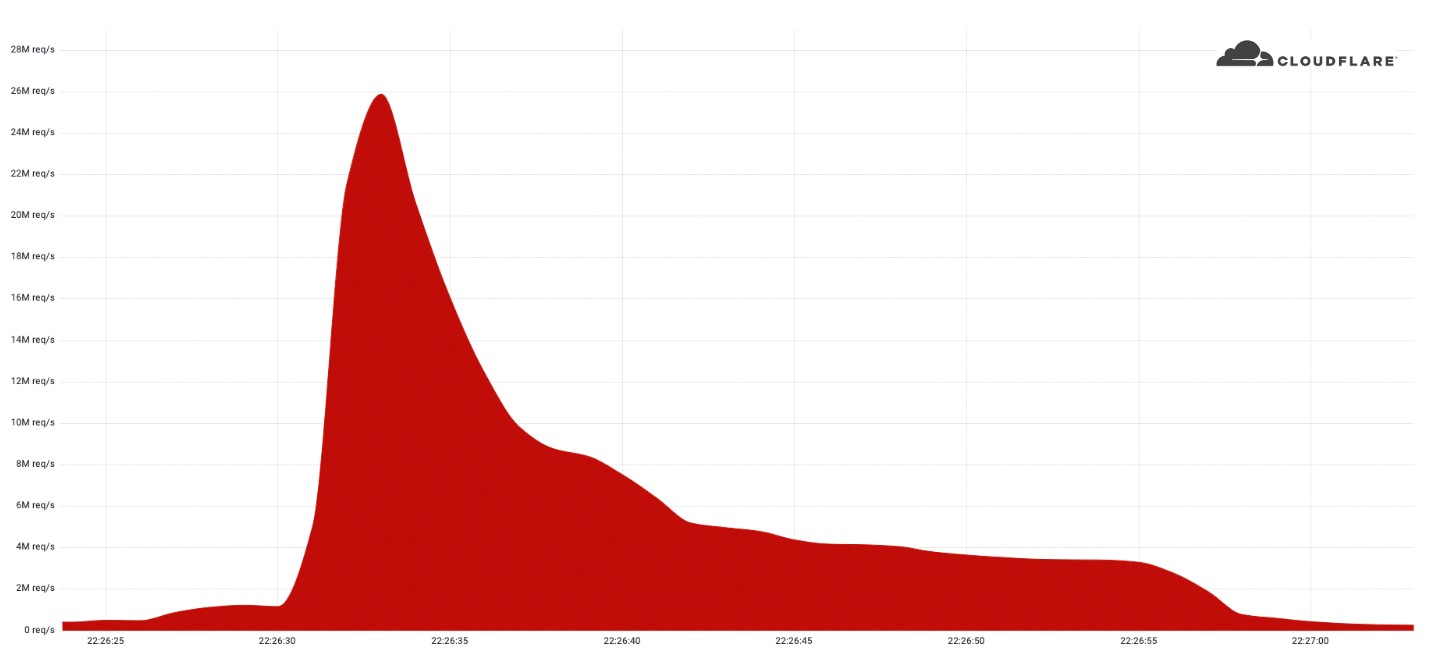
In June 2022, we reported on the largest HTTPS DDoS attack that we’ve ever mitigated — a 26 million request per second attack – the largest attack on record. Our systems automatically detected and mitigated this attack and many more. Since then, we have been tracking this botnet, which we’ve called “Mantis”, and the attacks it has launched against almost a thousand Cloudflare customers.

Cloudflare WAF/CDN customers are protected against HTTP DDoS attacks including Mantis attacks. Please refer to the bottom of this blog for additional guidance on how to best protect your Internet properties against DDoS attacks.

Have you met Mantis?

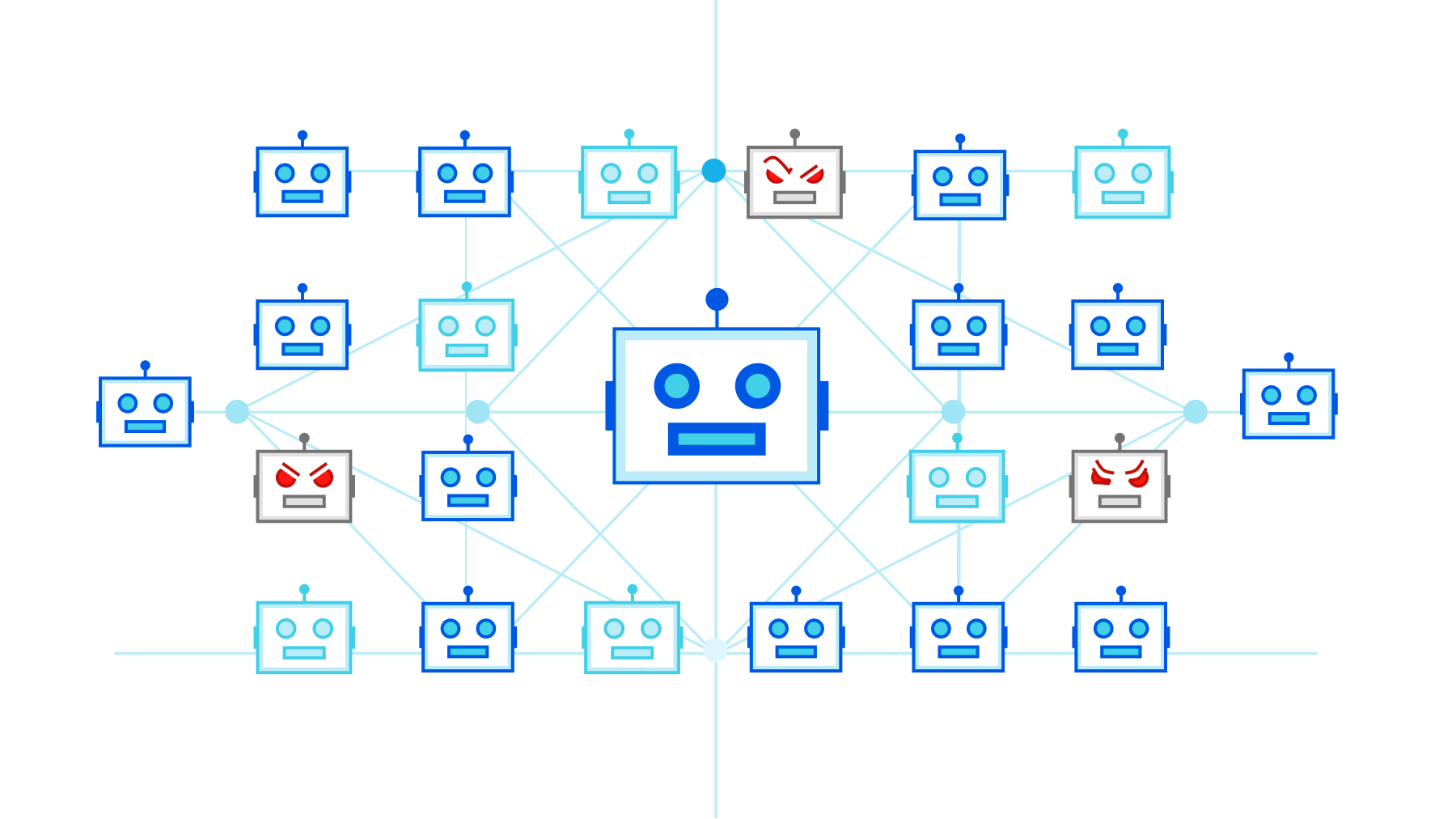
We named the botnet that launched the 26M rps (requests per second) DDoS attack “Mantis” as it is also like the Mantis shrimp, small but very powerful. Mantis shrimps, also known as “thumb-splitters”, are very small; less than 10 cm in length, but their claws are so powerful that they can generate a shock wave with a force of 1,500 Newtons at speeds of 83 km/h from a standing start. Similarly, the Mantis botnet operates a small fleet of approximately 5,000 bots, but with them can generate a massive force — responsible for the largest HTTP DDoS attacks we have ever observed.

Mantis - the most powerful botnet to date
Mantis shrimp. Source: Wikipedia.

The Mantis botnet was able to generate the 26M HTTPS requests per second attack using only 5,000 bots. I’ll repeat that: 26 million HTTPS requests per second using only 5,000 bots. That’s an average of 5,200 HTTPS rps per bot. Generating 26M HTTP requests is hard enough to do without the extra overhead of establishing a secure connection, but Mantis did it over HTTPS. HTTPS DDoS attacks are more expensive in terms of required computational resources because of the higher cost of establishing a secure TLS encrypted connection. This stands out and highlights the unique strength behind this botnet.

Mantis - the most powerful botnet to date

As opposed to “traditional” botnets that are formed of Internet of Things (IoT) devices such as DVRs, CC cameras, or smoke detectors, Mantis uses hijacked virtual machines and powerful servers. This means that each bot has a lot more computational resources — resulting in this combined thumb-splitting strength.

Mantis is the next evolution of the Meris botnet. The Meris botnet relied on MikroTik devices, but Mantis has branched out to include a variety of VM platforms and supports running various HTTP proxies to launch attacks. The name Mantis was chosen to be similar to “Meris” to reflect its origin, and also because this evolution hits hard and fast. Over the past few weeks, Mantis has been especially active directing its strengths towards almost 1,000 Cloudflare customers.

Mantis - the most powerful botnet to date

Who is Mantis attacking?

In our recent DDoS attack trends report, we talked about the increasing number of HTTP DDoS attacks. In the past quarter, HTTP DDoS attacks increased by 72%, and Mantis has surely contributed to that growth. Over the past month, Mantis has launched over 3,000 HTTP DDoS attacks against Cloudflare customers.

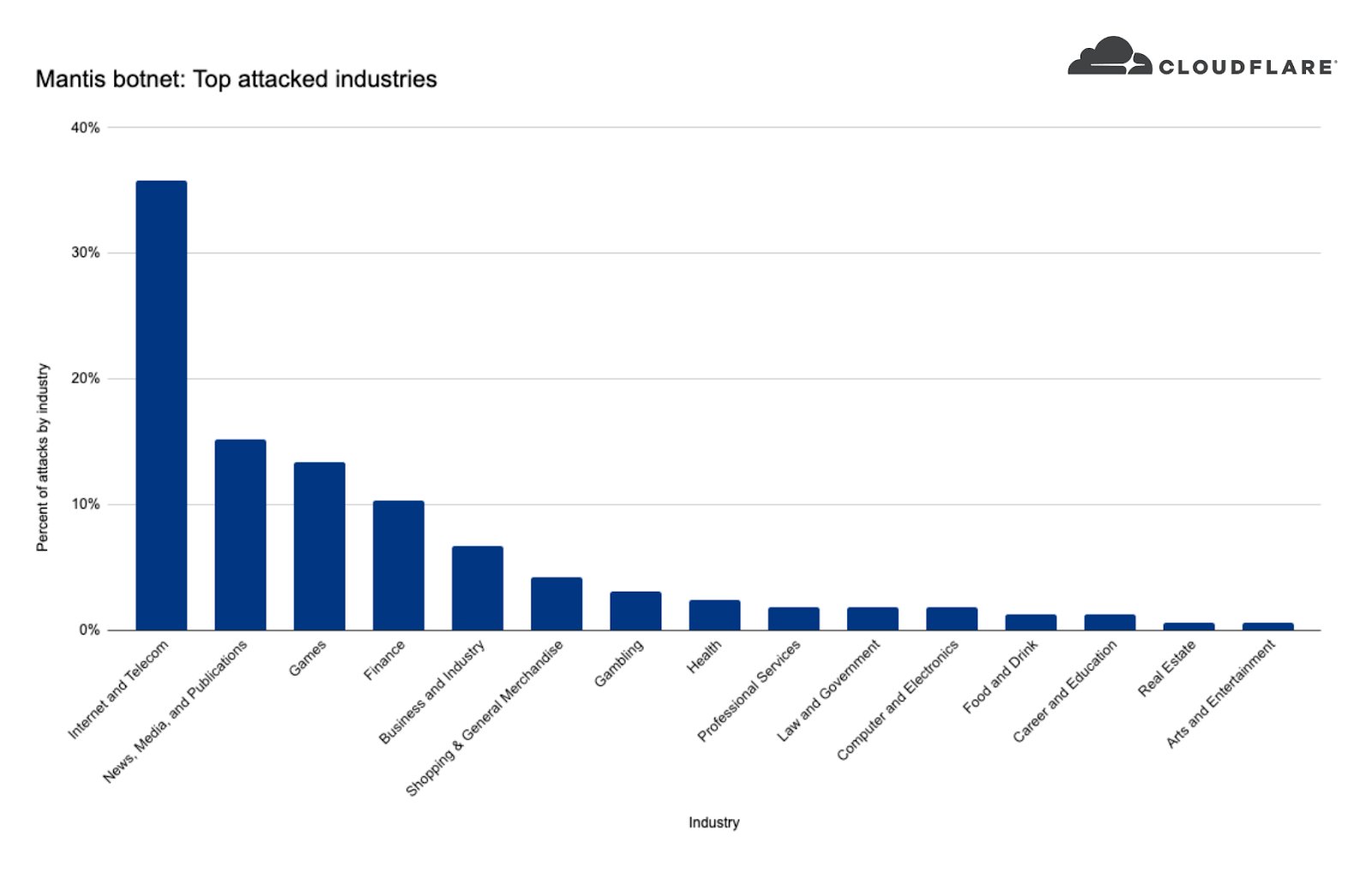
When we take a look at Mantis’ targets we can see that the top attacked industry was the Internet & Telecommunications industry with 36% of attack share. In second place, the News, Media & Publishing industry, followed by Gaming and Finance.

Mantis - the most powerful botnet to date

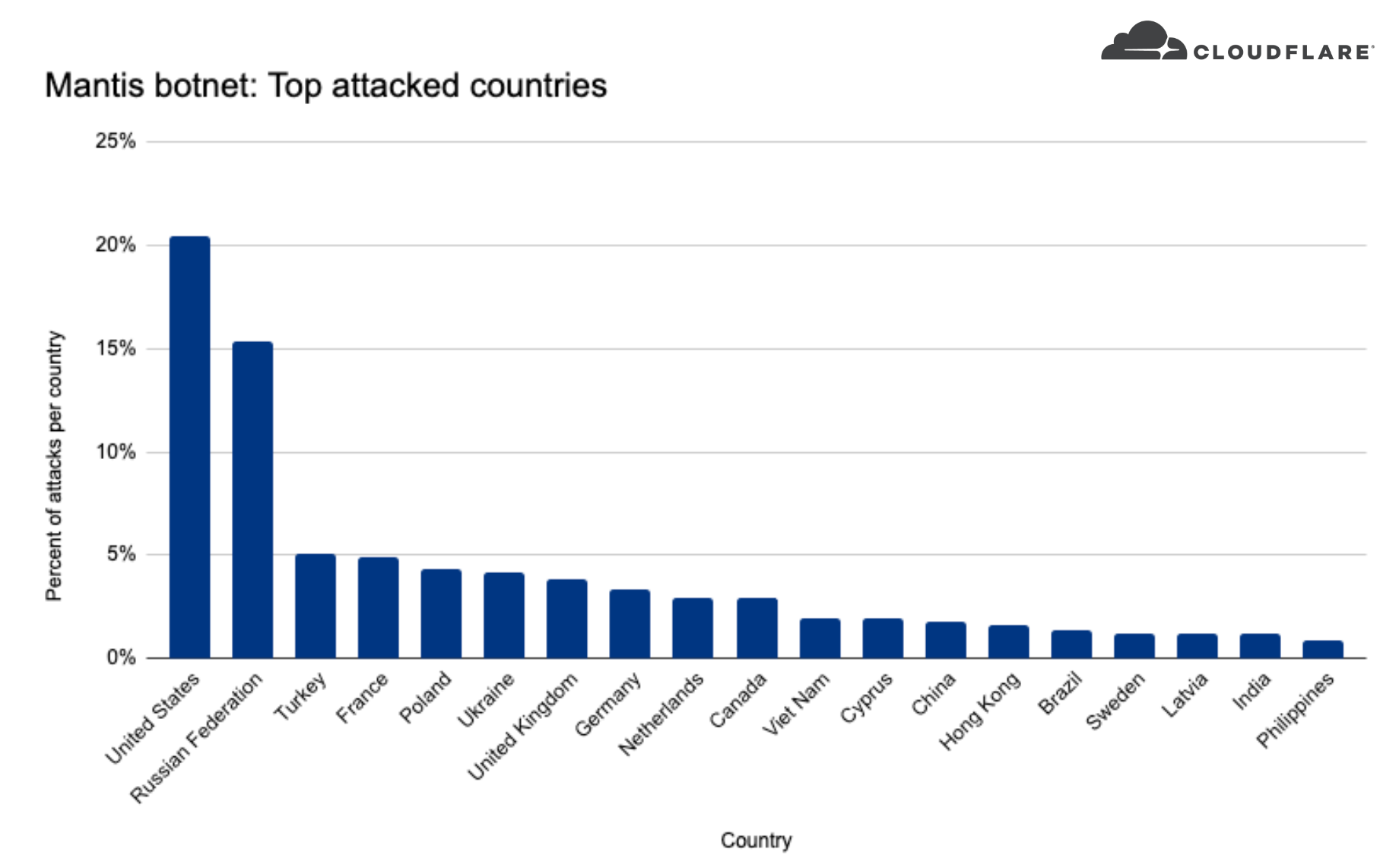
When we look at where these companies are located, we can see that over 20% of the DDoS attacks targeted US-based companies, over 15% Russia-based companies, and less than five percent included Turkey, France, Poland, Ukraine, and more.

Mantis - the most powerful botnet to date

How to protect against Mantis and other DDoS attacks

Cloudflare’s automated DDoS protection system leverages dynamic fingerprinting to detect and mitigate DDoS attacks. The system is exposed to customers as the HTTP DDoS Managed Ruleset. The ruleset is enabled and applying mitigation actions by default, so if you haven’t made any changes, there is no action for you to take — you are protected. You can also review our guides Best Practices: DoS preventive measures and Responding to DDoS attacks for additional tips and recommendations on how to optimize your Cloudflare configurations.

If you are only using Magic Transit or Spectrum but also operate HTTP applications that are not behind Cloudflare, it is recommended to onboard them to Cloudflare’s WAF/CDN service to benefit from L7 protection.

Handy Tips #33: Pause unwanted alarms by suppressing your problems

Post Syndicated from Arturs Lontons original https://blog.zabbix.com/handy-tips-33-pause-unwanted-alarms-by-suppressing-your-problems/21981/

Suppress problems indefinitely or until a specific point in time with the problem suppression feature.

There are plenty of use cases when detected infrastructure or business problems need to be temporarily suppressed, and the alerting workflows have to be paused. This applies to scenarios such as emergency maintenance, unexpected load on your systems, migrations to new environments, and many others.

Use Zabbix problem suppression feature to suppress unwanted problems and pause your alerts:

  • Suppress problems indefinitely or until a specific point in time
  • Suppress a single problem or together with all of the related problems

  • Pause your actions until the problem suppression is over
  • Use relative or absolute time syntax to suppress problems until a specific point in time

Check out the video to learn how to use the problem suppression feature:

How to suppress unwanted problems:

  1. Open the MonitoringProblems page or a Problems widget
  2. Find the problem that you wish to suppress
  3. Press the No button under the Ack column
  4. Select the suppression scope
  5. Mark the Suppress checkbox
  6. Select the suppression method
  7. If you have selected Until provide the date or suppression interval
  8. Optionally, provide a message that will be visible to others
  9. Press the Update button
  10. Once the window has been refreshed, the problem will be hidden
  11. Open the Problems widget or the Problems page configuration
  12. Mark the Show suppressed problems checkbox
  13. Inspect the suppressed problem

Tips and best practices
  • Once suppressed the problem is marked by a blinking suppression icon in the Info column, before being hidden
  • A suppressed problem may be hidden or shown, depending on the problem filter/widget settings
  • Suppression details are displayed in a popup when positioning the mouse on the suppression icon in the Actions column
  • The event.acknowledge API method can be used to suppress/unsuppress a problem via Zabbix API

Do you wish to learn how to automatically detect and resolve complex problems in your infrastructure by creating smart problem thresholds?
Check out the Advanced Problem and Anomaly Detection with Zabbix training course, where under the guidance of a Zabbix certified trainer you will learn how to get the most out of Zabbix problem detection.

The post Handy Tips #33: Pause unwanted alarms by suppressing your problems appeared first on Zabbix Blog.

How do I start my child coding?

Post Syndicated from Marc Scott original https://www.raspberrypi.org/blog/how-do-i-start-my-child-coding/

You may have heard a lot about coding and how important it is for children to start learning about coding as early as possible. Computers have become part of our lives, and we’re not just talking about the laptop or desktop computer you might have in your home or on your desk at work. Your phone, your microwave, and your car are all controlled by computers, and those computers need instructions to tell them what to do. Coding, or computer programming, involves writing those instructions.

A boy types code at a CoderDojo coding club.

If children discover a love for coding, they will have an avenue to make the things they want to make; to write programs and build projects that they find useful, fun, or interesting. So how do you give your child the opportunity to learn about coding? We’ve listed some free resources and suggested activities below.

Scratch Junior 

If you have a young child under about 7 years of age, then a great place to begin is with ScratchJr. This is an app available on Android and iOS phones and tablets, that lets children learn the basics of programming, without having to worry about making mistakes.

ScratchJr programming interface.

Code Club World

The Raspberry Pi Foundation has developed a series of activities for young learners, on their journey to developing their computing skills. Code Club World provides a platform for children to play with code to design their own avatar, make it dance, and play music. Plus they can share their creations with other learners. 

“You could have a go too and discover Scratch together. The platform is designed for complete beginners and it is great fun to play with.”

Carol Thornhill, Engineering Science MA, Mathematics teacher

Scratch

For 7- to 11-year-old children, Scratch is a good way to begin their journey in coding, or to progress from ScratchJr. Like ScratchJr, Scratch is a block-based language, allowing children to assemble code to produce games, animations, stories, or even use some of the add-ons to interact with electronic devices and explore physical computing.

A girl with her Scratch project
A girl with a Scratch project she has coded.

The Raspberry Pi Foundation has hundreds of Scratch projects that your child can try out, but the best place to begin is with our Introduction to Scratch path, which will provide your child with the basic skills they need, and then encourage them to build projects that are relevant to them, culminating in their creation of their own interactive ebook.

Your child may never tire of Scratch, and that is absolutely fine — it is a fully functioning programming language that is surprisingly powerful, when you learn to understand everything it can do. Another advantage of Scratch is that it provides easy access to graphics, sounds, and interactivity that can be trickier to achieve in other programming languages.

Python 

If you’re looking for more traditional programming languages for your child to progress on to, especially when they reach 12 years of age or beyond, then we like to direct our young learners to the Python programming language and to the languages that the World Wide Web is built on, particularly HTML, CSS, and JavaScript.

Animation coded in Python of an archery target disk.
An animation coded using Python.

Our Python resources cover the basics of using the language, and then progress from there. Python is one of the most widely used languages when it comes to the fields of artificial intelligence and data science, and we have resources to support your child in learning about these fascinating aspects of technology. Our projects can even introduce your child to the world of electronics and physical computing with activities that use the inexpensive Raspberry Pi Pico, and a handful of electronic components, enabling your kids to create a wide variety of art installations and useful gadgets.

“Trying Python doesn’t mean you can’t go back to Scratch or switch between Scratch and Python for different purposes. I still use Scratch for some projects myself!”

Tracy Gardner, Computer Science PhD, former IBM Software Architect and currently a project writer at the Raspberry Pi Foundation

A young person codes at a Raspberry Pi computer.
Python is a great text-based programming language for young people to learn.

Coding projects

On our coding tutorials website we have many different projects to help your child learn coding and digital making. These range from beginner resources like the Introduction to Scratch path to more advanced activities such as the Introduction to Unity path, where children can learn how to make 3D worlds and games. 

“Our new project paths can be tackled by young creators on their own, without adult intervention. Paths are structured so that they build skills and confidence in the early stages, and then provide more open-ended tasks and inspirational ideas that creators can adapt or work from.”

Rik Cross, BSc (Hons), PGCE, former teacher and Director of Informal Learning at the Raspberry Pi Foundation

Web development 

The Web is integral to many of our lives, and we believe that it is important for children to have an understanding of the technology that drives it. That is why we have an Introduction to the Web path that allows children to develop their own web pages, focusing on the kinds of webpages that they want to build, be that sending a greeting card, telling a story, or creating a showcase of their projects.

A girl has fun learning to code at home on a tablet sitting on a sofa.
It’s empowering for children to learn to how the websites they visit are created with code.

Coding clubs 

Coding clubs are a great place for children to have fun and become more confident with coding, where they can learn through making and share their creations with each other. The Raspberry Pi Foundation operates the world’s largest network of coding clubs — CoderDojo and Code Club

“I have a new group of creators at my Code Club every year and my favourite part is when they realise they really can let their imagination run wild. You want to make an animation where a talking pineapple chases a snowman — absolutely. You want to make a piece of scalable art out of 1000 pixelated cartoon musical instruments — go right ahead. If you can code it, you can make it ”

Liz Smart, Code Club and CoderDojo mentor, former Solutions Architect and project writer for the Raspberry Pi Foundation

Three teenage girls at a laptop.
At Code Club and CoderDojo, many young people enjoy teaming up to code projects together.

Coding challenges 

Once your child has learnt some of the basics, they may enjoy entering a coding challenge! The European Astro Pi Challenge programme allows young people to write code and actually have it run on the International Space Station, and Coolest Projects gives children a chance to showcase their projects from across the globe.

A Coolest Projects participant
A girl with her coded creation at an in-person Coolest Projects showcase.

Free resources 

No matter what technology your child wants to engage with, there is a wealth of free resources and materials available from organisations such as the Raspberry Pi Foundation and Scratch Foundation, that prepare young people for 21st century life. Whether they want to become professional software engineers, tinker with some electronics, or just have a play around … encourage them to explore some coding projects, and see what they can learn, make, and do!


Author: Marc Scott, BSc (Hons) is a former Science, Computer Science, and Engineering teacher and the Content Lead for Projects at the Raspberry Pi Foundation.

The post How do I start my child coding? appeared first on Raspberry Pi.

[$] “Critical” projects and volunteer maintainers

Post Syndicated from original https://lwn.net/Articles/900953/

Over the last five decades or so, free and open-source software (FOSS) has
gone from an almost unknown
quantity available to only the most technically savvy to underpinning much
of the infrastructure we rely on today. Much like software itself, FOSS is
“eating the world”. But that has changed—is changing—the role of the
maintainers of all of that code; when “critical” infrastructure uses code
from a FOSS project, suddenly, and perhaps without warning, that code
itself becomes critical. But many maintainers of that software are
volunteers who did not set out to become beholden to the needs of large
companies and organizations when they released their code, they were just
scratching their itch—now lots of others are clamoring for theirs to be
scratched as well.

Automating Amazon EC2-Windows EBS Volumes monitoring and creating alarms

Post Syndicated from Sheila Busser original https://aws.amazon.com/blogs/compute/automating-amazon-ec2-windows-ebs-volumes-monitoring-and-creating-alarms/

This blog post is written by, Santhosh Kumar Adapa, Database Consultant,  AWS WWCO ProServe,  Jeevan Shetty, Database Consultant, AWS WWCO ProServe, and Bhanu Ganesh Gudivada, Consultant  Databases, AWS WWCO ProServe.

Customers who are running fleets of Amazon Elastic Compute Cloud (Amazon EC2) instances use advanced monitoring techniques to observe their operational performance. Capabilities like aggregated and custom dimensions help customers categorize and customize their metrics across server fleets for fast and efficient decision making. Customers require visibility into not only infrastructure metrics (such as CPU and memory), but also disk usage metrics.

Monitoring Amazon EC2-Windows Amazon Elastic Block Store (Amazon EBS) Volumes usage is critical, especially when customers have a large fleet of Amazon EC2 Windows servers running to host their databases and applications in AWS. Generally, we see issues with EC2 instances running out of disk space, and free disk space isn’t a metric that is directly available with Amazon CloudWatch. Amazon CloudWatch agent helps solve this problem. After installing and configuring the CloudWatch agent on your EC2 instance, the agent will send metric data with the disk utilization to CloudWatch. The next step is to create a CloudWatch alarm to monitor the disk utilization metric.

In this post, we showcase the steps to automate the monitoring and creating alarms for EBS volumes attached to Amazon EC2 Windows instances. Alarms are created using AWS Lambda that monitors the free disk space and alerts whenever thresholds are crossed using Amazon Simple Notification Service (Amazon SNS).

Solution overview

To demonstrate the solution we first install and configure the CloudWatch agent in your Amazon EC2 Windows instance, and then the agent will send metric data with the disk utilization to CloudWatch. To monitor the disk on each Amazon EC2 Windows instance, we’ll use two custom Metrics, “FreeStorageSpaceInMB” and “FreeStorageSpaceInPercent”, that are collected by CloudWatch agent and pushed to CloudWatch.

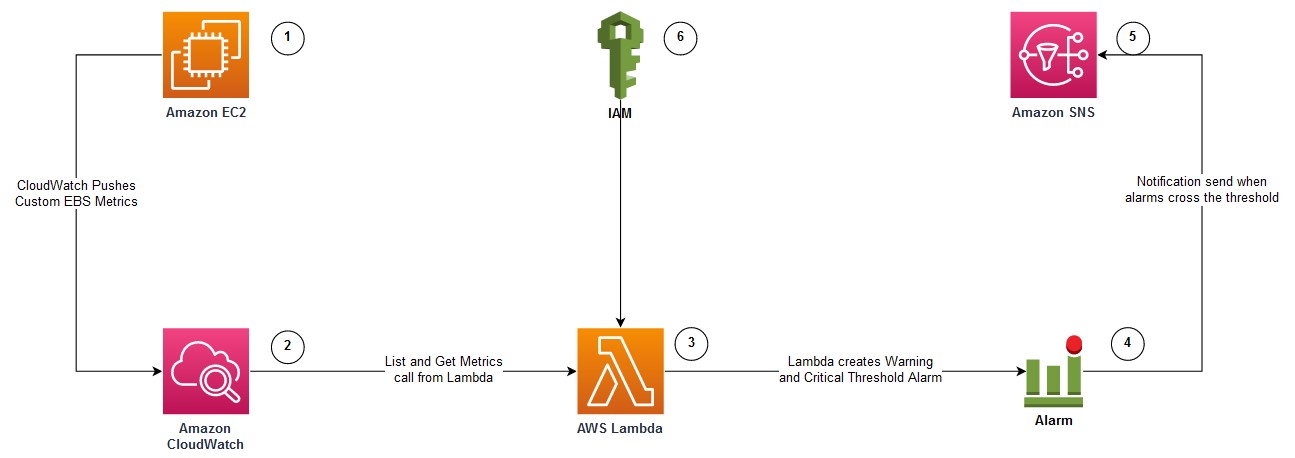
The following diagram illustrates the architecture used in this post:

architecture used in this post

  1. Amazon EC2 Windows instance with attached Amazon EBS Volumes to be monitored for free disk usage. The EC2 instance is configured with Amazon CloudWatch Agent.
  2. CloudWatch agent is configured to monitor the “FreeStorageSpaceInMB” and “FreeStorageSpaceInPercent” metrics, and pushed to AWS CloudWatch.
  3. Lambda function that can be invoked to create CloudWatch alarms for each disk attached to the EC2 instance.
  4. CloudWatch Alarms are created with warnings and critical thresholds based on storage size.
  5. Amazon SNS is used to send alerts when the CloudWatch Alarms crosses the threshold.
  6. AWS Identity and Access Management (IAM) to provide permission to the Lambda function to get Amazon EBS metrics and to create CloudWatch Alarms.

Prerequisites

You will need the following prerequisites:

  • To implement this solution, you must have an Amazon EC2 Windows instance configured with Amazon CloudWatch Agent by following the steps documented in the article – How to monitor Windows and Linux servers and get internal performance metrics.
  • To monitor the “FreeStorageSpaceInMB” and “FreeStorageSpaceInPercent” metrics for Amazon EBS volumes attached to the EC2 instance, the CloudWatch agent configuration JSON should have the following section:
"LogicalDisk": {
	"measurement": [
	{
		"name":"% Free Space",
		"rename":"FreeStorageSpaceInPercent",
		"unit":"Percent"
	},
	{
		"name":"Free Megabytes",
		"rename":"FreeStorageSpaceInMB",
		"unit":"Megabytes"
	}
	],
	"metrics_collection_interval": 10,
	"resources": [
		"*"
	]
},
  1. Amazon EC2 host or bastion host with an IAM role attached that has permissions to create an IAM role, Lambda function, and run Amazon Relational Database Service (Amazon RDS) CLI commands. A Lambda function and an IAM role are created using AWS Serverless Application Model (SAM).

AWS SAM

In this section, we provide the steps to create an IAM role and deploy a Lambda function using AWS SAM.

  1. Log in to the Amazon EC2 host and install the AWS SAM CLI.
  2. Download the source code and deploy it by running the following command:
git clone https://github.com/aws-samples/aws-ec2-windows-ebs-volumes-monitoring

cd aws-ec2-windows-ebs-volumes-monitoring/ebs_volumes_monitoring
sam deploy --guided

3. Provide the following parameters:

    1. Stack Name – Name for the AWS CloudFormation stack.
    2. AWS Region – AWS Region where the stack is being deployed.

The following is the sample output when you run sam deploy –guided with default arguments:

=========================================
Stack Name [ebs-volumes-monitoring]: ebs-volumes-monitoring
AWS Region [us-west-2]:
#Shows you resources changes to be deployed and require a 'Y' to initiate deploy
Confirm changes before deploy [y/N]:
#SAM needs permission to be able to create roles to connect to the resources in your template
Allow SAM CLI IAM role creation [Y/n]:
#Preserves the state of previously provisioned resources when an operation fails
Disable rollback [y/N]:
Save arguments to configuration file [Y/n]:
SAM configuration file [samconfig.toml]:
SAM configuration environment [default]:

In the following sections, we describe the AWS services deployed with AWS SAM.

IAM role

AWS SAM creates an IAM role with policies to describe EC2 instances, as well as List, Get, and Put CloudWatch metrics. Furthermore, it attaches an AWS managed IAM policy called AWSLambdaBasicExecutionRole to the IAM role. This role is attached to the Lambda functions to create Amazon EBS volume alarms for EC2 instances.

Lambda function

AWS SAM also deploys the Lambda function. It uses Python 3.8 and accepts two parameters:

  1. Hostname: Amazon EC2 Windows instance name, or, if we must configure alarms for multiple servers, then you can use a wild card character, such as Instance_name* or Instance_name?
  2. sns_topic_name: ARN of the SNS topic that is used to configure CloudWatch Alarms. Notification is sent to the SNS topic when the Amazon EBS Volume metric crosses the threshold.

Invoking Lambda function

After the SAM deployment is successful, we can invoke the Lambda function with the instance name and the SNS Topic ARN. The Lambda function creates two alarms (Warning and Critical) for every Amazon EBS volume attached to the instance. The Warning and Critical values can be changed in the Lambda code so that there are two different values depending on the size of the disk drive. Furthermore, the alarms are configured to send notifications to the SNS Topic. The following is the sample command to invoke the Lambda function:

aws lambda invoke --function-name ec2-ebs-metric --cli-binary-format raw-in-base64-out \
--payload '{"hostname": "Windows*", "sns_topic_name": "arn:aws:sns:us-west-2:123456789:notify_dba" }' response.json

Verifying CloudWatch Alarms:

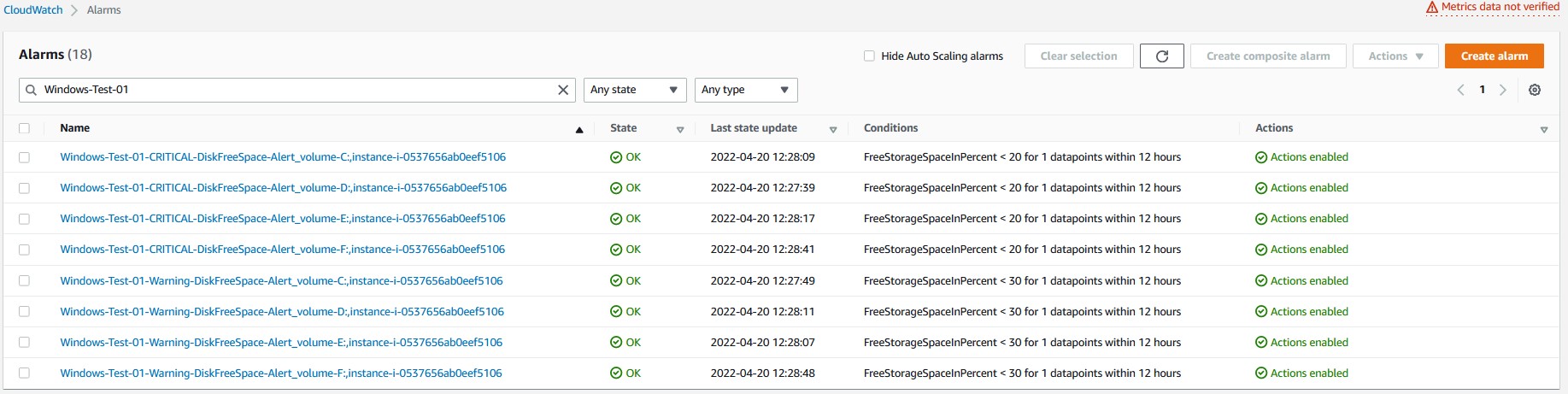
Verify the CloudWatch Alarms that are created in the CloudWatch console. The following screenshot shows the CloudWatch alarms created for an EC2 instance with four disks. There are two alarms (Warning and Critical) created for every disk (four disks in total). Therefore, we see eight CloudWatch alarms.

CloudWatch console alarms

Checking CloudWatch Logs:

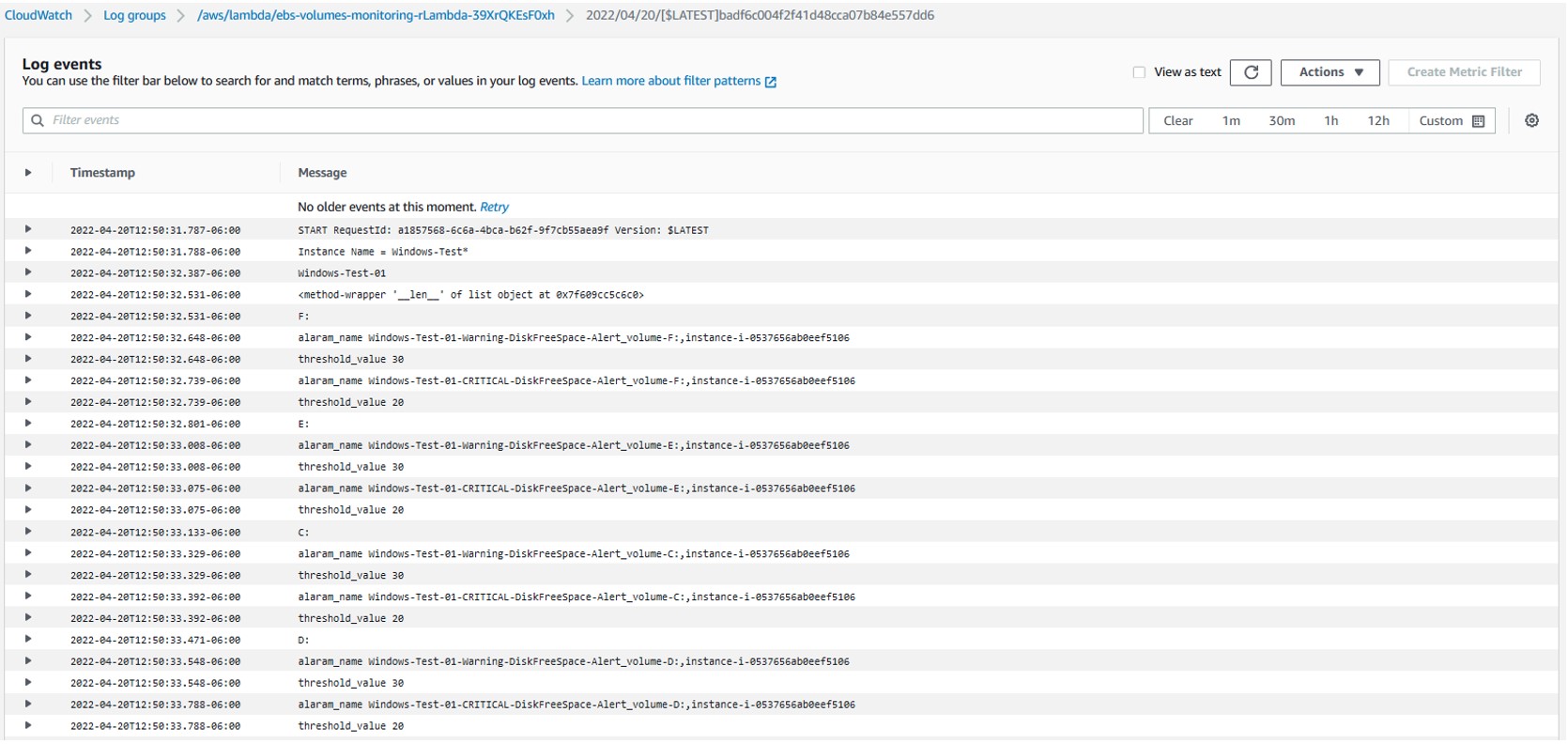
After running the Lambda function, to verify the log, go to Lambda Service page, select the Lambda function created, navigate to the Monitor tab, and then select “View logs in CloudWatch”. Then, go to the latest log file to check the CloudWatch log files for any errors.

Checking CloudWatch LogsSelect the latest Log Steam to check the details of the last Lambda function execution.

Log Steam detailsThe log file shows the full details of the Lambda function execution. Furthermore, it shows the CloudWatch alarms configured for each disk, as well as if there are any errors generated during execution.

Log file detailsCleanup

To clean up the resources used in this post, complete the following steps:

  1. Delete the CloudFormation stack by running below command and replacing STACK_NAME with stack name provided in step 3a above, under section “AWS SAM”
sam delete --stack-name STACK_NAME
  1. Confirm the stack has been deleted by running below command. Replace STACK_NAME as mentioned in previous step.
aws cloudformation list-stacks --query "StackSummaries[?contains(StackName,' STACK_NAME ')].StackStatus"
  1. Delete any CloudWatch alarms created by the Lambda function by following the document – Editing or deleting a CloudWatch alarm.

Conclusion

In this post, we demonstrated how the requirement of monitoring Amazon EC2 Windows EBS Volumes usage is critical. In particular, this is essential when customers have a large fleet of Amazon EC2 Windows servers running to host their databases and applications in the cloud. We showcased the process of automating the free disk monitoring using Lambda and notifying through Amazon SNS when disks cross the storage threshold. By implementing such monitoring, customers can prevent issues with EC2 instances running out of disk space thus preventing critical production outages.

Provide any thoughts or questions in the comments section. We also encourage you to explore CloudWatch monitoring and try out additional use cases mentioned in the documentation.

Let’s Architect! Architecting for DevOps

Post Syndicated from Luca Mezzalira original https://aws.amazon.com/blogs/architecture/lets-architect-architecting-for-devops/

Under a DevOps model, the development and operations teams work together and share their skills and knowledge. Sometimes, these teams are merged into a single team where the engineers work across the entire application lifecycle, from development to deployment.

The objective of DevOps is to deliver applications and services quickly and efficiently. This faster pace allows companies to better adapt to their customers’ needs and changes in the market.

In this edition of Let’s Architect!, we’ll talk about DevOps culture and share content to provide helpful mental models and strategies for your work as an architect or engineer.

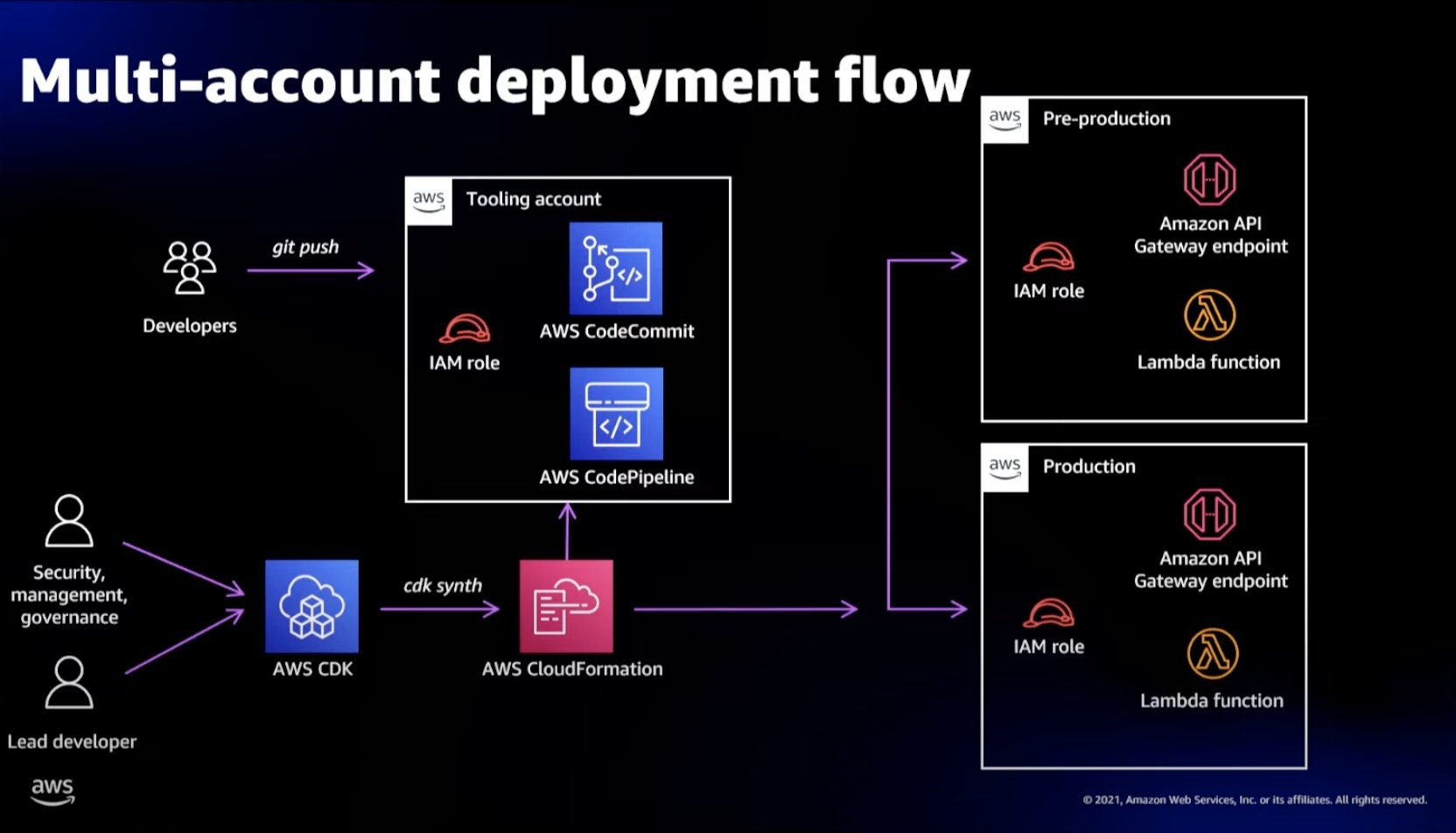
Automating cross-account CI/CD pipelines

Companies often use the cloud to run their microservices. This means they’re working with different AWS accounts and hosting each microservice in a dedicated account.

This method can be helpful to isolate different environments for software deployment pipelines. A well-designed pipeline is fundamental to releasing software quickly because it allows DevOps engineers to automate the software deployment process.

This video shows the mindset to adopt while designing pipelines for deploying resources across different environments. You’ll learn how to design a pipeline, how to build it using AWS CDK, and see how everything looks in the AWS Console.

AWS X-Ray helps developers analyze distributed applications, such as those built using a microservices architecture

AWS X-Ray helps developers analyze distributed applications, such as those built using a microservices architecture

Automating safe, hands-off deployments

Amazon adopted continuous delivery across the company as a way to automate and standardize how software is deployed and to reduce the time it takes for changes to reach production. In this system, improvements to the release process build up over time. Once deployment risks are identified, teams iterate on the release process and add extra safety in the automated pipeline.

A typical continuous delivery pipeline has four major phases—source, build, test, and production (prod). This article describes the mental models and approaches that engineer use at Amazon to help you understand the design considerations for each step of the pipeline and learn some recommended practices.

Each pipeline has these four major steps; however, more granularity is often added in the testing stage to take advantage of multiple pre-production environments

Each pipeline has these four major steps; however, more granularity is often added in the testing stage to take advantage of multiple pre-production environments

Covert ops on DevOps: Leveraging security to shift left

Architects often deal with complexity and ambiguity while designing architectures and interacting with stakeholders. Consequently, their architectures evolve and grow in complexity.

When your workload becomes more complex, security is an important area to consider and requires attention during the entire Software Development Life Cycle (SDLC). This video shows some methods to add security in a DevOps culture. You’ll learn about shifting your security left to create collaborations between developers and the security team. It will also show you how to uncover vulnerabilities in the SDLC as well as the strategies to implement and automate security in the process through a security as code mindset.

At a high level, people build applications with source code, version control, CI/CD, registries and deployments, and during each step we should design to prevent specific vulnerabilities

At a high level, people build applications with source code, version control, CI/CD, registries and deployments, and during each step we should design to prevent specific vulnerabilities

Instrumenting distributed systems for operational visibility

Every member of a development team works like an owner and operator of the service, whether that member is a developer, manager, or another role. Software developers and architects usually work with logs to see the status of their systems. Logs act as the mechanism to share what’s happening in the software that is running. This information is used for troubleshooting and performance improvement.

This article describes some approaches to feed data into operational dashboards to measure real-time metrics, invoke alarms, and engage with operators to diagnose problems. You’ll learn some mental models and best practices to design a logging system through a set of stories, considerations, and common examples with code samples.

AWS X-Ray helps developers analyze distributed applications, such as those built using a microservices architecture

AWS X-Ray helps developers analyze distributed applications, such as those built using a microservices architecture

Related information

If you want to learn more about DevOps, check What is DevOps?, a public resource with plenty of examples and introductory articles.

See you next time!

Thanks for reading! See you in a couple of weeks when we discuss strategies for applying the AWS Well-Architected framework to your workloads.

Other posts in this series

Looking for more architecture content?

AWS Architecture Center provides reference architecture diagrams, vetted architecture solutions, Well-Architected best practices, patterns, icons, and more!

It’s the Summer of AppSec: Q2 Improvements to Our Industry-Leading DAST and WAAP

Post Syndicated from Tom Caiazza original https://blog.rapid7.com/2022/07/13/its-the-summer-of-appsec-q2-improvements-to-our-industry-leading-dast-and-waap/

It’s the Summer of AppSec: Q2 Improvements to Our Industry-Leading DAST and WAAP

Summer is in full swing, and that means soaring temperatures, backyard grill-outs, and the latest roundup of Q2 application security improvements from Rapid7. Yes, we know you’ve been waiting for this moment with more anticipation than Season 4 of Stranger Things. So let’s start running up that hill, not beat around the bush (see what we did there?), and dive right in.

OWASP Top 10 for application security

Way, way back in September of 2021 (it feels like it was yesterday), the Open Web Application Security Project (OWASP) released its top 10 list of critical web application security risks. Naturally, we were all over it, as OWASP is one of the most trusted voices in cybersecurity, and their Top 10 lists are excellent places to start understanding where and how threat actors could be coming for your applications. We released a ton of material to help our customers better understand and implement the recommendations from OWASP.

This quarter, we were able to take those protections another big step forward by providing an OWASP 2021 Attack Template and Report for InsightAppSec. With this new feature, your security team can work closely with development teams to discover and remediate vulnerabilities in ways that jive with security best practice. It also helps to focus your AppSec program around the updated categories provided by OWASP (which we highly suggest you do).

The new attack template includes all the relevant attacks included in the updated OWASP Top 10 list which means you can focus on the most important vulnerabilities to remediate, rather than be overwhelmed by too many vulnerabilities and not focusing on the right ones. Once the vulns are discovered, InsightAppSec helps your development team to remediate the issues in several different ways, including a new OWASP Top 10 report and the ability to let developers confirm vulnerabilities and fixes with Attack Replay.

Scan engine and attack enhancements

Product support for OWASP 2021 wasn’t the only improvement we made to our industry-leading DAST this quarter. In fact, we’ve been quite busy adding additional attack coverage and making scan engine improvements to increase coverage and accuracy for our customers. Here are just a few.

Spring4Shell attacks and protections with InsightAppSec and tCell

We instituted a pair of improvements to InsightAppSec and tCell meant to identify and block the now-infamous Spring4Shell vulnerability. We now have included a default RCE attack module specifically to test for the Spring4Shell vulnerability with InsightAppSec. That feature is available to all InsightAppSec customers right now, and we highly recommend using it to prevent this major vulnerability from impacting your applications.

Additionally, for those customers leveraging tCell to protect their apps, we’ve added new detections and the ability to block Spring4Shell attacks against your web applications. In addition, we’ve added Spring4Shell coverage for our Runtime SCA capability. Check out more here on both of these new enhancements.

New out-of-band attack module

We’ve added a new out-of-band SQL injection module similar to Log4Shell, except it leverages the DNS protocol, which is typically less restricted and used by the adversary. It’s included in the “All Attacks” attack template and can be added to any customer attack template.

Improved scanning for session detection

We have made improvements to our scan engine on InsightAppSec to better detect unwanted logouts. When configuring authentication, the step-by-step instructions will guide you through configuring this process for your web applications.

Making it easier for our customers

This wouldn’t be a quarterly feature update if we didn’t mention ways we are making InsightAppSec and tCell even easier and more efficient for our customers. In the last few months, we have moved the “Manage Columns” function into “Vulnerabilities” in InsightAppSec to make it even more customizable. You can now also hide columns, drag and drop them where you would like, and change the order in ways that meet your needs.

We’ve also released an AWS AMI of the tCell nginx agent to make it easier for current customers to deploy tCell. This is perfect for those who are familiar with AWS and want to get up and running with tCell fast. Customers who also want a basic understanding of how tCell works and want to share tCell’s value with their dev teams will find this new AWS AMI to provide insight fast.

Summer may be a time to take it easy and enjoy the sunshine, but we’re going to be just as hard at work making improvements to InsightAppSec and tCell over the next three months as we were in the last three. With a break for a hot dog and some fireworks in there somewhere. Stay tuned for more from us and have a great summer.

Additional reading:

NEVER MISS A BLOG

Get the latest stories, expertise, and news about security today.

Security updates for Wednesday

Post Syndicated from original https://lwn.net/Articles/901029/

Security updates have been issued by Fedora (xen), Mageia (x11-server), SUSE (chromium, kernel, pcre, pcre2, squid, and xorg-x11-server), and Ubuntu (gnupg, gnupg2, uriparser, xorg-server, xorg-server-hwe-16.04, and xorg-server, xorg-server-hwe-18.04, xwayland).

35,000 new trees in Nova Scotia

Post Syndicated from Patrick Day original https://blog.cloudflare.com/35-000-new-trees-in-nova-scotia/

35,000 new trees in Nova Scotia

Cloudflare is proud to announce the first 35,000 trees from our commitment to help clean up bad bots (and the climate) have been planted.

35,000 new trees in Nova Scotia

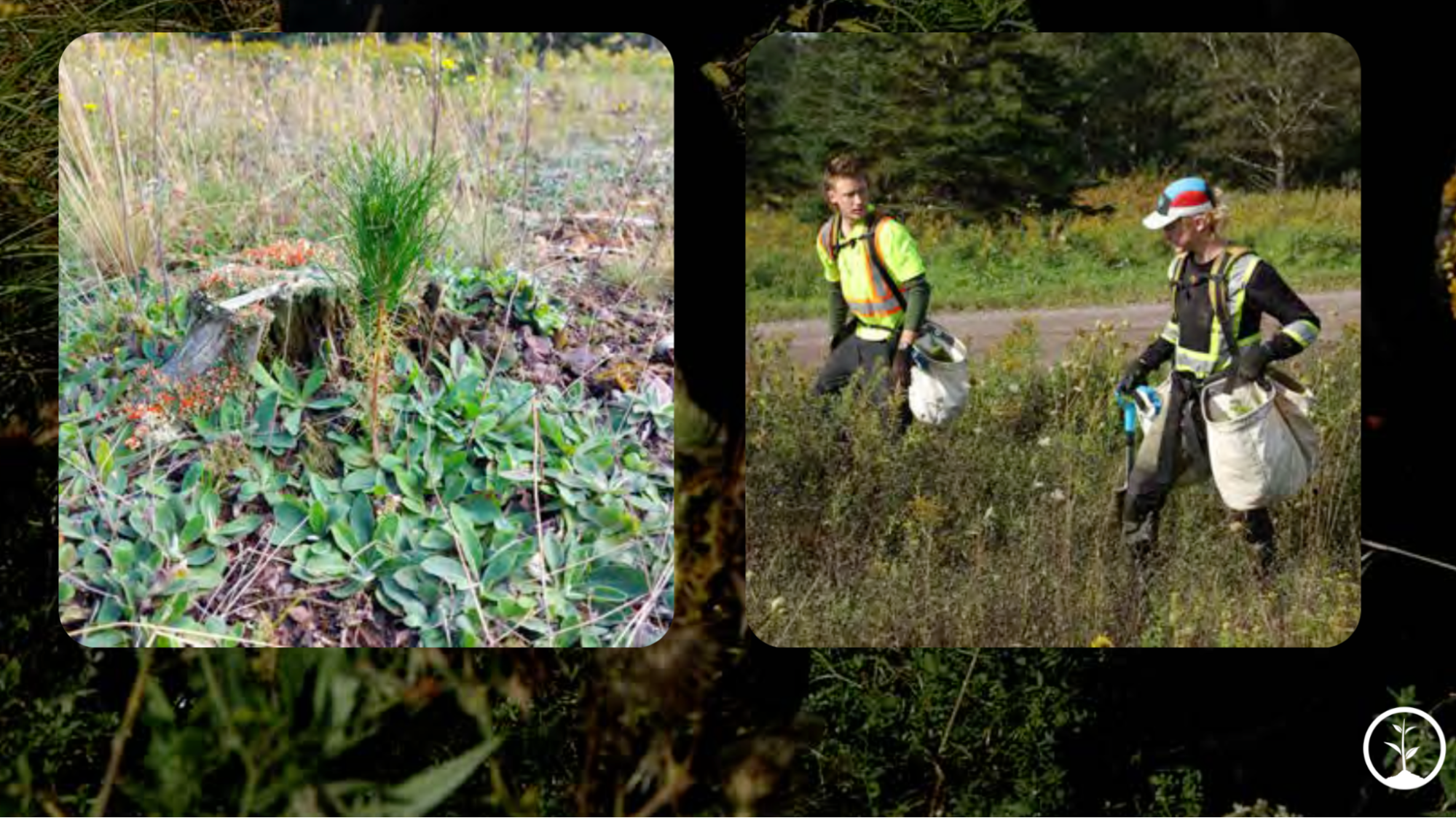
Working with our partners at One Tree Planted (OTP), Cloudflare was able to support the restoration of 20 hectares of land at Victoria Park in Nova Scotia, Canada. The 130-year-old natural woodland park is located in the heart of Truro, NS, and includes over 3,000 acres of hiking and biking trails through natural gorges, rivers, and waterfalls, as well as an old-growth eastern hemlock forest.

The planting projects added red spruce, black spruce, eastern white pine, eastern larch, northern red oak, sugar maple, yellow birch, and jack pine to two areas of the park. The first area was a section of the park that recently lost a number of old conifers due to insect attacks. The second was an area previously used as a municipal dump, which has since been covered by a clay cap and topsoil.

35,000 new trees in Nova Scotia

Our tree commitment began far from the Canadian woodlands. In 2019, we launched an ambitious tool called Bot Fight Mode, which for the first time fought back against bots, targeting scrapers and other automated actors.

Our idea was simple: preoccupy bad bots with nonsense tasks, so they cannot attack real sites. Even better, make these tasks computationally expensive to engage with. This approach is effective, but it forces bad actors to consume more energy and likely emit more greenhouse gasses (GHG). So in addition to launching Bot Fight Mode, we also committed to supporting tree planting projects to account for any potential environmental impact.

What is Bot Fight Mode?

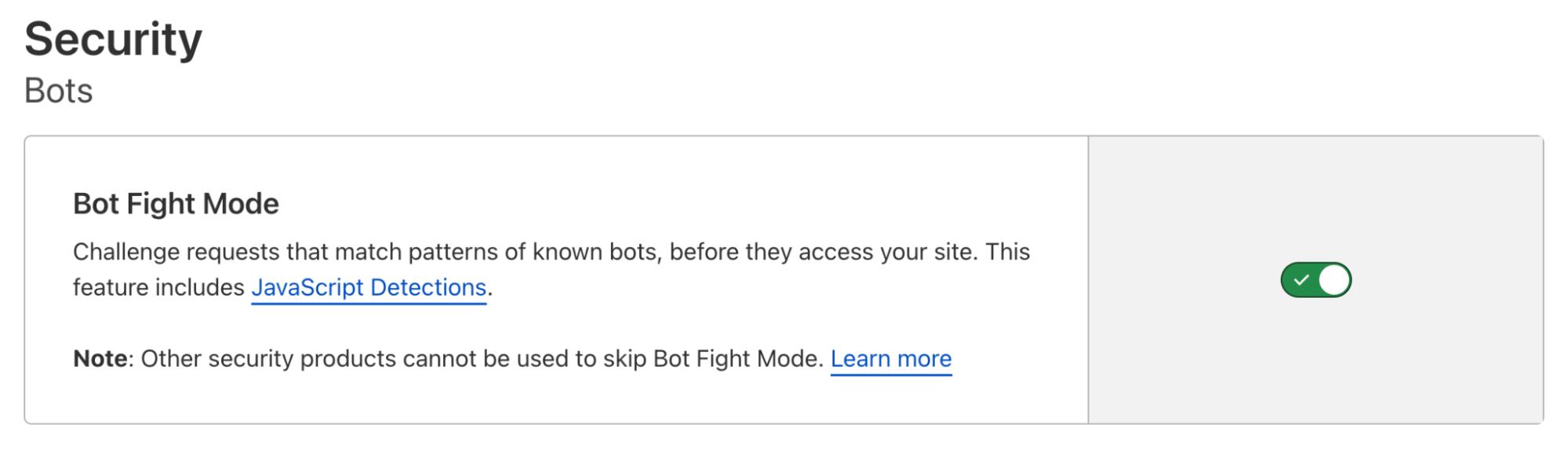
As soon as Bot Fight Mode is enabled, it immediately starts challenging bots that visit your site. It is available to all Cloudflare customers for free, regardless of plan.

35,000 new trees in Nova Scotia

When Bot Fight Mode identifies a bot, it issues a computationally expensive challenge to exhaust it (also called “tarpitting”). Our aim is to disincentivize attackers, so they have to find a new hobby altogether. When we tarpit a bot, we require a significant amount of compute time that will stall its progress and result in a hefty server bill. Sorry not sorry.

We do this because bots are leeches. They draw resources, slow down sites, and abuse online platforms. They also hack into accounts and steal personal data. Of course, we allowlist a small number of bots that are well-behaved, like Slack and Google. And Bot Fight Mode only acts on traffic from cloud and hosting providers (because that is where bots usually originate from).

Over 550,000 sites use Bot Fight Mode today! We believe this makes it the most widely deployed bot management solution in the world (though this is impossible to validate). Free customers can enable the tool from the dashboard and paid customers can use a special version, known as Super Bot Fight Mode.

How many trees? Let’s do the math 🚀

Now, the hard part: how can we translate bot challenges into a specific number of trees that should be planted? Fortunately, we can use a series of unit conversions, similar to those we use to calculate Cloudflare’s total GHG emissions.

We started with the following assumptions.

Table 1.

Measure Quantity Scaled Source
Energy used by a standard server 1,760.3 kWh / year To hours (0.2 kWh / hour) Go Climate
Emissions factor 0.33852 kgCO2e / kWh To grams (338.52 gCO2e / kWh) Go Climate
CO2 absorbed by a mature tree 48 lbsCO2e / year To kilograms (21 kgCO2e / year) One Tree Planted

Next, we selected a high-traffic day to model the rate and duration of bot challenges on our network. On May 23, 2021, Bot Fight Mode issued 2,878,622 challenges, which lasted an average of 50 seconds each. In total, bots spent 39,981 hours engaging with our network defenses, or more than four years of challenges in a single day!

We then converted that time value into kilowatt-hours (kWh) of energy based on the rate of power consumed by our generic server listed in Table 1 above.

39,981 (hours) x .2 (kWh/hour) = 7,996 (kWh)

Once we knew the total amount of energy consumed by bad bot servers, we used an emissions factor (the amount of greenhouse gasses emitted per unit of energy consumed) to determine total emissions.

7,996 (kwh) x 338.52 (gCO2e/kwh) = 2,706,805 (gCO2e)

If you have made it this far, clearly you like to geek out like we do, so for the sake of completeness, the unit commonly used in emissions calculations is carbon dioxide equivalent (CO2e), which is a composite unit for all six GHGs listed in the Kyoto Protocol weighted by Global Warming Potential.

The last conversion we needed was from emissions to trees. Our partners at OTP found that a mature tree absorbs roughly 21 kgCO2e per year. Based on our total emissions that translates to roughly 47,000 trees per server, or 840 trees per CPU core. However, in our original post, we also noted that given the time it takes for a newly planted tree to reach maturity, we would multiply our donation by a factor of 25.

In the end, over the first two years of the program, we calculated that we would need approximately 42,000 trees to account for all the individual CPU cores engaged in Bot Fight Mode. For good measure, we rounded up to an even 50,000.

We are proud that most of these trees are already in the ground, and we look forward to providing an update when the final 15,000 are planted.

A piece of the puzzle

“Planting trees will benefit species diversity of the existing forest, animal habitat, greening of reclamation areas as well as community recreation areas, and visual benefits along popular hiking/biking trail networks.”  
Stephanie Clement, One Tree Planted, Project Manager North America

Reforestation is an important part of protecting healthy ecosystems and promoting biodiversity. Trees and forests are also a fundamental part of helping to slow the growth of global GHG emissions.

However, we recognize there is no single solution to the climate crisis. As part of our mission to help build a better, more sustainable Internet, Cloudflare is investing in renewable energy, tools that help our customers understand and mitigate their own carbon footprints on our network, and projects that will help offset or remove historical emissions associated with powering our network by 2025.

Want to be part of our bots & trees effort? Enable Bot Fight Mode today! It’s available on our free plan and takes only a few seconds. By the time we made our first donation to OTP in 2021, Bot Fight Mode had already spent more than 3,000 years distracting bots.

Help us defeat bad bots and improve our planet today!

35,000 new trees in Nova Scotia

—-
For more information on Victoria Park, please visit https://www.victoriaparktruro.ca
For more information on One Tree Planted, please visit https://onetreeplanted.org
For more information on sustainability at Cloudflare, please visit www.cloudflare.com/impact

Creating an Exceptional Workplace: Building and Expansion in a Post-COVID World

Post Syndicated from Jamie Kinch original https://blog.rapid7.com/2022/07/13/creating-an-exceptional-workplace-building-and-expansion-in-a-post-covid-world/

Creating an Exceptional Workplace: Building and Expansion in a Post-COVID World

Since its launch in 2011, Rapid7 UK has been on a mission to build a strong footprint in the region. Today, the company is celebrating the opening of its newly expanded and designed Reading office, located in the Thames Valley District at Forbury Place.

This new location was selected to reflect both the changing needs of the business since its original UK introduction, while balancing the needs and desires of our people. Working together, Rapid7’s Real Estate and Workplace Experience team partnered with many of the local employees, ultimately narrowing down the search for new space based on items such as accessibility to rail, newly configured space to meet the evolving needs of our team members (we call them “Moose”!), and our ongoing commitment to championing environmental sustainability in our office spaces.

In designing this new space during a time when many companies are managing through dynamics such as “The War for Talent” and “The Great Resignation,” much thought was put into creating a vibrant, energetic space that draws people in. The team is intent on building a space that fosters meaningful connections that help us innovate and build careers while providing a neighborhood community feel, as opposed to static workstations and limited connections and collaboration.

The world has adopted a sharing economy (think Lyft, Uber, WeWork, and Airbnb), and the workplace has evolved, too. We no longer divvy up office space based on the size of a team with no consideration of how they use it – we are purpose-focused, we help our Moose consider the work that needs to be completed on any given day, and we make sure the resources exist to best achieve this. (We also measure this so that we can adapt and respond to how our resources are used – we are never done.) Through these efforts, we are confident that even those who prefer to work largely remotely and want the option to do so will be drawn to this space in a way that makes them feel working in this office will serve to support their success and career.  

Using our new Reading space as a model, here are three ways we believe in-office time (even in a “hybrid” situation) can make a positive impact on the business as a whole:

  1. Relationships – Technology certainly helped us stay connected and productive through the pandemic. And yet, no amount of virtual happy hours will ever truly be able to replace genuine human interaction. Virtual meeting platforms are a game-changer for productivity and flexibility, but they can’t offer true trust or relationship-building. Think of all the magic that occurs when you share a lunch outing with colleagues or catch a person in the hall and say, “Hey, do you have five minutes to whiteboard this with me?” Consider all the impromptu conversations that take place in the halls, elevators, etc. Those interactions are wonderful because they don’t require formal meetings.
  2. Separation – Nearly everyone we’ve spoken to feels like they have been working more hours since the pandemic began. Why?! We are never away from our technology. Even if we’ve managed to carve in more flexible time during our days to help a child with homework or walk our dog during lunch, we are never more than a few steps away from email, Slack, or our computers. Having a space to go to actually meet with people and get some project work done allows us to create a bit more distance between our work and the rest of our lives.
  3. InclusionDiversity, Equity, and Inclusion has been a hot topic in recent years. At the same time, companies are working hard to diversify their workforces in terms of their mix of people, while also creating a sense of parity among people AND nurturing a sense of belonging. That is a high challenge for any organization, but it will be further complicated with new working models. And it’s absolutely the right problem to be solving. Even with the most flexible new “work of the future” models, there is a risk of people “not in the room” feeling left out or overlooked. However, by carefully crafting experiences where people can gather, we can optimize that feeling of inclusion and belonging through collaboration and human connection.
Creating an Exceptional Workplace: Building and Expansion in a Post-COVID World

We aren’t just providing a desk – we’re building a community

At Rapid7, we are laser-focused on creating the chemistry that provides people with the right environment to create their best impact. We understand that not everyone thrives on the traditional 8am-to-6pm, in-office model, and we are not working to reinvent that – instead, we are building a flexible and supportive community that makes every Rapid7 office a great place to come to work.

Learn more about our company and its values. Click here to read about Social Good at Rapid7.

Additional reading:

NEVER MISS A BLOG

Get the latest stories, expertise, and news about security today.

Post-Roe Privacy

Post Syndicated from Bruce Schneier original https://www.schneier.com/blog/archives/2022/07/post-roe-privacy.html

This is an excellent essay outlining the post-Roe privacy threat model. (Summary: period tracking apps are largely a red herring.)

Taken together, this means the primary digital threat for people who take abortion pills is the actual evidence of intention stored on your phone, in the form of texts, emails, and search/web history. Cynthia Conti-Cook’s incredible article “Surveilling the Digital Abortion Diary details what we know now about how digital evidence has been used to prosecute women who have been pregnant. That evidence includes search engine history, as in the case of the prosecution of Latice Fisher in Mississippi. As Conti-Cook says, Ms. Fisher “conduct[ed] internet searches, including how to induce a miscarriage, ‘buy abortion pills, mifepristone online, misoprostol online,’ and ‘buy misoprostol abortion pill online,’” and then purchased misoprostol online. Those searches were the evidence that she intentionally induced a miscarriage. Text messages are also often used in prosecutions, as they were in the prosecution of Purvi Patel, also discussed in Conti-Cook’s article.

These examples are why advice from reproductive access experts like Kate Bertash focuses on securing text messages (use Signal and auto-set messages to disappear) and securing search queries (use a privacy-focused web browser, and use DuckDuckGo or turn Google search history off). After someone alerts police, digital evidence has been used to corroborate or show intent. But so far, we have not seen digital evidence be a first port of call for prosecutors or cops looking for people who may have self-managed an abortion. We can be vigilant in looking for any indications that this policing practice may change, but we can also be careful to ensure we’re focusing on mitigating the risks we know are indeed already being used to prosecute abortion-seekers.

[…]

As we’ve discussed above, just tracking your period doesn’t necessarily put you at additional risk of prosecution, and would only be relevant should you both become (or be suspected of becoming) pregnant, and then become the target of an investigation. Period tracking is also extremely useful if you need to determine how pregnant you might be, especially if you need to evaluate the relative access and legal risks for your abortion options.

It’s important to remember that if an investigation occurs, information from period trackers is probably less legally relevant than other information from your phone.

See also EFF’s privacy guide for those seeking an abortion.

Optimizing Node.js dependencies in AWS Lambda

Post Syndicated from James Beswick original https://aws.amazon.com/blogs/compute/optimizing-node-js-dependencies-in-aws-lambda/

This post is written by Richard Davison, Senior Partner Solutions Architect.

AWS Lambda offers support for Node.js versions 12, 14 and recently announced version 16. Since Node.js parses, optimizes and runs JavaScript on-the-fly, it can provide fast startup and low overhead in a serverless environment.

Node.js reads and parses all dependencies and sources that are required or imported from the entry point. Consequently, it’s important to keep the dependencies to a minimum and optimize the ones in use.

This post shows how to bundle and minify Lambda function code to optimize performance and stay up to date with the latest version of your dependencies.

Understanding Node.js module resolution

When you require or import a resource in your code, Node.js tries to resolve that resource by either the file- or directory name, or in the node_modules directory. Once it finds the resource, it is loaded from disk, parsed and run.

If that file or dependency in turn contains other imports or require statements, the process repeats, which causes disk reads. The more dependencies and files that are imported in a function, the longer it takes to initialize.

This only impacts imported and used code. Including files in a project that are not imported or used has minimal effect on startup performance.

You should also evaluate what’s being imported. Even though modern JavaScript bundlers such as esbuild, Rollup, or WebPack uses tree shaking and dead code elimination, importing dependencies via wildcard, global-, or top-level imports can result in larger bundles.

Use path imports if your library supports it:

//es6
import DynamoDB from "aws-sdk/clients/dynamodb"
//es5
const DynamoDB = require("aws-sdk/clients/dynamodb")

Avoid wildcard imports:

//es6
import {* as AWS} from "aws-sdk"
//es5
const AWS = require("aws-sdk")

Avoid top-level imports:

//es6
import AWS from "aws-sdk"
//es5
const AWS = require("aws-sdk")

AWS SDK for JavaScript v3

The documentation shows that all Node.js runtimes share the same AWS SDK for JavaScript version. To control the version of the SDK that you depend on, you must provide it yourself. Consider using AWS SDK V3, which uses a modular architecture with a separate package for each service.

This has many benefits, including faster installations and smaller deployment sizes. It also includes many frequently requested features, such as a first-class TypeScript support and a new middleware stack. Since there is a separate package for each service, top-level import is not possible, which further increases startup performance.

By providing your own AWS SDK, it can also be bundled and minified during the build process, which can result in cold start reduction.

Bundle and minify Node.js Lambda functions

You can bundle and minify Lambda functions by using esbuild. This is one of the fastest JavaScript bundlers available, often 10-100x faster than alternatives like WebPack or Parcel.

To use esbuild:

1. Add esbuild to your dev dependencies using npm or yarn:

  • npm: npm i esbuild --save-dev
  • yarn: yarn add esbuild --dev

2. Create a “build” script in the script section of the package.json file:

 "scripts": {
    "build": "rm -rf dist && esbuild ./src/* --entry-names=[dir]/[name]/index --bundle --minify --sourcemap --platform=node --target=node16.14 --outdir=dist",
 }

This script first removes the dist directory and then runs esbuild with the following command-line arguments:

  • ./src/* First, specify the entry points of the application. esbuild creates one bundle (when the bundle option is enabled) for each entry point provided, containing only the dependencies it uses.
  • --entry-names=[dir]/[name]/index specifies that esbuild should create bundles in the same directory as its entry point and in a directory with the same name as the entry point. The bundle is then named index.js.
  • --bundle indicates that you want to bundle all dependencies and source code in a single file.
  • --minify is used to minify the code.
  • --sourcemap is used to create a source map file, which is essential for debugging minified code. Since the minified code is different from your source code, a source map enables a JavaScript debugger to map the minified code to the original source code. Generating source maps helps debugging but increases the size. Note that source maps must be registered to be applied. To register source maps in a Lambda function, use the NODE_OPTIONS environment variable with the following value: --enable-source-maps
  • --platform=node and --target=node16.14 are used to indicate the ECMAScript version to target. By using a bundler, you can often compile newer JavaScript features and syntaxes to earlier standards. Since Lambda now supports Node.js 16, set the target to node16.14. For reference, use https://node.green/ to compare Node.js versions with ECMAScript features.
  • --outdir=dist indicates that all files should be placed in the dist directory.

Build

Run the build script by running yarn build or npm run build.

Package and deploy

To package your Lambda functions, navigate to the dist directory and zip the contents of each respective directory. Note that one zip file per function should be created, only containing index.js and index.js.map. You may also clone the sample project.

If you are already using the AWS CDK, consider using the NodejsFunction construct. This construct abstracts away the bundle procedure and internally uses esbuild to bundle the code:

const nodeJsFunction = new lambdaNodejs.NodejsFunction(
  this,
  "NodeJsFunction",
  {
    runtime: lambda.Runtime.NODEJS_16_X,
    handler: "main",
    entry: "../path/to/your/entry.js_or_ts",
  }
);

Build and deploy sample project

Once all the sources have been bundled you may have noticed that they have small file sizes compared to zipping node_modules and the source files. Your package may be more than 100x smaller. They will also initialize faster.

  1. Clone the sample project and, install the dependencies, build the project and package the application by running the following commands:
    npm install
    npm run build
    npm run package
    npm run package:unbundled

    This produces zip artifacts in the dist directory as well as in the project root. Comparing the size difference between dist/ddbHandler.zip and unoptimized.zip, the unbundled artifact is more than ten times larger. When unpacked, the code size with dependencies is more than 19 Mb compared to 2.1 Mb for the bundled and minified example.

    This is significant in the ddbHandler example because of the AWS SDK DynamoDB dependencies, which contains multiple files and resources.

  2. To deploy the application, run:
    npm run deploy

Comparing and measuring the results

After deployment, you can also see a significant cold start performance improvement. You can load test the Lambda functions using Artillery. Replace the url from the deployment output:

Load test unbundled

artillery run -t "https://{YOUR_ID_HERE}.execute-api.eu-west-1.amazonaws.com" -v '{ "url": "/x86/v2-top-level-unbundled" }' loadtest.yml

Load test bundled

artillery run -t "https://{YOUR_ID_HERE}.execute-api.eu-west-1.amazonaws.com" -v '{ "url": "/x86/v3" }' loadtest.yml

View results in CloudWatch Insights by selecting the two functions’ log groups and running the following query:

Logs Insights

filter @type = "REPORT"
| parse @log /\d+:\/aws\/lambda\/[\w\d]+-(?<function>[\w\d]+)-[\w\d]+/
| stats
count(*) as invocations,
pct(@duration+greatest(@initDuration,0), 0) as p0,
pct(@duration+greatest(@initDuration,0), 25) as p25,
pct(@duration+greatest(@initDuration,0), 50) as p50,
pct(@duration+greatest(@initDuration,0), 75) as p75,
pct(@duration+greatest(@initDuration,0), 90) as p90,
pct(@duration+greatest(@initDuration,0), 95) as p95,
pct(@duration+greatest(@initDuration,0), 99) as p99,
pct(@duration+greatest(@initDuration,0), 100) as p100
group by function, ispresent(@initDuration) as coldstart
| sort by function, coldstart

The cold start invocations for DdbV3X86 run in 551 ms versus DdbVZTopLevelX86Unbundled, which run in 945 ms (p90). The minified and bundled v3 version has about 1.7x faster cold starts, while also providing faster performance during warm invocations.

Performance results

Conclusion

In this post, you learn how to improve Node.js cold start performance by up to 70% by bundling and minifying your code. You also learned how to provide a different version of AWS SDK for JavaScript and that dependencies and how they are imported affects the performance of Node.js Lambda functions. To achieve the best performance, use AWS SDK V3, bundle and minify your code, and avoid top-level imports.

For more serverless learning resources, visit Serverless Land.

The collective thoughts of the interwebz