[$] Improved response times with latency nice

Post Syndicated from original https://lwn.net/Articles/887842/

CPU scheduling can be a challenging task; the scheduler must ensure that
every process gets a fair share of the available CPU time while, at the
same time, respecting CPU affinities, avoiding the migration of processes
away from their cached memory contents, and keeping all CPUs in the system
busy. Even then, users can become grumpy if specific processes do not get
their CPU share quickly; from that comes years of debates over desktop
responsiveness, for example. The latency-nice
priority proposal
recently resurrected by Vincent Guittot aims to
provide a new tool to help latency-sensitive applications get their CPU
time more quickly.

Media Transcoding With Backblaze B2 and Vultr Optimized Cloud Compute

Post Syndicated from Pat Patterson original https://www.backblaze.com/blog/media-transcoding-with-backblaze-b2-and-vultr-optimized-cloud-compute/

Since announcing the Backblaze + Vultr partnership last year, we’ve seen our mutual customers build a wide variety of applications combining Vultr’s Infrastructure Cloud with Backblaze B2 Cloud Storage, taking advantage of zero-cost data transfer between Vultr and Backblaze. This week, Vultr announced Optimized Cloud Compute instances, virtual machines pairing dedicated best-in-class AMD CPUs with just the right amount of RAM and NVMe SSDs.

To mark the occasion, I built a demonstration that both showcases this new capability and gives you an example application to adapt to your own use cases.

Imagine you’re creating the next big video sharing site—CatTube—a spin-off of Catblaze, your feline-friendly backup service. You’re planning all sorts of amazing features, but the core of the user experience is very familiar:

  • A user uploads a video from their mobile or desktop device.
  • The user’s video is available for viewing on a wide variety of devices, from anywhere in the world.

Let’s take a high-level look at how this might work…

Transcoding Explained: How Video Sharing Sites Make Videos Shareable

The user will upload their video to a web application from their browser or a mobile app. The web application must store the uploaded user videos in a highly scalable, highly available service—enter Backblaze B2 Cloud Storage. Our customers store, in the aggregate, petabytes of media data including video, audio, and still images.

But, those videos may be too large for efficient sharing and streaming. Today’s mobile devices can record video with stunning quality at 4K resolution, typically 3840 × 2160 pixels. While 4K video looks great, the issue is that even with compression, it’s a lot of data—about 1MB per second. Not all of your viewers will have that kind of bandwidth available, particularly if they’re on the move.

So, CatTube, in common with other popular video sharing sites, will need to convert raw uploaded video to one or more standard, lower-resolution formats, a process known as transcoding.

Transcoding is a very different workload from running a web application’s backend. Where an application server requires high I/O capability, but relatively little CPU power, transcoding is extremely CPU-intensive. You decide that you’ll need two sets of machines for CatTube—application servers and workers. The worker machines can be optimized for the transcoding task, taking advantage of the fastest available CPUs.

For these tasks, you need appropriate cloud compute instances. I’ll walk you through how I implemented CatTube as a very simple video sharing site with Backblaze B2 and Vultr’s Infrastructure Cloud using Vultr’s Cloud Compute instances for the application servers and their new Optimized Cloud Compute instances for the transcoding workers.

Building a Video Sharing Site With Backblaze B2 + Vultr

The video sharing example comprises a web application, written in Python using the Django web framework, and a worker application, also written in Python, but using the Flask framework.

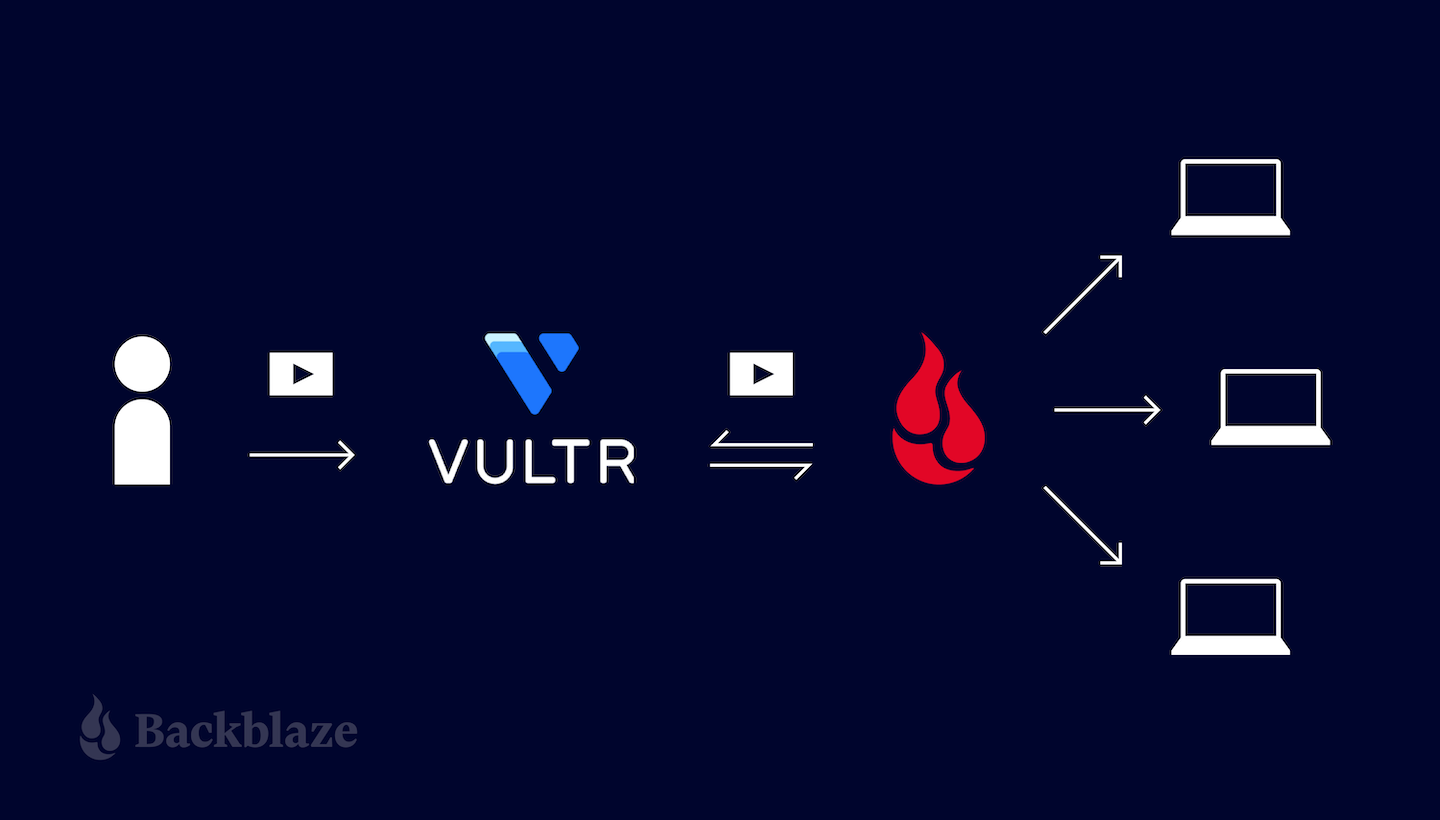
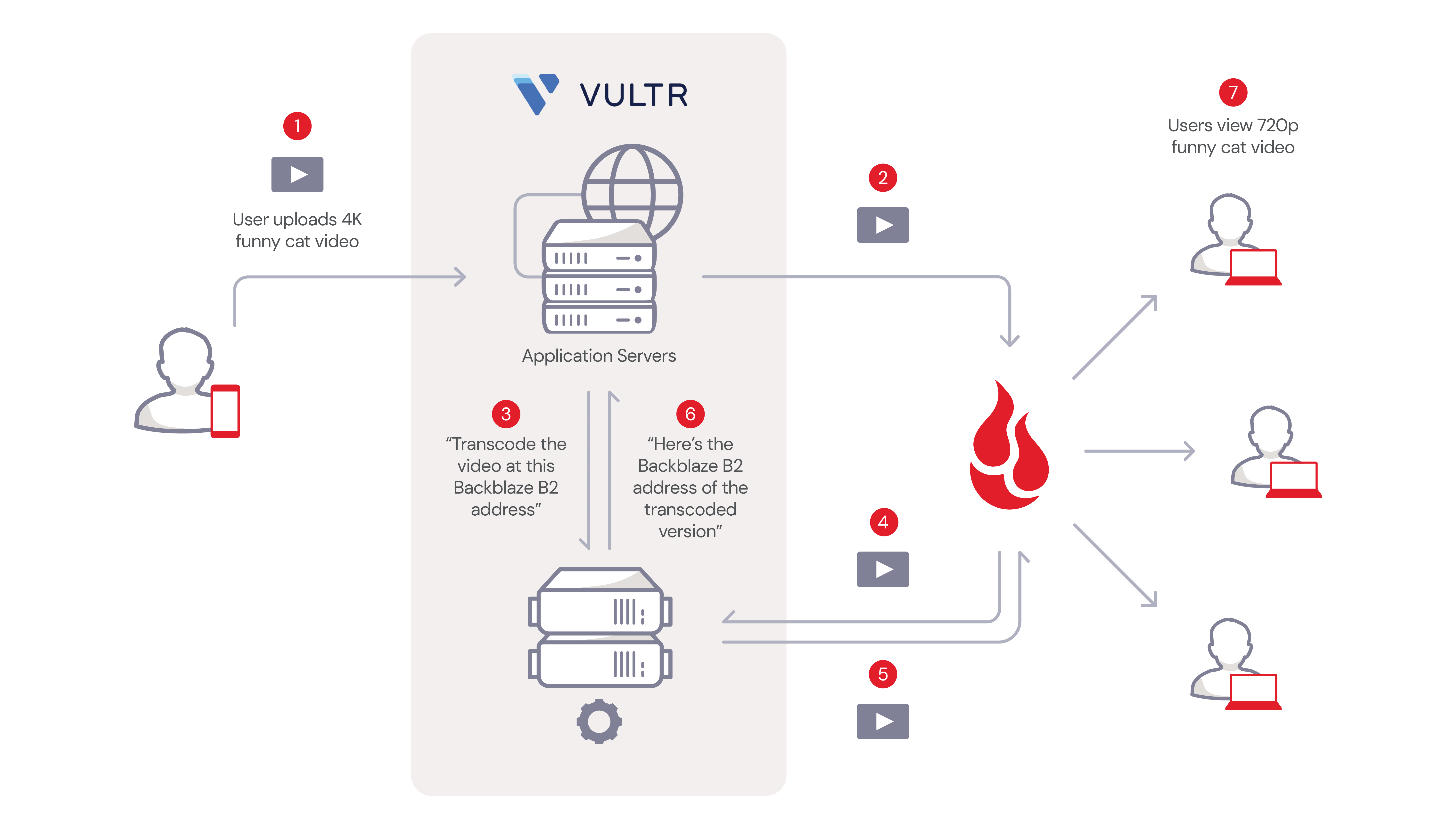
Here’s how the pieces fit together:

  1. The user uploads a video from their browser to the web app.
  2. The web app uploads the raw video to a private bucket on Backblaze B2.
  3. The web app sends a message to the worker instructing it to transcode the video.
  4. The worker downloads the raw video to local storage and transcodes it, also creating a thumbnail image.
  5. The worker uploads the transcoded video and thumbnail to Backblaze B2.
  6. The worker sends a message to the web app with the addresses of the input and output files in Backblaze B2.
  7. Viewers around the world can enjoy the video.

These steps are illustrated in the diagram below.

Click to enlarge.

There’s a more detailed description in the Backblaze B2 Video Sharing Example GitHub repository, as well as all of the code for the web application and the worker. Feel free to fork the repository and use the code as a starting point for your own projects.

Here’s a short video of the system in action:

Some Caveats:

Note that this is very much a sample implementation. The web app and the worker communicate via HTTP—this works just fine for a demo, but doesn’t account for the worker being too busy to receive the message. Nor does it scale to multiple workers. In a production implementation, these issues would be addressed by the components communicating via an asynchronous messaging system such as Kafka. Similarly, this sample transcodes to a single target format: 720p. A real video sharing site would transcode the raw video to a range of formats and resolutions.

Want to Try It for Yourself?

Vultr’s new Cloud Compute Optimized instances are a perfect match for CPU-intensive tasks such as media transcoding. Zero-cost ingress and egress between Backblaze B2 and Vultr’s Infrastructure Cloud allow you to build high performance, scalable applications to satisfy a global audience. Sign up for Backblaze B2 and Vultr’s Infrastructure Cloud today, and get to work!

The post Media Transcoding With Backblaze B2 and Vultr Optimized Cloud Compute appeared first on Backblaze Blog | Cloud Storage & Cloud Backup.

Security updates for Thursday

Post Syndicated from original https://lwn.net/Articles/888288/

Security updates have been issued by Debian (flac, openssl, and openssl1.0), Fedora (nbd, pesign, and rust-regex), openSUSE (ansible, java-1_8_0-openjdk, libreoffice, and stunnel), Oracle (expat, glibc, and virt:ol and virt-devel:rhel), Red Hat (expat, redhat-ds:11.3, and virt:av and virt-devel:av), SUSE (atftp, java-1_8_0-openjdk, libreoffice, python3, and stunnel), and Ubuntu (apache2, bind9, firefox, fuse, and man-db).

Congratulations Cloudflare 2021 Partner Award Winners

Post Syndicated from Matthew Harrell original https://blog.cloudflare.com/congratulations-cloudflare-2021-partner-award-winners/

Congratulations Cloudflare 2021 Partner Award Winners

We’re thrilled to announce the winners of our annual Channel and Alliance Partner Awards for 2021. Throughout a year of continued global disruptions, Cloudflare’s partners kept innovating, expanding their solutions and services capabilities, and accelerated their growth with us and our platform. It is important that we recognize and award the partners of ours who stood out in staying laser-focused on delivering outstanding business outcomes for customers.

Congratulations Cloudflare 2021 Partner Award Winners

With the ongoing shift in 2021 to remote, flexible work forces and the evolving cyber threat landscape, more than ever organizations across every industry and the public sector were looking to Cloudflare, and to work hand in hand with partners who can deliver a modern, Zero Trust approach to security. Seeing this consistent need, we are continuing to build and support new levels of partner-led growth in the year ahead such as with a new partner services program for SASE and Zero Trust which we launched at the start of 2022.

Please join us in congratulating the impressive achievements of our partner award winners over this past year! They enable the further delivery of Internet security, performance, and reliability for organizations of all sizes and types — and we are thrilled to be recognizing their impact.

Americas Partner Awards

Congratulations Cloudflare 2021 Partner Award Winners

GSI Partner of the Year: Accenture Federal Services

Honors the GSI partner who has demonstrated outstanding, wide-ranging go-to-market collaboration with Cloudflare resulting in significant customer outcomes and partnership revenue growth.

MSP Partner of the Year: Rackspace Technology
Honors the top performing MSP partner in the Americas.

Channel Partner of the Year:  Optiv
Honors the top performing channel partner who has demonstrated phenomenal sales achievement and growth in 2021.

Distributor Partner of the Year:  AVANT
Honors the top performing distributor who has best represented Cloudflare, enabling their reseller partners to secure customer sales and growth revenue streams.

Rising Star Partner of the Year:  GuidePoint Security
Honors the partner who made substantial investments to grow our shared business, achieving not only full certification compliance but also exceeding revenue targets.

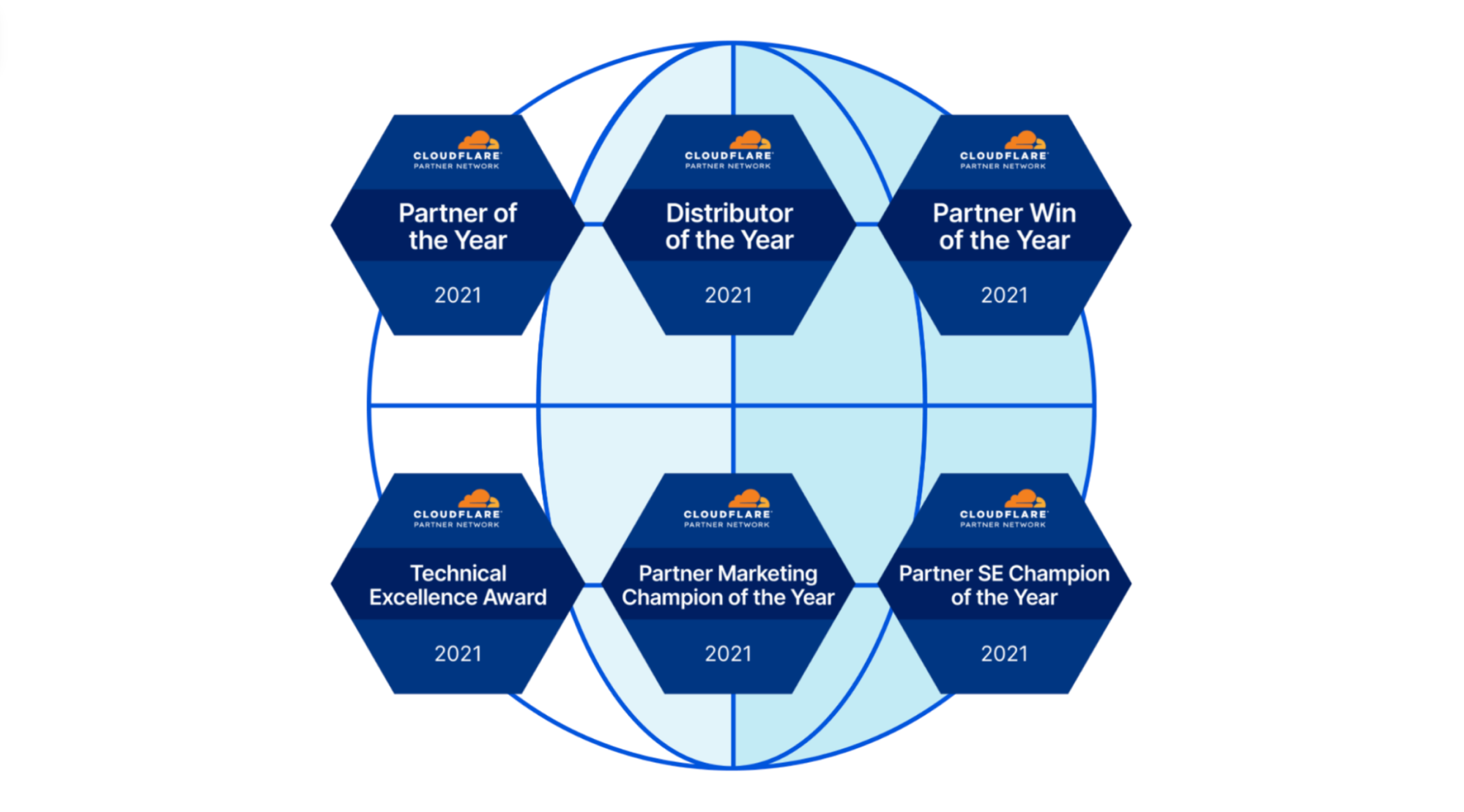
APJC Partner Awards

Congratulations Cloudflare 2021 Partner Award Winners

Partners of the Year:
Honors the top performing partners in their respective business territories who have demonstrated phenomenal sales achievement and growth in 2021.

Distributor Partner of the Year:
Honors the top performing distributor who has best represented Cloudflare and enabled partners to secure customer sales and grow revenue streams.

Partner Win of the Year:
Honors the partner who has brought in the largest, most strategic deal and deployed a comprehensive end-to-end security, performance and reliability solution to its customer.

Technical Excellence Award:
Honors the partner companies whose SEs demonstrated great knowledge and expertise in leading the customer’s Cloudflare (presales & POC) experience.

Partner SE Champions of the Year:
Honors the partner Solution Engineers (SEs) who have demonstrated depth of knowledge & expertise in Cloudflare solutions through earned certifications and went above & beyond in delivering the Cloudflare experience for customers.

Partner Marketing Champions:
Honors the partners who have demonstrated outstanding collaboration and business outcomes in marketing Cloudflare solutions.

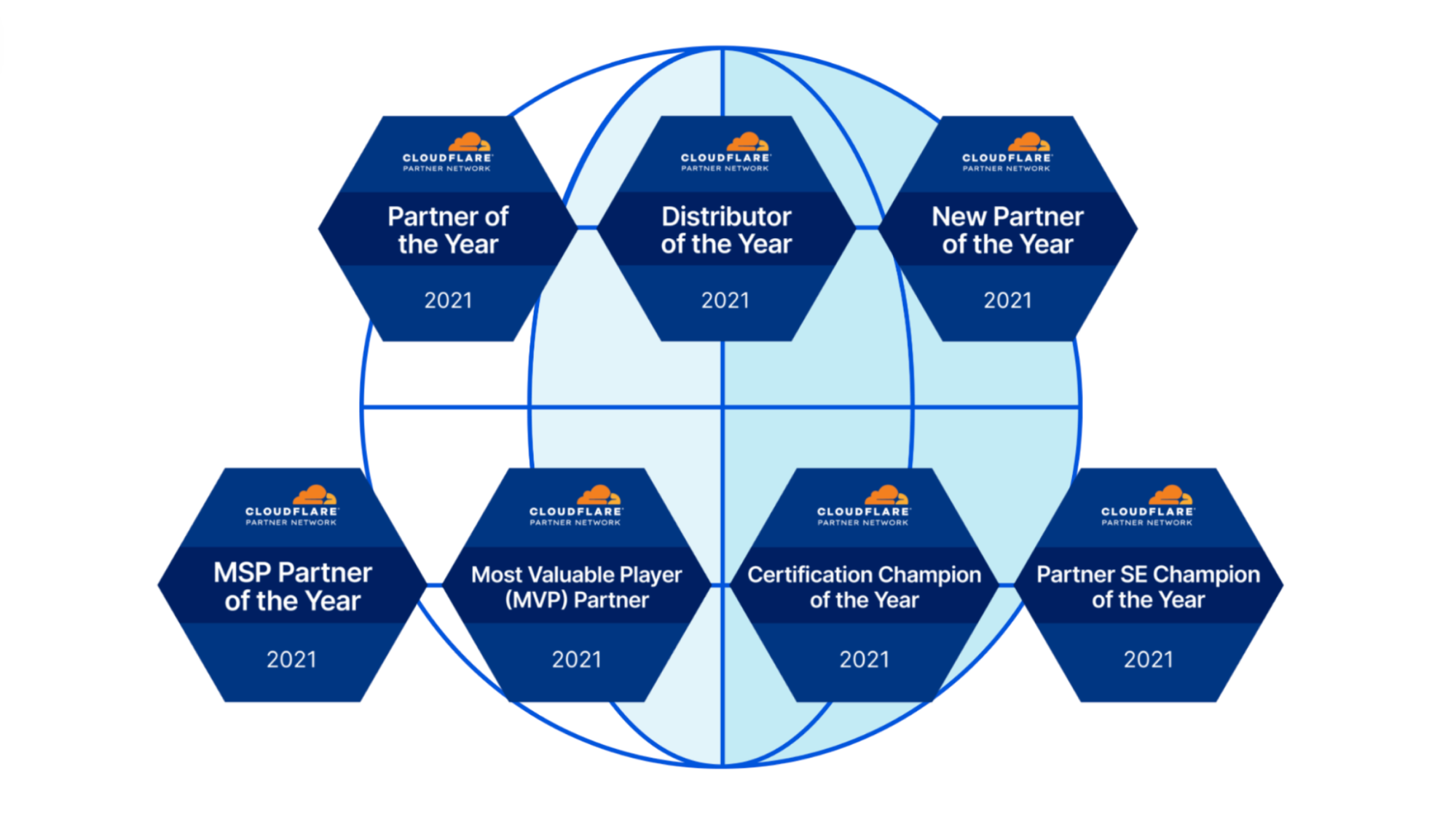
EMEA Partner Awards

Congratulations Cloudflare 2021 Partner Award Winners

Partner of the Year: e92 Plus
Honors the top performing partner who has demonstrated phenomenal sales achievement and growth in 2021.

Distributor of the Year: V-Valley
Honors the top performing distributor who has best represented Cloudflare and enabled partners to secure customer sales and grow revenue streams.

MSP Partner of the Year: Rackspace Technology
Honors the top performing MSP partner across the EMEA region.

New Partner of the Year: Dept Agency
Honors the partner who, although new to the Cloudflare Partner Network in 2021, has already made substantial investments to grow our shared business achieving not only full certification compliance but also exceeding revenue targets.

Most Valuable Player (MVP) Partner:  Softline
Honors the partner who has delivered stellar service to our joint customers, and also engaged in certifications and registered deals.

Cloudflare Certification Champions of the Year: Concat AG, and DC Communication
Honors partner companies whose teams earned the highest total number of Cloudflare certifications.

Partner SEs Champions of the Year:
Honors the partner SEs who have demonstrated depth of knowledge & expertise in Cloudflare solutions through earned certifications and went above and beyond in delivering the Cloudflare experience for customers.

For more information on the Cloudflare Partner Network and its  programs, check out this short video overview or visit our Partner Portal.

3 Ways InsightIDR Customers Leverage the MITRE ATT&CK Framework

Post Syndicated from KJ McCann original https://blog.rapid7.com/2022/03/17/3-ways-insightidr-customers-leverage-the-mitre-att-ck-framework/

3 Ways InsightIDR Customers Leverage the MITRE ATT&CK Framework

The MITRE ATT&CK framework is one of the most comprehensive and reputable knowledge bases of known adversary tactics, pragmatic mitigation strategies, and prudent detection recommendations available today. ATT&CK is freely available and widely used by defenders in industry and government to find gaps in visibility, defensive tools, and processes as they evaluate and select options to improve their network defense. In addition, MITRE Engenuity makes the methodology and resulting data publicly available, so other organizations cam benefit and conduct their own analysis and interpretation.

The framework strengthens the Detection and Investigation Management experiences within InsightIDR by providing context, evidence, and recommendations all in one place. Here’s a closer look at 3 ways to bring that value to life.

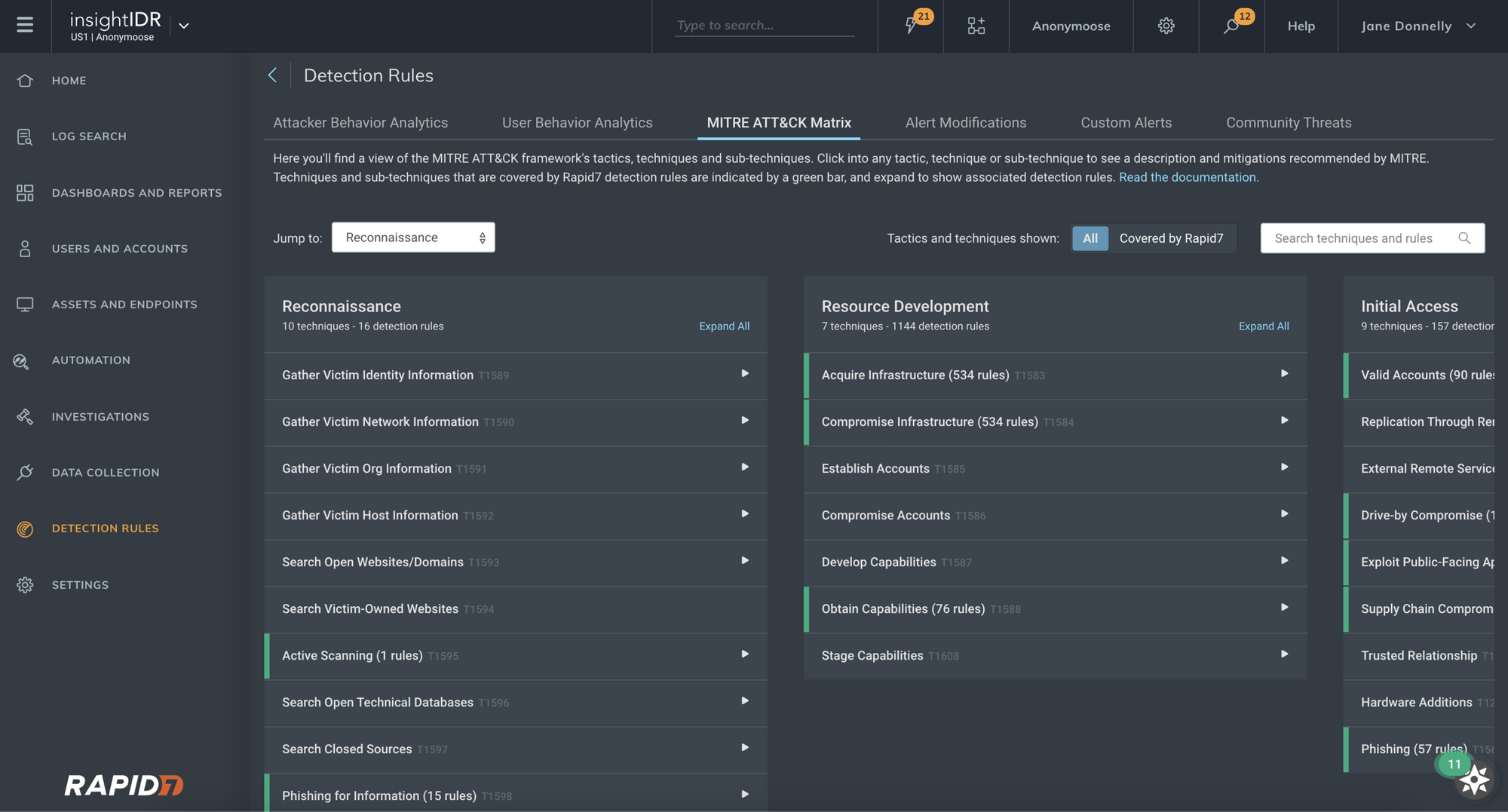
1. Visualize MITRE ATT&CK coverage

  • Visualize which techniques and sub-techniques you have detections mapped to with information on each threat actor’s TTPs (Tactics, Techniques, and Procedures).
  • Drill down and see the specific detection rules that map to each area of the framework in your environment.
  • MITRE ATT&CK context and filters apply automatically against all of your data, helping you detect and respond to attacks early and giving you the alert fidelity you want, filled with the context you need.
3 Ways InsightIDR Customers Leverage the MITRE ATT&CK Framework

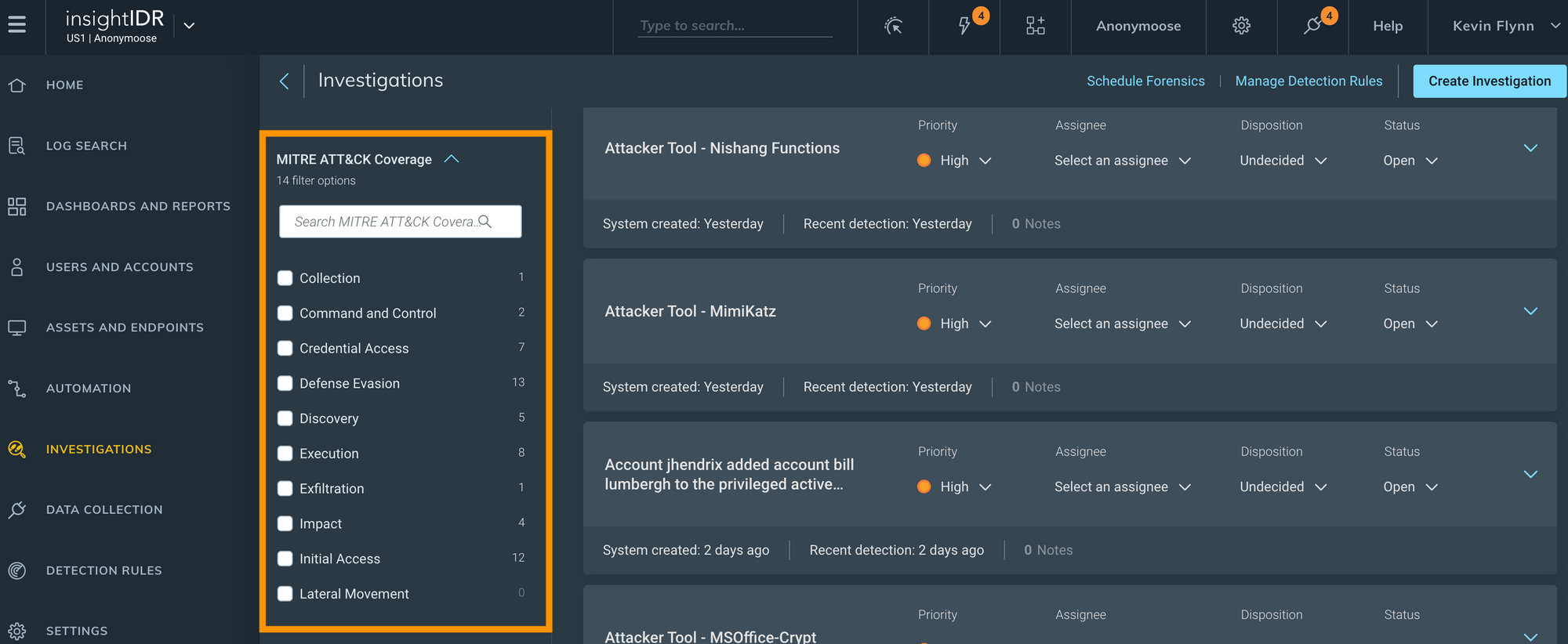
2. Triage and prioritize faster with MITRE filters

  • Tune your detection rules based on the ATT&CK context and your unique security environment to reduce benign alerts and bring high-priority alerts to the forefront.
  • Understand the context behind an alert by viewing information about the attacker’s underlying techniques and sub techniques.
  • Filter and sort your alerts and investigations based on the MITRE info to distill down to where it really matters when time is of the essence.
3 Ways InsightIDR Customers Leverage the MITRE ATT&CK Framework

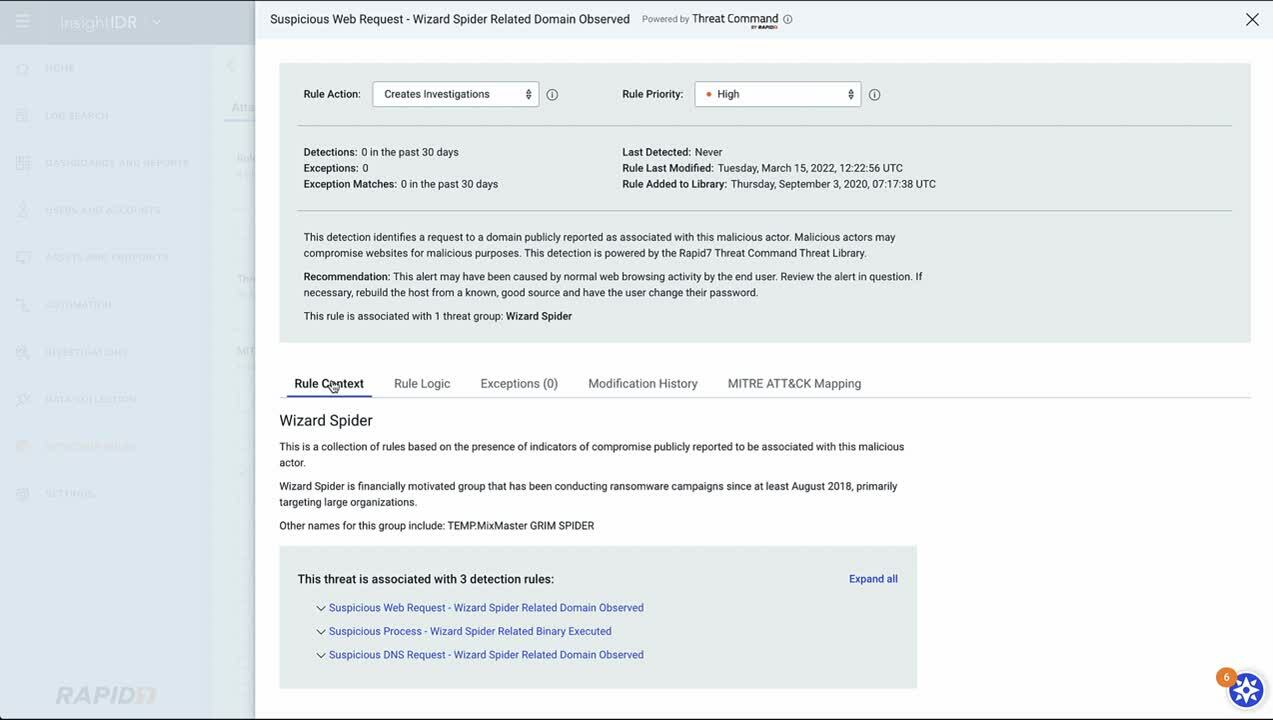
3. Accelerate mean time to respond (MTTR)

  • Users can quickly prioritize which investigations are most critical to tackle first.
  • Determine how to respond to the attack with the mitigation recommendations provided by MITRE ATT&CK.
  • Leverage the strategies provided to work internally and take proactive steps within the organization to prevent the next attack, staying one step ahead of attackers.
  • Use the MITRE insights provided in the evidence panel to inform the decision-makers on the best way to proceed.


3 Ways InsightIDR Customers Leverage the MITRE ATT&CK Framework

With InsightIDR, your detections are vetted by a team of professional security operations center (SOC) analysts and mapped to MITRE ATT&CK to remove the guessing game of what an attacker might do next. If you’re looking to hear more from us on MITRE, our Rapid7 MDR team shared their thoughts on MITRE ATT&CK here.

Additional reading:

NEVER MISS A BLOG

Get the latest stories, expertise, and news about security today.

Protect all network traffic with Cloudflare

Post Syndicated from Annika Garbers original https://blog.cloudflare.com/protect-all-network-traffic/

Protect all network traffic with Cloudflare

Protect all network traffic with Cloudflare

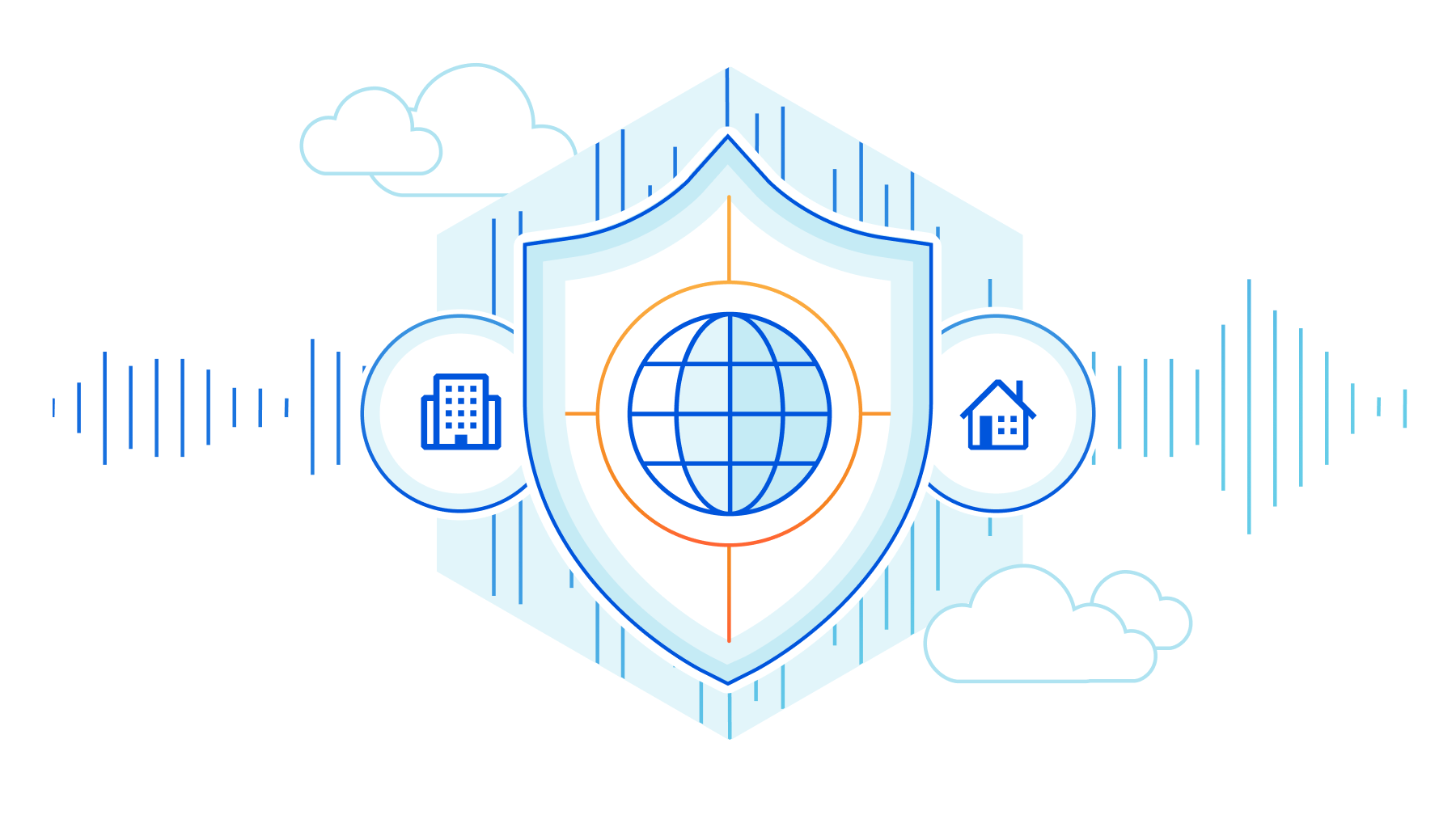
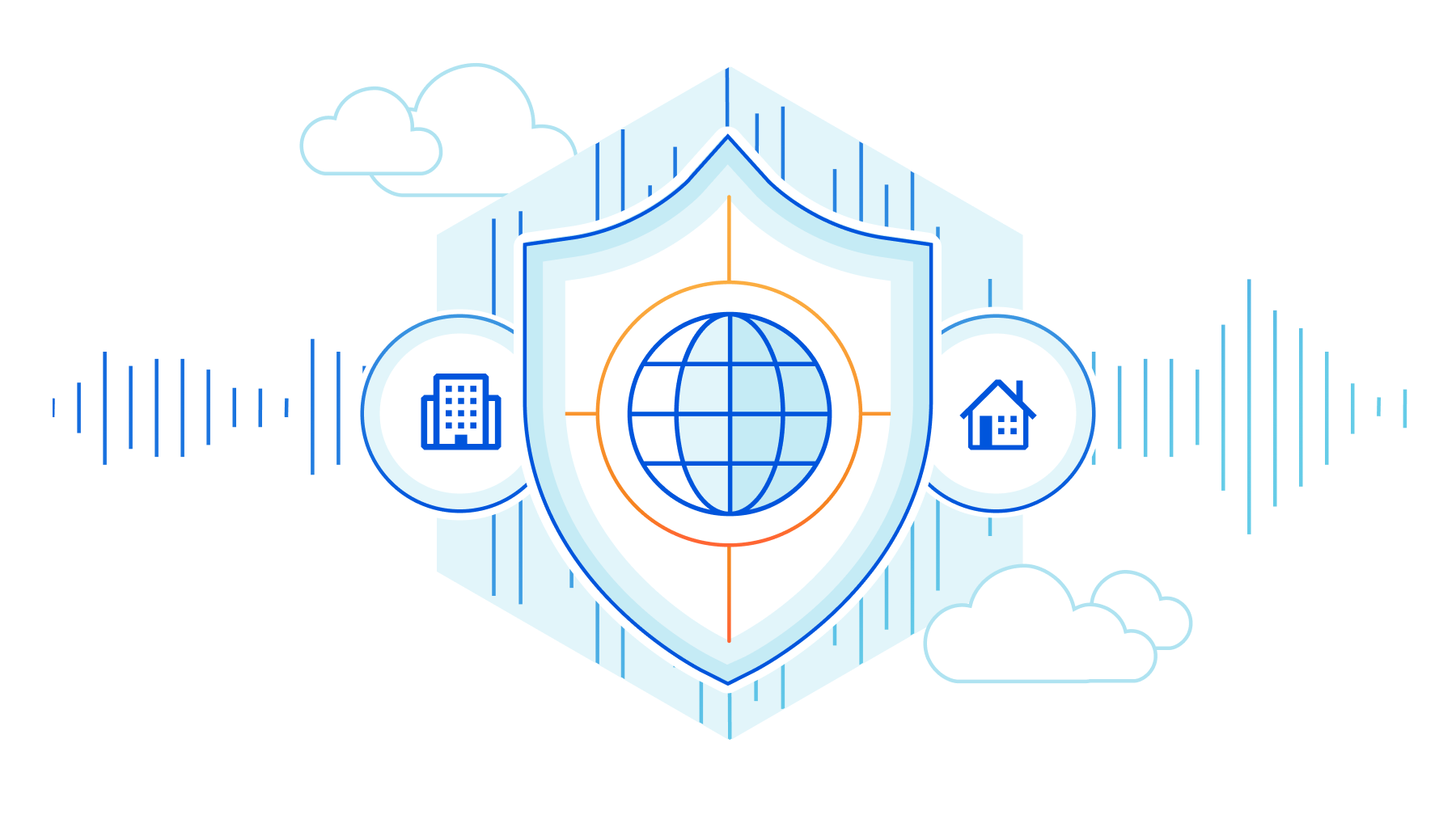
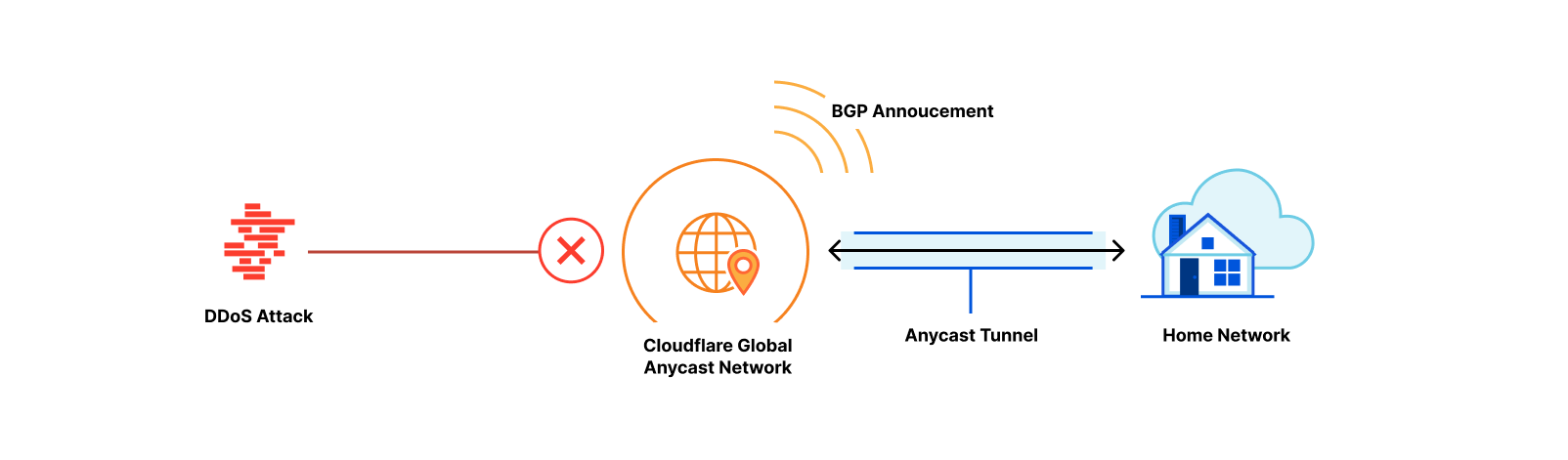
Magic Transit protects customers’ entire networks—any port/protocol—from DDoS attacks and provides built-in performance and reliability. Today, we’re excited to extend the capabilities of Magic Transit to customers with any size network, from home networks to offices to large cloud properties, by offering Cloudflare-maintained and Magic Transit-protected IP space as a service.

What is Magic Transit?

Magic Transit extends the power of Cloudflare’s global network to customers, absorbing all traffic destined for your network at the location closest to its source. Once traffic lands at the closest Cloudflare location, it flows through a stack of security protections including industry-leading DDoS mitigation and cloud firewall. Detailed Network Analytics, alerts, and reporting give you deep visibility into all your traffic and attack patterns. Clean traffic is forwarded to your network using Anycast GRE or IPsec tunnels or Cloudflare Network Interconnect. Magic Transit includes load balancing and automatic failover across tunnels to steer traffic across the healthiest path possible, from everywhere in the world.

Protect all network traffic with Cloudflare
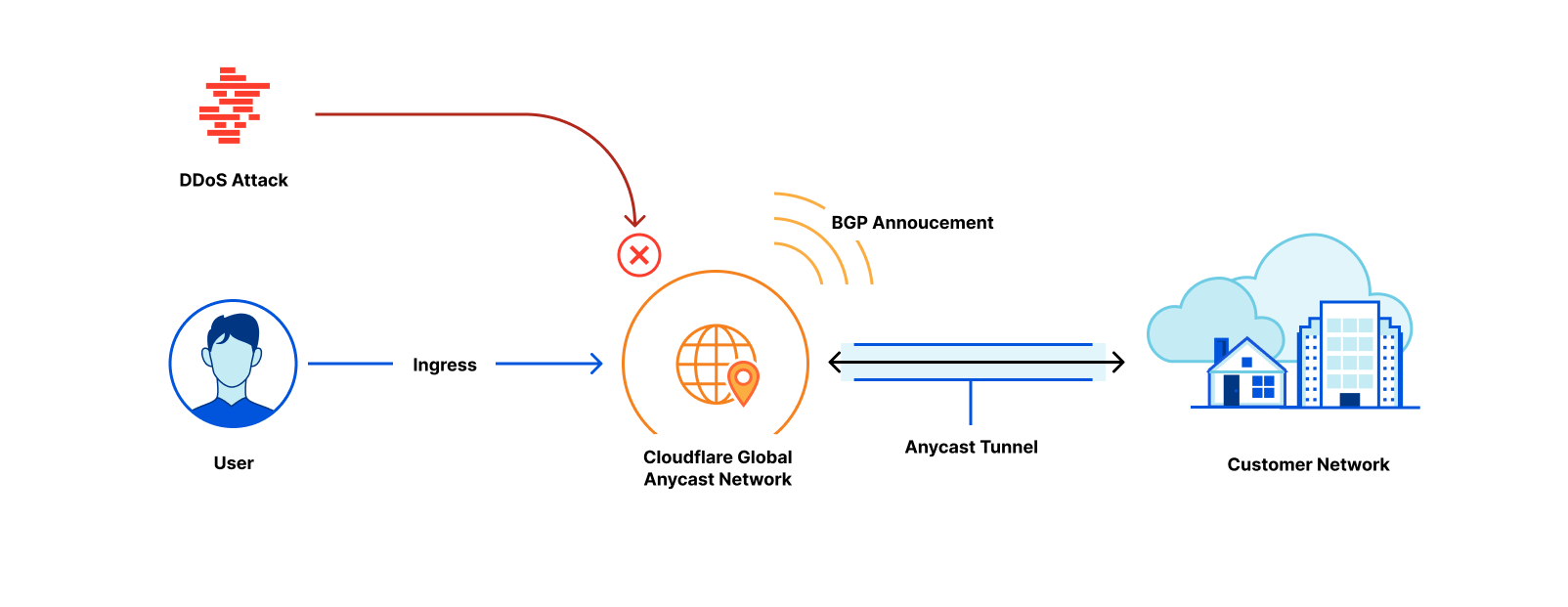
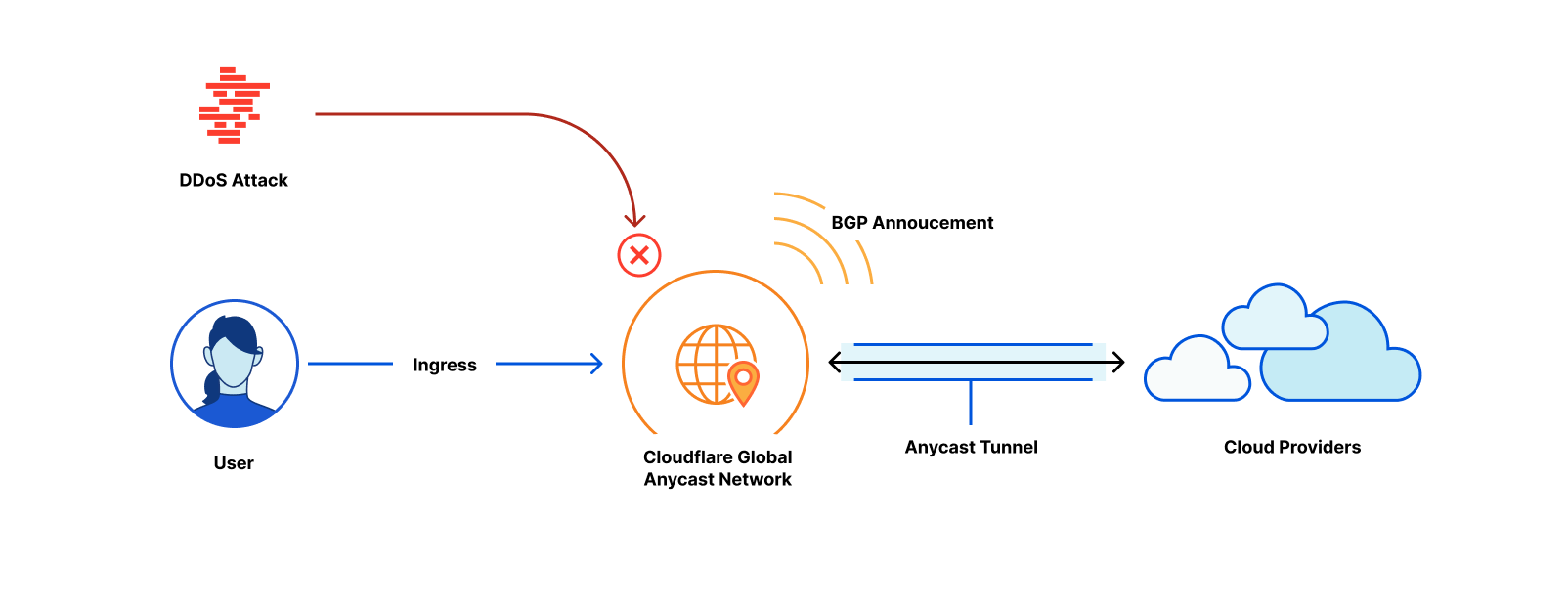
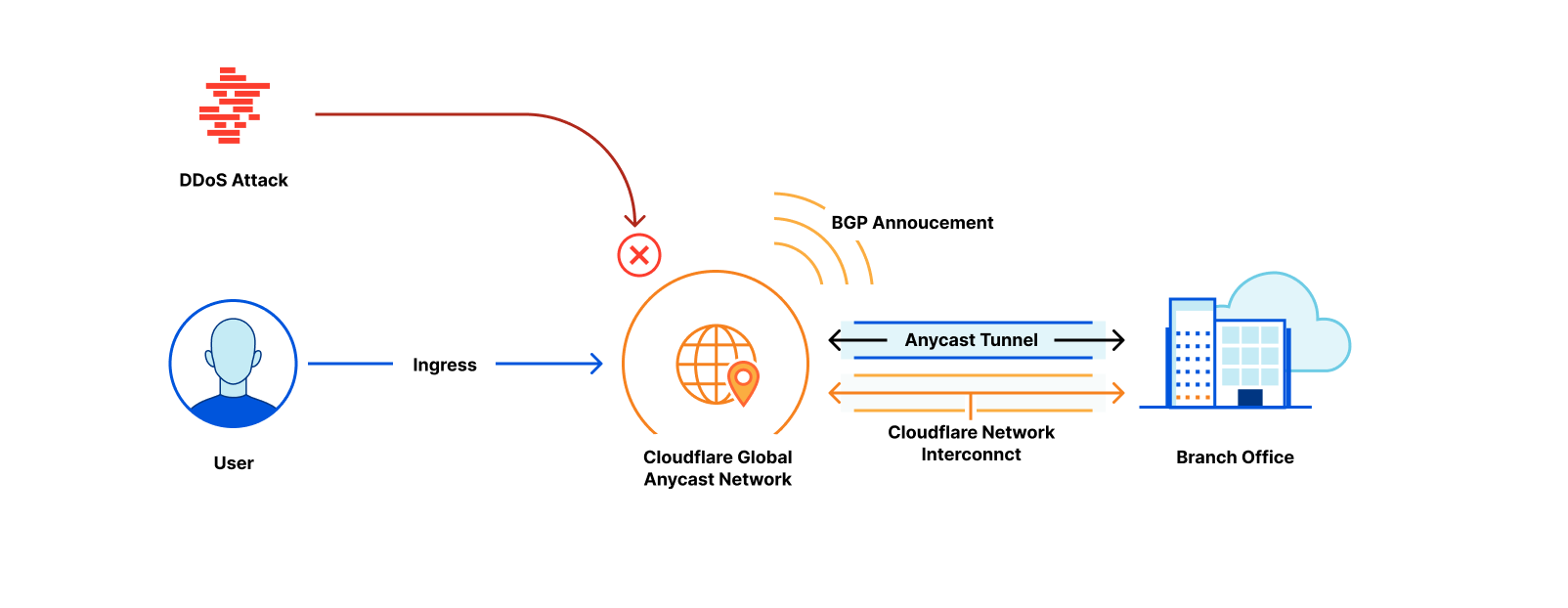
Magic Transit architecture: Internet BGP advertisement attracts traffic to Cloudflare’s network, where attack mitigation and security policies are applied before clean traffic is forwarded back to customer networks with an Anycast GRE tunnel or Cloudflare Network Interconnect.

The “Magic” is in our Anycast architecture: every server across our network runs every Cloudflare service, so traffic can be processed wherever it lands. This means the entire capacity of our network—121+Tbps as of this post—is available to block even the largest attacks. It also drives huge benefits for performance versus traditional “scrubbing center” solutions that route traffic to specialized locations for processing, and makes onboarding much easier for network engineers: one tunnel to Cloudflare automatically connects customer infrastructure to our entire network in over 250 cities worldwide.

What’s new?

Historically, Magic Transit has required customers to bring their own IP addresses—a minimum of a class C IP block, or /24—in order to use this service. This is because a /24 is the minimum prefix length that can be advertised via BGP on the public Internet, which is how we attract traffic for customer networks.

But not all customers have this much IP space; we’ve talked to many of you who want IP layer protection for a smaller network than we’re able to advertise to the Internet on your behalf. Today, we’re extending the availability of Magic Transit to customers with smaller networks by offering Magic Transit-protected, Cloudflare-managed IP space. Starting now, you can direct your network traffic to dedicated static IPs and receive all the benefits of Magic Transit including industry leading DDoS protection, visibility, performance, and resiliency.

Let’s talk through some new ways you can leverage Magic Transit to protect and accelerate any network.

Consistent cross-cloud security

Organizations adopting a hybrid or poly-cloud strategy have struggled to maintain consistent security controls across different environments. Where they used to manage a single firewall appliance in a datacenter, security teams now have a myriad of controls across different providers—physical, virtual, and cloud-based—all with different capabilities and control mechanisms.

Cloudflare is the single control plane across your hybrid cloud deployment, allowing you to manage security policies from one place, get uniform protection across your entire environment, and get deep visibility into your traffic and attack patterns.

Protect all network traffic with Cloudflare

Protecting branches of any size

As DDoS attack frequency and variety continues to grow, attackers are getting more creative with angles to target organizations. Over the past few years, we have seen a consistent rise in attacks targeted at corporate infrastructure including internal applications. As the percentage of a corporate network dependent on the Internet continues to grow, organizations need consistent protection across their entire network.

Now, you can get any network location covered—branch offices, stores, remote sites, event venues, and more—with Magic Transit-protected IP space. Organizations can also replace legacy hardware firewalls at those locations with our built-in cloud firewall, which filters bidirectional traffic and propagates changes globally within seconds.

Protect all network traffic with Cloudflare

Keeping streams alive without worrying about leaked IPs

Generally, DDoS attacks target a specific application or network in order to impact the availability of an Internet-facing resource. But you don’t have to be hosting anything in order to get attacked, as many gamers and streamers have unfortunately discovered. The public IP associated with a home network can easily be leaked, giving attackers the ability to directly target and take down a live stream.

As a streamer, you can now route traffic from your home network through a Magic Transit-protected IP. This means no more worrying about leaking your IP: attackers targeting you will have traffic blocked at the closest Cloudflare location to them, far away from your home network. And no need to worry about impact to your game: thanks to Cloudflare’s globally distributed and interconnected network, you can get protected without sacrificing performance.

Protect all network traffic with Cloudflare

Get started today

This solution is available today; learn more or contact your account team to get started.

Clientless Web Isolation is now generally available

Post Syndicated from Tim Obezuk original https://blog.cloudflare.com/clientless-web-isolation-general-availability/

Clientless Web Isolation is now generally available

Clientless Web Isolation is now generally available

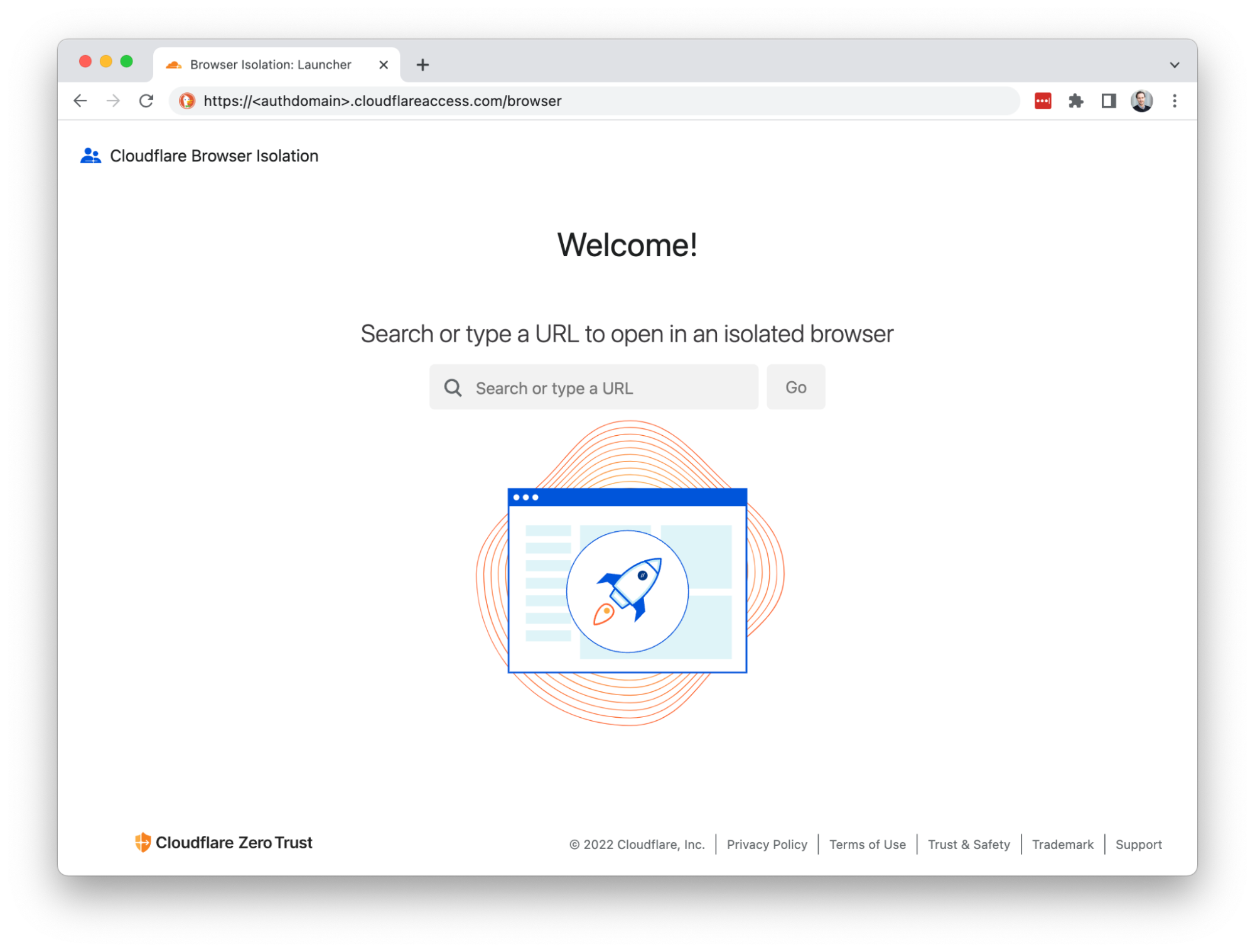
Today, we’re excited to announce that Clientless Web Isolation is generally available. A new on-ramp for Browser Isolation that natively integrates Zero Trust Network Access (ZTNA) with the zero-day, phishing and data-loss protection benefits of remote browsing for users on any device browsing any website, internal app or SaaS application. All without needing to install any software or configure any certificates on the endpoint device.

Cloudflare’s clientless web isolation simplifies connections to remote browsers through a hyperlink (e.g.: https://<your-auth-domain>.cloudflareaccess.com/browser). We explored use cases in detail in our beta announcement post, but here’s a quick refresher on the use cases that clientless isolated browsing enables:

Share secure browsing across the entire team on any device

Simply navigating to Clientless Web Isolation will land your user such as an analyst, or researcher in a remote browser, ready to securely conduct their research or investigation without exposing their public IP or device to potentially malicious code on the target website.

Clientless Web Isolation is now generally available

Suspicious hyperlinks and PDF documents from sensitive applications can be opened in a remote browser by rewriting the link with the clientless endpoint. For example:

https://<authdomain>.cloudflareaccess.com/browser/https://www.example.com/suspiciouslink

This is powerful when integrated into a security incident monitoring tool, help desk or any tool where users are clicking unknown or untrusted hyperlinks.

Integrate Browser Isolation with a third-party secure web gateway

Browser Isolation can be integrated with a legacy secure web gateway through the use of a redirecting custom block page. Integrating Browser Isolation with your existing secure web gateway enables safe browsing without the support burden of micromanaging block lists.

See our developer documentation for example block pages.

Securely access sensitive data on BYOD devices endpoints

In an ideal world, users would always access sensitive data from corporate devices. Unfortunately it’s not possible or feasible: contractors, by definition, rely on non-corporate devices. Employees may not be able to take their device home, it is unavailable due to a disaster or travel to high risk areas without their managed machine.

Historically IT departments have worked around this by adopting legacy Virtual Desktop Infrastructure (VDI). This made sense a decade ago when most business applications were desktop applications. Today this architecture makes little sense when most business applications live in the browser. VDI is a tremendously expensive method to deliver BYOD support and still requires complex network administration to connect with DNS filtering and Secure Web Gateways.

All traffic from Browser Isolation to the Internet or an Access protected application is secured and inspected by the Secure Web Gateway out of the box. It only takes a few clicks to require Gateway device posture checks for users connecting over Clientless Web Isolation.

Get started

Clientless web isolation is available as a capability for all Cloudflare Zero Trust subscribers who have added Browser Isolation to their plan. If you are interested in learning more about use cases see the beta announcement post and our developer documentation.

Packet captures at the edge

Post Syndicated from Annika Garbers original https://blog.cloudflare.com/packet-captures-at-edge/

Packet captures at the edge

Packet captures at the edge

Packet captures are a critical tool used by network and security engineers every day. As more network functions migrate from legacy on-prem hardware to cloud-native services, teams risk losing the visibility they used to get by capturing 100% of traffic funneled through a single device in a datacenter rack. We know having easy access to packet captures across all your network traffic is important for troubleshooting problems and deeply understanding traffic patterns, so today, we’re excited to announce the general availability of on-demand packet captures from Cloudflare’s global network.

What are packet captures and how are they used?

A packet capture is a file that contains all packets that were seen by a particular network box, usually a firewall or router, during a specific time frame. Packet captures are a powerful and commonly used tool for debugging network issues or getting better visibility into attack traffic to tighten security (e.g. by adding firewall rules to block a specific attack pattern).

A network engineer might use a pcap file in combination with other tools, like mtr, to troubleshoot problems with reachability to their network. For example, if an end user reports intermittent connectivity to a specific application, an engineer can set up a packet capture filtered to the user’s source IP address to record all packets received from their device. They can then analyze that packet capture and compare it to other sources of information (e.g. pcaps from the end user’s side of the network path, traffic logs and analytics) to understand the magnitude and isolate the source of the problem.

Security engineers can also use packet captures to gain a better understanding of potentially malicious traffic. Let’s say an engineer notices an unexpected spike in traffic that they suspect could be an attempted attack. They can grab a packet capture to record the traffic as it’s hitting their network and analyze it to determine whether the packets are valid. If they’re not, for example, if the packet payload is randomly generated gibberish, the security engineer can create a firewall rule to block traffic that looks like this from entering their network.

Packet captures at the edge
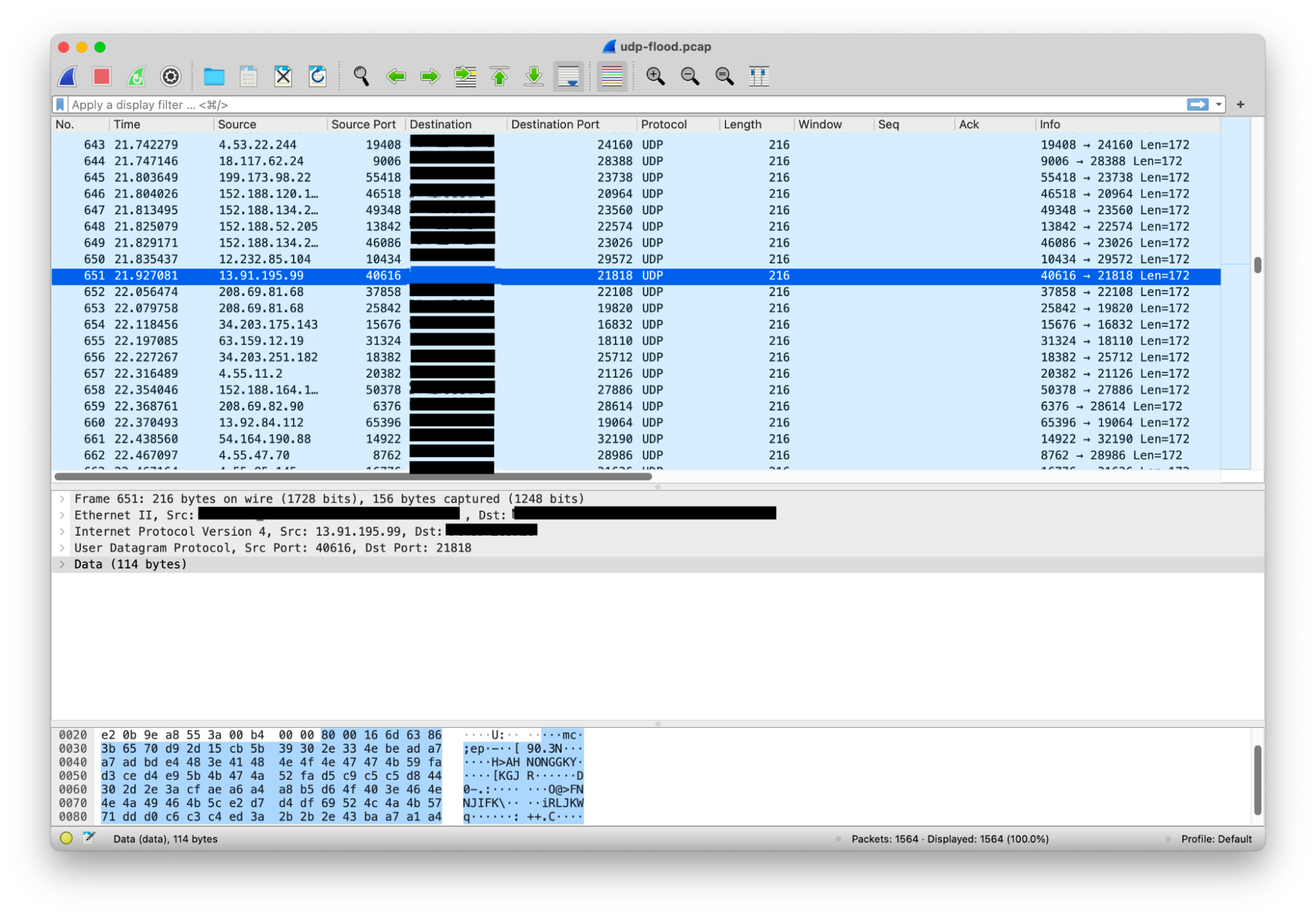
Example of a packet capture from a recent DDoS attack targeted at Cloudflare infrastructure. The contents of this pcap can be used to create a “signature” to block the attack.

Fragmenting traffic creates gaps in visibility

Traditionally, users capture packets by logging into their router or firewall and starting a process like tcpdump. They’d set up a filter to only match on certain packets and grab the file. But as networks have become more fragmented and users are moving security functions out to the edge, it’s become increasingly challenging to collect packet captures for relevant traffic. Instead of just one device that all traffic flows through (think of a drawbridge in the “castle and moat” analogy) engineers may have to capture packets across many different physical and virtual devices spread across locations. Many of these packets may not allow taking pcaps at all, and then users have to try to  stitch them back together to create a full picture of their network traffic. This is a nearly impossible task today and only getting harder as networks become more fractured and complex.

Packet captures at the edge

On-demand packet captures from the Cloudflare global network

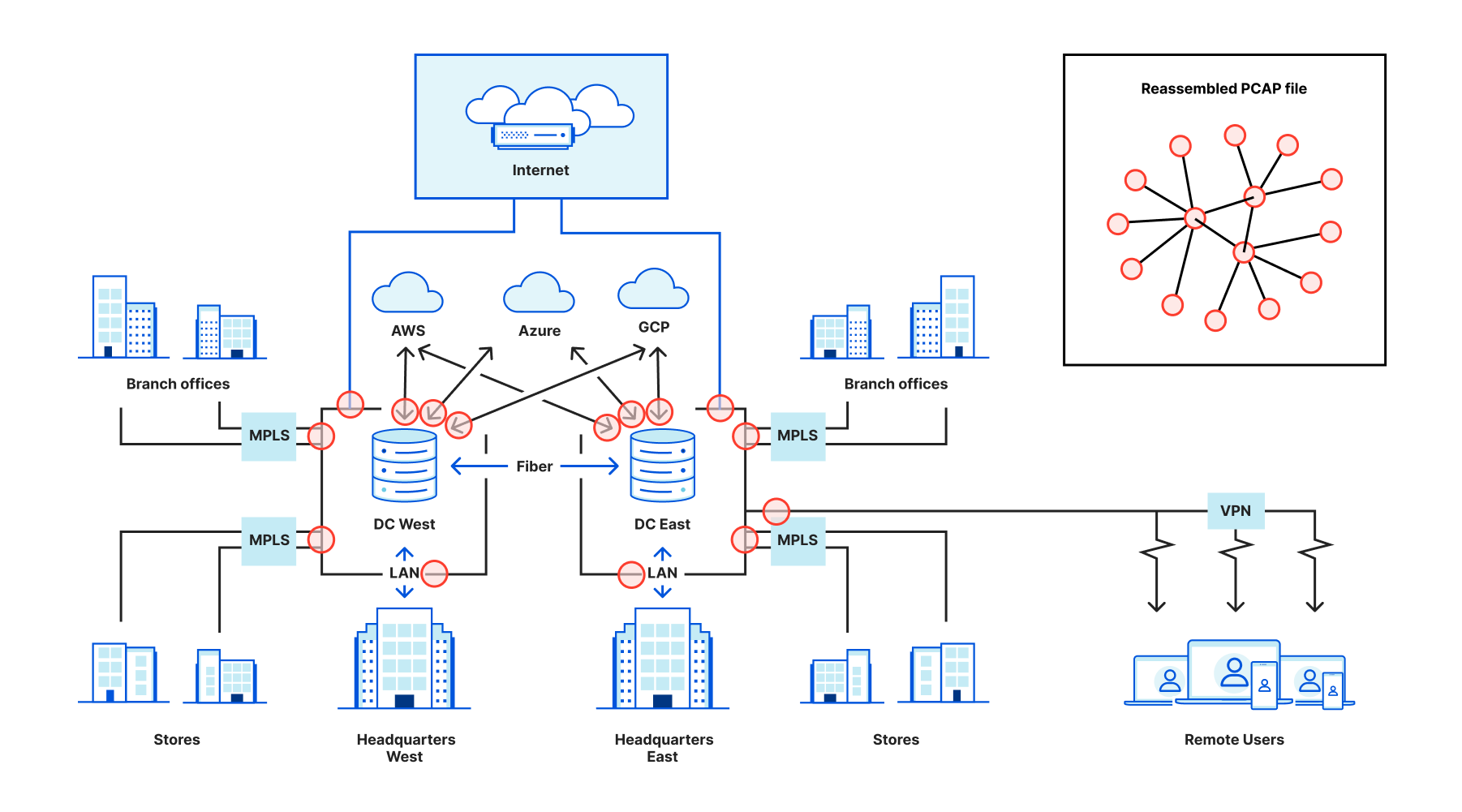
With Cloudflare, you can regain this visibility. With Magic Transit and Magic WAN, customers route all their public and private IP traffic through Cloudflare’s network to make it more secure, faster, and more reliable, but also to increase visibility. You can think of Cloudflare like a giant, globally distributed version of the drawbridge in our old analogy: because we act as a single cloud-based router and firewall across all your traffic, we can capture packets across your entire network and deliver them back to you in one place.

How does it work?

Customers can request a packet capture using our Packet Captures API. To get the packets you’re looking for you can provide a filter with the IP address, ports, and protocol of the packets you want.

curl -X POST https://api.cloudflare.com/client/v4/accounts/${account_id}/pcaps \
-H 'Content-Type: application/json' \
-H 'X-Auth-Email: [email protected]' \
-H 'X-Auth-Key: 00000000000' \
--data '{
        "filter_v1": {
               "source_address": "1.2.3.4",
               "protocol": 6
        },
        "time_limit": 300,
        "byte_limit": "10mb",
        "packet_limit": 10000,
        "type": "simple",
        "system": "magic-transit"
}'

Example of a request for packet capture using our API.

We leverage nftables to apply the filter to the customer’s incoming packets and log them using nflog:

table inet pcaps_1 {
    chain pcap_1 {
        ip protocol 6 ip saddr 1.2.3.4 log group 1 comment “packet capture”
    }
}

Example nftables configuration used to filter log customer packets

nflog creates a netfilter socket through which logs of a packet are sent from the Linux kernel to user space. In user space, we use tcpdump to read packets off the netfilter socket and generate a packet capture file:

tcpdump -i nflog:1 -w pcap_1.pcap

Example tcpdump command to create a packet capture file.

Usually tcpdump is used by listening to incoming packets on a network interface, but in our case we configure it to read packet logs from an nflog group. tcpdump will convert the packet logs into a packet capture file.

Once we have a packet capture file, we need to deliver it to customers. Because packet capture files can be large and contain sensitive information (e.g. packet payloads), we send them to customers directly from our machines to a cloud storage service of their choice. This means we never store sensitive data, and it’s easy for customers to manage and store these large files.

Get started today

On-demand packet captures are now generally available for customers who have purchased the Advanced features of Magic Firewall. The packet capture API allows customers to capture the first 160 bytes of packets, sampled at a default rate of 1/100. More functionality including full packet captures and on-demand packet capture control in the Cloudflare Dashboard is coming in the following weeks. Contact your account team to stay updated on the latest!

Cloudflare and Aruba partner to deliver a seamless global secure network from the branch to the cloud

Post Syndicated from Mythili Prabhu original https://blog.cloudflare.com/cloudflare-aruba-partnership/

Cloudflare and Aruba partner to deliver a seamless global secure network from the branch to the cloud

Cloudflare and Aruba partner to deliver a seamless global secure network from the branch to the cloud

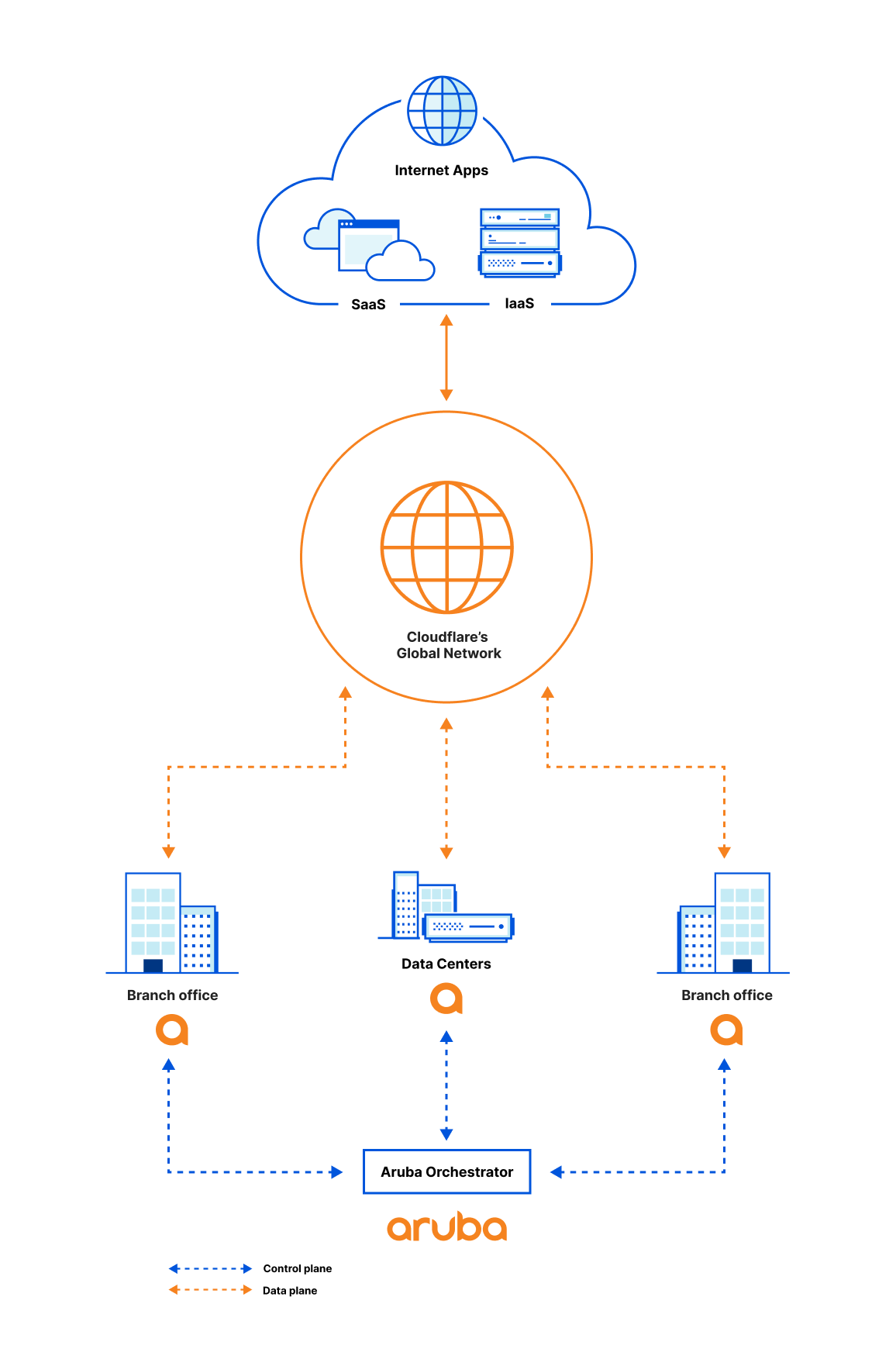
Today we are excited to announce that Cloudflare and Aruba are working together to develop a solution that will enable Aruba customers to connect EdgeConnect SD-WAN’s with Cloudflare’s global network to further secure their corporate traffic with Cloudflare One. Whether organizations need to secure Internet-bound traffic from branch offices using Cloudflare’s Secure Web Gateway & Magic Firewall, or enforce firewall policies for east/west traffic between offices via Magic Firewall, we have them covered. This gives customers peace of mind that they have consistent global security from Cloudflare while retaining granular control of their inter-branch and Internet-bound traffic policies from their Aruba EdgeConnect appliances.

SD-WAN solution

A software-defined WAN (SD-WAN) is an evolution of a WAN (wide area network) that simplifies the underlying architecture. Unlike traditional WAN architecture models where expensive leased, and MPLS links are used, SD-WAN can efficiently use a combination of private lines and the public Internet. It brings together the best of both worlds to provide an integrated solution to network administrators in managing and scaling their network and resources with ease.

Aruba’s EdgeConnect SD-WAN solution

We are proud to announce our first enhanced SD-WAN integration. Aruba’s EdgeConnect solution is an industry leader for WAN edge infrastructure. Aruba’s solution offers both physical and virtual appliances to create logical network overlays across the wide area network, enabling network administrators to create multiple distinct traffic profiles that govern how enterprise application traffic is forwarded between office branches and the Internet. In the Aruba EdgeConnect solution, the Aruba Orchestrator is used to configure and manage the entire SD-WAN including EdgeConnect appliances located in branch offices.

Cloudflare and Aruba partner to deliver a seamless global secure network from the branch to the cloud
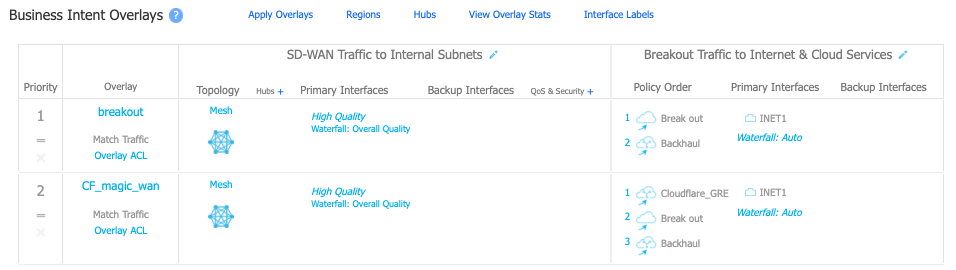
EdgeConnect UI showing overlays directing traffic to Cloudflare or to local breakout.

Cloudflare One on-ramps

Cloudflare One unifies cloud-native security and access services to meet today’s demanding and evolving architecture needs. Our Zero Trust and Magic network services products securely connect remote users, branch offices, and data centers to the application and Internet resources they need with smart routing and traffic acceleration — all with a single control plane to apply network and Zero Trust security policies to application access and Internet browsing.

So what’s new? We previously announced many ways to on-ramp customer traffic to Cloudflare One. Our goal with this integration is simple: help our mutual & prospective customers leverage their existing SD-WAN investments, allowing them to connect their devices to Cloudflare for additional organizational security and control across all of their business entities. This gives our customers both the security and control they require without employing a rip and replace solution.

An integrated solution

Cloudflare and Aruba partner to deliver a seamless global secure network from the branch to the cloud

At a high level, tunnels are established (Anycast GRE or IPSec) between the EdgeConnect appliances in each branch office or public cloud and Cloudflare’s edge. This means the appliances are now connected to the nearest Cloudflare data center anywhere on earth. The Network Administrator then uses Aruba Orchestrator’s Business Intent Overlays to create intuitive policies which automatically identify and steer application traffic to Cloudflare. For example, a customer can choose to match and send certain Internet-bound traffic over the established tunnels to Cloudflare, while ensuring other traffic types can be sent out through other EdgeConnect interfaces. This could be directly to other EdgeConnect devices in other offices, other service providers, or broken out locally to the Internet depending on the overlays that match the other traffic profiles. A typical use case is business applications go through established tunnels while video streaming may go directly to the Internet.

Complete integration details can be found in our guide. In the future we expect to tighten this integration so EdgeConnect devices only need authorization credentials and can automatically configure themselves using the Magic WAN management API.

Customer benefits

Simplicity: The primary benefit of our partnership is the ability and simplicity of connecting to Cloudflare’s global edge using SD-WAN appliances that customers already own and are familiar with. They may already have a comprehensive SD-WAN deployment, sending traffic to and from a variety of destinations, services, and clouds. Cloudflare and the benefits of Magic WAN and Cloudflare’s Zero Trust offering can now be easily incorporated into this type of network topology.

Security and Control: For traffic sent to Cloudflare, Gateway and Access policies make security more robust, targeted, and seamless. Cloudflare’s dashboard represents a single pane of glass that offers policy management, logging and analytics, providing a wide range of security granularity while remaining easy to use. Gateway policy types include DNS, Network, and HTTP(s). Remote browser isolation is also available to help protect end user devices from Internet threats such as malware and crucially, Zero-Day vulnerabilities. Access Applications continue to allow customers to create conditional zero-trust policies for applications regardless of whether they are hosted publicly, internally or are SaaS based. Magic WAN and Magic Firewall can further provide advanced cloud-based network firewalling capabilities for Internet-bound or inter-branch traffic.

Speed and Performance

Stitching together corporate networks with complicated and expensive leased lines or MPLS is now a headache of the past. With our new SD-WAN integration, it’s never been easier to simultaneously connect branch offices to one another and to the cloud. With a simple GRE or IPSec tunnel between EdgeConnect appliances and Cloudflare, each branch location now leverages Cloudflare’s highly performant and secure global anycast network as its WAN backbone – a connection that spans 250+ cities in 100+ countries operating within 95% of the Internet-connected population globally.

Conclusion

Our joint solution expands existing Aruba EdgeConnect SD-WAN capabilities by plugging into our cloud-native, zero-trust WAN architecture on the world’s largest and fastest global edge network to keep organizations secure.

If your organization currently leverages EdgeConnect SD-WAN appliances (or any SD-WAN appliance) and wants to take the next step into your network transformation, we would love to speak with you. Reach out to us at https://www.cloudflare.com/partners/technology-partners/aruba/.

Aruba, a Hewlett Packard Enterprise company, is pleased to collaborate with Cloudflare to develop solutions that will enable our customers to easily deploy the Aruba EdgeConnect SD-WAN platform, as the enterprise connectivity onramp to the Cloudflare Magic WAN and Magic Firewall. This new solution builds on the Aruba EdgeConnect platform’s best-in-class integration with leading cloud connectivity and security services, and will enable customers to utilize Cloudfare’s Global Edge Network to protect and accelerate cloud workloads.”
– Fraser Street, Head of WAN technical alliances for Aruba

Handy Tips #25: Securing Zabbix logins with password complexity settings

Post Syndicated from Arturs Lontons original https://blog.zabbix.com/handy-tips-25-securing-zabbix-logins-with-password-complexity-settings/19883/

Secure your Zabbix logins from brute-force and dictionary attacks by defining password complexity requirements.

Enforcing an organization-wide password policy can be extremely unreliable if we don’t have a toolset to enforce these policies. By using native password complexity settings, we can provide an additional layer of security and ensure that our users follow our organization’s password complexity policies.

Define custom Zabbix login password complexity rules:

  • Set the minimum password length in a range of 2 – 70 characters
  • Define password character set rules

  • A built-in password list secures users from dictionary attacks
  • Prevent usage of passwords containing first or last names and easy to guess words

Check out the video to learn how to configure Zabbix password complexity requirements.

How to configure Zabbix password complexity requirements:
 
  1. As a super admin navigate to Administration → Authentication
  2. Define the minimum password length
  3. Select the optional Password must contain requirements
  4. Mark Avoid easy-to-guess passwords option
  5. Navigate to Administration → Users
  6. Select use for which we will change the password
  7. Press the Change password button
  8. Try using  easy to guess passwords like zabbix or password
  9. Observe the error messages
  10. Define a password that fits the password requirements
  11. Press the Update button

Tips and best practices:
  • It is possible to restrict access to the ui/data/top_passwords.txt file, which contains the Zabbix password deny list
  • Passwords longer than 72 characters will be truncated
  • Password complexity requirements are only applied to the internal Zabbix authentication
  • Users can change their passwords in the user profile settings

The post Handy Tips #25: Securing Zabbix logins with password complexity settings appeared first on Zabbix Blog.

Cloudflare and CrowdStrike partner to give CISOs secure control across devices, applications, and corporate networks

Post Syndicated from Deeksha Lamba original https://blog.cloudflare.com/cloudflare-crowdstrike-partnership/

Cloudflare and CrowdStrike partner to give CISOs secure control across devices, applications, and corporate networks

Today, we are very excited to announce multiple new integrations with CrowdStrike. These integrations combine the power of Cloudflare’s expansive network and Zero Trust suite, with CrowdStrike’s Endpoint Detection and Response (EDR) and incident remediation offerings.

Cloudflare and CrowdStrike partner to give CISOs secure control across devices, applications, and corporate networks

At Cloudflare, we believe in making our solutions easily integrate with the existing technology stack of our customers. Through our partnerships and integrations, we make it easier for our customers to use Cloudflare solutions jointly with that of partners, to further strengthen their security posture and unlock more value. Our partnership with CrowdStrike is an apt example of such efforts.

Together, Cloudflare and CrowdStrike are working to simplify the adoption of Zero Trust for IT and security teams. With this expanded partnership, joint customers can identify, investigate, and remediate threats faster through multiple integrations:

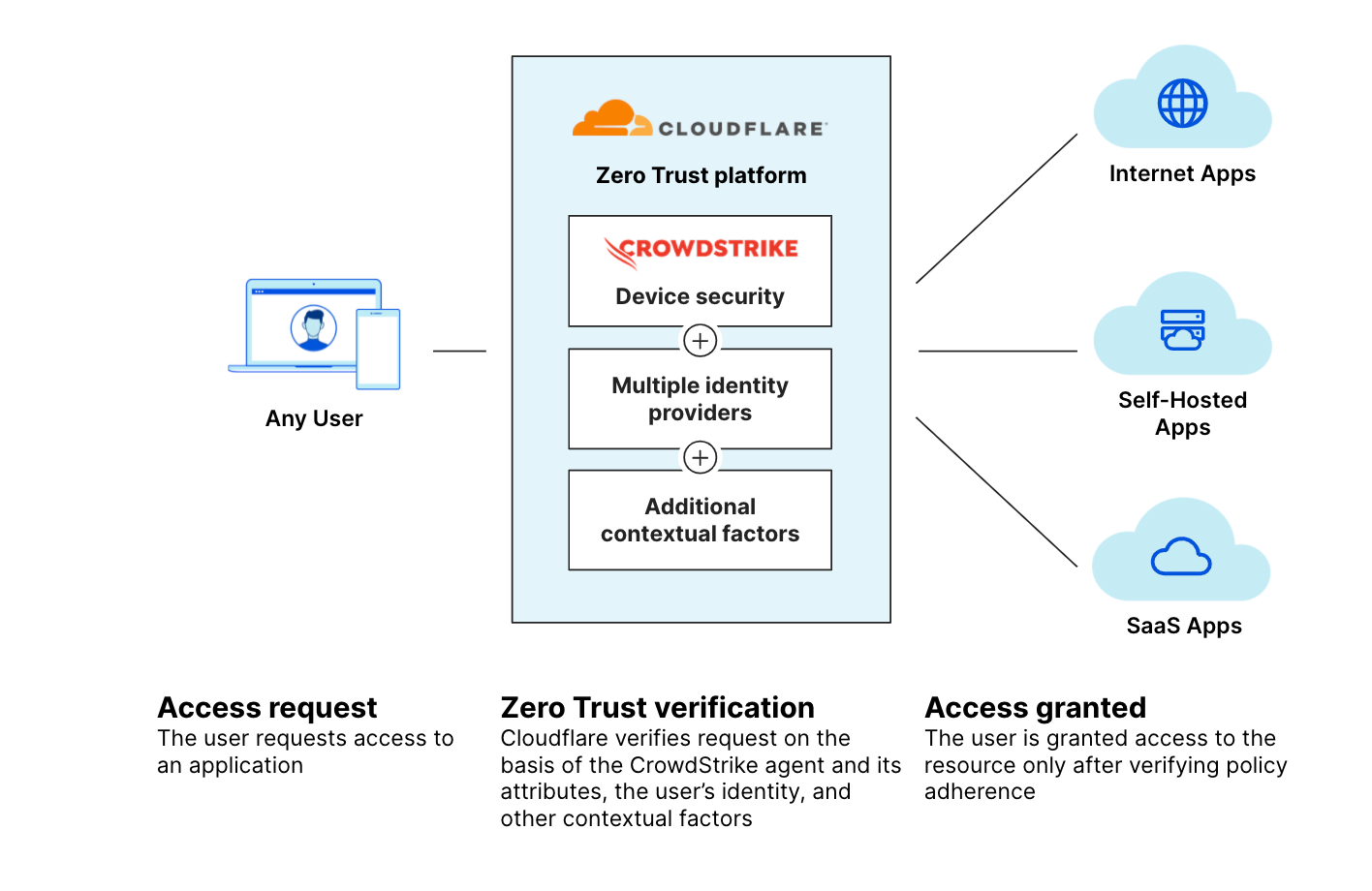
First, by integrating Cloudflare’s Zero Trust services with CrowdStrike Falcon Zero Trust Assessment (ZTA), which provides continuous real-time device posture assessments, our customers can verify users’ device posture before granting them access to internal or external applications.

Second, we joined the CrowdXDR Alliance in December 2021 and are partnering with CrowdStrike to share security telemetry and other insights to make it easier for customers to identify and mitigate threats. Cloudflare’s global network spans more than 250 cities in over 100 countries, blocking an average of 76 billion cyber threats each day. This provides customers with unparalleled insights, helping security teams better protect their organization. By joining the CrowdXDR Alliance, we will be able to use security signals from Cloudflare’s global network with CrowdStrike’s leading endpoint protection to help mutual customers stop cyber attacks anywhere in their network.

Third, CrowdStrike is one of Cloudflare’s incident response partners, providing rapid and effective support. CrowdStrike’s incident response team deals with active under attack situations day in, day out — helping customers mitigate the attack and get their web property and network back online. Our partnership with CrowdStrike enables rapid remediation of under attack scenarios to safeguard organizations from adversaries.

“The speed in which a company is able to identify, investigate and remediate a threat heavily determines how it will fare in the end. Our partnership with Cloudflare provides companies the ability to take action rapidly and contain exposure at the time of an attack, enabling them to get back on their feet and return to business as usual as quickly as possible.”
Thomas Etheridge, Senior Vice President, CrowdStrike Services

CrowdStrike’s endpoint security meets Cloudflare’s Zero Trust Services

Cloudflare and CrowdStrike partner to give CISOs secure control across devices, applications, and corporate networks

Before we get deep into how the integration works, let’s first recap Cloudflare’s Zero Trust Services.

Cloudflare Access and Gateway

Cloudflare Access determines if a user should be allowed access to an application or not. It uses our global network to check every request or connection for identity, device posture, location, multifactor method, and many more attributes to do so. Access also logs every request and connection — providing administrators with high-visibility. The upshot of all of this: it enables customers to deprecate their legacy VPNs.

Cloudflare Gateway protects users as they connect to the rest of the Internet. Instead of back hauling traffic to a centralized location, users connect to a nearby Cloudflare data center where we apply one or more layers of security, filtering, and logging, before accelerating their traffic to its final destination.

Zero Trust Integration with CrowdStrike

Cloudflare’s customers can now build Access and Gateway policies based on the presence of a CrowdStrike agent at the endpoint. In conjunction with our Zero Trust client, we are able to leverage the enhanced telemetry that CrowdStrike provides surrounding a user’s device.

CrowdStrike’s Zero Trust Assessment (ZTA) delivers continuous real-time security posture assessments across all endpoints in an organization regardless of the location, network or user. The ZTA scores enable enforcement of conditional policies based on device health and compliance checks to mitigate risks. These policies are evaluated each time a connection request is made, making the conditional access adaptive to the evolving condition of the device.

With this integration, organizations can build on top of their existing Cloudflare Access and Gateway policies ensuring that a minimum ZTA score or version has been met before a user is granted access. Because these policies work across our entire Zero Trust platform, organizations can use these to build powerful rules invoking Browser Isolation, tenant control, antivirus or any part of their Cloudflare deployment.

Cloudflare and CrowdStrike partner to give CISOs secure control across devices, applications, and corporate networks

“The CrowdStrike Falcon platform secures customers through verified access controls, helping customers reduce their attack surface and simplify, empower and accelerate their Zero Trust journey. By expanding our partnership with Cloudflare, we are making it easier for joint customers to strengthen their Zero Trust security posture across all endpoints and their entire corporate network.”
Michael Sentonas, Chief Technology Officer, CrowdStrike

How the integration works

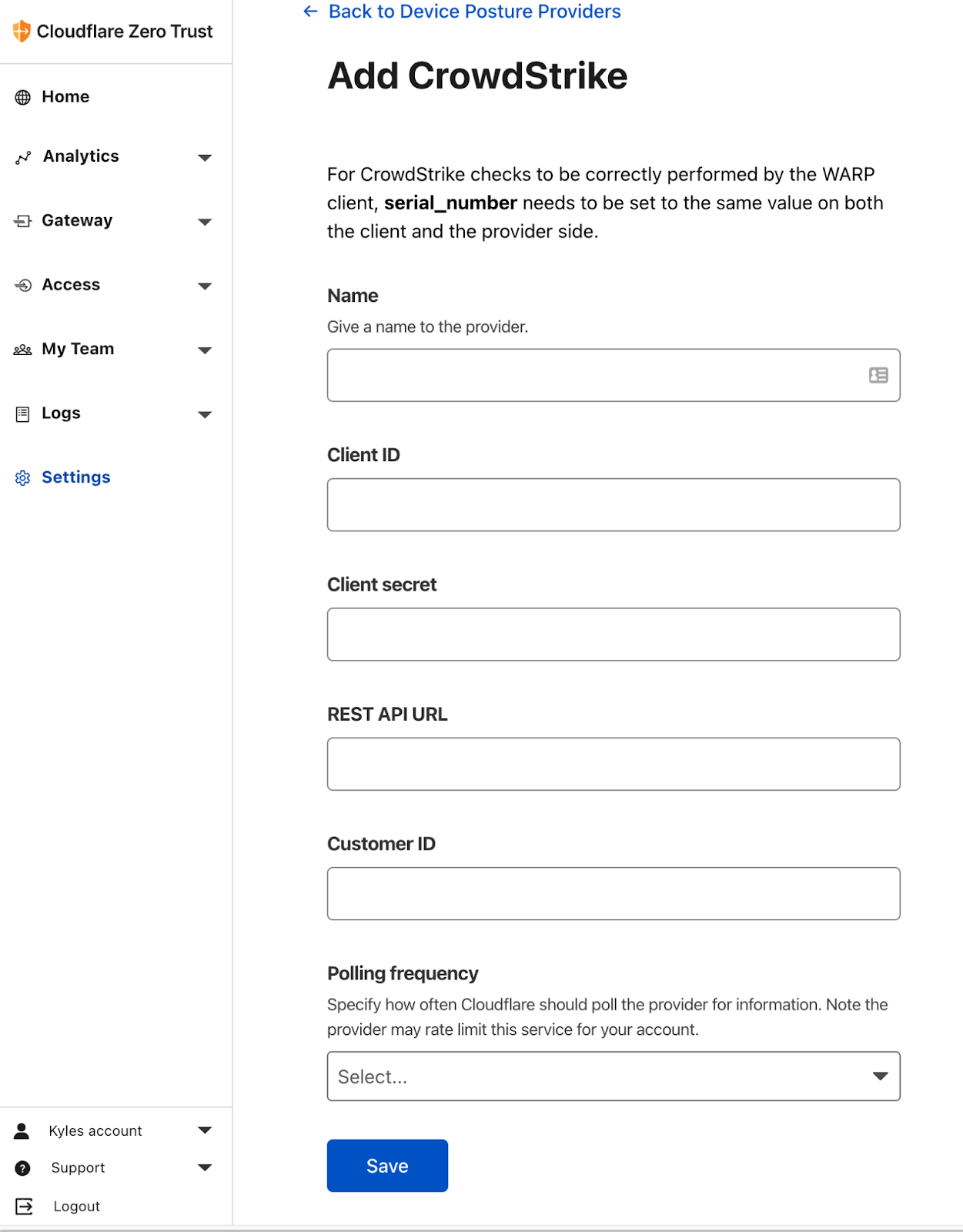
Customers using our Zero Trust suite can add CrowdStrike as a device posture provider in the Cloudflare Zero Trust dashboard under Settings → Devices → Device Posture Providers. The details required from the CrowdStrike dashboard include: ClientID, Client Secret, REST API URL, and Customer ID.

Cloudflare and CrowdStrike partner to give CISOs secure control across devices, applications, and corporate networks

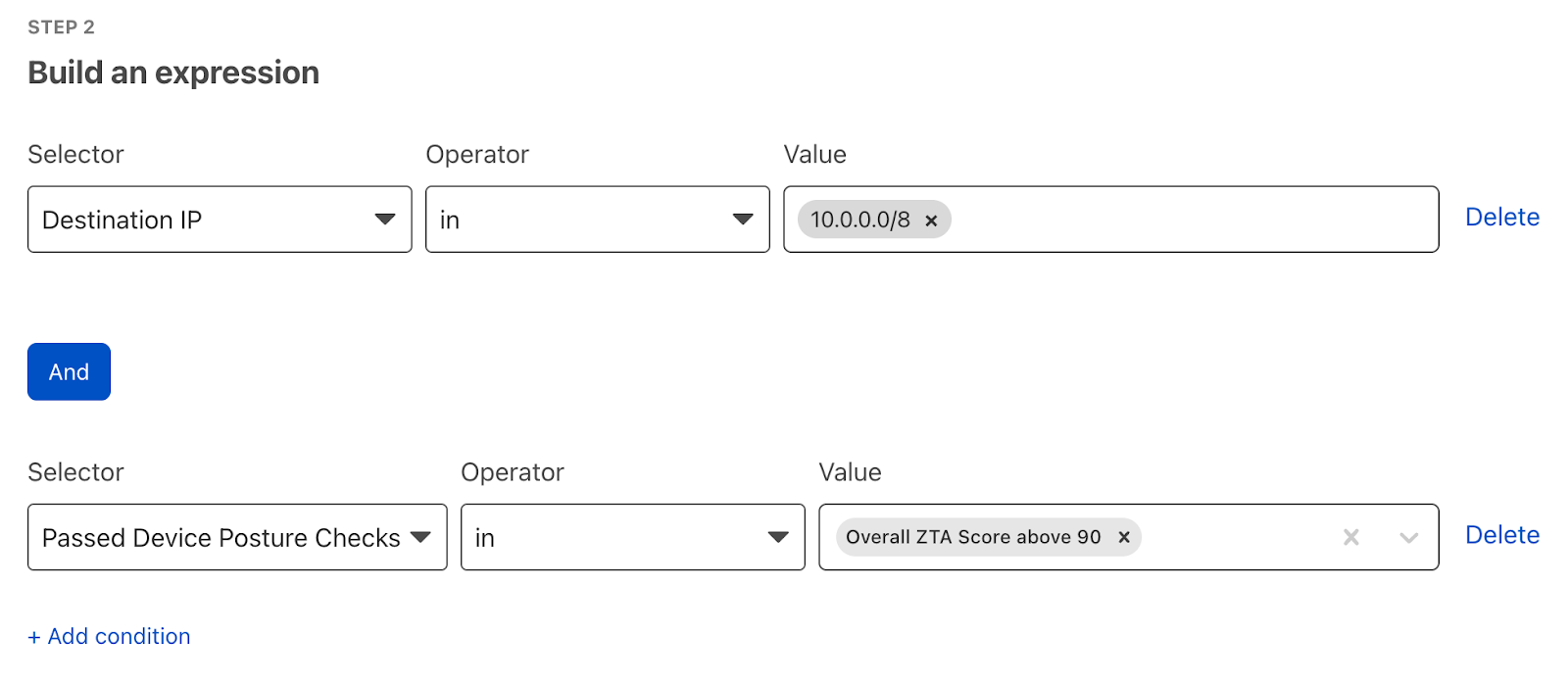
After creating the CrowdStrike Posture Provider, customers can create specific device posture checks requiring users’ devices to meet a certain threshold of ZTA scores.

Cloudflare and CrowdStrike partner to give CISOs secure control across devices, applications, and corporate networks

These rules can now be used to create conditional Access and Gateway policies to allow or deny access to applications, networks, or sites. Administrators can choose to block or isolate users or user groups with malicious or insecure devices.

Cloudflare and CrowdStrike partner to give CISOs secure control across devices, applications, and corporate networks

What comes next?

In the coming months, we will be further strengthening our integrations with CrowdStrike by allowing customers to correlate their Cloudflare logs with Falcon telemetry, for timely detection and mitigation of sophisticated threats.
If you’re using Cloudflare Zero Trust products today and are interested in using this integration with CrowdStrike, please visit our documentation to learn about how you can enable it. If you want to learn more or have additional questions, please fill out the form or get in touch with your Cloudflare CSM or AE, and we’ll be happy to help you.

170 research papers about teaching programming, summarised

Post Syndicated from Jane Waite original https://www.raspberrypi.org/blog/research-report-teaching-programming/

Computer programming is now part of the school curriculum in England and many other countries. Although not necessarily the primary focus of the computing curriculum, programming can be the area teachers find most challenging to teach. There is much evidence emerging from research on how to teach programming, particularly from projects with undergraduate learners. That’s why I recently wrote a report summarising over 170 programming pedagogy papers: Teaching programming in schools: A review of approaches and strategies.

In a computing classroom, a smiling girl raises her hand.

I hope this blog post about how I approached writing the report whets your appetite to read it, and encourages you to read more research summaries in general.

My approach to summarising research papers

Summarising findings from more than 170 research papers into 34 pages was not a task for the faint-hearted. I could not have embarked on this task without previous experience of writing similar, smaller reviews; working on a host of research projects; and writing reports about research for many different audiences.

A computing teacher and a learner do physical computing in the primary school classroom.

I love reading about computer science education. It evokes very strong emotions, making me by turns happy, curious, impressed, alarmed, and even cross. When I summarise the papers of other researchers, I am very careful when deciding what to include and what to leave out, in order to do the researchers’ work justice while not overselling it or misleading readers. Sometimes research papers can be hard to fathom, with lots of jargon and statistics. In other papers, the conclusions drawn have many limitations: the project the paper describes hasn’t produced robust enough evidence to give a clear, generalisable message. Academic integrity and not misrepresenting the work of others is paramount. And naturally, there are many more than 170 papers about teaching programming, but I had to stop somewhere. All this makes summarising research a tricky task that one has to undertake with great care.

a teenage boy does coding during a computer science lesson.

Another important aspect of summarising research is how to group papers. A long list saying “this paper said this”, “this paper said that” would not be easy to access and would not draw out overall themes. Often research studies span many topics. What might be a helpful grouping for one reader might not be interesting for another.

For this report, I grouped papers into three sections:

  1. Classroom strategies: Here I included well-researched classroom strategies that teachers can use to teach programming in schools
  2. Contexts and environments for learning programming: Here I outlined research related to opportunities for teaching programming, including different programming languages and the classroom context
  3. Supporting learners: Here I summarised research that helps teachers support learners, particularly learners who have difficulties with programming

Why you as a teacher should read research summaries

Teachers, as very busy professionals, have little time to replan lessons, and programming lessons are challenging to start with. However, the potential long-term benefit may outweigh the short-term cost when it comes to reading research summaries: new insights from firmly grounded research can improve your teaching and enable more of your learners to be successful.

In a computing classroom, a girl laughs at what she sees on the screen.

The process of translating research into practice is an area that I and the research team here are particularly interested in investigating. We are looking forward to working with teachers to explore this.

The Raspberry Pi Foundation regularly shares research summaries in the form of:

You can also check out other computing education podcasts e.g. CSEdPod.org, as well as computing education books (e.g. The Cambridge Handbook of Computing Education Research,  Computer Science Education: Perspectives on Teaching and Learning, and many others), and other researchers’ blogs about computing education (e.g. Amy Ko, article summaries on CSEdresearch.org).

The post 170 research papers about teaching programming, summarised appeared first on Raspberry Pi.

[Security Nation] Bob Lord on Securing the DNC

Post Syndicated from Rapid7 original https://blog.rapid7.com/2022/03/16/bob-lord-on-securing-the-dnc/

[Security Nation] Bob Lord on Securing the DNC

In this episode of Security Nation, Jen and Tod chat with Bob Lord, recently the Chief Security Officer for the Democratic National Committee, about the unique challenges of overseeing cybersecurity at a high-profile political entity. Bob talks about becoming the Marie Condo of cybersecurity, the importance of people and process, and getting peers and leaders alike to buy into major habit changes designed to improve security.

Stick around for our Rapid Rundown, where Tod and Jen talk about a recent academic paper on influencer VPN ads on YouTube and its implications for how laypeople learn about security.

Bob Lord

[Security Nation] Bob Lord on Securing the DNC

Bob Lord most recently served as the first Chief Security Officer at the Democratic National Committee. In that role he worked to secure the Committee, as well as helping state parties and campaigns with their security programs. Previous roles include CISO at Yahoo, CISO in Residence at Rapid 7, and before that he headed up Twitter’s information security program as its first security hire. You can see some of his hobbies at https://www.ilord.com.

Show notes

Interview links

Rapid Rundown links

Like the show? Want to keep Jen and Tod in the podcasting business? Feel free to rate and review with your favorite podcast purveyor, like Apple Podcasts.

Want More Inspiring Stories From the Security Community?

Subscribe to Security Nation Today

New and Updated AWS Well-Architected Lenses

Post Syndicated from Channy Yun original https://aws.amazon.com/blogs/aws/new-and-updated-aws-well-architected-lenses/
Since 2015, the AWS Well-Architected Framework has been helping AWS customers and partners improve their cloud architectures. The framework consists of design principles, questions, and best practices across multiple pillars: Operational ExcellenceSecurityReliabilityPerformance Efficiency, and Cost Optimization. At AWS re:Invent 2021, we introduced a new Sustainability Pillar to help organizations learn, measure, and improve their workloads using environmental best practices for cloud computing.

In 2017, we introduced AWS Well-Architected Lenses and extended the best practice guidance to specific industry and technology domains, such as serverless, high performance computing (HPC), internet of things (IoT), software as a service (SaaS), foundational technical review (FTR), and financial services. Use the applicable Lenses together with the pillars of the AWS Well-Architected Framework to fully evaluate your workloads.

In 2021, we added four new lenses for various technologies and industries at the request of our customers. If you are planning a new workload for the new year, check out the new and updated Lenses to help guide you through the implementation of AWS best practices.

New AWS Well-Architected Lenses

Streaming Media Lens (September 29, 2021)
The Streaming Media Lens helps customers apply best practices in the design, delivery, and maintenance of their cloud-based streaming media workloads. Whether you’ve just started designing a greenfield video application on AWS or are looking to migrate an existing workload, this Lens provides perspective on best practices and can spark new ideas. To learn more about best practices for architecting and improving your streaming media workloads on AWS, see the Streaming Media Lens documentation.

SAP Lens (October 29, 2021)
The SAP Lens is a collection of customer-proven design principles and best practices for ensuring SAP workloads on AWS are well-architected. The SAP Lens is based on insights that AWS has gathered from customers, AWS Partners, and the SAP Specialist Architect community. The Lens is designed to help you adopt a cloud-native approach to running SAP. To learn more, see the SAP Lens documentation.

Games Industry Lens (November 19, 2021)
The Games Industry Lens helps customers review and improve cloud-based architecture for game development, deployment, operations of gaming platforms, and to support massive player scale. The Lens presents common games deployment scenarios and identifies key elements to ensure your platforms are in accordance with the best practices of AWS Well-Architected Framework. Learn the best practices for designing, architecting, and deploying your games workloads on AWS in the Games Industry Lens documentation.

Hybrid Networking Lens (November 22, 2021)
The Hybrid Networking Lens provides best practices and strategies to use when designing hybrid networking architectures. This Lens supports a broad spectrum of use cases and helps set you up for success in building hybrid networking architectures and integrating your on-premises data center with AWS operations. It outlines three areas to consider when designing hybrid network connectivity for your workload: data layer, monitoring and configuration management, and security. To learn more, see the Hybrid Networking Lens documentation.

Updated AWS Well-Architected Lens

Machine Learning Lens (October 13, 2021)
The Machine Learning (ML) Lens introduces a set of established and repeatable best practices across the ML lifecycle phases. You can apply this guidance and architectural principles when designing your ML workloads or after your workloads have entered production as part of continuous improvement. The Lens includes guidance and resources on implementing the best practices on AWS. To learn more, see the ML Lens documentation.

Data Analytics Lens (October 29, 2021)
The Data Analytics Lens is a collection of customer-proven best practices for designing well-architected analytics workloads. It contains insights that AWS has gathered from real-world case studies and helps you learn the key design elements of well-architected analytics workloads, along with recommendations for improvement. For more information about building your own data analytics workload, see the Data Analytics Lens whitepaper.

Management and Governance Lens (December 17, 2021)
The Management and Governance Lens (M&G Lens) provides clear guidance to help you prepare your environment, regardless of your stage of cloud adoption, with a focus on eight different functions. Those functions are controls and guardrails, network connectivity, identity management, security management, monitoring and observability, cloud financial management, service management, and sourcing and distribution. To learn more, see the M&G Lens documentation.

To get started with your favorite lenses, visit the AWS Well-Architected page. You can learn, measure, and build using architectural best practices and tools.

To review your workloads using the AWS Well-Architected Framework, we recommend using the AWS Well-Architected Tool, a self-service tool designed to help you review AWS workloads at any time, without the need for an AWS Solutions Architect.

It provides a mechanism for regularly evaluating your workloads, identifying high-risk issues, and recording your improvements applying your favorite Lenses. You can also leverage Custom Lenses to record and track progress towards your organization’s internal best practices.

If you want to train these best practices, AWS Well-Architected Labs provides codes and documentation in the format of hands-on labs to help you learn, measure, and build using architectural best practices categorized into levels. Also, you can access an ecosystem of hundreds of members in the AWS Well-Architected Partner Program in your area to help analyze and review your applications.

You can refer to the AWS Architecture Center, a collection of reference architecture patterns, vetted architecture solutions, and best practices. If you’re new to AWS, use the Architect Learning Plan to learn how to design applications and systems on AWS. Build technical skills as you progress along the path toward AWS Certification.

This is My Architecture is a video series that showcases innovative architectural solutions on AWS by customers and partners. We would love to hear more from you, especially about your success stories in building your applications on AWS Well-Architected Framework. Please share with your account team to introduce your stories.

Channy
[$] Python finally offloads some batteries

Post Syndicated from original https://lwn.net/Articles/888043/

Python has often been touted as a “batteries included” language because of
its rich standard library
that provides access to numerous utility modules and is distributed with
the language itself. But those libraries need maintenance, of course, and
that is provided by the Python core development team. Over the years, it
has become clear that some of the modules are not really being maintained
any longer and they probably are not really needed by most Python


users—either because better alternatives exist or because they address
extremely niche use cases. A long-running project to start the removal of those
modules has recently been approved.

The collective thoughts of the interwebz