The surprising and not so surprising benefits of generations in the Z Garbage Collector.
By Danny Thomas, JVM Ecosystem Team
The latest long term support release of the JDK delivers generational support for the Z Garbage Collector.
More than half of our critical streaming video services are now running on JDK 21 with Generational ZGC, so it’s a good time to talk about our experience and the benefits we’ve seen. If you’re interested in how we use Java at Netflix, Paul Bakker’s talk How Netflix Really Uses Java, is a great place to start.
Reduced tail latencies
In both our GRPC and DGS Framework services, GC pauses are a significant source of tail latencies. That’s particularly true of our GRPC clients and servers, where request cancellations due to timeouts interact with reliability features such as retries, hedging and fallbacks. Each of these errors is a canceled request resulting in a retry so this reduction further reduces overall service traffic by this rate:
Errors rates per second. Previous week in white vs current cancellation rate in purple, as ZGC was enabled on a service cluster on November 15
Removing the noise of pauses also allows us to identify actual sources of latency end-to-end, which would otherwise be hidden in the noise, as maximum pause time outliers can be significant:
Maximum GC pause times by cause, for the same service cluster as above. Yes, those ZGC pauses really are usually under one millisecond
Efficiency
Even after we saw very promising results in our evaluation, we expected the adoption of ZGC to be a trade off: a little less application throughput, due to store and load barriers, work performed in thread local handshakes, and the GC competing with the application for resources. We considered that an acceptable trade off, as avoiding pauses provided benefits that would outweigh that overhead.
In fact, we’ve found for our services and architecture that there is no such trade off. For a given CPU utilization target, ZGC improves both average and P99 latencies with equal or better CPU utilization when compared to G1.
The consistency in request rates, request patterns, response time and allocation rates we see in many of our services certainly help ZGC, but we’ve found it’s equally capable of handling less consistent workloads (with exceptions of course; more on that below).
Operational simplicity
Service owners often reach out to us with questions about excessive pause times and for help with tuning. We have several frameworks that periodically refresh large amounts of on-heap data to avoid external service calls for efficiency. These periodic refreshes of on-heap data are great at taking G1 by surprise, resulting in pause time outliers well beyond the default pause time goal.
This long lived on-heap data was the major contributor to us not adopting non-generational ZGC previously. In the worst case we evaluated, non-generational ZGC caused 36% more CPU utilization than G1 for the same workload. That became a nearly 10% improvement with generational ZGC.
Half of all services required for streaming video use our Hollow library for on-heap metadata. Removing pauses as a concern allowed us to remove array pooling mitigations, freeing hundreds of megabytes of memory for allocations.
Operational simplicity also stems from ZGC’s heuristics and defaults. No explicit tuning has been required to achieve these results. Allocation stalls are rare, typically coinciding with abnormal spikes in allocation rates, and are shorter than the average pause times we saw with G1.
We’ve found that while that’s an important consideration for stop-the-world GCs, that’s not the case for ZGC where even on small heaps, the increase in allocation rate is amortized by the efficiency and operational improvements. Our thanks to Erik Österlund at Oracle for explaining the less intuitive benefits of colored pointers when it comes to concurrent garbage collectors, which lead us to evaluating ZGC more broadly than initially planned.
In the majority of cases ZGC is also able to consistently make more memory available to the application:
Used vs available heap capacity following each GC cycle, for the same service cluster as above
ZGC has a fixed overhead 3% of the heap size, requiring more native memory than G1. Except in a couple of cases, there’s been no need to lower the maximum heap size to allow for more headroom, and those were services with greater than average native memory needs.
Reference processing is also only performed in major collections with ZGC. We paid particular attention to deallocation of direct byte buffers, but we haven’t seen any impact thus far. This difference in reference processing did cause a performance problem with JSON thread dump support, but that’s a unusual situation caused by a framework accidentally creating an unused ExecutorService instance for every request.
Transparent huge pages
Even if you’re not using ZGC, you probably should be using huge pages, and transparent huge pages is the most convenient way to use them.
ZGC uses shared memory for the heap and many Linux distributions configure shmem_enabled to never, which silently prevents ZGC from using huge pages with -XX:+UseTransparentHugePages.
Here we have a service deployed with no other change but shmem_enabled going from never to advise, reducing CPU utilization significantly:
Deployment moving from 4k to 2m pages. Ignore the gap, that’s our immutable deployment process temporarily doubling the cluster capacity
Uses the following transparent_hugepage configuration:
echo madvise | sudo tee /sys/kernel/mm/transparent_hugepage/enabled
echo advise | sudo tee /sys/kernel/mm/transparent_hugepage/shmem_enabled
echo defer | sudo tee /sys/kernel/mm/transparent_hugepage/defrag
echo 1 | sudo tee /sys/kernel/mm/transparent_hugepage/khugepaged/defrag
What workloads weren’t a good fit?
There is no best garbage collector. Each trades off collection throughput, application latency and resource utilization depending on the goal of the garbage collector.
For the workloads that have performed better with G1 vs ZGC, we’ve found that they tend to be more throughput oriented, with very spiky allocation rates and long running tasks holding objects for unpredictable periods.
A notable example was a service where very spiky allocation rates and large numbers of long lived objects, which happened to be a particularly good fit for G1’s pause time goal and old region collection heuristics. It allowed G1 to avoid unproductive work in GC cycles that ZGC couldn’t.
The switch to ZGC by default has provided the perfect opportunity for application owners to think about their choice of garbage collector. Several batch/precompute cases had been using G1 by default, where they would have seen better throughput from the parallel collector. In one large precompute workload we saw a 6–8% improvement in application throughput, shaving an hour off the batch time, versus G1.
Try it for yourself!
Left unquestioned, assumptions and expectations could have caused us to miss one of the most impactful changes we’ve made to our operational defaults in a decade. We’d encourage you to try generational ZGC for yourself. It might surprise you as much as it surprised us.
Освен че е Международният ден на жените, тазгодишният 8 март е и крайният срок, който председателят на ГЕРБ Бойко Борисов даде на ПП–ДБ, за да постигнат съгласие за ротацията на правителството. Ако успеят, България ще има за втори път министър-председателка – след служебното правителство на Ренета Инджова от 1994 г., тоест точно преди 30 години. И за първи път в историята на страната жена ще застане начело на редовен кабинет. Ако некоалиционните партньори не успеят да се разберат, ще се стигне до нови избори. При такъв сценарий шансът Мария Габриел да заеме премиерския пост ще остане, но няма да е толкова голям.
Жени начело на държавите си
Три балкански страни са изпреварили България и в тях вече има жени на върха на държавата, като само една от тях е в ЕС. Боряна Крищо е министър-председателка на Босна и Херцеговина, Ана Бърнабич – на Сърбия, а Катерина Сакеларопулу е президентка на Гърция.
В световен план обаче от близо 200 държави в по-малко от 30 на върха стоят жени. При това част от длъжностите са по-скоро представителни, отколкото действително ръководни. Президентът на Унгария (доскоро на поста беше Каталин Новак) има представителни функции, а реалната власт се упражнява от премиера Виктор Орбан. Макар Сърбия да е парламентарна република, силната политическа фигура в страната е президентът (понастоящем – Александър Вучич). Той назначава и премиерите. В Италия обаче министър-председателят въплъщава реалната власт, така че Джорджа Мелони действително ръководи страната.
Три жени, чието управление остана в историята през последните години
В края на 2021 г. в Германия приключи 16-годишната ера на Ангела Меркел. Тя е не само първата жена федерален канцлер в страната, но и първият човек от бившата ГДР на този пост.
При всички критики към управлението на Меркел, немалко от тях – основателни, тя излъчваше впечатляваща стабилност, която успяваше да предаде на гражданите, казвайки точните думи в точния момент. Приемането на над милион бежанци в страната може и да допринесе за възхода на крайната десница, но знаменитата ѝ реплика от 2015 г. „Ще се справим“ беше от голямо значение за т.нар. култура на приемане. По време на най-строгите мерки заради пандемията от COVID-19 тя намираше думите и верния тон, така че хем да обясни на хората колко сериозно е положението, хем да ги накара да се почувстват в сигурни ръце.
Няма база за сравнение между увереността, излъчвана от Меркел, и поведението на настоящия канцлер Олаф Шолц.
За разлика от Ангела Меркел, Сана Марин беше министър-председателка на Финландия по-малко от 4 години – от края на 2019 г. до средата на 2023 г. Но на 34 г. тя стана най-младият държавен лидер в света, освен това управляваше с предимно женски екип.
Въпреки че на Марин се налагаше да се справя със сериозни кризи, като пандемията и войната в Украйна (нейното правителство предлага Финландия да влезе в НАТО), поведението ѝ беше обект на по същество сексистки критики, че не е достатъчно сериозно. Тя беше критикувана, че изглежда като „рок звезда“, а изтекло видео от частно парти, на което се вижда как пие и танцува, предизвика сериозен скандал. „Аз съм човек. И аз също понякога копнея за радост, светлина и забавление“, каза тогава тя.
На изборите през 2023 г. Марин загуби, а премиер стана умерен консерватор, който е дългогодишен политик и прилича на такъв, а не на рок звезда.
Доскорошната министър-председателка на Нова Зеландия Джасинда Ардърн зае поста на 37-годишна възраст и беше втората жена в света след Беназир Бхуто, родила дете, докато е на тази позиция. Тя се противопоставяше на изолационизма, протекционизма и расизма, характерни за управлението на Доналд Тръмп, и също като Сана Марин отстояваше феминистки ценности.
Джасинда Ардърн на посещение в НАТО. Снимка: NATO / Flickr
Мерките на Ардърн за ограничаване на пандемията бяха изключително успешни за демократична страна – през 2020 г. в продължение на цели 102 дни след 1 май нямаше нито един случай на вътрешно предаване на вируса в страната.
След пет години и половина на поста тя сама подаде оставка. По собственото ѝ признание – поради изтощение. Лявоцентристката ѝ партия спечели следващите парламентарни избори и получи абсолютно мнозинство в парламента, което е признание за успешното управление на Джасинда Ардърн.
Не всичко е цветя и рози
Въпреки добрите примери управлението на една държава от жена не е по дефиниция добро, нито пък е гаранция за положителни промени за жените в съответната страна. Това важи впрочем за всички области, например за местната власт. Столицата на България 14 години се управляваше от жена – Йорданка Фандъкова. Но за този период градската среда не стана по-достъпна за бебешки колички (а те се бутат предимно от жени), а въпреки всички обещания за справяне с недостига на места в детските градини проблемът си остана.
По време на управлението на Ангела Меркел за жените в Германия, особено в западната ѝ част, не стана много по-лесно да съчетават отглеждането на дете с работата – дори да успеят да запишат детето в градина, тя в общия случай затваря в ранния следобед, което прави невъзможно за много жени да работят на пълен ден.
Джорджа Мелони е първата жена премиер на Италия. Иронично, основаната от нея крайнодясна партия се казва „Италиански братя“ – сестри в името няма. Мелони все пак се опитва, доколкото това е възможно за сексистки електорат, какъвто преобладаващо са крайнодесните избиратели, да въведе известни подобрения в живота на италианските жени – например по-добра защита от домашно насилие и по-високи детски надбавки. В същото време обаче въведените от управлението ѝ политики стимулират жените по-скоро да си стоят вкъщи и да си гледат децата, отколкото да се развиват професионално.
Доскорошната президентка на Унгария Каталин Новак, която заедно с българския президент Румен Радев и сръбския му колега Александър Вучич подписа новогодишно изявление в защита на семейството, безславно подаде оставка. Това стана поради скандал, че е помилвала затворник, осъден за допускане на педофилия в институция за деца.
Засега сръбската министър-председателка Ана Бърнабич стои стабилно на поста си, но с цената на компромиси. Открито хомосексуална, тя допринесе за известно нормализиране на отношението към ЛГБТИ хората в страната, в която агресивните хомофобски прояви не са рядкост. Като премиер е вземала участие в белградския прайд, а през 2019 г. партньорката ѝ роди дете. В същото време тя не се противопоставя решително на политиката на Вучич за близки отношения с режима на Владимир Путин, в който ЛГБТИ хората се преследват като екстремисти и се върви към забрана на абортите.
Жени стоят начело и на някои африкански страни, в които има сериозни проблеми с насилието над жени. Включително в Етиопия, където все още е широко разпространено женското обрязване, наричано още генитално осакатяване.
Важно, но недостатъчно условие
Да обобщим. Наличието на жени сред световните лидери е важно дори само заради това, че овластява жените – показва им, че не е невъзможно да се изкачат на най-високите позиции във властовата йерархия. Но то не е гаранция за напредък в постигането на равни права, защото политиката не е функция на пола.
Ето например с похода си срещу Истанбулската конвенция председателката на БСП Корнелия Нинова изигра сериозна роля за връщането на борбата с насилието над жени години назад. А жените – членове на Конституционния съд, дружно подкрепиха решението, според което социалната роля на жената, съгласно Конституцията, е да бъде майка.
Засега Мария Габриел не дава признаци, че смята да се еманципира от сянката на Бойко Борисов и да бъде нещо повече от приемлива за Брюксел негова маска. Но това впечатление може да е погрешно и Габриел да се окаже изненада за всички, най-вече за Борисов, като провежда политика в съответствие с европейските стандарти за човешки права, включително права на жените. И да има смелост да се бори със задкулисната власт, поради която всеки опит за прогрес буксува.
Но засега, както би казала Йорданка Фандъкова, положението е „хубаво е, но не е готово“. По-точно – не е достатъчно.
Customers today may struggle to implement proper access controls and auditing at the user level when multiple applications are involved in data access workflows. The key challenge is to implement proper least-privilege access controls based on user identity when one application accesses data on behalf of the user in another application. It forces you to either give all users broad access through the application with no auditing, or try to implement complex bespoke solutions to map roles to users.
Using AWS IAM Identity Center, you can now propagate user identity to a set of AWS services and minimize the need to build and maintain complex custom systems to vend roles between applications. IAM Identity Center also provides a consolidated view of users and groups in one place that the interconnected applications can use for authorization and auditing.
IAM Identity Center enables centralized management of user access to AWS accounts and applications using identity providers (IDPs) like Okta. This allows users to log in one time with their existing corporate credentials and seamlessly access downstream AWS services supporting identity propagation. With IAM Identity Center, Okta user identities and groups can be automatically synced using SCIM 2.0 for accurate user information in AWS.
Amazon EMR Studio is a unified data analysis environment where you can develop data engineering and data science applications. You can now develop and run interactive queries on Amazon Athena from EMR Studio (for more details, refer to Amazon EMR Studio adds interactive query editor powered by Amazon Athena ). Athena users can access EMR Studio without logging in to the AWS Management Console by enabling federated access from your IdP via IAM Identity Center. This removes the complexity of maintaining different identities and mapping user roles across your IdP, EMR Studio, and Athena.
You can govern Athena workgroups based on user attributes from Okta to control query access and costs. AWS Lake Formation can also use Okta identities to enforce fine-grained access controls through granting and revoking permissions.
IAM Identity Center and Okta single sign-on (SSO) integration streamlines access to EMR Studio and Athena with centralized authentication. Users can have a familiar sign-in experience with their workforce credentials to securely run queries in Athena. Access policies on Athena workgroups and Lake Formation permissions provide governance based on Okta user profiles.
This blog post explains how to enable single sign-on to EMR Studio using IAM Identity Center integration with Okta. It shows how to propagate Okta identities to Athena and Lake Formation to provide granular access controls on queries and data. The solution streamlines access to analytics tools with centralized authentication using workforce credentials. It leverages AWS IAM Identity Center, Amazon EMR Studio, Amazon Athena, and AWS Lake Formation.
Solution overview
IAM Identity Center allows users to connect to EMR Studio without needing administrators to manually configure AWS Identity and Access Management (IAM) roles and permissions. It enables mapping of IAM Identity Center groups to existing corporate identity roles and groups. Admins can then assign privileges to roles and groups and assign users to them, enabling granular control over user access. IAM Identity Center provides a central repository of all users in AWS. You can create users and groups directly in IAM Identity Center or connect existing users and groups from providers like Okta, Ping Identity, or Azure AD. It handles authentication through your chosen identity source and maintains a user and group directory for EMR Studio access. Known user identities and logged data access facilitates compliance through auditing user access in AWS CloudTrail.
The following diagram illustrates the solution architecture.
The EMR Studio workflow consists of the following high-level steps:
The end-user launches EMR Studio using the AWS access portal URL. This URL is provided by an IAM Identity Center administrator via the IAM Identity Center dashboard.
The URL redirects the end-user to the workforce IdP Okta, where the user enters workforce identity credentials.
After successful authentication, the user will be logged in to the AWS console as a federated user.
The user opens EMR Studio and navigates to the Athena query editor using the link available on EMR Studio.
The user selects the correct workgroup as per the user role to run Athena queries.
To implement the solution, we complete the following steps:
Integrate Okta with IAM Identity Center to sync users and groups.
Integrate IAM Identity Center with EMR Studio.
Assign users or groups from IAM Identity Center to EMR Studio.
Set up Lake Formation with IAM Identity Center.
Configure granular role-based entitlements using Lake Formation on propagated corporate identities.
Set up workgroups in Athena for governing access.
Set up Amazon S3 access grants for fine-grained access to Amazon S3 resources like buckets, prefixes, or objects.
Access EMR Studio through the AWS access portal using IAM Identity Center.
Run queries on the Athena SQL editor in EMR Studio.
Review the end-to-end audit trail of workforce identity.
Prerequisites
To follow along this post, you should have the following:
An AWS account – If you don’t have one, you can sign up here.
An Okta account that has an active subscription – You need an administrator role to set up the application on Okta. If you’re new to Okta, you can sign up for a free trial or a developer account.
Integrate Okta with IAM Identity Center to sync users and groups
After you have successfully synced users or groups from Okta to IAM Identity Center, you can see them on the IAM Identity Center console, as shown in the following screenshot. For this post, we created and synced two user groups:
Data Engineer
Data Scientists
Next, create a trusted token issuer in IAM Identity Center:
On the IAM Identity Center console, choose Settings in the navigation pane.
Choose Create trusted token issuer.
For Issuer URL, enter the URL of the trusted token issuer.
For Trusted token issuer name, enter Okta.
For Map attributes¸ map the IdP attribute Email to the IAM Identity Center attribute Email.
Choose Create trusted token issuer.
The following screenshot shows your new trusted token issuer on the IAM Identity Center console.
Integrate IAM Identity Center with EMR Studio
We start with creating a trusted identity propagation enabled in EMR Studio.
An EMR Studio administrator must perform the steps to configure EMR Studio as an IAM Identity Center-enabled application. This enables EMR Studio to discover and connect to IAM Identity Center automatically to receive sign-in and user directory services.
The point of enabling EMR Studio as an IAM Identity Center-managed application is so you can control user and group permissions from within IAM Identity Center or from a source third-party IdP that’s integrated with it (Okta in this case). When your users sign in to EMR Studio, for example data-engineer or data-scientist, it checks their groups in IAM Identity Center, and these are mapped to roles and entitlements in Lake Formation. In this manner, a group can map to a Lake Formation database role that allows read access to a set of tables or columns.
The following steps show how to create EMR Studio as an AWS-managed application with IAM Identity Center, then we see how the downstream applications like Lake Formation and Athena propagate these roles and entitlements using existing corporate credentials.
On the Amazon EMR console, navigate to EMR Studio.
Choose Create a Studio.
For Setup options, select Custom.
For Studio name, enter a name.
For S3 location for Workspace storage, select Select existing location and enter the Amazon S3 location.
6. Configure permission details for the EMR Studio.
Note that when you choose View permission details under Service role, a new pop-up window will open. You need to create an IAM role with the same policies as shown in the pop-up window. You can use the same for your service role and IAM role.
On the Create a Studio page, for Authentication, select AWS IAM Identity Center.
For User role, choose your user role.
Under Trusted identity propagation, select Enable trusted identity propagation.
Under Application access, select Only assigned users and groups.
For VPC, enter your VPC.
For Subnets, enter your subnet.
For Security and access, select Default security group.
Choose Create Studio.
You should now see an IAM Identity Center-enabled EMR Studio on the Amazon EMR console.
After the EMR Studio administrator finishes creating the trusted identity propagation-enabled EMR Studio and saves the configuration, the instance of the EMR Studio appears as an IAM Identity Center-enabled application on the IAM Identity Center console.
Assign users or groups from IAM Identity Center to EMR Studio
You can assign users and groups from your IAM Identity Center directory to the EMR Studio application after syncing with IAM. The EMR Studio administrator decides which IAM Identity Center users or groups to include in the app. For example, if you have 10 total groups in IAM Identity Center but don’t want all of them accessing this instance of EMR Studio, you can select which groups to include in the EMR Studio-enabled IAM app.
The following steps assign groups to EMR Studio-enabled IAM Identity Center application:
On the EMR Studio console, navigate to the new EMR Studio instance.
On the Assigned groups tab, choose Assign groups.
Choose which IAM Identity Center groups you want to include in the application. For example, you may choose the Data-Scientist and Data-Engineer groups.
Choose Done.
This allows the EMR Studio administrator to choose specific IAM Identity Center groups to be assigned access to this specific instance integrated with IAM Identity Center. Only the selected groups will be synced and given access, not all groups from the IAM Identity Center directory.
Set up Lake Formation with IAM Identity Center
To set up Lake Formation with IAM Identity Center, make sure that you have configured Okta as the IdP for IAM Identity Center, and confirm that the users and groups form Okta are now available in IAM Identity Center. Then complete the following steps:
On the Lake Formation console, choose IAM Identity Center Integration under Administration in the navigation pane.
You will see the message “IAM Identity Center enabled” along with the ARN for the IAM Identity Center application.
Choose Create.
In a few minutes, you will see a message indicating that Lake Formation has been successfully integrated with your centralized IAM identities from Okta Identity Center. Specifically, the message will state “Successfully created identity center integration with application ARN,” signifying the integration is now in place between Lake Formation and the identities managed in Okta.
Configure granular role-based entitlements using Lake Formation on propagated corporate identities
We will now set up granular entitlements for our data access in Lake Formation. For this post, we summarize the steps needed to use the existing corporate identities on the Lake Formation console to provide relevant controls and governance on the data, which we will later query through the Athena query editor. To learn about setting up databases and tables in Lake Formation, refer to Getting started with AWS Lake Formation
This post will not go into the full details about Lake Formation. Instead, we will focus on a new capability that has been introduced in Lake Formation—the ability to set up permissions based on your existing corporate identities that are synchronized with IAM Identity Center.
This integration allows Lake Formation to use your organization’s IdP and access management policies to control permissions to data lakes. Rather than defining permissions from scratch specifically for Lake Formation, you can now rely on your existing users, groups, and access controls to determine who can access data catalogs and underlying data sources. Overall, this new integration with IAM Identity Center makes it straightforward to manage permissions for your data lake workloads using your corporate identities. It reduces the administrative overhead of keeping permissions aligned across separate systems. As AWS continues enhancing Lake Formation, features like this will further improve its viability as a full-featured data lake management environment.
In this post, we created a database called zipcode-db-tip and granted full access to the user group Data-Engineer to query on the underlying table in the database. Complete the following steps:
On the Lake Formation console, choose Grant data lake permissions.
For Principals, select IAM Identity Center.
For Users and groups, select Data-Engineer.
For LF-Tags or catalog resources, select Named Data Catalog resources.
For Databases, choose zipcode-db-tip.
For Tables, choose tip-zipcode.
Similarly, we need to provide the relevant access on the underlying tables to the users and groups for them to be able to query on the data.
Repeat the preceding steps to provide access to the Data-Engineer group to be able to query on the data.
For Table permissions, select Select, Describe, and Super.
For Data permissions, select All data access.
You can grant selective access on rows and comments as per your specific requirements.
Set up workgroups in Athena
Athena workgroups are an AWS feature that allows you to isolate data and queries within an AWS account. It provides a way to segregate data and control access so that each group can only access the data that is relevant to them. Athena workgroups are useful for organizations that want to restrict access to sensitive datasets or help prevent queries from impacting each other. When you create a workgroup, you can assign users and roles to it. Queries launched within a workgroup will run with the access controls and settings configured for that workgroup. They enable governance, security, and resource controls at a granular level. Athena workgroups are an important feature for managing and optimizing Athena usage across large organizations.
In this post, we create a workgroup specifically for members of our Data Engineering team. Later, when logged in under Data Engineer user profiles, we run queries from within this workgroup to demonstrate how access to Athena workgroups can be restricted based on the user profile. This allows governance policies to be enforced, making sure users can only access permitted datasets and queries based on their role.
On the Athena console, choose Workgroups under Administration in the navigation pane.
Choose Create workgroup.
For Authentication, select AWS Identity Center.
For Service role to authorize Athena, select Create and use a new service role.
For Service role name, enter a name for your role.
For Location of query result, enter an Amazon S3 location for saving your Athena query results.
This is a mandatory field when you specify IAM Identity Center for authentication.
After you create the workgroup, you need to assign users and groups to it. For this post, we create a workgroup named data-engineer and assign the group Data-Engineer (propagated through the trusted identity propagation from IAM Identity Center).
On the Groups tab on the data-engineer details page, select the user group to assign and choose Assign groups.
Set up Amazon S3 access grants to separate the query results for each workforce identity
Initiate login through AWS federated access using the IAM Identity Center access portal
Now we’re ready to connect to EMR Studio and federated login using IAM Identity Center authentication:
On the IAM Identity Center console, navigate to the dashboard and choose the AWS access portal URL.
A browser pop-up directs you to the Okta login page, where you enter your Okta credentials.
After successful authentication, you’ll be logged in to the AWS console as a federated user.
Choose the EMR Studio application.
After you federate to EMR Studio, choose Query Editor in the navigation pane to open a new tab with the Athena query editor.
The following video shows a federated user using the AWS access portal URL to access EMR Studio using IAM Identity Center authentication.
Run queries with granular access on the editor
On EMR Studio, the user can open the Athena query editor and then specify the correct workgroup in the query editor to run the queries.
The data engineer can query only the tables on which the user has access. The query results will appear under the S3 prefix, which is separate for each workforce identity.
Review the end-to-end audit trail of workforce identity
The IAM Identity Center administrator can look into the downstream apps that are trusted for identity propagation, as shown in the following screenshot of the IAM Identity Center console.
On the CloudTrail console, the event history displays the event name and resource accessed by the specific workforce identity.
When you choose an event in CloudTrail, the auditors can see the unique user ID that accessed the underlying AWS Analytics services.
Clean up
Complete the following steps to clean up your resources:
Delete the Okta applications that you created to integrate with IAM Identity Center.
Delete IAM Identity Center configuration.
Delete the EMR Studio that you created for testing.
Delete the IAM role that you created for IAM Identity Center and EMR Studio integration.
Conclusion
In this post, we showed you a detailed walkthrough to bring your workforce identity to EMR Studio and propagate the identity to connected AWS applications like Athena and Lake Formation. This solution provides your workforce with a familiar sign-in experience, without the need to remember additional credentials or maintain complex role mapping across different analytics systems. In addition, it provides auditors with end-to-end visibility into workforce identities and their access to analytics services.
Manjit Chakraborty is a Senior Solutions Architect at AWS. He is a Seasoned & Result driven professional with extensive experience in Financial domain having worked with customers on advising, designing, leading, and implementing core-business enterprise solutions across the globe. In his spare time, Manjit enjoys fishing, practicing martial arts and playing with his daughter.
Neeraj Roy is a Principal Solutions Architect at AWS based out of London. He works with Global Financial Services customers to accelerate their AWS journey. In his spare time, he enjoys reading and spending time with his family.
We all have things we want to protect, and if you’re responsible for physically or virtually protecting a business from all types of threats, you probably have some kind of system in place to monitor your physical space. If you’ve ever dealt with video surveillance footage, you know managing it can be a monumental task. Ensuring the safety and security of monitored spaces relies on collecting, storing, and analyzing large amounts of data from cameras, sensors, and other devices. The requirements to back up and retain footage to support investigations are only getting more stringent. Anyone dealing with surveillance data, whether in business or security, needs to ensure that surveillance data is not only backed up, but also protected and accessible.
The Importance of Backing Up Video Surveillance Footage
Backup storage plays a critical part in maintaining the security of video surveillance footage. Here’s why it’s so important:
Risk Reduction: Without backup storage, surveillance system data stored on a single hard drive or storage device is susceptible to crashes, corruption, or theft. Having a redundant copy ensures that critical footage is not lost in case of system failures or data corruption.
Fast Recovery: Video surveillance systems rely on continuous recording to monitor and record all activities. In the event of system failures, backup storage enables swift recovery, minimizing downtime and ensuring uninterrupted surveillance.
Compliance and Legal Requirements: Many industries, including security, have legal obligations to retain surveillance footage for a specified duration. Backup storage ensures compliance with these requirements and provides evidence when needed.
Verification and Recall: Backup recordings allow you to verify actions, recall events, and keep track of activities. Having access to historical footage is valuable for potential investigations and future decision making.
Each piece of information about video surveillance requirements will affect how much space your video files take up and, consequently, your storage requirements. Let’s walk through each of these general requirements so you don’t end up underestimating how much backup storage you’ll need.
Video Surveillance Storage Considerations
When you’re implementing a backup strategy for video surveillance, there are several factors that can impact your choices. The number and resolution of cameras, frame rates, retention periods, and more can influence how you design your backup storage system. Consider the following factors when thinking about how much storage you’ll need for your video surveillance footage:
Placement and Coverage: When it comes to video surveillance camera placement, strategic positioning is crucial for optimal security and regulatory compliance. Consider ground floor doors and windows, main stairs or hallways, common areas, and driveways. Install cameras both inside and outside entry points. Generally, the wider the field of view, the fewer cameras you’ll likely need overall. The FBI provides extensive recommendations for setting up your surveillance system properly.
Resolution: The resolution determines the clarity of the video footage, which is measured in the number of pixels (px). A higher resolution means more pixels and a sharper image. While there’s no universal minimum for admissible surveillance footage, a resolution of 480 x 640 px is recommended. However, mandated minimums can differ based on local regulations and specific use cases. Note that some regulations may not provide a minimum resolution requirement, and some minimum requirements may not meet the intended purpose of surveillance. Often, it’s better to go with a camera that can record at a higher resolution than the mandated minimum.
Frame Rate: All videos are made up of individual frames. A higher frame rate—measured in frames per second (FPS)—means a smoother, less clunky image. This is because there are more frames being packed into each second. Like your cameras’ resolution, there are no universal requirements specified by regulations. However, it’s better to go with a camera that can record at a higher FPS so that you have more images to choose from if there’s ever an open investigation.
Recording Length: Surveillance cameras are required to run all day, every day, which requires a lot of storage. To help reduce the instance of storing videos that aren’t of interest, some cameras can come with artificial intelligence (AI) tools that will only record footage when it identifies something of interest, such as movement or a vehicle. But if you’re protecting a business with heavy activity, this use of AI may be moot.
Retention Length: Video surveillance retention requirements can vary significantly based on local, state, and federal regulations. These laws dictate how long companies must store their video surveillance footage. For example, medical marijuana dispensaries in Ohio require 24/7 security video to be retained for a minimum of six months, and the footage must be made available to the licensing board upon request. The required length can be prolonged even further if a piece of footage is required for an ongoing investigation. Additionally, backing up your video footage (i.e., saving a copy of it in another area) is different from archiving it for long-term use. You’ll want to be sure that you select a storage system that helps you meet those requirements—more on that later.
Each point on this list affects how much storage capacity you need. More cameras mean more footage being generated, which means more video files. Additionally, a higher resolution and frame rate mean larger file sizes. Multiply this by the round-the-clock operation of surveillance cameras and the required retention length, and you’ll likely have more video data than you know what to do with.
Scoping Video Surveillance Storage: An Example
To illustrate how much footage you can expect to collect, it can be helpful to see an example of how a given business’s video surveillance may operate. Note that this example may not apply to you specifically. You should review your local area’s regulations and consult with an industry professional to make sure you are compliant.
Let’s say that you need to install surveillance cameras for a bank. Customers enter through the lobby and wait for the next available bank teller to assist them at a teller station. No items are put on display, only the exchange of paper and cash between the teller and the customer. Only authorized employees are allowed within the teller area. After customers complete their transactions, they walk back through the lobby area and exit via the building’s front entry.
As an estimate, let’s say you need at least 10 cameras around your building: one for the entrance; another for the lobby; eight more to cover the general back area, including the door to the teller terminals, the teller terminals themselves, the door to the safe, and inside of the safe; and, of course, one for the room where the surveillance equipment is housed. You may need more than 10 to cover the exterior of your building plus your ATM and drive through banking, but for the sake of an example, we’ll leave it at 10.
Now, suppose all your cameras record at 1080p resolution (1920 x 1080 px), 15 FPS, and a color depth of 14 bits (basically, how many colors the camera captures). For one 24 hour recording on one camera, you’re looking at 4.703 terabytes (TB). Over 30 days of storage, this can grow to 141.1TB. In other words, if the average person today needs a 2TB hard disk for their PC, it will take more than 70 PCs to hold all the information from just one camera.
How Cloud Storage Can Help Back Up Surveillance Footage
Backing up surveillance footage is essential for ensuring data security and accountability. It provides a reliable record of events, aids in investigations, and helps prevent wrongdoing by acting as a deterrent. But the right backup strategy is key to preserving your footage.
The 3-2-1 backup strategy is an accepted foundational structure that recommends keeping three copies of all important data (one primary copy and two backup copies) on two different media types (to diversify risk) and storing at least one copy off-site. With surveillance data utilizing high-capacity data storage systems, adhering to the 3-2-1 rule is important in order to access footage in case of an investigation. The 3-2-1 rule mitigates single points of failure, enhances data availability, and protects against corruption. By adhering to this rule, you increase the resilience of your surveillance footage, making it easier to recover even in unexpected events or disasters.
Having an on-site backup copy is a great start for the 3-2-1 backup strategy, but having an off-site backup is a key component in having a complete backup strategy. Having a backup copy in the cloud provides an easy to maintain, reliable off-site copy, safeguarding against a host of potential data losses including:
Natural Disasters: If your business is harmed by a natural disaster, the devices you use for your primary storage or on-site backup may be damaged, resulting in a loss of data.
Tampering and Theft: Even if someone doesn’t try to steal or manipulate your surveillance footage, an employee can still move, change, or delete files accidentally. You’ll need to safeguard footage with propersecurity protocols, such as authorization codes, data immutability, and encryption keys. These protocols may require constant, professional, and IT administration and maintenance that are often automatically built into the cloud.
Lack of Backup and Archive Protocols: Unless your primary storage source uses specialized software to automatically save copies of your footage or move them to long-term storage, any of your data may be lost.
The cloud has transformed backup strategies and made it easy to ensure the integrity of large data sets, like surveillance footage. Here’s how the cloud helps achieve the 3-2-1 back strategy affordably:
Scalability: With the cloud, your backup storage space is no longer limited to what servers you can afford. The cloud provider will continue to build and deploy new servers to keep up with customer demand, meaning you can simply rent out the storage space and pay for more as needed.
Reliability: Most cloud providers share information on their durability and reliability and are heavily invested in building systems and processes to mitigate the impact of failures. Their systems are built to be fault-tolerant.
Security: Cloud providers protect data you store with them with enterprise-grade security measures and offer features like access controls and encryption to allow users the ability to better protect their data.
Affordability: Cloud storage helps you use your storage budgets effectively by not paying to provision and maintain physical off-site backup locations yourself.
Disaster Recovery: If unexpected disasters occur, such as natural disasters, theft, or hardware failure, you’ll know exactly where your data lives in the cloud and how to restore it so you can get back up and running quickly.
Compliance: By adhering to a set of standards and regulations cloud solutions meet compliance requirements to ensure data stored and managed in the cloud is protected and used responsibly.
Protect The Footage You Invested In to Protect Yourself
No matter the size, operation, or location of your business, it’s critical to remain compliant with all industry laws and regulations—especially when it comes to surveillance. Protect your business by partnering with a cloud provider that understands your unique business requirements, offering scalable, reliable, and secure services at a fraction of the cost compared with other platforms.
As a leading specialized cloud provider, Backblaze B2 Cloud Storage can secure your surveillance footage for both primary backup and long-term protection. B2 offers a range of security options—from encryption to Object Lock to Cloud Replication and access management controls—to help you protect your data and achieve industry compliance.Learn more about Backblaze B2 for surveillance data or contact our Sales Team today.
There’s a purpose in everyone’s life. Some days, it seems like mine is to show people what not to do.
I’ve written this explanation to show my mistakes and that, hopefully, other people don’t (there’s no hope for me). What follows is most of my debugging process, and it could be helpful to other people to see it (and point out what is wrong with it).
This happens in a StorPool deployment for a customer who runs a public cloud service. We provide the shared storage via some drivers of our own, and the customer uses OpenNebula to control Linux/KVM hypervisors. It’s all integrated very nicely and is used for our internal clouds.
KVM VMs are a qemu process in the Linux userspace with multiple threads.
The case started with a customer complaining that after an update we did to the storage software, the live migrations of his VMs started failing (the VMs would fail to move but would continue working on the original host). The problem was narrowed down to VMs started before a specific date (when we did the update mentioned above), and initially, it seemed to be contained to VMs that had QEMU CPU set (i.e., the least performant one).
At this point, I asked – can’t they restart all such VMs? This CPU type is mainly contributing to global warming anyway.
The reply was, “Are you insane? These are 900 VMs. We’ll reboot them, but we really don’t want to do that now”.
Fair point.
Then, some further tests showed that any VMs, not just the ones with the QEMU CPU, were failing the migration. Finally, someone looked into the (not easy to find) logs of qemu and found the following:
(seriously. Trying to trace anything via the logs in OpenNebula/libvirt/qemu feels like interrogating prisoners who don’t speak your language.)
Two mistakes above that would’ve saved a day or two – I should’ve looked into the issue immediately myself instead of relying on hearsay and building the wrong picture (based on assumptions) in my head. I did not expect that the (routine) update we did could have any such effect.
I specifically checked if the same problem existed in our labs and test environments, where we had done the same routine update, and it didn’t exist.
Some digging showed that 99 was the file descriptor with the connection to the remote qemu. This was the memory transfer, followed almost immediately by writing out the error and nothing in between.
So, being somewhat lost, I looked up debug symbols for qemu to see if I could trace this further. The usual tooling told me there weren’t:
[root@somewhere str3]# gdb /usr/libexec/qemu-kvm
GNU gdb (GDB) Rocky Linux 8.2-20.el8.0.1
Copyright (C) 2018 Free Software Foundation, Inc.
License GPLv3+: GNU GPL version 3 or later <http://gnu.org/licenses/gpl.html>
This is free software: you are free to change and redistribute it.
There is NO WARRANTY, to the extent permitted by law.
Type "show copying" and "show warranty" for details.
This GDB was configured as "x86_64-redhat-linux-gnu".
Type "show configuration" for configuration details.
For bug reporting instructions, please see:
<http://www.gnu.org/software/gdb/bugs/>.
Find the GDB manual and other documentation resources online at:
    <http://www.gnu.org/software/gdb/documentation/>.

For help, type "help".
Type "apropos word" to search for commands related to "word"...
Reading symbols from /usr/libexec/qemu-kvm...Reading symbols from .gnu_debugdata for /usr/libexec/qemu-kvm...(no debugging symbols found)...done.
(no debugging symbols found)...done.
Missing separate debuginfos, use: yum debuginfo-install qemu-kvm-core-6.2.0-33.module+el8.8.0+1454+0b2cbfb8.x86_64
(gdb) quit

[root@somewhere str3]# yum debuginfo-install qemu-kvm-core-6.2.0-33.module+el8.8.0+1454+0b2cbfb8.x86_64
Repository storpool-contrib is listed more than once in the configuration
enabling epel-debuginfo repository
Extra Packages for Enterprise Linux 8 - x86_64 - Debug                                                                                                                                                                                            4.0 MB/s | 6.1 MB     00:01
Last metadata expiration check: 0:00:02 ago on Thu Feb 15 16:26:34 2024.
Could not find debuginfo package for the following installed packages: qemu-kvm-core-15:6.2.0-33.module+el8.8.0+1454+0b2cbfb8.x86_64
Could not find debugsource package for the following installed packages: qemu-kvm-core-15:6.2.0-33.module+el8.8.0+1454+0b2cbfb8.x86_64
Dependencies resolved.
Nothing to do.
Complete!
(I can already hear people saying, “You’re an idiot”; someone had to point that out to me)
Then, the colleague in communication with the customer said, “BTW, do you remember that at that time we did the other update, to migrate from one-type-of-volume-name to the-other-type-of-volume-name”? Of course, I didn’t. We ran the same migration in our lab, and the issue was reproduced immediately.
The mistake was that I did not collect all available information (or even most of it), still relying on assumptions.
I could deploy the latest qemu for AlmaLinux (almost the same as what the customer was using), download debug symbols, and start digging. Yay.
On strace, the issue looked the same – lots of sending to the socket and then just the error. So, I started digging with gdb by attaching, adding a breakpoint, continuing the process, and then running a live migration to see how the situation looked like at different points of the program. I had something like this primed and pasted when I ran gdb -p xxxx (some comments added to explain what these are):
set print pretty			# the usual gdb print is hard to read
set pagination off			# pagination is annoying in this regard, my terminal can scroll
handle SIGUSR1 nostop pass		# qemu uses SIGUSR1 a lot
break block/block-backend.c:253		# stop here
cont					# continue execution
bt full					# print me a full backtrace with local variables when stopped
It took some time to read through the relevant code and ensure there wasn’t something obvious (which took many wrong turns). The issue looked like that bdrv_inactivate_recurse() was trying to remove write permissions from the devices and was failing for some reason.
6523     /* Inactivate this node */
6524     if (bs->drv->bdrv_inactivate) {
6525         ret = bs->drv->bdrv_inactivate(bs);
6526         if (ret < 0) {
6527             return ret;
6528         }
6529     }
6530
6531     QLIST_FOREACH(parent, &bs->parents, next_parent) {
6532         if (parent->klass->inactivate) {
6533             ret = parent->klass->inactivate(parent);
6534             if (ret < 0) {
6535                 return ret;
6536             }
6537         }
6538     }
6539
6540     bdrv_get_cumulative_perm(bs, &cumulative_perms,
6541                              &cumulative_shared_perms);
6542     if (cumulative_perms & (BLK_PERM_WRITE | BLK_PERM_WRITE_UNCHANGED)) {
6543         /* Our inactive parents still need write access. Inactivation failed. */
6544         return -EPERM;
6545     }
This is the code in question, and in bdrv_get_cumulative_perms(), there were some devices that still had r/w set even after the stuff between lines 6531 and 6533 had passed:
bdrv_inactivate_recurse (bs=0x556e00221530) at ../block.c:6534
6534                if (ret < 0) {
(gdb)
6531        QLIST_FOREACH(parent, &bs->parents, next_parent) {
(gdb)
6540        bdrv_get_cumulative_perm(bs, &cumulative_perms,
(gdb)
6542        if (cumulative_perms & (BLK_PERM_WRITE | BLK_PERM_WRITE_UNCHANGED)) {
(gdb)
bdrv_inactivate_all () at ../block.c:6591
6591            if (ret < 0) {
(gdb)
6592                bdrv_next_cleanup(&it);
(gdb)
The inactivate() function above was in block/block-backend.c and looks like this:
258         if (!blk_can_inactivate(blk)) {
(gdb)
262         blk->disable_perm = true;
(gdb)
263         if (blk->root) {
(gdb)
264             bdrv_child_try_set_perm(blk->root, 0, BLK_PERM_ALL, &error_abort);
(gdb)
bdrv_inactivate_recurse (bs=0x556e00221530) at ../block.c:6534
So qemu is calling it, and that was all OK.
Here, a few times, I had missed what this was trying to do. Here’s bdrv_child_try_set_perm():
2517
2518 int bdrv_child_try_set_perm(BdrvChild *c, uint64_t perm, uint64_t shared,
2519                             Error **errp)
2520 {
2521     Error *local_err = NULL;
2522     Transaction *tran = tran_new();
2523     int ret;
2524
2525     bdrv_child_set_perm(c, perm, shared, tran);
2526
2527     ret = bdrv_refresh_perms(c->bs, &local_err);
2528
2529     tran_finalize(tran, ret);
2530
2531     if (ret < 0) {
2532         if ((perm & ~c->perm) || (c->shared_perm & ~shared)) {
2533             /* tighten permissions */
2534             error_propagate(errp, local_err);
2535         } else {
2536             /*
2537              * Our caller may intend to only loosen restrictions and
2538              * does not expect this function to fail.  Errors are not
2539              * fatal in such a case, so we can just hide them from our
2540              * caller.
2541              */
2542             error_free(local_err);
2543             ret = 0;
2544         }
2545     }
2546
2547     return ret;
2548 }
So that 0 being passed is “remove all permissions”, but at some time late in the day, you can’t see it…
And now, I break into that one and try to see what happens:
(gdb) n
2197        *s = (BdrvChildSetPermState) {
(gdb) print *(local_err)
No symbol "local_err" in current context.
(gdb)
No symbol "local_err" in current context.
(gdb) n
2203        c->perm = perm;
(gdb) print *(local_err)
No symbol "local_err" in current context.
(gdb) n
2204        c->shared_perm = shared;
(gdb) print *(local_err)
No symbol "local_err" in current context.
(gdb) n
2206        tran_add(tran, &bdrv_child_set_pem_drv, s);
(gdb) n
bdrv_child_try_set_perm (c=0x556e002e1730, perm=perm@entry=0, shared=shared@entry=31, errp=0x556dfeb99258 <error_abort>) at ../block.c:2527
2527        ret = bdrv_refresh_perms(c->bs, &local_err);
(gdb) print *(local_err)
Cannot access memory at address 0x0
(gdb) n
2529        tran_finalize(tran, ret);
(gdb) print *(local_err)
$1 = {
  msg = 0x7f25a4041b70 "Could not open '/var/lib/one//datastores/0/310/disk.0': No such file or directory",
  err_class = ERROR_CLASS_GENERIC_ERROR,
  src = 0x556dfe63ca2a "../util/osdep.c",
  func = 0x556dfe63cbc0 <__func__.26488> "qemu_open_internal",
  line = 359,
  hint = 0x0
}
(gdb) q
Now, I see it going through the function, and I’m trying to look at that local_err if there’s something in it. Finally, I get the actual error; it has happened somewhere and is not propagated – but qemu has tried opening a file, and that doesn’t exist.
Two things here:
– This file does exist (it’s a symlink to a symlink to a block device, and I can access it with the permissions of the process);
– Why isn’t this error logged or propagated? I should probably send a patch for that…
– This was not in what strace showed, so what the hell.
So, I break at util/osdep.c in qemu_open_internal(), to see what happens. I pass through that a few times, trying to see where that error comes from, because I still think there is no syscall there, and glibc is screwing with me. This goes to show that you shouldn’t debug when tired because glibc returning ENOENT on its own is a lot less likely than strace missing one syscall.
I’m going to leave out a lot of unsuccessful attempts and show you how I got to the next clue in one large gdb session (commends with #):
(gdb) break util/osdep.c:312
Breakpoint 1 at 0x556dfe2c5c71: file ../util/osdep.c, line 312.
(gdb) handle SIGUSR1 nostop pass
Signal        Stop      Print   Pass to program Description
SIGUSR1       No        Yes     Yes             User defined signal 1
(gdb) set print pretty
(gdb) set pagination off
(gdb) cont
Continuing.
[New Thread 0x7f259c9ba700 (LWP 1798462)]
[New Thread 0x7f259c1b9700 (LWP 1798463)]

Thread 5 "CPU 0/KVM" received signal SIGUSR1, User defined signal 1.

Thread 5 "CPU 0/KVM" received signal SIGUSR1, User defined signal 1.

Thread 5 "CPU 0/KVM" received signal SIGUSR1, User defined signal 1.
[Switching to Thread 0x7f259c1b9700 (LWP 1798463)]

Thread 8 "live_migration" hit Breakpoint 1, qemu_open_internal (name=name@entry=0x556e0021b241 "/var/lib/one//datastores/0/310/disk.0", flags=16384, mode=mode@entry=0, errp=errp@entry=0x7f259c1b85e0) at ../util/osdep.c:318
318         if (strstart(name, "/dev/fdset/", &fdset_id_str)) {
(gdb) bt full
… 				# nothing interesting in the backtrace
(gdb) disassemble
Dump of assembler code for function qemu_open_internal:
   0x0000556dfe2c5c40 <+0>:     push   %r15
   0x0000556dfe2c5c42 <+2>:     push   %r14
   0x0000556dfe2c5c44 <+4>:     mov    %rcx,%r14
   0x0000556dfe2c5c47 <+7>:     push   %r13
   0x0000556dfe2c5c49 <+9>:     mov    %edx,%r13d
   0x0000556dfe2c5c4c <+12>:    push   %r12
   0x0000556dfe2c5c4e <+14>:    mov    %esi,%r12d
   0x0000556dfe2c5c51 <+17>:    lea    0x376dad(%rip),%rsi        # 0x556dfe63ca05
   0x0000556dfe2c5c58 <+24>:    push   %rbp
   0x0000556dfe2c5c59 <+25>:    mov    %rdi,%rbp
   0x0000556dfe2c5c5c <+28>:    push   %rbx
   0x0000556dfe2c5c5d <+29>:    sub    $0x28,%rsp
   0x0000556dfe2c5c61 <+33>:    mov    %fs:0x28,%rax
   0x0000556dfe2c5c6a <+42>:    mov    %rax,0x18(%rsp)
   0x0000556dfe2c5c6f <+47>:    xor    %eax,%eax
=> 0x0000556dfe2c5c71 <+49>:    lea    0x10(%rsp),%rdx
   0x0000556dfe2c5c76 <+54>:    callq  0x556dfe2c6a30 <strstart>
   0x0000556dfe2c5c7b <+59>:    test   %eax,%eax
   0x0000556dfe2c5c7d <+61>:    je     0x556dfe2c5cd8 <qemu_open_internal+152>
   0x0000556dfe2c5c7f <+63>:    mov    0x10(%rsp),%rdi
   0x0000556dfe2c5c84 <+68>:    callq  0x556dfe2c79b0 <qemu_parse_fd>
   0x0000556dfe2c5c89 <+73>:    movslq %eax,%rdi
   0x0000556dfe2c5c8c <+76>:    mov    %rdi,%rbx
   0x0000556dfe2c5c8f <+79>:    cmp    $0xffffffffffffffff,%rdi
   0x0000556dfe2c5c93 <+83>:    je     0x556dfe2c5d7c <qemu_open_internal+316>
   0x0000556dfe2c5c99 <+89>:    mov    %r12d,%esi
   0x0000556dfe2c5c9c <+92>:    callq  0x556dfe101b60 <monitor_fdset_dup_fd_add>
   0x0000556dfe2c5ca1 <+97>:    mov    %eax,%ebx
   0x0000556dfe2c5ca3 <+99>:    cmp    $0xffffffff,%eax
   0x0000556dfe2c5ca6 <+102>:   je     0x556dfe2c5db3 <qemu_open_internal+371>
   0x0000556dfe2c5cac <+108>:   mov    0x18(%rsp),%rcx
   0x0000556dfe2c5cb1 <+113>:   xor    %fs:0x28,%rcx
   0x0000556dfe2c5cba <+122>:   mov    %ebx,%eax
   0x0000556dfe2c5cbc <+124>:   jne    0x556dfe2c5dd3 <qemu_open_internal+403>
   0x0000556dfe2c5cc2 <+130>:   add    $0x28,%rsp
   0x0000556dfe2c5cc6 <+134>:   pop    %rbx
   0x0000556dfe2c5cc7 <+135>:   pop    %rbp
   0x0000556dfe2c5cc8 <+136>:   pop    %r12
   0x0000556dfe2c5cca <+138>:   pop    %r13
   0x0000556dfe2c5ccc <+140>:   pop    %r14
   0x0000556dfe2c5cce <+142>:   pop    %r15
   0x0000556dfe2c5cd0 <+144>:   retq
   0x0000556dfe2c5cd1 <+145>:   nopl   0x0(%rax)
   0x0000556dfe2c5cd8 <+152>:   mov    %r12d,%esi
   0x0000556dfe2c5cdb <+155>:   mov    %r13d,%edx
   0x0000556dfe2c5cde <+158>:   mov    %rbp,%rdi
   0x0000556dfe2c5ce1 <+161>:   xor    %eax,%eax
   0x0000556dfe2c5ce3 <+163>:   or     $0x80000,%esi
   0x0000556dfe2c5ce9 <+169>:   callq  0x556dfdf0f190 <open64@plt>

…
I am not good at reading assembly, so if I’m doing this, I’m desperate (the colleague talking to the client was sitting next to me and asking why I was digging in the assembly). I see that it should call open64@plt, which looks like the syscall open to me.
I spend some time stepping instruction by instruction and trying to understand (and failing) what /usr/include/bits/fcntl2.h is doing with the macros there, but instruction by instruction I get to this:
(gdb) si
__libc_open64 (file=file@entry=0x556e0021b241 "/var/lib/one//datastores/0/310/disk.0", oflag=oflag@entry=540672) at ../sysdeps/unix/sysv/linux/open64.c:37
37      {
(gdb) si
0x00007f25d7a401d4      37      {
(gdb) si
0x00007f25d7a401d8      37      {
(gdb) disassemble
Dump of assembler code for function __libc_open64:
   0x00007f25d7a401d0 <+0>:     endbr64
   0x00007f25d7a401d4 <+4>:     sub    $0x68,%rsp
=> 0x00007f25d7a401d8 <+8>:     mov    %esi,%r10d
   0x00007f25d7a401db <+11>:    mov    %rdx,0x40(%rsp)
   0x00007f25d7a401e0 <+16>:    mov    %fs:0x28,%rax
   0x00007f25d7a401e9 <+25>:    mov    %rax,0x28(%rsp)
   0x00007f25d7a401ee <+30>:    xor    %eax,%eax
   0x00007f25d7a401f0 <+32>:    and    $0x40,%r10d
   0x00007f25d7a401f4 <+36>:    jne    0x7f25d7a40248 <__libc_open64+120>
   0x00007f25d7a401f6 <+38>:    mov    %esi,%eax
   0x00007f25d7a401f8 <+40>:    and    $0x410000,%eax
   0x00007f25d7a401fd <+45>:    cmp    $0x410000,%eax
   0x00007f25d7a40202 <+50>:    je     0x7f25d7a40248 <__libc_open64+120>
   0x00007f25d7a40204 <+52>:    mov    0x20d236(%rip),%eax        # 0x7f25d7c4d440 <__pthread_multiple_threads>
   0x00007f25d7a4020a <+58>:    test   %eax,%eax
   0x00007f25d7a4020c <+60>:    jne    0x7f25d7a40273 <__libc_open64+163>
   0x00007f25d7a4020e <+62>:    mov    %esi,%edx
   0x00007f25d7a40210 <+64>:    mov    $0x101,%eax
   0x00007f25d7a40215 <+69>:    mov    %rdi,%rsi
   0x00007f25d7a40218 <+72>:    mov    $0xffffff9c,%edi
   0x00007f25d7a4021d <+77>:    syscall
   0x00007f25d7a4021f <+79>:    cmp    $0xfffffffffffff000,%rax
   0x00007f25d7a40225 <+85>:    ja     0x7f25d7a402c8 <__libc_open64+248>
   0x00007f25d7a4022b <+91>:    mov    0x28(%rsp),%rcx
   0x00007f25d7a40230 <+96>:    xor    %fs:0x28,%rcx
   0x00007f25d7a40239 <+105>:   jne    0x7f25d7a402f1 <__libc_open64+289>
   0x00007f25d7a4023f <+111>:   add    $0x68,%rsp
And that, at 0x00007f25d7a4021d <+77>: is obviously the entry point to the kernel (the syscall). So…
Maybe not the one I expected, but by stepping instruction by instruction, I obviously called a syscall here. So qemu asks the kernel about the file, and the kernel says it’s not there.
So for the hell of it I run strace -e trace=open,openat -p PIDFILE, and
[root@a8onekvm1 ~]# strace -f -p 1463232 -o dbg.open -s 255 -e trace=open,openat
strace: Process 1463232 attached with 6 threads
strace: Process 1832488 attached
strace: Process 1832489 attached
^Cstrace: Process 1463232 detached
strace: Process 1463236 detached
strace: Process 1463237 detached
strace: Process 1463240 detached
strace: Process 1463242 detached
strace: Process 1463245 detached

[root@a8onekvm1 ~]# grep open dbg.open
1832489 openat(AT_FDCWD, "/var/lib/one//datastores/0/310/disk.0", O_RDONLY|O_DIRECT|O_CLOEXEC) = -1 ENOENT (No such file or directory)
So, now strace sees it, but otherwise doesn’t?
Cue 5 minutes of me, yelling about strace betraying me, then checking that the file exists, writing a small C program to execute the exact same syscall with the permissions of the process, and (being late Friday afternoon and being tired) complaining to other people. And someone says, “this is most probably mount namespaces issue”.
And what do you know, it is:
[root@a8onekvm1 1463232]# nsenter -m -t 1463232 ls -l /var/lib/one//datastores/0/310/disk.0
lrwxrwxrwx 1 oneadmin oneadmin 28 Feb 16 11:02 /var/lib/one//datastores/0/310/disk.0 -> /dev/storpool-byid/fir.b.f2g
[root@a8onekvm1 1463232]# nsenter -m -t 1463232 ls -l /dev/storpool-byid
ls: cannot access '/dev/storpool-byid': No such file or directory
Sooo… what we have done is replace the symlink from pointing to /dev/storpool/XXX to /dev/storpool-byid/YYY. The namespace for qemu doesn’t have the second directory, it was not in use when the process was started, and we have just screwed it by moving the symlink.
So, happy with that, on Monday I wrote a lousy script to recreate the links, which one of my colleagues made into a good script that people won’t be ashamed to show, for example, replacing
xmlstarlet sel -t -m '//devices/disk/source' -v '@dev' -n "${DOMXML}" 2>/dev/null
Then, we apply this to the live environment to one VM, and happily tell the customer to try a live migration.
It fails with the same error.
(cut some time for swearing at the world and all broken software)
So I’m back to square one, as I try strace-ing the process in the live environment with -e trace=open,openat, and there is no such call. I also tried ltrace, but the only difference was that it was slower and didn’t show anything more.
Then, a colleague says, “You know, these debuginfo packages should exist, they’re not that old”, goes looking in the mirrors, and FINDS THEM. For some reason, google doesn’t index that part, and I could not find them the lazy way.
Here’s the obvious error that you should look for yourself. It would’ve been even easier if I logged in to the local mirror we have for Rocky Linux and ran a find for myself.
Armed with debug symbols, I get the test VM again, attach to it, add a breakpoint at qemu_internal_open(), and nothing happens. It doesn’t get hit. It looks like strace wasn’t lying here.
I go back to the blk_root_inactivate() function and I notice:
Thread 8 "live_migration" hit Breakpoint 1, blk_root_inactivate (child=0x55586bf47c00) at ../block/block-backend.c:252
252         BlockBackend *blk = child->opaque;
(gdb) bt
#0  blk_root_inactivate (child=0x55586bf47c00) at ../block/block-backend.c:252
#1  0x000055586a5e8162 in bdrv_inactivate_recurse (bs=0x55586b297760) at ../block.c:6533
#2  0x000055586a5e963f in bdrv_inactivate_all () at ../block.c:6590
#3  0x000055586a37b535 in qemu_savevm_state_complete_precopy_non_iterable (f=0x55586c05d500, in_postcopy=<optimized out>, inactivate_disks=</optimized><optimized out>) at ../migration/savevm.c:1441
#4  0x000055586a37b622 in qemu_savevm_state_complete_precopy (f=0x55586c05d500, iterable_only=iterable_only@entry=false, inactivate_disks=inactivate_disks@entry=true) at ../migration/savevm.c:1493
#5  0x000055586a374236 in migration_completion (s=0x55586b207000) at ../migration/migration.c:3260
#6  migration_iteration_run (s=0x55586b207000) at ../migration/migration.c:3672
#7  migration_thread (opaque=0x55586b207000) at ../migration/migration.c:3908
#8  0x000055586a6d9dc4 in qemu_thread_start (args=0x55586c0ee6c0) at ../util/qemu-thread-posix.c:585
#9  0x00007f4a951d11ca in start_thread () from target:/lib64/libpthread.so.0
#10 0x00007f4a94e3de73 in clone () from target:/lib64/libc.so.6
(gdb) n
254         if (blk->disable_perm) {
(gdb) n
bdrv_inactivate_recurse (bs=0x55586b297760) at ../block.c:6534
blk->disable_perm is already set, so it looks like in this version of qemu (a bit older than what I initially used), when the live migration fails, this flag doesn’t get reset. I made a diff between the two versions, and that part has enough changes to warrant this idea. So, VMs that didn’t fail the migration would be fine.
Now, what about this one and a few more? They seem to be in a corrupt state. I read a bit more code, then bite the bullet and change the variable live:
Thread 7 "live_migration" hit Breakpoint 1, blk_root_inactivate (child=0x55586bf47c00) at ../block/block-backend.c:254
254         if (blk->disable_perm) {
(gdb) bt
#0  blk_root_inactivate (child=0x55586bf47c00) at ../block/block-backend.c:254
#1  0x000055586a5e8162 in bdrv_inactivate_recurse (bs=0x55586b297760) at ../block.c:6533
#2  0x000055586a5e963f in bdrv_inactivate_all () at ../block.c:6590
#3  0x000055586a37b535 in qemu_savevm_state_complete_precopy_non_iterable (f=0x55586c05d500, in_postcopy=</optimized><optimized out>, inactivate_disks=</optimized><optimized out>) at ../migration/savevm.c:1441
#4  0x000055586a37b622 in qemu_savevm_state_complete_precopy (f=0x55586c05d500, iterable_only=iterable_only@entry=false, inactivate_disks=inactivate_disks@entry=true) at ../migration/savevm.c:1493
#5  0x000055586a374236 in migration_completion (s=0x55586b207000) at ../migration/migration.c:3260
#6  migration_iteration_run (s=0x55586b207000) at ../migration/migration.c:3672
#7  migration_thread (opaque=0x55586b207000) at ../migration/migration.c:3908
#8  0x000055586a6d9dc4 in qemu_thread_start (args=0x55586c2325e0) at ../util/qemu-thread-posix.c:585
#9  0x00007f4a951d11ca in start_thread () from target:/lib64/libpthread.so.0
#10 0x00007f4a94e3de73 in clone () from target:/lib64/libc.so.6
(gdb) print ( (BlockBackend *) (child->opaque))->disable_perm
$1 = true
(gdb) print ( (BlockBackend *) (child->opaque))->perm
$2 = 3
(gdb) set: variable ( (BlockBackend *) (child->opaque))->disable_perm = false
No symbol "false" in current context.	# arghhhh
(gdb) set variable ( (BlockBackend *) (child->opaque))->disable_perm = 0
(gdb) cont
Continuing.

Thread 7 "live_migration" hit Breakpoint 1, blk_root_inactivate (child=0x55586bf51850) at ../block/block-backend.c:254
254         if (blk->disable_perm) {
(gdb) print ( (BlockBackend *) (child->opaque))->disable_perm
$3 = false
(gdb) print ( (BlockBackend *) (child->opaque))->perm
$4 = 1
(gdb) cont
Continuing.
[Thread 0x7f4999ffb700 (LWP 144024) exited]
[Thread 0x7f499a7fc700 (LWP 144025) exited]

Thread 1 "qemu-kvm-one" received signal SIGTERM, Terminated.	# oops?
[Switching to Thread 0x7f4a985a6e40 (LWP 3460894)]
0x00007f4a94f28036 in ppoll () from target:/lib64/libc.so.6
(gdb) q
(imagine this being done live and as quickly as possible, as the VM is hanging. You also see two devices, OpenNebula adds a context image to all VMs, and it’s a CD-ROM device that the migration didn’t get to corrupt)
Then I see SIGTERM and think, “crap, I killed it”. Then I look at the logs, and it has actually migrated successfully.
So, finally, with some pointers (“the command in gdb is command” 🙂 ) I write the following:
set print pretty
set pagination off
handle SIGUSR1 nostop pass
handle SIGTERM nostop pass
break block/block-backend.c:253
commands
print ( (BlockBackend *) (child->opaque))->disable_perm
print ( (BlockBackend *) (child->opaque))->perm
set variable ( (BlockBackend *) (child->opaque))->disable_perm = 0
cont
end
cont
and it works like a charm on the 10-or-something VMs with a corrupt state.
A list of errors and lessons learned:
– Don’t assume that because there’s something not right, it’s the cause of the problem you’re looking at (QEMU processor for the VMs);
– Collect all relevant information (and maybe even irrelevant) – I keep telling people that it’s easier to work with too much information than with not enough. I should listen to myself one of these days;
– strace can hide syscalls and shouldn’t be fully trusted;
– If you’re searching for debuginfo (or anything like that), do your legwork, and don’t trust a single search engine;
– testing the wrong software version can reveal only a part of the problem (or a different one).
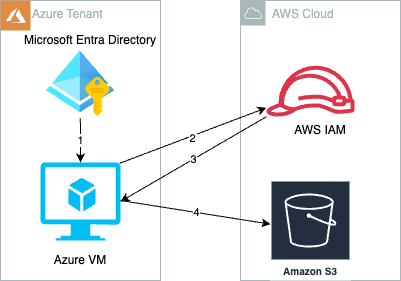
Use of long-term access keys for authentication between cloud resources increases the risk of key exposure and unauthorized secrets reuse. Amazon Web Services (AWS) has developed a solution to enable customers to securely authenticate Azure resources with AWS resources using short-lived tokens to reduce risks to secure authentication.
In this solution, we show you how to obtain temporary credentials in IAM. The solution uses AWS Security Token Service (AWS STS) in conjunction with Azure managed identities and Azure App Registration. This method provides a more secure and efficient way to bridge Azure and AWS clouds, providing seamless integration without compromising secure authentication and authorization standards.
Create and attach an Azure managed identity to an Azure virtual machine (VM).
Azure VM gets an Azure access token from the managed identity and sends it to AWS STS to retrieve temporary security credentials.
An IAM role created with a valid Azure tenant audience and subject validates that the claim is sourced from a trusted entity and sends temporary security credentials to the requesting Azure VM.
Azure VM accesses AWS resources using the AWS STS provided temporary security credentials.
To prepare the authentication process with Microsoft Entra ID, an enterprise application must be created in Microsoft Entra ID. This serves as a sign-in endpoint and provides the necessary user identity information through OIDC access tokens to the identity provider (IdP) of the target AWS account.
Note: You can get short term credentials by providing access tokens from managed identities or enterprise applications. This post covers the enterprise application use case.
Register a new application in Azure
In the Azure portal, select Microsoft Entra ID.
Select App registrations.
Select New registration.
Enter a name for your application and then select an option in Supported account types (in this example, we chose Accounts in this Organization directory only). Leave the other options as is. Then choose Register.
Figure 2: Register an application in the Azure portal
Configure the application ID URI
In the Azure portal, select Microsoft Entra ID.
Select App registrations.
On the App registrations page, select All applications and choose the newly registered application.
On the newly registered application’s overview page, choose Application ID URI and then select Add.
On the Edit application ID URI page, enter the value of the URI, which looks like urn://<name of the application> or api://<name of the application>.
The application ID URI will be used later as the audience in the identity provider(idP) section of AWS.
Figure 3: Configure the application ID URI
Open the newly registered application’s overview page.
In the navigation pane, under Manage, choose App roles.
Select Create app role and then enter a Display name and for Allowed member types, select Both (Users/Groups + Applications).
For Description, enter a description.
Select Do you want to enable this app role? And then choose Apply.
Figure 4: Create and enable an application role
Assign a managed identity—as created in Step 4 of the prerequisites—to the new application role. This operation can only be done by either using the Azure Cloud Shell or running scripts locally by installing the latest version of the Microsoft Graph PowerShell SDK. (For more information about assigning managed identities to application roles using PowerShell, see Azure documentation.)
You must have the following information:
ObjectID: To find the managed identity’s Object (Principal) ID, go to the Managed Identities page, select the identity name, and then select Overview.
Figure 5: Find the ObjectID of the managed identity
ID: To find the ID of the application role, go to App registrations, select the application name, and then select App roles.
Figure 6: Find the ID of the application role
PrincipalID: Same as ObjectID, which is the managed identity’s Object (Principal) ID.
ResourceID: The ObjectID of the resource service principal, which you can find by going to the Enterprise applications page and selection the application. Select Overview and then Properties to find the ObjectID.
Figure 7: Find the ResourceID
With the resource IDs, you can now use Azure Cloud Shell and run the following script in PowerShell terminal with New-AzureADServiceAppRoleAssignment. Replace the variables with the resource IDs.
In the AWS Management Console for IAM, create an IAM Identity Provider.
In the left navigation pane, select Identity providers and then choose Add an identity provider.
For Provider type, choose OpenID Connect.
For Provider URL, enter https://sts.windows.net/<Microsoft Entra Tenant ID>. Replace <Microsoft Entra Tenant ID> with your Tenant ID from Azure. This allows only identities from your Azure tenant to access your AWS resources.
For Audience use the client_id of the Azure managed identity or the application ID URI from enterprise applications.
For Audience, enter the application ID URI that you configured on step 5 of Configure the application ID URI. If you have additional client IDs (also known as audiences) for this IdP, you can add them to the provider detail page later.
You can also use different audiences in the role trust policy in the next step to limit the roles that specific audiences can assume. To do so, you must provide a StringEquals condition in the trust policy of the IAM role.
Figure 8: Adding an audience (client ID)
Using an OIDC principal without a condition can be overly permissive. To make sure that only the intended identities assume the role, provide an audience (aud) and subject (sub) as conditions in the role trust policy for this IAM role.
sts.windows.net/<Microsoft Entra Tenant ID>/:sub represents the identity of your Azure workload that limits access to the specific Azure identity that can assume this role from the Azure tenant. See the following example for conditions.
Replace <Microsoft Entra Tenant ID> with your tenant ID from Azure.
Replace <Application ID URI> with your audience value configured in the previous step.
Replace <Managed Identity’s object (Principal) ID> with your ObjectID captured in the first bullet of Step 12 of Configure the application ID URI.
To test the access, you’ll assign a user assigned managed identity to an existing VM.
Sign in to the Azure portal.
Navigate to the desired VM and select Identity, User assigned, and then choose Add.
Figure 9: Assigning a User assigned Identity
Select the managed identity created as part of prerequisite and then choose Add.
Figure 10: Add a user assigned managed identity
In AWS, we used credential_process in a separate AWS Config profile to dynamically and programmatically retrieve AWS temporary credentials. The credential process calls a bash script that retrieves an access token from Azure and uses the token to obtain temporary credentials from AWS STS. For the syntax and operating system requirements, see Source credentials with an external process. For this post, we created a custom profile called DevTeam-S3ReadOnlyAccess, as shown in the config file:
[profile DevTeam-S3ReadOnlyAccess]
credential_process = /opt/bin/credentials.sh
region = ap-southeast-2
For this example, credentials_process invokes the script /opt/bin/credentials.sh. Replace <111122223333> with your own account ID.
/opt/bin/credentials.sh
#!/bin/bash

# Application ID URI from Azure
AUDIENCE=”urn://dev-aws-account-team-a”
# Role ARN from AWS to assume
ROLE_ARN=”arn:aws:iam::<111122223333>:role/Azure-AWSAssumeRole”

# Retrieve Access Token using Audience
access_token=$(curl “http://169.254.169.254/metadata/identity/oauth2/token?api-version=2018-02-01&resource=${AUDIENCE}” -H “Metadata:true” -s| jq -r ‘.access_token’)

# Create credentials following JSON format required by AWS CLI
credentials=$(aws sts assume-role-with-web-identity –role-arn ${ROLE_ARN} –web-identity-token $access_token –role-session-name AWSAssumeRole|jq ‘.Credentials’ | jq ‘.Version=1’)

# Write credentials to STDOUT for AWS CLI to pick up
echo $credentials
After you configure the AWS Config CLI file for the credential_process script, verify the setup by accessing AWS resources from Azure VM.
Using AWS SDK for Python to run s3AccessFromAzure.py. You should see a list of S3 buckets from your account. This example also demonstrates specifying a profile to use for credential purposes.
S3AccessFromAzure.py
import boto3

# Assume Role with Web Identity Provider profile
session = boto3.Session(profile_name=’DevTeam-S3ReadOnlyAccess’)

# Retrieve the list of existing buckets
s3 = session.client(‘s3’)
response = s3.list_buckets()

# Output the bucket names
print(‘Existing buckets:’)
for bucket in response[‘Buckets’]:
    print(f’  {bucket[“Name”]}’)
Note: The AWS CLI doesn’t cache external process credentials; instead, the AWS CLI calls the credential_process for every CLI request, which creates a new role session. If you use AWS SDKs, the credentials are cached and reused until they expire.
We used Azure VM as an example to access AWS resources, but a similar approach can be used for any compute resources in Azure that are capable of issuing Azure credentials.
Clean up
If you don’t need the resources that you created for this walkthrough, delete them to avoid future charges for the deployed resources:
Delete the VM instance, managed identity, and enterprise applications created in Azure.
Delete the resources that you provisioned on AWS to test the solution.
Conclusion
In this post, we showed you how to securely access AWS resources from Azure workloads using an IAM role assumed with one-time, short-term credentials. By using this solution, your Azure workloads will request temporary security credentials and remove the need for long-term AWS credentials or other secrets usage that are less secure methods of authentication.
Use the following resources to help you get started with AWS IAM federation:
You told us one of the primary reasons to adopt Amazon Web Services (AWS) is the broad choice of services we offer, enabling you to innovate, build, deploy, and monitor your workloads. AWS has continuously expanded its services to support virtually any cloud workload. It now offers over 200 fully featured services for compute, storage, databases, networking, analytics, machine learning (ML) and artificial intelligence (AI), and many more. For example, Amazon Elastic Compute Cloud (Amazon EC2) offers over 750 generally available instances—more than any other major cloud provider—and you can choose from numerous relational, analytics, key-value, document, or graph databases.
We believe this choice must include the one to migrate your data to another cloud provider or on-premises. That’s why, starting today, we’re waiving data transfer out to the internet (DTO) charges when you want to move outside of AWS.
If you need more than 100 gigabytes of data transfer out per month while transitioning, you can contact AWS Support to ask for free DTO rates for the additional data. It’s necessary to go through support because you make hundreds of millions of data transfers each day, and we generally do not know if the data transferred out to the internet is a normal part of your business or a one-time transfer as part of a switch to another cloud provider or on premises.
We will review requests at the AWS account level. Once approved, we will provide credits for the data being migrated. We don’t require you to close your account or change your relationship with AWS in any way. You’re welcome to come back at any time. We will, of course, apply additional scrutiny if the same AWS account applies multiple times for free DTO.
We believe in customer choice, including the choice to move your data out of AWS. The waiver on data transfer out to the internet charges also follows the direction set by the European Data Act and is available to all AWS customers around the world and from any AWS Region.
We understand that one of the significant hurdles faced by our customers, especially larger organizations, is obtaining a clear view of the deployment of Cloudflare services throughout their vast and complex infrastructures. The question isn’t just whether Cloudflare is deployed, but whether it’s fully optimized across every asset and service. Addressing this challenge head-on, we’re rolling out a new feature set designed to provide better visibility and control over your security posture.
The problem we are addressing
The core problem we’re tackling is the growing complexity of cyber threats and the expanding attack surface, which complicates maintaining a strong security posture for our customers.
It’s not uncommon for organizations to deploy a variety of security solutions, including ours, without fully optimizing and implementing their configurations. This results in a false sense of security, underutilized investments and, more critically, exposed vulnerabilities. Our customers frequently express concerns about not having a clear picture of their security posture across their entire infrastructure, uncertain if critical assets are adequately protected or if specific Cloudflare security features could be better leveraged.
We want to bring users comprehensive visibility into their security configurations and the state of their deployments across Cloudflare’s suite of products. By providing actionable insights into underconfigured areas, unassigned resources, or unutilized features, we aim to close the security gaps and enhance the overall defense mechanisms of our customers’ digital ecosystems. This improvement is not just about leveraging technology but about promoting a culture of proactive security management, where every piece of the digital infrastructure is consistently and optimally protected.
How we’re solving this inside Security Center
More than two years ago, we took on the mission to consolidate our extensive suite of security products, security expertise, and our unique insights into Internet threats into one comprehensive solution — the Cloudflare Security Center. Launched with the vision to simplify attack surface management and make advanced security intelligence actionable for organizations of all sizes, Security Center has since become the one-stop quick view to evaluate your security posture.
Today, we build on this foundation to address a pain point for many of our large customers: ensuring complete Cloudflare protection across their entire digital infrastructure.
Our latest update in the Security Center focuses on delivering detailed insights into Cloudflare’s deployment status across your digital assets. This encompasses identifying applications where critical services like WAF, Access, and other security protection tools might not be fully configured or optimized, thereby weakening your security posture.
In addition to these insights, we are introducing a quick view within Security Center Insights, designed to offer CISOs and security teams a quick and comprehensive view of their current Cloudflare product configurations at any given moment, along with recommendations for enhancements, under the Security optimization snapshot on the dashboard.
Leveraging these new insights, Cloudflare users can now take proactive steps to close any gaps in their security framework. By offering a granular view of where specific Cloudflare services can be better utilized, we’re not just solving a visibility problem — we’re delivering actionable security intelligence. This means decisions can be made swiftly, ensuring that your defenses not only keep pace with, but stay ahead of, potential threats.
For instance, we’ll highlight if WAF is deployed on only a portion of your zones, where Email Security could be leveraged, or if certain assets are unprotected by Access controls. We’re also making it easier for you to see if you are missing any critical setup like Page Shield, ensuring the product is configured, so you are not just one step closer to becoming compliant with standards like PCI DSS, but are also protected against evolving threats. We are outlining newly discovered API endpoints that require your attention as well.
Finally, users can now export their Security Insights using our public API, and will soon be able to do the same directly from the Cloudflare Dashboard, with a simple click of a button!
Accessing Security Center Insights
Security Center Insights is available to all Cloudflare dashboard users that are Administrators of their Cloudflare account.
Regardless of the size or scope of your deployment, our goal is to empower every user with the tools needed to achieve a robust security posture, which they can continuously influence by improving existing configurations, adding new solutions, and discovering new vulnerabilities.
Future Security Center roadmap
We’re constantly adding other relevant security insights to help improve your security posture, covering exposed infrastructure, insecure configurations, optimisations, new products, and more, including the ability to easily export these for reporting purposes. Moreover, stay tuned for a completely new reporting platform that will automatically deliver curated and contextualized security insights directly into your inbox — showcasing the power of Cloudflare’s security portfolio. The periodic reports will be complemented by a personalized interactive in-dashboard reporting experience.
Check out your security insights under your account’s Security Center now and take action to improve your security posture with Cloudflare!
If you would like to join us in building the Security Center or other exciting Cloudflare products, see our open positions and learn more about life@Cloudflare.
Cloudflare is committed to providing our customers with industry-leading network security solutions. At the same time, we recognize that establishing robust security measures involves identifying potential threats by using processes that may involve scrutinizing sensitive or personal data, which in turn can pose a risk to privacy. As a result, we work hard to balance privacy and security by building privacy-first security solutions that we offer to our customers and use for our own network.
In this post, we’ll walk through how we deployed Cloudflare products like Access and our Zero Trust Agent in a privacy-focused way for employees who use the Cloudflare network. Even though global legal regimes generally afford employees a lower level of privacy protection on corporate networks, we work hard to make sure our employees understand their privacy choices because Cloudflare has a strong culture and history of respecting and furthering user privacy on the Internet. We’ve found that many of our customers feel similarly about ensuring that they are protecting privacy while also securing their networks.
So how do we balance our commitment to privacy with ensuring the security of our internal corporate environment using Cloudflare products and services? We start with the basics: We only retain the minimum amount of data needed, we de-identify personal data where we can, we communicate transparently with employees about the security measures we have in place on corporate systems and their privacy choices, and we retain necessary information for the shortest time period needed.
How we secure Cloudflare using Cloudflare
We take a comprehensive approach to securing our globally distributed hybrid workforce with both organizational controls and technological solutions. Our organizational approach includes a number of measures, such as a company-wide Acceptable Use Policy, employee privacy notices tailored by jurisdiction, required annual and new-hire privacy and security trainings, role-based access controls (RBAC), and least privilege principles. These organizational controls allow us to communicate expectations for both the company and the employees that we can implement with technological controls and that we enforce through logging and other mechanisms.
Our technological controls are rooted in Zero Trust best practices and start with a focus on our Cloudflare One services to secure our workforce as described below.
Securing access to applications
Cloudflare secures access to self-hosted and SaaS applications for our workforce, whether remote or in-office, using our own Zero Trust Network Access (ZTNA) service, Cloudflare Access, to verify identity, enforce multi-factor authentication with security keys, and evaluate device posture using the Zero Trust client for every request. This approach evolved over several years and has enabled Cloudflare to more effectively protect our growing workforce.
As we have evolved our hybrid work and office configurations, our security teams have benefited from additional controls and visibility for forward-proxied Internet traffic, including:
Granular HTTP controls: Our security teams inspect HTTPS traffic to block access to specific websites identified as malicious by our security team, conduct antivirus scanning, and apply identity-aware browsing policies.
Selectively isolating Internet browsing: With remote browser isolated (RBI) sessions, all web code is run on Cloudflare’s network far from local devices, insulating users from any untrusted and malicious content. Today, Cloudflare isolates social media, news outlets, personal email, and other potentially risky Internet categories, and we have set up feedback loops for our employees to help us fine-tune these categories.
Geography-based logging: Seeing where outbound requests originate helps our security teams understand the geographic distribution of our workforce, including our presence in high-risk areas.
Data Loss Prevention: To keep sensitive data inside our corporate network, this tool allows us to identify data we’ve flagged as sensitive in outbound HTTP/S traffic and prevent it from leaving the network.
Cloud Access Security Broker: This tool allows us to monitor our SaaS apps for misconfigurations and sensitive data that is potentially exposed or shared too broadly.
Protecting inboxes with cloud email security
Additionally, we have deployed our Cloud Email Security solution to protect our workforce from increased phishing and business email compromise attacks that we have not only seen directed against our employees, but that are plaguing organizations globally. One key feature we use is email link isolation, which uses RBI and email security functionality to open potentially suspicious links in an isolated browser. This allows us to be slightly more relaxed with blocking suspicious links without compromising security. This is a big win for productivity for our employees and the security team, as both sets of employees aren’t having to deal with large volumes of false positives.
The very nature of these powerful security technologies Cloudflare has created and deployed underscores the responsibility we have to use privacy-first principles in handling this data, and to recognize that the data should be respected and protected at all times.
The journey to respecting privacy starts with the products themselves. We develop products that have privacy controls built in at their foundation. To achieve this, our product teams work closely with Cloudflare’s product and privacy counsels to practice privacy by design. A great example of this collaboration is the ability to manage personally identifiable information (PII) in the Secure Web Gateway logs. You can choose to exclude PII from Gateway logs entirely or redact PII from the logs and gain granular control over access to PII with the Zero Trust PII Role.
In addition to building privacy-first security products, we are also committed to communicating transparently with Cloudflare employees about how these security products work and what they can – and can’t – see about traffic on our internal systems. This empowers employees to see themselves as part of the security solution, rather than set up an “us vs. them” mentality around employee use of company systems.
For example, while our employee privacy policies and our Acceptable Use Policy provide broad notice to our employees about what happens to data when they use the company’s systems, we thought it was important to provide even more detail. As a result, our security team collaborated with our privacy team to create an internal wiki page that plainly explains the data our security tools collect and why. We also describe the privacy choices available to our employees. This is particularly important for the “bring your own device” (BYOD) employees who have opted for the convenience of using their personal mobile device for work. BYOD employees must install endpoint management (provided by a third party) and Cloudflare’s Zero trust client on their devices if they want to access Cloudflare systems. We described clearly to our employees what this means about what traffic on their devices can be seen by Cloudflare teams, and we explained how they can take steps to protect their privacy when they are using their devices for purely personal purposes.
For the teams that develop for and support our Zero Trust services, we ensure that data is available only on a strict, need-to-know basis and is restricted to Cloudflare team members that require access as an essential part of their job. The set of people with access are required to take training that reminds them of their responsibility to respect this data and provides them with best practices for handling sensitive data. Additionally, to ensure we have full auditability, we log all the queries run against this database and by whom they are run.
Cloudflare has also made it easy for our employees to express any concerns they may have about how their data is handled or what it is used for. We have mechanisms in place that allow employees to ask questions or express concerns about the use of Zero Trust Security on Cloudflare’s network.
In addition, we make it easy for employees to reach out directly to the leaders responsible for these tools. All of these efforts have helped our employees better understand what information we collect and why. This has helped to expand our strong foundation for security and privacy at Cloudflare.
Encouraging privacy-first security for all
We believe firmly that great security is critical for ensuring data privacy, and that privacy and security can co-exist harmoniously. We also know that it is possible to secure a corporate network in a way that respects the employees using those systems.
For anyone looking to secure a corporate network, we encourage focusing on network security products and solutions that build in personal data protections, like our Zero Trust suite of products. If you are curious to explore how to implement these Cloudflare services in your own organizations, request a consultation here.
We also urge organizations to make sure they communicate clearly with their users. In addition to making sure company policies are transparent and accessible, it is important to help employees understand their privacy choices. Under the laws of almost every jurisdiction globally, individuals have a lower level of privacy on a company device or a company’s systems than they do on their own personal accounts or devices, so it’s important to communicate clearly to help employees understand the difference. If an organization has privacy champions, works councils, or other employee representation groups, it is critical to communicate early and often with these groups to help employees understand what controls they can exercise over their data.
Today, Cloudflare is launching early access to the Deskope Program, a new set of tooling to help migrate existing Netskope customers to Cloudflare One for a faster and easier security experience. In addition, we’re also thrilled to announce the expansion of the Descaler Program to Authorized Service Delivery Partners, who will now have exclusive access to the Descaler toolkit to help customers move safely and quickly to Cloudflare.
Introducing Deskope — Migrate from Netskope to Cloudflare One
To set the stage, Cloudflare One is our Secure Access Service Edge (SASE) platform that combines network connectivity services with Zero Trust security on one of the fastest, most resilient, and most composable global networks. The Descaler Program was announced in early 2023 as a frictionless path to migrate existing Zscaler customers to Cloudflare One. Today, we are announcing the Deskope Program as a new and equally effortless path to migrate existing Netskope customers to Cloudflare One.
The Deskope Program follows the same approach as the Descaler process, including the tools, process, and partners you need for a frictionless technical migration. This program is completed through architecture workshops, technical migration tooling, and when requested, trusted partner engagements.
Deskope’s approach is based on minimizing manual effort and reducing the potential for error, allowing for a migration experience that is both fast and reliable. Combining automated tools and expert support, we ensure that your Netskope configurations are accurately translated and optimized for Cloudflare’s environment. Following an extract, transform, and load sequence using API calls to your current Netskope account, the Deskope toolkit will export your current Netskope Next Gen Secure Web Gateway (SWG) configuration and transform it to be Cloudflare One-compatible before migrating it into a new Cloudflare One account (or an existing one, if you’d prefer).
Drawing from the success of the Descaler process and migrating customers in just a few hours, Cloudflare is now expanding the offering to customers who wish to migrate from Netskope to Cloudflare One.
Why Deskope? Speed and simplicity
When it comes to speed, Cloudflare Gateway, our secure web gateway, is simply faster.
During 2023’s Speed Week, we published a blog called Spotlight on Zero Trust: we’re fastest and here’s the proof comparing secure web gateway products. This data shows that Cloudflare’s Gateway is faster to more websites from more places than any of our competitors. To quote from the blog:
“In one exercise we pitted the Cloudflare Gateway and WARP client against Zscaler, Netskope, and Palo Alto which all have products that perform the same functions. Cloudflare users benefit from Gateway and Cloudflare’s network being embedded deep into last mile networks close to users, being peered with over 12,000 networks. That heightened connectivity shows because Cloudflare Gateway is the fastest network in 42% of tested scenarios:”
But speed without control can be dangerous. The good news is that all the speed is easy to manage and deploy.
When it comes to simplicity, Cloudflare One is a unified, cloud-native platform that is easy to set up and manage, with a single onboarding wizard that further streamlines setup for both policy and the single-agent deployment to endpoints. This is in contrast to Netskope, where the policy creation process can slow administrators down as they have to first build reusable objects from scratch, so even a basic Secure Web Gateway policy requires many different elements to get started. Cloudflare’s Gateway policy builder is streamlined to allow administrators to quickly set a policy’s scope by defining conditions for Gateway to match traffic against. Traffic, identity, and even device posture conditions can be joined with logical operators ‘AND’ or ‘OR’ to easily manage what would otherwise be complex filtering controls.
Cloudflare is equally committed to making the migration process as cost-effective as possible using flexible financial options for customers wanting to migrate over.
As we introduce the Deskope Program, we are equally excited to accelerate Descaler even further by inviting Authorized Service Delivery Partners to leverage the Descaler toolkit to help more customers move to Cloudflare One.
Welcome Authorized Service Delivery Partners to Descaler
In a May 2023 blog post detailing our global services partner strategy and the momentum of our Authorized Service Delivery Partner program, we showcased our partnership with service providers all around the world, highlighting the strategic importance of the program in delivering unparalleled Cloudflare solutions through our trusted network of service providers.
We are thrilled to announce that our Authorized Service Delivery Partners now have the option to access the Descaler toolkit, along with training and support materials we have developed from our global experience with key customers. This initiative is designed to empower our authorized partners, complementing their existing skills and unique service offerings.
With access to the Descaler tool, our partners will be even better equipped to assist with your critical migration requirements to Cloudflare. Plans are underway to launch exclusive Descaler training for our partners in March 2024. Access to this training, as well as the Descaler tool itself, will be by invitation only, extended to our authorized partners.
How to get started Deskoping (or Descaling)
For customers and prospects, joining the Descaler or early access Deskope Programs are as easy as signing up using the link below. From there, the Cloudflare team will reach out to you for further enrollment details. By providing details about your current SSE deployment, ongoing challenges, and future Zero Trust or SASE goals, we’ll be able to hit the ground running. To get started, sign up here.
For partners, to get detailed information and to express interest in participating, connect with your assigned Channel Account Manager or Partner Service Delivery Manager. We look forward to supporting our partners in delivering high-quality services and enhancing their capability to meet the evolving needs of the market. If you are a partner with experience in delivering Cloudflare services and would like to become an Authorized Service Delivery Partner, please use this checklist to get started.
Today, we are happy to announce that Cloudflare customers can protect their APIs from broken authentication attacks by validating incoming JSON Web Tokens (JWTs) with API Gateway. Developers and their security teams need to control who can communicate with their APIs. Using API Gateway’s JWT Validation, Cloudflare customers can ensure that their Identity Provider previously validated the user sending the request, and that the user’s authentication tokens have not expired or been tampered with.
What’s new in this release?
After our beta release in early 2023, we continued to gather feedback from customers on what they needed from JWT validation in API Gateway. We uncovered four main feature requests and shipped updates in this GA release to address them all:
Old, Beta limitation
New, GA release capability
Only supported validating the raw JWT
Support for the Bearer token format
Only supported one JWKS configuration
Create up to four different JWKS configs to support different environments per zone
Only supported validating JWTs sent in HTTP headers
Validate JWTs if they are sent in a cookie, not just an HTTP header
JWT validation ran on all requests to the entire zone
Exclude any number of managed endpoints in a JWT validation rule
What is the threat?
Broken authentication is the #1 threat on the OWASP Top 10 and the #2 threat on the OWASP API Top 10. We’ve written before about how flaws in API authentication and authorization at Optus led to a threat actor offering 10 million user records for sale, and government agencies have warned about these exact API attacks.
According to Gartner®1, “attacks and data breaches involving poorly secured application programming interfaces (APIs) are occurring frequently.” Getting authentication correct for your API users can be challenging, but there are best practices you can employ to cover your bases. JSON Web Token Validation in API Gateway fulfills one of these best practices by enforcing a positive security model for your authenticated API users.
A primer on authentication and authorization
Authentication establishes identity. Imagine you’re collaborating with multiple colleagues and writing a document in Google Docs. When you’re all authors of the document, you have the same privileges, and you can overwrite each other’s text. You can all see each other’s name next to your respective cursor while you’re typing. You’re all authenticated to Google Docs, so Docs can show all the users on a document who everyone is.
Authorization establishes ownership or permissions to objects. Imagine you’re collaborating with your colleague in Docs again, but this time they’ve written a document ahead of time and simply wish for you to review it and add comments without changing the document. As the owner of the document, your colleague sets an authorization policy to only allow you ‘comment’ access. As such, you cannot change their writing at all, but you can still view the document and leave comments.
While the words themselves might sound similar, the differences between them are hugely important for security. It’s not enough to simply check that a user logging in has the correct login credentials (authentication). If you never check their permissions (authorization), they would be free to overwrite, add, or delete other users’ content. When this happens for APIs, OWASP calls it a Broken Object Level Authorization attack.
A primer on API access tokens
Users authenticate to services in many different ways on the web today. Let’s take a look at the history of authentication with username and password authentication, API key authentication, and JWT authentication before we mention how JWTs can help stop API attacks.
In the early days, the web used HTTP Basic Authentication, where browsers transmitted username and password pairs as an HTTP header, posing significant security risks and making credentials visible to any observer when the application failed to adopt SSL/TLS certificates. Basic authentication also complicated API access, requiring hard-coded credentials and potentially giving broad authorization policies to a single user.
The introduction of API access keys improved security by detaching authentication from user credentials and instead sending secret text strings along with requests. This approach allowed for more nuanced access control by key instead of by user ID, though API keys still faced risks from man-in-the-middle attacks and problematic storage of secrets in source code.
JSON Web Tokens (JWTs) address these issues by removing the need to send long-lived secrets on every request, introducing cryptographically verifiable, auto-expiring, short-lived sessions. Think of a JWT like a tamper-evident seal on a bottle of medication. Along with the seal, medication also has an expiration date printed on it. Users notice when the seal is tampered with or missing altogether, and when the medication expires.
These attributes enhance security any time a JWT is used instead of a long-lived shared secret. JWTs are not an end-all-be-all solution, but they do represent an evolution in authentication technology and are widely used for authentication and authorization on the Internet today.
What’s the structure of a JWT?
JWTs are composed of three fields separated by periods. The first field is a header, the second a payload, and the third a signature:
If we base64 decode the first two sections, we arrive at the following structure (comments added for clarity):
{
  "alg": "RS256",     // JWT signature algorithm
  "typ": "JWT"        // JWT type
}

{
  "iss": "MyDemoIDP", // Which identity provider issued this JWT
  "sub": "johndoe",   // Which user this JWT identifies
  "aud": "MyApp",     // Which app this JWT is destined for
  "iat": 1708985601,  // When this JWT was issued
  "exp": 1709986201,  // When this JWT expires
  "class": "admin"    // Extra, customer-defined metadata
}
We can then use the algorithm mentioned in the header (RS256) as well as the Identity Provider’s public key (example below) to check the last segment in the JWT, the signature (code not shown).
-----BEGIN PUBLIC KEY-----
MIIBIjANBgkqhkiG9w0BAQEFAAOCAQ8AMIIBCgKCAQEA3exXmNOELAnrtejo3jb2
S6p+GFR5FFlO0AqC4lA4HjNX9stgxX8tcbzv1yl5CT6VWl4kpnBweJzdBsNOauPz
uiCFQ0PtTfS0wDZm3inRPR1bTvJEuqsRTbsCxw/nRLU2+Dvu0zF41Wo4OkAbuKGS
3FwfdKOY/rX5tzjhnTe7uhWTarJG3nVnwmuD03INeNI+fbTgbUrOaVFT06Ussb9L
NNe6BHGQjs6NfG037Jk36dGY1Yiy/rutj6nJ7WkEK5ktQgWrvMMoXW9TfpYHi6sC
mnSEdaxNS8jtFodqpURUaLDIdTOGGgpUZsvzv3jDMYo5IxQK+6y+HUV8eRyDYd/o
rQIDAQAB
-----END PUBLIC KEY-----
The signature is what makes a JWT special. The token issuer, taking into account the claims, generates a signature based on a private secret or a public/private key pair. The public key can be published online, allowing anyone to check if a JWT was legitimately issued by an organization.
Proper authentication and authorization stop API attacks
No developer wants to release an insecure application, and no security team wants their developers to skip secure coding practices, but we know both happen. In the Enterprise Strategy Group report “Securing the API Attack Surface”2, a survey found that 39% of developers skip security processes due to the faster development cycles of continuous integration and continuous delivery (CI/CD). The same survey found more than half (57%) of responding organizations faced multiple security incidents related to insecure APIs in the last 12 months, and 35% of responding organizations faced at least one incident within the last year.
Along with its accompanying database, permissions, and user roles, your origin application is the ultimate security backstop of your API. However, Cloudflare can assist in keeping attacks away from your origin when you configure API Gateway with the correct context. Let’s examine three different API attacks and how to protect against them.
Missing or broken authentication
The ability for a user to send or receive data to an API and entirely bypass authentication falls into ‘broken authentication’. It’s easy to think of the expected use cases your users will take with your application. You may assume that just because a user logs in and your application is written so that users can only access their own data in their dashboard, that all users are logged in and would only access their own data. This assumption fails to account for a user making an HTTP request outside your application requesting or modifying another user’s data and there being nothing in the way to stop your API from replying. In the worst case, a lack of authorization policy checks can enable an API client to change data without an authentication token at all!
Ensuring that incoming requests have an authentication token attached to them and dropping the requests that don’t is a great way to stop the simplest API attacks.
Expired token reuse
Maybe your application already uses JWTs for user authentication. Your application decodes the JWT and looks for user claims for group membership, and you validate the claims before allowing customers access to your API. But are you checking the JWT expiration time?
Imagine a user pays for your service, but they secretly know they will soon downgrade to a free account. If the user’s tier is stored within the JWT and the application or gateway doesn’t validate the expiration time of the JWT, the user could save an old JWT and replay it to continue their access to their paid benefits. Validating JWT expiration time can prevent this type of replay attack.
Let’s say you’re using JWTs for authentication, validating the claims inside them, and also validating expiration time. But do you verify the JWT signature? Practically every JWT is signed by its issuer such that API admins and security teams that know the issuer’s signing key can verify that the JWT hasn’t been tampered with. Without the API Gateway or application checking the JWT signature, a malicious user could change their JWT claims, elevating their privileges to assume an administrator role in an application by starting with a normal, non-privileged user account.
JWT Validation from API Gateway safeguards your API from broken authentication and authorization attacks by checking that JWT signatures are intact, expiry times haven’t yet passed, and that authentication tokens are present to begin with.
Don’t other Cloudflare products do this?
Other Cloudflare products also use JWTs. Cloudflare Access is part of our suite of Zero Trust products, and is meant to tie into your Identity Provider. As a best practice, customers should validate the JWT that Access creates and sends to the origin.
Conversely, JWT Validation for API Gateway is a security layer compatible with any API without changing the setup, management, or expectation of the existing user flow. API Gateway’s JWT Validation is meant to validate pre-existing JWTs that may be used by any number of services at your API origin. You really need both: Access for your internal users or employees and API Gateway for your external users.
In addition, some customers use a custom Cloudflare Worker to validate JWTs, which is a great use case for the Workers platform. However, for straightforward use cases customers may find the JWT Validation experience of API Gateway easier to interact with and manage over the lifecycle of their application. If you are validating JWTs with a Worker and today’s release of JWT Validation isn’t yet at feature parity for your custom Worker, let your account representative know. We’re interested in expanding our capabilities to meet your requirements.
What’s next?
In a future release, we will go beyond checking pre-existing JWTs, and customers will be able to generate and enforce authorization policies entirely within API Gateway. We’ll also upgrade our on-demand developer portal creation with the ability to issue keys and authentication tokens to your development team directly, streamlining API management with Cloudflare.
In addition, stay tuned for future API Gateway feature launches where we’ll use our knowledge of API traffic norms to automatically suggest security policies that highlight and stop Broken Object/Function Level Authorization attacks outside the JWT Validation use case.
Existing API Gateway customers can try the new feature now. Enterprise customers without API Gateway should sign up for the trial to try the latest from API Gateway.
—
1Gartner, “API Security: What You Need to Do to Protect Your APIs”, Analyst(s) Mark O’Neill, Dionisio Zumerle, Jeremy D’Hoinne, January 13, 2023 2Enterprise Strategy Group, “Securing the API Attack Surface”, Analyst, Melinda Marks, May 2023
We are excited to announce two enhancements to Cloudflare’s Data Loss Prevention (DLP) service: support for Optical Character Recognition (OCR) and predefined source code detections. These two highly requested DLP features make it easier for organizations to protect their sensitive data with granularity and reduce the risks of breaches, regulatory non-compliance, and reputational damage:
With OCR, customers can efficiently identify and classify sensitive information contained within images or scanned documents.
With predefined source code detections, organizations can scan inline traffic for common code languages and block those HTTP requests to prevent data leaks, as well as detecting the storage of code in repositories such as Google Drive.
OCR enables the extraction of text from images. It converts the text within those images into readable text data that can be easily edited, searched, or analyzed, unlike images.
Sensitive data regularly appears in image files. For example, employees are often asked to provide images of identification cards, passports, or documents as proof of identity or work status. Those images can contain a plethora of sensitive and regulated classes of data, including Personally Identifiable Information (PII) — for example, passport numbers, driver’s license numbers, birthdates, tax identification numbers, and much more.
OCR can be leveraged within DLP policies to prevent the unauthorized sharing or leakage of sensitive information contained within images. Policies can detect when sensitive text content is being uploaded to cloud storage or shared through other communication channels, and block the transaction to prevent data loss. This assists in enforcing compliance with regulatory requirements related to data protection and privacy.
About source code detection
Source code fuels digital business and contains high-value intellectual property, including proprietary algorithms and encrypted secrets about a company’s infrastructure. Source code has been and will continue to be a target for theft by external attackers, but customers are also increasingly concerned about the inadvertent exposure of this information by internal users. For example, developers may accidentally upload source code to a publicly available GitHub repository or to generative AI tools like ChatGPT. While these tools have their place (like using AI to help with debugging), security teams want greater visibility and more precise control over what data flows to and from these tools.
To help customers, Cloudflare now offers predefined DLP profiles for common code languages — specifically C, C++, C#, Go, Haskell, Java, Javascript, Lua, Python, R, Rust, and Swift. These machine learning-based detections train on public repositories for algorithm development, ensuring they remain up to date. Cloudflare’s DLP inspects the HTTP body of requests for these DLP profiles, and security teams can block traffic accordingly to prevent data leaks.
How to use these capabilities
Cloudflare offers you flexibility to determine what data you are interested in detecting via DLP policies. You can use predefined profiles created by Cloudflare for common types of sensitive or regulated data (e.g. credentials, financial data, health data, identifiers), or you can create your own custom detections.
To implement inline blocking of source code, simply select the DLP profiles for the languages you want to detect. For example, if my organization uses Rust, Go, and JavaScript, I would turn on those detections:
I would then create a blocking policy via our secure web gateway to prevent traffic containing source code. Here, we block source code from being uploaded to ChatGPT:
Adding OCR to any detection is similarly easy. Below is a profile looking for sensitive data that could be stored in scanned documents.
With the detections selected, simply enable the OCR toggle, and wherever you are applying DLP inspections, images in your content will be scanned for sensitive data. The detections work the same in images as they do in the text, including Match Counts and Context Analysis, so no additional logic or settings are needed.
Consistency across use cases is a core principle of our DLP solution, so as always, this feature is available for both data at rest, available via CASB, and data in transit, available via Gateway.
Today, nearly two percent of all TLS 1.3 connections established with Cloudflare are secured with post-quantum cryptography. We expect to see double-digit adoption by the end of 2024. Apple announced in February 2024 that it will secure iMessage with post-quantum cryptography before the end of the year, and Signal chats are already secured. What once was the topic of futuristic tech demos will soon be the new security baseline for the Internet.
A lot has been happening in the field over the last few years, from mundane name changes (ML-KEM is the new name for Kyber), to new proposed algorithms in the signatures onramp, to the catastrophic attack on SIKE. Plenty that has been written merely three years ago now feels quite out of date. Thus, it is high time for an update: in this blog post we’ll take measure of where we are now in early 2024, what to expect for the coming years, and what you can do today.
Fraction of TLS 1.3 connections established with Cloudflare that are secured with post-quantum cryptography.
The quantum threat
First things first: why are we migrating our cryptography? It’s because of quantum computers. These marvelous devices, instead of restricting themselves to zeroes and ones, compute using more of what nature actually affords us: quantum superposition, interference, and entanglement. This allows quantum computers to excel at certain very specific computations, notably simulating nature itself, which will be very helpful in developing new materials.
Quantum computers are not going to replace regular computers, though: they’re actually much worse than regular computers at most tasks. Think of them as graphic cards — specialized devices for specific computations.
Unfortunately, quantum computers also excel at breaking key cryptography that’s in common use today. Thus, we will have to move to post-quantum cryptography: cryptography designed to be resistant against quantum attack. We’ll discuss the exact impact on the different types of cryptography later on. For now quantum computers are rather anemic: they’re simply not good enough today to crack any real-world cryptographic keys.
That doesn’t mean we shouldn’t worry yet: encrypted traffic can be harvested today, and decrypted with a quantum computer in the future.
Quantum numerology
When will they be good enough? Like clockwork, every year there are news stories of new quantum computers with record-breaking number of qubits. This focus on counting qubits is quite misleading. To start, quantum computers are analogue machines, and there is always some noise interfering with the computation.
There are big differences between the different types of technology used to build quantum computers: silicon-based quantum computers seem to scale well, are quick to execute instructions, but have very noisy qubits. This does not mean they’re useless: with quantum error correcting codes one can effectively turn tens of millions of noisy silicon qubits into a few thousand high-fidelity ones, which could be enough to break RSA. Trapped-ion quantum computers, on the other hand, have much less noise, but have been harder to scale. Only a few hundred-thousand trapped-ion qubits could potentially draw the curtain on RSA.
State-of-art in quantum computing measured by qubit count and noise in 2021, 2022, and 2023. Once the shaded gray area hits the left-most red line, we’re in trouble. Red line is expected to move to the left. Compiled by Samuel Jaques of the University of Waterloo.
We’re only scratching the surface with the number of qubits and noise. For instance, a quirk of many quantum computers is that only adjacent qubits can interact — something that most estimates do not take into account. On the other hand, for a specific quantum computer, a tailored algorithm can perform much better than a generic one. We can only guess what a future quantum computer will look like, and today’s estimates are most likely off by at least an order of magnitude.
When will quantum computers break real-world cryptography?
So, when do we expect the demise of RSA-2048 which is in common use today? In a 2022 survey, over half the interviewed experts thought it’d be more probable than not that by 2037 such a cryptographically relevant quantum computer would’ve been built.
We can also look at the US government’s timeline for the migration to post-quantum cryptography. The National Security Agency (NSA) aims to finish its migration before 2033, and will start to prefer post-quantum ready vendors for many products in 2025. The US government has a similarly ambitious timeline for the country as a whole: the aim is to be done by 2035.
NSA timeline for migrating third-party software to post-quantum cryptography.
More anecdotally, at industry conferences on the post-quantum migration, I see particularly high participation of the automotive branch. Not that surprising, considering that the median age of a car on the road is 14 years, a lot of money is on the line, and not all cryptography used in cars can be upgraded easily once on the road.
So when will it arrive? Whether it’s 2034 or 2050, it will be too soon. The immense success of cryptography means it’s all around us now, from dishwasher, to pacemaker, to satellite. Most upgrades will be easy, and fit naturally in the product’s lifecycle, but there will be a long tail of difficult and costly upgrades.
Two migrations
To help prioritize, it is important to understand that there is a big difference in the difficulty, impact, and urgency of the post-quantum migration for the different kinds of cryptography required to create secure connections. In fact, for most organizations there will be two post-quantum migrations: key agreement and signatures / certificates.
Let’s explain this for the case of creating a secure connection when visiting a website in a browser. The workhorse is a symmetric cipher such as AES-GCM. It’s what you would think of when thinking of cryptography: both parties, in this case the browser and server, have a shared key, and they encrypt / decrypt their messages with the same key. Unless you have that key, you can’t read anything, or modify anything.
The good news is that symmetric ciphers, such as AES-GCM, are already post-quantum secure. There is a common misconception that Grover’s quantum algorithm requires us to double the length of symmetric keys. On closer inspection of the algorithm, it’s clear that it is not practical. The way NIST, the US National Institute for Standards and Technology (who have been spearheading the standardization of post-quantum cryptography) defines their post-quantum security levels is very telling. They define a specific security level by saying the scheme should be as hard to crack using either a classical or quantum computer as an existing symmetric cipher as follows:
Level
Definition, as least as hard to break as …
Example
1
To recover the key of AES-128 by exhaustive search
ML-KEM-512, SLH-DSA-128s
2
To find a collision in SHA256 by exhaustive search
ML-DSA-44
3
To recover the key of AES-192 by exhaustive search
ML-KEM-768
4
To find a collision in SHA384 by exhaustive search
5
To recover the key of AES-256 by exhaustive search
ML-KEM-1024, SLH-DSA-256s
NIST PQC security levels, higher is harder to break (“more secure”). The examples ML-DSA, SLH-DSA and ML-KEM are covered below.
There are good intentions behind suggesting doubling the key lengths of symmetric cryptography. In many use cases, the extra cost is not that high, and it mitigates any theoretical risk completely. Scaling symmetric cryptography is cheap: double the bits is typically far less than half the cost. So on the surface, it is simple advice.
But if we insist on AES-256, it seems only logical to insist on NIST PQC level 5 for the public key cryptography as well. The problem is that public key cryptography does not scale very well. Depending on the scheme, going from level 1 to level 5 typically more than doubles data usage and CPU cost. As we’ll see, deploying post-quantum signatures at level 1 is already painful, and deploying them at level 5 is problematic.
A second reason is that upgrading symmetric cryptography isn’t always easy. If it requires replacing hardware, it can be costly indeed. An organization that cannot migrate all its cryptography in time simply can’t afford to waste its time doubling symmetric key lengths.
First migration: key agreement
Symmetric ciphers are not enough on their own: how do I know which key to use when visiting a website for the first time? The browser can’t just send a random key, as everyone listening in would see that key as well. You’d think it’s impossible, but there is some clever math to solve this, so that the browser and server can agree on a shared key. Such a scheme is called a key agreement mechanism, and is performed in the TLS handshake. Today almost all traffic is secured with X25519, a Diffie–Hellman-style key agreement, but its security is completely broken by Shor’s algorithm on a quantum computer. Thus, any communication secured today with Diffie–Hellman, when stored, can be decrypted in the future by a quantum computer.
This makes it urgent to upgrade key agreement today. As we will see, luckily, post-quantum key agreement is relatively straight-forward to deploy.
Second migration: signatures / certificates
The key agreement allows secure agreement on a key, but there is a big gap: we do not know with whom we agreed on the key. If we only do key agreement, an attacker in the middle can do separate key agreements with the browser and server, and re-encrypt any exchanged messages. To prevent this we need one final ingredient: authentication.
This is achieved using signatures. When visiting a website, say cloudflare.com, the web server presents a certificate signed by a certification authority (CA) that vouches that the public key in that certificate is controlled by cloudflare.com. In turn, the web server signs the handshake and shared key using the private key corresponding to the public key in the certificate. This allows the client to be sure that they’ve done a key agreement with cloudflare.com.
RSA and ECDSA are commonly used traditional signature schemes. Again, Shor’s algorithm makes short work of them, allowing a quantum attacker to forge any signature. That means that a MitM (man-in-the-middle) can break into any connection that uses a signature scheme that is not post-quantum secure. This is of course an active attack: if the attacker isn’t in the middle as the handshake happens, the connection is not affected.
This makes upgrading signature schemes for TLS on the face of it less urgent, as we only need to have everyone migrated by the time the cryptographically-relevant quantum computer arrives. Unfortunately, we will see that migration to post-quantum signatures is much more difficult, and will require more time.
Timeline
Before we dive into the technical challenges of migrating the Internet to post-quantum cryptography, let’s have a look at how we got here, and what to expect in the coming years. Let’s start with how post-quantum cryptography came to be.
Origin of post-quantum cryptography
Physicists Feynman and Manin independently proposed quantum computers around 1980. It took another 14 years before Shor published his algorithm attacking public key cryptography. Most post-quantum cryptography predates Shor’s famous algorithm.
There are various branches of post-quantum cryptography, of which the most prominent are lattice-based, hash-based, multivariate, code-based, and isogeny-based. Except for isogeny-based cryptography, none of these were initially conceived as post-quantum cryptography. In fact, early code-based and hash-based schemes are contemporaries of RSA, being proposed in the 1970s, and comfortably predate the publication of Shor’s algorithm in 1994. Also, the first multivariate scheme from 1988 is comfortably older than Shor’s algorithm. It is a nice coincidence that the most successful branch, lattice-based cryptography, is Shor’s closest contemporary, being proposed in 1996. For comparison, elliptic curve cryptography, which is widely used today, was first proposed in 1985.
In the years after the publication of Shor’s algorithm, cryptographers took measure of the existing cryptography: what’s clearly broken, and what could be post-quantum secure? In 2006, the first annual International Workshop on Post-Quantum Cryptography took place. From that conference, an introductory text was prepared, which holds up rather well as an introduction to the field. A notable caveat is the demise of the Rainbow signature scheme. In that same year, the elliptic-curve key-agreement X25519 was proposed, which now secures the vast majority of all Internet connections.
NIST PQC competition
Ten years later, in 2016, NIST, the US National Institute of Standards and Technology, launched a public competition to standardize post-quantum cryptography. They’re using a similar open format as was used to standardize AES in 2001, and SHA3 in 2012. Anyone can participate by submitting schemes and evaluating the proposals. Cryptographers from all over the world submitted algorithms. To focus attention, the list of submissions were whittled down over three rounds. From the original 82, based on public feedback, eight made it into the final round. From those eight, in 2022, NIST chose to pick four to standardize first: one KEM (for key agreement) and three signature schemes.
Old name
New name
Branch
Kyber
ML-KEM (FIPS 203) Module-lattice based Key-Encapsulation Mechanism Standard
Lattice-based
Dilithium
ML-DSA (FIPS 204) Module-lattice based Digital Signature Standard
Lattice-based
SPHINCS+
SLH-DSA (FIPS 205) Stateless Hash-Based Digital Signature Standard
Hash-based
Falcon
FN-DSA FFT over NTRU lattices Digital Signature Standard
Lattice-based
First four selected post-quantum algorithms from NIST competition.
ML-KEM is the only post-quantum key agreement close to standardization now, and despite some occasional difficulty with its larger key sizes, in many cases it allows for a drop-in upgrade.
The situation is rather different with the signatures: it’s quite telling that NIST chose to standardize three already. And there are even more signatures set to be standardized in the future. The reason is that none of the proposed signatures are close to ideal. In short, they all have much larger keys and signatures than we’re used to. From a security standpoint SLH-DSA is the most conservative choice, but also the worst performer. For public key and signature sizes, FN-DSA is the best of the worst, but is difficult to implement safely because of floating-point arithmetic. This leaves ML-DSA as the default pick. More in depth comparisons are included below.
Name changes
Undoubtedly Kyber is the most familiar name, as it’s a preliminary version of Kyber that has already been deployed by Chrome and Cloudflare among others to counter store-now/decrypt-later. We will have to adjust, though. Just like Rijndael is most well-known as AES, and Keccak is SHA3 to most, ML-KEM is set to become the catchy new moniker for Kyber going forward.
Final standards
Although we know NIST will standardize these four, we’re not quite there yet. In August 2023, NIST released three draft standards for the first three with minor changes, and solicited public feedback. FN-DSA is delayed for now, as it’s more difficult to standardize and deploy securely.
For timely adopters, it’s important to be aware that based on the feedback on the first three drafts, there might be a few small tweaks before the final standards are released. These changes will be minor, but the final versions could well be incompatible on the wire with the current draft standards. These changes are mostly immaterial, only requiring a small update, and do not meaningfully affect the brunt of work required for the migration, including organizational engagement, inventory, and testing. Before shipping, there can be good reasons to wait for the final standards: support for preliminary versions is not widespread, and it might be costly to support both the draft and final standards. Still, many organizations have not started work on the post-quantum migration at all, citing the lack of standards — a situation that has been called crypto procrastination.
So, when can we expect the final standards? There is no set timeline, but we expect the first three standards to be out around mid-2024.
Predicting protocol and software support
Having NIST’s final standards is not enough. The next step is to standardize the way the new algorithms are used in higher level protocols. In many cases, such as key agreement in TLS, this is as simple as assigning an identifier to the new algorithms. In other cases, such as DNSSEC, it requires a bit more thought. Many working groups at the IETF have been preparing for years for the arrival of NIST’s final standards, and I expect that many protocol integrations will be available before the end of 2024. For the moment, let’s focus on TLS.
The next step is software support. Not all ecosystems can move at the same speed, but we have seen a lot of preparation already. We expect several major open ecosystems to have post-quantum cryptography and TLS support available early 2025, if not earlier.
Again, for TLS there is a big difference again between key agreement and signatures. For key agreement, the server and client can add and enable support for post-quantum key agreement independently. Once enabled on both sides, TLS negotiation will use post-quantum key agreement. We go into detail on TLS negotiation in this blog post. If your product just uses TLS, your store-now/decrypt-now problem could be solved by a simple software update of the TLS library.
Post-quantum TLS certificates are more of a hassle. Unless you control both ends, you’ll need to install two certificates: one post-quantum certificate for the new clients, and a traditional one for the old clients. If you aren’t using automated issuance of certificates yet, this might be a good reason to check that out. TLS allows the client to signal which signature schemes it supports so that the server can choose to serve a post-quantum certificate only to those clients that support it. Unfortunately, although almost all TLS libraries support setting up multiple certificates, not all servers expose that configuration. If they do, it will still require a configuration change in most cases. (Although undoubtedly caddy will do it for you.)
Talking about post-quantum certificates: it will take some time before Certification Authorities (CAs) can issue them. Their HSMs will first need (hardware) support, which then will need to be audited. Also, the CA/Browser forum needs to approve the use of the new algorithms. Of these, the audits are likely to be the bottleneck, as there will be a lot of submissions after the publication of the NIST standards. It’s unlikely we will see a post-quantum certificate issued by a CA before 2026.
This means that it is not unlikely that come 2026, we are in an interesting in-between time, where almost all Internet traffic is protected by post-quantum key agreement, but not a single public post-quantum certificate is used.
More post-quantum standards
NIST is not quite done standardizing post-quantum cryptography. There are two more post-quantum competitions running: round 4 and the signatures onramp.
Round 4
From the post-quantum competition, NIST is still considering standardizing one or more of the code-based key agreements BIKE, HQC, Classic McEliece in a fourth round. The performance of BIKE and HQC, both in key sizes and computational efficiency, is much worse than ML-KEM. NIST is considering standardizing one as a backup KEM, in case there is a cryptanalytic breakthrough against lattice-based cryptography, such as ML-KEM.
Classic McEliece does not compete with ML-KEM directly as a general purpose KEM. Instead, it’s a specialist: Classic McEliece public keys are very large (268kB), but it has (for a post-quantum KEM) very small ciphertexts (128 bytes). This makes Classic McEliece very attractive for use cases where the public key can be distributed in advance, such as to secure a software update mechanism.
Signatures onramp
In late 2022, after announcing the first four picks, NIST also called a new competition, dubbed the signatures onramp, to find additional signature schemes. The competition has two goals. The first is hedging against cryptanalytic breakthroughs against lattice-based cryptography. NIST would like to standardize a signature that performs better than SLH-DSA, but is not based on lattices. Secondly, they’re looking for a signature scheme that might do well in use cases where the current roster doesn’t do well: we will discuss those at length later on in this post.
In July 2023, NIST posted the 40 submissions they received for a first round of public review. The cryptographic community got to work, and as is quite normal for a first round, at the time of writing (February 2024) have managed to break 10 submissions completely, and weaken a couple of others drastically. Thom Wiggers maintains a useful website comparing the submissions.
There are some very promising submissions. We will touch briefly upon them later on. It is worth mentioning that just like the main post-quantum competition, the selection process will take many years. It is unlikely that any of these onramp signature schemes will be standardized before 2027 — if they’re not broken in the first place.
Before we dive into the nitty-gritty of migrating the Internet to post-quantum cryptography, it’s instructive to look back at some past migrations.
Looking back: migrating to TLS 1.3
One of the big recent migrations on the Internet was the switch from TLS 1.2 to TLS 1.3. Work on the new protocol started around 2014. The goal was ambitious: to start anew, cut a lot of cruft, and have a performant clean transport protocol of the future. After a few years of hard work, the protocol was ready for field tests. In good spirits, in September 2016, we announced that we support TLS 1.3.
Adoption of TLS 1.3 in December 2017: less than 0.06%.
It turned out that revision 11 of TLS 1.3 was completely undeployable in practice, breaking a few percent of all users. The reason? Protocol ossification. TLS was designed with flexibility in mind: the client sends a list of TLS versions it supports, so that the connection can be smoothly upgraded to the newest crypto. That’s the theory, but if you never move the joint, it rusts: for one, it turned out that a lot of server software and middleware simply crashed on just seeing an unknown version. Others would ignore the version number completely, and try to parse the messages as if it was TLS 1.2 anyway. In practice, the version negotiation turned out to be completely broken. So how was this fixed?
In revision 22 of the TLS 1.3 draft, changes were made to make TLS 1.3 look like TLS 1.2 on the wire: in particular TLS 1.3 advertises itself as TLS 1.2 with the normal version negotiation. Also, a lot of unnecessary fields are included in the TLS 1.3 ClientHello just to appease any broken middleboxes that might be peeking in. A server that doesn’t understand TLS 1.3 wouldn’t even see that an attempt was made to negotiate TLS 1.3. Using a sneaky new extension, a second version negotiation mechanism was added. For the details, check out the December 2017 blog post linked above.
Today TLS 1.3 is a huge success, and is used by more than 93% of the connections.
TLS 1.3 adoption in February 2024. QUIC uses TLS 1.3 under the hood.
To help prevent ossification in the future, new protocols such as TLS 1.3 and QUIC use GREASE, where clients send unknown identifiers on purpose, including cryptographic algorithm identifiers, to help catch similar bugs, and keep the flexibility.
Migrating the Internet to post-quantum key agreement
Now that we understand what we’re dealing with on a high level, let’s dive into upgrading key agreement on the Internet. First, let’s have a closer look at NIST’s first and so far only post-quantum key agreement: ML-KEM.
ML-KEM was submitted under the name CRYTALS-Kyber. Even though it will be a US standard, its designers work in industry and academia across France, Switzerland, the Netherlands, Belgium, Germany, Canada, and the United States. Let’s have a look at its performance.
ML-KEM versus X25519
Today the vast majority of clients use the traditional key agreement X25519. Let’s compare that to ML-KEM.
Keyshares size(in bytes)
Ops/sec (higher is better)
Algorithm
PQ
Client
Server
Client
Server
ML-KEM-512
✅
800
768
45,000
70,000
ML-KEM-768
✅
1,184
1,088
29,000
45,000
ML-KEM-1024
✅
1,568
1,568
20,000
30,000
X25519
❌
32
32
19,000
19,000
Size and CPU compared between X25519 and ML-KEM. Performance varies considerably by hardware platform and implementation constraints, and should be taken as a rough indication only.
ML-KEM-512, -768 and -1024 aim to be as resistant to (quantum) attack as AES-128, -192 and -256 respectively. Even at the AES-128 level, ML-KEM is much bigger than X25519, requiring 1,568 bytes over the wire, whereas X25519 requires a mere 64 bytes.
On the other hand, even ML-KEM-1024 is typically significantly faster than X25519, although this can vary quite a bit depending on your platform.
ML-KEM-768 and X25519
At Cloudflare, we are not taking advantage of that speed boost just yet. Like many other early adopters, we like to play it safe and deploy a hybrid key-agreement combining X25519 and (a preliminary version of) ML-KEM-768. This combination might surprise you for two reasons.
Why combine X25519 (“128 bits of security”) with ML-KEM-768 (“192 bits of security”)?
Why bother with the non post-quantum X25519?
The apparent security level mismatch is a hedge against improvements in cryptanalysis in lattice-based cryptography. There is a lot of trust in the (non post-quantum) security of X25519: matching AES-128 is more than enough. Although we are comfortable in the security of ML-KEM-512 today, over the coming decades cryptanalysis could improve. Thus, we’d like to keep a margin for now.
The inclusion of X25519 has two reasons. First, there is always a remote chance that a breakthrough renders all variants of ML-KEM insecure. In that case, X25519 still provides non post-quantum security, and our post-quantum migration didn’t make things worse.
More important is that we do not only worry about attacks on the algorithm, but also on the implementation. A noteworthy example where we dodged a bullet is that of KyberSlash, a timing attack that affected many implementations of Kyber (an earlier version of ML-KEM), including our own. Luckily KyberSlash does not affect Kyber as it is used in TLS. A similar implementation mistake that would actually affect TLS, is likely to require an active attacker. In that case, the likely aim of the attacker wouldn’t be to decrypt data decades down the line, but steal a cookie or other token, or inject a payload. Including X25519 prevents such an attack.
So how well do ML-KEM-768 and X25519 together perform in practice?
Performance and protocol ossification
Browser experiments
Being well aware of potential compatibility and performance issues, Google started a first experiment with post-quantum cryptography back in 2016, the same year NIST started their competition. This was followed up by a second larger joint experiment by Cloudflare and Google in 2018. We tested two different hybrid post-quantum key agreements: CECPQ2, which is a combination of the lattice-based NTRU-HRSS and X25519, and CECPQ2b, a combination of the isogeny-based SIKE and again X25519. NTRU-HRSS is very similar to ML-KEM in size, but is computationally somewhat more taxing on the client-side. SIKE on the other hand, has very small keys, is computationally very expensive, and was completely broken in 2022. With respect to TLS handshake times, X25519+NTRU-HRSS performed very well, being hard to distinguish by eye from the control connections.
Handshake times compared between X25519 (blue), X25519+SIKE (green) and X25519+NTRU-HRSS (orange).
Unfortunately, a small but significant fraction of clients experienced broken connections with NTRU-HRSS. The reason: the size of the NTRU-HRSS keyshares. In the past, when creating a TLS connection, the first message sent by the client, the so-called ClientHello, almost always fit within a single network packet. The TLS specification allows for a larger ClientHello, however no one really made use of that. Thus, protocol ossification strikes again as there are some middleboxes, load-balancers, and other software that tacitly assume the ClientHello always fits in a single packet.
Over the subsequent years, Chrome kept running their PQ experiment at a very low rate, and did a great job reaching out to vendors whose products were incompatible. If it were not for these compatibility issues, we would’ve likely seen Chrome ramp up post-quantum key agreement five years earlier.
Today the situation looks better. At the time of writing, Chrome has enabled post-quantum key-agreement for 10% of all users. That accounts for about 1.8% of all our TLS 1.3 connections, as shown in the figure below. That’s a lot, but we’re not out of the woods yet. There could well be performance and compatibility issues that prevent a further rollout.
Fraction of TLS 1.3 connections established with Cloudflare that are secured with post-quantum cryptography. At the moment, it’s more than 99% from Chrome.
Nonetheless, we feel it’s more probable than not that we will see Chrome enable post-quantum key agreement for more users this year.
Other browsers
In January 2024, Firefox landed the code to support post-quantum key agreement in nightly, and it’s likely it will land in Firefox proper later in 2024. For Chrome-derived browsers, such as Edge and Brave, it’s easy to piggyback on the work of Chrome, and we could well see them follow suit when Chrome turns on post-quantum key-agreement by default.
However, browser to server connections aren’t the only connections important to the Internet.
Testing connections to customer origins
In September 2023, we added support for our customers to enable post-quantum key agreement on connections from Cloudflare to their origins. That’s connection (3) in the following diagram. This can be done in two ways: the fast way, and the slow but safer way. In both cases, if the origin does not support it, we fall back to traditional key-agreement. We explain the details of these in the blog post, but in short, in the fast way we send the post-quantum keyshare immediately, and in the slow but safe way we let the origin ask for post-quantum using a HelloRetryRequest message. Chrome, by the way, is deploying post-quantum key agreement the fast way.
Typical connection flow when a visitor requests an uncached page.
At the same time, we started regularly testing our customer origins to see if they would support us offering post-quantum key agreement. We found all origins supported the safe but slow method. The fast method didn’t fare as well, as we found that 0.34% of connections would break. That’s higher than the failure rates seen by browsers.
Unsurprisingly, many failures seem to be caused by the large ClientHello. Interestingly, the majority are caused by servers not correctly implementing HelloRetryRequest. To investigate the cause, we have reached out to customers to ascertain the cause. We’re very grateful to those that have responded, and we’re currently working through the data.
Outlook
As we’ve seen, post-quantum key agreement, despite protocol ossification, is relatively straightforward to deploy. We’re also on a great trajectory, as we might well see double-digit client support for post-quantum key agreement later this year.
Let’s turn to the second, more difficult migration.
Migrating the Internet to post-quantum signatures
Now, we’ll turn our attention to upgrading the signatures used on the Internet.
The zoo of post-quantum signatures
Let’s start by sizing up the post-quantum signatures we have available today at the AES-128 security level: ML-DSA-44, FN-DSA-512, and the two variants of SLH-DSA. As a comparison, we also include the venerable Ed25519 and RSA-2048 in wide use today, as well as a sample of five promising signature schemes from the signatures onramp.
Sizes (bytes)
CPU time (lower is better)
PQ
Public key
Signature
Signing
Verification
Standardized
Ed25519
❌
32
64
1 (baseline)
1 (baseline)
RSA-2048
❌
256
256
70
0.3
NIST drafts
ML-DSA-44
✅
1,312
2,420
4.8
0.5
FN-DSA-512
✅
897
666
8 ⚠️
0.5
SLH-DSA-128s
✅
32
7,856
8,000
2.8
SLH-DSA-128f
✅
32
17,088
550
7
Sample from signatures onramp
MAYOone
✅
1,168
321
4.7
0.3
MAYOtwo
✅
5,488
180
5
0.2
SQISign I
✅
64
177
60,000
500
UOV Is-pkc
✅
66,576
96
2.5
2
HAWK512
✅
1,024
555
2
1
Comparison of various signature schemes at the security level of AES-128. CPU times vary significantly by platform and implementation constraints and should be taken as a rough indication only. ⚠️FN-DSA signing time when using fast but dangerous floating-point arithmetic — see warning below.
It is immediately clear that none of the post-quantum signature schemes comes even close to being a drop-in replacement for Ed25519 (which is comparable to ECDSA P-256) as most of the signatures are simply much bigger. The exceptions are SQISign, MAYO, and UOV from the onramp, but they’re far from ideal. MAYO and UOV have large public keys, and SQISign requires an immense amount of computation.
When to use SLH-DSA
As mentioned before, today we only have drafts for SLH-DSA and ML-DSA. In every relevant performance metric, ML-DSA beats SLH-DSA handily. (Even the small public keys of SLH-DSA are not any advantage. If you include the ML-DSA public key with its signature, it’s still smaller than an SLH-DSA signature, and in that case you can use the short hash of the ML-DSA public key as a short public key.)
The advantage of SLH-DSA is that there is a lot of trust in its security. To forge an SLH-DSA signature you need to break the underlying hash function quite badly. It is not enough to break the collision resistance of the hash, as has been done with SHA-1 and MD5. In fact, as of February 2024, an SHA-1 based SLH-DSA would still be considered secure. Of course, SLH-DSA does not use SHA-1, and instead uses SHA2 and SHA3, against which not a single practical attack is known.
If you can shoulder the cost, SLH-DSA has the best security guarantee, which might be crucial when dealing with long-lasting signatures, or deployments where upgrades are impossible.
Be careful with FN-DSA
Looking ahead a bit: the best of the worst seems to be FN-DSA-512. FN-DSA-512’s signatures and public key together are only 1,563 bytes, with somewhat reasonable signing time. FN-DSA has an achilles heel though — for acceptable signing performance, it requires fast floating-point arithmetic. Without it, signing is about 20 times slower. But speed is not enough, as the floating-point arithmetic has to run in constant time — without it, the FN-DSA private key can be recovered by timing signature creation. Writing safe FN-DSA implementations has turned out to be quite challenging, which makes FN-DSA dangerous when signatures are generated on the fly, such as in a TLS handshake. It is good to stress that this only affects signing. FN-DSA verification does not require floating-point arithmetic (and during verification there wouldn’t be a private key to leak anyway.)
There are many signatures on the web
The biggest pain-point of migrating the Internet to post-quantum signatures, is that there are a lot of signatures even in a single connection. When you visit this very website for the first time, we send six signatures and two public keys.
The majority of these are for the certificate chain: the CA signs the intermediate certificate, which signs the leaf certificate, which in turn signs the TLS transcript to prove the authenticity of the server. If you’re keeping count: we’re still three signatures short.
Two of these are for SCTs required for certificate transparency. Certificate transparency is a key, but lesser known, part of the Web PKI, the ecosystem that secures browser connections. Its goal is to publicly log every certificate issued, so that misissuances can be detected after the fact. It works by having independent parties run CT logs. Before issuing a certificate, a CA must first submit it to at least two different CT logs. An SCT is a signature of a CT log that acts as a proof, a receipt, that the certificate has been logged.
The final signature is an OCSP staple, which proves that the leaf certificate hasn’t been revoked in the last few days.
Tailoring signature schemes
There are two aspects of how a signature can be used that are worthwhile to highlight: whether the public key is included with the signature, and whether the signature is online or offline.
For the SCTs and the signature of the root on the intermediate, the public key is not transmitted during the handshake. Thus, for those, a signature scheme with smaller signatures but larger public keys, such as MAYO or UOV, would be particularly well-suited. For the other signatures, the public key is included, and it’s more important to minimize the sizes of the combined public key and signature.
The handshake signature is the only signature that is created online — all the other signatures are created ahead of time. The handshake signature is created and verified only once, whereas the other signatures are typically verified many times by different clients. This means that for the handshake signature, it’s advantageous to balance signing and verification time which are both in the hot path, whereas for the other signatures having better verification time at the cost of slower signing is worthwhile. This is one of the advantages RSA still enjoys over elliptic curve signatures today.
Putting together different signature schemes is a fun puzzle, but it also comes with some drawbacks. Using multiple different schemes increases the attack surface because an algorithmic or implementation vulnerability in one compromises the whole. Also, the whole ecosystem needs to implement and optimize multiple algorithms, which is a significant burden.
Putting it together
So, what are some reasonable combinations to try?
With NIST’s current picks
With the draft standards available today, we do not have a lot of options.
If we simply switch to ML-DSA-44 for all signatures, we’re adding 17kB of data that needs to be transmitted from the server to the client during the TLS handshake. Is that a lot? Probably. We will address that later on.
If we wait a bit and replace all but the handshake signature with FN-DSA-512, we’re looking at adding only 8kB. That’s much better, but I have to repeat that it’s difficult to implement FN-DSA-512 signing safely without timing side channels, and there is a good chance we’ll shoot ourselves in the foot if we’re not careful.
Another way to shoot ourselves in the foot today is with stateful hash-based signatures.
Stateful hash-based signatures
Apart from symmetric cryptography, there are already post-quantum signature schemes standardized today: LMS / HRSS and XMSS(MT). Just like SLH-DSA, these are hash-based signature schemes, and thus, algorithmically they’re very conservative.
But they come with a major drawback: you need to remember the state. What is this state? When generating a keypair, you prepare a fixed number of one-time-use slots, and you need to remember which one you’ve used. If you use the same prepared slot twice, then anyone can create a forgery with those two. Managing this state is not impossible, but quite tricky. What if the server was restored from a backup? The state can be distributed over multiple servers, but that changes the usual signature flow quite a bit, and it’s unclear whether regulators will allow this approach, as the state is typically considered part of the private key.
So, how do they perform? It’s hard to give a definite answer. These hash-based signature schemes have a lot of knobs to turn and can be fine-tuned to their use case. You can see for yourself, and play around with the parameters on this website. With standardized variants (with security parameter n=24) for the offline signatures, we can beat ML-DSA-44 in data on the wire, but can’t outperform FN-DSA-512. With security parameter n=16, which has not been standardized, stateful hash-based signatures are competitive with FN-DSA-512, and can even beat it on size. However, n=16 comes with yet another footgun: it allows the signer to create a single signature that validates two different messages — there is no non-repudiation.
All in all, FN-DSA-512 and stateful hash-based signatures tempt us with a similar and clear performance benefit over ML-DSA-44, but are difficult to use safely.
Signatures on the horizon
There are some very promising new signature schemes submitted to the NIST onramp.
UOV (unbalanced oil and vinegar) is an old multivariate scheme with a large public key (66.5kB), but small signatures (96 bytes). If we combine UOV for the root and SCTs with ML-DSA-44 for the others, we’re looking at only 10kB — close to FN-DSA-512.
Over the decades, there have been many attempts to add some structure to UOV public keys, to get a better balance between public key and signature size. Many of these so-called structured multivariate schemes, which includes Rainbow and GeMMS, unfortunately have been broken.
MAYO is the latest proposal for a structured multivariate scheme, designed by the cryptographer that broke Rainbow. As a structured multivariate scheme, its security requires careful scrutiny, but its utility (given it is not broken) is very appealing.
MAYO allows for a fine-grained tradeoff between signature and public key size. For the submission, to keep things simple, the authors proposed two concrete variants: MAYOone with balanced signature (321 bytes) and public key (1.1kB) sizes, and MAYOtwo that has signatures of 180 bytes, while keeping the public key manageable at 5.4kB. Verification times are excellent, while signing times are somewhat slower than ECDSA, but far better than RSA. Combining both variants in the obvious way, we’re only looking at 3.3kB.
Purely looking at sizes, SQISign I is the clear winner, even beating RSA-2048. Unfortunately, the computation required for signing, and crucially verification, are way too high. For niche applications, SQISign might be useful, but for general adoption verification times need to improve significantly, even if that requires a larger signature.
Finally, I would like to mention HAWK512. HAWK is a lattice-based scheme similar to FN-DSA-512, but does not require floating-point arithmetic. This makes HAWK an appealing alternative to FN-DSA. NIST has repeatedly stated that the main purpose of the onramp is to standardize a signature scheme that is not based on lattices — a description HAWK does not fit. We might see some innovations of HAWK be included in the final version of FN-DSA, but it is unclear whether that will solve all of FN-DSA implementation concerns.
There are more promising submissions in the onramp, but those discussed are a fairly representative sample of those interesting to TLS. For instance, SNOVA is similar to MAYO, and TUOV is similar to UOV. Explore the submissions for yourself on Thom’s webpage.
Do we really care about the extra bytes?
It will take 17kB extra to swap in ML-DSA-44. That’s a lot compared to the typical handshake today, but it’s not a lot compared to the JavaScript and images served on many web pages. The key point is that the change we must make here affects every single TLS connection, whether it’s used for a bloated website, or a time-critical API call. Also, it’s not just about waiting a bit longer. If you have spotty cellular reception, that extra data can make the difference between being able to load a page, and having the connection time out. (As an aside, talking about bloat: many apps perform a surprisingly high number of TLS handshakes.)
Just like with key agreement, performance isn’t our only concern: we also want the connection to succeed in the first place. Back in 2021, we ran an experiment artificially enlarging the certificate chain to simulate larger post-quantum certificates. We give a short summary of the key result below, but for the details, check out the full blog post.
Initially, we wanted to run the experiment on a small sample of regular traffic, in order to get unbiased data. Unfortunately, we found that large certificate chains broke some connections. Thus, to avoid breaking customer connections, we set up the experiment to use background connections launched from our challenge pages. For each participant, we launched two background connections: one with a larger certificate chain (live) and one with a normal chain(control). The graph on the right shows the number of control connections that are missing a corresponding live connection. There are jumps around 10kB and 30kB, suggesting that there are clients or middleboxes that break when certificate chains grow by more than 10kB or 30kB.
Missing requests when artificially inflating certificate chain size to simulate post-quantum certificates.
This does not mean that the ML-DSA-44-only route is necessarily unviable. Just like with key agreement, browsers can slowly turn on support for post-quantum certificates. As we hit issues with middleboxes, we can work with vendors to fix what is broken. It is crucial here that servers are configured to be able to serve either a small traditional chain, or a larger post-quantum chain.
These issues are problematic for a single-certificate migration strategy. In this approach, the server installs a single traditional certificate that contains a separate post-quantum certificate in a so-called non-critical extension. A client that does not support post-quantum certificates will ignore the extension. In this approach, installing the single certificate will immediately break all clients with compatibility issues, making it a non-starter.
What about performance? We saw the following impact on TLS handshake time.
Performance when artificially inflating certificate chain size to simulate post-quantum certificates.
The jump at around 40kB is caused by an extra round-trip due to a full congestion window. In the 2021 blog post we go into detail on what that is all about. There is an important caveat: at Cloudflare, because we’re close to the client, we use a larger congestion window. With a typical congestion window, the jump would move to around 10kB. Also, the jump would be larger as typical round-trip times are higher.
Thus, when adding 9KB, we’re looking at a slowdown of about 15%. Crossing the 10kB boundary, we are likely to incur an extra roundtrip, which could well lead to a slowdown of more than 60%. That completely negates the much touted performance benefit that TLS 1.3 has over TLS 1.2, and it’s too high to be enabled by default.
Is 9kB too much? Enabling post-quantum key agreement wasn’t free either, but enabling post-quantum key agreement was cheaper and actually gets us a tangible security benefit today. However, this thinking is dangerous. If we wait too long before enabling post-quantum certificates by default, we might find ourselves out of time when the quantum computer arrives.
Way forward
Over the coming years, we’ll be working with browsers to test the viability and performance impact of post-quantum authentication in TLS. We expect to add support for post-quantum certificates as soon as they arrive (probably around 2026), but not enable them by default.
At the same time, we’re exploring various ideas to reduce the number of signatures.
Reducing number of signatures
Over the last few years, there have been several proposals to reduce the number of signatures used.
Leaving out intermediate certificates
CAs report the intermediate certificates they use in the CCADB. Most browsers ship with the list of intermediates (of CAs they trust). Using that list, a browser is able to establish a connection with a server that forgot to install the intermediate. If a server can leave out the intermediate, then why bother with it?
There are three competing proposals to leave out the intermediate certificate. The original 2019 proposal is by Martin Thomson, who suggests simply having the browser send a single bit to indicate that it has an up-to-date list of all intermediates. In that case, the server will leave out the intermediates. This will work well in the majority of cases, but could lead to some hard-to-debug issues in corner cases. For one, not all intermediates are listed in the CCADB, and these missing intermediates aren’t even from custom CAs. Another reason is that the browser could be mistaken about whether it’s up-to-date. A more esoteric issue is that the browser could reconstruct a different chain of certificates than the server had in mind.
To address these issues, in 2023, Dennis Jackson put forward a more robust proposal. In this proposal, every year a fixed list of intermediates is compiled from the CCADB. Instead of a single flag, the browser will send the named lists of intermediates it has. The server will not simply leave out matching intermediates, but rather replace them by the sequence number at which they appear in the list. He also did a survey of the most popular websites, and found that just by leaving out the intermediates today, we can save more than 2kB compared to certificate compression for half of them. That’s with today’s certificates: yes, X509 certificates are somewhat bloated.
Finally, there is the more general TLS trust expressions proposal that allows a browser to signal more in a more fine-grained manner which CAs and intermediates it trusts.
It’s likely some form of intermediate suppression will be adopted in the coming years. This will push the cost of a ML-DSA-44-only deployment down to less than 13kB.
KEMTLS
Another approach is to change TLS more rigorously by replacing the signature algorithm in the leaf certificate by a KEM. This is called KEMTLS (or AuthKEM at the IETF). The server proves it controls the leaf certificate, by being able to decrypt a challenge sent by the client. This is not an outlandishly new idea, as older versions of TLS would encrypt a shared key to an RSA certificate.
KEMTLS does add quite a bit of complexity to TLS 1.3, which was purposely designed to simplify TLS 1.2. Adding complexity adds security concerns, but we soften that by extending TLS 1.3 machine-checked security proof to KEMTLS. Nonetheless, adopting KEMTLS will be a significant engineering effort, and its gains should be worthwhile.
If we replace an ML-DSA-44 handshake signature of 2,420 bytes by KEMTLS using ML-KEM-512, we save 852 bytes in the total bytes transmitted by client and server. Looking just at the server, we save 1,620 bytes. If that’s 1.6kB saved on 17kB, it’s not very impressive. Also, KEMTLS is of little benefit if small post-quantum signatures such as MAYOone are available for the handshake.
KEMTLS shines in the case that 1.6kB savings pushes the server within the congestion window, such as when UOV is used for all but the handshake and leaf signature. Another advantage of KEMTLS, especially for embedded devices, is that it could reduce the number of algorithms that need to be implemented: you need a KEM for the key agreement anyway, and that could replace the signature scheme you would’ve only used for the handshake signature.
At the moment, deploying KEMTLS isn’t the lowest hanging fruit, but it could well come into its own, depending on which signature schemes are standardized, and which other protocol changes are made.
Merkle tree certificates
An even more ambitious and involved proposal is Merkle tree certificates (MTC). In this proposal, all signatures except the handshake signature are replaced by a short <800 byte Merkle tree certificate. This sounds too good to be true, and there is indeed a catch. MTC doesn’t work in all situations, and for those you will need to fall back to old-fashioned X509 certificates and certificate transparency. So, what’s assumed?
No direct certificate issuance. You can’t get a Merkle tree certificate immediately: you will have to ask for one, and then wait for at least a day before you can use it.
Clients (in MTC parlance relying parties) can only check a Merkle tree certificate if they stay up to date with a transparency service. Browsers have an update-mechanism that can be used for this, but a browser that hasn’t been used in a while might be stale.
MTC should be seen as an optimisation for the vast majority of cases.
An overview of a Merkle Tree certificate deployment
In MTC, CAs issues assertions in a batch in a fixed rhythm. Say once every hour. An example of an assertion is “you can trust P-256 public key ab….23 when connecting to example.com”. Basically an assertion is a certificate without the signature. If a subscriber wants to get a certificate, it sends the assertion to the CA, which vets it, and then queues it for issuance.
On this batch of assertions, the CA computes a Merkle tree. We have an explainer of Merkle trees in our blog post introducing certificate transparency. The short of it is that you can summarize a batch into a single hash by creating a tree hashing pairwise. The root is the summary. The nice thing about Merkle trees is that you can prove that something was in the batch to someone who only has the root, by revealing just a few hashes up the tree, which is called the Merkle tree certificate.
Each assertion is valid for a fixed number of batches — say 336 batches for a validity of two weeks. This is called the validity window. When issuing a batch, the CA not only publishes the assertions, but also a signature on the roots of all batches that are currently valid, called the signed validity window.
After the MTC CA has issued the new batch, the subscriber that asked for the certificate to be issued can pull the Merkle tree certificate from the CA. The subscriber can then install it, next to its X509 certificate, but will have to wait a bit before it’s useful.
Every hour, the transparency services, including those run by browser vendors,pull the new assertions and signed validity window from the CAs they trust. They check whether everything is consistent, including whether the new signed validity window matches with the old one. When satisfied, they republish the batches and signed validity window themselves.
Every hour, browsers download the latest roots from their trusted transparency service. Now, when connecting to a server, the client will essentially advertise which CAs it trusts, and the sequence number of the latest batch for which it has the roots. The server can then send either a new MTC, an older MTC (if the client is a bit stale), or fall back to a X509 certificate.
Outlook
The path for migrating the Internet to post-quantum authentication is much less clear than with key agreement. In the short term, we expect early adoption of post-quantum authentication across the Internet around 2026, but few will turn it on by default. Unless we can get performance much closer to today’s authentication, we expect the vast majority to keep post-quantum authentication disabled, unless motivated by regulation.
Not just TLS, authentication, and key agreement
Despite its length, in this blog post, we have only really touched upon migrating TLS. And even TLS we did not cover completely, as we have not discussed Encrypted ClientHello (we didn’t forget about it). Although important, TLS is not the only protocol key to the security of the Internet. We want to briefly mention a few other challenges, but cannot go into detail. One particular challenge is DNSSEC, which is responsible for securing the resolution of domain names.
Although key agreement and signatures are the most widely used cryptographic primitives, over the last few years we have seen the adoption of more esoteric cryptography to serve more advanced use cases, such as unlinkable tokens with Privacy Pass / PAT, anonymous credentials, and attribute based encryption to name a few. For most of these advanced cryptographic schemes, there is no known practical post-quantum alternative yet.
What you can do today
To finish, let’s review what you can do today. For most organizations the brunt of the work is in the preparation. Where is cryptography used in the first place? What software libraries / what hardware? What are the timelines of your vendors? Do you need to hire expertise? What’s at risk, and how should it be prioritized? Even before you can answer all those, create engagement within the organization. All this work can be started before NIST finishes their standards or software starts shipping with post-quantum cryptography.
You can also start testing right now since the performance characteristics of the final standards will not be meaningfully different from the preliminary ones available today. If it works with the preliminary ones today in your test environment, the final standards will most likely work just fine in production. We’ve collected a list of software and forks that already support preliminary post-quantum key agreement here.
Also on that page, we collected instructions on how to turn on post-quantum key agreement in your browser today. (For Chrome it’s enable-tls13-kyber in chrome://flags.)
We couldn’t pass up the opportunity to bring Boston Bruins legend Ray Bourque into the herd as we continue to expand our Bruins jersey sponsorship.
Ray is an absolute hero to Bruins fans everywhere. He has cemented his status in the annals of Boston sports history through 21 seasons in the black and gold and completely reinvented the game. He holds NHL records for goals, assists, and more for a defenseman. Ray’s relentless offense and tireless defense helped the Bruins command the attack surface. To top it off, he’s worn numbers 7 and 77, making this partnership feel like kismet.
In the spirit of our shared numeric connection, we’ve asked Ray to answer seven rapid questions about his time on the ice, his work off the ice, and his partnership with Rapid7.
What is your favorite memory of your days on the ice for the Bruins? (Maybe your top 3?)
Playing in Boston for 21 years, it’s hard to narrow it down to just one. There are a few moments from my time playing in Boston that really stand out. One of those being my first game. That was the most surreal feeling, realizing that I had made it to the NHL, which had been a dream of mine for as long as I can remember.
Another night that stands out is the night the Bruin’s surprised Phil Esposito with the retirement of his #7 jersey and we revealed my new number, 77. That was such a special moment.
An evening I will hold on to forever is the closing of The Garden. So many amazing alumni came out onto the ice after the game and took their last skate on The Garden ice. The last player they announced was Normand Leveille, who had suffered a brain aneurysm that ended his career. His dream was to skate one more time. Normand and I had a special relationship, as he did not speak English when coming to Boston. We would be roommates, sit next to each other at dinner, he would order the same meals as me because he couldn’t understand the menu. Being able to take him on his final skate around The Garden ice was one of my favorite moments as a Boston Bruin.
It’s the Bruins Centennial Year. What does 100 years of hockey history in Boston mean to you?
Anyone who has had the opportunity to play for one of the Original 6 teams understands how much of an impact that history and energy has on a team. Making it 100 years is an incredible feat, and having such an incredible city support a team for that long is impressive. It speaks so much to the dedication of the fans, ownership, management, and the culture built around the Boston Bruins. I am grateful for the opportunity to have played for an Original 6 team for 21 years of my career and be a part of such a unique and inspiring culture for so much of my career.
How important is the work the Bruins are doing in the community to engage youth from all backgrounds to grow the sport of hockey?
The NHL as a whole has done a great job at working on inclusivity, and this initiative wouldn’t be possible without the support of each team and their supporters who expand upon these efforts like Rapid7. So many people from so many different backgrounds have flourished in the sport and it is becoming something that is available to everyone. Having new teams and expanding the game has opened hockey to so many new regions. That has allowed kids to grow up with hockey in their community and give them the opportunity to dream of playing in the NHL.
Doors are wide open for anyone that wants to get involved and enjoy the game of hockey, at any level, and I think that is so important because there is so much to learn and take away from the sport at all levels.
It’s probably hard for you to imagine, but just go with us for a minute here: If professional hockey had never worked out, what sort of career would you have liked to have?
I don’t know what I would do, you’re right, it’s hard to imagine. I never thought about doing anything else. At 13 years old, I started separating myself from my teammates. I found another gear in my development that allowed me to advance my skills, and at 15 years old I started playing up, joining a Junior’s team of 16-20 year old’s. That is when it became realistic to me that I could make it to the NHL.
If I wasn’t a professional hockey player, I think I would still be involved in sports in some way. Sports were a huge part of my youth, playing hockey and baseball, and I would want to have the same impact on young athletes that my coaches and trainers had on me. I am not sure where that would have taken me, but it is something I am passionate about and would have enjoyed spending my time on.
As a legend in the sport, you’ve had your pick of organizations to align yourself with. What about Rapid7 speaks to you?
From the beginning of our conversations, Rapid7 has come across with a great energy that stuck out to me. It is clear that this team is pulling in the same direction, and it just feels like a team you want to be on and a part of. Their positive and inclusive culture makes it an environment you are excited to be a part of. On top of that, what they are doing is so important to today’s world and their work can truly make a difference.
What are the most important aspects of the Bourque Family Foundation you would like people to understand? How can they get involved?
Giving back is something that has been a significant part of my family since we moved to Boston when I was 18. The Boston Bruins are an extremely charitable team, and as a young player I quickly became involved in the community through the charitable efforts we did as a team.
Raising our family, my wife and I instilled the same values in our children, and all of us have played our own part in giving back to our community. The Bourque Family Foundation is a way for us to come together and combine our charitable efforts. My family and I are truly passionate about the work we do, from supporting individuals with spinal cord injuries to having an ongoing initiative to support the fight against ALS. We are able to touch so many different parts of our community and so many causes. Being able to bring our grandchildren into this as well is just a very special feeling, and I look forward to seeing the continued impact we can all make together with the amount of passion and love for this work that exists in my family.
We have 3 core events that are a great way to get involved; the 7.7K Road Race, Bourque Golf, and The Captain’s Ball in honor of Pete Frates. On top of that, there are some 3rd party initiatives as well that we are a part of that allow our community to raise funds. If you’re getting involved with any of the Bourque Family Foundation events, we can promise you’ll have fun and we’ll raise good money while doing it.
As the sport of hockey continues to spread further around North America and the world, any advice for those talented youngsters who dream of taking up the sport and making it to the NHL someday?
The most important thing I can say is work hard and have fun. Believe in yourself and in your dream. Being dedicated in terms of your work ethic and preparation will get you far and so will doing so with open eyes and open ears. There is so much value to be learned by everything that is happening around you. Hockey is a great game to be a part of, regardless of where it takes you. You can learn a lot of lessons about teamwork, leadership, work ethic, and everything that comes with being a part of a team. Approaching the game being willing to work hard, learn, and dedication will get you far, no matter where you end up.
And there you have it, NHL great and Boston sports legend Ray Bourque answering seven rapid questions from Rapid7. If you’d like, you can also learn more about how Ray and Rapid7 are working together to support hockey and continue icing out cyber threats everywhere.
To provide the best experiences, we use technologies like cookies to store and/or access device information. Consenting to these technologies will allow us to process data such as browsing behavior or unique IDs on this site. Not consenting or withdrawing consent, may adversely affect certain features and functions.
Functional
Always active
The technical storage or access is strictly necessary for the legitimate purpose of enabling the use of a specific service explicitly requested by the subscriber or user, or for the sole purpose of carrying out the transmission of a communication over an electronic communications network.
Preferences
The technical storage or access is necessary for the legitimate purpose of storing preferences that are not requested by the subscriber or user.
Statistics
The technical storage or access that is used exclusively for statistical purposes.The technical storage or access that is used exclusively for anonymous statistical purposes. Without a subpoena, voluntary compliance on the part of your Internet Service Provider, or additional records from a third party, information stored or retrieved for this purpose alone cannot usually be used to identify you.
Marketing
The technical storage or access is required to create user profiles to send advertising, or to track the user on a website or across several websites for similar marketing purposes.

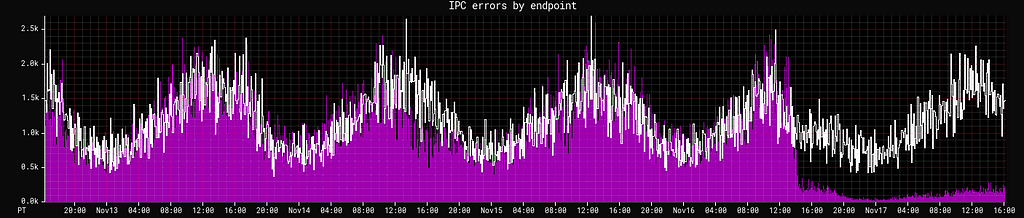
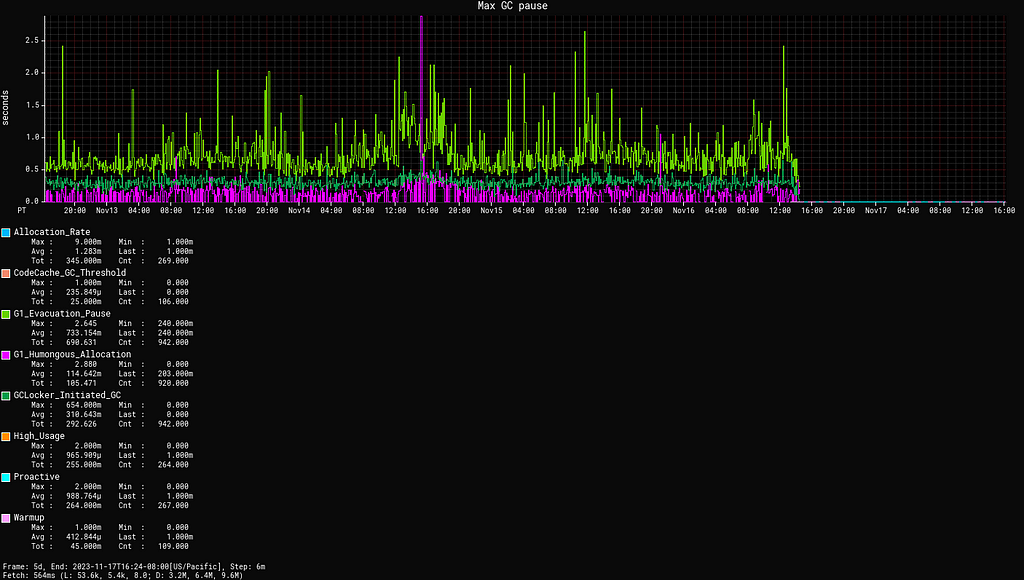
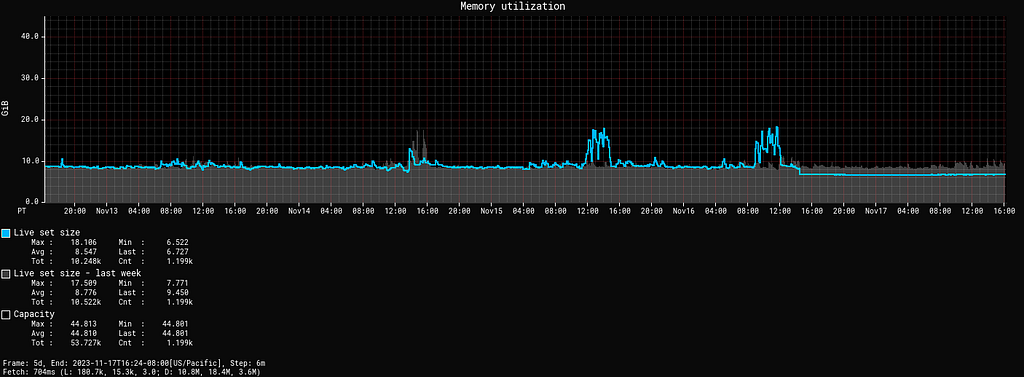
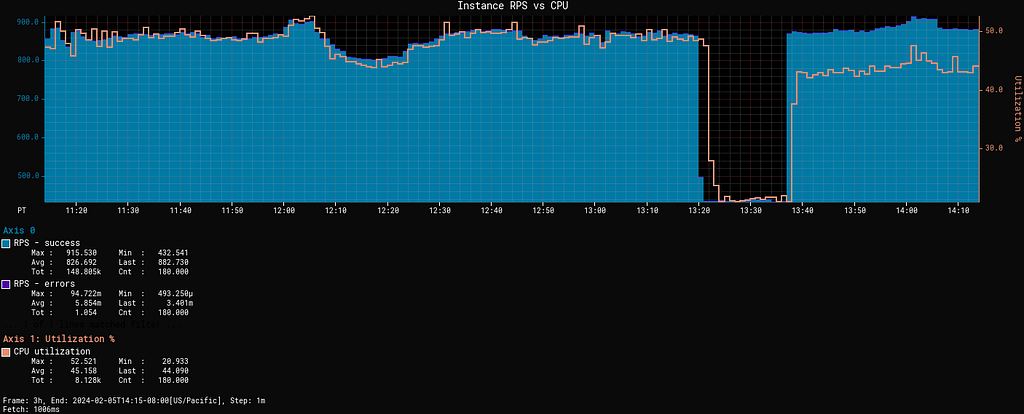










 Manjit Chakraborty is a Senior Solutions Architect at AWS. He is a Seasoned & Result driven professional with extensive experience in Financial domain having worked with customers on advising, designing, leading, and implementing core-business enterprise solutions across the globe. In his spare time, Manjit enjoys fishing, practicing martial arts and playing with his daughter.
 Neeraj Roy is a Principal Solutions Architect at AWS based out of London. He works with Global Financial Services customers to accelerate their AWS journey. In his spare time, he enjoys reading and spending time with his family.