Apple has introducedlockdown mode for high-risk users who are concerned about nation-state attacks. It trades reduced functionality for increased security in a very interesting way.
Security updates have been issued by Fedora (direnv, golang-github-mattn-colorable, matrix-synapse, pypy3.7, pypy3.8, and pypy3.9), Oracle (squid), SUSE (curl, openssl-1_1, pcre, python-ipython, resource-agents, and rsyslog), and Ubuntu (nss, php7.2, and vim).
New research sponsored by Rapid7 explores the momentum behind security operations center (SOC) modernization and the role extended detection and response (XDR) plays. ESG surveyed over 370 IT and cybersecurity professionals in the US and Canada – responsible for evaluating, purchasing, and utilizing threat detection and response security products and services – and identified key trends in the space.
The first major finding won’t surprise you: Security operations remain challenging.
Cybersecurity is dynamic
A growing attack surface, the volume and complexity of security alerts, and public cloud proliferation add to the intricacy of security operations today. Attacks increased 31% from 2020 to 2021, according to Accenture’s State of Cybersecurity Resilience 2021 report. The number of attacks per company increased from 206 to 270 year over year. The disruptions will continue, ultimately making many current SOC strategies inadequate if teams don’t evolve from reactive to proactive.
In parallel, many organizations are facing tremendous challenges closer to home due to a lack of skilled resources. At the end of 2021, there was a security workforce gap of 377,000 jobs in the US and 2.7 million globally, according to the (ISC)2 Cybersecurity Workforce Study. Already-lean teams are experiencing increased workloads often resulting in burnout or churn.
Key findings on the state of the SOC
In the new ebook, SOC Modernization and the Role of XDR, you’ll learn more about the increasing difficulty in security operations, as well as the other key findings, which include:
Security professionals want more data and better detection rules – Despite the massive amount of security data collected, respondents want more scope and diversity.
SecOps process automation investments are proving valuable – Many organizations have realized benefits from security process automation, but challenges persist.
XDR momentum continues to build – XDR awareness continues to grow, though most see XDR supplementing or consolidating SOC technologies.
MDR is mainstream and expanding – Organizations need help from service providers for security operations; 85% use managed services for a portion or a majority of their security operations.
It’s been about nine months since Cloudflare announced support for Signed Exchanges (SXG), a web platform specification to deterministically verify the cached version of a website and enable third parties such as search engines and news aggregators to serve it much faster than the origin ever could.
faster websites= better SEO and lower bounce rates
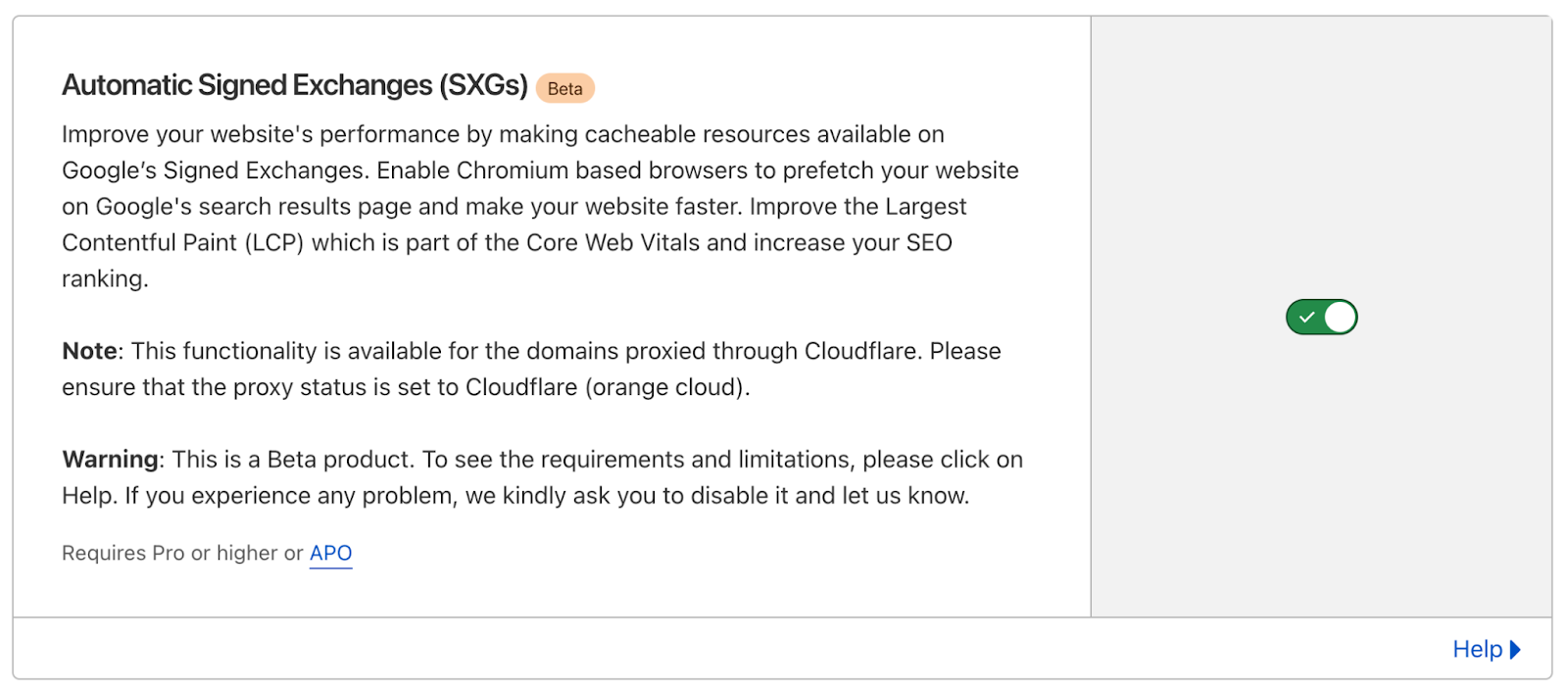
And if setting up and maintaining SXGs through the open source toolkit is a complex yet very valuable endeavor, with Cloudflare’s Automatic Signed Exchanges it becomes a no-brainer. Just enable it with one click and see for yourself.
Our own measurements
Now that Signed Exchanges have been available on Chromium for Android for several months we dove into the change in performance our customers have experienced in the real world.
We picked the 500 most visited sites that have Automatic Signed Exchanges enabled and saw that 425 of them (85%) saw an improvement in LCP, which is widely considered as the Core Web Vital with the most impact on SEO and where SXG should make the biggest difference.
Out of those same 500 Cloudflare sites 389 (78%) saw an improvement in First Contentful Paint (FCP) and a whopping 489 (98%) saw an improvement in Time to First Byte (TTFB). The TTFB improvement measured here is an interesting case since if the exchange has already been prefetched, when the user clicks on the link the resource is already in the client browser cache and the TTFB measurement becomes close to zero.
Overall, the median customer saw an improvement of over 20% across these metrics. Some customers saw improvements of up to 80%.
There were also a few customers that did not see an improvement, or saw a slight degradation of their metrics.
One of the main reasons for this is that SXG wasn’t compatible with server-side personalization (e.g., serving different HTML for logged-in users) until today. To solve that, today Google added ‘Dynamic SXG’, that selectively enables SXG for visits from cookieless users only (more details on the Google blog post here). Dynamic SXG are supported today – all you need to do is add a `Vary: Cookie’ annotation to the HTTP header of pages that contain server-side personalization.
Note: Signed Exchanges are compatible with client-side personalization (lazy-loading).
To see what the Core Web Vitals look like for your own users across the world we recommend a RUM solution such as our free and privacy-first Web Analytics.
Now available for Desktop and Android
Starting today, Signed Exchanges is also supported by Chromium-based desktop browsers, including Chrome, Edge and Opera.
If you enabled Automatic Signed Exchanges on your Cloudflare dashboard, no further action is needed – the supported desktop browsers will automatically start being served the SXG version of your site’s content. Google estimates that this release will, on average, double SXG’s coverage of your site’s visits, enabling improved loading and performance for more users.
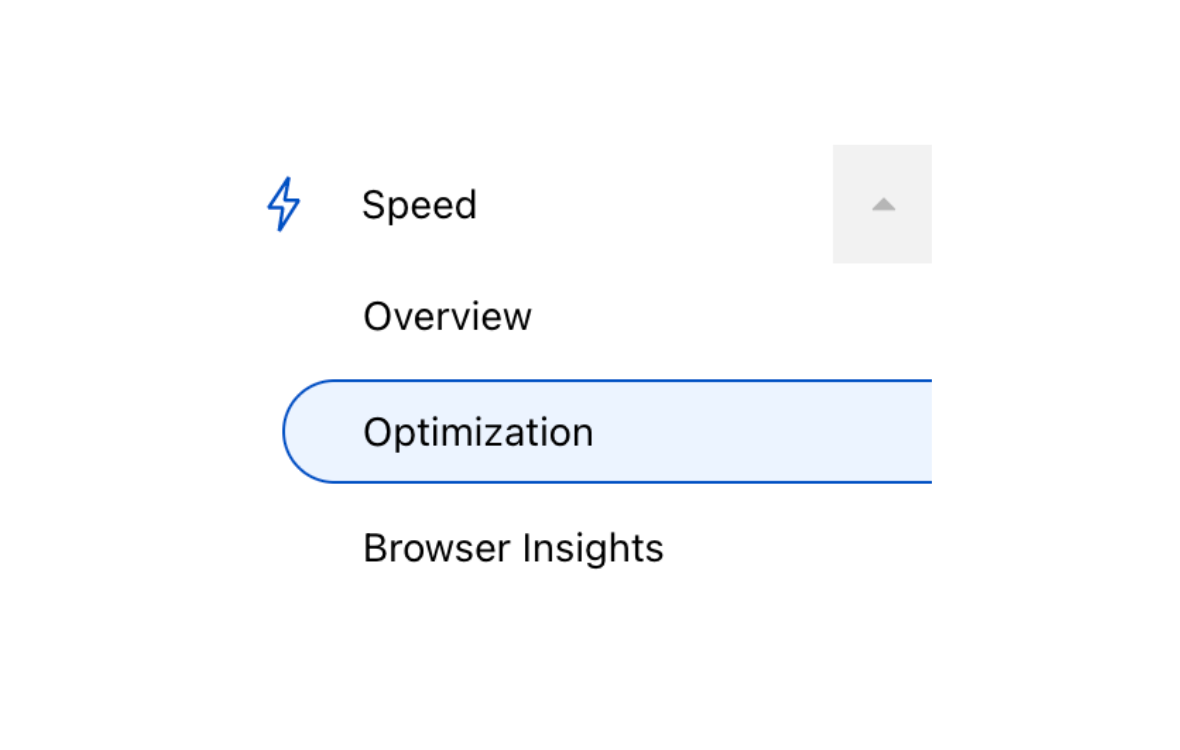
And if you haven’t yet enabled it but are curious about the impact SXG will have on your site, Automatic Signed Exchanges is available through the Speed > Optimization link on your Cloudflare dashboard (more details here).
Can you integrate Zabbix with a remote control? Of course, you can! Does that make any sense? Maybe. Welcome to my weekly blog about how I monitor my home with Zabbix & Grafana and how I do weird experiments with my setup.
By day, I do monitoring for living in a global cyber security company. By night, I monitor my home. This week I have been mostly doing remote work… gaining physical remote access… okay, my puns are not even remotely funny, but please keep reading to find out how I integrated my Zabbix with remote control.
Adding a new remote to Cozify
First things first! I found a spare smart remote control. These devices are handy — not based on infrared but operate on 433 MHz range, so there is no need to point exactly towards some device, instead, the device works everywhere in the Cozify hub range, which spans even to our backyard. In Cozify, I can create the actions that happen whenever I push a button: turn on/off one or multiple lights, change the active scene to something else, pretty much everything I can do in Cozify.
For a normal person, the functionality provided by Cozify would be more than sufficient. Me? I only use Cozify as a bridge between the remote control and Zabbix to do something Completely Else.
So, let’s fire up my iPhone Cozify app and add the remote first.
Connecting to Zabbix
Now that I have my remote added to Cozify, the next thing is to add it to Zabbix. The way I have implemented this is that a set of Python scripts is polling Cozify, and one of the scripts is polling for devices that have REMOTE_CONTROL capability. Of course, my newly added Zabbix remote has that capability, and sure enough, here it is:
In other words, I pressed button number two when the Unix time was 1652242931624. That’s nice to know, but what to do with this info?
Going Freestyler
20+ years ago… wait, what, 20+ years ago really… yes, over twenty years ago Bomfunk MC’s released their Freestyler song and its music video where a guy controls his surroundings with remote control. Well, he uses an MP3 player for control, but still, that’s a remote control for sure.
Take a nostalgia trip down the lane and marvel at the beauty that is some Finnish subway stations and then get back to our scheduled program.
My newfangled Zabbix remote is now just a dummy device for Cozify and for Zabbix it does not carry the Freestyler powers yet, but let’s see what happens when we apply some additional love.
Adding additional value
Thanks to the power of Zabbix value mapping I can transform the button numbers into something more meaningful. Let’s first add some values on the Value mapping tab:
See? That’s totally useful. Imagine I would be cooking dinner and my wife would be walking the dog / doing some gardening and I would like to let her know the dinner is ready: sending her a message over Signal or walking to our backyard would be soooooo much work if I can just press #1 on my remote instead. How lazy can you go? Very, although I suspect I am not going to use this in real life. But you never know!
To use these value mappings, I next applied the new value mapping to Zabbix remote item:
Suddenly, the latest data makes much more sense:
It deserves its own dashboard
So, at this point, we have the data collected and transformed into a human-readable form. Great! To make this all more consumable, there’s still some more work to do.
First, I created a simple Grafana dashboard with only a single panel in it:
Ain’t that beautiful?
It also deserves its own alerting
It would not be perfect without alerting, so let’s create a trigger!
… and an action…
… and behold, Zabbix can inform about the button presses to any configured media, in this case, e-mail. Of course, instead/in addition to messaging, a trigger could as well run any script, which means endless possibilities.
Cozify devs, yo!
Currently, there’s an ugly delay before Zabbix reacts due to the fact that my scripts are polling Cozify. It would be fantastic if Cozify could nudge my Zabbix via SNMP traps, or if I even could configure a central log server in Cozify’s setting to make it send its logs to my Zabbix server in real-time; that would turn my home monitoring into a real-time thing instead of polling happening every five minutes, as Zabbix could just follow the log and react to events accordingly.
Would you like fries with that?
Sure, this is just dumb play. But let’s stop for a minute and think about actual real-world usage scenarios where it might actually be useful to combine physical buttons with Zabbix, albeit I admit even these use cases might be weird:
The Refill button in a pub table would alert the waiter that table X needs more beer
In a factory/warehouse, physical buttons could be used to mark problematic areas during a physical inspection. Is any engine not running? A gauge showing funny values? Press a button near it, Zabbix gets an alert, and an engineer can visit the site
Use it as a stopwatch to measure how long you have been working; one button would mean “Start working”, another “Stop working”
Cozify supports more than just remote controls: battery-powered smart wall switches you can install without being an electrician, smart keyfobs, and smart dimmers, so there would be definitely more areas to explore in this physical interaction space. And, I talk about Cozify all the time as that’s what I have, but I’m sure your similar smart hub could do the same as well.
Anyway, I’ve just demonstrated to you how Zabbix could be used for limited instant messaging or customer service. That’s some serious flexibility.
I have been working at Forcepoint since 2014 and never get tired of inventing new ways to communicate with Zabbix. — Janne Pikkarainen
Cybersecurity is complex and ever-changing. Organisations should be able to evaluate their capabilities and identify areas where improvement is needed.
In the webinar “Foundational Components to Enable a Cyber Target Operating Model,” – part two of our Cybersecurity Series – Jason Hart, Chief Technology Officer, EMEA, explained the journey to a targeted operating cybersecurity model. To build a cybersecurity program is to understand your business context. Hart explains how organisations can use this information to map out their cyber risk profile and identify areas for improvement.
Organisations require an integrated approach to manage all aspects of their cyber risk holistically and efficiently. They need to be able to manage their information security program as part of their overall risk management strategy to address both internal and external cyber threats effectively.
Identifying priority areas to begin the cyber target operating model journey
You should first determine what data is most important to protect, where it resides, and who has access to it. Once you’ve pinned down these areas, you can identify each responsible business function to create a list of priorities. We suggest mapping out:
All the types of data within your organisation
All locations where the data resides, including cloud, database, virtual machine, desktops, and servers
All the people that have access to the data and its locations
The business function associated with each area
Once you have identified the most recurring business functions, you can list your priority areas. Only 12% of our webinar audience said they were confident in understanding their organisation’s type of data.
Foundations to identify risk, protection, detection, response, and recovery
To start operationalising cybersecurity within a targeted area, we first set the maturity of each foundation. A strong foundation will help ensure all systems are protected from attacks and emerging threats. People play a critical role in providing protection and cyber resilience. They should be aware of potential risks so they can take appropriate actions to protect themselves and their business function.
1. Culture
A set of values shared by everyone in an organisation determines how people think and approach cybersecurity. Your culture should emphasise, reinforce, and drive behaviour to create a resilient workforce.
Every security awareness program should, at minimum, communicate security policy requirements to staff. Tracking employee policy acknowledgements will ensure your workforce is aware of the policy and helps you meet compliance requirements.
A quick response can reduce damages from an attack. Security awareness training should teach your workforce how to self-report incidents, malicious files, or phishing emails. This metric will prove you have safeguards in place. Tailor security awareness training to employees’ roles and functions to measure the effectiveness of each department.
2. Measurement
Measuring the ability to identify, protect, detect, respond, and recover from cybersecurity risks and threats enables a robust operating model. The best approach requires an understanding of what your most significant risks are. Consider analysing the following:
Phishing rate: A reduction in the phishing rate over time provides increased awareness of security threats and the effectiveness of awareness training. Leverage a phishing simulation to document the open rates per business function to track phishing risks.
The number of security breaches: Track and record the number of new incidents and breaches every month. Measure a monthly percentage increase or decrease.
Mean time to detect (MTTD): Calculate how long it takes your team to become aware of indicators of compromise and other security threats. To calculate MTTD, take the sum of the hours spent detecting, acknowledging, and resolving an alert, and divide it by the number of incidents.
Patching cadence: Determine how long it takes to implement application security patches or mitigate high-risk CVE-listed vulnerabilities.
Mean time to recovery (MTTR): Take the sum of downtime for a given period and divide it by the number of incidents. For example, if you had 20 minutes of downtime caused by two different events over two days, your MTTR is 20 divided by two, equalling 10 minutes.
3. Accountability
A security goal generates the requirement for actions of an entity to be traced uniquely to support non-repudiation, deterrence, fault isolation, intrusion detection, prevention, after-action recovery, and legal action.
The quality of your incident response plan will determine how much time passes between assigning tasks to different business functions. Calculate the mean time between business functions aware of a cyber attack and their response. Additionally, calculate the mean time to resolve a cyber attack once they have become aware by measuring how much time passes between assigning tasks to different business functions.
Also, consider recording how internal stakeholders perform with awareness or other security program efforts to track the effectiveness of training.
4. Process
Processes are critical to implementing an effective strategy and help maintain and support operationalising cybersecurity.
To determine your increase in the number of risks, link the percent differences in the number of risks identified across the business monthly. Identify accepted risks by stakeholders and vendors monthly, and hold regular information security forums between business functions to review levels of progress. It’s also wise to document meeting notes and actions for compliance and internal reference.
5. Resources
Ownership of cybersecurity across the business creates knowledge to manage, maintain and operate cybersecurity.
When determining the effectiveness of resources, analyse what levels of training you give different levels of stakeholders. For example, administration training will differ from targeted executives.
Calculate the engagement levels of input and feedback from previous awareness training and record positive and negative feedback from all stakeholders. Ensure that different parts of the business have the required skill level and knowledge within the business function’s scope. Use a skills matrix aligned to security domains to uncover stakeholders’ hidden knowledge or skill gaps.
6. Automation
The automation of security tasks includes administrative duties, incident detection, response, and identification risk.
Consider implementing automation in vulnerability management processes internally and externally to the business. Additionally, detect intrusion attempts and malicious actions that try to breach your networks. And finally, automate patch management actions on all assets within scope by assessing the number of patches deployed per month based on the environment, i.e. cloud.
A journey that delivers outcomes
A cyber-targeted operating model is a unique approach that provides defensibility, detectability, and accountability. The model is based on the idea that you can’t protect what you don’t know and aims to provide a holistic view of your organisation’s security posture. By identifying the most critical business functions and defining a process for each foundation, you can develop your cyber maturity over time.
I finally managed to get hold of a Thinkpad Z13 to examine a functional implementation of Microsoft’s Pluton security co-processor. Trying to boot Linux from a USB stick failed out of the box for no obvious reason, but after further examination the cause became clear – the firmware defaults to not trusting bootloaders or drivers signed with the Microsoft 3rd Party UEFI CA key. This means that given the default firmware configuration, nothing other than Windows will boot. It also means that you won’t be able to boot from any third-party external peripherals that are plugged in via Thunderbolt.
There’s no security benefit to this. If you want security here you’re paying attention to the values measured into the TPM, and thanks to Microsoft’s own specification for measurements made into PCR 7, switching from booting Windows to booting something signed with the 3rd party signing key will change the measurements and invalidate any sealed secrets. It’s trivial to detect this. Distrusting the 3rd party CA by default doesn’t improve security, it just makes it harder for users to boot alternative operating systems.
Lenovo, this isn’t OK. The entire architecture of UEFI secure boot is that it allows for security without compromising user choice of OS. Restricting boot to Windows by default provides no security benefit but makes it harder for people to run the OS they want to. Please fix it.
Last year, during the re:Invent 2021 conference, I wrote a blog post to announce the preview of EC2 M1 Mac instances. I know many of you requested access to the preview, and we did our best but could not satisfy everybody. However, the wait is over. I have the pleasure of announcing the general availability of EC2 M1 Mac instances.
The availability of EC2 M1 Mac instances lets you access machines built around the Apple-designed M1 System on Chip (SoC). If you are a Mac developer and re-architecting your apps to natively support Macs with Apple silicon, you may now build and test your apps and take advantage of all the benefits of AWS. Developers building for iPhone, iPad, Apple Watch, and Apple TV will also benefit from faster builds. EC2 M1 Mac instances deliver up to 60 percent better price performance over the x86-based EC2 Mac instances for iPhone and Mac app build workloads.
For example, I tested the time it takes to clean, build, archive, and run the unit tests on a sample project I wrote. The new EC2 M1 Mac instances complete this set of tasks in 49 seconds on average. This is 47.8 percent faster than the same set of tasks running on the previous generation of EC2 Mac instances.
On the EC2 M1 Mac instance, to prepare my instance before the build phase, I download the certificate, decode it (it is base64-encoded), and store it in the EC2 M1 Mac instance keychain, where the codesign tool will find it during the build.
# download the certificate from Secrets Manager
SIGNING_DEV_KEY=$($aws secretsmanager get-secret-value  \
      --secret-id apple-signing-dev-certificate         \
      --query SecretBinary --output text)


# save the certificate as a file
echo $SIGNING_DEV_KEY | base64 -d > seb_dev_certificate.p12

# import the certificate in the keychain
security import seb_dev_certificate.p12 \
                -P "my_cert_password"   \
                -k my.dev.keychain      \
                -T /usr/bin/security -T /usr/bin/codesign -T /usr/bin/xcodebuild

# delete the certificate from disk
rm seb_dev_certificate.p12
There are a few more configuration steps to get code signing work from the macOS command line. You can check out this presentation I made or my code repository for the details.
We are preparing a couple of events to help you learn more about EC2 M1 Mac instance use cases and configuration. First, we recently had an online webinar to learn how to take advantage of EC2 Mac instances for iOS development, content is available for you to consume on-demand after a free registration step. Second, we are preparing a one-day, in-person developer conference for later this year. The conference agenda will be packed with technical content and workshops. Stay tuned on social media to learn more about it.
Last and not least, but not related to EC2 Mac instances, the Apple WWDC 2022 conference took place last month, from June 6–8, 2022, and the content is available online. This is a great occasion to learn more about development for Apple systems in general.
In April 2022, telecommunications company Mitel published a security advisory on CVE-2022-29499, a data validation vulnerability in the Service Appliance component of MiVoice Connect, a business communications product. The vulnerability, which was unpatched at time of publication, arose from insufficient data validation for a diagnostic script and potentially allowed an unauthenticated remote attacker to send specially crafted requests to inject commands and achieve remote code execution. CVE-2022-29499 has a CVSSv3 score of 9.8.
On June 23, 2022, security firm Crowdstrike published an analysis on a ransomware intrusion attempt that had targeted CVE-2022-29499 — which at the time of detection was an undisclosed zero-day vulnerability — as an initial access vector. Over the past two weeks, Rapid7 Managed Detection and Response (MDR) has also observed a small number of intrusions that have leveraged CVE-2022-29499 as an initial access vector.
There is currently no indication that a large number of these appliances are exposed to the public internet, and we have no evidence that this vulnerability is being targeted in wider-scale ransomware campaigns. We are conscious of the fact, however, that the proliferation of ransomware in general has continued to shape risk models for many organizations, and that network perimeter devices are tempting targets for a variety of attackers.
Affected products
CVE-2022-29499 affects MiVoice Connect deployments (including earlier versions 14.2) that include the MiVoice Connect Service Appliances, SA 100, SA 400 and/or Virtual SA. Vulnerable firmware versions include R19.2 SP3 (22.20.2300.0) and earlier, and R14.x and earlier. See Mitel product security advisory 22-0002 and their security bulletin for additional information.
Mitigation guidance
Mitel MiVoice Connect customers who use vulnerable versions of the Service Appliance in their deployments should update to a fixed version of the appliance immediately. Mitel released patches for CVE-2022-29499 in early June 2022; organizations that have not updated the firmware on their appliances since before that timeframe should apply fixes as soon as possible.
Rapid7 customers
We have not been able to determine whether a vulnerability check is feasible at this time. We are investigating alternative options to help InsightVM and Nexpose customers assess exposure, including the potential to generically fingerprint MiVoice Connect in customer environments.
NEVER MISS A BLOG
Get the latest stories, expertise, and news about security today.
Report by Georgetown’s Center on Privacy and Technology published a comprehensive report on the surprising amount of mass surveillance conducted by Immigration and Customs Enforcement (ICE).
Our two-year investigation, including hundreds of Freedom of Information Act requests and a comprehensive review of ICE’s contracting and procurement records, reveals that ICE now operates as a domestic surveillance agency. Since its founding in 2003, ICE has not only been building its own capacity to use surveillance to carry out deportations but has also played a key role in the federal government’s larger push to amass as much information as possible about all of our lives. By reaching into the digital records of state and local governments and buying databases with billions of data points from private companies, ICE has created a surveillance infrastructure that enables it to pull detailed dossiers on nearly anyone, seemingly at any time. In its efforts to arrest and deport, ICE has without any judicial, legislative or public oversight reached into datasets containing personal information about the vast majority of people living in the U.S., whose records can end up in the hands of immigration enforcement simply because they apply for driver’s licenses; drive on the roads; or sign up with their local utilities to get access to heat, water and electricity.
ICE has built its dragnet surveillance system by crossing legal and ethical lines, leveraging the trust that people place in state agencies and essential service providers, and exploiting the vulnerability of people who volunteer their information to reunite with their families. Despite the incredible scope and evident civil rights implications of ICE’s surveillance practices, the agency has managed to shroud those practices in near-total secrecy, evading enforcement of even the handful of laws and policies that could be invoked to impose limitations. Federal and state lawmakers, for the most part, have yet to confront this reality.
We’re excited to announce the completion of our annual Outsourced Service Provider’s Audit Report (OSPAR) audit cycle on July 1, 2022. The 2022 OSPAR certification cycle includes the addition of 15 new services in scope, bringing the total number of services in scope to 142 in the AWS Asia Pacific (Singapore) Region.
Newly added services in scope include the following:
Successful completion of the OSPAR assessment demonstrates that AWS has a system of controls in place that meet the Association of Banks in Singapore (ABS) Guidelines on Control Objectives and Procedures for Outsourced Service Providers. Our alignment with the ABS guidelines demonstrates our commitment to meet the security expectations for cloud service providers set by the financial services industry in Singapore. Customers can use the OSPAR assessment to conduct due diligence, and to help reduce the effort and costs required for compliance. An independent third-party auditor, selected from the ABS list of approved auditors, performs the OSPAR assessment.
As always, we’re committed to bringing new services into the scope of our OSPAR program based on your architectural and regulatory needs. If you have questions about the OSPAR report, contact your AWS account team.
If you have feedback about this post, submit comments in the Comments section below.
Want more AWS Security how-to content, news, and feature announcements? Follow us on Twitter.
Today, we are announcing experimental support for WASI (the WebAssembly System Interface) on Cloudflare Workers and support within wrangler2 to make it a joy to work with. We continue to be incredibly excited about the entire WebAssembly ecosystem and are eager to adopt the standards as they are developed.
A Quick Primer on WebAssembly
So what is WASI anyway? To understand WASI, and why we’re excited about it, it’s worth a quick recap of WebAssembly, and the ecosystem around it.
WebAssembly promised us a future in which code written in compiled languages could be compiled to a common binary format and run in a secure sandbox, at near native speeds. While WebAssembly was designed with the browser in mind, the model rapidly extended to server-side platforms such as Cloudflare Workers (which has supported WebAssembly since 2017).
WebAssembly was originally designed to run alongside Javascript, and requires developers to interface directly with Javascript in order to access the world outside the sandbox. To put it another way, WebAssembly does not provide any standard interface for I/O tasks such as interacting with files, accessing the network, or reading the system clock. This means if you want to respond to an event from the outside world, it’s up to the developer to handle that event in JavaScript, and directly call functions exported from the WebAssembly module. Similarly, if you want to perform I/O from within WebAssembly, you need to implement that logic in Javascript and import it into the WebAssembly module.
Custom toolchains such as Emscripten or libraries such as wasm-bindgen have emerged to make this easier, but they are language specific and add a tremendous amount of complexity and bloat. We’ve even built our own library, workers-rs, using wasm-bindgen that attempts to make writing applications in Rust feel native within a Worker – but this has proven not only difficult to maintain, but requires developers to write code that is Workers specific, and is not portable outside the Workers ecosystem.
We need more.
The WebAssembly System Interface (WASI)
WASI aims to provide a standard interface that any language compiling to WebAssembly can target. You can read the original post by Lin Clark here, which gives an excellent introduction – code cartoons and all. In a nutshell, Lin describes WebAssembly as an assembly language for a ‘conceptual machine’, whereas WASI is a systems interface for a ‘conceptual operating system.’
This standardization of the system interface has paved the way for existing toolchains to cross-compile existing codebases to the wasm32-wasi target. A tremendous amount of progress has already been made, specifically within Clang/LLVM via the wasi-sdk and Rust toolchains. These toolchains leverage a version of Libc, which provides POSIX standard API calls, that is built on top of WASI ‘system calls.’ There are even basic implementations in more fringe toolchains such as TinyGo and SwiftWasm.
Practically speaking, this means that you can now write applications that not only interoperate with any WebAssembly runtime implementing the standard, but also any POSIX compliant system! This means the exact same ‘Hello World!’ that runs on your local Linux/Mac/Windows WSL machine.
Show me the code
WASI sounds great, but does it actually make my life easier? You tell us. Let’s run through an example of how this would work in practice.
First, let’s generate a basic Rust “Hello, world!” application, compile, and run it.
$ cargo new hello_world
$ cd ./hello_world
$ cargo build --release
   Compiling hello_world v0.1.0 (/Users/benyule/hello_world)
    Finished release [optimized] target(s) in 0.28s
$ ./target/release/hello_world
Hello, world!
It doesn’t get much simpler than this. You’ll notice we only define a main() function followed by a println to stdout.
fn main() {
    println!("Hello, world!");
}
Now, let’s take the exact same program and compile against the wasm32-wasi target, and run it in an ‘off the shelf’ wasm runtime such as Wasmtime.
Neat! The same code compiles and runs in multiple POSIX environments.
Finally, let’s take the binary we just generated for Wasmtime, but instead publish it to Workers using Wrangler2.
$ npx wrangler@wasm dev target/wasm32-wasi/release/hello_world.wasm
$ curl http://localhost:8787/

Hello, world!
Unsurprisingly, it works! The same code is compatible in multiple POSIX environments and the same binary is compatible across multiple WASM runtimes.
Running your CLI apps in the cloud
The attentive reader may notice that we played a small trick with the HTTP request made via cURL. In this example, we actually stream stdin and stdout to/frome the Worker using the HTTP request and response body respectively. This pattern enables some really interesting use cases, specifically, programs designed to run on the command line can be deployed as ‘services’ to the cloud.
‘Hexyl’ is an example that works completely out of the box. Here, we ‘cat’ a binary file on our local machine and ‘pipe’ the output to curl, which will then POST that output to our service and stream the result back. Following the steps we used to compile our ‘Hello World!’, we can compile hexyl.
And without further modification we were able to take a real-world program and create something we can now run or deploy. Again, let’s tell wrangler2 to preview hexyl, but this time give it some input.
A more useful example, but requires a bit more work, would be to deploy a utility such as swc (swc.rs), to the cloud and use it as an on demand JavaScript/TypeScript transpilation service. Here, we have a few extra steps to ensure that the compiled output is as small as possible, but it otherwise runs out-of-the-box. Those steps are detailed in https://github.com/zebp/wasi-example-swc, but for now let’s gloss over that and interact with the hosted example.
$ echo "const x = (x, y) => x * y;" | curl -X POST --data-binary @- https://swc-wasi.examples.workers.dev/ --output -

var x=function(a,b){return a*b}
Finally, we can also do the same with C/C++, but requires a little more lifting to get our Makefile right. Here we show an example of compiling zstd and uploading it as a streaming compression service.
What if I want to use WASI from within a JavaScript Worker?
Wrangler can make it really easy to deploy code without having to worry about the Workers ecosystem, but in some cases you may actually want to invoke your WASI based WASM module from Javascript. This can be achieved with the following simple boilerplate. An updated README will be kept at https://github.com/cloudflare/workers-wasi.
import { WASI } from "@cloudflare/workers-wasi";
import demoWasm from "./demo.wasm";

export default {
  async fetch(request, _env, ctx) {
    // Creates a TransformStream we can use to pipe our stdout to our response body.
    const stdout = new TransformStream();
    const wasi = new WASI({
      args: [],
      stdin: request.body,
      stdout: stdout.writable,
    });

    // Instantiate our WASM with our demo module and our configured WASI import.
    const instance = new WebAssembly.Instance(demoWasm, {
      wasi_snapshot_preview1: wasi.wasiImport,
    });

    // Keep our worker alive until the WASM has finished executing.
    ctx.waitUntil(wasi.start(instance));

    // Finally, let's reply with the WASM's output.
    return new Response(stdout.readable);
  },
};
Now with our JavaScript boilerplate and wasm, we can easily deploy our worker with Wrangler’s WASM feature.
For those of you who have been around for the better part of the past couple of decades, you may notice this looks very similar to RFC3875, better known as CGI (The Common Gateway Interface). While our example here certainly does not conform to the specification, you can imagine how this can be extended to turn the stdin of a basic ‘command line’ application into a full-blown http handler.
We are thrilled to learn where developers take this from here. Share what you build with us on Discord or Twitter!
When you’re responsible for protecting your company’s data from ransomware, you don’t need to be convinced of the risks an attack poses. Staying up to date on the latest ransomware trends is probably high on your radar. But sometimes it’s not as easy to convince others in your organization to take the necessary precautions. Protecting your data from ransomware might require operational changes and investments, and that can be hard to advance, especially when headlines report that dire predictions haven’t come true.
To help you stay up to date and inform others in your organization of the latest threats and what you can do about them, we put together five quick, timely, shareable takeaways from our monitoring over Q2 2022.
This post is a part of our ongoing series on ransomware. Take a look at our other posts for more information on how businesses can defend themselves against a ransomware attack, and more.
Things have been somewhat quieter on the ransomware front, and many security experts point out that the sanctions against Russia have made it harder for cybercriminals to ply their trade. The sanctions make it harder to receive payments, move money around, and provision infrastructure. As such, The Wall Street Journal reported that the ransomware economy in Russia is changing. Groups are reorganizing, splintering off into smaller gangs, and changing up the software they use to avoid detection.
Key Takeaway: Cybercriminals are working harder to avoid revealing their identities, making it challenging for victims to know whether they’re dealing with a sanctioned entity or not. Especially at a time when the federal government is cracking down on companies that violate sanctions, the best fix is to put an ironclad sanctions compliance program in place before you’re asked about it.
2. AI-powered Ransomware Is Coming
The idea of AI-powered ransomware is not new, but we’ve seen predictions in Q2 that it’s closer to reality than we might think. To date, the AI advantage in the ransomware wars has fallen squarely on the defense. Security firms employ top talent to automate ransomware detection and prevention.
Meanwhile, ransomware profits have escalated in recent years. Chainalysis, a firm that analyzes crypto payments, reported ransomware payments in excess of $692 million in 2020 and $602 million in 2021 (which they expect to continue to go up with further analysis), up from just $152 million in 2019. With business booming, some security experts warn that, while cybercrime syndicates haven’t been able to afford developer talent to build AI capabilities yet, that might not be the case for long.
They predict that, in the coming 12 to 24 months, ransomware groups could start employing AI capabilities to get more efficient in their ability to target a broader swath of companies and even individuals—small game for cybercriminals at the moment but not with the power of machine learning and automation on hand.
Key Takeaway: Small to medium-sized enterprises can take simple steps now to prevent future “spray and pray” style attacks. It may seem too easy, but fundamental steps like staying up to date on security patches and implementing multi-factor authentication can make a big difference in keeping your company safe.
3. Conti Ransomware Group Still In Business
In Q1, we reported that the ransomware group Conti suffered a data leak after pledging allegiance to Russia in the wake of the Ukraine invasion. Despite the leak, business seems to be trucking along over at Conti HQ. Despite suffering a leak of its own sensitive data, Conti doesn’t seem to have learned a lesson. The group continues threatening to publish stolen data in return for encryption keys—a hallmark of the group’s tactics.
Key Takeaway: As detailed in ZDnet, Conti tends to exploit unpatched vulnerabilities, so, again, staying up to date on security patches is advised, as is ramping up monitoring of your networks for suspicious activity.
4. Two-thirds of Victims Paid Ransoms Last Year
New analyses that came out in Q2 from CyberEdge group, covering the span of 2021 overall, found that two-thirds of ransomware victims paid ransoms in 2021. The firm surveyed 1,200 IT security professionals, and found three reasons why firms choose to make the payments:
Concerns about exfiltrated data getting out.
Increased confidence they’ll be able to recover their data.
Decreasing cost of recoveries.
When recoveries are easier, more firms are opting just to pay the attackers to go away, avoid downtime, and recover from some mix of backups and unencrypted data.
Key Takeaway: While we certainly don’t advocate for paying ransoms, having a robust disaster recovery plan in place can help you survive an attack and even avoid paying the ransom altogether.
5. Hacktivism Is on the Rise
With as much doom and gloom as we cover in the ransomware space, it seems hacking for a good cause is on the rise. CloudSEK, an AI firm, profiled the hacking group GoodWill’s efforts to force…well, some goodwill. Instead of astronomical payments in return for decryption keys, GoodWill simply asks that victims do some good in the world. One request: “Take any five less fortunate children to Pizza Hut or KFC for a treat, take pictures and videos, and post them on social media.”
Key Takeaway: While the hacktivists seem to have good intentions at heart, is it truly goodwill if it’s coerced with your company’s data held hostage? If you’ve been paying attention, you have a strong disaster recovery plan in place, and you can restore from backups in any situation. Then, consider their efforts a good reminder to revisit your corporate social responsibility program as well.
The Bottom Line: What This Means for You
Ransomware gangs are always changing tactics, and even more so in the wake of stricter sanctions. That, combined with the potential emergence of AI-powered ransomware means a wider range of businesses could be targets in the coming months and years. As noted above, applying good security practices and developing a disaster recovery plan are excellent steps towards becoming more resilient as tactics change. And the good news, at least for now, is that not all hackers are forces for evil even if some of their tactics to spread goodwill are a bit brutish.
Welcome back to the third installment of Rapid7’s Pain Points: Ransomware Data Disclosure Trends blog series, where we’re distilling the key highlights of our ransomware data disclosure research paper one industry at a time. This week, we’ll be focusing on the financial services industry, one of the most most highly regulated — and frequently attacked — industries we looked at.
Rapid7’s threat intelligence platform (TIP) scans the clear, deep, and dark web for data on threats, and operationalizes that data automatically with our Threat Command product. We used that data to conduct unique research into the types of data threat actors disclose about their victims. The data points in this research come from the threat actors themselves, making it a rare glimpse into their actions, motivations, and preferences.
Last week, we discussed how the healthcare and pharmaceutical industries are particularly impacted by double extortion in ransomware. We found that threat actors target and release specific types of data to coerce victims into paying the ransom. In this case, it was internal financial information (71%), which was somewhat surprising, considering financial information is not the focus of these two industries. Less surprising, but certainly not less impactful, were the disclosure of customer or patient information (58%) and the unusually strong emphasis on intellectual property in the pharmaceuticals sector of this vertical (43%).
Customer data is the prime target for finserv ransomware
But when we looked at financial services, something interesting did stand out: Customer data was found in the overwhelming majority of data disclosures (82%), not necessarily the company’s internal financial information. It seems threat actors were more interested in leveraging the public’s implied trust in financial services companies to keep their personal financial information private than they were in exposing the company’s own financial information.
Since much of the damage done by ransomware attacks — or really any cybersecurity incident — lies in the erosion of trust in that institution, it appears threat actors are seeking to hasten that erosion with their initial data disclosures. The financial services industry is one of the most highly regulated industries in the market entirely because it holds the financial health of millions of people in their hands. Breaches at these institutions tend to have outsized impacts.
Employee info is also at risk
The next most commonly disclosed form of data in the financial services industry was personally identifiable information (PII) and HR data. This is personal data of those who work in the financial industry and can include identifying information like Social Security numbers and the like. Some 59% of disclosures from this sector included this kind of information.
This appears to indicate that threat actors want to undermine the company’s ability to keep their own employees’ data safe, and that can be corroborated by another data point: In some 29% of cases, data disclosure pointed to reconnaissance for future IT attacks as the motive. Threat actors want financial services companies and their employees to know that they are and will always be a major target. Other criminals can use information from these disclosures, such as credentials and network maps, to facilitate future attacks.
As with the healthcare and pharmaceutical sectors, our data showed some interesting and unique motivations from threat actors, as well as confirmed some suspicions we already had about why they choose the data they choose to disclose. Next time, we’ll be taking a look at some of the threat actors themselves and the ways they’ve impacted the overall ransomware “market” over the last two years.
To provide the best experiences, we use technologies like cookies to store and/or access device information. Consenting to these technologies will allow us to process data such as browsing behavior or unique IDs on this site. Not consenting or withdrawing consent, may adversely affect certain features and functions.
Functional
Always active
The technical storage or access is strictly necessary for the legitimate purpose of enabling the use of a specific service explicitly requested by the subscriber or user, or for the sole purpose of carrying out the transmission of a communication over an electronic communications network.
Preferences
The technical storage or access is necessary for the legitimate purpose of storing preferences that are not requested by the subscriber or user.
Statistics
The technical storage or access that is used exclusively for statistical purposes.The technical storage or access that is used exclusively for anonymous statistical purposes. Without a subpoena, voluntary compliance on the part of your Internet Service Provider, or additional records from a third party, information stored or retrieved for this purpose alone cannot usually be used to identify you.
Marketing
The technical storage or access is required to create user profiles to send advertising, or to track the user on a website or across several websites for similar marketing purposes.






 comments