Tag Archives: Compliance

Introducing Access for Infrastructure: SSH

Post Syndicated from Sharon Goldberg original https://blog.cloudflare.com/intro-access-for-infrastructure-ssh

BastionZero joined Cloudflare in May 2024. We are thrilled to announce Access for Infrastructure as BastionZero’s native integration into our SASE platform, Cloudflare One. Access for Infrastructure will enable organizations to apply Zero Trust controls in front of their servers, databases, network devices, Kubernetes clusters, and more. Today, we’re announcing short-lived SSH access as the first available feature. Over the coming months we will announce support for other popular infrastructure access target types like Remote Desktop Protocol (RDP), Kubernetes, and databases.

Applying Zero Trust principles to infrastructure

Organizations have embraced Zero Trust initiatives that modernize secure access to web applications and networks, but often the strategies they use to manage privileged access to their infrastructure can be siloed, overcomplicated, or ineffective. When we speak to customers about their infrastructure access solution, we see common themes and pain points:

  • Too risky: Long-lived credentials and shared keys get passed around and inflate the risk of compromise, excessive permissions, and lateral movement

  • Too clunky: Manual credential rotations and poor visibility into infrastructure access slow down incident response and compliance efforts

Some organizations have dealt with the problem of privileged access to their infrastructure by purchasing a Privileged Access Management (PAM) solution or by building a homegrown key management tool. Traditional PAM solutions introduce audit logging and session recording features that capture user interactions with their servers and other infrastructure and/or centralized vaults that rotate keys and passwords for infrastructure every time a key is used. But this centralization can introduce performance bottlenecks, harm usability, and come with a significant price tag. Meanwhile, homegrown solutions are built from primitives provided by cloud providers or custom infrastructure-as-code solutions, and can be costly and tiresome to build out and maintain. 

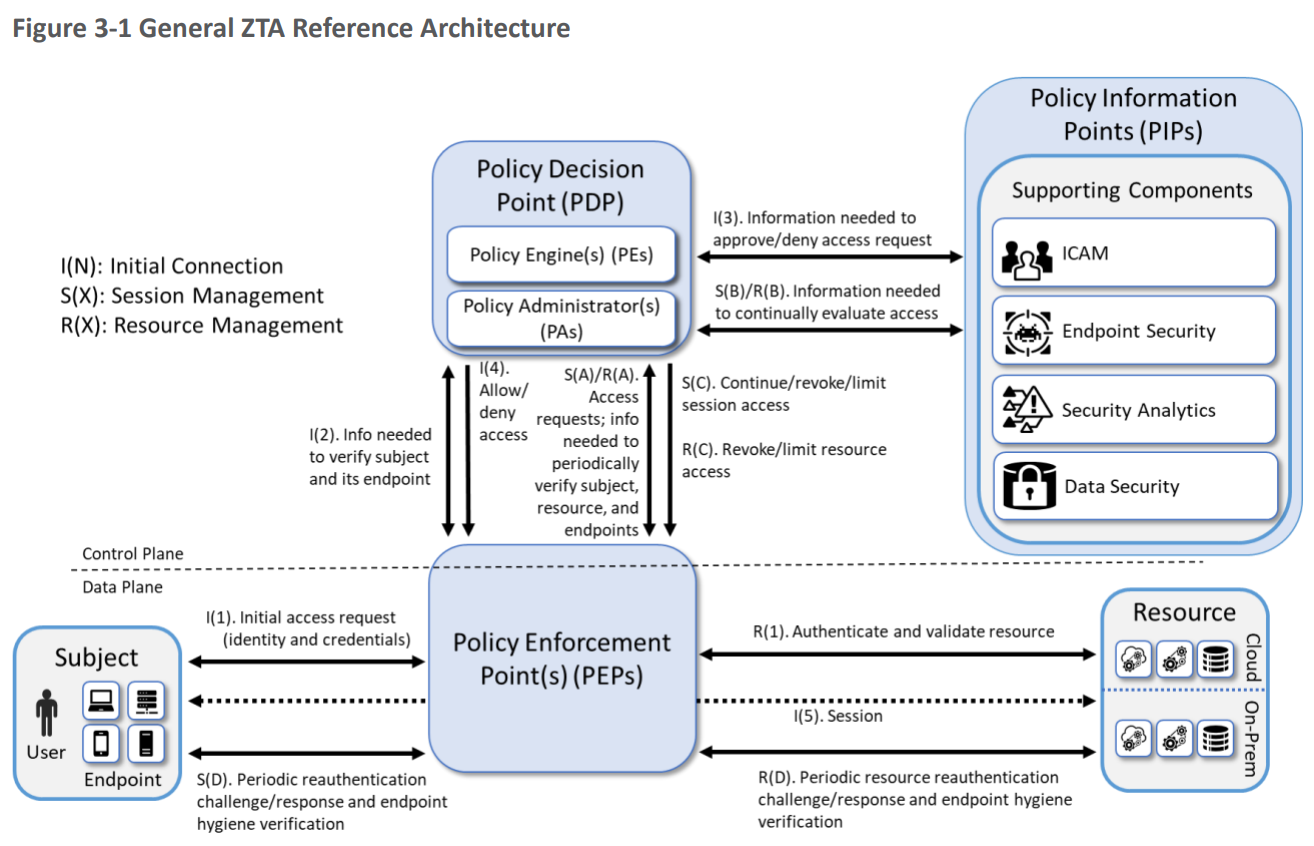
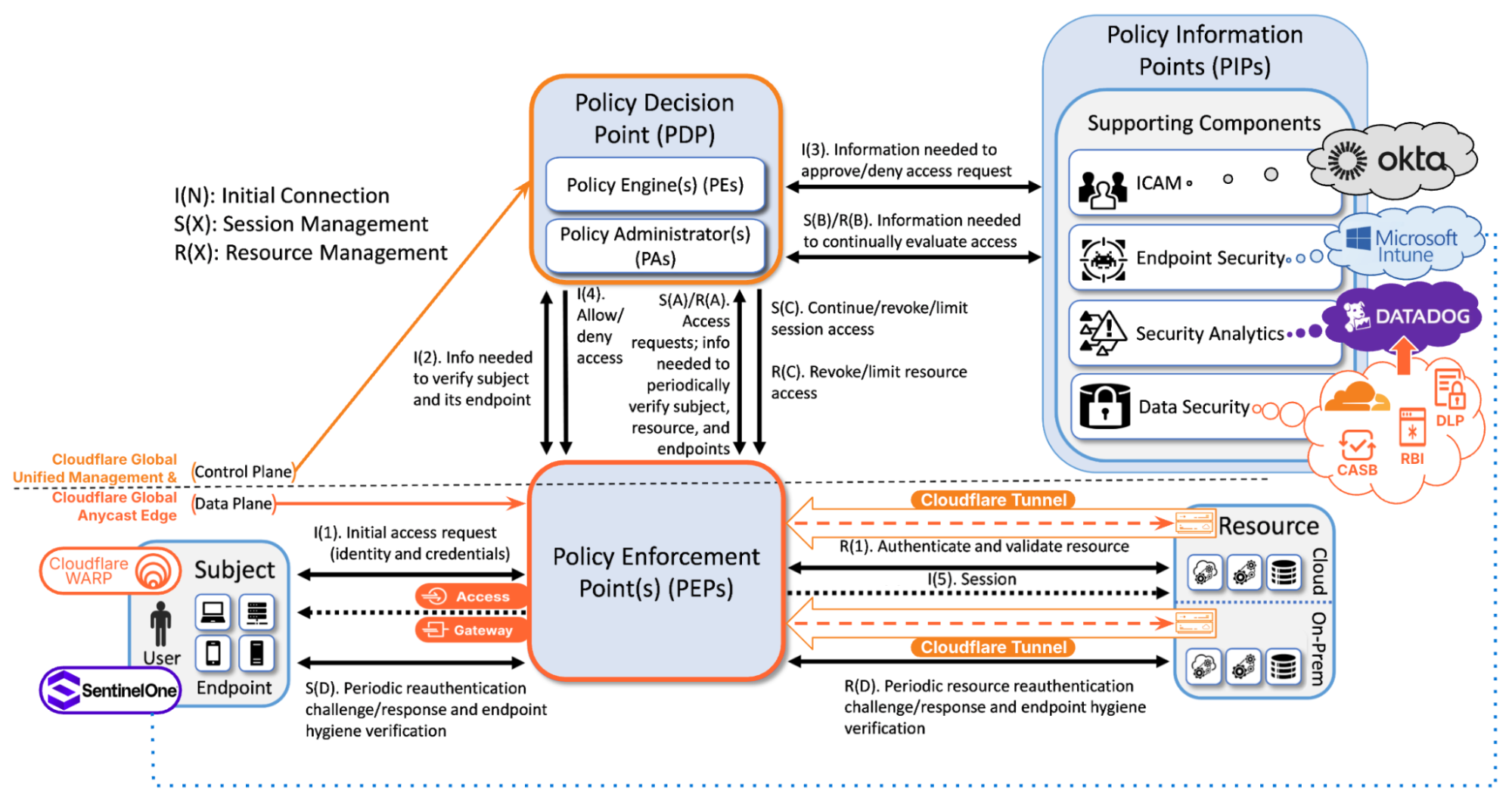
We believe that organizations should apply Zero Trust principles to their most sensitive corporate resources, which naturally includes their infrastructure. That’s why we’re augmenting Cloudflare’s Zero Trust Network Access (ZTNA) service with Access to Infrastructure to support privileged access to sensitive infrastructure, and offering features that will look somewhat similar to those found in a PAM solution:

  • Access: Connect remote users to infrastructure targets via Cloudflare’s global network.

  • Authentication: Eliminate the management of credentials for servers, containers, clusters, and databases and replace them with SSO, MFA, and device posture

  • Authorization: Use policy-based access control to determine who can access what target, when, and under what role. 

  • Auditing: Provide command logs and session recordings to allow administrators to audit and replay their developers’ interactions with the organization’s infrastructure.

At Cloudflare, we are big believers that unified experiences produce the best security outcomes, and because of that, we are natively rebuilding each BastionZero feature into Cloudflare’s ZTNA service. Today, we will cover the recently-released feature for short-lived SSH access.

Secure Shell (SSH) and its security risks

SSH (Secure Shell) is a protocol that is commonly used by developers or system administrators to secure the connections used to remotely administer and manage (usually Linux/Unix) servers. SSH access to a server often comes with elevated privileges, including the ability to delete or exfiltrate data or to install or remove applications on the server. 

Modern enterprises can have tens, hundreds, or even thousands of SSH targets. Servers accessible via SSH can be targeted in cryptojacking or proxyjacking attacks. Manually tracking, rotating, and validating SSH credentials that grant access is a chore that is often left undone, which creates risks that these long-lived credentials could be compromised. There’s nothing stopping users from copying SSH credentials and sharing them with other users or transferring them to unauthorized devices.

Although many organizations will gate access to their servers to users that are inside their corporate network, this is no longer enough to protect against modern attackers. Today, the principles of Zero Trust demand that an organization also tracks who exactly is accessing their servers with SSH, and what commands they are running on those servers once they have access. In fact, the elevated privileges that come along with SSH access mean that compliance frameworks like SOC2, ISO27001, FedRAMP and others have criteria that require monitoring who has access with SSH and what exactly they are doing with that access. 

Introducing SSH with Access for Infrastructure

We’ve introduced SSH with Access for Infrastructure to provide customers with granular control over privileged access to servers via SSH. The feature provides improved visibility into who accessed what service and what they did during their SSH session, while also eliminating the risk and overhead associated with managing SSH credentials. Specifically, this feature enables organizations to:

  • Eliminate security risk and overhead of managing SSH keys and instead use short-lived SSH certificates issued by a Cloudflare-managed certificate authority (CA).

  • Author fine-grained policy to govern who can SSH to your servers and through which SSH user(s) they can log in as.

  • Monitor infrastructure access with Access and SSH command logs, supporting regulatory compliance and providing visibility in case of security breach.

  • Avoid changing end-user workflows. SSH with Access for Infrastructure supports whatever native SSH clients end users happen to be using. 

SSH with Access for Infrastructure is supported through one of the most common deployment models of Cloudflare One customers. Users can connect using our device client (WARP), and targets are made accessible using Cloudflare Tunnel (cloudflared or the WARP connector). This architecture allows customers with existing Cloudflare One deployments to enable this feature with little to no effort. The only additional setup will be configuring your target server to accept a Cloudflare SSH certificate.


Cloudflare One already offers multiple ways to secure organizations’ SSH traffic through network controls. This new SSH with Access for Infrastructure aims to incorporate the strengths of those existing solutions together with additional controls to authorize ports, protocols, and specific users as well as a much improved deployment workflow and audit logging capabilities.

Eliminating SSH credentials using an SSH CA

How does Access for Infrastructure eliminate your SSH credentials? This is done by replacing SSH password and SSH keys with an SSH Certificate Authority (CA) that is managed by Cloudflare. Generally speaking, a CA’s job is to issue certificates that bind an entity to an entity’s public key. Cloudflare’s SSH CA has a secret key that is used to sign certificates that authorize access to a target (server) via SSH, and a public key that is used by the target (server) to cryptographically validate these certificates. The public key for the SSH CA can be obtained by querying the Cloudflare API. And the secret key for the SSH CA is kept secure by Cloudflare and never exposed to anyone. 

To use SSH with Access for Infrastructure to grant access via SSH to a set of targets (i.e. servers), you need to instruct those servers to trust the Cloudflare SSH CA. Those servers will then grant access via SSH whenever they are presented with an SSH certificate that is validly signed by the Cloudflare SSH CA.

The same Cloudflare SSH CA is used to support SSH access for all of your developers and engineers to all your target servers. This greatly simplifies key management. You no longer need to manage long-lived SSH keys and passwords for individual end users, because access to targets with SSH is granted via certificates that are dynamically issued by the Cloudflare SSH CA. And, because the Cloudflare SSH CA issued short-lived SSH certificates that expire after 3 minutes, you also don’t have to worry about creating or managing long-lived SSH credentials that could be stolen by attackers. 

The 3-minute time window on the SSH certificate only applies to the time window during which the user has to authenticate to the target server; it does not apply to the length of the SSH session, which can be arbitrarily longer than 3 minutes. This 3-minute window was chosen because it was short enough to reduce the risk of security compromise and long enough to ensure that we don’t miss the time window of the user’s authentication to the server, especially if the user is on a slow connection.

Centrally managing policies down to the specific Linux user

One of the problems with traditional SSH is that once a user has an SSH key or password installed on a server, they will have access to that server forever — unless an administrator somehow remembers to remove their SSH key or password from the server in question. This leads to privilege creep, where too many people have standing access to too many servers, creating a security risk if an SSH key or password is ever stolen or leaked.

Instead, SSH with Access for Infrastructure allows you to centrally write policies in the Cloudflare dashboard specifying exactly what (set of) users has access to what (set of) servers. Users may be authenticated by SSO, MFA, device posture, location, and more, which provides better security than just authenticating them via long-lived SSH keys or passwords that could be stolen by attackers.

Moreover, the SSH certificates issued by the Cloudflare CA include a field called ValidPrinciples which indicates the specific Linux user (e.g. root, read-only, ubuntu, ec2-user) that can be assumed by the SSH connection. As such, you can write policies that specify the (set of) Linux users that a given (set of) end users may access on a given (set of) servers, as shown in the figure below. This allows you to centrally control the privileges that a given end user has when accessing a given target server. (The one caveat here is that the server must also be pre-configured to already know about the specific Linux user (e.g. root) that is specified in the policies and presented in the SSH certificate. Cloudflare is NOT managing the Linux users on your Linux servers.)

As shown below, you could write a policy that says users in Canada, the UK, and Australia that are authenticated with MFA and face recognition can access the root and ec2-user Linux users on a given set of servers in AWS.


How does Cloudflare capture SSH command logs?

Cloudflare captures SSH command logs because we built an SSH proxy that intercepts the SSH connections. The SSH proxy establishes one SSH connection between itself and the end user’s SSH client, and another SSH connection between itself and the target (server). The SSH proxy can therefore inspect the SSH commands and log them. 

SSH commands are encrypted at rest using a public key that the customer uploads via the Cloudflare API. Cloudflare cannot read SSH command logs at rest, but they can be extracted (in encrypted form) from the Cloudflare API and decrypted by the customer (who holds the corresponding private key). Instructions for uploading the encryption public key are available in our developer documentation.


How the SSH interception works under the hood

How does generic SSH work?

To understand how Cloudflare’s SSH proxy works, we first must review how a generic SSH connection is established.

First off, SSH runs over TCP, so to establish an SSH connection, we first need to complete a TCP handshake. Then, once the TCP handshake is complete, an SSH key exchange is needed to establish an ephemeral symmetric key between the client and the server that will be used to encrypt and authenticate their SSH traffic. The SSH key exchange is based on the server public key, also known as the hostkey. If you’ve ever used SSH, you’ve probably seen this message — that is the SSH server telling your SSH client to trust this hostkey for all future SSH interactions. (This is also known as TOFU or Trust On First Use.)


Finally, the client needs to authenticate itself to the server. This can be done using SSH passwords, SSH keys, or SSH certificates (as described above). SSH also has a mode called none, which means that the client does NOT need to authenticate itself to the server at all.

So how does Cloudflare’s SSH proxy work? 


To understand this, we note that whenever you set up SSH with Access for Infrastructure in the Cloudflare dashboard, you first need to create the set of targets (i.e. servers) that you want to make accessible via SSH. Targets can be defined by IP address or hostname. You then create an Access for Infrastructure application that captures the TCP ports (e.g. port 22) that SSH runs over for those targets, and write policies for those SSH connections, as we already described above and in our developer documentation.

This setup allows Cloudflare to know the set of IP addresses and ports for which it must intercept SSH traffic. Thus, whenever Cloudflare sees a TCP handshake with an IP address and port that must be intercepted, it sends traffic for that TCP connection to the SSH proxy. 

The SSH proxy leverages the client’s already authenticated identity from the WARP client, and enforces the configured Access for Infrastructure policies against it. If the policies do not allow the identity to connect to the target under the requested Linux user (e.g. root), the SSH proxy will reject the connection and log an Access denied event to the Access logs. Otherwise, if policies do allow the identity to connect, the the SSH proxy will establish the following two SSH connections: 

  1. SSH connection from SSH proxy to target

  2. SSH connection from end user’s SSH client (via Cloudflare’s WARP client) to SSH proxy

Let’s take a look at each of these SSH connections, and the cryptographic material used to set them up. 

To establish the SSH connection from SSH proxy to the target, the SSH proxy acts as a client in the SSH key exchange between itself and the target server. The handshake uses the target server’s hostkey to establish an ephemeral symmetric key between the client and the server that will encrypt and authenticate their SSH traffic. Next, the SSH proxy must authenticate itself to the target server. This is done by presenting the server with a short-lived SSH certificate, issued by the Cloudflare SSH CA, for the specified Linux user that is requested for this connection as we already described above. Because the target server has been configured to trust the Cloudflare SSH CA, the target server will be able to successfully validate the certificate and the SSH connection will be established.

To establish the SSH connection from the end-user’s SSH client to SSH proxy, the SSH proxy acts as a server in the SSH key exchange between itself and the end-user’s SSH client. 

To do this, the SSH proxy needs to inform the end user’s SSH client about the hostkey that will be used to establish this connection. But what hostkey should be used? We cannot use the same hostkey used by the target server, because that hostkey is the public key that corresponds to a private key that is known only to the target server, and not known to the SSH proxy. So, Cloudflare’s SSH proxy needs to generate its own hostkey. We don’t want the end user to randomly see warnings like the one shown below, so the SSH proxy should provide the same hostkey each time the user wants to access a given target server. But, if something does change with the hostkey of the target server, we do want the warning below to be shown. 


To achieve the desired behavior, the SSH proxy generates a hostkey and its corresponding private key by hashing together (a) a fixed secret value valid that associated with the customer account, along with (b) the hostkey that was provided by this target server (in the connection from SSH proxy to target server). This part of the design ensures that the end user only needs to see the TOFU notification the very first time it connects to the target server via WARP, because the same hostkey is used for all future connections to that target. And, if the hostkey of the target server does change as a result of a Monster-In-The-Middle attack, the warning above will be shown to the user.

Finally, during the SSH key exchange handshake from WARP client to SSH proxy, the SSH proxy informs that end user’s native SSH client that it is using none for client authentication. This means that the SSH client does NOT need to authenticate itself to the server at all. This part of the design ensures that the user need not enter any SSH passwords or store any SSH keys in its SSH configuration in order to connect to the target server via WARP. Also, this does not compromise security, because the SSH proxy has already authenticated the end user via Cloudflare’s WARP client and thus does not need to use the native SSH client authentication in the native SSH client.

Put this all together, and we have accomplished our goal of having end users authenticate to target servers without any SSH keys or passwords, using Cloudflare’s SSH CA instead. Moreover, we also preserve the desired behaviors of the TOFU notifications and warnings built into native SSH clients!

All the keys

Before we wrap up, let’s review the cryptographic keys you need in order to deploy SSH with Access for Infrastructure. There are two keys:

  1. Public key of the SSH CA. The private key of the SSH CA is only known to Cloudflare and not shared with anyone. The public key of the SSH CA is obtained from the Cloudflare API and must be installed on all your target servers. The same public key is used for all of your targets. This public key does not need to be kept secret.

  2. Private key for SSH command log encryption. To obtain logs of SSH commands, you need to generate a public-private key pair, and upload the public key to Cloudflare. The public key will be used to encrypt your SSH commands logs at REST. You need to keep the private key secret, and you can use it to decrypt your SSH command logs. 

That’s it! No other keys, passwords, or credentials to manage!

Try it out today

At Cloudflare, we are committed to providing the most comprehensive solution for ZTNA, which now also includes privileged access to sensitive infrastructure like servers accessed over SSH.

Organizations can now treat SSH like any other Access application and enforce strong MFA, device context, and policy-based access prior to granting user access. This allows organizations to consolidate their infrastructure access policies into their broader SSE or SASE architecture.

You can try out Access for Infrastructure today by following these instructions in our developer documentation. Access for Infrastructure is currently available free to teams of under 50 users, and at no extra cost to existing pay-as-you-go and Contract plan customers through an Access or Zero Trust subscription. Expect to hear about a lot more features from us as we continue to natively rebuild BastionZero’s technology into Cloudflare’s Access for Infrastructure service!

How to use interface VPC endpoints to meet your security objectives

Post Syndicated from Joaquin Manuel Rinaudo original https://aws.amazon.com/blogs/security/how-to-use-interface-vpc-endpoints-to-meet-your-security-objectives/

Amazon Virtual Private Cloud (Amazon VPC) endpoints—powered by AWS PrivateLink—enable customers to establish private connectivity to supported AWS services, enterprise services, and third-party services by using private IP addresses. There are three types of VPC endpoints: interface endpoints, Gateway Load Balancer endpoints, and gateway endpoints. An interface VPC endpoint, in particular, allows customers to design applications that connect to AWS services privately, including the more than 130 AWS services that are available over AWS PrivateLink. For a complete list of services that integrate with PrivateLink, see the documentation for VPC endpoints.

The decision regarding when to use interface VPC endpoints to further secure your AWS infrastructure depends on your need for additional security controls or your preferred architecture patterns. In this blog post, we present four security objectives that VPC endpoints help you achieve. It’s important to note that other non-security benefits, such as reduced latency and cost management, are not covered in this post. For more information on those benefits, see these topics:

Background

By default, network packets that originate in the AWS network with a destination on the AWS network (for example, public endpoints for AWS services) stay in the AWS network, except traffic to and from AWS China Regions. In addition, all data flowing across the AWS global network that interconnects AWS data centers and Regions is automatically encrypted at the physical layer before it leaves AWS secured facilities.

AWS PrivateLink VPC endpoints enable customers to further enhance the security posture of their applications by establishing private connectivity to supported AWS services, enterprise services, and third-party services by using a private IP address. You can find patterns for how to use the different types of endpoints in the Securely Access Services Over AWS PrivateLink whitepaper.

An interface VPC endpoint is a collection of one or more elastic network interfaces with private IP addresses. These endpoints can serve as an entry point for traffic destined to a supported AWS service in the same AWS Region as the VPC, without requiring an internet gateway, NAT device, VPN connection, AWS Direct Connect connection, or a public IP. Customers can then use interface VPC endpoints to help meet multiple security objectives, such as the following:

  1. Implement networks that are isolated from the internet
  2. Implement a data perimeter by using VPC endpoint policies
  3. Enable private connectivity to AWS service API endpoints for on-premises environments
  4. Align with specific compliance requirements

In the rest of this post, we’ll discuss each of these objectives in detail and how interface VPC endpoints can help you implement them.

Security objective 1: Implementing networks that are isolated from the internet

If you operate sensitive workloads, you might require that they run in private subnets that are isolated from the internet. In this scenario, the subnets in the network don’t have routes to an internet gateway and won’t be able to either send packets to the internet or receive packets from it.

In this case, you can use interface VPC endpoints to connect your VPC to AWS services in the same Region as if they were in your VPC, without configuring an internet gateway, NAT instance, or route tables. For information on how to configure a cross-Region VPC interface endpoint by using VPC peering, see this guidance.

Figure 1 shows an example architecture with an Amazon Elastic Compute Cloud (Amazon EC2) instance running in an isolated network and using interface VPC endpoints to send messages to Amazon Simple Queue Service (Amazon SQS).

Figure 1

Figure 1: Isolated subnet for EC2 server sending messages to Amazon SQS

Security objective 2: Implement a data perimeter using VPC endpoint policies

A data perimeter is a set of guardrails to help ensure that only your trusted identities are accessing trusted resources from expected networks. Learn more about data perimeters on AWS.

You can use VPC endpoint policies to implement a data perimeter by allowing access to only trusted entities and resources from your network, helping to prevent unintended access. This enables you to take advantage of the power of AWS Identity and Access Management (IAM) policy and flexibility to control access to your resources at a granular level.

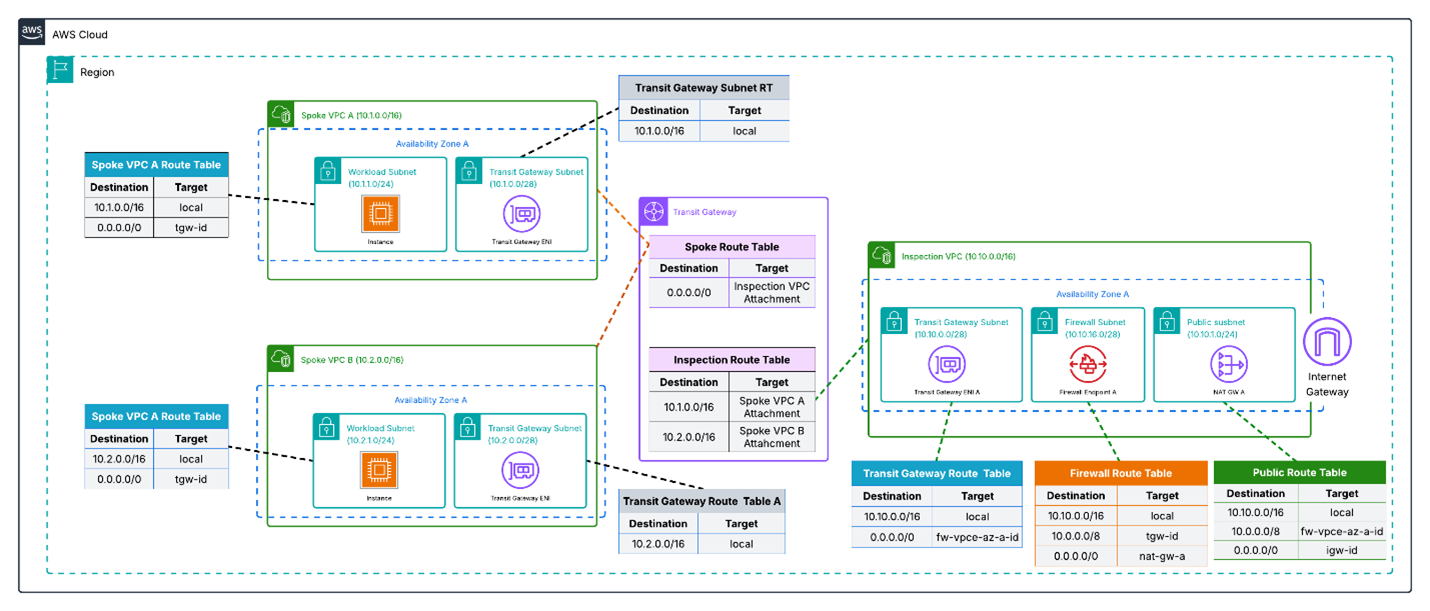
In the VPC diagram in Figure 2, EC2 instance traffic flows out through a firewall endpoint, NAT gateway, and internet gateway to reach the S3 public API endpoint, remaining within the AWS network. However, this setup does not allow the implementation of a logical data perimeter to control the specific resources that the EC2 instance can access.

Figure 2

Figure 2: Before implementing a data perimeter

In contrast, in the diagram in Figure 3, you can see how VPC interface endpoints enable the use of VPC endpoint policies to enforce a data perimeter, such as only allowing certain S3 buckets to be accessed by the EC2 instance.

Figure 3

Figure 3: After implementing a data perimeter

For example, you can attach a policy, similar to the one below, to an Amazon S3 interface or gateway VPC endpoint to restrict access from the VPC to only S3 buckets that are owned by the same AWS Organizations organization. Make sure to replace <MY-ORG-ID> with your own information.

{
    "Version": "2012-10-17",
        "Statement": [
        {
            "Effect": "Allow",
            "Principal": "*",
            "Action": "s3:*",
            "Resource": "*",
            "Condition": { "StringEquals": { "aws:ResourceOrgID": <MY-ORG-ID>}}
        }
    ]
}

As a further example, the following policy shows how you can limit access to only trusted identities. You can attach this policy to an S3 interface VPC endpoint to permit access only to principals from your organization, to help mitigate the risk of unintended disclosure through non-corporate credentials. Make sure to replace <MY-ORG-ID> with your own information.

{    "Version": "2012-10-17",
        "Statement": [
        {
            "Effect": "Allow",
            "Principal": "*",
            "Action": "s3:*",
            "Resource": "*",
            "Condition": { "StringEquals": { "aws:PrincipalOrgID": "<MY-ORG-ID>"}}
        }
    ]
}

Finally, you can create resource policies for your resources to restrict access to only VPC interface endpoints. For example, you can use the following policy from our Amazon S3 User Guide for S3 buckets. Make sure to replace <MY-VPCE-ID> and <MY-BUCKET> with your own information.

 {  "Version": "2012-10-17",
        "Statement": [
        {
            "Effect": "Deny",
            "Principal": "*",
            "Action": "s3:*",
            "Resource": ["arn:aws:s3::<MY-BUCKET>", "arn:aws:s3::<MY-BUCKET>/*"]
            "Condition": { "StringNotEquals": { "aws:SourceVpce": "<MY-VPCE-ID>"}}
        }
    ]
}

For more information on the use of these condition keys and how to implement a data perimeter, see this blog post.

Security objective 3: Enable private connectivity to AWS service API endpoints for on-premises environments

You might be required to run private connectivity to AWS only from your on-premises environments, such as when your on-premises firewalls are configured to limit the connectivity to the internet, including AWS public endpoints.

In this case, you can use interface VPC endpoints with Direct Connect private virtual interfaces (VIFs) or Site-to-Site VPN to extend private connectivity to your on-premises networks. With this setup, you can also enforce data perimeter rules like those shown earlier in this post.

For example, customers can use interface VPC endpoints from Amazon CloudWatch agents running on on-premises servers to CloudWatch through a private connection, as demonstrated in this blog post.

In the diagram in Figure 4, we show how you can extend this approach to include other services, such as Amazon S3, in a single VPC setup. To implement this pattern, you need to set up conditional forwarding on your on-premises DNS resolver to forward queries for amazonaws.com to an Amazon Route 53 Resolver’s inbound endpoint IPs.

The flow in this scenario is as follows:

  1. The DNS query for your S3 endpoint from your on-premises host is routed to the locally configured on-premises DNS server.
  2. The on-premises DNS server performs conditional forwarding to an Amazon Route 53 inbound resolver endpoint IP address.
  3. The inbound resolver returns the IP address of the interface VPC endpoint, which allows the on-premises host to establish private connectivity through AWS VPN or AWS Direct Connect.
Figure 4

Figure 4: On-premises private connectivity to Amazon S3 and Amazon CloudWatch

You can extend this architecture to support a cross-Region and multi-VPC setup by using AWS Transit Gateway and Amazon Route 53 private hosted zones, as described in the Building a Scalable and Secure Multi-VPC AWS Network Infrastructure whitepaper. Keep in mind that a distributed VPC endpoint approach (one that uses one endpoint per VPC) will allow you to implement least-privilege policies in VPC endpoints. A centralized approach, while more cost-effective, can increase the complexity of maintaining least privilege in a single policy and increase the scope of impact of a security event.

Security objective 4: Align with specific compliance requirements

In certain cases, customers operating in industries such as financial services or healthcare need to maintain compliance with regulations or standards such as HIPAA, the EU-US Data Privacy Framework, and PCI DSS. Although all communication between instances and services hosted in AWS use the AWS private network, using an interface VPC endpoint can help prove to auditors that you’re applying a defense-in-depth approach. This approach includes designing your workloads to run in networks that are isolated from the internet or implementing additional conditions such as the example VPC endpoint policies shown earlier in this post.

You can use AWS Audit Manager to get started mapping your compliance requirements to industry and geographic frameworks, such as NIST SP 800-53 Rev. 5, FedRAMP, and PCI DSS, and to automate evidence collection for controls such as the use of VPC endpoints. If you also have custom compliance requirements, you can create your own custom controls by using the Configure Amazon Virtual Private Cloud (VPC) service endpoints core control in the AWS Audit Manager control library console.

If you want to know how the use of VPC endpoints can help you align with compliance requirements for your specific workload and require assistance beyond what is provided in the public documentation on the AWS Compliance Programs webpage, you can consult with AWS Security Assurance Services (AWS SAS). AWS SAS has expert consultants and advisors who can help you design your systems to achieve, maintain, and automate compliance in the cloud.

Conclusion

In this blog post, we presented four security objectives to consider when deciding whether to use AWS interface VPC endpoints. You can use this information when you design your architecture or create a threat model to help implement secure architectures for your AWS hosted workloads. If you want to learn more about AWS PrivateLink and interface endpoints, see the AWS PrivateLink documentation. If you’re interested in learning more about implementing data perimeter concepts by using VPC endpoints, we suggest this workshop.

If you have feedback about this post, submit comments in the Comments section below. If you have questions about this post, contact AWS Support.

Jonathan-Jenkyn

Jonathan-Jenkyn

Jonathan (“JJ”) is a Senior Security and Compliance Consultant with AWS Privacy, Security, and Assurance. He’s an active member of the People with Disabilities affinity group and has built several Amazon initiatives supporting charities and social responsibility causes. Since 1998, he has been involved in IT Security and Compliance at many levels, from implementation of cryptographic primitives to managing enterprise security governance. He also enjoys running, cycling, swimming, fundraising for the BHF and Ipswich Hospital Charity, and spending time with his wife and five children.

Andrea_Di_Fabio

Andrea Di Fabio

Andrea is a Senior Security Assurance Consultant with the AWS Professional Services Security Risk and Compliance team. In this role, Andrea uses a risk-based approach to help enterprise customers improve business agility as they operationalize the shared responsibility model throughout their technology transformation journey in AWS.

Zaur _Molotnikov

Zaur Molotnikov

Zaur is a Security Consultant at AWS Professional Services, specializing in complex application security code reviews for top global companies. With a passion for security management, he uses his expertise to help companies achieve robust protection measures. Outside work, Zaur enjoys the thrill of motorcycle riding and the creativity of working with power tools on construction projects.

Joaquin-Manuel-Rinaudo

Joaquin Manuel Rinaudo

Joaquin is a Principal Security Architect with AWS Professional Services. He is passionate about building solutions that help developers improve their software quality. Before joining AWS, he worked across multiple domains in the security industry, from mobile security to cloud- and compliance-related topics. In his free time, Joaquin enjoys spending time with family and reading science fiction novels

Summer 2024 SOC 1 report now available in Japanese, Korean, and Spanish

Post Syndicated from Brownell Combs original https://aws.amazon.com/blogs/security/summer-2024-soc-1-report-now-available-in-japanese-korean-and-spanish/

Japanese | Korean | Spanish

At Amazon Web Services (AWS), we continue to listen to our customers, regulators, and stakeholders to understand their needs regarding audit, assurance, certification, and attestation programs. We are pleased to announce that the AWS System and Organization Controls (SOC) 1 report is now available in Japanese, Korean, and Spanish. This translated report will help drive greater engagement and alignment with customer and regulatory requirements across Japan, Korea, Latin America, and Spain.

The Japanese, Korean, and Spanish language versions of the report do not contain the independent opinion issued by the auditors, but you can find this information in the English language version. Stakeholders should use the English version as a complement to the Japanese, Korean, or Spanish versions.

Going forward, the following reports in each quarter will be translated. Spring and Fall SOC 1 controls are included in the Spring and Fall SOC 2 reports, so this translation schedule will provide year-round coverage of the English versions.

Report Period covered
Spring SOC 2 April 1–March 31
Summer SOC 1 July 1–June 30
Fall SOC 2 October 1–September 30
Winter SOC 1 January 1–December 31

Customers can download the translated Summer 2024 SOC 1 reports in Japanese, Korean, and Spanish through AWS Artifact, a self-service portal for on-demand access to AWS compliance reports. Sign in to AWS Artifact in the AWS Management Console, or learn more at Getting Started with AWS Artifact.

The Summer 2024 SOC 1 report includes a total of 177 services in scope. For up-to-date information, including when additional services are added, see the AWS Services in Scope by Compliance Program webpage and choose SOC.

AWS strives to continuously bring services into scope of its compliance programs to help you meet your architectural and regulatory needs. Please reach out to your AWS account team if you have questions or feedback about SOC compliance.

To learn more about our compliance and security programs, see AWS Compliance Programs. As always, we value your feedback and questions; reach out to the AWS Compliance team through the Contact Us page.


Japanese version

Summer 2024 SOC 1 レポートの日本語、韓国語、スペイン語版の提供を開始

当社はお客様、規制当局、利害関係者の声に継続的に傾聴し、Amazon Web Services (AWS) における監査、保証、認定、認証プログラムに関するそれぞれのニーズを理解に努めています。この度、AWS System and Organization Controls (SOC) 1 レポートが、日本語、韓国語、スペイン語で利用可能になりました。この翻訳版のレポートは、日本、韓国、ラテンアメリカ、スペインのお客様および規制要件との連携と協力体制を強化するためのものです。

本レポートの日本語、韓国語、スペイン語版には監査人による独立した第三者の意見は含まれていませんが、英語版には含まれています。利害関係者は、日本語、韓国語、スペイン語版の補足として英語版を参照する必要があります。

今後、四半期ごとの以下のレポートで翻訳版が提供されます。SOC 1 統制は、Spring および Fall SOC 2 レポートに含まれるため、英語版と合わせ、1 年間のレポートの翻訳版すべてがこのスケジュールで網羅されることになります。

レポート 対象期間
春季SOC 2 4 月 1 日〜3 月 31 日
夏季SOC 1 7 月 1 日〜6 月 30 日
秋季SOC 2 10 月 1 日〜9 月 30 日
冬季SOC 1 1 月 1 日〜12 月 31 日

Summer 2024 SOC 1 レポートの日本語、韓国語、スペイン語版は AWS Artifact (AWS のコンプライアンスレポートをオンデマンドで入手するためのセルフサービスポータル) を使用してダウンロードできます。AWS マネジメントコンソール内の AWS Artifact にサインインするか、AWS Artifact の開始方法ページで詳細をご覧ください。

Summer 2024 SOC 1 レポートの対象範囲には合計 177 のサービスが含まれます。その他のサービスが追加される時期など、最新の情報については、コンプライアンスプログラムによる対象範囲内の AWS のサービスで [SOC] を選択してご覧いただけます。

AWS では、アーキテクチャおよび規制に関するお客様のニーズを支援するため、コンプライアンスプログラムの対象範囲に継続的にサービスを追加するよう努めています。SOC コンプライアンスに関するご質問やご意見については、担当の AWS アカウントチームまでお問い合わせください。

コンプライアンスおよびセキュリティプログラムに関する詳細については、AWS コンプライアンスプログラムをご覧ください。当社ではお客様のご意見・ご質問を重視しています。お問い合わせページより AWS コンプライアンスチームにお問い合わせください。


Korean version

2024년 하계 SOC 1 보고서가 한국어, 일본어, 스페인어로 제공됩니다.

Amazon은 고객, 규제 기관 및 이해관계자의 의견을 지속적으로 경청하여 Amazon Web Services (AWS)의 감사, 보증, 인증 및 증명 프로그램과 관련된 요구사항을 파악하고 있습니다. AWS System and Organization Controls(SOC) 1 보고서가 이제 한국어, 일본어, 스페인어로 제공됨을 알려 드립니다. 이 번역된 보고서는 일본, 한국, 중남미, 스페인 전역의 고객의 참여도를 높이고 규제 요건을 준수하는 데 도움이 될 것입니다.

보고서의 일본어, 한국어, 스페인어 버전에는 감사인의 독립적인 의견이 포함되어 있지 않지만, 영어 버전에서는 해당 정보를 확인할 수 있습니다. 이해관계자는 일본어, 한국어 또는 스페인어 버전을 보완하기 위해 영어 버전을 사용해야 합니다.

앞으로 분기마다 다음 보고서가 번역본으로 제공됩니다. SOC 1 통제 조치는 춘계 및 추계 SOC 2 보고서에 포함되어 있으므로, 이 일정은 영어 버전과 함께 모든 번역된 언어로 연중 내내 제공됩니다.

보고 대상 기간
춘계 SOC 2 4월 1일~3월 31일
하계 SOC 1 7월 1일~6월 30일
추계 SOC 2 10월 1일~9월 30일
동계 SOC 1 1월 1일~12월 31일

고객은 AWS 규정 준수 보고서를 필요할 때 이용할 수 있는 셀프 서비스 포털인 AWS Artifact를 통해 일본어, 한국어, 스페인어로 번역된 2024년 하계 SOC 1 보고서를 다운로드할 수 있습니다. AWS Management Console의 AWS Artifact에 로그인하거나 Getting Started with AWS Artifact(AWS Artifact 시작하기)에서 자세한 내용을 알아보세요.

2024년 하계 SOC 1 보고서에는 총 177개의 서비스가 포함됩니다. 추가 서비스가 추가되는 시기 등의 최신 정보는 AWS Services in Scope by Compliance Program(규정 준수 프로그램별 범위 내 AWS 서비스)에서 SOC를 선택하세요.

AWS는 고객이 아키텍처 및 규제 요구사항을 충족할 수 있도록 지속적으로 서비스를 규정 준수 프로그램의 범위에 포함시키기 위해 노력하고 있습니다. SOC 규정 준수에 대한 질문이나 피드백이 있는 경우 AWS Account 팀에 문의하시기 바랍니다.

규정 준수 및 보안 프로그램에 대한 자세한 내용은 AWS 규정 준수 프로그램을 참조하세요. 언제나 그렇듯이 AWS는 여러분의 피드백과 질문을 소중히 여깁니다. 문의하기 페이지를 통해 AWS 규정 준수 팀에 문의하시기 바랍니다.


Spanish version

El informe SOC 1 verano 2024 se encuentra disponible actualmente en japonés, coreano y español

Seguimos escuchando a nuestros clientes, reguladores y partes interesadas para comprender sus necesidades en relación con los programas de auditoría, garantía, certificación y acreditación en Amazon Web Services (AWS). Nos enorgullece anunciar que el informe de controles de sistema y organización (SOC) 1 de AWS se encuentra disponible en japonés, coreano y español. Estos informes traducidos ayudarán a impulsar un mayor compromiso y alineación con los requisitos normativos y de los clientes en Japón, Corea, Latinoamérica y España.

Estas versiones del informe en japonés, coreano y español no contienen la opinión independiente emitida por los auditores, pero se puede acceder a esta información en la versión en inglés del documento. Las partes interesadas deben usar la versión en inglés como complemento de las versiones en japonés, coreano y español.

De aquí en adelante, los siguientes informes trimestrales estarán traducidos. Dado que los controles SOC 1 se incluyen en los informes de primavera y otoño de SOC 2, esta programación brinda una cobertura anual para todos los idiomas traducidos cuando se la combina con las versiones en inglés.

de AWS IAM Período cubierto
SOC 2 primavera Del 1 de abril al 31 de marzo
SOC 1 verano Del 1 de julio al 30 de junio
SOC 2 otoño Del 1 de octubre al 30 de septiembre
SOC 1 invierno Del 1 de enero al 31 de diciembre

Los clientes pueden descargar los informes SOC 1 verano 2024 traducidos al japonés, coreano y español a través de AWS Artifact, un portal de autoservicio para el acceso bajo demanda a los informes de conformidad de AWS. Inicie sesión en AWS Artifact mediante la Consola de administración de AWS u obtenga más información en Introducción a AWS Artifact.

El informe SOC 1 verano 2024 incluye un total de 177 servicios que se encuentran dentro del alcance. Para acceder a información actualizada, que incluye novedades sobre cuándo se agregan nuevos servicios, consulte los Servicios de AWS en el ámbito del programa de conformidad y seleccione SOC.

AWS se esfuerza de manera continua por añadir servicios dentro del alcance de sus programas de conformidad para ayudarlo a cumplir con sus necesidades de arquitectura y regulación. Si tiene alguna pregunta o sugerencia sobre la conformidad de los SOC, no dude en comunicarse con su equipo de cuenta de AWS.

Para obtener más información sobre los programas de conformidad y seguridad, consulte los Programas de conformidad de AWS. Como siempre, valoramos sus comentarios y preguntas; de modo que no dude en comunicarse con el equipo de conformidad de AWS a través de la página Contacte con nosotros.
 

Brownell Combs

Brownell Combs
Brownell is a Compliance Program Manager at AWS, where he leads multiple security and privacy initiatives. Brownell holds a Master’s Degree in Computer Science from the University of Virginia and a Bachelor’s Degree in Computer Science from Centre College. He has over 20 years of experience in information technology risk management and CISSP, CISA, CRISC, and GIAC GCLD certifications.

Rodrigo Fiuza

Rodrigo Fiuza
Rodrigo is a Security Audit Manager at AWS, based in São Paulo. He leads audits, attestations, certifications, and assessments across Latin America, the Caribbean, and Europe. Rodrigo has worked in risk management, security assurance, and technology audits for the past 12 years.

Paul Hong

Paul Hong
Paul is a Compliance Program Manager at AWS. He leads multiple security, compliance, and training initiatives within AWS and has over 10 years of experience in security assurance. Paul is a CISSP, CEH, and CPA, and holds a Masters of Accounting Information Systems and a Bachelors of Business Administration from James Madison University, Virginia.

Hwee Hwang

Hwee Hwang
Hwee is an Audit Specialist at AWS based in Seoul, South Korea. Hwee is responsible for third-party and customer audits, certifications, and assessments in Korea. Hwee previously worked in security governance, risk, and compliance and is laser focused on building customers’ trust and providing them assurance in the cloud.

Tushar Jain

Tushar Jain
Tushar is a Compliance Program Manager at AWS, where he leads multiple security, compliance, and training initiatives. He holds a Master of Business Administration degree from Indian Institute of Management and a Bachelor of Technology in Electronics and Telecommunication Engineering degree from Marathwada University. He has over 12 years of experience in information security and holds CCSK and CSXF certifications.

Eun Jin Kim

Eun Jin Kim
Eun Jin is a security assurance professional working as the Audit Program Manager at AWS. She mainly leads compliance programs in South Korea for the financial sector. She has more than 25 years of experience and holds a Master’s Degree in Management Information Systems from Carnegie Mellon University and a Master’s Degree in Law from George Mason University.

Michael Murphy

Michael Murphy
Michael is a Compliance Program Manager at AWS, where he leads multiple security and privacy initiatives. Michael has 12 years of experience in information security. He holds a Master’s Degree and a Bachelor’s Degree in Computer Engineering from Stevens Institute of Technology. He also holds CISSP, CRISC, CISA, and CISM certifications.

Nathan Samuel

Nathan Samuel
Nathan is a Compliance Program Manager at AWS, where he leads multiple security and privacy initiatives. Nathan has a Bachelor’s of Commerce degree from the University of the Witwatersrand, South Africa. He has 21 years’ experience in security assurance and holds the CISA, CRISC, CGEIT, CISM, CDPSE, and Certified Internal Auditor certifications.

Seul Un Sung

Seul Un Sung
Seul Un is a Security Assurance Audit Program Manager at AWS, where she has been leading South Korea audit programs, including K-ISMS and RSEFT, for the past 4 years. She has a Bachelor’s of Information Communication and Electronic Engineering degree from Ewha Womans University and has 14 years of experience in IT risk, compliance, governance, and audit, and holds the CISA certification.

Hidetoshi Takeuchi

Hidetoshi Takeuchi
Hidetoshi is a Senior Audit Program Manager at AWS, based in Japan, leading Japan and India security certification and authorization programs. Hidetoshi has led information technology, cyber security, risk management, compliance, security assurance, and technology audits for the past 28 years and holds the CISSP certifications.

ryan wilks

Ryan Wilks
Ryan is a Compliance Program Manager at AWS, where he leads multiple security and privacy initiatives. Ryan has 13 years of experience in information security. He has a Bachelor of Arts degree from Rutgers University and holds ITIL, CISM, and CISA certifications.

Managing identity source transition for AWS IAM Identity Center

Post Syndicated from Xiaoxue Xu original https://aws.amazon.com/blogs/security/managing-identity-source-transition-for-aws-iam-identity-center/

AWS IAM Identity Center manages user access to Amazon Web Services (AWS) resources, including both AWS accounts and applications. You can use IAM Identity Center to create and manage user identities within the Identity Center identity store or to connect seamlessly to other identity sources.

Organizations might change the configuration of their identity source in IAM Identity Center for various reasons. These include switching identity providers (IdPs), expanding their identity footprint, adopting new features, and so on. These transitions can disrupt user access and require planning to minimize downtime.

In this blog post, we walk you through the process of switching from one identity source to another and provide sample code that you can use to assist with the transition.

Background

The identity source configured in IAM Identity Center determines where users and groups are created and managed. Each organization can connect to only one identity source at a time. Identity Center supports three main identity source options:

  1. Identity Center directory: This is the default identity store for IAM Identity Center. You can use it to directly create and administer your users and groups within Identity Center without relying on an external provider.
  2. Active Directory: You can configure integration with an on-premises Active Directory or with AWS Managed Microsoft AD using AWS Directory Service. This integration enables you to use your existing Active Directory identities and group memberships.
  3. External IdP: You can continue using your current third-party IdPs that support SAML 2.0, such as Okta Universal Directory or Microsoft Entra ID (formerly Azure AD).

Understanding these identity source options can help you choose the source that best fits your user management needs based on your existing infrastructure and authentication requirements.

Figure 1 explains the flow of users and groups accessing AWS resources. This access is granted through the following:

Figure 1: Granting access to AWS resources for users and groups managed by an identity source in IAM Identity Center

Figure 1: Granting access to AWS resources for users and groups managed by an identity source in IAM Identity Center

When you change the identity source, the work required varies depending on the original and new sources. AWS documentation details these considerations. In minimal impact scenarios, assignments remain intact, although you need to force password resets or verify correct assertions from the new source. More disruptive scenarios delete users, groups, and their assignments. In those scenarios, you need to restore the deleted entries after changing the identity source.

Sample deployment

This deployment covers permission sets and application assignments’ backup and restore. These scripts associate assignments with unique user attributes such as UserName, and group attributes such as DisplayName. Attributes that might change during the user and group restoration process, such as UserId and GroupId, aren’t used.

What isn’t covered includes users, groups, permission sets, and applications backup and restore.

  • Users and groups backup and restore aren’t covered because they depend heavily on the format of the source and target IdPs.
  • Because we’re working with identity source switching, the permission sets will remain unchanged and applications will not be deleted.
  • If you’re changing IdPs as part of an AWS Region , the IAM Identity Center instance will be deleted. The applications and permission sets will be deleted in addition to assignments. In this case, you must redeploy the applications. See How to automate the review and validation of permissions for users and groups in AWS IAM Identity Center for information about backing up permission sets.

The sample scripts and detailed steps are available on GitHub.

Note: This solution is available in the GitHub aws-samples repository. You can report bugs or make feature requests through GitHub Issues. The builders of this solution can help with GitHub issues. Enterprise Support customers can reach out to their Technical Account Manager (TAM) for further questions or feature requests.

Walkthrough

In this section, we walk you through the process of transitioning to a new identity source in IAM Identity Center.

Step 1: Backup users, groups, and assignments from the current identity source

This step is critical to preserve users’ information and their associated access scope.

How to backup users and groups:

Note: For some external IdPs, there are native integrations with Active Directory, such as Okta AD integration and Ping One AD Connect. You can set up a native integration and sync users and groups data without needing to backup and restore that data.

Assignments can be backed up by running the backup.py file from GitHub. Replace <IDC_STORE_ID> with your Identity Store ID (it looks like d-1234567890), and replace <IDC_ARN> with the Amazon Resource Name (ARN) for your IAM Identity Center instance.

python3 backup.py --idc-id <IDC_STORE_ID> --idc-arn <IDC_ARN>

This script uses both IAM Identity Center APIs and Identity Store APIs as shown in Figure 2 that generates permission set assignments backup files (UserAssignments.json and GroupAssignments.json) and an application assignments backup file (AppAssignments.json).

Figure 2: APIs used for backing up assignments

Figure 2: APIs used for backing up assignments

Step 2: Restore and validate the backed-up users and groups in the target identity source

The target will become the new authoritative identity source. When done, verify that the group memberships and attributes have been correctly transferred.

  • If the target is an IAM Identity Center directory, use APIs such as CreateUser, CreateGroup, and CreateGroupMembership to restore from the previous backup file.
  • If the target is Active Directory or an external IdP, use the corresponding native import features or integration tools to restore.

Step 3: Configure IAM Identity Center to connect to the new identity source and synchronize users and groups

Update your IAM Identity Center configuration to point to the new source. If applicable, use tools such as configurable AD sync or automatic provisioning with SCIM to synchronize your restored identities.

WARNING: While the directory is being rebuilt, your users will not have access to AWS accounts or applications through IAM Identity Center until all assignments are restored in Step 4.

Step 4: Restore assignments to users and groups in the new identity source

The APIs used to restore assignments are as shown in Figure 3.

Figure 3: APIs used for restoring assignments

Figure 3: APIs used for restoring assignments

Assignments can be restored by running the restore.py file from GitHub. Replace <NEW_IDC_STORE_ID> with your newly configured Identity Store ID (it looks like d-1234567890) and replace <IDC_ARN> with the ARN for your IAM Identity Center instance.

python3 restore.py --idc-id <NEW_IDC_STORE_ID> --idc-arn <IDC_ARN>

This script uses the APIs illustrated in Figure 2 and picks up backup files (UserAssignments.json, GroupAssignments.json, and AppAssignments.json) from Step 1 by default. Account permission set assignment results are automatically retrieved five times using exponential backoff. If the result is other than SUCCEEDED after five retries, the principal ID will be marked as failed and exported in error logs.

Note: For AWS managed applications that maintain a separate identity source, using the CreateApplicationAssignments API to restore application assignments will not preserve user access. These applications typically have dependencies on the original identity source ID, or dependencies on UserId and GroupId from the original identity source. This dependency is represented by importing users or groups from IAM Identity Center during the AWS managed application creation process. Example AWS managed applications include Amazon SageMaker Studio and Amazon Q Developer. These applications must be restored on a case-by-case basis and can require redeployment of the application.

Step 5: Validate user access using the new identity source

Make sure that users can still access the expected accounts and applications.

Conclusion

Transitioning your identity source in IAM Identity Center requires careful planning and implementation. This post outlined the steps to manage this transition. By following these steps, you can streamline the transition process, providing a smooth and efficient transfer of user access with minimal downtime. To get started, see the GitHub repository. For related posts, visit the AWS Security Blog channel and search for IAM Identity Center.

 
If you have feedback about this post, submit comments in the Comments section below. If you have questions about this post, contact AWS Support.
 

Xiaoxue Xu
Xiaoxue Xu

Xiaoxue Xu is a Solutions Architect for AWS based in Toronto. She primarily works with Financial Services customers to help secure their workload and design scalable solutions on the AWS Cloud.
Kanwar Bajwa
Kanwar Bajwa

Kanwar Bajwa is a Principal Technical Account Manager at AWS who works with customers to optimize their use of AWS services and achieve their business objectives.
Yee Fei Ooi
Yee Fei Ooi

Yee Fei is a Solutions Architect supporting independent software vendor (ISV) customers in Singapore and is part of the Containers TFC. She enjoys helping her customers to grow their businesses and build solutions that automate, innovate, and improve efficiency.

2024 H1 IRAP report is now available on AWS Artifact for Australian customers

Post Syndicated from Patrick Chang original https://aws.amazon.com/blogs/security/2024-h1-irap-report-is-now-available-on-aws-artifact-for-australian-customers/

Amazon Web Services (AWS) is excited to announce that a new Information Security Registered Assessors Program (IRAP) report (2024 H1) is now available through AWS Artifact. An independent Australian Signals Directorate (ASD) certified IRAP assessor completed the IRAP assessment of AWS in August 2024.

The new IRAP report includes an additional seven AWS services that are now assessed at the PROTECTED level under IRAP. This brings the total number of services assessed at the PROTECTED level to 158.

The following are the seven newly assessed services:

For the full list of services, see the IRAP tab on the AWS Services in Scope by Compliance Program page.

Many Australian customers are looking to experiment with how generative AI applications can help them better serve the Australian public. Customers can use two of the newly assessed services—Amazon Bedrock and Amazon DataZone—to help align with their governance, sovereignty, and security requirements up to the PROTECTED level:

  • Amazon Bedrock is a fully managed service that offers a choice of high-performing large language models (LLMs) and other foundation models (FMs) from leading AI companies like AI21 Labs, Anthropic, Cohere, Meta, Mistral AI, Stability AI, as well as Amazon through a single API. Amazon Bedrock also provides a broad set of capabilities customers need to build generative AI applications with security, privacy, and responsible AI.
  • Amazon DataZone is a data management service that makes it faster and simpler for customers to catalog, discover, share, and govern data stored across AWS, on premises, and third-party sources.

AWS has developed an IRAP documentation pack to help Australian customers and their partners to plan, architect, and assess risk for their workloads when they use AWS Cloud services.

We developed this pack in accordance with the Australian Cyber Security Centre (ACSC) Cloud Security Guidance and Cloud Assessment and Authorisation framework, which addresses guidance within the Australian Government’s Information Security Manual (ISM, September 2023 version), the Department of Home Affairs’ Protective Security Policy Framework (PSPF), and the Digital Transformation Agency’s Secure Cloud Strategy.

The IRAP pack on AWS Arti­­fact also includes newly updated versions of the AWS Consumer Guide and the whitepaper Reference Architectures for ISM PROTECTED Workloads in the AWS Cloud.

Reach out to your AWS representatives to let us know which additional services you would like to see in scope for upcoming IRAP assessments. We strive to bring more services into scope at the PROTECTED level under IRAP to support your requirements.

 
If you have feedback about this post, submit comments in the Comments section below. If you have questions about this post, contact AWS Support.
 

Patrick Chang
Patrick Chang

Patrick is the APJ Audit Lead based in Sydney. He leads security audits, certifications, and compliance programs across the APJ region. He is a technology risk and audit professional with over a decade of experience. He is passionate about delivering assurance programs that build trust with customers and provide them assurance on cloud security.

AWS renews its GNS Portugal certification for classified information with 66 services

Post Syndicated from Daniel Fuertes original https://aws.amazon.com/blogs/security/aws-renews-its-gns-portugal-certification-for-classified-information-with-66-services/

Amazon Web Services (AWS) announces that it has successfully renewed the Portuguese GNS (Gabinete Nacional de Segurança, National Security Cabinet) certification in the AWS Regions and edge locations in the European Union. This accreditation confirms that AWS cloud infrastructure, security controls, and operational processes adhere to the stringent requirements set forth by the Portuguese government for handling classified information at the National Reservado level (equivalent to the NATO Restricted level).

The GNS certification is based on the NIST SP800-53 Rev. 5 and CSA CCM v4 frameworks. It demonstrates the AWS commitment to providing the most secure cloud services to public-sector customers, particularly those with the most demanding security and compliance needs. By achieving this certification, AWS has demonstrated its ability to safeguard classified data up to the Reservado (Restricted) level, in accordance with the Portuguese government’s rigorous security standards.

AWS was evaluated by an authorized and independent third-party auditor, Adyta Lda, and by the Portuguese GNS itself. With the GNS certification, AWS customers in Portugal, including public sector organizations and defense contractors, can now use the full extent of AWS cloud services to handle national restricted information. This enables these customers to take advantage of AWS scalability, reliability, and cost-effectiveness, while safeguarding data in alignment with GNS standards.

We’re happy to announce the addition of 40 services to the scope of our GNS certification, for a new total of 66 services in scope. To view the complete list of services included in the scope, see the AWS Services in Scope by Compliance Program – GNS National Restricted Certification page.

The Certificate of Compliance illustrating the compliance status of AWS is available on the GNS Certifications page and through AWS Artifact.

For more information about GNS, see the AWS Compliance page GNS National Restricted Certification.

If you have feedback about this post, submit comments in the Comments section below.
 

Daniel Fuertes
Daniel Fuertes

Daniel is a Security Audit Program Manager at AWS, based in Madrid, Spain. Daniel leads multiple security audits, attestations, and certification programs in Spain, Portugal, and other EMEA countries. Daniel has ten years of experience in security assurance and compliance, including previous experience as an auditor for the PCI DSS security framework. He also holds the CISSP, PCIP, and ISO 27001 Lead Auditor certifications.

AWS achieves HDS certification in four additional AWS Regions

Post Syndicated from Janice Leung original https://aws.amazon.com/blogs/security/aws-achieves-hds-certification-in-four-additional-aws-regions/

Amazon Web Services (AWS) is pleased to announce that four additional AWS Regions—Asia Pacific (Hong Kong), Asia Pacific (Osaka), Asia Pacific (Hyderabad), and Israel (Tel Aviv)—have been granted the Health Data Hosting (Hébergeur de Données de Santé, HDS) certification, increasing the scope to 24 global AWS Regions.

The Agence du Numérique en Santé (ANS), the French governmental agency for health, introduced the HDS certification to strengthen the security and protection of personal health data. By achieving this certification, AWS demonstrates our continuous commitment to adhere to the heightened expectations for cloud service providers.

The following 24 Regions are in scope for this certification:

  • US East (N. Virginia)
  • US East (Ohio)
  • US West (N. California)
  • US West (Oregon)
  • Asia Pacific (Hong Kong)
  • Asia Pacific (Hyderabad)
  • Asia Pacific (Jakarta)
  • Asia Pacific (Mumbai)
  • Asia Pacific (Osaka)
  • Asia Pacific (Seoul)
  • Asia Pacific (Singapore)
  • Asia Pacific (Sydney)
  • Asia Pacific (Tokyo)
  • Canada (Central)
  • Europe (Frankfurt)
  • Europe (Ireland)
  • Europe (London)
  • Europe (Milan)
  • Europe (Paris)
  • Europe (Stockholm)
  • Europe (Zurich)
  • Middle East (UAE)
  • Israel (Tel Aviv)
  • South America (São Paulo)

The HDS certification demonstrates that AWS provides a framework for technical and governance measures to secure and protect personal health data according to HDS requirements. Our customers who handle personal health data can continue to manage their workloads in HDS-certified Regions with confidence.

Independent third-party auditors evaluated and certified AWS on September 3, 2024. The HDS Certificate of Compliance demonstrating AWS compliance status is available on the Agence du Numérique en Santé (ANS) website and AWS Artifact. AWS Artifact is a self-service portal for on-demand access to AWS compliance reports. Sign in to AWS Artifact in the AWS Management Console, or learn more at Getting Started with AWS Artifact.

For up-to-date information, including when additional Regions are added, visit the AWS Compliance Programs page and choose HDS.

AWS strives to continuously meet your architectural and regulatory needs. If you have questions or feedback about HDS compliance, reach out to your AWS account team.

To learn more about our compliance and security programs, see AWS Compliance Programs. As always, we value your feedback and questions; reach out to the AWS Compliance team through the Contact Us page.

If you have feedback about this post, submit comments in the Comments section below.

Author

Janice Leung
Janice is a Security Assurance Program Manager at AWS based in New York. She leads various commercial security certifications, within the automobile, healthcare, and telecommunications sectors across Europe. In addition, she leads the AWS infrastructure security program worldwide. Janice has over 10 years of experience in technology risk management and audit at leading financial services and consulting company.

Tea Jioshvili

Tea Jioshvili
Tea is a Security Assurance Manager at AWS, based in Berlin, Germany. She leads various third-party audit programs across Europe. She previously worked in security assurance and compliance, business continuity, and operational risk management in the financial industry for multiple years.

2024 ISO and CSA STAR certificates now available with three additional services

Post Syndicated from Atulsing Patil original https://aws.amazon.com/blogs/security/2024-iso-and-csa-star-certificates-now-available-with-three-additional-services/

Amazon Web Services (AWS) successfully completed an onboarding audit with no findings for ISO 9001:2015, 27001:2022, 27017:2015, 27018:2019, 27701:2019, 20000-1:2018, and 22301:2019, and Cloud Security Alliance (CSA) STAR Cloud Controls Matrix (CCM) v4.0. Ernst and Young CertifyPoint auditors conducted the audit and reissued the certificates on July 22, 2024. The objective of the audit was to assess the level of compliance with the requirements of the applicable international standards.

During the audit, we added the following three AWS services to the scope of the certification:

For a full list of AWS services that are certified under ISO and CSA Star, see the AWS ISO and CSA STAR Certified page. Customers can also access the certifications in the AWS Management Console through AWS Artifact.

If you have feedback about this post, submit comments in the Comments section below.

Atul Patil

Atulsing Patil
Atulsing is a Compliance Program Manager at AWS. He has 27 years of consulting experience in information technology and information security management. Atulsing holds a master of science in electronics degree and professional certifications such as CCSP, CISSP, CISM, CDPSE, ISO 27001 Lead Auditor, HITRUST CSF, Archer Certified Consultant, and AWS CCP.

Nimesh Ravas

Nimesh Ravasa
Nimesh is a Compliance Program Manager at AWS. He leads multiple security and privacy initiatives within AWS. Nimesh has 15 years of experience in information security and holds CISSP, CDPSE, CISA, PMP, CSX, AWS Solutions Architect – Associate, and AWS Security Specialty certifications.

Chinmaee Parulekar

Chinmaee Parulekar
Chinmaee is a Compliance Program Manager at AWS. She has 5 years of experience in information security. Chinmaee holds a master of science degree in management information systems and professional certifications such as CISA.

Summer 2024 SOC report now available with 177 services in scope

Post Syndicated from Brownell Combs original https://aws.amazon.com/blogs/security/summer-2024-soc-report-now-available-with-177-services-in-scope/

We continue to expand the scope of our assurance programs at Amazon Web Services (AWS) and are pleased to announce that the Summer 2024 System and Organization Controls (SOC) 1 report is now available. The report covers 177 services over the 12-month period of July 1, 2023–June 30, 2024, so that customers have a full year of assurance with the report. This report demonstrates our continuous commitment to adhere to the heightened expectations for cloud service providers.

Going forward, we will issue SOC reports covering a 12-month period each quarter as follows:

Report Period covered
Spring SOC 1, 2, and 3 April 1–March 31
Summer SOC 1 July 1–June 30
Fall SOC 1, 2, and 3 October 1–September 30
Winter SOC 1 January 1–December 31

Customers can download the Summer 2024 SOC report through AWS Artifact, a self-service portal for on-demand access to AWS compliance reports. Sign in to AWS Artifact in the AWS Management Console, or learn more at Getting Started with AWS Artifact.

AWS strives to continuously bring services into the scope of its compliance programs to help you meet your architectural and regulatory needs. If you have questions or feedback about SOC compliance, reach out to your AWS account team.

To learn more about our compliance and security programs, see AWS Compliance Programs. As always, we value your feedback and questions; reach out to the AWS Compliance team through the Contact Us page.

If you have feedback about this post, submit comments in the Comments section below.

Brownell Combs
Brownell Combs

Brownell is a Compliance Program Manager at AWS. He leads multiple security and privacy initiatives within AWS. Brownell holds a master of science degree in computer science from University of Virginia and a bachelor of science degree in computer science from Centre College. He has over 20 years of experience in IT risk management and CISSP, CISA, CRISC, and GIAC GCLD certifications.
Paul Hong
Paul Hong

Paul is a Compliance Program Manager at AWS. He leads multiple security, compliance, and training initiatives within AWS, and has 10 years of experience in security assurance. Paul holds CISSP, CEH, and CPA certifications. He has a master’s degree in accounting information systems and a bachelor’s degree in business administration from James Madison University, Virginia.
Tushar Jain
Tushar Jain

Tushar is a Compliance Program Manager at AWS. He leads multiple security, compliance, and training initiatives within AWS. Tushar holds a master of business administration from Indian Institute of Management Shillong, and a bachelor of technology in electronics and telecommunication engineering from Marathwada University. He has over 12 years of experience in information security and holds CCSK and CSXF certifications.
Michael Murphy
Michael Murphy

Michael is a Compliance Program Manager at AWS. He leads multiple security and privacy initiatives within AWS. Michael has 12 years of experience in information security. He holds a master’s degree and a bachelor’s degree in computer engineering from Stevens Institute of Technology. He also holds CISSP, CRISC, CISA, and CISM certifications.
Nathan Samuel
Nathan Samuel

Nathan is a Compliance Program Manager at AWS. He leads multiple security and privacy initiatives within AWS. Nathan has a bachelor of commerce degree from the University of the Witwatersrand, South Africa, and has over 21 years of experience in security assurance. He holds the CISA, CRISC, CGEIT, CISM, CDPSE, and Certified Internal Auditor certifications.
ryan wilks
Ryan Wilks

Ryan is a Compliance Program Manager at AWS. He leads multiple security and privacy initiatives within AWS. Ryan has 13 years of experience in information security. He has a bachelor of arts degree from Rutgers University and holds ITIL, CISM, and CISA certifications.

Spring 2024 SOC 2 report now available in Japanese, Korean, and Spanish

Post Syndicated from Brownell Combs original https://aws.amazon.com/blogs/security/spring-2024-soc-2-report-now-available-in-japanese-korean-and-spanish/

Japanese | Korean | Spanish

At Amazon Web Services (AWS), we continue to listen to our customers, regulators, and stakeholders to understand their needs regarding audit, assurance, certification, and attestation programs. We are pleased to announce that the AWS System and Organization Controls (SOC) 2 report is now available in Japanese, Korean, and Spanish. This translated report will help drive greater engagement and alignment with customer and regulatory requirements across Japan, Korea, Latin America, and Spain.

The Japanese, Korean, and Spanish language versions of the report do not contain the independent opinion issued by the auditors, but you can find this information in the English language version. Stakeholders should use the English version as a complement to the Japanese, Korean, or Spanish versions.

Going forward, the following reports in each quarter will be translated. Spring and Fall SOC 1 controls are included in the Spring and Fall SOC 2 reports, so this translation schedule will provide year-round coverage of the English versions.

  • Spring SOC 2 (April 1 – March 31)
  • Summer SOC 1 (July 1 – June 30)
  • Fall SOC 2 (October 1 – September 30)
  • Winter SOC 1 (January 1 – December 31)

Customers can download the translated Spring 2024 SOC 2 reports in Japanese, Korean, and Spanish through AWS Artifact, a self-service portal for on-demand access to AWS compliance reports. Sign in to AWS Artifact in the AWS Management Console, or learn more at Getting Started with AWS Artifact.

The Spring 2024 SOC 2 report includes a total of 177 services in scope. For up-to-date information, including when additional services are added, visit the AWS Services in Scope by Compliance Program webpage and choose SOC.

AWS strives to continuously bring services into scope of its compliance programs to help you meet your architectural and regulatory needs. Please reach out to your AWS account team if you have questions or feedback about SOC compliance.

To learn more about our compliance and security programs, see AWS Compliance Programs. As always, we value your feedback and questions; reach out to the AWS Compliance team through the Contact Us page.

 
If you have feedback about this post, submit comments in the Comments section below. If you have questions about this post, contact AWS Support.


Japanese version

第1四半期 2024 SOC 2 レポートの日本語、韓国語、スペイン語版の提供を開始

当社はお客様、規制当局、利害関係者の声に継続的に耳を傾け、Amazon Web Services (AWS) における監査、保証、認定、認証プログラムに関するそれぞれのニーズを理解するよう努めています。この度、AWS System and Organization Controls (SOC) 2 レポートが、日本語、韓国語、スペイン語で利用可能になりました。この翻訳版のレポートは、日本、韓国、ラテンアメリカ、スペインのお客様および規制要件との連携と協力体制を強化するためのものです。

本レポートの日本語、韓国語、スペイン語版には監査人による独立した第三者の意見は含まれていませんが、英語版には含まれています。利害関係者は、日本語、韓国語、スペイン語版の補足として英語版を参照する必要があります。

今後、四半期ごとの以下のレポートで翻訳版が提供されます。SOC 1 統制は、第1四半期 および 第3四半期 SOC 2 レポートに含まれるため、英語版と合わせ、1 年間のレポートの翻訳版すべてがこのスケジュールで網羅されることになります。

  • 第1四半期 SOC 2 (4 月 1 日〜3 月 31 日)
  • 第2四半期 SOC 1 (7 月 1 日〜6 月 30 日)
  • 第3四半期 SOC 2 (10 月 1 日〜9 月 30 日)
  • 第4四半期 SOC 1 (1 月 1 日〜12 月 31 日)

第1四半期 2024 SOC 2 レポートの日本語、韓国語、スペイン語版は AWS Artifact (AWS のコンプライアンスレポートをオンデマンドで入手するためのセルフサービスポータル) を使用してダウンロードできます。AWS マネジメントコンソール内の AWS Artifact にサインインするか、AWS Artifact の開始方法ページで詳細をご覧ください。

第1四半期 2024 SOC 2 レポートの対象範囲には合計 177 のサービスが含まれます。その他のサービスが追加される時期など、最新の情報については、コンプライアンスプログラムによる対象範囲内の AWS のサービスで [SOC] を選択してご覧いただけます。

AWS では、アーキテクチャおよび規制に関するお客様のニーズを支援するため、コンプライアンスプログラムの対象範囲に継続的にサービスを追加するよう努めています。SOC コンプライアンスに関するご質問やご意見については、担当の AWS アカウントチームまでお問い合わせください。

コンプライアンスおよびセキュリティプログラムに関する詳細については、AWS コンプライアンスプログラムをご覧ください。当社ではお客様のご意見・ご質問を重視しています。お問い合わせページより AWS コンプライアンスチームにお問い合わせください。


Korean version

2024년 춘계 SOC 2 보고서의 한국어, 일본어, 스페인어 번역본 제공

Amazon은 고객, 규제 기관 및 이해 관계자의 의견을 지속적으로 경청하여 Amazon Web Services (AWS)의 감사, 보증, 인증 및 증명 프로그램과 관련된 요구 사항을 파악하고 있습니다. AWS System and Organization Controls(SOC) 2 보고서가 이제 한국어, 일본어, 스페인어로 제공됨을 알려 드립니다. 이 번역된 보고서는 일본, 한국, 중남미, 스페인의 고객 및 규제 요건을 준수하고 참여도를 높이는 데 도움이 될 것입니다.

보고서의 일본어, 한국어, 스페인어 버전에는 감사인의 독립적인 의견이 포함되어 있지 않지만, 영어 버전에서는 해당 정보를 확인할 수 있습니다. 이해관계자는 일본어, 한국어 또는 스페인어 버전을 보완하기 위해 영어 버전을 사용해야 합니다.

앞으로 분기마다 다음 보고서가 번역본으로 제공됩니다. SOC 1 통제 조치는 춘계 및 추계 SOC 2 보고서에 포함되어 있으므로, 이 일정은 영어 버전과 함께 모든 번역된 언어로 연중 내내 제공됩니다.

  • 춘계 SOC 2(4/1~3/31)
  • 하계 SOC 1(7/1~6/30)
  • 추계 SOC 2(10/1~9/30)
  • 동계 SOC 1(1/1~12/31)

고객은 AWS 규정 준수 보고서를 필요할 때 이용할 수 있는 셀프 서비스 포털인 AWS Artifact를 통해 한국어, 일본어, 스페인어로 번역된 2024년 춘계 SOC 2 보고서를 다운로드할 수 있습니다. AWS Management Console의 AWS Artifact에 로그인하거나 Getting Started with AWS Artifact(AWS Artifact 시작하기)에서 자세한 내용을 알아보세요.

2024년 춘계 SOC 2 보고서에는 총 177개의 서비스가 포함됩니다. 추가 서비스가 추가되는 시기 등의 최신 정보는 AWS Services in Scope by Compliance Program(규정 준수 프로그램별 범위 내 AWS 서비스)에서 SOC를 선택하세요.

AWS는 고객이 아키텍처 및 규제 요구 사항을 충족할 수 있도록 지속적으로 서비스를 규정 준수 프로그램의 범위에 포함시키기 위해 노력하고 있습니다. SOC 규정 준수에 대한 질문이나 피드백이 있는 경우 AWS 계정 팀에 문의하시기 바랍니다.

규정 준수 및 보안 프로그램에 대한 자세한 내용은 AWS 규정 준수 프로그램을 참조하세요. 언제나 그렇듯이 AWS는 여러분의 피드백과 질문을 소중히 여깁니다. 문의하기 페이지를 통해 AWS 규정 준수 팀에 문의하시기 바랍니다.


Spanish version

El informe de SOC 2 primavera 2024 se encuentra disponible actualmente en japonés, coreano y español

Seguimos escuchando a nuestros clientes, reguladores y partes interesadas para comprender sus necesidades en relación con los programas de auditoría, garantía, certificación y acreditación en Amazon Web Services (AWS). Nos enorgullece anunciar que el informe de controles de sistema y organización (SOC) 2 de AWS se encuentra disponible en japonés, coreano y español. Estos informes traducidos ayudarán a impulsar un mayor compromiso y alineación con los requisitos normativos y de los clientes en Japón, Corea, Latinoamérica y España.

Estas versiones del informe en japonés, coreano y español no contienen la opinión independiente emitida por los auditores, pero se puede acceder a esta información en la versión en inglés del documento. Las partes interesadas deben usar la versión en inglés como complemento de las versiones en japonés, coreano y español.

De aquí en adelante, los siguientes informes trimestrales estarán traducidos. Dado que los controles SOC 1 se incluyen en los informes de primavera y otoño de SOC 2, esta programación brinda una cobertura anual para todos los idiomas traducidos cuando se la combina con las versiones en inglés.

  • SOC 2 primavera (del 1/4 al 31/3)
  • SOC 1 verano (del 1/7 al 30/6)
  • SOC 2 otoño (del 1/10 al 30/9)
  • SOC 1 invierno (del 1/1 al 31/12)

Los clientes pueden descargar los informes de SOC 2 primavera 2024 traducidos al japonés, coreano y español a través de AWS Artifact, un portal de autoservicio para el acceso bajo demanda a los informes de cumplimiento de AWS. Inicie sesión en AWS Artifact mediante la Consola de administración de AWS u obtenga más información en Introducción a AWS Artifact.

El informe de SOC 2 primavera 2024 incluye un total de 177 servicios que se encuentran dentro del alcance. Para acceder a información actualizada, que incluye novedades sobre cuándo se agregan nuevos servicios, consulte los Servicios de AWS en el ámbito del programa de conformidad y seleccione SOC.

AWS se esfuerza de manera continua por añadir servicios dentro del alcance de sus programas de conformidad para ayudarlo a cumplir con sus necesidades de arquitectura y regulación. Si tiene alguna pregunta o sugerencia sobre la conformidad de los SOC, no dude en comunicarse con su equipo de cuenta de AWS.

Para obtener más información sobre los programas de conformidad y seguridad, consulte los Programas de conformidad de AWS. Como siempre, valoramos sus comentarios y preguntas; de modo que no dude en comunicarse con el equipo de conformidad de AWS a través de la página Contacte con nosotros.

Brownell Combs

Brownell Combs
Brownell is a Compliance Program Manager at AWS, where he leads multiple security and privacy initiatives. Brownell holds a Master’s Degree in Computer Science from the University of Virginia and a Bachelor’s Degree in Computer Science from Centre College. He has over 20 years of experience in information technology risk management and CISSP, CISA, CRISC, and GIAC GCLD certifications.

Rodrigo Fiuza

Rodrigo Fiuza
Rodrigo is a Security Audit Manager at AWS, based in São Paulo. He leads audits, attestations, certifications, and assessments across Latin America, the Caribbean, and Europe. Rodrigo has worked in risk management, security assurance, and technology audits for the past 12 years.

Paul Hong

Paul Hong
Paul is a Compliance Program Manager at AWS. He leads multiple security, compliance, and training initiatives within AWS and has over 10 years of experience in security assurance. Paul is a CISSP, CEH, and CPA, and holds a Masters of Accounting Information Systems and a Bachelors of Business Administration from James Madison University, Virginia.

Hwee Hwang

Hwee Hwang
Hwee is an Audit Specialist at AWS based in Seoul, South Korea. Hwee is responsible for third-party and customer audits, certifications, and assessments in Korea. Hwee previously worked in security governance, risk, and compliance and is laser focused on building customers’ trust and providing them assurance in the cloud.

Tushar Jain

Tushar Jain
Tushar is a Compliance Program Manager at AWS, where he leads multiple security, compliance, and training initiatives. He holds a Master of Business Administration from Indian Institute of Management, Shillong, India and a Bachelor of Technology in Electronics and Telecommunication Engineering from Marathwada University, India. He has over 12 years of experience in information security and holds CCSK and CSXF certifications.

Eun Jin Kim

Eun Jin Kim
Eun Jin is a security assurance professional working as the Audit Program Manager at AWS. She mainly leads compliance programs in South Korea for the financial sector. She has more than 25 years of experience and holds a Master’s Degree in Management Information Systems from Carnegie Mellon University in Pittsburgh, Pennsylvania and a Master’s Degree in Law from George Mason University in Arlington, Virginia.

Michael Murphy

Michael Murphy
Michael is a Compliance Program Manager at AWS, where he leads multiple security and privacy initiatives. Michael has 12 years of experience in information security. He holds a Master’s Degree in Computer Engineering and a Bachelor’s Degree in Computer Engineering from Stevens Institute of Technology. He also holds CISSP, CRISC, CISA, and CISM certifications.

Nathan Samuel

Nathan Samuel
Nathan is a Compliance Program Manager at AWS, where he leads multiple security and privacy initiatives. Nathan has a Bachelor’s of Commerce degree from the University of the Witwatersrand, South Africa. He has 21 years’ experience in security assurance and holds the CISA, CRISC, CGEIT, CISM, CDPSE, and Certified Internal Auditor certifications.

Seul Un Sung

Seul Un Sung
Seul Un is a Security Assurance Audit Program Manager at AWS, where she has been leading South Korea audit programs, including K-ISMS and RSEFT, for the past four years. She has a Bachelor’s of Information Communication and Electronic Engineering degree from Ewha Womans University and has 14 years of experience in IT risk, compliance, governance, and audit, and holds the CISA certification.

Hidetoshi Takeuchi

Hidetoshi Takeuchi
Hidetoshi is a Senior Audit Program Manager at AWS, based in Japan, leading Japan and India security certification and authorization programs. Hidetoshi has led information technology, cyber security, risk management, compliance, security assurance, and technology audits for the past 28 years and holds the CISSP certifications.

ryan wilks

Ryan Wilks
Ryan is a Compliance Program Manager at AWS, where he leads multiple security and privacy initiatives. Ryan has 13 years of experience in information security. He has a bachelor of arts degree from Rutgers University and holds ITIL, CISM, and CISA certifications.

Create a customizable cross-company log lake for compliance, Part I: Business Background

Post Syndicated from Colin Carson original https://aws.amazon.com/blogs/big-data/create-a-customizable-cross-company-log-lake-for-compliance-part-i-business-background/

As described in a previous postAWS Session Manager, a capability of AWS Systems Manager, can be used to manage access to Amazon Elastic Compute Cloud (Amazon EC2) instances by administrators who need elevated permissions for setup, troubleshooting, or emergency changes. While working for a large global organization with thousands of accounts, we were asked to answer a specific business question: “What did employees with privileged access do in Session Manager?”

This question had an initial answer: use logging and auditing capabilities of Session Manager and integration with other AWS services, including recording connections (StartSession API calls) with AWS CloudTrail, and recording commands (keystrokes) by streaming session data to Amazon CloudWatch Logs.

This was helpful, but only the beginning. We had more requirements and questions:

  • After session activity is logged to CloudWatch Logs, then what?
  • How can we provide useful data structures that minimize work to read out, delivering faster performance, using more data, with more convenience?
  • How do we support a variety of usage patterns, such as ongoing system-to-system bulk transfer, or an ad-hoc query by a human for a single session?
  • How should we share and implement governance?
  • Thinking bigger, what about the same question for a different service or across more than one use case? How do we add what other API activity happened before or after a connection—in other words, context?

We needed more comprehensive functionality, more customization, and more control than a single service or feature could offer. Our journey began where previous customer stories about using Session Manager for privileged access (similar to our situation), least privilege, and guardrails ended. We had to create something new that combined existing approaches and ideas:

  • Low-level primitives such as Amazon Simple Storage Service (Amazon S3).
  • Latest features and approaches of AWS, such as vertical and horizontal scaling in AWS Glue.
  • Our experience working with legal, audit, and compliance in large enterprise environments.
  • Customer feedback.

In this post, we introduce Log Lake, a do-it-yourself data lake based on logs from CloudWatch and AWS CloudTrail. We share our story in three parts:

  • Part 1: Business background – We share why we created Log Lake and AWS alternatives that might be faster or easier for you.
  • Part 2: Build – We describe the architecture and how to set it up using AWS CloudFormation templates.
  • Part 3: Add – We show you how to add invocation logs, model input, and model output from Amazon Bedrock to Log Lake.

Do you really want to do it yourself?

Before you build your own log lake, consider the latest, highest-level options already available in AWS–they can save you a lot of work. Whenever possible, choose AWS services and approaches that abstract away undifferentiated heavy lifting to AWS so you can spend time on adding new business value instead of managing overhead. Know the use cases services were designed for, so you have a sense of what they already can do today and where they’re going tomorrow.

If that doesn’t work, and you don’t see an option that delivers the customer experience you want, then you can mix and match primitives in AWS for more flexibility and freedom, as we did for Log Lake.

Session Manager activity logging

As we mentioned in our introduction, you can save logging data to AmazonS3add a table on top, and query that table using Amazon Athena—this is what we recommend you consider first because it’s straightforward.

This would result in files with the sessionid in the name. If you want, you can process these files into a calendarday, sessionid, sessiondata format using an S3 event notification that invokes a function (and make sure to save it to a different bucket, in a different table, to avoid causing recursive loops). The function could derive the calendarday and sessionid from the S3 key metadata, and sessiondata would be the entire file contents.

Alternatively, you can sign to one log group in CloudWatch logs, have an Amazon Data Firehose subscription filter move that to S3 (this file would have additional metadata in the JSON content and more customization potential from filters). This was used in our situation, but it wasn’t enough by itself.

AWS CloudTrail Lake

CloudTrail Lake is for running queries on events over years of history and with near real-time latency and offers a deeper and more customizable view of events than CloudTrail Event history. CloudTrail Lake enables you to federate an event data store, which lets you view the metadata in the AWS Glue catalog and run Athena queries. For needs involving one organization and ongoing ingesting from a trail (or point-in-time import from Amazon S3, or both), you can consider CloudTrail Lake.

We considered CloudTrail Lake, as either a managed lake option or source for CloudTrail only, but ended up creating our own AWS Glue job instead. This was because of a combination of reasons, including full control over schema and jobs, ability to ingest data from an S3 bucket of our choosing as an ongoing source, fine-grained filtering on account, AWS Region, and eventName (eventName filtering wasn’t supported for management events ), and cost.

The cost of CloudTrail lake based on uncompressed data ingested (data size can be 10 times larger than in Amazon S3) was a factor for our use case. In one test, we found CloudTrail Lake to be 38 times faster to process the same workload as Log Lake, but Log Lake was 10–100 times less costly depending on filters, timing, and account activity. Our test workload was 15.9 GB file size in S3, 199 million events, and 400 thousand files, spread across over 150 accounts and 3 Regions. Filters Log Lake applied were eventname='StartSession', 'AssumeRole', 'AssumeRoleWithSAML', and five arbitrary allow listed accounts. These tests might be different from your use case, so you should do your own testing, gather your own data, and decide for yourself.

Other services

The products mentioned previously are the most relevant to the outcomes we were trying to accomplish, but you should consider security, identity, and compliance products on AWS, too. These products and features can be used either as an alternative to Log Lake or to add functionality.

As an example, Amazon Bedrock can add functionality in three ways:

  • To skip the search and query Log Lake for you
  • To summarize across logs
  • As a source for logs (similar to Session Manager as a source for CloudWatch logs)

Querying means you can have an AI agent query your AWS Glue catalog (such as the Log Lake catalog) for data-based results. Summarizing means you can use generative artificial intelligence (AI) to summarize your text logs from a knowledge base as part of retrieval augmented generation (RAG), to ask questions like “How many log files are exactly the same? Who changed IAM roles last night?” Considerations and limitations apply.

Adding Amazon Bedrock as a source means using invocation logging to collect requests and responses.

Because we wanted to store very large amounts of data frugally (compressed and columnar format, not text) and produce non-generative (data-based) results that can be used for legal compliance and security, we didn’t use Amazon Bedrock in Log Lake—but we will revisit this topic in Part 3 when we detail how to use the approach we used for Session Manager for Amazon Bedrock.

Business background

When we began talking with our business partners, sponsors, and other stakeholders, important questions, problems, opportunities, and requirements emerged.

Why we needed to do this

Legal, security, identity, and compliance authorities of the large enterprise we were working for had created a customer-specific control. To comply with the control objective, use of elevated privileges required a manager to manually review all available data (including any session manager activity) to confirm or deny if use of elevated privileges was justified. This was a compliance use case that, when solved, could be applied to more use cases such as auditing and reporting.

Note on terms:

  • Here, the customer in customer-specific control means a control that is solely the responsibility of a customer, not AWS, as described in the AWS Shared Responsibility Model.
  • In this article, we define auditing broadly as testing information technology (IT) controls to mitigate risk, by anyone, at any cadence (ongoing as part of day-to-day operations, or one time only). We don’t refer to auditing that is financial, only conducted by an independent third-party, or only at certain times. We use self-review and auditing interchangeably.
  • We also define reporting broadly as presenting data for a specific purpose in a specific format to evaluate business performance and facilitate data-driven decisions—such as answering “how many employees had sessions last week?”

The use case

Our first and most important use case was a manager who needed to review activity, such as from an after-hours on-call page the previous night. If the manager needed to have additional discussions with their employee or needed additional time to consider activity, they had up to a week (7 calendar days) before they needed to confirm or deny elevated privileges were needed, based on their team’s procedures. A manager needed to review an entire set of events that all share the same session, regardless of known keywords or specific strings, as part of all available data in AWS. This was the workflow:

  1. Employee uses homegrown application and standardized workflow to access Amazon EC2 with elevated privileges using Session Manager.
  2. API activity in CloudTrail and continuous logging to CloudWatch logs.
  3. The problem space – Data somehow gets procured, processed, and provided (this would become Log Lake later).
  4. Another homegrown system (different from step 1) presents session activity to managers and applies access controls (a manager should only review activity for their own employees, and not be able to peruse data outside their team). This data might be only one StartSession API call and no session details, or might be thousands of lines from cat file
  5. The manager reviews all available activity, makes an informed decision, and confirms or denies if use was justified.

This was an ongoing day-to-day operation, with a narrow scope. First, this meant only data available in AWS; if something couldn’t be captured by AWS, it was out of scope. If something was possible, it should be made available. Second, this meant only certain workflows; using Session Manager with elevated privileges for a specific, documented standard operating procedure.

Avoiding review

The simplest solution would be to block sessions on Amazon EC2 with elevated privileges, and fully automate build and deployment. This was possible for some but not all workloads, because some workloads required initial setup, troubleshooting, or emergency changes of Marketplace AMIs.

Is accurate logging and auditing possible?

We won’t extensively detail ways to bypass controls here, but there are important limitations and considerations we had to consider, and we recommend you do too.

First, logging isn’t available for sessionType Port, which includes SSH. This could be mitigated by ensuring employees can only use a custom application layer to start sessions without SSH. Blocking direct SSH access to EC2 instances using security group policies is another option.

Second, there are many ways to intentionally or accidentally hide or obfuscate activity in a session, making review of a specific command difficult or impossible. This was acceptable for our use case for multiple reasons:

  • A manager would always know if a session started and needed review from CloudTrail (our source signal). We joined to CloudWatch to meet our all available data requirement.
  • Continuous streaming to CloudWatch logs would log activity as it happened. Additionally, streaming to CloudWatch Logs supported interactive shell access, and our use case only used interactive shell access (sessionType Standard_Stream). Streaming isn’t supported for sessionType, InteractiveCommands, or NonInteractiveCommands.
  • The most important workflow to review involved an engineered application with one standard operating procedure (less variety than all the ways Session Manager could be used).
  • Most importantly, the manager was responsible for reviewing the reports and expected to apply their own judgement and interpret what happened. For example, a manager review could result in a follow up conversation with the employee that could improve business processes. A manager might ask their employee, “Can you help me understand why you ran this command? Do we need to update our runbook or automate something in deployment?”

To protect data against tampering, changes, or deletion, AWS provides tools and features such as AWS Identity and Access Management (IAM) policies and permissions and Amazon S3 Object Lock.

Security and compliance are a shared responsibility between AWS and the customer, and customers need to decide what AWS services and features to use for their use case. We recommend customers consider a comprehensive approach that considers overall system design and includes multiple layers of security controls (defense in depth). For more information, see the Security pillar of the AWS Well-Architected Framework.

Avoiding automation

Manual review can be a painful process, but we couldn’t automate review for two reasons: Legal requirements and to add friction to the feedback loop felt by a manager whenever an employee used elevated privileges, to discourage using elevated privileges.

Works with existing

We had to work with existing architecture, spanning thousands of accounts and multiple AWS Organizations. This meant sourcing data from buckets as an edge and point of ingress. Specifically, CloudTrail data was managed and consolidated outside of CloudTrail, across organizations and trails, into S3 buckets. CloudWatch data was also consolidated to S3 buckets, from Session Manager to CloudWatch Logs, with Amazon Data Firehose subscription filters on CloudWatch Logs pointing to S3. To avoid negative side effects on existing business processes, our business partners didn’t want to change settings in CloudTrail, CloudWatch, and Firehose. This meant Log Lake needed features and flexibility that enabled changes without impacting other workstreams using the same sources.

Event filtering is not a data lake

Before we were asked to help, there were attempts to do event filtering. One attempt tried to monitor session activity using Amazon EventBridge. This was limited to AWS API operations recorded by CloudTrail such as StartSession and didn’t include the information from inside the session, which was in CloudWatch Logs. Another attempt tried event filtering CloudWatch in the form of a subscription filter. Also, an attempt was made using EventBridge Event Bus with EventBridge rules, and storage in Amazon DynamoDB. These attempts didn’t deliver the expected results because of a combination of factors:

Size

Couldn’t accept large session log payloads because of the EventBridge PutEvents limit of 256 KB entry size. Saving large entries to Amazon S3 and using the object URL in the PutEvents entry would avoid this limitation in EventBridge, but wouldn’t pass the most important information the manager needed to review (the event’s sessionData element). This meant managing files and physical dependencies, and losing the metastore benefit of working with data as logical sets and objects.

Storage

Event filtering was a way to process data, not storage or a source of truth. We asked, how do we restore data lost in flight or destroyed after landing? If components are deleted or undergoing maintenance, can we still procure, process, and provide data—at all three layers independently? Without storage, no.

Data quality

No source of truth meant data quality checks weren’t possible.  We couldn’t answer questions like: “Did the last job process more than 90 percent of events from CloudTrail in DynamoDB?” or“What percentage are we missing from source to target?”

Anti-patterns

DynamoDB as long-term storage wasn’t the most appropriate data store for large analytical workloads, low I/O, and highly complex many-to-many joins.

Reading out

Deliveries were fast, but work (and time and cost) was needed after delivery. In other words, queries had to do extra work to transform raw data into the needed format at time of read, which had a significant, cumulative effect on performance and cost. Imagine users running a select * from table without any filters on years of data and paying for storage and compute of those queries.

Cost of ownership

Filtering by event contents (sessionData from CloudWatch) required knowledge of session behavior, which was business logic. This meant changes to business logic required changes to event filtering. Imagine being asked to change CloudWatch filters or EventBridge rules based on a business process change, and trying to remember where to make the change, or troubleshoot why expected events weren’t being passed. This meant a higher cost of ownership and slower cycle times at best, and inability to meet SLA and scale at worst.

Accidental coupling

Creates accidental coupling between downstream consumers and low-level events. Consumers who directly integrate against events might get different schemas at different times for the same events, or events they don’t need. There’s no way to manage data at a higher level than event, at the level of sets (like all events for one sessionid), or at the object level (a table designed for dependencies). In other words, there was no metastore layer that separated the schema from the files, like in a data lake.

More sources (data to load in)

There were other, less important use cases that we wanted to expand to later: inventory management and security.

For inventory management, such as identifying EC2 instances running a Systems Manager agent that’s missing a patch, finding IAM users with inline policies, or finding Redshift clusters with nodes that aren’t RA3. This data would come from AWS Config unless it isn’t a supported resource type. We cut inventory management from scope because AWS Config data could be added to an AWS Glue catalog later, and queried from Athena using an approach like the one described in How to query your AWS resource configuration states using AWS Config and Amazon Athena.

For security, Splunk and OpenSearch were already in use for serviceability and operational analysis, sourcing files from Amazon S3. Log Lake is a complementary approach sourcing from the same data, which adds metadata and simplified data structures at the cost of latency. For more information about having different tools analyze the same data, see Solving big data problems on AWS.

More use cases (reasons to read out)

We knew from the first meeting that this was a bigger opportunity than just building a dataset for sessions from Systems Manager for manual manager review. Once we had procured logs from CloudTrail and CloudWatch, set up Glue jobs to process logs into convenient tables, and were able to join across these tables, we could change filters and configuration settings to answer questions about additional services and use cases, too. Similar to how we process data for Session Manager, we could expand the filters on Log Lake’s Glue jobs, and add data for Amazon Bedrock model invocation logging. For other use cases, we could use Log Lake as a source for automation (rules-based or ML), deep forensic investigations, or string-match searches (such as IP addresses or user names).

Additional technical considerations

*How did we define session? We would always know if a session started from StartSession event in CloudTrail API activity. Regarding when a session ended, we did not use TerminateSession because this was not always present and we considered this domain-specific logic. Log Lake enabled downstream customers to decide how to interpret the data. For example, our most important workflow had a Systems Manager timeout of 15 minutes, and our SLA was 90 minutes. This meant managers knew a session with a start time more than 2 hours prior to the current time was already ended.

*CloudWatch data required additional processing compared to CloudTrail, because CloudWatch logs from Firehose were saved in gzip format without gz suffix and had multiple JSON documents in the same line that needed to be processed to be on separate lines. Firehose can transform and convert records, such as invoking a Lambda function to transform, convert JSON to ORC, and decompress data, but our business partners didn’t want to change existing settings.

How to get the data (a deep dive)

To support the dataset needed for a manager to review, we needed to identify API-specific metadata (time, event source, and event name), and then join it to session data. CloudTrail was necessary because it was the most authoritative source for AWS API activity, specifically StartSession and AssumeRole and AssumeRoleWithSAML events, and contained context that didn’t exist in CloudWatch Logs (such as the error code AccessDenied) which could be useful for compliance and investigation. CloudWatch was necessary because it contained the keystrokes in a session, in the CloudWatch log’s sessionData element. We needed to obtain the AWS source of record from CloudTrail, but we recommend you check with your authorities to confirm you really need to join to CloudTrail. We mention this in case you hear this question “why not derive some sort of earliest eventTime from CloudWatch logs, and skip joining to CloudTrail entirely? That would cut size and complexity by half.”

To join CloudTrail (eventTime, eventname, errorCode, errorMessage, and so on) with CloudWatch (sessionData), we had to do the following:

  1. Get the higher level API data from CloudTrail (time, event source, and event name), as the authoritative source for auditing Session Manager. To get this, we needed to look inside all CloudTrail logs and get only the rows with eventname=‘StartSession’ and eventsource=‘ssm.amazonaws.com’ (events from Systems Manager)—our business partners described this as looking for a needle in a haystack, because this could be only one session event across millions or billions of files. After we obtained this metadata, we needed to extract the sessionid to know what session to join it to, and we chose to extract sessionid from responseelements. Alternatively, we could use useridentity.sessioncontext.sourceidentity if a principal provided it while assuming a role (requires sts:SetSourceIdentity in the role trust policy).

Sample of a single record’s responseelements.sessionid value: "sessionid":"theuser-thefederation-0b7c1cc185ccf51a9"

The actual sessionid was the final element of the logstream: 0b7c1cc185ccf51a9.

  1. Next we needed to get all logs for a single session from CloudWatch. Similarly to CloudTrail, we needed to look inside all CloudWatch logs landing in Amazon S3 from Firehose to identify only the needles that contained "logGroup":"/aws/ssm/sessionlogs". Then, we could get sessionid from logstream or sessionId, and get session activity from the message.sessionData.

Sample of a single record’s logStream element: "sessionId": "theuser-thefederation-0b7c1cc185ccf51a9"

Note: Looking inside the log isn’t always necessary. We did it because we had to work with existing logs Firehose put to Amazon S3, which didn’t have the logstream (and sessionid) in the file name. For example, a file from Firehose might have a name like

cloudwatch-logs-otherlogs-3-2024-03-03-22-22-55-55239a3d-622e-40c0-9615-ad4f5d4381fa

If we were able to use the ability of Session Manager to send to S3 directly, the file name in S3 is the loggroup (theuser-thefederation-0b7c1cc185ccf51a9.dms)and could be used to derive sessionid without looking inside the file.

  1. Downstream of Log Lake, consumers could join on sessionid which was derived in the previous step.

What’s different about Log Lake

If you remember one thing about Log Lake, remember this: Log Lake is a data lake for compliance-related use cases, uses CloudTrail and CloudWatch as data sources, has separate tables for writing (original raw) and reading (read-optimized or readready), and gives you control over all components so you can customize it for yourself.

Here are some of the signature qualities of Log Lake:

Legal, identity, or compliance use cases

This includes deep dive forensic investigation, meaning use cases that are large volume, historical, and analytical. Because Log Lake uses Amazon S3, it can meet regulatory requirements that require write-once-read-many (WORM) storage.

AWS Well-Architected Framework

Log Lake applies real-world, time-tested design principles from the AWS Well-Architected Framework. This includes, but is not limited to:

Operational Excellence also meant knowing service quotas, performing workload testing, and defining and documenting runbook processes. If we hadn’t tried to break something to see where the limit is, then we considered it untested and inappropriate for production use. To test, we would determine the highest single day volume we’d seen in the past year, and then run that same volume in an hour to see if (and how) it would break.

High-Performance, Portable Partition Adding (AddAPart)

Log Lake adds partitions to tables using Lambda functions with SQS, a pattern we call AddAPart. This uses Amazon Simple Query Service (SQS) to decouple triggers (files landing in Amazon S3) from actions (associating that file with metastore partition). Think of this as having four F’s:

This means no AWS Glue crawlers, no alter table or msck repair table to add partitions in Athena, and can be reused across sources and buckets. The management of partitions in Log Lake makes using partition-related features available in AWS Glue, including AWS Glue partition indexes and workload partitioning and bounded execution.

File name filtering uses the same central controls for lower cost of ownership, faster changes, troubleshooting from one location, and emergency levers—this means that if you want to avoid log recursion happening from a specific account, or want to exclude a Region because of regulatory compliance, you can do it in one place, managed by your change control process, before you pay for processing in downstream jobs.

If you want to tell a team, “onboard your data source to our log lake, here are the steps you can use to self-serve,” you can use AddAPart to do that. We describe this in Part 2.

Readready Tables

In Log Lake, data structures offer differentiated value to users, and original raw data isn’t directly exposed to downstream users by default. For each source, Log Lake has a corresponding read-optimized readready table.

Instead of this:

from_cloudtrail_raw

from_cloudwatch_raw

Log Lake exposes only these to users:

from_cloudtrail_readready

from_cloudwatch_readready

In Part 2, we describe these tables in detail. Here are our answers to frequently asked questions about readready tables:

Q: Doesn’t this have an up-front cost to process raw into readready? Why not pass the work (and cost) to downstream users?

A: Yes, and for us the cost of processing partitions of raw into readready happened once and was fixed, and was offset by the variable costs of querying, which was from many company-wide callers (systemic and human), with high frequency, and large volume.

Q: How much better are readready tables in terms of performance, cost, and convenience? How do you achieve these gains? How do you measure “convenience”?

A: In most tests, readready tables are 5–10 times faster to query and more than 2 times smaller in Amazon S3. Log Lake applies more than one technique: omitting columns, partition design, AWS Glue partition indexes, data types (readready tables don’t allow any nested complex data types within a column, such as struct<struct>), columnar storage (ORC), and compression (ZLIB). We measure convenience as the amount of operations required to join on a sessionid; using Log Lake’s readready tables this is 0 (zero).

Q: Do raw and readready use the same files or buckets?

A: No, files and buckets are not shared. This decouples writes from reads, improves both write and read performance, and adds resiliency.

This question is important when designing for large sizes and scaling, because a single job or downstream read alone can span millions of files in Amazon S3. S3 scaling doesn’t happen immediately, so queries against raw or original data involving many tiny JSON files can cause S3 503 errors when it exceeds 5,500 GET/HEAD per second. More than one bucket helps avoid resource saturation. There is another option that we didn’t have when we created Log Lake: S3 Express One Zone. For reliability, we still recommend not putting all your files in one bucket. Also, don’t forget to filter your data.

Customization and control

You can customize and control all components (columns or schema, data types, compression, job logic, job schedule, and so on) because Log Lake is built using AWS primitives—such as Amazon SQS and Amazon S3—for the most comprehensive combination of features with the most freedom to customize. If you want to change something, you can.

From mono to many

Rather than one large, monolithic lake that is tightly coupled to other systems, Log Lake is just one node in a larger network of distributed data products across different data domains—this concept is data mesh. Just like the AWS APIs it is built on, Log Lake abstracts away heavy lifting and enables users to move faster, more efficiently, and not wait for centralized teams to make changes. Log Lake does not try to cover all use cases—instead, Log Lake’s data can be accessed and consumed by domain-specific teams, empowering business experts to self-serve.

When you need more flexibility and freedom

As builders, sometimes you want to dissect a customer experience, find problems, and figure out ways to make it better. That means going a layer down to mix and match primitives together to get more comprehensive features and more customization, flexibility, and freedom.

We built Log Lake for our long-term needs, but it would have been easier in the short-term to save Session Manager logs to Amazon S3 and query them with Athena. If you have considered what already exists in AWS, and you’re sure you need more comprehensive abilities or customization, read on to Part 2: Build, which explains Log Lake’s architecture and how you can set it up.

If you have feedback and questions, let us know in the comments section.

References


About the authors

Colin Carson is a Data Engineer at AWS ProServe. He has designed and built data infrastructure for multiple teams at Amazon, including Internal Audit, Risk & Compliance, HR Hiring Science, and Security.

Sean O’Sullivan is a Cloud Infrastructure Architect at AWS ProServe. He has over 8 years industry experience working with customers to drive digital transformation projects, helping architect, automate, and engineer solutions in AWS.

AWS completes the first GDV joint audit with participant insurers in Germany

Post Syndicated from Servet Gözel original https://aws.amazon.com/blogs/security/aws-completes-the-first-gdv-joint-audit-with-participant-insurers-in-germany/

We’re excited to announce that Amazon Web Services (AWS) has completed its first German Insurance Association (GDV) joint audit with GDV participant members, which provides assurance to customers in the German insurance industry for the security of their workloads on AWS. This is an important addition to the joint audits performed at AWS by our regulated customers within the financial services industry. Joint audits are an efficient method to provide additional assurance to a group of customers on the “security of the cloud” (as described in the AWS Shared Responsibility Model), in addition to Compliance Programs (for example, C5) and resources that are provided to customers on AWS Artifact.

At AWS, security is our top priority. As customers embrace the scalability and flexibility of AWS, we’re helping them evolve security and compliance into key business enablers. We’re obsessed with earning and maintaining customer trust, and we provide our financial services customers, their end users, and regulatory bodies with the assurance that AWS has the necessary controls in place to help protect their most sensitive material and regulated workloads.

With the increasing digitalization of the financial services industry, and the importance of cloud computing as a key enabling technology for digitalization, security and governance is becoming an ever-more-significant priority for financial services companies. Our engagement with GDV members is an example of how AWS supports customers’ risk management and regulatory compliance. For the first time, this joint audit meticulously assessed the AWS controls that enable us to help protect customers’ workloads, while adhering to strict regulatory obligations. For insurers, moving their workloads to AWS helps protect customer data, support continuity of business-critical operations, and meet new standards in regulatory reporting.

GDV is the association of private insurers in Germany, representing around 470 members in the industry, and is a key player within the German and European financial services industries. GDV’s members participating in this joint audit have reached out to AWS to exercise their audit rights. For this cycle, the 35 participating members from the German insurance industry decided to appoint the Deutsche Cyber-Sicherheitsorganisation GmbH (DCSO) as the single external audit service provider, to perform the audit on behalf of each of the participating members. Because many participating members are affiliates of larger insurance groups and the audit report can be used throughout the group, a coverage of over 70% of the German market in terms of revenue is achieved.

Audit preparations

The scope of the audit was defined with reference to the Federal Office for Information Security (BSI) C5 Framework. It included key domains such as identity and access management, as well as AWS services such as Amazon Elastic Compute Cloud (Amazon EC2), and Regions relevant to participant members such as the Europe (Frankfurt) Region (eu-central-1).

Audit fieldwork

This audit fieldwork phase started after a kick-off in Berlin, Germany. It used a remote approach, with work occurring through the use of videoconferencing and through a secure audit portal for the inspection of evidence. Auditors assessed AWS policies, procedures, and controls, following a risk-based approach, and using sampled evidence, deep-dive sessions and follow-up questions to clarify provided evidence. In the DCSO’s own words regarding their experience during the audit, “We experienced a transparent and comprehensive audit process and appreciate the professional approach as well as the commitment shown by AWS in addressing all our inquiries.”

Audit results

The audit was carried out and completed according to the assessment criteria that were mutually agreed upon by AWS and auditors on behalf of participating members. After a joint review by the auditors and AWS, the auditors finalized the audit report. The results of the GDV joint audit are only available to the participating members and their regulators. The results provide participating members with assurance regarding the AWS controls environment, helping members remove compliance blockers, accelerate their adoption of AWS services, obtain confidence, and gain trust in AWS security controls.

If you have feedback about this post, submit comments in the Comments section below. If you have questions about this post, contact AWS Support.

Servet Gözel

Servet Gözel
Servet is a Principal Audit Program Manager in security assurance at AWS, based in Munich, Germany. Servet leads customer audits and assurance programs across Europe. For the past 19 years, he has worked in IT audit, IT advisory, and information security roles areas across various industries and held the CISO role for a group company under a leading insurance provider in Germany.

Andreas Terwellen

Andreas Terwellen
Andreas is a Senior Manager in security audit assurance at AWS, based in Frankfurt, Germany. His team is responsible for third-party and customer audits, attestations, certifications, and assessments across Europe. Previously, he was a CISO in a DAX-listed telecommunications company in Germany. He also worked for different consulting companies managing large teams and programs across multiple industries and sectors.

Daniele Basriev

Daniele Basriev
Daniele is a Security Audit Program Manager at AWS who manages customer security audits and third-party audit programs across Europe. In the past 19 years, he has worked in a wide array of industries and on numerous control frameworks within complex fast-paced environments. He built his expertise in Big 4 accounting firms and then moved into IT security strategy, IT governance, and compliance roles across multiple industries.

How Zurich Insurance Group built a log management solution on AWS

Post Syndicated from Jake Obi original https://aws.amazon.com/blogs/big-data/how-zurich-insurance-group-built-a-log-management-solution-on-aws/

This post is written in collaboration with Clarisa Tavolieri, Austin Rappeport and Samantha Gignac from Zurich Insurance Group.

The growth in volume and number of logging sources has been increasing exponentially over the last few years, and will continue to increase in the coming years. As a result, customers across all industries are facing multiple challenges such as:

  • Balancing storage costs against meeting long-term log retention requirements
  • Bandwidth issues when moving logs between the cloud and on premises
  • Resource scaling and performance issues when trying to analyze massive amounts of log data
  • Keeping pace with the growing storage requirements, while also being able to provide insights from the data
  • Aligning license costs for Security Information and Event Management (SIEM) vendors with log processing, storage, and performance requirements. SIEM solutions help you implement real-time reporting by monitoring your environment for security threats and alerting on threats once detected.

Zurich Insurance Group (Zurich) is a leading multi-line insurer providing property, casualty, and life insurance solutions globally. In 2022, Zurich began a multi-year program to accelerate their digital transformation and innovation through the migration of 1,000 applications to AWS, including core insurance and SAP workloads.

The Zurich Cyber Fusion Center management team faced similar challenges, such as balancing licensing costs to ingest and long-term retention requirements for both business application log and security log data within the existing SIEM architecture. Zurich wanted to identify a log management solution to work in conjunction with their existing SIEM solution. The new approach would need to offer the flexibility to integrate new technologies such as machine learning (ML), scalability to handle long-term retention at forecasted growth levels, and provide options for cost optimization. In this post, we discuss how Zurich built a hybrid architecture on AWS incorporating AWS services to satisfy their requirements.

Solution overview

Zurich and AWS Professional Services collaborated to build an architecture that addressed decoupling long-term storage of logs, distributing analytics and alerting capabilities, and optimizing storage costs for log data. The solution was based on categorizing and prioritizing log data into priority levels between 1–3, and routing logs to different destinations based on priority. The following diagram illustrates the solution architecture.

Flow of logs from source to destination. All logs are sent to Cribl which routes portions of logs to the SIEM, portions to Amazon OpenSearch, and copies of logs to Amazon S3.

The workflow steps are as follows:

  1. All of the logs (P1, P2, and P3) are collected and ingested into an extract, transform, and load (ETL) service, AWS Partner Cribl’s Stream product, in real time. Capturing and streaming of logs is configured per use case based on the capabilities of the source, such as using built-in forwarders, installing agents, using Cribl Streams, and using AWS services like Amazon Data Firehose. This ETL service performs two functions before data reaches the analytics layer:
    1. Data normalization and aggregation – The raw log data is normalized and aggregated in the required format to perform analytics. The process consists of normalizing log field names, standardizing on JSON, removing unused or duplicate fields, and compressing to reduce storage requirements.
    2. Routing mechanism – Upon completing data normalization, the ETL service will apply necessary routing mechanisms to ingest log data to respective downstream systems based on category and priority.
  2. Priority 1 logs, such as network detection & response (NDR), endpoint detection and response (EDR), and cloud threat detection services (for example, Amazon GuardDuty), are ingested directly to the existing on-premises SIEM solution for real-time analytics and alerting.
  3. Priority 2 logs, such as operating system security logs, firewall, identity provider (IdP), email metadata, and AWS CloudTrail, are ingested into Amazon OpenSearch Service to enable the following capabilities. Previously, P2 logs were ingested into the SIEM.
    1. Systematically detect potential threats and react to a system’s state through alerting, and integrating those alerts back into Zurich’s SIEM for larger correlation, reducing by approximately 85% the amount of data ingestion into Zurich’s SIEM. Eventually, Zurich plans to use ML plugins such as anomaly detection to enhance analysis.
    2. Develop log and trace analytics solutions with interactive queries and visualize results with high adaptability and speed.
    3. Reduce the average time to ingest and average time to search that accommodates the increasing scale of log data.
    4. In the future, Zurich plans to use OpenSearch’s security analytics plugin, which can help security teams quickly detect potential security threats by using over 2,200 pre-built, publicly available Sigma security rules or create custom rules.
  4. Priority 3 logs, such as logs from enterprise applications and vulnerability scanning tools, are not ingested into the SIEM or OpenSearch Service, but are forwarded to Amazon Simple Storage Service (Amazon S3) for storage. These can be queried as needed using one-time queries.
  5. Copies of all log data (P1, P2, P3) are sent in real time to Amazon S3 for highly durable, long-term storage to satisfy the following:
    1. Long-term data retentionS3 Object Lock is used to enforce data retention per Zurich’s compliance and regulatory requirements.
    2. Cost-optimized storageLifecycle policies automatically transition data with less frequent access patterns to lower-cost Amazon S3 storage classes. Zurich also uses lifecycle policies to automatically expire objects after a predefined period. Lifecycle policies provide a mechanism to balance the cost of storing data and meeting retention requirements.
    3. Historic data analysis – Data stored in Amazon S3 can be queried to satisfy one-time audit or analysis tasks. Eventually, this data could be used to train ML models to support better anomaly detection. Zurich has done testing with Amazon SageMaker and has plans to add this capability in the near future.
  6. One-time query analysis – Simple audit use cases require historical data to be queried based on different time intervals, which can be performed using Amazon Athena and AWS Glue analytic services. By using Athena and AWS Glue, both serverless services, Zurich can perform simple queries without the heavy lifting of running and maintaining servers. Athena supports a variety of compression formats for reading and writing data. Therefore, Zurich is able to store compressed logs in Amazon S3 to achieve cost-optimized storage while still being able to perform one-time queries on the data.

As a future capability, supporting on-demand, complex query, analysis, and reporting on large historical datasets could be performed using Amazon OpenSearch Serverless. Also, OpenSearch Service supports zero-ETL integration with Amazon S3, where users can query their data stored in Amazon S3 using OpenSearch Service query capabilities.

The solution outlined in this post provides Zurich an architecture that supports scalability, resilience, cost optimization, and flexibility. We discuss these key benefits in the following sections.

Scalability

Given the volume of data currently being ingested, Zurich needed a solution that could satisfy existing requirements and provide room for growth. In this section, we discuss how Amazon S3 and OpenSearch Service help Zurich achieve scalability.

Amazon S3 is an object storage service that offers industry-leading scalability, data availability, security, and performance. The total volume of data and number of objects you can store in Amazon S3 are virtually unlimited. Based on its unique architecture, Amazon S3 is designed to exceed 99.999999999% (11 nines) of data durability. Additionally, Amazon S3 stores data redundantly across a minimum of three Availability Zones (AZs) by default, providing built-in resilience against widespread disaster. For example, the S3 Standard storage class is designed for 99.99% availability. For more information, check out the Amazon S3 FAQs.

Zurich uses AWS Partner Cribl’s Stream solution to route copies of all log information to Amazon S3 for long-term storage and retention, enabling Zurich to decouple log storage from their SIEM solution, a common challenge facing SIEM solutions today.

OpenSearch Service is a managed service that makes it straightforward to run OpenSearch without having to manage the underlying infrastructure. Zurich’s current on-premises SIEM infrastructure is comprised of more than 100 servers, all of which have to be operated and maintained. Zurich hopes to reduce this infrastructure footprint by 75% by offloading priority 2 and 3 logs from their existing SIEM solution.

To support geographies with restrictions on cross-border data transfer and to meet availability requirements, AWS and Zurich worked together to define an Amazon OpenSearch Service configuration that would support 99.9% availability using multiple AZs in a single region.

OpenSearch Service supports cross-region and cross-cluster queries, which helps with distributing analysis and processing of logs without moving data, and provides the ability to aggregate information across clusters. Since Zurich plans to deploy multiple OpenSearch domains in different regions, they will use cross-cluster search functionality to query data seamlessly across different regional domains without moving data. Zurich also configured a connector for their existing SIEM to query OpenSearch, which further allows distributed processing from on premises, and enables aggregation of data across data sources. As a result, Zurich is able to distribute processing, decouple storage, and publish key information in the form of alerts and queries to their SIEM solution without having to ship log data.

In addition, many of Zurich’s business units have logging requirements that could also be satisfied using the same AWS services (OpenSearch Service, Amazon S3, AWS Glue, and Amazon Athena). As such, the AWS components of the architecture were templatized using Infrastructure as Code (IaC) for consistent, repeatable deployment. These components are already being used across Zurich’s business units.

Cost optimization

In thinking about optimizing costs, Zurich had to consider how they would continue to ingest 5 TB per day of security log information just for their centralized security logs. In addition, lines of businesses needed similar capabilities to meet requirements, which could include processing 500 GB per day.

With this solution, Zurich can control (by offloading P2 and P3 log sources) the portion of logs that are ingested into their primary SIEM solution. As a result, Zurich has a mechanism to manage licensing costs, as well as improve the efficiency of queries by reducing the amount of information the SIEM needs to parse on search.

Because copies of all log data are going to Amazon S3, Zurich is able to take advantage of the different Amazon S3 storage tiers, such as using S3 Intelligent-Tiering to automatically move data among Infrequent Access and Archive Access tiers, to optimize the cost of retaining multiple years’ worth of log data. When data is moved to the Infrequent Access tier, costs are reduced by up to 40%. Similarly, when data is moved to the Archive Instant Access tier, storage costs are reduced by up to 68%.

Refer to Amazon S3 pricing for current pricing, as well as for information by region. Moving data to S3 Infrequent Access and Archive Access tiers provides a significant cost savings opportunity while meeting long-term retention requirements.

The team at Zurich analyzed priority 2 log sources, and based on historical analytics and query patterns, determined that only the most recent 7 days of logs are typically required. Therefore, OpenSearch Service was right-sized for retaining 7 days of logs in a hot tier. Rather than configuring UltraWarm and cold storage tiers for OpenSearch Service, copies of the remaining logs were simultaneously being sent to Amazon S3 for long-term retention and could be queried using Athena.

The combination of cost-optimization options is projected to reduce by 53% the cost of per GB of log data ingested and stored for 13 months when compared to the previous approach.

Flexibility

Another key consideration for the architecture was the flexibility to integrate with existing alerting systems and data pipelines, as well as the ability to incorporate new technology into Zurich’s log management approach. For example, Zurich also configured a connector for their existing SIEM to query OpenSearch, which further allows distributed processing from on premises and enables aggregation of data across data sources.

Within the OpenSearch Service software, there are options to expand log analysis using security analytics with predefined indicators of compromise across common log types. OpenSearch Service also offers the capability to integrate with ML capabilities such as anomaly detection and alert correlation to enhance log analysis.

With the introduction of Amazon Security Lake, there is another opportunity to expand the solution to more efficiently manage AWS logging sources and add to this architecture. For example, you can use Amazon OpenSearch Ingestion to generate security insights on security data from Amazon Security Lake.

Summary

In this post, we reviewed how Zurich was able to build a log data management architecture that provided the scalability, flexibility, performance, and cost-optimization mechanisms needed to meet their requirements.

To learn more about components of this solution, visit the Centralized Logging with OpenSearch implementation guide, review Querying AWS service logs, or run through the SIEM on Amazon OpenSearch Service workshop.


About the Authors

Clarisa Tavolieri is a Software Engineering graduate with qualifications in Business, Audit, and Strategy Consulting. With an extensive career in the financial and tech industries, she specializes in data management and has been involved in initiatives ranging from reporting to data architecture. She currently serves as the Global Head of Cyber Data Management at Zurich Group. In her role, she leads the data strategy to support the protection of company assets and implements advanced analytics to enhance and monitor cybersecurity tools.

Austin RappeportAustin Rappeport is a Computer Engineer who graduated from the University of Illinois Urbana/Champaign in 2011 with a focus in Computer Security. After graduation, he worked for the Federal Energy Regulatory Commission in the Office of Electric Reliability, working with the North American Electric Reliability Corporation’s Critical Infrastructure Protection Standards on both the audit and enforcement side, as well as standards development. Austin currently works for Zurich Insurance as the Global Head of Detection Engineering and Automation, where he leads the team responsible for using Zurich’s security tools to detect suspicious and malicious activity and improve internal processes through automation.

Samantha Gignac is a Global Security Architect at Zurich Insurance. She graduated from Ferris State University in 2014 with a Bachelor’s degree in Computer Systems & Network Engineering. With experience in the insurance, healthcare, and supply chain industries, she has held roles such as Storage Engineer, Risk Management Engineer, Vulnerability Management Engineer, and SOC Engineer. As a Cybersecurity Architect, she designs and implements secure network systems to protect organizational data and infrastructure from cyber threats.

Claire Sheridan is a Principal Solutions Architect with Amazon Web Services working with global financial services customers. She holds a PhD in Informatics and has more than 15 years of industry experience in tech. She loves traveling and visiting art galleries.

Jake Obi is a Principal Security Consultant with Amazon Web Services based in South Carolina, US, with over 20 years’ experience in information technology. He helps financial services customers improve their security posture in the cloud. Prior to joining Amazon, Jake was an Information Assurance Manager for the US Navy, where he worked on a large satellite communications program as well as hosting government websites using the public cloud.

Srikanth Daggumalli is an Analytics Specialist Solutions Architect in AWS. Out of 18 years of experience, he has over a decade of experience in architecting cost-effective, performant, and secure enterprise applications that improve customer reachability and experience, using big data, AI/ML, cloud, and security technologies. He has built high-performing data platforms for major financial institutions, enabling improved customer reach and exceptional experiences. He is specialized in services like cross-border transactions and architecting robust analytics platforms.

Freddy Kasprzykowski is a Senior Security Consultant with Amazon Web Services based in Florida, US, with over 20 years’ experience in information technology. He helps customers adopt AWS services securely according to industry best practices, standards, and compliance regulations. He is a member of the Customer Incident Response Team (CIRT), helping customers during security events, a seasoned speaker at AWS re:Invent and AWS re:Inforce conferences, and a contributor to open source projects related to AWS security.

AWS renews TISAX certification (Information with Very High Protection Needs (AL3)) across 19 regions

Post Syndicated from Janice Leung original https://aws.amazon.com/blogs/security/aws-achieves-tisax-certification-information-with-very-high-protection-needs-al3-2/

We’re excited to announce the successful completion of the Trusted Information Security Assessment Exchange (TISAX) assessment on June 11, 2024 for 19 AWS Regions. These Regions renewed the Information with Very High Protection Needs (AL3) label for the control domains Information Handling and Data Protection. This alignment with TISAX requirements demonstrates our continued commitment to adhere to the heightened expectations for cloud service providers. AWS automotive customers can run their applications in the AWS Cloud certified Regions in confidence.

The following 19 Regions are currently TISAX certified:

  • US East (Ohio)
  • US East (Northern Virginia)
  • US West (Oregon)
  • Africa (Cape Town)
  • Asia Pacific (Hong Kong)
  • Asia Pacific (Mumbai)
  • Asia Pacific (Osaka)
  • Asia Pacific (Seoul)
  • Asia Pacific (Singapore)
  • Asia Pacific (Sydney)
  • Asia Pacific (Tokyo)
  • Canada (Central)
  • Europe (Frankfurt)
  • Europe (Ireland)
  • Europe (London)
  • Europe (Milan)
  • Europe (Paris)
  • Europe (Stockholm)
  • South America (São Paulo)

TISAX is a European automotive industry-standard information security assessment (ISA) catalog based on key aspects of information security, such as data protection and connection to third parties.

AWS was evaluated and certified by independent third-party auditors on June 11, 2024. The TISAX assessment results demonstrating the AWS compliance status are available on the European Network Exchange (ENX) portal (the scope ID and assessment ID are S58ZW2 and AYZ40H-1, respectively).

For up-to-date information, including when additional Regions are added, see the AWS Compliance Programs webpage, and choose TISAX.

AWS strives to continuously bring services into scope of its compliance programs to help you meet your architectural and regulatory needs. Please reach out to your AWS account team if you have questions or feedback about TISAX compliance.

To learn more about our compliance and security programs, see AWS Compliance Programs. As always, we value your feedback and questions; reach out to the AWS Compliance team through the Contact Us page.

 
If you have feedback about this post, submit comments in the Comments section below.

Author

Janice Leung
Janice is a Security Assurance Program Manager at AWS based in New York. She leads various commercial security certifications, within the automobile, healthcare, and telecommunications sectors across Europe. In addition, she leads the AWS infrastructure security program worldwide. Janice has over 10 years of experience in technology risk management and audit at leading financial services and consulting company.

Tea Jioshvili

Tea Jioshvili
Tea is a Security Assurance Manager at AWS, based in Berlin, Germany. She leads various third-party audit programs across Europe. She previously worked in security assurance and compliance, business continuity, and operational risk management in the financial industry for multiple years.

AWS achieves third-party attestation of conformance with the Secure Software Development Framework (SSDF)

Post Syndicated from Hayley Kleeman Jung original https://aws.amazon.com/blogs/security/aws-achieves-third-party-attestation-of-conformance-with-the-secure-software-development-framework-ssdf/

Amazon Web Services (AWS) is pleased to announce the successful attestation of our conformance with the National Institute of Standards and Technology (NIST) Secure Software Development Framework (SSDF), Special Publication 800-218. This achievement underscores our ongoing commitment to the security and integrity of our software supply chain.

Executive Order (EO) 14028, Improving the Nation’s Cybersecurity (May 12, 2021) directs U.S. government agencies to take a variety of actions that “enhance the security of the software supply chain.” In accordance with the EO, NIST released the SSDF, and the Office and Management and Budget (OMB) issued Memorandum M-22-18, Enhancing the Security of the Software Supply Chain through Secure Software Development Practices, requiring U.S. government agencies to only use software provided by software producers who can attest to conformance with NIST guidance.

A FedRAMP certified Third Party Assessment Organization (3PAO) assessed AWS against the 42 security tasks in the SSDF. Our attestation form is available in the Cybersecurity and Infrastructure Security Agency (CISA) Repository for Software Attestations and Artifacts for our U.S. government agency customers to access and download. Per CISA guidance, agencies are encouraged to collect the AWS attestation directly from CISA’s repository.

As always, we value your feedback and questions. Reach out to the AWS Compliance team through the Contact Us page. To learn more about our other compliance and security programs, see AWS Compliance Programs.

 
If you have feedback about this post, submit comments in the Comments section below. If you have questions about this post, contact AWS Support.

Hayley Kleeman Jung

Hayley Kleeman Jung
Hayley is a Security Assurance Manager at AWS. She leads the Software Supply Chain compliance program in the United States. Hayley holds a bachelor’s degree in International Business from Western Washington University and a customs broker license in the United States. She has over 17 years of experience in compliance, risk management, and information security.

Hazem Eldakdoky

Hazem Eldakdoky
Hazem is a Compliance Solutions Manager at AWS. He leads security engagements impacting U.S. Federal Civilian stakeholders. Before joining AWS, Hazem served as the CISO and then the DCIO for the Office of Justice Programs, U.S. DOJ. He holds a bachelor’s in Management Science and Statistics from UMD, CISSP and CGRC from ISC2, and is AWS Cloud Practitioner and ITIL Foundation certified.

AWS completes Police-Assured Secure Facilities (PASF) audit in the Europe (London) Region

Post Syndicated from Vishal Pabari original https://aws.amazon.com/blogs/security/aws-completes-police-assured-secure-facilities-pasf-audit-in-the-europe-london-region/

We’re excited to announce that our Europe (London) Region has renewed our accreditation for United Kingdom (UK) Police-Assured Secure Facilities (PASF) for Official-Sensitive data. Since 2017, the Amazon Web Services (AWS) Europe (London) Region has been assured under the PASF program. This demonstrates our continuous commitment to adhere to the heightened expectations of customers with UK law enforcement workloads. Our UK law enforcement customers who require PASF can continue to run their applications in the PASF-assured Europe (London) Region in confidence.

The PASF is a long-established assurance process, used by UK law enforcement, as a method for assuring the security of facilities such as data centers or other locations that house critical business applications that process or hold police data. PASF consists of a control set of security requirements, an on-site inspection, and an audit interview with representatives of the facility.

The Police Digital Service (PDS) confirmed the renewal for AWS on May 24, 2024. A letter confirming PASF status from the Police Digital Service (PDS) can be found on AWS Artifact. The UK police force and law enforcement organizations can also obtain confirmation of the compliance status of AWS through the Police Digital Service.

To learn more about our compliance and security programs, see AWS Compliance Programs. As always, we value your feedback and questions; reach out to the AWS Compliance team through the Contact Us page.

Please reach out to your AWS account team if you have questions or feedback about PASF compliance.

 
If you have feedback about this post, submit comments in the Comments section below.

Vishal Pabari

Vishal Pabari
Vishal is a Security Assurance Program Manager at AWS, based in London, UK. Vishal is responsible for third-party and customer audits, attestations, certifications, and assessments across EMEA. Vishal previously worked in risk and control, and technology in the financial services industry.

Tea Jioshvili

Tea Jioshvili
Tea is a Security Assurance Manager at AWS, based in Berlin, Germany. She leads various third-party audit programs across Europe. She previously worked in security assurance and compliance, business continuity, and operational risk management in the financial industry for multiple years.

Implementing a compliance and reporting strategy for NIST SP 800-53 Rev. 5

Post Syndicated from Josh Moss original https://aws.amazon.com/blogs/security/implementing-a-compliance-and-reporting-strategy-for-nist-sp-800-53-rev-5/

Amazon Web Services (AWS) provides tools that simplify automation and monitoring for compliance with security standards, such as the NIST SP 800-53 Rev. 5 Operational Best Practices. Organizations can set preventative and proactive controls to help ensure that noncompliant resources aren’t deployed. Detective and responsive controls notify stakeholders of misconfigurations immediately and automate fixes, thus minimizing the time to resolution (TTR).

By layering the solutions outlined in this blog post, you can increase the probability that your deployments stay continuously compliant with the National Institute of Standards and Technology (NIST) SP 800-53 security standard, and you can simplify reporting on that compliance. In this post, we walk you through the following tools to get started on your continuous compliance journey:

Detective

Preventative

Proactive

Responsive

Reporting

Note on implementation

This post covers quite a few solutions, and these solutions operate in different parts of the security pillar of the AWS Well-Architected Framework. It might take some iterations to get your desired results, but we encourage you to start small, find your focus areas, and implement layered iterative changes to address them.

For example, if your organization has experienced events involving public Amazon Simple Storage Service (Amazon S3) buckets that can lead to data exposure, focus your efforts across the different control types to address that issue first. Then move on to other areas. Those steps might look similar to the following:

  1. Use Security Hub and Prowler to find your public buckets and monitor patterns over a predetermined time period to discover trends and perhaps an organizational root cause.
  2. Apply IAM policies and SCPs to specific organizational units (OUs) and principals to help prevent the creation of public buckets and the changing of AWS account-level controls.
  3. Set up Automated Security Response (ASR) on AWS and then test and implement the automatic remediation feature for only S3 findings.
  4. Remove direct human access to production accounts and OUs. Require infrastructure as code (IaC) to pass through a pipeline where CloudFormation Guard scans IaC for misconfigurations before deployment into production environments.

Detective controls

Implement your detective controls first. Use them to identify misconfigurations and your priority areas to address. Detective controls are security controls that are designed to detect, log, and alert after an event has occurred. Detective controls are a foundational part of governance frameworks. These guardrails are a second line of defense, notifying you of security issues that bypassed the preventative controls.

Security Hub NIST SP 800-53 security standard

Security Hub consumes, aggregates, and analyzes security findings from various supported AWS and third-party products. It functions as a dashboard for security and compliance in your AWS environment. Security Hub also generates its own findings by running automated and continuous security checks against rules. The rules are represented by security controls. The controls might, in turn, be enabled in one or more security standards. The controls help you determine whether the requirements in a standard are being met. Security Hub provides controls that support specific NIST SP 800-53 requirements. Unlike other frameworks, NIST SP 800-53 isn’t prescriptive about how its requirements should be evaluated. Instead, the framework provides guidelines, and the Security Hub NIST SP 800-53 controls represent the service’s understanding of them.

Using this step-by-step guide, enable Security Hub for your organization in AWS Organizations. Configure the NIST SP 800-53 security standard for all accounts, in all AWS Regions that are required to be monitored for compliance, in your organization by using the new centralized configuration feature; or if your organization uses AWS GovCloud (US), by using this multi-account script. Use the findings from the NIST SP 800-53 security standard in your delegated administrator account to monitor NIST SP 800-53 compliance across your entire organization, or a list of specific accounts.

Figure 1 shows the Security Standard console page, where users of the Security Hub Security Standard feature can see an overview of their security score against a selected security standard.

Figure 1: Security Hub security standard console

Figure 1: Security Hub security standard console

On this console page, you can select each control that is checked by a Security Hub Security Standard, such as the NIST 800-53 Rev. 5 standard, to find detailed information about the check and which NIST controls it maps to, as shown in Figure 2.

Figure 2: Security standard check detail

Figure 2: Security standard check detail

After you enable Security Hub with the NIST SP 800-53 security standard, you can link responsive controls such as the Automated Security Response (ASR), which is covered later in this blog post, to Amazon EventBridge rules to listen for Security Hub findings as they come in.

Prowler

Prowler is an open source security tool that you can use to perform assessments against AWS Cloud security recommendations, along with audits, incident response, continuous monitoring, hardening, and forensics readiness. The tool is a Python script that you can run anywhere that an up-to-date Python installation is located—this could be a workstation, an Amazon Elastic Compute Cloud (Amazon EC2) instance, AWS Fargate or another container, AWS CodeBuild, AWS CloudShell, AWS Cloud9, or another compute option.

Figure 3 shows Prowler being used to perform a scan.

Figure 3: Prowler CLI in action

Figure 3: Prowler CLI in action

Prowler works well as a complement to the Security Hub NIST SP 800-53 Rev. 5 security standard. The tool has a native Security Hub integration and can send its findings to your Security Hub findings dashboard. You can also use Prowler as a standalone compliance scanning tool in partitions where Security Hub or the security standards aren’t yet available.

At the time of writing, Prowler has over 300 checks across 64 AWS services.

In addition to integrations with Security Hub and computer-based outputs, Prowler can produce fully interactive HTML reports that you can use to sort, filter, and dive deeper into findings. You can then share these compliance status reports with compliance personnel. Some organizations run automatically recurring Prowler reports and use Amazon Simple Notification Service (Amazon SNS) to email the results directly to their compliance personnel.

Get started with Prowler by reviewing the Prowler Open Source documentation that contains tutorials for specific providers and commands that you can copy and paste.

Preventative controls

Preventative controls are security controls that are designed to prevent an event from occurring in the first place. These guardrails are a first line of defense to help prevent unauthorized access or unwanted changes to your network. Service control policies (SCPs) and IAM controls are the best way to help prevent principals in your AWS environment (whether they are human or nonhuman) from creating noncompliant or misconfigured resources.

IAM

In the ideal environment, principals (both human and nonhuman) have the least amount of privilege that they need to reach operational objectives. Ideally, humans would at the most only have read-only access to production environments. AWS resources would be created through IaC that runs through a DevSecOps pipeline where policy-as-code checks review resources for compliance against your policies before deployment. DevSecOps pipeline roles should have IAM policies that prevent the deployment of resources that don’t conform to your organization’s compliance strategy. Use IAM conditions wherever possible to help ensure that only requests that match specific, predefined parameters are allowed.

The following policy is a simple example of a Deny policy that uses Amazon Relational Database Service (Amazon RDS) condition keys to help prevent the creation of unencrypted RDS instances and clusters. Most AWS services support condition keys that allow for evaluating the presence of specific service settings. Use these condition keys to help ensure that key security features, such as encryption, are set during a resource creation call.

{
  "Version": "2012-10-17",
  "Statement": [
    {
      "Sid": "DenyUnencryptedRDSResourceCreation",
      "Effect": "Deny",
      "Action": [
      "rds:CreateDBInstance",
      "rds:CreateDBCluster"
      ]
      "Resource": "*",
      "Condition": {
        "BoolIfExists": {
          rds:StorageEncrypted": "false"
        }
      }
    }
  ]
}

Service control policies

You can use an SCP to specify the maximum permissions for member accounts in your organization. You can restrict which AWS services, resources, and individual API actions the users and roles in each member account can access. You can also define conditions for when to restrict access to AWS services, resources, and API actions. If you haven’t used SCPs before and want to learn more, see How to use service control policies to set permission guardrails across accounts in your AWS Organization.

Use SCPs to help prevent common misconfigurations mapped to NIST SP 800-53 controls, such as the following:

  • Prevent governed accounts from leaving the organization or turning off security monitoring services.
  • Build protections and contextual access controls around privileged principals.
  • Mitigate the risk of data mishandling by enforcing data perimeters and requiring encryption on data at rest.

Although SCPs aren’t the optimal choice for preventing every misconfiguration, they can help prevent many of them. As a feature of AWS Organizations, SCPs provide inheritable controls to member accounts of the OUs that they are applied to. For deployments in Regions where AWS Organizations isn’t available, you can use IAM policies and permissions boundaries to achieve preventative functionality that is similar to what SCPs provide.

The following is an example of policy mapping statements to NIST controls or control families. Note the placeholder values, which you will need to replace with your own information before use. Note that the SIDs map to Security Hub NIST 800-53 Security Standard control numbers or NIST control families.

{
  "Version": "2012-10-17",
  "Statement": [
    {
      "Sid": "Account1",
      "Action": [
        "organizations:LeaveOrganization"
      ],
      "Effect": "Deny",
      "Resource": "*"
    },
    {
      "Sid": "NISTAccessControlFederation",
      "Effect": "Deny",
      "Action": [
        "iam:CreateOpenIDConnectProvider",
        "iam:CreateSAMLProvider",
        "iam:DeleteOpenIDConnectProvider",
        "iam:DeleteSAMLProvider",
        "iam:UpdateOpenIDConnectProviderThumbprint",
        "iam:UpdateSAMLProvider"
      ],
      "Resource": "*",
      "Condition": {
        "ArnNotLike": {
          "aws:PrincipalARN": "arn:aws:iam::${Account}:role/[PRIVILEGED_ROLE]"
        }
      }
    },
    {
      "Sid": "CloudTrail1",
      "Effect": "Deny",
      "Action": [
        "cloudtrail:DeleteTrail",
        "cloudtrail:PutEventSelectors",
        "cloudtrail:StopLogging",
        "cloudtrail:UpdateTrail",
        "cloudtrail:CreateTrail"
      ],
      "Resource": "arn:aws:cloudtrail:${Region}:${Account}:trail/[CLOUDTRAIL_NAME]",
      "Condition": {
        "ArnNotLike": {
          "aws:PrincipalARN": "arn:aws:iam::${Account}:role/[PRIVILEGED_ROLE]"
        }
      }
    },
    {
      "Sid": "Config1",
      "Effect": "Deny",
      "Action": [
        "config:DeleteConfigurationAggregator",
        "config:DeleteConfigurationRecorder",
        "config:DeleteDeliveryChannel",
        "config:DeleteConfigRule",
        "config:DeleteOrganizationConfigRule",
        "config:DeleteRetentionConfiguration",
        "config:StopConfigurationRecorder",
        "config:DeleteAggregationAuthorization",
        "config:DeleteEvaluationResults"
      ],
      "Resource": "*",
      "Condition": {
        "ArnNotLike": {
          "aws:PrincipalARN": "arn:aws:iam::${Account}:role/[PRIVILEGED_ROLE]"
        }
      }
    },
    {
      "Sid": "CloudFormationSpecificStackProtectionNISTIncidentResponseandSystemIntegrityControls",
      "Effect": "Deny",
      "Action": [
        "cloudformation:CreateChangeSet",
        "cloudformation:CreateStack",
        "cloudformation:CreateStackInstances",
        "cloudformation:CreateStackSet",
        "cloudformation:DeleteChangeSet",
        "cloudformation:DeleteStack",
        "cloudformation:DeleteStackInstances",
        "cloudformation:DeleteStackSet",
        "cloudformation:DetectStackDrift",
        "cloudformation:DetectStackResourceDrift",
        "cloudformation:DetectStackSetDrift",
        "cloudformation:ExecuteChangeSet",
        "cloudformation:SetStackPolicy",
        "cloudformation:StopStackSetOperation",
        "cloudformation:UpdateStack",
        "cloudformation:UpdateStackInstances",
        "cloudformation:UpdateStackSet",
        "cloudformation:UpdateTerminationProtection"
      ],
      "Resource": [
        "arn:aws:cloudformation:*:*:stackset/[STACKSET_PREFIX]*",
        "arn:aws:cloudformation:*:*:stack/[STACK_PREFIX]*",
        "arn:aws:cloudformation:*:*:stack/[STACK_NAME]"
      ],
      "Condition": {
        "ArnNotLike": {
          "aws:PrincipalARN": "arn:aws:iam::${Account}:role/[PRIVILEGED_ROLE]"
        }
      }
    },
    {
      "Sid": "EC23",
      "Effect": "Deny",
      "Action": [
        "ec2:DisableEbsEncryptionByDefault"
      ],
      "Resource": "*",
      "Condition": {
        "ArnNotLike": {
          "aws:PrincipalARN": "arn:aws:iam::${Account}:role/[PRIVILEGED_ROLE]"
        }
      }
    },
    {
      "Sid": "GuardDuty1",
      "Effect": "Deny",
      "Action": [
        "guardduty:DeclineInvitations",
        "guardduty:DeleteDetector",
        "guardduty:DeleteFilter",
        "guardduty:DeleteInvitations",
        "guardduty:DeleteIPSet",
        "guardduty:DeleteMembers",
        "guardduty:DeletePublishingDestination",
        "guardduty:DeleteThreatIntelSet",
        "guardduty:DisassociateFromMasterAccount",
        "guardduty:DisassociateMembers",
        "guardduty:StopMonitoringMembers"
      ],
      "Resource": "*"
    },
    {
      "Sid": "IAM4",
      "Effect": "Deny",
      "Action": "iam:CreateAccessKey",
      "Resource": [
        "arn::iam::*:root",
        "arn::iam::*:Administrator"
      ]
    },
    {
      "Sid": "KMS3",
      "Effect": "Deny",
      "Action": [
        "kms:ScheduleKeyDeletion",
        "kms:DeleteAlias",
        "kms:DeleteCustomKeyStore",
        "kms:DeleteImportedKeyMaterial"
      ],
      "Resource": "*",
      "Condition": {
        "ArnNotLike": {
          "aws:PrincipalArn": "arn:aws:iam::${Account}:role/[PRIVILEGED_ROLE]"
        }
      }
    },
    {
      "Sid": "Lambda1",
      "Effect": "Deny",
      "Action": [
        "lambda:AddPermission"
      ],
      "Resource": [
        "*"
      ],
      "Condition": {
        "StringEquals": {
          "lambda:Principal": [
            "*"
          ]
        }
      }
    },
    {
      "Sid": "ProtectSecurityLambdaFunctionsNISTIncidentResponseControls",
      "Effect": "Deny",
      "Action": [
        "lambda:AddPermission",
        "lambda:CreateEventSourceMapping",
        "lambda:CreateFunction",
        "lambda:DeleteEventSourceMapping",
        "lambda:DeleteFunction",
        "lambda:DeleteFunctionConcurrency",
        "lambda:PutFunctionConcurrency",
        "lambda:RemovePermission",
        "lambda:UpdateEventSourceMapping",
        "lambda:UpdateFunctionCode",
        "lambda:UpdateFunctionConfiguration"
      ],
      "Resource": "arn:aws:lambda:*:*:function:[INFRASTRUCTURE_AUTOMATION_PREFIX]",
      "Condition": {
        "ArnNotLike": {
          "aws:PrincipalArn": "arn:aws:iam::${Account}:role/[PRIVILEGED_ROLE]"
        }
      }
    },
    {
      "Sid": "SecurityHub",
      "Effect": "Deny",
      "Action": [
        "securityhub:DeleteInvitations",
        "securityhub:BatchDisableStandards",
        "securityhub:DeleteActionTarget",
        "securityhub:DeleteInsight",
        "securityhub:UntagResource",
        "securityhub:DisableSecurityHub",
        "securityhub:DisassociateFromMasterAccount",
        "securityhub:DeleteMembers",
        "securityhub:DisassociateMembers",
        "securityhub:DisableImportFindingsForProduct"
      ],
      "Resource": "*",
      "Condition": {
        "ArnNotLike": {
          "aws:PrincipalARN": "arn:aws:iam::${Account}:role/[PRIVILEGED_ROLE]"
        }
      }
    },
    {
      "Sid": "ProtectAlertingSNSNISTIncidentResponseControls",
      "Effect": "Deny",
      "Action": [
        "sns:AddPermission",
        "sns:CreateTopic",
        "sns:DeleteTopic",
        "sns:RemovePermission",
        "sns:SetTopicAttributes"
      ],
      "Resource": "arn:aws:sns:*:*:[SNS_TOPIC_TO_PROTECT]",
      "Condition": {
        "ArnNotLike": {
          "aws:PrincipalArn": "arn:aws:iam::${Account}:role/[PRIVILEGED_ROLE]"
        }
      }
    },
    {
      "Sid": "S3 2 3 6",
      "Effect": "Deny",
      "Action": [
        "s3:PutAccountPublicAccessBlock"
      ],
      "Resource": "*",
      "Condition": {
        "ArnNotLike": {
          "aws:PrincipalARN": "arn:aws:iam::${Account}:role/[PRIVILEGED_ROLE]"
        }
      }
    },
    {
      "Sid": "ProtectS3bucketsanddatafromdeletionNISTSystemIntegrityControls",
      "Effect": "Deny",
      "Action": [
        "s3:DeleteBucket",
        "s3:DeleteBucketPolicy",
        "s3:DeleteObject",
        "s3:DeleteObjectVersion",
        "s3:DeleteObjectTagging",
        "s3:DeleteObjectVersionTagging"
      ],
      "Resource": [
        "arn:aws:s3:::BUCKET_TO_PROTECT",
        "arn:aws:s3:::BUCKET_TO_PROTECT/path/to/key*",
        "arn:aws:s3:::Another_BUCKET_TO_PROTECT",
        "arn:aws:s3:::CriticalBucketPrefix-*"
      ]
    }
  ]
}

For a collection of SCP examples that are ready for your testing, modification, and adoption, see the service-control-policy-examples GitHub repository, which includes examples of Region and service restrictions.

For a deeper dive on SCP best practices, see Achieving operational excellence with design considerations for AWS Organizations SCPs.

You should thoroughly test SCPs against development OUs and accounts before you deploy them against production OUs and accounts.

Proactive controls

Proactive controls are security controls that are designed to prevent the creation of noncompliant resources. These controls can reduce the number of security events that responsive and detective controls handle. These controls help ensure that deployed resources are compliant before they are deployed; therefore, there is no detection event that requires response or remediation.

CloudFormation Guard

CloudFormation Guard (cfn-guard) is an open source, general-purpose, policy-as-code evaluation tool. Use cfn-guard to scan Information as Code (IaC) against a collection of policies, defined as JSON, before deployment of resources into an environment.

Cfn-guard can scan CloudFormation templates, Terraform plans, Kubernetes configurations, and AWS Cloud Development Kit (AWS CDK) output. Cfn-guard is fully extensible, so your teams can choose the rules that they want to enforce, and even write their own declarative rules in a YAML-based format. Ideally, the resources deployed into a production environment on AWS flow through a DevSecOps pipeline. Use cfn_guard in your pipeline to define what is and is not acceptable for deployment, and help prevent misconfigured resources from deploying. Developers can also use cfn_guard on their local command line, or as a pre-commit hook to move the feedback timeline even further “left” in the development cycle.

Use policy as code to help prevent the deployment of noncompliant resources. When you implement policy as code in the DevOps cycle, you can help shorten the development and feedback cycle and reduce the burden on security teams. The CloudFormation team maintains a GitHub repo of cfn-guard rules and mappings, ready for rapid testing and adoption by your teams.

Figure 4 shows how you can use Guard with the NIST 800-53 cfn_guard Rule Mapping to scan infrastructure as code against NIST 800-53 mapped rules.

Figure 4: CloudFormation Guard scan results

Figure 4: CloudFormation Guard scan results

You should implement policy as code as pre-commit checks so that developers get prompt feedback, and in DevSecOps pipelines to help prevent deployment of noncompliant resources. These checks typically run as Bash scripts in a continuous integration and continuous delivery (CI/CD) pipeline such as AWS CodeBuild or GitLab CI. To learn more, see Integrating AWS CloudFormation Guard into CI/CD pipelines.

To get started, see the CloudFormation Guard User Guide. You can also view the GitHub repos for CloudFormation Guard and the AWS Guard Rules Registry.

Many other third-party policy-as-code tools are available and include NIST SP 800-53 compliance policies. If cfn-guard doesn’t meet your needs, or if you are looking for a more native integration with the AWS CDK, for example, see the NIST-800-53 rev 5 rules pack in cdk-nag.

Responsive controls

Responsive controls are designed to drive remediation of adverse events or deviations from your security baseline. Examples of technical responsive controls include setting more stringent security group rules after a security group is created, setting a public access block on a bucket automatically if it’s removed, patching a system, quarantining a resource exhibiting anomalous behavior, shutting down a process, or rebooting a system.

Automated Security Response on AWS

The Automated Security Response on AWS (ASR) is an add-on that works with Security Hub and provides predefined response and remediation actions based on industry compliance standards and current recommendations for security threats. This AWS solution creates playbooks so you can choose what you want to deploy in your Security Hub administrator account (which is typically your Security Tooling account, in our recommended multi-account architecture). Each playbook contains the necessary actions to start the remediation workflow within the account holding the affected resource. Using ASR, you can resolve common security findings and improve your security posture on AWS. Rather than having to review findings and search for noncompliant resources across many accounts, security teams can view and mitigate findings from the Security Hub console of the delegated administrator.

The architecture diagram in Figure 5 shows the different portions of the solution, deployed into both the Administrator account and member accounts.

Figure 5: ASR architecture diagram

Figure 5: ASR architecture diagram

The high-level process flow for the solution components deployed with the AWS CloudFormation template is as follows:

  1. DetectAWS Security Hub provides customers with a comprehensive view of their AWS security state. This service helps them to measure their environment against security industry standards and best practices. It works by collecting events and data from other AWS services, such as AWS Config, Amazon GuardDuty, and AWS Firewall Manager. These events and data are analyzed against security standards, such as the CIS AWS Foundations Benchmark. Exceptions are asserted as findings in the Security Hub console. New findings are sent as Amazon EventBridge events.
  2. Initiate – You can initiate events against findings by using custom actions, which result in Amazon EventBridge events. Security Hub Custom Actions and EventBridge rules initiate Automated Security Response on AWS playbooks to address findings. One EventBridge rule is deployed to match the custom action event, and one EventBridge event rule is deployed for each supported control (deactivated by default) to match the real-time finding event. Automated remediation can be initiated through the Security Hub Custom Action menu, or, after careful testing in a non-production environment, automated remediations can be activated. This can be activated per remediation—it isn’t necessary to activate automatic initiations on all remediations.
  3. Orchestrate – Using cross-account IAM roles, Step Functions in the admin account invokes the remediation in the member account that contains the resource that produced the security finding.
  4. Remediate – An AWS Systems Manager Automation Document in the member account performs the action required to remediate the finding on the target resource, such as disabling AWS Lambda public access.
  5. Log – The playbook logs the results to an Amazon CloudWatch Logs group, sends a notification to an Amazon SNS topic, and updates the Security Hub finding. An audit trail of actions taken is maintained in the finding notes. On the Security Hub dashboard, the finding workflow status is changed from NEW to either NOTIFIED or RESOLVED. The security finding notes are updated to reflect the remediation that was performed.

The NIST SP 800-53 Playbook contains 52 remediations to help security and compliance teams respond to misconfigured resources. Security teams have a choice between launching these remediations manually, or enabling the associated EventBridge rules to allow the automations to bring resources back into a compliant state until further action can be taken on them. When a resource doesn’t align with the Security Hub NIST SP 800-53 security standard automated checks and the finding appears in Security Hub, you can use ASR to move the resource back into a compliant state. Remediations are available for 17 of the common core services for most AWS workloads.

Figure 6 shows how you can remediate a finding with ASR by selecting the finding in Security Hub and sending it to the created custom action.

Figure 6: ASR Security Hub custom action

Figure 6: ASR Security Hub custom action

Findings generated from the Security Hub NIST SP 800-53 security standard are displayed in the Security Hub findings or security standard dashboards. Security teams can review the findings and choose which ones to send to ASR for remediation. The general architecture of ASR consists of EventBridge rules to listen for the Security Hub custom action, an AWS Step Functions workflow to control the process and implementation, and several AWS Systems Manager documents (SSM documents) and AWS Lambda functions to perform the remediation. This serverless, step-based approach is a non-brittle, low-maintenance way to keep persistent remediation resources in an account, and to pay for their use only as needed. Although you can choose to fork and customize ASR, it’s a fully developed AWS solution that receives regular bug fixes and feature updates.

To get started, see the ASR Implementation Guide, which will walk you through configuration and deployment.

You can also view the code on GitHub at the Automated Security Response on AWS GitHub repo.

Reporting

Several options are available to concisely gather results into digestible reports that compliance professionals can use as artifacts during the Risk Management Framework (RMF) process when seeking an Authorization to Operate (ATO). By automating reporting and delegating least-privilege access to compliance personnel, security teams may be able to reduce time spent reporting compliance status to auditors or oversight personnel.

Let your compliance folks in

Remove some of the burden of reporting from your security engineers, and give compliance teams read-only access to your Security Hub dashboard in your Security Tooling account. Enabling compliance teams with read-only access through AWS IAM Identity Center (or another sign-on solution) simplifies governance while still maintaining the principle of least privilege. By adding compliance personnel to the AWSSecurityAudit managed permission set in IAM Identity Center, or granting this policy to IAM principals, these users gain visibility into operational accounts without the ability to make configuration changes. Compliance teams can self-serve the security posture details and audit trails that they need for reporting purposes.

Meanwhile, administrative teams are freed from regularly gathering and preparing security reports, so they can focus on operating compliant workloads across their organization. The AWSSecurityAudit permission set grants read-only access to security services such as Security Hub, AWS Config, Amazon GuardDuty, and AWS IAM Access Analyzer. This provides compliance teams with wide observability into policies, configuration history, threat detection, and access patterns—without the privilege to impact resources or alter configurations. This ultimately helps to strengthen your overall security posture.

For more information about AWS managed policies, such as the AWSSecurityAudit managed policy, see the AWS managed policies.

To learn more about permission sets in IAM Identity Center, see Permission sets.

AWS Audit Manager

AWS Audit Manager helps you continually audit your AWS usage to simplify how you manage risk and compliance with regulations and industry standards. Audit Manager automates evidence collection so you can more easily assess whether your policies, procedures, and activities—also known as controls—are operating effectively. When it’s time for an audit, Audit Manager helps you manage stakeholder reviews of your controls. This means that you can build audit-ready reports with much less manual effort.

Audit Manager provides prebuilt frameworks that structure and automate assessments for a given compliance standard or regulation, including NIST 800-53 Rev. 5. Frameworks include a prebuilt collection of controls with descriptions and testing procedures. These controls are grouped according to the requirements of the specified compliance standard or regulation. You can also customize frameworks and controls to support internal audits according to your specific requirements.

For more information about using Audit Manager to generate automated compliance reports, see the AWS Audit Manager User Guide.

Security Hub Compliance Analyzer (SHCA)

Security Hub is the premier security information aggregating tool on AWS, offering automated security checks that align with NIST SP 800-53 Rev. 5. This alignment is particularly critical for organizations that use the Security Hub NIST SP 800-53 Rev. 5 framework. Each control within this framework is pivotal for documenting the compliance status of cloud environments, focusing on key aspects such as:

  • Related requirements – For example, NIST.800-53.r5 CM-2 and NIST.800-53.r5 CM-2(2)
  • Severity – Assessment of potential impact
  • Description – Detailed control explanation
  • Remediation – Strategies for addressing and mitigating issues

Such comprehensive information is crucial in the accreditation and continuous monitoring of cloud environments.

Enhance compliance and RMF submission with the Security Hub Compliance Analyzer

To further augment the utility of this data for customers seeking to compile artifacts and articulate compliance status, the AWS ProServe team has introduced the Security Hub Compliance Analyzer (SHCA).

SHCA is engineered to streamline the RMF process. It reduces manual effort, delivers extensive reports for informed decision making, and helps assure continuous adherence to NIST SP 800-53 standards. This is achieved through a four-step methodology:

  1. Active findings collection – Compiles ACTIVE findings from Security Hub that are assessed using NIST SP 800-53 Rev. 5 standards.
  2. Results transformation – Transforms these findings into formats that are both user-friendly and compatible with RMF tools, facilitating understanding and utilization by customers.
  3. Data analysis and compliance documentation – Performs an in-depth analysis of these findings to pinpoint compliance and security shortfalls. Produces comprehensive compliance reports, summaries, and narratives that accurately represent the status of compliance for each NIST SP 800-53 Rev. 5 control.
  4. Findings archival – Assembles and archives the current findings for downloading and review by customers.

The diagram in Figure 7 shows the SHCA steps in action.

Figure 7: SHCA steps

Figure 7: SHCA steps

By integrating these steps, SHCA simplifies compliance management and helps enhance the overall security posture of AWS environments, aligning with the rigorous standards set by NIST SP 800-53 Rev. 5.

The following is a list of the artifacts that SHCA provides:

  • RMF-ready controls – Controls in full compliance (as per AWS Config) with AWS Operational Recommendations for NIST SP 800-53 Rev. 5, ready for direct import into RMF tools.
  • Controls needing attention – Controls not fully compliant with AWS Operational Recommendations for NIST SP 800-53 Rev. 5, indicating areas that require improvement.
  • Control compliance summary (CSV) – A detailed summary, in CSV format, of NIST SP 800-53 controls, including their compliance percentages and comprehensive narratives for each control.
  • Security Hub NIST 800-53 Analysis Summary – This automated report provides an executive summary of the current compliance posture, tailored for leadership reviews. It emphasizes urgent compliance concerns that require immediate action and guides the creation of a targeted remediation strategy for operational teams.
  • Original Security Hub findings – The raw JSON file from Security Hub, captured at the last time that the SHCA state machine ran.
  • User-friendly findings summary –A simplified, flattened version of the original findings, formatted for accessibility in common productivity tools.
  • Original findings from Security Hub in OCSF – The original findings converted to the Open Cybersecurity Schema Framework (OCSF) format for future applications.
  • Original findings from Security Hub in OSCAL – The original findings translated into the Open Security Controls Assessment Language (OSCAL) format for subsequent usage.

As shown in Figure 8, the Security Hub NIST 800-53 Analysis Summary adopts an OpenSCAP-style format akin to Security Technical Implementation Guides (STIGs), which are grounded in the Department of Defense’s (DoD) policy and security protocols.

Figure 8: SHCA Summary Report

Figure 8: SHCA Summary Report

You can also view the code on GitHub at Security Hub Compliance Analyzer.

Conclusion

Organizations can use AWS security and compliance services to help maintain compliance with the NIST SP 800-53 standard. By implementing preventative IAM and SCP policies, organizations can restrict users from creating noncompliant resources. Detective controls such as Security Hub and Prowler can help identify misconfigurations, while proactive tools such as CloudFormation Guard can scan IaC to help prevent deployment of noncompliant resources. Finally, the Automated Security Response on AWS can automatically remediate findings to help resolve issues quickly. With this layered security approach across the organization, companies can verify that AWS deployments align to the NIST framework, simplify compliance reporting, and enable security teams to focus on critical issues. Get started on your continuous compliance journey today. Using AWS solutions, you can align deployments with the NIST 800-53 standard. Implement the tips in this post to help maintain continuous compliance.

If you have feedback about this post, submit comments in the Comments section below. If you have questions about this post, start a new thread on the AWS Security, Identity, & Compliance re:Post or contact AWS Support.

Josh Moss

Josh Moss
Josh is a Senior Security Consultant at AWS who specializes in security automation, as well as threat detection and incident response. Josh brings his over fifteen years of experience as a hacker, security analyst, and security engineer to his Federal customers as an AWS Professional Services Consultant.

Rick Kidder

Rick Kidder
Rick, with over thirty years of expertise in cybersecurity and information technology, serves as a Senior Security Consultant at AWS. His specialization in data analysis is centered around security and compliance within the DoD and industry sectors. At present, Rick is focused on providing guidance to DoD and Federal customers in his role as a Senior Cloud Consultant with AWS Professional Services.

Scott Sizemore

Scott Sizemore
Scott is a Senior Cloud Consultant on the AWS World Wide Public Sector (WWPS) Professional Services Department of Defense (DoD) team. Prior to joining AWS, Scott was a DoD contractor supporting multiple agencies for over 20 years.

Simplify risk and compliance assessments with the new common control library in AWS Audit Manager

Post Syndicated from Danilo Poccia original https://aws.amazon.com/blogs/aws/simplify-risk-and-compliance-assessments-with-the-new-common-control-library-in-aws-audit-manager/

With AWS Audit Manager, you can map your compliance requirements to AWS usage data and continually audit your AWS usage as part of your risk and compliance assessment. Today, Audit Manager introduces a common control library that provides common controls with predefined and pre-mapped AWS data sources.

The common control library is based on extensive mapping and reviews conducted by AWS certified auditors, verifying that the appropriate data sources are identified for evidence collection. Governance, Risk and Compliance (GRC) teams can use the common control library to save time time when mapping enterprise controls into Audit Manager for evidence collection, reducing their dependence on information technology (IT) teams.

Using the common control library, you can view the compliance requirements for multiple frameworks (such as PCI or HIPAA) associated with the same common control in one place, making it easier to understand your audit readiness across multiple frameworks simultaneously. In this way, you don’t need to implement different compliance standard requirements individually and then review the resulting data multiple times for different compliance regimes.

Additionally, by using controls from this library, you automatically inherit improvements as Audit Manager updates or adds new data sources, such as additional AWS CloudTrail events, AWS API calls, AWS Config rules, or maps additional compliance frameworks to common controls. This eliminates the efforts required by GRC and IT teams to constantly update and manage evidence sources and makes it easier to benefit from additional compliance frameworks that Audit Manager adds to its library.

Let’s see how this works in practice with an example.

Using AWS Audit Manager common control library
A common scenario for an airline is to implement a policy so that their customer payments, including in-flight meals and internet access, can only be taken via credit card. To implement this policy, the airline develops an enterprise control for IT operations that says that “customer transactions data is always available.” How can they monitor whether their applications on AWS meet this new control?

Acting as their compliance officer, I open the Audit Manager console and choose Control library from the navigation bar. The control library now includes the new Common category. Each common control maps to a group of core controls that collect evidence from AWS managed data sources and makes it easier to demonstrate compliance with a range of overlapping regulations and standards. I look through the common control library and search for “availability.” Here, I realize the airline’s expected requirements map to common control High availability architecture in the library.

Console screenshot.

I expand the High availability architecture common control to see the underlying core controls. There, I notice this control doesn’t adequately meet all the company’s needs because Amazon DynamoDB is not in this list. DynamoDB is a fully managed database, but given extensive usage of DynamoDB in their application architecture, they definitely want their DynamoDB tables to be available when their workload grows or shrinks. This might not be the case if they configured a fixed throughput for a DynamoDB table.

I look again through the common control library and search for “redundancy.” I expand the Fault tolerance and redundancy common control to see how it maps to core controls. There, I see the Enable Auto Scaling for Amazon DynamoDB tables core control. This core control is relevant for the architecture that the airline has implemented but the whole common control is not needed.

Console screenshot.

Additionally, common control High availability architecture already includes a couple of core controls that check that Multi-AZ replication on Amazon Relational Database Service (RDS) is enabled, but these core controls rely on an AWS Config rule. This rule doesn’t work for this use case because the airline does not use AWS Config. One of these two core controls also uses a CloudTrail event, but that event does not cover all scenarios.

Console screenshot.

As the compliance officer, I would like to collect the actual resource configuration. To collect this evidence, I briefly consult with an IT partner and create a custom control using a Customer managed source. I select the api-rds_describedbinstances API call and set a weekly collection frequency to optimize costs.

Console screenshot.

Implementing the custom control can be handled by the compliance team with minimal interaction needed from the IT team. If the compliance team has to reduce their reliance on IT, they can implement the entire second common control (Fault tolerance and redundancy) instead of only selecting the core control related to DynamoDB. It might be more than what they need based on their architecture, but the acceleration of velocity and reduction of time and effort for both the compliance and IT teams is often a bigger benefit than optimizing the controls in place.

I now choose Framework library in the navigation pane and create a custom framework that includes these controls. Then, I choose Assessments in the navigation pane and create an assessment that includes the custom framework. After I create the assessment, Audit Manager starts collecting evidence about the selected AWS accounts and their AWS usage.

By following these steps, a compliance team can precisely report on the enterprise control “customer transactions data is always available” using an implementation in line with their system design and their existing AWS services.

Things to know
The common control library is available today in all AWS Regions where AWS Audit Manager is offered. There is no additional cost for using the common control library. For more information, see AWS Audit Manager pricing.

This new capability streamlines the compliance and risk assessment process, reducing the workload for GRC teams and simplifying the way they can map enterprise controls into Audit Manager for evidence collection. To learn more, see the AWS Audit Manager User Guide.

Danilo

Spring 2024 SOC reports now available with 177 services in scope

Post Syndicated from Brownell Combs original https://aws.amazon.com/blogs/security/spring-2024-soc-reports-now-available-with-177-services-in-scope/

We continue to expand the scope of our assurance programs at Amazon Web Services (AWS) and are pleased to announce that the Spring 2024 System and Organization Controls (SOC) 1, 2, and 3 reports are now available. The reports cover the 12-month period from April 1, 2023 to March 31, 2024, so that customers have a full year of assurance from each report. These reports demonstrate our continuous commitment to adhere to the heightened expectations for cloud service providers.

The Spring 2024 SOC reports include an additional six services in scope, for a total of 177 services in scope. For up-to-date information, including when additional services are added, visit the AWS Services in Scope by Compliance Program webpage and choose SOC.

The six additional services in scope for the Spring 2024 SOC reports are:

Customers can download the Spring 2024 SOC reports through AWS Artifact, a self-service portal for on-demand access to AWS compliance reports. Sign in to AWS Artifact in the AWS Management Console, or learn more at Getting Started with AWS Artifact. You can also download the SOC 3 report as a PDF file from AWS.

AWS strives to continuously bring services into scope of its compliance programs to help you meet your architectural and regulatory needs. Please reach out to your AWS account team if you have questions or feedback about SOC compliance.

To learn more about our compliance and security programs, see AWS Compliance Programs. As always, we value your feedback and questions; reach out to the AWS Compliance team through the Contact Us page.

If you have feedback about this post, submit comments in the Comments section below.

Brownell Combs

Brownell Combs

Brownell is a Compliance Program Manager at AWS. He leads multiple security and privacy initiatives within AWS. Brownell holds a master of science degree in computer science from the University of Virginia and a bachelor of science degree in computer science from Centre College. He has over 20 years of experience in IT risk management and CISSP, CISA, CRISC, and GIAC GCLD certifications.

Paul Hong

Paul Hong

Paul is a Compliance Program Manager at AWS. He leads multiple security, compliance, and training initiatives within AWS, and has over 10 years of experience in security assurance. Paul holds CISSP, CEH, and CPA certifications, and a master’s degree in accounting information systems and a bachelor’s degree in business administration from James Madison University, Virginia.

Tushar Jain

Tushar Jain

Tushar is a Compliance Program Manager at AWS. He leads multiple security, compliance, and training initiatives within AWS. Tushar holds a master of business administration from Indian Institute of Management, Shillong, India and a bachelor of technology in electronics and telecommunication engineering from Marathwada University, India. He has over 12 years of experience in information security and holds CCSK and CSXF certifications.

Michael Murphy

Michael Murphy

Michael is a Compliance Program Manager at AWS. He leads multiple security and privacy initiatives within AWS. Michael has over 12 years of experience in information security. He holds a master’s degree in information and data engineering and a bachelor’s degree in computer engineering from Stevens Institute of Technology. He also holds CISSP, CRISC, CISA, and CISM certifications.

Nathan Samuel

Nathan Samuel

Nathan is a Compliance Program Manager at AWS. He leads multiple security and privacy initiatives within AWS. Nathan has a bachelor of commerce degree from the University of the Witwatersrand, South Africa, and has over 20 years of experience in security assurance. He holds the CISA, CRISC, CGEIT, CISM, CDPSE, and Certified Internal Auditor certifications.

ryan wilks

Ryan Wilks

Ryan is a Compliance Program Manager at AWS. He leads multiple security and privacy initiatives within AWS. Ryan has over 13 years of experience in information security. He has a bachelor of arts degree from Rutgers University and holds ITIL, CISM, and CISA certifications.

AWS achieves Spain’s ENS High 311/2022 certification across 172 services

Post Syndicated from Daniel Fuertes original https://aws.amazon.com/blogs/security/aws-achieves-spains-ens-high-311-2022-certification-across-172-services/

Amazon Web Services (AWS) has recently renewed the Esquema Nacional de Seguridad (ENS) High certification, upgrading to the latest version regulated under Royal Decree 311/2022. The ENS establishes security standards that apply to government agencies and public organizations in Spain and service providers on which Spanish public services depend.

This security framework has gone through significant updates since the Royal Decree 3/2010 to the latest Royal Decree 311/2022 to adapt to evolving cybersecurity threats and technologies. The current scheme defines basic requirements and lists additional security reinforcements to meet the bar of the different security levels (Low, Medium, High).

Achieving the ENS High certification for its 311/2022 version underscores AWS commitment to maintaining robust cybersecurity controls and highlights our proactive approach to cybersecurity.

We are happy to announce the addition of 14 services to the scope of our ENS certification, for a new total of 172 services in scope. The certification now covers 31 Regions. Some of the additional services in scope for ENS High include the following:

  • Amazon Bedrock – This fully managed service offers a choice of high-performing foundation models (FMs) from leading artificial intelligence (AI) companies like AI21 Labs, Anthropic, Cohere, Meta, Mistral AI, Stability AI, and Amazon through a single API, along with a broad set of capabilities you need to build generative AI applications with security, privacy, and responsible AI.
  • Amazon EventBridge – Use this service to easily build loosely coupled, event-driven architectures. It creates point-to-point integrations between event producers and consumers without needing to write custom code or manage and provision servers.
  • AWS HealthOmics – This service helps healthcare and life science organizations and their software partners store, query, and analyze genomic, transcriptomic, and other omics data and then uses that data to generate insights to improve health.
  • AWS Signer – This is a fully managed code-signing service to ensure the trust and integrity of your code. AWS Signer manages the code-signing certificate’s public and private keys and enables central management of the code-signing lifecycle.
  • AWS Wickr – This service encrypts messages, calls, and files with a 256-bit end-to-end encryption protocol. Only the intended recipients and the customer organization can decrypt these communications, reducing the risk of adversary-in-the-middle attacks.

AWS achievement of the ENS High certification is verified by BDO Auditores S.L.P., which conducted an independent audit and confirmed that AWS continues to adhere to the confidentiality, integrity, and availability standards at its highest level as described in Royal Decree 311/2022.

AWS has also updated the existing eight Security configuration guidelines that map the ENS controls to the AWS Well-Architected Framework and provides guidance relating to the following topics: compliance profile, secure configuration, Prowler quick guide, hybrid connectivity, multi-account environments, Amazon WorkSpaces, incident response and monitorization and governance. AWS has also supported Prowler to offer new functionalities and to include the latest controls of the ENS.

For more information about ENS High and the AWS Security configuration guidelines, see the AWS Compliance page Esquema Nacional de Seguridad High. To view the complete list of services included in the scope, see the AWS Services in Scope by Compliance Program – Esquema Nacional de Seguridad (ENS) page. You can download the ENS High Certificate from AWS Artifact in the AWS Management Console or from Esquema Nacional de Seguridad High.

As always, we are committed to bringing new services into the scope of our ENS High program based on your architectural and regulatory needs. If you have questions about the ENS program, reach out to your AWS account team or contact AWS Compliance.

If you have feedback about this post, submit comments in the Comments section below.

Want more AWS Security how-to content, news, and feature announcements? Follow us on Twitter.

Daniel Fuertes

Daniel Fuertes

Daniel is a security audit program manager at AWS based in Madrid, Spain. Daniel leads multiple security audits, attestations, and certification programs in Spain and other EMEA countries. Daniel has ten years of experience in security assurance and compliance, including previous experience as an auditor for the PCI DSS security framework. He also holds the CISSP, PCIP, and ISO 27001 Lead Auditor certifications.

Borja Larrumbide

Borja Larrumbide

Borja is a Security Assurance Manager for AWS in Spain and Portugal. He received a bachelor’s degree in Computer Science from Boston University (USA). Since then, he has worked at companies such as Microsoft and BBVA. Borja is a seasoned security assurance practitioner with many years of experience engaging key stakeholders at national and international levels. His areas of interest include security, privacy, risk management, and compliance.