След като МРРБ скри списъка на Желазков и НН ГЕРБ/ДПС с държавни имоти за продажба, вчера са затворили изцяло и публичния регистър на търгове на АППК – агенцията, която провежда електронните търгове. Това се е случило на 25-ти август между 15:45 и 18:45. Очаква да се възстанови до 12-ти септември. Така за следващите почти три седмици освен, че нямаме информация за движението на актуалните търгове или обявени нови, липсват документите за кандидатстване и детайли какво, за колко се продава и кой го е получил.
В 17:28 са пуснали съобщение, че „е налице прекъсване във функционирането на платформата“, както и че се работи по архивиране и „пълен анализ на данните“. Не се казва пряко, но внушението изглежда е, че имат технически проблем. Изречението за анализа създава впечатление, че нямат представа каква е причината. Скоростта, в която сайтът е отговарял до тогава не дава индикации, че е бил претоварен или нещо друго. Цитират чл. 9 от наредбата определяща реда за тези търгове, която говори за непредвидено прекъсване на системата.
Ако е системен проблем, не става ясно защо ще им трябват три седмици да го възстановят. Буди притеснение и фактът, че тепърва ще архивират данните, при условие, че минималните изисквания за всички системи на държавната администрация задължават да се пазят редовно такива копия. Съдейки по публичната информация, регистърът представлява изключително лек сайт с информация и функционалност значително по-малка от това, което виждате на този блог или дори картата ми с държавните имоти. Затова ще е интересно да разберем какво се е случило и дали сайтът не е бил нарочно спрян.
Друга интерпретация на „архивиране“ може да е, че няма да е достъпна вече старата информация на сайта. Циниците сред вас може да решат също че Желязков отново козирува на Пеевски и ефективно спира работата на АППК за политически, но крайно вредни за държавата в същността си цели. Също както Киселова му козирува на Пеевски за извънредна комисия, регулатори му козируват при инструкции за проверки, а Борисов му козирува с 5 млн. лв. за новата Лафка. Няма да е нетипично в процеса на вътрешно овладяване след външна изолация.
Към момента на спирането на публичния регистър е имало 8 търга с насрочени дати:
Само миналата седмица, т.е. преди да спрат регистъра, са обявени 12 търга, с които активните стават 41. От тях повечето не са насрочени. Не става ясно какво следва. Доколкото наредбата говори какво се случва при активни търгове по време на непредвидено спиране – каквито днес е нямало – не става ясно какво се прави при три седмици прекъсване. Вероятно ще бъде спряно всичко. Предвид какво видяхме като прозрачност до сега, не изключвам и да ги правят по стария начин без особена публичност и шум.
Както писах наскоро, въпреки заявките на Желязков и опитът да отклони вниманието и прехвърли отговорността към парламента, правителството продължаваше с пълна пара да продава държавни имоти. Оправдава се, че не били свързани с програмата, макар доста от тях да са включени в ония списък. Така в най-лошия случай, сега ще продължат под масата, а в най-добрия – търговете ще спрат докато не свърши ваканцията на парламента. Дори след това обаче контролираното от НН ГЕРБ/ДПС мнозинство в НС надали ще спре или дори ще говори сериозно по темата.
До тогава обаче всякаква публичност за държавните имоти е заличена. Оправданията им защо са изтрили специално списъка са празни. Когато стана известен и се разкриха грешките и скандалните имоти в него, Желязков започна да настоява, че е индикативен и щяло да има промени след анализи. Такива не видяхме, но не видяхме и краен списък или дори работен такъв. Вместо да публикуват нов, за какъвто искахме и питахме, за да сравним какво е отпаднало, те изтриха стария. За това няма никакво оправдание или логично обяснение отвъд елементарна човешка паника. От обясненията им се разкри единствено, че не само не са говорили с местната власт, но и самите институции в рамките на правителството не си говорят помежду си и са искали имоти един от друг вместо да се продават. При това са научили за тях именно от картата ми, тъй като служители на министерства и кметства многократно изтъкнаха, че списъкът на Желязков като формат е бил невъзможен са работа.
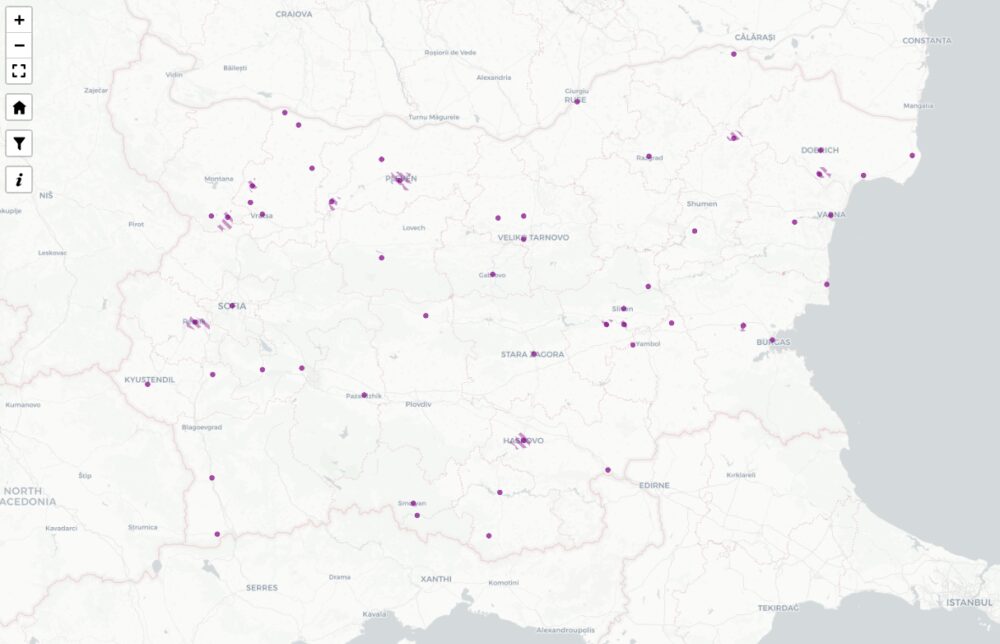
Всички данни за имотите от изтрития списък и търговете от падналия регистър са достъпни на картата заедно с проектите за бъдещи търгове. Линковете горе, както и от картата обаче няма да работят докато регистърът им не бъде възстановен в оригиналния си вид. Ключовата информация какво се продава, къде и за колко все още се пази при мен. Горе виждате всички търгове обявени от Желязков след решението на МС от 8-ми май, с което се започна тази сага.
Securing the AI Revolution: Introducing Cloudflare MCP Server Portals
Large Language Models (LLMs) are rapidly evolving from impressive information retrieval tools into active, intelligent agents. The key to unlocking this transformation is the Model Context Protocol (MCP), an open-source standard that allows LLMs to securely connect to and interact with any application — from Slack to Canva, to your own internal databases.
This is a massive leap forward. With MCP, an LLM client like Gemini, Claude, or ChatGPT can answer more than just “tell me about Slack.” You can ask it: “What were the most critical engineering P0s in Jira from last week, and what is the current sentiment in the #engineering-support Slack channel regarding them? Then propose updates and bug fixes to merge.”
This is the power of MCP: turning models into teammates.
But this great power comes with proportional risk. Connecting LLMs to your most critical applications creates a new, complex, and largely unprotected attack surface. Today, we change that. We’re excited to announce Cloudflare MCP Server Portals are now available in Open Beta. MCP Server Portals are a new capability that enable you to centralize, secure, and observe every MCP connection in your organization. This feature is part of Cloudflare One, our secure access service edge (SASE) platform that helps connect and protect your workspace.
What Exactly is the Model Context Protocol?
Think of MCP as a universal translator or a digital switchboard for AI. It’s a standardized set of rules that lets two very different types of software—LLMs and everyday applications—talk to each other effectively. It consists of two primary components:
MCP Clients: These are the LLMs you interact with, like ChatGPT, Claude, or Gemini. The client is the front end to the AI that you use to ask questions and give commands.
MCP Servers: These can be developed for any application you want to connect to your LLM. SaaS providers like Slack or Atlassian may offer MCP servers for their products, or your own developers can also build custom ones for internal tools.
For a useful connection, MCP relies on a few other key concepts:
Resources: A mechanism for the server to give the LLM context. This could be a specific file, a database schema, or a list of users in an application.
Prompts: Standardized questions the server can ask the client to get the information it needs to fulfill a request (e.g., “Which user do you want to search for?”).
Tools: These are the actions the client can ask the server to perform, like querying a database, calling an API, or sending a message.
Without MCP, your LLM is isolated. With MCP, it’s integrated, capable of interacting with your entire software ecosystem in a structured and predictable way.
The Peril of an Unsecured AI Ecosystem
Think of an LLM as the most brilliant and enthusiastic junior hire you’ve ever had. They have boundless energy and can produce incredible work, but they lack the years of judgment to know what they shouldn’t do. The current, decentralized approach to MCP is like giving that junior hire a master key to every office and server room on their first day.
It’s not a matter of if something will go wrong, but when.
This “shadow AI” infrastructure is the modern equivalent of the early Internet, where every server had a public IP address, fully exposed to the world. It’s the Wild West of unmanaged connections, impossible to secure. And the risks go far beyond accidental data deletion. Attackers are actively exploiting the unique vulnerabilities of LLM-driven ecosystems:
Prompt and tool injection: This is more than just telling a model to “ignore previous instructions.” Attackers are now hiding malicious commands inside the descriptions of MCP tools themselves. Consider an LLM seeking to use a seemingly harmless “WebSearch” tool. A poisoned description could trick it into also running a query against a financial database and exfiltrating the results.
Supply chain attacks: How can you trust the third-party MCP servers used by your teams? In mid-2025, a critical vulnerability (CVE-2025-6514) was discovered in a popular npm package used for MCP authentication, exposing countless servers. In another incident dubbed “NeighborJack,” security researchers found hundreds of MCP servers inadvertently exposed to the public Internet because they were bound to 0.0.0.0 without a firewall, allowing for potential OS command injection and host takeover.
Privilege escalation and the “confused deputy”: An attacker doesn’t need to break your LLM; they just need to confuse it. In one documented case, an AI agent running with high-level privileges was tricked into executing SQL commands embedded in a support ticket. The agent, acting as a “confused deputy,” couldn’t distinguish the malicious SQL from the legitimate ticket data and dutifully executed the commands, compromising an entire database.
Data leakage: Without centralized controls, data can bleed between systems in unexpected ways. In June 2025, a popular team collaboration tool’s MCP integration suffered a privacy breach where a bug caused some customer information to become visible in other customers’ MCP instances, forcing them to take the integration offline for two weeks.
The Solution: A Single Front Door for Your MCP Servers
You can’t protect what you can’t see. Cloudflare MCP Server Portals solve this problem by providing a single, centralized gateway for all your MCP servers, somewhat similar to an application launcher for single sign-on. Instead of developers distributing dozens of individual server endpoints, they register their servers with Cloudflare. You provide your users with a single, unified Portal endpoint to configure in their MCP client.
This changes the security posture and user experience immediately. By routing all MCP traffic through Cloudflare, you get:
Centralized policy enforcement: You can integrate MCP Server Portals directly into Cloudflare One. This means you can enforce the same granular access policies for your AI connections that you do for your human users. Require multi-factor authentication, check for device posture, restrict by geography, and ensure only the right users can access specific servers and tools.
Comprehensive visibility and logging: Who is accessing which MCP server and which toolsets are they engaging with? What prompts are being run? What tools are being invoked? Previously, this data was scattered across every individual server. Server Portals aggregate all MCP request logs into a single place, giving you the visibility needed to audit activity and detect anomalies before they become breaches.
A curated AI user experience based on least privilege: Administrators can now review and approve MCP servers before making them available to users through a Portal. When a user authenticates through their Portal, they are only presented with the curated list of servers and tools they are authorized to use, preventing the use of unvetted or malicious third-party servers. This approach adheres to the Zero Trust security best practice of least privilege.
Simplified user configuration: Instead of having to load individual MCP server configurations into a MCP Client, users can load a single URL that pulls down all accessible MCP Servers. This drastically simplifies how many URLs need to be shared out and known by users. As new MCP Servers are added, they become dynamically available through the portal, instead of sharing each new URL on publishing of a server.
When a user connects to their MCP Server Portal, Access prompts them to authenticate with their corporate identity provider. Once authenticated, Cloudflare enforces which MCP Servers the user has access to, regardless of the underlying server’s authorization policies.
For MCP servers with domains hosted on Cloudflare, Access policies can be used to enforce the server’s direct authorization. This is done by creating an OAuth server that is linked to the domain’s existing Access Application. For MCP servers with domains outside Cloudflare and/or hosted by a third party, they require authorization controls outside of Cloudflare Access, this is usually done using OAuth.
The Road Ahead: What’s Next for AI Security
MCP Server Portals are a foundational step in our mission to secure the AI revolution. This is just the beginning. In the coming months, we plan to build on this foundation by:
Mechanisms to lock down MCP Servers: Unless an MCP Server author enforces Authorization controls, users can still technically access MCPs outside of a Portal. We will build additional enforcement mechanisms to prevent this.
Integrating with Firewall for AI: Imagine applying the power of our WAF to your MCP traffic, detecting and blocking prompt injection attacks before they ever reach your servers.
Cloudflare hosted MCP Servers: We will make it easy to deploy MCP Servers using Cloudflare’s AI Gateway. This will allow for deeper prompt filtering and controls.
Applying machine learning to detect abuse: We will layer our own machine learning models on top of your MCP logs to automatically identify anomalous behavior, such as unusual data exfiltration patterns or suspicious tool usage.
Enhancing the protocol: We are committed to working with the open-source community to strengthen the MCP standard itself, contributing to a more secure and robust ecosystem for everyone.
This is our commitment: to provide the tools you need to innovate with confidence.
Get Started Today!
Progress doesn’t have to come at the expense of security. With MCP Server Portals, you can empower your teams to build the future with AI, safely. This is a critical piece of helping to build a better Internet, and we are excited to see what you will build with it.
MCP Server Portals are now available in Open Beta for all Cloudflare One customers. To get started, navigate to the Access > AI Controls page in the Zero Trust Dashboard. If you don’t have an account, you can sign up today and get started with up to 50 free seats or contact our experts to explore larger deployments.
Cloudflare is also starting a user research program focused on AI security. If you are interested in previews of new functionality or want to help shape our roadmap, please express your interest here.
The availability of SaaS and Gen AI applications is transforming how businesses operate, boosting collaboration and productivity across teams. However, with increased productivity comes increased risk, as employees turn to unapproved SaaS and Gen AI applications, often dumping sensitive data into them for quick productivity wins.
The prevalence of “Shadow IT” and “Shadow AI” creates multiple problems for security, IT, GRC and legal teams. For example:
Gen AI applications may train their models on user inputs, which could expose proprietary corporate information to third parties, competitors, or even through clever attacks like prompt injection.
In spite of these problems, blanket bans of Gen AI don’t work. They stifle innovation and push employee usage underground. Instead, organizations need smarter controls.
Security, IT, legal and GRC teams therefore face a difficult challenge: how can you appropriately assess each third-party application, without auditing and crafting individual policies for every single one of them that your employees might decide to interact with? And with the rate at which they’re proliferating — how could you possibly hope to keep abreast of them all?
Today, we’re excited to announce that we’re helping these teams automate assessment of SaaS and Gen AI applications at scale with the introduction of our new Cloudflare Application Confidence Scores. Scores will soon be available as part of our new suite of AI Security Posture Management (AI-SPM) features in the Cloudflare One SASE platform, enabling IT and Security administrators to identify confidence levels associated with third-party SaaS and AI applications, and ultimately write policies informed by those confidence scores. We’re starting by scoring AI applications, because that’s where the need is most urgent.
In this blog, we’ll be covering the design of our Cloudflare Application Confidence Score, focusing specifically about the features of the score and our scoring rubric. Our current goal is to reveal the details of our scoring rubric, which is designed to be as transparent and objective as possible — while simultaneously helping organizations of all sizes safely adopt AI, and encouraging the industry and AI providers to adopt best practices for AI safety and security.
In the future, as part of our mission to help build a better Internet, we also plan to make Cloudflare Application Confidence Scores available for free to all our customer tiers. And even if you aren’t a Cloudflare customer, you will easily be able to browse through these Scores by creating a free account on the Cloudflare dashboard and navigating to our new Application Library.
Transparency, not vibes
Cloudflare Application Confidence Scores is a transparent, understandable, and accountable metric that measures app safety, security, and data protection. It’s designed to give Security, IT, legal and GRC teams a rapid way of assessing the rapidly burgeoning space of AI applications.
Scores are not based on vibes or black-box “learning algorithms” or “artificial intelligence engines”. We avoid subjective judgments or large-scale red-teaming as those can be tough to execute reliably and consistently over time. Instead, scores will be computed against an objective rubric that we describe in detail in this blog. Our rubric will be publicly maintained and kept up to date in the Cloudflare developer docs.
Many providers of the applications that we score are also our customers and partners, so our overarching goal is to be as fair and accountable as possible. We believe that transparency will build trust in our scoring rubric and guide the industry to adopt the best practices that our scoring rubric encourages.
Principles behind our rubric
Each component of our rubric requires a simple answer based on publicly available data like privacy policies, security documentation, compliance certifications, model cards and incident reports. If something isn’t publicly disclosed, we assign zero points to that component of the rubric, with no further assumptions or guesswork. Scores are computed according to our rubric via an automated system that incorporates human oversight for accuracy. We use crawlers to collect public information (e.g. privacy policies, compliance documents), process it using AI for extraction and to compute the resulting scores, and then send them to human analysts for a final review.
Scores are reviewed on a periodic basis. If a vendor believes that we have mis-scored their application, they can submit supporting documentation via [email protected], and we will update their score if appropriate.
Scores are on a scale from 1 to 5, with 5 being the highest confidence and 1 being the most risky. We decided to use a “confidence score” instead of a “risk score” because we can express confidence in an application when it provides clear positive evidence of good security, compliance and safety practices. An application may have good practices internally, but we cannot express confidence in these practices if they are not publicly documented. Moreover, a confidence score allows us to give customers transparent information, so they can make their own informed decisions. For example, an application might get a low confidence score because it lacks a documented data retention policy. While that might be a concern for some, your organization might find it acceptable and decide to allow the application anyway.
We separately evaluate different account tiers for the same application provider, because different account tiers can provide very different levels of enterprise risk. For instance, consumer plans (e.g. ChatGPT Free) may involve training on user prompts and score lower, whereas enterprise plans (e.g. ChatGPT Enterprise) do not train on user prompts and thus score higher.
That said, we are quite opinionated about components we selected in our rubric, drawing from deep experience of our own internal product, engineering, legal, GRC, and security teams. We prioritize factors like data retention policies and encryption standards because we believe they are foundational to protecting sensitive information in an AI-driven world. We included certifications, security frameworks and model cards because they provide evidence of maturity, stability, safety and adherence with industry best practices.
Actually, it’s really two Scores
As AI applications emerge at an unprecedented pace, the problem of “Shadow AI” intensifies traditional risks associated with Shadow IT. Shadow IT applications create risk when they retain user data for long periods, have lax security practices, are financially unstable, or widely share data with third parties. Meanwhile, AI tools create new risks when they retain and train on user prompts, or generate responses that are biased, toxic, inaccurate or unsafe.
To separate out these different risks, we provide two different Scores:
Application Confidence Score (5 points) covers general SaaS maturity, and
Gen-AI Confidence Score (5 points) focused on Gen AI-specific risks.
We chose to focus on two separate areas to make our metric extensible (so that, in the future, we can apply it to applications that are not focused on Gen AI) and to make the Scores easier to understand and reason about.
Each Score is applied to each account tier of a given Gen AI provider. For example, here’s how we scored OpenAI’s ChatGPT:
ChatGPT Free (App Confidence 3.3, GenAI Confidence 1) received a low score due to limited enterprise controls and higher data exposure risk since by default, input data is used for model training.
ChatGPT Plus (App Confidence 3.3, GenAI Confidence 3) scored slightly higher as it allows users to opt out of training on their input data.
ChatGPT Team (App Confidence 4.3, GenAI Confidence 3) improved further with added collaboration safeguards and configurable data retention windows.
ChatGPT Enterprise (App Confidence 4.3, GenAI Confidence 4) achieved the highest score, as training on input data is disabled by default while retaining the enhanced controls from the Team tier.
A detailed look at our rubric
We now walk through the details of the rubric behind each of our Scores.
Application Confidence Score (5.0 Points Total)
This half evaluates the app’s overall maturity as a SaaS service, drawing from enterprise best practices.
Regulatory Compliance: Checks for key certifications that signal operational maturity. We selected these because they represent proven frameworks that demonstrate a commitment to widely-adopted security and data protection best practices.
Data Management Practices: Focuses on how data is retained and shared to minimize exposure. These criteria were chosen as they directly impact the risk of data leaks or misuse, based on common vulnerabilities we’ve observed in SaaS environments and our own legal/GRC team’s experience assessing third-party SaaS applications at Cloudflare.
Documented data retention window: Shorter retention limits risk.
0 day retention: .5 points
30 day retention: .4 points
60 day retention: .3 points
90 day retention: .1 point
No documented retention window: 0 points
Third-party sharing: No sharing means less external exposure of enterprise data. Sharing for advertising purposes means high risk of third parties mining and using the data.
No third-party sharing: .5 points.
Sharing only for troubleshooting/support: .25 points
Sharing for other reasons like advertising or end user targeting: 0 points
Security Controls: We prioritized these because they form the foundational defenses against unauthorized access, drawing from best practices that have prevented incidents in cloud services.
MFA support: .2 points.
Role-based access: .2 points.
Session monitoring: .2 points.
TLS 1.3: .2 points.
SSO support: .2 points.
Security reports and incident history: Rewards transparency and deducts for recent issues. This was included to emphasize accountability, as a history of breaches or proactive transparency often indicates how seriously a provider takes security.
Published safety framework and bug bounty: 1 point.
To get full points the company needs to have both of the following:
A publicly accessible page (e.g., security, trust, or safety) that includes a comprehensive whitepaper, framework overview, OR detailed security documentation that covers:
Encryption in transit and at rest
Authentication and authorization mechanisms
Network or infrastructure security design
Incident Response Transparency – Published vulnerability disclosure or bug bounty policy OR a documented incident response process and security advisory archive.
No commitments or weak security framework with the lack of any of the above criteria. If the company only has one of the criteria above but lacks the other they will also receive no credit: 0 points.
Example: Lovable who has a security page but seems to lack many other parts of the criteria: https://lovable.dev/security
If there has been a material breach in the last two years. If the company has experienced a material cybersecurity incident that resulted in the unauthorized disclosure of customer data to external parties (e.g., data posted, sold, or otherwise made accessible outside the organization). Incident must be publicly acknowledged by the company through a trust center update, press release, incident notification page, or an official regulatory filing: Full deduction to 0.
Example: 23andMe suffered credential stuffing attack in 2023 that resulted in the exposure of user data.
Financial Stability: Gauges long-term viability of the company behind the application. We added this because a company’s financial health affects its ability to invest in ongoing security and support, and reduces the risk of sudden disruptions, corner-cutting, bankruptcy or sudden sale of user data to unknown third parties.
Public company or private with >$300M raised: .8 points.
Private with >$100M raised: .5 points.
Private with <$100M raised: .2 point.
Recent bankruptcy/distress (e.g. recent bankruptcy filings, major layoffs tied to funding shortfalls, failure to meet debt obligations): 0 points.
Gen-AI Confidence Score (5.0 Points Total)
This Score zooms in on AI-specific risks, like data usage in training and input vulnerabilities.
Regulatory Compliance, ISO 42001: ISO 42001 is a new certification for AI management systems. We chose this emerging standard because it specifically addresses AI governance, filling a gap in traditional certifications and signaling forward-thinking risk management.
ISO 42001 Compliant: 1 point.
Not ISO 42001 Compliant: 0 points.
Deployment Security Model: Stronger access controls get higher points. Authentication not only controls access but also enables monitoring and logging. This makes it easier to detect misuse and investigate incidents. Public, unauthenticated access is a red flag for shadow IT risk.
Authenticated web portal or key-protected API with rate limiting: 1 point.
Unprotected public access: 0 points.
Model Card: A model card is a concise document that provides essential information about an AI model, similar to a nutrition label for a food product. It is crucial for AI safety and security because it offers transparency into a model’s design, training data, limitations, and potential biases, enabling developers and users to understand its risks and use it responsibly. Some leading AI providers have committed to providing model cards as public documentation of safety evaluations. We included this in our rubric to encourage the industry to broadly adopt model cards as a best practice. As the practice of model cards is further developed and standardized across the industry, we hope to incorporate more fine-grained details from model cards into our own risk scores. But for now, we only include the existence (or lack thereof) of a model card in our score.
Has its own model card: 1 point.
Uses a model with a model card: .5 points.
None: 0 points.
Training on user prompts: This is one of the most important components of our score. Models that train on user prompts are very risky because users might share sensitive corporate information in user prompts. We weighted this heavily because control over training data is central to preventing unintended data exposure, a core risk in generative AI that can lead to major incidents.
Explicit opt-in is required for training on user prompts: 2 points.
Opt-out of training on user prompts is explicitly available to users: 1 point.
No way to opt out of training on user prompts: 0 points.
Here’s an example of these Scores applied to a few popular AI providers. As expected, enterprise tiers typically earn higher Confidence Scores than consumer tiers of the same AI provider.
Company
Application Score
Gen AI Score
Gemini Free
3.8
4.0
Gemini Pro
3.8
5.0
Gemini Ultra
4.1
5.0
Gemini Business
4.7
5.0
Gemini Enterprise
4.7
5.0
OpenAI Free
3.3
1.0
OpenAI Plus
3.3
3.0
OpenAI Pro
3.3
3.0
OpenAI Team
4.3
3.0
OpenAI Enterprise
4.3
4.0
Anthropic Free
3.9
5.0
Anthropic Pro
3.9
5.0
Anthropic Max
3.9
5.0
Anthropic Team
4.9
5.0
Anthropic Enterprise
4.9
5.0
Note: Confidence scores are provided “as is” for informational purposes only and should not be considered a substitute for independent analysis or decision-making. All actions taken based on the scores are the sole responsibility of the user.
We’re just getting started…
We’re actively refining our scoring methodology. To that end, we’re collaborating with a diverse group of experts in the AI ecosystem (including researchers, legal professionals, SOC teams, and more) to fine-tune our scores, optimize for transparency, accountability and extensibility. If you have insights, suggestions, or want to get involved testing new functionality, we’d love for you to express interest in our user research program. We’d very much welcome your feedback on this scoring rubric.
Today, we’re just releasing our scoring rubric in order to solicit feedback from the community. But soon, you’ll start seeing these Cloudflare Application Confidence Scores integrated into the Application Library in our SASE platform. Customers can simply click or hover over any score to reveal a detailed breakdown of the rubric and underlying components of the score. Again, if you see any issues with our scoring, please submit your feedback to [email protected], and our team will review it and make adjustments if appropriate.
Looking even further ahead, we plan to enable integration of these scores directly into Cloudflare Gateway and Access, allowing our customers to write policies that block or redirect traffic, apply data loss prevention (DLP) or remote browser isolation (RBI) or otherwise control access to sites based directly on their Cloudflare Application Confidence Score.
This is just the beginning. By prioritizing transparency in our approach, we’re not only bridging a critical gap in SASE capabilities but also driving the industry toward stronger AI safety practices. Let us know what you think!
Starting today, all users of Cloudflare One, our secure access service edge (SASE) platform, can use our API-based Cloud Access Security Broker (CASB) to assess the security posture of their generative AI (GenAI) tools: specifically, OpenAI’s ChatGPT, Claude by Anthropic, and Google’s Gemini. Organizations can connect their GenAI accounts and within minutes, start detecting misconfigurations, Data Loss Prevention (DLP) matches, data exposure and sharing, compliance risks, and more — all without having to install cumbersome software onto user devices.
As Generative AI adoption has exploded in the enterprise, IT and Security teams need to hustle to keep themselves abreast of newly emerging security and compliance challenges that come alongside these powerful tools. In this rapidly changing landscape, IT and Security teams need tools that help enable AI adoption while still protecting the security and privacy of their enterprise networks and data.
Cloudflare’s API CASB and inline CASB work together to help organizations safely adopt AI tools. The API CASB integrations provide out-of-band visibility into data at rest and security posture inside popular AI tools like ChatGPT, Claude, and Gemini. At the same time, Cloudflare Gateway provides in-line prompt controls and Shadow AI identification. It applies policies and DLP to traffic as it moves to these AI providers. Together, these features give organizations a unified control plane for securing their use of GenAI.
What’s new
ChatGPT, Claude and Gemini are now all live in the integrations supported by Cloudflare’s API CASB. These integrations are available to all Cloudflare One users, account owners can easily connect their GenAI tenants, and CASB will scan for security issues across multiple domains:
Agentless Connections: Connect ChatGPT, Claude, and Gemini via agentless, API‑based integrations to scan posture and data risks; no endpoint software to install.
Posture Management: Detect insecure settings and misconfigurations that can lead to data exposure or misuse.
DLP Detection: Identify where sensitive data has been uploaded in chat attachments (prompts coming soon).
GenAI-specific Insights: Surface risks associated with the unique capability of a given AI provider’s toolsets.
Admins can now answer questions like: What are our employees doing in ChatGPT? What data is being uploaded and used in Claude? Is Gemini configured correctly in Google Workspace?
Now let’s take a closer look at each integration.
OpenAI ChatGPT
Cloudflare’s CASB integration with OpenAI’s ChatGPT scans for several types of insights, including:
Capability Activation: Highlights capabilities that are specific to ChatGPT’s feature set, like actions, code execution, web access.
External Exposure: Finds chats and GPTs that are shared beyond the tenant, like GPTs shared publicly or listed on the GPT Store, and ties them back to their owners for quick triage.
Secrets, Keys and Invites: Identifies API keys that aren’t rotated or are no longer used to maintain credential hygiene. Identifies over‑privileged or stale invites.
Sensitive Content (via DLP): Detects sensitive data (e.g. credential and secrets, financial / health information, source code, etc.) via DLP profile matches in uploaded chat attachments to enable targeted response.
Anthropic Claude
For Claude, Cloudflare is able to provide the following out-of-band detections:
Secrets, Keys and Invites: Surfaces high‑risk invites and entitlement drift early so the least‑privilege access control stays tight. Spots unused API keys and rotation gaps before they turn into forgotten open doors.
Sensitive Content (via DLP): Monitors for sensitive data in uploaded files to help organizations safely enable Claude usage while maintaining compliance. Security teams get this information as quickly as CASB scans, giving them the visibility they need to help employees use Claude productively and securely with sensitive data.
As Anthropic continues to expand Claude’s API capabilities and features, Cloudflare will add corresponding security detections to match new functionality as it becomes available.
Google Gemini
Cloudflare’s detections for Google Gemini appear as part of our API CASB integration for Google Workspace:
Identity & MFA: Identifies Gemini users and admins without MFA, leaving them prime targets for compromise. Imagine if an IT admin relied on Gemini daily to process corporate data, but their Google Workspace account lacked multi-factor authentication. One successful phishing email could give an attacker privileged access to Gemini and the wider Google Workspace environment — turning a minor oversight into an organization-wide breach.
License Hygiene: Flags suspended accounts still holding Gemini or AI Ultra licenses to cut cost and reduce exposure. An AI Ultra user has access to more powerful and riskier features, like Project Mariner, a research prototype that acts as an autonomous agent, capable of automating up to 10 tasks simultaneously across web browsers. An attacker can cause more damage by compromising an AI Ultra user, which is why we include this in our set of detections.
The Gemini integration has a narrower scope because Google has structured their product and API differently than OpenAI or Anthropic. For organizations, Gemini is delivered as a Google Workspace add-on. Enterprises enable Gemini features in Gmail, Docs, Sheets, and other Google Workspace apps through add-on licenses such as Gemini Enterprise or AI Ultra. Our CASB detections focus on identity, MFA, and license hygiene, rather than posture issues like public sharing or custom assistant publishing because Gemini does not yet provide those API endpoints.
The Future of GenAI Posture Management
Like countless other organizations, Cloudflare is adopting GenAI, on the same journey to make these environments even safer than they are today. We are excited to extend our management coverage to our customers so they can continue to innovate with GenAI. But looking ahead, we’re encouraged to see GenAI providers take concrete steps towards making security, compliance, and data privacy even more important tenets of their platforms.
Secure GenAI beyond the reach of Inline Controls
Generative AI adoption brings new security requirements. Cloudflare CASB delivers out-of-band visibility across these tools, surfacing insights on top of inline controls. With posture, access, and data under control, organizations can embrace GenAI confidently and securely.
How to get started:
For existing Cloudflare One customers: Contact your account manager or enable the integrations directly in your dashboard today.
New to Cloudflare One?Sign up now for 50 free seats to begin securely using Gen AI immediately. For larger deployments, request a consultation with our experts.
Security teams are racing to secure a new attack surface: AI-powered applications. From chatbots to search assistants, LLMs are already shaping customer experience, but they also open the door to new risks. A single malicious prompt can exfiltrate sensitive data, poison a model, or inject toxic content into customer-facing interactions, undermining user trust. Without guardrails, even the best-trained model can be turned against the business.
Today, as part of AI Week, we’re expanding our AI security offerings by introducing unsafe content moderation, now integrated directly into Cloudflare Firewall for AI. Built with Llama, this new feature allows customers to leverage their existing Firewall for AI engine for unified detection, analytics, and topic enforcement, providing real-time protection for Large Language Models (LLMs) at the network level. Now with just a few clicks, security and application teams can detect and block harmful prompts or topics at the edge — eliminating the need to modify application code or infrastructure.
This feature is immediately available to current Firewall for AI users. Those not yet onboarded can contact their account team to participate in the beta program.
AI protection in application security
Cloudflare’s Firewall for AI protects user-facing LLM applications from abuse and data leaks, addressing several of the OWASP Top 10 LLM risks such as prompt injection, PII disclosure, and unbound consumption. It also extends protection to other risks such as unsafe or harmful content.
Unlike built-in controls that vary between model providers, Firewall for AI is model-agnostic. It sits in front of any model you choose, whether it’s from a third party like OpenAI or Gemini, one you run in-house, or a custom model you have built, and applies the same consistent protections.
Just like our origin-agnostic Application Security suite, Firewall for AI enforces policies at scale across all your models, creating a unified security layer. That means you can define guardrails once and apply them everywhere. For example, a financial services company might require its LLM to only respond to finance-related questions, while blocking prompts about unrelated or sensitive topics, enforced consistently across every model in use.
Unsafe content moderation protects businesses and users
Effective AI moderation is more than blocking “bad words”, it’s about setting boundaries that protect users, meeting legal obligations, and preserving brand integrity, without over-moderating in ways that silence important voices.
Because LLMs cannot be fully scripted, their interactions are inherently unpredictable. This flexibility enables rich user experiences but also opens the door to abuse.
Key risks from unsafe prompts include misinformation, biased or offensive content, and model poisoning, where repeated harmful prompts degrade the quality and safety of future outputs. Blocking these prompts aligns with the OWASP Top 10 for LLMs, preventing both immediate misuse and long-term degradation.
One example of this isMicrosoft’s Tay chatbot. Trolls deliberately submitted toxic, racist, and offensive prompts, which Tay quickly began repeating. The failure was not only in Tay’s responses; it was in the lack of moderation on the inputs it accepted.
Detecting unsafe prompts before reaching the model
Cloudflare has integrated Llama Guard directly into Firewall for AI. This brings AI input moderation into the same rules engine our customers already use to protect their applications. It uses the same approach that we created for developers building with AI in our AI Gateway product.
Llama Guard analyzes prompts in real time and flags them across multiple safety categories, including hate, violence, sexual content, criminal planning, self-harm, and more.
With this integration, Firewall for AI not only discovers LLM traffic endpoints automatically, but also enables security and AI teams to take immediate action. Unsafe prompts can be blocked before they reach the model, while flagged content can be logged or reviewed for oversight and tuning. Content safety checks can also be combined with other Application Security protections, such as Bot Managementand Rate Limiting, to create layered defenses when protecting your model.
The result is a single, edge-native policy layer that enforces guardrails before unsafe prompts ever reach your infrastructure — without needing complex integrations.
How it works under the hood
Before diving into the architecture of Firewall for AI engine and how it fits within our previously mentioned module to detect PII in the prompts, let’s start with how we detect unsafe topics.
Detection of unsafe topics
A key challenge in building safety guardrails is balancing a good detection with model helpfulness. If detection is too broad, it can prevent a model from answering legitimate user questions, hurting its utility. This is especially difficult for topic detection because of the ambiguity and dynamic nature of human language, where context is fundamental to meaning.
Simple approaches like keyword blocklists are interesting for precise subjects — but insufficient. They are easily bypassed and fail to understand the context in which words are used, leading to poor recall. Older probabilistic models such as Latent Dirichlet Allocation (LDA) were an improvement, but did not properly account for word ordering and other contextual nuances.
Recent advancements in LLMs introduced a new paradigm. Their ability to perform zero-shot or few-shot classification is uniquely suited for the task of topic detection. For this reason, we chose Llama Guard 3, an open-source model based on the Llama architecture that is specifically fine-tuned for content safety classification. When it analyzes a prompt, it answers whether the text is safe or unsafe, and provides a specific category. We are showing the default categories, as listed here. Because Llama 3 has a fixed knowledge cutoff, certain categories — like defamation or elections — are time-sensitive. As a result, the model may not fully capture events or context that emerged after it was trained, and that’s important to keep in mind when relying on it.
For now, we cover the 13 default categories. We plan to expand coverage in the future, leveraging the model’s zero-shot capabilities.
A scalable architecture for future detections
We designed Firewall for AI to scale without adding noticeable latency, including Llama Guard, and this remains true even as we add new detection models.
To achieve this, we built a new asynchronous architecture. When a request is sent to an application protected by Firewall for AI, a Cloudflare Worker makes parallel, non-blocking requests to our different detection modules — one for PII, one for unsafe topics, and others as we add them.
Thanks to the Cloudflare network, this design scales to handle high request volumes out of the box, and latency does not increase as we add new detections. It will only be bounded by the slowest model used.
We optimize to keep the model utility at its maximum while keeping the guardrail detection broad enough.
Llama Guard is a rather large model, so running it at scale with minimal latency is a challenge. We deploy it on Workers AI, leveraging our large fleet of high performance GPUs. This infrastructure ensures we can offer fast, reliable inference throughout our network.
To ensure the system remains fast and reliable as adoption grows, we ran extensive load tests simulating the requests per second (RPS) we anticipate, using a wide range of prompt sizes to prepare for real-world traffic. To handle this, the number of model instances deployed on our network scales automatically with the load. We employ concurrency to minimize latency and optimize for hardware utilization. We also enforce a hard 2-second threshold for each analysis; if this time limit is reached, we fall back to any detections already completed, ensuring your application’s requests latency is never further impacted.
From detection to security rules enforcement
Firewall for AI follows the same familiar pattern as other Application Security features like Bot Management and WAF Attack Score, making it easy to adopt.
Once enabled, the new fields appear in Security Analytics and expanded logs. From there, you can filter by unsafe topics, track trends over time, and drill into the results of individual requests to see all detection outcomes, for example: did we detect unsafe topics, and what are the categories. The request body itself (the prompt text) is not stored or exposed; only the results of the analysis are logged.
After reviewing the analytics, you can enforce unsafe topic moderation by creating rules to log or block based on prompt categories in Custom rules.
For example, you might log prompts flagged as sexual content or hate speech for review.
You can use this expression: If (any(cf.llm.prompt.unsafe_topic_categories[*] in {"S10" "S12"})) then Log
Or deploy the rule with the categories field in the dashboard as in the below screenshot.
You can also take a broader approach by blocking all unsafe prompts outright: If (cf.llm.prompt.unsafe_topic_detected)then Block
These rules are applied automatically to all discovered HTTP requests containing prompts, ensuring guardrails are enforced consistently across your AI traffic.
What’s Next
In the coming weeks, Firewall for AI will expand to detect prompt injection and jailbreak attempts. We are also exploring how to add more visibility in the analytics and logs, so teams can better validate detection results. A major part of our roadmap is adding model response handling, giving you control over not only what goes into the LLM but also what comes out. Additional abuse controls, such as rate limiting on tokens and support for more safety categories, are also on the way.
Firewall for AI is available in beta today. If you’re new to Cloudflare and want to explore how to implement these AI protections, reach out for a consultation. If you’re already with Cloudflare, contact your account team to get access and start testing with real traffic.
Cloudflare is also opening up a user research program focused on AI security. If you are curious about previews of new functionality or want to help shape our roadmap, express your interest here.
As Generative AI revolutionizes businesses everywhere, security and IT leaders find themselves in a tough spot. Executives are mandating speedy adoption of Generative AI tools to drive efficiency and stay abreast of competitors. Meanwhile, IT and Security teams must rapidly develop an AI Security Strategy, even before the organization really understands exactly how it plans to adopt and deploy Generative AI.
IT and Security teams are no strangers to “building the airplane while it is in flight”. But this moment comes with new and complex security challenges. There is an explosion in new AI capabilities adopted by employees across all business functions — both sanctioned and unsanctioned. AI Agents are ingesting authentication credentials and autonomously interacting with sensitive corporate resources. Sensitive data is being shared with AI tools, even as security and compliance frameworks struggle to keep up.
While it demands strategic thinking from Security and IT leaders, the problem of governing the use of AI internally is far from insurmountable. SASE (Secure Access Service Edge) is a popular cloud-based network architecture that combines networking and security functions into a single, integrated service that provides employees with secure and efficient access to the Internet and to corporate resources, regardless of their location. The SASE architecture can be effectively extended to meet the risk and security needs of organizations in a world of AI.
Cloudflare’s SASE Platform is uniquely well-positioned to help IT teams govern their AI usage in a secure and responsible way — without extinguishing innovation. What makes Cloudflare different in this space is that we are one of the few SASE vendors that operate not just in cybersecurity, but also in AI infrastructure. This includes: providing AI infrastructure for developers (e.g. Workers AI, AI Gateway, remote MCP servers, Realtime AI Apps) to securing public-facing LLMs (e.g. Firewall for AI or AI Labyrinth), to allowing content creators to charge AI crawlers for access to their content, and the list goes on. Our expertise in this space gives us a unique view into governing AI usage inside an organization. It also gives our customers the opportunity to plug different components of our platform together to build out their AI and AI cybersecurity infrastructure.
This week, we are taking this AI expertise and using it to help ensure you have what you need to implement a successful AI Security Strategy. As part of this, we are announcing several new AI Security Posture Management (AI-SPM) features, including:
All of these new AI-SPM features are built directly into Cloudflare’s powerful SASE platform.
And we’re just getting started. In the coming months you can expect to see additional valuable AI-SPM features launch across the Cloudflare platform, as we continue investing in making Cloudflare the best place to protect, connect, and build with AI.
What’s in this AI security guide?
In this guide, we will cover best practices for adopting generative AI in your organization using Cloudflare’s SASE (Secure Access Service Edge) platform. We start by covering how IT and Security leaders can formulate their AI Security Strategy. Then, we show how to implement this strategy using long-standing features of our SASE platform alongside the new AI-SPM features we launched this week.
This guide below is divided into three key pillars for dealing with (human) employee access to AI – Visibility, Risk Management and Data Protection — followed by additional guidelines around deploying agentic AI in the enterprise using MCP. Our objective is to help you align your security strategy with your business goals while driving adoption of AI across all your projects and teams.
And we do this all using our single SASE platform, so you don’t have to deploy and manage a complex hodgepodge of point solutions and security tools. In fact, we provide you with an overview of your AI security posture in a single dashboard, as you can see here:
AI Security Report in Cloudflare’s SASE platform
Develop your AI Security Strategy
The first step to securing AI usage is to establish your organization’s level of risk tolerance. This includes pinpointing your biggest security concerns for your users and your data, along with relevant legal and compliance requirements. Relevant issues to consider include:
Do you have specific sensitive data that should not be shared with certain AI tools? (Some examples include personally identifiable information (PII), personal health information (PHI), sensitive financial data, secrets and credentials, source code or other proprietary business information.)
Are there business decisions that your employees should not be making using assistance from AI? (For instance, the EU AI Act AI prohibits the use of AI to evaluate or classify individuals based on their social behavior, personal characteristics, or personality traits.)
Are you subject to compliance frameworks that require you to produce records of the generative AI tools that your employees used, and perhaps even the prompts that your employees input into AI providers? (For example, HIPAA requires organizations to implement audit trails that records who accessed PHI and when, GDPR requires the same for PII, SOC2 requires the same for secrets and credentials.)
Do you have specific data protection requirements that require employees to use the sanctioned, enterprise version of a certain generative AI provider, and avoid certain AI tools or their consumer versions? (Enterprise AI tools often have more favorable terms of service, including shorter data retention periods, more limited data-sharing with third-parties, and/or a promise not to train AI models on user inputs.)
Do you require employees to completely avoid the use of certain AI tools, perhaps because they are unreliable, unreviewed or headquartered in a risky geography?
Are there security protections offered by your organization’s sanctioned AI providers and to what extent do you plan to protect against misconfigurations of AI tools that can result in leaks of sensitive data?
What is your policy around the use of autonomous AI agents? What is your strategy for adopting the Model Context Protocol (MCP)? (The Model Context Protocol is a standard way to make information available to large language models (LLMs), similar to the way an application programming interface (API) works. It supports agentic AI that autonomously pursues goals and takes action.)
While almost every organization has relevant compliance requirements that implicate their use of generative AI, there is no “one size fits all” for addressing these issues.
Some organizations have mandates to broadly adopt AI tools of all stripes, while others require employees to interact with sanctioned AI tools only.
Some organizations are rapidly adopting the MCP, while others are not yet ready for agents to autonomously interact with their corporate resources.
Some organizations have robust requirements around data loss prevention (DLP), while others are still early in the process of deploying DLP in their organization.
Even with this diversity of goals and requirements, Cloudflare SASE provides a flexible platform for the implementation of your organization’s AI Security Strategy.
Build a solid foundation for AI Security
To implement your AI Security Strategy, you first need a solid SASE deployment.
SASE provides a unified platform that consolidates security and networking, replacing a fragmented patchwork of point solutions with a single platform that controls application visibility, user authentication, Data Loss Prevention (DLP), and other policies for access to the Internet and access to internal corporate resources. SASE is the essential foundation for an effective AI Security Strategy.
SASE architecture allows you to execute your AI security strategy by discovering and inventorying the AI tools used by your employees. With this visibility, you can proactively manage risk and support compliance requirements by monitoring AI prompts and responses to understand what data is being shared with AI tools. Robust DLP allows you to scan and block sensitive data from being entered into AI tools, preventing data leakage and protecting your organization’s most valuable information. Our Secure Web Gateway (SWG) allows you to redirect traffic from unsanctioned AI providers to user education pages or to sanctioned enterprise AI providers. And our new integration of MCP tooling into our SASE platform helps you secure the deployment of agentic AI inside your organization.
If you’re just starting your SASE journey, our Secure Internet Traffic Deployment Guide is the best place to begin. For this guide, however, we will skip these introductory details and dive right into using SASE to secure the use of Generative AI.
Gain visibility into your AI landscape
You can’t protect what you can’t see. The first step is to gain visibility into your AI landscape, which is essential for discovering and inventorying all the AI tools that your employees are using, deploying or experimenting with in your organization.
Discover Shadow AI
Shadow AI refers to the use of AI applications that haven’t been officially sanctioned by your IT department. Shadow AI is not an uncommon phenomenon – Salesforce found that over half of the knowledge workers it surveyed admitted to using unsanctioned AI tools at work. Use of unsanctioned AI is not necessarily a sign of malicious intent; employees are often just trying to do their jobs better. As an IT or Security leader, your goal should be to discover Shadow AI and then apply the appropriate AI security policy. There are two powerful ways to do this: inline and out-of-band.
SWG helps you get a clear picture of both sanctioned and unsanctioned AI and chat applications. By reviewing your detected usage, you’ll gain insight into which AI apps are being used in your organization. This knowledge is essential for building policies that support approved tools, and block or control risky ones. This feature requires you to deploy the WARP client in Gateway proxy mode on your end-user devices.
You can review your company’s AI app usage using our new Application Library and Shadow IT dashboards. These tools allow you to:
Review traffic from user devices to understand how many users engage with a specific application over time.
Denote application’s status (e.g., Approved, Unapproved) inside your organization, and use that as input to a variety of SWG policies that control access to applications with that status.
Shadow IT dashboard showing utilization of applications of different status (Approved, Unapproved, In Review, Unreviewed).
Discover employee usage of AI, out-of-band
Even if your organization doesn’t use a device client, you can still get valuable data on Shadow AI usage if you use Cloudflare’s integrations for Cloud Access Security Broker (CASB) with services like Google Workspace, Microsoft 365, or GitHub.
Cloudflare CASB provides high-fidelity detail about your SaaS environments, including sensitive data visibility and suspicious user activity. By integrating CASB with your SSO provider, you can see if your users have authenticated to any third-party AI applications, giving you a clear and non-invasive sense of app usage across your organization.
An API CASB integration with Google Workspace, showing findings filtered to third party integrations. Findings discover multiple LLM integrations.
Implement an AI risk management framework
Now that you’ve gained visibility into your AI landscape, the next step is to proactively manage that risk. Cloudflare’s SASE platform allows you to monitor AI prompts and responses, enforce granular security policies, coach users on secure behavior, and prevent misconfigurations in your enterprise AI providers.
Detect and monitor AI prompts and responses
If you have TLS decryption enabled in your SASE platform, you can gain new and powerful insights into how your employees are using AI with our new AI prompt protection feature.
AI Prompt Protection provides you with visibility into the exact prompts and responses from your employees’ interactions with supported AI applications. This allows you to go beyond simply knowing which tools are being used and gives you insight into exactly what kind of information is being shared.
This feature also works with DLP profiles to detect sensitive data in prompts. You can also choose whether to block the action or simply monitor it.
Log entry for a prompt detected using AI prompt protection.
Build granular AI security policies
Once your monitoring tools give you a clear understanding of AI usage, you can begin building security policies to achieve your security goals. Cloudflare’s Gateway allows you to create policies based on application categories, application approval status, users, user groups, and device status. For example, you can:
create policies to explicitly allow approved AI applications while blocking unapproved AI applications;
limit access to certain applications to specific users or groups that have specific device security posture;
build policies to enable prompt capture (with AI prompt protection) for specific high-risk user groups, such as contractors or new employees, without affecting the rest of the organization; and
put certain applications behind Remote Browser Isolation (RBI), to prevent end users from uploading files or pasting data into the application.
Gateway application status policy selector
All of these policies can be written in Cloudflare Gateway’s unified policy builder, making it easy to deploy your AI Security Strategy across your organization.
Control access to internal LLMs
You can use Cloudflare Access to control your employees’ access to your organization’s internal LLMs, including any proprietary models you train internally and/or models that your organization runs on Cloudflare Worker’s AI.
Cloudflare Access allows you to gate access to these LLMs using fine-grained policies, including ensuring users are granted access based on their identity, user group, device posture, and other contextual signals. For example, you can use Cloudflare Access to write a policy that ensures that only certain data scientists at your organization can access a Workers AI model that is trained on certain types of customer data.
Manage the security posture of third-party AI providers
As you define which AI tools are sanctioned, you can develop functional security controls for consistent usage. Cloudflare newly supports API CASB integrations with popular AI tools like OpenAI (ChatGPT), Anthropic (Claude), and Google Gemini. These “out-of-band” integrations provide immediate visibility into how users are engaging with sanctioned AI tools, allowing you to report on posture management findings include:
Misconfigurations related to sharing settings.
Best practices for API key management.
DLP profile matches in uploaded attachments
Riskier AI features (e.g. autonomous web browsing, code execution) that are toggled on
OpenAI API CASB Integration showing riskier features that are toggled on, security posture risks like unused admin credentials, and an uploaded attachment with a DLP profile match.
Layer on data protection
Robust data protection is the final pillar that protects your employee’s access to AI..
Prevent data loss
Our SASE platform has long supported Data Loss Prevention (DLP) tools that scan and block sensitive data from being entered into AI tools, to prevent data leakage and protect your organization’s most valuable information. You can write policies that detect sensitive data while adapting to organization-specific traffic patterns, and use Cloudflare Gateway’s unified policy builder to apply these to your users’ interactions with AI tools or other applications. For example, you could write a DLP policy that detects and blocks the upload of a social security number (SSN), phone number or address.
As part of our new AI prompt protection feature, you can now also gain a semantic understanding of your users’ interactions with supported AI providers. Prompts are classified inline into meaningful, high-level topics that include PII, credentials and secrets, source code, financial information, code abuse / malicious code and prompt injection / jailbreak. You can then build inline granular policies based on these high-level topic classifications. For example, you could create a policy that blocks a non-HR employee from submitting a prompt with the intent to receive PII from the response, while allowing the HR team to do so during a compensation planning cycle.
Our new AI prompt protection feature empowers you to apply smart, user-specific DLP rules that empower your teams to get work done, all while strengthening your security posture. To use our most advanced DLP feature, you’ll need to enable TLS decryption to inspect traffic.
The above policy blocks all ChatGPT prompts that may receive PII back in the response for employees in engineering, marketing, product, and finance user groups.
Secure MCP — and Agentic AI
MCP (Model Context Protocol) is an emerging AI standard, where MCP servers act as a translation layer for AI agents, allowing them to communicate with public and private APIs, understand datasets, and perform actions. Because these servers are a primary entry point for AI agents to engage with and manipulate your data, they are a new and critical security asset for your security team to manage.
Cloudflare already offers a robust set of developer tools for deploying remote MCP servers—a cloud-based server that acts as a bridge between a user’s data and tools and various AI applications. But now our customers are asking for help securing their enterprise MCP deployments.
That is why we’re making MCP security controls a core part of our SASE platform.
Control MCP Authorization
MCP servers typically use OAuth for authorization, where the server inherits the permissions of the authorizing user. While this adheres to least-privilege for the user, it can lead to authorization sprawl — where the agent accumulates an excessive number of permissions over time. This makes the agent a high-value target for attackers.
Cloudflare Access now helps you manage authorization sprawl by applying Zero Trust principles to MCP server access. A Zero Trust model assumes no user, device, or network can be trusted implicitly, so every request is continuously verified. This approach ensures secure authentication and management of these critical assets as your business adopts more agentic workflows.
Centralize management of MCP servers
Cloudflare MCP Server Portal is a new feature in Cloudflare’s SASE platform that centralizes the management, security, and observation of an organization’s MCP servers.
MCP Server Portal allows you to register all your MCP servers with Cloudflare and provide your end users with a single, unified Portal endpoint to configure in their MCP client. This approach simplifies the user experience, because it eliminates the need to configure a one-to-one connection between every MCP client and server. It also means that new MCP servers dynamically become available to users whenever they are added to the Portal.
Beyond these usability enhancements, MCP Server Portal addresses the significant security risks associated with MCP in the enterprise. The current decentralized approach of MCP deployments creates a tangle of unmanaged one-to-one connections that are difficult to secure. The lack of centralized controls creates a variety of risks including prompt injection, tool injection (where malicious code is part of the MCP server itself), supply chain attacks and data leakage.
MCP Server Portals solve this by routing all MCP traffic through Cloudflare, allowing for centralized policy enforcement, comprehensive visibility and logging, and a curated user experience based on the principle of least privilege. Administrators can review and approve MCP servers before making them available, and users are only presented with the servers and tools they are authorized to use, which prevents the use of unvetted or malicious third-party servers.
An MCP Server Portal in the Cloudflare Dashboard
All of these features are only the beginning of our MCP security roadmap, as we continue advancing our support for MCP infrastructure and security controls across the entire Cloudflare platform.
Implement your AI security strategy in a single platform
As organizations rapidly develop and deploy their AI security strategies, Cloudflare’s SASE platform is ideally situated to implement policies that balance productivity with data and security controls.
Our SASE has a full suite of features to protect employee interactions with AI. Some of these features are deeply integrated in our Secure Web Gateway (SWG), including the ability to write fine-grained access policies, gain visibility into Shadow IT and introspect on interactions with AI tools using AI prompt protection. Apart from these inline controls, our CASB provides visibility and control using out-of-band API integrations. Our Cloudflare Access product can apply Zero Trust principles while protecting employee access to corporate LLMs that are hosted on Workers AI or elsewhere. We’re newly integrating controls for securing MCP that can also be used alongside Cloudflare’s Remote MCP Server platform.
And all of these features are integrated directly into Cloudflare’s SASE’s unified dashboard, providing a unified platform for you to implement your AI security strategy. You can even gain a holistic view of all of your AI-SPM controls using our newly-released AI-SPM overview dashboard.
AI security report showing utilization of AI applications.
As one the few SASE vendors that also offer AI infrastructure, Cloudflare’s SASE platform can also be deployed alongside products from our developer and application security platforms to holistically implement your AI security strategy alongside your AI infrastructure strategy (using, for example, Workers AI, AI Gateway, remote MCP servers, Realtime AI Apps, Firewall for AI, AI Labyrinth, or pay per crawl .)
Cloudflare is committed to helping enterprises securely adopt AI
Ensuring AI is scalable, safe, and secure is a natural extension of Cloudflare’s mission, given so much of our success relies on a safe Internet. As AI adoption continues to accelerate, so too does our mission to provide a market-leading set of controls for AI Security Posture Management (AI-SPM). Learn more about how Cloudflare helps secure AI or start exploring our new AI-SPM features in Cloudflare’s SASE dashboard today!
Three Dutch security analysts discovered the vulnerabilities—five in total—in a European radio standard called TETRA (Terrestrial Trunked Radio), which is used in radios made by Motorola, Damm, Hytera, and others. The standard has been used in radios since the ’90s, but the flaws remained unknown because encryption algorithms used in TETRA were kept secret until now.
In 2023, Carlo Meijer, Wouter Bokslag, and Jos Wetzels of security firm Midnight Blue, based in the Netherlands, discovered vulnerabilities in encryption algorithms that are part of a European radio standard created by ETSI called TETRA (Terrestrial Trunked Radio), which has been baked into radio systems made by Motorola, Damm, Sepura, and others since the ’90s. The flaws remained unknown publicly until their disclosure, because ETSI refused for decades to let anyone examine the proprietary algorithms.
[…]
But now the same researchers have found that at least one implementation of the end-to-end encryption solution endorsed by ETSI has a similar issue that makes it equally vulnerable to eavesdropping. The encryption algorithm used for the device they examined starts with a 128-bit key, but this gets compressed to 56 bits before it encrypts traffic, making it easier to crack. It’s not clear who is using this implementation of the end-to-end encryption algorithm, nor if anyone using devices with the end-to-end encryption is aware of the security vulnerability in them.
[…]
The end-to-end encryption the researchers examined recently is designed to run on top of TETRA encryption algorithms.
The researchers found the issue with the end-to-end encryption (E2EE) only after extracting and reverse-engineering the E2EE algorithm used in a radio made by Sepura.
These seem to be deliberately implemented backdoors.
October is just around the corner, and that annual shift into Q4 can mean only one thing – it’s almost Summit time! Zabbix Summit 2025 will take place on October 8-10 in Riga, Latvia at the Radisson Blu Hotel Latvija, and it’s shaping up to be the perfect blend of established traditions and fresh approaches – we’ve been at this for a (very lucky) 13 years now, and we’d like to think we’ve kept the aspects of the Summit experience that everyone knows and loves while adding a few twists! Here’s what you can expect for the price of admission:
Table of Contents
Top-tier presentations from Zabbix leaders and experts
The learning begins with Zabbix Founder and CEO Alexei Vladishev’s keynote speech, which promises to be an “info drop” full of details about upcoming releases, new features, and what Alexei sees on the horizon for Zabbix. From there, it will be time for over 30 main stage speakers spread across two days of conference action. Some of the highlights include:
Presentations from Zabbix experts on topics like:
Turning playbooks into automated action plans
Streaming metrics for multiple tenants without chaos
Syncing systems painlessly
Maintaining control over massive amounts of Zabbix data
Detecting and responding to security threats before they escalate
Deep dives that will show you how to:
Spot the blind spots in large-scale networks (and fix them)
Keep tabs on Zabbix itself (after all, even monitoring needs monitoring)
Take full control of tag management
Use Zabbix Proxy to scale without breaking a sweat
Practical case studies, including:
Turning sensor data into insights with AI
Keeping SAP environments and multisite clusters in check
Transforming enterprise-level monitoring
Supercharging operations via migration projects
Making discovery, correlation, and AI work together for smart monitoring in action
Expect all this, plus inside information from the Zabbix team on the path to becoming a Zabbix partner and how Zabbix services can help you scale efficiently. As if that weren’t enough, this year’s Summit will also feature special guest Dylan Beattie! A Software Development Consultant and Founder of Ursatile, Dylan is an international keynote speaker, and a long-time contributor to the open-source community.
At the Summit, Dylan will give a talk titled “Open Source, Open Minds. The Cost of Free Software.” Expect stories about why developers choose to give their code away, what happens when they change their minds, the quirks of licenses and legalities, and the big question of whether open source can ever be truly sustainable.
Dedicated Dev and Community tracks
Created by developers and for developers, the Dev Track makes its debut this year and brings together some of the top minds on the Zabbix development team to cover topics as diverse as extending Zabbix Agent 2 with custom plugins, enhanced widget development, and template design best practices.
For attendees of a slightly less technical persuasion, the Community Track is there to facilitate author led discussions about community-driven content and resources, like the Zabbix Book. Assembled by longtime Zabbix enthusiasts Patrik Uytterhoeven, Brian van Baekel, and Nathan Liefting, the Zabbix Book will get its own breakout room, where Summit attendees can brainstorm in small groups about how to improve the book via new ideas and topics.
Hands-on workshops
The Summit experience has always been about finding opportunities to put theory into practice, and this year’s workshops showcase the latest features and use cases in action. Attendees will be able to dive into workshops on AI powered monitoring with Zabbix and ESP32, nested LLDs (low-level discovery), reducing alert noise, diagnosing performance issues with Diaginfo, and using Netflow integration via H5 Network. It’s a rare opportunity to confirm your knowledge retention by performing real-world tasks under the guidance of workshop hosts and their assistants.
Training and certification (yes, with discounts!)
A Zabbix Summit is the perfect place to get recognized as a Zabbix specialist or professional by taking part in Zabbix Certified Training sessions and exams at bargain prices. These one-day courses will be held from October 6 through October 13:
Automation and Integration with Zabbix API
Advanced Zabbix Database Monitoring
Advanced Zabbix SNMP Monitoring
Zabbix Certified Specialist Upgrade
Zabbix Certified Professional Upgrade
If you find yourself in Riga after the Summit, it’s worth your time to take part in the full Zabbix Certified Specialist course scheduled for October 13-17. Please remember that you can choose more than one training course and also keep in mind that you can attend the courses (without the 50% Summit discount) even if you’re not joining us at the Summit. You can register for all training sessions and exams here.
Networking and community building
A big part of what makes a Zabbix Summit a Zabbix Summit is the vibe – a big, global community coming together to catch up with old friends, welcome new members, and celebrate a certain open-source monitoring solution that brings us all together. That atmosphere of conviviality is exactly what makes a Summit such a one-of-a-kind networking opportunity. We’ve put together an open house visit and three evening events that are the ideal places to connect with like-minded monitoring enthusiasts, show off your skills, or get your company’s name in front of industry decision-makers.
This year’s Zabbix Open House on October 8 is your chance to see where the magic happens – drop by our offices and chat with our team members, grab yourself a coffee in our kitchen, and take part in a quiz that will teach even the most seasoned Zabbix fans a few new fun facts.
No summit would be complete without its events, and the opening event of Zabbix Summit 2025 on October 8 will take place at Riga’s renowned Monkey Club, with delicious fusion cuisine, a broad selection of cocktails and beverages, and a chance to unwind in style with your fellow Summit attendees.
The main event on October 9 is hosted by the Tallinn Quarter Hangar, which boasts a concert hall as well as a modern, open-plan street food kitchen and bar that are guaranteed to offer something for everyone.
On October 10, Zabbix Summit 2025 will wrap up at downtown Riga’s Burzma food hall, which offers 10 restaurants and a bar serving up a broad range of flavors from every corner of the globe. It’s the perfect location to relive Summit highlights in the company of your fellow Zabbix enthusiasts, and we’re looking forward to seeing you there!
Can’t make it? There’s always YouTube
A Zabbix Summit is one of those “you had to be there” events, but if you can’t make it to Riga, no worries – as in previous years, we’re going to be livestreaming all the speeches on our YouTube channel! Find out more and subscribe to the livestream here.
Interest in a very sensitive digital topic has been gaining momentum in recent weeks – the so-called “chat control” – a draft EU regulation under which every message we send, even through encrypted applications, would be scanned for child sexual abuse materials (the so-called CSAM).
I will make a retrospective and explain the technical problems, but before that I must state that the political party I represent holds the position that invasive measures against private correspondence, which create conditions for mass surveillance, must not be implemented. Therefore, the proposal – both in its original form and in the version seen by the Danish presidency – is unacceptable.
Even without the provisions concerning encrypted applications, the regulation makes serious steps toward improving the effectiveness of combating the spread of CSAM. Thus, at the upcoming Council of the EU meeting in the fall, the hot issue will be precisely encrypted applications – on the rest there is rather consensus, since it is indisputable that more serious and effective counteraction against such crimes is needed. Therefore, the remaining provisions of the regulation should be supported.
Initially, this proposal included the possibility of sending images centrally to a European body for scanning. This was met with strong disapproval, since in practice it eliminates end-to-end encryption – if every message containing a photo or a link is sent somewhere, encryption is effectively nullified.
Therefore, under a previous Council presidency, there was a working proposal to limit this measure only to already known content (CSAM) and for scanning to be carried out only on the device, before encryption, without sending anything anywhere. At first glance, this sounded more reasonable, as it moved the proposal away from mass surveillance. It even seemed, at first glance, that artificial intelligence could be applied directly on the device. At the time, I made such an assumption, with the caveat that careful analysis was needed.
But once such careful analysis is done, it becomes clear that this approach is both dangerous and not particularly useful for achieving the goal. I will list a few details:
Organized crime groups involved in the distribution of CSAM would simply start using their own applications, which, thanks to another EU regulation (the DMA), they would be able to install on their phones without complying with the new requirements. In other words, the protection of ordinary people’s private correspondence would be weakened and risks of mass surveillance and abuse would be created, while criminal groups would bypass it.
At present, there is no technology capable of implementing the Danish presidency’s and the Commission’s vision in a workable way. Algorithms for so-called perceptual hashing (or fuzzy hashing) were not designed to withstand malicious modifications – with small visual effects or transformations of images, they will go undetected. Likewise, both these algorithms and AI models that would work on end devices produce false positives, which risks flooding law enforcement with entirely legal photos. For such a technology to be introduced by regulation, it must meet all these (and other) challenges – we cannot allow proprietary, experimental technologies to become part of legal frameworks, especially when fundamental constitutional rights are at stake.
The technology, if one day a sufficiently good one is developed, must be open source, and if it uses AI – the model must also be open, with a very clear and transparent process for auditing the training data. The perceptual hashing algorithm should be resistant to malicious image alterations, because otherwise it’s pointless to even try to impose such techniques. Furthermore, the central database must be subject to very strict procedures for submission and verification of content, because otherwise a member state with a low level of rule of law could submit other content, including political content, that it wishes to monitor or censor. Last summer’s example in Bulgaria with the takedown of the satirical website New Beginning (the party of the strongest local local oligarch) is just an indication of how such abuse could happen. Apart from the initial takedown, the website also appeared on lists by cybersecurity companies as “adult content” and was blocked in networks where software by those companies was installed.
These are only part of the arguments why the proposal is ill-conceived. A much longer debate on the issue is needed, as well as many more academic studies researching and developing technological readiness for such approaches. The good news is that many countries are still hesitant, among them Germany, and thus there is no majority in the Council, while the mandate of the European Parliament is against this type of invasive changes.
When there is legitimate criticism of the EU, it is that such types of regulation are possible. But the answer to this criticism is that member states evidently value guarantees for personal freedom, and that within a serious debate across the entire European Union, Orwellian measures can be stopped and working solutions can be found instead of well-sounding but nonfunctional technological regulations.
Shadow stacks are a control-flow-integrity feature designed to defend
against exploits that manipulate a thread’s call stack. The kernel first gained support for hardware-implemented shadow
stacks, for the x86 architecture, in the 6.6 release; 64-bit Arm
support followed in 6.13. This feature does not give user space much
control over the allocation of shadow stacks for new threads, though; a patch
series from Mark Brown may, after many attempts, finally be about
to change that situation.
Google has announced
a new set of restrictions on the ability of users to install apps on their
own devices:
Starting next year, Android will require all apps to be registered
by verified developers in order to be installed by users on
certified Android devices. This creates crucial accountability,
making it much harder for malicious actors to quickly distribute
another harmful app after we take the first one down. Think of it
like an ID check at the airport, which confirms a traveler’s
identity but is separate from the security screening of their bags;
we will be confirming who the developer is, not reviewing the
content of their app or where it came from.
To provide the best experiences, we use technologies like cookies to store and/or access device information. Consenting to these technologies will allow us to process data such as browsing behavior or unique IDs on this site. Not consenting or withdrawing consent, may adversely affect certain features and functions.
Functional
Always active
The technical storage or access is strictly necessary for the legitimate purpose of enabling the use of a specific service explicitly requested by the subscriber or user, or for the sole purpose of carrying out the transmission of a communication over an electronic communications network.
Preferences
The technical storage or access is necessary for the legitimate purpose of storing preferences that are not requested by the subscriber or user.
Statistics
The technical storage or access that is used exclusively for statistical purposes.The technical storage or access that is used exclusively for anonymous statistical purposes. Without a subpoena, voluntary compliance on the part of your Internet Service Provider, or additional records from a third party, information stored or retrieved for this purpose alone cannot usually be used to identify you.
Marketing
The technical storage or access is required to create user profiles to send advertising, or to track the user on a website or across several websites for similar marketing purposes.