The Julia project has
released version 1.11.0. A separate
blog post covers some of the highlights. The release includes a number of helpful features.
In previous Julia versions, there was no “programmatic way” of knowing if an unexported name was considered part of the public API or not. Instead, the guideline was basically that if it was not in the manual then it was not public which was a bit underwhelming. To remedy that, there is now a public keyword in Julia that can be used to indicate that an unexported name is part of the public API.
Security updates have been issued by AlmaLinux (firefox, mod_jk, and thunderbird), Debian (apache2 and firefox-esr), Fedora (crosswords, logiops, p7zip, and perl-App-cpanminus), Red Hat (.NET 6.0, firefox, git, kernel, kernel-rt, openssl, and thunderbird), SUSE (buildah, json-lib, kernel, Mesa, mozjs78, pgadmin4, podman, podofo, qatlib, redis7, roundcubemail, rusty_v8, and seamonkey), and Ubuntu (dotnet6, dotnet8, nginx, and ruby-webrick).
Failure is an expected state in production systems, and no predictable failure of either software or hardware components should result in a negative experience for users. The exact failure mode may vary, but certain remediation steps must be taken after detection. A common example is when an error occurs on a server, rendering it unfit for production workloads, and requiring action to recover.
When operating at Cloudflare’s scale, it is important to ensure that our platform is able to recover from faults seamlessly. It can be tempting to rely on the expertise of world-class engineers to remediate these faults, but this would be manual, repetitive, unlikely to produce enduring value, and not scaling. In one word: toil; not a viable solution at our scale and rate of growth.
In this post we discuss how we built the foundations to enable a more scalable future, and what problems it has immediately allowed us to solve.
Growing pains
The Cloudflare Site Reliability Engineering (SRE) team builds and manages the platform that helps product teams deliver our extensive suite of offerings to customers. One important component of this platform is the collection of servers that power critical products such as Durable Objects, Workers, and DDoS mitigation. We also build and maintain foundational software services that power our product offerings, such as configuration management, provisioning, and IP address allocation systems.
As part of tactical operations work, we are often required to respond to failures in any of these components to minimize impact to users. Impact can vary from lack of access to a specific product feature, to total unavailability. The level of response required is determined by the priority, which is usually a reflection of the severity of impact on users. Lower-priority failures are more common — a server may run too hot, or experience an unrecoverable hardware error. Higher-priority failures are rare and are typically resolved via a well-defined incident response process, requiring collaboration with multiple other teams.
The commonality of lower-priority failures makes it obvious when the response required, as defined in runbooks, is “toilsome”. To reduce this toil, we had previously implemented a plethora of solutions to automate runbook actions such as manually-invoked shell scripts, cron jobs, and ad-hoc software services. These had grown organically over time and provided solutions on a case-by-case basis, which led to duplication of work, tight coupling, and lack of context awareness across the solutions.
We also care about how long it takes to resolve any potential impact on users. A resolution process which involves the manual invocation of a script relies on human action, increasing the Mean-Time-To-Resolve (MTTR) and leaving room for human error. This risks increasing the amount of errors we serve to users and degrading trust.
These problems proved that we needed a way to automatically heal these platform components. This especially applies to our servers, for which failure can cause impact across multiple product offerings. While we have mechanisms to automatically steer traffic away from these degraded servers, in some rare cases the breakage is sudden enough to be visible.
Solving the problem
To provide a more reliable platform, we needed a new component that provides a common ground for remediation efforts. This would remove duplication of work, provide unified context-awareness and increase development speed, which ultimately saves hours of engineering time and effort.
A good solution would not allow only the SRE team to auto-remediate, it would empower the entire company. The key to adding self-healing capability was a generic interface for all teams to self-service and quickly remediate failures at various levels: machine, service, network, or dependencies.
A good way to think about auto-remediation is in terms of workflows. A workflow is a sequence of steps to get to a desired outcome. This is not dissimilar to a manual shell script which executes what a human would otherwise do via runbook instructions. Because of this logical fit with workflows, we decided to adopt Temporal.
Temporal is a durable execution platform which is useful to gracefully manage infrastructure failures such as network outages and transient failures in external service endpoints. This capability meant we only needed to build a way to schedule “workflow” tasks and have Temporal provide reliability guarantees. This allowed us to focus on building out the orchestration system to support the control and flow of workflow execution in our data centers.
How does Temporal work?
Before we discuss the system that provides our self-healing functions, let’s explore how the workflow execution engine works, as its native architecture provided numerous benefits that we took advantage of to build a more robust foundation.
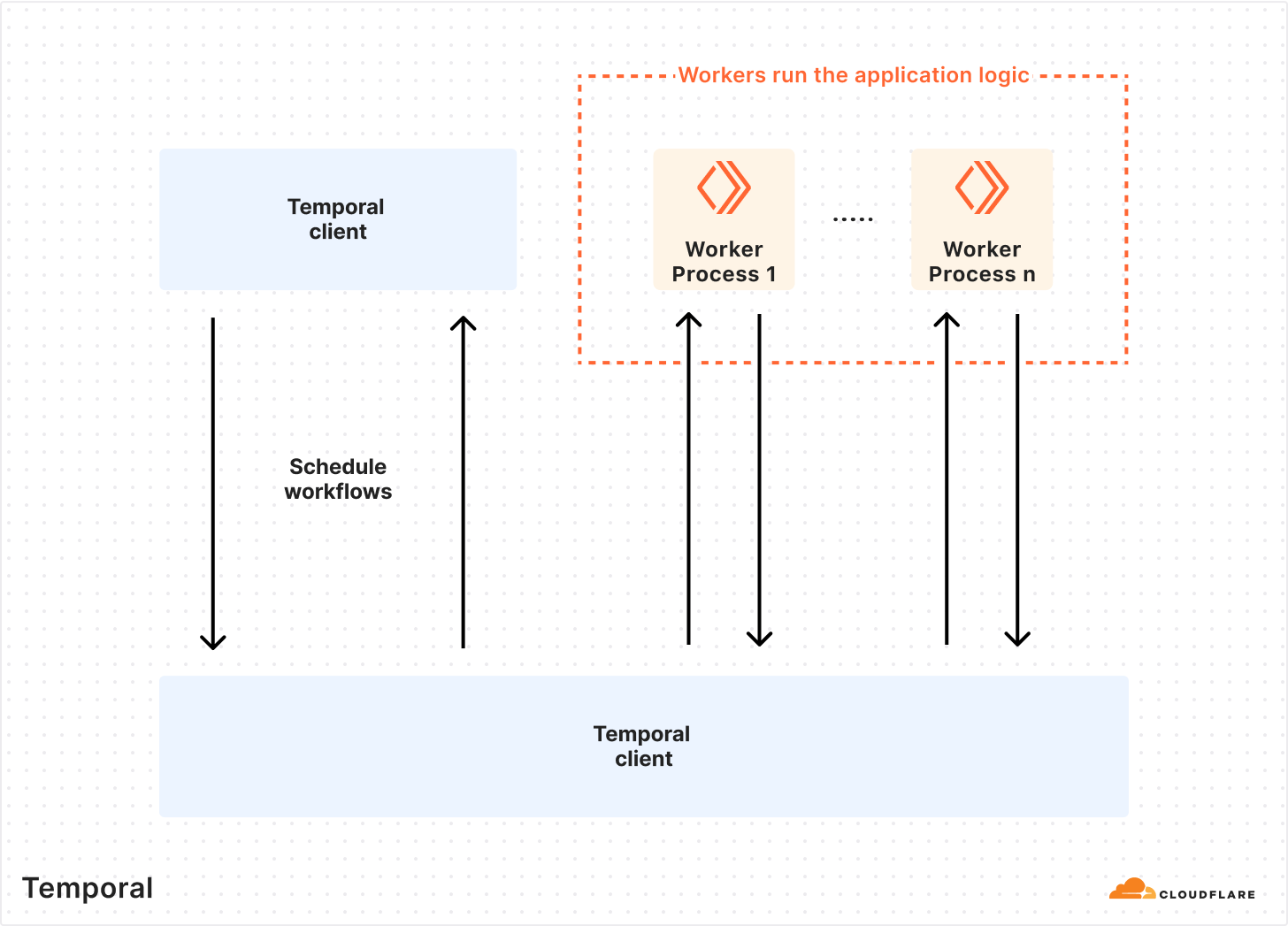
The most attractive feature Temporal offered us was the ability to write code that has reliability baked in. Some examples of these primitives are automatic retries, timeouts, rollbacks, and queueing. The Temporal Platform consists of the Temporal Cluster and Worker processes (application code that contains your custom logic).
This architecture allowed us to write our application logic as we normally would, with the added benefits of Temporal. Since Temporal Workers are external to the cluster, we can run tasks anywhere across our global network — a feature that made it easy to build an extensible, easy-to-understand framework for automating tasks.
In Temporal terms, control is provided by the basic principles used to provide workflow execution — Workflows and Activities. A Workflow is simply a sequence of Activities, which are functions that ideally do only ONE task, such as making a request to an external service or rebooting a machine.
Control of workflow behavior can be done using ActivityOptions. This is where you can define timeouts for workflow execution, retry policies, and task queues. Each worker can poll several task queues for both Workflow and Activity tasks. If no worker is polling the task queue in which a Workflow task is declared, nothing happens.
Below, we describe how our automatic remediation system works. It is essentially a way to schedule tasks across our global network with built-in reliability guarantees. With this system, teams can serve their customers more reliably. An unexpected failure mode can be recognized and immediately mitigated, while the root cause can be determined later via a more detailed analysis.
Step one: we need a coordinator
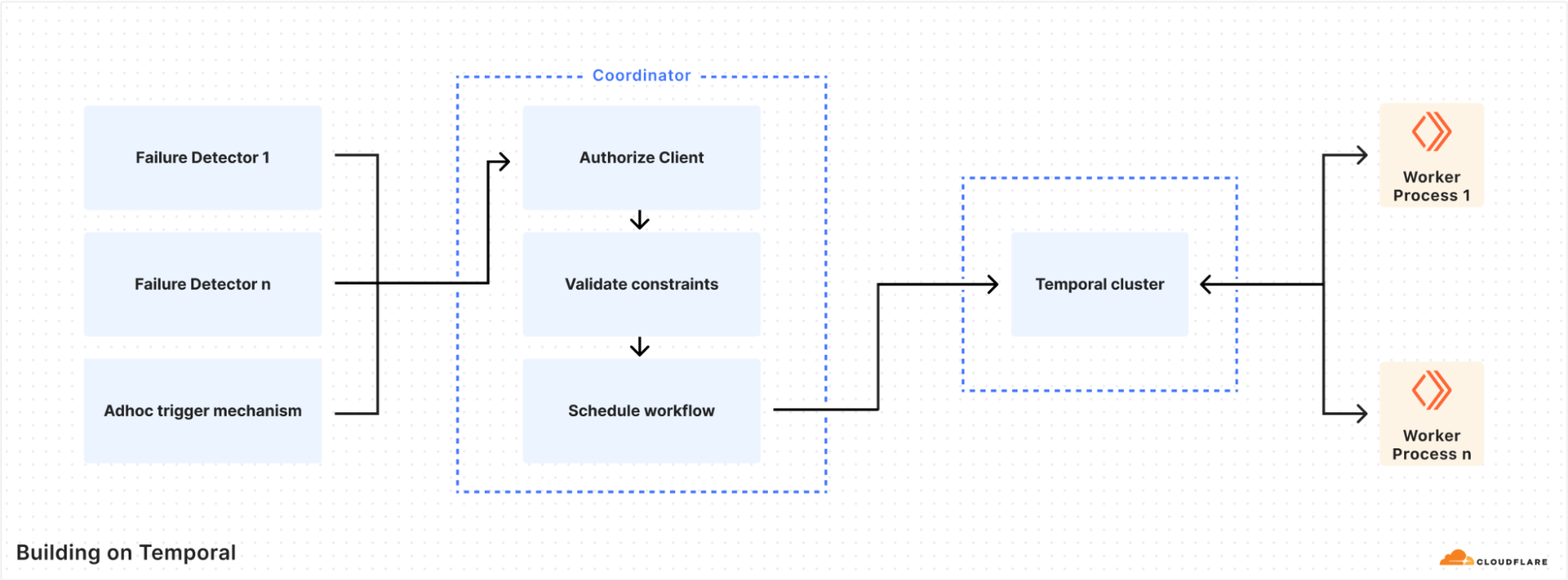
After our initial testing of Temporal, it was now possible to write workflows. But we needed a way to schedule workflow tasks from other internal services. The coordinator was built to serve this purpose, and became the primary mechanism for the authorisation and scheduling of workflows.
The most important roles of the coordinator are authorisation, workflow task routing, and safety constraints enforcement. Each consumer is authorized via mTLS authentication, and the coordinator uses an ACL to determine whether to permit the execution of a workflow. An ACL configuration looks like the following example.
Each workflow specifies two key characteristics: where to run the tasks and the safety constraints, using an HCL configuration file. Example constraints could be whether to run on only a specific node type (such as a database), or if multiple parallel executions are allowed: if a task has been triggered too many times, that is a sign of a wider problem that might require human intervention. The coordinator uses the Temporal Visibility API to determine the current state of the executions in the Temporal cluster.
An example of a configuration file is shown below:
task_queue_target = "<target>"

# The following entries will ensure that
# 1. This workflow is not run at the same time in a 15m window.
# 2. This workflow will not run more than once an hour.
# 3. This workflow will not run more than 3 times in one day.
#
constraint {
    kind = "concurency"
    value = "1"
    period = "15m"
}

constraint {
    kind = "maxExecution"
    value = "1"
    period = "1h"
}

constraint {
    kind = "maxExecution"
    value = "3"
    period = "24h"
    is_global = true
}
Step two: Task Routing is amazing
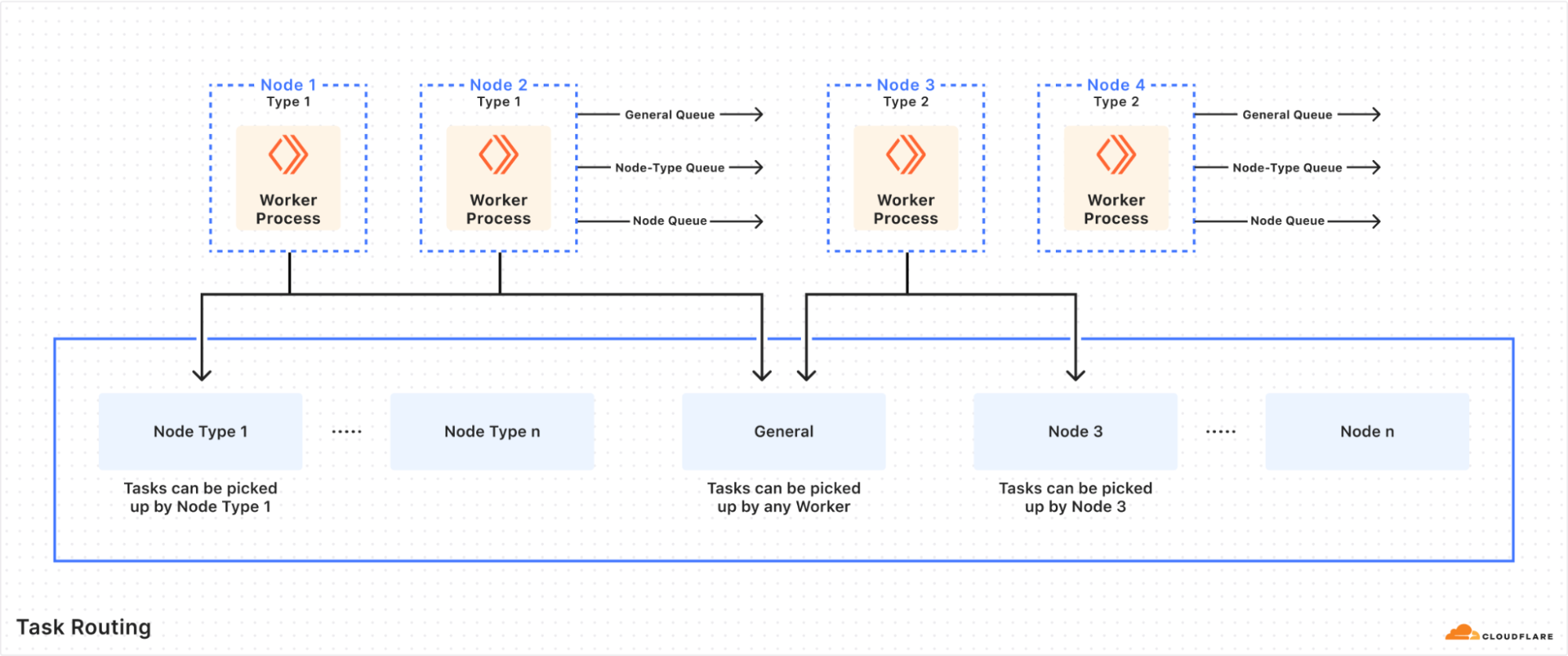
An unforeseen benefit of using a central Temporal cluster was the discovery of Task Routing. This feature allows us to schedule a Workflow/Activity on any server that has a running Temporal Worker, and further segment by the type of server, its location, etc. For this reason, we have three primary task queues — the general queue in which tasks can be executed by any worker in the datacenter, the node type queue in which tasks can only be executed by a specific node type in the datacenter, and the individual node queue where we target a specific node for task execution.
We rely on this heavily to ensure the speed and efficiency of automated remediation. Certain tasks can be run in datacenters with known low latency to an external resource, or a node type with better performance than others (due to differences in the underlying hardware). This reduces the amount of failure and latency we see overall in task executions. Sometimes we are also constrained by certain types of tasks that can only run on a certain node type, such as a database.
Task Routing also means that we can configure certain task queues to have a higher priority for execution, although this is not a feature we have needed so far. A drawback of task routing is that every Workflow/Activity needs to be registered to the target task queue, which is a common gotcha. Thankfully, it is possible to catch this failure condition with proper testing.
Step three: when/how to self-heal?
None of this would be relevant if we didn’t put it to good use. A primary design goal for the platform was to ensure we had easy, quick ways to trigger workflows on the most important failure conditions. The next step was to determine what the best sources to trigger the actions were. The answer to this was simple: we could trigger workflows from anywhere as long as they are properly authorized and detect the failure conditions accurately.
Example triggers are an alerting system, a log tailer, a health check daemon, or an authorized engineer via a chatbot. Such flexibility allows a high level of reuse, and permits to invest more in workflow quality and reliability.
As part of the solution, we built a daemon that is able to poll a signal source for any unwanted condition and trigger a configured workflow. We have initially found Prometheus useful as a source because it contains both service-level and hardware/system-level metrics. We are also exploring more event-based trigger mechanisms, which could eliminate the need to use precious system resources to poll for metrics.
We already had internal services that are able to detect widespread failure conditions for our customers, but were only able to page a human. With the adoption of auto-remediation, these systems are now able to react automatically. This ability to create an automatic feedback loop with our customers is the cornerstone of these self-healing capabilities and we continue to work on stronger signals, faster reaction times, and better prevention of future occurrences.
The most exciting part, however, is the future possibility. Every customer cares about any negative impact from Cloudflare. With this platform we can onboard several services (especially those that are foundational for the critical path) and ensure we react quickly to any failure conditions, even before there is any visible impact.
Step four: packaging and deployment
The whole system is written in golang, and a single binary can implement each role. We distribute it as an apt package or a container for maximum ease of deployment.
We deploy a Temporal-based worker to every server we intend to run tasks on, and a daemon in datacenters where we intend to automatically trigger workflows based on the local conditions. The coordinator is more nuanced since we rely on task routing and can trigger from a central coordinator, but we have also found value in running coordinators locally in the datacenters. This is especially useful in datacenters with less capacity or degraded performance, removing the need for a round-trip to schedule the workflows.
Step five: test, test, test
Temporal provides native mechanisms to test an entire workflow, via a comprehensive test suite that supports end-to-end, integration, and unit testing, which we used extensively to prevent regressions while developing. We also ensured proper test coverage for all the critical platform components, especially the coordinator.
Despite the ease of written tests, we quickly discovered that they were not enough. After writing workflows, engineers need an environment as close as possible to the target conditions. This is why we configured our staging environments to support quick and efficient testing. These environments receive the latest changes and point to a different (staging) Temporal cluster, which enables experimentation and easy validation of changes.
After a workflow is validated in the staging environment, we can then do a full release to production. It seems obvious, but catching simple configuration errors before releasing has saved us many hours in development/change-related-task time.
Deploying to production
As you can guess from the title of this post, we put this in production to automatically react to server-specific errors and unrecoverable failures. To this end, we have a set of services that are able to detect single-server failure conditions based on analyzed traffic data. After deployment, we have successfully mitigated potential impact by taking any errant single sources of failure out of production.
We have also created a set of workflows to reduce internal toil and improve efficiency. These workflows can automatically test pull requests on target machines, wipe and reset servers after experiments are concluded, and take away manual processes that cost many hours in toil.
Building a system that is maintained by several SRE teams has allowed us to iterate faster, and rapidly tackle long-standing problems. We have set ambitious goals regarding toil elimination and are on course to achieve them, which will allow us to scale faster by eliminating the human bottleneck.
Looking to the future
Our immediate plans are to leverage this system to provide a more reliable platform for our customers and drastically reduce operational toil, freeing up engineering resources to tackle larger-scale problems. We also intend to leverage more Temporal features such as Workflow Versioning, which will simplify the process of making changes to workflows by ensuring that triggered workflows run expected versions.
We are also interested in how others are solving problems using durable execution platforms such as Temporal, and general strategies to eliminate toil. If you would like to discuss this further, feel free to reach out on the Cloudflare Community and start a conversation!
Two students have created a demo of a smart-glasses app that performs automatic facial recognition and then information lookups. Kind of obvious—something similar was done in 2011—but the sort of creepy demo that gets attention.
Да се говори за психичното здраве е важно. Особено в страна като България, в която хората с психични проблеми често са стигматизирани. Провокирането на „размисъл и обществен разговор по тази тема“ е основната цел на новия сериал на БНТ „Тревожност“, чийто първи епизод беше излъчен на 29 септември 2024 г. Негов режисьор е Илиян Джевелеков, познат още от LOVE.NET, „Вездесъщият“, „Порталът“, както и „Дзифт“, на който е продуцент. Той е и част от екипа на сценаристите, включващ също Матей Константинов, Емил Стефанов и Радослава Топалова.
Част от казусите, разглеждани във филма, се основават на книги на психотерапевта Огнян Димов и на случаи от практиката на детския психолог Иван Игов, който е сред основателите на училищната психология в България. А режисьорът Джевелеков е учил психология.
Дотук всичко изглежда обещаващо. Първото впечатление от „Тревожност“ обаче повдига някои смущаващи въпроси.
Интересна песен с още по-интересен контекст за проблематична медийна регулация
Песента, с която започват и завършват сериите, пасва на тематиката и като настроение, и като текст, и определено грабва зрителското внимание. Като стана дума за текста, той е на Соня Момчилова, която до април 2024 г. беше председателка на Съвета за електронни медии (СЕМ). Тя зае този пост през 2021 г. и беше от квотата на президента Румен Радев.
Момчилова има опит в писането на текстове на песни още от времето, когато е била част от екипа на студентското предаване „Ку-ку“, в който впрочем е бил и режисьорът на „Тревожност“ Илиян Джевелеков. Оттук погледнато, има логика тя да е поканена да даде своя принос – все пак не всичките ѝ текстове са цинични като тези на произведенията ѝ „Мама на татко не дава“ или „Ще ти скъсам г*за“.
Само че към началото на снимките на сериала Соня Момчилова все още е председателка на СЕМ. Като такава нейно основно задължение е да съблюдава дали електронните медии спазват професионалните и правните стандарти. Ала за да си коректив на професионалните стандарти, самият ти трябва да имаш такива. А Момчилова неведнъж е заемала, меко казано, спорни позиции. Ето няколко примера:
През 2022 г. председателката на СЕМ се възмути от разследване на международни медии с участието на българската журналистка Мария Черешева и го обяви за „платено“. Разследването беше за използването на огнестрелно оръжие от Граничната полиция срещу хора, търсещи убежище.
През 2023 г. Момчилова тиражира невярното твърдение, че транс жената, известна като Емили Йорданова, известна с прякора Тротинетката и задържана за случай на унижение на лице с увреждане, е „припозната“ като „Човек на годината“ от Българския хелзинкски комитет (БХК). В действителност тя е била номинирана от външно на БХК лице (още отпреди да се прочуе с екстремното каране на тротинетка), но не е от наградените.
Същата година колегите ѝ от СЕМ се дистанцираха от твърдението на собствената си председателка, че клането в Буча е „пропаганда“.
Освен това Соня Момчилова нееднократно е правила внушения в духа на руската пропаганда – още от времето, преди да оглави СЕМ, а и след това.
Що се отнася до БНТ, по времето на Момчилова обществената телевизия не само се радваше на регулаторен комфорт. Председателката на СЕМ направи всичко по силите си, за да бетонира Емил Кошлуков като директор на БНТ, макар мандатът му да е изтекъл преди вече две години. На първа инстанция съдът постанови, че Момчилова еднолично и незаконосъобразно е прекратила конкурса за нов директор на обществената телевизия. Но докато по-горната съдебна инстанция не бърза с решението си, Кошлуков си векува на поста.
Ето защо фактът, че Соня Момчилова е авторка на текста на песента от сериала на БНТ „Тревожност“, свидетелства ако не за конфликт на интереси, най-малкото за морална проблематичност.
Как „Тревожност“ представя жените, които не искат да раждат деца
Във втория епизод психотерапевтът д-р Манов, който е един от главните герои, уточнява, че коректното название за хората, потърсили психотерапия, е „пациент“, а не „клиент“, затова и в тази статия се използва думата „пациент“.
Първият казус на пациент, представен в дебютната серия на „Тревожност“, е на жена, която не иска да има деца. Тя отива на терапевтичната сесия с много къса пола и през цялото време си наглася краката в различни пози, така че де що има консервативни зрители да се възмутят от „неприличното“ ѝ облекло. Поводът за посещението ѝ е чувството на вина заради проявена агресия към роднинско дете, но проблемът, разбира се, се оказва по-дълбок.
Пациентката казва, че крие ужасни тайни и че ако има деца, те няма да са щастливи с майка като нея. Разговорът стига до отношенията със съпруга ѝ, когото тя описва като добър и обичащ я човек. Жената споделя, че крие от мъжа си, че не е спряла противозачатъчните, оставяйки го да си мисли, че ще имат дете.
Интересна е реакцията на психотерапевта. Един добър професионалист би останал на неутрална позиция, но терапевтът взема страна – и то тази на мъжа. „Какъв е този мъж, който не заслужава […] да му родите дете?“, пита реторично той. Тази формулировка предпоставя, че раждането е преди всичко дълг на жената към мъжа. Че деца се правят не защото са желани или за да им дадат родителите щастие, а за да се ощастливи бащата.
Терапевтът също така възпроизвежда стереотипни нагласи, когато казва на пациентката, че история като нейната със съпруга ѝ „всяко момиче мечтае да ѝ се случи – умен, влюбен мъж, с мечти и без пороци“. И отказва да разбере защо този мъж не ѝ е достатъчен.
Накрая жената изплюва камъчето – споделя, че поддържа тайни връзки с други мъже и не иска дете, защото няма да знае кой е бащата. Липсата на реакция от страна на психотерапевта оставя впечатлението, че тя е права да не харесва себе си.
А консервативните зрители вече са навързали минижупа с промискуитетното поведение и са си казали: „Ами да, такива са жените, които не искат деца – развратници!“
Как едно момиче „провокира“ да го преследват
Вторият казус в серията е за тийнейджърка, която е дошла да сподели проблем, свързан с неин съученик. Тя се е опитвала да помогне на момчето, след като училищният персонал е отказал да вземе отношение към проблемите му.
„Постъпила си правилно. Точно така, както би трябвало да постъпи един зрял човек“, хвали терапевтката момичето. То обаче споделя, че поведението на съученика ѝ е минало всякакви граници. Специалистката, която тъкмо е похвалила тийнейджърката за поведението ѝ, отговаря, че момчето вероятно се е влюбило в нея, което е логично да се случи в подобна ситуация.
„Но това не е любов. Той ме преследва“, отговаря тийнейджърката и разказва как съученикът ѝ е обсебен от нея, преследва я навсякъде, включително в интернет, звъни ѝ десетки пъти по телефона и не разбира, когато тя му казва да престане.
Терапевтката задава въпроса: „Имало ли е случаи, когато ти самата си провокирала Марио? […] Искам да кажа, интимно.“ Момичето се сеща, че с момчето са се държали за ръка и веднъж го е целунала по бузата, защото се е зарадвала на положителната промяна у него. „Може да е възприел тази целувка като поощрение. И точно тя да е причината, която е отключила поведението му“, гласи отговорът.
Така едно младо момиче, осмелило се да потърси професионална консултация, „научава“, че жените сами „провокират“ да ги тормозят, както и че няма особена разлика между любовта и насилието – една целувка по бузата може да е „причината“ за всякакво поведение. Това, което младото момиче няма да научи, е каква е границата между похвалния опит да помогнеш и даването на „причина“ за обсесивно поведение.
Проблемът с насилието над жени в България е огромен и подобни послания едва ли биха били от помощ на хората в риск – и на потенциалните жертви, и на онези, които си мислят, че жените сами „провокират“ насилието срещу себе си. И че всяка проява на добронамерено отношение от страна на жената е достатъчна „причина“ за незачитане на границите.
Всъщност преди психотерапевтката да ѝ размъти главата, тийнейджърката е много по-наясно със същността на проблема: „Но това не е любов. Той ме преследва.“ И е напълно права, когато ѝ казва: „Вие не разбирате.“
Психотерапията на екрана и извън него
Не е нужно филмите и сериалите, представящи определена професия, изцяло да се подчиняват на професионалните стандарти на съответната професия. Ако всички пластични хирурзи бяха като тези от американския сериал „Клъцни-срежи“, пластичната хирургия щеше да е извън закона. В правилата на жанра влиза и понякога професионалистите да нарушават правилата, да смесват работата с личния живот. Като терапевтката от „Тревожност“, която си е прибрала пациенти вкъщи, за да им помогне.
Заявката, че казусите в „Тревожност“ се основават на истории, описани от авторитетни психотерапевти, обаче създава високи очаквания. Зрителите остават с впечатлението, че такова трябва да бъде поведението на един добър психотерапевт. Ето защо е важно какви са публичните послания, които се отправят посредством представяните казуси. Още повече че сериалът е на обществената телевизия.
До доказване на противното експертите, които са предоставили материал за казусите в сериала, не могат да бъдат обвинявани за начина, по който е интерпретиран професионалният им опит. Но е жалко, че работата им се използва за легитимацията на сексистки стереотипи.
Един от консултантите впрочем – Иван Игов – обръща внимание върху липсата на регулация при практикуването на психологията и психотерапията в България. В този смисъл нарушаването на професионалните стандарти в казусите, представени в първия епизод на „Тревожност“, е нещо, което се случва и в живота. И когато човек се осмели да потърси помощ за проблемите си, не знае на какъв „специалист“ ще попадне. Поради това много хора така и не се осмеляват. И продължават да се борят с травмите си сами.
Пред „Тоест“ различни жени споделиха опит с терапевти, подобен на показания в „Тревожност“. Една от тях е убеждавана от две различни терапевтки, че трябва да поиска деца, при все че е отишла при тях с друг проблем. Друга са опитвали да „лекуват“ от хомосексуалността ѝ, като я карат да спи с мъже. Трета са карали да остави „мъжката енергия“ да ръководи живота ѝ.
Една от участничките в социологическо изследване на жените в България на Фондация „Екатерина Каравелова“ също споделя интересен опит с психотерапията. Жената има професионални амбиции, докато мъжът ѝ не иска да работи особено, поради което тя носи основната финансова тежест за издръжката на семейството. Терапевтката ѝ казва, че с мъжа ѝ са си „объркали ролите“, и я подтиква да вземе радикално решение, като се откаже от професионалното си развитие и постави семейството си в риск от бедност:
По това работихме с психоложката, тя го хвана това, че аз всъщност много мисля за парите и за материалните неща и щастието ми няма да дойде оттам. И аз, да, миналия септември напуснах работа… И си казах, че ще пробвам нещо сама да правя, пък каквото стане, че ще преодолея това, че няма да имам финансова сигурност. Много ми е трудно, ама…
Вторият шанс и първото впечатление
Във втория епизод на зрителското внимание са представени двама свръхконтролиращи родители. Майка, която си мисли, че познава дъщеря си, а не зачита личното ѝ пространство и няма представа за емоционалния ѝ живот. Баща мафиот, който преследва вече пълнолетния си син, страхува се, че той може да е гей, и отказва да поеме отговорност за разбитото си семейство. Така на зрителското внимание се поставят важни теми, включително и хомофобията.
Виждаме и майка, която отказва да признае сериозността на проблема, че 9-годишната ѝ дъщеря системно краде. Когато тя се оплаква, че мъжът ѝ пие твърде много бира, след което става нощем през 15 минути, за да отиде до тоалетната, и не я оставя да спи, терапевтът я съветва да взема приспивателни, за да не се буди от ставанията на съпруга си. А не например да поговори с него за поведението му. Но в сравнение с първия епизод тази проява на сексизъм си е почти пренебрежима.
Казусите, представени във втория епизод на „Тревожност“, дават надежда, че не целият сериал ще пропагандира сексистки и традиционалистки стереотипи. Затова би било прибързано възмутените зрители да го отпишат напълно. Но както се казва, никога нямаш втори шанс да направиш първо впечатление.
Водещо изображение: Пенко Господинов (д-р Манов) и Ана Пападопулу (д-р Ясенова) по време на снимките на „Тревожност“. Снимка: Мирамар филм
As customers increasingly seek to harness the power of generative AI (GenAI) and machine learning to deliver cutting-edge applications, the need for a flexible, intuitive, and scalable development platform has never been greater. In this landscape, Streamlit has emerged as a standout tool, making it easy for developers to prototype, build, and deploy GenAI-powered apps with minimal friction. It is an open-source Python framework designed to simplify the development of custom web applications for data science, machine learning, and GenAI projects. With Streamlit, developers can quickly transform Python scripts into interactive dashboards, LLM-powered chatbots, and web apps, using just a few lines of code. Its unique combination of simplicity, interactivity, and speed is the perfect complement to the rapid advancements in AI.
When deploying Streamlit applications, customers often face the challenge of ensuring their applications are highly available and can scale to meet a variable amount of demand. To achieve these goals, customers are looking at serverless approaches to deploying their Streamlit apps. With a serverless application, you only pay for the resources required and do not want have to worry about managing servers or capacity planning.
In this post, we will walk you through deploying containerized, serverless Streamlit applications automatically via HashiCorp Terraform, an Infrastructure as Code (IaC) tool that enables users to define and provision infrastructure across cloud platforms.
Solution Overview
For this solution, we have the Streamlit app running on an Amazon Elastic Container Service (ECS) cluster across multiple availability zones (AZs), using AWS Fargate to manage the compute. Fargate is a serverless, pay-as-you-go compute engine that lets you focus on building apps without managing servers. Using Fargate helps reduce the undifferentiated heavy lifting that can come with building and maintaining web applications. It is also often desirable to use a Content Delivery Network (CDN) to ensure low latency for users globally by caching the content at edge locations closer to where the users are geographically located.
Let’s zoom in on the two architectures – the Streamlit App hosting architecture, and the Streamlit App deployment pipeline.
Streamlit app hosting
In the above architecture, the following flow applies:
Users access the Streamlit App using the public DNS endpoint for an Amazon CloudFront distribution.
Using an Internet Gateway (IGW), user requests are routed to a public-facing Application Load Balancer (ALB).
This ALB has target groups which map to ECS task nodes that are part of an ECS cluster running in two AZs (us-east-1a and us-east-1b in this example).
Fargate will automatically scale the underlying compute nodes in the ECS cluster based on the demand.
Streamlit app deployment pipeline
In the above architecture, the following flow applies:
User develops a local Streamlit App and defines the path of these assets in the module configuration, then runs terraform apply to generate a local .zip file comprised of the Streamlit App directory, and upload this to an Amazon S3 bucket (Streamlit Assets) with versioning enabled, which is configured to trigger the Streamlit CI/CD pipeline to run.
AWS CodePipeline (Streamlit CI/CD pipeline) begins running. The pipeline copies the .zip file from the Streamlit Assets S3 Bucket, stores the contents in a connected CodePipeline Artifacts S3 bucket, and passes the asset to the AWS CodeBuild project that is also part of the pipeline.
CodeBuild (Streamlit CodeBuild Project) configures a compute/build environment and fetches a Python Docker Image from a public Amazon ECR repository. CodeBuild uses Docker to build a new Streamlit App image based on what is defined in the Dockerfile within the .zip file, and pushes the new image to a private ECR repository. It tags the image with latest, an app_version (user-defined in Terraform), as well as the S3 Version ID of the .zip file and pushes the image to ECR.
ECS has a task definition that references the image in ECR based on the S3 Version ID tag which will always be a unique value, as it is generated whenever a new version of the file is created. This also serves as data lineage so versions of the Streamlit App .zip files in S3 can be linked to versions of the image stored in ECR. Once a new image is pushed to ECR (with a unique image tag), the task definition is updated and the ECS service begins a new deployment using the new version of the Streamlit App.
When a new image is pushed to ECR, the Terraform Module is configured to use the local-exec provisioner to run an AWS CLI command that creates a CloudFront invalidation. This enables users of the Streamlit app to use the new version without waiting for the time-to-live (TTL) of the cached file to expire on the edge locations (default is 24 hours). Both of these pipelines are built and packaged into a Terraform module that can be reused efficiently with only a few lines of code.
Both of these pipelines are built and packaged into a Terraform module that can be reused efficiently with only a few lines of code.
Prerequisites
This solution requires the following prerequisites:
An AWS account. If you don’t have an account, you can sign up for one.
Terraform v1.0.0 or newer installed.
python v3.8 or newer installed.
A Streamlit app. If you don’t have a Streamlit project already, you can download this app directory as a sample Streamlit app for this post and save it to a local folder.
Your folder structure will look something like this:
In the same folder where you have the your Streamlit app saved, in the above example in the terraform_streamlit_folder, you will create and initialize a new Terraform project.
In your preferred terminal, create a new file named main.tf by running the following command on Unix/Linux machines, or an equivalent command on Windows machines:
touch main.tf
Open up the main.tf file and add the following code to it:
module "serverless-streamlit-app" {
  source          = "aws-ia/serverless-streamlit-app/aws"
  app_name        = "streamlit-app"
  app_version     = "v1.1.0"
  path_to_app_dir = "./app" # Replace with path to your app
}
This code utilizes a module block with a source pointing to the Terraform module, and the appropriate input variables passed in. When Terraform encounters a module block, it loads and processes that module’s configuration files using the source. The Serverless Streamlit App Terraform module has many optional input variables. If you have existing resources, such as an existing VPC, subnets, and security groups that you’d like to reuse instead of deploying new ones, you can use the module’s input variables to reference your existing resources. However, in this post, we’re deploying all of the resources in the above architecture from scratch. Here, we simply define the source that references the module hosted in the Terraform Registry, provide an app_name that will be used as a prefix for naming your resources, the app_version that is used for tracking changes to your app, and the path_to_app_dir which is the path to the local directory where the assets for your Streamlit app are stored.
Save the file.
To initialize the Terraform working directory, run the following command in your terminal:
terraform init
The output will contain a successful message like the following:
"Terraform has been successfully initialized"
Output the CloudFront URL
To be able to easily access the Cloudfront URL of the deployed Streamlit application, you can add the URL as a Terraform output.
In your terminal, create a new file named outputs.tf by running the following command on Unix/Linux machines, or an equivalent command on Windows machines:
touch outputs.tf
Open up the outputs.tf file and add the following code to it:
output "streamlit_cloudfront_distribution_url" {
  value = module.serverless-streamlit-app.streamlit_cloudfront_distribution_url
}
Save the file. Now, your folder structure will look like:
Now you can use Terraform to deploy the resources defined in your main.tf file.
In your terminal, run the following command to apply to deploy the infrastructure. This includes the hosting for your Streamlit application using ECS and CloudFront, as well as the pipeline that is used to push updates.
terraform apply
When the apply command finishes running, you’ll see the Terraform outputs displayed in the terminal.
Navigate to the streamlit_cloudfront_distribution_url to see your Streamlit application that is hosted on AWS.
When you make changes to your Streamlit codebase, you can go ahead and re-run terraform apply to push your new changes to your cloud environment.
When updating the Streamlit codebase, the CodePipeline and CodeBuild processes kick off to automatically update your new changes, which get reflected on your Streamlit application. CodePipeline automates the entire software release process, managing stages like source retrieval, building, testing, and deployment. It integrates with AWS services and third-party tools (such as GitHub and Jenkins) to enhance automation, speed, and security. CodeBuild focuses on automating code compilation, testing, and packaging, supporting multiple languages and custom Docker environments, while integrating with CodePipeline for scalable, secure builds. With this CI/CD pipeline, when you make changes to your code, all you need to run is terraform apply to update your cloud environment. For an example buildspec, see the example in the repo.
You can find full examples of deploying the infrastructure with and without existing resources in the GitHub repository.
Clean up
When you no longer need the resources deployed in this post, you can clean up the resources by using the Terraform destroy command. Simply run terraform destroy . This will remove all of the resources you have deployed in this post with Terraform.
Conclusion
Building serverless Streamlit applications with Terraform on AWS offers a powerful combination of scalability, efficiency, and automation. As you continue to build and refine your Streamlit applications, Terraform’s flexibility ensures that your infrastructure can evolve seamlessly, supporting rapid innovation and agile development. With Streamlit and Terraform, you have the tools to create dynamic, serverless applications that scale effortlessly and operate reliably in the cloud.
В следващия парламент ще предложим отново единната входна точка за подаване на отчети с финансова информация – за да могат фирмите да подават финансовите данни на едно място, максимално автоматизирано.
Това се чака от бизнеса от повече 10 години, за да се подават отчетите само на едно място – в НСИ, и оттам част от данните да отиват автоматично в структуриран вид в Търговския регистър (и в НАП). Така се постигат три неща:
1. облекчение за бизнеса (вкл. ще може данните да се екапортират от счетоводен софтуер и да се качват директно),
2. наличност на данните във вид, удобен за анализ и визуализация, а не криво сканираните замазани отчети, които се качваха досега,
3. без повече ръчна обработка в Агенция по вписванията и съответно спестяване на такси за бизнеса.
Работихме по законопроекта с работодателските и с професионалните организации, както и с НСИ, които имат готовност и желание да го изпълнят.
Retrieval-Augmented Generation (RAG) is a powerful process that is designed to integrate direct function calling to answer queries more efficiently by retrieving relevant information from a broad database. In the rapidly evolving business landscape, Data Analysts (DAs) are struggling with the growing number of data queries from stakeholders. The conventional method of manually writing and running similar queries repeatedly is time-consuming and inefficient. This is where RAG-powered Large Language Models (LLMs) step in, offering a transformative solution to streamline the analytics process and empower DAs to focus on higher value tasks.
In this article, we will share how the Integrity Analytics team has built out a data solution using LLMs to help automate tedious analytical tasks like generating regular metric reports and performing fraud investigations.
While LLMs are known for their proficiency in data interpretation and insight generation, they represent just a fragment of the entire solution. For a comprehensive solution, LLMs must be integrated with other essential tools. The following is required in assembling a solution:
Internally facing LLM tool – Spellvault is a platform within Grab that stores, shares, and refines LLM prompts. It features low/no-code RAG capabilities that lower the barrier of entry for people to create LLM applications.
Data – with real time or close to real-time latency to ensure accuracy. It has to be in a standardised format to ensure that all LLM data inputs are accurate.
Scheduler – runs LLM applications at regular intervals. Useful for automating routine tasks.
Messaging Tool – a user interface where users can interact with LLM by entering a command to receive reports and insights.
Introducing Data-Arks, the data middleware serving up relevant data to the LLM agents
For most data use cases, DAs are usually running the same set of SQL queries with minor changes to parameters like dates, age or other filter conditions. In most instances, we already have a clear understanding of the required data and format to accomplish a task. Therefore, we need a tool that can execute the exact SQL query and channel the data output to the LLM.
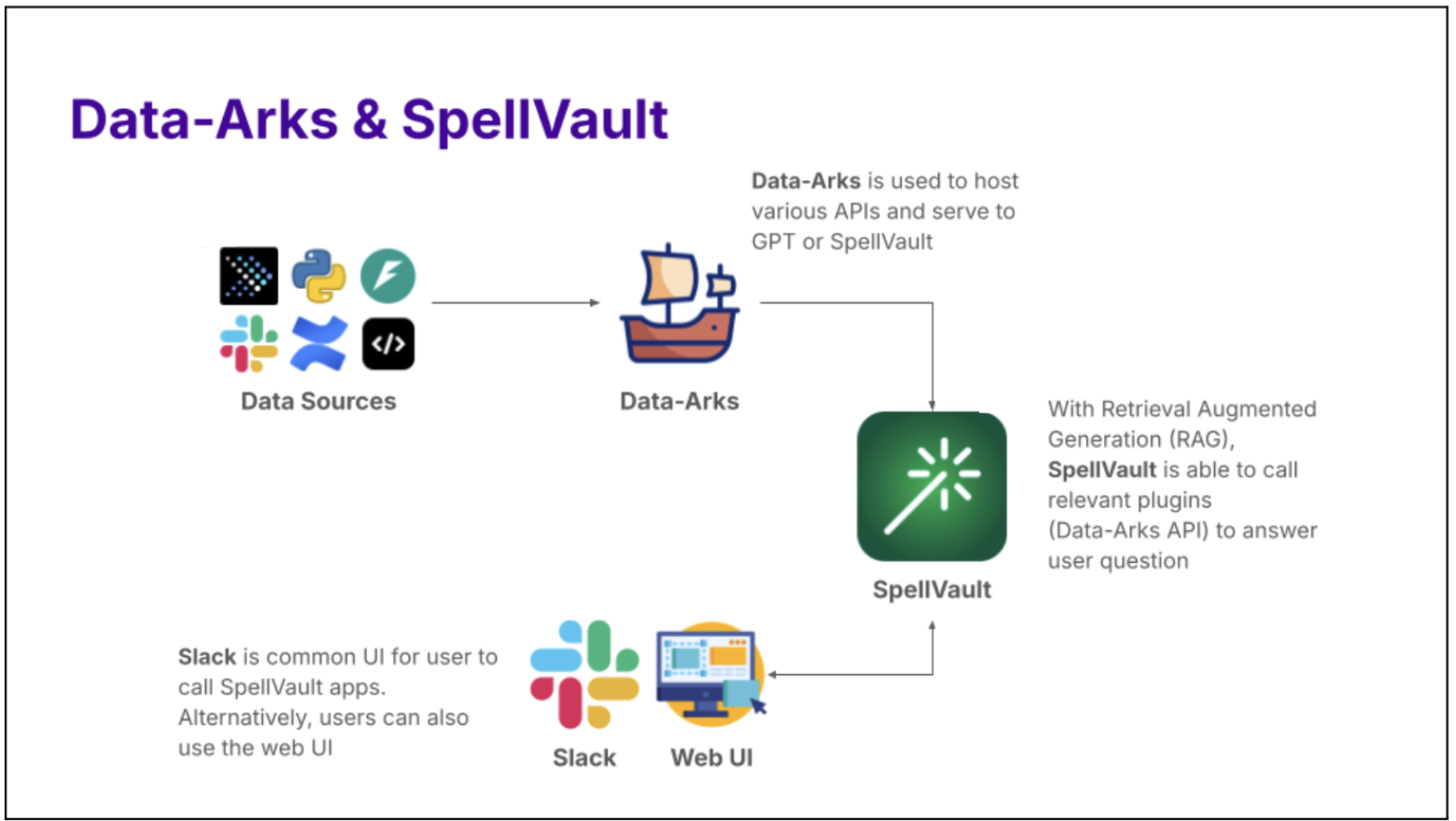
Figure 1. Data-Arks hosts various APIs which can be called to serve data to applications like SpellVault.
What is Data-Arks?
Data-Arks is an in-house Python-based API platform housing several frequently used SQL queries and python functions packaged into individual APIs. Data-Arks is also integrated with Slack, Wiki, and JIRA APIs, allowing users to parse and fetch information and data from these tools as well. The benefits of Data-Arks are summarised as follows:
Integration: Data-Arks service allows users to upload any SQL query or Python script on the platform. These queries are then surfaced as APIs, which can be called to serve data to the LLM agent.
Versatility: Data-Arks can be extended to everyone. Employees from various teams and functions at Grab can self-serve to upload any SQL query that they want onto the platform, allowing this tool to be used for different teams’ use cases.
Automating regular report generation and summarisation using Data-Arks and Spellvault
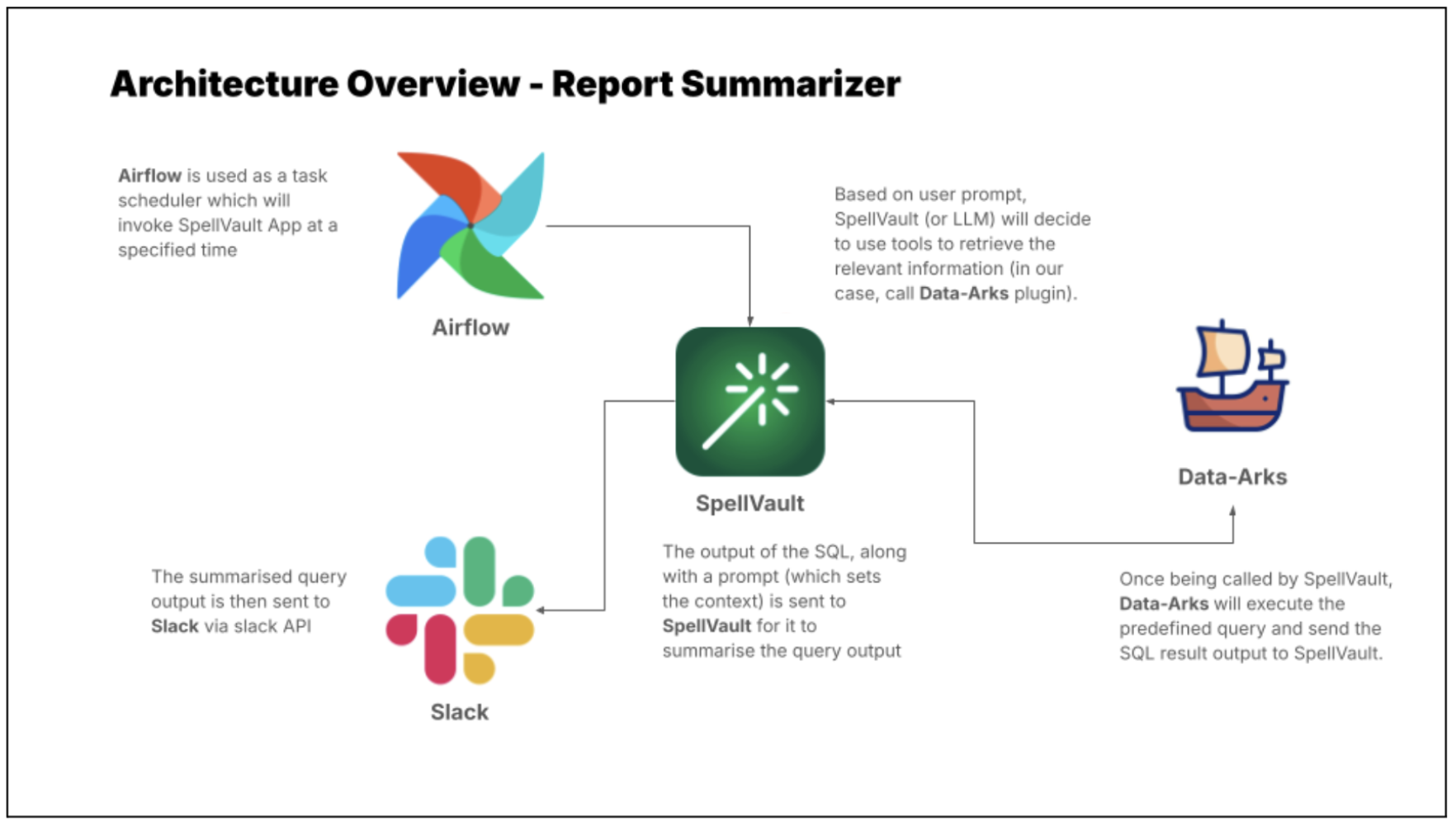
LLMs are just one piece of the puzzle, to build a comprehensive solution, they must be integrated with other tools. Figure 2 shows how different tools are used in executing report summaries in Slack.
Figure 2 shows how different tools are used in executing report summaries in Slack.
Figure 2. Report Summarizer uses various tools to summarise queries and deliver a summarised report through Slack.
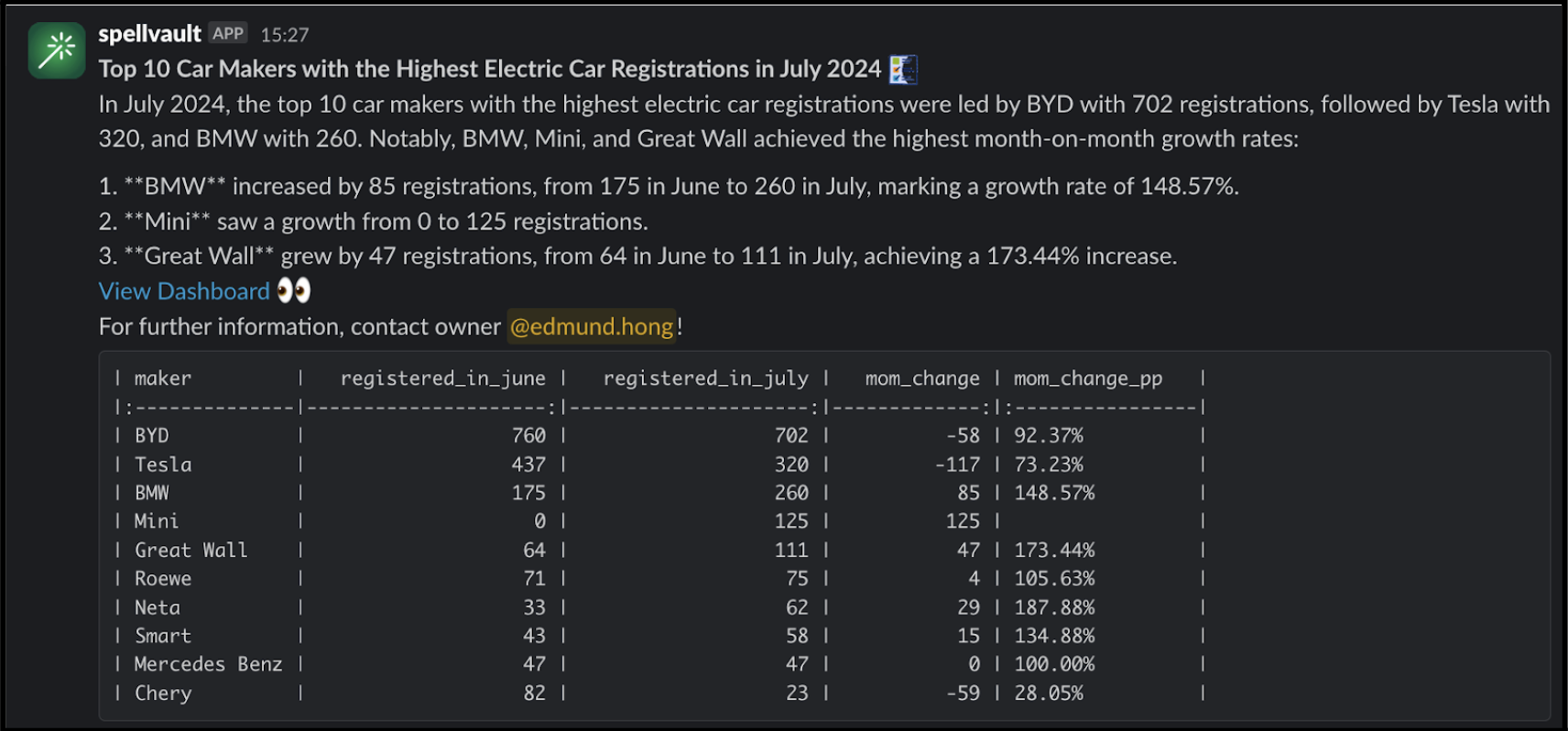
Figure 3 is an example of a summarised report generated by the Report Summarizer using dummy data. Report Summarizer calls a Data-Arks API to generate the data in a tabular format and LLM helps summarise and generate a short paragraph of key insights. This automated report generation has helped save an estimated 3-4 hours per report.
Figure 3. Sample of a report generated using dummy data extracted from [https://data.gov.my/](https://data.gov.my/).
LLM bots for fraud investigations
LLMs also excel in helping to streamline fraud investigations, as LLMs are able to contextualise several different data points and information and derive useful insights from them.
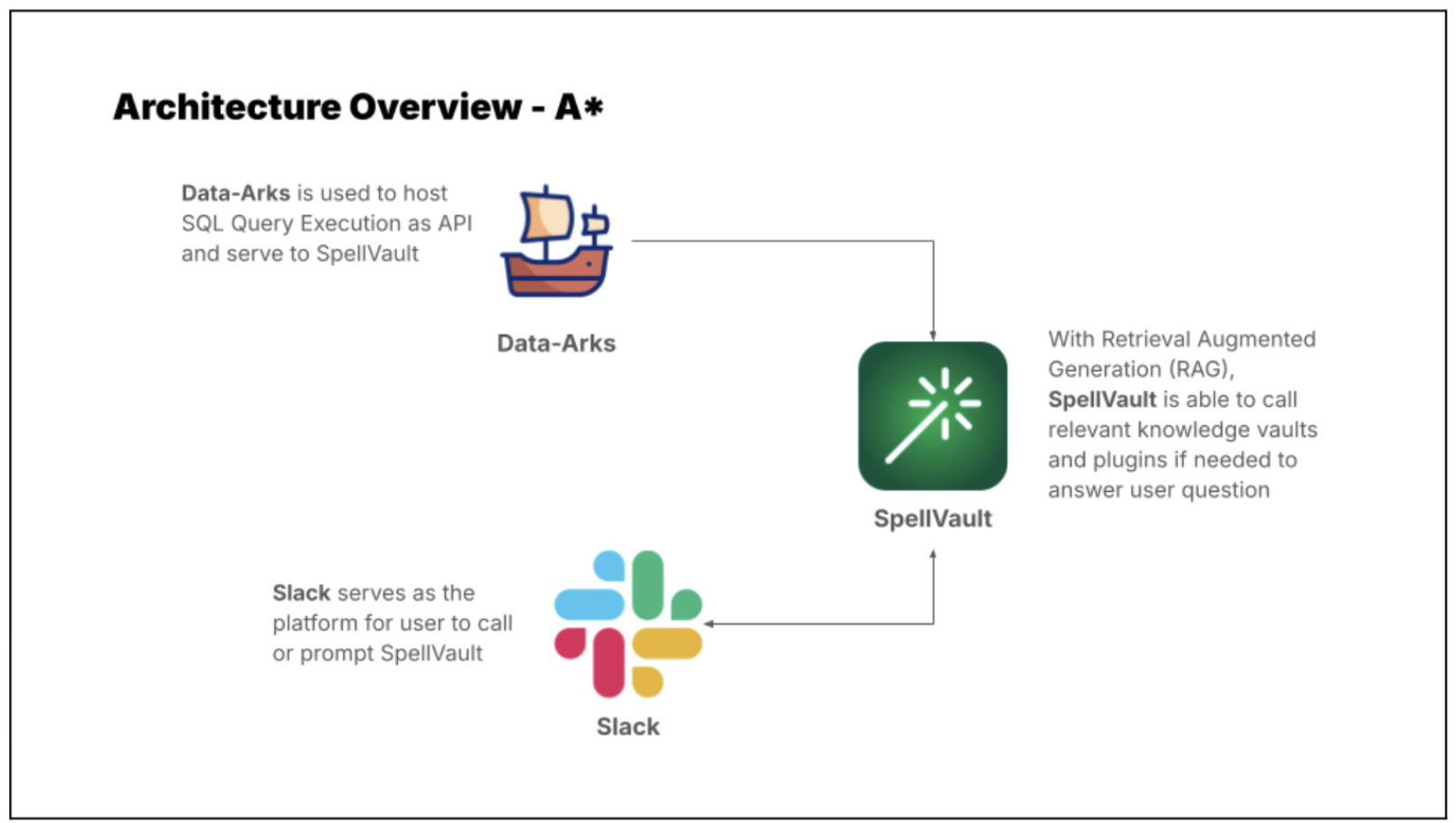
Introducing A* bot, the team’s very own LLM fraud investigation helper.
A set of frequently used queries for fraud investigation is made available as Data-Arks APIs. Upon a user prompt or query, SpellVault selects the most relevant queries using RAG, executes them and provides a summary of the results to users through Slack.
Figure 4. A* bot uses Data-Arks and Spellvault to get information for fraud investigations.
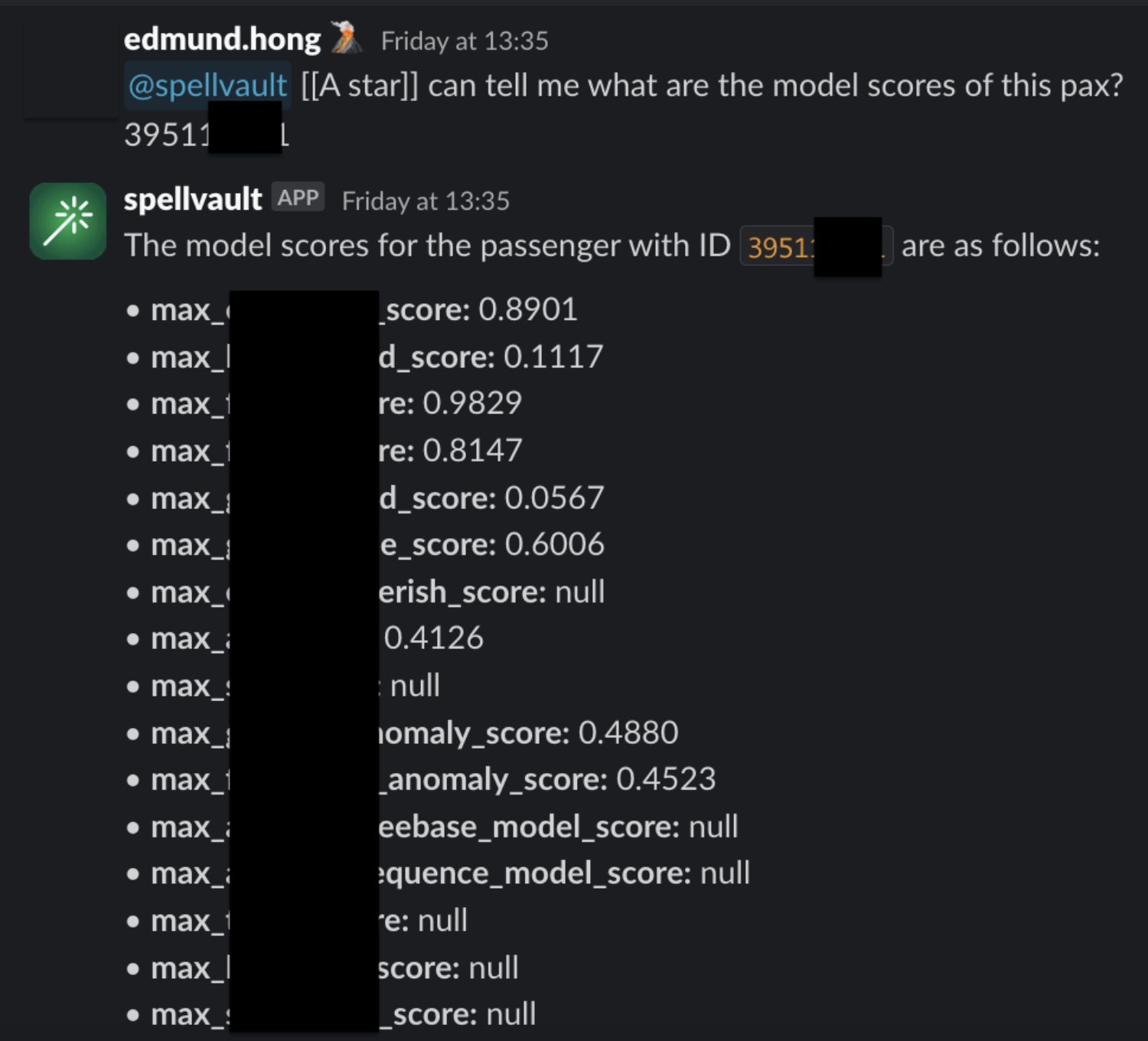
Figure 5 shows a sample of fraud investigation responses from A* bot. Scaling to multiple queries for a fraud investigation process, what was once a time-consuming fraud investigation can now be reduced to a matter of minutes, as the A* bot is capable of providing all the necessary information simultaneously.
Figure 5. Sample of fraud investigation responses.
RAG vs fine-tuning
On deciding between RAG or fine-tuning to improve LLM accuracy, three key factors tipped the scales in favour of the RAG approach:
Effort and cost considerations
Fine-tuning requires significant computational cost as it involves taking a base model and further training it with smaller, domain specific data and context. RAG is computationally less expensive as it relies on retrieving only relevant data and context to augment a model’s response. As the same base model can be used for different use cases, RAG is the preferred choice due to its flexibility and cost efficiency.
Ability to respond with the latest information
Fine-tuning requires model re-training with each new information update, whereas RAG simply retrieves required context and data from a knowledge base to enhance its response. Thus, by using RAG, LLM is able to answer questions using the most current information from our production database, eliminating the need for model re-training.
Speed and scalability
Without the burden of model re-training, the team can rapidly scale and build out new LLM applications with a well managed knowledge base.
What’s next?
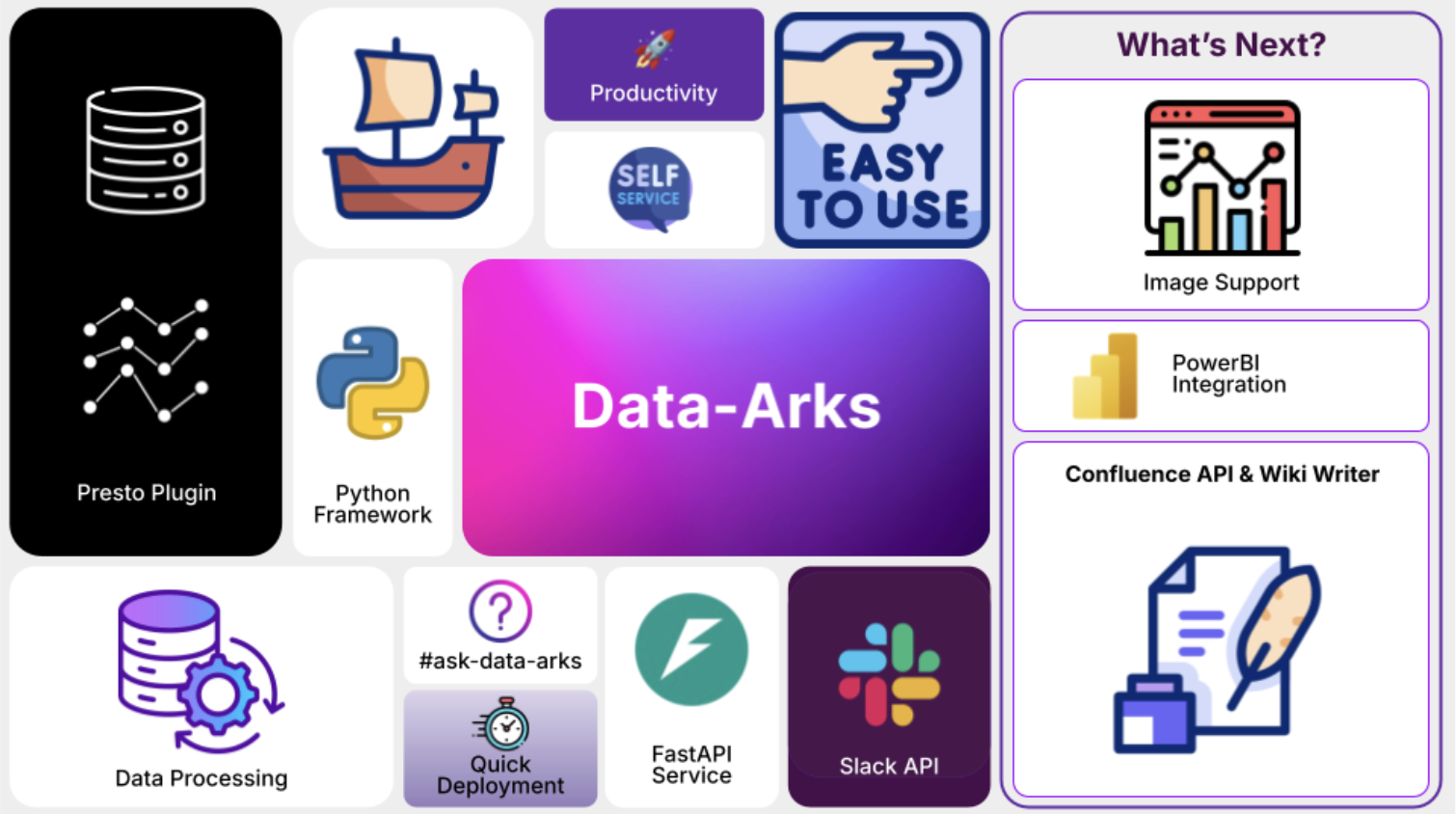
The potential of using RAG-powered LLM can be limitless as the ability of GPT is correlated with the tools it equips. Hence, the process does not stop here and we will try to onboard more tools or integration to GPT. In the near future, we plan to utilise Data-Arks to provide images to GPT as GPT-4o is a multimodal model that has vision capabilities. We are committed to pushing the boundaries of what’s possible with RAG-powered LLM, and we look forward to unveiling the exciting advancements that lie ahead.
Figure 6. What’s next?
We would like to express our sincere gratitude to the following individuals and teams whose invaluable support and contributions have made this project a reality: – Meichen Lu, a senior data scientist at Grab, for her guidance and assistance in building the MVP and testing the concept. – The data engineering team, particularly Jia Long Loh and Pu Li, for setting up the necessary services and infrastructure.
Join us
Grab is the leading superapp platform in Southeast Asia, providing everyday services that matter to consumers. More than just a ride-hailing and food delivery app, Grab offers a wide range of on-demand services in the region, including mobility, food, package and grocery delivery services, mobile payments, and financial services across 700 cities in eight countries.
Powered by technology and driven by heart, our mission is to drive Southeast Asia forward by creating economic empowerment for everyone. If this mission speaks to you, join our team today!
Organizations that are looking to establish secure communication networks at the edge often encounter challenges. The use of disparate collaboration tools on personal and government-issued devices can make it difficult to protect sensitive data and avoid communication gaps.
This blog post highlights four common communication issues that customers encounter when operating in disconnected (or intermittently connected) environments, and how end-to-end encrypted messaging and collaboration service AWS Wickr can help you address them.
Issue 1: Seamless communication—multiple agencies and partners need to collaborate effectively.
Federal, state, and local organizations tend to use different means and mechanisms to communicate both internally and externally with third parties, which often leads to interoperability challenges. They need to seamlessly coordinate and connect with mission partners—including government agencies, military teams, medical professionals, and first responders—even in disconnected environments in order to work together effectively.
Issue 2: Out-of-band communication—teams need a way to ensure that communication is possible when primary channels are down or compromised.
Network disruptions, security events, and system failures can impact communication channels. The use of a separate, secure, out-of-band communication tool that can be used as a backup when primary channels are unavailable or compromised is critical to protecting sensitive information, maintaining business continuity, and coordinating incident response activities.
Issue 3: Data retention—messages and files need to be retained to help meet recordkeeping requirements, and facilitate after-action reports.
Virtually all federal, state, and local government agencies must adhere to various data retention and records management policies, regulations, and laws. Many are subject to Federal Records Act (FRA) and National Archives and Records Administration (NARA) regulations that require them to collect, store, and manage federal records that are created, received, and used in daily operations. For those subject to Freedom of Information Act (FOIA) requests and U.S. Department of Defense (DOD) Instruction 8170.01—which prescribes procedures for the collection, distribution, storage, and processing of DOD information through electronic messaging services—effectively retaining messages is about more than supporting security and compliance; it’s about maintaining public trust.
Issue 4: Security and control—communications must be adequately protected and administrative control must be maintained, no matter the environment.
The transmission of sensitive and mission-critical data through messaging apps and collaboration tools that lack critical encryption and security protocols increases the likelihood of a security incident. Popular consumer messaging apps don’t provide controls that allow for individual devices or accounts to be suspended or removed, increasing the threat of data exposure stemming from a lost or stolen device. Enterprise collaboration apps lack the advanced security provided by end-to-end encryption.
How AWS Wickr can help
AWS Wickr is a secure messaging and collaboration service that protects one-to-one and group messaging, voice and video calling, file sharing, screen sharing, and location sharing with 256-bit encryption.
Wickr combines the security and privacy of end-to-end encryption with the data retention and administrative controls you need to accelerate collaboration, even in disconnected environments.
Wickr provides the following capabilities to help you address common communication challenges:
Seamless communication: Federation and guest access features allow you to exchange sensitive information with mission partners, without the need to connect to a virtual private network (VPN). You can assign groups of users to specific federation rules, restrict access to select agencies and partners, and allow or disable the guest user access feature for individual security groups.
Out-of-band communication: Wickr provides a communication channel outside of existing systems that can help you keep teams connected and protect sensitive information, even when primary channels are down or compromised. The user interface is intuitive; response teams can simply open the application on their device and start collaborating, without special software or training.
Data retention: Wickr network administrators can configure and apply data retention to both internal and external communications in a Wickr network. This includes conversations with guest users, external teams, and other partner networks, so you can retain messages and files sent to and from the organization to help meet requirements. Data retention is implemented as an always-on recipient that is added to conversations, similar to the blind carbon copy (BCC) feature in email. The data retention process can run anywhere Docker workloads are supported: on-premises, on an Amazon Elastic Compute Cloud (Amazon EC2) virtual machine, or at a location of your choice.
Security and control: With Wickr, each message gets a unique Advanced Encryption Standard (AES) private encryption key, and a unique Elliptic-curve Diffie–Hellman (ECDH) public key to negotiate the key exchange with recipients. Message content—including text, files, audio, or video—is encrypted on the sending device using the message-specific AES key. This key is then exchanged via the ECDH key exchange mechanism so that no one other than intended recipients can decrypt the content (not even AWS). Fine-grained administrative controls allow you to organize users into security groups with restricted access to features and content at their level. You can apply policies to each group that are custom-tailored to meet desired outcomes. Wickr app data can be deleted remotely both by administrators, and end users.
Communicating at the edge
Wickr is available in two deployment models: cloud-native AWS Wickr and AWS WickrGov, which are available through the AWS Management Console, and self-hosted Wickr Enterprise. Wickr Enterprise offers the same secure collaboration features as AWS Wickr and AWS WickrGov, but can be self-hosted on any private on-premises infrastructure (such as an AWS Outpost or Snowball Edge device), private cloud infrastructure, or in a multi-cloud deployment. Wickr Enterprise can maintain secure communications when internet access (via broadband, mobile, 5G, or satellite) to cloud-based networks fails. You can run Wickr Enterprise without any internet connectivity and it supports architectural resiliency, such as deploying a fully managed network backhaul that is capable of federating with AWS Wickr users when internet connectivity is available.
Figure 1 illustrates a hybrid architecture that combines AWS Wickr and Wickr Enterprise. The Snowball Edge device running Wickr allows disconnected communications at the edge between Wickr Enterprise users. When internet connectivity becomes available, Wickr Enterprise users can federate with AWS Wickr users and send data retention logs to Amazon S3 or any customer-defined storage.
Figure 1: Hybrid of Wickr Enterprise self-hosted on Snowball Edge and AWS Wickr in the Cloud. A hybrid solution federates AWS Wickr in the cloud with a local deployment of Wickr Enterprise for extended resilience and redundancy.
Collaborate with confidence
Securing communications at the edge is critical to protecting sensitive data and maintaining operational resilience. AWS Wickr offers a secure, simple-to-use, reliable solution that can help you address common challenges and collaborate effectively, even in the harshest environments. By choosing the features and deployment options that meet your needs, you can facilitate secure and compliant communications everywhere, and seamlessly collaborate with mission partners.
AWS Wickr has been authorized for Department of Defense Cloud Computing Security Requirements Guide Impact Level 4 and 5 (DoD CC SRG IL4 and IL5) in the AWS GovCloud (US-West) Region. It is also Federal Risk and Authorization Management Program (FedRAMP) authorized at the Moderate impact level in the AWS US East (N. Virginia) Region, FedRamp High authorized in the AWS GovCloud (US-West) Region, and meets compliance programs and standards such as Health Insurance Portability and Accountability Act (HIPAA) eligibility, International Organization for Standardization (ISO) 27001, and System and Organization Controls (SOC) 1,2, and 3.
Erik is a Principal Worldwide Go-to-Market (GTM) Specialist for Amazon Web Services (AWS) and is based in Montana. He focuses on global customers and leads the global GTM plan for AWS Wickr. Erik has 15-plus years of experience working across industries from national security, federal/SLED sales, healthcare, and technology. He holds a master’s degree in microbiology from California State University Long Beach and a bachelor’s degree in Biological Sciences from the University of California Irvine.
Anne Grahn
Anne is a Senior Worldwide Security GTM Specialist at AWS, based in Chicago. She has more than 13 years of experience in the security industry, and focuses on effectively communicating cybersecurity risk. She maintains a Certified Information Systems Security Professional (CISSP) certification.
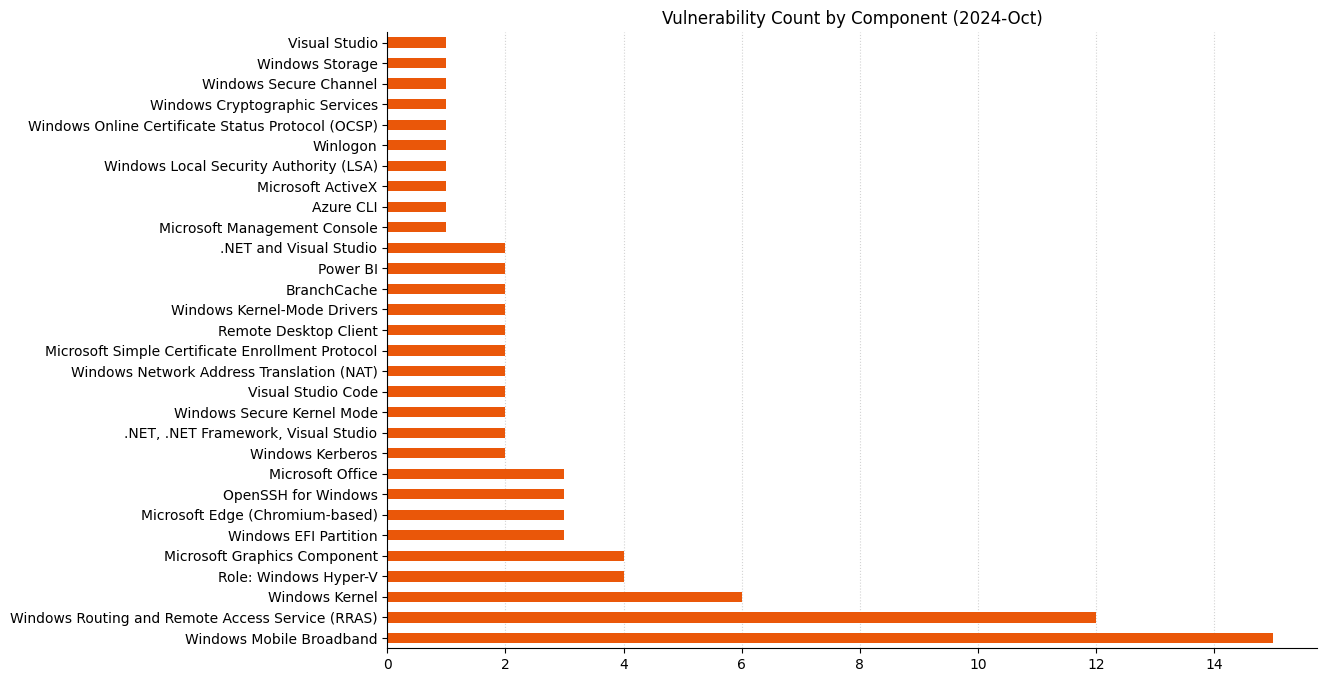
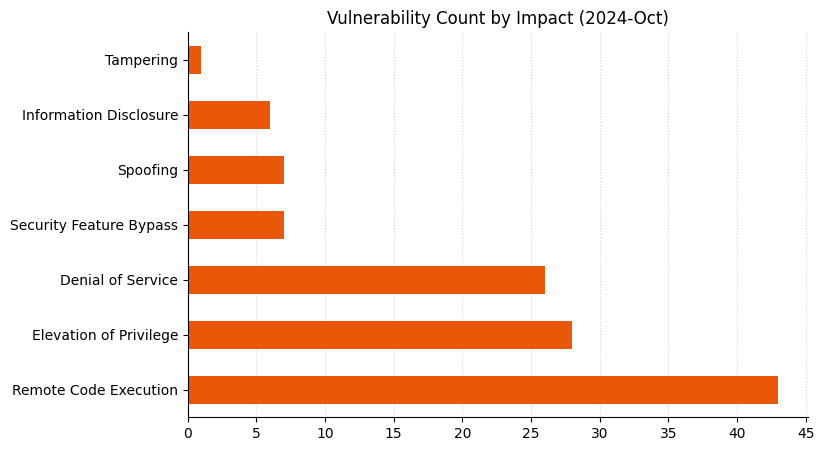
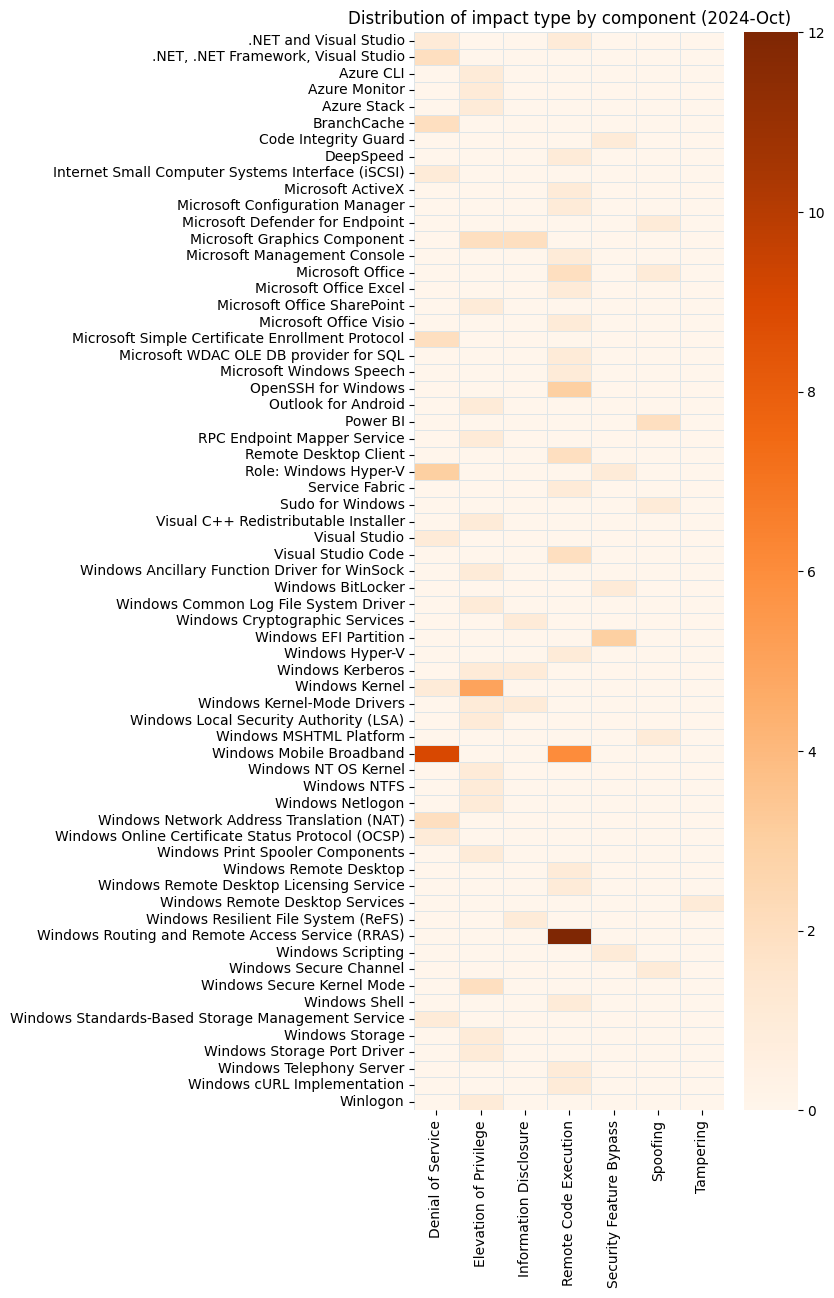
Microsoft is addressing 118 vulnerabilities this October 2024 Patch Tuesday. Microsoft has evidence of in-the-wild exploitation and/or public disclosure for five of the vulnerabilities published today, although it does not rate any of these as critical (yet). Of those five, Microsoft lists two as exploited in the wild, and both of these are now listed on CISA KEV. Microsoft is also patching three further critical remote code execution (RCE) vulnerabilities today. Three browser vulnerabilities have already been published separately this month, and are not included in the total.
Somewhat unusually, we’ll take a look at two of the three critical RCEs published today — CVE-2024-43468 and CVE-2024-43582 — before moving on to the arguably somewhat-less- threatening zero-day vulnerabilities patched today.
Microsoft Configuration Manager: pre-auth RCE
Microsoft Configuration Manager receives a patch for the only vulnerability published by Microsoft today with a CVSS base score of 9.8. Although Microsoft doesn’t tag it as either publicly disclosed or exploited-in-the-wild, the advisory for CVE-2024-43468 appears to describe a no-interaction, low complexity, unauthenticated network RCE against Microsoft Configuration Manager. Exploitation is achieved by sending specially-crafted malicious requests, and leads to code execution in the context of the Configuration Manager server or its underlying database. The relevant update is installed within the Configuration Manager console, and requires specific administrator actions that Microsoft describes in detail in a generic series of articles. Further information and several specific required steps are described in KB29166583.
Confusingly, this KB29166583 was first published over a month ago on 2024-09-04, and was then subsequently unpublished and republished on 2024-09-18, all without any mention of CVE-2024-43468, which was published only today and which KB29166583 apparently remediates. Defenders should read the available documentation carefully, and then probably read it again for good measure.
RPD RPC: pre-auth RCE
Any RDP Server critical RCE is worth patching quickly. CVE-2024-43582 is a pre-auth critical RCE in the Remote Desktop Protocol Server. Exploitation requires an attacker to send deliberately-malformed packets to a Windows RPC host, and leads to code execution in the context of the RPC service, although what this means in practice may depend on factors including RPC Interface Restriction configuration on the target asset. One silver lining: attack complexity is high, since the attacker must win a race condition to access memory improperly.
Winlogon: zero-day EoP
Who doesn’t love a good elevation of privilege vulnerability? Weary blue teamers who see the words “publicly disclosed” on a brand-new advisory know the answer. CVE-2024-43583 describes a flaw in Winlogon which gets an attacker all the way to SYSTEM via abuse of a third-party Input Method Editor (IME) during the sign-on process. The supplementary KB5046254 article explains that the 2024-10-08 patches disable non-Microsoft IME during the sign-in process. On that basis, outright removal of third-party IME is a mitigation available to anyone who is not able to apply today’s patches immediately.
Attack surface reduction is always worth considering, and removal of third-party IMEs certainly accomplishes that. Anyone who needs to keep a third-party IME can still do so, but once today’s patches are applied, that third-party IME will be disabled — only in the context of the sign-in process — to prevent exploitation of CVE-2024-43583. Although Microsoft doesn’t quite spell it out, the only reasonable interpretation of the available information is that an asset with no first-party/Microsoft IME installed would remain vulnerable after patching, since otherwise no IME would be available when attempting to sign in. Use of third-party IME is more likely to be a concern in mixed-language or non-English-speaking contexts. The disclosure process around this vulnerability may not have been entirely smooth; back in September, one of the researchers credited with the discovery expressed discontent with MSRC via X-formerly-known-as-Twitter.
Hyper-V: zero-day container escape
CVE-2024-20659 describes a publicly-disclosed security feature bypass in Hyper-V. Microsoft describes exploitation as both less likely and highly complex. An attacker must be both lucky and resourceful, since only UEFI-enabled hypervisors with certain unspecified hardware are vulnerable, and exploitation requires coordination of a number of factors followed by a well-timed reboot. All this after first achieving a foothold on the same network — although in this context, this likely means access to a VM on the target hypervisor, rather than some other location on the same subnet. The prize for successful exploitation is compromise of the hypervisor kernel.
MSHTML: zero-day XSS
CVE-2024-43573 is an exploited-in-the-wild spoofing vulnerability in MSHTML for which Microsoft is also aware of functional public exploit code; the advisory lists CWE-79 as the weakness, which translates to cross-site scripting (XSS). The advisory is sparse on further detail, although Windows Server 2012/2012 R2 admins who typically install Security Only updates should note that Microsoft is encouraging installation of the Monthly Rollups to ensure remediation in this case. The low CVSSv3 base score of 6.5 reflects the requirement for user interaction and the lack of impact to integrity or availability; a reasonable assumption might be that exploitation leads to improper disclosure of sensitive data, but no other direct effect on the target asset.
cURL: zero-day RCE
Microsoft is most famous for its closed source products, but has cautiously softened its stance on open source considerably in the past quarter century or so. Windows has included components of cURL for almost seven years at this point, along with various other open source components; Microsoft does patch these from time to time, although not always as quickly as defenders might like. Today’s patches for CVE-2024-6197, a publicly-disclosed RCE vulnerability in cURL, continue that trend.
The Microsoft advisory for CVE-2024-6197 clarifies that Windows does not ship libcurl, only the curl command line, but that’s still vulnerable and thus in scope for a fix. Exploitation requires that the user connect to a malicious server controlled by the attacker, and code execution is presumably in the context of the user launching the curl CLI tool on the Windows asset. The cURL project advisory for CVE-2024-6197 was originally published on 2024-07-24, and offers further detail from their perspective. Interestingly, the cURL project describes the most likely outcome of exploitation as a crash, and does not specifically mention RCE, although it is careful not to exclude the possibility of unspecified “more serious results,” which could well mean RCE. Microsoft rates this vulnerability as important, which is on track with the CVSS base score of 8.8.
Management Console: zero-day RCE
CVE-2024-43572 rounds out today’s five zero-day vulnerabilities, and describes a low-complexity, no-user-interaction RCE in Microsoft Management Console. Microsoft is aware of both public functional exploit code and in-the-wild exploitation. The vulnerability is exploited when a user downloads and opens a specially-crafted malicious Microsoft Saved Console (MSC) file, so there’s no suggestion here that the Management Console is vulnerable via network attack. Today’s patches prevent untrusted MSC files from being opened, although the advisory does not describe how Windows will know what’s trusted and what isn’t. Microsoft has chosen to map CVE-2024-43572 to CWE-70, which is a very broad category, the use of which is explicitly discouraged by MITRE.
VS Code Arduino extension: cloud critical RCE
A third critical RCE patched today is hopefully less concerning than its siblings. CVE-2024-43488 is in the Visual Studio Code extension for Arduino, and Microsoft notes that the vulnerability documented by this CVE requires no customer action to resolve. A reasonable question is: what does “no action required” really mean here? Within the advisory, Microsoft both claims to have fully mitigated the vulnerability, and also that there is no plan to fix the vulnerability. As confusing as that all sounds, perhaps the most important takeaway here is that Microsoft is now issuing cloud service CVEs in a stated effort to improve transparency. It’s not clear when the vulnerability was first introduced or when it was remediated, but nevertheless the recent expansion into a whole new class of CVEs is a welcome step by Microsoft.
SharePoint: EoP to SYSTEM
A sparse advisory for CVE-2024-43503, which is an elevation of privilege vulnerability which leads to SYSTEM. Advisories for similar vulnerabilities typically describe the specific SharePoint privileges required, but this one does not, so a reasonable assumption might be that the requirement here is simply minimal Site Member privileges.
In the early days of open source, it was a struggle to get companies
to accept the concept and trust its development model.
Now, companies have few qualms about using it, but do tend to take open source and
those who maintain it for granted. The struggle now is to find ways
to compensate producers of the software, sustain the open‑source
commons, and avoid burning out maintainers. The Open Source Pledge project is
an effort to persuade companies to pay maintainers by making it a social
norm. On October 8, the project is launching a marketing campaign to raise
awareness and try to get a larger conversation started around paying
maintainers.
To provide the best experiences, we use technologies like cookies to store and/or access device information. Consenting to these technologies will allow us to process data such as browsing behavior or unique IDs on this site. Not consenting or withdrawing consent, may adversely affect certain features and functions.
Functional
Always active
The technical storage or access is strictly necessary for the legitimate purpose of enabling the use of a specific service explicitly requested by the subscriber or user, or for the sole purpose of carrying out the transmission of a communication over an electronic communications network.
Preferences
The technical storage or access is necessary for the legitimate purpose of storing preferences that are not requested by the subscriber or user.
Statistics
The technical storage or access that is used exclusively for statistical purposes.The technical storage or access that is used exclusively for anonymous statistical purposes. Without a subpoena, voluntary compliance on the part of your Internet Service Provider, or additional records from a third party, information stored or retrieved for this purpose alone cannot usually be used to identify you.
Marketing
The technical storage or access is required to create user profiles to send advertising, or to track the user on a website or across several websites for similar marketing purposes.




 Erik Iwanski
 Anne Grahn