AI 101: Why RAG Is All the RAGe

Post Syndicated from Stephanie Doyle original https://www.backblaze.com/blog/ai-101-why-rag-is-all-the-rage/

A decorative image showing an AI chip connecting icons of representing different files.

At the risk of being called the stick in the mud of the tech world, we here at Backblaze have often bemoaned our industry’s love of making up new acronyms. The most recent culprit, hailing from the fast-moving artificial intelligence/machine learning (AI/ML) space, is truly memorable: RAG, aka retrieval-augmented generation. For the record, its creator has apologized for inflicting it upon the world.

Given how useful it is, we’re willing to forgive. (I’m sure he was holding his breath for that news.) Today, our AI 101 series is back to talk about what RAG is—and the big problem it solves. 

Read more AI 101

This article is part of a series that attempts to understand the evolving world of AI/ML. Check out our previous articles for more context:

Let’s start with large language models (LLMs)

LLMs are the most recognizable expression of AI in our current zeitgeist. (Arguably, you could append that with “that we’re all paying attention to,” given that ML algorithms have been behind many tools for decades now.) LLMs underpin tools like ChatGPT, Google Gemini, and Claude, as well as things like service-oriented chatbots, natural language processing tasks, and so on. They’re trained on vast amounts of data with algorithmic guardrails known as parameters and hyperparameters guiding their training. Once trained, we query them through a process known as inference

Fabulous! The possibilities are endless. However, one of the biggest challenges we’ve experienced (and laughed about on the internet) is that LLMs can return inaccurate results, while sounding very, very reasonable. Additionally, LLMs don’t know what they don’t know. Their answers can only be as good as the data they draw from—so, if their training dataset is outdated or contains a systematic bias, it will impact your results. As AI tools have become more widely adopted, we’ve seen LLM inaccuracies range from “funny and widely mocked” to “oh, that’s actually serious.

Enter retrieval-augmented generation (Fine! RAG)

RAG is a solution to these problems. Instead of relying on only an LLM’s dataset, RAG queries external sources before returning a response. It’s more complicated than “let me google that for you,” as the process takes that external data, turns it into a vectored database, and then balances external data with an LLM’s “general knowledge” generated response and skill at responding to conversational queries. 

This has several advantages. Users now have sources they can cite, and recent information is taken into account. From a development perspective, it means that you don’t have to re-train a model as frequently. And, it can be implemented in as few as five lines of code. 

One important nuance is that when you’re building RAG into your product, you can set its sources. For industries like medicine and law, that means you can point them towards industry journals and trusted sources, outweighing the often misquoted or mis-cited examples you might see in a general database. 

Another example: For a technical documentation portal, you can take an LLM, trained on general information and the nuts and bolts of conversational querying, and direct it to rely on your organization’s help articles as its most important sources. Your organization controls the authoritative data, and how often/when changes are made. Users can trust that they’re getting the most recent security patches and correct code. And, you can do so quickly, easily, and—most importantly—cost-effectively. 

RAG doesn’t mean foolproof AI

RAG is a great, straightforward method for keeping LLM tools updated with current, high-quality information and giving users more transparency around where their answers are coming from. However, as we mentioned above, AI is only ever as good as the data it uses. Keep in mind, that’s a deceptively simple thing to say. It’s an entire, specialized job to validate datasets, and that expertise is built into the research and monitoring that happens while training an LLM. 

RAG gives a new source of data a privileged position—you’re saying “this data is more authoritative than that data” and, since the LLM doesn’t have anything in its general database, it may not have a counter argument. If you’re not paying attention to your RAG data source standards, and doing so on an ongoing basis, it’s possible, and even likely, that data bias, low quality data, etc. could creep into your model. 

Think of it this way: If you’re pointing to a new feature in your tech docs and there’s an error, that impact is magnified because an LLM will give more weight to the RAG data. At least in that case, you’re the one who controls the source data. In our other examples of legal or medical AI tools pointing to journal updates, things can get, well, more complicated. If (when) you’re setting up an AI that uses RAG, it’s imperative to make sure you’re also setting yourself up with reliable sources that are regularly updated. 

But, given its impact, and how low of a lift it is to integrate into existing products, we can see why RAG is all the RAGe—and, as always, we look forward to more to come in the AI landscape. For now, we can already see the impact it’s having on the market, with SaaS companies and startups alike exploring the possibilities.

The post AI 101: Why RAG Is All the RAGe appeared first on Backblaze Blog | Cloud Storage & Cloud Backup

[$] Python grapples with Apple App Store rejections

Post Syndicated from jzb original https://lwn.net/Articles/979671/

An upgrade from Python 3.11 to 3.12 has led to the rejection of
some Python apps by Apple’s app stores. That led to Eric Froemling submitting a bug report
against CPython. That, in turn, led to an interesting
discussion among Python developers about how far the project was
willing to go to accommodate app store review processes. Developers
reached a quick consensus, and a solution that may arrive as soon as
Python 3.13.

Coolest Projects 2024: 7197 young tech creators showcase their projects online

Post Syndicated from Helen Gardner original https://www.raspberrypi.org/blog/coolest-projects-2024-young-tech-creators-showcase-their-projects-online/

Our Coolest Projects 2024 online showcase has come to a close, with 7197 young people from 43 countries sharing the incredible things they have made with code. A huge congratulations to everyone who took part!

Young people raising their hands in the air.

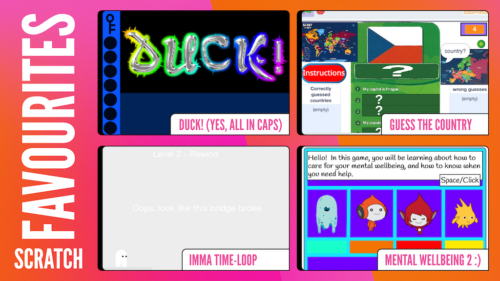
Coolest Projects is our annual global celebration of young digital creators and the cool things they make with technology. This year’s showcase featured 4678 amazing projects, from a doughnut clicker game created in Scratch to an app that tracks sunscreen usage and areas with high UV levels for users. 

This week, we celebrated each and every young creator and their incredible tech projects in a special livestream:

Every year, we invite some very special VIP judges to choose their favourite projects to highlight. Meet our 2024 judges and find out about the projects they picked.

Azra Ismail’s favourite projects

Azra is the co-founder of MakerGhat, an education nonprofit based in India that aims to nurture underserved youth to become the next generation of entrepreneurs and leaders. MakerGhat has reached around a million youth to date through hands-on making programmes. She is also an Assistant Professor at Emory University, where she directs the CARE Lab (Collective Action & Research for Equity). Azra was named in the Forbes 30 under 30 Asia list, and has previously worked with Google, the Wadhwani Institute for AI, and United Nations Global Pulse. She has a PhD in Human-Centered Computing and Bachelor’s in Computer Engineering from Georgia Tech. 

See Azra’s favourite projects:

Judges’ favourite projects in the Scratch category.

Greg Foot’s favourite projects

Greg is an award-winning Science Presenter and Producer who has written and hosted a bunch of stuff on TV, YouTube, radio, and stage over the past 20 years. Greg has a BBC Radio 4 show called Sliced Bread that investigates whether wonder products like face creams and air fryers are indeed ‘the best thing since sliced bread’, or marketing hype. Greg regularly pops up on TV — he’s a regular on the BBC’s Morning Live and was the in-house science guy on Blue Peter and Sunday Brunch for many years. He’s also hosted multiple TV series, made live shows for families on YouTube (Let’s Go Live), and toured science theatre shows around the UK.

Take a look at Greg’s favourite projects:

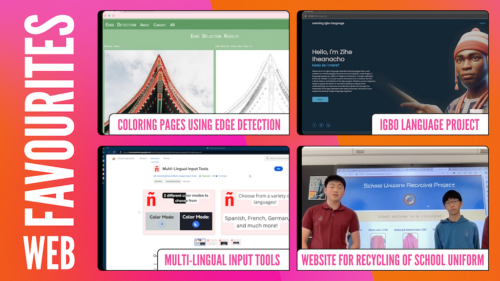
Judges’ favourite projects in the Web category.

Natalie Lao’s favourite projects

Natalie is the Executive Director of the App Inventor Foundation, a global nonprofit that has empowered over 20 million inventors of all ages to create over 100 million apps to improve their lives and uplift their communities. She received her PhD in ML and AI education from MIT’s Computer Science and Artificial Intelligence Lab, and currently serves as Expert on Mission at UNESCO to develop the UN’s AI Competency Framework for K-12 Students. 

See which projects Natalie chose as her favourites:

Judges’ favourite projects in the Games category.

Selin Ornek’s favourite projects

Selin is a 17-year-old multi-award winner and changemaker who has been passionate about using tech for good since an early age. She taught herself to code at age 8 and started building robots at 10, and participated in Coolest Projects for many years. She has built seven robots to date, including the social good robot iC4U, a robot guide dog for visually impaired people, and BB4All, an anti-bullying school aid robot. She has also built a stray dog wellbeing app, JAVA, and an AI model for breast cancer diagnosis. Her aim is to inspire young people, especially girls, to see the fun and importance of using tech for good.

Selin’s favourite projects are:

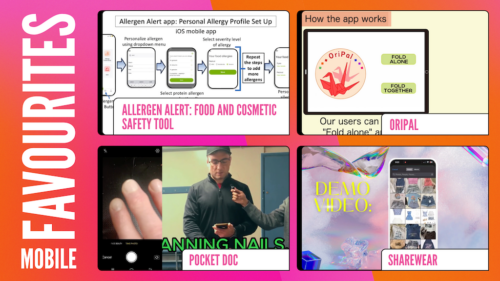
Judges’ favourite projects in the Mobile category.

Broadcom Coding with Commitment® award

We partnered with Broadcom Foundation to give a special award to young creators using coding and computing to solve real-world problems that matter to their communities. Broadcom Coding with Commitment® is a special recognition for a Coolest Projects creator aged 11–14 who has used computing as an essential problem-solving tool to help those around them.

Naitik, Shravasti and Nikita present their 'Drainage alert system' project.

This year’s Broadcom Coding with Commitment® recipients are Naitik, Shravasti, and Nikita from India in recognition of their project Drainage alert system. Their thoughtful project uses a water flow sensor connected to a Raspberry Pi computer to detect when waste enters the drainage system and causes blockages and send an alert to the local council.

Get inspired and keep creating!

Now you’ve seen the judges’ favourite projects, it’s time to pick your own! Take a look at the Coolest Projects 2024 online showcase gallery to see all the amazing projects from young people all over the world, and get inspired to make your own.

Judges’ favourite projects in the Hardware category.

Participants will shortly receive their own unique certificates and the personalised feedback on their projects from our team of judges, to celebrate their achievements.

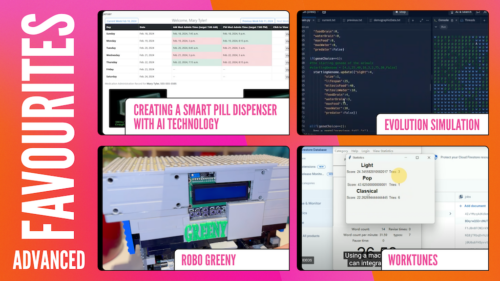
Judges’ favourite projects in the Advanced category.

Support from our Coolest Projects sponsors means we can make the online showcase and celebration livestream an inspiring experience for the young people taking part. We want to say a big thank you to all of them: Amazon Future Engineer, Broadcom Foundation, GoTo, Kingston Technology, Meta, and Qube Research & Technologies.

The post Coolest Projects 2024: 7197 young tech creators showcase their projects online appeared first on Raspberry Pi Foundation.

Security updates for Thursday

Post Syndicated from jzb original https://lwn.net/Articles/979847/

Security updates have been issued by Debian (ffmpeg, kernel, libvpx, and linux-5.10), Fedora (chromium, firefox, freeipa, moodle, and openvpn), Oracle (git), Red Hat (golang and java-1.8.0-ibm), and Ubuntu (linux-oracle-6.5, netplan.io, openssl, plasma-workspace, ruby2.7, ruby3.0, ruby3.1, sqlite3, and wget).

Слонът в стаята на българския правопис

Post Syndicated from original https://www.toest.bg/slonut-v-stayata-na-bulgharskiya-pravopis/

Слонът в стаята на българския правопис

От десетилетия е там, но ние продължаваме публично да мълчим за него, продължаваме да игнорираме вероятно най-големия проблем в съвременния български правопис. И не, според мен това не са правилата за поставяне на пълен и кратък член, а за слято, полуслято и разделно писане.

Да разчленим проблема

Наистина ли е толкова сложно и трудно да се справим с тези правила? Ще се опитам да обясня в какво се състои проблемът, а отговорът на въпроса, мисля, няма да затрудни никого.

1. Правилата за слято, полуслято и разделно писане са много на брой – между 110 и 1201 .

За сравнение, следващият по обем раздел – за употреба на главни и малки букви – съдържа около 70 правила. Няма какво толкова да се коментира и анализира. И при най-добро желание редовият българин ще се обезсърчи само като се изправи пред такова количество разпоредби в един раздел.

2. Прилагането на правилата изисква време и способности за лингвистичен анализ.

Понеже летните жеги настъпиха със страшна сила още през юни, да се поразхладим с едно айскафе. Случаят е сравнително прост: имаме сложно съществително име, в което двете части са от чужд произход и първата пояснява втората. Тъй като айс не се употребява като самостоятелна дума в българския език, айскафе се пише слято. Ако си пием напитката в кафе-ресторанта обаче, ще трябва да прибегнем до полуслятото писане, защото тук смисловото отношение между двете части е равноправно: заведението е кафе(не) и ресторант.

В случай че бързаме, може да си вземем кофеиновата доза от уличен кафе автомат/кафеавтомат. При тази сложна дума първата част пояснява втората и смисловото отношение е както при айскафе, но понеже и двете части (кафе и автомат) се употребяват самостоятелно, сложната дума може да се пише и слято, и разделно. В практиката масово се предпочита разделното писане в този случай, който може да илюстрираме с примери като фитнес клуб, бизнес среща, рок група2.

При прилагането на някои правила е нужен по-обстоен анализ. Как например следва да пишем компютърно-томографски и ядрено-магнитен? И за двете прилагателни кодификаторът още не се е произнесъл, затова ще се наложи да се заровим в словообразуването и във… физиката. За да напишем правилно първата дума, е нужно само: 1) да знаем, че ако едно сложно прилагателно е образувано от съчетание на прилагателно и съществително име, то се пише слято; 2) да предположим, че има уред, наречен компютърен томограф; 3) да се уверим, че уредът съществува наистина. Е, вече уверено може да напишем компютърнотомографски.

Второто прилагателно обаче явно не може да се свърже с ядрен магнит или с някакво подобно словосъчетание. Затова зарязваме за неопределено време текста, по който работим, и започваме да проучваме физичното явление ядрено-магнитен резонанс, стоящо в основата на едноименното медицинско изследване. Разбираме, че става въпрос за атомни ядра на вещество, поставено в магнитно поле. След като ядро/ядрен не пояснява магнит/магнитен, нито пък обратното, е логично да приемем, че са в равноправни смислови отношения в прилагателното, и да напишем ядрено-магнитен. А колко ценно време загубихме?

3. Част от правилата за слято, полуслято и разделно писане не могат да се приложат обективно.

Най-ярка илюстрация е слятото/разделното писане на сложни прилагателни от типа световноизвестен/безследно изчезнал, които се срещат доста по-често, отколкото може да предположите. В първия пример съчетанието от наречие (световно) и прилагателно име (известен) образуват смислово единство, а във втория – не (тук втората част изчезнал е причастие, функциониращо като прилагателно име). В пощата на „Как се пише?“ вече са ми задавали десетки, ако не и стотици въпроси за правописа на такива прилагателни имена. И това е съвсем естествено, защото, когато слято написаната дума липсва в Официалния правописен речник (вече в БЕРОН), човек изпада в двоумение, а и в триумение как да я напише.

Лютеницата едросмляна ли е, или едро смляна? Обучението проектнобазирано ли е, или проектно базирано (досега съм получила 15 въпроса конкретно за това съчетание!)? Кучетата от породата „Басет“ средноголеми ли са, или средно големи? Едно е сигурно: полуслетият вариант се изключва и е добре това да се уточни, защото немалко питащи всъщност се колебаят между трите начина на писане.

Кой трябва да определи дали дадено съчетание от наречие и прилагателно име/причастие вече представлява смислово единство, тоест едно цялостно понятие, и съответно се е лексикализирало, станало е нова дума в езика? Нима тази задача се вменява на пишещия, който в общия случай не е филолог? Но дори и да е филолог, той не притежава компетентността на висококвалифицирания специалист лексикограф. Според мен конкретно тези правила са едно от най-големите недоразумения в българския правопис и издават определена кодификаторска немощ.

Да продължим със сложните наречия. Правилото в този вид, в който е формулирано, не е кой знае колко полезно:

Сложни наречия, образувани от предлог и наречие, се пишат слято.

За досега, отскоро, вдясно се съгласяваме, че се подчиняват на правилото, но как да се досетим, че до утре, от вчера, в повече са на друг правописен режим? Добре че подобни съчетания не са необозримо много и може да се запомнят от хората, които са паметливи и държат на правописа.

4. При правилата за слято, полуслято и разделно писане има непоследователност, противоречия, ненужни изключения.

Нали си спомняте, че съществителното име кафе автомат може да се пише и разделно, и слято (кафеавтомат), защото двете му части (от чужд произход) се употребяват самостоятелно? Би следвало това да важи например за кинопремиера и радиопрограма. Ами не, не важи, защото думи от този тип се пишат слято по традиция.

Понеже сме на вълна Европейско първенство по футбол, да отбележим и една актуална дума с традиционно слят правопис – голмайстор. Но пък голлиния не е в този списък и може да се пише и слято, и разделно. Изпуснахте ли вече логиката? Добре, ще ви върна в нейното лоно: голлинията е на същия режим като кафеавтомата. И тъкмо нещата да се прояснят и да си дойдат на мястото, макар и с цената на известно умствено напрежение, ще изтичаме до тъчлинията, която трябва да се пише само слято. Същото важи и за аутлинията. Не ме питайте защо. И тъч, и аут се употребяват като самостоятелни съществителни имена в българския език, следователно разделното писане трябва да е позволено.

Ако продължавате да четете, със сигурност сте хвърлени в тъч и ви предлагам там да си останете, за да понесете по-лесно още едно противоречие, което може и да сте установили, в случай че сте се замисляли по въпроса.

Няма логика – нито филологическа, нито обикновена човешка – вкъщи да се пише слято, а у дома – разделно.

И двете представляват съчетание на предлог и стара падежна форма на съществително име3. Когато се променя правописът на дадена дума, редно е да се държи сметка за цялата система. Щом си казал А (вече ще пишем вкъщи), трябва да кажеш и Б (вече ще пишем удома). Иначе дискредитираш въпросната система.

Какво да се прави?

Представих ви само част от проблемите, свързани със слятото, полуслятото и разделното писане, но и те са достатъчни, за извода, че в сегашния си вид правописните правила затрудняват значително не само средностатистическия българин, но и филолозите. Главната причина за тази зле функционираща система от правила според мен е в погрешната концепция, която е стъпила на смисловите отношения между частите, изграждащи сложните думи. Така смята и професор Боян Вълчев:

В частта за слятото, полуслятото и разделното писане […] последователно се говори за главна и подчинена основа, за равноправно и неравноправно отношение […]. Това означава, че когато човек пише, трябва да спре и да направи лингвистичен анализ на думата или думите и тогава да реши как да постъпи. Дори и аз в много от случаите не мога еднозначно да си обясня бързо коя е главната и коя – подчинената основа. Това е постановка, която по принцип е погрешна. Правописът трябва да има почти напълно автоматичен характер.

Ако наистина искаме правилата за слято, полуслято и разделно писане да са функционални, с козметични промени нищо няма да се постигне. Нужна е промяна на концепцията, която да се основава на структурата на думите, а не на смисловите отношения между частите им. Лошото е, че белята вече е направена – макар и лоши, правилата са познати и хората, които държат на правописа, са свикнали с тях. Затова кардинална промяна ще се посрещне, меко казано, с неодобрение. Зле е, но е познатото зле. Би ли имал смелост кодификаторът да предприеме такава промяна? Надявам се, че поне мисли върху нея.

1 Поради начина, по който са формулирани, и поради включването на някои правила в различни подраздели е трудно броят им да се прецизира.

2 Правилно е също да се пише фитнесклуб, бизнессреща, рокгрупа.

3 Дома е падежна, а не членувана форма на съществителното дом, както биха възразили някои, и доказателство е най-малкото това, че произнасяме [домà], а не [домъ̀].


Езикът може да е вкусен и извън блюдото – онзи, българският език, на който говорим от малки и на който около 24 май се кълнем в обич. А той в същността си е средство за общуване и за да ни служи добре, непрекъснато се променя. Да го погледнем в неговата динамика и да се опитаме да разберем какво става и защо, кои са движещите механизми и как те са свързани с обществените процеси. И тъй като задачата не е лека, ще го правим постепенно – на порции.

Let’s Architect! Migrating to the cloud with AWS

Post Syndicated from Federica Ciuffo original https://aws.amazon.com/blogs/architecture/lets-architect-migrating-to-the-cloud-with-aws/

In today’s digital world, businesses are increasingly turning to the cloud for its scalability, agility, and cost-effectiveness. Migrating your data center to the cloud can be a daunting task, but with the right approach and tools, it can be a successful journey. This Let’s Architect! blog post will guide you through the process of migrating to the cloud with AWS, leveraging the proven AWS Cloud Adoption Framework (AWS CAF) and exploring valuable resources to help you navigate each step.

AWS Cloud Adoption Framework

The AWS Cloud Adoption Framework (CAF) provides a comprehensive approach to planning, designing, and deploying your cloud migration. This robust framework outlines a four-phase methodology that guides you through every stage of the process, from strategy and planning to ongoing management and optimization. Here’s a closer look at the four phases of the AWS CAF:

  • Envision: Identify business transformation opportunities that align with your strategic goals and demonstrate how the cloud will accelerate your business outcomes.
  • Align: Assess your organization’s cloud readiness by identifying capability gaps across six key perspectives (Business, People, Governance, Platform, Security, and Operations). Address these gaps by developing strategies, ensuring stakeholder alignment, and implementing relevant change management activities.
  • Launch: Select impactful pilot initiatives and deploy them in production. These pilots should showcase the value proposition of the cloud and provide valuable insights for further refinement.
  • Scale: Focus on expanding production pilots and business value to desired scale and ensuring that the business benefits associated with your cloud investments are realized and sustained.
The AWS CAF recommends four iterative and incremental cloud transformation phases

Figure 1. The AWS CAF recommends four iterative and incremental cloud transformation phases

Take me to this whitepaper!

Large-scale migration and modernization

Migrating a large-scale data center to the cloud requires careful planning and execution. This video session focuses on valuable lessons learned from the thousands of enterprises who have migrated and modernized their on-premises workloads with AWS. Dive deep on technical lessons learned, mental models used, how to set up teams to modernize as they migrate, and how to engage with AWS Professional Services and AWS Partners for success. Finally, you will get insights on the latest AWS migration and modernization tools.

Migrating to AWS Cloud unlocked major benefits for Live Nation, including a 58% cost saving

Figure 2. Migrating to AWS Cloud unlocked major benefits for Live Nation, including a 58% cost saving

Take me to this video!

Dive deep into different AWS DMS migration options

At the heart of any successful data migration lies a robust database migration strategy. AWS Database Migration Service (AWS DMS) empowers you with a comprehensive suite of tools to seamlessly move and replicate your data. This session explains the various options offered by AWS DMS, including logical replication, managed native methods for export, import, and replication, and bulk extract and load functionalities. Through these options, you’ll gain a thorough understanding of how to migrate and replicate your data, along with the distinct advantages of each approach. The session also explores performance considerations to ensure optimal migration efficiency. Finally, you will learn how modern capabilities like serverless technologies, auto scaling, and schema conversion can simplify migrations.

AWS DMS Schema Conversion converts your existing database schemas and a majority of the database code objects to a format compatible with the target database

FIgure 3. AWS DMS Schema Conversion converts your existing database schemas and a majority of the database code objects to a format compatible with the target database

Take me to this video!

Application Migration with AWS

Migrating and modernizing your applications is a crucial aspect of your cloud adoption strategy. The Application Migration with AWS workshop series provides hands-on experience with planning and executing application migrations. You’ll learn practical techniques like database replatforming, application rehosting, and containerization to make your move to the cloud smooth and efficient.

As part of this lab, you will perform a database migration with AWS DMS

Figure 4. As part of this lab, you will perform a database migration with AWS DMS

Take me to this workshop!

But the journey doesn’t end there. As your applications scale in the cloud, managing that growth becomes key. This is where infrastructure as code (IaC) comes in, and AWS CDK takes IaC a step further by allowing you to write infrastructure code in familiar programming languages you already know. This streamlines your migration by leveraging your existing coding knowledge. We recommend this AWS CDK workshop to get started with CDK for infrastructure automation.

See you next time!

Thanks for reading! With this post, we provided resources to help you navigate your cloud migration journey with confidence and success. In the next blog, we will talk about Well-Architected best practices!

To revisit any of our previous posts or explore the entire series, visit the Let’s Architect! page.

Automatically replacing polyfill.io links with Cloudflare’s mirror for a safer Internet

Post Syndicated from Matthew Prince original https://blog.cloudflare.com/automatically-replacing-polyfill-io-links-with-cloudflares-mirror-for-a-safer-internet


polyfill.io, a popular JavaScript library service, can no longer be trusted and should be removed from websites.

Multiple reports, corroborated with data seen by our own client-side security system, Page Shield, have shown that the polyfill service was being used, and could be used again, to inject malicious JavaScript code into users’ browsers. This is a real threat to the Internet at large given the popularity of this library.

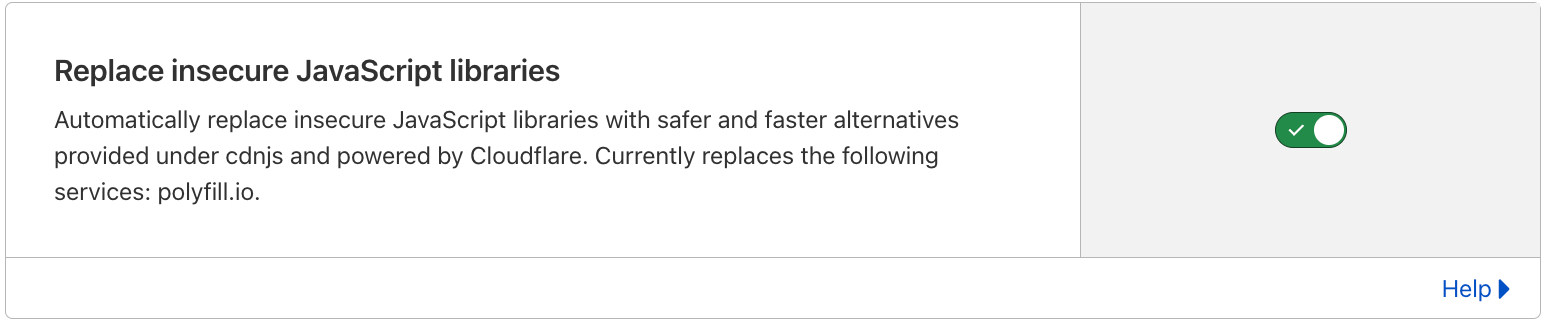
We have, over the last 24 hours, released an automatic JavaScript URL rewriting service that will rewrite any link to polyfill.io found in a website proxied by Cloudflare to a link to our mirror under cdnjs. This will avoid breaking site functionality while mitigating the risk of a supply chain attack.

Any website on the free plan has this feature automatically activated now. Websites on any paid plan can turn on this feature with a single click.

You can find this new feature under Security ⇒ Settings on any zone using Cloudflare.

Contrary to what is stated on the polyfill.io website, Cloudflare has never recommended the polyfill.io service or authorized their use of Cloudflare’s name on their website. We have asked them to remove the false statement and they have, so far, ignored our requests. This is yet another warning sign that they cannot be trusted.

If you are not using Cloudflare today, we still highly recommend that you remove any use of polyfill.io and/or find an alternative solution. And, while the automatic replacement function will handle most cases, the best practice is to remove polyfill.io from your projects and replace it with a secure alternative mirror like Cloudflare’s even if you are a customer.

You can do this by searching your code repositories for instances of polyfill.io and replacing it with cdnjs.cloudflare.com/polyfill/ (Cloudflare’s mirror). This is a non-breaking change as the two URLs will serve the same polyfill content. All website owners, regardless of the website using Cloudflare, should do this now.

How we came to this decision

Back in February, the domain polyfill.io, which hosts a popular JavaScript library, was sold to a new owner: Funnull, a relatively unknown company. At the time, we were concerned that this created a supply chain risk. This led us to spin up our own mirror of the polyfill.io code hosted under cdnjs, a JavaScript library repository sponsored by Cloudflare.

The new owner was unknown in the industry and did not have a track record of trust to administer a project such as polyfill.io. The concern, highlighted even by the original author, was that if they were to abuse polyfill.io by injecting additional code to the library, it could cause far reaching security problems on the Internet affecting several hundreds of thousands websites. Or it could be used to perform a targeted supply-chain attack against specific websites.

Unfortunately, that worry came true on June 25, 2024 as the polyfill.io service was being used to inject nefarious code that, under certain circumstances, redirected users to other websites.

We have taken the exceptional step of using our ability to modify HTML on the fly to replace references to the polyfill.io CDN in our customers’ websites with links to our own, safe, mirror created back in February.

In the meantime, additional threat feed providers have also taken the decision to flag the domain as malicious. We have not outright blocked the domain through any of the mechanisms we have because we are concerned it could cause widespread web outages given how broadly polyfill.io is used with some estimates indicating usage on nearly 4% of all websites.

Corroborating data with Page Shield

The original report indicates that malicious code was injected that, under certain circumstances, would redirect users to betting sites. It was doing this by loading additional JavaScript that would perform the redirect, under a set of additional domains which can be considered Indicators of Compromise (IoCs):

https://www.googie-anaiytics.com/analytics.js
https://www.googie-anaiytics.com/html/checkcachehw.js
https://www.googie-anaiytics.com/gtags.js
https://www.googie-anaiytics.com/keywords/vn-keyword.json
https://www.googie-anaiytics.com/webs-1.0.1.js
https://www.googie-anaiytics.com/analytics.js
https://www.googie-anaiytics.com/webs-1.0.2.js
https://www.googie-anaiytics.com/ga.js
https://www.googie-anaiytics.com/web-1.0.1.js
https://www.googie-anaiytics.com/web.js
https://www.googie-anaiytics.com/collect.js
https://kuurza.com/redirect?from=bitget

(note the intentional misspelling of Google Analytics)

Page Shield, our client side security solution, is available on all paid plans. When turned on, it collects information about JavaScript files loaded by end user browsers accessing your website.

By looking at the database of detected JavaScript files, we immediately found matches with the IoCs provided above starting as far back as 2024-06-08 15:23:51 (first seen timestamp on Page Shield detected JavaScript file). This was a clear indication that malicious activity was active and associated with polyfill.io.

Replacing insecure JavaScript links to polyfill.io

To achieve performant HTML rewriting, we need to make blazing-fast HTML alterations as responses stream through Cloudflare’s network. This has been made possible by leveraging ROFL (Response Overseer for FL). ROFL powers various Cloudflare products that need to alter HTML as it streams, such as Cloudflare Fonts, Email Obfuscation and Rocket Loader

ROFL is developed entirely in Rust. The memory-safety features of Rust are indispensable for ensuring protection against memory leaks while processing a staggering volume of requests, measuring in the millions per second. Rust’s compiled nature allows us to finely optimize our code for specific hardware configurations, delivering performance gains compared to interpreted languages.

The performance of ROFL allows us to rewrite HTML on-the-fly and modify the polyfill.io links quickly, safely, and efficiently. This speed helps us reduce any additional latency added by processing the HTML file.

If the feature is turned on, for any HTTP response with an HTML Content-Type, we parse all JavaScript script tag source attributes. If any are found linking to polyfill.io, we rewrite the src attribute to link to our mirror instead. We map to the correct version of the polyfill service while the query string is left untouched.

The logic will not activate if a Content Security Policy (CSP) header is found in the response. This ensures we don’t replace the link while breaking the CSP policy and therefore potentially breaking the website.

Default on for free customers, optional for everyone else

Cloudflare proxies millions of websites, and a large portion of these sites are on our free plan. Free plan customers tend to have simpler applications while not having the resources to update and react quickly to security concerns. We therefore decided to turn on the feature by default for sites on our free plan, as the likelihood of causing issues is reduced while also helping keep safe a very large portion of applications using polyfill.io.

Paid plan customers, on the other hand, have more complex applications and react quicker to security notices. We are confident that most paid customers using polyfill.io and Cloudflare will appreciate the ability to virtually patch the issue with a single click, while controlling when to do so.

All customers can turn off the feature at any time.

This isn’t the first time we’ve decided a security problem was so widespread and serious that we’d enable protection for all customers regardless of whether they were a paying customer or not. Back in 2014, we enabled Shellshock protection for everyone. In 2021, when the log4j vulnerability was disclosed we rolled out protection for all customers.

Do not use polyfill.io

If you are using Cloudflare, you can remove polyfill.io with a single click on the Cloudflare dashboard by heading over to your zone ⇒ Security ⇒ Settings. If you are a free customer, the rewrite is automatically active. This feature, we hope, will help you quickly patch the issue.

Nonetheless, you should ultimately search your code repositories for instances of polyfill.io and replace them with an alternative provider, such as Cloudflare’s secure mirror under cdnjs (https://cdnjs.cloudflare.com/polyfill/). Website owners who are not using Cloudflare should also perform these steps.

The underlying bundle links you should use are:

For minified: https://cdnjs.cloudflare.com/polyfill/v3/polyfill.min.js
For unminified: https://cdnjs.cloudflare.com/polyfill/v3/polyfill.js

Doing this ensures your website is no longer relying on polyfill.io.

Amazon DataZone announces custom blueprints for AWS services

Post Syndicated from Anish Anturkar original https://aws.amazon.com/blogs/big-data/amazon-datazone-announces-custom-blueprints-for-aws-services/

Last week, we announced the general availability of custom AWS service blueprints, a new feature in Amazon DataZone allowing you to customize your Amazon DataZone project environments to use existing AWS Identity and Access Management (IAM) roles and AWS services to embed the service into your existing processes. In this post, we share how this new feature can help you in federating to your existing AWS resources using your own IAM role. We also delve into details on how to configure data sources and subscription targets for a project using a custom AWS service blueprint.

New feature: Custom AWS service blueprints

Previously, Amazon DataZone provided default blueprints that created AWS resources required for data lake, data warehouse, and machine learning use cases. However, you may have existing AWS resources such as Amazon Redshift databases, Amazon Simple Storage Service (Amazon S3) buckets, AWS Glue Data Catalog tables, AWS Glue ETL jobs, Amazon EMR clusters, and many more for your data lake, data warehouse, and other use cases. With Amazon DataZone default blueprints, you were limited to only using preconfigured AWS resources that Amazon DataZone created. Customers needed a way to integrate these existing AWS service resources with Amazon DataZone, using a customized IAM role so that Amazon DataZone users can get federated access to those AWS service resources and use the publication and subscription features of Amazon DataZone to share and govern them.

Now, with custom AWS service blueprints, you can use your existing resources using your preconfigured IAM role. Administrators can customize Amazon DataZone to use existing AWS resources, enabling Amazon DataZone portal users to have federated access to those AWS services to catalog, share, and subscribe to data, thereby establishing data governance across the platform.

Benefits of custom AWS service blueprints

Custom AWS service blueprints don’t provision any resources for you, unlike other blueprints. Instead, you can configure your IAM role (bring your own role) to integrate your existing AWS resources with Amazon DataZone. Additionally, you can configure action links, which provide federated access to any AWS resources like S3 buckets, AWS Glue ETL jobs, and so on, using your IAM role.

You can also configure custom AWS service blueprints to bring your own resources, namely AWS databases, as data sources and subscription targets to enhance governance across those assets. With this release, administrators can configure data sources and subscription targets on the Amazon DataZone console and not be restricted to do those actions in the data portal.

Custom blueprints and environments can only be set up by administrators to manage access to configured AWS resources. As custom environments are created in specific projects, the right to grant access to custom resources is delegated to the project owners who can manage project membership by adding or removing members. This restricts the ability of portal users to create custom environments without the right permissions in AWS Console for Amazon DataZone or access custom AWS resources configured in a project that they are not a member of.

Solution overview

To get started, administrators need to enable the custom AWS service blueprints feature on the Amazon DataZone console. Then administrators can customize configurations by defining which project and IAM role to use when federating to the AWS services that are set up as action links for end-users. After the customized set up is complete, when a data producer or consumer logs in to the Amazon DataZone portal and if they’re part of those customized projects, they can federate to any of the configured AWS services such as Amazon S3 to upload or download files or seamlessly go to existing AWS Glue ETL jobs using their own IAM roles and continue their work with data with the customized tool of choice. With this feature, you can how include Amazon DataZone in your existing data pipeline processes to catalog, share, and govern data.

The following diagram shows an administrator’s workflow to set up a custom blueprint.

In the following sections, we discuss common use cases for custom blueprints, and walk through the setup step by step. If you’re new to Amazon DataZone, refer to Getting started.

Use case 1: Bring your own role and resources

Customers manage data platforms that consist of AWS managed services such as AWS Lake Formation, Amazon S3 for data lakes, AWS Glue for ETL, and so on. With those processes already set up, you may want to bring your own roles and resources to Amazon DataZone to continue with an existing process without any disruption. In such cases, you may not want Amazon DataZone to create new resources because it disrupts existing processes in data pipelines and to also curtail AWS resource usage and costs.

In the current setup, you can create an Amazon DataZone domain associated with different accounts. There could be a dedicated account that acts like a producer to share data, and a few other consumer accounts to subscribe to published assets in the catalog. The consumer account has IAM permissions set up for the AWS Glue ETL job to use for the subscription environment of a project. By doing so, the role has access to the newly subscribed data as well as permissions from previous setups to access data from other AWS resources. After you configure the AWS Glue job IAM role in the environment using the custom AWS service blueprint, the authorized users of that role can use the subscribed assets in the AWS Glue ETL job and extend that data for downstream activities to store them in Amazon S3 and other databases to be queried and analyzed using the Amazon Athena SQL editor or Amazon QuickSight.

Use case 2: Amazon S3 multi-file downloads

Customers and users of the Amazon DataZone portal often need the ability to download files after searching and filtering through the catalog in an Amazon DataZone project. This requirement arises because the data and analytics associated with a particular use case can sometimes involve hundreds of files. Downloading these files individually would be a tedious and time-consuming process for Amazon DataZone users. To address this need, the Amazon DataZone portal can take advantage of the capabilities provided by custom AWS service blueprints. These custom blueprints allow you to configure action links to S3 bucket folders associated with specified Amazon DataZone projects.

You can build projects and subscribe to both unstructured and structured data assets within the Amazon DataZone portal. For structured datasets, you can use Amazon DataZone blueprint-based environments like data lakes (Athena) and data warehouses (Amazon Redshift). For unstructured data assets, you can use the custom blueprint-based Amazon S3 environment, which provides a familiar Amazon S3 browser interface with access to specific buckets and folders, using an IAM role owned and provided by the customer. This functionality streamlines the process of finding and accessing unstructured data and allows you to download multiple files at once, enabling you to build and enhance your analytics more efficiently.

Use case 3: Amazon S3 file uploads

In addition to the download functionality, users often need to retain and attach metadata to new versions of files. For example, when you download a file, you can perform data changes, enrichment, or analysis on the file, and then upload the updated version back to the Amazon DataZone portal. For uploading files, Amazon DataZone users can use the same custom blueprint-based Amazon S3 environment action links to upload files.

Use case 4: Extend existing environments to custom blueprint environments

You may have existing Amazon DataZone project environments created using default data lake and data warehouse blueprints. With other AWS services set up in the data platform, you may want to extend the configured project environments to include those additional services to provide a seamless experience for your data producers or consumers while switching between tools.

Now that you understand the capabilities of the new feature, let’s look at how administrators can set up a custom role and resources on the Amazon DataZone console.

Create a domain

First, you need an Amazon DataZone domain. If you already have one, you can skip to enabling your custom blueprints. Otherwise, refer to Create domains for instructions to set up a domain. Optionally, you can associate accounts if you want to set up Amazon DataZone across multiple accounts.

Associate accounts for cross-account scenarios

You can optionally associate accounts. For instructions, refer to Request association with other AWS accounts. Make sure to use the latest AWS Resource Access Manager (AWS RAM) DataZonePortalReadWrite policy when requesting account association. If your account is already associated, request access again with the new policy.

Accept the account association request

To accept the account associated request, refer to Accept an account association request from an Amazon DataZone domain and enable an environment blueprint. After you accept the account association, you should see the following screenshot.

Add associated account users in the Amazon DataZon domain account

With this launch, you can set up associated account owners to access the Amazon DataZone data portal from their account. To enable this, they need to be registered as users in the domain account. As a domain admin, you can create Amazon DataZone user profiles to allow Amazon DataZone access to users and roles from the associated account. Complete the following steps:

  1. On the Amazon DataZone console, navigate to your domain.
  2. On the User management tab, choose Add IAM Users from the Add dropdown menu.
  3. Enter the ARNs of your associated account IAM users or roles. For this post, we add arn:aws:iam::123456789101:role/serviceBlueprintRole and arn:aws:iam::123456789101:user/Jacob.
  4. Choose Add users(s).

Back on the User management tab, you should see the new user state with Assigned status. This means that the domain owner has assigned associated account users to access Amazon DataZone. This status will change to Active when the identity starts using Amazon DataZone from the associated account.

As of writing this post, there is a maximum limit of adding six identities (users or roles) per associated account.

Enable the custom AWS service blueprint feature

You can enable custom AWS service blueprints in the domain account or the associated account, according to your requirements. Complete the following steps:

  1. On the Account associations tab, choose the associated domain.
  2. Choose the AWS service blueprint.
  3. Choose Enable.

Create an environment using the custom blueprint

If an associated account is being used to create this environment, use the same associated account IAM identity assigned by the domain owner in the previous step. Your identity needs to be explicitly assigned a user profile in order for you to create this environment. Complete the following steps:

  1. Choose the custom blueprint.
  2. In the Created environments section, choose Create environment.
  3. Select Create and use a new project or use an existing project if you already have one.
  4. For Environment role, choose a role. For this post, we curated a cross-account role called AmazonDataZoneAdmin and gave it AdministratorAccess This is the bring your own role feature. You should curate your role according to your requirements. Here are some guidelines on how to set up custom role as we have used a more permissible policy for this blog:
    1. You can use AWS Policy Generator to build a policy that fits your requirements and attach it to the custom IAM role you want to use.
    2. Make sure the role begins with AmazonDataZone* to follow conventions. This is not mandatory, but recommended. If the IAM admin is using an AmazonDataZoneFullAccess policy, you need to follow this convention because there is a pass role check validation.
    3. When you create the CustomRole (AWSDataZone*) make sure it trusts amazonaws.com in its trust policy:
{
    "Version": "2012-10-17",
    "Statement": [
        {
            "Effect": "Allow",
            "Principal": {
                "Service": [
                    "datazone.amazonaws.com"
                ]
            },
            "Action": [
                "sts:AssumeRole",
                "sts:TagSession"
            ]
        }
    ]
}
  1. For Region, choose an AWS Region.
  2. Choose Create environment.

Although you could use the same IAM role for multiple environments in a project, the recommendation is to not use a same IAM role for multiple environments across projects. Subscription grants are fulfilled at the project construct and therefore we don’t allow the same environment role to be used across different projects.

Configure custom action links

After you create the AWS service environment, you can configure any AWS Management Console links to your environment. Amazon DataZone will assume the custom role to help federate environment users to the configured action links. Complete the following steps:

  1. In your environment, choose Customize AWS links.
  2. Configure any S3 buckets, Athena workgroups, AWS Glue jobs, or other custom resources.
  3. Select Custom AWS links and enter any AWS service console custom resources. For this post, we link to the Amazon Relational Database Service (Amazon RDS) console.

You should now see the console links set up for your environment.

Access resources using a custom role through the Amazon DataZone portal from an associated account

Associate account users who have been added to Amazon DataZone can access the data portal from their associated account directly. Complete the following steps:

  1. In your environment, in the Summary section, choose the My Environment link.

You should see all your configured resources (role and action links) for your environment.

  1. Choose any action link to navigate to the appropriate console resources.
  2. Choose any action link for a custom resource (for this post, Amazon RDS).

You’re directed to the appropriate service console.

With this setup, you have now configured a custom AWS service blueprint to use your own role for the environment to use for data access as well. You have also set up action links for configured AWS resources to be shown to data producers and consumers in the Amazon DataZone data portal. With these links, you can federate to those services in a single click and take the project context along while working with the data.

Configure data sources and subscription targets

Additionally, administrators can now configure data sources and subscription targets on the Amazon DataZone console using custom AWS service blueprint environments. This needs to be configured to set up the database role ManagedAccessRole to the data source and subscription target, which you can’t do through the Amazon DataZone portal.

Configure data sources in the custom AWS service blueprint environment for publishing

Complete the following steps to configure your data source:

  1. On the Amazon DataZone console, navigate to the custom AWS service blueprint environment you just created.
  2. On the Data sources tab, choose Add
  3. Select AWS Glue or Amazon Redshift.
  4. For AWS Glue, complete the following steps:
    1. Enter your AWS Glue database. If you don’t already have an existing AWS Glue database setup, refer to Create a database.
    2. Enter the manageAccessRole role that is added as a Lake Formation admin. Make sure the role provided has aws.internal in its trust policy. The role starts with AmazonDataZone*.
    3. Choose Add.
  1. For Amazon Redshift, complete the following steps:
    1. Select Cluster or Serverless. If you don’t already have a Redshift cluster, refer to Create a sample Amazon Redshift cluster. If you don’t already have an Amazon Redshift Serverless workgroup, refer Amazon Redshift Serverless to create a sample database.
    2. Choose Create new AWS Secret or use a preexisting one.
    3. If you’re creating a new secret, enter a secret name, user name, and password.
  2. Choose the cluster or workgroup you want to connect to.
  3. Enter the database and schema names.
  4. Enter the role ARN for manageAccessRole.
  5. Choose Add.

Configure a subscription target in the AWS service environment for subscribing

Complete the following steps to add your subscription target

  1. On the Amazon DataZone console, navigate the custom AWS service blueprint environment you just created.
  2. On the Subscription targets tab, choose Add.
  3. Follow the same steps as you did to set up a data source.
  4. For Redshift subscription targets, you also need to add a database role that will be granted access to the given schema. You can enter a specific Redshift user role or, if you’re a Redshift admin, enter sys:superuser.
  5. Create a new tag on the environment role (BYOR) with RedshiftDbRoles as key and the database name used for configuring the Redshift subscription target as value.

Extend existing data lake and data warehouse blueprints

Finally, if you want to extend existing data lake or data warehouse project environments to create to use existing AWS services in the platform, complete the following steps:

  1. Create a copy of the environment role of an existing Amazon DataZone project environment.
  2. Extend this role by adding additional required policies to allow this custom role to access additional resources.
  3. Create a custom AWS service environment in the same Amazon DataZone project using this new custom role.
  4. Configure the subscription target and data source using the database name of the existing Amazon DataZone environment (<env_name>_pub_db, <env_name>_sub_db).
  5. Use the same managedAccessRole role from the existing Amazon DataZone environment.
  6. Request subscription to the required data assets or add subscribed assets from the project to this new AWS service environment.

Clean up

To clean up your resources, complete the following steps:

  1. If you used sample code for AWS Glue and Redshift databases, make sure to clean up all those resources to avoid incurring additional charges. Delete any S3 buckets you created as well.
  2. On the Amazon DataZone console, delete the projects used in this post. This will delete most project-related objects like data assets and environments.
  3. On the Lake Formation console, delete the Lake Formation admins registered by Amazon DataZone.
  4. On the Lake Formation console, delete any tables and databases created by Amazon DataZone.

Conclusion

In this post, we discussed how the custom AWS service blueprint simplifies the process to start using existing IAM roles and AWS services in Amazon DataZone for end-to-end governance of your data in AWS. This integration helps you circumvent the prescriptive default data lake and data warehouse blueprints.

To learn more about Amazon DataZone and how to get started, refer to the Getting started guide. Check out the YouTube playlist for some of the latest demos of Amazon DataZone and more information about the capabilities available.


About the Authors

Anish Anturkar is a Software Engineer and Designer and part of Amazon DataZone with an expertise in distributed software solutions. He is passionate about building robust, scalable, and sustainable software solutions for his customers.

Navneet Srivastava is a Principal Specialist and Analytics Strategy Leader, and develops strategic plans for building an end-to-end analytical strategy for large biopharma, healthcare, and life sciences organizations. Navneet is responsible for helping life sciences organizations and healthcare companies deploy data governance and analytical applications, electronic medical records, devices, and AI/ML-based applications, while educating customers about how to build secure, scalable, and cost-effective AWS solutions. His expertise spans across data analytics, data governance, AI, ML, big data, and healthcare-related technologies.

Priya Tiruthani is a Senior Technical Product Manager with Amazon DataZone at AWS. She focuses on improving data discovery and curation required for data analytics. She is passionate about building innovative products to simplify customers’ end-to-end data journey, especially around data governance and analytics. Outside of work, she enjoys being outdoors to hike, capture nature’s beauty, and recently play pickleball.

Subrat Das is a Senior Solutions Architect and part of the Global Healthcare and Life Sciences industry division at AWS. He is passionate about modernizing and architecting complex customer workloads. When he’s not working on technology solutions, he enjoys long hikes and traveling around the world.

Takeaways From The Take Command Summit: Unprecedented Threat Landscape

Post Syndicated from Emma Burdett original https://blog.rapid7.com/2024/06/26/takeaways-from-the-take-command-summit-unprecedented-threat-landscape/

Takeaways From The Take Command Summit: Unprecedented Threat Landscape

The Rapid7 Take Command summit unveiled crucial findings from the 2024 Attack Intelligence Report, offering invaluable insights for cybersecurity professionals navigating today’s complex threat landscape.

Key takeaways from the 30 minute panel:

  1. Rise of Zero-Day Exploits: 53% of mass compromise events in 2023 and early 2024 began with zero-day exploits. This highlights the urgent need for improved patch management and proactive defense strategies.
  2. Network Edge Vulnerabilities: Over a third of the vulnerabilities leading to mass compromise events were in network edge technologies, such as firewalls and VPNs, emphasizing the importance of securing these critical points.
  3. Ransomware on the Rise: Rapid7 tracked over 5,600 ransomware incidents in 2023 and early 2024, with ransomware payouts exceeding $1 billion. The sheer volume underscores the importance of robust defenses and incident response plans.

Key Quote:

“Our research shows that more than 40% of incident responses in 2023 stemmed from remote remote access exploits without multifactor authentication. Basic security components are still crucial in making attacks harder.” – Caitlin Condon, Director Vulnerability Intelligence, Rapid7

The 2024 Attack Intelligence Report provides deep insights into the evolving threat landscape, highlighting the rise of zero-day exploits, the critical vulnerabilities in network edge technologies, and the rampant increase in ransomware incidents, you can view it here.

For a deeper dive into these findings, click through to watch the full video and stay ahead of attackers.

Intel CPU with Optical Compute Interconnect Chiplet Demoed with 4Tbps of Bandwidth and 100m Reach

Post Syndicated from Rohit Kumar original https://www.servethehome.com/intel-cpu-with-optical-compute-interconnect-chiplet-demoed-with-4tbps-of-bandwidth-and-100m-reach/

At 4Tbps, the Intel Optical Compute Interconnect chiplet is designed to co-package optical interconnects directly onto xPU packages

The post Intel CPU with Optical Compute Interconnect Chiplet Demoed with 4Tbps of Bandwidth and 100m Reach appeared first on ServeTheHome.

OpenSUSE Leap Micro 6.0 is now available

Post Syndicated from jzb original https://lwn.net/Articles/979748/

The openSUSE project has announced
Leap Micro version
6.0
. Leap Micro is an image-based, lightweight Linux distribution
that is designed to run containerized and virtualized applications. It
is based on SUSE Linux
Enterprise (SLE) Micro
. Changes in this release include the
support for full-disk encryption, the addition of Cockpit for
web-based system management, and an optional real-time kernel for
x86_64. Boot support for legacy BIOS on x86_64 is deprecated with 6.0, and will be removed in a later release. See the SLE
Micro release notes
for more information.

Hutterer: GNOME tablet support papercut fixes

Post Syndicated from jzb original https://lwn.net/Articles/979745/

Peter Hutterer has written
a summary of “papercut fixes” for GNOME tablet support that are
planned to ship with GNOME 47.

If you’re an avid tablet user, you may have multiple stylus tools –
but it’s also likely that you have multiple tools of the same type
which makes differentiating them in the GUI hard. Which is why they’re
highlighted now – if you bring the tool into proximity, the matching
image is highlighted to make it easier to know which stylus you’re
about to configure. Oh, and in the process we added a new SVG for AES
styli too to make the picture look more like the actual physical
tool. The <blink> tag may no longer be cool but at least we can disco
our way through the stylus configuration now.