Tag Archives: Uncategorized

Click Here to Kill Everybody Sale

Post Syndicated from Bruce Schneier original https://www.schneier.com/blog/archives/2021/01/click-here-to-kill-everybody-sale.html

For a limited time, I am selling signed copies of Click Here to Kill Everybody in hardcover for just $6, plus shipping.

Note that I have had occasional problems with international shipping. The book just disappears somewhere in the process. At this price, international orders are at the buyer’s risk. Also, the USPS keeps reminding us that shipping — both US and international — may be delayed during the pandemic.

I have 500 copies of the book available. When they’re gone, the sale is over and the price will revert to normal.

Order here.

EDITED TO ADD: I was able to get another 500 from the publisher, since the first 500 sold out so quickly.

Please be patient on delivery. There are already 550 orders, and that’s a lot of work to sign and mail. I’m going to be doing them a few at a time over the next several weeks. So all of you people reading this paragraph before ordering, understand that there are a lot of people ahead of you in line.

EDITED TO ADD (1/16): I am sold out. If I can get more copies, I’ll hold another sale after I sign and mail the 1,000 copies that you all purchased.

Cell Phone Location Privacy

Post Syndicated from Bruce Schneier original https://www.schneier.com/blog/archives/2021/01/cell-phone-location-privacy.html

We all know that our cell phones constantly give our location away to our mobile network operators; that’s how they work. A group of researchers has figured out a way to fix that. “Pretty Good Phone Privacy” (PGPP) protects both user identity and user location using the existing cellular networks. It protects users from fake cell phone towers (IMSI-catchers) and surveillance by cell providers.

It’s a clever system. The players are the user, a traditional mobile network operator (MNO) like AT&T or Verizon, and a new mobile virtual network operator (MVNO). MVNOs aren’t new. They’re intermediaries like Cricket and Boost.

Here’s how it works:

  1. One-time setup: The user’s phone gets a new SIM from the MVNO. All MVNO SIMs are identical.
  2. Monthly: The user pays their bill to the MVNO (credit card or otherwise) and the phone gets anonymous authentication (using Chaum blind signatures) tokens for each time slice (e.g., hour) in the coming month.
  3. Ongoing: When the phone talks to a tower (run by the MNO), it sends a token for the current time slice. This is relayed to a MVNO backend server, which checks the Chaum blind signature of the token. If it’s valid, the MVNO tells the MNO that the user is authenticated, and the user receives a temporary random ID and an IP address. (Again, this is now MVNOs like Boost already work.)
  4. On demand: The user uses the phone normally.

The MNO doesn’t have to modify its system in any way. The PGPP MVNO implementation is in software. The user’s traffic is sent to the MVNO gateway and then out onto the Internet, potentially even using a VPN.

All connectivity is data connectivity in cell networks today. The user can choose to be data-only (e.g., use Signal for voice), or use the MVNO or a third party for VoIP service that will look just like normal telephony.

The group prototyped and tested everything with real phones in the lab. Their approach adds essentially zero latency, and doesn’t introduce any new bottlenecks, so it doesn’t have performance/scalability problems like most anonymity networks. The service could handle tens of millions of users on a single server, because it only has to do infrequent authentication, though for resilience you’d probably run more.

The paper is here.

Introducing advanced segmentation in Amazon Pinpoint

Post Syndicated from Srini Sekaran original https://aws.amazon.com/blogs/messaging-and-targeting/introducing-advanced-segmentation-in-amazon-pinpoint/

Today, Amazon Pinpoint announced the launch of several new segmentation capabilities for Amazon Pinpoint. Amazon Pinpoint now provides customers additional filters to perform more granular segmentation. You can increase the level of campaign and message personalization by being able to reach more specific audiences.

Today’s end users require consistent and personalized experiences across channels such as email, SMS, and push. On average, 71% of consumers feel frustrated when their user experience is impersonal1. The ability to target a specific audience is a fundamental step to delivering personalized experiences. However, marketers struggle to target the right audience due to technical barriers such as the need for query language to segment groups. This is particularly resonant for organizations with a large pool of customer information. For these teams, understanding and targeting an audience based on preferences and behavior often extends to manual workarounds such as using spreadsheets.

With more data at their disposal, marketers want the ability to filter by user attributes in terms of metrics and time so they can send the right message to the right audience, at the right time.

Amazon Pinpoint now provides comparative and time-based filters, unlocking more use cases for targeting and retargeting. These filters allow you, for example, to define a segment of mobile users between the ages of 18 and 24 that joined after a October 24, 2020 with a lifetime value of more than $500. For marketers, being able to create defined segments such as this helps them increase user engagement by allowing them to tailor the right messaging and campaigns to specific sub-groups based on their characteristics.

When creating a segment, you will now have access to more segmentation filters including greater than, less than, between, before, and after. You can combine filters and create specific segments directly on the Pinpoint console or the CLI to build targeted and relevant campaigns that increase user engagement and marketing efficiency.

Amazon Pinpoint now provides the following filters to help you define and target the specific audience you would like to reach in your marketing campaigns:

  • Comparative filters: greater than, less than, equals, greater than or equals, less than or equals — a certain value

  • Matching filters: is, is not, contains — a certain string or text

  • Date filters: before, after, between, on — a certain date

To learn more about how you can create targeted campaigns with new segmentation capabilities, visit https://aws.amazon.com/pinpoint.

  1. https://www.forbes.com/sites/blakemorgan/2020/02/18/50-stats-showing-the-power-of-personalization/?sh=637812d52a94

Upcoming Speaking Engagements

Post Syndicated from Schneier.com Webmaster original https://www.schneier.com/blog/archives/2021/01/upcoming-speaking-engagements-5.html

This is a current list of where and when I am scheduled to speak:

  • I’m speaking (online) as part of Western Washington University’s Internet Studies Lecture Series on January 20, 2021.
  • I’m speaking (online) at ITU Denmark on February 2, 2021. Details to come.
  • I’m being interviewed by Keith Cronin as part of The Center for Innovation, Security, and New Technology’s CSINT Conversations series, February 10, 2021 from 11:00 AM – 11:30 AM CST.
  • I’ll be speaking at an Informa event on February 28, 2021. Details to come.

The list is maintained on this page.

Finding the Location of Telegram Users

Post Syndicated from Bruce Schneier original https://www.schneier.com/blog/archives/2021/01/finding-the-location-of-telegram-users.html

Security researcher Ahmed Hassan has shown that spoofing the Android’s “People Nearby” feature allows him to pinpoint the physical location of Telegram users:

Using readily available software and a rooted Android device, he’s able to spoof the location his device reports to Telegram servers. By using just three different locations and measuring the corresponding distance reported by People Nearby, he is able to pinpoint a user’s precise location.

[…]

A proof-of-concept video the researcher sent to Telegram showed how he could discern the address of a People Nearby user when he used a free GPS spoofing app to make his phone report just three different locations. He then drew a circle around each of the three locations with a radius of the distance reported by Telegram. The user’s precise location was where all three intersected.

[…]

Fixing the problem — or at least making it much harder to exploit it — wouldn’t be hard from a technical perspective. Rounding locations to the nearest mile and adding some random bits generally suffices. When the Tinder app had a similar disclosure vulnerability, developers used this kind of technique to fix it.

On US Capitol Security — By Someone Who Manages Arena-Rock-Concert Security

Post Syndicated from Bruce Schneier original https://www.schneier.com/blog/archives/2021/01/on-us-capitol-security-by-someone-who-manages-arena-rock-concert-security.html

Smart commentary:

…I was floored on Wednesday when, glued to my television, I saw police in some areas of the U.S. Capitol using little more than those same mobile gates I had ­ the ones that look like bike racks that can hook together ­ to try to keep the crowds away from sensitive areas and, later, push back people intent on accessing the grounds. (A new fence that appears to be made of sturdier material was being erected on Thursday.) That’s the same equipment and approximately the same amount of force I was able to use when a group of fans got a little feisty and tried to get backstage at a Vanilla Ice show.

[…]

There’s not ever going to be enough police or security at any event to stop people if they all act in unison; if enough people want to get to Vanilla Ice at the same time, they’re going to get to Vanilla Ice. Social constructs and basic decency, not lightweight security gates, are what hold everyone except the outliers back in a typical crowd.

[…]

When there are enough outliers in a crowd, it throws the normal dynamics of crowd control off; everyone in my business knows this. Citizens tend to hold each other to certain standards ­ which is why my 40,000-person town does not have 40,000 police officers, and why the 8.3 million people of New York City aren’t policed by 8.3 million police officers.

Social norms are the fabric that make an event run smoothly — and, really, hold society together. There aren’t enough police in your town to handle it if everyone starts acting up at the same time.

I like that she uses the term “outliers,” and I make much the same points in Liars and Outliers.

Cloning Google Titan 2FA keys

Post Syndicated from Bruce Schneier original https://www.schneier.com/blog/archives/2021/01/cloning-google-titan-2fa-keys.html

This is a clever side-channel attack:

The cloning works by using a hot air gun and a scalpel to remove the plastic key casing and expose the NXP A700X chip, which acts as a secure element that stores the cryptographic secrets. Next, an attacker connects the chip to hardware and software that take measurements as the key is being used to authenticate on an existing account. Once the measurement-taking is finished, the attacker seals the chip in a new casing and returns it to the victim.

Extracting and later resealing the chip takes about four hours. It takes another six hours to take measurements for each account the attacker wants to hack. In other words, the process would take 10 hours to clone the key for a single account, 16 hours to clone a key for two accounts, and 22 hours for three accounts.

By observing the local electromagnetic radiations as the chip generates the digital signatures, the researchers exploit a side channel vulnerability in the NXP chip. The exploit allows an attacker to obtain the long-term elliptic curve digital signal algorithm private key designated for a given account. With the crypto key in hand, the attacker can then create her own key, which will work for each account she targeted.

The attack isn’t free, but it’s not expensive either:

A hacker would first have to steal a target’s account password and also gain covert possession of the physical key for as many as 10 hours. The cloning also requires up to $12,000 worth of equipment and custom software, plus an advanced background in electrical engineering and cryptography. That means the key cloning — ­were it ever to happen in the wild — ­would likely be done only by a nation-state pursuing its highest-value targets.

That last line about “nation-state pursuing its highest-value targets” is just not true. There are many other situations where this attack is feasible.

Note that the attack isn’t against the Google system specifically. It exploits a side-channel attack in the NXP chip. Which means that other systems are probably vulnerable:

While the researchers performed their attack on the Google Titan, they believe that other hardware that uses the A700X, or chips based on the A700X, may also be vulnerable. If true, that would include Yubico’s YubiKey NEO and several 2FA keys made by Feitian.

Masking field values with Amazon Elasticsearch Service

Post Syndicated from Prashant Agrawal original https://aws.amazon.com/blogs/security/masking-field-values-with-amazon-elasticsearch-service/

Amazon Elasticsearch Service (Amazon ES) is a fully managed service that you can use to deploy, secure, and run Elasticsearch cost-effectively at scale. The service provides support for open-source Elasticsearch APIs, managed Kibana, and integration with Logstash and other AWS services. Amazon ES provides a deep security model that spans many layers of interaction and supports fine-grained access control at the cluster, index, document, and field level, on a per-user basis. The service’s security plugin integrates with federated identity providers for Kibana login.

A common use case for Amazon ES is log analytics. Customers configure their applications to store log data to the Elasticsearch cluster, where the data can be queried for insights into the functionality and use of the applications over time. In many cases, users reviewing those insights should not have access to all the details from the log data. The log data for a web application, for example, might include the source IP addresses of incoming requests. Privacy rules in many countries require that those details be masked, wholly or in part. This post explains how to set up field masking within your Amazon ES domain.

Field masking is an alternative to field-level security that lets you anonymize the data in a field rather than remove it altogether. When creating a role, add a list of fields to mask. Field masking affects whether you can see the contents of a field when you search. You can use field masking to either perform a random hash or pattern-based substitution of sensitive information from users, who shouldn’t have access to that information.

When you use field masking, Amazon ES creates a hash of the actual field values before returning the search results. You can apply field masking on a per-role basis, supporting different levels of visibility depending on the identity of the user making the query. Currently, field masking is only available for string-based fields. A search result with a masked field (clientIP) looks like this:

{
  "_index": "web_logs",
  "_type": "_doc",
  "_id": "1",
  "_score": 1,
  "_source": {
    "agent": "Mozilla/5.0 (X11; Linux x86_64; rv:6.0a1) Gecko/20110421 Firefox/6.0a1",
    "bytes": 0,
    "clientIP": "7e4df8d4df7086ee9c05efe1e21cce8ff017a711ee9addf1155608ca45d38219",
    "host": "www.example.com",
    "extension": "txt",
    "geo": {
      "src": "EG",
      "dest": "CN",
      "coordinates": {
        "lat": 35.98531194,
        "lon": -85.80931806
      }
    },
    "machine": {
      "ram": 17179869184,
      "os": "win 7"
    }
  }
}

To follow along in this post, make sure you have an Amazon ES domain with Elasticsearch version 6.7 or higher, sample data loaded (this example uses the web logs data supplied by Kibana), and access to Kibana through a role with administrator privileges for the domain.

Configure field masking

Field masking is managed by defining specific access controls within the Kibana visualization system. You’ll need to create a new Kibana role, define the fine-grained access-control privileges for that role, specify which fields to mask, and apply that role to specific users.

You can use either the Kibana console or direct-to-API calls to set up field masking. In our first example, we’ll use the Kibana console.

To configure field masking in the Kibana console

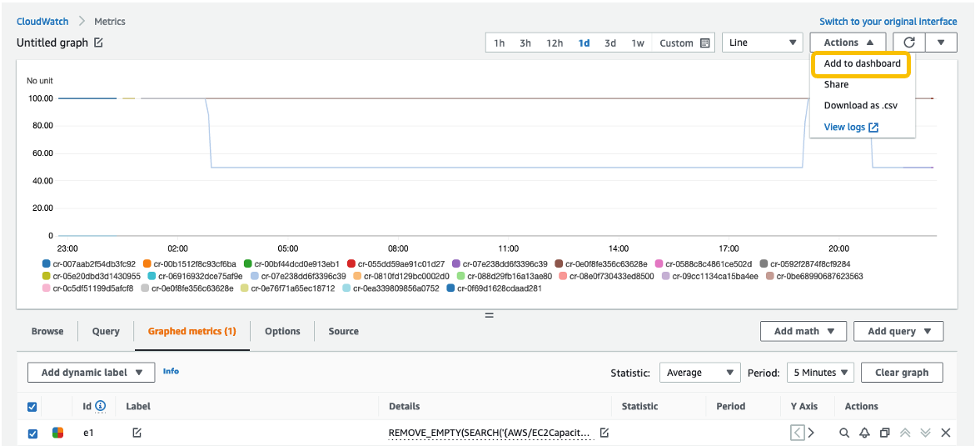
  1. Log in to Kibana, choose the Security pane, and then choose Roles, as shown in Figure 1.

    Figure 1: Choose security roles

    Figure 1: Choose security roles

  2. Choose the plus sign (+) to create a new role, as shown in Figure 2.

    Figure 2: Create role

    Figure 2: Create role

  3. Choose the Index Permissions tab, and then choose Add index permissions, as shown in Figure 3.

    Figure 3: Set index permissions

    Figure 3: Set index permissions

  4. Add index patterns and appropriate permissions for data access. See the Amazon ES documentation for details on configuring fine-grained access control.
  5. Once you’ve set Index Patterns, Permissions: Action Groups, Document Level Security Query, and Include or exclude fields, you can use the Anonymize fields entry to mask the clientIP, as shown in Figure 4.

    Figure 4: Anonymize field

    Figure 4: Anonymize field

  6. Choose Save Role Definition.
  7. Next, you need to create one or more users and apply the role to the new users. Go back to the Security page and choose Internal User Database, as shown in Figure 5.

    Figure 5: Select Internal User Database

    Figure 5: Select Internal User Database

  8. Choose the plus sign (+) to create a new user, as shown in Figure 6.

    Figure 6: Create user

    Figure 6: Create user

  9. Add a username and password, and under Open Distro Security Roles, select the role es-mask-role, as shown in Figure 7.

    Figure 7: Select the username, password, and roles

    Figure 7: Select the username, password, and roles

  10. Choose Submit.

If you prefer, you can perform the same task by using the Amazon ES REST API using Kibana dev tools.

Use the following API to create a role as described in below snippet and shown in Figure 8.

PUT _opendistro/_security/api/roles/es-mask-role
{
  "cluster_permissions": [],
  "index_permissions": [
    {
      "index_patterns": [
        "web_logs"
      ],
      "dls": "",
      "fls": [],
      "masked_fields": [
        "clientIP"
      ],
      "allowed_actions": [
        "data_access"
      ]
    }
  ]
}

Sample response:

{
  "status": "CREATED",
  "message": "'es-mask-role' created."
}
Figure 8: API to create Role

Figure 8: API to create Role

Use the following API to create a user with the role as described in below snippet and shown in Figure 9.

PUT _opendistro/_security/api/internalusers/es-mask-user
{
  "password": "xxxxxxxxxxx",
  "opendistro_security_roles": [
    "es-mask-role"
  ]
}

Sample response:

{
  "status": "CREATED",
  "message": "'es-mask-user' created."
}
Figure 9: API to create User

Figure 9: API to create User

Verify field masking

You can verify field masking by running a simple search query using Kibana dev tools (GET web_logs/_search) and retrieving the data first by using the kibana_user (with no field masking), and then by using the es-mask-user (with field masking) you just created.

Query responses run by the kibana_user (all access) have the original values in all fields, as shown in Figure 10.

Figure 10: Retrieval of the full clientIP data with kibana_user

Figure 10: Retrieval of the full clientIP data with kibana_user

Figure 11, following, shows an example of what you would see if you logged in as the es-mask-user. In this case, the clientIP field is hidden due to the es-mask-role you created.

Figure 11: Retrieval of the masked clientIP data with es-mask-user

Figure 11: Retrieval of the masked clientIP data with es-mask-user

Use pattern-based field masking

Rather than creating a hash, you can use one or more regular expressions and replacement strings to mask a field. The syntax is <field>::/<regular-expression>/::<replacement-string>.

You can use either the Kibana console or direct-to-API calls to set up pattern-based field masking. In the following example, clientIP is masked in such a way that the last three parts of the IP address are masked by xxx using the pattern is clientIP::/[0-9]{1,3}.[0-9]{1,3}.[0-9]{1,3}$/::xxx.xxx.xxx>. You see only the first part of the IP address, as shown in Figure 12.

Figure 12: Anonymize the field with a pattern

Figure 12: Anonymize the field with a pattern

Run the search query to verify that the last three parts of clientIP are masked by custom characters and only the first part is shown to the requester, as shown in Figure 13.

Figure 13: Retrieval of the masked clientIP (according to the defined pattern) with es-mask-user

Figure 13: Retrieval of the masked clientIP (according to the defined pattern) with es-mask-user

Conclusion

Field level security should be the primary approach for ensuring data access security – however if there are specific business requirements that cannot be met with this approach, then field masking may offer a viable alternative. By using field masking, you can selectively allow or prevent your users from seeing private information such as personally identifying information (PII) or personal healthcare information (PHI). For more information about fine-grained access control, see the Amazon Elasticsearch Service Developer Guide.

If you have feedback about this post, submit comments in the Comments section below. If you have questions about this post, start a new thread on the Amazon Elasticsearch Service forum or contact AWS Support.
Want more AWS Security how-to content, news, and feature announcements? Follow us on Twitter.

Author

Prashant Agrawal

Prashant is a Search Specialist Solutions Architect with Amazon Elasticsearch Service. He works closely with team members to help customers migrate their workloads to the cloud. Before joining AWS, he helped various customers use Elasticsearch for their search and analytics use cases.

Changes in WhatsApp’s Privacy Policy

Post Syndicated from Bruce Schneier original https://www.schneier.com/blog/archives/2021/01/changes-in-whatsapps-privacy-policy.html

If you’re a WhatsApp user, pay attention to the changes in the privacy policy that you’re being forced to agree with.

In 2016, WhatsApp gave users a one-time ability to opt out of having account data turned over to Facebook. Now, an updated privacy policy is changing that. Come next month, users will no longer have that choice. Some of the data that WhatsApp collects includes:

  • User phone numbers
  • Other people’s phone numbers stored in address books
  • Profile names
  • Profile pictures and
  • Status message including when a user was last online
  • Diagnostic data collected from app logs

Under the new terms, Facebook reserves the right to share collected data with its family of companies.

EDITED TO ADD (1/13): WhatsApp tries to explain.

Friday Squid Blogging: Searching for Giant Squid by Collecting Environmental DNA

Post Syndicated from Bruce Schneier original https://www.schneier.com/blog/archives/2021/01/friday-squid-blogging-searching-for-giant-squid-by-collecting-environmental-dna.html

The idea is to collect and analyze random DNA floating around the ocean, and using that to figure out where the giant squid are. No one is sure if this will actually work.

As usual, you can also use this squid post to talk about the security stories in the news that I haven’t covered.

Read my blog posting guidelines here.

APT Horoscope

Post Syndicated from Bruce Schneier original https://www.schneier.com/blog/archives/2021/01/apt-horoscope.html

This delightful essay matches APT hacker groups up with astrological signs. This is me:

Capricorn is renowned for its discipline, skilled navigation, and steadfastness. Just like Capricorn, Helix Kitten (also known as APT 35 or OilRig) is a skilled navigator of vast online networks, maneuvering deftly across an array of organizations, including those in aerospace, energy, finance, government, hospitality, and telecommunications. Steadfast in its work and objectives, Helix Kitten has a consistent track record of developing meticulous spear-phishing attacks.

Russia’s SolarWinds Attack and Software Security

Post Syndicated from Bruce Schneier original https://www.schneier.com/blog/archives/2021/01/russias-solarwinds-attack-and-software-security.html

The information that is emerging about Russia’s extensive cyberintelligence operation against the United States and other countries should be increasingly alarming to the public. The magnitude of the hacking, now believed to have affected more than 250 federal agencies and businesses — ­primarily through a malicious update of the SolarWinds network management software — ­may have slipped under most people’s radar during the holiday season, but its implications are stunning.

According to a Washington Post report, this is a massive intelligence coup by Russia’s foreign intelligence service (SVR). And a massive security failure on the part of the United States is also to blame. Our insecure Internet infrastructure has become a critical national security risk­ — one that we need to take seriously and spend money to reduce.

President-elect Joe Biden’s initial response spoke of retaliation, but there really isn’t much the United States can do beyond what it already does. Cyberespionage is business as usual among countries and governments, and the United States is aggressively offensive in this regard. We benefit from the lack of norms in this area and are unlikely to push back too hard because we don’t want to limit our own offensive actions.

Biden took a more realistic tone last week when he spoke of the need to improve US defenses. The initial focus will likely be on how to clean the hackers out of our networks, why the National Security Agency and US Cyber Command failed to detect this intrusion and whether the 2-year-old Cybersecurity and Infrastructure Security Agency has the resources necessary to defend the United States against attacks of this caliber. These are important discussions to have, but we also need to address the economic incentives that led to SolarWinds being breached and how that insecure software ended up in so many critical US government networks.

Software has become incredibly complicated. Most of us almost don’t know all of the software running on our laptops and what it’s doing. We don’t know where it’s connecting to on the Internet­ — not even which countries it’s connecting to­ — and what data it’s sending. We typically don’t know what third party libraries are in the software we install. We don’t know what software any of our cloud services are running. And we’re rarely alone in our ignorance. Finding all of this out is incredibly difficult.

This is even more true for software that runs our large government networks, or even the Internet backbone. Government software comes from large companies, small suppliers, open source projects and everything in between. Obscure software packages can have hidden vulnerabilities that affect the security of these networks, and sometimes the entire Internet. Russia’s SVR leveraged one of those vulnerabilities when it gained access to SolarWinds’ update server, tricking thousands of customers into downloading a malicious software update that gave the Russians access to those networks.

The fundamental problem is one of economic incentives. The market rewards quick development of products. It rewards new features. It rewards spying on customers and users: collecting and selling individual data. The market does not reward security, safety or transparency. It doesn’t reward reliability past a bare minimum, and it doesn’t reward resilience at all.

This is what happened at SolarWinds. A New York Times report noted the company ignored basic security practices. It moved software development to Eastern Europe, where Russia has more influence and could potentially subvert programmers, because it’s cheaper.

Short-term profit was seemingly prioritized over product security.

Companies have the right to make decisions like this. The real question is why the US government bought such shoddy software for its critical networks. This is a problem that Biden can fix, and he needs to do so immediately.

The United States needs to improve government software procurement. Software is now critical to national security. Any system for acquiring software needs to evaluate the security of the software and the security practices of the company, in detail, to ensure they are sufficient to meet the security needs of the network they’re being installed in. Procurement contracts need to include security controls of the software development process. They need security attestations on the part of the vendors, with substantial penalties for misrepresentation or failure to comply. The government needs detailed best practices for government and other companies.

Some of the groundwork for an approach like this has already been laid by the federal government, which has sponsored the development of a “Software Bill of Materials” that would set out a process for software makers to identify the components used to assemble their software.

This scrutiny can’t end with purchase. These security requirements need to be monitored throughout the software’s life cycle, along with what software is being used in government networks.

None of this is cheap, and we should be prepared to pay substantially more for secure software. But there’s a benefit to these practices. If the government evaluations are public, along with the list of companies that meet them, all network buyers can benefit from them. The US government acting purely in the realm of procurement can improve the security of nongovernmental networks worldwide.

This is important, but it isn’t enough. We need to set minimum safety and security standards for all software: from the code in that Internet of Things appliance you just bought to the code running our critical national infrastructure. It’s all one network, and a vulnerability in your refrigerator’s software can be used to attack the national power grid.

The IOT Cybersecurity Improvement Act, signed into law last month, is a start in this direction.

The Biden administration should prioritize minimum security standards for all software sold in the United States, not just to the government but to everyone. Long gone are the days when we can let the software industry decide how much emphasis to place on security. Software security is now a matter of personal safety: whether it’s ensuring your car isn’t hacked over the Internet or that the national power grid isn’t hacked by the Russians.

This regulation is the only way to force companies to provide safety and security features for customers — just as legislation was necessary to mandate food safety measures and require auto manufacturers to install life-saving features such as seat belts and air bags. Smart regulations that incentivize innovation create a market for security features. And they improve security for everyone.

It’s true that creating software in this sort of regulatory environment is more expensive. But if we truly value our personal and national security, we need to be prepared to pay for it.

The truth is that we’re already paying for it. Today, software companies increase their profits by secretly pushing risk onto their customers. We pay the cost of insecure personal computers, just as the government is now paying the cost to clean up after the SolarWinds hack. Fixing this requires both transparency and regulation. And while the industry will resist both, they are essential for national security in our increasingly computer-dependent worlds.

This essay previously appeared on CNN.com.

Extracting Personal Information from Large Language Models Like GPT-2

Post Syndicated from Bruce Schneier original https://www.schneier.com/blog/archives/2021/01/extracting-personal-information-from-large-language-models-like-gpt-2.html

Researchers have been able to find all sorts of personal information within GPT-2. This information was part of the training data, and can be extracted with the right sorts of queries.

Paper: “Extracting Training Data from Large Language Models.”

Abstract: It has become common to publish large (billion parameter) language models that have been trained on private datasets. This paper demonstrates that in such settings, an adversary can perform a training data extraction attack to recover individual training examples by querying the language model.

We demonstrate our attack on GPT-2, a language model trained on scrapes of the public Internet, and are able to extract hundreds of verbatim text sequences from the model’s training data. These extracted examples include (public) personally identifiable information (names, phone numbers, and email addresses), IRC conversations, code, and 128-bit UUIDs. Our attack is possible even though each of the above sequences are included in just one document in the training data.

We comprehensively evaluate our extraction attack to understand the factors that contribute to its success. For example, we find that larger models are more vulnerable than smaller models. We conclude by drawing lessons and discussing possible safeguards for training large language models.

From a blog post:

We generated a total of 600,000 samples by querying GPT-2 with three different sampling strategies. Each sample contains 256 tokens, or roughly 200 words on average. Among these samples, we selected 1,800 samples with abnormally high likelihood for manual inspection. Out of the 1,800 samples, we found 604 that contain text which is reproduced verbatim from the training set.

The rest of the blog post discusses the types of data they found.

Backdoor in Zyxel Firewalls and Gateways

Post Syndicated from Bruce Schneier original https://www.schneier.com/blog/archives/2021/01/backdoor-in-zyxel-firewalls-and-gateways.html

This is bad:

More than 100,000 Zyxel firewalls, VPN gateways, and access point controllers contain a hardcoded admin-level backdoor account that can grant attackers root access to devices via either the SSH interface or the web administration panel.

[…]

Installing patches removes the backdoor account, which, according to Eye Control researchers, uses the “zyfwp” username and the “PrOw!aN_fXp” password.

“The plaintext password was visible in one of the binaries on the system,” the Dutch researchers said in a report published before the Christmas 2020 holiday.

Latest on the SVR’s SolarWinds Hack

Post Syndicated from Bruce Schneier original https://www.schneier.com/blog/archives/2021/01/latest-on-the-svrs-solarwinds-hack.html

The New York Times has an in-depth article on the latest information about the SolarWinds hack (not a great name, since it’s much more far-reaching than that).

Interviews with key players investigating what intelligence agencies believe to be an operation by Russia’s S.V.R. intelligence service revealed these points:

  • The breach is far broader than first believed. Initial estimates were that Russia sent its probes only into a few dozen of the 18,000 government and private networks they gained access to when they inserted code into network management software made by a Texas company named SolarWinds. But as businesses like Amazon and Microsoft that provide cloud services dig deeper for evidence, it now appears Russia exploited multiple layers of the supply chain to gain access to as many as 250 networks.
  • The hackers managed their intrusion from servers inside the United States, exploiting legal prohibitions on the National Security Agency from engaging in domestic surveillance and eluding cyberdefenses deployed by the Department of Homeland Security.
  • “Early warning” sensors placed by Cyber Command and the National Security Agency deep inside foreign networks to detect brewing attacks clearly failed. There is also no indication yet that any human intelligence alerted the United States to the hacking.
  • The government’s emphasis on election defense, while critical in 2020, may have diverted resources and attention from long-brewing problems like protecting the “supply chain” of software. In the private sector, too, companies that were focused on election security, like FireEye and Microsoft, are now revealing that they were breached as part of the larger supply chain attack.
  • SolarWinds, the company that the hackers used as a conduit for their attacks, had a history of lackluster security for its products, making it an easy target, according to current and former employees and government investigators. Its chief executive, Kevin B. Thompson, who is leaving his job after 11 years, has sidestepped the question of whether his company should have detected the intrusion.
  • Some of the compromised SolarWinds software was engineered in Eastern Europe, and American investigators are now examining whether the incursion originated there, where Russian intelligence operatives are deeply rooted.

Separately, it seems that the SVR conducted a dry run of the attack five months before the actual attack:

The hackers distributed malicious files from the SolarWinds network in October 2019, five months before previously reported files were sent to victims through the company’s software update servers. The October files, distributed to customers on Oct. 10, did not have a backdoor embedded in them, however, in the way that subsequent malicious files that victims downloaded in the spring of 2020 did, and these files went undetected until this month.

[…]

“This tells us the actor had access to SolarWinds’ environment much earlier than this year. We know at minimum they had access Oct. 10, 2019. But they would certainly have had to have access longer than that,” says the source. “So that intrusion [into SolarWinds] has to originate probably at least a couple of months before that ­- probably at least mid-2019 [if not earlier].”

The files distributed to victims in October 2019 were signed with a legitimate SolarWinds certificate to make them appear to be authentic code for the company’s Orion Platform software, a tool used by system administrators to monitor and configure servers and other computer hardware on their network.

Military Cryptanalytics, Part III

Post Syndicated from Bruce Schneier original https://www.schneier.com/blog/archives/2021/01/military-cryptanalytics-part-iii.html

The NSA has just declassified and released a redacted version of Military Cryptanalytics, Part III, by Lambros D. Callimahos, October 1977.

Parts I and II, by Lambros D. Callimahos and William F. Friedman, were released decades ago — I believe repeatedly, in increasingly unredacted form — and published by the late Wayne Griswold Barker’s Agean Park Press. I own them in hardcover.

Like Parts I and II, Part III is primarily concerned with pre-computer ciphers. At this point, the document only has historical interest. If there is any lesson for today, it’s that modern cryptanalysis is possible primarily because people make mistakes

The monograph took a while to become public. The cover page says that the initial FOIA request was made in July 2012: eight and a half years ago.

And there’s more books to come. Page 1 starts off:

This text constitutes the third of six basic texts on the science of cryptanalytics. The first two texts together have covered most of the necessary fundamentals of cryptanalytics; this and the remaining three texts will be devoted to more specialized and more advanced aspects of the science.

Presumably, volumes IV, V, and VI are still hidden inside the classified libraries of the NSA.

And from page ii:

Chapters IV-XI are revisions of seven of my monographs in the NSA Technical Literature Series, viz: Monograph No. 19, “The Cryptanalysis of Ciphertext and Plaintext Autokey Systems”; Monograph No. 20, “The Analysis of Systems Employing Long or Continuous Keys”; Monograph No. 21, “The Analysis of Cylindrical Cipher Devices and Strip Cipher Systems”; Monograph No. 22, “The Analysis of Systems Employing Geared Disk Cryptomechanisms”; Monograph No.23, “Fundamentals of Key Analysis”; Monograph No. 15, “An Introduction to Teleprinter Key Analysis”; and Monograph No. 18, “Ars Conjectandi: The Fundamentals of Cryptodiagnosis.”

This points to a whole series of still-classified monographs whose titles we do not even know.

EDITED TO ADD: I have been informed by a reliable source that Parts 4 through 6 were never completed. There may be fragments and notes, but no finished works.

Amazon Has Trucks Filled with Hard Drives and an Armed Guard

Post Syndicated from Bruce Schneier original https://www.schneier.com/blog/archives/2021/01/amazon-has-trucks-filled-with-hard-drives-and-an-armed-guard.html

From an interview with an Amazon Web Services security engineer:

So when you use AWS, part of what you’re paying for is security.

Right; it’s part of what we sell. Let’s say a prospective customer comes to AWS. They say, “I like pay-as-you-go pricing. Tell me more about that.” We say, “Okay, here’s how much you can use at peak capacity. Here are the savings we can see in your case.”

Then the company says, “How do I know that I’m secure on AWS?” And this is where the heat turns up. This is where we get them. We say, “Well, let’s take a look at what you’re doing right now and see if we can offer a comparable level of security.” So they tell us about the setup of their data centers.

We say, “Oh my! It seems like we have level five security and your data center has level three security. Are you really comfortable staying where you are?” The customer figures, not only am I going to save money by going with AWS, I also just became aware that I’m not nearly as secure as I thought.

Plus, we make it easy to migrate and difficult to leave. If you have a ton of data in your data center and you want to move it to AWS but you don’t want to send it over the internet, we’ll send an eighteen-wheeler to you filled with hard drives, plug it into your data center with a fiber optic cable, and then drive it across the country to us after loading it up with your data.

What? How do you do that?

We have a product called Snowmobile. It’s a gas-guzzling truck. There are no public pictures of the inside, but it’s pretty cool. It’s like a modular datacenter on wheels. And customers rightly expect that if they load a truck with all their data, they want security for that truck. So there’s an armed guard in it at all times.

It’s a pretty easy sell. If a customer looks at that option, they say, yeah, of course I want the giant truck and the guy with a gun to move my data, not some crappy system that I develop on my own.

Lots more about how AWS views security, and Keith Alexander’s position on Amazon’s board of directors, in the interview.

Found on Slashdot.

Brexit Deal Mandates Old Insecure Crypto Algorithms

Post Syndicated from Bruce Schneier original https://www.schneier.com/blog/archives/2020/12/brexit-deal-mandates-old-insecure-crypto-algorithms.html

In what is surely an unthinking cut-and-paste issue, page 921 of the Brexit deal mandates the use of SHA-1 and 1024-bit RSA:

The open standard s/MIME as extension to de facto e-mail standard SMTP will be deployed to encrypt messages containing DNA profile information. The protocol s/MIME (V3) allows signed receipts, security labels, and secure mailing lists… The underlying certificate used by s/MIME mechanism has to be in compliance with X.509 standard…. The processing rules for s/MIME encryption operations… are as follows:

  1. the sequence of the operations is: first encryption and then signing,
  2. the encryption algorithm AES (Advanced Encryption Standard) with 256 bit key length and RSA with 1,024 bit key length shall be applied for symmetric and asymmetric encryption respectively,
  3. the hash algorithm SHA-1 shall be applied.
  4. s/MIME functionality is built into the vast majority of modern e-mail software packages including Outlook, Mozilla Mail as well as Netscape Communicator 4.x and inter-operates among all major e-mail software packages.

And s/MIME? Bleah.

On the Evolution of Ransomware

Post Syndicated from Bruce Schneier original https://www.schneier.com/blog/archives/2020/12/on-the-evolution-of-ransomware.html

Good article on the evolution of ransomware:

Though some researchers say that the scale and severity of ransomware attacks crossed a bright line in 2020, others describe this year as simply the next step in a gradual and, unfortunately, predictable devolution. After years spent honing their techniques, attackers are growing bolder. They’ve begun to incorporate other types of extortion like blackmail into their arsenals, by exfiltrating an organization’s data and then threatening to release it if the victim doesn’t pay an additional fee. Most significantly, ransomware attackers have transitioned from a model in which they hit lots of individuals and accumulated many small ransom payments to one where they carefully plan attacks against a smaller group of large targets from which they can demand massive ransoms. The antivirus firm Emsisoft found that the average requested fee has increased from about $5,000 in 2018 to about $200,000 this year.

Ransomware is a decades-old idea. Today, it’s increasingly profitable and professional.