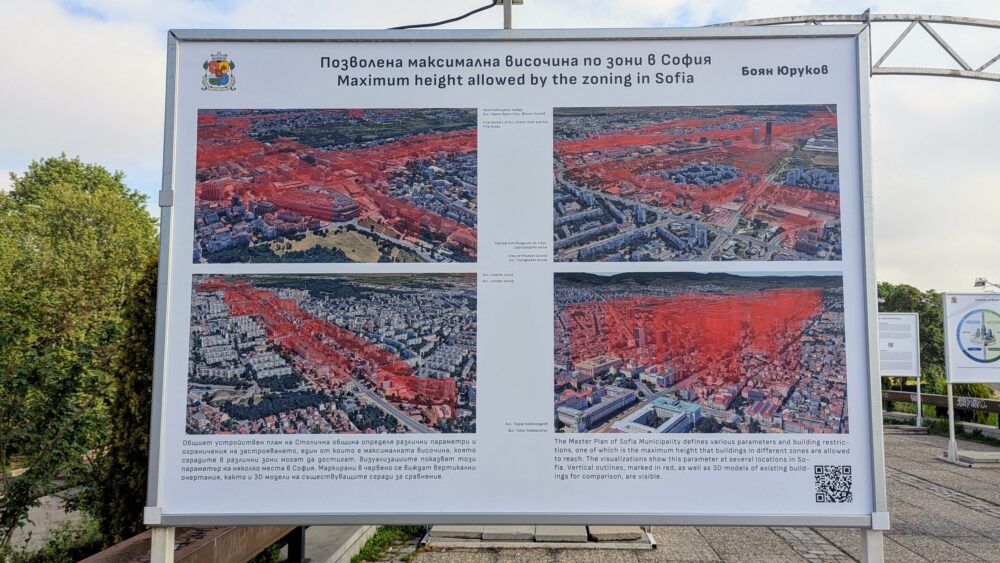
На 7-ми май беше открита изложба „Картите на София“, която включва визуализации на различни аспекти от града. В нея участват Данни за добро, Софияплан, института GATE, ГИС-София и други. Поканиха ме да участвам с няколко мои проекта, които ще опиша по-подробно тук. Може да видите всички на Моста на влюбените зад НДК до 20-ти май. Изложбата е част от календара със събития на Нощта на музеите 2025.
Картите в изложбата са представени на 60 пана, някои от които показват рисунки на ученици в рамките на конкурс със същата тема. Данните и линкове към всички визуализации ще намерите на страницата на събитието. На самите пана има QR кодове към съответните им страници. От тези, които предложих единствено не беше включено в паната 3D визуализацията на възможното застрояване над 50 метра, но е достъпна на страницата на общината и вероятно ще намери място в бъдещи изложби.
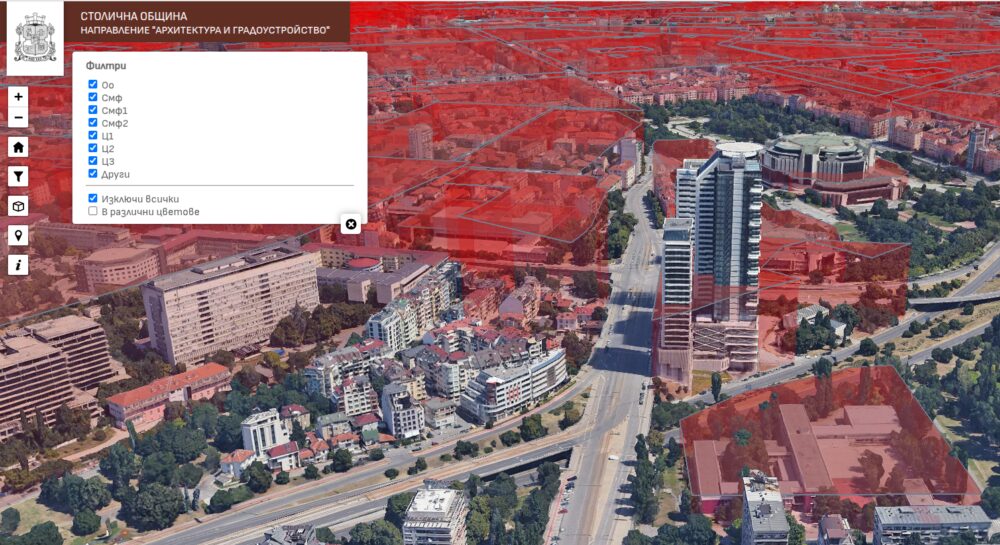
Реших да включа четири от моите проекти. Първият е визуализация на максималната височина позволена от ОУП. Това е карта, която направих за община София в картата им показваща обсъждани и приети ПУП-ове. Трябва да изберете бутона за 3D визуализацията. Има филтър за различни зони като част от града. Забелязава се, че по бул. Тодор Александров на теория няма ограничение колко високо може да се строи. Ограничение има единствено от колко голям парцел може да се окрупни, който заедно с необосновано големия кинт 3.5 и вратичките в закона умножаващи интензивността на застрояване.
Втората карта е проекта ми за визуализация на сигналите в call.sofia. Там се зареждат всеки ден нови сигнали и новини по старите. Има статистика по райони, квартали, статус и категории. Повече за проекта ще намерите в статията ми от 2022-ра.
Друг проект, е визуализация на разрешителните за фойерверки в София. За проблемът съм писал няколко пъти, но самата карта не съм я последял до сега. Тази вдясно показва къде следва да се отказват разрешения от районните кметове и полицията, ако се спазва буквата на закона и наредбата на общината. Последната беше оспорвана и потвърдена от съда. На картата натискайки на всяко от разрешенията ще видите какви са нарушенията в издаването му. Ще забележите, че доста от разрешенията не е трябвало да бъдат издавани.
Особено няколко в район Изгрев бях оспорил, включително, защото едно беше издадено за двор на училище. После беше преиздадено непосредствено пред прозорците на жилищен блок. Наложи се да отбележа и този проблем. Друго в същия район беше подписано и публикувано със задна дата в нарушение на наредбата и то 24 часа след самото гърмене. Дори да беше вярна датата на подписа, пак е в нарушение, защото не са спазили срока. Отново преди три години писах за тези проблеми.
Третата карта беше вариация на визуализацията ми за шахтите на София. Показал съм тези за вода, отпадни води и топлофикация. Интересното в случая е покритието на тази подземна инфраструктура, особено канализацията.
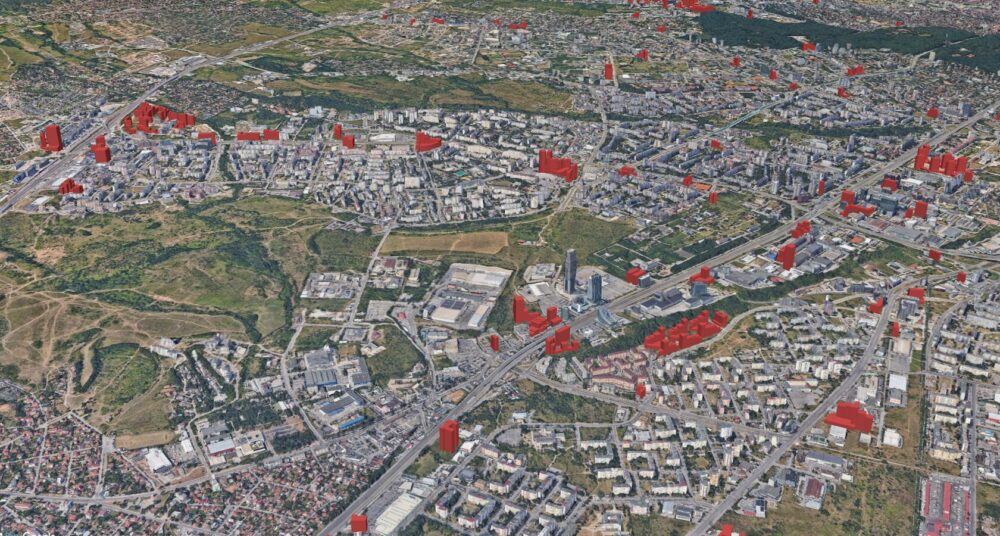
Картата, която за съжаление не беше сред тези намерили място в изложбата, беше на възможното застрояване в града. Както споменах, достъпна е на сайта на общината заедно с другите. Обявих пилотната версия на картата в края на 2023-та и в сегашния ѝ вид миналото лято. Има доста критика към нея и какви въпроси кара хората да задават на общината и строителите. Отговорих на повечето подробно. Имаше още критика от чиновници в НАГ, инвеститори и архитекти в съсловни организации от … друго естество, които ще събера и отговоря по-нататък. Самото пано, както трябваше да изглежда, виждате отдолу, а тук може да го отворите в пълна резолюция. Споделям го единствено, защото може да е интересно на някои.
Повече за тези проекти и данните в тях ще научите и от участието ми в Ratio от януари 2025. Там разглеждам именно тези данни и други като спирането на тока.
Един от въпросите, който буди най-много спорове в обществото през последните вече около десет години, е този за така наречената политкоректност. В действителност става дума за термин, който в Америка се налага през 90-те години, а по-късно бива заменен от по-актуални названия. По времето на първия мандат от управлението на президента Тръмп той се наричаше „борба за социална правда“ (social justice), а напоследък се възприе понятието woke, или „будна“ (за несправедливостите) култура“. В най-общи линии понятието поставя въпроса за наличието на структурни неравенства, основани най-често на расата и пола, в обществата на западните държави (но и не само).
Може би своя пик политкоректността достигна през 2020 г., когато смъртта на Джордж Флойд предизвика бурни протести от страна на движението „Животът на черните има значение“, в резултат на които биваха събаряни статуи, преименувани сгради, проблематизирани моменти от цялата американска история. За мнозина това бе дълго чакана справедливост. За други – опасна крайност, заплашваща да се изроди в нова мутация на комунизма.
Признавам си, че аз лично сериозно се притесних от случващото се в онези години, когато всички бяхме безкрайно изнервени и заради коронавируса, сеещ смърт и предизвикал толкова ограничения при свободата ни на движение и контакт с други човешки същества. Стори ми се двоен стандарт, че нормалните човешки срещи са проблем, а за масовите протести се казва, че са безобидни или дори че рискът от избухване на нови огнища на пандемията е приемлив заради борбата с расизма. Тогава си спомням, че разговарях с моя приятел доц. Искрен Иванов и по човешки го запитах дали смята, че този тип протести ще стигнат и дотук.
Не само че ще стигнат, те са вече тук – отговори ми той. – Но няма да са като тамошните. Ще бъдат пречупени през нашата национална специфика.
Тогава не разбрах абсолютно нищо от това, което ми каза. Попитах го дали ще става въпрос за правата на малцинства като ромското или турското у нас. Но той отрече и повтори, че движението ще бъде пречупено през българската национална специфика. Отново не схванах, но малко по-късно и в България избухнаха протести, които бяха насочени срещу корупцията и стигнаха до създаването на така наречения Орловград, превърнал се в символ на съпротивата срещу властта. Тогава ми се стори, че тези протести действително напомнят на американските по това, че отново се стига до крайности – разнасяха се ковчези, сгради се целеха с риба и яйца.
Но не ми хрумна, че може да става въпрос и за друг общ корен – борбата с привилегията.
На тогавашните протести имаше много студенти, учещи в чужбина и върнали се временно у нас заради коронавируса, който затвори и университетите. Това, което не беше наред в страната ни според тях, беше шуробаджанащината. Склонността да се назначават хора, които са верни, но не и умни. Гневът към т.нар. калинки, заради които тези млади хора, заминали в чужбина, не получават равен шанс в страната си, така както в Америка едни хора са уверени, че изостават по рождение заради цвета на кожата си.
И все пак прилика с дълбоки социални кливиджи, като расовото неравенство в САЩ, тогава не можах да намеря.
Протестите минаха и заминаха. Байдън стана президент и това като че ли отне от кислорода на възмущение, захранващ западната политкоректна култура, имаща нужда да е в опозиция, за да бъде ефективна – неслучайно звездният ѝ миг настъпи по време на първото управление на Тръмп.
У нас протестът роди партии, които поставиха под въпрос управлението на ГЕРБ и за един кратък период дори задържаха партията на Бойко Борисов извън властта. Наличието на дълбоки, неразрешими противоречия относно геополитическата ориентация на страната направи този успех нетраен, но за известно време изглеждаше, че протестът е победил – както тук, така и там. Ако обаче в САЩ болезненият разговор за неравенствата предизвика остра реакция, то у нас той още не беше започнал.
Това се случи, след като Путин нападна Украйна.
И до ден днешен не мога да осмисля това събитие. Отново Искрен Иванов беше този, който ме предупреждаваше още преди години, че тази война е неизбежна. Аз до последно смятах, че тя не може да избухне. Рискът за Русия ми се виждаше прекалено голям, загубите, които тя можеше да понесе при атака срещу съседите си – твърде непоносими.
„Те не са рационални. Няма да ги разбереш, ако търсиш мотиви на действията им като на западна държава“, казваше ми Искрен, автор на книгата „Православната геополитика на Русия“. По-късно и баща ми каза същото: „Вашето поколение обича да калкулира плюсовете и минусите от едно начинание. Не можете да разберете култура като руската.“
Непосредствено след началото на войната като че ли обществото се обедини от възмущението си срещу агресора, беше солидарно с нападнатите, възхитено от дръзката им отбрана, като че излязла от подвизите на Гондор в книгите на Толкин. Това обаче не трая дълго. Глашатаите на режима в Кремъл, стъписани от първоначалния неуспех, навириха гребен и пронизителният им вой огласи социални мрежи и сайтове. Русия бе предизвикана, твърдяха те. НАТО я заплашваше до границите ѝ. Тя е тази, която е нападната. Тя е тази, която се отбранява.
Контрааргументите на спорната теза достигнаха мнозина, но за други се оказаха безсилни. Че НАТО вече граничеше до Русия с балтийските държави. Че с контрола на Москва над Крим възможното членство на Украйна в Алианса вече е на практика предотвратено заради негласната му политика да не приема държави, които не контролират териториите си, и по този начин да избегне включването си във война автоматично (независимо от реторическите сигнали в една или друга посока).
Нищо от това нямаше значение. Защото голяма част от българите обичат Русия. И не говоря (само) за действително великолепната, изумителна култура, изразяваща се в прекрасната литература, дръзко кино или красив балет. Говоря за Руската федерация, преди това за Съветския съюз, за самата идея за самодържавие. И сега сигурно се чудите: но какво общо има това с политическата коректност?
Общото е, че това е въпросът за привилегията в България.
В Съединените щати едни хора са били роби, а други господари и тази рана не е зараснала никога, а периодично гнои до ден днешен. Но и в България се е случило нещо такова след 9 септември, когато съветските войски окупират страната и инсталират марионетен режим, който я управлява близо половин век. За една част от нашия народ този период е свързан с репресии и убийства, с несправедливо осъдени и безследно изчезнали близки, с ежедневни унижения от всякакъв аспект – колко дълга коса можеш да носиш, колко къса пола може да облечеш, къде можеш да пътуваш, какво можеш да си купуваш.
Но за други не е така. За много хора комунизмът е като манна небесна, спуснала се от Съветския съюз, за да ги извади от мизерията на западналите села, от които произлизат, и да ги постави в уютни апартаменти (някои от които чужди) и приятна работа „на бюро“. Да цивилизова децата им и те постепенно да развият рефлекса едва ли не на аристократи – културни, образовани, пътували в чужбина и знаещи езици.
Това развива лоялност, вярност, а понякога (но само понякога, други са отблъснати от това си минало) дори и любов към силата, която ти е дала всичко това – Съветския съюз и неговия наследник Руската федерация (обичта към царското време в Русия е рефлексия от опитите на Кремъл да примири различните периоди от историята си). Защото каква е целта на Путин, ако не да върне СССР, да спусне отново желязната завеса, да обърне стрелките на часовника назад? Това неговите сподвижници много добре го знаят, на това се и надяват, макар малцина да го разкриват толкова простодушно, както прави Костадин Костадинов със заплахите си да отвори отново лагера в Белене.
Тръмп обеща да направи „Америка отново велика“ и да възстанови славното десетилетие на 50-те, когато американският (бял) мъж можеше с работа в завода да гледа цялото си семейство. А жената (предполагаемо) е била щастлива да си живее у дома и да гледа децата, докато по телевизията се въртят реклами колко опасни са гейовете, а чернокожите са сегрегирани в градския транспорт, образователните институции, обществените сгради и т.н.
Путин обещава на русофилите и на комунистите да се върнат времената, когато те са решавали кой какви права има в обществото. И когато с един донос могат да зачеркнат цялото ти бъдеще.
Но не всички българи са съгласни с това, напротив, много не са и те водят борба с останалите – такава, каквато има между движенията на „будните“ и MAGA в Америка. Там либералите искат САЩ да ревизират погледа към историята си в частта с изграждането на институциите, твърдейки че те са заложени като несправедливи и расистки. А тук – да се погледне критично към ролята на Русия за независимостта на България още от времената след Освобождението, а може би и преди това. Там се опитват да премахнат паметниците, свързани с миналото на Конфедерацията и с нейния бунт за запазване на робството. Тук статуите, които възхваляват съветския окупатор, извисяващ се над не един и два български града – ПСА (или МОЧА) в София и Альошата в Пловдив, – са само най-фрапантните примери.
Затова у нас БСП е партията, която се опитва да консервира, макар да е лява. Защото нейното минало е миналото на властта. Тази нейна характеристика, между другото, е и причината за много мъчителните разломи сред съмишленици. Част от тях са десни срещу комунизма у нас в лицето на БСП и автоматично са срещу демократите в САЩ, защото са лява партия, при това ставаща все по-радикална в ревизията си към историята. Други са либерали срещу Русия, която сега, наопаки на времената на Студената война, се ползва със симпатии от страна на републиканците. Разбирам и двете страни, макар да не искам да казвам на коя симпатизирам.
Лично за мен обаче е безспорно, че американската политкоректност достигна до крайности и започна да се усеща не като насочена „за“ представителите на малцинствата и жените, колкото „против“ белите и мъжете – нещо, което те също чувстват и което ги кара да подкрепят шоумена Тръмп, дори част от тях вътрешно да не харесват просташкия му маниер. У нас отрицанието на Русия сред демократите също е прекомерно обострено според мен. Редом с Путин се отрича и Пушкин, заедно със Съветския съюз и 9 септември се отхвърлят още Трети март и Освобождението. Това прави русофобите да изглеждат ирационални в очите на пасивното мнозинство, което не харесва инвазията на Путин, но не може да се откаже от симпатията си към Дядо Иван.
Факт е обаче, че в България има голям проблем с предимството, което децата на старата комунистическа номенклатура, свързана с Русия, имат пред останалите, свръхпредставени са във всички партии, дори в демократичните (спомнете си каква буря от негодувание предизвика номинацията на Васил Терзиев за кмет на София). Още по-голям е проблемът с отношението към историята и с това, че дните на болка и страдание за едни са символ на триумф за други. Опасявам се, че докато не разрешим това противоречие, трудничко ще стигнем до въпросите за расата и пола, които са в основата на културните войни сред държавите, в чиито политически семейства все още сме. Разбира се, стига да искаме – все пак България не е била колониална държава и нещата тук не могат и не бива да се повтарят на сляпо. Или поне могат да се избегнат някои грешки.
А що се отнася до САЩ, всичко ще зависи от това дали Тръмп ще успее да овладее икономиката, така че да върне силните времена на Рейгън и Никсън за Републиканската партия и с това да спечели културните войни, или ще бъде поредният президент, повален от високите цени, както стана с Байдън. За нас обаче може би е по-добре да се съсредоточим върху нашата държава, защото, увлечени в безспорно вълнуващите спорове около културните войни на глобалното село, може и да пропуснем как нашият Голям брат отново слага хомот на шията ни, за да ни поведе в друга посока.
Три книги. Три гледни точки. Три начина да се сглоби фигурата на отчуждения, влюбен, вътрешно разкъсан човек. Александрова пише, сякаш гледа през прозореца с мокра чаша в ръка. Касев пише с кал по обувките и вътрешен глас, който се пита: „Защо?“ Анев по-скоро реже месо от съвременността с хирургическа насмешка.
И тримата предлагат не истории, а усещания, не отговори, а смислови клопки.
Езикът им е различен, но темата е една:
Кой си ти, когато никой не гледа?
и
Какво ще направиш с този тигър в съня си?
И тримата реагират на едно и също: усещането, че реалността изтънява. Че държавата се е превърнала в глух звук, а бъдещето – в неизпратено съобщение. Това се случва на фона на политическа парализа, институционален разпад, екологична криза, културен цинизъм. Как да пишеш в такъв контекст? Или с нежност и отчаяние (Александрова), или с опит за личен катарзис (Касев), или с ярост и дистанция (Анев). И всяка от тези стратегии е адекватна – в рамките на собствената си литературна логика.
В едно общество, в което не знаем кой ще дойде на власт утре, но знаем, че пак ще е някой неподходящ, литературата не е огледало. Тя е звукова аларма. И трите книги са част от този алармен звън. Различни по тембър, но еднакво необходими.
В епохата на нескончаем преход – от криза в криза, от пандемия към война, от климатично бедствие към авторитарен ренесанс – литературата или капитулира в естетически острови, или се вписва в хрониката на тревожността. Три съвсем различни книги, писани почти едновременно, отговарят на тази нужда. Не с директна политическа критика, а с по-фините инструменти на тревожното, на странното, на вътрешния бунт, който минава през форма, стил и тон.
Александрова подхожда към разказа като към самотно градско растение, пробиващо си път през асфалта на всекидневието. Разказите ѝ са реалистични, но леко надвесени над зоната на магическия реализъм – или, по-близо до истината, над магическия абсурд на панелна България. Текстовете не просто обитават женската чувствителност, а по-скоро я колекционират в епруветки с надписи „бръмбар“, „контрольорка“ и „трамвай“.
Нейният поток на съзнанието е повече като тих ток на недоволство, който изгаря бушоните на дните. Има не само социална фантазия, но и антиутопия с екзистенциализъм в градския транспорт. Пътниците в един трамвай например не биват проверявани, а буквално изцеждани от една вещица на капитализма. Пратчет би кимнал и намигнал. И веднага би поискал промяна на маршрута.
Александрова пише за тревожното настояще като сън, от който не можем да се събудим. За нуждата от нежност – въпреки всичко. Текстовете ѝ са къси, експериментално-меланхолични и напомнят в най-добрите си моменти на Рей Бредбъри, когато той пише за вълшебството в градските пространства. Александрова има афинитет към парадокса на нормалността: светът изглежда познат, но бива разместван от присъствието на странното, което не е напълно фантастично.
Може да се направи паралел с по-ранните книги на Олга Токарчук („Дом дневен, дом нощен“), където границите между белетристика и дневник са неясни, а сюжетът е повече органичен, отколкото построен. От друга страна, структурата на разказите често е лабилна. Краят невинаги изпълва началото със смисъл, понякога се усеща привкус на текст, който се страхува да се разгърне напълно.
Има известна наивност в образите, което е едновременно плюс и недостатък. Понякога динамиката между гротеска и социален коментар е интригуваща, но езикът рискува да звучи по-скоро като театрална миниатюра, отколкото като дълбок прозаичен разказ за отчуждението.
Сборникът на Цветелина Александрова не е явно политически, но е симптоматичен за това, което Жижек би нарекъл „идеология на нормалността“. Разказите ѝ се движат по повърхността на ежедневието, за да покажат колко дълбоки и изкривени са подземните води на това „нормално“.
В България на 20-те години на ХХI век, където държавата се е оттеглила от почти всички социални функции, дърветата на Александрова наистина са единствената прегръдка, която не струва скъпо и не те пребива.
Харесва ми най-много, когато разказите ѝ звучат като сънища, които не се обясняват, а остават да жужат на дъното на съзнанието. Има специфична тъга, която не иска да бъде уталожена. Понякога се усеща прекалена литературност или илюстративност, но когато текстът допуска читателя максимално близо, има сила. Харесва ми и защото това писане не се страхува от сантименталност, но не изпада в патетика.
Касев върви. Ходи. До Камино и назад. Неговата книга е хибрид между пътепис, дневник на тревожен мъж и интимно писмо до бъдещото аз. Това е текст за пътя и текст от самия път. Кална, прашна, красива, объркана и обсебващо лична пътека. Няма нужда от поанта. Има нужда от още километри.
Тонът му е трескаво-рефлексивен. Сякаш Уди Алън е решил да иде на поклонение и по пътя е срещнал Серджо Леоне, Хемингуей и швейцарски нож. Писането е лъкатушещо, честно. Има силата да говори със сериозност и ирония за майчина любов и за мобилни приложения за автобуси. Не се страхува да говори и за мъжествеността като уязвима, но и за любов, страх, умора, изгорени калории и великденски крайни срокове.
Касев пише едновременно на няколко нива. Автобиографично, философски и донякъде изповедно. Това го сближава със структурата на пилигримската литература, но и с жанровата криза на съвременната мемоаристика. Читателят често не знае дали трябва да вярва на текста, или да го съпреживява, както е при Карл Уве Кнаусгор, с когото има известна роднинска линия по отношение на самонаблюдението и психоемоционалния автопортрет.
Книгата е построена като реално пътуване, но по същество тя е дълго бягане от себе си. Пътят тук е симулация на катарзис, но не го постига. Героите (тоест авторът) не търсят Бог, а преживяване, което да изглежда като вътрешно преобразяване. Това е много съвременен тип искреност, която се опитва да избяга от клишетата. Понякога успешно. В най-силните си моменти Касев постига интимност без ненужна концептуална строгост, докато прави отчет на вътрешното си разпадане. Това не е само тръгване по Камино. Това е отчаян опит за напускане на територията на собствената вина, срам и тревожност. В глобалния контекст, в епоха на повсеместна мъжка криза (от Тръмп до Орбан, от Путин до мъже в криза по терасите и парковете на София), Касев предлага интересен контрапункт: мъж, който се опитва да е раним и да не е насилник.
Има нещо опасно утешително в неговото „чувствам се и добре“. Понякога човек има нужда не от катарзис, а от гняв. В света, в който Газа гори, в който протестите в София се редуват с апатия, литературата на личното съзерцание може да изглежда като лукс. И все пак от Касев научаваме, че има достойнство и в това да тръгнеш сам с раница, за да видиш дали светът още е тук. Или поне дали ти самият си останал цял.
Анев изяжда всичко. (Да не кажа – и нас покрай това.) Неговата проза е невинно брутална, остроумна до подигравка и метафизична точно там, където най-малко се очаква. Това е обърнат реализъм: не нещо реално, описано като фантазия, а фантазия, описана като отчет на социален работник с чувство за черен хумор.
Повестите му минават през гротеска, разпит, сън и Facebook статуси с една и съща лекота. Анев не се задоволява с това да описва абсурда, той го държи на каишка, храни го със символизъм и му сменя името всеки път, за да не може читателят да се усети какво точно го хапе по душата.
Важни са му жестокостта като социален ритуал, паметта като изфантазирана журналистика и фактът, че тигрите обичат прегръдки, но това не ги спасява.
„Инструкции за направа на тигър“ е смислово най-плътната и формално най-радикална от трите му книги. Анев се движи по ръба на сатирата, гротеската и политическата алегория. Стилът му напомня на Дон ДеЛило и частично на Кърт Вонегът. Най-вече в начина, по който разсъжденията за човешката жестокост се обличат в абсурд. Повестите му са съвременни притчи, но разкъсани отвътре, без лесна морална поука.
Централният образ – тигърът, който бива изяждан ритуално – е не само политическа метафора (за консумацията на живота от корпорациите, капитализма, неравенствата), а и етически въпрос: какво се случва с тези, които наблюдават? Това е литература, която създава не комфорт, а дискомфорт. И то с удоволствие. Езикът на Анев е динамичен, с усещане за превключване между регистри (разпит, сън, новела, дневник), което изисква активен читател. Единственият слаб момент е, че се случва авторът да изпада в повторяемост на техниката, при което героите губят индивидуалност за сметка на структурната функция.
От тримата автори най-остър, най-концептуален и най-неутешим е именно Георги Анев. Писането му е и обвинителен акт. Елитът изяжда жив тигър парче по парче. Буквално. Защото отдавна не е нужно литературата да символизира. Тя може да покаже нещата такива, каквито са, но малко по-ясно.
Когато българският политически елит си сервира, връща и разменя порции от обществото – пенсионери, деца, здравеопазване, реформи, – ние не сме мълчаливи свидетели. Ние сме охранителите, които ще си купят телевизор и смартфон, след като изядат малко тигрово сърце. Анев е брутален и хладен, защото времената са такива. В свят, в който милиардери летят в Космоса, докато в Габрово няма лекари, не е лесно време за поезия. Време е за точност.
Тази книга харесах най-много като мисловна конструкция. Нещо в гласа ѝ напомняше на онези писатели, които не се притесняват, че ще бъдат наречени „прекалено мрачни“. Особено първата повест – тя остава с мен. Не само заради образа на тигъра, а заради усещането, че светът вече не е място, където моралът важи, а място, в което тялото е последното пространство за власт и за жертва. Хареса ми и защото не предлага кой знае колко надежда, но предлага яснота.
Активните дарители на „Тоест“ получават постоянна отстъпка в размер нa 20% от коричната цена на всички заглавия от каталога на издателство „Scribens“, както и на няколко други български издателства в рамките на партньорската програма Читателски клуб „Тоест“. За повече информация прочетете на toest.bg/club.
Никой от нас не чете единствено най-новите книги. Тогава защо само за тях се пише? „На второ четене“ е рубрика, в която отваряме списъците с книги, публикувани преди поне година, четем ги и препоръчваме любимите си от тях. Рубриката е част от партньорската програма Читателски клуб „Тоест“. Изборът на заглавия обаче е единствено на авторите – Стефан Иванов и Антония Апостолова, които биха ви препоръчали тези книги и ако имаше как веднъж на две седмици да се разходите с тях в книжарницата.
В края на 2023 г. до БНБ, Прокуратурата, КФН и ЕЦБ е подаден сериозен сигнал по новия закон за защита на лицата, сигнализиращи за нарушения. В него се излагат съмнения,…
The famfs
filesystem is meant to provide a shared-memory filesystem for large data
sets that are accessed for computations by multiple systems. It was
developed by John Groves, who led a combined filesystem and
memory-management session at
the 2025 Linux Storage, Filesystem, Memory
Management, and BPF Summit (LSFMM+BPF) to discuss it. The session was a
follow-up to the famfs session at last year’s
summit, but it was also meant to discuss whether the kernel’s direct-access (DAX)
mechanism, which is used by famfs, could be replaced in the filesystem
by using other kernel features.
The ENS framework serves as the cornerstone of cybersecurity standards for Spain’s public sector. It establishes comprehensive security requirements for government agencies, public organizations, and service providers supporting Spanish public services. The framework implements a tiered security approach, with three distinct levels (Basic, Medium, and High), each level requiring progressively stringent security measures and controls.
By maintaining and expanding our ENS certification at its High level, AWS reaffirms its commitment to providing secure cloud services that meet compliance standards and the evolving needs of Spain’s public sector and its technology partners.
For organizations working with Spanish public administration, this expanded certification offers significant advantages. Customers can operate with reliable compliance with Spain’s highest security standards while accessing a broader range of certified cloud services. This certification provides enhanced confidence in their cloud security posture and enables streamlined procurement processes for public sector projects.
With this renewal, AWS has broadened its ENS-certified portfolio. The certification now encompasses 8 additional services, bringing the total to 174 AWS ENS-certified services. This extensive coverage spans across 31 AWS Regions (including Spain), providing customers with unprecedented access to certified cloud services. Some of the additional services in scope for ENS High include the following:
Amazon DataZone – This data management service makes it faster and more straightforward for customers to catalog, discover, share, and govern data stored across AWS, on premises, and third-party sources.
AWS AppFabric – This service natively connects software as a service (SaaS) applications across organizations. It normalizes application data for administrators to set common policies.
AWS Resilience Hub – A central location in the AWS Console that helps customers to manage and improve the resilience posture of their applications on AWS.
AWS achievement of the ENS High recertification is verified by an accredited company, which conducted an independent audit and confirmed that AWS continues to adhere to the confidentiality, integrity, and availability standards at the highest level as described in Royal Decree 311/2022.
As always, we are committed to bringing new services into the scope of our ENS High program based on your architectural and regulatory needs. If you have questions about the ENS program, reach out to your AWS account team or contact AWS Compliance.
If you have feedback about this post, submit comments in the Comments section below.
If you’re a marketer, advertiser, or a business owner that runs your own website, there’s a good chance you’ve used Google tags in order to collect analytics or measure conversions. A Google tag is a single piece of code you can use across your entire website to send events to multiple destinations like Google Analytics and Google Ads.
Historically, the common way to deploy a Google tag meant serving the JavaScript payload directly from Google’s domain. This can work quite well, but can sometimes impact performance and accurate data measurement. That’s why Google developed a way to deploy a Google tag using your own first-party infrastructure using server-side tagging. However, this server-side tagging required deploying and maintaining a separate server, which comes with a cost and requires maintenance.
That’s why we’re excited to be Google’s launch partner and announce our direct integration of Google tag gateway for advertisers, providing many of the same performance and accuracy benefits of server-side tagging without the overhead of maintaining a separate server.
Any domain proxied through Cloudflare can now serve your Google tags directly from that domain. This allows you to get better measurement signals for your website and can enhance your campaign performance, with early testers seeing on average an 11% uplift in data signals. The setup only requires a few clicks — if you already have a Google tag snippet on the page, no changes to that tag are required.
Oh, did we mention it’s free? We’ve heard great feedback from customers who participated in a closed beta, and we are excited to open it up to all customers on any Cloudflare plan today.
Combining Cloudflare’s security and performance infrastructure with Google tag’s ease of use
Google Tag Manager is the most used tag management solution: it makes a complex tagging ecosystem easy to use and requires less effort from web developers. That’s why we’re collaborating with the Ads measurement and analytics teams at Google to make the integration with Google tag gateway for advertisers as seamless and accessible as possible.
Site owners will have two options of where to enable this feature: in the Google tag console, or via the Cloudflare dashboard. When logging into the Google tag console, you’ll see an option to enable Google tag gateway for advertisers in the Admin settings tab.
Alternatively, if you already know your tag ID and have admin access to your site’s Cloudflare account, you can enable the feature, edit the measurement ID and path directly from the Cloudflare dashboard:
Improved performance and measurement accuracy
Before, if site owners wanted to serve first-party tags from their own domain, they had to set up a complex configuration: create a CNAME entry for a new subdomain, create an Origin Rule to forward requests, and a Transform Rule to include geolocation information.
This new integration dramatically simplifies the setup and makes it a one-click integration by leveraging Cloudflare’s position as a reverse proxy for your domain.
In Google Tag Manager’s Admin settings, you can now connect your Cloudflare account and configure your measurement ID directly in Google, and it will push your config to Cloudflare.
When you enable the Google tag gateway for advertisers, specific calls to Google’s measurement servers from your website are intercepted and re-routed through your domain. The result: instead of the browser directly requesting the tag script from a Google domain (e.g. www.googletagmanager.com), the request is routed seamlessly through your own domain (e.g. www.example.com/metrics).
Cloudflare acts as an intermediary for these requests. It first securely fetches the necessary Google tag JavaScript files from Google’s servers in the background, then serves these scripts back to the end user’s browser from your domain. This makes the request appear as a first-party request.
A bit more on how this works: When a browser requests https://example.com/gtag/js?id=G-XXXX, Cloudflare intercepts and rewrites the path into the original Google endpoint, preserving all query-string parameters and normalizing the Origin and Referer headers to match Google’s expectations. It then fetches the script on your behalf, and routes all subsequent measurement payloads through the same first-party proxy to the appropriate Google collection endpoints.
This setup also impacts how cookies are stored from your domain. A cookie is a small text file that a website asks your browser to store on your computer. When you visit other pages on that same website, or return later, your browser sends that cookie back to the website’s server. This allows the site to remember information about you or your preferences, like whether a user is logged in, items in a shopping cart, or, in the case of analytics and advertising, an identifier to recognize your browser across visits.
Traditionally, when your website loaded a script directly from a third-party domain like www.googletagmanager.com, any cookies set by that script were associated with the googletagmanager.com domain. From your website’s perspective, these are “third-party cookies.”
With Cloudflare’s integration with Google tag gateway for advertisers, the tag script itself is delivered from your own domain. When this script instructs the browser to set a cookie, the cookie is created and stored under your website’s domain.
How can I get started?
Detailed instructions to get started can be found here. You can also log in to your Cloudflare Dashboard, navigate to the Engagement Tab, and select Google tag gateway in the navigation to set it up directly in the Cloudflare dashboard.
With OpenSearch version 2.19, Amazon OpenSearch Service now supports hardware-accelerated enhanced latency and throughput for binary vectors. When you choose the latest-generation, Intel Xeon instances for your data nodes, OpenSearch uses AVX-512 acceleration to bring up to 48% throughput improvement vs. previous-generation R5 instances, and 10% throughput improvement compared with OpenSearch 2.17 and below. There’s no need to change your settings. You will simply see improvements when you upgrade to OpenSearch 2.19 and use c7i, m7i, and R7i instances.
In this post, we discuss the improvements these advanced processors provide to your OpenSearch workloads, and how it can help you lower your total cost of ownership (TCO).
Difference between full precision and binary vectors
When you use OpenSearch Service for semantic search, you create vector embeddings that you store in OpenSearch. OpenSearch’s k-nearest neighbors (k-NN) plugin provides engines—Facebook AI Similarity Search (FAISS), Non-Metric Space Library (NMSLib), and Apache Lucene—and algorithms—Hierarchical Navigable Small World (HNSW) and Inverted File (IVF)—that store embeddings and compute nearest neighbor matches.
Vector embeddings are high-dimension arrays of 32-bit floating-point numbers (FP32). Large language models (LLMs), foundation models (FMs), and other machine learning (ML) models generate vector embeddings from their inputs. A typical, 384-dimension embedding takes 384 * 4 = 1,536 B. As the number of vectors in the solution grows into the millions (or billions), it is costly to store and work with that much data.
OpenSearch Service supports binary vectors. These vectors use 1 bit to store each dimension. A 384-dimension, binary embedding takes 384 / 8 b = 48 B to store. Of course, in reducing the number of bits, you also lose information. Binary vectors don’t provide recall that is as accurate as full-precision vectors. In trade, binary vectors are substantially less costly and provide substantially better latency.
Hardware acceleration: AVX-512 and popcount instructions
Binary vectors rely on Hamming distance to measure similarity. The Hamming distance between 2-bit strings is the number of positions where corresponding bits differ. The Hamming distance between two binary vectors is the sum of the Hamming distances for the bytes in those vectors. Hamming distance relies on a technique called popcount (population count), which is briefly described in the next section.
For example, for finding the Hamming distance between 5 and 3:
5 = 101
3 = 011
Differences at two positions (bitwise XOR): 101 ⊕ 011 = 110 (2 ones)
Therefore, Hamming distance (5, 3) = 2.
Popcount is an operation that counts the number of 1 bits in a binary input. The Hamming distance between two binary inputs is directly equivalent to calculating the popcount of their bitwise XOR result. The AVX-512 accelerator has a native popcount operation, which makes popcount and Hamming distance calculations fast.
OpenSearch 2.19 integrates advanced Intel AVX-512 instructions in the FAISS engine. When you use binary vectors with OpenSearch 2.19 engine in OpenSearch Service, OpenSearch can maximize performance on the latest Intel Xeon processors. The OpenSearch k-NN plugin with FAISS uses a specialized build mode, avx512_spr, that enhances the Hamming distance computation with the __mm512_popcnt_epi64 vector instruction. __mm512_popcnt_epi64 counts the number of logical 1 bits in eight 64-bit integers at once. This reduces the instruction pathlength—the number of instructions the CPU executes— by eight times. The benchmarks in the next sections demonstrate the improvements seen on OpenSearch binary vectors due to this optimization.
There is no special configuration required to take advantage of the optimization, because it’s enabled by default. The requirements to using the optimization are:
OpenSearch version 2.19 and above
Intel 4th Generation Xeon or newer instances—C7i, M7i, or R7i— for data nodes
Where do binary vector workloads spend the bulk of time?
To put our system through its paces, we created a test dataset of 10 million binary vectors. We chose the Hamming space for measuring distances between vectors because it’s particularly well-suited for binary data. This substantial dataset helped us generate enough stress on the system to pinpoint exactly where performance bottlenecks might occur. If you’re interested in the details, you can find the complete cluster configuration and index settings for this analysis in Appendix 2 at the end of this post.
The following profile analysis of binary vector-based workloads using a flame graph shows that the bulk of time is spent in the FAISS library computing Hamming distances. We observe up to 66% time spent on BinaryIndices in the FAISS library.
Benchmarks and Results
In the next sections, we look at the results of optimizing this logic and the benefits to OpenSearch workloads along two aspects:
Price-performance; with reduced CPU consumption, you might be able to reduce the instances in your domain
Performance gains due to the Intel popcount instruction
Price-performance and TCO gains for OpenSearch users
If you want to take advantage of the performance gains, we recommend the R7i instances, with a high memory:core ratio, for your data nodes. The following table shows the results of benchmarking with a 10-million-vector and 100-million-vector dataset and the resulting improvements on an R7i instance compared to an R5 instance. R5 instances support avx512 instructions, but not the advanced instructions present in avx512_spr. That is only available with R7i and newer Intel instances.
On average, we observed 20% gains on indexing throughput and up to 48% gains on search throughput comparing R5 and R7i instances. R7i instances are about 13% more costly than R5 instances. The price-performance favors the R7is. The 100-million-vector dataset showed slightly better results with search throughput improving more than 40%. In Appendix 1, we document the test configuration, and we present the tabular results in Appendix 3.
The following figures visualize the results with the 10-million-vector dataset.
The following figures visualize the results with the 100-million-vector dataset.
Performance gains due to popcount instruction in AVX-512
This section is for advanced users interested in knowing the extent of improvements the new avx512_spr provides and more details on where the performance gains are coming from. The OpenSearch configuration used in this experiment is documented in Appendix 2.
We ran an OpenSearch benchmark on R7i instances with and without the Hamming distance optimization. You can disable avx512_spr by setting knn.faiss.avx512_spr.disabled in your opensearch.yaml file, as described in SIMD optimization. The data shows that the feature provides a 10% throughput improvement on indexing and search and a 10% reduction in latency if the client load is constant.
The gain is due to the use of __mm512_popcnt_epi64 hardware instruction present on Intel processors, which results in a pathlength reduction for the workloads. The hotspot identified in the earlier section is optimized with code using the hardware instruction. This results in fewer CPU cycles spent to run the same workload and translates to a 10% speed-up for binary vector indexing and latency reduction for search workloads on OpenSearch.
The following figures visualize the benchmarking results.
Conclusion
Improving storage, memory, and compute is key to optimizing vector search. Binary vectors already offer storage and memory benefits over FP32/FP16. This post detailed how our improvements to Hamming distance calculations significantly improve compute performance by up to 48% when comparing R5 and R7i instances on AWS. Whereas binary vectors fall short on matching recall for FP32 counterparts, techniques such as oversampling and rescoring help with improving recall rates. If you’re handling massive datasets, compute costs become a major expense. By migrating to Intel’s R7i and newer offerings on AWS, we’ve demonstrated substantial reductions in infrastructure costs, making these processors a highly efficient solution for users.
Hamming distance with newer AVX-512 instructions support is available on OpenSearch starting with 2.19 and later. We encourage you to give it a try on the latest Intel instances in your preferred cloud environment.
The new instructions also provide additional opportunities to use hardware acceleration in other areas of vector search, such as quantization techniques of FP16 and BF16. We are also interested in exploring the use of other hardware accelerators to vector search, such as AMX and AVX-10.
About the Authors
Akash Shankaran is a Software Architect and Tech Lead in the Xeon software team at Intel. He works on pathfinding opportunities and enabling optimizations on OpenSearch.
Mulugeta Mammo is a Senior Software Engineer and currently leads the OpenSearch Optimization team at Intel.
Noah Staveley is a Cloud Development Engineer currently working in the OpenSearch Optimization team at Intel.
Assane Diop is a Cloud Development Engineer, and currently works in the OpenSearch Optimization team at Intel.
Naveen Tatikonda is a software engineer at AWS, working on the OpenSearch Project and Amazon OpenSearch Service. His interests include distributed systems and vector search.
Vamshi Vijay Nakkirtha is a software engineering manager working on the OpenSearch Project and Amazon OpenSearch Service. His primary interests include distributed systems.
Dylan Tong is a Senior Product Manager at Amazon Web Services. He leads the product initiatives for AI and machine learning (ML) on OpenSearch including OpenSearch’s vector database capabilities. Dylan has decades of experience working directly with customers and creating products and solutions in the database, analytics and AI/ML domain. Dylan holds a BSc and MEng degree in Computer Science from Cornell University.
Notices and disclaimers
Intel and the OpenSearch team collaborated on adding the Hamming distance feature. Intel contributed by designing and implementing the feature, and Amazon contributed by updating the toolchain, including compilers, release management, and documentation. Both teams collected data points showcased in the post.
Performance varies by use, configuration, and other factors. Learn more on the Performance Index website.
Your costs and results may vary.
Intel technologies might require enabled hardware, software, or service activation.
Appendix 1
The following table summarizes the test configuration for results in Appendix 3.
avx512
avx512_spr
vector dimension
768
ef_construction
100
ef_search
100
primary shards
8
replica
1
data nodes
2
data node instance type
R5.4xl
R7i.4xl
vCPU
16
Cluster manager nodes
3
Cluster manager node instance type
c5.xl
data type
binary
space type
Hamming
Appendix 2
The following table summarizes the OpenSearch configuration used for this benchmarking.
avx512
avx512_spr
OpenSearch version
2.19
engine
faiss
dataset
random-768-10M
vector dimension
768
ef_construction
256
ef_search
256
primary shards
4
replica
1
data nodes
2
cluster manager nodes
1
data node instance type
R7i.2xl
client instance
m6id.16xlarge
data type
binary
space type
Hamming
Indexing clients
20
query clients
20
force merge segments
1
Appendix 3
This appendix contains the results of the 10-million-vector and 100-million-vector dataset runs.
The following table summarizes the query results in queries per second (QPS).
Query Throughput Without Forcemerge
Query Throughput with Forcemerge to 1 Segment
Dataset
Dimension
avx512 / avx512_spr
Query Clients
Mean Throughput
Median Throughput
Mean Throughput
Median Throughput
random-768-10M
768
avx512
10
397.00
398.00
1321.00
1319.00
random-768-10M
768
avx512_spr
10
516.00
525.00
1542.00
1544.00
%gain
–
–
–
29.97
31.91
16.73
17.06
random-768-10M
768
avx512
20
424.00
426.00
1849.00
1853.00
random-768-10M
768
avx512_spr
20
597.00
600.00
2127.00
2127.00
%gain
–
–
–
40.81
40.85
15.04
14.79
random-768-100M
768
avx512
10
219
220
668
668
random-768-100M
768
avx512_spr
10
324
324
879
887
%gain
–
–
–
47.95
47.27
31.59
32.78
random-768-100M
768
avx512
20
234
235
756
757
random-768-100M
768
avx512_spr
20
338
339
1054
1062
%gain
–
–
–
44.44
44.26
39.42
40.29
The following table summarizes the indexing results.
Amazon Web Services (AWS) has successfully revalidated its prestigious AAA rating under the Pinakes qualification system, with certification coverage extending to 174 services across 31 global AWS Regions. This achievement marks a significant milestone in the commitment of AWS to serving the Spanish financial sector with the highest security standards and assurance.
The Pinakes framework, developed by the Centro de Cooperación Interbancaria (CCI), stands as a comprehensive security rating system designed to evaluate and monitor service providers working with Spanish financial institutions. This sophisticated framework encompasses 1,315 requirements, strategically organized into four fundamental categories: confidentiality, integrity, availability of information, and general requirements.
The framework’s evaluation spans 14 domains, encompassing:
Information security management program
Third-party management
Normative compliance
Network controls
Access controls
Incident management
Encryption
Secure development
Continuous Monitoring
Antimalware protection
Resilience
Systems operation
Personnel security
Facilities security
Pinakes implements a sophisticated rating scale ranging from A+ to D, where A+ represents the highest level of cybersecurity management implementation, and D indicates compliance with minimum security requirements. Each requirement undergoes thorough evaluation by an independent third-party auditor, providing objective assessment of security measures.
The renewal of AWS A ratings across confidentiality, integrity, and availability domains, culminating in an overall AAA security rating, demonstrates our ongoing investment in meeting industry benchmarks. This achievement validates our robust security controls and underscores our dedication to protecting the interests of our Spanish financial sector customers.
This requalification reaffirms the position AWS holds as a trusted service provider and highlights our continuous commitment to maintaining and enhancing our security posture in the Spanish financial sector.
The full control matrix will be published on AWS Artifact and available on request. Pinakes participants who are AWS customers can contact their AWS account manager to request access to it.
As always, we value your feedback and questions. Reach out to the AWS Compliance team through the Contact Us page. To learn more about our other compliance and security programs, see AWS Compliance Programs.
If you have feedback about this post, submit it in the Comments section below.
Security updates have been issued by Debian (chromium, libapache2-mod-auth-openidc, mariadb-10.5, and openssh), Red Hat (osbuild-composer), Slackware (mariadb), SUSE (apache2-mod_auth_openidc, glib2, ImageMagick, libsoup, libsoup2, libva, openvpn, sqlite3, and weblate), and Ubuntu (libsoup3, php-horde-css-parser, and python-django).
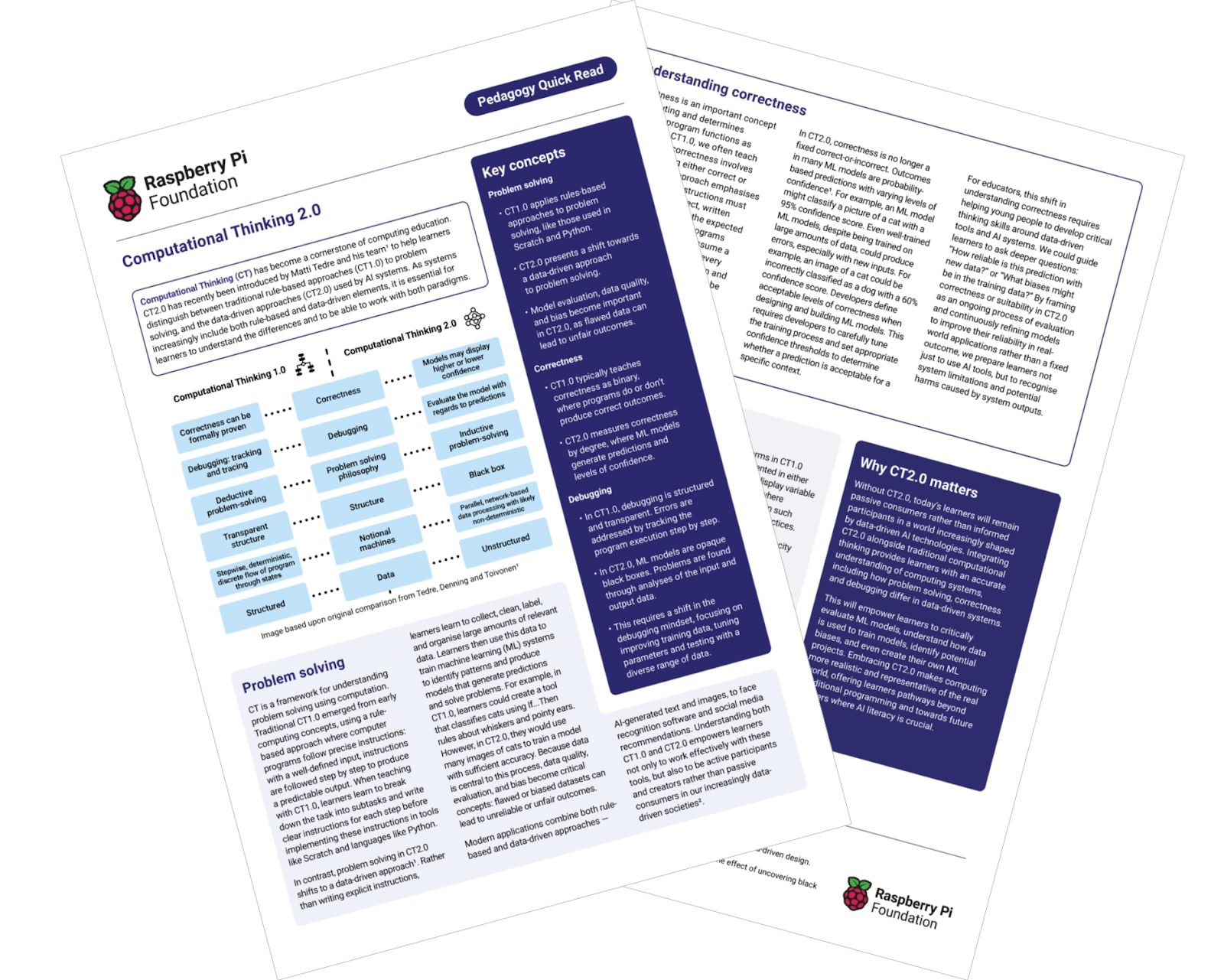
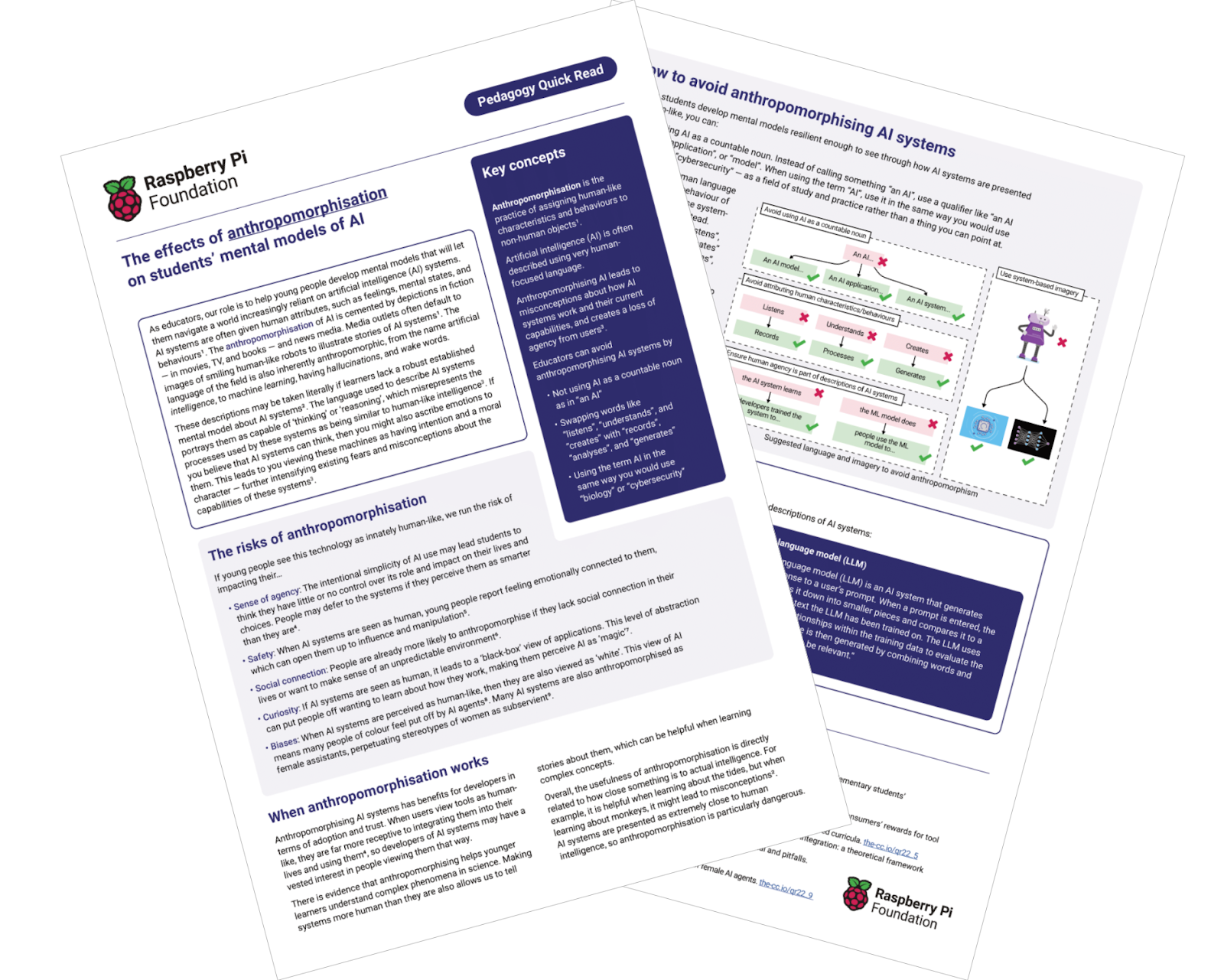
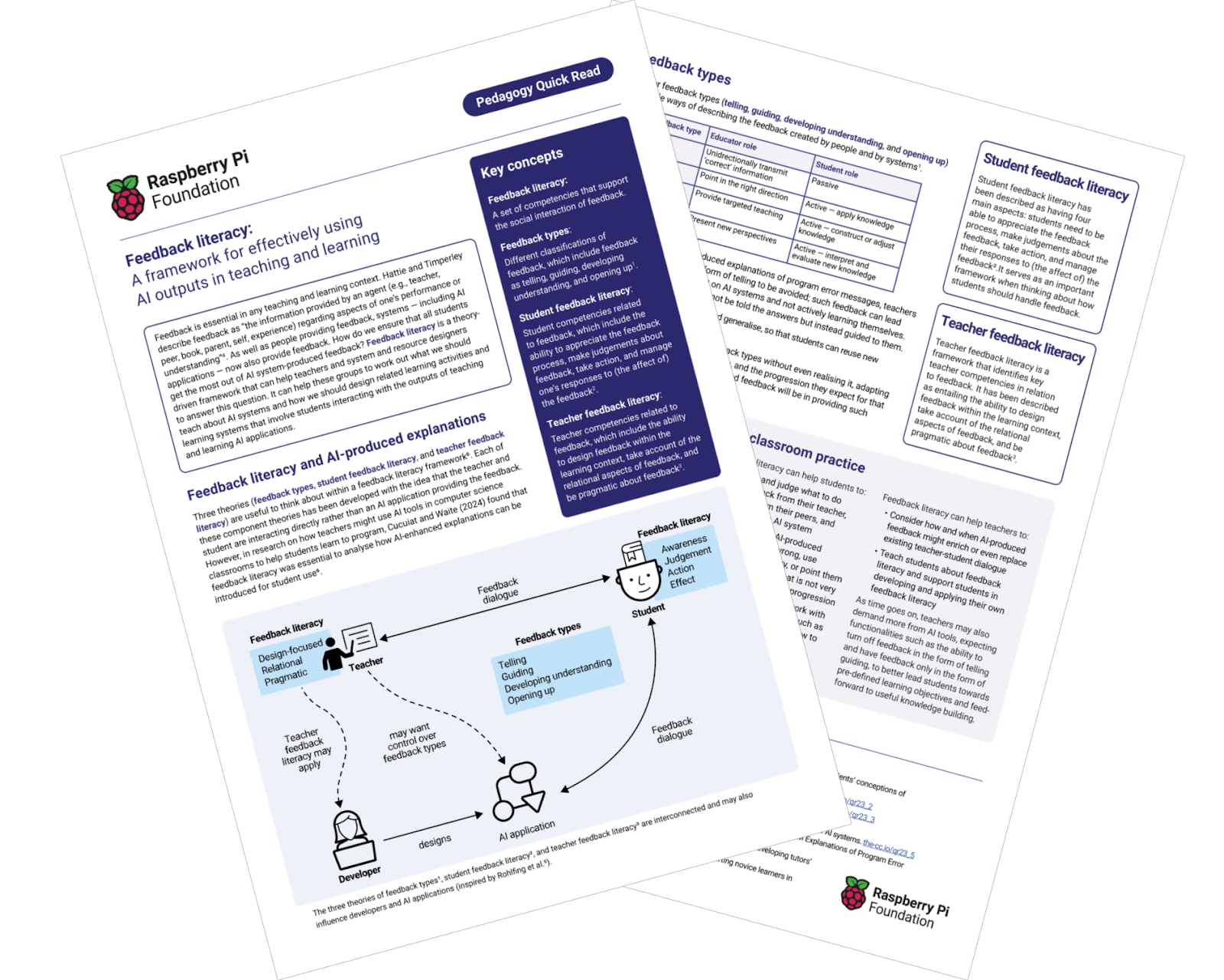
What does outstanding computing education look like in the age of AI? We’ve just released a new series of Pedagogy Quick Reads exploring this vital question. Focusing on three aspects of AI in computing education, these short guides offer practical insights and new strategies for your classroom practice.
Each Pedagogy Quick Read is designed to help educators explore, understand, and apply one area of research evidence.
You get:
An introduction to the topic or idea, putting it into context
A summary of the key concepts and takeaways for educators
Sections elaborating on each key concept and relevant research
A diagram presenting the same ideas in visual form
Links to referenced resources for further reading
Introducing our AI Pedagogy Quick Reads
Computational Thinking 2.0
This Quick Read explores how the concept of computational thinking is evolving, particularly in the context of AI. It offers guidance on how to teach computational thinking skills that are relevant to and enhanced by AI technologies.
“Without CT2.0, today’s learners will remain passive consumers rather than informed participants in a world increasingly shaped by data-driven AI technologies.”
As AI becomes widely used, it’s important to consider how students understand and view these technologies. This Quick Read discusses anthropomorphism (attributing human-like qualities to AI) and provides strategies for teaching about AI in a way that avoids common misconceptions.
“If young people see this technology as innately human-like, we run the risk of impacting their…sense of agency…safety…social connection…curiosity.”
Effective feedback is important for student learning, especially in a rapidly changing field like AI. This Quick Read examines how to develop “feedback literacy” in both educators and students, enabling them to give, receive, and use feedback more effectively.
“How do we ensure that all students get the most out of AI system-produced feedback? Feedback literacy is a theory-driven framework that can help…answer this question.”
The new AI-themed reads join our bank of other Pedagogy Quick Reads, which cover a wide range of topics related to computing education. You can find these resources and more on our pedagogy page, all organised around our 12 pedagogy principles for computing education.
Other resources
As well as our Pedagogy Quick Reads, we also offer lots of other resources to support computing educators:
The Hello World Big Book of Computing Pedagogy is an in-depth guide to research-backed computing education pedagogy, covering a wide range of topics and offering practical advice for teachers.
The Hello World magazine and podcast feature insights from educators in computing education, exploring current research, best classroom practices, and innovative teaching strategies.
Our AI literacy programme, Experience AI, provides teachers with cutting-edge resources on AI and machine learning, based on proven pedagogical principles to support effective learning and teaching.
Lukas Fitti writes in detail
on the pganalyze blog about the asynchronous I/O capability coming with the
PostgreSQL 18 release.
Asynchronous I/O delivers the most noticeable gains in cloud
environments where storage is network-attached, such as Amazon EBS
volumes. In these setups, individual disk reads often take multiple
milliseconds, introducing substantial latency compared to local
SSDs.
With traditional synchronous I/O, each of these reads blocks query
execution until the data arrives, leading to idle CPU time and
degraded throughput. By contrast, asynchronous I/O allows Postgres
to issue multiple read requests in parallel and continue processing
while waiting for results. This reduces query latency and enables
much more efficient use of available I/O bandwidth and CPU cycles.
At Netflix, delivering the best possible experience for our members is at the heart of everything we do, and we know we can’t do it alone. That’s why we work closely with a diverse ecosystem of technology partners, combining their deep expertise with our creative and operational insights. Together, we explore new ideas, develop practical tools, and push technical boundaries in service of storytelling. This collaboration not only empowers the talented creatives working on our shows with better tools to bring their vision to life, but also helps us innovate in service of our members. By building these partnerships on trust, transparency, and shared purpose, we’re able to move faster and more meaningfully, always with the goal of making our stories more immersive, accessible, and enjoyable for audiences everywhere. One area where this collaboration is making a meaningful impact is in improving dialogue intelligibility, from set to screen. We call this the Dialogue Integrity Pipeline.
Dialogue Integrity Pipeline
We’ve all been there, settling in for a night of entertainment, only to find ourselves straining to catch what was just said on screen. You’re wrapped up in the story, totally invested, when suddenly a key line of dialogue vanishes into thin air. “Wait, what did they say? I can’t understand the dialogue! What just happened?”
You may pick up the remote and rewind, turn up the volume, or try to stay with it and hope this doesn’t happen again. Creating sophisticated, modern series and films requires an incredible artistic & technical effort. At Netflix, we strive to ensure those great stories are easy for the audience to enjoy. Dialogue intelligibility can break down at multiple points in what we call the Dialogue Integrity Pipeline, the journey from on-set capture to final playback at home. Many facets of the process can contribute to dialogue that’s difficult to understand:
Naturalistic acting styles, diverse speech patterns, and accents
Noisy locations, microphone placement problems on set
Audio compromises through the distribution pipeline
TVs with inadequate speakers, noisy home environments
Addressing these issues is critical to maintaining the standard of excellence our content deserves.
Measurement at Scale
Netflix utilizes industry-standard loudness meters to measure content and its adherence to our core loudness specifications. This tool also provides feedback on audio dynamic range (loud to soft) which impacts dialogue intelligibility. The Audio Algorithms team at Netflix wanted to take these measurements further and develop a holistic understanding of dialogue intelligibility throughout the runtime of a given title.
The team developed a Speech Intelligibility measurement system based on the Short-time Objective Intelligibility (STOI) metric [Taal et al. (IEEE Transactions on Audio, Speech, and Language Processing)]. Firstly, a speech activity detector analyses the dialogue stem to render speech utterances, which are then compared to non-speech sounds in the mix, typically Music and Effects. Then the system calculates the Signal-to-Noise ratio, in each speech frequency band, the results of which are summarized succinctly, per-utterance on the range [0, 1.0], to quantify the degree to which competing Music and Effects can distract the listener.
This chart shows how eSTOI (extended Short-Time Objective Intelligibility) method measures dialogue (fg [foreground] stem in the graphic) against non-speech (bg [background] stem in the graphic) to judge intelligibility based on competing non-speech sound.
Optimizing Dialogue Prior to Delivery
Understanding dialogue intelligibility across Netflix titles is invaluable, but our mission goes beyond analysis — we strive to empower creators with the tools to craft mixes that resonate seamlessly with audiences at home.
Seeing the lack of dedicated Dialogue Intelligibility Meter plugins for Digital Audio Workstations, we teamed up with industry leaders, Fraunhofer Institute for Digital Media Technology IDMT (Fraunhofer IDMT) and Nugen Audio to pioneer a solution that enhances creative control and ensures crystal-clear dialogue from mix to final delivery.
We collaborated with Fraunhofer IDMT to adapt their machine-learning-based speech intelligibility solution for cross-platform plugin standards and brought in Nugen Audio to develop DAW-compatible plugins.
Fraunhofer IDMT
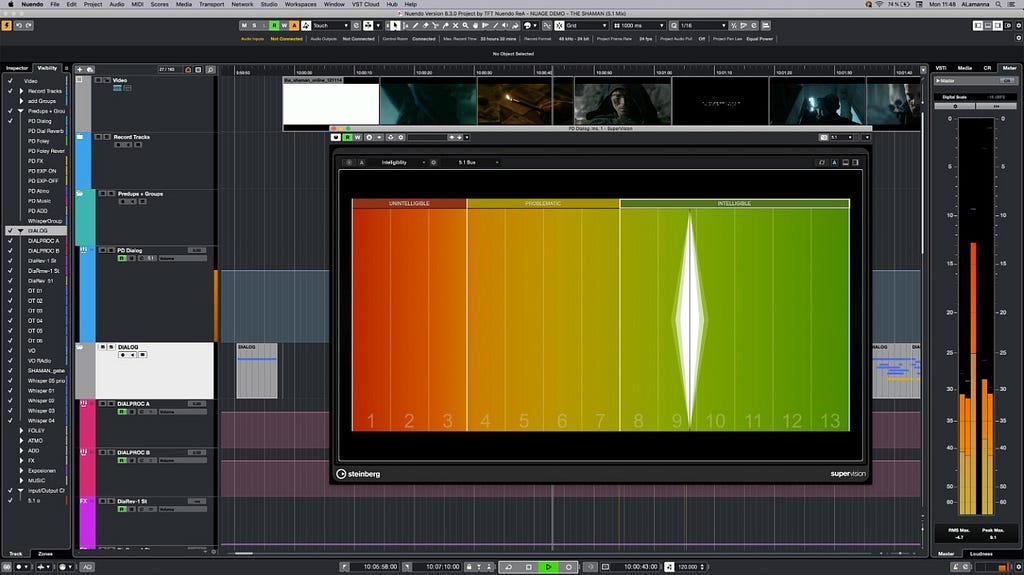
The Fraunhofer Department of Hearing, Speech, and Audio Technology HSA has done significant research and development on media processing tools that measure speech intelligibility. In 2020, the machine learning-based method was integrated into Steinberg’s Nuendo Digital Audio Workstation. We approached the Fraunhofer engineering team with a collaboration proposal to make their technology accessible to other audio workstations through the cross-platform VST (Virtual Studio Technology) and AAX (Avid Audio Extension) plugin standards. The scientists were keen on the project and provided their dialogue intelligibility library.
The Fraunhofer IDMT Dialogue Intelligibility Meter integrated into the Steinberg Nuendo Digital Audio Workstation.
Nugen Audio
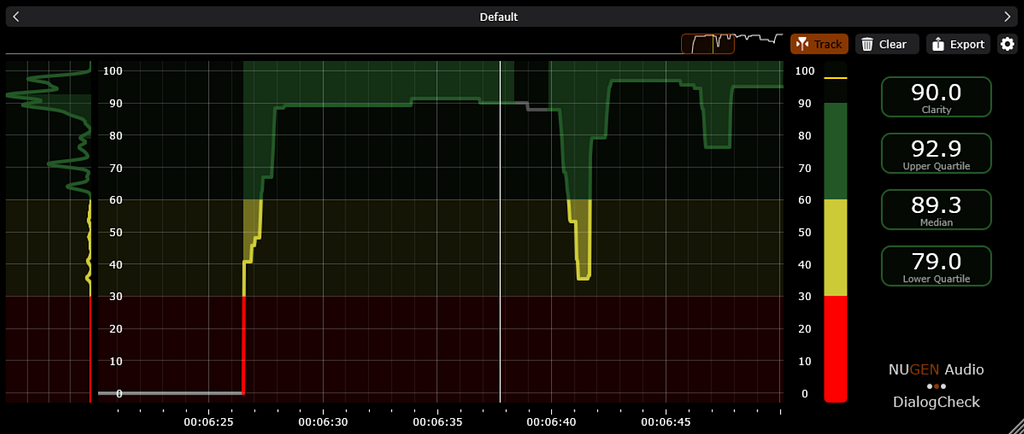
Nugen Audio created the VisLM plugin to provide sound teams with an efficient and accurate way to measure mixes for conformance to traditional broadcast & streaming specifications — Full Mix Loudness, Dialogue Loudness, and True Peak. Since then, VisLM has become a widely used tool throughout the global post-production industry. Nugen Audio partnered with Fraunhofer, integrating the Fraunhofer IDMT Dialogue Intelligibility libraries into a new industry-first tool — Nugen DialogCheck. This tool gives re-recording mixers real-time insights, helping them adjust dialogue clarity at the most crucial points in the mixing process, ensuring every word is clear and understood.
Clearer Dialogue Through Collaboration
Crafting crystal-clear dialogue isn’t just a technical challenge — it’s an art that requires continuous innovation and strong industry collaboration. To empower creators, Netflix and its partners are embedding advanced intelligibility measurement tools directly into DAWs, giving sound teams the ability to:
Detect and resolve dialogue clarity issues early in the mix.
Fine-tune speech intelligibility without compromising artistic intent.
Deliver immersive, accessible storytelling to every viewer, in any listening environment.
At Netflix, we’re committed to pushing the boundaries of audio excellence. From pioneering the eSTOI (extended short-term objective intelligibility) method to collaborating with Fraunhofer and Nugen Audio on cutting-edge tools like the DialogCheck Plugin, we’re setting a new standard for dialogue clarity — ensuring every word is heard exactly as creators intended. But innovation doesn’t happen in isolation. By working together with our partners, we can continue to push the limits of what’s possible, fueling creativity and driving the future of storytelling.
Finally, we’d like to extend a heartfelt thanks to Scott Kramer for his contributions to this initiative.
To provide the best experiences, we use technologies like cookies to store and/or access device information. Consenting to these technologies will allow us to process data such as browsing behavior or unique IDs on this site. Not consenting or withdrawing consent, may adversely affect certain features and functions.
Functional
Always active
The technical storage or access is strictly necessary for the legitimate purpose of enabling the use of a specific service explicitly requested by the subscriber or user, or for the sole purpose of carrying out the transmission of a communication over an electronic communications network.
Preferences
The technical storage or access is necessary for the legitimate purpose of storing preferences that are not requested by the subscriber or user.
Statistics
The technical storage or access that is used exclusively for statistical purposes.The technical storage or access that is used exclusively for anonymous statistical purposes. Without a subpoena, voluntary compliance on the part of your Internet Service Provider, or additional records from a third party, information stored or retrieved for this purpose alone cannot usually be used to identify you.
Marketing
The technical storage or access is required to create user profiles to send advertising, or to track the user on a website or across several websites for similar marketing purposes.