Post Syndicated from Curious Droid original https://www.youtube.com/watch?v=KqtyZ-3dNto
Accelerate operational analytics with Amazon Q Developer in Amazon OpenSearch Service
Post Syndicated from Esra Kayabali original https://aws.amazon.com/blogs/aws/accelerate-operational-analytics-with-amazon-q-developer-in-amazon-opensearch-service/
Today, I’m happy to announce Amazon Q Developer support for Amazon OpenSearch Service, providing AI-assisted capabilities to help you investigate and visualize operational data. Amazon Q Developer enhances the OpenSearch Service experience by reducing the learning curve for query languages, visualization tools, and alerting features. The new capabilities complement existing dashboards and visualizations by enabling natural language exploration and pattern detection. After incidents, you can rapidly create additional visualizations to strengthen your monitoring infrastructure. This enhanced workflow accelerates incident resolution and optimizes engineering resource usage, helping you focus more time on innovation rather than troubleshooting.
Amazon Q Developer in Amazon OpenSearch Service improves operational analytics by integrating natural language exploration and generative AI capabilities directly into OpenSearch workflows. During incident response, you can now quickly gain context on alerts and log data, leading to faster analysis and resolution times. When alert monitors trigger, Amazon Q Developer provides summaries and insights directly in the alerts interface, helping you understand the situation quickly without waiting for specialists or consulting documentation. From there, you can use Amazon Q Developer to explore the underlying data, build visualizations using natural language, and identify patterns to determine root causes. For example, you can create visualizations that break down errors by dimensions such as Region, data center, or endpoint. Additionally, Amazon Q Developer assists with dashboard configuration and recommends anomaly detectors for proactive alerting, improving both initial monitoring setup and troubleshooting efficiency.
Get started with Amazon Q Developer in OpenSearch Service
To get started, I go to my OpenSearch user interface and sign in. From the home page, I choose a workspace to test Amazon Q Developer in OpenSearch Service. For this demonstration, I use a preconfigured environment with the sample logs dataset available on the user interface.
This feature is on by default through the Amazon Q Developer Free tier, which is also on by default. You can disable the feature by unselecting the Enable natural language query generation checkbox under the Artificial Intelligence (AI) and Machine Learning (ML) section during domain creation or by editing the cluster configuration in console.

In OpenSearch Dashboards, I navigate to Discover from the left navigation pane. To use natural language to explore the data, I switch to PPL language in order to show the prompt box.

I choose the Amazon Q icon in the main navigation bar to open the Amazon Q panel. You can use this panel to create recommended anomaly detectors to drive alerting and use natural language to generate visualization.

I enter the following prompt in the Ask a natural language question text box:
Show me a breakdown of HTTP response codes for the last 24 hours
When results appear, Amazon Q automatically generates a summary of these results. You can control the summary display using the Show result summarization option under the Amazon Q panel to hide or show the summary. You can use the thumbs up or thumbs down buttons to provide feedback, and you can copy the summary to your clipboard using the copy button.

Other capabilities of Amazon Q Developer in OpenSearch Service are generating visualizations directly from natural language descriptions, providing conversational assistance for OpenSearch related queries, providing AI-generated summaries and insights for your OpenSearch alerts, and analyzing your data, and suggesting appropriate anomaly detectors.
Let’s look into how to generate visualizations directly from natural language descriptions. I choose Generate visualization from Amazon Q panel. I enter Create a bar chart showing the number of requests by HTTP status code in the input field and choose generate.
To refine the visualization, you can choose Edit visual and add style instructions such as Show me a pie chart or Use a light gray background with a white grid.

Now available
You can now use Amazon Q Developer in OpenSearch Service to reduce mean time to resolution, enable more self-service troubleshooting, and help teams extract greater value from your observability data.
The service is available today in US East (N. Virginia), US West (Oregon), Asia Pacific (Mumbai), Asia Pacific (Sydney), Asia Pacific (Tokyo), Canada (Central), Europe (Frankfurt), Europe (London), Europe (Paris), and South America (São Paulo) AWS Regions.
To learn more, visit the Amazon Q Developer documentation and start using Amazon Q Developer in your OpenSearch Service domain today.
How is the News Blog doing? Take this 1 minute survey!
(This survey is hosted by an external company. AWS handles your information as described in the AWS Privacy Notice. AWS will own the data gathered via this survey and will not share the information collected with survey respondents.)
Comic for 2025.03.31 – Glow Up
Post Syndicated from Explosm.net original https://explosm.net/comics/glow-up
New Cyanide and Happiness Comic
Amazon API Gateway now supports dual-stack (IPv4 and IPv6) endpoints
Post Syndicated from Betty Zheng (郑予彬) original https://aws.amazon.com/blogs/aws/amazon-api-gateway-now-supports-dual-stack-ipv4-and-ipv6-endpoints/
Today, we are launching IPv6 support for Amazon API Gateway across all endpoint types, custom domains, and management APIs, in all commercial and AWS GovCloud (US) Regions. You can now configure REST, HTTP, and WebSocket APIs, and custom domains, to accept calls from IPv6 clients alongside the existing IPv4 support. You can also call API Gateway management APIs from dual-stack (IPv6 and IPv4) clients. As organizations globally confront growing IPv4 address scarcity and increasing costs, implementing IPv6 becomes critical for future-proofing network infrastructure. This dual-stack approach helps organizations maintain future network compatibility and expand global reach. To learn more about dualstack in the Amazon Web Services (AWS) environment, see the IPv6 on AWS documentation.
Creating new dual-stack resources
This post focuses on two ways to create an API or a domain name with a dualstack IP address type: AWS Management Console and AWS Cloud Development Kit (CDK).
AWS Console
When creating a new API or domain name in the console, select IPv4 only or dualstack (IPv4 and IPv6) for the IP address type.
As shown in the following image, you can select the dualstack option when creating a new REST API.
 For custom domain names, you can similarly configure dualstack as shown in the next image.
If you need to revert to IPv4-only for any reason, you can modify the IP address type setting, with no need to redeploy your API for the update to take effect.

REST APIs of all endpoint types (EDGE, REGIONAL and PRIVATE) support dualstack. Private REST APIs only support dualstack configuration.
AWS CDK
With AWS CDK, start by configuring a dual-stack REST API and domain name.
IPv6 Source IP and authorization
When your API begins receiving IPv6 traffic, client source IPs will be in IPv6 format. If you use resource policies, Lambda authorizers, or AWS Identity and Access Management (IAM) policies that reference source IP addresses, make sure they’re updated to accommodate IPv6 address formats.
For example, to permit traffic from a specific IPv6 range in a resource policy.
Summary
API Gateway dual-stack support helps manage IPv4 address scarcity and costs, comply with government and industry mandates, and prepare for the future of networking. The dualstack implementation provides a smooth transition path by supporting both IPv4 and IPv6 clients simultaneously.
To get started with API Gateway dual-stack support, visit the Amazon API Gateway documentation. You can configure dualstack for new APIs or update existing APIs with minimal configuration changes.
Special thanks to Ellie Frank (elliesf), Anjali Gola (anjaligl), and Pranika Kakkar (pranika) for providing resources, answering questions, and offering valuable feedback during the writing process. This blog post was made possible through the collaborative support of the service and product management teams.
How is the News Blog doing? Take this 1 minute survey!
(This survey is hosted by an external company. AWS handles your information as described in the AWS Privacy Notice. AWS will own the data gathered via this survey and will not share the information collected with survey respondents.)
An unplanned trip from Chicago to Milwaukee in an electric car
Post Syndicated from Technology Connextras original https://www.youtube.com/watch?v=3GUQdrpduo0
Globalizing Productions with Netflix’s Media Production Suite
Post Syndicated from Netflix Technology Blog original https://netflixtechblog.com/globalizing-productions-with-netflixs-media-production-suite-fc3c108c0a22
Jesse Korosi, Thijs van de Kamp, Mayra Vega, Laura Futuro, Anton Margoline
The journey from script to screen is full of challenges in the ever-evolving world of film and television. The industry has always innovated, and over the last decade, it started moving towards cloud-based workflows. However, unlocking cloud innovation and all its benefits on a global scale has proven to be difficult. The opportunity is clear: streamline complex media management logistics, eliminate tedious, non-creative task-based work and enable productions to focus on what matters most–creative storytelling. With these challenges in mind, Netflix has developed a suite of tools by filmmakers for filmmakers: the Media Production Suite (MPS).

What are we solving for?
Significant time and resources are devoted to managing media logistics throughout the production lifecycle. An average Netflix title produces around ~200 Terabytes of Original Camera Files (OCF), with outliers up to 700 Terabytes, not including any work-in-progress files, VFX assets, 3D assets, etc. The data produced on set is traditionally copied to physical tape stock like LTO. This workflow has been considered the industry norm for a long time and may be cost-effective, but comes with trade-offs. Aside from needing to physically ship and track all movement of the tape stock, storing media on a physical tape makes it harder to search, play and share media assets; slowing down accessibility to production media when needed, especially when titles need to collaborate with talent and vendors all over the world.
Even when workflows are fully digital, the distribution of media between multiple departments and vendors can still be challenging. A lack of automation and standardization often results in a labour-intensive process across post-production and VFX with a lot of dependencies that introduce potential human errors and security risks. Many productions utilize a large variety of vendors, making this collaboration a large technical puzzle. As file sizes grow and workflows become more complex, these issues are magnified, leading to inefficiencies that slow down post-production and reduce the available time spent on creative work.
Moving media into the cloud introduces new challenges for production and post ramping up to meet the operational and technological hurdles this poses. For some post-production facilities, it’s not uncommon to see a wall of portable hard drives at their facility, with media being hand-carried between vendors because alternatives are not available. The need for a centralized, cloud-based solution that transcends these barriers is more pressing than ever. This results in a willingness to embrace new and innovative ideas, even if exploratory, and introduce drastic workflow changes to productions in pursuit of creative evolution.
At Netflix, we believe that great stories can come from anywhere, but we have seen that technical limitations in traditional workflows reduce access to media and restrict filmmakers’ access to talent. Besides the need for robust cloud storage for their media, artists need access to powerful workstations and real-time playback. Depending on the market, or production budget, cutting-edge technology might not be available or affordable.
What if we started charting a course to break free from many of these technical limitations and found ways to enhance creativity? Industry trade shows like the International Broadcast Convention (IBC) and the National Association of Broadcasters Show (NAB) highlight a strong global trend: instead of bringing media to the artist/applications (traditional workflow) we see the shift towards bringing people and applications to the media (cloud workflows and remote workstations). The concept of cloud-based workflows is not new, as many technology leaders in our industry have been experimenting in this space for more than a decade. However, executing this vision at a Netflix scale with hundreds of titles a year has not been done before…
The challenge of building a global technology to solve this
Building solutions at a global scale poses significant challenges. The art of making movies and series lacks equal access to technology, best practices, and global standardization. Different countries worldwide are at different phases of innovation based on local needs and nuances. While some regions boast over a century of cinematic history and have a strong industry, others are just beginning to carve their niche. This vast gap presents a unique challenge: developing global technology that caters to both established and emerging markets, each with distinct languages and workflows.
The large diversity of needs by talent and vendors globally creates a standardization challenge and can be seen when productions use a global talent pool. Many mature post-production and VFX facilities have built scripts and automation that flow between various artists and personnel within their facility; allowing a more streamlined workflow, even though the customization is time-consuming. E.g., Transcoding, or transcriptions that automatically run when files are dropped in a hot folder, with the expectation that certain sidecar metadata files will accompany them with a specific organizational structure. Embracing and integrating new workflows introduces the fear of disrupting a well-established process, increasing additional pressure on the profit margins of vendors. Small workflow changes that may seem arbitrary may actually have a large impact on vendors. Therefore, innovation should provide meaningful benefits to a title in order to get adopted at scale. Reliability, a proven track record, strong support, and an incredibly low tolerance for bugs, or issues are top of mind in well-established markets.
In developing this suite, we recognized the necessity of addressing the vast array of titles that flow through Netflix without the luxury of expanding into a massive operational entity. Consequently, automation became imperative. The intricacies of color and framing management, along with deliverables, must be seamlessly controlled and effortlessly managed by the user, without the need for manual intervention. Therefore, we cannot lean into humans configuring JSON files behind the scenes to map camera formats into deliverables. By embracing open standards, we not only streamline these processes but also facilitate smoother collaboration across diverse markets and countries, ensuring that our global productions can operate with unparalleled efficiency and cohesion. To ensure this, we’ve decided to lean heavily into standards like ACES, AMF, ASC MHL, ASC FDL, and OTIO. ACES and AMF for color pipeline management. ASC MHL for any file management/verifications. ASC FDL will serve as our framing interoperability and OTIO for any timeline interchange. Leaning into standards like this means that many things can be automated at scale and more importantly, high-complexity workflows can be offered to markets or shows that don’t normally have access to them. As an example, if a show is shot on various camera formats all framed and recorded at different resolutions, with different lenses and different safeties on each frame. The task of normalizing all of these for a VFX vendor into one common container with a normalized center extracted frame is often only offered to very high-end titles, considering it takes a human behind the curtain to create all of these mappings. But by leaning into a standard like the FDL, it means this can now easily be automated, and the control for these mappings, put directly in the hands of users.
Our Answer — Content Hub’s Media Production Suite (MPS)
Building a global scalable solution that could be utilized in a diversity of markets has been an exciting challenge. We set out to provide customizable and feature-rich tooling for advanced users while remaining intuitive and streamlined enough for less experienced filmmakers. With collaboration from Netflix teams, vendors, and talent across the globe, we’ve taken a bold step forward in enabling a suite of tools inside Netflix Content Hub that democratizes technology: the Media Production Suite. While leveraging our scale economies and access to resources, we can now unlock global talent pools for our productions, drastically reduce non-creative task-based work, streamline workflows, and level the playing field between our markets, ultimately maximizing the time available for what matters most; creative work!
So what is it?
1. Netflix Hybrid Infrastructure: Netflix has invested in a hybrid infrastructure, a mix of cloud-based and physically distributed capabilities operating in multiple locations across the world and close to our productions to optimize user performance. This infrastructure is available for Netflix shows and is foundational under Content Hub’s Media Production Suite tooling. Local storage and compute services are connected through the Netflix Open Connect network (Netflix Content Delivery Network) to the infrastructure of Amazon Web Services (AWS). The system facilitates large volumes of camera and sound media and is built for speed. In order to ensure that productions have sufficient upload speeds to get their media into the cloud, Netflix has started to roll out Content Hub Ingest Centers globally to provide high-speed internet connectivity where required. With all media centralized, MPS eliminates the need for physical media transport and reduces the risk of human error. This approach not only streamlines operations but also enhances security and accessibility.
2. Automation and Tooling: In addition to the Netflix Hybrid infrastructure layer, MPS consists of a suite of tools that tap into the media in the Netflix ecosystem.
Footage Ingest — An application that allows users to upload media/files into Content Hub.
Media Library — A central library that allows users to search, preview, share and download media.
Dailies — A workflow, backed by an operational team, offering automated Quality Control of your footage, sound sync, application of color, rendering, and delivering dailies directly to editorial.
Remote Workstations — Offering access to remote editorial workstations and storage for post-production needs.
VFX Pulls — An automated method for converting and delivering visual effects plates, associated color, and framing files to VFX vendors.
Conform Pulls — An automated method for consolidating, trimming, and delivering all OCF to picture-finishing vendors.
Media Downloader — An automated download tool that initiates a download once media has been made available in the Netflix cloud.
While each of the individual tools within MPS is at different states of maturity, over 350 titles have made use of at least one of the tools noted above. Input has been taken from all over the world while developing, with users ranging from UCAN (United States/Canada), EMEA (Europe, Middle East, and Africa), SEA (South East Asia), LATAM (Latin America), and APAC (Asia Pacific).
Senna: Early Adoption and Insightful Feedback Driving MPS Evolution

The Brazilian-produced series Senna, which follows the life of legendary Formula 1 driver Ayrton Senna, utilized MPS to reshape their content creation workflow, overcome geographical barriers, and unlock innovation to support world-class storytelling for a global audience. Senna is a groundbreaking series, not just for its storytelling but for its production journey across Argentina, Uruguay, Brazil, and the United Kingdom. With editorial teams spread across Porto Alegre and Spain, and VFX studios collaborating across locations in Brazil, Canada, the United States, and India, all orchestrated by our subsidiary Scanline VFX. The series exemplifies the global nature of modern filmmaking and was the perfect fit for Netflix’s new Content Hub Media Production Suite (MPS).
At the heart of Senna’s workflow orchestration is MPS. While each of the tools within MPS is based on an opt-in model, in order to use many of the downstream services, the first step is ensuring that the original camera files (OCF) and original sound files (OSF) are uploaded. “We knew we were going to shoot in different places,” said Post Supervisor Gabriel Queiroz,“to have all this material cloud-based, it’s definitely one of the most important things for us. It would be hard to bring all this media physically from Argentina or wherever to Brazil. It will take us a lot of time.” With Senna shooting across locations, allowing production the capability of uploading their OCF and OSF resulted in no longer requiring shuttling hard drives on airplanes, creating LTO tapes, & managing physical shipments for their negative. And yes, you read that correctly; when utilizing MPS, we don’t require LTO tapes to be written unless there are title-specific needs.
With Senna beginning production back in June of 2023, our investment in MPS was still very early stages, and the tooling was considered beta. However, with the help, feedback, and partnership from this production, it was quickly realized that the investment was worth doubling down on. Since the early version used on Senna, Netflix has been spinning up ingest centers around the world, where drives can be dropped off, and within a matter of hours, all original camera files are uploaded into the Netflix ecosystem. While creating the ability to upload is not a novel concept, behind the scenes, it’s far from simple. Once a drive has been plugged in and our Netflix Footage Ingest application is opened, a validation is run, ensuring all expected media from set is on the drive. After media has been uploaded and checksums are run validating media integrity, all media is inspected, metadata is extracted, and assets are created for viewing/sharing/downloading with playable proxies. All media is then automatically backed up to a second tier of cloud-based storage for the final archive.
Traditionally, if you wanted to check in with your post vendor on how things are going for each of these media management steps noted above, or whether or not you can clear on set camera cards if you haven’t gotten a completion notification, you would have to pick up the phone and call your vendor. For Senna, anyone who wanted visibility on progress, simply logged in to Content Hub and could see any activity in the Footage Ingest dashboard, as well as look up any information needed on past uploads.

While many services in MPS are available once media has been uploaded, Senna’s use of MPS focused on VFX. With Senna shooting a high volume of footage and the show having a high volume of VFX shots, according to Post Supervisor Gabriel Queiroz “Using MPS was basically a no-brainer, [having] used the tool before, I knew what it could bring to the project. And to be honest, with the amount of footage that we have, it was just so much material and with the amount of vendors we have, knowing that we would have to deliver all this footage to all these kinds of vendors, including outside of Brazil and to different parts of the world.”
With a traditional workflow, utilizing available resources in Latin America, VFX Pulls would have been done manually. This process is prone to human error and more importantly, for a show like Senna, too slow and would have resulted in different I/O methods for every vendor.

By utilizing MPS, the Assistant Editor was able to log into Content Hub, upload an EDL, and have their VFX Pulls automatically transcoded, color files consolidated and all media placed into a Google Drive style folder built directly in Content Hub (called Workspaces). The VFX Editor was able to make any additional tweaks they wanted to the directory before farming out each of the shots to whichever vendor they were meant for. When it came time for the VFX vendors to then send shots back to editorial or DI, this was also done through MPS. Having one standard method for I/O for all VFX file sharing meant that Editorial and DI did not have to manage a different file transfer/workflow for every single vendor that was onboarded.

After picture was locked and it was time for Senna to do their Online, the DI facility Quanta was able to utilize the Conform Pull service within MPS. The Conform Pull service allowed their team to upload an EDL, which ran a QC on all of the media from within their edit to ensure a smooth conform and then consolidated, trimmed, and packaged up all of the media they needed for the online. Since this early beta and thanks to learnings from many shows like Senna, advancements have been made in the system’s ability to match back to source media for both Conform and VFX Pulls. Rather than requiring an exact match between EDL and source OCF, there are several variations of fuzzy matching that can take place, as well as a current investigation in using one of our perceptual matching algorithms, allowing for a perceptual conform using computer vision, instead of solely relying on metadata.
Conclusion
The Media Production Suite (MPS) represents a transformative leap in how we approach media production at Netflix. By embracing open standards, we have crafted a scalable solution that not only makes economic sense but also democratizes access to advanced production tools across the globe. This approach allows us to eliminate tedious tasks, enabling our teams to focus on what truly matters: creative storytelling. By fostering global collaboration and leveraging the power of cloud-based workflows, we’re not just enhancing efficiency but also elevating the quality of our productions. As we continue to innovate and refine our processes, we remain committed to breaking down barriers and unlocking the full potential of creative talent worldwide. The future of filmmaking is here, and with MPS, we are leading the charge toward a more connected and creatively empowered industry.

Globalizing Productions with Netflix’s Media Production Suite was originally published in Netflix TechBlog on Medium, where people are continuing the conversation by highlighting and responding to this story.
AWS Weekly Roundup: Amazon Bedrock, Amazon QuickSight, AWS Amplify, and more (March 31, 2025)
Post Syndicated from Esra Kayabali original https://aws.amazon.com/blogs/aws/aws-weekly-roundup-amazon-bedrock-amazon-quicksight-aws-amplify-and-more-march-31-2025/
It’s AWS Summit season! Free events are now rolling out worldwide, bringing our cloud computing community together to connect, collaborate, and learn. Whether you prefer joining us online or in-person, these gatherings offer valuable opportunities to expand your AWS knowledge. I’ll be attending the AWS Amsterdam Summit and would love to meet you—if you’re planning to be there, please stop by to say hello! Visit the AWS Summit website today to find events in your area, sign up for registration alerts, and reserve your spot at an AWS Summit near you.
Speaking of AWS news, let’s look at last week’s new announcements.
Last week’s launches
Here are the launches that got my attention.
AWS WAF integration with AWS Amplify Hosting now generally available – You can now directly attach AWS WAF to your AWS Amplify applications through a one-click integration in the Amplify console or using infrastructure as code (IaC). This integration provides access to the full range of AWS WAF capabilities, including managed rules that protect against common web exploits like SQL injection and cross-site scripting (XSS). You can also create custom rules based on your application needs, implement rate-based rules to protect against distributed denial of service (DDoS) attacks by limiting request rates from IP addresses, and configure geo-blocking to restrict access from specific countries. Firewall support is available in all AWS Regions in which Amplify Hosting operates.
Amazon Bedrock Custom Model Import introduces real-time cost transparency – If you’re using Amazon Bedrock Custom Model Import to run your customized foundation models (FMs), you can now access full transparency into compute resources and calculate inference costs in real time. Before model invocation, you can view the minimum compute resources (custom model units or CMUs) required through both the Amazon Bedrock console and Amazon Bedrock APIs. As models scale to handle increased traffic, Amazon CloudWatch metrics provide real-time visibility into total CMUs used, enabling better cost control through near-instant visibility. This helps you make on-the-fly model configuration changes to optimize costs. The feature is available in all Regions where Amazon Bedrock Custom Model Import is supported, with additional details available in Calculate the cost of running a custom model in the Amazon Bedrock User Guide.
Amazon Bedrock Knowledge Bases now supports Amazon OpenSearch Managed Cluster for vector storage – Amazon Bedrock Knowledge Bases securely connects FMs to company data sources for Retrieval Augmented Generation (RAG), delivering more relevant and accurate responses. With this launch, you can use Amazon OpenSearch Managed Cluster as a vector database while using the full suite of Amazon Bedrock Knowledge Bases features. This integration expands the list of supported vector databases, which already includes Amazon OpenSearch Serverless, Amazon Aurora, Amazon Neptune Analytics, Pinecone, MongoDB Atlas, and Redis. The native integration with vector databases helps mitigate the need to build custom data source integrations. This feature is now generally available in all existing Amazon Bedrock Knowledge Bases and OpenSearch Service Regions.
Amazon Bedrock Guardrails announces the general availability of industry-leading image content filters – This new capability offers industry-leading text and image content safeguards that help you block up to 88% of harmful multimodal content without building custom safeguards or relying on error-prone manual content moderation. Image content filters can be applied across all categories within the content filter policy including hate, insults, sexual, violence, misconduct, and prompt attacks. Amazon Bedrock Guardrails provides configurable safeguards to detect and block harmful content and prompt attacks, define topics to deny and disallow specific topics, redact personally identifiable information (PII) such as personal data, and block specific words. It also provides contextual grounding checks to detect and block model hallucinations and to identify the relevance of model responses and claims, and to identify, correct, and explain factual claims in model responses using Automated Reasoning checks. This capability is generally available in the US East (N. Virginia), US West (Oregon), Europe (Frankfurt), and Asia Pacific (Tokyo) Regions. To learn more, visit Amazon Bedrock Guardrails image content filters provide industry-leading safeguards in the AWS Machine Learning Blog and Stop harmful content in models using Amazon Bedrock Guardrails in the Amazon Bedrock User Guide.
Scenarios capability now generally available for Amazon Q in QuickSight – This capability guides you through data analysis by uncovering hidden trends, making recommendations for your business, and intelligently suggesting next steps for deeper exploration using natural language interactions. Now you can explore past trends, forecast future scenarios, and model solutions without needing specialized skill, analyst support, or manual manipulation of data in spreadsheets. With its intuitive interface and step-by-step guidance, the scenarios capability of Amazon Q in QuickSight helps you perform complex data analysis up to 10x faster than spreadsheets. Whether you’re optimizing marketing budgets, streamlining supply chains, or analyzing investments, Amazon Q makes advanced data analysis accessible so you can make data-driven decisions across your organization. This capability is accessible from any Amazon QuickSight dashboard, so you can move seamlessly from visualizing data to asking what-if questions and comparing alternatives. Previous analyses can be easily modified, extended, and reused, helping you quickly adapt to changing business needs.
For a full list of AWS announcements, be sure to keep an eye on the What’s New at AWS page.
We launched existing services and instance types in additional Regions:
- Amazon DataZone is now available in Asia Pacific (Mumbai) and Europe (Paris) AWS Regions – Amazon DataZone is a fully managed data management service to catalog, discover, analyze, share, and govern data between data producers and consumers in your organization.
- The next generation of Amazon SageMaker is now available in Asia Pacific (Mumbai) and Europe (Paris) AWS Regions – Amazon SageMaker is the center for all your data, analytics, and AI. SageMaker Unified Studio provides a single development environment that consolidates AWS analytics and AI/ML tools.
- Amazon Redshift Query Editor V2 is now available in Mexico (Central) and Asia Pacific (Thailand) AWS Regions – Amazon Redshift Query Editor V2 makes data in your Amazon Redshift data warehouse and data lake more accessible with a web-based tool for SQL users such as data analysts, data scientists, and database developers.
- Amazon Keyspaces expands Multi-Region Replication to support all AWS Regions – Amazon Keyspaces (for Apache Cassandra) is a scalable, highly available, managed Cassandra-compatible database service that helps you run your Cassandra workloads on AWS using existing application code and developer tools.
- AWS Network Firewall is now available in the Asia Pacific (Thailand) and Mexico (Central) AWS Regions – AWS Network Firewall is a managed firewall service that automatically scales with traffic, requires no infrastructure maintenance, and integrates with AWS Firewall Manager for centralized policy control across AWS accounts.
- Amazon CloudWatch RUM is now generally available in Israel (Tel Aviv) and Asia Pacific (Hong Kong) AWS Regions – CloudWatch RUM monitors web applications by collecting real-time client-side performance data and providing dashboards that show end-user experience metrics, including page load anomalies, core web vitals, and errors across different geolocations, browsers, and devices.
- Amazon VPC IP Address Manager is now available in Asia Pacific (Thailand) and Mexico (Central) AWS Regions – Amazon Virtual Private Cloud (Amazon VPC) IP Address Manager (Amazon VPC IPAM) makes it easier to plan, track, and monitor IP addresses for AWS workloads, helping you organize addresses based on routing and security needs and set simple business rules to govern IP address assignments.
- Amazon Q Business now available in Asia Pacific (Sydney) AWS Region – Amazon Q Business is the most capable generative AI–powered assistant for finding information, gaining insight, and taking action at work. It can answer questions, provide summaries, generate content, and securely complete tasks based on data and information in your enterprise systems.
- Amazon EC2 P5en instances are now available in US East (N. Virginia) and Asia Pacific (Jakarta) AWS Regions – P5en instances feature 8 H200 GPUs with 1.7x memory size, paired with 4th Gen Intel Xeon processors and Gen5 PCIe for 4x CPU-GPU bandwidth. This helps improve collective communications performance for distributed training workloads such as deep learning, generative AI, real-time data processing, and high performance computing (HPC) applications.
- Amazon EC2 R8g instances now available in US West (N. California) AWS Region – These instances offer larger instance sizes with up to 3x more vCPU (up to 48xlarge) and memory (up to 1.5 TB) than AWS Graviton3 based R7g instances. These instances are up to 30% faster for web applications, 40% faster for databases, and 45% faster for large Java applications compared to Graviton3 based R7g instances.
- Amazon EC2 C8g instances now available in Asia Pacific (Tokyo) AWS Region – These instances offer larger instance sizes with up to 3x more vCPUs and memory compared to Graviton3 based Amazon C7g instances. AWS Graviton4 processors are up to 40% faster for databases, 30% faster for web applications, and 45% faster for large Java applications than AWS Graviton3 processors.
- Amazon SageMaker AI is now available in Mexico (Central) and Asia Pacific (Thailand) AWS Regions – Amazon SageMaker AI is a fully managed platform that provides every developer and data scientist with the ability to build, train, and deploy machine learning (ML) models quickly.
- Amazon ElastiCache now supports AWS PrivateLink in Asia Pacific (Jakarta) and Asia Pacific (Hyderabad) AWS Regions – AWS PrivateLink provides private connectivity between VPCs, AWS services, and on-premises networks without exposing traffic to the public internet and securing your network traffic. To use AWS PrivateLink with Amazon ElastiCache, you create an interface VPC endpoint for Amazon ElastiCache in your VPC using the Amazon VPC console, AWS SDK, or AWS Command Line Interface (AWS CLI).
Other AWS events
Check your calendar and sign up for upcoming AWS events.
AWS GenAI Lofts are collaborative spaces and immersive experiences that showcase AWS expertise in cloud computing and AI. They provide startups and developers with hands-on access to AI products and services, exclusive sessions with industry leaders, and valuable networking opportunities with investors and peers. Find a GenAI Loft location near you and don’t forget to register.
Browse all upcoming AWS led in-person and virtual events here.
That’s all for this week. Check back next Monday for another Weekly Roundup!
This post is part of our Weekly Roundup series. Check back each week for a quick roundup of interesting news and announcements from AWS!
How is the News Blog doing? Take this 1 minute survey!
(This survey is hosted by an external company. AWS handles your information as described in the AWS Privacy Notice. AWS will own the data gathered via this survey and will not share the information collected with survey respondents.)
[$] A herd of migration discussions
Post Syndicated from corbet original https://lwn.net/Articles/1015551/
Migration is the act of moving data from one location in physical
memory to another. The kernel may migrate pages for many reasons,
including defragmentation, improving NUMA locality, moving data to or from
memory hosted on a peripheral device, or freeing a range of
memory for other uses. Given the importance of migration to the
memory-management subsystem, there is a lot of interest in improving its
performance and removing impediments to its success. Several sessions in
the memory-management track of the 2025 Linux Storage, Filesystem,
Memory-Management, and BPF Summit were dedicated to this topic.
Whatsapp, Telegram and Signal integration + some more HACS
Post Syndicated from BeardedTinker original https://www.youtube.com/watch?v=Ul0tDc-2XNw
[$] Fedora change aims for 99% package reproducibility
Post Syndicated from jzb original https://lwn.net/Articles/1014979/
The effort to ensure that open-source software is reproducible has been
gathering steam over the years, and gaining traction with major Linux
distributions. Debian, for example, has been working toward reproducible
builds for more than a decade; it can now
produce official
live CDs of the current stable release that are
reproducible. Fedora started on the path much later, but it has
progressed far enough that the project is now considering a change
proposal for the Fedora 43 development cycle, expected to be
released in October, with a goal of
making 99% of Fedora’s package builds reproducible. So far, reaction
to the proposal seems favorable and focused primarily on how to
achieve the goal—with minimal pain for packagers—rather than whether to attempt it.
Security updates for Monday
Post Syndicated from jake original https://lwn.net/Articles/1015968/
Security updates have been issued by Debian (amd64-microcode, flatpak, intel-microcode, libdata-entropy-perl, librabbitmq, and vim), Fedora (augeas, containerd, crosswords-puzzle-sets-xword-dl, libssh2, libxml2, nodejs-nodemon, and webkitgtk), Red Hat (libreoffice and python-jinja2), SUSE (389-ds, apparmor, corosync, docker, docker-stable, erlang26, exim, ffmpeg-4, govulncheck-vulndb, istioctl, matrix-synapse, mercurial, openvpn, python3, rke2, and skopeo), and Ubuntu (ansible, linux, linux-hwe-5.4, linux-azure, linux-azure-5.4, linux-bluefield, linux-gcp, linux-gcp-5.4,
linux-ibm, linux-kvm, linux-oracle, linux-oracle-5.4, linux-xilinx-zynqmp, linux-azure-fips, linux-gcp-fips, linux-fips, linux-fips, linux-aws-fips, linux-azure-fips, linux-gcp-fips, linux-nvidia-tegra, linux-nvidia-tegra-igx, linux-realtime, linux-intel-iot-realtime, linux-xilinx-zynqmp, opensc, and ruby-doorkeeper).
Adopting Amazon Q Developer in Enterprise Environments
Post Syndicated from Rene-Martin Tudyka original https://aws.amazon.com/blogs/devops/adopting-amazon-q-developer-in-enterprise-environments/
Increasing developer productivity has been a persistent challenge for senior leaders over the past decades. With the rise of generative artificial intelligence (AI), a new wave of innovation is transforming how software teams work. Generative AI tools like Amazon Q Developer are emerging as game-changers, supporting developers across the entire software development lifecycle. But how are large-scale organizations successfully adopting this AI-assisted approach? This document shares good practices I have discovered through working with enterprise customers navigating this technological transformation.
A common misperception still is that a developer is more productive when they write code faster. But a median developer spends less than one hour per day writing code, as a study conducted by software.com in 2022 shows. This makes clear that there are other aspects to consider when it comes to building an application and running it in production. Generative AI tools for developers, such as Amazon Q Developer, started as coding companions that provided inline completions. As the technology evolved, Amazon Q Developer is now able to support developers across the entire software development life cycle.
The Change Challenge
Generative AI offers new and interesting ways for developers to solve challenges and to support them in their daily work. But taking advantage of those opportunities takes some time. It introduces a noticeable change to their familiar ways of working and therefore it is much about forming a new habit. This, according to science, usually takes a minimum of two months. Teams need the space and permission to play with this new approach and to find out what works best for them. Expecting them to adopt a new way of working while expecting the same (or higher) level of output at the same time will only lead to teams falling back to what they know works. For customers that successfully have adopted Amazon Q Developer I have seen them reducing the delivery expectations to give space to learn, and having required teams to share learnings in return.
Additionally, as in any other large change project there is a significant cultural aspect to consider. If people feel intrinsically convinced by the value and benefits of an AI-supported approach to software engineering they will use it. “Simply ordering from above” will not help making an adoption successful. But building community, experimenting, learning, and sharing successes will. “Culture eats strategy for breakfast”, as the management visionary Peter Drucker said.
Keeping that in mind it is clear that there is no one-size-fits-all prescriptive way of successfully introducing generative AI tools for developers in your organization. It very much depends on your individual culture, goals, challenges, people, skills, and technology stack for example. However, there are a number of principles and good practices that work well with several of our large-scale customers who have successfully adopted Amazon Q Developer.
Best Practices for Successful Adoption
The following illustration describes the change management cycle and recommended activities for adopting AI-assisted software development.

Figure 1. The change management cycle
1. Secure Top-Down Commitment
Secure executive buy-in for adopting AI-assisted software development because this is a powerful sign for the organization. It helps to remove roadblocks and to promote successes across the organization. An executive sponsor links the adoption of AI-assisted software development to the strategic goals of the organization, will help resolving prioritization and capacity conflicts. Invite the sponsor to a kick-off meeting. Include them for the discussion of goals and success criteria, and keep them updated on progress, success stories, and challenges.
2. Become Clear on Goals and Success Criteria
Simply rolling out Generative AI tools to a large developer base won’t be enough. You need to be clear what you expect from such an adoption for your organization, for your developers, and for your business. It is important for you to understand your organization’s pain points from a developer experience perspective and how they affect your development productivity. These likely differ between different personas, like Software Developers and DevOps Engineers. For example, are your applications lacking test coverage or is your code lacking documentation, which creates a maintenance burden, and makes it difficult to onboard new developers? Is handling legacy code risky and time-consuming so that you avoid necessary upgrades because of the complexity and effort? Is troubleshooting applications locally or in production eating up your developers’ time? Or are you facing challenges caused by hard-to-find security issues in the code? What is it that you want to achieve by introducing an AI-assisted development approach, and why?
3. Establish Ownership
Adopting a new approach like the use of generative AI in software development at scale leads to many change management and coordination tasks. Those are related to getting access to the tool, enablement for new users, budget planning, measuring success and creating transparency on problems, creating momentum and making sure the adoption sustains, amongst others. Therefore, introducing a Customer Champion as a leader who coordinates the business and technology related aspects of the adoption is a common approach. They will connect the strategic goals of the organization with the tactical activities necessary for the implementation. If your adoption is spanning multiple different business units with larger developer bases consider establishing this role for each of them, forming a team that collaborates across your whole organization. Key responsibilities of the Customer Champion are to bring the right people together to successfully work on the adoption, to create transparency on status, and to address impediments early on.
4. Introduce Metrics
Once you have gained clarity on the specific pain points and goals for your organization, the next step is to determine the appropriate metrics to measure the success of your efforts. For example, you can measure the impact of using Amazon Q Developer on onboarding new developers by tracking the time to first commit against a previously established baseline average. Comparing the time it takes to complete certain tasks – like writing and integrating code, fixing bugs, setting up or upgrading environments, the time it takes to build a new feature, or by comparing sprint velocity before and after the introduction of Amazon Q Developer will give you further indications. But keep in mind that there is ambiguity in these metrics because they are impacted by different factors.
Focusing on developer experience and productivity, monitor the development of your established measurement framework, like DORA, SPACE, or GSM. SPACE in particular, with its “Satisfaction & Well-Being” dimension, pays close attention to how software developers perceive their work and how satisfied they are with their own productivity. Tools like Amazon Q Developer have shown a positive effect here, as for example a McKinsey study shows. They help to free developers from tasks that are perceived as toil, like repetitive and boring grunt work that doesn’t necessarily bring business value. To measure this impact on perceived productivity, customers sometimes design simple surveys, asking developers questions like “in percentage, how would you estimate the impact of using Amazon Q Developer on your productivity” or “on a scale from 1-5, how is Amazon Q Developer impacting the satisfaction with your day-to-day work?”
As a last dimension, understanding the general usage of Amazon Q Developer across your organization is important. Monitor the number active subscriptions, accepted code recommendations, or the number of executed security scans from the Amazon Q Developer dashboard. That way you will get an understanding for the acceptance of the tool in your developer base. Correlate this information with the success metrics you defined.
5. Start Small
When “rolling out” an AI-assisted software development approach, keep the technology adoption lifecycle and Everett Roger’s bell curve in mind. It describes that adoption of a new technology usually starts with a few “innovators”, followed by a small fraction of “early adopters”. Only if those early groups demonstrate convincing success, the majority of users will follow the adoption. To settle on this model will help you making the adoption of AI-assisted development successful in your organization.
Start small. Identify your tech innovators, or champions, who are enthusiastic to support the introduction of Amazon Q Developer and to advocate the approach in your organization. With them, build a team or a Center of Excellence (COE) that will help with identifying early adopters across your development teams, building technical and enablement foundations for onboarding users, creating roll-out plans, and evangelizing and sustaining the adoption. The champions will act as a bridge between your adoption program team and your users. They can provide insights and feedback on the adoption and come up with recommendations.
6. Create Momentum
Now that you have your foundations in place it is time to create momentum and onboard your early adopters to Amazon Q Developer. Start with a communication plan to raise awareness, to share updates and success stories, and to collect feedback from the users. You will need to create training material covering organization-specific resources (how to get access, for example, or which communication channels and contact points exist), user guides, tutorials, and pointers to relevant documentation and online resources. Consider creating your own prompt library, documenting prompts for Amazon Q Developer that your users find particularly helpful. There are community projects like promptz.dev that can deliver inspiration. Especially for new users this will have a lot of value for getting up to speed.
Consider how to integrate learning pathways with your organization’s learning platform moving forward. These should include the company-specific experience and knowledge you collect. In addition, it might be helpful to integrate external offers, like classroom trainings or workshop formats offered by AWS.
Hands-on technical enablement workshops will help your early adopters jumpstarting their experience. AWS offers multiple formats that can be tailored to your individual context. These include service deep-dives with Amazon Q Developer specialists, Immersion Days and hackathon support for teams to hands-on experience the tool in a guided, interactive format, or joined proof-of-value engagements. Your AWS account team will provide you more information.
7. Sustain and Scale Adoption
At that point you will have established Amazon Q Developer among an initial segment of your developer base. However, keeping Roger’s adoption curve in mind the largest part of the adoption still lies ahead of you. To facilitate the it across your whole organization, focus on delivering enablement workshops for the teams to be onboarded. These will be led by your champions and incorporate your organization-specific practices and knowledge.
To sustain the adoption, make sure the existing user base stays active. Continue offering exchange and support, collecting feedback, updating your enablement material, sharing updates on the latest developments for Amazon Q Developer, and reviewing your metrics. Create visibility across your organization for the accomplishments and positive experiences. Let user talk about the impact Amazon Q Developer has on their work. This will help building momentum. Nurture community building around your users of AI-assisted development.
Establish regular office hours with your champions for providing support and enablement to your users of Amazon Q Developer. This will facilitate the continuous gathering of feedback to improve documentation and enablement materials, collect and promote success stories, and validate the adoption approach. Additionally, establish a consistent communications and reporting cadence to keep all relevant stakeholders informed of key metrics, updates, feedback, and success stories. This ensures the alignment of the adoption of AI-assisted development with your strategic goals and expectations.
8. Inspect and Adapt
In addition, keep reflecting on the goals and metrics you came up with from a strategic perspective. Are they developing in the right direction? Are your pain points still the same? Should you move your focus to different aspects of the software development life cycle? And how might new capabilities of Amazon Q Developer support your goals?
Conclusion
By following the outlined approach, large organizations can successfully navigate the challenges of adopting Amazon Q Developer. The approach addresses technical, cultural, and organizational aspects of the adoption, increasing the likelihood of realizing the full potential of AI-assisted development across the enterprise.
If you are looking for advice or support during your adoption journey, your AWS Account Team will connect you with experts on Amazon Q Developer, provide you information on training and enablement, and support you with setting up a successful rollout program for your organization. To learn more about how Amazon Q Developer’s capabilities support the whole software development lifecycle, visit the product page or have a look at the documentation.
About the Author
Rene-Martin Tudyka is a Senior Customer Solutions Manager at AWS and provides guidance and support for enterprise customers on their cloud maturity journey. He has a long background in developing highly performant IT organizations and in successful large-scale cloud adoption.
Seeing is Securing: MDR VALUE at-a-glance with the Detection and Response Dashboard
Post Syndicated from Conner Goldstein original https://blog.rapid7.com/2025/03/31/seeing-is-securing-mdr-value-at-a-glance-with-the-detection-response-dashboard/

Transparency is core to Managed Detection & Response (MDR). It’s necessary between Rapid7 and our customers as we conduct security operations on their behalf. And it’s necessary for our customers to communicate transparently and effectively with their stakeholders.
Scroll on – because there’s a new executive-level MDR performance dashboard that delivers it.
Just the right amount of information
Every day, our four global SOCs analyze and triage thousands of alerts – investigating incidents, informing remediation actions, and quarantining breached endpoints. This activity is then translated into strategic guidance by dedicated Cybersecurity Advisors, ensuring security leaders have the insights they need to stay ahead of threats.
To deliver on that commitment to transparency, we ensure that all of this activity takes place in InsightIDR, our next-gen SIEM and XDR platform that gives MDR customers a direct line of sight into security activity, logs, detections, and their security posture. You see what the SOC sees – every detection, alert, investigation, and response action across your environment.
To keep pace with the speed of modern adversaries and realize the value of their MDR program, security teams need a high-level, executive-ready snapshot that showcases program effectiveness, surfaces key trends, and enables informed decision-making.
Enter the Detection and Response Dashboard

A holistic view of your MDR program
The Detection and Response Dashboard provides a clear, high-level snapshot of your entire MDR program. The customizable and downloadable summary visualizes key metrics, helping teams quickly identify risks, trends, and security outcomes.
Clarity on How the SOC is Working for You
Designed to give security teams an at-a-glance understanding of how their MDR program is performing – breaking down everything from SOC activity and detection trends to response times and containment actions – the Dashboard distills the thousands of alerts and SOC activity that I mentioned earlier.
Offering a transparent lens into the day-to-day operations of Rapid7’s global SOCs, customers are given confidence in the behind-the-scenes work driving their MDR program. Instead of wondering whether threats are being seen or how decisions are made, customers can see the operational heartbeat of their service: what’s being triaged, when the SOC steps in, and how investigations unfold over time. This level of visibility helps customers trace the lifecycle of real threats through the eyes of the SOC — from detection to action — while also revealing patterns in analyst activity, responsiveness, and escalation. It bridges the gap between outsourced operations and internal accountability, allowing security teams to not only report on what’s being done, but understand how it’s being done and why.
Visualize and Understand Threat Trends Over Time
Threats don’t just appear and disappear – they evolve, shifting tactics and targeting different areas of your environment. The Detection and Response Dashboard surfaces key trends in the alerts and investigations processed by the SOC, mapping out attacker behaviors and identifying the most frequently targeted assets. By tracking how threats develop and where adversaries are focusing their efforts, security teams can better anticipate emerging risks and validate the impact of their security investments.
Security teams can use view and download summary information including:
- Threat Prioritization & Alert Trends: Analyze the volume of alerts by severity and identify the most common alert types to understand the highest-risk threats.
- Incident Response Efficiency: Threat pipeline visualization tracks how alerts progress to investigations and incidents, while mean time to begin investigating highlights response speed.
- Investigation & Resolution Metrics: Insights into closed alerts and investigations by priority and disposition help teams assess the effectiveness of their threat response and remediation efforts.
For highly mature security teams, this level of insight offers a data-driven foundation for evolving defenses and prioritizing resources based on real-world threat activity. At the same time, the Dashboard remains accessible for teams earlier in their security journey, providing a clear, digestible view of security trends without overwhelming technical detail.
Demonstrate Your Security Program’s Value Internally
Proving the impact of a security program isn’t just about responding to threats – it’s about showcasing measurable progress. The Detection and Response Dashboard translates raw security data into compelling, digestible visuals, making it easier to communicate security performance to stakeholders at all levels.
By presenting security outcomes in a way that resonates across both technical and executive audiences, the Dashboardenables teams to align more effectively with IT and business leaders. This ensures that security investments and priorities are grounded in real data, not assumptions. And as MDR customers expand their security programs, integration with Asset Discovery allows teams to identify hidden assets and weave risk-aware insights directly into their broader security strategy.
The Next Step of ‘Seeing is Securing’ is Here
It’s now easier than ever to understand, track, and communicate the full scope and value of your security operations through your partnership with the Rapid7 SOC. If you’re not yet leveraging our MDR, you’re missing out on the most comprehensive approach to 24/7 SOC expertise, risk-aware threat detection, and unlimited incident response. Learn more about how Rapid7 MDR can strengthen your security program – get the details here.
Sinking of the Tanker T. C. McCobb
Post Syndicated from The History Guy: History Deserves to Be Remembered original https://www.youtube.com/watch?v=HvjzU_qh_ow
The Signal Chat Leak and the NSA
Post Syndicated from Bruce Schneier original https://www.schneier.com/blog/archives/2025/03/the-signal-chat-leak-and-the-nsa.html
US National Security Advisor Mike Waltz, who started the now-infamous group chat coordinating a US attack against the Yemen-based Houthis on March 15, is seemingly now suggesting that the secure messaging service Signal has security vulnerabilities.
"I didn’t see this loser in the group," Waltz told Fox News about Atlantic editor in chief Jeffrey Goldberg, whom Waltz invited to the chat. "Whether he did it deliberately or it happened in some other technical mean, is something we’re trying to figure out."
Waltz’s implication that Goldberg may have hacked his way in was followed by a report from CBS News that the US National Security Agency (NSA) had sent out a bulletin to its employees last month warning them about a security "vulnerability" identified in Signal.
The truth, however, is much more interesting. If Signal has vulnerabilities, then China, Russia, and other US adversaries suddenly have a new incentive to discover them. At the same time, the NSA urgently needs to find and fix any vulnerabilities quickly as it can—and similarly, ensure that commercial smartphones are free of backdoors—access points that allow people other than a smartphone’s user to bypass the usual security authentication methods to access the device’s contents.
That is essential for anyone who wants to keep their communications private, which should be all of us.
It’s common knowledge that the NSA’s mission is breaking into and eavesdropping on other countries’ networks. (During President George W. Bush’s administration, the NSA conducted warrantless taps into domestic communications as well—surveillance that several district courts ruled to be illegal before those decisions were later overturned by appeals courts. To this day, many legal experts maintain that the program violated federal privacy protections.) But the organization has a secondary, complementary responsibility: to protect US communications from others who want to spy on them. That is to say: While one part of the NSA is listening into foreign communications, another part is stopping foreigners from doing the same to Americans.
Those missions never contradicted during the Cold War, when allied and enemy communications were wholly separate. Today, though, everyone uses the same computers, the same software, and the same networks. That creates a tension.
When the NSA discovers a technological vulnerability in a service such as Signal (or buys one on the thriving clandestine vulnerability market), does it exploit it in secret, or reveal it so that it can be fixed? Since at least 2014, a US government interagency "equities" process has been used to decide whether it is in the national interest to take advantage of a particular security flaw, or to fix it. The trade-offs are often complicated and hard.
Waltz—along with Vice President J.D. Vance, Defense Secretary Pete Hegseth, and the other officials in the Signal group—have just made the trade-offs much tougher to resolve. Signal is both widely available and widely used. Smaller governments that can’t afford their own military-grade encryption use it. Journalists, human rights workers, persecuted minorities, dissidents, corporate executives, and criminals around the world use it. Many of these populations are of great interest to the NSA.
At the same time, as we have now discovered, the app is being used for operational US military traffic. So, what does the NSA do if it finds a security flaw in Signal?
Previously, it might have preferred to keep the flaw quiet and use it to listen to adversaries. Now, if the agency does that, it risks someone else finding the same vulnerability and using it against the US government. And if it was later disclosed that the NSA could have fixed the problem and didn’t, then the results might be catastrophic for the agency.
Smartphones present a similar trade-off. The biggest risk of eavesdropping on a Signal conversation comes from the individual phones that the app is running on. While it’s largely unclear whether the US officials involved had downloaded the app onto personal or government-issued phones—although Witkoff suggested on X that the program was on his "personal devices"—smartphones are consumer devices, not at all suitable for classified US government conversations. An entire industry of spyware companies sells capabilities to remotely hack smartphones for any country willing to pay. More capable countries have more sophisticated operations. Just last year, attacks that were later attributed to China attempted to access both President Donald Trump and Vance’s smartphones. Previously, the FBI—as well as law enforcement agencies in other countries—have pressured both Apple and Google to add "backdoors" in their phones to more easily facilitate court-authorized eavesdropping.
These backdoors would create, of course, another vulnerability to be exploited. A separate attack from China last year accessed a similar capability built into US telecommunications networks.
The vulnerabilities equities have swung against weakened smartphone security and toward protecting the devices that senior government officials now use to discuss military secrets. That also means that they have swung against the US government hoarding Signal vulnerabilities—and toward full disclosure.
This is plausibly good news for Americans who want to talk among themselves without having anyone, government or otherwise, listen in. We don’t know what pressure the Trump administration is using to make intelligence services fall into line, but it isn’t crazy to worry that the NSA might again start monitoring domestic communications.
Because of the Signal chat leak, it’s less likely that they’ll use vulnerabilities in Signal to do that. Equally, bad actors such as drug cartels may also feel safer using Signal. Their security against the US government lies in the fact that the US government shares their vulnerabilities. No one wants their secrets exposed.
I have long advocated for a "defense dominant" cybersecurity strategy. As long as smartphones are in the pocket of every government official, police officer, judge, CEO, and nuclear power plant operator—and now that they are being used for what the White House now calls calls "sensitive," if not outright classified conversations among cabinet members—we need them to be as secure as possible. And that means no government-mandated backdoors.
We may find out more about how officials—including the vice president of the United States—came to be using Signal on what seem to be consumer-grade smartphones, in a apparent breach of the laws on government records. It’s unlikely that they really thought through the consequences of their actions.
Nonetheless, those consequences are real. Other governments, possibly including US allies, will now have much more incentive to break Signal’s security than they did in the past, and more incentive to hack US government smartphones than they did before March 24.
For just the same reason, the US government has urgent incentives to protect them.
This essay was originally published in Foreign Policy.
Tasers & Excited Delirium: Last Week Tonight with John Oliver (HBO)
Post Syndicated from LastWeekTonight original https://www.youtube.com/watch?v=7Yd9nLQx3qQ
S12 E06: Signalgate, Immigration Arrests & Tasers: 3/30/25: Last Week Tonight with John Oliver
Post Syndicated from LastWeekTonight original https://www.youtube.com/watch?v=R-NHkonDsok
Invention of the "Interceptor."
Post Syndicated from The History Guy: History Deserves to Be Remembered original https://www.youtube.com/watch?v=O2HLGJvitUA
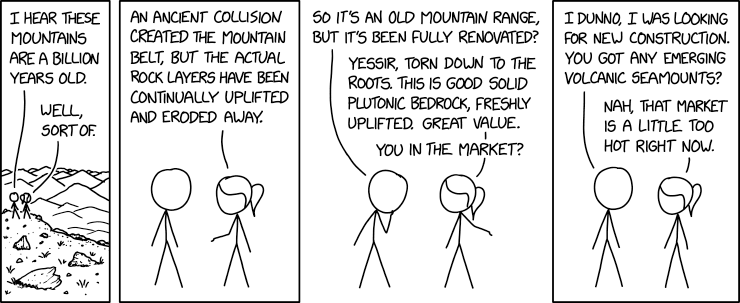
Orogeny
Post Syndicated from xkcd.com original https://xkcd.com/3070/
Renewable energy means we can stop setting money on fire, silly billy
Post Syndicated from Technology Connextras original https://www.youtube.com/watch?v=Y2qSaD1v4cQ