AWS named as a Leader in the 2024 Gartner Magic Quadrant for Desktop as a Service (DaaS)

Post Syndicated from Jeff Barr original https://aws.amazon.com/blogs/aws/aws-named-as-a-leader-in-the-2024-gartner-magic-quadrant-for-desktop-as-a-service-daas/

The 2024 Gartner Magic Quadrant for DaaS (Desktop as a Service) positions AWS as a Leader for the first time. Last year we were recognized as a Challenger. We believe this is a result of our commitment to meet a wide range of customer needs by delivering a diverse portfolio of virtual desktop services with license portability (including Microsoft 365 Apps for Enterprise), our geographic strategy, and operational capabilities focused on cost optimization and automation. Also, our focus on easy-to-use interfaces for managing each aspect of our virtual desktop services means that our customers rarely need to make use of third-party tools.

You can access the complete 2024 Gartner Magic Quadrant for Desktop as a Service (DaaS) to learn more.

2024-Gartner-MQ-for-DaaS-Graph

AWS DaaS Offerings
Let’s take a quick look at our lineup of DaaS offerings (part of our End User Computing portfolio):

Amazon WorkSpaces Family – Originally launched in early 2014 and enhanced frequently ever since, Amazon WorkSpaces gives you a desktop computing environment running Microsoft Windows, Ubuntu, Amazon Linux, or Red Hat Enterprise Linux in the cloud. Designed to support remote & hybrid workers, knowledge workers, developer workstations, and learning environments, WorkSpaces is available in sixteen AWS Regions, in your choice of six bundle sizes, including the GPU-equipped Graphics G4dn bundle. WorkSpaces Personal gives each user a persistent desktop — perfect for developers, knowledge workers, and others who need to install apps and save files or data. If your users do not need persistent desktops (often the case for contact centers, training, virtual learning, and back office access) you can use WorkSpaces Pools to simplify management and reduce costs. WorkSpaces Core provides managed virtual desktop infrastructure that is designed to work with third-party VDI solutions such as those from Citrix, Leostream, Omnissa, and Workspot.

Amazon WorkSpaces clients are available for desktops and tablets, with web access (Amazon WorkSpaces Secure Browser) and the Amazon WorkSpaces Thin Client providing even more choices. If you have the appropriate Windows 10 or 11 desktop license from Microsoft, you can bring your own license to the cloud (also known as BYOL), where it will run on hardware that is dedicated to you.

You can read about the Amazon WorkSpaces Family and review the WorkSpaces Features to learn more about what WorkSpaces has to offer.

Amazon AppStream 2.0 – Launched in late 2016, Amazon AppStream gives you instant, streamed access to SaaS applications and desktop applications without writing code or refactoring the application. You can easily scale applications and make them available to users across the globe without the need to manage any infrastructure. A wide range of compute, memory, storage, GPU, and operating system options let you empower remote workers, while also taking advantage of auto-scaling to avoid overprovisioning. Amazon AppStream offers three fleet types: Always on (instant connections), On-Demand (2 minutes to launch), and Elastic (for unpredictable demand). Pricing varies by type, with per second and per hour granularity for Windows and Linux; read Amazon AppStream 2.0 Pricing to learn more.

Jeff;

Gartner does not endorse any vendor, product or service depicted in its research publications and does not advise technology users to select only those vendors with the highest ratings or other designation. Gartner research publications consist of the opinions of Gartner’s research organization and should not be construed as statements of fact. Gartner disclaims all warranties, expressed or implied, with respect to this research, including any warranties of merchantability or fitness for a particular purpose.

GARTNER is a registered trademark and service mark of Gartner and Magic Quadrant is a registered trademark of Gartner, Inc. and/or its affiliates in the U.S. and internationally and are used herein with permission. All rights reserved.

This graphic was published by Gartner, Inc. as part of a larger research document and should be evaluated in the context of the entire document. The Gartner document is available upon request from AWS.

[$] Best practices for error handling in kernel Rust

Post Syndicated from daroc original https://lwn.net/Articles/990489/

Dirk Behme led a session discussing the use of Rust’s question-mark operator in
the kernel at Kangrejos 2024. He was particularly concerned with the concept of
“silent” errors that don’t print any messages to the console.
Other attendees were less convinced that this was a problem, but his presentation
sparked a lot of discussion about whether the Rust-for-Linux project could
improve error handling in kernel Rust code.

FBI Shuts Down Chinese Botnet

Post Syndicated from Bruce Schneier original https://www.schneier.com/blog/archives/2024/09/fbi-shuts-down-chinese-botnet.html

The FBI has shut down a botnet run by Chinese hackers:

The botnet malware infected a number of different types of internet-connected devices around the world, including home routers, cameras, digital video recorders, and NAS drives. Those devices were used to help infiltrate sensitive networks related to universities, government agencies, telecommunications providers, and media organizations…. The botnet was launched in mid-2021, according to the FBI, and infected roughly 260,000 devices as of June 2024.

The operation to dismantle the botnet was coordinated by the FBI, the NSA, and the Cyber National Mission Force (CNMF), according to a press release dated Wednesday. The U.S. Department of Justice received a court order to take control of the botnet infrastructure by sending disabling commands to the malware on infected devices. The hackers tried to counterattack by hitting FBI infrastructure but were “ultimately unsuccessful,” according to the law enforcement agency.

AWS renews its GNS Portugal certification for classified information with 66 services

Post Syndicated from Daniel Fuertes original https://aws.amazon.com/blogs/security/aws-renews-its-gns-portugal-certification-for-classified-information-with-66-services/

Amazon Web Services (AWS) announces that it has successfully renewed the Portuguese GNS (Gabinete Nacional de Segurança, National Security Cabinet) certification in the AWS Regions and edge locations in the European Union. This accreditation confirms that AWS cloud infrastructure, security controls, and operational processes adhere to the stringent requirements set forth by the Portuguese government for handling classified information at the National Reservado level (equivalent to the NATO Restricted level).

The GNS certification is based on the NIST SP800-53 Rev. 5 and CSA CCM v4 frameworks. It demonstrates the AWS commitment to providing the most secure cloud services to public-sector customers, particularly those with the most demanding security and compliance needs. By achieving this certification, AWS has demonstrated its ability to safeguard classified data up to the Reservado (Restricted) level, in accordance with the Portuguese government’s rigorous security standards.

AWS was evaluated by an authorized and independent third-party auditor, Adyta Lda, and by the Portuguese GNS itself. With the GNS certification, AWS customers in Portugal, including public sector organizations and defense contractors, can now use the full extent of AWS cloud services to handle national restricted information. This enables these customers to take advantage of AWS scalability, reliability, and cost-effectiveness, while safeguarding data in alignment with GNS standards.

We’re happy to announce the addition of 40 services to the scope of our GNS certification, for a new total of 66 services in scope. To view the complete list of services included in the scope, see the AWS Services in Scope by Compliance Program – GNS National Restricted Certification page.

The Certificate of Compliance illustrating the compliance status of AWS is available on the GNS Certifications page and through AWS Artifact.

For more information about GNS, see the AWS Compliance page GNS National Restricted Certification.

If you have feedback about this post, submit comments in the Comments section below.
 

Daniel Fuertes
Daniel Fuertes

Daniel is a Security Audit Program Manager at AWS, based in Madrid, Spain. Daniel leads multiple security audits, attestations, and certification programs in Spain, Portugal, and other EMEA countries. Daniel has ten years of experience in security assurance and compliance, including previous experience as an auditor for the PCI DSS security framework. He also holds the CISSP, PCIP, and ISO 27001 Lead Auditor certifications.

[$] RPM 4.20 is coming

Post Syndicated from jzb original https://lwn.net/Articles/988927/

The RPM Package Manager (RPM) project is
nearing the release of RPM 4.20, the last major planned update for the RPM 4.x
series. It has few user-facing changes, but
several additions and enhancements for developers—as well as
some small incompatibilities that will likely require RPM packagers to
revise their spec
files
. 4.20 will be rolling out to many users soon, in
Fedora 41, which is scheduled for October. RPM 6.0 is
already in the works, with a new package format and opening the door
to enabling C++ use in the RPM codebase.

Help, I can’t see! A Primer for Attack Surface Management Blog Series

Post Syndicated from Jon Schipp original https://blog.rapid7.com/2024/09/19/help-i-cant-see-a-primer-for-attack-surface-management-blog-series/

Part 1: Overview of the Problem ASM Solves and a High-Level Description of ASM and Its Components

Help, I can’t see! A Primer for Attack Surface Management Blog Series

Welcome to the first installment of our multipart series, “Help! I Can’t See! A Primer for Attack Surface Management Blog Series.” In this series, we will explore the critical challenges and solutions associated with Attack Surface Management (ASM), a vital aspect of modern cybersecurity strategy. This initial blog, titled “Overview of the Problem ASM Solves and a High-Level Description of ASM and Its Components,” sets the stage by examining the growing difficulties organizations face in managing their digital environments and how ASM can help address these issues effectively.

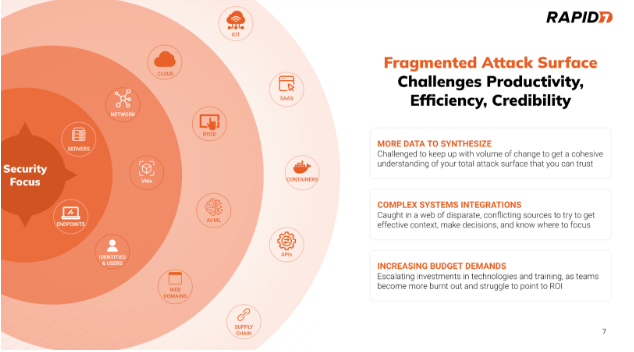
The fast paced evolution of digital infrastructure that is driving businesses forward (e.g. workstations, virtual machines, containers, edge) is also making it more difficult for organizations to keep track of and account for the cyber attack surface they’re responsible for protecting. Despite security teams continuing to invest exorbitant amounts of money on tools (VM, EDR, CNAPP, etc.) to both manage their digital environment and also secure it, the problem isn’t getting any better. In this 3-part blog series  we will help demystify the problems of security data silos and tool sprawl so you can answer pertinent questions like

  • How many assets and identities am I responsible for protecting?
  • How many assets and identities are lacking security controls like endpoint security or MFA?
  • What is my overall security posture?

When we look at the number and types of tools organizations spend money on to manage and secure their digital environment, we typically see things like vulnerability scanners, endpoint security, IdP, patching, IT asset management, Cloud Service Providers, and more.  Each of these tools and technologies tend to do a pretty good job at their core function but unintentionally contribute to a fractured ecosystem that provides organizations with contradictory information about their digital environment.

Help, I can’t see! A Primer for Attack Surface Management Blog Series

The age old problem: How many assets do I have?

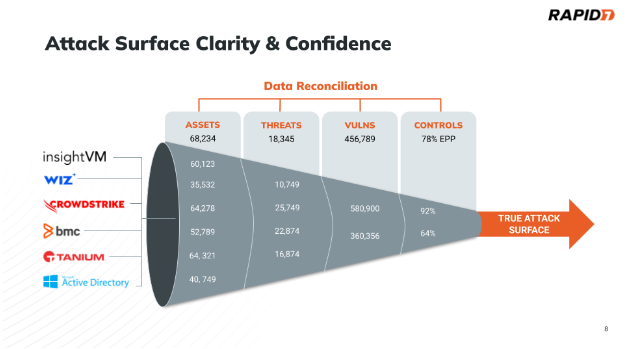
Let’s look at a real-world example of this where an organization has solutions for Vulnerability Management (VM), Cloud Security Posture Management (CSPM), Endpoint Security (EDR/EPP), Active Directory (Directory Services) and IT Asset Management( ITAM).

Help, I can’t see! A Primer for Attack Surface Management Blog Series

None of these tools can agree on the number of assets in the environment. It’s practically  impossible to achieve 100% deployment of agent-based tools across your business (some types of assets cannot have agents!). It then becomes a real challenge to see across these tooling visibility gaps. The result is that we cannot answer the basic question of “How many assets am I responsible for protecting”.

This fact is compounded because if we can’t agree on the total number of assets, then we don’t know the number of controls in place, the number of vulnerabilities and exposures that exist, and the number of active threats in our environment. Teams that manage and secure organizations are relying upon incorrect information in an environment where prioritization and decision making needs to be based on high-fidelity information that incorporates IT, security, and business context to lead to the best outcomes.

To drill down on  these points, let’s pick on a few tools from the infographic for illustrative purposes. Wiz will only see assets in the cloud, Active Directory only sees assets (mostly Windows) tied to the Domain Controller, and traditional vulnerability scanners see across hybrid environments but tend to be mostly deployed on-premise. If you hone in on the numbers in the Asset column you will immediately notice that none of these tools agree on the number of assets in the environment. Lacking visibility and confidence in your attack surface is a big data problem, and deploying the latest shiny security tool is not going to fix it.

Ultimately, we have an industry created data problem that Rapid7 is not immune to. For a number of perfectly good reasons, we have created a fractured technology ecosystem that is preventing security teams from having the best data available to determine their cyber risk and enabling them to prioritize the most effective remediation and response.

We need to see across the gaps that truly matter; for that we need Attack Surface Management.

What is Attack Surface Management?

Attack Surface Management (ASM) is generally part of a wider Exposure Management program and  is a different way to think about cyber risk by focusing on addressing the digital parts of the business that are most vulnerable to attack. Taking an attack surface-based approach to your security program needs to consider a number of different elements including:

  • Discovery and inventory of all cyber assets in the organization, from the endpoint to the cloud
  • Internet-scanning to identify unknown exposures and map them to the existing asset inventory
  • High-fidelity visibility and insights into the IT, security, and business context of those assets
  • Relationship-mapping between the assets and the wider network and business infrastructure

ASM is a continuous process that is constantly assessing the state of the attack surface by uncovering new or updated assets, identifying the use of shadow IT in network or cloud use cases and prioritizing exposures based on their potential risk to the business. These elements of discovery and prioritization are foundational elements of a Continuous Threat Exposure Management (CTEM) initiative, where security teams are taking a more holistic approach to managing all types of exposures in their organizations.

A positive trend that we are currently seeing is that security teams are going back to basics and focusing on cyber asset management to first discover and understand the assets they’re responsible for protecting, along with their business function.

They gain visibility into the assets through a combination of external scanning to identify internet-facing assets which are potentially higher risk, this is known as External Attack Surface Management (EASM). A  complementary approach to cyber asset discovery  that provides greater insights into the whole cyber estate uses API-based integrations into existing IT management and security tools to ingest asset data; this is known as Cyber Asset Attack Surface Management (CAASM). Together, they provide organizations with the asset visibility they need to drive security decisions.

Put simply, you cannot secure what you can’t see. Managing the attack surface requires asset discovery and visibility, combined with rich context from all tools in the environment.

Attack Surface Management vs. Asset Inventory

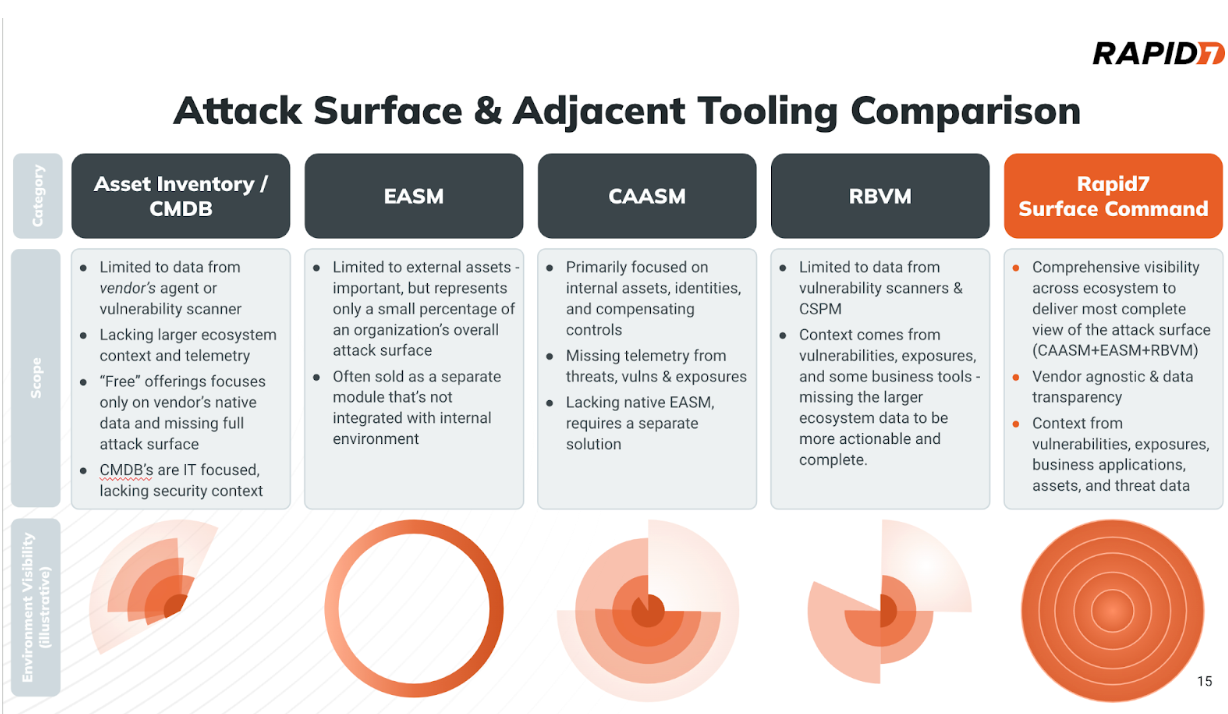
There is a common confusion with customers today that they already have elements of an ASM strategy with their current approach to asset inventory. This is typically based on an asset inventory system that IT is using for asset lifecycle management. A traditional asset inventory’s view of the environment is almost entirely based on what it is able to discover on its own, and with an IT focus. These are often agent-based,  with limited integrations, so they are not able to take advantage of an organization’s wide range of tools, which impairs their value.

Many asset inventories today can only discover assets where they have a deployed agent, such as an endpoint agent or being tied to the domain controller. While these technologies are effective at making policy and configuration changes on their fleet of endpoints, they do not have a data aggregation and correlation engine that sees beyond the specific agent. Additionally, they have limited security insights and context, and are only able to provide a partial view of the attack surface, assuming that no agent has 100% coverage.

This is not the reality in most organizations, and it’s why one should not confuse Asset Inventories with Attack Surface Management, the latter being a much more effective approach to surfacing the best asset and security telemetry across your ecosystem. An Attack Surface Management solution will ingest data from an IT Asset Inventory or Management tool as one of many data sources to collate.

The next blog in this series will look at the different components of an ASM program, and how they can be leveraged to improve security hygiene and reduce cyber risk.

Help, I can’t see! A Primer for Attack Surface Management Blog Series

Announcing Support for IPv6

Post Syndicated from Anthony Hoppe original https://www.backblaze.com/blog/announcing-support-for-ipv6/

An illustration of network connections on a gradient background.

If your systems are IPv6-enabled or enabling IPv6 is on your roadmap, good news—starting yesterday and continuing over the course of the next few weeks, Backblaze will be “flipping the switch” and turning on IPv6 for our S3 Compatible API. While our IPv6 deployment isn’t completely done yet (we’re phasing the roll out through our environment), we thought we’d share some of the decisions we made that affect performance and functionality.   

Today, I’ll talk a little bit more about our choices along the way, and answer some questions that might come up about how we’re supporting the protocol (jump to the FAQ for that).

Hi, I’m Anthony

Since this is the first time you’re hearing from me, I thought I should introduce myself. I’m a senior network engineer here at Backblaze. The Network Engineering group is responsible for ensuring the reliability, capacity, and security of network traffic, and that includes our IPv6 deployment.

What is IPv6 and why did we enable it?

Internet protocol version 6 (IPv6) is replacing internet protocol version 4 (IPv4) as the standard for IP addresses. Most of the internet uses IPv4, and this protocol has been reliable and resilient for over 20 years. However, IPv4 has limitations that might cause problems as the internet expands—namely, there aren’t enough IPv4 addresses to go around

Demand for IPv6 is continuing to increase exponentially. A major factor in this is the combination of the continually growing population and the number of connected devices a given person carries. One study from 2020 suggests the average number of connected devices per person globally was 2.4 in 2018, and forecasted to be 3.6 in 2023. Specifically for North America, the study suggests 8.2 connected devices in 2018 and a whopping 13.4 in 2023! Every device connected to the internet needs an IP address, and the finite address space of IPv4 it is simply no longer sufficient. The key to IPv6 enhancement is the expansion of the IP address space from 32 bits to 128 bits, enabling virtually unlimited, unique IP addresses.

Support for IPv6 means our customers can reach our services in the most efficient and secure way possible.

Why should you care about us deploying IPv6?

We’ve learned some things over the years, so we approached our IPv6 deployment a little differently than our IPv4 deployment. If you’re a customer or potential customer, here’s what that means for you: 

  1. No action needed on your part: Unlike some of the traditional cloud providers, we chose to use the same endpoint URL and let the client choose whether or not to use IPv6. This allows for any systems already IPv6 enabled to benefit immediately. In fact, if your systems are IPv6 enabled and you are a B2 customer using the S3 compatible API, you might already be connecting to us over IPv6 now.
  2. Our deployment is better set up to scale: Because of the way we decided to assign virtual IPs (VIPs) to our API endpoints, we have more flexibility to distribute ingress traffic and the ability to add VIPs as we need to in the future.
  3. Improved network performance and simpler network management: With IPv6, we simplified IP assignments and reduced the need for customers to use Network Address Translation (NAT). NAT adds processing overhead to network traffic as it translates IP addresses, which can lead to latency issues, especially with high-volume data transfer. The less traffic you have to NAT, the better. On our end, there is no NAT with customer data flows regardless of IPv4 vs IPv6. We also made the decision to route traffic before using network switches, this helps with reducing IPv6 multicast “noise” and generally helps keep the “wire” cleaner.

And here’s how we got it all done.

If a VIP could only talk

First, a little background: Backblaze offers two APIs—the Backblaze S3 Compatible API and the Backblaze B2 Native API. You can learn more about our APIs here in our documentation, but a couple differences are important to note when it comes to our IPv6 deployment:

  • Backblaze B2 Native API: Uploads are sent directly to a Backblaze Vault. As part of the process of uploading a file, the client is provided an “upload URL”, which is a direct URL to an assigned member of the storage Vault. The data transfer is direct from the client to the storage Vault. Only downloads are served by the API server pool. Load balancers mainly handle distributing API calls.
  • S3 Compatible API: Uploads flow through load balancers and the API server pool. Our API server pool then distributes the data to the assigned Vault. Downloads are served by our API server pool just like Backblaze B2 Native API.

These functionality differences play a role in how we are able to perform traffic engineering.  We assign VIPs to our API endpoints, for example, s3.us-west-004.backblazeb2.com, or api004.backblazeb2.com. These VIPs are owned by our load balancers and API servers (for Direct Server Return). With the Backblaze B2 Native API, we really only need two VIPs per cluster: one for uploads and one for downloads. The upload URL that B2 Native provides to the client naturally distributes the flow across our IP space. With the S3 Compatible API, since uploads and downloads are handled by the same flow, we only needed one VIP…or so we thought.

Assigning a single VIP to the S3 Compatible API has been fine for a long time. However, as we’ve grown, and usage of the S3 Compatible API has grown, we discovered that a single S3 Compatible API VIP makes traffic engineering ingress flows challenging. When a large percentage of our S3 Compatible API ingress traffic happens to come from providers that prefer getting to us via a single path, having all that traffic destined to a single IP means we have no ability to steer (i.e.traffic engineer) portions of the traffic.

Starting at the beginning of this year, we’ve grown the number of API VIPs in our datacenters with the highest amount of S3 Compatible API traffic from a single IP, to four IPs in four different network prefixes (also known as subnets). This allows us to steer portions of S3 Compatible API traffic. This also helps distribute flows so that providers that have equal cost paths to us can be better utilized.

Lesson learned: With IPv6, we standardized on four IPv6 VIPs in four different prefixes with plans to grow if/when needed.

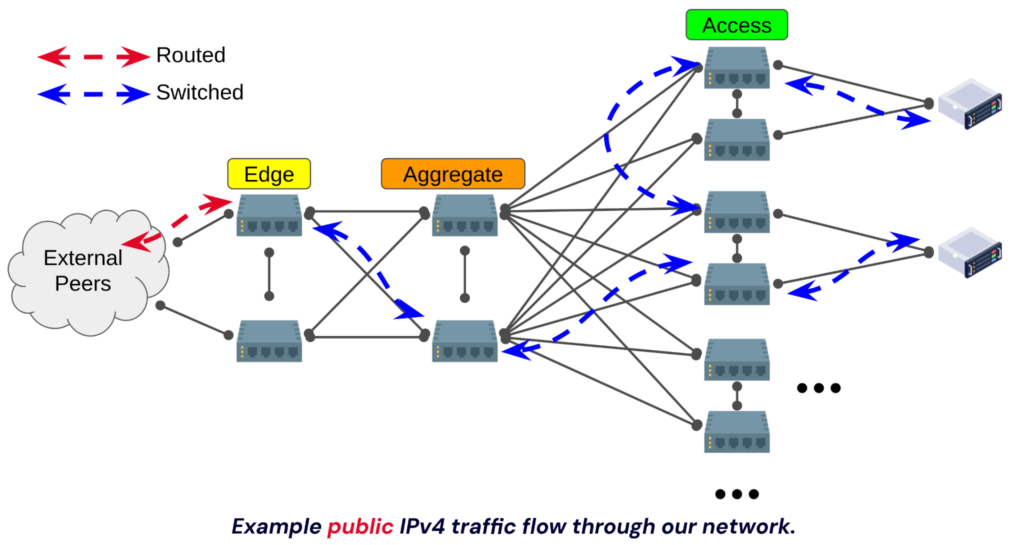
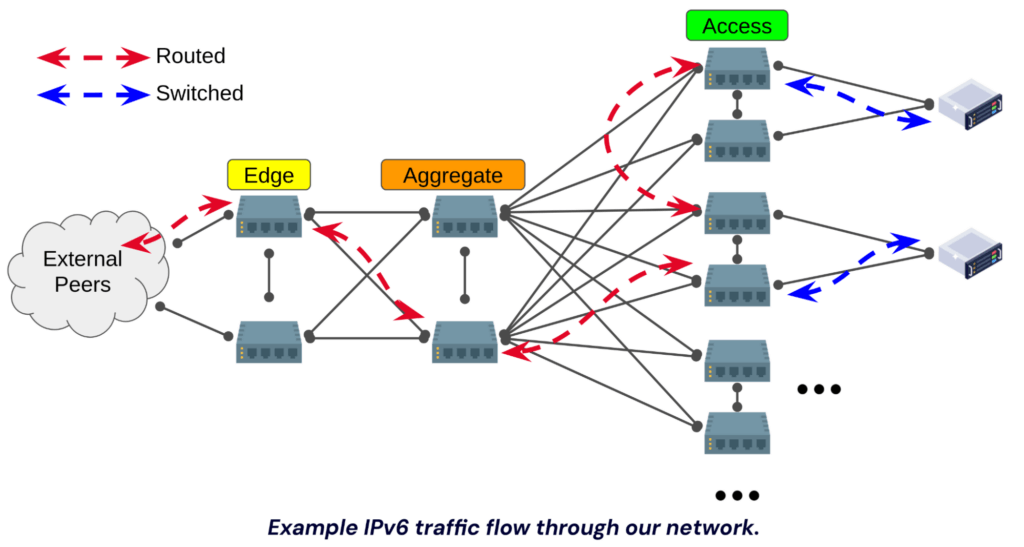
Route when you can, switch only when you need to

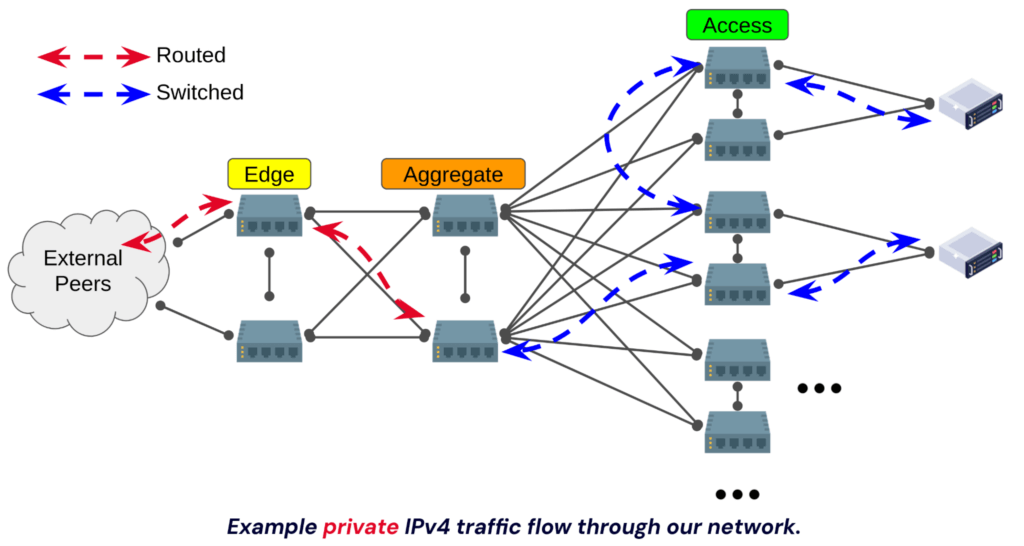
Backblaze datacenter networks are architected using a typical “three tier” approach. We have an edge layer, an aggregation layer (also known as a spine), and an access layer (also known as a leaf).

A diagram of a three-tier network design.

With IPv4, we have two IP “classes”. We have a private network (RFC 1918) and a public network. Every machine is assigned an IPv4 address on the private network, and only machines that need to directly interface with the outside world are assigned public IPv4 addresses. These two networks each reside within their own VLAN, and host networking is configured to tag traffic as necessary.

Given the tiered design of our network, different layers handle these VLANs. The aggregation layer acts as the router for the private network, and the edge layer acts as the router for the public network. From there, IPv4 traffic is switched, and thus we simply have two large (i.e. flat) VLANs for IPv4.

A diagram showing an example of how private IPv6 traffic travels through a network.
A diagram showing an example of how public IPv6 traffic travels through a network.

This has worked well (and still works just fine). A pair of VLANs that we can switch to anywhere in the datacenter keeps things simple. Hosts can reside anywhere within the datacenter and IPs can be assigned from the same pools. However, with IPv4 traffic being switched datacenter wide, the flat broadcast domain (thus the level of background broadcast noise) increases over time as the environment grows. In our largest (IP-space wise) datacenter we’ve needed to increase hosts’ arp cache size. With IPv6, we wanted to improve this.

The first decision we made was to eliminate the concept of public vs private address space with IPv6. Every host gets an address and all addresses are public (if the role requires). Existing firewalls and switch ACLs already permit/deny traffic as appropriate (which is also the same for our IPv4 networks).

Not only does this simplify IP assignments, it also reduces the need for Network Address Translation (NAT). We have many hosts that are not public facing, but do need to communicate with the outside world for various reasons. As we are able to move more and more communication with external services to IPv6, this reduces the load on resources we’ve deployed simply to handle NAT.

The second decision that we made was to route all the way down to the access switch layer.  Each access switch is assigned a /64 and hosts connected to a given switch are assigned an IPv6 address from a portion of this block.

A diagram showing an example of how IPv6 traffic travels through the Backblaze network.

This helps with reducing IPv6 multicast “noise” and generally helps keep the “wire” cleaner.  It does make host deployments a little more complicated as in order to assign a given host an IPv6 address from the correct network, one needs to be aware of the switch the host is connected to. Also, if data center staff need to move hosts around for power balancing or consolidation, the IPv6 address will need to be changed if the new location results in the host connecting to a different switch. 

Lesson learned: Even with the added complexity, the route when you can, switch only when you need to mantra works well for our environment.

What’s next?

We still have more work ahead. We are currently investigating ways to support the Backblaze B2 Native API with IPv6 as well as Backblaze Computer Backup. Stay tuned for more on that front.

FAQs

What’s the difference between IPv4 and IPv6?

The key difference between the versions of the protocol is that IPv6 has significantly more address space. The IPv6 address notation is eight groups of four hexadecimal digits with the groups separated by colons, for example 2001:db8:1f70:999:de8:7648:3a49:6e8, although there are methods to abbreviate this notation. For comparison, the IPv4 notation is four groups of decimal digits with the groups separated by dots, for example 198.51.100.1.

The expanded addressing capacity of IPv6 will enable the trillions of new internet addresses needed to support connectivity for a huge range of new devices such as phones, household appliances, and vehicles.

How can I use IPv6 with B2 Cloud Storage?

Currently, only the Backblaze S3-compatible API supports IPv6. To use IPv6 addresses with B2 Cloud Storage and the S3-compatible API, you do not need to make any changes.

Will IPv4 addresses still work?

Yes, IPv4 addresses will continue to be supported for both the B2 Native API and the S3-compatible API for the time being. We do not have any explicit plans for sunsetting IPv4 at this time.

What will happen if I continue to use IPv4?

Nothing. IPv4 will continue to be supported at this time.

Is IPv6 better/more secure than IPv4?

It is not more secure. Customers who reach us via IPv4 or IPv6 will have connections that are equally secure. Our APIs use the same strong TLS encryption regardless if IPv4 or IPv6 is used. Some customers may see a performance improvement if IPv6 allows them to avoid network address translation (NAT).

Is there an additional cost to use IPv6?

No.

I’m using Backblaze Computer Backup. Do I need to make any changes?

No. IPv6 is only relevant for Backblaze B2 Cloud Storage. You don’t need to make any changes to your Backblaze Computer Backup account.

The post Announcing Support for IPv6 appeared first on Backblaze Blog | Cloud Storage & Cloud Backup

Security updates for Thursday

Post Syndicated from jake original https://lwn.net/Articles/990877/

Security updates have been issued by Debian (expat and tinyproxy), Fedora (frr, microcode_ctl, python3.10, python3.12, python3.6, and ruby), Oracle (expat, fence-agents, firefox, ghostscript, java-1.8.0-openjdk, kernel, and thunderbird), Red Hat (firefox, openssl, ruby:3.3, and thunderbird), SUSE (clamav, ffmpeg-4, kernel, libmfx, python3, python312, runc, ucode-intel, and wireshark), and Ubuntu (apache2, git, linux, linux-aws, linux-aws-5.15, linux-azure, linux-azure-5.15, linux-gcp, linux-gcp-5.15, linux-gke, linux-gkeop, linux-gkeop-5.15, linux-hwe-5.15, linux-ibm, linux-intel-iotg, linux-intel-iotg-5.15, linux-kvm, linux-nvidia, linux-oracle, linux-raspi, linux, linux-aws, linux-aws-5.4, linux-azure, linux-azure-5.4, linux-bluefield, linux-gcp, linux-gcp-5.4, linux-gkeop, linux-hwe-5.4, linux-ibm, linux-ibm-5.4, linux-kvm, linux-oracle, linux-oracle-5.4, linux-xilinx-zynqmp, and linux, linux-aws, linux-gcp, linux-gke, linux-ibm, linux-lowlatency, linux-lowlatency-hwe-6.8, linux-nvidia, linux-nvidia-6.8, linux-nvidia-lowlatency, linux-oem-6.8, linux-oracle).

Free online course on understanding AI for educators

Post Syndicated from Mac Bowley original https://www.raspberrypi.org/blog/free-online-course-on-understanding-ai-for-educators/

To empower every educator to confidently bring AI into their classroom, we’ve created a new online training course called ‘Understanding AI for educators’ in collaboration with Google DeepMind. By taking this course, you will gain a practical understanding of the crossover between AI tools and education. The course includes a conceptual look at what AI is, how AI systems are built, different approaches to problem-solving with AI, and how to use current AI tools effectively and ethically.

Image by Mudassar Iqbal from Pixabay

In this post, I will share our approach to designing the course and some of the key considerations behind it — all of which you can apply today to teach your learners about AI systems.

Design decisions: Nurturing knowledge and confidence

We know educators have different levels of confidence with AI tools — we designed this course to help create a level playing field. Our goal is to uplift every educator, regardless of their prior experience, to a point where they feel comfortable discussing AI in the classroom.

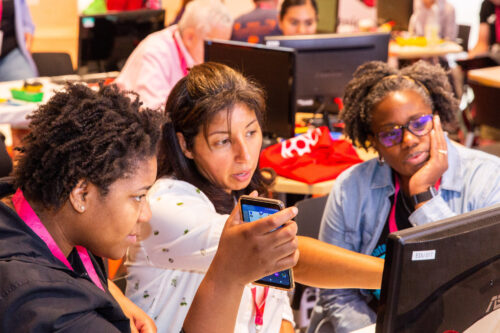
Three computer science educators discuss something at a screen.

AI literacy is key to understanding the implications and opportunities of AI in education. The course provides educators with a solid conceptual foundation, enabling them to ask the right questions and form their own perspectives.

As with all our AI learning materials that are part of Experience AI, we’ve used specific design principles for the course:

  • Choosing language carefully: We never anthropomorphise AI systems, replacing phrases like “The model understands” with “The model analyses”. We do this to make it clear that AI is just a computer system, not a sentient being with thoughts or feelings.
  • Accurate terminology: We avoid using AI as a singular noun, opting instead for the more accurate ‘AI tool’ when talking about applications or ‘AI system’ when talking about underlying component parts. 
  • Ethics: The social and ethical impacts of AI are not an afterthought but highlighted throughout the learning materials.

Three main takeaways

The course offers three main takeaways any educator can apply to their teaching about AI systems. 

1. Communicating effectively about AI systems

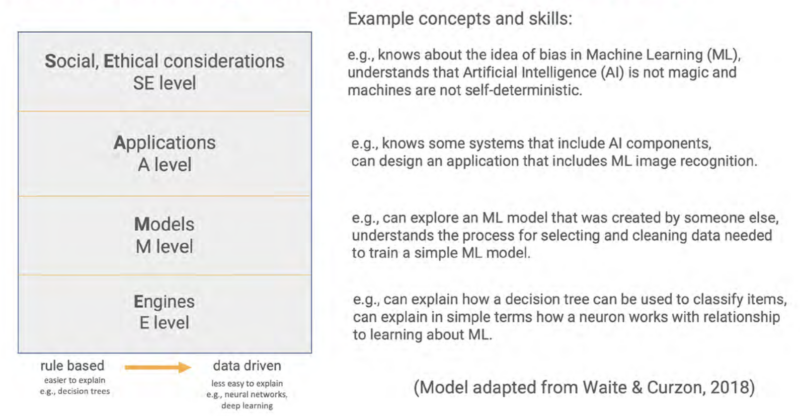
Deciding the level of detail to use when talking about AI systems can be difficult — especially if you’re not very confident about the topic. The SEAME framework offers a solution by breaking down AI into 4 levels: social and ethical, application, model, and engine. Educators can focus on the level most relevant to their lessons and also use the framework as a useful structure for classroom discussions.

The SEAME framework gives you a simple way to group learning objectives and resources related to teaching AI and ML, based on whether they focus on social and ethical aspects (SE), applications (A), models (M), or engines (E, i.e. how AI works).

You might discuss the impact a particular AI system is having on society, without the need to explain to your learners how the model itself has been trained or tested. Equally, you might focus on a specific machine learning model to look at where the data used to create it came from and consider the effect the data source has on the output. 

2. Problem-solving approaches: Predictive vs. generative AI

AI applications can be broadly separated into two categories: predictive and generative. These two types of AI model represent two vastly different approaches to problem-solving

People create predictive AI models to make predictions about the future. For example, you might create a model to make weather forecasts based on previously recorded weather data, or to recommend new movies to you based on your previous viewing history. In developing predictive AI models, the problem is defined first — then a specific dataset is assembled to help solve it. Therefore, each predictive AI model usually is only useful for a small number of applications.

Seventeen multicoloured post-it notes are roughly positioned in a strip shape on a white board. Each one of them has a hand drawn sketch in pen on them, answering the prompt on one of the post-it notes "AI is...." The sketches are all very different, some are patterns representing data, some are cartoons, some show drawings of things like data centres, or stick figure drawings of the people involved.
Rick Payne and team / Better Images of AI / Ai is… Banner / CC-BY 4.0

Generative AI models are used to generate media (such as text, code, images, or audio). The possible applications of these models are much more varied because people can use media in many different kinds of ways. You might say that the outputs of generative AI models could be used to solve — or at least to partially solve — any number of problems, without these problems needing to be defined before the model is created.

3. Using generative AI tools: The OCEAN process

Generative AI systems rely on user prompts to generate outputs. The OCEAN process, outlined in the course, offers a simple yet powerful framework for prompting AI tools like Gemini, Stable Diffusion or ChatGPT. 

Three groups of icons representing people have shapes travelling between them and a page in the middle of the image. The page is a simple rectangle with straight lines representing data. The shapes traveling towards the page are irregular and in squiggly bands.
Yasmine Boudiaf & LOTI / Better Images of AI / Data Processing / CC-BY 4.0

The first three steps of the process help you write better prompts that will result in an output that is as close as possible to what you are looking for, while the last two steps outline how to improve the output:

  1. Objective: Clearly state what you want the model to generate
  2. Context: Provide necessary background information
  3. Examples: Offer specific examples to fine-tune the model’s output
  4. Assess: Evaluate the output 
  5. Negotiate: Refine the prompt to correct any errors in the output

The final step in using any generative AI tool should be to closely review or edit the output yourself. These tools will very quickly get you started but you’ll always have to rely on your own human effort to ensure the quality of your work. 

Helping educators to be critical users

We believe the knowledge and skills our ‘Understanding AI for educators’ course teaches will help any educator determine the right AI tools and concepts to bring into their classroom, regardless of their specialisation. Here’s what one course participant had to say:

“From my inexperienced viewpoint, I kind of viewed AI as a cheat code. I believed that AI in the classroom could possibly be a real detriment to students and eliminate critical thinking skills.

After learning more about AI [on the course] and getting some hands-on experience with it, my viewpoint has certainly taken a 180-degree turn. AI definitely belongs in schools and in the workplace. It will take time to properly integrate it and know how to ethically use it. Our role as educators is to stay ahead of this trend as opposed to denying AI’s benefits and falling behind.” – ‘Understanding AI for educators’ course participant

All our Experience AI resources — including this online course and the teaching materials — are designed to foster a generation of AI-literate educators who can confidently and ethically guide their students in navigating the world of AI.

You can sign up to the course for free here: 

A version of this article also appears in Hello World issue 25, which will be published on Monday 23 September and will focus on all things generative AI and education.

The post Free online course on understanding AI for educators appeared first on Raspberry Pi Foundation.

За ориенталския махмурлук, Корана и домашнярката (първа част)

Post Syndicated from Атанас Шиников original https://www.toest.bg/za-orientalskia-mahmurluk-korana-i-domashniarkata-purva-chast/

За ориенталския махмурлук, Корана и домашнярката (първа част)

Какво общо има между махмурлука и Корана? Ако трябва да отговоря като онзи мой мениджър от Великобритания отпреди 14 години – много. Той беше пословично арогантен. Обичаше да дава такива отговори. „Кажи каква е разликата между валидация и верификация в управлението на качеството за информационни услуги“, го питам веднъж. „Огромна!“, отговаряше. И нищо повече. Оттогава съм се зарекъл да не отговарям така. Но ето, с риска скандално да представя тезата преди аргумента,

ако не беше Коранът, нямаше да знаем за махмурлука.

Не като физиологичното състояние, срещу което най-мощното лекарство по нашите ширини е шкембе чорбата, а като термин. 

Да почнем с лесната част – турската наставка –лук/лик/лък. Като я притурите към някаква дума преди това, образувате абстрактно съществително. Примери, придошли при нас от езика на южната ни съседка, има бол. Родопският комшулук. Селският тарикатлък. Политическият бабаитлък. Асмалъкът, отрупан с гроздове. Хайдутлукът на възрожденските въстаници. Или придобилият отскоро популярност тихналък, хубаво съчетание от българска дума и турска наставка. Това е лесната част. 

Но откъде идва основната част махмур-

От езика на арабското мюсюлманско Писание от VII век е краткият отговор. Не от земите на Османската империя, а от малко пò на югоизток и от малко по-назад в миналото. Словообразуването е измежду хубавите неща в арабския. Като в типичен семитски език, значението се носи от корена, съставен от съгласни. Обикновено са три. Пред тях, между тях и след тях се напъхват различни други съгласни и гласни и така се образуват различни смисли, свързани с основния. Тук кореновите съгласни са х (едно такова особено, хъхрещо, „храчещо“, както се майтапим арабистите), м и р. И тази съвкупност носи всякакви значения, свързани с покриване, бухване, втасване, ферментация. 

Ето например арабската дума за „мая“, „дрожди“, „закваска“ – хамира. Продавач на вино – хаммар. Магазин за вино, винопродавница – хаммара. Че даже и по-късна сплав от турска наставка за име на професия плюс същия корен в дума за продавач на вино – хамраджи. Прилича на познатото ни, пак от турски, за обущар – кундурджъ. И тук се сблъскваме с

най-известната дума за вино в арабския език – хамр

Оттам и по стандартният арабски модел за образуване на страдателно причастие от първична форма на глагола имаме и „човек, попаднал под въздействието на вино, опиянен“ – махмур. Ето колко е лесно. По модела на мактуб (това може да го знаят феновете на Паулу Коелю) – „нещо написано“, „писмо“, „послание“, че и предписано, определено от съдбата. Съединете го с турската наставка – и сме готови. 

Махмурлук. Състояние на опиянение от вино. 

А като погледнем Корана, виното (хамр) там седи на равна нога с копитото на прасето (ханзир)

Хем го има и не можеш да избягаш от него, хем е силно недолюбвано. 

Питали Пророка на исляма за виното и за хазарта. В тях, казва той, има голям грях, но и изгоди. Само че грехът е по-голям от изгодата (Коран 2:219). Виното се споменава наред с хазарта, идолопоклонството и гадаенето чрез стрели (5:90). Че и отгоре на всичко е обявено за инструмент на сатаната, който цели да скара хората, да ги възпре от споменаването на Аллах и от задължителната за всеки мюсюлманин молитва (5:91). В тази връзка и към вярващите се отправя интересна заръка – „не пристъпвайте към молитвата, когато сте пияни, додето вече знаете какво говорите“ (4:43).

Ето, казват по-строгите тълкуватели, които се придържат към текста без много тълкувателни своеволия (и аз наред с тях комай!), имаме религиозна норма, която е трудно да отхвърлиш чрез аргументи от нейната собствена рамка. И тя ще наложи разсъждения. Какво точно е хамр в езика на Корана? Какво точно означава забраната? Има ли санкция за нейното прекрачване? Каква ще да е тя? Това се случва в рамките на религиозния закон (шари‘а), чиято задача е да преведе постановленията на Писанието (Корана) и преданието на Пророка (Сунна) в реални регулации.

Винопийството се оказва в списъка на простъпки, налагащи точно определени наказания, които в мюсюлманското право се обозначават с термина хадд. Буквално значи „граница“. Нещо като граничната бразда по соца, която отделя света навън от този вътре. Въпреки че Коранът не определя наказателна мярка, такава има в пророческата традиция (Сунна), интегрална част от свещения текст (насс)

Пророкът на исляма, казва преданието, заръчал бой с палмови клони и налъми за онзи, който е употребил забранената субстанция. 

Четирийсет удара. Това е по най-разпространеното предписание на Мохамед. Някои негови следовници обаче, например Умар (на български възприето като Омар), заръчали осемдесет. Да речем, че ти се полагат между четирийсет и осемдесет удара. Но как стои въпросът, ако сте любител на други алкохолни преживявания? Коранът говори само за хамр, каквото и да е означавало това в пясъците на Арабия от седмото столетие сл. Хр. Може ли тогава да посягаме свободно към бирата, ракията, уискито, джина, водката, узото, вишневия ликьор?

Все пак каквото не е откровено забранено, е позволено – този принцип важи и за мюсюлманското право. Там важат и други принципи, например незнанието за това, че дадено нещо е възбранено и грях (харам), вероятно ще те оправдае. Обаче знанието, че нещо е възбранено, съчетано с непознаване на наказанието за него, не те отървава. И ако наказанието е пребиване с камъни (раджм), лошо ти се пише.

Но не. Не е толкова лесно да заобиколиш строгата регулация. Виното, твърди се в едно пророческо предание, „се прави и от грозде, от изсушени фурми, от мед, от жито, от ечемик“. Добре, да питам аз, а какво е положението, примерно, с джина, който се прави от плодчета на хвойна? А сливовицата? А любимата ми дюлева ракия? Ами как, зле е работата.

 Всяко опияняващо нещо, твърди Пророкът, е вино (хамр), и всяко опияняващо нещо е грях, възбранено (харам).

Между другото, думата за опияняващо нещо тук е мускир, от същия корен като суккар, познато ви от турския език като шекер. Захар. Близкият изток не е на една ръка разстояние, той е на масата ни.

И въз основа на това чрез прилагането на единия от основните принципи в мюсюлманското право – аналогията (кийас) – се забраняват всички ферментирали напитки. И не само. Всички останали субстанции с подобен ефект, включително и наркотиците. Няма мърдане. Че и – пак по Сунната – „пиещият вино в момента на пиенето е неверник“ и „виното е майката на всяко зло“. Не може и да се търгува с него, защото „парите, придобити от нещо, което е грях, са греховни“. А ако го приложим към друг проблематичен казус – свинята, – не може да ядеш свинско. Ама и не може да търгуваш с него. Край. 

Пиенето на алкохол може да ви докара глоби, наказание с пръчки, камшик, че понякога и затвор в държави, в които правната система е силно повлияна от шариата.

Например в Иран. В Судан забраната за пиене на алкохол (дори в частното пространство) отпадна през 2020 г. Но само за немюсюлмани, които по данни на ООН са около 3% от населението в момента на отпадането на забраната. Мюсюлманите все още ги грози бой с пръчка. Сходно е положението и в Саудитска Арабия – бой с пръчка (до 2020 г., когато това наказание принципно е отменено), затвор, глоби и депортация за чужденците, въпреки че тази година там отвори първият официален магазин за алкохол. За чуждестранни дипломати с изключително ограничен достъп, разбира се. В Кувейт продажбата и купуването на алкохол са забранени от 1965 г., което пък води до увеличаване на случаите от отравяне след пиене на лосиони и афтършейв. Ако си в тези две страни и искаш да пиеш, отиваш до Дубай или Бахрейн. (По едно време Дубай даже се опита да постави алкохолни рекорди на „Гинес“ по брой шотове, падащи в редица като домино.) Бой на публично място и затвор е съдбата на злощастните жертви на талибанския режим в Афганистан.

С различни вариации по държави, преобладаващото отношение е сходно: от неформална неприязън и заклеймяване до постановено от закона наказание. Онлайн порталите за авторитетни мнения от богословите (фетви) излагат една доста стереотипна и повтаряща се гледна точка – стандартното религиозно наказание за пиене на вино е бой с пръчки или кашмик.

От другата страна обаче стои една по-лежерна гледка точка. Самата религиозна норма като че ли допуска двусмисленост. На първо място, значението на самия обект на възбраната – виното (хамр). Ако допуснем, че се отнася за всякакъв вид алкохол, оттук и опияняваща субстанция, допуска ли се минимален праг на съдържание на активна субстанция, която предизвиква опиянението (в случая етилов алкохол)? Така може да порицаеш и забраниш (както и действително е било забранявано в някои исторически периоди и места!) консумацията на кафе, боза, оцет, че дори и на безалкохолна бира, доколкото реалният процент на алкохол не е точно 0,0% – пише го на кенчетата. 

Наред с това самият текст на възбраната като че ли отваря врата за отхвърляне на пълното заклеймяване. „Във виното има и ползи, и вреди“ – да припомним текста на Корана. После, казва самият Аллах, „не пристъпвайте към молитвата, когато сте пияни“. Значи може извън времето за молитва. Че и отгоре на всичко в Рая има „реки от вино, приятно за пиещите“ (47:15). От което „нито боли глава, нито се опияняват“ (37:47–49). Човек почти се чуди каква ли е била опитността на първите мюсюлмани с алкохола, та изрично небесното откровение да впише липсата на негативните ефекти от махмурлука. Всичкото това, разбира се, са твърде опростенчески аргументи, които при внимателно разглеждане могат да бъдат раздробени, омаловажени и в крайна сметка отхвърлени. 

И тук идват наблюденията върху практиката „на терен“, както обичат да казват антрополозите. Какво като ислямът забранявал алкохола. Винаги ще се намери някой познат да каже: „Аз, като бях веднъж в Родопите или Добруджа, пих ракия с български турци или българомохамедани“. Нещо като пушенето на хашиш. Забранен, забранен, ама се консумира. В тази връзка препоръчвам чудесната разработка на Франц Розентал „Билката: хашишът срещу средновековното мюсюлманско общество“

Все едно наличието на някаква практика променя нормата, бих възразил. 

Това, че някой прави нещо, не значи, че е позволено. Не го легитимира. Но ако трябва за целите на мисловния експеримент да се поставим на мястото на една такава популярна гледна точка, мога да дам исторически примери. Не е ли истина, в крайна сметка, че в двора на Абасидските халифи и султани (които биват наричани „сянката на Аллах на земята“) и в мюсюлманска Персия виното се лее щедро, поднасяно от младежи? Младежите (да не настъпваме темата за хомоеротиката) и виното са популяризирани в поемите на известния Абу Нуас от VIII век, и то до такава степен, че осъжданите му от консервативно настроените среди творби придобиват названието „винени стихове“ (хамрийат). Те прерастват в отделен поетически жанр, в който Абу Нуас е само едно от големите имена наред с фигурата на самия Омар Хаям от XI век.

Ал-Джахиз (Опуления), големият интелектуалец от VIII–IX столетие, обрисува картина на един космополитен Багдад, в който виното намира своето място на трапезата на богаташите и интелектуалците, пък били те и мюсюлмани. Мисля, че е ясно откъде се набавя – купува се от християните и юдеите, които имат дълга традиция на производство на възбраненото питие както за религиозни цели, така и за лична консумация. А че

мюсюлманите също държат запаси от вино,

свидетелстват и автори като богослова Ибн ал-Банна от XI век в личния си дневник. След всяко природно бедствие – например земетресение, което сполетява Мека и Медина, светите градове на исляма – мюсюлманите правят няколко неща като акт на покаяние пред Всевишния. Чупят музикалните инструменти (малахи, „инструмент за суетно забавление“), традиционно порицавани в исляма, изгонват леките жени и изливат виното на земята. 

Приказките от „Хиляда и една нощ“ също съдържат безброй истории за пияни хора.

Приближени на халифа шейхове пиянстват. Християните и неверниците пиянстват, разбира се. Стражата пиянства. Любовниците пиянстват. Посетители в двореца на халифа пиянстват и се облекчават по улиците. За мен по-важното е друго. Някъде там, в периода, в който се развива действието на този литературен опус, по време на легендарния халиф Харун ар-Рашид, персийският алхимик Абу Муса Джабир ибн Хаян, а след него и колегата му Абу Бакр ар-Рази усъвършенстват съда за дестилация, известен като аламбик (ал-инбик).

Аламбикът се състои от три части: основен съд, в който се поставя изходният материал (кар‘), горна част, „клюн“, чрез която се отвеждат парите (инбик), и „приемащ“ съд (кабила). Прилича на казана за ракия на баща ми, ама по-лош. Защото е по-малък и защото частта за охлаждане е много къса. Не е познатата ни нагъната серпентина, охлаждана през допълнителен съд със студена течност. Чрез аламбика обаче подобряват и практиката на дестилация на бистра течност от ферментирала заготовка. Процесът се нарича тактир, букв. „превръщане на капки“. Тази бистра течност получава названието ал-кухул.

Алкохол. Идва от кухл, името на черния прах, използван като грим за подсилване на очната линия, който се извлича от минерала антимонит.

Та така стигаме и до кухул ал-хамр – извлек от вино. Накратко, ал-кухул. Далече от нашата представа за домашен алкохол за консумация, дестилатът първоначално се използва за експериментални цели, включително и медицински. 

Арабското средновековие дори произвежда рецепти за вино. Един от най-известните рецептурници – на Ибн Саяр ал-Уаррак от Багдад през X век – ни е оставил например няколко вида инструкции как да си приготвим ферментирала напитка, че и без дестилация. Тук невинаги терминът е познатият ни от Корана хамр. Нарича се по-скоро набиз – плодова напитка, често пъти от стафиди или фурми, понякога подсладена, която отлежава определено време и понякога ферментира.

Вземат се стафиди, твърди той, към които се добавя сладка вода. Стоят накиснати няколко дни, като постоянно се разбъркват с ръка. После се изсипват в голям съд, намачкват се с крака и течността се отцежда. Добавят се семена от билки, лаврови листа, пъпки розов цвят, подслажда се, добавя се кипнала мъст за ферментиране, налива се в големи съдове и стои на слънце две седмици. Понякога се слага и винена утайка, „защото така става още по-хубаво“. Че даже и на някои рецепти Ибн Саяр накрая добавя, че „се пие, ако е рекъл Аллах“. И никой не може да ме убеди, че това, което се пие, ако е рекъл Аллах, не съдържа алкохол след процедурите, описани по-горе. 

(Следва продължение.)


В рубриката „Ориент кафе“ Атанас Шиников поднася любопитни теми, свързани не толкова с горещата политика, колкото с историята и културата на Близкия изток. А той, древен и днешен, е по-близко до нас и съвремието ни, отколкото си представяме.

На второ четене: „Годините“

Post Syndicated from original https://www.toest.bg/na-vtoro-chetene-godinite/

„Годините“ от Ани Ерно

На второ четене: „Годините“

превод от френски Валентина Бояджиева, София: изд. „Лист“, 2022

Това е правено – и винаги ще бъде правено – в стотици мемоари. И в същото време не е. Колективната „неутрална автобиография“ на Ани Ерно (както самата тя я нарича) е собствен жанр – достатъчно специфичен в своето отстранение и широкообхватност, за да донесе на писателката Нобеловата награда за литература през 2022 г. и своевременно да бъде издаден от „Лист“ като неин знаков текст. А Ерно да се утвърди като един от значимите гласове в съвременната френска литература.

Някак си е очаквано, че оценките за една високоотличена книга като „Годините“ (поне у нас според моята малка импровизирана анкета) ще бъдат още по-разнобойни, отколкото за която и да е друга. От „абсолютен шедьовър“ до „непоносима разказвачка“, от скучна и лишена от всякаква емоционалност до монументална по амбицията си. Докато напредвах бавно, но упорито с романа, поне няколко души – четящи, интелигентни – споделиха с мен, че не са го дочели, всеки по различна причина. Малко на шега, малко извинително си казахме, че книгата е трудна дори за французите – камо ли за незапознатите в дълбочина с френската култура и политика. Или пък за онзи нарастващ брой нови читатели, които изобщо не са живели през миналия век, един от най-богатите на история и промени периоди.

Защото

тази книга е като квазидокументален архив на един век и на едно поколение

(или на няколко застъпващи се), който изобилства от реалии, препратки, дати, събития, имена, заглавия. При това без грам обяснителност (каквато например често се среща в нови български романи за близкото минало, дидактично поясняващи как е било тогава).

И ако последното е вид безпомощност и същевременно самонадеяност, Ерно е „арогантна“ по друг начин – чрез маниера на своята самопонятност. Авторката очертава отминалото стенографски, в бързи щрихи и криптични бележки, чрез не повече от бегли напомняния, които са разбираеми единствено за преживелите същото, за онези, които ще си кажат „О, да, май наистина беше така“ или „О, да, да, преживяхме и това“. На останалите е предоставено предизвикателството на любопитството, общата култура, образованието или като минимум поне ресурсите на Google, Wikipedia и YouTube.

(Правя малка вметка, за да поразсъждавам върху риска, свързан с бележките под линия, каквито в тази книга неизбежно изобилстват. Давам си сметка, че те ще подразнят едни, а за други ще са крайно недостатъчни. Че е неизбежно в поставянето им определяща роля да играят познанията и личният усет на преводача/редактора кое би следвало да е всеобщо знание и за кое се налага пояснение – в резултат неравномерността между обясненото (макар и ясно за едни) и оставеното така (макар и непознато за други). От друга страна, когато за десетки имена се пояснява, че са например на известни френски певци, човек няма как да придобие кой знае каква яснота, освен ако не влезе в YouTube, за да изслуша техни песни. Край на вметката.)

На второ четене: „Годините“

Детската памет на родената през 1940 г. Ерно започва да се прояснява и задържа едва след Втората световна война, в една Франция, напълно белязана от нея, от разрушенията и недоимъка, от духа на Съпротивата. Този наратив ще присъства с години в разговорите около празничните обеди, използвани в романа като своеобразна сюжетна рамка и същевременно като лакмус за хода на времето. Защото колкото и привидно да остават неизменни, упорито фокусирани върху най-базовите човешки преживявания, тези семейни разговори ще отразят неумолимо настъпващите промени в обществото и в света. Паметта на Ерно ще затвори текста в средата на първото десетилетие от новото хилядолетие, а самата книга ще излезе през 2008 г.

В нея авторката ще спомене нейното дълго обмисляне – сякаш никога преди „Годините“ не е писала друга книга. Сякаш цялата ѝ памет е била отдадена на това търпеливо да трупа изплъзващите се спомени заедно с намерението те да бъдат събрани в „историята на една жена“. Жена, родена в семейство на дребни търговци в селско-работническата провинция, в една все още бяла, национална, етнически монолитна, строго католическа, силно порядъчна, изпълнена с куп срамове и забрани Франция. Но и жена, постепенно пораснала и съзряла в драматично въстаналия срещу предишното свят на правна и интелектуална еманципация, феминизъм, идеологии, социални протести, сексуални и материално-потребителски революции. Не на последно място – жена, остаряла в една неузнаваема епоха – на новите технологии и интернет.

Смазващо е усещането за тази гъсто резюмирана памет – до степен, в която сърцевината на ХХ век ни се струва невъзможна за обживяване в рамките на един човешки живот. Историческите вододели (68-ма, Студената война, кризата в Алжир, обединена Европа, падането на Берлинската стена, Войната в залива, 11 септември и безкрайно много други); интелектуалните икони; медийните стожери; култовите творби от всяко едно изкуство, белязали и поколенчески, и интимно ежедневието на хиляди; поредицата политически личности и социално-икономически ходове, олицетворяващи десетилетията; траекторията на ценностите; превръщането на националната държава в котле от етноси и религии; появата на нови страхове и проблеми, но и на куп нови решения, възходът на материалния хедонизъм и на всеобщата свързаност…

В анонса на „Годините“ на български се казва:

Тя е никоя. Но може да бъде всяка французойка.

Защото макар да съзнаваме единственото число на разказвачката, разказът се води през едно нетипично, абстрактно-колективно „ние“, заради което е припознат като наратив на цялото ѝ поколение. И все пак ми се иска да поспоря за обхвата на това „ние“, който неизбежно се припокрива с профила на Ерно като част от една определена, еманципирала се от работническия си произход, обуржоазила се, възприела прогресивността и прегърнала новото прослойка със свои позиции, вкусове и копнежи. Защото има и други, за които тя говори (богати, провинциалисти, имигранти, араби, чужденци, с различна политическа ориентация и т.н., и т.н.), включени като обекти, а не субекти в това „ние“. Може би и това също може да се мисли като вид арогантност в кавички, егоцентрично налагане на идентичност.

Там, където Ерно все пак говори бегло за себе си, тя го прави в трето лице – обикновено за да ни покаже поредната си снимка, по една от всяка преходна своя възраст. Не използва имена, не индивидуализира близките си, пропуска редица биографични факти, включително (макар и леко да го загатва) незаконния си аборт през 60-те, който после ще даде повод за написването на „Изпитанието“. Парадоксално, от книгата на Ерно за нея самата може да се научи по-малко, отколкото от която и да е статия или подробна нейна биография в произволен сайт или в Уикипедия.

Но същевременно е и тъкмо обратното, защото невинаги фактите имат първостепенно значение. А и същината е там, в разказа: как малкото момиченце разцъфва в стеснителна, притисната от ограничения и забрани, но чувствена и мечтателна девойка, преди да се превърне в жертва на забраната върху абортите, после, след 68-ма, в хода на сексуалната революция – във все по-свободно наслаждаваща се на тялото, изборите и желанията си млада жена, после – в малко или много буржоазна съпруга и майка, а след това – в разведена жена с млади любовници.

Един от аршините, с които Ерно мери историята на тази своя „една жена“ – всъщност на всяка жена, – е именно свободата да разполагаш с тялото си.

Това движение между забранителната традиция и мощта на инстинктите, между дълга и удоволствието, срама и липсата на задръжки, трудността да обгрижваш тялото си и безбройните нови улеснения и глезотии, свързани с него, е проследено в цялата книга. Ерно дори пише за това как паметта се предава от тялото, преминава „от тяло в тяло“. Но дали, от друга страна обаче, индиректно не се съгласява, че историята на жената минава именно през базовите, споменати от нея преживявания, свързани с мъжа, с децата, с плътта, и в много по-малка степен с преподаването на литература и с писането, които споменава съвсем лаконично, и дори с големите събития, за които често се случва да каже: „не се интересувахме“, „не ни засягаше“, „нямахме време да…“.

Същото важи и за забавленията и най-вече за материалните придобивки. За продуктите на всеобщото консуматорство, сдобиването с които (нови и нови марки, модели, изобретения, щателно изредени от Ерно) се превръща в календарна справка и измерител на промяната. И на прогреса, за който пише:

прогресът беше хоризонтът на съществуването.

Този нов вид униформеност е отвъд старата сезонност и цикличност на ежедневието, религията, традициите, а после и на „майските идеали [които] се конвертираха в предмети и развлечения“.

Претенциозен и същевременно небрежен, препускащ, но непропускащ, хладно дистанциран, но ангажиран с най-интимното, отстранено критичен, но и великодушно, по френски толерантен, романът „Годините“ може би ще бъде четен като почти документална абревиатура на ХХ век, в който от Дьо Гол до Уелбек

цялата действителност беше подложена на преразглеждане.

Или като своеобразна версия, макар и много по-различна, на романа „По следите на изгубеното време“. Към последния самата Ерно реферира на няколко пъти в своя собствен текст, чието първо изречение е

Всички образи ще изчезнат.

Според замисъла ѝ „Годините“ е „пълзящ разказ, в продължително минало несвършено“, което постепенно ще погълне настоящето. И онова преди нас, и нашето сега, и предстоящото – много след като сме си отишли.


Активните дарители на „Тоест“ получават постоянна отстъпка в размер нa 20% от коричната цена на всички заглавия от каталога на издателство „Лист“, както и на няколко други български издателства в рамките на партньорската програма Читателски клуб „Тоест“. За повече информация прочетете на toest.bg/club.

Никой от нас не чете единствено най-новите книги. Тогава защо само за тях се пише? „На второ четене“ е рубрика, в която отваряме списъците с книги, публикувани преди поне година, четем ги и препоръчваме любимите си от тях. Рубриката е част от партньорската програма Читателски клуб „Тоест“. Изборът на заглавия обаче е единствено на авторите – Стефан Иванов и Антония Апостолова, които биха ви препоръчали тези книги и ако имаше как веднъж на две седмици да се разходите с тях в книжарницата.

[$] The uncertain future of kernel regression tracking

Post Syndicated from corbet original https://lwn.net/Articles/990599/

Tracking of regressions seems like an important task for any project; there
is no other way to ensure that known problems are fixed. At the 2024
Maintainers Summit, though, Thorsten Leemhuis, who has been doing that work
for the kernel, expressed some doubts about whether it is worth continuing.
The result was an energetic session on how regression tracking should be
done better, and how this work should be supported.