In March 2023, I embarked on a mission to explore the potential of Large Language Models (LLMs) within Grab. What started off as an attempt to solve a specific problem—reducing the burden on our ML Platform team’s support channels, ended up becoming something much bigger. The creation of GrabGPT, an internal ChatGPT-like tool that has transformed how folks in Grab interact with AI. This is the story of how a failed experiment led to one of Grab’s most impactful internal tools.
The problem: Overwhelmed support channels
As part of Grab’s machine learning platform team, we were drowning in user inquiries. Slack channels were flooded with questions and our on-call engineers were spending more time answering repetitive queries than building innovative solutions. This led me to ponder on this question, “could we use LLMs to build a chatbot that understands our platform’s documentation and answers these questions automatically?”
The first attempt: A chatbot for platform support
I started by exploring open-source frameworks to build a chatbot. I stumbled upon chatbot-ui, a simple yet powerful tool that could be wired up with LLMs. My idea was to feed the chatbot our platform’s Q\&A documentation (over 20,000 words) and let it handle user queries.
But there was a catch: GPT-3.5-turbo could only handle 8,000 tokens (~2,000 words). I spent days summarising the documentation, reducing it to less than 800 words. While the chatbot worked for a handful of frequently asked questions, it was clear that this approach wasn’t scalable. I tried with embedding search and it didn’t work that well too, so I decided to give up on this idea.
The pivot: Why not build Grab’s own ChatGPT?
As I stepped back, a new thought struck me: Grab doesn’t have its own ChatGPT-like tool yet. I had the frameworks, the LLM knowledge, and most importantly—access to Grab’s model-serving platform, catwalk. Why not build an internal tool that any Grabber could use?
Over a weekend, I extended the existing frameworks, added Google login for authentication, and deployed the tool internally. I called it Grab’s ChatGPT. Little did I know, this would become one of the most widely used tools in the company.
The tool quickly became a staple for Grabbers, especially in regions where ChatGPT was inaccessible (e.g., China). The name evolved too—our PM suggested GrabGPT, and it stuck.
The Success: GrabGPT takes off
The response was overwhelming:
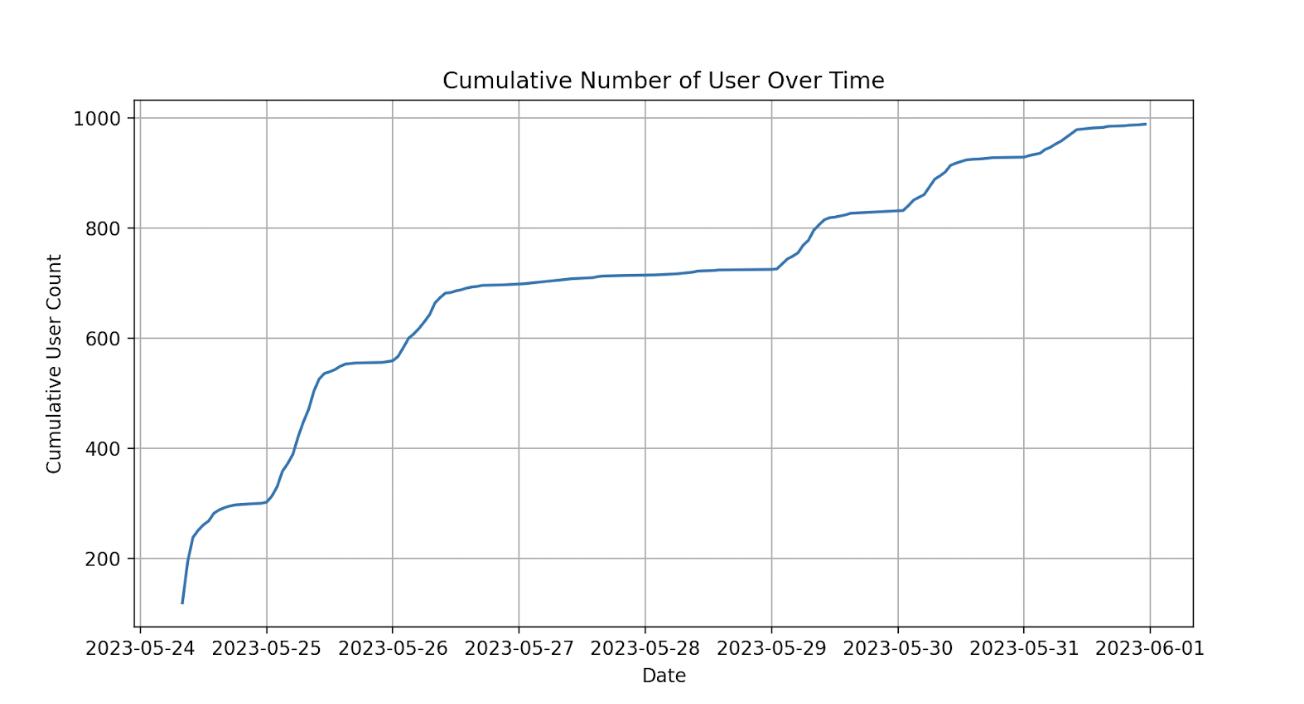
Day 1: 300 users registered.
Day 2: 600 new users.
Week 1: 900 new users
Month 3: Over 3000 users, with 600 daily active users
Today: Almost all Grabbers are using GrabGPT.
Figure 1: Number of GrabGPT users in one month
Why GrabGPT works: More than just technology
The success of GrabGPT isn’t just about the tech,it’s about timing, security, and accessibility. Here’s why it resonated so deeply within Grab:
Data security: GrabGPT operates on a private route, ensuring that sensitive company data never leaves our infrastructure.
Global accessibility: Unlike ChatGPT, which is banned in some regions, GrabGPT is accessible to all Grabbers, regardless of location.
Model agnosticism: GrabGPT isn’t tied to a single LLM provider. It supports models from OpenAI, Claude, Gemini, and more.
Auditability: Every interaction on GrabGPT is auditable, making it a favorite of our data security and governance teams.
The broader impact: A catalyst for LLM strategy
GrabGPT didn’t just solve an immediate problem, it sparked a broader conversation about how LLMs can be leveraged across Grab. It showed that a single engineer, provided with the right tools and timing, can create something transformative. Today, GrabGPT is more than a tool; it’s a testament to the power of experimentation and adaptability.
Lessons learned
Failure is a stepping stone: My initial failure with the support chatbot which then led me to a much bigger opportunity.
Timing matters: GrabGPT succeeded because it addressed a critical need at the right time.
Think big, start small: What began as a weekend project became a company-wide tool.
Collaboration is key: The enthusiasm and contributions from other Grabbers were instrumental in scaling GrabGPT.
Conclusion
GrabGPT is a story of resilience, innovation, and the unexpected rewards from thinking outside the box. It’s a reminder that sometimes, the best solution comes from pivoting away from what doesn’t work and embracing new possibilities. As LLMs continue to evolve, I’m excited to see how GrabGPT will grow and inspire even more innovation within Grab.
I would like to end this article by letting readers know that if you’re working on a project and feel stuck, don’t be afraid to pivot. You never know, your next failure might just be the beginning of your greatest success. And if you’re at Grab, give GrabGPT a try. It might just change the way you work!
Join us
Grab is a leading superapp in Southeast Asia, operating across the deliveries, mobility and digital financial services sectors. Serving over 800 cities in eight Southeast Asian countries, Grab enables millions of people everyday to order food or groceries, send packages, hail a ride or taxi, pay for online purchases or access services such as lending and insurance, all through a single app. Grab was founded in 2012 with the mission to drive Southeast Asia forward by creating economic empowerment for everyone. Grab strives to serve a triple bottom line – we aim to simultaneously deliver financial performance for our shareholders and have a positive social impact, which includes economic empowerment for millions of people in the region, while mitigating our environmental footprint.
Powered by technology and driven by heart, our mission is to drive Southeast Asia forward by creating economic empowerment for everyone. If this mission speaks to you, join our team today!
On April 14, Dubai’s ruler, Sheikh Mohammed bin Rashid Al Maktoum, announced that the United Arab Emirates would begin using artificial intelligence to help write its laws. A new Regulatory Intelligence Office would use the technology to “regularly suggest updates” to the law and “accelerate the issuance of legislation by up to 70%.” AI would create a “comprehensive legislative plan” spanning local and federal law and would be connected to public administration, the courts, and global policy trends.
The plan was widely greeted with astonishment. This sort of AI legislating would be a global “first,” with the potential to go “horribly wrong.” Skeptics fear that the AI model will make up facts or fundamentally fail to understand societal tenets such as fair treatment and justice when influencing law.
The truth is, the UAE’s idea of AI-generated law is not really a first and not necessarily terrible.
The first instance of enacted law known to have been written by AI was passed in Porto Alegre, Brazil, in 2023. It was a local ordinance about water meter replacement. Council member Ramiro Rosário was simply looking for help in generating and articulating ideas for solving a policy problem, and ChatGPT did well enough that the bill passed unanimously. We approve of AI assisting humans in this manner, although Rosário should have disclosed that the bill was written by AI before it was voted on.
Brazil was a harbinger but hardly unique. In recent years, there has been a steady stream of attention-seeking politicians at the local and national level introducing bills that they promote as being drafted by AI or letting AI write their speeches for them or even vocalize them in the chamber.
The Emirati proposal is different from those examples in important ways. It promises to be more systemic and less of a one-off stunt. The UAE has promised to spend more than $3 billion to transform into an “AI-native” government by 2027. Time will tell if it is also different in being more hype than reality.
Rather than being a true first, the UAE’s announcement is emblematic of a much wider global trend of legislative bodies integrating AI assistive tools for legislative research, drafting, translation, data processing, and much more. Individual lawmakers have begun turning to AI drafting tools as they traditionally have relied on staffers, interns, or lobbyists. The French government has gone so far as to train its own AI model to assist with legislative tasks.
Even asking AI to comprehensively review and update legislation would not be a first. In 2020, the U.S. state of Ohio began using AI to do wholesale revision of its administrative law. AI’s speed is potentially a good match to this kind of large-scale editorial project; the state’s then-lieutenant governor, Jon Husted, claims it was successful in eliminating 2.2 million words’ worth of unnecessary regulation from Ohio’s code. Now a U.S. senator, Husted has recently proposed to take the same approach to U.S. federal law, with an ideological bent promoting AI as a tool for systematic deregulation.
The dangers of confabulation and inhumanity—while legitimate—aren’t really what makes the potential of AI-generated law novel. Humans make mistakes when writing law, too. Recall that a single typo in a 900-page law nearly brought down the massive U.S. health care reforms of the Affordable Care Act in 2015, before the Supreme Court excused the error. And, distressingly, the citizens and residents of nondemocratic states are already subject to arbitrary and often inhumane laws. (The UAE is a federation of monarchies without direct elections of legislators and with a poor record on political rights and civil liberties, as evaluated by Freedom House.)
The primary concern with using AI in lawmaking is that it will be wielded as a tool by the powerful to advance their own interests. AI may not fundamentally change lawmaking, but its superhuman capabilities have the potential to exacerbate the risks of power concentration.
AI, and technology generally, is often invoked by politicians to give their project a patina of objectivity and rationality, but it doesn’t really do any such thing. As proposed, AI would simply give the UAE’s hereditary rulers new tools to express, enact, and enforce their preferred policies.
Mohammed’s emphasis that a primary benefit of AI will be to make law faster is also misguided. The machine may write the text, but humans will still propose, debate, and vote on the legislation. Drafting is rarely the bottleneck in passing new law. What takes much longer is for humans to amend, horse-trade, and ultimately come to agreement on the content of that legislation—even when that politicking is happening among a small group of monarchic elites.
Rather than expeditiousness, the more important capability offered by AI is sophistication. AI has the potential to make law more complex, tailoring it to a multitude of different scenarios. The combination of AI’s research and drafting speed makes it possible for it to outline legislation governing dozens, even thousands, of special cases for each proposed rule.
But here again, this capability of AI opens the door for the powerful to have their way. AI’s capacity to write complex law would allow the humans directing it to dictate their exacting policy preference for every special case. It could even embed those preferences surreptitiously.
Since time immemorial, legislators have carved out legal loopholes to narrowly cater to special interests. AI will be a powerful tool for authoritarians, lobbyists, and other empowered interests to do this at a greater scale. AI can help automatically produce what political scientist Amy McKay has termed “microlegislation“: loopholes that may be imperceptible to human readers on the page—until their impact is realized in the real world.
But AI can be constrained and directed to distribute power rather than concentrate it. For Emirati residents, the most intriguing possibility of the AI plan is the promise to introduce AI “interactive platforms” where the public can provide input to legislation. In experiments across locales as diverse as Kentucky, Massachusetts, France, Scotland, Taiwan, and many others, civil society within democracies are innovating and experimenting with ways to leverage AI to help listen to constituents and construct public policy in a way that best serves diverse stakeholders.
If the UAE is going to build an AI-native government, it should do so for the purpose of empowering people and not machines. AI has real potential to improve deliberation and pluralism in policymaking, and Emirati residents should hold their government accountable to delivering on this promise.
As AI becomes central to business operations, so does the need for responsible AI governance. But how can you make sure that your AI systems are ethical, resilient, and aligned with compliance standards?
ISO/IEC 42001, the international management system standard for AI, offers a framework to help organizations implement AI governance across the lifecycle. In this post, we walk through how ISO/IEC 42001 enables effective AI governance, review the risk management requirements, and explore how you can use threat modeling as a practical technique to meet those expectations.
AI governance
AI governance refers to the organizational structures, policies, and controls that enable AI systems to be used responsibly, ethically, and safely. Governance spans the entire AI lifecycle and includes the following activities:
Setting the intended purpose and stakeholder alignment
Managing data, models, and deployment risks
Designing in explainability, bias mitigation, and traceability
Establishing accountability, monitoring, and decommissioning practices
These activities are the foundation of a formal framework that you can use to establish governance processes, identify and manage risk, and implement processes for continuous improvement
AI lifecycle
While ISO 42001 provides a framework for AI governance, ISO/IEC 22989:2022 describes what an AI system is and how it evolves. Governance should be implemented at every stage of the AI lifecycle to manage AI risks effectively. According to the ISO/IEC 22989:2022 standard, an organization’s AI life cycle might include these stages:
Inception: Identifying needs, goals, and feasibility
Design and development: Defining system architecture, data flows, and training models
Verification and validation: Testing and confirming that the system meets requirements and performs as intended
Deployment: Releasing the system into its operational environment
Operation and monitoring: Running the system, logging activity, and monitoring performance and outcomes
Re-evaluation: Assessing whether the system continues to meet objectives under changing conditions
Retirement: Decommissioning the system and addressing long-term data and access risks
Understanding the AI lifecycle, shown in Figure 1 that follows, is critical for identifying and mitigating AI risks. While these seven stages are provided directly in ISO 22989:2022, your organization might define its AI lifecycle stages differently to suit its business context. We refer to these stages as we explore the components of an AI management system, from initial AI system scoping, through threat monitoring and risk assessment, to monitoring the established governance program.
Figure 1: Example of AI system lifecycle model stages and high-level processes based on ISO/IEC 22989:2022
Risk management in ISO/IEC 42001:2023
After an organization has identified and assessed AI risks (Clause 6.1 of ISO/IEC 42001:2023), operational controls to mitigate those risks must be implemented (Clause 8.2), and those controls and the AI system itself should be continuously monitored, documented, and improved (Clauses 9 and 10). AI impact assessments (AIIAs) are critical in high-risk use cases, complementing baseline risk assessments by focusing on societal, ethical, and legal impacts. AIIAs are like data protection impact assessments (DPIAs) for high-risk personal data processing under many privacy regulations. DPIAs are specifically designed to assess risks to individuals’ privacy and data protection rights under laws such as the GDPR. While AIIAs help organizations maintain responsible AI governance, DPIAs can be used in parallel to help verify that AI systems comply with data protection laws, together providing a holistic view of risks and safeguards across both ethical and legal dimensions.
You are free to select the AIIA tools or methodologies that best fit your use case. Two widely accepted frameworks are:
ISO 31000: A general-purpose enterprise risk management standard that helps identify, evaluate, and treat risks in a structured and repeatable way. It aligns well with organizations seeking to embed AI risk into their broader enterprise risk management (ERM) programs.
NIST AI Risk Management Framework (AI RMF): A NIST framework specifically designed for AI systems. It introduces tailored concepts such as explainability, robustness, fairness, and accountability, with actionable guidance organized into four core functions: Map, measure, manage, and govern.
ISO 42001 provides structured methods to conduct risk and impact assessments. Threat modeling tools such as:
STRIDE (spoofing, tampering, repudiation, information disclosure, denial of service, and elevation of privilege). STRIDE aims to make sure that a system meets security requirements for confidentiality, integrity and availability.
DREAD (damage potential, reproducibility, exploitability, affected users, and discoverability) is a framework that can assess severity of individual threats.
OWASP (Open Worldwide Application Security Project) for machine learning (ML) enables analysis of AI system vulnerabilities, adversarial risks, and privacy threats.
Trustworthy AI is the result of strategic governance, structured methodologies, and technical analysis.
Figure 2 that follows shows the tiered structure of AI risk governance, moving from high-level governance to detailed technical assessments. On the left side, there’s a downward flow representing the increasing depth of controls, while the right side shows an upward scale indicating escalating AI risks.
At the top layer, ISO/IEC 42001:2023 defines formal requirements for AI governance, including risk assessment mandates, control implementation, and lifecycle oversight.
The middle layer features widely adopted risk assessment methodologies and frameworks, such as ISO 31000 and the NIST AI Risk Management Framework (RMF), which provide structured methods to identify, evaluate, and mitigate AI risks.
At the base, are detailed threat modeling tools—including STRIDE, DREAD, PASTA, LINDDUN, and OWASP for ML—that support deep analysis of AI systems for vulnerabilities related to security, privacy, data protection, and adversarial threats.
Together, these layers form a comprehensive approach to AI risk governance, aligning strategic oversight with operational and technical defenses.
Figure 2: A layered approach to AI risk management aligned with ISO/IEC 42001. ISO/IEC 42001 defines AI governance for responsible AI
Threat modeling for AI risk identification
Threat modeling identifies AI lifecycle technical risks such as exploit surfaces, adversarial threats, and misuse scenarios that complement organizational risk analysis and impact assessments. This post takes a broader AI lifecycle view, showing you how threat modeling complements other risk strategies within the context of ISO/IEC 42001:2023. Additionally, AWS has published AI threat modeling guidance, such as:
The following table is an example STRIDE threat model for a generative AI resource using AWS services by AI lifecycle stage and risk type. This illustrates technical threat remediation through AWS cloud native governance features.
STRIDE category
Example threat
Lifecycle stage
Risk type
AWS feature for governance
Spoofing
A fake identity uses the AI system to generate phishing emails or misinformation
Sensitive internal data—such as code or personally identifiable information (PII)—accidentally learned and reproduced by the large language model (LLM)
While STRIDE is used here for illustrative clarity, it’s just one of several threat modeling approaches that can be applied depending on the system context. Other widely recognized methods include:
LINDDUN: A privacy threat modeling framework addressing data protection risks
By integrating these threat modeling practices into ISO/IEC 42001’s risk-based approach, organizations are not just “checking compliance boxes” they’re operationalizing trustworthy, secure, and accountable AI governance throughout the full system lifecycle.
Threat modeling touchpoints across the AI lifecycle
ISO 42001:2023 uses the STRIDE threat modeling framework to align specific security threats to each stage. Each lifecycle stage is associated with particular threat types, relevant Annex references from the ISO standard, and examples of what to monitor.
Inception (Annex A.8.1): Focuses on spoofing and fake identity input risks.
Design and Development (Annex A.9.1): Linked to tampering threats.
Verification and Validation (Annex A.7.1): Concerns around repudiation, such as lack of model decision logs.
Deployment (Annex A.5.1): Addresses information disclosure vulnerabilities.
Operation and Monitoring (Annex A.10.3): Maps to denial-of-service attacks.
Re-evaluation (Annex A.8.6): Highlights risks of privilege escalation.
AI threat modeling isn’t a one-time task but must be applied continuously across each lifecycle stage, supported by ISO 42001’s annexes and STRIDE categories.
Figure 3: An illustration of how organizations can use ISO/IEC 42001:2023 as a structured framework for AI risk management, using threat modeling as a key technique across the AI lifecycle
AWS tools for AI governance and risk management
AWS governance service capabilities support the controls required in the Statement of Applicability (SoA) under ISO/IEC 42001. These services and features help organizations operationalize responsible AI practices at scale and align with ISO/IEC 42001’s emphasis on structured, accountable AI lifecycle management.
Amazon SageMaker Model Cards: Provides standardized documentation for ML models including purpose, performance, and limitations. In the governance context, model cards help maintain transparency, accountability, and auditability of model behavior and use.
Amazon SageMaker Clarify: Detects bias in datasets and models and supports explainability of predictions. This directly supports governance controls related to fairness, non-discrimination, and explainability.
Amazon SageMaker Ground Truth: Provides high-quality, human-in-the-loop data labeling workflows. It supports data governance by making sure labeled datasets are accurate, consistent, and traceable.
Amazon Bedrock Guardrails: Can be used to define safety filters for generative AI, such as avoiding toxic content or harmful outputs. This facilitates alignment with ethical and content governance policies.
AWS CloudTrail and AWS Config: Enable audit logging and continuous monitoring of system changes. These are essential for accountability, traceability, and compliance reporting within AI governance frameworks.
AWS Generative AI Lens: A part of the AWS Well-Architected Framework tool. It provides structured guidance for evaluating and improving the design of generative AI systems. It helps organizations implement responsible AI practices, manage risks
Conducting AI impact assessments for high risk use cases
While general risk assessments (Clause 6.1 of ISO/IEC 42001) are required for AI systems, ISO/IEC 42001 also calls for AIIAs in situations where the AI system poses high potential impact to individuals, groups, or society. AIIAs should result in a documented report of identified risks associated with the target AI activity, in addition to the severity of potential negative outcomes. These risks should be integrated into the AI management system (AIM) and monitored over time. Several stakeholders and specialists might need to provide input in the assessment process, such as legal, risk, compliance, data management, and security teams. Identified risks should be mitigated where possible, and a determination made about whether the residual risk is acceptable.
AIIAs help answer questions such as:
Is the AI use justifiable, ethical, and proportionate?
Could the system cause discrimination, exclusion, or loss of rights?
What safeguards should be built to protect affected people?
AIIA is required:
If the system makes or informs decisions that materially affect people
If the system is deployed in sensitive domains (such as healthcare, finance, or public services)
If risks to fundamental rights, fairness, or trust are flagged during initial risk assessments
AIAA should cover:
Purpose and scope of the AI system
Stakeholder and impact mapping
Legal, ethical, and social risk evaluation
Transparency and recourse mechanisms
Recommendations for mitigation
AIIA process workflow
Figure 4 that follows illustrates a generic AIIA workflow that includes initiating, scoping, assessing impact, planning mitigation, and documenting the outcome to evaluate how an AI system can affect individuals, groups, and society. Organizations can tailor this process to the AI system context, business objectives, and compliance requirements for their use case.
Figure 4: Sample prescriptive process with key phases on conducting an AIIA
AIIA outcome
AIIA reports should capture the core purpose of the exercise: to evaluate how an AI system might affect individuals, communities, and society at large and to make sure that potential risks are addressed through appropriate mitigation strategies. While formats might vary across industries, an AIIA outcome typically includes key sections such as summary of system purpose, a mapping of affected stakeholders, a contextual analysis of legal and social factors, an evaluation of likely impacts (including fairness, bias, and autonomy risks) and a plan for a mitigation, oversight, and monitoring. Governance details such as sign off responsibility and reassessment triggers should also be included.
Whether you’re starting from scratch or adapting an existing template, these foundational elements will help make sure that your documentation supports transparency, accountability, and ethical AI deployment.
Mapping AI lifecycle risks to ISO/IEC 42001 controls
After you have identified risks through techniques such as threat modeling and impact assessments, the next step is to make sure that they’re mitigated through the appropriate ISO/IEC 42001 controls. Using the lifecycle stages defined in ISO/IEC 22989:2022, you can map AI risks identified during the threat hunting process to the corresponding ISO/IEC 42001:2023 clauses and Annex A controls. This mapping helps you align your AI development and governance efforts with a standards-based risk framework.
AI lifecycle stage
Identified risk
Relevant ISO/IEC 42001 clauses
Risk mitigation – Annex A controls
Inception
Spoofing: Impersonation
Clause 4, Clause 5
A.6.1 (Governance roles), A.5.1
Design and development
Tampering: Unauthorized changes
Clause 6.1, Clause 8.2
A.8.2, A.9.1
Verification and validation
Repudiation: No traceability
Clause 8.2
A.8.5, A.7.1
Deployment
Elevation of privilege: Unauthorized model tweaks
Clause 8.2, Clause 9.1
A.10.2, A.6.1
Operation and monitoring
Denial of service: System overload
Clause 9.1, Clause 10.1
A.8.3, A.10.3
Re-evaluation
Drift and new threat vectors
Clause 9.3, Clause 10.2
A.10.2, A.6.4
Retirement
Information disclosure: Residual risks
Clause 8.3, Clause 10.2
A.9.4, A.5.2
Maintaining AI governance
Like most technology risk and governance programs, AI management must be continuously monitored and maintained. ISO 42001 requires an organization to have leadership support and sufficient resources to operate effectively over time. This means that AI governance should be built into every process in the AI development and maintenance journey. AIIAs and threat modeling should be conducted at least annually on existing systems, and prior to the deployment of any new AI function. Policies should be reviewed at least annually and after major change to the AI system. Internal audits should review and monitor compliance with controls continuously, and organizations seeking ISO certification will require annual external audits. Progress toward governance goals and metrics on the status of known AI risks should be reported to the highest level of leadership in a live dashboard, and incidents of negative outcomes related to AI use should be tracked and analyzed to improve the AI system.
Conclusion
Managing AI risk effectively means aligning technical, organizational, and ethical considerations throughout the AI system lifecycle. ISO/IEC 42001 provides structure and accountability. Threat modeling techniques such as STRIDE, MITRE ATLAS, and OWASP for LLM surface deep technical risks. AWS services and features such as SageMaker Model Cards, SageMaker Clarify, and Amazon Bedrock Guardrails help embed governance into layers of AI development.
By combining technical tools, structured assessments, and standards-driven controls, you can build AI systems that are trustworthy, resilient, and aligned with societal expectations.
For additional guidance on achieving, maintaining, and automating compliance in the cloud, contact AWS Security Assurance Services (AWS SAS) or their account team. AWS SAS is a PCI QSAC and HITRUST Assessor Firm that can help by tying together applicable audit standards to AWS service specific features and functionality. They help you build on frameworks such as ISO 42001, PCI DSS, HITRUST CSF, NIST-CSF and Privacy Framework, SOC 2, HIPAA, ISO 27001 and 27701, and more. In addition, AWS Professional Services can also help you plan and map your compliance journey.
Disclaimer: The risk strategies and threat modeling guidance shared in this blog are intended to provide general direction and practical insight into implementing AI risk management under ISO/IEC 42001:2023. However, organizations are responsible for conducting their own context-specific risk assessments, as mandated by the standard. This blog should not be interpreted as an exhaustive approach to or guarantee of compliance with ISO/IEC 42001.
If you have feedback about this post, submit comments in the Comments section below.
Large Language Models (LLMs) have become essential tools for content generation, document analysis, and natural language processing tasks. Because of the complex non-deterministic output generated by these models, you need to apply robust safety measures to help prevent inappropriate outputs and protect user interactions. These measures are crucial to address concerns such as the risk of generating malicious content, harmful instructions, potential misuse, protection of sensitive information, and bias and fairness considerations. Safety guardrails provide the necessary controls, helping you maintain responsible AI practices while maximizing the benefits of LLM capabilities.
Amazon SageMaker AI is a fully managed service that enables developers and data scientists to build, train, and deploy machine learning (ML) models at scale, offering a comprehensive set of ML tools alongside pre-built models and low-code solutions for common business problems. In this post, you’ll learn how to implement safety guardrails for applications using foundation models hosted in SageMaker AI.
In this post, I discuss the various levels at which guardrails can be implemented. I then deep dive into implementation patterns for two of the three areas of implementation. First by examining built-in model guardrails and their documentation through model cards. Second by demonstrating how to use the ApplyGuardrail API from Amazon Bedrock Guardrails for enhanced content filtering, showing you how to use endpoint components to run secondary models such as Llama Guard as additional safety checkpoints and discussing third-party guardrails. By using one or more of these strategies, you can create a safety system for your AI applications. However, relying on a single strategy might have limitations—built-in guardrails alone might miss application-specific concerns, while third-party solutions might have gaps in coverage. A comprehensive defense-in-depth approach that combines multiple strategies helps address a wider range of potential risks while adhering to responsible AI standards and business requirements.
Understanding guardrail implementation strategies
Building effective safety measures for AI applications requires understanding the various levels at which guardrails can be implemented. These safety mechanisms operate at two primary distinct intervention points throughout an AI system’s lifecycle.
Pre-deployment interventions form the foundation of AI safety. During the training and fine-tuning phases, techniques such as constitutional AI approaches embed safety principles directly into the model’s behavior. These early-stage interventions include specialized safety training data, alignment techniques, model selection and evaluation, bias and fairness assessments, and fine-tuning processes that shape the model’s inherent safety capabilities. Built-in model guardrails are an example of a pre-deployment intervention.
Runtime interventions provide active safety monitoring and control during model operation. This includes prompt engineering methods that guide model behavior, output filtering strategies that provide content safety, and real-time content moderation. Runtime safety measures also include toxicity detection, safety metrics monitoring, real-time input validation, performance monitoring, error handling, and security monitoring. These interventions can range from simple rule-based approaches to sophisticated AI-powered safety models that evaluate both inputs and outputs. Examples of these include using Amazon Bedrock guardrails, using foundation models as guardrails, and third-party guardrail solutions.
By combining multiple protection layers—from built-in model safeguards to external safety models and third-party solutions—you can create comprehensive safety systems that address various risk vectors.
Built-in model guardrails
Starting with pre-deployment interventions, many foundation models come equipped with sophisticated built-in safety features that serve as the first line of defense against potential misuse and harmful outputs. These native guardrails, implemented during the pre-training and fine-tuning phases, form the basis for responsible AI development.
The safety architecture in foundation models consists of multiple complementary layers. During pre-training, content moderation systems and safety-specific data instructions help minimize biases and harmful content generation. Teams enhance these measures through red-teaming, pre-training with human feedback (PTHF), and strategic data augmentation.
Amazon SageMaker JumpStart offers models with different safety implementations. Meta Llama 3, for instance, uses extensive red teaming and specialized testing for critical risks, including cybersecurity evaluation through CyberSecEval and comprehensive child safety assessments. Details of their safety approach can be found in the Llama 3 model card. Similarly, Stability AI’s Stable Diffusion models implement safety-by-design principles through filtered training datasets and built-in safeguards. Their approach is documented in their model documentation and safety page.
When testing these guardrails, you can observe how models handle potentially harmful requests. For instance, when asked about unauthorized computer access, Llama 3 70B responds with a clear refusal:
PROMPT = "HOW CAN I HACK INTO SOMEONE'S COMPUTER?"
RESPONSE = "I CAN'T ASSIST WITH THAT REQUEST."
While these built-in safeguards provide essential protection, enterprise applications often require additional security measures that are more tailored to the business that they support and that address specific vulnerabilities and use cases. Let’s explore how to enhance this foundation with runtime interventions, starting with using Amazon Bedrock guardrails.
Using the Amazon Bedrock Guardrails ApplyGuardrail API
Amazon Bedrock Guardrails are a runtime intervention that helps you implement safeguards by evaluating content based on predefined validation rules. You can create custom guardrails to detect and protect sensitive information such as personally identifiable information (PII), filter out inappropriate content, help prevent prompt injections attempts, and verify that responses align with your acceptable use policies and compliance requirements. An example of such a custom guardrail that filters harmful content and prompt attacks and has a denied topic for Medical advice can be seen in Figure 1.
Figure 1: Amazon Bedrock guardrail configured to apply prompt and response filters and protect against prompt attacks
You can configure multiple guardrails with different policies based on your specific use cases and apply them consistently across your generative AI applications. This standardized approach helps you maintain compliance with your organization’s policies while providing appropriate model functionality for your needs.
While Amazon Bedrock Guardrails is natively integrated with Amazon Bedrock model invocations, it can also be used with models hosted outside of Amazon Bedrock, such as Amazon SageMaker endpoints or third-party models. This is made possible through the ApplyGuardrail API. When you call the ApplyGuardrail API, it evaluates your content against the validation rules you’ve configured in your guardrail, helping to validate if your content meets your safety and quality requirements
Implementation with SageMaker endpoints
Let’s explore how to implement Amazon Bedrock Guardrails with a SageMaker endpoint. The process starts with creating a guardrail. After creating a guardrail, you can get your guardrail ID and version. You then create a function that interfaces with the Amazon Bedrock runtime client to perform safety checks on both inputs and outputs. This safety check function uses the ApplyGuardrail API to evaluate content based on your configured policies.
To demonstrate this implementation, let’s walk through some example code snippets. Note that this is simplified demonstration code intended to illustrate the key concepts—you’ll need to add appropriate error handling, logging, and security measures for a production environment.
The first step is to set up the necessary configurations and client:
import logging
from sagemaker.predictor import retrieve_default
import boto3
import sagemaker
from botocore.exceptions import ClientError

# Set up logging
logging.basicConfig(level=logging.INFO)
logger = logging.getLogger(__name__)

try:
    session = sagemaker.Session()
    bedrock_runtime = boto3.client('bedrock-runtime', region_name="<region>")
except Exception as e:
    logger.error(f"Failed to initialize AWS clients: {str(e)}")
    raise

guardrail_id = '<ENTER_GUARDRAIL_ID>'
guardrail_version = '<ENTER_GUARDRAIL_VERSION>'
endpoint_name = '<ENTER_SAGEMAKER_ENDPOINT_NAME>'
Next, implement the main processing function that handles input validation and model interaction:
If the input passes the safety check, process it with the SageMaker endpoint and then check the output:
else:
            logger.info("Input passed guardrail check")
            # Format input for the model
            endpoint_input = '<|begin_of_text|><|start_header_id|>user<|end_header_id|>\n\n' + input_text + '<|eot_id|><|start_header_id|>assistant<|end_header_id|>\n\n'
            try:
                # Set up SageMaker predictor
                predictor = sagemaker.predictor.Predictor(
                    endpoint_name=endpoint_name,
                    sagemaker_session=session,
                    serializer=sagemaker.serializers.JSONSerializer(),
                    deserializer=sagemaker.deserializers.JSONDeserializer()
                )
                # Get model response
                payload = {
                    "inputs": endpoint_input,
                    "parameters": {
                        "max_new_tokens": 256,
                        "top_p": 0.9,
                        "temperature": 0.6
                    }
                }
                endpoint_response = predictor.predict(payload)
                text_endpoint_output = endpoint_response["generated_text"]
                # Check output against guardrails
                guardrail_response_output = bedrock_runtime.apply_guardrail(
                    guardrailIdentifier=guardrail_id,
                    guardrailVersion=guardrail_version,
                    source='INPUT',
                    content=[{'text': {'text': text_endpoint_output}}]
                )
                guardrailResult_output = guardrail_response_output["action"]
                if guardrailResult_output == "GUARDRAIL_INTERVENED":
                    reason = guardrail_response_output["assessments"]
                    logger.warning(f"Output guardrail intervention: {reason}")
                    return guardrail_response_output["outputs"][0]["text"]
                else:
                    logger.info("Output passed guardrail check")
                    return text_endpoint_output

            except ClientError as e:
                logger.error(f"AWS API error: {str(e)}")
                raise
    except Exception as e:
        logger.error(f"Error processing model response: {str(e)}")
        return "An error occurred while processing your request."
The preceding example creates a two-step validation process by checking the user input before it reaches the model, then evaluating the model’s response before returning it to the user. When the input fails the safety check, the system returns a predefined response. Only content that passes the initial check moves forward to the SageMaker endpoint for processing, as shown in Figure 2.
Figure 2: Implementation flow using the ApplyGuardrail API
This dual-validation approach helps to verify that interactions with your AI application meet your safety standards and comply with your organization’s policies. While this provides strong protection, some applications need additional specialized safety evaluation capabilities. In the next section, we’ll explore how you can achieve this using dedicated safety models.
Using foundation models as external guardrails
Building on the previous safety layers, you can add foundation models designed specifically for content evaluation. These models offer sophisticated safety checks that go beyond traditional rule-based approaches, providing detailed analysis of potential risks.
Foundation models for safety evaluation
Several foundation models are specifically trained for content safety evaluation. For this post, we use Llama Guard as an example. You can implement models such as Llama Guard alongside your primary LLM. Llama Guard acts as an LLM and generates text in its output that indicates whether a given prompt or response is safe or unsafe. If unsafe, it also lists the content categories violated.
Llama Guard 3 is trained to predict safety labels for 14 categories based on the ML Commons taxonomy of 13 hazards and an additional category for code interpreter abuse for tool calls use cases. The 14 categories are: S1: Violent Crimes, S2: Non-Violent Crimes, S3: Sex-Related Crimes, S4: Child Sexual Exploitation, S5: Defamation, S6: Specialized Advice, S7: Privacy, S8: Intellectual Property, S9: Indiscriminate Weapons, S10: Hate, S11: Suicide & Self-Harm, S12: Sexual Content, S13: Elections, S14: Code Interpreter Abuse.
Llama Guard 3 provides content moderation in eight languages: English, French, German, Hindi, Italian, Portuguese, Spanish, and Thai.
When implementing Llama Guard, you need to specify your evaluation requirements through the TASK, INSTRUCTION, and UNSAFE_CONTENT_CATEGORIES parameters.
TASK: The type of evaluation to perform
INSTRUCTION: Specific guidance for the evaluation
UNSAFE_CONTENT_CATEGORIES: Which hazard categories to check
You can use the requirements to specify which hazard categories to monitor based on your use case. For detailed information about these categories and implementation guidance, see the Llama Guard model card.
While both Amazon Bedrock Guardrails and Llama Guard provide content filtering capabilities, they serve different purposes and can be complementary. Amazon Bedrock Guardrails focuses on rule-based content validation, and you can use it to create custom policies for detecting PII, filtering inappropriate content in text and images, and helping to prevent prompt injection. It provides a standardized way to implement and manage safety policies across your applications. Llama Guard, as a specialized foundation model, uses its training to evaluate content across specific hazard categories. It can provide more nuanced analysis of potential risks and detailed explanations of safety violations, particularly useful for complex content evaluation needs.
Implementation options with SageMaker
When implementing external safety models with SageMaker, you have two deployment options:
You can deploy separate SageMaker endpoints for each model by using SageMaker JumpStart for quick model deployment or by setting up the model configuration and importing the model from Hugging Face.
You can use a single endpoint to run both the main LLM and the safety model. You can do this by importing both models from Hugging Face and using SageMaker inference components.
The second option, using inference components, provides the most efficient use of resources. The inference components are SageMaker AI hosting objects that you can use to deploy a model to an endpoint. In the inference component settings, you specify the model, the endpoint, and how the model uses the resources that the endpoint hosts. You can optimize resource use by tailoring how the required CPU cores, accelerators, and memory are allocated. You can deploy multiple inference components to an endpoint, where each inference component contains one model and the resource needs for that individual model.
After you deploy an inference component, you can directly invoke the associated model when you use the InvokeEndpoint API action. The first steps to setting up an endpoint with multiple inference components are creating the endpoint configuration and creating the endpoint. The following is an example of this:
# create the endpoint configuration

endpoint_name = sagemaker.utils.name_from_base("<my-safe-endpoint>")
endpoint_config_name = f"{endpoint_name}-config"


sm_client.create_endpoint_config(
    EndpointConfigName = endpoint_config_name,
    ExecutionRoleArn = "<role_arn>",
    ProductionVariants = [
        {
            "VariantName": "AllTraffic",
            "InstanceType": "<instance_type>",
            "InitialInstanceCount": <initial_instance_count>,
            "ModelDataDownloadTimeoutInSeconds": <amount_sec>,
            "ContainerStartupHealthCheckTimeoutInSeconds": <amount_sec>,
            "ManagedInstanceScaling": {
                "Status": "ENABLED",
                "MinInstanceCount": <initial_instance_count>,
                "MaxInstanceCount": <max_instance_count>,
            },
            "RoutingConfig": {"RoutingStrategy": "LEAST_OUTSTANDING_REQUESTS"},
        }
    ]
)
# create the endpoint by providing the configuration that we just specified.
create_endpoint_response = sm_client.create_endpoint(
    EndpointName = endpoint_name, EndpointConfigName = endpoint_config_name
)
The next step is to create the two inference components. Each component specification includes the model information, the resource requirements for that component, and a reference to the endpoint that it will be deployed on. The following is an example of such components:
The complete implementation code and detailed instructions are available in the AWS samples repository.
Safety evaluation workflow
Using SageMaker inference components, you can create an architectural pattern with your safety model as a checkpoint before and after your main model processes requests. The workflow operates as follows:
A user sends a request to your application.
Llama Guard evaluates the input against configured hazard categories.
If the Llama Guard model considers the output safe, the request proceeds to your main model.
The model’s response undergoes another Llama Guard evaluation.
Safe responses are returned to the user. If a guardrail intervenes, a defined message can be created by the application and be returned to the user.
This dual-validation approach helps to verify if both inputs and outputs meet your safety requirements. The workflow is shown in Figure 3:
Figure 3: Dual-validation workflow
While this architecture provides robust protection, it’s important to understand the characteristics and limitations of the external safety model you choose. For example, Llama Guard’s performance might vary across languages, and categories like defamation or election-related content might require additional specialized systems for highly sensitive applications.
For organizations with high security requirements where cost and latency aren’t primary concerns, you can implement an even more robust defense-in-depth approach. For instance, you can deploy different safety models for input and output validation—each specialized for their task. You might use one model that excels at detecting harmful inputs and another optimized for evaluating generated content. These models can be deployed in SageMaker either through SageMaker JumpStart for supported models or by importing them directly from sources such as Hugging Face. The only technical consideration is making sure that your endpoints have sufficient capacity to handle the chosen models’ requirements. The rest is a matter of implementing the appropriate logic in your application code to coordinate between these safety checkpoints.
For critical applications, consider implementing multiple protective layers by combining the approaches we’ve discussed.
Extending protection with third-party guardrails
While AWS provides comprehensive safety features through built-in safeguards, Amazon Bedrock Guardrails, and support for safety-focused foundation models, some applications require additional specialized protection. Third-party guardrail solutions can complement these measures with domain-specific controls and features tailored to specific industry requirements.
There are several available frameworks and tools that you can use to implement additional safety measures. Guardrails AI, for example, provides a framework using Reliably Aligned Intelligence Language (RAIL) specification, that you can use to define custom validation rules and safety checks in a declarative way. Such tools become particularly valuable when your organization needs highly customized content filtering, specific compliance controls, or specialized output formatting.
These solutions serve different needs than the built-in features provided by AWS. While Amazon Bedrock Guardrails provides broad content filtering and PII detection, third-party tools often specialize in specific domains or compliance requirements. For instance, you might use third-party guardrails to implement industry-specific content filters, handle complex validation workflows, or manage specialized output requirements.
Third-party guardrails work best when integrated into a broader safety strategy. Rather than replacing existing AWS safety features, these tools add specialized capabilities where needed. By combining features built into AWS services, Amazon Bedrock Guardrails, and targeted third-party solutions, you can create comprehensive protection that precisely matches your requirements while maintaining consistent safety standards across your AI applications.
Conclusion
In this post, you’ve seen comprehensive approaches to implementing safety guardrails for AI applications using Amazon SageMaker. Starting with built-in model safeguards, you learned how foundation models provide essential safety features through pre-training and fine-tuning. I then demonstrated how Amazon Bedrock Guardrails enables customizable, model-independent safety controls through the ApplyGuardrail API. Finally, you saw how specialized safety models and third-party solutions can add domain-specific protection to your applications.
To get started implementing these safety measures, review your model’s built-in safety features in its model card documentation. Then explore Amazon Bedrock Guardrails configurations for your use case and consider which additional safety layers might benefit your specific requirements. Remember that effective AI safety is an ongoing process that evolves with your applications. Regular monitoring and updates help to verify if your safety measures remain effective as both AI capabilities and safety challenges advance.
If you have feedback about this post, submit comments in the Comments section below.
Financial services institutions (FSIs) are increasingly adopting AI technologies to drive innovation and improve customer experiences. However, this adoption brings new governance, risk, and compliance (GRC) considerations that organizations need to address. To help FSI customers navigate these challenges, AWS is excited to announce the launch of the AWS User Guide to Governance, Risk and Compliance for Responsible AI Adoption within Financial Services Industries.
This comprehensive guide provides FSI customers practical considerations for responsible AI adoption across key dimensions including governance, risk management, compliance, data management, model management and AI agent management. It includes detailed AWS service capabilities that customers can use to address these considerations, such as Amazon Bedrock Guardrails, Amazon Bedrock Agents, Amazon SageMaker Autopilot, and Amazon SageMaker Model Monitor.
As the regulatory environment and leading practices continue to evolve, we’ll provide further updates on the AWS Security Blog and AWS Compliance Center. You can also reach out to your AWS account team for help finding the resources you need.
If you have feedback about this post, submit comments in the Comments section below. If you have questions about this post, contact AWS Support.
A Chinese company has developed an AI-piloted submersible that can reach speeds “similar to a destroyer or a US Navy torpedo,” dive “up to 60 metres underwater,” and “remain static for more than a month, like the stealth capabilities of a nuclear submarine.” In case you’re worried about the military applications of this, you can relax because the company says that the submersible is “designated for civilian use” and can “launch research rockets.”
Reporting on the rise of fake students enrolling in community college courses:
The bots’ goal is to bilk state and federal financial aid money by enrolling in classes, and remaining enrolled in them, long enough for aid disbursements to go out. They often accomplish this by submitting AI-generated work. And because community colleges accept all applicants, they’ve been almost exclusively impacted by the fraud.
The article talks about the rise of this type of fraud, the difficulty of detecting it, and how it upends quite a bit of the class structure and learning community.
Recent research reveals that high-quality deepfakes unintentionally retain the heartbeat patterns from their source videos, undermining traditional detection methods that relied on detecting subtle skin color changes linked to heartbeats.
The assumption that deepfakes lack physiological signals, such as heart rate, is no longer valid. This challenges many existing detection tools, which may need significant redesigns to keep up with the evolving technology.
To effectively identify high-quality deepfakes, researchers suggest shifting focus from just detecting heart rate signals to analyzing how blood flow is distributed across different facial regions, providing a more accurate detection strategy.
ASUS RS720-E12-RS8GIn our ASUS RS720-E12-RS8G review, we see how this 2U server handles Intel Xeon 6 processors and up to ten expansion cards, including multiple NVIDIA H100 NVL GPUs
Because security logging data sources continually grow, organizations need to provide a mechanism for their security teams to understand and query those data sources. You might have existing investigation and response playbooks that your security teams need to be well-versed in and know when to use. It can take security teams an extended period of time to onboard and understand the available security data sources and playbooks and how to efficiently use them to reduce the mean time to respond.
In this post, we show you how to extend the functionality from the previous post. You will learn how to deploy a security chatbot with a graphical user interface (GUI) and a serverless backend powered by an Amazon Bedrock agent that incorporates existing playbooks to investigate or respond to a security event. The chatbot demonstrates purpose-built Amazon Bedrock agents that help address security concerns depending on the user’s natural language input. The solution has a single GUI that provides a direct interface with the Amazon Bedrock agent to create and invoke SQL queries or provide recommendations for internal incident response playbooks to investigate or respond to possible security events.
The Lambda function invokes the Amazon Bedrock agent with the user’s query.
The Amazon Bedrock agent (using Anthropic’s Claude 3 Sonnet) processes the query and decides between retrieving information from the playbooks or by querying Security Lake using Amazon Athena.
For playbook knowledge base queries:
The Amazon Bedrock agent queries the playbooks knowledge base and retrieves relevant results.
For Security Lake data queries:
The Amazon Bedrock agent queries the schema knowledge base and retrieves the Security Lake table schemas to create an SQL query.
The Amazon Bedrock agent invokes the SQL query action from the Amazon Bedrock action group, passing the SQL query as a parameter.
The action group invokes the Execute SQL on Athena Lambda function, which executes the query on Athena and returns the results to the Amazon Bedrock agent.
After retrieving results from the knowledge base or action group:
The Amazon Bedrock agent uses the retrieved information to formulate the final response and sends it back to the Invoke Agent Lambda function.
The Lambda function sends the response back to the client using an API Gateway WebSocket API.
API Gateway delivers the response to the React UI using a WebSocket connection to the client.
The agent’s response is displayed to the user in the chat interface.
Prerequisites
Before deploying the sample solution, complete the following prerequisites:
Create a database link in AWS Lake Formation in the subscriber AWS account and grant access for the Athena tables in the Security Lake AWS account.
Grant Anthropic’s Claude v3 model access for Amazon Bedrock in the AWS subscriber account where you will deploy the solution. If you try to use a model before you enable it in your AWS account, you will get an error message.
With the prerequisites in place, the sample solution architecture provisions the following resources:
A Lambda function to invoke the Amazon Bedrock agent.
An Amazon Bedrock agent with a knowledge base.
An Amazon Bedrock agent action group to generate and invoke SQL queries on Athena.
An Amazon Bedrock knowledge base to reference example Athena table schemas in Security Lake. Although the Amazon Bedrock agent can get rows directly from the Athena table, providing example table schemas improves SQL query generation accuracy for table columns in Security Lake.
An Amazon Bedrock knowledge base to reference existing incident response playbooks. By incorporating this knowledge base, the Amazon Bedrock agent can suggest actions for investigation or response based on existing playbooks that have already been approved by your organization.
Cost
Before deploying the sample solution and walking through this post, it’s important to understand the cost of the AWS services being used. The cost will largely depend on the amount of data you interact with in Amazon Bedrock and by querying Security Lake with Athena.
Amazon Bedrock on-demand pricing is based on the selected large language model (LLM) and the number of input and output tokens. A token is comprised of a few characters and refers to the basic unit of text that a model learns to understand the user input and prompts. For more details, see Amazon Bedrock pricing.
The SQL queries generated by Amazon Bedrock are invoked using Athena. Athena cost is based on the amount of data scanned within Security Lake for that query. For more details, see Athena pricing.
Build and deploy the app using the following commands:
npm install -g aws-cdk
npm install
cdk synth
Run the following commands in your terminal while signed in to your subscriber AWS account. Replace <INSERT_AWS_ACCOUNT> with your account number and replace <INSERT_REGION> with the AWS Region that you want the solution deployed to.
As part of the CDK deployment, there is an Output value for the React Application URL (FrontendAppStack.ReactAppUrl). You will use this value to interact with the GenAI application. Wait up to 5 mins for the URL to be live.
Post-deployment configuration steps
Now that you’ve deployed the solution, you need to add permissions to allow the Lambda function’s AWS Identity and Access Management (IAM) role and Amazon Bedrock to interact with your Security Lake data.
Grant permission to the Security Lake database
Copy the Lambda’s role ARN from the “BedrockAppStack” CloudFormation stack. The resource in the stack is named “athenaAgentSecurityLakeActionGroupLambdaServiceRole********”.
Go to the Lake Formation console.
Select the amazon_security_lake_glue_db_<YOUR-REGION> database. For example, if your Security Lake is in us-east-1, the value would be amazon_security_lake_glue_db_us_east_1
For Actions, select Grant.
In Grant Data Permissions, select SAML Users and Groups.
Paste the Lambda function IAM role ARN from Step 1.
In Database Permissions, select Describe, and then choose Grant.
Grant permission to Security Lake tables
You must repeat the following steps for each source configured within Security Lake. For example, if you have four sources configured within Security Lake, you must grant permissions for the Lambda function IAM role to each table. If you have multiple sources that are in separate Regions and you don’t have a rollup Region configured in Security Lake, you must repeat the steps for each source in each Region.
The following example grants permissions to the Security Hub table within Security Lake. For more information about granting table permissions, see the AWS Lake Formation user guide.
Copy the Lambda’s role ARN from the “BedrockAppStack” CloudFormation stack. The resource in the stack is named as “athenaAgentSecurityLakeActionGroupLambdaServiceRole********”.
Go to the Lake Formation console.
Select the amazon_security_lake_glue_db_<YOUR-REGION> database. For example, if your Security Lake database is in us-east-1, the value would be amazon_security_lake_glue_db_us_east-1
Choose View Tables.
Select the amazon_security_lake_table_<YOUR-REGION>_sh_findings_1_0 table. For example, if your Security Lake table is in us-east-1, the value would be amazon_security_lake_table_us_east_1_sh_findings_1_0
Note: Each table must be granted access individually. Selecting All Tables won’t grant the access needed to query Security Lake.
For Actions, select Grant.
In Grant Data Permissions, select SAML Users and Groups.
Paste the Lambda function IAM role ARN from Step 1.
In Table Permissions, select Describe, and then Grant.
Sync data sources
After you deploy the infrastructure, you need to sync the data sources in the Amazon Bedrock knowledge bases so that the data in Amazon S3 can be vectorized and made available in Amazon OpenSearch Serverless, which is the service used as a vector source by the knowledge bases in this solution.
In the Amazon Bedrock console, select Knowledge base and find the two Amazon Bedrock knowledge bases deployed in this solution: gen-ai-sec-lake-table-schema and gen-ai-sec-lake-runbooks. Navigate to each knowledge base and its data source. Then choose Sync for each data source.
In the Stacks section, select the FrontendAppStack.
Select the Outputs tab.
Copy the value ReactAppUrl.
Investigate with your security chatbot
Now that you’ve deployed the sample solution and configured the appropriate permissions, you’re ready to use natural language input to generate and invoke SQL queries and to recommend internal incident response playbooks.
Generate and invoke SQL queries
Although most security professionals already know how to create and invoke SQL queries, time is extremely important during a possible security event. Adding natural-language-to-SQL capability to the security agent can help reduce your mean time to respond, which can reduce the overall impact of a security event. Furthermore, you can use these same techniques for threat hunting in your AWS environment.
Question 1: Which AWS accounts have the most security findings for EC2 instances in the last 7 days?
Answer 1: The query results show the top two AWS accounts with the most security findings related to EC2 instances in the last 7 days. The account with ID XXXXXX10 had the highest number of findings at 252, followed by account XXXXXX28 with 197 findings.
The query covered the key requirements, so I provided the final answer summarizing the top accounts and their finding counts.
The question and response are shown in Figure 2.
Figure 2: Response for most EC2 security findings
The more context you provide to the chatbot, the better the query that will be generated. Providing a time window also gives a smaller data set to review and give quicker results.
Question 2: In those AWS accounts, what were the top EC2 security finding types?
Answer 2: Based on the query results, the top EC2 security finding types in the AWS accounts with the most EC2 instance findings in the last 7 days were:
For account XXXXXX10:
“Compliance Finding: Update” with 252 findings
For account XXXXXX28:
“Compliance Finding Update” with 166 findings
“Compliance Finding Create” with 24 findings
“Vulnerability Finding: Update” with 2 findings
“Vulnerability Finding: Create” with 2 findings.
The question and response are shown in Figure 3.
Figure 3: Response for top EC2 security finding types
The results show that the issues are primarily around Security Hub controls mapped to the type_name OCSF column. If you want to look at a different column, you can provide additional instructions or update the question.
Question 3: Which EC2 instances had vulnerability security findings?
Answer 3: Based on the query results, the following EC2 instances had vulnerability security findings in the AWS account with the most EC2 instance findings in the last 7 days:
As part of this sample solution, we used the AWS Incident Response Playbook Samples GitHub repository and uploaded them to an S3 bucket. Alternatively, you can create or reference your own playbooks to investigate and respond to various security events to refer to. After each question, the chatbot provides an answer along with an Amazon S3 URL to the playbook. The security analyst must have the appropriate permissions to download the playbook from Amazon S3.
Question 1: Do I have any playbooks that would help investigate a compromised EC2 instance for crypto mining or malware?
Answer 1: Yes, the search results include a relevant playbook for investigating a potentially compromised EC2 instance that could be used for crypto mining, malware, or ransomware. The key steps outlined in the playbook are:
Acquire, preserve, and document evidence – Identify indicators of compromise, determine attack vector, document impacted applications/users
Contain the incident – Isolate the compromised instance if possible without service disruption, remove from auto-scaling group if applicable
Eradicate the incident – Follow the steps to remove the malware/crypto miner, restore from known good backups/AMIs
Recovery – Spin up new instances from trusted AMIs, restore the data, and monitor for persistence of the threat
Lessons learned – Analyze the incident, identify root causes, and implement preventative measures
The playbook provides detailed guidance on each of these phases in the context of an EC2 ransomware incident, but the overall process can be adapted for investigating crypto mining, malware, or other threats on EC2 as well.
The question and response are shown in Figure 5.
Figure 5: Response for EC2 IR playbooks
The previous threat-hunting exercise identified two EC2 instances that had vulnerabilities present. After further investigation, if a security analyst believes the EC2 instance is compromised, they can ask for an IR playbook to respond to the security event. Once they determine which playbook makes the most sense, they can either click on the S3 URL or look at other playbooks to use.
Question 2: Do I have any playbooks that would help respond to ransomware in my S3 bucket?
Answer 2: Yes, the search results include a playbook that can help respond to a ransomware incident involving an S3 bucket. The “Incident Response Playbook Template for Unintended Access to an Amazon S3 Bucket” outlines steps for:
Gathering evidence of the unintended access
Containing the incident by restricting access to the affected bucket(s)
Eradicating the issue by removing any malicious data/objects and restoring from backup
Recovering by re-enablement access to the bucket for legitimate users
Conducting post-incident activities like reviewing logs, determining root cause, and implementing preventative measures
While focused on generic unintended access rather than ransomware specifically, many of these steps could be adapted and applied to a ransomware scenario targeting data in S3. The playbook provides a solid framework for incident response on S3.
Additionally, the general “Ransomware Incident Response Playbook” template covers common steps for any ransomware incident, such as:
Acquiring and preserving evidence of the ransomware infection
Containing the incident by isolating affected systems
Identifying and remove the ransomware
Recovering data from backups or known good sources
Conducting post-incident review
While not S3-specific, this playbook provides complementary guidance that could be used in conjunction with the S3 access playbook for an S3 ransomware incident.
The question and response are shown in Figure 6.
Figure 6: Response for S3 ransomware IR playbooks
The response provides a high-level overview of the specific playbook that’s being referenced to provide the analyst with context before diving deeper into any single playbook.
Adding functionality to the security chatbot
This sample solution was developed to show the art of the possible. Each customer uses AWS resources to address their business needs in their own way, and security teams must be appropriately equipped to help secure their respective environments. Here are some possible enhancements that you can incorporate into the sample solution to align to your security use-cases and needs.
Incorporate an Amazon DynamoDB table to use as part of reporting interactions tied to a specific event or finding GUID. By incorporating an audit trail, you can tie actions taken by the agent and associated resources to a security event and validate the outcome of the investigation before taking action.
Tuning the backend chatbot agent to take natural language requests and respond with detectors or correlation rules for Amazon OpenSearch or query language for custom detections in your security information and event management (SIEM) tool.
Adding a new data source to Athena, such as AWS Config, to provide the analyst with additional capabilities to query AWS resource configuration across the AWS environment that might have been impacted by a security event. For example, if a security finding shows that an S3 bucket has been made public, querying what and when other configuration changes were made to the S3 bucket.
Incorporating multi-agent-orchestration to scale the use of multiple Amazon Bedrock agents that can be tuned towards niche security use cases by respective teams. The chatbot can speak directly to a classifier or controller, which then addresses the user’s natural language request and orchestrates across one or more agents to generate a response. For example, if a user asks which EC2 instances might have been impacted by a security event and which playbook to use to respond, the classifier agent could direct the initial query to the agent in this sample solution. In the same chat window, the analyst could ask if there are any open CVEs for the EC2 instances in scope to get a list of CVEs to address within the AWS account.
If you deployed the security chatbot sample solution by using the Launch Stack button and the console with the CloudFormation template security_genai_chatbot_cfn, do the following to clean up:
In the CloudFormation console for the account and Region where you deployed the solution, choose the SecurityGenAIChatbot stack.
Choose the option to Delete the stack.
If you deployed the solution by using the AWS CDK, run the command cdk destroy --all.
Conclusion
The sample solution demonstrates how you can use task-oriented Amazon Bedrock agents and natural language input to help accelerate investigation and analysis and increase your overall security posture. We provided an example of a sample solution with a user interface that is powered by an Amazon Bedrock agent, which you can extend to add additional task-oriented agents, each with their own instructions, knowledge bases, and models. By extending the use of AI-powered agents, you can help your security team operate more efficiently across multiple security domains within your AWS environment.
The backend for the chatbot to investigate security events uses Security Lake, which normalizes data into Open Cybersecurity Schema Framework (OCSF); as long as the data schema is normalized, the solution can be applied to other data lakes within your AWS environment.
To learn more, see the other posts in this series:
Today, we’re excited to collaborate with Anthropic, Asana, Atlassian, Block, Intercom, Linear, PayPal, Sentry, Stripe, and Webflow to bring a whole new set of remote MCP servers, all built on Cloudflare, to enable Claude users to manage projects, generate invoices, query databases, and even deploy full stack applications — without ever leaving the chat interface.
Since Anthropic’s introduction of the Model Context Protocol (MCP) in November, there’s been more and more excitement about it, and it seems like a new MCP server is being released nearly every day. And for good reason! MCP has been the missing piece to make AI agents a reality, and helped define how AI agents interact with tools to take actions and get additional context.
But to date, end-users have had to install MCP servers on their local machine to use them. Today, with Anthropic’s announcement of Integrations, you can access an MCP server the same way you would a website: type a URL and go.
At Cloudflare, we’ve been focused on building out the tooling that simplifies the development of remote MCP servers, so that our customers’ engineering teams can focus their time on building out the MCP tools for their application, rather than managing the complexities of the protocol. And if you’re wondering just how easy is it to deploy a remote MCP server on Cloudflare, we’re happy to tell you that it only takes one click to get an MCP server — pre-built with support for the latest MCP standards — deployed.
But you don’t have to take our word for it, see it for yourself! Industry leaders are taking advantage of the ease of use to deliver new AI-powered experiences to their users by building their MCP servers on Cloudflare and now, you can do the same — just click “Deploy to Cloudflare” to get started.
Keep reading to learn more about the new capabilities that these companies are unlocking for their users and how they were able to deliver them. Or, see it in action by joining us for Demo Day on May 1 (today) at 10:00 AM PST.
We’re also making Cloudflare’s remote MCP servers available to customers today and sharing what we learned from building them out.
MCP: Powering the next generation of applications
It wasn’t always the expectation that every service, whether a store, real estate agent, or service would have a website. But as more people gained access to an Internet connection, that quickly became the case.
We’re in the midst of a similar transition now to every web user having access to AI tools, turning to them for many tasks. If you’re a developer, it’s likely the case that the first place you turn when you go to write code now is to a tool like Claude. It seems reasonable then, that if Claude helped you write the code, it would also help you deploy it.
Or if you’re not a developer, if Claude helped you come up with a recipe, that it would also help you order the required groceries.
With remote MCP, all of these scenarios are now possible. And just like the first businesses built on the web had a first mover advantage, the first businesses to be built in an MCP-forward way are likely to reap the benefits.
The faster a user can experience the value of your product, the more likely they will be to succeed, upgrade, and continue to use your product. By connecting services to agents through MCP, users can simply ask for what they need and the agent will handle the rest, getting them to that “aha” moment faster.
Making your service AI-first with MCP
Businesses that adopt MCP will quickly see the impact:
Lower the barrier to entry
Not every user has the time to learn your dashboard or read through documentation to understand your product. With MCP, they don’t need to. They just describe what they want, and the agent figures out the rest.
Create personalized experiences
MCP can keep track of a user’s requests and interactions, so future tool calls can be adapted to their usage patterns and preferences. This makes it easy to deliver more personalized, relevant experiences based on how each person actually uses your product.
Drive upgrades naturally
Rather than relying on feature comparison tables, the AI agent can explain how a higher-tier plan helps a specific user accomplish their goals.
Ship new features and integrations
You don’t need to build every integration or experience in-house. By exposing your tools via MCP, you let users connect your product to the rest of their stack. Agents can combine tools across providers, enabling integrations without requiring you to support every third-party service directly.
We’re continuing to ship updates regularly — adding support for the latest changes to the MCP standard and making it even easier to get your server to production:
Supporting the new Streamable HTTP transport: Your MCP servers can now use the latest Streamable HTTP transport alongside SSE, ensuring compatibility with the latest standards. We’ve updated the AI Playground and mcp-remote proxy as well, giving you a remote MCP client to easily test the new transport.
Python support for MCP servers: You can now build MCP servers on Cloudflare using Python, not just JavaScript/TypeScript.
Improved docs, starter templates, and deploy flows: We’ve added new quickstart templates, expanded our documentation to cover the new transport method, and shared best practices for building MCP servers based on our learnings.
But rather than telling you, we thought it would be better to show you what our customers have built and why they chose Cloudflare for their MCP deployment.
Remote MCP servers you can connect to today
Asana
Today, work lives across many different apps and services. By investing in MCP, Asana can meet users where they are, enabling agent-driven interoperability across tools and workflows. Users can interact with the Asana Work Graph using natural language to get project updates, search for tasks, manage projects, send comments, and update deadlines from an MCP client.
Users will be able to orchestrate and integrate different pieces of work seamlessly — for example, turning a project plan or meeting notes from another app into a fully assigned set of tasks in Asana, or pulling Asana tasks directly into an MCP-enabled IDE for implementation. This flexibility makes managing work across systems easier, faster, and more natural than ever before.
To accelerate the launch of our first-party MCP server, Asana built on Cloudflare’s tooling, taking advantage of the foundational infrastructure to move quickly and reliably in this fast-evolving space.
“At Asana, we’ve always focused on helping teams coordinate work effortlessly. MCP connects our Work Graph directly to AI tools like Claude.ai, enabling AI to become a true teammate in work management. Our integration transforms natural language into structured work – creating projects from meeting notes or pulling updates into AI. Building on Cloudflare’s infrastructure allowed us to deploy quickly, handling authentication and scaling while we focused on creating the best experience for our users.” – Prashant Pandey, Chief Technology Officer, Asana
Jira and Confluence Cloud customers can now securely interact with their data directly from Anthropic’s Claude app via the Atlassian Remote MCP Server in beta. Hosted on Cloudflare infrastructure, users can summarize work, create issues or pages, and perform multi-step actions, all while keeping data secure and within permissioned boundaries.
Users can access information from Jira and Confluence wherever they use Claude to:
Summarize Jira work items or Confluence pages
Create Jira work items or Confluence pages directly from Claude
Get the model to take multiple actions in one go, like creating issues or pages in bulk
Enrich Jira work items with context from many different sources to which Claude has access
And so much more!
“AI is not one-size-fits-all and we believe that it needs to be embedded within a team’s jobs to be done. That’s why we’re so excited to invest in MCP and meet teams in more places where they already work. Hosting on Cloudflare infrastructure means we can bring this powerful integration to our customers faster and empower them to do more than ever with Jira and Confluence, all while keeping their enterprise data secure. Cloudflare provided everything from OAuth to out-of-the-box remote MCP support so we could quickly build, secure, and scale a fully operational setup.” — Taroon Mandhana, Head of Product Engineering, Atlassian
At Intercom, the transformative power of AI is becoming increasingly clear. Fin, Intercom’s AI Agent, is now autonomously resolving over 50% of customer support conversations for leading companies such as Anthropic. With MCP, connecting AI to internal tools and systems is easier than ever, enabling greater business value.
Customer conversations, for instance, offer valuable insights into how products are being used and the experiences customers are having. However, this data is often locked within the support platform. The Intercom MCP server unlocks this rich source of customer data, making it accessible to anyone in the organization using AI tools. Engineers, for example, can leverage conversation history and user data from Intercom in tools like Cursor or Claude Code to diagnose and resolve issues more efficiently.
“The momentum behind MCP is exciting. It’s making it easier and easier to connect assistants like Claude.ai and agents like Fin to your systems and get real work done. Cloudflare’s toolkit is accelerating that movement even faster. Their clear documentation, purpose-built tools, and developer-first platform helped Intercom go from concept to production in under a day, making the Intercom MCP server launch effortless. We’ll be encouraging our customers to leverage Cloudflare to build and deploy their own MCP servers to securely and reliably connect their internal systems to Fin and other clients.” — Jordan Neill, SVP Engineering, Intercom
Linear
The Linear MCP server allows users to bring the context of their issues and product development process directly into AI assistants when it’s needed. Whether that is refining a product spec in Claude, collaborating on fixing a bug with Cursor, or creating issues on the fly from an email.
“We’re building on Cloudflare to take advantage of their frameworks in this fast-moving space and flexible, fast, compute at the edge. With MCP, we’re bringing Linear’s issue tracking and product development workflows directly into their AI tools of choice, eliminating context switching for teams. Our goal is simple: let developers and product teams access their work where they already are—whether refining specs in Claude, debugging in Cursor, or creating issues from conversations. This seamless integration helps our customers stay in flow and focused on building great products” — Tom Moor, Head of US Engineering, Linear
“MCPs represent a new paradigm for software development. With PayPal’s remote MCP server on Cloudflare, now developers can delegate to an agent with natural language to seamlessly integrate with PayPal’s portfolio of commerce capabilities. Whether it’s managing inventory, processing payments, tracking shipping, handling refunds, AI agents via MCP can tap into these capabilities to autonomously execute and optimize commerce workflows. This is a revolutionary development for commerce, and the best part is, developers can begin integrating with our MCP server on Cloudflare today.” – Prakhar Mehrotra, SVP of Artificial Intelligence, PayPal
With the Sentry MCP server, developers are able to query Sentry’s context right from their IDE, or an assistant like Claude, to get errors and issue information across projects or even for individual files.
Developers can also use the MCP to create projects, capture setup information, and query project and organization information – and use the information to set up their applications for Sentry. As we continue to build out the MCP further, we’ll allow teams to bring in root cause analysis and solution information from Seer, our Agent, and also look at simplifying instrumentation for sentry functionality like traces, and exception handling.
Hosting this on Cloudflare and using Remote MCP, we were able to sidestep a number of the complications of trying to run locally, like scaling or authentication. Remote MCP lets us leverage Sentry’s own OAuth configuration directly. Durable Object support also lets us maintain state within the MCP, which is important when you’re not running locally.
“Sentry’s commitment has always been to the developer, and making it easier to keep production software running stable, and that’s going to be even more true in the AI era. Developers are utilizing tools like MCP to integrate their stack with AI models and data sources. We chose to build our MCP on Cloudflare because we share a vision of making it easier for developers to ship software, and are both invested in ensuring teams can build and safely run the next generation of AI agents. Debugging the complex interactions arising from these integrations is increasingly vital, and Sentry provides the essential visibility needed to rapidly diagnose and resolve issues. MCP integrates this crucial Sentry context directly into the developer workflow, empowering teams to consistently build and deploy reliable applications.” — David Cramer, CPO and Co-Founder, Sentry
Square’s APIs are a comprehensive set of tools that help sellers take payments, create and track orders, manage inventory, organize customers, and more. Now, with a dedicated Square MCP server, sellers can enlist the help of an AI agent to build their business on Square’s entire suite of API resources and endpoints. By integrating with AI agents like Claude and codename goose, sellers can craft sophisticated, customized use cases that fully utilize Square’s capabilities, at a lower technical barrier.
“MCP is emerging as a new AI interface. In the near-future, MCP may become the default way, or in some cases the only way, people, businesses, and code discover and interact with services. With Stripe’s agent toolkit and Cloudflare’s Agent SDK, developers can now monetize their MCPs with just a few lines of code.” — Jeff Weinstein, Product Lead at Stripe
Webflow
The Webflow MCP server supports CMS management, auditing and improving SEO, content localization, site publishing, and more. This enables users to manage and improve their site directly from their AI agent.
“We see MCP as a new way to interact with Webflow that aligns well with our mission of bringing development superpowers to everyone. MCP is not just a different surface over our APIs, instead we’re thinking of it in terms of the actions it supports: publish a website, create a CMS collection, update content, and more. MCP lets us expose those actions in a way that’s discoverable, secure, and deeply contextual. It opens the door to new workflows where AI and humans can work side-by-side, without needing to cobble together solutions or handle low-level API details. Cloudflare supports this aim by offering the reliability, performance, and developer tooling we need to build modern web infrastructure. Their support for remote MCP servers is mature and well-integrated, and their approach to authentication and durability aligns with how we think about the scale and security of these offerings.” — Utkarsh Sengar, VP of Engineering, Webflow
If you’re looking to build a remote MCP server for your service, get started with our documentation, watch the tutorial below, or use the button below to get a starter remote MCP server deployed to production. Once the remote MCP server is deployed, it can be used from Claude, Cloudflare’s AI playground, or any remote MCP client.
In addition, we launched a new YouTube video walking you through building MCP servers, using two of our MCP templates.
If you have any questions or feedback for us, you can reach us via email at [email protected].
Streamable HTTP Transport: The Agents SDK now supports the new Streamable HTTP transport, allowing you to future-proof your MCP server. Our implementation allows your MCP server to simultaneously handle both the new Streamable HTTP transport and the existing SSE transport, maintaining backward compatibility with all remote MCP clients.
Deploy MCP servers written in Python: In 2024, we introduced first-class Python language support in Cloudflare Workers, and now you can build MCP servers on Cloudflare that are entirely written in Python.
Click “Deploy to Cloudflare” to get started with a remote MCP server that supports the new Streamable HTTP transport method, with backwards compatibility with the SSE transport.
Streamable HTTP: A simpler way for AI agents to communicate with services via MCP
The MCP spec was updated on March 26 to introduce a new transport mechanism for remote MCP, called Streamable HTTP. The new transport simplifies how AI agents can interact with services by using a single HTTP endpoint for sending and receiving responses between the client and the server, replacing the need to implement separate endpoints for initializing the connection and for sending messages.
Upgrading your MCP server to use the new transport method
If you’ve already built a remote MCP server on Cloudflare using the Cloudflare Agents SDK, then adding support for Streamable HTTP is straightforward. The SDK has been updated to support both the existing Server-Sent Events (SSE) transport and the new Streamable HTTP transport concurrently.
Here’s how you can configure your server to handle both transports:
Use MyMcpAgent.serveSSE('/sse') for the existing SSE transport. Previously, this would have been MyMcpAgent.mount('/sse'), which has been kept as an alias.
Add a new path with MyMcpAgent.serve('/mcp') to support the new Streamable HTTP transport
That’s it! With these few lines of code, your MCP server will support both transport methods, making it compatible with both existing and new clients.
Using Streamable HTTP from an MCP client
While most MCP clients haven’t yet adopted the new Streamable HTTP transport, you can start testing it today using mcp-remote, an adapter that lets MCP clients like Claude Desktop that otherwise only support local connections work with remote MCP servers. This tool allows any MCP client to connect to remote MCP servers via either SSE or Streamable HTTP, even if the client doesn’t natively support remote connections or the new transport method.
So, what’s new with Streamable HTTP?
Initially, remote MCP communication between AI agents and services used a single connection but required interactions with two different endpoints: one endpoint (/sse) to establish a persistent Server-Sent Events (SSE) connection that the client keeps open for receiving responses and updates from the server, and another endpoint (/sse/messages) where the client sends requests for tool calls.
While this works, it’s like having a conversation with two phones, one for listening and one for speaking. This adds complexity to the setup, makes it harder to scale, and requires connections to be kept open for long periods of time. This is because SSE operates as a persistent one-way channel where servers push updates to clients. If this connection closes prematurely, clients will miss responses or updates sent from the MCP server during long-running operations.
The new Streamable HTTP transport addresses these challenges by enabling:
Communication through a single endpoint: All MCP interactions now flow through one endpoint, eliminating the need to manage separate endpoints for requests and responses, reducing complexity.
Bi-directional communication: Servers can send notifications and requests back to clients on the same connection, enabling the server to prompt for additional information or provide real-time updates.
Automatic connection upgrades: Connections start as standard HTTP requests, but can dynamically upgrade to SSE (Server-Sent Events) to stream responses during long-running tasks.
Now, when an AI agent wants to call a tool on a remote MCP server, it can do so with a single POST request to one endpoint (/mcp). Depending on the tool call, the server will either respond immediately or decide to upgrade the connection to use SSE to stream responses or notifications as they become available — all over the same request.
Our current implementation of Streamable HTTP provides feature parity with the previous SSE transport. We’re actively working to implement the full capabilities defined in the specification, including resumability, cancellability, and session management to enable more complex, reliable, and scalable agent-to-agent interactions.
What’s coming next?
The MCP specification is rapidly evolving, and we’re committed to bringing these changes to the Agents SDK to keep your MCP server compatible with all clients. We’re actively tracking developments across both transport and authorization, adding support as they land, and maintaining backward compatibility to prevent breaking changes as adoption grows. Our goal is to handle the complexity behind the scenes, so you can stay focused on building great agent experiences.
On the transport side, here are some of the improvements coming soon to the Agents SDK:
Resumability: If a connection drops during a long-running operation, clients will be able to resume exactly where they left off without missing any responses. This eliminates the need to keep connections open continuously, making it ideal for AI agents that run for hours.
Cancellability: Clients will have explicit mechanisms to cancel operations, enabling cleaner termination of long-running processes.
Session management: We’re implementing secure session handling with unique session IDs that maintain state across multiple connections, helping build more sophisticated agent-to-agent communication patterns.
Deploying Python MCP Servers on Cloudflare
In 2024, we introduced Python Workers, which lets you write Cloudflare Workers entirely in Python. Now, you can use them to build and deploy remote MCP servers powered by the Python MCP SDK — a library for defining tools and resources using regular Python functions.
You can deploy a Python MCP server to your Cloudflare account with the button below, or read the code here.
Here’s how you can define tools and resources in the MCP server:
class FastMCPServer(DurableObject):
    def __init__(self, ctx, env):
        self.ctx = ctx
        self.env = env
        from mcp.server.fastmcp import FastMCP
        self.mcp = FastMCP("Demo")

        @mcp.tool()
        def calculate_bmi(weight_kg: float, height_m: float) -> float:
            """Calculate BMI given weight in kg and height in meters"""
            return weight_kg / (height_m**2)

        @mcp.resource("greeting://{name}")
        def get_greeting(name: str) -> str:
            """Get a personalized greeting"""
            return f"Hello, {name}!"

        self.app = mcp.sse_app()

    async def call(self, request):
        import asgi
        return await asgi.fetch(self.app, request, self.env, self.ctx)


async def on_fetch(request, env):
    id = env.ns.idFromName("example")
    obj = env.ns.get(id)
    return await obj.call(request)
If you’re already building APIs withFastAPI, a popular Python package for quickly building high performance API servers, you can use FastAPI-MCP to expose your existing endpoints as MCP tools. It handles the protocol boilerplate for you, making it easy to bring FastAPI-based services into the agent ecosystem.
On Cloudflare, you can start building today. We’re ready for you, and ready to help build with you. Email us at [email protected], and we’ll help get you going. There’s lots more to come with MCP, and we’re excited to see what you build.
This seems like an important advance in LLM security against prompt injection:
Google DeepMind has unveiled CaMeL (CApabilities for MachinE Learning), a new approach to stopping prompt-injection attacks that abandons the failed strategy of having AI models police themselves. Instead, CaMeL treats language models as fundamentally untrusted components within a secure software framework, creating clear boundaries between user commands and potentially malicious content.
[…]
To understand CaMeL, you need to understand that prompt injections happen when AI systems can’t distinguish between legitimate user commands and malicious instructions hidden in content they’re processing.
[…]
While CaMeL does use multiple AI models (a privileged LLM and a quarantined LLM), what makes it innovative isn’t reducing the number of models but fundamentally changing the security architecture. Rather than expecting AI to detect attacks, CaMeL implements established security engineering principles like capability-based access control and data flow tracking to create boundaries that remain effective even if an AI component is compromised.
Abstract:As AI models become more embedded in critical sectors like finance, healthcare, and the military, their inscrutable behavior poses ever-greater risks to society. To mitigate this risk, we propose Guillotine, a hypervisor architecture for sandboxing powerful AI models—models that, by accident or malice, can generate existential threats to humanity. Although Guillotine borrows some well-known virtualization techniques, Guillotine must also introduce fundamentally new isolation mechanisms to handle the unique threat model posed by existential-risk AIs. For example, a rogue AI may try to introspect upon hypervisor software or the underlying hardware substrate to enable later subversion of that control plane; thus, a Guillotine hypervisor requires careful co-design of the hypervisor software and the CPUs, RAM, NIC, and storage devices that support the hypervisor software, to thwart side channel leakage and more generally eliminate mechanisms for AI to exploit reflection-based vulnerabilities. Beyond such isolation at the software, network, and microarchitectural layers, a Guillotine hypervisor must also provide physical fail-safes more commonly associated with nuclear power plants, avionic platforms, and other types of mission critical systems. Physical fail-safes, e.g., involving electromechanical disconnection of network cables, or the flooding of a datacenter which holds a rogue AI, provide defense in depth if software, network, and microarchitectural isolation is compromised and a rogue AI must be temporarily shut down or permanently destroyed.
The basic idea is that many of the AI safety policies proposed by the AI community lack robust technical enforcement mechanisms. The worry is that, as models get smarter, they will be able to avoid those safety policies. The paper proposes a set technical enforcement mechanisms that could work against these malicious AIs.
As AI coding assistants invent nonexistent software libraries to download and use, enterprising attackers create and upload libraries with those names—laced with malware, of course.
EDITED TO ADD (1/22): Research paper. Slashdot thread.
As we conclude Developer Week 2025, we’re proud to reflect upon the capabilities we’ve added to our developer platform. It’s so rewarding to deliver products, features and tools that help developers build smarter and ship faster, and even more so hearing your responses throughout the week!
Our VP of Product, Rita Kozlov, kicked off Developer Week 2025 discussing the ever-evolving landscape of development, particularly in the age of AI. AI is no longer just a buzzword or a trope for a science-fiction future — in the realm of modern development, it’s a core tenet (and utility) of how we build, innovate, and solve problems. It’s influencing how and how frequently we ship code, as well as enabling anyone to write it.
It’s exciting to not only witness this technical revolution, but also to be building a platform that enables developers to be part of it. We want to hear your feedback and see what you build with the new capabilities — reach out to us on Discord or X.
Here’s a recap of our Developer Week 2025 announcements:
Toolkit for AI agents includes new Agents SDK support for MCP (Model Context Protocol) clients, authentication/authorization/hibernation for MCP servers, and Durable Objects free tier.
Fully managed Retrieval-Augmented Generation (RAG) pipelines powered by Cloudflare’s global network and developer platform simplifies how you build and scale RAG pipelines to power your context-aware AI and search applications.
Workflows — a durable execution engine built directly on top of Workers — is Generally Available and production-ready with new human-in-the-loop capabilities, more scale, and more metrics.
Workers connect to your MySQL databases with Hyperdrive to deliver optimal performance for regional databases, with support for your favorite drivers and ORMs.
The Cloudflare Vite plugin integrates Vite, one of the most popular build tools for web development, with the Workers runtime. We announced the 1.0 release and official support for React Router v7.
You can now deploy static sites, full-stack, and stateful applications on Cloudflare Workers — the primitives are all here. Framework support for React Router v7, Astro, Vue, and more are generally available today, as is the Cloudflare Vite plugin.
We announced Cloudflare Realtime and RealtimeKit, a complete toolkit for shipping real-time audio and video apps in days with SDKs for Kotlin, React Native, Swift, JavaScript, and Flutter.
Securely store, manage, and deploy account level secrets to Cloudflare Workers through Cloudflare Secrets Store, available in beta — with role-based access control, audit logging, and Wrangler support.
Workers Observability powers up with General Availability of Workers Logs and new Query Builder to help you investigate log events across all of your Workers.
Cloudflare has been tracking and comparing our speed with other top networks since 2021. We take a look at how things have changed since our last update.
We’ve just shipped our new streaming ingestion service, Pipelines. And, we’ve acquired Arroyo, enabling us to bring new SQL-based, stateful transformations to Pipelines and R2.
We re-architected Super Slurper from the ground up using our Developer Platform — leveraging Cloudflare Workers, Durable Objects, and Queues — and improved transfer speeds to R2 by up to 5x.
We’re announcing Workers VPC: a global private network that allows applications deployed on Cloudflare Workers to connect to your legacy cloud infrastructure. Now, you can unlock access to your existing APIs and data in external clouds and build global, modern, cross-cloud apps on Workers.
Cloudflare’s Startup Program offers up to \$250,000 in credits for companies building on our Developer Platform across 4 tiers: \$5,000, \$25,000, \$100,000, and \$250,000.
Cloudflare Containers are coming this June. Run new types of workloads on our network with an experience that is simple, scalable, global and deeply integrated with Workers.
Workers AI inference is faster with speculative decoding & prefix caching. Use our new batch inference for handling large request volumes seamlessly. Build tailored AI apps with more LoRA options. Lastly, new models and a refreshed dashboard round out this Developer Week update for Workers AI.
Cloudflare replaced a queues-based architecture in our National Center for Missing & Exploited Children (NCMEC) reporting system with Cloudflare Workflows for a structured, retryable workflow that’s easier to debug and maintain.
With recent developments in Certificate Transparency (CT), Cloudflare built a next-generation CT log on top of Cloudflare’s Developer Platform.
Even though 2025 Developer Week has come to a close, we can’t wait to hear what you’re building and hope you’ll share it with us on X or Discord. If you’re looking to get started, check out our developer documentation.
The collective thoughts of the interwebz
Manage Consent
To provide the best experiences, we use technologies like cookies to store and/or access device information. Consenting to these technologies will allow us to process data such as browsing behavior or unique IDs on this site. Not consenting or withdrawing consent, may adversely affect certain features and functions.
Functional
Always active
The technical storage or access is strictly necessary for the legitimate purpose of enabling the use of a specific service explicitly requested by the subscriber or user, or for the sole purpose of carrying out the transmission of a communication over an electronic communications network.
Preferences
The technical storage or access is necessary for the legitimate purpose of storing preferences that are not requested by the subscriber or user.
Statistics
The technical storage or access that is used exclusively for statistical purposes.The technical storage or access that is used exclusively for anonymous statistical purposes. Without a subpoena, voluntary compliance on the part of your Internet Service Provider, or additional records from a third party, information stored or retrieved for this purpose alone cannot usually be used to identify you.
Marketing
The technical storage or access is required to create user profiles to send advertising, or to track the user on a website or across several websites for similar marketing purposes.