Tag Archives: news

NVIDIA to Take 5 Billion Stake in Intel and Intel to Make Custom x86 NVIDIA Chips

Post Syndicated from Patrick Kennedy original https://www.servethehome.com/nvidia-to-take-5-billion-stake-in-intel-and-intel-to-make-custom-x86-nvidia-chips/

In huge news, NVIDIA is looking to take a $5B stake in Intel and have Intel make custom data center CPUs and desktop CPUs integrating RTX

The post NVIDIA to Take 5 Billion Stake in Intel and Intel to Make Custom x86 NVIDIA Chips appeared first on ServeTheHome.

AWS named as a Leader in 2025 Gartner Magic Quadrant for Cloud-Native Application Platforms and Container Management

Post Syndicated from Channy Yun (윤석찬) original https://aws.amazon.com/blogs/aws/aws-named-as-a-leader-in-2025-gartner-magic-quadrant-for-cloud-native-application-platforms-and-container-management/

A month ago, I shared that Amazon Web Services (AWS) is recognized as a Leader in 2025 Gartner Magic Quadrant for Strategic Cloud Platform Services (SCPS), with Gartner naming AWS a Leader for the fifteenth consecutive year.

In 2024, AWS was named as a Leader in the Gartner Magic Quadrant for AI Code Assistants, Cloud-Native Application Platforms, Cloud Database Management Systems, Container Management, Data Integration Tools, Desktop as a Service (DaaS), and Data Science and Machine Learning Platforms as well as the SCPS. In 2025, we were also recognized as a Leader in the Gartner Magic Quadrant for Contact Center as a Service (CCaaS), Desktop as a Service and Data Science and Machine Learning (DSML) platforms. We strongly believe this means AWS provides the broadest and deepest range of services to customers.

Today, I’m happy to share recent Magic Quadrant reports that named AWS as a Leader in more cloud technology markets: Cloud-Native Application Platforms (aka Cloud Application Platforms) and Container Management.

2025 Gartner Magic Quadrant for Cloud-Native Application Platforms
AWS has been named a Leader in the Gartner Magic Quadrant for Cloud-Native Application Platforms for 2 consecutive years. AWS was positioned highest on “Ability to Execute”. Gartner defines cloud-native application platforms as those that provide managed application runtime environments for applications and integrated capabilities to manage the lifecycle of an application or application component in the cloud environment.

The following image is the graphical representation of the 2025 Magic Quadrant for Cloud-Native Application Platforms.

Our comprehensive cloud-native application portfolio—AWS Lambda, AWS App Runner, AWS Amplify, and AWS Elastic Beanstalk—offers flexible options for building modern applications with strong AI capabilities, demonstrated through continued innovation and deep integration across our broader AWS service portfolio.

You can simplify the service selection through comprehensive documentation, reference architectures, and prescriptive guidance available in the AWS Solutions Library, along with AI-powered, contextual recommendations from Amazon Q based on your specific requirements. While AWS Lambda is optimized for AWS to provide the best possible serverless experience, it follows industry standards for serverless computing and supports common programming languages and frameworks. You can find all necessary capabilities within AWS, including advanced features for AI/ML, edge computing, and enterprise integration.

You can build, deploy, and scale generative AI agents and applications by integrating these compute offerings with Amazon Bedrock for serverless inferences and Amazon SageMaker for artificial intelligence and machine learning (AI/ML) training and management.

Access the complete 2025 Gartner Magic Quadrant for Cloud-Native Application Platforms to learn more.

2025 Gartner Magic Quadrant for Container Management
In the 2025 Gartner Magic Quadrant for Container Management, AWS has been named as a Leader for three years and was positioned furthest for “Completeness of Vision”. Gartner defines container management as offerings that support the deployment and operation of containerized workloads. This process involves orchestrating and overseeing the entire lifecycle of containers, covering deployment, scaling, and operations, to ensure their efficient and consistent performance across different environments.

The following image is the graphical representation of the 2025 Magic Quadrant for Container Management.

AWS container services offer fully managed container orchestration with AWS native solutions and open-source technologies to focus on providing a wide range of deployment options, from Kubernetes to our native orchestrator.

You can use Amazon Elastic Container Service (Amazon ECS) and Amazon Elastic Kubernetes Service (Amazon EKS). Both can be used with AWS Fargate for serverless container deployment. Additionally, EKS Auto Mode simplifies Kubernetes management by automatically provisioning infrastructure, selecting optimal compute instances, and dynamically scaling resources for containerized applications.

You can connect on-premises and edge infrastructure back to AWS container services with EKS Hybrid Nodes and ECS Anywhere, or use EKS Anywhere for a fully disconnected Kubernetes experience supported by AWS. With flexible compute and deployment options, you can reduce operational overhead and focus on innovation and drive business value faster.

Access the complete 2025 Gartner Magic Quadrant for Container Management to learn more.

Channy

Gartner does not endorse any vendor, product or service depicted in its research publications and does not advise technology users to select only those vendors with the highest ratings or other designation. Gartner research publications consist of the opinions of Gartner’s research organization and should not be construed as statements of fact. Gartner disclaims all warranties, expressed or implied, with respect to this research, including any warranties of merchantability or fitness for a particular purpose.

GARTNER is a registered trademark and service mark of Gartner and Magic Quadrant is a registered trademark of Gartner, Inc. and/or its affiliates in the U.S. and internationally and are used herein with permission. All rights reserved.

AWS Weekly Roundup: Strands Agents 1M+ downloads, Cloud Club Captain, AI Agent Hackathon, and more (September 15, 2025)

Post Syndicated from Channy Yun (윤석찬) original https://aws.amazon.com/blogs/aws/aws-weekly-roundup-strands-agents-1m-downloads-cloud-club-captain-ai-agent-hackathon-and-more-september-15-2025/

Last week, Strands Agents, AWS open source for agentic AI SDK just hit 1 million downloads and earned 3,000+ GitHub Stars less than 4 months since launching as a preview in May 2025. With Strands Agents, you can build production-ready, multi-agent AI systems in a few lines of code.

We’ve continuously improved features including support for multi-agent patterns, A2A protocol, and Amazon Bedrock AgentCore. You can use a collection of sample implementations to help you get started with building intelligent agents using Strands Agents. We always welcome your contribution and feedback to our project including bug reports, new features, corrections, or additional documentation.

Here is the latest research article of Amazon Science about the future of agentic AI and questions that scientists are asking about agent-to-agent communications, contextual understanding, common sense reasoning, and more. You can understand the technical topic of agentic AI with with relatable examples, including one about our personal behaviors about leaving doors open or closed, locked or unlocked.

Last week’s launches
Here are some launches that got my attention:

  • Amazon EC2 M4 and M4 Pro Mac instances – New M4 Mac instances offer up to 20% better application build performance compared to M2 Mac instances, while M4 Pro Mac instances deliver up to 15% better application build performance compared to M2 Pro Mac instances. These instances are ideal for building and testing applications for Apple platforms such as iOS, macOS, iPadOS, tvOS, watchOS, visionOS, and Safari.
  • LocalStack integration in Visual Studio Code (VS Code) – You can use LocalStack to locally emulate and test your serverless applications using the familiar VS Code interface without switching between tools or managing complex setup, thus simplifying your local serverless development process.
  • AWS Cloud Development Kit (AWS CDK) Refactor (Preview) –You can rename constructs, move resources between stacks, and reorganize CDK applications while preserving the state of deployed resources. By using AWS CloudFormation’s refactor capabilities with automated mapping computation, CDK Refactor eliminates the risk of unintended resource replacement during code restructuring.
  • AWS CloudTrail MCP Server – New AWS CloudTrail MCP server allows AI assistants to analyze API calls, track user activities, and perform advanced security analysis across your AWS environment through natural language interactions. You can explore more AWS MCP servers for working with AWS service resources.
  • Amazon CloudFront support for IPv6 origins – Your applications can send IPv6 traffic all the way to their origins, allowing them to meet their architectural and regulatory requirements for IPv6 adoption. End-to-end IPv6 support improves network performance for end users connecting over IPv6 networks, and also removes concerns for IPv4 address exhaustion for origin infrastructure.

For a full list of AWS announcements, be sure to keep an eye on the What’s New with AWS? page.

Other AWS news
Here are some additional news items that you might find interesting:

  • A city in the palm of your hand – Check out this interactive feature that explains how our AWS Trainium chip designers think like city planners, optimizing every nanometer to move data at near light speed.
  • Measuring the effectiveness of software development tools and practices – Read how Amazon developers that identified specific challenges before adopting AI tools cut costs by 15.9% year-over-year using our cost-to-serve-software framework (CTS-SW). They deployed more frequently and reduced manual interventions by 30.4% by focusing on the right problems first.
  • Become an AWS Cloud Club Captain – Join a growing network of student cloud enthusiasts by becoming an AWS Cloud Club Captain! As a Captain, you’ll get to organize events and building cloud communities while developing leadership skills. Application window is open September 1-28, 2025.

Upcoming AWS events
Check your calendars and sign up for these upcoming AWS events as well as AWS re:Invent and AWS Summits:

  • AWS AI Agent Global Hackathon – This is your chance to dive deep into our powerful generative AI stack and create something truly awesome. From September 8 to October 20, you have the opportunity to create AI agents using AWS suite of AI services, competing for over $45,000 in prizes and exclusive go-to-market opportunities.
  • AWS Gen AI Lofts – You can learn AWS AI products and services with exclusive sessions and meet industry-leading experts, and have valuable networking opportunities with investors and peers. Register in your nearest city: Mexico City (September 30–October 2), Paris (October 7–21), London (Oct 13–21), and Tel Aviv (November 11–19).
  • AWS Community Days – Join community-led conferences that feature technical discussions, workshops, and hands-on labs led by expert AWS users and industry leaders from around the world: Aotearoa and Poland (September 18), South Africa (September 20), Bolivia (September 20), Portugal (September 27), Germany (October 7), and Hungary (October 16).

You can browse all upcoming AWS events and AWS startup events.

That’s all for this week. Check back next Monday for another Weekly Roundup!

Channy

Announcing Amazon EC2 M4 and M4 Pro Mac instances

Post Syndicated from Sébastien Stormacq original https://aws.amazon.com/blogs/aws/announcing-amazon-ec2-m4-and-m4-pro-mac-instances/

As someone who has been using macOS since 2001 and Amazon EC2 Mac instances since their launch 4 years ago, I’ve helped numerous customers scale their continuous integration and delivery (CI/CD) pipelines on AWS. Today, I’m excited to share that Amazon EC2 M4 and M4 Pro Mac instances are now generally available.

Development teams building applications for Apple platforms need powerful computing resources to handle complex build processes and run multiple iOS simulators simultaneously. As development projects grow larger and more sophisticated, teams require increased performance and memory capacity to maintain rapid development cycles.

Apple M4 Mac mini at the core
EC2 M4 Mac instances (known as mac-m4.metal in the API) are built on Apple M4 Mac mini computers and are built on the AWS Nitro System. They feature Apple silicon M4 chips with 10-core CPU (four performance and six efficiency cores), 10-core GPU, 16-core Neural Engine, and 24 GB unified memory, delivering enhanced performance for iOS and macOS application build workloads. When building and testing applications, M4 Mac instances deliver up to 20 percent better application build performance compared to EC2 M2 Mac instances.

EC2 M4 Pro Mac (mac-m4pro.metal in the API) instances are powered by Apple silicon M4 Pro chips with 14-core CPU, 20-core GPU, 16-core Neural Engine, and 48 GB unified memory. These instances offer up to 15 percent better application build performance compared to EC2 M2 Pro Mac instances. The increased memory and computing power make it possible to run more tests in parallel using multiple device simulators.

Each M4 and M4 Pro Mac instance now comes with 2 TB of local storage, providing low-latency storage for improved caching and build and test performance.

Both instance types support macOS Sonoma version 15.6 and later as Amazon Machine Images (AMIs). The AWS Nitro System provides up to 10 Gbps of Amazon Virtual Private Cloud (Amazon VPC) network bandwidth and 8 Gbps of Amazon Elastic Block Store (Amazon EBS) storage bandwidth through high-speed Thunderbolt connections.

Amazon EC2 Mac instances integrate seamlessly with AWS services, which means you can:

Let me show you how to get started
You can launch an EC2 M4 or M4 Pro Mac instances through the AWS Management Console, AWS Command Line Interface (AWS CLI), or AWS SDKs.

For this demo, let’s start an M4 Pro instance from the console. I first allocate a dedicated host to run my instances. On the AWS Management Console, I navigate to EC2, then Dedicated Hosts, and I select Allocate Dedicated Host.

Then, I enter a Name tag and I select the Instance family (mac-m4pro) and an Instance type (mac-m4pro.metal). I choose one Availability Zone and I clear Host maintenance.

EC2 Mac M$ - Dedicated hosts

Alternatively, I can use the command line interface:

aws ec2 allocate-hosts                          \
        --availability-zone-id "usw2-az4"       \
        --auto-placement "off"                  \
        --host-recovery "off"                   \
        --host-maintenance "off"                \
        --quantity 1                            \
        --instance-type "mac-m4pro.metal"

After the dedicated host is allocated to my account, I select the host I just allocated, then I select the Actions menu and choose Launch instance(s) onto host.

Notice the console gives you, among other information, the Latest supported macOS versions for this type of host. In this case, it’s macOS 15.6.

EC2 Mac M4 - Dedicated hosts Launch 

On the Launch an instance page, I enter a Name. I select a macOS Sequoia Amazon Machine Image (AMI). I make sure the Architecture is 64-bit Arm and the Instance type is mac-m4pro.metal.

The rest of the parameters arn’t specific to Amazon EC2 Mac: the network and storage configuration. When starting an instance for development use, make sure you select a volume with minimum 200 Gb or more. The default 100 Gb volume size isn’t sufficient to download and install Xcode.

EC2 Mac M4 - Dedicated hosts Launch DetailsWhen ready, I select the Launch instance orange button on the bottom of the page. The instance will rapidly appear as Running in the console. However, it might take up to 15 minutes to allow you to connect over SSH.

Alternatively, I can use this command:

aws ec2 run-instances \
    --image-id "ami-000420887c24e4ac8"  \ # AMI ID depends on the region !
    --instance-type "mac-m4pro.metal"   \
    --key-name "my-ssh-key-name"        \
    --network-interfaces '{"AssociatePublicIpAddress":true,"DeviceIndex":0,"Groups":["sg-0c2f1a3e01b84f3a3"]}' \ # Security Group ID depends on your config
    --tag-specifications '{"ResourceType":"instance","Tags":[{"Key":"Name","Value":"My Dev Server"}]}' \
    --placement '{"HostId":"h-0e984064522b4b60b","Tenancy":"host"}' \ # Host ID depends on your config 
    --private-dns-name-options '{"HostnameType":"ip-name","EnableResourceNameDnsARecord":true,"EnableResourceNameDnsAAAARecord":false}' \
    --count "1" 

Install Xcode from the Terminal
After the instance is reachable, I can connect using SSH to it and install my development tools. I use xcodeinstall to download and install Xcode 16.4.

From my laptop, I open a session with my Apple developer credentials:

# on my laptop, with permissions to access AWS Secret Manager
» xcodeinstall authenticate -s eu-central-1                                                                                               

Retrieving Apple Developer Portal credentials...
Authenticating...
🔐 Two factors authentication is enabled, enter your 2FA code: 067785
✅ Authenticated with MFA.

I connect to the EC2 Mac instance I just launched. Then, I download and install Xcode:

» ssh [email protected]                                                                                                                                                                   

Warning: Permanently added '44.234.115.119' (ED25519) to the list of known hosts.
Last login: Sat Aug 23 13:49:55 2025 from 81.49.207.77

    ┌───┬──┐   __|  __|_  )
    │ ╷╭╯╷ │   _|  (     /
    │  └╮  │  ___|\___|___|
    │ ╰─┼╯ │  Amazon EC2
    └───┴──┘  macOS Sequoia 15.6

ec2-user@ip-172-31-54-74 ~ % brew tap sebsto/macos
==> Tapping sebsto/macos
Cloning into '/opt/homebrew/Library/Taps/sebsto/homebrew-macos'...
remote: Enumerating objects: 227, done.
remote: Counting objects: 100% (71/71), done.
remote: Compressing objects: 100% (57/57), done.
remote: Total 227 (delta 22), reused 63 (delta 14), pack-reused 156 (from 1)
Receiving objects: 100% (227/227), 37.93 KiB | 7.59 MiB/s, done.
Resolving deltas: 100% (72/72), done.
Tapped 1 formula (13 files, 61KB).

ec2-user@ip-172-31-54-74 ~ % brew install xcodeinstall 
==> Fetching downloads for: xcodeinstall
==> Fetching sebsto/macos/xcodeinstall
==> Downloading https://github.com/sebsto/xcodeinstall/releases/download/v0.12.0/xcodeinstall-0.12.0.arm64_sequoia.bottle.tar.gz
Already downloaded: /Users/ec2-user/Library/Caches/Homebrew/downloads/9f68a7a50ccfdc479c33074716fd654b8528be0ec2430c87bc2b2fa0c36abb2d--xcodeinstall-0.12.0.arm64_sequoia.bottle.tar.gz
==> Installing xcodeinstall from sebsto/macos
==> Pouring xcodeinstall-0.12.0.arm64_sequoia.bottle.tar.gz
🍺  /opt/homebrew/Cellar/xcodeinstall/0.12.0: 8 files, 55.2MB
==> Running `brew cleanup xcodeinstall`...
Disable this behaviour by setting `HOMEBREW_NO_INSTALL_CLEANUP=1`.
Hide these hints with `HOMEBREW_NO_ENV_HINTS=1` (see `man brew`).
==> No outdated dependents to upgrade!

ec2-user@ip-172-31-54-74 ~ % xcodeinstall download -s eu-central-1 -f -n "Xcode 16.4.xip"
                        Downloading Xcode 16.4
100% [============================================================] 2895 MB / 180.59 MBs
[ OK ]
✅ Xcode 16.4.xip downloaded

ec2-user@ip-172-31-54-74 ~ % xcodeinstall install -n "Xcode 16.4.xip"
Installing...
[1/6] Expanding Xcode xip (this might take a while)
[2/6] Moving Xcode to /Applications
[3/6] Installing additional packages... XcodeSystemResources.pkg
[4/6] Installing additional packages... CoreTypes.pkg
[5/6] Installing additional packages... MobileDevice.pkg
[6/6] Installing additional packages... MobileDeviceDevelopment.pkg
[ OK ]
✅ file:///Users/ec2-user/.xcodeinstall/download/Xcode%2016.4.xip installed

ec2-user@ip-172-31-54-74 ~ % sudo xcodebuild -license accept

ec2-user@ip-172-31-54-74 ~ % 

EC2 Mac M4 - install xcode

Things to know
Select an EBS volume with minimum 200 Gb for development purposes. The 100 Gb default volume size is not sufficient to install Xcode. I usually select 500 Gb. When you increase the EBS volume size after the launch of the instance, remember to resize the APFS filesystem.

Alternatively, you can choose to install your development tools and framework on the low-latency local 2 Tb SSD drive available in the Mac mini. Pay attention that the content of that volume is bound to the instance lifecycle, not the dedicated host. This means that everything will be deleted from the internal SSD storage when you stop and restart the instance.

Themac-m4.metal and mac-m4pro.metal instances support macOS Sequoia 15.6 and later.

You can migrate your existing EC2 Mac instances when the migrated instance runs macOS 15 (Sequoia). Create a custom AMI from your existing instance and start an M4 or M4 Pro instance from this AMI.

Finally, I suggest checking the tutorials I wrote to help you to get started with Amazon EC2 Mac:

Pricing and availability
EC2 M4 and M4 Pro Mac instances are currently available in US East (N. Virginia) and US West (Oregon), with additional Regions planned for the future.

Amazon EC2 Mac instances are available for purchase as Dedicated Hosts through the On-Demand and Savings Plans pricing models. Billing for EC2 Mac instances is per second with a 24-hour minimum allocation period to comply with the Apple macOS Software License Agreement. At the end of the 24-hour minimum allocation period, the host can be released at any time with no further commitment

As someone who works closely with Apple developers, I’m curious to see how you’ll use these new instances to accelerate your development cycles. The combination of increased performance, enhanced memory capacity, and integration with AWS services opens new possibilities for teams building applications for iOS, macOS, iPadOS, tvOS, watchOS, and visionOS platforms. Beyond application development, Apple silicon’s Neural Engine makes these instances cost-effective candidates for running machine learning (ML) inference workloads. I’ll be discussing this topic in detail at AWS re:Invent 2025, where I’ll share benchmarks and best practices for optimizing ML workloads on EC2 Mac instances.

To learn more about EC2 M4 and M4 Pro Mac instances, visit the Amazon EC2 Mac Instances page or refer to the EC2 Mac documentation. You can start using these instances today to modernize your Apple development workflows on AWS.

— seb

Accelerate serverless testing with LocalStack integration in VS Code IDE

Post Syndicated from Micah Walter original https://aws.amazon.com/blogs/aws/accelerate-serverless-testing-with-localstack-integration-in-vs-code-ide/

Today, we’re announcing LocalStack integration in the AWS Toolkit for Visual Studio Code that makes it easier than ever for developers to test and debug serverless applications locally. This enhancement builds upon our recent improvements to the AWS Lambda development experience, including the console to IDE integration and remote debugging capabilities we launched in July 2025, continuing our commitment to simplify serverless development on Amazon Web Services (AWS).

When building serverless applications, developers typically focus on three key areas to streamline their testing experience: unit testing, integration testing, and debugging resources running in the cloud. Although AWS Serverless Application Model Command Line Interface (AWS SAM CLI) provides excellent local unit testing capabilities for individual Lambda functions, developers working with event-driven architectures that involve multiple AWS services, such as Amazon Simple Queue Service (Amazon SQS), Amazon EventBridge, and Amazon DynamoDB, need a comprehensive solution for local integration testing. Although LocalStack provided local emulation of AWS services, developers had to previously manage it as a standalone tool, requiring complex configuration and frequent context switching between multiple interfaces, which slowed down the development cycle.

LocalStack integration in AWS Toolkit for VS Code
To address these challenges, we’re introducing LocalStack integration so developers can connect AWS Toolkit for VS Code directly to LocalStack endpoints. With this integration, developers can test and debug serverless applications without switching between tools or managing complex LocalStack setups. Developers can now emulate end-to-end event-driven workflows involving services such as Lambda, Amazon SQS, and EventBridge locally, without needing to manage multiple tools, perform complex endpoint configurations, or deal with service boundary issues that previously required connecting to cloud resources.

The key benefit of this integration is that AWS Toolkit for VS Code can now connect to custom endpoints such as LocalStack, something that wasn’t possible before. Previously, to point AWS Toolkit for VS Code to their LocalStack environment, developers had to perform manual configuration and context switching between tools.

Getting started with LocalStack in VS Code is straightforward. Developers can begin with the LocalStack Free version, which provides local emulation for core AWS services ideal for early-stage development and testing. Using the guided application walkthrough in VS Code, developers can install LocalStack directly from the toolkit interface, which automatically installs the LocalStack extension and guides them through the setup process. When it’s configured, developers can deploy serverless applications directly to the emulated environment and test their functions locally, all without leaving their IDE.

Let’s try it out
First, I’ll update my copy of the AWS Toolkit for VS Code to the latest version. Once, I’ve done this, I can see a new option when I go to Application Builder and click on Walkthrough of Application Builder. This allows me to install LocalStack with a single click.

Once I’ve completed the setup for LocalStack, I can start it up from the status bar and then I’ll be able to select LocalStack from the list of my configured AWS profiles. In this illustration, I am using Application Composer to build a simple serverless architecture using Amazon API Gateway, Lambda, and DynamoDB. Normally, I’d deploy this to AWS using AWS SAM. In this case, I’m going to use the same AWS SAM command to deploy my stack locally.

I just do `sam deploy –guided –profile localstack` from the command line and follow the usual prompts. Deploying to LocalStack using AWS SAM CLI provides the exact same experience I’m used to when deploying to AWS. In the screenshot below, I can see the standard output from AWS SAM, as well as my new LocalStack resources listed in the AWS Toolkit Explorer.

I can even go in to a Lambda function and edit the function code I’ve deployed locally!

Over on the LocalStack website, I can login and take a look at all the resources I have running locally. In the screenshot below, you can see the local DynamoDB table I just deployed.

Enhanced development workflow
These new capabilities complement our recently launched console-to-IDE integration and remote debugging features, creating a comprehensive development experience that addresses different testing needs throughout the development lifecycle. AWS SAM CLI provides excellent local testing for individual Lambda functions, handling unit testing scenarios effectively. For integration testing, the LocalStack integration enables testing of multiservice workflows locally without the complexity of AWS Identity and Access Management (IAM) permissions, Amazon Virtual Private Cloud (Amazon VPC) configurations, or service boundary issues that can slow down development velocity.

When developers need to test using AWS services in development environments, they can use our remote debugging capabilities, which provide full access to Amazon VPC resources and IAM roles. This tiered approach frees up developers to focus on business logic during early development phases using LocalStack, then seamlessly transition to cloud-based testing when they need to validate against AWS service behaviors and configurations. The integration eliminates the need to switch between multiple tools and environments, so developers can identify and fix issues faster while maintaining the flexibility to choose the right testing approach for their specific needs.

Now available
You can start using these new features through the AWS Toolkit for VS Code by updating to v3.74.0. The LocalStack integration is available in all commercial AWS Regions except AWS GovCloud (US) Regions. To learn more, visit the AWS Toolkit for VS Code and Lambda documentation.

For developers who need broader service coverage or advanced capabilities, LocalStack offers additional tiers with expanded features. There are no additional costs from AWS for using this integration.

These enhancements represent another significant step forward in our ongoing commitment to simplifying the serverless development experience. Over the past year, we’ve focused on making VS Code the tool of choice for serverless developers, and this LocalStack integration continues that journey by providing tools for developers to build and test serverless applications more efficiently than ever before.

Exploring the Human Side of Software with Dylan Beatty

Post Syndicated from Michael Kammer original https://blog.zabbix.com/exploring-the-human-side-of-software-with-dylan-beatty/31320/

There are plenty of good reasons to attend Zabbix Summit 2025, but one of the most important is the fact that this year’s Summit will feature Dylan Beattie as a special guest speaker. A Software Development Consultant and Founder of Ursatile, Dylan is an international keynote speaker, and a long-time contributor to the open-source community. He’s also a Microsoft MVP and has created Rockstar, an esoteric programming language that started as an inside joke and ended up being featured in Classic Rock magazine.

At the Summit, Dylan will give a talk titled “Open Source, Open Minds. The Cost of Free Software.” We asked him about his beginnings in the tech industry, what drove the creation of Rockstar, and why communication is the key to successful software development.

Can you tell us a bit about your journey into software development? How did you get started, and was there any particular moment when you realized that you were on the right path?

Like a lot of folks in tech, I got started on the 8-bit home computers of the 1980s – mine was an Amstrad 6128, which came with a couple of fairly mediocre games, but it also had a BASIC and a LOGO interpreter, and I pretty quickly found out that writing little programs and trying to create my own games was way more fun than playing the games which were included with it. I graduated from that to a 286 PC with MS—DOS 5, Windows 3.1 – but I really wasn’t thinking about it as a career.

The turning point was when I was sixteen years old, and I was supposed to be going to university to study mathematics. Dad brought home a new 486 PC a couple of weeks before my final exams, I spent my study leave messing around on the computer instead of studying, and when I didn’t get the grades I needed for my university course I figured maybe that was a sign I should be studying computer science instead. I went to Southampton and got a bachelor’s degree in computer science, learned C, C++, Lisp, SQL, and HTML. I graduated right as the dot-com bubble was bursting but still managed to get a job building data-driven web applications, and I’ve never really looked back.

You talk a lot about the human side of software. Why do you think communication is such a critical skill in development?

One of the perennial challenges facing the craft of programming is that it can be a profoundly solitary activity. One person working on their own can create an app or a game, put it online, and share their creation with literally millions of people – no meetings, no emails, just one person cranking out code. But then you try to translate those coding skills into domains like banking, healthcare, aviation, domains where software quality can have a real, material effect on people’s lives, and you realize that the code is actually the easy part.

The ability to talk to people, figure out what they need, help them understand your own ideas; to create consensus and avoid misunderstanding? It’s way more important than being able to crank out code. The most expensive problems I’ve had to deal with in my career haven’t been bugs in the code, they’ve been misunderstandings about what the team is doing and why it matters.

How did you end up creating a programming language (Rockstar) that can do double-duty as rock lyrics?

Good question! So, there’s always been this trope of the “rockstar programmer” – these mythical, high-powered, hyper-productive developers who can crank out millions of lines of fast, flawless code – and about a decade ago there was a massive spike in recruiters putting out adverts for “rockstar programmers.” When somebody suggested on Twitter that somebody should create a programming language called Rockstar to really confuse recruiters, that gave me an idea.

Initially it was just a piece of comedy writing – a parody of a programming language specification. I wanted to see if it was possible to extract enough clichés from rock music to create a formal grammar for a Turing-complete programming language that read exactly like song lyrics. It turns out that the answer is yes! I published the parody spec on GitHub, it got shared on Reddit and Hacker News, and the whole thing snowballed from there. Eventually I had no choice but to actually build a Rockstar interpreter, which turned out to be way more difficult than I thought, but also a lot of fun. The latest version is online here  – it’s built in C#, compiles to native binaries for WIndows, Linux, and macOS, plus there’s a web assembly version on the website so curious folks can run Rockstar right in their browser without having to download anything!

Before taking on a speaking slot at this year’s Summit, how familiar were you with Zabbix? What has your experience of using it been like?

I’ve got to be honest – I’m not sure I’d ever heard of Zabbix before I was invited to speak at Zabbix Summit 2025, but that’s not unusual. I get invited to a lot of events that are focused around a particular technology or platform, and it’s a constant reminder of just how vast our industry is that somebody will organize a conference around a product I’ve never even heard of and attract literally hundreds of smart, curious people who want to share their own experiences and learn from each other. One thing about Zabbix which was particularly interesting to me when I started researching it was the licensing model. I think it’s a relatively unusual example of a commercially sustainable product or software that’s published under the Affero GPL license, so I’m really looking forward to chatting with other attendees about that and how that’s influenced their decision to use it.

You’re famous for your detailed and theatrical presentations – what makes a technical talk memorable to you?

A great talk is one that really connects with an audience, and the best way I’ve found to do that is to look for the little things that we all do every day that we’ve all learned just accept at face value, even when we have no idea why they work that way. Why is a capital “A” ASCII code 65 but a lowercase “a” is code 97? Why is validating email addresses difficult? Why is vertically aligning something in CSS such a big deal? There’s a good chance that a lot of folks in the audience have asked themselves that same question at some point, so the curiosity is already there. Tapping into that curiosity gets their attention, and then you can tell them the good stuff: the history, the stories, the personalities, the decisions.

There’s a lot of stuff in tech which feels kinda stupid, but none of it was designed to be stupid (well, except Rockstar!) Once you understand the context and the history, everything makes a lot more sense – and then at some point, maybe months later, you’ll hit a weird text encoding bug, or a problem with a system that won’t accept certain kinds of email addresses, and you’ll remember the talk. I get email from folks sometimes talking about how something from one of my presentations has helped them fix a weird bug years after they saw the presentation. That’s a great feeling.

Can you drop any hints about your presentation at this year’s Summit? What should audience members expect?

Sure! We’re going to talk about MIT, laser printers, software, Commander Keen, Doom, Quake, Netscape, the origins of the term “open source”, Linksys routers, WordPress, how the xz-utils backdoor nearly ended up compromising about half the computers on the internet – and a really cute story about a squirrel. It’s going to be awesome. I can’t wait!


The post Exploring the Human Side of Software with Dylan Beatty appeared first on Zabbix Blog.

AWS Weekly Roundup: AWS Transform, Amazon Neptune, and more (September 8, 2025)

Post Syndicated from Esra Kayabali original https://aws.amazon.com/blogs/aws/aws-weekly-roundup-aws-transform-amazon-neptune-and-more-september-8-2025/

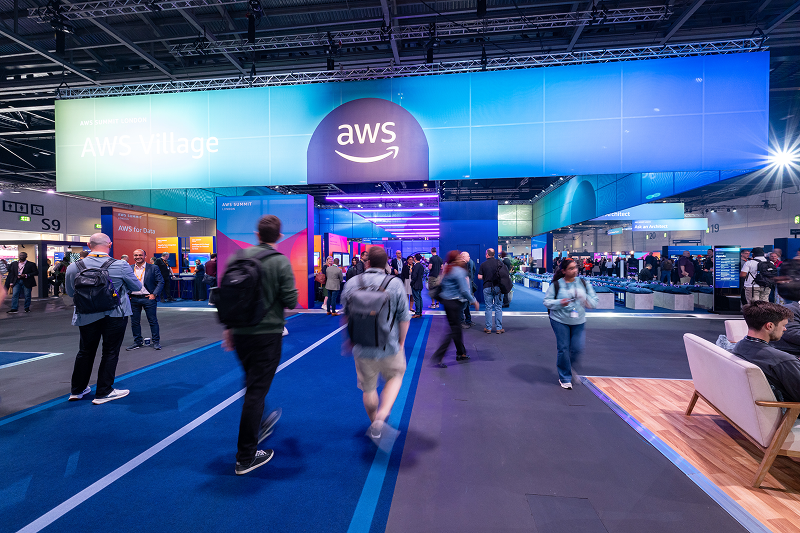
Summer has drawn to a close here in Utrecht, where I live in the Netherlands. In two weeks, I’ll be attending AWS Community Day 2025, hosted at the Kinepolis Jaarbeurs Utrecht on September 24. The single-day event will bring together over 500 cloud practitioners from across the Netherlands, featuring 25 breakout sessions across five technical tracks. The day will begin with virtual keynotes at 9:00 AM, followed by parallel breakout sessions focused on practical implementations of serverless architectures and container optimization strategies, providing valuable insights regardless of experience level.

Last year’s AWS Community Day Netherlands 2024 brought together a diverse group of cloud practitioners, speakers, and AWS enthusiasts who contributed to making the community-led conference a valuable knowledge-sharing platform. If you’re planning to attend, feel free to find me there to discuss AWS services or share your cloud implementation experiences!

Let’s look at last week’s new announcements.

Last week’s launches

AWS Transform assessments now includes detached storage analysis – AWS Transform has expanded its assessment capabilities to analyze on-premises detached storage infrastructure, helping customers determine migration total cost of ownership (TCO). The assessment now evaluates Storage Area Network (SAN), Network Attached Storage (NAS), file servers, object storage, and virtual environments, providing migration recommendations to appropriate AWS services including Amazon S3, Amazon EBS, and Amazon FSx. The tool delivers a comprehensive TCO comparison between current and AWS environments, along with performance and cost optimization recommendations. With storage accounting for up to 45% of total migration opportunities, this enhancement helps customers visualize various AWS migration options. AWS Transform assessment is available in US East (N. Virginia) and Europe (Frankfurt) Regions.

Amazon Bedrock introduces Global Cross-Region inference for Anthropic Claude Sonnet 4 – Anthropic’s Claude Sonnet 4 model in Amazon Bedrock now supports Global cross-Region inference, allowing inference requests to route to any supported commercial AWS Region for processing. This enhancement optimizes available resources and enables higher model throughput by distributing traffic across multiple Regions. Previously, you could select cross-Region inference profiles tied to specific geographies (US, EU, or APAC). The new Global cross-Region inference profile provides additional flexibility for generative AI use cases that don’t require geography-specific processing, helping manage unplanned traffic bursts and increase model throughput. For detailed implementation guidance, visit the Amazon Bedrock documentation.

Amazon Neptune Database adds Public Endpoints support – Amazon Neptune now supports Public Endpoints, enabling direct connections to Neptune databases from outside the VPC without complex networking configurations. This feature helps developers securely access their graph databases from development desktops without requiring VPN connections or bastion hosts, while maintaining security through IAM authentication, VPC security groups, and encryption in transit. Public Endpoints can be enabled for Neptune clusters running engine version 1.4.6 or above through the AWS Management Console, AWS CLI, or AWS SDK. The feature is available at no additional cost beyond standard Neptune pricing in all AWS Regions where Neptune Database is offered. Implementation details are available in the Amazon Neptune documentation.

ECS Exec now available in AWS Management Console – Amazon ECS now supports ECS Exec directly in the AWS Management Console, enabling secure, interactive shell access to running containers without requiring inbound ports or SSH key management. Previously available only through API, CLI, or SDKs, this feature streamlines troubleshooting by allowing container access directly from the console interface. You can enable ECS Exec when creating or updating services and standalone tasks, then connect to containers by selecting “Connect” on the task details page, which opens an interactive session through CloudShell. The console also displays the underlying AWS CLI command for use in local terminals. This feature is available in all AWS commercial Regions and documented in the ECS developer guide.

Organizational Notification Configurations for AWS User Notifications now generally available – AWS User Notifications now supports Organizational Notification Configurations, helping AWS Organizations users centrally configure and view notifications across their organization. Management accounts or delegated administrators can configure notifications for specific organizational units or all accounts in an organization. The service supports configuring notifications for any supported Amazon EventBridge event, such as console sign-ins without MFA, with notifications appearing in the admin’s Console Notifications Center and AWS Console Mobile Application. User Notifications supports up to five delegated administrators and is available in all AWS Regions where AWS User Notifications is offered. For implementation details, visit the AWS User Notifications user guide.

For a full list of AWS announcements, be sure to keep an eye on the What’s New at AWS page.

Upcoming AWS events
Check your calendar and sign up for upcoming AWS events.

AWS Summits – Join free online and in-person events that bring the cloud computing community together to connect, collaborate, and learn about AWS. Register in your nearest city: Zurich (September 11), Los Angeles (September 17), and Bogotá (October 9).

AWS re:Invent 2025 – Join us in Las Vegas between December 1–5 as cloud pioneers gather from across the globe for the latest AWS innovations, peer-to-peer learning, expert-led discussions, and invaluable networking opportunities. Don’t forget to explore the event catalog.

AWS Community Days – Join community-led conferences that feature technical discussions, workshops, and hands-on labs led by expert AWS users and industry leaders from around the world: Baltic (September 10), Aotearoa (September 18), South Africa (September 20), Bolivia (September 20), Portugal (September 27).

Browse all upcoming AWS led in-person and virtual events here.

That’s all for this week. Check back next Monday for another Weekly Roundup!

— Esra

This post is part of our Weekly Roundup series. Check back each week for a quick roundup of interesting news and announcements from AWS!

Now Open — AWS Asia Pacific (New Zealand) Region

Post Syndicated from Donnie Prakoso original https://aws.amazon.com/blogs/aws/now-open-aws-asia-pacific-new-zealand-region/

Kia ora! Today, I’m pleased to share the general availability of the AWS Asia Pacific (New Zealand) Region with three Availability Zones and API name ap-southeast-6. With the new Region, customers can now run workloads and securely store data in New Zealand while serving end users with even lower latency.

The new AWS Asia Pacific (New Zealand) Region will help organizations run their applications and serve end users while maintaining data residency in New Zealand. The NZD $7.5 billion Amazon Web Services (AWS) investment to establish an AWS Region in New Zealand is expected to contribute NZD $10.8 billion to New Zealand’s gross domestic product (GDP) which is estimated to create 1,000 new jobs annually and will enable Kiwi organizations of all sizes to innovate and scale faster using the most secure and resilient infrastructure.

AWS in New Zealand
Since we opened our first office in New Zealand in 2013, we’ve been continuously expanding our infrastructure to better serve Kiwi customers:

Connectivity to the global AWS network – In 2016, AWS enhanced New Zealand’s connectivity to the AWS Global Infrastructure by establishing diverse, high-capacity subsea cable connections, improving network reliability and performance for customers.

Amazon CloudFront – In 2020, AWS expanded its infrastructure footprint in New Zealand by adding two Amazon CloudFront edge locations in Auckland.

AWS Local Zones – To further enhance its infrastructure offerings in New Zealand, AWS introduced an AWS Local Zone in Auckland in 2023 helping customers deliver applications that require single-digit millisecond latency.

AWS Direct Connect – In the same year, AWS also added a Direct Connect location in Auckland to help customers securely link their on-premises networks to AWS resulting in lower networking costs and improved application performance. With this Region launch, AWS is adding another Direct Connect location in Auckland.

Let’s take a look at how AWS customers are leveraging AWS capabilities for diverse needs.

Security and compliance
The New Zealand government has a cloud first policy to encourage cloud adoption across the public sector. AWS supports 143 security standards and compliance certifications, including Payment Card Industry Data Security Standard (PCI DSS), Health Insurance Portability and Accountability Act (HIPAA) and Health Information Technology for Economic and Clinical Health (HITECH), Federal Risk and Authorization Management Program (FedRAMP), General Data Protection Regulation (GDPR), Federal Information Processing Standard (FIPS) 140-3, and National Institute of Standards and Technology (NIST) 800-171, helping customers satisfy compliance requirements around the globe and providing a secure cloud infrastructure.

MATTR, a New Zealand-based organization providing infrastructure and digital trust services to businesses and governments, sees significant benefits from the new Region. To learn more about how MATTR and other organizations like Kiwibank and Deloitte plan to use the AWS New Zealand Region, visit this news article.

Accelerating AI innovation in New Zealand
AWS delivers the most comprehensive set of capabilities for generative AI at every layer of the stack, including a choice of cutting-edge large language models (LLMs) for implementing generative AI with Amazon Bedrock, and the most capable generative AI assistant to transform how work gets done with Amazon Q.

New Zealand customers are already benefiting from the generative AI capabilities offered by AWS.

Thematic is a New Zealand-based global leader in customer intelligence and feedback analysis. Thematic uses generative AI to turn customer feedback data from multiple channels into curated, accurate, and reliable customer intelligence.

“Using Amazon Bedrock is just so incredibly easy that it just makes sense. Whenever we design a solution, we do test more than 10 large language models (LLMs). Consistently the ones offered by AWS are winning those competitions,” said Nathan Holmberg, CTO and Co-Founder, Thematic.

To learn more on other customers like One NZ utilized generative AI, visit this article.

Building cloud skills together
Since signing a memorandum of understanding (MoU) with the New Zealand government in 2022, Amazon has trained more than 50,000 Kiwis toward our goal of 100,000. Amazon is committed to continuing to invest in cloud education through programs including AWS Academy, AWS Skills Builder, AWS Educate, and AWS re/Start. Organizations are using AWS to scale globally while investing in local talent development, supporting New Zealand’s growing demand for cloud expertise.

Xero, a global small business platform helps customers supercharge their business by bringing together the most important small business tools, including accounting, payroll and payments — on one platform. Leveraging AWS since 2016, Xero has scaled its platform globally, enhancing its features and enabling continual innovation.

“Amazon’s commitment to the New Zealand tech industry through their NZD $7.5B investment is promising. It’s a significant vote of confidence that will help connect New Zealand tech exporters with new global opportunities across the AWS ecosystem and the broader Amazon network,” says Bridget Snelling, Xero Country Manager, Aotearoa New Zealand.

Sustainable digital transformation
Through The Climate Pledge, Amazon is committed to reaching net-zero carbon across its business by 2040. AWS is committed to supporting New Zealand’s sustainability goals with efficient and responsible operations of its data centers in the country. The AWS Asia Pacific (New Zealand) Region is underpinned by renewable energy from day one through its agreement with Mercury New Zealand.

Energy companies are using AWS to modernize operations while advancing sustainability goals. Sharesies, a wealth development platform, is using AWS to modernize operations while advancing sustainability goals.

“Sharesies is very supportive of storing customer data in-country and being able to use renewable energy, “ says Sharesies Chief Technical Officer Richard Clark. “To do this in New Zealand on the AWS Cloud and have it fully powered by Mercury’s wind energy is a huge step forward. And very exciting!”

AWS partners in New Zealand
The AWS Partner Network (APN) in New Zealand includes a growing ecosystem of consulting and technology partners helping customers of all sizes design, architect, build, migrate, and manage their workloads on AWS. AWS Partners like Custom D, Grant Thornton Digital, MongoDB, and Parallo are actively supporting customers to deliver innovative solutions tailored to the unique needs of New Zealand organizations across various industries. With the new Region, these partners can now leverage the full capabilities of AWS cloud services locally.

AWS community in New Zealand
New Zealand is also home to one AWS Hero, 26 AWS Community Builders, 6 AWS User Groups and almost 9,000 community members across AWS User Groups in Auckland, Wellington, and Christchurch. If you’re interested in joining AWS User Groups New Zealand, visit their Meetup and social media pages.

Here’s what our AWS Hero Arshad Zackeriya, says about the new Region:

“The launch of the AWS Region in New Zealand is a game-changer for our country. It’s not just about a new set of data centers; it’s about unlocking the potential of New Zealand’s businesses and developer communities, allowing us to build a better, more connected Aotearoa for all.”

Available now
The AWS Asia Pacific (New Zealand) Region is the first infrastructure Region in New Zealand and sixteenth Region in Asia Pacific. With this launch, AWS now spans 120 Availability Zones within 38 geographic Regions around the world, with announced plans for 10 more Availability Zones and three more AWS Regions in the Kingdom of Saudi Arabia, Chile, and the European Sovereign Cloud.

The new Asia Pacific (New Zealand) Region is ready to support your business, and you can find a detailed list of the services available in this Region on the AWS Services by Region page. To learn more, visit the AWS Global Infrastructure page, and start building on ap-southeast-6!

Happy building!
Donnie

New general-purpose Amazon EC2 M8i and M8i Flex instances are now available

Post Syndicated from Channy Yun (윤석찬) original https://aws.amazon.com/blogs/aws/new-general-purpose-amazon-ec2-m8i-and-m8i-flex-instances-are-now-available/

Today, we’re announcing the general availability of Amazon Elastic Compute Cloud (Amazon EC2) general-purpose M8i and M8i-Flex instances powered by custom Intel Xeon 6 processors available only on AWS with sustained all-core 3.9 GHz turbo frequency. These instances deliver the highest performance and fastest memory bandwidth among comparable Intel processors in the cloud. They also deliver up to 15 percent better price performance, up to 20 percent higher performance, and 2.5 times more memory bandwidth compared to previous generation M7i and M7i-Flex instances.

M8i and M8i-flex instances are ideal for running general purpose workloads such as general web application servers, virtual desktops, batch processing, microservices, databases, and enterprise applications. In terms of performance, these instances are specifically up to 60 percent faster for NGINX web applications, up to 30 percent faster for PostgreSQL database workloads, and up to 40 percent faster for AI deep learning recommendation models compared to M7i and M7i-Flex instances.

As like R8i and R8i-Flex instances, these instances use the new sixth generation AWS Nitro Cards, delivering up to two times more network and Amazon Elastic Block Storage (Amazon EBS) bandwidth compared to the previous generation instances. It greatly improves network throughput for workloads handling small packets such as web, application, and gaming servers. They also support bandwidth configuration with 25 percent allocation adjustments between network and Amazon EBS bandwidth, enabling better database performance, query processing, and logging speeds.

M8i instances
M8i instances provide up to 384 vCPUs and 1.5 TB memory including bare metal instances that provide dedicated access to the underlying physical hardware. These SAP-certified instances help you to run large application servers and databases, gaming servers, CPU-based inference, and video streaming that need the largest instance sizes or high CPU continuously.

Here are the specs for M8i instances:

Instance size vCPUs Memory (GiB) Network bandwidth (Gbps) EBS bandwidth (Gbps)
m8i.large 2 8 Up to 12.5 Up to 10
m8i.xlarge 4 16 Up to 12.5 Up to 10
m8i.2xlarge 8 32 Up to 15 Up to 10
m8i.4xlarge 16 64 Up to 15 Up to 10
m8i.8xlarge 32 128 15 10
m8i.12xlarge 48 192 22.5 15
m8i.16xlarge 64 256 30 20
m8i.24xlarge 96 384 40 30
m8i.32xlarge 128 512 50 40
m8i.48xlarge 192 768 75 60
m8i.96xlarge 384 1536 100 80
m8i.metal-48xl 192 768 75 60
m8i.metal-96xl 384 1536 100 80

M8i-Flex instances
M8i-Flex instances are a lower-cost variant of the M8i instances, with 5 percent better price performance at 5 percent lower prices. They’re designed for workloads that benefit from the latest generation performance but don’t fully utilize all compute resources. These instances can reach up to the full CPU performance 95 percent of the time.

Here are the specs for the M8i-Flex instances:

Instance size vCPUs Memory (GiB) Network bandwidth (Gbps) EBS bandwidth (Gbps)
m8i-flex.large 2 8 Up to 12.5 Up to 10
m8i-flex.xlarge 4 16 Up to 12.5 Up to 10
m8i-flex.2xlarge 8 32 Up to 15 Up to 10
m8i-flex.4xlarge 16 64 Up to 15 Up to 10
m8i-flex.8xlarge 32 128 Up to 15 Up to 10
m8i-flex.12xlarge 48 192 Up to 22.5 Up to 15
m8i-flex.16xlarge 64 256 Up to 30 Up to 20

If you’re currently using earlier generations of general-purpose instances, you can adopt M8i-Flex instances without having to make changes to your application or your workload.

Now available
Amazon EC2 M8i and M8i-Flex instances are available today in the US East (N. Virginia), US East (Ohio), US West (Oregon), and Europe (Spain) AWS Regions. M8i and M8i-Flex instances can be purchased as On-Demand, Savings Plan, and Spot instances. M8i instances are also available in Dedicated Instances and Dedicated Hosts. To learn more, visit the Amazon EC2 Pricing page.

Give M8i and M8i-Flex instances a try in the Amazon EC2 console. To learn more, visit the Amazon EC2 M8i instances page and send feedback to AWS re:Post for EC2 or through your usual AWS Support contacts.

Channy

Google’s Ironwood TPU Swings for Reasoning Model Leadership at Hot Chips 2025

Post Syndicated from Ryan Smith original https://www.servethehome.com/googles-ironwood-tpu-swings-for-reasoning-model-leadership-at-hot-chips-2025/

Closing out the machine learning sessions at Hot Chips 2025 is Google, who is at the show to talk about their latest tensor processing unit (TPU), codenamed Ironwood. Revealed by the company a few months ago, Ironwood is the first Google TPU that is explicitly designed for large-scale AI inference (rather than AI training). Paired […]

The post Google’s Ironwood TPU Swings for Reasoning Model Leadership at Hot Chips 2025 appeared first on ServeTheHome.

NVIDIA Outlines GB10 SoC Architecture at Hot Chips 2025

Post Syndicated from Ryan Smith original https://www.servethehome.com/nvidia-outlines-gb10-soc-architecture-at-hot-chips-2025/

Back from our Hot Chips 2025 ice cream break, NVIDIA is starting off the second session of machine learning presentations. As with yesterday’s graphics presentation, NVIDIA isn’t so much showing off future hardware as much as they are offering a better lay of the land on their latest generation of hardware that is already on […]

The post NVIDIA Outlines GB10 SoC Architecture at Hot Chips 2025 appeared first on ServeTheHome.

Huawei Presents UB-Mesh Interconnect for Large AI SuperNodes at Hot Chips 2025

Post Syndicated from Ryan Smith original https://www.servethehome.com/huawei-presents-ub-mesh-interconnect-for-large-ai-supernodes-at-hot-chips-2025/

The third and final machine learning presentation before the afternoon break comes from Huawei. Unlike many of the other ML vendors who are here to pitch products, Huawei’s presentation is more focused on fundamental technology. In this case, how to use efficiently use meshes to interconnect the chips within large AI systems. Eyeing so-called SuperNodes […]

The post Huawei Presents UB-Mesh Interconnect for Large AI SuperNodes at Hot Chips 2025 appeared first on ServeTheHome.

d-Matrix Presents Corsair, An In-Memory Computing Architecture For Inference, at Hot Chips 2025

Post Syndicated from Ryan Smith original https://www.servethehome.com/d-matrix-presents-corsair-an-in-memory-computing-architecture-for-inference-at-hot-chips-2025/

The second machine learning presentation of the afternoon comes from d-Matrix. The company specializes in hardware for AI inference, and as of late has been tackling the matter of how to improve inference performance by using in-memory computing. Along those lines, the company is presenting their Corsair in-memory computing chiplet architecture at Hot Chips. Not […]

The post d-Matrix Presents Corsair, An In-Memory Computing Architecture For Inference, at Hot Chips 2025 appeared first on ServeTheHome.

AWS services scale to new heights for Prime Day 2025: key metrics and milestones

Post Syndicated from Channy Yun (윤석찬) original https://aws.amazon.com/blogs/aws/aws-services-scale-to-new-heights-for-prime-day-2025-key-metrics-and-milestones/

Amazon Prime Day 2025 was the biggest Amazon Prime Day shopping event ever, setting records for both sales volume and total items sold during the 4-day event. Prime members saved billions while shopping Amazon’s millions of deals during the event.

This year marked a significant transformation in the Prime Day experience through advancements in the generative AI offerings from Amazon and AWS. Customers used Alexa+—the Amazon next-generation personal assistant now available in early access to millions of customers—along with the AI-powered shopping assistant, Rufus, and AI Shopping Guides. These features, built on more than 15 years of cloud innovation and machine learning expertise from AWS, combined with deep retail and consumer experience from Amazon, helped customers quickly discover deals and get product information, complementing the fast, free delivery that Prime members enjoy year-round.

As part of our annual tradition to tell you about how AWS powered Prime Day for record-breaking sales, I want to share the services and chart-topping metrics from AWS that made your amazing shopping experience possible.


Prime Day 2025 – all the numbers
During the weeks leading up to big shopping events like Prime Day, Amazon fulfillment centers and delivery stations work to get ready and ensure operations run efficiently and safely. For example, the Amazon automated storage and retrieval system (ASRS) operates a global fleet of industrial mobile robots that move goods around Amazon fulfillment centers.

AWS Outposts, a fully managed service that extends the AWS experience on-premises, powers software applications that manage the command-and-control of Amazon ASRS and supports same-day and next-day deliveries through low-latency processing of critical robotic commands.

During Prime Day 2025, AWS Outposts at one of the largest Amazon fulfillment centers sent more than 524 million commands to over 7,000 robots, reaching peak volumes of 8 million commands per hour—a 160 percent increase compared to Prime Day 2024.

Here are some more interesting, mind-blowing metrics:

  • Amazon Elastic Compute Cloud (Amazon EC2) – During Prime Day 2025, AWS Graviton, a family of processors designed to deliver the best price performance for cloud workloads running in Amazon EC2, powered more than 40 percent of the Amazon EC2 compute used by Amazon.com. Amazon also deployed over 87,000 AWS Inferentia and AWS Trainium chips – custom silicon chips for deep learning and generative AI training and inference – to power Amazon Rufus for Prime Day.
  • Amazon SageMaker AI — Amazon SageMaker AI, a fully managed service that brings together a broad set of tools to enable high-performance, low-cost machine learning (ML), processed more than 626 billion inference requests during Prime Day 2025.
  • Amazon Elastic Container Service (Amazon ECS) and AWS Fargate– Amazon Elastic Container Service (Amazon ECS) is a fully managed container orchestration service that works seamlessly with AWS Fargate, a serverless compute engine for containers. During Prime Day 2025, Amazon ECS launched an average of 18.4 million tasks per day on AWS Fargate, representing a 77 percent increase from the previous year’s Prime Day average.
  • AWS Fault Injection Service (AWS FIS) – We ran over 6,800 AWS FIS experiments—over eight times more than we conducted in 2024—to test resilience and ensure Amazon.com remains highly available on Prime Day. This significant increase was made possible by two improvements: new Amazon ECS support for network fault injection experiments on AWS Fargate, and the integration of FIS testing in continuous integration and continuous delivery (CI/CD) pipelines.
  • AWS Lambda – AWS Lambda, a serverless compute service that lets you run code without managing infrastructure, handled over 1.7 trillion invocations per day during Prime Day 2025.
  • Amazon API Gateway – During Prime Day 2025, Amazon API Gateway, a fully managed service that makes it easy to create, maintain, and secure APIs at any scale, processed over 1 trillion internal service requests—a 30 percent increase in requests on average per day compared to Prime Day 2024.
  • Amazon CloudFront – Amazon CloudFront, a content delivery network (CDN) service that securely delivers content with low latency and high transfer speeds, delivered over 3 trillion HTTP requests during the global week of Prime Day 2025, a 43 percent increase in requests compared to Prime Day 2024.
  • Amazon Elastic Block Store (Amazon EBS) – During Prime Day 2025, Amazon EBS, our high-performance block storage service, peaked at 20.3 trillion I/O operations, moving up to an exabyte of data daily.
  • Amazon Aurora – On Prime Day, Amazon Aurora, a relational database management system (RDBMS) built for high performance and availability at global scale for PostgreSQL, MySQL, and DSQL, processed 500 billion transactions, stored 4,071 terabytes of data, and transferred 999 terabytes of data.
  • Amazon DynamoDB – Amazon DynamoDB, a serverless, fully managed, distributed NoSQL database, powers multiple high-traffic Amazon properties and systems including Alexa, the Amazon.com sites, and all Amazon fulfillment centers. Over the course of Prime Day, these sources made tens of trillions of calls to the DynamoDB API. DynamoDB maintained high availability while delivering single-digit millisecond responses and peaking at 151 million requests per second.
  • Amazon ElastiCache – During Prime Day, Amazon ElastiCache, a fully managed caching service delivering microsecond latency, peaked at serving over 1.5 quadrillion daily requests and over 1.4 trillion requests in a minute.
  • Amazon Kinesis Data Streams – Amazon Kinesis Data Streams, a fully managed serverless data streaming service, processed a peak of 807 million records per second during Prime Day 2025.
  • Amazon Simple Queue Service (Amazon SQS) – During Prime Day 2025, Amazon SQS – a fully managed message queuing service for microservices, distributed systems, and serverless applications – set a new peak traffic record of 166 million messages per second.
  • Amazon GuardDuty – During Prime Day 2025, Amazon GuardDuty, an intelligent threat detection service, monitored an average of 8.9 trillion log events per hour, a 48.9 percent increase from last year’s Prime Day.
  • AWS CloudTrail – AWS CloudTrail, which tracks user activity and API usage on AWS, as well as in hybrid and multicloud environments, processed over 2.5 trillion events during Prime Day 2025, compared to 976 billion events in 2024.

Prepare to scale
If you’re preparing for similar business-critical events, product launches, and migrations, I recommend that you take advantage of our newly branded AWS Countdown (formerly known as AWS Infrastructure Event Management, or IEM). This comprehensive support program helps assess operational readiness, identify and mitigate risks, and plan capacity, using proven playbooks developed by AWS experts. We’ve expanded to include: generative AI implementation support to help you confidently launch and scale AI initiatives; migration and modernization support, including mainframe modernization; and infrastructure optimization for specialized sectors including election systems, retail operations, healthcare services, and sports and gaming events.

I look forward to seeing what other records will be broken next year!

Channy

Expand your Knowledge at Zabbix Summit 2025

Post Syndicated from Michael Kammer original https://blog.zabbix.com/expand-your-knowledge-at-zabbix-summit-2025/31168/

October is just around the corner, and that annual shift into Q4 can mean only one thing – it’s almost Summit time! Zabbix Summit 2025 will take place on October 8-10 in Riga, Latvia at the Radisson Blu Hotel Latvija, and it’s shaping up to be the perfect blend of established traditions and fresh approaches – we’ve been at this for a (very lucky) 13 years now, and we’d like to think we’ve kept the aspects of the Summit experience that everyone knows and loves while adding a few twists! Here’s what you can expect for the price of admission:

Top-tier presentations from Zabbix leaders and experts

The learning begins with Zabbix Founder and CEO Alexei Vladishev’s keynote speech, which promises to be an “info drop” full of details about upcoming releases, new features, and what Alexei sees on the horizon for Zabbix. From there, it will be time for over 30 main stage speakers spread across two days of conference action. Some of the highlights include:

Presentations from Zabbix experts on topics like:

  • Turning playbooks into automated action plans
  • Streaming metrics for multiple tenants without chaos
  • Syncing systems painlessly
  • Maintaining control over massive amounts of Zabbix data
  • Detecting and responding to security threats before they escalate

Deep dives that will show you how to:

  • Spot the blind spots in large-scale networks (and fix them)
  • Keep tabs on Zabbix itself (after all, even monitoring needs monitoring)
  • Take full control of tag management
  • Use Zabbix Proxy to scale without breaking a sweat

Practical case studies, including:

  • Turning sensor data into insights with AI
  • Keeping SAP environments and multisite clusters in check
  • Transforming enterprise-level monitoring
  • Supercharging operations via migration projects
  • Making discovery, correlation, and AI work together for smart monitoring in action

Expect all this, plus inside information from the Zabbix team on the path to becoming a Zabbix partner and how Zabbix services can help you scale efficiently. As if that weren’t enough, this year’s Summit will also feature special guest Dylan Beattie! A Software Development Consultant and Founder of Ursatile, Dylan is an international keynote speaker, and a long-time contributor to the open-source community.

At the Summit, Dylan will give a talk titled “Open Source, Open Minds. The Cost of Free Software.” Expect stories about why developers choose to give their code away, what happens when they change their minds, the quirks of licenses and legalities, and the big question of whether open source can ever be truly sustainable.

Dedicated Dev and Community tracks

Created by developers and for developers, the Dev Track makes its debut this year and brings together some of the top minds on the Zabbix development team to cover topics as diverse as extending Zabbix Agent 2 with custom plugins, enhanced widget development, and template design best practices.

For attendees of a slightly less technical persuasion, the Community Track is there to facilitate author led discussions about community-driven content and resources, like the Zabbix Book. Assembled by longtime Zabbix enthusiasts Patrik Uytterhoeven, Brian van Baekel, and Nathan Liefting, the Zabbix Book will get its own breakout room, where Summit attendees can brainstorm in small groups about how to improve the book via new ideas and topics.

Hands-on workshops

The Summit experience has always been about finding opportunities to put theory into practice, and this year’s workshops showcase the latest features and use cases in action. Attendees will be able to dive into workshops on AI powered monitoring with Zabbix and ESP32, nested LLDs (low-level discovery), reducing alert noise, diagnosing performance issues with Diaginfo, and using Netflow integration via H5 Network. It’s a rare opportunity to confirm your knowledge retention by performing real-world tasks under the guidance of workshop hosts and their assistants.

Training and certification (yes, with discounts!)

A Zabbix Summit is the perfect place to get recognized as a Zabbix specialist or professional by taking part in Zabbix Certified Training sessions and exams at bargain prices. These one-day courses will be held from October 6 through October 13:

  • Automation and Integration with Zabbix API
  • Advanced Zabbix Database Monitoring
  • Advanced Zabbix SNMP Monitoring
  • Zabbix Certified Specialist Upgrade
  • Zabbix Certified Professional Upgrade

If you find yourself in Riga after the Summit, it’s worth your time to take part in the full Zabbix Certified Specialist course scheduled for October 13-17. Please remember that you can choose more than one training course and also keep in mind that you can attend the courses (without the 50% Summit discount) even if you’re not joining us at the Summit. You can register for all training sessions and exams here.

Networking and community building


A big part of what makes a Zabbix Summit a Zabbix Summit is the vibe – a big, global community coming together to catch up with old friends, welcome new members, and celebrate a certain open-source monitoring solution that brings us all together. That atmosphere of conviviality is exactly what makes a Summit such a one-of-a-kind networking opportunity. We’ve put together an open house visit and three evening events that are the ideal places to connect with like-minded monitoring enthusiasts, show off your skills, or get your company’s name in front of industry decision-makers.

This year’s Zabbix Open House on October 8 is your chance to see where the magic happens – drop by our offices and chat with our team members, grab yourself a coffee in our kitchen, and take part in a quiz that will teach even the most seasoned Zabbix fans a few new fun facts.

No summit would be complete without its events, and the opening event of Zabbix Summit 2025 on October 8 will take place at Riga’s renowned Monkey Club, with delicious fusion cuisine, a broad selection of cocktails and beverages, and a chance to unwind in style with your fellow Summit attendees.

The main event on October 9 is hosted by the Tallinn Quarter Hangar, which boasts a concert hall as well as a modern, open-plan street food kitchen and bar that are guaranteed to offer something for everyone.

On October 10, Zabbix Summit 2025 will wrap up at downtown Riga’s Burzma food hall, which offers 10 restaurants and a bar serving up a broad range of flavors from every corner of the globe. It’s the perfect location to relive Summit highlights in the company of your fellow Zabbix enthusiasts, and we’re looking forward to seeing you there!

Can’t make it? There’s always YouTube

A Zabbix Summit is one of those “you had to be there” events, but if you can’t make it to Riga, no worries – as in previous years, we’re going to be livestreaming all the speeches on our YouTube channel! Find out more and subscribe to the livestream here.

The post Expand your Knowledge at Zabbix Summit 2025 appeared first on Zabbix Blog.

Meta Talks World-Lock Rendering for AR/MR at Hot Chips 2025

Post Syndicated from Ryan Smith original https://www.servethehome.com/meta-talks-world-lock-rendering-for-ar-mr-at-hot-chips-2025/

The final graphics-related talk of the day comes from Meta, who has perhaps the most novel presentation on the graphics track. Rather than talking about GPU architectures that have already been shipping to customers for several months, Meta’s ex-Oculus headset division is at the show to talk about using dedicated ICs for accelerating world-locked rendering […]

The post Meta Talks World-Lock Rendering for AR/MR at Hot Chips 2025 appeared first on ServeTheHome.

NVIDIA GeForce RTX 5090 and the Age of Neural Rendering at Hot Chips 2025

Post Syndicated from Ryan Smith original https://www.servethehome.com/nvidia-geforce-rtx-5090-and-the-age-of-neural-rendering-at-hot-chips-2025/

The second presentation on today’s graphics track comes from NVIDIA. Like AMD, NVIDIA is mid-cycle on its current generation of graphics products, having launched the first of them back in late 2024. As a result, their Hot Chips presentation is more of a recap, with a focus on what the Blackwell architecture offers for graphics […]

The post NVIDIA GeForce RTX 5090 and the Age of Neural Rendering at Hot Chips 2025 appeared first on ServeTheHome.

AMD RDNA 4 GPU Architecture at Hot Chips 2025

Post Syndicated from Ryan Smith original https://www.servethehome.com/amd-rdna-4-gpu-architecture-at-hot-chips-2025/

Kicking off this afternoon’s graphics track at Hot Chips 2025 is AMD. The company launched its RDNA 4 architecture and associated Radeon RX 9000 series video cards earlier this year, releasing two GPUs thus far. As AMD is now well into this generation of Radeon GPUs, the company doesn’t necessarily have any grand revelations to […]

The post AMD RDNA 4 GPU Architecture at Hot Chips 2025 appeared first on ServeTheHome.