Tag Archives: news

AWS Weekly Roundup: AWS Transform, Amazon Neptune, and more (September 8, 2025)

Post Syndicated from Esra Kayabali original https://aws.amazon.com/blogs/aws/aws-weekly-roundup-aws-transform-amazon-neptune-and-more-september-8-2025/

Summer has drawn to a close here in Utrecht, where I live in the Netherlands. In two weeks, I’ll be attending AWS Community Day 2025, hosted at the Kinepolis Jaarbeurs Utrecht on September 24. The single-day event will bring together over 500 cloud practitioners from across the Netherlands, featuring 25 breakout sessions across five technical tracks. The day will begin with virtual keynotes at 9:00 AM, followed by parallel breakout sessions focused on practical implementations of serverless architectures and container optimization strategies, providing valuable insights regardless of experience level.

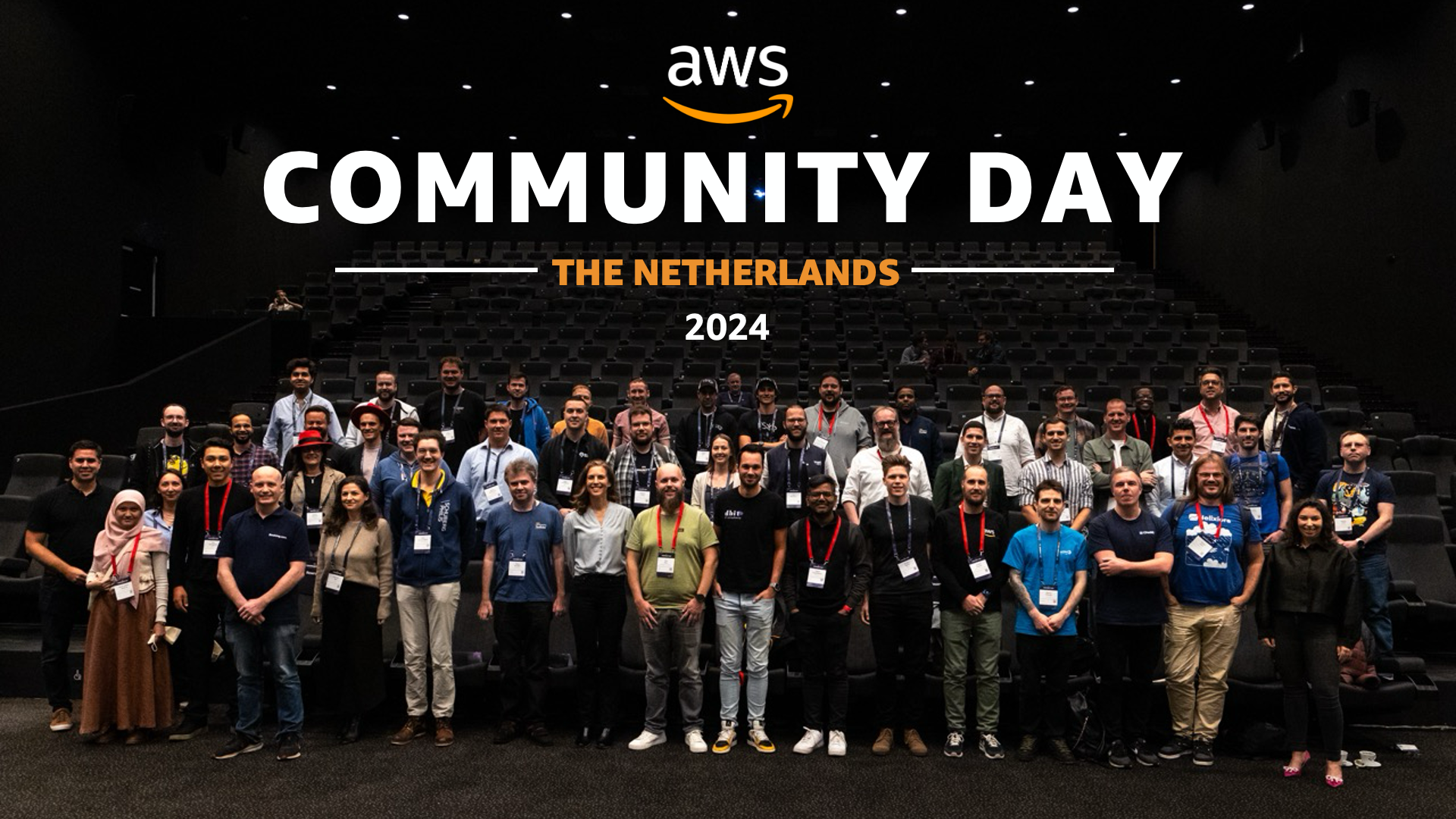
Last year’s AWS Community Day Netherlands 2024 brought together a diverse group of cloud practitioners, speakers, and AWS enthusiasts who contributed to making the community-led conference a valuable knowledge-sharing platform. If you’re planning to attend, feel free to find me there to discuss AWS services or share your cloud implementation experiences!
Let’s look at last week’s new announcements.

Last week’s launches

AWS Transform assessments now includes detached storage analysis – AWS Transform has expanded its assessment capabilities to analyze on-premises detached storage infrastructure, helping customers determine migration total cost of ownership (TCO). The assessment now evaluates Storage Area Network (SAN), Network Attached Storage (NAS), file servers, object storage, and virtual environments, providing migration recommendations to appropriate AWS services including Amazon S3, Amazon EBS, and Amazon FSx. The tool delivers a comprehensive TCO comparison between current and AWS environments, along with performance and cost optimization recommendations. With storage accounting for up to 45% of total migration opportunities, this enhancement helps customers visualize various AWS migration options. AWS Transform assessment is available in US East (N. Virginia) and Europe (Frankfurt) Regions.

Amazon Bedrock introduces Global Cross-Region inference for Anthropic Claude Sonnet 4 – Anthropic’s Claude Sonnet 4 model in Amazon Bedrock now supports Global cross-Region inference, allowing inference requests to route to any supported commercial AWS Region for processing. This enhancement optimizes available resources and enables higher model throughput by distributing traffic across multiple Regions. Previously, you could select cross-Region inference profiles tied to specific geographies (US, EU, or APAC). The new Global cross-Region inference profile provides additional flexibility for generative AI use cases that don’t require geography-specific processing, helping manage unplanned traffic bursts and increase model throughput. For detailed implementation guidance, visit the Amazon Bedrock documentation.

Amazon Neptune Database adds Public Endpoints support – Amazon Neptune now supports Public Endpoints, enabling direct connections to Neptune databases from outside the VPC without complex networking configurations. This feature helps developers securely access their graph databases from development desktops without requiring VPN connections or bastion hosts, while maintaining security through IAM authentication, VPC security groups, and encryption in transit. Public Endpoints can be enabled for Neptune clusters running engine version 1.4.6 or above through the AWS Management Console, AWS CLI, or AWS SDK. The feature is available at no additional cost beyond standard Neptune pricing in all AWS Regions where Neptune Database is offered. Implementation details are available in the Amazon Neptune documentation.

ECS Exec now available in AWS Management Console – Amazon ECS now supports ECS Exec directly in the AWS Management Console, enabling secure, interactive shell access to running containers without requiring inbound ports or SSH key management. Previously available only through API, CLI, or SDKs, this feature streamlines troubleshooting by allowing container access directly from the console interface. You can enable ECS Exec when creating or updating services and standalone tasks, then connect to containers by selecting “Connect” on the task details page, which opens an interactive session through CloudShell. The console also displays the underlying AWS CLI command for use in local terminals. This feature is available in all AWS commercial Regions and documented in the ECS developer guide.

Organizational Notification Configurations for AWS User Notifications now generally available – AWS User Notifications now supports Organizational Notification Configurations, helping AWS Organizations users centrally configure and view notifications across their organization. Management accounts or delegated administrators can configure notifications for specific organizational units or all accounts in an organization. The service supports configuring notifications for any supported Amazon EventBridge event, such as console sign-ins without MFA, with notifications appearing in the admin’s Console Notifications Center and AWS Console Mobile Application. User Notifications supports up to five delegated administrators and is available in all AWS Regions where AWS User Notifications is offered. For implementation details, visit the AWS User Notifications user guide.

For a full list of AWS announcements, be sure to keep an eye on the What’s New at AWS page.

Upcoming AWS events
Check your calendar and sign up for upcoming AWS events.

AWS Summits – Join free online and in-person events that bring the cloud computing community together to connect, collaborate, and learn about AWS. Register in your nearest city: Zurich (September 11), Los Angeles (September 17), and Bogotá (October 9).

AWS re:Invent 2025 – Join us in Las Vegas between December 1–5 as cloud pioneers gather from across the globe for the latest AWS innovations, peer-to-peer learning, expert-led discussions, and invaluable networking opportunities. Don’t forget to explore the event catalog.

AWS Community Days – Join community-led conferences that feature technical discussions, workshops, and hands-on labs led by expert AWS users and industry leaders from around the world: Baltic (September 10), Aotearoa (September 18), South Africa (September 20), Bolivia (September 20), Portugal (September 27).

Browse all upcoming AWS led in-person and virtual events here.

That’s all for this week. Check back next Monday for another Weekly Roundup!

— Esra

This post is part of our Weekly Roundup series. Check back each week for a quick roundup of interesting news and announcements from AWS!

Now Open — AWS Asia Pacific (New Zealand) Region

Post Syndicated from Donnie Prakoso original https://aws.amazon.com/blogs/aws/now-open-aws-asia-pacific-new-zealand-region/

Kia ora! Today, I’m pleased to share the general availability of the AWS Asia Pacific (New Zealand) Region with three Availability Zones and API name ap-southeast-6. With the new Region, customers can now run workloads and securely store data in New Zealand while serving end users with even lower latency.

The new AWS Asia Pacific (New Zealand) Region will help organizations run their applications and serve end users while maintaining data residency in New Zealand. The NZD $7.5 billion Amazon Web Services (AWS) investment to establish an AWS Region in New Zealand is expected to contribute NZD $10.8 billion to New Zealand’s gross domestic product (GDP) which is estimated to create 1,000 new jobs annually and will enable Kiwi organizations of all sizes to innovate and scale faster using the most secure and resilient infrastructure.

AWS in New Zealand
Since we opened our first office in New Zealand in 2013, we’ve been continuously expanding our infrastructure to better serve Kiwi customers:

Connectivity to the global AWS network – In 2016, AWS enhanced New Zealand’s connectivity to the AWS Global Infrastructure by establishing diverse, high-capacity subsea cable connections, improving network reliability and performance for customers.

Amazon CloudFront – In 2020, AWS expanded its infrastructure footprint in New Zealand by adding two Amazon CloudFront edge locations in Auckland.

AWS Local Zones – To further enhance its infrastructure offerings in New Zealand, AWS introduced an AWS Local Zone in Auckland in 2023 helping customers deliver applications that require single-digit millisecond latency.

AWS Direct Connect – In the same year, AWS also added a Direct Connect location in Auckland to help customers securely link their on-premises networks to AWS resulting in lower networking costs and improved application performance. With this Region launch, AWS is adding another Direct Connect location in Auckland.

Let’s take a look at how AWS customers are leveraging AWS capabilities for diverse needs.

Security and compliance
The New Zealand government has a cloud first policy to encourage cloud adoption across the public sector. AWS supports 143 security standards and compliance certifications, including Payment Card Industry Data Security Standard (PCI DSS), Health Insurance Portability and Accountability Act (HIPAA) and Health Information Technology for Economic and Clinical Health (HITECH), Federal Risk and Authorization Management Program (FedRAMP), General Data Protection Regulation (GDPR), Federal Information Processing Standard (FIPS) 140-3, and National Institute of Standards and Technology (NIST) 800-171, helping customers satisfy compliance requirements around the globe and providing a secure cloud infrastructure.

MATTR, a New Zealand-based organization providing infrastructure and digital trust services to businesses and governments, sees significant benefits from the new Region. To learn more about how MATTR and other organizations like Kiwibank and Deloitte plan to use the AWS New Zealand Region, visit this news article.

Accelerating AI innovation in New Zealand
AWS delivers the most comprehensive set of capabilities for generative AI at every layer of the stack, including a choice of cutting-edge large language models (LLMs) for implementing generative AI with Amazon Bedrock, and the most capable generative AI assistant to transform how work gets done with Amazon Q.

New Zealand customers are already benefiting from the generative AI capabilities offered by AWS.

Thematic is a New Zealand-based global leader in customer intelligence and feedback analysis. Thematic uses generative AI to turn customer feedback data from multiple channels into curated, accurate, and reliable customer intelligence.

“Using Amazon Bedrock is just so incredibly easy that it just makes sense. Whenever we design a solution, we do test more than 10 large language models (LLMs). Consistently the ones offered by AWS are winning those competitions,” said Nathan Holmberg, CTO and Co-Founder, Thematic.

To learn more on other customers like One NZ utilized generative AI, visit this article.

Building cloud skills together
Since signing a memorandum of understanding (MoU) with the New Zealand government in 2022, Amazon has trained more than 50,000 Kiwis toward our goal of 100,000. Amazon is committed to continuing to invest in cloud education through programs including AWS Academy, AWS Skills Builder, AWS Educate, and AWS re/Start. Organizations are using AWS to scale globally while investing in local talent development, supporting New Zealand’s growing demand for cloud expertise.

Xero, a global small business platform helps customers supercharge their business by bringing together the most important small business tools, including accounting, payroll and payments — on one platform. Leveraging AWS since 2016, Xero has scaled its platform globally, enhancing its features and enabling continual innovation.

“Amazon’s commitment to the New Zealand tech industry through their NZD $7.5B investment is promising. It’s a significant vote of confidence that will help connect New Zealand tech exporters with new global opportunities across the AWS ecosystem and the broader Amazon network,” says Bridget Snelling, Xero Country Manager, Aotearoa New Zealand.

Sustainable digital transformation
Through The Climate Pledge, Amazon is committed to reaching net-zero carbon across its business by 2040. AWS is committed to supporting New Zealand’s sustainability goals with efficient and responsible operations of its data centers in the country. The AWS Asia Pacific (New Zealand) Region is underpinned by renewable energy from day one through its agreement with Mercury New Zealand.

Energy companies are using AWS to modernize operations while advancing sustainability goals. Sharesies, a wealth development platform, is using AWS to modernize operations while advancing sustainability goals.

“Sharesies is very supportive of storing customer data in-country and being able to use renewable energy, “ says Sharesies Chief Technical Officer Richard Clark. “To do this in New Zealand on the AWS Cloud and have it fully powered by Mercury’s wind energy is a huge step forward. And very exciting!”

AWS partners in New Zealand
The AWS Partner Network (APN) in New Zealand includes a growing ecosystem of consulting and technology partners helping customers of all sizes design, architect, build, migrate, and manage their workloads on AWS. AWS Partners like Custom D, Grant Thornton Digital, MongoDB, and Parallo are actively supporting customers to deliver innovative solutions tailored to the unique needs of New Zealand organizations across various industries. With the new Region, these partners can now leverage the full capabilities of AWS cloud services locally.

AWS community in New Zealand
New Zealand is also home to one AWS Hero, 26 AWS Community Builders, 6 AWS User Groups and almost 9,000 community members across AWS User Groups in Auckland, Wellington, and Christchurch. If you’re interested in joining AWS User Groups New Zealand, visit their Meetup and social media pages.

Here’s what our AWS Hero Arshad Zackeriya, says about the new Region:

“The launch of the AWS Region in New Zealand is a game-changer for our country. It’s not just about a new set of data centers; it’s about unlocking the potential of New Zealand’s businesses and developer communities, allowing us to build a better, more connected Aotearoa for all.”

Available now
The AWS Asia Pacific (New Zealand) Region is the first infrastructure Region in New Zealand and sixteenth Region in Asia Pacific. With this launch, AWS now spans 120 Availability Zones within 38 geographic Regions around the world, with announced plans for 10 more Availability Zones and three more AWS Regions in the Kingdom of Saudi Arabia, Chile, and the European Sovereign Cloud.

The new Asia Pacific (New Zealand) Region is ready to support your business, and you can find a detailed list of the services available in this Region on the AWS Services by Region page. To learn more, visit the AWS Global Infrastructure page, and start building on ap-southeast-6!

Happy building!
— Donnie

New general-purpose Amazon EC2 M8i and M8i Flex instances are now available

Post Syndicated from Channy Yun (윤석찬) original https://aws.amazon.com/blogs/aws/new-general-purpose-amazon-ec2-m8i-and-m8i-flex-instances-are-now-available/

Today, we’re announcing the general availability of Amazon Elastic Compute Cloud (Amazon EC2) general-purpose M8i and M8i-Flex instances powered by custom Intel Xeon 6 processors available only on AWS with sustained all-core 3.9 GHz turbo frequency. These instances deliver the highest performance and fastest memory bandwidth among comparable Intel processors in the cloud. They also deliver up to 15 percent better price performance, up to 20 percent higher performance, and 2.5 times more memory bandwidth compared to previous generation M7i and M7i-Flex instances.

M8i and M8i-flex instances are ideal for running general purpose workloads such as general web application servers, virtual desktops, batch processing, microservices, databases, and enterprise applications. In terms of performance, these instances are specifically up to 60 percent faster for NGINX web applications, up to 30 percent faster for PostgreSQL database workloads, and up to 40 percent faster for AI deep learning recommendation models compared to M7i and M7i-Flex instances.

As like R8i and R8i-Flex instances, these instances use the new sixth generation AWS Nitro Cards, delivering up to two times more network and Amazon Elastic Block Storage (Amazon EBS) bandwidth compared to the previous generation instances. It greatly improves network throughput for workloads handling small packets such as web, application, and gaming servers. They also support bandwidth configuration with 25 percent allocation adjustments between network and Amazon EBS bandwidth, enabling better database performance, query processing, and logging speeds.

M8i instances
M8i instances provide up to 384 vCPUs and 1.5 TB memory including bare metal instances that provide dedicated access to the underlying physical hardware. These SAP-certified instances help you to run large application servers and databases, gaming servers, CPU-based inference, and video streaming that need the largest instance sizes or high CPU continuously.

Here are the specs for M8i instances:

Instance size vCPUs Memory (GiB) Network bandwidth (Gbps) EBS bandwidth (Gbps)
m8i.large 2 8 Up to 12.5 Up to 10
m8i.xlarge 4 16 Up to 12.5 Up to 10
m8i.2xlarge 8 32 Up to 15 Up to 10
m8i.4xlarge 16 64 Up to 15 Up to 10
m8i.8xlarge 32 128 15 10
m8i.12xlarge 48 192 22.5 15
m8i.16xlarge 64 256 30 20
m8i.24xlarge 96 384 40 30
m8i.32xlarge 128 512 50 40
m8i.48xlarge 192 768 75 60
m8i.96xlarge 384 1536 100 80
m8i.metal-48xl 192 768 75 60
m8i.metal-96xl 384 1536 100 80

M8i-Flex instances
M8i-Flex instances are a lower-cost variant of the M8i instances, with 5 percent better price performance at 5 percent lower prices. They’re designed for workloads that benefit from the latest generation performance but don’t fully utilize all compute resources. These instances can reach up to the full CPU performance 95 percent of the time.

Here are the specs for the M8i-Flex instances:

Instance size vCPUs Memory (GiB) Network bandwidth (Gbps) EBS bandwidth (Gbps)
m8i-flex.large 2 8 Up to 12.5 Up to 10
m8i-flex.xlarge 4 16 Up to 12.5 Up to 10
m8i-flex.2xlarge 8 32 Up to 15 Up to 10
m8i-flex.4xlarge 16 64 Up to 15 Up to 10
m8i-flex.8xlarge 32 128 Up to 15 Up to 10
m8i-flex.12xlarge 48 192 Up to 22.5 Up to 15
m8i-flex.16xlarge 64 256 Up to 30 Up to 20

If you’re currently using earlier generations of general-purpose instances, you can adopt M8i-Flex instances without having to make changes to your application or your workload.

Now available
Amazon EC2 M8i and M8i-Flex instances are available today in the US East (N. Virginia), US East (Ohio), US West (Oregon), and Europe (Spain) AWS Regions. M8i and M8i-Flex instances can be purchased as On-Demand, Savings Plan, and Spot instances. M8i instances are also available in Dedicated Instances and Dedicated Hosts. To learn more, visit the Amazon EC2 Pricing page.

Give M8i and M8i-Flex instances a try in the Amazon EC2 console. To learn more, visit the Amazon EC2 M8i instances page and send feedback to AWS re:Post for EC2 or through your usual AWS Support contacts.

— Channy

Google’s Ironwood TPU Swings for Reasoning Model Leadership at Hot Chips 2025

Post Syndicated from Ryan Smith original https://www.servethehome.com/googles-ironwood-tpu-swings-for-reasoning-model-leadership-at-hot-chips-2025/

Closing out the machine learning sessions at Hot Chips 2025 is Google, who is at the show to talk about their latest tensor processing unit (TPU), codenamed Ironwood. Revealed by the company a few months ago, Ironwood is the first Google TPU that is explicitly designed for large-scale AI inference (rather than AI training). Paired […]

The post Google’s Ironwood TPU Swings for Reasoning Model Leadership at Hot Chips 2025 appeared first on ServeTheHome.

NVIDIA Outlines GB10 SoC Architecture at Hot Chips 2025

Post Syndicated from Ryan Smith original https://www.servethehome.com/nvidia-outlines-gb10-soc-architecture-at-hot-chips-2025/

Back from our Hot Chips 2025 ice cream break, NVIDIA is starting off the second session of machine learning presentations. As with yesterday’s graphics presentation, NVIDIA isn’t so much showing off future hardware as much as they are offering a better lay of the land on their latest generation of hardware that is already on […]

The post NVIDIA Outlines GB10 SoC Architecture at Hot Chips 2025 appeared first on ServeTheHome.

Huawei Presents UB-Mesh Interconnect for Large AI SuperNodes at Hot Chips 2025

Post Syndicated from Ryan Smith original https://www.servethehome.com/huawei-presents-ub-mesh-interconnect-for-large-ai-supernodes-at-hot-chips-2025/

The third and final machine learning presentation before the afternoon break comes from Huawei. Unlike many of the other ML vendors who are here to pitch products, Huawei’s presentation is more focused on fundamental technology. In this case, how to use efficiently use meshes to interconnect the chips within large AI systems. Eyeing so-called SuperNodes […]

The post Huawei Presents UB-Mesh Interconnect for Large AI SuperNodes at Hot Chips 2025 appeared first on ServeTheHome.

d-Matrix Presents Corsair, An In-Memory Computing Architecture For Inference, at Hot Chips 2025

Post Syndicated from Ryan Smith original https://www.servethehome.com/d-matrix-presents-corsair-an-in-memory-computing-architecture-for-inference-at-hot-chips-2025/

The second machine learning presentation of the afternoon comes from d-Matrix. The company specializes in hardware for AI inference, and as of late has been tackling the matter of how to improve inference performance by using in-memory computing. Along those lines, the company is presenting their Corsair in-memory computing chiplet architecture at Hot Chips. Not […]

The post d-Matrix Presents Corsair, An In-Memory Computing Architecture For Inference, at Hot Chips 2025 appeared first on ServeTheHome.

AWS services scale to new heights for Prime Day 2025: key metrics and milestones

Post Syndicated from Channy Yun (윤석찬) original https://aws.amazon.com/blogs/aws/aws-services-scale-to-new-heights-for-prime-day-2025-key-metrics-and-milestones/

Amazon Prime Day 2025 was the biggest Amazon Prime Day shopping event ever, setting records for both sales volume and total items sold during the 4-day event. Prime members saved billions while shopping Amazon’s millions of deals during the event.

This year marked a significant transformation in the Prime Day experience through advancements in the generative AI offerings from Amazon and AWS. Customers used Alexa+—the Amazon next-generation personal assistant now available in early access to millions of customers—along with the AI-powered shopping assistant, Rufus, and AI Shopping Guides. These features, built on more than 15 years of cloud innovation and machine learning expertise from AWS, combined with deep retail and consumer experience from Amazon, helped customers quickly discover deals and get product information, complementing the fast, free delivery that Prime members enjoy year-round.

As part of our annual tradition to tell you about how AWS powered Prime Day for record-breaking sales, I want to share the services and chart-topping metrics from AWS that made your amazing shopping experience possible.


Prime Day 2025 – all the numbers
During the weeks leading up to big shopping events like Prime Day, Amazon fulfillment centers and delivery stations work to get ready and ensure operations run efficiently and safely. For example, the Amazon automated storage and retrieval system (ASRS) operates a global fleet of industrial mobile robots that move goods around Amazon fulfillment centers.

AWS Outposts, a fully managed service that extends the AWS experience on-premises, powers software applications that manage the command-and-control of Amazon ASRS and supports same-day and next-day deliveries through low-latency processing of critical robotic commands.

During Prime Day 2025, AWS Outposts at one of the largest Amazon fulfillment centers sent more than 524 million commands to over 7,000 robots, reaching peak volumes of 8 million commands per hour—a 160 percent increase compared to Prime Day 2024.

Here are some more interesting, mind-blowing metrics:

  • Amazon Elastic Compute Cloud (Amazon EC2) – During Prime Day 2025, AWS Graviton, a family of processors designed to deliver the best price performance for cloud workloads running in Amazon EC2, powered more than 40 percent of the Amazon EC2 compute used by Amazon.com. Amazon also deployed over 87,000 AWS Inferentia and AWS Trainium chips – custom silicon chips for deep learning and generative AI training and inference – to power Amazon Rufus for Prime Day.
  • Amazon SageMaker AI — Amazon SageMaker AI, a fully managed service that brings together a broad set of tools to enable high-performance, low-cost machine learning (ML), processed more than 626 billion inference requests during Prime Day 2025.
  • Amazon Elastic Container Service (Amazon ECS) and AWS Fargate– Amazon Elastic Container Service (Amazon ECS) is a fully managed container orchestration service that works seamlessly with AWS Fargate, a serverless compute engine for containers. During Prime Day 2025, Amazon ECS launched an average of 18.4 million tasks per day on AWS Fargate, representing a 77 percent increase from the previous year’s Prime Day average.
  • AWS Fault Injection Service (AWS FIS) – We ran over 6,800 AWS FIS experiments—over eight times more than we conducted in 2024—to test resilience and ensure Amazon.com remains highly available on Prime Day. This significant increase was made possible by two improvements: new Amazon ECS support for network fault injection experiments on AWS Fargate, and the integration of FIS testing in continuous integration and continuous delivery (CI/CD) pipelines.
  • AWS Lambda – AWS Lambda, a serverless compute service that lets you run code without managing infrastructure, handled over 1.7 trillion invocations per day during Prime Day 2025.
  • Amazon API Gateway – During Prime Day 2025, Amazon API Gateway, a fully managed service that makes it easy to create, maintain, and secure APIs at any scale, processed over 1 trillion internal service requests—a 30 percent increase in requests on average per day compared to Prime Day 2024.
  • Amazon CloudFront – Amazon CloudFront, a content delivery network (CDN) service that securely delivers content with low latency and high transfer speeds, delivered over 3 trillion HTTP requests during the global week of Prime Day 2025, a 43 percent increase in requests compared to Prime Day 2024.
  • Amazon Elastic Block Store (Amazon EBS) – During Prime Day 2025, Amazon EBS, our high-performance block storage service, peaked at 20.3 trillion I/O operations, moving up to an exabyte of data daily.
  • Amazon Aurora – On Prime Day, Amazon Aurora, a relational database management system (RDBMS) built for high performance and availability at global scale for PostgreSQL, MySQL, and DSQL, processed 500 billion transactions, stored 4,071 terabytes of data, and transferred 999 terabytes of data.
  • Amazon DynamoDB – Amazon DynamoDB, a serverless, fully managed, distributed NoSQL database, powers multiple high-traffic Amazon properties and systems including Alexa, the Amazon.com sites, and all Amazon fulfillment centers. Over the course of Prime Day, these sources made tens of trillions of calls to the DynamoDB API. DynamoDB maintained high availability while delivering single-digit millisecond responses and peaking at 151 million requests per second.
  • Amazon ElastiCache – During Prime Day, Amazon ElastiCache, a fully managed caching service delivering microsecond latency, peaked at serving over 1.5 quadrillion daily requests and over 1.4 trillion requests in a minute.
  • Amazon Kinesis Data Streams – Amazon Kinesis Data Streams, a fully managed serverless data streaming service, processed a peak of 807 million records per second during Prime Day 2025.
  • Amazon Simple Queue Service (Amazon SQS) – During Prime Day 2025, Amazon SQS – a fully managed message queuing service for microservices, distributed systems, and serverless applications – set a new peak traffic record of 166 million messages per second.
  • Amazon GuardDuty – During Prime Day 2025, Amazon GuardDuty, an intelligent threat detection service, monitored an average of 8.9 trillion log events per hour, a 48.9 percent increase from last year’s Prime Day.
  • AWS CloudTrail – AWS CloudTrail, which tracks user activity and API usage on AWS, as well as in hybrid and multicloud environments, processed over 2.5 trillion events during Prime Day 2025, compared to 976 billion events in 2024.

Prepare to scale
If you’re preparing for similar business-critical events, product launches, and migrations, I recommend that you take advantage of our newly branded AWS Countdown (formerly known as AWS Infrastructure Event Management, or IEM). This comprehensive support program helps assess operational readiness, identify and mitigate risks, and plan capacity, using proven playbooks developed by AWS experts. We’ve expanded to include: generative AI implementation support to help you confidently launch and scale AI initiatives; migration and modernization support, including mainframe modernization; and infrastructure optimization for specialized sectors including election systems, retail operations, healthcare services, and sports and gaming events.

I look forward to seeing what other records will be broken next year!

— Channy

Expand your Knowledge at Zabbix Summit 2025

Post Syndicated from Michael Kammer original https://blog.zabbix.com/expand-your-knowledge-at-zabbix-summit-2025/31168/

October is just around the corner, and that annual shift into Q4 can mean only one thing – it’s almost Summit time! Zabbix Summit 2025 will take place on October 8-10 in Riga, Latvia at the Radisson Blu Hotel Latvija, and it’s shaping up to be the perfect blend of established traditions and fresh approaches – we’ve been at this for a (very lucky) 13 years now, and we’d like to think we’ve kept the aspects of the Summit experience that everyone knows and loves while adding a few twists! Here’s what you can expect for the price of admission:

Top-tier presentations from Zabbix leaders and experts

The learning begins with Zabbix Founder and CEO Alexei Vladishev’s keynote speech, which promises to be an “info drop” full of details about upcoming releases, new features, and what Alexei sees on the horizon for Zabbix. From there, it will be time for over 30 main stage speakers spread across two days of conference action. Some of the highlights include:

Presentations from Zabbix experts on topics like:

  • Turning playbooks into automated action plans
  • Streaming metrics for multiple tenants without chaos
  • Syncing systems painlessly
  • Maintaining control over massive amounts of Zabbix data
  • Detecting and responding to security threats before they escalate

Deep dives that will show you how to:

  • Spot the blind spots in large-scale networks (and fix them)
  • Keep tabs on Zabbix itself (after all, even monitoring needs monitoring)
  • Take full control of tag management
  • Use Zabbix Proxy to scale without breaking a sweat

Practical case studies, including:

  • Turning sensor data into insights with AI
  • Keeping SAP environments and multisite clusters in check
  • Transforming enterprise-level monitoring
  • Supercharging operations via migration projects
  • Making discovery, correlation, and AI work together for smart monitoring in action

Expect all this, plus inside information from the Zabbix team on the path to becoming a Zabbix partner and how Zabbix services can help you scale efficiently. As if that weren’t enough, this year’s Summit will also feature special guest Dylan Beattie! A Software Development Consultant and Founder of Ursatile, Dylan is an international keynote speaker, and a long-time contributor to the open-source community.

At the Summit, Dylan will give a talk titled “Open Source, Open Minds. The Cost of Free Software.” Expect stories about why developers choose to give their code away, what happens when they change their minds, the quirks of licenses and legalities, and the big question of whether open source can ever be truly sustainable.

Dedicated Dev and Community tracks

Created by developers and for developers, the Dev Track makes its debut this year and brings together some of the top minds on the Zabbix development team to cover topics as diverse as extending Zabbix Agent 2 with custom plugins, enhanced widget development, and template design best practices.

For attendees of a slightly less technical persuasion, the Community Track is there to facilitate author led discussions about community-driven content and resources, like the Zabbix Book. Assembled by longtime Zabbix enthusiasts Patrik Uytterhoeven, Brian van Baekel, and Nathan Liefting, the Zabbix Book will get its own breakout room, where Summit attendees can brainstorm in small groups about how to improve the book via new ideas and topics.

Hands-on workshops

The Summit experience has always been about finding opportunities to put theory into practice, and this year’s workshops showcase the latest features and use cases in action. Attendees will be able to dive into workshops on AI powered monitoring with Zabbix and ESP32, nested LLDs (low-level discovery), reducing alert noise, diagnosing performance issues with Diaginfo, and using Netflow integration via H5 Network. It’s a rare opportunity to confirm your knowledge retention by performing real-world tasks under the guidance of workshop hosts and their assistants.

Training and certification (yes, with discounts!)

A Zabbix Summit is the perfect place to get recognized as a Zabbix specialist or professional by taking part in Zabbix Certified Training sessions and exams at bargain prices. These one-day courses will be held from October 6 through October 13:

  • Automation and Integration with Zabbix API
  • Advanced Zabbix Database Monitoring
  • Advanced Zabbix SNMP Monitoring
  • Zabbix Certified Specialist Upgrade
  • Zabbix Certified Professional Upgrade

If you find yourself in Riga after the Summit, it’s worth your time to take part in the full Zabbix Certified Specialist course scheduled for October 13-17. Please remember that you can choose more than one training course and also keep in mind that you can attend the courses (without the 50% Summit discount) even if you’re not joining us at the Summit. You can register for all training sessions and exams here.

Networking and community building


A big part of what makes a Zabbix Summit a Zabbix Summit is the vibe – a big, global community coming together to catch up with old friends, welcome new members, and celebrate a certain open-source monitoring solution that brings us all together. That atmosphere of conviviality is exactly what makes a Summit such a one-of-a-kind networking opportunity. We’ve put together an open house visit and three evening events that are the ideal places to connect with like-minded monitoring enthusiasts, show off your skills, or get your company’s name in front of industry decision-makers.

This year’s Zabbix Open House on October 8 is your chance to see where the magic happens – drop by our offices and chat with our team members, grab yourself a coffee in our kitchen, and take part in a quiz that will teach even the most seasoned Zabbix fans a few new fun facts.

No summit would be complete without its events, and the opening event of Zabbix Summit 2025 on October 8 will take place at Riga’s renowned Monkey Club, with delicious fusion cuisine, a broad selection of cocktails and beverages, and a chance to unwind in style with your fellow Summit attendees.

The main event on October 9 is hosted by the Tallinn Quarter Hangar, which boasts a concert hall as well as a modern, open-plan street food kitchen and bar that are guaranteed to offer something for everyone.

On October 10, Zabbix Summit 2025 will wrap up at downtown Riga’s Burzma food hall, which offers 10 restaurants and a bar serving up a broad range of flavors from every corner of the globe. It’s the perfect location to relive Summit highlights in the company of your fellow Zabbix enthusiasts, and we’re looking forward to seeing you there!

Can’t make it? There’s always YouTube

A Zabbix Summit is one of those “you had to be there” events, but if you can’t make it to Riga, no worries – as in previous years, we’re going to be livestreaming all the speeches on our YouTube channel! Find out more and subscribe to the livestream here.

The post Expand your Knowledge at Zabbix Summit 2025 appeared first on Zabbix Blog.

Meta Talks World-Lock Rendering for AR/MR at Hot Chips 2025

Post Syndicated from Ryan Smith original https://www.servethehome.com/meta-talks-world-lock-rendering-for-ar-mr-at-hot-chips-2025/

The final graphics-related talk of the day comes from Meta, who has perhaps the most novel presentation on the graphics track. Rather than talking about GPU architectures that have already been shipping to customers for several months, Meta’s ex-Oculus headset division is at the show to talk about using dedicated ICs for accelerating world-locked rendering […]

The post Meta Talks World-Lock Rendering for AR/MR at Hot Chips 2025 appeared first on ServeTheHome.

NVIDIA GeForce RTX 5090 and the Age of Neural Rendering at Hot Chips 2025

Post Syndicated from Ryan Smith original https://www.servethehome.com/nvidia-geforce-rtx-5090-and-the-age-of-neural-rendering-at-hot-chips-2025/

The second presentation on today’s graphics track comes from NVIDIA. Like AMD, NVIDIA is mid-cycle on its current generation of graphics products, having launched the first of them back in late 2024. As a result, their Hot Chips presentation is more of a recap, with a focus on what the Blackwell architecture offers for graphics […]

The post NVIDIA GeForce RTX 5090 and the Age of Neural Rendering at Hot Chips 2025 appeared first on ServeTheHome.

AMD RDNA 4 GPU Architecture at Hot Chips 2025

Post Syndicated from Ryan Smith original https://www.servethehome.com/amd-rdna-4-gpu-architecture-at-hot-chips-2025/

Kicking off this afternoon’s graphics track at Hot Chips 2025 is AMD. The company launched its RDNA 4 architecture and associated Radeon RX 9000 series video cards earlier this year, releasing two GPUs thus far. As AMD is now well into this generation of Radeon GPUs, the company doesn’t necessarily have any grand revelations to […]

The post AMD RDNA 4 GPU Architecture at Hot Chips 2025 appeared first on ServeTheHome.

IBM’s Power11 Processor Architecture at Hot Chips 2025

Post Syndicated from Ryan Smith original https://www.servethehome.com/ibms-power11-processor-architecture-at-hot-chips-2025/

Third up on today’s CPU track is IBM. Big Blue is at the conference to talk about its latest generation Power architecture chip, the Power11. IBM starts off by recapping Power. Why it exists, and what IBM’s goals are for the processor and architecture. IBM is very system-focused, rather than focusing on selling just CPUs. […]

The post IBM’s Power11 Processor Architecture at Hot Chips 2025 appeared first on ServeTheHome.

AWS Weekly Roundup: Amazon Aurora 10th anniversary, Amazon EC2 R8 instances, Amazon Bedrock and more (August 25, 2025)

Post Syndicated from Betty Zheng (郑予彬) original https://aws.amazon.com/blogs/aws/aws-weekly-roundup-amazon-aurora-10th-anniversary-amazon-ec2-r8-instances-amazon-bedrock-and-more-august-25-2025/

As I was preparing for this week’s roundup, I couldn’t help but reflect on how database technology has evolved over the past decade. It’s fascinating to see how architectural decisions made years ago continue to shape the way we build modern applications. This week brings a special milestone that perfectly captures this evolution in cloud database innovation as Amazon Aurora celebrated 10 years of database innovation.

Birthday cake with words Happy Birthday Amazon Aurora!

Amazon Web Services (AWS) Vice President Swami Sivasubramanian reflected on LinkedIn about his journey with Amazon Aurora, calling it “one of the most interesting products” he’s worked on. When Aurora launched in 2015, it shifted the database landscape by separating compute and storage. Now trusted by hundreds of thousands of customers across industries, Aurora has grown from a MySQL-compatible database to a comprehensive platform featuring innovations such as Aurora DSQL, serverless capabilities, I/O-Optimized pricing, zero-ETL integrations, and generative AI support. Last week’s celebration on August 21 highlighted this decade-long transformation that continues to simplify database scaling for customers.

Last week’s launches

In addition to the inspiring celebrations, here are some AWS launches that caught my attention:

  • AWS Billing and Cost Management introduces customizable Dashboards — This new feature consolidates cost data into visual dashboards with multiple widget types and visualization options, combining information from Cost Explorer, Savings Plans, and Reserved Instance reports to help organizations track spending patterns and share standardized cost reporting across accounts.
  • Amazon Bedrock simplifies access to OpenAI open weight models — AWS has streamlined access to OpenAI’s open weight models (gpt-oss-120b and gpt-oss-20b), making them automatically available to all users without manual activation while maintaining administrator control through IAM policies and service control policies.
  • Amazon Bedrock adds batch inference support for Claude Sonnet 4 and GPT-OSS models —This feature provides asynchronous processing of multiple inference requests with 50 percent lower pricing compared to on-demand inference, optimizing high-volume AI tasks such as document analysis, content generation, and data extraction with Amazon CloudWatch metrics for tracking batch workload progress
  • AWS launching Amazon EC2 R8i and R8i-flex memory-optimized instances — Powered by custom Intel Xeon 6 processors, these new instances deliver up to 20 percent better performance and 2.5 times higher memory throughput than R7i instances, making them ideal for memory-intensive workloads like databases and big data analytics, with R8i-flex offering additional cost savings for applications that don’t fully utilize compute resources.
  • Amazon S3 introduces batch data verification feature — A new capability in S3 Batch Operations that offers efficient verification of billions of objects using multiple checksum algorithms without downloading or restoring data, generating detailed integrity reports for compliance and audit purposes regardless of storage class or object size.

Other AWS news

Here are some additional projects and blog posts that you might find interesting:

  • Amazon introduces DeepFleet foundation models for multirobot coordination — Trained on millions of hours of data from Amazon fulfillment and sortation centers, these pioneering models predict future traffic patterns for robot fleets, representing the first foundation models specifically designed for coordinating multiple robots in complex environments.
  • Building Strands Agents with a few lines of code — A new blog demonstrates how to build multi-agent AI systems with a few lines of code, enabling specialized agents to collaborate seamlessly, handle complex workflows, and share information through standardized protocols for creating distributed AI systems beyond individual agent capabilities.
  • AWS Security Incident Response introduces ITSM integrations — New integrations with Jira and ServiceNow provide bidirectional synchronization of security incidents, comments, and attachments, streamlining response while maintaining existing processes, with open source code available on GitHub for customization and extension to additional IT service management (ITSM) platforms.
  • Finding root-causes using a network digital twin graph and agentic AI — A detailed blog post shows how AWS collaborated with NTT DOCOMO to build a network digital twin using graph databases and autonomous AI agents, helping telecom operators to move beyond correlation to identify true root causes of complex network issues, predict future problems, and improve overall service reliability.

Upcoming AWS events
Check your calendars and sign up for these upcoming AWS events:

  • AWS Summits — Join free online and in-person events that bring the cloud computing community together to connect, collaborate, and learn about AWS. Register in your nearest city: Toronto (September 4), Los Angeles (September 17), and Bogotá (October 9).
  • AWS re:Invent 2025 — This flagship annual conference is coming to Las Vegas from December 1–5. The event catalog is now available. Mark your calendars for this not to be missed gathering of the AWS community.
  • AWS Community Days — Join community-led conferences that feature technical discussions, workshops, and hands-on labs led by expert AWS users and industry leaders from around the world: Adria (September 5), Baltic (September 10), Aotearoa (September 18), South Africa (September 20), Bolivia (September 20), Portugal (September 27).

Join the AWS Builder Center to learn, build, and connect with builders in the AWS community. Browse here for upcoming in-person and virtual developer-focused events.

That’s all for this week. Check back next Monday for another Weekly Roundup!

– Betty

Best performance and fastest memory with the new Amazon EC2 R8i and R8i-flex instances

Post Syndicated from Veliswa Boya original https://aws.amazon.com/blogs/aws/best-performance-and-fastest-memory-with-the-new-amazon-ec2-r8i-and-r8i-flex-instances/

Today, we’re announcing general availability of the new eighth generation, memory optimized Amazon Elastic Compute Cloud (Amazon EC2) R8i and R8i-flex instances powered by custom Intel Xeon 6 processors, available only on AWS. They deliver the highest performance and fastest memory bandwidth among comparable Intel processors in the cloud. These instances deliver up to 15 percent better price performance, 20 percent higher performance, and 2.5 times more memory throughput compared to previous generation instances.

With these improvements, R8i and R8i-flex instances are ideal for a variety of memory intensive workloads such as SQL and NoSQL databases, distributed web scale in-memory caches (Memcached and Redis), in-memory databases such as SAP HANA, and real-time big data analytics (Apache Hadoop and Apache Spark clusters). For a majority of the workloads that don’t fully utilize the compute resources, the R8i-flex instances are a great first choice to achieve an additional 5 percent better price performance and 5 percent lower prices.

Improvements made to both instances compared to their predecessors
In terms of performance, R8i and R8i-flex instances offer 20 percent better performance than R7i instances, with even higher gains for specific workloads. These instances are up to 30 percent faster for PostgreSQL databases, up to 60 percent faster for NGINX web applications, and up to 40 percent faster for AI deep learning recommendation models compared to previous generation R7i instances, with sustained all-core turbo frequency now reaching 3.9 GHz (compared to 3.2 GHz in the previous generation). They also feature a 4.6x larger L3 cache and significantly better memory throughput, offering 2.5 times higher memory bandwidth than the seventh generation. With this higher performance across all the vectors, you can run a greater number of workloads while keeping costs down.

R8i instances now scale up to 96xlarge with up to 384 vCPUs and 3TB memory (versus 48xlarge sizes in the seventh generation), helping you to scale up database applications. R8i instances are SAP certified to deliver 142,100 aSAPS, which is highest among all comparable machines in on premises and cloud environments, delivering exceptional performance for your mission-critical SAP workloads. R8i-flex instances offer the most common sizes, from large to 16xlarge, and are a great first choice for applications that don’t fully utilize all compute resources. Both R8i and R8i-flex instances use the latest sixth generation AWS Nitro Cards, delivering up to two times more network and Amazon Elastic Block Storage (Amazon EBS) bandwidth compared to the previous generation, which greatly improves network throughput for workloads handling small packets, such as web, application, and gaming servers.

R8i and R8i-flex instances also support bandwidth configuration with 25 percent allocation adjustments between network and Amazon EBS bandwidth, enabling better database performance, query processing, and logging speeds. Additional enhancements include FP16 datatype support for Intel AMX to support workloads such as deep learning training and inference and other artificial intelligence and machine learning (AI/ML) applications.

The specs for the R8i instances are as follows.

Instance size
vCPUs
Memory (GiB)
Network bandwidth (Gbps)
EBS bandwidth (Gbps)
r8i.large 2 16 Up to 12.5 Up to 10
r8i.xlarge 4 32 Up to 12.5 Up to 10
r8i.2xlarge 8 64 Up to 15 Up to 10
r8i.4xlarge 16 128 Up to 15 Up to 10
r8i.8xlarge 32 256 15 10
r8i.12xlarge 48 384 22.5 15
r8i.16xlarge 64 512 30 20
r8i.24xlarge 96 768 40 30
r8i.32xlarge 128 1024 50 40
r8i.48xlarge 192 1536 75 60
r8i.96xlarge 384 3072 100 80
r8i.metal-48xl 192 1536 75 60
r8i.metal-96xl 384 3072 100 80

The specs for the R8i-flex instances are as follows.

Instance size
vCPUs
Memory (GiB)
Network bandwidth (Gbps)
EBS bandwidth (Gbps)
r8i-flex.large 2 16 Up to 12.5 Up to 10
r8i-flex.xlarge 4 32 Up to 12.5 Up to 10
r8i-flex.2xlarge 8 64 Up to 15 Up to 10
r8i-flex.4xlarge 16 128 Up to 15 Up to 10
r8i-flex.8xlarge 32 256 Up to 15 Up to 10
r8i-flex.12xlarge 48 384 Up to 22.5 Up to 15
r8i-flex.16xlarge 64 512 Up to 30 Up to 20

When to use the R8i-flex instances
As stated earlier, R8i-flex instances are more affordable versions of the R8i instances, offering up to 5 percent better price performance at 5 percent lower prices. They’re designed for workloads that benefit from the latest generation performance but don’t fully use all compute resources. These instances can reach up to the full CPU performance 95 percent of the time and work well for in-memory databases, distributed web scale cache stores, mid-size in-memory analytics, real-time big data analytics, and other enterprise applications. R8i instances are recommended for more demanding workloads that need sustained high CPU, network, or EBS performance such as analytics, databases, enterprise applications, and web scale in-memory caches.

Available now
R8i and R8i-flex instances are available today in the US East (N. Virginia), US East (Ohio), US West (Oregon), and Europe (Spain) AWS Regions. As usual with Amazon EC2, you pay only for what you use. For more information, refer to Amazon EC2 Pricing. Check out the full collection of memory optimized instances to help you start migrating your applications.

To learn more, visit our Amazon EC2 R8i instances page and Amazon EC2 R8i-flex instances page. Send feedback to AWS re:Post for EC2 or through your usual AWS Support contacts.

– Veliswa

AWS Weekly Roundup: Single GPU P5 instances, Advanced Go Driver, Amazon SageMaker HyperPod and more (August 18, 2025)

Post Syndicated from Prasad Rao original https://aws.amazon.com/blogs/aws/aws-weekly-roundup-single-gpu-p5-instances-advanced-go-driver-amazon-sagemaker-hyperpod-and-more-august-18-2025/

Let me start this week’s update with something I’m especially excited about – the upcoming BeSA (Become a Solutions Architect) cohort. BeSA is a free mentoring program that I host along with a few other AWS employees on a volunteer basis to help people excel in their cloud careers. Last week, the instructors’ lineup was finalized for the 6-week cohort starting September 6. The cohort will focus on migration and modernization on AWS. Visit the BeSA website to learn more.

Another highlight for me last week was the announcement of six new AWS Heroes for their technical leadership and exceptional contributions to the AWS community. Read the full announcement to learn more about these community leaders.

Last week’s launches
Here are some launches from last week that got my attention:

  • Amazon EC2 Single GPU P5 instances are now generally available — You can right-size your machine learning (ML) and high performance computing (HPC) resources cost-effectively with the new Amazon Elastic Compute Cloud (Amazon EC2) P5 instance size with one NVIDIA H100 GPU.
  • AWS Advanced Go Driver is generally available — You can now use the AWS Advanced Go Driver with Amazon Relational Database Service (Amazon RDS) and Amazon Aurora PostgreSQL-Compatible and MySQL-Compatible database clusters for faster switchover and failover times, Federated Authentication, and authentication with AWS Secrets Manager or AWS Identity and Access Management (IAM). You can install the PostgreSQL and MySQL packages for Windows, Mac, or Linux, by following the installation guides in GitHub.
  • Expanded support for Cilium with Amazon EKS Hybrid Nodes — Cilium is a Cloud Native Computing Foundation (CNCF) graduated project that provides core networking capabilities for Kubernetes workloads. Now, you can receive support from AWS for a broader set of Cilium features when using Cilium with Amazon EKS Hybrid Nodes including application ingress, in-cluster load balancing, Kubernetes network policies, and kube-proxy replacement mode.
  • Amazon SageMaker AI now supports P6e-GB200 UltraServers — You can accelerate training and deployment of foundational models (FMs) at trillion-parameter scale by using up to 72 NVIDIA Blackwell GPUs under one NVLink domain with the new P6e-GB200 UltraServer support in Amazon SageMaker HyperPod and Model Training.
  • Amazon SageMaker HyperPod now supports fine-grained quota allocation of compute resources, topology-aware-scheduling of LLM tasks and custom Amazon Machine Images (AMIs) — You can allocate fine-grained compute quota for GPU, Trainium accelerator, vCPU, and vCPU memory within an instance to optimize compute resource distribution. With topology-aware scheduling, you can schedule your large language model (LLM) tasks on an optimal network topology to minimize network communication and enhance training efficiency. Using custom AMIs, you can deploy clusters with pre-configured, security-hardened environments that meet your specific organizational requirements.

Additional updates
Here are some additional news items and blog posts that I found interesting:

Upcoming AWS events
Check your calendars and sign up for upcoming AWS and AWS Community events:

  • AWS re:Invent 2025 (December 1-5, 2025, Las Vegas) — The AWS flagship annual conference offering collaborative innovation through peer-to-peer learning, expert-led discussions, and invaluable networking opportunities.
  • AWS Summits — Join free online and in-person events that bring the cloud computing community together to connect, collaborate, and learn about AWS. Coming up soon are summits in Johannesburg (August 20) and Toronto (September 4).
  • AWS Community Days — Join community-led conferences that feature technical discussions, workshops, and hands-on labs led by expert AWS users and industry leaders from around the world: Adria (September 5), Baltic (September 10), Aotearoa (September 18), and South Africa (September 20).

Join the AWS Builder Center to learn, build, and connect with builders in the AWS community. Browse here for upcoming in-person and virtual developer-focused events.

That’s all for this week. Check back next Monday for another Weekly Roundup!

– Prasad

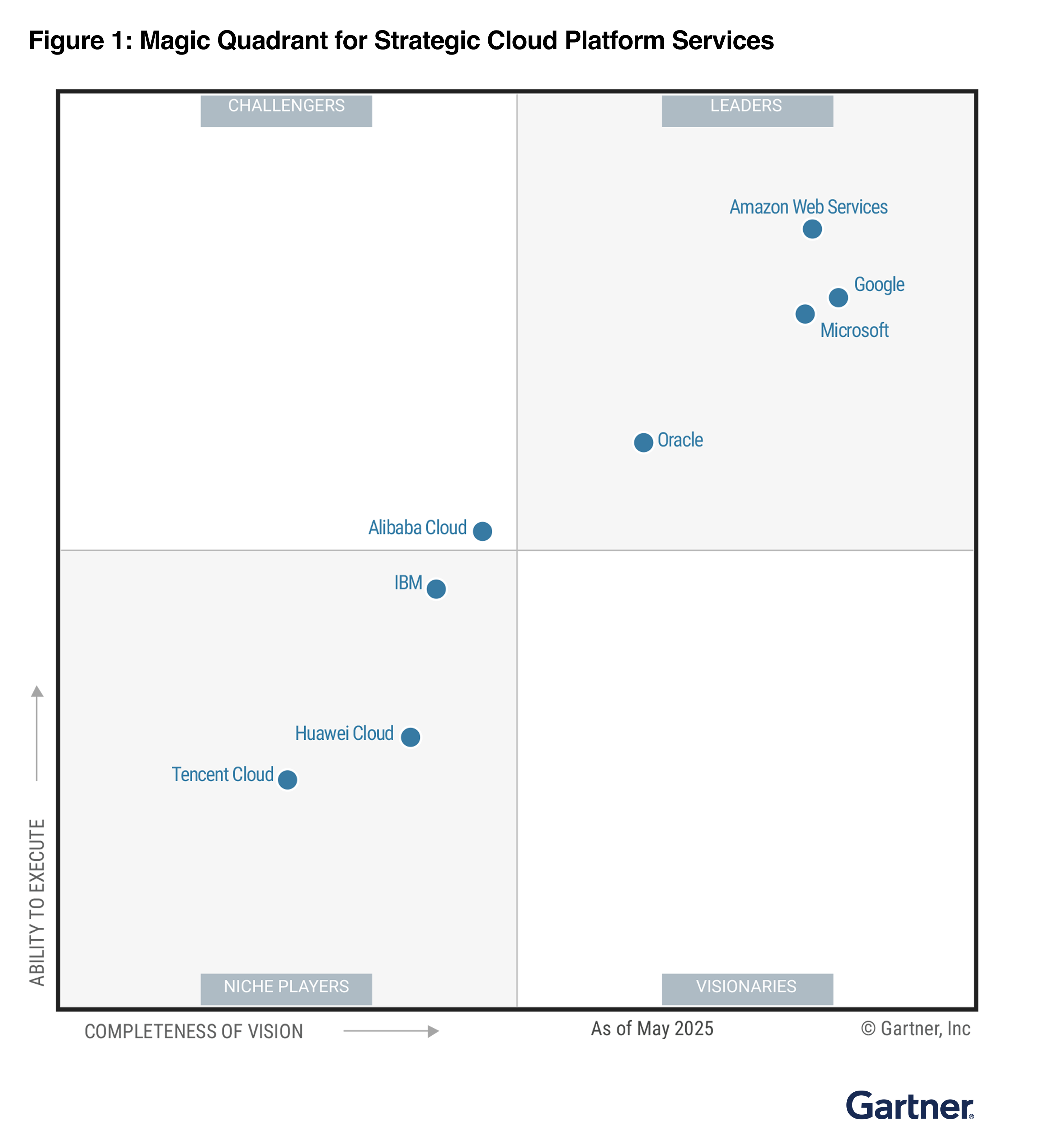
AWS named as a Leader in 2025 Gartner Magic Quadrant for Strategic Cloud Platform Services for 15 years in a row

Post Syndicated from Channy Yun (윤석찬) original https://aws.amazon.com/blogs/aws/aws-named-as-a-leader-in-2025-gartner-magic-quadrant-for-strategic-cloud-platform-services-for-15-years-in-a-row/

On August 4, 2025, Gartner published its Gartner Magic Quadrant for Strategic Cloud Platform Services (SCPS). Amazon Web Services (AWS) is the longest-running Magic Quadrant Leader, with Gartner naming AWS a Leader for the fifteenth consecutive year.

In the report, Gartner once again placed AWS highest on the “Ability to Execute” axis. We believe this reflects our ongoing commitment to giving customers the broadest and deepest set of capabilities to accelerate innovation as well as unparalleled security, reliability, and performance they can trust for their most critical applications.

Here is the graphical representation of the 2025 Magic Quadrant for Strategic Cloud Platform Services.

Gartner recognized AWS strengths as:

  • Largest cloud community – AWS has built a strong global community of cloud professionals, providing significant opportunities for learning and engagement.
  • Cloud-inspired silicon – AWS has used its cloud computing experience to develop custom silicon designs, including AWS Graviton, AWS Inferentia, and AWS Trainium, which enable tighter integration between hardware and software, improved power efficiency, and greater control over supply chains.
  • Global scale and operational execution – AWS’s significant share of global cloud market revenue has enabled it to build a larger and more robust network of integration partners than some other providers in this analysis, which in turn helps organizations successfully adopt cloud.

The most common feedback I hear from customers is that AWS has the largest and most dynamic cloud community, making it easy to ask questions and learn from millions of active customers and tens of thousands of partners globally. We recently launched our community hub, AWS Builder Center to connect directly with AWS Heroes and AWS Community Builders. You can also explore and join AWS User Groups and AWS Cloud Clubs in a city near you.

We have also focused on facilitating the digital transformation of enterprise customers through a number of enterprise programs, such as the AWS Migration Acceleration Program. Using generative AI on migration and modernization, we introduced AWS Transform, the first agentic AI service developed to accelerate enterprise modernization of mission-critical business workloads such as .NET, mainframe, and VMware.

Access the complete full Gartner report to learn more. It outlines the methodology and evaluation criteria used to develop their assessments of each cloud service provider included in the report. This report can serve as a guide when choosing a cloud provider that helps you innovate on behalf of your customers.

— Channy

Gartner does not endorse any vendor, product or service depicted in its research publications and does not advise technology users to select only those vendors with the highest ratings or other designation. Gartner research publications consist of the opinions of Gartner’s research organization and should not be construed as statements of fact. Gartner disclaims all warranties, expressed or implied, with respect to this research, including any warranties of merchantability or fitness for a particular purpose.

GARTNER is a registered trademark and service mark of Gartner and Magic Quadrant is a registered trademark of Gartner, Inc. and/or its affiliates in the U.S. and internationally and are used herein with permission. All rights reserved.

Meet our newest AWS Heroes — August 2025

Post Syndicated from Taylor Jacobsen original https://aws.amazon.com/blogs/aws/meet-our-newest-aws-heroes-august-2025/

We are excited to announce the latest cohort of AWS Heroes, recognized for their exceptional contributions and technical leadership. These passionate individuals represent diverse regions and technical specialties, demonstrating notable expertise and dedication to knowledge sharing within the AWS community. From AI and machine learning to serverless architectures and security, our new Heroes showcase the breadth of cloud innovation while fostering inclusive and engaging technical communities. Join us in welcoming these community leaders who are helping to shape the future of cloud computing and inspiring the next generation of AWS builders.

Kristine Armiyants – Masis, Armenia

Community Hero Kristine Armiyants is a software engineer and cloud support engineer who transitioned into technology from a background in finance, having earned an MBA before becoming self-taught in software development. As the founder and leader of AWS User Group Armenia for over 2.5 years, she has transformed the local tech landscape by organizing Armenia’s first AWS Community Day, scaling it from 320 to 440+ attendees, and leading a team that brings international-scale events to her country. Through her technical articles in Armenian, hands-on workshops, and “no-filter” blog series, she makes cloud knowledge more accessible while mentoring new user group organizers and early-career engineers. Her dedication to community building has resulted in five new AWS Community Builders from Armenia, demonstrating her commitment to creating inclusive spaces for learning and growth in the AWS community.

Nadia Reyhani – Perth, Australia

Machine Learning Hero Nadia Reyhani is an AI Product Engineer who integrates DevOps best practices with machine learning systems. She is a former AWS Community Builder and regularly presents at AWS events on building scalable AI solutions using Amazon SageMaker and Bedrock. As a Women in Digital Ambassador, she combines technical expertise with advocacy, creating inclusive spaces for underrepresented groups in cloud and AI technologies.

Raphael Manke – Karlsruhe, Germany

DevTools Hero Raphael Manke is a Senior Product Engineer at Dash0 and the creator of the unofficial AWS re:Invent planner, which is used to help build a schedule for the event. With a decade of AWS experience, he specializes in serverless technologies and DevTools that streamline cloud development. As the organizer of the AWS User Group in Karlsruhe and a former AWS Community Builder, he actively contributes to product enhancement through public speaking and direct collaboration with AWS service teams. His commitment to the AWS community spans from local user group leadership to providing valuable feedback to service teams.

Rowan Udell – Brisbane, Australia

Security Hero Rowan Udell is an independent AWS security consultant specializing in AWS Identity and Access Management (IAM). He has been sharing AWS security expertise for over a decade through books, blog posts, meet-ups, workshops, and conference presentations. Rowan has taken part in many AWS community programs, was an AWS Community Builder for four years, and is part of the AWS Community Day Australia Organizing Committee. A frequent speaker at AWS events including Sydney Summit and other community meetups, Rowan is known for transforming complex security concepts into simple, practical, and workable solutions for businesses securing their AWS environments.

Sangwoon (Chris) Park – Seoul, Korea

Serverless Hero Sangwoon (Chris) Park leads development at RECON Labs, an AI startup specializing in AI-driven 3D content generation. He is a former AWS Community Builder and the creator of “AWS Classroom” YouTube channel, and he shares practical serverless architecture knowledge with the AWS community. Chris hosts monthly AWS Classroom Meetups and the AWS KRUG Serverless Small Group, actively promoting serverless technologies through community events and educational content.

Toshal Khawale – Pune, India

Community Hero Toshal Khawale is an experienced technology leader with over 22 years of expertise in engineering and AWS cloud technology, holding 12 AWS certifications that demonstrate his cloud knowledge. As a Managing Director at PwC, Toshal guides organizations through cloud transformation, digital innovation, and application modernization initiatives, having led numerous large-scale AWS migrations and generative AI implementations. He was an AWS Community Builder for six years and continues to serve as the AWS User Group Pune Leader, actively fostering community engagement and knowledge sharing. Through his roles as a mentor, frequent speaker, and advocate, Toshal helps organizations maximize their AWS investments while staying at the forefront of cloud technology trends.

Learn More

Visit the AWS Heroes webpage if you’d like to learn more about the AWS Heroes program, or to connect with a Hero near you.

— Taylor

AWS Weekly Roundup: OpenAI models, Automated Reasoning checks, Amazon EVS, and more (August 11, 2025)

Post Syndicated from Veliswa Boya original https://aws.amazon.com/blogs/aws/aws-weekly-roundup-openai-models-automated-reasoning-checks-amazon-evs-and-more-august-11-2025/

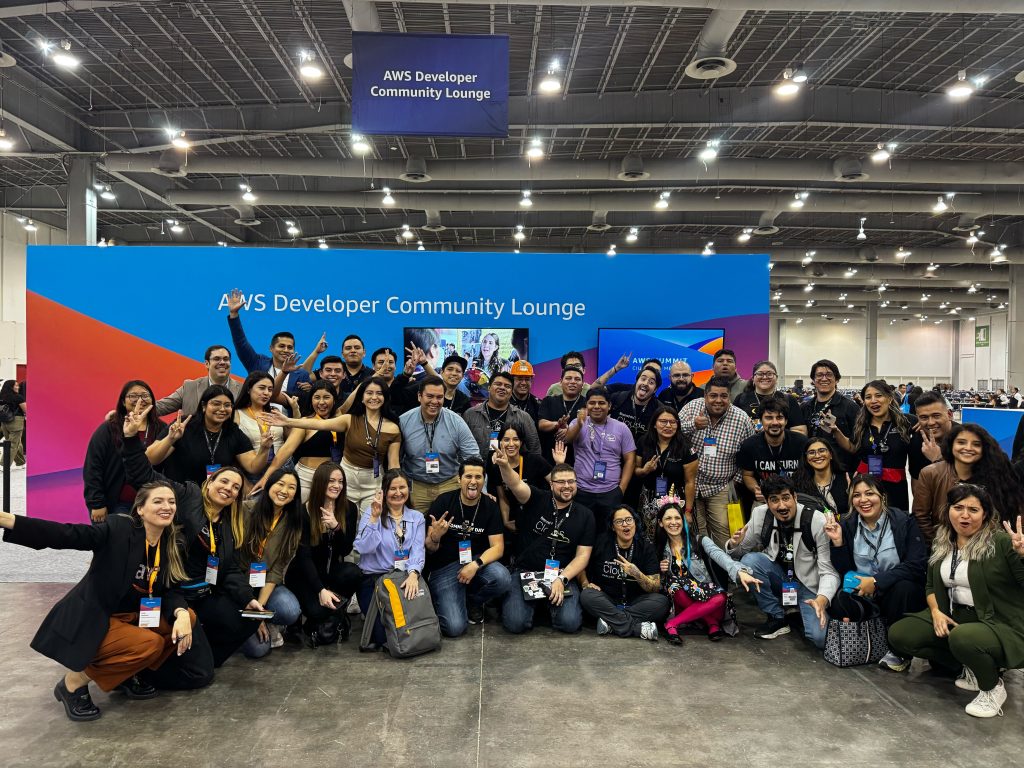
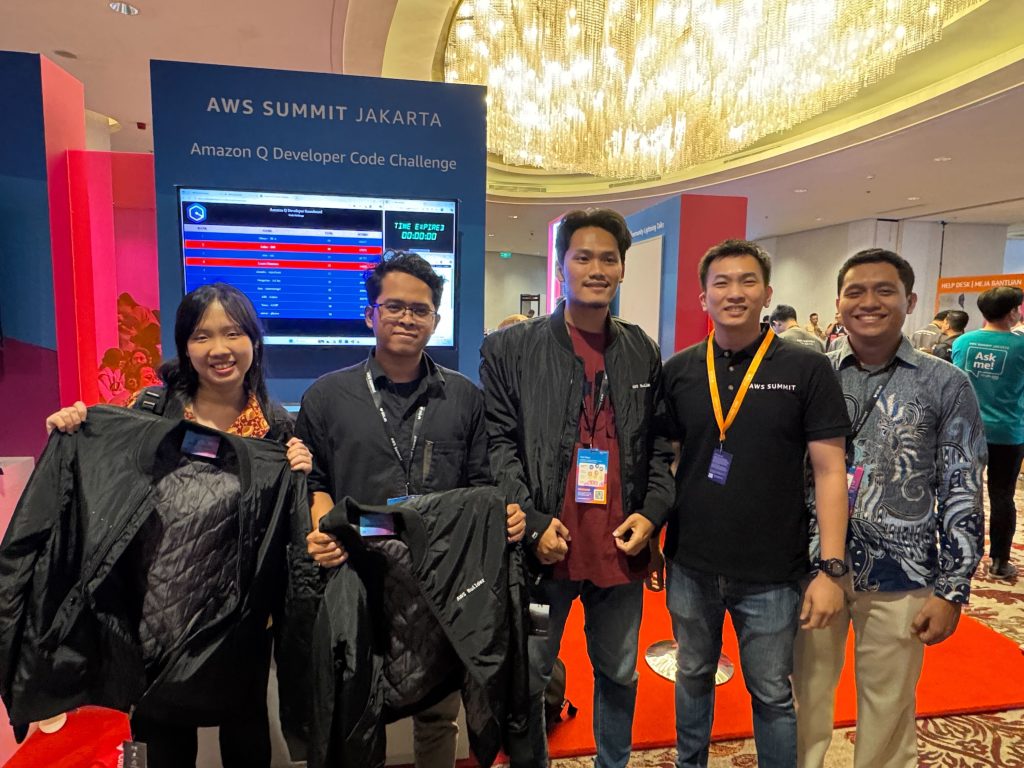
AWS Summits in the northern hemisphere have mostly concluded but the fun and learning hasn’t yet stopped for those of us in other parts of the globe. The community, customers, partners, and colleagues enjoyed a day of learning and networking last week at the AWS Summit Mexico City and the AWS Summit Jakarta.


Last week’s launches
These are the launches from last week that caught my attention:

  • OpenAI open weight models on AWS — OpenAI open weight models (gpt-oss-120b and gpt-oss-20b) are now available on AWS. These open weight models excel at coding, scientific analysis, and mathematical reasoning, with performance comparable to leading alternatives.
  • Amazon Elastic VMware Service — Amazon Elastic VMware Service (Amazon EVS), a new AWS service that lets you run VMware Cloud Foundation (VCF) environments directly within your Amazon Virtual Private Cloud (Amazon VPC), is now generally available.
  • Automated Reasoning checks — Automated Reasoning checks, a new Amazon Bedrock Guardrails policy that was previewed during AWS re:Invent, is now generally available. Automated Reasoning checks helps you validate the accuracy of content generated by foundation models (FMs) against a domain knowledge. Read more in Danilo’s post on how this can help prevent factual errors that can be caused by AI hallucinations.
  • Multi-Region application recovery service — In this post, Sébastien writes about the announcement of Amazon Application Recovery Controller (ARC) Region switch, a fully managed, highly available capability that enables organizations to plan, practice, and orchestrate Region switches with confidence, eliminating the uncertainty around cross-Region recovery operations.

Additional updates
I thought these projects, blog posts, and news items were also interesting:

Upcoming AWS events
Keep a look out and be sure to sign up for these upcoming events:

AWS re:Invent 2025 (December 1-5, 2025, Las Vegas) — AWS’s flagship annual conference offering collaborative innovation through peer-to-peer learning, expert-led discussions, and invaluable networking opportunities.

AWS Summits — Join free online and in-person events that bring the cloud computing community together to connect, collaborate, and learn about AWS. Coming up soon are the summits at São Paulo (August 13) and Johannesburg (August 20).

AWS Community Days — Join community-led conferences that feature technical discussions, workshops, and hands-on labs led by expert AWS users and industry leaders from around the world: Australia (August 15), Adria (September 5), Baltic (September 10), Aotearoa (September 18), and South Africa (September 20).

Join the AWS Builder Center to learn, build, and connect with builders in the AWS community. Browse here for upcoming in-person and virtual developer-focused events.

That’s all for this week. Check back next Monday for another Weekly Roundup!

– Veliswa.