Tag Archives: Compliance

Avoiding Smash and Grab Under the SEC’s Proposed Cyber Rule

Post Syndicated from Harley Geiger original https://blog.rapid7.com/2022/08/23/avoiding-smash-and-grab-under-the-secs-proposed-cyber-rule/

Avoiding Smash and Grab Under the SEC’s Proposed Cyber Rule

The SEC recently proposed a regulation to require all public companies to report cybersecurity incidents within four days of determining that the incident is material. While Rapid7 generally supports the proposed rule, we are concerned that the rule requires companies to publicly disclose a cyber incident before the incident has been contained or mitigated. This post explains why this is a problem and suggests a solution that still enables the SEC to drive companies toward disclosure.

(Terminology note: “Public companies” refers to companies that have stock traded on public US exchanges, and “material” means information that “there is a substantial likelihood that a reasonable shareholder would consider it important.” “Containment” aims to prevent a cyber incident from spreading. Containment is part of “mitigation,” which includes actions to reduce the severity of an event or the likelihood of a vulnerability being exploited, though may fall short of full remediation.)

In sum: The public disclosure of material cybersecurity incidents prior to containment or mitigation may cause greater harm to investors than a delay in public disclosure. We propose that the SEC provide an exemption to the proposed reporting requirements, enabling a company to delay public disclosure of an uncontained or unmitigated incident if certain conditions are met. Additionally, we explain why we believe other proposed solutions may not meet the SEC’s goals of transparency and avoidance of harm to investors.

Distinguished by default public disclosure

The purpose of the SEC’s proposed rule is to help enable investors to make informed investment decisions. This is a reflection of the growing importance of cybersecurity to corporate governance, risk assessment, and other key factors that stockholders weigh when investing. With the exception of reporting unmitigated incidents, Rapid7 largely supports this perspective.

The SEC’s proposed rule would (among other things) require companies to disclose material cyber incidents on Form 8-K, which are publicly available via the EDGAR system. Crucially, the SEC’s proposed rule makes no distinction between public disclosure of incidents that are contained or mitigated and incidents that are not yet contained or mitigated. While the public-by-default nature of the disclosure creates new problems, it also aligns with the SEC’s purpose in proposing the rule.

In contrast to the SEC’s proposed rule, the purpose of most other incident reporting regulations is to strengthen cybersecurity – a top global policy priority. As such, most other cyber incident reporting regulators (such as CISA, NERC, FDIC, Fed. Reserve, OCC, NYDFS, etc.) do not typically make incident reports public in a way that identifies the affected organization. In fact, some regulations (such as CIRCIA and the 2021 TSA pipeline security directive) classify company incident reports as sensitive information exempt from FOIA.

Beyond regulations, established cyber incident response protocol is to avoid tipping off an attacker until the incident is contained and the risk of further damage has been mitigated. See, for example, CISA’s Incident Response Playbook (especially sections on opsec) and NIST’s Computer Security Incident Handling Guide (especially Section 2.3.4). For similar reasons, it is commonly the goal of coordinated vulnerability disclosure practices to avoid, when possible, public disclosure of a vulnerability until the vulnerability has been mitigated. See, for example, the CERT Guide to Coordinated Disclosure.

While it may be reasonable to require disclosure of a contained or mitigated incident within four days of determining its materiality, a strict requirement for public disclosure of an unmitigated or ongoing incident is likely to expose companies and investors to additional danger. Investors are not the only group that may act on a cyber incident report, and such information may be misused.

Smash and grab harms investors and misprices securities

Cybercriminals often aim to embed themselves in corporate networks without the company knowing. Maintaining a low profile lets attackers steal data over time, quietly moving laterally across networks, steadily gaining greater access – sometimes over a period of years. But when the cover is blown and the company knows about its attacker? Forget secrecy, it’s smash and grab time.

Public disclosure of an unmitigated or uncontained cyber incident will likely lead to attacker behaviors that cause additional harm to investors. Note that such acts would be in reaction to the public disclosure of an unmitigated incident, and not a natural result of the original attack. For example:

  • Smash and grab: A discovered attacker may forgo stealth and accelerate data theft or extortion activities, causing more harm to the company (and therefore its investors). Consider this passage from the MS-ISAC’s 2020 Ransomware Guide: “Be sure [to] avoid tipping off actors that they have been discovered and that mitigation actions are being undertaken. Not doing so could cause actors to move laterally to preserve their access [or] deploy ransomware widely prior to networks being taken offline.”
  • Scorched earth: A discovered attacker may engage in anti-forensic activity (such as deleting logs), hindering post-incident investigations and intelligence sharing that could prevent future attacks that harm investors. From CISA’s Playbook: “Some adversaries may actively monitor defensive response measures and shift their methods to evade detection and containment.”
  • Pile-on: Announcing that a company has an incident may cause other attackers to probe the company and discover the vulnerability or attack vector from the original incident. If the incident is not yet mitigated, the copycat attackers can cause further harm to the company (and therefore its investors). From the CERT Guide to CVD: “​​Mere knowledge of a vulnerability’s existence in a feature of some product is sufficient for a skillful person to discover it for themselves. Rumor of a vulnerability draws attention from knowledgeable people with vulnerability finding skills — and there’s no guarantee that all those people will have users’ best interests in mind.”
  • Supply chain: Public disclosure of an unmitigated cybersecurity incident may alert attackers to a vulnerability that is present in other companies, the exploitation of which can harm investors in those other companies. Publicly disclosing “the nature and scope” of material incidents within four business days risks exposing enough detail of an otherwise unique zero-day to encourage rediscovery and reimplementation by other criminal and espionage groups against other organizations. For example, fewer than 100 organizations were actually exploited through the Solarwinds supply chain attack, but up to 18,000 organizations were at risk.

In addition, requiring public disclosure of uncontained or unmitigated cyber incidents may result in mispricing the stock of the affected company. By contradicting best practices for cyber incident response and inviting new attacks, the premature public disclosure of an uncontained or unmitigated incident may provide investors with an inaccurate measure of the company’s true ability to respond to cybersecurity incidents. Moreover, a premature disclosure during the incident response process may result in investors receiving inaccurate information about the scope or impact of the incident.

Rapid7 is not opposed to public disclosure of unmitigated vulnerabilities or incidents in all circumstances, and our security researchers publicly disclose vulnerabilities when necessary. However, public disclosure of unmitigated vulnerabilities typically occurs after failure to mitigate (such as due to inability to engage the affected organization), or when users should take defensive measures before mitigation because ongoing exploitation of the vulnerability “in the wild” is actively harming users. By contrast, the SEC’s proposed rule would rely on a public disclosure requirement on a restrictive timeline in nearly all cases, creating the risk of additional harm to investors that can outweigh the benefits of public disclosure.

Proposed solution

Below, we suggest a solution that we believe achieves the SEC’s ultimate goal of investor protection by requiring timely disclosure of cyber incidents and simultaneously avoiding the unnecessary additional harm to investors that may result with premature public disclosure.

Specifically, we suggest that the proposed rule remains largely the same — i.e., the SEC continues to require that companies determine whether the incident is material as soon as practicable after discovery of the cyber incident, and file a report on Form 8-K four days after the materiality determination under normal circumstances. However, we propose that the rule be revised to also provide companies with a temporary exemption from public disclosure if each of the below conditions are met:

  • The incident is not yet contained or otherwise mitigated to prevent additional harm to the company and its investors;
  • The company reasonably believes that public disclosure of the uncontained or unmitigated incident may cause substantial additional harm to the company, its investors, or other public companies or their investors;
  • The company reasonably believes the incident can be contained or mitigated in a timely manner; and
  • The company is actively engaged in containing or mitigating the incident in a timely manner.

The determination of the applicability of the aforementioned exception may be made simultaneously to the determination of materiality. If the exception applies, the company may delay public disclosure until such time that any of the conditions are no longer occurring, at which point, they must publicly disclose the cyber incident via Form 8-K, no later than four days after the date on which the exemption is no longer applicable. The 8-K disclosure could note that, prior to filing the 8-K, the company relied on the exemption from disclosure. Existing insider trading restrictions would, of course, continue to apply during the public disclosure delay.

If an open-ended delay in public disclosure for containment or mitigation is unacceptable to the SEC, then we suggest that the exemption only be available for 30 days after the determination of materiality. In our experience, the vast majority of incidents can be contained and mitigated within that time frame. However, cybersecurity incidents can vary greatly, and there may nonetheless be rare outliers where the mitigation process exceeds 30 days.

Drawbacks of other solutions

Rapid7 is aware of other solutions being floated to address the problem of public disclosure of unmitigated cyber incidents. However, these carry drawbacks that do not align with the purpose of the SEC rule or potentially don’t make sense for cybersecurity. For example:

  • AG delay: The SEC’s proposed rule considers allowing a delay in reporting the incident when the Attorney General (AG) determines the delay is in the interest of national security. This is an appropriate delay, but insufficient on its own. This AG delay would apply to a very small fraction of major cyber incidents and not prevent the potential harms described above in the vast majority of cases.
  • Law enforcement delay: The SEC’s proposed rule considers, and then rejects, a delay when incident reporting would hinder a law enforcement investigation. We believe this too would be an appropriate delay, to ensure law enforcement can help prevent future cyber incidents that would harm investors. However, it is unclear if this delay would be triggered in many cases. First, the SEC’s proposed timeframe (four days after concluding the incident is material) poses a tight turnaround for law enforcement to start a new investigation or add to an existing investigation, determine how disclosure might impact the investigation, and then request delay from the SEC. Second, law enforcement agencies already have investigations opened against many cybercriminal groups, so public disclosure of another incident may not make a significant difference in the investigation, even if public disclosure of the incident would cause harm. Although a law enforcement delay would be used more than the AG delay, we still anticipate it would apply to only a fraction of incidents.
  • Vague disclosures: Another potential solution is to continue to require public companies to disclose unmitigated cyber incidents on the proposed timeline, but to allow the disclosures to be so vague that it is unclear whether the incident has been mitigated. Yet an attacker embedded in a company network is unlikely to be fooled by a vague incident report from the same company, and even a vague report could encourage new attackers to try to get a foothold in. In addition, very vague disclosures are unlikely to be useful for investor decision-making.
  • Materiality after mitigation: Another potential solution is to require a materiality determination only after the incident has been mitigated. However, this risks unnecessary delays in mitigation to avoid triggering the deadline for disclosure, even for incidents that could be mitigated within the SEC’s proposed timeline. Although containment or mitigation of an incident is important prior to public disclosure of the incident, completion of mitigation is not necessarily a prerequisite to determining the seriousness (i.e., materiality) of an incident.

Balancing risks and benefits of transparency

The SEC has an extensive list of material information that it requires companies to disclose publicly on 8-Ks – everything from bankruptcies to mine safety. However, public disclosure of any of these other items is not likely to prompt new criminal actions that bring additional harm to investors. Public disclosure of unmitigated cyber incidents poses unique risks compared with other disclosures and should be considered in that light.

The SEC has long been among the most forward-looking regulators on cybersecurity issues. We thank them for the acknowledgement of the significance of cybersecurity to corporate management, and for taking the time to listen to feedback from the community. Rapid7’s feedback is that we agree on the usefulness of disclosure of material cybersecurity incidents, but we encourage SEC to ensure its public reporting requirement avoids undermining its own goals and providing more opportunities for attackers.

NEVER MISS A BLOG

Get the latest stories, expertise, and news about security today.

Additional reading:

AWS CyberVadis report now available for due diligence on third-party suppliers

Post Syndicated from Andreas Terwellen original https://aws.amazon.com/blogs/security/aws-cybervadis-report-now-available-for-due-diligence-on-third-party-suppliers/

At Amazon Web Services (AWS), we’re continuously expanding our compliance programs to provide you with more tools and resources to perform effective due diligence on AWS. We’re excited to announce the availability of the AWS CyberVadis report to help you reduce the burden of performing due diligence on your third-party suppliers.

With the increase in adoption of cloud products and services across multiple sectors and industries, AWS is a critical component of customers’ third-party environments. Regulated customers, such as those in the financial services sector, are held to high standards by regulators and auditors when it comes to exercising effective due diligence on third parties.

Many customers use third-party cyber risk management (TPCRM) services such as CyberVadis to better manage risks from their evolving third-party environments and to drive operational efficiencies. To help with such efforts, AWS has completed the CyberVadis assessment of its security posture. CyberVadis security analysts perform the assessment and validate the results annually.

CyberVadis is a comprehensive third-party risk assessment process that combines the speed and scalability of automation with the certainty of analyst validation. The CyberVadis cybersecurity rating methodology assesses the maturity of a company’s information security management system (ISMS) through its policies, implementation measures, and results.

CyberVadis integrates responses from AWS with analytics and risk models to provide an in-depth view of the AWS security posture. The CyberVadis methodology maps to major international compliance standards, including the following:

Customers can download the AWS CyberVadis report at no additional cost. For details on how to access the report, see our AWS CyberVadis report page.

As always, we value your feedback and questions. Reach out to the AWS Compliance team through the Contact Us page. If you have feedback about this post, submit comments in the Comments section below. To learn more about our other compliance and security programs, see AWS Compliance Programs.

Want more AWS Security news? Follow us on Twitter.

Andreas Terwellen

Andreas Terwellen

Andreas is a senior manager in security audit assurance at AWS, based in Frankfurt, Germany. His team is responsible for third-party and customer audits, attestations, certifications, and assessments across Europe. Previously, he was a CISO in a DAX-listed telecommunications company in Germany. He also worked for different consulting companies managing large teams and programs across multiple industries and sectors.

Manuel Mazarredo

Manuel Mazarredo

Manuel is a security audit program manager at AWS based in Amsterdam, the Netherlands. Manuel leads security audits, attestations, and certification programs across Europe, and is responsible for the BeNeLux area. For the past 18 years, he has worked in information systems audits, ethical hacking, project management, quality assurance, and vendor management across a variety of industries.

Navigating the Evolving Patchwork of Incident Reporting Requirements

Post Syndicated from Peter Woolverton original https://blog.rapid7.com/2022/08/10/navigating-the-evolving-patchwork-of-incident-reporting-requirements/

Navigating the Evolving Patchwork of Incident Reporting Requirements

In March 2022, President Biden signed into law the Cyber Incident Reporting for Critical Infrastructure Act (CIRCIA), a bipartisan initiative that empowers CISA to require cyber incident reporting from critical infrastructure owners and operators. Rapid7 is supportive of CIRCIA and cyber incident reporting in general, but we also encourage regulators to ensure reporting rules are streamlined and do not impose unnecessary burdens on companies that are actively recovering from cyber intrusions.

Although a landmark legislative change, CIRCIA is just one highly visible example of a broader trend. Incident reporting has emerged as a predominant cybersecurity regulatory strategy across government. Numerous federal and state agencies are implementing their own cyber incident reporting requirements under their respective rulemaking authorities – such as SEC, FTC, the Federal Reserve, OCC, NCUA, NERC, TSA, NYDFS, and others. Several such rules are already in force in US law, with at least three more likely to become effective within the next year.

The trend is not limited to the US. Several international governing bodies have proposed similar cyber incident reporting rules, such as the European Union’s (EU) NIS-2 Directive.

Raising the bar for security transparency through incident reporting is a productive step in a positive direction. Incident reporting requirements can help the government to manage sectoral risk, encourage a higher level of private-sector cyber hygiene, and enhance intrusion remediation and prevention capabilities. But the rapid embrace of this new legal paradigm may have created too much of a good thing, with the emerging regulatory environment risks becoming unmanageable.

Current state

Cyber incident reporting rules that enforce overlapping or contradictory requirements can impose undue compliance burdens on organizations that are actively responding to cyberattacks. To illustrate the problem, consider the potential experience of a hypothetical company – let’s call it Energy1. Energy1 is a US-based, publicly traded utility company that owns and operates energy generation plants, electrical transmission systems, and natural gas distribution lines. If Energy1 experiences a significant cyber attack, it may be required to submit the following reports:

  • Within one hour, provide to NERC – under NERC CIP rules – a report with preliminary details about the incident and its functional impact on operations.
  • Within 24 hours, provide to TSA – under the pipeline security directive – a report with a complete description of the incident, its functional impact on business operations, and the details of remediation steps.
  • Within 72 hours, provide to CISA – under CIRCIA – a complete description of the incident, details of remediation steps, and threat intelligence information that may identify the perpetrator.
  • Within 96 hours, provide to SEC – under the SEC’s proposed rule – a complete description of the incident and its impact, including whether customer data was compromised.

In our hypothetical scenario, Energy1 may need to rapidly compile the necessary information to comply with each different reporting rule or statute, all while balancing the urgent need to remediate and recover from a cyber intrusion. Furthermore, if Energy1 operates in non-US markets as well, it may be subject to several more reporting requirements, such as those proposed under the draft NIS-2 Directive in the EU or the CERT-IN rule in India. Many of these regulations would also require subsequent status updates after the initial report.

The example above demonstrates the complexity of the emerging patchwork of incident reporting requirements. Legal compliance in this new environment creates a number of challenges for the private sector and the government. For example:

  • Redundant requirements: Unnecessarily duplicative compliance requirements imposed in the wake of a cyber incident can draw critical resources away from incident remediation, potentially leading to lower-quality data submitted in the reports.
  • Public vs. private disclosure: Most reports are held privately by regulators, but the SEC’s proposed rule would require companies to file public reports within 96 hours of determining that an incident is significant. Public disclosure before the incident is contained or mitigated may expose the affected company to further risk of cyberattack. In addition, premature public reporting of incidents prior to mitigation may not provide an accurate reflection of the affected company’s cyber incident response capabilities.
  • Inconsistent requirements: The definition of what is reportable is not consistent across agency rules. For example, the SEC requires reporting of cyber incidents that are “material” to a reasonable investor, whereas NERC requires reporting of almost any cyber incident, including failed “attempts” at cyber intrusion. The lack of a uniform definition of reportability adds another layer of complexity to the compliance process.
  • Process inconsistencies: As demonstrated in the Energy1 example, all incident reporting rules and proposed rules have different deadlines. In addition, each rule and proposed rule has different required reporting formats and methods of submission. These process inconsistencies add friction to the compliance process.

Recommendations

The key issues outlined above may be addressed by the Cyber Incident Reporting Council (CIRC), an interagency working group led by the Department of Homeland Security (DHS). This Council was established under CIRCIA and is tasked with harmonizing existing incident reporting requirements into a more unified regulatory regime. A readout of the Council’s first meeting, convened on July 25, stated CIRC’s intent to “reduce [the] burden on industry by advancing common standards for incident reporting.”

In addition to DHS, CIRC includes representatives from across government, including from the Departments of Justice, Commerce, Treasury, and Energy among others. It is not yet clear from the Council’s initial meeting how exactly CIRC will reshape cyber incident reporting regulations, or whether such changes will be achievable through executive action or whether new legislation will be needed. The Council will release a report with recommendations by the end of 2022.

Rapid7 urges CIRC to consider several harmonization strategies intended to streamline compliance while maintaining the benefits of cyber incident reporting, such as:

  • Unified process: When practically possible, develop a single intake point for all incident reporting submissions with a universal format accepted by multiple agencies. This would help eliminate the need for organizations to submit several reports to different agencies with different formats and on different timetables.
  • Deconflicted requirements: Agree on a more unified definition of what constitutes a reportable cyber incident, and build toward more consistent reporting requirements that satisfy the needs of multiple agency rules.
  • Public disclosure delay: Releasing incident reports publicly before affected organizations have time to contain the breach may put the security of the company and its customers at unnecessary risk. Requirements that involve public disclosure, such as proposed rules from the SEC and FTC, should consider delaying and coordinating disclosure timing with the affected company.

Some agencies in the Federal government are already designing incident reporting rules with harmonization in mind. The Federal Reserve, FDIC, and OCC, rather than building out three separate rules for each agency, designed a single universal incident reporting requirement for all three agencies. The rule requires only one report be submitted to whichever of the three agencies is the affected company’s “primary regulator.” The sharing of reports between agencies is handled internally, removing from companies the burden of submitting multiple reports to multiple agencies. Rapid7 supports this approach and would encourage the CIRC to pursue a similarly streamlined strategy in its harmonization efforts where possible.

Striking the right balance

Rapid7 supports the growing adoption of cyber incident reporting. Greater cybersecurity transparency between government and industry can deliver considerable benefits. However, unnecessarily overlapping or contradictory reporting requirements may cause harm by detracting from the critical work of incident response and recovery. We encourage regulators to streamline and simplify the process in order to capture the full benefits of incident reporting without exposing organizations to unnecessary burden or risk in the process.

Additional reading:

NEVER MISS A BLOG

Get the latest stories, expertise, and news about security today.

Spring 2022 PCI DSS report available with seven services added to compliance scope

Post Syndicated from Michael Oyeniya original https://aws.amazon.com/blogs/security/spring-2022-pci-dss-report-available-with-seven-services-added-to-compliance-scope/

We’re continuing to expand the scope of our assurance programs at Amazon Web Services (AWS) and are pleased to announce that seven new services have been added to the scope of our Payment Card Industry Data Security Standard (PCI DSS) certification. This provides our customers with more options to process and store their payment card data and architect their cardholder data environment (CDE) securely in AWS.

You can see the full list of services on our Services in Scope by Compliance program page. The seven new services are:

We were evaluated by Coalfire, a third-party Qualified Security Assessor (QSA). Customers can access the Attestation of Compliance (AOC) report demonstrating AWS’ PCI compliance status through AWS Artifact.

To learn more about our PCI program and other compliance and security programs, see the AWS Compliance Programs page. As always, we value your feedback and questions; reach out to the AWS Compliance team through the Contact Us page.

 
If you have feedback about this post, submit comments in the Comments section below. If you have questions about this post, contact AWS Support.

Want more AWS Security news? Follow us on Twitter.

Author

Michael Oyeniya

Michael is a Compliance Program Manager at AWS on the Global Audits team, managing the PCI compliance program. He holds a Master’s degree in management and has over 18 years of experience in information technology security risk and control.

ISO 27002 Emphasizes Need For Threat Intelligence

Post Syndicated from Drew Burton original https://blog.rapid7.com/2022/07/25/iso-27002-emphasizes-need-for-threat-intelligence/

ISO 27002 Emphasizes Need For Threat Intelligence

With employees reluctant to return to the office following the COVID-19 pandemic, the concept of a well-defined network perimeter has become a thing of the past for many organizations. Attack surfaces continue to expand, and as a result, threat intelligence has taken on even greater importance.

Earlier this year, the International Organization for Standardization (ISO) released ISO 27002, which features a dedicated threat intelligence control (Control 5.7). This control is aimed at helping organizations collect and analyze threat intelligence data more effectively. It also provides guidelines for creating policies that limit the impact of threats. In short, ISO 27002’s Control 5.7 encourages a proactive approach to threat intelligence.

Control 5.7 specifies that threat intelligence must be “relevant, perceptive, contextual, and actionable” in order to be effective. It also recommends that organizations consider threat intelligence on three levels: strategic, operational, and tactical.

  • Strategic threat intelligence is defined as high-level information about the evolving threat landscape (information about threat actors, types of attacks, etc.)
  • Operational threat intelligence is information about the tactics, tools, and procedures (TTPs) used by attackers.
  • Tactical threat intelligence includes detailed information on particular attacks, including technical indicators.

ISO 27002 is intended to be used with ISO 27001, which provides guidance for establishing and maintaining information security management systems. Many organizations use ISO 27001 and 27002 in conjunction as a framework for showing compliance with regulations where detailed requirements are not provided, for example Sarbanes-Oxley Act (SOX) in the US and the Data Protection Directive in the EU.

How Rapid7 can help

In addition to our threat intelligence and digital risk protection solution Threat Command, there are several Rapid7 products and services that can help you address a variety of controls recommended in ISO 27002.

InsightVM identifies and classifies assets, audits password policies, and identifies and prioritizes vulnerabilities. Metasploit can be used to validate vulnerability exploitability, audit the effectiveness of network segmentation, and conduct technical compliance tests. InsightAppSec tests the security of web applications. InsightIDR monitors user access to the network, collects and analyzes events, and assists in incident response.

Additionally, Rapid7 can provide security consulting services, perform an assessment of your organization’s current state of controls against the ISO 27002 framework, and identify gaps in your security program. We can also develop and review security policies, conduct penetration tests, respond to security incidents, and more.

Addressing ISO 27002 Control 5.7

A dedicated threat intelligence and digital risk protection solution like Rapid7 Threat Command can greatly ease the process of addressing Control 5.7.

Threat Command is designed to simplify the collection and analysis of threat intelligence data — from detection to remediation. It proactively monitors thousands of sources across the clear, deep, and dark web and delivers tailored threat intelligence information specific to your organization. Even better, Threat Command helps reduce the information overload with comprehensive external threat protection from a single pane of glass.

Threat Command enables you to make informed decisions, rapidly detect and mitigate threats,  and minimize exposure to your organization. Simply input your digital assets and properties, and you’ll receive relevant alerts categorized by severity, type of threat, and source. Fast detection and integration with SIEM, SOAR, EDR, and firewall allow you to quickly turn threat intelligence into action.

To learn more about how Threat Command fits into your organization’s security strategy, schedule a demo today.

Additional reading:

NEVER MISS A BLOG

Get the latest stories, expertise, and news about security today.

AWS achieves TISAX certification (Information with Very High Protection Needs (AL3)

Post Syndicated from Janice Leung original https://aws.amazon.com/blogs/security/aws-achieves-tisax-certification-information-with-very-high-protection-needs-al3/

We’re excited to announce the completion of the Trusted Information Security Assessment Exchange (TISAX) certification on June 30, 2022 for 19 AWS Regions. These Regions achieved the Information with Very High Protection Needs (AL3) label for the control domains Information Handling and Data Protection. This alignment with TISAX requirements demonstrates our continued commitment to adhere to the heightened expectations for cloud service providers. AWS automotive customers can run their applications in the AWS Cloud certified Regions in confidence.

The following 19 Regions are currently TISAX certified:

  • US East (Ohio)
  • US East (Northern Virginia)
  • US West (Oregon)
  • Africa (Cape Town)
  • Asia Pacific (Hong Kong)
  • Asia Pacific (Mumbai)
  • Asia Pacific (Osaka)
  • Asia Pacific (Korea)
  • Asia Pacific (Singapore)
  • Asia Pacific (Sydney)
  • Asia Pacific (Tokyo)
  • Canada (Central)
  • Europe (Frankfurt)
  • Europe (Ireland)
  • Europe (London)
  • Europe (Milan)
  • Europe (Paris)
  • Europe (Stockholm)
  • South America (Sao Paulo)

TISAX is a European automotive industry-standard information security assessment (ISA) catalog based on key aspects of information security, such as data protection and connection to third parties.

AWS was evaluated and certified by independent third-party auditors on June 30, 2022. The Certificate of Compliance demonstrating the AWS compliance status is available on the European Network Exchange (ENX) Portal (the scope ID and assessment ID are SM22TH and AYA2D4-1, respectively) and through AWS Artifact. AWS Artifact is a self-service portal for on-demand access to AWS compliance reports. Sign in to AWS Artifact in the AWS Management Console, or learn more at Getting Started with AWS Artifact.

For up-to-date information, including when additional Regions are added, see the AWS Compliance Program, and choose TISAX.

AWS strives to continuously bring services into scope of its compliance programs to help you meet your architectural and regulatory needs. Please reach out to your AWS account team if you have questions or feedback about TISAX compliance.

To learn more about our compliance and security programs, see AWS Compliance Programs. As always, we value your feedback and questions; reach out to the AWS Compliance team through the Contact Us page.

If you have feedback about this post, submit comments in the Comments section below.

Want more AWS Security how-to content, news, and feature announcements? Follow us on Twitter.

Author

Janice Leung

Janice is a security audit program manager at AWS, based in New York. She leads security audits across Europe and has previously worked in security assurance and technology risk management in the financial industry for 10 years.

AWS achieves HDS certification to three additional Regions

Post Syndicated from Janice Leung original https://aws.amazon.com/blogs/security/aws-achieves-hds-certification-to-three-additional-regions/

We’re excited to announce that three additional AWS Regions—Asia Pacific (Korea), Europe (London), and Europe (Stockholm)—have been granted the Health Data Hosting (Hébergeur de Données de Santé, HDS) certification. This alignment with the HDS requirements demonstrates our continued commitment to adhere to the heightened expectations for cloud service providers. AWS customers who handle personal health data can be hosted in the AWS Cloud certified Regions with confidence.

The following 16 Regions are now in scope of this certification:

  • US East (Ohio)
  • US East (Northern Virginia)
  • US West (Northern California)
  • US West (Oregon)
  • Asia Pacific (Mumbai)
  • Asia Pacific (Korea)
  • Asia Pacific (Singapore)
  • Asia Pacific (Sydney)
  • Asia Pacific (Tokyo)
  • Canada (Central)
  • Europe (Frankfurt)
  • Europe (Ireland)
  • Europe (London)
  • Europe (Paris)
  • Europe (Stockholm)
  • South America (Sao Paulo)

Introduced by the French governmental agency for health, Agence Française de la Santé Numérique (ASIP Santé), HDS certification aims to strengthen the security and protection of personal health data. Achieving this certification demonstrates that AWS provides a framework for technical and governance measures to secure and protect personal health data, governed by French law.

AWS was evaluated and certified by independent third-party auditors on June 30, 2022. The Certificate of Compliance demonstrating the AWS compliance status is available on the Agence du Numérique en Santé (ANS) website and through AWS Artifact. AWS Artifact is a self-service portal for on-demand access to AWS compliance reports. Sign in to AWS Artifact in the AWS Management Console, or learn more at Getting Started with AWS Artifact.

For up-to-date information, including when additional Regions are added, see the AWS Compliance Program, and choose HDS.

AWS strives to continuously bring services into scope of its compliance programs to help you meet your architectural and regulatory needs. Please reach out to your AWS account team if you have questions or feedback about HDS compliance.

To learn more about our compliance and security programs, see AWS Compliance Programs. As always, we value your feedback and questions; reach out to the AWS Compliance team through the Contact Us page.

If you have feedback about this post, submit comments in the Comments section below.

Want more AWS Security how-to content, news, and feature announcements? Follow us on Twitter.

Author

Janice Leung

Janice is a security audit program manager at AWS, based in New York. She leads security audits across Europe and has previously worked in security assurance and technology risk management in the financial industry for 10 years.

Manage application security and compliance with the AWS Cloud Development Kit and cdk-nag

Post Syndicated from Rodney Bozo original https://aws.amazon.com/blogs/devops/manage-application-security-and-compliance-with-the-aws-cloud-development-kit-and-cdk-nag/

Infrastructure as Code (IaC) is an important part of Cloud Applications. Developers rely on various Static Application Security Testing (SAST) tools to identify security/compliance issues and mitigate these issues early on, before releasing their applications to production. Additionally, SAST tools often provide reporting mechanisms that can help developers verify compliance during security reviews.

cdk-nag integrates directly into AWS Cloud Development Kit (AWS CDK) applications to provide identification and reporting mechanisms similar to SAST tooling.

This post demonstrates how to integrate cdk-nag into an AWS CDK application to provide continual feedback and help align your applications with best practices.

Overview of cdk-nag

cdk-nag (inspired by cfn_nag) validates that the state of constructs within a given scope comply with a given set of rules. Additionally, cdk-nag provides a rule suppression and compliance reporting system. cdk-nag validates constructs by extending AWS CDK Aspects. If you’re interested in learning more about the AWS CDK Aspect system, then you should check out this post.

cdk-nag includes several rule sets (NagPacks) to validate your application against. As of this post, cdk-nag includes the AWS Solutions, HIPAA Security, NIST 800-53 rev 4, NIST 800-53 rev 5, and PCI DSS 3.2.1 NagPacks. You can pick and choose different NagPacks and apply as many as you wish to a given scope.

cdk-nag rules can either be warnings or errors. Both warnings and errors will be displayed in the console and compliance reports. Only unsuppressed errors will prevent applications from deploying with the cdk deploy command.

You can see which rules are implemented in each of the NagPacks in the Rules Documentation in the GitHub repository.

Walkthrough

This walkthrough will setup a minimal AWS CDK v2 application, as well as demonstrate how to apply a NagPack to the application, how to suppress rules, and how to view a report of the findings. Although cdk-nag has support for Python, TypeScript, Java, and .NET AWS CDK applications, we’ll use TypeScript for this walkthrough.

Prerequisites

For this walkthrough, you should have the following prerequisites:

  • A local installation of and experience using the AWS CDK.

Create a baseline AWS CDK application

In this section you will create and synthesize a small AWS CDK v2 application with an Amazon Simple Storage Service (Amazon S3) bucket. If you are unfamiliar with using the AWS CDK, then learn how to install and setup the AWS CDK by looking at their open source GitHub repository.

  1. Run the following commands to create the AWS CDK application:
mkdir CdkTest
cd CdkTest
cdk init app --language typescript
  1. Replace the contents of the lib/cdk_test-stack.ts with the following:
import { Stack, StackProps } from 'aws-cdk-lib';
import { Construct } from 'constructs';
import { Bucket } from 'aws-cdk-lib/aws-s3';

export class CdkTestStack extends Stack {
  constructor(scope: Construct, id: string, props?: StackProps) {
    super(scope, id, props);
    const bucket = new Bucket(this, 'Bucket')
  }
}
  1. Run the following commands to install dependencies and synthesize our sample app:
npm install
npx cdk synth

You should see an AWS CloudFormation template with an S3 bucket both in your terminal and in cdk.out/CdkTestStack.template.json.

Apply a NagPack in your application

In this section, you’ll install cdk-nag, include the AwsSolutions NagPack in your application, and view the results.

  1. Run the following command to install cdk-nag:
npm install cdk-nag
  1. Replace the contents of the bin/cdk_test.ts with the following:
#!/usr/bin/env node
import 'source-map-support/register';
import * as cdk from 'aws-cdk-lib';
import { CdkTestStack } from '../lib/cdk_test-stack';
import { AwsSolutionsChecks } from 'cdk-nag'
import { Aspects } from 'aws-cdk-lib';

const app = new cdk.App();
// Add the cdk-nag AwsSolutions Pack with extra verbose logging enabled.
Aspects.of(app).add(new AwsSolutionsChecks({ verbose: true }))
new CdkTestStack(app, 'CdkTestStack', {});
  1. Run the following command to view the output and generate the compliance report:
npx cdk synth

The output should look similar to the following (Note: SSE stands for Server-side encryption):

[Error at /CdkTestStack/Bucket/Resource] AwsSolutions-S1: The S3 Bucket has server access logs disabled. The bucket should have server access logging enabled to provide detailed records for the requests that are made to the bucket.

[Error at /CdkTestStack/Bucket/Resource] AwsSolutions-S2: The S3 Bucket does not have public access restricted and blocked. The bucket should have public access restricted and blocked to prevent unauthorized access.

[Error at /CdkTestStack/Bucket/Resource] AwsSolutions-S3: The S3 Bucket does not default encryption enabled. The bucket should minimally have SSE enabled to help protect data-at-rest.

[Error at /CdkTestStack/Bucket/Resource] AwsSolutions-S10: The S3 Bucket does not require requests to use SSL. You can use HTTPS (TLS) to help prevent potential attackers from eavesdropping on or manipulating network traffic using person-in-the-middle or similar attacks. You should allow only encrypted connections over HTTPS (TLS) using the aws:SecureTransport condition on Amazon S3 bucket policies.

Found errors

Note that applying the AwsSolutions NagPack to the application rendered several errors in the console (AwsSolutions-S1, AwsSolutions-S2, AwsSolutions-S3, and AwsSolutions-S10). Furthermore, the cdk.out/AwsSolutions-CdkTestStack-NagReport.csv contains the errors as well:

Rule ID,Resource ID,Compliance,Exception Reason,Rule Level,Rule Info
"AwsSolutions-S1","CdkTestStack/Bucket/Resource","Non-Compliant","N/A","Error","The S3 Bucket has server access logs disabled."
"AwsSolutions-S2","CdkTestStack/Bucket/Resource","Non-Compliant","N/A","Error","The S3 Bucket does not have public access restricted and blocked."
"AwsSolutions-S3","CdkTestStack/Bucket/Resource","Non-Compliant","N/A","Error","The S3 Bucket does not default encryption enabled."
"AwsSolutions-S5","CdkTestStack/Bucket/Resource","Compliant","N/A","Error","The S3 static website bucket either has an open world bucket policy or does not use a CloudFront Origin Access Identity (OAI) in the bucket policy for limited getObject and/or putObject permissions."
"AwsSolutions-S10","CdkTestStack/Bucket/Resource","Non-Compliant","N/A","Error","The S3 Bucket does not require requests to use SSL."

Remediating and suppressing errors

In this section, you’ll remediate the AwsSolutions-S10 error, suppress the  AwsSolutions-S1 error on a Stack level, suppress the  AwsSolutions-S2 error on a Resource level errors, and not remediate the  AwsSolutions-S3 error and view the results.

  1. Replace the contents of the lib/cdk_test-stack.ts with the following:
import { Stack, StackProps } from 'aws-cdk-lib';
import { Construct } from 'constructs';
import { Bucket } from 'aws-cdk-lib/aws-s3';
import { NagSuppressions } from 'cdk-nag'

export class CdkTestStack extends Stack {
  constructor(scope: Construct, id: string, props?: StackProps) {
    super(scope, id, props);
    // The local scope 'this' is the Stack. 
    NagSuppressions.addStackSuppressions(this, [
      {
        id: 'AwsSolutions-S1',
        reason: 'Demonstrate a stack level suppression.'
      },
    ])
    // Remediating AwsSolutions-S10 by enforcing SSL on the bucket.
    const bucket = new Bucket(this, 'Bucket', { enforceSSL: true })
    NagSuppressions.addResourceSuppressions(bucket, [
      {
        id: 'AwsSolutions-S2',
        reason: 'Demonstrate a resource level suppression.'
      },
    ])
  }
}
  1. Run the cdk synth command again:
npx cdk synth

The output should look similar to the following:

[Error at /CdkTestStack/Bucket/Resource] AwsSolutions-S3: The S3 Bucket does not default encryption enabled. The bucket should minimally have SSE enabled to help protect data-at-rest.

Found errors

The cdk.out/AwsSolutions-CdkTestStack-NagReport.csv contains more details about rule compliance, non-compliance, and suppressions.

Rule ID,Resource ID,Compliance,Exception Reason,Rule Level,Rule Info
"AwsSolutions-S1","CdkTestStack/Bucket/Resource","Suppressed","Demonstrate a stack level suppression.","Error","The S3 Bucket has server access logs disabled."
"AwsSolutions-S2","CdkTestStack/Bucket/Resource","Suppressed","Demonstrate a resource level suppression.","Error","The S3 Bucket does not have public access restricted and blocked."
"AwsSolutions-S3","CdkTestStack/Bucket/Resource","Non-Compliant","N/A","Error","The S3 Bucket does not default encryption enabled."
"AwsSolutions-S5","CdkTestStack/Bucket/Resource","Compliant","N/A","Error","The S3 static website bucket either has an open world bucket policy or does not use a CloudFront Origin Access Identity (OAI) in the bucket policy for limited getObject and/or putObject permissions."
"AwsSolutions-S10","CdkTestStack/Bucket/Resource","Compliant","N/A","Error","The S3 Bucket does not require requests to use SSL."

Moreover, note that the resultant cdk.out/CdkTestStack.template.json template contains the cdk-nag suppression data. This provides transparency with what rules weren’t applied to an application, as the suppression data is included in the resources.

{
  "Metadata": {
    "cdk_nag": {
      "rules_to_suppress": [
        {
          "id": "AwsSolutions-S1",
          "reason": "Demonstrate a stack level suppression."
        }
      ]
    }
  },
  "Resources": {
    "BucketDEB6E181": {
      "Type": "AWS::S3::Bucket",
      "UpdateReplacePolicy": "Retain",
      "DeletionPolicy": "Retain",
      "Metadata": {
        "aws:cdk:path": "CdkTestStack/Bucket/Resource",
        "cdk_nag": {
          "rules_to_suppress": [
            {
              "id": "AwsSolutions-S2",
              "reason": "Demonstrate a resource level suppression."
            }
          ]
        }
      }
    },
  ...
  },
  ...
}

Reflecting on the Walkthrough

In this section, you learned how to apply a NagPack to your application, remediate/suppress warnings and errors, and review the compliance reports. The reporting and suppression systems provide mechanisms for the development and security teams within organizations to work together to identify and mitigate potential security/compliance issues. Security can choose which NagPacks developers should apply to their applications. Then, developers can use the feedback to quickly remediate issues. Security can use the reports to validate compliances. Furthermore, developers and security can work together to use suppressions to transparently document exceptions to rules that they’ve decided not to follow.

Advanced usage and further reading

This section briefly covers some advanced options for using cdk-nag.

Unit Testing with the AWS CDK Assertions Library

The Annotations submodule of the AWS CDK assertions library lets you check for cdk-nag warnings and errors without AWS credentials by integrating a NagPack into your application unit tests. Read this post for further information about the AWS CDK assertions module. The following is an example of using assertions with a TypeScript AWS CDK application and Jest for unit testing.

import { Annotations, Match } from 'aws-cdk-lib/assertions';
import { App, Aspects, Stack } from 'aws-cdk-lib';
import { AwsSolutionsChecks } from 'cdk-nag';
import { CdkTestStack } from '../lib/cdk_test-stack';

describe('cdk-nag AwsSolutions Pack', () => {
  let stack: Stack;
  let app: App;
  // In this case we can use beforeAll() over beforeEach() since our tests 
  // do not modify the state of the application 
  beforeAll(() => {
    // GIVEN
    app = new App();
    stack = new CdkTestStack(app, 'test');

    // WHEN
    Aspects.of(stack).add(new AwsSolutionsChecks());
  });

  // THEN
  test('No unsuppressed Warnings', () => {
    const warnings = Annotations.fromStack(stack).findWarning(
      '*',
      Match.stringLikeRegexp('AwsSolutions-.*')
    );
    expect(warnings).toHaveLength(0);
  });

  test('No unsuppressed Errors', () => {
    const errors = Annotations.fromStack(stack).findError(
      '*',
      Match.stringLikeRegexp('AwsSolutions-.*')
    );
    expect(errors).toHaveLength(0);
  });
});

Additionally, many testing frameworks include watch functionality. This is a background process that reruns all of the tests when files in your project have changed for fast feedback. For example, when using the AWS CDK in JavaScript/Typescript, you can use the Jest CLI watch commands. When Jest watch detects a file change, it attempts to run unit tests related to the changed file. This can be used to automatically run cdk-nag-related tests when making changes to your AWS CDK application.

CDK Watch

When developing in non-production environments, consider using AWS CDK Watch with a NagPack for fast feedback. AWS CDK Watch attempts to synthesize and then deploy changes whenever you save changes to your files. Aspects are run during synthesis. Therefore, any NagPacks applied to your application will also run on save. As in the walkthrough, all of the unsuppressed errors will prevent deployments, all of the messages will be output to the console, and all of the compliance reports will be generated. Read this post for further information about AWS CDK Watch.

Conclusion

In this post, you learned how to use cdk-nag in your AWS CDK applications. To learn more about using cdk-nag in your applications, check out the README in the GitHub Repository. If you would like to learn how to create your own rules and NagPacks, then check out the developer documentation. The repository is open source and welcomes community contributions and feedback.

Author:

Arun Donti

Arun Donti is a Senior Software Engineer with Twitch. He loves working on building automated processes and tools that enable builders and organizations to focus on and deliver their mission critical needs. You can find him on GitHub.

Cloudflare achieves key cloud computing certifications — and there’s more to come

Post Syndicated from Rory Malone original https://blog.cloudflare.com/iso-27018-second-privacy-certification-and-c5/

Cloudflare achieves key cloud computing certifications — and there’s more to come

Cloudflare achieves key cloud computing certifications — and there’s more to come

Back in the early days of the Internet, you could physically see the hardware where your data was stored. You knew where your data was and what kind of locks and security protections you had in place. Fast-forward a few decades, and data is all “in the cloud”. Now, you have to trust that your cloud services provider is putting security precautions in place just as you would have if your data was still sitting on your hardware. The good news is, you don’t have to merely trust your provider anymore. There are a number of ways a cloud services provider can prove it has robust privacy and security protections in place.

Today, we are excited to announce that Cloudflare has taken three major steps forward in proving the security and privacy protections we provide to customers of our cloud services: we achieved a key cloud services certification, ISO/IEC 27018:2019; we completed our independent audit and received our Cloud Computing Compliance Criteria Catalog (“C5”) attestation; and we have joined the EU Cloud Code of Conduct General Assembly to help increase the impact of the trusted cloud ecosystem and encourage more organizations to adopt GDPR-compliant cloud services.

Cloudflare has been committed to data privacy and security since our founding, and it is important to us that we can demonstrate these commitments. Certification provides assurance to our customers that a third party has independently verified that Cloudflare meets the requirements set out in the standard.

ISO/IEC 27018:2019 – Cloud Services Certification

2022 has been a big year for people who like the number ‘two’. February marked the second when the 22nd Feb 2022 20:22:02 passed: the second second of the twenty-second minute of the twentieth hour of the twenty-second day of the second month, of the year twenty-twenty-two! As well as the date being a palindrome — something that reads the same forwards and backwards — on an vintage ‘80s LCD clock, the date and time could be written as an ambigram too — something that can be read upside down as well as the right way up:

Cloudflare achieves key cloud computing certifications — and there’s more to come

When we hit 2022 02 22, our team was busy completing our second annual audit to certify to ISO/IEC 27701:2019, having been one of the first organizations in our industry to have achieved this new ISO privacy certification in 2021, and the first Internet performance & security company to be certified to it. And now Cloudflare has now been certified to a second international privacy standard related to the processing of personal data — ISO/IEC 27018:2019.1

ISO 27018 is a privacy extension to the widespread industry standards ISO/IEC 27001 and ISO/IEC 27002, which describe how to establish and run an Information Security Management System. ISO 27018 extends the standards into a code of practice for how any personal information should be protected when processed in a public cloud, such as Cloudflare’s.

What does ISO 27018 mean for Cloudflare customers?

Put simply, with Cloudflare’s certifications to both ISO 27701 and ISO 27018, customers can be assured that Cloudflare both has a privacy program that meets GDPR-aligned industry standards and also that Cloudflare protects the personal data processed in our network as part of that privacy program.

These certifications, in addition to the Data Processing Addendum (“DPA”) we make available to our customers, offer our customers multiple layers of assurance that any personal data that Cloudflare processes on their behalf will be handled in a way that meets the GDPR’s requirements.

The ISO 271018 standard contains enhancements to existing ISO 27002 controls and an additional set of 25 controls identified for organizations that are personal data processors. Controls are essentially a set of best practices that processors must meet in terms of data handling practices and transparency about those practices, protecting and encrypting the personal data processed, and handling data subject rights, among others. As an example, one of the ISO 27018 requirements is:

Where the organization is contracted to process personal data, that personal data may not be used for the purpose of marketing and advertising without establishing that prior consent was obtained from the appropriate data subject. Such consent shall not be a condition for receiving the service.

When Cloudflare acts as a data processor for our customers’ data, that data (and any personal data it may contain) belongs to our customers, not to us. Cloudflare does not track our customers’ end users for marketing or advertising purposes, and we never will. We even went beyond what the ISO control required and added this commitment to our customer DPA:

“… Cloudflare shall not use the Personal Data for the purposes of marketing or advertising…”
– 3.1(b), Cloudflare Data Protection Addendum

Cloudflare achieves ISO 27018:2019 Certification

For ISO 27018, Cloudflare was assessed by a third-party auditor, Schellman, between December 2021 and February 2022. Certifying to an ISO privacy standard is a multi-step process that includes an internal and an external audit, before finally being certified against the standard by the independent auditor. Cloudflare’s new single joint certificate, covering ISO 27001:2013, ISO 27018:2019, and ISO 27701:2019 is now available to download from the Cloudflare Dashboard.

Cloudflare achieves key cloud computing certifications — and there’s more to come

C5:2020 – Cloud Computing Compliance Criteria Catalog

ISO 27108 isn’t all we’re announcing: as we blogged in February, Cloudflare has also been undergoing a separate independent audit for the Cloud Computing Compliance Criteria Catalog certification — also known as C5 — which was introduced by the German government’s Federal Office for Information Security (“BSI”) in 2016 and updated in 2020. C5 evaluates an organization’s security program against a standard of robust cloud security controls. Both German government agencies and private companies place a high level of importance on aligning their cloud computing requirements with these standards. Learn more about C5 here.

Today, we’re excited to announce that we have completed our independent audit and received our C5 attestation from our third-party auditors. The C5 attestation report is now available  to download from the Cloudflare Dashboard.

And we’re not done yet…

When the European Union’s benchmark-setting General Data Protection Regulation (“GDPR”) was adopted four years ago this week, Article 40 encouraged:

“…the drawing up of codes of conduct intended to contribute to the proper application of this Regulation, taking account of the specific features of the various processing sectors and the specific needs of micro, small and medium-sized enterprises.”

The first code officially approved as GDPR-compliant by the EU one year ago this past weekend is ‘The EU Cloud Code of Conduct’. This code is designed to help cloud service providers demonstrate the protections they provide for the personal data they process on behalf of their customers. It covers all cloud service layers, and its compliance is overseen by accredited monitoring body SCOPE Europe. Initially, cloud service providers join as members of the code’s General Assembly, and then the second step is to undergo an audit to validate their adherence to the code.

Today, we are pleased to announce today that Cloudflare has joined the General Assembly of the EU Cloud Code of Conduct. We look forward to the second stage in this process, undertaking our audit and publicly affirming our compliance to the GDPR as a processor of personal data.

Cloudflare Certifications

Customers may now download a copy of Cloudflare’s certifications and reports from the Cloudflare Dashboard; new customers may request these from your sales representative. For the latest information about our certifications and reports, please visit our Trust Hub.


1The International Organization for Standardization (“ISO”) is an international, nongovernmental organization made up of national standards bodies that develops and publishes a wide range of proprietary, industrial, and commercial standards.

LGPD workbook for AWS customers managing personally identifiable information in Brazil

Post Syndicated from Rodrigo Fiuza original https://aws.amazon.com/blogs/security/lgpd-workbook-for-aws-customers-managing-personally-identifiable-information-in-brazil/

Portuguese version

AWS is pleased to announce the publication of the Brazil General Data Protection Law Workbook.

The General Data Protection Law (LGPD) in Brazil was first published on 14 August 2018, and started its applicability on 18 August 2020. Companies that manage personally identifiable information (PII) in Brazil as defined by LGPD will have to comply with and attend to the law.

To better help customers prepare and implement controls that focus on LGPD Chapter VII Security and Best Practices, AWS created a workbook based on industry best practices, AWS service offerings, and controls.

Amongst other topics, this workbook covers information security and AWS controls from:

In combination with Brazil General Data Protection Law Workbook, customers can use the detailed Navigating LGPD Compliance on AWS whitepaper.

AWS adheres to a shared responsibility model. Customers will have to observe which services offer privacy features and determine their applicability to their specific compliance requirements. Further information about data privacy at AWS can be found at our Data Privacy Center. Specific information about LGPD and data privacy at AWS in Brazil can be found on our Brazil Data Privacy page.

To learn more about our compliance and security programs, see AWS Compliance Programs. As always, we value your feedback and questions; reach out to the AWS Compliance team through the Contact Us page.

If you have feedback about this post, submit comments in the Comments section below.
Want more AWS Security news? Follow us on Twitter.


Portuguese

Workbook da LGPD para Clientes AWS que gerenciam Informações de Identificação Pessoal no Brasil

A AWS tem o prazer de anunciar a publicação do Workbook Lei Geral de Proteção de Dados do Brasil.

A Lei Geral de Proteção de Dados (LGPD) teve sua primeira publicação em 14 de agosto de 2018 no Brasil e iniciou sua aplicabilidade em 18 de agosto de 2020. Empresas que gerenciam informações pessoais identificáveis (PII) conforme definido na LGPD terão que cumprir e atender às cláusulas da lei.

Para ajudar melhor os clientes a preparar e implementar controles que se concentram no Capítulo VII da LGPD “da Segurança e Boas Práticas”, a AWS criou uma pasta de trabalho com base nas melhores práticas do setor, ofertas de serviços e controles da AWS.

Entre outros tópicos, esta pasta de trabalho aborda a segurança da informação e os controles da AWS de:

Em combinação com o Workbook Lei Geral de Proteção de Dados do Brasil, os clientes podem usar o whitepaper detalhado Navegando na conformidade com a LGPD na AWS.

A AWS adere a um modelo de responsabilidade compartilhada. Clientes terão que observar quais serviços oferecem recursos de privacidade e determinar sua aplicabilidade aos seus requisitos específicos de compliance. Mais informações sobre a privacidade de dados na AWS podem ser encontradas em nosso Centro de Privacidade de Dados. Informações adicionais sobre LGPD e Privacidade de dados na AWS no Brasil podem ser encontradas em nossa página de Privacidade de Dados no Brasil.

Para saber mais sobre nossos programas de conformidade e segurança, consulte Programas de conformidade da AWS. Como sempre, valorizamos seus comentários e perguntas; entre em contato com a equipe de conformidade da AWS por meio da página Fale conosco.

Se você tiver feedback sobre esta postagem, envie comentários na seção Comentários abaixo.

Quer mais notícias sobre segurança da AWS? Siga-nos no Twitter.

Author

Rodrigo Fiuza

Rodrigo is a Security Audit Manager at AWS, based in São Paulo. He leads audits, attestations, certifications, and assessments across Latin America, Caribbean and Europe. Rodrigo has previously worked in risk management, security assurance, and technology audits for the past 12 years.

Canadian Centre for Cyber Security Assessment Summary report now available in AWS Artifact

Post Syndicated from Rob Samuel original https://aws.amazon.com/blogs/security/canadian-centre-for-cyber-security-assessment-summary-report-now-available-in-aws-artifact/

French version

At Amazon Web Services (AWS), we are committed to providing continued assurance to our customers through assessments, certifications, and attestations that support the adoption of AWS services. We are pleased to announce the availability of the Canadian Centre for Cyber Security (CCCS) assessment summary report for AWS, which you can view and download on demand through AWS Artifact.

The CCCS is Canada’s authoritative source of cyber security expert guidance for the Canadian government, industry, and the general public. Public and commercial sector organizations across Canada rely on CCCS’s rigorous Cloud Service Provider (CSP) IT Security (ITS) assessment in their decision to use CSP services. In addition, CCCS’s ITS assessment process is a mandatory requirement for AWS to provide cloud services to Canadian federal government departments and agencies.

The CCCS Cloud Service Provider Information Technology Security Assessment Process determines if the Government of Canada (GC) ITS requirements for the CCCS Medium Cloud Security Profile (previously referred to as GC’s PROTECTED B/Medium Integrity/Medium Availability [PBMM] profile) are met as described in ITSG-33 (IT Security Risk Management: A Lifecycle Approach, Annex 3 – Security Control Catalogue). As of September, 2021, 120 AWS services in the Canada (Central) Region have been assessed by the CCCS, and meet the requirements for medium cloud security profile. Meeting the medium cloud security profile is required to host workloads that are classified up to and including medium categorization. On a periodic basis, CCCS assesses new or previously unassessed services and re-assesses the AWS services that were previously assessed to verify that they continue to meet the GC’s requirements. CCCS prioritizes the assessment of new AWS services based on their availability in Canada, and customer demand for the AWS services. The full list of AWS services that have been assessed by CCCS is available on our Services in Scope by Compliance Program page.

To learn more about the CCCS assessment or our other compliance and security programs, visit AWS Compliance Programs. If you have questions about this blog post, please start a new thread on the AWS Artifact forum or contact AWS Support.

If you have feedback about this post, submit comments in the Comments section below. Want more AWS Security news? Follow us on Twitter.
Rob Samuel

Rob Samuel

Rob Samuel is a Principal technical leader for AWS Security Assurance. He partners with teams across AWS to translate data protection principles into technical requirements, aligns technical direction and priorities, orchestrates new technical solutions, helps integrate security and privacy solutions into AWS services and features, and addresses cross-cutting security and privacy requirements and expectations. Rob has more than 20 years of experience in the technology industry, and has previously held leadership roles, including Head of Security Assurance for AWS Canada, Chief Information Security Officer (CISO) for the Province of Nova Scotia, various security leadership roles as a public servant, and served as a Communications and Electronics Engineering Officer in the Canadian Armed Forces.

Naranjan Goklani

Naranjan Goklani

Naranjan Goklani is a Security Audit Manager at AWS, based in Toronto (Canada). He leads audits, attestations, certifications, and assessments across North America and Europe. Naranjan has more than 12 years of experience in risk management, security assurance, and performing technology audits. Naranjan previously worked in one of the Big 4 accounting firms and supported clients from the retail, ecommerce, and utilities industries.

Brian Mycroft

Brian Mycroft

Brian Mycroft is a Chief Technologist at AWS, based in Ottawa (Canada), specializing in national security, intelligence, and the Canadian federal government. Brian is the lead architect of the AWS Secure Environment Accelerator (ASEA) and focuses on removing public sector barriers to cloud adoption.

.


Rapport sommaire de l’évaluation du Centre canadien pour la cybersécurité disponible sur AWS Artifact

Par Robert Samuel, Naranjan Goklani et Brian Mycroft
Amazon Web Services (AWS) s’engage à fournir à ses clients une assurance continue à travers des évaluations, des certifications et des attestations qui appuient l’adoption des services proposés par AWS. Nous avons le plaisir d’annoncer la mise à disposition du rapport sommaire de l’évaluation du Centre canadien pour la cybersécurité (CCCS) pour AWS, que vous pouvez dès à présent consulter et télécharger à la demande sur AWS Artifact.

Le CCC est l’autorité canadienne qui met son expertise en matière de cybersécurité au service du gouvernement canadien, du secteur privé et du grand public. Les organisations des secteurs public et privé établies au Canada dépendent de la rigoureuse évaluation de la sécurité des technologies de l’information s’appliquant aux fournisseurs de services infonuagiques conduite par le CCC pour leur décision relative à l’utilisation de ces services infonuagiques. De plus, le processus d’évaluation de la sécurité des technologies de l’information est une étape obligatoire pour permettre à AWS de fournir des services infonuagiques aux agences et aux ministères du gouvernement fédéral canadien.

Le Processus d’évaluation de la sécurité des technologies de l’information s’appliquant aux fournisseurs de services infonuagiques détermine si les exigences en matière de technologie de l’information du Gouvernement du Canada (GC) pour le profil de contrôle de la sécurité infonuagique moyen (précédemment connu sous le nom de Protégé B/Intégrité moyenne/Disponibilité moyenne) sont satisfaites conformément à l’ITSG-33 (Gestion des risques liés à la sécurité des TI : Une méthode axée sur le cycle de vie, Annexe 3 – Catalogue des contrôles de sécurité). En date de septembre 2021, 120 services AWS de la région (centrale) du Canada ont été évalués par le CCC et satisfont aux exigences du profil de sécurité moyen du nuage. Satisfaire les exigences du niveau moyen du nuage est nécessaire pour héberger des applications classées jusqu’à la catégorie moyenne incluse. Le CCC évalue périodiquement les nouveaux services, ou les services qui n’ont pas encore été évalués, et réévalue les services AWS précédemment évalués pour s’assurer qu’ils continuent de satisfaire aux exigences du Gouvernement du Canada. Le CCC priorise l’évaluation des nouveaux services AWS selon leur disponibilité au Canada et en fonction de la demande des clients pour les services AWS. La liste complète des services AWS évalués par le CCC est consultable sur notre page Services AWS concernés par le programme de conformité.

Pour en savoir plus sur l’évaluation du CCC ainsi que sur nos autres programmes de conformité et de sécurité, visitez la page Programmes de conformité AWS. Comme toujours, nous accordons beaucoup de valeur à vos commentaires et à vos questions; vous pouvez communiquer avec l’équipe Conformité AWS via la page Communiquer avec nous.

Si vous avez des commentaires sur cette publication, n’hésitez pas à les partager dans la section Commentaires ci-dessous. Vous souhaitez en savoir plus sur AWS Security? Retrouvez-nous sur Twitter.

Biographies des auteurs :

Rob Samuel : Rob Samuel est responsable technique principal d’AWS Security Assurance. Il collabore avec les équipes AWS pour traduire les principes de protection des données en recommandations techniques, aligne la direction technique et les priorités, met en œuvre les nouvelles solutions techniques, aide à intégrer les solutions de sécurité et de confidentialité aux services et fonctionnalités proposés par AWS et répond aux exigences et aux attentes en matière de confidentialité et de sécurité transversale. Rob a plus de 20 ans d’expérience dans le secteur de la technologie et a déjà occupé des fonctions dirigeantes, comme directeur de l’assurance sécurité pour AWS Canada, responsable de la cybersécurité et des systèmes d’information (RSSI) pour la province de la Nouvelle-Écosse, divers postes à responsabilités en tant que fonctionnaire et a servi dans les Forces armées canadiennes en tant qu’officier du génie électronique et des communications.

Naranjan Goklani : Naranjan Goklani est responsable des audits de sécurité pour AWS, il est basé à Toronto (Canada). Il est responsable des audits, des attestations, des certifications et des évaluations pour l’Amérique du Nord et l’Europe. Naranjan a plus de 12 ans d’expérience dans la gestion des risques, l’assurance de la sécurité et la réalisation d’audits de technologie. Naranjan a exercé dans l’une des quatre plus grandes sociétés de comptabilité et accompagné des clients des industries de la distribution, du commerce en ligne et des services publics.

Brian Mycroft : Brian Mycroft est technologue en chef pour AWS, il est basé à Ottawa (Canada) et se spécialise dans la sécurité nationale, le renseignement et le gouvernement fédéral du Canada. Brian est l’architecte principal de l’AWS Secure Environment Accelerator (ASEA) et s’intéresse principalement à la suppression des barrières à l’adoption du nuage pour le secteur public.

Best practices: Securing your Amazon Location Service resources

Post Syndicated from Dave Bailey original https://aws.amazon.com/blogs/security/best-practices-securing-your-amazon-location-service-resources/

Location data is subjected to heavy scrutiny by security experts. Knowing the current position of a person, vehicle, or asset can provide industries with many benefits, whether to understand where a current delivery is, how many people are inside a venue, or to optimize routing for a fleet of vehicles. This blog post explains how Amazon Web Services (AWS) helps keep location data secured in transit and at rest, and how you can leverage additional security features to help keep information safe and compliant.

The General Data Protection Regulation (GDPR) defines personal data as “any information relating to an identified or identifiable natural person (…) such as a name, an identification number, location data, an online identifier or to one or more factors specific to the physical, physiological, genetic, mental, economic, cultural or social identity of that natural person.” Also, many companies wish to improve transparency to users, making it explicit when a particular application wants to not only track their position and data, but also to share that information with other apps and websites. Your organization needs to adapt to these changes quickly to maintain a secure stance in a competitive environment.

On June 1, 2021, AWS made Amazon Location Service generally available to customers. With Amazon Location, you can build applications that provide maps and points of interest, convert street addresses into geographic coordinates, calculate routes, track resources, and invoke actions based on location. The service enables you to access location data with developer tools and to move your applications to production faster with monitoring and management capabilities.

In this blog post, we will show you the features that Amazon Location provides out of the box to keep your data safe, along with best practices that you can follow to reach the level of security that your organization strives to accomplish.

Data control and data rights

Amazon Location relies on global trusted providers Esri and HERE Technologies to provide high-quality location data to customers. Features like maps, places, and routes are provided by these AWS Partners so solutions can have data that is not only accurate but constantly updated.

AWS anonymizes and encrypts location data at rest and during its transmission to partner systems. In parallel, third parties cannot sell your data or use it for advertising purposes, following our service terms. This helps you shield sensitive information, protect user privacy, and reduce organizational compliance risks. To learn more, see the Amazon Location Data Security and Control documentation.

Integrations

Operationalizing location-based solutions can be daunting. It’s not just necessary to build the solution, but also to integrate it with the rest of your applications that are built in AWS. Amazon Location facilitates this process from a security perspective by integrating with services that expedite the development process, enhancing the security aspects of the solution.

Encryption

Amazon Location uses AWS owned keys by default to automatically encrypt personally identifiable data. AWS owned keys are a collection of AWS Key Management Service (AWS KMS) keys that an AWS service owns and manages for use in multiple AWS accounts. Although AWS owned keys are not in your AWS account, Amazon Location can use the associated AWS owned keys to protect the resources in your account.

If customers choose to use their own keys, they can benefit from AWS KMS to store their own encryption keys and use them to add a second layer of encryption to geofencing and tracking data.

Authentication and authorization

Amazon Location also integrates with AWS Identity and Access Management (IAM), so that you can use its identity-based policies to specify allowed or denied actions and resources, as well as the conditions under which actions are allowed or denied on Amazon Location. Also, for actions that require unauthenticated access, you can use unauthenticated IAM roles.

As an extension to IAM, Amazon Cognito can be an option if you need to integrate your solution with a front-end client that authenticates users with its own process. In this case, you can use Cognito to handle the authentication, authorization, and user management for you. You can use Cognito unauthenticated identity pools with Amazon Location as a way for applications to retrieve temporary, scoped-down AWS credentials. To learn more about setting up Cognito with Amazon Location, see the blog post Add a map to your webpage with Amazon Location Service.

Limit the scope of your unauthenticated roles to a domain

When you are building an application that allows users to perform actions such as retrieving map tiles, searching for points of interest, updating device positions, and calculating routes without needing them to be authenticated, you can make use of unauthenticated roles.

When using unauthenticated roles to access Amazon Location resources, you can add an extra condition to limit resource access to an HTTP referer that you specify in the policy. The aws:referer request context value is provided by the caller in an HTTP header, and it is included in a web browser request.

The following is an example of a policy that allows access to a Map resource by using the aws:referer condition, but only if the request comes from the domain example.com.

{
  "Version": "2012-10-17",
  "Statement": [
    {
      "Sid": "MapsReadOnly",
      "Effect": "Allow",
      "Action": [
        "geo:GetMapStyleDescriptor",
        "geo:GetMapGlyphs",
        "geo:GetMapSprites",
        "geo:GetMapTile"
      ],
      "Resource": "arn:aws:geo:us-west-2:111122223333:map/MyMap",
      "Condition": {
        "StringLike": {
          "aws:Referer": "https://www.example.com/*"
        }
      }
    }
  ]
}

To learn more about aws:referer and other global conditions, see AWS global condition context keys.

Encrypt tracker and geofence information using customer managed keys with AWS KMS

When you create your tracker and geofence collection resources, you have the option to use a symmetric customer managed key to add a second layer of encryption to geofencing and tracking data. Because you have full control of this key, you can establish and maintain your own IAM policies, manage key rotation, and schedule keys for deletion.

After you create your resources with customer managed keys, the geometry of your geofences and all positions associated to a tracked device will have two layers of encryption. In the next sections, you will see how to create a key and use it to encrypt your own data.

Create an AWS KMS symmetric key

First, you need to create a key policy that will limit the AWS KMS key to allow access to principals authorized to use Amazon Location and to principals authorized to manage the key. For more information about specifying permissions in a policy, see the AWS KMS Developer Guide.

To create the key policy

Create a JSON policy file by using the following policy as a reference. This key policy allows Amazon Location to grant access to your KMS key only when it is called from your AWS account. This works by combining the kms:ViaService and kms:CallerAccount conditions. In the following policy, replace us-west-2 with your AWS Region of choice, and the kms:CallerAccount value with your AWS account ID. Adjust the KMS Key Administrators statement to reflect your actual key administrators’ principals, including yourself. For details on how to use the Principal element, see the AWS JSON policy elements documentation.

{
  "Version": "2012-10-17",
  "Statement": [
    {
      "Sid": "Amazon Location",
      "Effect": "Allow",
      "Principal": {
        "AWS": "*"
      },
      "Action": [
        "kms:DescribeKey",
        "kms:CreateGrant"
      ],
      "Resource": "*",
      "Condition": {
        "StringEquals": {
          "kms:ViaService": "geo.us-west-2.amazonaws.com",
          "kms:CallerAccount": "111122223333"
        }
      }
    },
    {
      "Sid": "Allow access for Key Administrators",
      "Effect": "Allow",
      "Principal": {
        "AWS": "arn:aws:iam::111122223333:user/KMSKeyAdmin"
      },
      "Action": [
        "kms:Create*",
        "kms:Describe*",
        "kms:Enable*",
        "kms:List*",
        "kms:Put*",
        "kms:Update*",
        "kms:Revoke*",
        "kms:Disable*",
        "kms:Get*",
        "kms:Delete*",
        "kms:TagResource",
        "kms:UntagResource",
        "kms:ScheduleKeyDeletion",
        "kms:CancelKeyDeletion"
      ],
      "Resource": "*"
    }
  ]
}

For the next steps, you will use the AWS Command Line Interface (AWS CLI). Make sure to have the latest version installed by following the AWS CLI documentation.

Tip: AWS CLI will consider the Region you defined as the default during the configuration steps, but you can override this configuration by adding –region <your region> at the end of each command line in the following command. Also, make sure that your user has the appropriate permissions to perform those actions.

To create the symmetric key

Now, create a symmetric key on AWS KMS by running the create-key command and passing the policy file that you created in the previous step.

aws kms create-key –policy file://<your JSON policy file>

Alternatively, you can create the symmetric key using the AWS KMS console with the preceding key policy.

After running the command, you should see the following output. Take note of the KeyId value.

{
  "KeyMetadata": {
    "Origin": "AWS_KMS",
    "KeyId": "1234abcd-12ab-34cd-56ef-1234567890ab",
    "Description": "",
    "KeyManager": "CUSTOMER",
    "Enabled": true,
    "CustomerMasterKeySpec": "SYMMETRIC_DEFAULT",
    "KeyUsage": "ENCRYPT_DECRYPT",
    "KeyState": "Enabled",
    "CreationDate": 1502910355.475,
    "Arn": "arn:aws:kms:us-west-2:111122223333:key/1234abcd-12ab-34cd-56ef-1234567890ab",
    "AWSAccountId": "111122223333",
    "MultiRegion": false
    "EncryptionAlgorithms": [
      "SYMMETRIC_DEFAULT"
    ],
  }
}

Create an Amazon Location tracker and geofence collection resources

To create an Amazon Location tracker resource that uses AWS KMS for a second layer of encryption, run the following command, passing the key ID from the previous step.

aws location \
	create-tracker \
	--tracker-name "MySecureTracker" \
	--kms-key-id "1234abcd-12ab-34cd-56ef-1234567890ab"

Here is the output from this command.

{
    "CreateTime": "2021-07-15T04:54:12.913000+00:00",
    "TrackerArn": "arn:aws:geo:us-west-2:111122223333:tracker/MySecureTracker",
    "TrackerName": "MySecureTracker"
}

Similarly, to create a geofence collection by using your own KMS symmetric keys, run the following command, also modifying the key ID.

aws location \
	create-geofence-collection \
	--collection-name "MySecureGeofenceCollection" \
	--kms-key-id "1234abcd-12ab-34cd-56ef-1234567890ab"

Here is the output from this command.

{
    "CreateTime": "2021-07-15T04:54:12.913000+00:00",
    "TrackerArn": "arn:aws:geo:us-west-2:111122223333:geofence-collection/MySecureGeoCollection",
    "TrackerName": "MySecureGeoCollection"
}

By following these steps, you have added a second layer of encryption to your geofence collection and tracker.

Data retention best practices

Trackers and geofence collections are stored and never leave your AWS account without your permission, but they have different lifecycles on Amazon Location.

Trackers store the positions of devices and assets that are tracked in a longitude/latitude format. These positions are stored for 30 days by the service before being automatically deleted. If needed for historical purposes, you can transfer this data to another data storage layer and apply the proper security measures based on the shared responsibility model.

Geofence collections store the geometries you provide until you explicitly choose to delete them, so you can use encryption with AWS managed keys or your own keys to keep them for as long as needed.

Asset tracking and location storage best practices

After a tracker is created, you can start sending location updates by using the Amazon Location front-end SDKs or by calling the BatchUpdateDevicePosition API. In both cases, at a minimum, you need to provide the latitude and longitude, the time when the device was in that position, and a device-unique identifier that represents the asset being tracked.

Protecting device IDs

This device ID can be any string of your choice, so you should apply measures to prevent certain IDs from being used. Some examples of what to avoid include:

  • First and last names
  • Facility names
  • Documents, such as driver’s licenses or social security numbers
  • Emails
  • Addresses
  • Telephone numbers

Latitude and longitude precision

Latitude and longitude coordinates convey precision in degrees, presented as decimals, with each decimal place representing a different measure of distance (when measured at the equator).

Amazon Location supports up to six decimal places of precision (0.000001), which is equal to approximately 11 cm or 4.4 inches at the equator. You can limit the number of decimal places in the latitude and longitude pair that is sent to the tracker based on the precision required, increasing the location range and providing extra privacy to users.

Figure 1 shows a latitude and longitude pair, with the level of detail associated to decimals places.

Figure 1: Geolocation decimal precision details

Figure 1: Geolocation decimal precision details

Position filtering

Amazon Location introduced position filtering as an option to trackers that enables cost reduction and reduces jitter from inaccurate device location updates.

  • DistanceBased filtering ignores location updates wherein devices have moved less than 30 meters (98.4 ft).
  • TimeBased filtering evaluates every location update against linked geofence collections, but not every location update is stored. If your update frequency is more often than 30 seconds, then only one update per 30 seconds is stored for each unique device ID.
  • AccuracyBased filtering ignores location updates if the distance moved was less than the measured accuracy provided by the device.

By using filtering options, you can reduce the number of location updates that are sent and stored, thus reducing the level of location detail provided and increasing the level of privacy.

Logging and monitoring

Amazon Location integrates with AWS services that provide the observability needed to help you comply with your organization’s security standards.

To record all actions that were taken by users, roles, or AWS services that access Amazon Location, consider using AWS CloudTrail. CloudTrail provides information on who is accessing your resources, detailing the account ID, principal ID, source IP address, timestamp, and more. Moreover, Amazon CloudWatch helps you collect and analyze metrics related to your Amazon Location resources. CloudWatch also allows you to create alarms based on pre-defined thresholds of call counts. These alarms can create notifications through Amazon Simple Notification Service (Amazon SNS) to automatically alert teams responsible for investigating abnormalities.

Conclusion

At AWS, security is our top priority. Here, security and compliance is a shared responsibility between AWS and the customer, where AWS is responsible for protecting the infrastructure that runs all of the services offered in the AWS Cloud. The customer assumes the responsibility to perform all of the necessary security configurations to the solutions they are building on top of our infrastructure.

In this blog post, you’ve learned the controls and guardrails that Amazon Location provides out of the box to help provide data privacy and data protection to our customers. You also learned about the other mechanisms you can use to enhance your security posture.

Start building your own secure geolocation solutions by following the Amazon Location Developer Guide and learn more about how the service handles security by reading the security topics in the guide.

 
If you have feedback about this post, submit comments in the Comments section below. If you have questions about this blog post, start a new thread on Amazon Location Service forum or contact AWS Support.

Want more AWS Security news? Follow us on Twitter.
Rafael Leandro Junior

Rafael Leandro, Junior

Rafael Leandro, Junior, is a senior global solutions architect who currently focuses on the consumer packaged goods and transportation industries. He helps large global customers on their journeys with AWS.

David Bailey

David Bailey

David Bailey is a senior security consultant who helps AWS customers achieve their cloud security goals. He has a passion for building new technologies and providing mentorship for others.

Commitment to Customer Security

Post Syndicated from Ling Wu original https://blog.cloudflare.com/our-commitment-to-customer-security/

Commitment to Customer Security

Commitment to Customer Security

Cloudflare has been hooked on securing customers globally since its inception. Our services protect customer traffic and data as well as our own, and we are continuously improving and expanding those services to respond to the changing threat landscape of the Internet. Proving that commitment is a multi-faceted venture, the Security Team focuses on people, proof, and transparency to ensure every touchpoint with our products and company feels dependable.

People

The breadth of knowledge of the Security Team is wide and bleeding edge. Working as a security team at a security company means being highly technical, diverse, willing to test any and all products on ourselves, and sharing our knowledge with our local and global communities through industry groups and presenting at conferences worldwide. Connecting with our customers and counterparts through meetups and conferences lets us share problems, learn about upcoming industry trends, and share feedback to make improvements to the customer experience. In addition to running a formally documented, risk-based security program for Cloudflare, team members drive continuous improvement efforts across our Product and Infrastructure teams by reviewing and advising on changes, identifying and treating vulnerabilities, controlling authorization and access to systems and data, encrypting data in transit and at rest, and by detecting and responding to threats and incidents.

Proof

Security claims are all well and good, but how can a customer be sure we are doing what we say we do? We do it by undergoing several audits a year, proving that our security practices meet industry standards. To date, Cloudflare has regularly assessed and maintained compliance with PCI DSS (as a merchant and a service provider), SOC 2 Type II, ISO 27001 and ISO 27701 standards. No matter where our customers are in the world, they will likely need to rely on at least one of these standards to protect their customers’ information. We honor the responsibility of being the backbone of that trust.

As Cloudflare’s customer base continues to grow into more regulated industries with complex and rigorous requirements, we’ve decided to assess our global network against three additional standards this year:

  • FedRAMP, the US Federal Risk and Authorization Management Program, which evaluates our systems and practices against the standard for protection of US agency data in cloud computing environments. Cloudflare is listed on the FedRAMP Marketplace as “In Process” for an agency authorization at a Moderate impact level. We’re in the final steps of concluding our security assessment report from our auditors and on target to receive an authorization to operate in 2022.
  • ISO 27018, which examines our practices to protect personally identifiable information (PII) as a cloud provider. This extension to the ISO 27001 standard ensures that our information security management system (ISMS) manages the risks associated with processing PII. We’ve completed the third-party assessment, and we’re waiting for our certification in the upcoming month.
  • C5, Cloud Computing Compliance Criteria Catalog, introduced by the Federal Office for Information Security (The BSI) in Germany, is a validation against a defined baseline security level for cloud computing. Cloudflare is currently in the process of being assessed against the catalog by third-party auditors. Learn about our journey here.

Transparency

Our commitment to security for our customers and business means we have to be super transparent. When a security incident is being contained, we have in our response plan to not only bring in our legal, compliance and communications teams to determine notification strategy, but we also start outlining a detailed overview of how we are responding, even if we are still in the process of remediating.

We know firsthand how frustrating it can be when your critical vendors stay silent during a security incident and provide nothing more than a one sentence legal response which fails to reveal how they were impacted by the security vulnerability or incident. Here at Cloudflare, it is in our DNA to be transparent. You can see it with the blogs (Verkada Incident, Log4j) we write and how quickly we show our customers how we’ve responded and what we’re doing to fix the issue.

One of the most frequent questions we get from our customers regarding incidents is if our third-parties were impacted. Supply chain vulnerabilities, like Solarwinds and Log4j, have driven us to create efficiencies, such as automated inquiries, to all of our critical vendors at once. During the Containment phase of our security incident response process, our third-party risk team is quickly able to identify the impacted vendors and prioritize our production and security vendors. Our tooling allows us to trigger inquiries to third parties immediately, and our team is integrated into the incident response process to ensure effective communication. Any information that we receive from our vendors, we share with our Security Compliance forums to ensure that other companies who are also inquiring with their vendors don’t have to duplicate their work.

Value

These recurring audits and assessments are not simple website badges. Our Security team doesn’t produce evidence only to pass audits; our process includes identifying risks, forming controls and processes to address those risks, continuous operation of those processes, evaluation of the effectiveness of (in the form of internal and external audits and tests) those processes, and making improvements to the ISMS based on those evaluations. Some things on our process that set us apart include the following:

  • Many companies do not contact vendors or have this process baked into their incident response procedures. For log4j, our Vendor Security Team was on calls with the response team and providing regular updates on vendor responses as soon as the incident was identified.
  • Many companies do not proactively communicate to customers like we do. We communicate even when we are not legally required to do so because we feel it’s the right thing to do regardless of the requirement.
  • The tools in this space also are not usually flexible enough to send custom questionnaires quickly out to vendors. We have automation in place to get these out in bulk right away and tailor questions to the vulnerabilities at hand.

The final step is communicating the resulting picture of our security posture to our customers. Our security certifications and assessment results are available to our customers via download from their Cloudflare Dashboards, or by request to their account team. For the latest information about our certifications and reports, please visit our Trust Hub.

Customers can now request the AWS CyberGRX report for their third-party supplier due diligence

Post Syndicated from Niyaz Noor original https://aws.amazon.com/blogs/security/customers-can-now-request-the-aws-cybergrx-report-for-their-third-party-supplier-due-diligence/

CyberGRX

Gaining and maintaining customer trust is an ongoing commitment at Amazon Web Services (AWS). We are continuously expanding our compliance programs to provide customers with more tools and resources to be able to perform effective due diligence on AWS. We are excited to announce the availability of the AWS CyberGRX report for our customers.

With the increase in adoption of cloud platforms and services across multiple sectors and industries, AWS has become one of the most critical components of customers’ third-party ecosystems. Regulated customers, such as those in the financial services sector, are held to higher standards by their regulators and auditors when it comes to exercising effective due diligence on their third parties. Customers are using third-party cyber risk management (TPCRM) platforms such as CyberGRX to better manage risks from their evolving third-party ecosystems and drive operational efficiencies. To help customers in such efforts, AWS has completed CyberGRX assessment of its security posture. The assessment is performed annually and is validated by independent CyberGRX partners.

CyberGRX assessment applies a dynamic approach to third-party risk assessment, which is updated in line with changes in risk level of cloud service providers, or as AWS updates its security posture and controls. This approach eliminates outdated static spreadsheets for third-party risk assessments, in which the risk matrices are not updated in near real time. CyberGRX assessment provides advanced capabilities by integrating AWS responses with analytics, threat intelligence, and sophisticated risk models to provide an in-depth view of the AWS security posture. In addition, AWS customers can use CyberGRX’s Framework Mapper feature to map AWS assessment controls and responses to well-known industry standards and frameworks (such as NIST 800-53, NIST Cybersecurity Framework (CSF), ISO 27001, PCI DSS, HIPAA) which can significantly reduce customers’ third-party supplier due-diligence burden.

The AWS CyberGRX report is available to all customers free of cost. Customers can request access to the report by completing an access request form, available on the AWS CyberGRX page.

As always, we value your feedback and questions. Reach out to the AWS Compliance team through the Contact Us page, or if you have feedback about this post, submit comments in the Comments section below. To learn more about our other compliance and security programs, see AWS Compliance Programs.

If you have feedback about this post, submit comments in the Comments section below. If you have questions about this post, contact AWS Support.

Want more AWS Security news? Follow us on Twitter.

Author

Niyaz Noor

Niyaz is the Security Audit Program Manager at AWS. Niyaz leads multiple security certification programs across Europe and other regions. During his professional career, he has helped multiple cloud service providers in obtaining global and regional security certification. He is passionate about delivering programs that build customers’ trust and provide them assurance on cloud security.

Naranjan Goklani

Naranjan Goklani

Naranjan is a Security Audit Manager at AWS, based in Toronto. He leads audits, attestations, certifications, and assessments across North America and Europe. Naranjan has previously worked in risk management, security assurance, and technology audits for the past 12 years.

Streamlining evidence collection with AWS Audit Manager

Post Syndicated from Nicholas Parks original https://aws.amazon.com/blogs/security/streamlining-evidence-collection-with-aws-audit-manager/

In this post, we will show you how to deploy a solution into your Amazon Web Services (AWS) account that enables you to simply attach manual evidence to controls using AWS Audit Manager. Making evidence-collection as seamless as possible minimizes audit fatigue and helps you maintain a strong compliance posture.

As an AWS customer, you can use APIs to deliver high quality software at a rapid pace. If you have compliance-focused teams that rely on manual, ticket-based processes, you might find it difficult to document audit changes as those changes increase in velocity and volume.

As your organization works to meet audit and regulatory obligations, you can save time by incorporating audit compliance processes into a DevOps model. You can use modern services like Audit Manager to make this easier. Audit Manager automates evidence collection and generates reports, which helps reduce manual auditing efforts and enables you to scale your cloud auditing capabilities along with your business.

AWS Audit Manager uses services such as AWS Security Hub, AWS Config, and AWS CloudTrail to automatically collect and organize evidence, such as resource configuration snapshots, user activity, and compliance check results. However, for controls represented in your software or processes without an AWS service-specific metric to gather, you need to manually create and provide documentation as evidence to demonstrate that you have established organizational processes to maintain compliance. The solution in this blog post streamlines these types of activities.

Solution architecture

This solution creates an HTTPS API endpoint, which allows integration with other software development lifecycle (SDLC) solutions, IT service management (ITSM) products, and clinical trial management systems (CTMS) solutions that capture trial process change amendment documentation (in the case of pharmaceutical companies who use AWS to build robust pharmacovigilance solutions). The endpoint can also be a backend microservice to an application that allows contract research organizations (CRO) investigators to add their compliance supporting documentation.

In this solution’s current form, you can submit an evidence file payload along with the assessment and control details to the API and this solution will tie all the information together for the audit report. This post and solution is directed towards engineering teams who are looking for a way to accelerate evidence collection. To maximize the effectiveness of this solution, your engineering team will also need to collaborate with cross-functional groups, such as audit and business stakeholders, to design a process and service that constructs and sends the message(s) to the API and to scale out usage across the organization.

To download the code for this solution, and the configuration that enables you to set up auto-ingestion of manual evidence, see the aws-audit-manager-manual-evidence-automation GitHub repository.

Architecture overview

In this solution, you use AWS Serverless Application Model (AWS SAM) templates to build the solution and deploy to your AWS account. See Figure 1 for an illustration of the high-level architecture.

Figure 1. The architecture of the AWS Audit Manager automation solution

Figure 1. The architecture of the AWS Audit Manager automation solution

The SAM template creates resources that support the following workflow:

  1. A client can call an Amazon API Gateway endpoint by sending a payload that includes assessment details and the evidence payload.
  2. An AWS Lambda function implements the API to handle the request.
  3. The Lambda function uploads the evidence to an Amazon Simple Storage Service (Amazon S3) bucket (3a) and uses AWS Key Management Service (AWS KMS) to encrypt the data (3b).
  4. The Lambda function also initializes the AWS Step Functions workflow.
  5. Within the Step Functions workflow, a Standard Workflow calls two Lambda functions. The first looks for a matching control within an assessment, and the second updates the control within the assessment with the evidence.
  6. When the Step Functions workflow concludes, it sends a notification for success or failure to subscribers of an Amazon Simple Notification Service (Amazon SNS) topic.

Deploy the solution

The project available in the aws-audit-manager-manual-evidence-automation GitHub repository contains source code and supporting files for a serverless application you can deploy with the AWS SAM command line interface (CLI). It includes the following files and folders:

src Code for the application’s Lambda implementation of the Step Functions workflow.
It also includes a Step Functions definition file.
template.yml A template that defines the application’s AWS resources.

Resources for this project are defined in the template.yml file. You can update the template to add AWS resources through the same deployment process that updates your application code.

Prerequisites

This solution assumes the following:

  1. AWS Audit Manager is enabled.
  2. You have already created an assessment in AWS Audit Manager.
  3. You have the necessary tools to use the AWS SAM CLI (see details in the table that follows).

For more information about setting up Audit Manager and selecting a framework, see Getting started with Audit Manager in the blog post AWS Audit Manager Simplifies Audit Preparation.

The AWS SAM CLI is an extension of the AWS CLI that adds functionality for building and testing Lambda applications. The AWS SAM CLI uses Docker to run your functions in an Amazon Linux environment that matches Lambda. It can also emulate your application’s build environment and API.

To use the AWS SAM CLI, you need the following tools:

AWS SAM CLI Install the AWS SAM CLI
Node.js Install Node.js 14, including the npm package management tool
Docker Install Docker community edition

To deploy the solution

  1. Open your terminal and use the following command to create a folder to clone the project into, then navigate to that folder. Be sure to replace <FolderName> with your own value.

    mkdir Desktop/<FolderName> && cd $_

  2. Clone the project into the folder you just created by using the following command.

    git clone https://github.com/aws-samples/aws-audit-manager-manual-evidence-automation.git

  3. Navigate into the newly created project folder by using the following command.

    cd aws-audit-manager-manual-evidence-automation

  4. In the AWS SAM shell, use the following command to build the source of your application.

    sam build

  5. In the AWS SAM shell, use the following command to package and deploy your application to AWS. Be sure to replace <DOC-EXAMPLE-BUCKET> with your own unique S3 bucket name.

    sam deploy –guided –parameter-overrides paramBucketName=<DOC-EXAMPLE-BUCKET>

  6. When prompted, enter the AWS Region where AWS Audit Manager was configured. For the rest of the prompts, leave the default values.
  7. To activate the IAM authentication feature for API gateway, override the default value by using the following command.

    paramUseIAMwithGateway=AWS_IAM

To test the deployed solution

After you deploy the solution, run an invocation like the one below for an assessment (using curl). Be sure to replace <YOURAPIENDPOINT> and <AWS REGION> with your own values.

curl –location –request POST
‘https://<YOURAPIENDPOINT>.execute-api.<AWS REGION>.amazonaws.com/Prod’ \
–header ‘x-api-key: ‘ \
–form ‘payload=@”<PATH TO FILE>”‘ \
–form ‘AssessmentName=”GxP21cfr11″‘ \
–form ‘ControlSetName=”General requirements”‘ \
–form ‘ControlIdName=”11.100(a)”‘

Check to see that your file is correctly attached to the control for your assessment.

Form-data interface parameters

The API implements a form-data interface that expects four parameters:

  1. AssessmentName: The name for the assessment in Audit Manager. In this example, the AssessmentName is GxP21cfr11.
  2. ControlSetName: The display name for a control set within an assessment. In this example, the ControlSetName is General requirements.
  3. ControlIdName: this is a particular control within a control set. In this example, the ControlIdName is 11.100(a).
  4. Payload: this is the file representing evidence to be uploaded.

As a refresher of Audit Manager concepts, evidence is collected for a particular control. Controls are grouped into control sets. Control sets can be grouped into a particular framework. The assessment is considered an implementation, or an instance, of the framework. For more information, see AWS Audit Manager concepts and terminology.

To clean up the deployed solution

To clean up the solution, use the following commands to delete the AWS CloudFormation stack and your S3 bucket. Be sure to replace <YourStackId> and <DOC-EXAMPLE-BUCKET> with your own values.

aws cloudformation delete-stack –stack-name <YourStackId>
aws s3 rb s3://<DOC-EXAMPLE-BUCKET> –force

Conclusion

This solution provides a way to allow for better coordination between your software delivery organization and compliance professionals. This allows your organization to continuously deliver new updates without overwhelming your security professionals with manual audit review tasks.

Next steps

There are various ways to extend this solution.

  1. Update the API Lambda implementation to be a webhook for your favorite software development lifecycle (SDLC) or IT service management (ITSM) solution.
  2. Modify the steps within the Step Functions state machine to more closely match your unique compliance processes.
  3. Use AWS CodePipeline to start Step Functions state machines natively, or integrate a variation of this solution with any continuous compliance workflow that you have.

Learn more AWS Audit Manager, DevOps, and AWS for Health and start building!

 
If you have feedback about this post, submit comments in the Comments section below. If you have questions about this post, contact AWS Support.

Want more AWS Security news? Follow us on Twitter.
Nicholas Parks

Nicholas Parks

Nicholas has been using AWS since 2010 across various enterprise verticals including healthcare, life sciences, financial, retail, and telecommunications. Nicholas focuses on modernizations in pursuit of new revenue as well as application migrations. He specializes in Lean, DevOps cultural change, and Continuous Delivery.

Brian Tang

Brian Tang

Brian Tang is an AWS Solutions Architect based out of Boston, MA. He has 10 years of experience helping enterprise customers across a wide range of industries complete digital transformations by migrating business-critical workloads to the cloud. His core interests include DevOps and serverless-based solutions. Outside of work, he loves rock climbing and playing guitar.

Cloudflare re-enforces commitment to security in Germany via BSIG audit

Post Syndicated from Rebecca Rogers original https://blog.cloudflare.com/bsig-audit-and-beyond/

Cloudflare re-enforces commitment to security in Germany via BSIG audit

Cloudflare re-enforces commitment to security in Germany via BSIG audit

As a large data processing country, Germany is at the forefront of security and privacy regulation in Europe and sets the tone for other countries to follow. Analyzing and meeting the requirements to participate in Germany’s cloud security industry requires adherence to international, regional, and country-specific standards. Cloudflare is pleased to announce that we have taken appropriate organizational and technical precautions to prevent disruptions to the availability, integrity, authenticity, and confidentiality of Cloudflare’s production systems in accordance with BSI-KritisV. TÜViT, the auditing body tasked with auditing Cloudflare and providing the evidence to BSI every two years. Completion of this audit allows us to comply with the NIS Directive within Germany.

Why do cloud companies operating in Germany need to go through a BSI audit?

In 2019, Cloudflare registered as an Operator of Essential Services’ under the EU Directive on Security of Network and Information Systems (NIS Directive). The NIS Directive is cybersecurity legislation with the goal to enhance cybersecurity across the EU. Every member state has started to adopt national legislation for the NIS Directive and the criteria for compliance is set individually by each country. As an ‘Operator of Essential Services’ in Germany, Cloudflare is regulated by the Federal Office for Information Security (The BSI) and must adhere to the requirements set by The BSI.

What does the audit prove?

This audit includes a thorough review of Cloudflare’s security controls in the following areas:

  • Asset Management
  • Risk Analysis
  • Business Continuity and Disaster Recovery
  • Personnel and Organizational Security
  • Encryption
  • Network Security
  • Security Authentication
  • Incident Response
  • Vendor Security
  • Physical Security

In addition to an audit of Cloudflare’s security controls in the aforementioned areas, TÜViT also conducted a thorough review of Cloudflare’s Information Security Management System (ISMS).

By having these areas audited, German customers can rest assured that Cloudflare respects the requirements put forth by the governing bodies tasked with protecting their data.

Are there any additional German-specific audits on the horizon?

Yes. Cloudflare is currently undergoing an independent third-party audit for the Cloud Computing Compliance Criteria Catalog (C5) certification. The C5 was introduced by BSI Germany in 2016 and reviews operational security within cloud services. Industries that place a high level of importance on C5 include cloud computing and German federal agencies. Learn more here.

What other certifications does Cloudflare hold that demonstrate its dedication to privacy and security?

Different certifications measure different elements of a company’s security or privacy posture. Cloudflare has met the requirements of the following standards:

  • ISO 27001 – Cloudflare has been ISO 27001 certified since 2019. Customers can be assured that Cloudflare has a formal information security management program that adheres to a globally recognized standard.
  • SOC2 Type II – Cloudflare maintains SOC reports that include the security, confidentiality, and availability trust principles.
  • PCI DSS – Cloudflare engages with a QSA (Qualified Security Assessor) on an annual basis to evaluate us as a Level 1 Merchant and a Service Provider.
  • ISO 27701 – Cloudflare was one of the first companies in the industry to achieve ISO 27701 certification as both a data processor and controller. The certification provides assurance to our customers that we have a formal privacy program that is aligned to GDPR.
  • FedRAMP In Process – Cloudflare hit a major milestone by being listed on the FedRAMP Marketplace as ‘In Process’ for receiving an agency authorization at a moderate baseline. Once an Authorization to Operate (ATO) is granted, it will allow agencies and other cloud service providers to leverage our product and services in a public sector capacity.

Pro, Business, and Enterprise customers now have the ability to obtain a copy of Cloudflare’s certifications, reports, and overview through the Cloudflare Dashboard. For the latest information about our certifications and reports, please visit our Trust Hub.

Cloud Security and Compliance: The Ultimate Frenemies of Financial Services

Post Syndicated from Ben Austin original https://blog.rapid7.com/2022/02/17/cloud-security-and-compliance-the-ultimate-frenemies-of-financial-services/

Cloud Security and Compliance: The Ultimate Frenemies of Financial Services

Meeting compliance standards as a financial services (finserv) company can be incredibly time-consuming and expensive. Finserv has some of the highest regulatory bars to clear out of any industry — with the exception, perhaps, of healthcare.

That said, these regulations exist for good reason. Even beyond being requirements to operate, meeting compliance standards helps financial services companies gain customer trust, avoid reputational damage, and protect themselves from unnecessary or unprofitable risk.

But as I’m sure just about everyone reading this will agree, meeting regulatory compliance standards does not necessarily mean your organization is fully secure. Often, it’s difficult for government agencies and legislators to keep up with the pace of changing technologies, so regulations tend to lag behind the state of tech. This is often particularly true with emerging technologies, such as hybrid and multi-cloud environments.

On top of all of that, the cost of not having a well-rounded security portfolio is particularly massive here — the average cost of a data breach in financial services is second highest of all industries (only healthcare is more expensive).

Needless to say, financial services organizations have a complex relationship with compliance, particularly as it relates to business-driven cloud migration and innovation.

Here are four ways finserv companies can embrace the love-hate relationship with cloud security and compliance while effectively navigating the need to maintain pace with today’s rapid rate of change.

1. Implement continuous monitoring

Change seems to be the only constant when it comes to multi-cloud environments. And there’s virtually no limit to where these changes can occur — all clouds and regions are fair game. In addition, new compliance regulations are continuously taking shape as cloud security best practices continue to progress. Lawmakers around the globe are tasked with implementing these new and updated rules to protect data in every industry to effectively address the rapidly changing vulnerabilities.

A key component to remain compliant with these rules and regulations is knowing who is responsible for making changes and maintaining compliance. To do this, you’ll need visibility to distinguish between normal changes to infrastructure, applications, or access made by your development team and the changes that occur at the hands of a threat actor.

But the reality is that many data points can make distinguishing threats difficult for security professionals. After all, financial services organizations are an irresistible target for those with malicious intent because there’s a direct line to the dollar value.

Clearly, information security statutes provide necessary oversight. Since assessing data in real time is essential for success in this industry, continuous monitoring can help you stay compliant at every stage of development. This can also be useful during an audit to show your organization has taken a proactive approach to compliance.

2. Automate security processes

Many regulations require organizations to act fast in the wake of a security breach. The European Union (EU)’s General Data Protection Regulation (GDPR), which is setting the standard for privacy and security laws globally, requires supervisory authorities (and at times individuals) to be notified within 72 hours of becoming aware of a data breach. And these correspondences must provide extensive information about the breach, such as how many individuals were impacted, the consequences of the breach, and perhaps most importantly, what the next steps are for containment and mitigation.

While not every jurisdiction has laws that are as strict as the EU’s GDPR, many countries are using GDPR as a baseline for their own guidance in how they hold organizations responsible and accountable for protecting consumer information. Industry regulations and cloud governance frameworks, such as PCI DSS, SOC 2, ISO 27001, and Gramm-Leach-Bliley Act, are just a few of the many standards with which finserv organizations need to ensure compliance. Organizations that do business globally not only need to be aware of these guidelines but also how they impact the way they do business. For example, if a consumer lives in a country protected by GDPR, their data is protected by GDPR guidelines. This is necessary even if the organization doesn’t operate directly in that country.

The best-case scenario is to catch misconfigurations before they go live and cause a breach, so you can safeguard customer data and avoid going through the lengthy disclosure process and the ensuing loss of customer trust. That’s exactly what automation helps you do.

Relying on manual efforts from your team to ensure that owners of noncompliant resources are notified and remediation takes place can be a time-consuming and involved process. Plus, it’s too easy for potential threats to fall between the cracks. By automating continuous auditing of resources, misconfiguration notification, and remediation, organizations can address noncompliance before issues escalate.

3. Improve organizational culture by sharing context

Large teams that leverage multiple platforms can commonly experience information breakdowns. After all, not everyone can understand security jargon. When misunderstandings occur, it can often lead to an unintentional lapse in compliance among employees. Implementing a simplified reporting structure can help security professionals communicate more effectively with resource owners and other immediate stakeholders. Isolated data points from multiple threat alarms can make it confusing and time-consuming for cloud resource owners to understand what happened and what to do next.

Finding a platform that empowers product and engineering teams to take responsibility for their own security, while also providing thorough context about the violation and the necessary remediation steps is essential. This can help set a standard by challenging teams to measure security compliance daily, while minimizing a lot of the friction and guesswork that comes from shifting security earlier in the development lifecycle.

Not only does this help with compliance legalities, but showing these ongoing, team-wide security compliance checks can also satisfy squeamish boards. Gartner predicts that security concerns will continue to be a top priority for board members in the wake of sensational security breaches that are occurring with startling regularity. Ransomware, for example, has gone mainstream, and boards have taken notice. Cybersecurity is seen as a potentially major vulnerability, which means the expectations placed on CISOs are mounting.

Though a lot of focus goes into updating frameworks and systems, corporate culture is the third piece of a powerful security strategy. It must not be overlooked.

4. Gain greater visibility

Robust, multi-cloud environments can make visibility challenging. Enterprises need to govern their clouds using Identity and Access Management (IAM) and adopt a least-privileged access security model across cloud and container environments. But that’s not enough. They also need a strategy that enables them to see vulnerabilities across multiple environments and devices. This is especially important as more insiders gain access to the cloud who also have the ability to make changes and add assets — and do all of this at a startling pace.

This visibility is a significant part of remaining compliant because rapid changes can have unintended results that can be missed without an overarching view of the cloud environment. What might look like harmless or anonymized data could still cause privacy and compliance concerns. For example, knowing simply gender, zip code, and birth date is enough information to identify 87% of Americans. To protect consumers, legislation such as the California Consumer Privacy Act (CCPA) stipulates that toxic data combinations, or data that can be viewed as a whole to reveal personal identities, must be avoided.

In order to remain compliant, organizations must have a system in place to spot toxic data combinations that could run afoul of regulators. This is especially important as data-sharing agreements become more commonplace.

Next steps: Embracing the complex relationship

Finserv organizations must embrace the complex relationship with cloud security and compliance. It is, realistically, the only way to survive and thrive in a world where the cloud is the go-to method of innovation.

Taking steps for improvement in each of the four areas outlined above can feel overwhelming, so we suggest getting started by focusing on these three key actions:

  • Innovate quickly. Innovation is crucial in today’s finserv landscape. Organizations in financial services are competing for attention, which requires continuous digital transformation. The cloud allows these innovations to happen fast, but CISOs must ensure a secure environment for advancements to effectively take place. Is your organization striking the right balance between innovation and safety?
  • Automate aggressively. There are too many data points in today’s multi-cloud environments for security teams to track successfully without automation. Ongoing hygiene practices and internal audits are made possible using automation best practices. Do you have the right controls in place to launch an automation strategy that supports — and enhances — your security processes?
  • Transform culture. Never forget that people are at the center of your security and compliance strategy. Improving communication, education and consistency across teams can upgrade your organization’s compliance strategy. And remember: Your compliance strategy will be under increased scrutiny from executives and boards in the coming years. Does your team understand the “why” behind the security best practices you’re asking them to support?

Let’s navigate the future of cloud security for finserv together. Learn more here.

Additional reading:

AWS User Guide to Financial Services Regulations and Guidelines in Switzerland and FINMA workbooks publications

Post Syndicated from Margo Cronin original https://aws.amazon.com/blogs/security/aws-user-guide-to-financial-services-regulations-and-guidelines-in-switzerland-and-finma/

AWS is pleased to announce the publication of the AWS User Guide to Financial Services Regulations and Guidelines in Switzerland whitepaper and workbooks.

This guide refers to certain rules applicable to financial institutions in Switzerland, including banks, insurance companies, stock exchanges, securities dealers, portfolio managers, trustees and other financial entities which are overseen (directly or indirectly) by the Swiss Financial Market Supervisory Authority (FINMA).

Amongst other topics, this guide covers requirements created by the following regulations and publications of interest to Swiss financial institutions:

  • Federal Laws – including Article 47 of the Swiss Banking Act (BA). Banks and Savings Banks are overseen by FINMA and governed by the BA (Bundesgesetz über die Banken und Sparkassen, Bankengesetz, BankG). Article 47 BA holds relevance in the context of outsourcing.
  • Response on Cloud Guidelines for Swiss Financial institutions produced by the Swiss Banking Union, Schweizerische Bankiervereinigung SBVg.
  • Controls outlined by FINMA, Switzerland’s independent regulator of financial markets, that may be applicable to Swiss banks and insurers in the context of outsourcing arrangements to the cloud.

In combination with the AWS User Guide to Financial Services Regulations and Guidelines in Switzerland whitepaper, customers can use the detailed AWS FINMA workbooks and ISAE 3000 report available from AWS Artifact.

The five core FINMA circulars are intended to assist Swiss-regulated financial institutions in understanding approaches to due diligence, third-party management, and key technical and organizational controls that should be implemented in cloud outsourcing arrangements, particularly for material workloads. The AWS FINMA workbooks and ISAE 3000 report scope covers, in detail, requirements of the following FINMA circulars:

  • 2018/03 Outsourcing – banks and insurers (04.11.2020)
  • 2008/21 Operational Risks – Banks – Principle 4 Technology Infrastructure (31.10.2019)
  • 2008/21 Operational Risks – Banks – Appendix 3 Handling of electronic Client Identifying Data (31.10.2019)
  • 2013/03 Auditing – Information Technology (04.11.2020)
  • 2008/10 Self-regulation as a minimum standard – Minimum Business Continuity Management (BCM) minimum standards proposed by the Swiss Insurance Association (01.06.2015) and Swiss Bankers Association (29.08.2013)

Customers can use the detailed FINMA workbooks, which include detailed control mappings for each FINMA control, covering both the AWS control activities and the Customer User Entity Controls. Where applicable, under the AWS Shared Responsibility Model, these workbooks provide industry standard practices, incorporating AWS Well-Architected, to assist Swiss customers in their own preparation for FINMA circular alignment.

This whitepaper follows the issuance of the second Swiss Financial Market Supervisory Authority (FINMA) ISAE 3000 Type 2 attestation report. The latest report covers the period from October 1, 2020 to September 30, 2021, with a total of 141 AWS services and 23 global AWS Regions included in the scope. Customers can download the report from AWS Artifact. A full list of certified services and Regions is presented within the published FINMA report.

As always, AWS is committed to bringing new services into the scope of our FINMA program in the future based on customers’ architectural and regulatory needs. Please reach out to your AWS account team if you have any questions or feedback. If you have questions about this post, contact AWS Support.

Want more AWS Security news? Follow us on Twitter.
Author

Margo Cronin

Margo is a Principal Security Specialist at Amazon Web Services based in Zurich, Switzerland. She spends her days working with customers, from startups to the largest of enterprises, helping them build new capabilities and accelerating their cloud journey. She has a strong focus on security, helping customers improve their security, risk, and compliance in the cloud.

C5 Type 2 attestation report now available with 141 services in scope

Post Syndicated from Mercy Kanengoni original https://aws.amazon.com/blogs/security/c5-type-2-attestation-report-now-available-with-141-services-in-scope/

Amazon Web Services (AWS) is pleased to announce the issuance of the new Cloud Computing Compliance Controls Catalogue (C5) Type 2 attestation report. We added 18 additional services and service features to the scope of the 2021 report.

Germany’s national cybersecurity authority, Bundesamt für Sicherheit in der Informationstechnik (BSI), established C5 to define a reference standard for German cloud security requirements. The C5 Type 2 report covers the time period from October 1, 2020, through September 30, 2021. It was issued by an independent third-party attestation organization, and assesses the design and the operational effectiveness of AWS’s controls against the new version C5:2020’s basic and additional criteria.

Customers in Germany and other European countries can use AWS’s attestation report to confirm that AWS meets the security requirements of the C5:2020 framework, and to review the details of the tested controls. This attestation demonstrates our commitment to meet and exceed the security expectations for cloud service providers set by the BSI.

AWS has added the following 18 services and service features to the new C5 scope:

You can see a current list of the services in scope for C5 on the AWS Services in Scope by Compliance Program page.

AWS strives to continuously bring services into scope of its compliance programs to help you meet your architectural and regulatory needs. Please reach out to your AWS account team if you have questions or feedback about the C5 report.

The C5 report and Continuing Operations Letter is available to AWS customers through AWS Artifact. For more information, see Cloud Computing Compliance Controls Catalogue (C5).

 
If you have feedback about this post, submit comments in the Comments section below. If you have questions about this post, start a new thread on the Security Hub forum. To start your 30-day free trial of Security Hub, visit AWS Security Hub.

Want more AWS Security how-to content, news, and feature announcements? Follow us on Twitter.

Mercy Kanengoni

Mercy Kanengoni

Mercy is a Security Audit Program Manager at AWS based in Manchester, UK. She leads security audits across Europe, and she has previously worked in security assurance and technology risk management.

Author

Karthik Amrutesh

Karthik is a Senior Manager, Security Assurance at AWS based in New York, U.S. His team is responsible for audits, attestations, certifications, and assessments globally. Karthik has previously worked in risk management, security assurance, and technology audits for the past 18 years.

How to use tokenization to improve data security and reduce audit scope

Post Syndicated from Tim Winston original https://aws.amazon.com/blogs/security/how-to-use-tokenization-to-improve-data-security-and-reduce-audit-scope/

Tokenization of sensitive data elements is a hot topic, but you may not know what to tokenize, or even how to determine if tokenization is right for your organization’s business needs. Industries subject to financial, data security, regulatory, or privacy compliance standards are increasingly looking for tokenization solutions to minimize distribution of sensitive data, reduce risk of exposure, improve security posture, and alleviate compliance obligations. This post provides guidance to determine your requirements for tokenization, with an emphasis on the compliance lens given our experience as PCI Qualified Security Assessors (PCI QSA).

What is tokenization?

Tokenization is the process of replacing actual sensitive data elements with non-sensitive data elements that have no exploitable value for data security purposes. Security-sensitive applications use tokenization to replace sensitive data, such as personally identifiable information (PII) or protected health information (PHI), with tokens to reduce security risks.

De-tokenization returns the original data element for a provided token. Applications may require access to the original data, or an element of the original data, for decisions, analysis, or personalized messaging. To minimize the need to de-tokenize data and to reduce security exposure, tokens can retain attributes of the original data to enable processing and analysis using token values instead of the original data. Common characteristics tokens may retain from the original data are:

Format attributes

Length for compatibility with storage and reports of applications written for the original data
Character set for compatibility with display and data validation of existing applications
Preserved character positions such as first 6 and last 4 for credit card PAN

Analytics attributes

Mapping consistency where the same data always results in the same token
Sort order

Retaining functional attributes in tokens must be implemented in ways that do not defeat the security of the tokenization process. Using attribute preservation functions can possibly reduce the security of a specific tokenization implementation. Limiting the scope and access to tokens addresses limitations introduced when using attribute retention.

Why tokenize? Common use cases

I need to reduce my compliance scope

Tokens are generally not subject to compliance requirements if there is sufficient separation of the tokenization implementation and the applications using the tokens. Encrypted sensitive data may not reduce compliance obligations or scope. Such industry regulatory standards as PCI DSS 3.2.1 still consider systems that store, process, or transmit encrypted cardholder data as in-scope for assessment; whereas tokenized data may remove those systems from assessment scope. A common use case for PCI DSS compliance is replacing PAN with tokens in data sent to a service provider, which keeps the service provider from being subject to PCI DSS.

I need to restrict sensitive data to only those with a “need-to-know”

Tokenization can be used to add a layer of explicit access controls to de-tokenization of individual data items, which can be used to implement and demonstrate least-privileged access to sensitive data. For instances where data may be co-mingled in a common repository such as a data lake, tokenization can help ensure that only those with the appropriate access can perform the de-tokenization process and reveal sensitive data.

I need to avoid sharing sensitive data with my service providers

Replacing sensitive data with tokens before providing it to service providers who have no access to de-tokenize data can eliminate the risk of having sensitive data within service providers’ control, and avoid having compliance requirements apply to their environments. This is common for customers involved in the payment process, which provides tokenization services to merchants that tokenize the card holder data, and return back to their customers a token they can use to complete card purchase transactions.

I need to simplify data lake security and compliance

A data lake centralized repository allows you to store all your structured and unstructured data at any scale, to be used later for not-yet-determined analysis. Having multiple sources and data stored in multiple structured and unstructured formats creates complications for demonstrating data protection controls for regulatory compliance. Ideally, sensitive data should not be ingested at all; however, that is not always feasible. Where ingestion of such data is necessary, tokenization at each data source can keep compliance-subject data out of data lakes, and help avoid compliance implications. Using tokens that retain data attributes, such as data-to-token consistency (idempotence) can support many of the analytical capabilities that make it useful to store data in the data lake.

I want to allow sensitive data to be used for other purposes, such as analytics

Your organization may want to perform analytics on the sensitive data for other business purposes, such as marketing metrics, and reporting. By tokenizing the data, you can minimize the locations where sensitive data is allowed, and provide tokens to users and applications needing to conduct data analysis. This allows numerous applications and processes to access the token data and maintain security of the original sensitive data.

I want to use tokenization for threat mitigation

Using tokenization can help you mitigate threats identified in your workload threat model, depending on where and how tokenization is implemented. At the point where the sensitive data is tokenized, the sensitive data element is replaced with a non-sensitive equivalent throughout the data lifecycle, and across the data flow. Some important questions to ask are:

  • What are the in-scope compliance, regulatory, privacy, or security requirements for the data that will be tokenized?
  • When does the sensitive data need to be tokenized in order to meet security and scope reduction objectives?
  • What attack vector is being addressed for the sensitive data by tokenizing it?
  • Where is the tokenized data being hosted? Is it in a trusted environment or an untrusted environment?

For additional information on threat modeling, see the AWS security blog post How to approach threat modeling.

Tokenization or encryption consideration

Tokens can provide the ability to retain processing value of the data while still managing the data exposure risk and compliance scope. Encryption is the foundational mechanism for providing data confidentiality.

Encryption rarely results in cipher text with a similar format to the original data, and may prevent data analysis, or require consuming applications to adapt.

Your decision to use tokenization instead of encryption should be based on the following:

Reduction of compliance scope As discussed above, by properly utilizing tokenization to obfuscate sensitive data you may be able to reduce the scope of certain framework assessments such as PCI DSS 3.2.1.
Format attributes Used for compatibility with existing software and processes.
Analytics attributes Used to support planned data analysis and reporting.
Elimination of encryption key management A tokenization solution has one essential API—create token—and one optional API—retrieve value from token. Managing access controls can be simpler than some non-AWS native general purpose cryptographic key use policies. In addition, the compromise of the encryption key compromises all data encrypted by that key, both past and future. The compromise of the token database compromises only existing tokens.

Where encryption may make more sense

Although scope reduction, data analytics, threat mitigation, and data masking for the protection of sensitive data make very powerful arguments for tokenization, we acknowledge there may be instances where encryption is the more appropriate solution. Ask yourself these questions to gain better clarity on which solution is right for your company’s use case.

Scalability If you require a solution that scales to large data volumes, and have the availability to leverage encryption solutions that require minimal key management overhead, such as AWS Key Management Services (AWS KMS), then encryption may be right for you.
Data format If you need to secure data that is unstructured, then encryption may be the better option given the flexibility of encryption at various layers and formats.
Data sharing with 3rd parties If you need to share sensitive data in its original format and value with a 3rd party, then encryption may be the appropriate solution to minimize external access to your token vault for de-tokenization processes.

What type of tokenization solution is right for your business?

When trying to decide which tokenization solution to use, your organization should first define your business requirements and use cases.

  1. What are your own specific use cases for tokenized data, and what is your business goal? Identifying which use cases apply to your business and what the end state should be is important when determining the correct solution for your needs.
  2. What type of data does your organization want to tokenize? Understanding what data elements you want to tokenize, and what that tokenized data will be used for may impact your decision about which type of solution to use.
  3. Do the tokens need to be deterministic, the same data always producing the same token? Knowing how the data will be ingested or used by other applications and processes may rule out certain tokenization solutions.
  4. Will tokens be used internally only, or will the tokens be shared across other business units and applications? Identifying a need for shared tokens may increase the risk of token exposure and, therefore, impact your decisions about which tokenization solution to use.
  5. How long does a token need to be valid? You will need to identify a solution that can meet your use cases, internal security policies, and regulatory framework requirements.

Choosing between self-managed tokenization or tokenization as a service

Do you want to manage the tokenization within your organization, or use Tokenization as a Service (TaaS) offered by a third-party service provider? Some advantages to managing the tokenization solution with your company employees and resources are the ability to direct and prioritize the work needed to implement and maintain the solution, customizing the solution to the application’s exact needs, and building the subject matter expertise to remove a dependency on a third party. The primary advantages of a TaaS solution are that it is already complete, and the security of both tokenization and access controls are well tested. Additionally, TaaS inherently demonstrates separation of duties, because privileged access to the tokenization environment is owned by the tokenization provider.

Choosing a reversible tokenization solution

Do you have a business need to retrieve the original data from the token value? Reversible tokens can be valuable to avoid sharing sensitive data with internal or third-party service providers in payments and other financial services. Because the service providers are passed only tokens, they can avoid accepting additional security risk and compliance scope. If your company implements or allows de-tokenization, you will need to be able to demonstrate strict controls on the management and use of de-tokenization privilege. Eliminating the implementation of de-tokenization is the clearest way to demonstrate that downstream applications cannot have sensitive data. Given the security and compliance risks of converting tokenized data back into its original data format, this process should be highly monitored, and you should have appropriate alerting in place to detect each time this activity is performed.

Operational considerations when deciding on a tokenization solution

While operational considerations are outside the scope of this post, they are important factors for choosing a solution. Throughput, latency, deployment architecture, resiliency, batch capability, and multi-regional support can impact the tokenization solution of choice. Integration mechanisms with identity and access control and logging architectures, for example, are important for compliance controls and evidence creation.

No matter which deployment model you choose, the tokenization solution needs to meet security standards, similar to encryption standards, and must prevent determining what the original data is from the token values.

Conclusion

Using tokenization solutions to replace sensitive data offers many security and compliance benefits. These benefits include lowered security risk and smaller audit scope, resulting in lower compliance costs and a reduction in regulatory data handling requirements.

Your company may want to use sensitive data in new and innovative ways, such as developing personalized offerings that use predictive analysis and consumer usage trends and patterns, fraud monitoring and minimizing financial risk based on suspicious activity analysis, or developing business intelligence to improve strategic planning and business performance. If you implement a tokenization solution, your organization can alleviate some of the regulatory burden of protecting sensitive data while implementing solutions that use obfuscated data for analytics.

On the other hand, tokenization may also add complexity to your systems and applications, as well as adding additional costs to maintain those systems and applications. If you use a third-party tokenization solution, there is a possibility of being locked into that service provider due to the specific token schema they may use, and switching between providers may be costly. It can also be challenging to integrate tokenization into all applications that use the subject data.

In this post, we have described some considerations to help you determine if tokenization is right for you, what to consider when deciding which type of tokenization solution to use, and the benefits. disadvantages, and comparison of tokenization and encryption. When choosing a tokenization solution, it’s important for you to identify and understand all of your organizational requirements. This post is intended to generate questions your organization should answer to make the right decisions concerning tokenization.

You have many options available to tokenize your AWS workloads. After your organization has determined the type of tokenization solution to implement based on your own business requirements, explore the tokenization solution options available in AWS Marketplace. You can also build your own solution using AWS guides and blog posts. For further reading, see this blog post: Building a serverless tokenization solution to mask sensitive data.

If you have feedback about this post, submit comments in the Comments section below. If you have questions about this post, start a new thread on the Amazon Security Assurance Services or contact AWS Support.

Want more AWS Security news? Follow us on Twitter.
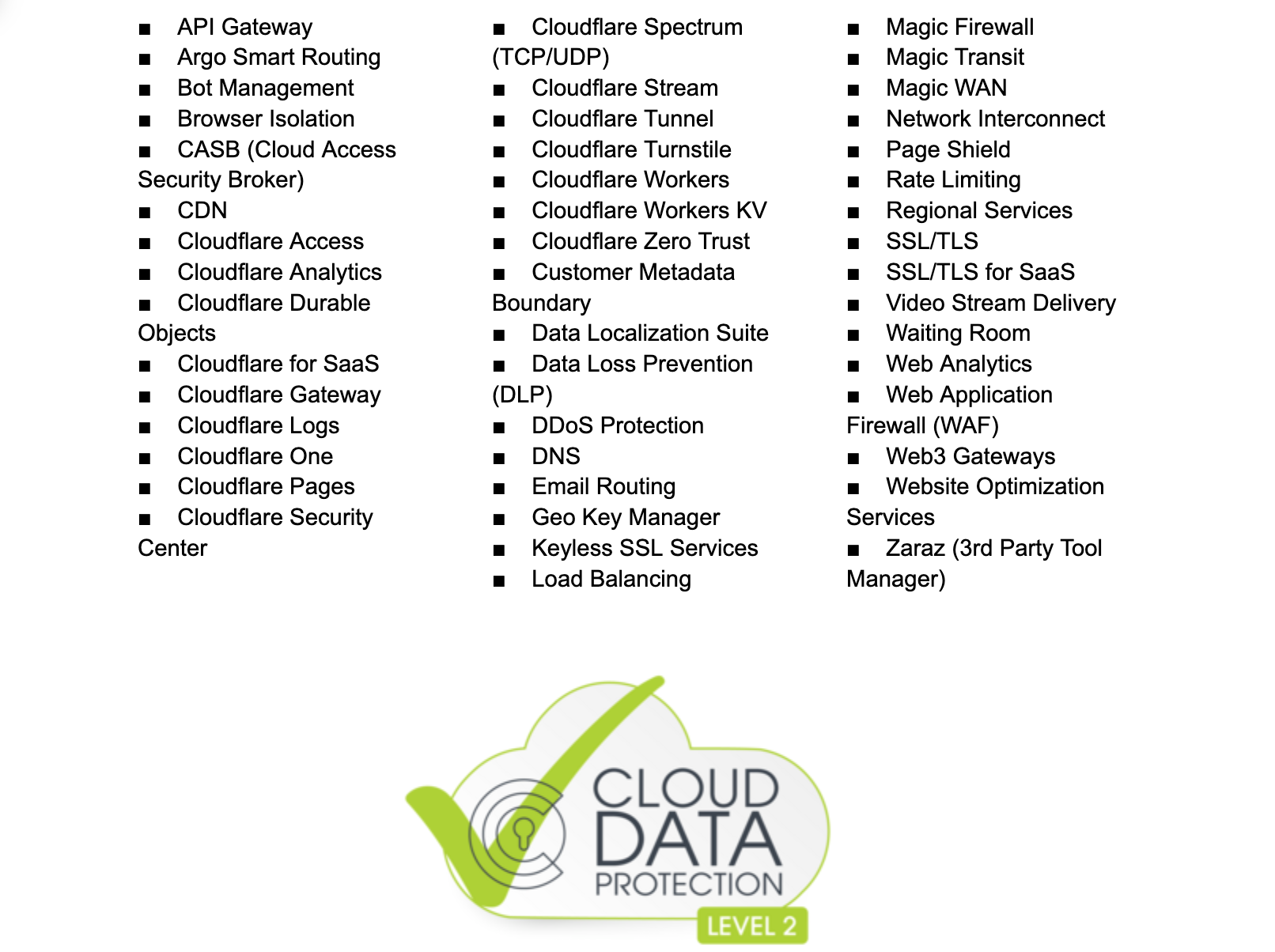
Author

Tim Winston

Tim is a Senior Assurance Consultant with AWS Security Assurance Services. He leverages more than 20 years’ experience as a security consultant and assessor to provide AWS customers with guidance on payment security and compliance. He is a co-author of the “Payment Card Industry Data Security Standard (PCI DSS) 3.2.1 on AWS”.

Author

Kristine Harper

Kristine is a Senior Assurance Consultant and PCI DSS Qualified Security Assessor (QSA) with AWS Security Assurance Services. Her professional background includes security and compliance consulting with large fintech enterprises and government entities. In her free time, Kristine enjoys traveling, outdoor activities, spending time with family, and spoiling her pets.

Author

Michael Guzman

Michael is an Assurance Consultant with AWS Security Assurance Services. Michael is a PCI QSA and HITRUST CCSFP, along with holding several AWS certifications. His background is in Financial Services IT Operations and Administrations, with over 20 years experience within that industry. In his spare time Michael enjoy’s spending time with his family, continuing to improve his golf skills and perfecting his Tri-Tip recipe.