Tag Archives: Let’s Architect

Let’s Architect! Designing serverless solutions

Post Syndicated from Luca Mezzalira original https://aws.amazon.com/blogs/architecture/lets-architect-designing-serverless-solutions/

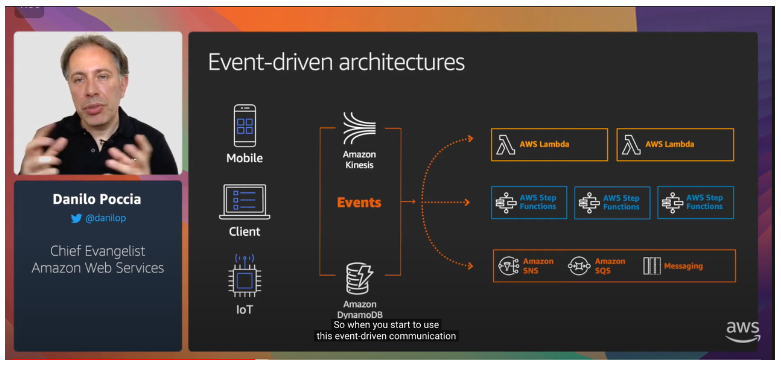
During his re:Invent 2022 keynote, Werner Vogels, AWS Vice President and Chief Technology Officer, emphasized the asynchronous nature of our world and the challenges associated with incorporating asynchronicity into our architectures. AWS serverless services can help users concentrate on the asynchronous aspects of their workloads, easing the execution of event-driven architectures and enabling the adoption of effective integration patterns for communication both within and beyond a bounded context.

In this edition of Let’s Architect!, we offer an in-depth exploration of the architecture of serverless AWS services, such as AWS Lambda. We also present a new workshop centered on design patterns employing serverless AWS services, which ultimately delivers valuable insights on implementing event-driven architectures within systems.

A closer look at AWS Lambda

This video is the perfect companion for those seeking to learn and master a Lambda architecture, empowering you to effectively leverage its capabilities in your workloads.

With the knowledge gained from this video, you will be well-equipped to design your functions’ code in a highly optimized manner, ensuring efficient performance and resource utilization. Furthermore, a comprehensive understanding of Lambda functions can help identify and apply the most suitable approach to cloud workloads, resulting in an agile and robust cloud infrastructure that meets a project’s unique requirements.

Take me to this video!

Discover how AWS Lambda functions work under the hood

Discover how AWS Lambda functions work under the hood

Implementing an event-driven serverless story generation application with ChatGPT and DALL-E

This example of an event-driven serverless architecture showcases the power of leveraging AWS services and AI technologies to develop innovative solutions. Built upon a foundation of serverless services, including Amazon EventBridge, Amazon DynamoDB, Lambda, Amazon Simple Storage Service, and managed artificial intelligence (AI ) services like Amazon Polly, this architecture demonstrates the seamless capacity to create daily stories with a scheduled launch. By utilizing EventBridge scheduler, an Lambda function is initiated every night to generate new content. The integration of AI services, like ChatGPT and DALL-E, further elevates the solution, as their compatibility with the serverless model enables efficient and dynamic content creation. This case serves as a testament to the potential of combining event-driven serverless architectures, with cutting-edge AI technologies for inventive and impactful applications.

Take me to this Compute Blog post!

How to build an event-driven architecture with serverless AWS services integrating ChatGPT and DALL-E

How to build an event-driven architecture with serverless AWS services integrating ChatGPT and DALL-E

AWS Workshop Studio: Serverless Patterns

The AWS Serverless Patterns workshop offers a comprehensive learning experience to enhance your understanding of architectural patterns applicable to serverless projects. Throughout the workshop, participants will delve into various patterns, such as synchronous and asynchronous implementations, tailored to meet the demands of modern serverless applications. This hands-on approach ensures a production-ready understanding, encompassing crucial topics like testing serverless workloads, establishing automation pipelines, and more. Take this workshop to elevate your serverless architecture knowledge!

Take me to the serverless workshop!

The high-level architecture of the workshops modules

The high-level architecture of the workshops modules

Building Serverlesspresso: Creating event-driven architectures

Serverlesspresso is an event-driven, serverless workload that uses EventBridge and AWS Step Functions to coordinate events across microservices and support thousands of orders per day. This comprehensive session delves into design considerations, development processes, and valuable lessons learned from creating a production-ready solution. Discover practical patterns and extensibility options that contribute to a robust, scalable, and cost-effective application. Gain insights into combining EventBridge and Step Functions to address complex architectural challenges in larger applications.

Take me to this video!

How to leverage AWS Step Functions for orchestrating your workflows

How to leverage AWS Step Functions for orchestrating your workflows

See you next time!

Thanks for joining our conversation on serverless solutions! We’ll see you next time when we talk about AWS microservices.

Can’t get enough of the Let’s Architect! series? Visit the Let’s Architect! page of the AWS Architecture Blog!

Let’s Architect! Getting started with containers

Post Syndicated from Luca Mezzalira original https://aws.amazon.com/blogs/architecture/lets-architect-getting-started-with-containers/

Most of AWS customers building cloud-native applications or modernizing applications choose containers to run their microservices applications to accelerate innovation and time to market while lowering their total cost of ownership (TCO). Using containers in AWS comes with other benefits, such as increased portability, scalability, and flexibility.

The combination of containers technologies and AWS services also provides features such as load balancing, auto scaling, and service discovery, making it easier to deploy and manage applications at scale.

In this edition of Let’s Architect! we share useful resources to help you to get started with containers on AWS.

Container Build Lens

This whitepaper describes the Container Build Lens for the AWS Well-Architected Framework. It helps customers review and improve their cloud-based architectures and better understand the business impact of their design decisions. The document describes general design principles for containers, as well as specific best practices and implementation guidance using the Six Pillars of the Well-Architected Framework.

Take me to explore the Containers Build Lens!

Follow Containers Build Lens Best practices to architect your containers-based workloads

Follow Containers Build Lens Best practices to architect your containers-based workloads.

EKS Workshop

The EKS Workshop is a useful resource to familiarize yourself with Amazon Elastic Kubernetes Service (Amazon EKS) by practicing on real use-cases. It is built to help users learn about Amazon EKS features and integrations with popular open-source projects. The workshop is abstracted into high-level learning modules, including Networking, Security, DevOps Automation, and more. These are further broken down into standalone labs focusing on a particular feature, tool, or use case.

Once you’re done experimenting with EKS Workshop, start building your environments with Amazon EKS Blueprints, a collection of Infrastructure as Code (IaC) modules that helps you configure and deploy consistent, batteries-included Amazon EKS clusters across accounts and regions following AWS best practices. Amazon EKS Blueprints are available in both Terraform and CDK.

Take me to this workshop!

The workshop is abstracted into high-level learning modules, including Networking, Security, DevOps Automation, and more.

The workshop is abstracted into high-level learning modules, including Networking, Security, DevOps Automation, and more.

Architecting for resiliency on AWS App Runner

Learn how to architect an highly available and resilient application using AWS App Runner. With App Runner, you can start with just the source code of your application or a container image. The complexity of running containerized applications is abstracted away, including the cloud resources needed for running your web application or API. App Runner manages load balancers, TLS certificates, auto scaling, logs, metrics, teachability and more, so you can focus on implementing your business logic in a highly scalable and elastic environment.

Take me to this blog post!

A high-level architecture for an available and resilient application with AWS App Runner.

A high-level architecture for an available and resilient application with AWS App Runner

Securing Kubernetes: How to address Kubernetes attack vectors

As part of designing any modern system on AWS, it is necessary to think about the security implications and what can affect your security posture. This session introduces the fundamentals of the Kubernetes architecture and common attack vectors. It also includes security controls provided by Amazon EKS and suggestions on how to address them. With these strategies, you can learn how to reduce risk for your Kubernetes-based workloads.

Take me to this video!

Some common attack vectors that need addressing with Kubernetes

Some common attack vectors that need addressing with Kubernetes

See you next time!

Thanks for exploring architecture tools and resources with us!

Next time we’ll talk about serverless.

To find all the posts from this series, check out the Let’s Architect! page of the AWS Architecture Blog.

Let’s Architect! Monitoring production systems at scale

Post Syndicated from Vittorio Denti original https://aws.amazon.com/blogs/architecture/lets-architect-monitoring-production-systems-at-scale/

“Everything fails, all the time” is a famous quote from Amazon’s Chief Technology Officer Werner Vogels. This means that software and distributed systems may eventually fail because something can always go wrong. We have to accept this and design our systems accordingly, test our software and services, and think about all the possible edge cases.

With this in mind, we should also set our teams up for success by providing visibility in every environment for a quick turnaround when incidents happen. When a system serves traffic in production, we need to monitor it to make sure it behaves as expected and that all components are healthy. But questions arise such as:

  • How do we monitor a system?
  • What is monitoring?
  • What are some architectural and engineering approaches to implement in order to design a successful monitoring strategy?

All of these questions require complex answers. It’s not possible to cover everything in a blog post, but let’s start exploring the topic and sharing resources to guide you through this domain.

In this edition of Let’s Architect! we share some practices for monitoring used at Amazon and AWS, as well as more resources to discover how to build monitoring solutions for the workloads running on AWS.

Observability best practices at Amazon

Observability and monitoring are engineering tasks that also require putting a suitable cultural mindset in place. At Amazon, if a service doesn’t run as expected, the team writes a CoE (Correction of Errors) document to analyze the issue and answer critical questions to learn from it. There are also weekly operations meetings to analyze operational and performance dashboards for each service.

The session introduced here covers the full range of monitoring at Amazon, from how teams assess system health at a high level to how they understand the details of a single request. Use this resource to learn some best practices for metrics, logs, and tracing, and using these signals to achieve operational excellence.

Take me to this re:Invent video!

Observability is an iterative process which requires us to establish a feedback loop and improve based on the signals coming from the system.

Build an observability solution using managed AWS services and the OpenTelemetry standard

Visibility of what’s happening in a distributed system is key to operationalize workloads at scale. OpenTelemetry is the standard for observability and AWS services are fully integrated with that. The blog post introduced in this section shows you how AWS Distro for OpenTelemetry (ADOT) works under the hood and how to use it with a Kubernetes cluster. But keep in mind, this is just one of the many implementations available for AWS compute services and OpenTelemetry—so even if you’re not using Kubernetes right now, we’ve still got you covered!

Want more? Watch this re:Invent video for an understanding of how to think about logging, tracing, metrics, and monitoring with AWS services, and the possibilities to provide the observability your distributed systems need. This is a great learning resource with many demos and examples.

Take me to this blog post!

Flow of metrics and traces from Application services to the Observability Platform.

Optimizing your AWS Batch architecture for scale with observability dashboards

We’ve explored the mental models and strategies for monitoring in previous resources. Now let’s see how these principles can be applied in a scenario where we run batch and ML computing jobs at scale. In the blog post introduced in this section, you can learn how to use runtime metrics to understand an architecture designed on AWS Batch for running batch computing jobs. AWS Batch is a fully managed service enabling you to run jobs at any scale without needing to manage underlying compute resources. This blog explains how AWS Batch works and guides you through the process used to design a monitoring framework.

Since the solution is open-source, you are free to add other custom metrics you find useful. To get started with the AWS Batch open-source observability solution, visit the project page on GitHub. Several customers have used this monitoring tool to optimize their workload for scale by reshaping their jobs, refining their instance selection, and tuning their AWS Batch architecture.

Take me to this blog!
High-level structure of AWS Batch resources and interactions. This diagram depicts a user submitting jobs based on a job definition template to a job queue, which then communicates to a compute environment that resources are needed.

Observability workshop

This resource provides a hands-on experience for you on the variety of toolsets AWS offers to set up monitoring and observability on your applications. Whether your workload is on-premises or on AWS—or your application is a giant monolith or based on modern microservices-based architecture—the observability tools can provide deeper insights into application performance and health.

The monitoring tools covered in this workshop provide powerful capabilities that enable you to identify bottlenecks, issues, and defects without having to manually sift through various logs, metrics, and trace data.

Take me to this workshop!

The diagram illustrates the various components of the PetAdoptions architecture. In the workshop you will learn how to monitor this application.

See you next time!

Thanks for exploring architecture tools and resources with us!

Next time we’ll talk about containers on AWS.

To find all the posts from this series, check out the Let’s Architect! page of the AWS Architecture Blog.

Let’s Architect! Streamlining business with migration and modernization

Post Syndicated from Luca Mezzalira original https://aws.amazon.com/blogs/architecture/lets-architect-streamlining-business-with-migration-and-modernization/

Many customers migrate their systems to Amazon Web Services (AWS) to increase their competitive edge and drive business value. To maximize the benefits of a cloud migration, companies tend to move their applications in conjunction with modernization initiatives. These joined efforts help your applications gain more agility, scalability, and resilience. Modernizing the portfolio of workloads with AWS means that you can re-platform, refactor, or replace these workloads by using containers, serverless technologies, purpose-built data stores, and software automation. These functionalities allow you to benefit from the best of the AWS agility and total cost optimization (TCO) benefits.

In this edition of Let’s Architect! we share hands-on activities, customer stories, and tips and tricks to migrate and modernize your applications with AWS.

Migrating to the cloud: What is the cost of doing nothing?

Would you think that small companies always migrate faster than large enterprises? Actually, cloud migration speed doesn’t necessarily depend on the size of the business! Company size is not a clear indicator of migration and modernization success, but a shift of culture and mindset is essential for successful company evolution.

When it comes to migration, the cost of doing nothing is not just financial: Businesses can also expect a slower pace of innovation and a higher security burden. This video analyzes the financial benefits of migration and shares mental models for approaching an AWS cloud migration, and Marriott team members explain how they planned their migration and the lessons learned along the way.

Take me to this re:Invent 2022 video!

Benefits of an early migration start

Benefits of an early migration start

Modernization pathways for a legacy .NET Framework monolithic application on AWS

Organizations aim to deliver the best technological solutions based on customer needs. At any stage in their cloud adoption journey, businesses often end up managing and building monolithic applications. Let’s explore a migration path for a monolithic .NET Framework application to a modern microservices-based stack on AWS, and discuss AWS tools to break the monolith into microservices and containerize applications.

Cost optimization is another key factor for modernizing your workloads and solutions include moving to Linux-based systems or using open-source database engines. This Migrate and Modernize enterprise workloads with AWS video walks you through the process of migrating and modernizing enterprise workloads with AWS.

Take me to this blog post with more detail!

A modernized microservices-based rearchitecture

A modernized microservices-based rearchitecture

Implementing a serverless-first strategy in an enterprise

Organizations of all sizes want to benefit from the agility, cost savings, and developer experience that serverless architectures can provide on AWS. For large enterprises, the return on investment (ROI) can be massive, but overcoming architecture inertia while ensuring security best practices and governance stay in place is a hurdle that many struggle with. In this lightning talk, learn how your organization can implement a serverless-first strategy to overcome these obstacles. Delta Air Lines shares the story of making serverless-first a reality as part of their AWS journey.

Take me to this video

Benefits of serverless

Benefits of serverless

Application Migration with AWS

This workshop shows you how to migrate and modernize a fictional application to the AWS Cloud by:

  1. Performing a database migration
  2. Migrating and modernizing your web server using different migration strategies (for example, breaking down the monolith into containers)
  3. Teaching you how to improve Operation excellence, Security, Performance efficiency, and Cost optimization of the deployed architecture by following these pillars of the AWS Well-Architected Framework.

Take me to this workshop!

Different migration strategies for web servers

Different migration strategies for web servers

See you next time!

Thanks for exploring architecture tools and resources with us!

Next time we’ll talk about distributed systems with containers.

To find all the posts from this series, check out the Let’s Architect! page of the AWS Architecture Blog.

Let’s Architect! Architecting a data mesh

Post Syndicated from Luca Mezzalira original https://aws.amazon.com/blogs/architecture/lets-architect-architecting-a-data-mesh/

Data architectures were mainly designed around technologies rather than business domains in the past. This changed in 2019, when Zhamak Dehghani introduced the data mesh. Data mesh is an application of the Domain-Driven-Design (DDD) principles to data architectures: Data is organized into data domains and the data is the product that the team owns and offers for consumption.

A data mesh architecture unites the disparate data sources within an organization through centrally managed data-sharing and governance guidelines. Business functions can maintain control over how shared data is accessed because data mesh also solves advanced data security challenges through distributed, decentralized ownership.

This edition of Let’s Architect! introduces data mesh, highlights the foundational concepts of data architectures, and covers the patterns for designing a data mesh in the AWS cloud with supporting resources.

Data lakes, lake houses and data mesh: what, why, and how?

Let’s explore a video introduction to data lakes, lake houses, and data mesh. This resource explains how to leverage those concepts to gain greater data insights across different business segments, with a special focus on best practices to build a well-architected, modern data architecture on AWS. It also gives an overview of the AWS cloud services that can be used to create such architectures and describes the fundamental pillars of designing them.

Take me to this intro to data lakes, lake houses, and data mesh video!

Data mesh is an architecture pattern where data are organized into domains and seen as products to expose for consumption

Data mesh is an architecture pattern where data are organized into domains and seen as products to expose for consumption

Building data mesh architectures on AWS

Knowing what a data mesh architecture is, here is a step-by-step video from re:Invent 2022 on designing one. It covers a use case on how GoDaddy considered and implemented data mesh, in addition to:

  • The fundamental pillars behind a well-architected data mesh in the cloud
  • Finding an approach to build a data mesh architecture using native AWS services
  • Reasons for considering a data mesh architecture where data lakes provide limitations in some scenarios
  • How data mesh can be applied in practice to overcome them
  • The mental models to apply during the data mesh design process

Take me to this re:Invent 2022 video!

In the data mesh architecture the producers expose their data for consumption to the consumers. Access is regulated through a centralized governance layer.

In the data mesh architecture the producers expose their data for consumption to the consumers. Access is regulated through a centralized governance layer.

Amazon DataZone: Democratize data with governance

Now let’s explore data accessibility as it relates to data mesh architectures.

Amazon DataZone is a new AWS business data catalog allowing you to unlock data across organizational boundaries with built-in governance. This service provides a unified environment where everyone in an organization—from data producers to data consumers—can access, share, and consume data in a governed manner.

Here is a video to learn how to apply AWS analytics services to discover, access, and share data across organizational boundaries within the context of a data mesh architecture.

Take me to this re:Invent 2022 video!

Amazon DataZone accelerates the adoption of the data mesh pattern by making it scalable to high number of producers and consumers.

Amazon DataZone accelerates the adoption of the data mesh pattern by making it scalable to high number of producers and consumers.

Build a data mesh on AWS

Feeling inspired to build? Hands-on experience is a great way to learn and see how the theoretical concepts apply in practice.

This workshop teaches you a data mesh architecture building approach on AWS. Many organizations are interested in implementing this architecture to:

  1. Move away from centralized data lakes to decentralized ownership
  2. Deliver analytics solutions across business units

Learn how a data mesh architecture can be implemented with AWS native services.

Take me to this workshop!

The diagrams shows how to separate the producers, consumers and governance components through a multi-account strategy.

The diagrams shows how to separate the producers, consumers and governance components through a multi-account strategy.

See you next time!

Thanks for exploring architecture tools and resources with us!

Next time we’ll talk about monitoring and observability.

To find all the posts from this series, check out the Let’s Architect! page of the AWS Architecture Blog.

Let’s Architect! Architecture tools

Post Syndicated from Luca Mezzalira original https://aws.amazon.com/blogs/architecture/lets-architect-architecture-tools/

Tools, such as diagramming software, low-code applications, and frameworks, make it possible to experiment quickly. They are essential in today’s fast-paced and technology-driven world. From improving efficiency and accuracy, to enhancing collaboration and creativity, a well-defined set of tools can make a significant impact on the quality and success of a project in the area of software architecture.

As an architect, you can take advantage of a wide range of resources to help you build solutions that meet the needs of your organization. For example, with tools in the likes of the Amazon Web Services (AWS) Solutions Library and Serverless Land, you can boost your knowledge and productivity while working on event-driven architectures, microservices, and stateless computing.

In this Let’s Architect! edition, we explore how to incorporate these patterns into your architecture, and which tools to leverage to build solutions that are scalable, secure, and cost-effective.

How AWS Application Composer helps your team build great apps

In this re:Invent 2022 session, Chase Douglas, Principal Engineer at AWS, speaks about AWS Application Composer, a newly launched service.

This service has the potential to change the way architects design solutions—without writing a single line of code! The service is user-friendly, intuitive, and requires no prior coding experience. It allows users to scaffold a serverless architecture, defining a CloudFormation template visually with drag-and-drop. A detailed AWS Compute Blog post takes readers through the process of using AWS Application Composer.

Take me to this re:Invent 2022 video!

How an architecture can be designed with AWS Application Composer

How an architecture can be designed with AWS Application Composer

AWS design + build tools

When migrating to the cloud, we suggest referencing these four tried-and-true AWS resources that can be used to design and build projects.

  1. AWS Workshops are created by AWS teams to provide opportunities for hands-on learning to develop practical skills. Workshops are available in multiple categories and for skill levels 100-400.
  2. AWS Architecture Center contains a collection of best practices and architectural patterns for designing and deploying cloud-based solutions using AWS services. Furthermore, it includes detailed architecture diagrams, whitepapers, case studies, and other resources that provide a wealth of information on how to design and implement cloud solutions.
  3. Serverless Land (an Amazon property) brings together various patterns, workflows, code snippets, and blog posts pertaining to AWS serverless architectures.
  4. AWS Solutions Library provides customers with templates, tools, and automated workflows to easily deploy, operate, and manage common use cases on the AWS Cloud.
Inside event-driven architectures designed by David Boyne on Serverless Land

Inside event-driven architectures designed by David Boyne on Serverless Land

The Well-Architected way

In this session, the AWS Well-Architected provides guidance on how to implement the architectural models reported in the AWS Well-Architected Framework within your organization at scale.

Discover a customer story and understand how to use the features of the AWS Well-Architected Tool and APIs to receive recommendations based on your workload and measure your architectural metrics. In the Framework whitepaper, you can explore the six pillars of Well-Architected (operational excellence, security, reliability, performance efficiency, cost optimization, and sustainability) and best practices to achieve them.

Understanding the key design pillars can help architects make informed design decisions, leading to more robust and efficient solutions. This knowledge also enables architects to identify potential problems early on in the design process and find appropriate patterns to address those issues.

Take me to the Well-Architected video!

Discover how the AWS Well-Architected Framework can help you design scalable, maintainable, and reusable solutions

Discover how the AWS Well-Architected Framework can help you design scalable, maintainable, and reusable solutions

See you next time!

Thanks for exploring architecture tools and resources with us!

Join us next time when we’ll talk about data mesh architecture!

To find all the posts from this series, check out the Let’s Architect! page of the AWS Architecture Blog.

Let’s Architect! Architecting for sustainability

Post Syndicated from Luca Mezzalira original https://aws.amazon.com/blogs/architecture/lets-architect-architecting-for-sustainability/

Sustainability is an important topic in the tech industry, as well as society as a whole, and defined as the ability to continue to perform a process or function over an extended period of time without depletion of natural resources or the environment.

One of the key elements to designing a sustainable workload is software architecture. Think about how event-driven architecture can help reduce the load across multiple microservices, leveraging solutions like batching and queues. In these cases, the main traffic is absorbed at the entry-point of a cloud workload and ease inside your system. On top of architecture, think about data patterns, hardware optimizations, multi-environment strategies, and many more aspects of a software development lifecycle that can contribute to your sustainable posture in the Cloud.

The key takeaway: designing with sustainability in mind can help you build an application that is not only durable but also flexible enough to maintain the agility your business requires.

In this edition of Let’s Architect!, we share hands-on activities, case studies, and tips and tricks for making your Cloud applications more sustainable.

Architecting sustainably and reducing your AWS carbon footprint

Amazon Web Services (AWS) launched the Sustainability Pillar of the AWS Well-Architected Framework to help organizations evaluate and optimize their use of AWS services, and built the customer carbon footprint tool so organizations can monitor, analyze, and reduce their AWS footprint.

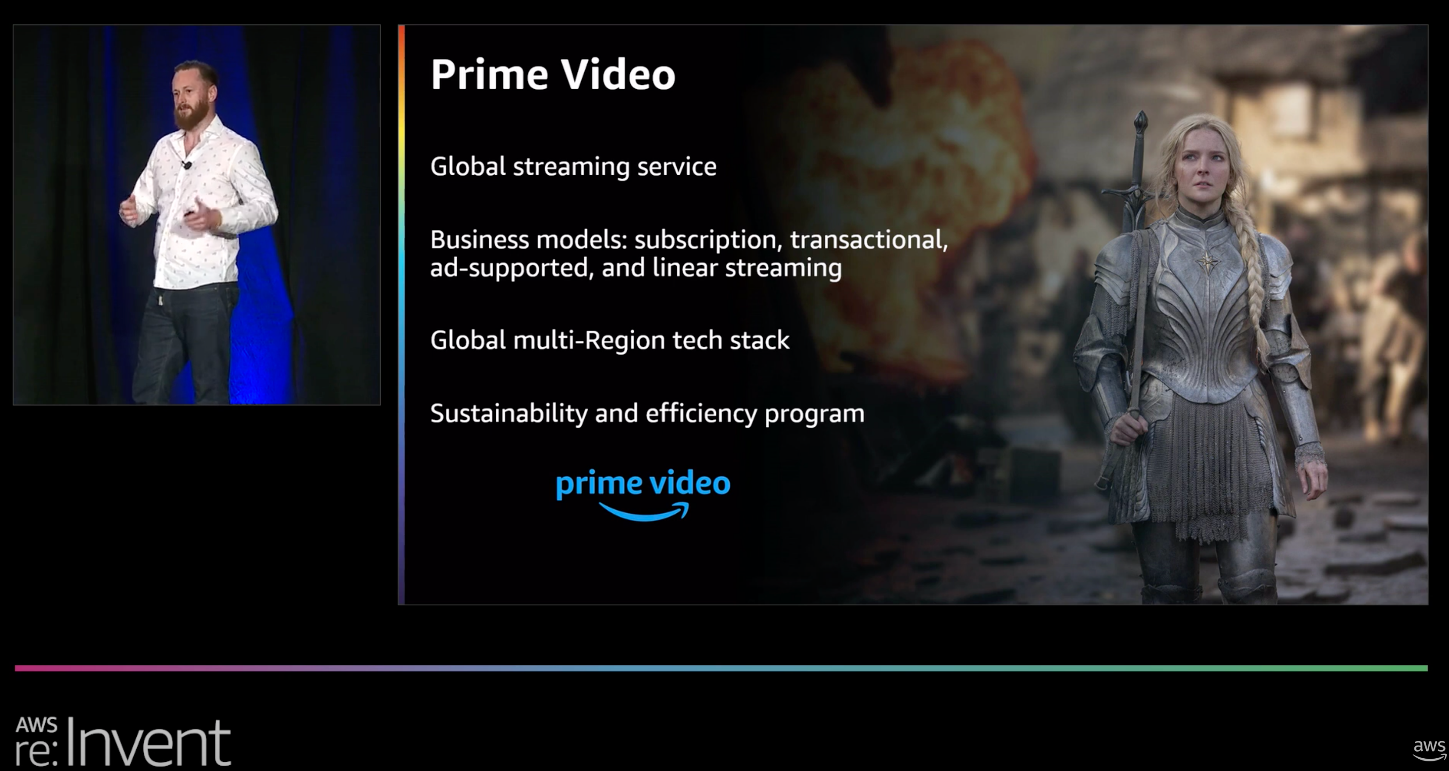
This session provides updates on these programs and highlights the most effective techniques for optimizing your AWS architectures. Find out how Amazon Prime Video used these tools to establish baselines and drive significant efficiencies across their AWS usage.

Take me to this re:Invent 2022 video!

Prime Video case study for understanding how the architecture can be designed for sustainability

Prime Video case study for understanding how the architecture can be designed for sustainability

Optimize your modern data architecture for sustainability

The modern data architecture is the foundation for a sustainable and scalable platform that enables business intelligence. This AWS Architecture Blog series provides tips on how to develop a modern data architecture with sustainability in mind.

Comprised of two posts, it helps you revisit and enhance your current data architecture without compromising sustainability.

Take me to Part 1! | Take me to Part 2!

An AWS data architecture; it’s now time to account for sustainability

An AWS data architecture; it’s now time to account for sustainability

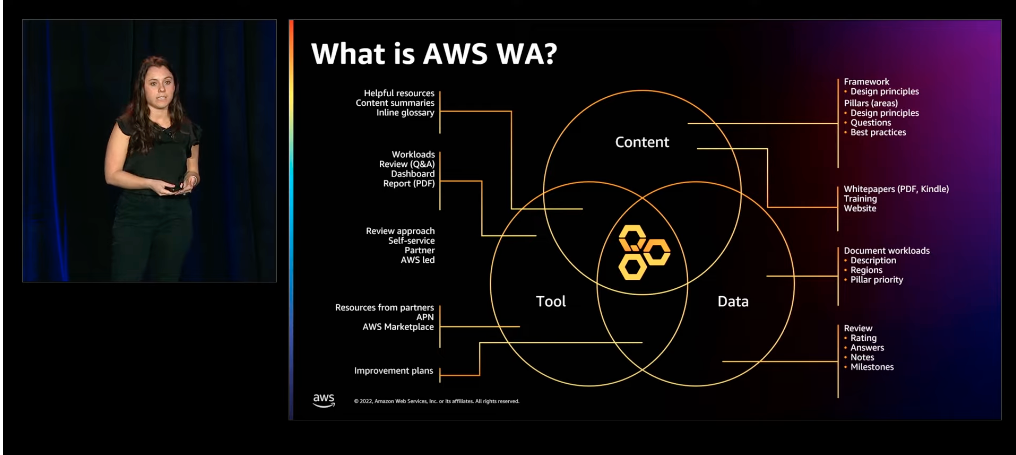
AWS Well-Architected Labs: Sustainability

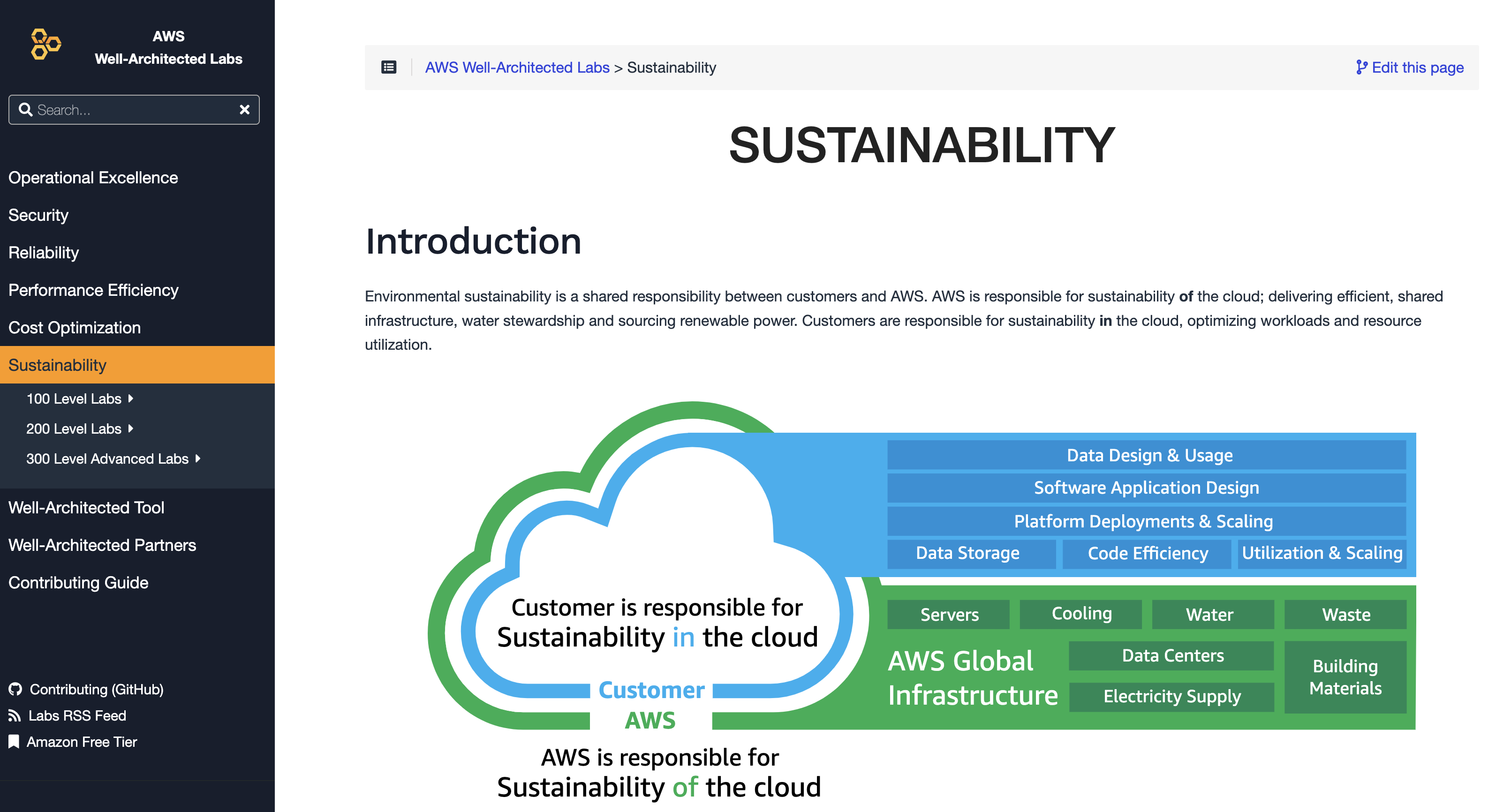
This workshop introduces participants to the AWS Well-Architected Framework, a set of best practices for designing and operating high-performing, highly scalable, and cost-efficient applications on AWS. The workshop also discusses how sustainability is critical to software architecture and how to use the AWS Well-Architected Framework to improve your application’s sustainability performance.

Take me to this workshop!

Sustainability implementation best practices and monitoring

Sustainability implementation best practices and monitoring

Sustainability in the cloud with Rust and AWS Graviton

In this video, you can learn about the benefits of Rust and AWS Graviton to reduce energy consumption and increase performance. Rust combines the resource efficiency of programming languages, like C, with memory safety of languages, like Java. The video also explains the benefits deriving from AWS Graviton processors designed to deliver performance- and cost-optimized cloud workloads. This resource is very helpful to understand how sustainability can become a driver for cost optimization.

Take me to this re:Invent 2022 video!

Discover how Rust and AWS Graviton can help you make your workload more sustainable and performant

Discover how Rust and AWS Graviton can help you make your workload more sustainable and performant

See you next time!

Thanks for joining us to discuss sustainability in the cloud! See you in two weeks when we’ll talk about tools for architects.

To find all the blogs from this series, you can check the Let’s Architect! list of content on the AWS Architecture Blog.

Let’s Architect! Designing event-driven architectures

Post Syndicated from Luca Mezzalira original https://aws.amazon.com/blogs/architecture/lets-architect-designing-event-driven-architectures/

During the design of distributed systems, we have to identify a communication strategy to exchange information between different services while keeping the evolutionary nature of the architecture in mind. Event-driven architectures are based on events (facts that happened in a system), which are asynchronously exchanged to implement communication across different services while having a high degree of decoupling. This paradigm also allows us to run code in response to events, with benefits like cost optimization and sustainability for the entire infrastructure.

In this edition of Let’s Architect!, we share architectural resources to introduce event-driven architectures, how to build them on AWS, and how to approach the design phase.

AWS re:Invent 2022 – Keynote with Dr. Werner Vogels

re:Invent 2022 may be finished, but the keynote given by Amazon’s Chief Technology Officer, Dr. Werner Vogels, will not be forgotten. Vogels not only covered the announcements of new services but also event-driven architecture foundations in conjunction with customers’ stories on how this architecture helped to improve their systems.

Take me to this re:Invent 2022 video!

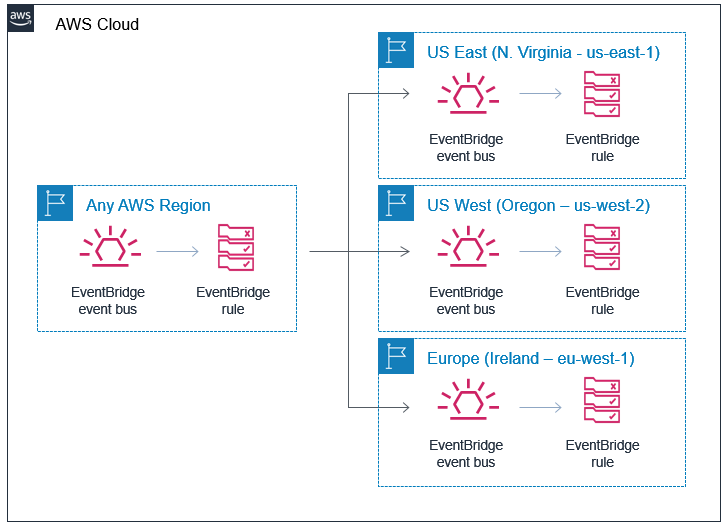
Dr. Werner Vogels presenting an example of architecture where Amazon EventBridge is used as event bus

Dr. Werner Vogels presenting an example of architecture where Amazon EventBridge is used as event bus

Benefits of migrating to event-driven architecture

In this blog post, we enumerate clearly and concisely the benefits of event-driven architectures, such as scalability, fault tolerance, and developer velocity. This is a great post to start your journey into the event-driven architecture style, as it explains the difference from request-response architecture.

Take me to this Compute Blog post!

Two common options when building applications are request-response and event-driven architecture

Two common options when building applications are request-response and event-driven architectures

Building next-gen applications with event-driven architectures

When we build distributed systems or migrate from a monolithic to a microservices architecture, we need to identify a communication strategy to integrate the different services. Teams who are building microservices often find that integration with other applications and external services can make their workloads tightly coupled.

In this re:Invent 2022 video, you learn how to use event-driven architectures to decouple and decentralize application components through asynchronous communication. The video introduces the differences between synchronous and asynchronous communications before drilling down into some key concepts for designing and building event-driven architectures on AWS.

Take me to this re:Invent 2022 video!

How to use choreography to exchange information across services plus implement orchestration for managing operations within the service boundaries

How to use choreography to exchange information across services plus implement orchestration for managing operations within the service boundaries

Designing events

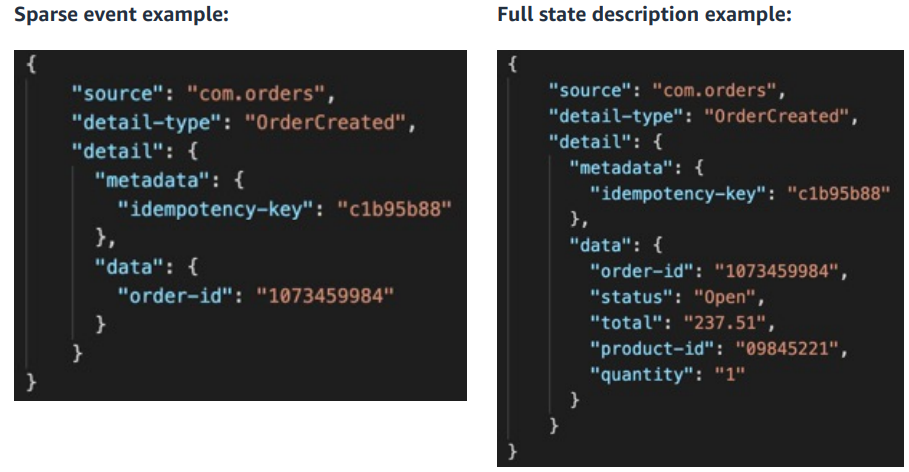
When starting on the journey to event-driven architectures, a common challenge is how to design events: “how much data should an event contain?” is a typical first question we encounter.

In this pragmatic post, you can explore the different types of events, watch a video that explains even further how to use event-driven architectures, and also go through the new event-driven architecture section of serverlessland.com.

Take me to Serverless Land!

An example of events with sparse and full state description

An example of events with sparse and full state description

See you next time!

Thanks for reading our first blog of 2023! Join us next time, when we’ll talk about architecture and sustainability.

To find all the blogs from this series, visit the Let’s Architect! section of the AWS Architecture Blog.

Top 10 AWS Architecture Blog posts of 2022

Post Syndicated from Elise Chahine original https://aws.amazon.com/blogs/architecture/top-10-aws-architecture-blog-posts-of-2022/

As we wrap up 2022, we want to take a moment to shine a bright light on our readers, who spend their time exploring our posts, providing generous feedback, and asking poignant questions! Much appreciation goes to our Solutions Architects, who work tirelessly to identify and produce what our customers need.

Without any further ado, here are the top 10 AWS Architecture Blog posts of 2022…

#1: Creating a Multi-Region Application with AWS Services – Part 2, Data and Replication

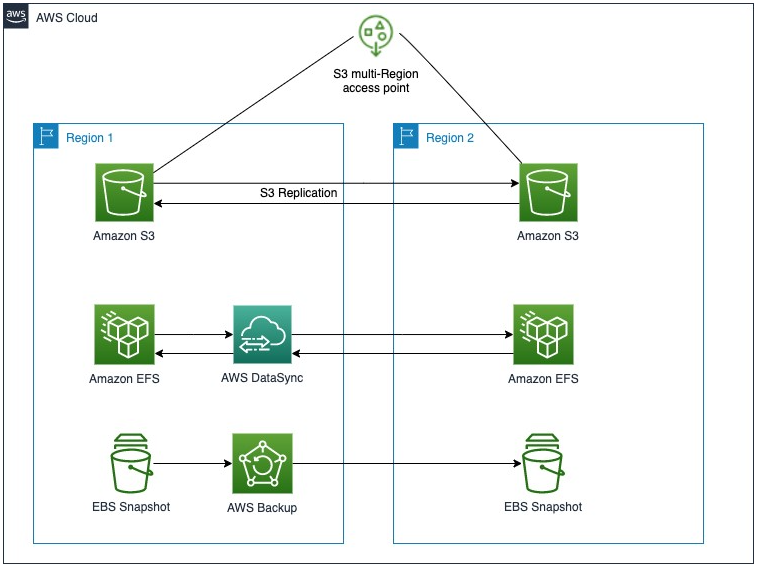
Joe Chapman, Senior Solutions Architect, and Seth Eliot, Principal Developer Advocate, come in at #1 with a review of AWS services that offer cross-Region data replication—getting data where in needs to be, quickly!

#1 2022

#2: Reduce Cost and Increase Security with Amazon VPC Endpoints

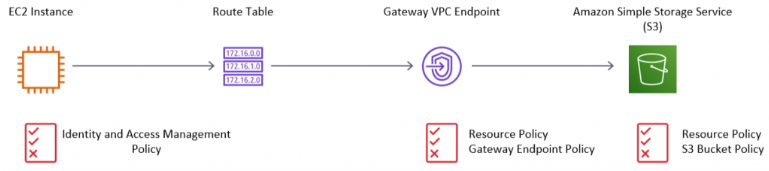
Nigel Harris and team. explain the benefits of using Amazon VPC endpoints, and how to appropriately restrict access to endpoints and the services they connect to. Learn more by taking the VPC Endpoint Workshop in the AWS Workshop Studio!

#2 2022

#3: Multi-Region Migration using AWS Application Migration Service

In this technical how-to post, Shreya Pathak and Medha Shree demonstrate how to configure AWS Application Migration Service to migrate workloads from one AWS Region to another.

#4: Let’s Architect! Architecting for Sustainability

The Let’s Architect! Team claims 4 of the top 10 spots for 2022! Luca, Laura, Vittorio, and Zamira kick-off the series by providing material to help our customers design sustainable architectures and create awareness on the topic of sustainability.

#5: Let’s Architect! Serverless architecture on AWS

In this post, the Let’s Architect! Team shares insights into reimagining a serverless environment, including how to start prototype and scale to mass adoption using decoupled systems, integration approaches, serverless architectural patterns and best practices, and more!

#6: Let’s Architect! Tools for Cloud Architects

For a three-in-a-row, the Let’s Architect! Team shares tools and methodologies for architects to learn and experiment with. This post was also a celebration of International Women’s Day, with half of the tools detailed developed with or by women!

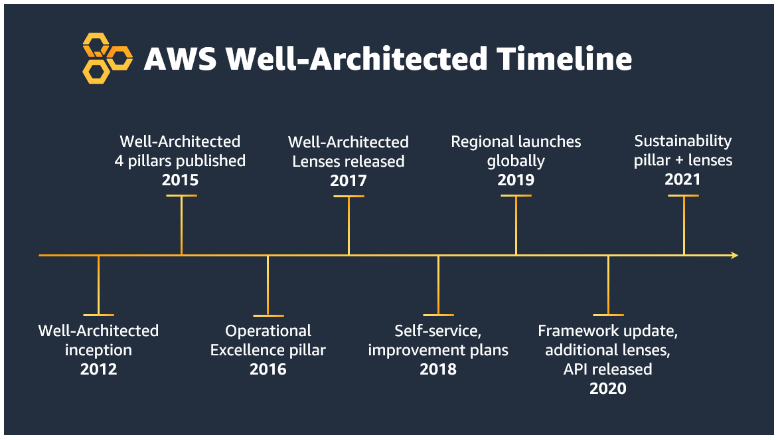
#7: Announcing updates to the AWS Well-Architected Framework

Well-Architected is tried and true AWS, describing key concepts, design principles, and architecture best practices for cloud workloads. In this post, Haleh Najafzadeh, Senior Solutions Architecture Manager for AWS Well-Architected, updates our readers on improvements to the Well-Architected Framework across all six pillars.

#8: Creating a Multi-Region Application with AWS Services – Part 3, Application Management and Monitoring

Joe and Seth are back at #8, covering AWS services and features used for messaging, deployment, monitoring, and management in multi-Region applications.

#9: Let’s Architect! Creating resilient architecture

“The need for resilient workloads transcends all customer industries…” In their last top 10 post, the team provides resources to help build resilience into your AWS architecture.

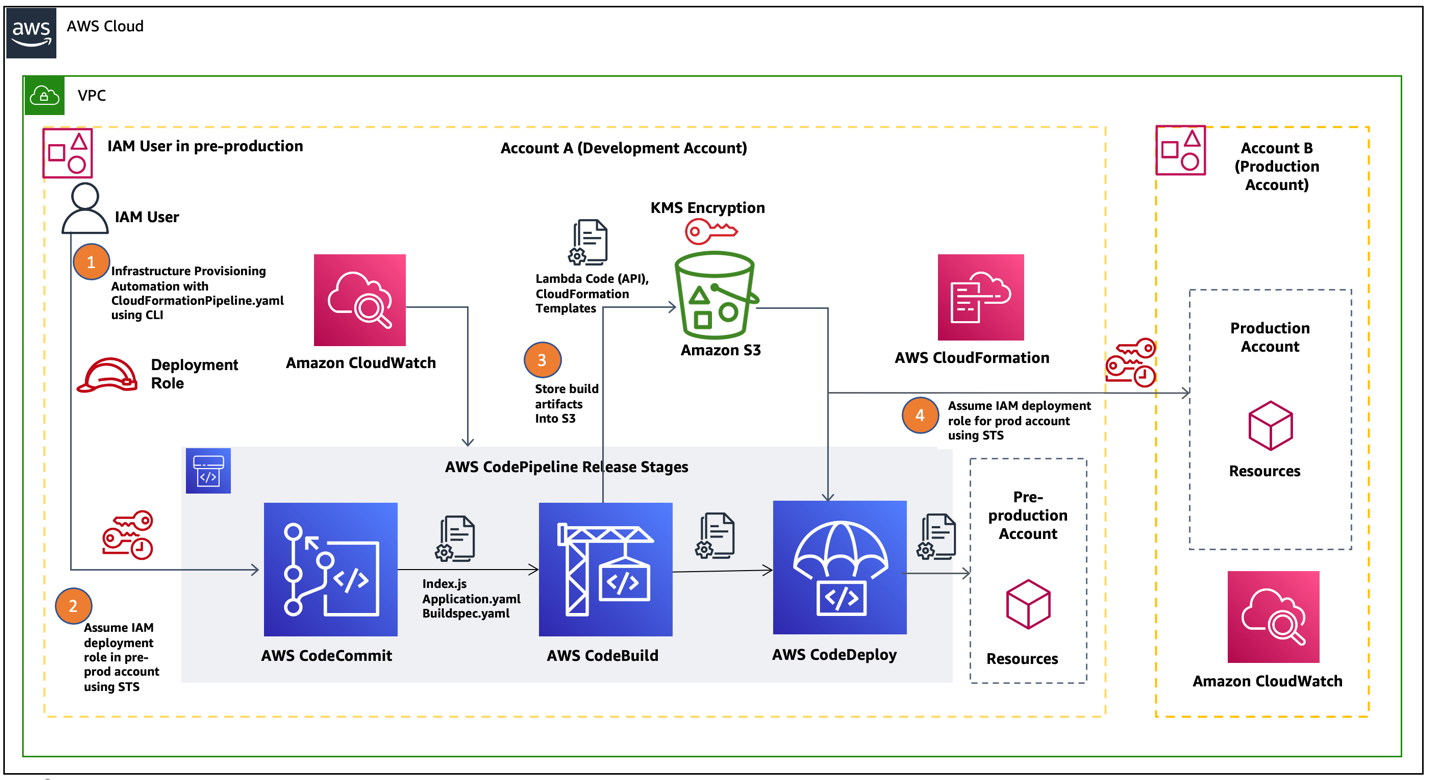
#10: Using DevOps Automation to Deploy Lambda APIs across Accounts and Environments

Subrahmanyam Madduru and team demonstrate how to automate release deployments in a repeatable and agile manner, reducing manual errors and increasing the speed of delivery for business capabilities.

Goodbye, 2022!

A big thank you to all our readers and authors! Your feedback and collaboration are appreciated and help us produce better content every day.

From all of us at the AWS Architecture Blog, happy holidays!

Let’s Architect! Optimizing the cost of your architecture

Post Syndicated from Luca Mezzalira original https://aws.amazon.com/blogs/architecture/lets-architect-optimizing-the-cost-of-your-architecture/

Written in collaboration with Ben Moses, AWS Senior Solutions Architect, and Michael Holtby, AWS Senior Manager Solutions Architecture


Designing an architecture is not a simple task. There are many dimensions and characteristics of a solution to consider, such as the availability, performance, or resilience.

In this Let’s Architect!, we explore cost optimization and ideas on how to rethink your AWS workloads, providing suggestions that span from compute to data transfer.

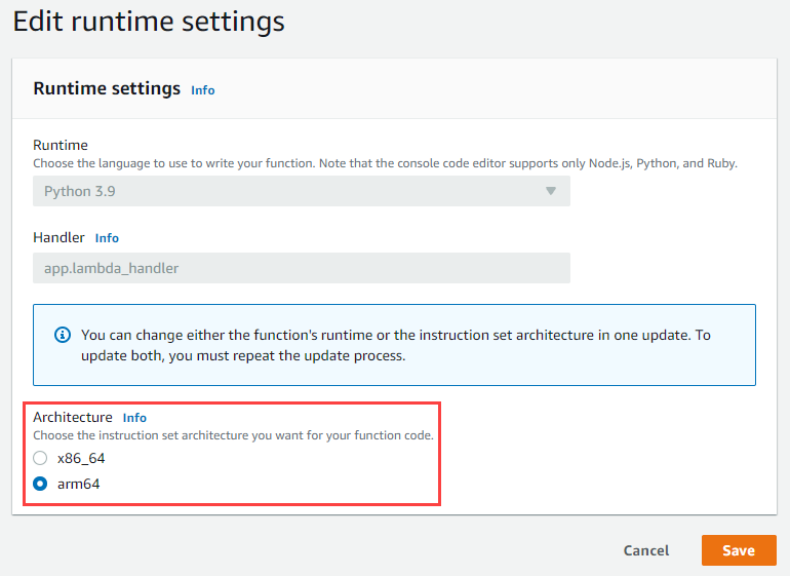
Migrating AWS Lambda functions to Arm-based AWS Graviton2 processors

AWS Graviton processors are custom silicon from Amazon’s Annapurna Labs. Based on the Arm processor architecture, they are optimized for performance and cost, which allows customers to get up to 34% better price performance.

This AWS Compute Blog post discusses some of the differences between the x86 and Arm architectures, as well as methods for developing Lambda functions on Graviton2, including performance benchmarking.

Many serverless workloads can benefit from Graviton2, especially when they are not using a library that requires an x86 architecture to run.

Take me to this Compute post!

Choosing Graviton2 for AWS Lambda function in the AWS console

Choosing Graviton2 for AWS Lambda function in the AWS console

Key considerations in moving to Graviton2 for Amazon RDS and Amazon Aurora databases

Amazon Relational Database Service (Amazon RDS) and Amazon Aurora support a multitude of instance types to scale database workloads based on needs. Both services now support Arm-based AWS Graviton2 instances, which provide up to 52% price/performance improvement for Amazon RDS open-source databases, depending on database engine, version, and workload. They also provide up to 35% price/performance improvement for Amazon Aurora, depending on database size.

This AWS Database Blog post showcases strategies for updating RDS DB instances to make use of Graviton2 with minimal changes.

Take me to this Database post!

Choose your instance class that leverages Graviton2, such as db.r6g.large (the “g” stands for Graviton2)

Choose your instance class that leverages Graviton2, such as db.r6g.large (the “g” stands for Graviton2)

Overview of Data Transfer Costs for Common Architectures

Data transfer charges are often overlooked while architecting an AWS solution. Considering data transfer charges while making architectural decisions can save costs. This AWS Architecture Blog post describes the different flows of traffic within a typical cloud architecture, showing where costs do and do not apply. For areas where cost applies, it shows best-practice strategies to minimize these expenses while retaining a healthy security posture.

Take me to this Architecture post!

Accessing AWS services in different Regions

Accessing AWS services in different Regions

Improve cost visibility and re-architect for cost optimization

This Architecture Blog post is a collection of best practices for cost management in AWS, including the relevant tools; plus, it is part of a series on cost optimization using an e-commerce example.

AWS Cost Explorer is used to first identify opportunities for optimizations, including data transfer, storage in Amazon Simple Storage Service and Amazon Elastic Block Store, idle resources, and the use of Graviton2 (Amazon’s Arm-based custom silicon). The post discusses establishing a FinOps culture and making use of Service Control Policies (SCPs) to control ongoing costs and guide deployment decisions, such as instance-type selection.

Take me to this Architecture post!

Applying SCPs on different environments for cost control

Applying SCPs on different environments for cost control

See you next time!

Thanks for joining us to discuss optimizing costs while architecting! This is the last Let’s Architect! post of 2022. We will see you again in 2023, when we explore even more architecture topics together.
Wishing you a happy holiday season and joyous new year!

Can’t get enough of Let’s Architect!?

Visit the Let’s Architect! page of the AWS Architecture Blog for access to the whole series.

Looking for more architecture content?

AWS Architecture Center provides reference architecture diagrams, vetted architecture solutions, Well-Architected best practices, patterns, icons, and more!

Let’s Architect! Architecting with Amazon DynamoDB

Post Syndicated from Luca Mezzalira original https://aws.amazon.com/blogs/architecture/lets-architect-architecting-with-amazon-dynamodb/

NoSQL databases are an essential part of the technology industry in today’s world. Why are we talking about NoSQL databases? NoSQL databases often allow developers to be in control of the structure of the data, and they are a good fit for big data scenarios and offer fast performance.

In this issue of Let’s Architect!, we explore Amazon DynamoDB capabilities and potential solutions to apply in your architectures. A key strength of DynamoDB is the capability of operating at scale globally; for instance, multiple products built by Amazon are powered by DynamoDB. During Prime Day 2022, the service also maintained high availability while delivering single-digit millisecond responses, peaking at 105.2 million requests-per-second. Let’s start!

Data modeling with DynamoDB

Working with a new database technology means understanding exactly how it works and the best design practices for taking full advantage of its features.

In this video, the key principles for modeling DynamoDB tables are discussed, plus practical patterns to use while defining your data models are explored and how data modeling for NoSQL databases (like DynamoDB) is different from modeling for traditional relational databases.

With this video, you can learn about the main components of DynamoDB, some design considerations that led to its creation, and all the best practices for efficiently using primary keys, secondary keys, and indexes. Peruse the original paper to learn more about DyanamoDB in Dynamo: Amazon’s Highly Available Key-value Store.

Amazon DynamoDB uses partitioning to provide horizontal scalability

Amazon DynamoDB uses partitioning to provide horizontal scalability

Single-table vs. multi-table in Amazon DynamoDB

When considering single-table versus multi-table in DynamoDB, it is all about your application’s needs. It is possible to avoid naïve lifting-and-shifting your relational data model into DynamoDB tables. In this post, you will discover different use cases on when to use single-table compared with multi-table designs, plus understand certain data-modeling principles for DynamoDB.

Use a single-table design to provide materialized joins in Amazon DynamoDB

Use a single-table design to provide materialized joins in Amazon DynamoDB

Optimizing costs on DynamoDB tables

Infrastructure cost is an important dimension for every customer. Despite your role inside an organization, you should monitor opportunities for optimizing costs, when possible.
For this reason, we have created a guide on DynamoDB tables cost-optimization that provides several suggestions for reducing your bill at the end of the month.

Build resilient applications with Amazon DynamoDB global tables: Part 1

When you operate global systems that are spread across multiple AWS regions, dealing with data replication and writes across regions can be a challenge. DynamoDB global tables help by providing the performance of DynamoDB across multiple regions with data synchronization and multi-active database where each replica can be used for both writing and reading data.

Another use case for global tables are resilient applications with the lowest possible recovery time objective (RTO) and recovery point objective (RPO). In this blog series, we show you how to approach such a scenario.

Amazon DynamoDB active-active architecture

Amazon DynamoDB active-active architecture

See you next time!

Thanks for joining our discussion on DynamoDB. See you in a few weeks, when we explore cost optimization!

Other posts in this series

Looking for more architecture content?

AWS Architecture Center provides reference architecture diagrams, vetted architecture solutions, Well-Architected best practices, patterns, icons, and more!

Let’s Architect! Architecting in health tech

Post Syndicated from Luca Mezzalira original https://aws.amazon.com/blogs/architecture/lets-architect-architecting-in-health-tech/

Healthcare technology, commonly referred to as “health tech,” is the use of technologies developed for the purpose of improving any and all aspects of the healthcare system. For example, IT tools or software designed to boost hospital/administrative productivity, give insights into new and existing treatments, or improve the overall quality of care.

Also known as “digital health”, health tech uses databases, applications, mobile devices, and wearables to facilitate the delivery, payment, and/or consumption of healthcare. The increased accessibility to these technologies can further increase the development and launch of additional healthcare products.

In this post, we explore how to build and manage health tech architectures using Amazon Web Services (AWS).

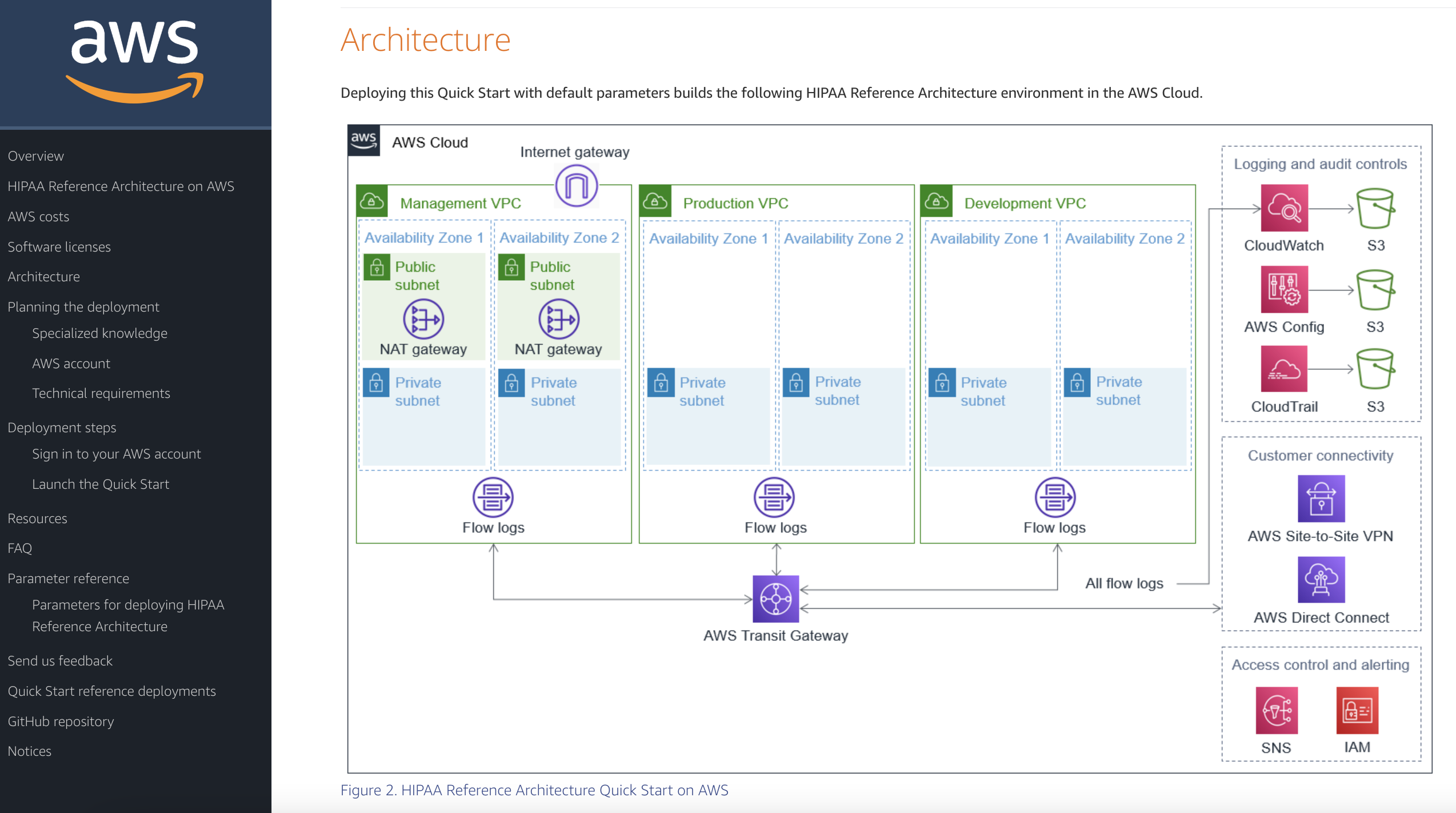
HIPAA Reference Architecture on the AWS Cloud

This Quick Start provides guidance for deploying a U.S. Health Insurance Portability and Accountability Act (HIPAA) architecture on the AWS Cloud. Specifically, this aims to help those in the healthcare industry build and implement HIPAA-ready environments that fit with an organization’s larger HIPAA compliance program. It includes AWS CloudFormation templates that are customizable, plus automatically deploy the environment and configure AWS resources.

HIPAA Reference Architecture on the AWS Cloud

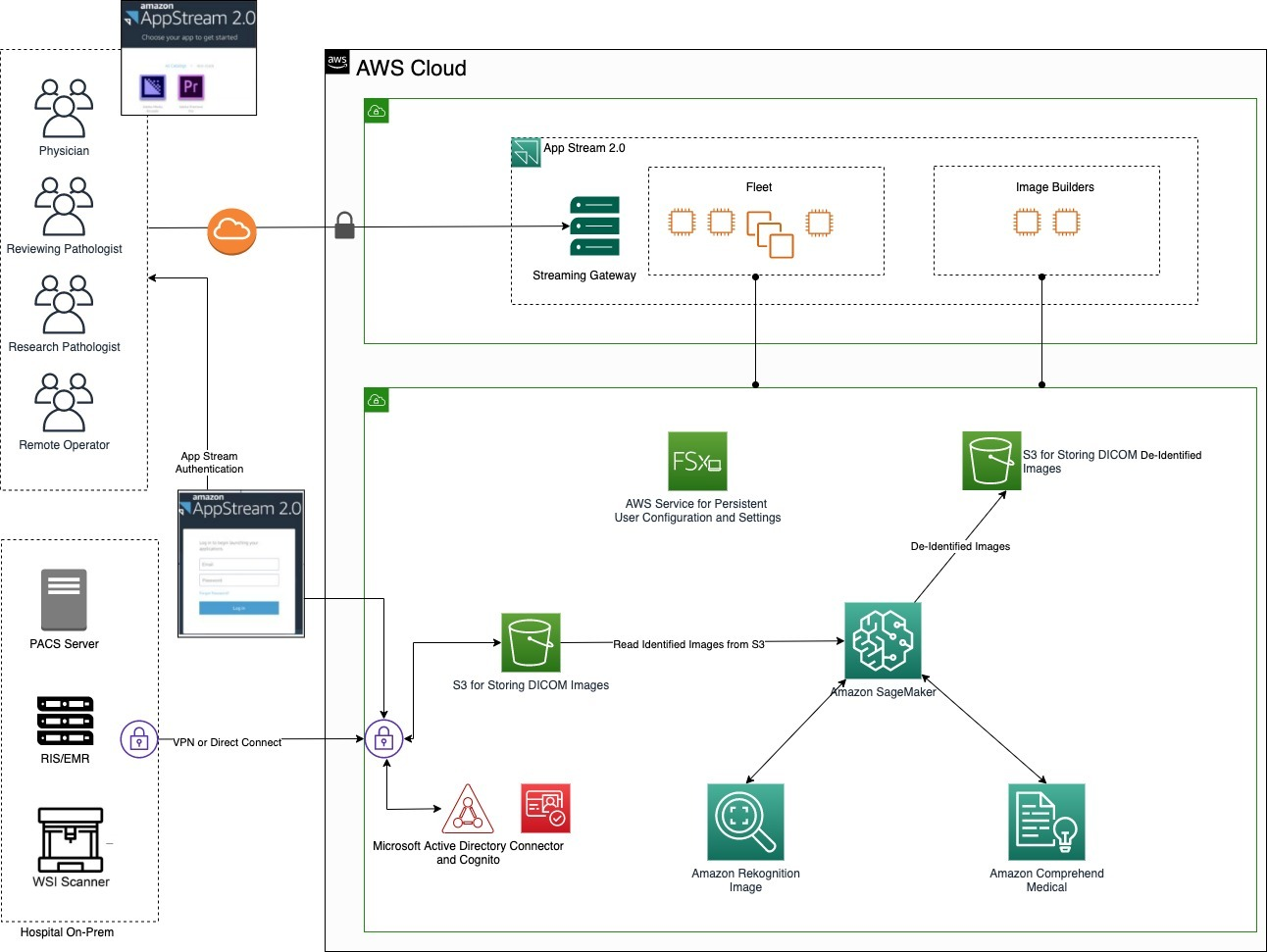
Using AppStream 2.0 to Deliver PACS and Image Analysis in Clinical Trials

Amazon AppStream 2.0 is a fully managed, non-persistent desktop and application service for remotely accessing your work. This means that clinical staff can now access the medical applications and data they need from anywhere. Benefits of using AppStream 2.0 include reduced overhead cost. This Architecture Blog post examines how to construct the AWS architecture for an image analysis application used in clinical trials, while keeping cost down. Furthermore, it demonstrates how something seemingly complex can be built with ease using both AWS services and image analysis applications already in place.

Using AppStream 2.0 to Deliver PACS and Image Analysis in Clinical Trials

How fEMR Delivers Cryptographically Secure and Verifiable Medical Data with Amazon QLDB

Data veracity is fundamental. Patient data is confidential, and when a system deals with sensitive data, there needs to be a clear chain of ownership.

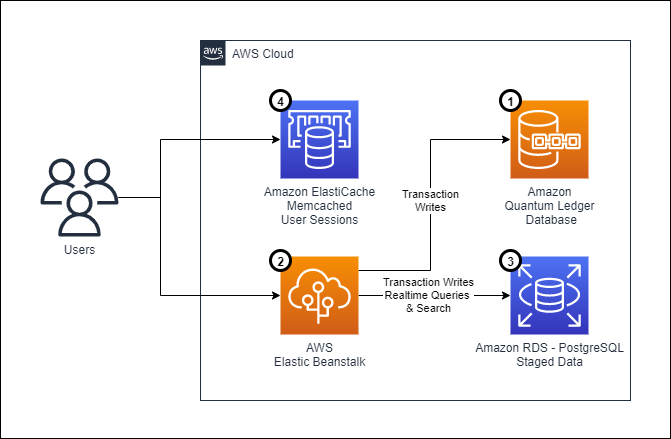
This blog post depicts an architecture based on the use of Amazon Quantum Ledger Database (Amazon QLDB), which addresses the need for data integrity and verifiability in healthcare. By using Amazon QLDB, the team can take advantage of an append-only journal to create a verifiable electronic medical record.

Also explored are the challenges architects face while working on these types of systems, as well as considerations about security, operational efficiency, processes for repeatable deployments using infrastructure as code, and data replication across multiple databases. The design choices architects make when developing a system depend on the context; read more about the mental models adopted in this use case.

How fEMR Delivers Cryptographically Secure and Verifiable Medical Data with Amazon QLDB

Service Workbench on AWS

Service Workbench on AWS is a cloud solution that enables IT teams to provide secure, repeatable, and federated control of access to data, tooling, and compute power. Service Workbench can help redirect researchers’ focus from technical duties back to the research itself, by allowing them to automate of the creation of baseline research setups and providing data access. It gives researchers the ability to build research environments in minutes without having to know about cloud infrastructure or wait for research IT to respond. It is fully HIPAA-compliant and allows for secure peer-to-peer collaboration, including with individuals from other institutions.

See you next time!

Thanks for joining our discussion on health tech architectures! See you in two weeks for more architecture best practices and guidance.

Other posts in this series

Looking for more architecture content?

AWS Architecture Center provides reference architecture diagrams, vetted architecture solutions, Well-Architected best practices, patterns, icons, and more!

Let’s Architect! Architecting with custom chips and accelerators

Post Syndicated from Luca Mezzalira original https://aws.amazon.com/blogs/architecture/lets-architect-custom-chips-and-accelerators/

It’s hard to imagine a world without computer chips. They are at the heart of the devices that we use to work and play every day. Currently, Amazon Web Services (AWS) is offering customers the next generation of computer chip, with lower cost, higher performance, and a reduced carbon footprint.

This edition of Let’s Architect! focuses on custom computer chips, accelerators, and technologies developed by AWS, such as AWS Nitro System, custom-designed Arm-based AWS Graviton processors that support data-intensive workloads, as well as AWS Trainium, and AWS Inferentia chips optimized for machine learning training and inference.

In this post, we discuss these new AWS technologies, their main characteristics, and how to take advantage of them in your architecture.

Deliver high performance ML inference with AWS Inferentia

As Deep Learning models become increasingly large and complex, the training cost for these models increases, as well as the inference time for serving.

With AWS Inferentia, machine learning practitioners can deploy complex neural-network models that are built and trained on popular frameworks, such as Tensorflow, PyTorch, and MXNet on AWS Inferentia-based Amazon EC2 Inf1 instances.

This video introduces you to the main concepts of AWS Inferentia, a service designed to reduce both cost and latency for inference. To speed up inference, AWS Inferentia: selects and shares a model across multiple chips, places pieces inside the on-chip cache, then streams the data via pipeline for low-latency predictions.

Presenters discuss through the structure of the chip, software considerations, as well as anecdotes from the Amazon Alexa team, who uses AWS Inferentia to serve predictions. If you want to learn more about high throughput coupled with low latency, explore Achieve 12x higher throughput and lowest latency for PyTorch Natural Language Processing applications out-of-the-box on AWS Inferentia on the AWS Machine Learning Blog.

AWS Inferentia shares a model across different chips to speed up inference

AWS Inferentia shares a model across different chips to speed up inference

AWS Lambda Functions Powered by AWS Graviton2 Processor – Run Your Functions on Arm and Get Up to 34% Better Price Performance

AWS Lambda is a serverless, event-driven compute service that enables code to run from virtually any type of application or backend service, without provisioning or managing servers. Lambda uses a high-availability compute infrastructure and performs all of the administration of the compute resources, including server- and operating-system maintenance, capacity-provisioning, and automatic scaling and logging.

AWS Graviton processors are designed to deliver the best price and performance for cloud workloads. AWS Graviton3 processors are the latest in the AWS Graviton processor family and provide up to: 25% increased compute performance, two-times higher floating-point performance, and two-times faster cryptographic workload performance compared with AWS Graviton2 processors. This means you can migrate AWS Lambda functions to Graviton in minutes, plus get as much as 19% improved performance at approximately 20% lower cost (compared with x86).

Comparison between x86 and Arm/Graviton2 results for the AWS Lambda function computing prime numbers

Comparison between x86 and Arm/Graviton2 results for the AWS Lambda function computing prime numbers (click to enlarge)

Powering next-gen Amazon EC2: Deep dive on the Nitro System

The AWS Nitro System is a collection of building-block technologies that includes AWS-built hardware offload and security components. It is powering the next generation of Amazon EC2 instances, with a broadening selection of compute, storage, memory, and networking options.

In this session, dive deep into the Nitro System, reviewing its design and architecture, exploring new innovations to the Nitro platform, and understanding how it allows for fasting innovation and increased security while reducing costs.

Traditionally, hypervisors protect the physical hardware and bios; virtualize the CPU, storage, networking; and provide a rich set of management capabilities. With the AWS Nitro System, AWS breaks apart those functions and offloads them to dedicated hardware and software.

AWS Nitro System separates functions and offloads them to dedicated hardware and software, in place of a traditional hypervisor

AWS Nitro System separates functions and offloads them to dedicated hardware and software, in place of a traditional hypervisor

How Amazon migrated a large ecommerce platform to AWS Graviton

In this re:Invent 2021 session, we learn about the benefits Amazon’s ecommerce Datapath platform has realized with AWS Graviton.

With a range of 25%-40% performance gains across 53,000 Amazon EC2 instances worldwide for Prime Day 2021, the Datapath team is lowering their internal costs with AWS Graviton’s improved price performance. Explore the software updates that were required to achieve this and the testing approach used to optimize and validate the deployments. Finally, learn about the Datapath team’s migration approach that was used for their production deployment.

AWS Graviton2: core components

AWS Graviton2: core components

See you next time!

Thanks for exploring custom computer chips, accelerators, and technologies developed by AWS. Join us in a couple of weeks when we talk more about architectures and the daily challenges faced while working with distributed systems.

Other posts in this series

Looking for more architecture content?

AWS Architecture Center provides reference architecture diagrams, vetted architecture solutions, Well-Architected best practices, patterns, icons, and more!

Let’s Architect! Modern data architectures

Post Syndicated from Luca Mezzalira original https://aws.amazon.com/blogs/architecture/lets-architect-modern-data-architectures/

With the rapid growth in data coming from data platforms and applications, and the continuous improvements in state-of-the-art machine learning algorithms, data are becoming key assets for companies.

Modern data architectures include data mesh—a recent style that represents a paradigm shift, in which data is treated as a product and data architectures are designed around business domains. This type of approach supports the idea of distributed data, where each business domain focuses on the quality of the data it produces and exposes to the consumers.

In this edition of Let’s Architect!, we focus on data mesh and how it is designed on AWS, plus other approaches to adopt modern architectural patterns.

Design a data mesh architecture using AWS Lake Formation and AWS Glue

Domain Driven Design (DDD) is a software design approach where a solution is divided into domains aligned with business capabilities, software, and organizational boundaries. Unlike software architectures, most data architectures are often designed around technologies rather than business domains.

In this blog, you can learn about data mesh, an architectural pattern that applies the principles of DDD to data architectures. Data are organized into domains and considered the product that each team owns and offers for consumption.

A data mesh design organizes around data domains. Each domain owns multiple data products with their own data and technology stacks

A data mesh design organizes around data domains. Each domain owns multiple data products with their own data and technology stacks

Building Data Mesh Architectures on AWS

In this video, discover how to use the data mesh approach in AWS. Specifically, how to implement certain design patterns for building a data mesh architecture with AWS services in the cloud.

This is a pragmatic presentation to get a quick understanding of data mesh fundamentals, the benefits/challenges, and the AWS services that you can use to build it. This video provides additional context to the aforementioned blog post and includes several examples on the benefits of modern data architectures.

This diagram demonstrates the pattern for sharing data catalogs between producer domains and consumer domains

This diagram demonstrates the pattern for sharing data catalogs between producer domains and consumer domains

Build a modern data architecture on AWS with Amazon AppFlow, AWS Lake Formation, and Amazon Redshift

In this blog, you can learn how to build a modern data strategy using AWS managed services to ingest data from sources like Salesforce. Also discussed is how to automatically create metadata catalogs and share data seamlessly between the data lake and data warehouse, plus creating alerts in the event of an orchestrated data workflow failure.

The second part of the post explains how a data warehouse can be built by using an agile data modeling pattern, as well as how ELT jobs were quickly developed, orchestrated, and configured to perform automated data quality testing.

A data platform architecture and the subcomponents used to build it

A data platform architecture and the subcomponents used to build it

AWS Lake Formation Workshop

With a modern data architecture on AWS, architects and engineers can rapidly build scalable data lakes; use a broad and deep collection of purpose-built data services; and ensure compliance via unified data access, security, and governance. As data mesh is a modern architectural pattern, you can build it using a service like AWS Lake Formation.

Familiarize yourself with new technologies and services by not only learning how they work, but also to building prototypes and projects to gain hands-on experience. This workshop allows builders to become familiar with the features of AWS Lake Formation and its integrations with other AWS services.

A data catalog is a key component in a data mesh architecture. AWS Glue crawlers interact with data stores and other elements to populate the data catalog

A data catalog is a key component in a data mesh architecture. AWS Glue crawlers interact with data stores and other elements to populate the data catalog

See you next time!

Thanks for joining our discussion on data mesh! See you in a couple of weeks when we talk more about architectures and the challenges that we face every day while working with distributed systems.

Other posts in this series

Looking for more architecture content?

AWS Architecture Center provides reference architecture diagrams, vetted architecture solutions, Well-Architected best practices, patterns, icons, and more!

Let’s Architect! Architecting for the edge

Post Syndicated from Luca Mezzalira original https://aws.amazon.com/blogs/architecture/lets-architect-architecting-for-the-edge/

Edge computing comprises elements of geography and networking and brings computing closer to the end users of the application.

For example, using a content delivery network (CDN) such as AWS CloudFront can help video streaming providers reduce latency for distributing their material by taking advantage of caching at the edge. Another example might look like an Internet of Things (IoT) solution that helps a company run business logic in remote areas or with low latency.

IoT is a challenging field because there are multiple aspects to consider as architects, like hardware, protocols, networking, and software. All of these aspects must be designed to interact together and be fault tolerant.

In this edition of Let’s Architect!, we share resources that are helpful for teams that are approaching or expanding their workloads for edge computing We cover macro topics such as security, best practices for IoT, patterns for machine learning (ML), and scenarios with strict latency requirements.

Build Machine Learning at the edge applications

In Let’s Architect! Architecting for Machine Learning, we touched on some of the most relevant aspects to consider while putting ML into production. However, in many scenarios, you may also have specific constraints like latency or a lack of connectivity that require you to design a deployment at the edge.

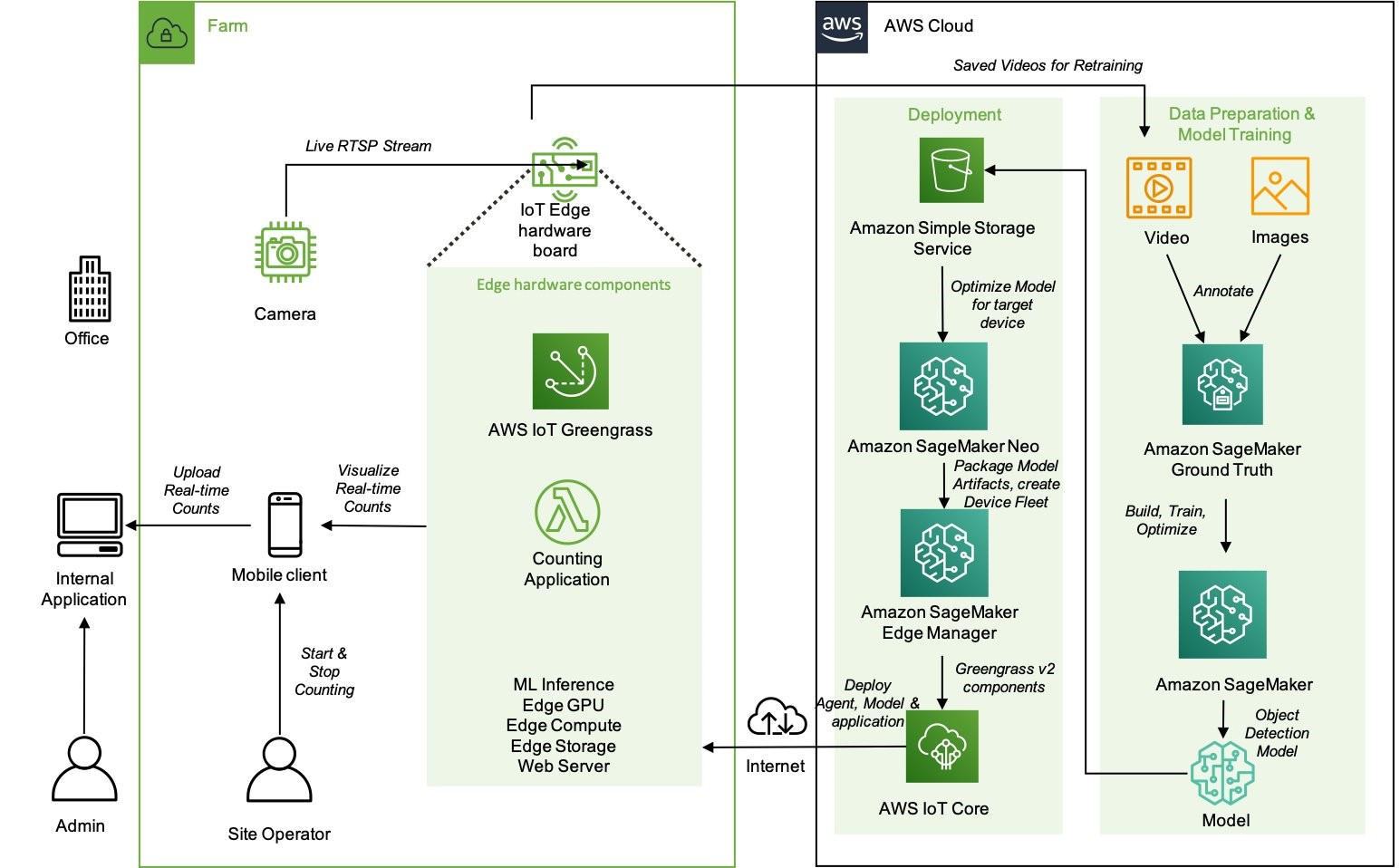
This blog post considers a solution based on ML applied to agriculture, where a reliable connection to the Internet is not always available. You can learn from this scenario, which includes information from model training to deployment, to design your ML workflows for the edge. The solution uses Amazon SageMaker in the cloud to explore, train, package, and deploy the model to AWS IoT Greengrass, which is used for inference at the edge.

 High-level architecture of the components that reside on the farm and how they interact with the cloud environment

High-level architecture of the components that reside on the farm and how they interact with the cloud environment

Security at the edge

Security is one of the fundamental pillars described in the AWS Well-Architected Framework. In all organizations, security is a major concern both for the business and the technical stakeholders. It impacts the products they are building and the perception that customers have.

We covered security in Let’s Architect! Architecting for Security, but we didn’t focus specifically on edge technologies. This whitepaper shows approaches for implementing a security strategy at the edge, with a focus on describing how AWS services can be used. You can learn how to secure workloads designed for content delivery, as well as how to implement network protection to defend against DDoS attacks and protect your IoT solutions.

The AWS Well-Architected Tool is designed to help you review the state of your applications and workloads. It provides a central place for architectural best practices and guidance

The AWS Well-Architected Tool is designed to help you review the state of your applications and workloads. It provides a central place for architectural best practices and guidance

AWS Outposts High Availability Design and Architecture Considerations

AWS Outposts allows companies to run some AWS services on-premises, which may be crucial to comply with strict data residency or low latency requirements. With Outposts, you can deploy servers and racks from AWS directly into your data center.

This whitepaper introduces architectural patterns, anti-patterns, and recommended practices for building highly available systems based on Outposts. You will learn how to manage your Outposts capacity and use networking and data center facility services to set up highly available solutions. Moreover, you can learn from mental models that AWS engineers adopted to consider the different failure modes and the corresponding mitigations, and apply the same models to your architectural challenges.

An Outpost deployed in a customer data center and connected back to its anchor Availability Zone and parent Region

An Outpost deployed in a customer data center and connected back to its anchor Availability Zone and parent Region

AWS IoT Lens

The AWS Well-Architected Lenses are designed for specific industry or technology scenarios. When approaching the IoT domain, the AWS IoT Lens is a key resource to learn the best practices to adopt for IoT. This whitepaper breaks down the IoT workloads into the different subdomains (for example, communication, ingestion) and maps the AWS services for IoT with each specific challenge in the corresponding subdomain.

As architects and developers, we tend to automate and reduce the risk of human errors, so the IoT Lens Checklist is a great resource to review your workloads by following a structured approach.

Workload context checklist from the IoT Lens Checklist

Workload context checklist from the IoT Lens Checklist

See you next time!

Thanks for joining our discussion on architecting for the edge! See you in two weeks when we talk about database architectures on AWS.

Other posts in this series

Looking for more architecture content?

AWS Architecture Center provides reference architecture diagrams, vetted architecture solutions, Well-Architected best practices, patterns, icons, and more!

Let’s Architect! Architecting for big data workloads

Post Syndicated from Luca Mezzalira original https://aws.amazon.com/blogs/architecture/lets-architect-architecting-for-big-data-workloads/

Big data is often defined by 3 Vs: greater variety, volumes, and velocity. Because of the three Vs, big data poses data management challenges that cannot be solved with traditional databases. Not only that, but trying to overcome these issues can lead to scaling problems, bottlenecks, and spiraling costs.

To help with this, you need to look at the whole data management pipeline. Don’t worry, AWS offer many tools and best practices to help you architect better for these challenges. In this post, we share insights into how to build and manage big data pipelines in your architecture.

Everything You Need to Know About Big Data: From Architectural Principles to Best Practices

There are so many tools, frameworks, and services for big data. It can be overwhelming to know where to start what best practices to apply.

This video distills down good practice and good architecture and principles for big data systems into easy topics and guidance.

Manos Samatas presenting the mental models for big data architectures

Manos Samatas presenting the mental models for big data architectures

AWS workshops for big data

This hands-on practice will show you what’s possible for big data services on AWS.

If you are a builder, this AWS workshop catalog includes  several courses on big data and analytics. These resources provide new ideas and how to realize them in practice.

AWS workshops can help you learn the cloud services and recommended architectural patterns

AWS workshops can help you learn the cloud services and recommended architectural patterns

Securely share your data across AWS accounts using AWS Lake Formation

It’s very common to share data stored across organizations or business units, but sharing data often comes with security risks.

This blog post explains how to share data across accounts via AWS Lake Formation in a secure and controlled manner, so your data is never exposed to the wrong people.

This diagram illustrates the architecture for cross-account access

This diagram illustrates the architecture for cross-account access

How Amazon leverages AWS to deliver analytics at enterprise scale

Amazon.com is a customer of AWS like any other customer. But, as you can imagine, Amazon.com has very large and very complex datasets with tens of thousands of transactions at any one time.

This video goes through how Amazon.com uses AWS technologies to run their business successfully, and how you can add the same architectures and principles for yours.

Data warehouse architectures can be used to run queries on large amounts of data from different data sources

Data warehouse architectures can be used to run queries on large amounts of data from different data sources

See you next time!

Thanks for joining our discussion on big data architecture! See you in two weeks for more architecture best practices and guidance.

Other posts in this series

Looking for more architecture content?

AWS Architecture Center provides reference architecture diagrams, vetted architecture solutions, Well-Architected best practices, patterns, icons, and more!

Let’s Architect! Architecting for DevOps

Post Syndicated from Luca Mezzalira original https://aws.amazon.com/blogs/architecture/lets-architect-architecting-for-devops/

Under a DevOps model, the development and operations teams work together and share their skills and knowledge. Sometimes, these teams are merged into a single team where the engineers work across the entire application lifecycle, from development to deployment.

The objective of DevOps is to deliver applications and services quickly and efficiently. This faster pace allows companies to better adapt to their customers’ needs and changes in the market.

In this edition of Let’s Architect!, we’ll talk about DevOps culture and share content to provide helpful mental models and strategies for your work as an architect or engineer.

Automating cross-account CI/CD pipelines

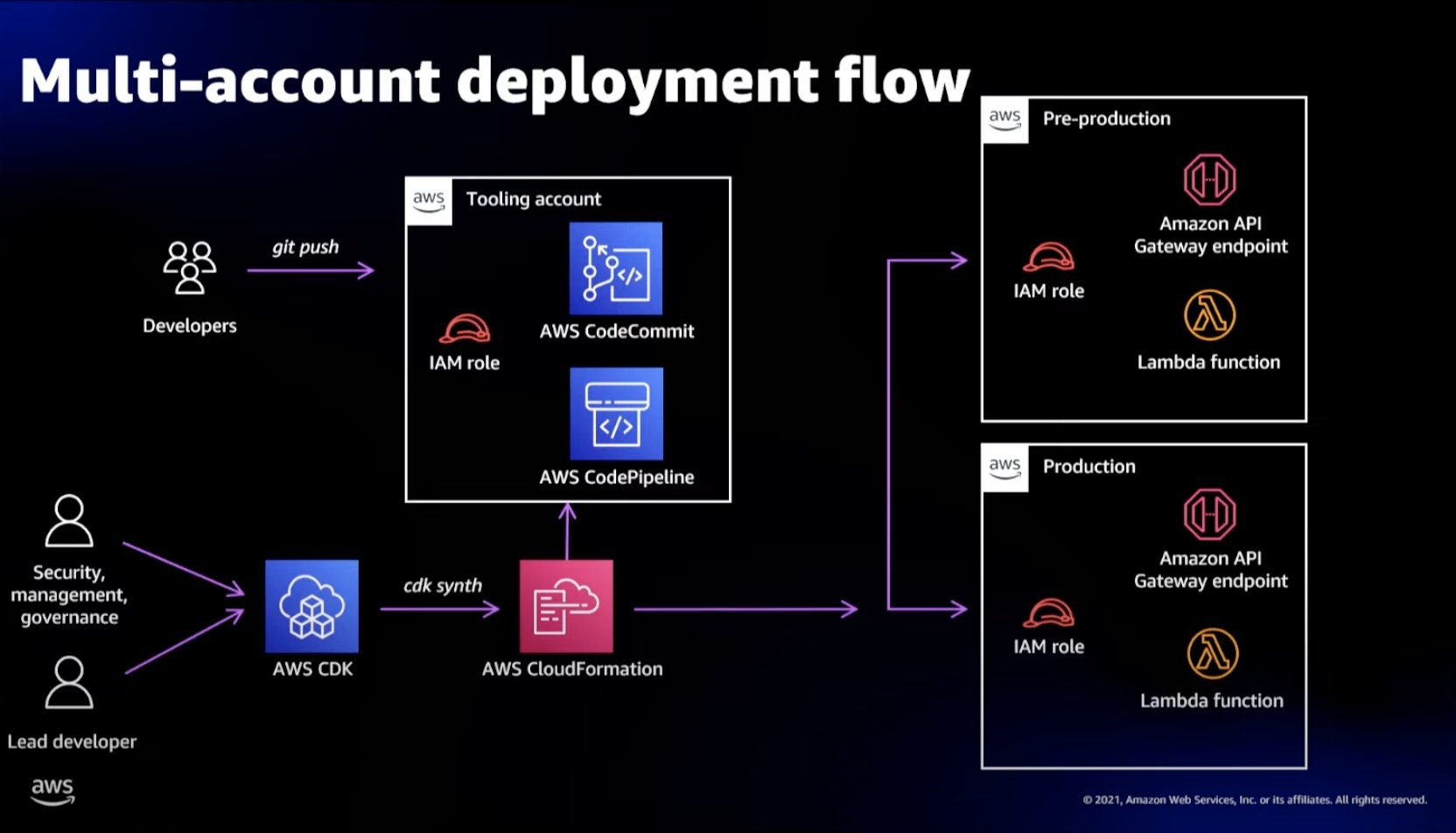
Companies often use the cloud to run their microservices. This means they’re working with different AWS accounts and hosting each microservice in a dedicated account.

This method can be helpful to isolate different environments for software deployment pipelines. A well-designed pipeline is fundamental to releasing software quickly because it allows DevOps engineers to automate the software deployment process.

This video shows the mindset to adopt while designing pipelines for deploying resources across different environments. You’ll learn how to design a pipeline, how to build it using AWS CDK, and see how everything looks in the AWS Console.

AWS X-Ray helps developers analyze distributed applications, such as those built using a microservices architecture

AWS X-Ray helps developers analyze distributed applications, such as those built using a microservices architecture

Automating safe, hands-off deployments

Amazon adopted continuous delivery across the company as a way to automate and standardize how software is deployed and to reduce the time it takes for changes to reach production. In this system, improvements to the release process build up over time. Once deployment risks are identified, teams iterate on the release process and add extra safety in the automated pipeline.

A typical continuous delivery pipeline has four major phases—source, build, test, and production (prod). This article describes the mental models and approaches that engineer use at Amazon to help you understand the design considerations for each step of the pipeline and learn some recommended practices.

Each pipeline has these four major steps; however, more granularity is often added in the testing stage to take advantage of multiple pre-production environments

Each pipeline has these four major steps; however, more granularity is often added in the testing stage to take advantage of multiple pre-production environments

Covert ops on DevOps: Leveraging security to shift left

Architects often deal with complexity and ambiguity while designing architectures and interacting with stakeholders. Consequently, their architectures evolve and grow in complexity.

When your workload becomes more complex, security is an important area to consider and requires attention during the entire Software Development Life Cycle (SDLC). This video shows some methods to add security in a DevOps culture. You’ll learn about shifting your security left to create collaborations between developers and the security team. It will also show you how to uncover vulnerabilities in the SDLC as well as the strategies to implement and automate security in the process through a security as code mindset.

At a high level, people build applications with source code, version control, CI/CD, registries and deployments, and during each step we should design to prevent specific vulnerabilities

At a high level, people build applications with source code, version control, CI/CD, registries and deployments, and during each step we should design to prevent specific vulnerabilities

Instrumenting distributed systems for operational visibility

Every member of a development team works like an owner and operator of the service, whether that member is a developer, manager, or another role. Software developers and architects usually work with logs to see the status of their systems. Logs act as the mechanism to share what’s happening in the software that is running. This information is used for troubleshooting and performance improvement.

This article describes some approaches to feed data into operational dashboards to measure real-time metrics, invoke alarms, and engage with operators to diagnose problems. You’ll learn some mental models and best practices to design a logging system through a set of stories, considerations, and common examples with code samples.

AWS X-Ray helps developers analyze distributed applications, such as those built using a microservices architecture

AWS X-Ray helps developers analyze distributed applications, such as those built using a microservices architecture

Related information

If you want to learn more about DevOps, check What is DevOps?, a public resource with plenty of examples and introductory articles.

See you next time!

Thanks for reading! See you in a couple of weeks when we discuss strategies for applying the AWS Well-Architected framework to your workloads.

Other posts in this series

Looking for more architecture content?

AWS Architecture Center provides reference architecture diagrams, vetted architecture solutions, Well-Architected best practices, patterns, icons, and more!

Let’s Architect! Understanding the build versus buy dilemma

Post Syndicated from Luca Mezzalira original https://aws.amazon.com/blogs/architecture/lets-architect-understanding-the-build-versus-buy-dilemma/

Vendor lock in happens when you commit to a specific technology and then don’t have the freedom to maintain full control of your applications. Even if you want to switch to another vendor, it’s not easy because of the financial investment, effort, and time needed to do so.

In the cloud computing, technology changes quickly, and vendor lock in can impact your business objectives. In this edition of Let’s Architect!, we show you how to avoid the risks of vendor lock in and examine when you should build or buy new software.

Buy vs. Build Revisited: 3 Traps to Avoid

In this blog post, Gregor Hohpe shares some tips on how to avoid risks of vendor lock in. He advises to “build the software that differentiates your business and buy all else” and shows you how opportunity cost, an economic concept, plays major role in whether to build or buy software.

Time to Rethink Build vs Buy

Which is the right option for your business: build or buy? Customers often ask this question. The answer is: it depends.

Moving to the cloud does not necessarily mean you are locked in to a cloud provider. Most cloud platforms offer you a pay as-you-go model with the flexibility to choose from a wide range of services and solutions such as serverless, DevOps, etc. However, having advanced and scalable technology products powering your business can help differentiate your core product. And, it can help you innovate faster and increase speed and agility. This blog post will help you choose the right path for you based on your business objectives.

Switching Costs and Lock-In

In this blog post, Mark Schwartz shares his personal story. He talks about his role as the CIO of US Citizenship and Immigration Services and how he decided to migrate their workloads to the cloud during his time there. He discusses some of his considerations in moving and some of the obstacles he encountered along the way.

See you next time!

Thanks for reading! See you in a couple of weeks when we discuss DevOps.

Other posts in this series

Let’s Architect! Architecting for front end

Post Syndicated from Luca Mezzalira original https://aws.amazon.com/blogs/architecture/lets-architect-architecting-for-front-end/

Many workloads in the cloud need a front-end interface for interacting with APIs, either for populating content or for consuming it. This edition of Let’s Architect! shows you how to scale your front-end applications and serve data across multiple devices.

Micro-frontend Architectures on AWS

Micro-frontends are the technical representation of a business subdomain, they allow independent implementations with the same or different technology.

They help minimize the code shared with other subdomains and are owned by a single team. This blog post shows you how to apply client-side rendering micro-frontends in AWS.

Microservices backend with the micro-frontends

Microservices backend with the micro-frontends

Building serverless micro frontends at the edge

Microservices architectures use techniques like canary releases or blue-green deployments to reduce the blastradius of issues deployed in production. In this video, you’ll learn how Ryanair scaled their front-end practice across their website and how to implement these techniques using Lambda@Edge and Amazon CloudFront.

A serverless architecture designed using AWS Step Functions for SEO integration of micro-frontends

A serverless architecture designed using AWS Step Functions for SEO integration of micro-frontends

Introduction to GraphQL

Many companies build APIs with GraphQL because it gives front-end developers the ability to query multiple databases, microservices, and APIs with a single GraphQL endpoint.

This video introduces asynchronous APIs, GraphQL, and the most common architectural patterns to work with. It also provides a starting point to understand the differences between REST and GraphQL as well as  mental models to identify the right tool for each job.

Some recommended practices to consider while getting a GraphQL API into production

Some recommended practices to consider while getting a GraphQL API into production

Mocking and Testing Serverless APIs with AWS Amplify

This video covers how to write successful tests against an API backend using AWS Amplify. Amplify speeds up the development of your front-end and serverless backend applications.

Thanks to its low-code approach, you can focus on writing the business logic of your applications without the need to create the plumbing between services. If you need to add more configurations using Amplify, review its custom resources.

The Amplify Command Line Interface (CLI) is a unified toolchain to create, integrate, and manage cloud services for your application

The Amplify Command Line Interface (CLI) is a unified toolchain to create, integrate, and manage cloud services for your application

See you next time!

Thanks for reading! See you in a couple of weeks when we discuss technological lock-in.

Other posts in this series

Looking for more architecture content?

AWS Architecture Center provides reference architecture diagrams, vetted architecture solutions, Well-Architected best practices, patterns, icons, and more!

Let’s Architect! Architecting for governance and management

Post Syndicated from Luca Mezzalira original https://aws.amazon.com/blogs/architecture/lets-architect-architecting-for-governance-and-management/

As you develop next-generation cloud-native applications and modernize existing workloads by migrating to cloud, you need cloud teams that can govern centrally with policies for security, compliance, operations and spend management.

In this edition of Let’s Architect!, we gather content to help software architects and tech leaders explore new ideas, case studies, and technical approaches to help you support production implementations for large-scale migrations.

Seamless Transition from an AWS Landing Zone to AWS Control Tower

A multi-account AWS environment helps businesses migrate, modernize, and innovate faster. With the large number of design choices, setting up a multi-account strategy can take a significant amount of time, because it involves configuring multiple accounts and services and requires a deep understanding of AWS.

This blog post shows you how AWS Control Tower helps customers achieve their desired business outcomes by setting up a scalable, secure, and governed multi-account environment. This post describes a strategic migration of 140 AWS accounts from customer Landing Zone to an AWS Control Tower-based solution.

Multi-account landing zone architecture that uses AWS Control Tower

Multi-account landing zone architecture that uses AWS Control Tower

Build a strong identity foundation that uses your existing on-premises Active Directory

How do you use your existing Microsoft Active Directory (AD) to reliably authenticate access for AWS accounts, infrastructure running on AWS, and third-party applications?

The architecture shown in this blog post is designed to be highly available and extends access to your existing AD to AWS, which enables your users to use their existing credentials to access authorized AWS resources and applications. This post highlights the importance of implementing a cloud authentication and authorization architecture that addresses the variety of requirements for an organization’s AWS Cloud environment.

Multi-account Complete AD architecture with trusts and AWS SSO using AD as the identity source

Multi-account Complete AD architecture with trusts and AWS SSO using AD as the identity source

Migrate Resources Between AWS Accounts

AWS customers often start their cloud journey with one AWS account, and over time they deploy many resources within that account. Eventually though, they’ll need to use more accounts and migrate resources across AWS Regions and accounts to reduce latency or increase resiliency.

This blog post shows four approaches to migrate resources based on type, configuration, and workload needs across AWS accounts.

Migration infrastructure approach

Migration infrastructure approach

Transform your organization’s culture with a Cloud Center of Excellence

As enterprises seek digital transformation, their efforts to use cloud technology within their organizations can be a bit disjointed. This video introduces you to the Cloud Center of Excellence (CCoE) and shows you how it can help transform your business via cloud adoption, migration, and operations. By using the CCoE, you’ll establish and us a cross-functional team of people  for developing and managing your cloud strategy, governance, and best practices that your organization can use to transform the business using the cloud.

Benefits of CCoE

Benefits of CCoE

See you next time!

Thanks for reading! If you want to dive into this topic even more, don’t miss the Management and Governance on AWS product page.

See you in a couple of weeks with novel ways to architect for front-end web and mobile!

Other posts in this series

Looking for more architecture content?

AWS Architecture Center provides reference architecture diagrams, vetted architecture solutions, Well-Architected best practices, patterns, icons, and more!