Tag Archives: Week in Review

AWS Weekly Roundup: AWS Builder Center, Amazon Q, Oracle Database@AWS, and more (July 14, 2025)

Post Syndicated from Matheus Guimaraes original https://aws.amazon.com/blogs/aws/aws-weekly-roundup-aws-builder-center-amazon-q-oracle-databaseaws-and-more-july-14-2025/

Summer is well and truly here in the UK! I’m a bit of a summer grinch though so, unlike most people, I’m not crazy about “the glorious sun” scorching me when I’m out and about. On the upside, this provides the perfect excuse to retreat to the comfort of a well-ventilated room where I can focus on coding and curating the latest AWS releases to bring you the highlights.

I also managed to escape the heat for most of yesterday while recording an episode for the AWS Developers Podcast where the wonderful Sebastien Stormaq and Tiffany Souterre interviewed me about games development. If you haven’t discovered it yet, I highly recommend you give it a go as the episodes are full of interesting lessons and insights from not just AWS, but customers and community members who share their stories and expertise in a relaxed conversation.

Alright, ready to discover some of the new things we released last week? Here are the highlights.

AWS Builder Center
There is a new home for AWS builders and community members! AWS Builder Center is a new place where cloud builders can connect, share knowledge, and access resources to enhance their AWS journey. The platform enables users to join community programs, discover trending topics, access AWS Skill Builder courses, participate in technical challenges, and more, using a single Builder ID sign-in.

One the features that I’m personally most excited about is the Wishlist. You can now create wishes and tell AWS directly about ways to improve our products and services or share original ideas that you think could help you and your teams. You can also browse and upvote existing wishes to support any suggestions that you think should be prioritized. The AWS teams will keep an eye on this and if a wish has enough traction it may just be considered!

Read the news blog post for a quick tour through some of the most exciting features or head over to AWS Builder Center and start exploring!

AI
The world of AI keeps moving fast and changing our world, by providing new and exciting ways to do things and become more productive. Here are two releases from last week that caught my attention.

  • Amazon Q chat in the AWS Management Console can now query AWS service data – Amazon Q Developer expands its capabilities by enabling natural language queries of data stored across AWS services like S3, DynamoDB, and CloudWatch, directly from the AWS Console, Slack, Microsoft Teams, and AWS Console Mobile Application. This enhancement streamlines cloud management and troubleshooting by allowing users to access and analyze service data through conversational interfaces, with access controls managed through IAM permissions.
  • Amazon CloudWatch and Application Signals MCP servers for AI-assisted troubleshooting – AWS has released two new Model Context Protocol (MCP) servers – CloudWatch MCP and Application Signals MCP – that enable AI agents to leverage observability data for automated troubleshooting through conversational interfaces. These open-source servers allow AI assistants to analyze metrics, alarms, logs, traces, and service health data across AWS environments, streamlining incident response and root cause analysis without requiring developers to manually navigate multiple AWS consoles.

Oracle Database@AWS
It seems like yesterday when Andy Jassy announced our partnership with Oracle to create Oracle Database@AWS, a jointly offered service that runs Oracle databases on Exadata infrastructure directly within AWS data centers, providing a unified AWS-Oracle experience. Fast forward to last week and Oracle Database@AWS has reached a significant milestone with its general availability release. It is now available in US East (N. Virginia) and US West (Oregon) regions, with plans to expand to 20 additional regions globally.

In addition, VPC Lattice has added support for Oracle Database@AWS enabling seamless connectivity between applications in VPCs and on-premises environments to Oracle database networks. The integration simplifies network management and provides secure access from Oracle Database@AWS to AWS services like Amazon S3 and Amazon Redshift, without requiring complex networking setup.

So if you’re looking to migrate your Oracle database workloads, now is a great time to explore Oracle Database@AWS as it offers a compelling path forward with minimal modifications required.

Additional highlights
Here are some other releases that I think many people will be happy about.

  • AWS Config now supports 12 new resource types – AWS Config has expanded its monitoring capabilities with support for 12 new resource types across services including BackupGateway, CloudFront, EntityResolution, Bedrock, and more. These additions are automatically tracked if you have enabled recording for all resource types, enhancing your ability to discover, assess, and audit AWS resources.
  • Amazon SageMaker Studio now supports remote connections from Visual Studio Code – Amazon SageMaker Studio now supports remote connections from Visual Studio Code, allowing developers to use their familiar VS Code setup while leveraging SageMaker’s scalable compute resources for AI development.
  • AWS Network Firewall: Native AWS Transit Gateway support in all regions – AWS Network Firewall now offers native integration with AWS Transit Gateway across all supported regions, enabling direct attachment and simplified traffic inspection between VPCs and on-premises networks. This integration eliminates the need for managing dedicated VPC subnets and route tables while providing multi-AZ redundancy for improved security and reliability.

Upcoming AWS Events
AWS Summit New York – this is definitely one to watch…literally! Registrations are closed due to capacity but you can tune in to watch live all the announcements and launches! No spoilers, but, trust me, there are a quite a few exciting things in store, so make sure to check it out.

AWS Gen AI LoftsAWS Gen AI Lofts are multi-day events offering hands-on workshops, expert guidance, and networking opportunities for developers and business leaders looking to explore or advance their generative AI journey. These events are hosted across multiple global locations including San Francisco, Berlin, Dubai, Dublin, Bengaluru, Manchester, Paris, and Tel Aviv, providing accessible opportunities to accelerate your generative AI adoption.

And that’s it for this week! Come back next Monday for more highlights and keep your AWS knowledge up to date as we cover the latest releases.

Matheus Guimaraes | @codingmatheus

AWS Weekly Roundup: EC2 C8gn instances, Amazon Nova Canvas virtual try-on, and more (July 7, 2025)

Post Syndicated from Elizabeth Fuentes original https://aws.amazon.com/blogs/aws/aws-weekly-roundup-amazon-bedrock-api-keys-amazon-nova-canvas-virtual-try-on-and-more-july-7-2025/

Every Monday we tell you about the best releases and blogs that caught our attention last week.

Before continuing with this AWS Weekly Roundup, I’d like to share that last month I moved with my family to San Francisco, California, to start a new role as Developer Advocate/SDE, GenAI.

This excites me because I’ll have the opportunity to connect with new communities in the Bay Area while tackling exciting new challenges. If you’re part of a community focused on building generative AI and agentics applications, or know of one, I’d love to connect. Let’s connect!

Last week’s launches
Here are the launches from last week:

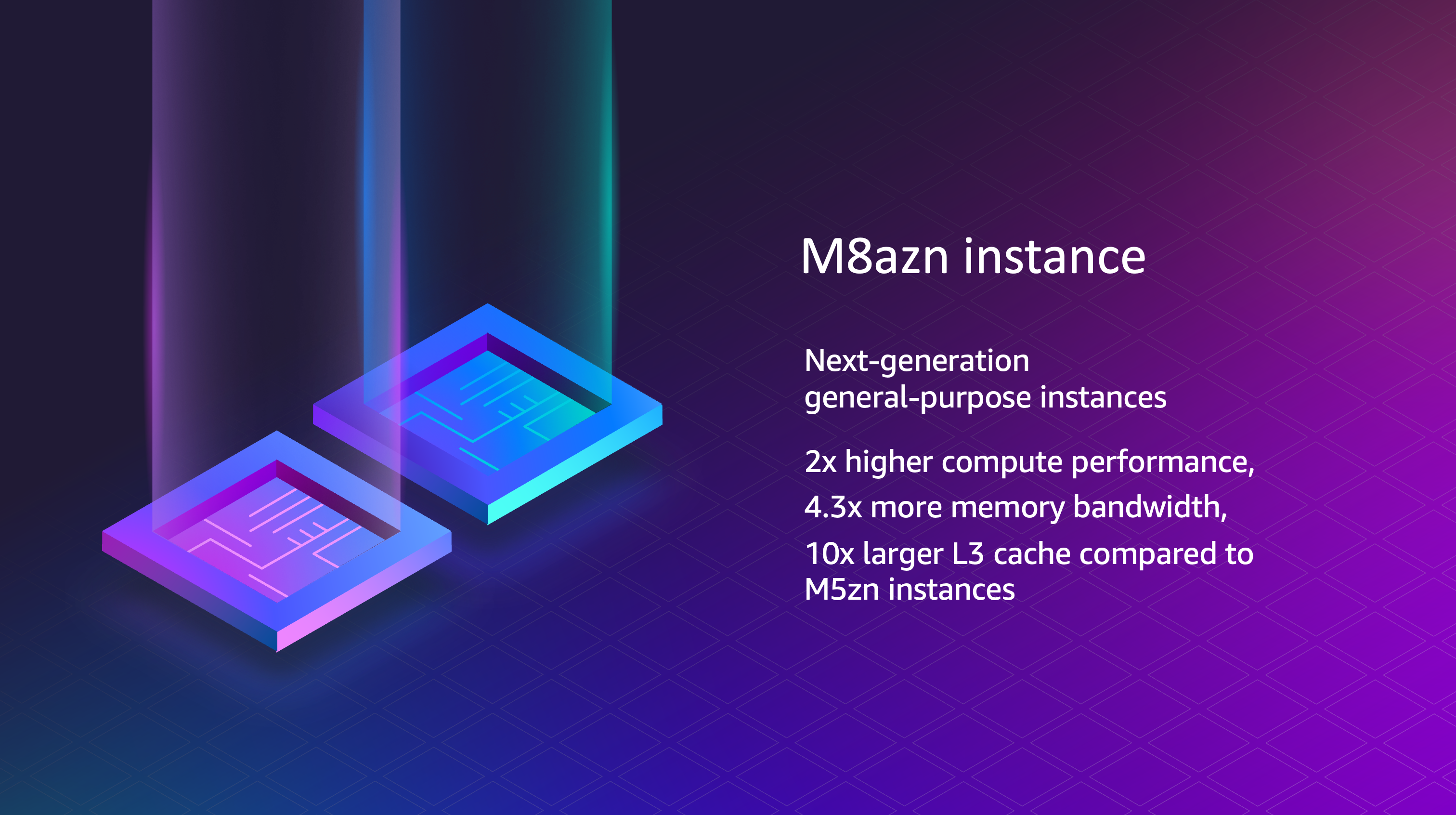
  • New Amazon EC2 C8gn instances powered by AWS Graviton4 offering up to 600Gbps network bandwidth – Amazon Elastic Compute Cloud (Amazon EC2) C8gn instances are now generally available, powered by AWS Graviton4 processors and 6th generation AWS Nitro Cards. These network-optimized instances deliver up to 600 Gbps network bandwidth. This represents the highest bandwidth among EC2 network-optimized instances, with up to 192 vCPUs and 384 GiB memory. They provide 30% higher compute performance than C7gn instances and are ideal for network-intensive workloads like virtual appliances, data analytics, and cluster computing jobs.
  • Build the highest resilience apps with multi-Region strong consistency in Amazon DynamoDB global tables – Amazon DynamoDB global tables now supports multi-Region strong consistency (MRSC) for applications requiring zero Recovery Point Objective (RPO). This capability ensures applications can read the latest data from any Region during outages, addressing critical needs in payment processing and financial services. MRSC requires three AWS Regions configured as either three full replicas or two replicas plus a witness, providing the highest level of application resilience for mission-critical workloads.
  • Amazon Nova Canvas update: Virtual try-on and style options now available – Amazon Nova Canvas introduces virtual try-on capabilities that help you visualize how clothing looks on a person by combining two images, plus eight new pre-trained style options (3D animation, design sketch, vector illustration, graphic novel, etc.) for generating images with improved artistic consistency. Available in three AWS Regions, these features enhance AI-powered image generation capabilities for retailers and content creators seeking realistic product visualizations.
  • Amazon Q in Connect now supports 7 languages for proactive recommendations – Amazon Q in Connect, a generative AI-powered assistant for customer service, now provides proactive recommendations in seven languages: English, Spanish, French, Portuguese, Mandarin, Japanese, and Korean. The AI-powered customer service assistant detects customer intent during voice and chat interactions to help agents resolve issues quickly and accurately.
  • Amazon Aurora MySQL and Amazon RDS for MySQL integration with Amazon SageMaker is now available – This integration provides near real-time data availability for analytics. It automatically extracts MySQL data into lakehouses with Apache Iceberg compatibility. You can then access this data seamlessly through various analytics engines and machine learning tools.
  • Amazon Aurora DSQL is now available in additional AWS RegionsAmazon Aurora DSQL expands to Asia Pacific (Seoul) and now supports multi-Region clusters across Asia Pacific and European regions. This serverless, distributed SQL database offers unlimited scalability, highest availability, and zero infrastructure management with AWS Free Tier access.

Other AWS blog posts

  • Optimize RAG in production environments using Amazon SageMaker JumpStart and Amazon OpenSearch Service – Learn how to optimize Retrieval Augmented Generation (RAG) in production environments using Amazon SageMaker JumpStart and Amazon OpenSearch Service. This comprehensive guide demonstrates implementing RAG workflows with LangChain, covers OpenSearch optimization strategies, provides setup instructions, and explains benefits of combining these AWS services for scalable, cost-effective generative AI applications.v
  • Agentic GenAI App Using Bedrock, MCP servers on EKS – This post shows how to build a scalable AI chat application using Amazon Bedrock, Strands Agent, and Model Context Protocol (MCP) servers deployed on Amazon Elastic Kubernetes Service (Amazon EKS). The architecture combines agentic workflows with containerized microservices for intelligent, auto-scaling conversations with multiple foundation models.
  • Enforce table level access control on data lake tables using AWS Glue 5.0 with AWS Lake Formation – AWS Glue 5.0 introduces Full-Table Access (FTA) control for Apache Spark with AWS Lake Formation, providing table-level security without fine-grained access overhead. This feature supports native Spark SQL/DataFrames for Lake Formation tables. It enables read/write operations on Iceberg and Hive tables with improved performance and lower costs.

Upcoming AWS events
Check your calendars and sign up for these upcoming AWS events:

  • AWS re:Invent – Register now to get a head start on choosing your best learning path, booking travel and accommodations, and bringing your team to learn, connect, and have fun. Early-career professionals can apply for the All Builders Welcome Grant program, designed to remove financial barriers and create diverse pathways into cloud technology. Applications are now open and close on July 15, 2025.
  • AWS NY Summit – You can gain insights from Swami’s keynote featuring the latest cutting-edge AWS technologies in compute, storage, and generative AI. My News Blog team is also preparing some exciting news for you. If you’re unable to attend in person, you can still participate by registering for the global live stream. Also, save the date for these upcoming Summits in July and August near your city.
  • AWS Builders Online Series – If you’re based in one of the Asia Pacific time zones, join and learn fundamental AWS concepts, architectural best practices, and hands-on demonstrations to help you build, migrate, and deploy your workloads on AWS.
  • Join AWS Gen AI Lofts – Experience AWS Gen AI Lofts across San Francisco, Berlin, Dubai, Dublin, Bengaluru, Manchester, Paris, Tel Aviv, and additional locations – hands-on workshops, expert guidance, investor networking, and collaborative spaces designed to accelerate your generative AI startup journey.

You can browse all upcoming in-person and virtual events.

That’s all for this week. Check back next Monday for another Weekly Roundup!

— Eli

AWS Weekly Roundup: Project Rainier, Amazon CloudWatch investigations, AWS MCP servers, and more (June 30, 2025)

Post Syndicated from Channy Yun (윤석찬) original https://aws.amazon.com/blogs/aws/aws-weekly-roundup-project-rainier-amazon-cloudwatch-investigations-aws-mcp-servers-and-more-june-30-2025/

Every time I visit Seattle, the first thing that greets me at the airport is Mount Rainier. Did you know that the most innovative project at Amazon Web Services (AWS) is named after this mountain?

Project Rainier is a new project to create what is expected to be the world’s most powerful computer for training AI models across multiple data centers in the United Stages. Anthropic will develop the advanced versions of its Claude models with five times more computing power than its current largest training cluster.

The key technology powering Project Rainier is AWS custom-designed Trainium2 chips, which are specialized for the immense data processing required to train complex AI models. Thousands of these Trainium2 chips will be connected in a new type of Amazon EC2 UltraServer and EC2 UltraCluster architecture that allows ultra-fast communication and data sharing across the massive system.

Learn about the AWS vertical integration of Project Rainer, where it designs every component of the technology stack from chips to software, allows it to optimize the entire system for maximum efficiency and reliability.

Last week’s launches
Here are some launches that got my attention:

  • Amazon S3 access for Amazon FSx for OpenZFS – You can access and analyze your FSx for OpenZFS file data through Amazon S3 Access Points, enabling seamless integration with AWS AI/ML, and analytics services without moving your data out of the file system. You can treat your FSx for OpenZFS data as if it were stored in S3, making it accessible through the S3 API for various applications including Amazon Bedrock, Amazon SageMaker, AWS Glue, and other S3 based cloud-native applications.
  • Amazon S3 with sort and z-order compaction for Apache Iceberg tables – You can optimize query performance and reduce costs with new sort and z-order compaction. With S3 Tables, sort compaction automatically organizes data files based on defined column orders, while z-order compaction can be enabled through the maintenance API for efficient multicolumn queries.
  • Amazon CloudWatch investigations – You can accelerate your operational troubleshooting in AWS environments using the Amazon CloudWatch AI-powered investigation feature, which helps identify anomalies, surface related signals, and suggest remediation steps. This capability can be initiated through CloudWatch data widgets, multiple AWS consoles, CloudWatch alarm actions, or Amazon Q chat and enables team collaboration and integration with Slack and Microsoft Teams.
  • Amazon Bedrock Guardrails Standard tier – You can enhance your AI content safety measures using the new Standard tier. It offers improved content filtering and topic denial capabilities across up to 60 languages, better detection of variations including typos, and stronger protection against prompt attacks. This feature lets you configure safeguards to block harmful content, prevent model hallucinations, redact personally identifiable information (PII), and verify factual claims through automated reasoning checks.
  • Amazon Route 53 Resolver endpoints for private hosted zone – You can simplify DNS management across AWS and on-premises infrastructure using the new Route 53 DNS delegation feature for private hosted zone subdomains, which works with both inbound and outbound Resolver endpoints. You can delegate subdomain authority between your on-premises infrastructure and Route 53 Resolver cloud service using name server records, eliminating the need for complex conditional forwarding rules.
  • Amazon Q Developer CLI for Java transformation – You can automate and scale Java application upgrades using the new Amazon Q Developer Java transformation command line interface (CLI). This feature perform upgrades from Java versions 8, 11, 17, or 21 to versions 17 or 21 directly from the command line. This tool offers selective transformation options so you can choose specific steps from transformation plans and customize library upgrades.
  • New AWS IoT Device Management managed integrations – You can simplify Internet of Things (IoT) device management across multiple manufacturers and protocols using the new managed integrations feature, which provides a unified interface for controlling devices whether they connect directly, through hubs or third-party clouds. The feature includes pre-built cloud-to-cloud (C2C) connectors, device data model templates, and SDKs that support ZigBee, Z-Wave, and Wi-Fi protocols, while you can still create custom connectors and data models.

For a full list of AWS announcements, be sure to keep an eye on the What’s New with AWS? page.

Other AWS news
Various Model Context Protocol (MCP) servers for AWS services have been released. Here are some tutorials about MCP servers that you might find interesting:

Upcoming AWS events
Check your calendars and sign up for these upcoming AWS events:

  • AWS re:Invent – Register now to get a head start on choosing your best learning path, booking travel and accommodations, and bringing your team to learn, connect, and have fun. If you’re an early-career professional, you can apply to the All Builders Welcome Grant program, which is designed to remove financial barriers and create diverse pathways into cloud technology.
  • AWS NY Summits – You can gain insights from Swami’s keynote featuring the latest cutting-edge AWS technologies in compute, storage, and generative AI. My News Blog team is also preparing some exciting news for you. If you’re unable to attend in person, you can still participate by registering for the global live stream. Also, save the date for these upcoming Summits in July and August near your city.
  • AWS Builders Online Series – If you’re based in one of the Asia Pacific time zones, join and learn fundamental AWS concepts, architectural best practices, and hands-on demonstrations to help you build, migrate, and deploy your workloads on AWS.

You can browse all upcoming in-person and virtual events.

That’s all for this week. Check back next Monday for another Weekly Roundup!

Channy

AWS Weekly Roundup: re:Inforce re:Cap, Valkey GLIDE 2.0, Avro and Protobuf or MCP Servers on Lambda, and more (June 23, 2025)

Post Syndicated from Sébastien Stormacq original https://aws.amazon.com/blogs/aws/aws-weekly-roundup-reinforce-recap-valkey-glide-2-0-avro-and-protobuf-or-mcp-servers-on-lambda-and-more-june-23-2025/

Last week’s hallmark event was the security-focused AWS re:Inforce conference.


AWS re:Inforce 2025

AWS re:Inforce 2025

Now a tradition, the blog team wrote a re:Cap post to summarize the announcements and link to some of the top blog posts.

To further summarize, several new security innovations were announced, including enhanced IAM Access Analyzer capabilities, MFA enforcement for root users, and threat intelligence integration with AWS Network Firewall. Other notable updates include exportable public SSL/TLS certificates from AWS Certificate Manager, a simplified AWS WAF console experience, and a new AWS Shield feature for proactive network security (in preview). Additionally, AWS Security Hub has been enhanced for risk prioritization (Preview), and Amazon GuardDuty now supports Amazon EKS clusters.

But my favorite announcement came from the Amazon Verified Permissions team. They released an open source package for Express.js, enabling developers to implement external fine-grained authorization for web application APIs. This simplifies authorization integration, reducing code complexity and improving application security.

The team also published a blog post that outlines how to create a Verified Permissions policy store, add Cedar and Verified Permissions authorisation middleware to your app, create and deploy a Cedar schema, and create and deploy Cedar policies. The Cedar schema is generated from an OpenAPI specification and formatted for use with the AWS Command Line Interface (CLI).

Let’s look at last week’s other new announcements.

Last week’s launches
Apart from re:Inforce, here are the launches that got my attention.

Kafka customers use Avro and Protobuf formats for efficient data storage, fast serialization and deserialization, schema evolution support, and interoperability between different programming languages. They utilize schema registries to manage, evolve, and validate schemas before data enters processing pipelines. Previously, you were required to write custom code within your Lambda function to validate, deserialize, and filter events when using these data formats. With this launch, Lambda natively supports Avro and Protobuf, as well as integration with GSR, CCSR, and SCSR. This enables you to process your Kafka events using these data formats without writing custom code. Additionally, you can optimize costs through event filtering to prevent unnecessary function invocations.

  • Amazon S3 Express One Zone now supports atomic renaming of objects with a single API call – The RenameObject API simplifies data management in S3 directory buckets by transforming a multi-step rename operation into a single API call. This means you can now rename objects in S3 Express One Zone by specifying an existing object’s name as the source and the new name as the destination within the same S3 directory bucket. With no data movement involved, this capability accelerates applications like log file management, media processing, and data analytics, while also lowering costs. For instance, renaming a 1-terabyte log file can now complete in milliseconds, instead of hours, significantly accelerating applications and reducing costs.
  • Valkey introduces GLIDE 2.0 with support for Go, OpenTelemetry, and pipeline batching – AWS, in partnership with Google and the Valkey community, announces the general availability of General Language Independent Driver for the Enterprise (GLIDE) 2.0. This is the latest release of one of AWS’s official open-source Valkey client libraries. Valkey, the most permissive open-source alternative to Redis, is stewarded by the Linux Foundation and will always remain open-source. Valkey GLIDE is a reliable, high-performance, multi-language client that supports all Valkey commands

GLIDE 2.0 introduces new capabilities that expand developer support, improve observability, and optimise performance for high-throughput workloads. Valkey GLIDE 2.0 extends its multi-language support to Go (contributed by Google), joining Java, Python, and Node.js to provide a consistent, fully compatible API experience across all four languages. More language support is on the way. With this release, Valkey GLIDE now supports OpenTelemetry, an open-source, vendor-neutral framework that enables developers to generate, collect, and export telemetry data and critical client-side performance insights. Additionally, GLIDE 2.0 introduces batching capabilities, reducing network overhead and latency for high-frequency use cases by allowing multiple commands to be grouped and executed as a single operation.

You can discover more about Valkey GLIDE in this recent episode of the AWS Developers Podcast: Inside Valkey GLIDE: building a next-gen Valkey client library with Rust.

Podcast episode on Valkey Glide

For a full list of AWS announcements, be sure to keep an eye on the What’s New at AWS page.

Some other reading
My Belgian compatriot Alexis has written the first article of a two-part series explaining how to develop an MCP Tool server with a streamable HTTP transport and deploy it on Lambda and API Gateway. This is a must-read for anyone implementing MCP servers on AWS. I’m eagerly looking forward to the second part, where Alexis will discuss authentication and authorization for remote MCP servers.

Other AWS events
Check your calendar and sign up for upcoming AWS events.

AWS GenAI Lofts are collaborative spaces and immersive experiences that showcase AWS expertise in cloud computing and AI. They provide startups and developers with hands-on access to AI products and services, exclusive sessions with industry leaders, and valuable networking opportunities with investors and peers. Find a GenAI Loft location near you and don’t forget to register.

AWS Summits are free online and in-person events that bring the cloud computing community together to connect, collaborate, and learn about AWS. Register in your nearest city: Japan (this week June 25 – 26), Online in India (June 26), New-York City (July 16).

Save the date for these upcoming Summits in July and August: Taipei (July 29), Jakarta (August 7), Mexico (August 8), São Paulo (August 13), and Johannesburg (August 20) (and more to come in September and October).

Browse all upcoming AWS led in-person and virtual events here.

That’s all for this week. Check back next Monday for another Weekly Roundup!

— seb

This post is part of our Weekly Roundup series. Check back each week for a quick roundup of interesting news and announcements from AWS!

AWS Weekly Roundup: AWS re:Inforce 2025, AWS WAF, AWS Control Tower, and more (June 16, 2025)

Post Syndicated from Esra Kayabali original https://aws.amazon.com/blogs/aws/aws-weekly-roundup-aws-reinforce-2025-aws-waf-aws-control-tower-and-more-june-16-2025/

Today marks the start of AWS re:Inforce 2025, where security professionals are gathering for three days of technical learning sessions, workshops, and demonstrations. This security-focused conference brings together AWS security specialists who build and maintain the services that organizations rely on for their cloud security needs.

AWS Chief Information Security Officer (CISO) Amy Herzog will deliver the conference keynote along with guest speakers who will share new security capabilities and implementation insights. The event offers multiple learning paths with sessions designed for various technical roles and expertise levels. Many of my colleagues from across AWS are leading hands-on workshops, demonstrating new security features, and facilitating community discussions. For those unable to join us in Philadelphia, the keynote and innovation talks will be viewable by livestream during the event, and available to watch on demand after the event. Look out for the key announcements and technical insights from the conference in upcoming posts!

Let’s look at last week’s new announcements.

Last week’s launches
Here are the launches that got my attention.

Extend Amazon Q Developer IDE plugins with MCP toolsAmazon Q Developer now supports Model Context Protocol (MCP) in its integrated development environment (IDE) plugins, helping developers integrate external tools for enhanced contextual development workflows. You can now augment the built-in tools with any MCP server that supports the stdio transport layer. These servers can be managed within the Amazon Q Developer user interface. This makes it easy to add, remove, and modify tool permissions. The integration enables more customized responses by orchestrating tasks across both native and MCP server-based tools. MCP support is available in Visual Studio Code and JetBrains IDE plugins, as well as in the Amazon Q Developer command line interface (CLI), with detailed documentation and implementation guides available in the Amazon Q Developer documentation.

AWS WAF now supports automatic application layer DDoS protection – AWS has enhanced its application layer (L7) distributed denial of service (DDoS) protection capabilities with faster automatic detection and mitigation that responds to events within seconds. This AWS Managed Rules group automatically detects and mitigates DDoS attacks of any duration to keep applications running on Amazon CloudFront, Application Load Balancer, and other AWS WAF supported services available to users. The system establishes a baseline within minutes of activation using machine learning (ML) models to detect traffic anomalies, then automatically applies rules to address suspicious requests. Configuration options help you customize responses such as presenting challenges or blocking requests. The feature is available to all AWS WAF and AWS Shield Advanced subscribers in all supported AWS Regions, except Asia Pacific (Thailand), Mexico (Central), and China (Beijing and Ningxia). To learn more about AWS WAF application layer (L7) DDoS protection, visit the AWS WAF documentation or the AWS WAF console.

AWS Control Tower now supports service-linked AWS Config managed AWS Config rulesAWS Control Tower now deploys service-linked AWS Config rules directly in managed accounts, replacing the previous CloudFormation StackSets deployment method. This change improves deployment speed when enabling service-linked AWS Config rules across multiple AWS Control Tower managed accounts and Regions. These service-linked rules are managed entirely by AWS services and can’t be edited or deleted by users. This helps maintain consistency and prevent configuration drift. AWS Control Tower Config rules detect resource noncompliance within accounts and provide alerts through the dashboard. You can deploy these controls using the AWS Control Tower console or AWS Control Tower control APIs.

Powertools for AWS Lambda introduces Bedrock Agents Function utility – The new Amazon Bedrock Agents Function utility in Powertools for AWS Lambda simplifies building serverless applications integrated with Amazon Bedrock Agents. This utility helps developers create AWS Lambda functions that respond to Amazon Bedrock Agents action requests with built-in parameter injection and response formatting, eliminating boilerplate code. The utility seamlessly integrates with other Powertools features like Logger and Metrics, making it easier to build production-ready AI applications. This integration improves the developer experience when building agent-based solutions that use AWS Lambda functions to process actions requested by Amazon Bedrock Agents. The utility is available in Python, TypeScript, and .NET versions of Powertools.

Announcing open sourcing pgactive: active-active replication extension for PostgreSQL – Pgactive is a PostgreSQL extension that enables asynchronous active-active replication for streaming data between database instances, and AWS has made it open source. This extension provides additional resiliency and flexibility for moving data between instances, including writers located in different Regions. It helps maintain availability during operations like switching write traffic. Building on PostgreSQL’s logical replication features, pgactive adds capabilities that simplify managing active-active replication scenarios. The open source approach encourages collaboration on developing PostgreSQL’s active-active capabilities while offering features that streamline using PostgreSQL in multi-active instance environments. For more information and implementation guidance, visit the GitHub repository.

For a full list of AWS announcements, be sure to keep an eye on the What’s New at AWS page.

We launched existing services and instance types in additional Regions:

Other AWS events
Check your calendar and sign up for upcoming AWS events.

AWS GenAI Lofts are collaborative spaces and immersive experiences that showcase AWS expertise in cloud computing and AI. They provide startups and developers with hands-on access to AI products and services, exclusive sessions with industry leaders, and valuable networking opportunities with investors and peers. Find a GenAI Loft location near you and don’t forget to register.

AWS Summits are free online and in-person events that bring the cloud computing community together to connect, collaborate, and learn about AWS. Register in your nearest city: Milano (June 18), Shanghai (June 19 – 20), Mumbai (June 19) and Japan (June 25 – 26).

Browse all upcoming AWS led in-person and virtual events here.

That’s all for this week. Check back next Monday for another Weekly Roundup!

— Esra

This post is part of our Weekly Roundup series. Check back each week for a quick roundup of interesting news and announcements from AWS!

AWS Weekly Roundup: New AWS Heroes, Amazon Q Developer, EC2 GPU price reduction, and more (June 9, 2025)

Post Syndicated from Betty Zheng (郑予彬) original https://aws.amazon.com/blogs/aws/aws-weekly-roundup-new-aws-heroes-amazon-q-developer-ec2-gpu-price-reduction-and-more-june-9-2025/

The AWS Heroes program recognizes a vibrant, worldwide group of AWS experts whose enthusiasm for knowledge-sharing has a real impact within the community. Heroes go above and beyond to share knowledge in a variety of ways in developer community. We introduce our newest AWS Heroes in the second quarter of 2025.

To find and connect with more AWS Heroes near you, visit the categories in which they specialize Community Heroes, Container Heroes, Data Heroes, DevTools Heroes, Machine Learning Heroes, Security Heroes, and Serverless Heroes.

Last week’s launches
In addition to the inspiring celebrations, here are some AWS launches that caught my attention.

For a full list of AWS announcements, be sure to keep an eye on What’s New at AWS.

Other AWS news
Here are some additional projects, blog posts that you might find interesting:

  • Up to 45 percent price reduction for Amazon EC2 NVIDIA GPU-accelerated instances – AWS is reducing the price of NVIDIA GPU-accelerated Amazon EC2 instances (P4d, P4de, P5, and P5en) by up to 45 percent for On-Demand and Savings Plan usage. We are also making the very new P6-B200 instances available through Savings Plans to support large-scale deployments.
  • Introducing public AWS API models – AWS now provides daily updates of Smithy API models on GitHub, enabling developers to build custom SDK clients, understand AWS API behaviors, and create developer tools for better AWS service integration.
  • The AWS Asia Pacific (Taipei) Region is now open – The new Region provides customers with data residency requirements to securely store data in Taiwan while providing even lower latency. Customers across industries can benefit from the secure, scalable, and reliable cloud infrastructure to drive digital transformation and innovation.
  • Amazon EC2 has simplified the AMI cleanup workflow – Amazon EC2 now supports automatically deleting underlying Amazon Elastic Block Store (Amazon EBS) snapshots when deregistering Amazon Machine Images (AMIs).
  • The Lab where AWS designs custom chips – Visit Annapurna Labs in Austin, Texas—a combination of offices, workshops, and even a mini data center—where Amazon Web Services (AWS) engineers are designing the future of computing.

Upcoming AWS events
Check your calendars and sign up for these upcoming AWS events.

  • Join re:Inforce from anywhere – If you aren’t able to make it to Philadelphia (June 16–18), tune in remotely. Get free access to the re:Inforce keynote and innovation talks live as they happen.
  • AWS Summits – Join free online and in-person events that bring the cloud computing community together to connect, collaborate, and learn about AWS. Register in your nearest city: Shanghai (June 19 – 20), Milano (June 18), Mumbai (June 19) and Japan (June 25 – 26).
  • AWS re:Invent – Mark your calendars for AWS re:Invent (December 1 – 5) in Las Vegas. Registration is now open
  • AWS Community Days – Join community-led conferences that feature technical discussions, workshops, and hands-on labs led by expert AWS users and industry leaders from around the world: Mexico (June 14), Nairobi, Kenya (June 14) and Colombia (June 28)

That’s all for this week. Check back next Monday for another Weekly Roundup!

Betty

AWS Weekly Roundup: Amazon Aurora DSQL, MCP Servers, Amazon FSx, AI on EKS, and more (June 2, 2025)

Post Syndicated from Prasad Rao original https://aws.amazon.com/blogs/aws/aws-weekly-roundup-amazon-aurora-dsql-mcp-servers-amazon-fsx-ai-on-eks-and-more-june-2-2025/

It’s AWS Summit Season! AWS Summits are free in-person events that take place across the globe in major cities, bringing cloud expertise to local communities. Each AWS Summit features keynote presentations highlighting the latest innovations, technical sessions, live demos, and interactive workshops led by Amazon Web Services (AWS) experts. Last week, events took place at AWS Summit Tel Aviv and AWS Summit Singapore.

The following photo shows the packed keynote at AWS Summit Tel Aviv.

AWS Summit Tel Aviv Keynote

Find an AWS Summit near you and join thousands of AWS customers and cloud professionals taking the next step in their cloud journey.

Last week, the announcement that piqued my interest most was the general availability of Amazon Aurora DSQL, which was introduced in preview at re:Invent 2024. Aurora DSQL is the fastest serverless distributed SQL database that enables you to build always available applications with virtually unlimited scalability, the highest availability, and zero infrastructure management.

Aurora DSQL active-active distributed architecture is designed for 99.99% single-Region and 99.999% multi-Region availability with no single point of failure and automated failure recovery. This means your applications can continue to read and write with strong consistency, even in the rare case an application is unable to connect to a Region cluster endpoint.

Single and multi region deployment of Amazon Aurora DSQL

What’s more fascinating is the journey behind building Aurora DSQL, a story that goes beyond the technology in the pursuit of engineering efficiency. Read the full story in Dr. Werner Vogels’ blog post, Just make it scale: An Aurora DSQL story.

Last week’s launches
Here are the other launches that got my attention:

  • Announcing new Model Context Protocol (MCP) servers for AWS Serverless and Containers – MCP servers are now available for AWS Lambda, Amazon Elastic Container Service (Amazon ECS), Amazon Elastic Kubernetes Service (Amazon EKS), and Finch. With MCP servers, you can get from idea to production faster by giving your AI assistants access to an up-to-date framework on how to correctly interact with your AWS service of choice. To download and try out the open source MCP servers, visit the aws-labs GitHub repository.
  • Announcing the general availability of Amazon FSx for Lustre Intelligent-Tiering – FSx for Lustre Intelligent-Tiering, a new storage class, automatically optimizes costs by tiering cold data to the applicable lower-cost storage tier based on access patterns and includes an optional SSD read cache to improve performance for your most latency-sensitive workloads.
  • Amazon FSx for NetApp ONTAP now supports write-back mode for ONTAP FlexCache volumes – Write-back mode is a new ONTAP capability that helps you achieve faster performance for your write-intensive workloads that are distributed across multiple AWS Regions and on-premises file systems.
  • AWS Network Firewall Adds Support for Multiple VPC Endpoints – AWS Network Firewall now supports configuring up to 50 Amazon Virtual Private Cloud (Amazon VPC) endpoints per Availability Zone for a single firewall. This new capability gives you more options to scale your Network Firewall deployment across multiple VPCs, using a centralized security policy.
  • Cost Optimization Hub now supports Savings Plans and reservations preferences – You can now use Cost Optimization Hub, a feature within the Billing and Cost Management Console, to configure preferred Savings Plans and reservation term and payment options preferences, so you can see your resulting recommendations and savings potential based on your preferred commitments.
  • AWS Neuron introduces NxD Inference GA, new features, and improved tools – With the release of Neuron 2.23, the NxD Inference library (NxDI) moves from beta to general availability and is now recommended for all multi-chip inference use cases. Neuron 2.23 also introduces new training capabilities, including context parallelism and Odds Ratio Preference Optimization (ORPO), and adds support for PyTorch 2.6 and JAX 0.5.3.
  • AWS Pricing Calculator, now generally available, supports discounts and purchase commitment – We announced the general availability of the AWS Pricing Calculator in the AWS console. You can now create more accurate and comprehensive cost estimates by providing two types of cost estimates: cost estimation for a workload, and estimation of a full AWS bill. You can also import your historical usage or create net new usage when creating a cost estimate. Additionally, with the new rate configuration inclusive of both pricing discounts and purchase commitments, you can gain a clearer picture of potential savings and cost optimizations for your cost scenarios.
  • AWS CDK Toolkit Library is now generally available – AWS CDK Toolkit Library provides programmatic access to core AWS CDK functionalities such as synthesis, deployment, and destruction of stacks. You can use this library to integrate CDK operations directly into your applications, custom CLIs, and automation workflows, offering greater flexibility and control over infrastructure management.
  • Announcing Red Hat Enterprise Linux for AWS – Red Hat Enterprise Linux (RHEL) for AWS, starting with RHEL 10, is now generally available, combining Red Hat’s enterprise-grade Linux software with native AWS integration. RHEL for AWS is built to achieve optimum performance of RHEL running on AWS.

For a full list of AWS announcements, be sure to keep an eye on the What’s New with AWS? page.

Additional updates
Here are some additional projects, blog posts, and news items that you might find interesting:

  • Introducing AI on EKS: powering scalable AI workloads with Amazon EKS – AI on EKS is a new open source initiative from AWS designed to help you deploy, scale, and optimize AI/ML workloads on Amazon EKS. AI on EKS repository includes deployment-ready blueprints for distributed training, LLM inference, generative AI pipelines, multi-model serving, agentic AI, GPU and Neuron-specific benchmarks, and MLOps best practices.
  • Revolutionizing earth observation with geospatial foundation models on AWS – Emerging transformer-based vision models for geospatial data—also called geospatial foundation models (GeoFMs)—offer a new and powerful technology for mapping the earth’s surface at a continental scale. This post explores how Clay Foundation’s Clay foundation model can be deployed for large-scale inference and fine-tuning on Amazon SageMaker. You can use the ready-to-deploy code samples to get started quickly with deploying GeoFMs in your own applications on AWS.

High level solution flow for inference and fine tuning using Geospatial Foundation Models

  • Going beyond AI assistants: Examples from Amazon.com reinventing industries with generative AI – Non-conversational applications offer unique advantages, such as higher latency tolerance, batch processing, and caching, but their autonomous nature requires stronger guardrails and exhaustive quality assurance compared to conversational applications, which benefit from real-time user feedback and supervision. This post examines four diverse Amazon.com examples of non-conversational generative AI applications.

Upcoming AWS events
Check your calendars and sign up for these upcoming AWS events:

  • AWS Summits – Join free online and in-person events that bring the cloud computing community together to connect, collaborate, and learn about AWS. Register in your nearest city: Stockholm (June 4), Sydney (June 4–5), Hamburg (June 5), Washington (June 10–11), Madrid (June 11), Milan (June 18), Shanghai (June 19–20), and Mumbai (June 19).
  • AWS re:Inforce – Mark your calendars for AWS re:Inforce (June 16–18) in Philadelphia, PA. AWS re:Inforce is a learning conference focused on AWS security solutions, cloud security, compliance, and identity.
  • AWS Community Days – Join community-led conferences that feature technical discussions, workshops, and hands-on labs led by expert AWS users and industry leaders from around the world: Milwaukee, USA (June 5), Mexico (June 14), Nairobi, Kenya (June 14), and Colombia (June 28).

That’s all for this week. Check back next Monday for another Weekly Roundup!

Prasad

AWS Weekly Roundup: Claude 4 in Amazon Bedrock, EKS Dashboard, community events, and more (May 26, 2025)

Post Syndicated from Veliswa Boya original https://aws.amazon.com/blogs/aws/aws-weekly-roundup-claude-4-in-amazon-bedrock-eks-dashboard-community-events-and-more-may-26-2025/

As the tech community we continue to have many opportunities to learn and network with other like-minded folks. This past week AWS customers attended the AWS Summit Dubai for an action-packed day featuring live demos, hands-on experiences with cutting-edge AI/ML tools, and more. Right here in South Africa I attended the Data & AI Community in Durban for a day of inspiration and learning from the community. In India, the AWS Community Day Bengaluru brought together hundreds of passionate tech enthusiasts for a day of learning and networking.

Last week’s launches
Here are the launches that got my attention:

For a full list of AWS announcements, be sure to keep an eye on the What’s New with AWS? page.

Additional updates
Here are some additional projects, blog posts, and news items that you might find interesting:

Upcoming AWS events
Check your calendars and sign up for these upcoming AWS events:

  • AWS Summits – Join free online and in-person events that bring the cloud computing community together to connect, collaborate, and learn about AWS. Register in your nearest city: Tel Aviv (May 28), Singapore (May 29), Stockholm (June 4), Sydney (June 4–5), Washington (June 10-11), and Madrid (June 11).
  • AWS re:Inforce – Mark your calendars for AWS re:Inforce (June 16–18) in Philadelphia, PA. AWS re:Inforce is a learning conference focused on AWS security solutions, cloud security, compliance, and identity.
  • AWS Community Days – Join community-led conferences that feature technical discussions, workshops, and hands-on labs led by expert AWS users and industry leaders from around the world: Milwaukee, USA (June 5), and Nairobi, Kenya (June 14).

That’s all for this week. Check back next Monday for another Weekly Roundup!

Veliswa.

AWS Weekly Roundup: Strands Agents, AWS Transform, Amazon Bedrock Guardrails, AWS CodeBuild, and more (May 19, 2025)

Post Syndicated from Danilo Poccia original https://aws.amazon.com/blogs/aws/aws-weekly-roundup-strands-agents-aws-transform-amazon-bedrock-guardrails-aws-codebuild-and-more-may-19-2025/

Many events are taking place in this period! Last week I was at the AI Week in Italy. This week I’ll be in Zurich for the AWS Community Day – Switzerland. On May 22, you can join us remotely for AWS Cloud Infrastructure Day to learn about cutting-edge advances across compute, AI/ML, storage, networking, serverless technologies, and global infrastructure. Look for events near you for an opportunity to share your knowledge and learn from others.

What got me particularly excited last Friday was the introduction of Strands Agents, an open source SDK that you can use to build and run AI agents in just a few lines of code. It can scale from simple to complex use cases, including local development and production deployment. By default, it uses Amazon Bedrock as model provider, but many others are supported, including Ollama (to run models locally), Anthropic, Llama API, and LiteLLM (to provide a unified interface for other providers such as Mistral). With Strands, you can use any Python function as a tool for your agent with the @tool decorator. Strands provides many example tools for manipulating files, making API requests, and interacting with AWS APIs. You can also choose from thousands of published Model Context Protocol (MCP) servers, including this suite of specialized MCP servers that help you get the most out of AWS. Multiple teams at AWS already use Strands for their AI agents in production, including Amazon Q Developer, AWS Glue, and VPC Reachability Analyzer. Read it all in Clare’s post.

Strands Agents SDK agentic loop

Last week’s launches
Here are the other launches that got my attention:

Additional updates
Here are some additional projects, blog posts, and news items that you might find interesting:

  • Securing Amazon S3 presigned URLs for serverless applications – Focusing on the security ramifications of using Amazon S3 presigned URLs, explaining mitigation steps that developers can take to improve the security of their systems using S3 presigned URLs, and walking through an AWS Lambda function that adheres to the provided recommendations.
    Architectural diagram.
  • Running GenAI Inference with AWS Graviton and Arcee AI Models – While large language models (LLMs) are capable of a wide variety of tasks, they require compute resources to support hundreds of billions and sometimes trillions of parameters. Small language models (SLMs) in contrast typically have a range of 3 to 15 billion parameters and can provide responses more efficiently. In this post, we share how to optimize SLM inference workloads using AWS Graviton based instances.
    AWS Graviton processors.

Upcoming AWS events
Check your calendars and sign up for these upcoming AWS events:

  • AWS Summits – Join free online and in-person events that bring the cloud computing community together to connect, collaborate, and learn about AWS. Register in your nearest city: Dubai (May 21), Tel Aviv (May 28), Singapore (May 29), Stockholm (June 4), Sydney (June 4–5), Washington (June 10-11), and Madrid (June 11)
  • AWS Cloud Infrastructure Day – On May 22, discover the latest innovations in AWS Cloud infrastructure technologies at this exclusive technical event.
  • AWS re:Inforce – Mark your calendars for AWS re:Inforce (June 16–18) in Philadelphia, PA. AWS re:Inforce is a learning conference focused on AWS security solutions, cloud security, compliance, and identity.
  • AWS Partners Events – You’ll find a variety of AWS Partner events that will inspire and educate you, whether you’re just getting started on your cloud journey or you’re looking to solve new business challenges.
  • AWS Community Days – Join community-led conferences that feature technical discussions, workshops, and hands-on labs led by expert AWS users and industry leaders from around the world: Zurich, Switzerland (May 22), Bengaluru, India (May 23), Yerevan, Armenia (May 24), Milwaukee, USA (June 5), and Nairobi, Kenya (June 14)

That’s all for this week. Check back next Monday for another Weekly Roundup!

Danilo

AWS Weekly Roundup: South America expansion, Q Developer in OpenSearch, and more (May 12, 2025)

Post Syndicated from Micah Walter original https://aws.amazon.com/blogs/aws/aws-weekly-roundup-south-america-expansion-q-developer-in-opensearch-and-more-may-12-2025/

I’ve always been fascinated by how quickly we’re able to stand up new Regions and Availability Zones at AWS. Today there are 36 launched Regions and 114 launched Availability Zones. That’s amazing!

This past week at AWS was marked by significant expansion to our global infrastructure. The announcement of a new Region in the works for South America means customers will have more options for meeting their low latency and data residency requirements. Alongside the expansion, AWS announced the availability of numerous instance types in additional Regions.

In addition to the infrastructure expansion, AWS is also expanding the reach of Amazon Q Developer into Amazon OpenSearch Service.

Last week’s launches

Instance announcements

AWS expanded instance availability for an array of instance types across additional Regions.

Additional updates

Upcoming events

We are in the middle of AWS Summit season! AWS Summits run throughout the summer in cities all around the world. Be sure to check the calendar to find out when a AWS Summit is happening near you. Here are the remaining Summits for May, 2025.


How is the News Blog doing? Take this 1 minute survey!

(This survey is hosted by an external company. AWS handles your information as described in the AWS Privacy Notice. AWS will own the data gathered via this survey and will not share the information collected with survey respondents.)

AWS Weekly Roundup: Amazon Nova Premier, Amazon Q Developer, Amazon Q CLI, Amazon CloudFront, AWS Outposts, and more (May 5, 2025)

Post Syndicated from Donnie Prakoso original https://aws.amazon.com/blogs/aws/aws-weekly-roundup-amazon-nova-premier-amazon-q-developer-amazon-q-cli-amazon-cloudfront-aws-outposts-and-more-may-5-2025/

Last week I went to Thailand to attend the AWS Summit Bangkok. It was an energizing and exciting event. We hosted the Developer Lounge, where developers can meet, discuss ideas, enjoy lightning talks, win SWAGs at AWS Builder ID Prize Wheel, take a challenge at Amazon Q Developer Coding Challenge, or learn Generative AI at Learn Amazon Bedrock booth.

Here’s a quick look:

Thank you to AWS Heroes, AWS Community Builders, AWS User Group leaders and developers for your collaboration.

Coming up next in ASEAN is AWS Summit Singapore—make sure you don’t miss it by registering now.

Last Week’s Launches
Here are some launches last week that caught my attention:

  • Amazon Nova Premier Now Generally Available — Amazon Nova Premier, our most capable model for complex tasks and teacher for model distillation, is now generally available in Amazon Bedrock. It excels at complex tasks requiring deep context understanding and multistep planning, while processing text, images, and videos with a 1M token context length. With Nova Premier and Amazon Bedrock Model Distillation, you can create highly capable, cost-effective, and low-latency versions of Nova Pro, Lite, and Micro, for your specific needs.

  • Amazon Q Developer elevates the IDE experience with new agentic coding experience — This new interactive, agentic coding experience for Visual Studio Code allows Q Developer to intelligently take actions on behalf of the developer. Amazon Q Developer introduces an interactive coding experience in Visual Studio Code, offering real-time collaboration for coding, documentation, and testing. It provides transparent reasoning, and supports automated or step-by-step changes in multiple languages.

  • New Foundation Models in Amazon Bedrock — Amazon Bedrock expands its model offerings with two significant additions:
    • Writer’s Palmyra X5 and X4 models feature extensive context windows (1M and 128K tokens respectively) and excel in complex reasoning for enterprise applications. They support multistep tool-calling and adaptive thinking with high reliability standards.
    • Meta’s Llama 4 Scout 17B and Maverick 17B models offer natively multimodal capabilities using mixture-of-experts architecture for enhanced reasoning and image understanding. They support multiple languages and extended context processing, with simplified integration through the Bedrock Converse API.
  • Second-Generation AWS Outposts Racks Released AWS announces the general availability of second-generation Outposts racks with significant enhancements including the latest x86 EC2 instances, simplified networking, and accelerated networking options. These improvements deliver doubled vCPU, memory, and network bandwidth, 40% better performance, and support for ultra-low latency workloads, making them ideal for demanding on-premises deployments.

  • Amazon CloudFront SaaS Manager Launches — Amazon CloudFront SaaS Manager helps SaaS providers and web hosting platforms efficiently manage content delivery across multiple customer domains. The service dramatically reduces operational complexity while providing high-performance content delivery and enterprise-grade security for every customer domain.

  • Amazon Aurora Now Supports PostgreSQL 17 — Amazon Aurora now supports PostgreSQL 17.4, offering community improvements and Aurora-specific enhancements like optimized memory management and faster failovers. The release includes new features for Babelfish, security fixes, and updated extensions, available in all AWS Regions.
  • CloudWatch Introduces Tiered Pricing for Lambda Logs — Amazon CloudWatch launches tiered pricing for AWS Lambda logs and new delivery destinations. Pricing in US East starts at $0.50/GB for CloudWatch and $0.25/GB for S3 and Firehose, both tiering down to $0.05/GB. This update enhances flexibility in log management across all supporting Regions.
  • RDS for MySQL Updates Minor VersionsAmazon RDS for MySQL now supports minor versions 8.0.42 and 8.4.5, delivering security fixes, bug fixes, and performance improvements. Users can upgrade automatically during maintenance windows or use Blue/Green deployments for safer updates.
  • Amazon Bedrock Model Distillation Generally AvailableAmazon Bedrock Model Distillation is now generally available, supporting new models like Amazon Nova and Claude 3.5. It enables smaller models to accurately predict function calling for Agents, delivering up to 500% faster responses and 75% lower costs with minimal accuracy loss for RAG use cases. The service includes automated workflows for data synthesis and student model training.
  • AI Search Flow Builder for Amazon OpenSearch Service Amazon OpenSearch Service now offers an AI search flow builder for OpenSearch 2.19+ domains. This low-code designer enables creation of sophisticated AI-enhanced search flows using AWS and third-party services, supporting use cases like RAG, query rewriting, and semantic encoding.

From Community.AWS
Here’s my personal favorites posts from community.aws:

Upcoming AWS events
Check your calendars and sign up for these upcoming AWS events:

  • AWS Summit — Join free online and in-person events that bring the cloud computing community together to connect, collaborate, and learn about AWS. Register in your nearest city: Poland (6 May), Bengaluru (May 7 – 8), Hong Kong (May 8), Seoul (May 14-15), Singapore (May 29), and Sydney (June 4–5).
  • AWS re:Inforce – Mark your calendars for AWS re:Inforce (June 16–18) in Philadelphia, PA. AWS re:Inforce is a learning conference focused on AWS security solutions, cloud security, compliance, and identity. You can subscribe for event updates now!
  • AWS Partners Events – You’ll find a variety of AWS Partner events that will inspire and educate you, whether you are just getting started on your cloud journey or you are looking to solve new business challenges.
  • AWS Community Days – Join community-led conferences that feature technical discussions, workshops, and hands-on labs led by expert AWS users and industry leaders from around the world: Yerevan, Armenia (May 24), Zurich, Switzerland (May 25), and Bengaluru, India (May 25).

You can browse all upcoming in-person and virtual events.

That’s all for this week. Check back next Monday for another Weekly Roundup!


How is the News Blog doing? Take this 1 minute survey!

(This survey is hosted by an external company. AWS handles your information as described in the AWS Privacy Notice. AWS will own the data gathered via this survey and will not share the information collected with survey respondents.)

AWS Weekly Roundup: Amazon Q Developer, AWS Account Management updates, and more (April 28, 2025)

Post Syndicated from Matheus Guimaraes original https://aws.amazon.com/blogs/aws/aws-weekly-roundup-amazon-q-developer-aws-account-management-updates-and-more-april-28-2025/

Summit season is in full throttle! If you haven’t been to an AWS Summit, I highly recommend you check one out that’s nearby. They are large-scale all-day events where you can attend talks, watch interesting demos and activities, connect with AWS and industry people, and more. Best of all, they are free—so all you need to do is register! You can find a list of them here in the AWS Events page. Incidentally, you can also discover other AWS events going in your area on that same page; just use the filters on the side to find something that interests you.

Speaking of AWS Summits, this week is the AWS Summit London (April 30). It’s local for me, and I have been heavily involved in the planning. You do not want to miss this! Make sure to check it out and hopefully I’ll be seeing you there.

Ready to find out some highlights from last week’s exciting AWS launches? Let’s go!

New features and capabilities highlights
Let’s start by looking at some of the enhancements launched last week.

  • Amazon Q Developer releases state of the art agent for feature development — AWS has announced an update to Amazon Q Developer’s software development agent, which achieves state-of-the-art performance on industry benchmarks and can generate multiple candidate solutions for coding problems. This new agent provides more reliable suggestions helping to reduce debugging time and enabling developers to focus on higher-level design and innovation.
  • Amazon Cognito now supports refresh token rotation — Amazon Cognito now supports OAuth 2.0 refresh token rotation, allowing user pool clients to automatically replace existing refresh tokens with new ones at regular intervals, enhancing security without requiring users to re-authenticate. This feature helps customers achieve both seamless user experience and improved security by automatically updating refresh tokens frequently, rather than having to choose between long-lived tokens for convenience, or short-lived tokens for security.
  • Amazon Bedrock Intelligent Prompt Routing is now generally available — Amazon Bedrock’s Intelligent Prompt Routing, now generally available, automatically routes prompts to different foundation models within a model family to optimize response quality and cost. The service now offers increased configurability across multiple model families including Claude (Anthropic), Llama (Meta), and Nova (Amazon), allowing users to choose any two models from a family and set custom routing criteria.
  • Upgrades to Amazon Q Business integrations for M365 Word and Outlook — Amazon Q Business integrations for Microsoft Word and Outlook now have the ability to search company knowledge bases, support image attachments, and handle larger context windows for more detailed prompts. These enhancements enable users to seamlessly access indexed company data and incorporate richer content while working on documents and emails, without needing to switch between different applications or contexts.

Security
There were a few new security improvements released last week, but these are the ones that caught my eye:

  • AWS Account Management now supports account name update via authorized IAM principals — AWS now allows IAM principals to update account names, removing the previous requirement for root user access. This applies to both standalone accounts and member accounts within AWS Organizations, where authorized IAM principals in management and delegated admin accounts can manage account names centrally.
  • AWS Resource Explorer now supports AWS PrivateLink — AWS Resource Explorer now supports AWS PrivateLink across all commercial Regions, enabling secure resource discovery and search capabilities across AWS Regions and accounts within your VPC, without requiring public internet access.
  • Amazon SageMaker Lakehouse now supports attribute based access control — Amazon SageMaker Lakehouse now supports attribute-based access control (ABAC), allowing administrators to manage data access permissions using dynamic attributes associated with IAM identities rather than creating individual policies. This simplifies access management by enabling permissions to be automatically granted to any IAM principal with matching tags, making it more efficient to handle access control as teams grow.

Networking
As you may be aware, there is a growing industry push to adopt IPv6 as the default protocol for new systems while migrating existing infrastructure where possible. This week, two more services have added their support to help customers towards that goal:

Capacity and costs
Customers using Amazon Kinesis Data Streams can enjoy higher default quotas, while Amazon Redshift Serverless customers get a new cost saving opportunity.

For a full list of AWS announcements, be sure to visit the What’s New with AWS? page.

Recommended Learning Resources
Everyone’s talking about MCP recently! Here are two great blog posts that I think will help you catch up and learn more about the possibilities of how to use MCP on AWS.

Our Weekly Roundup is published every Monday to help you keep up with AWS launches, so don’t forget to check it again next week for more exciting news!

Enjoy the rest of your day!


How is the News Blog doing? Take this 1 minute survey!

(This survey is hosted by an external company. AWS handles your information as described in the AWS Privacy Notice. AWS will own the data gathered via this survey and will not share the information collected with survey respondents.)

AWS Weekly Roundup: Upcoming AWS Summits, Amazon Q Developer, Amazon CloudFront updates, and more (April 21, 2025)

Post Syndicated from Channy Yun (윤석찬) original https://aws.amazon.com/blogs/aws/aws-weekly-roundup-upcoming-aws-summits-amazon-q-developer-amazon-cloudfront-updates-and-more-april-21-2025/

Last week, we had the AWS Summit Amsterdam, one of the global Amazon Web Services (AWS) events that offers you the opportunity to learn from technical and industry leaders, and meet AWS experts and like-minded professionals. In particular, most AWS Summits have Developer and Community Lounges in their exhibition halls.

AWS Summit Amsterdam - DevLoungeA photo taken by Thembile Martis in AWS Summit Amsterdam 2025

Here, you can experience generative AI services for developers or participate in developer sessions prepared by the AWS community. You can also take a turn at the prize wheel, where you can receive special gifts after signing up for AWS Builder ID to use Amazon Q Developer, AWS Skill Builder, AWS re:Post, and AWS Community for developers.

Check your schedule and join an AWS Summit in a city near you: Bangkok (April 29), London (April 30), Poland (May 5), Bengaluru (May 7–8), Hong Kong (May 8), Seoul (May 14–15), Dubai (May 21), Tel Aviv (May 28), Singapore (May 29), Stockholm (June 4), Sydney (June 4-5), Hamburg (June 5), Washington, D.C, (June 10–11), Madrid (June 11), Milan (June 18), Shanghai (June 19–20), Mumbai (June 19), and Tokyo (June 25–26).

Last week’s launches
Here are some launches that got my attention:

  • GitLab Duo with Amazon Q – GitLab Duo with Amazon Q is generally available for Self-Managed Ultimate customers, embedding advanced agent capabilities for software development. It also supports Java modernization, enhanced quality assurance, and code review optimization directly in GitLab’s enterprise DevSecOps platform. To learn more, read the DevOps blog post or visit the Amazon Q Developer integrations page to learn more.
  • Amazon Q Developer in the Europe (Frankfurt) Region – Amazon Q Developer Pro tier customers can now use and configure Amazon Q Developer in the AWS Management Console and in the integrated development environment (IDE) to store data in the Europe (Frankfurt) Region. It performs inference in European Union (EU) Regions giving them more choice over where their data resides and transits. To learn more, read the blog post.
  • New 223 AWS Config rules in AWS Control Tower – AWS Control Tower supports an additional 223 managed Config rules in Control Catalog for various use cases such as security, cost, durability, and operations. With this launch, you can now search, discover, enable and manage these additional rules directly from AWS Control Tower and govern more use cases for your multi-account environment. To learn more, visit the AWS Control Tower User Guide.
  • Amazon CloudFront Anycast Static IPs support for apex domains – You can easily use your root domain (for example, example.com) with CloudFront. This new feature simplifies DNS management by providing only three static IP addresses instead of the previous 21, making it easier to configure and manage apex domains with CloudFront distributions. To learn more, visit the CloudFront Developer Guide for detailed documentation and implementation guidance.
  • AWS Lambda@Edge advanced logging controls – This feature improves how Lamgda function logs are captured, processed, and consumed at the edge. This enhancement provides you with more control over your logging data, making it easier to monitor application behavior and quickly resolve issues. To learn more, read the Compute blog post, the Lambda Developer Guide, or the CloudFront Developer Guide.
  • New AWS Wavelength Zone in Dakar, Senegal – With this first Wavelength Zone in sub-Saharan Africa in a partnership with Sonatel, an affiliate of Orange, independent software vendors (ISVs), enterprises, and developers can now use AWS infrastructure and services to support applications with data residency, low latency, and resiliency requirements. AWS Wavelength is available in 31 cities across the globe in a partnership with seven telecommunication companies. To learn more, visit AWS Wavelength and get started today.

For a full list of AWS announcements, be sure to keep an eye on the What’s New with AWS? page.

Other AWS news
Here are some additional news items that you might find interesting:

From community.aws
Here are my personal favorites posts from community.aws:

Upcoming AWS events
Check your calendars and sign up for these upcoming AWS events:

  • AWS re:Inforce – Mark your calendars for AWS re:Inforce (June 16–18) in Philadelphia, PA. AWS re:Inforce is a learning conference focused on AWS security solutions, cloud security, compliance, and identity. You can subscribe for event updates now!
  • AWS Partners Events – You’ll find a variety of AWS Partner events that will inspire and educate you, whether you are just getting started on your cloud journey or you are looking to solve new business challenges.
  • AWS Community Days – Join community-led conferences that feature technical discussions, workshops, and hands-on labs led by expert AWS users and industry leaders from around the world: Istanbul, Turkey (April 25), Prague, Czech Republic (April 25), Yerevan, Armenia (May 24), Zurich, Switzerland (May 25), and Bengaluru, India (May 25).

You can browse all upcoming in-person and virtual events.

That’s all for this week. Check back next Monday for another Weekly Roundup!

Channy

This post is part of our Weekly Roundup series. Check back each week for a quick roundup of interesting news and announcements from AWS!

How is the News Blog doing? Take this 1 minute survey!

(This survey is hosted by an external company. AWS handles your information as described in the AWS Privacy Notice. AWS will own the data gathered via this survey and will not share the information collected with survey respondents.)

AWS Weekly Review: Amazon S3 Express One Zone price cuts, Pixtral Large on Amazon Bedrock, Amazon Nova Sonic, and more (April 14, 2025)

Post Syndicated from Elizabeth Fuentes original https://aws.amazon.com/blogs/aws/aws-weekly-review-amazon-s3-express-one-zone-price-cuts-pixtral-large-on-amazon-bedrock-amazon-nova-sonic-and-more-april-14-2025/

The Amazon Web Services (AWS) Summit 2025 season launched this week, starting with the Paris Summit. These free events bring together the global cloud computing community for learning and collaboration. AWS Community Day Romania, held on April 11th, showcased how the local community creates opportunities for collective growth and inclusion.

Last week’s launches
Announcing up to 85% price reductions for Amazon S3 Express One Zone S3 Express One Zone, a high-performance storage class, now has reduced storage prices by 31 percent, PUT request prices by 55 percent, and GET request prices by 85 percent. In addition, S3 Express One Zone has reduced the per-GB charges for data uploads and retrievals by 60 percent. These charges now apply to all bytes transferred rather than just portions of requests greater than 512 KB.

Here is a price reduction table in the US East (N. Virginia) AWS Region:

Price Previous New Price reduction
Storage
(per GB-Month)
$0.16 $0.11 31%
Writes
(PUT requests)
$0.0025 per 1,000 requests up to 512 KB $0.00113 per 1,000 requests 55%
Reads
(GET requests)
$0.0002 per 1,000 requests up to 512 KB $0.00003 per 1,000 requests 85%
Data upload
(per GB)
$0.008 $0.0032 60%
Data retrievals
(per GB)
$0.0015 $0.0006 60%

AWS announces Pixtral Large 25.02 model in Amazon Bedrock serverless The Pixtral Large 25.02, developed by Mistral AI, combines advanced vision and language understanding, boasting a 128K context window and multilingual capabilities. This agent-centric design simplifies integration with existing systems. Prompt adherence improves reliability when working with Retrieval Augmented Generation (RAG) applications and large context scenarios.

Introducing Amazon Nova Sonic: Human-like voice conversations for generative AI applications Amazon Nova Sonic, the newest addition to the Amazon Nova family of foundation models (FMs) is available in Amazon Bedrock to create human-like voice conversations for applications. It unifies speech and text processing into one model, reducing complexity and enhancing natural interactions. Start today with the Amazon Nova model cookbook repository.

Amazon Bedrock Guardrails enhances generative AI application safety with new capabilitiesAmazon Bedrock Guardrails introduces new capabilities to enhance generative AI application safety, including multimodal toxicity detection, enhanced Personally Identifiable Information (PII) protection, AWS Identity and Access Management (AWS IAM) policy enforcement, selective guardrail application, and monitor mode for pre-deployment analysis.

AWS App Studio introduces a prebuilt solutions catalog and cross-instance Import and Export — This is a prebuilt solutions catalog with ready-to-use applications and patterns and cross-instance Import and Export functionality. These features help you streamline development applications, reducing setup time to under 15 minutes. Learn more about this in AWS App Studio introduces a prebuilt solutions catalog and cross-instance Import and Export blog.

Amazon Nova Reel 1.1: Featuring up to 2-minutes multi-shot videos Amazon Nova Reel 1.1 enhances video generation through Amazon Bedrock with support for 2-minute multi-shot videos. You can now create content using either single prompts for automatic generation or custom prompts for individual shots, offering flexible options for marketing and social media content creation.

AWS IAM Identity Center now offers improved error messages and AWS CloudTrail logging for provisioning issues AWS Identity and Access Management (IAM) Identity Center has enhanced its service with improved error messages and AWS CloudTrail logging capabilities. These updates help users better troubleshoot synchronization issues when managing workforce identities across AWS accounts and applications, while enabling automated monitoring and auditing of provisioning problems.

AWS WAF Console adds new top insights visualizations in additional regionsAWS WAF Console now offers enhanced traffic visualization features in AWS GovCloud (US) Regions. The all traffic dashboard includes new top insights based on Amazon CloudWatch logs, helping customers analyze traffic patterns, identify security threats, and optimize WAF configurations through detailed metrics.

AWS Step Functions expands data source and output options for Distributed MapAWS Step Functions enhances Distributed Map with expanded data source support, including JSONL and various delimited file formats from Amazon Simple Storage Service (Amazon S3). The update also adds new output transformation options, enabling more flexible parallel processing workflows and better integration with downstream systems.

Amazon CloudWatch now provides lock contention diagnostics for Aurora PostgreSQL Amazon CloudWatch Database Insights introduces lock contention diagnostics for Amazon Aurora PostgreSQL in Advanced mode. The feature visualizes blocking and waiting sessions, helping users identify root causes of lock contention issues, with 15-month historical data retention for comprehensive troubleshooting.

Get updated with all the announcements of AWS announcements on the What’s New with AWS? page.

Other AWS blog posts
Reduce ML training costs with Amazon SageMaker HyperPodAmazon SageMaker HyperPod addresses hardware failures in large-scale Machine Learning (ML) model training by automatically detecting and replacing faulty instances. The solution reduces downtime from 280 to 40 minutes per failure, potentially saving 32% of training time for large clusters. For a 10-million GPU-hour training job, this translates to $25.6M in cost savings.

Model customization, RAG, or both: A case study with Amazon Nova — A study comparing model customization with fine-tuning and Retrieval Augmented Generation (RAG) approaches with Amazon Nova models. Key findings show combining both methods yields best results: RAG works well for dynamic data and domain insights, while fine-tuning excels in specialized tasks and latency reduction.

Generate user-personalized communication with Amazon Personalize and Amazon BedrockAmazon Personalize and Amazon Bedrock work together to create personalized marketing emails. Learn how to create personalized user communications by combining Amazon Personalize for movie recommendations with Amazon Bedrock for generating tailored email content based on user preferences and demographics.

Implement human-in-the-loop confirmation with Amazon Bedrock Agents — When implementing human validation in Amazon Bedrock Agents, developers have two primary frameworks at their disposal: user confirmation and return of control (ROC). Using an HR application example, user confirmation allows simple yes/no validation before executing actions, while ROC enables users to modify parameters before execution.

Multi-LLM routing strategies for generative AI applications on AWS — Learn how to implement multi-Large Language Model (LLM) routing strategies for AWS generative AI applications using static routing, dynamic routing with Amazon Bedrock, or custom solutions for optimal model selection and cost efficiency.

Here are my personal favorites posts from community.aws:

Building a RAG System for Video Content Search and Analysis — In this blog, I’ll show you how to build a RAG system that makes video content searchable and analyzable. Unlocking video content has never been more crucial in today’s digital landscape. Whether you’re managing educational materials, corporate training, or entertainment content, the ability to search and analyze video content efficiently can transform how we interact with multimedia resources.

Build Serverless GenAI Apps Faster with Amazon Q Developer CLI AgentAmazon Q Developer CLI Agent enables rapid serverless GenAI app development. With one prompt, it generates infrastructure code, Lambda functions, and integrates with Claude 3 Haiku on Amazon Bedrock.

Speech-to-Speech AI: From Dr. Sbaitso to Amazon Nova Sonic — The evolution of speech-to-speech AI, from Dr. Sbaitso (1990s) to Amazon Nova Sonic. New AWS service enables real-time bidirectional conversations through Amazon Bedrock for more natural applications.

Setup Model Context Protocol (MCP) using Amazon Bedrock — A guide to setting up Model Context Protocol (MCP) desktop client with Amazon Bedrock models, enabling seamless integration between AI applications and external tools using Goose client.

Upcoming AWS events
Check your calendars and sign up for these upcoming AWS events:

AWS GenAI LoftsGenAI Lofts available around the world, offer collaborative spaces and immersive experiences for startups and developers. You can join in-person GenAI Loft San Francisco events such as GenAI in EdTech: A Hands-On Workshop (April 15), and Unstructured Data Meetup SF (April 16). Find your nearest event at GenAI Lofts.

AWS Summits — Join free online and in-person events that bring the cloud computing community together to connect, collaborate, and learn about AWS. Register in your nearest city: Amsterdam (April 16), London (April 30), and Poland (May 5).

AWS re:Inforce — AWS re:Inforce (June 16–18) in Philadelphia, PA, is our annual learning event devoted to all things AWS cloud security. Registration is open. Be ready to join more than 5,000 security builders and leaders.

AWS Community Days — Join community-led conferences featuring technical discussions, workshops, and hands-on labs driven by expert AWS users and industry leaders from around the world. Upcoming AWS Community Days are scheduled for April 19 in Turkey, and on April 29 in Prague with Jeff Barr as Opening Keynote Speaker.

You can browse all upcoming in-person and virtual events.

Create your AWS Builder ID and reserve your alias. Builder ID is a universal login credential that gives you access—beyond the AWS Management Console—to AWS tools and resources, including over 600 free training courses, community features, and developer tools such as Amazon Q Developer.

That’s all for this week. Stay tuned for next week’s Weekly Roundup!

Eli

Thanks to Andra Somesan for the AWS Community Romania photo and Thembile Martis for the AWS Paris Summit photo.

This post is part of our Weekly Roundup series. Check back each week for a quick roundup of interesting news and announcements from AWS!


How is the News Blog doing? Take this 1 minute survey!

(This survey is hosted by an external company. AWS handles your information as described in the AWS Privacy Notice. AWS will own the data gathered via this survey and will not share the information collected with survey respondents.)

AWS Weekly Roundup: Omdia recognition, Amazon Bedrock RAG evaluation, International Women’s Day events, and more (March 24, 2025)

Post Syndicated from Betty Zheng (郑予彬) original https://aws.amazon.com/blogs/aws/aws-weekly-roundup-omdia-recognition-amazon-bedrock-rag-evaluation-international-womens-day-events-and-more-march-24-2025/

As we celebrate International Women’s Day (IWD) this March, I had the privilege of attending the ‘Women in Tech’ User Group meetup in Shenzhen last weekend. I was inspired to see over 100 women in tech from different industries come together to discuss AI ethics from a female perspective. Together, we explored strategies such as reducing gender bias in AI systems and promoting diverse representation in model training data. In the AWS Cloud Lab, participants used Amazon Bedrock with large language models (LLMs) to generate rose bloom videos, which was the most popular part of this meetup.

These gatherings are crucial to our efforts to engage more women in AI technology exploration and development, and to help make sure that the generative AI era evolves without gender bias. The collaborative spirit and technical curiosity displayed throughout the event is further proof that diverse teams truly build inclusive and effective solutions.

Speaking of vibrant community engagement, I also had the honor of presenting at Kubernetes Community Day (KCD) Beijing 2025 this weekend. The enthusiasm Omdia Universe: Cloud Container Management & Services 2024-25 reportfor container technologies was remarkable, with nearly 300 developers gathering to share experiences and best practices. During my keynote introducing the DoEKS project from Amazon Web Services (AWS), I was struck by the depth of interest in managed Kubernetes services. The audience’s questions revealed how widely adopted services such as Amazon Elastic Kubernetes Service (Amazon EKS) and Amazon Elastic Container Service (Amazon ECS) have become among Chinese developers building mission-critical applications.This strong community interest aligns perfectly with findings from the Omdia Universe: Cloud Container Management & Services 2024–25 report. In this comprehensive evaluation of container management solutions hosted on public clouds, AWS was recognized as a Leader. The report specifically highlights that AWS offers “widest range of options for working with Kubernetes or its own container management service, across cloud, edge, and on-premises environments.” You can read the full report about AWS offerings to learn more about our comprehensive container portfolio and how we’re helping builders deploy scalable, reliable containerized applications.

Last Week’s launches

In addition to the inspiring community events, here are some AWS launches that caught my attention.

Amazon Q Business browser extension gets upgrades – The Amazon Q Business browser extension now features significant enhancements designed to streamline browser-based tasks. Users gain access to their company’s indexed knowledge alongside web content, direct PDF support within the browser, image file attachment capabilities, and controls to remove irrelevant attachments from conversation context. The expanded context window accommodates larger web pages and more detailed prompts, resulting in more helpful responses. For advanced needs, the extension offers seamless transition to the full Amazon Q Business web experience with access to Actions and Amazon Q Apps. Review the Enhancing web browsing with Amazon Q Business in the documentation for detailed setup instructions and feature descriptions to learn more about this announcement.

Amazon Bedrock RAG evaluation is now generally available – Offering comprehensive assessment of both Bedrock Knowledge Bases and custom Retrieval Augmented Generation (RAG) systems through LLM-as-a-judge methodology. The service evaluates retrieval quality and end-to-end generation with metrics for relevance, correctness, and hallucination detection, and the newly added support for custom RAG pipeline evaluations lets you bring your own input-output pairs and retrieved contexts directly into the evaluation job, along with new citation precision metrics and Amazon Bedrock Guardrails integration for more flexible RAG system optimization. To learn more, visit the Amazon Bedrock Evaluations page and What is Amazon Bedrock? in the documentation.

Amazon Nova expands Tool Choice options for Converse API – We’ve enhanced Amazon Nova with expanded Tool Choice capabilities for the Converse API, giving developers more flexibility in building sophisticated AI applications. This update allows models to determine when to use tools to fulfill user requests more effectively. Learn more in the announcement about expands Tool Choice options.

Amazon Bedrock Guardrails adds policy-based enforcement for responsible AI – Our builders can now enforce responsible AI policies at scale with Amazon Bedrock Guardrails’ new AWS Identity and Access Management (IAM) policy-based enforcement capabilities. This feature helps you to specify required guardrails through IAM policies using the bedrock:GuardrailIdentifiercondition key, so that all model inference calls comply with your organization’s AI safety standards. When your teams make Amazon Bedrock Invoke or Converse API calls, requests are automatically rejected if they don’t include the mandated guardrails, providing consistent protection against undesirable content, sensitive information exposure, and model hallucinations. Refer to the Set up permissions to use Guaidrails for content filtering in the technical documentation and the Amazon Bedrock Guardrails product page to learn more about the announcement about policy based enforcement for responsible AI.

Next generation of Amazon Connect released – We’ve launched the next generation of Amazon Connect, featuring AI-powered interactions designed to strengthen customer relationships and improve business outcomes. This major update brings enhanced agent experiences, smarter customer interactions, and deeper operational insights to contact centers of all sizes. Learn more from the new launch post in the AWS Contact Center Blog.

Amazon Redshift Serverless introduces Current and Trailing release tracksAmazon Redshift Serverless now offers two release tracks to give users more control over their update cadence. The Current track delivers the most up-to-date certified release with the latest features and security updates, while the Trailing track remains on the previous certified release. This dual-track approach allows organizations to validate new releases on select workgroups before implementing them across production environments. Users can easily switch between tracks through the Amazon Redshift console, providing the flexibility to balance innovation with stability for mission-critical workloads. This capability is available in all AWS Regions where Amazon Redshift Serverless is offered. Refer to Tracks for Amazon Redshift provisioned cluster and serverless work groups to learn more about the Current and Trailing tracks in Amazon Redshift Serverless.

AWS WAF now supports URI fragment field matchingAWS WAF has expanded its capability to include URI fragment field matching, allowing security teams to create rules that inspect and match against the fragment portion of URLs. This enhancement enables more precise security controls for web applications that use URI fragments to identify specific sections within pages. Security professionals can now implement more targeted protections, such as restricting access to sensitive page elements, detecting suspicious navigation patterns, and enhancing bot mitigation by analyzing fragment usage patterns characteristic of automated attacks. This feature is available in all AWS Regions where AWS WAF is supported. For more information about URI field for matching, visit the AWS WAF Developer Guide.

For a full list of AWS announcements, be sure to keep an eye on the What’s New at AWS.

Other AWS news

Here are some other additional projects and blog posts that you might find interesting.

Build your generative AI skills at AWS Gen AI Lofts – AWS has established more than 10 global hubs offering training and networking for developers and startups in 2025, where you can gain practical, hands-on experience with the latest AI technologies. These revamped spaces feature dedicated zones where you can participate in workshops on prompt engineering, foundation model (FM) selection, and implementing AI in production environments. If you’re near San Francisco, New York, Tokyo, or other major tech hubs with AWS Gen AI Lofts, stop by to access these free resources and accelerate your generative AI development skills. Check out all of the AWS Gen AI Loft locations and events and to read 5 ways to build your AI skills on AWS Gen AI Loft to learn more.

AWS Lambda‘s architecture for billions of asynchronous invocations – A recent technical article reveals how AWS Lambda handles massive scale through sophisticated engineering approaches. The Lambda asynchronous invocation path employs multiple queuing strategies, consistent hashing for intelligent partitioning, and shuffle-sharding techniques to minimize noisy neighbor effects. The system relies on key observability metrics (AsyncEventReceived, AsyncEventAge, and AsyncEventDropped) to maintain optimal performance. These architectural decisions enable Lambda to process tens of trillions of monthly invocations across 1.5 million active customers while providing reliable scalability and performance isolation. For details read Handling billions of invocations – best practices from AWS Lambda in the AWS computing blog.

AWS is reducing prices by more than 11% for its high-memory U7i instances across all Regions and pricing models. The reduction applies to four instances: u7i-12tb.224xlarge, u7in-16tb.224xlarge, u7in-24tb.224xlarge, and u7in-32tb.224xlarge. The new On-Demand pricing, which covers shared, dedicated, and host tenancy options is retroactive, to March 1, 2025. For new Savings Plan purchases, pricing is effective immediately.

Create your AWS Builder ID and reserve your alias – Builder ID is a universal login credential that gives you access beyond the AWS Management Console to AWS tools and resources, including over 600 free training courses, community features, and developer tools such as Amazon Q Developer.

From community.aws
Here are some of my favorite posts from community.aws.

Model Context Protocol (MCP): why it matters – The recently introduced Model Context Protocol (MCP) creates a standardized way for AI applications to communicate with multiple FMs using consistent prompts and tools.

Build serverless GenAI Apps faster with Amazon Q Developer CLI agent – Discover how Amazon Q Developer CLI Agent revolutionizes cloud development by building a complete serverless generative AI application in minutes instead of days.

Automating code reviews with Amazon Q and GitHub actions – A new developer tutorial demonstrates how to integrate Amazon Q Developer with GitHub Actions to automatically analyze pull requests and provide AI-powered code feedback.

DeepSeek on AWS – A new technical guide demonstrates how to deploy DeepSeek’s powerful open-source AI models on AWS infrastructure. The tutorial provides step-by-step instructions for setting up these cutting-edge models using Amazon SageMaker, Amazon Elastic Compute Cloud (Amazon EC2) instances with GPUs, or through integration with Amazon Bedrock. The guide covers optimization techniques, sample applications, and best practices for balancing performance with cost efficiency.

Upcoming AWS events
Check your calendars and sign up for these upcoming AWS events.

Empowering Futures – Women Leading the Way in Tech and Non-Tech Careers – Whether you’re here to expand your professional circle, learn about the AWS Cloud or gain wisdom from inspiring speakers, this event has something for everyone. This is a public event open to everyone in the Seattle area—for free—on March 27, 2025.

AWS at KubeCon + CloudNativeCon London 2025 – Join us at KubeCon London on April 1 – April 4 , at Excel booth S300 for live product demonstrations that help you simplify Kubernetes operations, optimize costs and performance, harness the power of artificial learning and machine learning (AI/ML), and build scalable platform strategies.

That’s all for this week. Check back next Monday for another Weekly Roundup!

Betty

This post is part of our Weekly Roundup series. Check back each week for a quick roundup of interesting news and announcements from AWS!
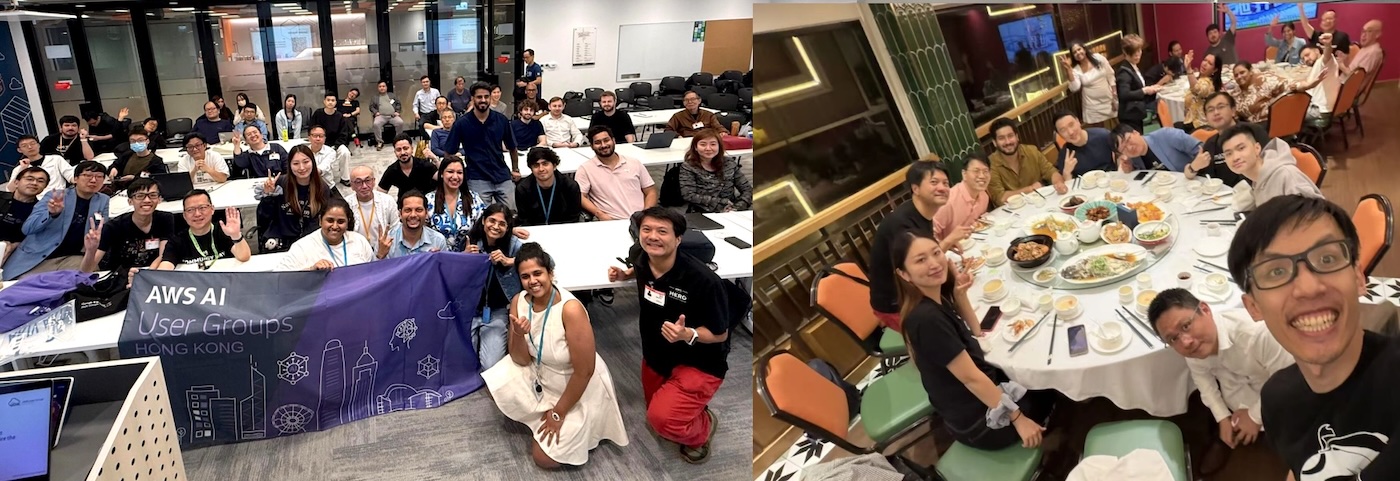

How is the News Blog doing? Take this 1 minute survey!

(This survey is hosted by an external company. AWS handles your information as described in the AWS Privacy Notice. AWS will own the data gathered via this survey and will not share the information collected with survey respondents.)

AWS Weekly Roundup: AWS Pi Day, Amazon Bedrock multi-agent collaboration, Amazon SageMaker Unified Studio, Amazon S3 Tables, and more

Post Syndicated from Prasad Rao original https://aws.amazon.com/blogs/aws/aws-weekly-roundup-aws-pi-day-amazon-bedrock-multi-agent-collaboration-amazon-sagemaker-unified-studio-amazon-s3-tables-and-more/

Thanks to everyone who joined us for the fifth annual AWS Pi Day on March 14. Since its inception in 2021, commemorating the Amazon Simple Storage Service (Amazon S3) 15th anniversary, AWS Pi Day has grown into a flagship event highlighting the transformative power of cloud technologies in data management, analytics, and AI.

This year’s virtual event featured in-depth discussions with Amazon Web Services (AWS) product teams showcasing our continued innovation in helping customers build robust data foundations for analytics and AI workloads.

Missed the live event? You can still access all content on-demand at the event page. Whether you’re developing data lakehouses, training AI models, creating generative AI applications, or optimizing analytics workloads, the shared insights will help you maximize the value of your data.

Last week’s launches
Here are some launches that got my attention during the previous week.

Amazon Bedrock now supports multi-agent collaboration – With the availability of multi-agent collaboration in Amazon Bedrock, you can create networks of specialized agents that communicate and coordinate under the guidance of a supervisor agent. You can build, deploy, and manage networks of AI agents that work together to execute complex, multi-step workflows efficiently.

Availability of fully managed DeepSeek-R1 model in Amazon Bedrock – AWS is the first cloud service provider (CSP) to deliver DeepSeek-R1 as a fully managed, generally available model. Use the capabilities of DeepSeek-R1 for your generative AI applications with a single API through this fully managed service in Amazon Bedrock.

Amazon SageMaker Unified Studio is now generally available – You can now use Amazon SageMaker Unified Studio as your single data and AI development environment, where you can find and access all of your organization’s data and work using the best tools for your specific needs. With the new simplified permissions management, you can easily bring your existing AWS resources into the unified studio. You’ll be able to find, access, and query your organization’s data and AI assets while collaborating with your team to securely build and share your analytics and AI artifacts—from data and models to generative AI applications.

Amazon Bedrock’s capabilities now generally available within Amazon SageMaker Unified Studio – SageMaker Unified Studio brings selected capabilities from Amazon Bedrock into SageMaker. You can now rapidly prototype, customize, and share generative AI applications using foundation models (FMs) and advanced features such as Amazon Bedrock Knowledge BasesAmazon Bedrock GuardrailsAmazon Bedrock Agents, and Amazon Bedrock Flows to create tailored solutions aligned with your requirements and responsible AI guidelines all within SageMaker.

Amazon S3 Tables integration with Amazon SageMaker Lakehouse is now generally availableAmazon S3 Tables now seamlessly integrate with Amazon SageMaker Lakehouse, making it easy for you to query and join S3 Tables with data in S3 data lakes, Amazon Redshift data warehouses, and third-party data sources. S3 Tables deliver the first cloud object store with built-in Apache Iceberg support.

Amazon S3 Tables now support create and query table operations directly from the S3 console using Amazon Athena – Amazon S3 Tables adds create and query table support in the S3 console. With this new feature, you can now create a table, populate it with data, and query it directly from the S3 console using Amazon Athena, making it easier to get started and analyze data in S3 table buckets.

Amazon S3 reduces pricing for S3 object tagging by 35% – Amazon S3 reduces pricing for S3 object tagging by 35% in all AWS Regions to $0.0065 per 10,000 tags per month. Object tags are key-value pairs applied to S3 objects that can be created, updated, or deleted at any time during the lifetime of the object.

Serverless Land Patterns available in Visual Studio CodeServerless Land‘s extensive application pattern library is now available directly into the Visual Studio Code (VS Code) IDE, making it easier for developers to build serverless applications. This integration eliminates the need to switch between your development environment and external resources when building serverless architectures by enabling you to browse, search, and implement pre-built serverless patterns directly in VS Code IDE.

Amplify Hosting Announces Skew Protection SupportAWS Amplify Hosting now offers Skew Protection, a feature that guarantees version consistency across your deployments. This feature ensures frontend requests are always routed to the correct server backend version—eliminating version skew and making deployments more reliable.

Amazon Route 53 Traffic Flow introduces a new visual editor to improve DNS policy editingAmazon Route 53 Traffic Flow now offers an enhanced user interface for improved DNS traffic policy editing. With this release, you can more easily understand and change the way traffic is routed between users and endpoints using the new features of the visual editor.

From community.aws
Here are some of my favorite posts from community.aws. Create your AWS Builder ID to start sharing your tips and connect with fellow builders. Your Builder ID is a universal login credential that gives you access, beyond the AWS Management Console, to AWS tools and resources, including over 600 free training courses, community features, and developer tools such as Amazon Q Developer.

Seamless SQL Server Recovery on EC2 with AWS Systems Manager (Greg Vinton) – This guide explains how to use the AWSEC2-RestoreSqlServerDatabaseWithVss automation runbook to restore a Microsoft SQL Server database on an Amazon Elastic Compute Cloud (Amazon EC2) instance.

Secure Deployment Strategies in Amazon EKS with Azure DevOps (Abhishek Nanda) – Build and Deploy containerized applications on Amazon Elastic Kubernetes Service (Amazon EKS) using Azure DevOps.

Connect Your Favorite LLM Client to Bedrock (Qinjie Zhang) – It’s common to use desktop applications like MSTY, Chatbox AI, LM Studio to simplify the use of Large Language Models (LLM) models. This blog provides a step-by-step guide on how you can connect your favorite local LLM clients to Amazon Bedrock.

From PHP to Python with the help of Amazon Q Developer (Ricardo Sueiras) – In this blog post, Ricardo showcases how to use Amazon Q Developer CLI to refactor code from one programming language to another.

Upcoming AWS events
Check your calendars and sign up for these upcoming AWS events:

AWS Community Days – Join community-led conferences that feature technical discussions, workshops, and hands-on labs led by expert AWS users and industry leaders from around the world: Milan, Italy (April 2), Bay Area – Security Edition (April 4), Timișoara, Romania (April 10), and Prague, Czech Republic (April 29).

AWS Innovate: Generative AI + Data – Join a free online conference focusing on generative AI and data innovations in Latin America on April 8.

AWS Summits – The AWS Summit season is coming along! Join free online and in-person events that bring the cloud computing community together to connect, collaborate, and learn about AWS. Register in your nearest city: Paris (April 9), Amsterdam (April 16), London (April 30), and Poland (May 5).

AWS re:Inforce (June 16–18) – Our annual learning event devoted to all things AWS Cloud security in Philadelphia, PA. Registration opens in March, so be ready to join more than 5,000 security builders and leaders.

AWS DevDays are free, technical events where developers can learn about some of the hottest topics in cloud computing. DevDays offer hands-on workshops, technical sessions, live demos, and networking with AWS technical experts and your peers. Register to access AWS DevDays sessions on demand.

That’s all for this week. Check back next Monday for another Weekly Roundup!

Prasad

This post is part of our Weekly Roundup series. Check back each week for a quick roundup of interesting news and announcements from AWS!
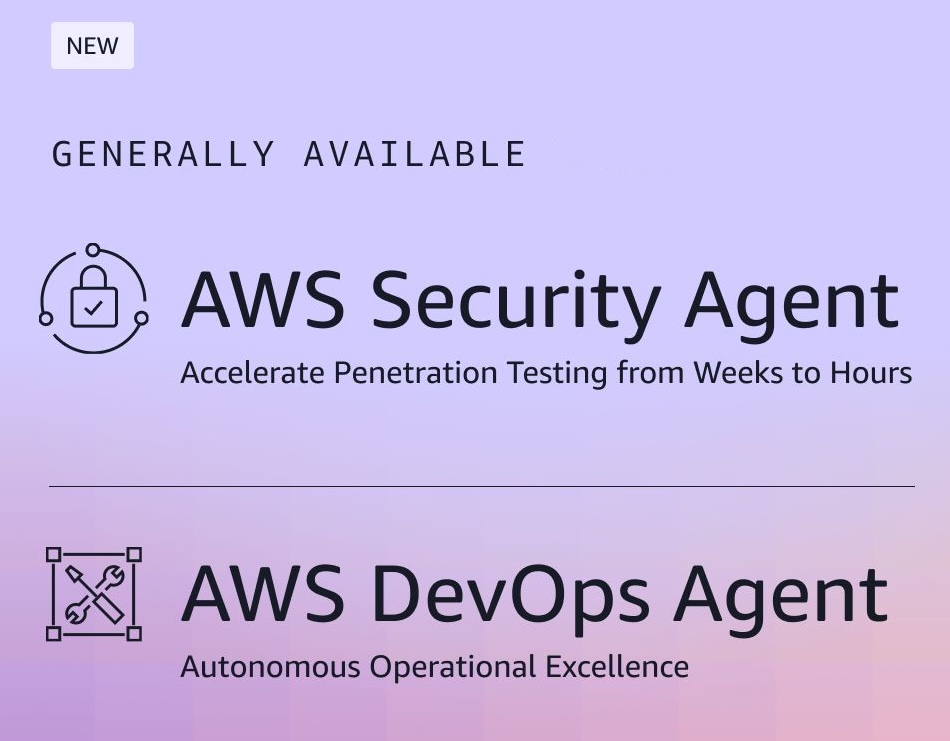

How is the News Blog doing? Take this 1 minute survey!

(This survey is hosted by an external company. AWS handles your information as described in the AWS Privacy Notice. AWS will own the data gathered via this survey and will not share the information collected with survey respondents.)

AWS Weekly Roundup: Amazon Q CLI agent, AWS Step Functions, AWS Lambda, and more (March 10, 2025)

Post Syndicated from Danilo Poccia original https://aws.amazon.com/blogs/aws/aws-weekly-roundup-amazon-q-cli-agent-aws-step-functions-aws-lambda-and-more-march-10-2025/

As the weather improves in the Northern hemisphere, there are more opportunities to learn and connect. This week, I’ll be in San Francisco, and we can meet at the Nova Networking Night at the AWS GenAI Loft where we’ll dive into the world of Amazon Nova foundation models (FMs) with live demos and real-world implementations.

AWS Pi Day is now a yearly tradition. It started in 2021 as a celebration of the 15th anniversary of Amazon S3. This year, there will be in-depth discussions with AWS product teams on how to build a data foundation for a unified seamless experience, managing and using data for analytics and AI workloads. Join us online to learn about the latest innovations through hands-on demos, and ask questions during our interactive livestream.

Last week’s launches
Another busy week, here are the launches that got my attention.

Amazon Q Developer – You can now use an enhanced agent within the Amazon Q command line interface (CLI) to give you more dynamic conversations, help you read and write files locally, query AWS resources, or create code. This enhanced CLI agent is powered by Anthropic’s most intelligent model to date, Claude 3.7 Sonnet. Read more about this agenic coding experience and how to try it out. Here’s a visual demo of the new capabilities of Amazon Q CLI, by Nathan Peck.

Amazon Q Business – Now supports the ingestion of audio and video data. This capability streamlines information retrieval, enhances knowledge sharing, and improves decision-making processes, by making multimedia content as searchable and accessible as text-based documents.

Amazon BedrockBedrock Data Automation is now generally available, so you can automate the generation of valuable insights from unstructured multimodal content such as documents, images, video, and audio files. Learn more and see code examples in my blog post. Amazon Bedrock Knowledge Bases support for GraphRAG is now also generally available. GraphRAG is a capability that enhances Retrieval-Augmented Generation (RAG) by incorporating graph data and delivers more comprehensive, relevant, and explainable responses by leveraging relationships within your data, improving how Generative AI applications retrieve and synthesize information.

Amazon Nova – The Amazon Nova Pro foundation model now supports latency-optimized inference in preview on Amazon Bedrock, enabling faster response times and improved responsiveness for generative AI applications.

AWS Step Functions – Workflow Studio for VS Code is now available, a visual builder you can use to compose workflows on a canvas. You can generate workflow definitions in the background to create workflows in your local development environment. Read more about this enhanced local IDE experience.

AWS Lambda – Now supports Amazon CloudWatch Logs Live Tail in VS Code. We previously introduced support for Live Tail in the Lambda console to simplify how you can view and analyze Lambda logs in real time. Now, you can also monitor Lambda function logs in real time while staying within the VS Code development environment.

AWS Amplify – Now supports HttpOnly cookies for server-rendered Next.js applications when using Amazon Cognito’s managed login. Because cookies with the HttpOnly attribute can’t be accessed by JavaScript, your applications can gain an additional layer of protection against cross-site scripting (XSS) attacks.

Amazon CognitoYou can now customize access tokens for machine-to-machine (M2M) flows, enabling you to implement fine-grained authorization in your applications, APIs, and workloads. M2M authorization is commonly used for automated processes such as scheduled data synchronization tasks, event-driven workflows, microservices communication, or real-time data streaming between systems.

AWS CodeBuild – Now supports builds on Linux x86, Arm, and Windows on-demand fleets directly on the host operating system without containerization. In this way, you can now execute build commands that require direct access to the host system resources or have specific requirements that make containerization challenging. For example, this is useful when building device drivers, running system-level tests, or working with tools that require host machine access. CodeBuild has also added support for Node 22, Python 3.13, and Go 1.23 in Linux x86, Arm, Windows, and macOS platforms.

Bottlerocket – The open source Linux-based operating system purpose-built for containers now supports NVIDIA’s Multi-Instance GPU (MIG) to help partition NVIDIA GPUs into multiple GPU instances on Kubernetes nodes and maximize GPU resource utilization. Bottlerocket now also supports AWS Neuron accelerated instance types and provides a default bootstrap container image that simplifies system setup tasks.

Amazon GameLift – Introducing Amazon GameLift Streams, a new managed capability that developers can use to stream games at up to 1080p resolution and 60 frames per second to any device with a WebRTC-enabled browser. To learn more, explore Donnie’s blog post.

Amazon FSx for NetApp ONTAP – Starting March 5, 2025, the SnapLock licensing fees for data stored in SnapLock volumes has been eliminated, making it more cost-effective.

Other AWS news
Here are some additional projects, blog posts, and news items that you might find interesting:

Accelerate AWS Well-Architected reviews with Generative AI – In this post, we explore a generative AI solution to streamline the Well-Architected Framework Reviews (WAFRs) process. We demonstrate how to build an intelligent, scalable system that analyzes architecture documents and generates insightful recommendations based on best practices.

Architectural diagram

Build a Multi-Agent System with LangGraph and Mistral on AWS – The Multi-Agent City Information System demonstrated in this post exemplifies the potential of agent-based architectures to create sophisticated, adaptable, and highly capable AI applications.

Reference architecture

Evaluate RAG responses with Amazon Bedrock, LlamaIndex and RAGAS – How to enhance your Retrieval Augmented Generation (RAG) implementations with practical techniques to evaluate and optimize your AI systems and enable more accurate, context-aware responses that align with your specific needs.

Architectural diagram

From community.aws
Here are some of my favorite posts from community.aws. Create your AWS Builder ID to start sharing your tips and connect with fellow builders. Your Builder ID is a universal login credential that gives you access, beyond the AWS Management Console, to AWS tools and resources, including over 600 free training courses, community features, and developer tools such as Amazon Q Developer.

Optimize AWS Lambda Costs with Automated Compute Optimizer Insights (Zechariah Kasina) – An automated and scalable method for optimizing AWS Lambda memory configurations to enhance cost efficiency and performance.

Optimize AWS Costs: Auto-Shutdown for EC2 Instances (Adeleke Adebowale Julius) – Using Amazon CloudWatch alarms to dynamically shut down instances based on inactivity.

The Evolution of the Developer Role in an AI-Assisted Future (Aaron Sempf) – While AI is transforming software development, the need for developing talent remains crucial.

Amazon Q Developer CLI – More coffee, less remembering commands (Cobus Bernard) – Now that you can use Amazon Q Developer directly from your terminal to interact with your files, so let’s add some convenience automations.

Upcoming AWS events
Check your calendars and sign up for these upcoming AWS events:

AWS Community Days – Join community-led conferences that feature technical discussions, workshops, and hands-on labs led by expert AWS users and industry leaders from around the world: Milan, Italy (April 2), Bay Area – Security Edition (April 4), Timișoara, Romania (April 10), and Prague, Czech Republic (April 29).

AWS Innovate: Generative AI + Data – Join a free online conference focusing on generative AI and data innovations. Available in multiple geographic regions: North America (March 13), Greater China Region (March 14), and Latin America (April 8).

AWS Summits – The AWS Summit season is coming along! Join free online and in-person events that bring the cloud computing community together to connect, collaborate, and learn about AWS. Register in your nearest city: Paris (April 9), Amsterdam (April 16), London (April 30), and Poland (May 5).

AWS re:Inforce (June 16–18) – Our annual learning event devoted to all things AWS Cloud security. This year is in Philadelphia, PA. Registration opens in March, so be ready to join more than 5,000 security builders and leaders.

AWS DevDays are free, technical events where developers can learn about some of the hottest topics in cloud computing. DevDays offer hands-on workshops, technical sessions, live demos, and networking with AWS technical experts and your peers. Register to access AWS DevDays sessions on demand.

That’s all for this week. Check back next Monday for another Weekly Roundup!

Danilo

This post is part of our Weekly Roundup series. Check back each week for a quick roundup of interesting news and announcements from AWS!

How is the News Blog doing? Take this 1 minute survey!

(This survey is hosted by an external company. AWS handles your information as described in the AWS Privacy Notice. AWS will own the data gathered via this survey and will not share the information collected with survey respondents.)

AWS Weekly Roundup: Anthropic Claude 3.7, JAWS Days, cross-account access, and more (March 3, 2025)

Post Syndicated from Veliswa Boya original https://aws.amazon.com/blogs/aws/aws-weekly-roundup-anthropic-claude-3-7-jaws-days-cross-account-access-and-more-march-3-2025/

I have fond memories of the time I built an application live at the AWS GenAI Loft London last September. AWS GenAI Lofts are back in locations such as San Francisco, Berlin, and more, to continue providing collaborative spaces and immersive experiences for startups and developers. Find a loft near you for hands-on access to AI products and services, events, workshops, and networking opportunities, that you can’t miss!

Last week’s launches
Here are some launches that got my attention during the previous week.

Four ways to grant cross-account access in AWS — For some situations, you might want to enable centralized operations across multiple AWS accounts or share resources across teams, or projects within your teams. In these cases, you may be concerned about security, availability, or the manageability of granting this cross-account access. We’ve announced four ways to grant cross-account access in AWS and detail each of the methods and its unique trade-offs.

Amazon ECS adds support for additional IAM condition keys — We’ve launched eight new service-specific condition keys for Identity and Access Management (IAM). These new condition keys let you create IAM policies as well as srvice control policies (SCPs) to better enforce your organizational policies in containerized environments. You can use IAM condition keys to author policies that enforce access control based on API request context.

AWS Chatbot is now named Amazon Q Developer — AWS Chatbot has been renamed to Amazon Q Developer, representing an enhancement to developer productivity through generative AI-powered capabilities. Furthermore, this update is an enhancement of our chat-based DevOps capabilities. By combining the proven functionality of AWS Chatbot with the generative AI capabilities of Amazon Q, we’re providing developers with more intuitive, efficient tools for cloud resource management.

Anthropic’s Claude 3.7 Sonnet hybrid reasoning model is now available in Amazon Bedrock — We’re expanding the foundation models (FM) offerings of Amazon Bedrock and we’ve announced the availability of Anthropic’s Claude 3.7 Sonnet FM in Amazon Bedrock. Claude 3.7 Sonnet is Anthropic’s most intelligent model to date. It stands out as their first hybrid reasoning model capable of producing quick responses or extended thinking, meaning it can work through difficult problems using careful, step-by-step reasoning.

Other AWS news
JAWS-UG (Japan AWS User Group) is the largest AWS user group in the world, and holds JAWS Days every year with over a thousand participants from Japan, Korea, Taiwan, and Hong Kong. The March 1st event started with a keynote speech on next-generation development by Jeff Barr (VP of AWS Evangelism), and included over 100 technical and community experience sessions, lightning talks, and workshops such as Game Days, Builders Card Challenges, and networking parties. If you want to experience the most active AWS community event in the world, I recommend attending next year.


Amazon Q Developer now generally available in Amazon SageMaker Canvas — Announced as available in preview at AWS reinvent 2024, Amazon Q Developer is now generally available in Amazon SageMaker Canvas to help you build machine learning (ML) models using natural language.

Applications for the 2025 AWS Cloud Club Captains Program are still open through March 6th. AWS Cloud Clubs are student-led groups for post-secondary and independent students, 18 years old and over. Find a club near you on the Meetup page.

From community.aws
Here are some of my favorite posts from community.aws:

DevSecOps on AWS: Secure, Automate, and Have a Laugh Along the Way – Discover how DevSecOps on AWS transforms your development pipeline by integrating security from the very first commit to production deployment, by Ahmed Mohamed.

Find out how to earn 100 percent free AWS certification vouchers in Opportunity to earn free AWS Certification Vouchers, published by Anand Joshi.

In the post, Boost SaaS Onboarding & Retention with AWS AI & Automation, Kaumudi Tiwari details how to navigate endless forms, generic guides, and a cluttered interface when signing up for a new software as a service (SaaS) platform.

My colleague Dennis Traub has published helpful step-by-step guides on how to use reasoning capabilities with Anthropic’s Claude 3.7 Sonnet in your C#/.NET, Java, JavaScript, or Python applications. Find these posts and much more generative AI-related content in the Gen AI Space on community.aws.

Upcoming AWS events
Check your calendars and sign up for these upcoming AWS events:

AWS Community Days – Join community-led conferences that feature technical discussions, workshops, and hands-on labs led by expert AWS users and industry leaders from around the world: Milan, Italy (April 2), Bay Area – Security Edition (April 4), Timișoara, Romania (April 10), and Prague, Czech Republic (April 29).

AWS Innovate: Generative AI + Data – Join a free online conference focusing on generative AI and data innovations. Available in multiple geographic regions: APJC and EMEA (March 6), North America (March 13), Greater China Region (March 14), and Latin America (April 8).

AWS Summits – Join free online and in-person events that bring the cloud computing community together to connect, collaborate, and learn about AWS. Register in your nearest city: Paris (April 9), Amsterdam (April 16), London (April 30), and Poland (May 5).

AWS re:Inforce – AWS re:Inforce (June 16–18) in Philadelphia, PA, is our annual learning event devoted to all things AWS Cloud security. Registration opens in March, so be ready to join more than 5,000 security builders and leaders.

AWS DevDays are free, technical events where developers can learn about some of the hottest topics in cloud computing. DevDays offer hands-on workshops, technical sessions, live demos, and networking with AWS technical experts and your peers. Register to access AWS DevDays sessions on demand.

Create your AWS Builder ID and reserve your alias. Builder ID is a universal login credential that gives you access—beyond the AWS Management Console—to AWS tools and resources, including over 600 free training courses, community features, and developer tools such as Amazon Q Developer.

AWS Training and Certification hosts free training events, both online and in-person, that help you get the most out of the AWS Cloud. Register to gain foundational cloud knowledge or dive deep in a technical area. Join AWS experts for training events that meet your goals, such as AWS Discovery Days, in-person. and virtual events at AWS Skills Centers including the one in Cape Town.

You can browse all upcoming in-person and virtual events here.

That’s all for this week. Check back next Monday for another Weekly Roundup!

– Veliswa

This post is part of our Weekly Roundup series. Check back each week for a quick roundup of interesting news and announcements from AWS!

How is the News Blog doing? Take this 1 minute survey!

AWS Weekly Roundup: Cloud Club Captain Applications, Formula 1®, Amazon Nova Prompt Engineering, and more (Feb 24, 2025)

Post Syndicated from Elizabeth Fuentes original https://aws.amazon.com/blogs/aws/aws-weekly-roundup-cloud-club-captain-applications-formula-1-amazon-nova-prompt-engineering-and-more-feb-24-2025/

AWS Developer Day 2025, held on February 20th, showcased how to integrate responsible generative AI into development workflows. The event featured keynotes from AWS leaders including Srini Iragavarapu, Director Generative AI Applications and Developer Experiences, Jeff Barr, Vice President of AWS Evangelism, David Nalley, Director Open Source Marketing of AWS, along with AWS Heroes and technical community members. Watch the full event recording on Developer Day 2025.

Cloud Club

Applications are now open through March 6th for the 2025 AWS Cloud Clubs Captains program. AWS Cloud Clubs are student-led groups for post-secondary and independent students, 18 years old and over. Find a club near you on our Meetup page.

Last week’s launches
Here are some launches that got my attention:

Amplify Hosting announces support for IAM roles for server-side rendered (SSR) applications  AWS Amplify Hosting now supports AWS Identity and Access Management (IAM) roles for SSR applications, enabling secure access to AWS services without managing credentials manually. Learn more in the IAM Compute Roles for Server-Side Rendering with AWS Amplify Hosting blog.

AWS WAF enhances Data Protection and logging experience  AWS WAF expands its Data Protection capabilities allowing sensitive data in logs to be replaced with cryptographic hashes (e.g. ‘ade099751d2ea9f3393f0f’) or a predefined static string (‘REDACTED’) before logs are sent to WAF Sample Logs, Amazon Security Lake, Amazon CloudWatch, or other logging destinations.

Announcing AWS DMS Serverless comprehensive premigration assessments AWS Database Migration Service Serverless (AWS DMS Serverless) now supports premigration assessments for replications to identify potential issues before database migrations begin. The tool analyzes source and target databases, providing recommendations for optimal DMS settings and best practices.

Amazon ECS increases the CPU limit for ECS tasks to 192 vCPUs – Amazon Elastic Container Service (Amazon ECS) now supports CPU limits of up to 192 vCPU for ECS tasks deployed on Amazon Elastic Compute Cloud (Amazon EC2) instances, an increase from the previous 10 vCPU limit. This enhancement allows customers to more effectively manage resource allocation on larger Amazon EC2 instances.

AWS Network Firewall introduces automated domain lists and insightsAWS Network Firewall now provides automated domain lists and insights by analyzing 30 days of HTTP/S traffic. This helps create and maintain allow-list policies more efficiently, at no extra cost.

AWS announces Backup Payment Methods for invoices AWS now enables you to set up backup payment methods that automatically activate if primary payment fails. This helps prevent service interruptions and reduces manual intervention for invoice payments.

Get updated with all the announcements of AWS announcements on the What’s New with AWS? page.

Other AWS news
Here are additional noteworthy items:

AWS Partner Network: Essential training resources for ISV partners To help scale solutions effectively, AWS provides essential training resources for Software Vendors (ISVs) partners in four key areas: AWS Marketplace fundamentals, Foundational Technical Review (FTR), APN Customer Engagement (ACE) program and co-selling, and Partner funding opportunities.

How Formula 1® uses generative AI to accelerate race-day issue resolution Formula 1® (F1) uses Amazon Bedrock to speed up race-day issue resolution, reducing troubleshooting time from weeks to minutes through a chatbot that analyzes root causes and suggests fixes.

How Formula 1® uses generative AI to accelerate race-day issue resolution

Reducing hallucinations in LLM agents with a verified semantic cache using Amazon Bedrock Knowledge Bases This blog introduces a solution using Amazon Bedrock Knowledge Bases and Amazon Bedrock Agents to reduce Large language models (LLMs) hallucinations by implementing a verified semantic cache that checks queries against curated answers before generating new responses, improving accuracy and response times.

Reducing hallucinations in LLM agents with a verified semantic cache using Amazon Bedrock Knowledge Bases

Orchestrate an intelligent document processing workflow using tools in Amazon Bedrock This blog demonstrates an intelligent document processing workflow using Amazon Bedrock tools that combines Anthropic’s Claude 3 Haiku for orchestration and Anthropic’s Claude 3.5 Sonnet (v2) for analysis to handle structured, semi-structured, and unstructured healthcare documents efficiently.

From community.aws
Here are my personal favorites posts from community.aws:

Tracing Amazon Bedrock Agents Learn how to track and analyze Amazon Bedrock Agents workflows using AWS X-Ray for better observability, by Randy D.

Testing Amazon ECS Network Resilience with AWS FISThis article demonstrates how to test network resilience in Amazon ECS using AWS FIS with guidance from Amazon Q Developer, by Sunil Govindankutty

Stop Using Default Arguments in AWS Lambda Functions Discover why your AWS Lambda costs might be spiralling out of control due to a common Python programming practice, by Stuart Clark.

Amazon Nova Prompt Engineering on AWS: A Field Guide by Brooke A field guide for using Amazon Nova models, covering prompt engineering patterns and best practices on AWS, by Brooke Jamieson.

Amazon Nova Prompt Engineering on AWS: A Field Guide by Brooke

Creating Deployment Configurations for EKS with Amazon Q Amazon Q Developer helps create EKS deployments by providing templates and best practices for Kubernetes configs, by Ricardo Tasso.

Processing WhatsApp Multimedia with Amazon Bedrock Agents: Images, Video, and DocumentsI invite you to read my latest blog, which explains how to create a WhatsApp AI assistant using Amazon Bedrock and Amazon Nova models to process multimedia content such as images, videos, documents, and audio.

Processing WhatsApp Multimedia with Amazon Bedrock Agents: Images, Video, and Documents

Upcoming AWS events
Check your calendars and sign up for these upcoming AWS events:

AWS GenAI Lofts – GenAI Lofts offer collaborative spaces and immersive experiences for startups and developers. You can join in-person GenAI Loft San Francisco events such as Hands-on with Agentic Graph RAG Workshop (February 25), Unstructured Data Meetup SF (February 26 – 27) and AI Tinkerers – San Francisco – February 2025 Demos + Science Fair (February 27 – 28). GenAI Loft Berlin has events and workshops on February 24 to March 7 that you can’t miss!

AWS Community Days – Join community-led conferences that feature technical discussions, workshops, and hands-on labs led by expert AWS users and industry leaders from around the world: Milan, Italy (April 2), Bay Area – Security Edition (April 4), Timișoara, Romania (April 10), and Prague, Czeh Republic (April 29).

AWS Innovate: Generative AI + Data – Join a free online conference focusing on generative AI and data innovations. Available in multiple geographic regions: APJC and EMEA (March 6), North America (March 13), Greater China Region (March 14), and Latin America (April 8).

AWS Summits – Join free online and in-person events that bring the cloud computing community together to connect, collaborate, and learn about AWS. Register in your nearest city: Paris (April 9), Amsterdam (April 16), London (April 30), and Poland (May 5).

AWS re:Inforce – AWS re:Inforce (June 16–18) in Philadelphia, PA our annual learning event devoted to all things AWS cloud security. Registration opens in March, and be ready to join more than 5,000 security builders and leaders.

Create your AWS Builder ID and reserve your alias. Builder ID is a universal login credential that gives you access–beyond the AWS Management Console–to AWS tools and resources, including over 600 free training courses, community features, and developer tools such as Amazon Q Developer.

You can browse all upcoming in-person and virtual events.

That’s all for this week. Stay tuned for next week’s Weekly Roundup!

Eli

This post is part of our Weekly Roundup series. Check back each week for a quick roundup of interesting news and announcements from AWS!

AWS Weekly Roundup: AWS Developer Day, Trust Center, Well-Architected for Enterprises, and more (Feb 17, 2025)

Post Syndicated from Channy Yun (윤석찬) original https://aws.amazon.com/blogs/aws/aws-weekly-roundup-aws-developer-day-trust-center-well-architected-for-enterprises-and-more-feb-17-2025/

Join us for the AWS Developer Day on February 20! This virtual event is designed to help developers and teams incorporate cutting-edge yet responsible generative AI across their development lifecycle to accelerate innovation.

In his keynote, Jeff Barr, Vice President of AWS Evangelism, shares his thoughts on the next generation of software development based on generative AI, the skills needed to thrive in this changing environment, and how he sees it evolving in the future.

Get a first look at exciting technical deep-dive and product updates about Amazon Q Developer, AWS Amplify, and GitLab Duo with Amazon Q. You get the chance to explore real-world use cases, live coding demos, interactive sessions, and community spotlight sessions with Christian Bonzelet (AWS Community Builder), Hazel Saenz (AWS Serverless Hero), Matt Lewis (AWS Data Hero), and Johannes Koch (AWS DevTools Hero). Please sign up for this event now!

Last week’s launches
Here are some launches that got my attention:

Updating AWS SDK defaults for AWS STS – As we shared upcoming changes to the AWS Security Token Service (AWS STS) global endpoint to improve the resiliency and performance of your applications, we’re updating two defaults of AWS Software Development Kits (AWS SDKs) and AWS Command Line Interfaces (AWS CLIs) on July 31st 2025 – the default AWS STS service to regional, and the default retry strategy to standard. We recommend that you test your application before the release to avoid an unexpected experience after updating.

Introducing the AWS Trust CenterChris Betz, CISO at Amazon Web Services (AWS), shared AWS Trust Center, a new online resource communicating how we approach securing your assets in the cloud. This resource is a window into our security practices, compliance programs, and data protection controls that demonstrates how we work to earn your trust every day.

AWS CloudTrail network activity events for VPC endpoint – This feature provides you with a powerful tool to enhance your security posture, detect potential threats, and gain deeper insights into your VPC network traffic. This feature addresses your critical needs for comprehensive visibility and control over your AWS environments.

AWS Verified Access support for non-HTTP resources – AWS Verified Access now extends beyond HTTP apps to provide VPN-less, secure access to non-HTTP resources like Amazon Relational Database Service (Amazon RDS) databases, enabling improved security and enhanced user experience for both web applications and database connections. To learn more, visit the Verified Access endpoints page and a video tutorial.

New subnet management of Network Load Balancer (NLB) – NLBs were previously restricted to only adding subnets in new Availability Zones, and they now support full subnet management, including removal of subnets, matching the capabilities of Application Load Balancer (ALB). This enhancement offers organizations greater control over their network architecture and brings consistency to AWS load balancing services.

Meta SAM 2.1 and Falcon 3 models in Amazon SageMaker JumpStart – You can use Meta’s Segment Anything Model (SAM) 2.1 with state-of-the-art video and image segmentation capabilities in a single model. You can also use the Falcon 3 family with five models ranging from 1 to 10 billion parameters, with a focus on enhancing science, math, and coding capabilities. To learn more, visit SageMaker JumpStart pretrained models and Getting started with Amazon SageMaker JumpStart.

For a full list of AWS announcements, be sure to keep an eye on the What’s New with AWS? page.

Other AWS news
Here are some additional news items that you might find interesting:

AWS Documentation updateGreg Wilson, a lead of AWS Documentation, SDK, and CLI teams shared an insightful blog post about the progress, challenges, and what’s next for technical documentation for 200+ AWS services. It includes AWS Decision Guides for choosing the right service for specific needs; optimizing documents for readability, such as doubled code samples; and improving usability, such as dark mode and auto-suggest with top global navigation controls. You can also learn about how we use generative AI to help create technical documents.

AWS Well-Architected for Enterprises – This is a new free digital course designed for technical professionals who architect, build, and operate AWS solutions at scale. This intermediate-level course will help you optimize your cloud architecture while aligning to your business goals. The course takes approximately 1 hour to complete and includes a knowledge check at the end to reinforce your learning.

Integrating AWS with .NET Aspire – The .NET team at AWS has been working on integrations for connecting your .NET applications to AWS resources. Learn about how to automatically deploy AWS application resources using Aspire.Hosting.AWS NuGet package for NET Aspire, an open source framework building cloud-ready applications.

Upcoming AWS events
Check your calendars and sign up for these upcoming AWS events:

AWS Innovate: Generative AI + Data – Join a free online conference focusing on generative AI and data innovations. Available in multiple geographic regions: APJC and EMEA (March 6), North America (March 13), Greater China Region (March 14), and Latin America (April 8).

AWS Summits – Join free online and in-person events that bring the cloud computing community together to connect, collaborate, and learn about AWS. Register in your nearest city: Paris (April 9), Amsterdam (April 16), London (April 30), and Poland (May 5).

AWS GenAI Lofts – GenAI Lofts offer collaborative spaces and immersive experiences for startups and developers. You can join in-person GenAI Loft San Francisco events such as Built on Amazon Bedrock demo nights (April 19), SageMaker Unified Studio Demo for Startups (April 21), and Hands-on with Agentic Graph RAG Workshop (April 25). GenAI Loft Berlin has its Opening Day on February 24 and goes to March 7.

AWS Community Days – Join community-led conferences that feature technical discussions, workshops, and hands-on labs led by expert AWS users and industry leaders from around the world: Karachi, Pakistan (February 22), Milan, Italy (April 2), Bay Area – Security Edition (April 4), Timișoara, Romania (April 10), and Prague, Czeh Republic (April 29).

AWS re:Inforce – Mark your calendars for AWS re:Inforce (June 16–18) in Philadelphia, PA. AWS re:Inforce is a learning conference focused on AWS security solutions, cloud security, compliance, and identity. You can subscribe for event updates now!

You can browse all upcoming in-person and virtual events.

That’s all for this week. Check back next Monday for another Weekly Roundup!

Channy

This post is part of our Weekly Roundup series. Check back each week for a quick roundup of interesting news and announcements from AWS!